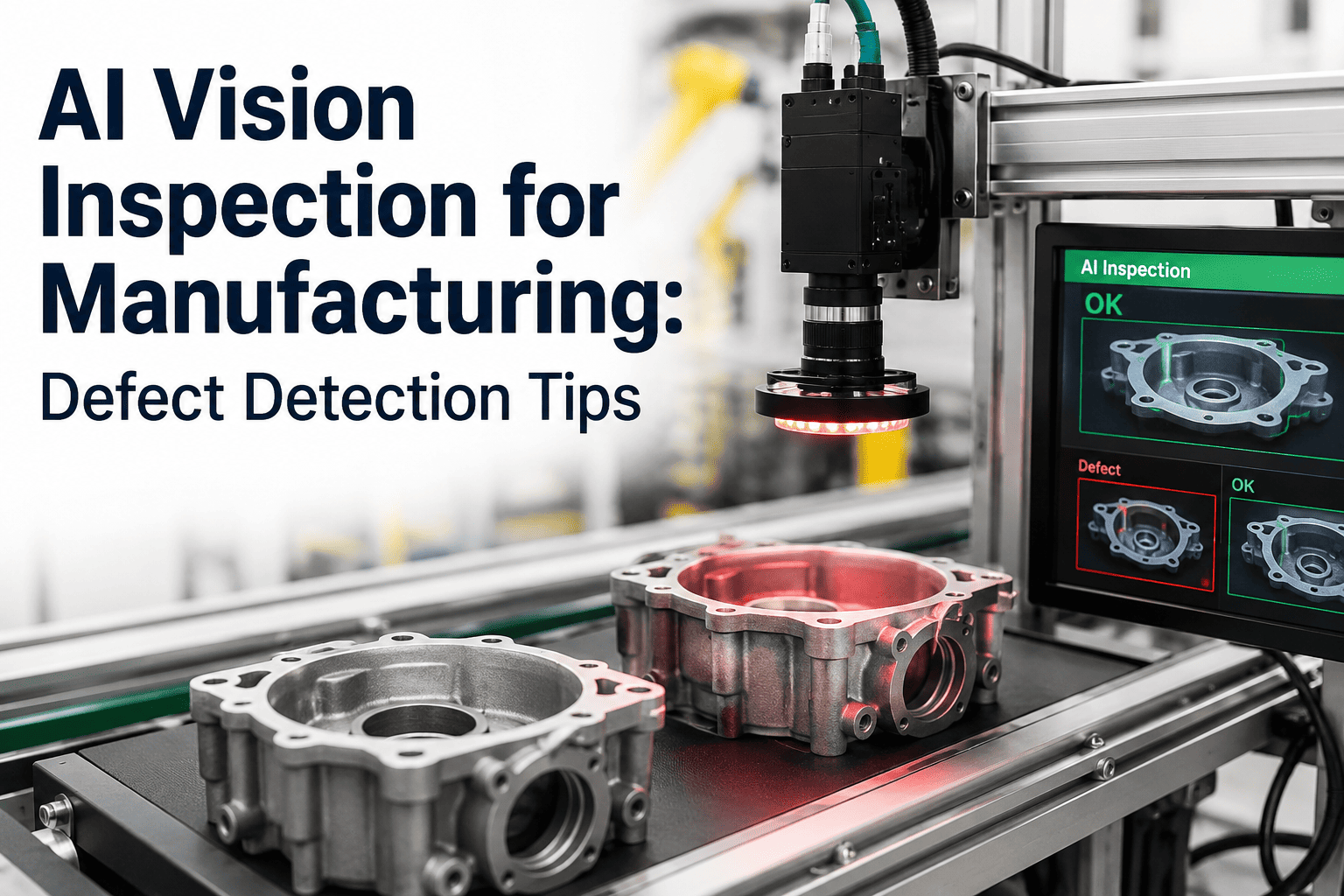
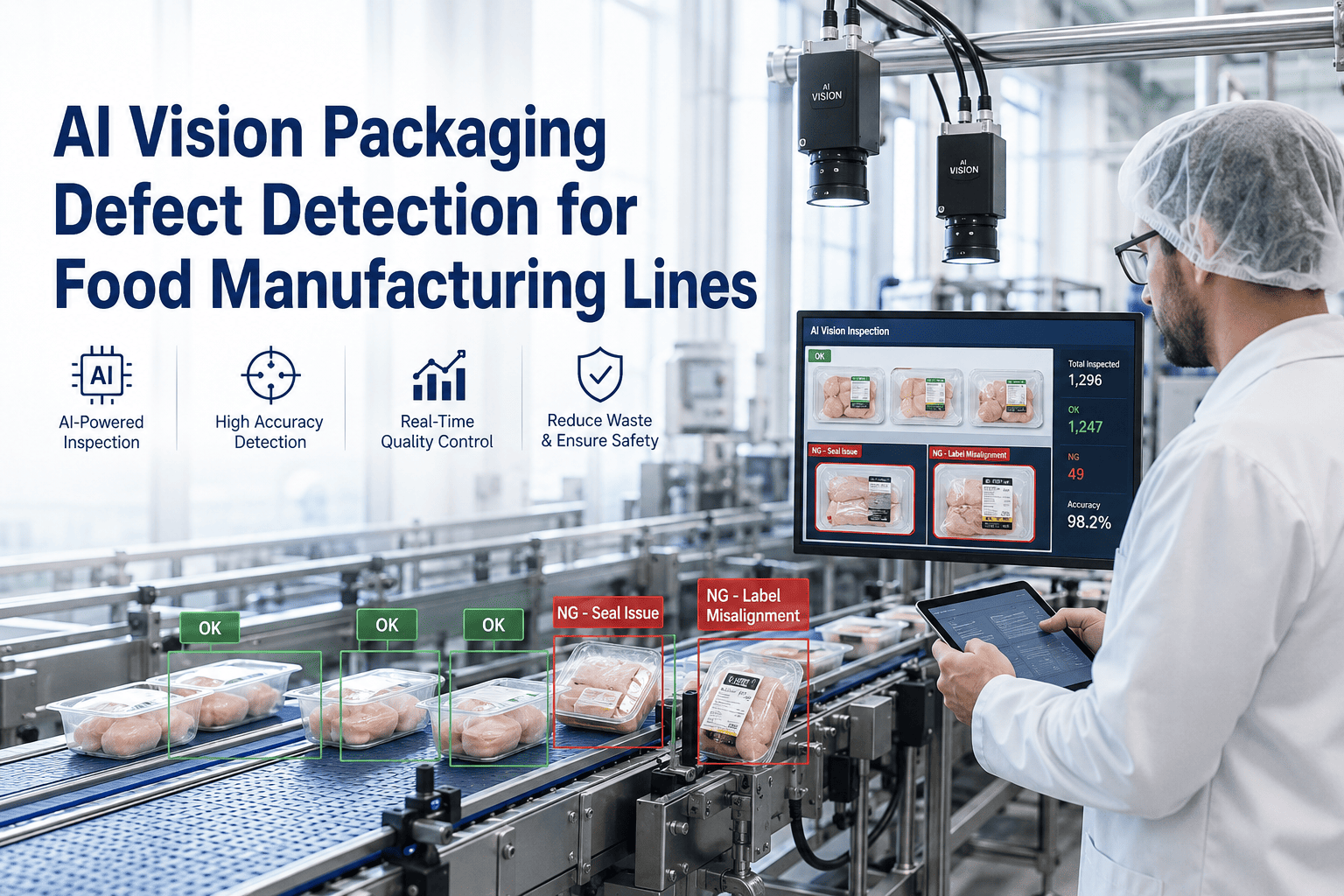
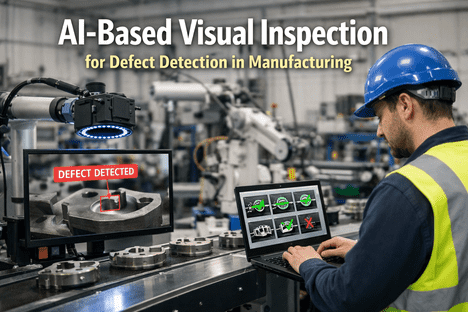
The gap between human and AI inspection isn't just about accuracyit's about what's physically possible. AI vision systems now detect surface defects as small as 0.1mm with 99.8% accuracy, according to a 2024 American Society for Quality study. That surpasses the theoretical maximum performance of human inspectors by a significant margin. And while human accuracy declines throughout a shift, AI maintains peak performance 24 hours a day 7 days a week, inspecting thousands of units per minute without fatigue, distraction or subjective variation.
Human vs AI Inspection: The Performance Gap
Manual Inspection
Traditional human visual inspection
AI Visual Inspection
Machine learning powered systems
What AI Quality Control Can Detect
Surface Defects
0.1mmScratches, dents, cracks, discoloration, coating issues—detected at sizes invisible to human inspectors
Assembly Errors
100%Missing components, wrong parts, incorrect positioning, reversed labels—verified on every unit
Dimensional Variations
Micron-levelSize deviations, misalignments, warping—measured with precision impossible manually
Weld & Solder Quality
5000-8000Joints per board inspected—identifying potential failures before they cause field issues
Material Anomalies
Sub-surfaceMicrofractures, structural issues, material inconsistencies—detected through pattern analysis
Predictive Patterns
Real-timeTool wear, process drift, degradation trends—preventing defects before they occur
The Cost of Poor Quality: What AI Eliminates
Cost of Poor Quality (COPQ) represents the hidden financial drain from defects, rework, returns and lost customers. In mature operations, COPQ can consume 15-20% of total sales—money that AI quality control recovers.
Internal Failure Costs
- Scrap and discarded materials
- Rework labor and resources
- Re-inspection time and costs
- Downtime from quality issues
- Failure analysis investigations
External Failure Costs
- Warranty claims and repairs
- Product returns and replacements
- Customer complaints handling
- Recall costs and liability
- Lost sales and brand damage
Typical COPQ as Percentage of Revenue
World-class target: less than 5% — AI quality control helps close this gap
How AI Quality Control Works
Image Capture
High-resolution cameras capture detailed images from multiple angles with specialized lighting
AI Analysis
Deep learning models (CNNs) trained on millions of images analyze captures in milliseconds
Defect Detection
System flags anomalies based on learned patterns of defective vs acceptable products
Action & Learning
Results integrate with MES/QMS for immediate action while models continuously improve
Unlike traditional rule-based systems that require manual programming for each defect type, AI systems continuously learn from inspection results. This means they get better over time, steadily reducing both false positives (good products flagged as defective) and false negatives (defects that slip through). When a new defect type appears, the system can be retrained quickly rather than requiring complete reprogramming.
Real Results: AI Quality Control Case Studies
BMW Group
Implemented AI-based visual inspection for paint jobs and part alignment across production facilities. The system, trained on millions of annotated images, identifies flaws faster than human QC including scratches, dents, and pseudo-defects like dust particles.
Bosch Automotive Electronics
Deployed machine learning models across automotive component plants to inspect solder joints on circuit boards (5,000-8,000 joints per board). AI flags potential defects for human review, significantly reducing inspector workload.
Siemens Manufacturing
Implemented AI-powered visual inspection systems across manufacturing facilities combined with digital twin technology for casting processes. AI analyzes temperature distribution, material behavior, and cycle timing.
Steel Manufacturer
Implemented AI visual inspection for continuous steel production monitoring. Strategic sensor deployment focused on high-value areas following the 80/20 principle—addressing critical assets first to maximize ROI.
See AI Quality Control in Action
iFactory's integrated platform connects quality control data with your entire manufacturing operation. Track defects, analyze trends, and drive continuous improvement from a single source of truth.
The Business Benefits of AI Quality Control
Superior Detection
Advanced neural networks identify subtle defects human inspectors miss, especially during extended work periods when fatigue affects performance. AI detects 37% more critical defects than expert humans under optimal conditions.
99.8% accuracy achievableConsistent Quality
Human inspection inherently varies between individuals and throughout shifts. AI applies identical criteria consistently, eliminating subjective variations. Quality managers report 41% reduction in quality variability.
41% less variabilitySpeed at Scale
AI systems inspect at speeds impossible for humans—1,000+ units per minute in high-volume environments without sacrificing accuracy. Inspection times reduced by up to 30% while improving detection rates.
1000+ units/minutePredictive Quality
Beyond detecting existing defects, AI identifies patterns that predict future quality issues. Tool wear, process drift, and degradation trends are spotted before they cause defects.
Prevent before they occurCost Reduction
Industry reports show 15-20% cost savings within two years through reduced scrap, rework, warranty claims, and labor costs. Some manufacturers achieve payback within one month.
15-20% cost savingsContinuous Improvement
Unlike fixed rule-based systems, deep learning models evolve by analyzing inspection results over time. They steadily reduce false positives and false negatives with every cycle.
Improves automaticallyThe AI Quality Control Market: Adoption Accelerating
The rapid market growth reflects a fundamental shift in how manufacturers approach quality. According to McKinsey's 2024 Manufacturing Technology Trends report, 76% of surveyed manufacturers are either implementing or planning to implement AI visual inspection within 18 months—a 23% increase from 2022 figures.
Frequently Asked Questions
Quality Control Transformed
AI-powered quality control isn't about replacing human judgment—it's about extending human capability beyond physical limits. When machines can detect defects humans cannot see, maintain consistency humans cannot sustain, and operate at speeds humans cannot achieve, the question isn't whether to implement AI quality control. The question is how quickly you can deploy it before competitors establish their own superhuman inspection capabilities.
Transform Your Quality Operations
iFactory's platform integrates quality data across your entire operation. Connect inspection results with maintenance, production, and inventory systems to drive data-driven quality improvement.