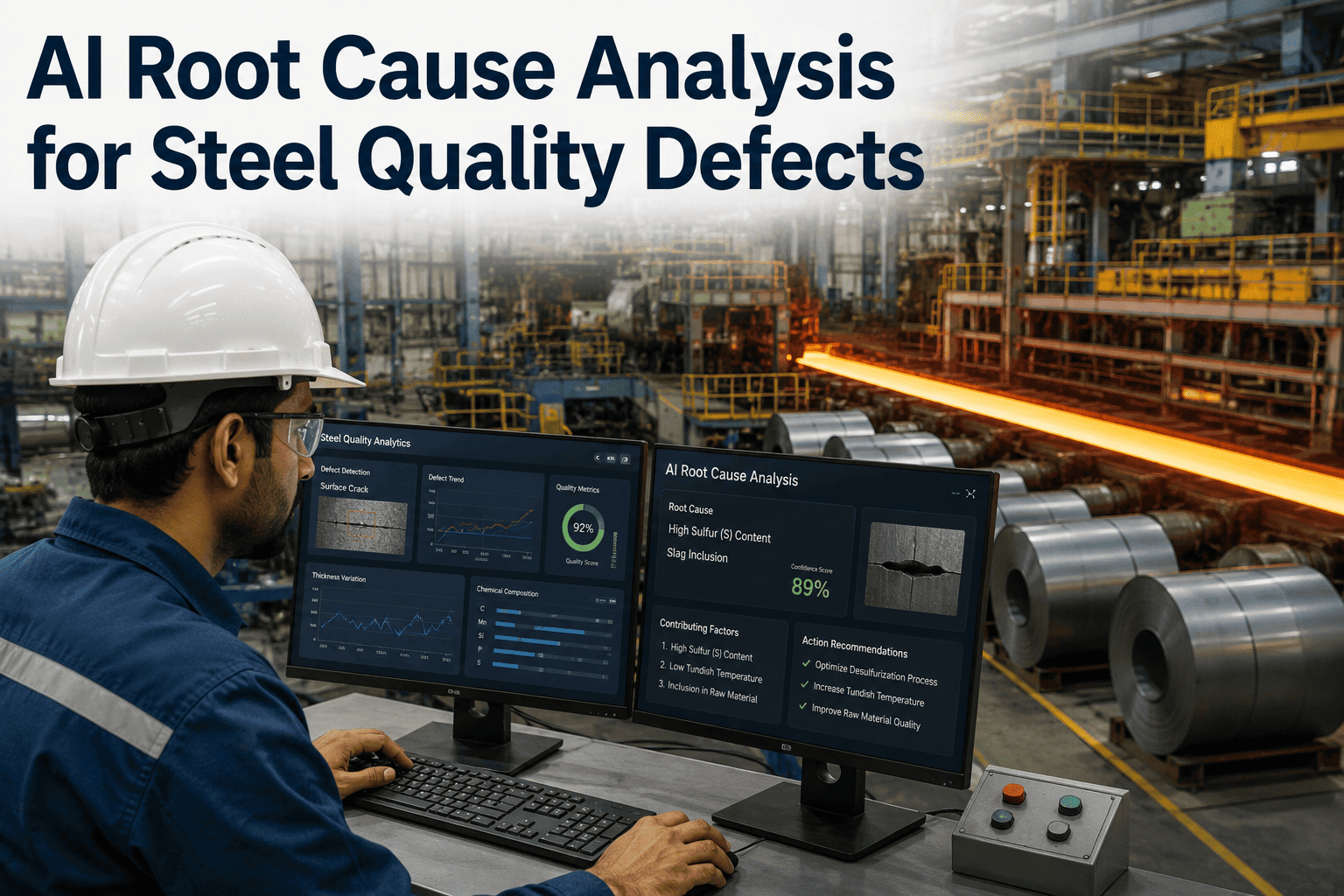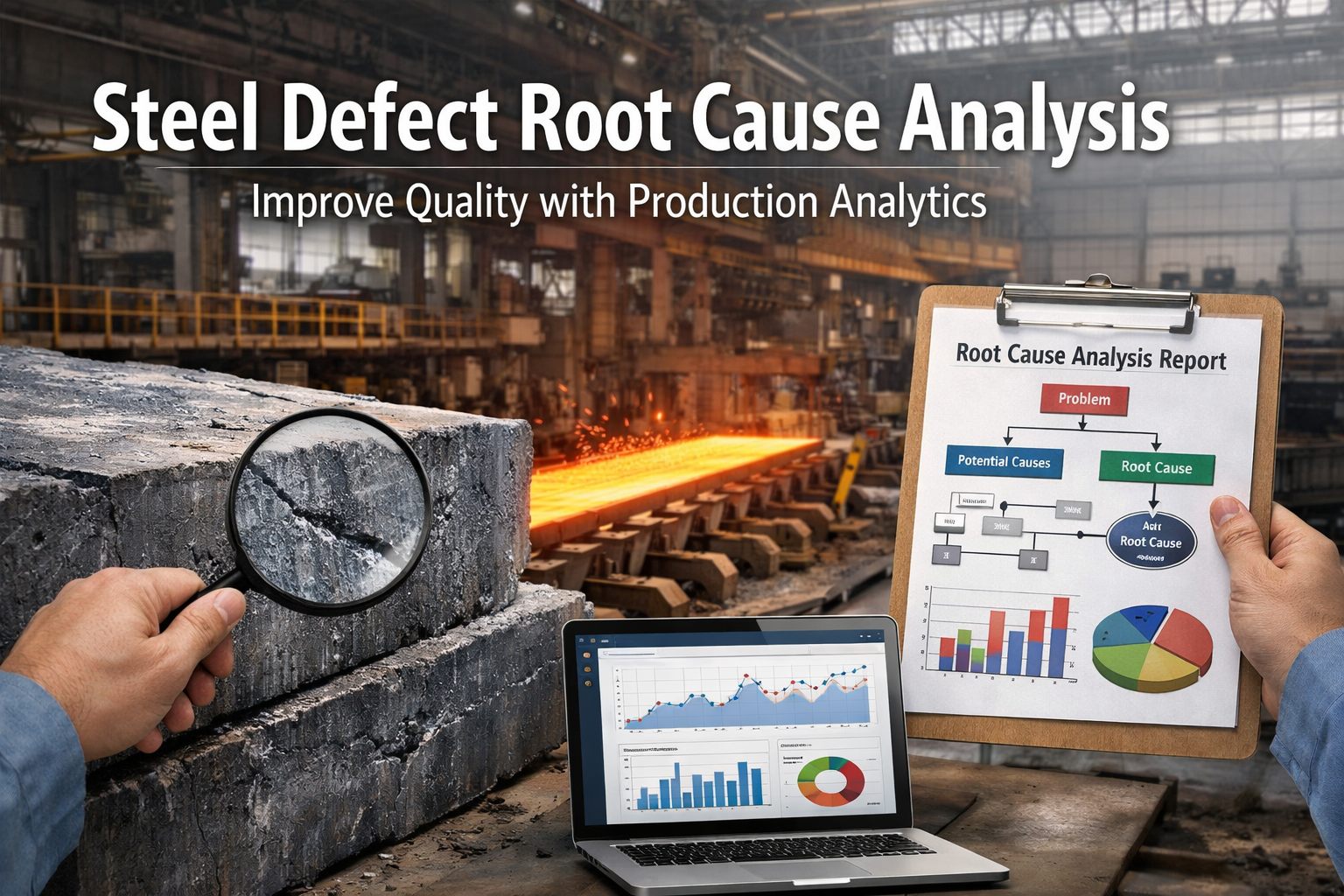
Steel manufacturers lose an average of 2-5% of production to defects annually—translating to millions in scrap costs and missed revenue. A single surface crack or inclusion can cascade through your entire production line, affecting yield, customer satisfaction, and profitability. The solution? Structured root cause analysis powered by production data and quality analytics. Book a free consultation to see how digital inspection systems can transform your defect management.
Steel Defect Root Cause Analysis
Turn Production Data Into Quality Improvements
Why Steel Defects Keep Recurring
Most steel plants treat symptoms instead of root causes—leading to the same defects appearing again and again.
Defect Detected
Surface crack found during final inspection
Quick Fix Applied
Adjust temperature, change speed, replace roll
Production Resumes
Problem seems solved temporarily
Defect Returns
Same issue reappears days or weeks later
Common Steel Defects and Their Origins
Understanding where defects originate is the first step to eliminating them.
Casting Defects
Hot Rolling Defects
Cold Rolling Defects
Proven Root Cause Analysis Techniques
Three powerful methods to trace defects back to their true source.
5 Whys Analysis
Fishbone Diagram
Pareto Analysis
Stop Guessing, Start Analyzing
Digital inspection platforms capture the production data you need for effective root cause analysis.
How Production Analytics Accelerates RCA
Manual analysis takes days. Digital systems provide answers in minutes.
Real-Time Data Capture
Temperature, pressure, speed, and quality metrics collected automatically at every process point
Correlation Analysis
AI identifies patterns between process parameters and defect occurrence across batches
Full Traceability
Track any defective product back through every production stage in under 2 minutes
CAPA Workflows
Automated corrective action tracking ensures root causes are addressed and verified
The Business Case for Digital RCA
Steel manufacturers using production analytics see measurable quality improvements.
Machine learning optimizes parameters to prevent defects before they occur
Standardized procedures based on data analysis reduce transition defects
Digital traceability cuts investigation time from days to hours
AI-powered inspection catches micro-defects humans miss
Building Your RCA System
A practical roadmap for steel plants ready to digitize quality management.
Assessment
Map current defect types, frequencies, and existing data sources
Data Integration
Connect sensors, PLCs, and inspection systems to central platform
Template Setup
Configure digital inspection checklists and RCA workflows
Team Training
Operators and quality staff learn digital RCA methods
Continuous Improvement
Analytics refine models as more data accumulates
Steel Quality Excellence Starts Here
Defects originate at every stage—from casting through cold rolling—requiring end-to-end visibility
5 Whys, Fishbone, and Pareto are proven RCA methods that work even better with digital data
Real-time analytics cut investigation time from days to hours while improving accuracy
AI-powered systems detect patterns humans miss, enabling predictive quality control
Structured CAPA workflows ensure corrective actions stick—no more recurring defects
ROI is measurable: reduced scrap, higher yield, and fewer customer complaints
Ready to Eliminate Recurring Defects?
See how digital inspection and production analytics can transform your steel plant quality management.