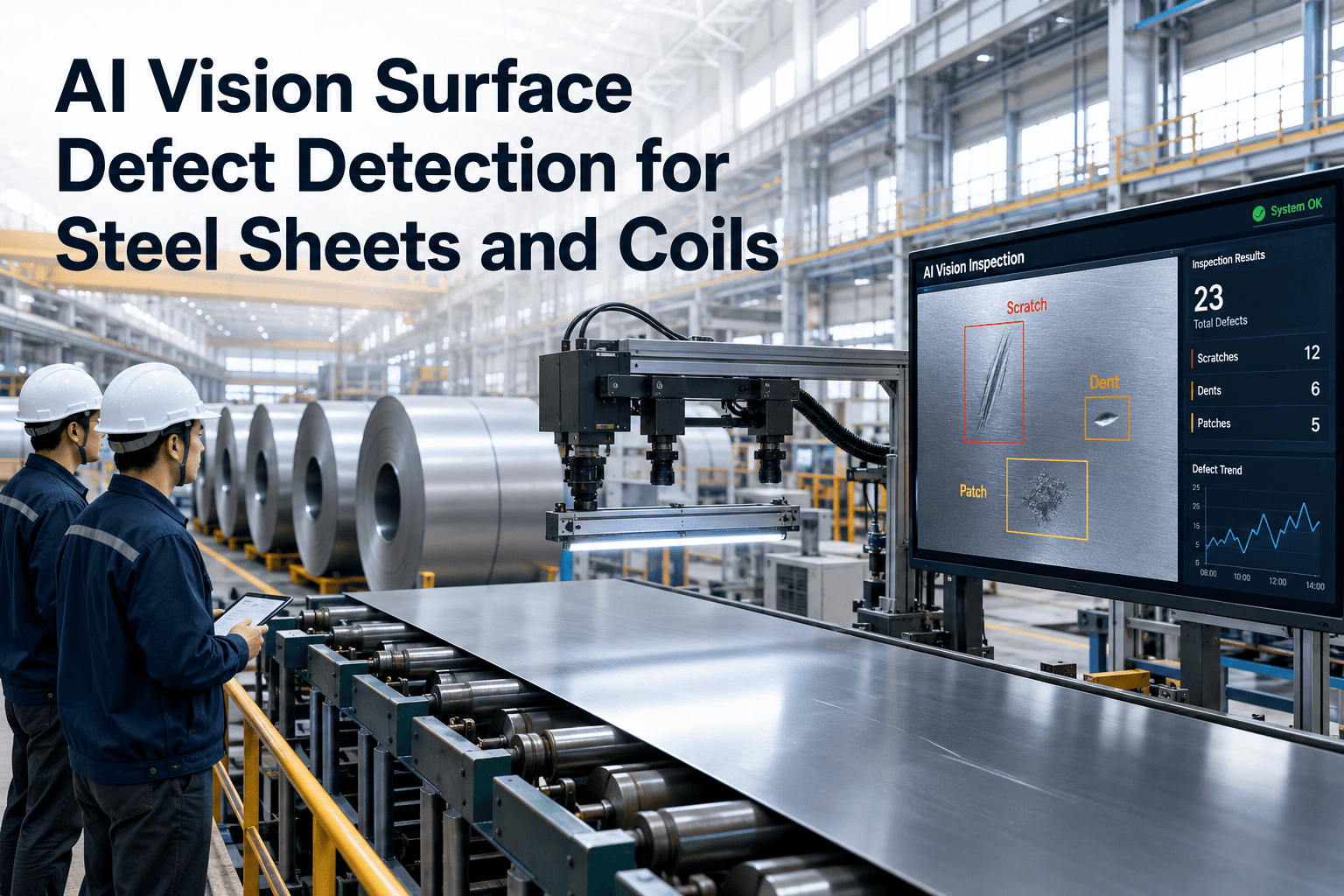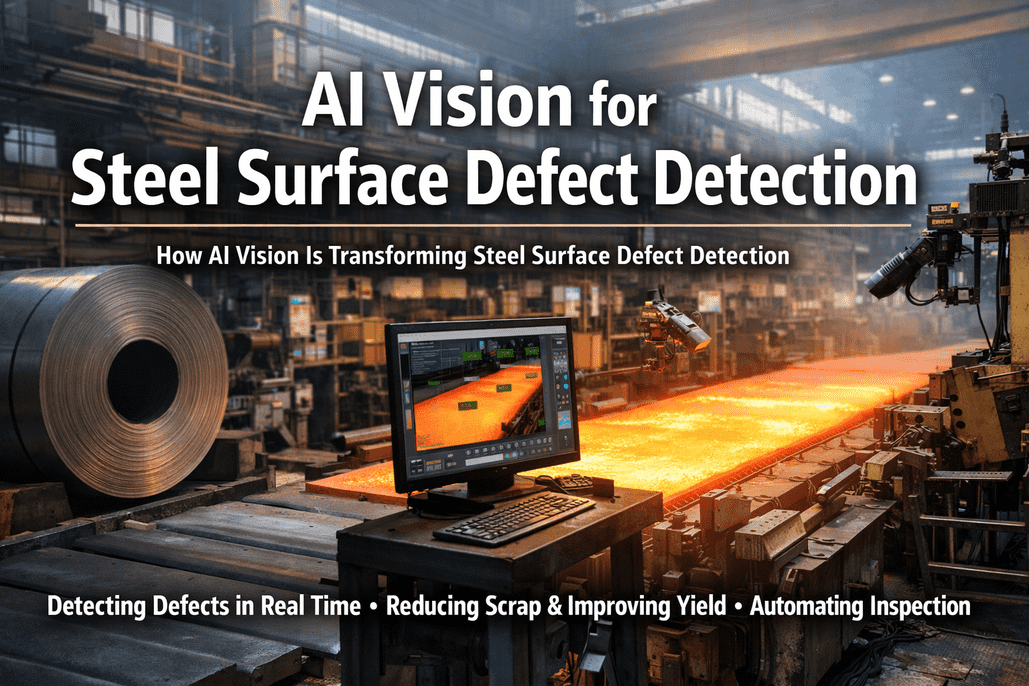
Manual steel inspection catches only 80% of defects—and that 20% slip costs manufacturers millions in scrap, rework, and customer returns. With modern steel production lines moving at speeds exceeding 20 meters per second, human inspectors simply cannot keep up. AI vision technology is changing this equation and achieving detection rates above 99% while processing thousands of inspections per minute. This guide explores how AI-powered surface inspection transforms quality control in steel manufacturing and delivers measurable ROI within months. Schedule a demo to see how iFactory brings AI vision to your steel plant.
AI Vision for Steel Surface Defect Detection
Real-Time Quality Control That Catches What Human Eyes Miss
Why Traditional Inspection Falls Short
Steel production demands speed and precision—but manual inspection can't deliver both.
Human Limitations
Inspector accuracy drops from 85% to below 70% during extended shifts. Fatigue, lighting conditions, and subjective judgment create inconsistent quality gates.
Speed Mismatch
Modern steel lines run at 20+ m/s. Human inspectors can examine perhaps 2-3 samples per minute—missing thousands of potential defects in between.
Micro-Defects
Surface defects as small as 0.1mm—hairline cracks, micro-inclusions, subtle pitting—are invisible to the naked eye but cause major product failures.
Cost Escalation
Defects discovered downstream cost 10x more to address. A $50 surface defect becomes a $50,000 warranty claim when it reaches the customer.
What AI Vision Detects on Steel Surfaces
Six primary defect categories that impact steel quality and performance.
Cracks & Crazing
Surface fractures from thermal stress, improper rolling, or material fatigue. Can propagate and cause structural failure.
Inclusions
Non-metallic particles (oxides, sulfides, silicates) trapped during manufacturing. Weaken material integrity and corrosion resistance.
Patches
Irregular surface areas with different texture or color. Indicate contamination, uneven coating, or processing anomalies.
Pitted Surface
Localized corrosion holes that compromise surface integrity. Often caused by chloride exposure or environmental factors.
Rolled-in Scale
Oxide scale pressed into surface during rolling. Creates weak spots and surface imperfections affecting finish quality.
Scratches
Linear surface marks from handling, processing, or equipment contact. Impact appearance and can initiate corrosion.
Need to detect these defects in your steel plant? Contact our support team to explore AI-powered inspection.
AI Vision Detection Pipeline
From image capture to defect classification in milliseconds.
High-Speed Imaging
Line-scan cameras capture steel surfaces at production speeds. Multiple angles and specialized lighting reveal surface anomalies invisible under normal conditions.
Neural Network Analysis
Deep learning models (CNNs, YOLO, Vision Transformers) analyze images in real-time. Trained on millions of defect samples for pattern recognition.
Classification & Localization
System identifies defect type, severity, and exact position. Generates bounding boxes and confidence scores for each detection.
Automated Response
Instant alerts, automatic grading, and reject triggers. Data feeds into quality dashboards for trend analysis and process optimization.
See AI Vision in Action for Steel Inspection
Watch a live demonstration of real-time defect detection, automated classification, and quality analytics tailored for steel manufacturing.
Manual vs. AI-Powered Inspection
See why leading steel manufacturers are making the switch.
ROI of AI Vision Implementation
Real results from steel manufacturers who've made the transition.
Early defect detection prevents downstream waste. Catching issues at the source means fewer rejected coils, sheets, and finished products.
Defects that previously reached customers are now caught in-plant. Reduced warranty claims and customer complaints build stronger relationships.
Most implementations achieve complete ROI within 14 months through combined savings in labor, scrap, rework, and warranty costs.
Production trials show AI vision achieving up to 10x better accuracy than general-purpose machine learning approaches.
With AI-powered inspection, we reduced customer return rates by 31% within 18 months. The system catches defects our best inspectors simply couldn't see.
AI Vision for Steel: What You Need to Know
99.8% accuracy on defects as small as 0.1mm—surpassing human inspection capability by significant margins
6 defect types detected: cracks, inclusions, patches, pitted surfaces, rolled-in scale, and scratches
Real-time processing at production speeds—no bottlenecks, no sampling, 100% inspection coverage
14-month typical ROI through reduced scrap, fewer customer returns, and lower labor costs
Continuous improvement—AI models learn from new data, adapting to evolving defect patterns
Complete audit trail for compliance, root cause analysis, and process optimization
Frequently Asked Questions
Common questions about AI vision for steel surface defect detection.
What types of steel defects can AI vision detect?
AI vision systems can detect six primary defect categories: cracks/crazing, inclusions, patches, pitted surfaces, rolled-in scale, and scratches. Advanced systems can identify defects as small as 0.1mm with 99.8% accuracy—far beyond human visual capability.
How fast can AI inspect steel surfaces?
AI vision systems process 10,000+ inspections per hour, operating at production line speeds of 20+ meters per second. Unlike manual inspection (2-3 samples/minute), AI provides 100% coverage without creating bottlenecks.
What is the ROI timeline for AI vision implementation?
Most steel manufacturers achieve complete ROI within 14 months through combined savings in labor costs, scrap reduction (typically 37%), fewer customer returns, and reduced warranty claims. Some facilities report ROI as early as 8-10 months.
Can AI vision integrate with existing production lines?
Yes. Modern AI vision systems are designed for seamless integration with existing SCADA, MES, and quality management systems. High-resolution cameras can be added to conveyor systems without major infrastructure changes, and the software connects to your existing data ecosystem.
How does AI vision handle new or unknown defect types?
AI systems use continuous learning to adapt to new defect patterns. When novel defects appear, the system flags them for review, and models can be retrained with new data. This ensures the system improves over time rather than becoming obsolete.
What hardware is required for AI-powered steel inspection?
Typical setups include high-resolution line-scan cameras, specialized lighting (to reveal surface anomalies), edge computing devices for real-time processing, and integration software. iFactory provides turnkey solutions tailored to your specific production environment.
Is AI vision reliable in harsh steel plant environments?
Industrial AI vision systems are built for harsh conditions with dust-proof casings, heat-resistant enclosures, vibration dampening, and integrated cooling. They operate reliably 24/7 in temperatures and environments typical of steel manufacturing facilities.
How do I get started with AI vision for my steel plant?
Start with a free consultation to assess your specific needs. We'll analyze your production line, defect challenges, and integration requirements, then recommend a phased implementation approach that minimizes disruption while maximizing ROI.
Ready to Transform Your Steel Quality Control?
See how iFactory's AI vision platform detects surface defects in real-time, reduces scrap, and delivers measurable ROI for steel manufacturers.