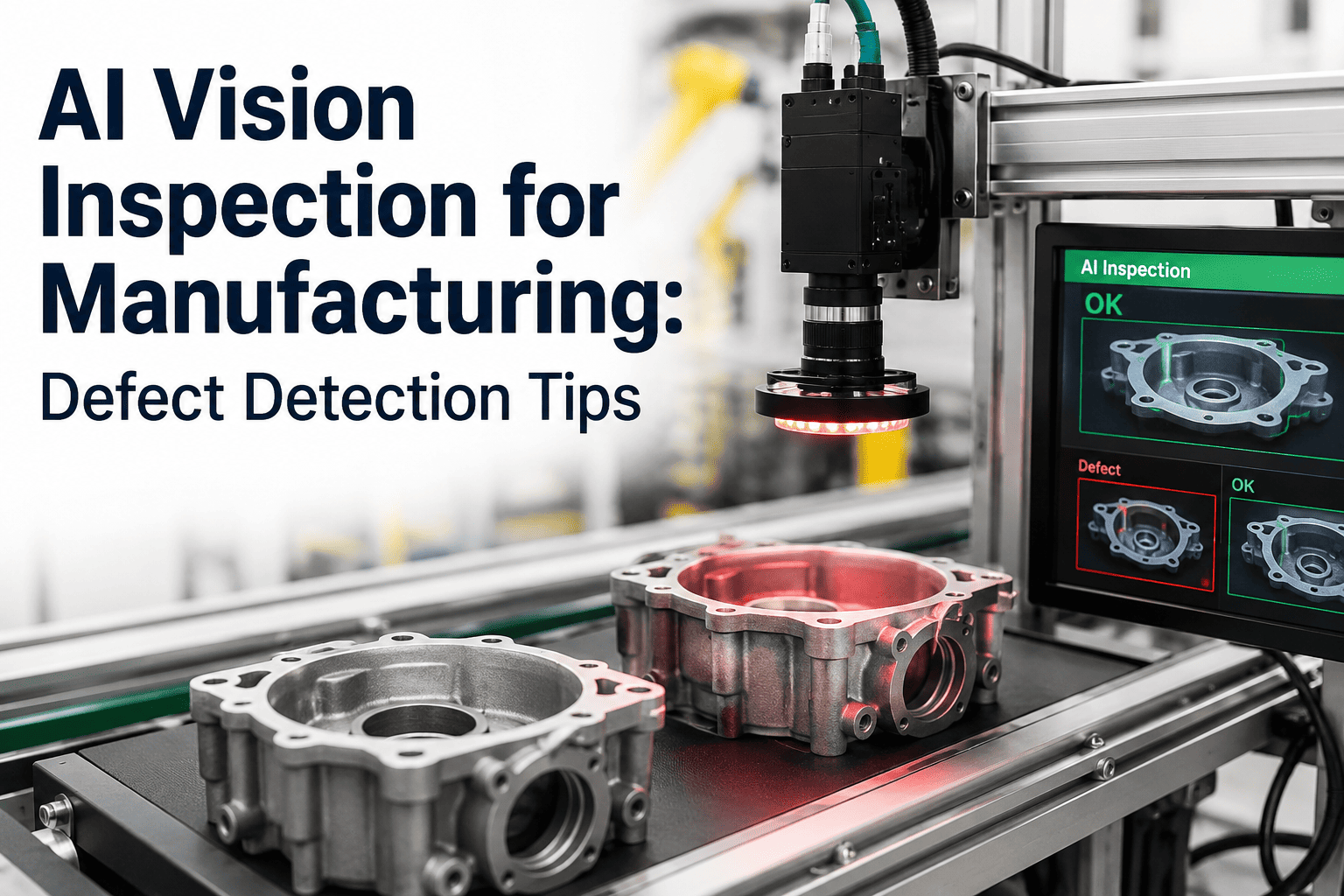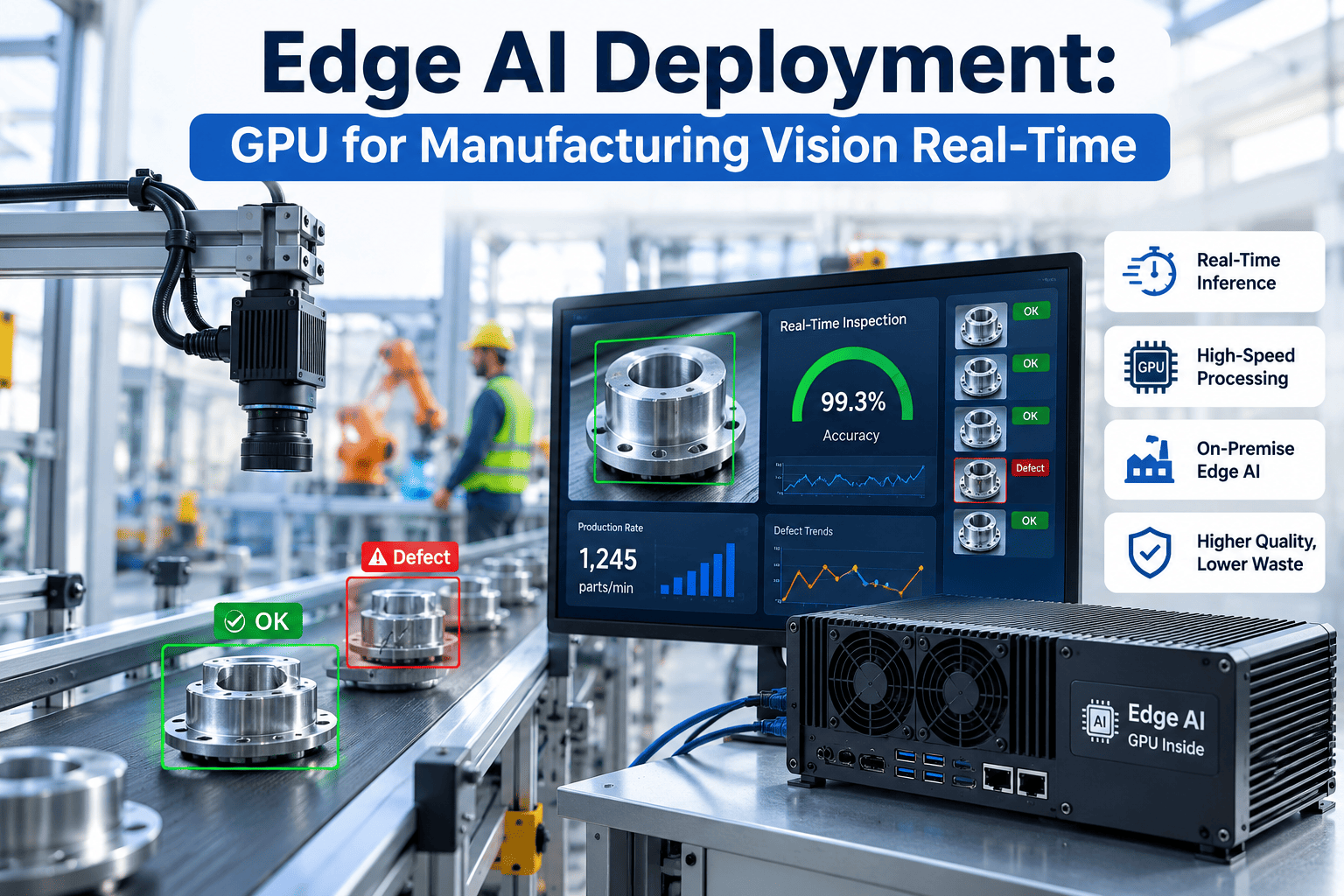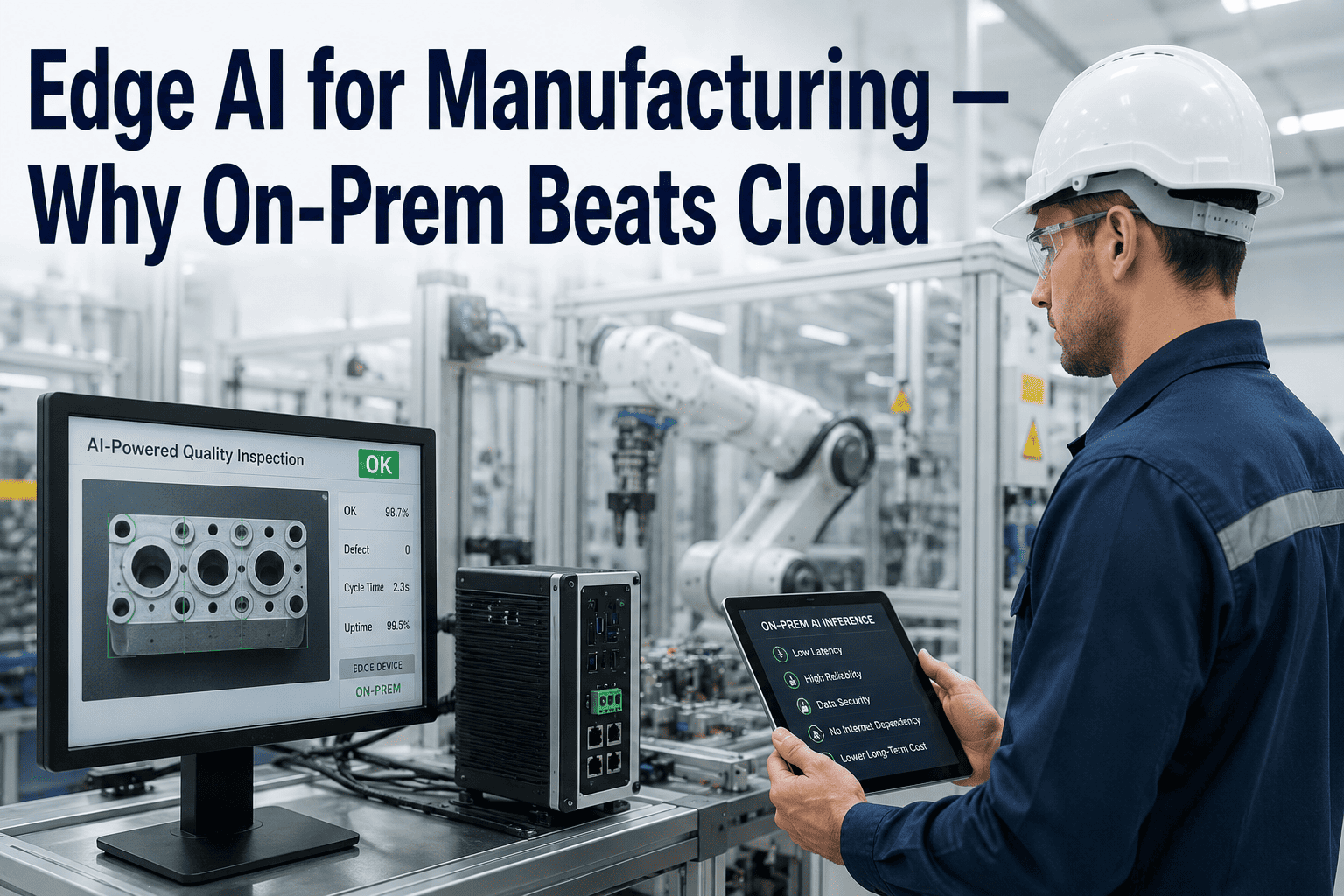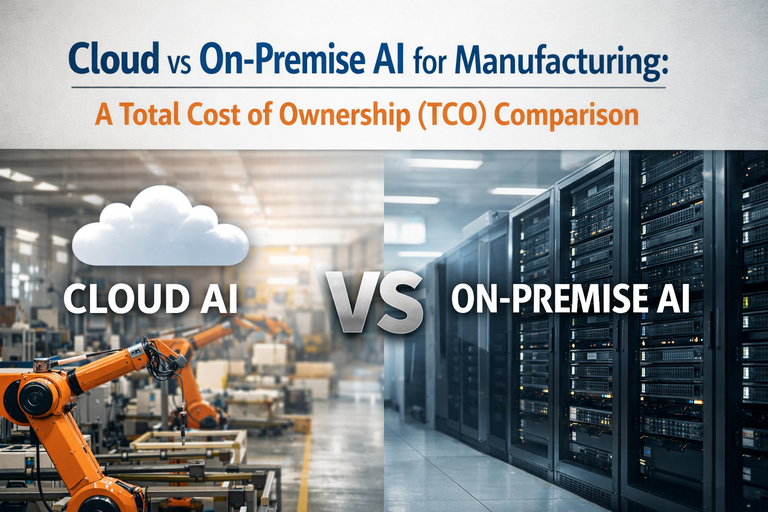
Should your AI vision system process defects on the factory floor or in a data center 500 miles away? This decision impacts everything from inspection speed to data security to total cost of ownership. With 75% of enterprise data expected to be processed outside traditional cloud data centers by 2025, manufacturers are rethinking their inspection architecture. Edge AI delivers 15-50ms response times—fast enough for production lines running 100+ parts per minute. Cloud AI offers unlimited scalability and easier model updates across multiple facilities. This guide breaks down the real differences, costs and scenarios where each approach—or a hybrid of both—delivers the best ROI. Schedule a consultation to discuss the right architecture for your plant.
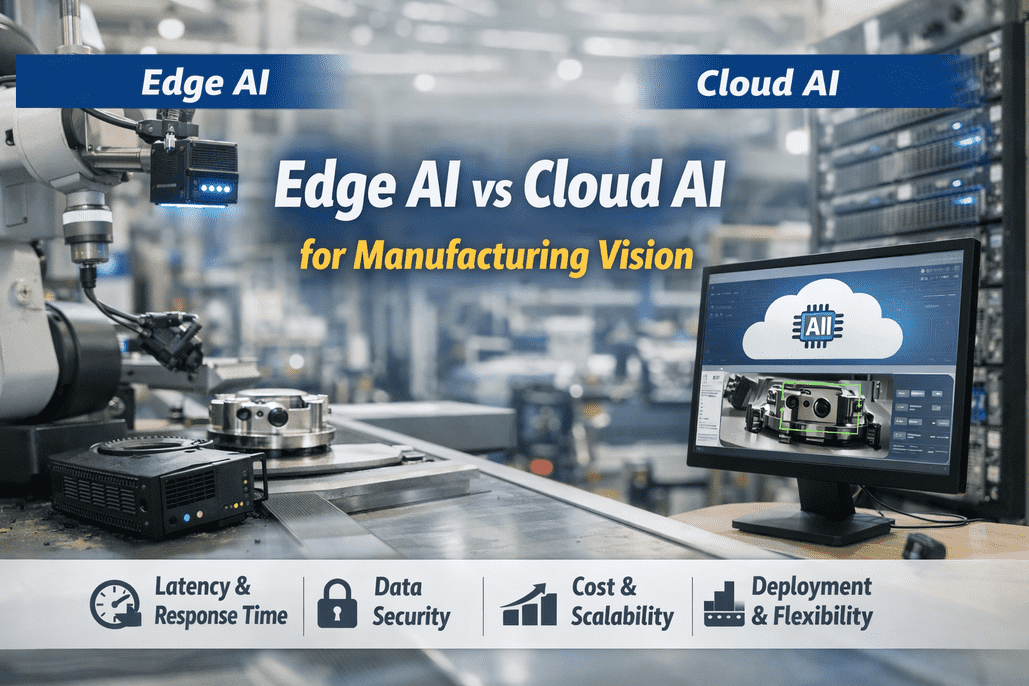
Edge AI vs Cloud AI for Manufacturing Vision
Choosing the Right Architecture for Real-Time Quality Inspection
Understanding Edge vs Cloud AI
Two distinct approaches to deploying AI for manufacturing inspection.
Edge AI
AI algorithms deployed directly on hardware devices at the data source—cameras, sensors, or industrial PCs on the factory floor.
Cloud AI
Data collected at source and sent via internet to remote data centers with elastic compute resources for processing and analysis.
The Complete Comparison
Performance metrics that matter for manufacturing inspection.
Latency / Response Time
A 1-second delay on a high-speed packaging line = 30+ potentially defective products shipped
Upfront Cost (Per Station)
Edge requires specialized hardware (industrial GPUs, edge servers); Cloud leverages existing infrastructure
Ongoing Monthly Cost
Cloud costs scale with usage: compute, storage, and data transfer fees accumulate
Internet Dependency
Edge operates offline; Cloud requires stable, high-bandwidth connectivity
Data Security & Compliance
Where your inspection data lives matters more than ever.
Edge AI: Data Stays On-Premises
- ✓ All visual inspection occurs on-site—data never leaves premises
- ✓ Simplified GDPR, ITAR, HIPAA compliance
- ✓ Zero exposure during data transmission
- ✓ Proprietary designs and processes protected
- ✓ Direct PLC/SCADA integration without middleware
Cloud AI: Data Travels Off-Site
- ! Data uploaded to third-party servers
- ! Requires encrypted pipelines and access controls
- ! Increased regulatory overhead for compliance
- ✓ SOC 2, ISO 27001 certified providers available
- ✓ Advanced encryption and access management
Get a Personalized Architecture Assessment
Our engineers analyze your production speed, data sensitivity, and infrastructure to recommend the optimal AI vision deployment—edge, cloud, or hybrid.
When to Choose Edge vs Cloud vs Hybrid
Match your requirements to the right architecture.
Choose Edge AI When
Latency under 100ms is critical
Data must stay on-premises
Network reliability is a concern
Long-term cost optimization priority
Single-site deployment
Choose Cloud AI When
Multi-site model deployment needed
Rapid model iteration required
Strong existing internet infrastructure
Lower upfront capital available
Inspection tasks less time-sensitive
Choose Hybrid When
Real-time + analytics both needed
Continuous model improvement required
Global oversight of multiple sites
Uncertain defect types emerge
Balanced budget flexibility
The Hybrid Architecture Approach
Combining edge speed with cloud intelligence for optimal results.
Feedback Loop
Edge flags uncertain results, cloud refines models, updated models deploy back to edge
Bandwidth Optimization
70-80% of raw data filtered at edge—only valuable insights sent to cloud
Resilient Operations
Production continues during outages; cloud sync resumes when connectivity returns
Ready to explore hybrid architecture for your plant? Contact support to test both edge and cloud capabilities.
Industry Trends & Statistics
of enterprise data will be processed outside traditional data centers by 2025
— Gartnerglobal edge computing spending in 2025, growing to $378B by 2028
— IDCreduction in system latency when manufacturers implement edge computing
— Industry Researchof edge computing market captured by manufacturing in 2024—the largest vertical
— Mordor IntelligenceFrequently Asked Questions
Common questions about edge vs cloud AI for manufacturing inspection.
What's the real latency difference between edge and cloud AI?
Edge AI typically delivers 15-50ms response times since processing happens locally. Cloud AI ranges from 150-500ms due to network round-trips. For a production line at 100 parts/minute, that difference means catching defects in real-time vs. after multiple defective units have passed.
Which is more cost-effective long-term?
Edge AI has higher upfront costs ($2,000-$15,000 per station) but lower ongoing fees ($100-$500/month). Cloud AI starts cheaper but ongoing compute, storage, and bandwidth can reach $500-$5,000/month per station. For 24/7 operations, edge typically achieves lower TCO within 14-18 months.
How do I handle GDPR/ITAR compliance with AI inspection?
Edge AI simplifies compliance since data never leaves your premises. With cloud AI, you need encrypted pipelines, data processing agreements, and potentially regional data centers. For defense, aerospace, or pharmaceutical manufacturing, edge is typically required for compliance.
What happens when internet connectivity fails?
Edge AI continues operating—inspection never stops. Cloud AI stops working entirely without connectivity. Hybrid systems maintain edge processing for production continuity while syncing to cloud when connection restores. This resilience is critical for 24/7 manufacturing.
Can I update AI models easily with edge deployment?
Traditionally, edge required physical access for updates. Modern edge platforms now support OTA (over-the-air) updates, though not as seamlessly as cloud. Hybrid architectures solve this—train models in cloud, then push updates to edge devices across all facilities simultaneously.
What hardware do I need for edge AI inspection?
Typical setups include industrial-grade GPUs (NVIDIA Jetson, Intel Movidius), ruggedized edge servers, high-resolution line-scan cameras, and specialized lighting. Hardware must withstand factory conditions: temperature extremes, vibration, dust, and moisture.
How does hybrid architecture actually work?
Edge devices handle real-time inspection and immediate pass/reject decisions. Images with uncertain confidence scores (typically 0.4-0.7) are flagged and sent to cloud for human review. Cloud aggregates data for analytics, model retraining, and deploys improved models back to edge.
How do I get started with AI vision inspection?
Start with a free architecture assessment. We'll analyze your production speed, data sensitivity, connectivity, and budget to recommend the optimal approach. Most manufacturers begin with a pilot on one line before scaling.
Build the Right AI Vision Architecture for Your Plant
Whether edge, cloud, or hybrid—iFactory helps manufacturers deploy AI inspection that matches their speed, security, and scalability requirements.