
It's 2:00 AM at a Gujarat cement plant. The kiln operator stares at 47 different screens—SCADA showing kiln temperature, PLC displaying raw mill RPM, a separate system for fuel flow, Excel sheets tracking quality data from the last shift. The preheater temperature is climbing. Is it a sensor drift? Actual process issue? He doesn't know—the data exists in isolated islands. By the time he pieces together information from four different systems, the temperature has spiked to 1,520°C. Result: 22 tonnes of off-spec clinker, ₹8.4 lakhs lost, and a 6-hour production halt for kiln stabilization. The data existed. The insights didn't.
Indian cement plants generate 2-3 terabytes of operational data monthly. Yet 94% of this data sits unused—trapped in disconnected systems, never converted into actionable insights. Plants operate with 20-30% efficiency gaps simply because humans can't process 10,000+ data points fast enough to optimize in real-time. AI-powered data-driven manufacturing closes this gap: real-time visibility across all systems, predictive insights 2-3 hours ahead, and automated optimization that reduces costs by ₹8-12 crores annually. Here's your complete implementation roadmap.
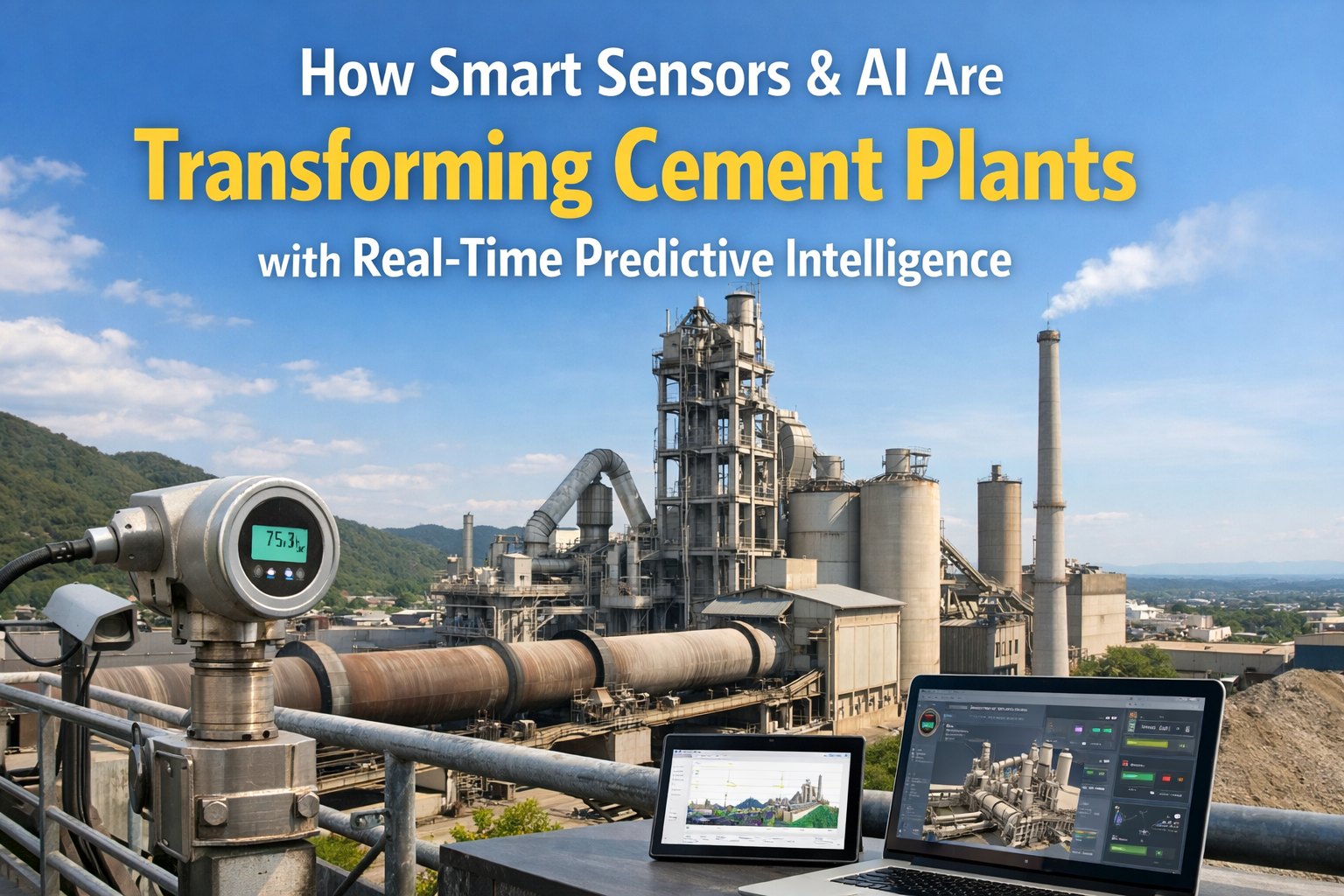
Building a Data-Driven Cement Plant: From Sensors to AI Insights
India Implementation Guide | Reduce Operating Costs ₹8-12Cr Annually | 6-Month Roadmap
The Data Visibility Crisis in Indian Cement Plants
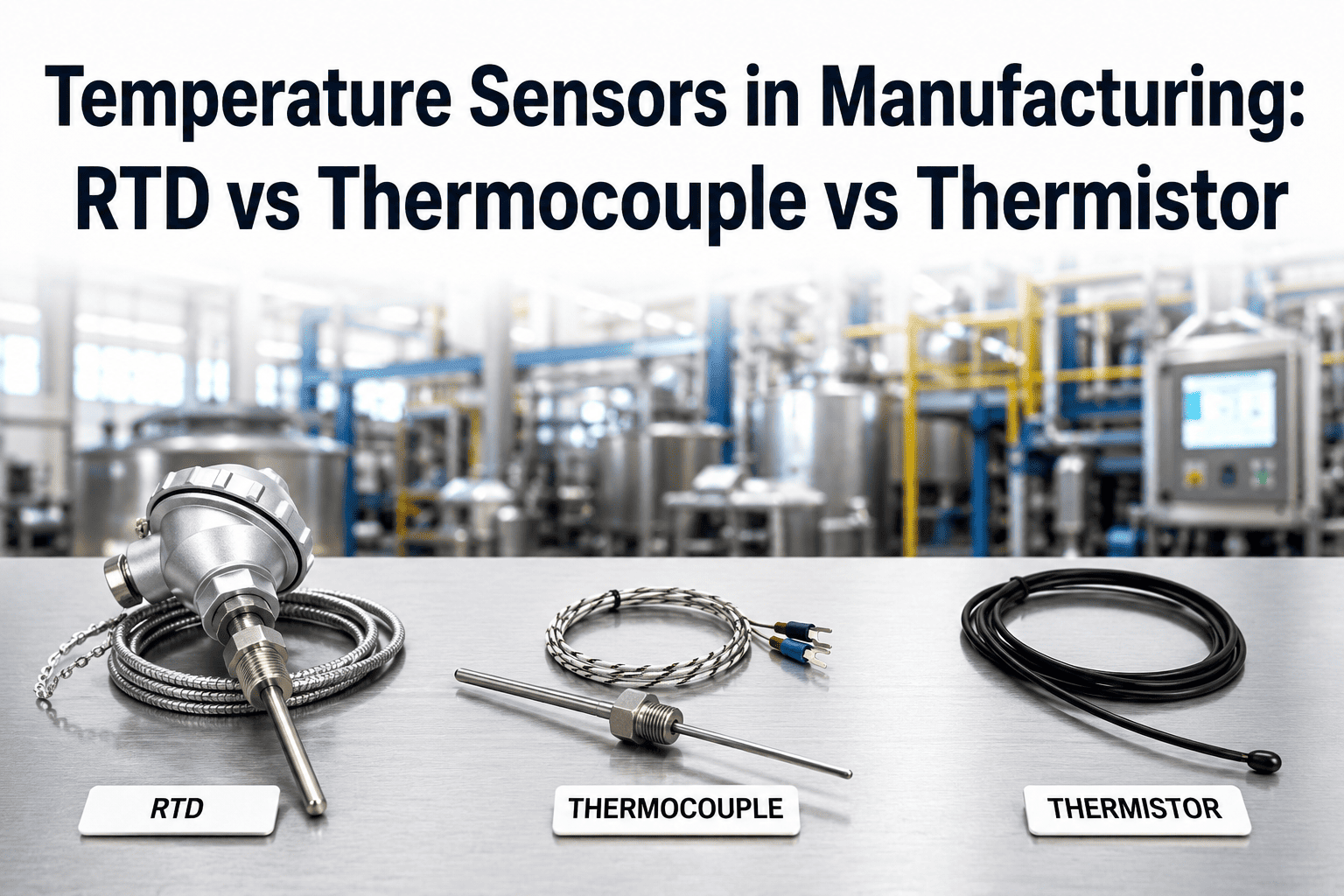
Your plant generates massive amounts of data every second. Temperature sensors (200+), pressure transmitters (150+), flow meters (80+), quality analyzers (25+), vibration monitors (100+). Every sensor produces 1-2 data points per second. That's 15,000+ measurements every minute.
But here's what actually happens:
Data Silos
SCADA system tracks process data. ERP handles production planning. LIMS manages quality data. PLC stores equipment data. None talk to each other. Operators manually correlate information.
Delayed Insights
Quality lab results come 2-3 hours after sample collection. By then, 600 tonnes of cement produced under potentially wrong parameters. Reactive corrections instead of proactive optimization.
Human Bottleneck
Operators manage 500+ process parameters mentally. Impossible to spot patterns across 10 variables simultaneously. Miss optimization opportunities worth ₹2-3 lakhs daily.
No Predictive Capability
React to problems after they occur. Equipment failures surprise you. Quality issues discovered post-production. Energy waste continues unnoticed until monthly electricity bill arrives.
Get Your Free Data Maturity Assessment
We'll analyze your current data infrastructure, identify visibility gaps, and calculate potential savings from real-time optimization. See exactly where you're losing money due to data silos.
- Current data maturity scoring
- Visibility gap identification
- Quick-win opportunities (₹)
- ROI projection for full implementation
- 6-month roadmap customized to your plant
The Five Layers of Data-Driven Manufacturing
Building a data-driven plant means creating a five-layer architecture where each layer feeds intelligence to the next. Here's what you need at each level:
Data Collection Layer: Sensor Network
What it does: Captures real-time data from every critical process point
- Process Sensors: Temperature (kiln, preheater, cooler), pressure (mill, kiln inlet/outlet), flow (raw materials, fuel, air), vibration (motors, mills, fans)
- Quality Sensors: Online analyzers (free lime, LSF, SO₃), XRF for raw mix, particle size analyzers
- Energy Meters: Electrical consumption per section, thermal energy monitoring, compressed air usage
- Equipment Health: Bearing temperature, motor current, lubrication pressure, belt tension
Most plants already have 60-70% of required sensors. The gap is usually: (1) Online quality analyzers, (2) Granular energy meters, (3) Wireless sensors for hard-to-reach locations. Investment: ₹40-60 lakhs for missing instrumentation.
Data Integration Layer: Unified Platform
What it does: Breaks down data silos, creates single source of truth
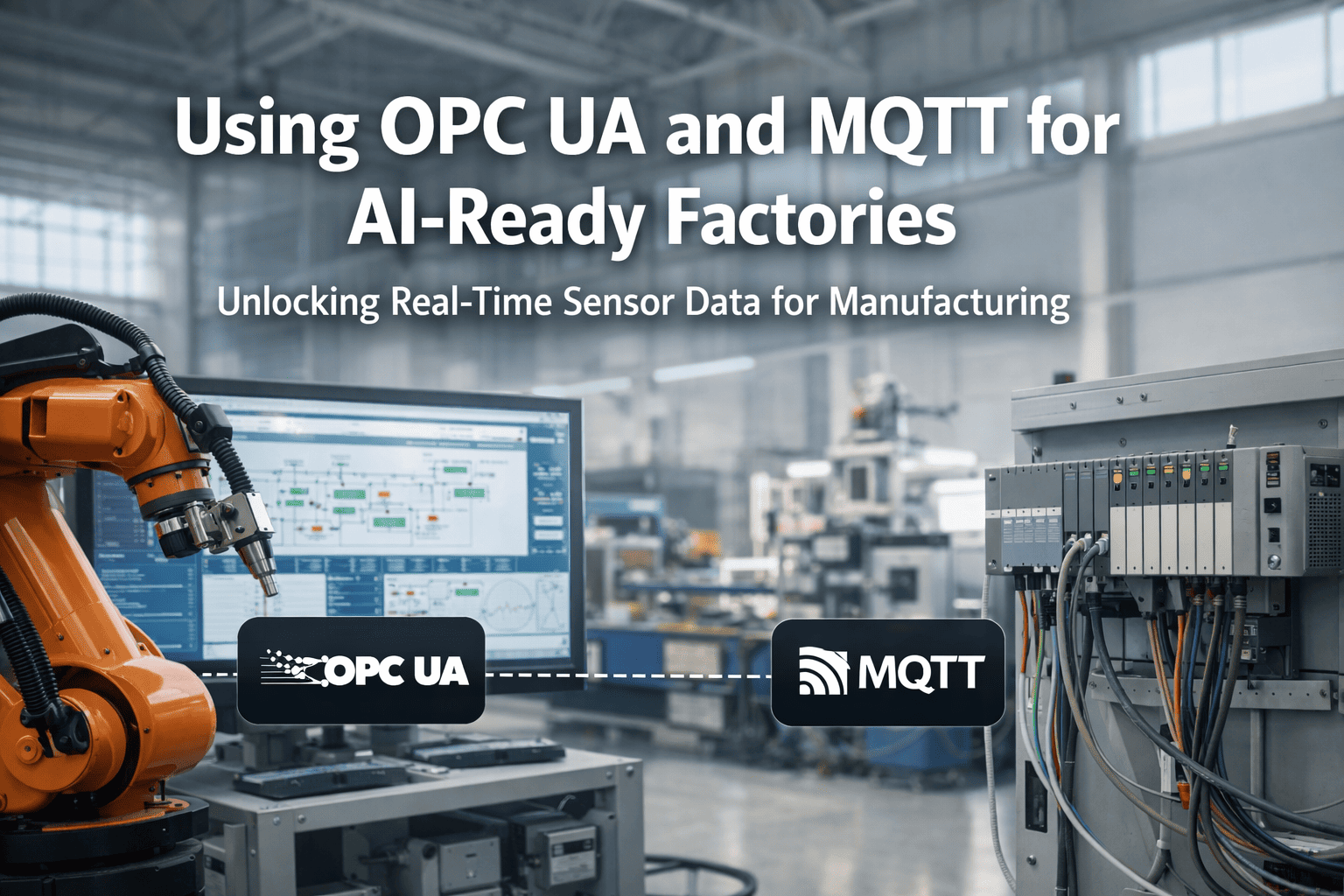
- SCADA/PLC Integration: Real-time connection to existing control systems (OPC-UA, Modbus)
- ERP Integration: Production plans, inventory, maintenance schedules
- LIMS Integration: Lab quality data, XRF results, physical testing
- Manual Data Capture: Operator observations, shift reports, maintenance logs
- Data Historian: High-speed storage for time-series data (1-second resolution)
This is where most implementations fail—poor integration architecture. Need: Industrial IoT platform with pre-built connectors for cement industry systems. Avoid custom coding nightmares. Implementation: 6-8 weeks with right platform.
Data Processing Layer: Real-Time Intelligence
What it does: Cleans, validates, and enriches raw data streams
- Data Validation: Detect sensor failures, remove outliers, flag suspicious readings
- Data Enrichment: Calculate KPIs (specific energy, clinker factor), normalize units, aggregate by time periods
- Event Detection: Identify significant process events (kiln trips, mill stoppages, quality excursions)
- Pattern Recognition: Correlate variables (how raw mix LSF affects kiln stability 90 minutes later)
Cement-specific domain knowledge is critical here. Generic data processing fails because cement processes have unique physics (burnability zones, coating formation, false set). Need: Pre-configured cement industry processing rules.
AI & Analytics Layer: Predictive Insights
What it does: Learns from historical patterns, predicts future states, recommends actions
- Predictive Quality: Forecast clinker free lime 2-3 hours ahead based on current kiln conditions
- Energy Optimization: Identify optimal mill loading, kiln speed, cooler airflow for minimum kWh/tonne
- Predictive Maintenance: Detect bearing failures 2-3 weeks early from vibration trends
- Process Optimization: Recommend feed rate, fuel mix, air distribution for target quality at lowest cost
- Root Cause Analysis: Automatically identify why free lime spiked (raw mix issue? Kiln temperature? Residence time?)
AI needs 3-6 months of clean data to learn your specific plant behavior. Start with simpler models (energy prediction), then advance to complex optimization. Don't expect magic on day 1—AI improves continuously.
Action Layer: Closed-Loop Control
What it does: Converts insights into automatic actions or operator guidance
- Operator Dashboards: Real-time recommendations ("Reduce kiln feed by 5 TPH to prevent free lime spike")
- Alert System: Predictive warnings 2-3 hours before quality issues, not after
- Automated Adjustments: AI directly adjusts set-points within safe boundaries (with operator override)
- Mobile Apps: Plant manager sees real-time KPIs, gets alerts anywhere
Start with "advisory mode"—AI recommends, operators execute. Build trust over 2-3 months. Then enable limited automation for low-risk parameters. Full closed-loop control comes after 6-9 months of validation.
Questions about architecture or implementation? Chat with implementation specialists — We'll clarify technical details for your specific setup.
6-Month Implementation Roadmap
Here's the proven phased approach that minimizes disruption while building capabilities progressively:
Phase 1: Foundation & Integration
- Audit existing sensors and systems
- Deploy missing critical sensors (30-40 new sensors typical)
- Integrate SCADA, ERP, LIMS into unified platform
- Set up data historian with 3-months historical data import
- Launch basic real-time dashboards for operators
Phase 2: KPI Visibility & Benchmarking
- Calculate 40+ key KPIs automatically (specific energy, clinker factor, mill efficiency, etc.)
- Establish performance baselines (what's "normal" for YOUR plant)
- Set up shift-wise, daily, monthly reporting
- Identify top 10 loss areas (where you're bleeding money)
Phase 3: AI Model Training & Testing
- Train AI models on 4-5 months of your plant's data
- Start with 3 high-impact use cases (energy prediction, quality prediction, predictive maintenance)
- Run models in "shadow mode"—compare AI predictions vs actual outcomes
- Validate accuracy: 85%+ prediction accuracy required before going live
Phase 4: Go-Live & Optimization
- Enable AI recommendations in operator dashboards
- Operators follow AI guidance for 2 weeks (manual execution)
- Measure impact: energy savings, quality improvement, downtime reduction
- Enable limited automation for proven low-risk adjustments
- Set up continuous learning—AI improves weekly from new data
Investment & ROI Breakdown
Total Implementation Cost: ₹1.2-1.8 Crores
Annual Savings: ₹8-12 Crores
Energy Optimization
₹4-5Cr15-20% reduction in kWh/tonne clinker. For 4000 TPD plant consuming 110 kWh/tonne, saving 15 kWh = ₹33 lakhs/month
Quality Improvement
₹1.5-2CrReduce off-spec clinker from 2-3% to <0.5%. Save reprocessing costs, enable premium product positioning
Unplanned Downtime
₹1.5-2.5CrPredictive maintenance prevents 2-3 major equipment failures annually. Each failure = ₹60-80 lakhs (lost production + repairs)
Raw Material Optimization
₹1-1.5CrTighter raw mix control reduces limestone usage by 1-2%, saves expensive additives, improves grindability
See Live Data-Driven Plant Demo
Watch real-time dashboards, AI predictions in action, and see exactly how operators use insights. 30-minute demo shows what 6 months of implementation delivers.
Case Study: Rajasthan Cement Plant Transformation
4200 TPD Plant | 18-Month Post-Implementation Results
Baseline: SCADA + manual quality tracking | 115 kWh/tonne clinker | 2.3% off-spec clinker | 4.2 unplanned stops/month
- Month 1-2: Installed 38 additional sensors, integrated 5 legacy systems into unified platform
- Month 3: Identified ₹42 lakhs/month energy waste from sub-optimal mill loading patterns
- Month 4-5: AI models trained on 6 months historical data, achieved 87% prediction accuracy
- Month 6: Went live with energy optimization—saved ₹28 lakhs in first month
- Month 7-12: Added predictive quality, predictive maintenance modules—prevented 3 major equipment failures
- Month 13-18: Continuous improvement phase—AI learning refined, operators fully trained, savings stabilized at ₹9.8Cr annually
"The turning point was when operators saw AI predict a free lime spike 2.5 hours before it happened. They adjusted kiln parameters based on the alert, and the spike never occurred. That moment built trust in the system."
— Plant Head, Rajasthan Cement Plant
Data-Driven Cement Plant Takeaways
- ₹8-12 Crores annual savings achievable for 4000 TPD plant through energy optimization, quality improvement, and predictive maintenance
- 6-month implementation from sensor deployment to live AI optimization with phased approach minimizing risk
- Five-layer architecture required: Sensors → Integration → Processing → AI → Action. Missing any layer breaks the chain.
- Operator buy-in is critical—technology succeeds when humans trust and use insights. Training and change management are mandatory.
- 14-18 month payback with 450-600% ROI over 5 years. Investment justified purely on energy savings alone.
- Start with quick wins—energy prediction and basic dashboards. Build confidence before complex optimization.
Ready to Build Your Data-Driven Cement Plant?
Free Data Maturity Assessment: We'll analyze your current infrastructure, identify gaps, and calculate potential savings.
See exactly what data-driven transformation means for YOUR plant.


.jpeg)
