Artificial intelligence is fundamentally transforming manufacturing operations by creating intelligent, adaptive, and autonomous smart factories. These advanced facilities leverage AI-powered systems to optimize production processes, predict equipment failures, ensure quality consistency, and respond dynamically to changing market demands. Smart factories powered by AI represent the pinnacle of Industry 4.0 evolution—integrating machine learning, computer vision, predictive analytics, and cognitive automation to achieve operational excellence that traditional manufacturing approaches simply cannot match.
Manufacturers implementing AI-driven smart factory solutions through platforms like iFactoryapp are experiencing transformational results including 40-60% productivity improvements, 35-50% reduction in operational costs, 30-45% quality enhancement, and 50-70% faster time-to-market for new products. These intelligent manufacturing environments continuously learn, adapt, and improve—creating self-optimizing operations that define competitive leadership in modern manufacturing industries.
The global smart factory market is projected to reach $395 billion by 2030, with 91% of manufacturers actively investing in AI technologies. Early adopters are already seeing 55% average productivity improvements with 5.2x ROI on their smart factory investments.
What is AI for Smart Factories?
AI for smart factories encompasses comprehensive artificial intelligence applications that enable manufacturing facilities to operate autonomously, optimize continuously, and adapt intelligently to changing conditions. These systems integrate machine learning algorithms analyzing production data in real-time, computer vision inspecting products with superhuman accuracy, predictive analytics forecasting equipment failures and quality deviations, natural language processing enabling intuitive human-machine interaction, and cognitive automation orchestrating complex manufacturing workflows without human intervention.
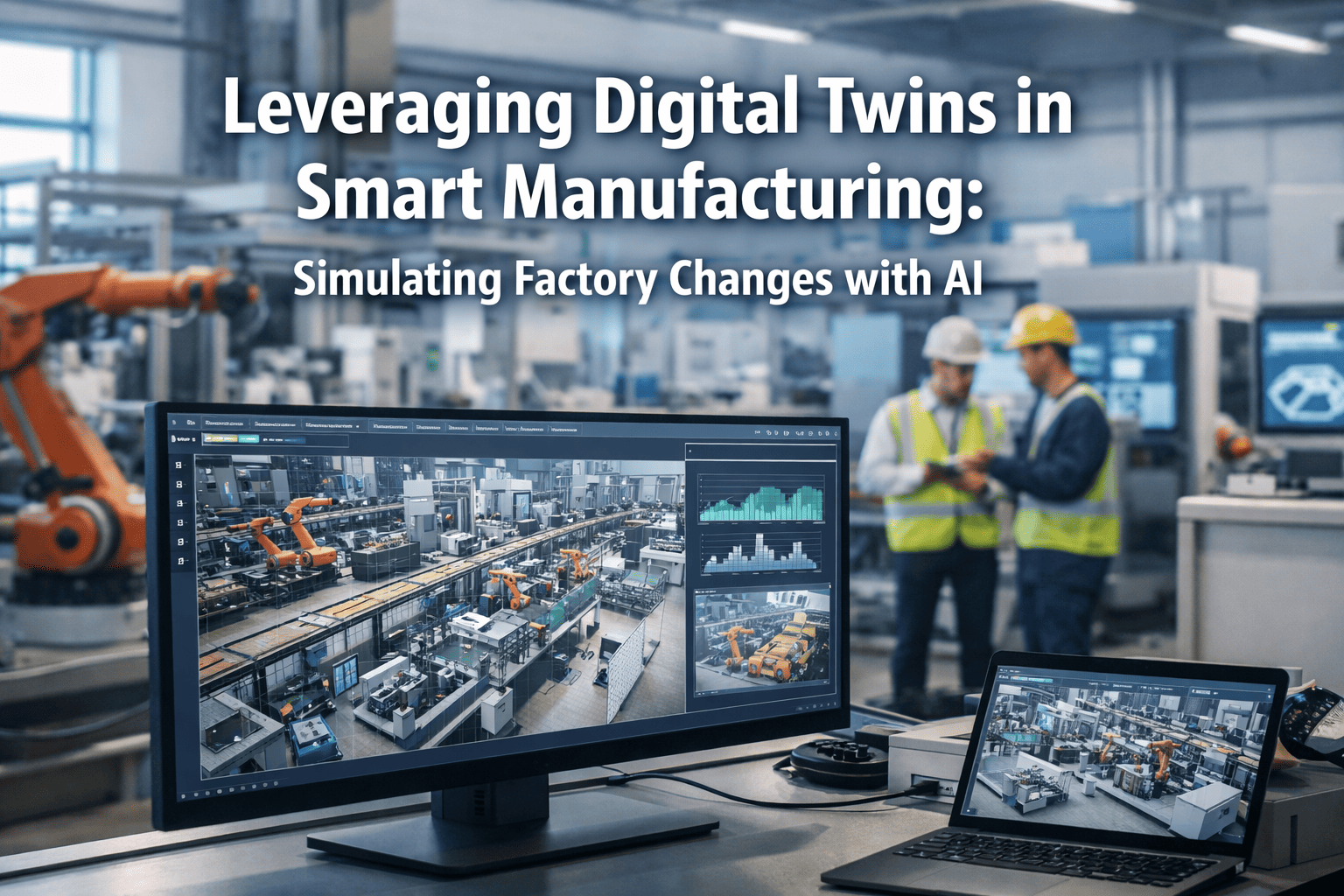
Smart factory AI extends beyond isolated automation solutions to create holistic intelligent manufacturing ecosystems. Connected sensors throughout facilities generate continuous data streams that AI systems analyze discovering optimization opportunities, predicting problems before occurrence, and recommending actions maximizing efficiency while maintaining quality. Digital twins create virtual replicas of physical operations enabling simulation-based optimization and risk-free experimentation. Autonomous robots collaborate with human workers adapting to dynamic production requirements. Intelligent supply chains coordinate material flows optimizing inventory while ensuring production continuity.
Core AI Applications Transforming Manufacturing
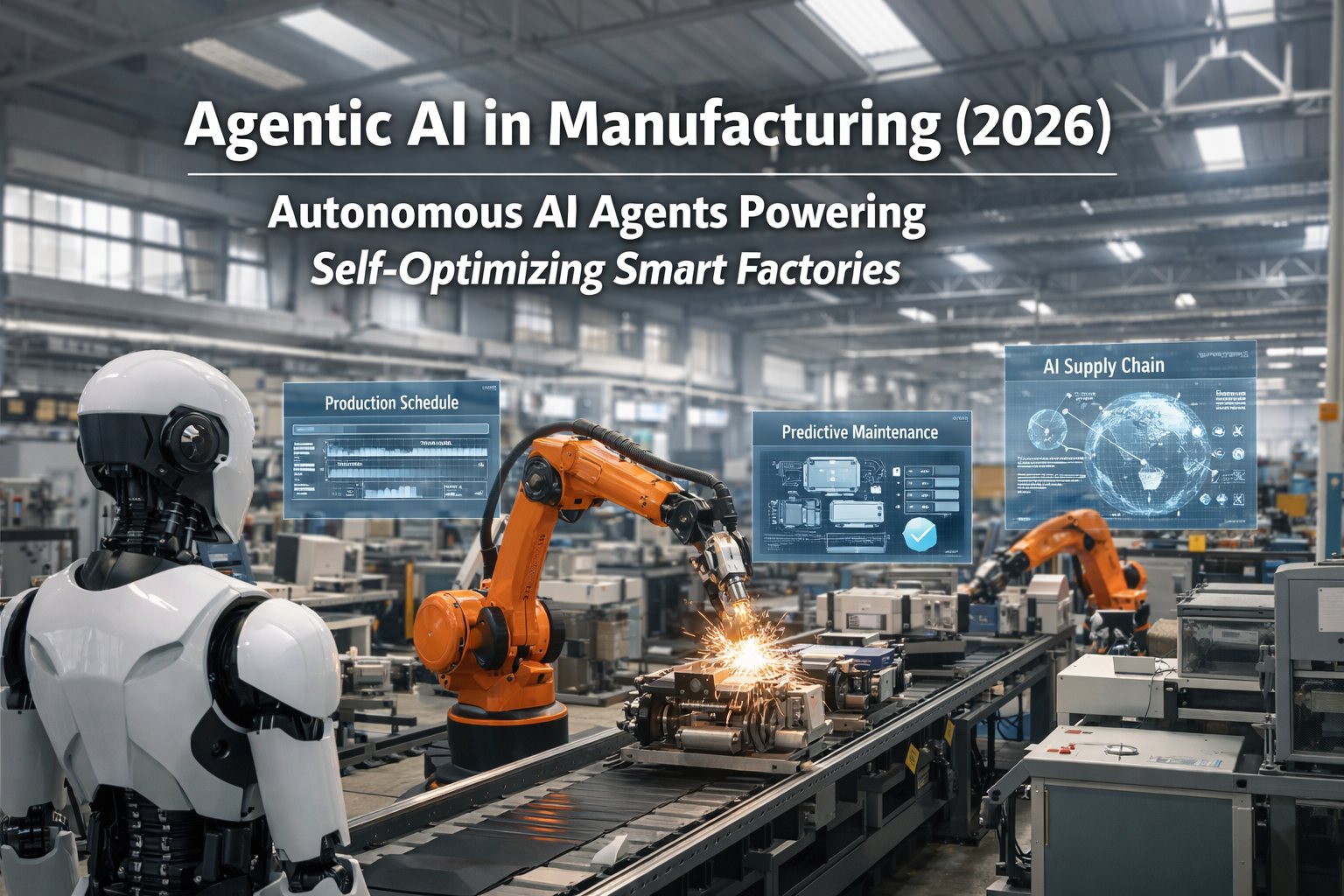
Intelligent Production Control: AI algorithms continuously optimize production parameters, schedules, and resource allocation responding to demand changes, equipment conditions, and material availability in real-time. Machine learning discovers patterns in operational data identifying efficiency opportunities that human planners would never recognize.
Predictive Quality Management: Machine learning models forecast product quality based on process parameters enabling proactive adjustments preventing defects before production rather than detecting them afterward. Computer vision systems inspect every product at production speeds with consistency impossible for human inspectors.
Cognitive Maintenance Systems: AI analyzes equipment sensor data predicting failures weeks in advance enabling condition-based maintenance optimizing asset utilization while minimizing unplanned downtime. Predictive models identify subtle degradation patterns forecasting problems before they impact operations.
Adaptive Manufacturing: Smart factories dynamically reconfigure production processes, tooling, and workflows accommodating product variations and customization requirements without manual reprogramming. AI enables mass customization economics previously impossible with traditional manufacturing systems.
Why Smart Factory Innovation Matters
Manufacturing industries face unprecedented competitive pressures requiring transformational responses that incremental improvements cannot deliver. Customer demands for mass customization, rapid delivery, and perfect quality contradict traditional manufacturing economics favoring standardization and scale. AI-powered smart factories resolve these tensions through intelligent flexibility—enabling economical production of customized products, rapid changeovers between variants, and consistent quality regardless of complexity or volume.
| Challenge | Traditional Approach | Smart Factory Solution |
|---|---|---|
| Product Variety | Costly changeovers limiting variety | AI-enabled rapid reconfiguration for mass customization |
| Quality Consistency | Manual inspection with human variability | Computer vision with 99.9% accuracy at production speed |
| Equipment Reliability | Reactive repairs causing downtime | Predictive maintenance preventing 70% of failures |
| Production Optimization | Periodic manual adjustments | Continuous AI optimization discovering hidden efficiencies |
| Workforce Challenges | Dependent on scarce skilled labor | AI augmentation multiplying workforce capabilities |
Global competition intensifies as manufacturers in emerging markets achieve cost advantages while developed markets face rising labor expenses and skills shortages. Smart factories leveraging AI create productivity and quality advantages offsetting cost disadvantages—fewer workers achieve higher output through cognitive augmentation while automated quality systems ensure consistency impossible with manual inspection. Schedule a consultation to explore how smart factory AI can strengthen your manufacturing competitiveness.
Transform Your Manufacturing with Smart Factory AI
Discover how iFactoryapp's advanced AI solutions enable manufacturers to build intelligent, adaptive, and autonomous smart factories achieving breakthrough operational performance.
Book a Demo Contact SupportBenefits: Achieving Productivity and Flexibility
AI-powered smart factories deliver comprehensive benefits spanning productivity, quality, flexibility, and strategic capabilities. Manufacturers implementing smart factory solutions through platforms like iFactoryapp achieve measurable improvements creating sustainable competitive advantages through technology-enabled manufacturing excellence.
Productivity Maximization Through Intelligence
Productivity represents fundamental competitive requirement in manufacturing as output per resource input directly determines cost competitiveness and profitability. AI-powered smart factories achieve dramatic productivity improvements through comprehensive optimization discovering efficiency opportunities invisible to human operators and traditional systems.
Intelligent Production Scheduling optimizes equipment utilization, material flows, and workforce allocation maximizing throughput from existing assets without capital investment. AI discovers scheduling strategies balancing multiple constraints that human planners cannot solve optimally.
Predictive Maintenance Enabled by AI reduces unplanned downtime 50-70% by forecasting equipment failures enabling proactive interventions during scheduled windows rather than disruptive emergency repairs. Manufacturers save millions annually avoiding lost production and emergency costs.
Quality Improvements from AI-Powered Systems reduce waste, rework, and scrap by 30-45% translating directly to productivity gains as resources produce saleable products rather than defects. Computer vision catches defects that human inspectors miss preventing quality escapes.
Energy Optimization Through AI discovers operating parameters minimizing power consumption per unit produced reducing costs 20-35% while supporting sustainability goals. Machine learning identifies efficiency opportunities across complex interdependent systems.
Workforce productivity multiplies through cognitive augmentation as AI systems provide real-time guidance, automated quality checks, and intelligent decision support enabling workers to focus on higher-value activities. Digital work instructions adapting dynamically to specific products and worker skill levels reduce errors while accelerating training.
Manufacturing Flexibility and Agility
Manufacturing flexibility enables producing diverse products economically responding to market demands without extensive reconfiguration or excessive changeover times. Traditional factories optimized for high-volume standardized production struggle with product variety requiring lengthy manual adjustments between variants.
AI-powered smart factories achieve mass customization economics through adaptive systems automatically configuring processes, tooling, and quality parameters for each product variant without manual programming or setup. Rapid changeovers enabled by intelligent systems reduce transition times between products by 60-80% compared to manual approaches enabling economical production of smaller batches and greater product variety.
Leading manufacturers report 58% productivity improvement, 52% cost reduction, 65% faster time-to-market, and 42% quality enhancement from smart factory AI implementations.
How It Works: Factory AI Technology Implementation
Implementing AI in smart factories requires systematic approaches integrating technology deployment with organizational transformation ensuring initiatives deliver measurable value while building capabilities for continued evolution. Successful implementations follow proven methodologies managing complexity while maintaining production continuity.
Phase 1: Strategy & Assessment (Months 1-3)
Define smart factory vision aligned with business objectives, assess current operational maturity, identify priority use cases with clear ROI potential, and develop comprehensive implementation roadmap. Establish governance structures, secure executive sponsorship, and build cross-functional teams combining operational expertise with technical capabilities.
Phase 2: Foundation Infrastructure (Months 4-8)
Deploy IoT sensor networks capturing production data, establish connectivity infrastructure, implement edge computing for real-time processing, deploy cloud platforms for centralized analytics, and ensure cybersecurity protecting connected systems. Create unified data architecture enabling AI applications while integrating with existing enterprise systems.
Phase 3: AI Solution Development (Months 9-14)
Develop AI models for priority applications including predictive maintenance, quality forecasting, and production optimization. Train algorithms using historical operational data, validate accuracy through testing, and deploy pilots demonstrating measurable benefits. Iterate based on feedback refining models and building organizational confidence.
Phase 4: Scale & Integration (Months 15-20)
Expand successful pilots across production lines and facilities, integrate AI systems with operational workflows, deploy additional use cases, and establish continuous improvement processes. Build internal capabilities through training, documentation, and knowledge transfer ensuring sustainable operation.
Phase 5: Advanced Capabilities (Months 21+)
Deploy autonomous optimization, implement digital twin simulation, enable adaptive manufacturing, and integrate supply chain intelligence. Establish innovation programs exploring emerging AI capabilities and maintain competitive leadership through continuous technology advancement.
Case Studies: Smart Factory Success Stories
Leading manufacturers globally demonstrate smart factory AI's transformative potential through measurable improvements across operational, financial, and strategic metrics.
Automotive Manufacturer: Intelligent Production Excellence
A major automotive manufacturer implemented comprehensive smart factory AI across 18 assembly plants producing multiple vehicle models. They faced challenges including complex production scheduling with hundreds of configuration options, quality consistency requirements with zero-defect expectations, and need for productivity improvements maintaining cost competitiveness.
Electronics Producer: Adaptive Manufacturing Leadership
A global electronics manufacturer deployed AI-powered smart factory capabilities across 12 facilities producing consumer devices. They addressed rapid product lifecycles requiring frequent new product introductions, mass customization demands from consumers, and competitive pressure from rivals leveraging automation advantages.
Industrial Equipment: Predictive Excellence
An industrial equipment manufacturer implemented AI-driven smart factory solutions addressing complex custom products requiring engineering-to-order approaches, long production cycles with significant work-in-progress inventory, and need for operational efficiency improvements offsetting customization complexity costs.
Challenges: Addressing Integration Issues
Smart factory AI implementation faces significant challenges requiring systematic approaches and comprehensive mitigation strategies. Understanding obstacles and proven solutions enables manufacturers to manage transformation risks effectively.
Common Implementation Challenges and Solutions
- Technology Integration Complexity: Connecting AI with diverse equipment and legacy systems requires specialized expertise and careful architecture design. Solution: Partner with experienced providers like iFactoryapp offering proven integration frameworks.
- Data Infrastructure Requirements: AI effectiveness depends on comprehensive high-quality data that many facilities lack. Solution: Phased sensor deployment prioritizing highest-impact applications first while building data governance.
- Skills and Expertise Gaps: AI development requires capabilities scarce in manufacturing organizations. Solution: Strategic workforce development combined with partnerships accessing external expertise.
- Change Management Resistance: Workforce concerns about AI replacing jobs create adoption barriers. Solution: Comprehensive change management emphasizing augmentation rather than replacement with demonstrated quick wins.
- Cybersecurity Risks: Connected factories create expanded attack surfaces requiring robust protection. Solution: Security-by-design architecture with continuous monitoring and zero-trust principles.
- Investment Justification: Substantial transformation costs create approval challenges. Solution: Phased approaches demonstrating value progressively with pilot ROI funding subsequent phases.
Future: Emerging Smart Factory Trends
Smart factory evolution continues as AI technologies mature, adoption accelerates, and innovations emerge creating new possibilities. Understanding trends enables strategic planning positioning manufacturers for sustained competitive advantage.
Autonomous Manufacturing Operations
Future smart factories will feature self-managing systems operating with minimal human supervision through advanced AI continuously optimizing processes, coordinating equipment, and adapting to conditions automatically. Workers will focus on strategic oversight, exception handling, and innovation rather than routine control that AI handles more effectively.
Generative AI Applications
Next-generation AI will create novel product designs, process improvements, and operational strategies beyond human imagination through systematic exploration of vast solution spaces. Generative models will suggest innovative manufacturing approaches accelerating competitive differentiation.
Human-Robot Collaboration Evolution
Advanced cobots will work seamlessly alongside humans with AI enabling intuitive interaction, adaptive behavior, and safe collaboration. Collaborative systems will multiply workforce capabilities combining human creativity with robotic precision and endurance.
Edge AI Computing
Intelligent processing directly on equipment will enable real-time decision-making without cloud latency supporting mission-critical applications requiring millisecond response times. Edge AI will enable autonomous operations even with intermittent connectivity.
Sustainable Manufacturing Intelligence
AI will optimize energy consumption, waste reduction, and circular economy approaches supporting environmental goals while reducing costs through comprehensive resource efficiency. Smart factories will demonstrate how environmental performance and profitability align through intelligent operations.
Frequently Asked Questions
What is the difference between smart factories and traditional automation?
Smart factories differ fundamentally from traditional automation through intelligence, adaptability, and comprehensive integration. Traditional automation executes pre-programmed sequences performing specific tasks repeatedly without variation or learning. Smart factories leverage AI continuously analyzing data, discovering patterns, predicting outcomes, and optimizing strategies autonomously adapting to changing conditions without manual reprogramming. Traditional automation typically addresses individual processes independently while smart factories create integrated intelligent systems optimizing holistically across operations. Perhaps most importantly, smart factories improve continuously through machine learning whereas traditional automation provides static benefits.
How long does smart factory transformation typically take?
Smart factory transformation timelines vary based on scope and organizational readiness. Focused pilot programs addressing specific applications typically deliver results within 6-9 months demonstrating value and building confidence. Comprehensive single-facility transformation requires 18-24 months while enterprise-wide initiatives spanning multiple plants may extend 3-5 years. However, phased approaches enable continuous value realization throughout transformation with early successes funding subsequent phases. The key is treating smart factory evolution as continuous journey rather than one-time project, maintaining sustained commitment while adapting approaches based on demonstrated results.
What ROI can manufacturers expect from smart factory investments?
Manufacturers typically achieve 4-7x return on smart factory investment within three years through combined benefits spanning productivity improvements, quality enhancements, cost reductions, and strategic advantages. Productivity gains of 40-60% translate directly to revenue increases from existing assets without capital investment. Quality improvements of 30-45% reduce waste and warranty costs while enabling premium pricing. Energy optimization delivers 20-35% cost reductions. Predictive maintenance reducing downtime 50-70% prevents lost production and emergency repair costs. Initial returns often appear within 6-12 months as basic AI applications reveal immediate optimization opportunities while advanced capabilities deliver compounding benefits over time.
How does AI improve manufacturing quality?
AI improves manufacturing quality through multiple mechanisms. Computer vision systems inspect products with superhuman accuracy detecting defects invisible to human inspectors while operating at production speeds without fatigue. Predictive quality models analyze process parameters forecasting product characteristics before production enabling proactive adjustments preventing defects rather than detecting them afterward. Root cause analysis algorithms identify relationships between conditions and quality outcomes discovering optimization opportunities. Real-time process control leveraging AI maintains optimal operating conditions despite variations that challenge traditional static control settings. Quality improvements of 30-45% reduce customer complaints, warranty costs, and waste while enabling premium positioning.
What organizational changes are required for smart factory success?
Smart factory success requires comprehensive organizational transformation addressing culture, skills, processes, and leadership alongside technology deployment. Cultural evolution shifts decision-making from intuition-based to data-driven approaches requiring transparency and continuous learning mindsets. Skills development through training and partnerships builds capabilities managing AI systems effectively. Process redesign adapts workflows leveraging smart factory capabilities—maintenance becomes predictive, quality management shifts to prevention, and optimization occurs continuously through AI. Leadership commitment provides sustained resources and maintains focus through challenges. Workforce evolution shifts roles from manual tasks to supervisory positions overseeing AI-guided operations with focus on exception handling and continuous improvement.
Transform Manufacturing Through Smart Factory Excellence
AI-powered smart factories represent the defining competitive requirement for modern manufacturers seeking to thrive in markets where productivity, quality, flexibility, and innovation determine success. Comprehensive integration of artificial intelligence, IoT connectivity, advanced automation, and predictive analytics creates manufacturing capabilities that fundamentally surpass traditional approaches in efficiency and adaptability.
Success requires systematic approaches integrating technology with organizational transformation, building capabilities progressively, and maintaining commitment through implementation challenges toward realizing substantial long-term benefits. Manufacturers embracing smart factory strategies while developing necessary infrastructure, skills, and culture position themselves as industry leaders capable of meeting demanding market requirements.
Partnering with experienced providers like iFactoryapp accelerates smart factory deployment through proven AI platforms specifically designed for manufacturing excellence, comprehensive industry expertise, pre-built solutions reducing development time, and ongoing optimization ensuring sustained value realization.
Schedule a demo with iFactoryapp! Experience how leading manufacturers worldwide implement smart factory AI achieving breakthrough improvements in productivity, quality, flexibility, and profitability. Our specialists collaborate with you assessing opportunities, developing customized strategies, and guiding implementation ensuring you realize the full potential of intelligent manufacturing excellence!
Build Your Smart Factory Today
Join leading manufacturers leveraging iFactoryapp to implement AI-powered smart factory solutions delivering transformational improvements in operational performance and competitive positioning.
Book a Demo Contact Support