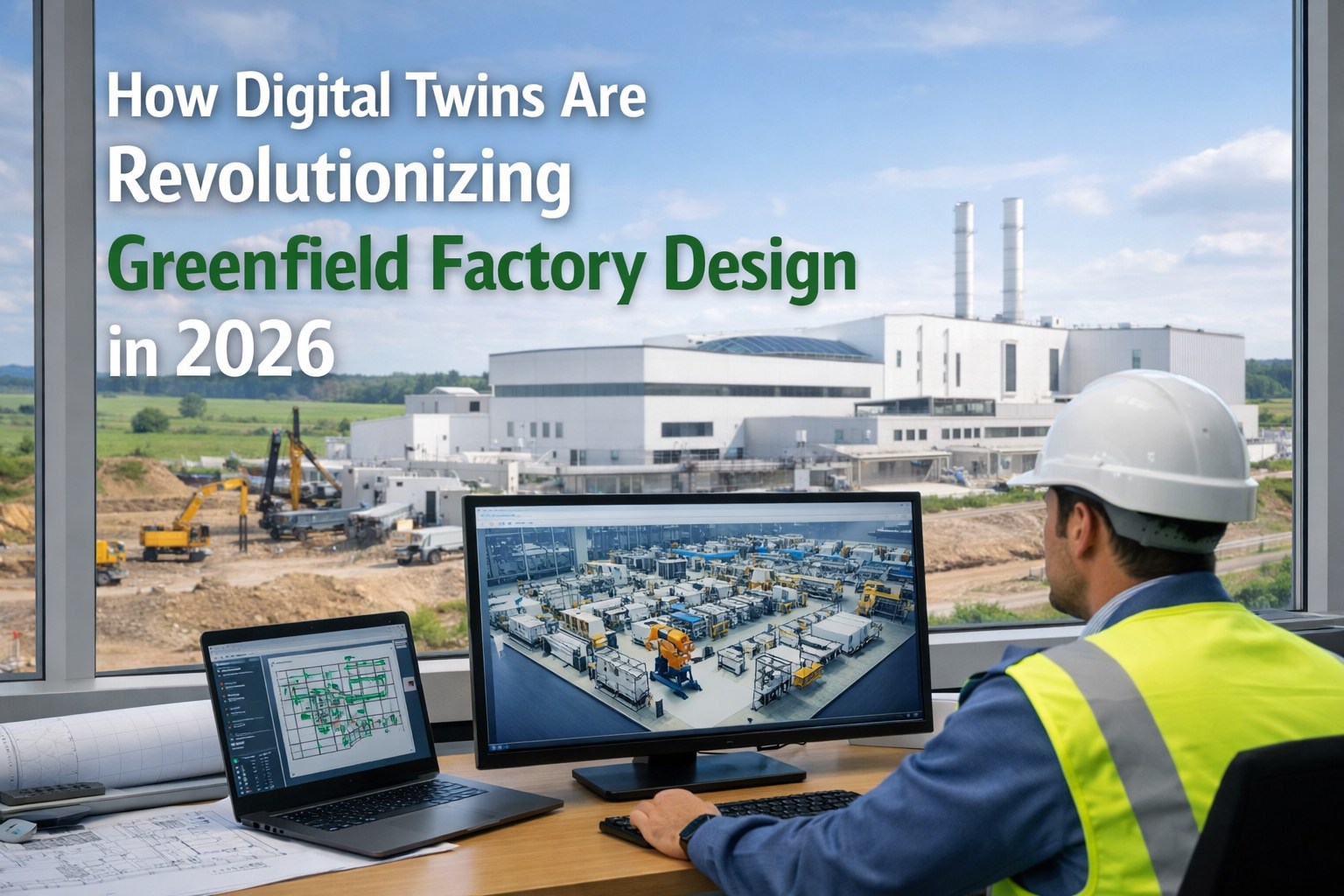
The global digital twin market hit $35.8 billion in 2025 and is racing toward $328 billion by 2033. Yet most manufacturers still break ground on new factories using static blueprints and gut instinct. The smartest ones? They build the entire factory virtually first — testing every layout, workflow, and machine configuration in a risk-free digital environment before pouring a single foundation. Here's how digital twins are rewriting the rules of greenfield factory design in 2026, and why your next plant should exist in software before it exists in steel.
What Is a Digital Twin in Factory Design?
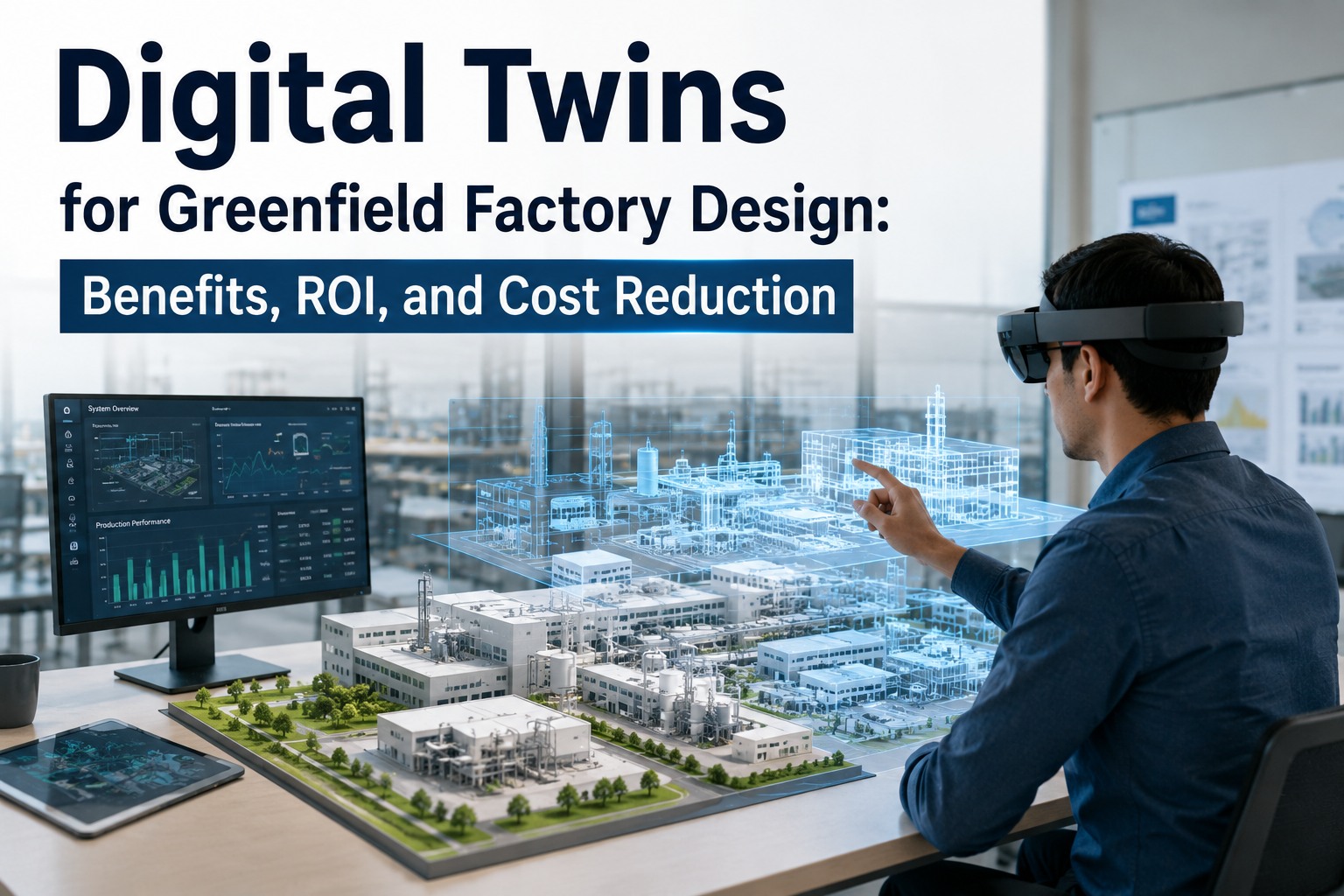
A digital twin is a dynamic, data-driven virtual replica of your entire factory — every machine, production line, utility system, and workflow — that mirrors real-world behavior using live sensor data, physics-based simulation, and AI analytics. Unlike static 3D models or CAD drawings, a factory digital twin is a living system. It continuously ingests data from IoT sensors, learns from operational patterns, and lets you simulate "what-if" scenarios before committing to expensive physical changes.
For greenfield projects, this means you can design, test, and optimize your entire factory in a virtual environment — validating layouts, testing equipment configurations, simulating production workflows, and identifying bottlenecks — all before breaking ground. Changes that would cost millions during construction cost virtually nothing in the digital twin.
Why Greenfield Projects Need a Twin-First Approach
Greenfield factories represent massive capital investments — anywhere from $50 million for a mid-size facility to $10 billion+ for semiconductor fabs. With 60% of these projects facing delays and budget overruns, the traditional "design-then-build" approach is a high-stakes gamble. A twin-first methodology flips the process: you build virtually, validate digitally, and construct with confidence.
Digital twins compress design-to-production timelines by enabling parallel virtual validation and physical construction.
Catching design flaws virtually eliminates costly change orders, rework, and overruns during construction.
PepsiCo identified up to 90% of potential issues before physical construction using digital twin simulation.
Virtual commissioning validates automation and controls before go-live, slashing ramp-up timelines dramatically.
5 Ways Digital Twins Transform Greenfield Design
Layout Optimization Before Breaking Ground
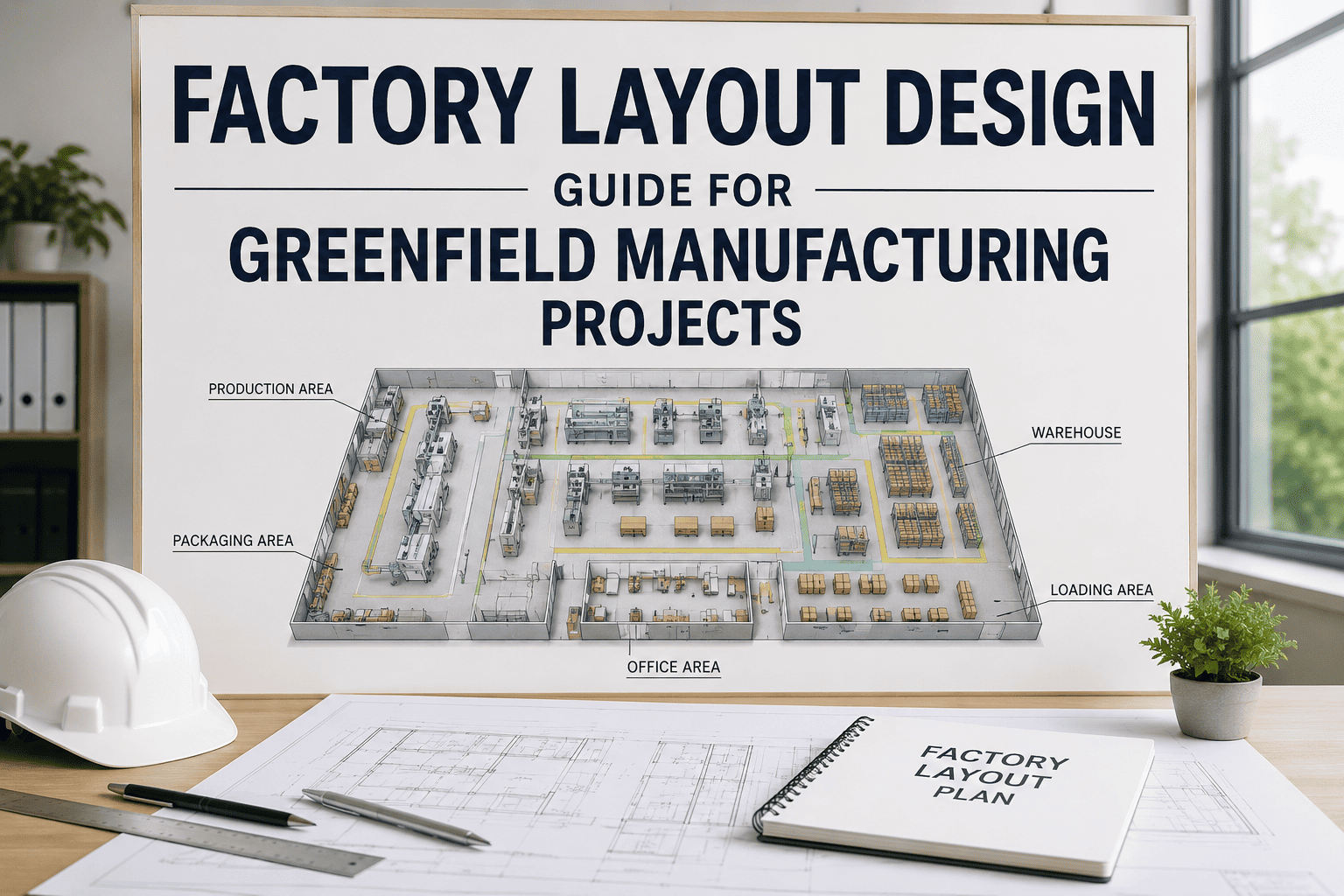
Digital twins let you simulate material flow, equipment spacing, worker ergonomics, and utility routing across dozens of layout variations — in days, not months. You find the optimal configuration before a single wall goes up, avoiding the redesigns that plague traditional projects.
Process Simulation and Throughput Validation
Run your entire production workflow virtually. Test different batch sizes, shift patterns, changeover sequences, and demand scenarios to validate throughput targets. Digital twins model stochastic processes — inventory buffers, material travel times, random breakdowns — that spreadsheet planning simply cannot capture.
Virtual Commissioning of Automation
Commission your PLC code, robotic cells, conveyor systems, and control logic against the digital twin before hardware arrives. This eliminates weeks of on-site debugging and reduces integration risk. Companies report development times cut by 25–50% through virtual commissioning.
Energy and Sustainability Modeling
Simulate HVAC loads, compressed air systems, lighting, and machine energy consumption at the design stage. Evaluate renewable energy integration, carbon footprint targets, and utility costs before committing to infrastructure — making sustainability a design feature, not an afterthought.
Predictive Maintenance from Day One
AI models embedded in the digital twin begin learning equipment behavior during commissioning. By the time production ramps up, your maintenance system already knows the baseline signatures for every critical asset — enabling predictive maintenance before the first unplanned breakdown ever occurs.
Ready to Build Your Factory Virtually First?
iFactory's AI-powered CMMS integrates with your digital twin from the planning stage — embedding maintenance intelligence, sensor architecture, and equipment data into your greenfield roadmap.
The Twin-First Greenfield Timeline
Here's how a digital twin integrates into each phase of your greenfield project — transforming every stage from guesswork into validated, data-driven execution.
Design Phase: Build the Virtual Factory
Create the digital twin of your factory layout. Simulate material flow, test equipment configurations, validate utility requirements, and define your CMMS architecture — all in a virtual environment where changes cost nothing.
Construction Phase: Build with Confidence
While physical construction proceeds, the digital twin runs parallel simulations — testing automation code, refining process parameters, and pre-configuring your CMMS with equipment hierarchies and sensor mappings.
Commissioning Phase: Validate Virtually First
Virtual commissioning tests every automated system against the twin before go-live. Sensor networks activate, your CMMS starts collecting real equipment data, and predictive maintenance models begin learning — compressing weeks of on-site testing.
Ramp-Up Phase: Optimize with Real Data
The digital twin now mirrors the live factory. Real operational data refines AI models, optimizes production schedules, and feeds continuous improvement — creating an ever-learning system that gets smarter with every production cycle.
The ROI That Makes CFOs Pay Attention
Digital twins aren't just an engineering tool — they're a financial instrument. NIST estimates that full digital twin adoption across U.S. manufacturing could unlock $37.9 billion in annual value. Here's what the numbers look like at the plant level:
Where iFactory Fits In
A digital twin shows you how your factory should run. iFactory's AI-powered CMMS makes sure it actually does — by embedding maintenance intelligence, equipment monitoring, and predictive analytics into your greenfield project from the design phase.
Asset Architecture Planning
Define equipment hierarchies, spare parts strategies, and maintenance schedules inside iFactory while your digital twin validates the factory layout.
Sensor Mapping and Configuration
Pre-configure IoT sensor data flows and CMMS integrations so your maintenance system is ready the moment equipment goes live.
Predictive AI Activation
AI models begin learning equipment baselines during commissioning — catching anomalies and predicting failures before production even starts.
Continuous Intelligence
Real-time dashboards, automated work orders, energy tracking, and AI-driven insights keep your factory at peak performance — day after day.
Turn Your Digital Twin into Operational Intelligence
See how iFactory connects your digital twin vision to real-world maintenance excellence — from planning through full production.