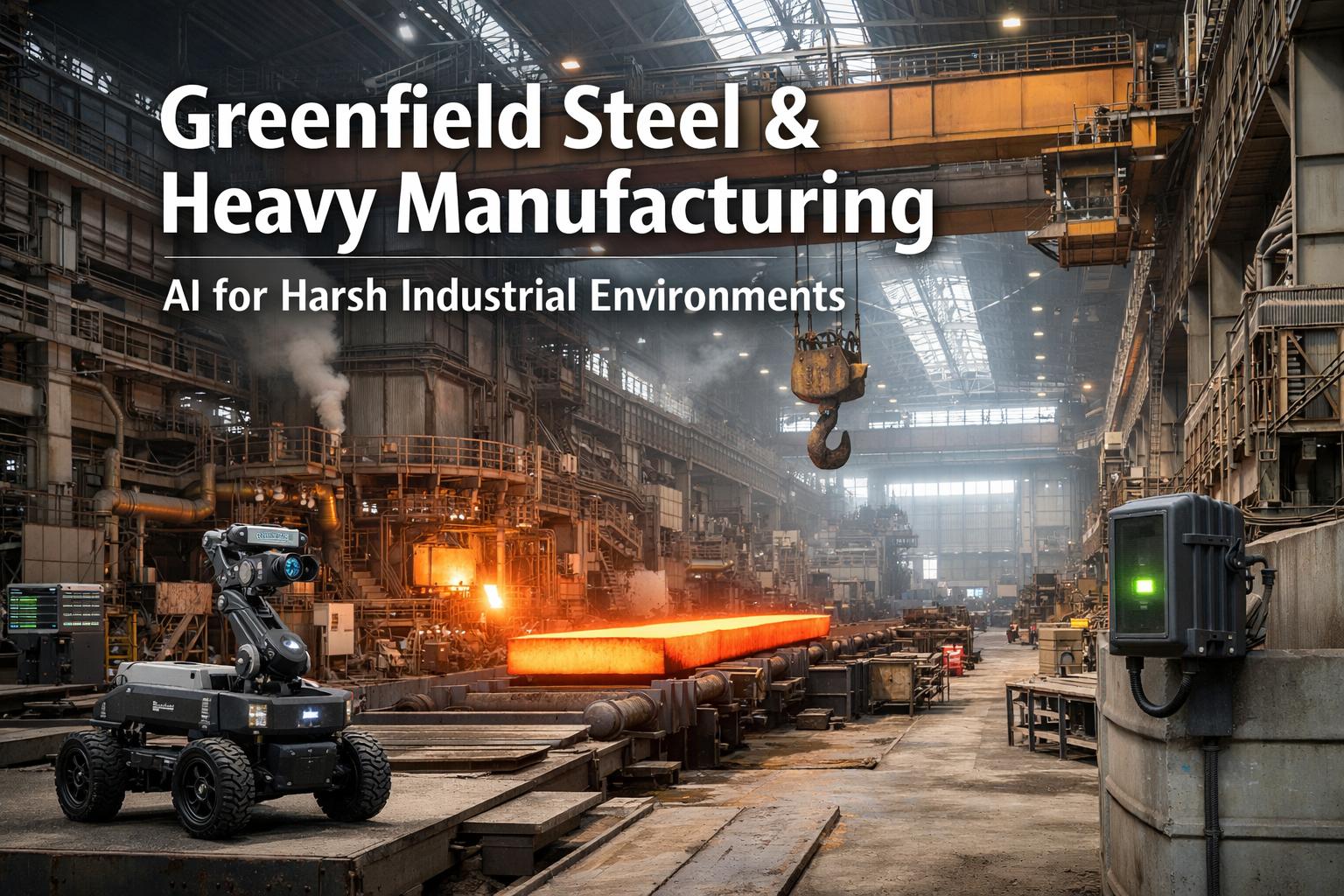
Steel manufacturing is one of the most extreme industrial environments on earth — furnaces exceeding 1,600°C, rolling mills generating massive vibration loads, molten metal, toxic dust, and equipment that runs 24/7 for years without pause. It also accounts for 7% of global CO₂ emissions and faces relentless pressure to modernize. For manufacturers building greenfield steel plants in 2026, the challenge isn't just construction — it's designing AI-native intelligence into facilities where most consumer-grade technology simply won't survive. Here's how to do it right.
Planning a greenfield steel or heavy manufacturing facility? Book a free 30-minute demo to see how iFactory embeds AI-powered maintenance intelligence into your project from day one.
The Steel Plant Challenge: Why Standard IIoT Fails
Most smart factory playbooks are written for climate-controlled electronics assembly lines or clean-room pharmaceutical facilities. Steel and heavy manufacturing environments break every assumption those playbooks make. Temperatures near furnaces and casters can destroy standard sensors in hours. Rolling mill vibrations shake loose conventional mounts. Conductive metal dust short-circuits unprotected electronics. Electromagnetic interference from arc furnaces overwhelms consumer-grade wireless protocols.
Building a greenfield steel plant with AI intelligence means solving these environment-specific problems at the design stage — not bolting on fragile sensors after commissioning and hoping they survive.
Extreme Heat
Blast furnaces, EAFs, casters, and reheating furnaces create zones where ambient temperatures routinely exceed 200°C. Sensors, cabling, and electronics must be rated for continuous high-heat exposure.
Severe Vibration
Rolling mills, crushers, and heavy conveyors produce constant high-amplitude vibration that degrades standard sensor mounts and loosens connections. Ruggedized mounting and industrial-grade accelerometers are essential.
Metallic Dust & Slag
Conductive iron dust and slag particles infiltrate enclosures, short-circuit PCBs, and clog optical sensors. IP67+ rated housings and sealed fiber-optic connections are minimum requirements.
EMI Interference
Electric arc furnaces and high-power drives generate electromagnetic fields that corrupt wireless signals and sensor data. Shielded cabling, industrial protocols, and edge processing reduce data loss.
The Smart Greenfield Steel Stack
A 2026 greenfield steel plant requires a purpose-built technology stack — ruggedized from the physical layer up. Every component must be selected for the specific heat zones, vibration profiles, and atmospheric contaminants present in steel production.
6 AI Applications Transforming Steel Production
Steel manufacturers embedding AI from the greenfield design stage are seeing measurable results across every critical process area — from the furnace to the shipping dock.
Furnace Predictive Maintenance
AI models analyze thermal profiles, refractory wear patterns, and cooling system data to predict furnace failures weeks in advance. Steel plants using predictive maintenance on critical furnace assets report significant reductions in unplanned downtime — a critical metric when a single hour of furnace downtime can cost hundreds of thousands of dollars.
Rolling Mill Optimization
Vibration sensors and AI algorithms continuously monitor roll alignment, bearing health, and strip thickness in real time. Machine learning detects subtle deviations — misalignment, bearing wear, imbalance — that traditional monitoring misses, enabling intervention before quality defects or catastrophic roll failures occur.
AI Vision for Defect Detection
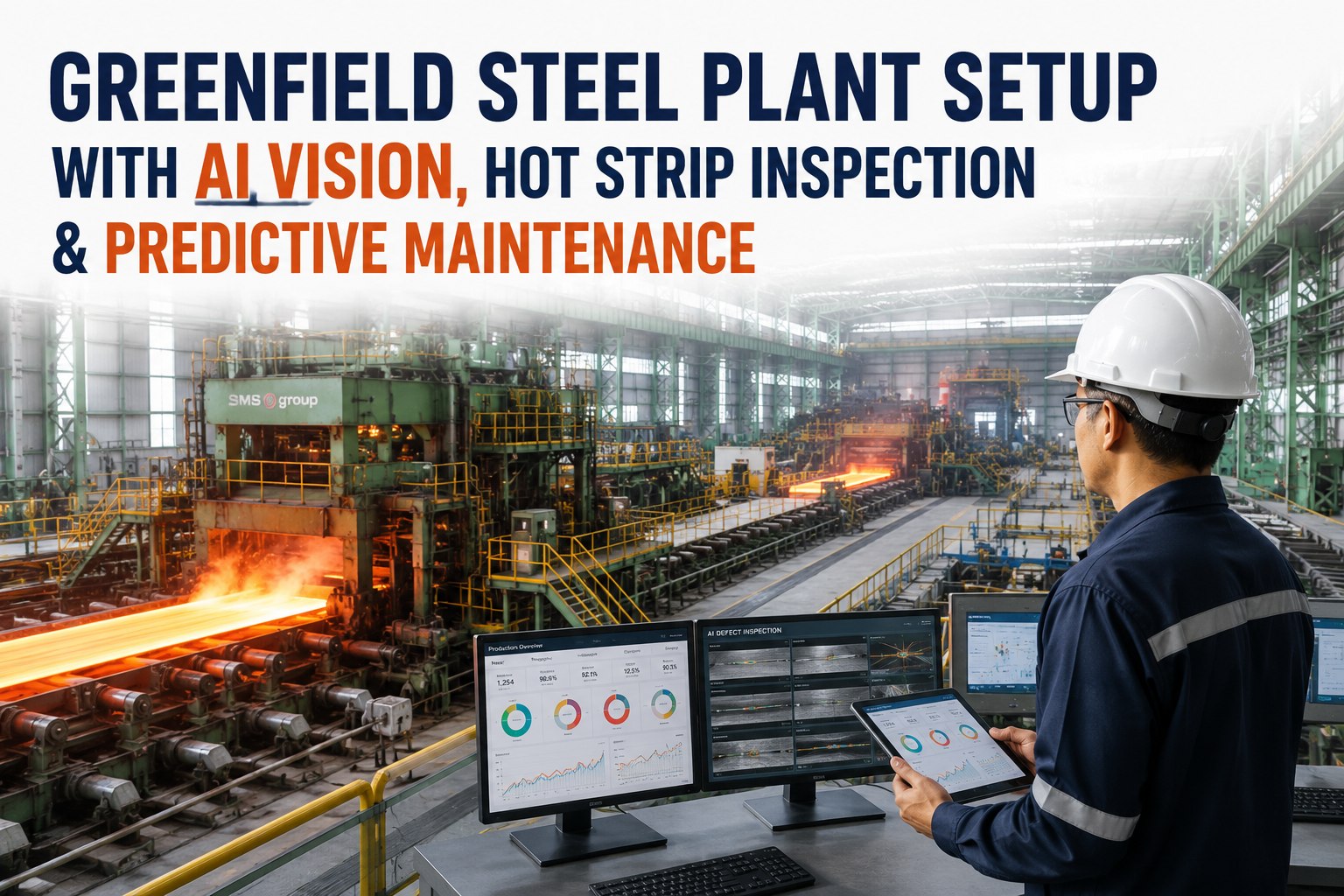
Computer vision systems scan steel coils and slabs at production speed, identifying surface defects — cracks, inclusions, scale patterns — that human inspectors would miss. AI-powered automated inspection improves detection rates and ensures consistent product quality across every shift.
Energy Optimization
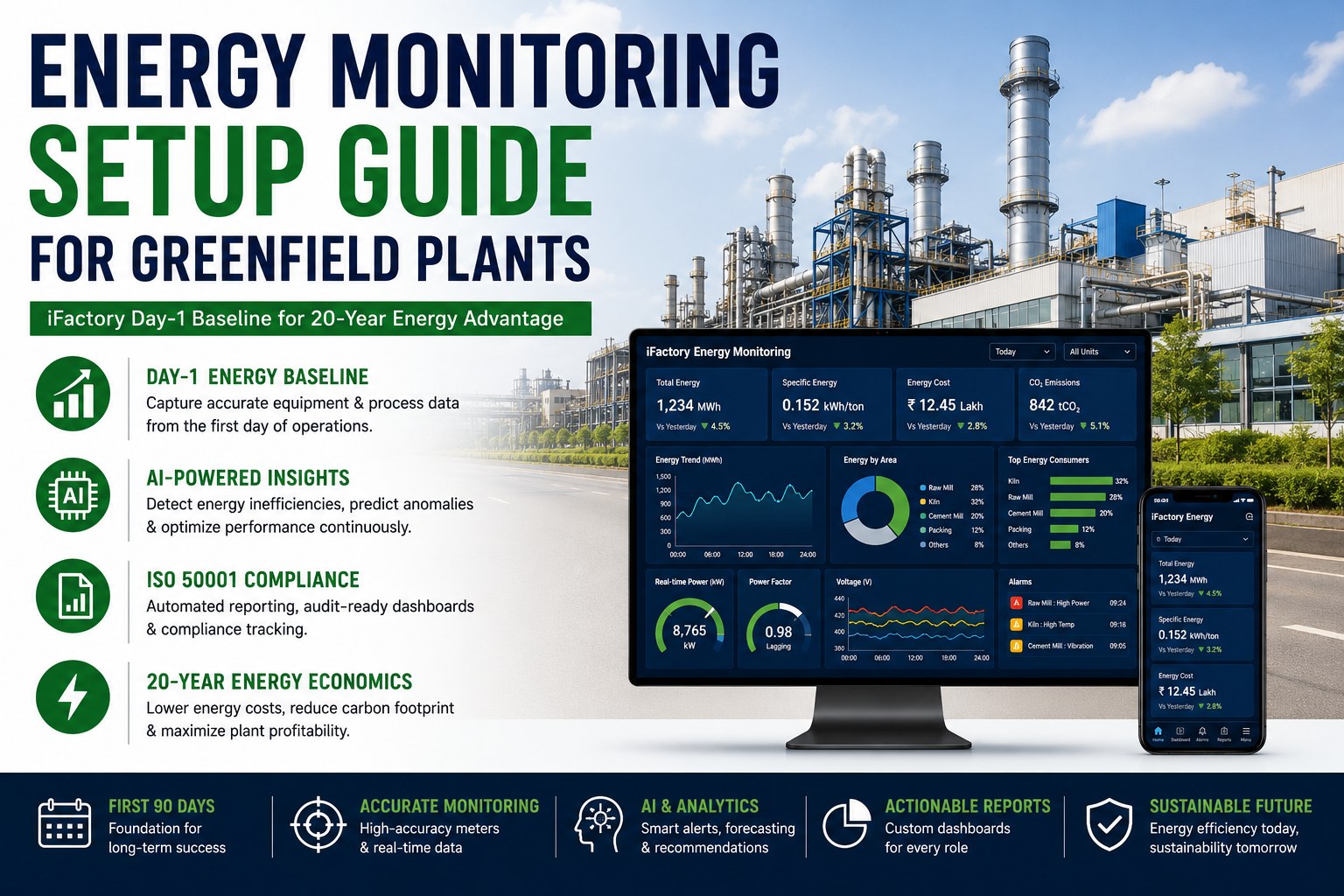
Steel production is among the most energy-intensive manufacturing processes globally. AI models optimize energy consumption across reheating furnaces, EAFs, and auxiliary systems — balancing throughput targets against utility costs and emissions constraints. Even single-digit percentage improvements translate to millions in annual savings.
Autonomous Crane & Logistics
Overhead cranes in steel mills move thousands of tons of molten and solid metal daily. AI-powered crane automation optimizes material routing, reduces cycle times, and minimizes safety risks in high-temperature zones where human exposure must be limited.
Digital Twin for Steel Plants
A steel-plant digital twin simulates blast furnace campaigns, caster operations, and rolling schedules virtually — letting engineers optimize throughput, test process changes, and plan shutdowns without risking production. Leading manufacturers use twins to de-risk both greenfield design and brownfield modernization.
Building a Greenfield Steel or Heavy Manufacturing Plant?
iFactory's AI-powered CMMS is built for harsh environments — delivering predictive maintenance, asset intelligence, and energy tracking for the toughest industrial facilities.
The Real Cost of Getting It Wrong
Steel and heavy manufacturing operate on razor-thin margins with enormous capital exposure. When greenfield projects skip the AI-native design phase, the consequences compound fast:
Unplanned Downtime
Across U.S. manufacturing, unplanned downtime costs an estimated $50 billion per year. In continuous-process industries like steel, a single hour can exceed $250,000 in lost production, idle labor, and scrapped material.
Energy Waste
Steel production consumes massive energy — with 85%+ coming from fossil fuels. Without AI-driven energy optimization, greenfield plants lock in inefficient thermal profiles that bleed millions in excess utility costs annually.
Quality Losses
Surface defects, dimensional inconsistencies, and metallurgical failures caught late in the process chain cascade into rejected coils, customer complaints, and costly rework — problems that AI vision and real-time process monitoring prevent upstream.
Safety Incidents
Extreme heat, molten metal, heavy overhead loads, and confined spaces make steel plants inherently high-risk. Predictive monitoring of cranes, furnace cooling systems, and gas detection sensors reduces the probability of catastrophic safety events.
How iFactory Powers Harsh-Environment Intelligence
iFactory's AI-powered CMMS is purpose-built for industrial environments where conditions break standard software assumptions. From the design phase of your greenfield steel plant, iFactory delivers:
Steel-Specific Asset Hierarchies
Model your entire plant — furnaces, casters, rolling mills, cranes, utilities — with maintenance strategies tailored to each equipment class and failure mode.
Ruggedized IoT Mapping
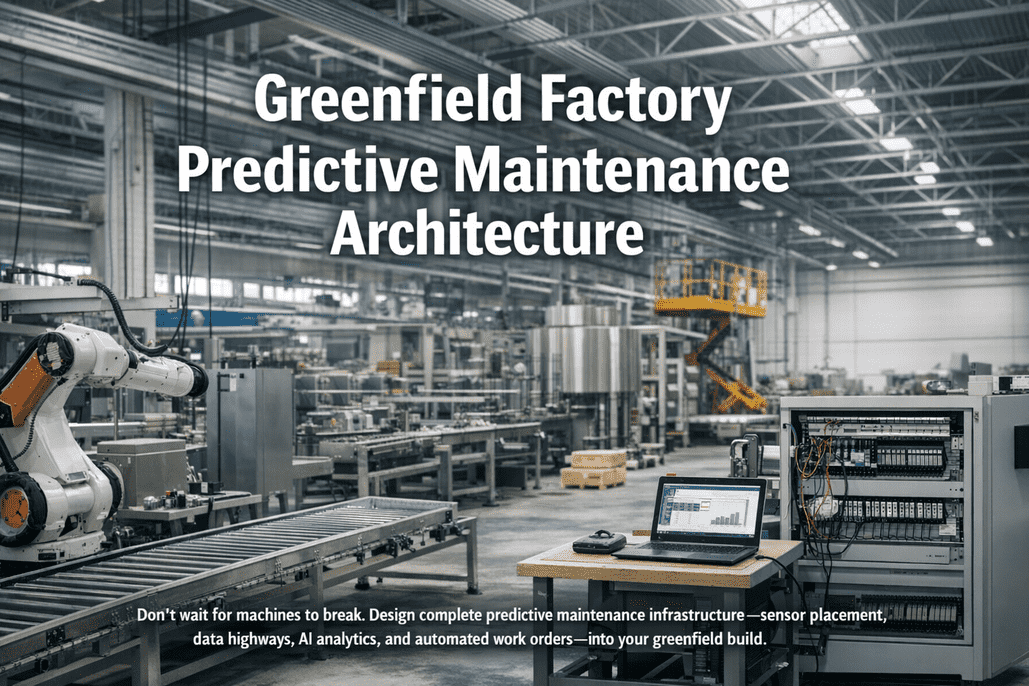
Pre-configure data flows from high-temperature, vibration, and acoustic sensors so your CMMS captures equipment intelligence from the moment systems go live.
Predictive Maintenance Engine
AI models learn furnace thermal signatures, mill vibration baselines, and cooling system patterns during commissioning — flagging anomalies before they become failures.
Energy & Emissions Tracking
Real-time dashboards monitor energy consumption, carbon intensity, and utility costs across every process zone — supporting both optimization and regulatory compliance.
Why Start with CMMS in the Greenfield Phase?
Deploying a CMMS like iFactory during the design phase eliminates the reactive maintenance gap that plagues new steel facilities. Your asset hierarchies, sensor configurations, and predictive models are operational before the first heat is poured — not months or years later when unplanned downtime has already become a pattern.
Ready to Design Intelligence Into Your Steel Plant?
See how iFactory integrates into your greenfield timeline — from ruggedized sensor planning to full-scale production optimization in the harshest environments.