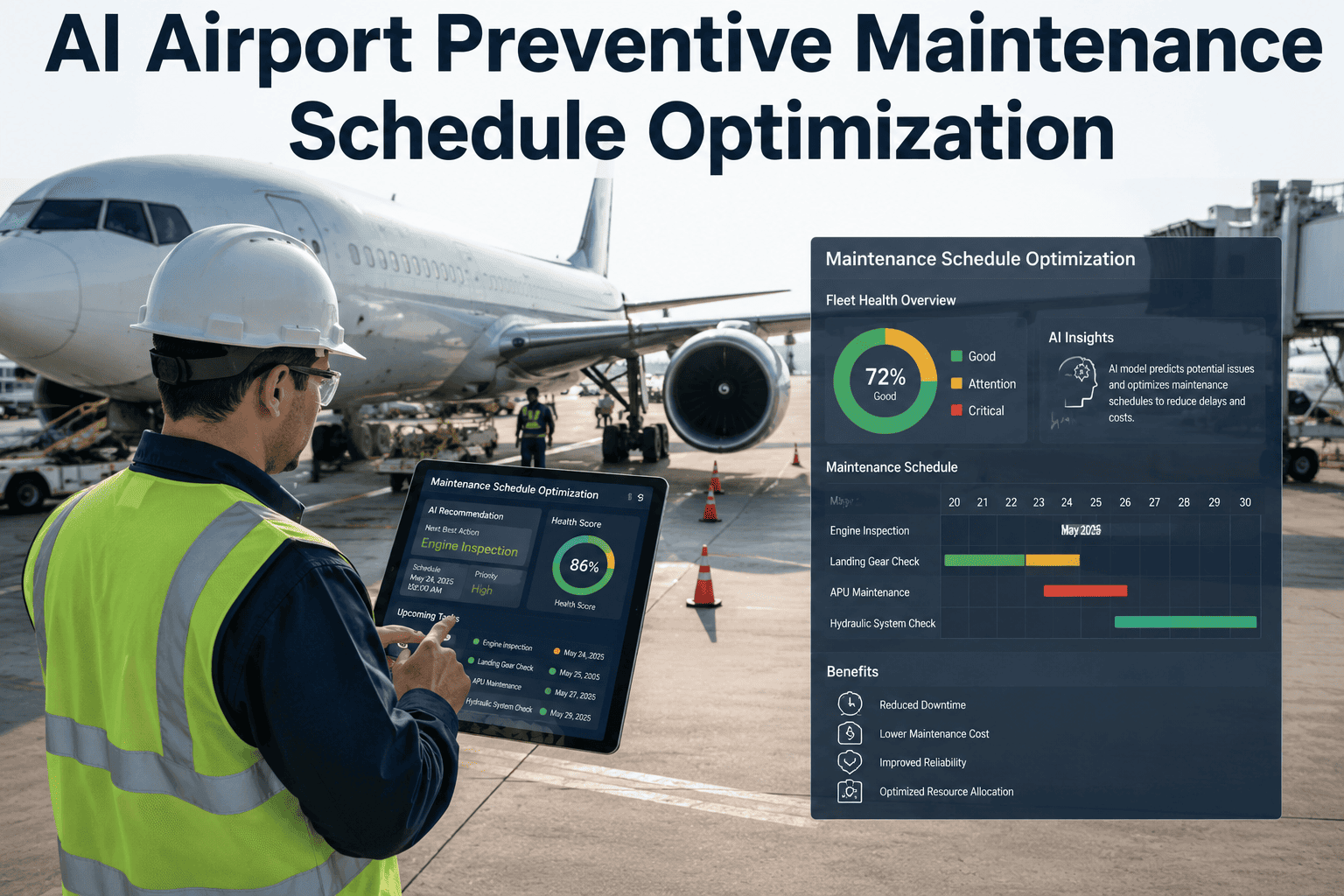
Most airport maintenance programs still run on a calendar that has nothing to do with how equipment actually ages. A jet bridge hydraulic pump gets torn down every ninety days whether its seals are degrading or not, while a baggage belt motor two
AI-Powered
Aviation-Specific
Aviation & Airport Maintenance Software
U.S. flight delays cost airlines over $100 per minute of block time. A single jet bridge failure cascades across an entire terminal. iFactory's AI-powered CMMS predicts airport equipment failures before they disrupt operations — from runway lights to baggage belts.
45% Less Downtime
30% Cost Cut
100% FAA Ready
Airport Operations Dashboard
● Live
94.3%Uptime
187Active WOs
3Alerts
100%FAA Ready
Terminal & Airside Systems
22/24 Operational
Runway 09L/27RActive
Baggage Belt T1Running
Jet Bridge G14PM Due
AI Alerts
3 New
Baggage Sortation Motor #7 Vibration ↑ 19%Replace bearing in 36 hrs
Runway 09L Edge Light Circuit B — 2 Units DimSchedule replacement before dusk
ARFF Truck #2 PM CompleteAll checks passed ✓
The Problem
Why Airports Are Bleeding Revenue
Airports never close. With thousands of passengers every hour and equipment running 24/7/365, one failure creates a domino effect across the entire operation.
Equipment Failure
No WarningGate / Runway Closure
Ops ImpactFlight Delays Cascade
$100+/minRevenue & Reputation Loss
Millions/yrEquipment Failure
No WarningGate / Runway Closure
Ops ImpactFlight Delays Cascade
$100+/minRevenue & Reputation Loss
Millions/yr
This cycle repeats — compounding losses across every terminal, every day
Aviation-Specific Solutions
What Airports Actually Need
Every pain point above has a solution. Here's what modern airport operations require to maintain safety, compliance, and passenger satisfaction.
Predictive Maintenance for Airport Systems
AI monitors vibration, temperature, and current draw from baggage belts, jet bridges, HVAC chillers, and runway lighting — predicting failures before passengers feel the impact.
- Conveyor motor degradation tracking
- HVAC compressor failure prediction
- Auto work order with parts & procedures
FAA Part 139 & SMS Compliance Automation
Digital airfield inspections, ARFF equipment readiness, runway condition reporting, and Safety Management System documentation — all timestamped, immutable, and audit-ready.
- Part 139 inspection templates
- ARFF equipment readiness tracking
- Immutable audit trails & e-signatures
Workforce Optimization & Scheduling
With a projected shortage of 24,000+ aviation maintenance workers, airports must maximize every technician. AI-optimized routing, skill-based assignment, and real-time workload balancing.
- Skill-based auto-assignment
- GPS-based technician routing
- Real-time workload dashboards
Spare Parts & Inventory Control
Airports manage thousands of unique parts across terminals, airside, and GSE fleets. AI-driven reorder points, vendor management, and min/max optimization prevent stockouts and AOG situations.
- AI reorder point optimization
- Multi-warehouse tracking
- Barcode / QR scan receiving
Real-Time Airport Operations Dashboard
One screen showing every terminal, every runway, every system. Live equipment health, work order status, compliance scores, and technician locations — from airside to landside.
- Terminal-by-terminal view
- Live KPI scorecards
- Executive summary reports
Energy & Sustainability Tracking
Airports are among the largest energy consumers in any city. Track energy usage per terminal, optimize HVAC schedules, monitor solar output, and generate ESG-ready sustainability reports.
- kWh per terminal tracking
- Carbon footprint reporting
- ACI Airport Carbon Accreditation
iFactory Platform
How iFactory Transforms Your Airport
One unified platform that delivers every solution above — purpose-built for the complexity of 24/7 airport operations.
Feature 01
AI Predictive Maintenance for Airport Infrastructure
iFactory's AI continuously monitors vibration, temperature, current draw, and pressure from your baggage handling motors, jet bridge hydraulics, HVAC chillers, elevator drives, and runway lighting circuits. Machine learning models detect conveyor belt wear, compressor degradation, and hydraulic seal failures 48+ hours before breakdown — automatically creating work orders with parts and procedures.
Multi-Sensor Fusion
Vibration, thermal, current draw
Smart Alerting
No alert fatigue — 99% trust
Auto Work Orders
Parts, procedures, priorities
Remaining Useful Life
RUL for critical components
45% Less Downtime
48hr+ Early Warning
AI Predictive Engine — Airport● Active
Equipment Health Scores89/96 Healthy
Baggage Sortation — Terminal 194%
Jet Bridge G14 Hydraulics68%
HVAC Chiller — Concourse B47%
Runway 09L Edge Lighting92%
AI Alert — Priority 1
HVAC Chiller — Concourse B — Compressor vibration ↑ 31% in 72 hrs
Predicted failure: 52 hrs | WO #4218 auto-created | Parts in stock ✓
Feature 02
FAA Part 139 & Safety Compliance for Airports
FAA certification inspectors can show up unannounced. iFactory digitizes every Part 139 requirement — airfield self-inspections, ARFF readiness checks, runway condition reporting, NOTAM coordination, snow/ice control logs, and wildlife hazard management — with immutable audit trails and auto-escalation.
Airfield Inspections
Digital daily/night inspections
ARFF Readiness
Vehicle & agent tracking
Snow & Ice Control
Plans, logs, chemical tracking
SMS Documentation
Safety Management System
Zero FAA Citations
30-Sec Document Retrieval
FAA Part 139 Compliance Dashboard100%
Pavement (139.305)
Compliant ✔
ARFF (139.315)
Compliant ✔
Lighting (139.311)
Compliant ✔
Snow/Ice (139.313)
Compliant ✔
Recent Audit Trail
Daily Airfield Inspection — 06:15e-signed ✔
ARFF Truck #3 — Foam Level Checkpassed ✔
Runway 27R Edge Lights — Night Inspectioncompliant ✔
Feature 03
Baggage Handling & Terminal Systems Monitoring
Baggage handling system failures at major hubs impact thousands of passengers per hour. iFactory provides real-time monitoring of conveyor motors, sortation diverters, screening equipment, and carousel drives — with AI predicting belt wear, motor degradation, and diverter jams before a single bag is delayed.
Conveyor Monitoring
Motor, belt, bearing health
Sortation Analytics
Diverter failure prediction
HVAC & Climate
Terminal comfort optimization
Elevators & Escalators
Passenger flow continuity
99.5% BHS Uptime
Zero Missed Bags
Baggage Handling System — T1● Online
99.2%Uptime
4,218Bags/hr
2Alerts
12Lines
Check-in Conveyor A97%
Sortation Diverter #471%
Carousel #3 Drive Motor89%
AI Alert — Priority 2
Sortation Diverter #4 — Actuator response time ↑ 340ms
Schedule replacement: next maintenance window | WO #4301 created
Feature 04
Ground Support Equipment (GSE) Fleet Management
Airports operate hundreds of GSE units — tugs, belt loaders, de-icers, lavatory trucks, GPU units, and air start units. iFactory tracks every vehicle's maintenance schedule, fuel/charge status, inspection history, and real-time location to ensure zero equipment-related flight delays.
Fleet Tracking
GPS location + status
PM Scheduling
Hour-based & calendar triggers
EV/Hybrid Tracking
Charge status & range
Inspection Logs
Digital pre-shift checklists
100% GSE Visibility
30% Fewer Breakdowns
GSE Fleet Dashboard142 Units
118Active
14In PM
3Repair
7Charging
Fleet by Type
Pushback Tugs28 Active
Belt Loaders34 Active
De-Icers3 In PM
AI Fleet Insights
1Tug #T-14 battery capacity ↓ 12% — schedule replacement within 2 weeks
2Belt Loader #BL-09 PM completed ahead of schedule — ready for dispatch
Feature 05
Runway & Airfield Infrastructure Management
When runway lighting maintenance gets deferred, FAA Part 139 certification is at risk. iFactory manages every airfield asset — edge lights, approach lights, PAPIs, taxiway signage, pavement condition, and safety area compliance — with automated inspection schedules and condition-based maintenance triggers.
Lighting Systems
Edge, approach, PAPI, taxiway
Pavement Condition
PCI scoring & FOD tracking
Signage & Markings
Condition tracking & refresh
Safety Areas
RSA/ROFA compliance
100% Part 139 Ready
Zero Light Outage Delays
Airfield Infrastructure Status● All Clear
Runway 09L/27R
Lights: 246/248 ✔PCI: 82 — Good
Runway 04R/22L
Lights: 198/198 ✔PCI: 91 — Excellent
Taxiway B
Signage: 2 fadedWO scheduled
PAPI Systems
All 4 ends calibratedVerified ✔
Upcoming Airfield PM
RWY 09L Regulator Bank CheckWed 05:00
Taxiway C Marking RepaintThu 02:00
MALSR Approach Lights — AnnualFri 04:00
Feature 06
Digital Shift Handover & Operations Logbook
Airports run 24/7 with rotating shifts. Critical information — ongoing work orders, safety incidents, equipment alerts, contractor activities — must transfer seamlessly between teams. iFactory's digital shift logbook with AI-generated summaries and mandatory acknowledgments eliminates handover gaps that lead to incidents.
Digital Logbook
Structured shift entries
Photo Evidence
Visual documentation
AI Shift Summary
Auto-generated handover
Digital Sign-Off
Mandatory acknowledgment
85% Fewer Gaps
100% Accountability
Shift Logbook — Airport OpsNight → Day
27Entries
4Open
11Photos
100%Complete
AI Shift Summary
1Concourse B HVAC chiller flagged — day shift must monitor compressor vibration
2Jet Bridge G14 hydraulic fluid top-off scheduled — restrict gate until 08:30
3Runway 27R night inspection complete — all lights operational, markings OK
Day Shift must acknowledge to complete handover
Latest Posts

Read More
A ten-minute turnaround overrun rarely has one clean cause. It is usually a belt loader that arrived four minutes late because it was still finishing another aircraft, a GPU that took longer to connect than scheduled, and a jet bridge alignment th

Read More
Every baggage conveyor at a major hub is driven by a motor that runs for years without anyone looking at it closely, and that silence is exactly the problem. A motor bearing can wear down for six to eight weeks, throwing off a distinct vibration s

Read More
An airport asset touches more hands than almost any other piece of infrastructure — an airline's ground handling crew notices a jet bridge acting up, the airport's own facilities team owns the work order, a third-party maintenance contractor does
Read More
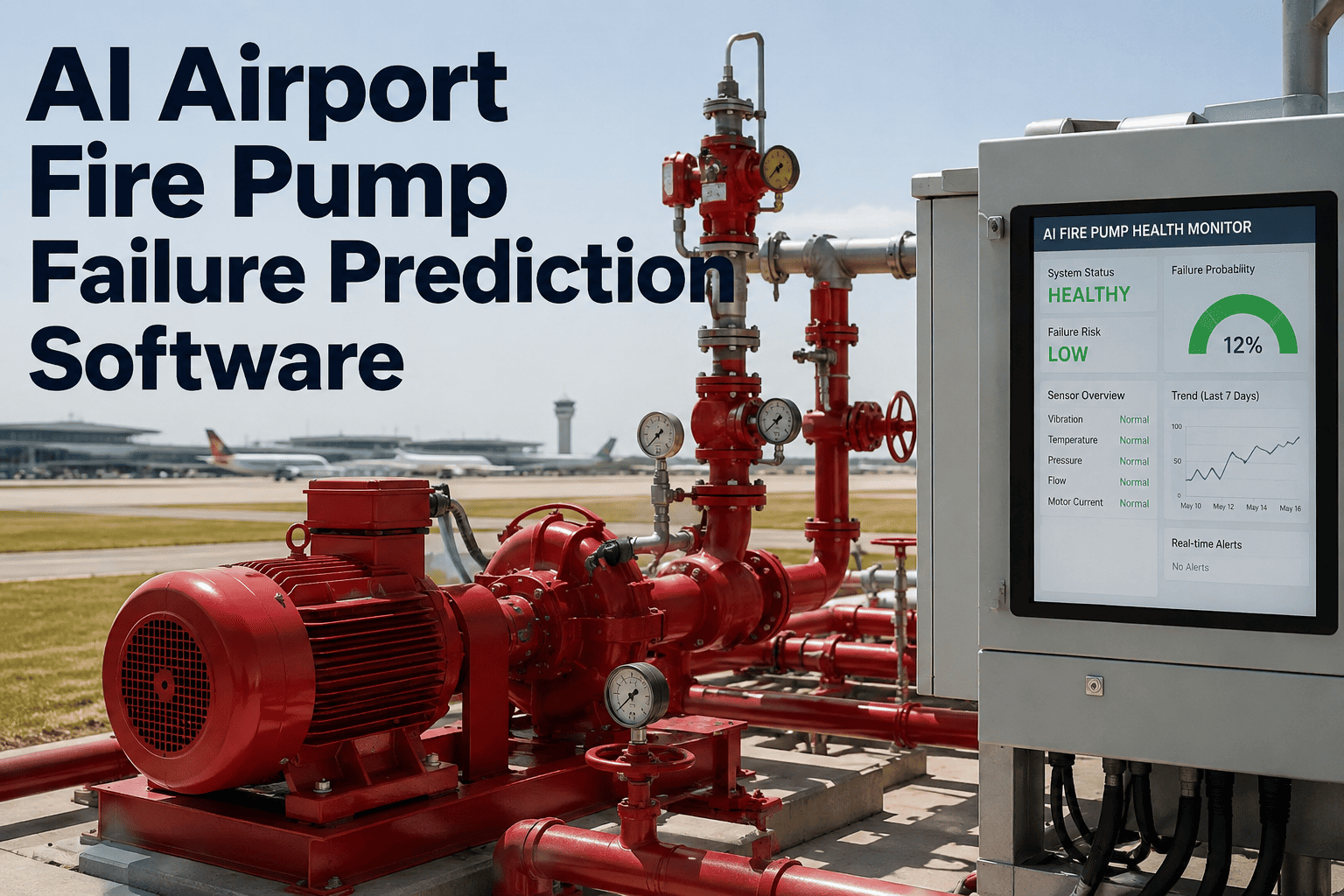
Airport fire pump systems sit at the exact intersection of life-safety code and mechanical reality — NFPA 20 and NFPA 25 require them to start instantly and deliver rated flow the moment sprinkler or hydrant demand drops, yet most airports still c

Read More
Every taxiway on an active airfield carries a regulatory obligation that never pauses: routine visual inspection for pavement distress, faded markings, damaged edge lighting, and foreign object debris that could disable an aircraft within seconds

Read More
A mid-size airport can easily carry thousands of individually maintained assets across its terminals, airfield, and back-of-house systems, from jet bridges and baggage conveyors to airfield lighting circuits, HVAC units, and ground support equipme

Read More
Every motor-driven system in a terminal, from a jet bridge lift to a baggage belt drive, pulls current in a pattern that is unique to its own healthy operating condition, and that pattern starts to change weeks before the equipment ever shows a me

Read More
Every ramp shift at a busy airport starts the same way: a tug, belt loader, or pushback tractor gets a pre-shift walkaround before it touches an aircraft, and that walkaround is supposed to catch anything unsafe before the equipment moves. In prac

Read More
Airport terminals move hundreds of thousands of passengers between levels every week through a fleet of elevators that most travelers never think twice about until one stops working. A single elevator failure in a passenger terminal is not just an
Read More
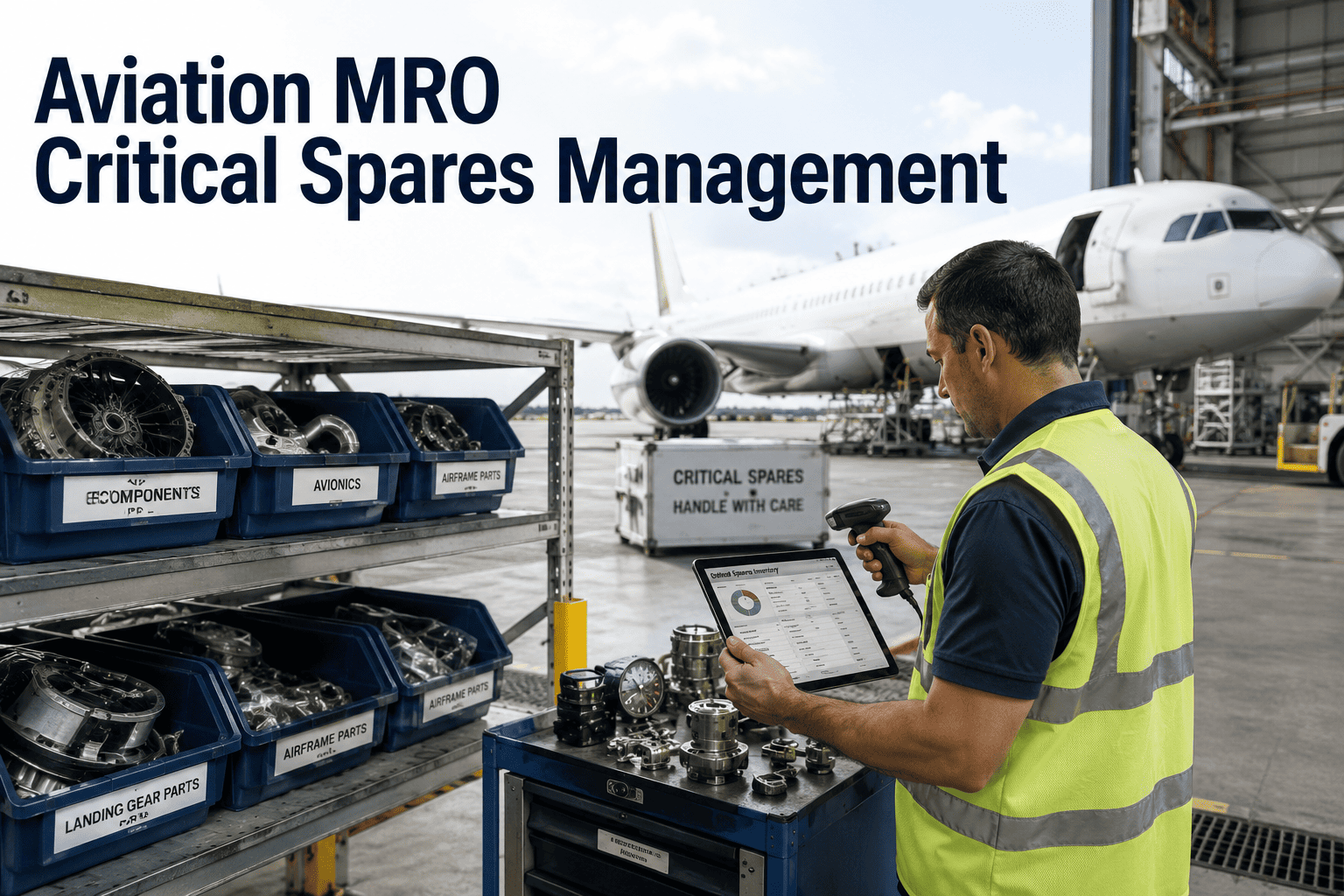
A single AOG event can cost an operator well over $100,000 for every hour an aircraft sits grounded, and the part responsible is rarely one nobody makes anymore. Most of the time it is a rotable, a consumable, or a repairable that the MRO already

Read More
Switching a ground support fleet to electric solves the noise and emissions problem, but it quietly creates a new one: batteries degrade in ways a fuel gauge never had to. A pack that reads 80% state of charge can still be days away from leaving a

Read More
A typical aircraft turn packs roughly fifteen separate ground activities into a forty-minute window — chocks, GPU connection, jet bridge or stairs, deplaning, baggage and cargo swap, fueling, catering, cleaning, boarding, and pushback, each one de
Read More
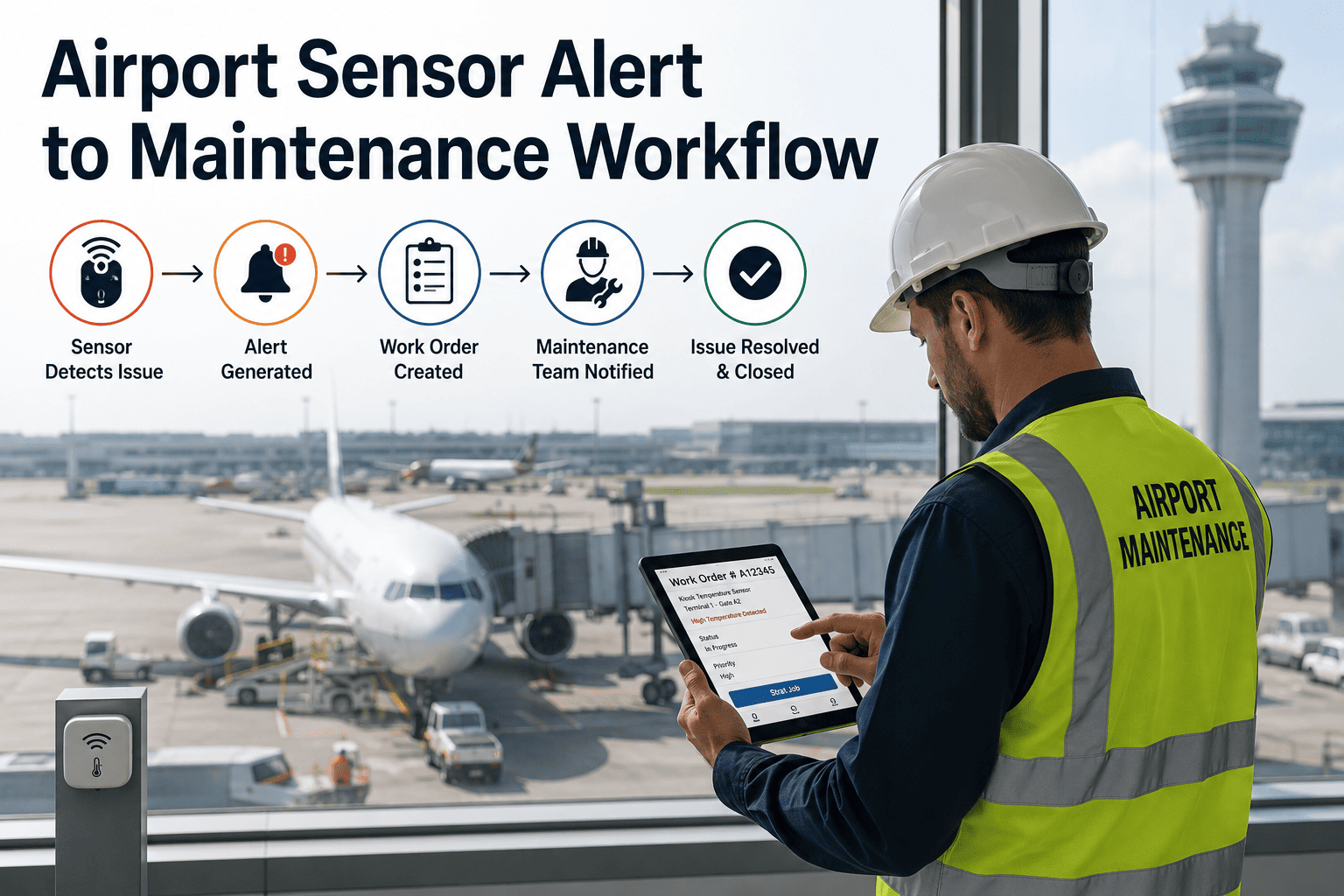
A sensor firing an alert is not the same thing as a maintenance team acting on it. Most airports already have vibration, temperature, and current sensors wired into baggage conveyors, jet bridges, HVAC chillers, and generators — the alerts arrive

Read More
Airport equipment doesn't fail suddenly. A baggage conveyor motor bearing wearing toward seizure, a jet bridge drive mechanism losing alignment, or an escalator gearbox starting to strip its teeth all generate a rising vibration signature days or

Read More
A narrow-body turnaround runs on a 25 to 35 minute clock, and every piece of ground support equipment scheduled inside that window has to show up serviceable the moment the aircraft blocks in. When a ground power unit, belt loader, or pushback tug

Read More
At most airports, the maintenance team logs a GSE fault in one system, the ramp coordinator tracks turnaround status in another, and the asset register lives in a spreadsheet nobody outside facilities ever opens. Flight ops data, ground handling s
Read More
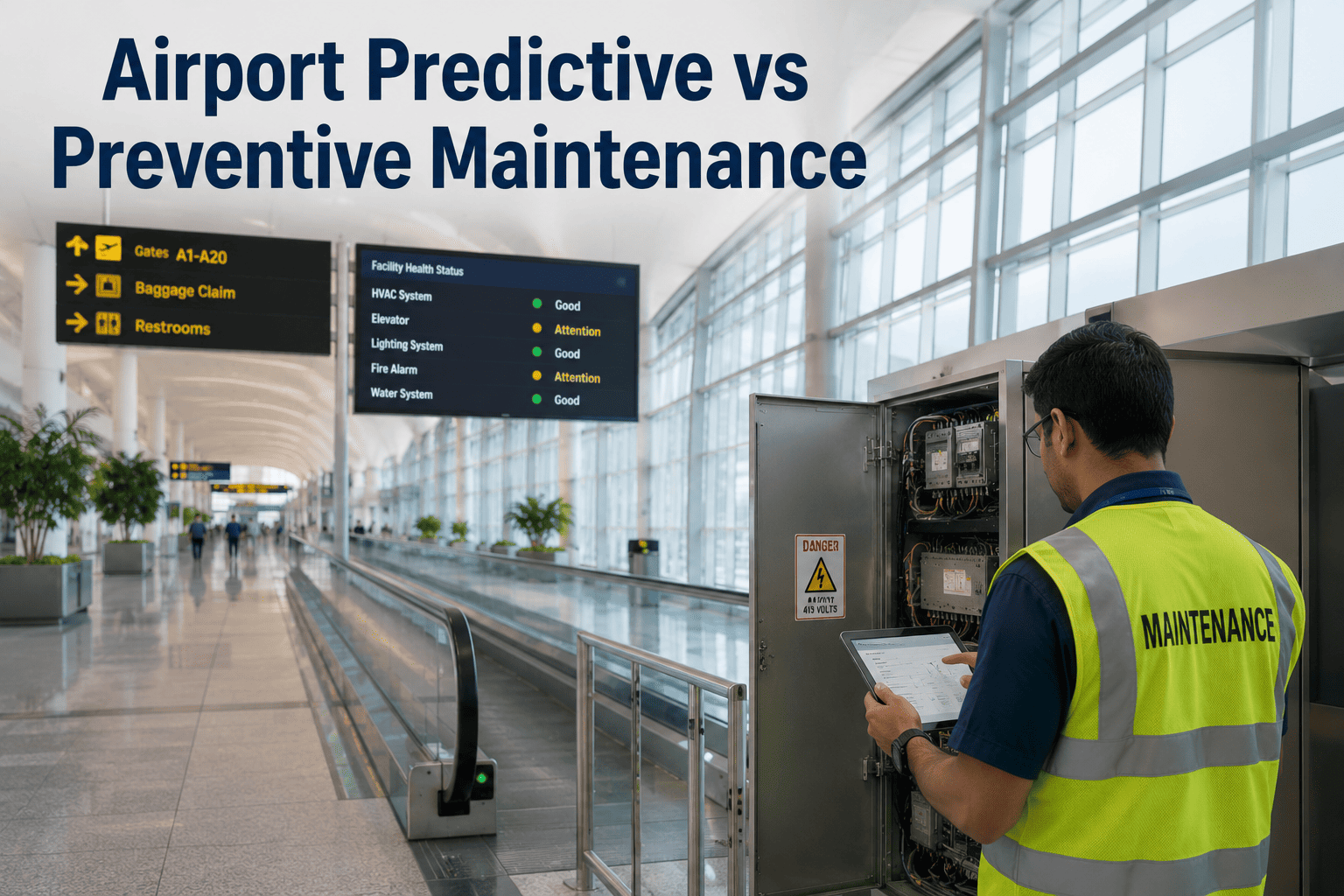
A jet bridge motor and a runway edge light circuit can both sit on the same weekly preventive maintenance schedule, yet a failure in one delays a single gate while a failure in the other can ground operations across an entire runway. Treating ever
Read More
Airports run maintenance programs that were built around the calendar, not the asset. Every jet bridge, baggage conveyor, HVAC chiller, and ground support vehicle sits on a fixed inspection schedule that assumes wear happens at a predictable, unif

Read More
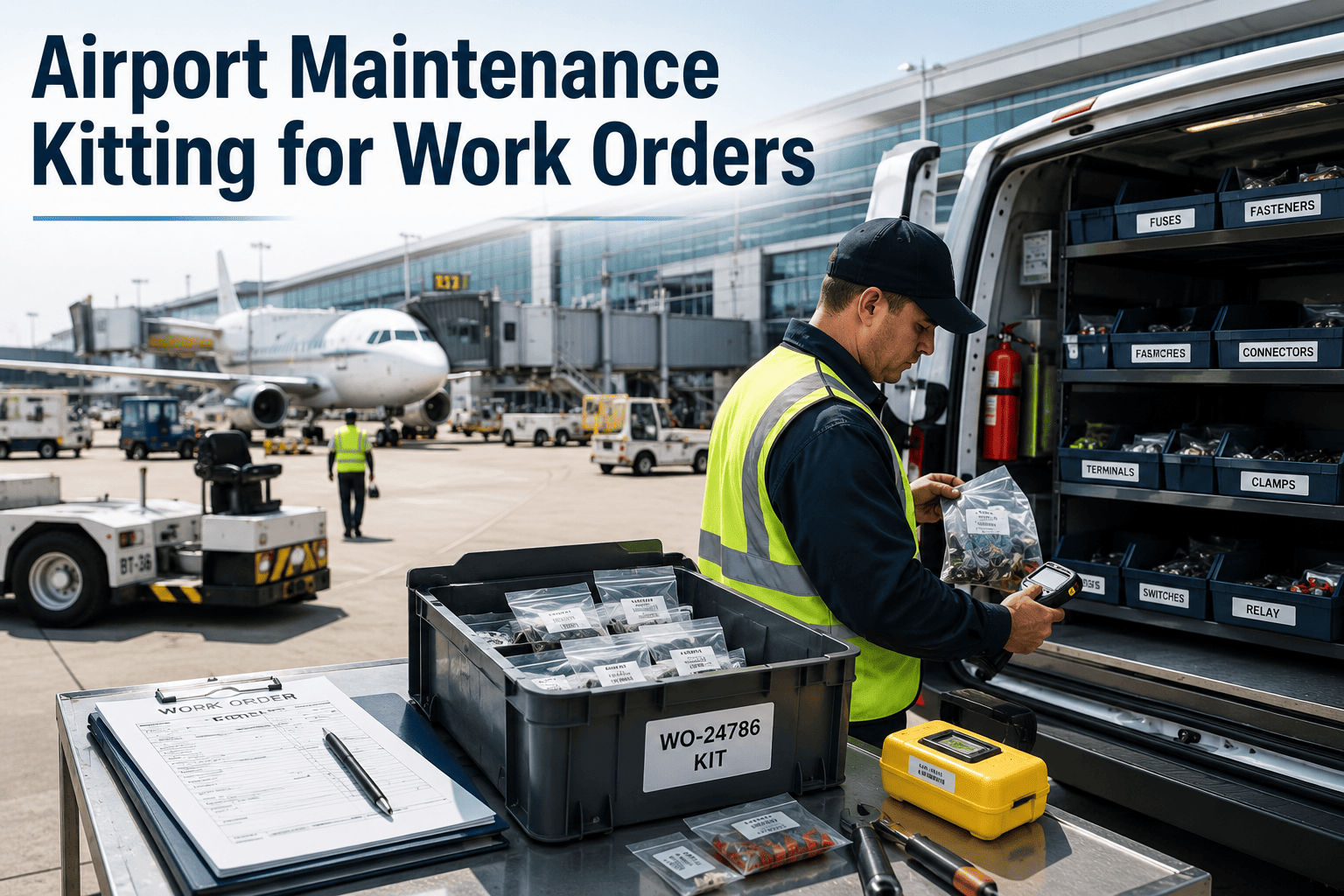
When an airport maintenance technician opens a scheduled work order for a jet bridge motor overhaul or a baggage belt drive replacement, the job stalls the moment a bearing, seal, or drive belt isn't sitting on the shelf. Airports run assets that

Read More
Airports that committed to electric GSE over the last decade are now discovering that replacing diesel engines with battery packs solved the emissions problem but created an entirely new operational challenge that no one fully prepared for. A dies
Read More
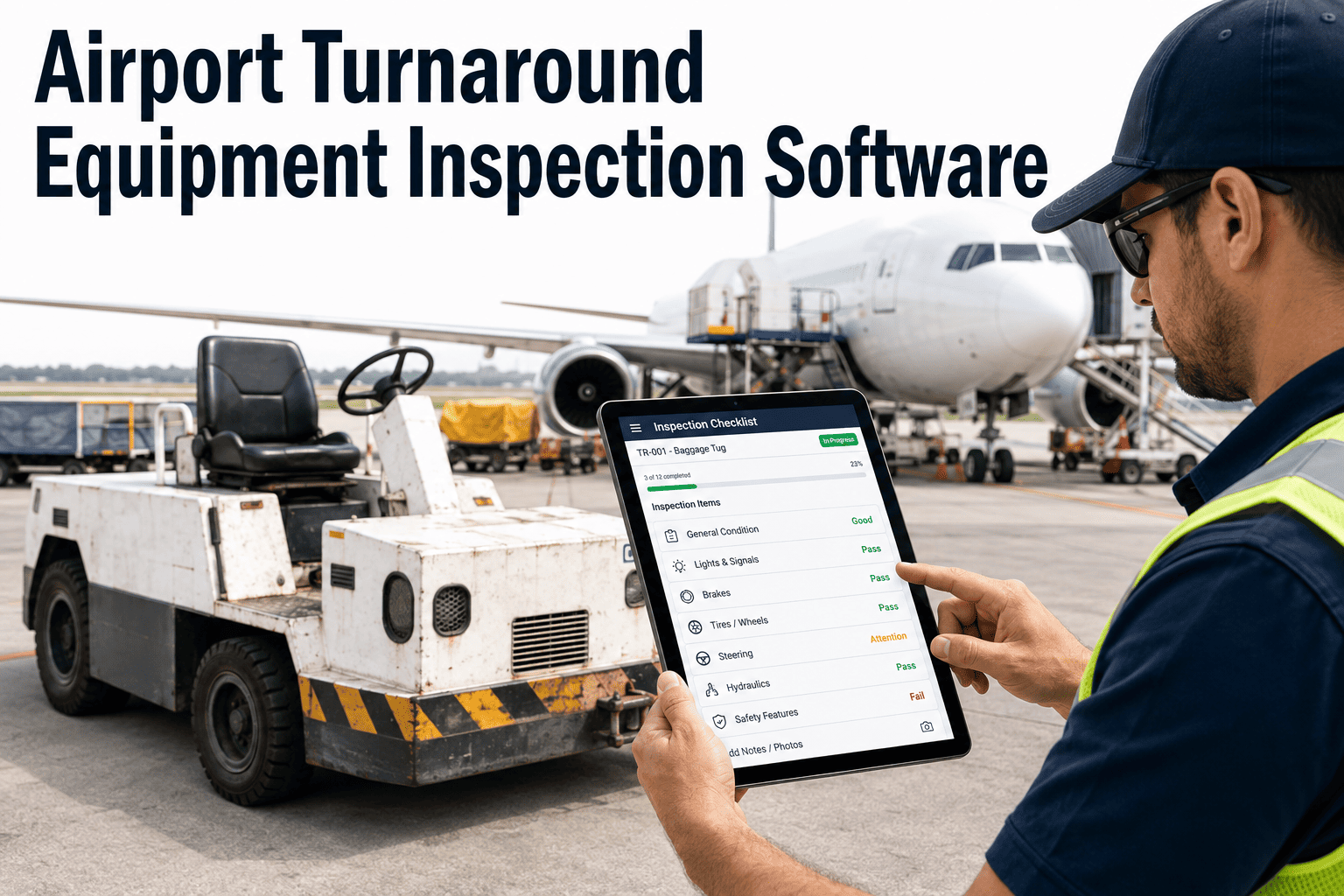
Every aircraft turnaround at a commercial airport requires between eight and fifteen pieces of ground support equipment to arrive at the gate in working condition within a compressed window, and the only thing standing between an on-time departure

Read More
Every baggage carousel at a major airport handles between three thousand and eight thousand bags on a typical peak day, and the moment the drive motor stumbles or a tracking sensor fouls, those bags stop moving while passengers crowd the claim are

Read More
Airport compressed air systems operate behind every baggage carousel, pneumatic gate mechanism, and instrument air supply across a terminal, yet most facilities learn about an impending compressor failure only when the unit trips offline and the c

Read More
A narrow-body turnaround can run as short as 25 to 40 minutes, with 10 to 20 different pieces of GSE, tugs, belt loaders, GPUs, catering trucks, choreographed into that window at once, and a single equipment failure can extend it by 15 to 30 minut

Read More
TSA screens 100 percent of checked baggage through Explosive Detection Systems, which means every one of those CT scanners is a single point of failure sitting directly between a bag and a departing aircraft. When a screening unit or its feed conv

Read More
A single jet bridge falls under electrical, hydraulic, structural, and fire safety inspection codes at the same time, and at most airports, the contractor handling each of those disciplines reports back in a different format: one emails a PDF, ano

Read More
Ninety percent PM compliance looks like a win in any board report, and for most airport maintenance teams it is the number they chase hardest every month. But compliance only answers one question: was the task marked complete? It says nothing abou

Read More
A single narrow-body aircraft type carries more than 40,000 pages of maintenance documentation spread across AMMs, CMMs, service bulletins, and airworthiness directives, and when a technician can't find the right fault path fast enough inside that
Read More
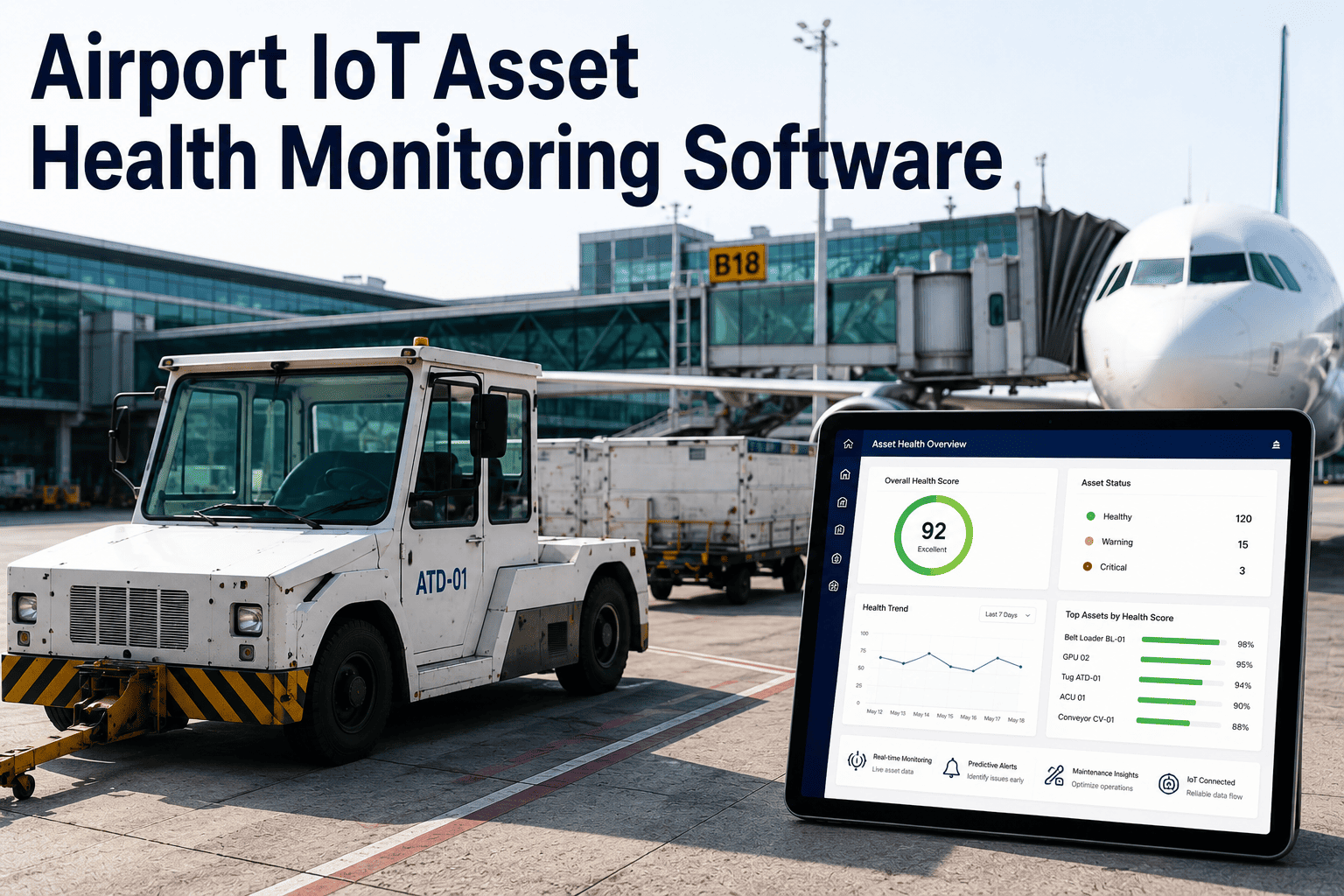
Most airports aren't short on sensors anymore. GSE telematics, baggage conveyor vibration monitors, HVAC current sensors, fuel bowser flow meters — the hardware is already out there, quietly streaming data every second of every shift. What's missi
Read More
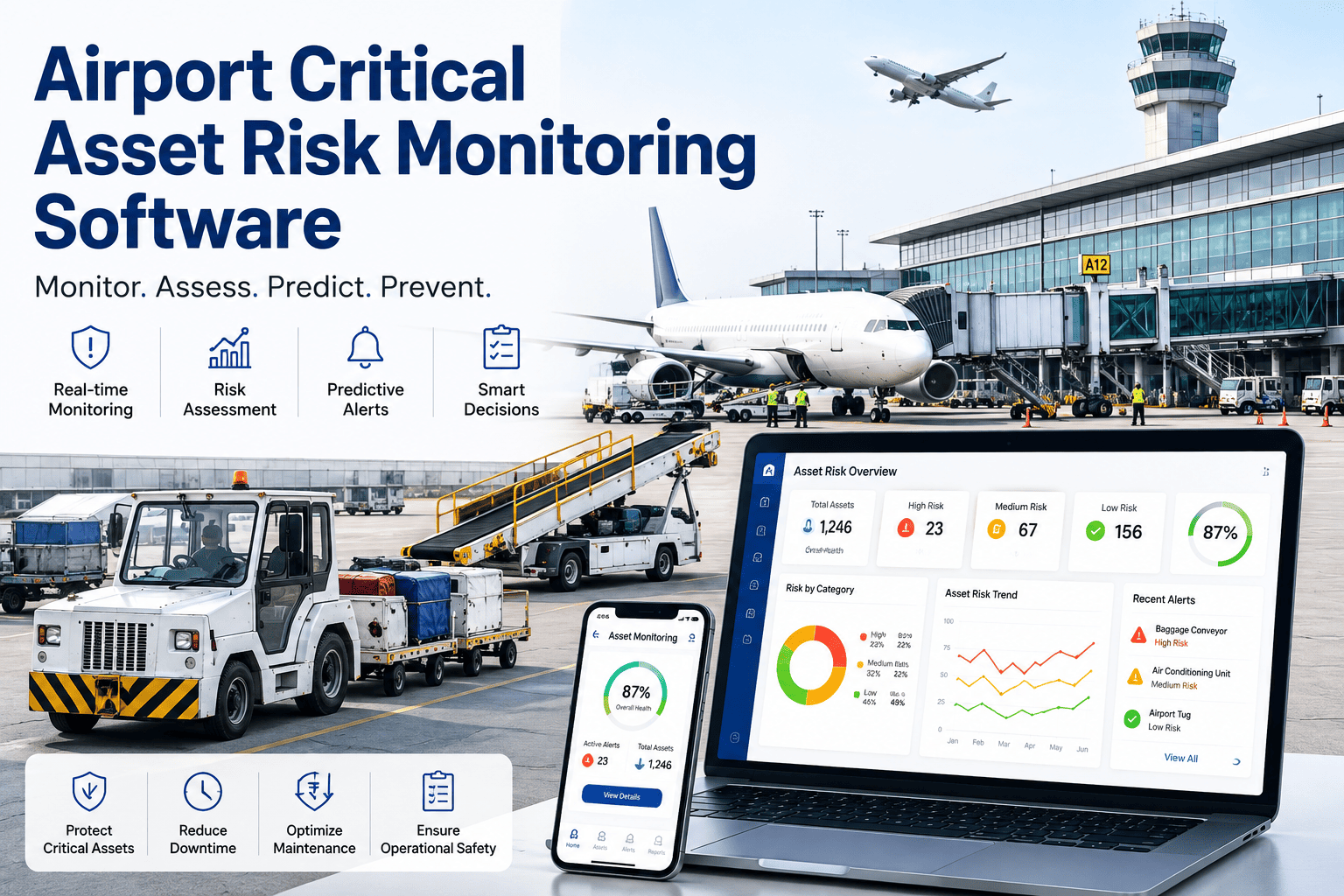
Every airport runs on a list of assets that simply cannot fail without consequence: jet bridges, baggage handling lines, backup generators, fuel farm pumps, HVAC chiller plants, and runway lighting circuits all sit on that list, yet most facilitie

Read More
An airport doesn't fail all at once — a jet bridge starts drawing more hydraulic pressure than it should, a baggage conveyor motor runs a few degrees warmer each shift, an HVAC compressor draws current in a pattern nobody happens to be watching. E

Read More
A pushback tractor stalls out mid-turn at the gate with an aircraft already hooked to the towbar, and the ramp freezes — nobody can push, taxi, or clear the stand until a spare tug arrives or the crew wrestles the failure into submission. The equi

Read More
A concourse chiller plant keeps thousands of passengers comfortable through security lines, gate holdrooms, and retail concourses every single hour, and even a partial capacity loss on a July afternoon push can turn a terminal into a genuine comfo

Read More
A single baggage conveyor motor bearing wearing down for weeks looks like nothing on a routine walkthrough, right up until the moment it seizes during evening peak and the belt stops moving mid-transfer. At a major hub, an unplanned baggage system

Read More
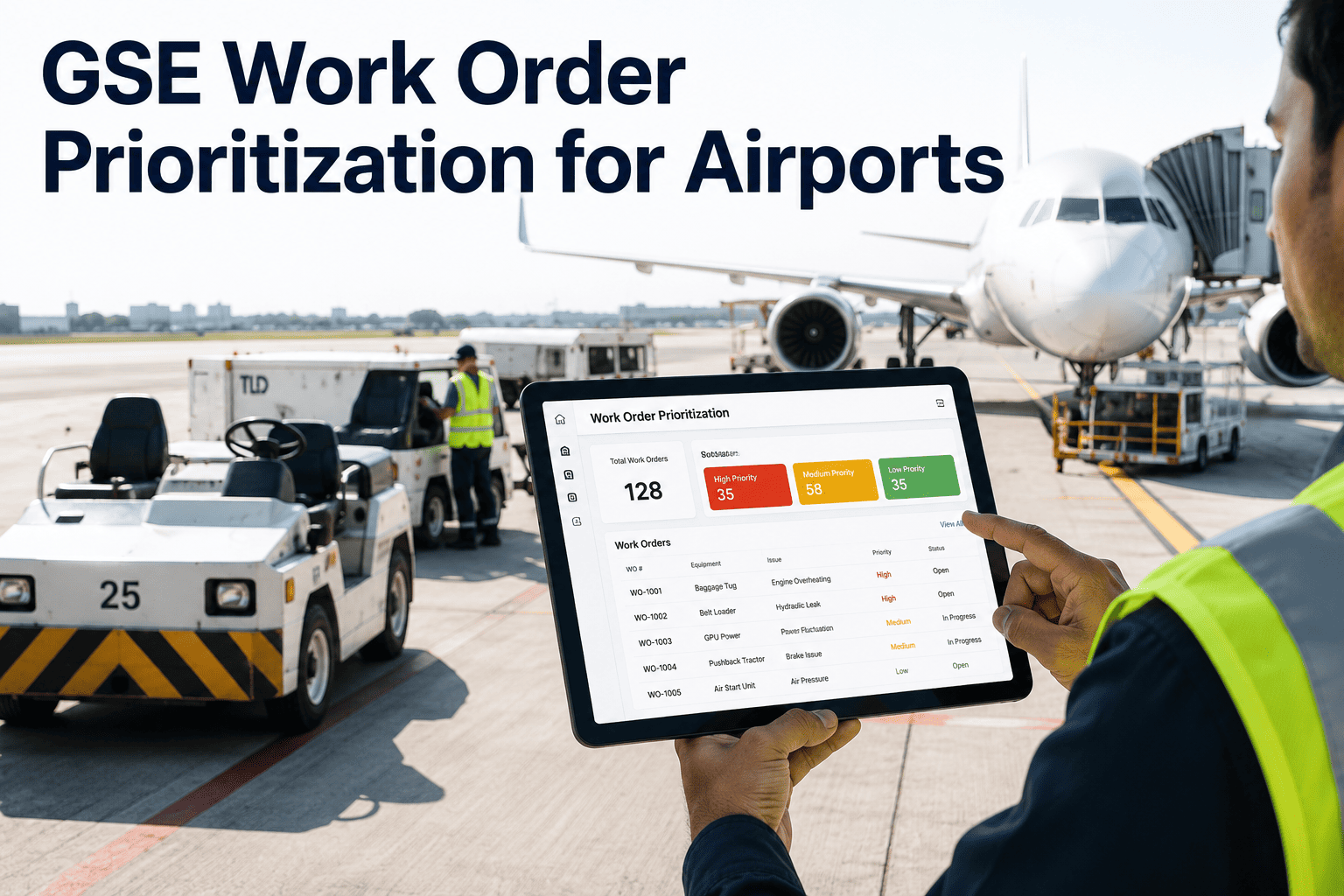
An airport's IoT sensors are quietly doing their job. A vibration sensor on a baggage belt motor flags a drift outside its normal band, a current sensor on a jet bridge drive picks up a load spike, a temperature probe in a switchgear cabinet logs
Read More
A ramp supervisor opens the maintenance queue on a Monday morning and finds forty-one open work orders with no indication of which one matters most. A belt loader with a slow hydraulic leak sits next to a pushback tractor overdue for an oil change

Read More
A belt loader that stalls mid-turn does not just strand one bag cart, it stops the entire gate. Ramp crews scramble for a spare unit, ground handlers eat the delay, and the airline absorbs a turnaround that just went from twenty-five minutes to fo

Read More
A terminal restroom bank going dry during a morning rush, a fire suppression pump failing its weekly churn test, a chiller water pump seizing on the hottest day of the summer — none of these events start suddenly. They start weeks earlier with a b

Read More
Airport turnarounds operate within a fixed time window where every minute of delay directly translates to gate conflicts, missed passenger connections, and cascading schedule disruptions that compound across the entire flight network. When a pushb

Read More
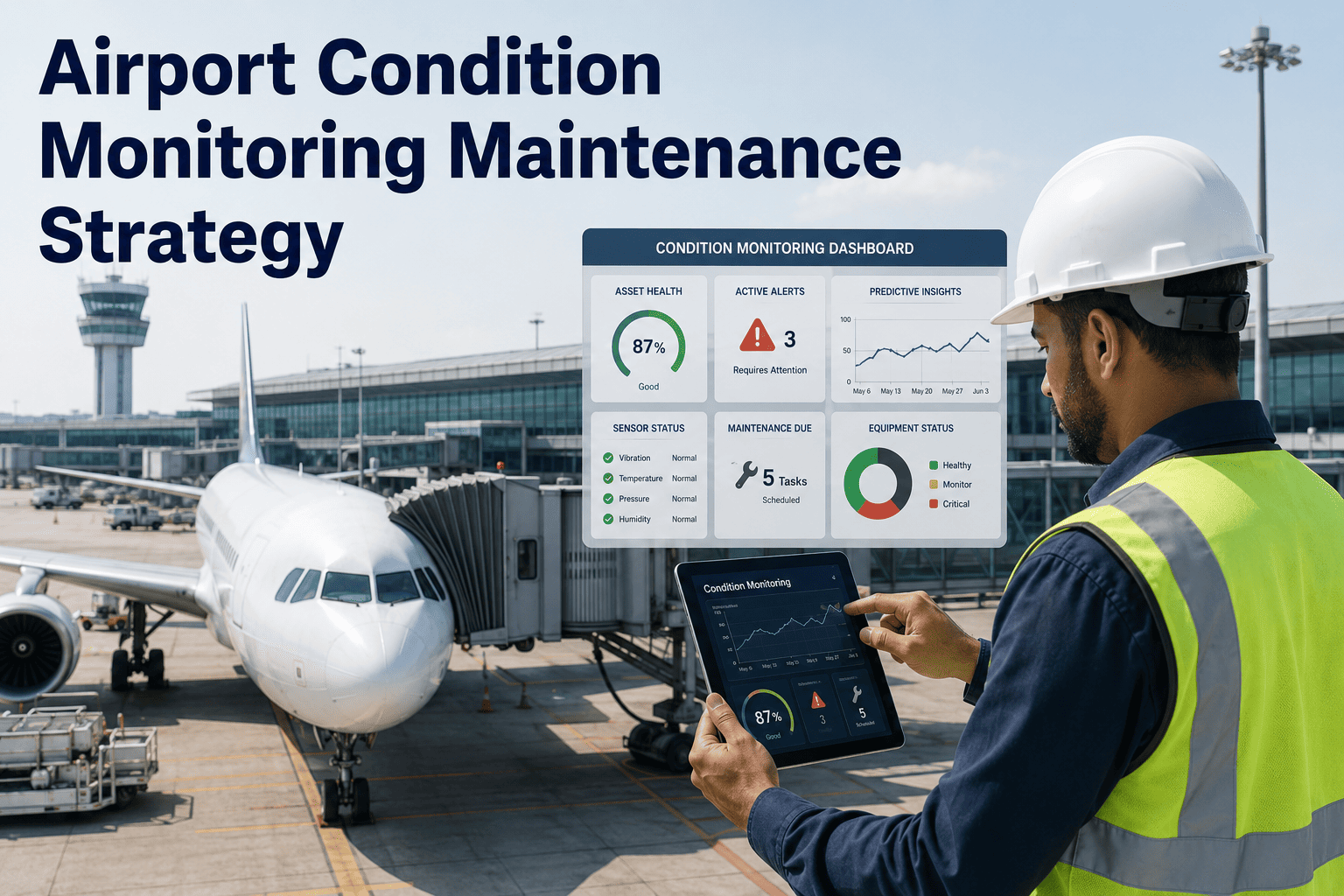
Baggage handling systems are the single largest source of flight delays attributable to ground operations at major airports, and the root cause in most cases traces back to a maintenance work order that was created too late, assigned to the wrong
Read More
Airport maintenance departments have operated on fixed preventive maintenance schedules for decades, servicing equipment every three months or every five thousand operating hours regardless of whether that equipment actually needs attention at tha

Read More
Airport terminal HVAC systems generate thousands of data points every hour from temperature sensors, vibration monitors, pressure transducers, and energy meters embedded across chillers, air handling units, and distribution networks. The problem i

Read More
Airport maintenance teams lose hundreds of hours each month switching between disconnected spreadsheets, standalone CMMS terminals, paper checklists, and email threads just to track a single work order from creation to closure. When ground support
Read More
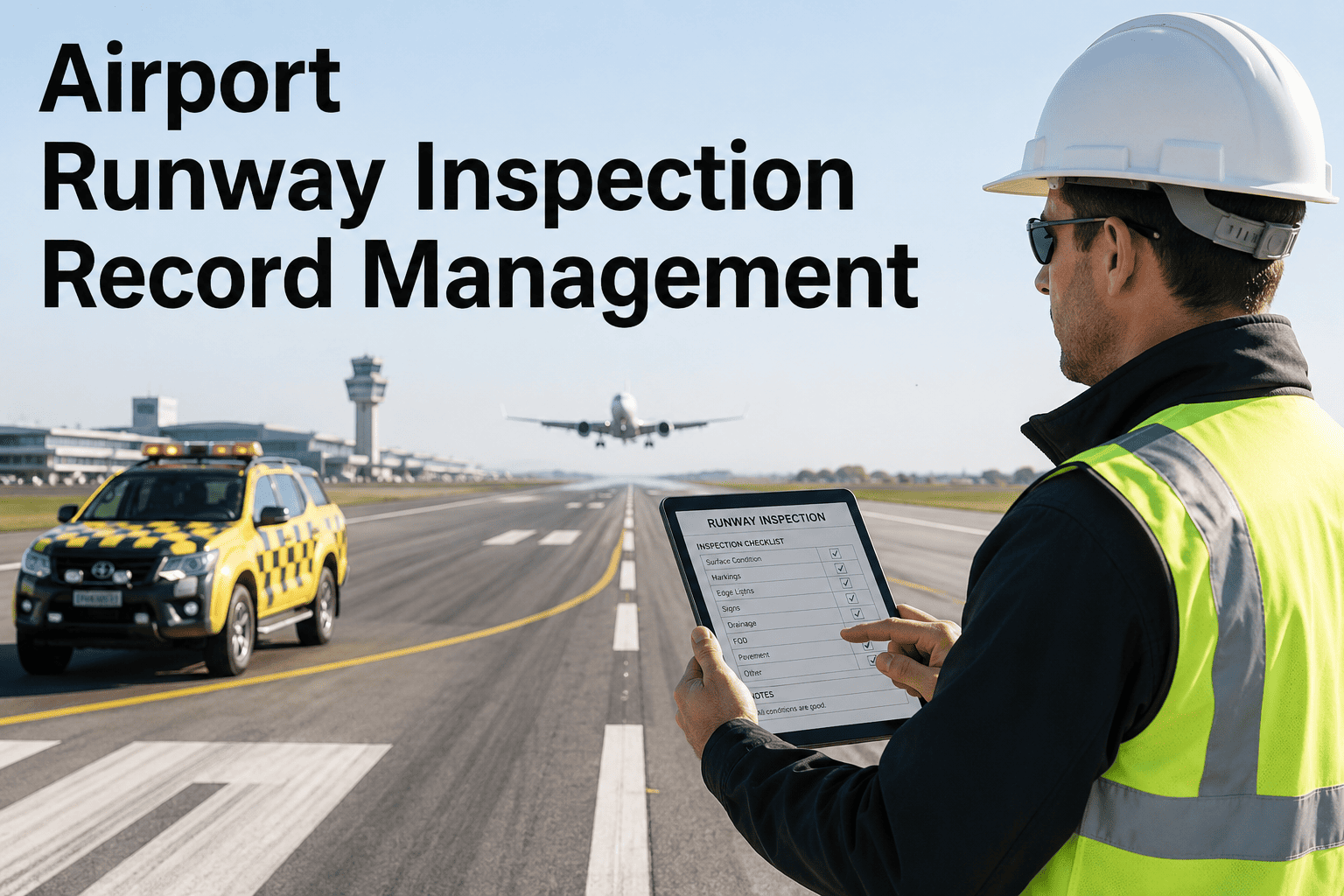
An FAA inspector asks for twelve months of runway self-inspection records, and the response at most airports is the same: someone disappears into a filing cabinet, someone else scrolls through a phone's camera roll for defect photos, and a third p

Read More
Most airports today are already covered in sensors — vibration monitors on escalators, temperature probes in chiller plants, current meters on baggage conveyors, door and access sensors at every gate. The problem is rarely a lack of data. It is th

Read More
When a pushback tractor throws a hydraulic fault code at 5 AM before the first departure bank, the technician who responds usually has three things to work with: a garbled radio description from the ramp agent, a fault code that could mean six dif

Read More
The work order says "hydraulic leak, repaired." So does the one from four months ago. And the one before that. Ground support equipment doesn't usually fail once — the same pushback tractor, belt loader, or GPU keeps coming back to the shop with a
Read More
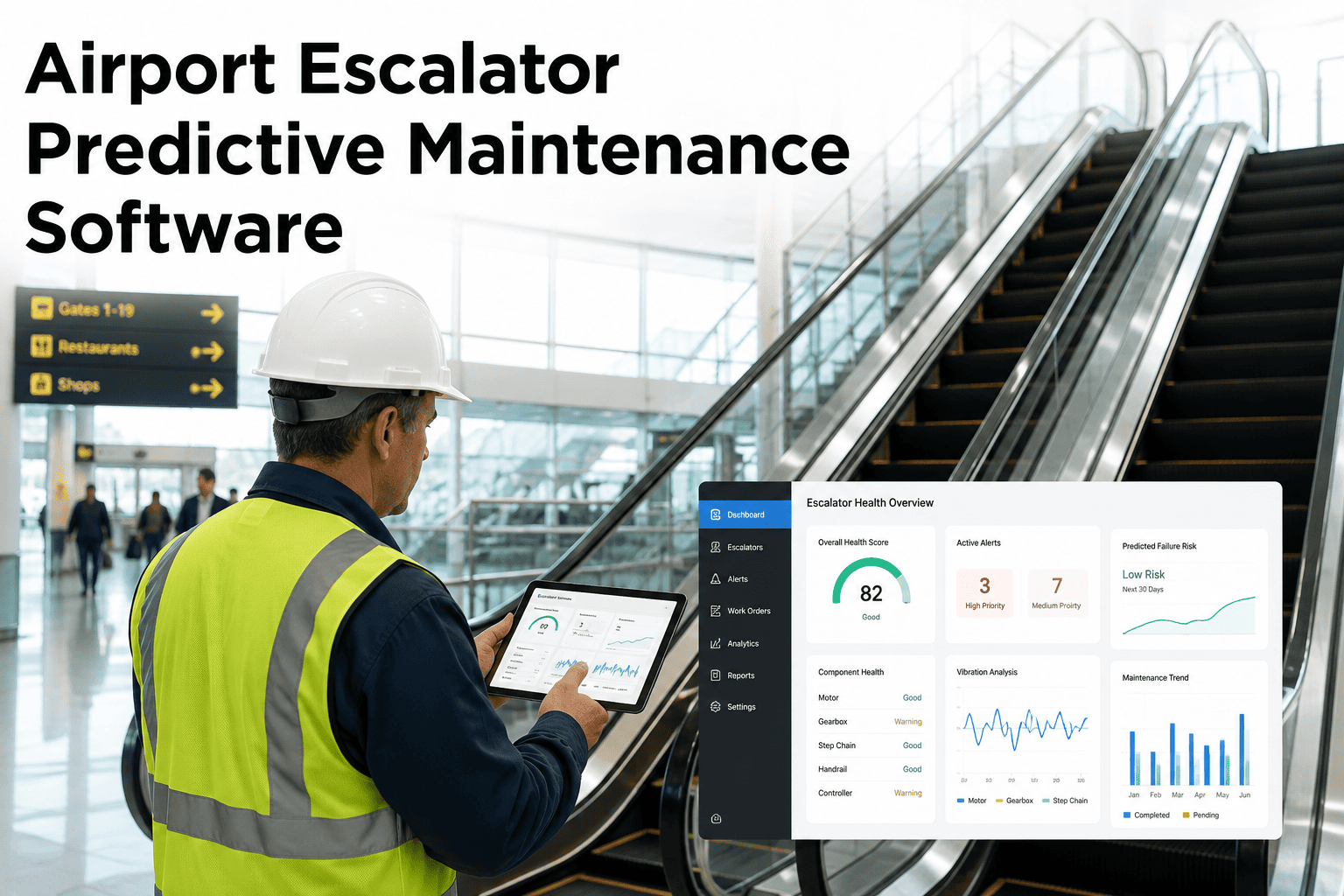
Airport escalators move millions of travelers between terminals, security lines, and gates every single day, and when one stalls mid-shift it creates a ripple of delay that reaches boarding gates and baggage claim within minutes. Most failures are
Read More
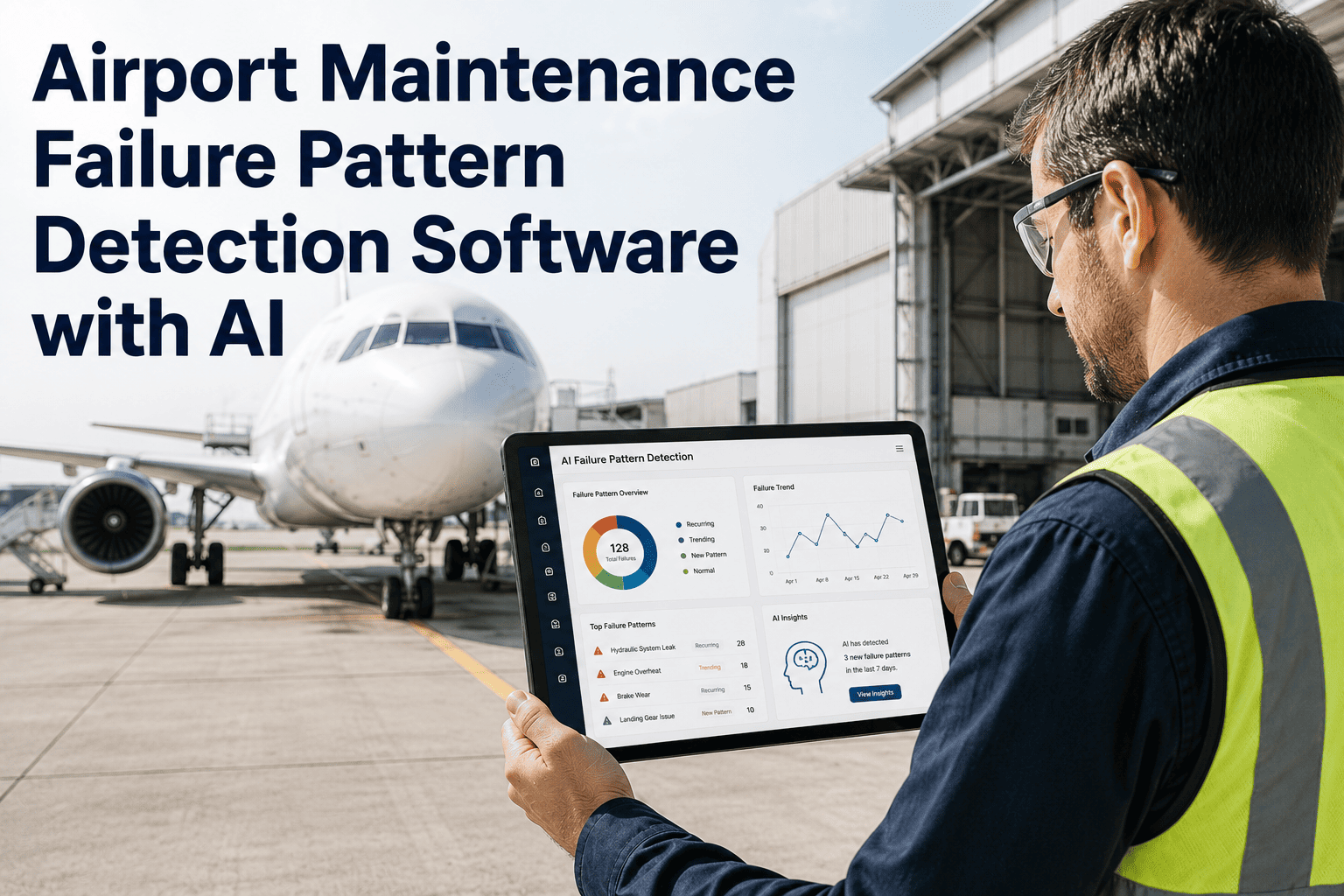
A jet bridge motor fails, a technician repairs it, and the work order gets closed. Six weeks later the same motor fails again, a different technician repairs it a different way, and that work order gets closed too. Multiply that pattern across tho

Read More
A single failed diverter on a baggage sortation line doesn't just take that lane down — it backs up every bag behind it, forces manual sortation at the point of failure, and can misroute checked bags away from tight connections during a busy bank.
Read More
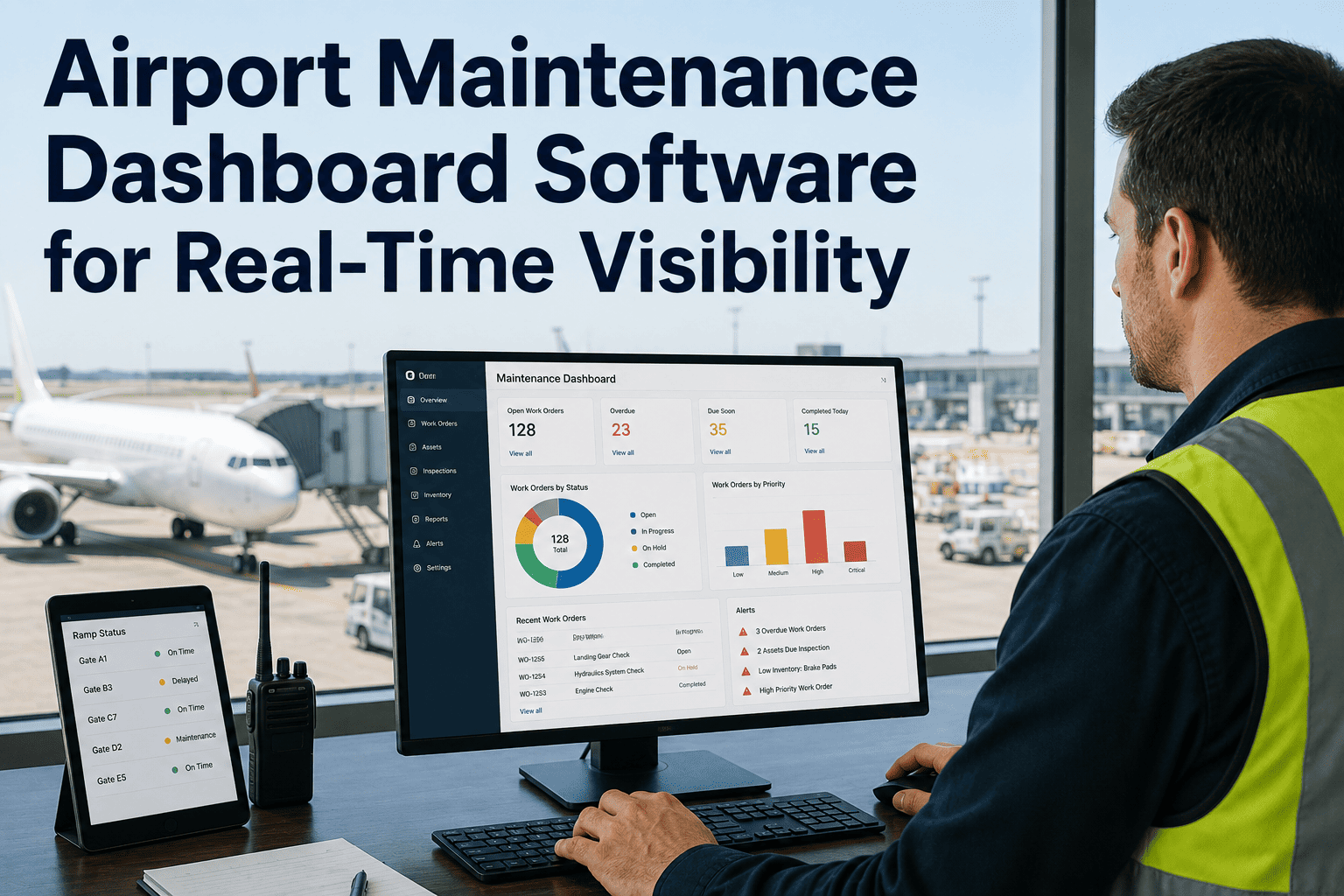
An airport operations director can usually tell you what happened yesterday. Far fewer can tell you, at this exact moment, how many jet bridges are down across four terminals, which work orders just breached their response window, or whether HVAC

Read More
Airports run thousands of critical spare parts across baggage systems, jet bridges, ground support equipment, HVAC plants, and checkpoint scanners, and a single missing part can ground a jet bridge or stall a baggage line during a peak departure b
Read More
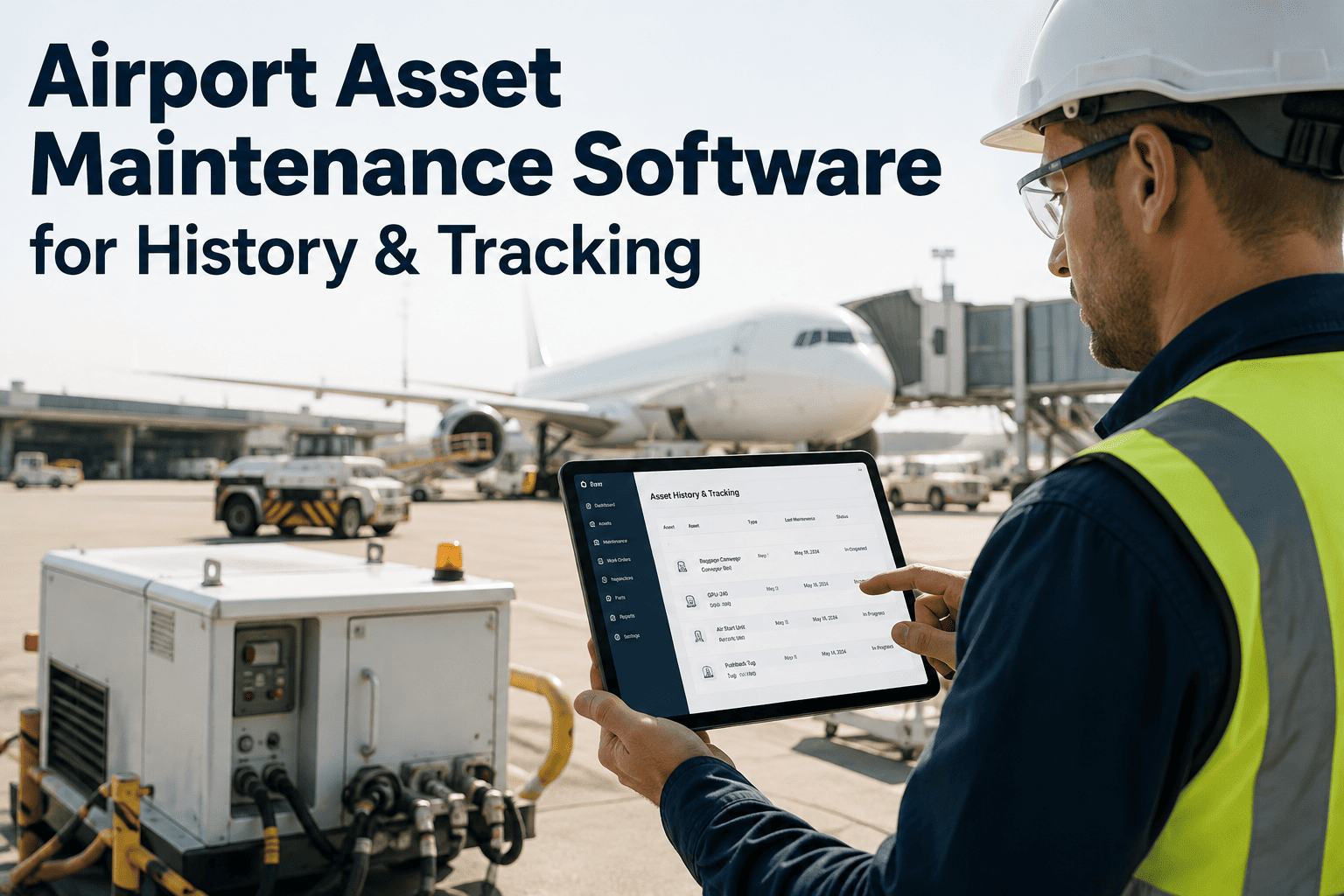
Most airport maintenance teams can tell you when a jet bridge motor failed last week. Far fewer can tell you how many times it has failed in the past three years, which parts were replaced each time, what each incident cost, or whether the pattern

Read More
A typical major airport baggage handling system stretches across 10 to 15 kilometers of conveyor belts, sortation equipment, screening machines, and make-up carousels. Every meter of that system has motors, bearings, sensors, and actuators generat

Read More
Airport maintenance departments have operated on fixed preventive maintenance schedules for decades. Every chiller gets serviced every 3,000 hours. Every baggage conveyor motor gets bearings inspected every six months. Every boarding bridge gets a
Read More
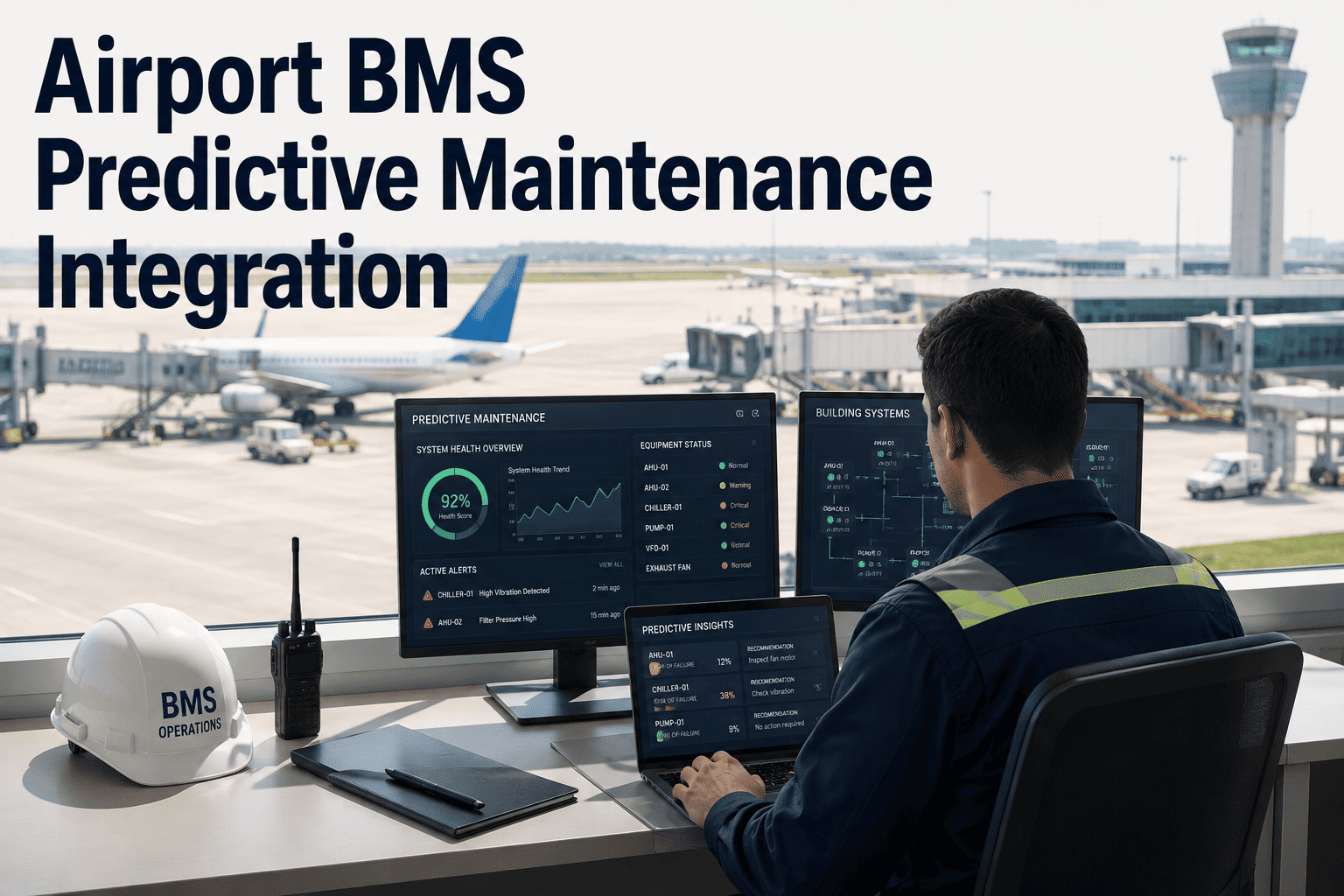
A major airport terminal generates over 50,000 data points per minute from its building management system. Temperature readings, pressure sensors, flow rates, motor current draws, valve positions, and equipment status signals pour in from HVAC pla
Read More
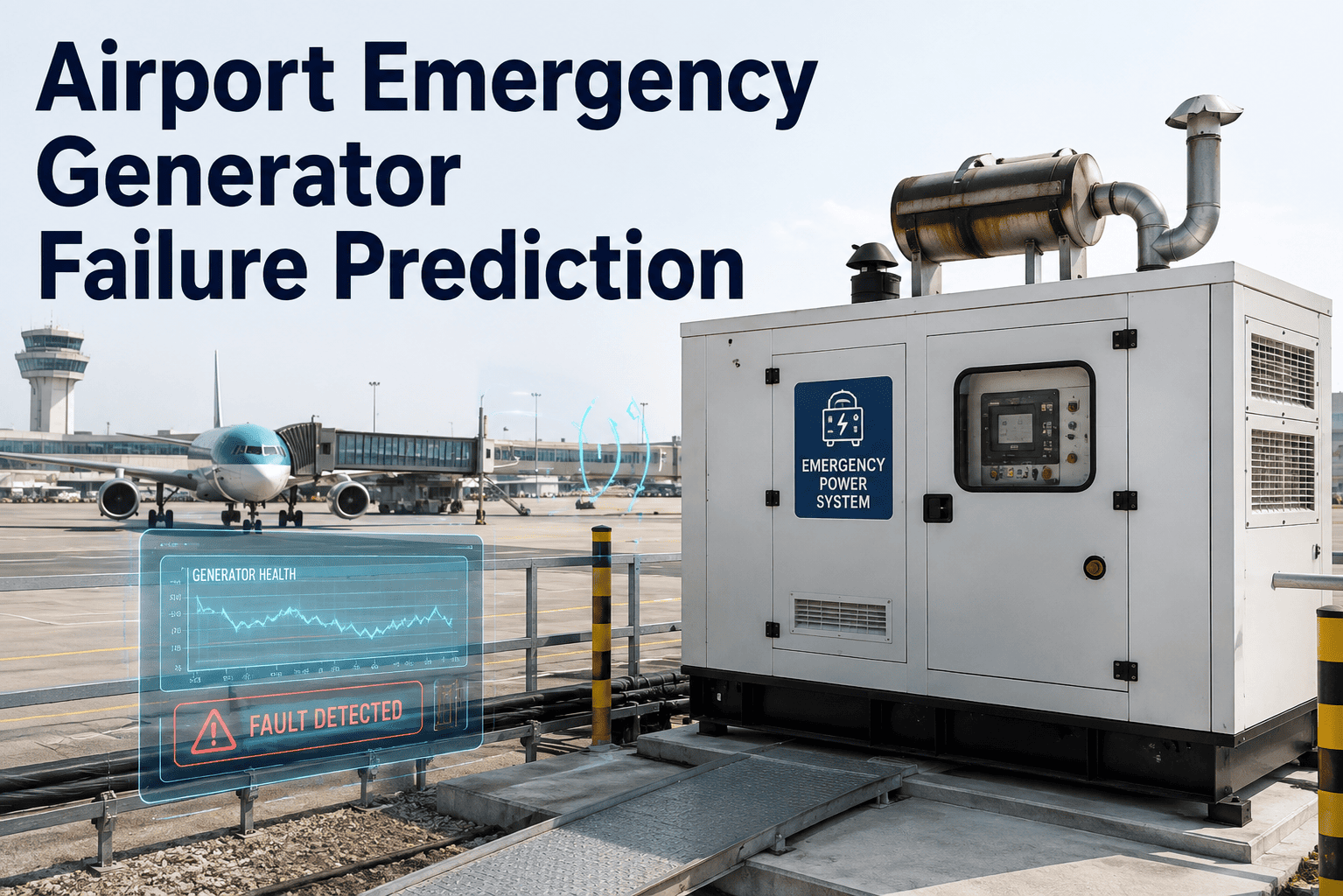
An airport emergency generator that passes its monthly 30-minute load test on Tuesday can still fail to start on Wednesday when the actual outage hits. This is not a paradox. Monthly tests verify that the generator can run under load for a short w
Read More
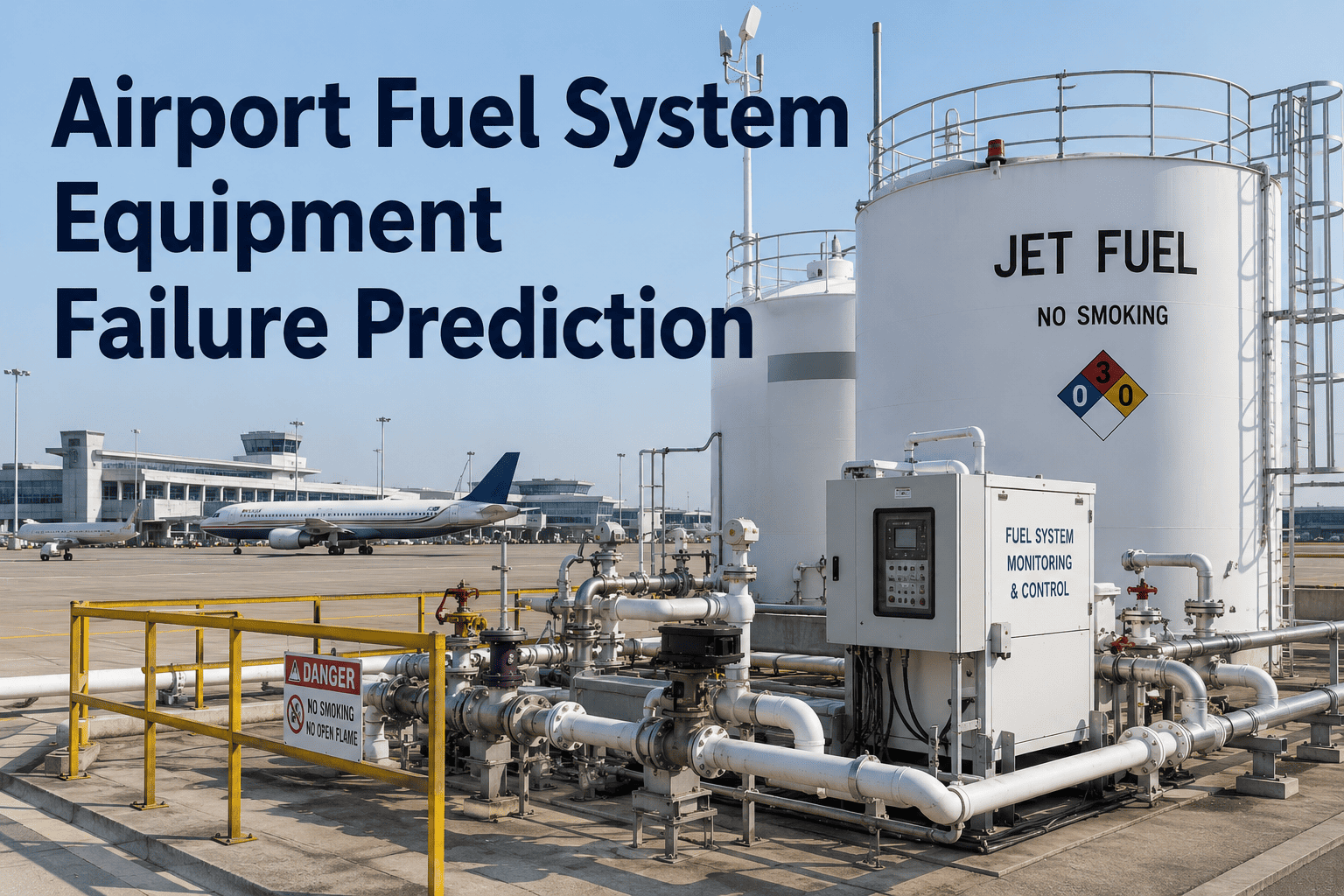
When a fuel hydrant pump fails without warning during a peak departure window at a major hub, the cascading cost extends far beyond a repair bill. Aircraft queue at gates, refueling trucks scramble to cover the gap, and every minute of unplanned d

Read More
A ground power unit throws an unfamiliar fault code at 2 a.m., and the technician standing in front of it has eighteen months of experience, not eighteen years. The person who would have known exactly which procedure to pull, which torque spec app

Read More
A pushback tractor that stalls mid-turn, a ground power unit that trips offline, a belt loader whose hydraulic line finally gives out — none of these failures start the moment they happen. They start days or weeks earlier, as a subtle drift in vib
Read More
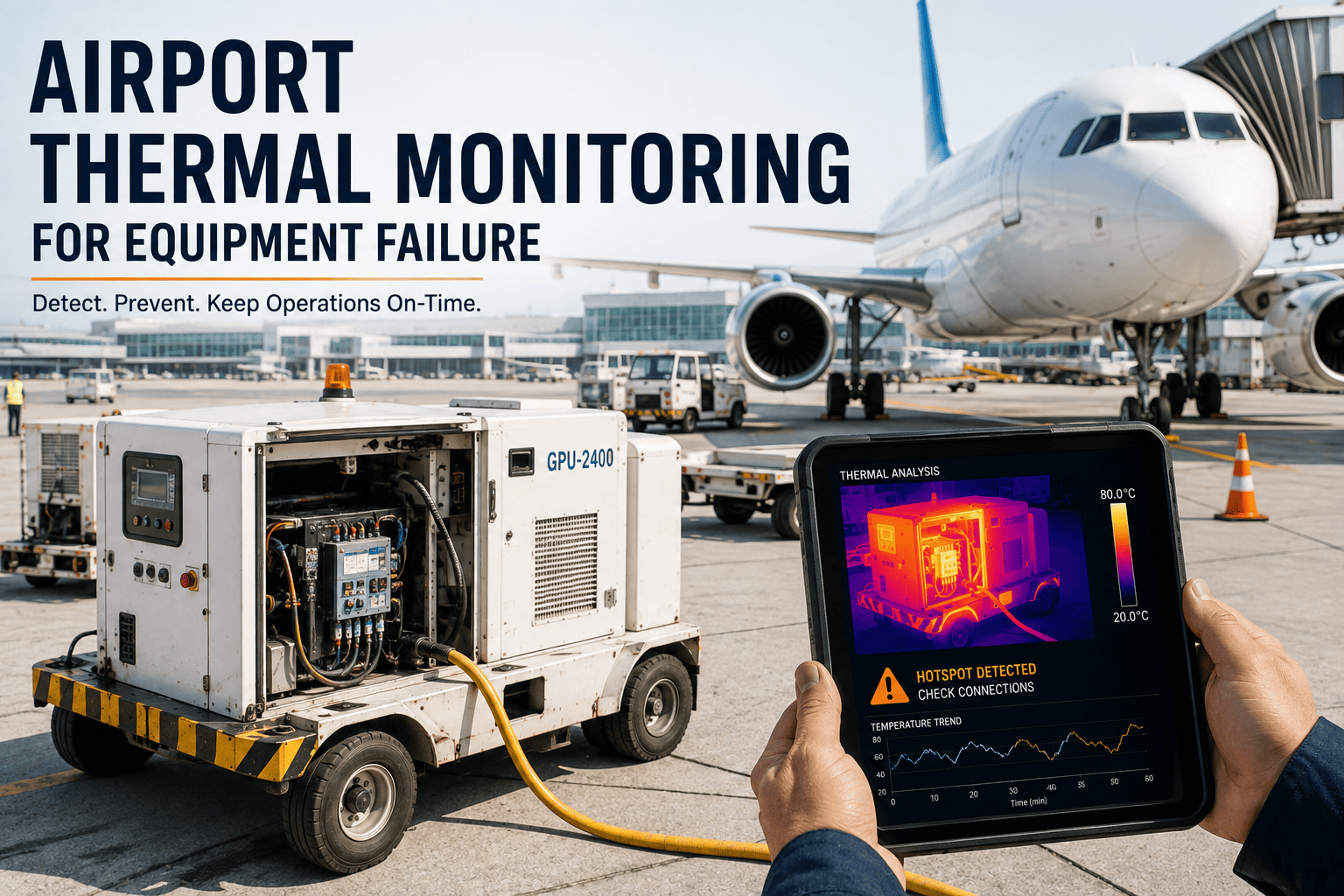
Most airport equipment failures do not begin with a bang, they begin with a temperature that started climbing three days ago and nobody was watching a screen wide enough to notice. Electrical panels, motor control centers, and baggage handling dri

Read More
The first hard freeze of the season is when every deicer truck in the fleet has to work, not just the ones that got attention during the summer maintenance lull. A truck that sat idle for seven months can develop a stuck boom valve, a glycol pump

Read More
At 6:45 AM, the first departure bank of the day sends close to a thousand bags down the same belt line, and if one drive motor overheats or one roller bearing seizes at that exact moment, the backup does not stay contained in the baggage hall. It

Read More
Multi-modal AI fuses vibration data, thermal images, oil analysis reports, and work order text to build complete equipment health profiles that single-sensor monitoring systems cannot produce.
Read More
Multi-modal AI fuses vibration data, thermal images, oil analysis reports, and work order text to build complete equipment health profiles that single-sensor monitoring systems cannot produce.

Read More
AI reads OEM manuals, P&IDs, and maintenance records to auto-generate step-by-step procedures tailored to your specific equipment configuration and operating context.

Read More
A technician standing in front of a failed pump at 2 AM does not have time to open a laptop, navigate a CMMS, search for the asset record, find the procedure, cross-reference the parts list, and then call a supervisor to ask what the last three re

Read More
A sensor alert that says "Vibration amplitude exceeded threshold on Pump P-204" is not a work order. Converting that alert into an actionable work order — with failure description, recommended repair procedure, required spare parts, estimated repa
Read More
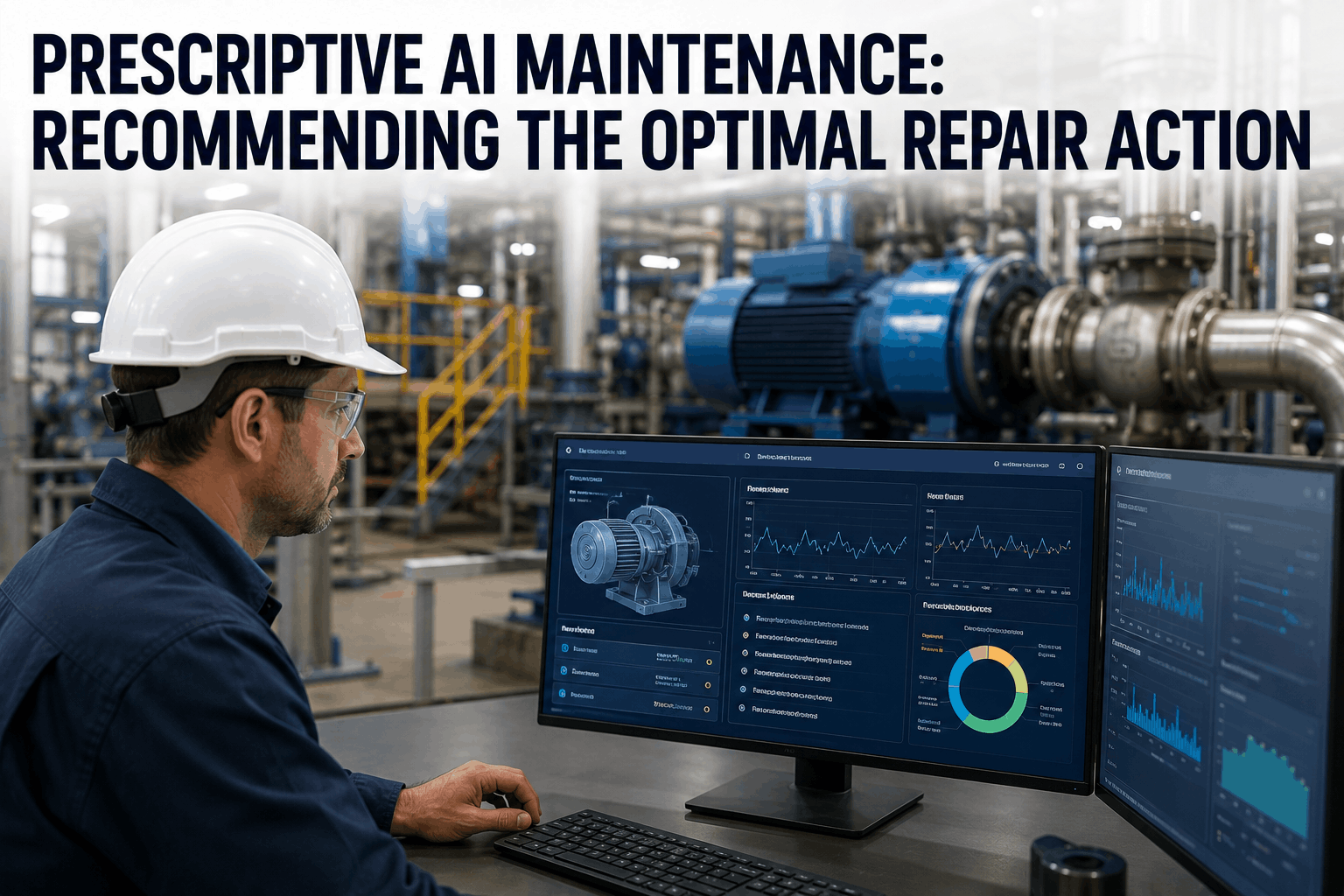
Predictive maintenance tells you a bearing will fail in 14 days. Prescriptive AI tells you which bearing, which technician to assign, which part to order today, and whether to repair during the Tuesday planned shutdown or pull the line for two hou

Read More
The maintenance technician with 28 years of experience on a specific compressor line knows something no manual captures: the second stage pressure fluctuates at startup when ambient temperature drops below 45°F, and the fix is a 30-second delay in
Read More
Predictive maintenance has spent a decade alerting technicians to problems. Agentic AI does the next step autonomously — it plans the repair, orders the part, and schedules the technician before a human even reads the notification. Deloitte report
Read More
A technician standing in front of a failed gearbox at 2 AM with a maintenance manual that has not been updated since 2019 used to have one option: call someone more experienced. Large language models change that equation by letting technicians que
.png)
Read More
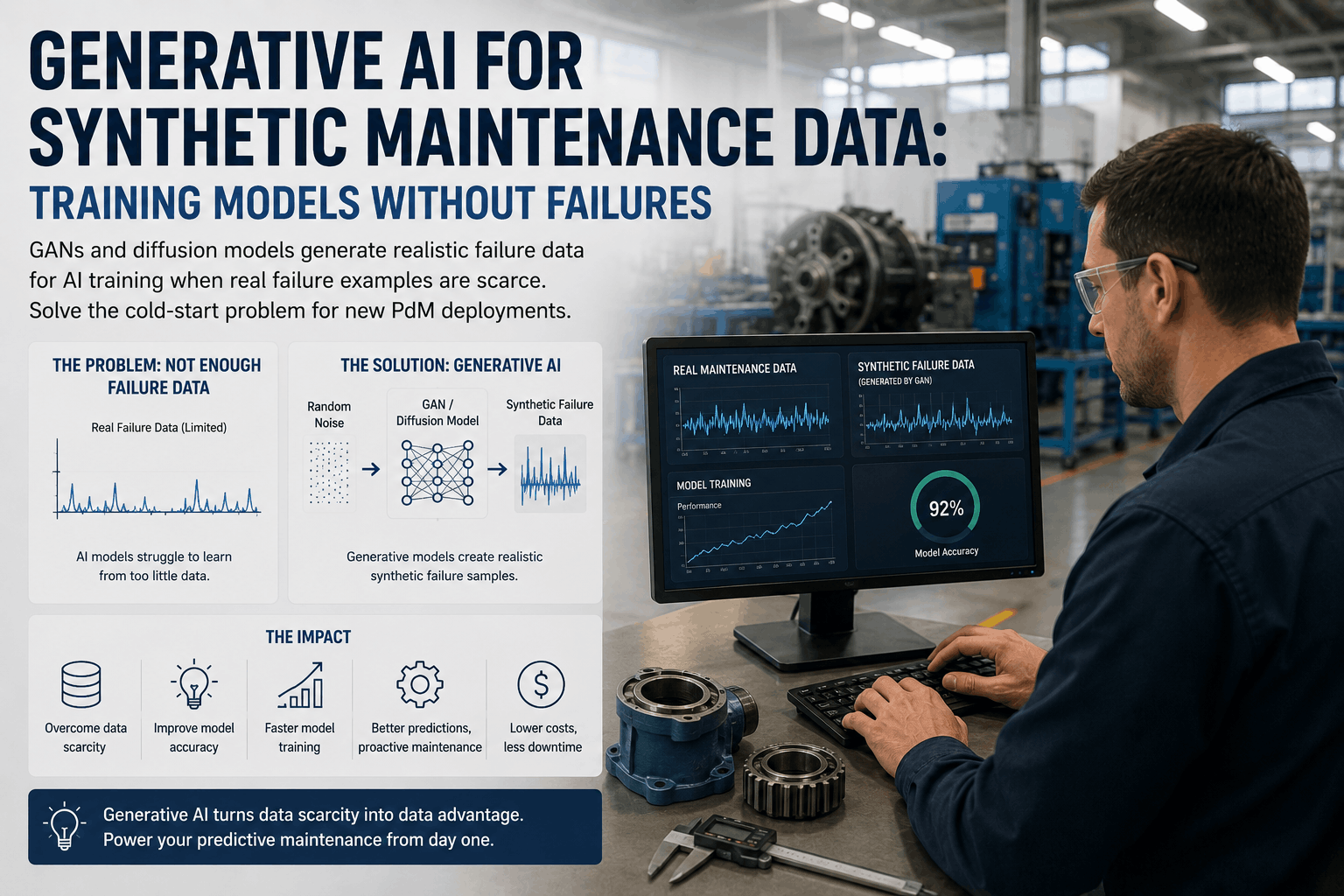
The most common reason predictive maintenance AI projects fail is not the algorithm — it is the training data. Real equipment failures are rare by design, and a model that has seen only three bearing failures in five years of history cannot learn

Read More
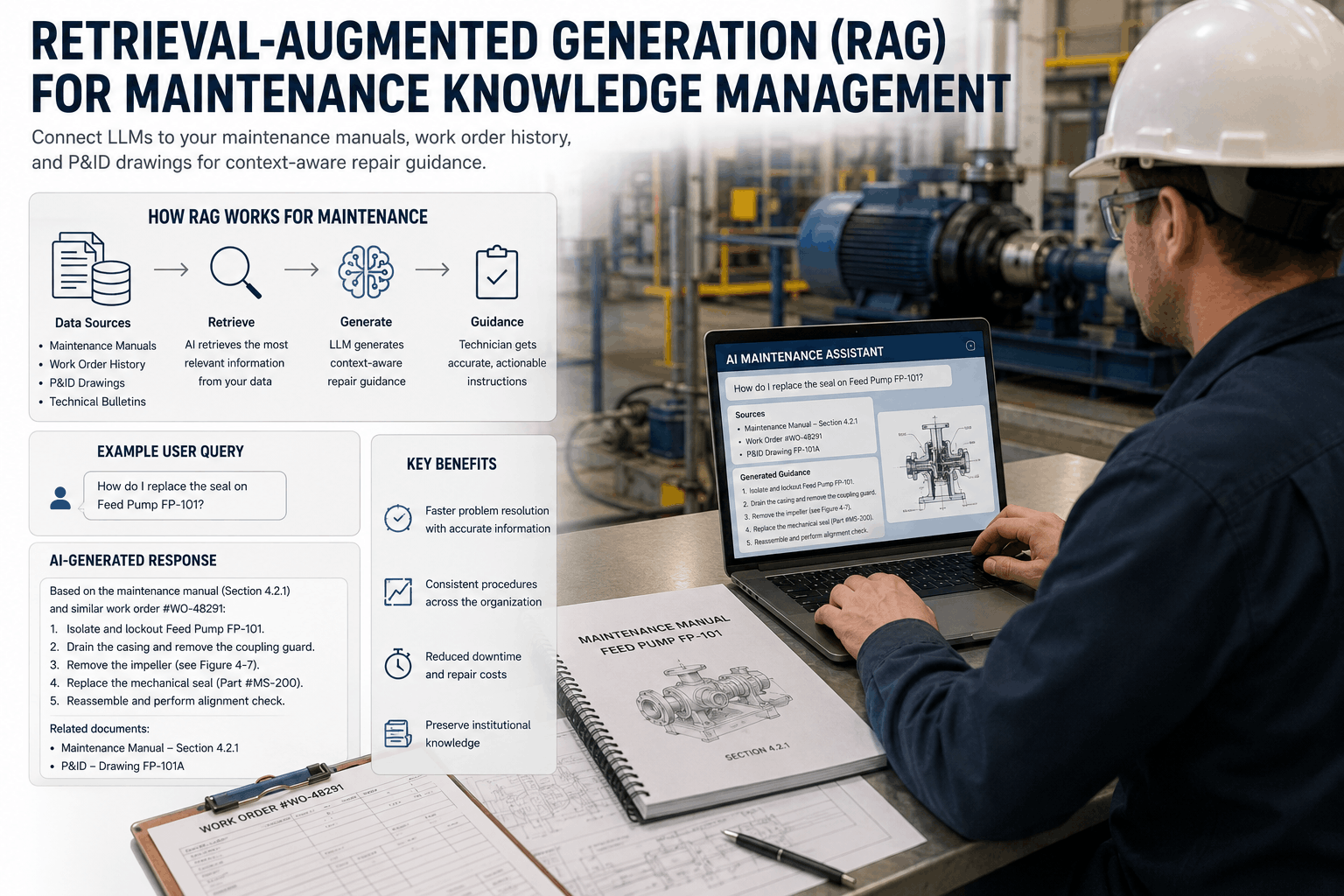
A large language model that does not know your equipment does not know your maintenance problem. Retrieval-Augmented Generation solves this by connecting an LLM to your actual maintenance manuals, work order history, P&ID drawings, and inspection

Read More
An operations director managing aerospace heat treatment under AS9100 and NADCAP faces a structural contradiction: every furnace cycle is certified, every recipe is approved, every thermocouple is calibrated — yet non-conformances still appear, co

Read More
A turbine disc that spends 12 hours in a vacuum furnace at 1,050 degrees Celsius has one chance to emerge with the correct microstructure. If the soak time drifts by seven minutes, if the quench rate falls four degrees below the certified profile,

Read More
Every aerospace heat treatment operation has a Cpk story it would rather not tell. The furnace qualified at 1.67 during validation. The first three production batches ran clean. Then the alloy batch changed, the furnace load configuration shifted

Read More
Aerospace heat treatment is not a forgiving process. When a titanium landing gear component runs 12°C above its soak temperature for 18 minutes too long, the resulting microstructure deviation may not surface until a fatigue test three weeks later

Read More
Heat treatment is where aerospace parts either earn their certification or lose it. Titanium landing gear forgings, nickel superalloy turbine discs, high-strength steel fastener blanks — every one of them passes through a furnace where temperature

Read More
Every aerospace heat treatment plant manager knows the calculation: one unplanned furnace failure during a titanium aging cycle does not just stall that batch — it triggers a cascade of schedule disruptions, expedite fees, customer notifications,

Read More
A vacuum furnace at an NADCAP-accredited aerospace heat treat operation ran for six months hitting every internal production target -- 97% schedule adherence, zero customer escapes, audit-ready paperwork. Then a routine capability study revealed s

Read More
Every plant manager in aerospace heat treatment knows the cycle time tension. The furnace is capable of a 6-hour soak on this aluminium alloy. The AMS specification allows it. The quality engineer confirmed it. But the production schedule shows 7.

Read More
The NADCAP heat treat audit is 10 weeks away. The plant manager knows what the auditor will request: 90 days of temperature uniformity survey records, SPC charts for every active alloy group, corrective action history for every nonconformance logg

Read More
For a plant manager running aerospace heat treatment operations, the quality conversation starts and ends with the same question: what is the defect cost per part, and how do we drive it toward zero without increasing inspection headcount or slowi
Read More
A quality engineer in aerospace heat treatment operates at the intersection of two realities that rarely align. The first reality is the furnace control system — a precisely logged sequence of ramp rates, soak temperatures, quench pressures, and c
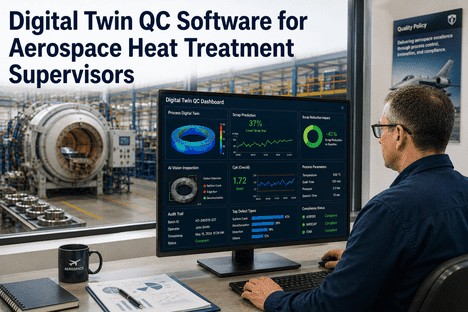
Read More
Every shift supervisor in aerospace heat treatment knows the sequence: the furnace cycle completes, the quench tank settles, the batch moves to inspection, and the non-conformance report arrives four hours later. A turbine disk that entered the va

Read More
The NADCAP heat treat audit is scheduled for 10 weeks from today. The supervisor knows what the auditor will ask for: the last 90 days of temperature uniformity survey records,
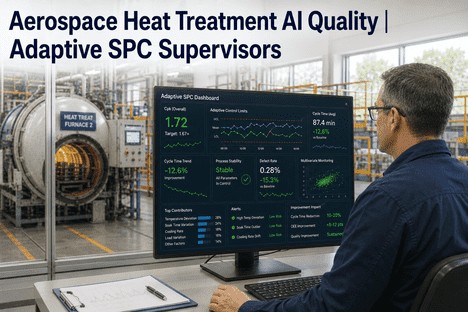
Read More
Every shift supervisor in aerospace heat treatment knows the cycle time tension. The furnace is capable of a 6-hour soak on this aluminium alloy. The AMS specification allows it. The quality engineer confirmed it. But the production schedule shows
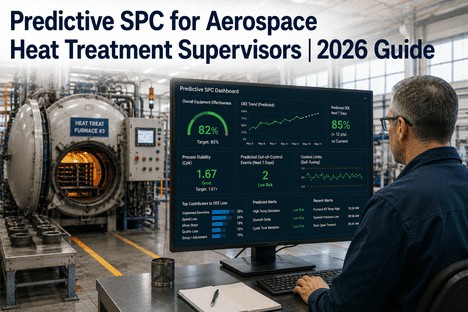
Read More
The shift supervisor's OEE board at the morning handover shows 78% for the previous week. The target is 85%. The gap does not come from a single dramatic failure. It comes from the accumulated effect of a dozen small quality holds, extended cycle
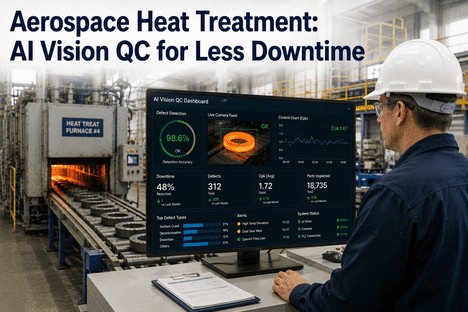
Read More
The shift supervisor's board at handover shows three furnaces running, two loads in quench, and a hardness tester with a queue of six parts waiting for disposition. Every load looks normal on the control screen. Temperatures are within range. Cycl

Read More
A furnace load of aerospace-grade 4340 enters the quench. The cycle completes. The parts move to hardness testing. Eight hours later, the report shows three of twelve parts have edge hardness below the minimum specification. The entire load is sus

Read More
Every aerospace heat treatment operator knows the rhythm of a standard shift. You load the furnace, set the soak temperature, start the cycle, and wait for the pyrometry report to confirm uniformity. The parts come out, you check hardness, you sig

Read More
Every heat treat operator has watched a furnace run a perfect cycle — temperatures within the AMS band, soak time exactly to spec, quench delay under control — only to see the Cpk calculation come back at 1.12 because the control limits were calib

Read More
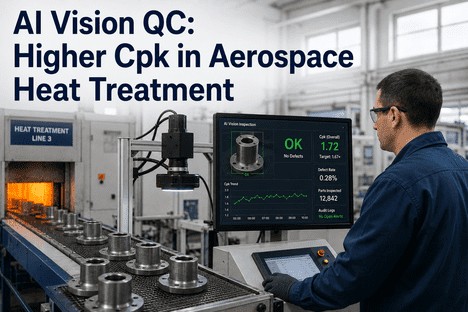
Every heat treatment operator in aerospace knows the scenario: the furnace thermocouple logged a stable temperature through the soak cycle, the quench delay was within the specified window, and the hardness test came back within the AMS requiremen
Read More
Heat treatment in aerospace is the process step where material properties are locked in — and where hidden defects are locked in with them if the operator does not catch them at the right moment. A part that enters the furnace within specification

Read More
Every operations director in aerospace avionics knows the OEE number that haunts the quarterly review. It sits between 50 and 65 percent — respectable by aerospace standards, frustrating by any measure of productive capacity. The narrative around

Read More
Every avionics production line has a number that operations directors track more closely than any other: first-pass yield. It determines whether a 500-board run ships on time or consumes 200 hours of rework capacity. It decides whether margins hol

Read More
Every operations director in aerospace avionics knows the moment when the third false alarm of the shift appears on the control chart. The X-bar point sits above the UCL. The operator flags it. The quality engineer investigates. The conclusion is

Read More
Every operations director in aerospace avionics knows the three numbers that define their quality programme: the current Cpk of every critical characteristic on every IPC Class 3 product variant, the defect escape rate at the end of each productio

Read More
Every operations director in aerospace avionics knows the tension embedded in the production schedule: increase output to meet aircraft delivery commitments while maintaining zero-defect quality under AS9100 and IPC Class 3 standards, all within a

Read More
Every plant manager in aerospace avionics assembly knows the latency gap that consumes cycle time. Between the moment a process parameter drifts and the moment the quality system confirms the defect, 30 to 90 minutes of production pass. Boards are

Read More
Every plant manager in aerospace avionics assembly knows the OEE number by heart. It lands on the dashboard at shift end — 62% for the SMT line, 71% for hand-solder, 58% for final assembly. The calculation defined by ISO 22400 is precise: Availabi

Read More
Every plant manager in aerospace avionics assembly knows the feeling of reviewing a shift report that shows 62% OEE on a line that should run at 85%. The SMT machines placed 38,000 components per hour. The reflow profile was within specification.

Read More
Every plant manager in aerospace avionics knows the pattern: the weekly quality report shows Cpk at 1.45 on a critical characteristic, the shift supervisor confirms the process looked stable, the operators followed the standard work, yet somewhere

Read More
Every plant manager in aerospace avionics faces the same paradox: the quality system produces reams of data from AOI stations, in-circuit testers, functional test benches, and manual inspection checkpoints, yet the plant-level Cpk numbers still dr

Read More
Every quality engineer in aerospace avionics assembly knows the gap between the design intent on the specification drawing and the as-built quality that lands on the CMM inspection table. The drawing calls for a BGA ball diameter of 0.45 mm ± 0.02

Read More
Every quality engineer in aerospace avionics assembly knows the OEE number that lands on the dashboard at the end of the shift. It is accurate. It is precise. And it is useless for prevention — because by the time the quality factor registers 82 p

Read More
Every quality engineer in aerospace avionics assembly knows the moment when a control chart generates its third false alarm of the shift. The X-bar point sits outside the UCL, but the operator has already seen this pattern twice today — each time

Read More
Every quality engineer in aerospace avionics knows the sequence: the control chart shows a point beyond the 3-sigma limit, the Western Electric rule triggers an alert, and the investigation confirms that a process shift occurred. The problem is th

Read More
Every quality engineer in aerospace avionics knows the two numbers that define their programme's credibility: the Cpk of every critical parameter on every IPC Class 3 product variant, and the false failure rate of the inspection system that genera

Read More
Every shift supervisor in aerospace avionics knows the same tension: IPC Class 3 assemblies demand 99 percent first-pass yield, but a typical SMT line running complex boards with 800-plus components, fine-pitch BGAs, and mixed-technology assemblie

Read More
Predictive OEE is not a reporting upgrade. It is a scrap prevention system that uses OEE data as its input and produces supervisor actions as its output. The distinction matters because OEE has historically been a scorecard — a number that tells t

Read More
Scrap in avionics assembly is not primarily a material loss problem. It is a detection latency problem. The solder paste volume that drifted 15% below target over 90 minutes did not become scrap at the printer — it became scrap at the reflow oven,

Read More
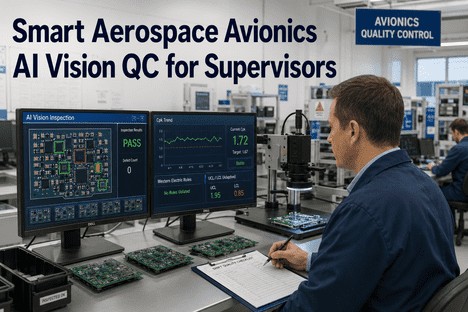
OEE in avionics assembly is not a number to report at shift handover — it is a diagnostic that tells the shift supervisor exactly where the line is losing time. When availability drops, something stopped production. When performance drops, somethi
Read More
Every avionics PCB crossing a reflow line carries hidden quality risk that end-of-line inspection cannot catch in time to prevent the defect. A BGA void forming beneath the component body where no AOI camera can see it. A 50-micron placement shift

Read More
Scrap in avionics PCB assembly rarely arrives as a single catastrophic event. It accumulates as a series of small, compounding variations that no single measurement flags as out of spec — a solder paste deposit that shrinks by 2 microns per board

Read More
The shift starts the same way every day. You walk the line, check the AOI station backlog, glance at the SPI screen to see if solder paste deposits held within tolerance overnight, and scan the reflow oven profile log from the previous run. Somewh

Read More
Every minute a part spends waiting in the CMM queue is a minute the next operation stays idle, the workcentre accumulates WIP, and the shift's OEE target moves further out of reach. In aerospace engine assembly, where a single high-pressure turbin

Read More
Unplanned downtime in aerospace engine assembly is the most expensive operational metric a plant manager manages — not because the maintenance cost is high, but because the production loss compounds across every downstream cell, every committed de

Read More
Every aerospace engine assembly plant manager knows the OEE number by heart — not because it is improving, but because it has not moved in 18 months. The typical aerospace manufacturing operation runs between 50% and 65% OEE, with top-quartile pla

Read More
Every aerospace engine assembly plant manager operates under the same structural tension: production throughput targets that demand line speed, AS9100 requirements that demand zero-defect quality, and the knowledge that a single non-conformance on

Read More
The first-pass yield report arrives every Monday morning. Last week's number reads 74.3%. Fewer than three of every four engine components that entered the assembly cycle cleared every inspection gate without rework. The remaining 26% sit in the r

Read More
Unplanned downtime in aerospace engine assembly does not announce itself. It arrives as a spindle bearing that fails at 2:47 AM on a Tuesday, halting a five-axis cell that feeds three downstream stations. By the time the bearing is diagnosed, sour

Read More
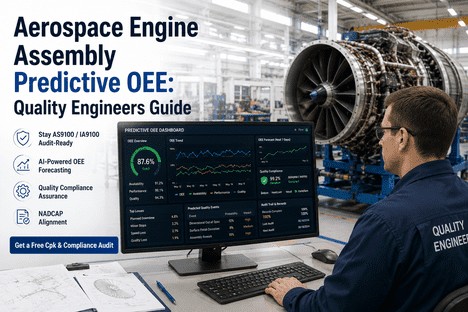
An aero-engine assembly line produces a torque value, a fastener tightness reading, a bearing fit measurement — thousands of them every shift, each one logged, each one within specification at the moment of capture. Six weeks later, an engine in s
Read More
A turbine disk arrives at final assembly on schedule, fully machined, coated, and NDT-cleared. Then a torque value during stacking comes back outside spec — not by much, but enough to stop the build. The quality engineer pulls the OEE data for tha

Read More
In aerospace engine assembly, the cost of a non-conforming part is never just the part. A turbine disk bore that drifts two microns over three production shifts — each shift individually within static SPC limits — reaches final assembly as confirm

Read More
In aerospace engine assembly, a single non-conforming component does not become scrap in isolation — it becomes the nucleus of a cost event that compounds across every downstream stage it passes through undetected. A turbine blade that clears the

Read More
The CMM queue forms between every machining cycle and every quality disposition. A fan blade completes critical bore machining in 14 minutes. The dimensional verification that confirms it waits 90 to 120 minutes behind the 8 to 12 parts already st

Read More
Every engine assembly supervisor knows the gap between design intent and as-built quality. The drawing calls for a coaxiality tolerance of 0.02 mm between the turbine disc and the shaft. The CMM report at the end of the line shows 0.035 mm. The pa

Read More
Every engine assembly supervisor has seen it. The shift-end OEE report arrives. Availability is 78%. Performance is 82%. Quality is 91%. The composite OEE is 58%. The line lost 42% of its productive potential. The numbers are precise. The calculat

Read More
Every shift supervisor in aerospace engine assembly knows the feeling. The SPC chart on the CMM workstation shows a point outside the control limits. The operator flags it. The supervisor reviews the part. The measurement looks valid. The correcti

Read More
Every shift supervisor in aerospace engine assembly knows the compliance record is only as good as the SPC data behind it. The AS9100 auditor asks for control limit rationale. The NADCAP auditor wants evidence of in-process quality monitoring. The

Read More
You are standing at the end of the inspection station, watching the CMM queue. There are 14 parts ahead of the one that just came off the line. The operator is waiting for a bore dimension confirmation before releasing the next operation. The insp

Read More
You run the same engine assembly cell every shift. You know the sound of the spindle when the cut is good, the feel of the torque wrench when the fastener is seated right, the rhythm of the cycle when everything is in tolerance. But you also know

Read More
You check the OEE board at the end of every shift. Availability 78%, Performance 85%, Quality 96%. The number tells you what already happened. The spindle bearing that failed at 10:30 — already in the number. The tool change that ran 12 parts past

Read More
Every shift, the same pattern: you load the next engine component, the SPC chart updates, and a point falls outside the control limit. The limit was calculated during qualification two years ago. The material batch is different. The tooling has 8,

Read More
A single scrapped fan blade at final inspection represents 14 hours of accumulated machining time, 6 hours of assembly labor, and a material cost that exceeds the per-unit profit on the entire engine programme. Every operator on an aerospace engin

Read More
Every minute an engine sits on the assembly line waiting for inspection is a minute the customer lead time stretches, a minute the next build slot pushes right, and a minute the margin on that unit erodes. For operators on aerospace engine assembl

Read More
The first-off part for a new titanium housing programme just completed machining on cell 3. The CAM programme was verified offline, the tool paths were simulated, and the setup sheet followed the standard template. The part goes to CMM. Three hour

Read More
Monday morning. The OEE report from the weekend shift lands on your desk. Cell 3 recorded 67% OEE across the Saturday-to-Sunday run. The number tells you that something went wrong. It does not tell you what, when, or how to fix it. You dig into th

Read More
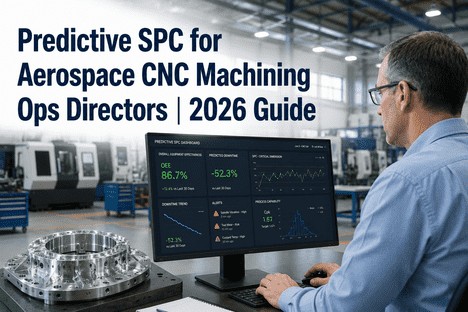
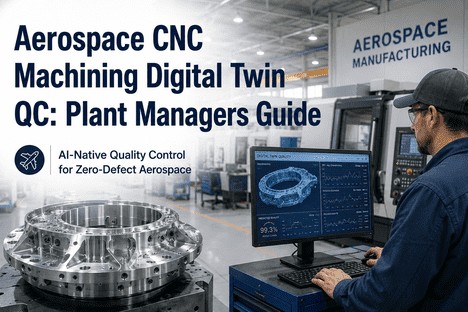
Your aerospace CNC cell is running production on a critical titanium structural bracket. The print calls for Cpk 1.33 on three key characteristics, AS9100 Rev D traceability on every serial numbe
Read More
The five-axis spindle alarm fired at 03:47. Bearing temperature had climbed 14 degrees above baseline in under six minutes, the vibration spectrum showed a developing inner-race fault, and the predictive SPC model had flagged the anomaly at 02:58

Read More
Your quality engineering team just completed the monthly process capability review for the five-axis CNC cell that machines titanium landing gear components. The Cpk numbers across the 12 critical characteristics range from 0.89 to 1.22. Acceptabl
Read More
Your five-axis CNC spindle is cutting titanium at 12,000 RPM. The part has 47 critical dimensions, each toleranced to +/- 0.0005 inches, and you are 38 minutes into a 90-minute cycle when the in-process probe detects a 0.0003-inch deviation on fea

Read More
The Tuesday morning production review shows Cell 04 ran at 62% OEE for the night shift. The plant manager pulls up the detail: Availability was 78%, Performance was 84%, Quality was 94%. None of these numbers individually triggered an alarm. The s

Read More
The five-axis CNC machine is cutting a titanium aerospace bracket from a $4,200 billet. The spindle load reads normal. Coolant temperature is within range. The in-process probe passed the first three features. Then the tool reaches the fourth stat

Read More
A titanium aerospace fitting is running on a 5-axis CNC machine. The finishing pass is 45 minutes from completion. On the control chart, spindle load and vibration are within specification. The cut looks clean to the operator. But the surface fini

Read More
A critical titanium aerospace bracket is running on a 5-axis CNC machine. The cycle time is 8 hours per part. At hour 6, a tool wear micro-fracture begins producing a surface finish deviation just 14 microns outside the AS9102 specification. The m

Read More
The morning setup on the 5-axis CNC cell looked clean. Tool offsets were verified. The titanium billet was clamped within spec. The first article passed inspection at 06:30. By 09:15, the CMM report showed the bore diameter on part 37 drifting 0.0

Read More
The Cpk report for Q4 arrived on the operations director's desk with a notation that has become uncomfortably familiar: composite layup process capability had slipped to 1.12 on ply alignment and 1.08 on ply gap width — both below the AS9100-requi

Read More
The Q1 audit at a Tier-1 aerospace composites facility revealed 14 non-conformances across three work cells. Every one of them was traced to defects that originated in the composite layup stage — ply gaps, fiber misalignment, foreign object debris

Read More
At 09:00 you approve a compaction force adjustment on AFP head 3 based on the shift supervisor's observation that the tow placement looks inconsistent on ply 7 of a 22-ply wing skin panel. The adjustment takes effect immediately on the physical la

Read More
Monday morning at 08:00 the first pass yield report lands on the plant manager's desk. Last week's number reads 74.3%. Good panels through every inspection gate without rework: fewer than three of every four composite structures that entered the a

Read More
The plant manager reviews the weekly production report for the AFP cell. The numbers tell a story that has not changed in six months: 62% of the machine's available time is spent on value-added deposition. The remaining 38% is consumed by manual p

Read More
The quality engineer watches the first-off part being machined on the five-axis cell. The CAM programme for this titanium housing was verified in the digital twin environment yesterday -- tool paths validated, cutting forces simulated, clashes det

Read More
The five-axis CNC cell scheduled to run titanium structural brackets across the night shift goes dark at 02:47. The spindle bearing temperature trend that had been climbing since 23:00 finally crossed the thermal threshold -- not enough to trigger

Read More
Your aerospace CNC machining cell is running titanium impellers on a five-axis center. The first 47 parts pass CMM inspection within tolerance. Part 48 shows a bore 0.003 mm above nominal. Part 49 drifts another 0.002 mm. Part 50 -- flagged by the

Read More
You are 47 parts into a titanium bracket run. The CNC cell has not thrown a single alarm. Your operator's check looked clean. Your last CMM pull was at part 20 and everything was in spec. What you do not yet know is that your bore diameter has bee

Read More
You are mid-shift. The CNC cell has been running a titanium bracket programme for four hours without a single alarm. The operator's visual check shows nothing unusual. But between parts 22 and 38, a surface finish deviation has been quietly buildi

Read More
You are 40 minutes into the shift. Machine 3 has been running a titanium bracket operation for the last six hours. No alarms. No operator flags. The part looks fine on the visual check. But somewhere between parts 38 and 52 of this tool run, the b

Read More
Most aerospace CNC cells post an OEE number at the end of each shift. The number lands somewhere between 55% and 72%. The supervisor records it, the production manager reviews it, and nothing changes — because OEE as a lagging metric tells you wha

Read More
The control limits on the SPC chart were set during process qualification 16 months ago. At the time, the CpK was 1.67, the machine was new, and the tooling specification matched the production intent exactly. Today, the coolant concentration is d

Read More
The shift supervisor watches the cycle time creep. A titanium aerospace bracket that used to take 18 minutes per part is now running 21. The CAM programme has not changed. The material is from the same supplier. The issue is not the machine's spin
Read More
The turbine bracket comes off the 5-axis cell. The operator does a visual check, measures two critical diameters with a hand gauge, and passes it to the next stage. The surface finish on the fillet radius — 8 µin Ra on the drawing — is not checked

Read More
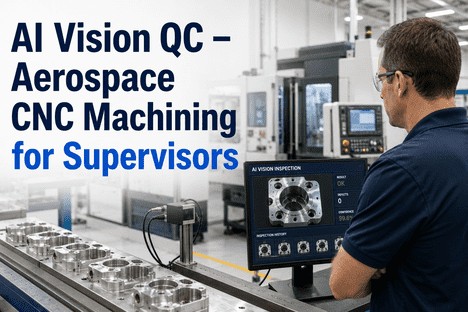
The CNC operator running the next aerospace component does not need to wait for the CMM report to know whether the part is good. The machine spindle already knows. Spindle load, vibration signature, thermal growth, and cutting force are streaming

Read More
The plant manager who waits for final inspection to discover a scrapped composite part is not managing quality. They are managing the aftermath of a process failure that sensor data could have predicted hours or days earlier. Predictive SPC replac

Read More
The composite layup plant manager operates at the intersection of production rate and regulatory compliance. Every ply placed on the tool surface carries a traceability obligation under AS9100D and NADCAP AC7118, but the inspection methods that ve

Read More
The quality engineer reviewing the weekly composite layup report sees the same pattern. Ply four of the wing skin panel shows a fiber orientation deviation of four degrees from the specification. The deviation was detected during final inspection,

Read More
OEE in aerospace composite layup has always been a rear-view mirror. The availability, performance, and quality factors are calculated at shift handover from data that is already 8 to 12 hours old. By the time a quality engineer sees an OEE qualit
Read More
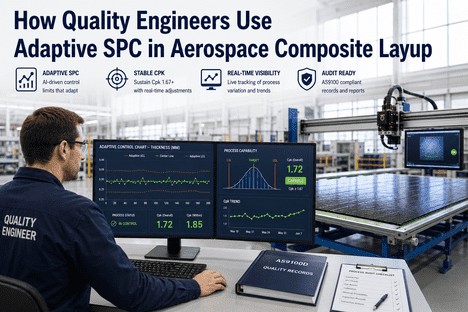
Every quality engineer in aerospace composite layup knows the frustration of a control limit that was set three months ago, based on a material batch that has since changed, on an AFP head that has since accumulated 400 hours of roller wear, in en

Read More
Statistical Process Control in aerospace composite layup has always been a rear-view mirror exercise. Control charts are reviewed at shift handover, Cpk is calculated from batch samples, and by the time a quality engineer sees a process shift, 12

Read More
Quality Engineers in aerospace composite layup operations face a paradox: the inspection methods designed to ensure quality are themselves the largest source of unplanned downtime. Manual ply-by-ply inspection consumes 32-50% of AFP production tim

Read More
In aerospace composite layup, every panel exists twice before it is produced — once as a digital model programmed into the AFP system and once as a physical structure deposited tow by tow on the tool surface. In conventional production, the digita

Read More
Overall Equipment Effectiveness in aerospace composite layup has always been a lagging indicator. The OEE number that lands on the supervisor's dashboard at the end of the shift is a precise calculation of what already went wrong — availability lo

Read More
Static control limits in aerospace composite layup have a measurable shelf life that most operations do not track and few manage proactively. The UCL and LCL calculated during the AS9100 qualification study reflect the process state that existed a

Read More
Every composite panel that reaches the autoclave represents hours of AFP deposition and thousands of dollars in material. Every panel that emerges from cure as scrap represents a loss that was detectable — and preventable — before the autoclave do

Read More
The shift supervisor on the AFP cell sees the yield number at handover. 91%. Acceptable. But the deeper number is the one that does not show up on the dashboard: 17 hours of manual inspection per production cycle that catch defects only after they

Read More
The AFP cell at Ply 22 is running clean. First-pass yield this shift: 91%. Acceptable on paper — but the two panels scrapped last fortnight tell a different story. Both failed post-cure NDT. Both were traced to fibre orientation drift that began a

Read More
You are at Ply 22. The AFP cell has been running clean for six hours. First-pass yield this shift: 91%. Acceptable — but not where it needs to be. Two panels in the last fortnight went to scrap post-cure, each traced back to fibre orientation drif

Read More
You are standing at the AFP cell. Ply 18 just completed. The control chart on the screen shows fibre orientation holding at 44.8° — within tolerance, but trending. The UCL is fixed at 48°, set six months ago during process qualification. The quest

Read More
You're at the AFP cell. Ply 18 of 32. The head completes its pass. Nothing looks wrong. You sign off. The panel goes to cure. Forty-eight hours later, ultrasonic C-scan flags internal porosity — same location, same cause: a borderline fibre orient

Read More
Ply 14 of a 32-ply carbon fibre panel. The layup head completes its pass. Visual inspection begins. The operator checks fibre orientation against the tolerance callout on the drawing — a 3-degree allowance on the 45° plies. A gap of 0.4mm exists b

Read More
Aviation is being asked to do something no other transport sector has achieved: grow passenger demand while eliminating net carbon emissions by 2050. The response is reshaping every layer of airport operations, from the fuel stored in hydrant pits

Read More
Airport security screening is being rebuilt from the ground up. Not with incremental upgrades to metal detectors and conveyor belts, but with computed tomography scanners that see through bags in 3D, artificial intelligence that detects prohibited
Read More
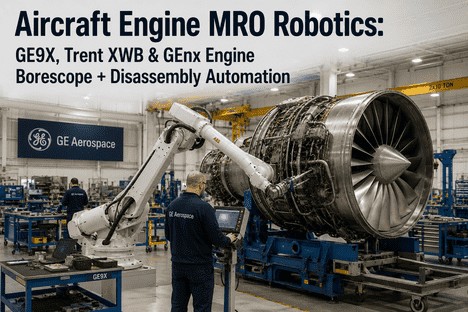
An aircraft engine is not repaired. It is disassembled, inspected, measured, and rebuilt from the inside out. Every major shop visit involves removing the fan module, splitting the core, extracting the high-pressure compressor and turbine rotors,

Read More
An airport deploying AI-powered robotics today faces a choice between two paths. The first path requires assembling an integration stack from scratch: procuring the GPU server, negotiating with an AI platform vendor, hiring a systems integrator to

Read More
Every bag that moves through an airport crosses more than a dozen physical handoffs between check-in and aircraft loading. Each handoff is a point of potential delay, damage, or misrouting. The industry processed 5.3 billion passengers in 2024 and

Read More
The most visible point of contact between a passenger and an airport is not a check-in counter or a security scanner. It is the space between them — the concourse, the gate area, the transit corridor where a traveller with a connecting flight in 4
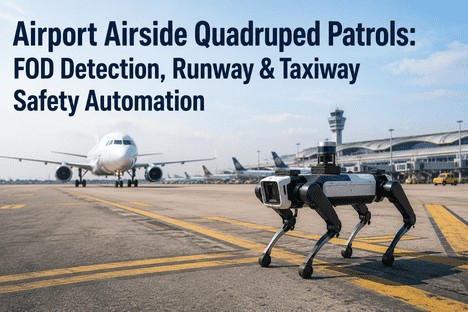
Read More
A single bolt on a runway destroyed a Concorde and killed 113 people. The titanium strip that caused the crash of Air France Flight 4590 in 2000 had fallen from a thrust reverser on a preceding aircraft and lay undetected on the pavement for four
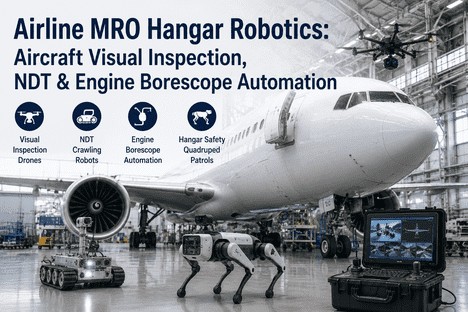
Read More
In May 2026, Japan Airlines placed two humanoid robots on the tarmac at Tokyo's Haneda Airport and started a timer that the rest of the aviation industry is watching. The robots — 130cm-tall Unitree platforms, priced at roughly $15,400 each — were

Read More
An A380 touches down every 90 seconds at a major international hub, and with each arrival, a silent clock starts. The turnaround crew has 90 minutes to deplane, inspect, clean, refuel, restock, and board before the next departure. In the hangar a

Read More
The same predictive algorithms that keep a Gulfstream G700 dispatch-ready at 99.2 percent can be adapted to maintain a C-130J mission-capable under combat conditions. The same digital twin architecture that optimizes engine overhaul schedules for

Read More
Managing a high-value private fleet means every decision carries weight that commercial operators never feel. A single aircraft-on-ground event with a Gulfstream G700 or Bombardier Global 8000 does not just disrupt a schedule. It impacts a princip

Read More
Every precision torque wrench, every hydraulic jack, every calibrated multimeter, and every ground power unit on an MRO ramp represents a link in a chain that connects tool custody to aircraft airworthiness. Break any link — a missing tool at shif

Read More
Most MRO facilities operate at 61% hangar utilization. That means nearly four out of every ten bay-days produce zero revenue while the fixed costs of the facility keep accruing. For a mid-size commercial MRO with ten bays, the gap between 61% and

Read More
Every minute an aircraft sits at a gate with an unresolved defect, an open MEL item, or a delayed transit check, the airline burns approximately $180 in direct costs while the delay cascades across three to five downline rotations. Line maintenanc

Read More
Aircraft maintenance today stands at a crossroads. The fixed-interval framework that has governed airline engineering for over six decades — A-checks every 400 flight hours, C-checks every 18 months, component overhauls at rigid calendar threshold

Read More
Unplanned maintenance events cost airlines an estimated $8 billion annually, not because aircraft wear out faster than expected, but because heavy check planning does not start early enough or run with enough precision. A D-check on a wide-body ai

Read More
The global aviation industry needs 710,000 new maintenance technicians by 2042, according to Boeing's latest Pilot and Technician Outlook. Yet fewer than 3% of currently certified Aviation Maintenance Technicians in the United States identify as w

Read More
The promise of AI-augmented analytics in aviation safety is undeniable. Predictive models spot patterns across maintenance logs, flight data, and hazard reports that no human team could correlate. But there is a paradox the industry rarely discuss

Read More
Safety Management Systems have been the backbone of aviation safety for two decades, but most operators still manage safety data in silos — hazard reports in one system, maintenance logs in another, flight data in a third, and compliance records s

Read More
Artificial intelligence is rapidly reshaping aviation maintenance, air traffic management, flight operations, and passenger services, but the regulatory frameworks governing its deployment remain fragmented across jurisdictions. An AI system appro

Read More
An Aircraft on Ground event is the most expensive scenario in aviation operations. With costs ranging from $10,000 to $150,000 per hour depending on aircraft type and route, every minute of unplanned downtime compounds financial loss, disrupts pas

Read More
An aircraft hangar is the most controlled environment in aviation maintenance, yet it remains the site where the majority of preventable ground incidents occur. The difference between a hangar that consistently delivers airworthy outcomes and one

Read More
Avionics systems are the nervous system of every modern aircraft — and the data they generate is one of the most underutilised assets in aviation MRO today. When navigation, communication, flight management, and display systems are analytically mo

Read More
Every landing gear system on a commercial aircraft absorbs the full kinetic energy of a landing — roughly 500,000 foot-pounds for a narrowbody at maximum landing weight — in the space of one to two seconds, dozens of times a day, every day, for 20

Read More
Aircraft structures are designed to withstand pressurisation cycles, gust loads, and engine vibrations for decades of service — but none of those engineering limits account for the one factor that quietly reduces material thickness year after year

Read More
Every piece of aircraft wreckage investigators examine carries a story, but when a titanium socket from a technician's ratchet is found inside a compressor disc fracture surface, the st

Read More
Deploying AI-driven systems in an aviation MRO facility is one of the highest-impact technology decisions a maintenance organisation can make — and one of the most commonly mishandled. The difference between a successful go-live and a costly rollb

Read More
Aircraft engine borescope inspection is one of aviation's most critical non-destructive testing methods — allowing MRO teams to examine turbine blades, compressor stages, and combustion chambers without costly disassembly. Yet most inspection prog

Read More
According to the FAA, over 80% of aviation incidents involve human factors, with inadequate pre-flight inspections cited as a contributing factor in nearly 12% of general aviation accidents. Yet less than 35% of flight operations currently use dig

Read More
Global MRO spending exceeded $136 billion in 2025 and is on track to approach $193 billion by 2030 — nearly double the pre-pandemic level. Yet the gap between top-quartile and bottom-quartile MRO operators is not about budget. It is about instrume

Read More
The global aviation analytics market is projected to reach $12.7 billion by 2029, growing at a CAGR of 15.3% from 2025. Yet the real story is not market size — it is the regulatory storm gathering across every major aviation autho

Read More
The aviation analytics software market reached USD 4.36 billion in 2026 and is expanding at 14.8 percent annually as airlines, MRO providers, lessors, and airports commit to data-driven operations. With over 80 vendors offering solutions that rang

Read More
Airport infrastructure extends far beyond the aircraft gate. Runways, terminal buildings, baggage handling systems, ground support equipment, HVAC plants, airfield lighting, and utility networks form a complex facility ecosystem that most airport

Read More
Cargo airline operations demand 24/7 fleet availability with zero tolerance for delays, creating maintenance analytics requirements fundamentally different from passenger aviation. Freighters operate 12-16 hours daily, often at night, with aging c

Read More
Helicopter fleet analytics management presents fundamentally different challenges than fixed-wing MRO. Rotary-wing aircraft face higher vibration loads, shorter component life limits, diverse operational environments from offshore to HEMS, and uni

Read More
Running maintenance analytics across a single aircraft type at a single base is already complex. Running it across three fleet types, six maintenance bases, two continents, and fourteen engineering teams is a different problem entirely — one that

Read More
The global airframe manufacturing industry paid $1.18 billion in warranty claims in 2023 alone. Jet engine manufacturers held another $3.47 billion in warranty reserves at the end of 2024. Yet industry studies consistently show that MRO organizati

Read More
Every airline operator knows the feeling. A line-replaceable unit fails at an outstation, the part is not in stock, and the aircraft sits grounded while costs accumulate at hundreds of dollars per minute. The instinct is to buy more spares, expand

Read More
The true cost of aviation analytics software is never the number on the proposal. Most maintenance teams evaluate platforms by comparing license fees, subscription tiers, and per-user pricing. Those numbers capture less than 30 percent of what an

Read More
Supply chain disruptions in commercial aviation have reached a threshold where the cost is no longer measured in delayed deliveries alone. A joint study by IATA and Oliver Wyman estimates that supply chain challenges will cost the airline industry

Read More
Engine maintenance, repair, and overhaul shops across the globe are navigating a crisis that has quietly reshaped the economics of commercial aviation. Turnaround times for engine shop visits have surged by more than 150 percent for new-generation

Read More
Every morning at a 200-technician MRO facility, the shift supervisor arrives to a familiar scene: three mechanics called out sick, two A-checks landed overnight that were not on the forecast, and an engine change that should have been scheduled ne

Read More
The phone rings on the line technician's bench. An A320 is on the ground at a secondary hub with a hydraulic fault. The nearest certified engine specialist is 1,200 kilometers away — minimum 48 hours before they can be on site. Every hour the airc

Read More
An aviation maintenance technician signs off work that keeps aircraft airworthy. Every diagnostic decision, every torque value, every procedural step draws on training completed days, months, or years earlier. Yet the majority of MRO organizations

Read More
Aviation's path to net zero does not begin in the design office or the fuel refinery. It begins in the maintenance hangar. Sustainable Aviation Fuel is already flowing into aircraft at airports across three continents. Mandates in the EU, UK, and

Read More
MSG-3 — the Maintenance Steering Group methodology — has been the global standard for developing commercial aircraft maintenance programs since 1980. Every major aircraft type in service today, from the Airbus A320 to the Boeing 787, bases its reg

Read More
The true test of an MRO's compliance program does not happen during routine operations. It happens in the moment an FAA inspector walks through the door and requests a specific record from six months ago. The window between passing and failing is

Read More
A digital signature in aviation maintenance is not a scanned image of a handwritten name. It is a cryptographically verified, identity-bound electronic attestation that a specific licensed individual performed or certified a specific maintenance a

Read More
The FAA published its first-ever Roadmap for Artificial Intelligence Safety Assurance in July 2024. If you run a Part 145 repair station, this document is not academic. It is the blueprint for how the agency will assess every AI-assisted tool, pre

Read More
The aviation industry experienced a 600% increase in cyber threats between 2024 and 2025 according to Thales. The global aviation cybersecurity market reached $11.3 billion in 2025 and is projected to grow to $29.4 billion by 2034 at 11.2% CAGR. F

Read More
The aviation maintenance industry runs on paper. A single component overhaul generates 50 to 75 pages of documentation. Each C-check produces thousands of task cards, sign-offs, and inspection records stored in binders that fill warehouses. The an

Read More
Every aircraft in commercial service today transmits data. ACARS messages stream engine parameters, fault codes, flight phase transitions, and system health indicators from 35,000 feet to ground stations multiple times per flight. A single modern

Read More
The aviation industry is at a crossroads. The global aviation cloud market reached $7.58 billion in 2025 and is projected to grow to $24.67 billion by 2034 at 13.96% CAGR. Meanwhile, 94% of enterprises across all industries already use cloud servi

Read More
Airlines using digital twin technology are saving an average of $2.67 million per wide-body aircraft annually on maintenance costs. Predictive models are identifying 93.6% of impending failures at least 21 days before physical manifestation, turni

Read More
Every aircraft technician knows the weight of a paper manual. Not just the physical weight, though a binding of 2,000 pages for the A320 certainly has that. The real weight is cognitive. Cross-referencing wiring diagrams against physical bundles,

Read More
Every seaplane operator knows the dilemma. The most critical structural components of a float aircraft are also the least accessible. Above the waterline, the hull can be visually inspected, tapped, and tested during routine preflight. Below the w

Read More
In every MRO hangar, there is a bottleneck that no inspection tool, no engine test cell, and no technician can fix. It is the time spent walking. Studies across aviation maintenance facilities show that technicians spend 38 to 42 percent of their

Read More
The aviation spare parts supply chain was built for a world where you had to predict every part that would break, stock it in warehouses on every continent, and pay 25-35% of the parts' value each year just to keep it there. That world is ending.

Read More
Inspecting the inside of a jet engine has always meant one of two things: disassembling the engine at a cost of $250,000 to $500,000 and weeks of downtime, or threading a manual borescope through access ports and hoping the operator can see enough

Read More
A single drone inspecting a widebody aircraft takes 2 to 3 hours. A technician with a lift takes 8 to 12 hours. A synchronized autonomous drone swarm does it in under 20 minutes — capturing thousands of high-resolution images, cro

Read More
Aviation maintenance consumes 15 to 20 percent of every airline's operating budget — and the majority of that spend is not fixed. It is preventable. Airlines, MRO operators, and ground service teams deploying AI-driven analytics in 2026 are docume

Read More
EASA has published its first regulatory proposal on artificial intelligence in aviation, setting the stage for how AI systems in MRO will be certified, monitored, and audited under the EU AI Act. This article covers the seven dimensions of AI trus

Read More
A technician walks into a hangar bay wearing a pair of smart glasses that weigh less than the safety glasses they replace. As they approach the aircraft, the heads-up display activates: the engine serial number is recognized automatically, the rel

Read More
An airline operations director once described her maintenance IT stack as seventeen systems that each believe they are the source of truth, and none of them agree. Her CMMS held work order history. Her ERP controlled parts inventory. Her OEM porta

Read More
The commercial aviation industry loses an estimated $8.7 billion annually in maintenance delays directly linked to disconnected data, paper-based workflows, and legacy systems built before smartphones existed. More than 70 percent

Read More
A Boeing 787 generates 5 to 10 terabytes of sensor data per flight. Engines, airframe, avionics, hydraulics — every system produces a continuous stream of telemetry that could tell maintenance teams exactly what needs attention before the aircraft

Read More
In 2023, a London-based supplier called AOG Technics was discovered to have forged Authorised Release Certificates for CFM56 engine parts — the same engines that power the Airbus A320 and Boeing 737. At least 70 counterfeit certificates and 50 dif

Read More
At 02:47 on a transatlantic crossing, the No. 2 engine on a 787 began shedding micron-level metallic particles into its oil system. The vibration signature shifted by 0.3 kHz. A threshold crossed. In the airline's maintenance operations center 4,0

Read More
Aircraft structural repairs involving welding operations — fuselage skin patches, stringer replacements, frame splices, bulkhead reinforcements, and landing gear lug repairs — require weld integrity verification that meets strict airworthiness sta

Read More
Aircraft electrical systems contain thousands of wire bundles, connectors, circuit breakers, bus bars, and power distribution units distributed across the fuselage, wings, and empennage. Electrical failures account for approximately 25% of aircraf

Read More
The global occupational exoskeleton market reached USD 520 million in 2025 and is projected to exceed USD 2.3 billion by 2030. MRO hangar analytics work presents some of the highest injury risks in the aviation industry — overhead drilling, repeti

Read More
The global aircraft MRO paint and strip market exceeds USD 1.8 billion annually, with manual labour accounting for roughly 65% of total painting expenditures. A standard narrowbody repainting cycle demands 10 to 14 days of hangar downtime, during

Read More
The global robotics and drone-based NDT market reached USD 1.24 billion in 2025 and is projected to double to USD 2.52 billion by 2030. Wall-climbing robots represent the fastest-growing segment within that market, and for good reason: a single te

Read More
The aerospace robotics market reached USD 5.79 billion in 2026, with collaborative robots growing at over 30% annually, yet most MRO hangars have not deployed a single unit. The gap between general manufacturing cobot adoption and aviation-specifi

Read More
A modern twin-aisle aircraft generates over a terabyte of sensor data per flight. Vibration signatures from every engine bearing, temperature gradients across each turbine stage, pressure fluctuations in hydraulic lines, structural load measuremen

Read More
A turbine blade crack that a human inspector rates as "within limits" during a borescope inspection may be growing in a direction and at a rate that violates limits by the next scheduled check interval. The inspector makes that call under time pre

Read More
Every airline in a regional alliance has maintenance records, sensor telemetry, and failure histories that could make a predictive model dramatically better — for everyone in that group. The problem is that sharing those records means exposing fle

Read More
Modern aircraft generate over 840 terabytes of data per flight. Less than 5% of it is used to make maintenance decisions. The gap between the data that aviation operations produce and the decisions that data could drive is not a technology problem

Read More
Every aircraft component carries a hidden number — the hours, cycles, and accumulated stress between where it is now and where it will fail. For decades, that number was estimated with a calendar. Replace at 5,000 hours. Overhaul at 10,000 cycles.

Read More
Every aviation maintenance log ever written — every squawk entry, technician observation, discrepancy note, and corrective action narrative — contains a failure pattern that no one has read. Not because no one looked. Because no system could read

Read More
Airports are no longer just transit hubs — they are multi-tenant ecosystems where airlines, concessionaires, ground handlers, and service providers share the same physical and digital infrastructure. When a baggage system stalls, a gate assignment
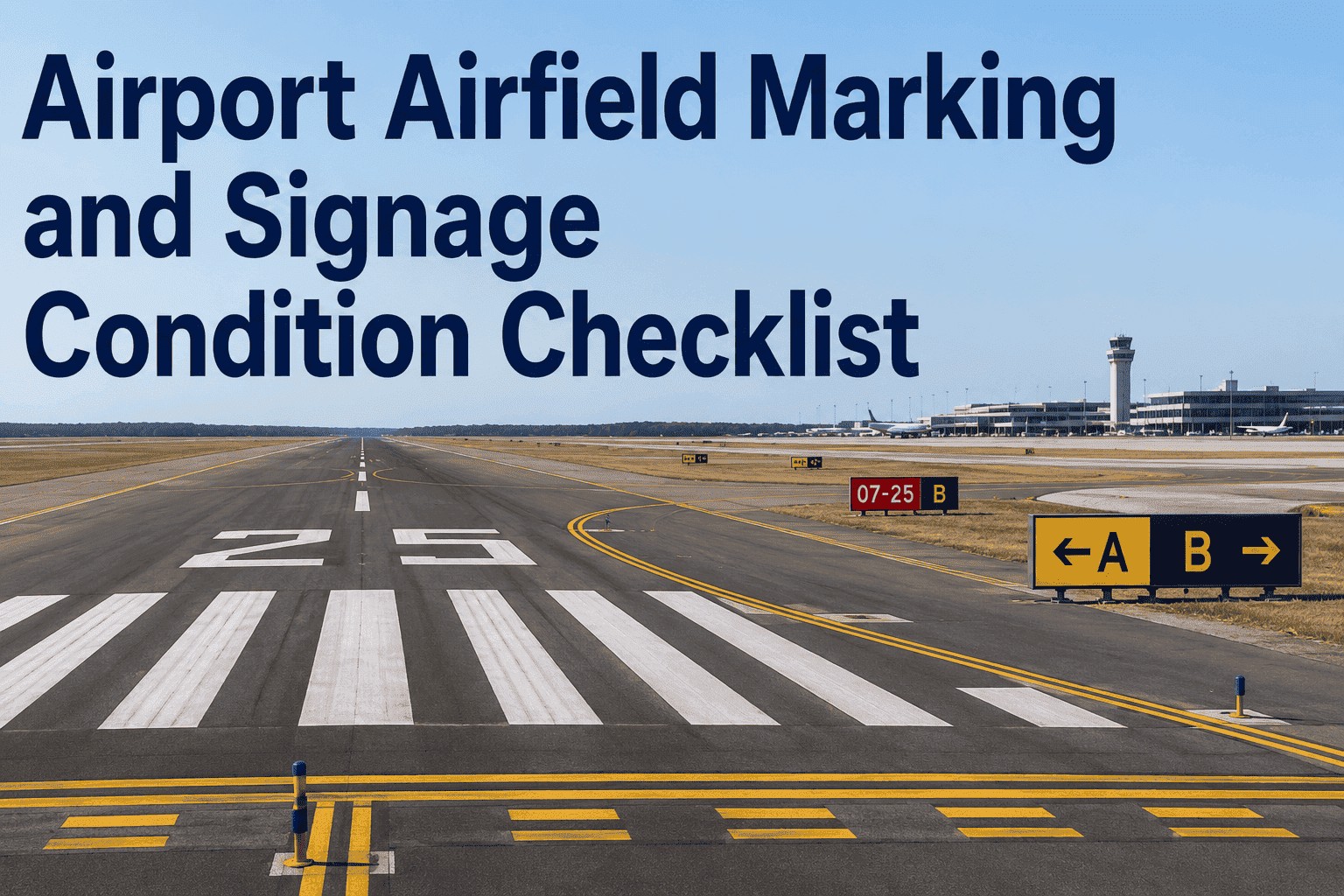
Read More
A runway centerline marking that has faded below 100 mcd/m2/lx does not fail all at once. It becomes a little harder to see each night until, during a low-visibility departure in heavy rain, a pilot cannot confirm the centerline at 50 knots. Taxiw

Read More
Heathrow operates 32 autonomous cleaning robots across its terminals — each one covering 4,800 square meters daily without a single break. Zurich Airport deployed 26 robotic scrubbers and recovered the investment in under two years. Singapore Chan

Read More
Every 90 seconds, an automated people mover departs from a station somewhere in the world's busiest airports. Each one carries hundreds of passengers who have connecting flights, security deadlines, and zero tolerance for delays. When an APM stops

Read More
Airport ADA accessibility compliance is not a one-time renovation milestone — it is a continuous operational obligation. Title II of the Americans with Disabilities Act applies to public airport operators. Title III applies to private airport oper

Read More
Most airport AI-driven platform deployments don't fail during go-live. They fail in the weeks before it — when the asset inventory turns out to be incomplete, when compliance frameworks haven't been mapped to the platform's inspection templates, w

Read More
Airport access roads and landside infrastructure carry more compliance exposure than most facility teams realise. A potholed entry road creates an ADA violation and a liability claim in the same pothole. A curbside bollard hit by a rideshare vehic

Read More
Airport hangar and MRO facility operations run at the intersection of aviation safety, industrial hazard management, and multi-agency regulatory compliance. A failed overhead crane limit switch grounds a widebody during a base check. A floor coati

Read More
A single transformer failure at an airport substation doesn't just cut power to one terminal — it can simultaneously darken approach lighting, kill airfield CCR circuits, drop security cameras, and push emergency generators into simultaneous load
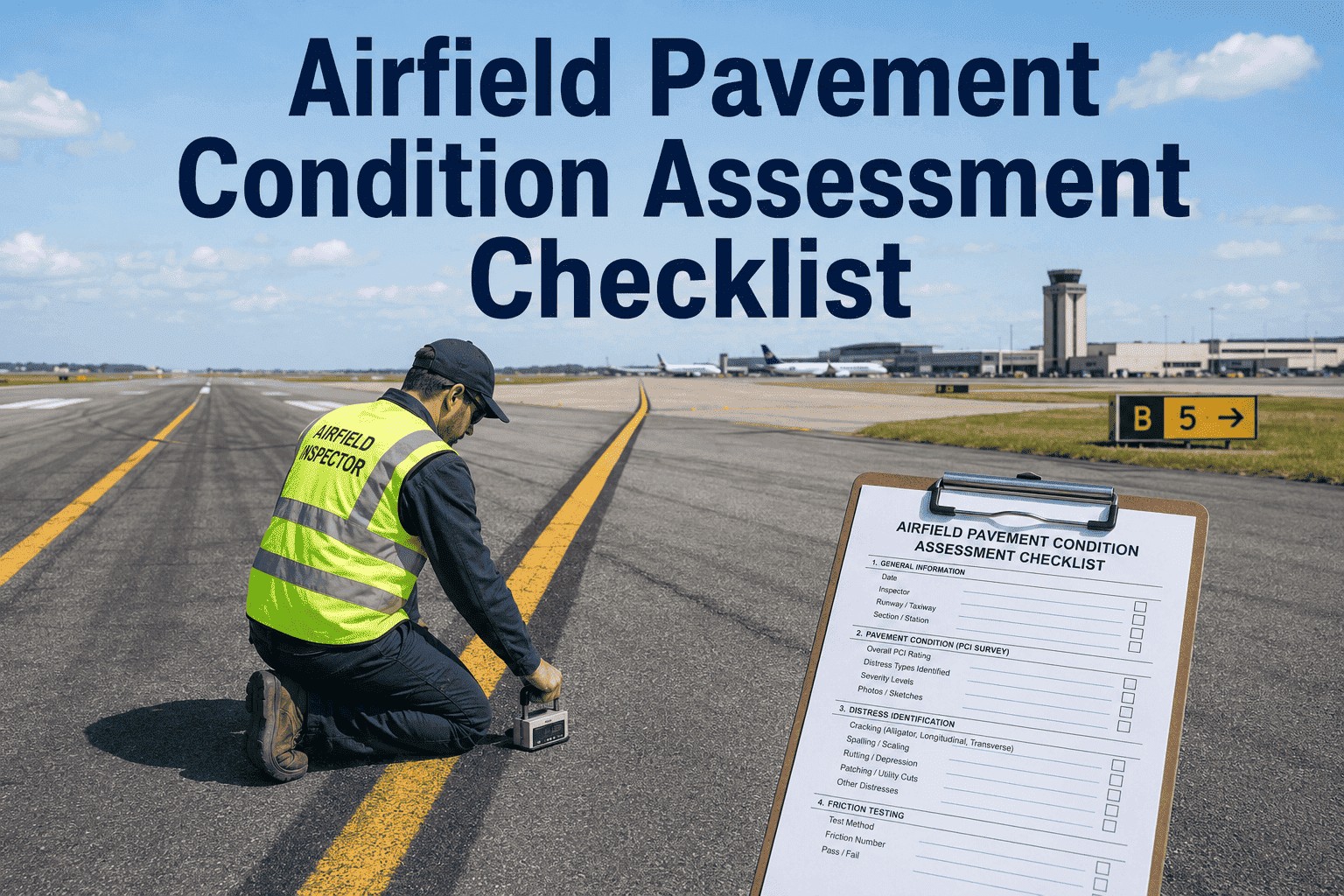
Read More
Runway excursions, rejected takeoffs, and FOD-related engine damage share one silent root cause: pavement nobody measured until it failed. Every metre of runway and taxiway surface degrades continuously under aircraft loads, UV exposure, freeze-th

Read More
Every second of downtime at an airport costs thousands — and 73% of outages trace back to IT infrastructure that was never properly maintained. From server rooms running too hot to FIDS screens going dark mid-boarding, the risks are real, measurab

Read More
Airports process millions of gallons of contaminated runoff every storm season — jet fuel residues, glycol deicing fluids, heavy metals from brake dust, and rubber particulates from daily landings all flow directly into your drainage network. With

Read More
Every passenger who misses a gate, walks the wrong concourse, or stands under a blank FIDS screen is a compliance failure your facility owns. Airport signage, wayfinding networks, and flight information display systems are not passive infrastructu

Read More
Air cargo carries less than 1% of global trade by volume — yet represents roughly 33% of world trade by value. Inside that premium is a high-stakes compliance obligation that most cargo facility managers only fully appreciate after their first fai

Read More
Airport restrooms are the most visited facility in any terminal — and the most complained about. Research confirms that restroom cleanliness accounts for over 50% of a terminal's total cleanliness score, and it is the single bigge

Read More
When an Instrument Landing System goes offline, it does not cause a queue in a terminal. It closes a runway. Every aircraft scheduled to use that approach — in low visibility, in fog, in conditions where a visual approach is not possible — diverts

Read More
Airport analytics technicians work in environments where a single misstep on a live baggage handling system, a live CT scanner, or energised switchgear can end careers — or worse. Traditional classroom training prepares them for the theory. What i

Read More
A passenger's journey through an airport is a chain of micro-decisions and physical movements — kerb to check-in, check-in to security, security to gate, gate to aircraft. Every link in that chain depends on a piece of equipment working correctly.

Read More
Every time it rains on an airport, hundreds of acres of impervious surface — runways, taxiways, aprons, terminal rooftops, access roads — shed water at a rate nature never intended. That water does not simply disappear. It carries deicing glycol,

Read More
Aircraft ground, terminal systems, and airside equipment do not fail on a schedule. When a critical component breaks — a conveyor belt motor housing, a ground support equipment coupling, a passenger boarding bridge actuator bracket — the question

Read More
Airports generate thousands of tonnes of waste every year — from food packaging and passenger consumption in terminals, to maintenance chemicals and de-icing fluid residues on the airside. Managing this waste is not just an environmental responsib

Read More
ICAO Annex 14 is the document that defines what every international airport must be — physically, operationally, and in terms of the records it keeps. Its Standards and Recommended Practices cover runway geometry, pavement strength, obstacle limit

Read More
The landside of an airport is the side most passengers actually experience — access roads, curbside drop-off lanes, rental car facilities, ground transportation centers, and cell phone lots. It is also the side that facility teams tend to manage r

Read More
An air traffic control tower does not have business hours. It operates continuously, in all weather, under a regulatory framework that treats every equipment failure as a potential safety event — because in ATC operations, it is. The HVAC system m
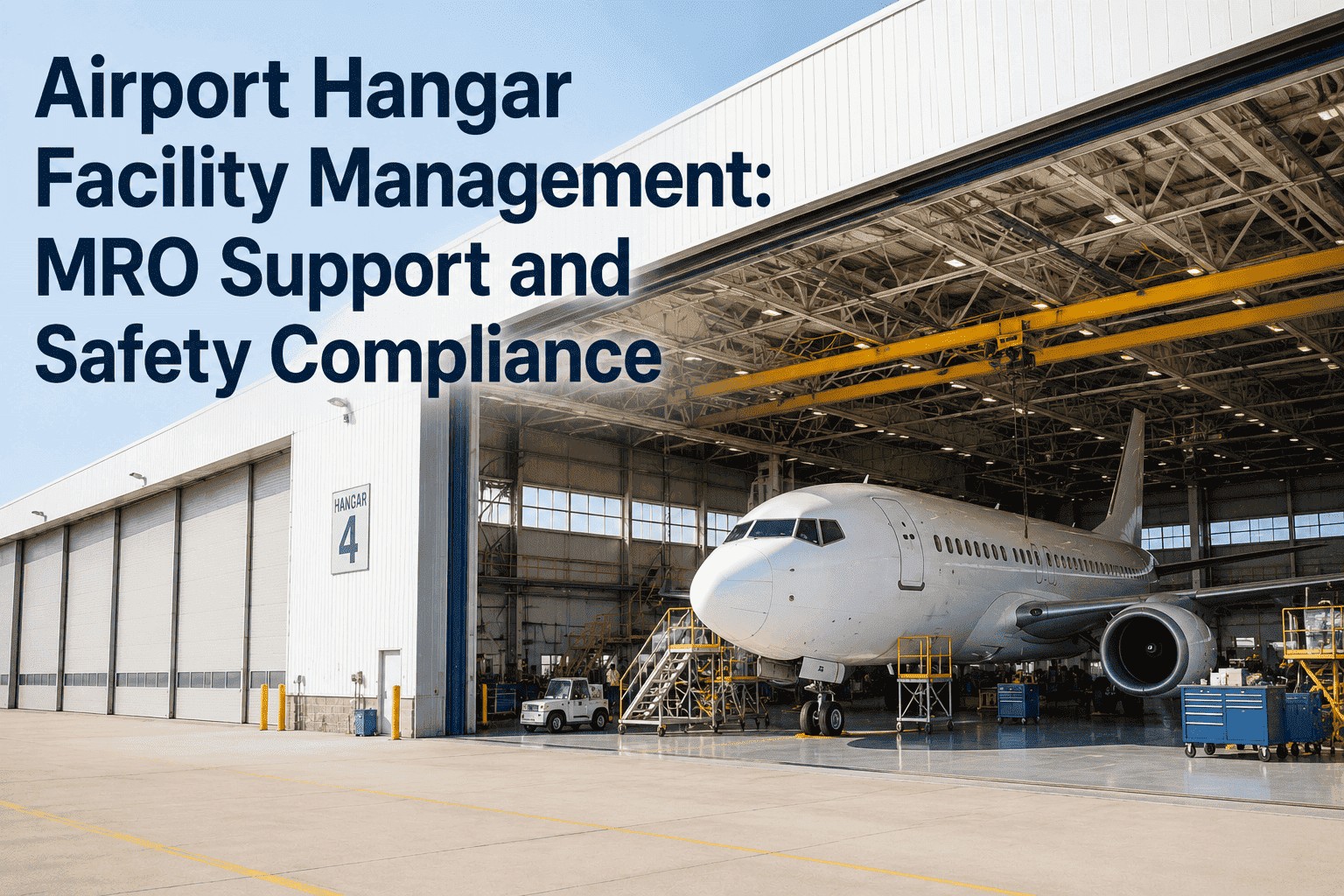
Read More
An aircraft hangar is not a warehouse. It is a precision maintenance environment where a single missed fire suppression inspection can ground a facility, a malfunctioning overhead door can delay an aircraft by hours, and an untracked crane service

Read More
A passenger who uses a power wheelchair arrives at a hub airport for an international connection. The elevator serving her gate concourse is out of service — no estimated repair time posted, no alternative route signposted, no staff notified. She

Read More
An automated people mover stops for 22 minutes during the morning bank at a hub airport. In that window, 4,000 passengers who cannot walk between terminals miss connections, gate agents absorb rerouting chaos, and airline on-time performance data

Read More
Airport concession and retail spaces generate more revenue per square foot than almost any commercial real estate on the planet — and they operate under maintenance conditions that would challenge the most experienced facility team. A food court s

Read More
A large international airport consumes between 400,000 and 3 million gallons of water daily — flowing through terminals, concourses, food courts, maintenance hangars, and cooling systems that together form one of the most complex building water ne
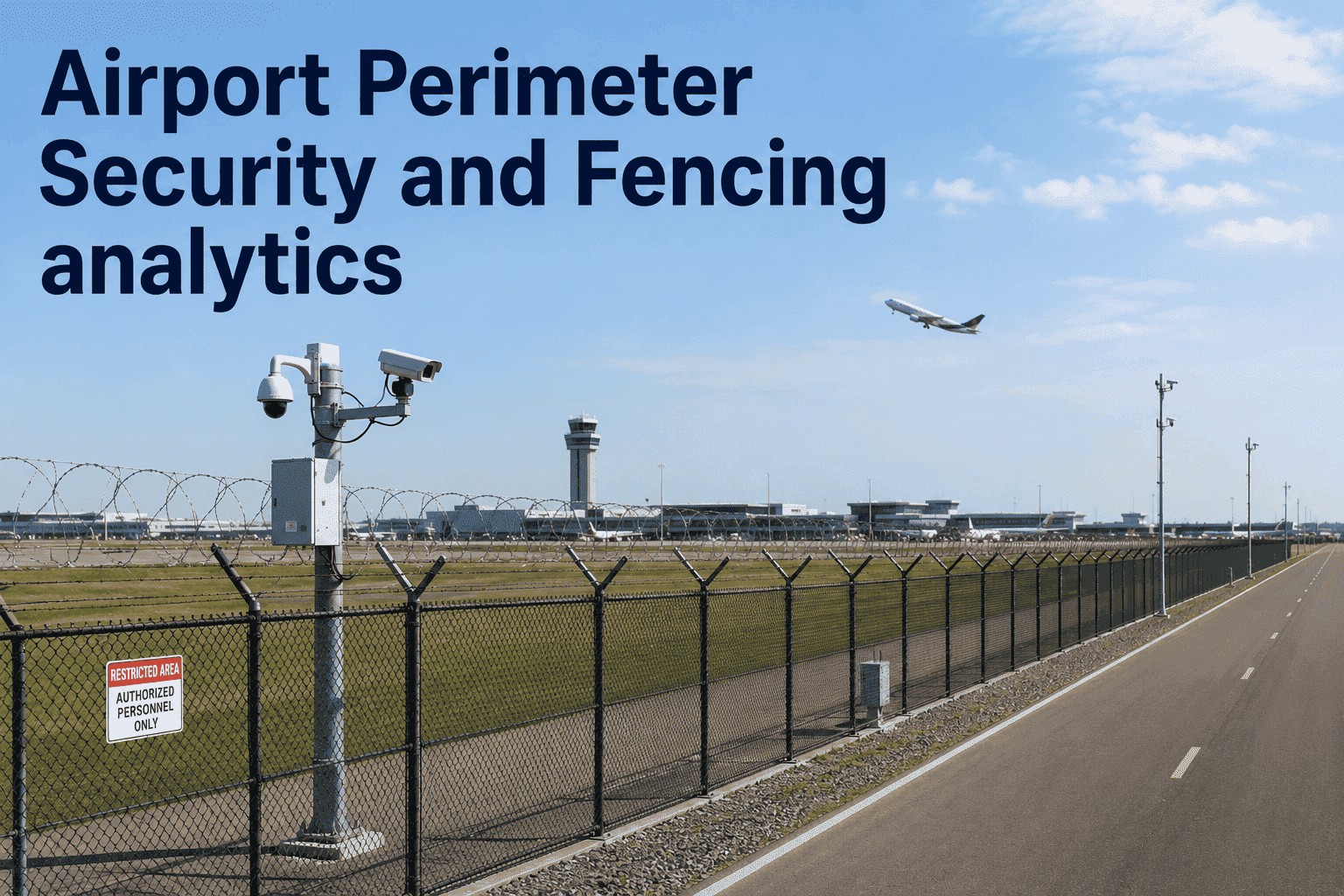
Read More
Every meter of airport perimeter fencing is a regulated boundary. Every access gate is a documented control point. Every CCTV camera and intrusion sensor carries a maintenance schedule and a compliance obligation. Under 49 CFR Part 1542

Read More
A passenger who cannot read a gate sign, find a flight update, or locate an exit is not just inconvenienced — they are stressed, distracted, and no longer a retail customer. 67% of airport passengers rely entirely on signage for n

Read More
Every passenger who walks through your terminal uses at least one restroom. Most use two or three. And every time they encounter a soap dispenser running on empty, a nursing room door that won't lock, or a water fountain out of service, they make

Read More
A sprawling airport campus is one of the most connectivity-hostile environments on earth. Metal structures, moving vehicles, underground tunnels, vast open aprons, dense terminal crowds, and thousands of simultaneous devices all compete for signal

Read More
Air cargo volumes are projected to reach 72.5 million tonnes in 2025 — and the facilities handling that freight are running harder than ever. Behind every on-time pharmaceutical delivery and every intact perishable shipment is a n

Read More
Every winter operation at a commercial airport produces a compliance obligation that does not disappear when the ice does. Spent aircraft de-icing fluid — primarily propylene glycol — drains across aprons, taxiways, and deicing pads into stormwate

Read More
Airport parking is the single largest non-aeronautical revenue line at most major airports — accounting for 37% of all non-aeronautical revenue in North America and topping $100 million annually at airports like Minneapolis–Saint

Read More
At 3:47 AM on a Tuesday, the automated baggage handling system at a major international hub slows to a crawl. The SCADA display shows no alarms, no mechanical faults — just a 47-second processing lag on Carousel 7. The airport operations center ha

Read More
Aviation inventory management is under more financial pressure than at any point in the industry's history — with industry data showing that analytics delays caused by software limitations and poor inventory visibility cost operators and MRO provi

Read More
Reducing aircraft turnaround time is the defining competitive challenge for every MRO facility managing line and heavy analytics checks in today's high-pressure aviation market. Aircraft-on-ground hours are the most expensive inventory in the airl

Read More
Aviation work order management is the operational backbone of every MRO facility — governing how maintenance tasks are created, assigned, tracked, and closed across complex aircraft service environments. When work order systems are fragmented, rel

Read More
Every year, hundreds of senior Aircraft Maintenance Technicians walk out of MRO facilities for the last time — carrying with them 20, 30, or even 40 years of fault-diagnosis intuition, undocumented workarounds, fleet-specific anomaly patterns, and

Read More
In aviation maintenance, a lapsed certification or an untracked authorization is not just an administrative failure — it is a direct airworthiness risk. As MRO facilities scale their workforce and manage increasingly complex fleet portfolios,

Read More
The aviation maintenance industry is facing a critical inflection point. As experienced Aircraft Maintenance Technicians (AMTs) approach retirement, the knowledge gap they leave behind threatens safety, compliance, and operational continuity acros

Read More
VR training for aviation analytics is transforming how MRO technicians acquire, practice, and master the complex skills required for modern aircraft maintenance — delivering a 53% reduction in procedural errors compared to traditional classroom an

Read More
The aviation MRO technician shortage is no longer a forecast — it is a present-tense operational crisis reshaping workforce strategy at airlines, MRO providers, and defense operators worldwide. With FAA and EASA projections pointing to a deficit o

Read More
Parts traceability and counterfeit prevention in aviation analytics have become mission-critical priorities as the global aviation supply chain grows increasingly complex. Counterfeit aircraft components — from fasteners and sensors to avionics mo
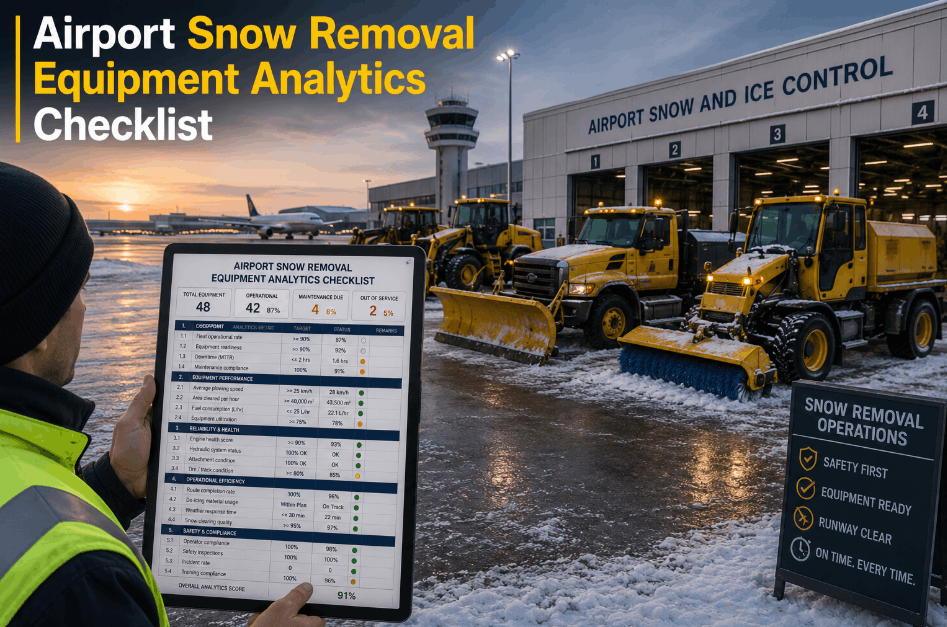
Read More
Airport snow removal equipment operates in the most demanding conditions in aviation infrastructure management — required to clear active runways, taxiways, and aprons within FAA-mandated response windows while sustaining maximum mechanical availa
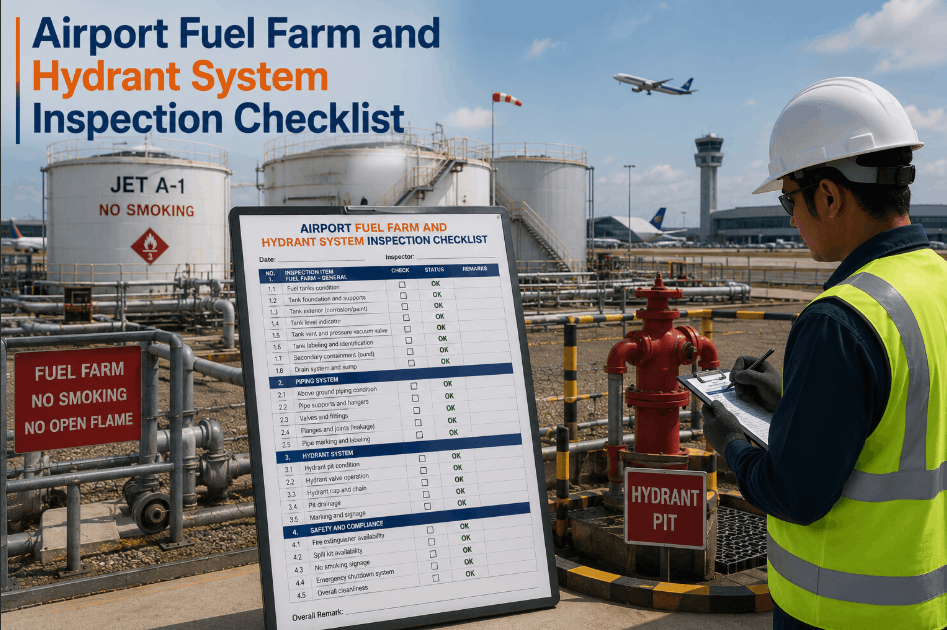
Read More
Airport fuel farms and hydrant fueling systems handle millions of gallons of Jet-A and aviation gasoline annually under regulatory frameworks that treat any inspection failure as a potential catastrophic fire, environmental, or airworthiness event

Read More
Airport perimeter security systems form the first and most critical physical barrier between the public environment and secured airside operations — where a single fence breach, disabled sensor, or malfunctioning access gate can trigger TSA enforc
Read More
Airport parking facilities serve thousands of passengers daily across multi-level concrete structures, surface lots, and automated revenue control environments — where structural deterioration, lighting failures, access control malfunctions, and d
Read More
Airport emergency power systems are the last line of defense when utility power fails — protecting runway lighting, fire alarm panels, security surveillance, ATC communication backups, and passenger evacuation systems from simultaneous collapse du
-inspection-checklist.png)
Read More
Passenger Boarding Bridges (PBBs) are mission-critical airside assets connecting terminal gates to aircraft — subject to continuous mechanical stress, weather exposure, and precise aircraft interface demands. A structured jet bridge inspec

Read More
Airfield pavement management is one of the highest-stakes asset lifecycle disciplines in airport operations — and one of the most underinvested. For Airport Operations Directors, Facilities Engineers, and Safety Managers responsible for runway int

Read More
Blockchain technology is redefining how airport operations manage maintenance records, compliance documentation, and parts traceability — and aviation authorities are paying close attention. For Airport Operations Directors, Compliance Managers, a

Read More
Airport noise monitoring and environmental compliance management have become mission-critical responsibilities for airport operators, environmental managers, and aviation authorities worldwide. As communities surrounding airports demand greater ac

Read More
Airport emergency generator and UPS system analytics represent the last line of defense between normal operations and a safety-critical power failure that no airport director ever wants to explain. Emergency generators, uninterruptible power suppl

Read More
Mobile AI driven for airport technicians is no longer a convenience — it is an operational necessity. When a runway lighting fault develops at 2 AM or a baggage conveyor sensor alarm fires during peak departure hours, the technician on the tarmac

Read More
Digital twin technology is transforming aviation fleet management by creating real-time virtual replicas of physical aircraft assets — enabling maintenance teams, fleet planners, and MRO operations to predict failures, simulate interventions, and

Read More
The aviation hangar, once a purely physical space of mechanical labor and manual record-keeping, is undergoing its most significant evolution since the dawn of the jet age. By 2026, the leading MRO facilities have transitioned into "Smart Hangars"

Read More
In the high-stakes environment of 2026 aviation maintenance, the difference between a profitable flight schedule and a multi-million dollar "Aircraft on Ground" (AOG) event often comes down to the availability of a single, low-cost spare part. Tra

Read More
In the high-stakes environment of 2026 aviation maintenance, the human eye is no longer the sole arbiter of structural safety. While a senior inspector can identify visible surface damage, the "micro-anomalies" that precede catastrophic fatigue —
Read More
In 2026, the traditional image of an aircraft inspector perched on high-reach scaffolding or a cherry-picker is rapidly becoming obsolete. The introduction of autonomous Unmanned Aerial Vehicles (UAVs)—specifically engineered for hangar environmen
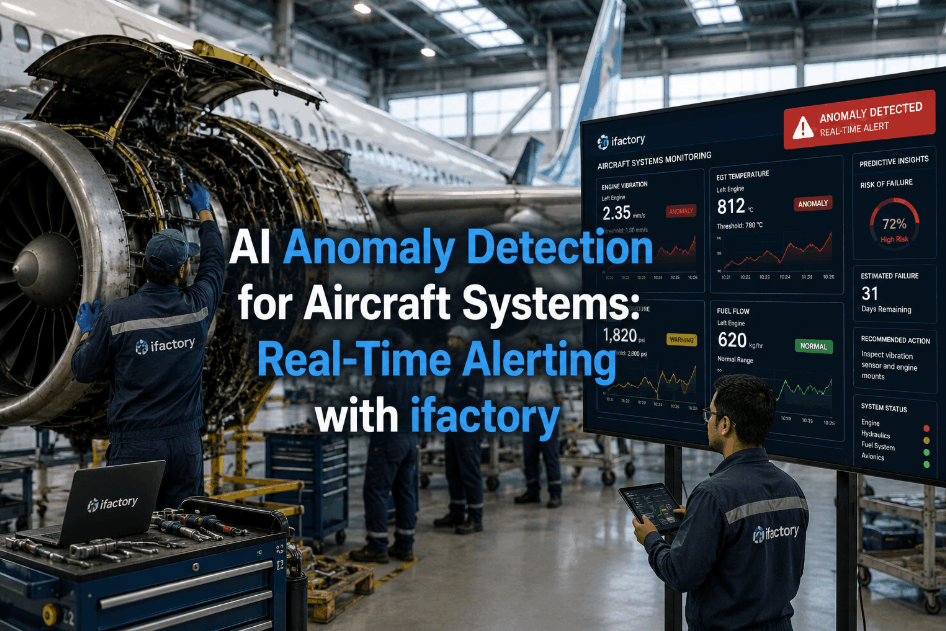
Read More
In the cockpit and hangar environment of 2026, the traditional master caution alarm is being replaced by a more sophisticated intelligence layer: Real-Time AI Anomaly Detection. While legacy aircraft systems rely on static "exceedance" thresholds—

Read More
The aviation maintenance, repair, and overhaul (MRO) sector is undergoing its most significant technological shift since the introduction of jet engines. In 2026, the integration of artificial intelligence is no longer a forward-looking experiment

Read More
In the 2026 aviation environment, the aircraft engine is no longer just a mechanical propulsion unit; it is the most data-dense asset in the fleet, generating over 1,000 parameters per second during peak operation. The historical reliance on "Time

Read More
In the hyper-complex landscape of 2026 aviation maintenance, the volume of technical documentation for a single airframe can exceed hundreds of thousands of pages. For maintenance teams, the challenge isn't just finding a fault — it is navigating

Read More
In the ultra-competitive aviation landscape of 2026, an Aircraft-on-Ground (AOG) event is no longer just a maintenance headache — it is a massive financial and operational failure. With hourly costs for unscheduled groundings ranging from $150,000

Read More
Most aviation fleet managers believe they have real-time visibility into aircraft health — but the reality on the hangar floor and across flight operations tells a different story. Telemetry refresh intervals running 15 to 45 minutes behind live f

Read More
A major international airport operating more than 200 ground support equipment vehicles across four terminals and two cargo facilities faced an unsustainable operational model — diesel costs exceeding $1.8 million annually, a maintenance cycle dri

Read More
For a major international airport operating over 200 ground support equipment vehicles across four terminals and two cargo facilities, the annual fuel bill had become impossible to ignore. Diesel costs exceeded $1.8 million per year, maintenance s
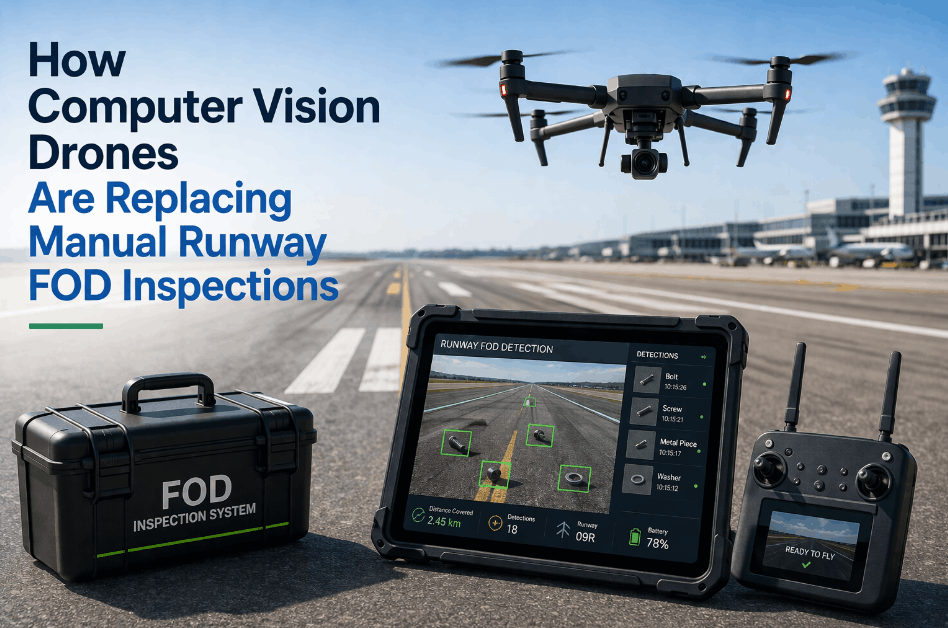
Read More
Foreign Object Debris (FOD) on airport runways costs the global aviation industry an estimated $4 billion annually — damaging engines, shredding tires, and triggering runway closures that cascade into operational disruptions affec

Read More
Airport ground operations are entering the most significant transformation in their history — the shift from diesel and gasoline-powered ground support equipment to a fully electric GSE fleet. The pressure is no longer hypothetical. Regulatory man

Read More
For a major international airport managing over 220 aircraft gates, 4 passenger terminals, and a fleet of 1,800+ ground support and facility assets, spare parts inventory had quietly become one of the most costly and operationally disruptive chall

Read More
Managing a complex airport ecosystem means overseeing dozens of contractors simultaneously — each operating under separate SLAs, invoicing on different schedules, and performing at wildly different levels of accountability. For one mid-sized inter
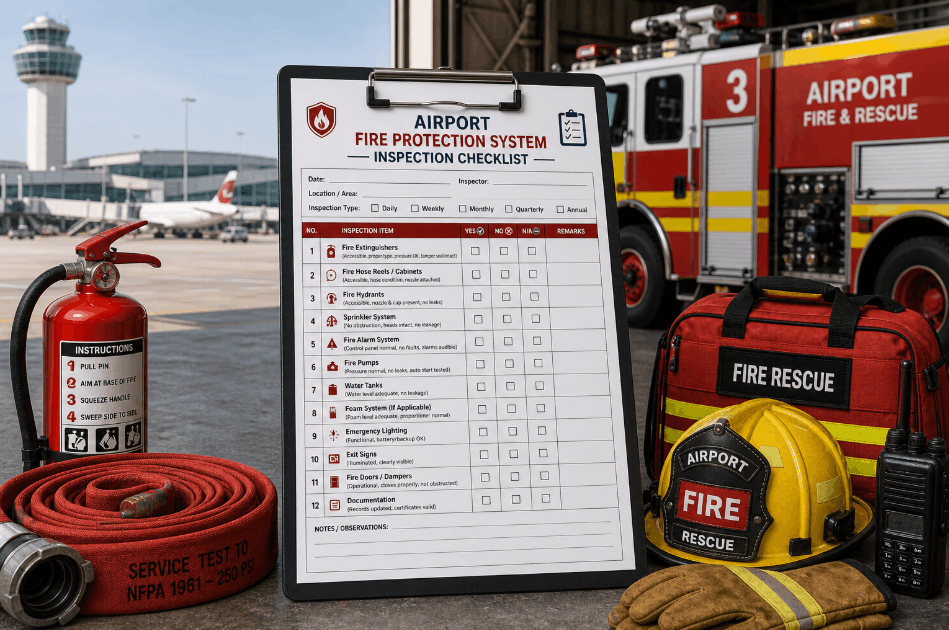
Read More
Airport fire protection systems operate in some of the most complex, high-risk environments in the world — where simultaneous management of terminal occupancy, hangar fuel loads, runway operations, and emergency response corridors demands a struct

Read More
Managing analytics across multiple airport terminals is one of the most operationally complex challenges in modern aviation infrastructure. When passenger volumes spike, crew schedules shift, and terminal performance diverges, airport operations c

Read More
Airport electrical infrastructure is the invisible backbone that keeps every runway light, navigational aid, terminal system, and safety-critical circuit operational — 24 hours a day, 365 days a year. Managing high-voltage substations, primary dis

Read More
Airport snow and ice control is one of the most operationally demanding challenges in winter aviation management — where a single equipment failure during an active storm event can cascade into runway closures, flight diversions, and FAA complianc

Read More
Airport IT infrastructure analytics is transforming how airports manage mission-critical systems — from fiber optic backbone networks and server room environments to Wi-Fi coverage, flight information display systems (FIDS), and public address (PA

Read More
For a major international airport managing four passenger terminals, two cargo facilities, and a network of airside infrastructure spanning 11 million square feet, operational visibility had become a critical gap. Each terminal operated within its
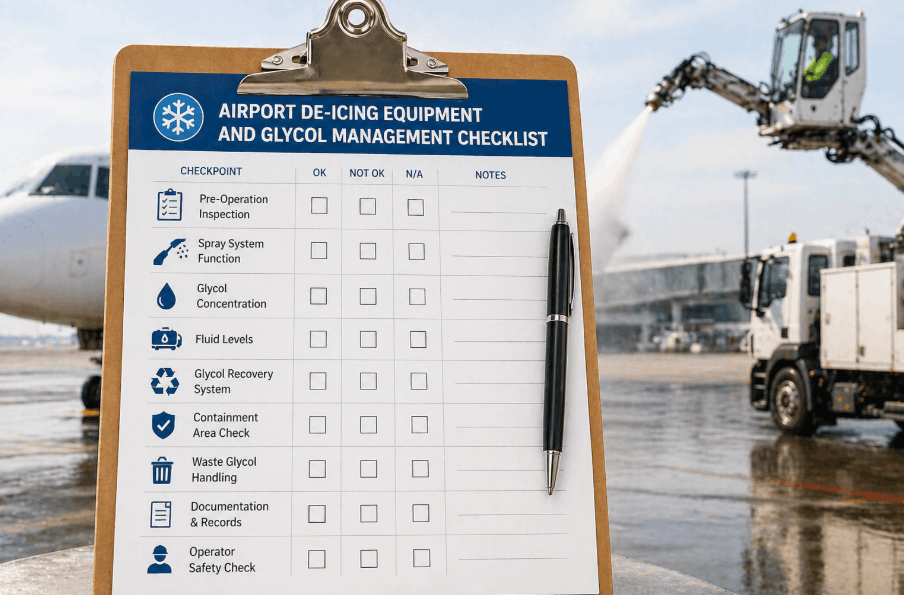
Read More
Airport ground operations depend on consistent, well-documented de-icing processes — where equipment failures, incorrect glycol concentrations, or poor recovery practices can ground flights, trigger environmental violations, and compromise aircraf

Read More
Airport predictive analytics ROI is no longer a theoretical discussion — it's a board-level mandate. As aviation AI investment accelerates across commercial and regional airports, finance leaders and operations executives are demanding quantifiabl

Read More
Modern airports face increasingly rigorous regulatory scrutiny from the FAA and TSA — and yet, most compliance teams still rely on spreadsheets, manual checklists, and fragmented documentation to prepare for audits. AI-driven airport audit

Read More
Airports operate within one of the most data-intensive environments in global infrastructure — yet many operations teams still rely on spreadsheets, lagging reports, and gut instinct to manage performance. In the era of AI-driven airport a
Read More
Managing analytics across multiple airport terminals from a single, fragmented stack is one of the most costly operational blind spots in modern aviation management. Gate utilization data sitting in Terminal A's system has no visibility into Termi

Read More
Airport infrastructure failures rarely begin with catastrophic events — they begin with hairline cracks in runway pavement that inspection teams miss, FOD fragments that accumulate between service windows, and terminal façade deterioration that re

Read More
Airport infrastructure failures do not announce themselves — they accumulate silently inside aging systems until a runway lighting failure, a terminal HVAC collapse, or a baggage handling breakdown forces a reactive capital response that costs thr

Read More
Airport vendor and contractor management has become one of the most complex operational disciplines in modern aviation infrastructure. With dozens of simultaneous stakeholders — airlines, ground handling companies, concessionaires, IT service prov
-integration-with-ai-driven.png)
Read More
Massive airport terminals present one of the most complex climate control challenges in modern architecture, with millions of square feet requiring precise heating, ventilation, and air conditioning across high-traffic transit zon

Read More
The autonomous airport has transitioned from a future-state concept to an operational reality in 2026. As global passenger volumes climb and labor technical technical shortages persist, hub airports are deploying robotic fleets to manage everythin

Read More
Airport emergency management has transcended traditional manual protocols, evolving into a data-driven discipline where seconds determine the outcome of a crisis. From natural disasters and aircraft incidents to security threats and critical infra

Read More
The path to net-zero airport operations has transitioned from a voluntary environmental goal to a critical financial and regulatory mandate. As global aviation standards tighten, airports are facing unprecedented pressure to decarbonize ground ope

Read More
TSA Part 1542 compliance has evolved from a regulatory requirement into a high-stakes operational challenge, where manual documentation gaps can lead to immediate security failures and multi-million dollar fines. For airport oper

Read More
Airport analytics teams across North America and Europe are under mounting pressure in 2026 — not from technology gaps, but from a widening airport analytics staffing shortage that shows no sign of reversing. Aging workforces, ele

Read More
Airport fire protection and suppression system analytics have become mission-critical for aviation facility managers navigating increasingly complex NFPA compliance requirements, multi-zone asset monitoring demands, and the constant pressure to ma

Read More
Airport biometric systems and security screening equipment — from automated biometric gates and CT scanners to X-ray machines and access control systems — operate under relentless demand cycles where unplanned downtime doesn't just disrupt passeng
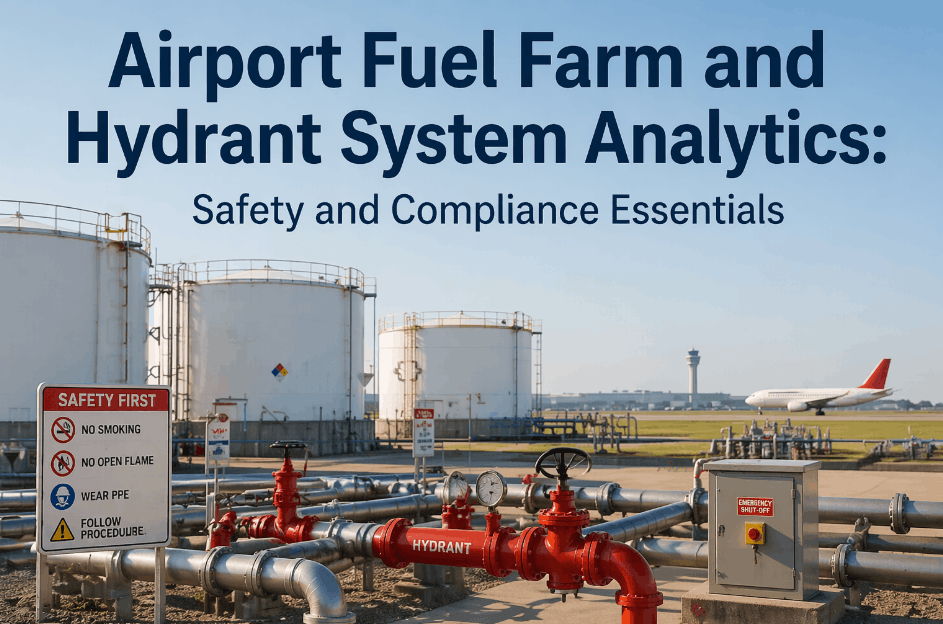
Read More
Airport fuel farm and hydrant fueling system failures don't just delay flights — they trigger NFPA 407 compliance violations, environmental contamination events, fuel quality deviations, and regulatory documentation gaps that ground entire operati

Read More
Passenger conveyance systems—elevators, escalators, and moving walkways—are the circulatory system of a modern airport terminal, directly impacting everything from boarding schedules to retail revenue. In a high-traffic environment where equipment

Read More
Airfield Ground Lighting (AGL) systems are the primary visual guidance for pilots during low-visibility operations, making their 100% serviceability a non-negotiable safety requirement. Under FAA Advisory Circular 150/5340-26C, airports must maint

Read More
Aircraft Rescue and Firefighting (ARFF) vehicle readiness in 2026 is no longer just a maintenance task—it is a critical component of continuous FAA Part 139 compliance that dictates an airport's operational category. With the FAA increasing the fr
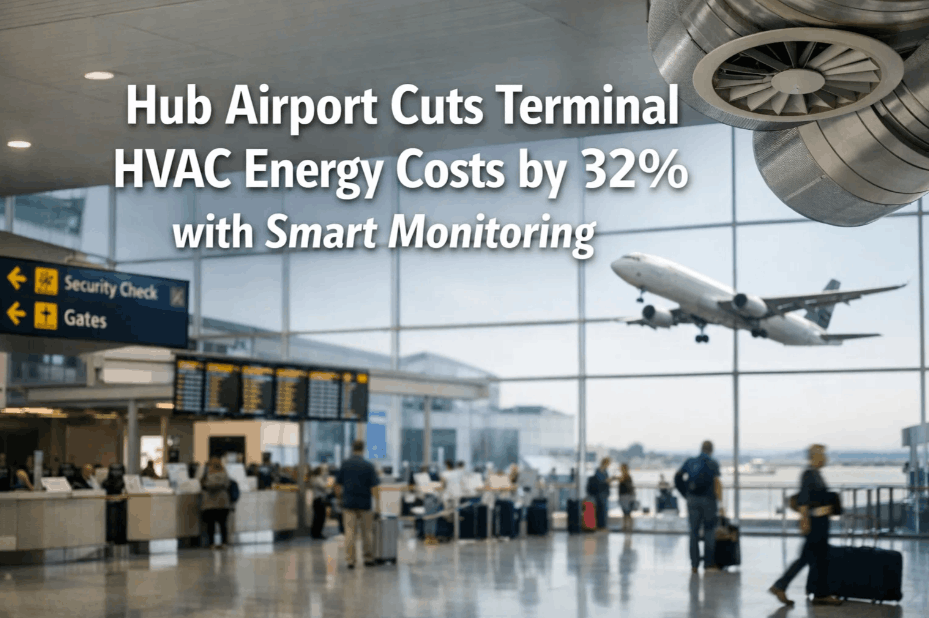
Read More
A major international hub airport operating three passenger terminals — spanning 2.1 million sq ft of conditioned space across departure halls, retail concourses, gate lounges, and baggage claim areas — was spending $18.4M annually on terminal HVA

Read More
A major international airport's Ground Support Equipment (GSE) fleet operation managing 500+ vehicles across four airline ground handling contracts was losing $2.4M annually to preventable equipment breakdowns, unscheduled AOG (Aircraft on Ground)

Read More
Reducing airport analytics costs has become a top priority for aviation facility managers and airport operations directors navigating tighter capital budgets in 2024 and beyond. As infrastructure complexity grows alongside passenger volumes, tradi
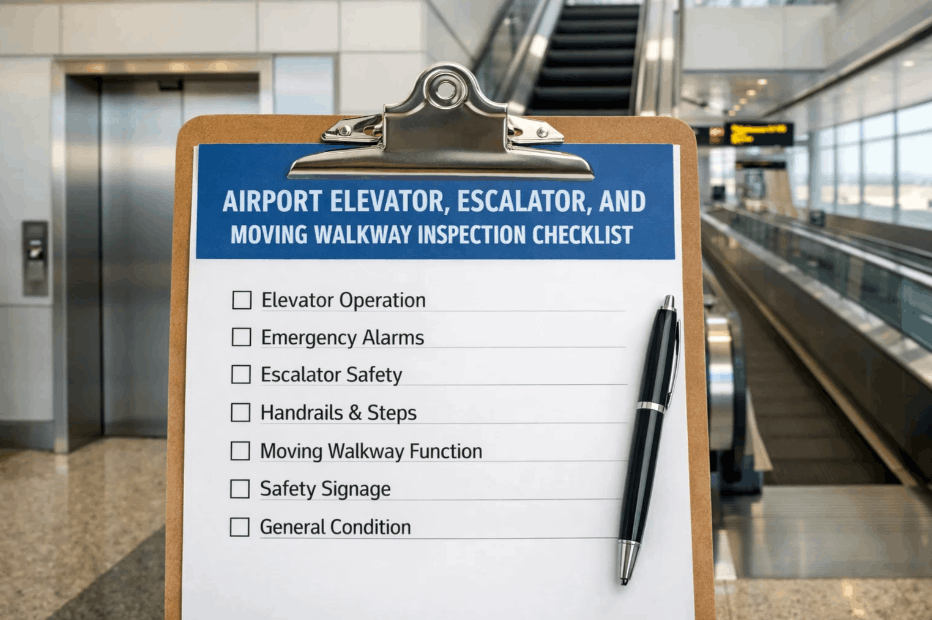
Read More
Daily airport elevator, escalator, and moving walkway inspection is non-negotiable for passenger safety and terminal flow. Step damage, handrail speed synchronization drift, and door sensor failures go undetected without rigorous daily verificatio

Read More
Airport operations managers face critical challenges managing thousands of daily operations across terminals, runways, taxiways, and support infrastructure. Digital twin airport technology creates a virtual replica of your entire facility — enabli

Read More
Maintaining seamless passenger flow in major airports relies entirely on continuous vertical transport. For a leading international terminal, reactive maintenance of escalators and moving walkways caused unacceptable crowding and safety risks. By

Read More
Maintaining operational continuity in complex airport environments requires instantaneous communication and rapid technical response. For a major international aviation hub, the transition from centralized dispatching to a decentralized mobile inf
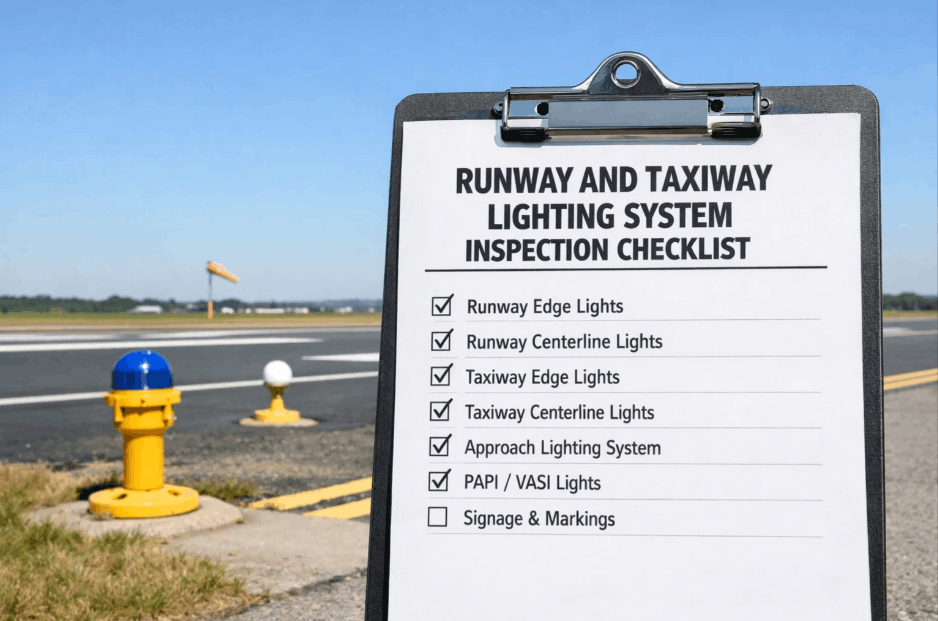
Read More
Daily runway and taxiway lighting system inspections are non-negotiable for airfield safety and regulatory compliance. Lamp outages, lens contamination, and circuit grounding faults go undetected without rigorous daily verification. Airf

Read More
Ground handling operations optimization has become the most competitive differentiator in modern airport management. Every minute an aircraft spends idle on the apron translates directly into revenue loss, missed connections, and cascading delays

Read More
Managing 10,000+ assets across a major airport is one of the most complex infrastructure challenges in the world. From airside ground support equipment and runway lighting systems to terminal HVAC units, baggage handling conveyor
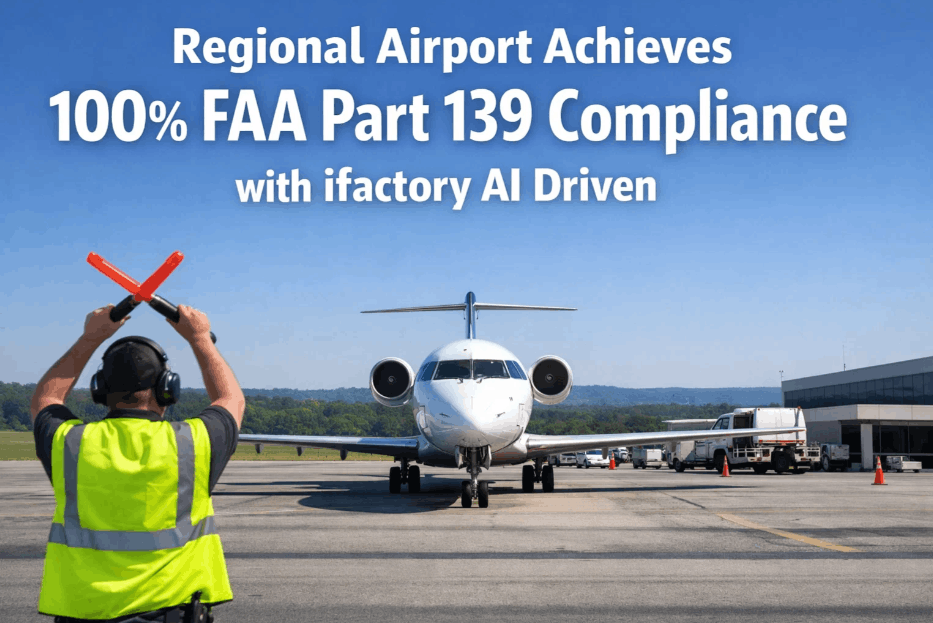
Read More
A regional airport in the southeastern United States was operating under mounting pressure from Federal Aviation Administration oversight teams. Aging paper-based inspection logs, inconsistent Aircraft Rescue and Firefi
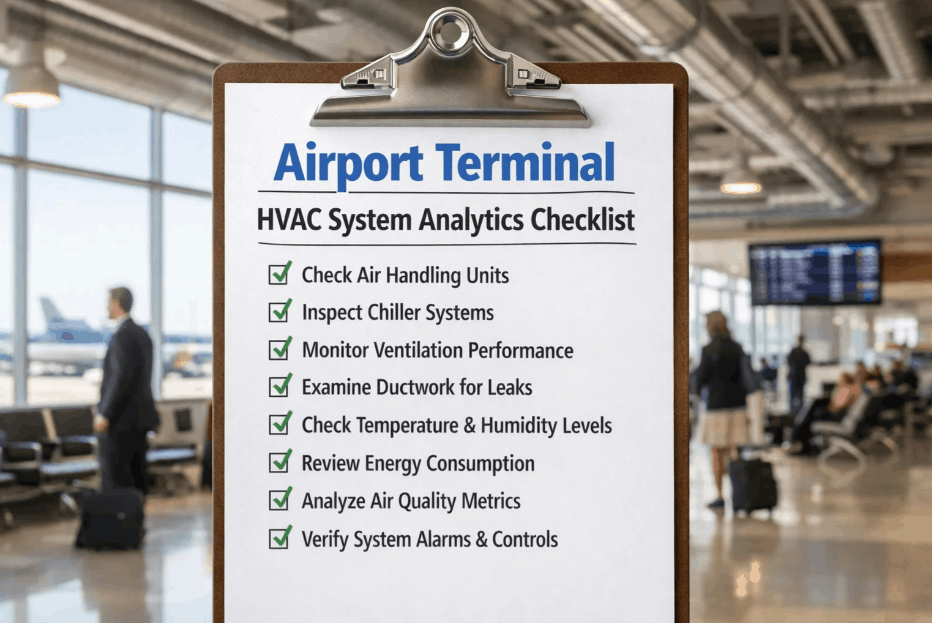
Read More
Airport terminal HVAC systems operate under extreme demands — continuous 24/7 occupancy, variable passenger loads, strict air quality mandates, and energy efficiency targets that directly impact operating costs. Without structured daily analytics

Read More
Airport terminal HVAC systems represent one of the most complex and mission-critical engineering challenges in modern infrastructure. Serving millions of passengers annually, a single terminal HVAC network can encompass hundreds of air handling un

Read More
A major international airport serving over 42 million passengers annually was facing a critical operational challenge — unplanned equipment failures across its baggage handling systems, HVAC infrastructure, and passenger conveyance networks were d
-analytics-preventing-delays-at-the-gate.png)
Read More
Passenger boarding bridge (PBB) failures don't announce themselves — they strike mid-turnaround, stranding hundreds of passengers at the gate while ground crews scramble for manual stairs and alternative docking solutions. In a high-frequency airp
-pre-operation-inspection-checklist.png)
Read More
Ground support equipment (GSE) failures on the ramp don't just cause delays — they create serious safety hazards for ground crews, aircraft, and passengers. A standardized pre-operation inspection protocol ensures every tug, belt loader, pushback
-preventive-analytics-checklist.png)
Read More
Baggage Handling Systems (BHS) operate under continuous mechanical stress, handling thousands of bags per hour across conveyor networks, sortation logic, carousel drives, and sensor arrays. A single undetected belt misalignment, encoder failure, o

Read More
Airports are among the most energy-intensive facilities in the world, consuming millions of kilowatt-hours annually across terminal buildings, runway lighting, HVAC systems, and ground support equipment. As aviation faces mounting pressure from re

Read More
Runway and taxiway analytics is redefining how airports achieve FAA Part 139 compliance — transforming labor-intensive manual inspections into automated, AI-driven workflows that deliver real-time pavement condition data, lighting system status, m

Read More
Baggage handling system analytics is rapidly transforming how airports prevent costly conveyor failures, reduce flight delays, and maximize operational uptime. Modern airports process millions of bags every day across complex networks of conveyors
-fleet-management-electrification,-tracking,-and-predictive-pm.png)
Read More
Modern airport aprons require absolute efficiency across complex vehicle pools. Implementing comprehensive ground support equipment analytics enables operations managers to transition from reactive spreadsheet tracking to purely predictive asset l

Read More
Airports are among the most complex operational environments on the planet — managing 10,000+ assets across terminals, runways, airside zones, and ground support infrastructure simultaneously. Traditional spreadsheet-driven maintenance and reactiv
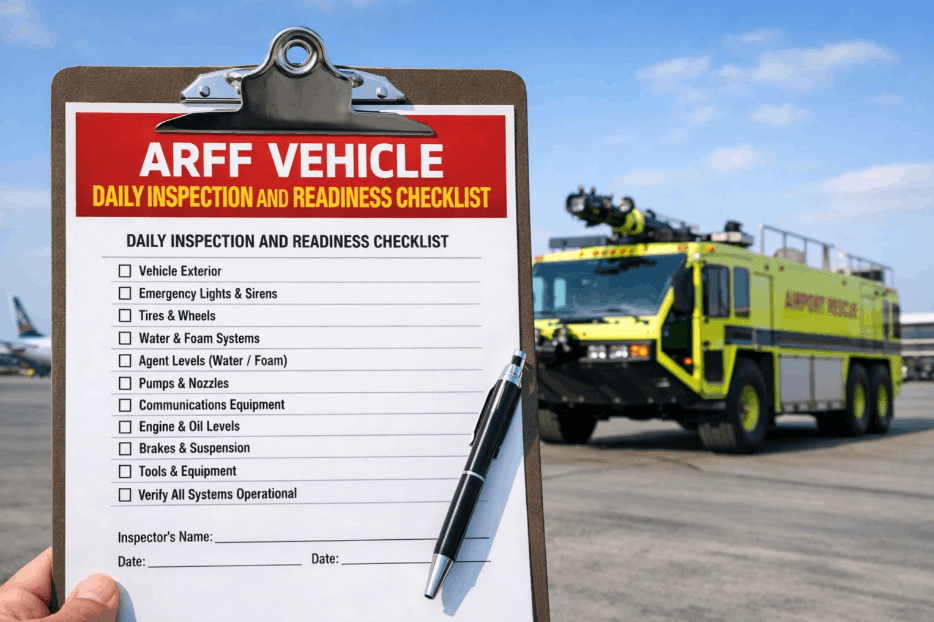
Read More
Airport Rescue and Firefighting (ARFF) vehicles are mission-critical assets that must be operationally ready within seconds of an alert. A structured daily inspection routine ensures every pump system, foam agent reserve, onboar
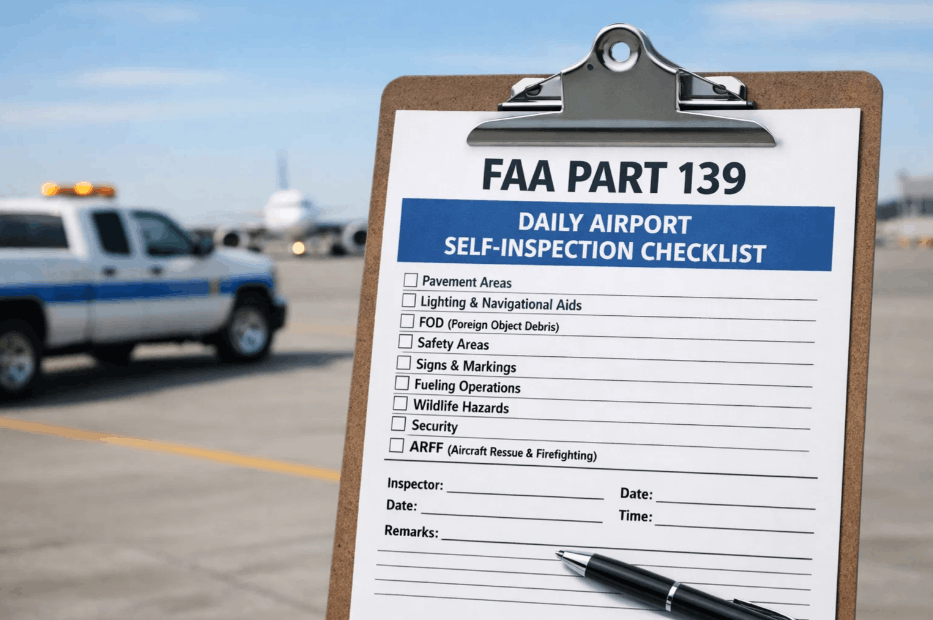
Read More
Airport operators certificated under FAA Part 139 must conduct daily self-inspections of all movement areas before the first aircraft operation and maintain written records of every finding and corrective action taken. A missed item during an FAA

Read More
Airport technology trends in 2026 are redefining what it means to operate a modern aviation hub. From AI-driven predictive analytics and digital twin simulations to fully biometric passenger journeys and autonomous ground service

Read More
Airport facility analytics is undergoing the most significant operational transformation in aviation history. Autonomous robots — cleaning machines, inspection drones, and self-driving ground support equipment — are no longer pilo
Read More
Airport certification is not just a regulatory checkbox — it is the operational backbone of every commercial airport in the United States. FAA Part 139 analytics requirements govern how airports demonstrate ongoing airworthiness across safety area

Read More
Airport operations run on razor-thin margins — a single hour of unplanned downtime on a baggage conveyor system costs an average of $90,000 in delays, diversions, and operational penalties. In 2026, leading airports are deploying

Read More
A terminal duty manager at a major international hub arrived at 1:00 PM on a peak mid-summer Friday to a cascading crisis. It didn't start with a security breach or a grounded aircraft; it started with a localized HVAC failure in Concourse C that

Read More
A gate manager at a major international hub arrived at 5:45 AM on an otherwise ordinary Tuesday to find a critical jet bridge out of service — unannounced, discovered only when the first arriving flight attempted to dock. By 7:30 AM, the airport's

Read More
Explore Smart Document Management for Airport Compliance & Audits. The 2026 aviation landscape demands unprecedented operational transparency. Whether facing an impromptu FAA inspection, an ICAO safety audit, or a routine envi

Read More
At 7:15 AM on a peak Monday travel day, an abandoned piece of luggage was identified near a secondary entrance to Terminal C. Standard procedure required securing a 100-metre radius, dispatching a security team, and initiating an explosive ordnanc

Read More
Explore Fleet Tracking for Ground Support GPS, EV, and Hybrid Monitoring. Discover how iFactory's AI-powered platform enhances airport operations with real-time tracking, fleet, hybrid, predictive maintenance, monitoring, aviation management, airp

Read More
Airports are the invisible backbone of global travel — managing thousands of assets across terminals, runways, baggage areas, and mechanical rooms around the clock. Yet most airports still rely on legacy systems that let energy waste vanish betwe

Read More
At 06:14 on a Thursday morning at a major North American hub, a maintenance technician entered a jet bridge pit to service a hydraulic actuator. The confined space entry permit had been issued at 05:50. The atmospheric test had been completed manu
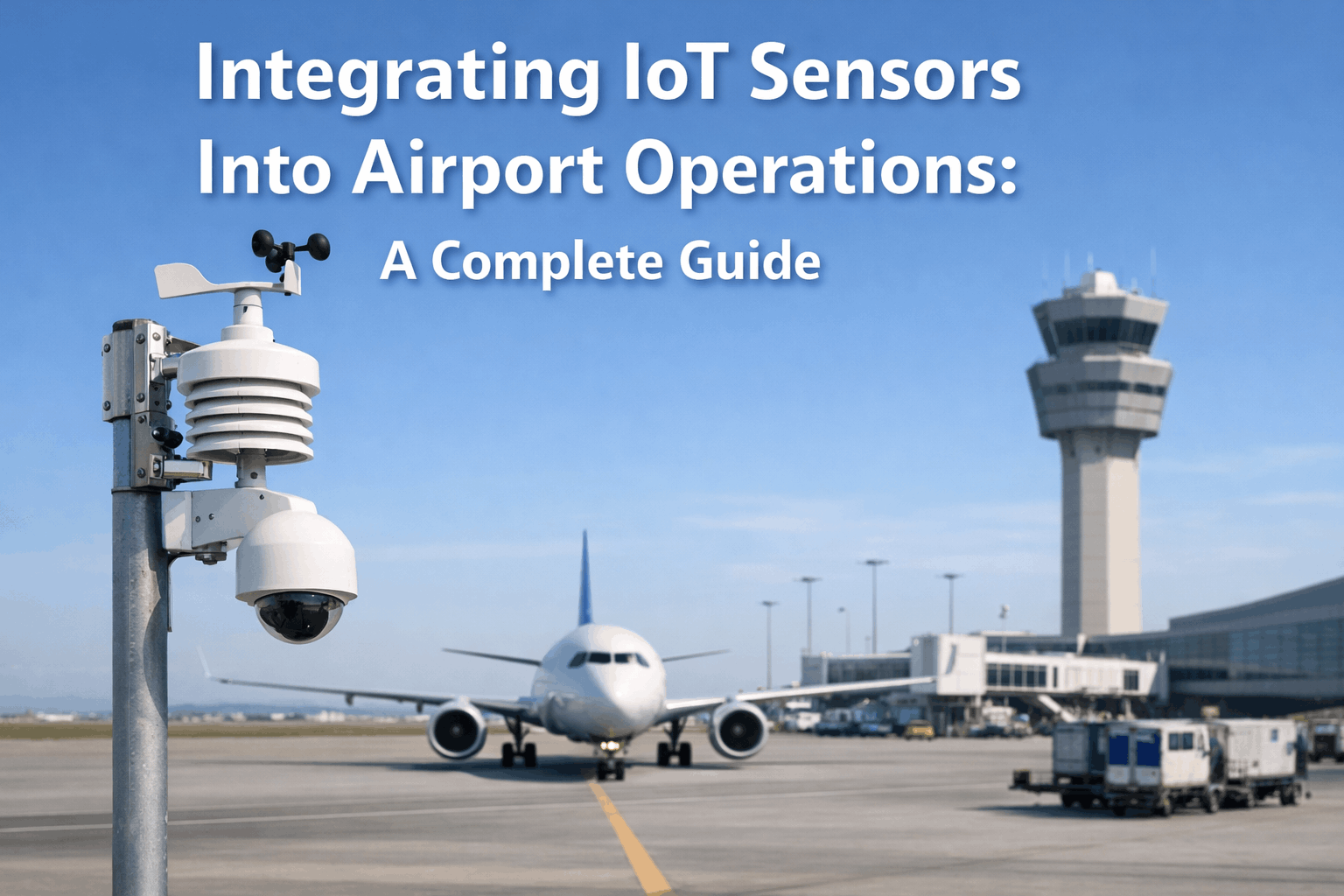
Read More
At 5:22 AM on a Tuesday in November 2025, the duty engineer at a major European hub airport received an alert that would have been impossible to generate three years earlier. A vibration anomaly had been detected on the baggage carousel drive unit

Read More
A major hub airport in the upper Midwest logged 214 winter weather events last season across a 127-day cold operations window. Ground crews responded to every one — staging glycol trucks, dispatching runway sweepers, coordinating anti-icing crews

Read More
Airport ground operations in 2026 face a perfect storm of converging pressures. Ground Support Equipment (GSE) fleets — pushback tractors, baggage tugs, fuel bowsers, ground power units, air starters, de-icers, and belt loaders — operate under rel
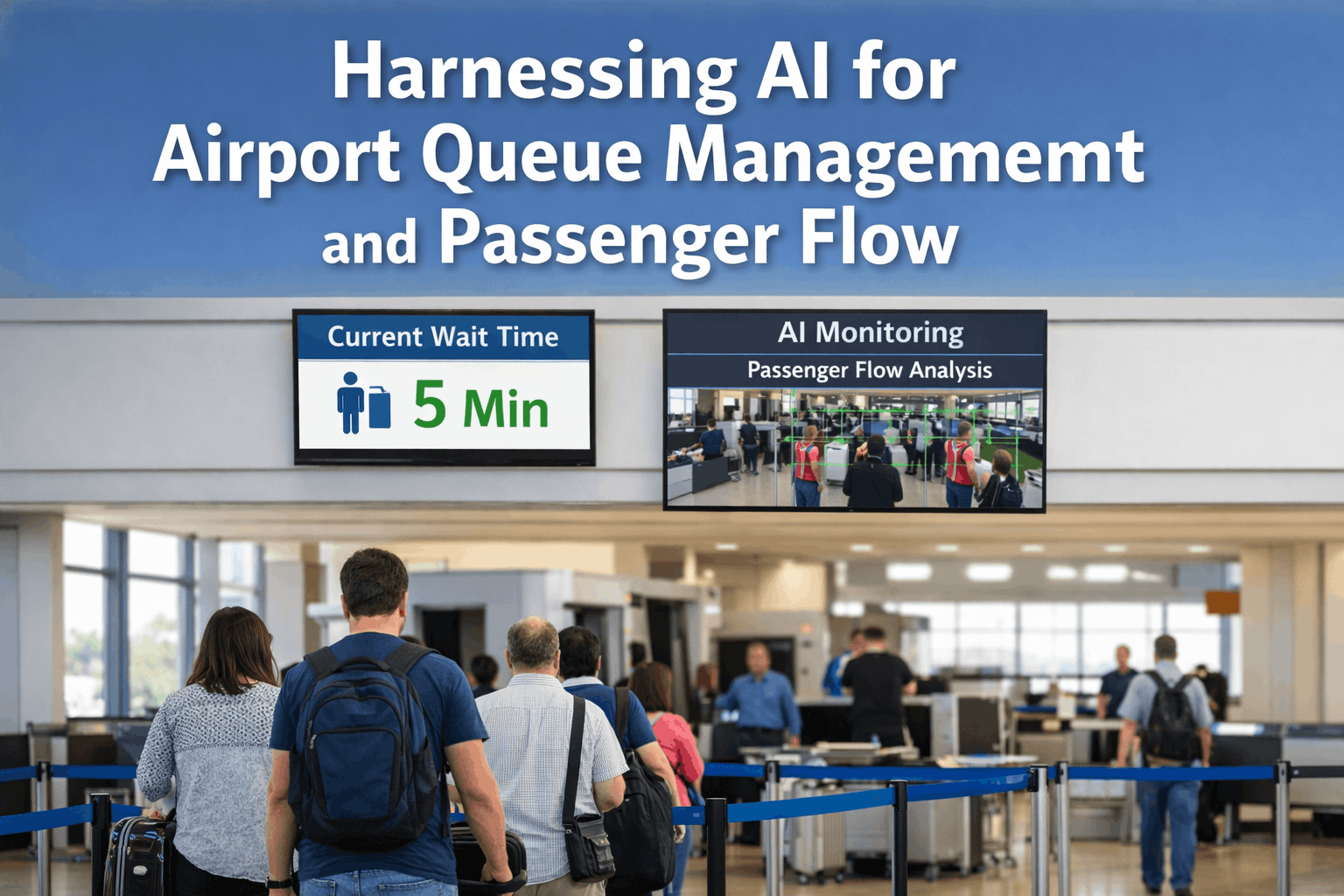
Read More
At 6:47 AM on a Monday in October 2025, Terminal 2 of a major North American airport experienced what operations staff call a "cascade stall." A single security lane closed for an unscheduled equipment calibration at 6:15 AM — reducing checkpoint

Read More
A passenger arriving at a major European hub airport in January 2026 touched her passport to a kiosk at check-in, looked at a camera, and never showed a document again. She walked through bag drop — face matched. Security lane — face matched, no b

Read More
Every major airport is actually two airports operating simultaneously. The physical airport — runways, terminals, baggage systems, HVAC plants, jet bridges, electrical distribution, and 50,000+ individual assets — exists in three dimensions and de

Read More
A major international airport consumes 150–400 GWh of electricity annually — equivalent to a mid-size city — while operating the one class of infrastructure where a power interruption is not merely inconvenient but potentially catastrophic. Runway

Read More
A major international airport operates 2,000–5,000 surveillance cameras across terminals, airside perimeters, cargo areas, parking structures, and access control points — generating 50,000+ hours of video footage every single day. In 2026, the vas

Read More
An international airport is a 24/7 industrial operation masquerading as a public building. Behind every smooth passenger experience sits a maintenance infrastructure managing 50,000+ individual assets — runway pavements subjected to 400-tonne airc

Read More
Aviation accounts for 2.5% of global CO₂ emissions — and with passenger volumes projected to double by 2050, that number climbs unless the industry fundamentally changes what powers its aircraft. Two fuel technologies are converging to rewrite the

Read More
Aircraft Maintenance, Repair, and Overhaul (MRO) is undergoing its most significant technological transformation since the introduction of computerized maintenance management in the 1990s. Two converging forces — autonomous robotic inspection and

Read More
Every shift at every airport, maintenance technicians perform the same wasteful ritual: walk to the engineering office, check the whiteboard or printed schedule, scribble a work order number on a clipboard, walk to the asset location, diagnose the

Read More
Airport runways and aircraft are inspected thousands of times per year — and in 2026, the majority of those inspections still involve a human walking the runway surface with a flashlight, or maintenance crews manually examining airframe panels fro
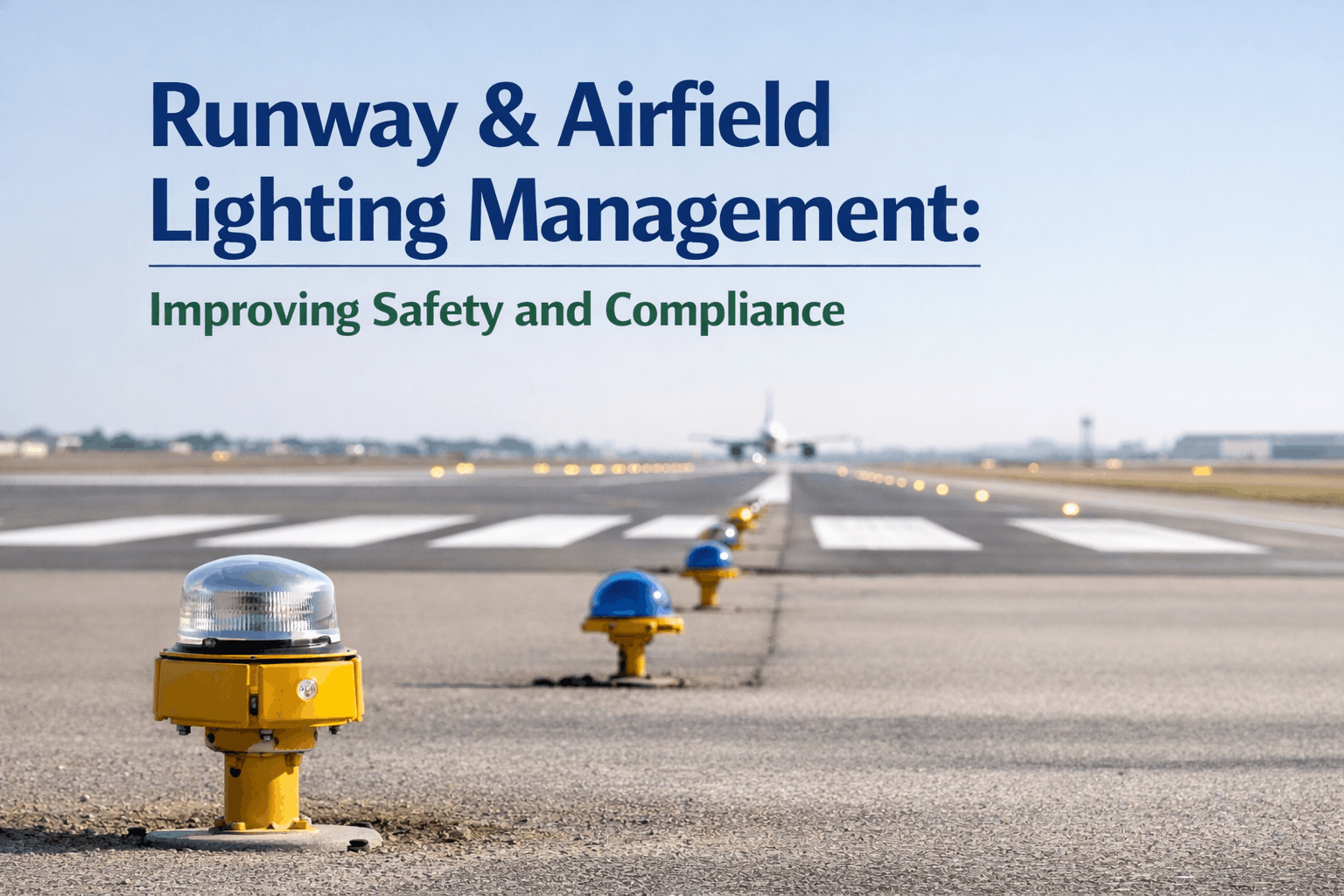
Read More
Runway and airfield lighting is one of the most safety-critical systems at any airport. Every approach light, edge light, centerline fixture, and taxiway marker must perform flawlessly — because when a light fails at the wrong moment, aircraft, cr

Read More
Baggage handling systems (BHS) are the circulatory system of every airport — moving millions of bags daily through networks of conveyors, sorters, and screening equipment. Yet most airports still operate BHS maintenance reactively, waiting for be

Read More
Major airport terminals operate as micro-cities, handling millions of passengers, intricate baggage networks, and massive energy loads. Managing this complexity has historically relied on reactive maintenance and siloed data. When a baggage belt f

Read More
Major airport terminals consume as much energy as small cities. Yet, nearly half of this energy is wasted due to legacy HVAC systems, inefficient lighting, and reactive maintenance practices. Once an airport's energy consumption s

Read More
An airport is a system of systems — airside operations, ground handling, passenger flow, gate scheduling, maintenance coordination, safety governance, and regulatory compliance — all running simultaneously, all interdependent. When one breaks down
Total Posts:
Proven Results
Airport ROI & Business Impact
Airports using iFactory see measurable improvements within 90 days. Real data from aviation facility deployments worldwide.
45%
Less Downtime
AI catches failures before gate closures
30%
Cost Reduction
Fewer emergencies, optimized parts
100%
FAA Compliant
Zero citations, audit-ready always
2-3
Weeks to Deploy
Pre-built aviation templates
"iFactory's AI caught a baggage sortation motor bearing failure 3 days before peak holiday travel. That single prediction prevented a 12-hour BHS outage that would have affected 15,000 passengers. First-year ROI exceeded 600% across our terminal operations."
MR
Michael Rodriguez
VP Facilities, International Airport Authority"Our FAA Part 139 certification inspection went from 2 weeks of paper prep to 2 days with iFactory. The inspector asked for 3 years of ARFF maintenance records — we pulled them up in 30 seconds. Zero findings for the first time in our airport's history."
SJ
Sarah Johnson
Airport Operations Director, Regional Airport"We deployed iFactory across 3 terminals, 142 GSE units, and all airside infrastructure in 18 days. The digital shift logbooks alone eliminated handover gaps that caused 4-5 safety incidents quarterly. Maintenance costs dropped 28% in the first quarter."
AP
Ahmed Patel
Maintenance Director, Hub Airport Operations
Equipment Coverage
Every Critical Airport Asset — One Platform
From airside to landside, terminals to tarmac — iFactory covers every equipment type across the entire airport operation.
Runway Lighting
Edge, approach, PAPI, MALSRBaggage Handling
Conveyors, sortation, carouselsJet Bridges
Hydraulics, drives, canopiesHVAC Systems
Chillers, AHUs, terminal climateARFF Vehicles
Trucks, foam, agent levelsGround Support Equipment
Tugs, loaders, de-icers, GPUsElevators & Escalators
Passenger vertical transportEmergency Generators
Backup power, UPS, transferSeamlessly integrates with your existing airport systems
Honeywell BMS
Siemens
Johnson Controls
Schneider Electric
SITA
SAP
Oracle
100+ more
FAQ
Aviation & Airport CMMS — Common Questions
A CMMS for airports is specialized software that manages maintenance operations across airport infrastructure — runways, taxiways, terminals, baggage handling systems, jet bridges, HVAC, runway lighting, ARFF equipment, and ground support equipment. It automates work orders, preventive maintenance scheduling, spare parts inventory, FAA Part 139 compliance, and integrates with BMS and SCADA systems for predictive maintenance.
The average cost of aircraft block time for U.S. passenger airlines exceeded $100 per minute in 2024. A single gate closure from a jet bridge failure can cost $10,000-$50,000 per hour in cascading delays. Baggage handling failures at major hubs impact thousands of passengers per hour. Maintenance costs consume 15-18% of every airline's total operating expenses.
iFactory provides pre-built compliance templates for all Part 139 requirements including runway/taxiway maintenance (139.305), safety areas (139.309), lighting (139.311), snow/ice control (139.313), ARFF readiness (139.315-319), condition reporting (139.339), and noncomplying condition tracking (139.341). Every record is timestamped, digitally signed, and retrievable in seconds during unannounced FAA inspections.
Yes, iFactory integrates with Honeywell, Siemens, Johnson Controls, Schneider Electric, and Tridium Niagara. Real-time sensor data from HVAC systems, runway lighting circuits, baggage conveyor motors, elevator systems, and fire suppression panels feed directly into iFactory's AI predictive maintenance engine for continuous condition monitoring.
iFactory monitors all critical airport assets: runway/taxiway lighting (edge, approach, PAPI, MALSR), baggage handling conveyors and sortation, jet bridges, HVAC and terminal climate control, elevators and escalators, ARFF vehicles, ground support equipment (tugs, belt loaders, de-icers, GPUs), fuel hydrant systems, airfield signage, emergency generators, fire suppression systems, and all facility infrastructure.
iFactory deploys in 2-3 weeks with pre-built aviation industry templates for terminals, airside operations, baggage handling, ground support equipment, and ARFF assets. Unlike legacy CMMS systems that take 6-12 months, iFactory's guided implementation includes asset onboarding, BMS/SCADA integration, work order configuration, compliance template setup, and team training — with 90-day hands-on support. Zone-by-zone activation ensures zero disruption to active airport operations.
Yes. The FAA's expanded SMS final rule now requires Safety Management Systems for Part 121, Part 135, Part 91.147, and Part 21 operators with documented safety policies, hazard identification, and risk management programs. iFactory provides complete SMS documentation including safety policy management, hazard identification workflows, risk assessment matrices, safety assurance tracking, and safety promotion tools — all digitally documented with immutable audit trails.
Major airports can span millions of square feet with thousands of assets across multiple terminals, concourses, and airside facilities. iFactory is designed for this scale: hierarchical asset trees organized by terminal/zone, location-based work order assignment, GPS-optimized technician routing, multi-warehouse parts management, and role-based dashboards from technicians to airport directors. The platform works on any device — iOS, Android, Windows — with 100% offline capability and zero data loss guarantee for tarmac and mechanical room use.
Start Your Transformation
Ready to Eliminate Airport Downtime?
Join airports worldwide that have transformed operations with iFactory. Get a free airport assessment and see exactly how much you can save — from runway to terminal.