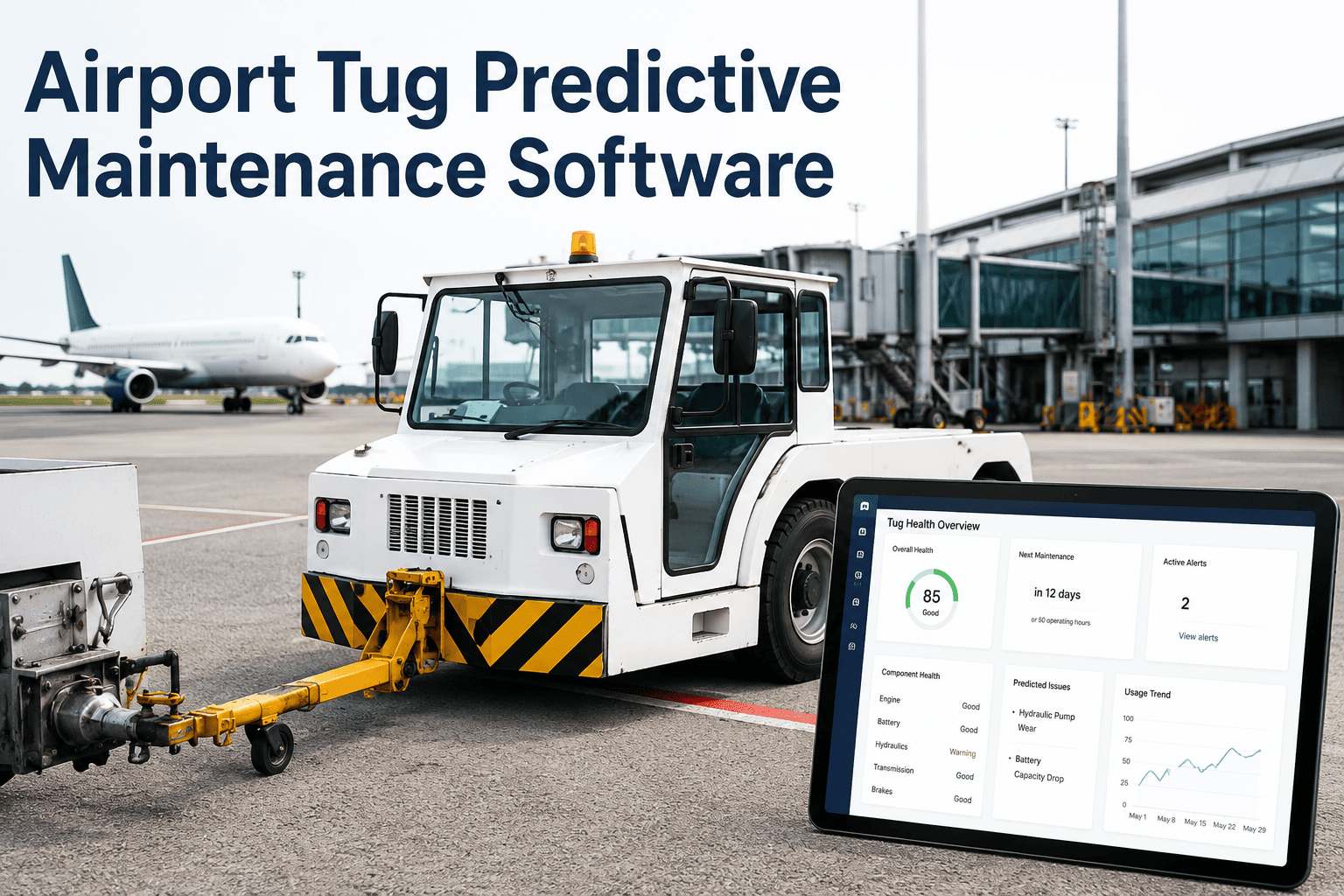
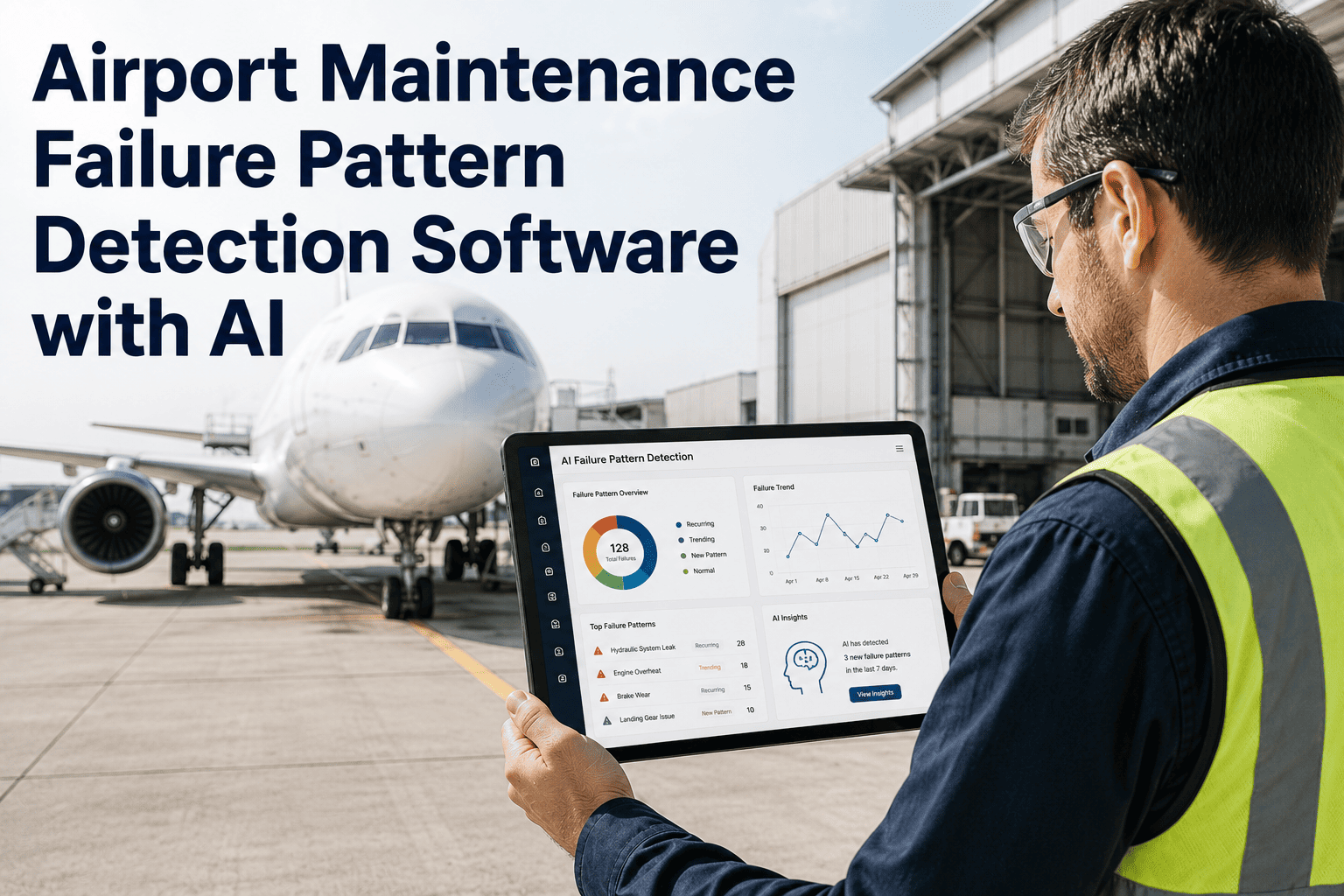
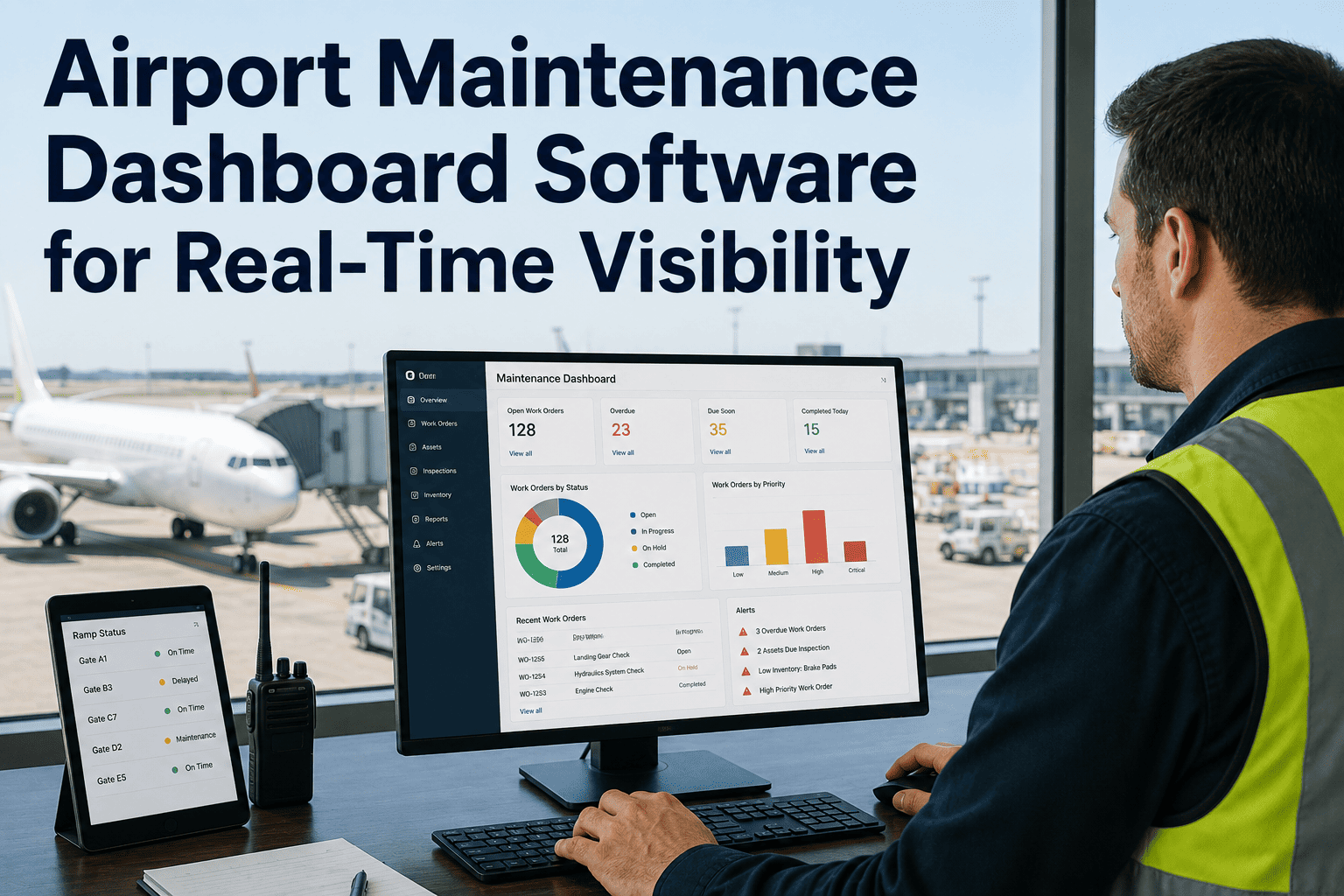
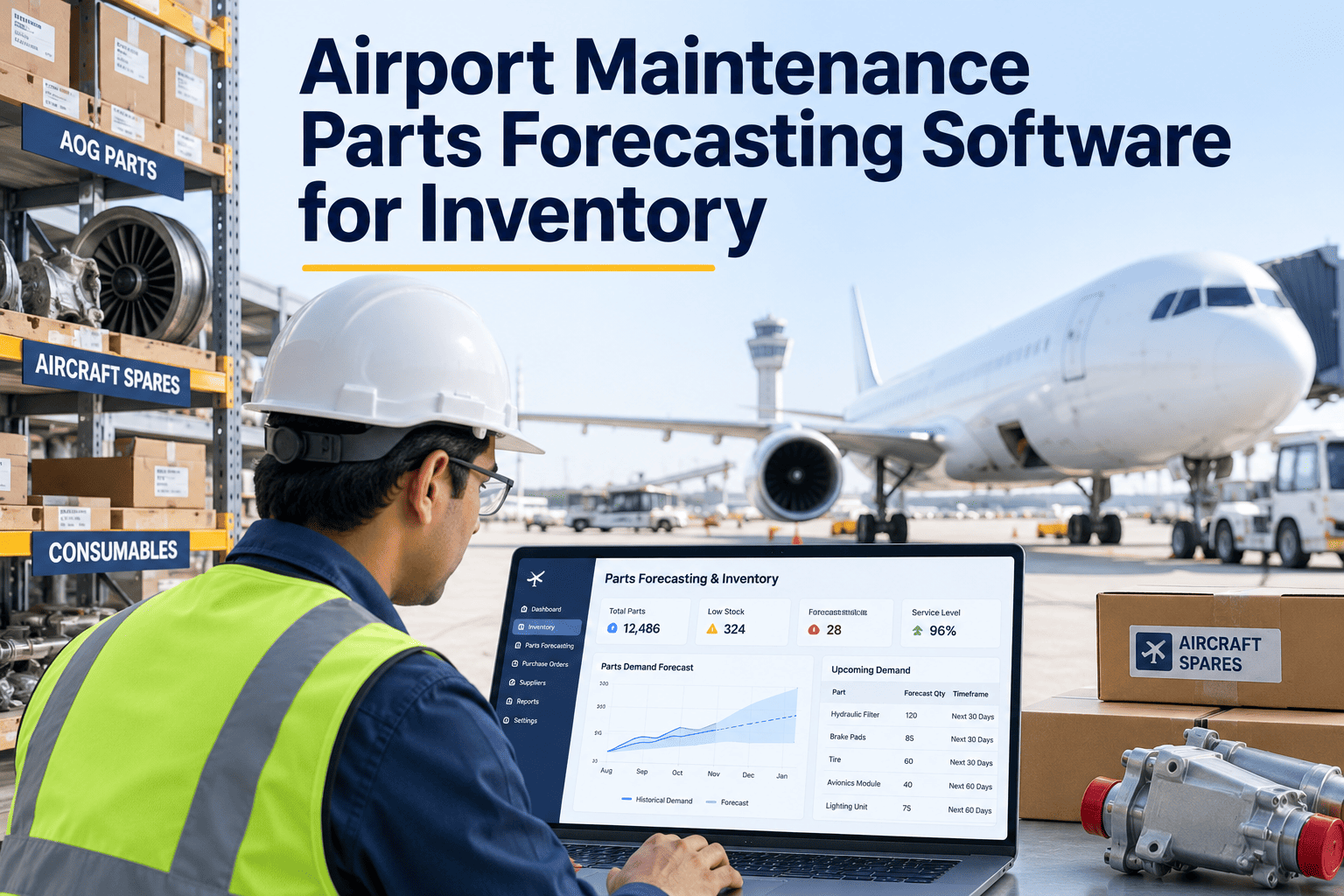
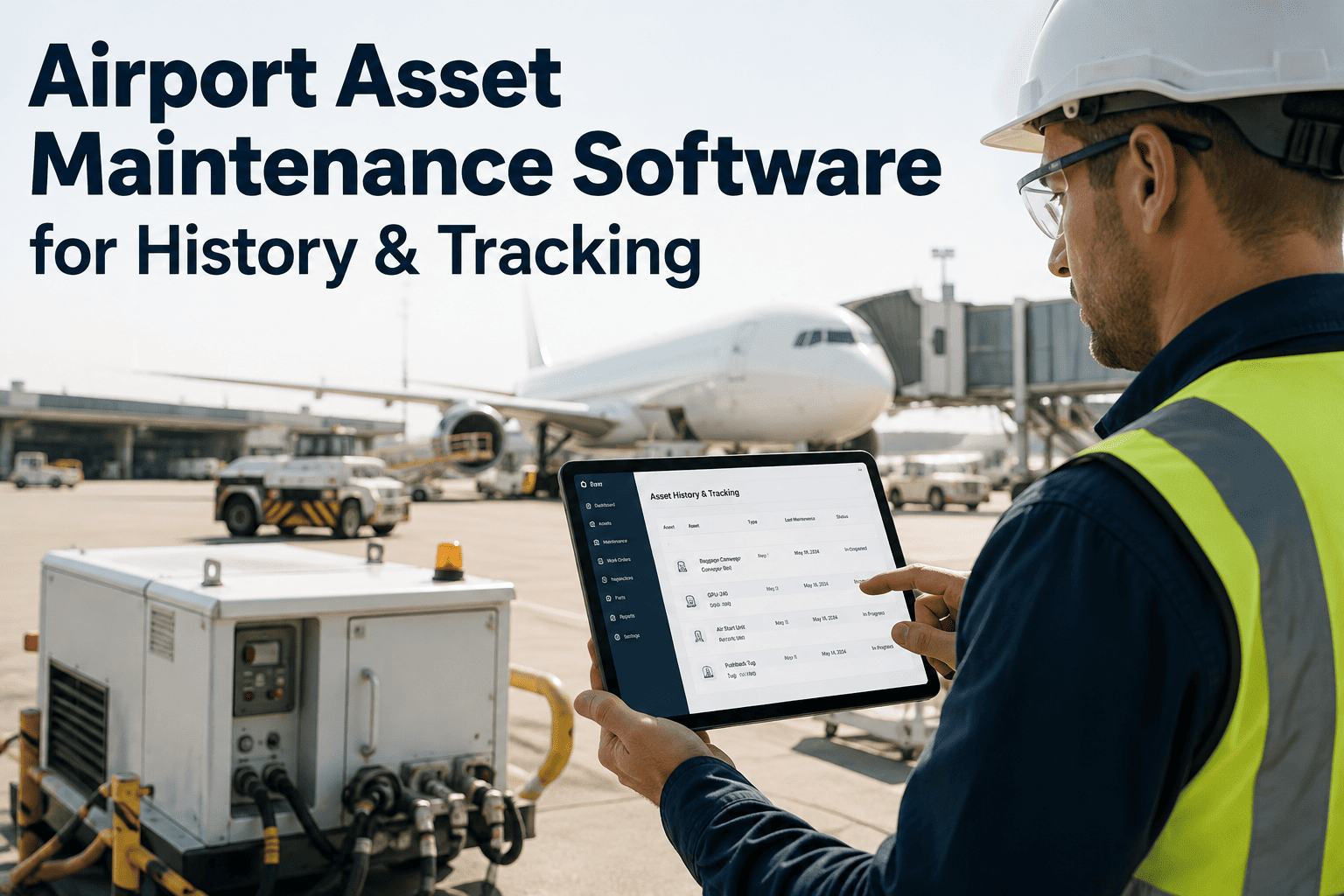
Airport turnarounds operate within a fixed time window where every minute of delay directly translates to gate conflicts, missed passenger connections, and cascading schedule disruptions that compound across the entire flight network. When a pushback tractor shows hydraulic degradation at the start of a turnaround or a belt loader fails midway through baggage offload, the disruption does not stay contained within the maintenance department because the operations team, ground handling coordinator, and flight dispatch all learn about the problem through phone calls and radio chatter instead of receiving automated alerts with equipment status and backup options. This manual notification chain adds minutes to a process that cannot absorb them, and those extra minutes multiply into costs that far exceed what the original maintenance issue would have cost if it had been detected and resolved before the turnaround began. An airport turnaround disruption prevention platform connects predictive maintenance alerts, GSE readiness tracking, work order coordination, and operations visibility into a single system that identifies potential disruptions before they reach the turnaround window and provides automated response options the moment an issue is detected. You can book a demo to see how iFactory prevents maintenance-related turnaround disruptions.
SOLUTION · TURNAROUND PREVENTION · GSE READINESS · AIRPORT OPERATIONS
A Single Maintenance Issue Can Cascade Into a Network-Wide Delay — Unless You See It Coming
iFactory's turnaround disruption prevention platform connects predictive maintenance, GSE readiness, work order coordination, and operations dashboards to stop maintenance issues from becoming turnaround delays.
THE TURNAROUND WINDOW
Five Critical Phases Where Maintenance Issues Disrupt the Turnaround Clock
A standard narrow-body turnaround operates within a sixty to ninety minute window where multiple activities must execute in a precise sequence. Maintenance-related disruptions at any phase consume time from the same fixed budget, and delays at early phases compress the available time for every subsequent activity. The timeline below maps each phase to the specific maintenance failures that most frequently disrupt it.
T-60 to T-45
Arrival and Ground Connection
Aircraft docks, chocks placed, ground power connected, jet bridge positioned for passenger deplaning
Ground power unit failure prevents APU start and cabin system activation
Jet bridge drive mechanism fault delays passenger bridge positioning
T-45 to T-30
Deplaning and Offload Start
Passengers deplane through jet bridge, baggage offload begins on carousel, cargo offload initiated at forward hold
Belt loader conveyor motor failure stops baggage offload completely
Cargo door mechanism fault prevents forward cargo access
T-30 to T-15
Aircraft Servicing and Loading
Fueling commences, catering loads through forward galley, lavatory and water service completed, cabin cleaned
Fuel hydrant pressure drop slows or halts refueling process
Catering lift vehicle hydraulic fault prevents galley loading
T-15 to T-5
Final Services and Boarding Prep
Final cargo loaded, cabin security check completed, boarding documents verified, passengers called to gate
Cargo loader positioning system fault delays final cargo loading
Aircraft door sensor malfunction prevents cabin secure confirmation
T-5 to T-0
Boarding and Pushback
Passengers board, doors close, pushback tractor connects, tow bar attached, aircraft pushed back from gate
Pushback tractor hydraulic or steering fault prevents pushback initiation
Headset communication system failure between tractor and flight deck
DISRUPTION CASCADE
How One Pushback Tractor Issue at T-8 Cascades Into a Network-Wide Delay
Maintenance disruptions during turnaround do not remain isolated events. The example below traces a single pushback tractor hydraulic fault detected eight minutes before pushback and shows how the consequences compound through ground operations, flight dispatch, passenger connections, and downstream scheduling across the airport network.
TRIGGER — T-8 MINUTES
Pushback Tractor Hydraulic Fault Detected
Pre-connection check identifies hydraulic pressure drop below operating threshold on assigned pushback tractor at the gate
+3 MINUTES — T-5
Backup Tractor Request Initiated
GSE coordinator dispatches nearest available backup tractor located four gates away, adding transit time to the turnaround delay
+5 MINUTES — T-3
Turnaround Manager Extends Boarding Window
Boarding completion deadline pushed back, ground crew held at gate, aircraft door closure delayed beyond original plan
+8 MINUTES — T+0
Next Arrival Aircraft Held on Taxiway
Incoming flight assigned to the same gate cannot pull in because the departing aircraft has not pushed back from the stand
+10 MINUTES — T+2
Adjacent Turnaround Impacts Begin
Ground crew pulled from a neighboring turnaround to assist, causing that turnaround to fall behind its own schedule
+12 MINUTES — T+4
Network Cascade and Connection Misses
Flight departs twelve minutes late, six passengers miss connecting flights, downstream schedule adjustments propagate across three subsequent segments
PREVENTION ARCHITECTURE
Four Defense Layers That Stop Disruptions Before They Reach the Turnaround
Preventing turnaround disruptions requires multiple layers of defense, each operating at a different point in time relative to the turnaround window. The outermost layer acts earliest, detecting potential issues days before the aircraft arrives. Each subsequent layer provides closer-range protection for issues that slip through earlier defenses. Together, these layers create a system where maintenance disruptions are intercepted at the earliest possible moment.
PREDICTIVE ALERT LAYER — Days Before Turnaround
AI models analyze GSE degradation trends and generate alerts days before the equipment is needed, enabling proactive maintenance, backup equipment pre-positioning, and turnaround plan adjustments before any aircraft reaches the gate
GSE READINESS LAYER — Hours Before Turnaround
Real-time status tracking verifies all required ground support equipment is available, inspected, fueled, and positioned before the turnaround begins, automatically flagging any equipment that has shifted from available to at-risk or unavailable status
WORK ORDER COORDINATION LAYER — During Turnaround
Active maintenance work orders are monitored against the turnaround schedule with automatic conflict detection that alerts operations when any maintenance activity overlaps with a critical turnaround phase at the same gate or with shared equipment
OPERATIONS DASHBOARD LAYER — Real-Time Response
Live turnaround status visibility for all stakeholders with automated escalation protocols that trigger the moment any turnaround activity falls behind its scheduled completion time, providing pre-defined response options to each role
The Cost of a Twelve-Minute Turnaround Delay Exceeds the Cost of Preventing It by a Factor of Fifty
iFactory's turnaround disruption prevention platform detects GSE issues before the aircraft arrives, verifies equipment readiness hours before the turnaround, and provides real-time response tools when issues emerge during active turnarounds.
EQUIPMENT READINESS
GSE Readiness Status Board: Know What Is Available Before the Turnaround Starts
Ground support equipment readiness is the most controllable variable in turnaround disruption prevention. The status board below represents the real-time view that iFactory provides, showing each piece of equipment with its current readiness state, the reason for its status, and the actionable information that operations and ground handling teams need to make allocation decisions before aircraft arrive at the gate.
AVAILABLE
GPU-01
Ground Power Unit
Inspected at 06:00, fuel level 92%, positioned at Gate B12 ready for assignment
AT RISK
BLT-03
Belt Loader
Vibration alert on conveyor motor detected, inspection required before next turnaround assignment
UNAVAILABLE
PBT-02
Pushback Tractor
Hydraulic system fault, work order active with technician assigned, estimated repair 45 minutes
RESERVED
STAIR-01
Passenger Stairs
Assigned to Flight BA247 at Gate A08, available for reassignment after 14:30 completion
AVAILABLE
ASU-04
Air Start Unit
Full service status confirmed, positioned at Gate C05, last operational use two hours prior
AT RISK
LAV-02
Lavatory Service Cart
Tank capacity at 78%, servicing required before evening peak turnaround block begins at 16:00
AVAILABLE
WC-01
Water Cart
Filled and inspected, currently in standby at central GSE parking area, ready for dispatch
RESERVED
FUE-03
Fuel Hydrant Cart
Connected to Flight EK301 at Gate D11, release estimated at 13:45 following fueling completion
NOTIFICATION CASCADE
From Detection to Dispatch: How Disruption Information Reaches Every Stakeholder
When a potential disruption is detected, the speed and accuracy of information flow determines whether the response contains the situation or lets it cascade. The notification cascade below shows how iFactory routes disruption information through each stakeholder in sequence, with each recipient receiving only the information relevant to their role and the specific action they need to take.
0 min
Alert Source
Sensor or inspection detects GSE issue and generates automated alert with equipment ID, location, and severity classification
1-2 min
Maintenance Queue
Work order created automatically with fault description, sensor data, and qualified technician assigned based on skill match and proximity
2-4 min
GSE Coordinator
Notified of equipment unavailability with affected turnaround details, initiates backup equipment dispatch from nearest available pool location
3-5 min
Turnaround Manager
Alerted to potential delay with updated equipment ETA, adjusts boarding timeline and communicates revised schedule to gate agents
5-8 min
Flight Dispatch
Receives projected delay estimate with confidence range, updates filed departure time and notifies downstream stations of schedule adjustment
5-10 min
Gate Assignment
Informed of gate hold duration, adjusts inbound aircraft gate assignment if hold exceeds threshold, coordinates with apron control for taxiway management
COST ESCALATION
Turnaround Delay Cost Escalates Exponentially With Every Additional Minute
The financial impact of a maintenance-related turnaround delay does not increase linearly. Each additional minute of delay crosses cost thresholds that trigger new categories of expense including crew overtime, gate conflict penalties, passenger rebooking costs, and network cascade impacts. Understanding this escalation curve is essential for justifying the investment in prevention versus absorbing the cost of response.
Minor crew overtime, gate fee extension, minimal downstream schedule impact with no passenger rebooking required
5-15 MIN
$3,500 — $12,000
Gate conflict with next arrival requiring taxiway hold, crew repositioning initiated, connecting passenger impact assessment begins
15-30 MIN
$12,000 — $35,000
Missed departure slot in constrained airspace, passenger rebooking for missed connections, downstream flight delays triggered at destination
30-60 MIN
$35,000 — $85,000
Network cascade across multiple flights, crew duty timeout risk requiring replacement crew, passenger compensation regulatory thresholds triggered
Flight cancellation consideration activated, regulatory delay reporting requirements, significant passenger rebooking and accommodation volume
FREQUENTLY ASKED QUESTIONS
Questions From Airport Turnaround and Ground Operations Leaders
How does the platform predict GSE failures before the turnaround when equipment condition can change between the prediction and the actual use time?
The predictive models generate alerts based on degradation trends that develop over days and weeks rather than sudden condition changes, which means the prediction window is sufficiently long that the degradation trajectory is stable and unlikely to reverse without maintenance intervention. When a prediction is generated, the platform simultaneously triggers a verification inspection closer to the turnaround time to confirm the equipment condition has not changed. If the verification shows improvement or stabilization, the alert is downgraded. If the verification confirms the predicted degradation, the backup equipment pre-positioning that was initiated at prediction time is already in progress.
Contact our support team to discuss prediction verification workflows for your GSE fleet.
How does the platform integrate with our existing ground handling provider systems and flight operations databases?
The platform connects to ground handling provider systems through integration APIs that exchange equipment status data, assignment records, and turnaround task completion status in real time. Flight operations databases including flight information systems, gate management platforms, and crew scheduling tools are connected through similar APIs that provide turnaround timing, gate assignments, and crew duty information. These integrations are configured during implementation based on your specific technology stack, and iFactory supports both direct database connections and API-based integrations with common airport operations platforms.
Book a demo to see integration options for your operations systems.
What happens when a disruption is detected during an active turnaround and no backup equipment is available?
When no backup equipment is available within the acceptable response time, the platform escalates the situation through a defined response protocol that includes notifying the turnaround manager with the maximum estimated delay, identifying the nearest equipment that could be redirected from a lower-priority turnaround, and providing flight dispatch with a range of options including delayed pushback, gate change to a stand with available equipment, or aircraft swap if the delay exceeds the cancellation threshold. Each option includes a time estimate, cost estimate, and operational impact assessment so the decision maker has complete information for the fastest resolution.
Contact our support team to discuss escalation protocol configuration for your operation.
Can the platform handle multiple concurrent turnarounds and detect conflicts where shared GSE creates cross-turnaround disruption risk?
The platform maintains a real-time map of all active and upcoming turnarounds with their GSE requirements, and continuously checks for conflicts where the same equipment is assigned to overlapping turnarounds, where equipment marked as at-risk is assigned to a high-priority turnaround, or where maintenance work orders on shared infrastructure like fuel hydrants or ground power pits coincide with turnaround activity at adjacent gates. When a conflict is detected, the platform generates an alert with both affected turnarounds identified, the specific conflict described, and recommended resolution options including equipment reassignment or timeline adjustment.
Book a demo to see cross-turnaround conflict detection in action.
What is the typical implementation timeline for a turnaround disruption prevention platform at a mid-size airport?
Implementation at a mid-size airport typically takes ten to sixteen weeks from initial assessment through full operational deployment across all turnaround gates. The first four weeks cover GSE asset inventory, integration with existing operations and ground handling systems, and configuration of prediction models and alert thresholds. Weeks four through eight focus on GSE readiness tracking activation and notification cascade configuration with parallel testing against live turnaround operations. Weeks eight through twelve transition to full predictive alert activation and operations dashboard deployment, with the final weeks dedicated to cross-turnaround conflict detection and escalation protocol refinement based on real operational data.
Book a demo to receive a detailed implementation timeline for your airport.
Every Turnaround Disruption That Reaches Your Operations Team Is a Prevention System That Failed Earlier in the Chain
iFactory's turnaround disruption prevention platform builds four defense layers from predictive alerts through GSE readiness, work order coordination, and real-time operations dashboards to stop maintenance issues before they become delays.