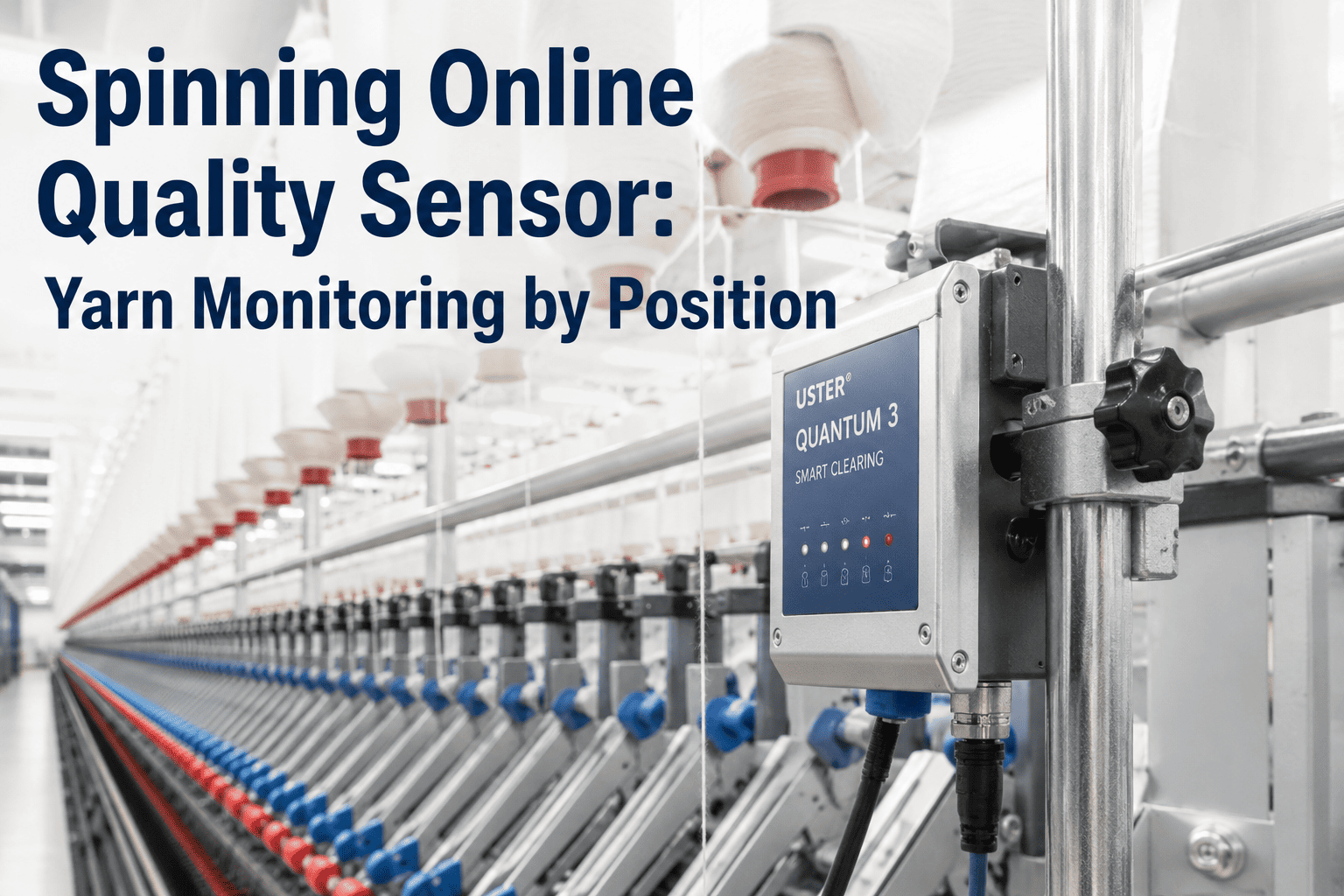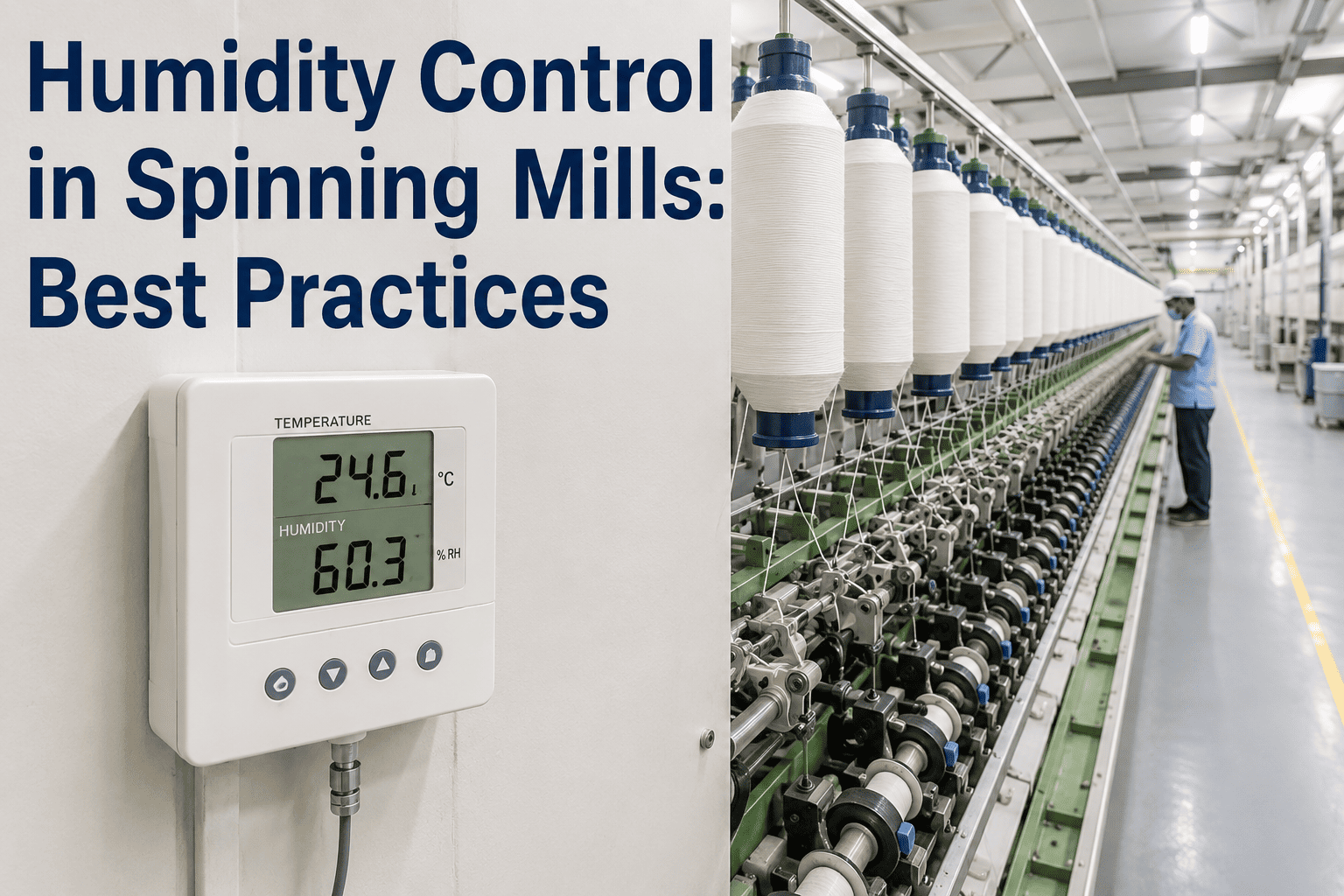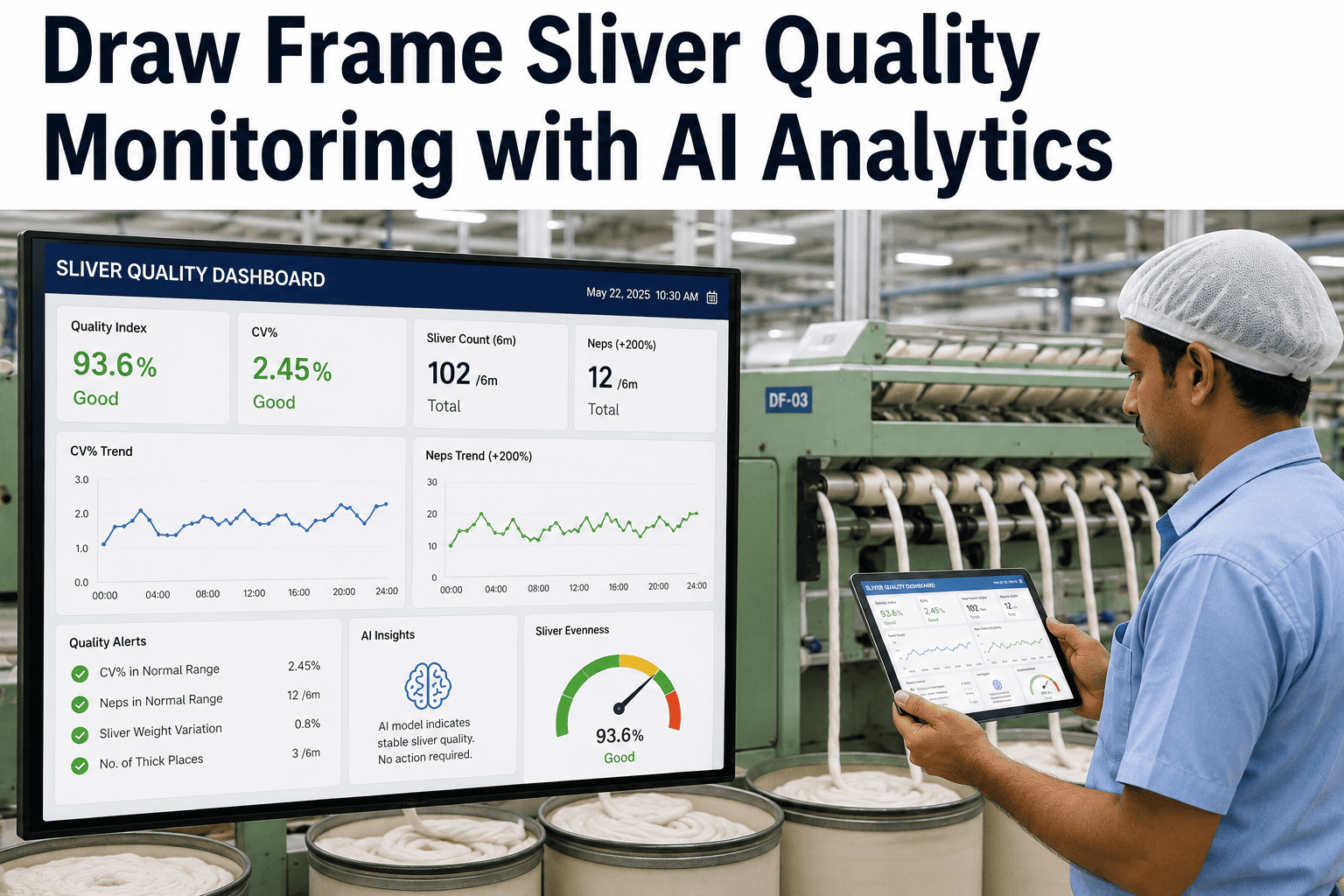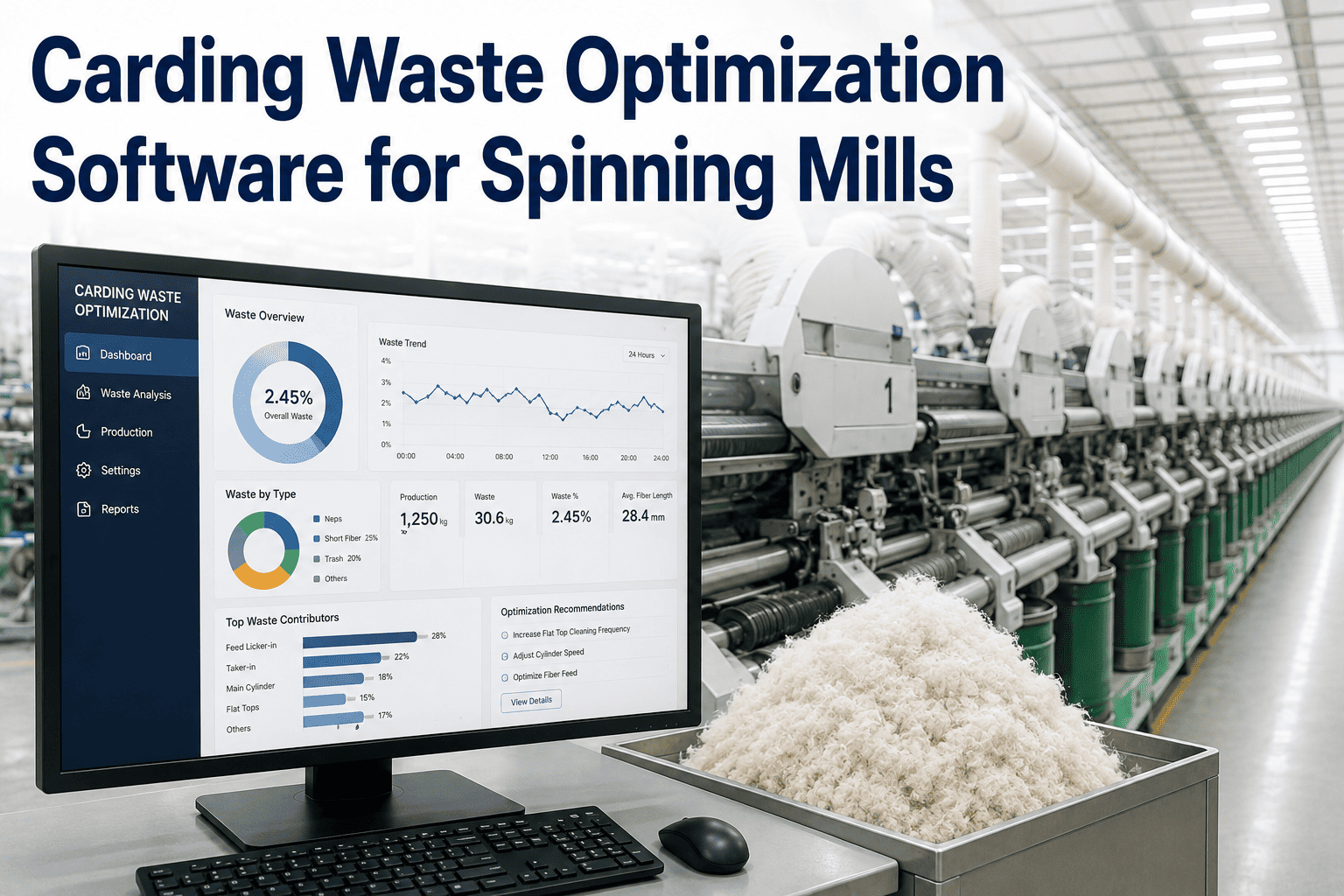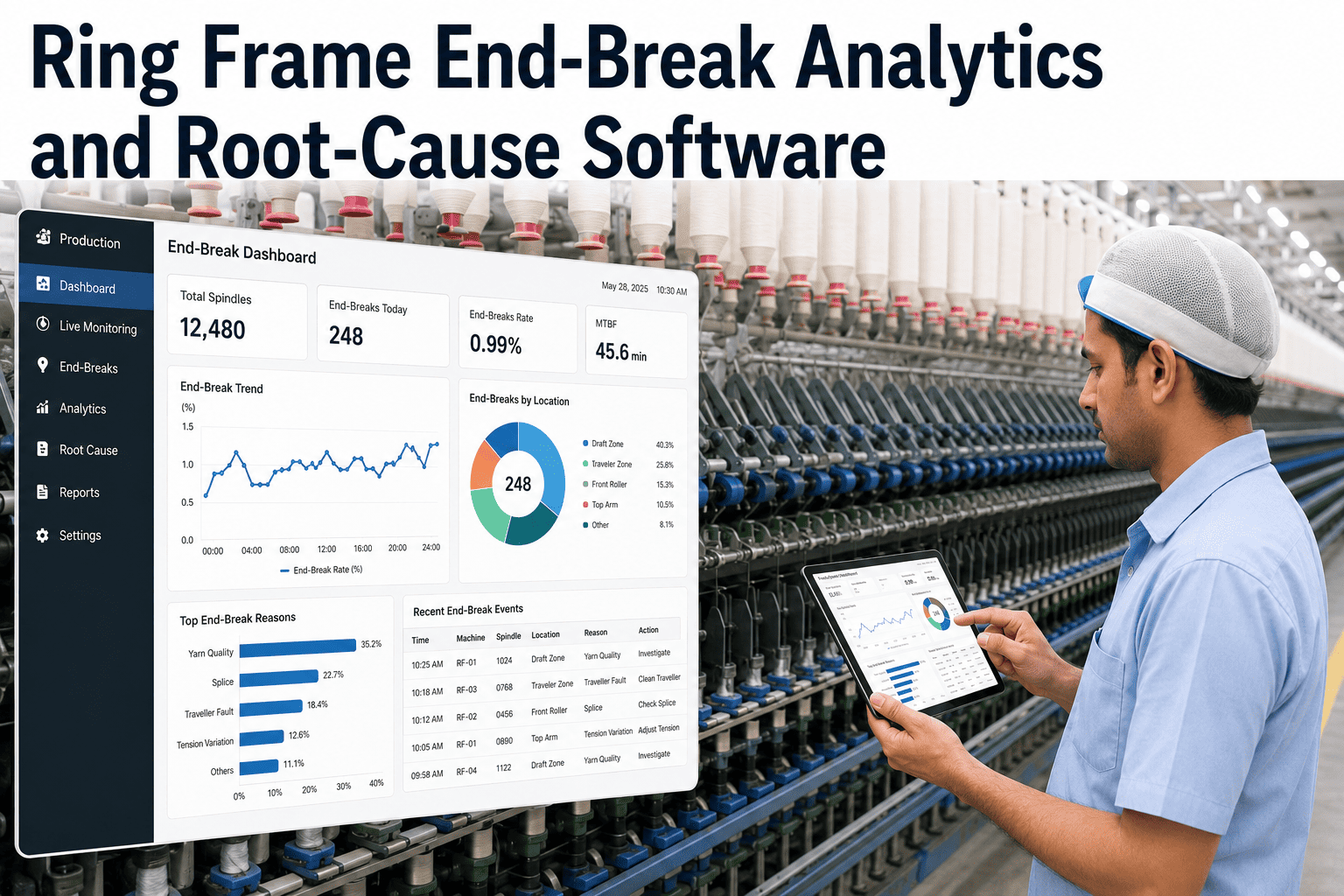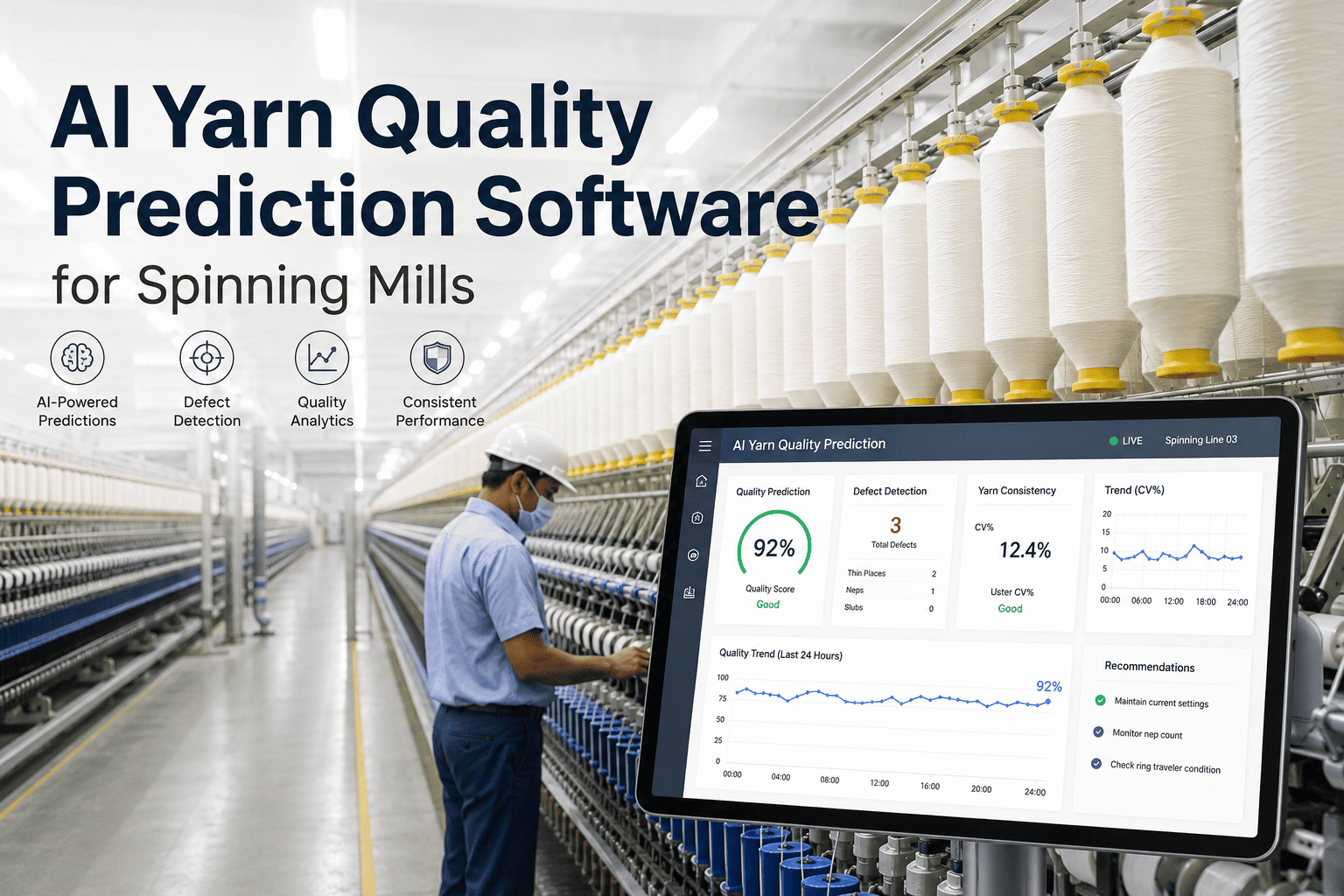
By the time a spinning mill's quality lab flags a bad yarn batch, the machine has often already run for hours producing more of it. That gap between when a problem starts and when it gets caught is where most avoidable waste in spinning actually happens. AI yarn quality prediction software closes that gap by watching live spinning data for the subtle drift patterns that come before a visible defect, so a supervisor can intervene while the batch is still salvageable instead of after it has already been rejected. Mills that want to see this running on their own ring frame data can book a demo.
AI YARN QUALITY · SPINNING MILLS · 2026
Catch Yarn Defects Before They Spread Across the Batch
AI models watch spinning, break, and process data continuously, flagging quality drift while there is still time to act, not after the lab report comes back.
Why Yarn Quality Problems Are Caught Too Late
Traditional quality control in spinning mills relies heavily on periodic sampling and end-of-shift lab testing, which works well for catching problems that have already fully developed but is structurally too slow to catch problems while they are still forming. A count variation, a rising break rate, or a subtle tension shift can develop over an hour or more before it becomes visible enough for a manual check to flag it, and during that window the machine keeps producing yarn that will eventually be downgraded or rejected. For a mill running dozens of ring frames simultaneously, that lag adds up to meaningful waste every single week, not from any one dramatic failure but from many small, slow-forming ones.
AI yarn quality prediction changes the detection point rather than the response speed. Instead of waiting for a lab sample to confirm a problem, the model continuously compares live spinning parameters against known failure signatures, catching the early drift that precedes a defect by minutes to hours rather than discovering it after the fact.
From First Drift to Corrected Batch
1
Process Begins Drifting
Tension, twist, or speed parameters shift slightly away from the established baseline for that yarn count and machine.
2
Model Detects the Pattern
The drift matches a signature the model has learned precedes a specific defect type, well before any visible break or count variation appears.
3
Supervisor Gets an Alert
The alert names the specific machine, spindle group, and likely cause, so the response is targeted instead of a broad manual inspection sweep.
4
Correction Happens Mid-Run
Machine parameters are adjusted while the run is still in progress, salvaging the remainder of the batch instead of scrapping it after the fact.
STOP DEFECTS BEFORE THEY SPREAD
See Prediction Running on Your Own Spinning Data
Walk through how early-warning yarn quality prediction would perform on your specific machines and yarn counts.
Defect Types and How Early Detection Helps Each One
Not every yarn defect develops the same way, so prediction models are trained to recognize the distinct lead-up pattern for each major failure mode rather than applying one generic threshold across the board.
| Defect Type | Typical Cause | Prediction Window |
|---|---|---|
| Count Variation | Drafting inconsistency or roving irregularity | 30-90 minutes ahead |
| Excessive Yarn Breaks | Tension imbalance or spindle wear | 1-3 hours ahead |
| Twist Irregularity | Speed fluctuation or ring traveler wear | 45-120 minutes ahead |
| Hairiness Increase | Humidity shift or fiber quality change | 2-4 hours ahead |
What Spinning Mill Quality Heads Are Saying
We used to find out about a bad batch when the lab report landed on my desk at the end of the shift, and by then three ring frames had been running off-spec for hours. Now I get an alert naming the exact frame within minutes of the drift starting, and we correct it before the batch even reaches the point of being downgraded.
Quality Head, Ring Spinning Unit
Frequently Asked Questions
How does the model know what a defect looks like before it fully develops?
The model is trained on historical spinning data paired with confirmed lab and inspection outcomes, learning the specific combination of parameter shifts that reliably preceded each defect type in the past. Over time it builds a signature library specific to your machines, yarn counts, and fiber blends, rather than relying on generic industry thresholds that may not fit your actual equipment. This is why prediction accuracy improves meaningfully during the first few weeks of live operation as the model sees more of your real production patterns.
Does this replace our lab testing and manual quality checks?
No, lab testing remains an important part of formal quality confirmation and compliance documentation, and prediction is designed to work alongside it rather than replace it. What changes is when problems get caught: instead of quality checks being the first line of detection, they become confirmation of what the prediction system already flagged, which shifts your quality team's time toward faster response instead of pure discovery.
How many false alerts should we expect, and will it overwhelm the floor team?
Early in deployment, false alert rates are higher while the model calibrates to your specific machines, which is why a validated pilot phase on a limited number of frames matters before wider rollout. As the model learns your equipment's normal variation range, alert precision improves substantially, and alerts are ranked by confidence and severity so supervisors see the highest-priority signals first rather than an unfiltered stream of every minor fluctuation.
What sensors or equipment upgrades does this require?
Most modern ring frames and spinning machines already generate enough parameter data through existing controllers to support prediction without additional hardware. Older machines without built-in digital monitoring may need low-cost retrofit sensors added during the pilot phase, which is typically identified during an initial data audit rather than assumed upfront. Mills can review their specific machine fleet through support before committing to any hardware spend.
How much yarn waste reduction is realistic in the first few months?
Results vary by starting quality maturity and machine condition, but mills coming from a purely reactive, lab-only detection process tend to see the fastest early gains, since almost every batch caught mid-drift represents yarn that would previously have been fully scrapped or downgraded. A pilot on one or two critical frames is the most reliable way to establish a realistic number for your own mill. Mills can book a demo to get a waste-reduction estimate scoped to their own machines and yarn counts.
AI YARN QUALITY PREDICTION · SPINNING MILLS
Stop Finding Out About Bad Yarn After the Fact
Join spinning mills already catching quality drift hours before it would have shown up in a lab report.