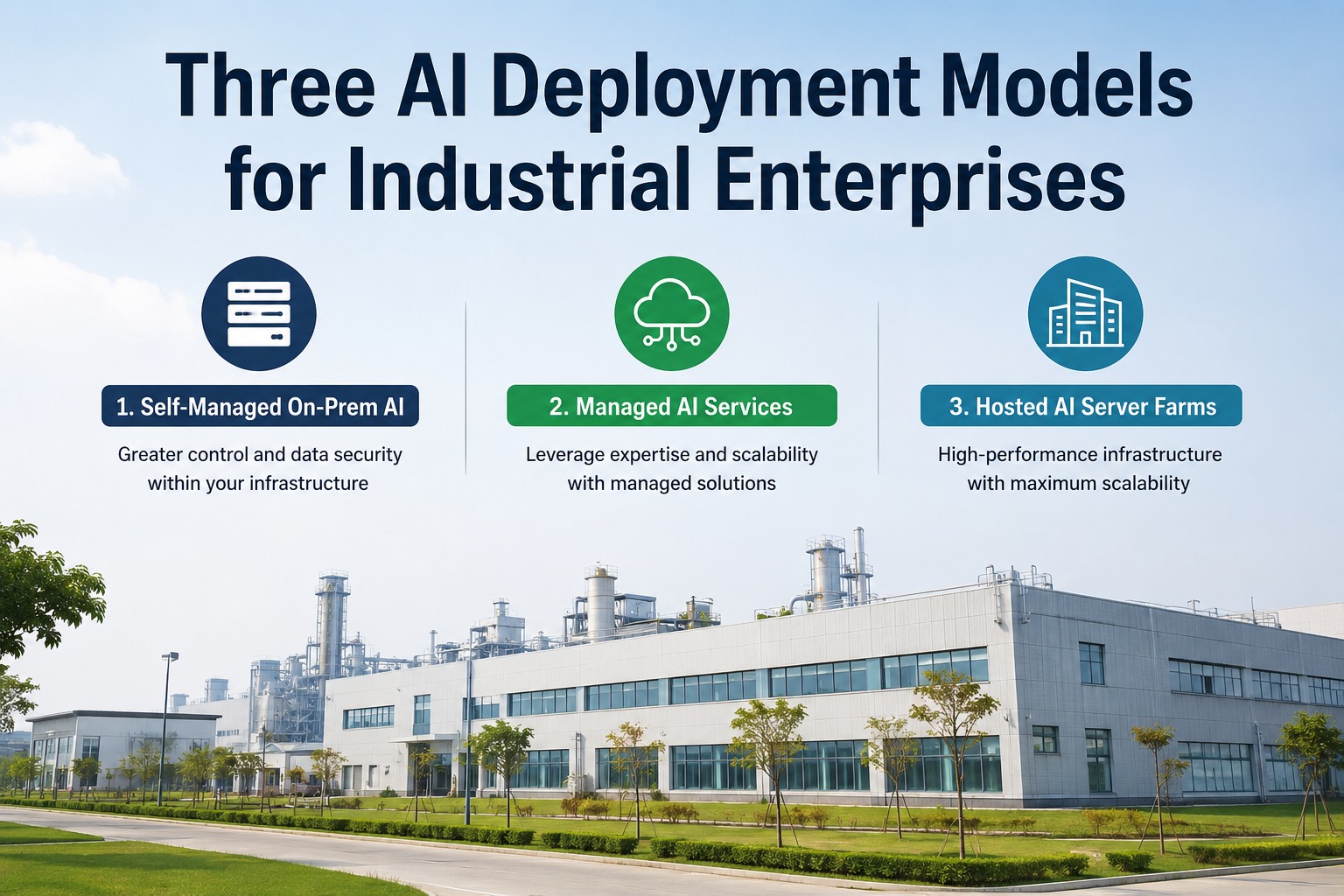
SAP Joule has become the most consequential decision in your S/4HANA roadmap — not because of what it does, but because of where it can run. As of Q1 2026, Joule is exclusive to RISE with SAP and GROW with SAP customers. Classic on-premise S/4HANA installations have no native Joule access at all, and even Private Cloud requires BTP setup inside an SAP-managed data center. With 40+ Joule agents, 2,400+ skills, and the agent-to-agent protocol all gated behind cloud contracts — and the ECC 6.0 mainstream support deadline locked at December 31, 2027 — every SAP IT leader now faces the same compressed question: which deployment lane gives you Joule, on what timeline, at what cost, and with what trade-offs. This page maps the three deployment realities, the AI Units economics, the hybrid workaround for on-prem systems, and the announcements that will reshape this decision.
The Self-Healing Factory — Map Your Joule Deployment Path Live
To model your exact Joule deployment scenario — Public Cloud, Private Cloud (RISE), or hybrid on-prem extension via BTP. Walk in with your current S/4HANA edition and ECC migration timeline, walk out with a costed, defensible 2026–2028 plan.
3% in Production. 77% Use Microsoft Copilot Anyway. What Happened?
Despite SAP releasing 40+ Joule agents, 2,400+ skills, and the open agent-to-agent protocol across 35 SAP solutions in Q1 2026, the DSAG Investment Survey 2026 found a startling gap between what SAP shipped and what customers actually run. Below is the structural reason — and what it means for your roadmap.
Three structural realities explain why most SAP customers can't move from interest to production. If your organization is stuck on any of these, our SAP architects can walk you through your specific Joule path in a 30-minute strategy call — bringing your S/4HANA edition, current ECC migration timeline, and AI Units allocation as inputs.
Classic on-premise S/4HANA installations have no native Joule access — regardless of investment readiness. Over 10,000 ECC customers globally are simply outside the access perimeter.
S/4HANA Cloud Private Edition supports Joule, but only inside SAP-managed data centers. Customer data center hosting is not supported — and UI5 stack compatibility plus BTP integration is not turnkey.
Pricing tied to per-action consumption — unfamiliar to enterprises used to per-user licensing. Many customers cannot model annual Joule cost confidently before signing.
Where Joule Runs — and Doesn't — by S/4HANA Edition
SAP's roadmap creates three distinct Joule realities. Knowing which track your S/4HANA system sits on is the single most important input to your Business AI strategy. Anything else is downstream of this map. If you're unsure which track your current edition sits on, our SAP support team can confirm your eligibility and Joule activation prerequisites before you commit to any contract changes.
- Joule access: Embedded by default, activated via entitlement
- Setup effort: Activation only — no BTP plumbing required
- Updates: SAP-managed, quarterly innovation cycle
- Customization: Limited to BTP side-by-side extensions
- Time to first Joule prompt: Days
Mid-market enterprises and Fortune 500 subsidiaries with standardized processes that can adopt SAP best practices. Speed-to-AI is the priority.
- Joule access: Supported, but customer data center hosting is excluded
- Setup effort: BTP subaccount, technical user, Fiori Launchpad target mapping
- Updates: Customer-paced upgrade windows
- Customization: Full custom code retained — clean-core encouraged
- Time to first Joule prompt: Weeks (BTP integration cycle)
Large complex enterprises with brownfield ECC migrations, deep customization, regulated industries that need controlled change windows but still want Joule.
- Joule access: No native installation — confirmed by SAP, not on roadmap
- Setup effort: Hybrid extension only — BTP + Cloud Connector + custom skills
- Updates: Manual via SP/FPS cycles for the underlying ABAP system
- Customization: Full freedom — but no out-of-the-box Joule content
- Time to first Joule prompt: Months — and only via custom skill development
Customers with ECC end-of-life pressure and a hard data-residency requirement. Realistic path forward: hybrid extension now, RISE Private Edition migration in 2026–2027.
Extending Joule to On-Premise — The Cloud Connector Architecture
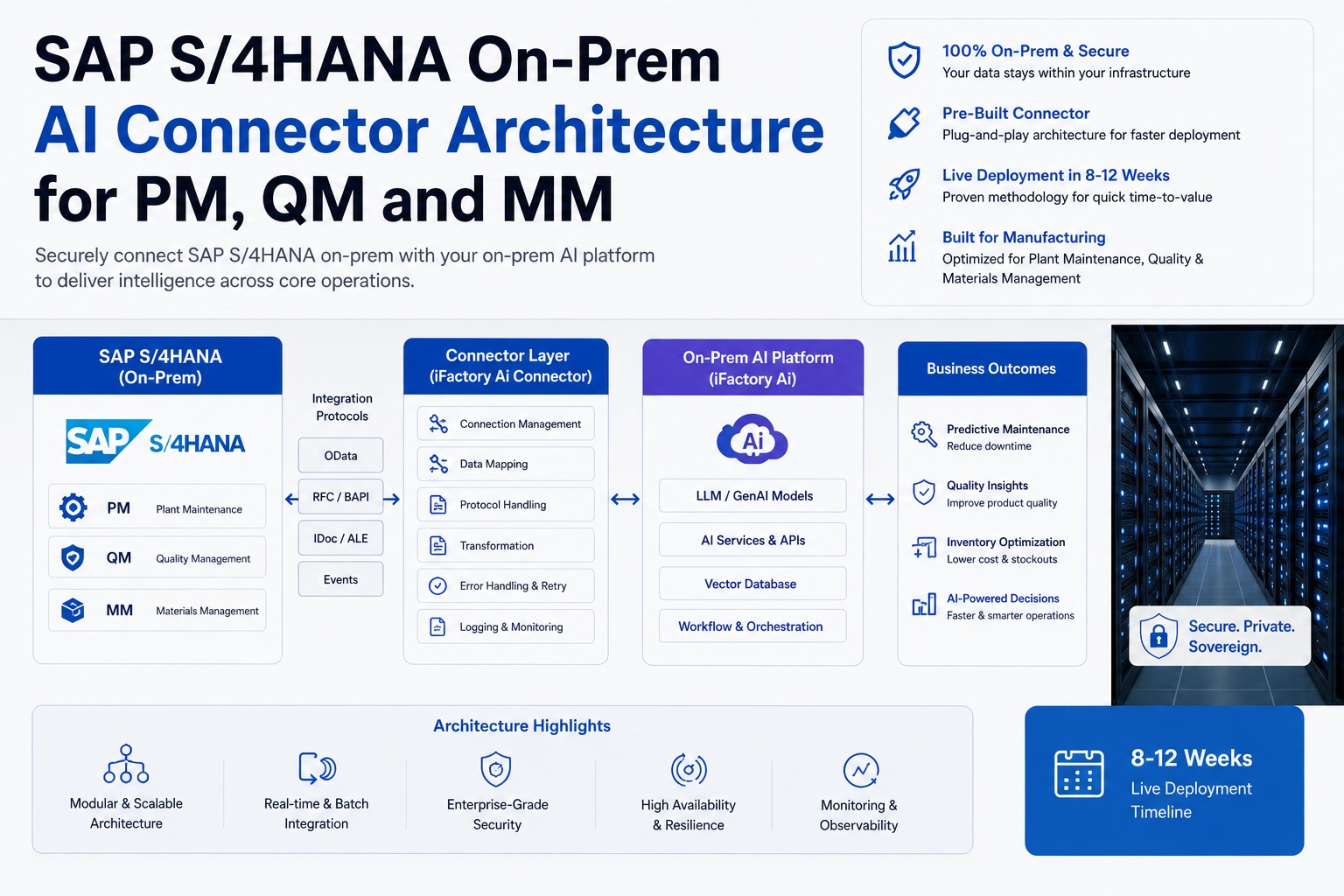
If your S/4HANA system is on-premise and Joule is not natively available, there is still a supported architectural path: extend Joule with custom skills built in Joule Studio, routed securely to your on-premise APIs through SAP Cloud Connector. Below is the actual data flow. For a deeper walkthrough on Cloud Connector setup, principal propagation, and BTP destination configuration, our technical support team has reference architectures and runbooks ready to share for both SAP-managed and customer-managed hosting scenarios.
- A working Joule prompt window for your on-prem users
- Data sovereignty — sensitive records stay on-prem
- Bridge to migrate to RISE Private Edition later without throwing the work away
- Same authentication and audit posture as your existing BTP integrations
- Out-of-the-box content — none of the 2,400 standard skills work without rebuilding
- Joule for ABAP developers (S/4HANA Cloud Public & BTP ABAP only)
- Agent-to-Agent protocol participation across SAP solutions
- Automatic upgrades when SAP ships new agent capabilities
ECC 2027 — The Deadline Reshaping Every Joule Conversation
SAP is using the ECC end-of-mainstream-support deadline as the strategic forcing function for cloud migration. Joule access is now part of that conversation. Below is the timeline every SAP IT leader needs on a slide for the board.
69% of DACH-region enterprises report insufficient internal resources for S/4HANA migration.Announcements will lock in the Joule capabilities baked into RISE through 2027.
Stop date for SAP-supplied updates and security patches on classic ECC. Customers without an active migration project face mounting compliance and operational exposure from January 2028 onward.
SAP offers paid extended ECC maintenance through 2030 at a 2% premium on top of standard support fees. Defers, but does not solve, the migration decision.
Available only to select large enterprises signing in 2026. Extends ECC support to December 31, 2033. Caveat: a 20% pricing uplift on first renewal post-migration to S/4HANA.
Map Your Joule Path Against Your S/4HANA Edition — In 30 Minutes
Bring your current S/4HANA edition (or ECC version), your AI Units allocation, your migration timeline, and your data residency constraints. Our SAP architects walk you through the exact Joule deployment lane that fits — Public Cloud, RISE Private, or hybrid on-prem extension via BTP. You leave with a 2026–2028 sequencing plan and an AI Units consumption forecast you can take to finance.
-
01Joule deployment lane mapped to your S/4HANA edition — Public, Private, or hybrid extension
-
02AI Units consumption forecast based on your user counts and use cases
-
03Cloud Connector + BTP architecture sketch for your on-prem systems if hybrid is the right path
-
042026–2028 sequencing plan aligning Joule rollout with your ECC migration milestones
Your Scenario, Your Joule Path — The Five-Question Filter
Most SAP IT leaders don't need a 200-page strategy deck. They need to answer five questions in the right order. Below is the filter that survives board scrutiny.
Private Cloud (RISE): Stand up BTP + Joule formation. Confirm SAP-managed DC.
On-prem / ECC: Hybrid via Cloud Connector now; migrate plan inside 2027.
Standard: All three lanes are open; cost and timeline win.
2028+ (Transition Option): Build hybrid Joule extension now; recoup investment in custom skills.
No plan yet: Migration plan is the priority; Joule follows it.
Medium (50–500 users): Premium per-user-per-month tier; volume discount tier matters.
Heavy / agentic: Negotiate AI Units block ahead of contract signing — initial SAP proposals run high.
Custom skills: Joule Studio + SAP Build Process Automation. Plan ABAP / OData exposure on backend systems.
Heavy customization: Hybrid extension keeps you closest to your existing on-prem business logic.
SAP + AI, Delivered as One System — Not Two Projects
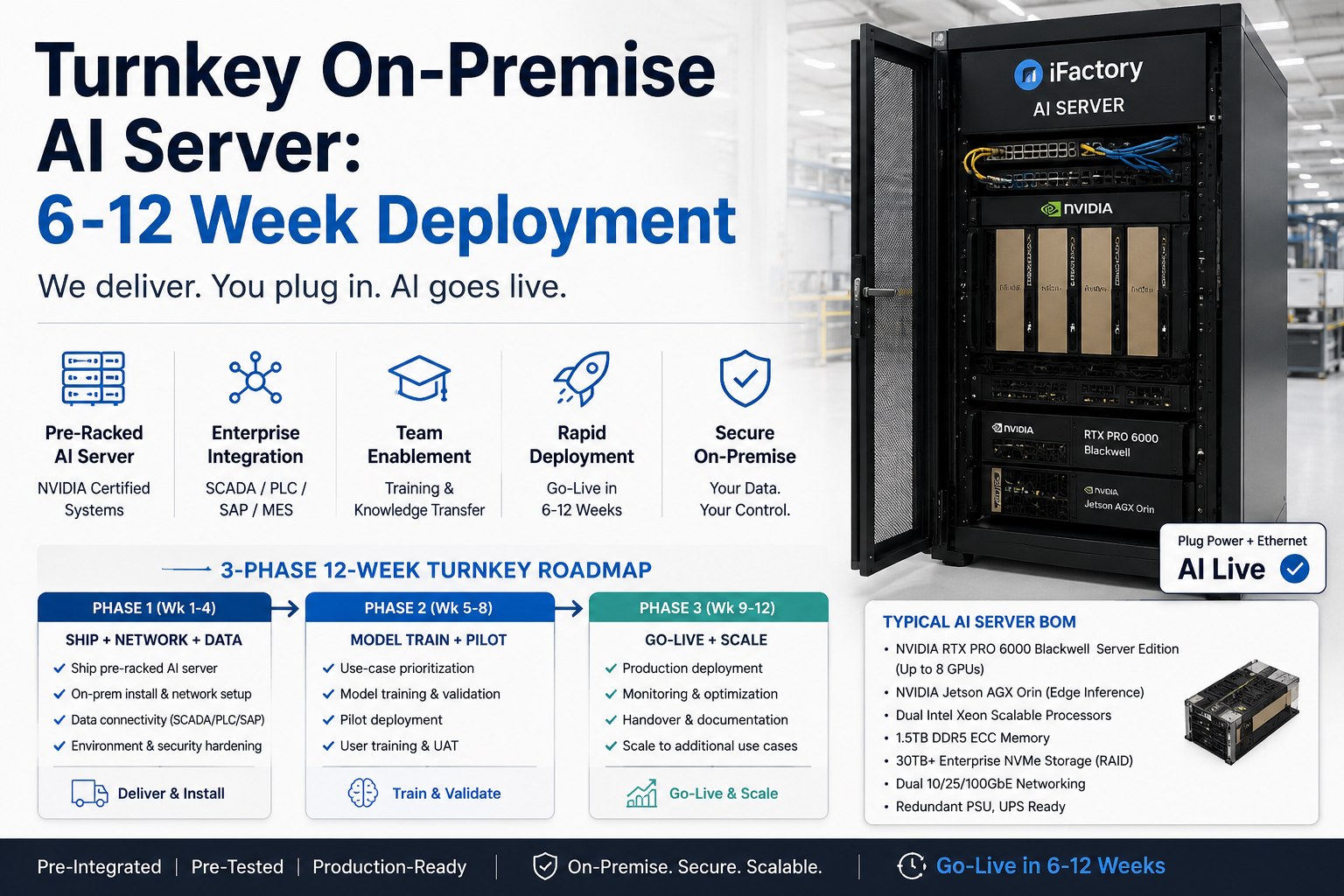
Most consultancies hand you a deck on Joule. Most hyperscalers hand you a bill for AI Units. iFactory hands you a working SAP+AI hybrid stack — pre-built connectors, on-premise AI infrastructure where you need it, and a dedicated team running it from day one.
S/4HANA, NetWeaver, PM, MM, SRM, Ariba, SuccessFactors. 50+ integrations across enterprise + OT systems live in 4–8 weeks, not 4 quarters.
On-prem GPU infrastructure for sensitive workloads, Joule for SAP-native skills, hyperscaler APIs for burst — vendor-neutral by design, control plane managed by us.
ML engineers, MLOps, security operators embedded for your SAP environment. The staffing line every Joule TCO model quietly omits — solved before you sign.
Cloud Connector setup, BTP destinations, custom Joule skill, validation, go-live. What other consultancies bill as a 12-month engagement runs in a single quarter at iFactory.
Hybrid Joule extension lets you start delivering AI value on existing ECC while your S/4HANA migration runs in parallel — no wasted custom work, no migration freeze.
FinOps-grade attribution per skill, per user, per business unit. We model consumption before you sign, monitor it after, and renegotiate before your annual block expires.
Frequently Asked Questions
Get Your Custom SAP Joule Deployment Plan
Our SAP architects have deployed Joule and hybrid SAP+AI stacks across enterprise customers from regulated manufacturing to global services. Bring your S/4HANA edition, ECC migration timeline, and AI Units allocation. We'll deliver a defensible deployment lane choice, a 2026–2028 sequencing plan, and an architecture sketch you can take to your CIO and your SAP account executive.