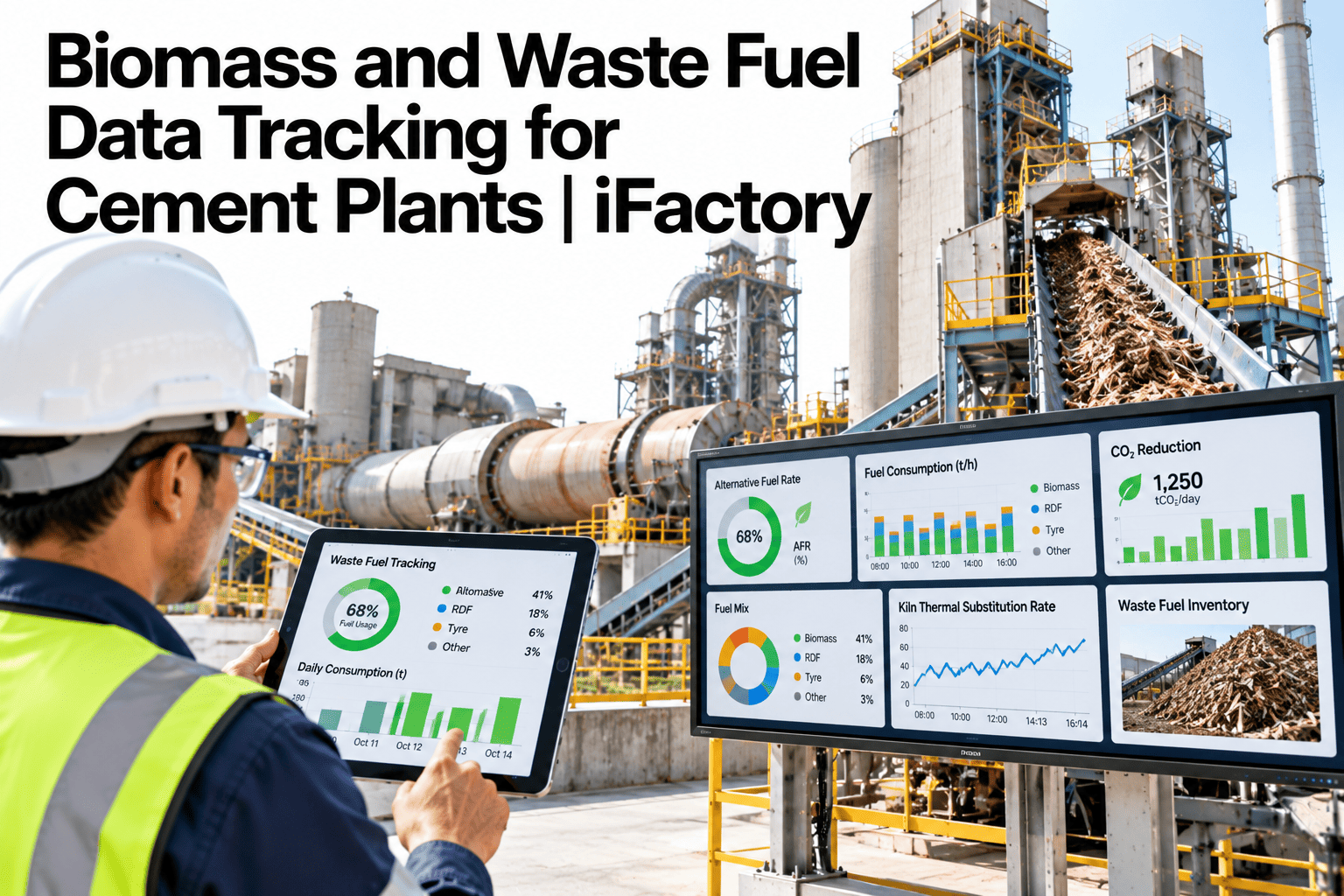
Cement plants burning biomass and waste-derived fuels alongside conventional fuel face a tracking problem that coal alone never created: alternative fuels vary batch to batch in moisture, calorific value and composition in ways that directly affec
AI-Powered
Cement Industry
On-Premise
The Complete AI Platform for Cement Plants
From kiln optimization to autonomous robotics — iFactory brings AI vision, predictive maintenance, energy intelligence, and on-premise data sovereignty to every stage of cement production. One platform. Zero blind spots.
40% Less Downtime
30% Energy Saved
90%+ OEE
99% Vision Accuracy

One Platform, Every Capability
AI-Powered Modules, One Cement Platform
iFactory is a unified AI operations platform purpose-built for cement manufacturing — connecting predictive analytics, vision inspection, robotics, and process intelligence into one seamless system across your entire production line.
AI Kiln Optimization
Real-time temperature, fuel, speed & process control with ML models
AI Vision Cameras
PPE detection, clinker inspection, crack detection, dust monitoring
Autonomous Robotics
Quadruped robots for hazardous zone inspection & thermal patrol
Predictive Maintenance
72+ hour failure prediction for kilns, mills, crushers & conveyors
Energy Intelligence
kWh/ton tracking, AI waste detection, carbon reporting & ESG
On-Premise Servers
NVIDIA-powered edge AI, 100% data sovereignty, zero cloud dependency
MES & Production
Real-time OEE, batch tracking, quality control & production scheduling
Safety & Compliance
Digital inspections, EHS management, emission tracking & audit trails
AI Kiln Optimization
AI That Runs Your Kiln Better Than Manual Control
Your rotary kiln is the heart of cement production — and the biggest cost center. iFactory's AI monitors temperature, speed, fuel flow, oxygen levels, and clinker quality in real-time, continuously optimizing the burning zone to reduce fuel consumption by 7-12% while maintaining consistent clinker quality.
Burning Zone Control
AI maintains optimal 1,450°C
Fuel Optimization
7-12% fuel cost reduction
Air-Fuel Ratio AI
O₂ & CO₂ level optimization
Clinker Quality AI
Free lime & C3S prediction
$2,400/day saved
7.4% fuel reduction
Book a Demo

AI Vision
AI Eyes Across Your Entire Cement Plant
Deploy AI-powered cameras at every critical point — from crusher intake to cement dispatch. iFactory Vision detects safety violations, equipment defects, and quality issues in under 50 milliseconds with 99%+ accuracy. No human fatigue. No missed detections. 24/7 vigilance.
PPE Compliance
Hard hat, vest, goggles, gloves
Clinker Inspection
Size, color & quality grading
Dust Emission Monitor
Bag filter & ESP leak detection
Crack Detection
Kiln shell & structure cracks
99.4% accuracy
<50ms detection
Book a Demo

Autonomous Robotics
Robots That Inspect Where Humans Shouldn't Go
Cement plants have some of the most hazardous inspection zones in manufacturing — preheater towers at 800°C, clinker cooler walkways, and confined kiln areas. iFactory deploys autonomous quadruped robots that patrol these zones 24/7, collecting thermal data, vibration readings, and gas measurements without risking a single life.
Thermal Patrol
Hot spot detection on kilns
Gas Detection
CO, SO₂, NOx monitoring
Autonomous Navigation
LiDAR SLAM with 847+ waypoints
Auto Work Orders
Anomaly → CMMS → assigned
85% safer operations
70% less manual patrol
Book a Demo

Predictive Maintenance
Predict Failures 72+ Hours Before They Happen
iFactory's ML models analyze vibration signatures, temperature trends, shell ovality, tyre migration, and bearing conditions across your entire cement line. The AI learns your equipment's unique behavior and detects anomalies invisible to human operators — automatically creating work orders with the right parts, procedures, and crew assignments.
Vibration Analytics
Gearbox & bearing alerts
Shell Temperature
Refractory wear detection
RUL Prediction
Remaining useful life scoring
Auto Work Orders
AI creates WOs with parts
40% less downtime
95% prediction accuracy
Book a Demo

Energy & Sustainability
Cement Uses 110+ kWh/Ton — AI Cuts That by 30%
Cement manufacturing is one of the most energy-intensive industries on Earth — accounting for 7% of global CO₂ emissions. iFactory's energy intelligence tracks real-time consumption across every motor, mill, kiln, and compressor, identifies waste patterns AI-style, and provides automated ESG reporting for sustainability compliance.
kWh/Ton Tracking
Per-equipment energy metering
Carbon Reporting
Automated CO₂/ton calculation
Demand Forecasting
95%+ prediction accuracy
Shift Benchmarking
Compare energy per shift
$876K/year saved
ESG-ready reporting
Book a Demo

On-Premise & Data Sovereignty
Your Data Never Leaves Your Plant Network
Cement companies handle proprietary process recipes, energy data, and production intelligence that cannot leave the plant. iFactory deploys on NVIDIA-powered edge servers inside your facility — all AI inference, vision processing, and analytics run locally with sub-10ms latency and zero cloud dependency. Full compliance with data localization laws worldwide.
100% Data Sovereignty
Zero data leaves your network
NVIDIA GPU Servers
DGX, HGX, EGX supported
Sub-10ms AI Inference
No cloud latency bottleneck
Offline-First Design
Works without internet
Zero cloud dependency
GDPR / local law ready
Book a Demo

Production & Operations
Complete Production Visibility — From Raw Mill to Dispatch
Track OEE, manage production schedules, run digital shift handovers, and control quality — all from one platform that integrates with your SCADA, PLC, and ERP systems.
Manufacturing Execution
Bridge the gap between your ERP and shop floor. Real-time production monitoring, batch tracking, quality gates, and scheduling optimization for cement lines.
- Real-time line status
- Batch & blend tracking
- SAP & Oracle integration
Real-Time OEE
Track Availability × Performance × Quality across kilns, mills, and crushers in real-time. Automated Pareto analysis identifies your top losses instantly.
- Auto SCADA data capture
- Downtime Pareto analysis
- Shift benchmarking
Digital Shift Logbooks
Replace paper logbooks with structured digital templates. AI generates prioritized summaries — incoming crews know exactly what happened and what needs attention.
- AI-generated shift summaries
- Mandatory digital sign-off
- Photo/video evidence
Inspection Management
AI-generated checklists for kilns, mills, crushers, and conveyors. Mobile offline inspections with photo evidence, digital signatures, and automated compliance trails.
- AI-generated checklists
- Offline mobile inspections
- OSHA & ISO compliant
Asset Management
Full lifecycle management for every asset — from kiln refractory to conveyor belts. AI health scores, depreciation tracking, cost of ownership optimization, and spare parts linking.
- AI health scoring
- QR/barcode asset lookup
- TCO optimization
EHS & Compliance
Immutable audit trails, emission compliance, incident reporting with 5-Why RCA, and e-signatures. Pass OSHA, ISO 14001, and environmental audits with zero findings.
- Emission monitoring logs
- Incident & near-miss tracking
- One-click audit packages
End-to-End Coverage
iFactory Covers Every Stage of Cement Production
From quarrying to dispatch — AI, vision, robotics, and predictive maintenance work together at every production stage to eliminate failures and maximize output.
Cement Manufacturing — AI at Every Stage
6 Stages
Quarrying & Crushing
Vision + PdMRaw Milling
Energy AIKiln & Burning
AI + RoboticsClinker Cooling
Vision + PdMFinish Milling
Energy + OEEQuarrying
Vision+PdMRaw Mill
Energy AIKiln
AI+RobotCooling
Vision+PdMFinish Mill
Energy+OEEDispatch
MES+Track
8
AI Modules
24+
Vision Cameras
3
Patrol Robots
72hr+
Failure Warning
<8ms< /span>
AI Latency
100%
Data On-Premise
Equipment Coverage
Every Piece of Cement Equipment, One Platform
AI monitoring, vision inspection, and predictive maintenance for all critical and auxiliary equipment.
Rotary Kilns
AI optimization, shell monitoring, refractory, tyre migration, gearbox vibration
Raw & Finish Mills
Ball mills, VRMs, energy optimization, liner wear, separator efficiency
Crushers
Jaw, impact & gyratory — AI vision for wear, vibration analytics
Fans & Blowers
ID fans, cooler fans — vibration, bearing temp & robot patrol
Conveyors
Belt alignment via vision AI, vibration tracking, energy monitoring
Clinker Coolers
Grate plate wear, fan performance, robot thermal inspection
Preheater Tower
Cyclone monitoring, robot patrol at 800°C zones, gas analysis
Bag Filters & ESP
Vision-based dust leak detection, emission compliance, bag condition
Integrations
Connects to Everything Already in Your Plant
No rip-and-replace. iFactory layers on top of your existing infrastructure through open protocols.
Siemens SCADA
OPC-UA
OPC-UA
ABB DCS
Modbus/TCP
Modbus/TCP
Rockwell PLC
EtherNet/IP
EtherNet/IP
SAP ERP
REST API
REST API
NVIDIA GPU
DCGM
DCGM
ROS 2 Robots
DDS
DDS
Latest Posts

Read More
A historian holding years of PI or similar tag data looks like a ready-made analytics foundation, right up until someone tries to actually query it for a specific analysis and discovers half the tags were renamed in 2019, a third have gaps nobody
Read More
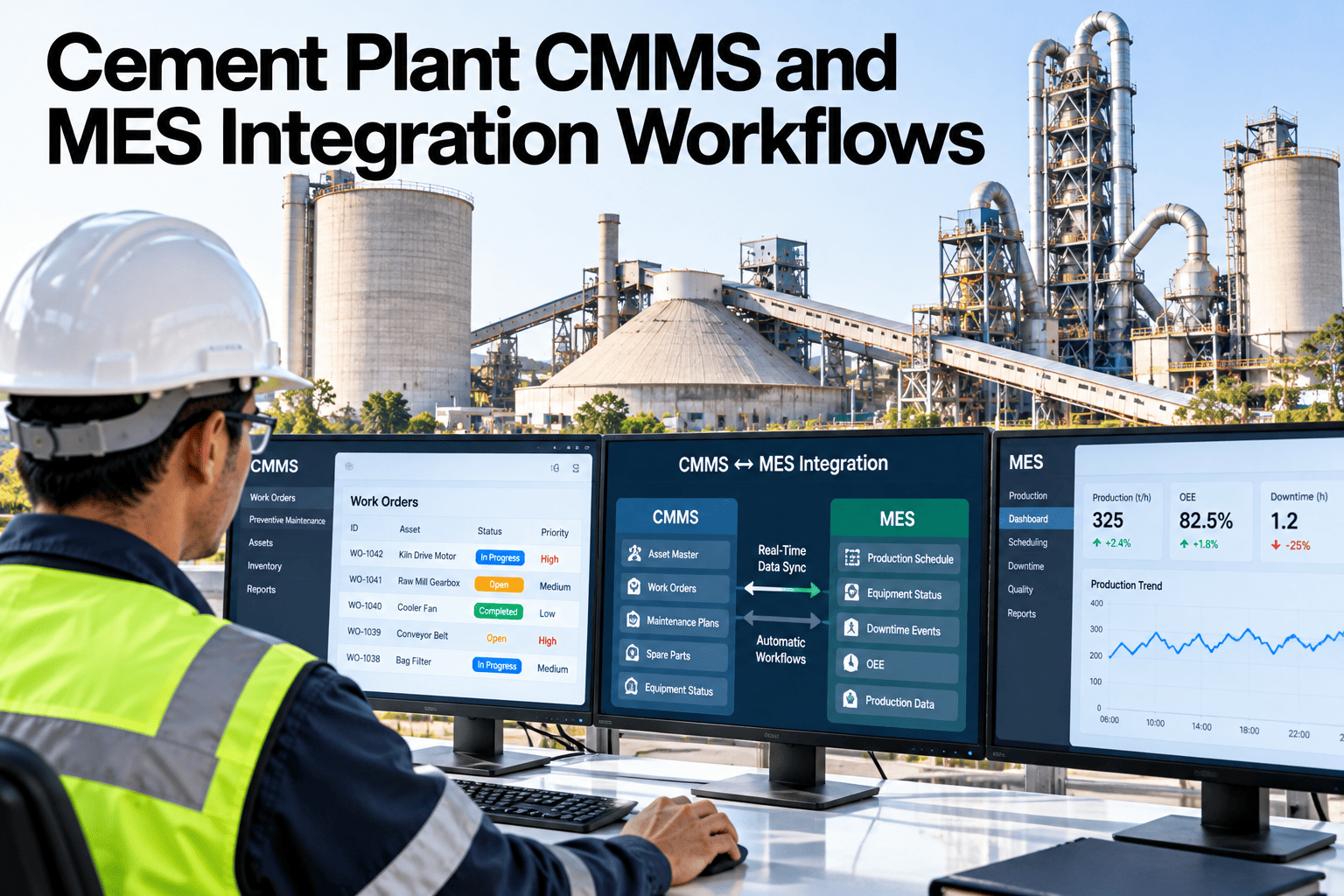
Maintenance and production share the same equipment but rarely share the same data. A work order closed in the CMMS doesn't automatically tell MES that a line is back available, and a downtime event logged in MES doesn't automatically open a work

Read More
A cement plant running on shift-end spreadsheets and separate downtime logs can usually tell you yesterday's tonnage. It has a harder time telling you, in the moment, which stop reason is eating the most of today's shift, or whether a quality hold

Read More
SCADA and MES fail each other most often not through a missing cable or a broken API, but through an unclear answer to a simple question: where does SCADA's job end and MES's job begin. Without that boundary written down, tags get mapped twice, ti

Read More
A kiln doesn't react to raw mix chemistry the moment it changes. It reacts hours later, after the mix has moved through the system, which is exactly why a lab result and a kiln upset so often get treated as two unrelated events instead of cause an

Read More
A free lime result that comes back high tells the lab something is wrong. It doesn't tell them which kiln shift, which raw mix batch, or which process parameter to look at first, unless that result is already connected to the production context it
Read More
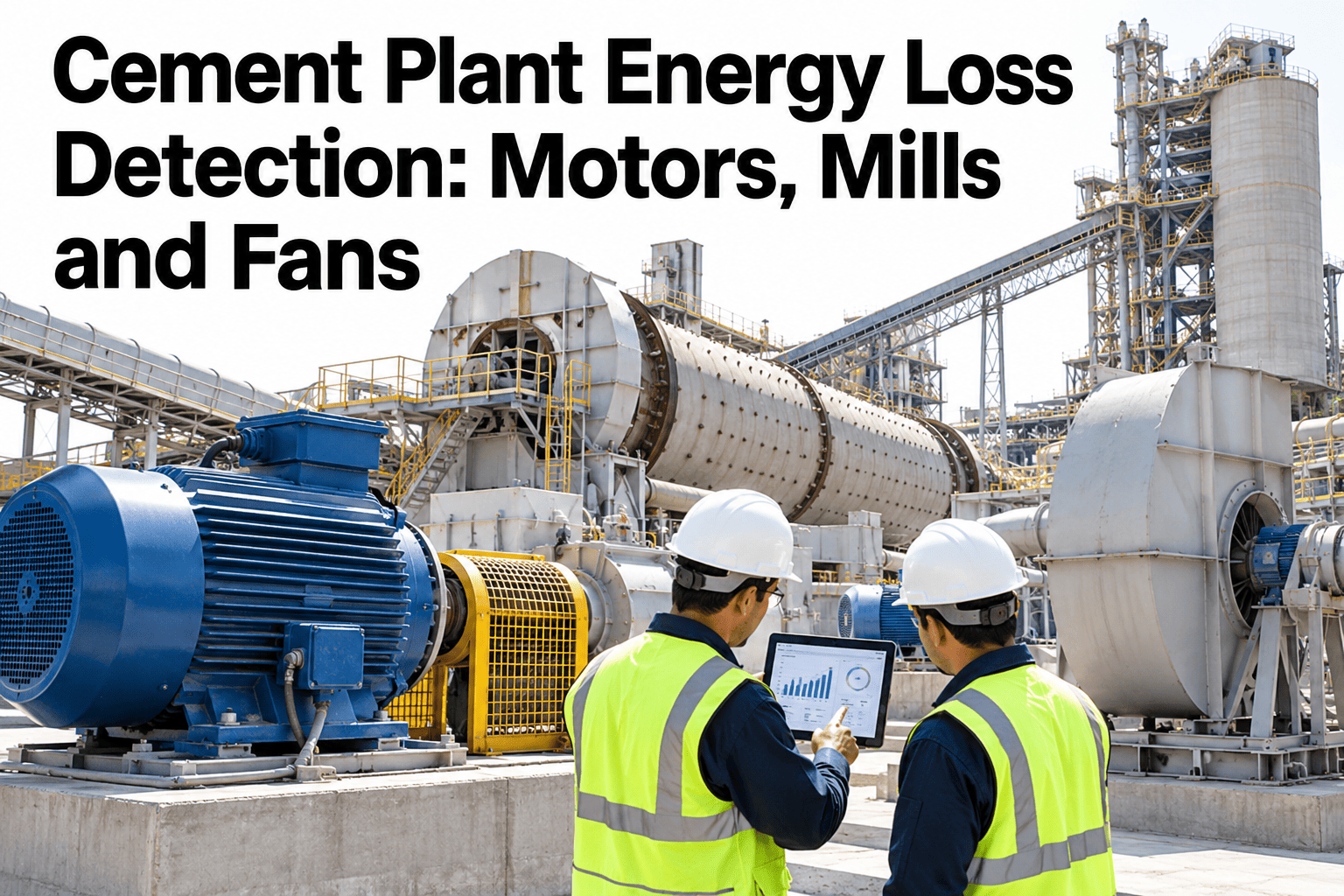
A motor running a few percent above its normal baseline load rarely trips anything, and a fan left running during a low-production period looks completely ordinary on a daily walk-through. These small, unflagged losses are exactly why energy loss

Read More
Cement plants running a mix of grid power, captive generation, and increasingly solar or other renewable sources often end up with their clearest energy picture in a spreadsheet someone rebuilds manually each month. That works until a sustainabili
Read More
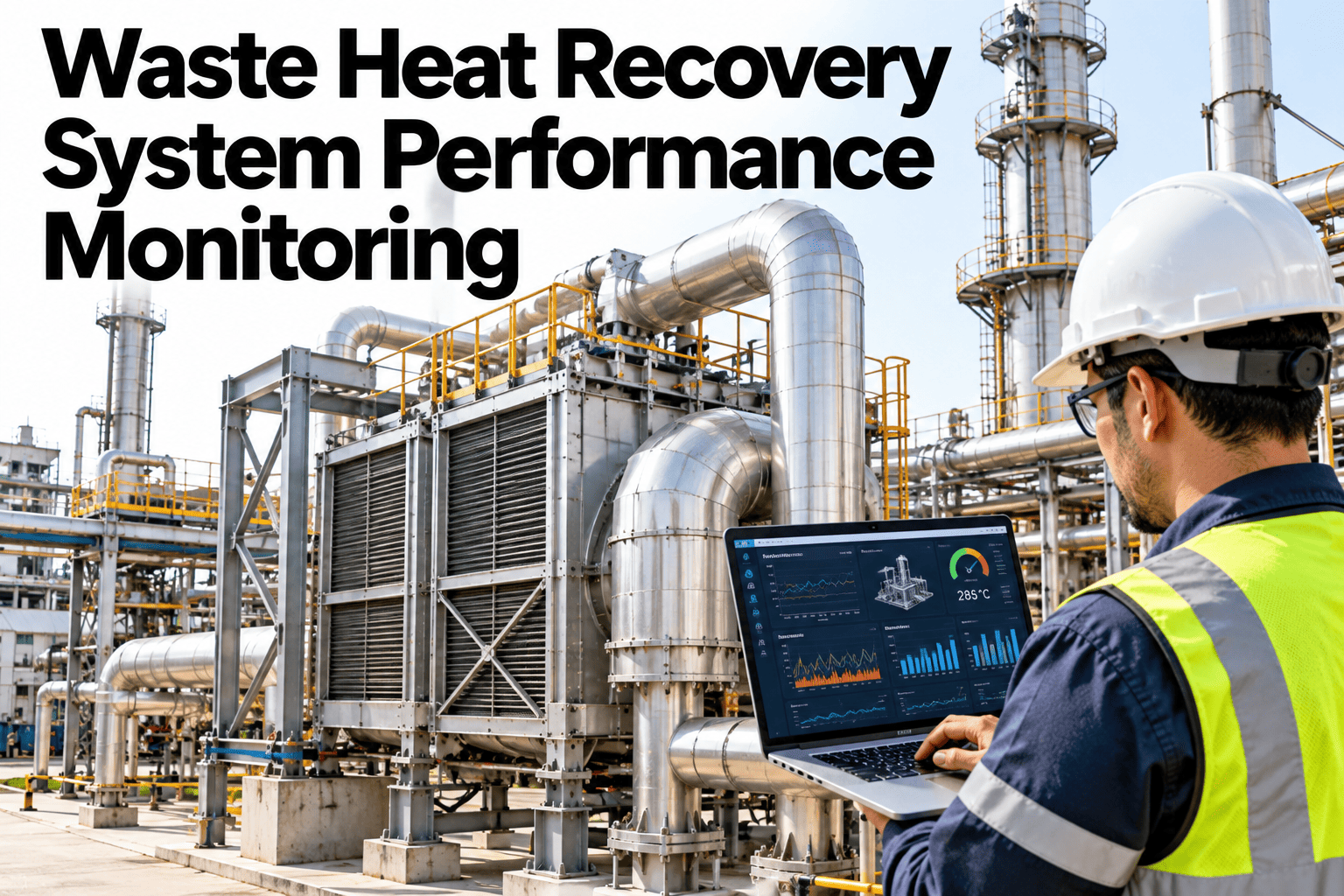
A waste heat recovery system looks like a straightforward investment on paper, capture exhaust heat from the kiln and preheater, convert it to power, and reduce grid dependence. What is harder to see without dedicated monitoring is whether the sys

Read More
The kiln is where most of a cement plant's energy cost actually lives, yet thermal energy monitoring often gets far less attention than electrical monitoring, partly because fuel flow and heat consumption are genuinely harder to track precisely th

Read More
Specific power consumption sounds like a simple term, electricity used per tonne of product, but the figure gets surprisingly inconsistent between plants and even between months at the same plant once you look closely at how it was actually calcul

Read More
Power and fuel usually make up the single largest cost category in cement production, yet many plants still calculate cost per tonne as a rough blended estimate rather than a figure built from actual electrical and thermal inputs. The difference m
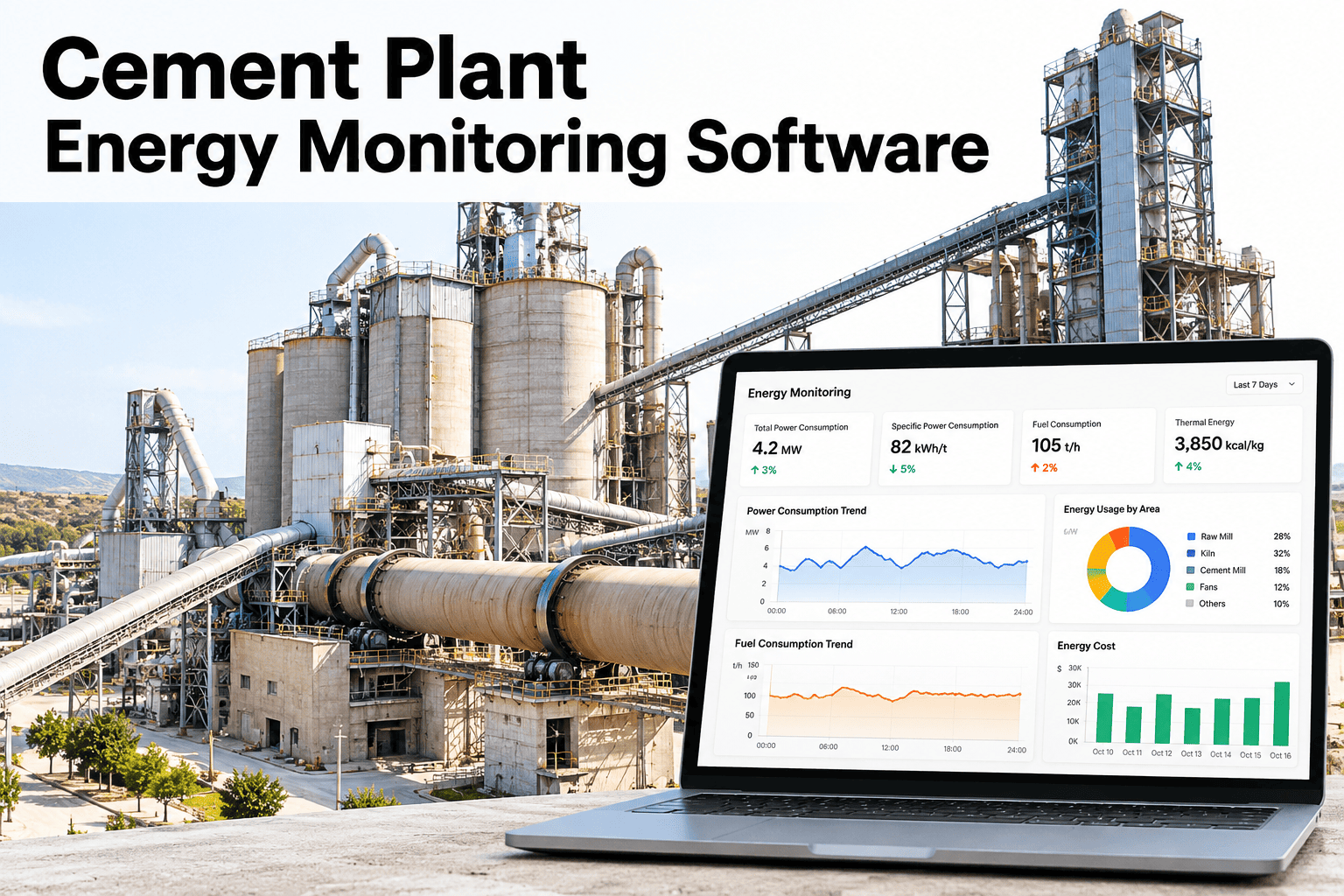
Read More
Most cement plants already know their monthly kWh per tonne figure, because it feeds directly into cost reporting and nobody can skip that number. What far fewer plants have is a clear view of where that energy actually goes, mill by mill, shift b
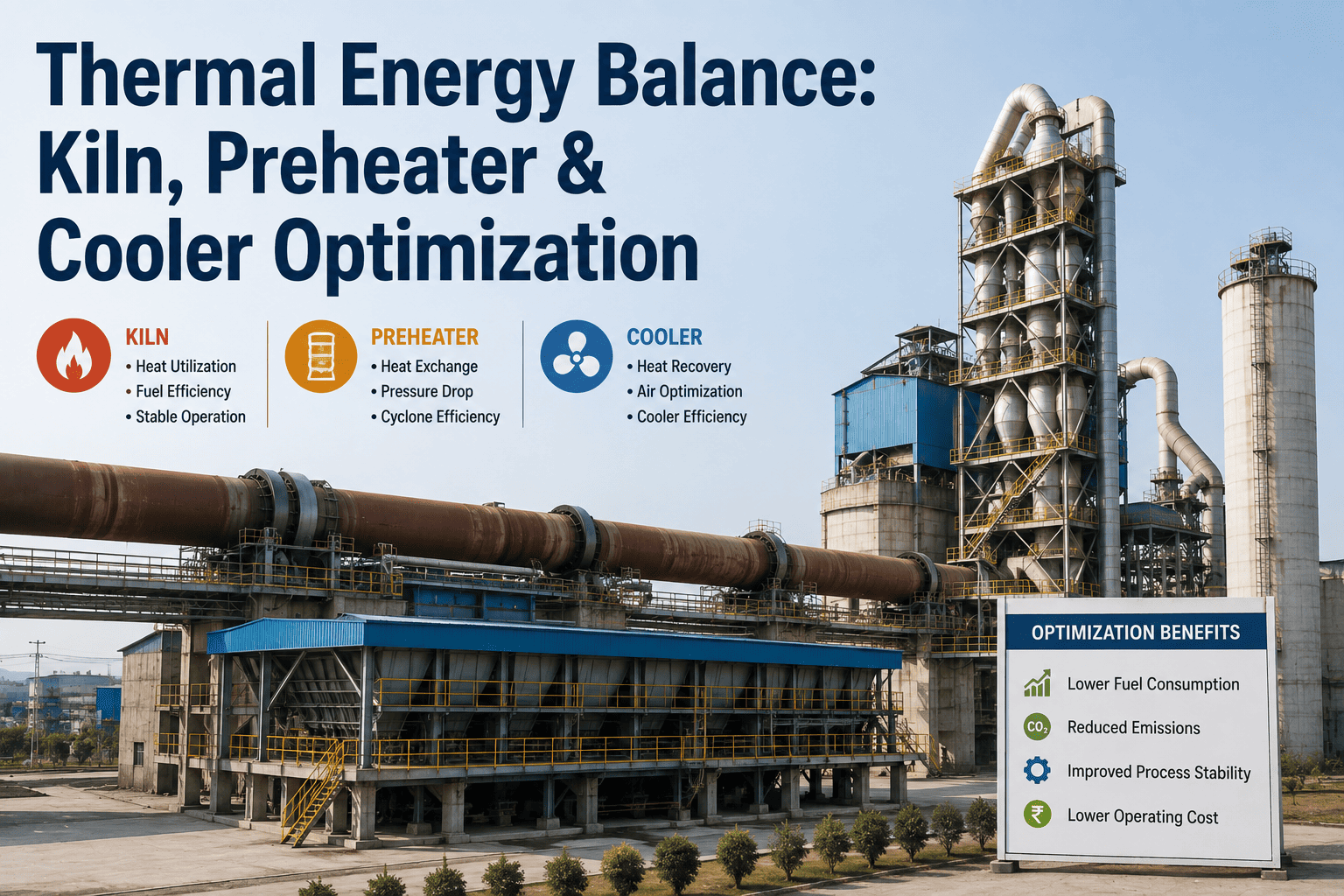
Read More
A kiln heat balance is nothing more than an accounting exercise: every kilocalorie that enters the kiln-preheater-cooler system as fuel or sensible heat has to leave it somewhere, and the job of a thermal energy balance is to find out exactly wh

Read More
Cement is the third-largest industrial energy consumer and the second-largest industrial CO2 emitter in the world, responsible for roughly 7% of global CO2 emissions on its own, and demand for it is projected to climb as much as 20% higher by 20
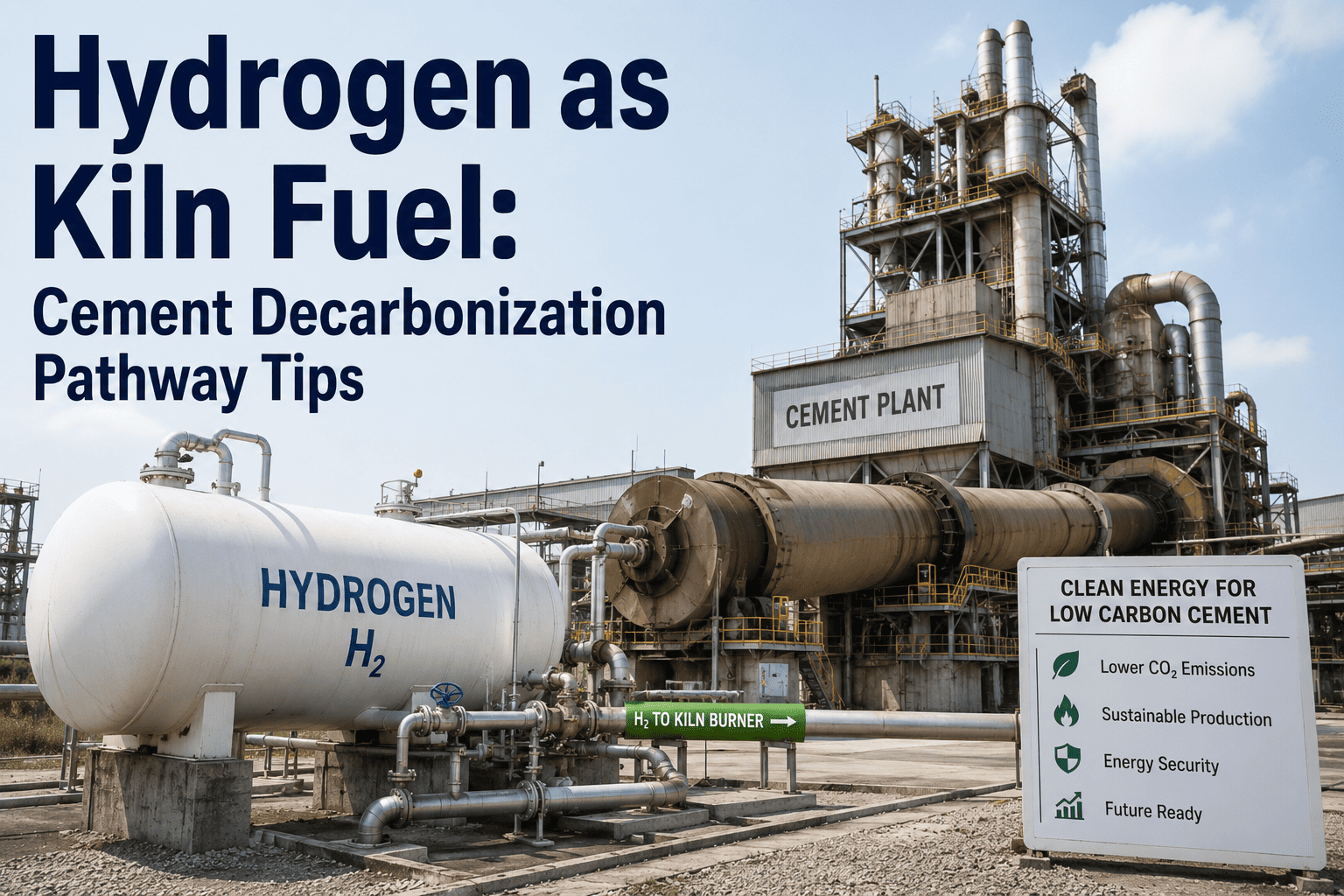
Read More
CEMEX installed hydrogen injection systems across every one of its European kilns by early 2021, just two years after its first trial at the Alicante plant, and reported the technology raised alternative fuel substitution rates by eight to ten p

Read More
Every ton of clinker fired in a kiln releases close to a ton of CO2, split between the calcination of limestone and the fuel burned to reach kiln temperature, which is exactly why the fastest lever most cement plants have for lowering their carb

Read More
A vibration that shows up six months before a bearing fails almost always passes right by an operator's hands the whole time, since traditional maintenance models treat operators purely as machine tenders who report problems to a separate mainte

Read More
A cement mill rated to grind 200 tons an hour rarely holds that number for an entire shift, and the gap between what the nameplate promises and what the control room log actually shows is almost always hiding inside performance rate rather than

Read More
A raw mix that looked correct on paper can still drift out of specification by the time it reaches the kiln, because lime saturation factor, silica ratio, and alumina ratio all respond to raw material variability that a lab technician sampling onc

Read More
ISO 50002 gives cement plants a clear structure for an energy audit, covering scope definition, data collection, and analysis, but the standard deliberately does not tell a plant how often to repeat one, which is exactly where most energy manageme

Read More
A clinker cooler that is running "fine" and a clinker cooler that is actually recovering the heat it should are two very different machines, and most plants only discover the gap between them after a kiln audit flags fuel consumption that never qu

Read More
Most cement decarbonization conversations focus on fuel switching, alternative fuel substitution rates, and carbon capture bolted onto an existing kiln, because those are the levers available today. Electrifying the kiln itself is a different prop
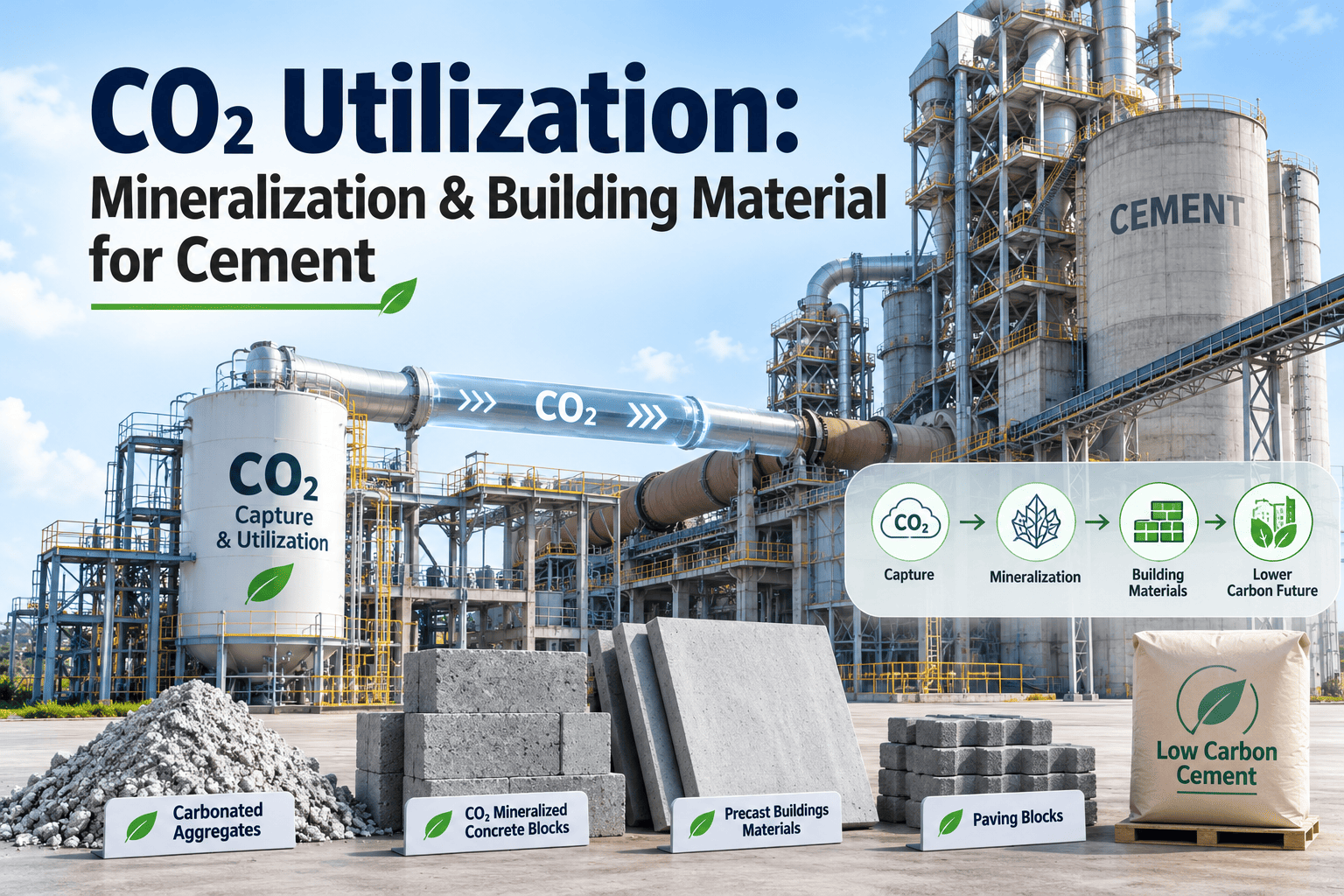
Read More
Captured CO2 does not have to end its life in a storage well. When it is injected into fresh concrete during mixing, it reacts almost immediately with calcium oxide in the cement to form nano-scale calcium carbonate, a mineral that locks the carbo
Read More
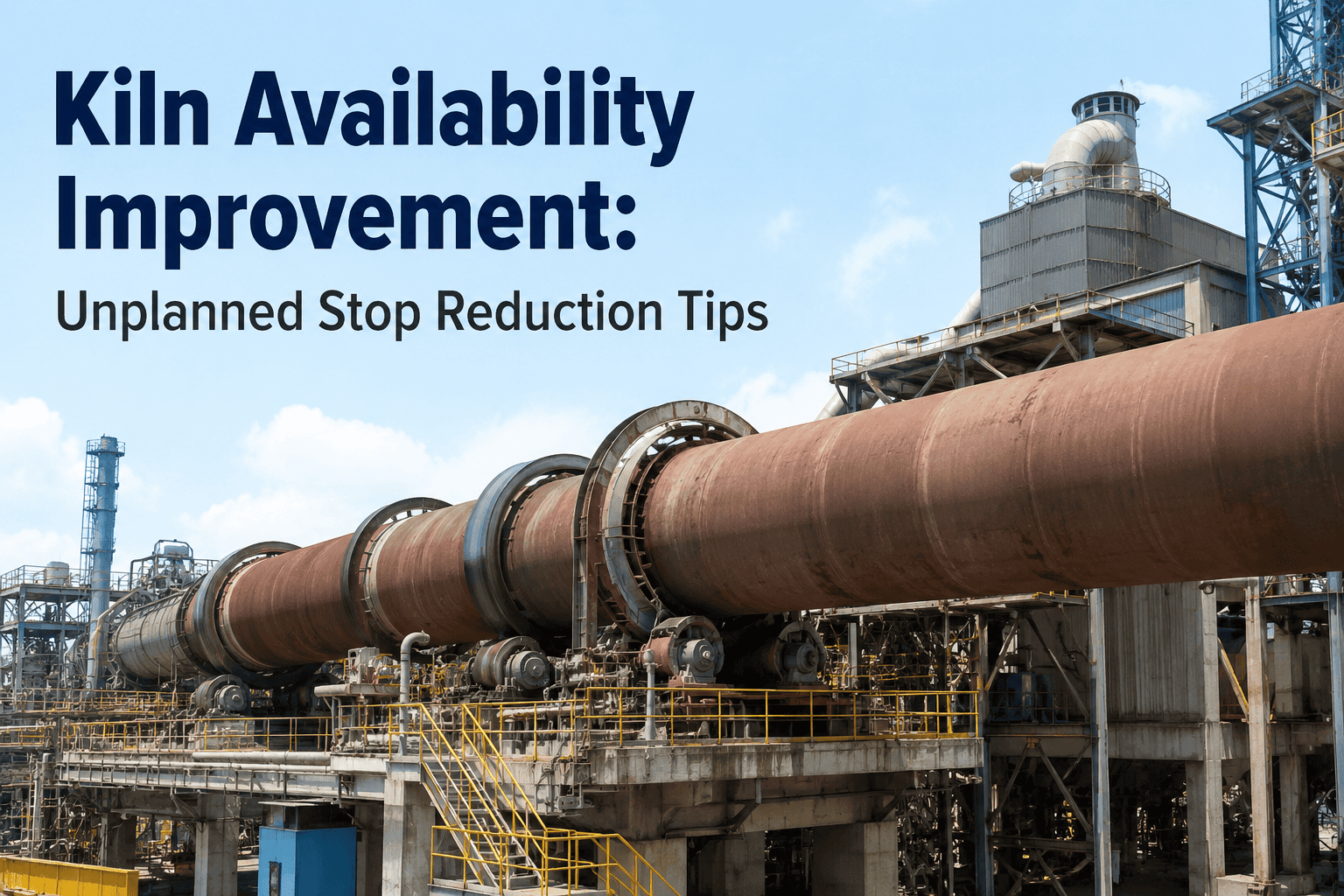
Kiln availability is the single most financially loaded number on a cement plant's KPI board, because every point of it converts almost directly into tonnes of clinker that either got made or didn't. Most integrated dry-process kilns run somewhere
Read More
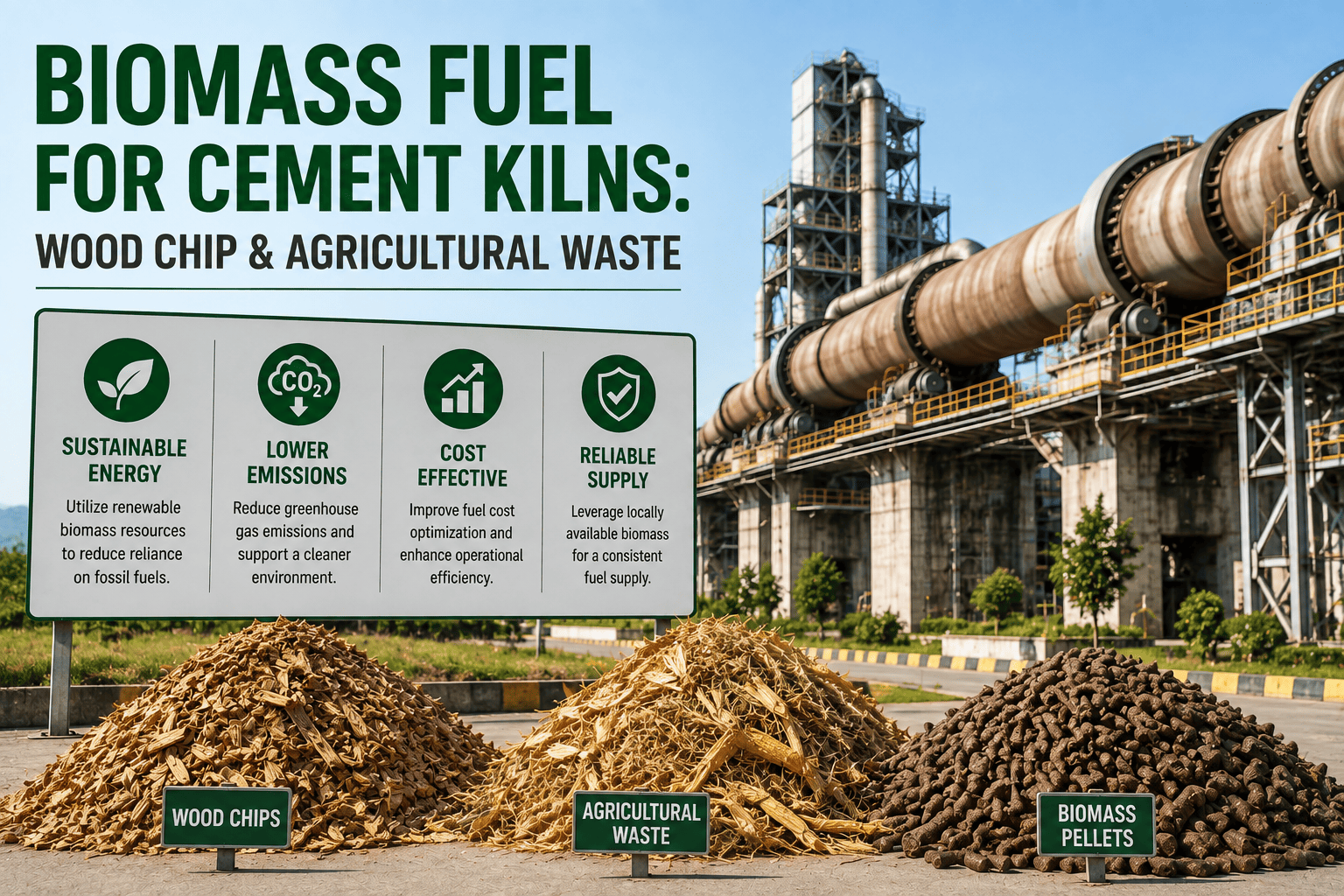
Cement kilns already run on fuel flexibility — most modern rotary kilns can fire coal, petroleum coke, and alternative fuels through the same burner system with only moderate adjustment, which is exactly why biomass has become one of the fastest-g
Read More
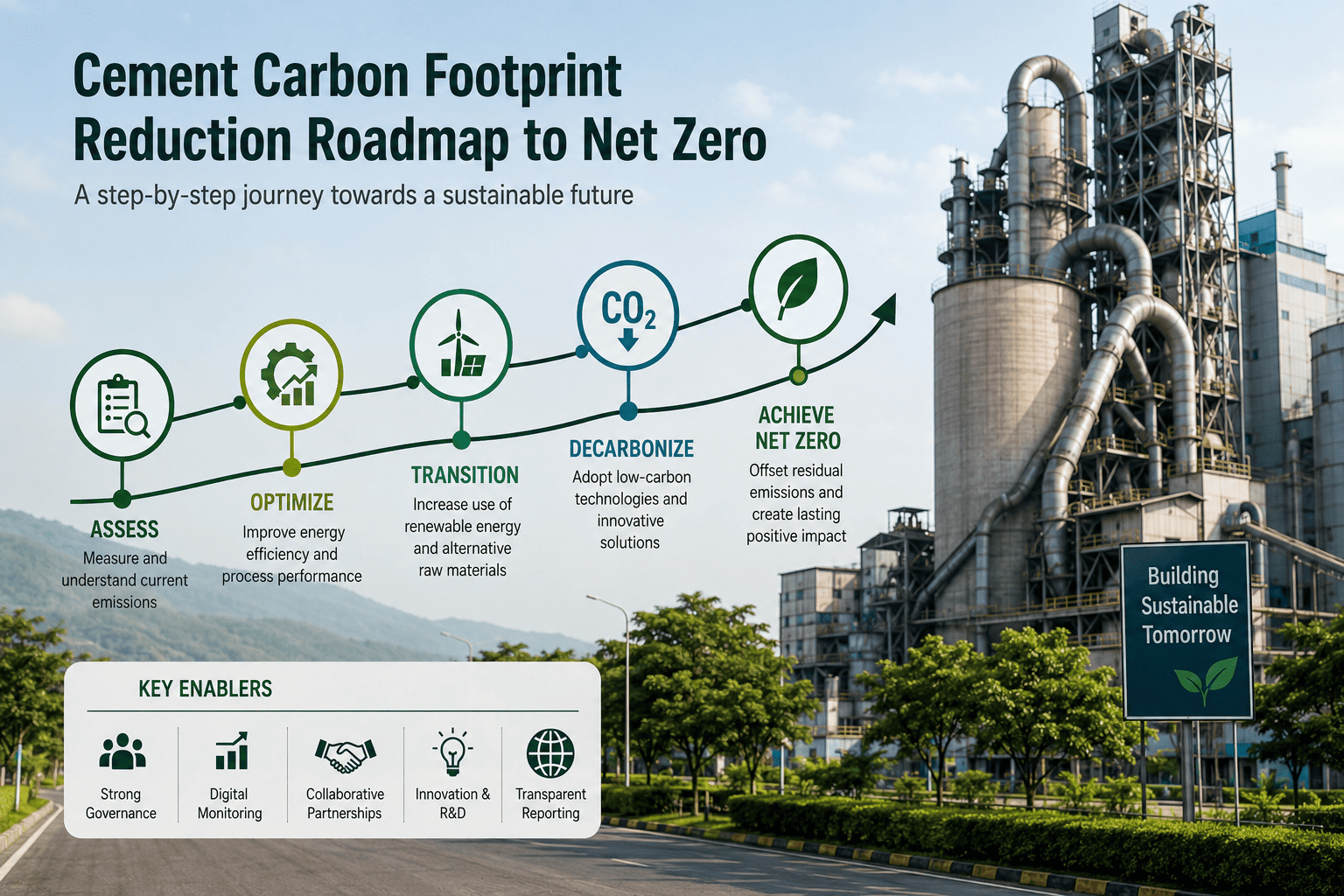
Cement plants chasing a net-zero target eventually run into the same uncomfortable math: business-as-usual would put the global sector on track to emit roughly 98 gigatons of CO2 between now and 2050, which is about double the carbon budget the in

Read More
Every cement plant tracks two numbers that quality and energy teams have historically treated as separate reports: gigajoules burned per tonne of clinker, and kilograms of CO2 released per tonne of cement produced. Decades of kiln data across hund

Read More
Most cement plants still run their energy program on a 30-day lag. The utility bill arrives, someone compares it to last month, and if the number is up, the investigation starts weeks after whatever caused it has already happened again several tim
Read More
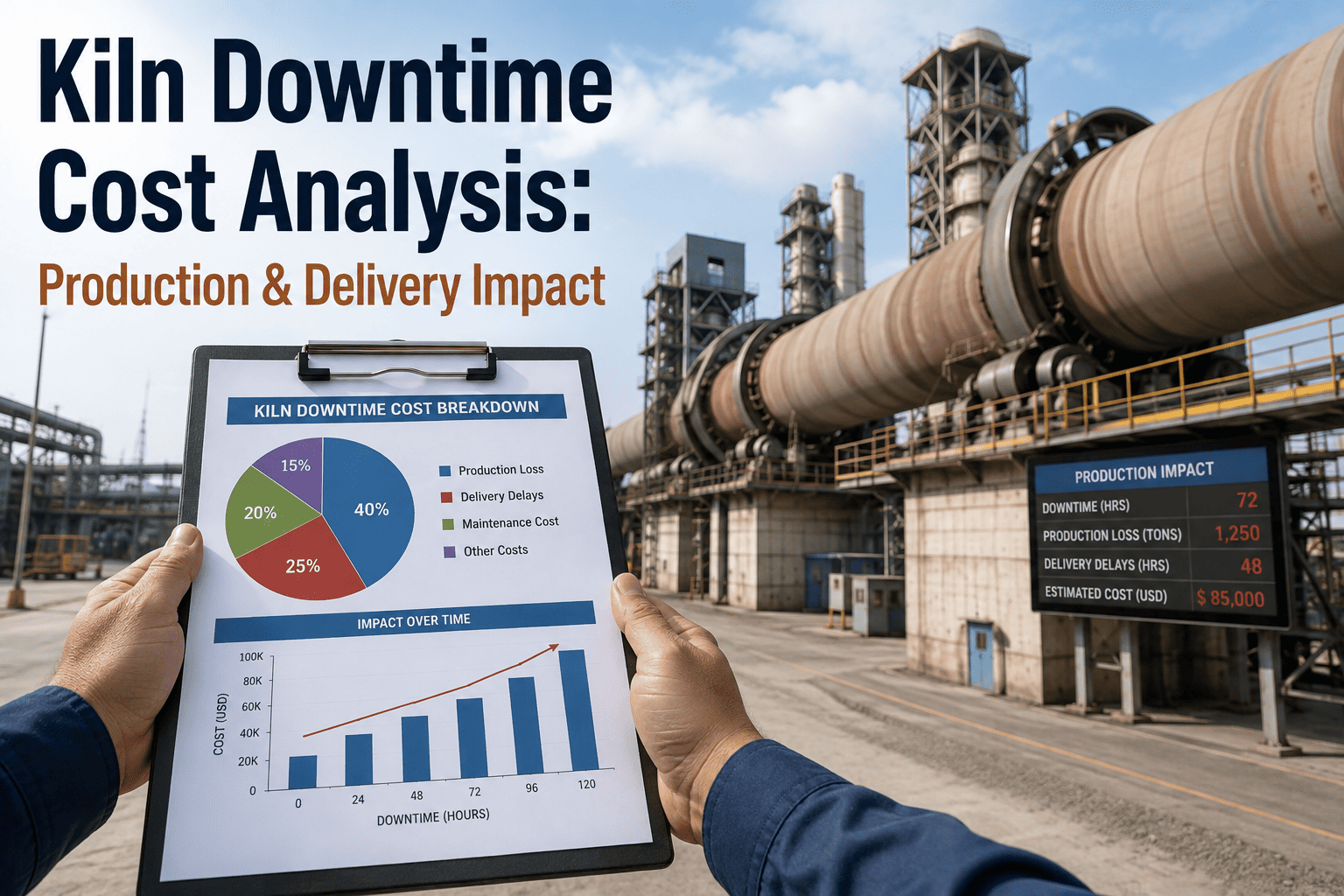
Ask most plant managers what an hour of kiln downtime costs and you'll get a number pulled from memory — usually just the clinker that didn't get made. That number is real, but it's rarely the whole story. A kiln stop also burns extra fuel and pow

Read More
A preheater blockage doesn't announce itself. It starts as a few millimeters of alkali-rich coating clinging to the wall of a Stage 4 cyclone, and three to six weeks later it has narrowed the gas path enough to swing draft, spike O2 readings, and

Read More
A bearing fails on a raw mill at two in the morning, and the night shift technician opens the CMMS to order the replacement, only to find three part numbers that could plausibly be the right one, none of them linked clearly to that specific mill,

Read More
A sustainability manager pulling together the annual disclosure for a cement plant realizes the quarry rehabilitation figures reported last year were based on a site walk from eighteen months earlier, and nobody can say with confidence how much of

Read More
A raw mill nameplate reads 220 tons per hour. The DCS trend for the same mill, averaged over a full production month, sits closer to 178 tons per hour, and nobody on the floor can point to a single fault that explains the gap. That gap is not down

Read More
A plant engineer wants to know what happens to kiln output if feed rate is pushed up by eight percent during the next dry season. The honest answer used to require actually doing it, watching the refractory, the draft, and the burning zone react i

Read More
A permit renewal officer at a European cement plant pulls together the energy section of the compliance dossier and realizes the plant's specific heat consumption figures from the last three years are scattered across kiln logs, spreadsheet export

Read More
A cement plant rolls out a new digital maintenance dashboard, trains the shift leads over a single afternoon, and declares the project live. Three weeks later, the usage logs show barely a fraction of the planned activity, technicians are back to

Read More
Cement plants generate more SCADA data in a single shift than most teams can review in a week, yet the overwhelming majority of that data is only ever looked at after something has already gone wrong. Traditional alarm systems are designed to reac

Read More
Cement laboratories operate under a unique set of pressures that most generic laboratory information management systems were never designed to handle. From tracking raw material variations across multiple quarries to maintaining compliance with IS

Read More
A quality technician runs an XRF analysis, reads the elemental composition off the instrument screen, and types it into the LIMS by hand, and somewhere in that hand-off a decimal point shifts or a field gets skipped entirely. Cement labs run dozen
Read More
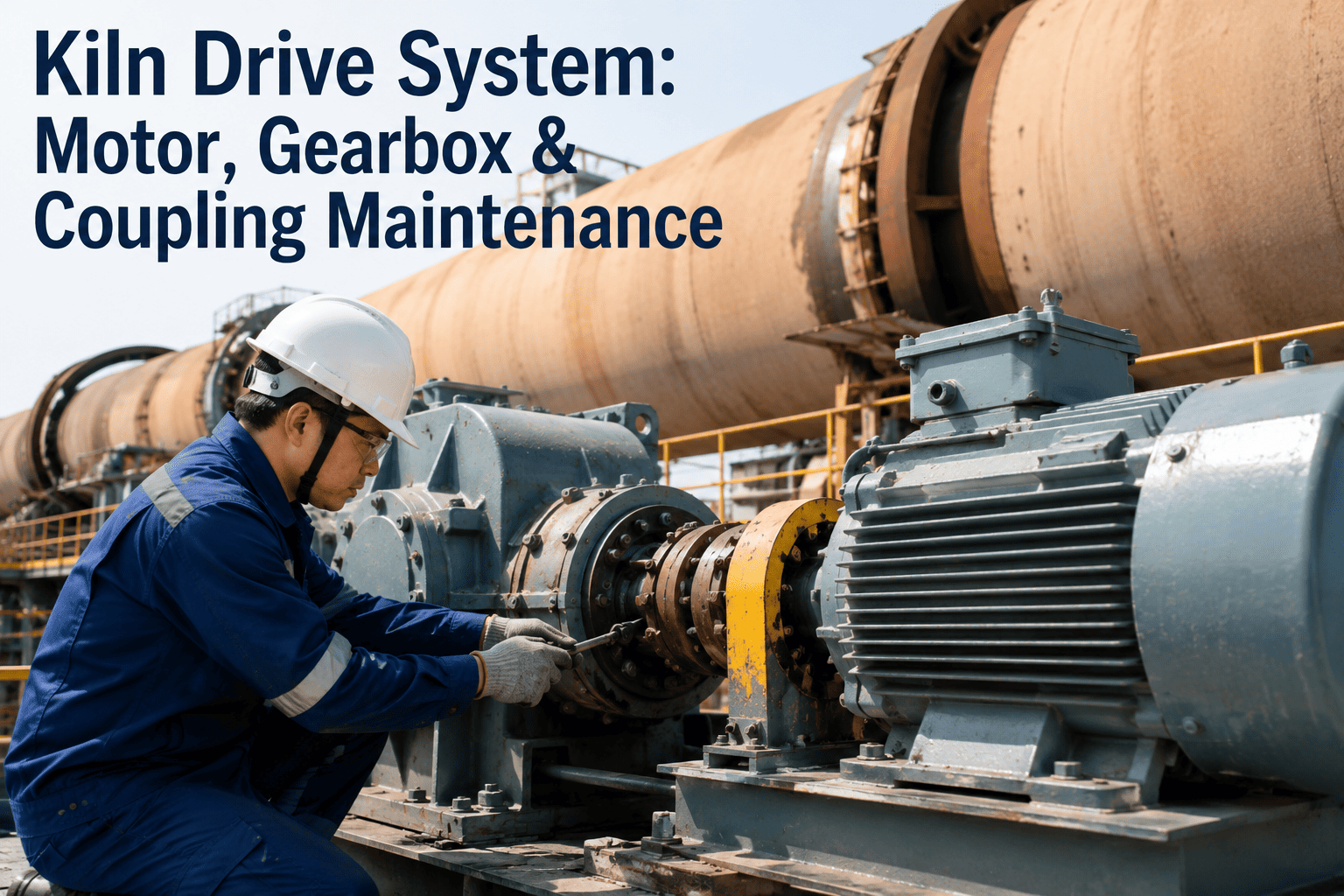
A kiln that stops turning for four hours because a gearbox bearing seized is not a maintenance incident, it is a full production day quietly erased from the schedule. The drive train that turns a rotary kiln, main motor, reduction gearbox, girth g

Read More
A primary crusher only has to do one job before anything else in a cement plant can happen: reduce raw rock to a size the rest of the circuit can handle. The liners that take the actual impact of that job wear down continuously and invisibly, hidd
Read More
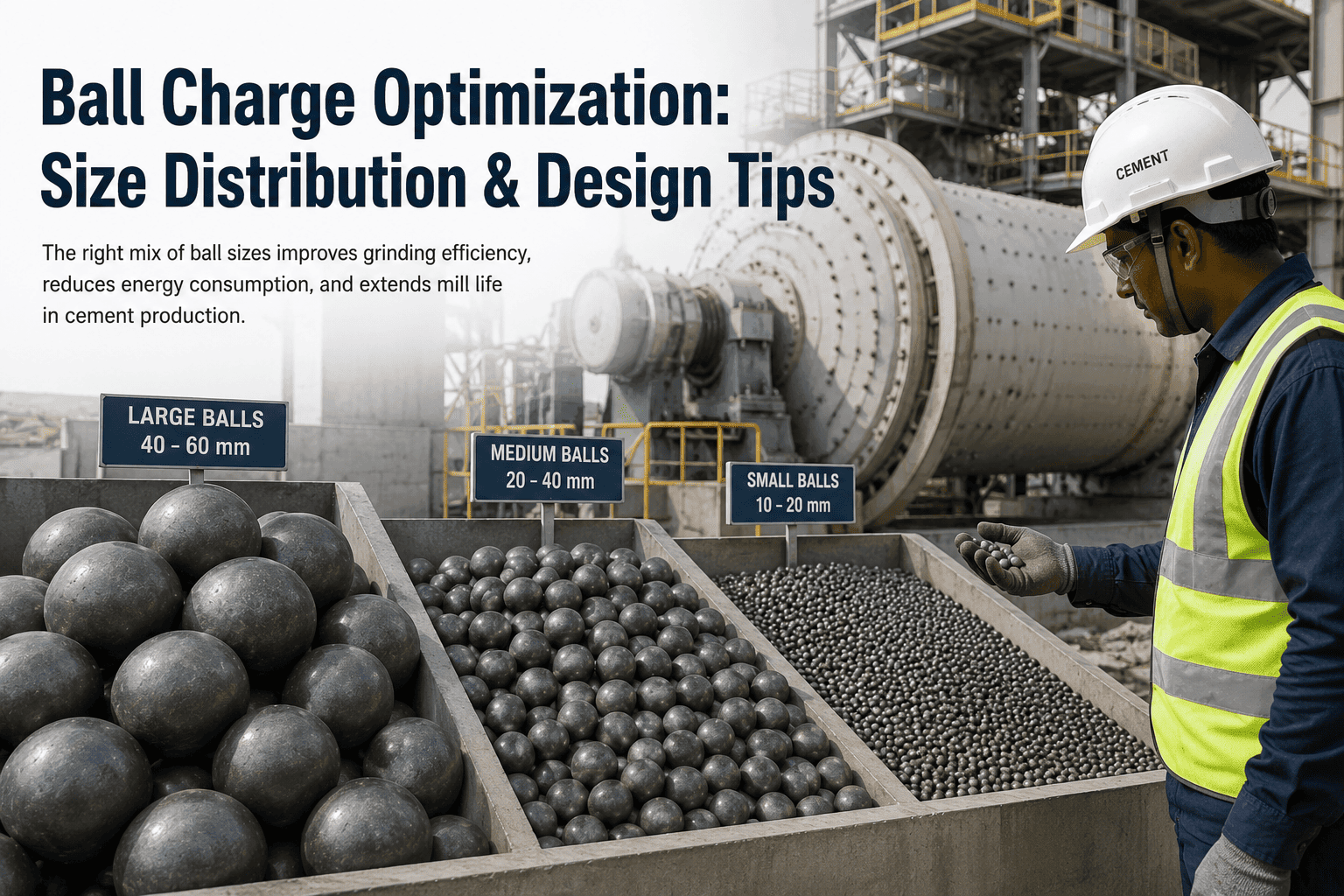
Two hundred tons of steel sitting inside a cement ball mill doesn't look like a variable anyone tunes day to day — it looks like a fixed piece of equipment that was loaded once and topped up whenever wear made it necessary. In practice, the size d

Read More
A cement mill separator makes one decision, over and over, thousands of times a minute: does this particle leave as finished product, or go back through the mill for another pass. When that decision is made well, the mill grinds only what still ne
Read More
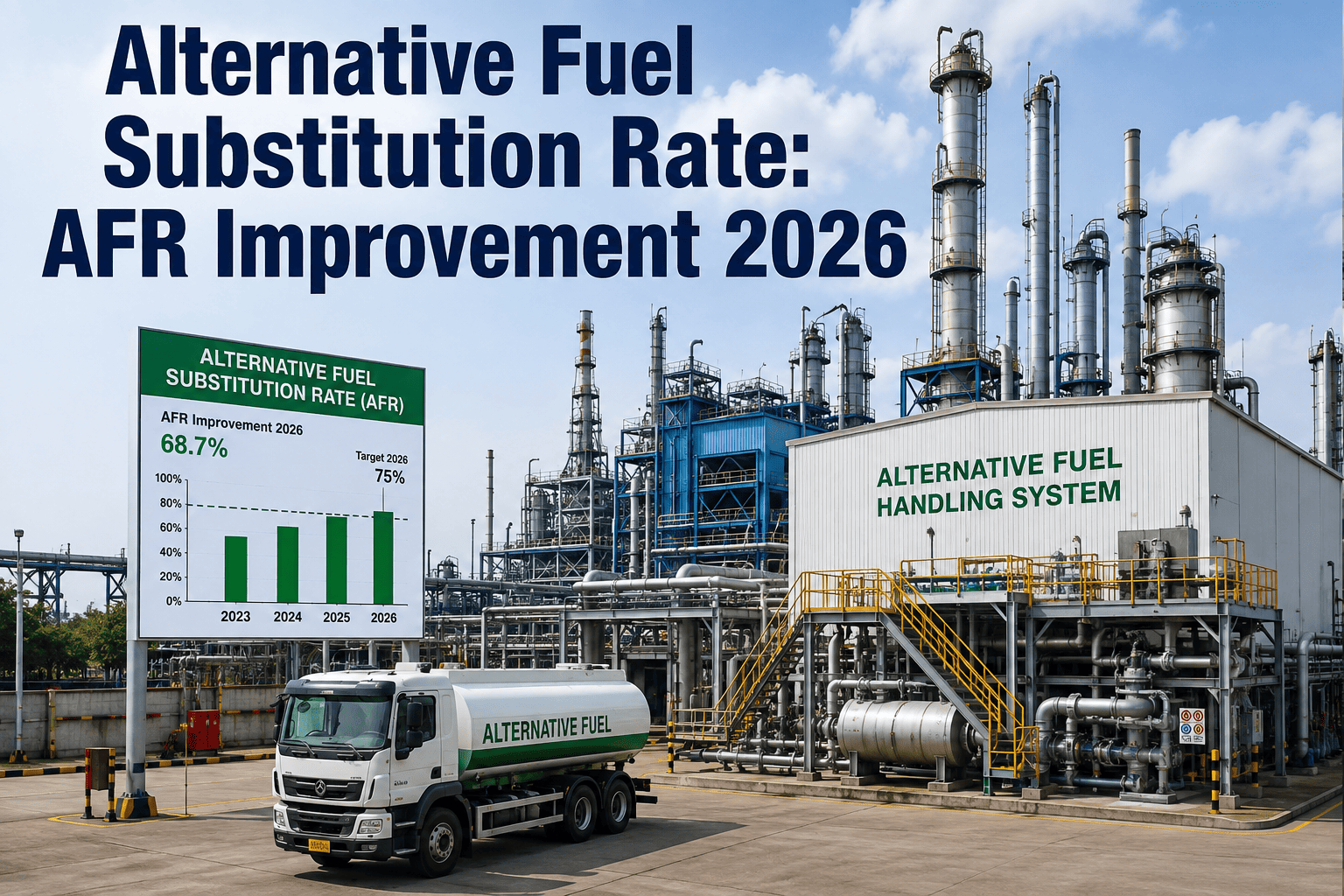
Most cement plants don't get stuck at a low alternative fuel substitution rate because alternative fuel isn't available, they get stuck because the fuel handling infrastructure, quality monitoring, and kiln control weren't built for the variabilit
Read More
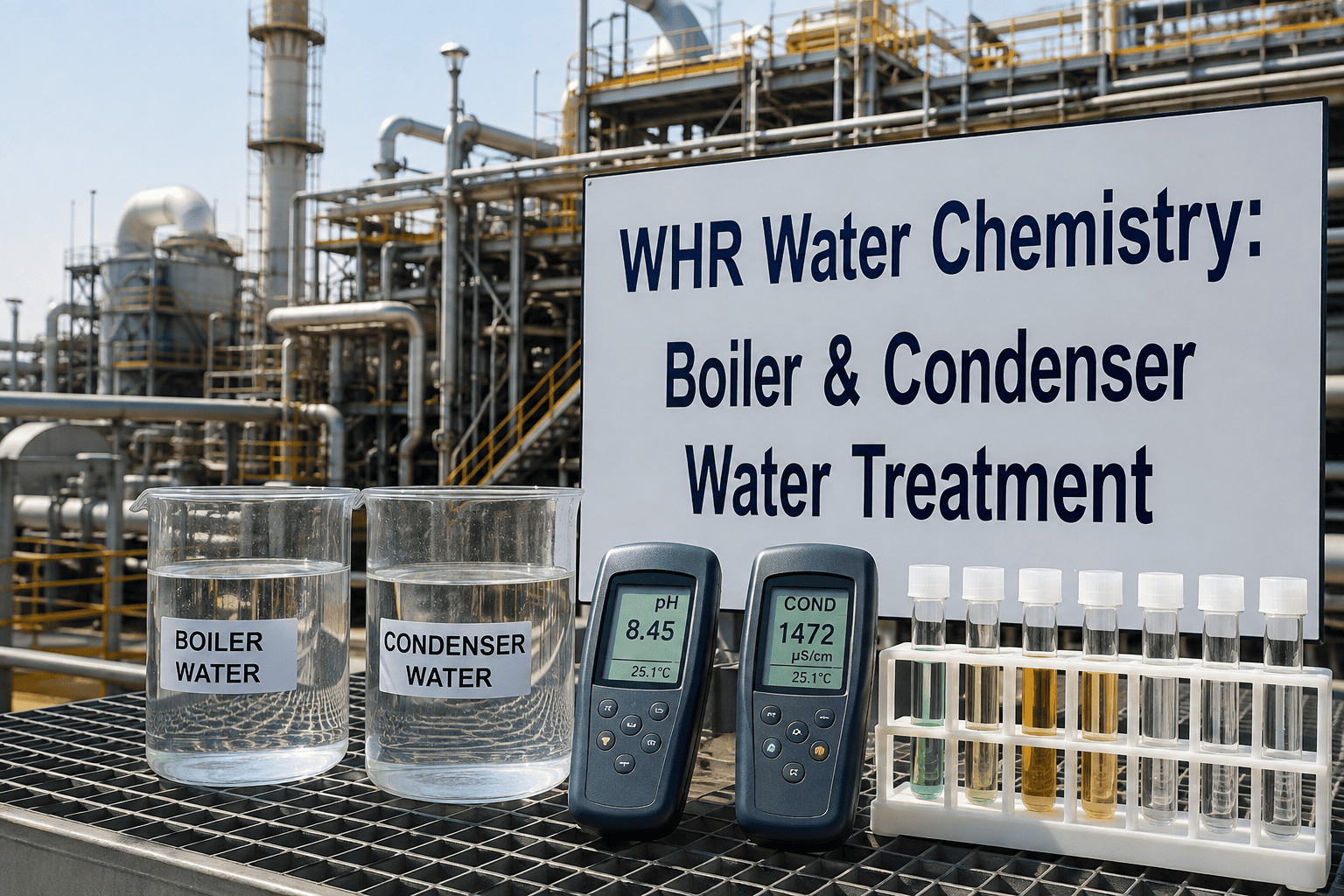
A steam-based waste heat recovery system is only as reliable as the water running through it, and that water is doing two very different jobs at once. On one side, feedwater is being boiled into high-pressure steam inside tubes that were never des
Read More
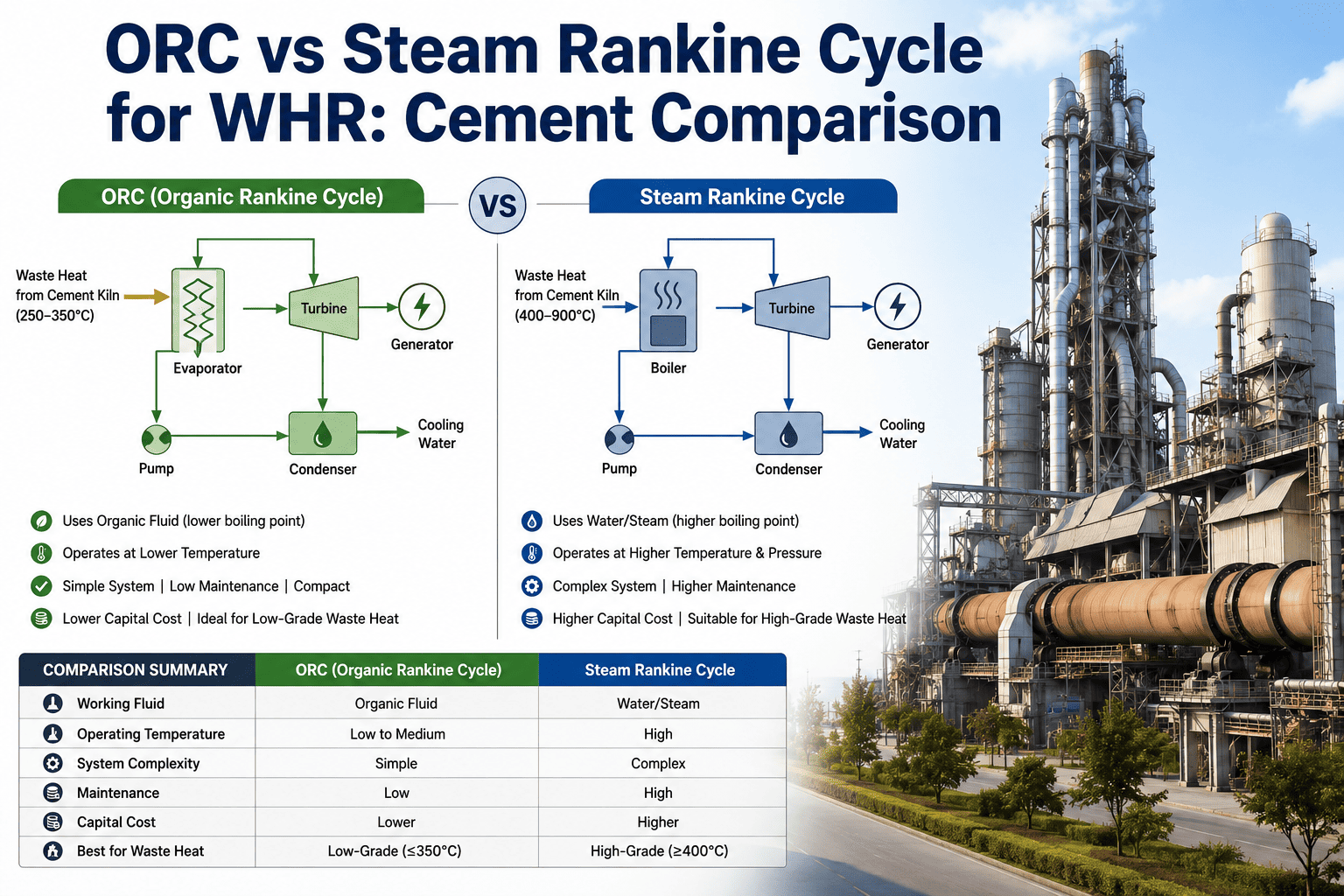
Every waste heat recovery project at a cement plant eventually comes down to one engineering decision that shapes everything after it: organic Rankine cycle or steam Rankine cycle. The two technologies pull power from the same preheater exhaust an

Read More
A vibration trend on a kiln ID fan can mean two very different things: replace the bearing this week, or it's fine to run another month and bundle the job with the planned shutdown. Most condition monitoring systems stop at the alert and leave tha

Read More
Most cement plants are still sitting on a process historian that was installed well over a decade ago, quietly holding every kiln temperature, mill amp draw, and quality reading the plant has ever recorded. That archive is an asset, but the platfo

Read More
A single cement plant can throw off tens of thousands of sensor readings a minute across kilns, mills, and coolers, and two very different jobs depend on that stream. One job is a kiln control loop that has to react in milliseconds, long before an

Read More
A cement plant never really stops, which means the handover between shifts happens whether anyone is ready for it or not. Too often that handover is a five-minute conversation at the end of a long night, relying on one tired supervisor remembering

Read More
A typical cement plant runs equipment from a dozen different vendors — a kiln PLC from one supplier, a mill drive system from another, a packer and a weighbridge each speaking their own proprietary protocol, and a CEMS analyzer that only exports t

Read More
Most cement plants still run production documentation on paper — shift logs filled out by hand near the kiln, quality slips clipped to a board in the lab, and downtime notes scribbled on a whiteboard before someone re-keys them into a spreadsheet
Read More
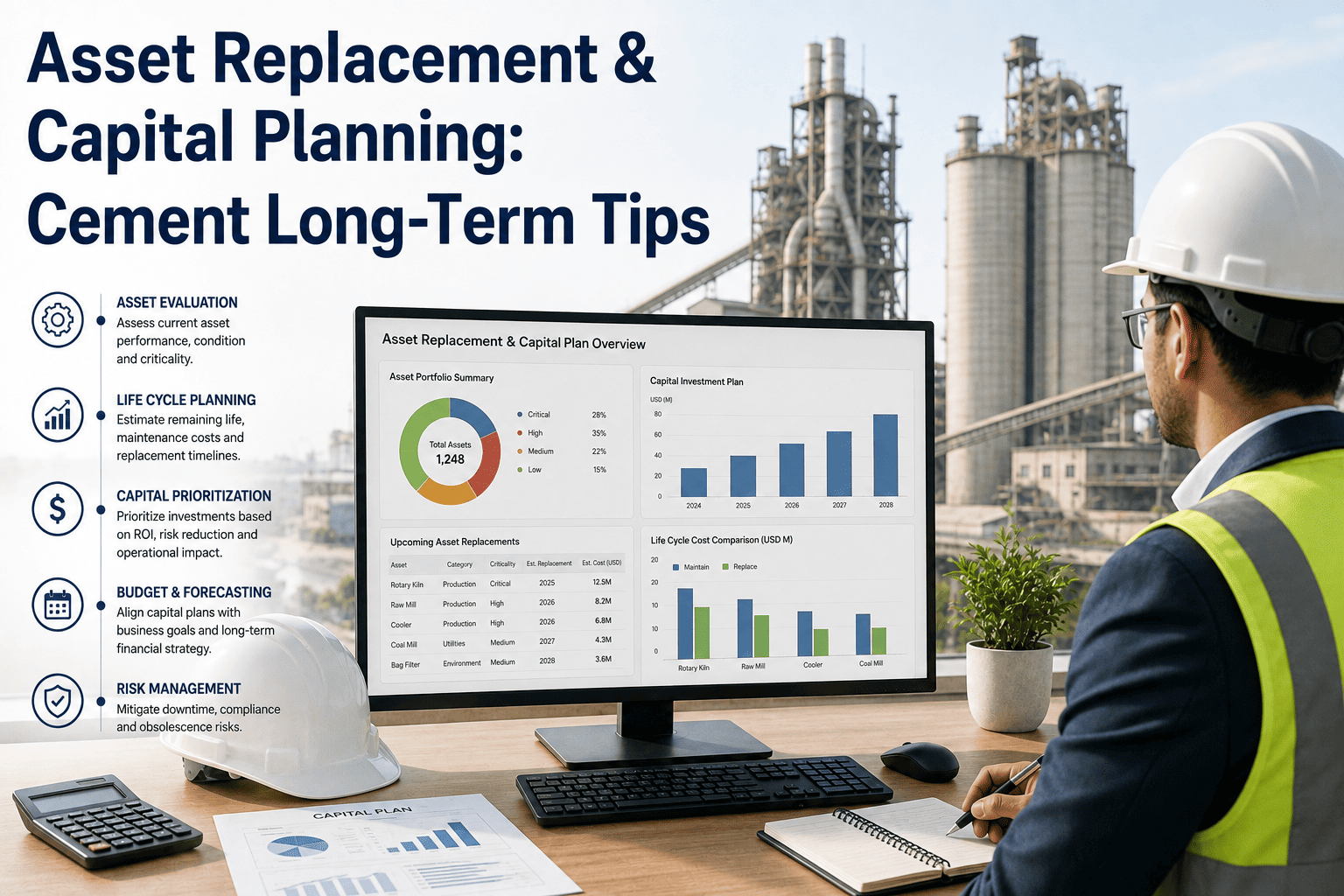
A cement plant's capital budget doesn't get blown by the assets everyone was watching. It gets blown by the kiln shell nobody flagged until it hit its fatigue ceiling, the girth gear that needed a forty-week lead time nobody started tracking until
Read More
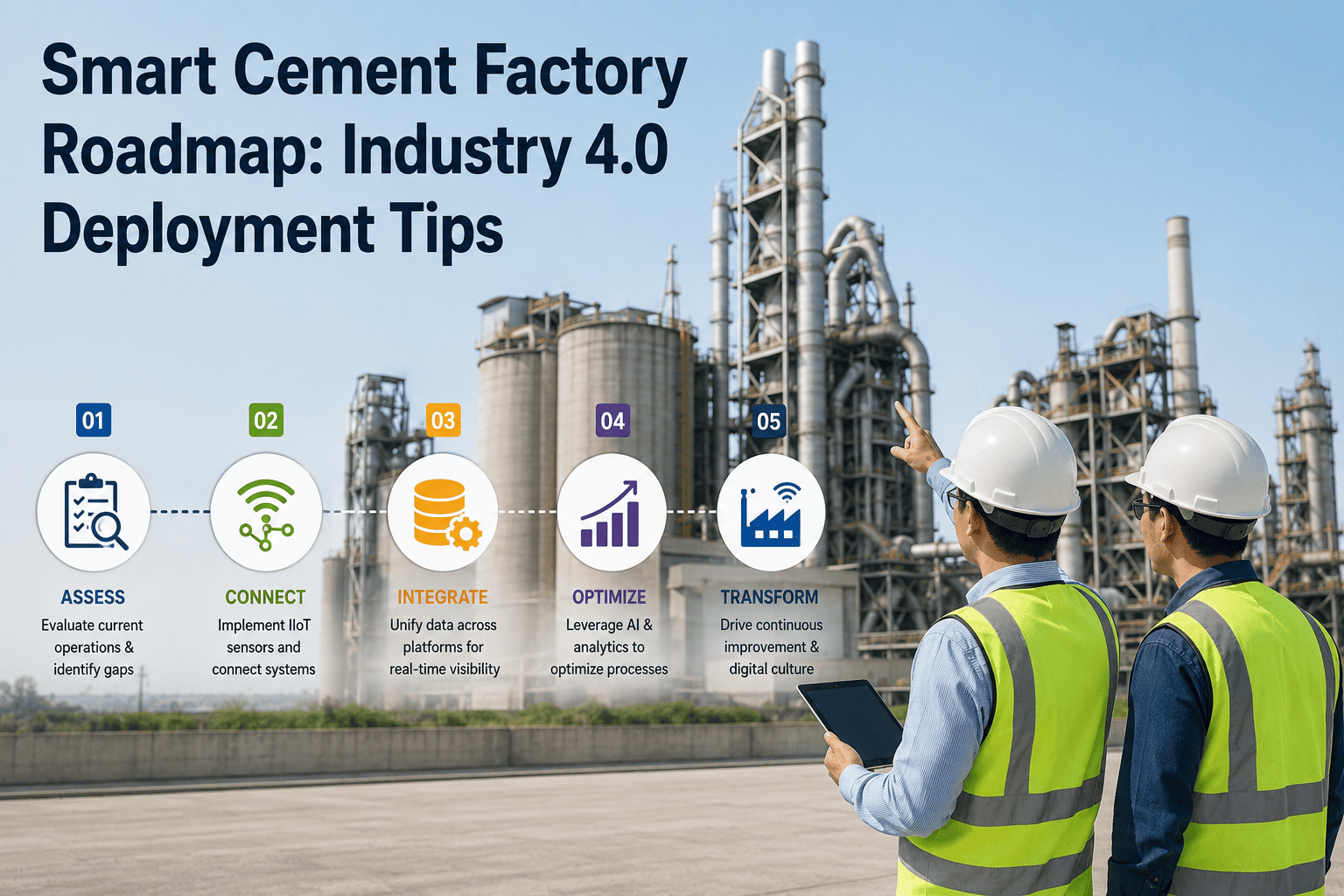
Most cement plants don't fail at Industry 4.0 because the technology doesn't work. They fail because the pilot that proved it worked on one kiln never made it to the other three. Research from the Manufacturing Leadership Council found that manufa

Read More
Kiln and mill energy consumption in a cement plant isn't set once and left alone — it drifts constantly with raw meal chemistry, fuel quality, ambient humidity, and dozens of other variables shifting minute to minute. Operators manage this with se

Read More
For a cement plant running kilns, mills, and quality labs across multiple shifts, keeping regulatory paperwork current is its own full-time job. Emissions data lives in the CEMS system, quality certificates live in the lab LIMS, and production and

Read More
A vibration alarm fires on a raw mill motor at two in the morning, and the technician on call has three options: guess, wake up someone senior, or spend the next hour digging through manuals and old work orders trying to figure out whether this is

Read More
A shift supervisor at a cement plant needs to know why kiln three's specific heat consumption crept up overnight, and the honest answer today is usually a fifteen-minute detour through three different screens, a historian trend that takes a minute
Read More
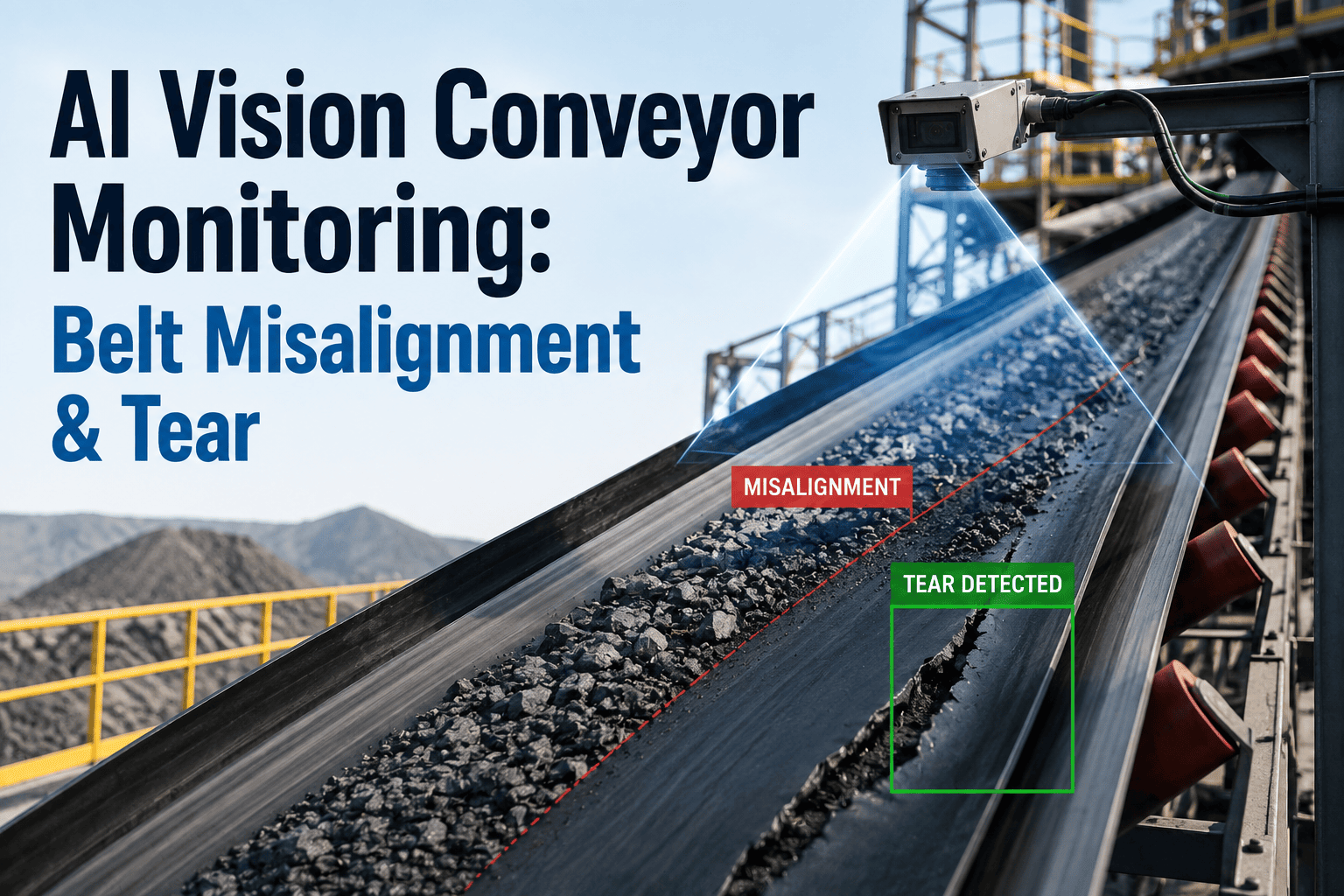
Conveyor belts move raw material, clinker, and fuel across nearly every stage of a cement plant, and belt failures rank among the most disruptive unplanned stops a plant can face. A misaligned belt wears through its edges and can shift enough to d

Read More
Coal mill operators in cement plants chase two numbers that pull in opposite directions every shift: coal fineness, which determines how completely the fuel burns in the kiln, and mill throughput, which determines whether the kiln gets enough fuel

Read More
Every cement plant running a waste heat recovery system depends on one unglamorous piece of equipment to deliver the energy savings on paper: the gas duct connecting the kiln, preheater, or clinker cooler to the boiler. When that duct develops lea

Read More
Most cement plants already track energy consumption in some form — meter readings on a spreadsheet, a monthly fuel report, maybe a dashboard nobody outside the energy manager's office ever opens. ISO 50001 asks for something structurally different

Read More
Every tonne of clinker leaves the rotary kiln carrying an enormous amount of heat, and the clinker cooler is the one piece of equipment standing between that heat being recovered as combustion air or lost permanently up the stack. Somewhere betwee

Read More
The pinion and girth gear mesh on a cement kiln does one job for twenty-five years or more: transmit torque from the main drive to a rotating steel cylinder that can weigh well over four thousand tonnes once loaded with clinker and refractory. Not

Read More
Most cement plant maintenance programs are built on a guess dressed up as a schedule — replace the bearing every six months, inspect the ID fan every quarter, not because failure data says so, but because that's the interval someone picked years a

Read More
Ask five people at a cement plant what OEE actually means and you will usually get five different answers, because most plants calculate it inconsistently across the kiln, the mills, and the crusher, if they calculate it at all. Availability, perf

Read More
Walk into most cement plants and you will find five separate systems, each holding a piece of the truth: kiln control has the burning zone data, the mill optimization tool has grinding efficiency, the quality lab has fineness and free lime, the CM

Read More
Every kiln in a cement plant is quietly discarding one of its most valuable byproducts: hot exhaust gas leaving the preheater tower at 300°C to 350°C, carrying enough thermal energy to dry raw material, generate electricity, or both. Most plants u

Read More
Most cement plants evaluate a new digital platform the same way they would evaluate any enterprise software: a feature checklist, a pricing sheet, and a reference call or two. That process works fine for a CRM or an HR tool, but it consistently fa

Read More
Walk into most cement plants today and you will find four separate systems quietly working against each other: a vibration monitoring dashboard watching the raw mill, a quality lab running XRF tests on clinker, a CMMS tracking work orders, and a p
Read More
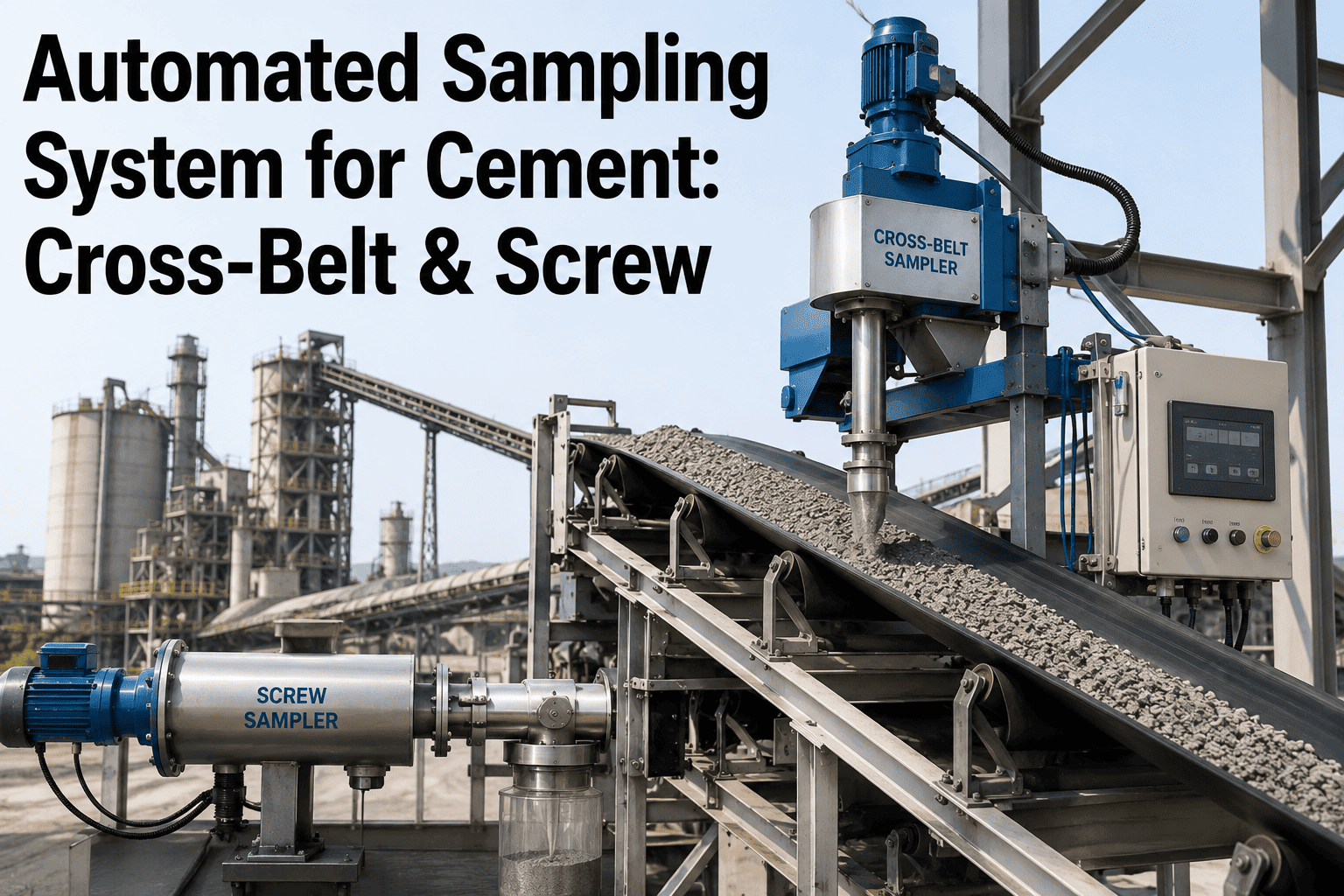
A quality lab is only as good as the sample that reaches it. A grab sample taken by hand once a shift — from whatever part of the material stream happens to be convenient at that moment — tells you what that one scoop looked like, not what the bat

Read More
An AI system that detects a conveyor problem and a maintenance team that never sees it in their work queue produces the same outcome as having no AI system at all. Detection without a workflow attached to it just moves the bottleneck — instead of

Read More
A single idle conveyor rarely shows up on a P&L line by itself. What shows up is a kiln running below capacity because raw meal isn't reaching the preheater, a cement mill sitting empty while clinker backs up at the crusher, and a shift's wort
Read More
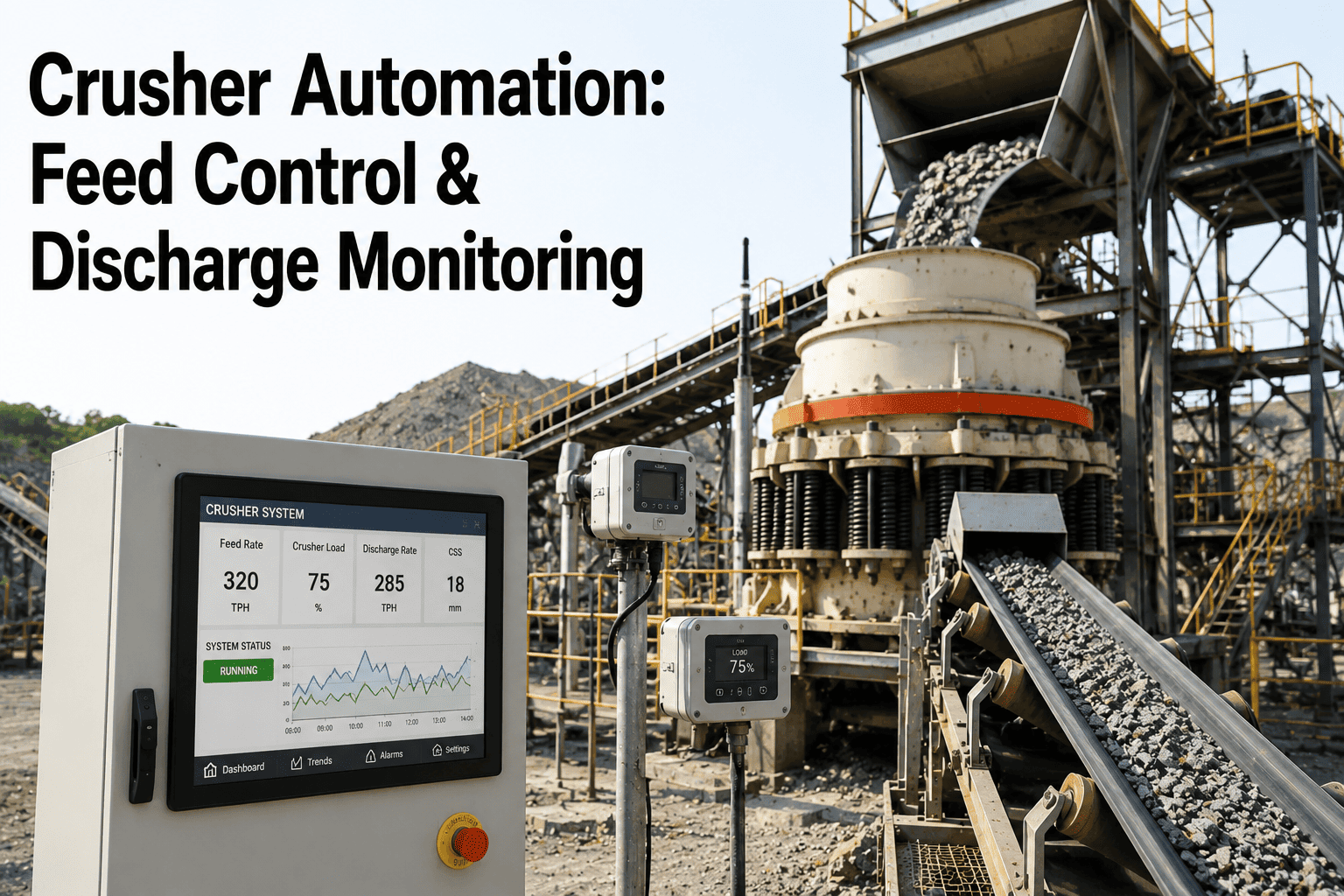
Walk past most crusher stations on a manual shift and you'll see the same pattern: an operator eyeballing the feed hopper, nudging a belt speed control up or down by feel, and adjusting again twenty minutes later when the amp gauge climbs higher t

Read More
Every cement kiln burns fuel to do one job — turn raw meal into clinker — and yet on a typical line, less than half of that fuel energy ever reaches the chemical reaction it was bought to drive. The rest leaves the system as hot exhaust gas escapi

Read More
A kiln shell that drifts out of alignment by even a few millimeters rarely announces itself with an alarm. It shows up first as a hot spot on the shell plate, a tire face wearing faster on one edge than the other, a trunnion bearing running a few

Read More
A jaw crusher that suddenly stops mid-shift with a snapped toggle plate looks like a catastrophic failure, but it is usually the crusher doing exactly what it was designed to do — sacrificing a low-cost wear part to protect the pitman, eccentric s

Read More
A visible dust cloud rolling off a transfer point is the kind of thing an inspector notices from the road, and by the time it is visible to the naked eye, the plant is usually already past the opacity limit written into its air permit. Most cement
Read More
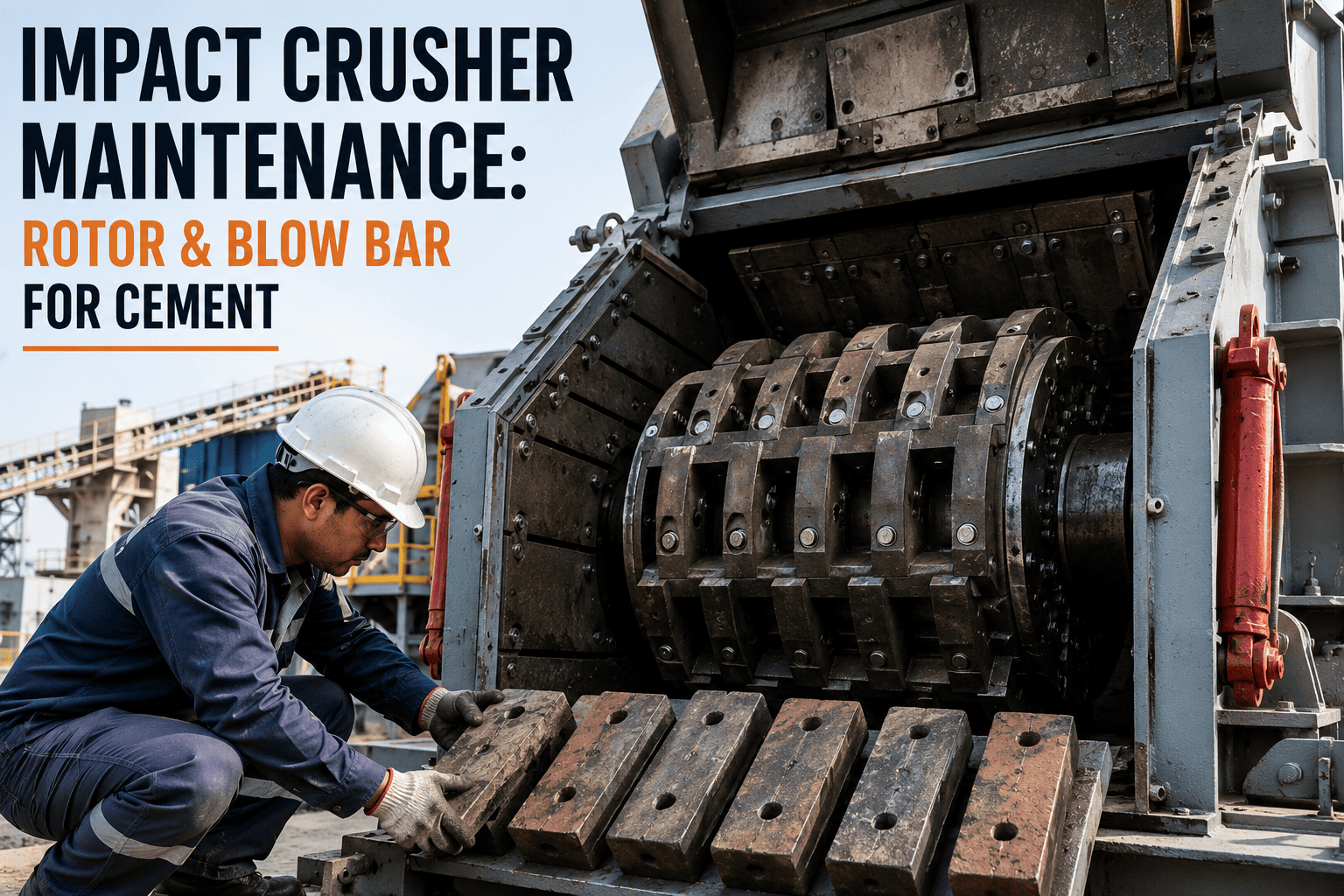
An impact crusher that was hammering through limestone at full tonnage two weeks ago and is now vibrating, surging, and choking mid-shift did not fail overnight. Blow bar wear, rotor imbalance, and curtain misalignment all build gradually, and by
Read More
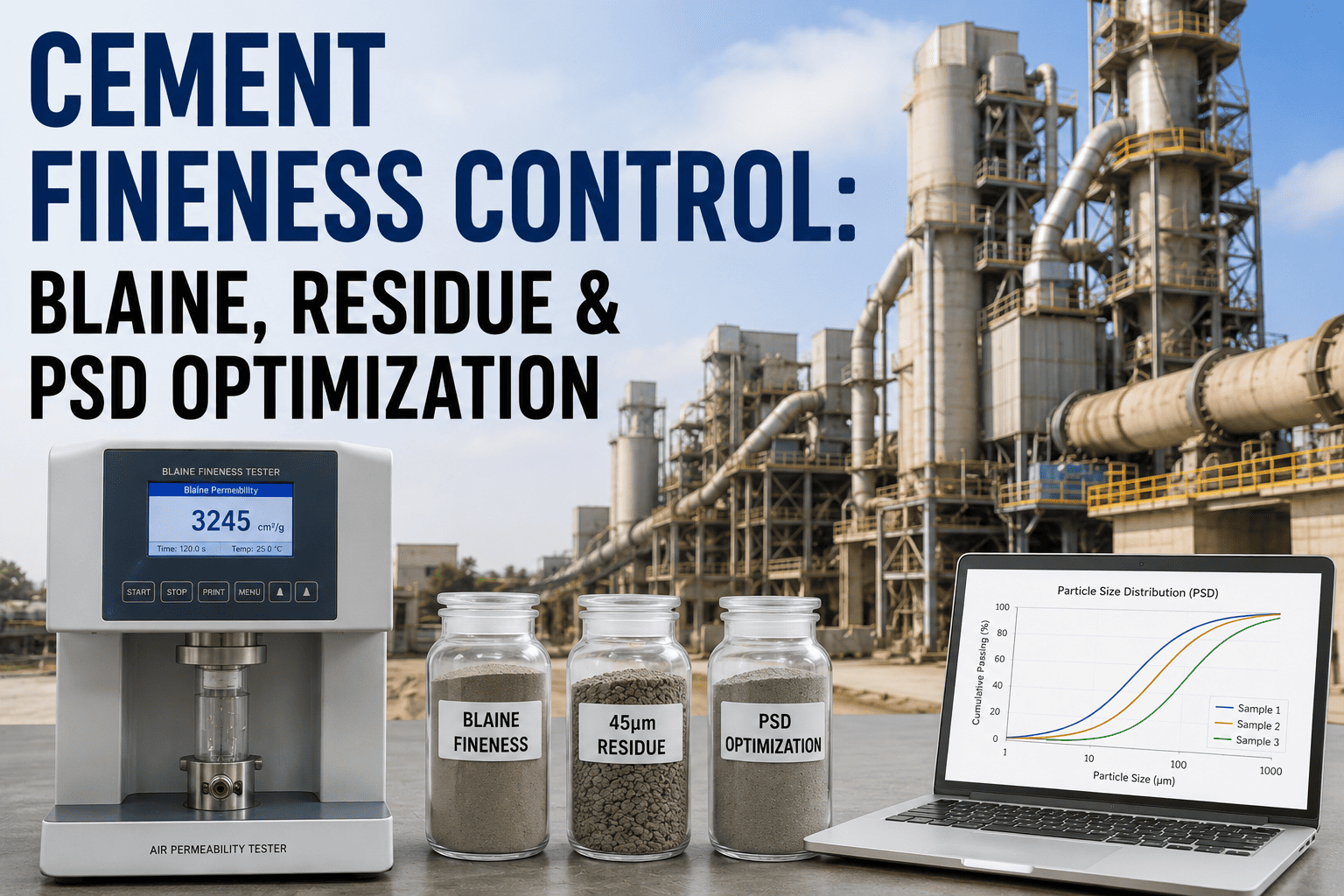
Two cement samples can carry the exact same Blaine number and behave completely differently in the field — one sets on schedule and hits strength targets, the other gives contractors early-age problems nobody can explain from the lab report. The d
Read More
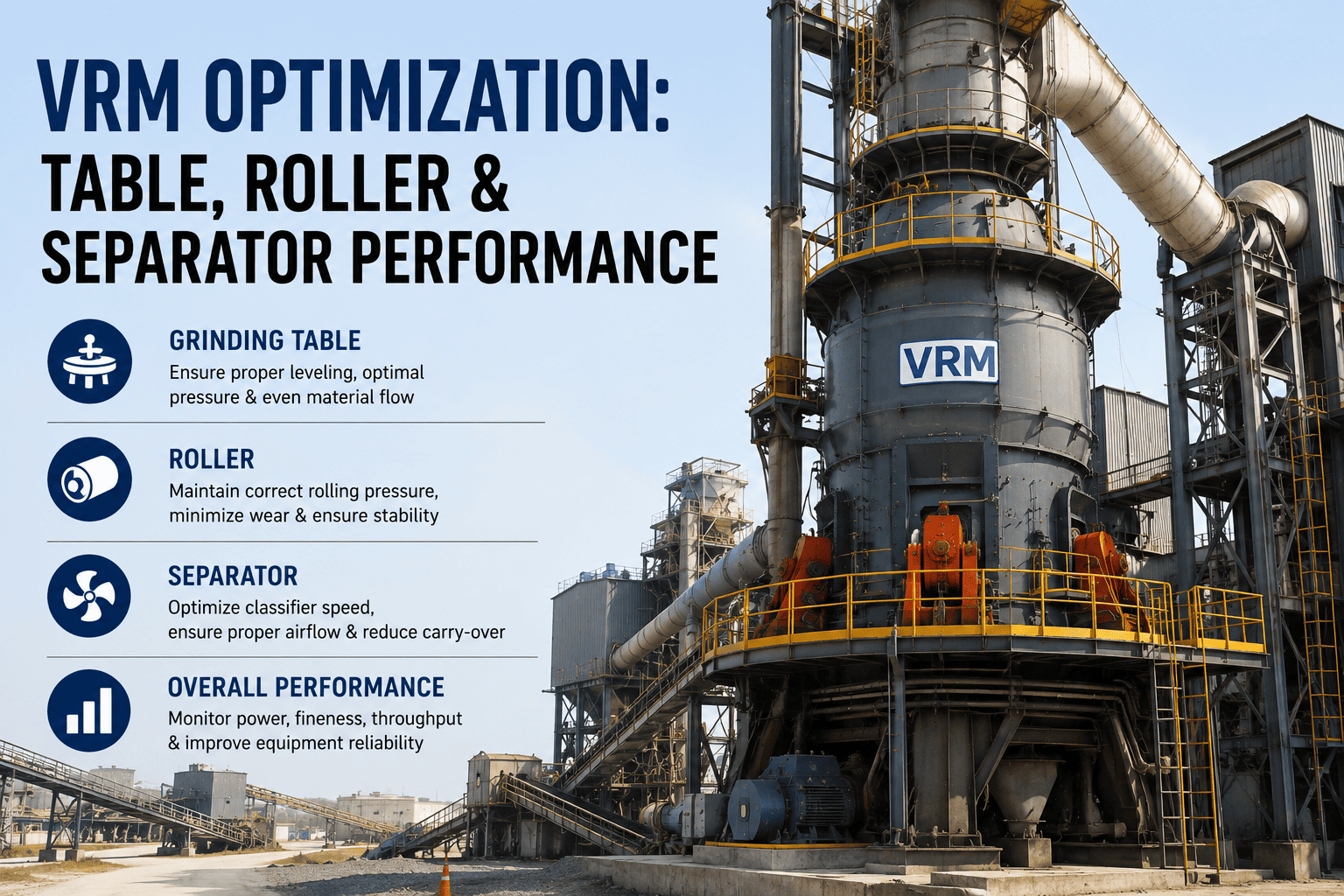
A vertical roller mill rarely dies of a single dramatic failure. It fades — a few kWh per ton at a time, a few microns of table liner at a time, a fraction of a millimeter per second of vibration at a time — until throughput has quietly dropped ei
Read More
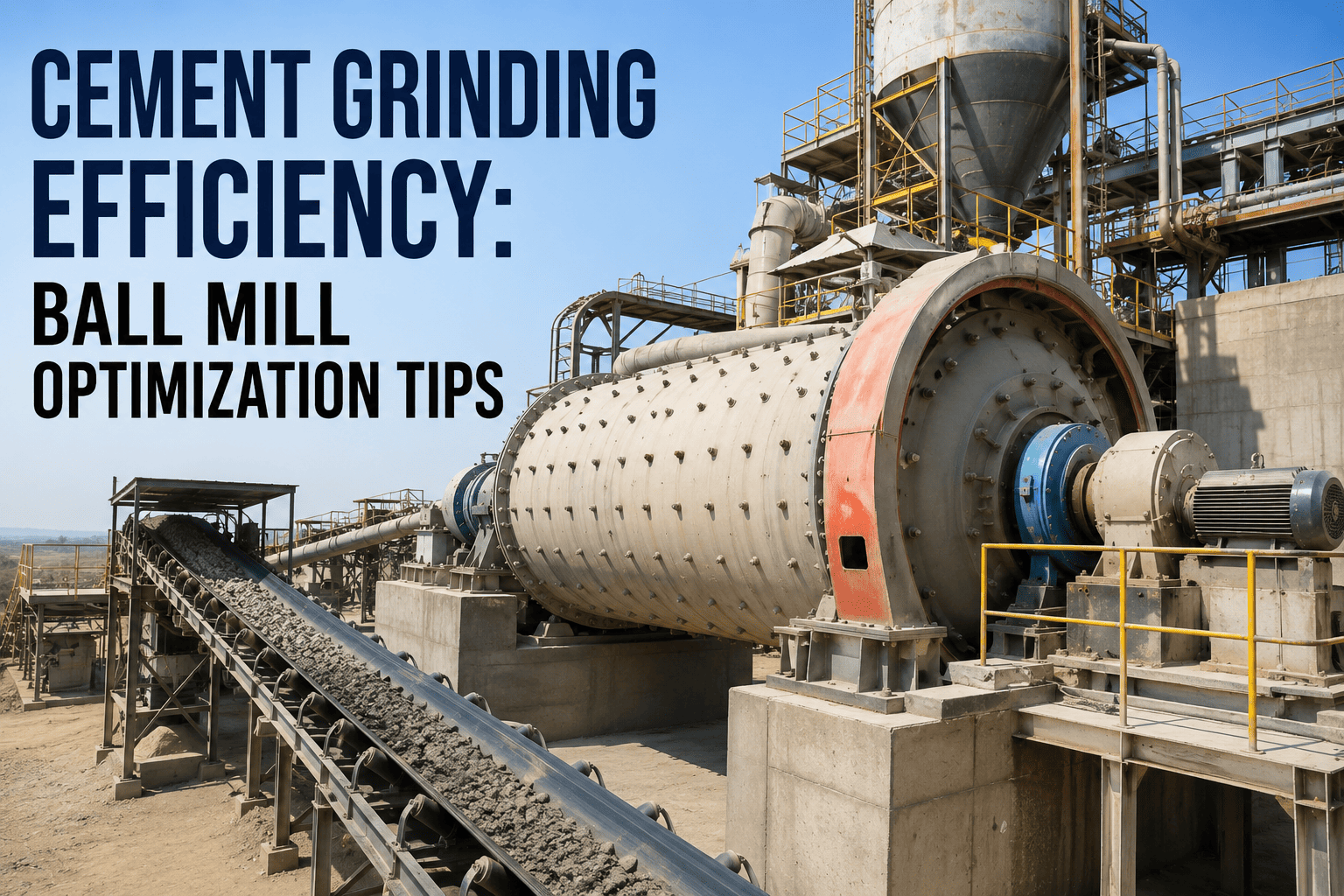
Every ball mill on your grinding line is either turning kilowatt-hours into fineness or quietly burning them into heat, noise, and worn steel. Grinding is the single largest electrical load in a cement plant, and a mill running even a few kWh per

Read More
A jaw crusher running with a worn toggle plate doesn't announce the problem with a dramatic failure — it shows up first as a subtle change in vibration signature that a technician walking past with a handheld meter once a week has almost no chance

Read More
A cement plant's annual shutdown scope starts as a tight list of critical work, then grows every week between now and the outage as deferred work orders get added because "we're already going to be down anyway." By the time the crew mobilizes, the

Read More
A cement plant field technician finishing a bearing replacement on a raw mill drive still has to walk back to the maintenance office, dig out the paper work order, write down what they did from memory, and guess at the hours because nobody was tra

Read More
Most cement plants still run spare parts inventory on min-max reorder points that were set once, years ago, and never revisited as equipment aged, maintenance schedules shifted, or a shutdown calendar changed the timing of when parts actually get

Read More
Most cement plants still schedule bearing and gearbox replacements the same way they did a decade ago — by manufacturer interval, by gut feel, or by whichever asset failed most recently and left the strongest impression on the planning meeting. Th

Read More
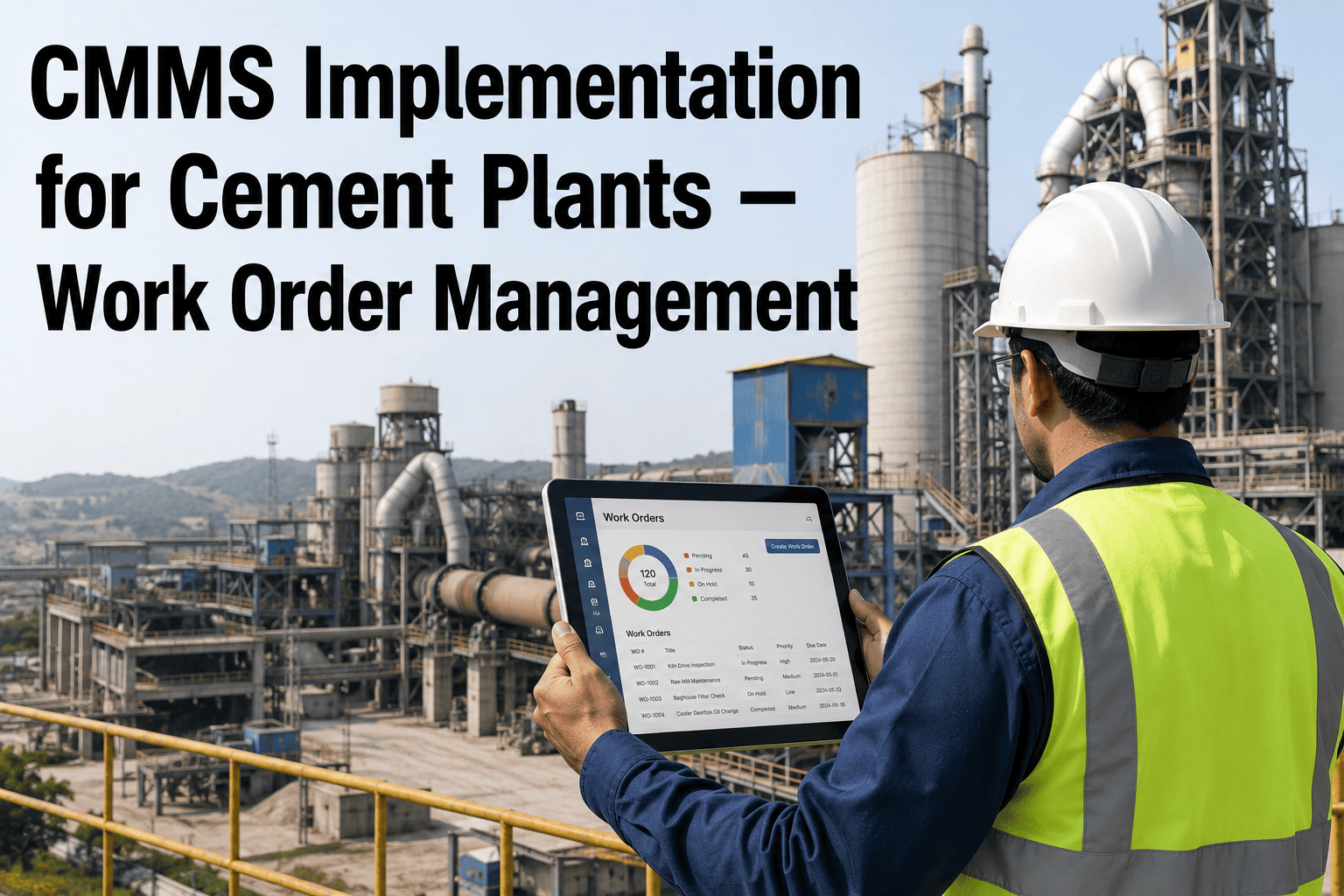
Most cement plants already collect more equipment condition data than anyone actually uses — vibration on the kiln drive, bearing temperature on the raw mill, current draw on the ID fan, oil analysis on the cooler gearbox — each sitting in its own
Read More
A kiln bearing fails at 03:47 on a Saturday. The shift technician writes a work order on a paper slip and drops it in the maintenance planner's tray. The tray gets emptied Monday morning. The part is ordered Tuesday. The part ships Thursday. The b

Read More
A cement group with eight plants across three countries does not have one quality problem — it has eight separate ones, each invisible to the others. Plant A grinds to a 3200 Blaine target; Plant D grinds to 3350 because a supervisor changed the t
Read More
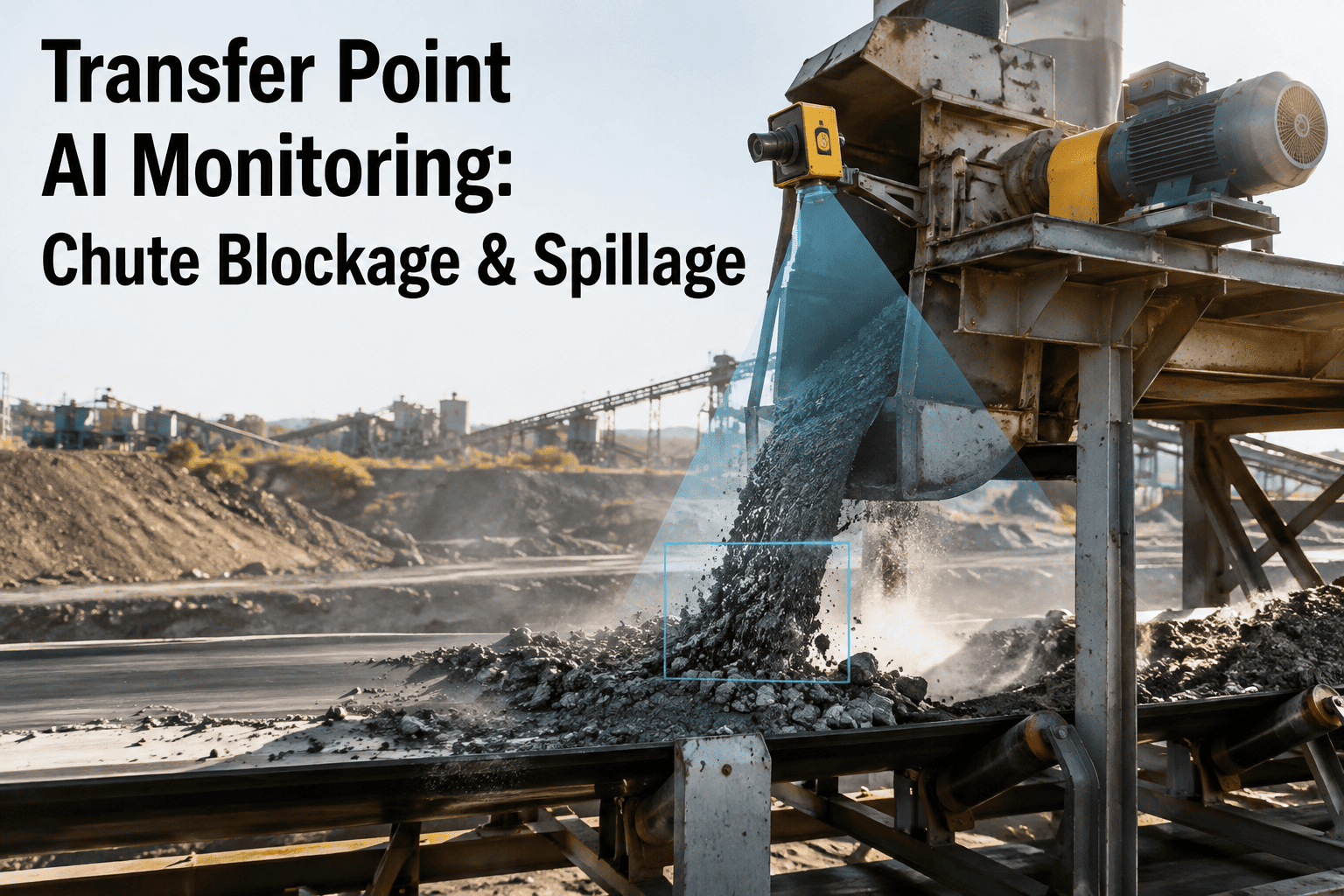
Transfer points cause a disproportionate share of conveyor downtime in a cement plant, and it is not close. A belt can run for months without incident along its straight carrying run, but the chute where material drops from one conveyor to the nex
Read More
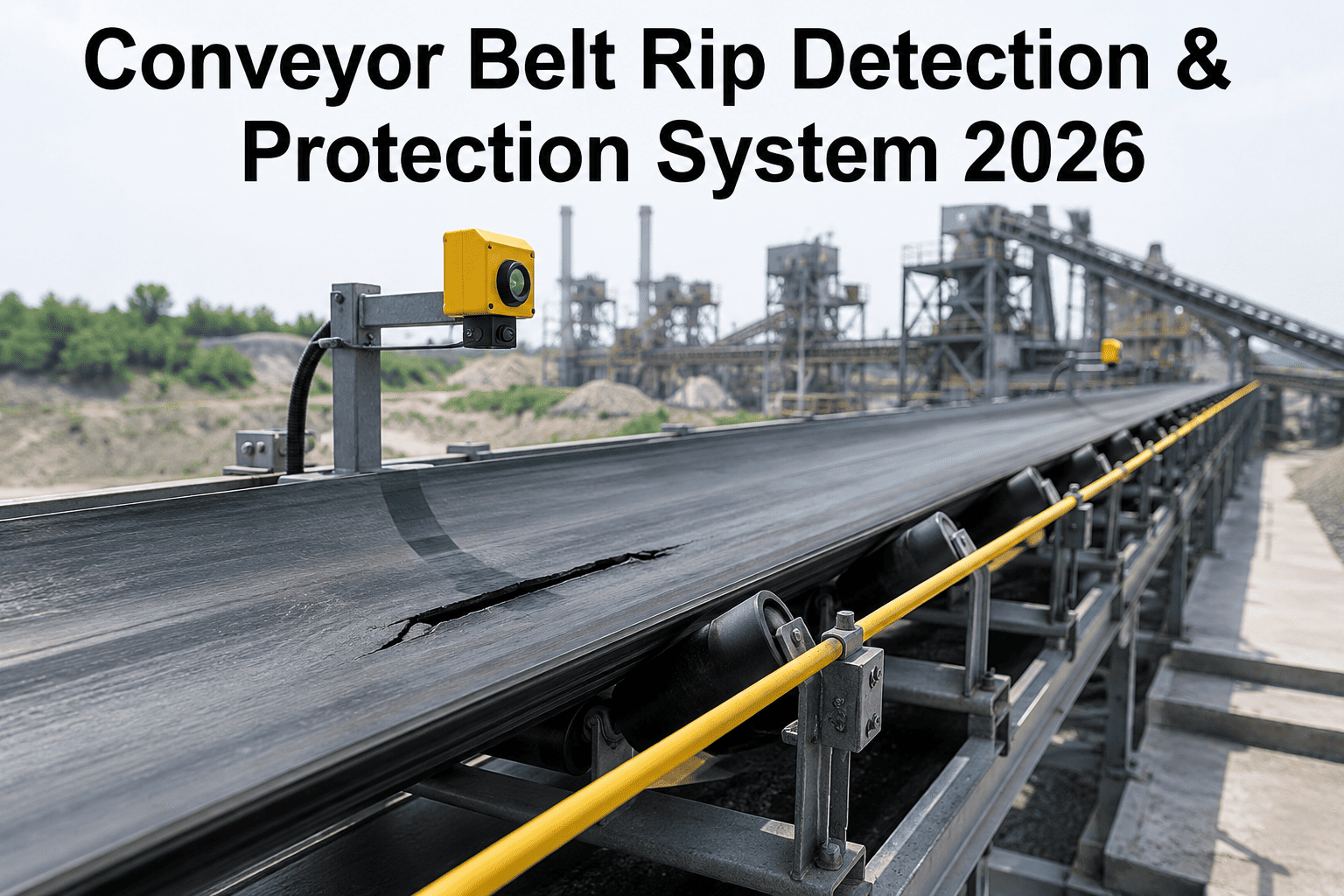
A longitudinal rip on a cement plant conveyor belt does not announce itself with a bang. It starts as a tramp metal snag or a jammed idler, and within seconds it can split 30 to 60 meters of belt down its length before an operator watching a contr

Read More
A WHR (waste heat recovery) power block only performs as well as its cooling system lets it. Boiler design, turbine selection, and steam header pressure get most of the attention during commissioning, but once the plant is running, generating capa
Read More
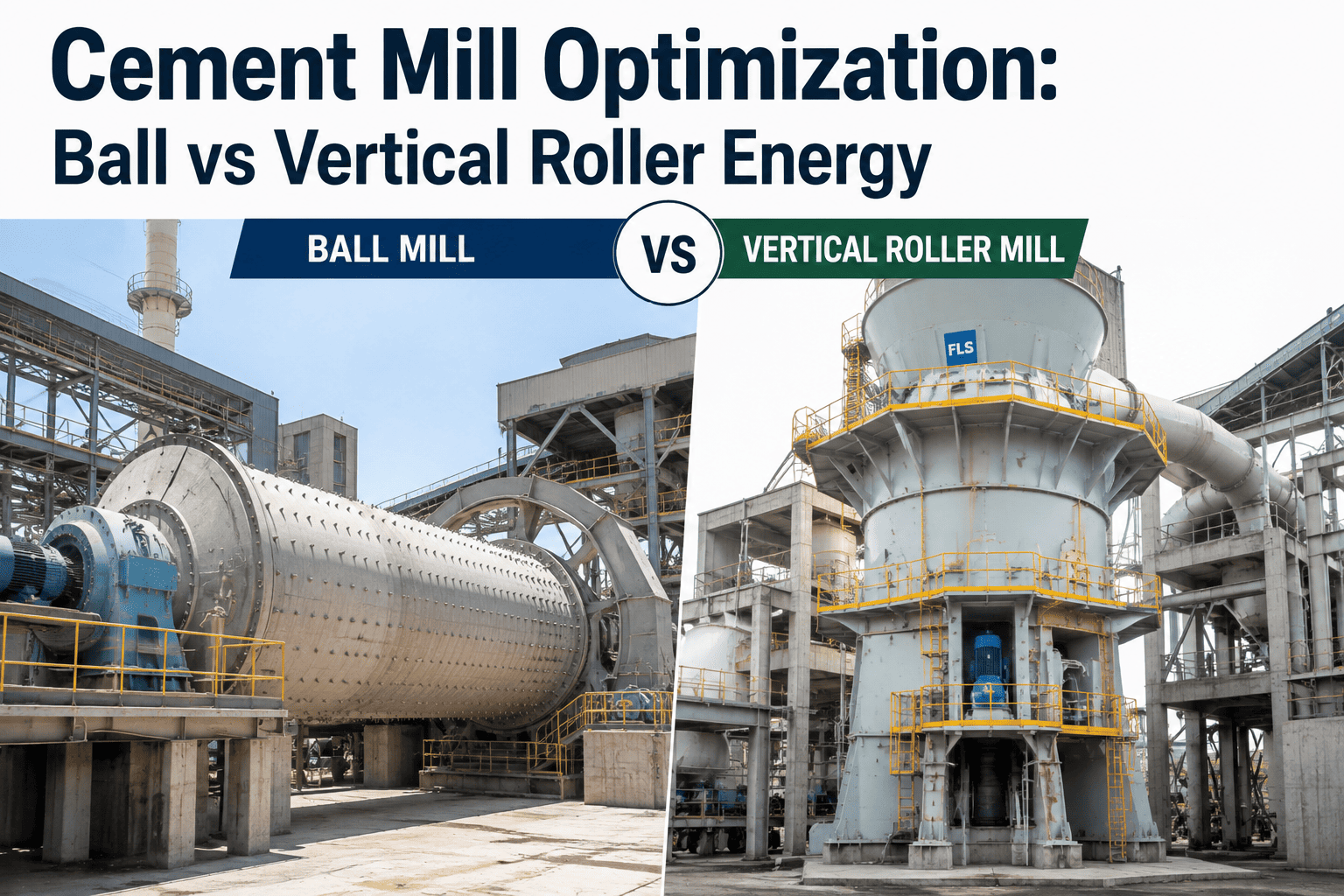
Grinding is the single largest electricity consumer in a cement plant, often accounting for more than 60% of total plant power draw, which makes the choice between a ball mill and a vertical roller mill one of the most consequential energy decisio
Read More
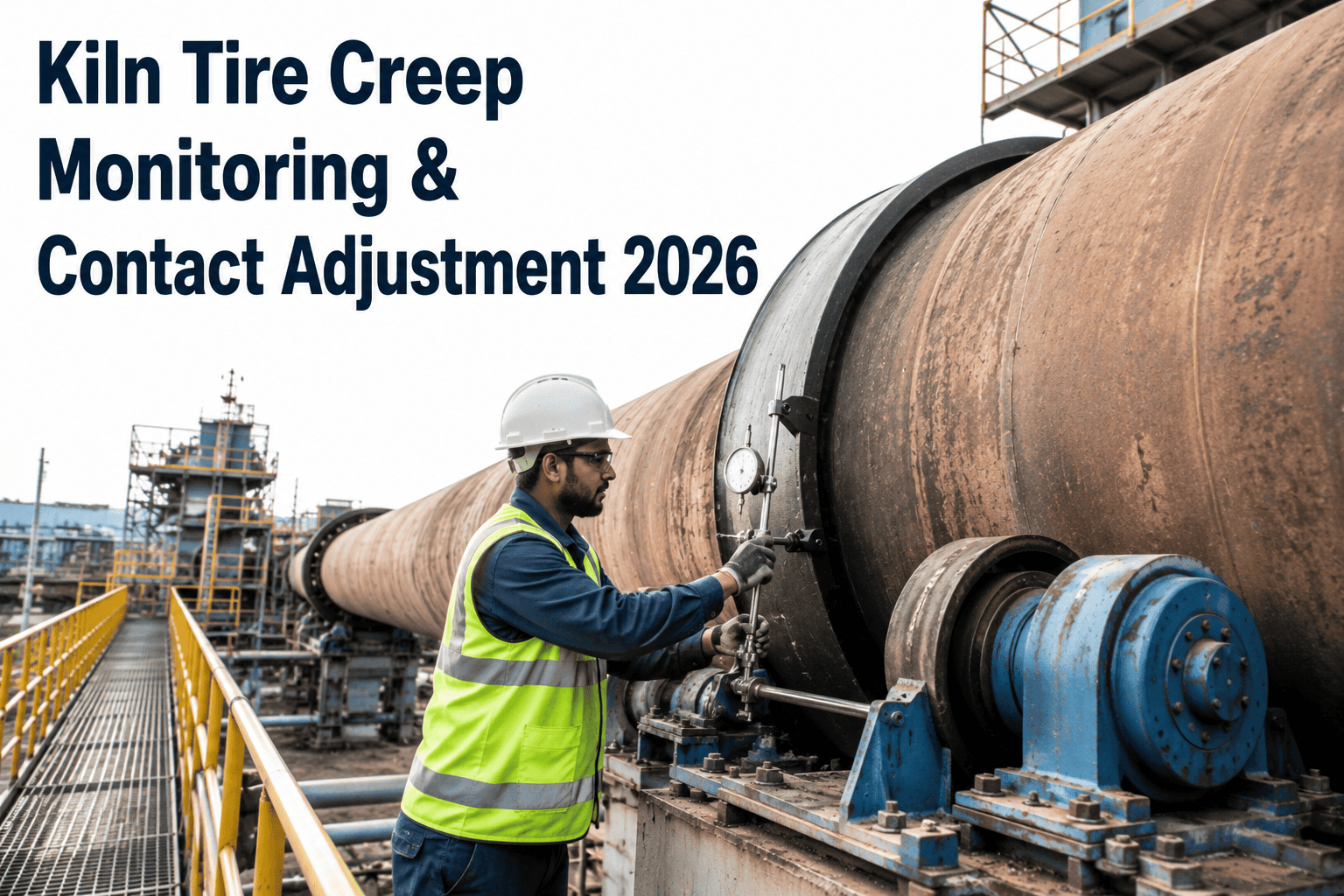
A rotary cement kiln is a 60 to 100 meter steel cylinder weighing between 1,000 and 2,500 metric tons, and it is only ever held in place by a handful of tire-and-roller stations doing the work of carrying that entire rotating mass. Tire creep, the

Read More
A cement kiln's refractory lining is one of the few components where the difference between an average plant and a top-quartile plant is measured in months of avoided downtime, not percentage points of efficiency. Most operators know their current

Read More
Most cement producers still calculate their carbon footprint the way they did a decade ago — from quarterly fuel invoices, annual production estimates, and a spreadsheet someone updates when there's time. Meanwhile the ground has shifted under the

Read More
Most cement plants still calculate OEE from a night-shift operator's handwriting. A kiln stops for 22 minutes, gets logged as "15 min - jam," and by the time the number reaches a spreadsheet, the real cause is gone. Manual OEE tracking in cement p
Read More
Most cement plants running AI today are running four or five of them at once without realizing it — one tool watching bearing vibration, another flagging free lime drift, a spreadsheet someone updates for maintenance priorities, and a separate das

Read More
Walk to the back of almost any cement plant during a shift and you'll find two things happening within a few hundred meters of each other: a stack venting several hundred degrees of exhaust straight into the sky, and a coal dryer or rotary drum bu

Read More
Ask a plant manager why free lime spiked on Tuesday afternoon and you'll usually get three different answers depending on who you ask — the control room points to a raw mix shift, maintenance points to a recent bearing repair, and the lab just con

Read More
Most process changes on a cement line still get tested the expensive way — adjust the raw mix, nudge the kiln speed, open a damper a little further, and then watch the next few hours of production to see what happens. If the change goes wrong, the

Read More
Availability and performance get most of the attention in a cement plant's OEE review, but quality rate is usually the factor quietly capping the score. World-class plants hold a 98 to 99.5% quality rate — good tonnes divided by total tonnes produ

Read More
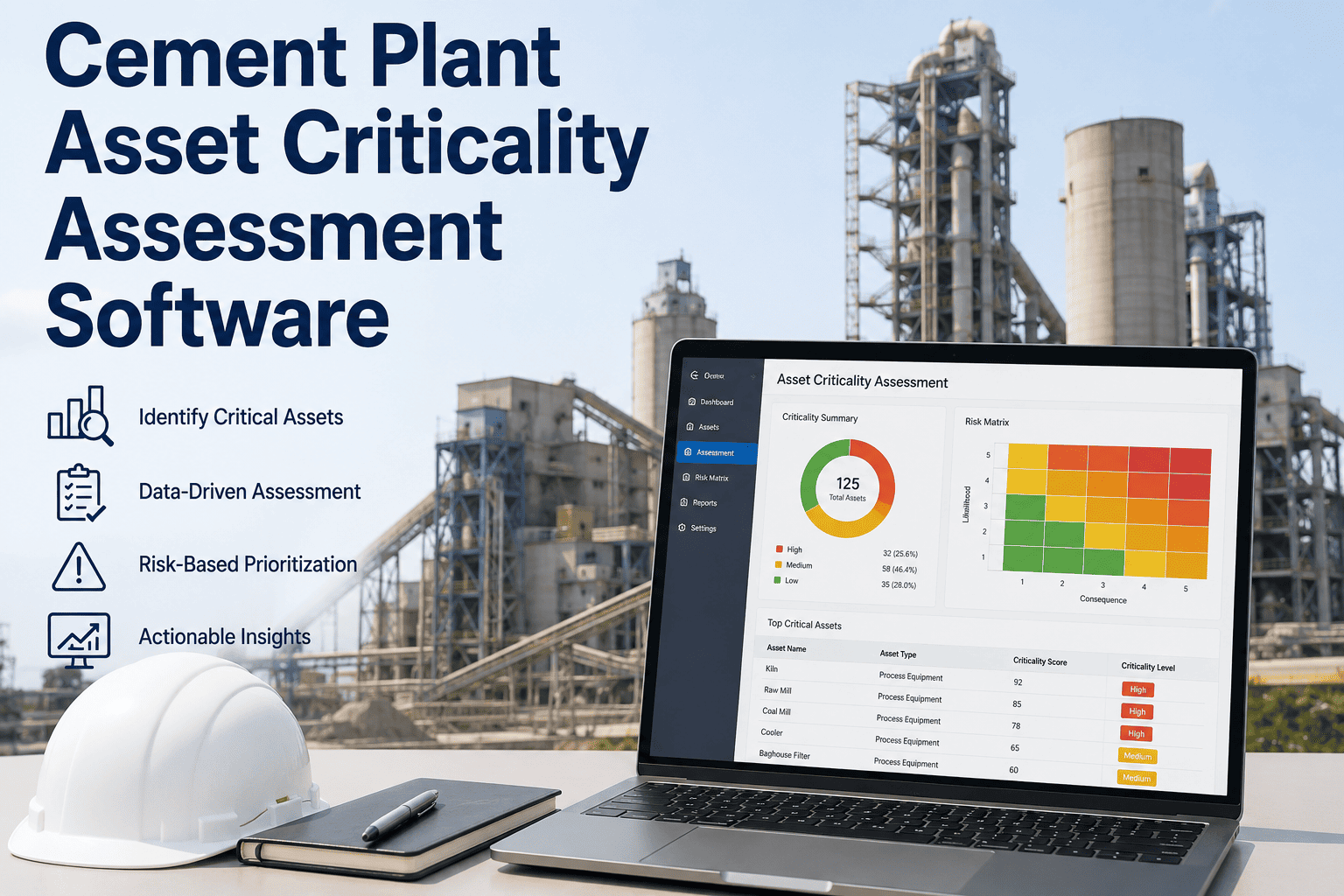
Most cement plants maintain all 2,000-plus assets the same way — identical PM frequency, identical spares buffer, identical engineering attention — whether a failure stops the kiln or just scuffs a guard rail. Asset criticality ranking replaces th

Read More
A vision model that flags belt misalignment or a hot clinker fragment two seconds after it happens is not monitoring the conveyor, it is documenting what already went wrong. Cloud-based inference adds anywhere from four hundred to twelve hundred m

Read More
Ask why a conveyor AI vision system is missing blockages or flagging false alarms and the conversation almost always starts with the model — maybe it needs retraining, maybe the dataset was too small. In most deployments the real answer is sitting

Read More
Every tonne of clinker a cement plant produces starts its journey long before it reaches the raw mill, moving from the quarry face down a haul road, through a hopper, and into a primary crusher that can only perform as well as the feed arriving in
Read More
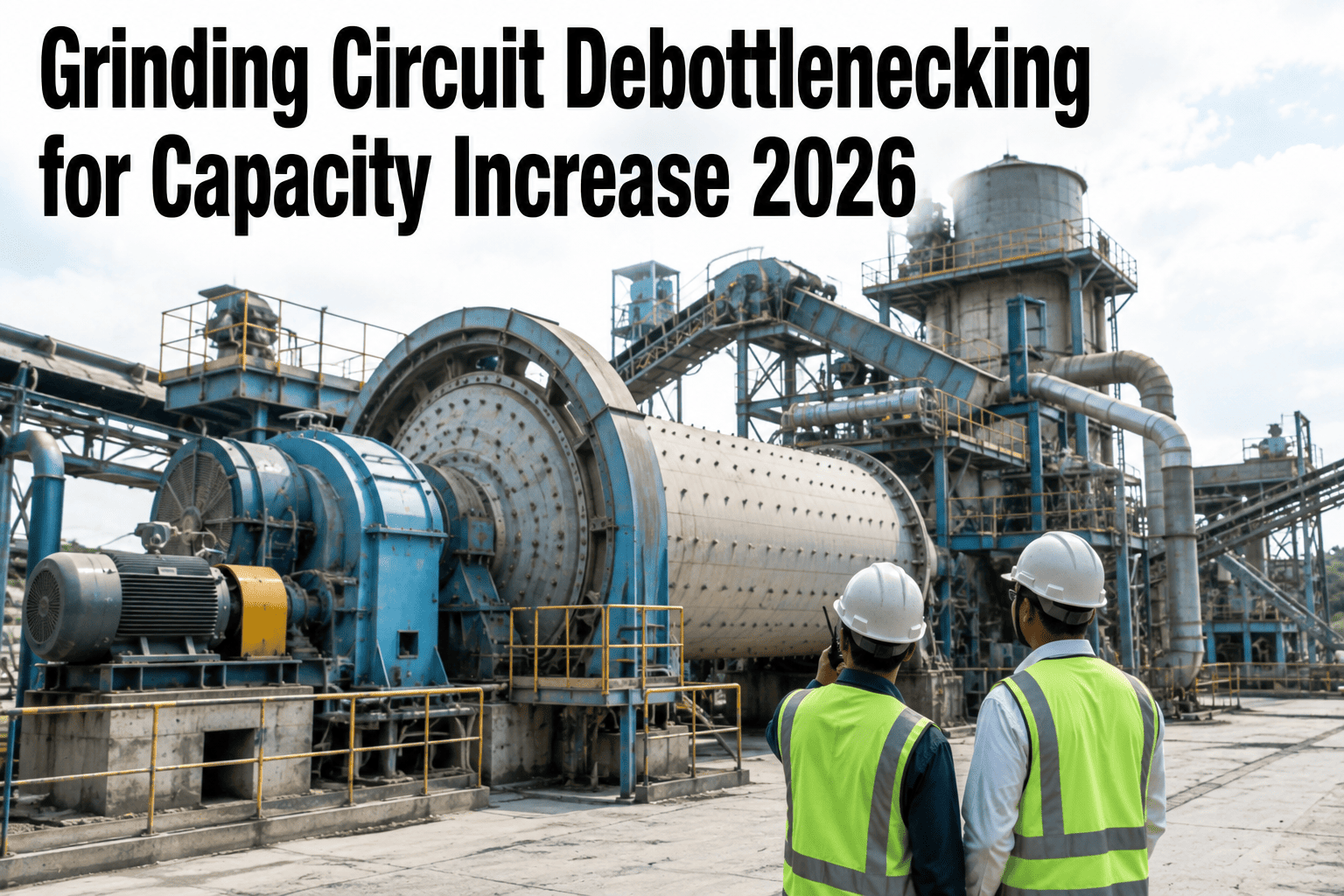
Most cement plants asking for a new mill on next year's capex list already own enough grinding capacity to solve the problem — it is just locked inside a circuit that has drifted away from its design point over years of wear, changing clinker chem

Read More
A kiln burner is one of the smallest capital line items on a cement plant's balance sheet and one of the largest levers on its fuel bill. The nozzle assembly at the hot end of the kiln typically costs a fraction of a percent of total plant capital

Read More
Most WHR equipment failures do not happen without warning — they happen without anyone reading the warning in time. A boiler tube that ruptures on a Tuesday afternoon has usually been thinning for weeks, and a feed pump that seizes overnight has u
Read More
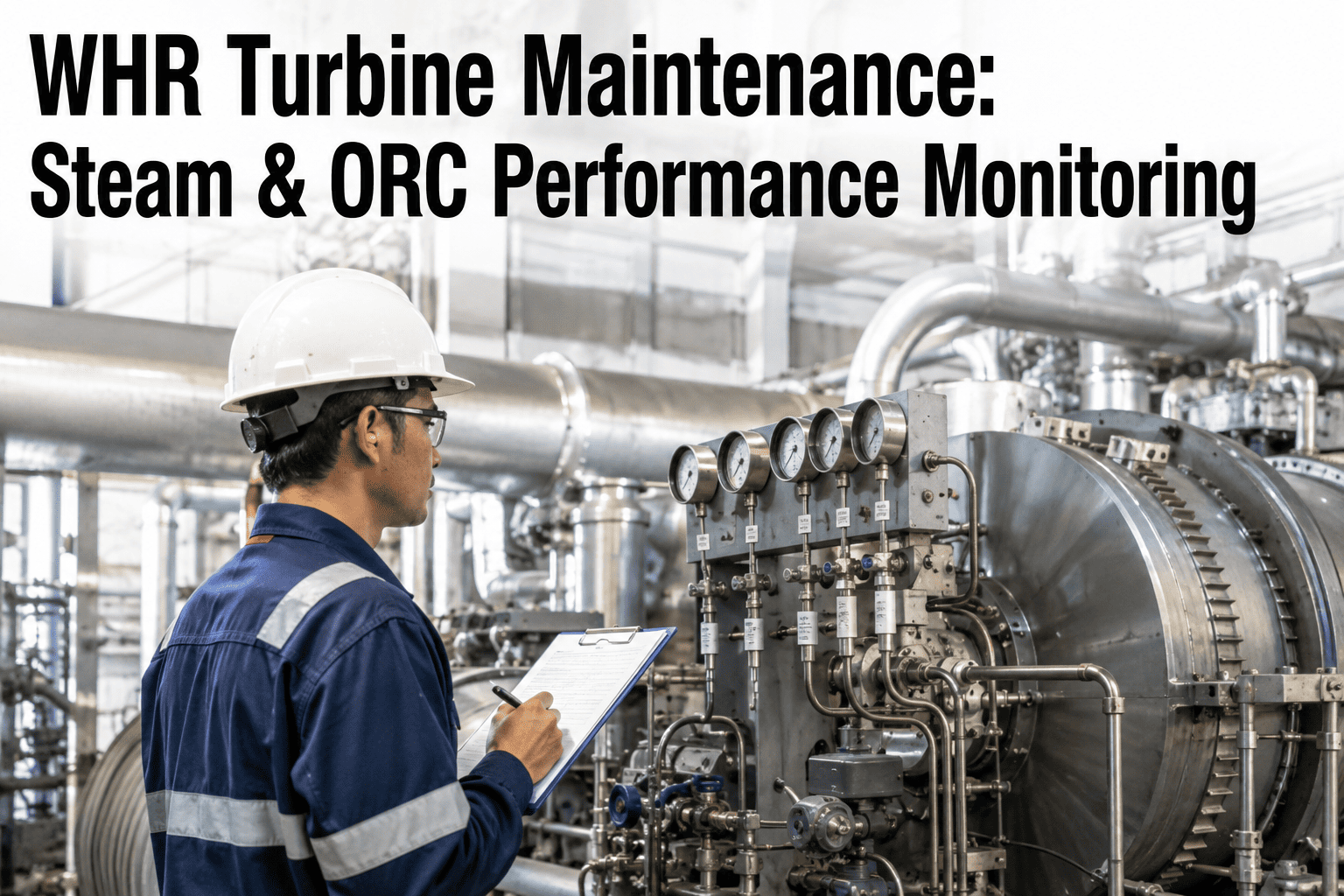
A waste heat recovery turbine almost never announces its own decline. There is no alarm for a slowly fouling condenser, no trip for a bearing that has drifted half a degree warmer than last quarter, no red flag for a working fluid that has been pi

Read More
Coating is the single most underappreciated variable in a cement kiln's economics. It is not a material anyone buys, tracks in inventory, or lists on a monthly cost report, yet a stable coating in the burning zone is what keeps the refractory lini

Read More
Most cement plants know their grinding numbers. Very few can act on them. The specific energy figure arrives in a monthly report weeks after the month it describes, throughput is reconciled at shift handover from a whiteboard, and Blaine lives in

Read More
A cement mill has three masters and they do not agree. Push throughput and specific power climbs. Chase the lowest kWh per tonne and Blaine drifts wide. Tighten quality and operators grind a safety margin above specification that quietly burns ene

Read More
A cement mill liner is one of the cheapest components in the grinding circuit and one of the most decisive in setting what every tonne of cement costs to produce. Lifter height, face angle and classifying profile govern how the ball charge catarac
Read More
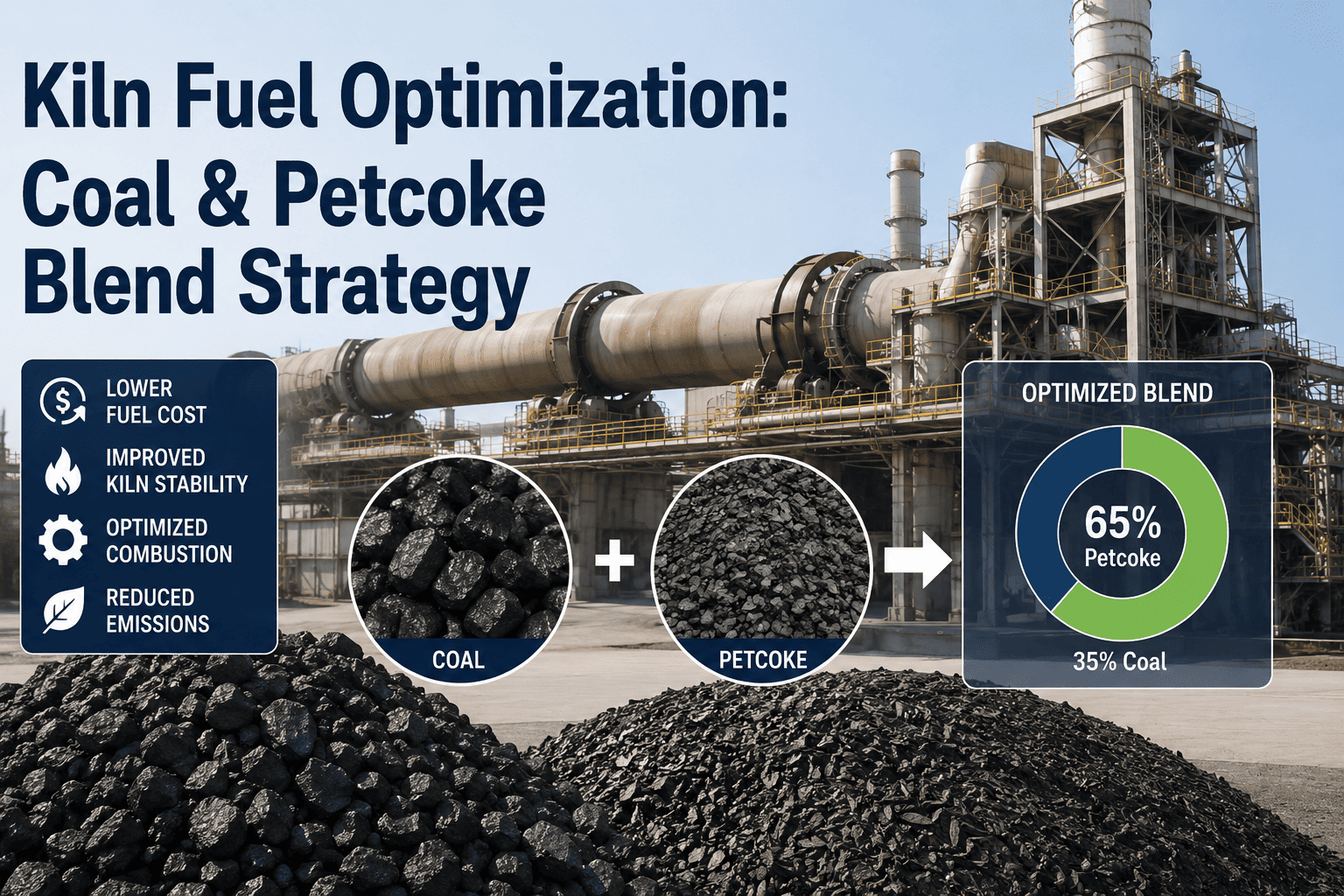
Petcoke costs less per unit of energy than coal in most markets, which is exactly why plants that blend it in without a disciplined strategy end up paying for that discount twice, once in the fuel invoice and again in higher SO2 scrubbing costs, r
Read More
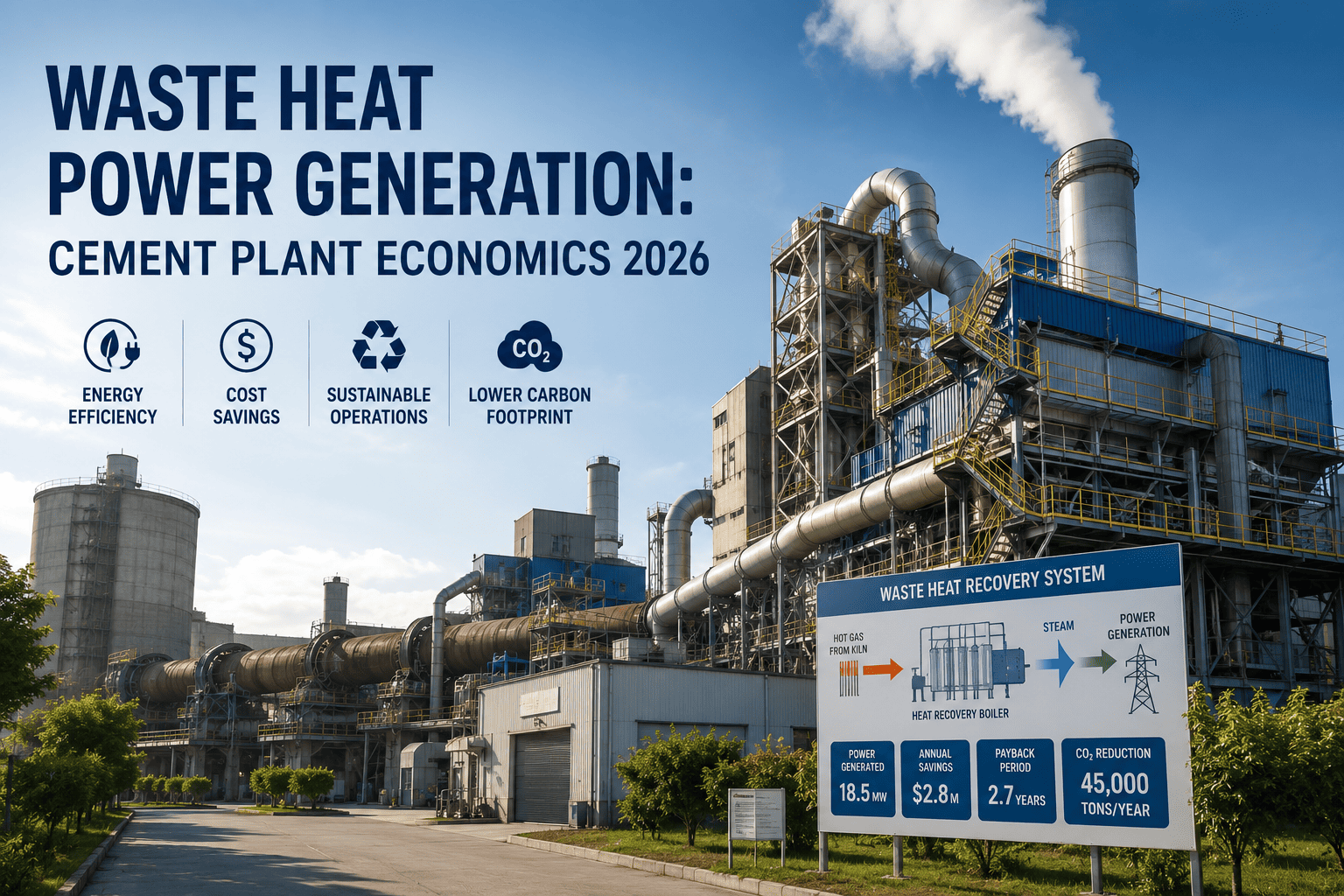
A cement kiln rejects roughly 30 to 40 percent of its input energy as waste heat through the preheater exhaust and clinker cooler exit air, most of which historically vented straight to atmosphere. Waste heat power generation captures a share of t
Read More
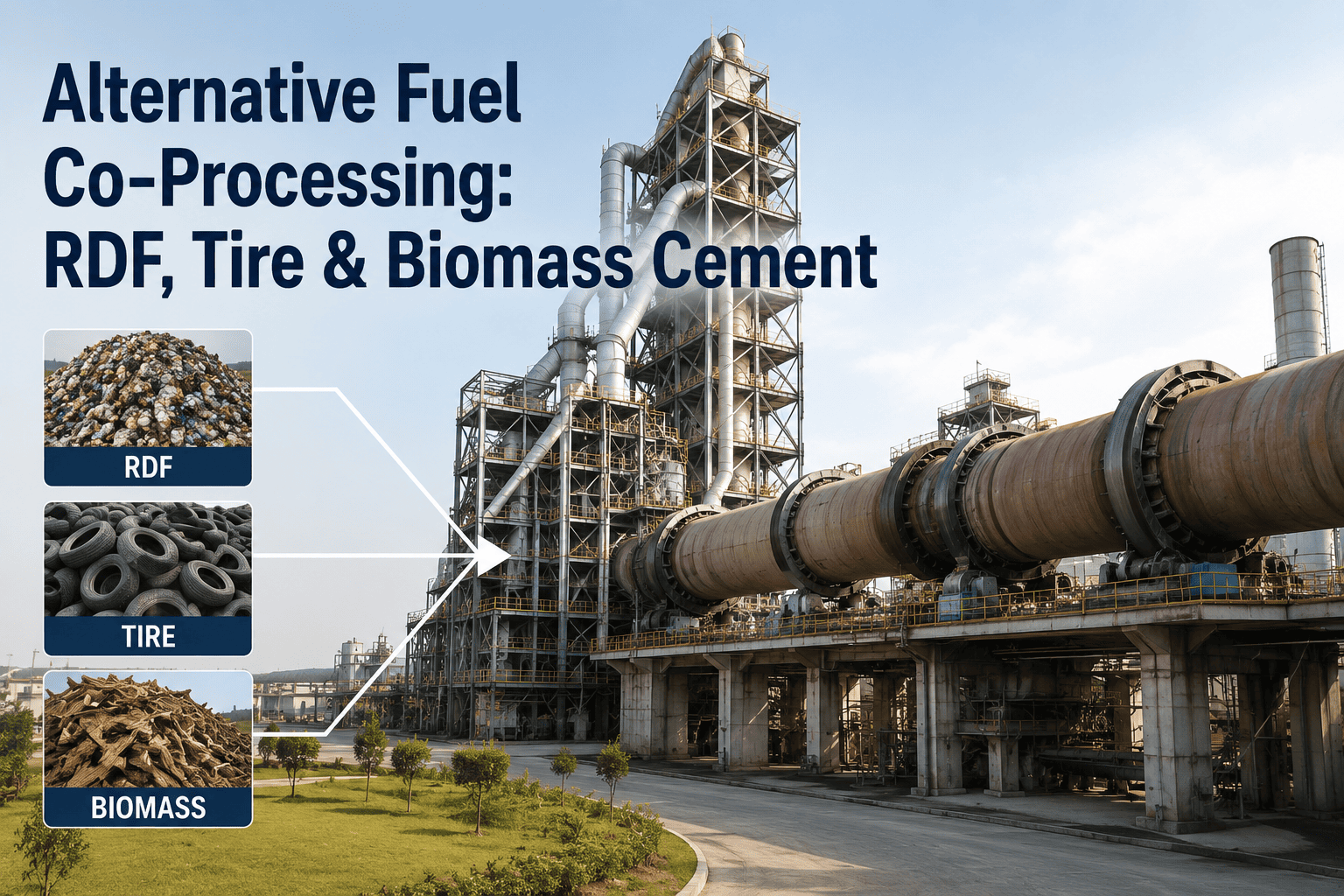
Cement kilns are one of the few industrial processes capable of destroying refuse-derived fuel, whole tires, and biomass waste completely, at temperatures and residence times that leave no ash requiring separate landfill disposal. That capability

Read More
A cement kiln generates thousands of temperature, pressure, and rotational data points every minute, yet most plants still make process adjustments based on operator experience and a handful of trend charts. A digital twin changes that by building

Read More
A planned kiln shutdown that runs three days longer than scheduled can cost a mid-size cement plant well over a million dollars in lost clinker production, standby labor, and rental equipment fees. Most of that overrun traces back to one decision

Read More
A conveyor sensor can detect a misaligned belt, a hot idler, or a splice failure risk in real time, but detection alone has never been the bottleneck in cement plant maintenance. The bottleneck is what happens between the moment an alert fires and

Read More
A primary crusher sitting at the head of a cement plant's crushing circuit can stop the entire raw material flow within minutes of a bearing seizure, and by the time that seizure happens the warning signs have usually been present for weeks. Beari

Read More
A waste heat recovery system in a cement plant is only as good as the efficiency it actually delivers on a given operating day, and that efficiency is rarely the number stamped on the original design sheet. Approach temperatures widen as heat exch

Read More
Every cubic meter of hot exhaust gas leaving a cement kiln's preheater tower has two competing claims on it. The raw mill wants it for drying wet raw material feed, and the waste heat recovery system wants it to generate steam and, ultimately, ele

Read More
Cement plants are unusually good candidates for captive renewable power, and most energy managers already suspect this without having run the actual numbers. Large flat rooftop and yard areas suit solar deployment, auxiliary and utility loads run

Read More
Compressed air is often called the fourth utility in a cement plant, and it is also the most expensive one per unit of useful energy delivered, since converting electricity into compressed air and back into mechanical work loses the majority of th

Read More
A single refractory brick falling inside a rotary kiln rarely announces itself the way plants expect it to. There is no alarm horn built for it, no single sensor labeled "brick fall," and by the time the exposed shell area shows up as a visib

Read More
A rotary kiln that is thermally perfect on paper can still burn 8-12% more fuel than it should, and the reason is rarely the burner or the refractory — it is the gap between the shell and the hood, or the seal at the kiln inlet where the riser duc

Read More
Clinker leaving the kiln cooler can still be above 200°C when it hits a conveyor belt, and the coal or oil used to fire that kiln means the same belt network is also handling grease and hydrocarbon exposure a few hundred meters upstream. Choosing

Read More
A conveyor belt tear rarely starts with the belt. It starts with a drive component that has been quietly degrading for weeks — a pulley losing its lagging, a motor drawing more current than it should, a gearbox running slightly hotter each shift.

Read More
Fuel accounts for roughly a fifth to a third of everything a cement plant spends to make clinker, and most of that fuel burns through a kiln whose control setpoints haven't changed since commissioning. Operators respond to lab results that arrive

Read More
A cement kiln can only burn as steadily as its fuel lets it. Refuse-derived fuel, biomass, and other alternative fuel streams can swing widely in calorific value, moisture content, and ash chemistry depending on waste origin, seasonal conditions,

Read More
Specific energy consumption is the single number that best captures how efficiently a cement plant is converting raw material and fuel into finished product, expressed as kWh per tonne of cement on the electrical side and kcal per kg of clinker on

Read More
Cement manufacturing is one of the most energy-intensive industrial processes in the world, and thermal energy in the kiln system combined with electrical energy in grinding together account for the majority of total production cost per tonne of c

Read More
A kiln shell is only ever supposed to be warm to the touch, never visibly hot. The moment a patch of steel starts glowing, the refractory brick behind it has already failed, and the shell itself is losing structural integrity by the hour. What mak

Read More
A rotary kiln trip is rarely a surprise to the equipment — it is only a surprise to the people running it. Bearing cage defect frequencies climb for one to two weeks before a seizure, girth gear tooth wear extrapolates cleanly from backlash trends

Read More
Justifying an AI copilot budget to plant leadership rarely comes down to whether the technology is impressive — it comes down to whether someone can point to a specific number and say this is what it actually saved us. Faster troubleshooting, fewe

Read More
Most AI copilot pilots at cement plants technically work and still never scale past the one line or one shift where they launched. The model performs fine in testing, a handful of operators like it, and then eighteen months later it's still runnin

Read More
Cement plants are losing their most experienced operators faster than replacements can be trained, and the traditional fix — shadowing a veteran for six to twelve months before being trusted alone on a kiln panel — no longer keeps pace with retire

Read More
Electrical energy accounts for roughly a third of total cement manufacturing energy cost, and unlike thermal energy, which concentrates almost entirely in the kiln, electrical consumption spreads across dozens of individual motors, fans, mills, an

Read More
Cement plants routinely run energy improvement programs inside individual departments — the kiln team chases thermal efficiency, the electrical team chases motor loading, the mills team chases grinding energy per ton — while total plant energy cos

Read More
A conveyor that jams for ninety seconds eight times a shift never shows up on a maintenance work order, never triggers a breakdown report, and never appears in a monthly reliability review — yet across a month, those eight ninety-second stops add

Read More
A cement mill sitting idle for ninety minutes between a batch of OPC and a batch of PPC is not producing anything, but it is still consuming labor, still holding up downstream packing schedules, and still eating into a plant's monthly tonnage targ

Read More
Ask five plant managers what OEE number counts as "good" for a kiln, a raw mill, or a cement mill, and you will likely get five different answers, each defended with conviction and none anchored to an actual external benchmark. That gap between fe

Read More
Ask five different people in a cement plant to define "high priority" on a work order and you will usually get five different answers — the operator means it needs attention this shift, the planner means it needs to fit into next week's schedule,

Read More
Every cement plant maintenance team carries a backlog, and a backlog on its own is not the problem — a backlog that never stops growing is. Work orders pile up faster than crews can close them, critical jobs get buried under a stack of low-priorit

Read More
Belt conveyors rarely fail during the day shift. Idler bearings seize, belt edges begin to fray, and material spillage builds up most often between midnight and dawn, when fewer people are walking the gallery and the human eyes that would normally

Read More
Conveyor belting is one of the largest single capital line items in a cement plant's material handling budget, and a single tear propagation event can turn a belt with years of service life remaining into an emergency replacement costing far more

Read More
An ID fan running at reduced efficiency does not usually trip anything — it simply pulls more current to move the same air, or moves less air at the same current, and both symptoms are easy to miss until the kiln draft or mill airflow numbers star

Read More
A motor winding failure is preceded by a measurable insulation resistance decline that can be tracked for months before it becomes a trip event, and a broken rotor bar produces a distinctive current signature long before it causes a vibration prob

Read More
A gearbox rarely announces its failure with a single symptom — it degrades across three independent channels at once: the oil carries wear metal and additive breakdown evidence, the vibration spectrum carries gear mesh and bearing fault signatures
Read More
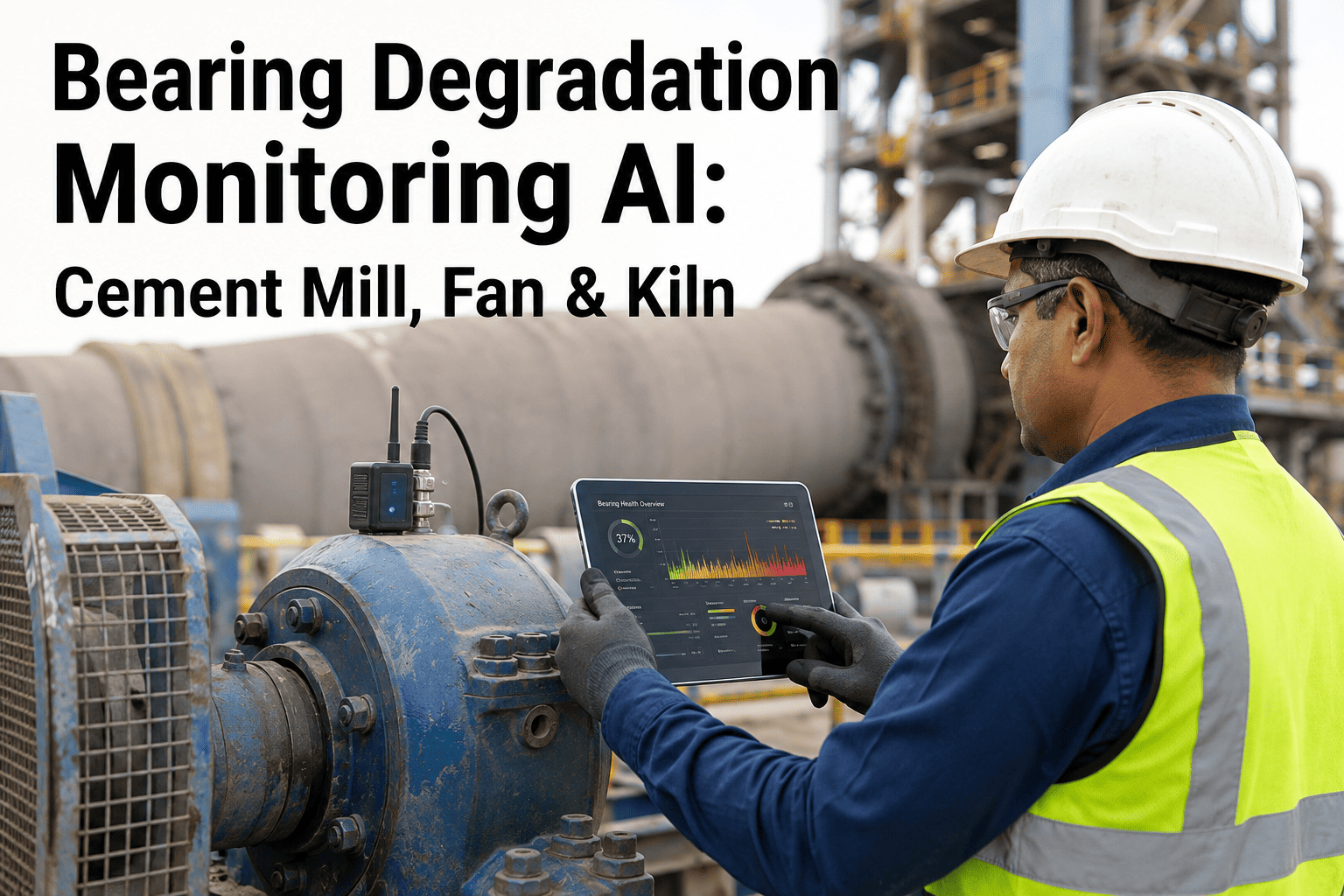
A bearing does not fail on the day it seizes. It fails in four distinct, measurable stages that begin weeks or months before anyone hears a noise or feels heat at the housing — and by the time a maintenance technician can detect degradation with t

Read More
An overheating electrical connection, a motor bearing running hotter than it should, or a process joint losing insulation integrity all give off heat well before they give off a visible or audible warning sign. Thermal imaging turns that invisib

Read More
The lubricant circulating through a cement mill gearbox, a hydraulic power unit, or a gear reducer carries a constant record of what is happening inside that equipment, from microscopic metal wear particles to moisture ingress to additive breakd

Read More
Cement plants run some of the heaviest rotating equipment in industry, and mills, fans, and crushers absorb constant shock loading and abrasive dust that wear bearings, gears, and rotor components long before a failure ever shows up on a control

Read More
Cement plants that jump straight from reactive maintenance into a full plant-wide predictive maintenance rollout almost always end up with an expensive dashboard nobody uses and a maintenance team that quietly returns to the same failure-and-fix r

Read More
Every cement plant lab generates thousands of data points a week — free lime, LSF, SM, AM, Blaine fineness, 1-day strength, 3-day strength, 28-day strength, insoluble residue, sulfate, chloride, alkali, loss on ignition — and in most plants that d

Read More
Ask a cement lab supervisor how a sampling schedule actually gets followed on a busy shift, and the honest answer is usually "mostly." A wall chart or a shared spreadsheet tells technicians what to test and when, but a busy shift with instrument d

Read More
A free lime spike on a cement kiln is a chemistry problem with a clock attached to it. The moment a raw mix ratio drifts out of target, every tonne of kiln feed processed before that drift is corrected becomes clinker that needs blending, reproces

Read More
A cement plant's kiln does not wait for a lab technician to finish a titration. Free lime results, fineness checks, and compressive strength projections all move on their own clock, and in most plants that clock still runs on paper logbooks, sprea

Read More
Every cement quality lab runs on the same twenty-eight-day clock, and that clock has not changed in over a century. Cubes are cast, cured, and broken at 1, 3, 7, and 28 days exactly as the standard requires, and the 28-day result is still the numb

Read More
Free lime is the single most unforgiving number in a cement quality lab. A clinker sample can pass every other chemical and physical check and still get rejected the moment free-CaO drifts outside its narrow band, because it signals the kiln simpl
Read More
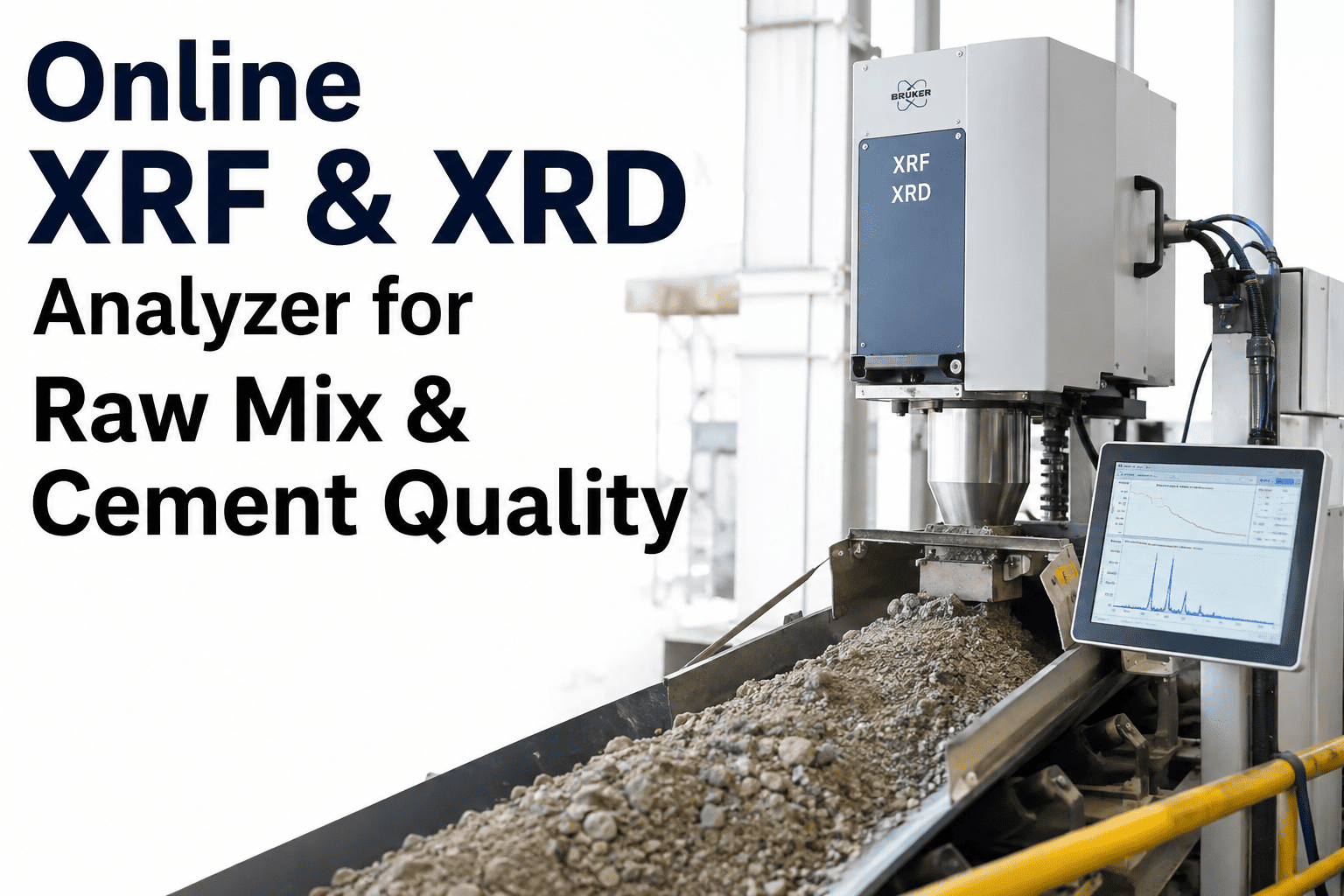
Most cement plants that run laboratory XRF and XRD analysis already own the right instruments — they're just using them on the wrong schedule. A lab-grade X-ray fluorescence unit sitting in the quality building can characterize raw mix chemistry w

Read More
A cement plant can run its kiln at a perfectly stable set point, hold raw mix chemistry within spec on paper, and still ship a batch of clinker that fails strength testing three weeks later — because the lab that caught the deviation only pulled a
Read More
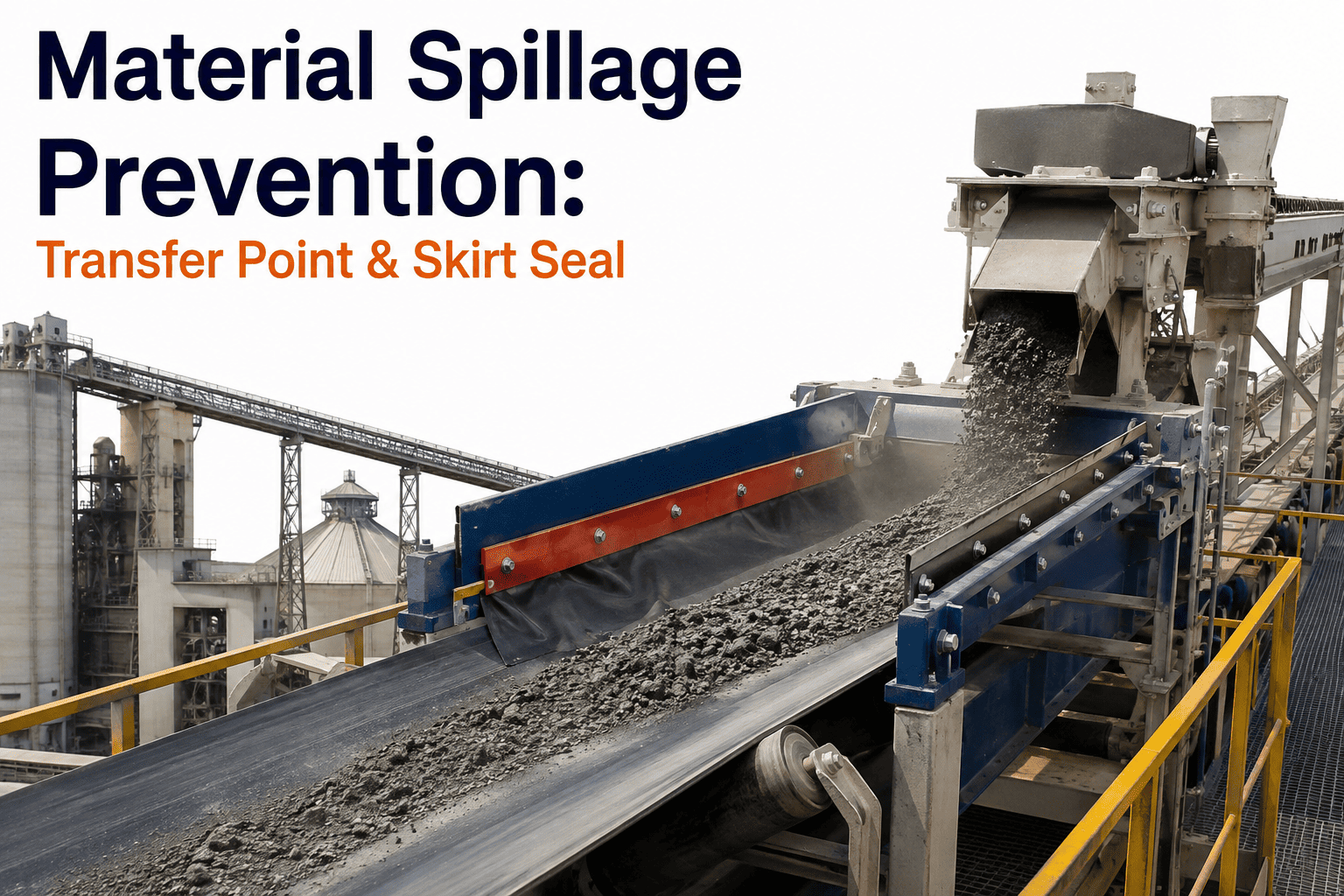
A cement plant running a single 1,200 mm belt at a poorly sealed transfer point can lose several tons of raw meal or clinker a day to spillage, and every ton on the ground is a ton someone has to shovel, sweep, or vacuum back into the process. The

Read More
A single seized idler roller on a cement plant conveyor can start a chain reaction that ends in a burned-through belt, a multi-shift shutdown, and a repair bill running into hundreds of thousands of dollars. Most maintenance teams only find out an

Read More
Conveyor belt splice failure is one of the most common causes of unplanned downtime in bulk material handling systems, and in a cement plant the consequences compound fast — a separated joint on a kiln feed conveyor does not just stop that belt, i
Read More
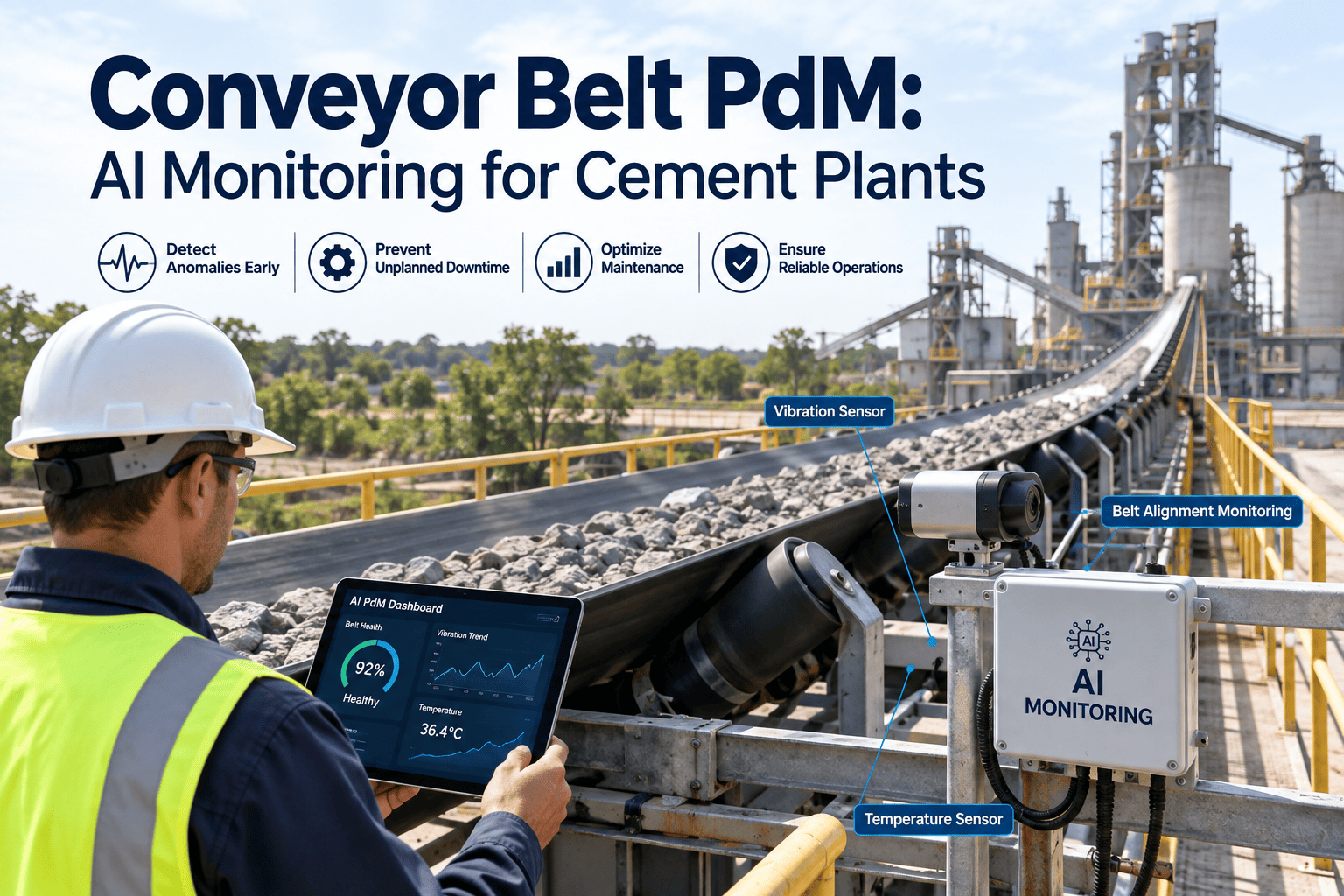
A cement plant's overland conveyor network can stretch for kilometers, carrying raw meal, clinker, and finished cement through dozens of transfer points, hundreds of idlers, and belt splices that were never designed to last forever. When one of th
Read More
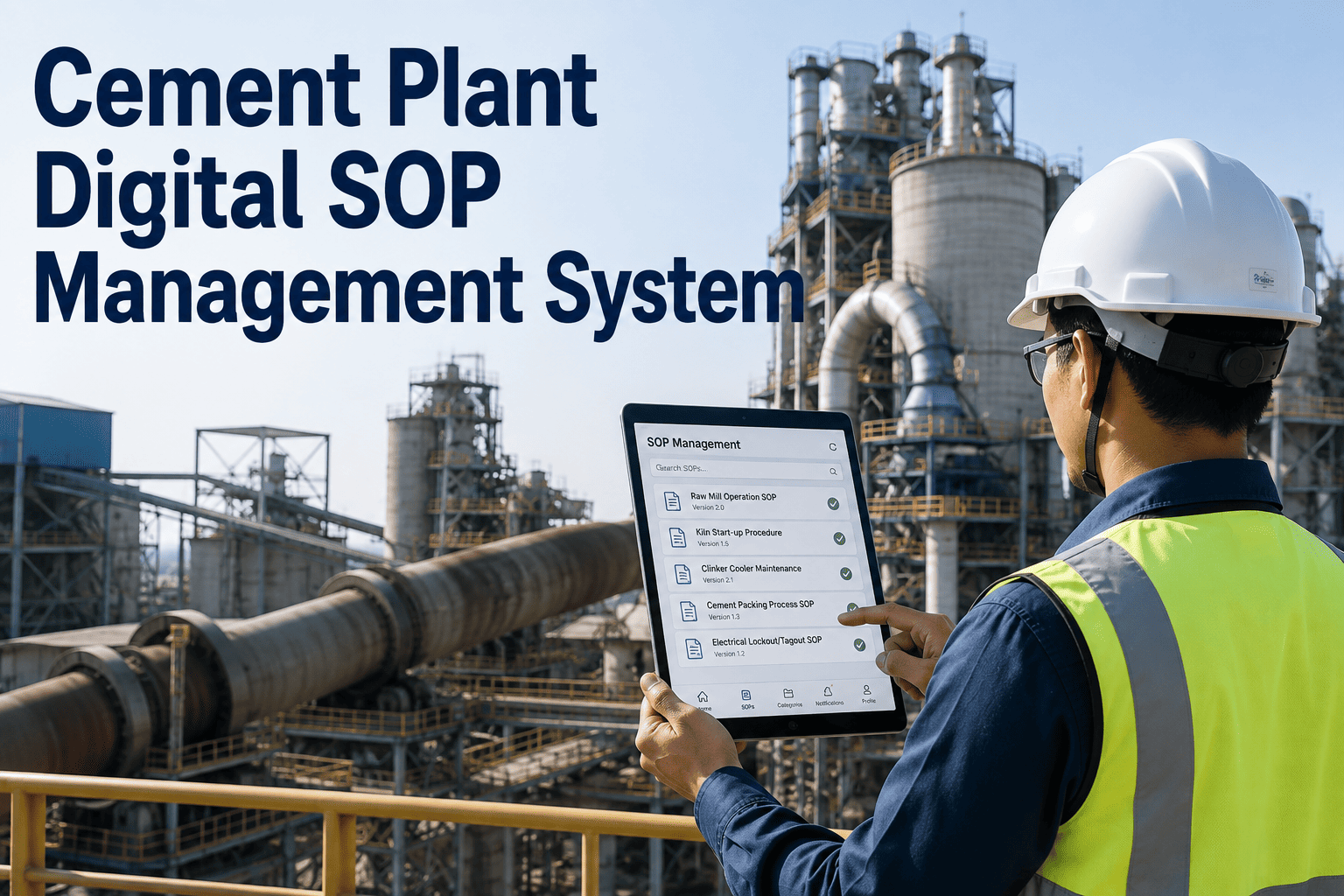
Ask a shift supervisor whether every operator on every crew ran last week's kiln startup exactly per procedure, and the honest answer at most cement plants is that nobody actually knows. Laminated binders get outdated the moment a process changes,

Read More
Most continuous improvement programs start with real energy: a kaizen event, a suggestion box, a KPI wall painted with good intentions. Then six months pass, the whiteboard gets erased for a different meeting, and nobody can say with certainty whe
Read More
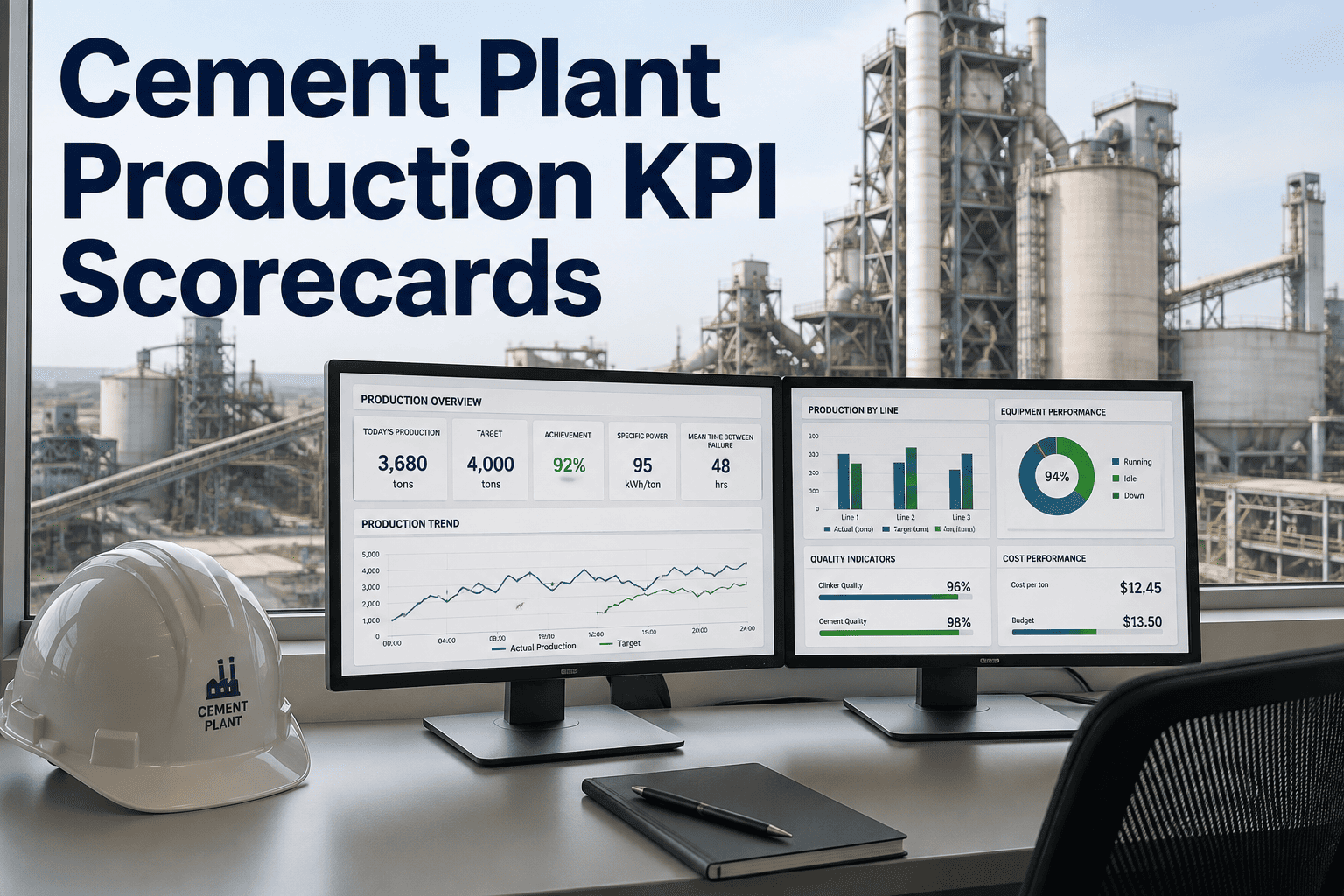
Most cement plants still run production performance the way they did fifteen years ago: a shift supervisor fills out a paper log, someone keys it into a spreadsheet the next morning, and by the time a plant manager sees where yesterday's shift lan

Read More
A cement plant manager who only ever looks at their own plant's maintenance numbers is working with half the picture, because a metric only means something in comparison. Spending $8.50 per tonne on maintenance can look perfectly controlled on a s

Read More
A cement plant reliability team can be staring at a dozen different screens right now, one showing kiln shell temperature, another showing raw mill vibration, a third showing crusher motor current, and still have no single answer to the one questi

Read More
Most cement plants can tell you their maintenance budget down to the dollar, but ask what a single unplanned kiln stop actually costs once lost production, emergency labor, spoiled raw meal, and the multi-hour restart cycle are added together, and

Read More
A cement plant runs on a small number of large rotating machines carrying the entire process on their shoulders — the kiln drive and its support rollers, the raw mill and cement mill gearboxes, the ID and preheater fans moving hot, dust-laden gas

Read More
Ask five different inspectors to audit the same cement plant area on the same day, and you will likely get five different findings, five different levels of detail, and five different interpretations of what counts as a compliance risk. Paper chec

Read More
A cement kiln that runs steadily for 72 hours and then destabilizes for six hours is not operating at 92 percent stability. It is operating at a level that quietly wastes fuel, produces off-spec clinker, and accelerates refractory wear in ways tha

Read More
A cement plant warehouse that looks well-stocked is often hiding a problem that only surfaces when the finance team runs the annual inventory carrying cost report. Shelves are full, but 20 to 30 percent of the parts on those shelves have not moved

Read More
A maintenance backlog in a cement plant is not just a list of deferred work orders. It is a ledger of unmanaged risk that grows silently while production targets are met shift after shift. Kilns keep rotating, mills keep grinding, and the backlog

Read More
Cement plant labor costs are among the largest controllable line items in the operating budget, yet most plants still measure workforce productivity through headcount and overtime totals rather than any real sense of how effectively that time is b

Read More
A cement plant that hits its average monthly production target can still be losing significant margin if that average is masking wide swings between good days and bad days. A kiln that runs smoothly for three weeks and then stumbles through five d

Read More
Some equipment failures at a cement plant genuinely come out of nowhere, but most do not. Look closely at a year of maintenance records and the same handful of assets tend to show up again and again, failing in the same general way each time, whet

Read More
Ask a plant manager how the kilns, mills, and utilities are performing today, and the honest answer at most cement plants involves opening four or five separate systems, calling two different shift supervisors, and still not having a complete pict

Read More
Every cement plant finance and maintenance team eventually faces the same argument in the same budget meeting: which aging asset gets replaced this year, and which one gets patched together for another twelve months. Most plants answer that questi

Read More
Maintenance budgets in cement plants are typically set using last year's actual spend plus or minus a percentage that has more to do with the financial target the plant was given than with what the equipment actually needs. This approach guarantee

Read More
Capacity utilization in cement manufacturing is one of the most misleading metrics in the industry because the headline number, typically expressed as a percentage of rated capacity, almost always overstates how efficiently the plant is actually u

Read More
A plant director walking into a Monday leadership meeting usually has four separate reports in front of them — a production summary from operations, a cost report from finance, a maintenance backlog from the CMMS, and an energy consumption chart f

Read More
Ask five different people at a cement plant what the current MTBF for the raw mill is and there is a good chance you get five different numbers, each calculated slightly differently in a different spreadsheet, none of them wrong exactly, but none

Read More
Most cement plants can tell you how many tons they produced last month. Far fewer can tell you, asset by asset, how many of the available production hours each conveyor, crusher, or mill actually ran versus sat idle waiting on something else in th

Read More
A plant can have a fully staffed maintenance department and still miss half its preventive work every month, simply because the whiteboard schedule was built around who happened to be available on Monday morning rather than which assets actually n

Read More
A cement plant rarely fails because of one dramatic event. It fails because three small warning signs — a kiln shell hot spot, a backlog of overdue lubrication rounds, and a near-miss in the raw mill area — sit in three different systems that neve

Read More
Cement plants have spent the last two decades digitizing individual departments, but the result in most cases is not a smart plant but a fragmented one where production, maintenance, energy, quality, and safety each run on separate software platfo

Read More
Cement plants generate thousands of data points per minute across kiln control systems, grinding circuits, quality labs, and maintenance logs, yet most plant managers receive their monthly performance review as a static spreadsheet that took a jun

Read More
Cement plants operate in a continuous, abrasive, high-temperature environment where an unplanned kiln shutdown can cost upwards of $300,000 per day in lost clinker production and thermal damage. Reliability engineers have invested heavily in vibra
Read More
A kiln bearing at one cement plant was scheduled on the exact same 30-day preventive maintenance cycle as the breakroom HVAC unit — until that bearing failed on a Saturday and cost $880,000 in downtime and emergency repair over a single weekend.

Read More
One cement plant discovered $4 million tied up in spare parts for a kiln line it had decommissioned back in 2018 — parts nobody had flagged for years because nothing in the ERP system distinguished dead stock from an active spare. This is the qu

Read More
Compressed air, steam, and cooling water rarely get the same scrutiny as kiln fuel or grinding power, yet in most cement plants they quietly account for a meaningful share of the electricity bill — and most of that spend is waste that never show

Read More
Every cement plant already has a bottleneck right now, and most plants don't know exactly where it is until output falls short at month-end. A raw mill running at 78% of rated capacity while the kiln runs at 92% is not a kiln problem — it is a r

Read More
Water rarely gets the same scrutiny as fuel or electricity on a cement plant's utility bill, yet cooling towers, raw mill spray systems, dust suppression, and slag granulation together can pull through volumes large enough to matter both financial

Read More
A cement plant can run its kiln at perfect efficiency and still lose money at the loading bay if trucks are idling in a queue, loading bays are sitting empty between dispatches, or drivers are being routed to the wrong silo for the order they are

Read More
Every cement plant treats its annual shutdown as a fixed date on the calendar, but very few treat the planning that leads up to it with the same discipline. Scope keeps growing after the freeze date, spare parts arrive late because nobody cross-ch

Read More
A red spot on the kiln shell is the moment everyone finally pays attention, but by then the refractory lining underneath has usually been thinning for months. Shell scanning happens on a schedule, thermal guns get pointed at obvious trouble spots

Read More
A cement plant on any given day might have thirty contractors on site from a dozen different companies — welders, riggers, electrical crews, refractory installers — each carrying their own certifications, their own PPE, and their own understanding

Read More
A silo reading "60% full" on a control room screen is often wrong by the time anyone acts on it — clinker bridges, dead zones form near the walls, and level sensors drift out of calibration between inspections. Dispatch teams end up planning truck
Read More
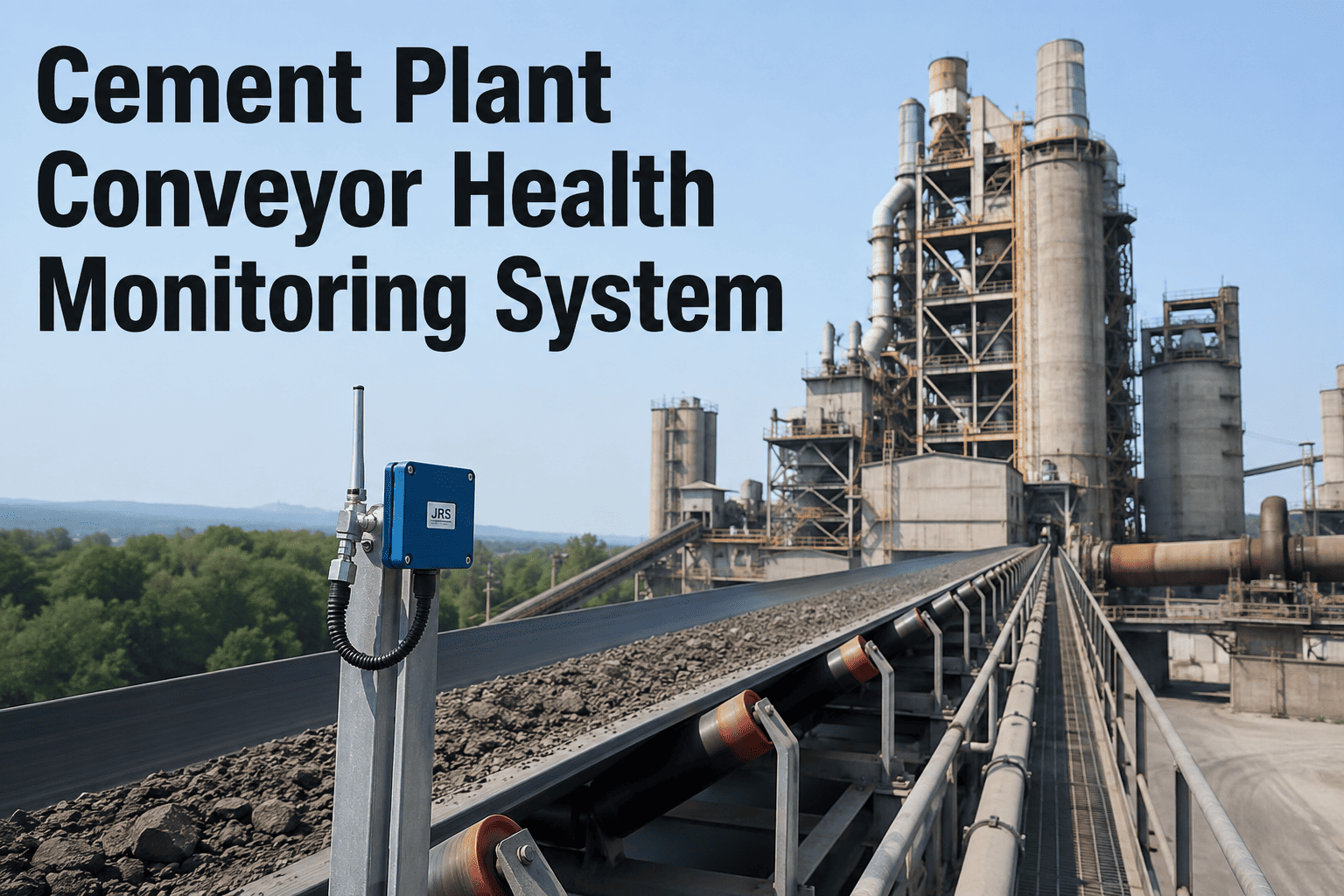
A torn belt splice at 2 a.m. does not announce itself. It starts as a slightly warm bearing three weeks earlier, a splice that has flexed a few thousand extra times, a pulley lagging that has worn 2mm thinner than spec — and none of it shows up on

Read More
A well integrity engineer responsible for a few hundred wells across an aging field used to catch sustained casing pressure the same way most operators still do — a technician reads the annulus gauge during a scheduled semi-annual survey, notices

Read More
Most cement plants already have Level 1 control locked down: PID loops holding individual setpoints, interlocks preventing unsafe conditions, a DCS screen showing every temperature and flow in real time. What that layer cannot do is anticipate a k
Read More
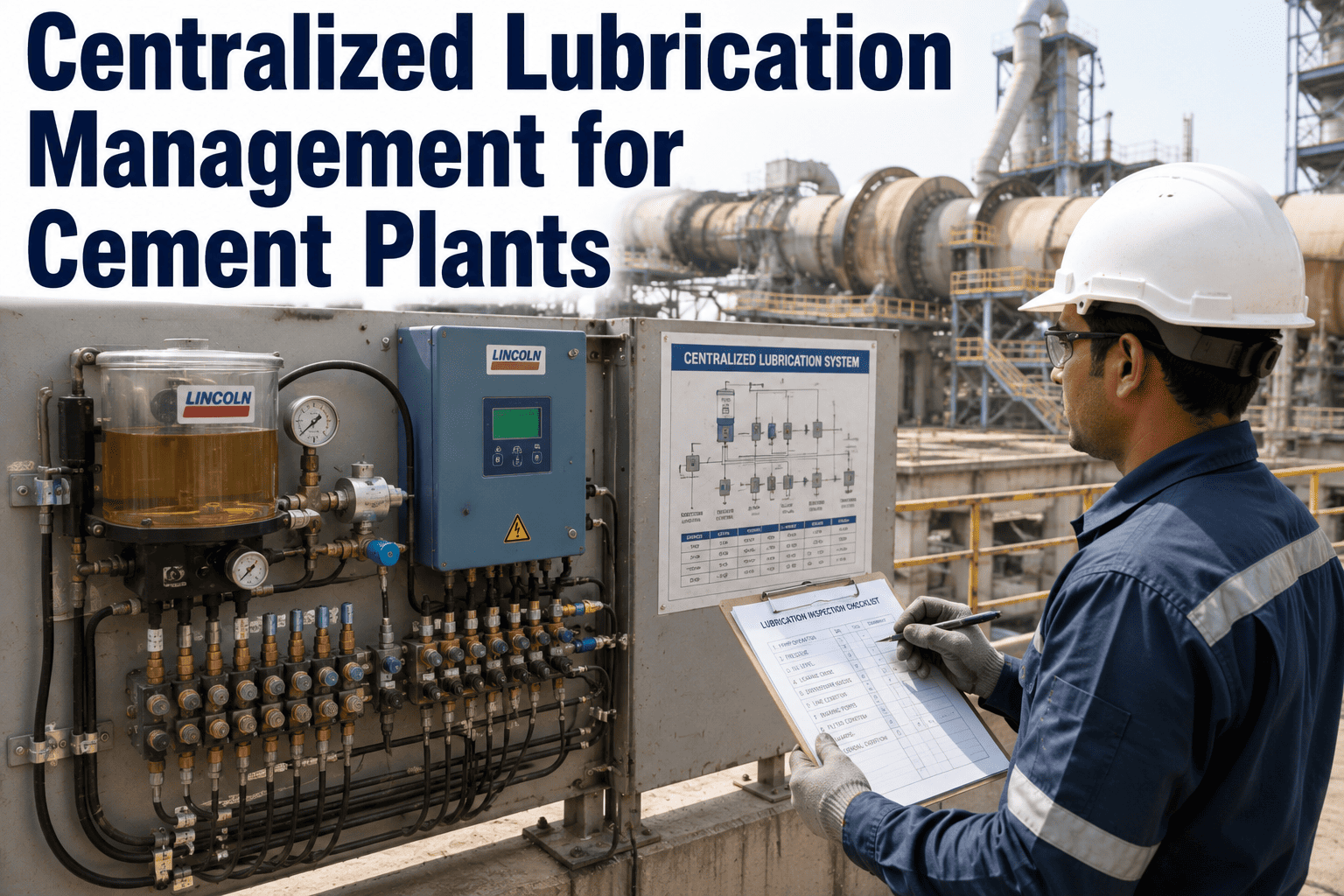
Ask any reliability engineer at a cement plant what actually kills bearings, and lubrication comes up before anything else on the list, well ahead of load, well ahead of alignment, well ahead of raw material abrasiveness. A kiln support roller bea
Read More
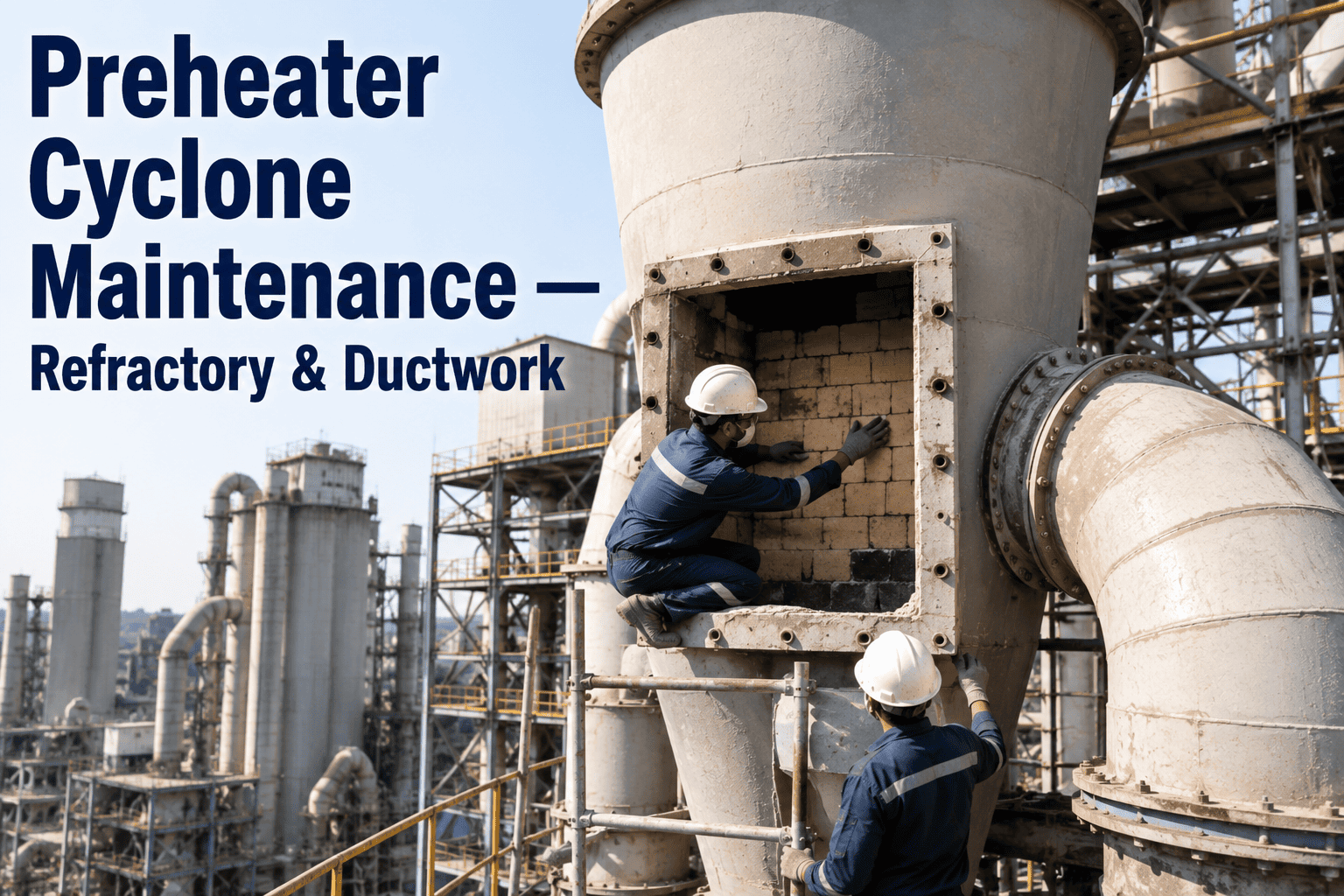
A preheater tower does not fail all at once. It fails one cyclone stage at a time, one refractory joint at a time, usually starting with something as unremarkable as a hairline crack at an expansion joint flange that nobody flagged during the last

Read More
A cracked tooth root on a kiln girth gear rarely announces itself with a bang. It shows up first as a faint whine in the drive train, a half-degree rise in mesh temperature, or a vibration reading that a busy technician logs and moves past. By the

Read More
Electrical failures rarely announce themselves with a single dramatic event. A loose connection runs slightly warm for months, an insulation system degrades a few percentage points a year, a breaker's trip mechanism goes untested through several m

Read More
A clinker cooler's grate plates rarely fail all at once, which is exactly what makes them dangerous to ignore. Individual plates warp, crack, or clog with fine clinker dust over months, quietly starving sections of the clinker bed of cooling air w

Read More
A two-chamber cement ball mill can carry over 200 tons of steel grinding media, and the size distribution of that charge does more to determine mill throughput than almost any other single variable a plant controls. Yet most mills run on a ball ch

Read More
A cement kiln's refractory lining is the single largest recurring maintenance cost most plants carry, and it is also the one most often installed under time pressure rather than engineering judgment. A burning zone brick campaign that should run 1

Read More
Every conveyor belt in a cement plant is only as strong as its weakest joint, and that joint is almost never the belt material itself — it's the splice. A splice done wrong, or matched to the wrong application, becomes the first place a belt fails

Read More
An integrated cement plant's annual shutdown is the single most expensive maintenance event on the calendar — twenty five to forty five days where the entire plant sits offline, four hundred to eight hundred work packages compete for the same crew

Read More
The same pump fails a third time this year. Maintenance replaces the bearing again, production loses another shift, and everyone moves on until it happens a fourth time. This is what happens when a plant treats every failure as an isolated event i

Read More
Walk the drive end of any cement plant mill, fan, or conveyor and you will find a coupling doing quiet, thankless work — transmitting torque between two shafts that were supposed to share one centerline. When they do not, the coupling stops transm

Read More
Most cement plants have a maintenance department. Far fewer have a reliability function, and the difference between the two shows up clearly in the data: maintenance departments respond to failures and execute planned work orders, while a reliabil

Read More
Kiln operators can tell within an hour when a homogenizing silo starts underperforming, because the first symptom is never in the silo — it shows up as free lime swinging outside spec and a burner that needs constant hand adjustment to compensate

Read More
Ask a cement plant's maintenance manager and finance director the same question — "is our spare parts inventory right?" — and you will usually get two opposite answers. Maintenance sees a warehouse that never seems to have the one bearing they nee

Read More
A blocked pneumatic conveying line does not announce itself with a warning light — it announces itself with a silo that stops filling and a kiln feed that runs lean. In most cement plants, fly ash, raw meal, and finished cement move between silos,

Read More
Every ton of raw meal, clinker, and cement that moves through a plant passes through a chute, a hopper, or a length of duct at some point, and every one of those surfaces is being worn away a little more with each ton that slides across it. The ma

Read More
A cement plant runs on numbers it never sees directly — kiln inlet temperature, preheater draft pressure, raw meal flow, clinker cooler bed depth — every one of them arriving through a transmitter that quietly drifts a little further from true wit

Read More
A roller press earns its place in the grinding circuit by doing what a ball mill alone cannot: crushing clinker between two counter-rotating rolls at pressures high enough to pre-compact particles and cut specific power consumption by a significan

Read More
A cement plant loses wall thickness the same way it loses money on unplanned downtime: quietly, in millimeters, until the day a duct wall perforates mid-shift or a compressed air line ruptures near a walkway. Kiln shells, ID fan casings, cooler du

Read More
A clinker silo rarely fails all at once. It fails one degree at a time, as an aeration pad clogs, a reclaimer chain wears past its tolerance, or a weigh feeder sensor drifts a few percentage points out of calibration, until one shift discovers the

Read More
Most predictive maintenance programs do not fail because the sensors were wrong. They fail because a plant tried to instrument everything at once, skipped the asset register cleanup, or never connected the alerts back to the CMMS, so technicians k

Read More
Most quarry dust complaints do not come from the crusher. They come from the haul road, from a truck rolling past a stockpile at the wrong wind angle, or from a loader working a dry pile at midday with no water on it at all. A water spray system f

Read More
A precipitator trip does not announce itself with smoke or noise. It shows up as a CO reading that crosses a threshold, a high-voltage supply that shuts itself down in self-defense, and a stack that suddenly goes from clean to visibly dusty in fro

Read More
A cement lab running behind schedule doesn't just slow down quality reporting — it can hold up kiln feed adjustments and cement dispatch decisions that depend on fresh XRF or XRD results. Yet lab instruments often sit outside the plant's regular m

Read More
An overhead crane failure at a cement plant rarely announces itself in advance — a wire rope frays until it doesn't, a brake wears until it slips, and by the time anyone notices, the crane is down and so is whatever material flow depended on it. G
Read More
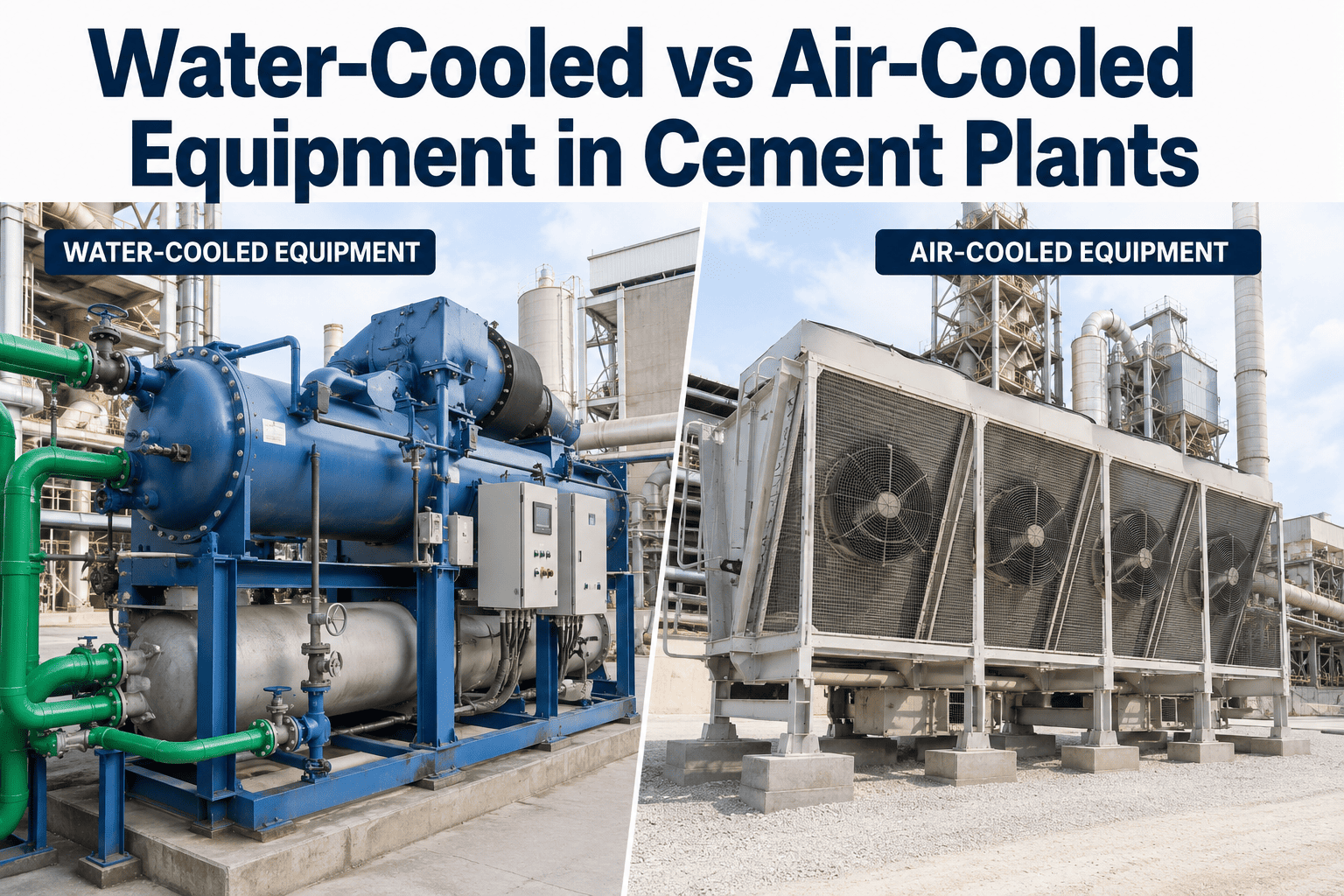
The cooling system spec sheet for a new compressor or gearbox usually lists two options side by side with barely any explanation, and the plant engineer picks whichever one matches what's already installed nearby. That habit works fine until water

Read More
Most cement plants still pick a grinding aid the same way they'd pick a supplier for gloves — lowest price per liter wins the bid. That approach quietly costs plants far more than the additive line item ever shows, because dosage rates, strength r

Read More
Purchase price typically represents only 25 to 40 percent of an industrial equipment's total lifecycle cost, yet it is usually the only figure procurement teams compare when selecting between vendors for a major cement plant purchase. The remainin

Read More
A full refractory reline on a large cement kiln can cost well over a million dollars in materials and labor before accounting for the production lost during the shutdown itself, which is why the gap between an 8-month campaign and an 18-month one

Read More
Logistics typically accounts for 15 to 20 percent of the total delivered cost of cement, yet most plants still schedule trucks the same way they did a decade ago — a dispatcher working from a whiteboard or spreadsheet, assigning loads by gut feel

Read More
Most cement plant digital transformation proposals die in committee not because the technology is unproven, but because the pitch stops at percentages instead of dollars. A plant director hears "predictive maintenance reduces downtime" and has no

Read More
A cement plant tracks vibration on every bearing, thermal profiles on every kiln shell, and oil analysis on every gearbox — and then stores fifty thousand tonnes of clinker in a concrete dome that hasn't had a formal structural inspection in over

Read More
A mill that suddenly needs more power to produce the same tonnage of cement is rarely a mill problem at all — it's usually a separator quietly losing its edge. Fine particles that should exit as finished product get pulled back into the mill for a

Read More
From the moment water touches cement in a ready-mix drum, a ninety-minute clock starts ticking — and nothing about weather, traffic, or a silo running low can pause it. Cement logistics is one of the least forgiving supply chains in industrial tra

Read More
A control room technician spends twenty minutes hunting eBay for a discontinued processor card because the original manufacturer stopped making it twelve years ago. This is not a rare event — it is Tuesday at hundreds of cement plants still runnin

Read More
Electrostatic precipitators did the job for decades, but tightening particulate limits and the rise of alternative fuel programs have pushed a growing number of cement plants to ask whether their aging ESP can still hit target emission levels, or

Read More
Crystalline silica is unavoidable in cement production, since it is a natural component of the raw materials themselves, not a contaminant that better housekeeping can remove. What separates a compliant plant from one facing citations is not the p
Read More
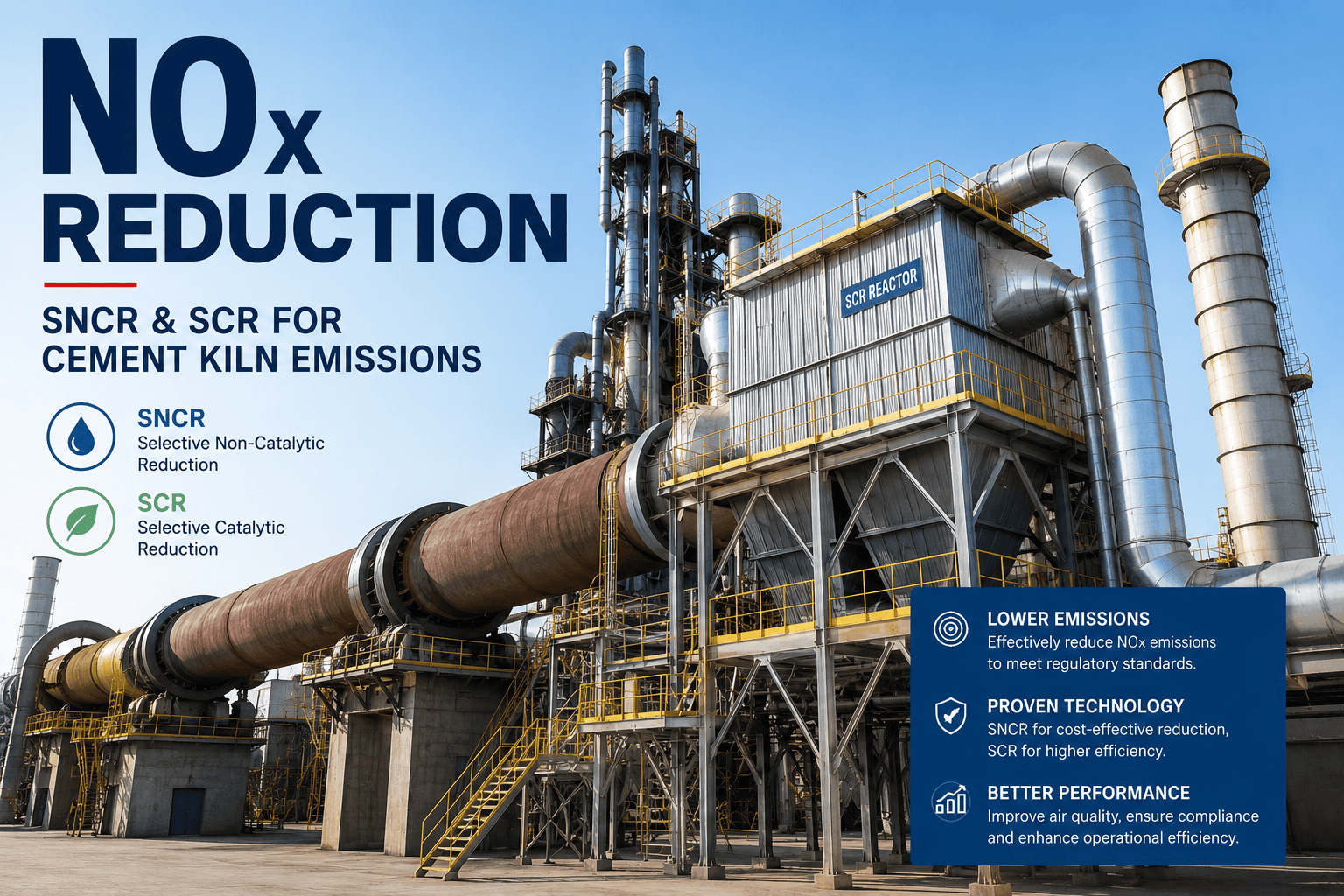
Cement kilns run hot enough to form nitrogen oxides straight out of the combustion air itself, which means NOx is not a byproduct you can engineer away by burning cleaner fuel. It has to be treated after it forms, and the two proven paths for doin

Read More
Most cement plant dust collection systems fail on paper long before they fail on the floor. Someone runs the fan and hood sizing, but the ductwork connecting the two gets sketched from an old drawing, and the transport velocity never gets checked

Read More
Every tonne of clinker a cement plant makes from virgin limestone comes at a cost that shows up twice, once in the raw material bill and again in the fuel needed to calcine it, which is exactly why fly ash, granulated blast furnace slag, and a gro

Read More
Most cement plants already own an ERP system capable of running a full maintenance program, yet the plant maintenance module often sits half-configured, with work orders logged days after the fact and spare parts data that never quite matches what

Read More
Two cement plants can run the same kiln capacity, burn similar fuel mixes, and still differ by fifteen percent or more in thermal energy consumption per tonne of clinker, a gap that quietly costs the weaker performer well over a million dollars a

Read More
A single kiln shell fire or a gearbox seizure on the raw mill can take a cement line down for weeks, and the insurance claim that follows is often where plants discover how much their premium was shaped by paperwork nobody updated in years. Insure

Read More
Inside the burning zone of a rotary kiln, the refractory brick is never actually facing the flame directly — a layer of semi-molten clinker material, the coating, sits between the two and does the job of absorbing heat the brick itself was never d
Read More
Most cement plants don't decide to implement a CMMS after a single bad day — they decide after months of the same pattern repeating: a work order gets written on paper or in a spreadsheet, it sits in someone's inbox, a technician chases down wheth

Read More
A cement plant runs more pumps than most people outside the maintenance department ever notice — raw mill slurry pumps, cooling water circulation, wastewater and dewatering pumps, and the water injection systems that control clinker temperature. S

Read More
Every cement plant carries a fixed chemical reality: heating limestone to make clinker releases carbon dioxide no matter how efficient the kiln is, and that single reaction accounts for roughly 60 to 65 percent of the sector's direct emissions bef

Read More
Every quarry blast is a trade — explosive energy in exchange for fragment size out, and the exchange rate is rarely optimal. Overload the pattern and every extra kilogram of explosive is money vaporized into flyrock risk and ground vibration compl

Read More
Over 60 percent of cement manufacturers still run their workforce on paper work orders, paper checklists, and a supervisor's memory of who did what shift. The generation of technicians who accepted printing a route sheet and carrying it to the kil

Read More
A 6,500 TPD cement plant can look busy on every shift report and still be losing a third of its production capacity to nobody in particular. The kiln shows 90% availability, the mill hits its feed rate, the lab signs off on clinker quality — and y
Read More
Dioxins and furans do not form inside the 1,450°C burning zone of a cement kiln — the heat there destroys organic compounds almost completely. They form afterward, in the cooler sections of the exhaust path, through a re-synthesis reaction that ne
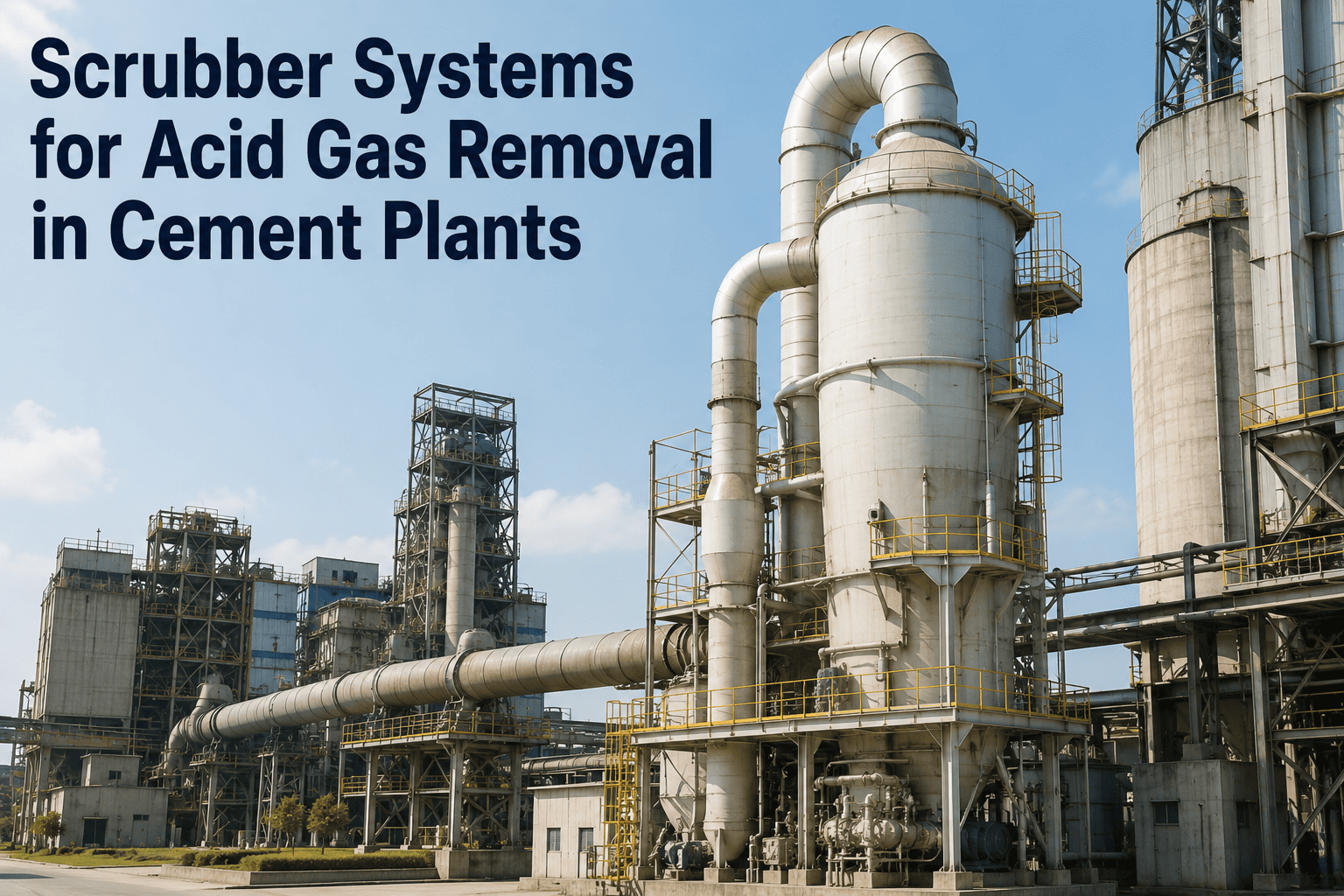
Read More
A cement kiln burning alternative fuels or higher-chlorine raw materials can push HCl, HF, and SO2 concentrations well past what a plant's original air pollution control equipment was sized for, and by the time a stack test flags the exceedance, t
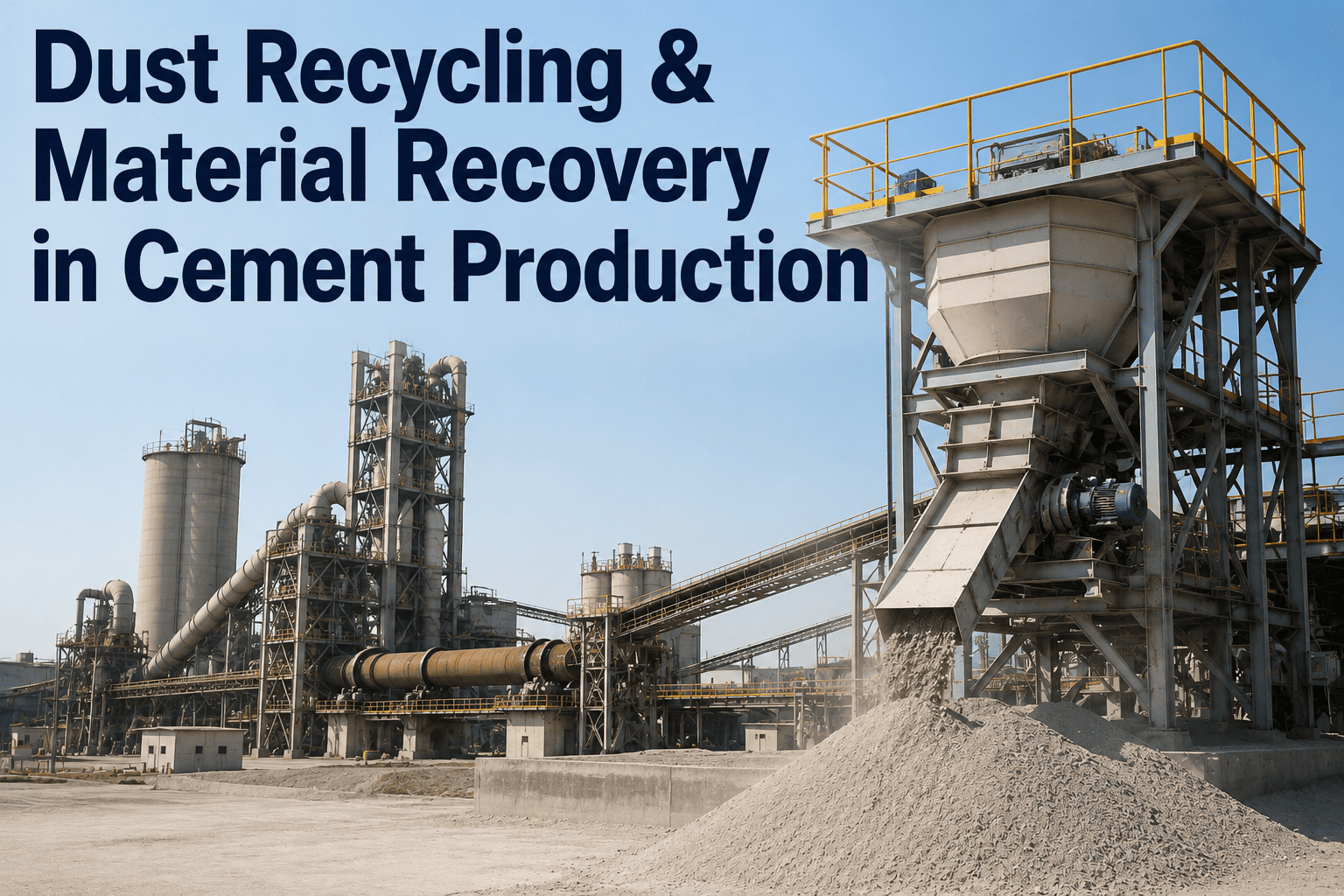
Read More
Every rotary kiln pulls a fraction of its raw feed straight back out the exhaust stack as fine particulate, and most plants treat that stream as a disposal problem instead of what it actually is — partially processed raw material sitting in a silo

Read More
A bag rated for 130°C dry service that gets dropped into a raw mill duct running hot, moist exhaust gas will not last a season — it will blind, hydrolyze, or scorch, and the plant will be back on the parts order within weeks instead of years. Filt

Read More
Coal dust doesn't need a spark to become a fire — it just needs enough time sitting above roughly 80°C for oxidation to do the rest, quietly, inside a bunker nobody is watching in real time. That's the uncomfortable truth about fire protection in

Read More
A regulator walks onto a cement plant site and asks for the lockout/tagout procedure book for the raw mill. If the answer is "we have a programme" without the equipment-specific documentation to back it up, that alone is a citation — regardless of

Read More
A cement truck idling outside your gate for forty extra minutes looks like a driver's problem until the detention invoice lands on your desk. A weighbridge running half a percent hot looks harmless until it quietly gives away thousands of tons of

Read More
Cement plants run some of the most electrically intensive and thermally stressed industrial equipment in the world — from 5,000V switchgear feeding kiln drives to 1,450C refractory linings containing molten clinker. A single loose electrical conne

Read More
Cement packing plants are the final revenue gateway where every bag leaving the line is a sold product and every minute of downtime creates a logistics bottleneck that ripples through truck scheduling and customer delivery. A single rotary packer
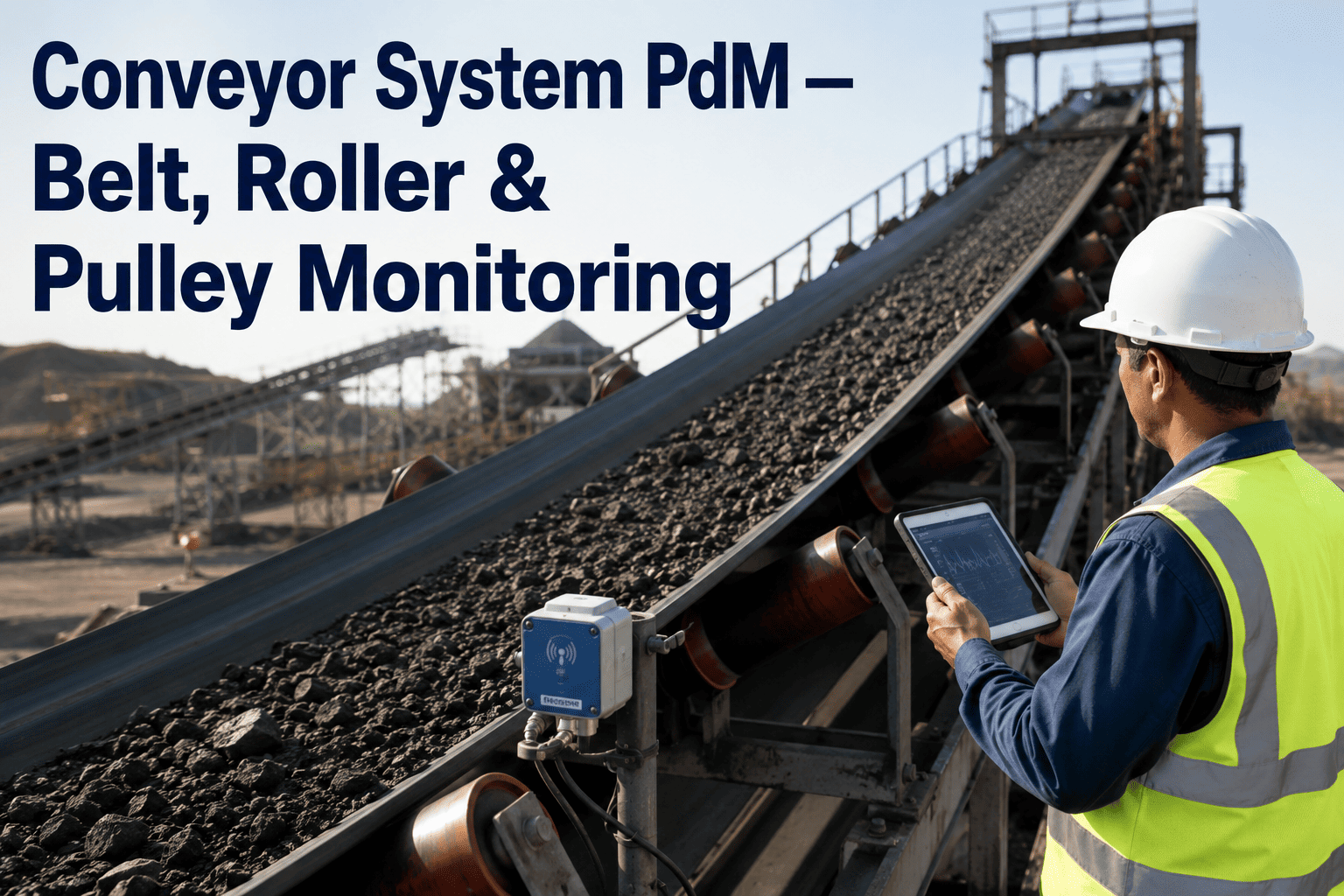
Read More
A typical cement plant operates 8 to 15 kilometers of conveyor belts moving limestone, raw meal, clinker, and finished cement around the clock. When a single idler roller seizes, the friction gouges the belt underside, and a full rip on a kiln fee

Read More
Cement plant gearboxes and hydraulic systems operate under extreme loads, abrasive dust, and continuous heat that make lubrication failure one of the top causes of unplanned downtime. A single kiln drive gearbox failure can halt production for 3-7

Read More
Ask a kiln operator where false air enters their system and most will list a handful of suspects — expansion joints, feed chutes, inspection doors. Few will name the two locations that actually matter most: the kiln inlet seal and the kiln outlet

Read More
A rotary kiln is a 60 to 100-meter steel tube carrying thousands of tons of refractory and material, supported on just two or three tire-and-roller stations, rotating continuously at high temperature for years between planned stops. When that alig
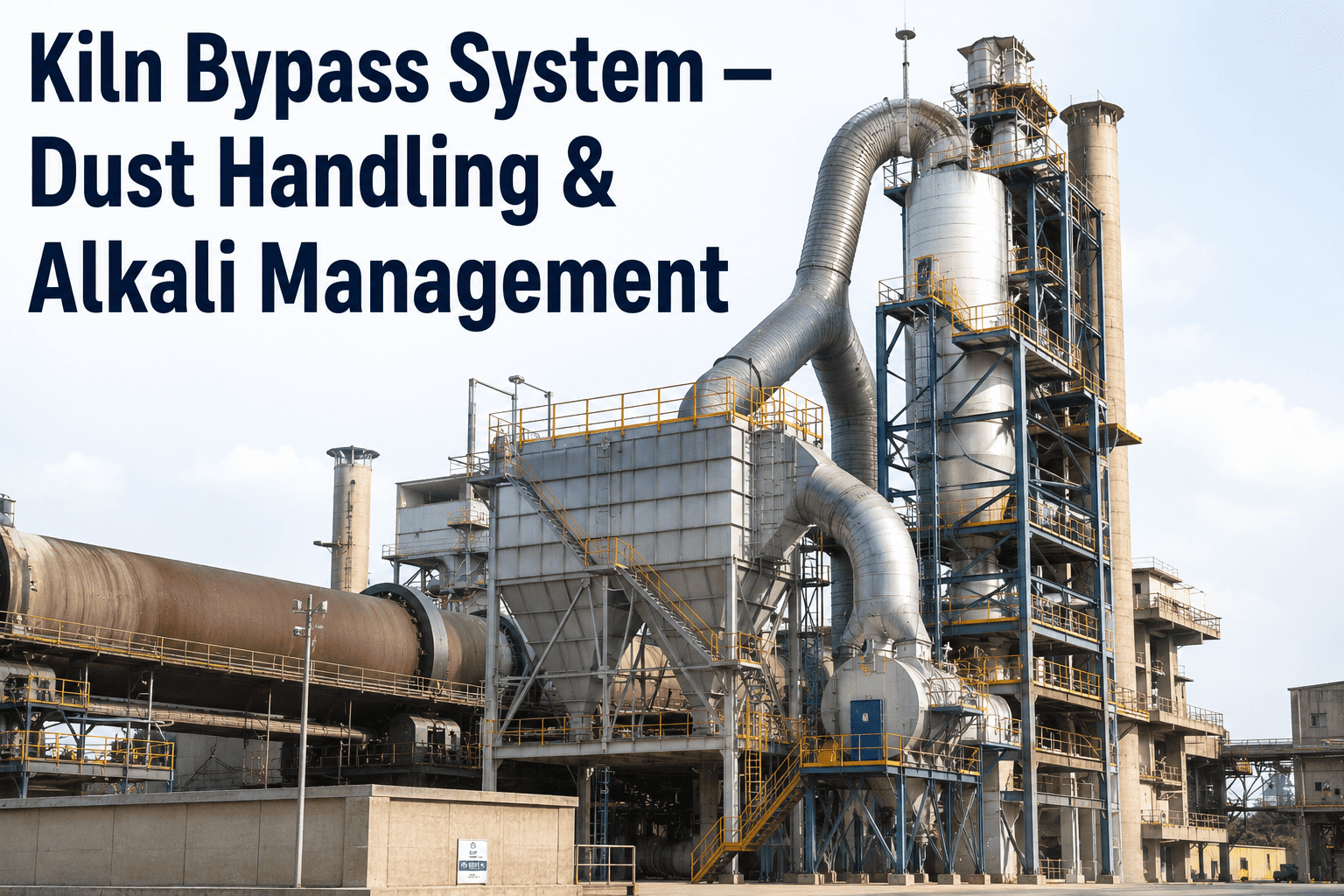
Read More
Every rotary kiln running alternative fuels or chloride-bearing raw materials eventually hits the same wall: chlorine and alkalis don't exit with the clinker, they evaporate in the burning zone, travel back up with the gas stream, and condense on
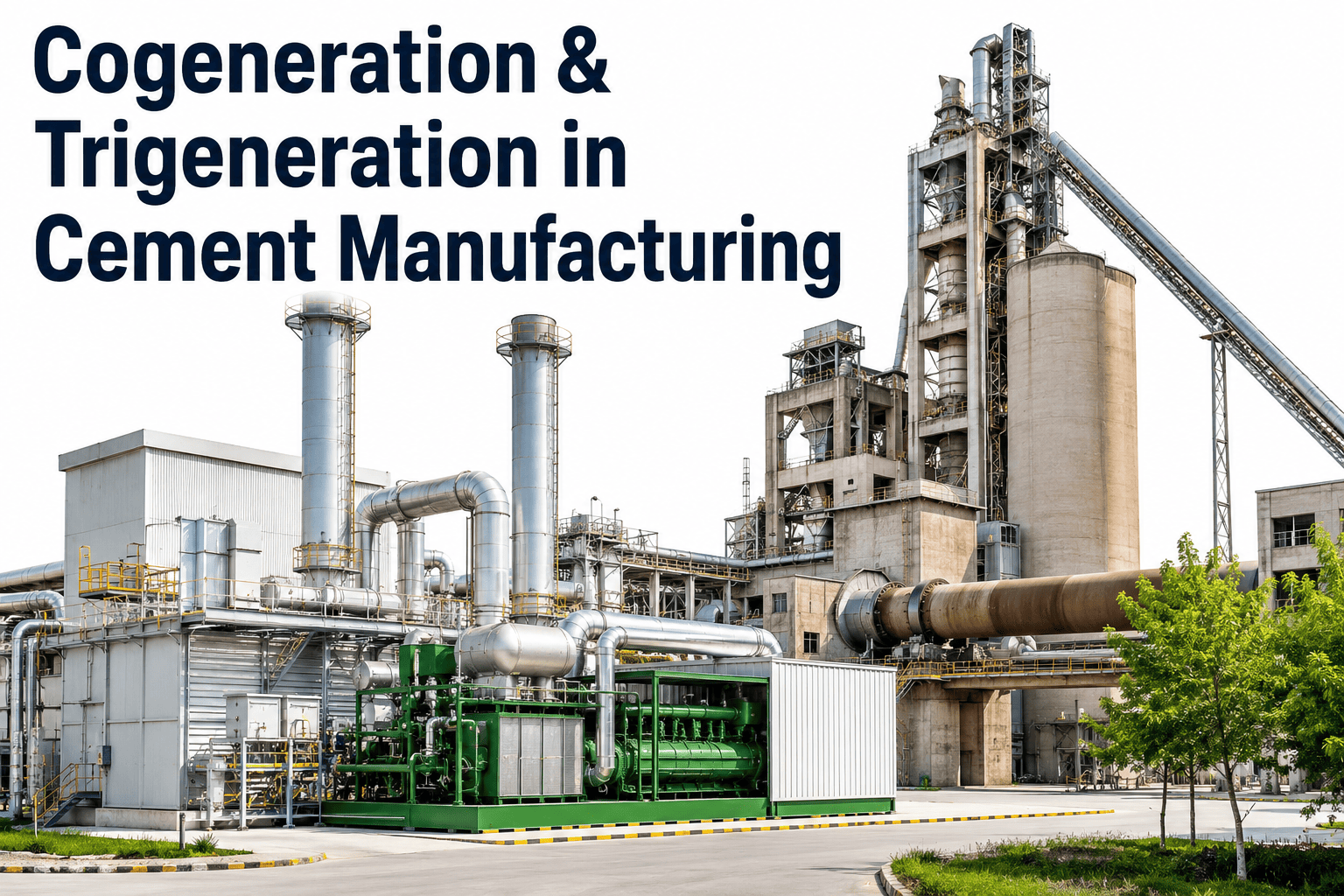
Read More
A cement plant running waste heat recovery has already solved half the energy equation — it generates power from heat that would otherwise vent to atmosphere. What most plants have not solved is what happens to the thermal energy left over after t

Read More
Wet limestone hits the raw mill and the mill motor amperage climbs immediately, not because the grinding got harder but because the material is fighting the mill instead of feeding it. Somewhere upstream, kiln exhaust gas that could have knocked f
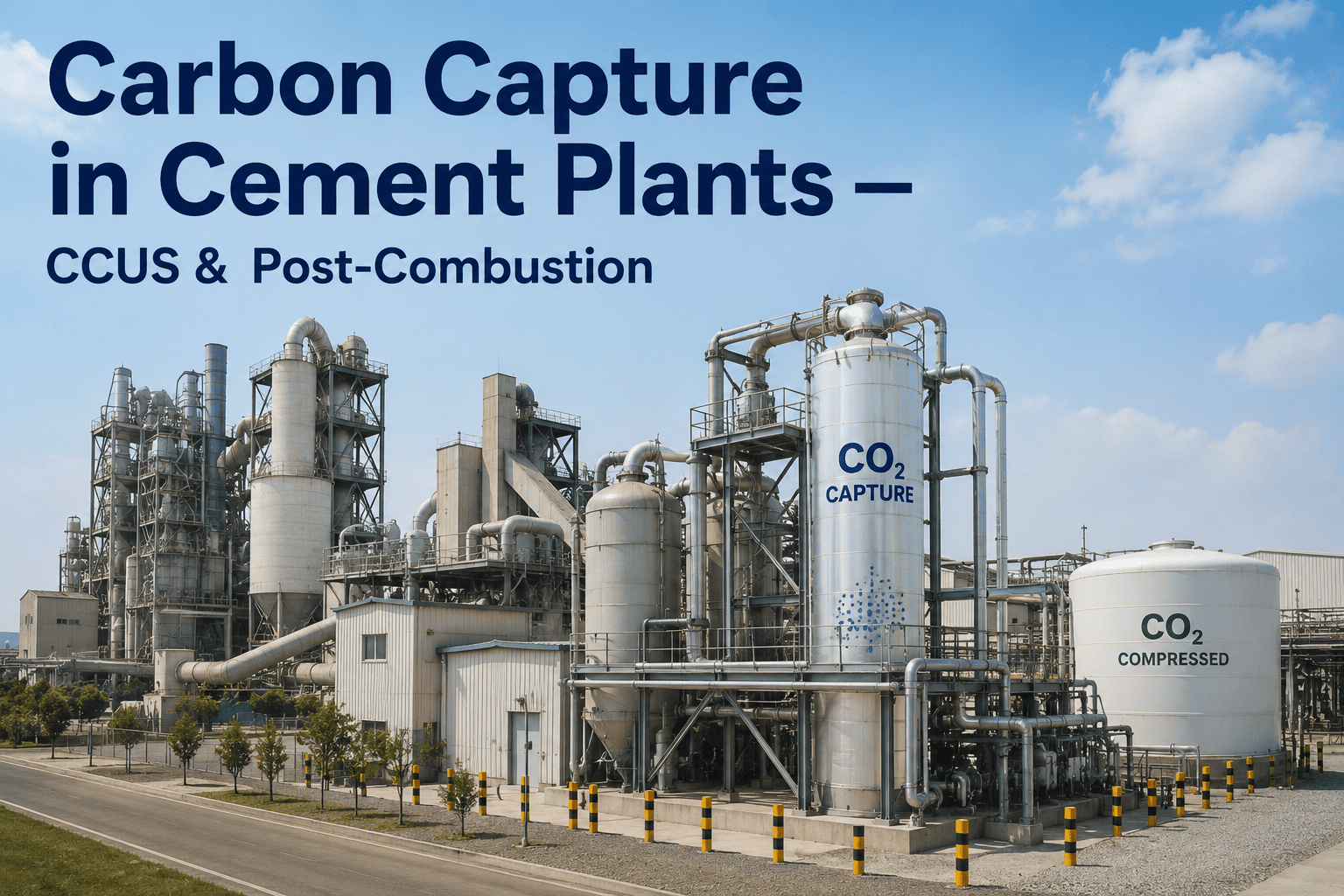
Read More
Cement is one of the hardest industries to decarbonize, because most of its CO2 does not come from the fuel burned in the kiln — it comes from the limestone itself. Roughly two-thirds of a cement plant's emissions are released when calcium carbona
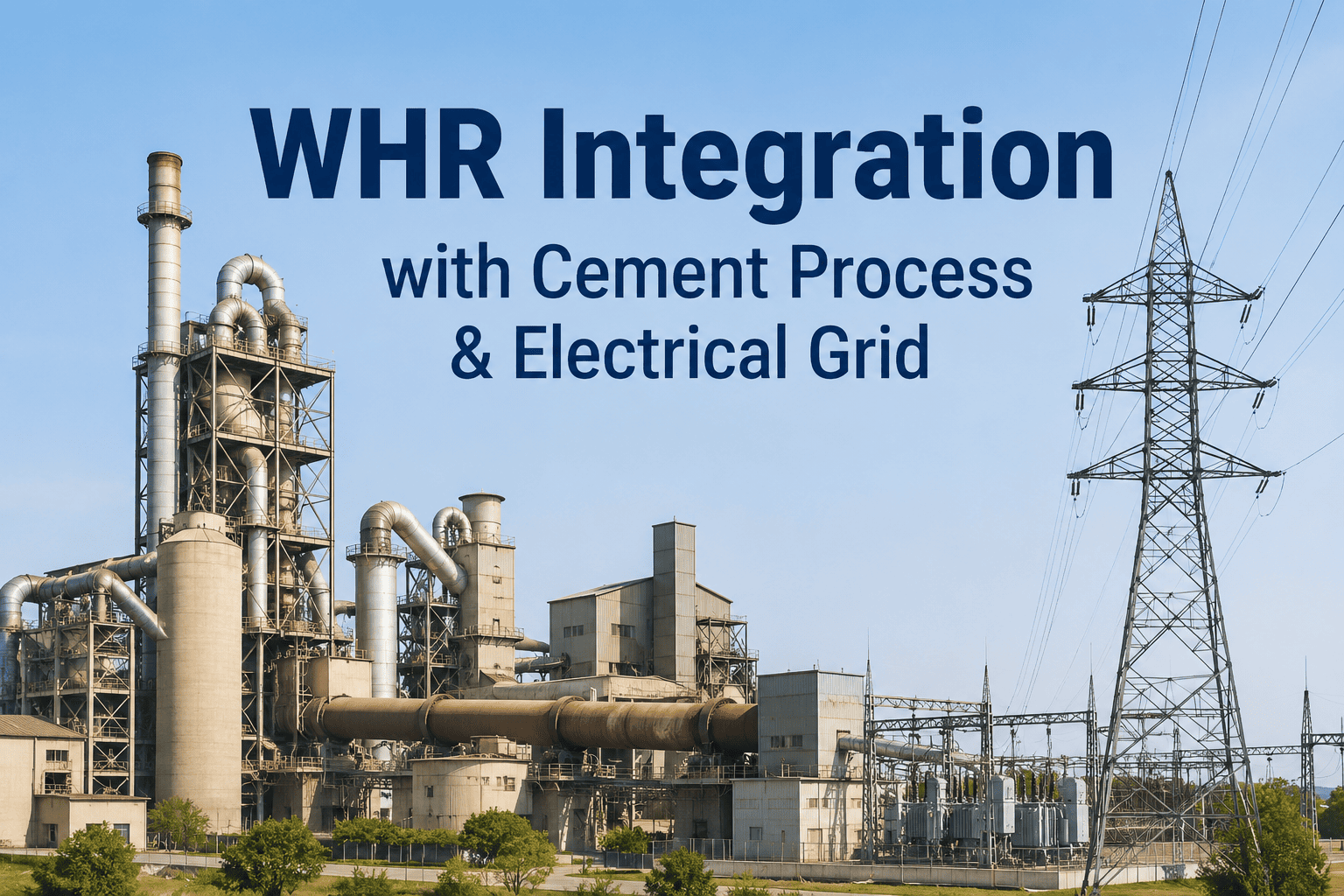
Read More
A cement plant commissions its waste heat recovery turbine, and on paper the math is simple: 8 MW of free power, straight off the preheater and cooler exhaust. Six weeks later the breaker trips twice a shift, the plant's frequency dips whenever th

Read More
A cement kiln burns at roughly 1,400°C and sends a mix of regulated pollutants up the stack every second it runs — particulate matter, NOx, SO2, mercury, carbon monoxide, and hydrogen chloride among them. Regulators in the US, EU, India, and China
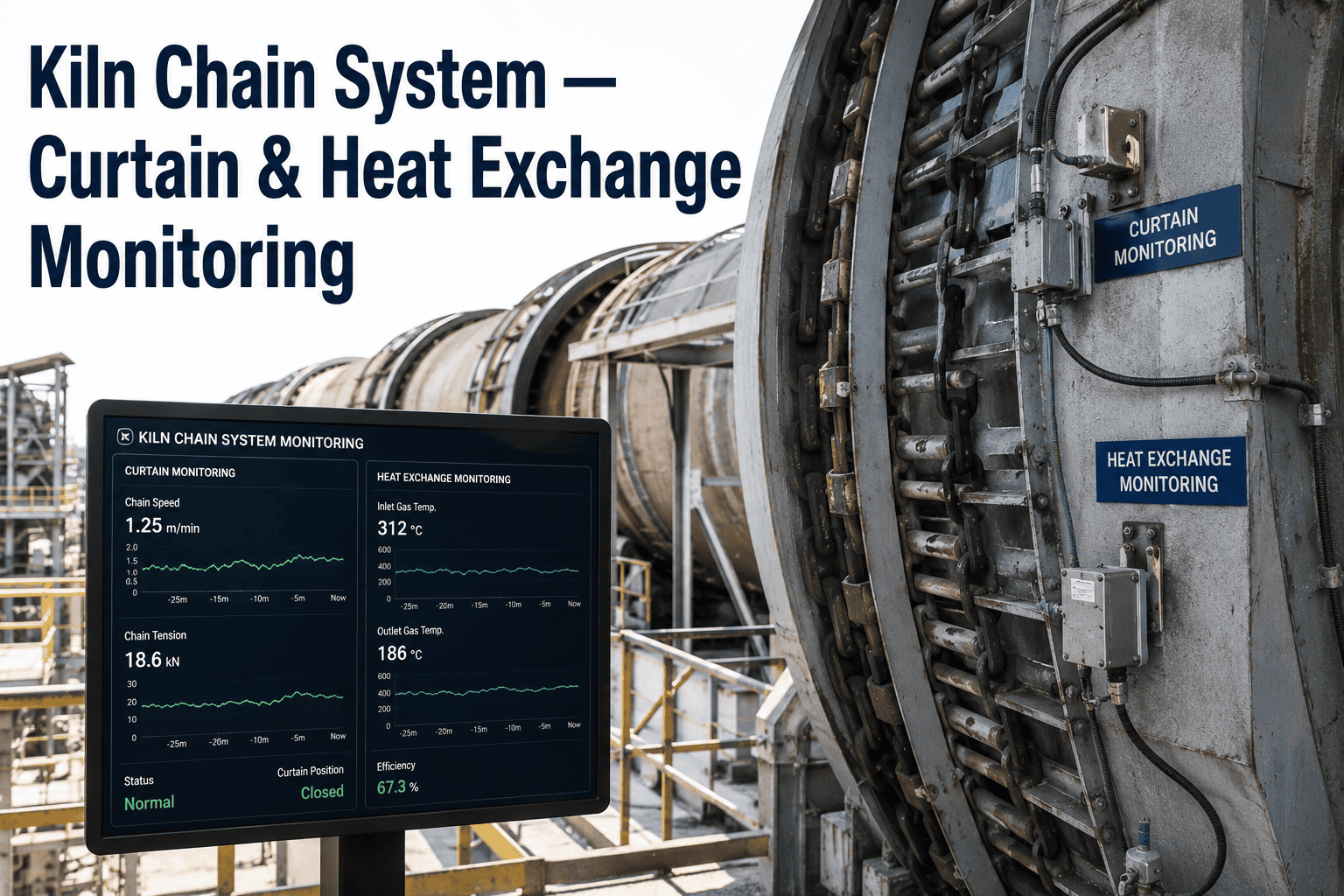
Read More
Inside the back end of every wet and semi-wet process kiln hangs a curtain of steel that does more heat exchange work than almost any other single component in the pyroprocessing line. A properly designed chain system can lower specific heat consu
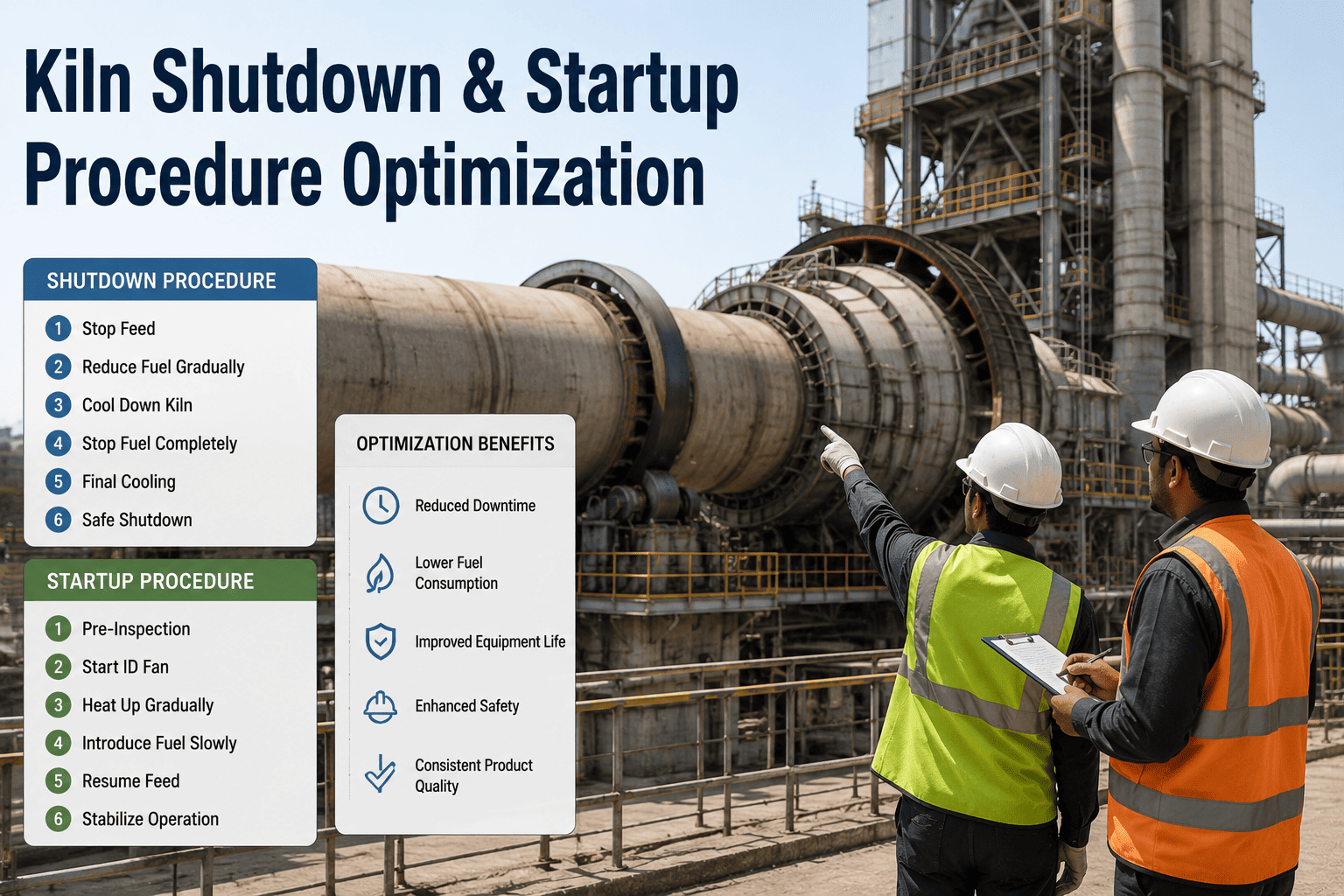
Read More
A rushed kiln startup is the single most expensive decision a production team can make in an afternoon. Refractory that cost seven figures to install gets thermally shocked in under two hours, chains and shell plates take stress they were never si

Read More
Inside a rotary kiln burning zone, flame temperatures reach roughly 2,000°C and the material bed itself runs near 1,450°C — hot enough to destroy almost any imaging sensor placed directly in the line of sight. For decades, that meant operators jud

Read More
A 5,500 TPD kiln line makes a control decision roughly every 90 seconds — burning zone temperature, ID fan speed, secondary air damper position, fuel split between conveying lines. Your veteran operator, eighteen years on the console, makes these

Read More
A preheater cyclone blockage rarely announces itself. Alkali, sulfur, and chloride compounds condense on cyclone walls a few tenths of a millimeter at a time, and by the time an operator on a routine walkthrough notices a temperature reading that

Read More
A snowman at the kiln outlet does not build gradually the way most coating problems do — it can grow from a minor deposit to a flow-blocking mass within days once the underlying chemistry and cooling conditions line up against you. A nose ring, fo

Read More
A rotary kiln shell weighing hundreds of tons rotates continuously on two or three support stations, each carrying its load through a pair of steel rollers pressed against the kiln tire, and the health of those rollers rarely gets attention until

Read More
Fans quietly consume twenty to twenty-five percent of the electricity in a typical cement plant, yet they rarely get the reliability attention that kilns and mills do, largely because a fan failure feels less dramatic right up until it takes the p

Read More
A jaw crusher's toggle plate wearing thin does not announce itself with a warning light; it shows up as a slow creep in closed-side setting, a subtle rise in amp draw, and eventually a shutdown that nobody saw coming because nobody was measuring t
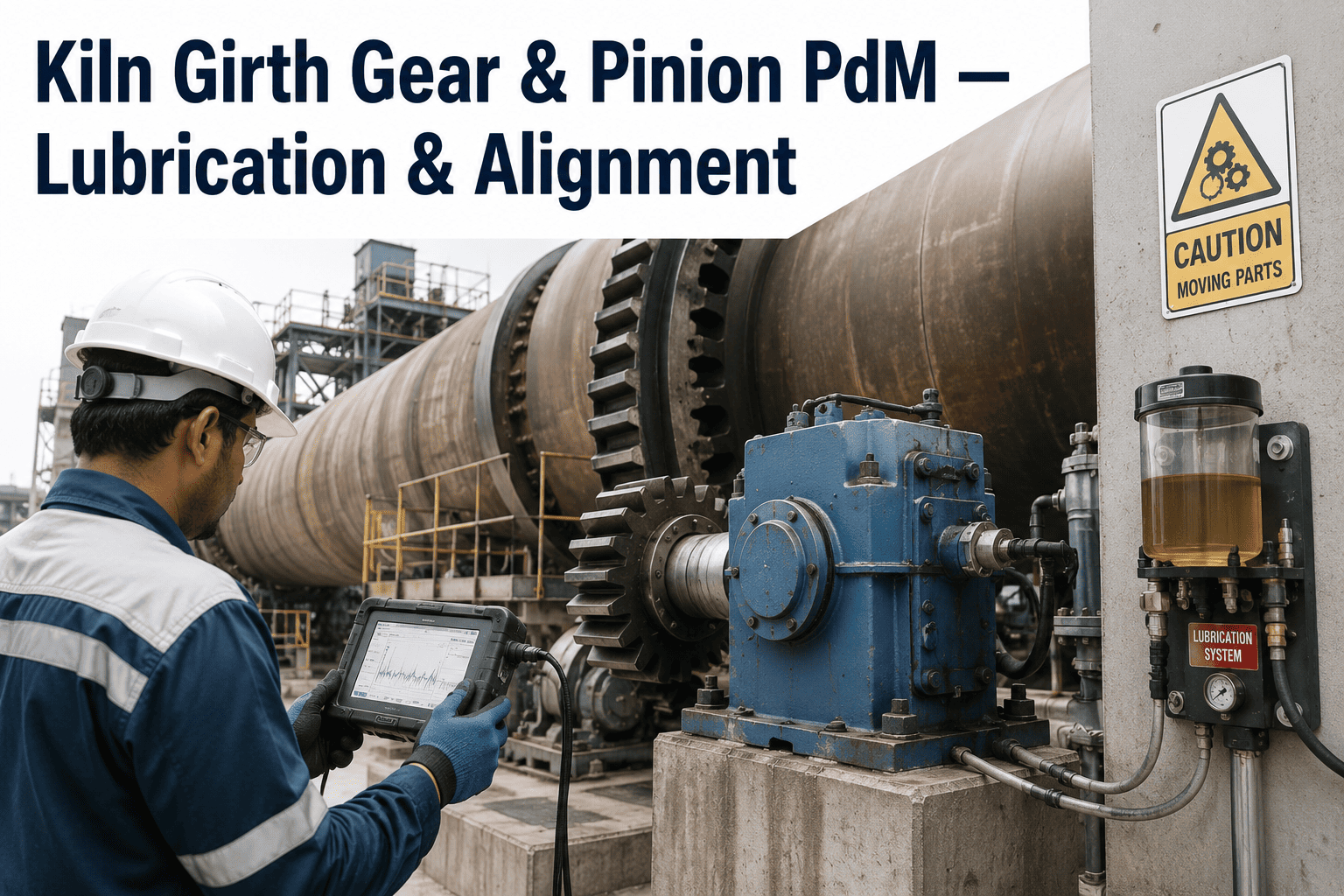
Read More
A girth gear rarely fails without warning — it fails after months of warnings nobody connected to each other. A faint click during a quiet shift gets written off as normal kiln noise. A vibration report comes back "within tolerance" because the ge

Read More
Organic Rankine Cycle systems have become the default choice for cement plant waste heat recovery in the 150 to 350°C range, and for good reason — they are simple, well proven, and carry roughly 40% of the installed base worldwide. But "default" i

Read More
Most cement plants find out their WHR plant underperformed for a quarter, not the day it started. The power output number gets pulled once a month from a handful of disconnected meter logs, someone reconciles it against expected generation, and on

Read More
A waste heat recovery boiler on a 6,000 tonne-per-day cement line can shed four tonnes of steam generation an hour and nobody notices for months, because the drop shows up as half a percent of drift a week instead of an alarm. A turbine seal wea

Read More
Continuous emissions monitoring systems tell a cement plant exactly what is coming out of the stack in parts per million, but they were never designed to answer a simpler, more visible question: does the plume look compliant to anyone watching fro
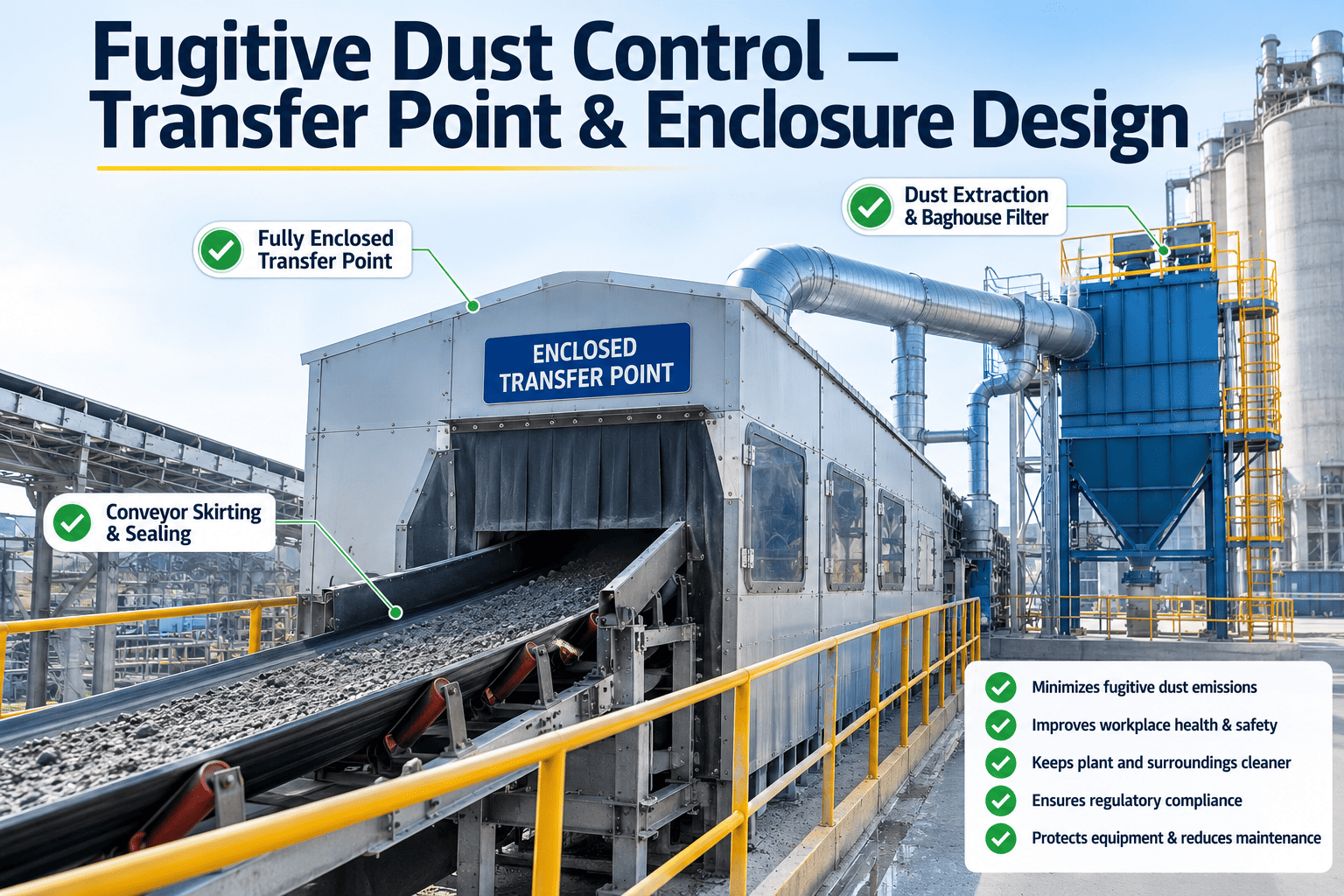
Read More
Walk the transfer points on almost any cement plant and you can usually spot the fugitive dust problem before you reach the control room data. It settles on structural steel, drifts across walkways, and collects in drifts near belt transfers, elev

Read More
An electrostatic precipitator that collected 99.5% of kiln dust at commissioning rarely stays there without deliberate attention — rapper timing drifts out of sync with dust resistivity changes, TR sets get de-rated after a spark-rate scare and ne

Read More
A cement plant baghouse holding thousands of filter bags is only ever as reliable as its worst-performing bag, and most plants replace far more bags than necessary — either too early out of caution, or too late after a pinhole has already let raw

Read More
A Blaine fineness test takes roughly five minutes of dedicated instrument time and returns exactly one number: an estimated surface area that is assumed, not proven, to correlate with strength and setting time. Laser diffraction improves on that b

Read More
Most cement quality programs still calculate mineral phase content the indirect way: run an XRF scan for elemental composition, then apply the Bogue formula to estimate alite, belite, aluminate and ferrite content. The problem is that Bogue calcul

Read More
A slump test takes about two minutes to perform and tells a quality team almost nothing about the truck that arrives ten minutes later. Standard practice calls for testing one sample per truck or per batch, using a 12-inch cone standardized nearly

Read More
A cement kiln digital twin is not a dashboard, and it is not a static 3D drawing sitting next to the DCS screen. It is a live, continuously updated model of the actual kiln, fed by real sensor data, that a process engineer can question and stress-
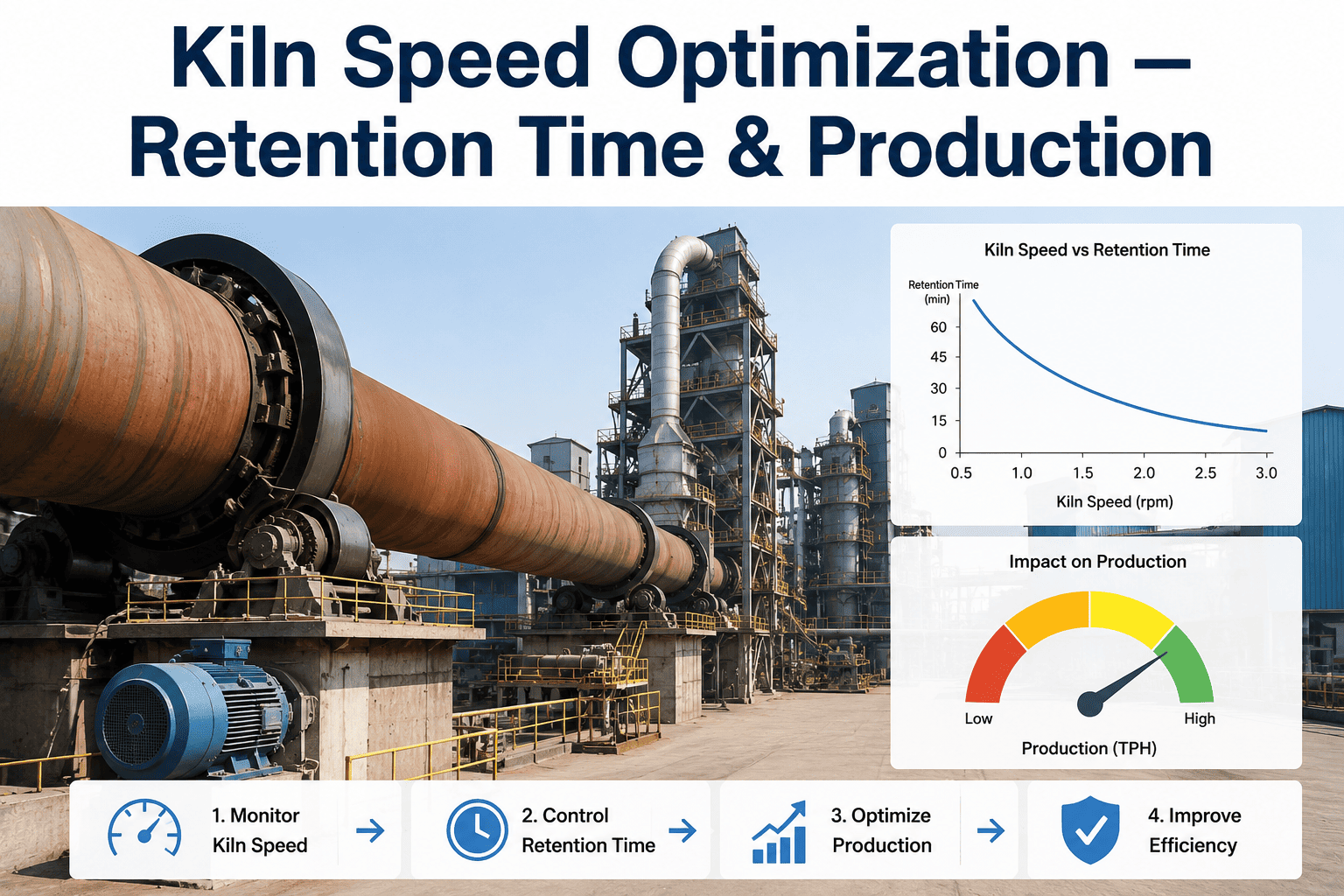
Read More
Kiln rotational speed is the control lever cement plant operators turn most often, yet it is usually set by habit rather than by data. A kiln running at 3.2 rpm instead of 3.6 rpm can shift retention time by several minutes, changing free lime con

Read More
Crusher and screen problems in a cement plant rarely announce themselves. A crusher gap drifting out of setting, an oversized rock working its way toward the chamber, or a screen panel slowly blinding with fines all look completely normal to an op

Read More
For most of cement manufacturing history, judging a kiln flame has meant one thing: a senior operator squinting through a viewport, reading shape, color, and length against decades of pattern recognition built up in their own head. That expertise
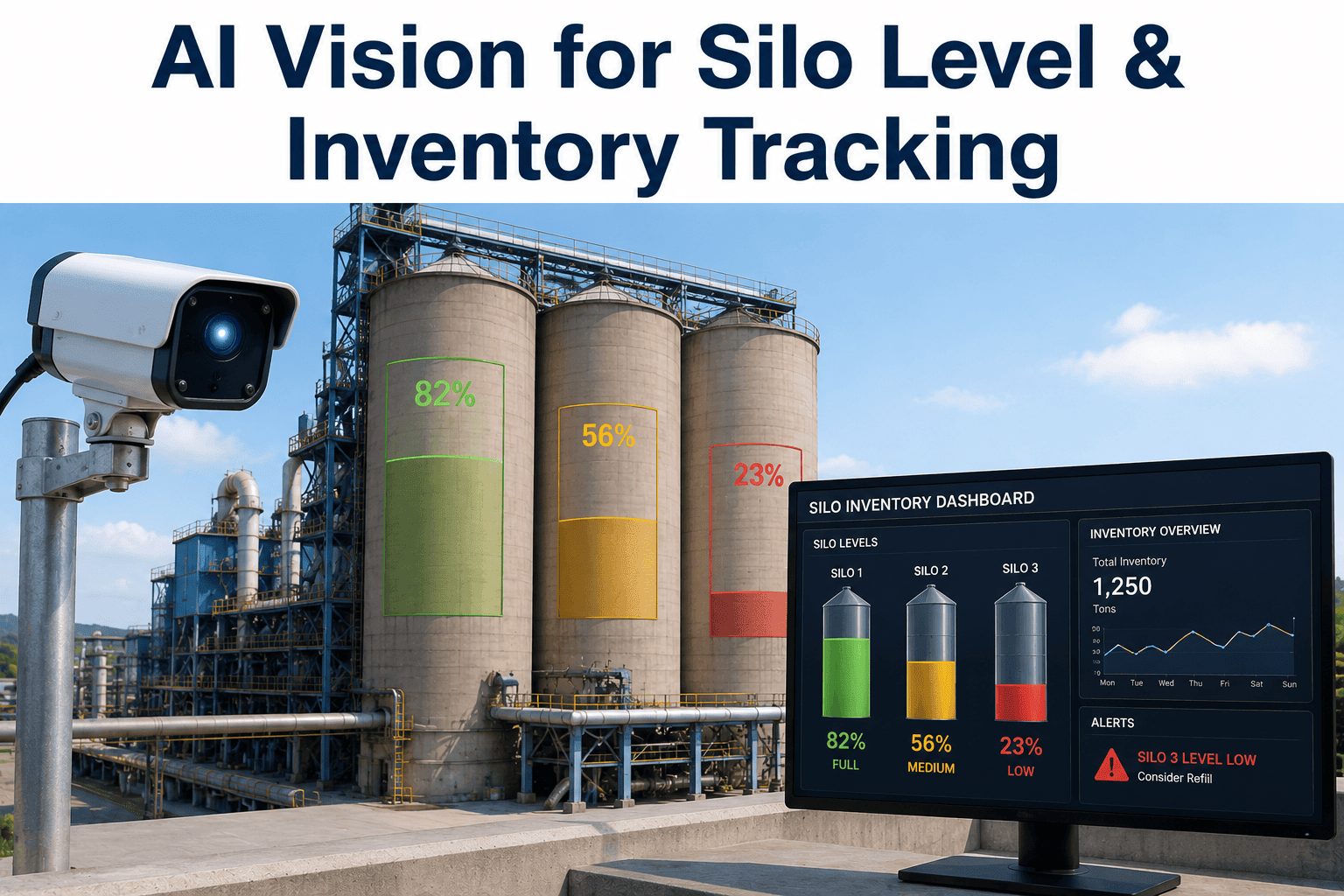
Read More
Cement plants run on the assumption that someone always knows how much material is sitting in every silo, yet most facilities still confirm that number with a tape measure and a guess. Manual dip checks and visual estimates introduce ten to twenty

Read More
A rotary kiln shell weighing two thousand tonnes or more rests entirely on two to four support piers, each carrying its full load through a pair of rollers and a set of self-adjusting journal bearings that depend on a continuous, correctly maintai

Read More
A cement kiln can run at perfect temperature and stable feed rate and still ship clinker that fails a customer's 28-day strength test, because the chemistry that determines strength is decided in the burning zone hours before any lab result comes
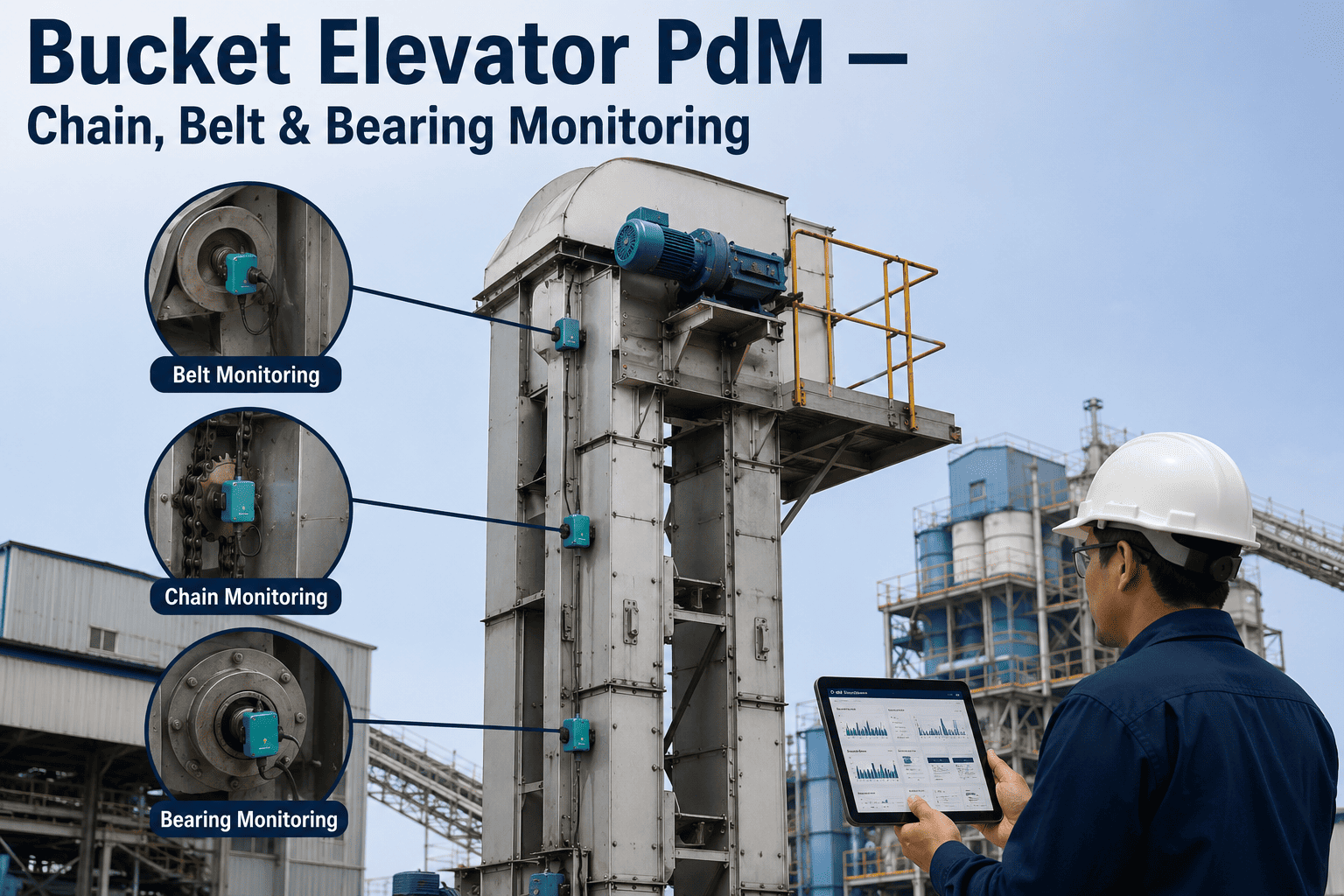
Read More
Bucket elevators are the vertical arteries of modern cement plants, moving raw meal, clinker, and finished product between process stages. A single unplanned elevator stoppage can cascade into a full plant shutdown, costing upwards of $50,000 per

Read More
In the high-stakes world of cement manufacturing, the ball mill remains the beating heart of the grinding circuit, a massive rotating cylinder filled with steel balls that pulverize clinker into fine powder. Yet, this workhorse is also a source of
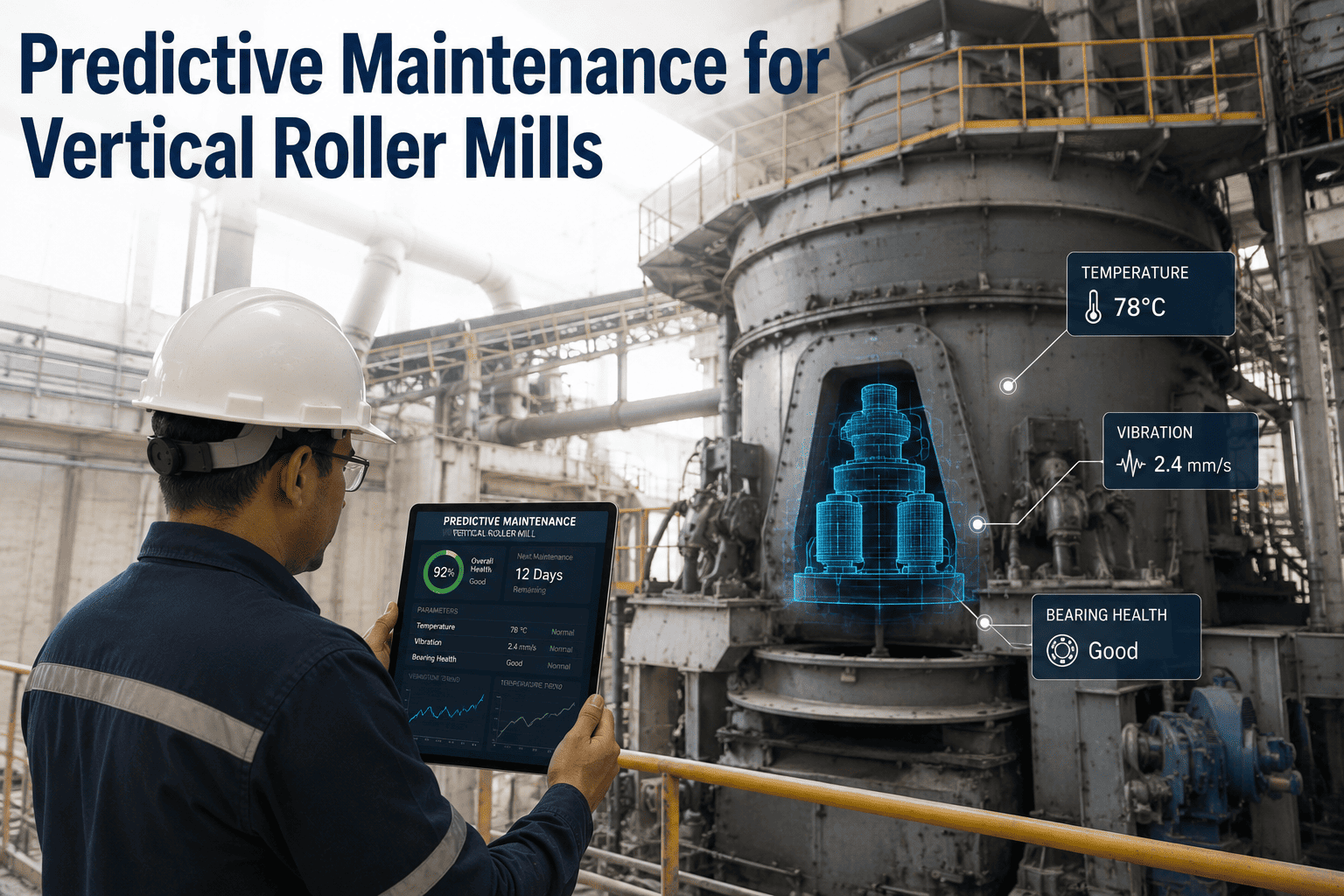
Read More
Vertical roller mills (VRMs) are the backbone of cement production, responsible for grinding raw materials and clinker with extreme efficiency. However, these massive machines operate under punishing conditions—high vibration, extreme hydraulic pr

Read More
In the high-stakes environment of cement manufacturing, the efficiency of truck loading and weighbridge operations directly impacts throughput, cost, and customer satisfaction. Traditional manual processes—reliant on clipboard checks, visual inspe

Read More
Cement manufacturing remains one of the most hazardous industrial environments globally, where workers face constant exposure to extreme heat, airborne particulates, heavy machinery, and confined spaces. Traditional safety monitoring methods, rely

Read More
In the high-stakes environment of cement manufacturing, the rotary kiln stands as the epicenter of thermal processing, where clinker temperatures exceed 1400°C. The shell and refractory lining endure extreme thermal gradients, chemical attack, and

Read More
In the competitive landscape of cement manufacturing, raw material quality begins at the quarry face. Traditional methods of geological mapping and blast design rely on manual surveys, core samples, and fragmented data, often leading to inconsiste
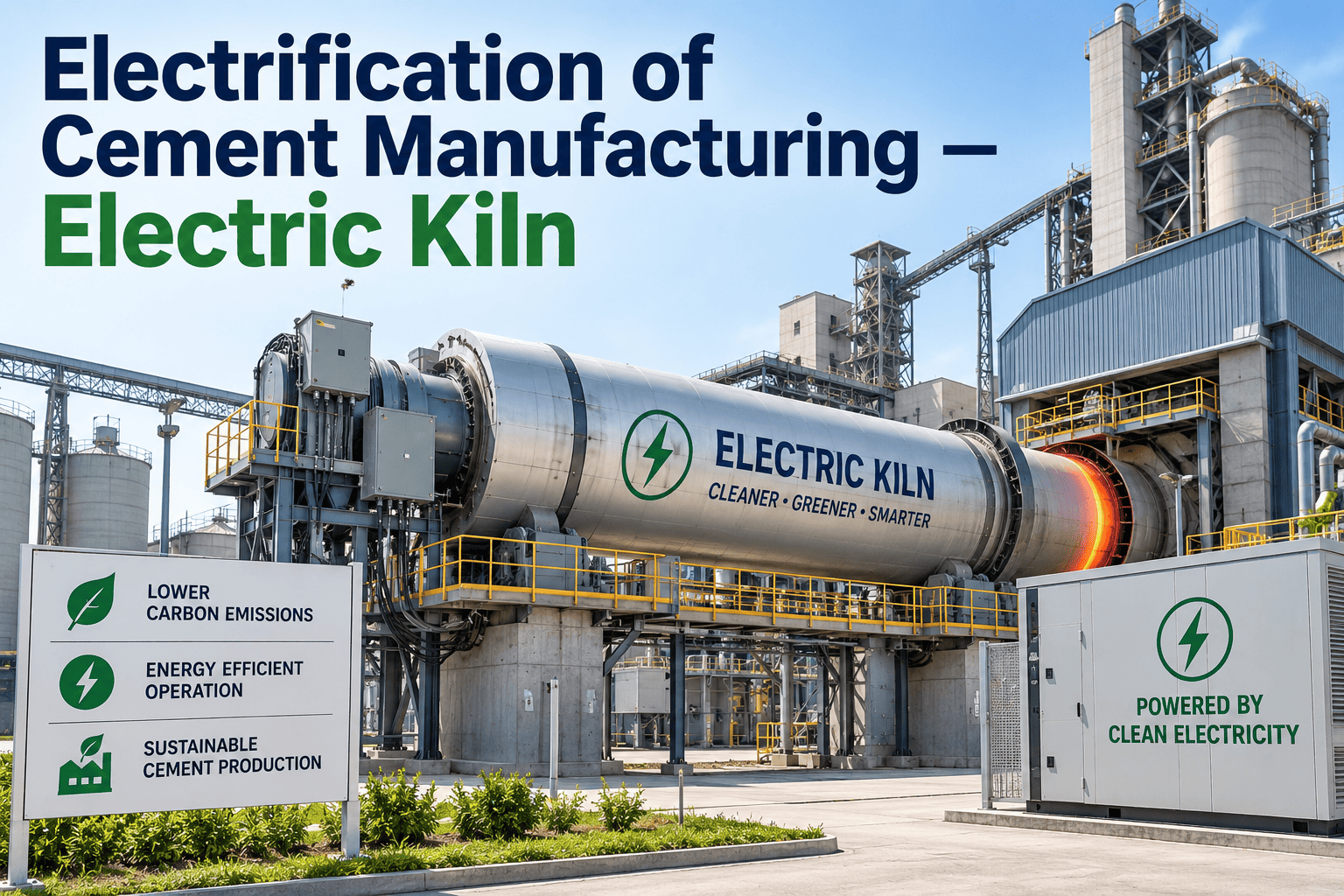
Read More
The cement industry stands at a critical inflection point, with global decarbonization mandates demanding radical reductions in process emissions that have remained stubbornly high for over a century. Traditional rotary kilns, firing fossil fuels
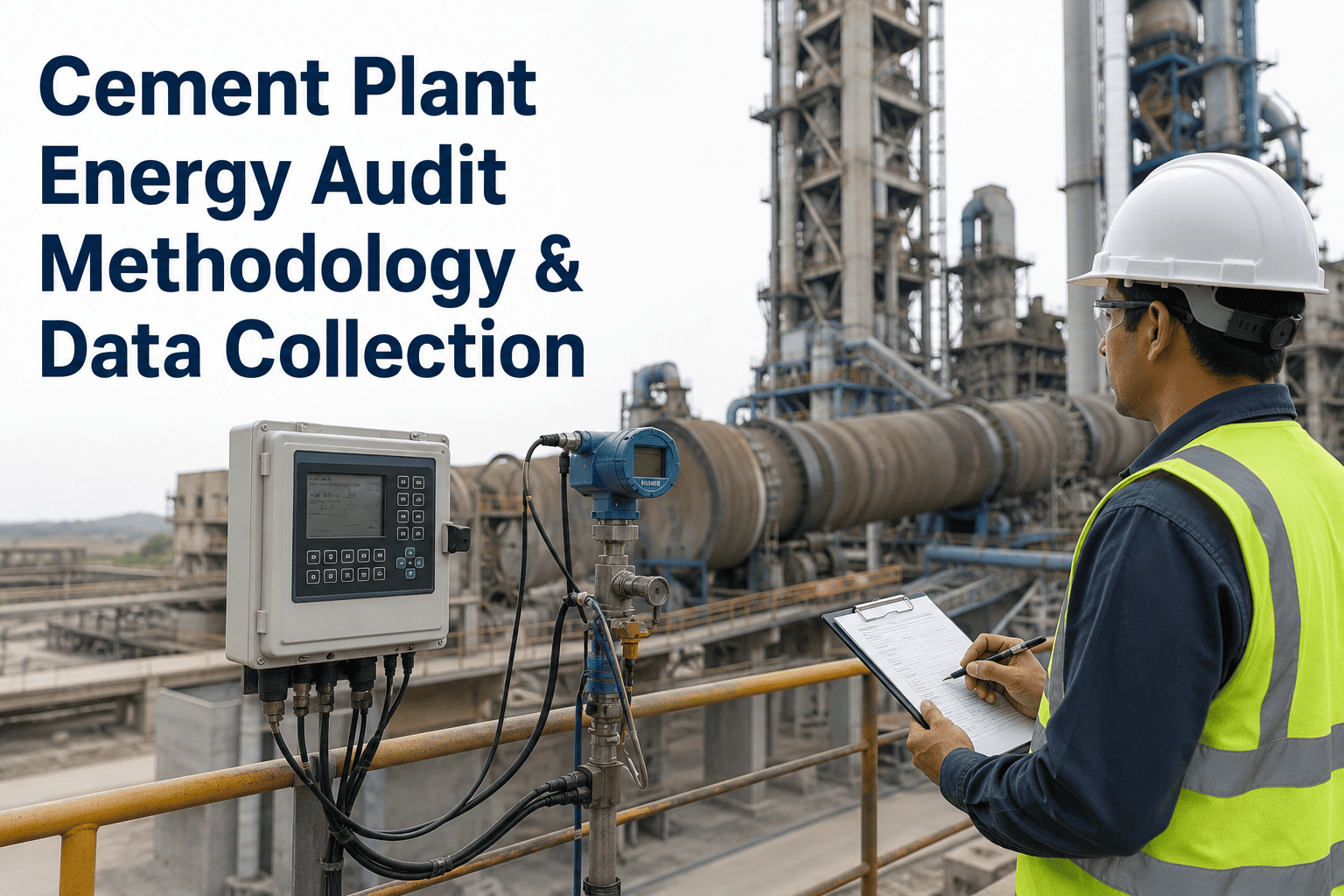
Read More
The cement industry stands as one of the most energy-intensive sectors globally, consuming approximately 12-15% of total industrial energy use. A rigorous energy audit is not merely a regulatory checkbox but a strategic imperative for plant manage

Read More
The global cement industry stands at a critical inflection point, facing mounting regulatory pressure to decarbonize while maintaining operational excellence and cost competitiveness. Among emerging fuel alternatives, hydrogen has garnered signifi
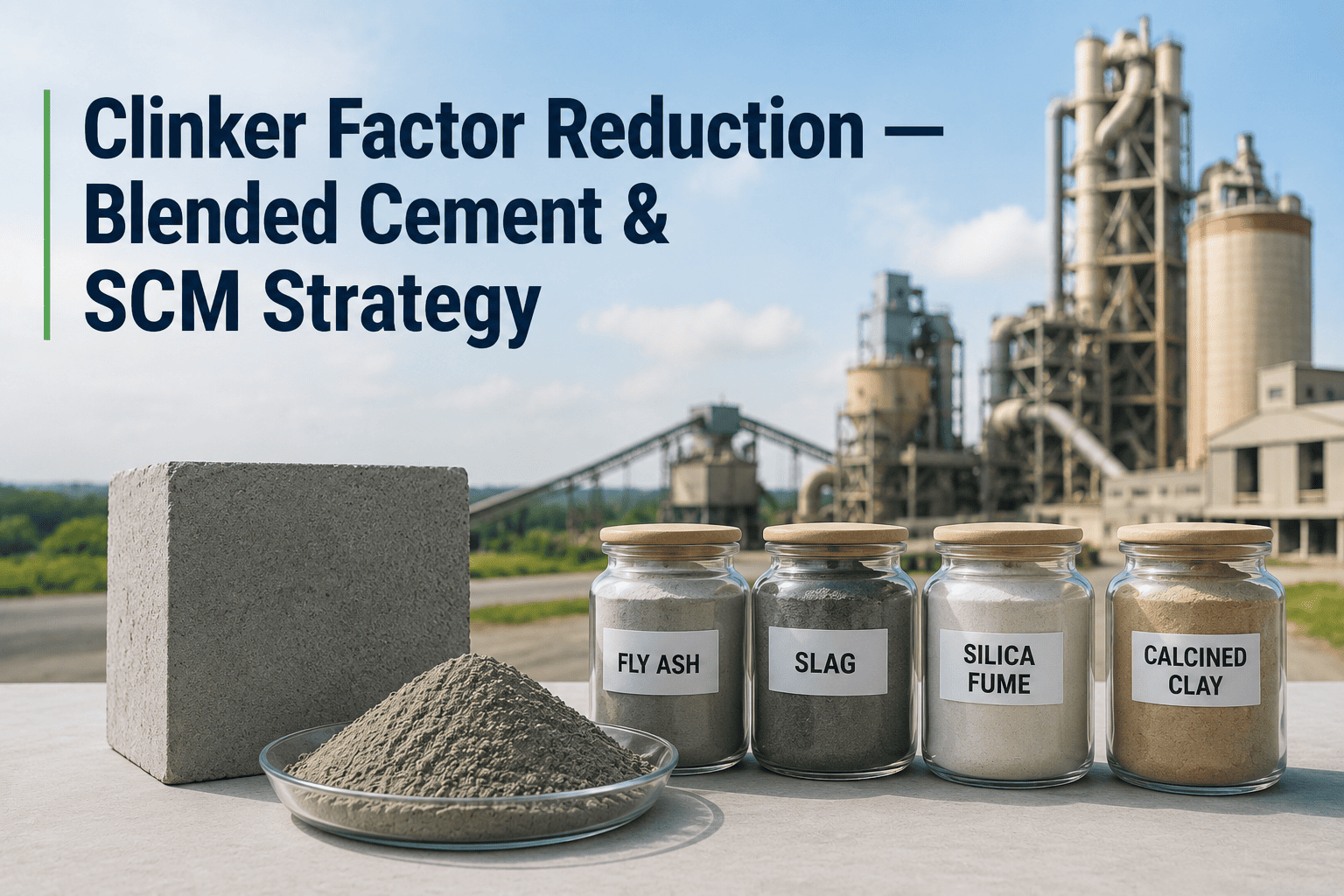
Read More
The cement industry stands at a critical inflection point where decarbonization imperatives intersect with operational excellence. Clinker factor—the ratio of clinker to total cement—represents the single most impactful lever for reducing both car
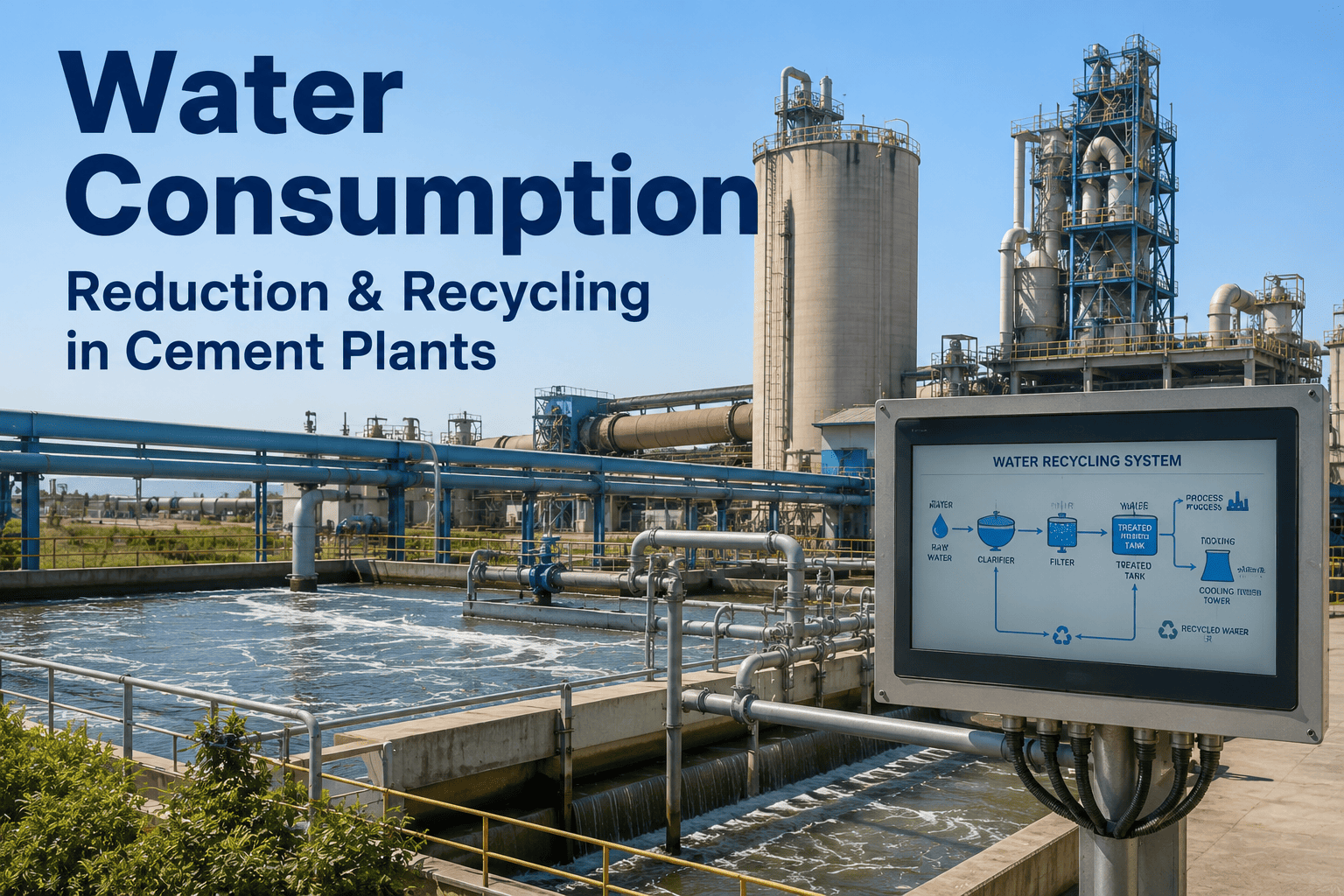
Read More
Cement production ranks among the most water-intensive industrial processes, consuming an estimated 100 to 200 liters of water per ton of cement produced. This staggering figure translates into billions of cubic meters of freshwater extracted annu

Read More
In the demanding environment of cement manufacturing, the kiln drive system stands as a critical nexus between process reliability and operational energy expenditure. The rotary kiln, often exceeding 100 meters in length and rotating at speeds bet

Read More
The cement industry faces an unprecedented dual challenge: soaring energy costs and escalating regulatory pressure to decarbonize. With thermal and electrical energy accounting for 30-40% of total production costs, shifting to renewable energy sou
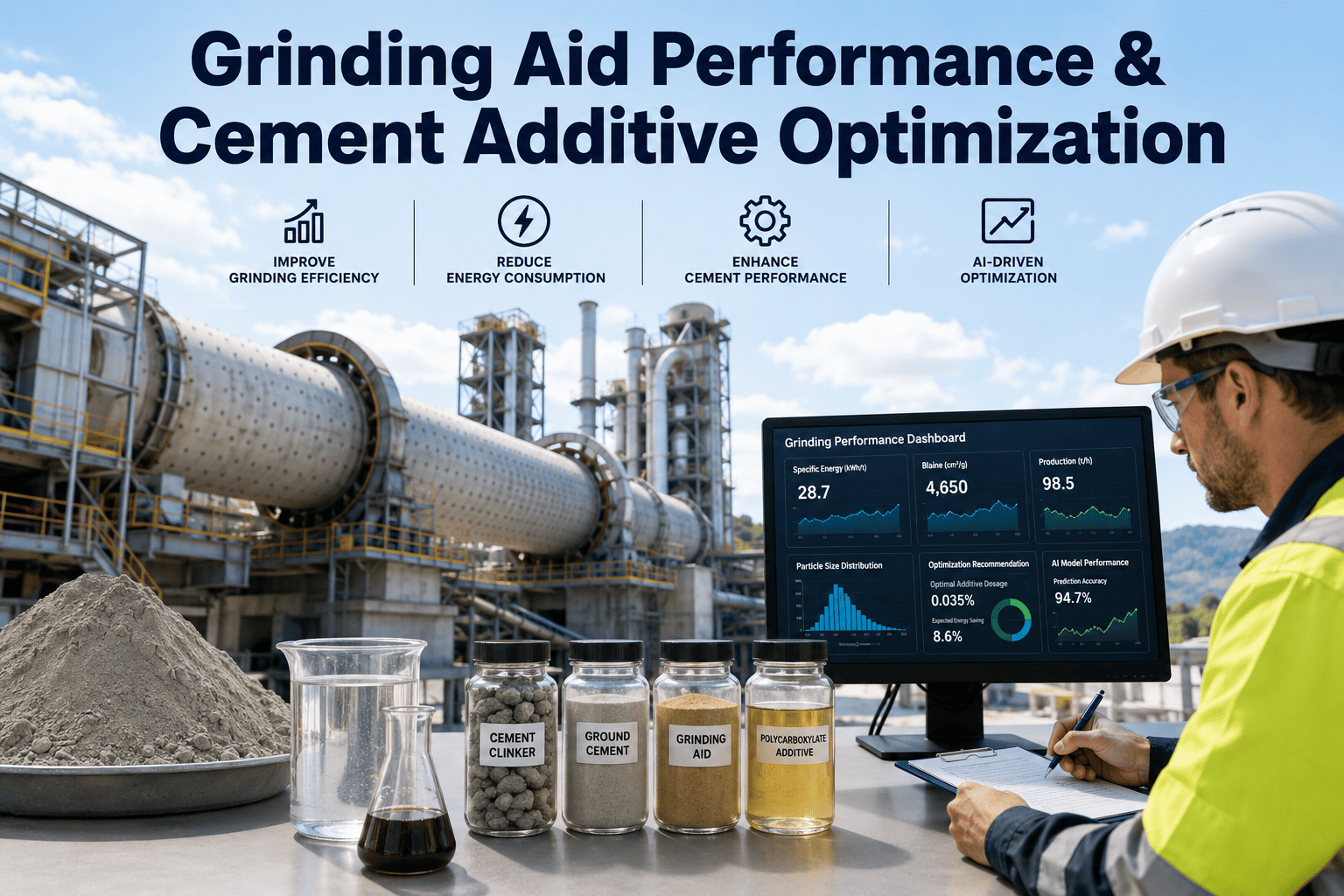
Read More
Cement grinding aids and performance enhancers are poured into finish mills every day at a fixed dosage rate that was typically set during a supplier trial conducted months or years ago under specific clinker and supplementary cementitious materia

Read More
Cement kiln shells routinely radiate ten to fifteen percent of total thermal energy input straight into the plant atmosphere, and most plants accept this as an unavoidable cost of operation because their approach to managing it consists of walking

Read More
A calciner has one job that pulls in two directions at once: burn enough fuel, fast enough, to precalcine the meal before it reaches the kiln, without pushing flame temperature and oxygen levels into the range where NOx formation spikes. Push comb
Read More
Energy already accounts for somewhere between 30 and 40 percent of total production cost at most cement plants, split between fuel for the kiln and electricity for grinding, so it is one of the few line items where a structured management system p

Read More
Every tonne of clinker a kiln burns is shaped long before it ever reaches the burning zone — it is decided at the raw mill, in the exact ratio of limestone, clay, and iron correction material blended into the raw meal. Get that ratio wrong and the

Read More
Fans are the quiet giants of a cement plant's electric bill. Between the preheater induced-draft fan, the raw mill fan, the cooler fans, and the baghouse fans, a typical plant routes somewhere between a fifth and a third of its entire electrical c

Read More
A cement plant running a 5,000 tonne-per-day line pulls power through kiln drives, raw mills, cement mills, and a bank of large induction fans that together can push plant-wide power factor down into the 0.75-0.85 range on a bad day. Utilities not
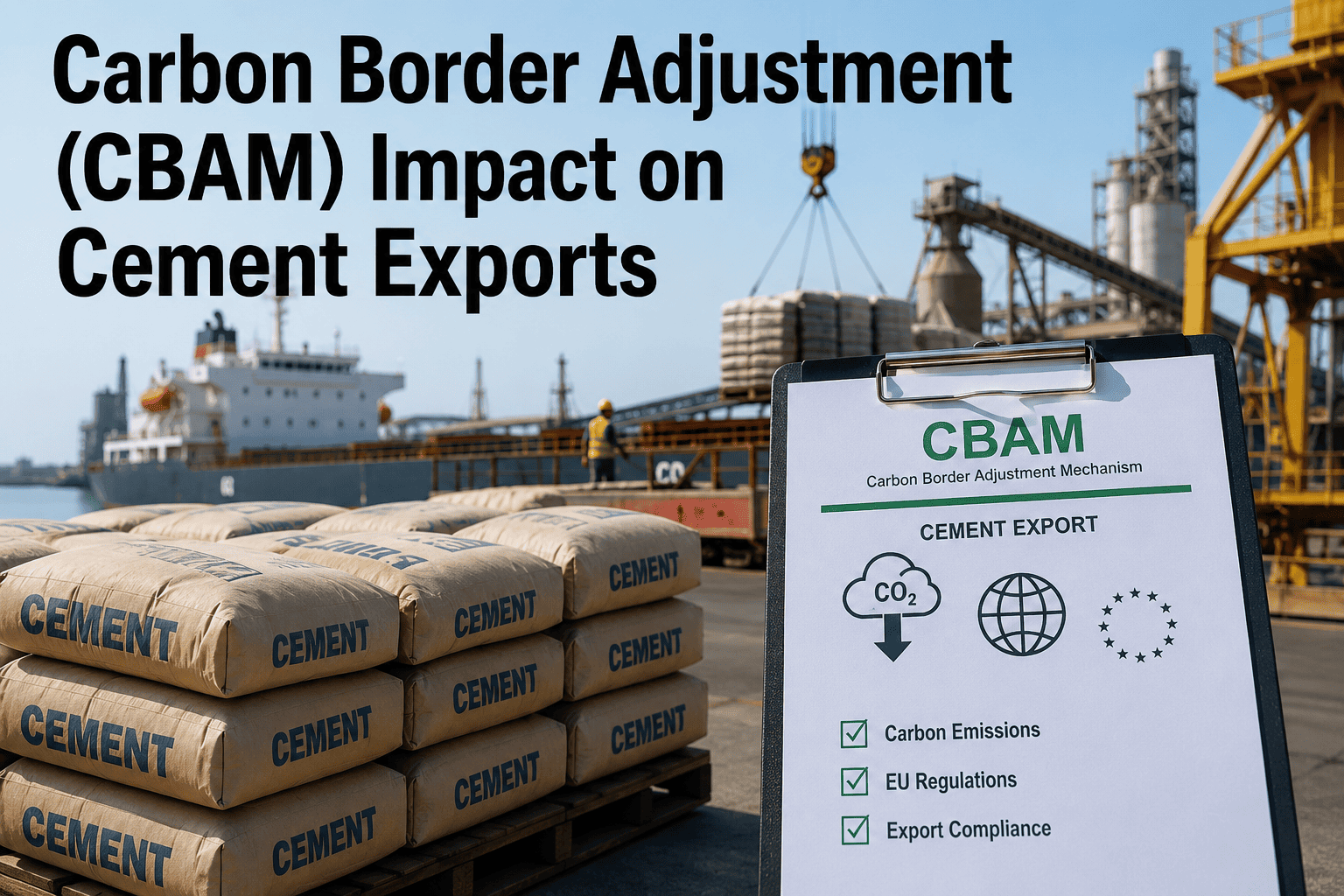
Read More
The European Union's Carbon Border Adjustment Mechanism (CBAM) is reshaping the global cement trade landscape, imposing new carbon costs on imports based on embedded emissions. For cement manufacturers outside the EU, understanding CBAM's intricat

Read More
Managing a network of cement plants across multiple geographies presents a unique set of operational challenges. From varying raw material qualities to disparate equipment vintages and local regulatory demands, achieving consistent production effi
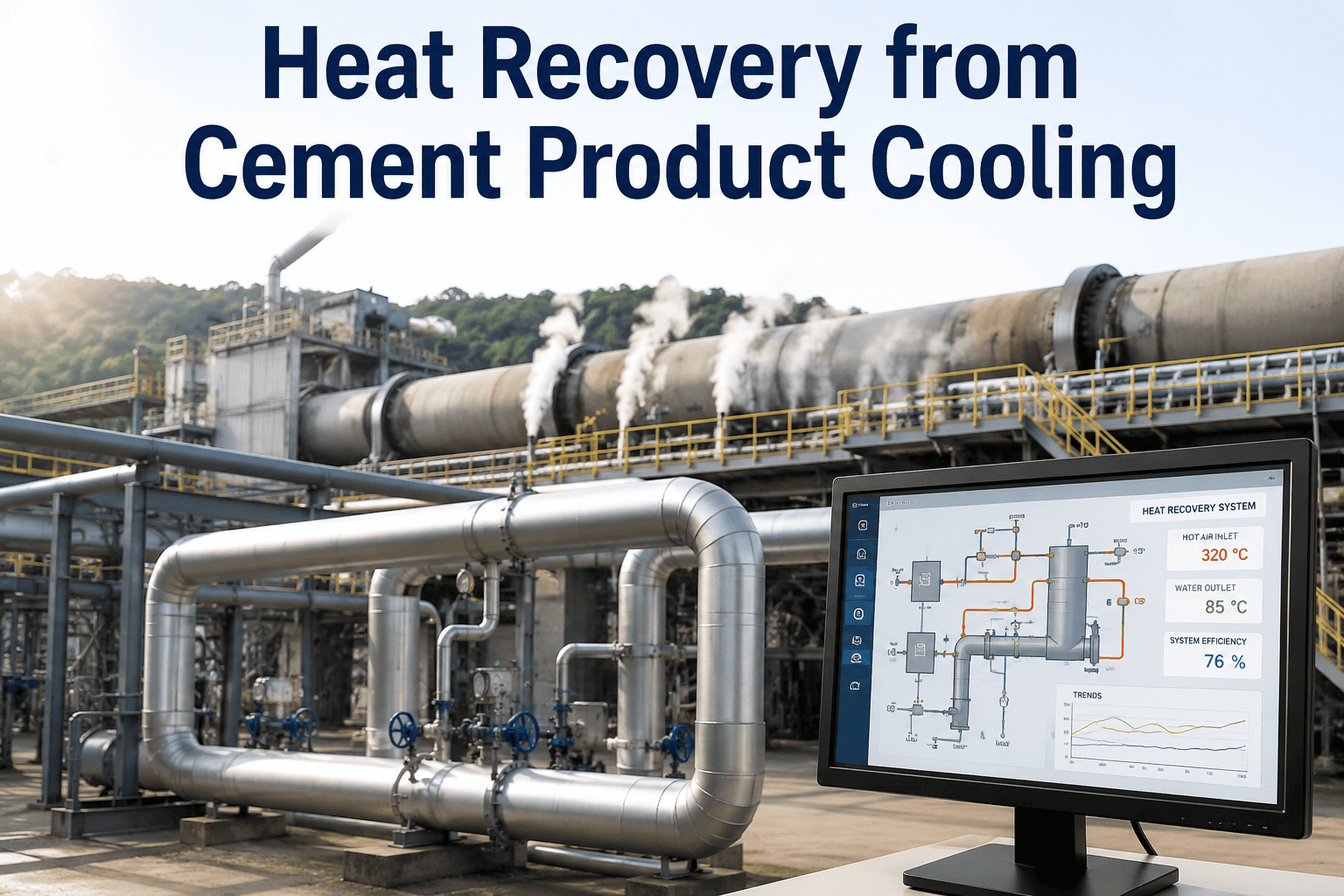
Read More
In the cement industry, the cooling of clinker and finished products represents one of the most significant yet underutilized sources of waste heat. As cement plants strive for energy efficiency and reduced carbon footprints, capturing and repurpo
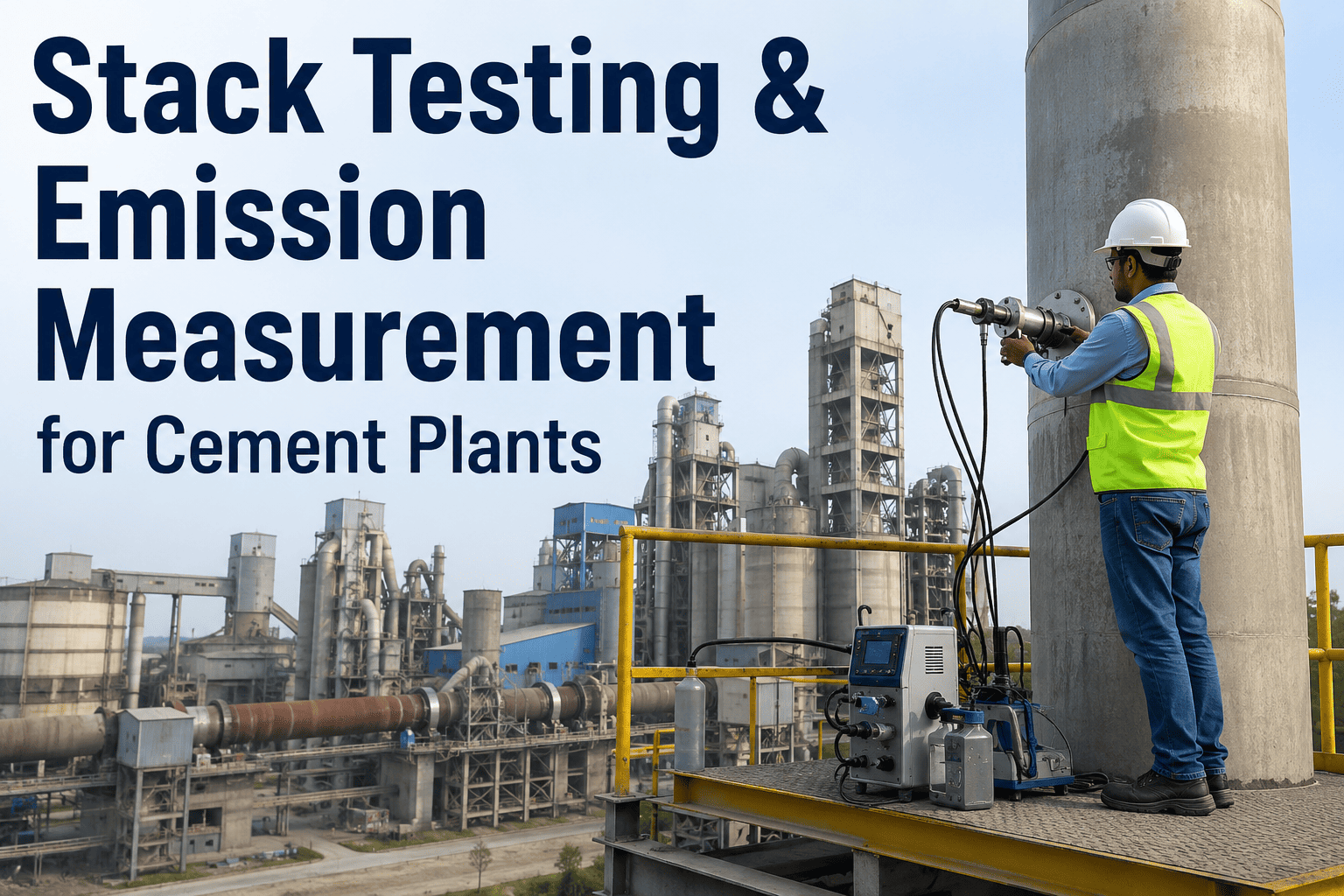
Read More
In cement manufacturing, stack emission testing is not merely a regulatory checkbox—it is a critical operational discipline that directly impacts plant compliance, environmental footprint, and community relations. Modern cement plants must navigat

Read More
Corrosion in cement plants represents one of the most insidious and costly threats to operational reliability, safety, and asset longevity. From the towering preheater towers to the labyrinth of underground piping, every metallic surface is expose

Read More
In cement manufacturing, the quality of the final product is fundamentally determined by the raw materials entering the kiln. Limestone, clay, gypsum, and corrective additives each carry unique chemical and physical properties that must be precise

Read More
In the capital-intensive and operationally demanding environment of cement manufacturing, the strategic deployment of external contractors for maintenance, shutdowns, and capital projects has evolved from a tactical necessity to a core competitive

Read More
The cement manufacturing process is inherently energy-intensive, with the rotary kiln serving as the central reactor where raw meal transforms into clinker at temperatures exceeding 1450°C. Achieving optimal combustion within this high-temperature

Read More
In cement manufacturing, the kiln feed rate stands as the single most critical variable determining clinker quality, thermal efficiency, and overall plant throughput. A stable, precisely controlled feed rate—coupled with a homogeneous raw mix—dire

Read More
The calciner and riser duct are integral components of modern cement production, serving as the primary zones for raw meal preheating and calcination. Inefficient monitoring of these areas can lead to material buildup, partial or complete blockage
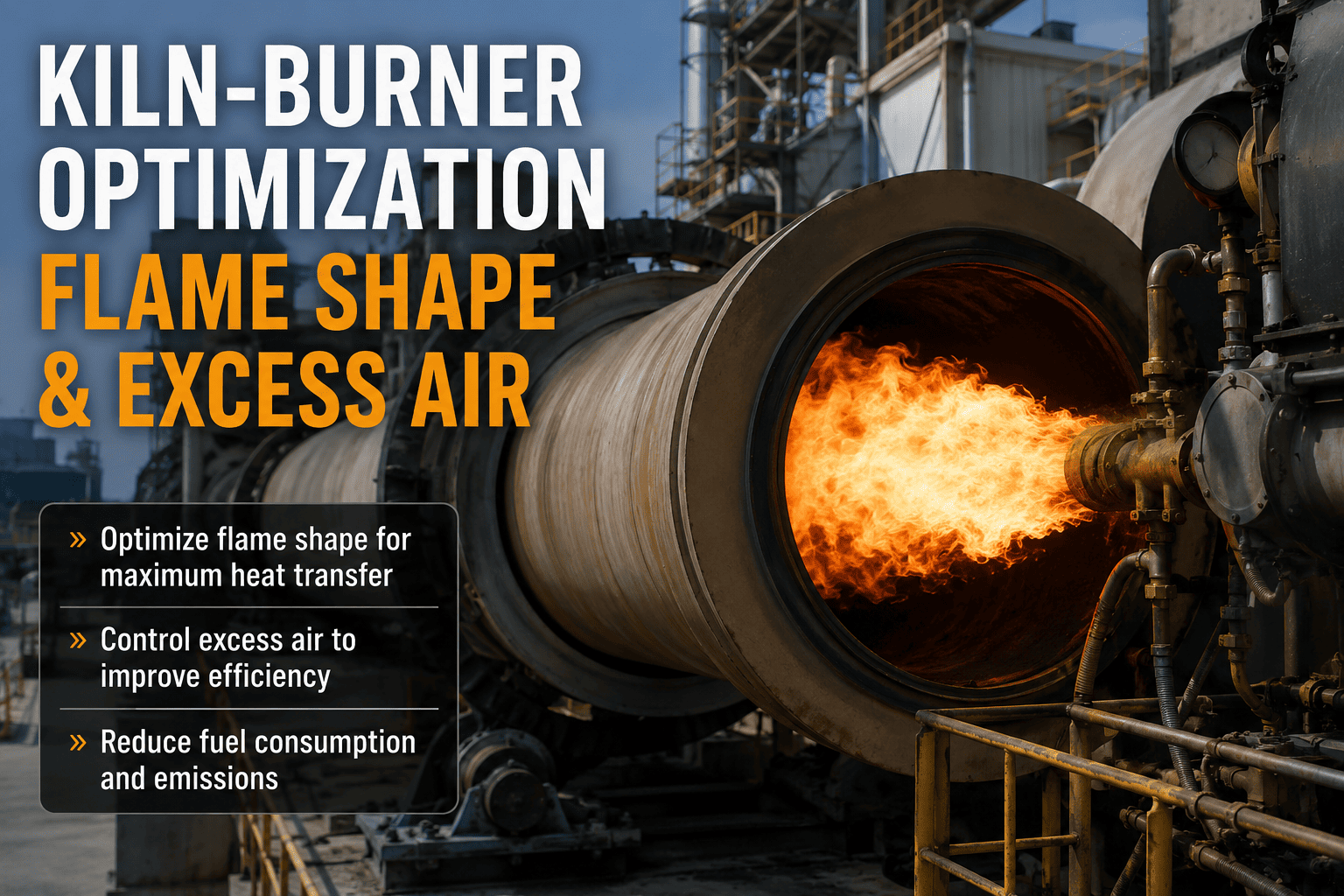
Read More
Kiln burner optimization is a cornerstone of modern cement manufacturing, directly influencing fuel consumption, clinker quality, and environmental compliance. The burner system in a rotary kiln is responsible for delivering the precise thermal en

Read More
Compressed air systems are among the most energy-intensive utilities in cement manufacturing, often accounting for 10-15% of total plant electricity consumption. Despite their critical role in pneumatic conveying, instrumentation, and cleaning ope

Read More
The cement manufacturing process is a symphony of thermal and mechanical precision, where the preheater tower stands as a critical gatekeeper of energy efficiency. Within this towering structure, cyclones perform the vital task of separating hot m
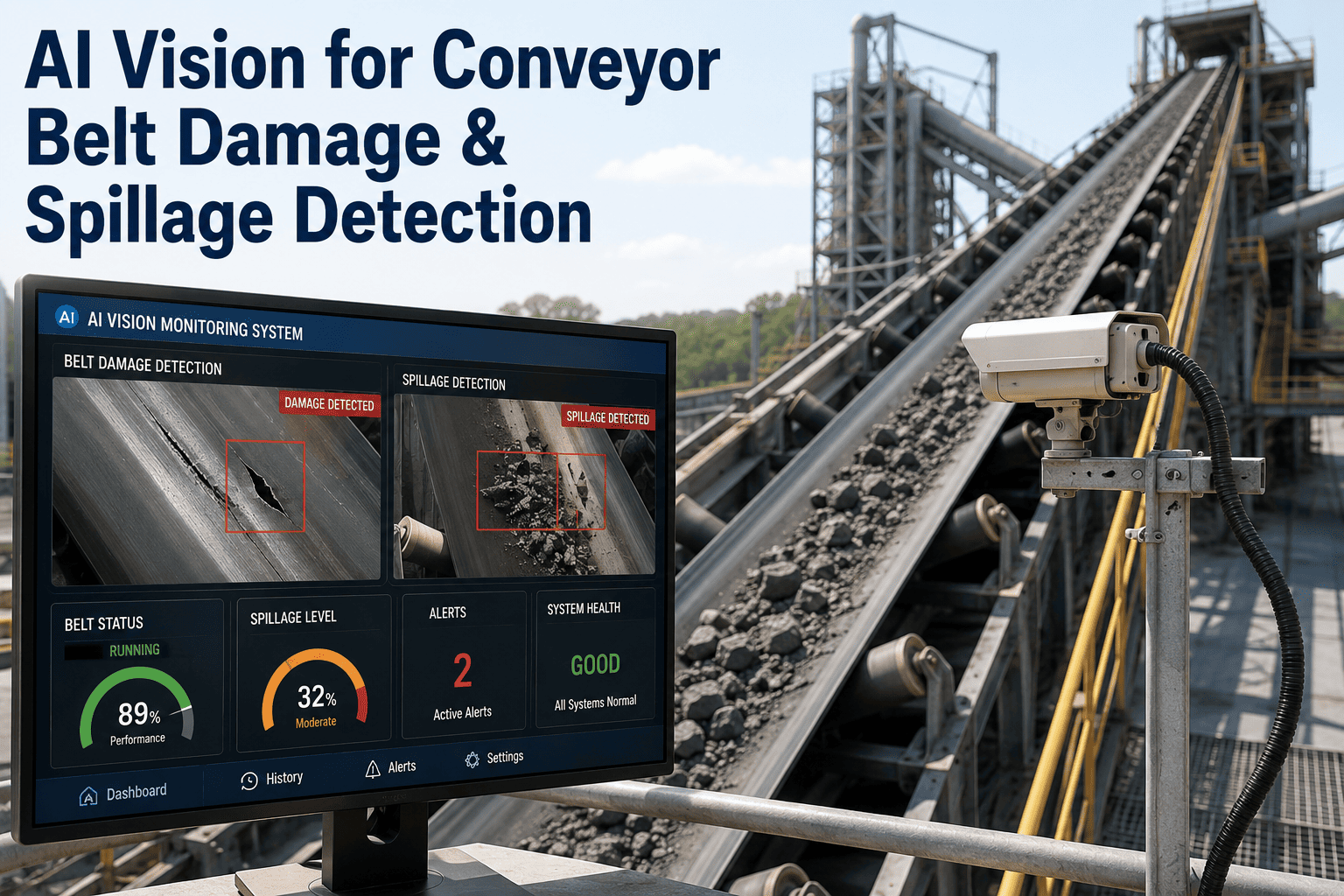
Read More
A conveyor belt rarely fails without warning. Splice joints lift and separate gradually, belts drift off-centre in small increments long before they scrape a frame, and material spillage at a transfer point usually starts as a thin trail before it

Read More
A cement packing line running at three thousand bags an hour gives a human inspector roughly one second per bag to check fill weight, seal integrity, print clarity, and pallet stacking before the next one arrives. Nobody sustains that pace for an

Read More
Clinker quality has always been judged the same way at most cement plants: a shift chemist glances at a tray of nodules under a hood light, checks the colour against memory, eyeballs the size spread, and calls it normal, hard-burnt, or reject. Tha
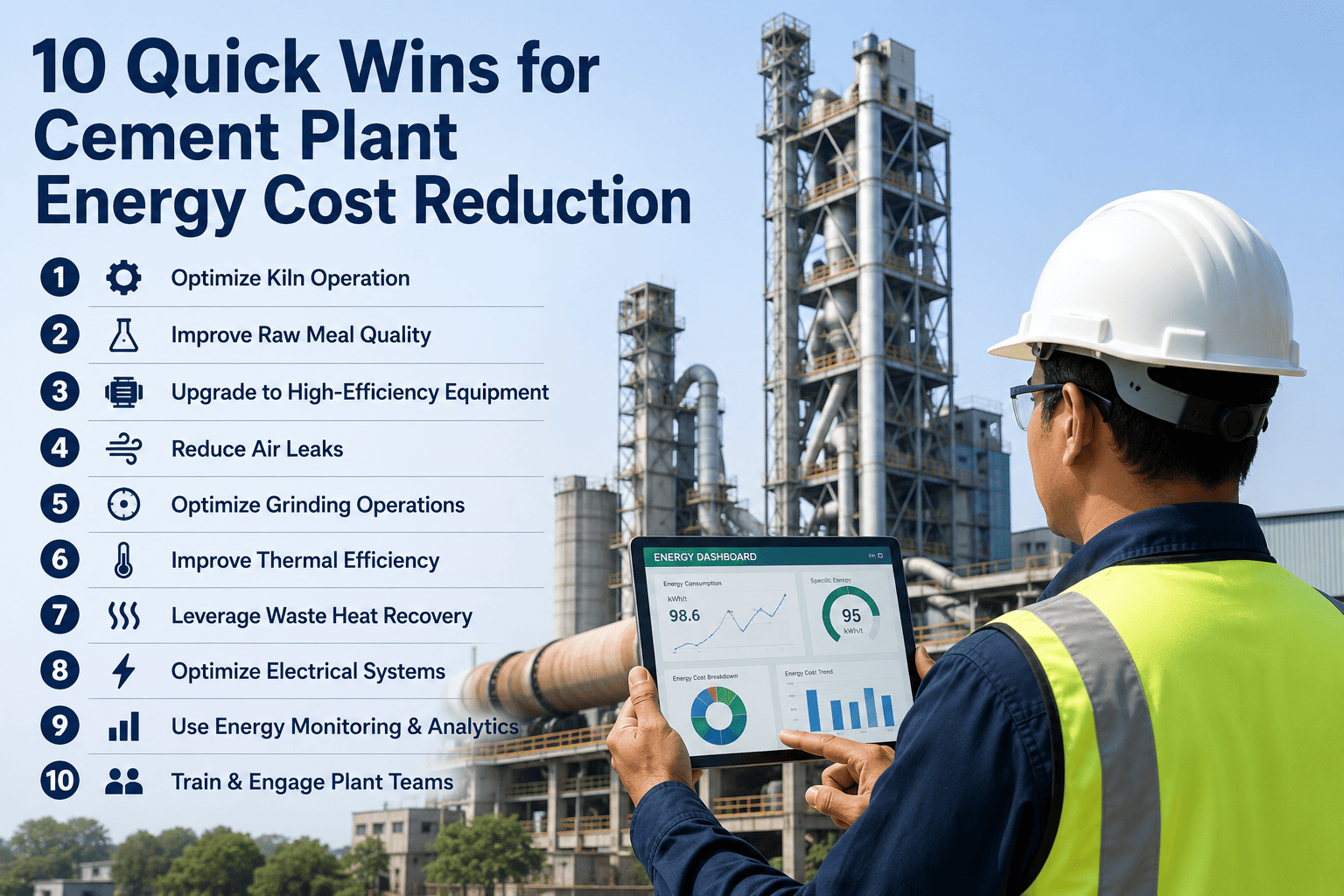
Read More
In the highly competitive cement industry, energy costs represent up to 60% of total production expenses, making energy efficiency a critical lever for profitability. While many plant managers assume that significant energy savings require heavy c

Read More
In the cement industry, maintenance spending often represents a substantial portion of operational costs, frequently reaching 15 to 25 percent of total production expenses. Yet many cement plants still operate with a reactive maintenance mindset,

Read More
In the highly competitive cement industry, understanding the granular breakdown of production costs is not just a financial exercise — it is a strategic imperative. With global cement demand projected to reach 5.2 billion tonnes by 2028, manufactu

Read More
By the time a SCADA alarm fires because kiln drive torque has crossed 120% of rated load, the coating ring that caused it is usually already constraining production — the alarm is reporting a problem that has already arrived, not warning that one

Read More
A single unplanned refractory failure in a cement kiln can cost between 800,000 and 2.5 million dollars once emergency relining, expedited brick procurement, and days of lost production are added together — and the frustrating part is that calenda
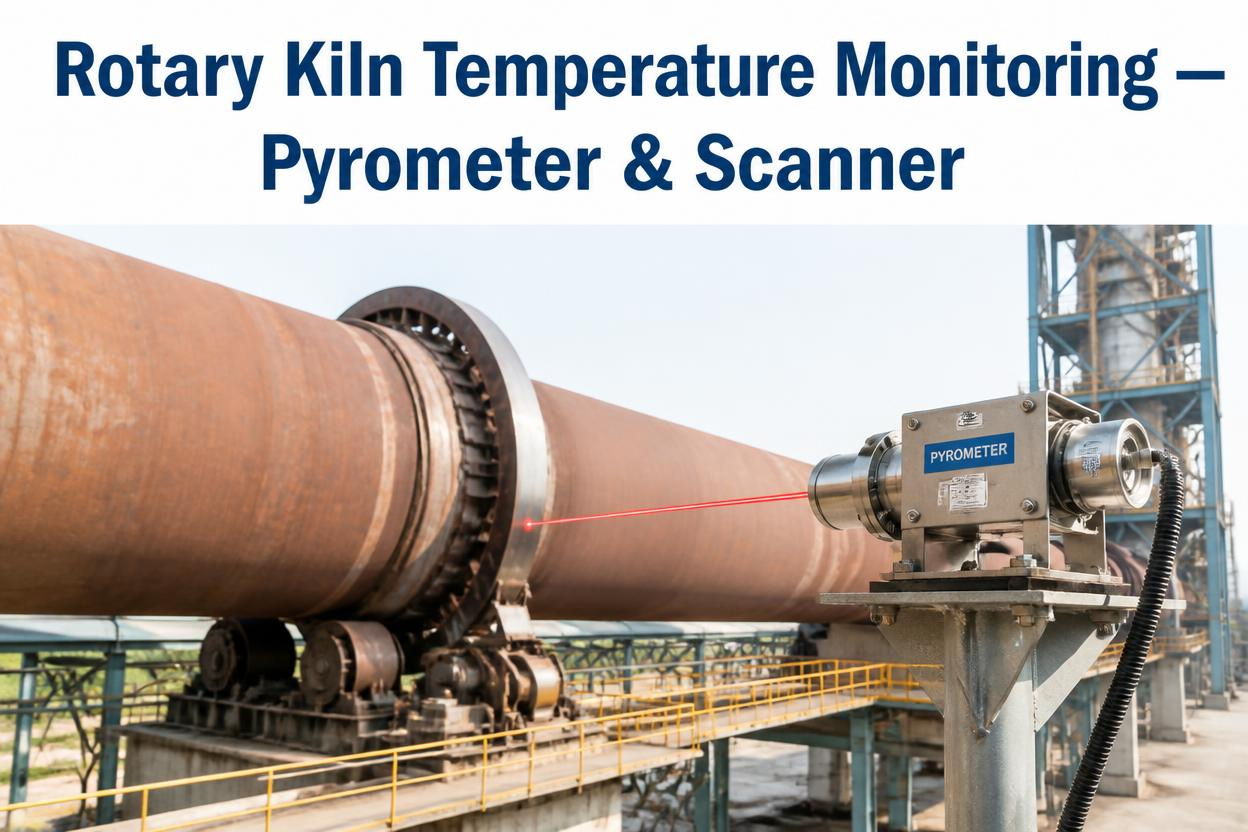
Read More
The inside of a cement kiln reaches temperatures that would destroy almost any sensor placed directly in the flame, which is exactly why plants rely on two very different measurement technologies to keep the burning zone under control: pyrometers

Read More
Two boilers decide whether a cement plant's waste heat recovery system hits its projected output or quietly underperforms for the next fifteen years: the suspension preheater (SP) boiler catching kiln exhaust gas, and the air quenching cooler (AQC
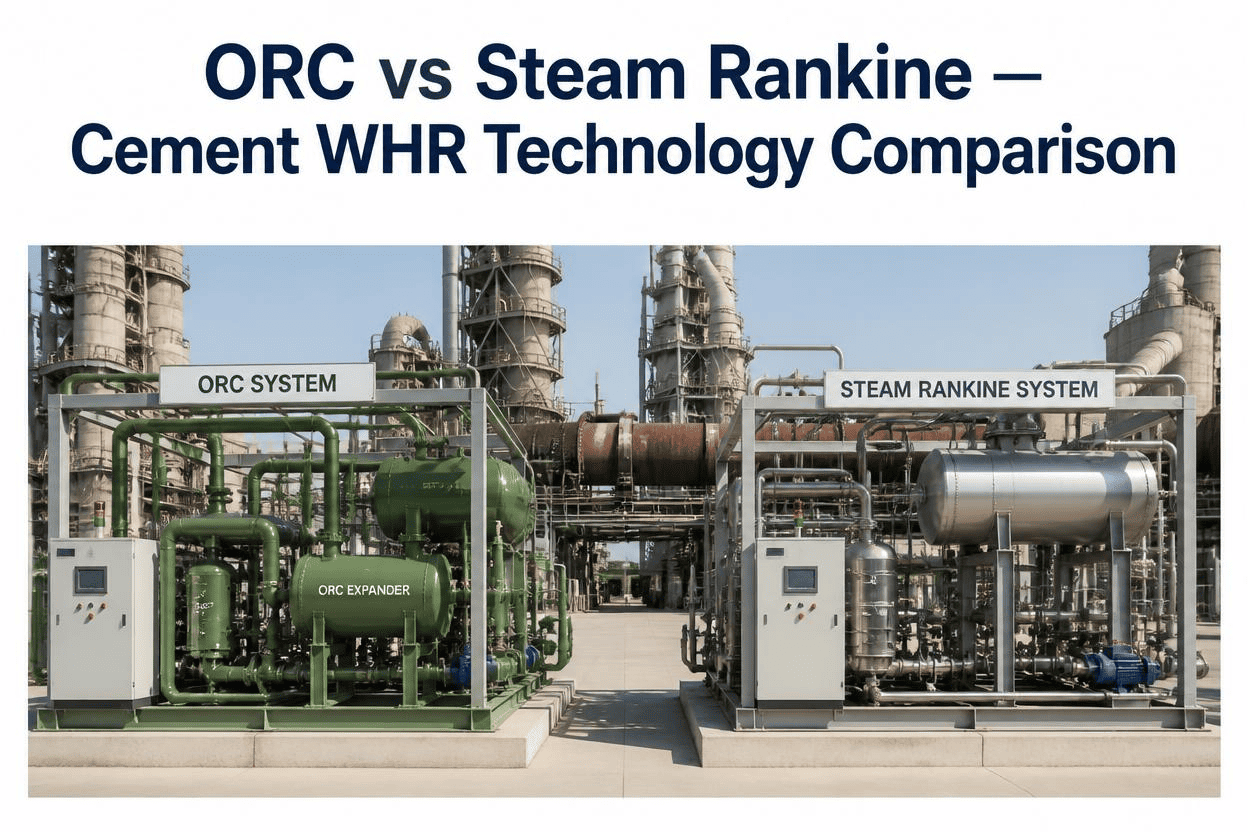
Read More
Every cement WHR project eventually comes down to one decision that shapes the entire economics of the system: organic fluid or water, low-pressure turbine or high-pressure steam island. Get this call right and a plant captures nearly every recove
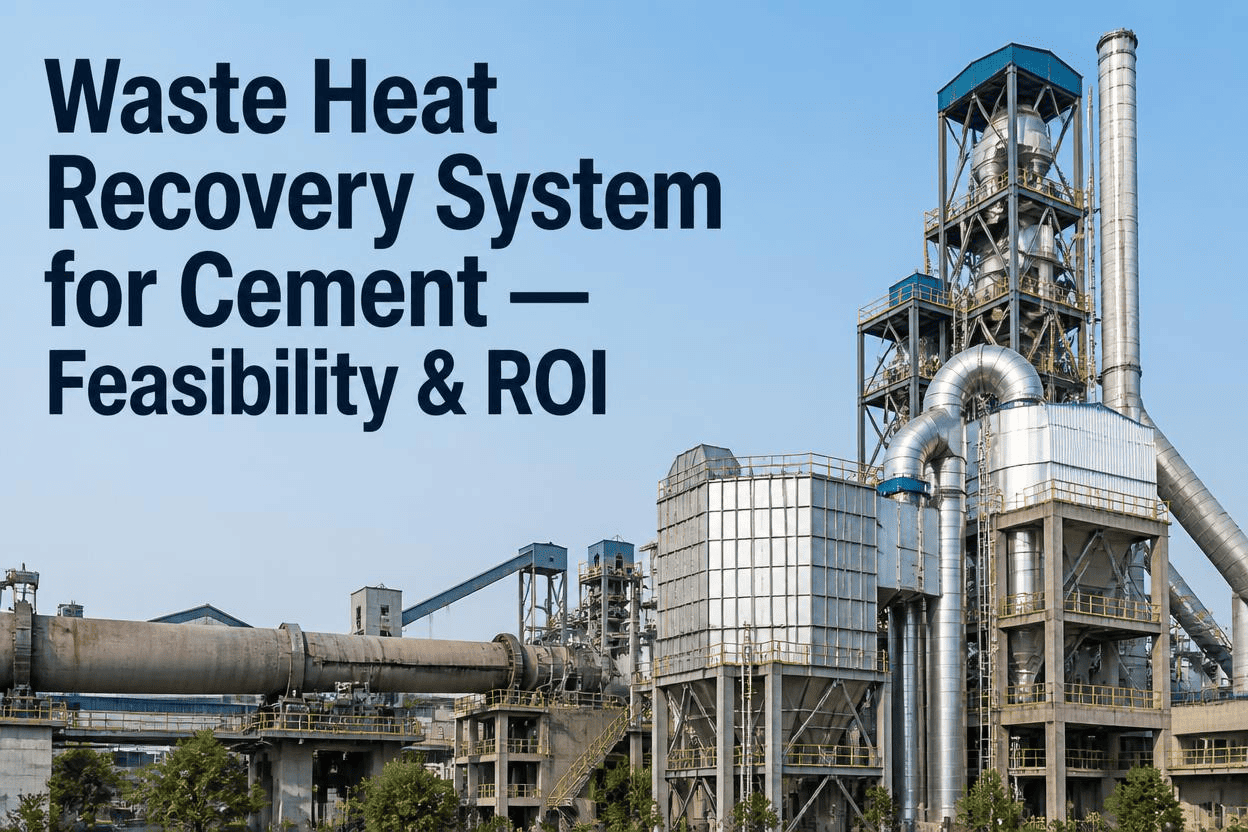
Read More
Every rotary kiln in a cement plant throws away enough heat through the preheater tower and clinker cooler exhaust to run a meaningful share of the plant's own electricity load — most operators simply never turn that thermal loss into a line item

Read More
A finish mill has two jobs that quietly work against each other: grind clinker fine enough for strength development, and stop before gypsum dehydrates enough to cause false set. Both depend on the same variable — mill outlet temperature, best kept

Read More
Clinker leaves the kiln at roughly 1,400°C, and the grate cooler's only job is to pull as much of that heat back into the process as possible before it disappears out the vent stack. Modern grate coolers recover 76–86% of that thermal energy under
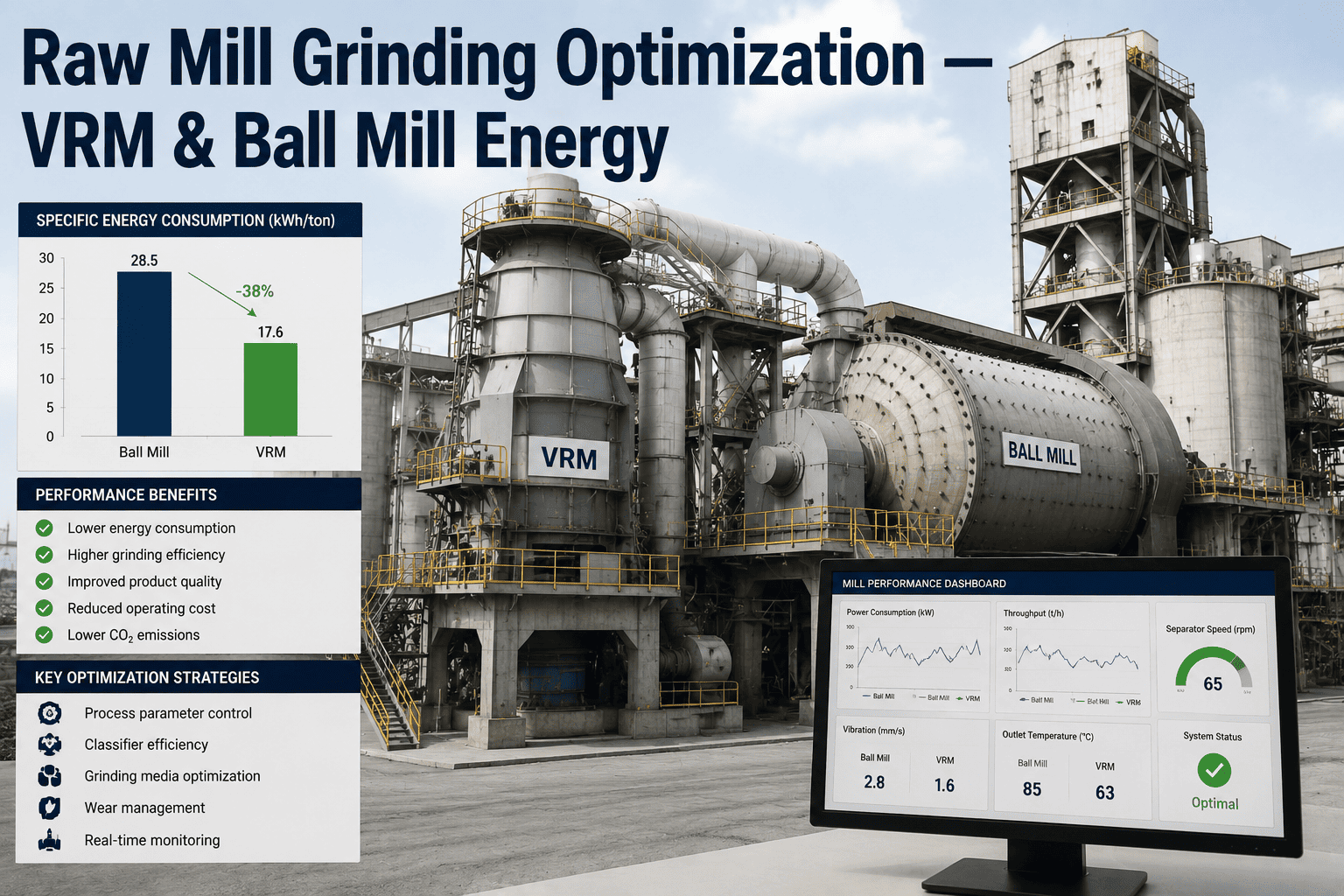
Read More
Two plants grinding the same limestone to the same fineness can post grinding energy figures 40% apart, and the mill type is usually only part of the story. Vertical roller mills typically use 15–25 kWh per ton for raw material grinding against 25

Read More
Ten percent thermal substitution feels manageable on any kiln. Fifty percent is a different operation entirely, because the fuels that cut cost and carbon the most — RDF, TDF, biomass — are also the hardest to burn consistently. European cement pl

Read More
Most cement plants know their specific energy consumption number. Far fewer know how that number compares to what the same equipment, running well-maintained and well-tuned, is actually capable of. That gap between "our number" and "the achievable

Read More
Half the fuel burned in a cement kiln never touches the clinker. It leaves through the stack, radiates off the shell, or exits with the cooler exhaust — and on most plants nobody has ever measured exactly how much goes where. A kiln heat balance a

Read More
Raising the thermal substitution rate of RDF, biomass, and other alternative fuels is one of the fastest paths to lowering a cement plant's fuel bill and carbon footprint, but pushing substitution rates higher without disrupting kiln stability req
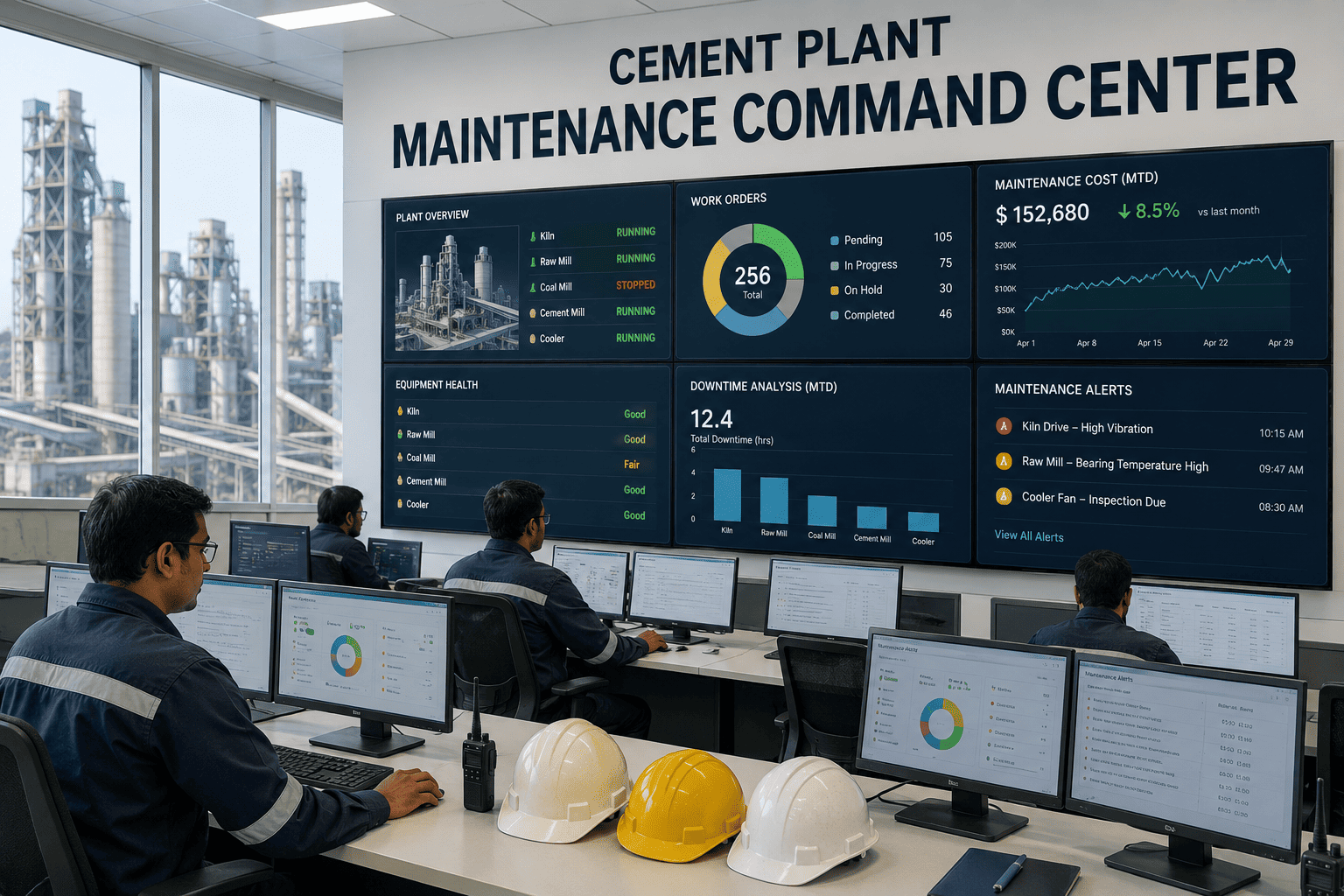
Read More
Most cement plant maintenance teams operate across a fractured set of tools — a CMMS for work orders, a separate spreadsheet for inspection rounds, a vibration analyst's standalone software for predictive alerts, and a paper logbook for shift hand

Read More
The clinker cooler is where a cement plant either recovers most of its thermal energy or loses it permanently to the stack, and the difference between a well-tuned cooler and a poorly controlled one can swing kiln fuel consumption by 5 to 8 percen

Read More
Lubrication failure is the invisible root cause behind a disproportionate share of unplanned cement plant downtime — bearing seizures, gearbox scoring, and premature roller wear on raw mills, kilns, and cement mills can almost always be traced bac

Read More
A cement plant baghouse can run for months showing normal differential pressure readings while individual filter bags quietly degrade behind the scenes, because compartment-level pressure averages mask the failure of a handful of bags long before

Read More
Shift handover at most cement plants still happens the same way it did twenty years ago — a paper logbook, a verbal walkthrough at the shift change window, and whatever the outgoing operator remembers to mention before heading home. The problem is

Read More
A cement plant can run its raw mill at perfect throughput and still produce clinker that swings between acceptable and marginal from one hour to the next, simply because the limestone, clay, and corrective material feeding the mill vary in chemist

Read More
Most cement plant control rooms still run on a patchwork of separate screens — one for the kiln, one for the raw mill, one for the baghouse, one for the SCADA historian — forcing operators to mentally stitch together plant health from five differe

Read More
Most pipeline leaks are not found on a control room screen — they are found later, by a landowner who smells product in a ditch or a drone flyover that spots a sheen weeks after the release began. Conventional mass balance systems only flag a leak

Read More
Every well is a chain of pressure losses running from the reservoir through the perforations, up the tubing, across the choke, and out to the separator — and the weakest link in that chain, not the reservoir alone, usually decides how much oil or

Read More
Artificial lift is the single largest operating expense most producers carry, consuming somewhere between 60 and 80 percent of lease operating costs across a typical well portfolio. Yet most electric submersible pumps, rod pumps, and gas lift syst

Read More
A horizontal lateral that drifts just 10 to 15 vertical feet out of the target zone can quietly erase a large share of a well's expected recovery, even though every joint of pipe still went in the ground on schedule. Traditional geosteering leans

Read More
Every foot of hole that takes longer than it should is money spent without progress. On a mid-size land rig, a single day of non-productive time can run past $30,000, and offshore spreads push that number into six figures before the crew changes s

Read More
Cement grinding is the most energy-intensive process stage in any cement plant — consuming 60 to 70 percent of the electrical energy required to produce a finished tonne of cement — and it is the stage where quality control decisi
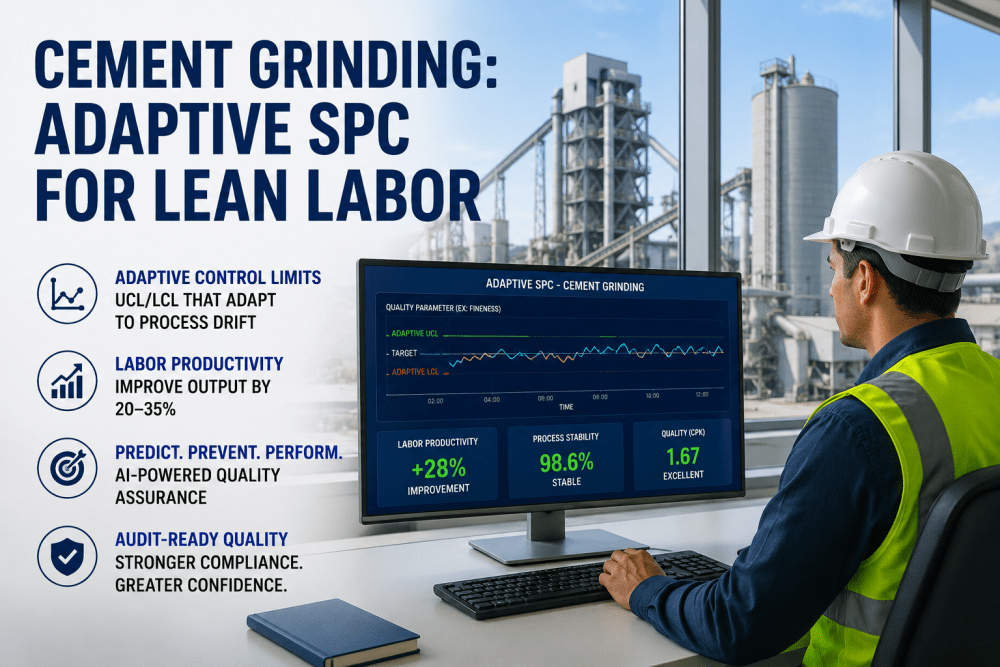
Read More
Cement grinding is the final and most quality-critical stage of the cement manufacturing process — and it is the stage where traditional Statistical Process Control (SPC) methods most consistently fail to deliver the quality visib

Read More
In cement grinding, energy consumption represents 60-70% of total production cost — and the most effective path to energy reduction is not replacing mill motors or installing variable frequency drives. It is detecting the operating conditions that

Read More
For quality leaders in cement grinding, Cpk stability is not just a metric — it is the single most visible indicator of process control effectiveness, audit readiness, and customer confidence. A finish mill that cannot sustain Cpk

Read More
For quality leaders in cement grinding, the gap between laboratory sampling and production reality has always been the central challenge. A finish mill producing 150 tons per hour can generate 75 tons of off-spec material in the 3

Read More
Every shift supervisor in cement grinding knows the frustration: the lab calls with an off-spec Blaine or fineness result, and you realize the last 90 minutes of production is heading to the reject silo. The root cause could be anything — a gyps

Read More
Every ton of scrap produced in a cement grinding mill represents raw material, energy, and production time that cannot be recovered. For shift supervisors managing finish grinding operations, scrap is not just a quality metric — it is a direct d

Read More
Shift supervisors in cement grinding operations across the USA, Canada, UK, and Australia are responsible for quality outcomes across every ton produced on their watch — yet most supervisors today rely on laboratory results that arrive 30–90 min

Read More
Every cement grinding operation is a sequence of interconnected process events — mill feed changes, separator adjustments, composition shifts, ambient condition variations — where each variable either contributes to on-spec produc

Read More
Cement grinding operations across the USA, Canada, UK, and Australia produce millions of tons of cement every year — and every ton of off-spec material represents lost margin that could have been prevented with earlier warning. Most plants today

Read More
Cement grinding operations across the USA, Canada, UK, and Australia are producing millions of tons of product every year — yet most plants still rely on 30–60 minute laboratory sampling cycles to verify quality, leaving hundreds of tons of pote

Read More
Cement grinding operations across the USA, Canada, UK, and Australia are producing more quality control data than ever before — yet most plants still rely on manual SPC chart interpretation, fixed control limits that go weeks without recalibration

Read More
Labor productivity in cement kiln operations is constrained not by the effort or skill of the workforce but by the time spent managing static SPC systems that were designed for a different era of manufacturing. Every shift, operators and process
Read More
Every cement kiln operation is a sequence of interdependent thermal, chemical, and mechanical processes — preheater tower calcination, rotary kiln sintering, grate cooler quenching, and clinker storage homogenization — where eac

Read More
Every cement kiln line produces process data that could be the foundation of an audit-ready quality management system — temperature trends, pressure profiles, feed chemistry records, and clinker quality measurements that, if properly collected,
Read More
Eliminating defects in cement kiln operations is not a problem of data availability — it is a problem of causal visibility across 100-plus process variables that interact across the preheater, calciner, rotary kiln, and cooler system. When a def
Read More
Cement kiln operations generate scrap — off-specification clinker that must be downgraded, re-blended, or discarded — through a sequence of process deviations that compound across the preheater, calciner, rotary kiln, and cooler system before th
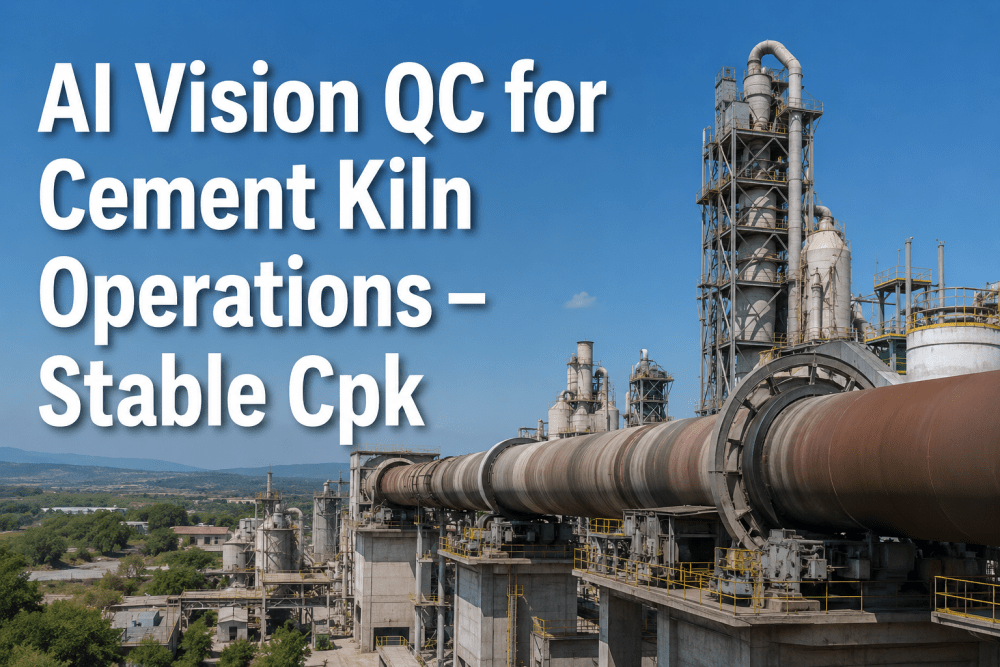
Read More
Cement kiln operations are the thermal and chemical heart of every cement plant — the sequence of preheating, calcining, sintering, and cooling that transforms raw meal into clinker with the mineralogical composition that determ

Read More
Statistical process control in cement kiln operations has historically meant manual charting of free lime, liter weight, SO3, and Blaine fineness at shift intervals, with control limits set annually and out-of-control signals disc

Read More
Quality leaders in cement kiln operations know that traditional SPC — with its fixed upper and lower control limits calculated from a static historical baseline — creates a fundamental tension between false alarms and missed det

Read More
For quality leaders in cement kiln operations, cycle time is the metric that connects every dimension of plant performance — raw material preparation, burning zone control, cooling efficiency, laboratory throughput, and finished c

Read More
A cement kiln producing 5,000 tons of clinker per day consumes 700 to 900 kilocalories of thermal energy per kilogram of clinker and 50 to 70 kilowatt-hours of electrical energy per ton of cement — making energy the single large

Read More
A cement kiln operator manages a 100-meter-long rotating reactor where a 1,450-degree Celsius flame transforms raw meal into clinker across four distinct thermal zones — preheating, calcination, sintering, and cooling — with mor

Read More
Shift supervisors in cement kiln operations carry the direct responsibility for the quality of every ton of clinker produced during their shift — and when quality drifts outside specification limits, the material becomes scrap t

Read More
Shift supervisors in cement kiln operations are ultimately responsible for the visual quality of every ton of clinker and cement produced during their shift — clinker nodule size and color that reflects burning zone conditions,

Read More
Shift supervisors in cement kiln operations carry the responsibility for process quality under their watch — every shift produces clinker that must meet spec, every control chart must be reviewed, every out-of-control signal mus

Read More
Statistical process control has been the foundation of quality management in cement kiln operations for decades, but the fixed control limits used in traditional SPC charts come with a hidden cost that operators experience every

Read More
Cement kiln operators manage one of the most complex multivariate processes in industrial manufacturing, where the interaction of more than 100 process variables — burning zone temperature, preheater exit gas composition, ID fan s

Read More
Cement kiln operators face a constant balancing act — maximizing clinker throughput while maintaining the temperature profile, chemistry, and residence time that produce consistent quality. Scrap events in the kiln line, whether f
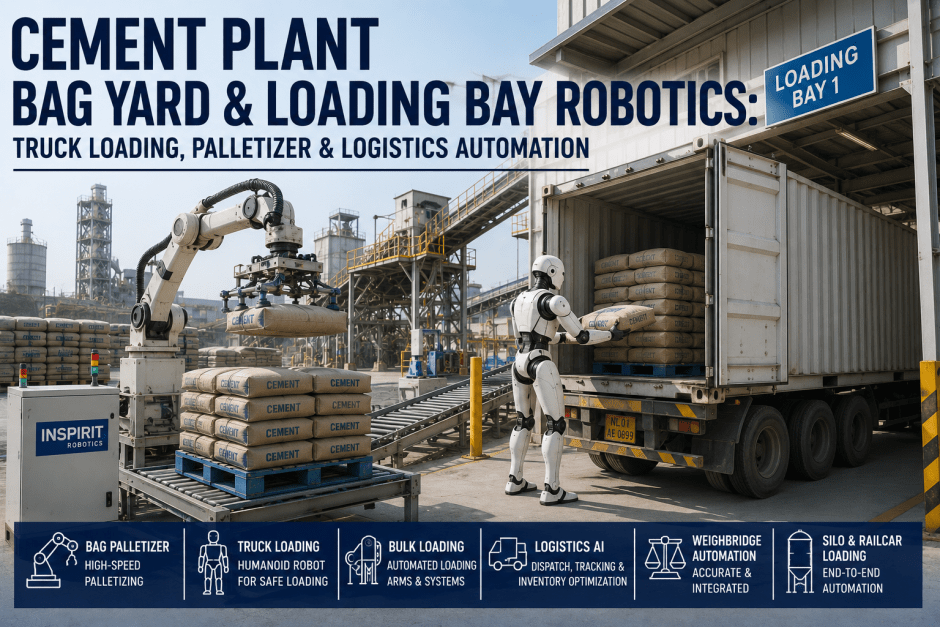
Read More
Cement plant bag yards and loading bays are among the most labor-intensive zones in any cement manufacturing operation — and among the least automated. A typical 2 MTPA cement plant moves 600,000 to 900,000 bags of cement per
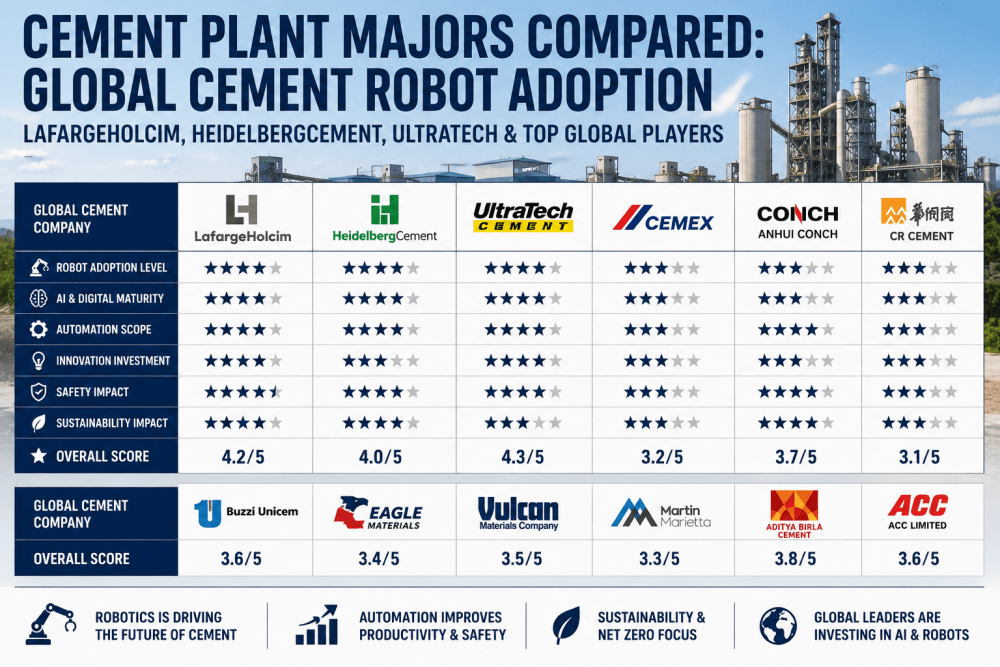
Read More
Global cement production exceeds 4.1 billion metric tons per year across more than 2,500 integrated plants operated by dozens of multinational and regional producers. The adoption of robotics and AI-driven automation in cement

Read More
Accurate stockpile volume measurement is one of the highest-leverage but most underinvested areas of cement plant operations. Clinker piles, limestone stockpiles, coal and pet coke storage, gypsum and fly ash inventory — every b

Read More
Cement plant AI robotics deployments have historically been complex, multi-vendor integration projects requiring 6 to 12 months of planning, procurement, and commissioning before the first robot patrol goes live. The coordination between robot h
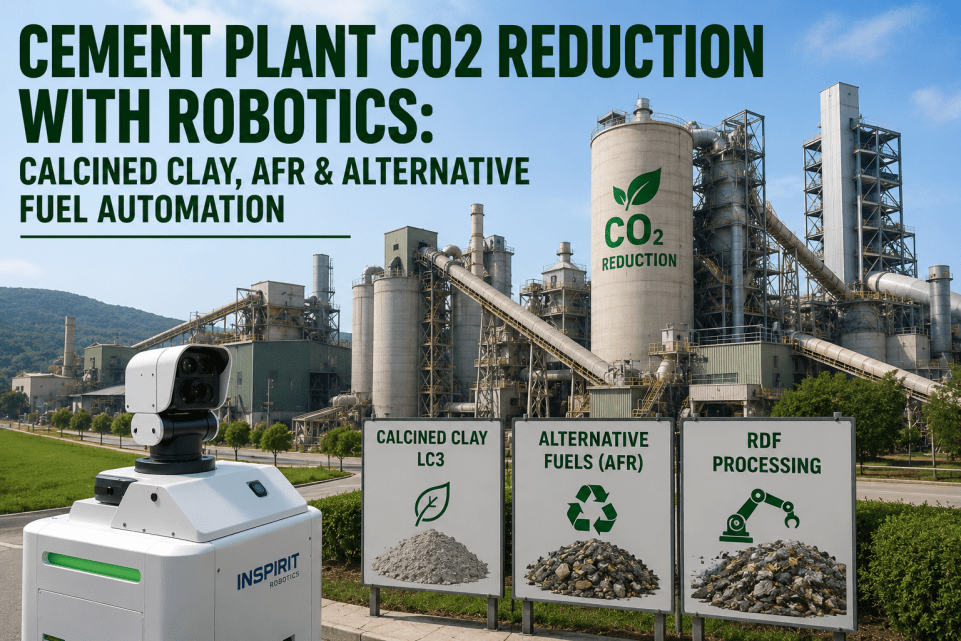
Read More
Cement manufacturing generates approximately 8 percent of global CO2 emissions — a reality that makes decarbonization the defining operational challenge for the industry through 2050. The GCCA Net Zero Roadmap targets a 25 per

Read More
The quarry and primary crusher represent the highest-risk zone in the cement production value chain — a combined operating environment where blasting, heavy mining equipment, unstable rock faces, and high-capacity crushing machi
.png)
Read More
Mill drives are the number one cause of unplanned downtime in cement plants accounting for 35 to 45 percent of all production interruptions across raw mill, coal mill, and cement mill systems. A single vertical roller mill gearbox

Read More
Every cement plant operator knows the cost of a kiln refractory failure. A single hot spot that propagates undetected through the lining can deform the shell, trigger an unplanned kiln shutdown lasting 10–21 days, and incur repair costs exceeding $1
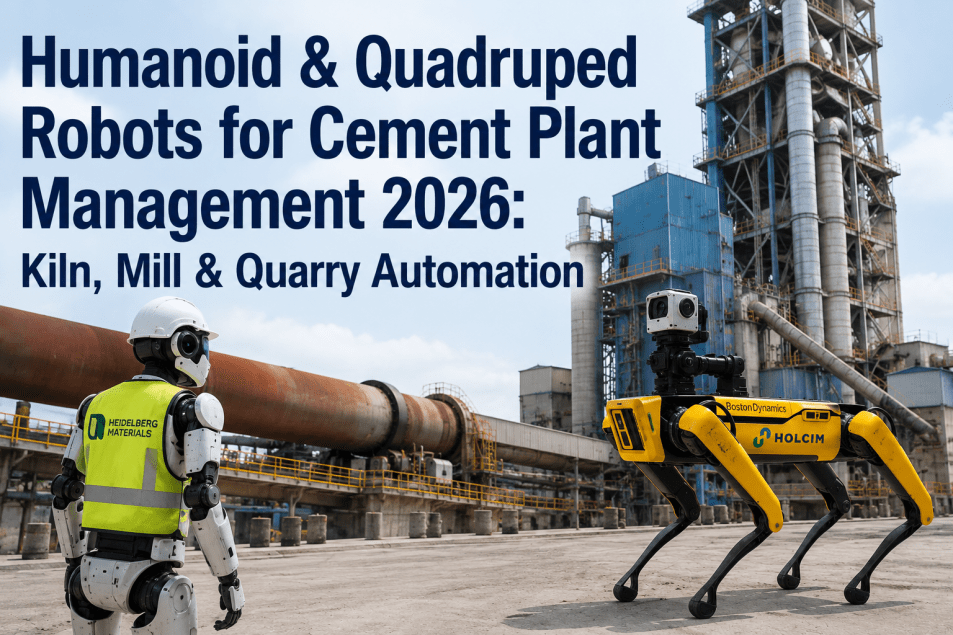
Read More
Cement plant operations — from limestone quarry blasting to clinker cooling and finish grinding — present some of the most hazardous and access-constrained inspection environments in heavy industry. Preheater towers reaching 120 m
Read More
Reliability Centered analytics is the most rigorous maintenance strategy framework available to cement plant reliability teams — a systematic methodology that identifies exactly what each asset must do, how it can fail, and what maintenance ta
Read More
Every cement plant operates on a foundation of rotating equipment — kiln drives, vertical roller mills, separator fans, bucket elevators, and cooler grates — where mechanical reliability directly determines production throughput

Read More
Every cement plant deserves access to AI-driven analytics, but not every plant is ready for an enterprise-wide deployment on day one. That is why iFactory offers a free tier specifically designed for cement manufacturing — giving maintenance tea

Read More
Every cement plant's digital transformation begins the same way: spreadsheets. Hundreds of them. Maintenance logs in dated Excel workbooks, production reports emailed as attachments, quality data siloed in lab terminals, and inventory counts scrib

Read More
As cement plants accelerate their digital transformation, the convergence of additive manufacturing and AI-driven inventory management is redefining how critical spare parts are sourced, stored, and deployed. In an industry wh

Read More
Cement plant industrial control systems have become a prime target for cyber threats as AI-driven automation and OT-IT convergence expand the attack surface. In an industry where a single ransomware incident on a SCADA network c

Read More
Augmented reality is transforming cement plant analytics and technician training by overlaying digital information — repair procedures, equipment data sheets, vibration analytics, thermal images, and step-by-step work instructio

Read More
A cement plant annual shutdown typically requires 150 to 300 contractors from 15 to 25 different specialized firms — bricklayers for kiln refractory, millwrights for mill overhaul, riggers for cooler grate replacement, scaffold

Read More
A cement plant annual shutdown — typically 25 to 45 days of planned downtime for kiln refractory replacement, mill overhaul, cooler maintenance, and electrostatic precipitator servicing — represents the single most complex and e

Read More
Japan and South Korea have emerged as global benchmarks for cement plant automation, driven by decades of investment in advanced process control, robotics, and data analytics. Japanese cement producers — led by Taiheiyo Cement,

Read More
Sub-Saharan Africa's cement industry is on a trajectory to double its production capacity by 2030, driven by infrastructure investment, urbanization rates above 4 percent annually, and the African Continental Free Trade Area's acc

Read More
Turkey is the world's fifth-largest cement producer and the largest cement exporter among OECD countries, with annual production capacity exceeding 160 million metric tons and exports reaching over 130 countries across Europe, the Middle East, A

Read More
Latin America's cement industry is entering a new phase of expansion driven by infrastructure investment, urban housing deficits, and nearshoring-related industrial construction across Brazil, Mexico, and the Andean markets. With combined annual c

Read More
Southeast Asia's cement industry is undergoing a fundamental shift. Vietnam, Indonesia, and the Philippines now account for over 480 million metric tons of annual cement production capacity — driven by infrastructure spending, urbanization rates a

Read More
Digital twin technology has emerged as one of the most transformative capabilities for cement plant operations, enabling engineers to build virtual replicas of their most critical process equipment — rotary kilns, vertical roller

Read More
Cement plants operate between 300 and 500 field instruments per production line — pressure transmitters, temperature sensors, gas analyzers, flow meters, level transmitters, weigh feeders, and position sensors — each generating the real-time data

Read More
Cement manufacturing accounts for approximately 7–8% of global CO₂ emissions, making it one of the most closely scrutinized industrial sectors in the emerging landscape of mandatory climate disclosure. With the SEC climate disclo

Read More
A cement plant with a 5,000 ton per day preheater-precalciner kiln system generates 25 to 40 MW of recoverable thermal energy from the kiln exhaust gas and clinker cooler vent air — enough to drive waste heat recovery steam turbine generator produci

Read More
Water management in a cement plant is the most operationally complex utility system on site — a closed-loop cooling network that circulates 1,500 to 4,000 cubic meters per hour through the kiln lube oil coolers, the compressor jackets, the clinker

Read More
Continuous emissions monitoring for cement plants is no longer a regulatory checkbox — it is a real-time process control function that directly affects production cost, kiln stability, and the plant's ability to operate without in

Read More
Cement plants pursuing or maintaining ISO 14001 and ISO 50001 certification face a dual compliance burden that most manufacturing facilities never encounter. The two standards share overlapping requirements for policy, planning,

Read More
Every limestone quarry operation runs on mobile equipment — blast hole drills, front-end loaders, haul trucks, excavators, and support vehicles — and every dollar of operating cost flows through those assets. A typical 2 million ton per year limes
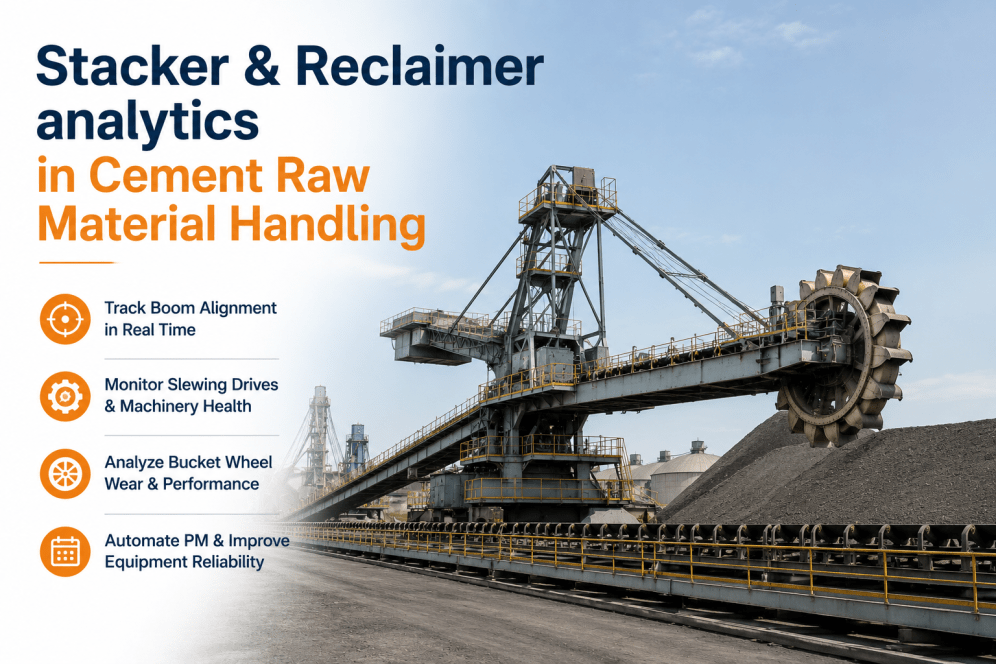
Read More
Stackers and reclaimers are the largest moving machines in any cement plant — with booms spanning 30 to 50 meters, slewing drives rotating 360 degrees on massive ring gears, and bucket wheels excavating 500 to 2,000 tons of materi
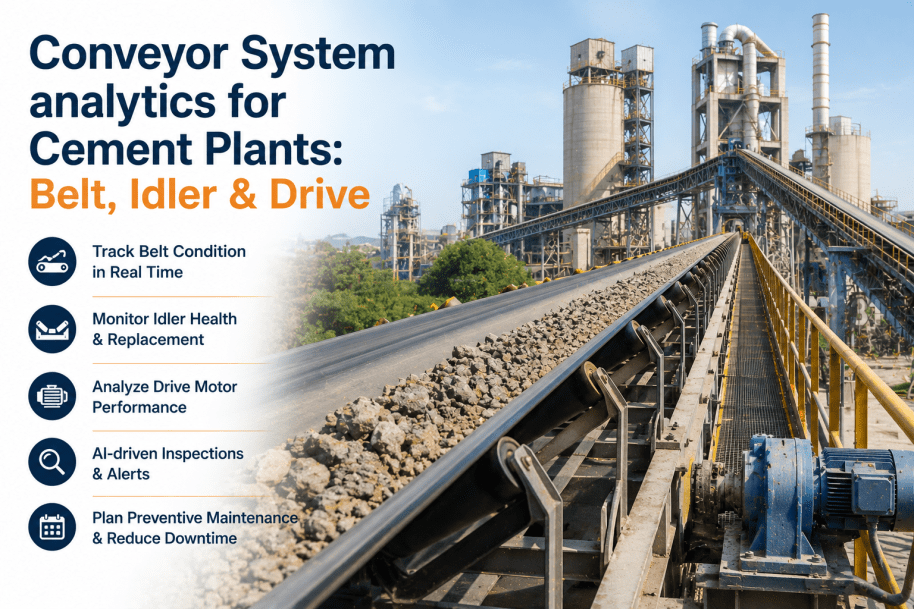
Read More
Conveyor systems are the circulatory system of every cement plant — moving raw materials from the crusher to the raw mill, raw meal to the preheater, clinker to the finish mill and cement to the loading terminal across kilometers of belts, thousan

Read More
The raw mill grinding circuit — roller press, dynamic separator, and mill fan — is the largest electrical load in the cement raw material preparation process, consuming 30 to 40 percent of a cement plant's total electrical energy at 18 to 26 kWh

Read More
Waste heat recovery is the largest untapped source of low-cost power generation in cement manufacturing, yet most cement plants recover only 60 to 75 percent of the thermodynamic potential available in their preheater exhaust and
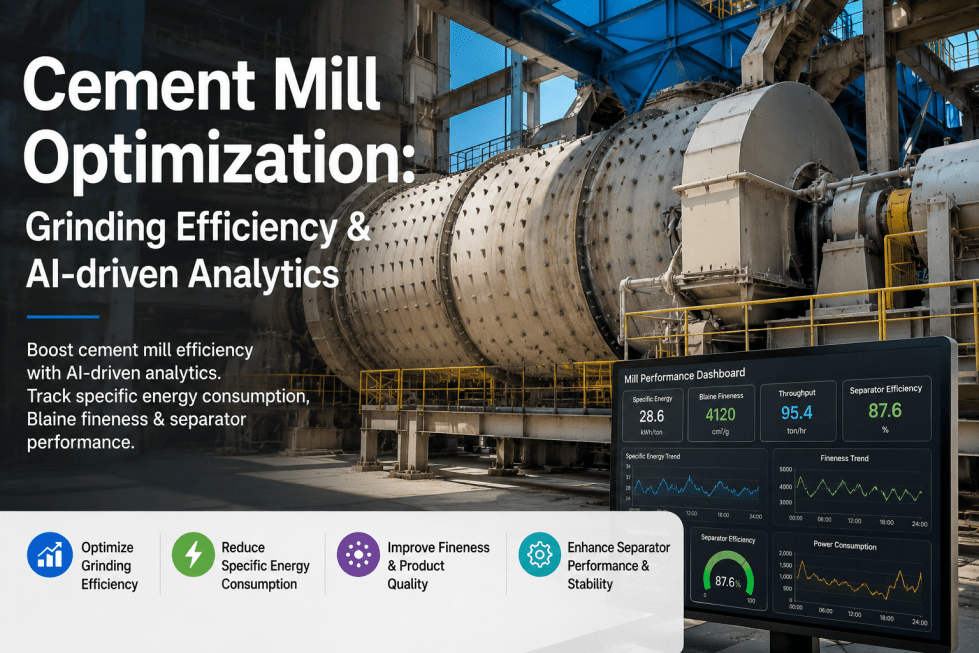
Read More
Cement grinding accounts for 60 to 70 percent of the total electrical energy consumed in a cement plant, making mill optimization the single highest-ROI target for energy cost reduction in any grinding operation. A typical finis
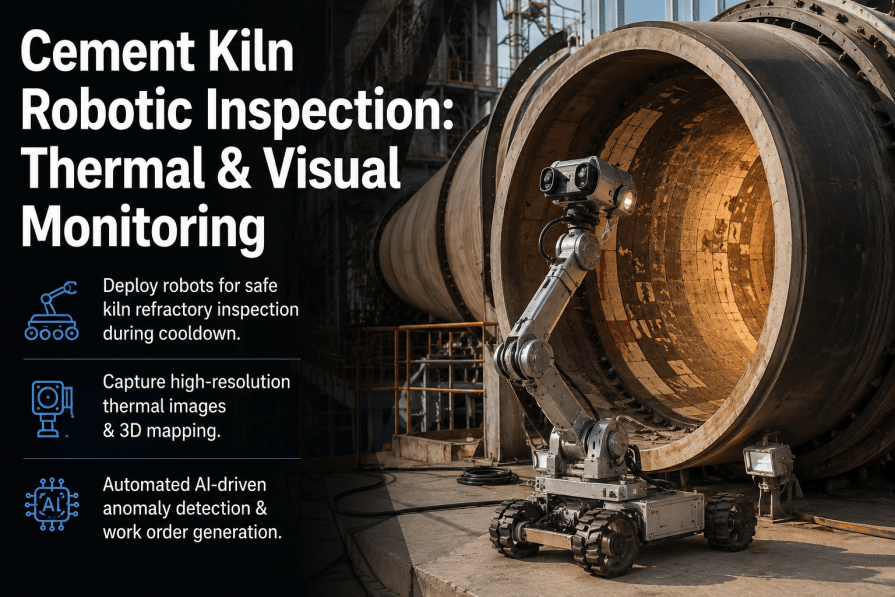
Read More
Traditional kiln refractory inspection requires plants to cool the kiln for 5-7 days, erect scaffolding, and send human inspectors into a confined space with fall hazards, thermal risks, and exposure to residual dust and combusti

Read More
The kiln burner and fuel delivery system is the thermal heart of every cement plant — responsible for delivering precisely controlled flame conditions that sustain clinkering reactions at 1,400-plus degrees Celsius while consuming 30 to 40 percent

Read More
Rotary kiln alignment and tyre-roller condition monitoring are among the most critical mechanical disciplines in cement plant maintenance — directly determining kiln shell integrity, refractory life, and production availability. A kiln operating
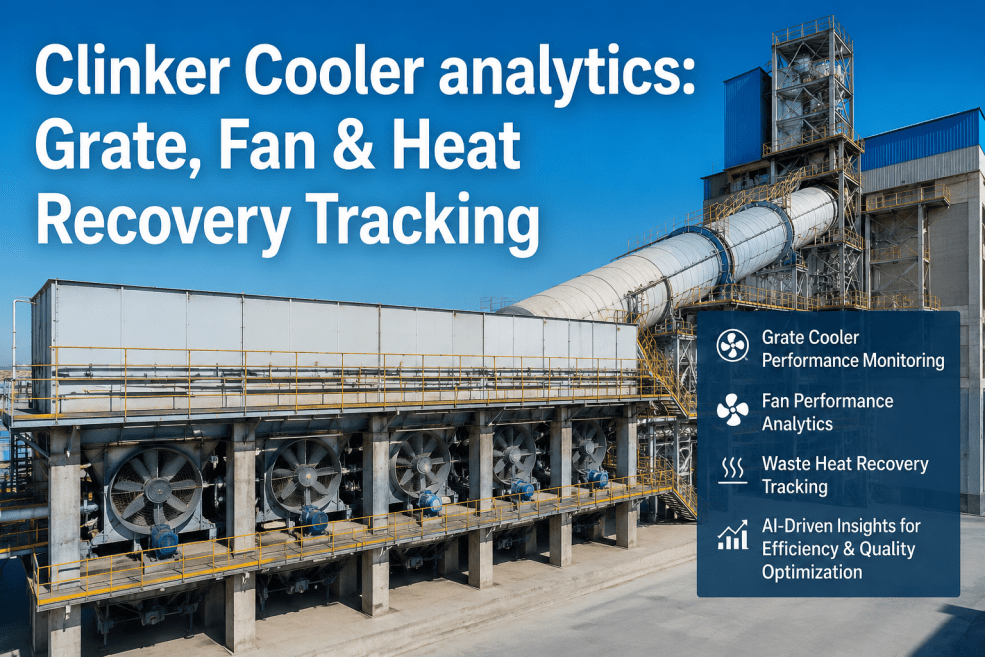
Read More
The clinker cooler is one of the most critical components in a cement plant's pyroprocessing line — responsible for rapidly quenching hot clinker from the kiln at 1,400-plus degrees Celsius to a temperature suitable for transport and storage, whil

Read More
Calibration management in cement plants has evolved from a periodic compliance exercise into a continuous operational discipline that directly impacts product quality, production efficiency, and regulatory standing. Cement manufacturers manage hun

Read More
Cement plants operate under one of the most rigorous regulatory frameworks in U.S. heavy industry, with EPA emissions reporting requirements under 40 CFR Part 60 (NSPS), Part 63 (NESHAP), and Part 98 (GHGRP) governing everything from kiln stack pa
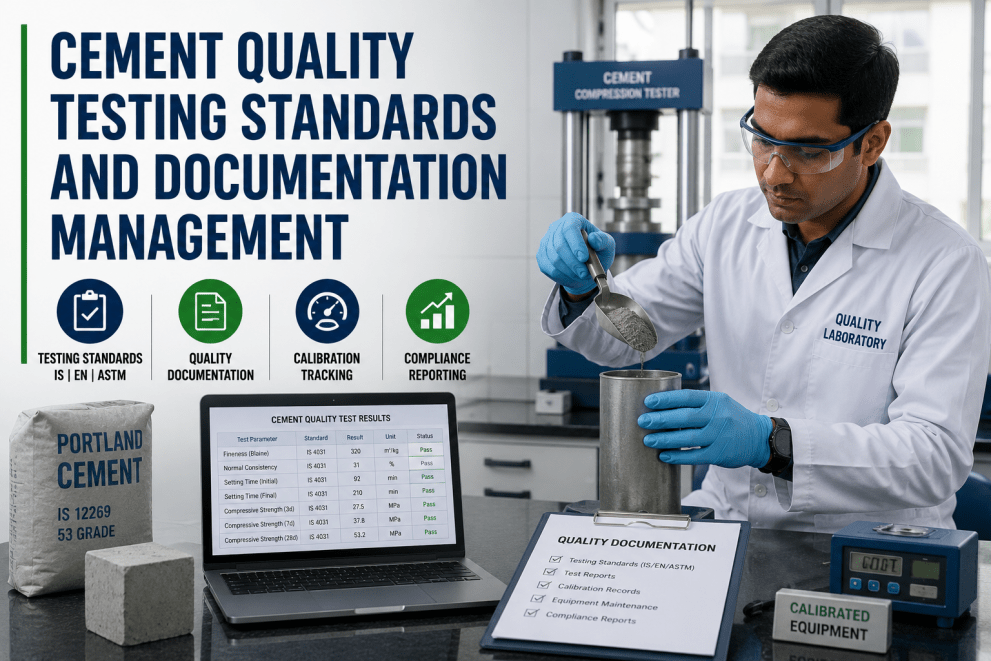
Read More
Cement quality testing is the foundation of regulatory compliance, customer acceptance, and structural performance in cement manufacturing — but the documentation that proves quality is tested, verified, and traceable is often t
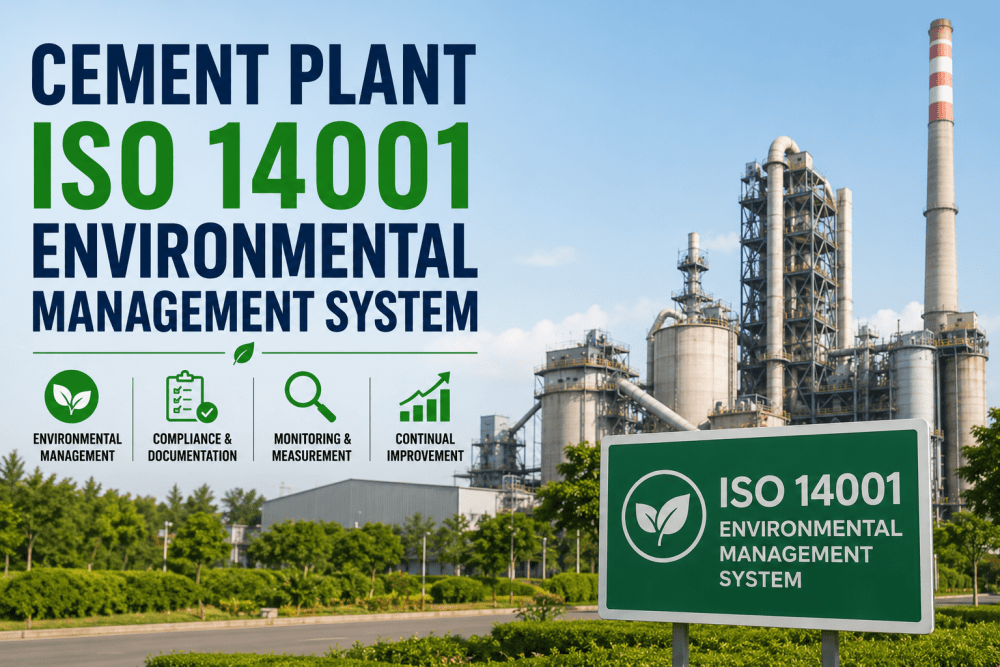
Read More
ISO 14001 certification for cement manufacturing is not a corporate branding exercise — it is the most internationally recognized framework for establishing an environmental management system (EMS) that meets regulatory requir

Read More
Environmental permitting for cement manufacturing in the United States is not a one-time compliance event — it is a continuous operational obligation that spans every phase of a cement plant's life, from pre-construction throug

Read More
Cement plant expansion projects — whether a new production line, a mill addition, a preheater tower upgrade, or a finish grinding system replacement — represent capital investments ranging from $15 million for a stand-alone fini

Read More
Capital expenditure planning in cement manufacturing has historically been driven by equipment age, OEM replacement recommendations, and the judgment of plant engineering teams — all of which are necessary inputs but none of wh

Read More
Corrosion is the most pervasive and least visible threat to cement plant infrastructure. Unlike a failed bearing or a tripped circuit breaker, corrosion advances quietly—millimeter by millimeter across structural steel, process piping, storage ves
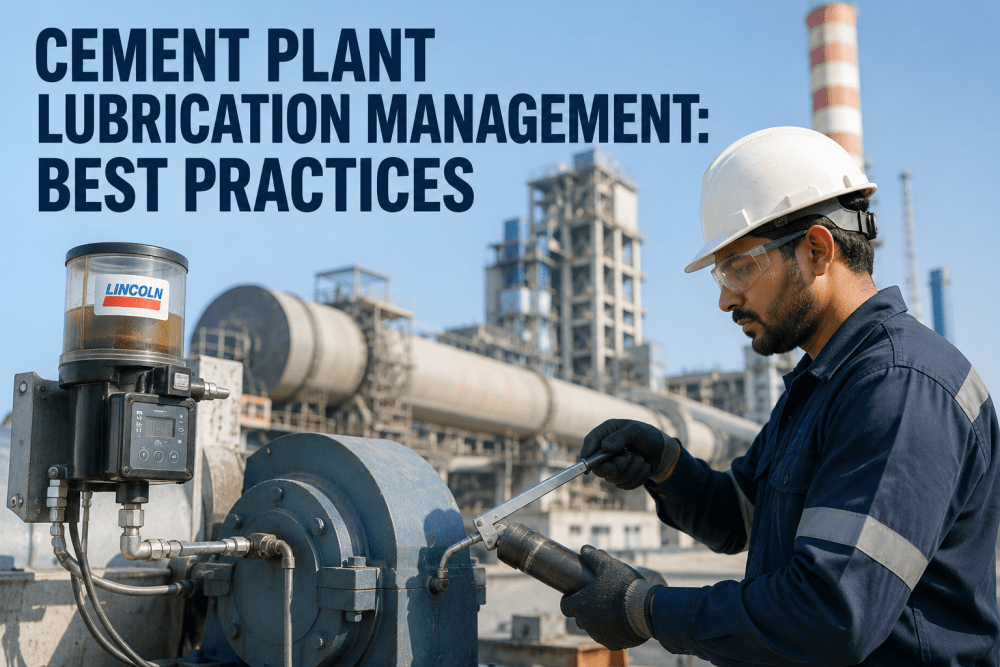
Read More
Lubrication failure is the silent killer of cement plant uptime. Across kilns, mills, crushers, conveyors, and fans, inadequate or mismanaged lubrication accounts for an estimated 40–50% of all premature bearing failures in heavy

Read More
Crane and lifting equipment in a cement plant occupy a category of assets unlike any other in the facility's maintenance program. They are not production-critical in the way a kiln main drive is — a single failed crane rarely stops clinker product
.png)
Read More
Reliability Centered Maintenance is not a maintenance program — it is a structured analytical methodology that determines the most cost-effective maintenance strategy for every piece of equipment in a cement plant by asking a spe

Read More
The maintenance superintendent at a 1.8-million-ton cement plant in the Missouri bootheel reviews the quarterly downtime report and finds a number that stops him: 214 hours of unplanned production losses attributed to compressed air system failure
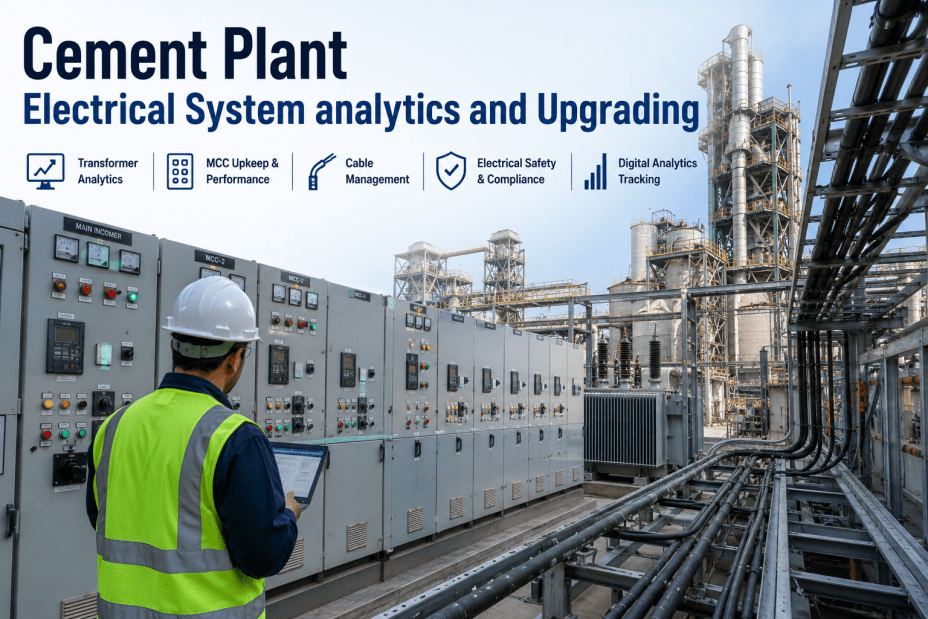
Read More
The electrical system at a typical 3,500 to 4,500 TPD cement plant represents approximately 12 to 18% of the plant's total replacement value and 100% of its production capacity — because when the electrical system stops, ever

Read More
Cement plant structural integrity is the engineering discipline that most plant managers know they should prioritize but rarely have the data to manage systematically. A 3,500-tpd dry-process cement plant typically operates 40 to 60 major struct

Read More
The sustainability manager at a 1.5-million-ton cement plant in the Great Lakes region reviews the quarterly sales report and sees a number that confirms a trend she has been tracking for eighteen months: the plant's low-carbon cement products —

Read More
The maintenance manager at a 3,200-tpd cement plant in the Southeast reviews the previous quarter's baghouse performance data and sees a pattern that has cost the plant $187,000 in preventable expenses — three unscheduled kiln line stoppages cau
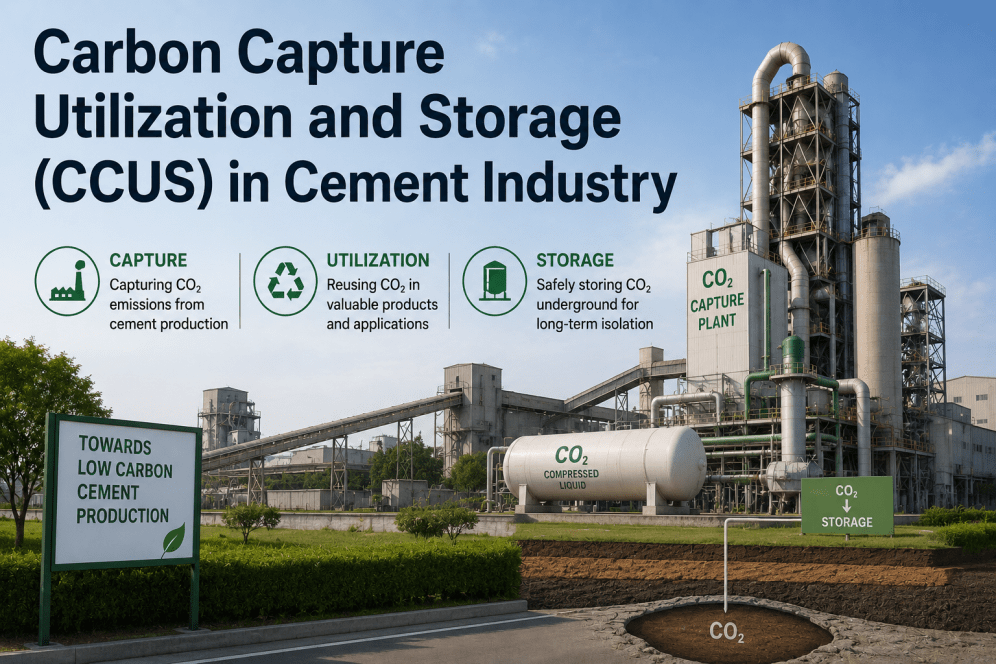
Read More
The sustainability director at a 2.2-million-ton cement plant on the U.S. Gulf Coast reviews the company's 2030 decarbonization roadmap and sees a number that stops him: 1.65 million tons of CO2 per year that the plant must capture or avoid to m

Read More
The quality control manager at a 1.8-million-ton cement plant in the Midwest reviews the monthly production report and sees a number that demands action: a clinker factor of 82%, meaning the plant is using 820 kilograms of clinker to produce eve
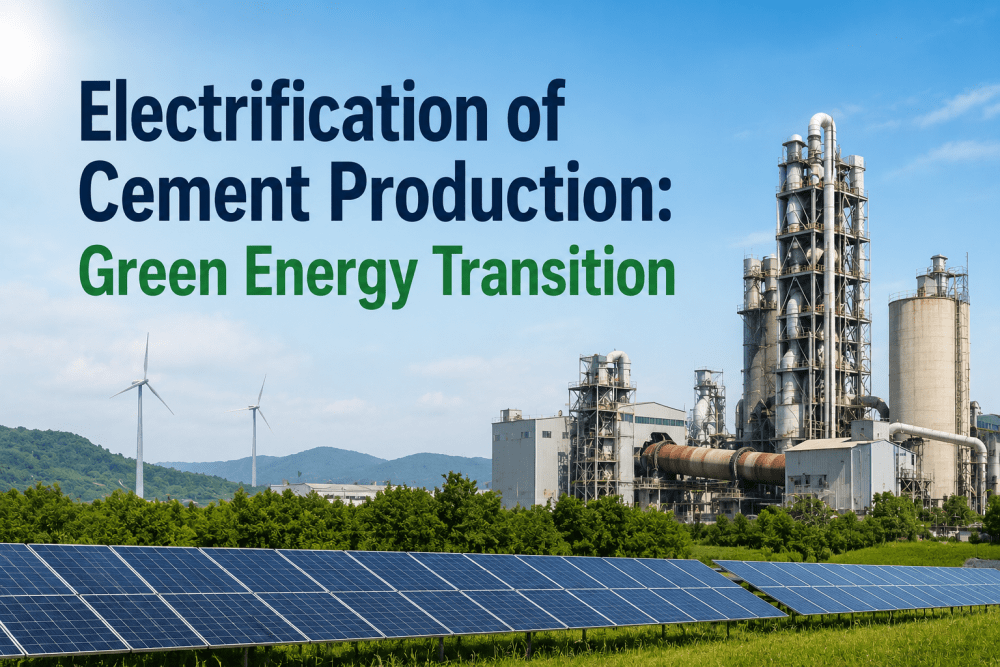
Read More
The cement industry's thermal energy requirement — approximately 3.0 to 3.6 million BTU per ton of clinker in a modern dry-process preheater-precalciner kiln — is a fundamental constraint on decarbonization because 60 to 65%
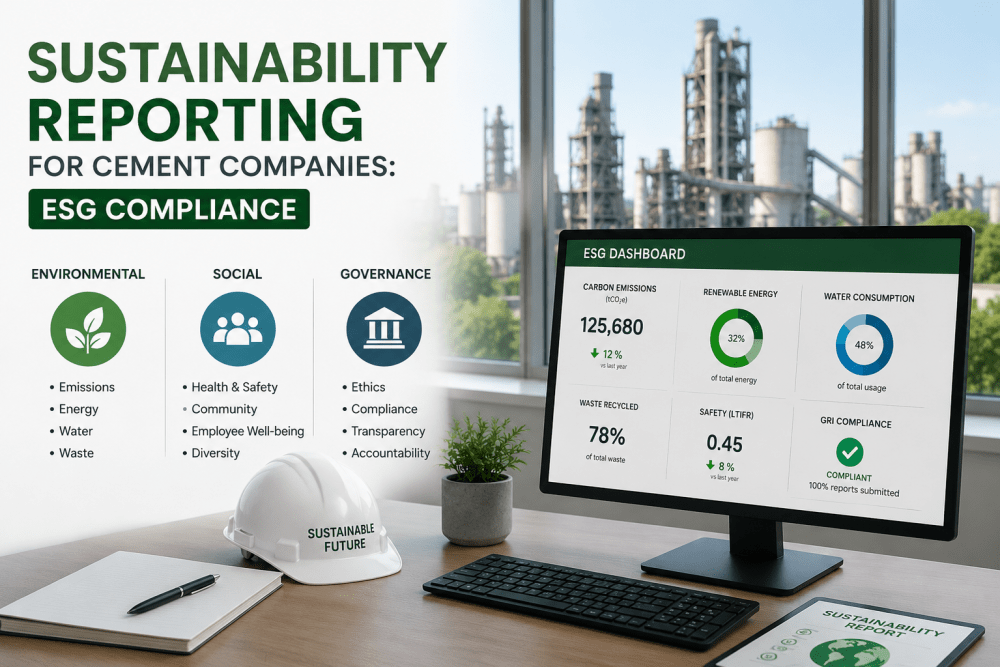
Read More
The sustainability director at a 3-million-ton cement company with four plant locations reviews the quarterly ESG data request from the corporate parent and calculates the effort: 14 spreadsheets from four plants, 23 different
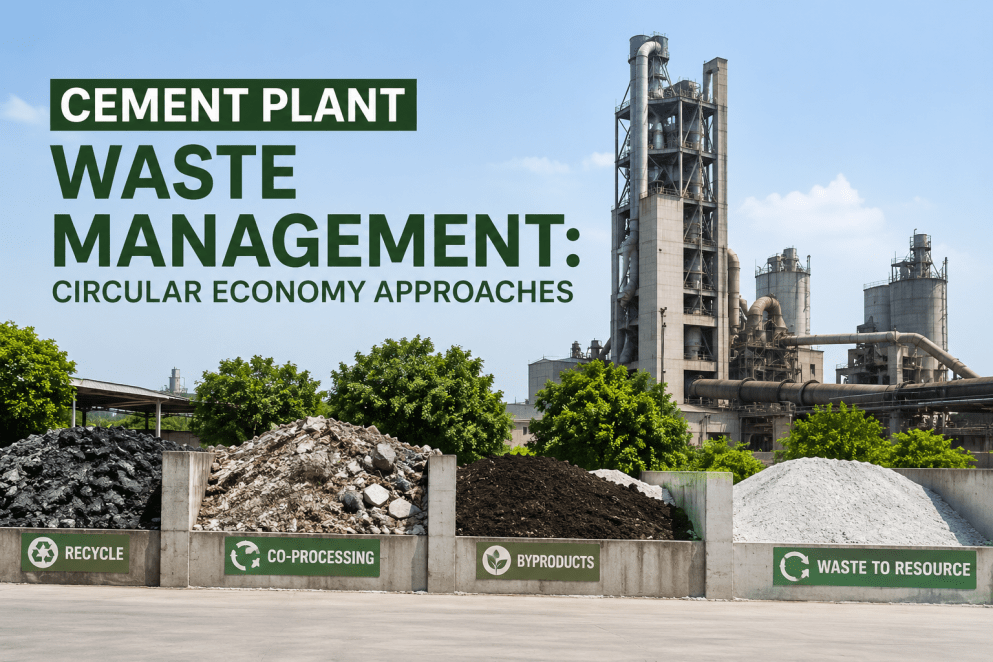
Read More
The environmental manager at a 2.8-million-ton cement plant in the Great Lakes region reviews the quarterly waste hauling invoices and finds a number that stops her: $347,000 spent on landfill disposal for kiln dust, refractory brick, conveyor bel
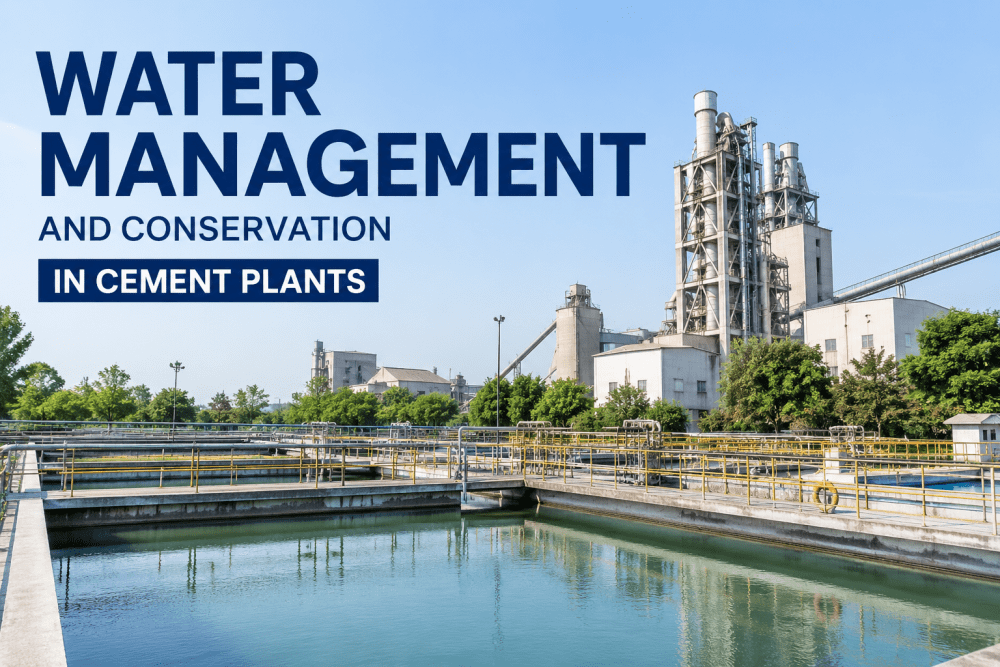
Read More
Water consumption in cement production is a material cost and environmental compliance issue that directly affects plant operating margins and regulatory standing. A typical portland cement plant consuming 3,000 to 5,000 gallons o

Read More
Cement manufacturing is one of the most emissions-intensive industrial processes in the U.S. economy — a single 4,500-tpd integrated plant burning coal and petcoke generates continuous streams of nitrogen oxides, sulfur dioxide, particulate matter

Read More
The night shift supervisor at a 4,000-tpd cement plant in the Midwest catches a whiff of burning rubber near the coal mill at 2:17 AM. He radios the operator, who jots it down on a grease-stained clipboard. By morning, the log is buried under thre
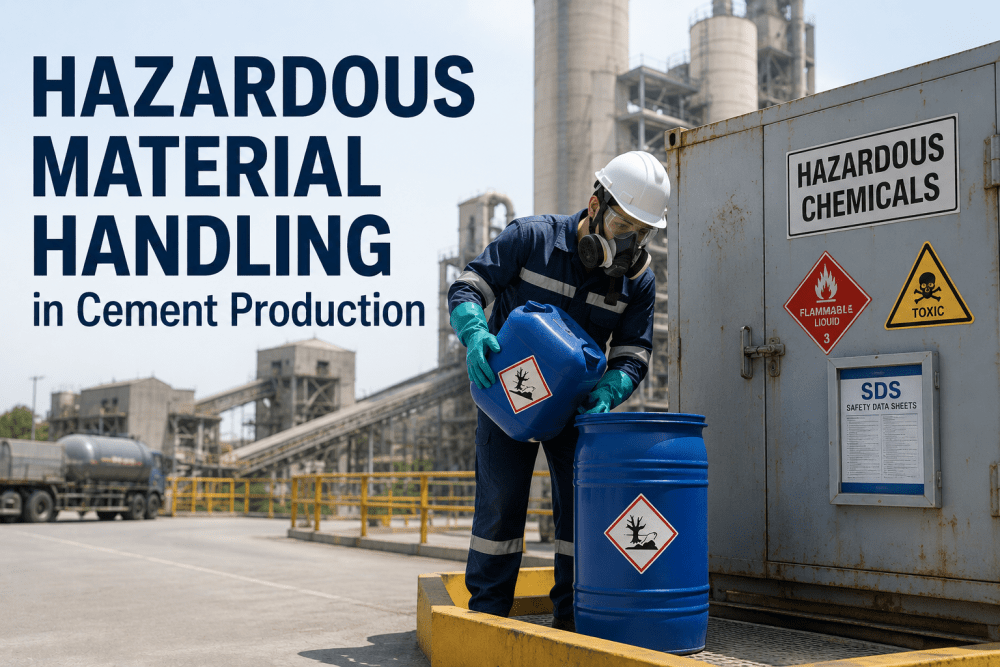
Read More
Six months ago, the safety manager at a 4,000-tpd cement plant in the Midwest was still reconciling chemical inventory on paper spreadsheets and hoping the monthly SDS audit would catch expired entries before the next OSHA inspection. Today, that

Read More
Noise exposure in cement plants is the most pervasive occupational health hazard in the facility — more workers are exposed to noise above OSHA's permissible action level of 85 dBA on an 8-hour time-weighted average than are e

Read More
At 2:47 AM on a Tuesday shift change, the operator in the central control room of a 5,000 tpd cement plant sees the coal mill outlet temperature spike past 95°C while the CO reading jumps from zero to 1,200 ppm. Thirty seconds earlier, a bearing v

Read More
At 2:47 AM on a Tuesday, the night shift operator at a 5,000-tpd cement plant in the Midwest notices the clinker cooler temperature climbing past 1,400°F. He radios the maintenance team to investigate a suspected hot spot in the kiln riser duct. T

Read More
The night shift supervisor at a 4,500-tpd cement plant in Rajasthan pulls a dusty binder from the shelf — the training matrix for 240 kiln operators. Three pages are missing. Two operators ran the preheater tower without the confined-space refresh

Read More
Fall protection and working at heights in cement plants represent one of the most preventable categories of serious injury and fatality in U.S. industrial manufacturing — yet most cement plants continue to manage harness inspectio
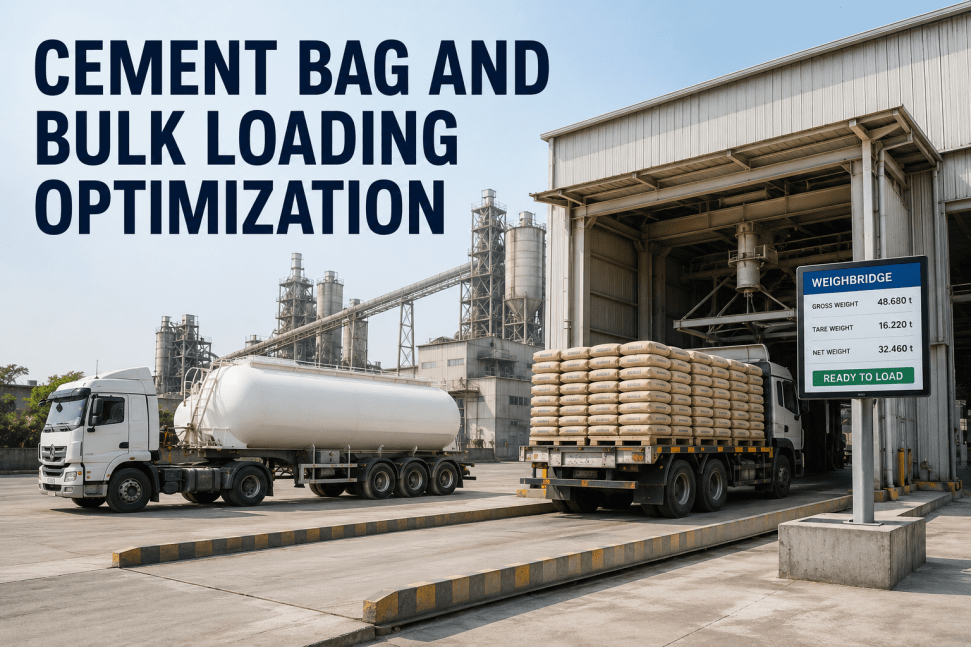
Read More
Cement dispatch operations — bag loading, bulk truck loading, and rail dispatch — represent the last 4 to 6 hours of a production cycle that took 72 to 96 hours to complete. A 2,000 TPD cement plant that runs dispatch inefficien

Read More
At 2:47 AM on a Tuesday, the shift supervisor at Riverbend Cement Plant watches the raw mill feed analyzer climb past 5.2% MgO — half a percent above the spec limit. The quarry loader had pulled from a different face of the pit, and the blending p

Read More
Fuel is the largest single variable cost in cement manufacturing — representing 30 to 45% of total production cost at most U.S. plants — yet fuel inventory and procurement at the majority of U.S. cement facilities is managed wi

Read More
MRO procurement in U.S. cement plants is one of the largest unmanaged cost categories in plant operations — and one of the least visible. A typical 4,000 to 6,500 TPD cement plant spends $8 million to $18 million annually on main

Read More
At 3:17 AM on a Tuesday, the shift supervisor at a 3.2 MTPA integrated cement plant in Rajasthan notices the kiln feed chemistry drifting. The lab report shows a 2.8% deviation in lime saturation factor — enough to drop clinker quality below BIS s

Read More
Advanced process control (APC) in cement manufacturing is the difference between a kiln that drifts and a kiln that produces. In a typical U.S. cement plant operating without APC, kiln feed rate, fuel flow, and calciner temperatur

Read More
Managing cement silos without real-time level data is a guessing game that costs U.S. cement producers in ways that rarely surface on a single line item. Inventory miscalculations lead to production stoppages when silos run dry unexpectedly, overf

Read More
Cement quality begins in the laboratory — at the sample testing benches where raw mix chemistry, clinker mineralogy, cement fineness, and finished product strength are measured recorded and compared against specification before any decision about

Read More
Cement packing plants represent the final stage of the cement production process — the moment when finished product transitions from bulk storage to bagged units ready for distribution, and the operational quality of that transition determines whe

Read More
Electric motors are the largest single category of electrical energy consumption in a cement plant — accounting for 65 to 75% of total plant power draw across grinding mills, kiln drives, fan systems, conveyors, and compressors.

Read More
The night shift operator at a 6,000-tpd cement plant in Rajasthan watches the kiln ID fan amp draw climb past 215 A for the third time this week. He knows that every sustained amp over the 195 A baseline costs roughly $1.20 per hour in wasted elec

Read More
Compressed air is the fourth utility in cement manufacturing — behind electricity, fuel, and water — and in most U.S. cement plants, it is the least monitored and the most wasteful. A typical 5,000-tonne-per-day cement plant consu

Read More
Cement plants run on airflow. The kiln burns at 2,700°F the raw mill grinds at throughputs measured in hundreds of tons per hour, and the clinker cooler recovers heat from material that exits the kiln above 2,000°F — and every o

Read More
When a CNC machining center trips an overload fault at 2:47 AM and shuts down a $4.2 million production cell, the maintenance technician who responds at 3:10 AM faces a diagnostic problem that the alarm panel cannot solve: the fault code says what

Read More
Managing third-party contractors and spare parts suppliers across a U.S. manufacturing facility has never been a clean problem. A procurement team juggling vendor contracts in spreadsheets, a maintenance department tracking SLA compliance in email

Read More
Every manufacturing facility in the United States runs on shift handoffs — the moment when the outgoing crew transfers operational knowledge to the incoming crew, and the quality of that transfer determines whether the incoming shift inherits a cl

Read More
Industrial HVAC systems in U.S. manufacturing facilities operate at a scale and continuity that no commercial building HVAC encounters — multi-megawatt chiller plants running 8,760 hours per year, air handling units conditioning controlled-environ

Read More
The most expensive fire in a U.S. manufacturing facility is the one that starts inside an electrical panel that nobody checked. A loose connection on a 480V bus bar generates resistance, resistance generates heat, and heat compounds — a 30°C hotsp

Read More
For most U.S. manufacturers, the gap between the shop floor and the SAP ERP system is not a technology problem — it is a daily operational tax. Production supervisors close out shifts in the MES, then a planner manually keys yield, scrap, and cons

Read More
Most U.S. manufacturing facilities are running three to eight incompatible industrial communication protocols simultaneously — and paying the operational cost of that fragmentation every single day. A Siemens S7 PLC on the pressi

Read More
Every U.S. manufacturer running a continuous production line has experienced the same failure mode: a raw material shortage that nobody saw coming until it was too late to respond without disrupting output. The iron ore shipment that was delayed t
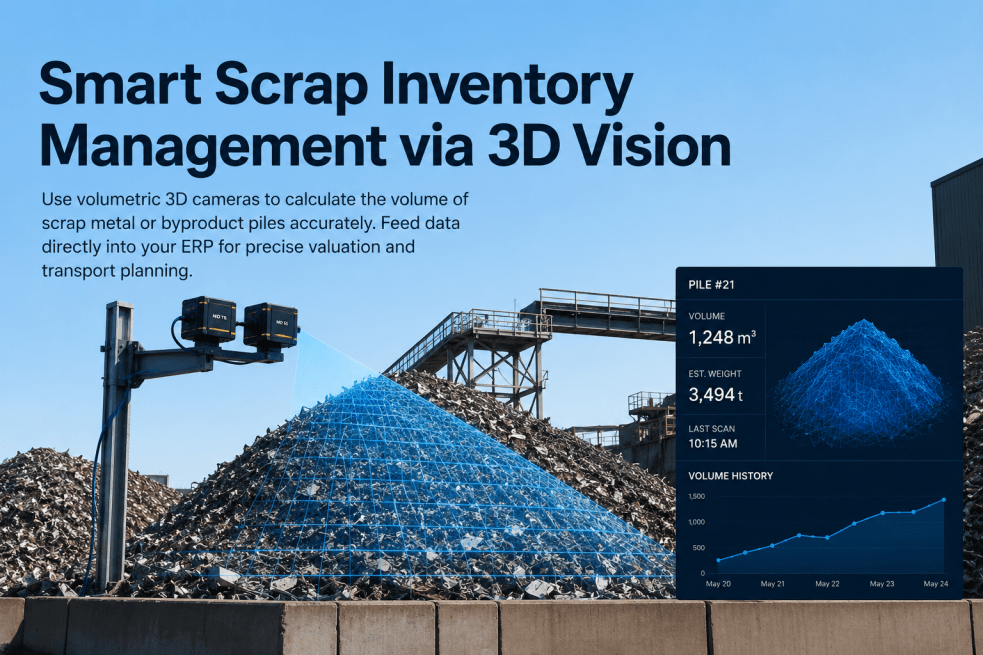
Read More
Steel plants, foundries, and heavy manufacturers accumulate scrap metal and byproduct piles that represent hundreds of thousands — often millions — of dollars in material value sitting on the floor. EAF melt shops generate electrode stub scrap, sl

Read More
Across U.S. pharmaceutical, food and beverage, automotive, and electronics manufacturing, regulatory traceability is no longer a best practice — it is a compliance requirement with direct production and legal consequences when it fails. The FDA's

Read More
The factory floor has always required human intelligence in human-shaped bodies — workers who can navigate aisles built for people, reach into machine enclosures designed for human arms, carry sheet metal blanks to presses that accept them from a

Read More
The modern factory floor is running multiple robot types simultaneously — autonomous mobile robots moving material between workstations, collaborative robots performing assembly and inspection at fixed stations, and increasingly, humanoid robots e

Read More
Every time a factory operator asks a cloud-based AI assistant about a production anomaly, a maintenance procedure, or a quality deviation, the question carries proprietary operational data with it — shift logs, sensor readings, equipment serial nu

Read More
Industrial energy costs are the second-largest controllable expense in U.S. manufacturing operations — and the one where the gap between what facilities are paying and what they should be paying is widest. The average U.S. factory
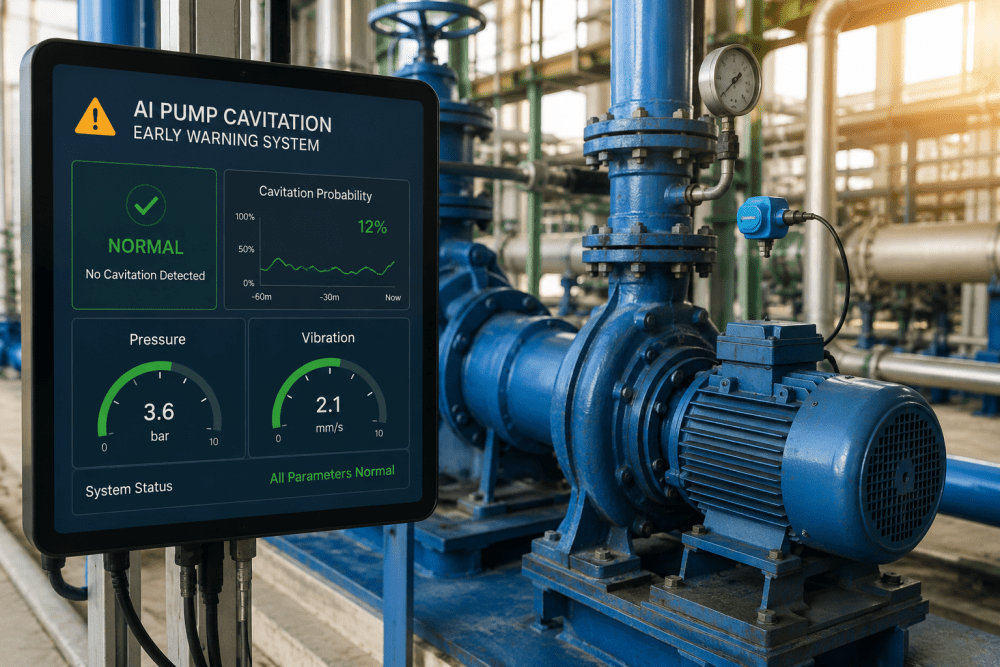
Read More
Pump cavitation is the most underdiagnosed failure mode in industrial fluid handling — and the most preventable. The vapor bubble implosion cycle that defines cavitation begins generating acoustic emission pulses, pressure fluctuation signatures,

Read More
Assembly verification failures are one of the most expensive quality problems in discrete manufacturing — not because individual defects are catastrophic, but because they are invisible at the station where they occur and only surface after the pr

Read More
Every year, approximately 85 workers are killed and nearly 35,000 are seriously injured in forklift-related incidents in U.S. workplaces — making powered industrial trucks one of the highest-consequence hazard categories on the manufacturing floor

Read More
Every year, more than 800 U.S. manufacturing workers suffer serious injuries from unexpected contact with robotic equipment, moving machinery, or hazardous process areas that lacked adequate real-time monitoring. OSHA 1910.212 re

Read More
Most U.S. manufacturing plants have the sensor infrastructure to calculate OEE in real time—and most are still discovering their OEE numbers at the end of the shift from a spreadsheet their production supervisor fills out manually. That gap is not

Read More
Before a single robot is installed, before a PLC program runs a real motor, and before a production line ships its first part, the most expensive mistakes in modern factory design have already been made — in CAD drawings that never caught the coll

Read More
Every maintenance department in U.S. discrete and process manufacturing is generating exactly the data needed to predict equipment failures and automatically dispatch corrective work orders — and most are doing nothing with it. Vibration sensors o

Read More
Industrial gearboxes are among the most consequential assets in heavy manufacturing — and among the most difficult to monitor effectively with conventional vibration sensors. A developing micro-crack in a gear tooth surface gener

Read More
CNC machining centers are the precision heartbeat of discrete manufacturing — and the spindle is the most consequence-laden component in every one of them. When a spindle bearing degrades undetected, the first symptom is almost never a catastrophi

Read More
Every manufacturing line running at speed is making a quality decision with every part, every sheet, every meter of material that passes through it. At 200 meters per minute on a cold-rolled steel line, at 120 units per minute on a glass float lin

Read More
A cement plant is one of the most asset-dense industrial environments in U.S. manufacturing — with hundreds of rotating machines, conveyor drives, fans, mills, and pumps running continuously across a process chain where every unplanned stoppage co

Read More
A cement kiln's refractory lining is the most capital-intensive consumable in the plant — and the most consequential. A rotary kiln operating at 2,700°F with a compromised brick lining does not degrade gently: it fails in zones with hot spots appe
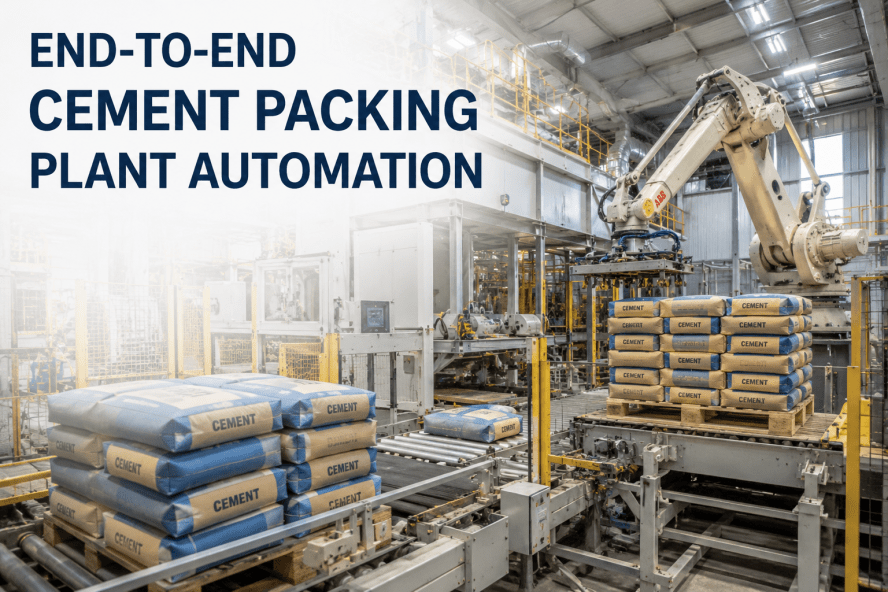
Read More
Every cement packing line running below its rated capacity is a quiet, compounding cost that rarely appears as a single line item on any P&L. It shows up as excess labor hours, elevated bag rejection costs inflated truck demurrage charges, and

Read More
Cement plant managers have always known when something was wrong — a drop in kiln feed rate, a surge in mill power draw, a packing line running below spec. What they haven't had is a unified, real-time view of exactly where efficiency is being los

Read More
In 2026, the cement industry's most critical challenge isn't just generating AI insights — it's acting on them fast enough to matter. Cloud-dependent AI systems introduce latency windows of 200ms to 2+ seconds between detecting an anomaly and trig

Read More
In cement manufacturing, a single PPE compliance failure can escalate from a OSHA citation to a fatality within seconds. Rotating kiln drives, airborne silica dust, molten clinker splash zones, and overhead crane paths create a ha

Read More
As clinker chemistry variability becomes the leading cause of kiln instability and downstream cement strength failures, cement producers operating on static raw mix proportioning face compounding quality costs that erode margin invisibly across

Read More
A single unplanned kiln shutdown costs a mid-sized cement plant between $50,000 and $150,000 per hour. In the overwhelming majority of cases, the root cause isn't a failure that couldn't be predicted — it's a critical spare part that wasn't on the

Read More
Cement manufacturing plants face a regulatory environment that grows more demanding every year. Stack emissions — particularly sulfur dioxide (SOx), nitrogen oxides (NOx), particulate matter (PM) and carbon dioxide (CO₂) — are now subject to real-

Read More
Clinker conveyor belts are among the most punishing material handling assets in a cement plant — carrying high-temperature clinker at 200–400°F directly off the cooler grate, running at continuous duty cycles that leave no operati

Read More
In cement manufacturing, energy is not a single line item — it is five distinct utility streams, each with its own cost structure, waste profile, and optimization pathway. Water, Air, Gas, Electricity, and Steam: together they acc

Read More
Cement manufacturing is one of the most energy-intensive industrial processes on the planet — energy costs routinely account for 35–45% of total production cost, and in an industry where margins compress year over year, the gap be
.png)
Read More
A torn cement bag that makes it onto a customer pallet is not a quality incident — it is a customer relationship incident. The 50-kilogram bag that split at the seal, the misprint that went unread by the fill sensor, the underweight unit that the

Read More
In a modern cement packing plant, the gap between what the batching system reports dispatched and what actually left the facility on a truck can cost a mid-size U.S. producer $200,000 to $600,000 annually in underbilling, disputed shortages, and m

Read More
Every cement plant operator knows the sound of a healthy kiln drive—and the silence that follows when it fails. A rotary kiln drive gearbox breakdown does not just stop production for hours it can idle an entire line for weeks, trigger emergency p

Read More
Cement silos sit at the operational center of every ready-mix, precast, and bulk cement operation — and for most plants, they are also the single largest source of inventory inaccuracy, unplanned downtime, and procurement waste. A silo that is rea

Read More
Cement plant preheater towers are among the most thermally stressed systems in industrial manufacturing—and among the least forgiving when things go wrong. A single cyclone blockage can force an unplanned kiln shutdown within hours, costing $50,00

Read More
Limestone crusher motors do not fail at scheduled inspection intervals. They fail at 2 AM on a Tuesday, inside a bearing that was running 11°C above baseline three weeks earlier — a signal that was present in the data, unread. In cement plant raw

Read More
Cement plants run on the reliability of equipment that never stops moving — and few assets are more punishing, or more overlooked, than bucket elevators. These machines carry raw meal, clinker and finished cement vertically through the plant, ofte
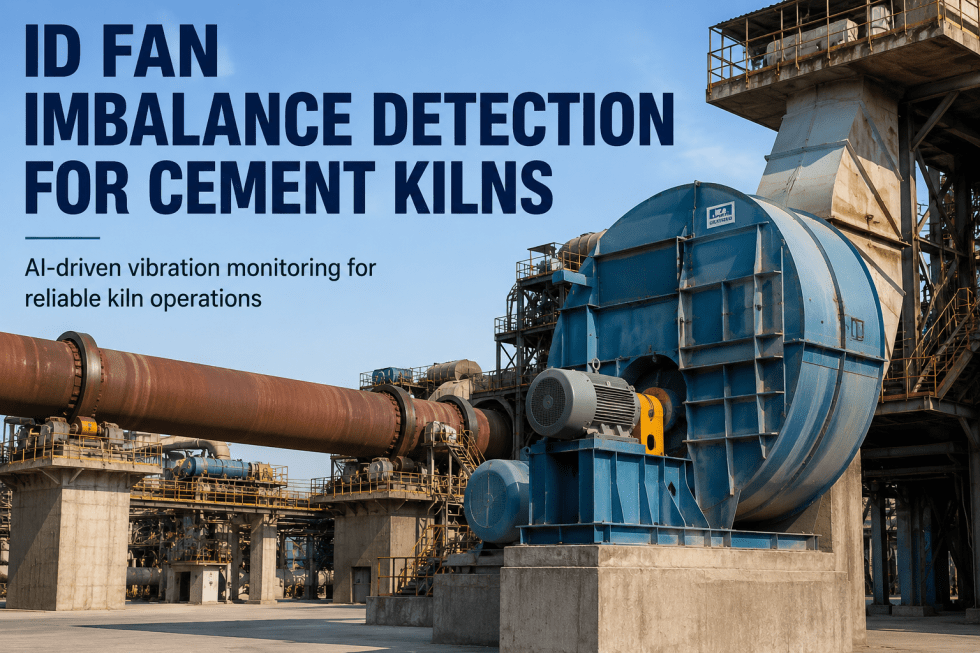
Read More
Induced Draft (ID) fans are the lungs of a cement kiln. Without continuous, high-volume exhaust airflow from these massive rotating machines — often drawing 500,000 to 1,200,000 cubic feet per minute — clinker production stops. Kiln temperature co
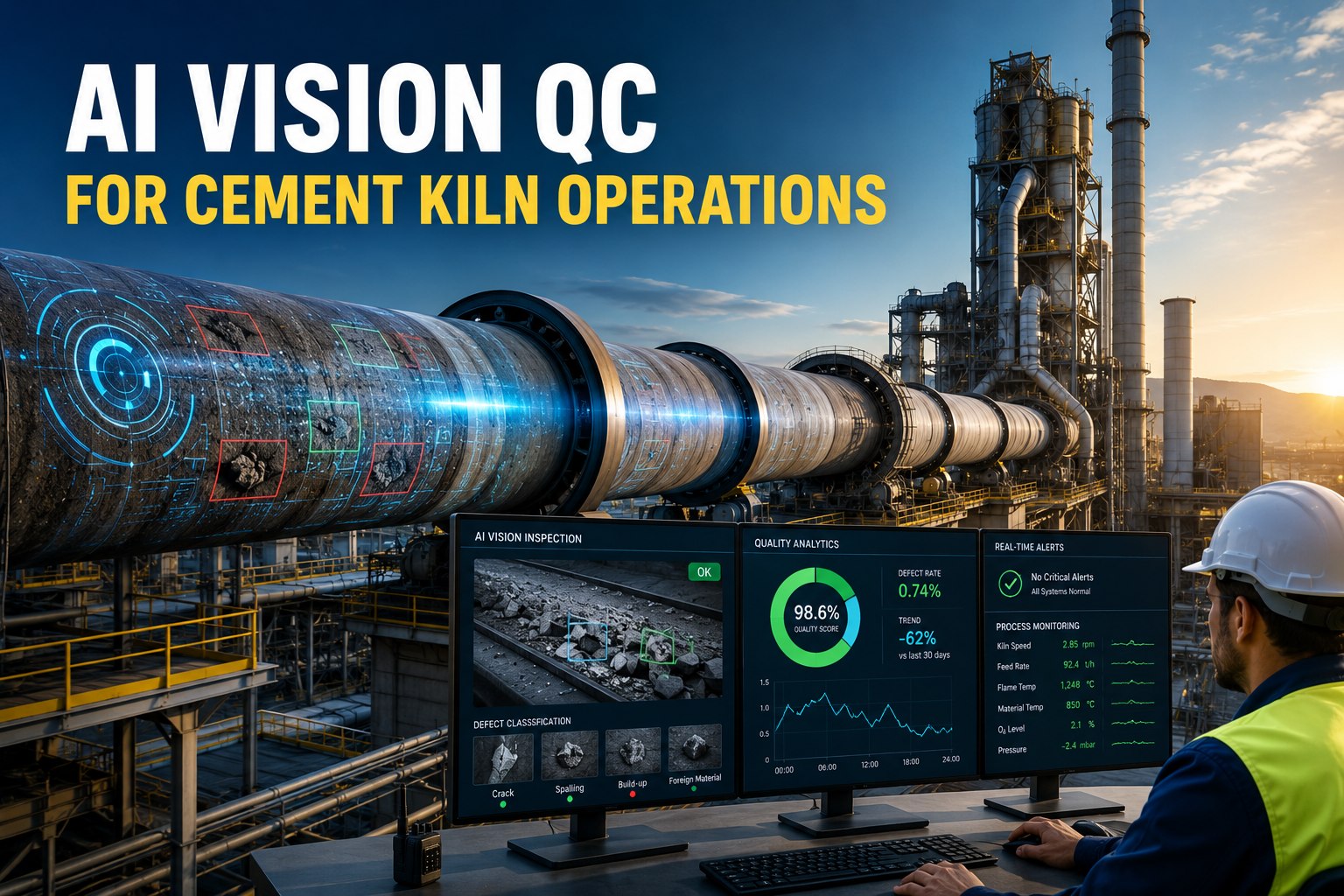
Read More
A cement kiln runs at 1,450°C, twenty-four hours a day, three hundred sixty days a year. Inside that fireball, a flame shape changes by the second, clinker nodules form and break, refractory bricks lose millimeters of life, and dust occludes e

Read More
By the time the lab confirms a free-lime excursion, 400 tonnes of off-spec clinker are already in the silo. By the time a kiln operator notices the burning zone drifting, fuel is being burned to compensate for a problem that started two hours upst
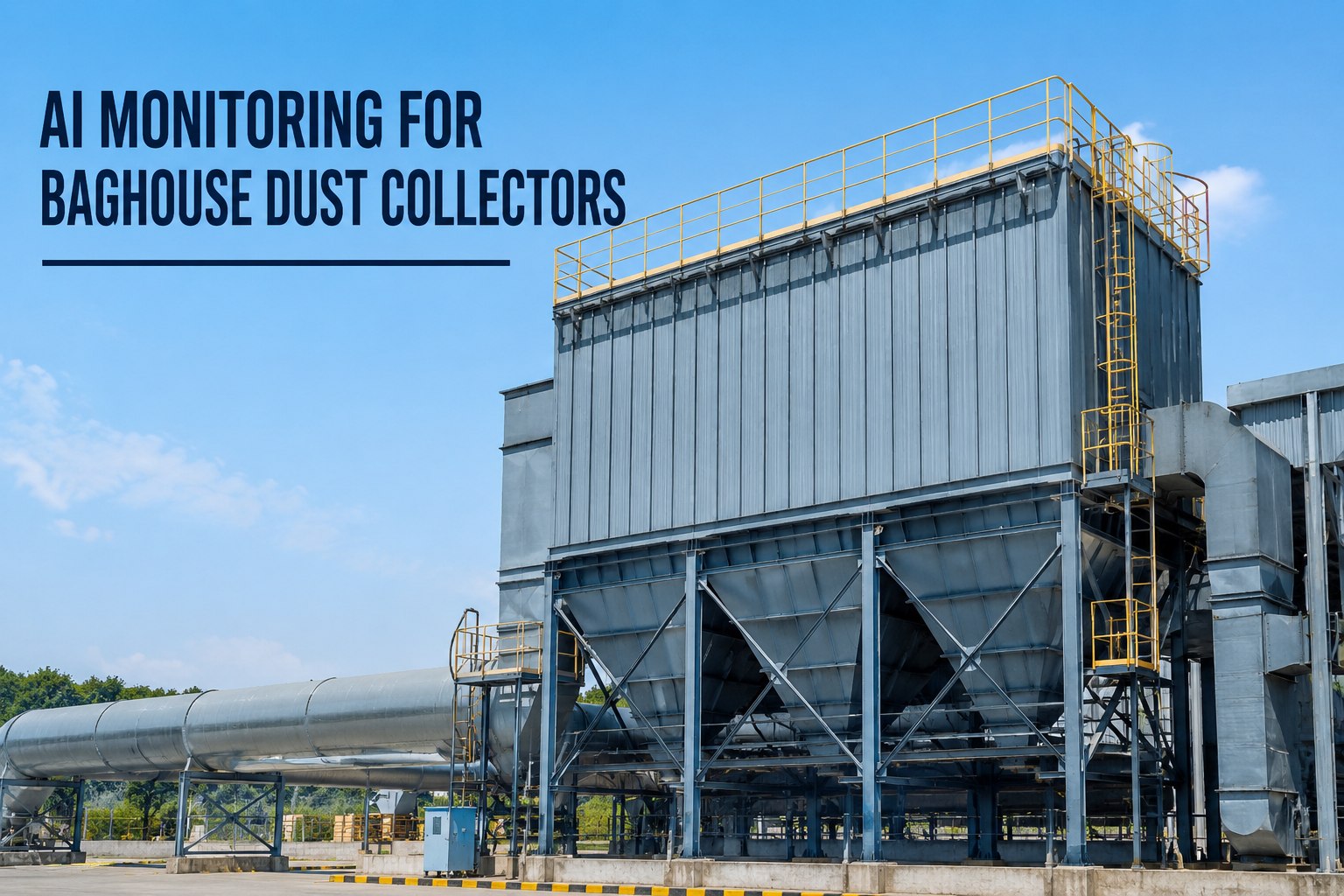
Read More
Baghouse dust collectors are the last line of defense between a cement plant's production process and its regulatory compliance record. When a filter bag blinds — choked with fine particulate that pulse-jet cleaning can no longer dislodge — differ

Read More
Ball mill vibration analysis is no longer a reactive discipline reserved for post-failure forensics. In 2026, the cement plants running the lowest unplanned downtime rate are the ones that have deployed wireless IIoT vibration se

Read More
Vertical roller mills are not maintained at the maintenance bay. They fail — catastrophically and expensively — in the three to thirty days between the moment roller wear begins accelerating and the moment a crack propagates through a hydraulic cy

Read More
AI-Powered Clinker Cooling Optimization gives cement plants real-time visibility into clinker bed depth, cooling efficiency, and thermal anomalies that directly affect grate health, energy consumption, and clinker quality. In many

Read More
Rotary kiln shell hotspot detection is the highest-stakes predictive maintenance challenge in cement manufacturing — a single undetected refractory failure at a kiln shell can escalate from a localized hot zone to a catastrophic s

Read More
Cement plant dust control and respiratory safety represent the single largest occupational health liability in cement manufacturing — a chronic, pervasive hazard that affects every worker on every shift across every process zone f
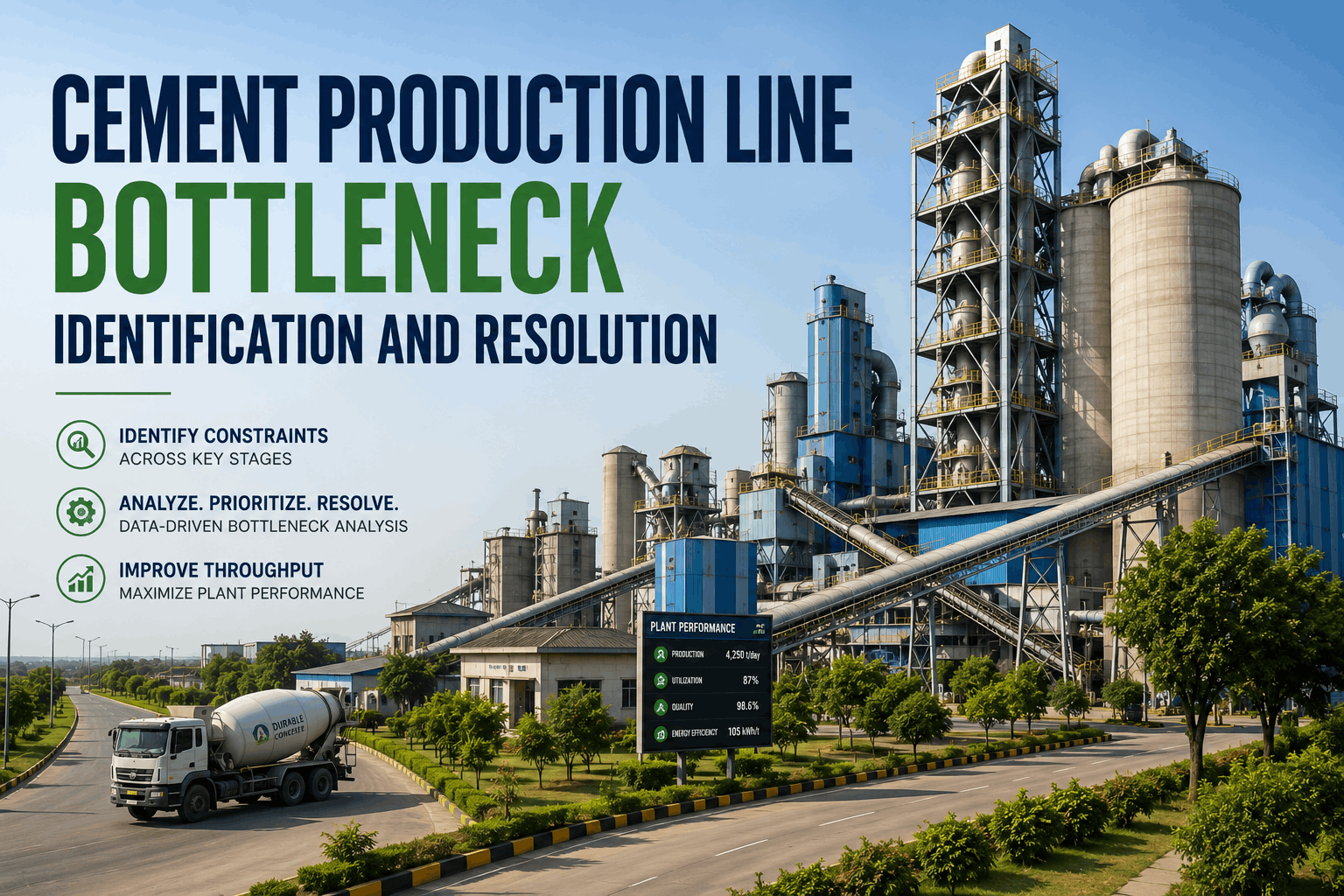
Read More
Every cement production line has one true bottleneck at any given moment — one asset, one process stage, one operational constraint that is limiting the throughput of the entire system. Every other asset in the line is running bel
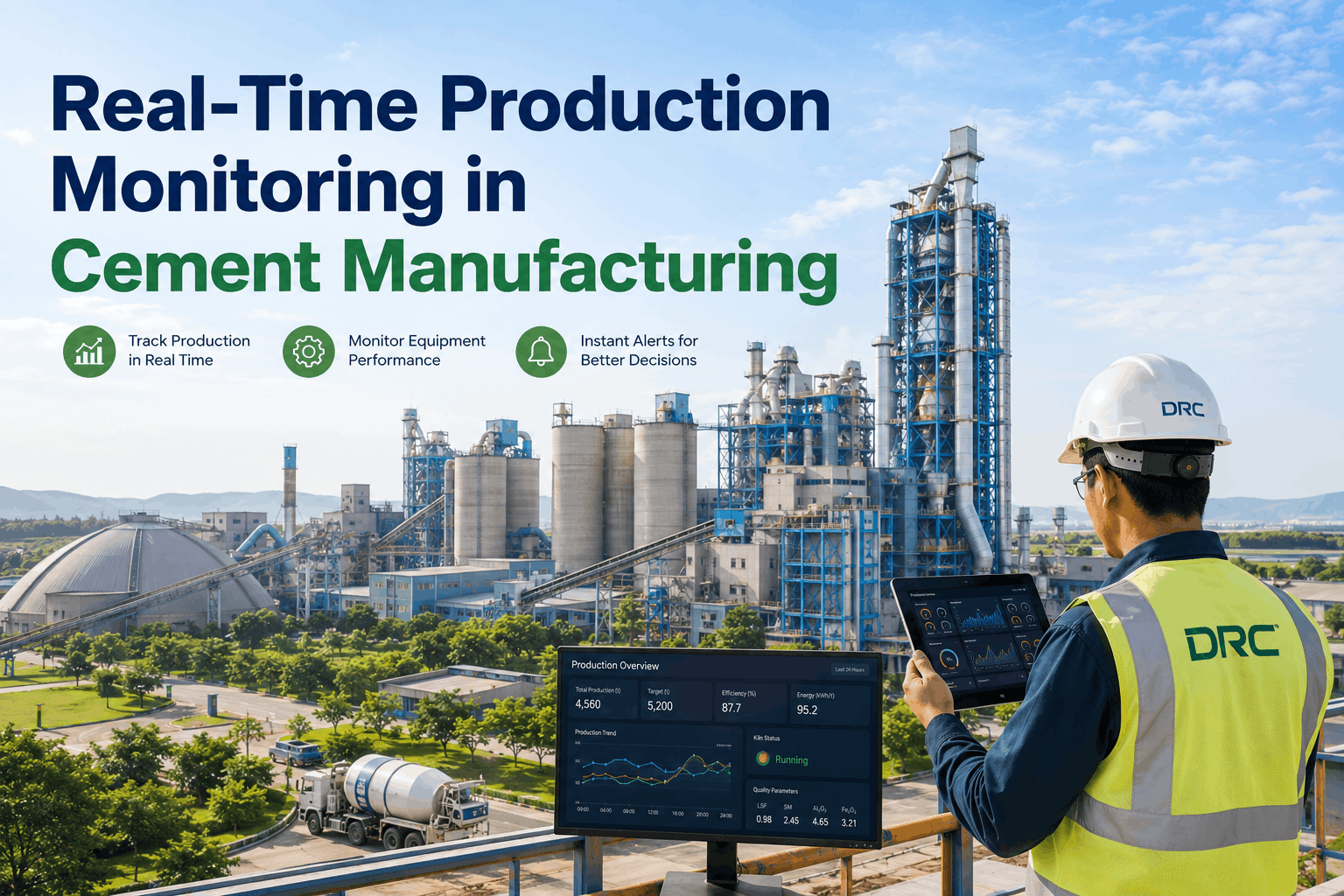
Read More
At a typical 5,000 tonnes-per-day cement plant, a production manager reviewing yesterday's shift report at 8 AM is looking at numbers that describe what happened 8 to 16 hours ago. The crusher that caused a 45-minute raw mill star

Read More
Clinker quality is not decided at the finish mill. It is decided — irreversibly — in the three to four hours between the moment raw meal enters the preheater tower and the moment clinker discharges from the cooler. Every parameter that determines

Read More
The cement industry operates on margins thin enough that a 5% demand miscalculation in either direction triggers a cascade of costly operational consequences. Overproduce, and your kilns burn fuel grinding clinker that sits in silos for months whi

Read More
A cement plant in Kentucky lost $280,000 in a single scheduled shutdown because one $340 drone inspection component was not in stock — the 4-day vendor lead time pushed kiln inspection past the relining contractor's arrival window. That scenario i

Read More
Cement logistics is one of the most time-critical and margin-sensitive operations in heavy industry. A loaded transit mixer that arrives 45 minutes late does not just disappoint a contractor — it may result in a rejected load, a wasted batch, and

Read More
Blaine fineness is the single most influential quality parameter in cement grinding operations — determining compressive strength development, water demand, setting characteristics, and market-grade classification simultaneously.

Read More
In cement manufacturing, waste is not an occasional problem — it is a permanent operational condition. Whether it manifests as overgrinding that inflates electrical consumption, thermal losses from poorly controlled kiln transitio

Read More
Achieving a fully digitized, AI-powered operation in an integrated cement facility is often viewed as a multi-year engineering marathon—yet the majority of that time is typically lost to fragmented data audits and vendor misalignments. Cem

Read More
Managing the complex MRO (Maintenance, Repair, and Operations) ecosystem of a cement facility is a high-stakes balancing act: carrying too much inventory ties up millions in capital, while a single missing kiln brick or mill liner can lead to week

Read More
Cement manufacturing environments present a unique paradox: they are among the most asset-intensive industrial operations on earth, yet their extreme dust levels and remote facility layouts frequently prevent the effective use of traditional digit
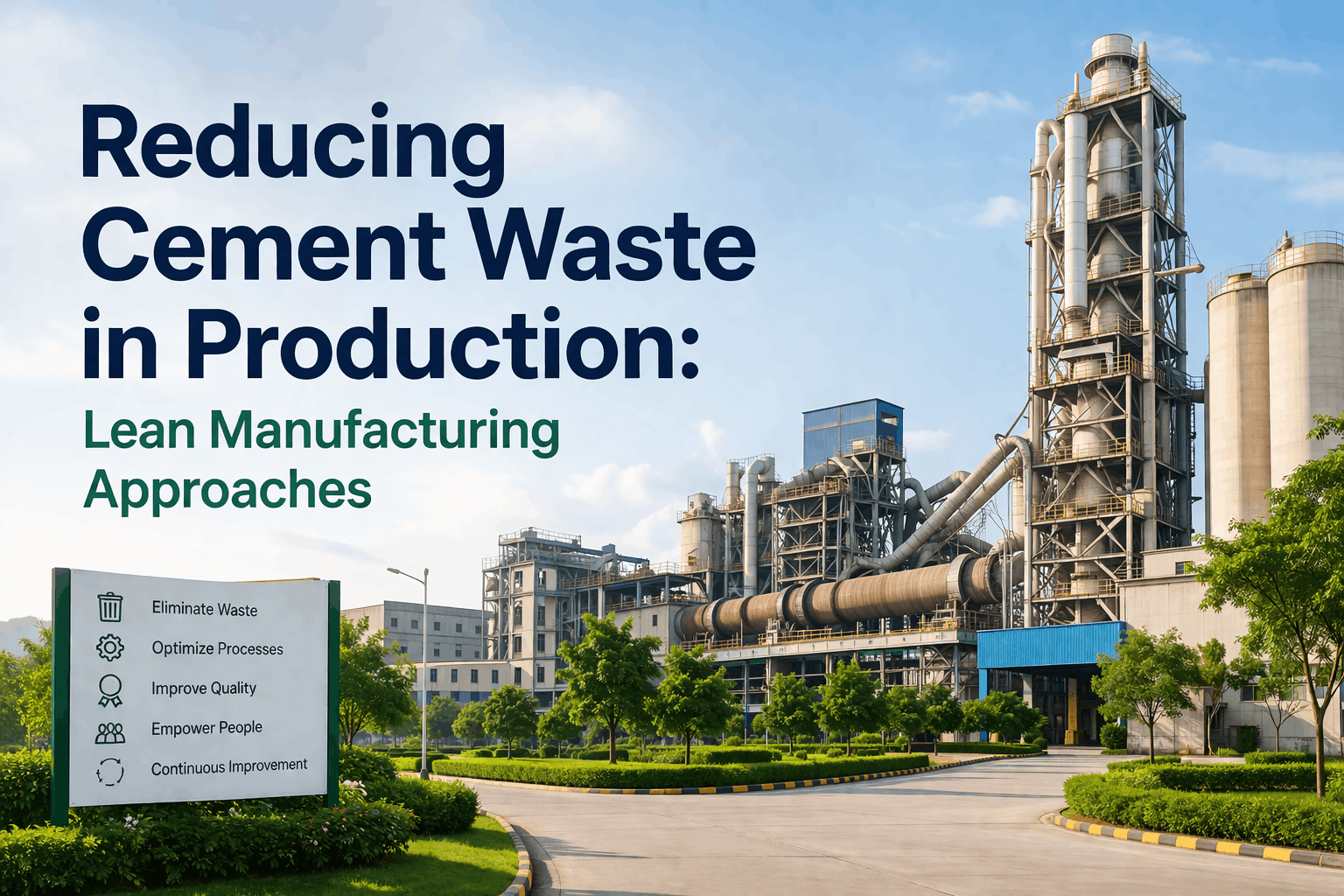
Read More
Lean manufacturing and AI-driven integration is transforming how cement producers monitor, document, and control production waste across their entire manufacturing ecosystem. Traditional lean plans in heavy industry often depend on manual yield

Read More
As thermal energy intensity standards transition from design baselines to mandatory carbon-compliance thresholds, cement producers are finding that "standard" preheater operation is no longer enough to guarantee margin stability. A kiln strategy
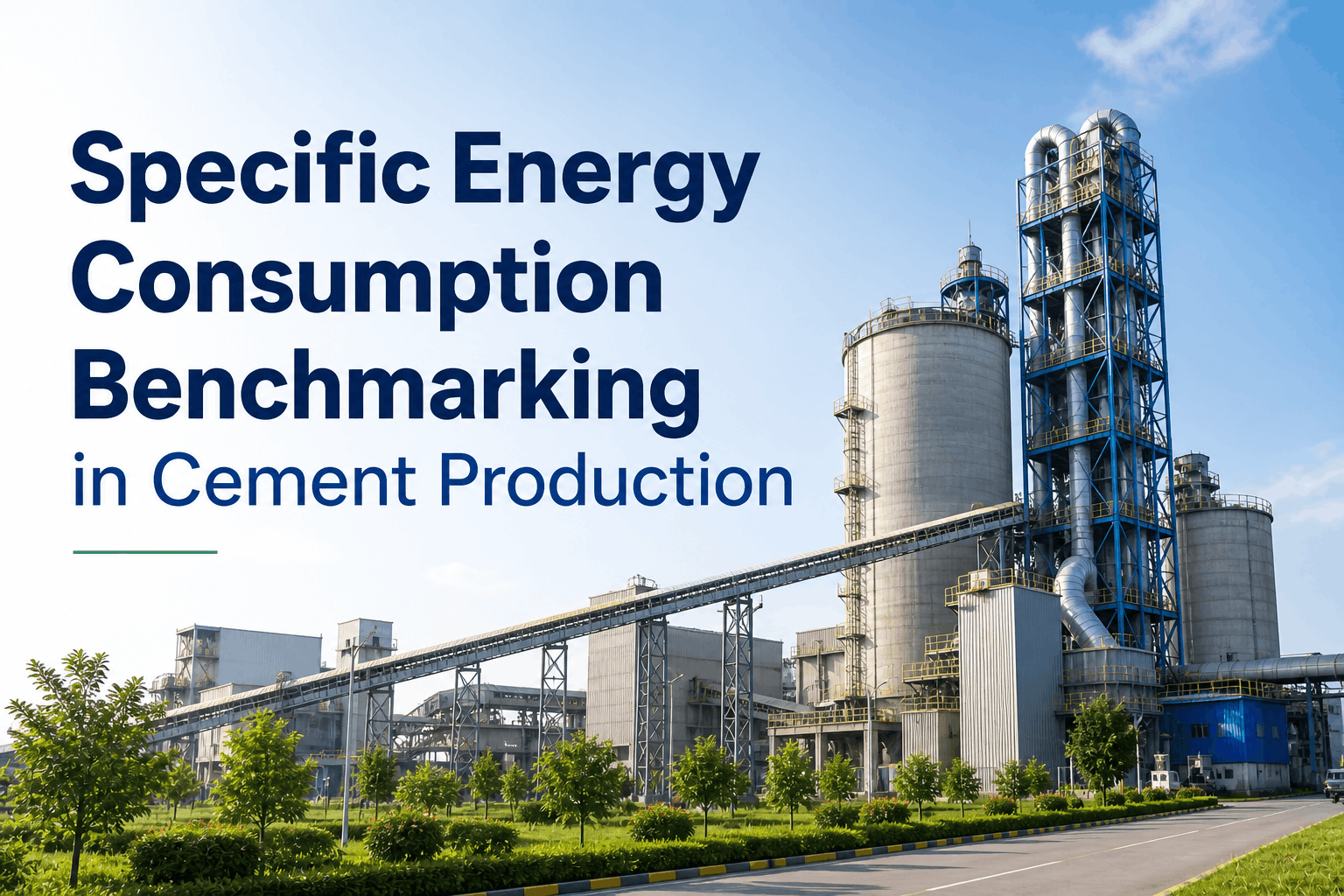
Read More
As global energy intensity standards transition from voluntary benchmarks to mandatory carbon-compliance thresholds, cement producers are finding that "average" performance is no longer commercially viable. A specific energy consumption (SEC) st

Read More
As energy volatility transitions from a quarterly concern to a daily operational threat, cement plant managers are finding that yesterday's monthly spreadsheets no longer guarantee margin stability. An energy strategy based on "looking back" at

Read More
In the thermodynamics of cement manufacturing, the Clinker Cooler represents the single most critical bridge between product quality and energy recovery. Far more than a simple discharge system, the cooler is a sophisticated heat exchanger that re

Read More
In the energy-intensive landscape of modern manufacturing, an **Electrical Energy Audit** is no longer a periodic compliance exercise — it is the primary engine for margin protection and operational excellence. While thermal energy dominates the k

Read More
In the pursuit of decarbonized manufacturing, **Alternative Fuels and Raw materials (AFR)** represent more than a cost-saving measure — they are the primary driver of operational resilience and circular economy compliance. From Refuse Derived Fuel

Read More
In the pursuit of decarbonized cement manufacturing, **Waste Heat Recovery (WHR)** has transitioned from an optional efficiency project into the most significant driver of operational self-sufficiency. Approximately 35-40% of the total thermal ene

Read More
In cement manufacturing, **grinding energy efficiency** is the single largest variable in total electrical cost, often accounting for 60-70% of a plant's total power consumption. Every kilowatt-hour wasted in over-grinding or inefficient classific

Read More
In the era of Industry 4.0, **digital twin technology** for cement manufacturing has shifted from a theoretical concept to the most significant operational asset in a facility's digital arsenal. A digital twin is not merely a 3D visualization; it

Read More
In cement manufacturing, **gearbox analytics** has evolved from a routine lubrication check into a mission-critical operational intelligence layer. Every high-torque kiln drive and massive grinding mill depends on the structural integrity of compl
-improvement-in-cement-plants.png)
Read More
In cement manufacturing, **MTBF (Mean Time Between Failures) improvement** has evolved from a simple metric into a mission-critical financial driver. Every high-capacity kiln and grinding mill depends on the stability of hundreds of mechanical and
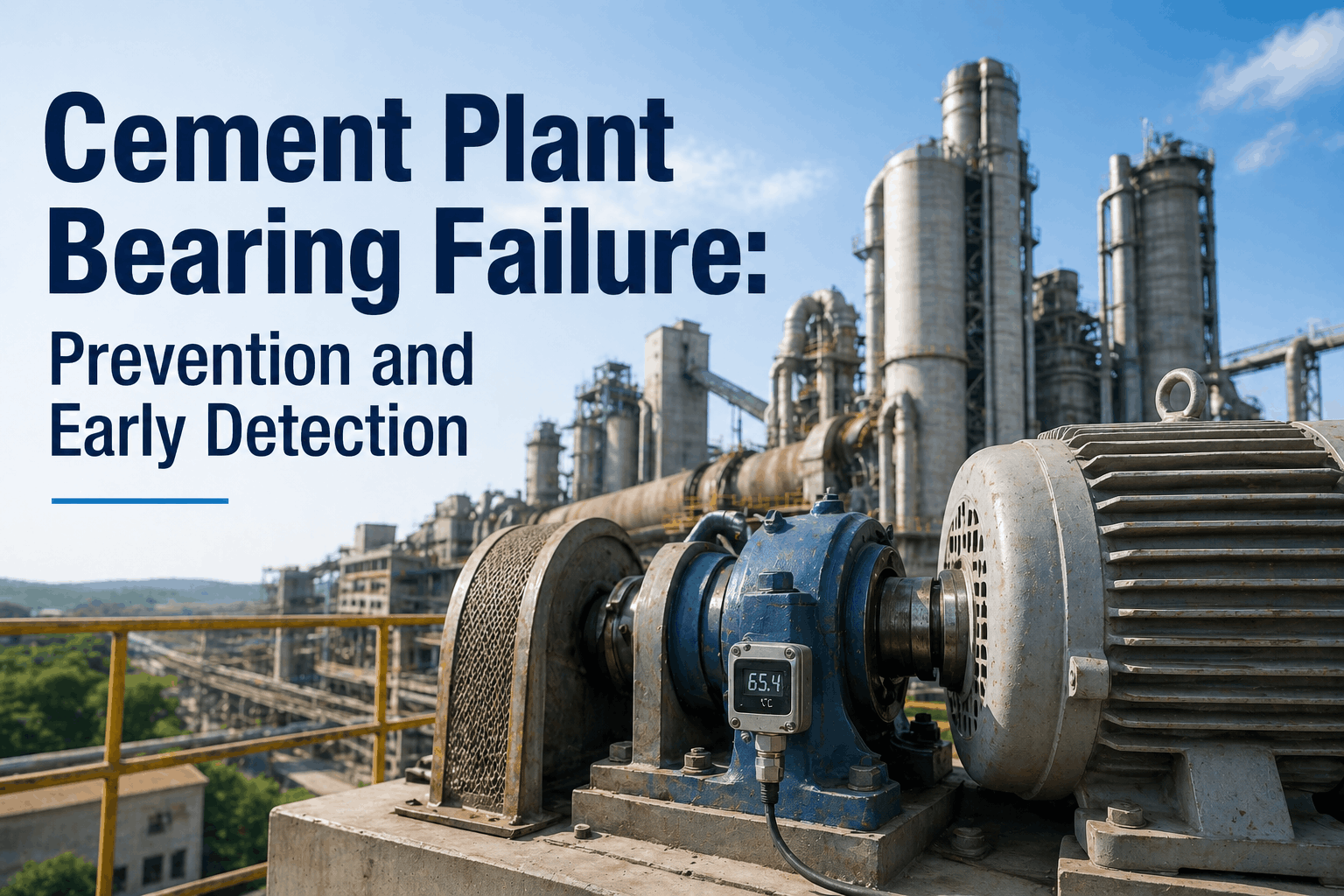
Read More
In cement manufacturing, **bearing failure analytics** has evolved from a routine maintenance task into a mission-critical operational intelligence layer. Every high-throughput kiln, vertical roller mill, and crusher depends on the reliability of

Read More
Equipment vibration in cement plants isn't just a mechanical symptom — it is a lead indicator of imminent catastrophic failure, massive energy waste, and kiln feed interruptions that can cost a facility over $240,000 per hour in unplanned downtime

Read More
Equipment failure in cement plants doesn't just cost downtime — it triggers a cycle of recurring breakdowns, unoptimized maintenance spend, and kiln instability that eats into the bottom line. In 2026, AI-powered **Root Cause Analysis (RCA)** is t
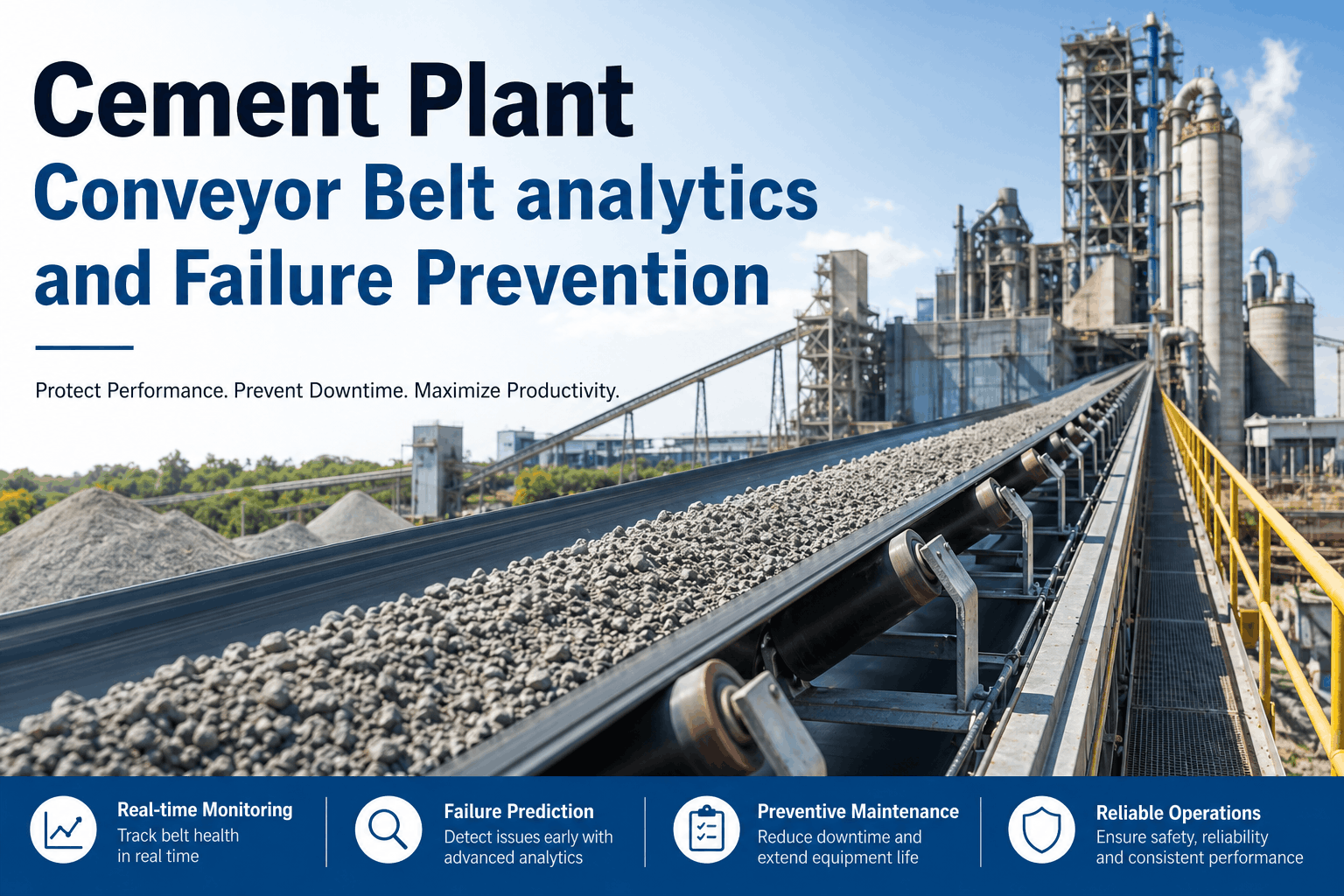
Read More
Conveyor belt equipment failure in cement plants doesn't just cost downtime — it triggers kiln feed interruptions, clinker cooler backups, and catastrophic safety risks that can result in facility shutdowns and massive revenue loss. In 2026, AI-po

Read More
The European Union Emissions Trading System (EU ETS) is the world's largest carbon market — and cement plants are among its most-scrutinised covered installations. For a major cement group operating four integrated kilns across Ge

Read More
When one of India's top-10 cement producers began evaluating its unplanned downtime profile across three integrated plants in Rajasthan and Gujarat, the numbers were stark: ₹14 crore lost annually to equipment failures that post-i

Read More
Cement plant operational reliability in Southeast Asia faces unique environmental challenges — from extreme humidity-driven sensor drift to the logistical complexities of remote limestone quarries. In 2026 a 2.4 MTPA cement facil

Read More
Cement plant condition monitoring has undergone a fundamental transformation. What was once treated as a manual round function — isolated vibration pens and periodic oil samples reviewed weeks after the fact — is now redefining h
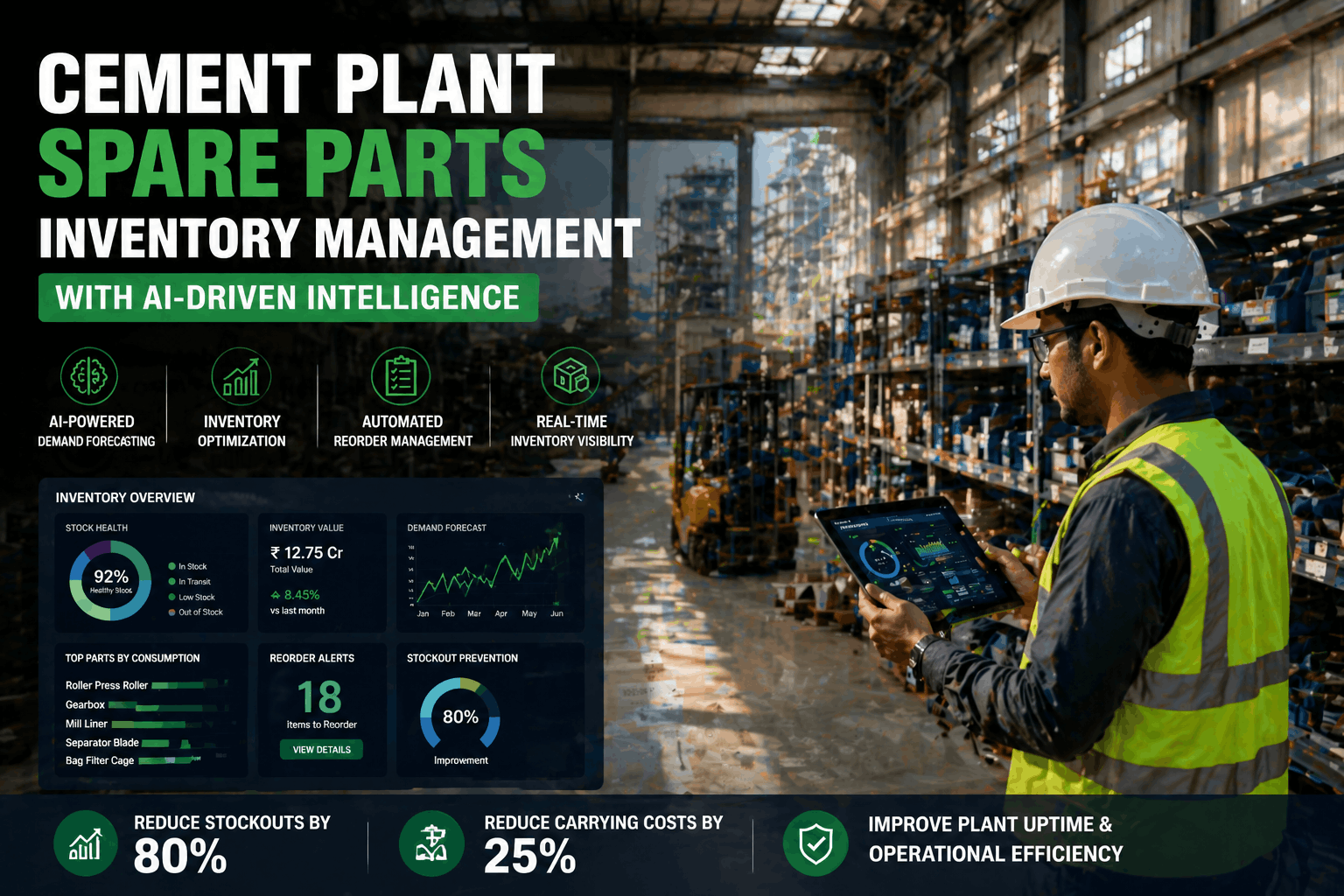
Read More
Cement plant spare parts management has undergone a fundamental transformation. What was once treated as a back-office warehouse function — isolated Excel sheets and periodic manual counts reviewed months after stockouts occur —

Read More
In the heavy industrial environment of cement manufacturing, maintenance is often viewed through the lens of 'firefighting' rather than strategic reliability. Yet, the difference between a plant that struggles and one that leads i

Read More
The American cement industry is undergoing its most significant transformation since the Interstate Highway Act. Driven by the $1.2 trillion Infrastructure Investment and Jobs Act (IIJA) and the federal 'Buy Clean

Read More
European cement manufacturing has transitioned from a heavy-industry sector to a carbon-tech frontier. Driven by EU ETS Phase 4 regulations and the looming implementation of CBAM (Carbon Border Adjustment Mechanism), the region's 1

Read More
Cement manufacturing in the Middle East and Africa (MEA) is the engine of a historical transformation. Driven by mega-projects like Saudi Vision 2030, Egypt's New Administrative Capital, and Nigeria's urban infrastructure surge, th

Read More
The Chinese cement industry, producing over 50% of global output (2+ Billion Tons), has undergone a fundamental transformation. What was once treated as a back-office reporting function — isolated DCS dashboards and periodic coal

Read More
The Indian cement industry, producing over 380 MTPA, has undergone a fundamental transformation. What was once treated as a back-office reporting function — isolated CEMS dashboards and periodic SPCB data pushes reviewed days aft

Read More
Cement manufacturing intelligence has undergone a fundamental transformation. What was once treated as a back-office reporting function — isolated SCADA dashboards and periodic manual log entries reviewed days after a kiln trip —

Read More
Cement plant electrical infrastructure has undergone a fundamental transformation. What was once treated as a back-office maintenance function — isolated MCC panels and periodic breaker tests reviewed days after a trip — is now r

Read More
In the global cement trade, EU CBAM (Carbon Border Adjustment Mechanism) has transformed carbon from a sustainability metric into a hard financial barrier. Starting in 2026, cement exporters to the European Union

Read More
As we approach 2026, the cement industry is moving beyond basic waste-burning toward Prescriptive Co-Processing Governance. The integration of RDF quality tracking, pneumatic feeding analytics, an

Read More
As we approach 2026, the cement industry is moving beyond basic carbon tracking toward Prescriptive Decarbonization Governance. The integration of CCUS analytics, high-TSR alternative fuel monitor

Read More
In the energy-intensive world of cement production, energy management has shifted from a fixed operational cost into a mission-critical performance lever. Electricity accounts for up to 15% of the total cost of ce

Read More
In modern cement manufacturing, regulatory compliance has evolved from a periodic audit requirement into a real-time operational necessity. Every cement facility operates under a complex web of environmental and s

Read More
In world-class cement manufacturing, Total Productive Analytics (TPM) has evolved from a Japanese management philosophy into a high-density operational intelligence layer. Every reliability programme depends on th

Read More
In the cement industry, the modernization of legacy equipment has evolved from a maintenance project into a strategic financial imperative. Most global cement capacity still operates on assets designed 20 to 35 years ago — systems

Read More
Asset lifecycle management in the cement industry is fundamentally shifting from a reactive "repair-on-failure" model to a proactive "stewardship" strategy powered by AI-driven analytics. By creating a continuous digital thread th

Read More
The regulatory landscape for European cement manufacturers is undergoing its most significant shift since the inception of the Emission Trading System (ETS). As free carbon allocations are progressively phased out and the Carbon B

Read More
The cement industry stands at a historical inflection point, where the path to Net-Zero 2050 requires a fundamental restructuring of chemical, thermal, and mechanical processes. Achieving a deep decarbonization roadmap demands mor

Read More
For the global cement industry, decarbonization is no longer a corporate social responsibility initiative—it is a core operational requirement driven by carbon taxes, CBAM mandates, and investor ESG scrutiny. Digital twin technolo

Read More
For cement producers, navigating the dual requirements of OSHA mandatory standards and ISO 45001 voluntary management systems is a significant operational burden. Between the strict enforcement of respirable crystalline silica (RC

Read More
Confined spaces in cement manufacturing — including raw meal silos, preheater cyclones, and ball mills — represent some of the most dangerous work environments in heavy industry. The combination of engulfment risks from material "

Read More
In the massive, energy-intensive environment of a cement plant, Lockout/Tagout (LOTO) is the most critical barrier between maintenance personnel and catastrophic injury. With kilns, grinders and conveyors powered by high-voltage e

Read More
Cement manufacturing remains one of the most high-risk industrial sectors, where the intersection of heavy machinery, extreme temperatures, and airborne particulates demands more than just traditional compliance — it requires

Read More
The cement plant workforce crisis is fundamentally rewriting the operational risk profile of the clinker industry. With over 40% of senior technicians projected to retire by 2030, the loss of "institutional memory"—the unwritten i

Read More
AI-powered cement plant analytics is fundamentally rewriting how heavy industrial facilities bridge the "intelligence gap" between siloed DCS data and actionable field maintenance. By evolving from basic preventive schedules to tr

Read More
Robotic inspection for cement manufacturing is fundamentally rewriting how heavy industrial plants manage confined space safety and asset integrity. By replacing manual entry into high-temperature kilns, vertical silos, and comple

Read More
The "Smart Plant" is no longer a concept limited to industry whitepapers; in 2026, it is the primary engine of competitive survival in the heavy industrial sector. Cement Industry 4.0 has evolved from basic sensor

Read More
As the global cement sector pushes toward Net Zero by 2050, the 2026 Benchmark Report reveals a widening performance gap between facilities using legacy maintenance schedules and those utilizing high-density AI an

Read More
The transition to Cement 4.0 has forced a massive shift from reactive maintenance to AI-driven process optimization. Selecting the best AI-driven platform for cement plants in 2026 is no longer ab

Read More
Selecting the right maintenance platform for a cement facility requires a choice between two distinct philosophies: a versatile, general-purpose CMMS (MaintainX) or a high-density, industrially specialized AI-analytics suite (iFac

Read More
Maintaining zero-emission compliance in cement production is driven by the reliability of your filtration systems. This bag filter analytics checklist provides a deep technical framework for auditing dust collecto

Read More
Refractory lifecycle management is the single largest maintenance cost variable in cement production. This kiln refractory inspection checklist provides a granular, zone-by-zone assessment template

Read More
Maximizing kiln uptime and cement quality begins with disciplined daily operator rounds. This cement plant daily inspection checklist provides a standardized framework for monitoring critical equi
Read More
Maximizing kiln uptime and cement quality begins with disciplined daily operator rounds. This cement plant daily inspection checklist provides a standardized framework for monitoring critical equi

Read More
Operational excellence in cement manufacturing is built on rigid preventive maintenance (PM). This cement plant analytics checklist library provides over 60 granular technical inspections for the

Read More
Kiln shutdown events are high-stakes operational phases where thermal management dictates the success of a maintenance outage. This 8-category kiln shutdown checklist provides the technical depth require

Read More
Carbon emissions tracking for cement manufacturing has evolved from a quarterly reporting obligation into a real-time operational dashboard—a shift driven by the urgent need for clinker factor optimization and alternative fuel orc

Read More
Cement plant safety management represents the ultimate operational priority in heavy industrial manufacturing—a high-complexity governance layer where mechanical energy isolation confined space atmospheric testing, and fall prot

Read More
Cement plant environmental compliance represents the most complex intersection of operational throughput and global stewardship—a high-stakes regulatory layer where stack emissions carbon accounting, and resource circularity con

Read More
In the global race toward Net Zero carbon emissions, cement plant automation is undergoing a foundational transformation—moving beyond simple PID loops and PLC logic into a high-density Industry 4.0 ecosystem. For

Read More
In the ultra-competitive global building materials market, cement production efficiency is no longer a matter of simple volume—it is a game of precision at scale. Modern cement plants are complex ecosystems where

Read More
In cement manufacturing, quality control is often a lagging indicator—by the time manual laboratory results for a 28nd-day strength test are available, thousands of tons of clinker have already been produced. Traditional QC relies

Read More
Thermal energy consumption in the kiln accounts for nearly 70% of a cement plant's variable operational costs. In clinker production, minor inefficiencies in the preheater tower, calciner, or burner nozzle don't just waste fuel—th

Read More
Energy consumption is the single largest controllable cost in cement manufacturing, often accounting for 30% to 40% of total production expenses. In an era of volatile electricity prices and aggressive decarbonization targets, tra

Read More
The rotary kiln is the thermal heart of cement production, and its refractory lining is the only barrier between 1450°C chemical reactions and structural shell failure. In the high-stakes environment of clinker production, refract

Read More
In the cement industry, a baghouse isn't just an auxiliary filter; it's a critical environmental shield and a major energy consumer. A single undetected bag rupture or a stuck pulse-jet valve doesn't just trigger EPA/CP

Read More
In a high-capacity cement plant, the primary crusher is the gatekeeper of production. A single toggle plate fracture in a jaw crusher or a rotor imbalance in a hammer mill doesn't just halt the crushing circuit; it star

Read More
For a 5,000 tpd cement plant, a planetary gearbox failure on the raw mill or kiln drive is a $1.2 million catastrophe — split between repair costs and weeks of lost production. Traditional vibration monitoring alone oft
-analytics-roller,-table-hydraulic-tracking.png)
Read More
Vertical Roller Mills (VRM) are the energy-intensive hub of a modern cement plant — often accounting for 70% of a facility's total grinding power consumption. A single roller bearing failure or a hydraulic accumulator rupture doesn't just halt p

Read More
A ball mill trunnion bearing that will fail in 22 days produces an acoustic and vibration signature shift so subtle that it is often dismissed as "normal grit" in a standard frequency plot. A mill liner developing a mic

Read More
For regional cement plant operators, preheater tower performance is the heartbeat of kiln stability. When a leading South Asian cement producer faced recurring riser duct blockages and catastrophic cyclone "sandman" eve

Read More
For regional cement plant operators, refractory maintenance is not just a budget item; it is the single largest driver of unplanned downtime and CAPEX spillage. When one of the world’s leading building materials groups integrat
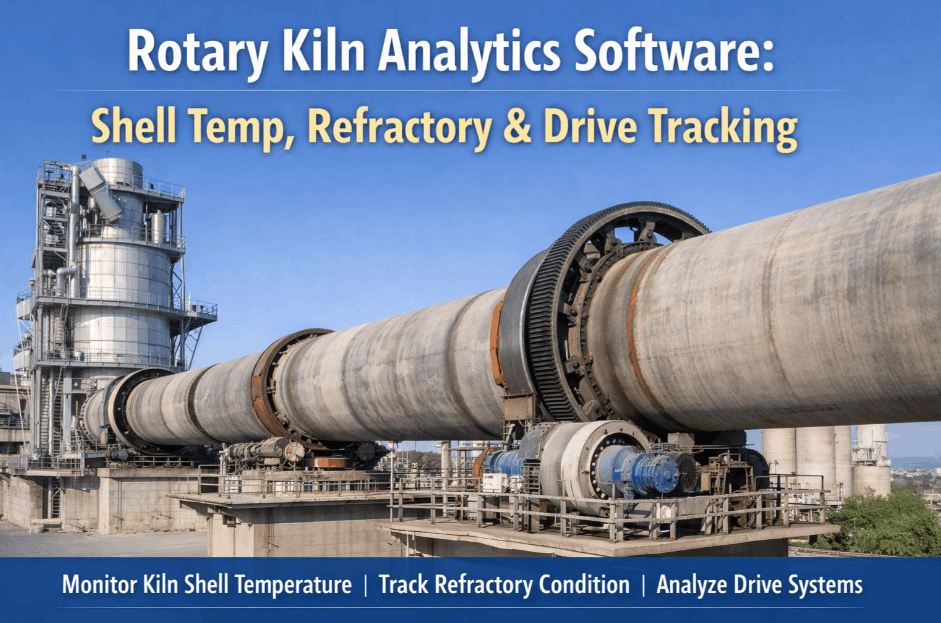
Read More
The rotary kiln is the beating heart of any cement manufacturing plant—a massive, continuously rotating thermal asset where raw meal is transformed into clinker at 1,450°C. When a kiln goes down unexpectedly, production

Read More
For decades, large-scale cement manufacturing operations have relied on heavy ERP systems like SAP Plant Maintenance (PM) or IBM Maximo to manage their work orders and asset registries. While these monolithic platforms

Read More
In cement manufacturing, capital expenditure and maintenance budgets are subjected to intense scrutiny, yet traditional forecasting models universally underestimate the true cost of unplanned equipment failures. When a rotary
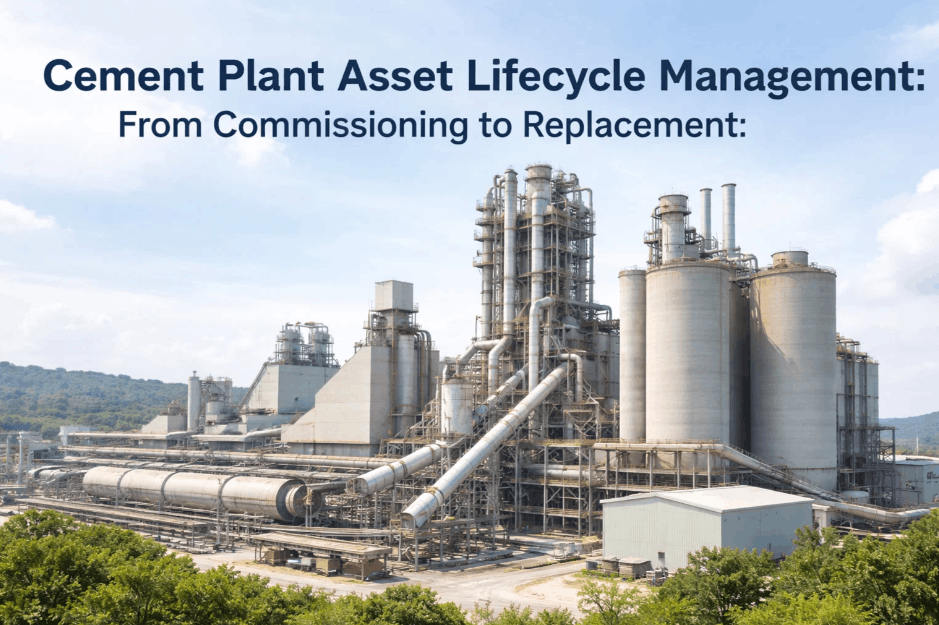
Read More
In heavy material manufacturing, the heartbeat of the operation is tied directly to millions of dollars in capital machinery. A single cement plant operates hundreds of massive interconnected assets: primary crushers, raw mills,

Read More
In continuous heavy industries, the cost of equipment failure isn't just repair parts—it is entirely lost production capacity. Cement plants specifically suffer massive financial penalties when critical path assets like the rotary kiln,

Read More
In traditional cement plant operations, managing maintenance tasks on scattered paper forms leads to extreme backlog, lost accountability, and delayed repairs. Moving from paper to digital work order management is the fundamental first s

Read More
Selecting the right predictive maintenance system for a modern cement manufacturing facility is one of the most critical operational decisions a reliability leader will make. Whether running a dry or wet process plant, the punishing environment

Read More
Cement manufacturing in 2026 demands more than just basic condition monitoring; it requires full-stack, AI-driven predictive intelligence that directly influences production throughput. Identifying the Best AI-driven Software

Read More
Heavy industry is undergoing a massive shift: cement plant operators are rapidly migrating away from legacy, paper-based CMMS platforms straight into AI-driven, predictive maintenance ecosystems. However, evaluating

Read More
Heavy industrial assets like rotary kilns and raw mills have historically been managed through reactive maintenance—running massive machinery until failure or relying on static, calendar-based scheduling. In modern cement manufacturing,

Read More
The kiln forms the central circulatory nervous system of heavy cement manufacturing. When critical rotating equipment degrades, production flow violently bottlenecks resulting in severe clinker shortages, aggressive supply chain delays,

Read More
Managing reliability rounds across massive cement plant infrastructure is a logistical challenge where paper-based analytics cause a 40% loss in workforce wrench time. Maintenance managers overseeing crushers, kilns, and baghouses face a visibil

Read More
Managing maintenance operations across a sprawling cement plant is a logistical challenge where paper-based work orders cause a 40% loss in actual wrench time. Maintenance teams managing kilns, vertical roller mills, and crushers face a visibili

Read More
Cement ball mills are the workhorses of every grinding circuit — rotating steel cylinders 4–5 metres in diameter, 12–16 metres long, loaded with 80–150 tonnes of grinding media, consuming 30–40% of a cement plant's total electrical energy. When a

Read More
A well-executed shutdown is the difference between a cement plant that runs 330+ days a year and one that struggles to reach 300. Most cement plants treat shutdowns as chaotic fire drills — scrambling for spare parts two weeks before the outage, d

Read More
Every tonne of cement begins at the crusher — the first machine in the production chain and the one whose failure stops raw material supply to the entire plant. Cement plant crushers process 800–3,000 tonnes of limestone per hour, enduring continu

Read More
Predictive maintenance in cement plants is no longer a technology aspiration — it is a competitive necessity. The plants that are achieving 94–96% equipment availability, 20–30% lower maintenance costs, and zero unplanned kiln stoppages are doing

Read More
The rotary kiln is the heart of every cement plant — a rotating steel cylinder 60–90 metres long, operating at 1,400–1,500°C, carrying 200–400 tonnes of material at any moment, turning on tyre-roller systems that bear loads of 1,000–2,000 tonnes.

Read More
Unplanned downtime in cement manufacturing is not simply an operational inconvenience — it is a direct financial loss measured in lakhs per hour, with cascading effects that extend far beyond the duration of the stoppage itself. A kiln that stops

Read More
Every hour, your cement mill consumes 3,500 kWh of electricity. Physics guarantees that 95% of that energy converts to heat and noise — not particle size reduction. Only 5% does actual grinding work. That's not a design flaw — it's the fundamental

Read More
A 1.5-million-ton-per-year cement plant in Madhya Pradesh was bleeding $4.2 million annually in excess energy costs — and nobody could see it. The data existed. Kiln shell temperatures were logged in the DCS. Power consumption sat in the electrica

Read More
A cement plant in Pennsylvania deployed 340 IoT sensors across their kiln, mills, and conveyors — then struggled to extract value because sensors from four vendors fed into separate dashboards with no unified view. Gateway failures went undetected

Read More
The cement industry consumes approximately 5% of global electricity and produces 8% of worldwide CO2 emissions — making it the third-largest emitter if it were a country. Energy costs represent 30–40% of total cement production costs. A single mod

Read More
Walk into most cement plant control rooms and you'll find operators managing kilns with setpoints established years ago. Those parameters were tuned for worst-case conditions — the hardest raw materials, the most variable fuel, the coldest ambient

Read More
Your cement plant already has cameras. Dozens of them — mounted on walls, pointed at conveyors, overlooking the kiln area, watching the packing line. But here's the uncomfortable reality: those cameras are just recording. Nobody watches 90% of tha

Read More
A cement plant's conveyor network is its circulatory system. Limestone from the quarry, raw meal to the preheater, clinker from the cooler, finished cement to the silo — every ton passes through conveyors multiple times before it leaves the plant.

Read More
A cement plant reliability engineer watches the kiln rotate — 4 RPM, 24 hours a day, 365 days a year. Everything looks normal. But beneath the surface, the tyre is slowly migrating around the shell at a rate invisible to the human eye. By the time

Read More
Your operator walks the kiln floor at 6 AM. Checks the shell temperature with a thermal gun at five spots. Logs the readings. Everything looks normal—250°C, 260°C, 255°C. What he doesn't see: a 47°C anomaly developing between his measurement point

Read More
Right now, somewhere in your kiln, a bearing is developing micro-pitting. A refractory brick is losing thickness. A tyre is creeping imperceptibly against the shell. You won't see it on your next walkthrough. Your operators won't feel it in the dr

Read More
A cement plant running AI in production isn't running a single model — it's orchestrating dozens of specialized models simultaneously across kiln optimization, clinker quality prediction, raw mill blending, energy forecasting, emissions monitoring

Read More
Cement kilns operate at 1,450°C continuously, consuming 60-70% of a plant's total energy budget. A single minute of suboptimal temperature control wastes fuel, degrades clinker quality, and can damage refractory lining worth hundreds of thousands

Read More
Cement plants operate kilns at 1,450°C continuously, in locations where internet connectivity is unreliable, dust levels destroy consumer hardware, and proprietary mix designs are trade secrets worth millions. Cloud AI doesn't work here. What work

Read More
Cement manufacturing produces 2.3 billion tonnes of CO2 annually—7-8% of all global emissions, more than aviation, shipping, and long-distance trucking combined. Every tonne of cement releases 0.6-0.9 tonnes of CO2. With the EU Carbon Border Adjus
Read More
Cement manufacturing produces 2.3 billion tonnes of CO2 annually—7-8% of all global emissions, more than aviation, shipping, and long-distance trucking combined. Every tonne of cement releases 0.6-0.9 tonnes of CO2. With the EU Carbon Border Adjus

Read More
The cement industry produces 7-8% of global CO2 emissions, spends 30-40% of production costs on energy, and loses over $50 billion annually to unplanned downtime across manufacturing globally. Traditional cement plants rely on operator experience,

Read More
A single undetected defective cement bag can contaminate an entire pallet. A missed hot clinker fragment on a conveyor belt can trigger a fire that shuts down production for days. Human inspectors working 24/7 shifts catch roughly 80% of defects o

Read More
Cement kilns devour 30-40% of a plant's total production cost in fuel alone. With global cement output exceeding 4.3 billion tons annually and energy prices climbing, even a 3% improvement in kiln thermal efficiency can save a mid-size plant $1.2-

Read More
Compare the best AI compliance reporting tools for cement plants in 2026. AI data collection, smart one-click reports & real-time audit readiness save 1,200+ hrs/yr. At 4:15 PM on a Friday in October 2025, the EHS manager at a 6,000 TPD cement

Read More
At 03:15 AM on a Tuesday at a 4,500 TPD cement plant, the main drive gearbox on the primary raw mill experienced a sudden catastrophic failure. The vibration had been slowly increasing for three weeks, but the manual inspection rounds—conducted we

Read More
Discover how AI helps the best cement plants achieve 99%+ uptime in 2026. AI predictive analytics, smart IoT monitoring & automated maintenance scheduling are no longer futuristic concepts; they are baseline operational requirements. A cement

Read More
Compare the top AI-powered mobile CMMS apps for cement plant technicians in 2026. AI work order prioritization, offline capability & smart barcode scanning — ranked. The modern cement plant is a harsh, disconnected environment where traditiona

Read More
In cement manufacturing, an 18% improvement in production efficiency isn't a marginal gain — it's a transformation. It means more tonnes per hour from the same kiln, fewer stoppages interrupting your grinding circuits, and quality that holds consi

Read More
Energy is the single largest variable cost in cement manufacturing — consuming up to 70% of a plant's total operating budget. For most plant managers, energy bills are a number you accept, not one you control. That belief changed for one mid-sized

Read More
The cement industry stands at a defining crossroads. Responsible for roughly 5% of global CO₂ emissions, it faces mounting regulatory pressure, volatile fossil fuel costs, and rising sustainability mandates — all at once. In 2026, the question for

Read More
Every cement plant manager knows the dread: a rotary kiln shuts down at 2 AM, production halts, and the repair bill arrives before sunrise. Unplanned equipment failure in cement manufacturing isn't just an operational inconvenience — it's a financ

Read More
Managing maintenance across a portfolio of cement plants in 2026 is not a technology challenge — it is a data fragmentation crisis wearing a technology disguise. A cement group operating six integrated plants across three countries will typically
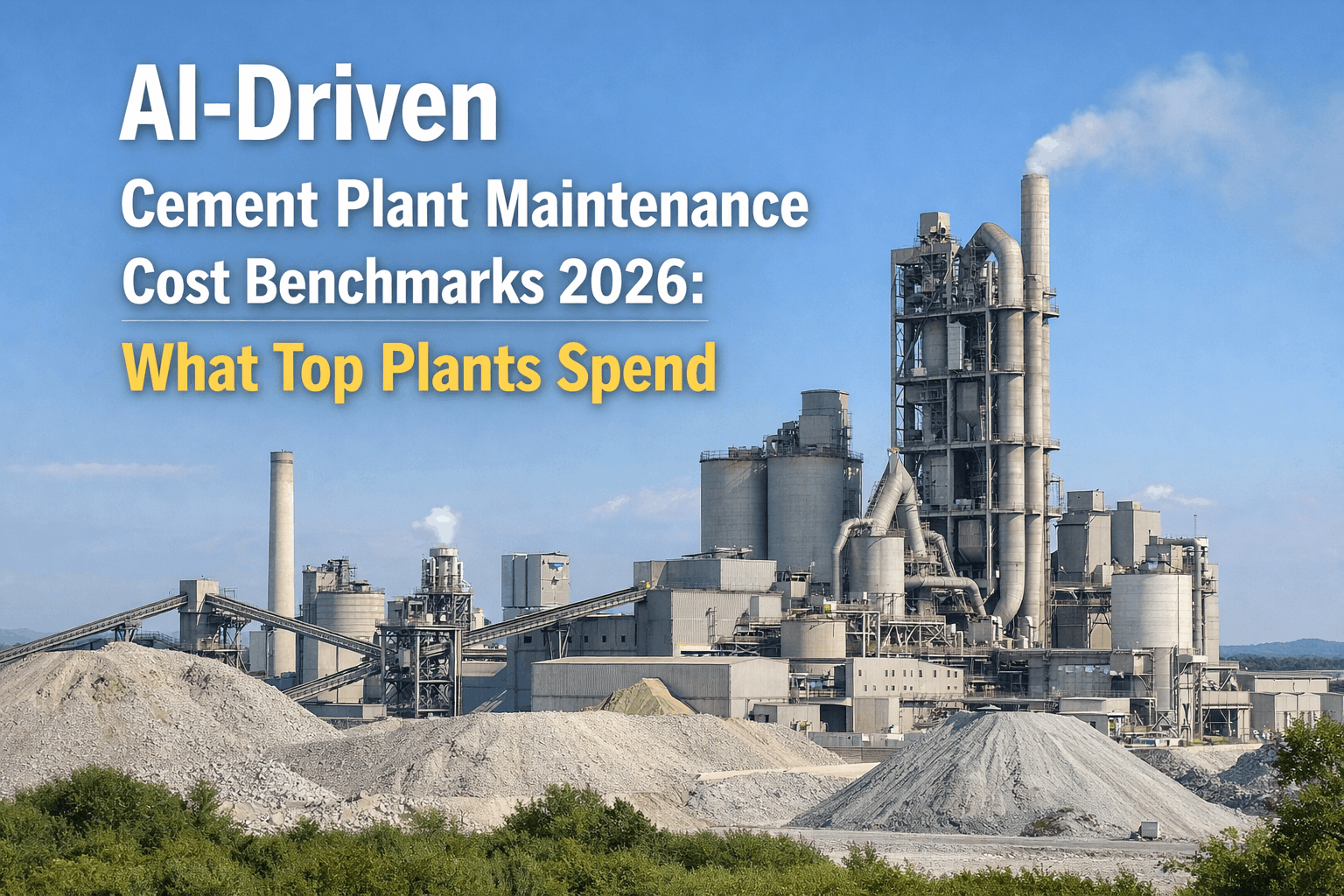
Read More
Cement plant maintenance budgets have always been substantial — but in 2026, the gap between plants that manage those budgets intelligently and those that do not has never been wider. The best-performing operations now spend $3.50–$5.50 pe

Read More
Cement manufacturing is one of the most operationally complex industries on the planet. A single integrated plant juggles hundreds of interdependent variables simultaneously — kiln temperatures, raw mix chemistry, equipment health, energy consumpt

Read More
A maintenance manager at a 4,200 TPD integrated cement plant in Southeast Asia received a request from his plant director in January 2025 that he could not answer in under three days. The question was simple: "What is our MTBF on the kiln main dri

Read More
Every unplanned shutdown day in a cement plant costs between $150,000 and $300,000 in lost production value. For most plant managers, that number keeps them awake at night — because even the best-planned turnarounds can spiral int

Read More
A maintenance planner at a 5,000 TPD cement plant in the Middle East received a call at 6:20 AM on a Sunday that every plant manager dreads. The primary crusher had stopped. A worn shaft seal on the crusher drive gearbox had finally given way afte

Read More
The cement industry sits at a pivotal crossroads in 2026 — massive rotating kilns, raw mills, and clinker coolers run around the clock, and a single unplanned stoppage can cost upwards of $80,000 per hour in lost production. That is precisely why

Read More
A cement plant operations director in Central Europe reviewed his 2025 annual energy report and confronted a number that had been growing for five consecutive years: $38.4 million — the total fuel cost for a single 5,500 TPD kiln line running at 7

Read More
Regulatory compliance in cement manufacturing has never been more complex or more consequential. In 2026, a mid-size cement plant faces simultaneous reporting obligations across Title V air quality permits, EPA Greenhouse Gas Reporting (40 CFR Par

Read More
Cement manufacturing is responsible for approximately 7 to 8 percent of global CO2 emissions — more than aviation and shipping combined. In 2026, that statistic is no longer just an environmental talking point. It is a financial liability. The EU

Read More
Every cement plant maintenance manager has faced this question at some point — should we invest in an AI-powered CMMS or an AI-powered EAM? With rotary kilns running around the clock, ball mills handling abrasive loads, and raw meal conveying syst

Read More
The maintenance planner at a 6,000 TPD cement plant in South America opened his CMMS on Monday morning to find 47 open work orders — 23 of which had been manually typed over the weekend by three different shift supervisors, each using different de

Read More
The cement industry enters 2026 under compounding pressure from every direction simultaneously. Energy costs that once accounted for 25–30% of total production expense have climbed to 30–40% at many plants. Regulatory frameworks around CO₂ emissio

Read More
A cement plant in North Africa lost $2.1 million in 18 hours. The cement mill's main trunnion bearing seized at 3:40 AM on a Thursday — no warning, no vibration alarm, no temperature alert. The bearing had been running with inadequate lubrication

Read More
A cement plant operations director in Eastern Europe presented his annual capital budget request: $14.2 million for kiln refractory relining, gearbox replacement on two raw mills, cooling tower reconstruction, and 11 other major asset intervention

Read More
A cement plant quality manager in Southeast Asia discovered during a routine customer complaint investigation that 2,300 tonnes of OPC delivered over a three-week period had 28-day compressive strength results averaging 38.2 MPa — technically with
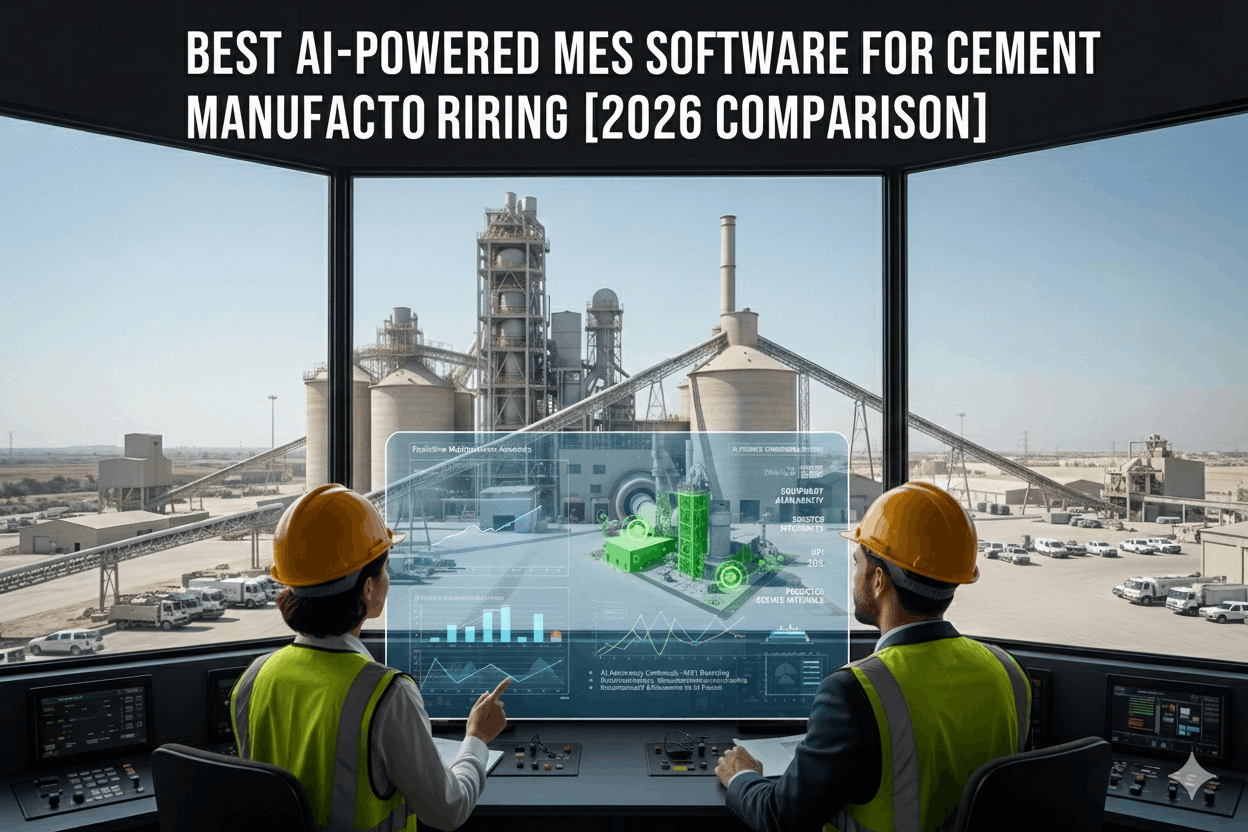
Read More
Unplanned downtime in cement plants is not just an operational inconvenience — it is a financial catastrophe that plays out in real time. A single kiln shutdown can cost anywhere from $50,000 to $300,000 per hour in lost production, emergency labo

Read More
Cement manufacturing is one of the most asset-intensive industries on the planet. Kilns, vertical roller mills, ball mills, preheaters, and clinker coolers run continuously under extreme thermal and mechanical stress — and every hour of unplanned

Read More
Cement manufacturing is one of the most asset-intensive industries on the planet. Kilns, vertical roller mills, ball mills, preheaters, and clinker coolers run continuously under extreme thermal and mechanical stress — and every hour of unplanned

Read More
Unplanned downtime in cement plants is not just an operational inconvenience — it is a financial catastrophe that plays out in real time. A single kiln shutdown can cost anywhere from $50,000 to $300,000 per hour in lost production, emergency labo

Read More
A cement plant is a complex thermochemical system where 200+ interdependent variables interact continuously — kiln burning zone temperature, raw meal chemistry, fuel calorific value, clinker cooler airflow, mill separator speed, fan damper positio

Read More
Cement manufacturing produces 8% of global CO₂ emissions — more than the entire aviation industry. A single 5,000 TPD cement plant emits 1.5–2.5 million tonnes of CO₂ per year, consumes 150–200 GWh of electricity, and burns fuel equivalent to heat

Read More
A rotary kiln is the single most expensive, most critical, and most failure-prone asset in any cement plant. When it runs, the plant makes money. When it stops — whether from refractory collapse, bearing failure, girth gear damage, or shell deform

Read More
Cement manufacturing is one of the most energy-intensive industries on earth — consuming 12–15% of global industrial energy and producing 7–8% of worldwide CO₂ emissions. Yet the operational technology driving most cement plants in 2026 still reli

Read More
In 2026, cement quality is no longer measured only at the end of the production line — it is actively managed at every stage, from raw limestone quarrying through clinker formation to final grinding and dispatch. The manufacturers pulling ahead of

Read More
When a mid-sized cement plant in South Asia reached out to iFactory in early 2024, their maintenance team was overwhelmed. Kiln shutdowns were happening unpredictably — sometimes twice a month — paper-based work orders were being lost between shif

Read More
Cement grinding is the single most energy-intensive operation in the entire production chain — consuming between 60 and 70% of a plant's total electrical demand. Yet the brutal reality buried in peer-reviewed research is that only 1 to 5% of that

Read More
Cement plants run on some of the most capital-intensive, mechanically demanding equipment in industrial manufacturing. Rotary kilns, vertical roller mills, preheater towers, and clinker coolers represent multi-million dollar investments that are e

Read More
Cement plants worldwide are sitting on a digital paradox: the industry generates massive volumes of process data — kiln temperatures, mill loads, emission readings, maintenance logs — yet 75% of cement facilities still run operations on disconnect

Read More
Energy accounts for 30–40% of total cement production costs — making it the single largest controllable expense in the industry. A mid-size cement plant spends $15–25M annually on thermal and electrical energy alone, yet most plants still operate

Read More
The EU Carbon Border Adjustment Mechanism (CBAM) enters its definitive phase on January 1, 2026 — ending the transitional reporting period and imposing real financial obligations on every tonne of cement imported into the European

Read More
The global cement industry produces over 4 billion tonnes annually — and every kiln rotation, raw mill grind, and clinker cooler cycle burns energy, generates emissions, and wears critical assets. Yet most cement plants still operate with manual

Read More
The cement manufacturing process is one of the most complex and energy-intensive industrial operations on earth — transforming raw limestone into the world's second-most consumed substance after water through a chain of precisely controlled stage

Read More
The cement industry operates some of the most punishing equipment on earth — rotary kilns exceeding 1400°C, ball mills grinding at massive torque, and conveyors running 24/7 through abrasive clinker dust. Yet most cement plants still manage maint

Read More
Cement plants are among the most equipment-intensive industrial operations on earth — running rotary kilns at 1,500°C, grinding raw materials under extreme mechanical stress, and operating conveyors through clouds of abrasive dust 24/7. Yet most

Read More
Cement plants are among the most equipment-intensive industrial operations on earth — running rotary kilns at 1,500°C, grinding raw materials under extreme mechanical stress, and operating conveyors through clouds of abrasive dust 24/7. Yet most

Read More
Every cement plant runs the same cost equation: energy is 30-40% of production cost, unplanned downtime costs $50,000-$500,000 per incident, and kiln efficiency variations of just 2-3% can swing annual profitability by millions. The math is clear

Read More
Cement production accounts for 7-8% of global CO₂ emissions and consumes massive energy across kilns, mills, and coolers. Yet only 30% of cement plants worldwide have begun implementing Industry 4.0 technologies — and most are still in early stage
Total Posts:
Proven Results
The ROI Cement Plants See With iFactory
Most cement plants see positive ROI within 3-6 months — often from preventing a single major kiln failure or from fuel savings alone.
40%
Less Unplanned Downtime
Predictive maintenance + robotics catch failures before they stop production
30%
Energy Cost Reduction
AI kiln optimization + energy monitoring cut fuel and electricity costs
85%
Safer Operations
AI vision + autonomous robots replace humans in hazardous zones
3-6
Months to Full ROI
Often from preventing one kiln failure ($300K/day) or fuel savings alone
FAQ
Frequently Asked Questions About AI for Cement Plants
Answers for cement plant engineers, operations heads, and CXOs evaluating Industry 4.0 solutions.
iFactory's AI continuously monitors kiln temperature profiles, speed, fuel flow, and oxygen levels in real-time. Machine learning models analyze thousands of data points per second to optimize burning zone temperature (1,450°C), reduce fuel consumption by 7-12%, minimize clinker variability, and predict refractory wear 72+ hours before failure. The AI recommends or auto-adjusts process parameters — saving $2,000-$5,000 per day in fuel costs alone for a typical 1 MTPA plant.
iFactory deploys AI vision cameras for: PPE compliance monitoring (hard hats, safety vests, goggles) across all plant zones, clinker quality inspection on conveyor belts (size, color, consistency), crack and wear detection on kiln shells and structural elements, dust emission monitoring at bag filters and ESPs for environmental compliance, conveyor belt misalignment detection, vehicle and personnel safety zone enforcement, and stockpile volume estimation. All detections happen in under 50ms with 99%+ accuracy, processing 24 camera streams simultaneously on-premise.
iFactory integrates autonomous quadruped robots (Boston Dynamics Spot, Unitree, ANYbotics ANYmal) for hazardous zone inspections. Robots patrol preheater towers at 800°C, kiln areas, clinker cooler walkways, and confined spaces — collecting thermal data, vibration readings, and gas measurements (CO, SO₂, NOx). They detect anomalies like hot spots, gas leaks, and equipment wear without risking human safety. All findings automatically generate work orders in the CMMS with photos, thermal images, and location data attached.
Yes. iFactory offers full on-premise deployment on NVIDIA-powered edge servers (DGX, HGX, EGX), ensuring 100% data sovereignty. All AI inference — vision processing, kiln optimization, predictive maintenance models — runs locally within your plant network with sub-10ms latency and zero cloud dependency. This is critical for cement companies in regions with strict data localization laws (GDPR, India DPDP Act, China PIPL) or those handling proprietary process recipes and energy data. Cloud deployment is also available for multi-plant management.
Cement manufacturing consumes 110-120 kWh per ton of cement. iFactory's energy intelligence tracks real-time consumption across kilns, mills, crushers, fans, and auxiliary equipment with per-motor metering. AI identifies energy waste patterns — idle equipment drawing power, sub-optimal grinding parameters, excessive fan speeds — and recommends or auto-adjusts settings. Plants typically achieve 15-30% energy cost reduction. Additionally, automated carbon reporting (CO₂ per ton) supports ESG compliance and sustainability targets.
Yes. iFactory integrates with all major systems used in cement plants — Siemens, ABB, Rockwell, Schneider SCADA/PLC through OPC-UA, MQTT, Modbus, and PROFINET connectors. ERP integration supports SAP, Oracle, and others via REST APIs. ONVIF-compatible cameras connect to the vision AI module. ROS 2 robots communicate through DDS. This means zero rip-and-replace — iFactory layers on top of your existing infrastructure and starts delivering value from day one.
Deployment timelines vary by module: Core CMMS deploys in 1-2 weeks with pre-built cement templates. AI vision cameras go operational within 3-5 days. Robot patrol routes are mapped and active within 1-2 weeks. AI kiln optimization and predictive maintenance models require 4-6 weeks of baseline data collection to calibrate. Energy monitoring begins delivering insights immediately upon sensor connection. Full platform deployment — all modules — is typically complete within 6-8 weeks. 90-day hands-on implementation support is included.
Cement plants using iFactory's full platform typically see: 40% reduction in unplanned downtime (predictive maintenance + robotics), 7-12% fuel cost reduction (AI kiln optimization), 15-30% lower energy costs (energy intelligence), 85% improvement in safety metrics (vision AI + robots in hazardous zones), and 30% longer equipment lifespan (condition-based maintenance). Most plants achieve positive ROI within 3-6 months — from fuel savings alone a typical plant recovers $876,000+ annually.
Transform Your Cement Plant
Ready to Bring AI, Vision, and Robotics to Your Cement Plant?
Join cement plants worldwide running iFactory's complete Industry 4.0 platform. Get a free plant assessment and see exactly how much downtime, energy cost, and risk you can eliminate.
No credit card required
90-day support included
On-premise or cloud