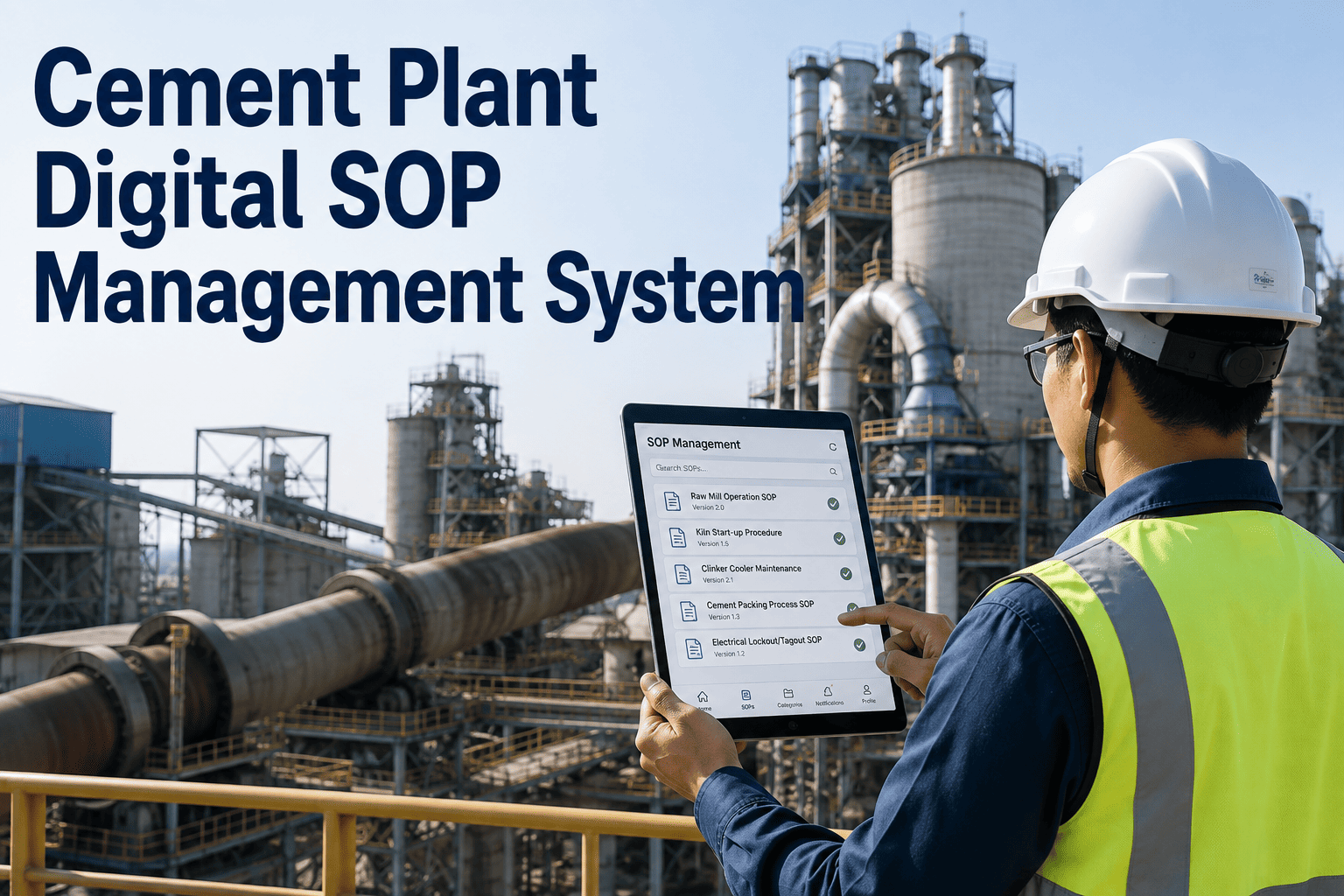
Cement manufacturing remains one of the most high-risk industrial sectors, where the intersection of heavy machinery, extreme temperatures, and airborne particulates demands more than just traditional compliance — it requires Prescriptive Safety Intelligence. From quarry operations to clinker grinding, a digital Health, Safety, and Environment (HSE) approach is reshaping how plants protect their workforce and maintain operational continuity. Without a data-driven safety strategy cement producers face accelerating insurance premiums, regulatory penalties, and the catastrophic human cost of avoidable incidents. This guide delivers actionable insight into how iFactory's digital HSE solutions are transforming cement plant safety from reactive reporting into proactive, evidence-based hazard prevention. Book a demo to see these safety benchmarks in action.
Is Your Safety Strategy Predictive or Reactive?
Unify incident reporting, permit-to-work systems, and real-time hazard monitoring into one intelligent platform designed for the high-risk cement industry.
Why Digital Safety Management is Redefining Cement Industry Standards
The management of cement plant safety has always been complex, but in 2026, the delta between "safe" and "compliant" is bridged by real-time data. Managing a multi-acre facility with paper-based inspection logs and manual permit approvals creates dangerous lag times that can lead to fatalities. Modern digital HSE platforms bridge this gap by aggregating data from wearable sensors, area monitors, mobile inspection apps, and digital Permit-to-Work (PTW) modules into a single, unified safety intelligence layer. When safety managers schedule a roadmap audit, they often discover that their "safe" sites actually have high frequencies of near-misses that went undocumented.
Digital Permit-to-Work (PTW)
Eliminate paper-based friction in high-risk zones like kilns and pre-heater towers. Ensure 100% LOTO (Lock-Out Tag-Out) compliance with automated verification and geofenced approval workflows.
Real-Time Hazard Monitoring
Deploy fixed and portable gas detectors and dust sensors integrated with the central safety dashboard. Receive instant alerts when silica or CO levels exceed safety thresholds in confined spaces.
Mobile Safety Audits & BBS
Enable field supervisors to conduct Behavior-Based Safety (BBS) observations and technical audits using mobile devices, with instant photo evidence and automated corrective action tracking.
Automated Incident Reporting
Capture near-misses and incidents in real-time. Use AI-driven root cause analysis (RCA) to identify systemic risks and prevent recurrence across the entire corporate portfolio.
The Foundation of iFactory Safety: Unified Compliance Modules
A cement plant safety solution must be as rugged as the environment it monitors. iFactory's modular safety architecture allows plants to start with digital reporting and scale to AI-driven hazard prediction. Facility directors who book a demo consistently report that unifying their HSE records into one dashboard is the single biggest factor in achieving "Zero Harm" targets.
| Analytics Module | Primary Function | Cement Plant Application | Safety Benefit | Priority Level |
|---|---|---|---|---|
| PTW Management | Workflow & LOTO control | Kiln maintenance & hot work | Prevents accidental startups | Critical |
| Incident Tracker | Reporting & RCA | Crusher/Conveyor accidents | Identifies risk patterns | Critical |
| Confined Space | Entry monitoring | Silo & Cooler inspections | Prevents asphyxiation/trapping | High |
| Dust Compliance | IAQ & silica tracking | Baghouse & Grinding areas | Protects long-term lung health | High |
| BBS Analytics | Safe behavior tracking | Quarry & Loading zones | Builds safety culture | Standard |
— Regional EHS Director, Global Cement Group
5 Phases to a "Zero-Harm" Digital Cement Plant
HSE Baseline & Digitization
Audit current safety protocols and migrate all paper checklists, incident forms, and training records into the digital safety registry.
Digital Permit-to-Work Activation
Deploy the digital PTW module for high-risk maintenance. Integrate LOTO verification to ensure no energized work happens without multi-stage approval.
Environmental & Confined Space Sensors
Install wireless gas and dust monitors in high-risk zones. Connect sensor data to the safety dashboard for real-time hazard visualization.
Safety Copilot & Predictive RCA
Activate AI tools to analyze near-miss data and predict hazard hotspots. Automate corrective action notifications to area leads.
Autonomous Compliance Governance
Establish real-time safety KPIs for all site personnel. Leverage historical data to reduce insurance premiums and ensure 100% audit readiness.
Critical Challenges in Cement Plant Safety Management
Waiting for physical signatures for hot-work permits causes maintenance delays and encourages "short-cutting" of critical safety steps.
High-friction reporting processes mean only "major" incidents are logged, leaving safety teams blind to the minor signs of a pending catastrophe.
Lock-Out Tag-Out procedures managed in spreadsheets lead to "lock confusion" during multi-contractor shutdowns, a primary cause of injuries.
Relying on periodic lab samples for silica exposure instead of real-time monitoring leaves workers at risk for long-term health complications.
Audit quality varies widely by supervisor. Without digital standardized forms, safety data is subjective and non-comparable across sites.
Preparing for regulatory audits takes weeks of manual file retrieval, creating risk during unannounced government safety inspections.
Cement Plant Safety Management — Frequently Asked Questions
Can digital Permit-to-Work (PTW) function in remote quarry areas?
Yes. iFactory's mobile safety apps include an "Offline Mode" that syncs once the supervisor returns to a Wi-Fi or cellular zone, ensuring quarry safety is never compromised by connectivity issues.
How does the platform prevent accidental kiln startup during maintenance?
The digital PTW is linked to our LOTO module. The permit cannot be "closed" until all digital locks are released and verified, preventing energized equipment from starting while personnel are inside.
Is the platform compatible with our existing safety management system?
Yes. We use a vendor-neutral API architecture to ingest data from existing ERPs, HR systems (for training records), and fixed gas detection hardware.
Does the AI-driven Incident Tracker help with OSHA compliance?
Absolutely. The platform automatically formats incident data for OSHA 300, 300A, and 301 logs, reducing the administrative burden while ensuring 100% reporting accuracy.
What is the typical time-to-value for a digital HSE rollout?
Most cement plants achieve a "Clean Data" baseline within 4 weeks and see a measurable reduction in near-misses and permit wait-times within the first 90 days.
How does it help with dust exposure (silica) management?
We integrate real-time dust monitors with a geofenced safety map. If silica levels rise above PEL (Permissible Exposure Limit), the system pings area leads and flags the zone on the dashboard.
Can we manage contractor safety through this platform?
Yes. iFactory includes a dedicated Contractor Portal for pre-qualification, induction tracking, and permit requests, ensuring external teams follow the same rigorous safety standards as full-time staff.
Does it support Behavior-Based Safety (BBS) observations?
Yes. Supervisors can conduct 3-minute BBS observations on their mobile phones, allowing the safety team to identify safe/unsafe behavior trends before an injury occurs.
Modernize Your Cement Plant Safety Program Today
Deploy a unified safety platform that integrates digital permits, incident tracking, and real-time hazard monitoring — built for industrial heavyweights.