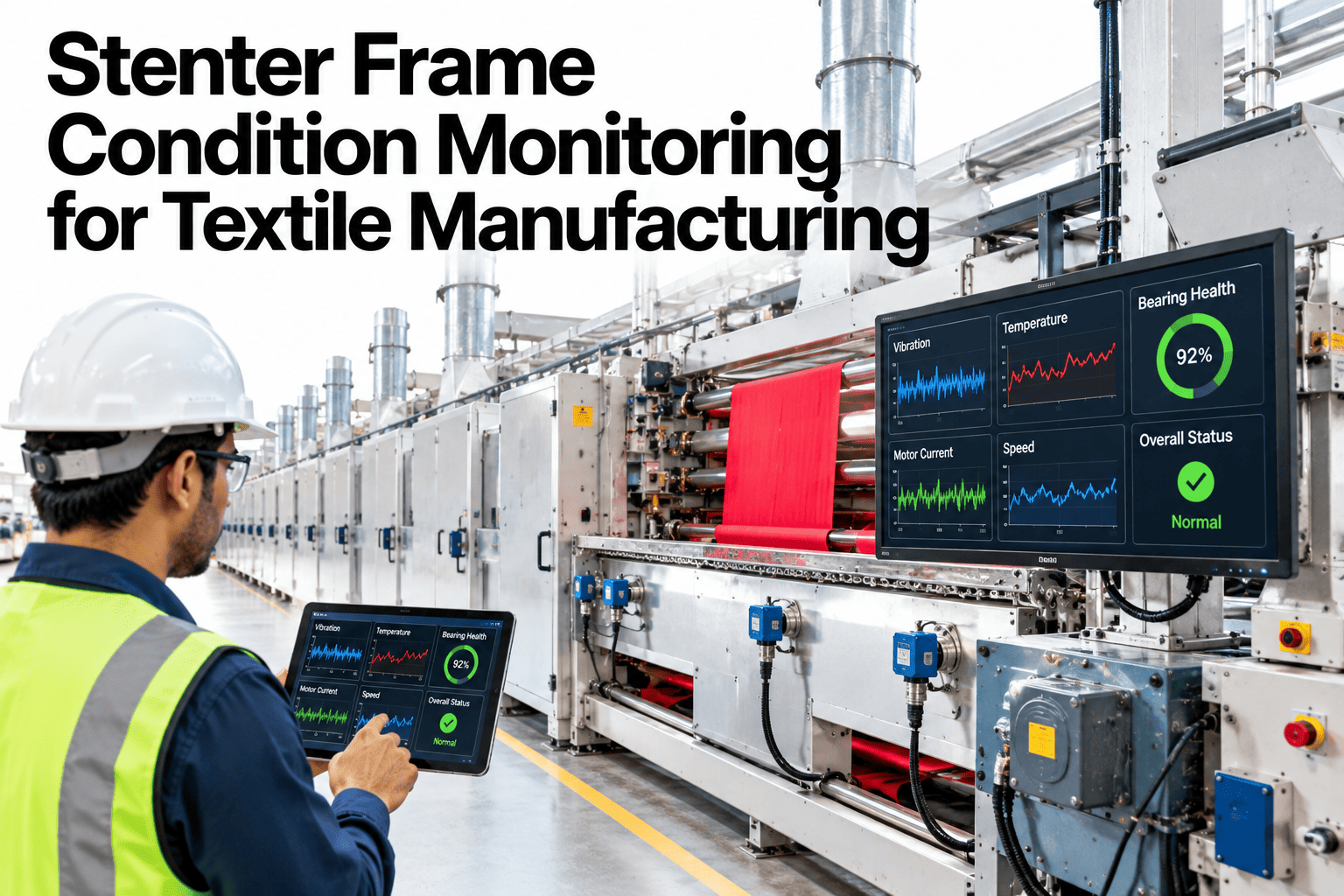
A stenter frame failure rarely happens without warning, it happens without anyone watching the right signal. Chain wear, clip damage and zone temperature drift all build up gradually over weeks of running, and by the time a fabric defect or an unp
AI-Powered
Textile-Specific
Textile Manufacturing Maintenance Software
The global textile market exceeds $1.1 trillion — yet mills lose up to 15% of productive capacity to unplanned downtime. iFactory's AI-powered CMMS predicts spindle, loom, and dyeing line failures before they happen — turning reactive chaos into planned reliability.
45% Less Downtime
30% Cost Cut
100% OSHA Ready
Textile Mill Operations Dashboard
● Live
91.4%OEE
187Active WOs
4Alerts
98.1%Uptime
Production Departments
5/6 Running
SpinningRunning
WeavingRunning
Dyeing #2PM Active
AI Alerts
4 New
Ring Frame #12 Spindle Vibration ↑ 24%Bearing replace in 36 hrs
Rapier Loom #8 Tension Drift ↑ 15%Fabric defect risk 48 hrs
Stenter Frame PM DoneAll checks passed
The Textile Mill Crisis
The Downtime Chain Reaction Unraveling Your Margins
A single spindle failure cascades across your entire production floor — from fiber to finished fabric. Global fiber production hit 132 million tonnes in 2024, yet mills still struggle with preventable downtime that destroys profitability.
Textile Mill Failure Chain
Critical Path Analysis
Spindle Failure
No WarningYarn Break Cascade
Quality LossLoom Stoppage
Line DownEmergency Repair
3-5x CostSpindle Failure
No WarningYarn Break Cascade
Quality LossLoom Stoppage
Full Line DownEmergency Repair
3-5x Cost
This cycle repeats — compounding losses daily across spinning, weaving & finishing
$50K+
Per hour downtime
15%
Capacity lost
93B m³
Water used/year
20%
Industrial wastewater
1T kWh
Energy per year
$170K
OSHA penalty max
Textile-Specific Solutions
What Textile Mills Actually Need
Every pain point above has a solution. From spinning to finishing, here's what modern textile manufacturers require to protect margins and maximize fabric quality.
Predictive Maintenance for Textile Machinery
AI monitors spindle vibration, loom tension, and bearing temperature across spinning frames, looms, and knitting machines — predicting failures 48+ hours before they happen.
- Spindle & bearing degradation tracking
- Loom shuttle & rapier wear prediction
- Auto work order with parts & procedures
OSHA 1910.262 Compliance Automation
Digital LOTO procedures, machine guarding inspections, cotton dust monitoring, noise exposure tracking, and chemical hazard communication — all timestamped and audit-ready.
- Shuttle guard & machine guard checklists
- Cotton dust (1910.1043) tracking
- One-click audit packages
AI Fabric Defect Detection
Computer vision cameras inspect fabric in real-time on looms and finishing lines — catching weave defects, yarn breaks, and color variations that human inspectors miss.
- Real-time warp & weft defect detection
- Color consistency monitoring
- Auto quality grade assignment
Water & Chemical Consumption Tracking
Textile mills consume ~93 billion m³ water annually and account for 20% of industrial wastewater. Track water per kg of fabric, chemical usage, and effluent compliance.
- Liters per kg fabric tracking
- ZDHC MRSL chemical compliance
- Effluent BOD/COD monitoring
Energy Monitoring & Optimization
Textile production consumes approximately one trillion kWh of electricity globally per year. Track kWh per meter of fabric and cut energy costs by up to 20%.
- kWh per meter/kg tracking
- Steam & boiler efficiency dashboards
- Carbon emission reporting
Digital SOPs & Workforce Training
Textile mills face severe labor shortages. Capture tribal knowledge of veteran loom fixers and spinners — train new operators 3x faster with digital SOPs and video guides.
- Machine-specific video SOPs
- Multi-language support
- Skill tracking & certification
Platform Deep Dive
See iFactory in Action — Textile Edition
Purpose-built dashboards for every department in your textile mill — from spinning floor to finishing line.
Feature 01
Spinning Department Intelligence
Monitor every ring frame, roving frame, and open-end spinning machine in real-time. AI tracks spindle vibration, drafting roller wear, and traveller condition — predicting failures with 95% accuracy. Reduce yarn breaks by 30% and maintain consistent Ne count quality.
Spindle Monitoring
Vibration & temperature tracking
Drafting System
Roller wear prediction
Yarn Quality
Ne count & Uster consistency
Yarn Break Analytics
Root cause per spindle
30% Fewer Yarn Breaks
95% Prediction Accuracy
Spinning Department Monitor● Live
1,248Active Spindles
12Alerts
98.6%Efficiency
AI Spindle Health Map
RF1
RF2
RF3
RF4
RF5
RF6
RF7
RF8
Healthy Warning Critical
RF6: Spindle #42 bearing temp ↑ 38°CReplace Now
RF3: Drafting roller wear 78%Schedule PM
Feature 02
OSHA 1910.262 Textile Compliance
Textile mills face unique OSHA standards — from shuttle guards and loom fixer lockouts to cotton dust exposure limits and noise monitoring. iFactory digitizes every compliance requirement with pre-built templates for NAICS 313-314 textile operations.
LOTO (1910.147)
Loom fixer lockout procedures
Machine Guarding
Shuttle & nip point guards
Cotton Dust
1910.1043 exposure tracking
Noise (1910.95)
115dB+ weave room monitoring
Zero OSHA Citations
2-Day Audit Prep
Textile OSHA Compliance100%
LOTO (1910.147)
Compliant ✔
Textile (1910.262)
Compliant ✔
Cotton Dust
Compliant ✔
Noise (1910.95)
Compliant ✔
Recent Audit Trail
LOTO #312 — Rapier Loom #14e-signed ✔
Cotton Dust — Blow Roombelow PEL ✔
Noise Survey — Weaving DeptPPE logged ✔
Feature 03
Real-Time OEE & Production Tracking
Track availability, performance, and quality across every spinning frame, loom, and finishing line. iFactory integrates with SCADA/PLC to auto-capture meters produced, picks per minute, and defect counts. Identify the Six Big Losses and benchmark departments against world-class textile standards.
SCADA Integration
Siemens, Allen-Bradley, ABB
Pareto Analysis
Rank losses by impact
Dept Benchmarking
Spinning vs. weaving vs. finishing
Yield Tracking
Meters/kg per shift
91%+ OEE Achieved
Real-Time Data
Textile Mill OEE↑ 14%
91.4%OEE
96.2%Availability
96.8%Performance
98.1%Quality
Top Losses — This ShiftPareto
Feature 04
Dyeing & Finishing Process Control
Wet processing uses 80-150 liters of water per kg of fabric and accounts for 70% of textile pollution. iFactory monitors jet dyeing temperatures, chemical dosing, stenter frame settings, and effluent discharge — ensuring batch-to-batch color consistency while optimizing water and chemical consumption.
Dye Bath Monitoring
Temp, pH, liquor ratio
Water Tracking
Liters per kg of fabric
Chemical Dosing
ZDHC MRSL compliance
Stenter Control
Width, temp, speed tracking
30% Less Water
Right-First-Time Dyeing
Dyeing Process DashboardBatch #4721
92°CTemp
6.8pH
1:8Liquor Ratio
94%Exhaustion
Water & Chemical Usage
Water
124 L/kg
Chemical
380 g/kg
Energy
3.2 kWh/kg
Effluent BOD: 28 mg/L — within discharge limits ✔
Why iFactory
Purpose-Built for Textile Manufacturing Excellence
Unlike generic CMMS solutions, iFactory is engineered for the high-speed machinery, fiber dust, chemical environments, and continuous operations that define textile manufacturing.
AI for Textile Machinery
Purpose-trained ML models for spinning frames, looms, knitting machines, stenter frames, and jet dyeing systems. Models that understand textile-specific failure patterns like spindle vibration, warp tension drift, and needle wear.
- Textile-specific failure libraries
- Remaining useful life calculation
- Prescriptive repair recommendations
45% less downtime48hr+ warning
Water & Sustainability
Textile production contributes ~20% of global industrial wastewater. Track water consumption per kg, monitor effluent quality, and generate ESG-ready sustainability reports. Support ZDHC compliance and zero-discharge goals.
- Water per kg fabric dashboards
- Effluent BOD/COD tracking
- ZDHC & OEKO-TEX compliance
30% less waterESG ready
Spare Parts Intelligence
Textile mills carry thousands of critical spares — spindles, travellers, needles, shuttles, heddles, and reed wires. AI-driven inventory optimization ensures parts are in stock when needed — no emergency procurement at 3-5x markup.
- AI-optimized stock levels
- Auto reorder with PO generation
- Parts linked to WOs & machines
40% less stockoutsAuto reorder
Textile OSHA Compliance
Pre-built compliance templates for NAICS 313/314 textile operations. LOTO procedures, shuttle guard inspections, cotton dust (1910.1043) monitoring, noise surveys (115dB+ weave rooms), and chemical hazard tracking.
- 1910.262 textile-specific templates
- Cotton dust PEL monitoring
- Auto-escalation for overdue items
Zero citations2-day prep
100% Offline Capable
Textile mill floors are dusty, noisy environments with fiber particulate, chemical fumes, and spotty WiFi. iFactory works fully offline on iOS, Android, and rugged tablets — zero data loss guaranteed.
- Full functionality offline
- Auto-sync when connected
- Rugged device support
Zero data lossAny device
Energy & Emission Tracking
Globally, textile production consumes around one trillion kWh of electricity annually. Track energy per meter of fabric, optimize spinning motor efficiency, monitor boiler systems, and generate carbon footprint reports.
- kWh per meter/kg tracking
- Boiler & steam efficiency
- Carbon emission dashboards
20% energy savedESG ready
Equipment Coverage
Every Textile Machine — One Platform
iFactory covers every piece of critical equipment across spinning, weaving, knitting, dyeing, printing, and finishing departments.
Ring Spinning Frames
Spindles, drafting, travellersOpen-End Spinning
Rotors, combing rollersAir-Jet & Rapier Looms
Reed, heddles, shuttlesCircular Knitting
Needles, sinkers, cylindersWarp Knitting
Compound needles, guide barsJet Dyeing Machines
Pumps, valves, heat exchangersStenter Frames
Chains, clips, heat zonesPrinting Lines
Rotary, flat bed, digitalWarping & Sizing
Creels, beams, size boxBlow Room & Carding
Openers, cleaners, cardsBoilers & Steam
Burners, safety valves, pipesETP / Water Treatment
Pumps, filters, dosingLatest Posts

Read More
A finishing line running at a comfortable-looking speed can still be losing a third of its potential output, and the reason rarely shows up in a single number. OEE on a finishing line breaks down into three distinct losses: time lost to stops, spe
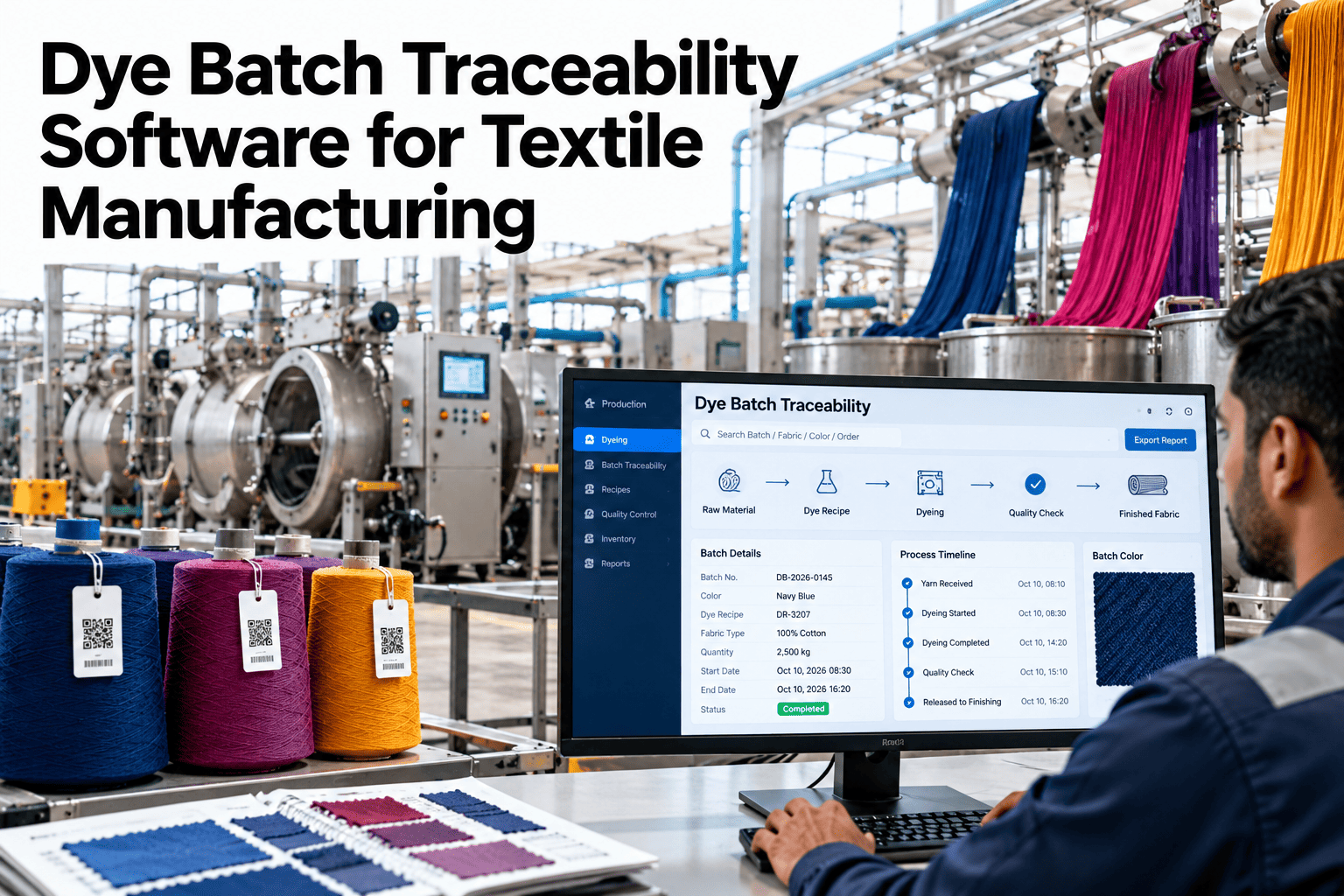
Read More
When a customer rejects a shipment for shade variation, the question that decides how fast the mill can respond is simple to ask and often hard to answer: which machine ran this batch, which chemical lot went into it, and what recipe was used. Wit
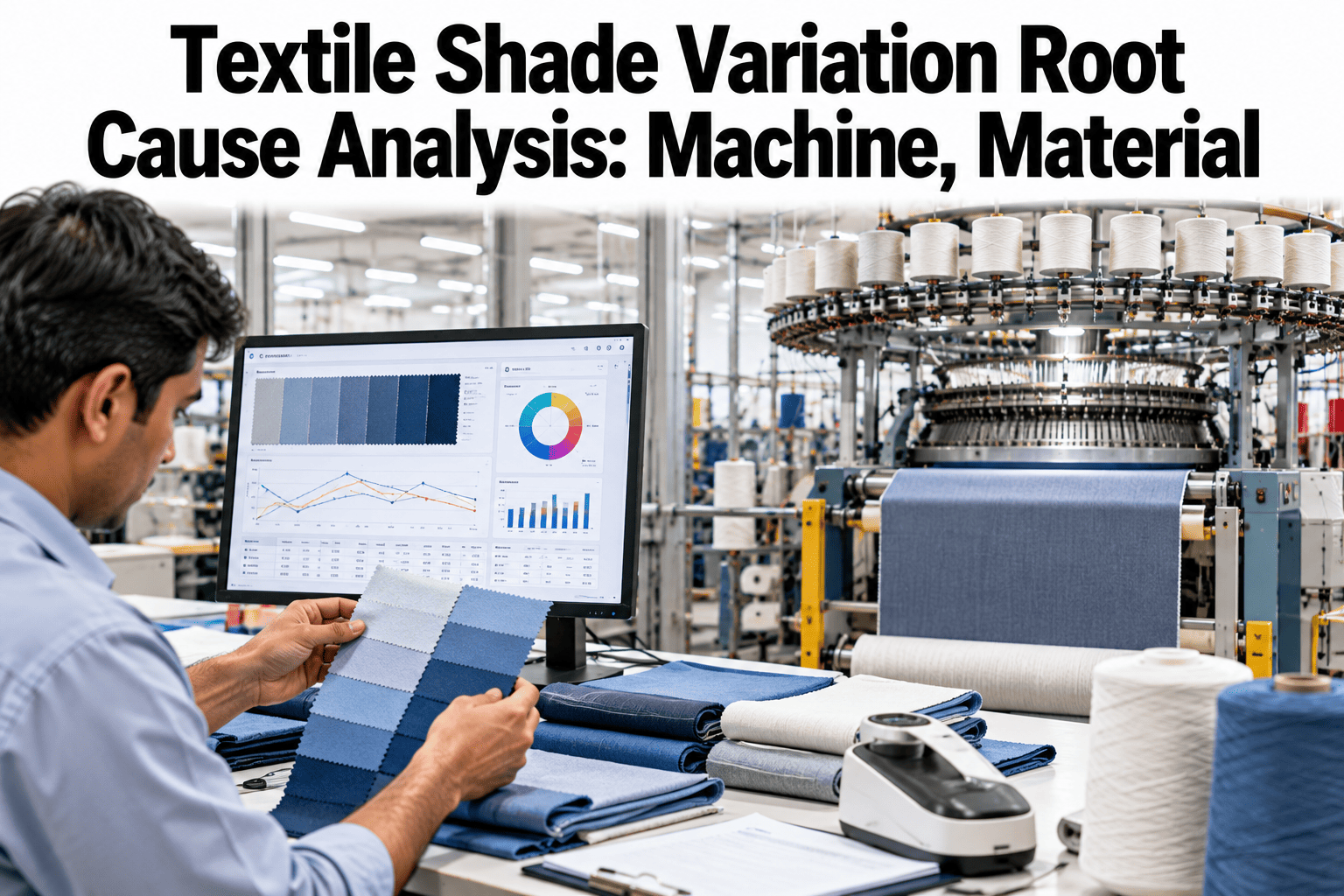
Read More
Shade variation between rolls, or between a sample and the bulk production run, is one of the most common rejection causes in textile dyeing, and also one of the hardest to pin down after the fact. The cause could sit in the machine, in how the re
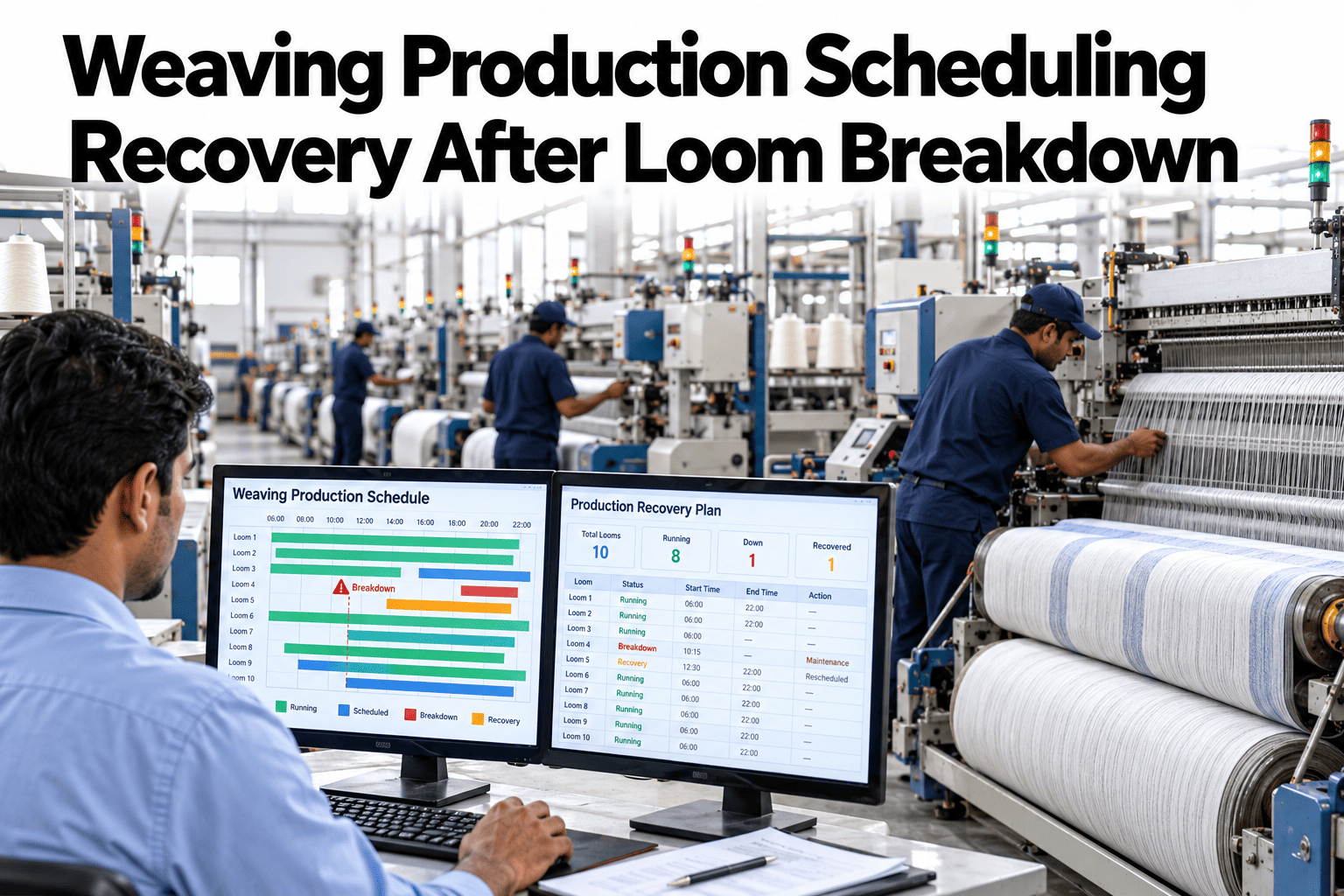
Read More
A loom breakdown does more damage to a weaving schedule than the repair time itself suggests, because the real cost shows up downstream: the orders queued behind that loom, the beam changes delayed, and the knock-on effect across shifts that nobod
Read More
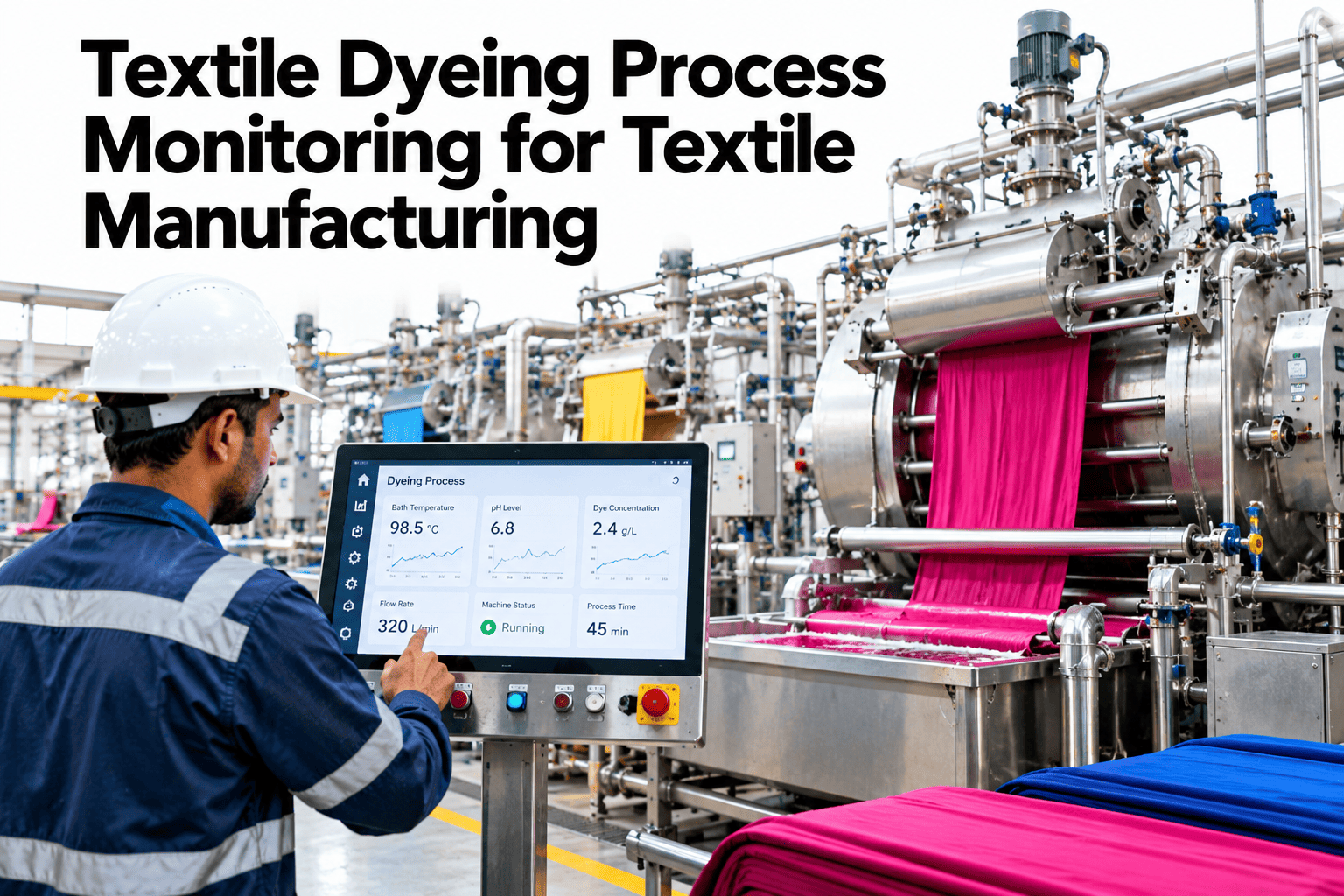
A dyeing batch that goes wrong rarely fails all at once. It drifts: a temperature ramp that runs a few degrees fast, a pH reading that wanders outside the recipe band, a chemical dosing step logged slightly late. Any one of these alone might not r
Read More
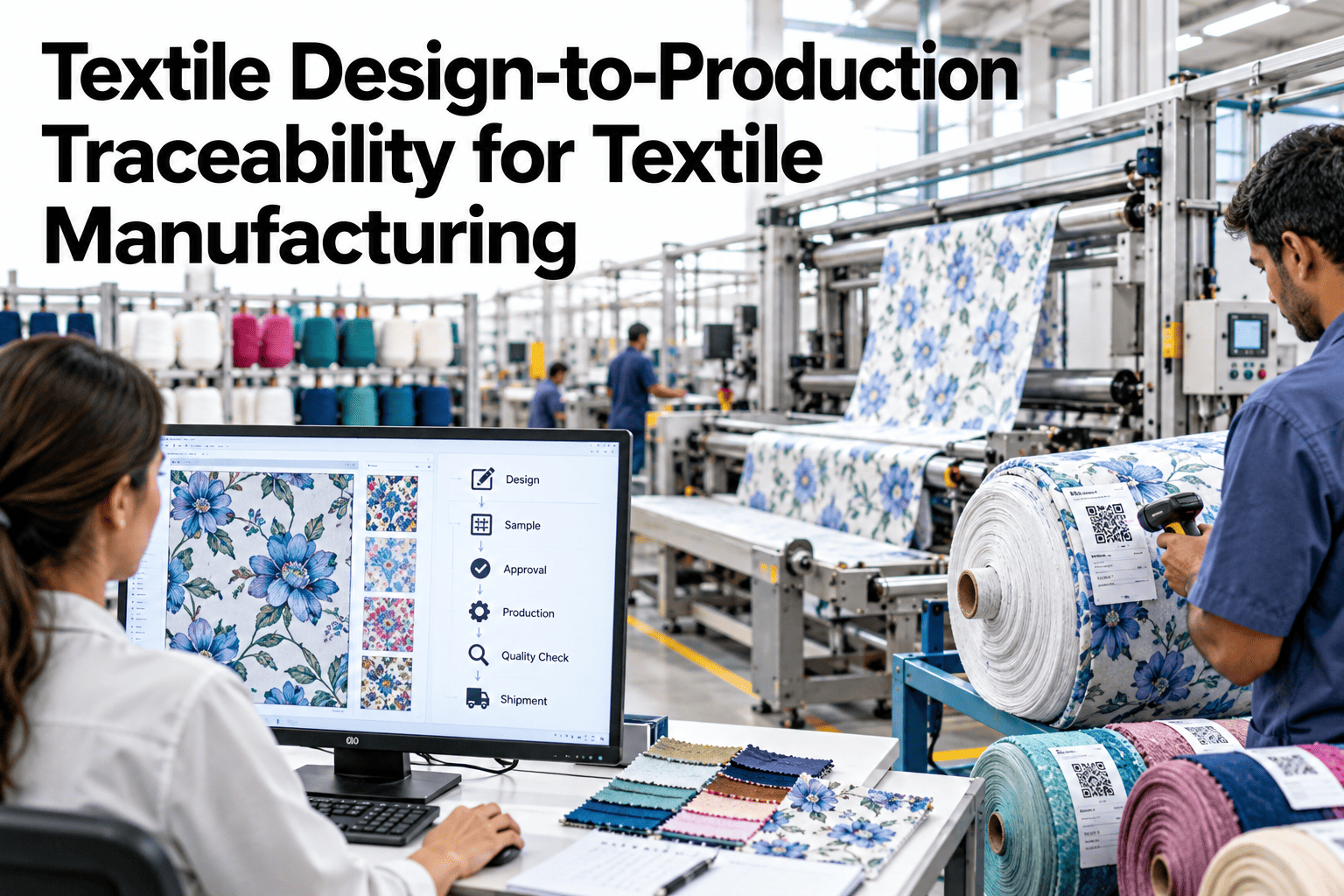
When a quality issue shows up on a finished garment, the first question is always the same, which decision back in development actually caused it. Was it a fabric substitution during sampling, a pattern grading change nobody flagged, or a spec det

Read More
Drafting a new pattern from scratch is one of the most skill-dependent steps in the entire development process, and it is also one of the slowest, often taking a pattern maker a full day or more just to get a first draft ready for grading. Most ne

Read More
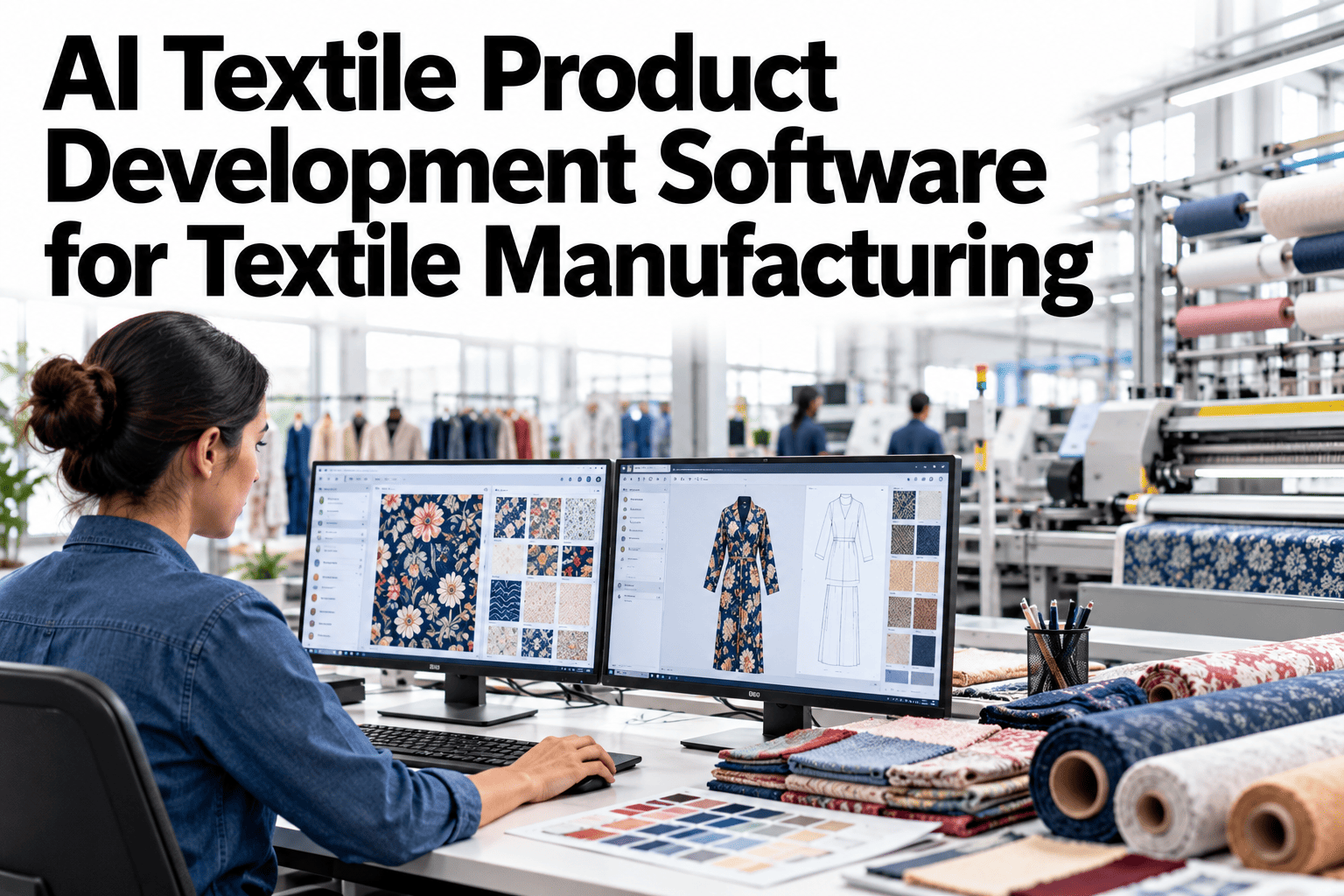
A single style can move through four or five sample rounds before it is approved for production, and each round means a new set of comments, a new fit note, and a new version of the spec sheet circulating somewhere. Without a central record of eve
Read More
A new style idea rarely moves in a straight line from sketch to sample. It bounces between design, pattern, sourcing, and sample room, often over email threads and spreadsheet trackers that nobody fully trusts by the third revision. Each handoff a
Read More
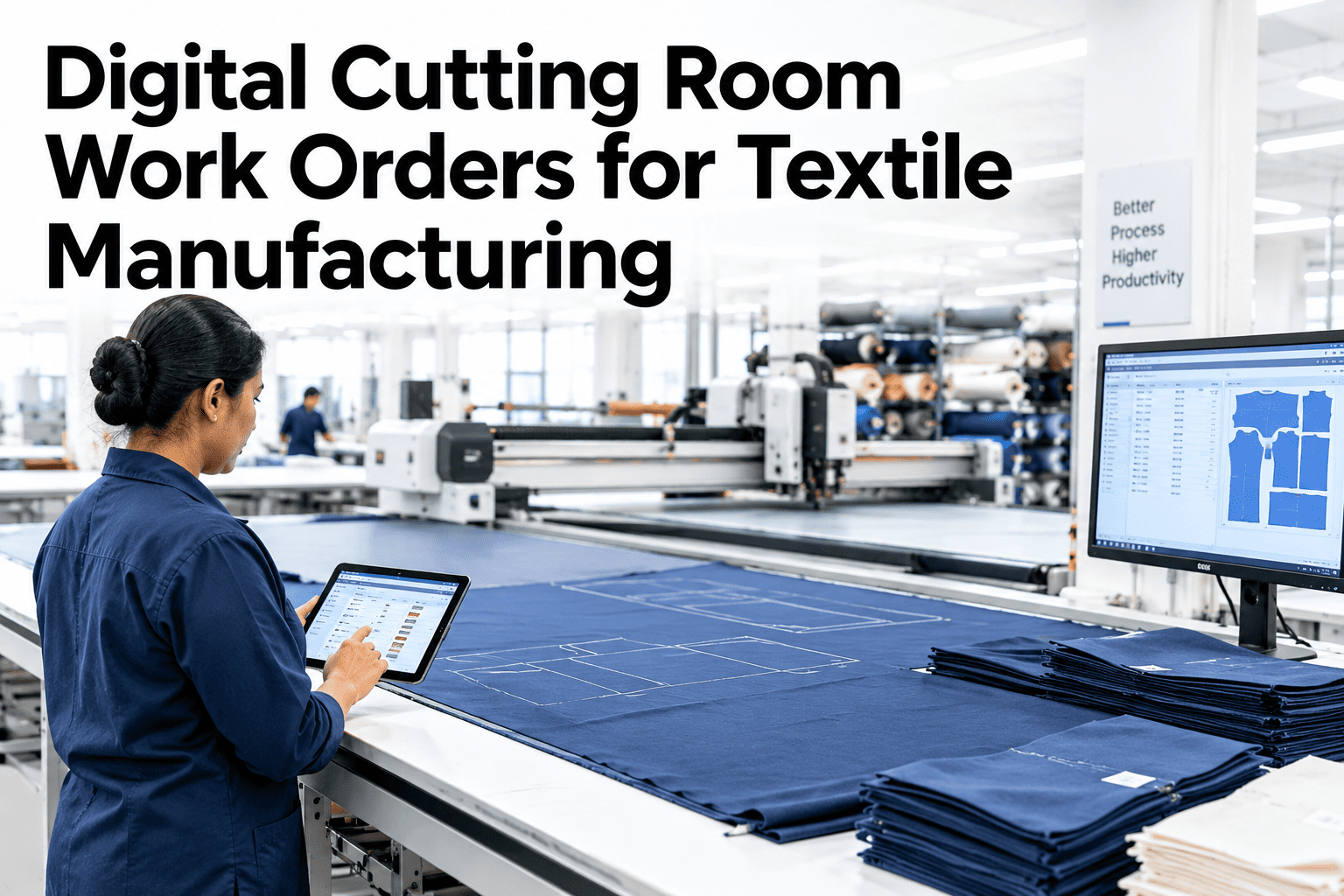
A paper work order traveling through a cutting room picks up delays the moment it leaves the planning office, waiting in a tray for the next available spreader, getting hand-copied onto a second sheet for the cutter, and occasionally going missing
Read More
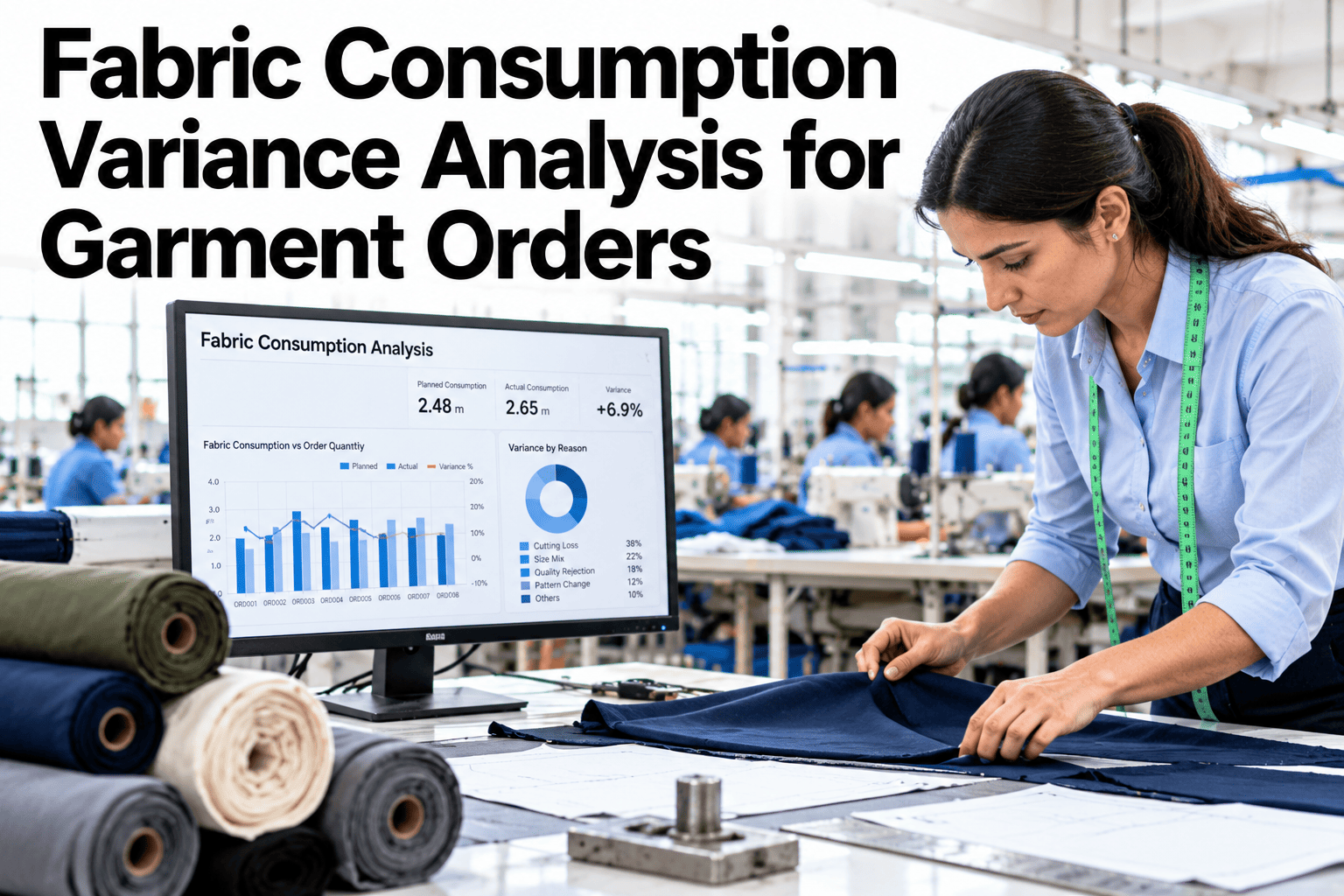
Every garment order starts with a planned fabric consumption figure, calculated from the marker and order quantity before a single roll is cut. What actually gets consumed almost never matches that figure exactly, and the gap between planned and a

Read More
Most cutting rooms track one number closely, the overall waste percentage, and stop there. That single figure tells a planner whether the month was good or bad, but it says nothing about why. A spreader running slightly off-tension, a marker built

Read More
A quality escape is a defect that gets past every check and reaches the customer. It is rarely one big failure. It is usually a small gap, such as a sample that missed the bad section, a grade that was argued down or a rework roll shipped without
Read More
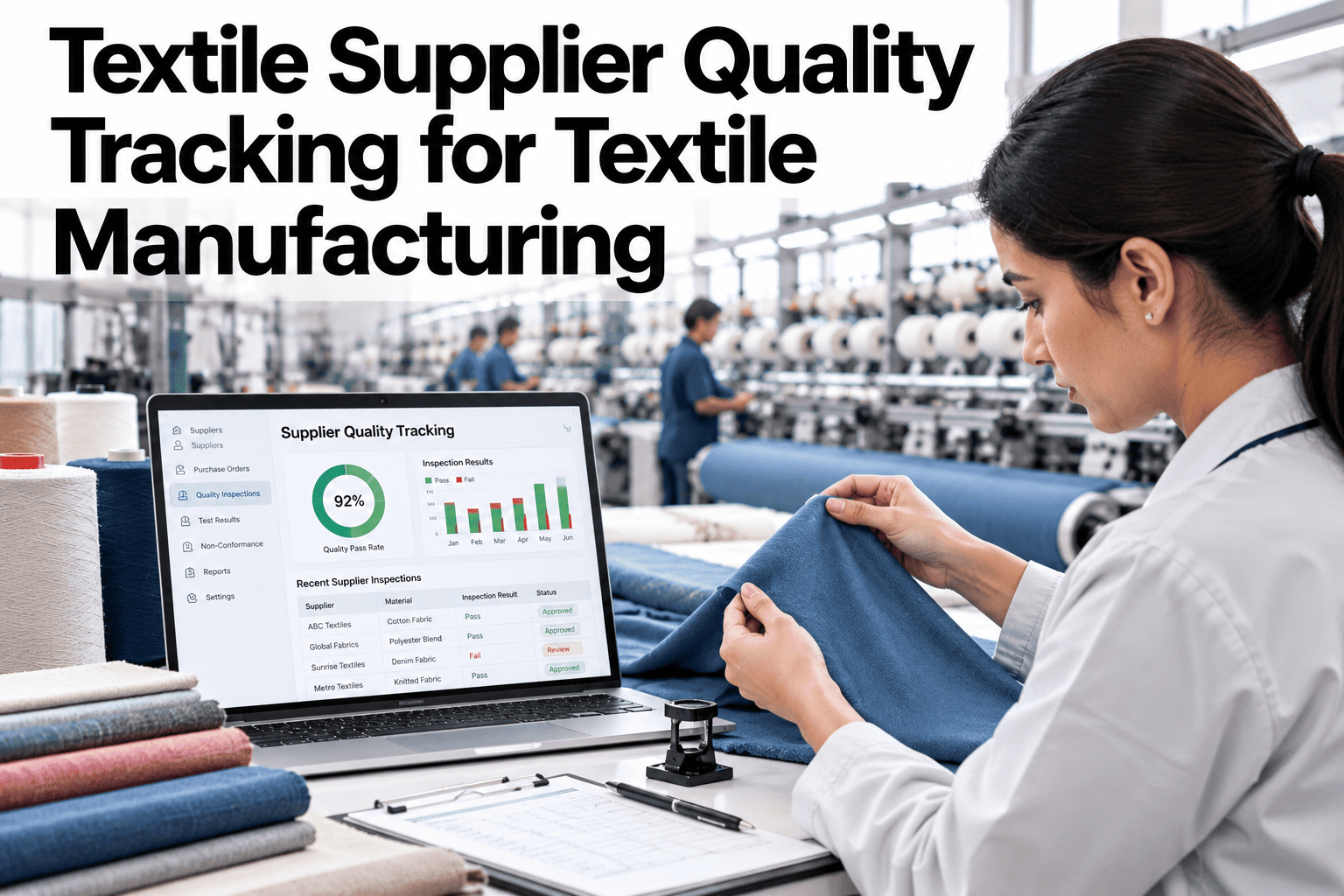
A fabric problem often starts before the fabric exists. A yarn lot with uneven count, a dye with a shifted strength or a greige delivery that arrives out of specification will show up in your product long after the supplier has invoiced. Tracking
Read More
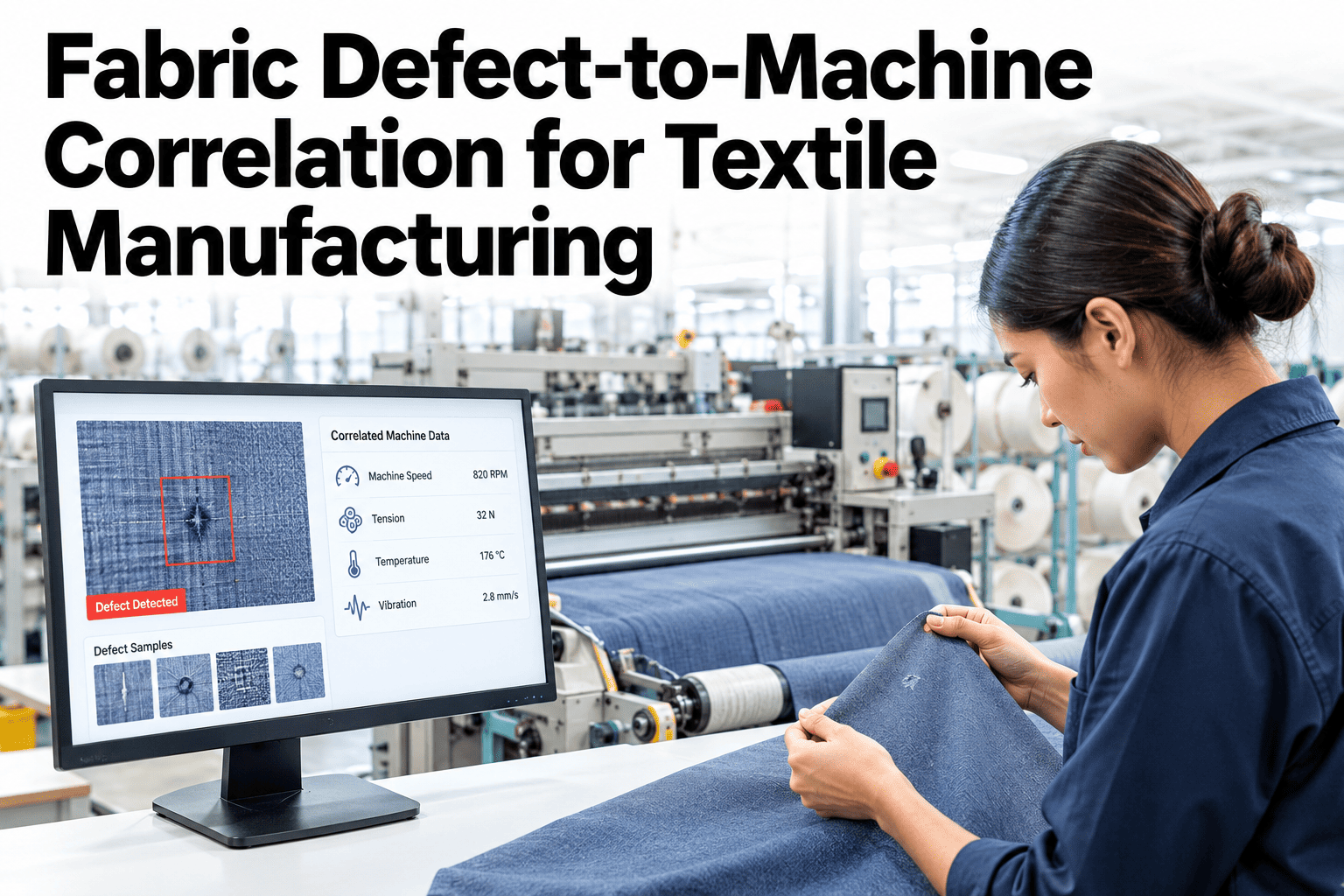
A fabric defect that appears once is bad luck. One that returns every few metres, or on every roll from the same beam, is a machine telling you something. The difficulty is that the defect is found at inspection while the cause sits several proces

Read More
Every roll inspected twice is a roll paid for twice. Reinspection feels safe, but it usually hides a deeper problem, such as grading that varies by inspector, results that cannot be trusted or defects that appear after earlier checks. Cutting it s
Read More
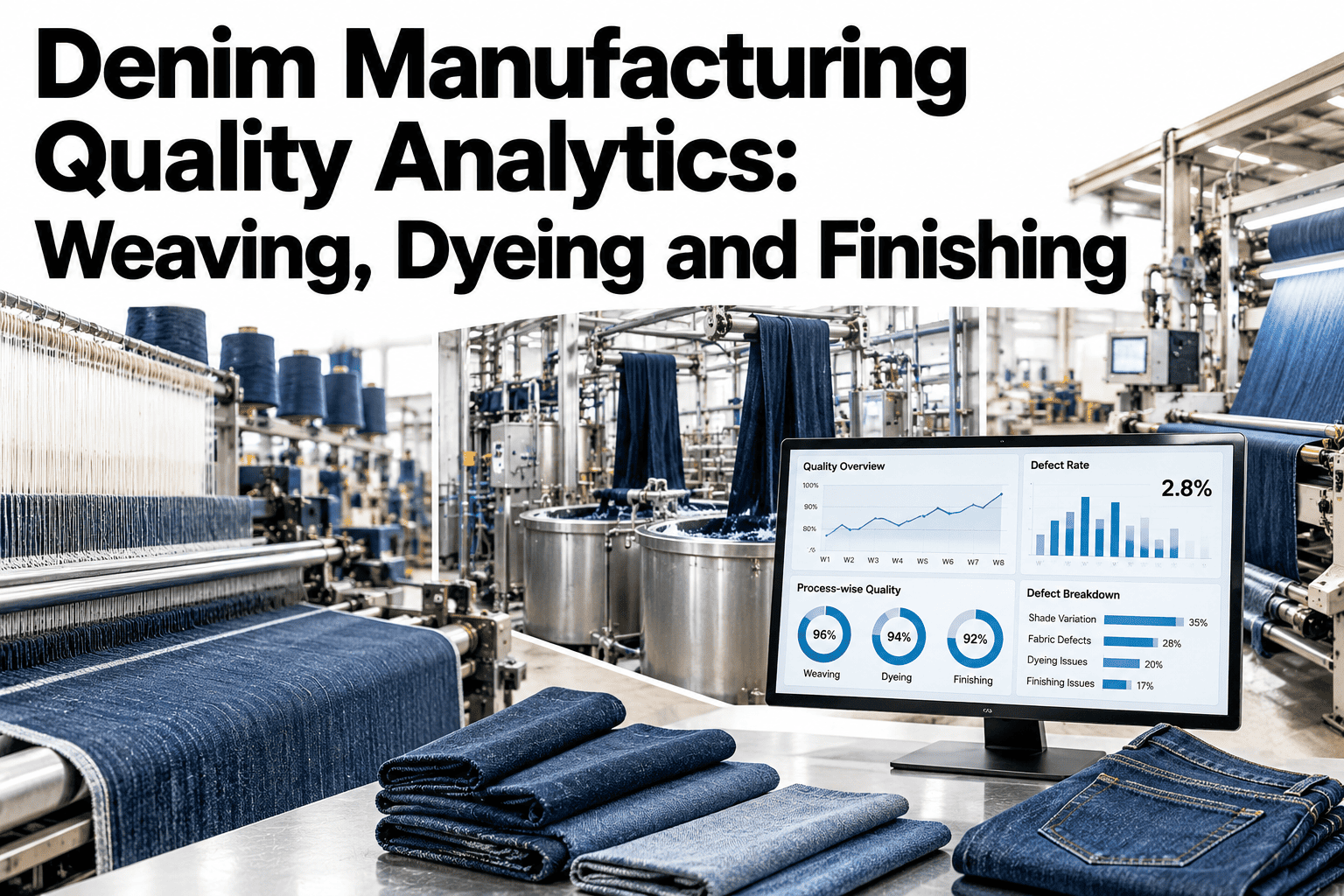
Denim hides very little. A faint shade shift between two rolls, a slightly different shrinkage or a twist in the leg seam becomes obvious the moment garments are cut and washed. The trouble is that the causes sit far apart, in warp preparation, in
Read More
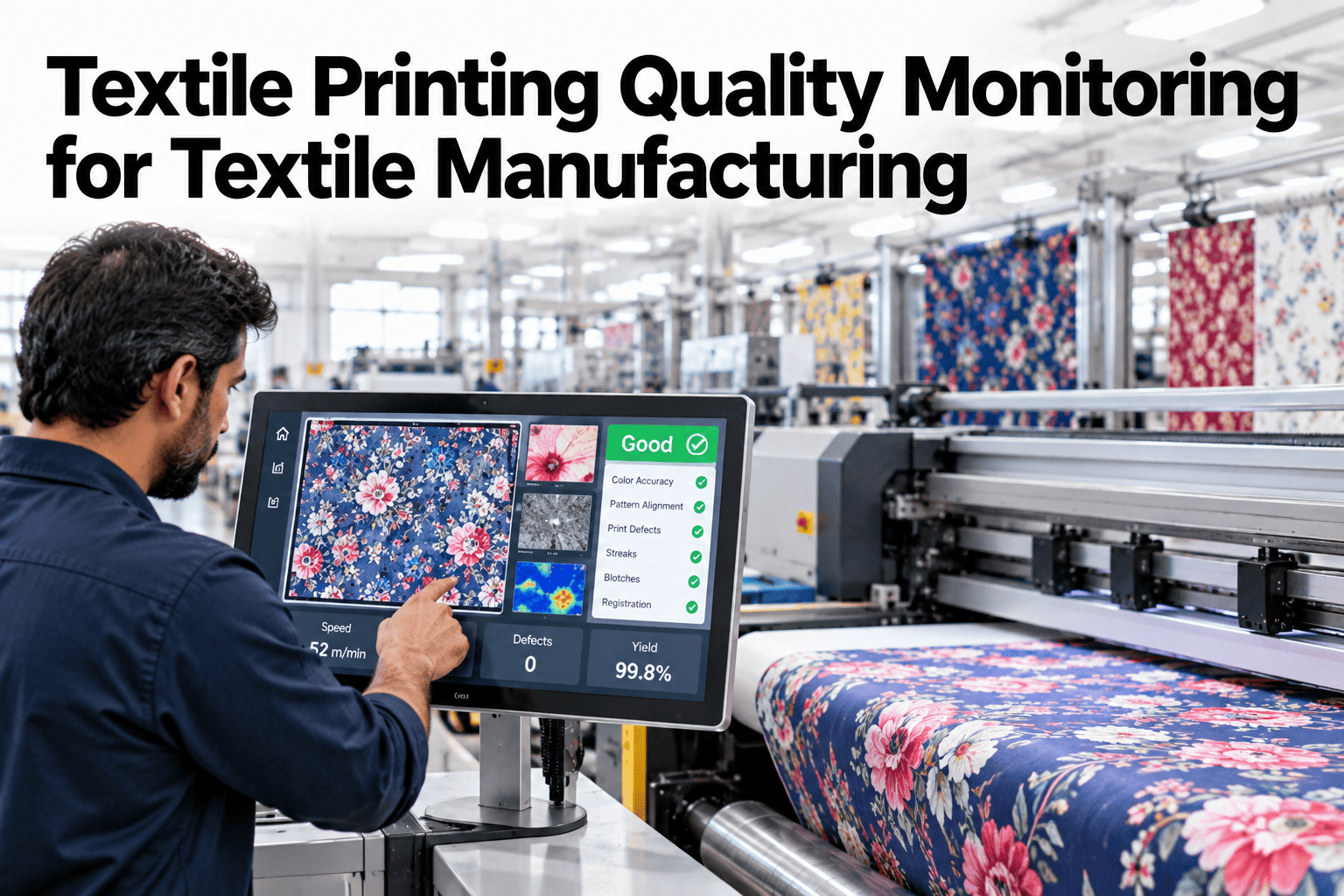
Print quality is unforgiving. A pattern that is a fraction out of register, a colour a shade away from the approved reference or a streak that repeats every metre is visible to everyone, and it usually only shows once metres of cloth have already
Read More
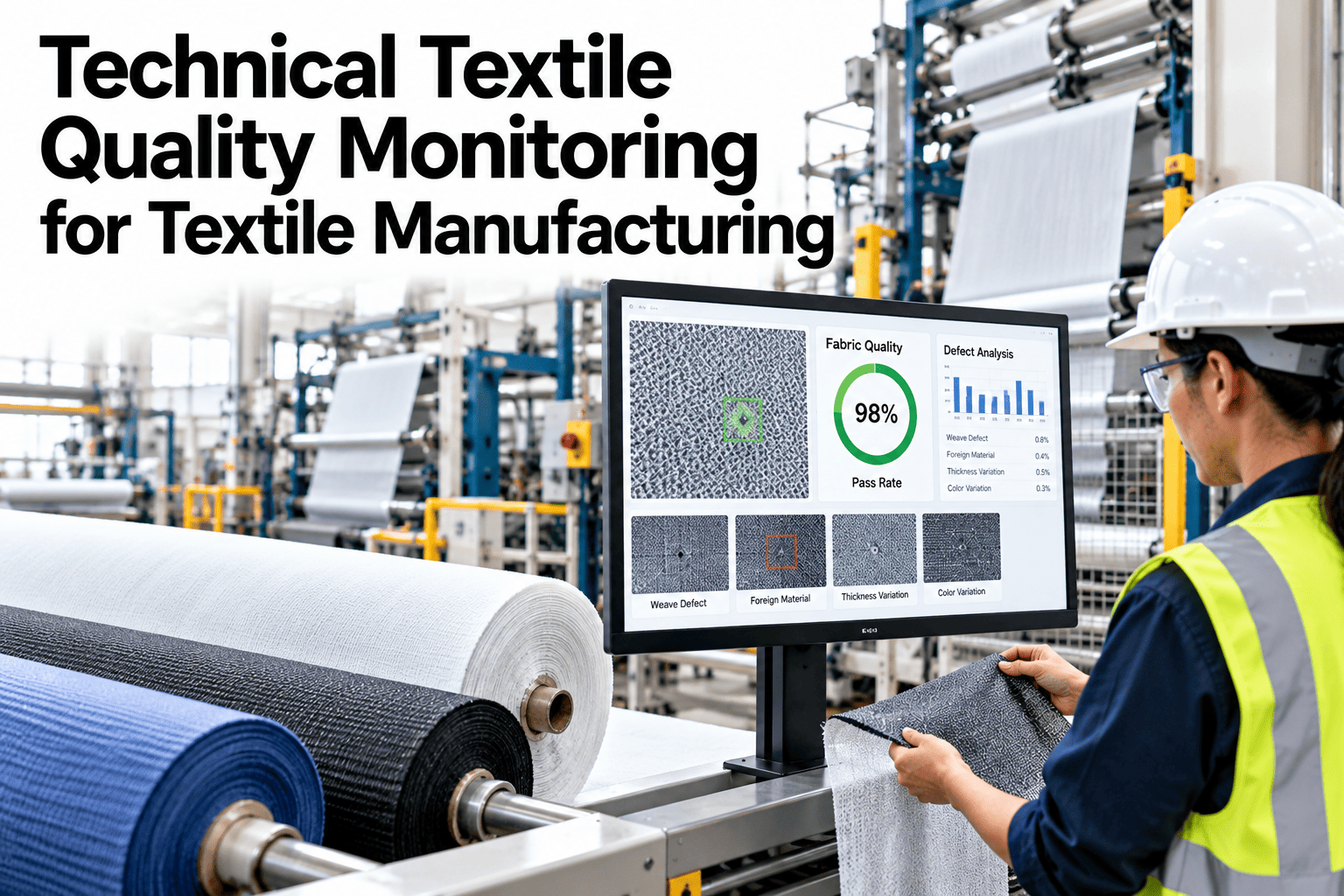
A technical textile is bought for what it does, not how it looks. A geotextile has to hold soil, a medical fabric has to stay clean and a filter cloth has to pass the right amount of fluid, so a defect is a performance failure rather than a cosmet

Read More
A towel that sheds lint or a sheet that shrinks in the first wash does not just earn a return. It costs the brand a customer, and the retailer a lot of goodwill. Home textile quality is decided across many small steps, from yarn and weaving throug
Read More
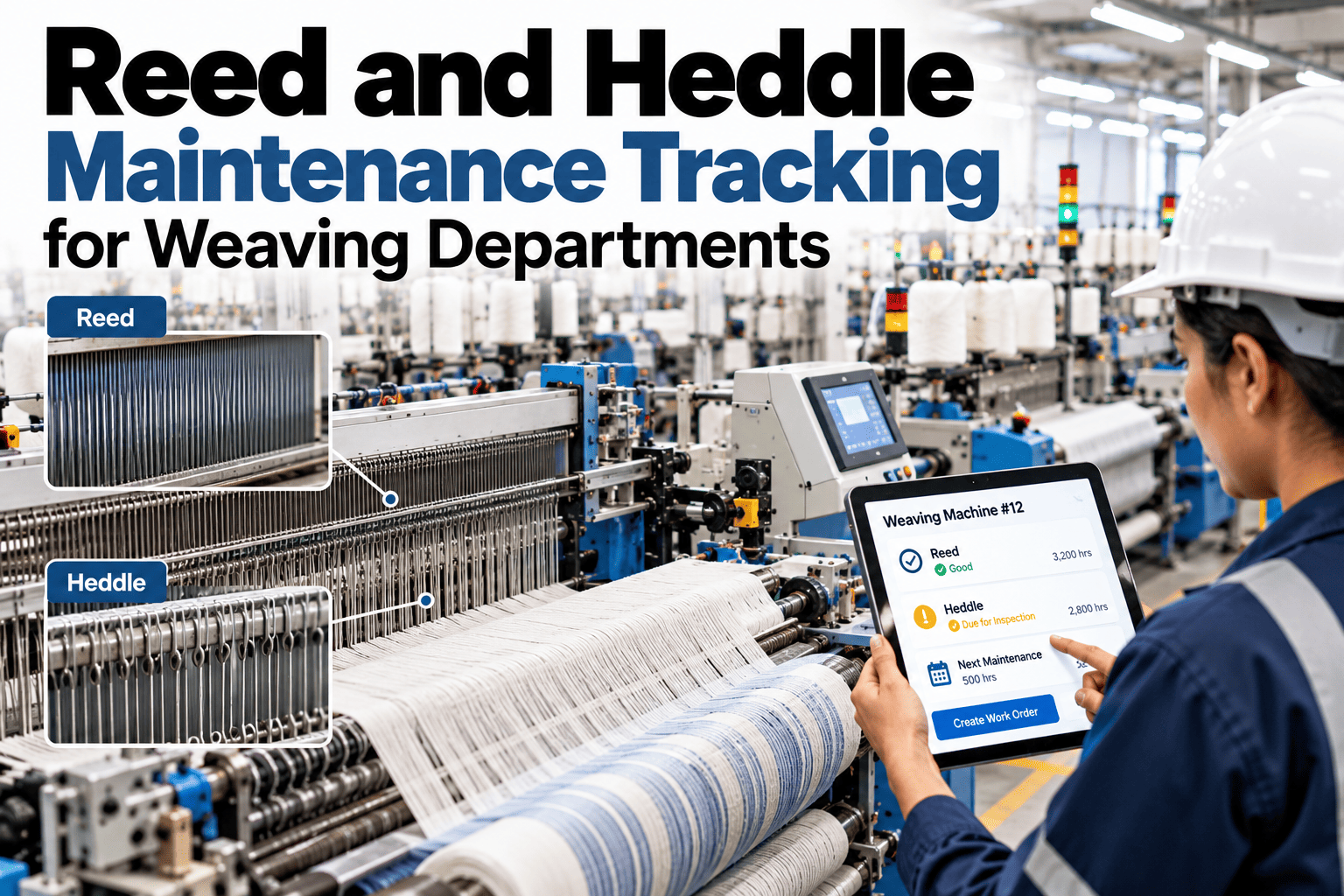
Reeds and heddles wear out quietly. A bent dent or a worn heddle eye barely changes how a loom runs, yet it chafes warp ends, raises breaks and leaves reed marks that show in the finished cloth. Because they are small, cheap and numerous, most she
Read More
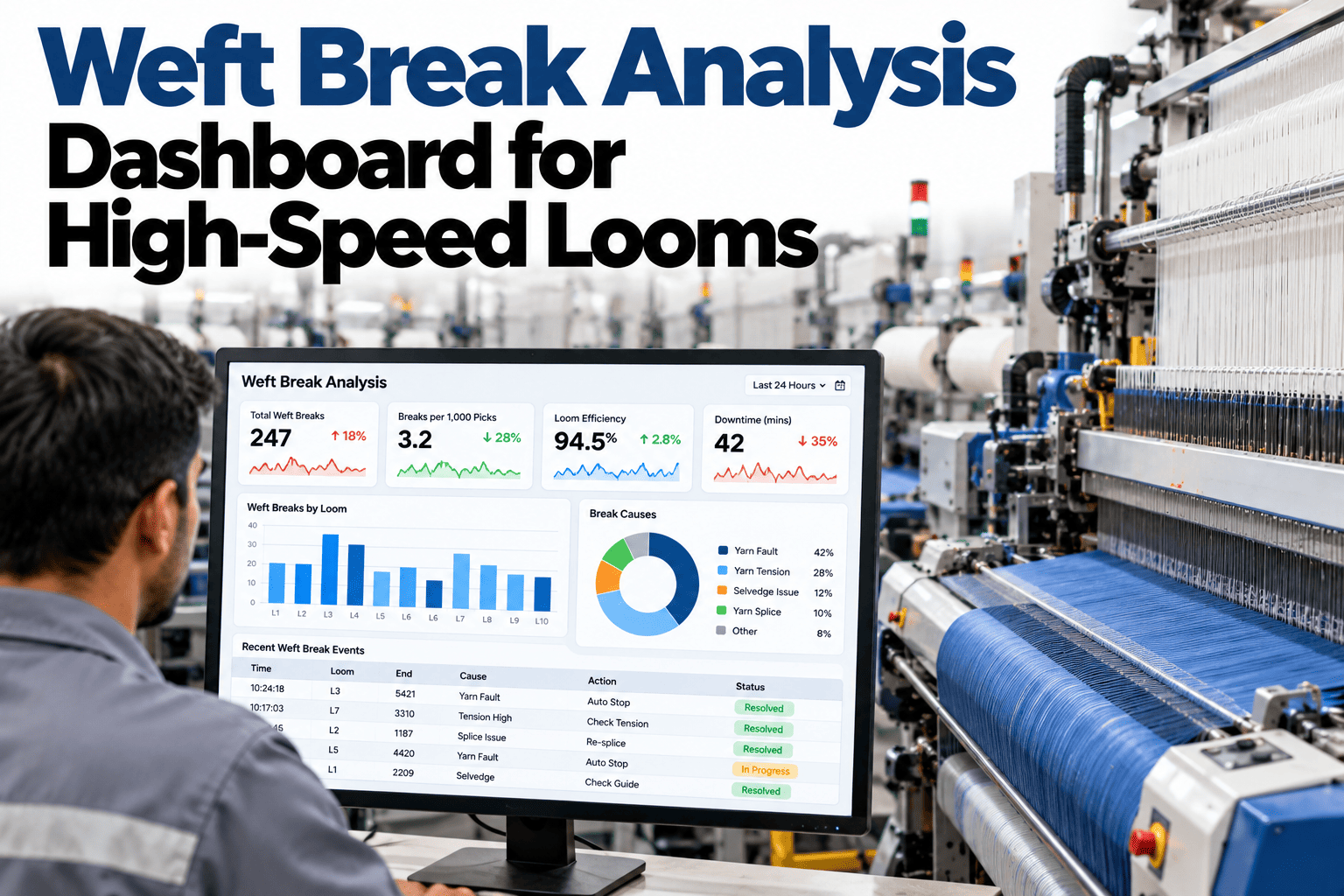
On a high-speed loom, a weft break costs only a few minutes, which is exactly why it gets underestimated. Multiply those minutes across hundreds of looms and several shifts and weft stops become one of the largest drains on efficiency in the shed.
Read More
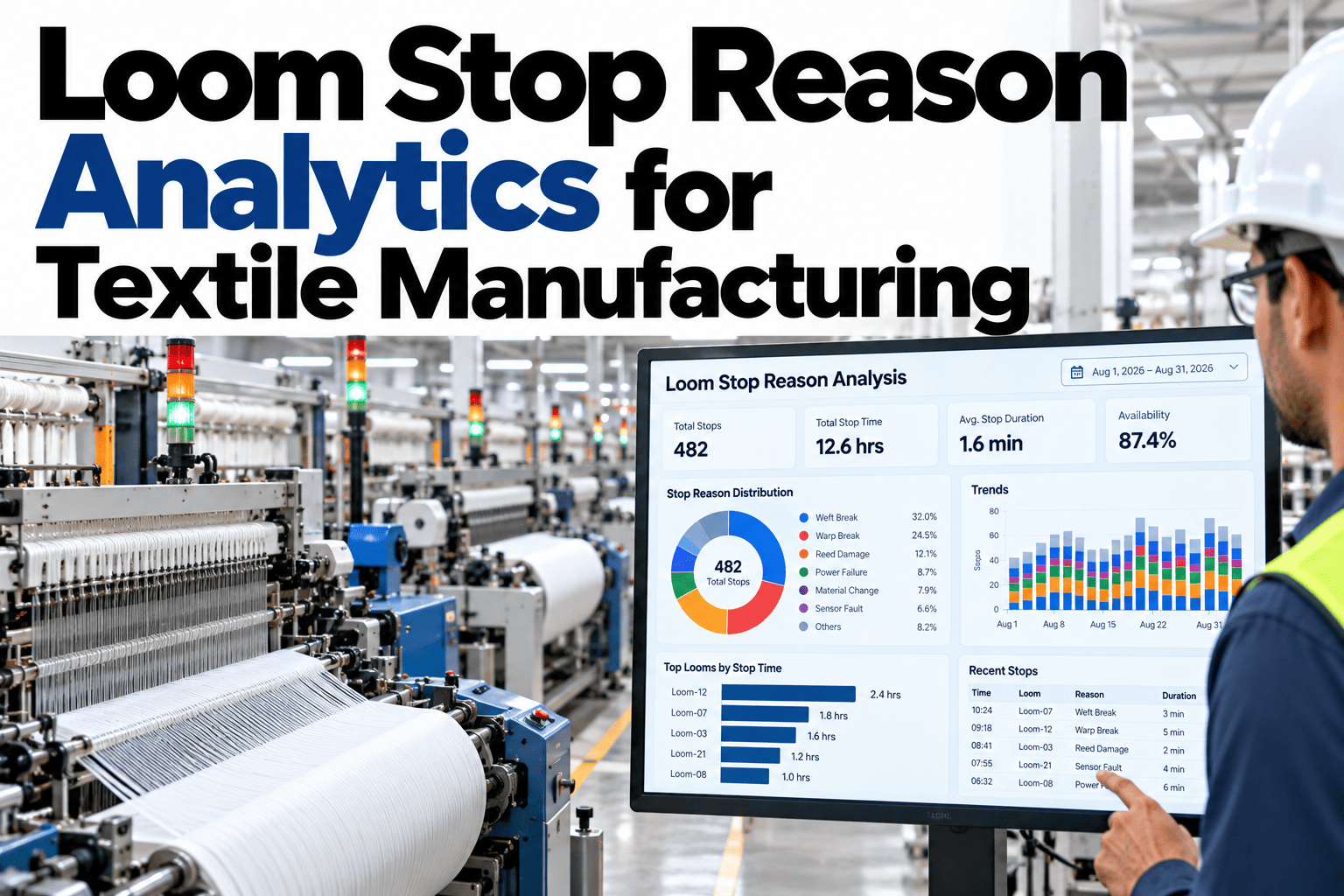
Every weaving shed knows its looms stop, but far fewer know why. Stops get logged as other, unknown or whatever the weaver pressed first, and the data that should guide improvement turns into noise. Stop reason analytics fixes the source by sortin
Read More
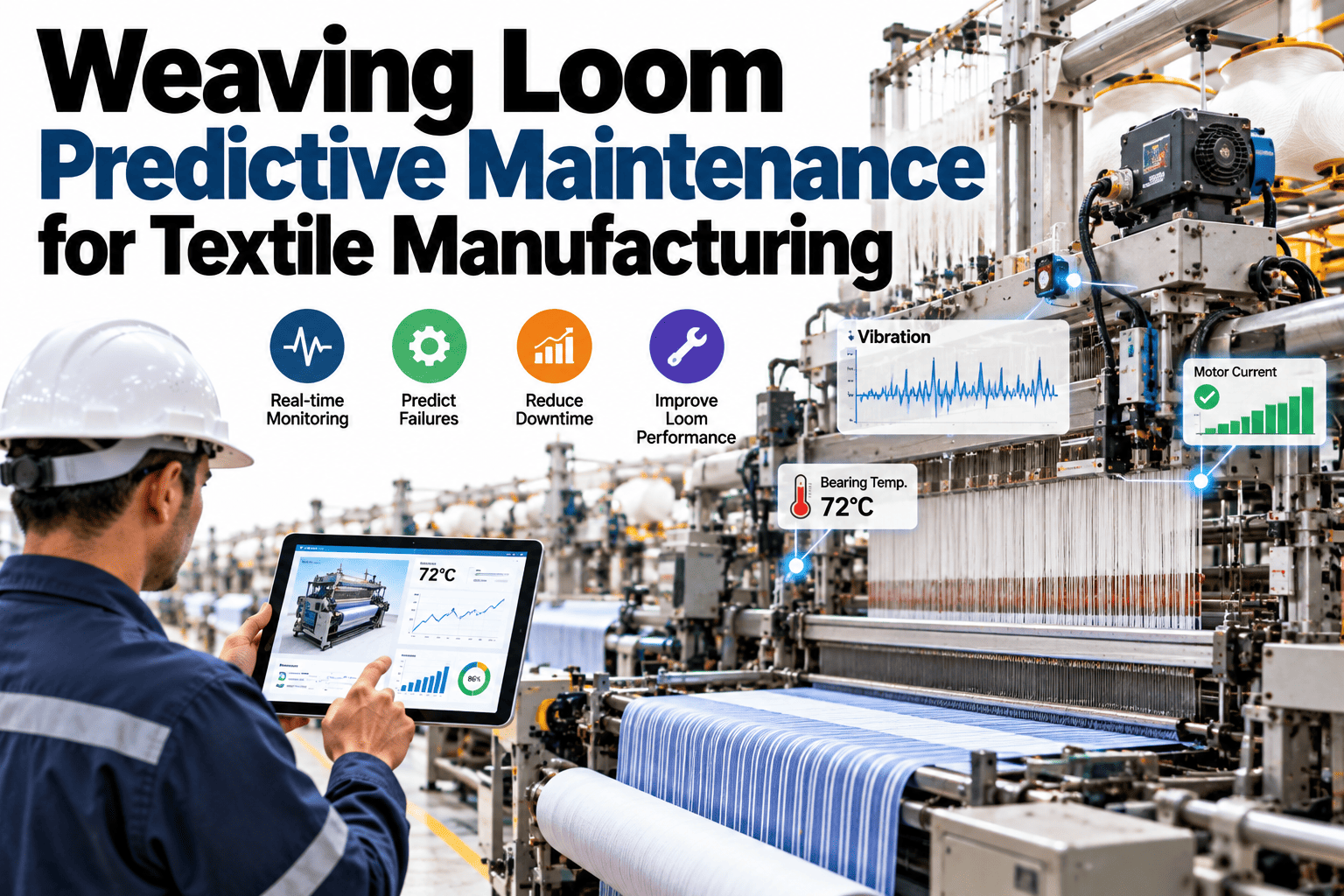
A loom rarely fails without warning, but the warning is easy to miss when it is a slightly warmer bearing, a creeping rise in stops or a vibration nobody measures. Predictive maintenance listens for those early signs and schedules the repair befor
Read More
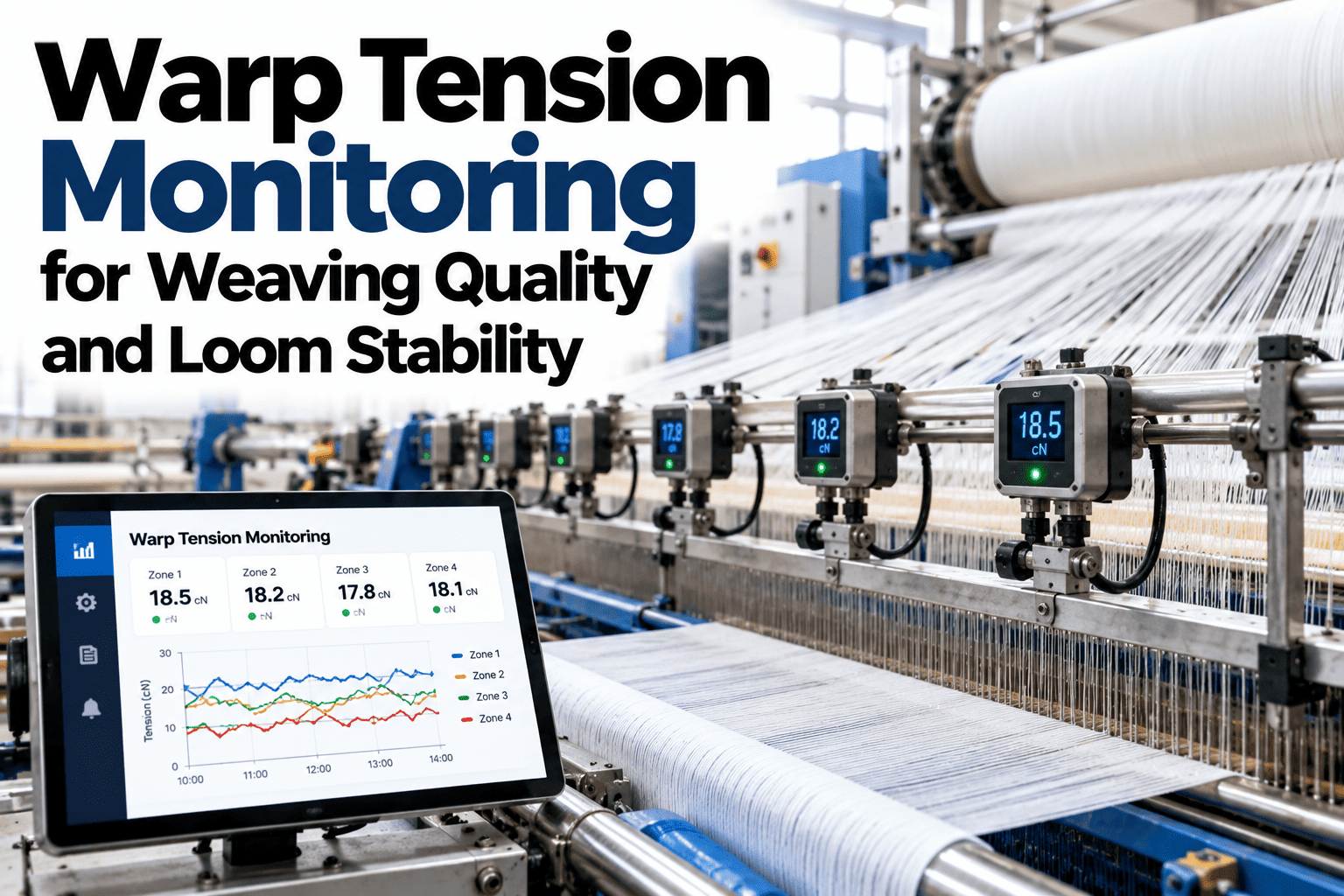
Ask a weaver what ruins a good warp and tension comes up almost every time. Too tight and ends snap, too loose and the shed turns untidy, and uneven tension leaves streaks that only appear once the cloth is off the loom. The trouble is that tensio
Read More
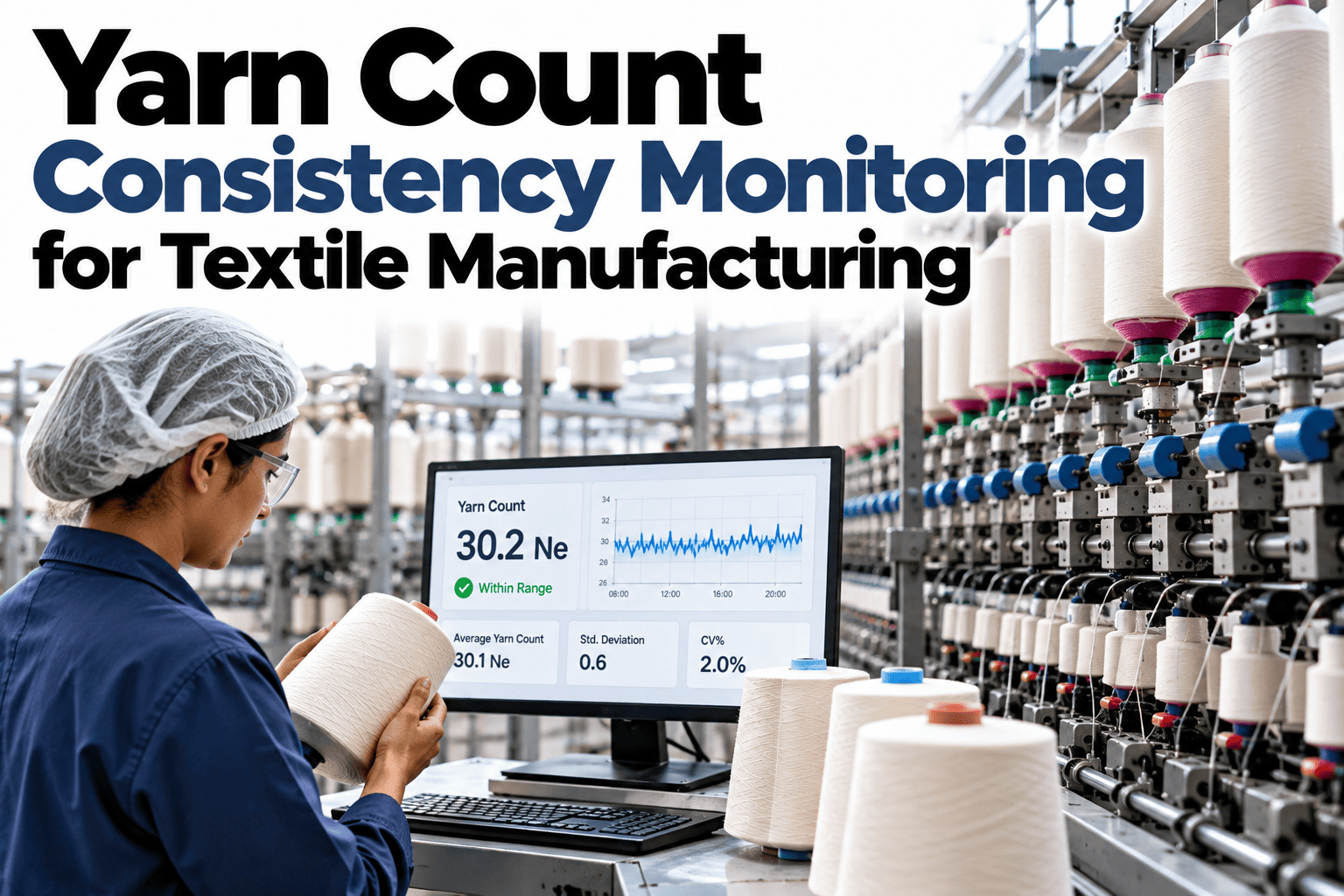
A yarn can pass every spot check and still cause trouble downstream, because count drift usually builds slowly between lab tests. When the average Ne creeps away from target, fabrics shift in weight, handle and shade, and the cause is often traced

Read More
Spinning waste rarely shows up as one big loss. It collects slowly through card waste, fly, hard waste and the small stops that nobody logs, until yield sits a point or two below where it should. A checklist keeps the right four measures in front
Read More
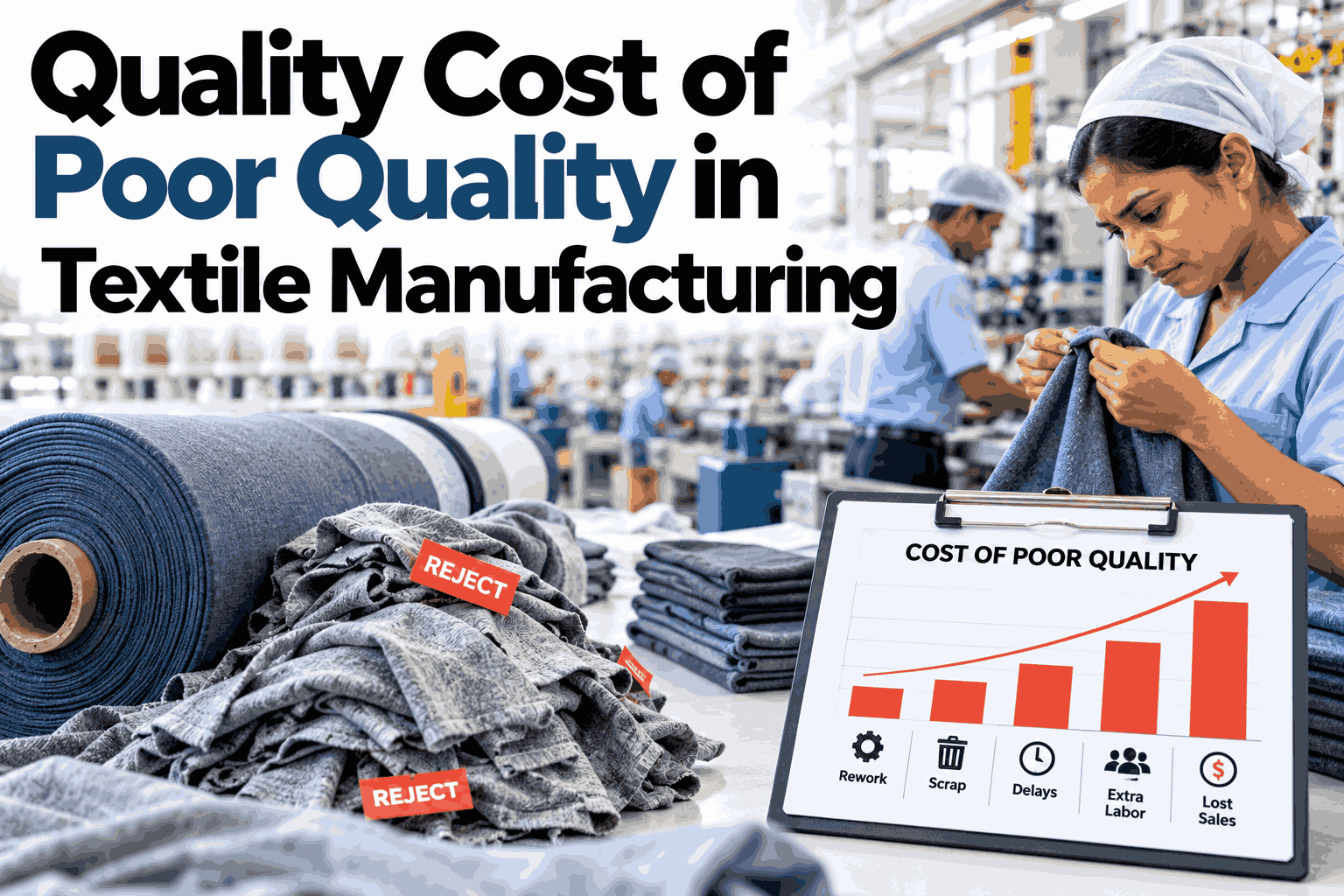
Most cost-of-poor-quality explainers tell you that hidden costs exist and then stop, without ever showing the arithmetic that turns a defect count into a dollar figure. For a textile plant, that arithmetic starts with a number almost every quality
Read More
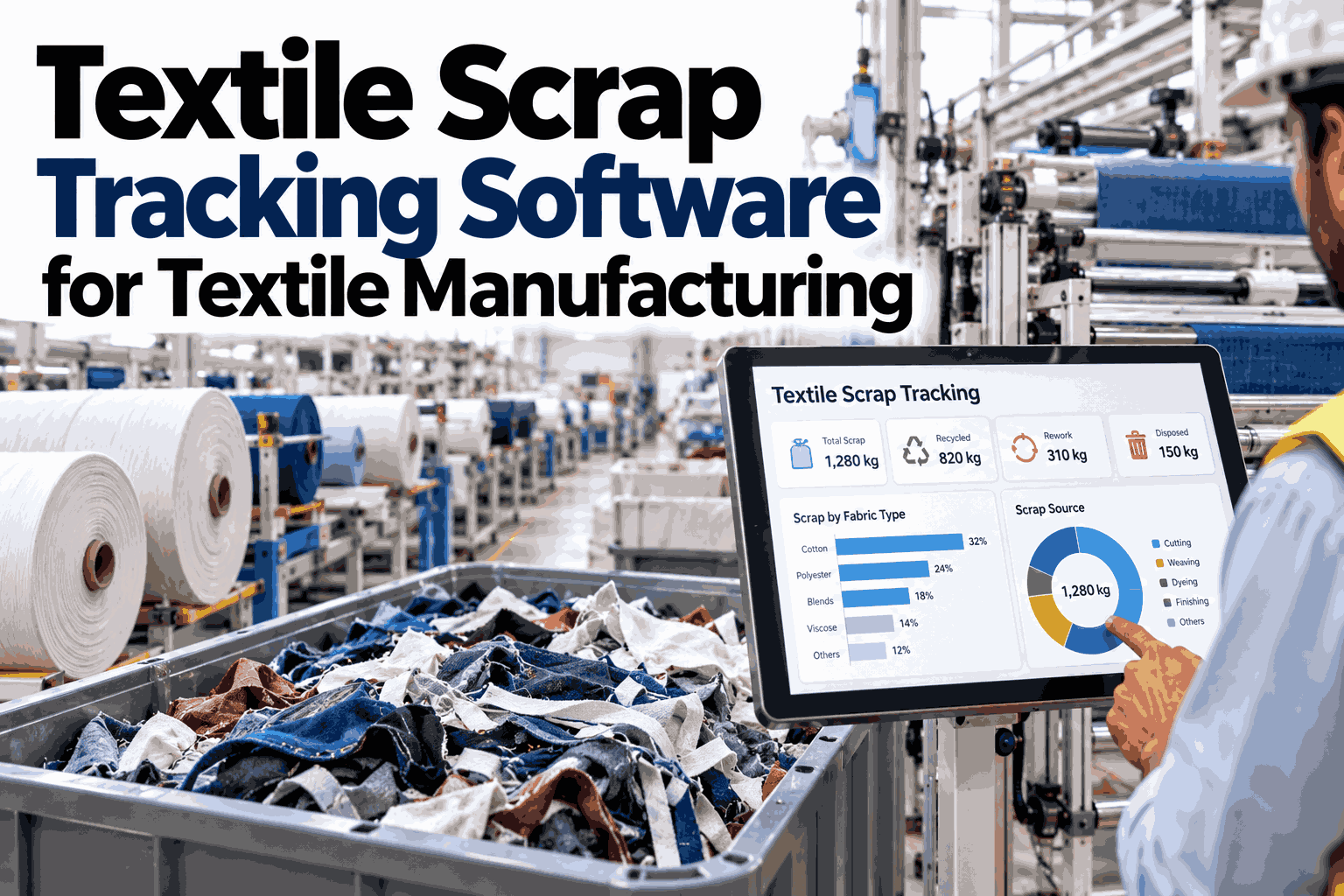
Most textile plants know their total scrap percentage. Far fewer know which machine, which shift, or which batch actually produced it — and that gap is where the real savings sit. A scrap rate without a source is a cost nobody can act on, while th
Read More
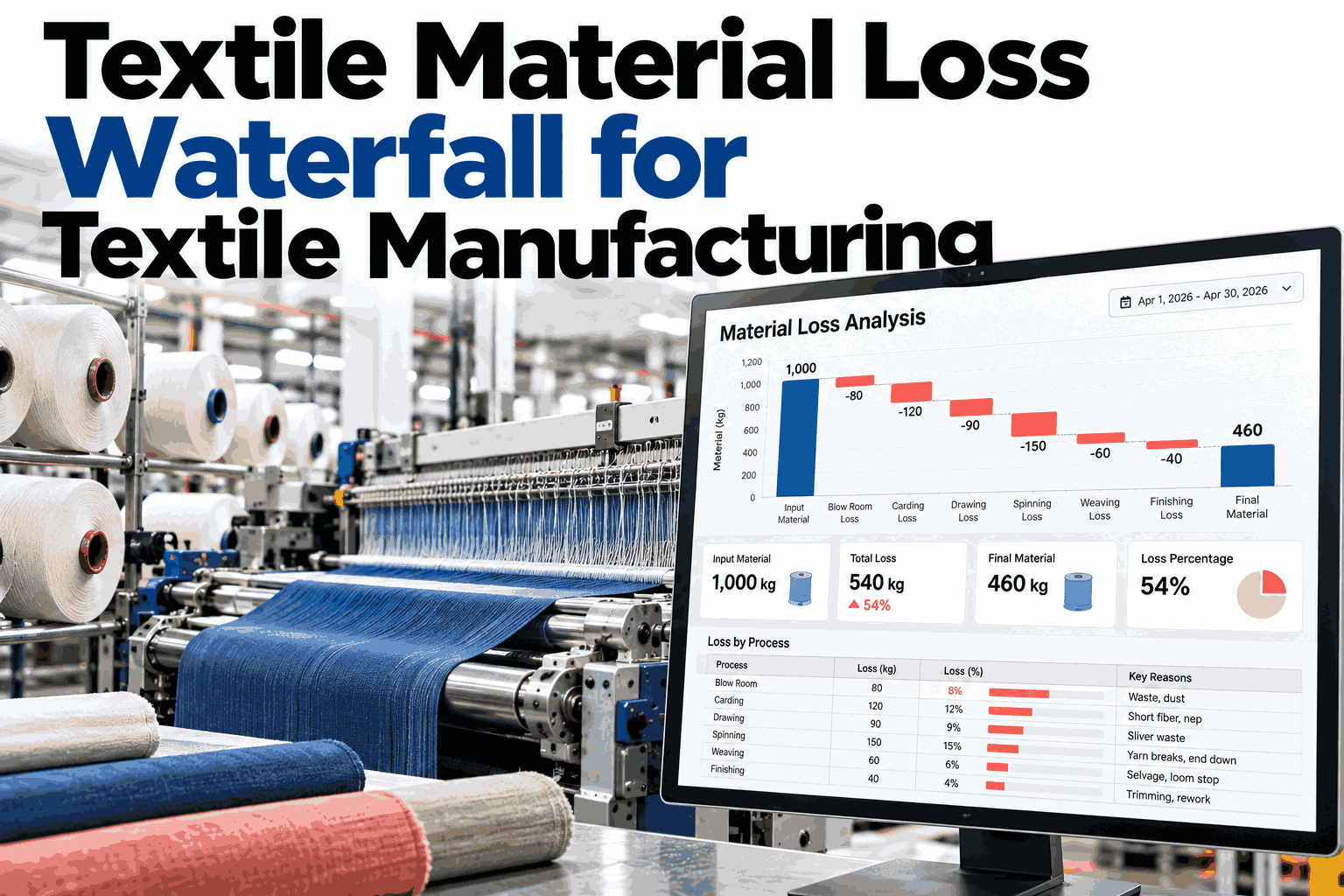
Ask where textile material loss happens and most plants can name a department. Ask how much material actually survives from raw fiber to finished garment, stage by stage, and far fewer can answer, because nobody has ever laid the four conversion s

Read More
Most textile plants report a quality number that looks fine and a cost sheet that does not agree with it. The gap is rarely dishonesty. It is almost always a definition problem: the quality rate counts a piece as good once it eventually passes, af
Read More
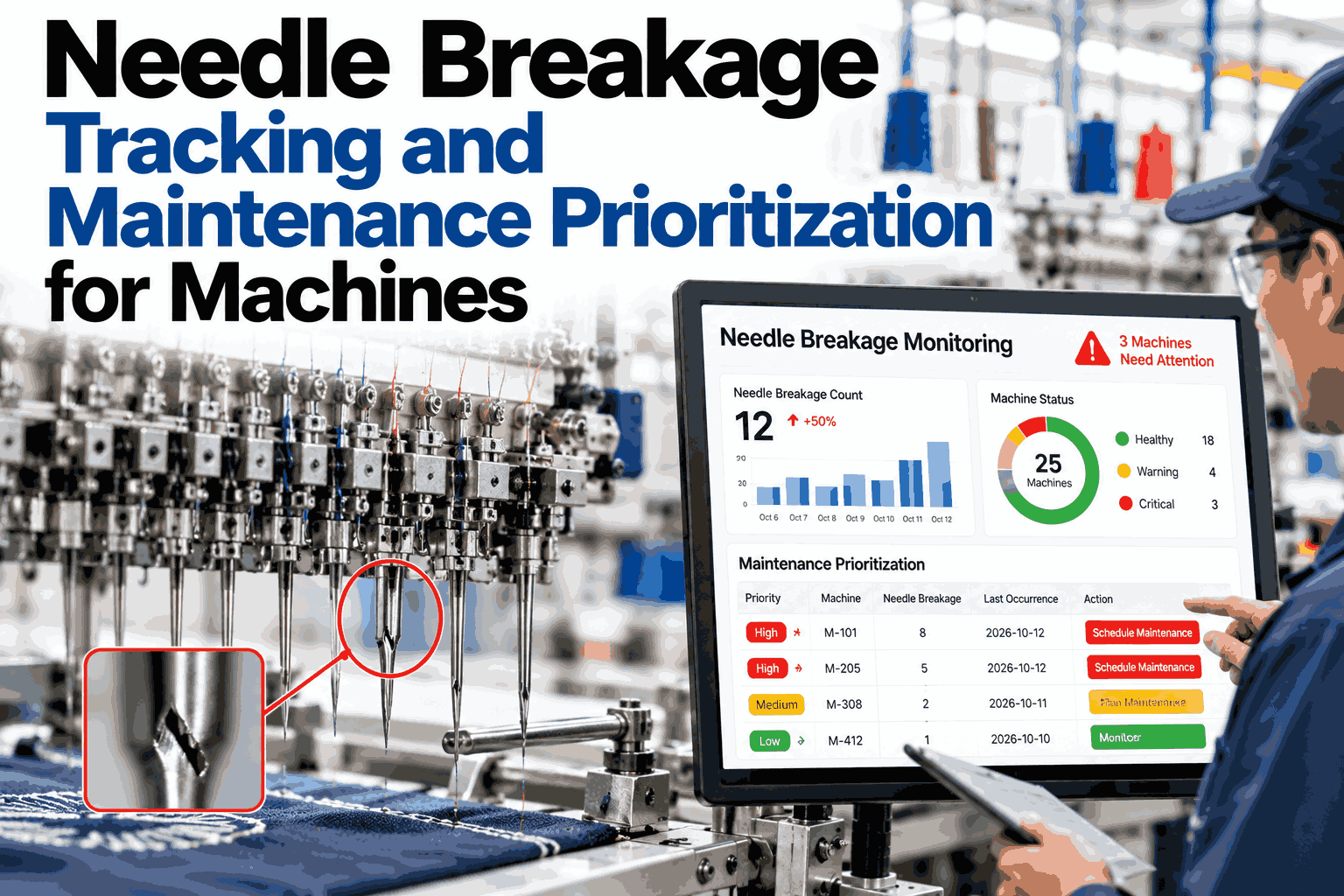
A broken needle rarely announces itself as a maintenance problem. It shows up first as a dropped stitch, a hole in the fabric, or a sudden stop that the operator logs as "machine down" with no further detail. Multiply that across a knitting floor
Read More
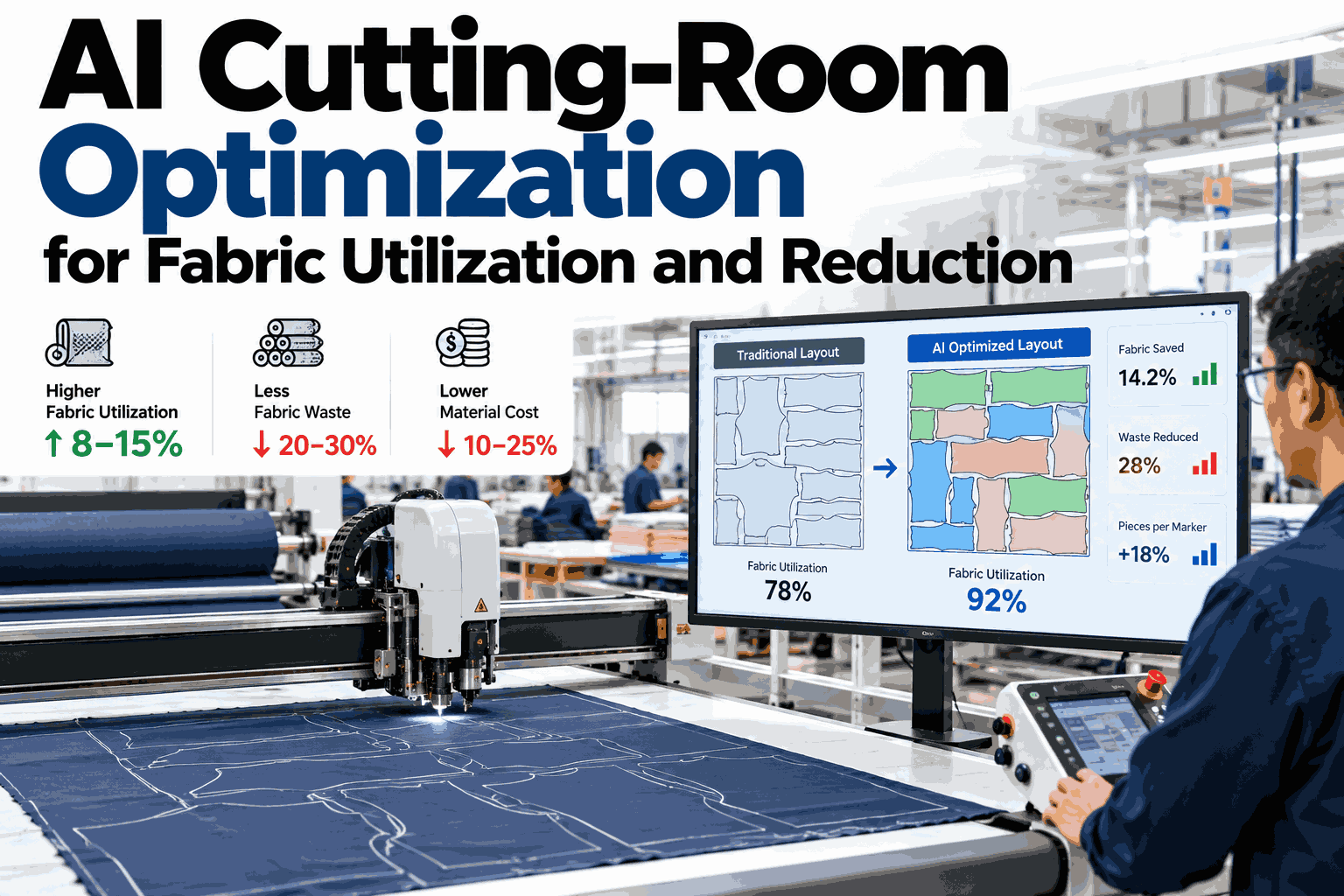
Fabric is usually the single largest cost line in a cutting room, yet the number that decides most of that cost, utilization percentage on the marker, gets set once by a pattern grader and rarely revisited until margins are already under pressure.
Read More
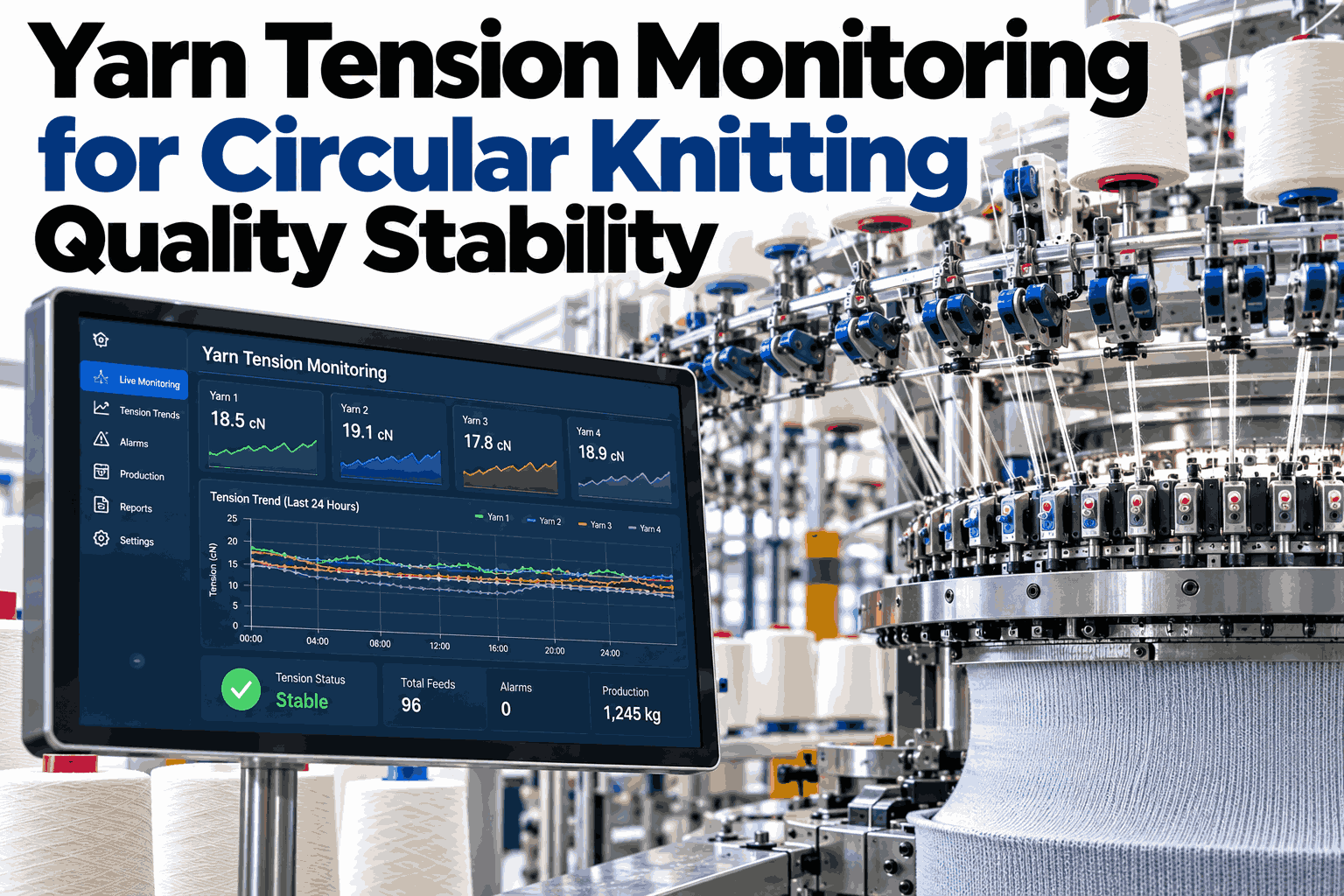
Most circular knitting floors judge a run by what comes off the take-down roll, not by what happened at each feeder while the fabric was being built. By the time a GSM check or a fabric inspector flags a problem, the machine has already run for mi
Read More
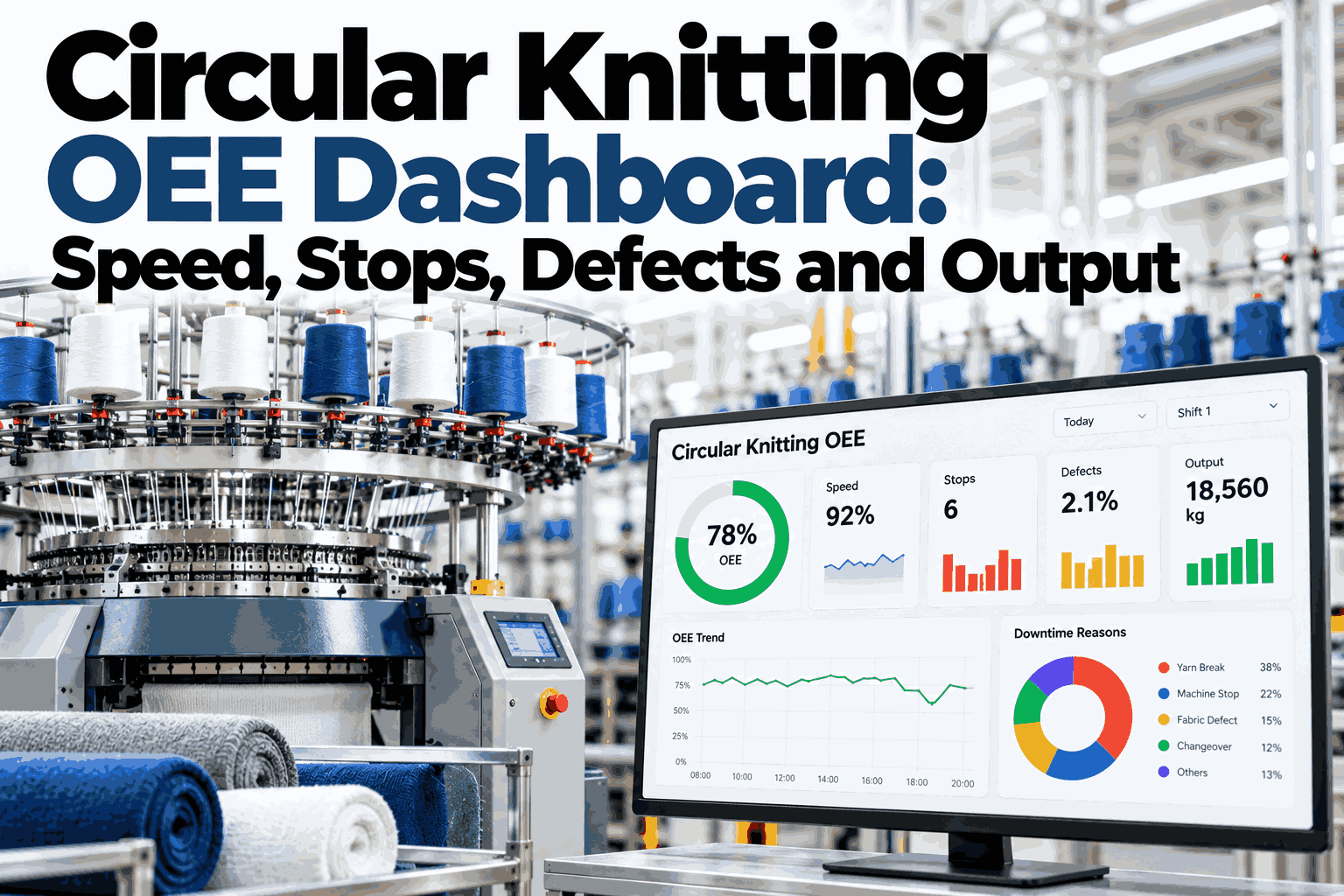
Circular knitting lines rarely stop for one dramatic reason. They lose output in small increments: a few extra seconds between yarn breaks, a feeder that stutters on a bulkier count, a needle track that never quite climbs back to rated RPM after a
Read More
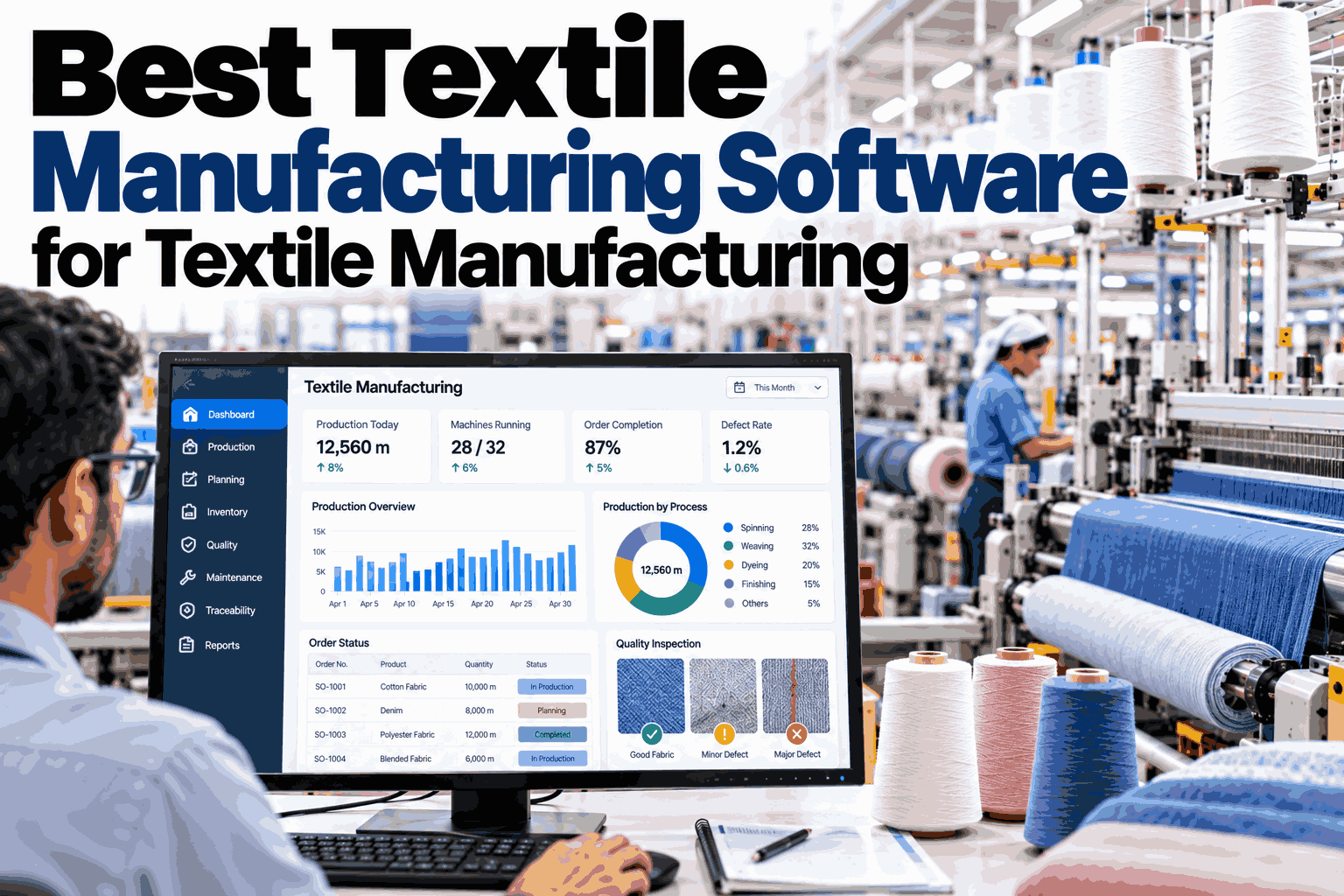
Selecting manufacturing software for a textile plant requires more than just checking generic ERP boxes, yet many facilities end up with systems that cannot handle dye lot traceability or loom-level efficiency tracking. Evaluating the best textile

Read More
Textile plants evaluating AI vision software often focus on polished demo dashboards instead of the gritty realities of high-speed loom inspection. A structured proof-of-concept checklist forces vendors to prove their defect detection accuracy, ed

Read More
Textile plants rolling out cloud MES, on-premise ERP upgrades and third-party integrations gain production speed but also widen the attack surface across every loom, dye controller and quality gate on the floor. A single unauthenticated API bridge

Read More
A generic CMMS checklist asks whether a system can log a work order and send a notification, which almost every vendor can do. It rarely asks whether the system can handle a ring frame spindle change, a loom beam replacement, or a dye jet's descal
Read More
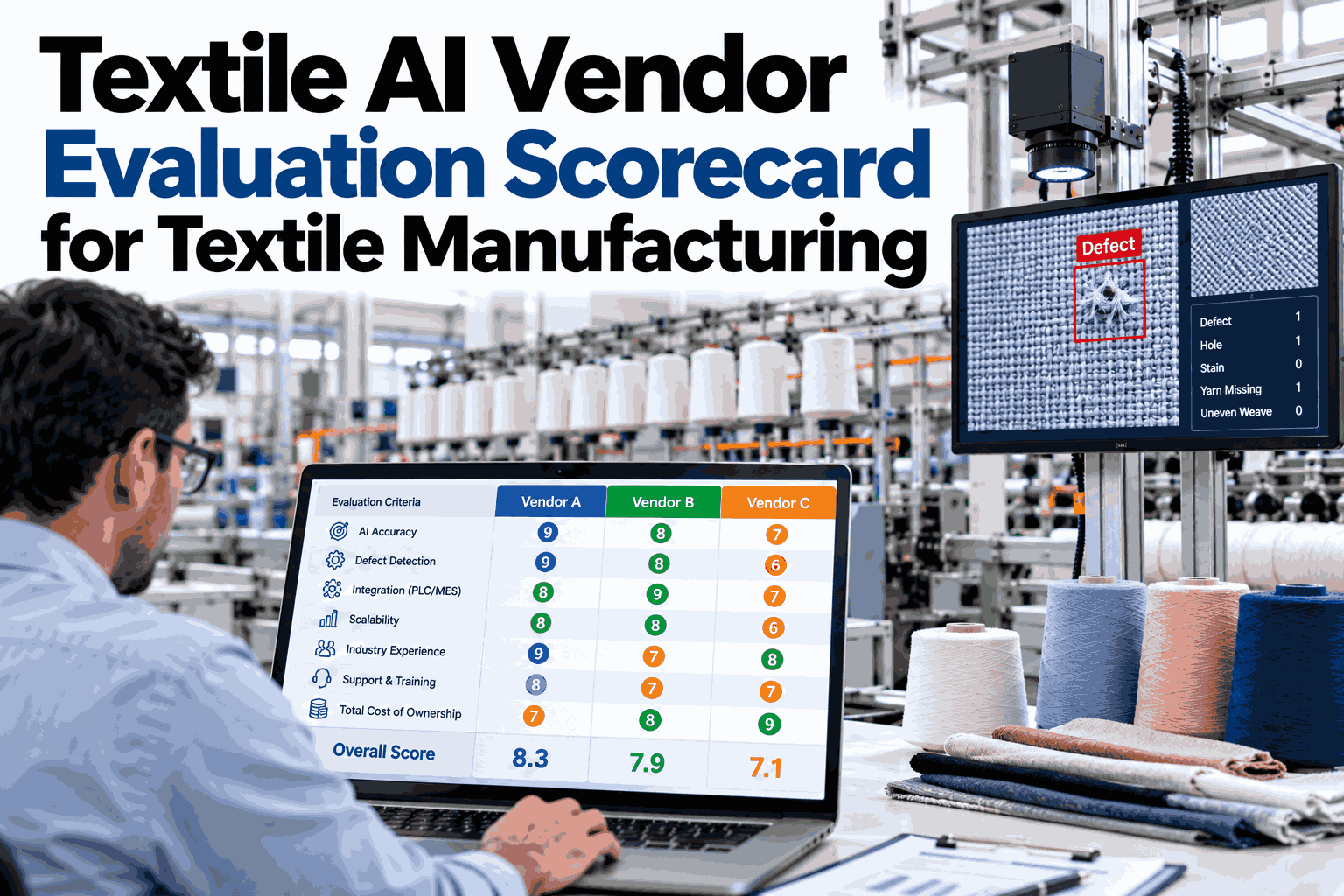
Textile plants investing in AI often find that generic manufacturing software falls short when it meets the loom, the dyeing machine, or the quality lab. An AI vendor evaluation scorecard built specifically for textile manufacturing gives your tea

Read More
A textile group running four plants often has four different answers to the same question: what was OEE last week. Not because the machines disagree, but because each plant calculates it slightly differently, reports it on a different cycle, and r
Read More
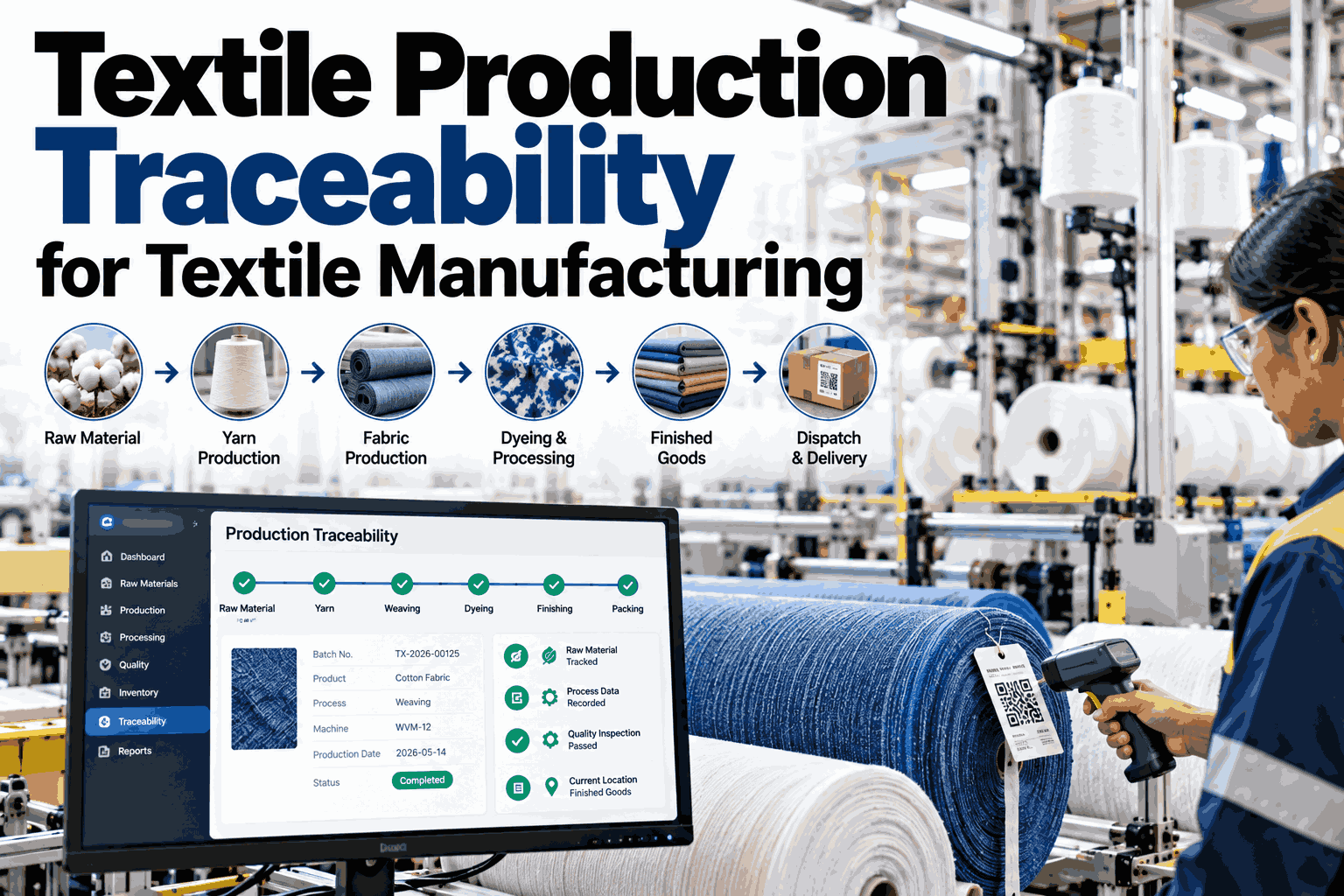
A single pair of jeans can pass through a cotton gin, a spinning mill, a weaving unit, a dyehouse, and a cut-and-sew floor before it ever reaches a garment rack, and at every handoff the paper trail that is supposed to follow it tends to get thinn

Read More
Textile mills run some of the most layered automation stacks in manufacturing, with ring frames, airjet looms, dye becks, and stenter lines each reporting through their own PLC or SCADA panel while ERP sits a floor removed from any of it. Data tha

Read More
Sewing is where most garment quality is won or lost, and it is also where defects are hardest to catch in time. A skipped stitch, a puckered seam or an uneven hem can hide inside a fast-moving bundle and surface only at final audit. AI garment def

Read More
Rolling out AI powered quality inspection on a sewing or finishing line is less about the camera and more about everything that has to be ready before the camera is switched on: defect definitions, machine coverage, operator buy-in and a plan for
Read More
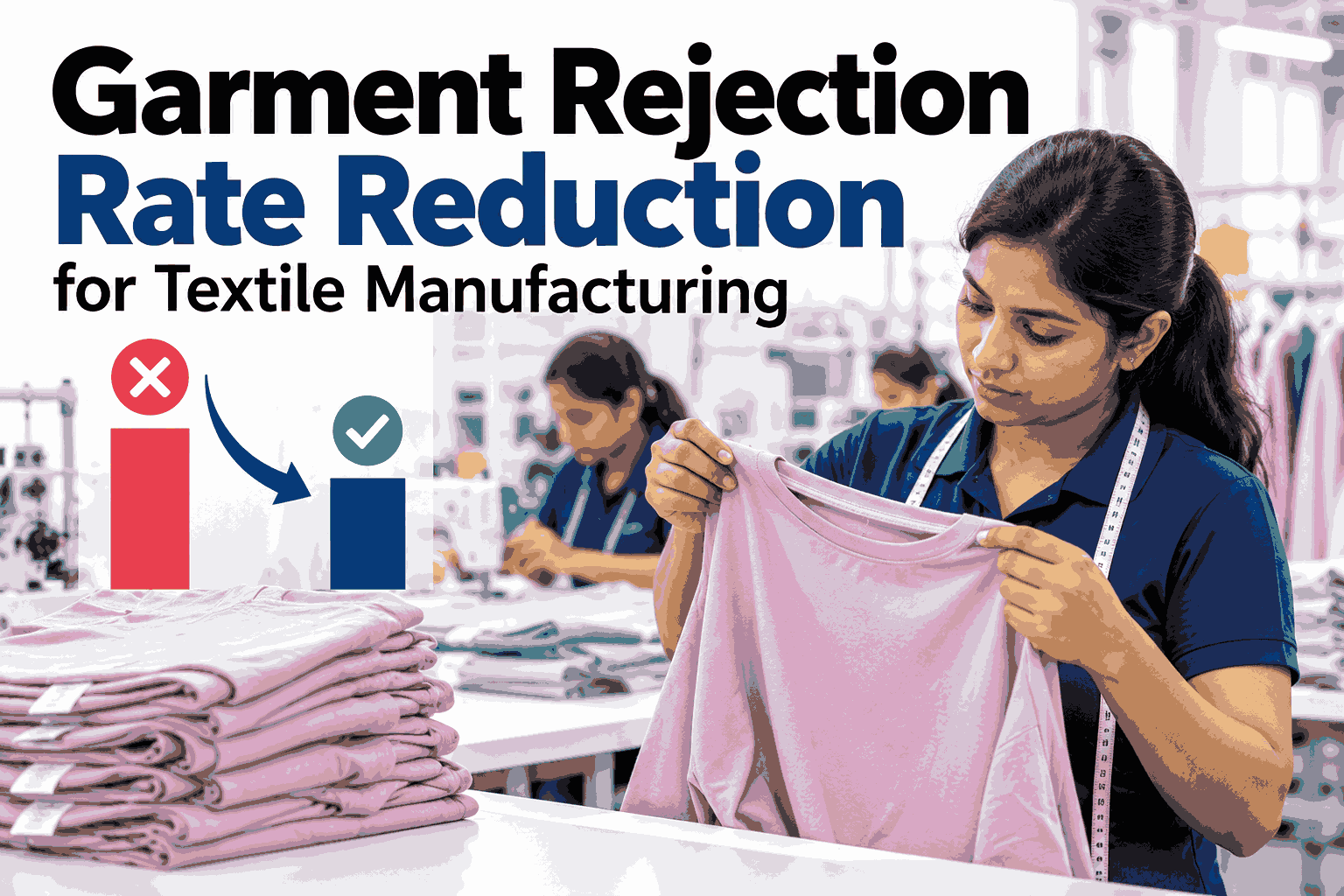
A rejected garment rarely fails for one reason alone. A skipped stitch, a seam that puckers under pressing, a measurement half an inch off spec, each one slips through a stage where nobody was looking closely enough, and the cost of catching it ke
Read More
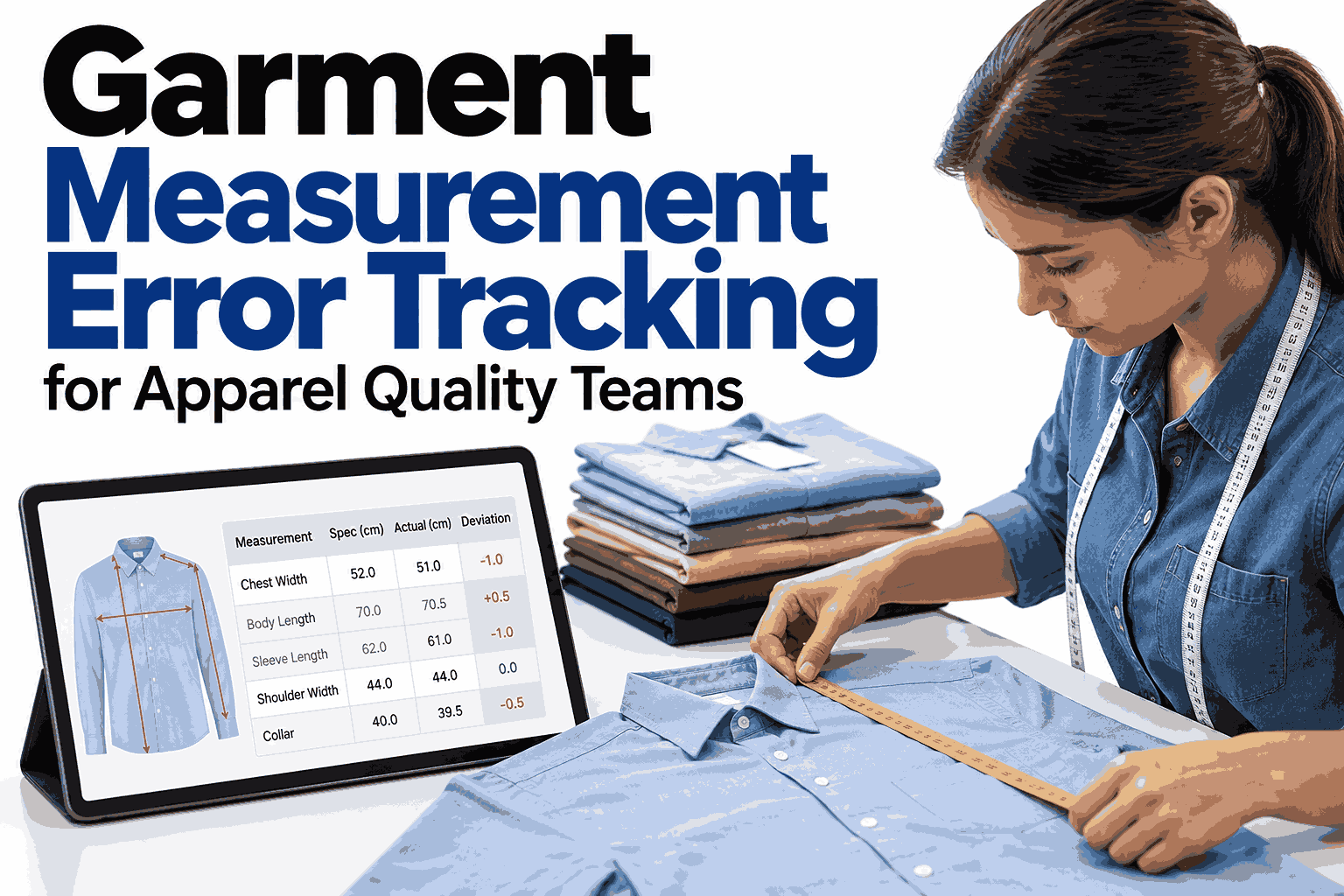
Apparel quality teams spend hours each day measuring collars, chests, waists and sleeves against a buyer's spec sheet, comparing every panel by hand with a measuring tape. A garment that is half an inch out on the chest can still pass a quick visu

Read More
A garment can pass every stitching check and still be wrong because one button, label or drawcord never made it onto the piece. Missing component defects are easy to overlook by eye, yet they trigger rework, repacks and chargebacks once a buyer's
Read More
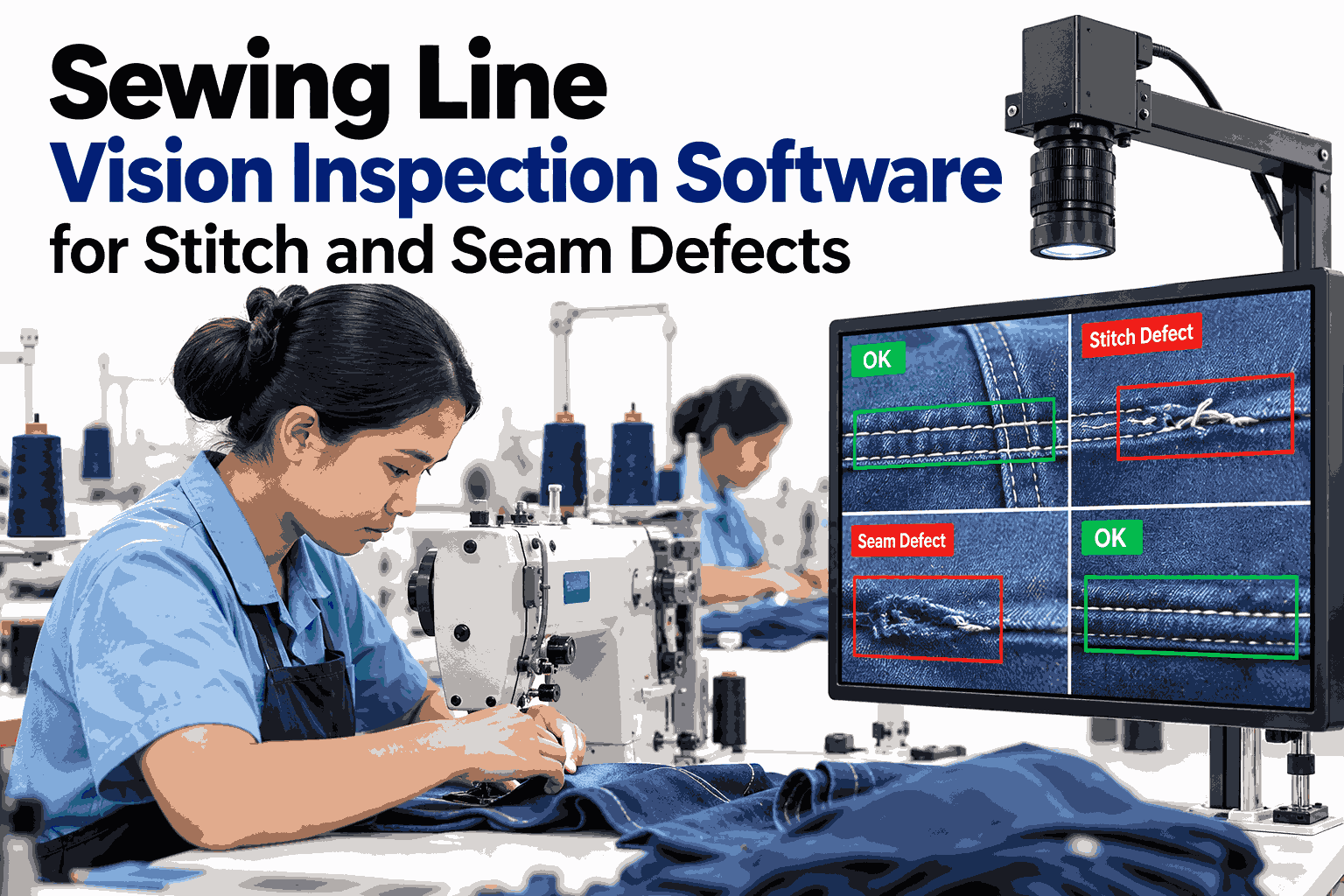
A sewing line can turn a perfectly graded fabric roll into a rejected garment within seconds, because stitch and seam faults rarely announce themselves the way a torn panel does. A skipped stitch, a puckered seam or a loose tension setting often s
Read More
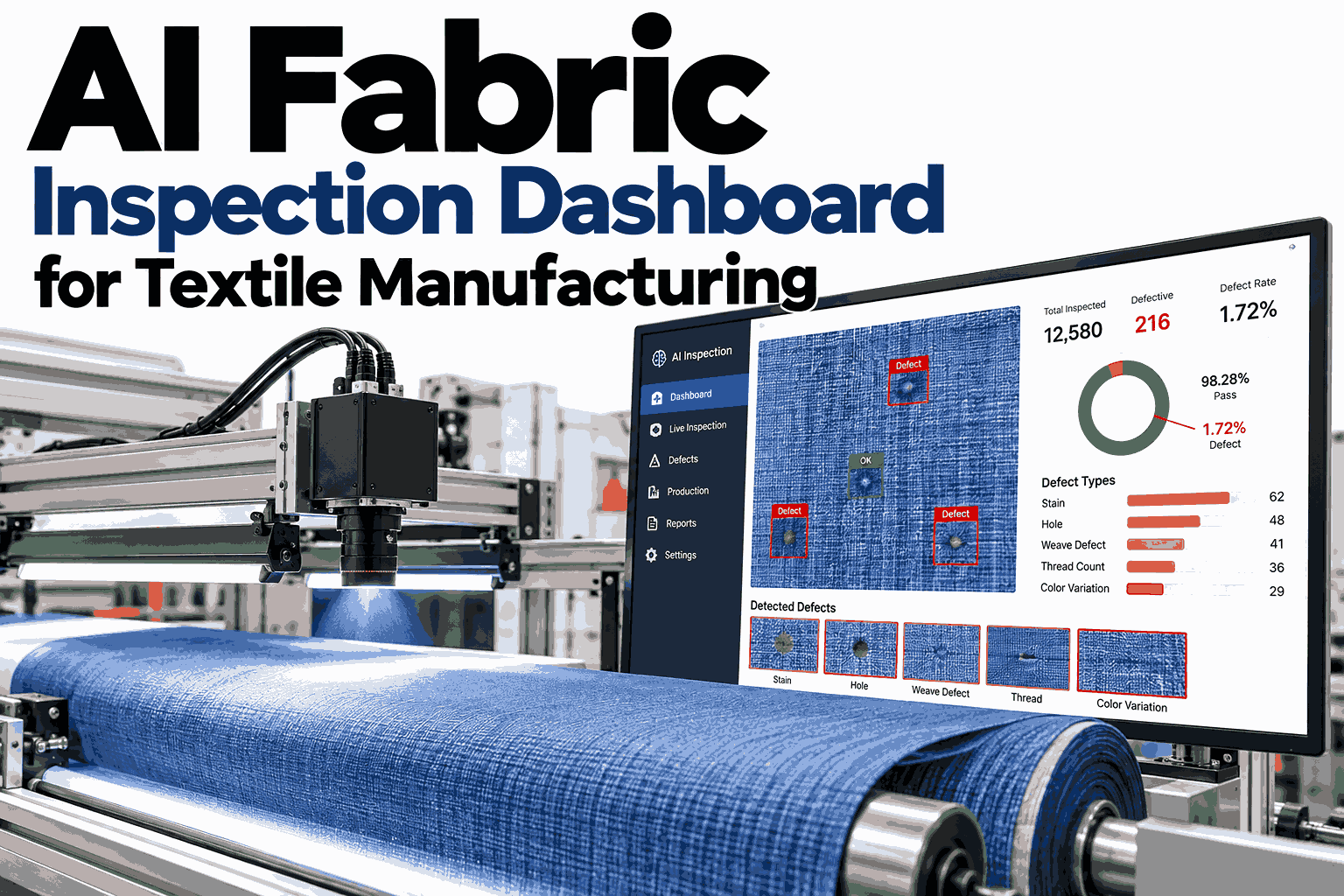
Fabric mills inspect thousands of running metres every shift, yet most quality checks still depend on a person standing at a frame under fluorescent light, scanning for slubs, holes and colour shade variation. Human inspectors catch a lot, but fat

Read More
Most quality teams can list every defect they have ever logged, yet very few can say which three defects are actually draining their margins this month. That gap is why scrap keeps creeping up even when inspectors are working hard and reports are
Read More
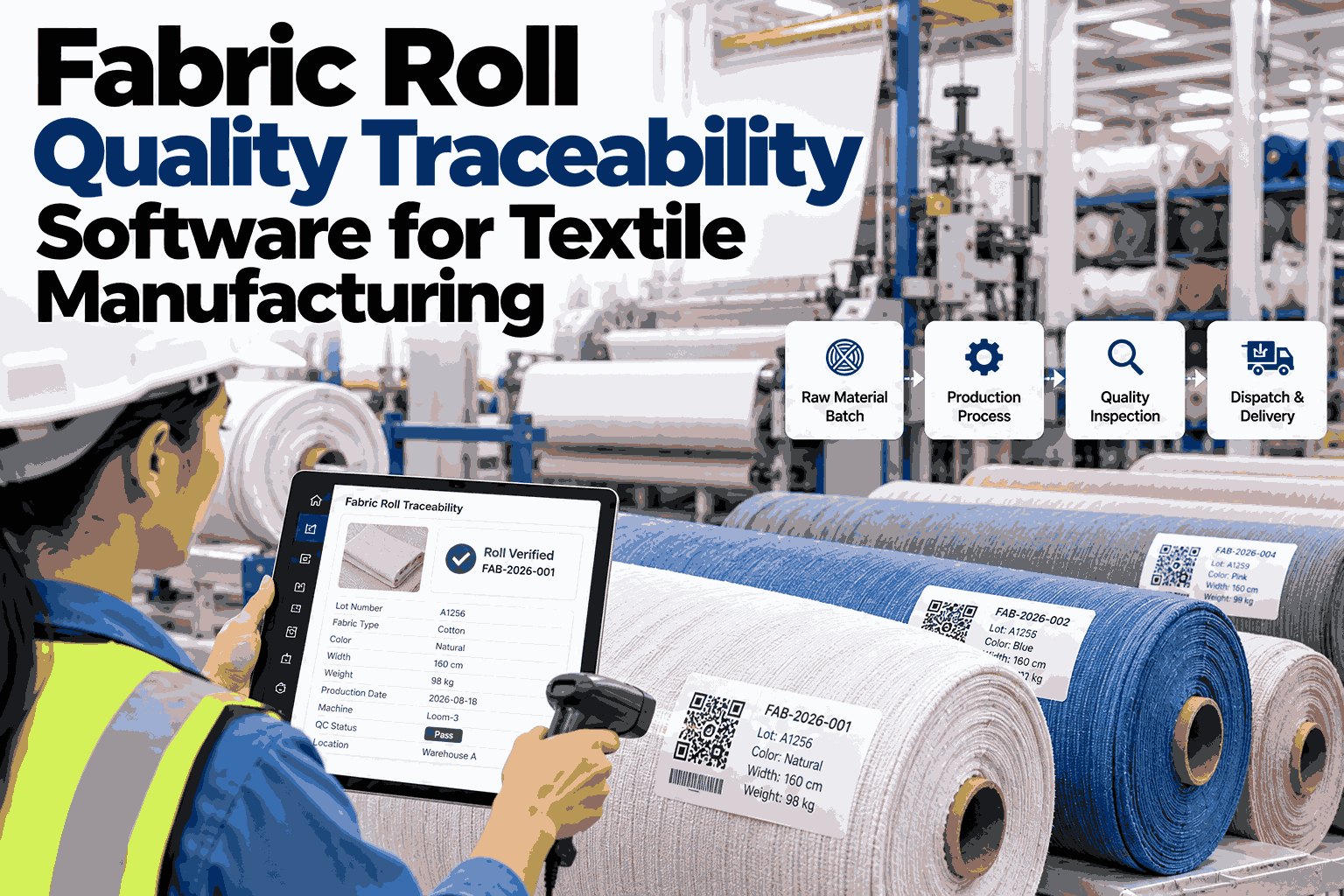
When a buyer reports a shade shift, or a cutting team finds a run of weak rolls, the first question is rarely about the defect itself. It is about where that cloth came from, which loom wove it, which yarn lot fed it, which shift ran the machine a
Read More
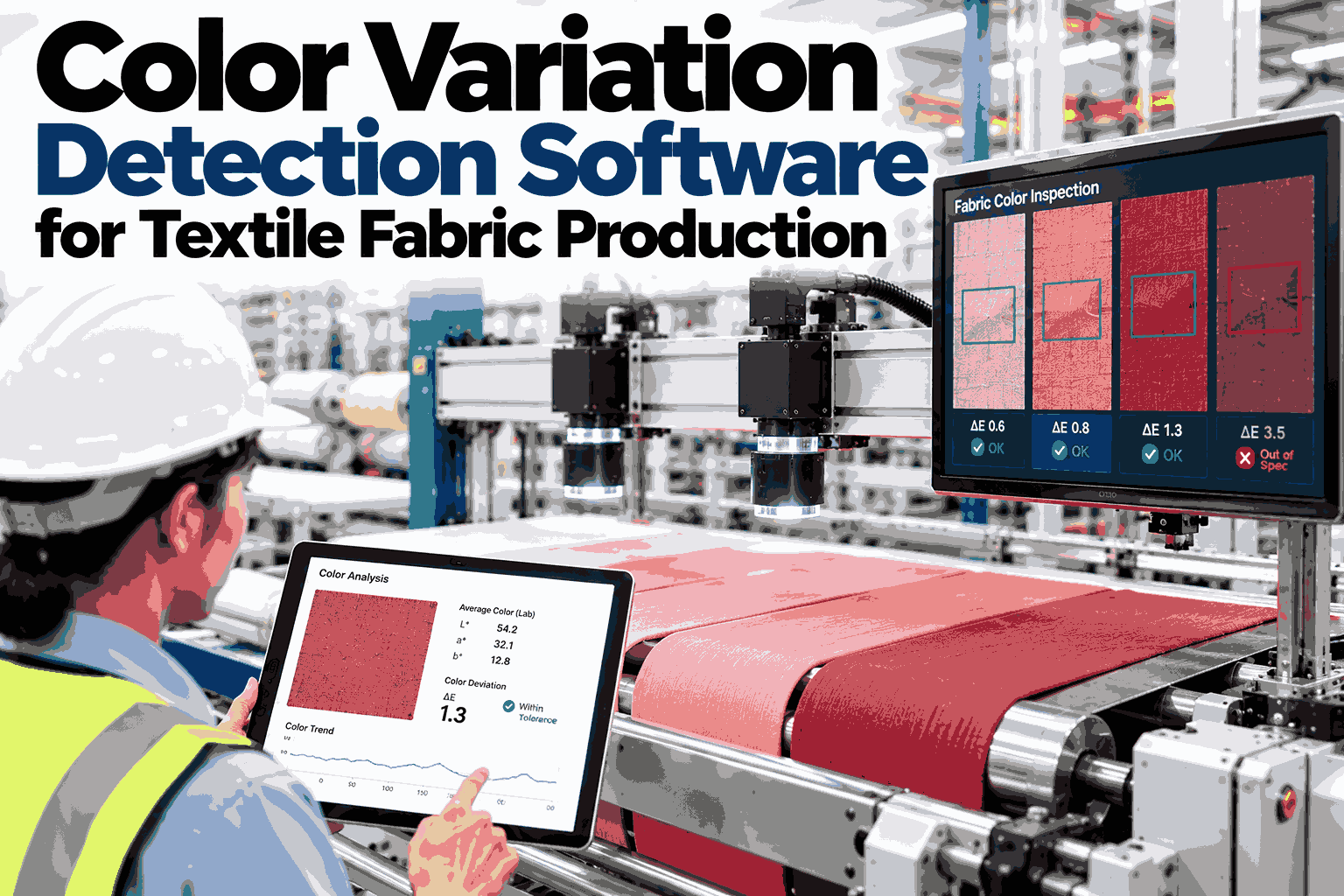
A shade difference that nobody sees on the dye house floor can become a rejected shipment once two panels sit side by side on a garment. Colour variation hides between batches, across the width and along the length of a single roll. Eyes adapt, li
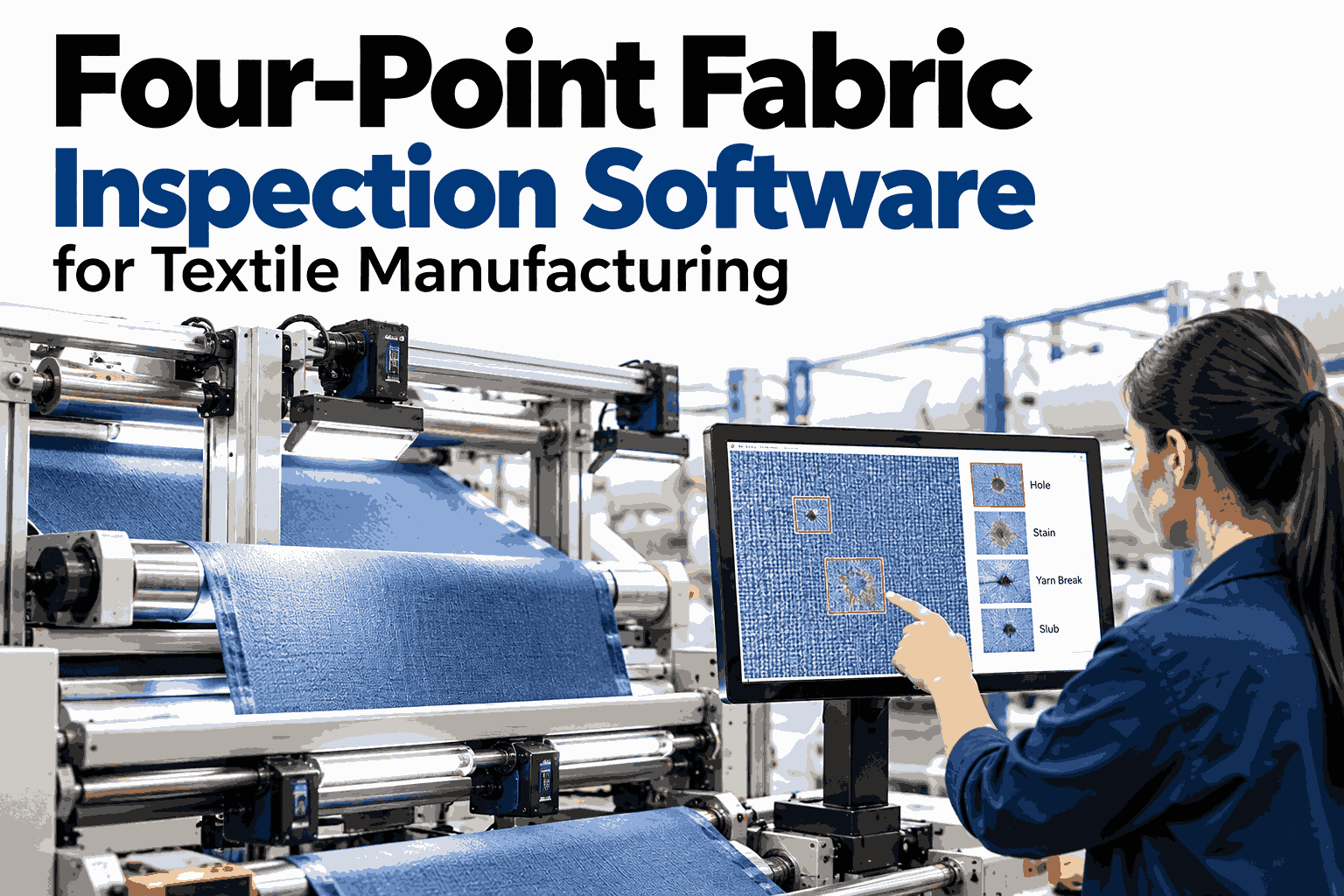
Read More
The four-point system is simple on paper, yet two inspectors can score the same roll differently. A flaw measured by eye, a missed defect near the selvedge, or a tired end-of-shift judgement can move a roll from first to second quality. Buyers not
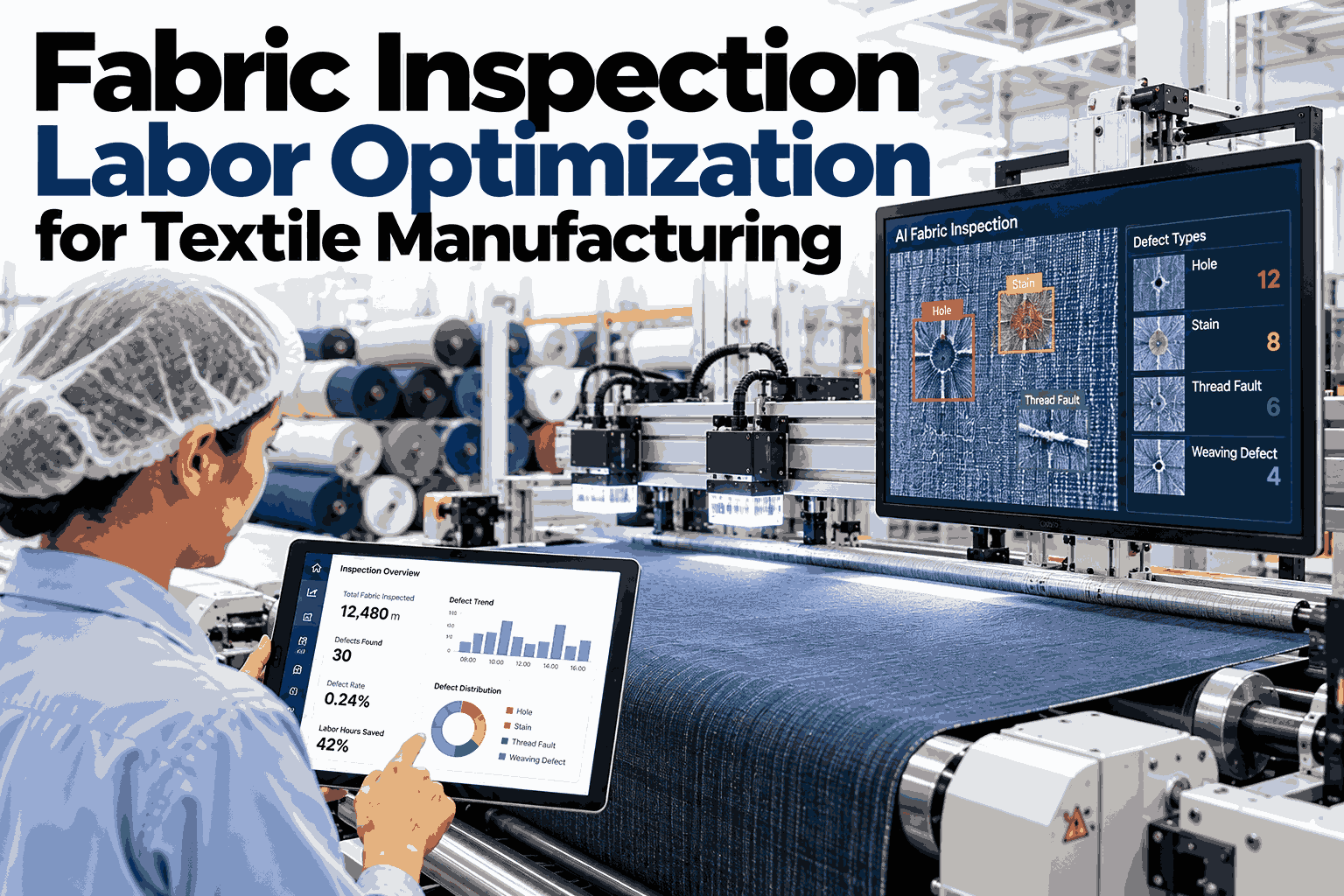
Read More
Fabric inspection is one of the last textile steps that still depends heavily on human eyes, and it is also one of the hardest to staff well. Inspectors tire, attention drifts, and the best ones are often stuck watching cloth pass by for hours. La
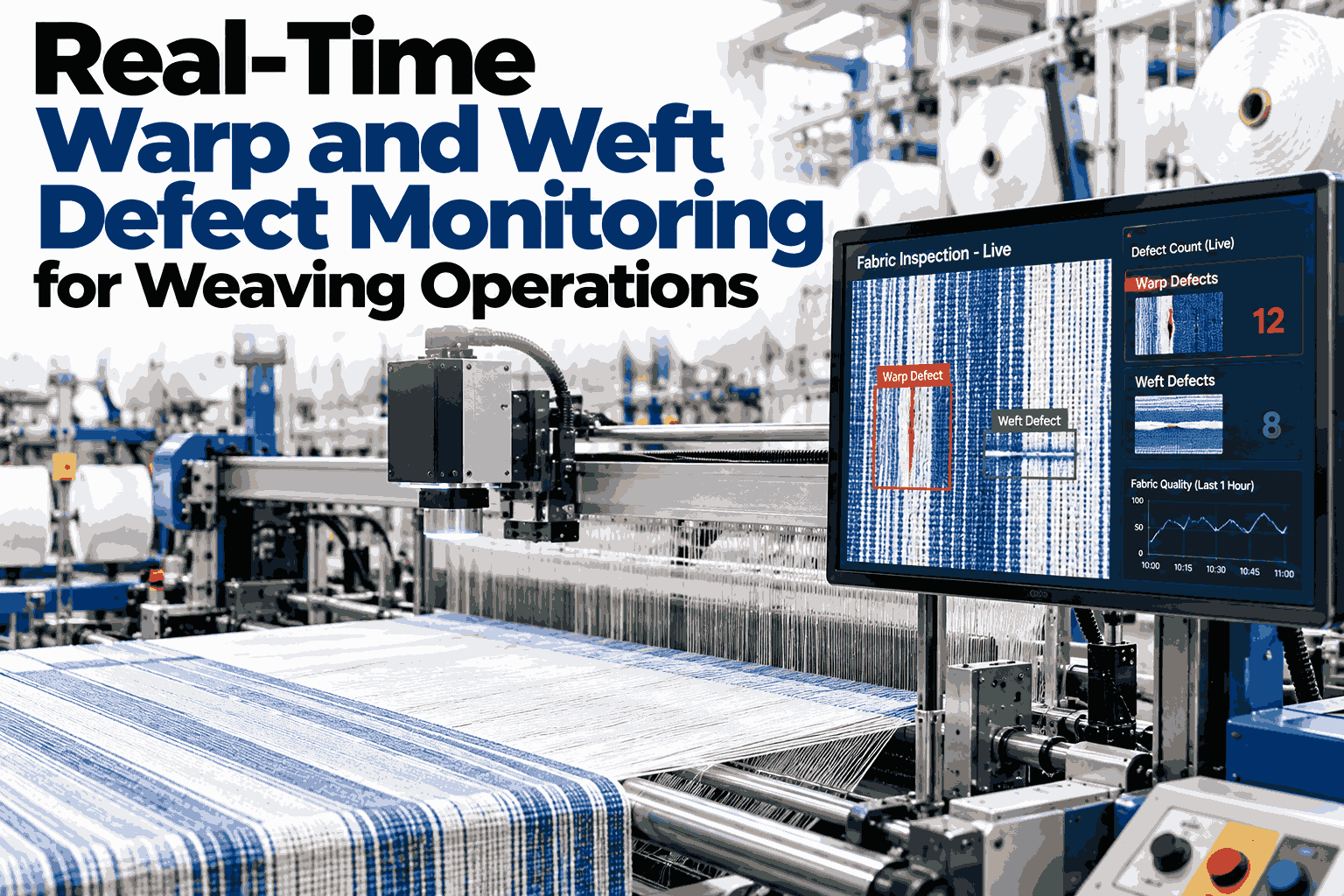
Read More
A single broken warp end can run for metres before anyone notices it on a busy weaving shed. Meanwhile a missing pick or a weft bar quietly turns good yarn into second-grade cloth. Weaving moves fast, and the flaws that cost the most are often the
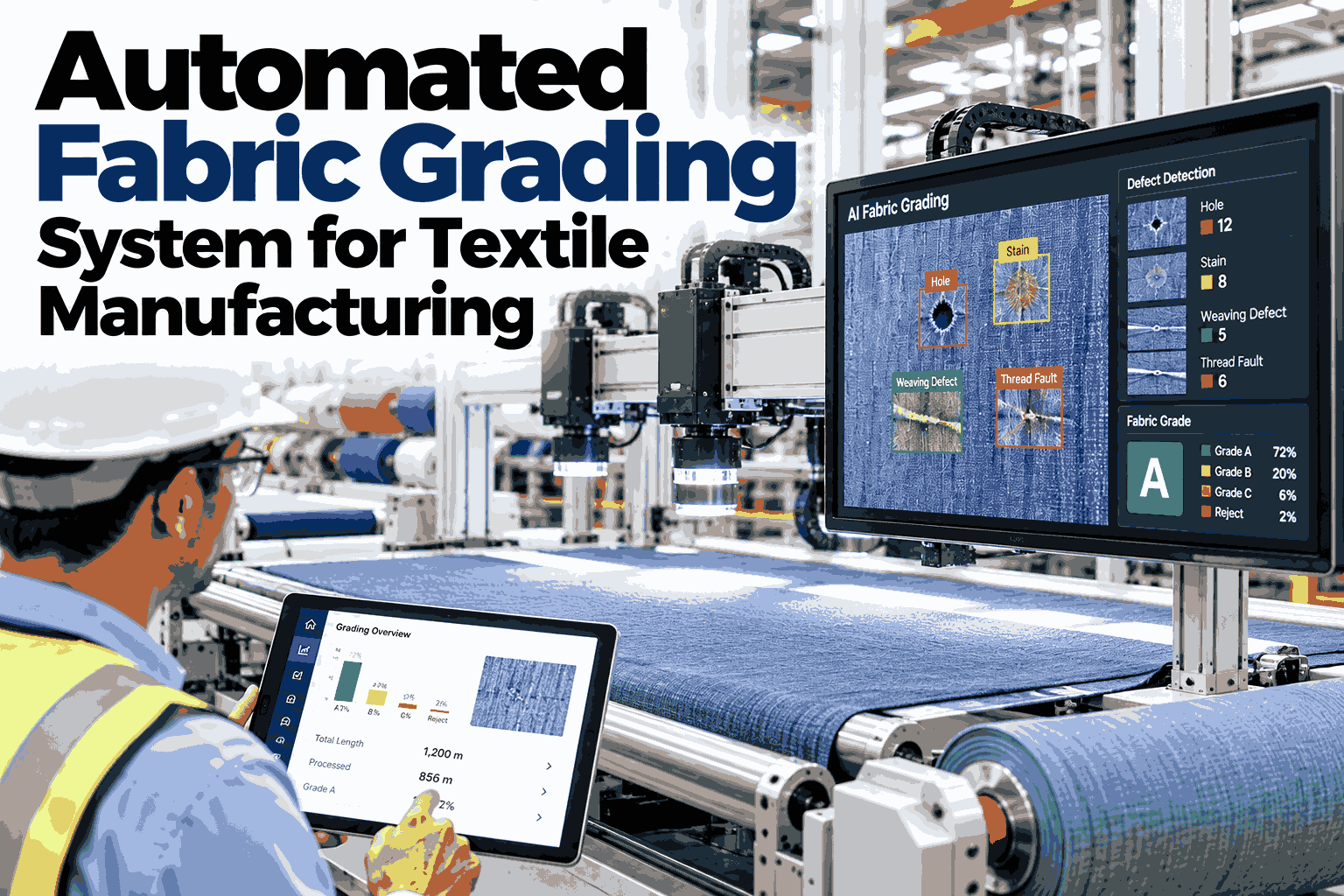
Read More
A fabric roll that leaves the mill with an undetected defect rarely stays a small problem, because the flaw travels through dyeing, cutting and sewing before anyone notices it, and by then the cost shows up as a rejected lot, a delayed shipment or
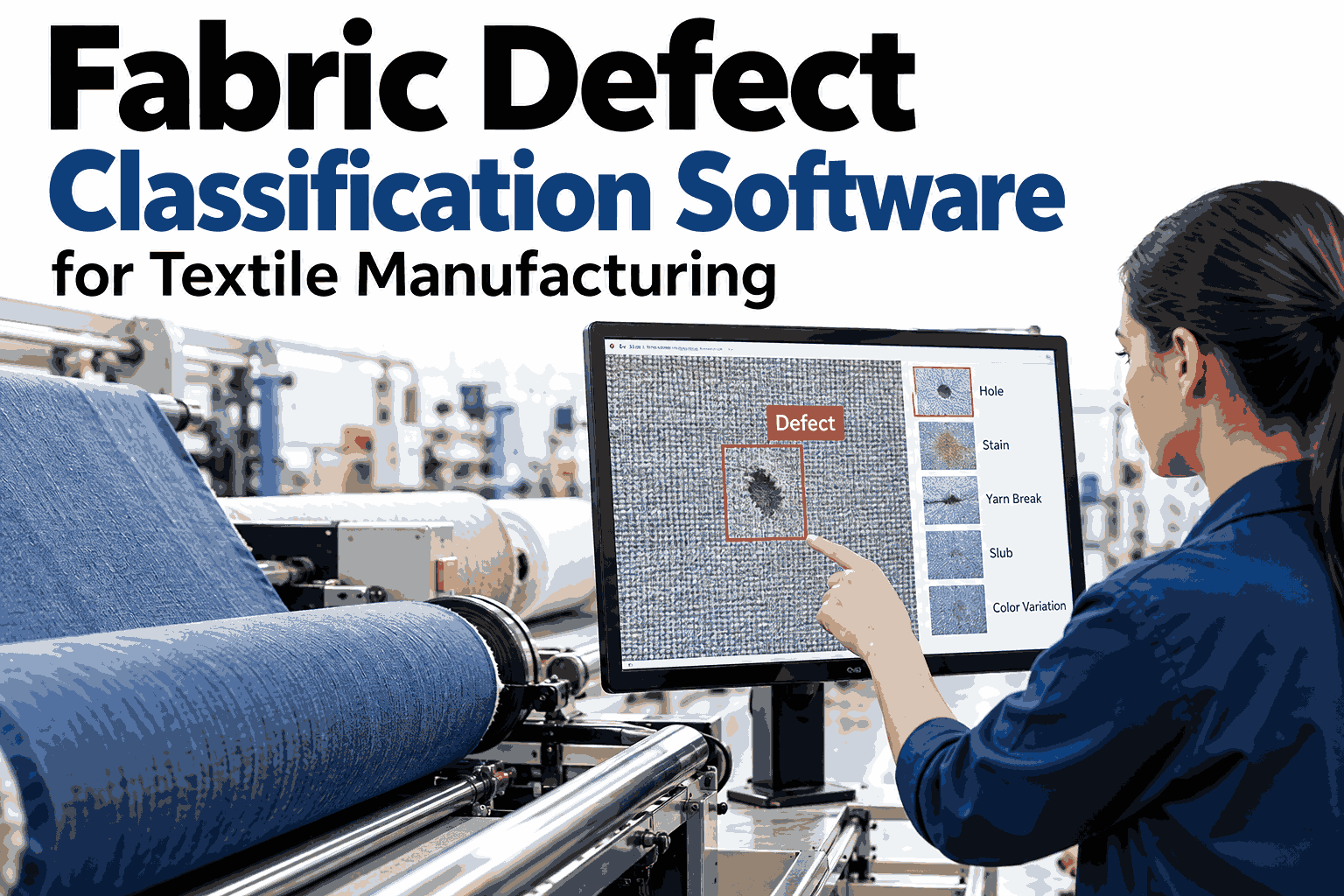
Read More
Most textile mills can already spot a flaw on a moving roll, but far fewer can say what kind of flaw it is. That gap decides whether a fault becomes a grading deduction, a loom adjustment, or a repeat complaint from the same buyer. Fabric defect c
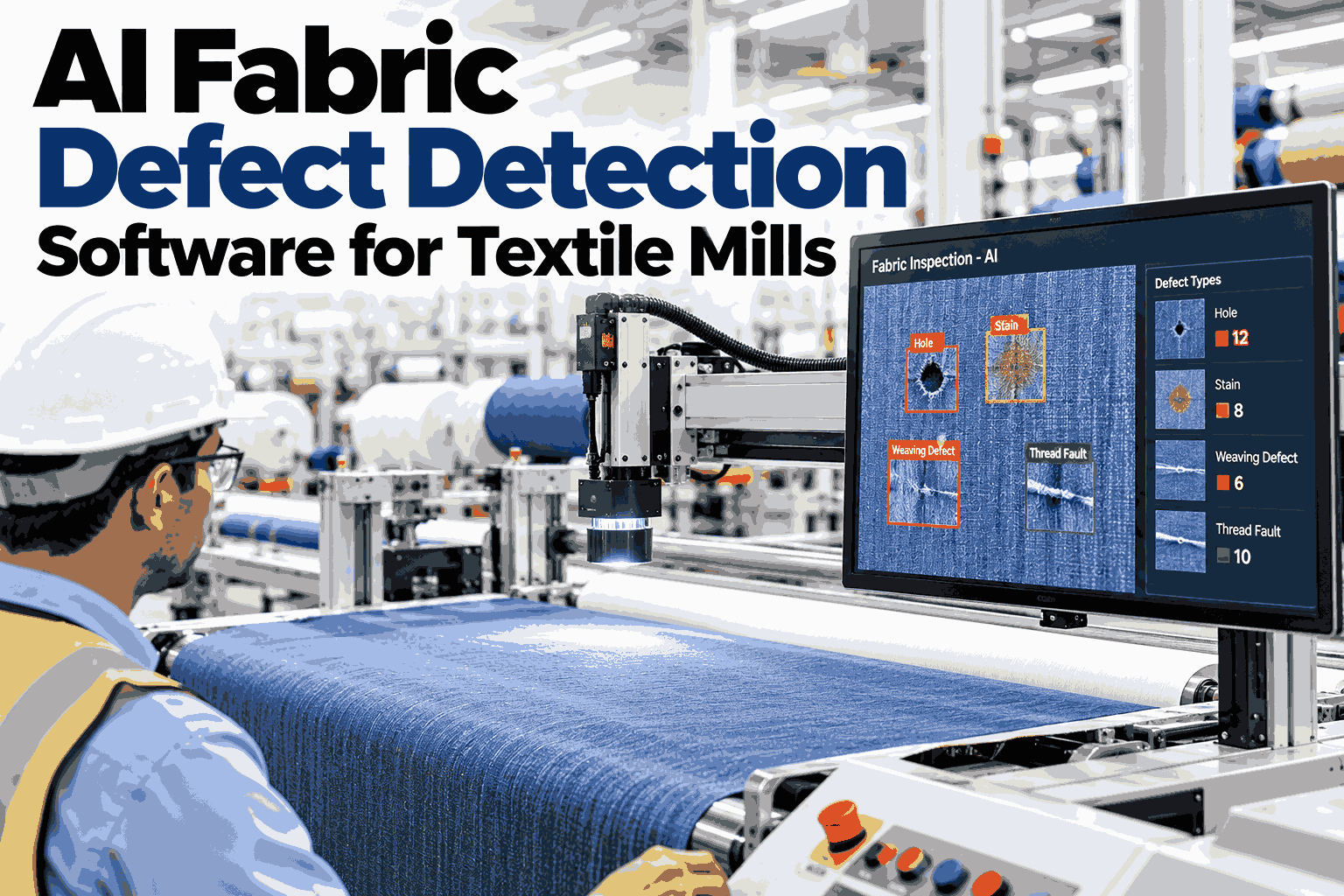
Read More
Every textile mill knows the feeling of a roll that looked fine on the loom and failed at the final inspection table. By then the defect has travelled through dyeing and finishing, absorbing cost at every step. Manual inspectors do careful work, b
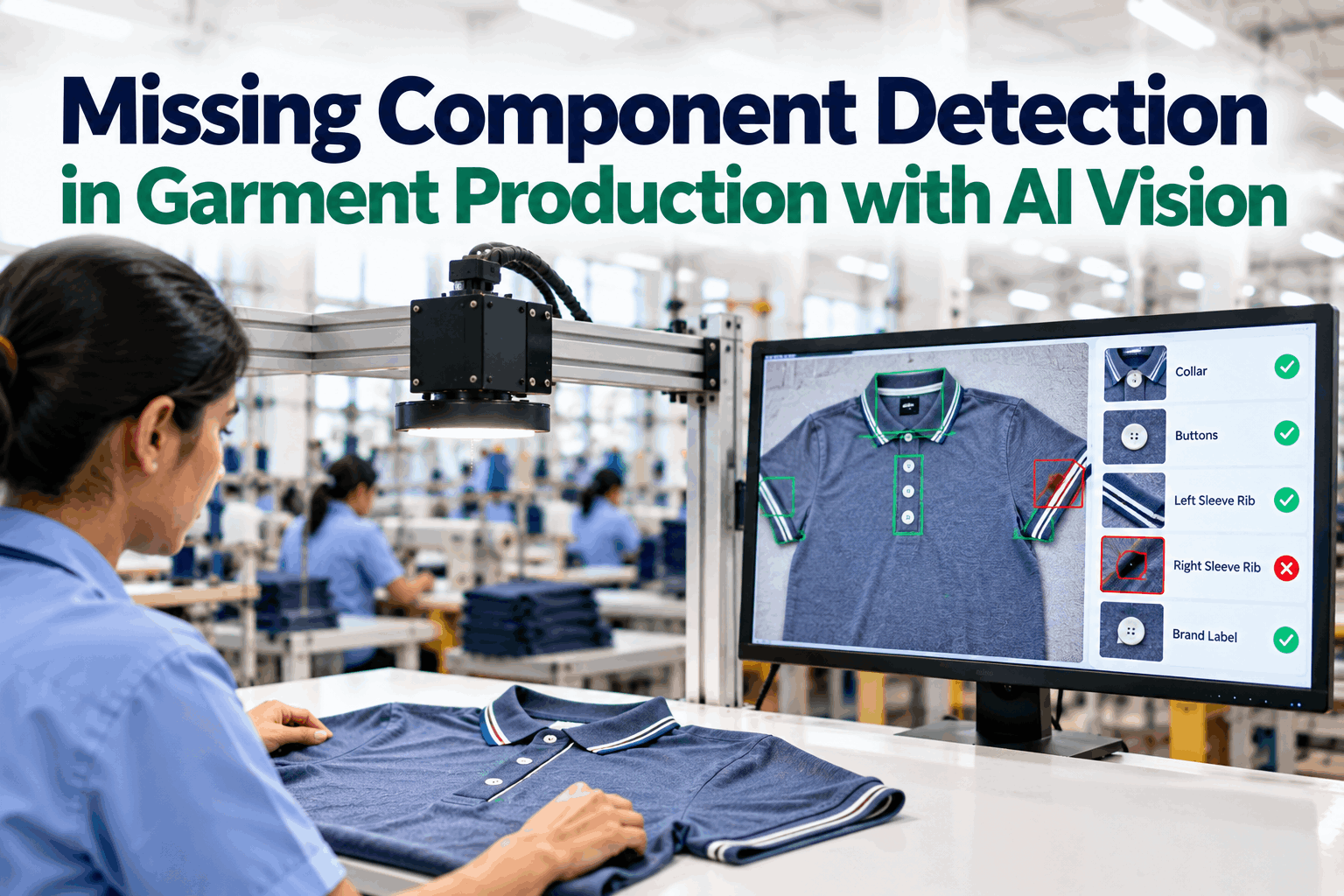
Read More
A garment can be perfectly sewn and still fail because something is missing: a care label, a size label, a button, a snap, a zipper puller or a hang tag. Missing components are easy to overlook because inspectors are trained to look for what is wr
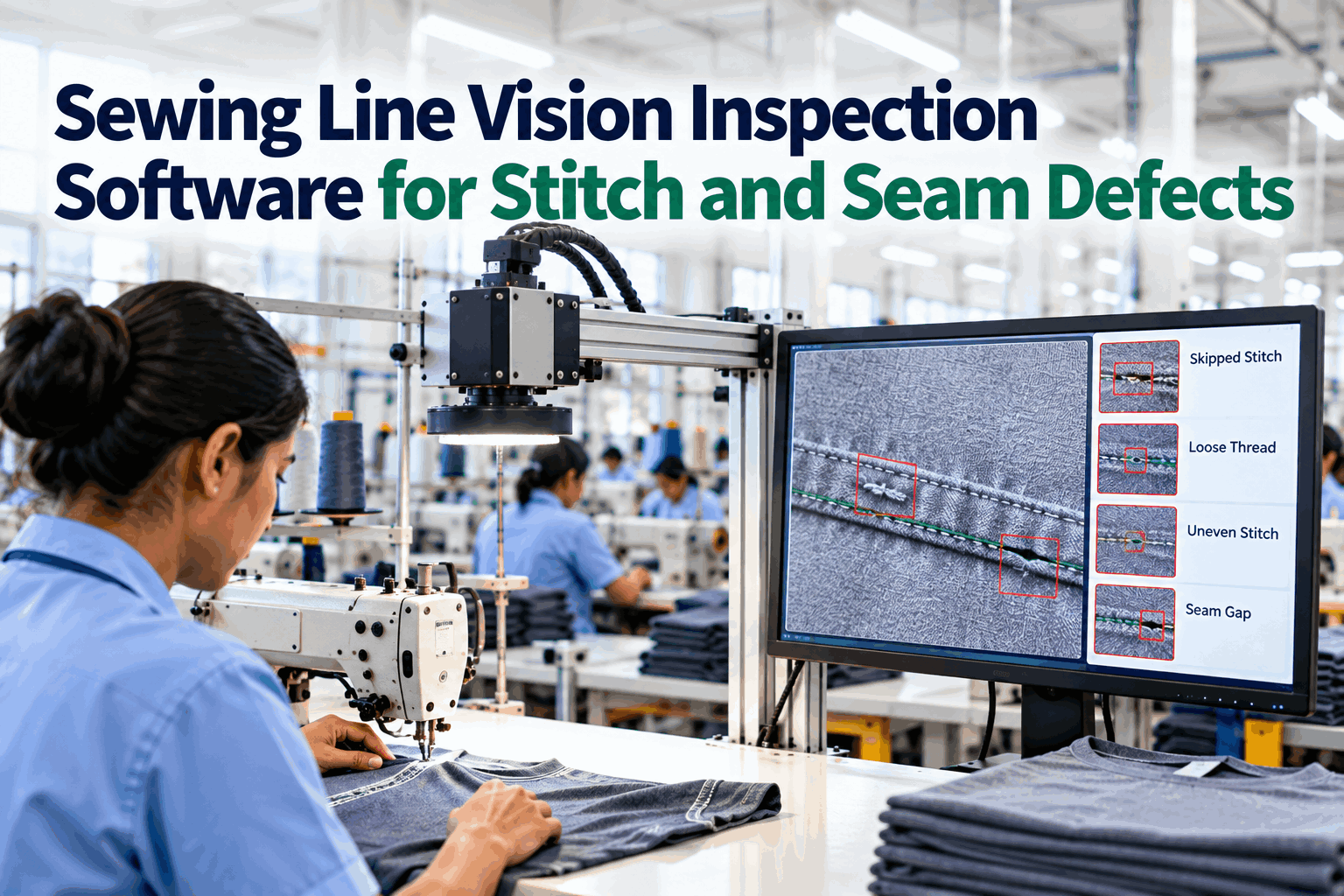
Read More
Stitches and seams hold a garment together, and they are where most sewing defects live. A skipped stitch, a loose loop on an overedge seam or a puckered topstitch can look minor on the line and become an open seam after the first wash. Because ea
Read More
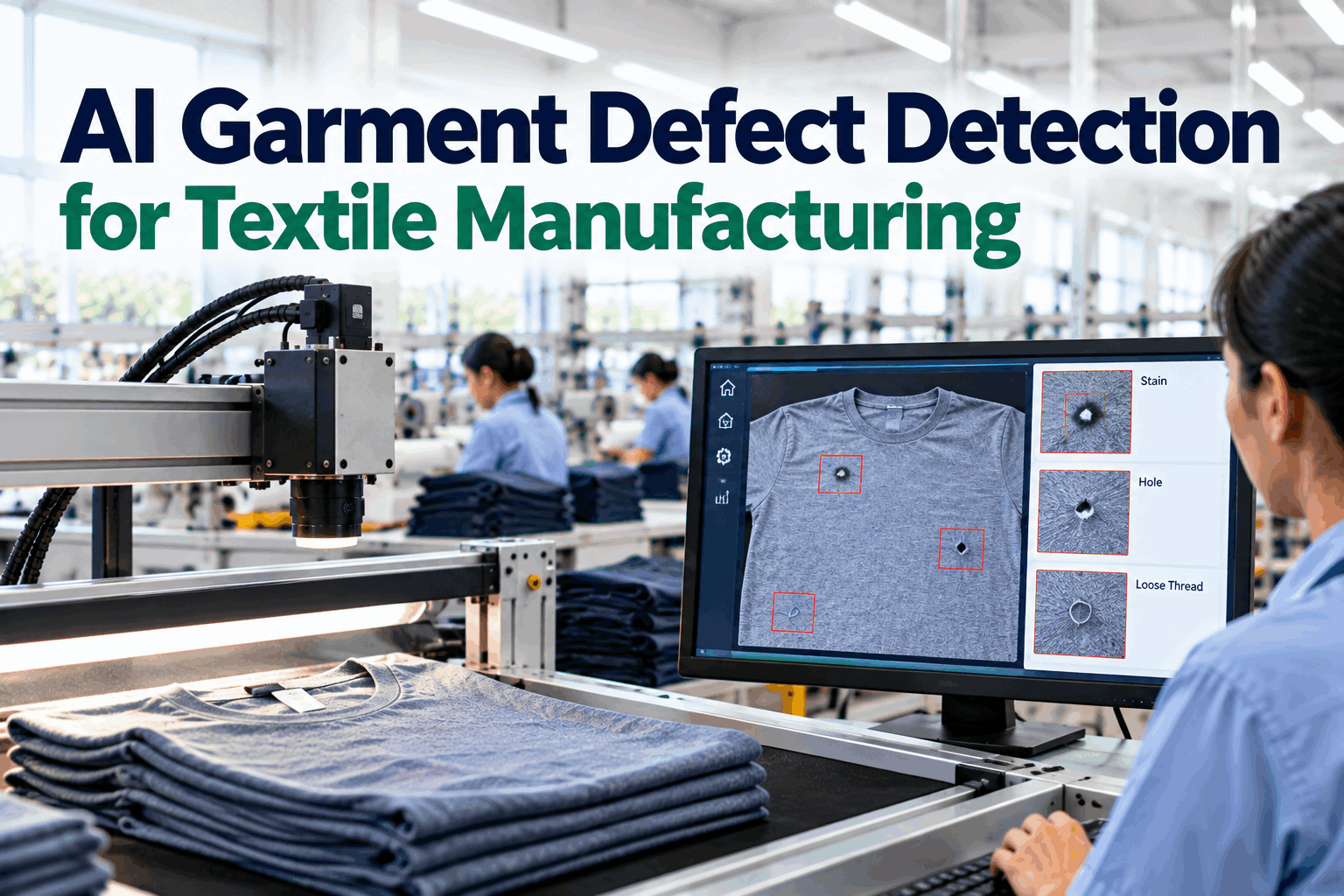
Garment defects are made one operation at a time and usually found all at once, at end-of-line checking or final audit. By then a skipped stitch on a side seam has been repeated across a whole bundle, and the fix is rework, not prevention. AI garm
Read More
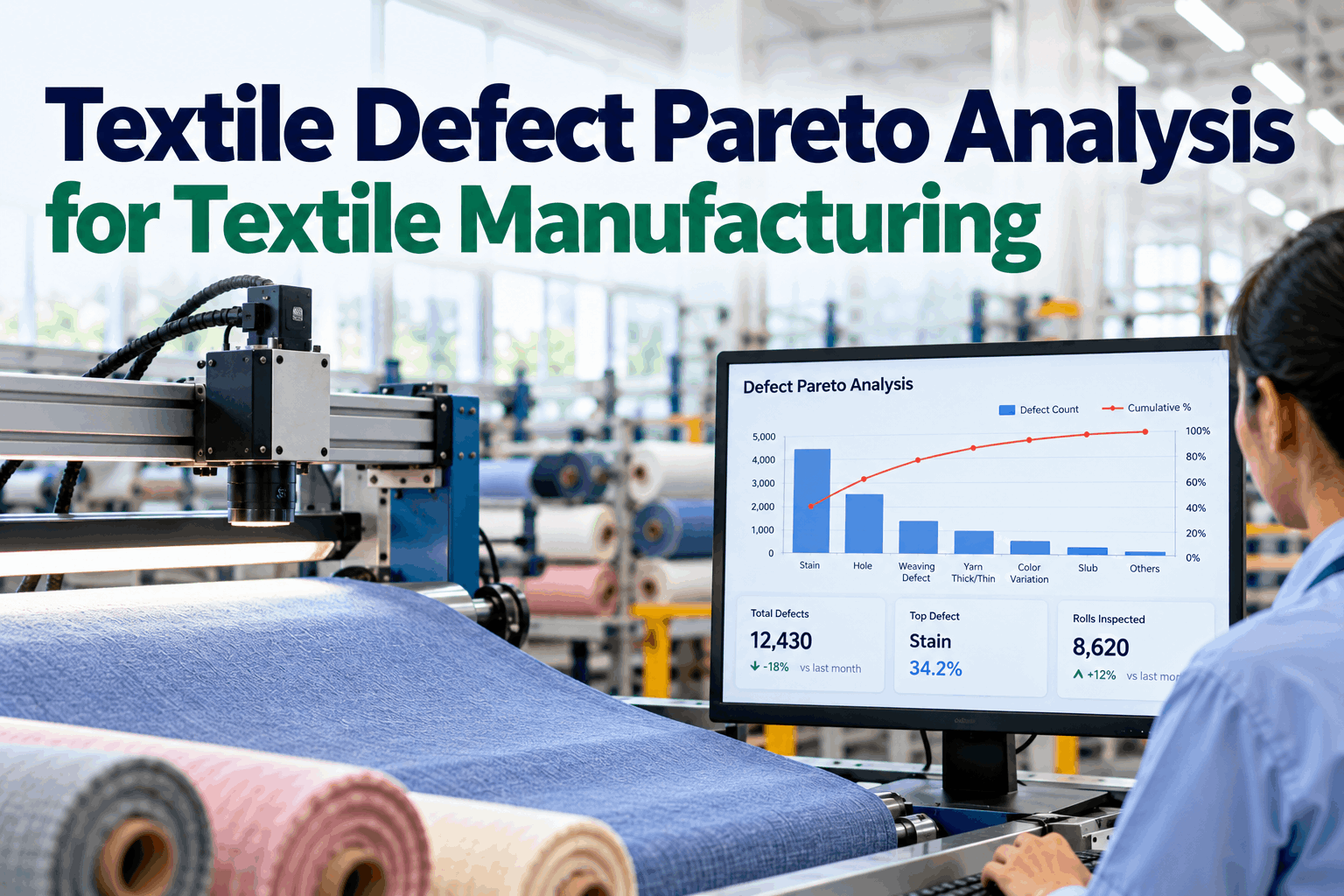
Every textile plant has more quality problems than it has time to fix. Pareto analysis is how you choose which ones to fix first. Rank defect categories by their impact, add up the running share, and focus on the few categories that account for mo
Read More
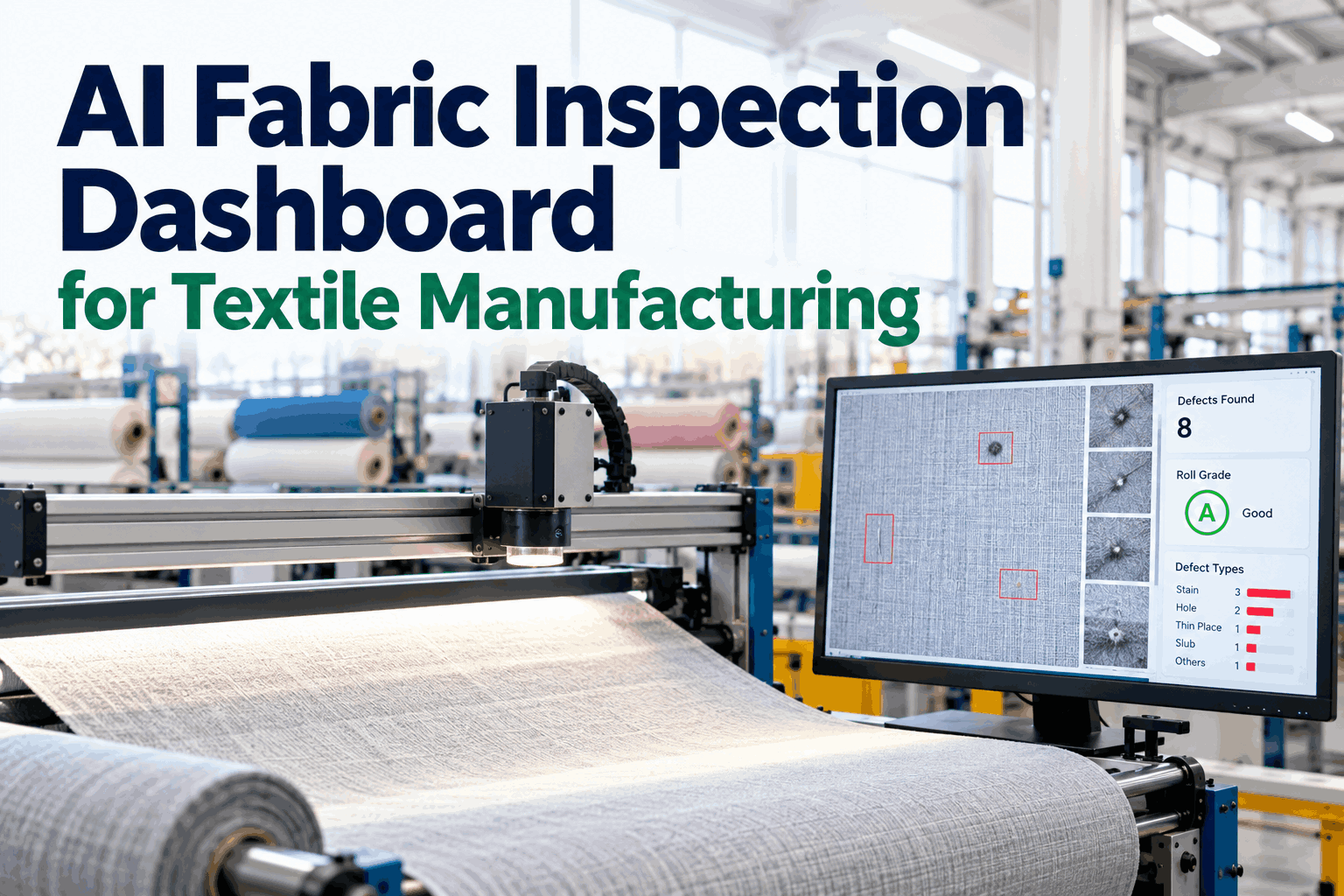
An AI inspection system can find thousands of defects a day. That is only useful if the right people see the right numbers in time to act on them. Too many inspection dashboards show everything and help with nothing: dozens of charts, no clear own
Read More
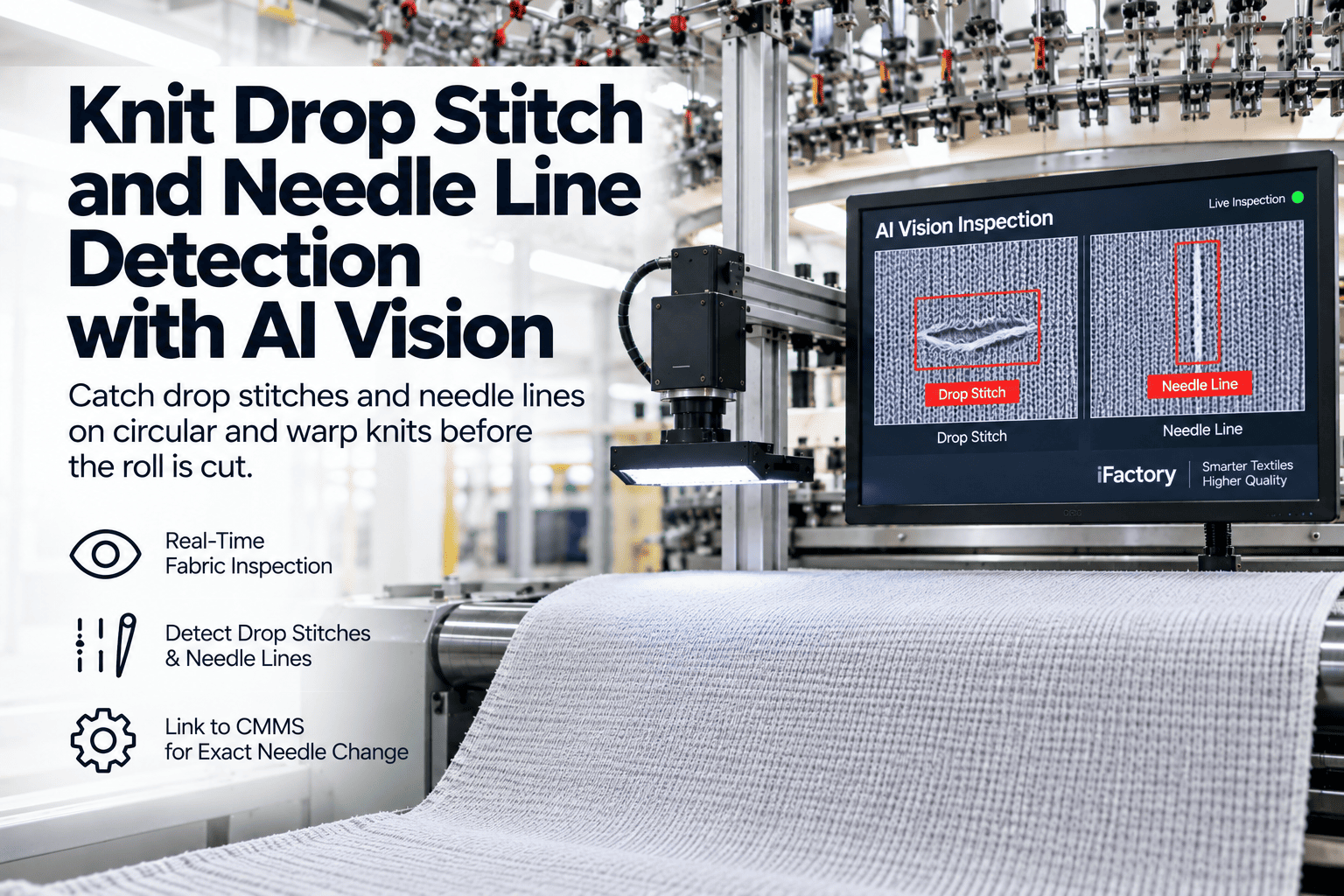
Drop stitches and needle lines on knits are the mechanical-attribution defects — every one traces to a specific needle position, and every hour of production without catching them multiplies the affected roll length. On circular kn
Read More
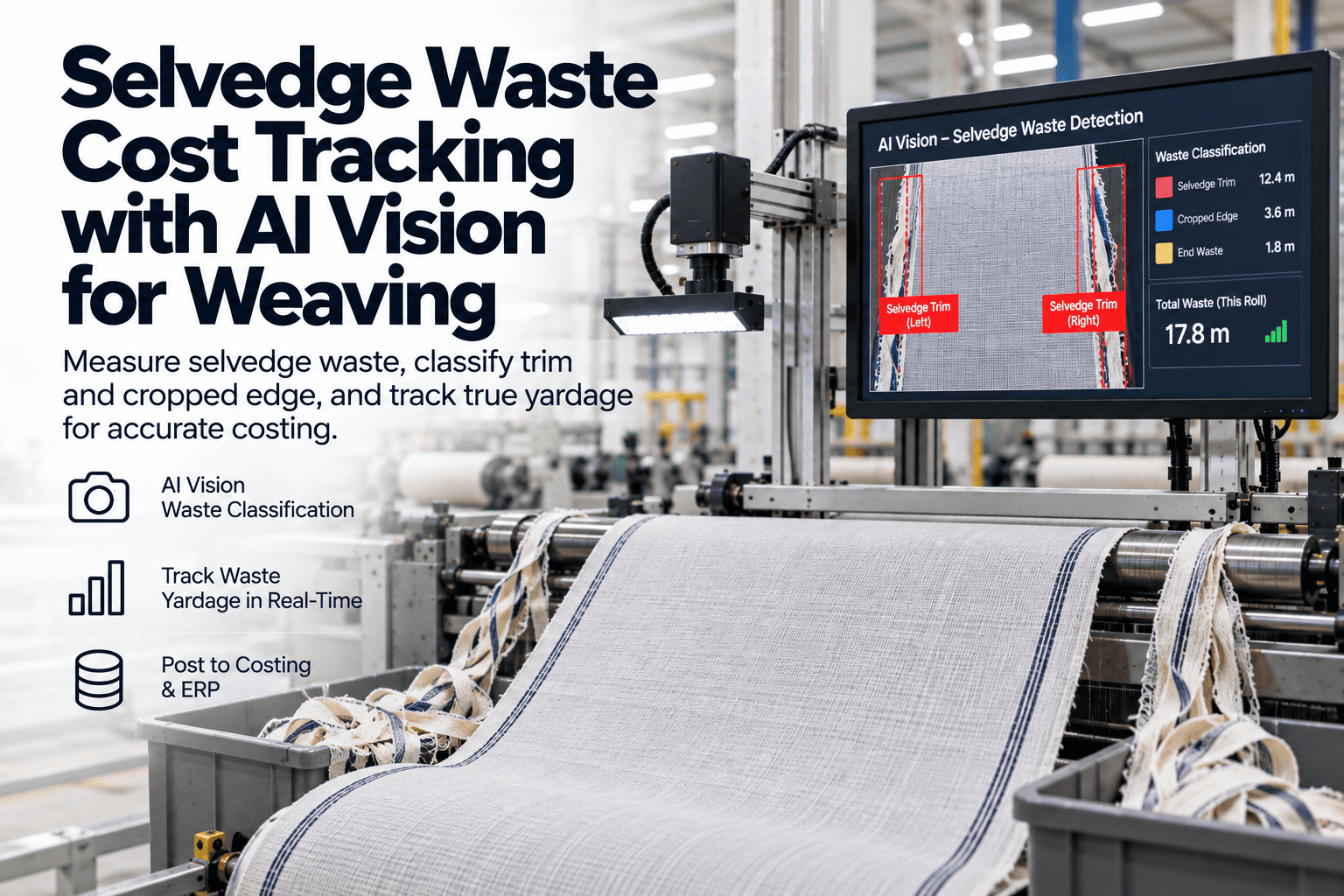
Selvedge waste is the fabric expense finance never sees on the P&L and operations never sees on the OEE board — the trim, cropped edge, end waste, and weft feeder waste that leave the loom as scrap rather than fabric. In a shed
Read More
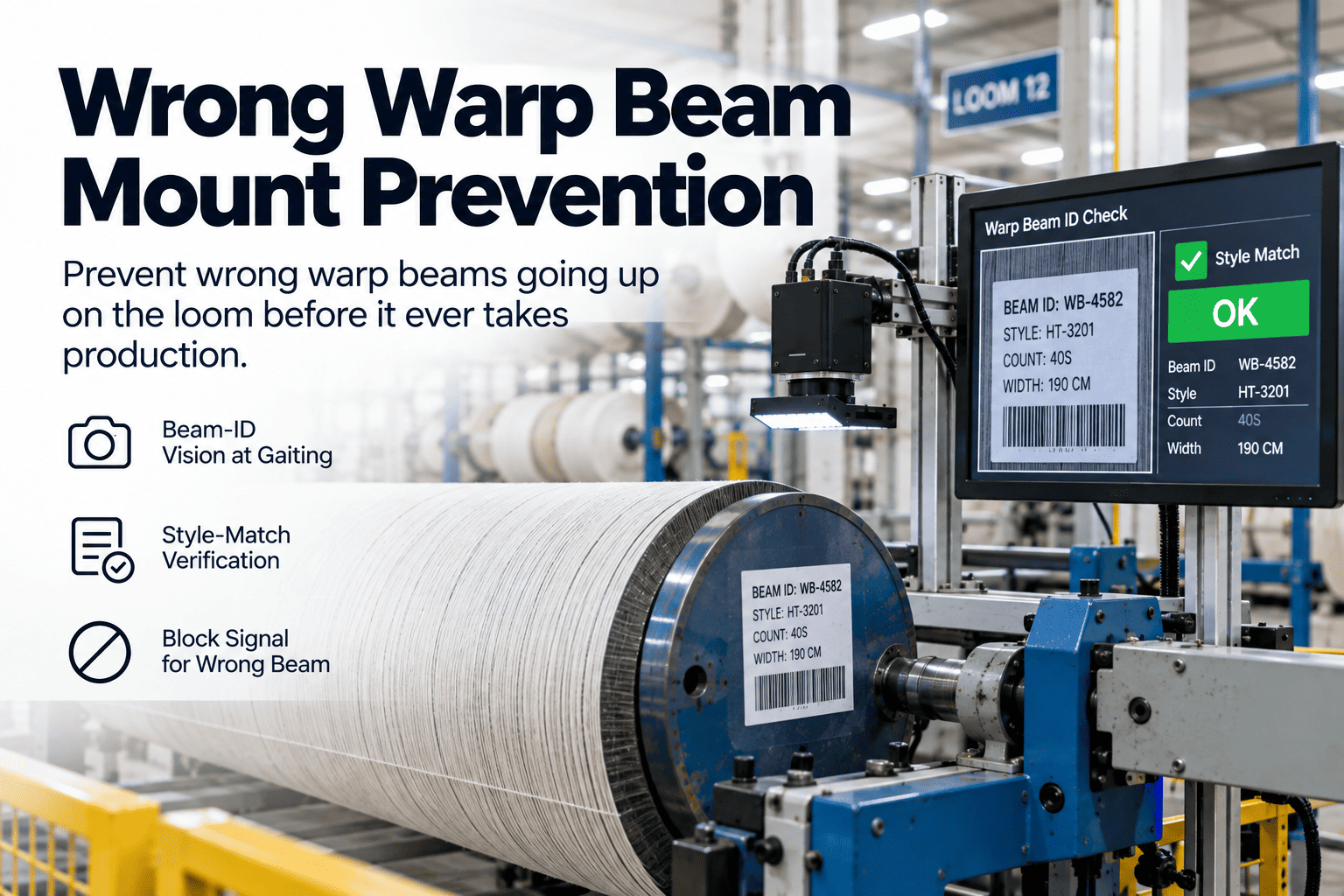
Wrong warp beams mounted on the wrong loom are one of the most expensive weaving prep errors — a beam intended for a bedsheet mounted on a loom set up for a curtain produces fabric that fails both intents, wastes the first 100-300
Read More
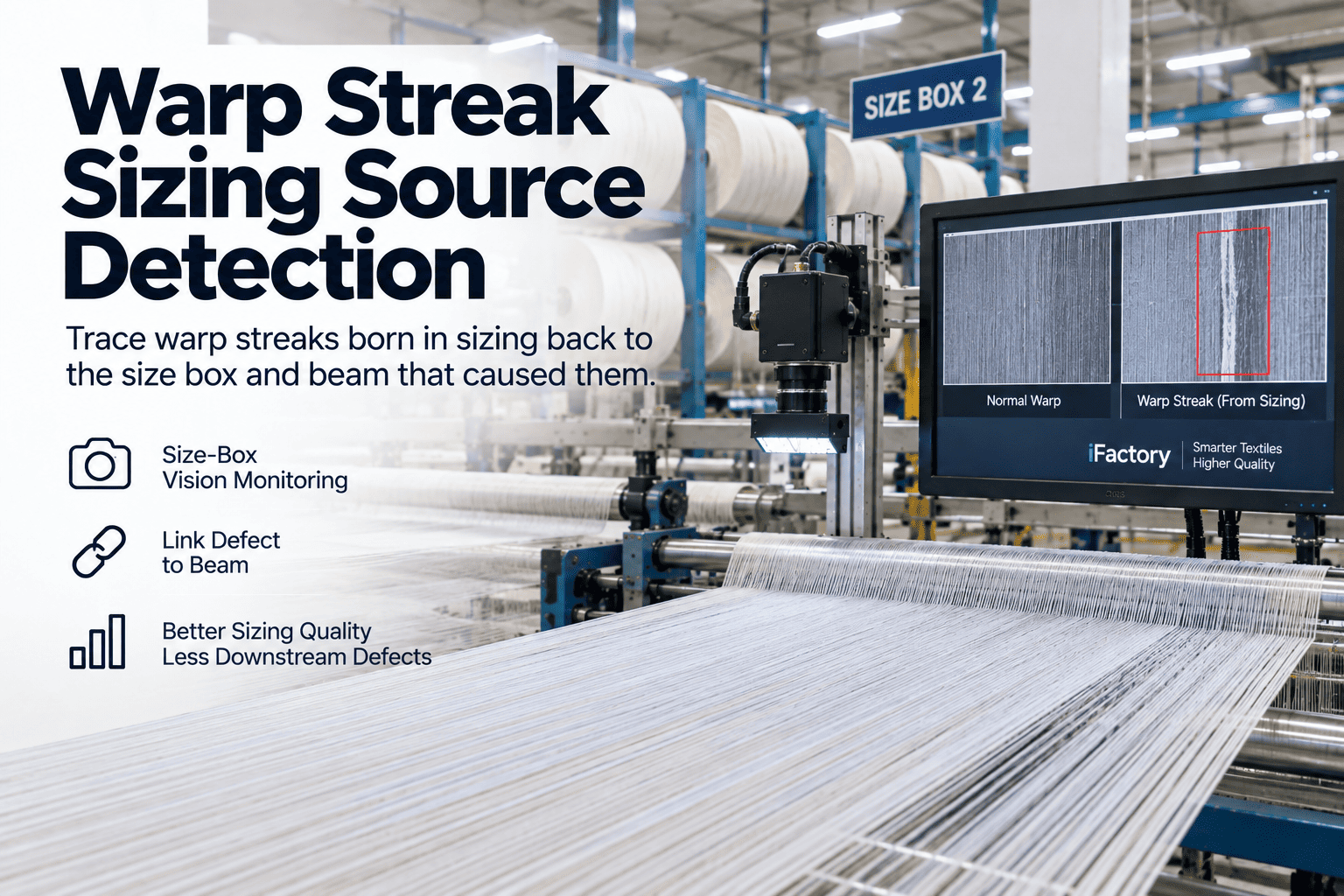
Warp streaks are the defect that finished-fabric inspection catches and nobody can trace back — a lengthwise stripe of subtly different colour or lustre that runs the length of the roll and shows only after finishing. The root caus

Read More
Reed marks and temple marks are the maintenance-driven weaving defects — a worn reed dent, a bent reed wire, a temple with sticking rollers leaves a marking pattern that repeats across every metre of fabric off that loom until the

Read More
Double picks, kinky weft, and floats are the classical woven defects that grey inspection catches and buyers penalise — every one avoidable if the loom flagged them at insertion rather than the inspector finding them 12 hours later
Read More
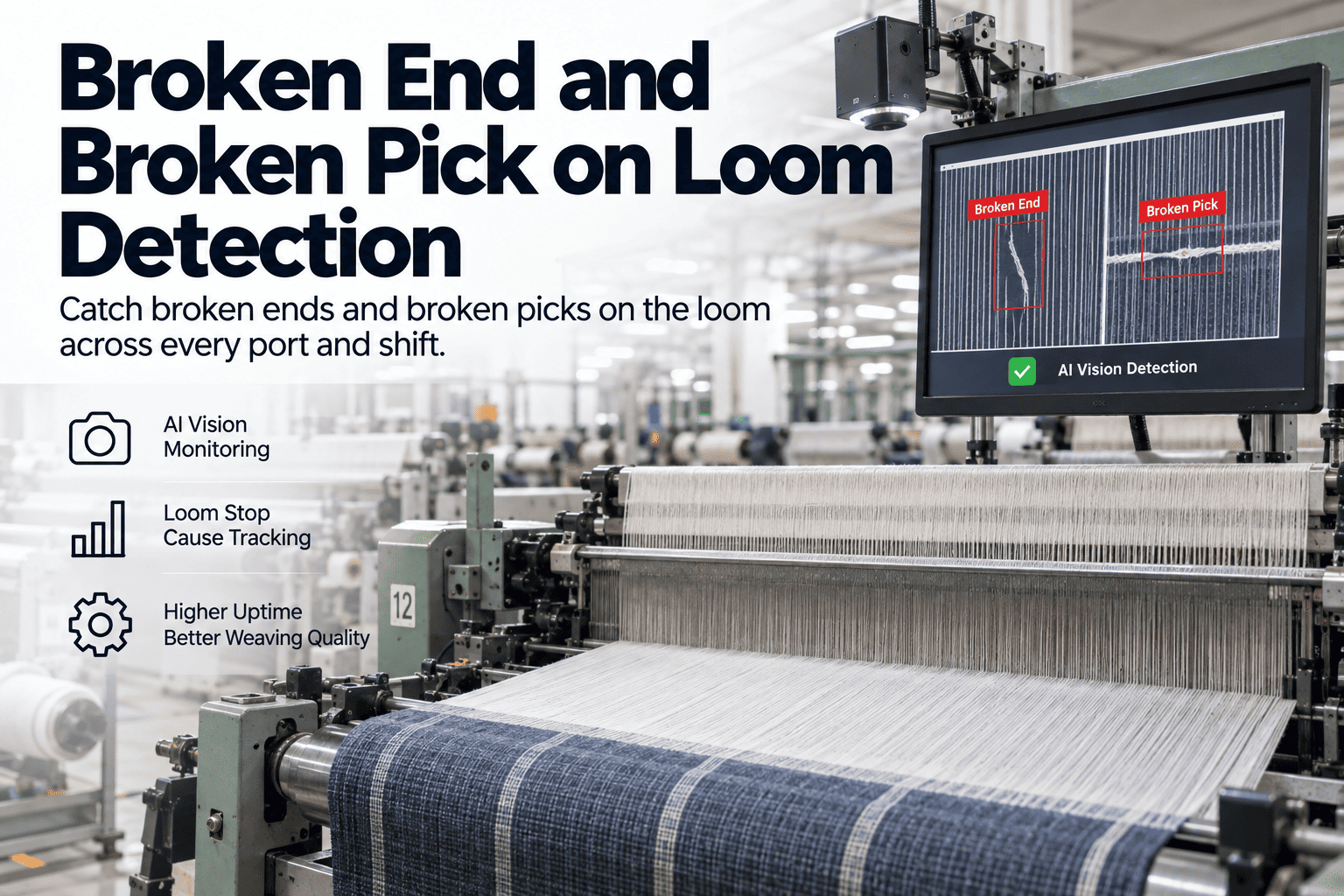
A weaving shed with 200-800 looms live at any moment is a running scoreboard of broken ends and broken picks — the two most common loom stop causes. Every loom stop is either quickly cleared or slowly cleared (operator was on the f
Read More
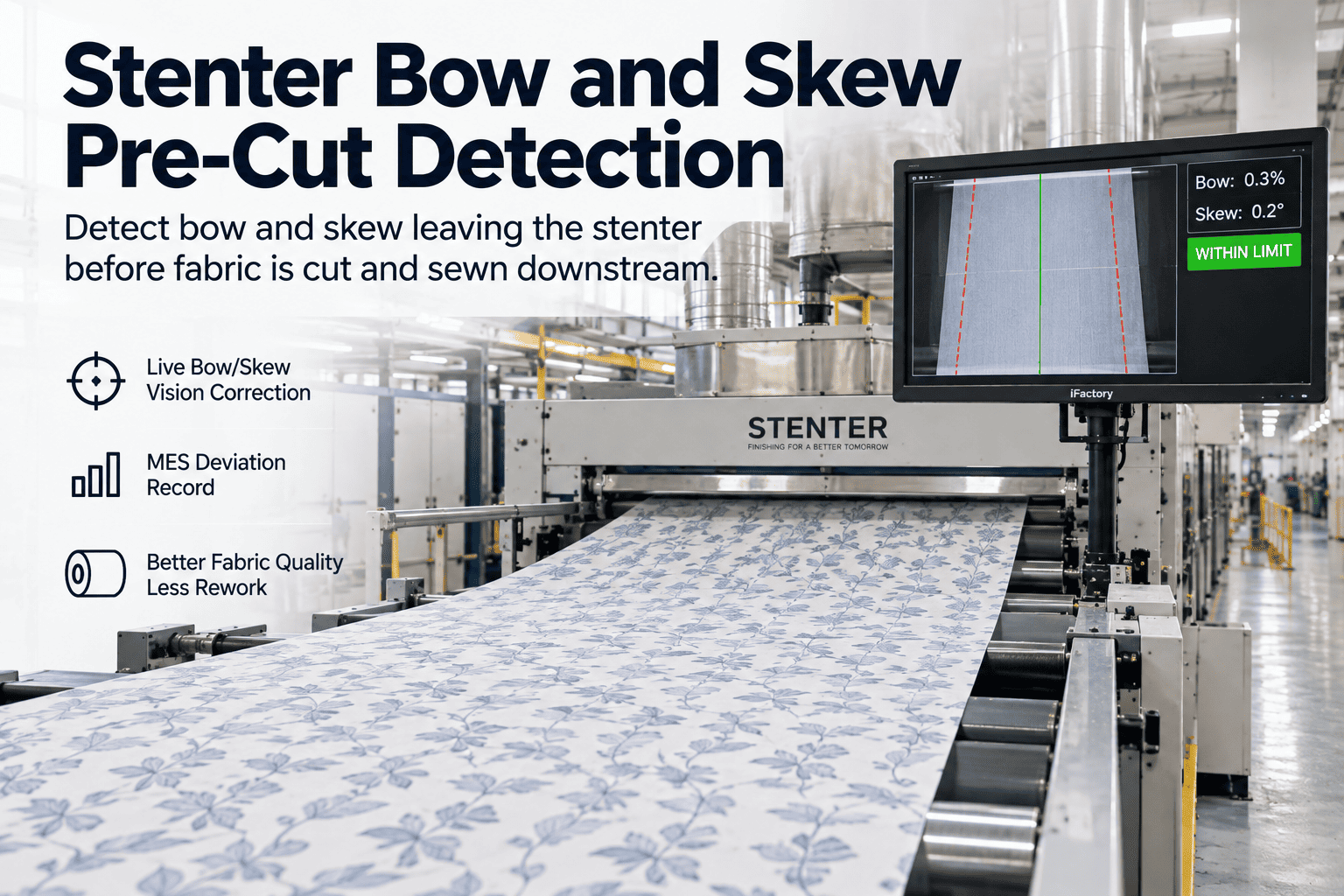
Bow and skew are weft-alignment defects that leave the stenter looking fine to the eye and destroy the fabric downstream in cutting and sewing. A weft that curves 2% (bow) or angles 3% (skew) across the width will not match at seam

Read More
Technical textiles — waterproof breathables, PU-coated tarps, TPU-laminated fabric, medical barrier fabrics — are built on the coating line and killed there too. A coating skip from a momentary knife-over-roll gap or a laminate voi

Read More
A rotary print machine runs 8, 12, or 24 screens laying successive colours onto fabric in tight registration. When one screen drifts even 0.5 mm off, the pattern doubles or leaves a halo — and drift compounds roll after roll until
Read More
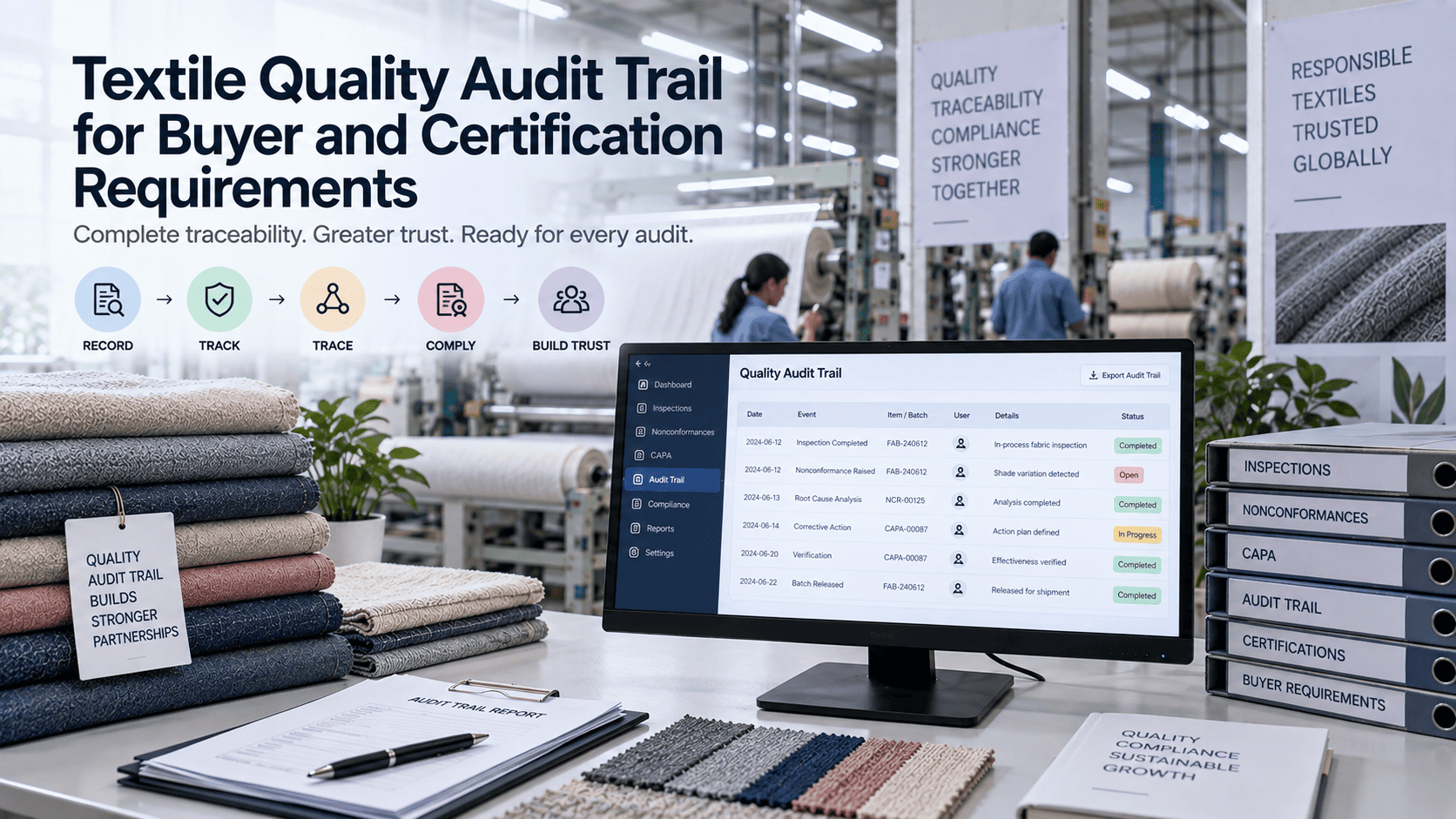
A textile mill exporting to Europe and the US runs multiple audit standards in parallel — OEKO-TEX Standard 100 renewed annually, GOTS v8.0 for organic certification with chain-of-custody, BSCI or amfori every two years for social

Read More
A textile customer complaint typically arrives with a photograph, a shipment number, and a demand — a defect on a finished garment or a fabric roll, tied to a shipment that left the mill weeks or months ago. The buyer expects an an
Read More
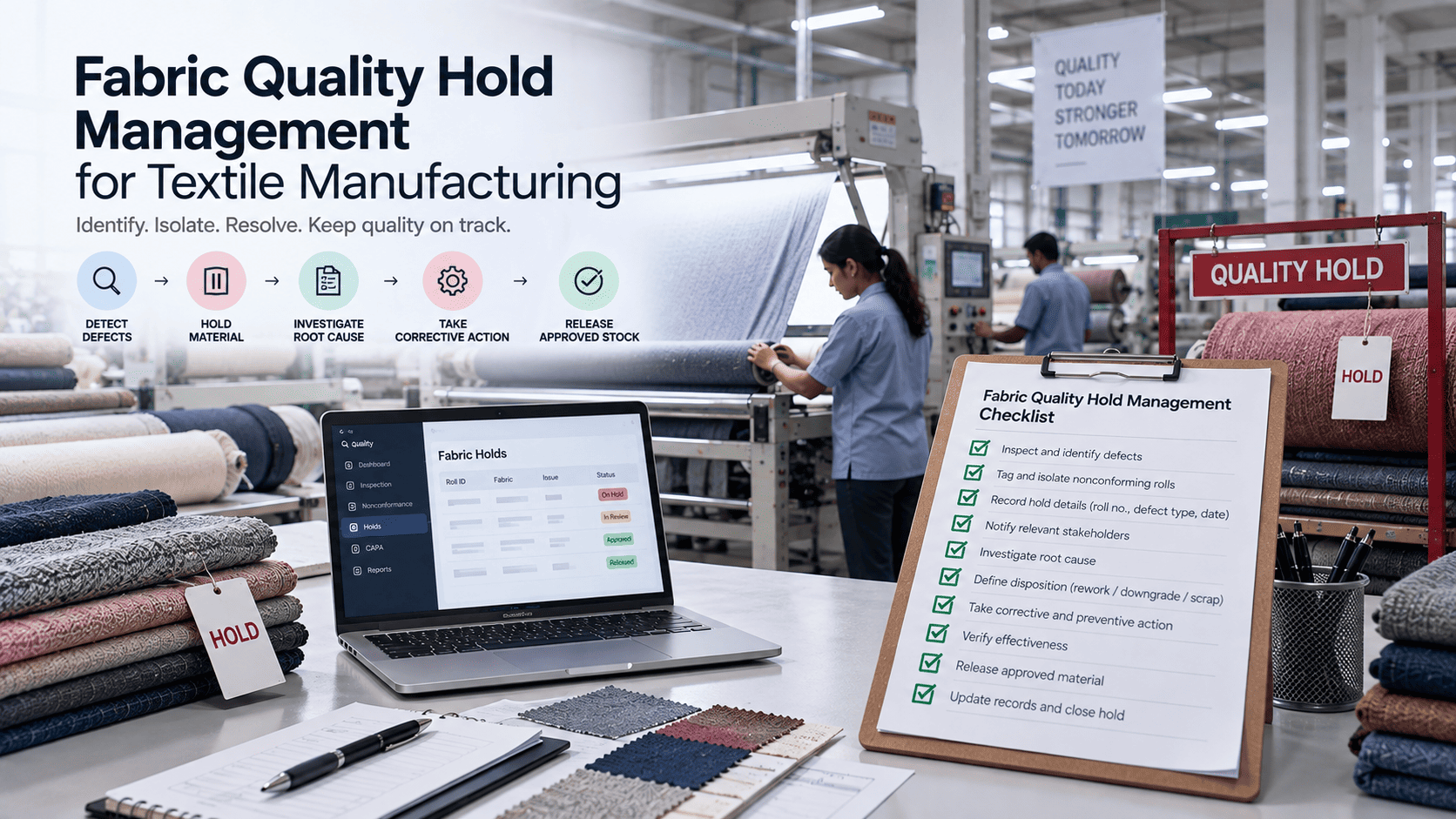
A fabric quality hold is not a decision — it is a delay of a decision. A roll fails inspection, gets marked with a hold tag, and moves to the hold area. Then, in most mills, it sits. Some rolls sit for days waiting for the QA head.
Read More
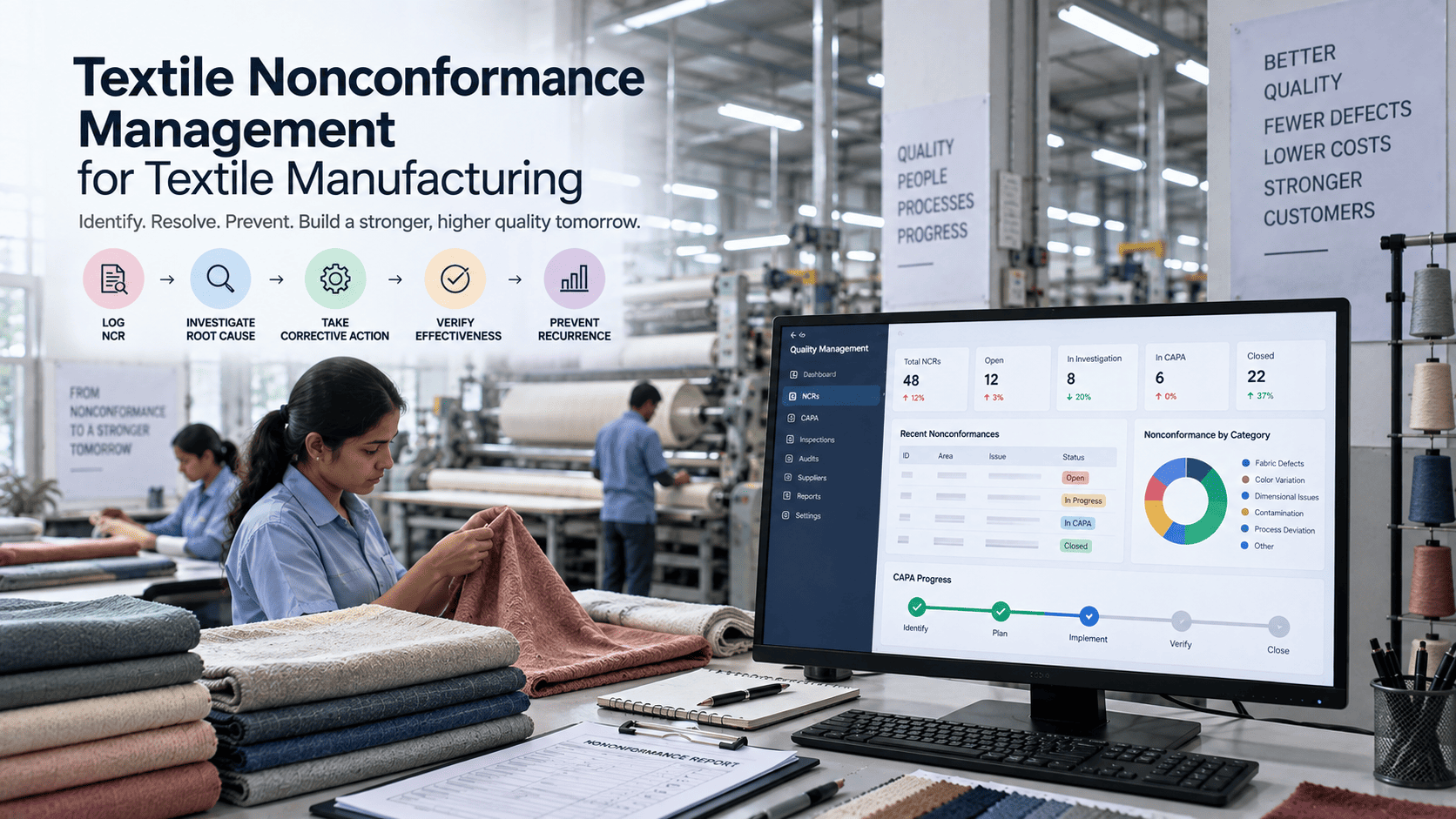
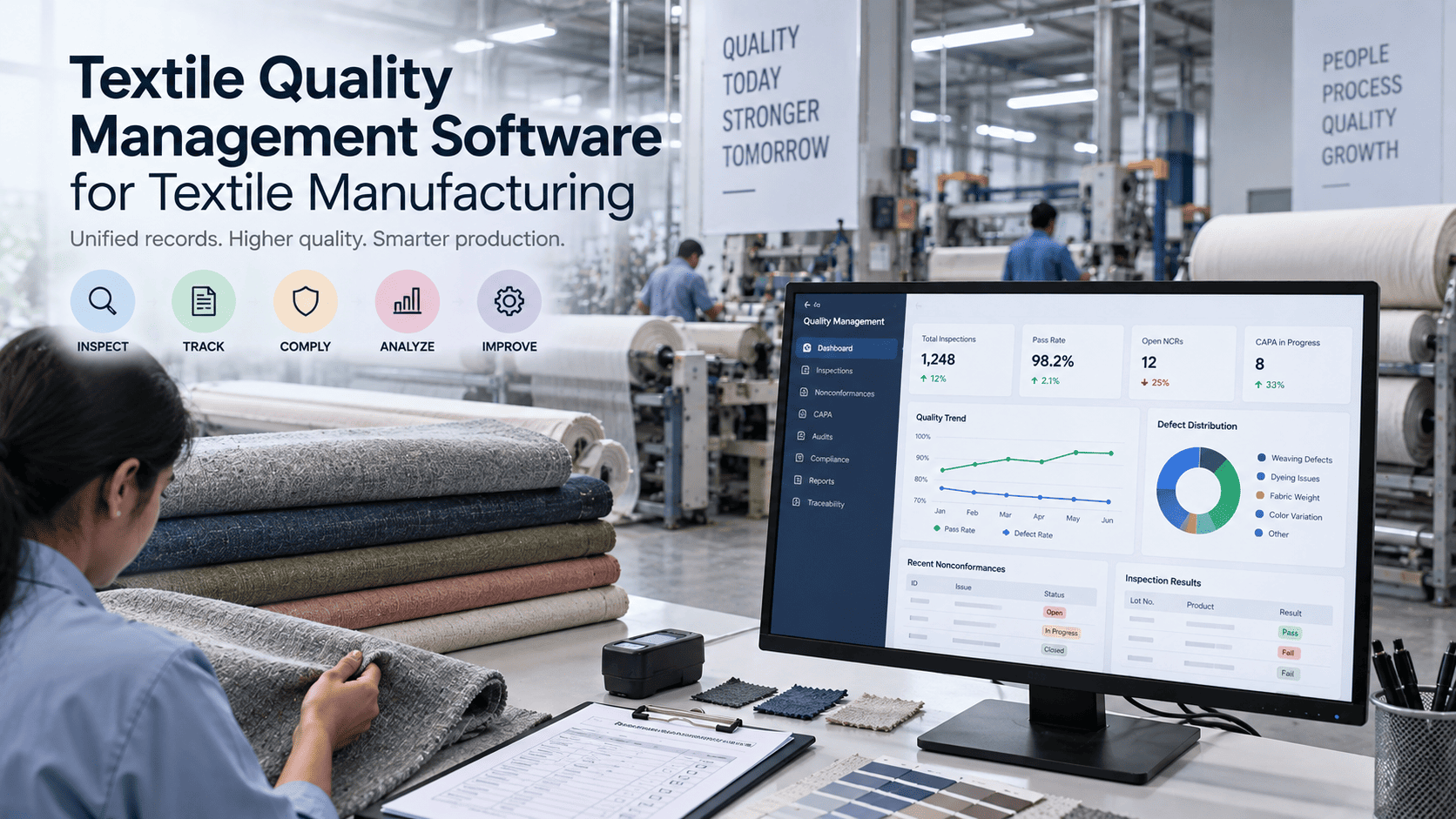
A textile nonconformance is easy to detect and easy to record — an inspector marks a roll as failed, a lab test comes back below spec, a buyer files a claim. What is hard is what happens next. In most mills the nonconformance repor
Read More
A textile mill’s quality data is not missing — it is scattered. The loom stop log is on paper in the weaving shed. The 4-point inspection sheet is in Excel. The lab test PDF sits in a shared drive. The AQL audit report is in the QA

Read More
Every new style a textile mill launches passes through the same silent test: does the tech pack the design team drew match the fabric the sourcing team bought, the fit the pattern maker cut, and the trims the merchandiser confirmed
Read More
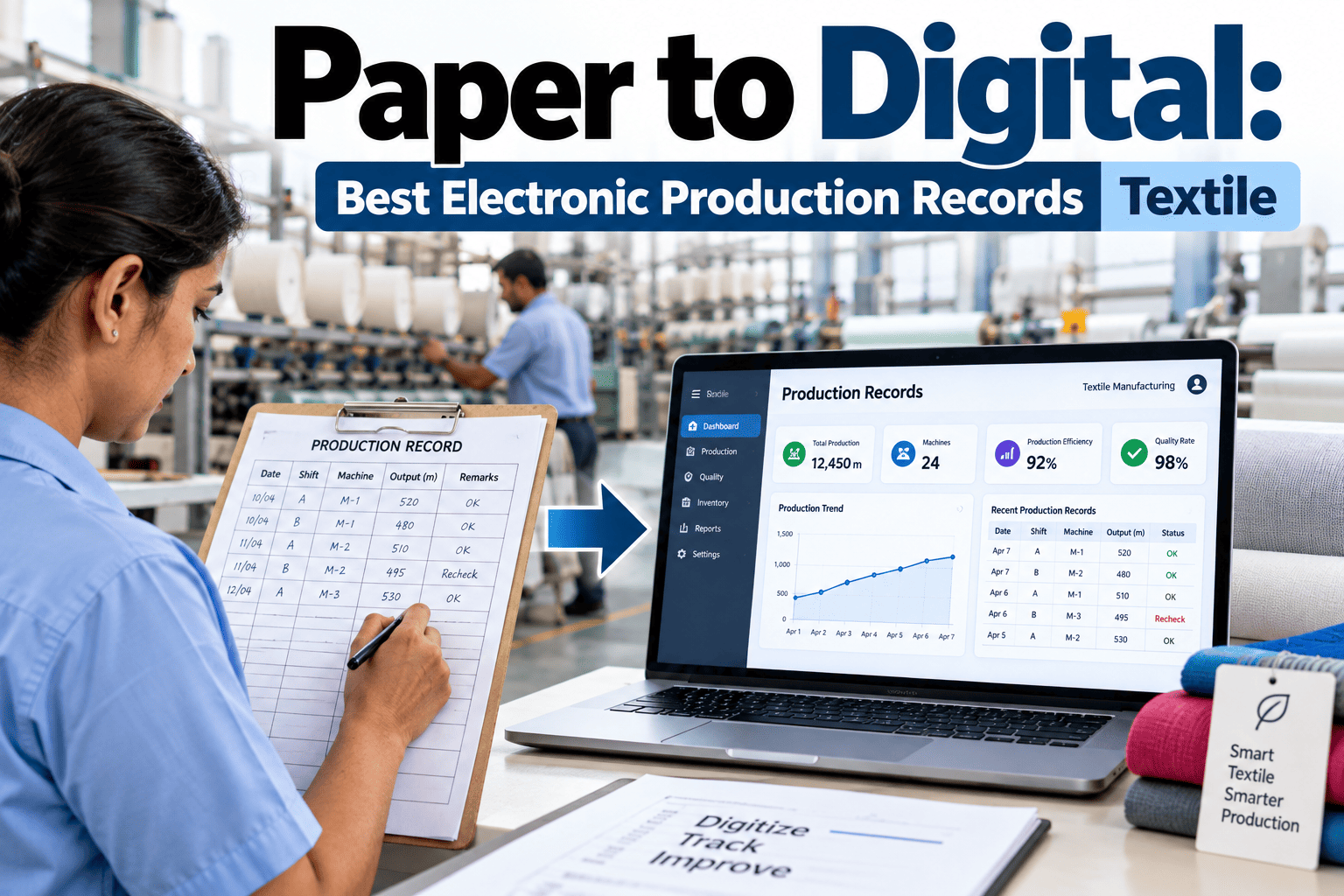
A textile mill running three shifts across dyeing, weaving, and finishing typically generates hundreds of paper production tickets, quality checksheets, and shift logs every single day — most of which get filed in a binder, glanced at once, and ne
Read More
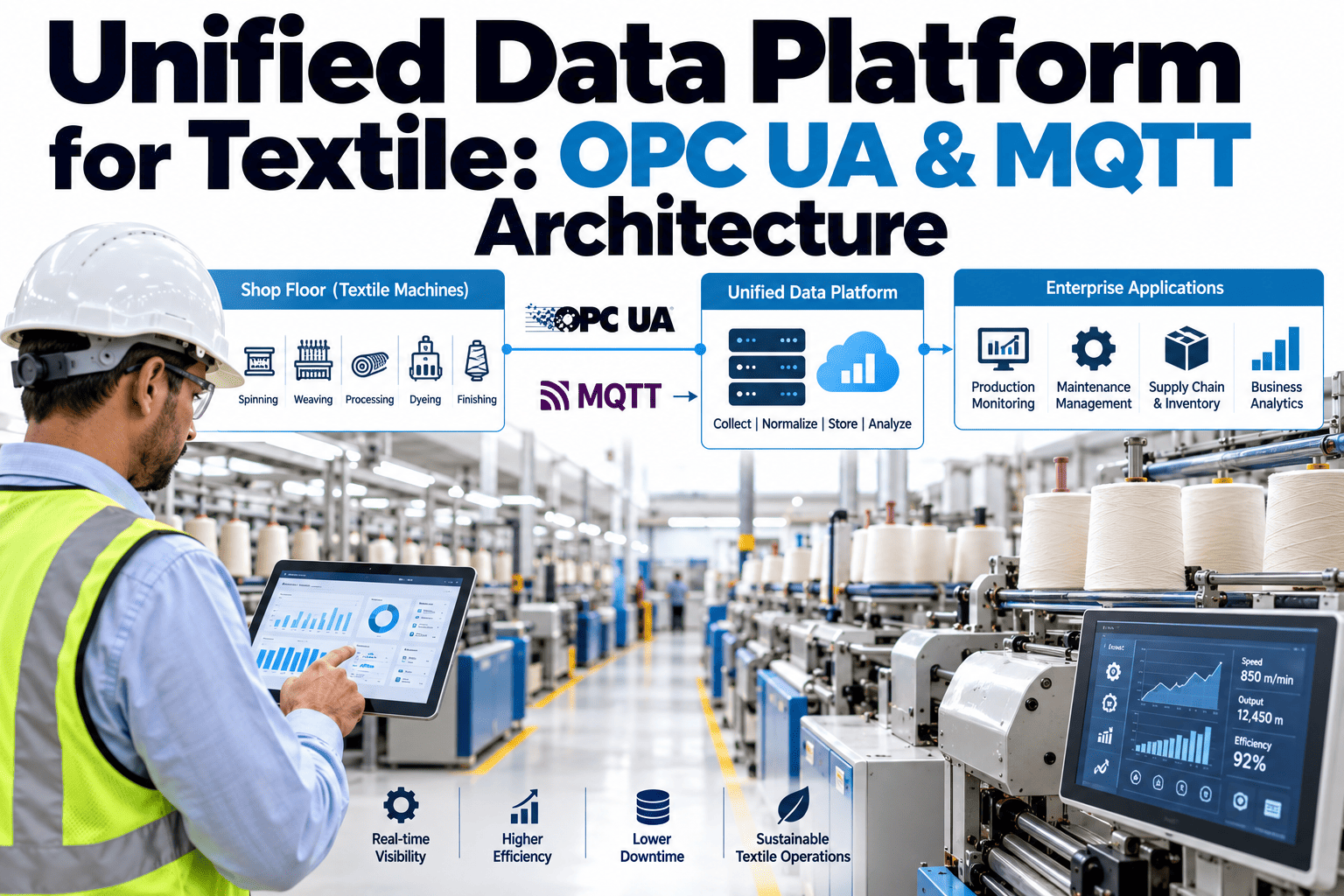
A textile mill accumulates data silos the way any manufacturing operation does — a knitting department tracking its own numbers in a spreadsheet, a dyeing department using a different system entirely, and a finishing department relying on paper lo
Read More
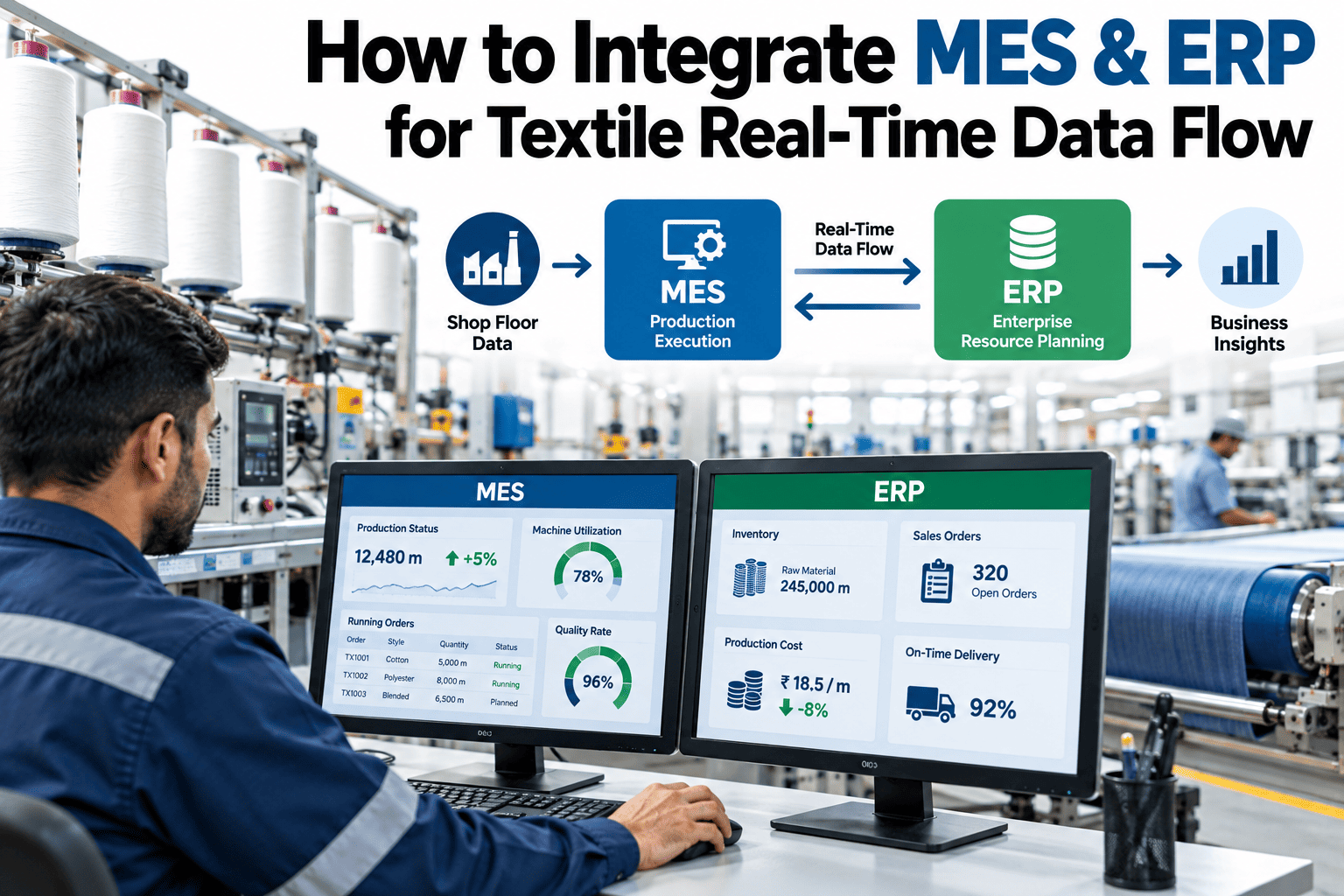
A production order created in the ERP has to reach the MES on the shop floor before work can start, and the material consumption, quality results, and labor hours generated on the floor have to flow back to the ERP before anyone in planning, finan
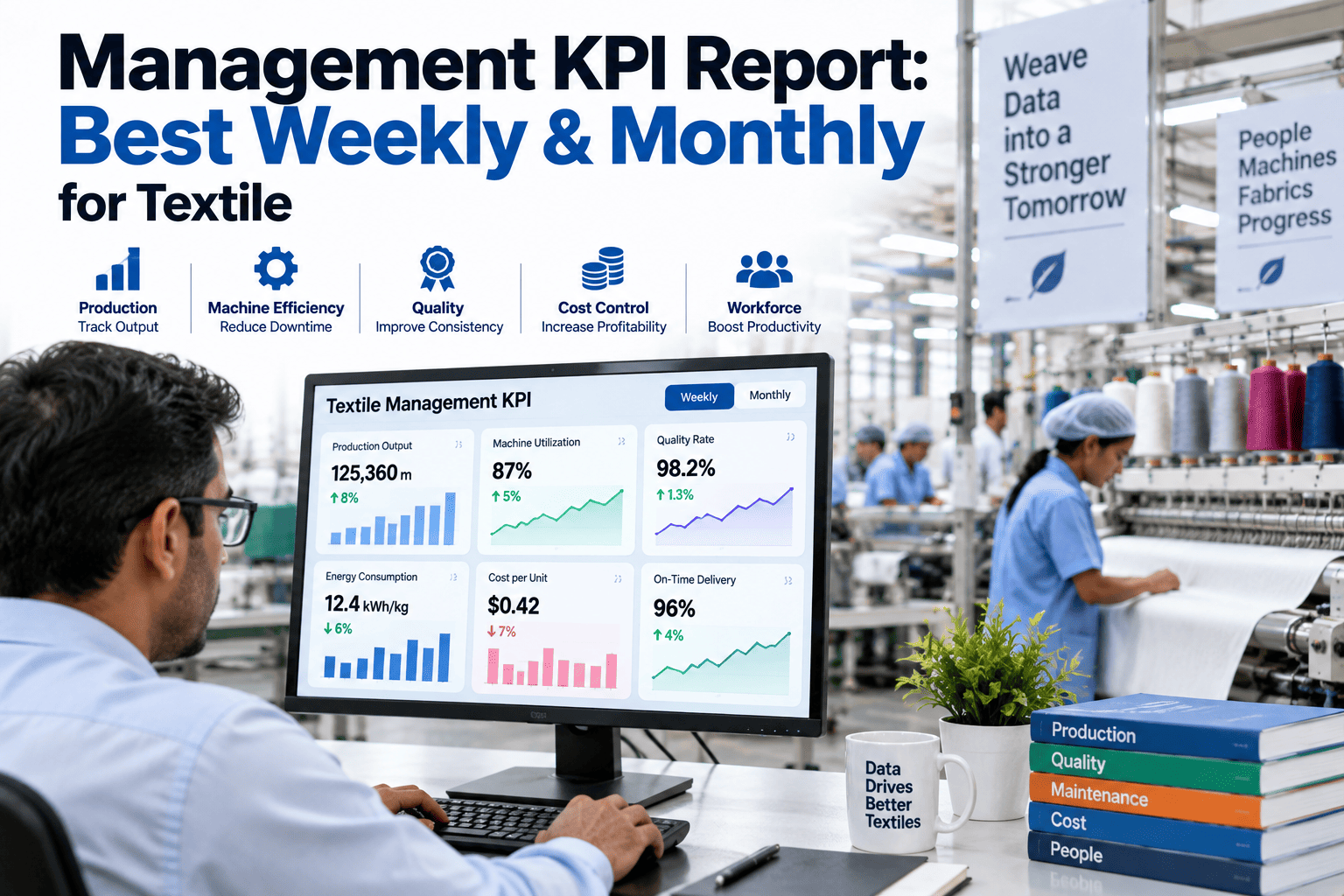
Read More
A weekly management review and a monthly one answer genuinely different questions, and a mill that runs both off the same report template usually ends up with a document that serves neither purpose well — too dense for a quick weekly check-in, too

Read More
A KPI dashboard is only as trustworthy as the data feeding it, and in a textile mill that data typically arrives from three very different sources at once — PLCs on the loom or knitting machine reporting cycle counts automatically, IoT sensors tra

Read More
A paper inspection form seems harmless enough on its own — an inspector walks the line, marks defects on a printed sheet, and hands it in at the end of the shift. But multiply that single form by dozens of inspectors across multiple shifts and mul
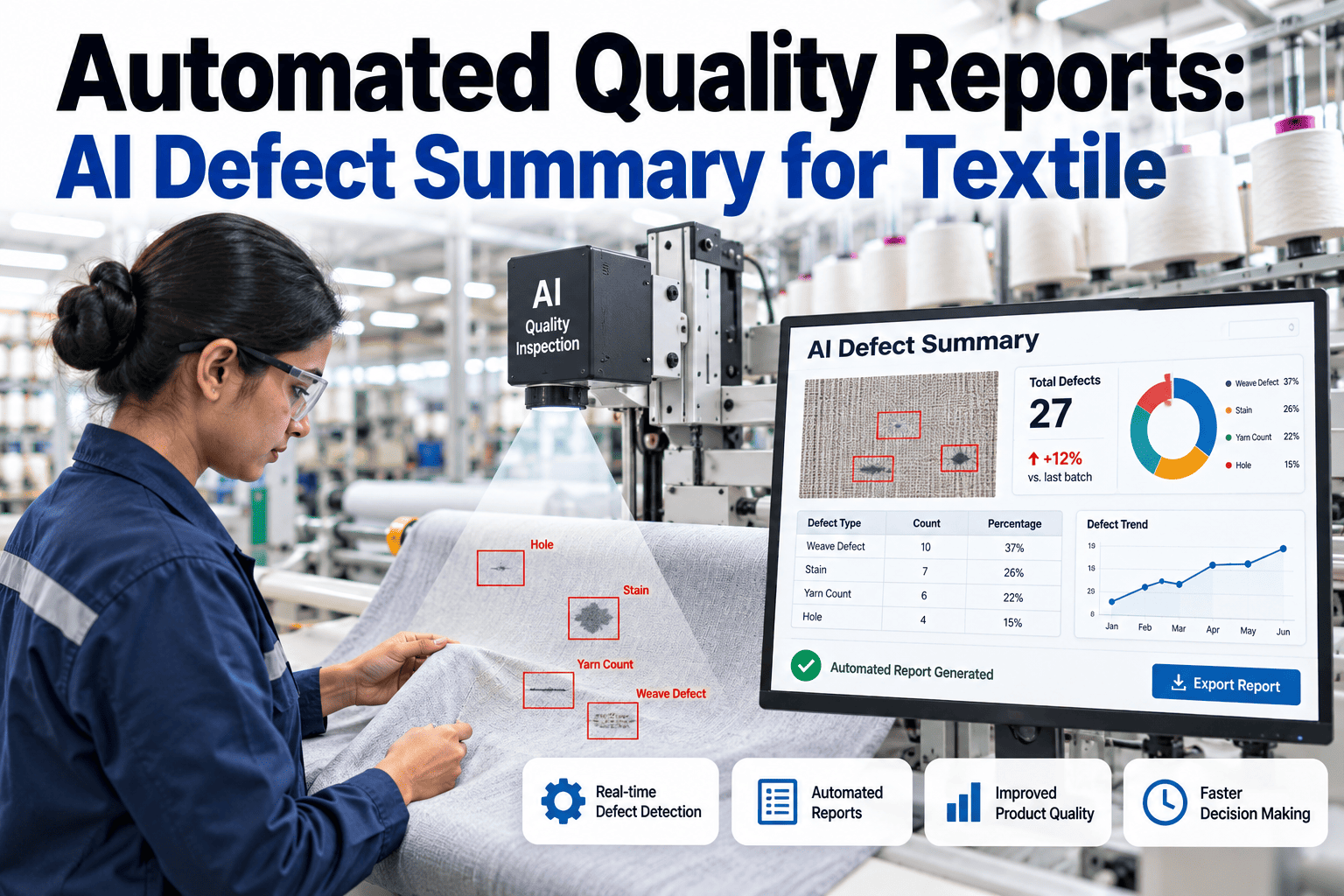
Read More
Quality managers in textile mills spend a disproportionate share of their week compiling reports rather than acting on what those reports reveal — pulling defect counts from inspection logs, cross-referencing them against machine and shift data, a
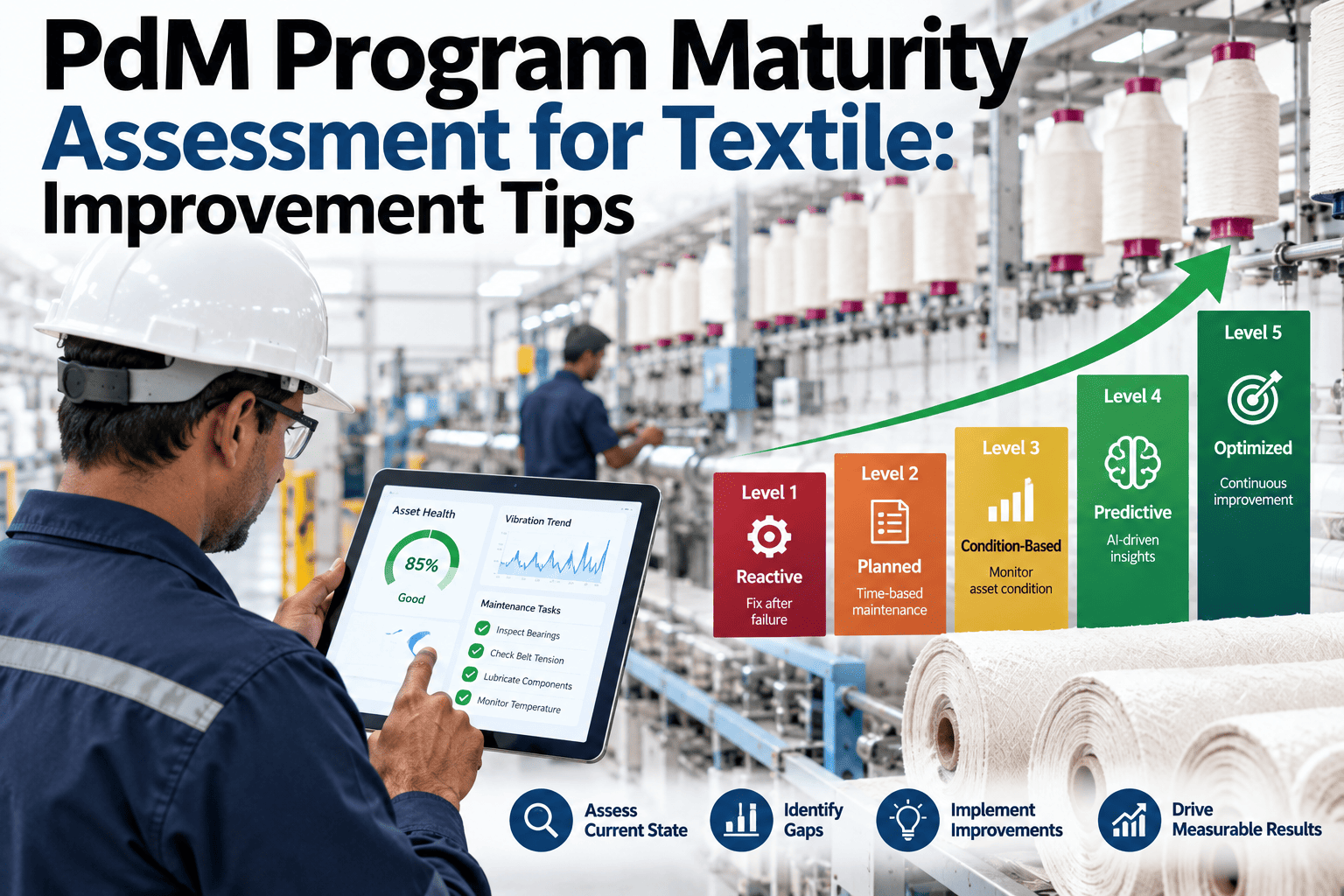
Read More
Most textile mills that have invested in predictive maintenance sensors do not have a clear answer to a fundamental question: how mature is our program actually? Sensors installed on a handful of critical machines is not the same as a functioning
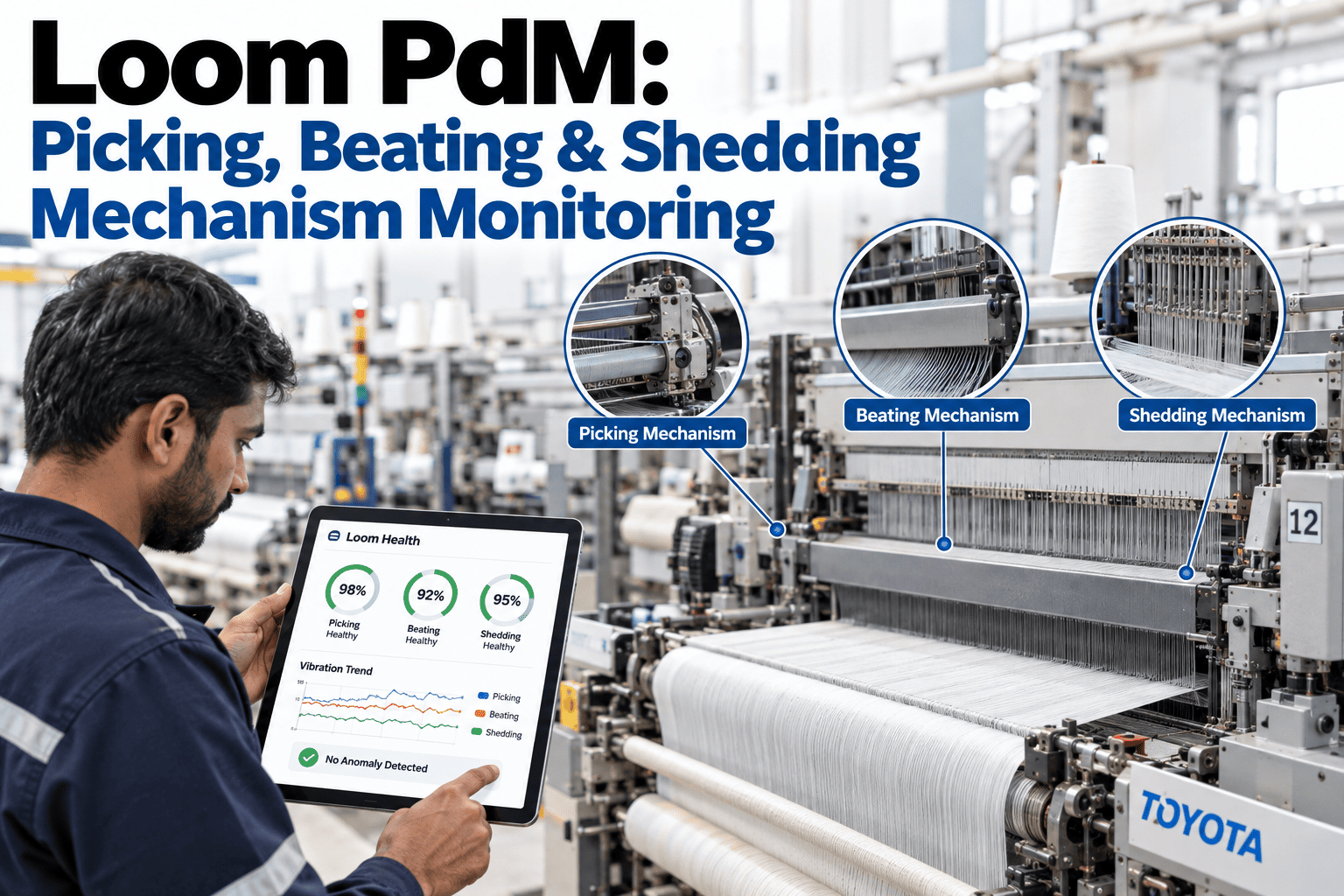
Read More
A loom running at full speed makes thousands of mechanical interactions every minute — the picking mechanism hurling the shuttle or projectile across the shed, the beating mechanism driving the reed forward to pack each weft thread into the fell o

Read More
A dyeing machine is one of the most mechanically and thermally stressed assets in a textile mill, cycling hot dye liquor through circulation pumps, driving motors under variable load, and relying on heat exchangers to hit precise temperature profi

Read More
Two textile manufacturers can produce functionally similar fabric at similar cost, and still end up in very different competitive positions with the same retail buyers — because one can prove, with real-time data, exactly how consistent their qual
Read More
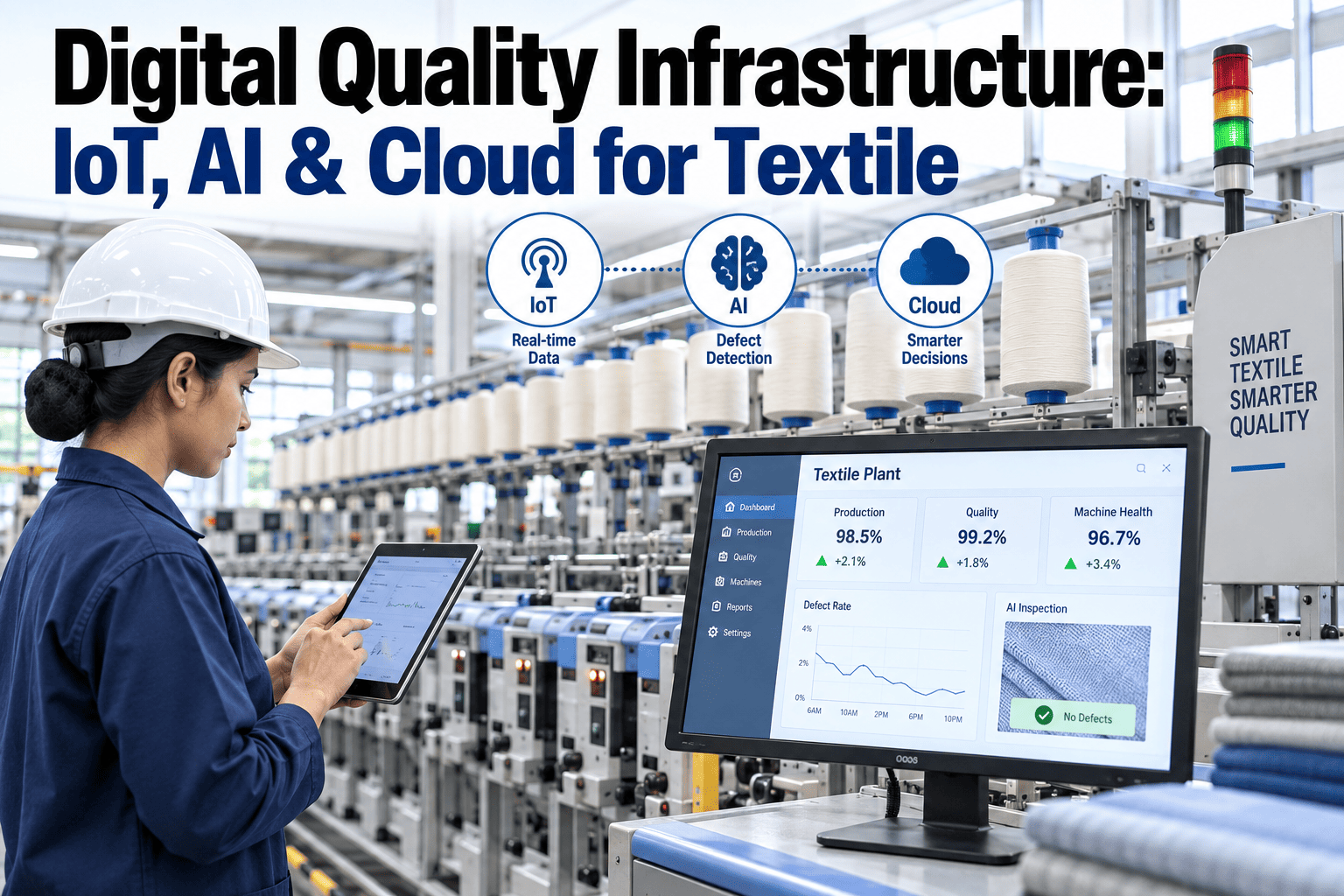
Textile manufacturers exploring smart quality management often start by asking which AI inspection tool to buy, when the more foundational question is what infrastructure needs to exist underneath that tool for it to actually work at scale. An AI

Read More
Sustainability and quality management get treated as separate initiatives in most textile manufacturers — a sustainability team tracking water usage and eco-certifications, a quality team tracking defect rates and customer complaints, each reporti
Read More
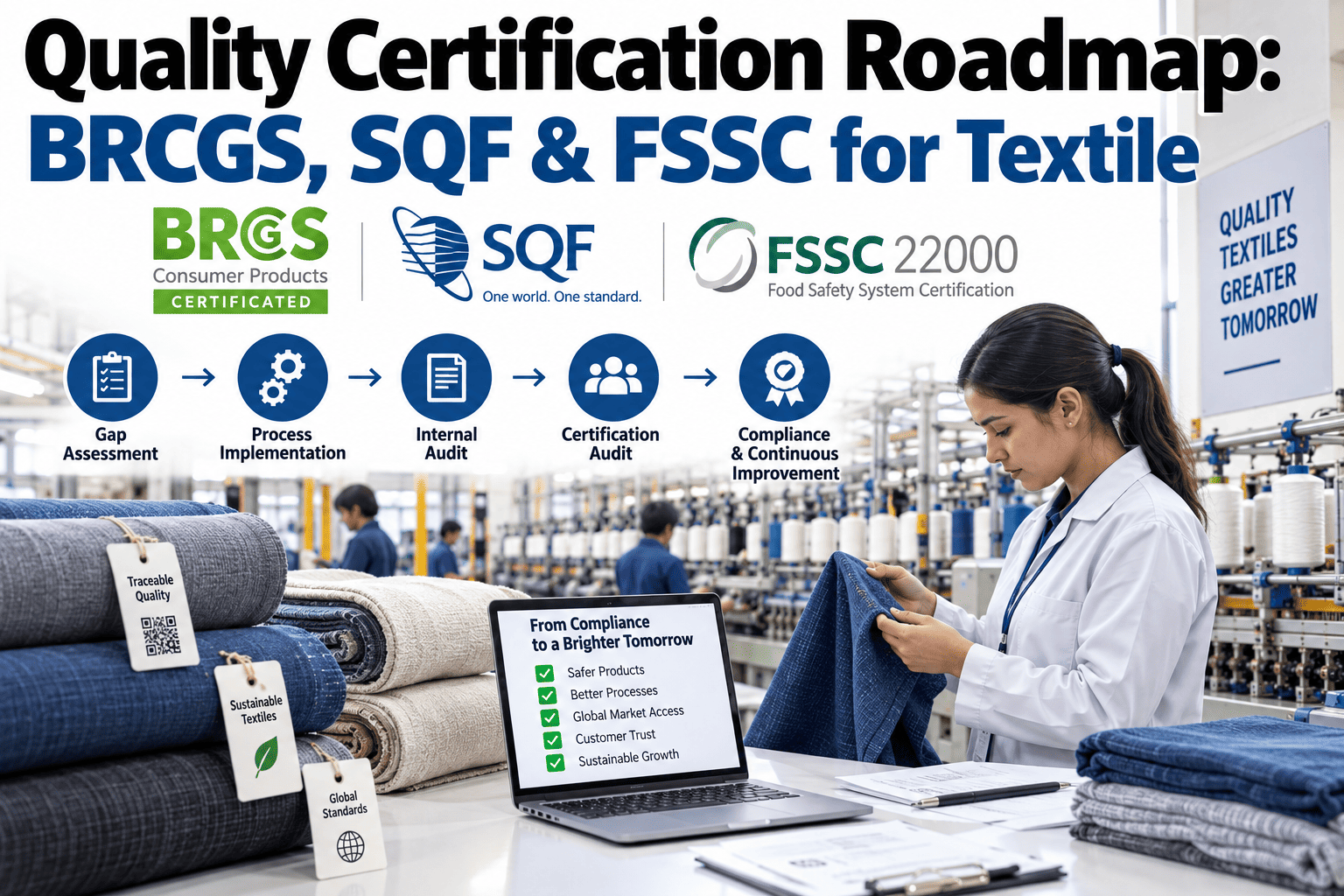
A textile manufacturer chasing three certifications at once — BRCGS, SQF, and ISO 9001, say — often discovers halfway through that each audit body wants overlapping but not identical documentation, and without a coordinated roadmap, quality teams

Read More
A defect that originates in a supplier's raw fabric, gets missed during factory inspection, and finally surfaces as a customer complaint travels through three completely disconnected systems along the way — a supplier quality spreadsheet, a factor
Read More
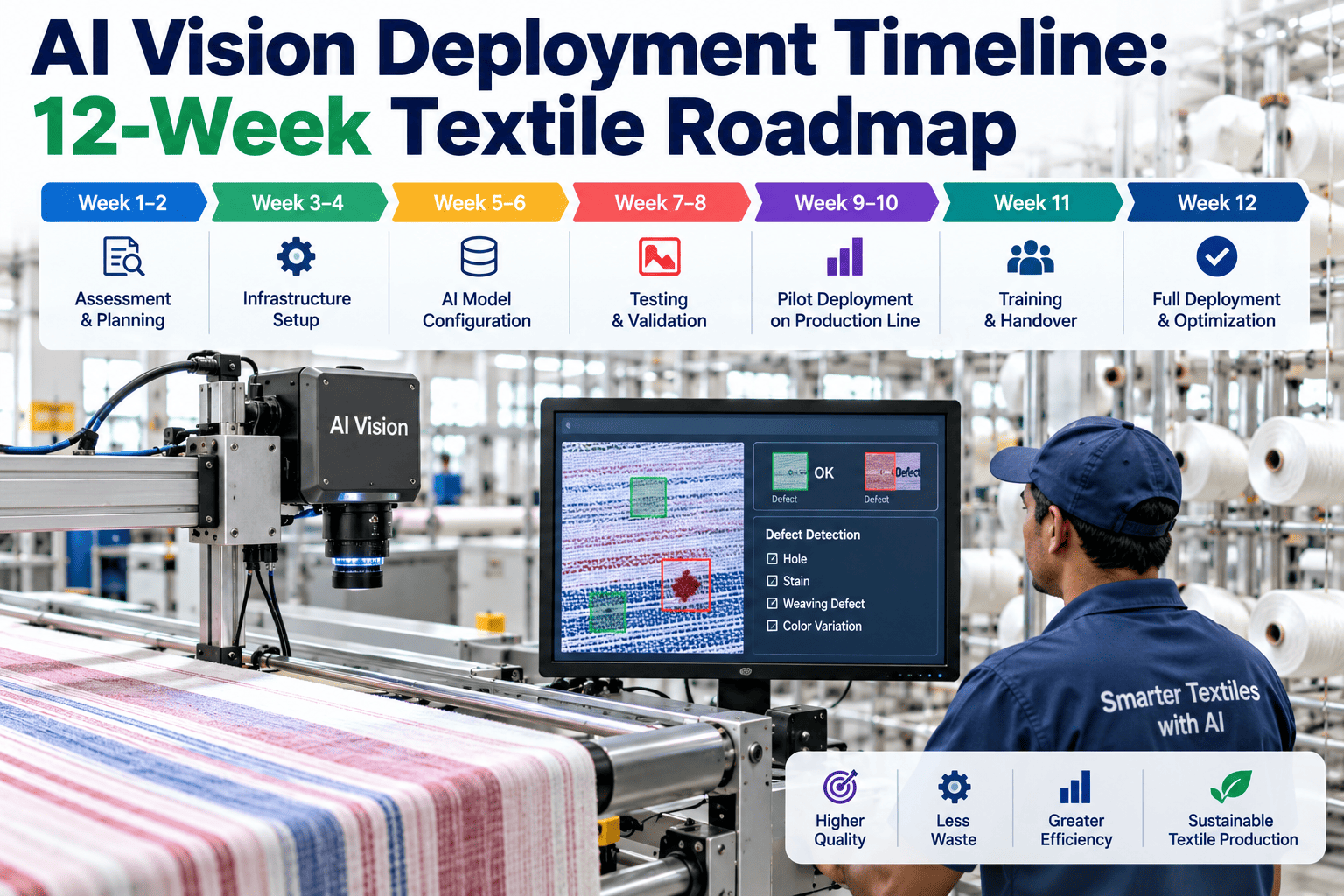
The most expensive AI vision investment a textile mill can make isn't the camera hardware, it's an open-ended pilot with no defined timeline that quietly drags on for six months and never actually reaches production. A structured twelve-week deplo
Read More
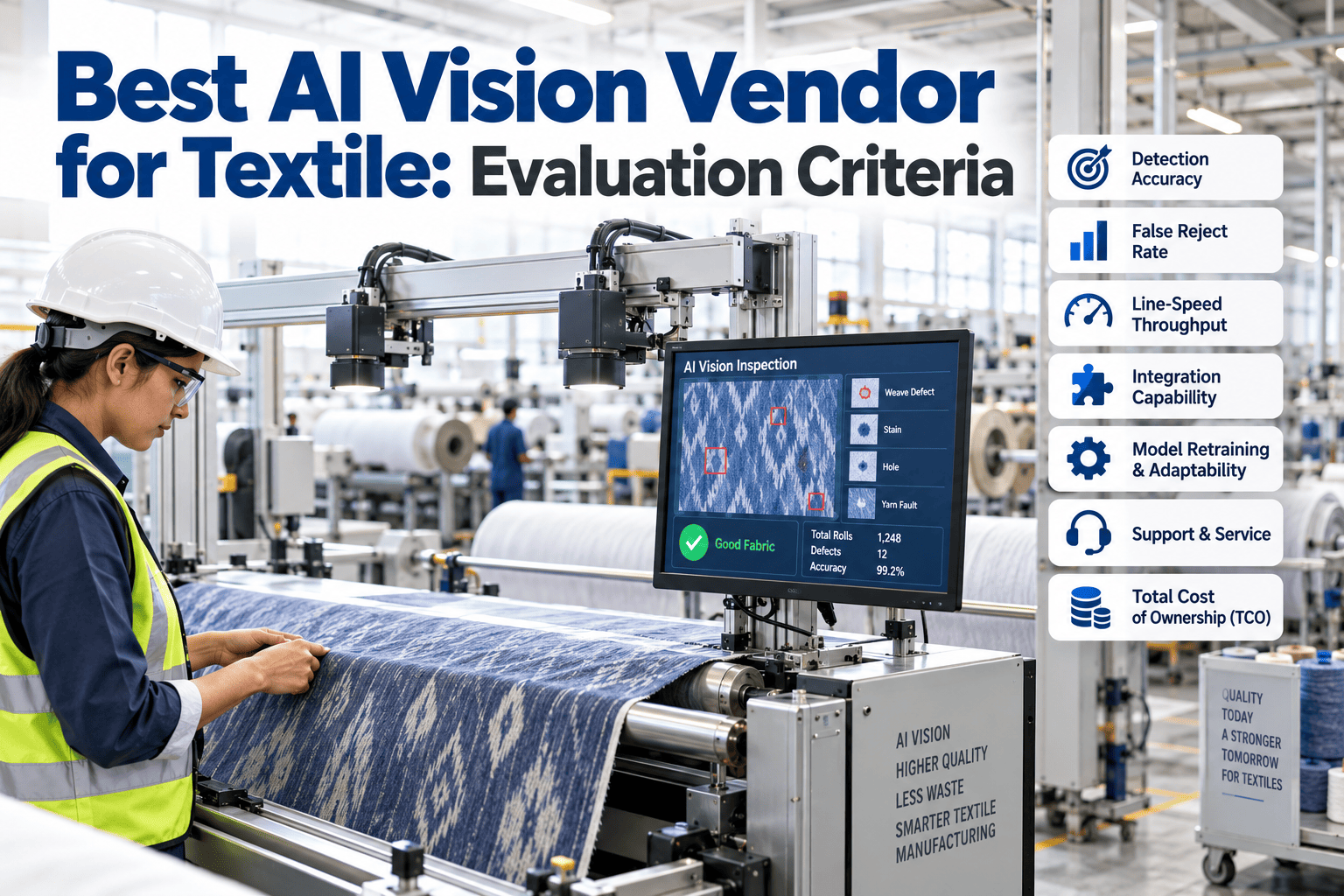
Choosing an AI vision vendor by feature checklist alone is how mills end up with a system that looks impressive in a sales demo and then struggles the moment it meets their actual fabric, their actual lighting, and their actual defect variety. The
Read More
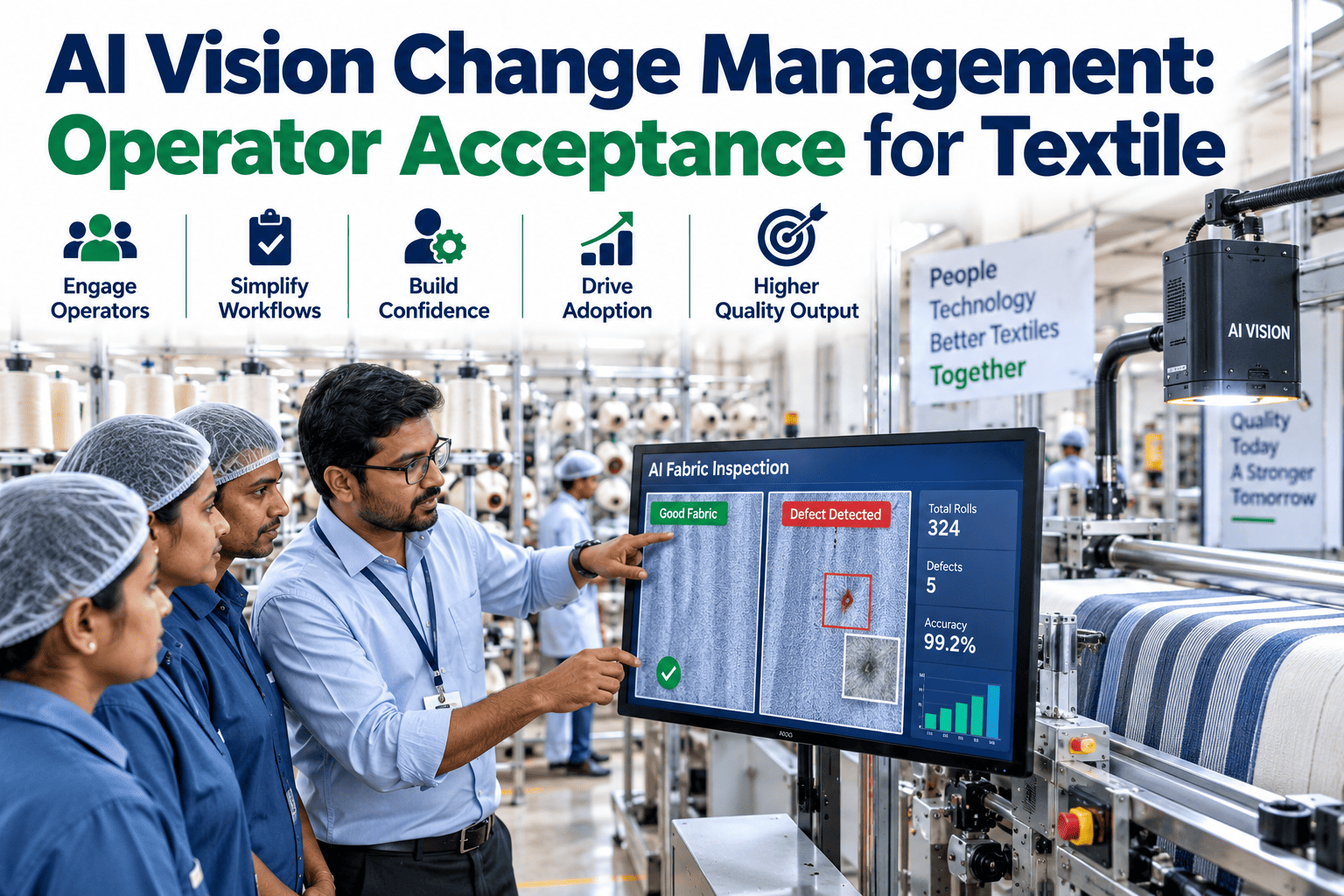
An AI vision camera installed above an inspection line without a genuine change management plan tends to trigger the same quiet anxiety in experienced grading staff every time: is this here to replace me. That anxiety, left unaddressed, shapes how

Read More
Every AI vision proposal eventually lands on the same desk, and the finance leader reading it wants one thing before signing off: a specific month when the investment stops being a cost and starts being a return. A credible payback case for textil

Read More
A vendor quoting "99% accuracy" in a sales deck and a mill actually achieving that number on its own fabric, its own lighting conditions, and its own defect types are two very different things, and the gap between them is almost always explained b
Read More
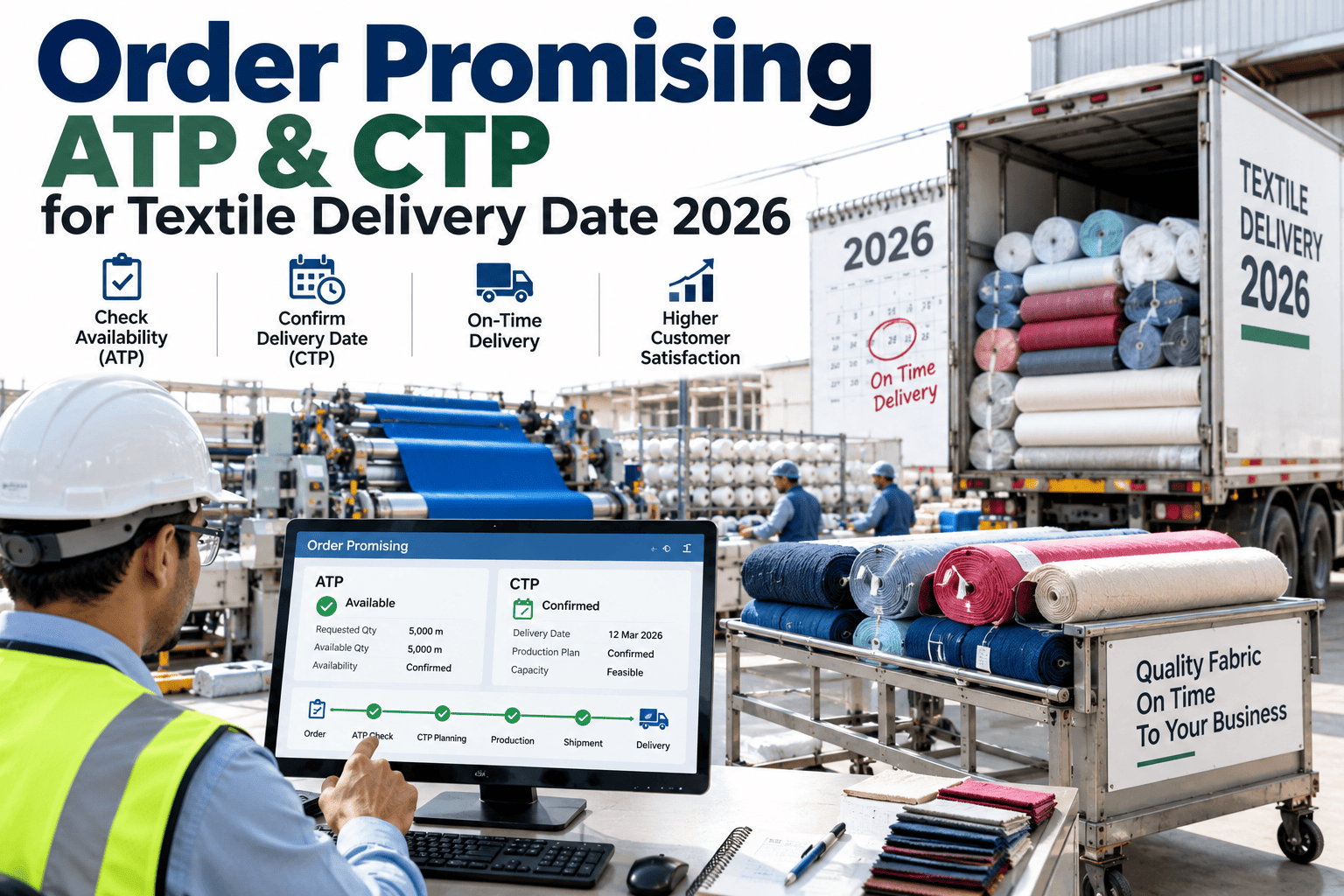
A delivery date quoted from gut feeling or a generic lead-time rule of thumb is a promise made without actually checking whether the business can keep it, and every time that guess turns out wrong, it costs a customer relationship a little more tr

Read More
Most textile plants have plenty of data and surprisingly little intelligence, because data alone only answers what happened, and a plant stuck at that level is always looking backward. Analytics maturity progresses through three distinct levels: d

Read More
A textile production spreadsheet works fine right up until two people need to edit it at the same time, or a rush order arrives and the whole sequence needs to shift, or someone on night shift needs to see today's plan and finds an email attachmen

Read More
By the time a fabric roll fails final inspection, the machine settings that caused the defect were locked in hours or even days earlier, which means traditional quality control is always reviewing a decision it can no longer change. Machine learni
Read More
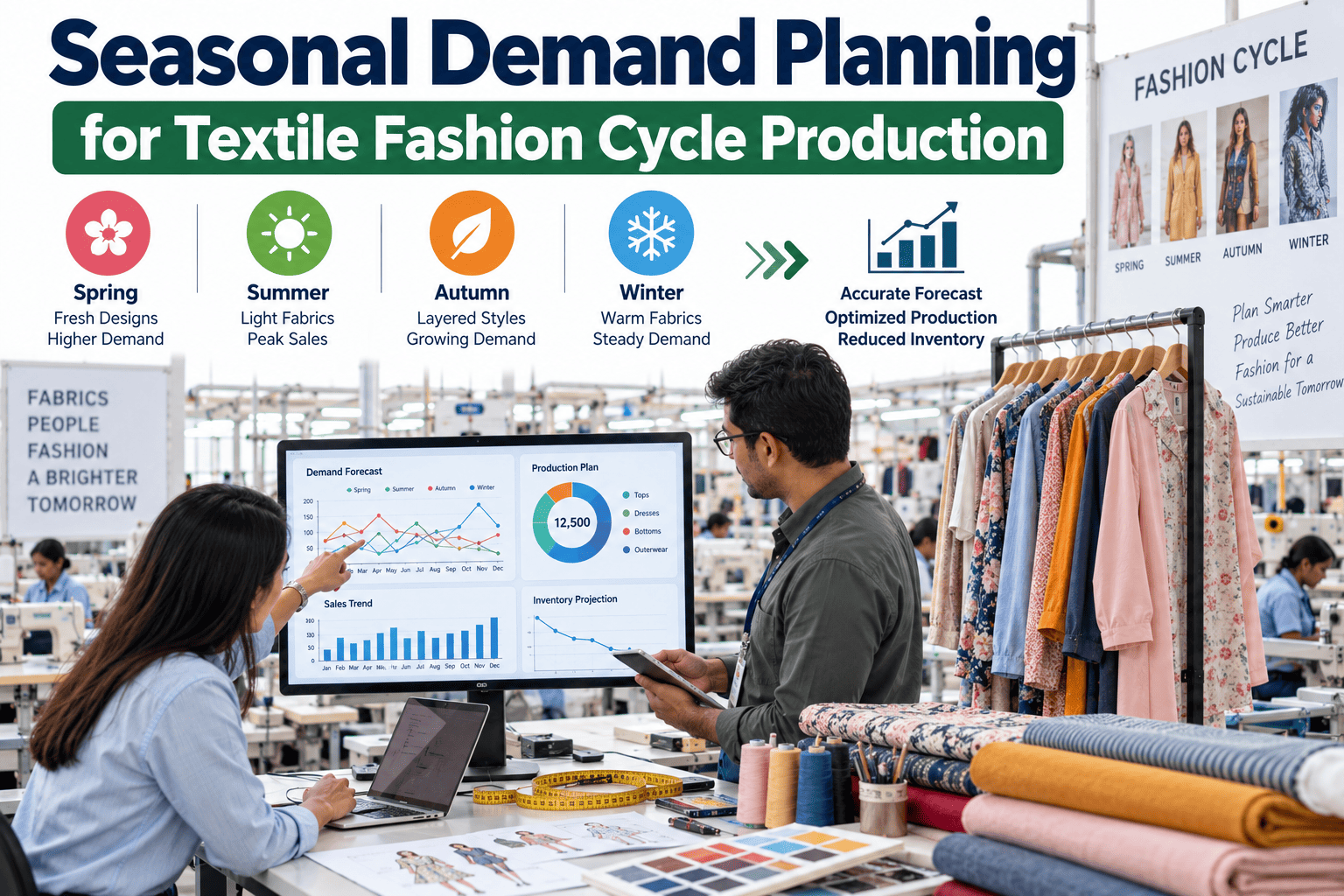
A textile production plan built around a flat, average monthly output number is a plan built for a demand pattern that doesn't actually exist, because fashion and apparel demand moves in pronounced seasonal waves that an average completely erases.
Read More
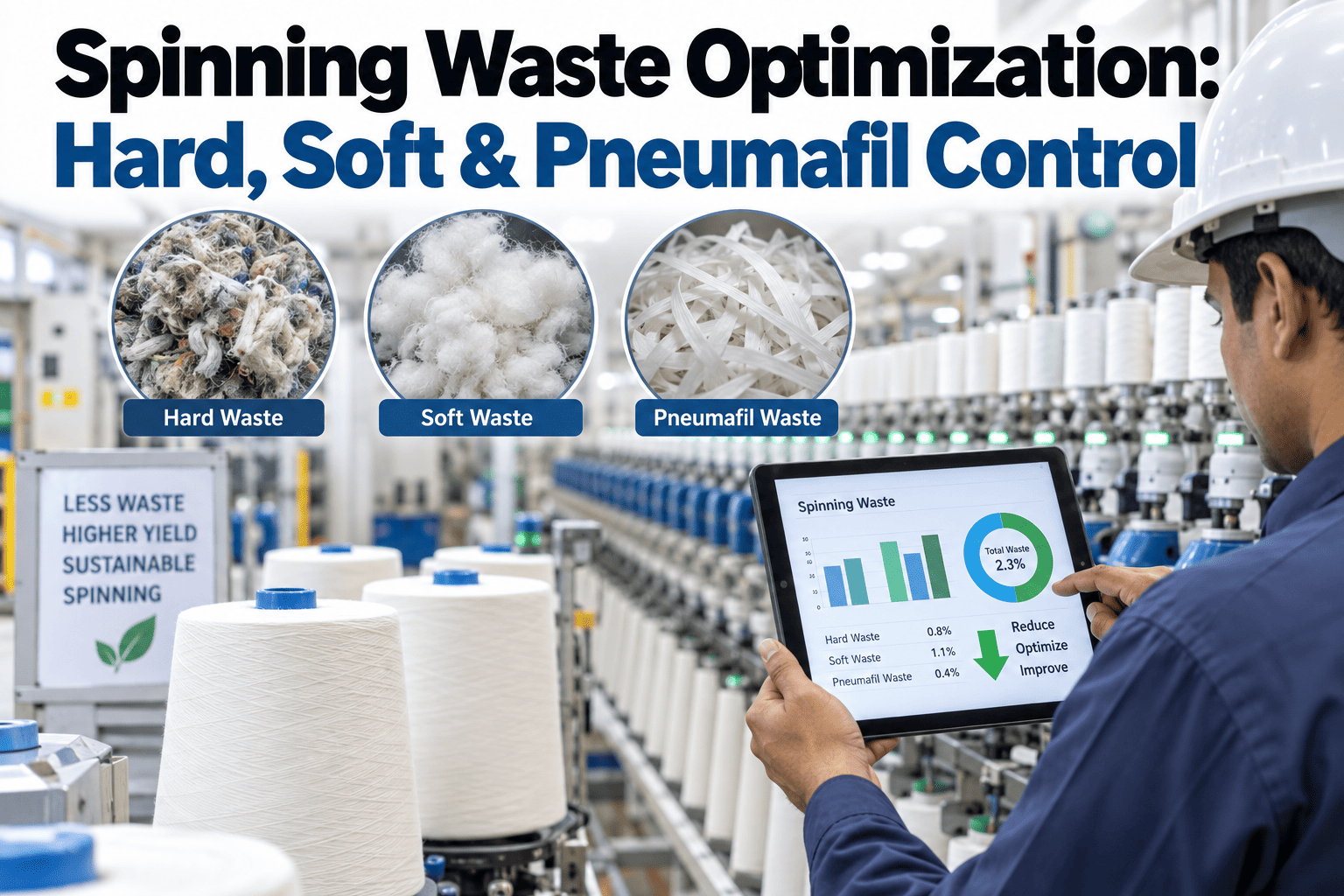
Spinning waste gets tracked as a single blended percentage at most mills, a number that goes into the monthly report and rarely gets questioned as long as it stays roughly where it has always been. That single number hides three fundamentally diff
Read More
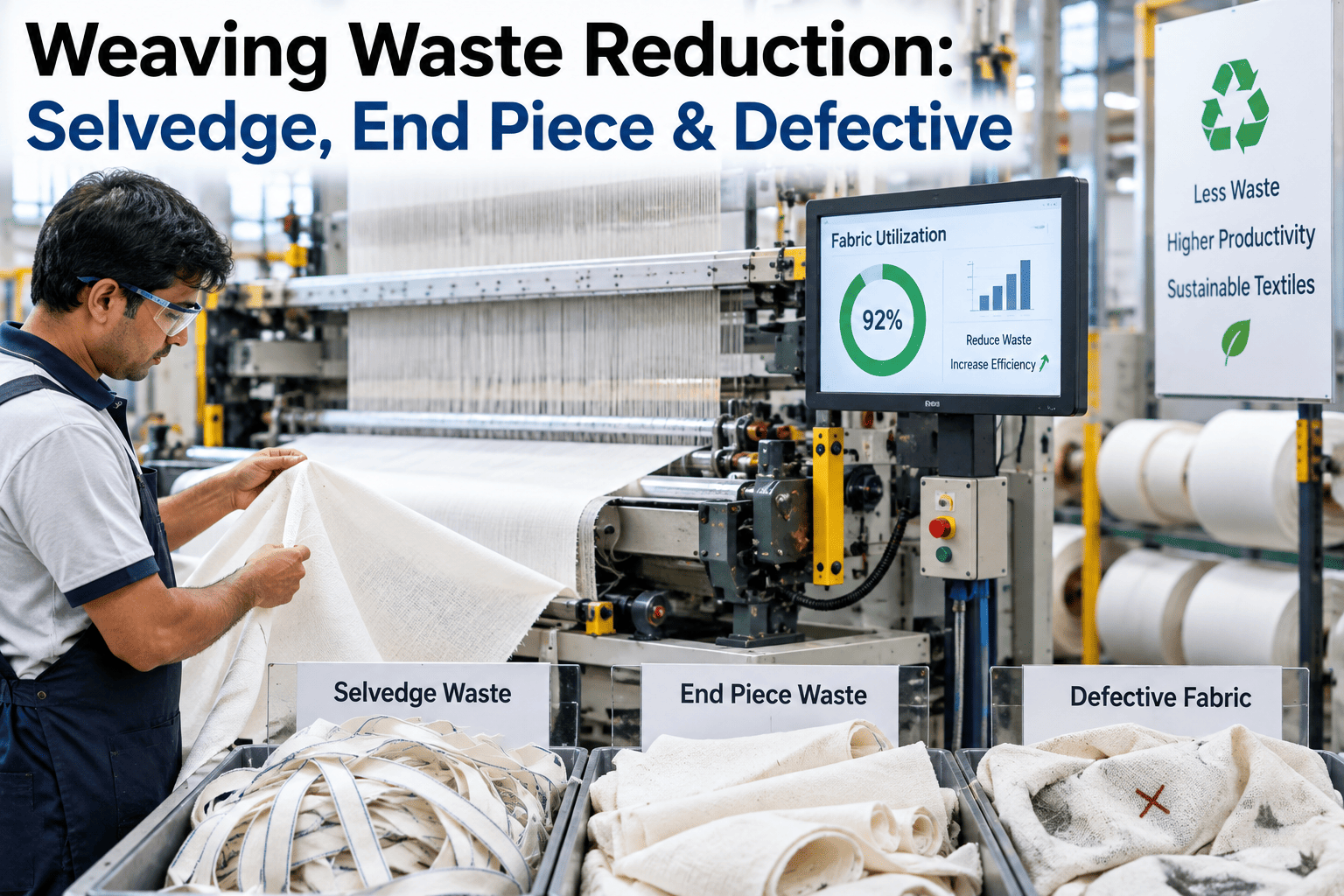
Weaving waste rarely gets the same scrutiny as spinning waste, even though it often represents a larger dollar value per kilogram since the material has already absorbed the full cost of yarn production before it is lost. Selvedge trim gets treate
Read More
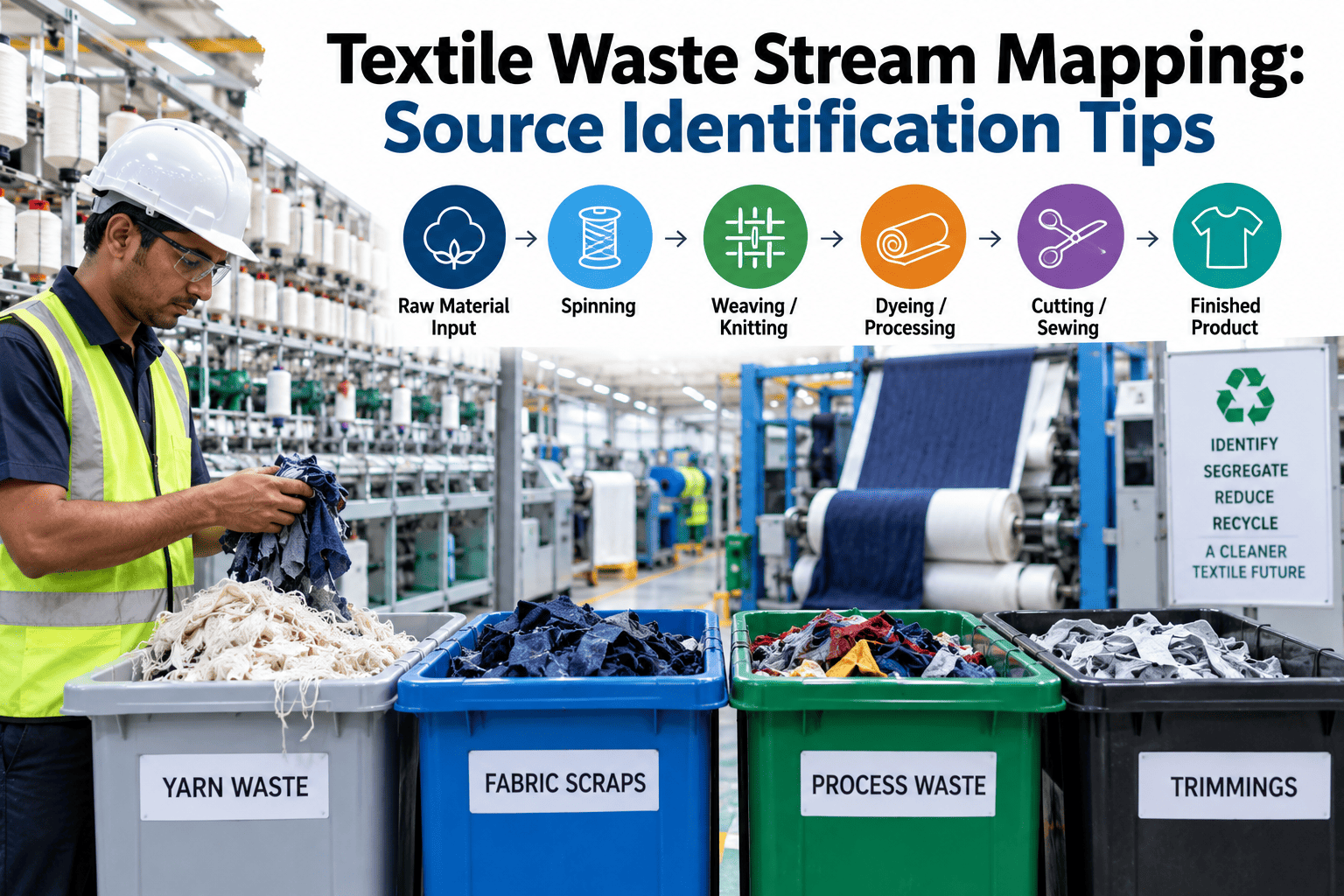
Ask most textile mill managers how much material is lost to waste across the entire operation and you will typically get a rough percentage pulled from a purchasing reconciliation done once a year, not a real breakdown of where that waste is actua
Read More
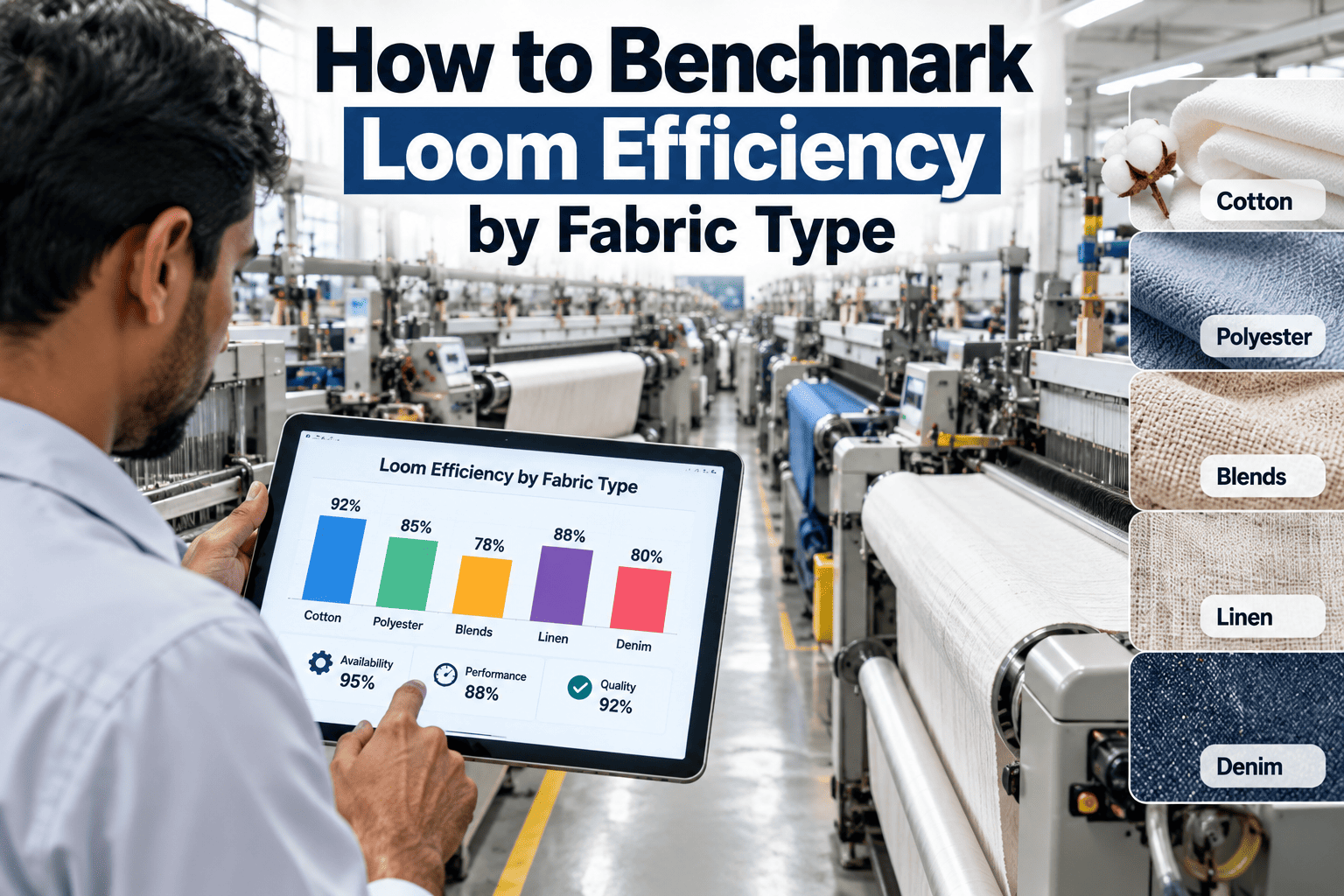
Comparing loom efficiency across a mill's entire fleet with a single blended target is one of the most common and most misleading practices in weaving operations. A loom running a simple plain weave at 88% efficiency and a loom running a complex j
Read More
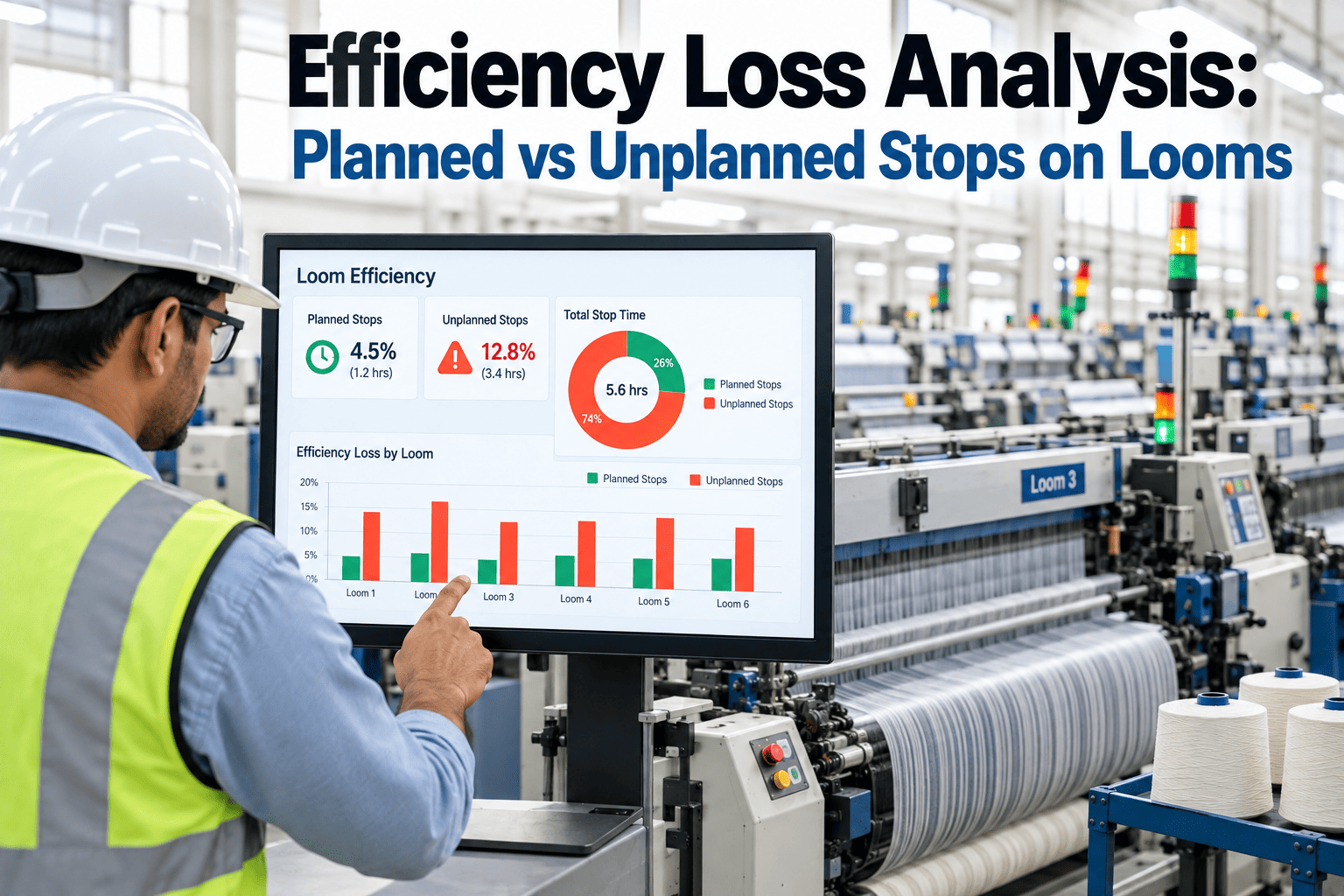
A loom running at 78% efficiency looks like a single number on a shift report, but that missing 22% is actually a dozen different causes tangled together, and most weaving mills never separate them cleanly enough to know where to focus. A warp cha
Read More
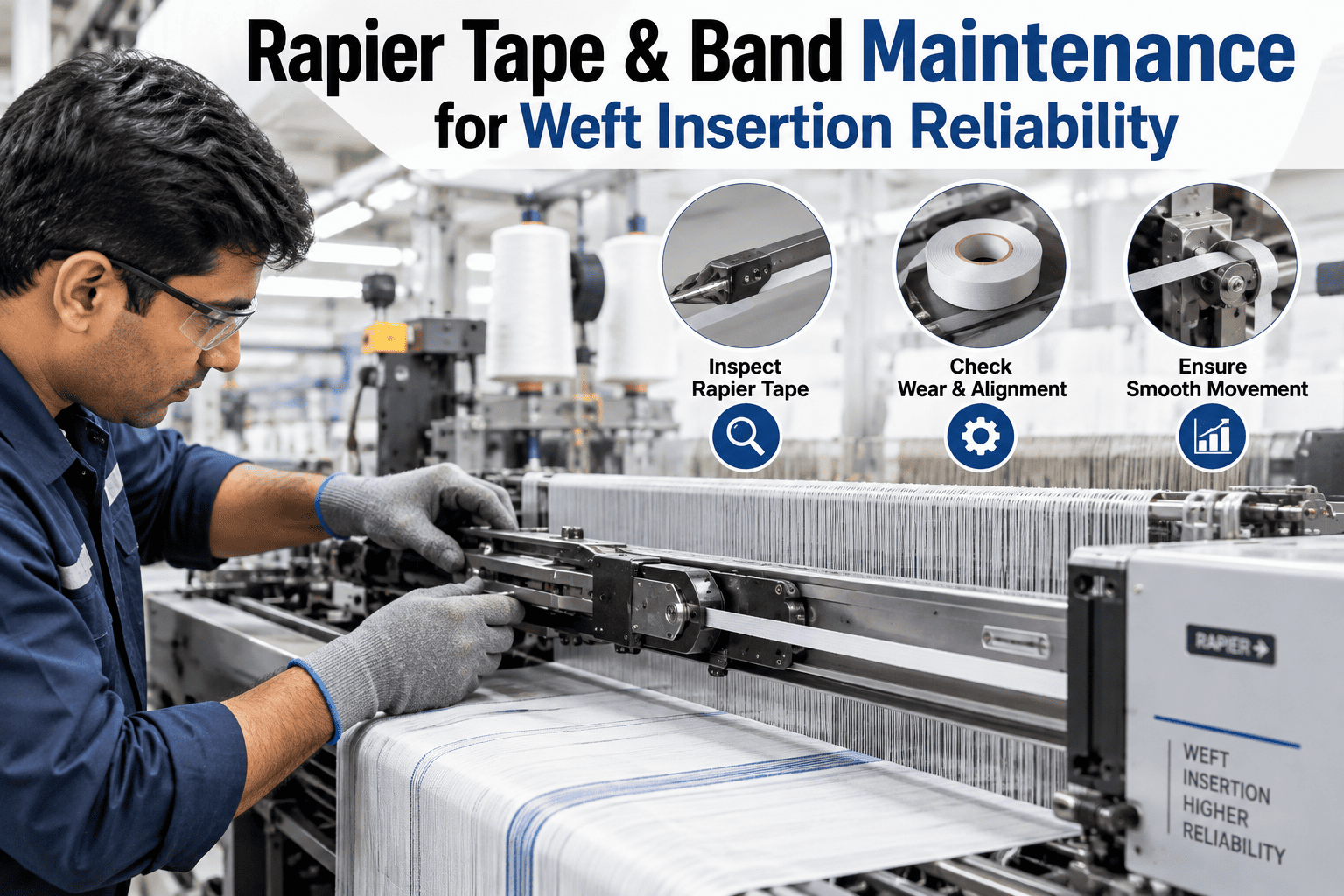
A worn rapier tape rarely announces itself with a dramatic failure. It shows up first as a slightly inconsistent weft insertion, a pick that lands a fraction of a millimeter off its intended position, or an intermittent insertion fault that an ope
Read More
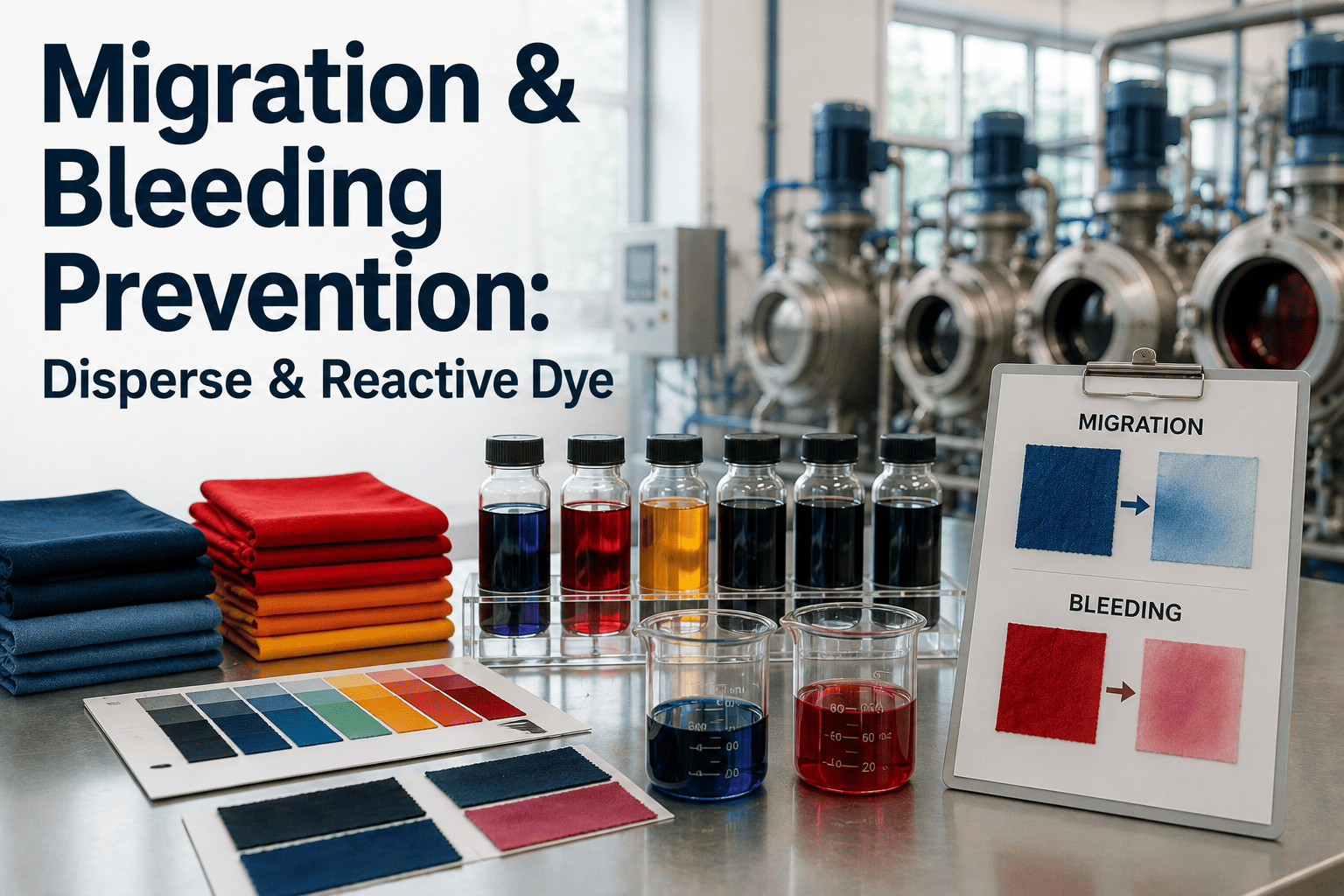
A batch comes out of the dye bath looking perfect, and then it sits in the drying oven or gets packed into storage, and the color starts moving on its own. Migration on disperse-dyed polyester and bleeding on reactive-dyed cotton are two different

Read More
A dyed fabric can pass every in-house shade check and still fail the customer's wash test three weeks later. Wet fastness — how well color survives repeated laundering — is decided largely after the dye bath itself, in the soaping and washing step

Read More
A shirt that looks perfect on the shelf can lose its color within three washes, bleed onto lighter garments in the same load, or fade visibly after a few weeks near a sunlit window — and every one of these outcomes traces back to a different fas

Read More
A fabric roll can come out of dyeing with a perfectly even shade across 99% of its surface and one small oil stain that gets the entire lot rejected at final inspection, and the frustrating part is that these spots rarely come from the dye recip
Read More
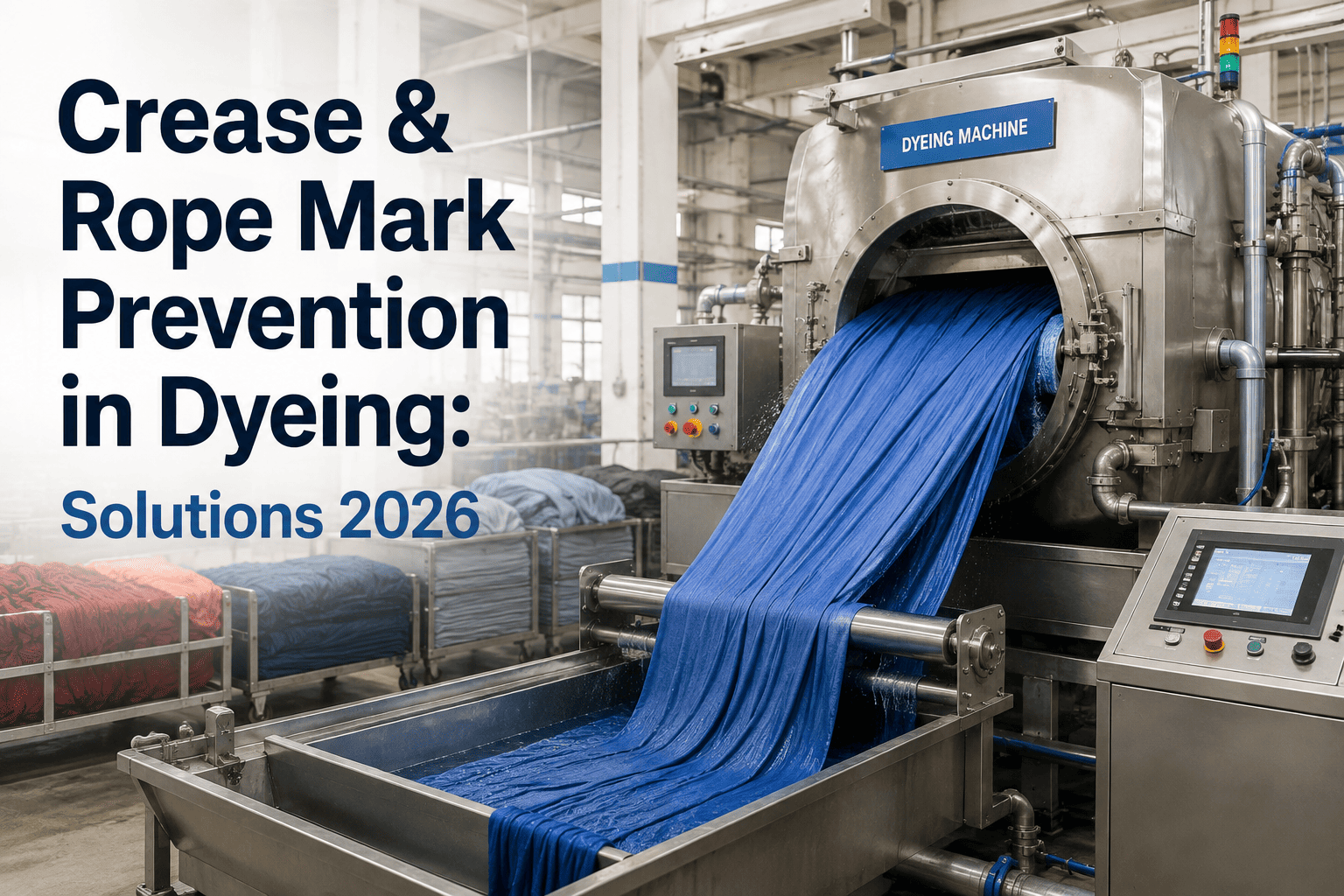
A single roll of fabric can come out of a jet dyeing machine with a permanent crease running its full length, and by the time anyone notices, the whole lot is already sitting in the finishing queue. Crease marks and rope marks are not cosmetic a

Read More
A fabric that felt smooth coming off the loom can come out of the dyeing line covered in tiny fuzz balls, and by the time it reaches finishing inspection, the pilling is already visible under normal store lighting. Pilling after dyeing traces ba
Read More
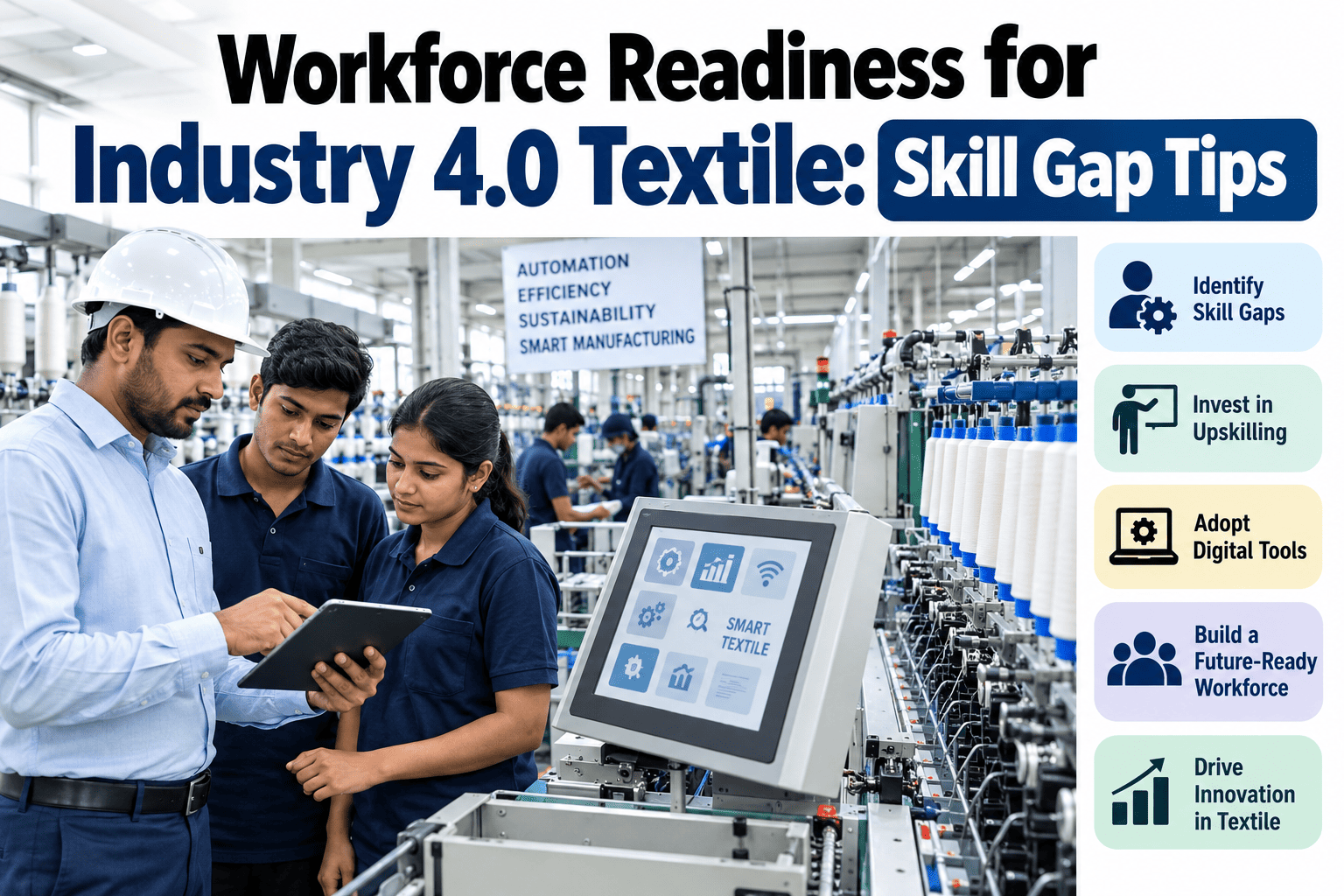
New sensors, dashboards, and AI-driven quality systems get installed on a textile factory floor far more often than the workforce is actually prepared to use them well, and that gap is quietly responsible for more failed digital transformation pro

Read More
Manufacturing excellence awards and industry benchmarks share a quiet secret: the mills that consistently place well rarely won by inventing a single breakthrough technique. They won by measuring the same handful of performance metrics as everyone
Read More
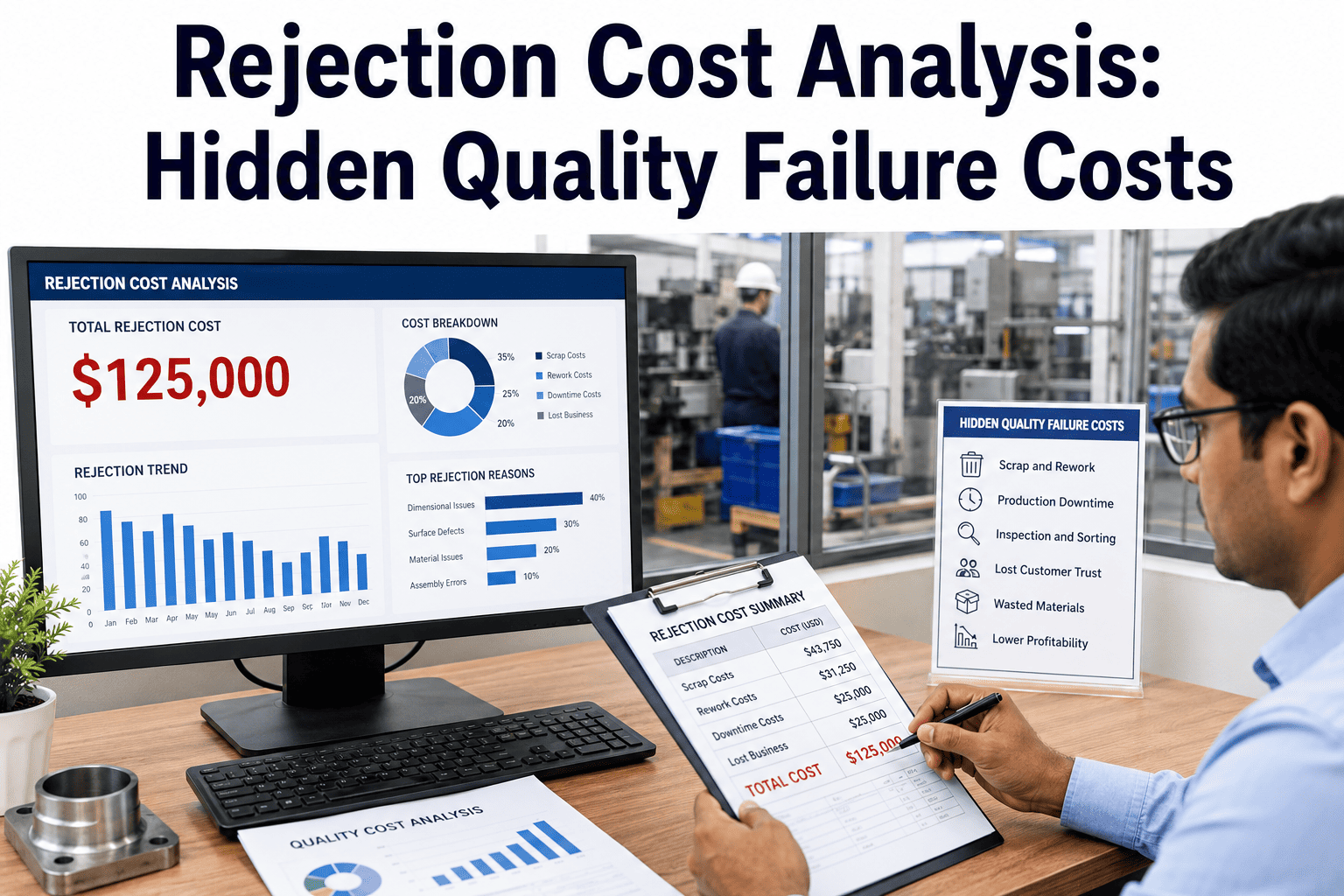
Ask a mill manager what fabric rejection costs and most will quote the value of the rejected material itself, a number pulled straight from the fabric cost sheet. That number is real, but it's also the smallest piece of what a rejection actually c
Read More
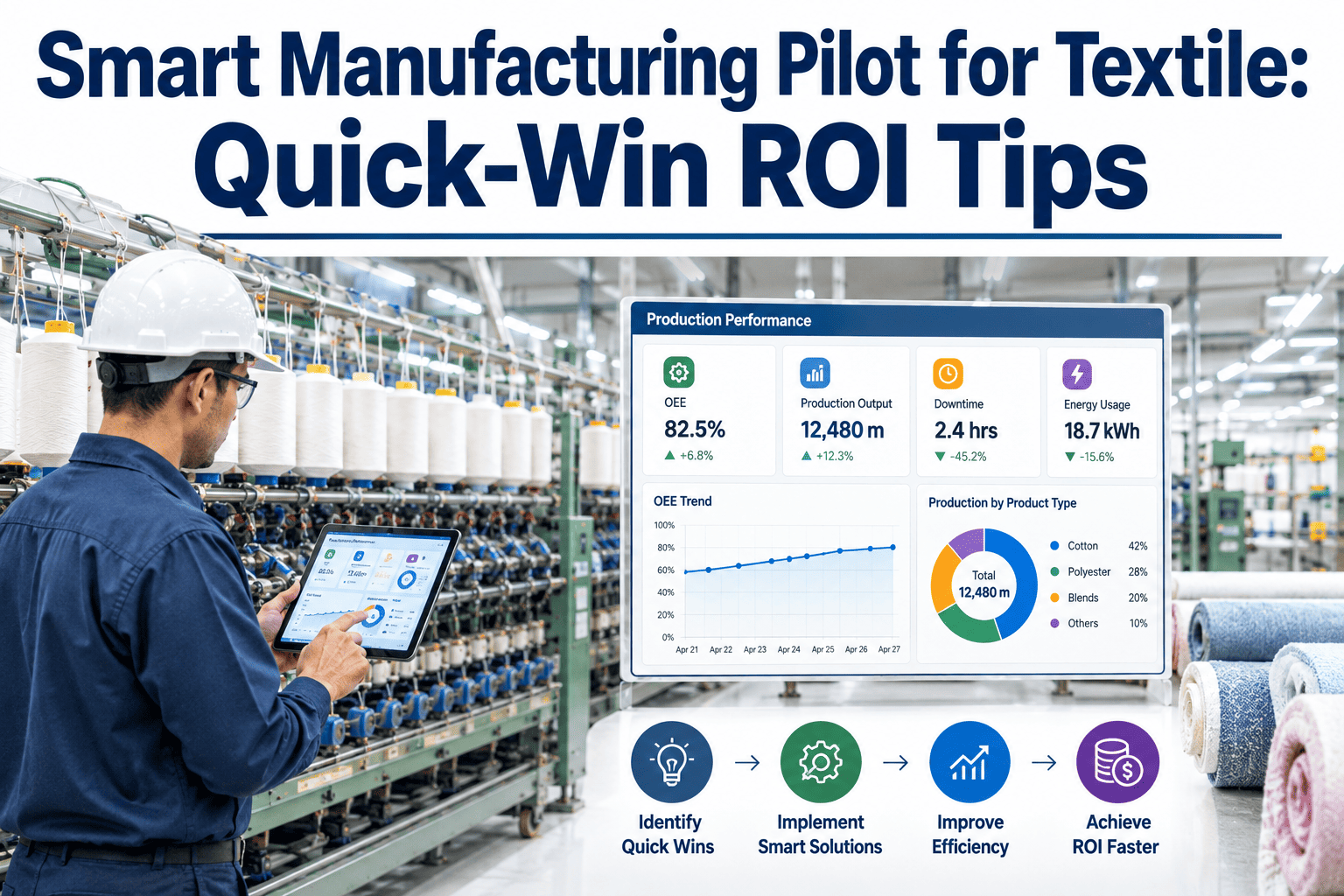
Most smart manufacturing conversations in textile mills stall at the same point: leadership wants proof before committing to a factory-wide rollout, and nobody wants to be the one who spent budget on a pilot that produced a nice dashboard but no m
Read More
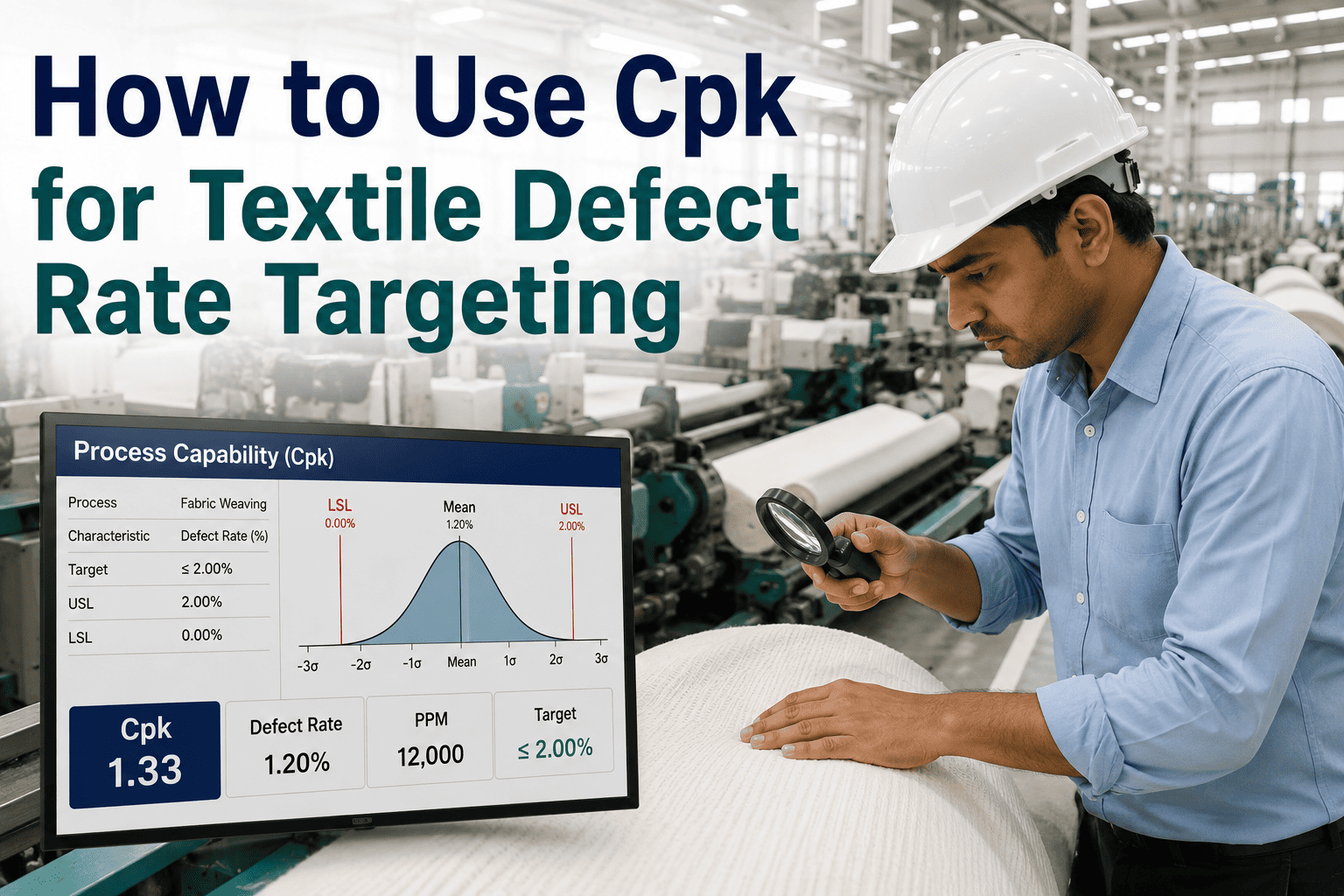
Most textile plants set defect targets the same way every year: take last year's rejection percentage, shave off a point, and call it a goal. Nobody can say why 3.5% is achievable but 2% isn't, because the number was never built from the process i
Read More
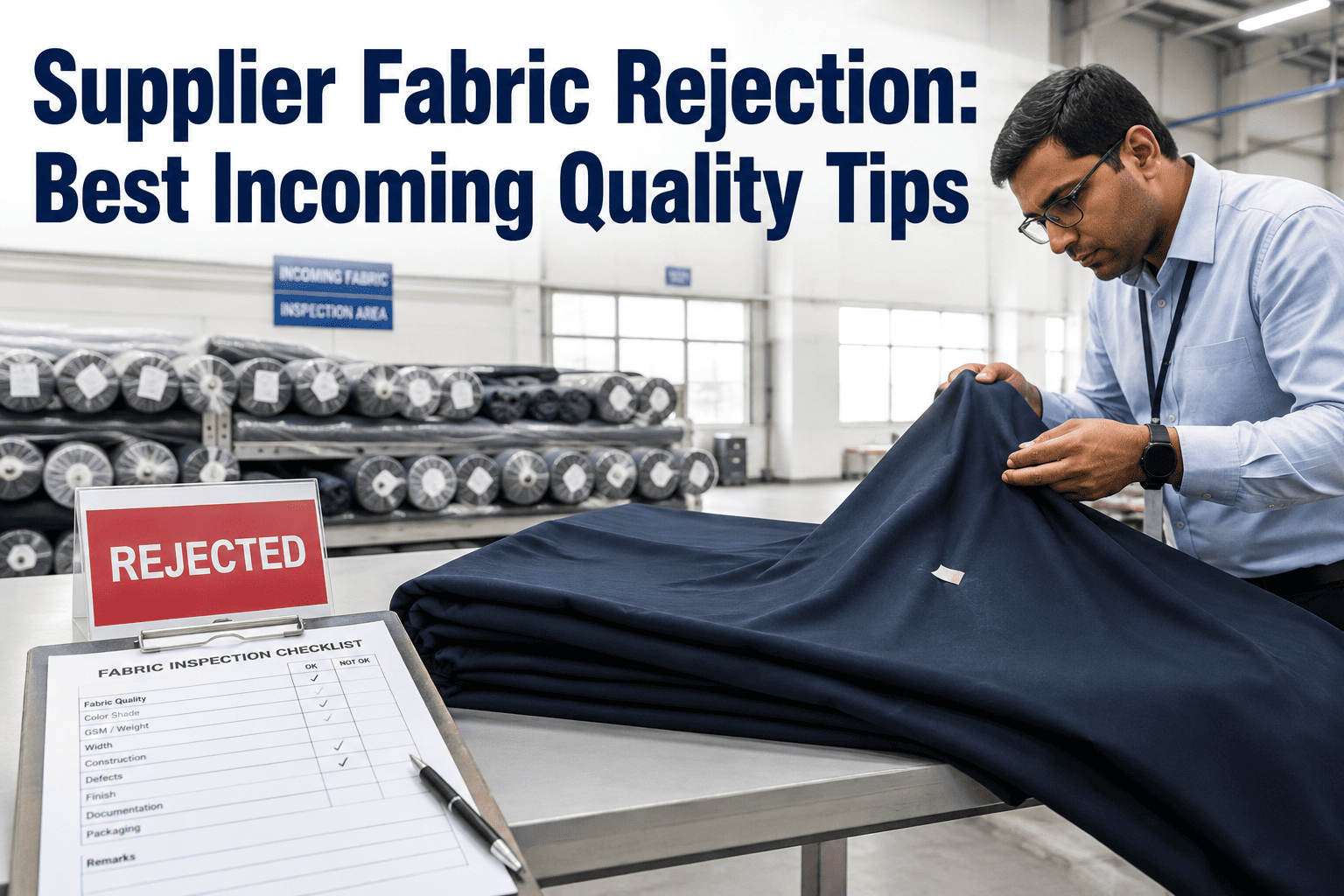
Every rejected fabric roll at incoming inspection is a decision that already happened somewhere else, usually weeks earlier at a supplier's greige stage or dye house, long before the fabric ever reached your warehouse door. By the time a quality c
Read More
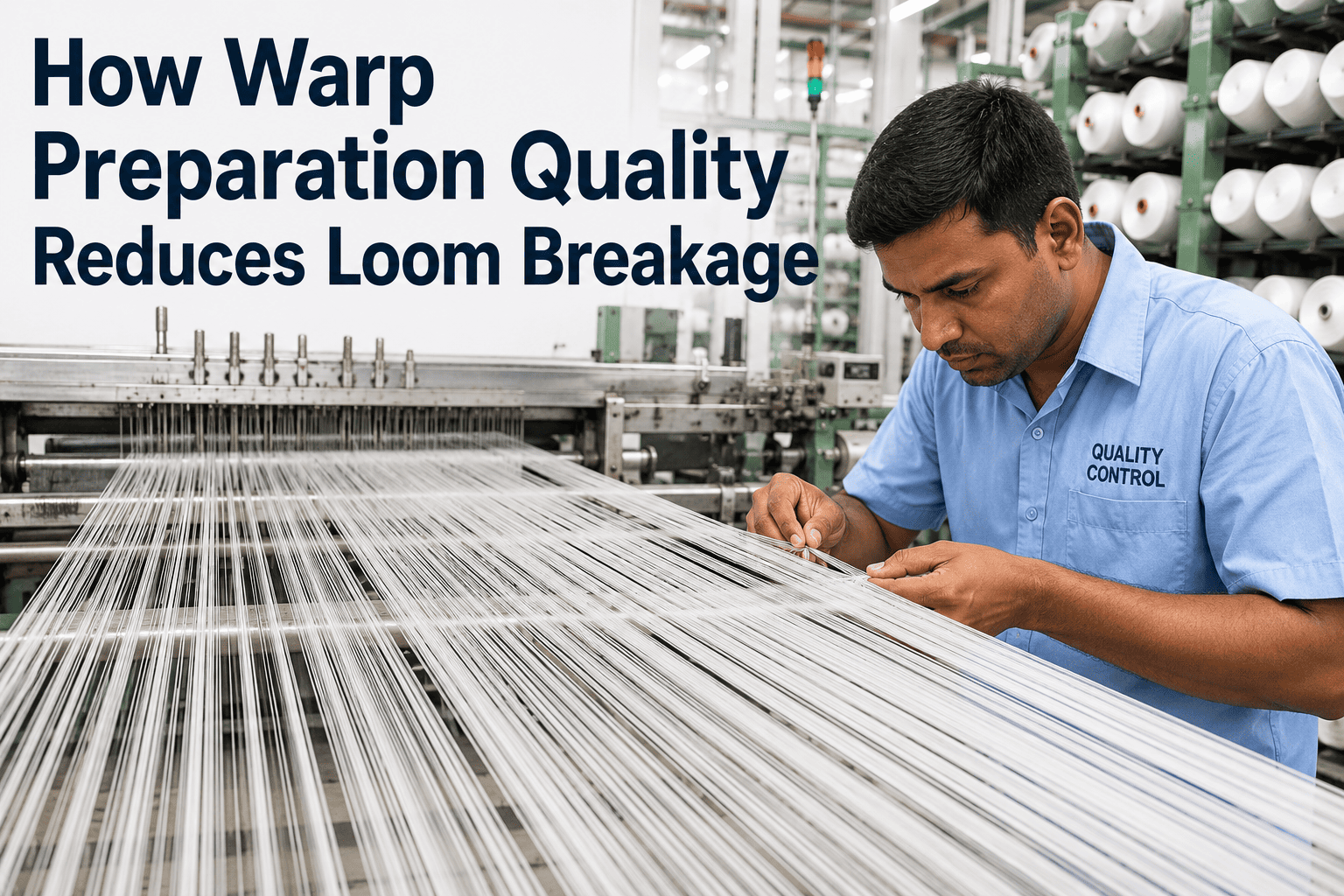
By the time a warp break stops a loom, the yarn has usually already been failed by a decision made days earlier, back at the sizing machine or the warping creel, not by anything that happened in the last second before it snapped. Warp yarn arrives
Read More
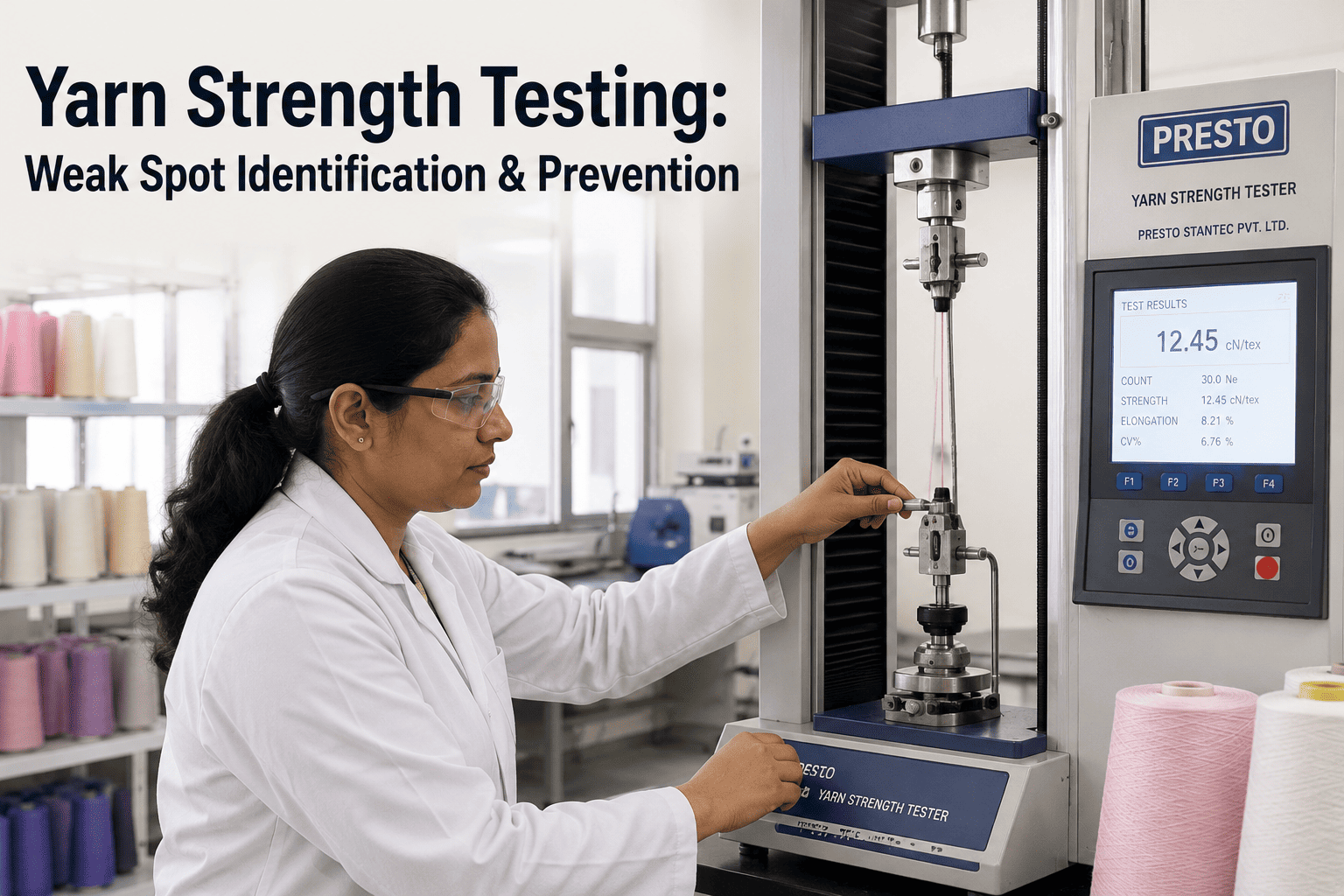
Average yarn strength can look perfectly acceptable on a spec sheet while the yarn still breaks constantly on the loom or knitting machine, because an average hides the weak spots — the short segments along the yarn's length where strength drops w
Read More
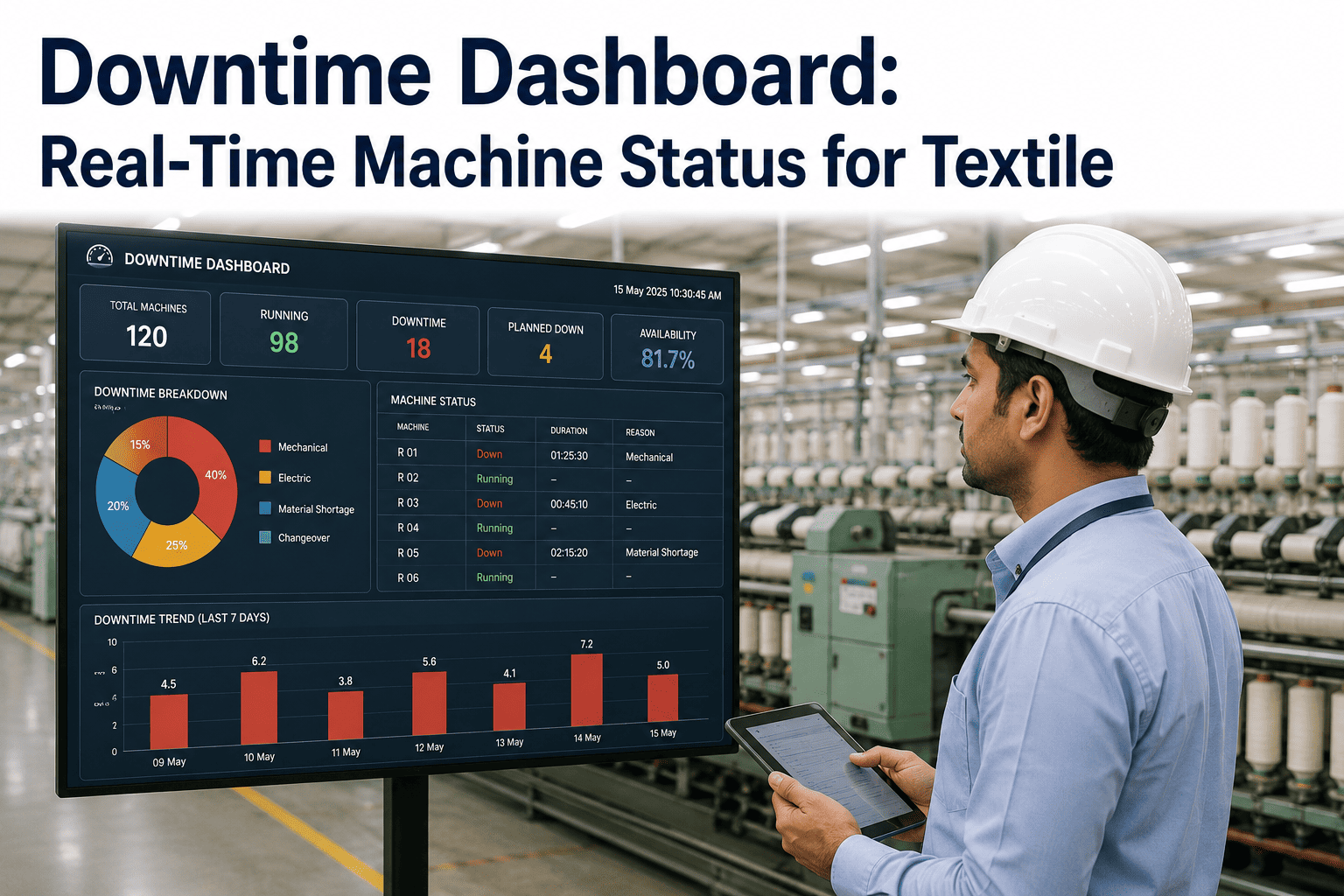
Walk into most textile production floors and you can still find the same tool tracking machine downtime that was used twenty years ago: a whiteboard near the supervisor's desk, updated by hand, usually an hour or two behind whatever is actually ha
Read More
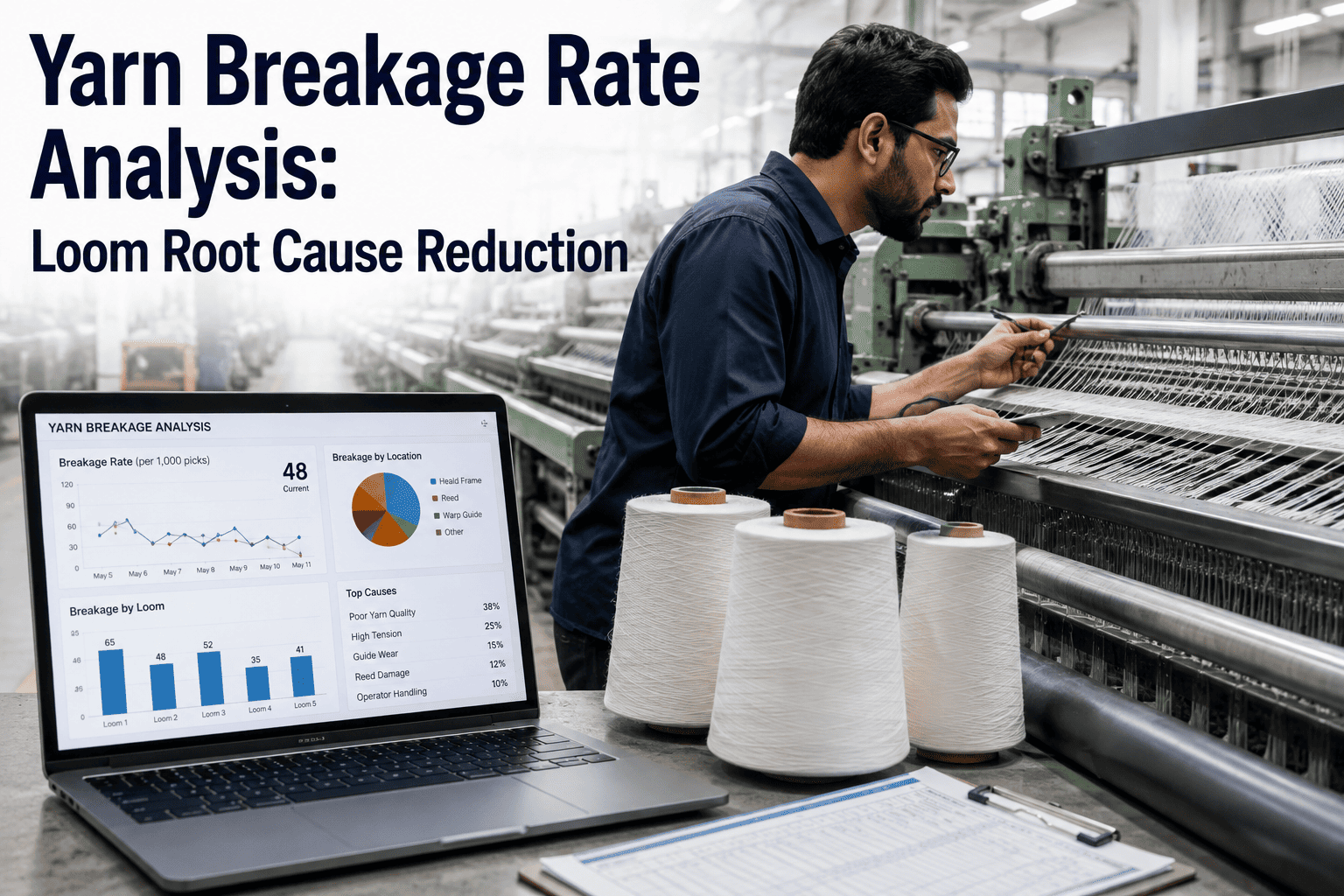
Every loom stoppage looks the same from across the weaving shed — the machine stops, a light flashes, an operator walks over — but the two most common causes behind that stoppage, a warp break and a weft break, come from almost entirely different
Read More
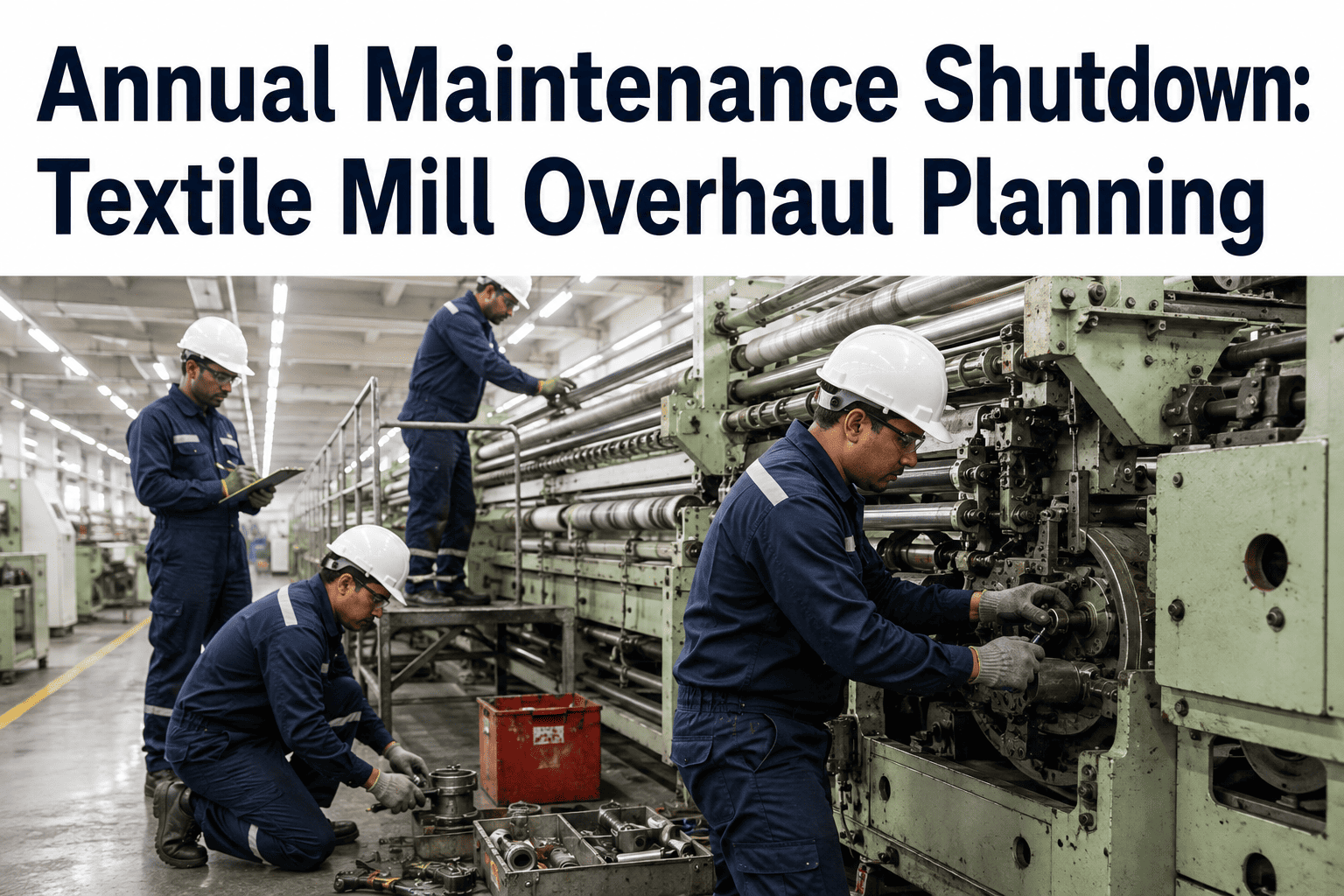
A five-day annual shutdown sounds like a short window until you try to fit forty-seven overdue repairs, a gearbox change on a ring frame line, and a full sizing machine overhaul into it. Textile mills that treat the annual shutdown as "the week we
Read More
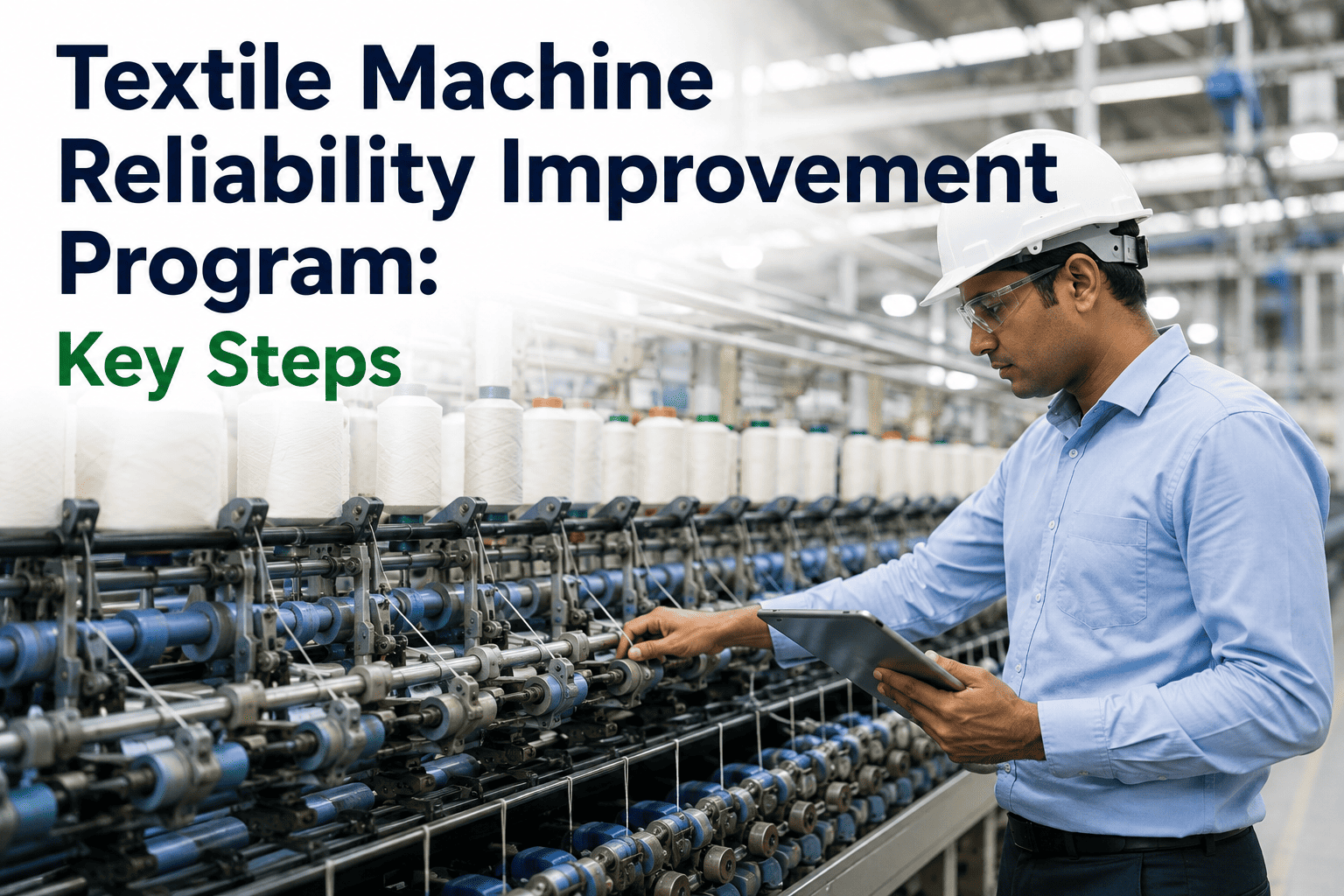
Most textile mills already run a preventive maintenance program, and most of them still watch the same handful of ring frames, looms, or draw frames fail again and again despite every scheduled PM being completed on time. That pattern is the signa
Read More
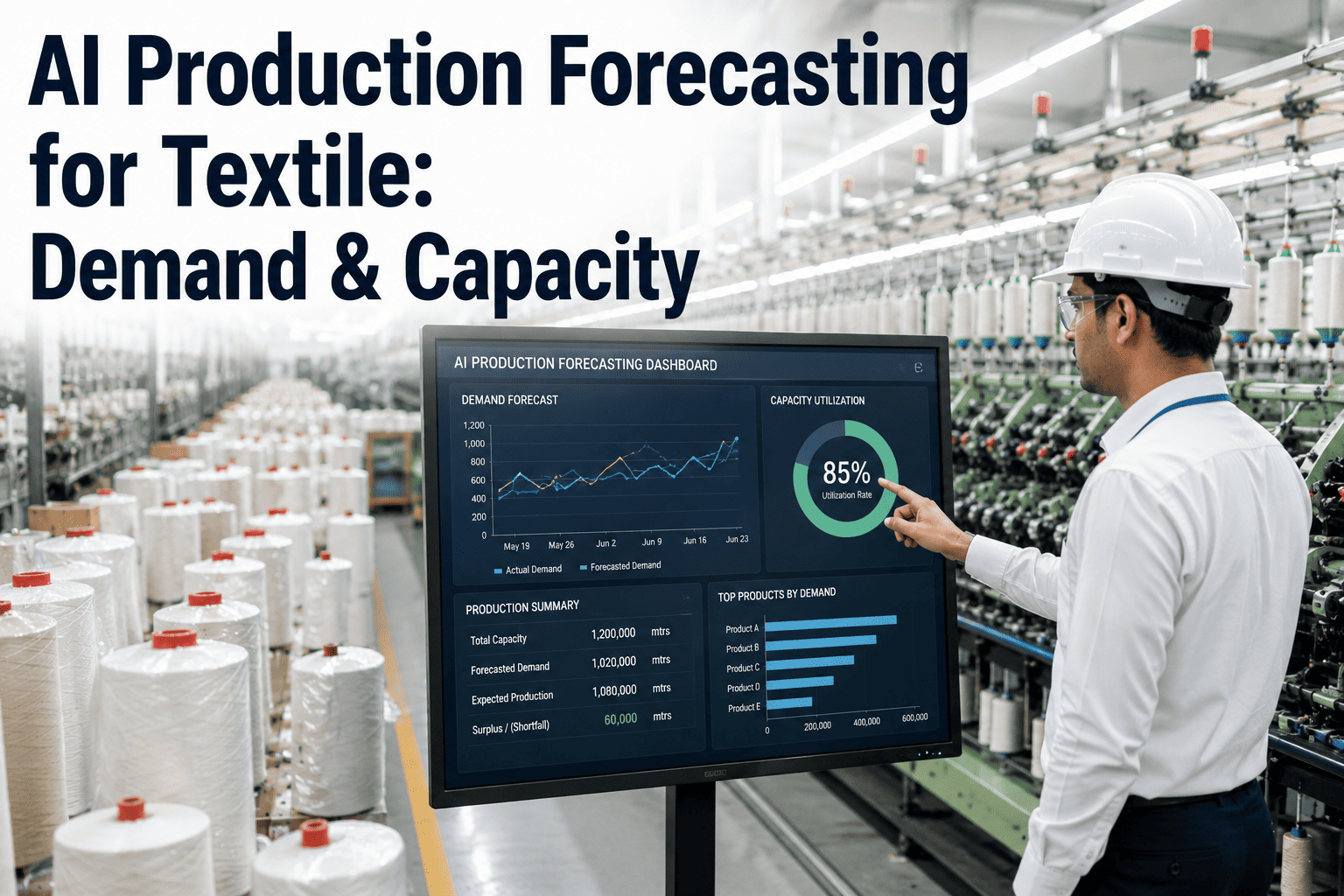
Overproduction is one of the most expensive and least discussed costs in textile manufacturing — not because mills don't notice it, but because it hides inside a dozen smaller decisions rather than showing up as one obvious mistake. A production p
Read More
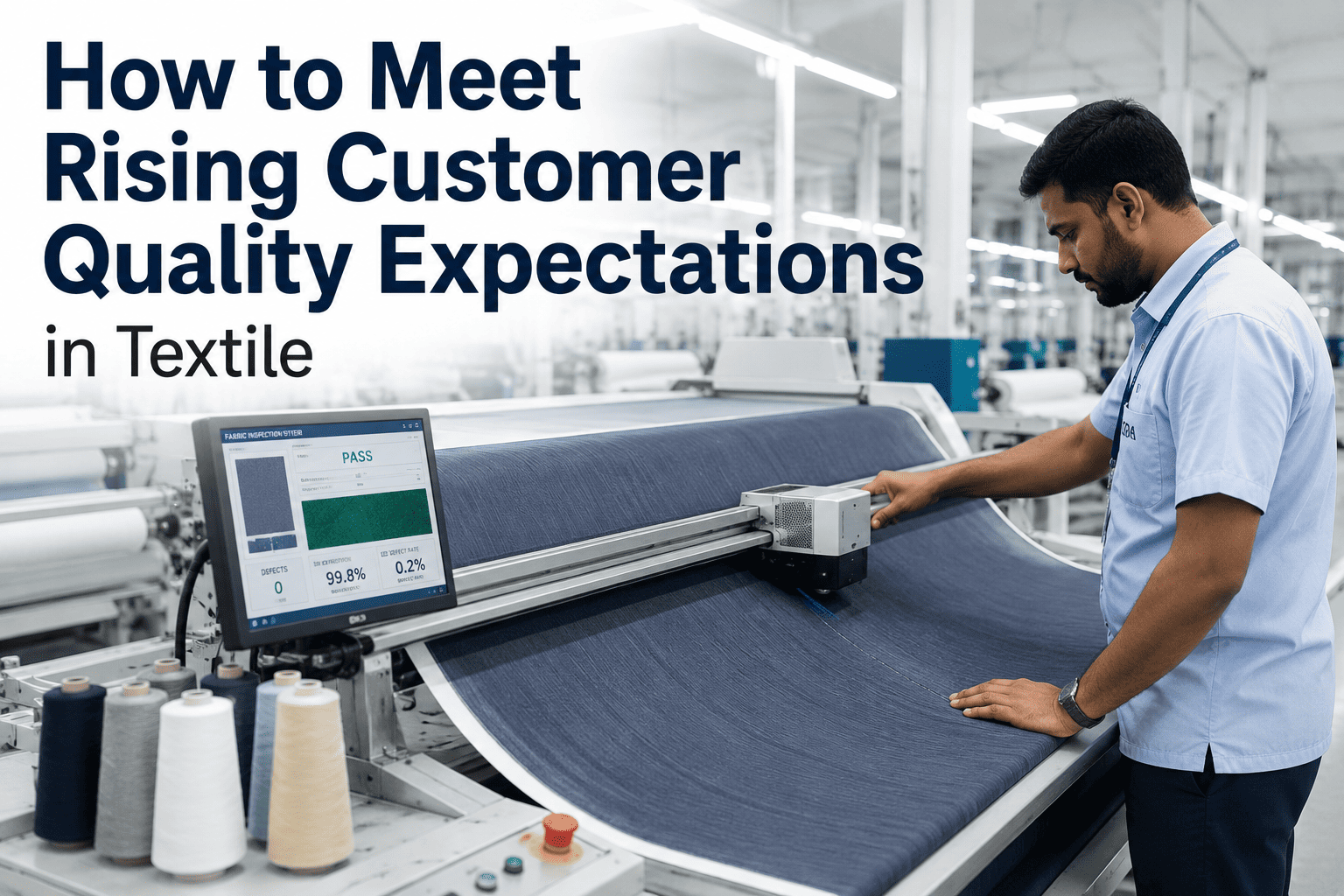
A textile mill owner in Nantong recently described the shift plainly: buyers now ask for defect traceability data before they will even discuss price. That single sentence captures how sourcing decisions have changed. A decade ago, a mill competed
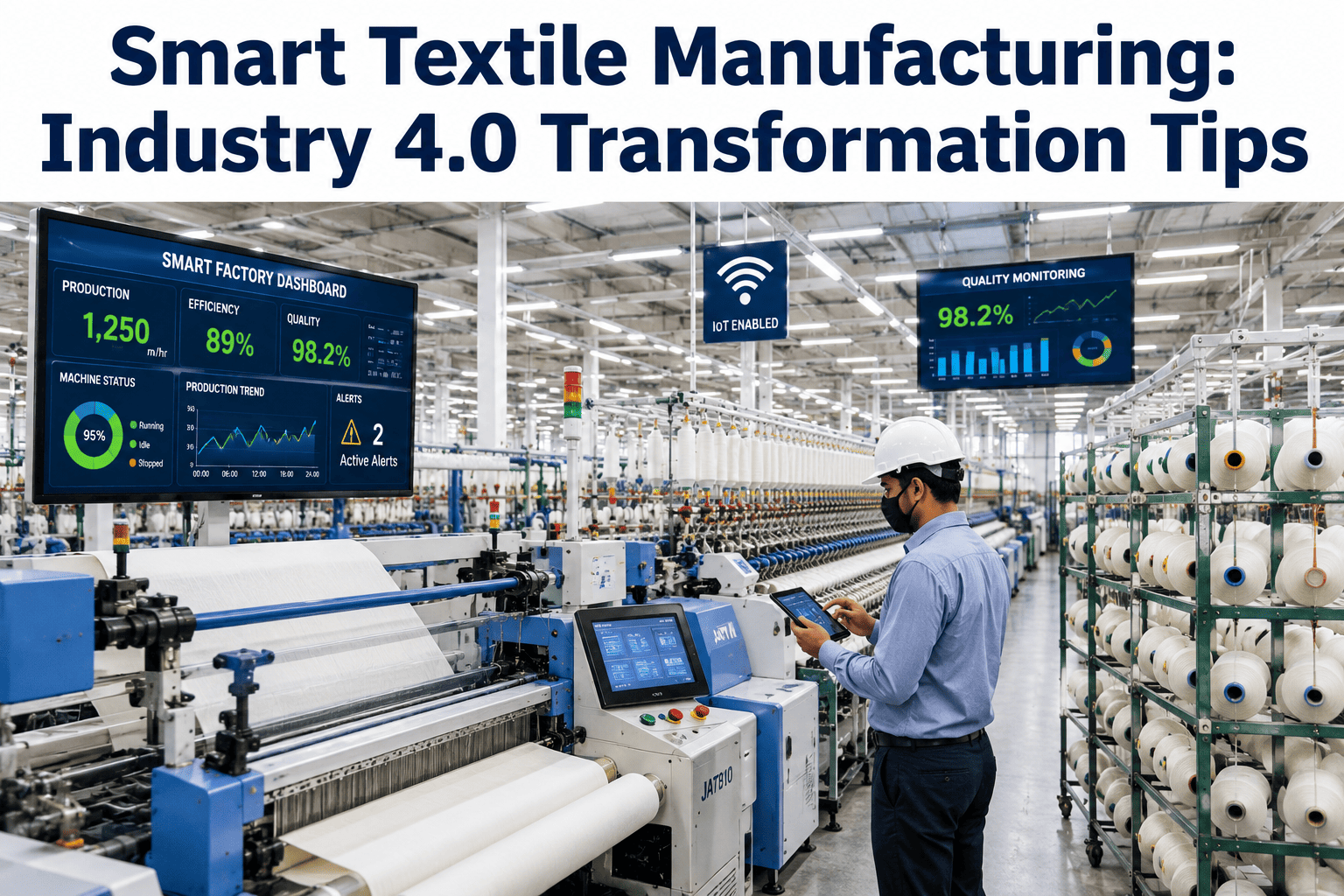
Read More
Most conversations about smart textile manufacturing list the same four technologies in no particular order: AI, IoT, digital twins, connected quality. Treating them as an unordered menu is a mistake, because each one is actually a layer that depe
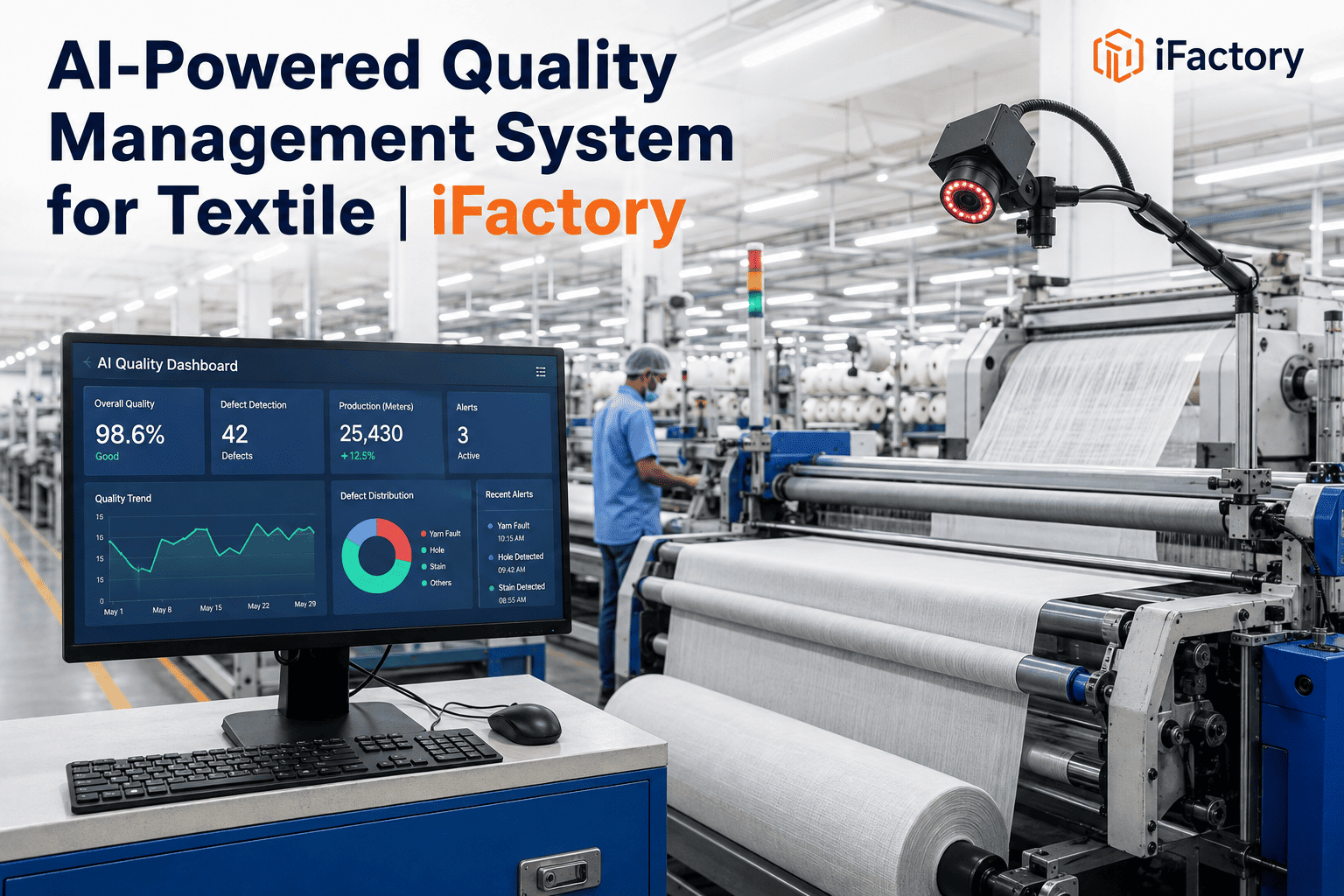
Read More
A textile mill's quality management system usually grew the way most legacy systems do — a grading spreadsheet here, a shade approval binder there, a claims log in someone's inbox, none of it talking to any of the others. That fragmentation isn't
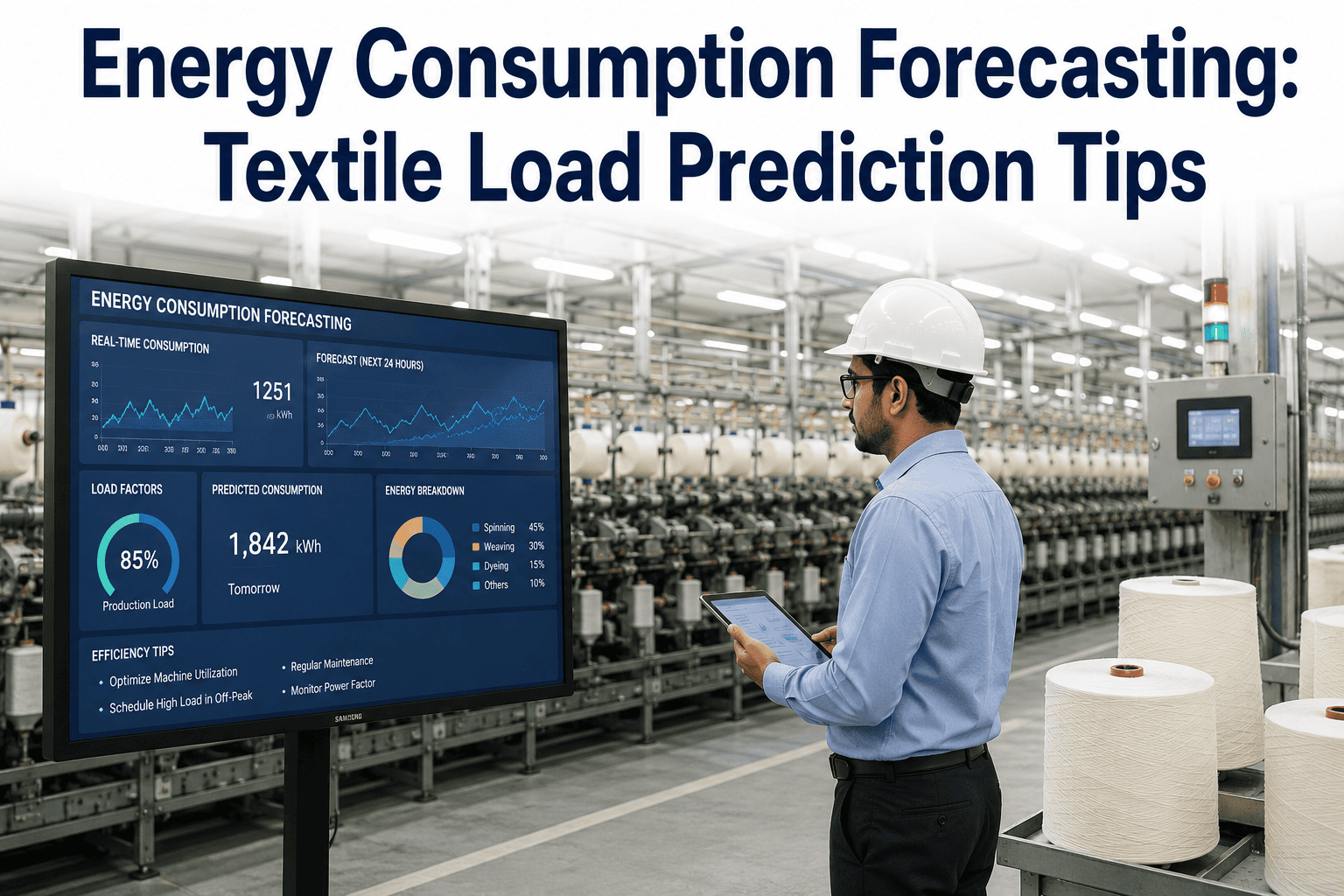
Read More
A dyeing house running three shifts can watch its electricity bill swing by thirty percent month to month with no obvious pattern, because nobody connected the production schedule to the load curve until the invoice arrived. Energy consumption for
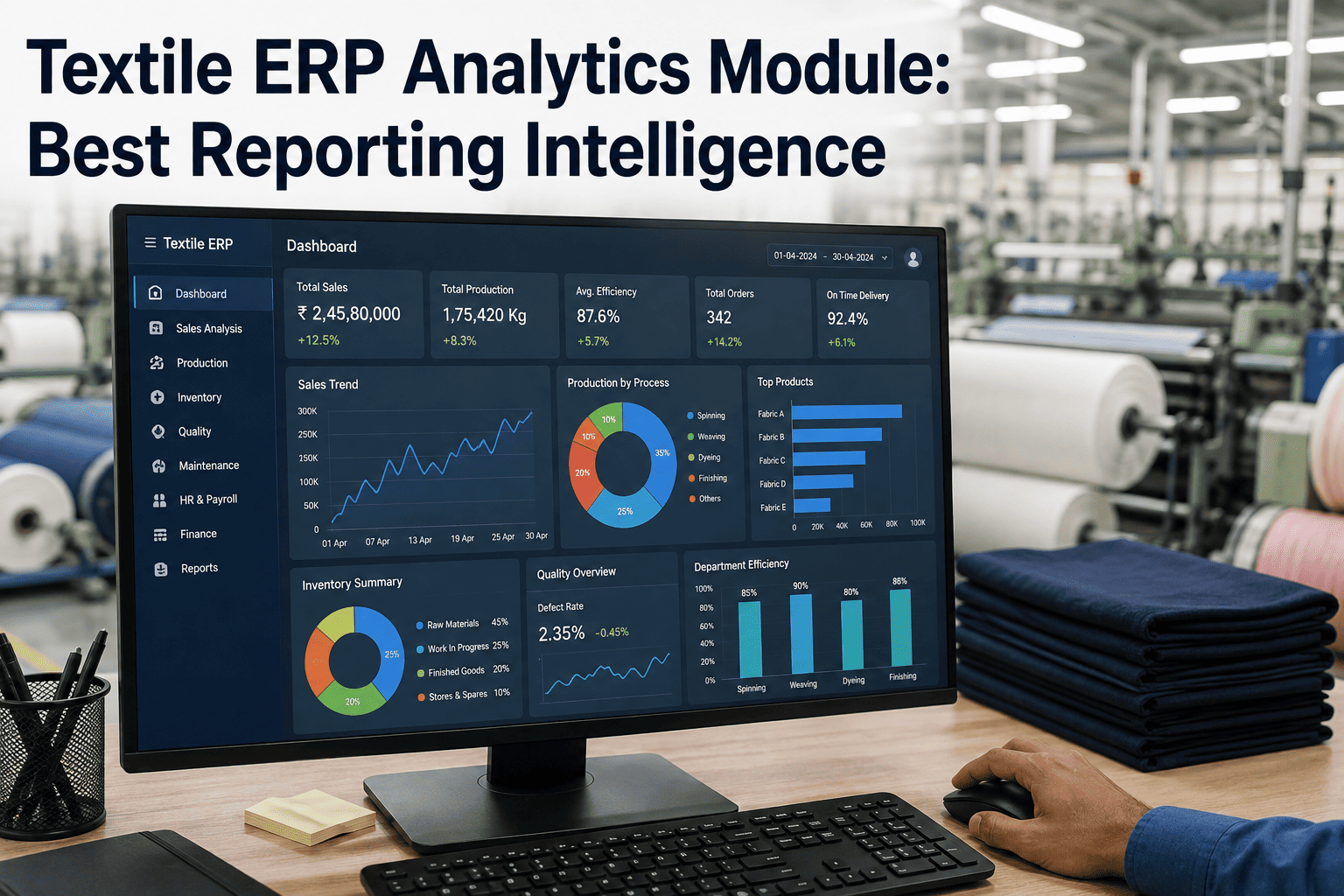
Read More
Most textile ERPs were built to record transactions — a purchase order raised, a batch closed, an invoice generated — and recording transactions is not the same job as helping a plant director understand why margin dropped two points this quarter.

Read More
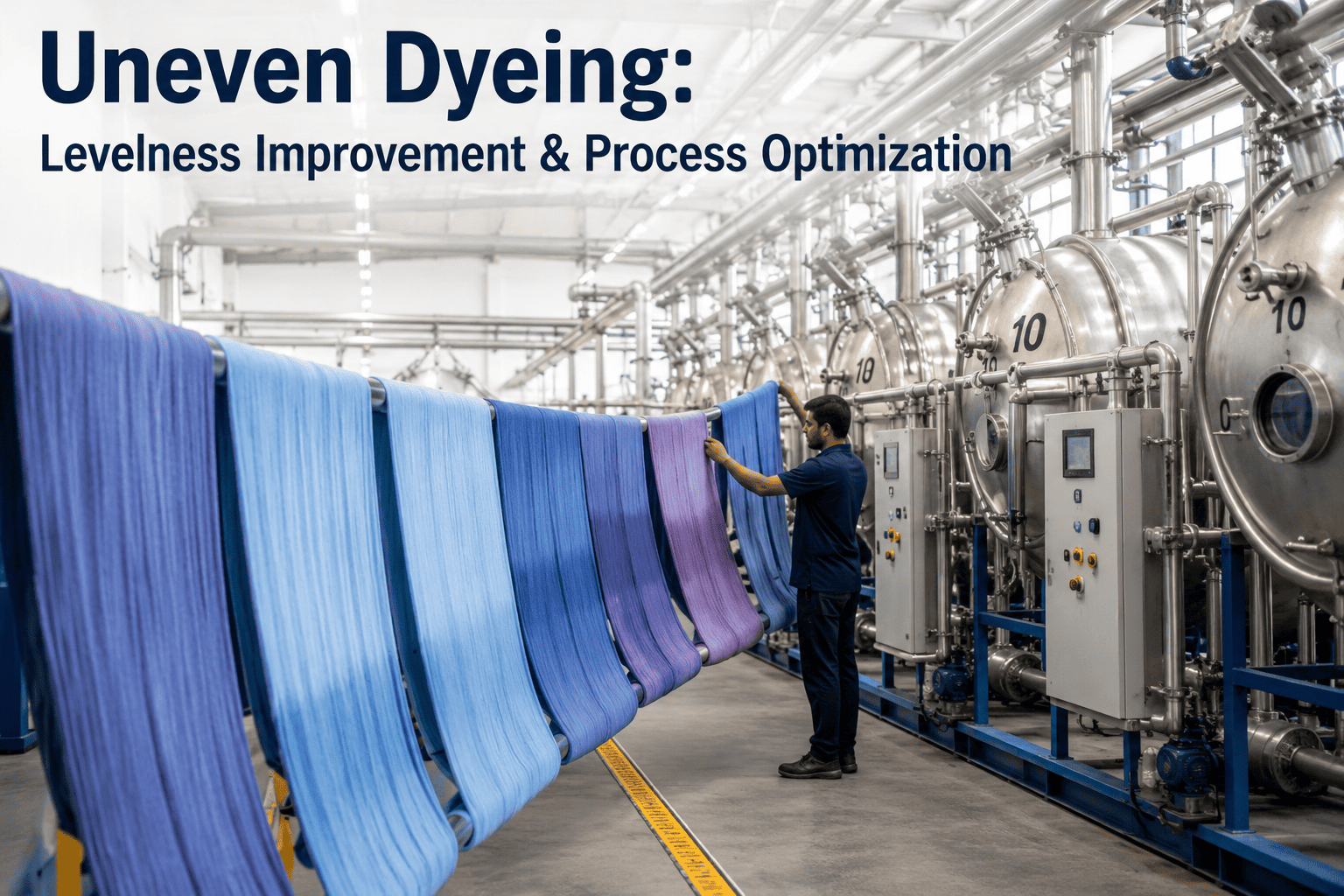
A streak running the length of a fabric roll looks like the same problem no matter what machine produced it, but the cause behind a streak on a jet dyeing machine is rarely the same cause behind one on a winch or a package dyeing unit. Treating st
Read More
A batch comes out of the dye machine and, under normal light, looks fine — until it's inspected under full tension and the center of the fabric reads visibly deeper than the selvedge. Uneven dyeing rarely announces itself as dramatically as a stre

Read More
A mill's maintenance manager evaluates six CMMS vendors, sits through six nearly identical demos, and still can't say which one will actually work on the shop floor six months from now. Most CMMS selection processes fail not because the software i
Read More
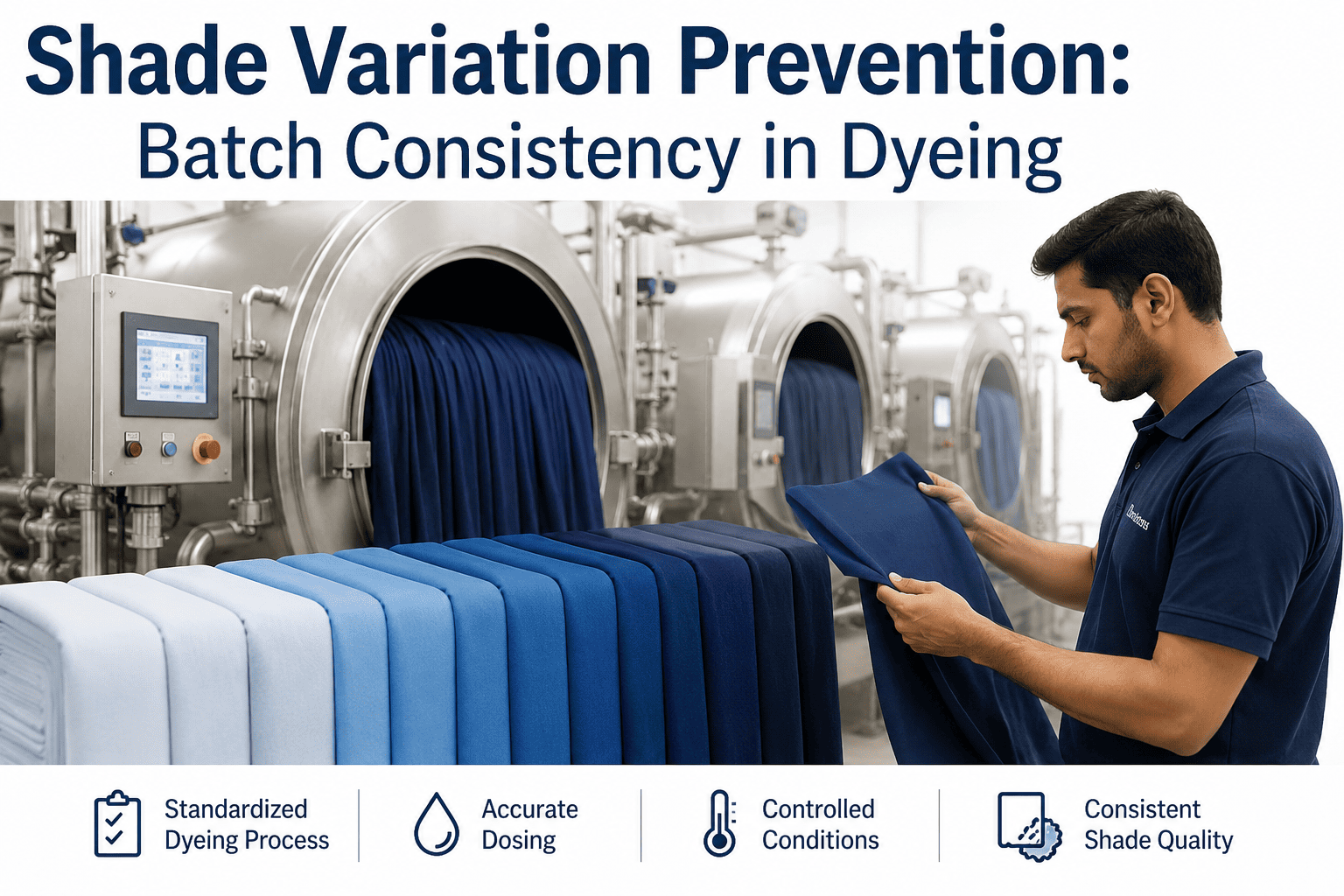
Two lots dyed to the same recipe, on the same machine, a week apart, and the buyer rejects one for shade mismatch. Nobody changed the formula, nobody swapped the dye, and yet the fabric came out visibly different under the light box. Shade variati

Read More
The same ring frame bearing fails for the third time this year, and the work order says "replaced bearing" with no mention of why it keeps happening. That's the quiet cost of skipping root cause failure analysis — every repeat failure gets treated
Read More
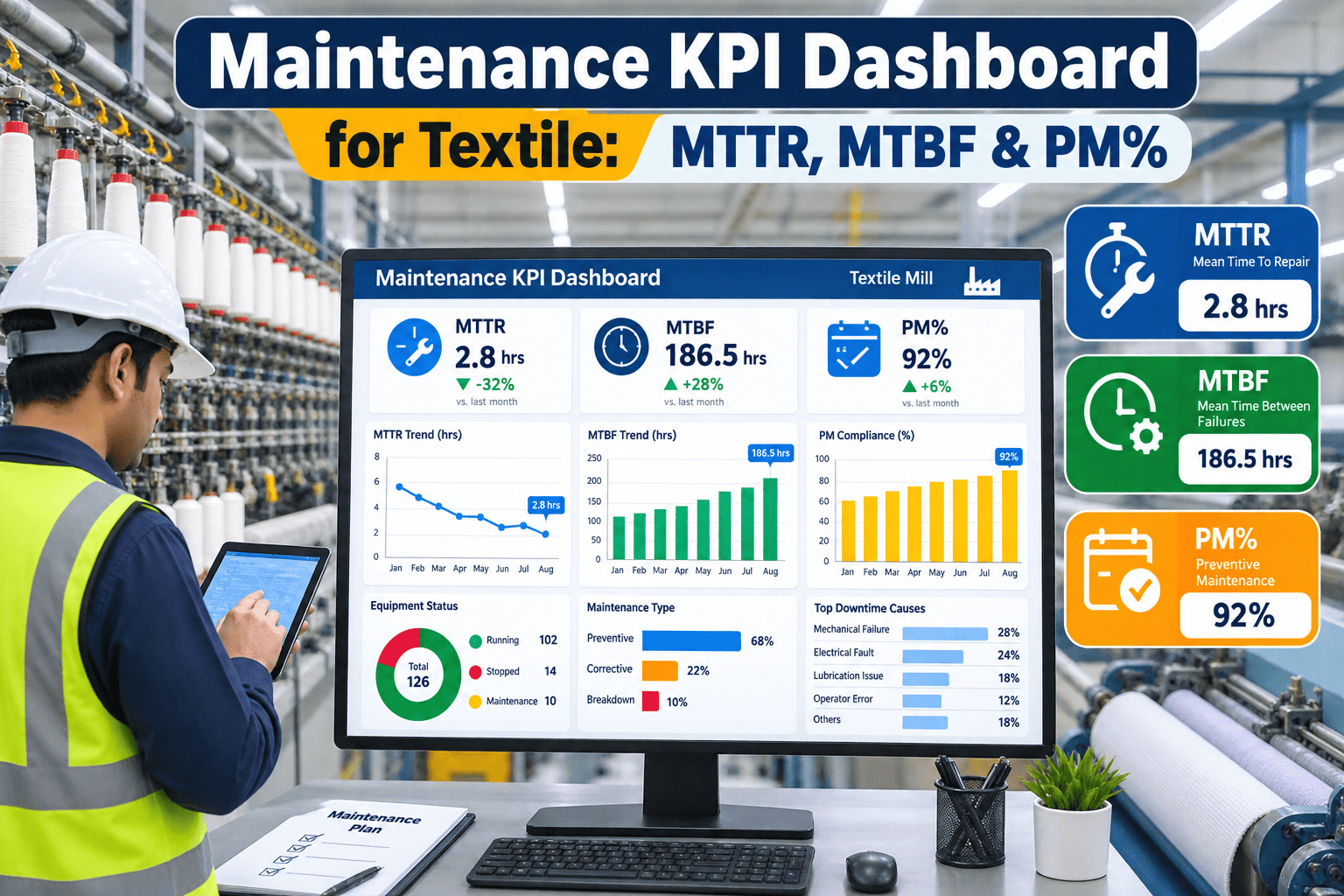
Ask a maintenance manager how the department performed last quarter, and the honest answer is often a shrug followed by a guess. Without a working KPI dashboard, "better" or "worse" is a feeling, not a number, and feelings don't survive a budget r

Read More
A mill running 60-inch shirting cotton on one order and 110-inch home textile sheeting on the next doesn't get to treat inspection as a fixed station with fixed settings. Every width change means recalibrating camera coverage across the roll. Ever

Read More
The factory floor conversation goes the same way almost everywhere: "the goods are fine, they're all up to standard." Then the shipment reaches the buyer, and a phone full of photos comes back showing color mismatch, failed stitching, or crushed p
Read More
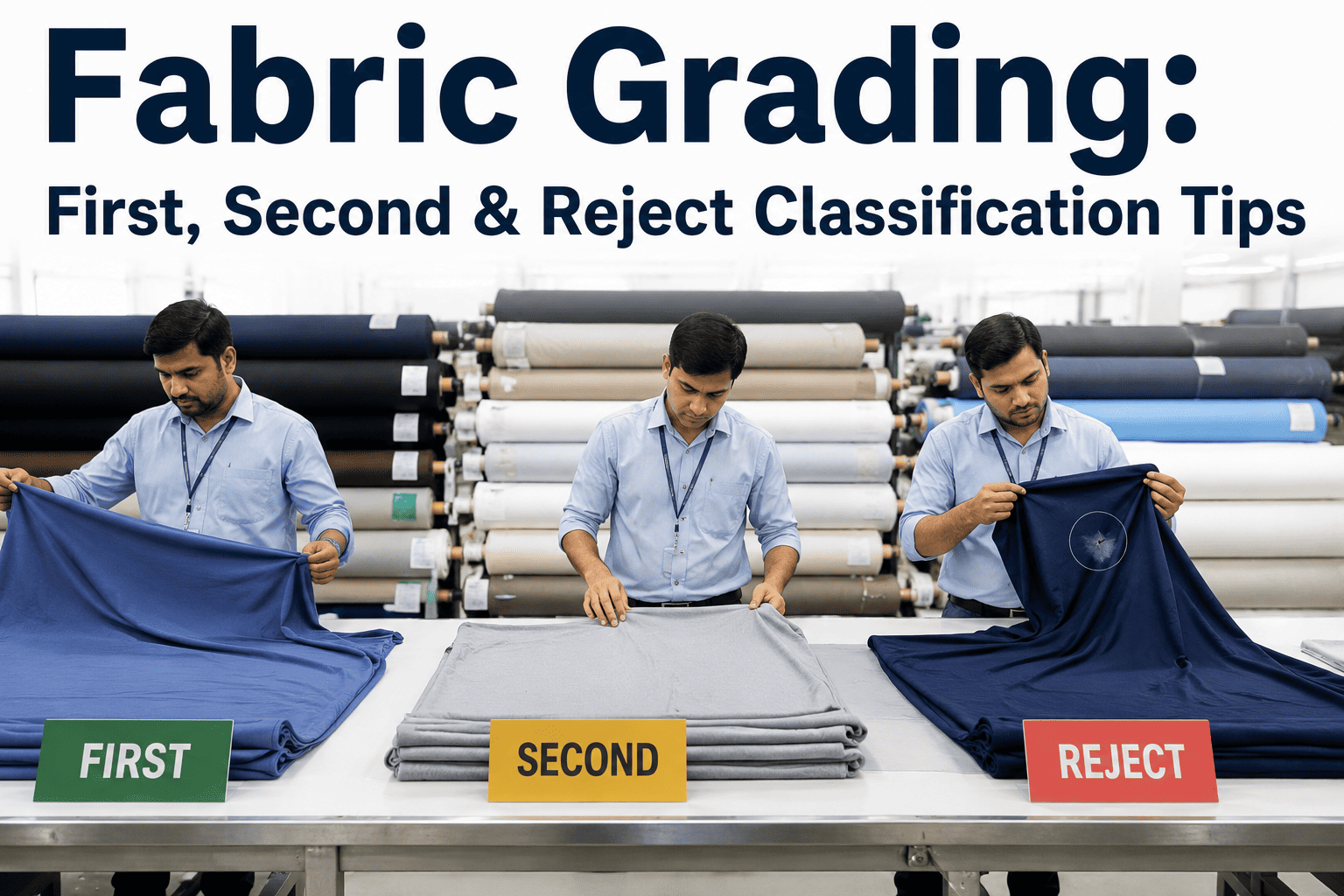
Every roll that comes off a finishing line eventually gets sorted into one of three commercial buckets: first quality headed to a premium buyer at full price, second quality headed to a discount channel at a fraction of that price, or reject heade
Read More
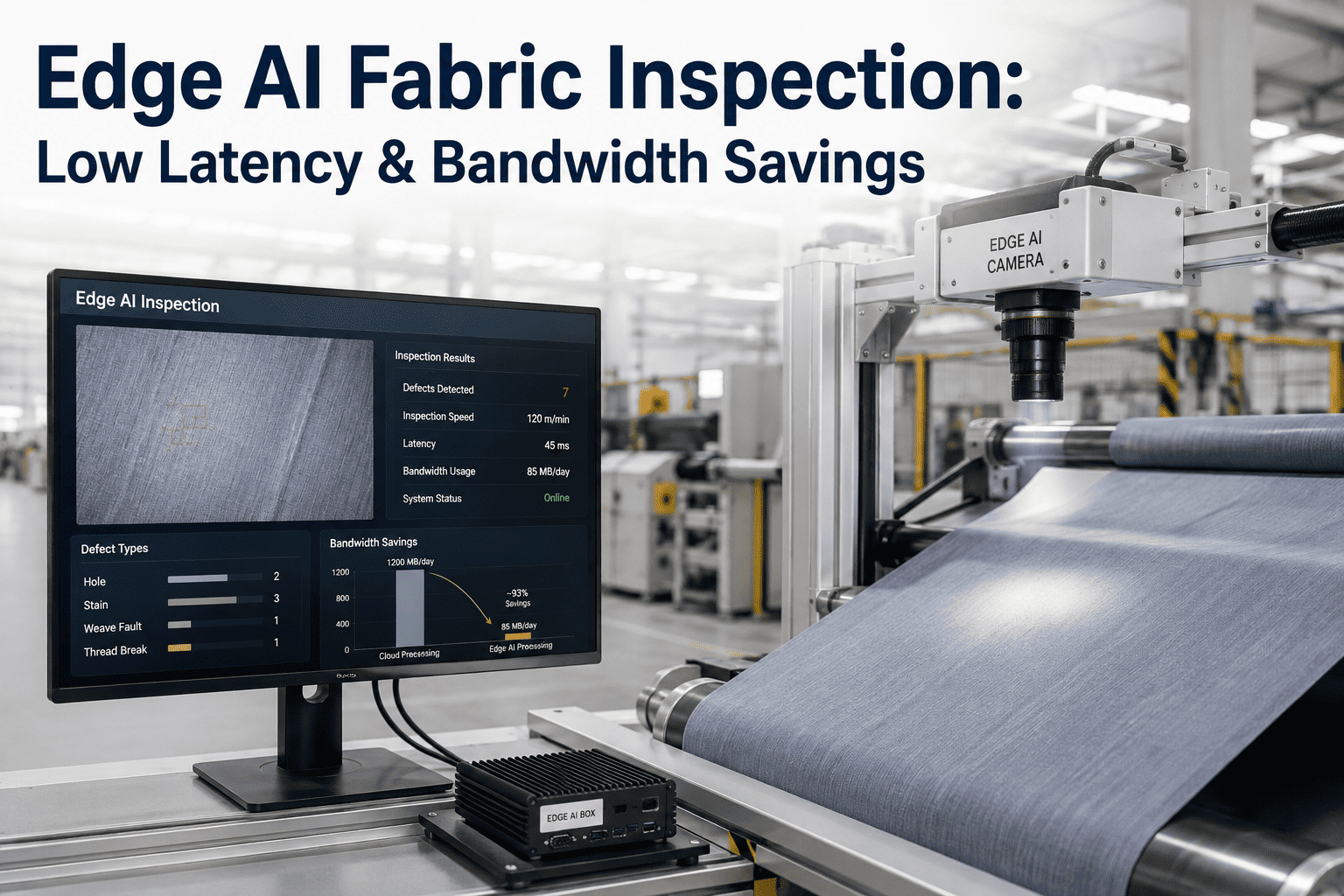
A single line-scan camera inspecting fabric at production speed generates more raw image data per hour than most plant networks were ever designed to move. Multiply that by the four, six, or ten cameras a wide-width finishing line actually needs f

Read More
A customer complaint about fabric quality almost never arrives as an isolated event, even though it usually gets handled as one. A buyer flags a shade mismatch or a weaving flaw, someone issues a credit note or arranges a replacement shipment, and
Read More
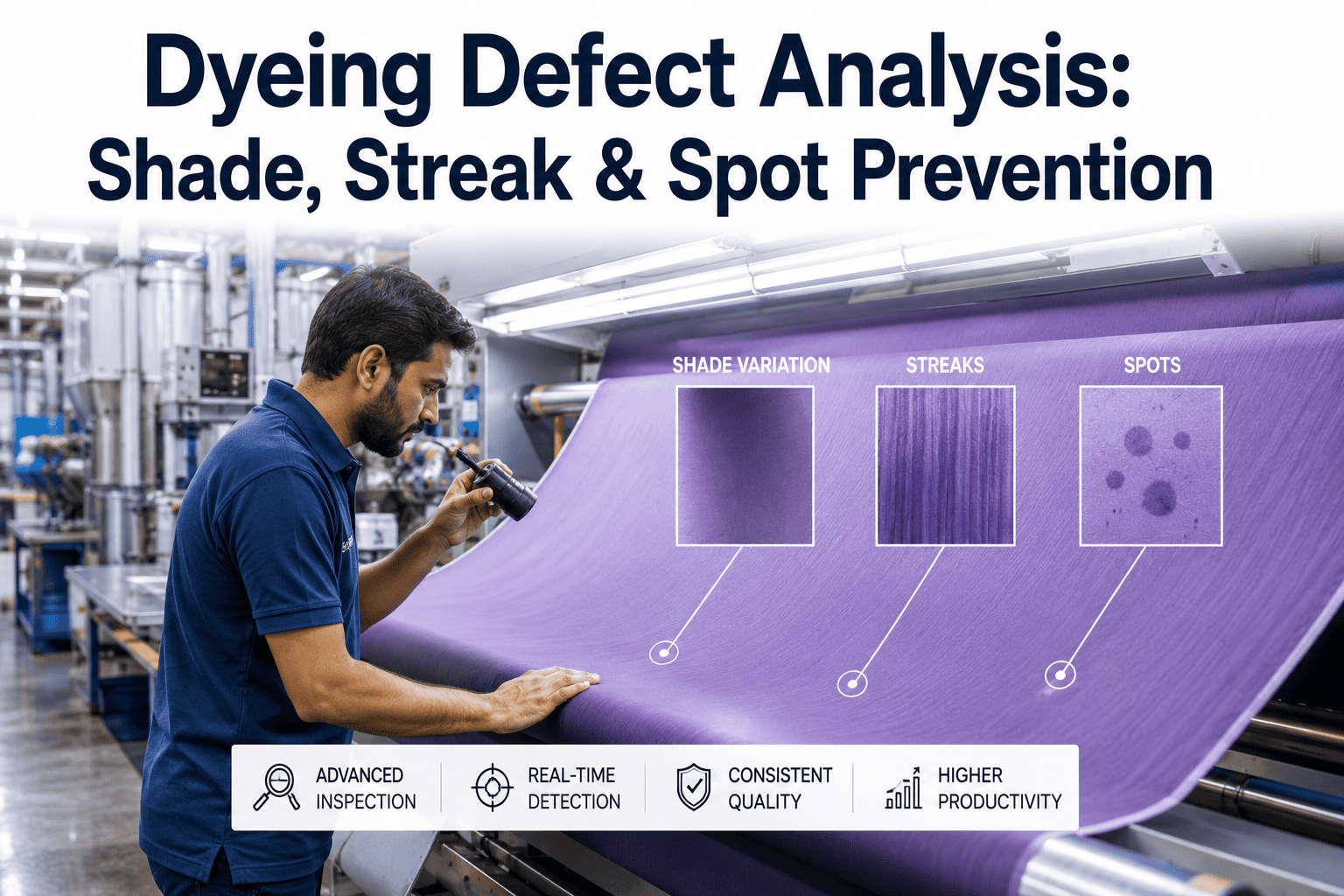
A dyehouse can run a color-matching lab that gets shade approval right on the first try and still send fabric to inspection that comes back with streaks, tailing, or patchy spots nobody predicted from the lab dip. The gap between a correct recipe
Read More
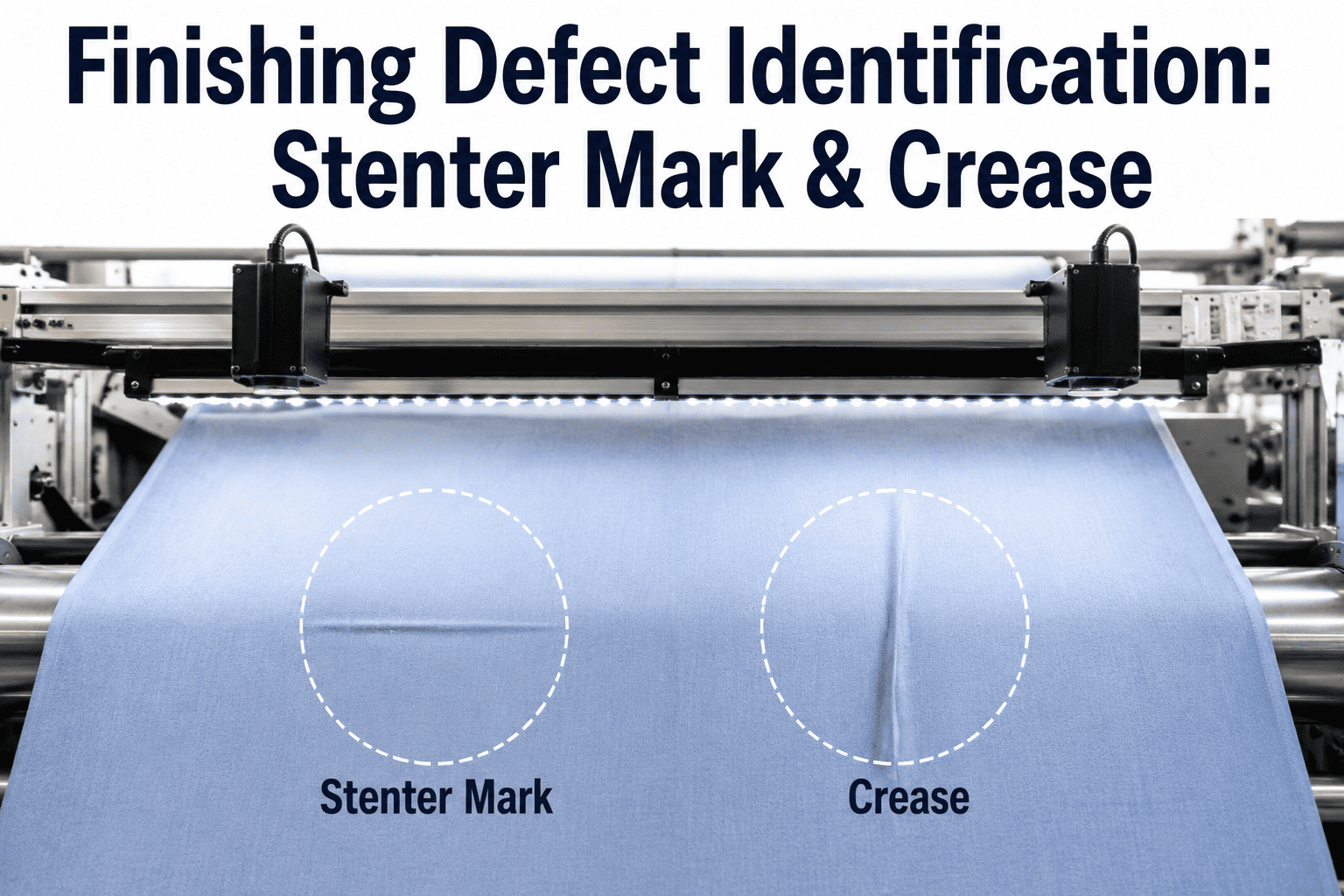
Finishing is the last set of hands a fabric passes through before it becomes someone else's problem or someone else's approved shipment, which makes finishing defects some of the most expensive to catch late. A stenter mark along the selvedge, a c
Read More
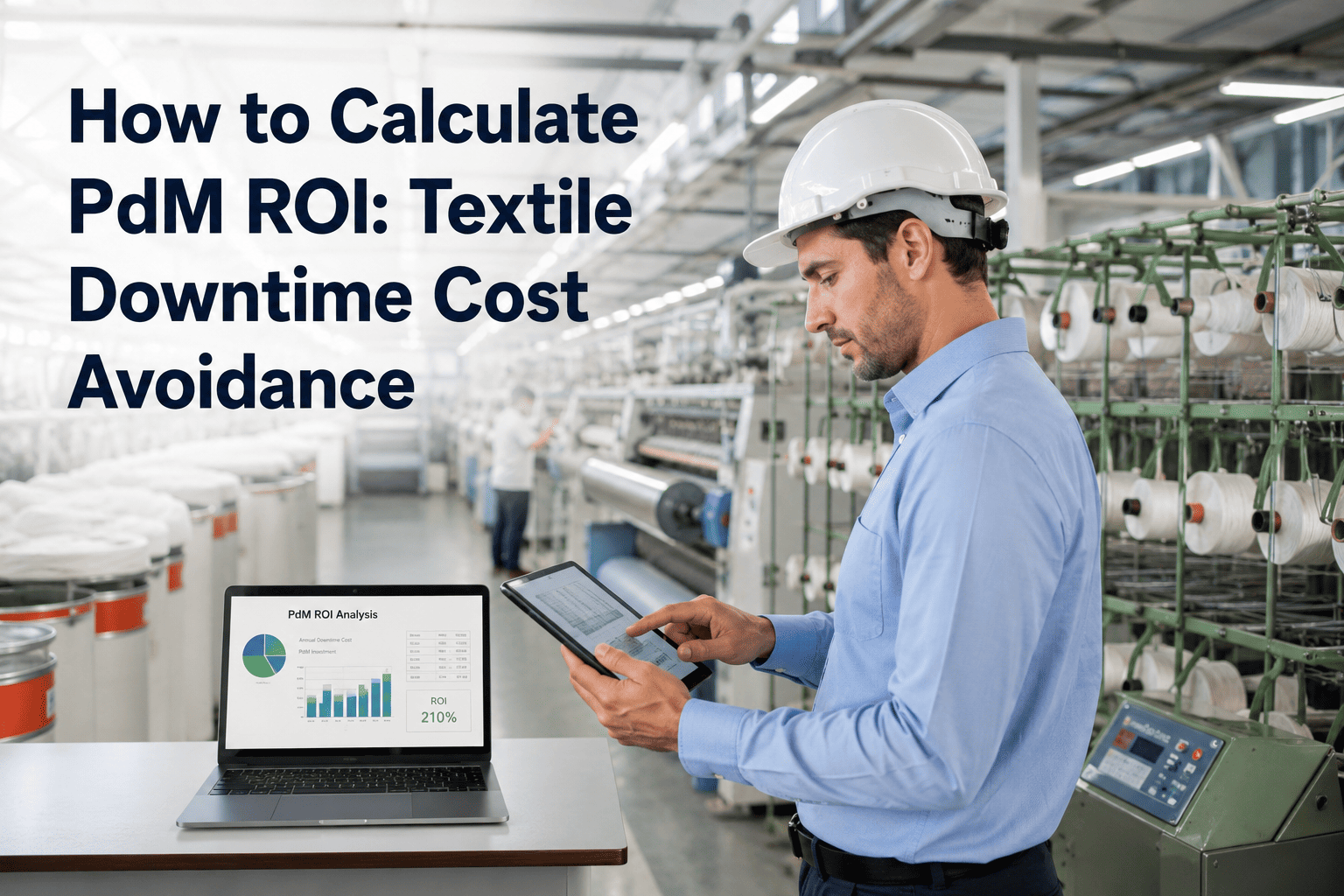
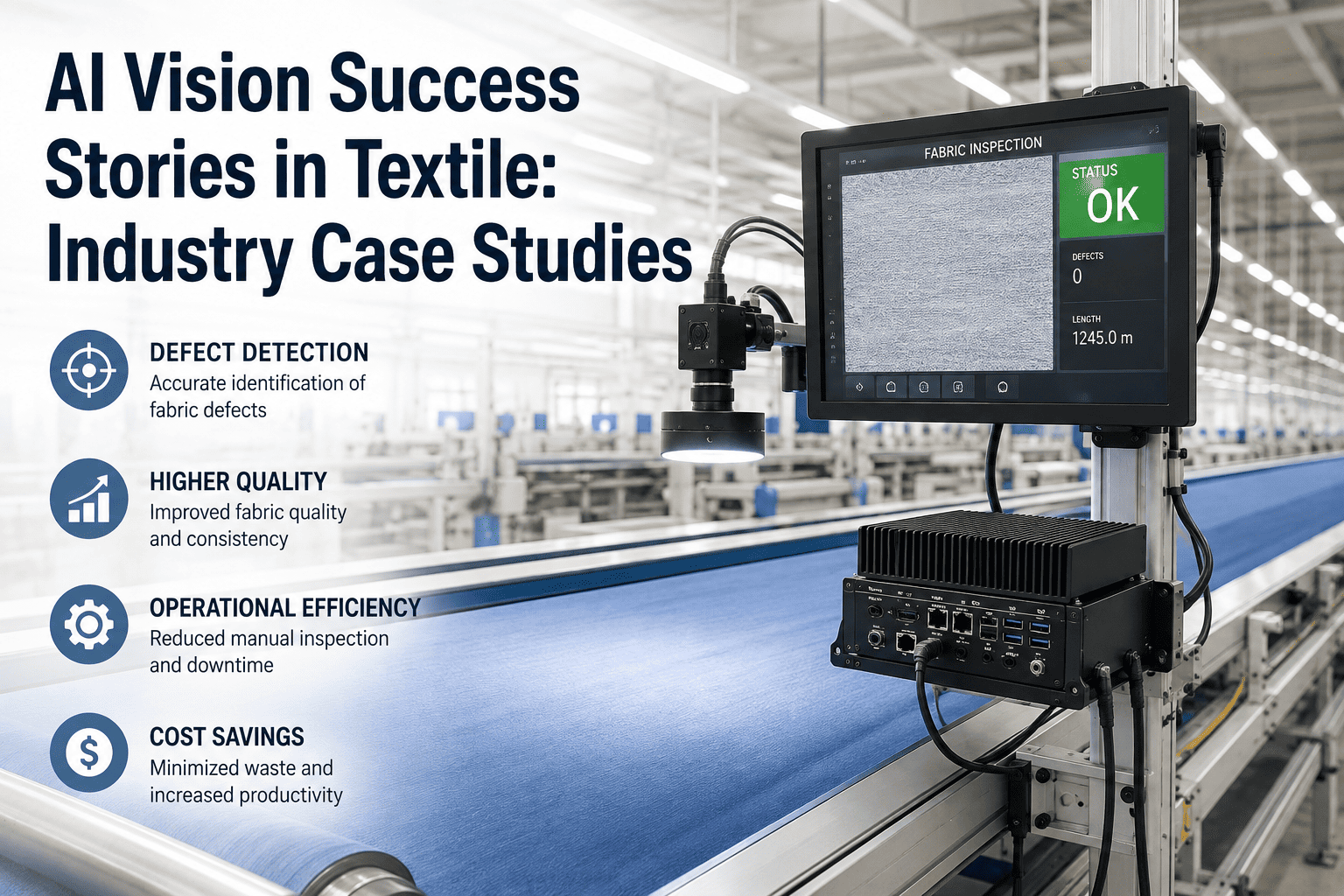
Every predictive maintenance pitch eventually lands on the same desk: finance, holding a request for sensor hardware and software licensing, asking for a number instead of a promise. "Fewer breakdowns" doesn't clear a capital review. A payback per
Read More
The textile mills getting the most attention in 2026 are not the ones that bought the most cameras. They are the ones that picked one measurable problem, ran a bounded pilot, and let the numbers decide whether to scale. Across weaving, knitting, d

Read More
Walk from the bale opener to the finishing line in most textile mills and you'll pass through four completely different environments without ever leaving the same building. The opening room is thick with airborne fiber. The dyehouse runs hot and h

Read More
A textile inspection line running at 60 meters per minute gives an AI model roughly 15 to 20 milliseconds to capture a frame, run inference, and return a defect decision before the next section of fabric has already passed the camera. Pick an edge
Read More
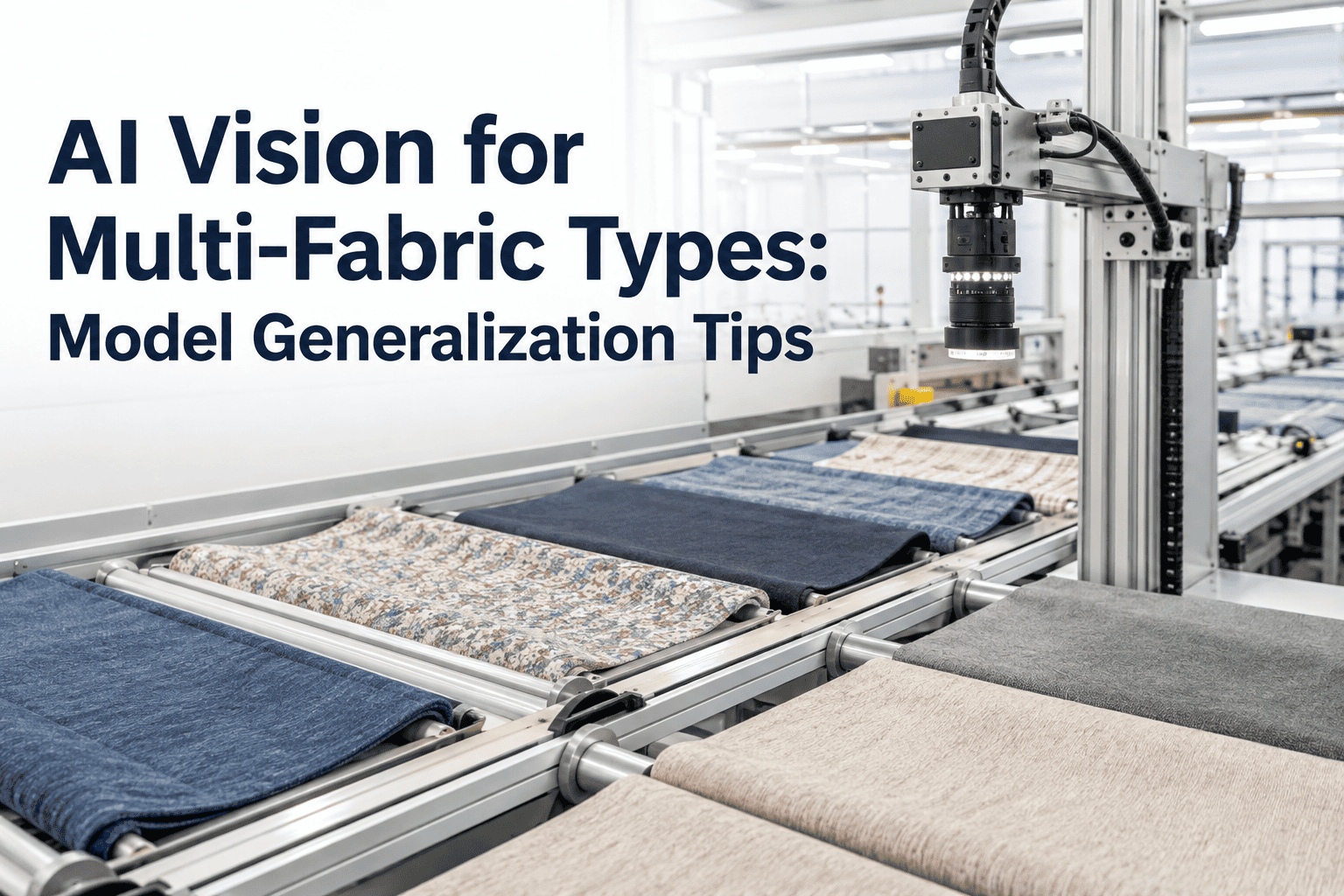
A mill running denim on one line, a lightweight cotton voile on another, and a technical polyester blend on a third doesn't get to run one AI vision model across all three and hope for the best. Weave density, surface texture, color depth, and lig
Read More
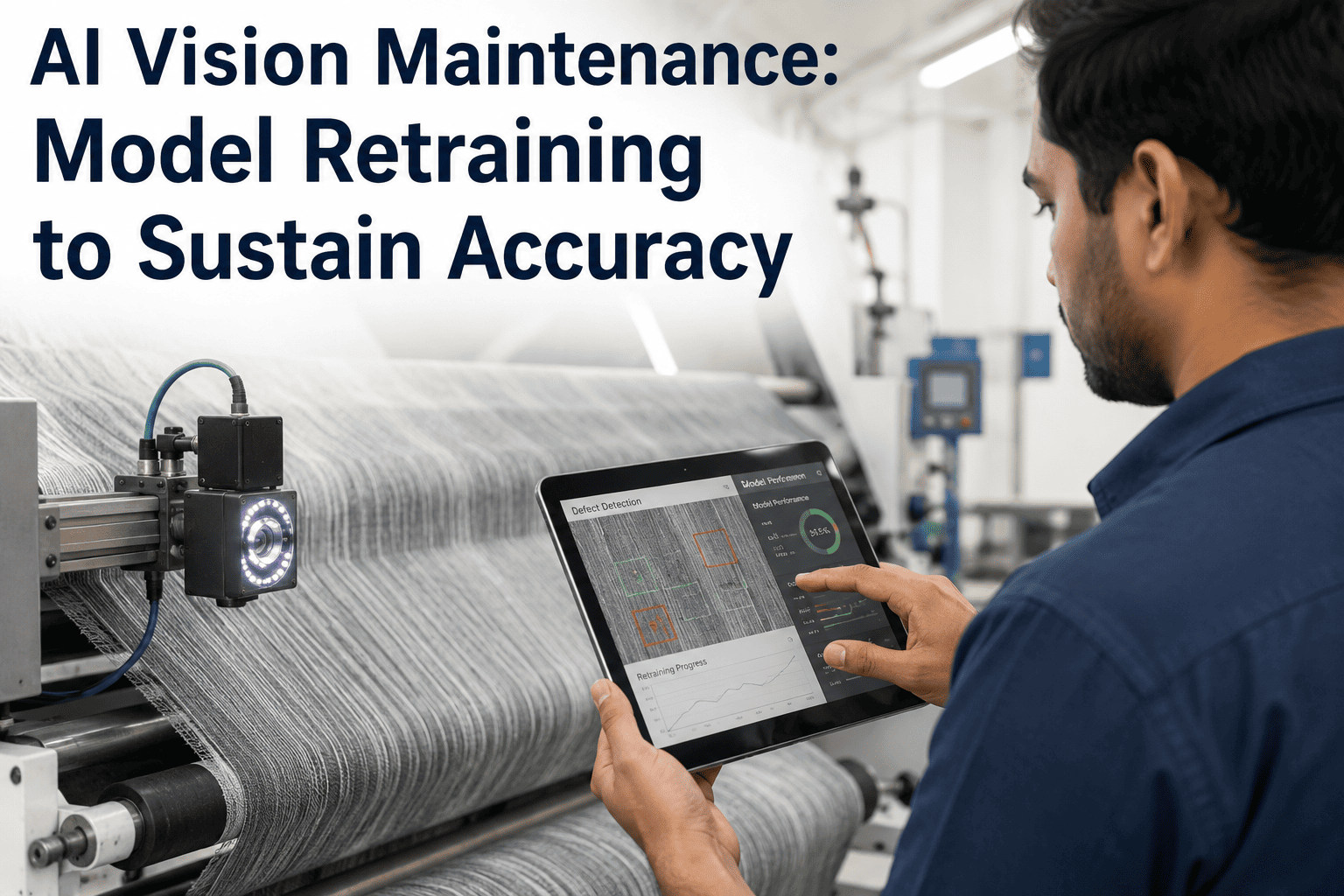
A defect detection model that scored 98% accuracy at go-live does not stay at 98% forever, even if nobody touches it. Fiber lots shift, dye batches vary, a camera lens accumulates a thin film of lint, ambient lighting changes with the seasons, and

Read More
Two rolls of the same fabric, same specification, same nominal process — one comes off the line clean and the other has a recurring thin place every few hundred meters. The fiber content is identical. The machine settings on paper are identical. W

Read More
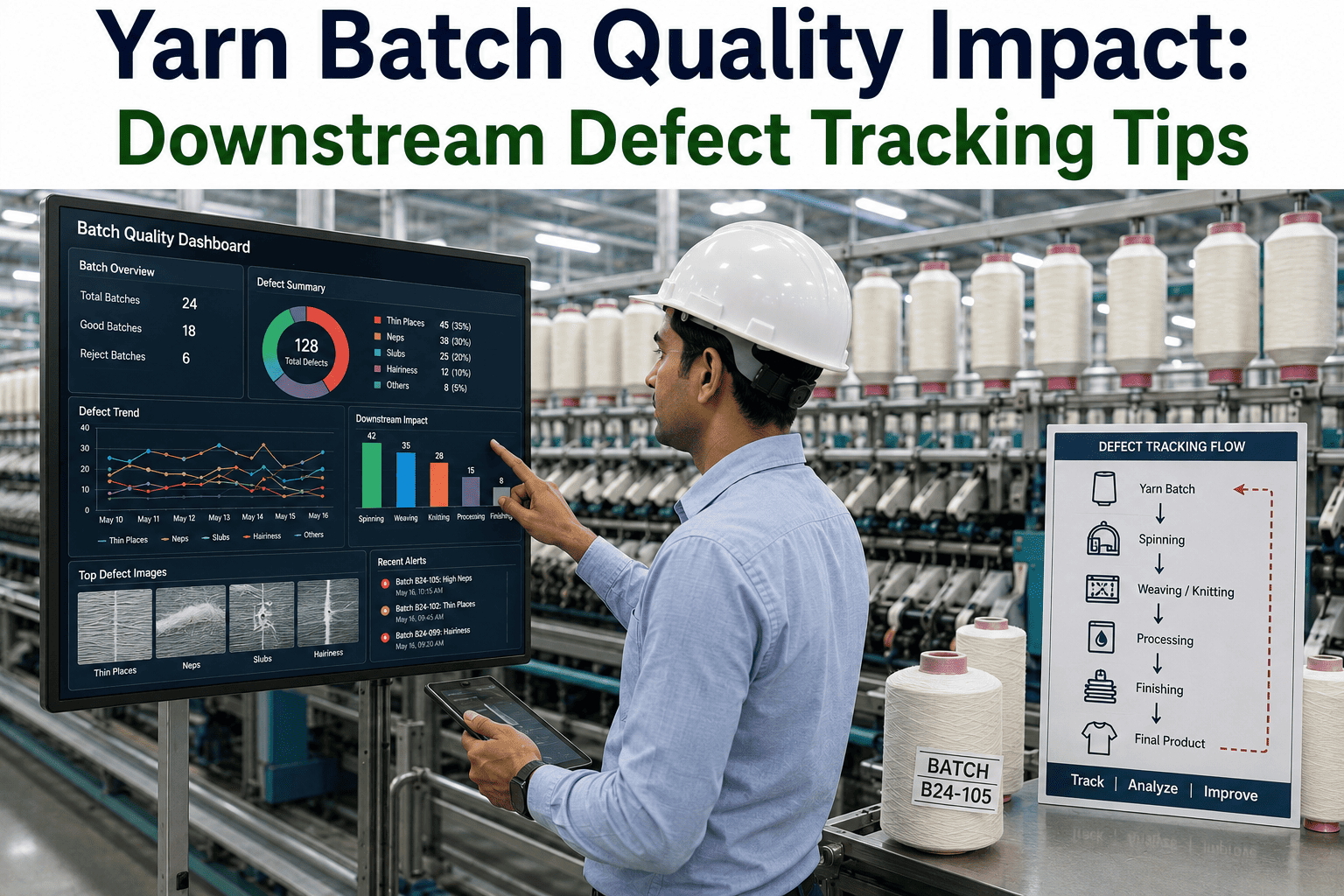
The question that decides whether a recall costs a warehouse pallet or an entire production quarter is not "was there a defect." It's "how fast can you name every unit that shares it." A textile manufacturer that can answer that question in hours
Read More
A lab testing yarn evenness samples less than 0.01% of total production — one 100-meter bobbin pulled every few hours from a spinning frame running thousands of kilograms per shift. Everything in between those samples is invisible until it shows u

Read More
A control chart doesn't need a point outside the limits to tell you something is wrong. Eight consecutive points on the same side of the centerline, or a run of six steadily climbing — both are statistically unlikely enough to signal a real proces

Read More
A garment that clears customs cleanly in the EU can still get held at a US port, and a fabric certified for the Chinese domestic market can fail an Indian BIS check on a completely different technical point. Four major markets, four different regu

Read More
The EU's Digital Product Passport moves from policy into enforcement territory in 2026 and 2027, and textiles sit near the front of the priority list — every regulated garment will need a QR code, NFC tag, or RFID chip that resolves to a verified
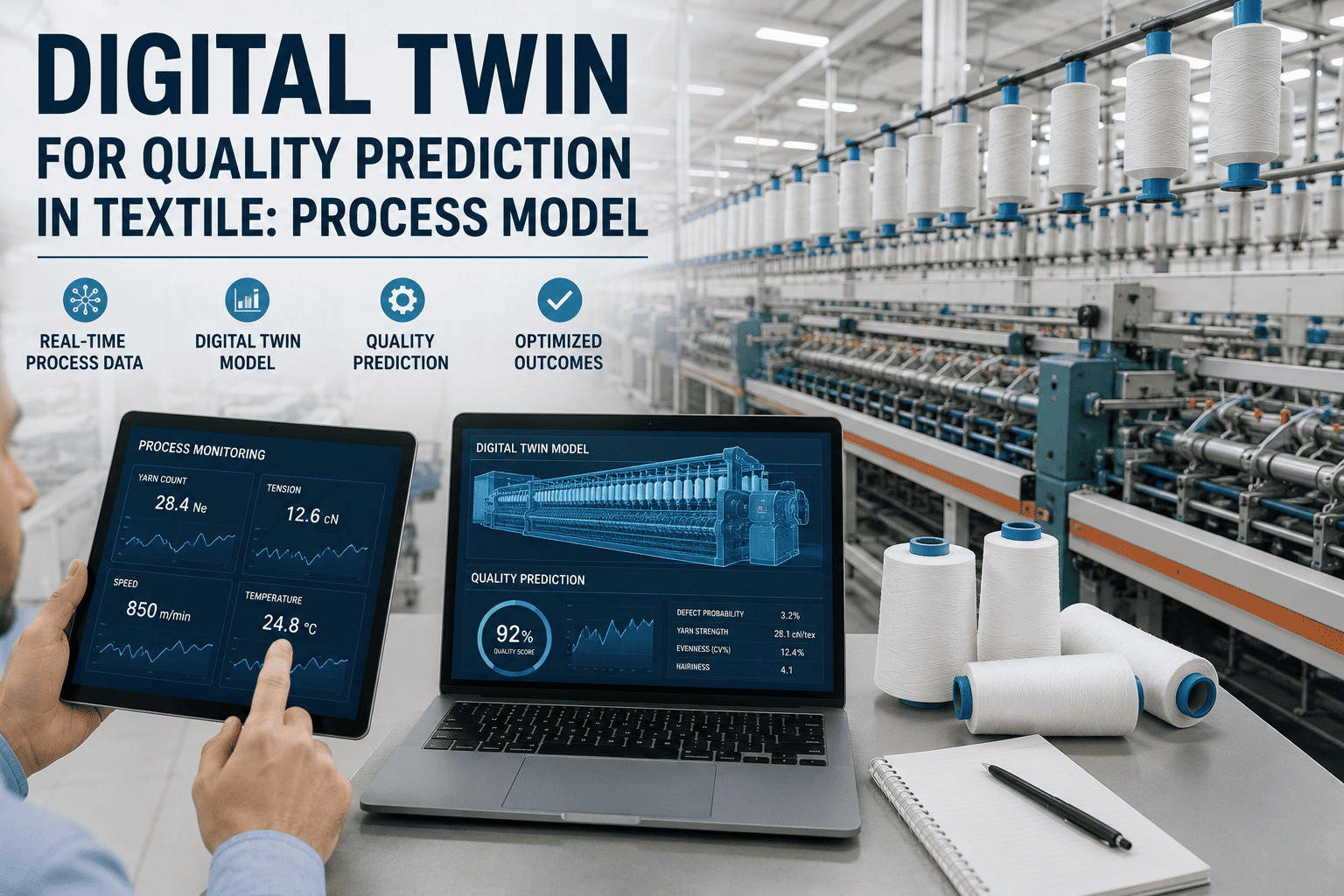
Read More
Textile and light manufacturing sit below 30% digital twin adoption — the lowest of any manufacturing vertical — while food, pharma, and chemicals have already reached 30–50%. That gap isn't because textile quality problems are simpler; dye uptake
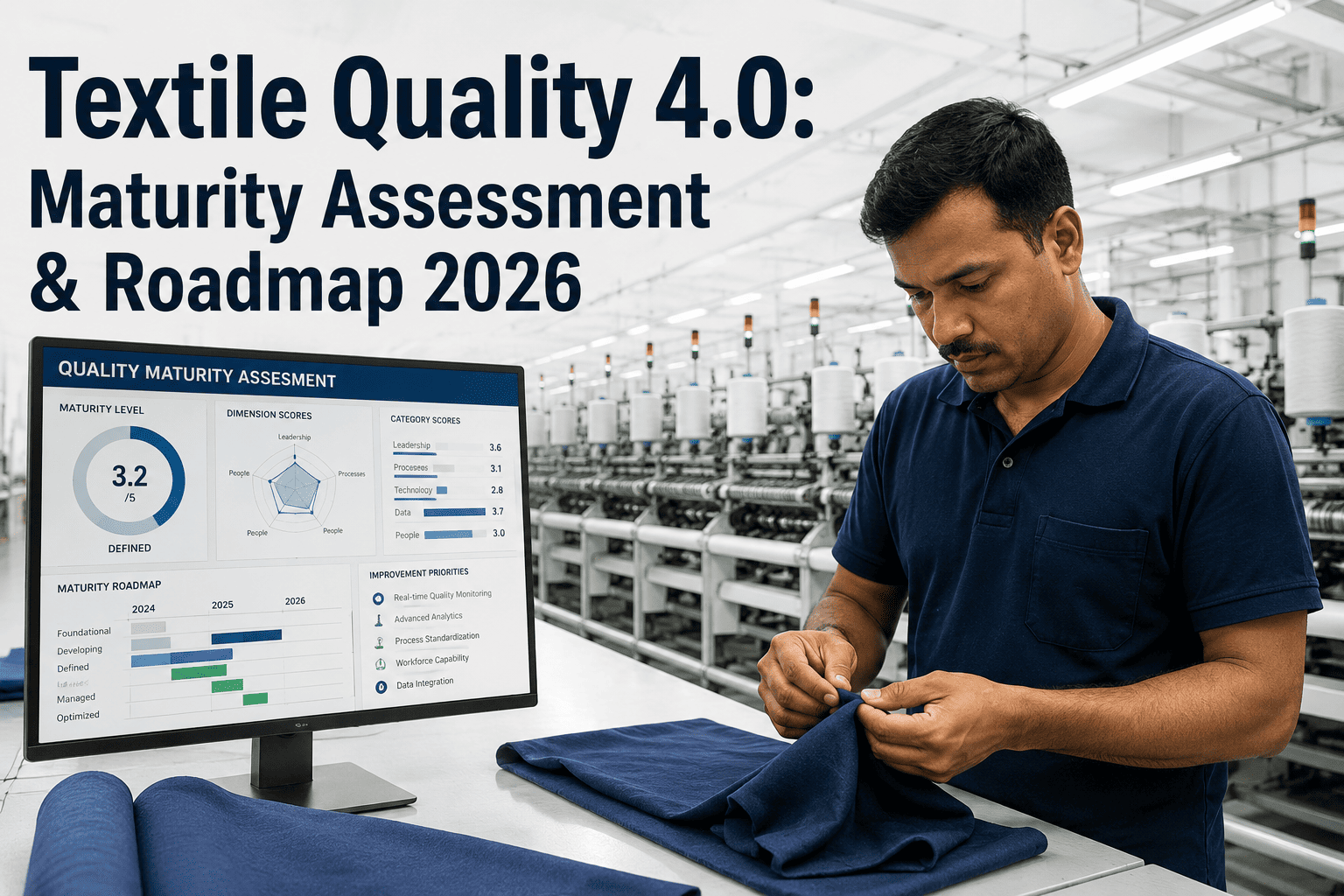
Read More
Ask ten textile plant managers where their quality program sits on the Industry 4.0 curve and most will answer with a guess rather than a score. That guess usually undersells the plant's real position, or worse, overstates it. A recent readiness s
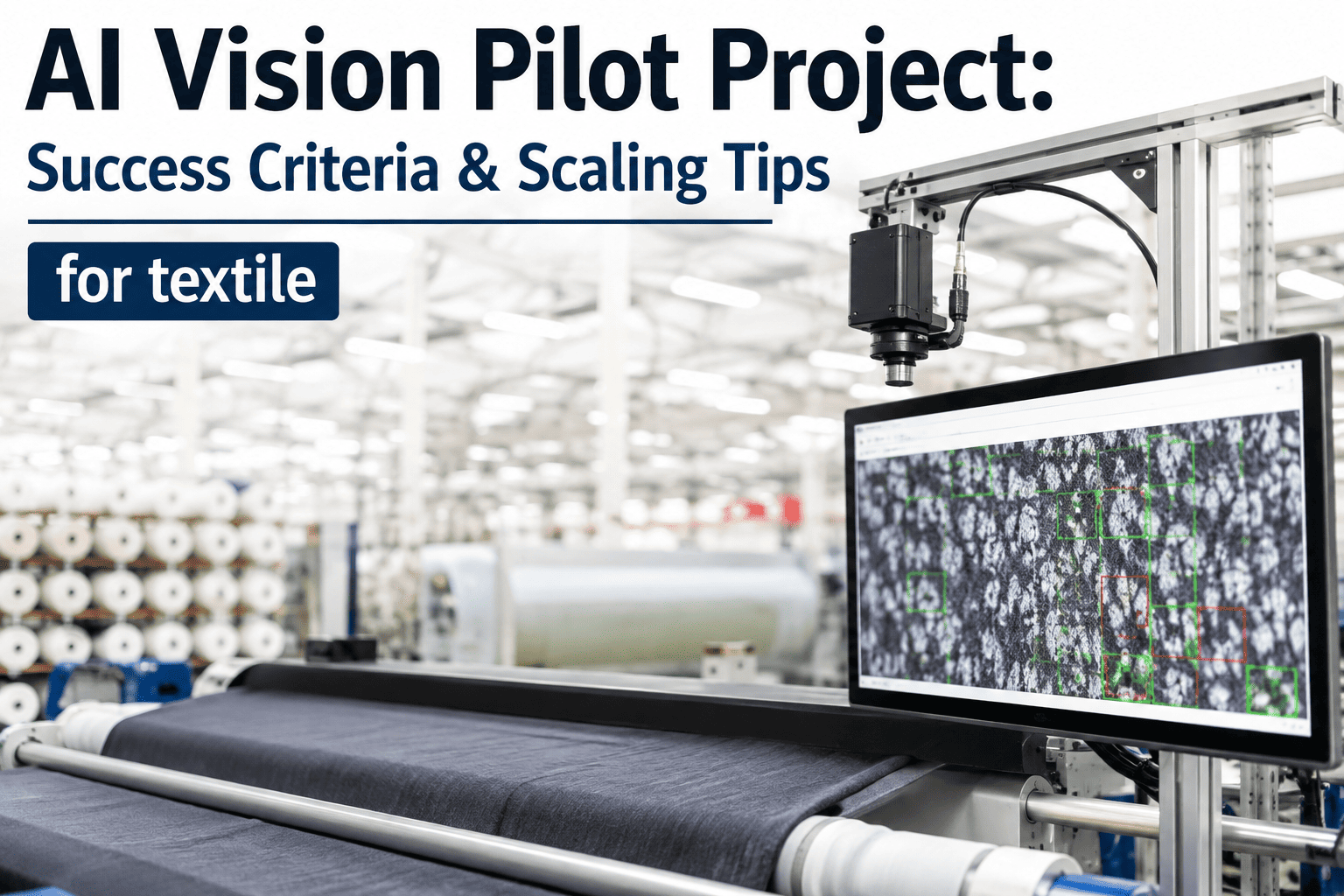
Read More
Most AI vision pilots in textile plants fail for a reason that has nothing to do with the technology: nobody defined what success looked like before the pilot started. Three months in, the AI system is running, the data is accumulating, and the pl
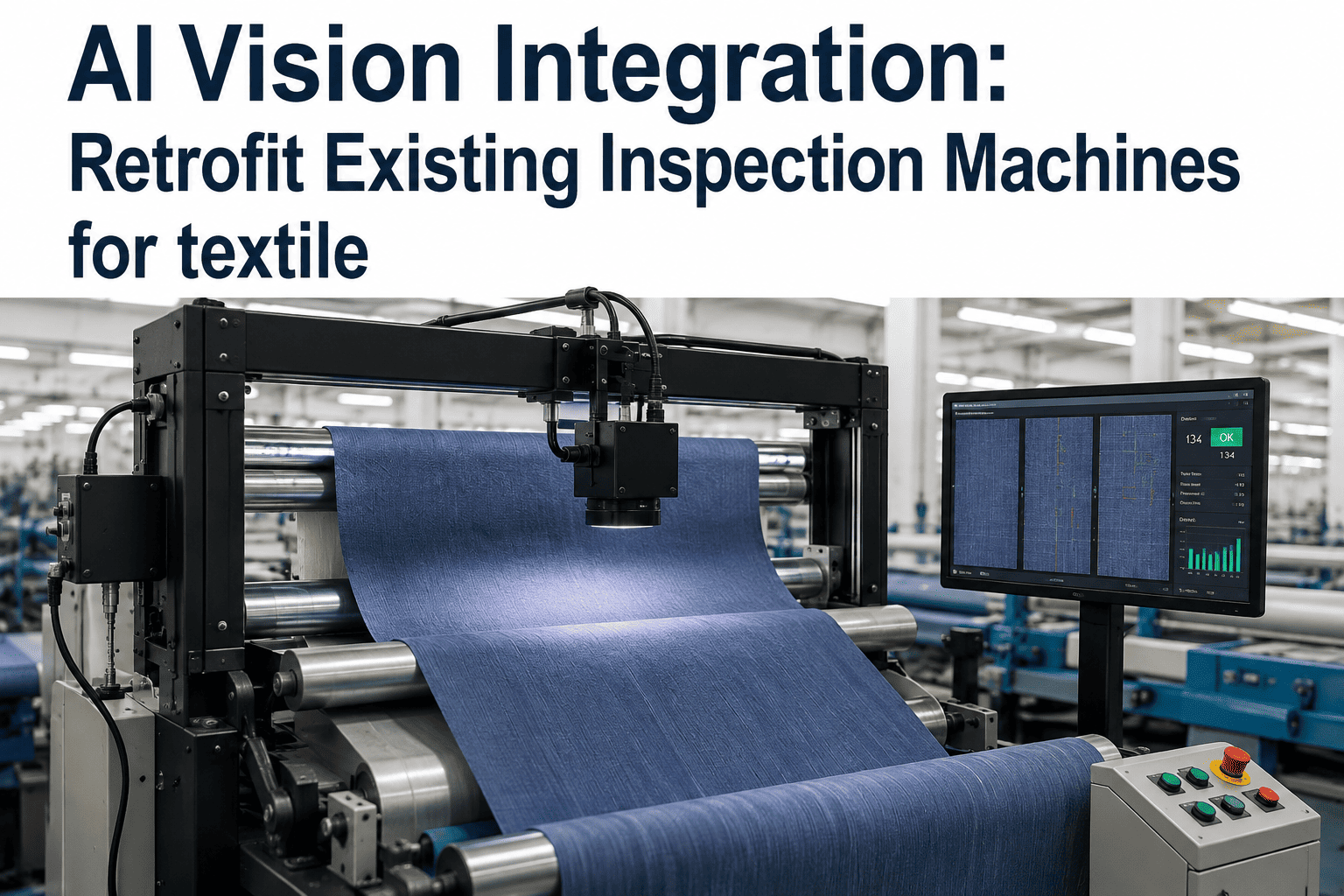
Read More
Replacing an entire fabric inspection machine to add AI-powered defect detection is rarely necessary, and it is almost never the fastest or cheapest path to better inspection accuracy. Most textile mills already own an inspection frame with the me

Read More
Ask three different AI vision vendors for a quote and you will likely get three different numbers with no way to compare them, because each one bundles hardware, software, and services differently. That opacity is the single biggest reason textile

Read More
Ask a plant manager why they haven't deployed AI vision inspection yet, and the answer is rarely "we don't believe it works." It's usually something closer to "we don't know what it actually costs," or "we're afraid it will disrupt a line that's a
Read More
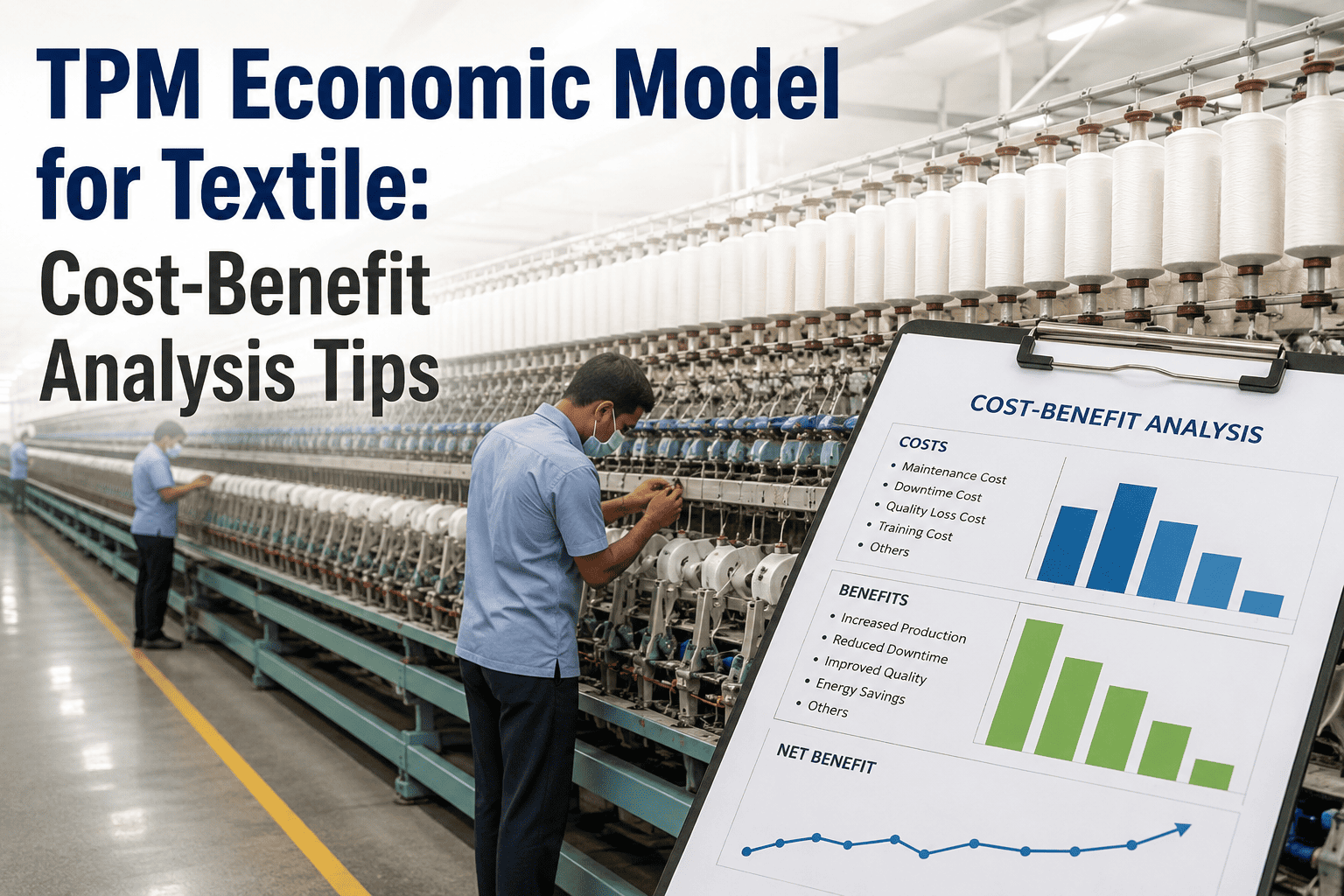
Total Productive Maintenance gets pitched to textile plant managers as a culture change — operators taking ownership of basic care, cross-functional teams chasing the eight pillars, visual boards on every machine. All of that is real, but it rarel
Read More
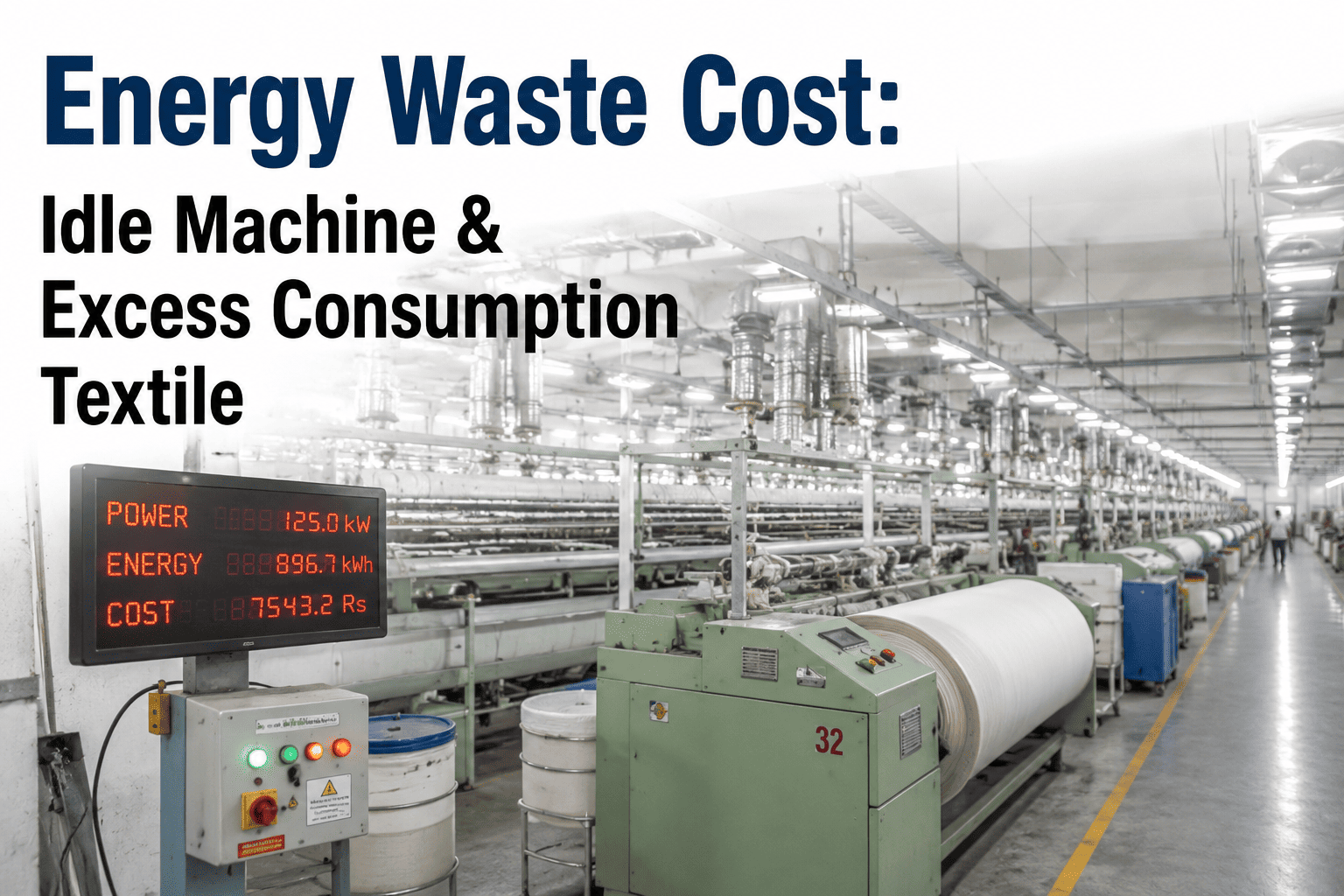
Walk any textile shop floor at shift change and you will see it: looms running through the changeover, compressors holding pressure for a line that has not started, dye jets idling between batches because nobody wants to power them down and back u
Read More
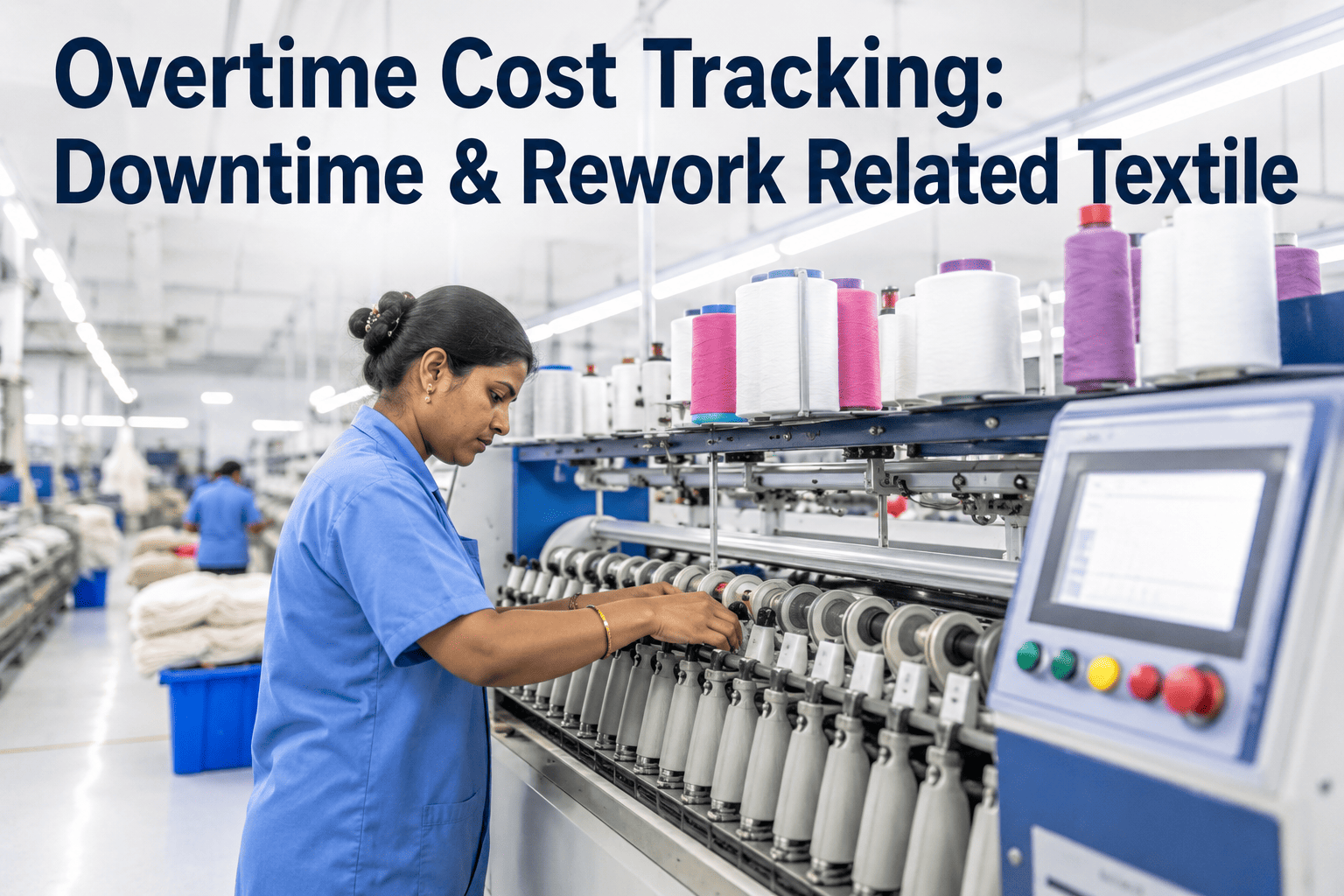
Every textile mill pays an overtime bill at the end of the month, but almost none of them can tell you why the number moved. Was it a genuine order surge, or was it three hours of machine downtime on the ring frame followed by a rework shift to fi
Read More
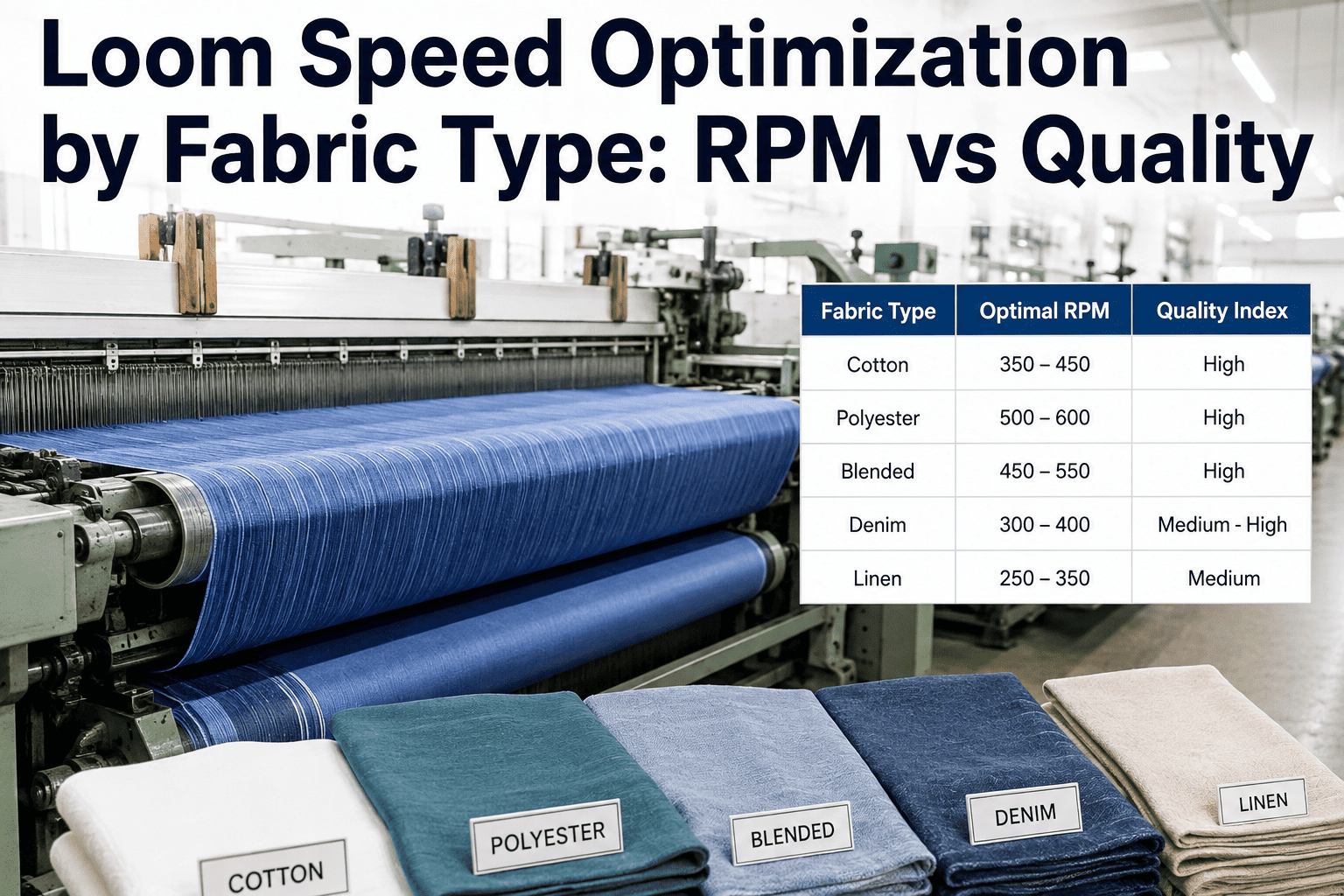
Running every loom at the same RPM regardless of what fabric is on it leaves output on the table in one direction or quality at risk in the other, because the actual speed ceiling for acceptable quality varies significantly by fabric construction,
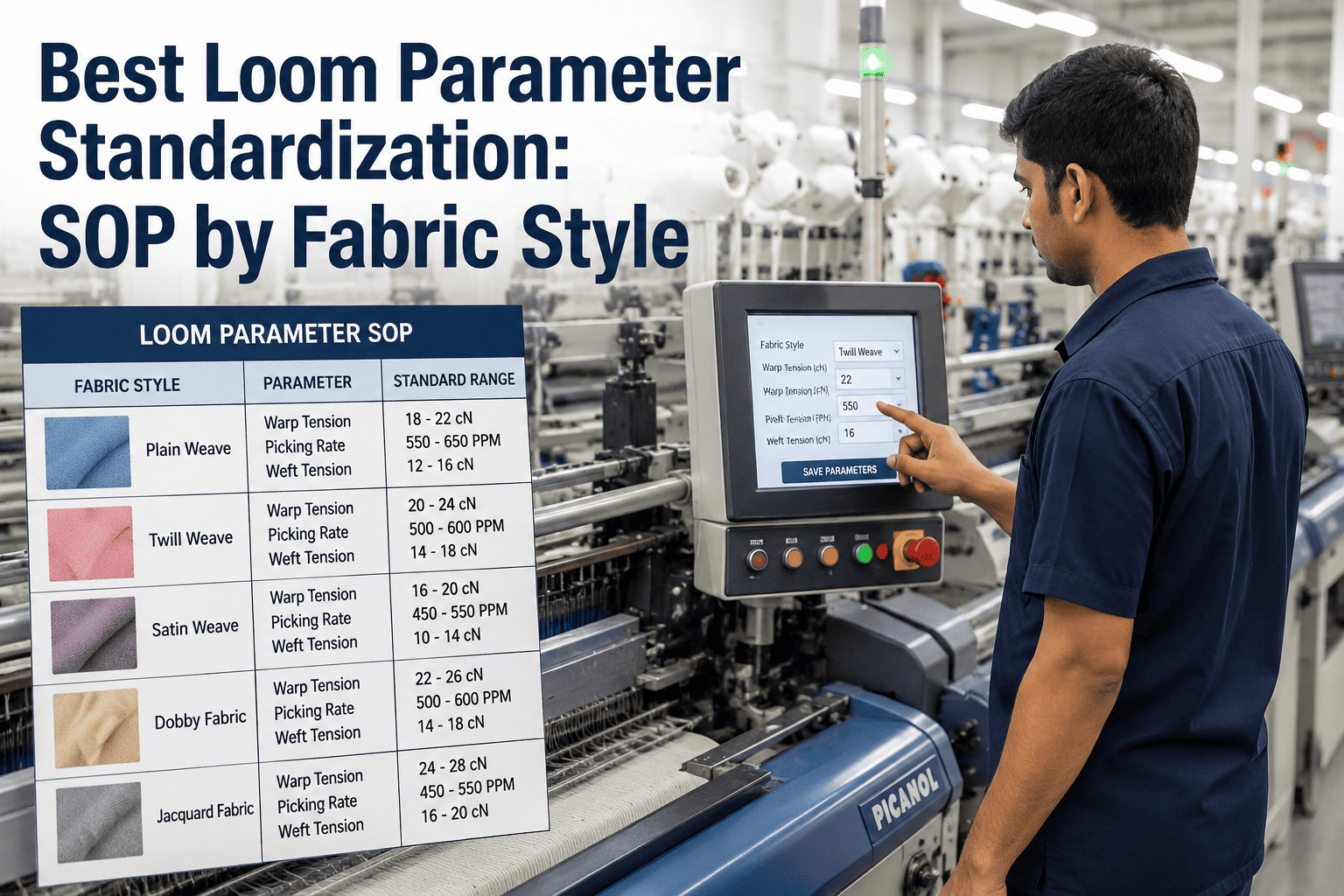
Read More
Ask five different weavers on the same floor what tension setting a particular fabric style should run at, and it is common to get five different answers, each defended by personal experience rather than a documented standard. This kind of informa
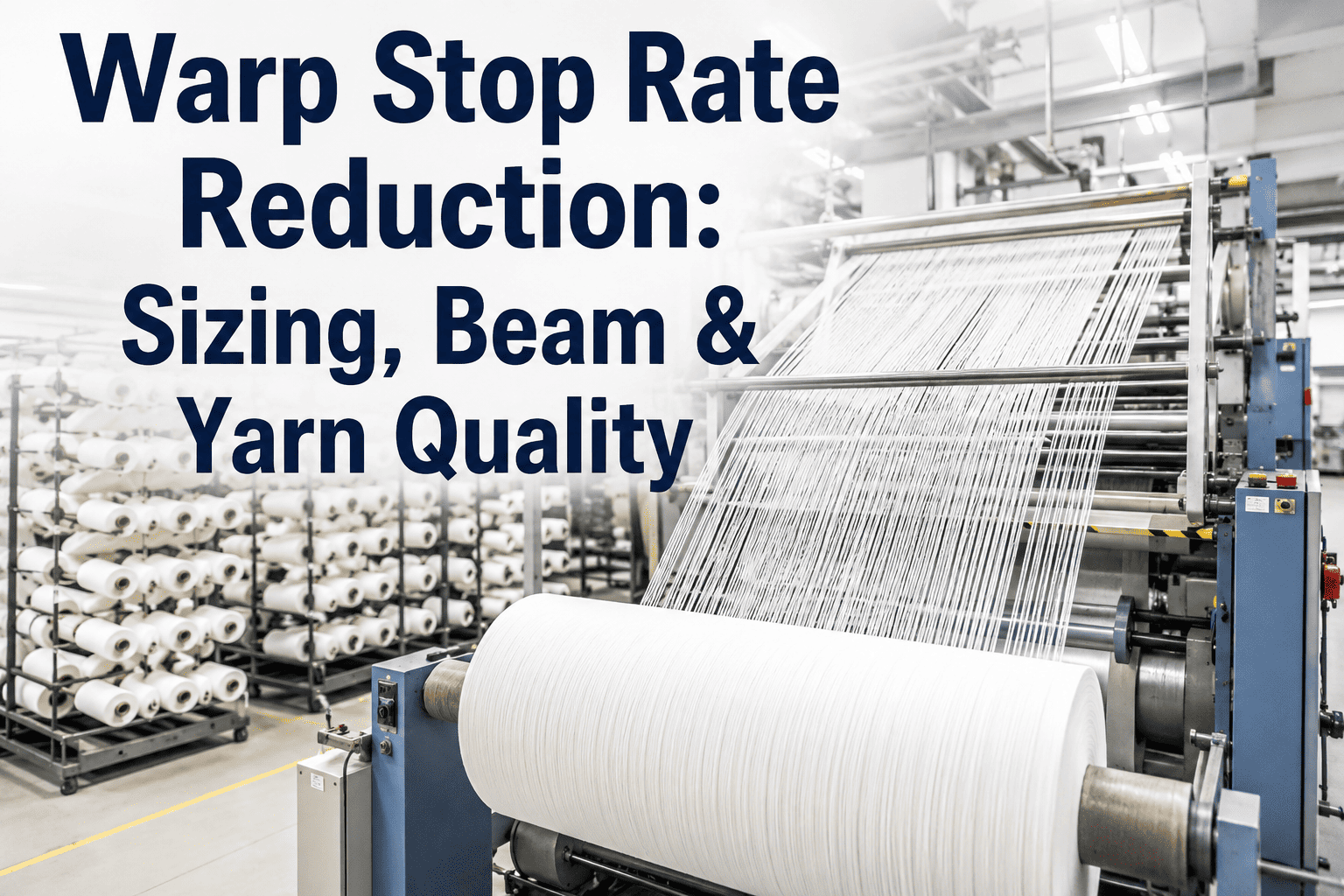
Read More
Warp stops are the single largest efficiency drain on most weaving floors, and yet the three factors that drive them, sizing quality, beam quality, and raw yarn quality, are usually managed by three separate departments that rarely compare notes a
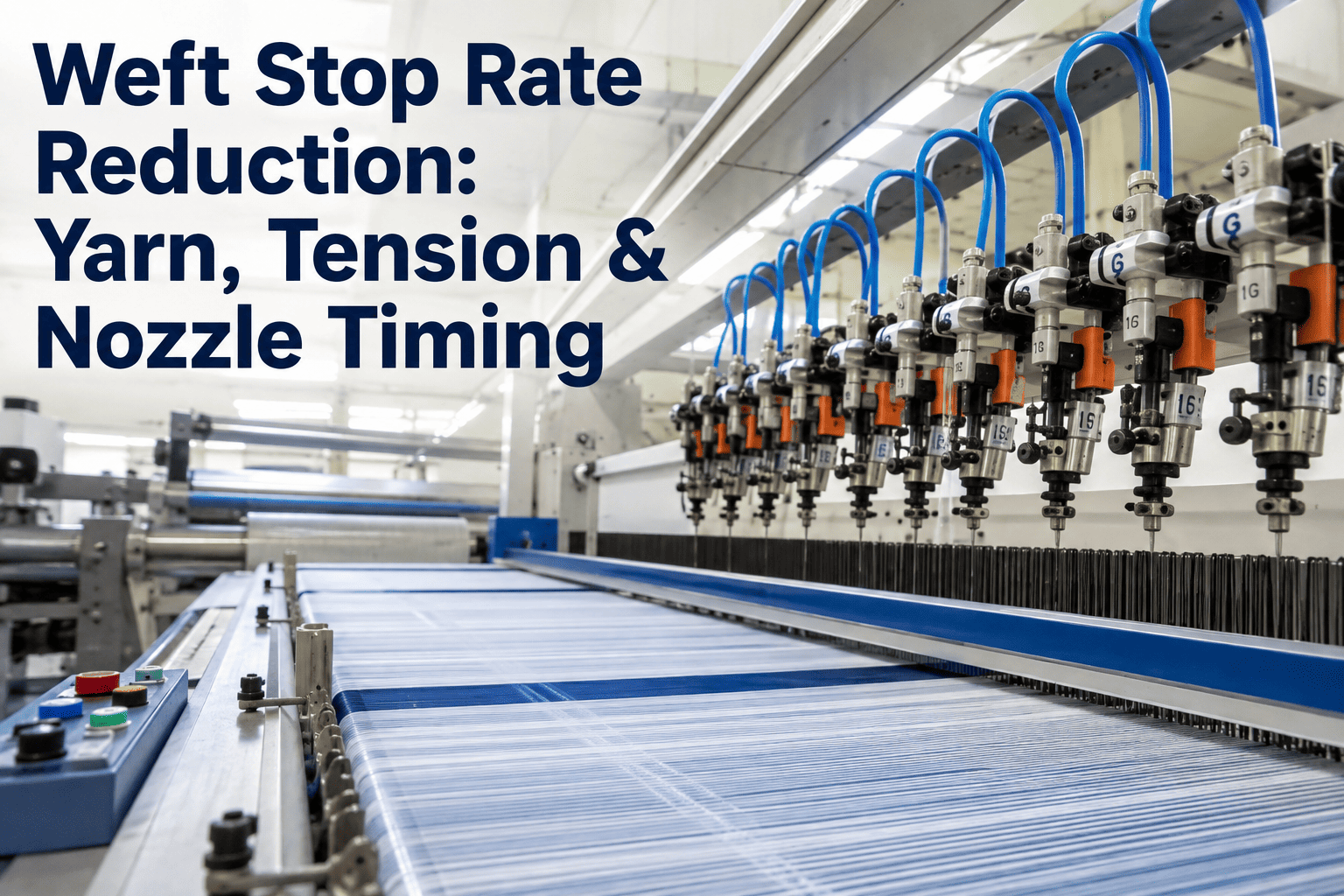
Read More
Weft stop rate tells a different diagnostic story depending on whether the loom is a rapier, an air-jet, or a projectile machine, because the insertion mechanism itself is often the deciding factor in why the yarn fails to insert cleanly. A tensio
Read More
Most looms running in the 75 to 82 percent efficiency band did not arrive there by design — they drifted there over years of small, uncorrected losses that no single person was ever tasked with chasing down. Getting from that range to 90 percent a

Read More
Getting a shade right the first time has traditionally depended on a colorist's experience and a fair amount of trial dyeing, which means the same skill walks out the door whenever an experienced colorist leaves. Machine learning models trained on

Read More
A light shade run right after a dark shade on the same machine is one of the most common ways contamination enters an otherwise well-controlled dyeing process. Residual dye trapped in pipework, pump housings, and the tank wall does not always rins

Read More
Water makes up the largest single input by volume in almost every dyeing process, yet it is often the least tested variable on the floor. Hardness, pH, residual chlorine, iron content, and dissolved solids can each shift shade, fastness, or dye up

Read More
Most shade complaints get blamed on the dyeing machine, the recipe, or the dye lot, when the real cause was decided hours earlier at desizing, scouring, and bleaching. Fabric that goes into the dye bath with uneven residual size, patchy absorbency
Read More
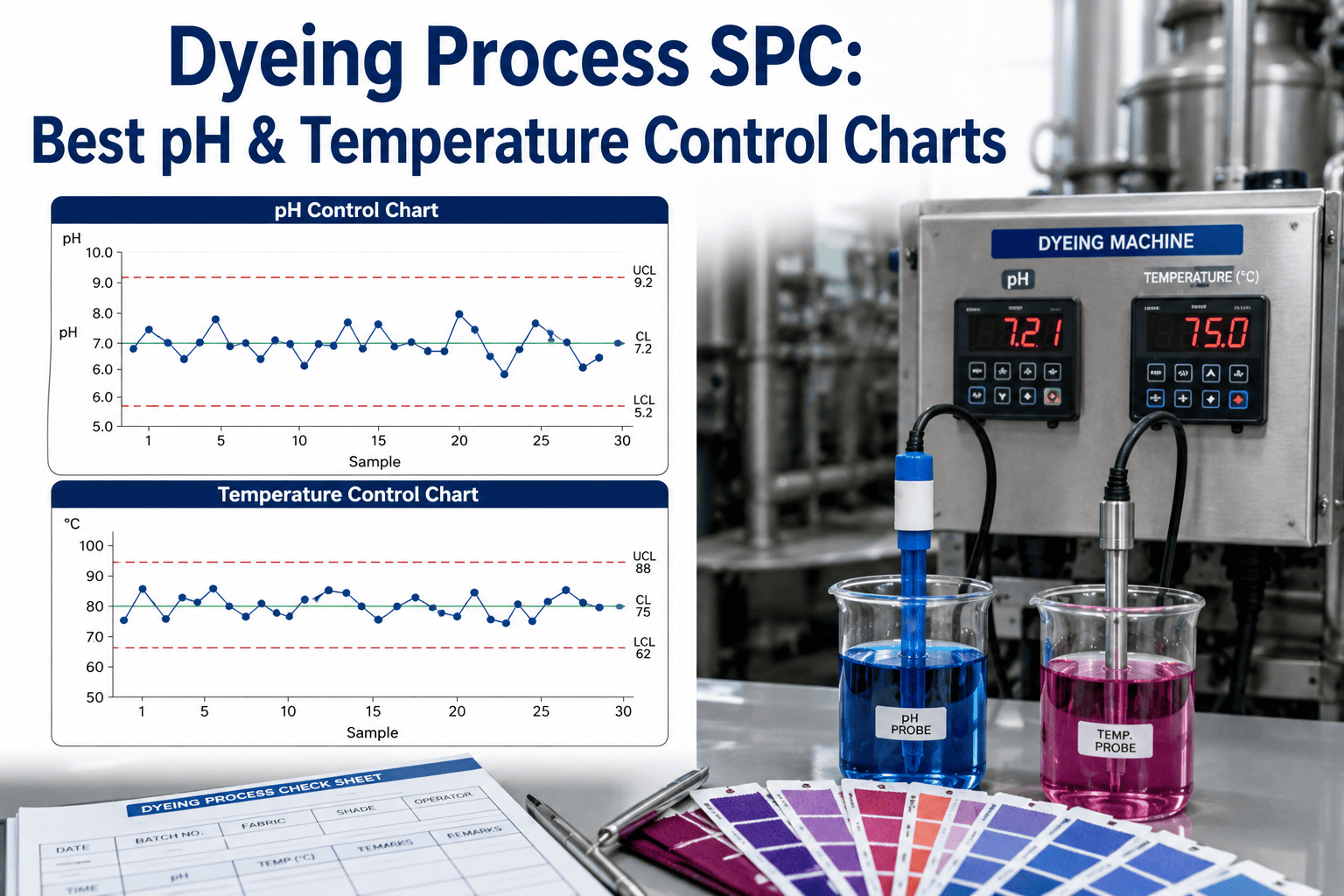
A dyeing batch can drift out of tolerance long before anyone notices a shade mismatch on the finished roll, because pH, temperature, time, and conductivity rarely fail all at once — they creep. A bath running half a point of pH away from target fo

Read More
Every textile mill has a bottleneck somewhere in its value stream — the question is whether anyone actually knows where it is, or whether the plant is spending capital and attention improving departments that were never the real constraint on tota
Read More
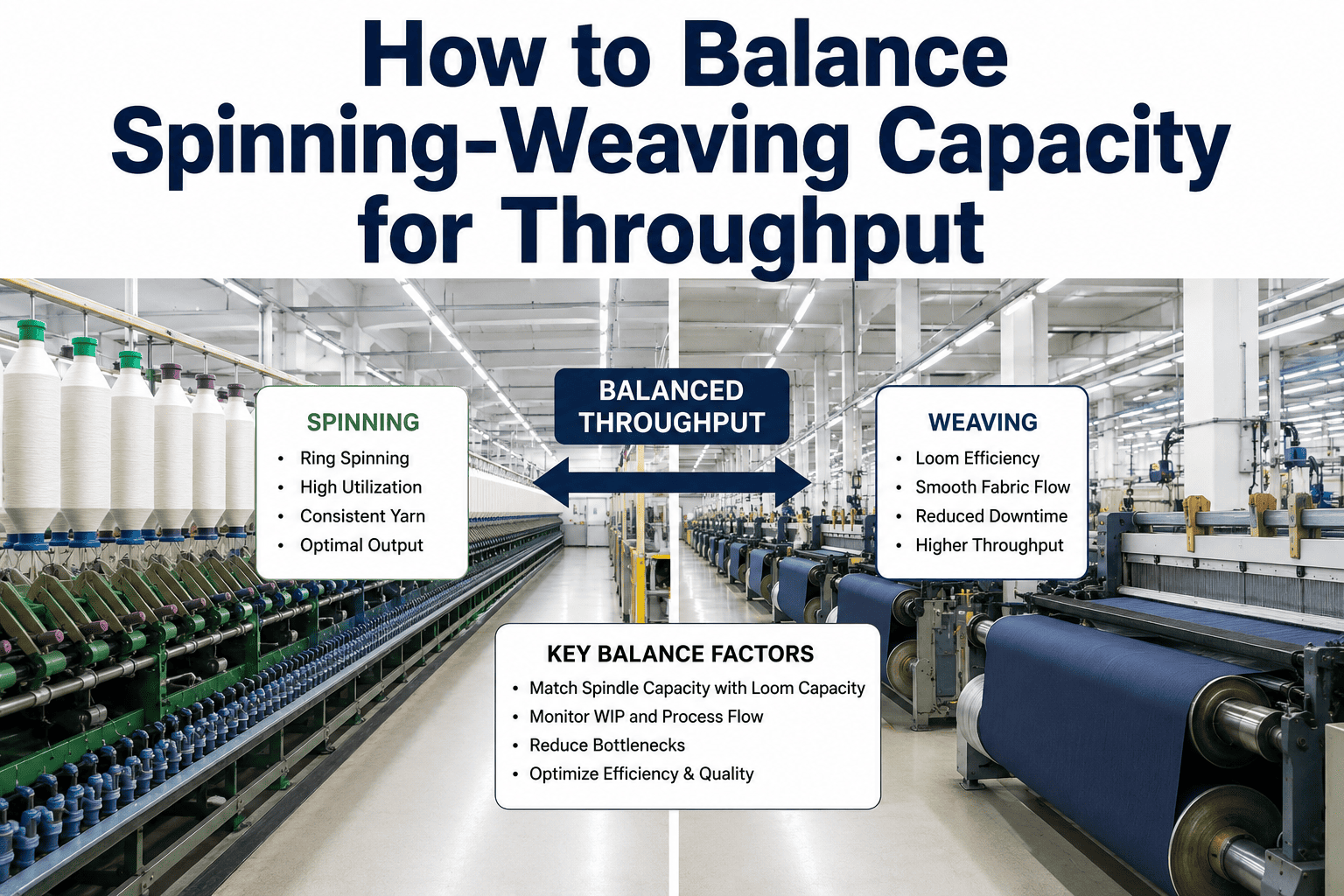
Spinning and weaving are the two departments most mills expand first, and they're also the two departments most likely to end up badly mismatched in capacity, because expansion decisions for each one tend to get made independently, on separate bud
Read More
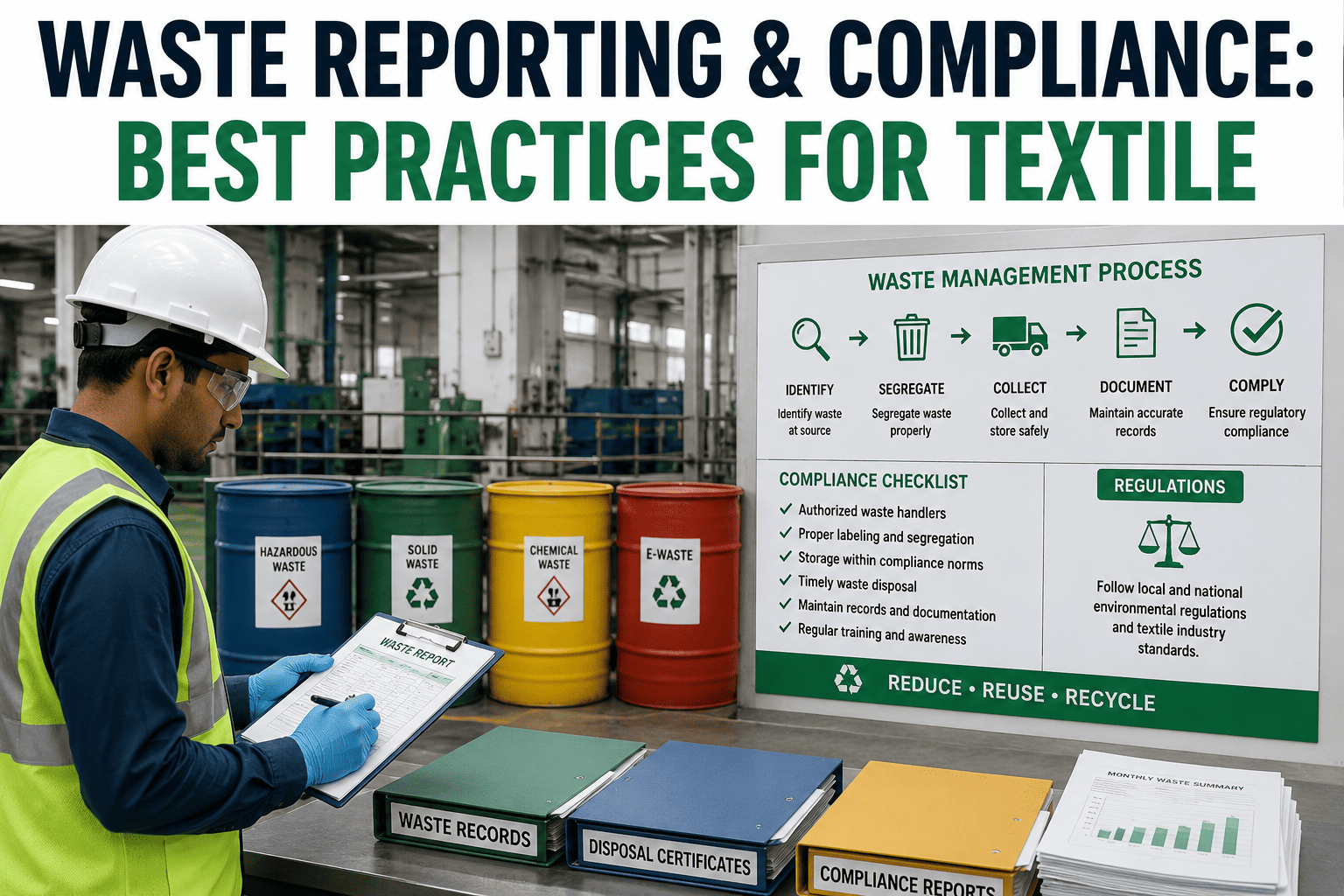
A textile mill's waste stream isn't just a cost problem — a meaningful part of it is a compliance problem, because dye sludge, spent solvents, and certain finishing chemical residues fall under hazardous waste regulations the moment they leave the
Read More
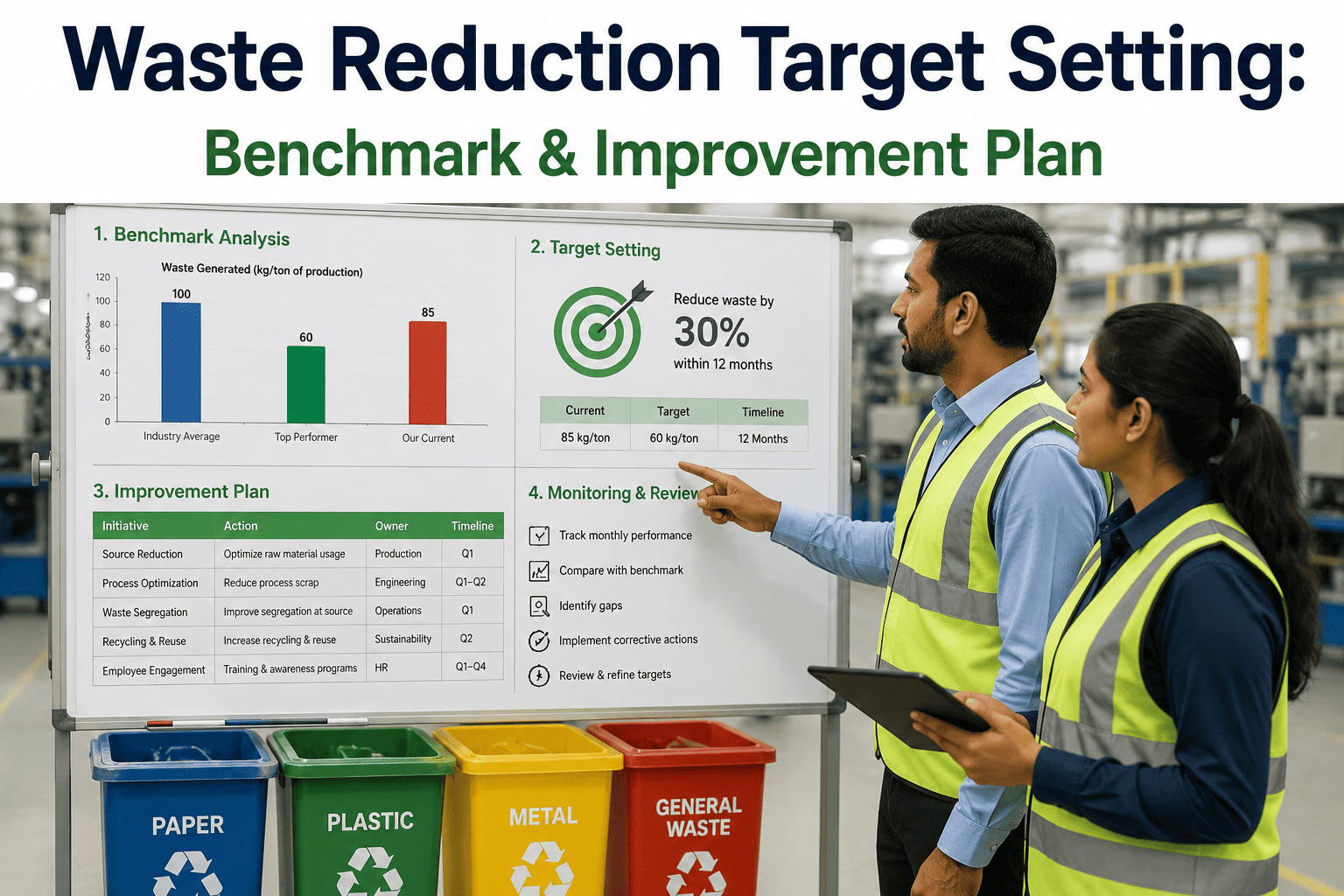
A waste reduction target pulled from an industry benchmark and handed down without context is one of the most common ways a waste program fails before it starts — the number might be technically achievable industry-wide, but if nobody checks it ag
Read More
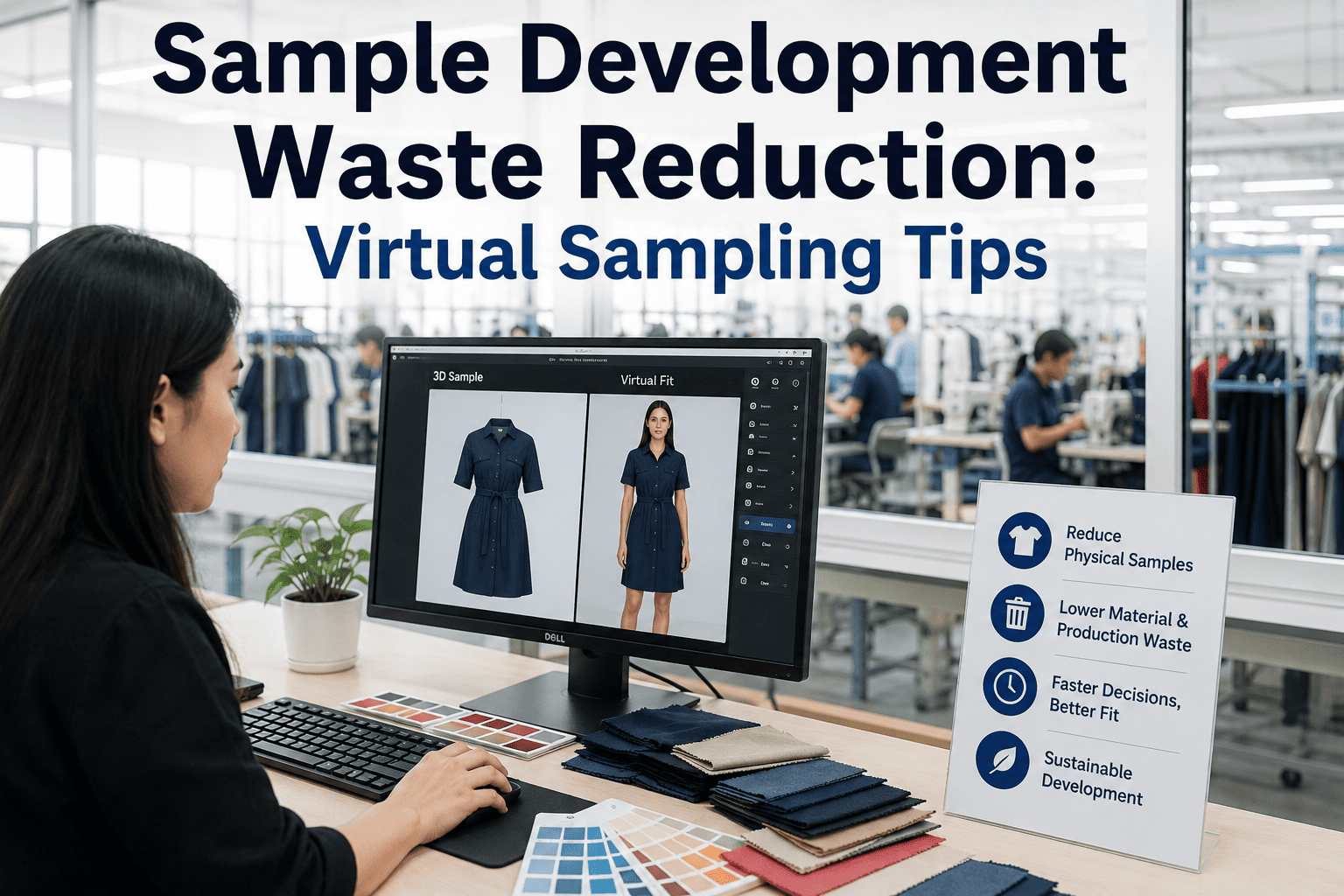
A single apparel program can burn through a dozen or more physical sample rounds before a buyer signs off — fabric cut, dyed, printed, sewn, shipped across borders, reviewed, and rejected, over and over, and every rejected round is fabric, labor,
Read More
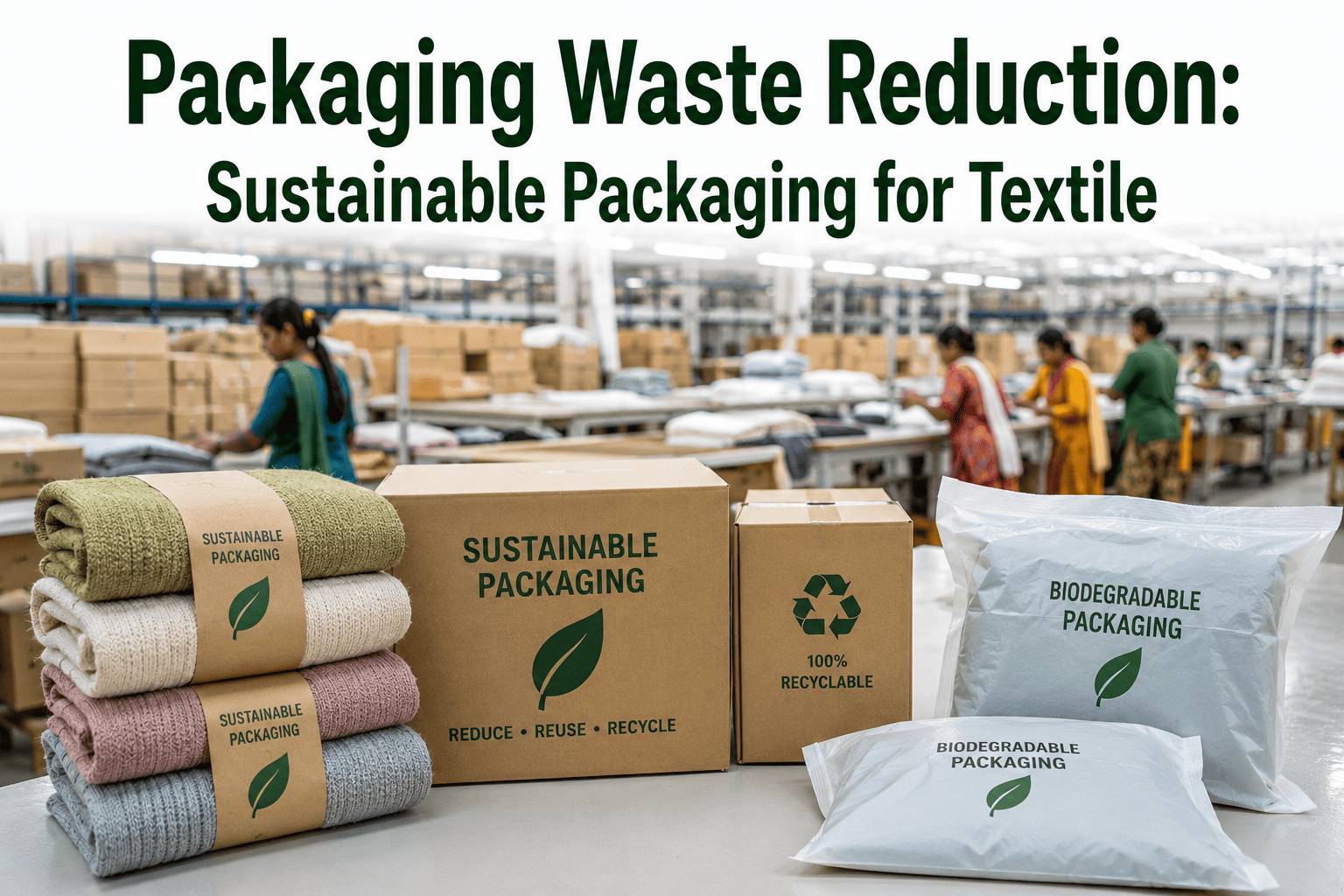
Packaging is the part of a textile shipment that never gets worn, never gets sold, and almost never gets a second look once it's stripped off at a distribution center — which is exactly why it's one of the easiest categories of waste to overlook a
Read More
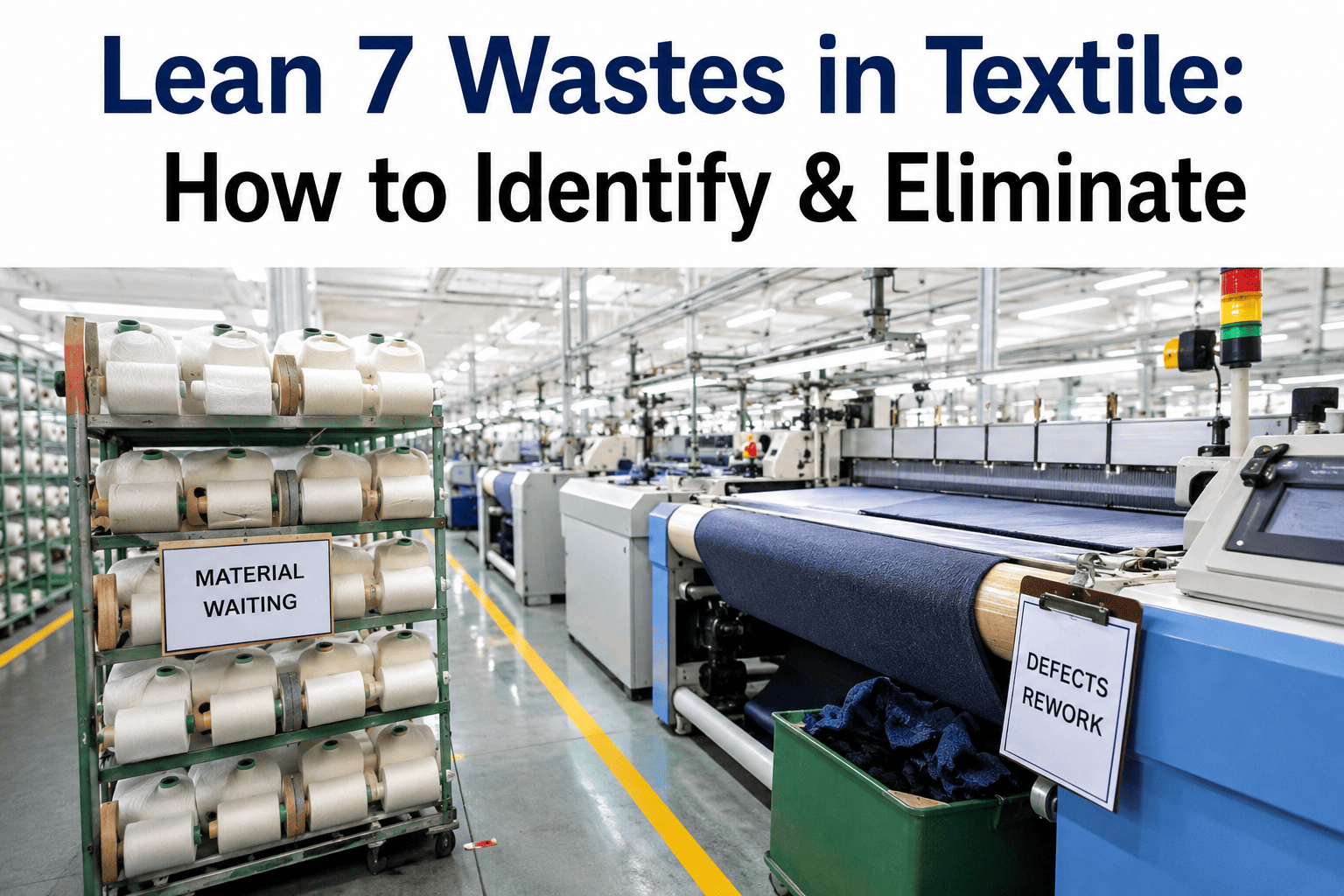
The lean manufacturing framework of seven wastes was developed for automotive assembly lines, but every one of the seven shows up just as clearly on a textile value stream running from fiber to finished garment — it just wears different clothes. O
Read More
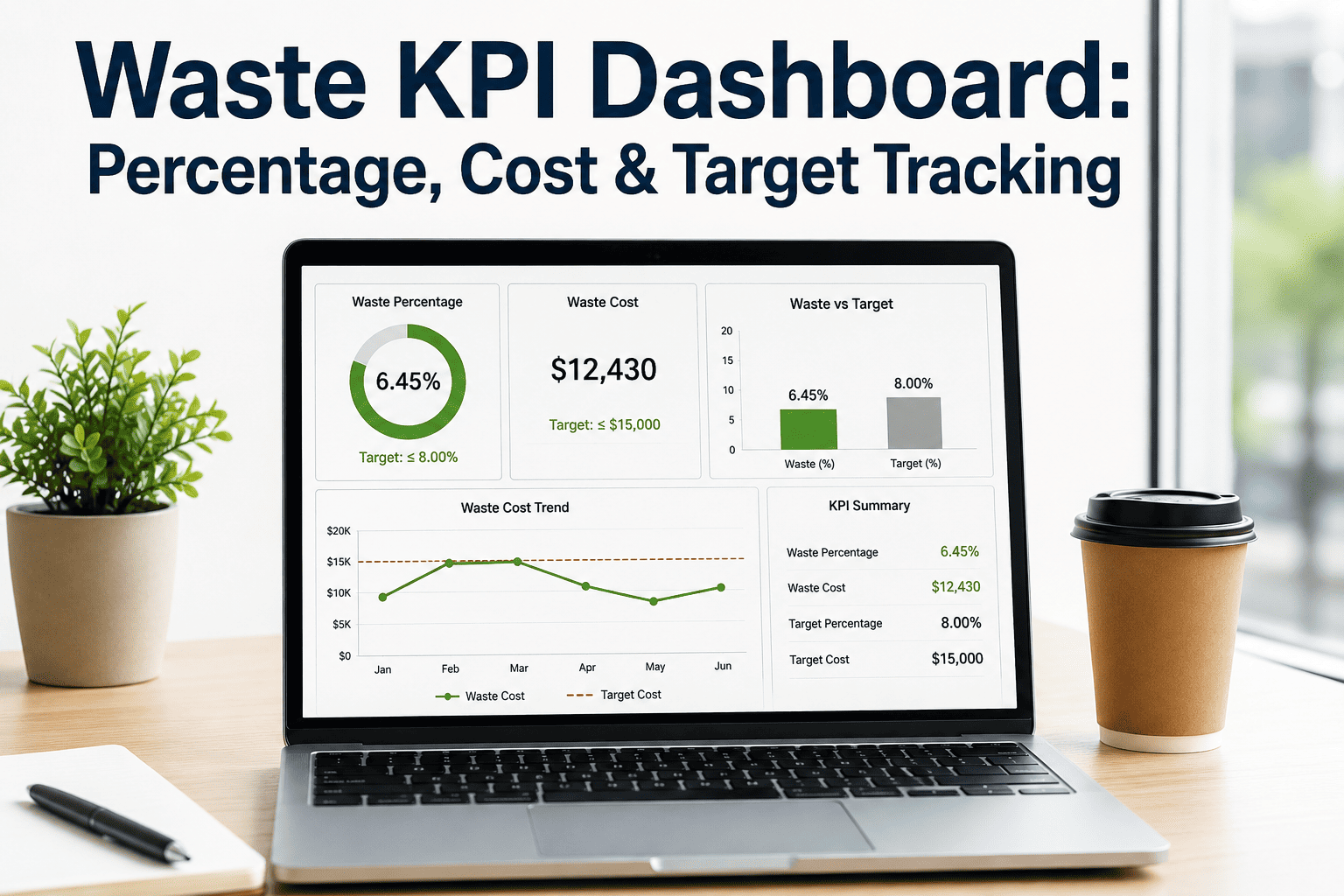
A waste percentage number on its own tells a plant manager almost nothing useful — 4 percent waste in cutting could be a normal week or a crisis, depending entirely on what the target is and what last month looked like. A waste KPI dashboard fixes
Read More
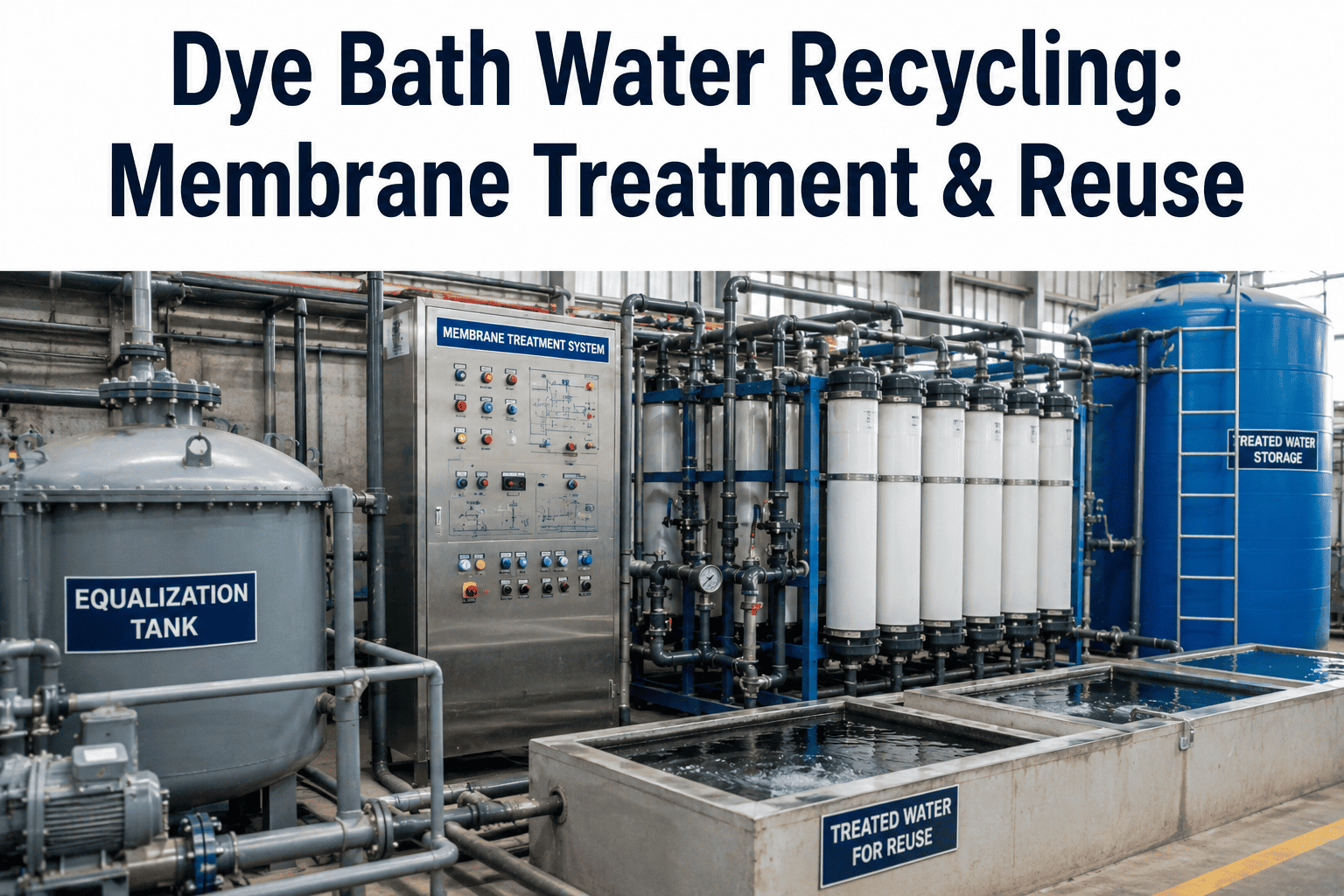
Reactive dyeing leaves roughly 30 percent of the dye unfixed to the fabric, which means every dye bath discharged without recovery is not just wasted water, it is wasted color and salt going straight down the drain. Membrane treatment changes that
Read More
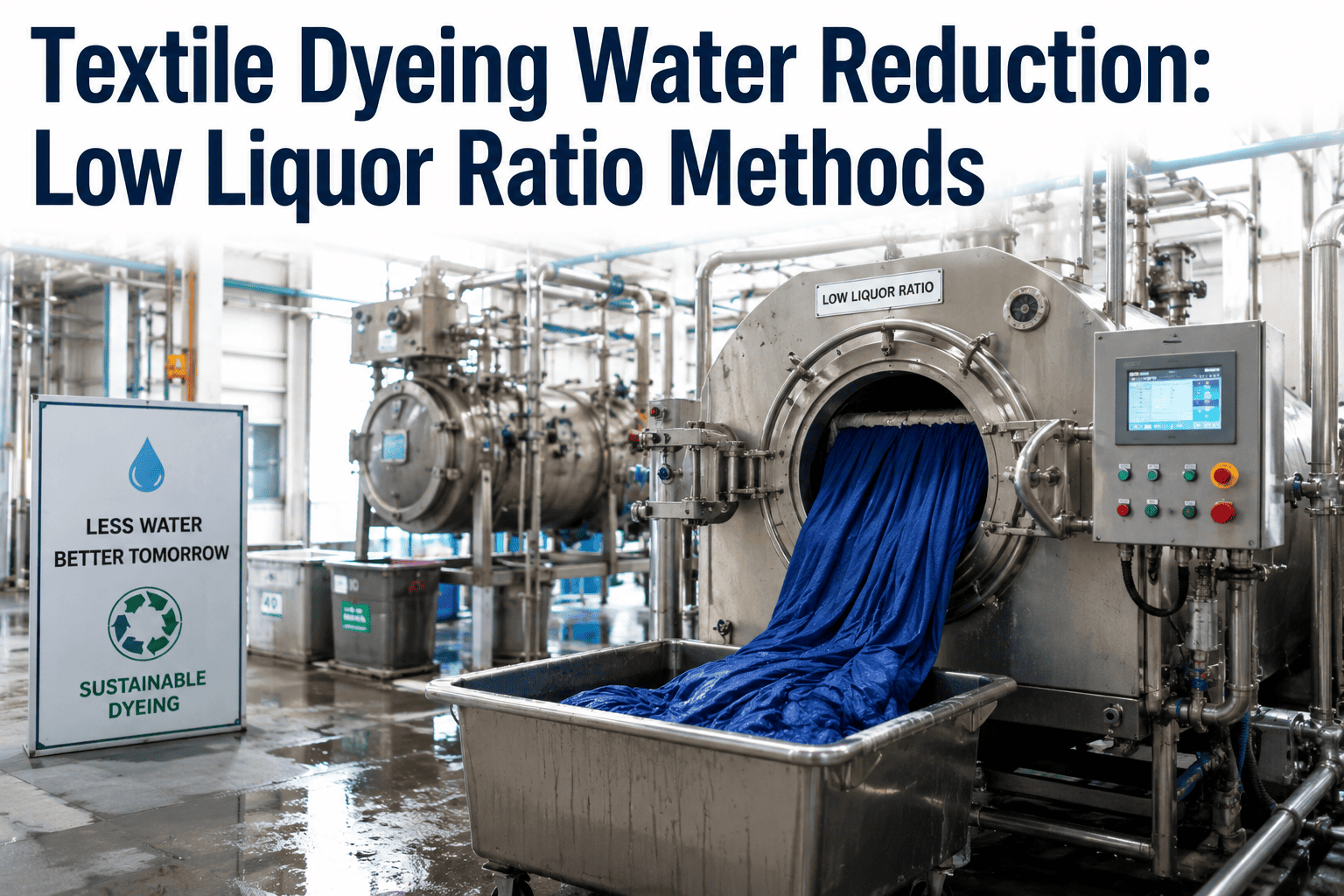
A single dye bath at a conventional 1:15 liquor ratio can hold more than 10,000 litres of water for a single ton of fabric, and every one of those litres has to be heated, dosed with salt and chemicals, and eventually treated before it ever leaves

Read More
It takes roughly 200 liters of water to dye a single kilogram of fabric using conventional wet processing — water that emerges on the other end carrying dye residue, salts, and chemical auxiliaries that require treatment before discharge. Four tec

Read More
Somewhere in a design team's inbox right now is a tech pack labeled "FINAL_v3_REVISED_actualfinal.pdf," and nobody is entirely certain it matches what the factory is currently cutting against. This is not a discipline problem — it is what happens

Read More
Screen printing a single colorway strike-off requires engraving a physical screen, mounting color separations, and running a test pass before anyone even sees the result — a process that takes days before a designer can hold the sample. A digital

Read More
A design team finalizes a print, ships the tech pack to a mill overseas, and waits. Ten days later a physical sample arrives — the drape is wrong, the colorway looks nothing like the screen proof, and the whole cycle repeats. Multiply that by the
Read More
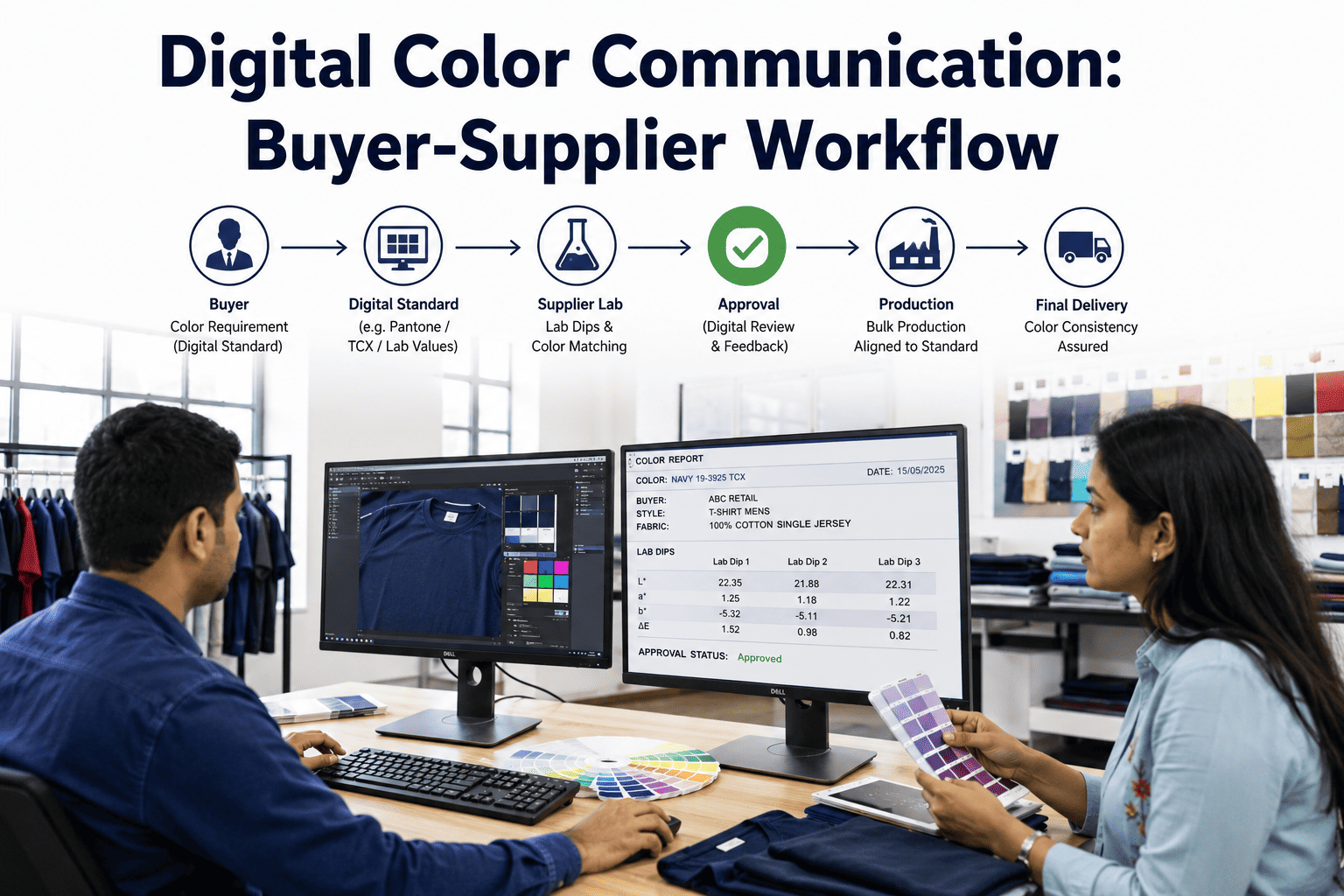
A textile brand ships a physical color standard to a supplier eight time zones away. The supplier dyes a lab dip, ships it back, and three weeks later a color manager holds it under a lightbox and says no — close, but not quite. That cycle repeats

Read More
Two fabric swatches match perfectly under the showroom's D65 daylight lamp. The buyer approves the order. Three weeks later, a store manager unpacks the shipment under warm incandescent lighting and the two "matching" pieces look like they came fr
Read More
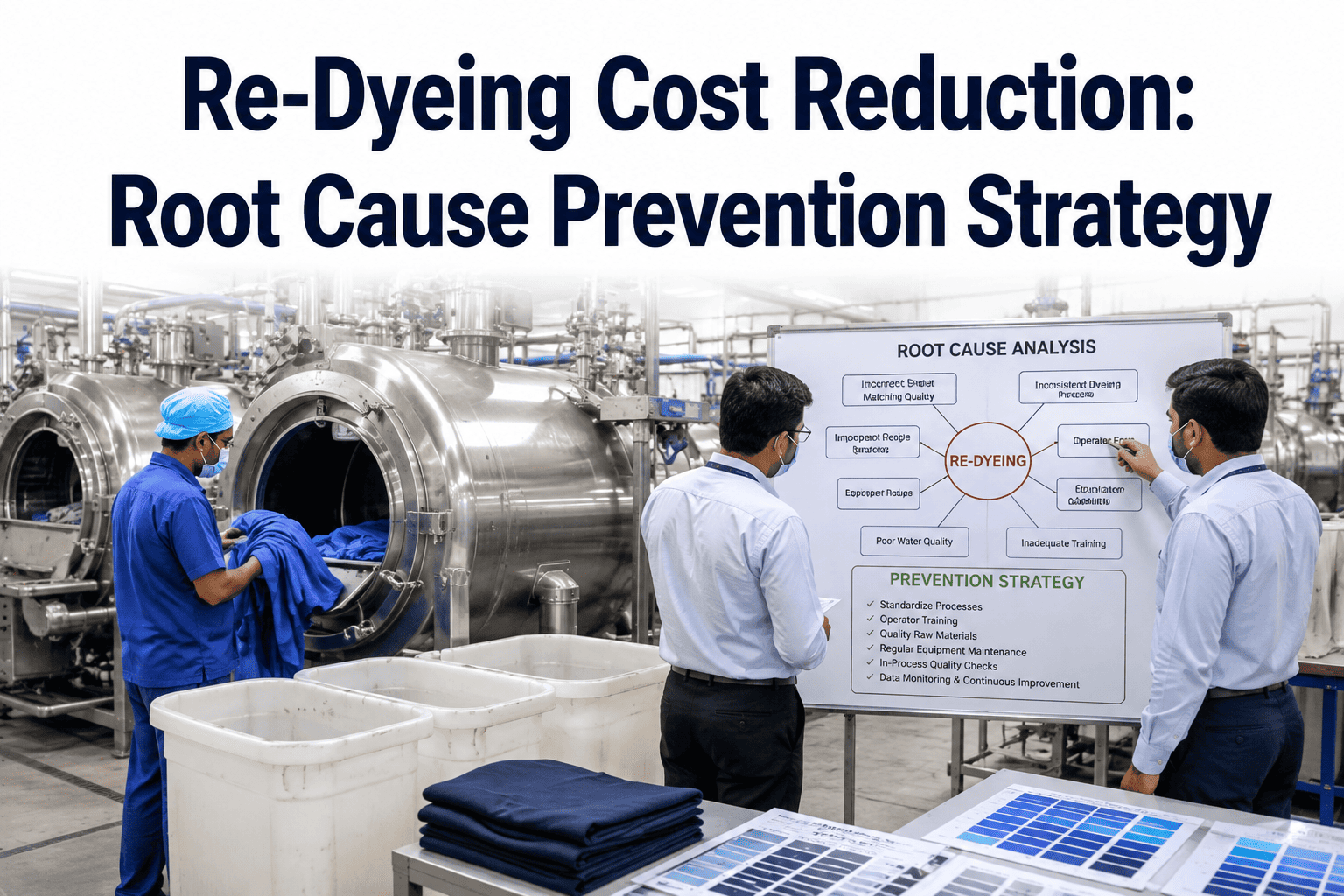
A single re-dyeing cycle rarely shows up as its own line item on a factory's monthly cost report, which is exactly why it survives year after year as one of the largest hidden expenses in wet processing. Industry benchmarking puts re-dyeing rates

Read More
A loom stops. The technician arrives within minutes — response time was never the problem. What happens next is where the real delay lives: fifteen minutes walking to the storeroom because nobody could confirm the reed was in stock, another ten hu

Read More
Fortune Global 500 manufacturing and industrial firms lose up to 3.3 million hours annually to unplanned downtime — roughly $864 billion, or about 8% of their combined annual revenue. Almost none of that loss is evenly distributed across every mac
Read More
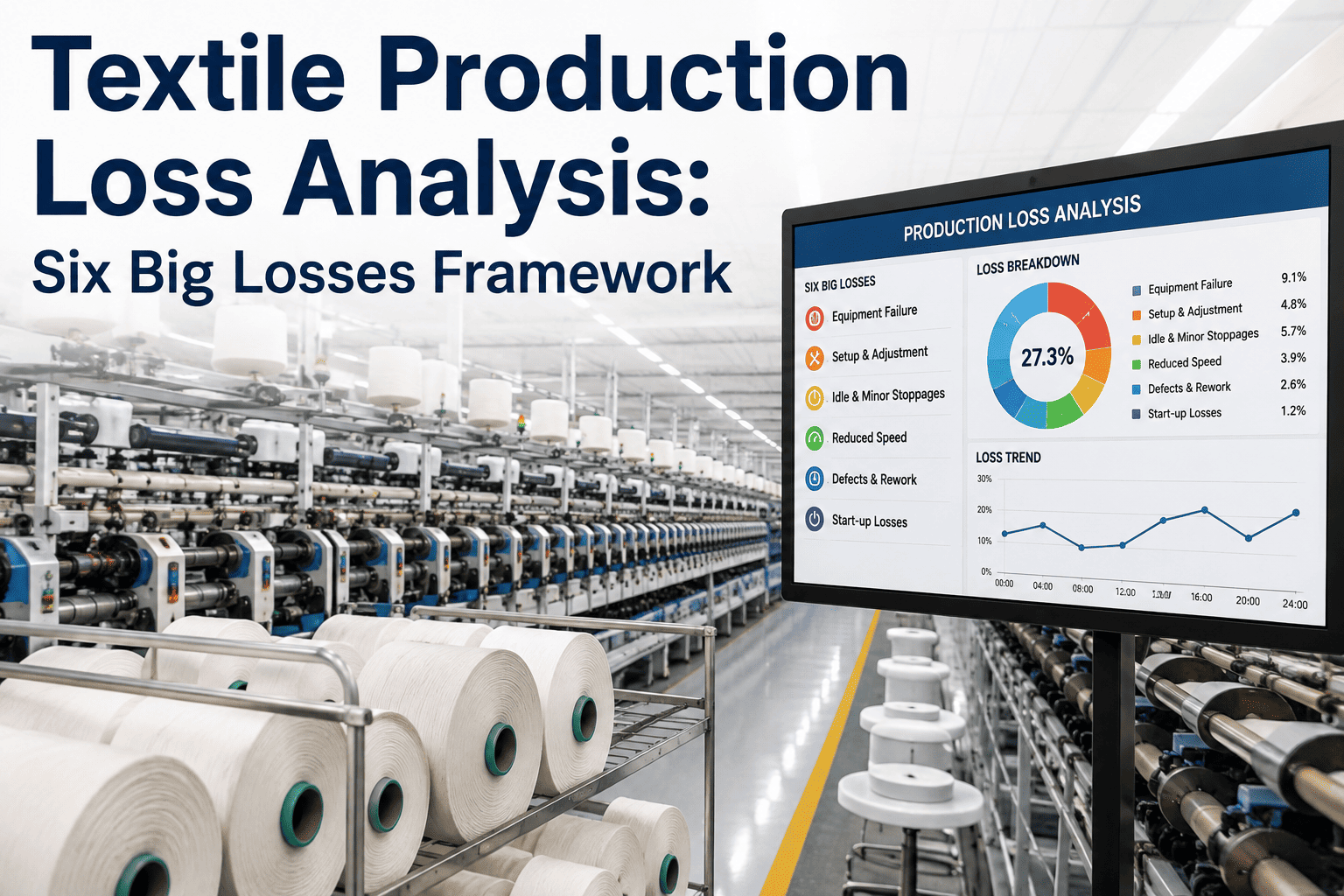
Ask a weaving shed supervisor why OEE sits at 62% and the answer usually starts and stops at "the looms break down a lot." Pull the actual stop-code data and a very different picture emerges: unplanned mechanical failure is rarely the largest loss
Read More
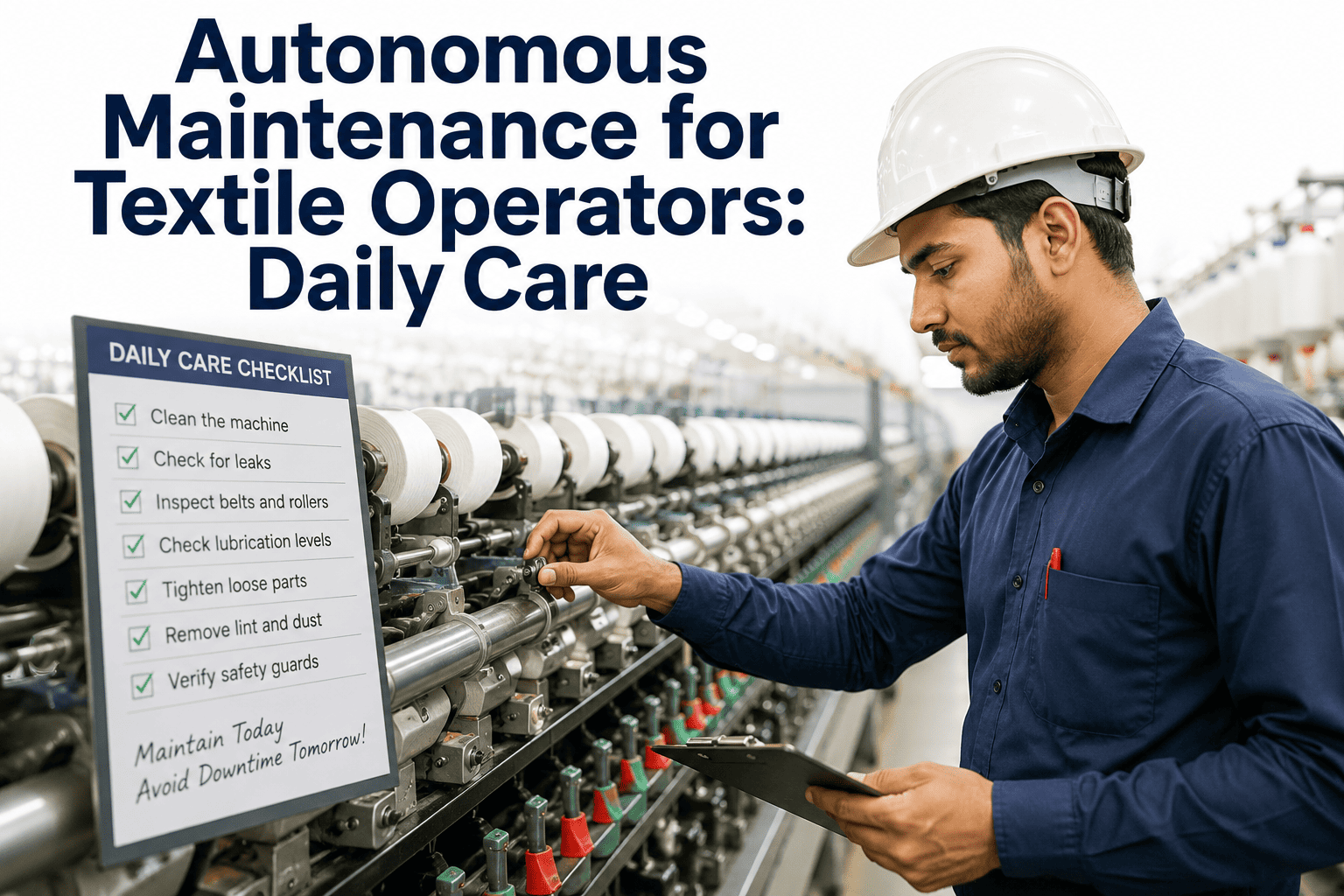
Seventy-eight percent of operators never perform a routine equipment inspection, even though they stand closer to the machine than anyone else in the plant, every single shift. In a textile mill, that gap is especially costly — lint, fiber fly, an

Read More
A spinning frame can run for hours with a single position drifting slowly out of specification, producing bobbin after bobbin of yarn that looks acceptable to a passing glance but fails evenness or imperfection standards once tested. By the time a
Read More
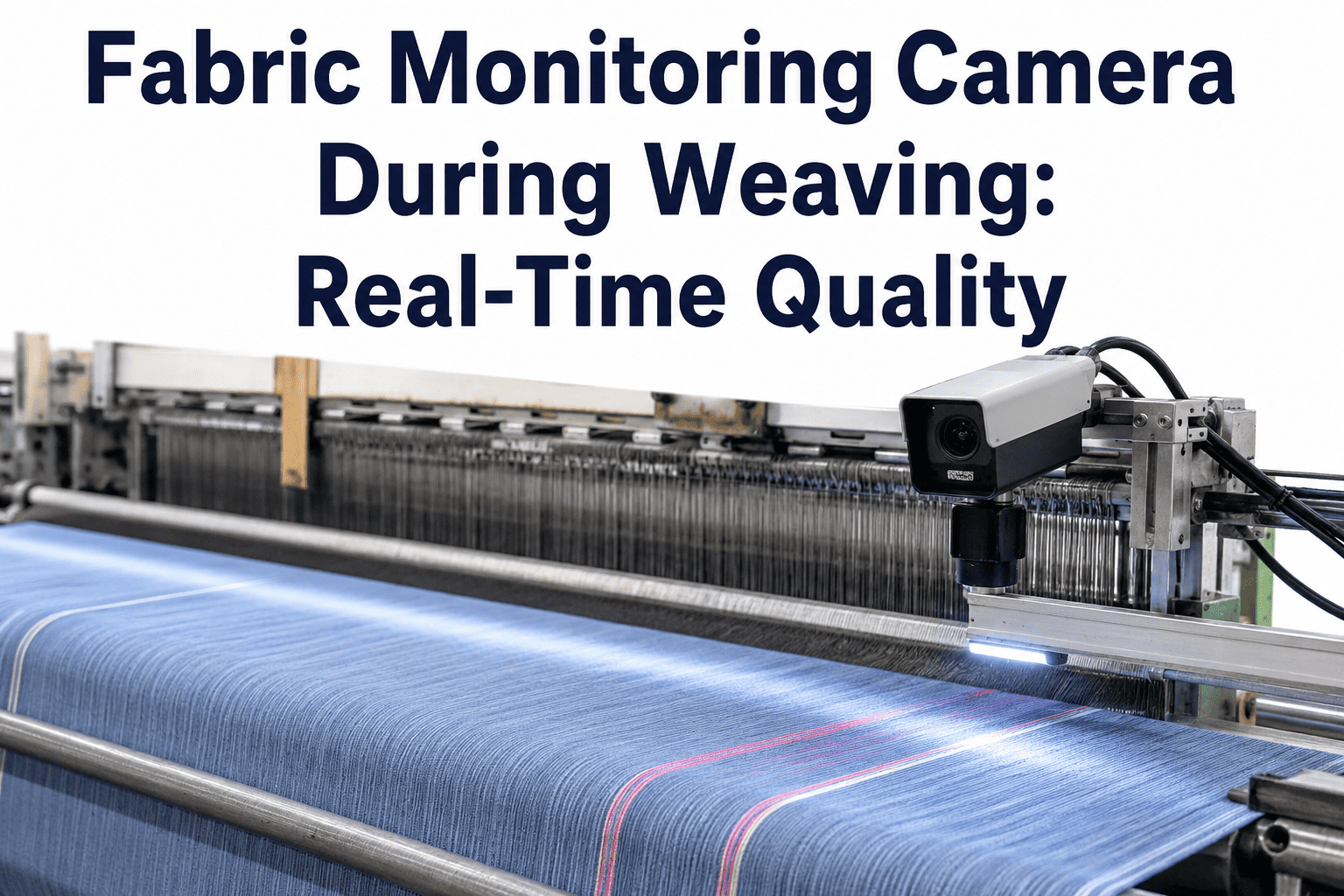
A loom running unattended for even a short stretch can turn out metres of fabric carrying the same broken pick or misweave over and over, because nothing on the machine itself knows the difference between good fabric and bad fabric — it just keeps
Read More
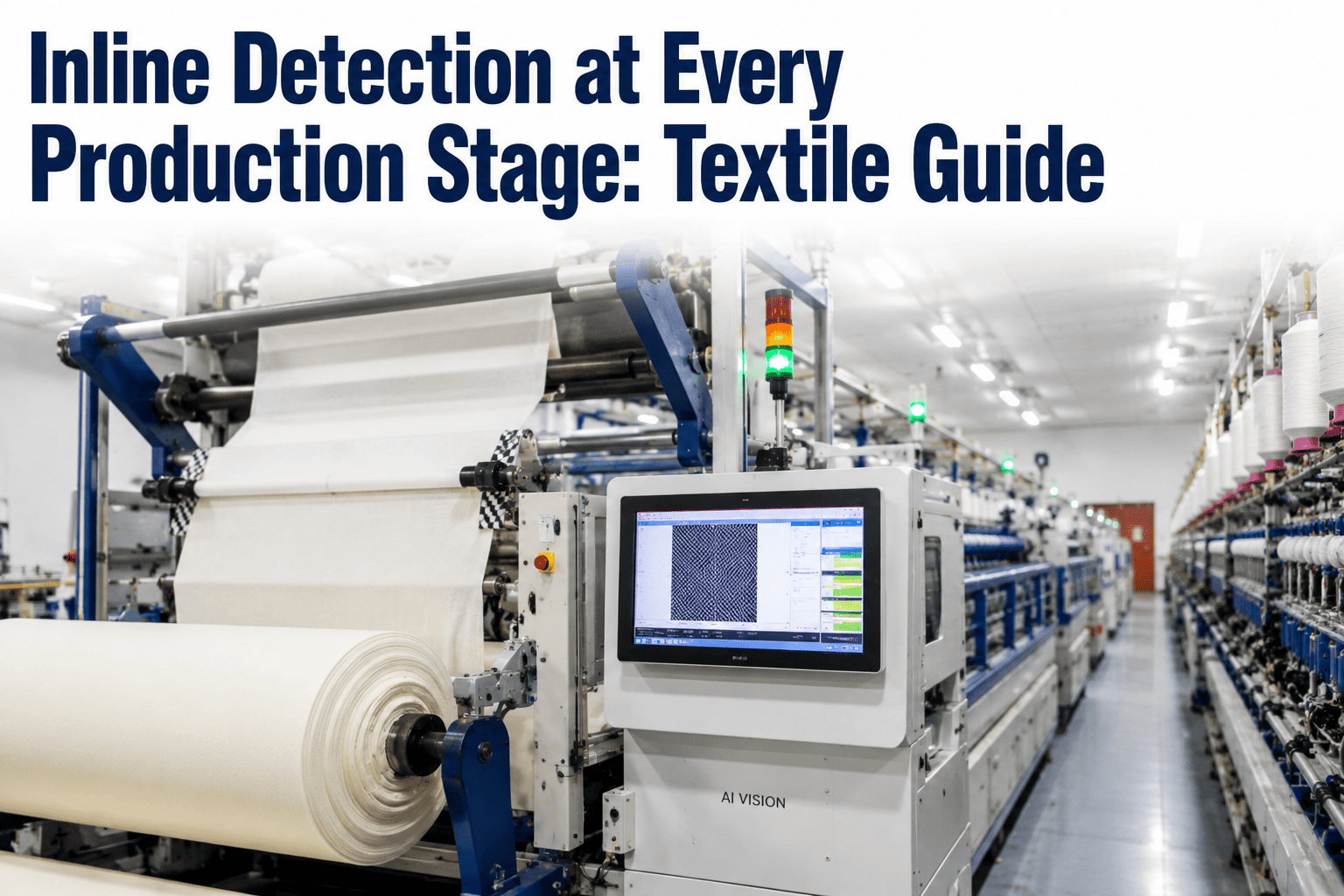
A fabric roll can travel through four or five separate production stages before anyone notices the flaw that started it all — a broken filament at spinning, a tension fault at weaving, an uneven dye uptake, a finishing scorch — and by the time it

Read More
A broken filament caught at the spinning frame costs almost nothing to fix — a few metres of yarn, a moment of operator attention, and the line keeps running. The same underlying fault, left undetected until it shows up as a finished garment faili

Read More
A splice that looks fine on a winding bobbin can still fail three processes later, in a loom or knitting machine nobody thinks to connect back to a splicer setting from days earlier. Splice strength and splice appearance are related but not the sa
Read More
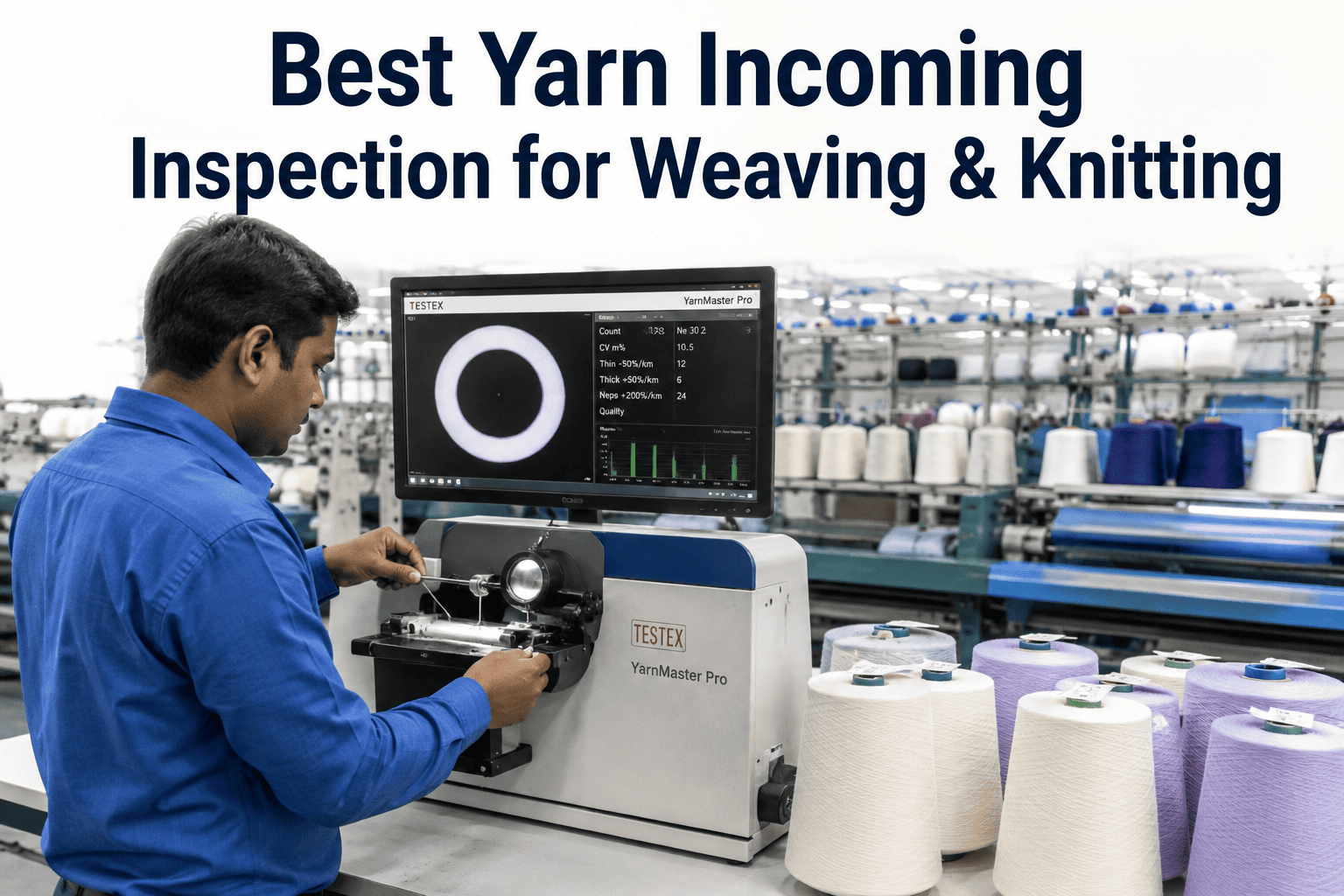
Every downstream problem in a weaving or knitting mill has an easy first suspect: the yarn. Sometimes that suspicion is correct, and sometimes it is a convenient place to stop looking, and the only way to tell the difference is a genuine incoming
Read More
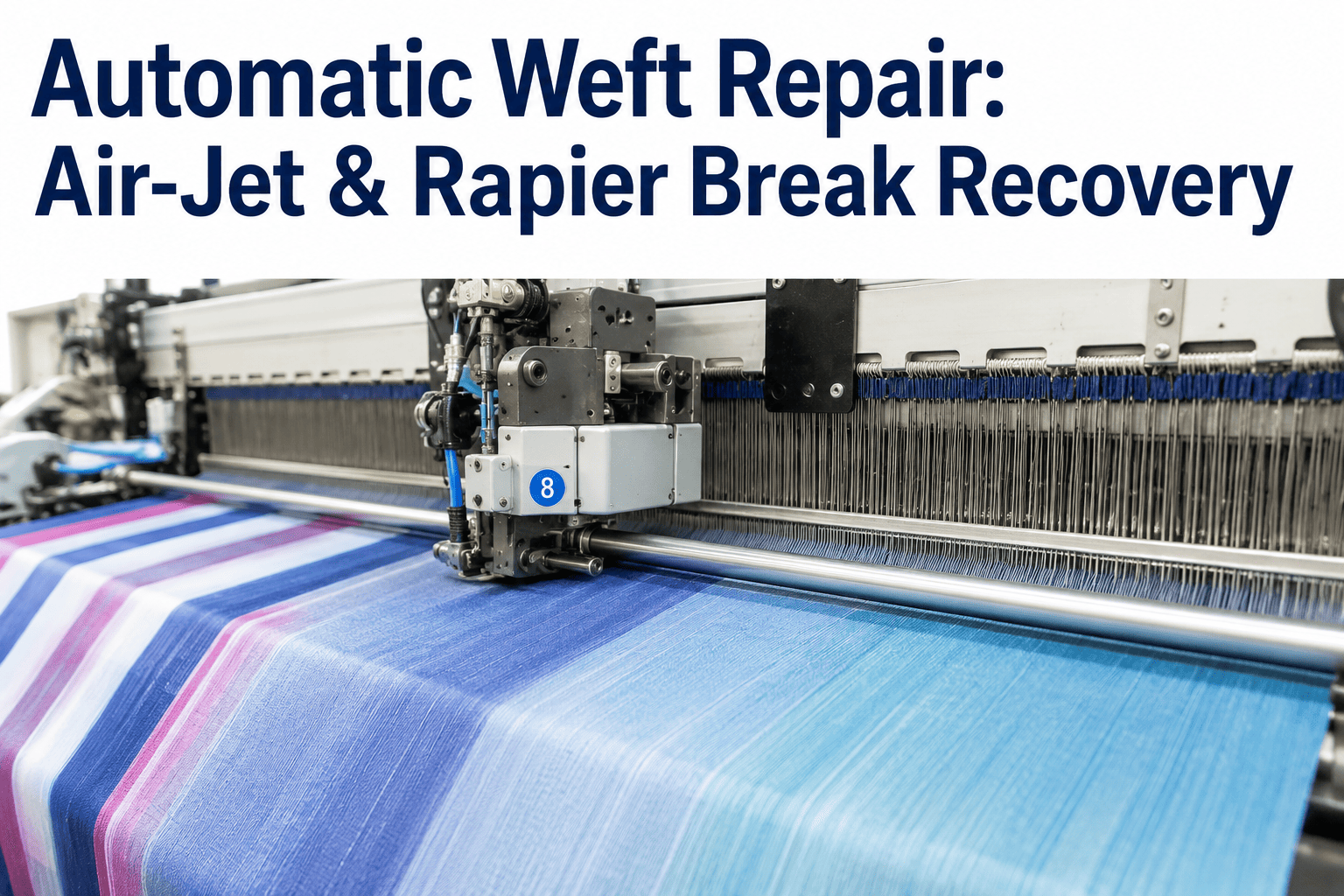
An automatic weft repair system is only as good as its slowest step, and most looms have three steps working against each other without anyone realizing it. Search function speed, tucking-in accuracy, and self-recovery settings each have their own

Read More
Wax on a knitting yarn does one job: it controls how much the yarn fights against every needle and guide it passes through on its way into a loop. Too little wax and friction spikes cause breaks and needle damage. Too much wax and residue builds u
Read More
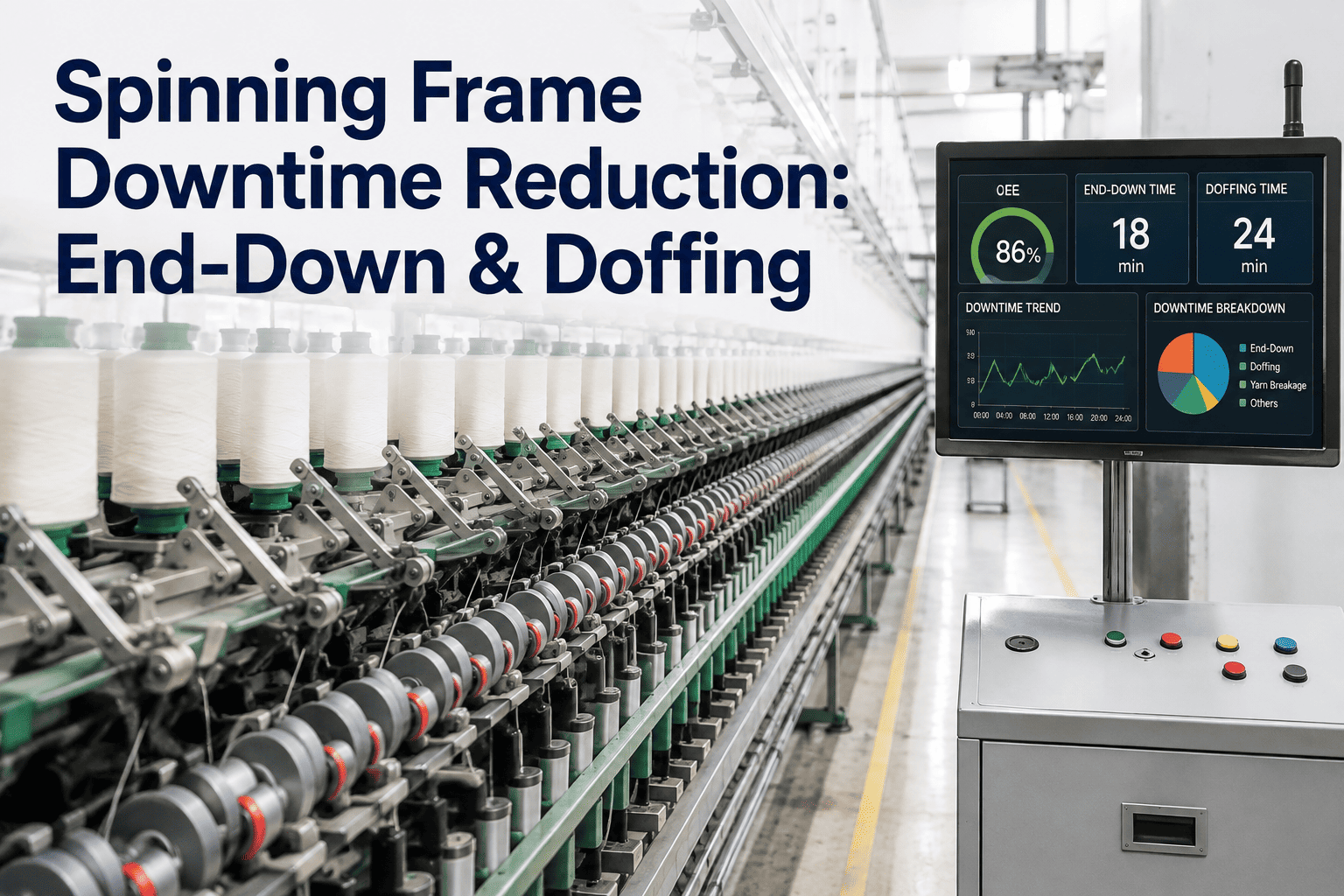
A ring spinning frame loses time in two very different ways, and most mills only ever measure one of them well. End-down stoppages happen constantly, in small bursts spread across hundreds of spindles, while doffing is a scheduled, predictable eve

Read More
A dyeing machine failure is rarely a surprise to the equipment — it is a surprise to whoever is standing near it when it happens. Pump seal wear, valve degradation, and heat exchanger fouling all follow gradual, measurable failure curves, and by t
Read More
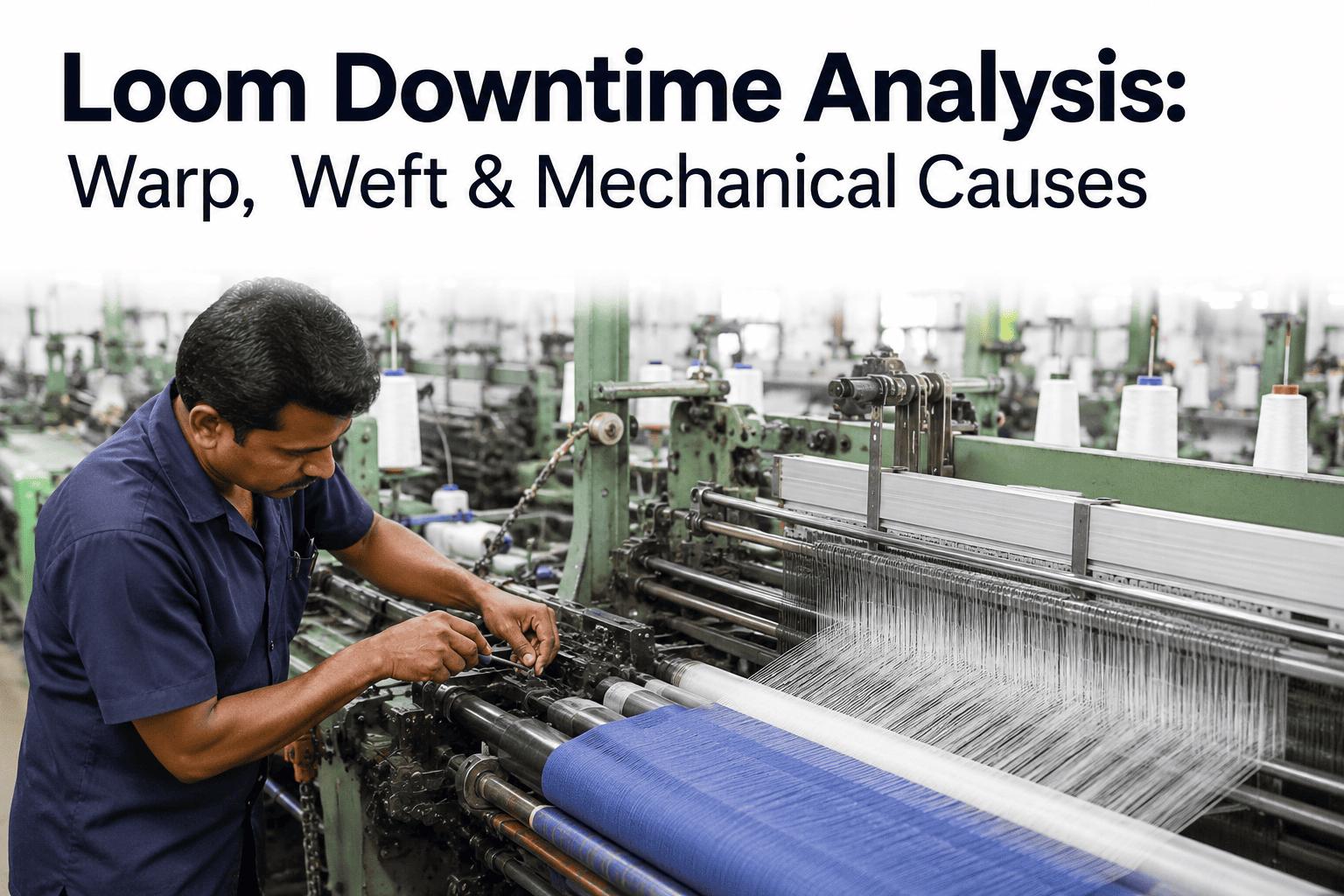
Ask five people on a weaving floor why a loom stopped last shift and you will usually get five different answers, because loom downtime is rarely one problem — it is four different categories of stop competing for the same log sheet. Warp-related
Read More
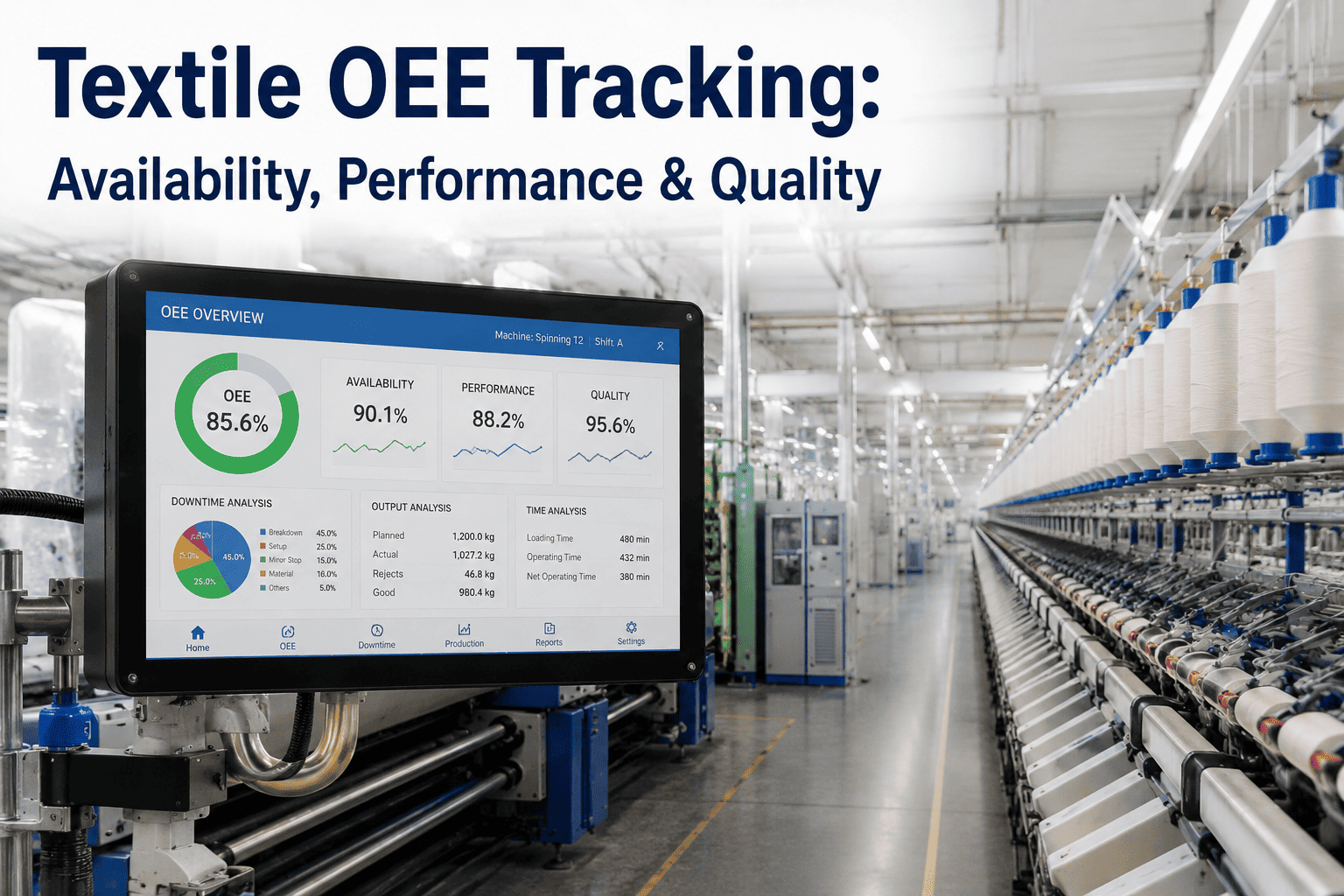
Most textile plants know their OEE number is bad. Almost none of them know why. A weaving shed running at 52% OEE and a spinning unit running at 52% OEE are losing production for completely different reasons, but when the number is calculated once
Read More
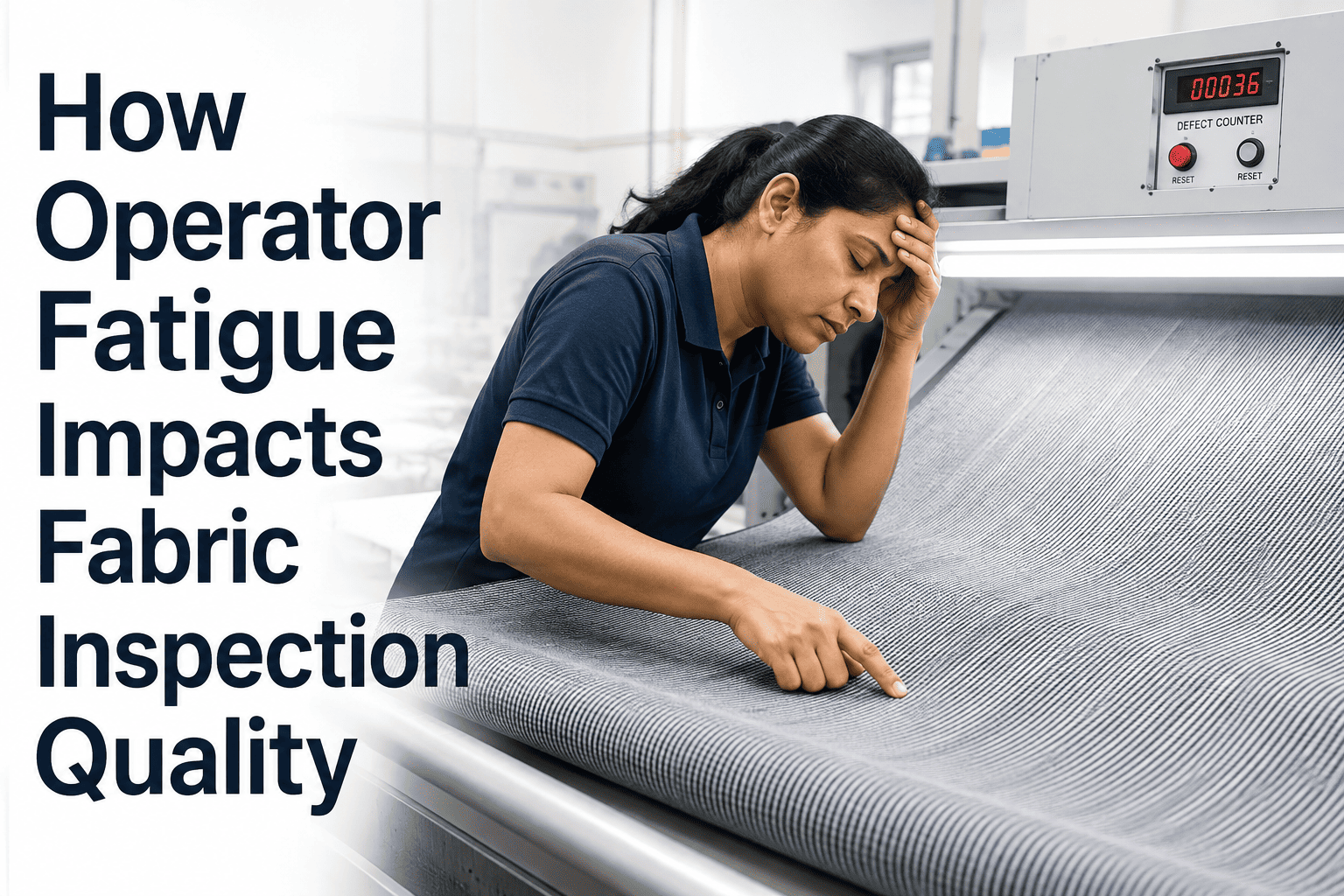
The vigilance decrement isn't a textile industry concept — it's a well-established finding in human factors research dating back to 1948, when psychologist Norman Mackworth discovered why radar operators on wartime antisubmarine patrols missed mor
Read More
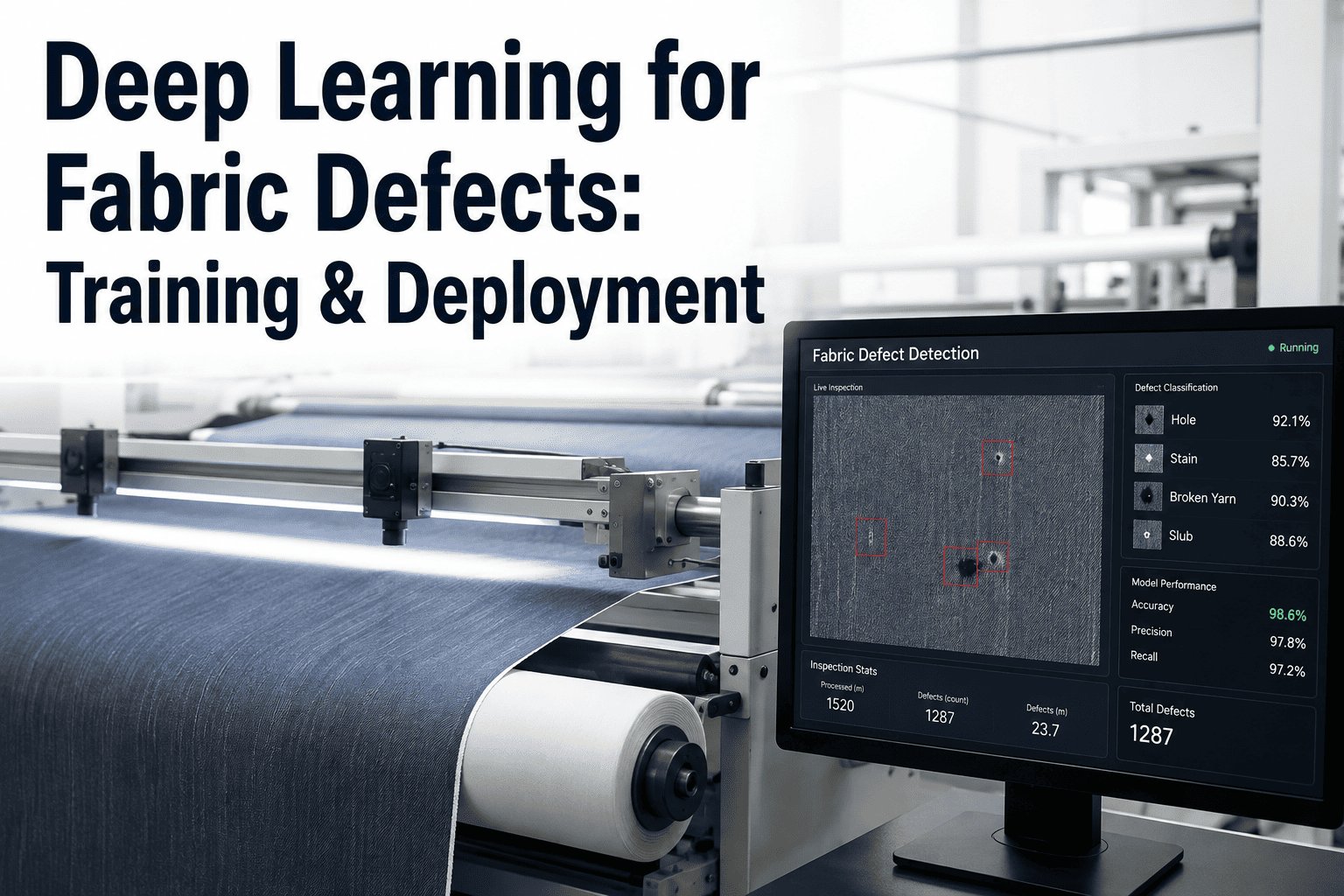
A convolutional neural network that achieves 98% validation accuracy in a Jupyter notebook and a convolutional neural network that reliably classifies fabric defects on a production line running at 40 meters per minute are, in practice, two differ
Read More
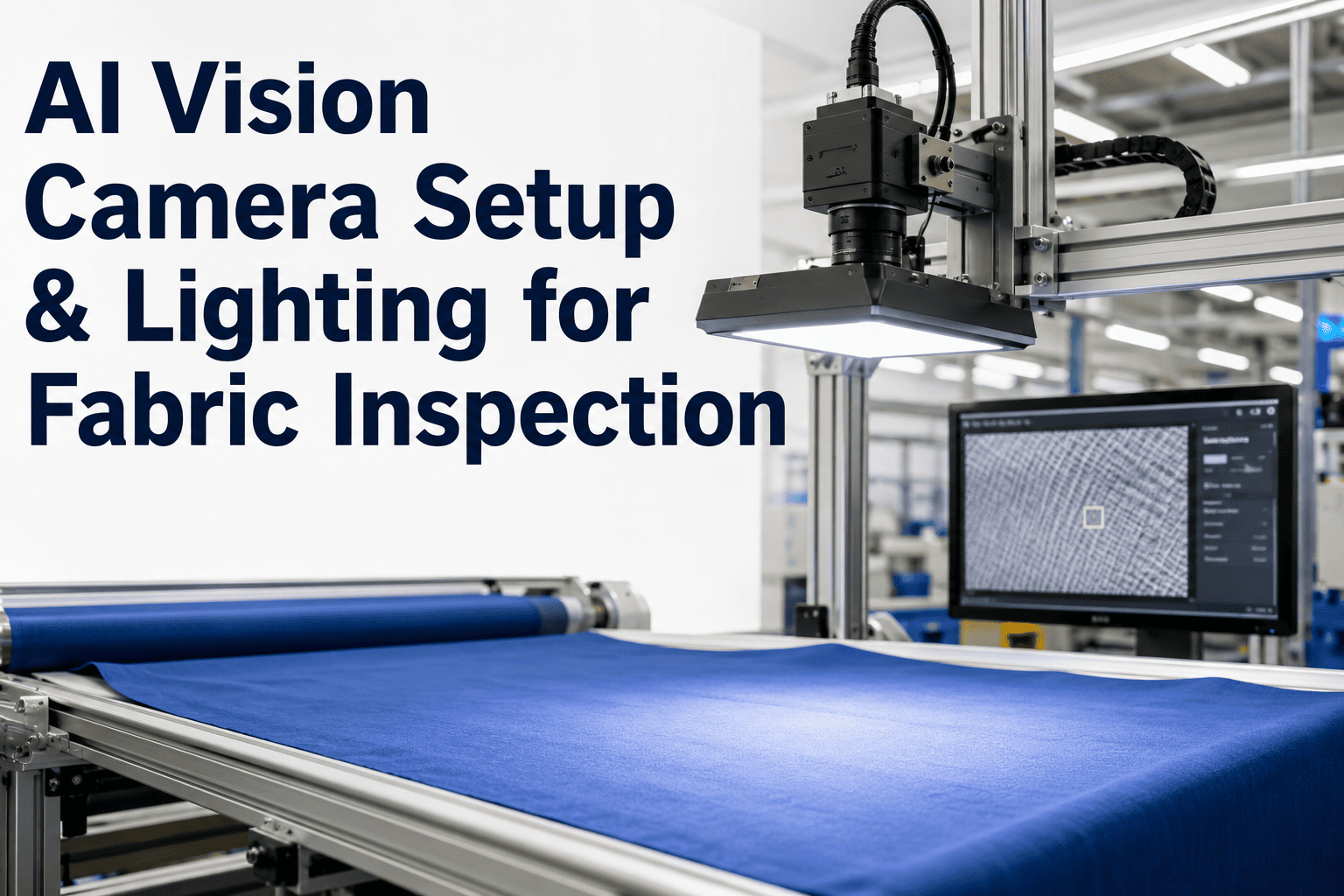
A deep learning model with state-of-the-art accuracy is worthless if the camera feeding it cannot resolve the defects it needs to classify, or if the lighting configuration creates specular glare that washes out exactly the texture variation the m
Read More
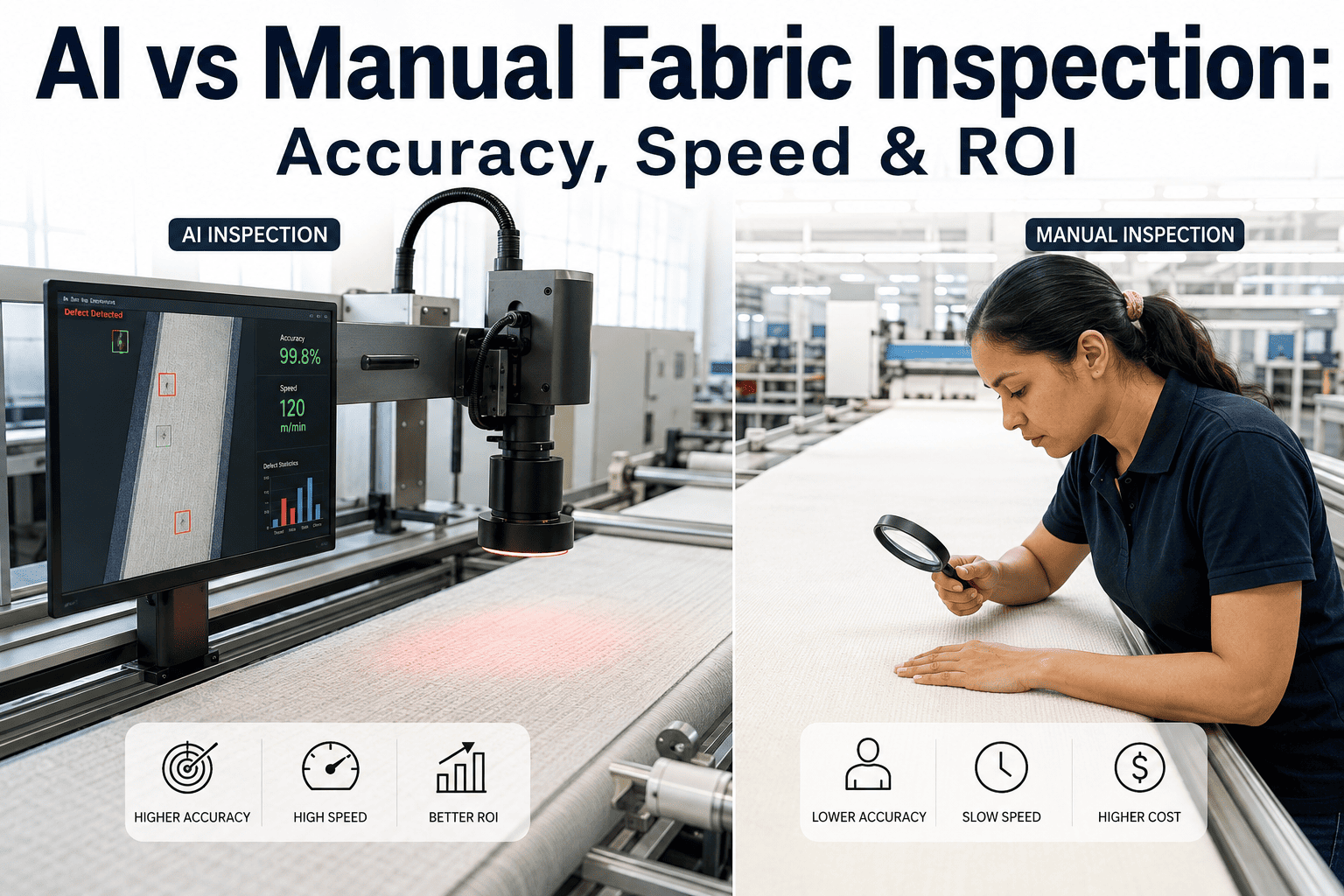
A trained fabric inspector examining cloth at standard line speed under good lighting catches roughly 60 to 70 percent of defects present on a first pass, and that number is not a criticism of the inspector — it is a documented limit of sustained

Read More
A hole in knitted fabric almost never starts as a hole — it starts as a yarn breakage during loop formation, often at a knot or splice where the yarn end sits tightly against the last stitch and can't absorb the tension peak that follows. A drop s
Read More
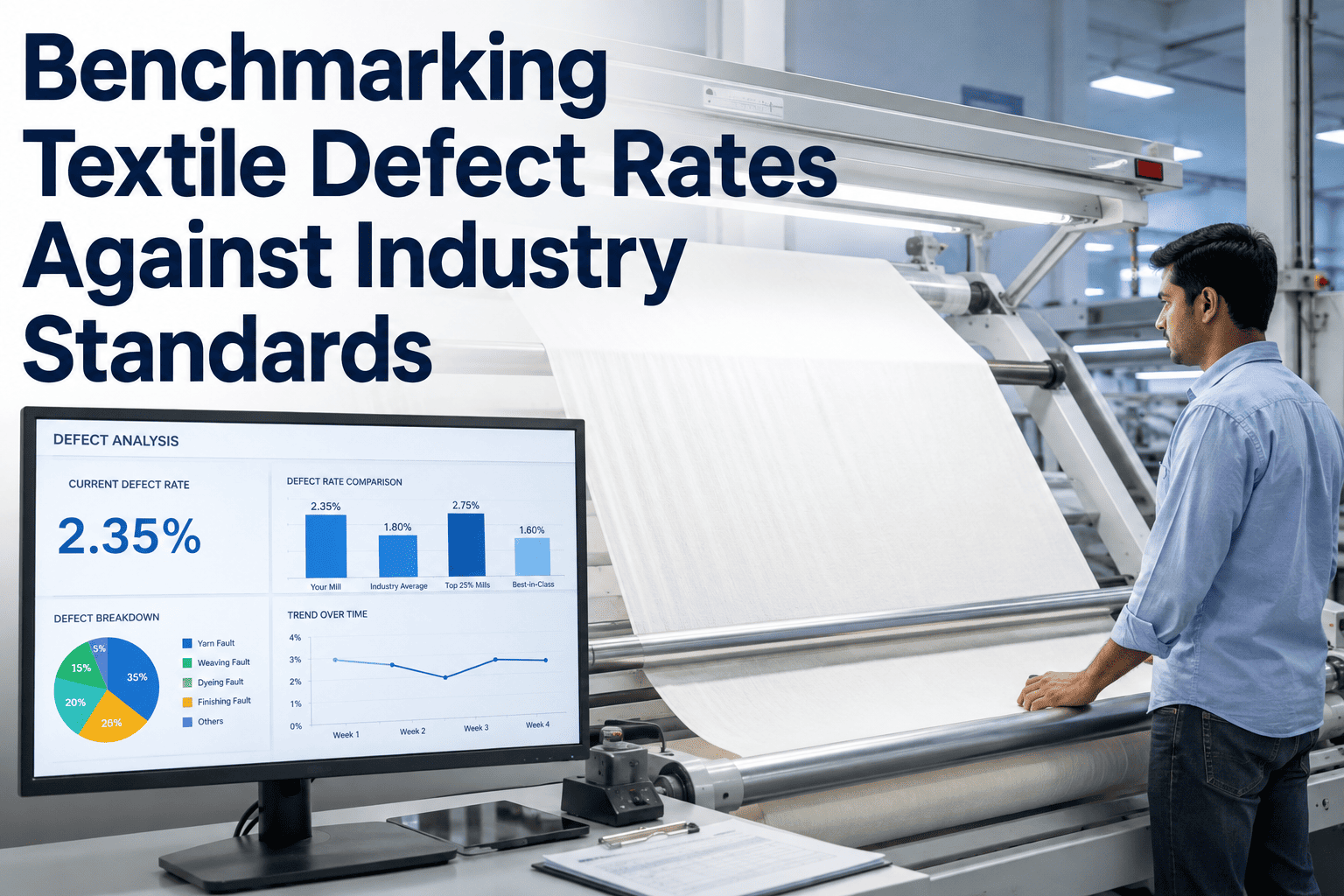
A mill reporting "12 points per 100 yards" and a mill reporting "340 defects per million meters" could be describing fabric of nearly identical quality, or fabric that differs by a factor of three — and neither number means anything in isolation w
Read More
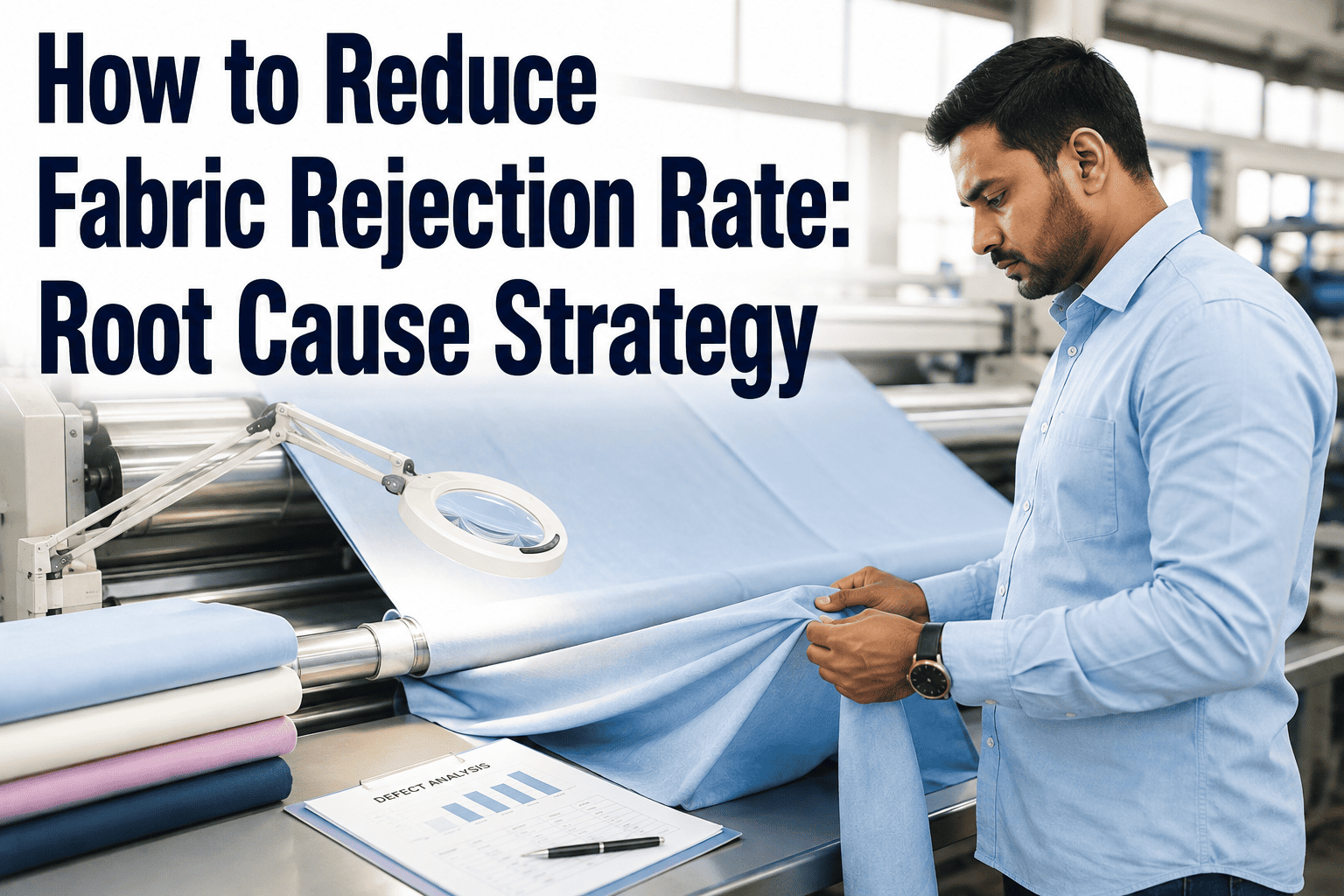
A knit fabric mill running a structured six-sigma root cause program found that yarn quality alone accounted for 51% of all recorded defects — more than every other cause combined. A separate weaving defect study traced roughly 86% of fabric fault

Read More
A fabric inspector who calls a defect "major" and another who calls the identical flaw "minor" are not disagreeing about the fabric — they are working from different mental catalogs, built from years of individual experience rather than a shared r
Read More
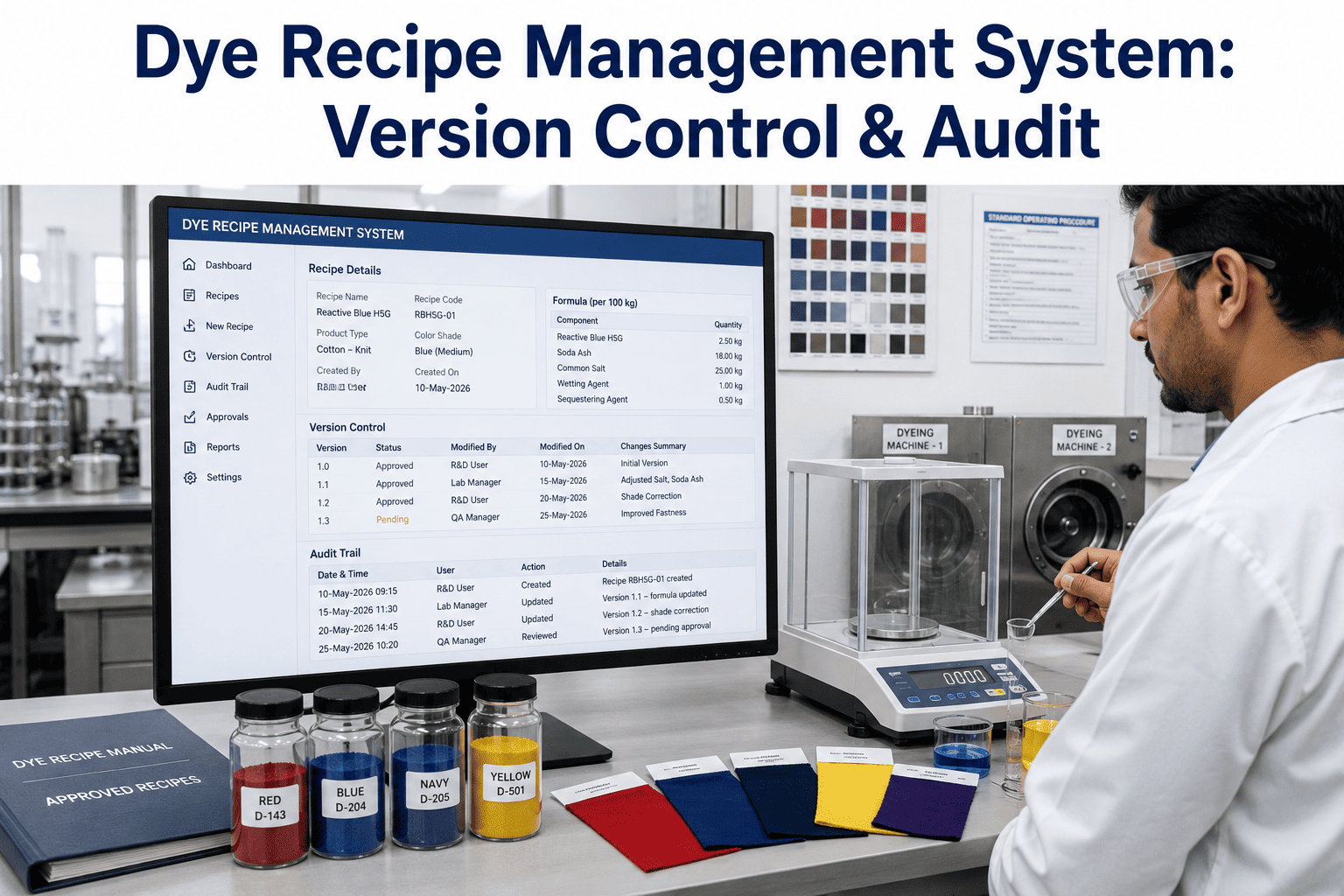
A dyer notices a shade running slightly warm partway through a run and adds a touch more of the yellow component to correct it — a reasonable, well-intentioned adjustment made under production pressure. Nobody writes it down. Three months later, a
Read More
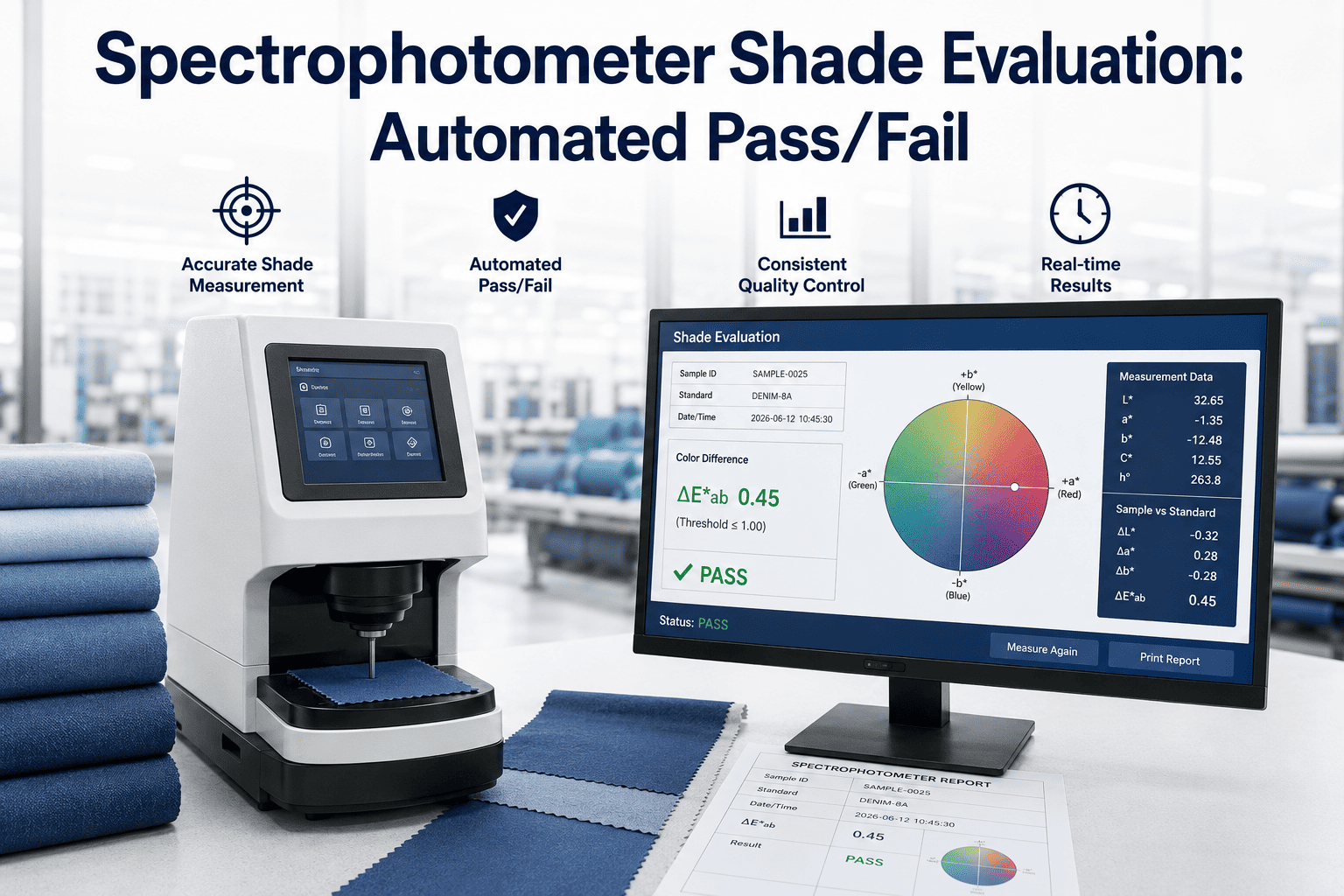
A spectrophotometer sitting on a laboratory bench connected to nothing but a printer is a measurement instrument. A spectrophotometer connected to a tolerance database, a ΔE calculation engine, a pass/fail decision rule set, and a workflow routing
Read More
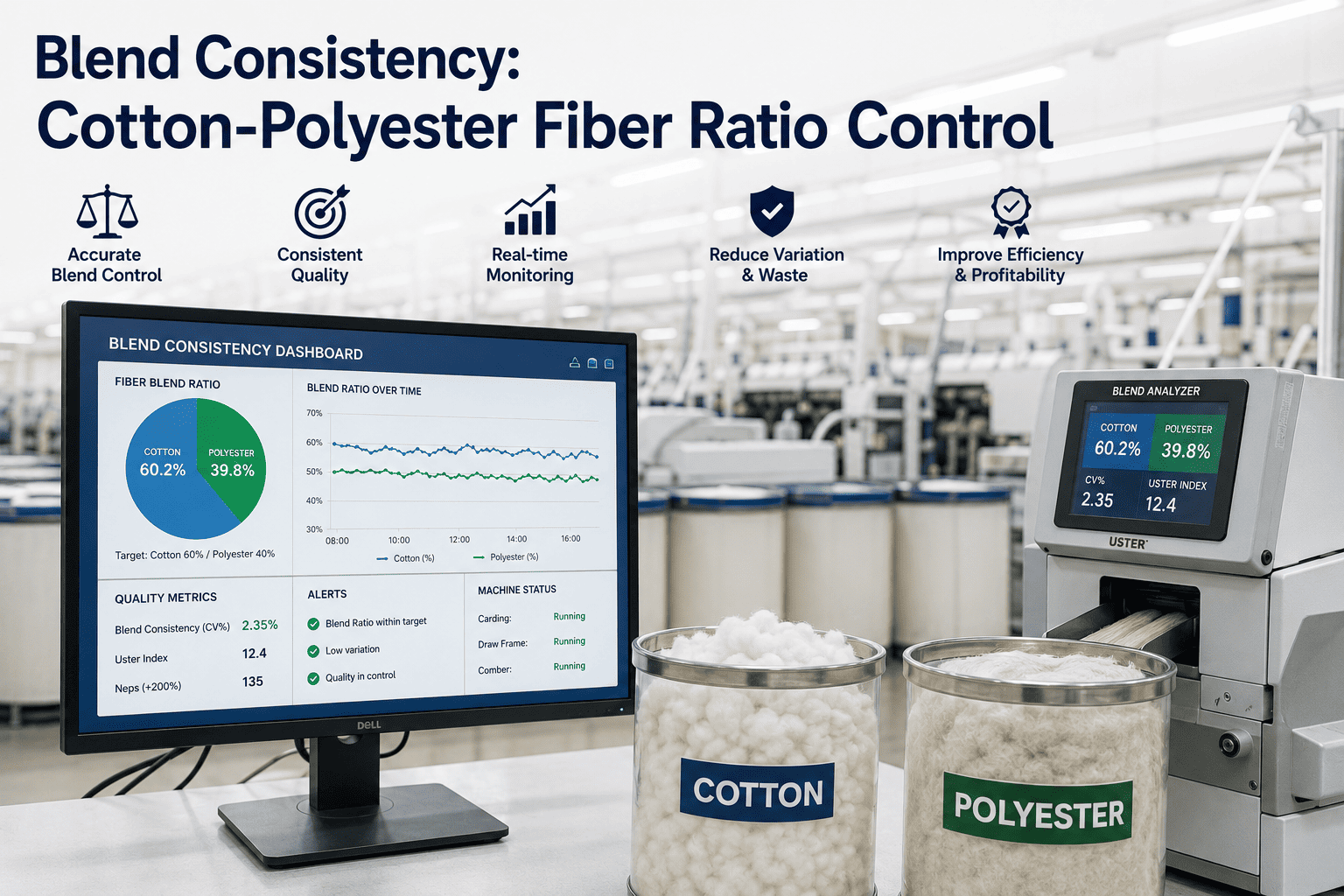
A cotton-polyester blend specified at 60/40 that drifts to 63/37 during production does not look like a quality failure on any shift report. The blend room operators met their targets. The opening line ran without stoppages. The carding output loo
Read More
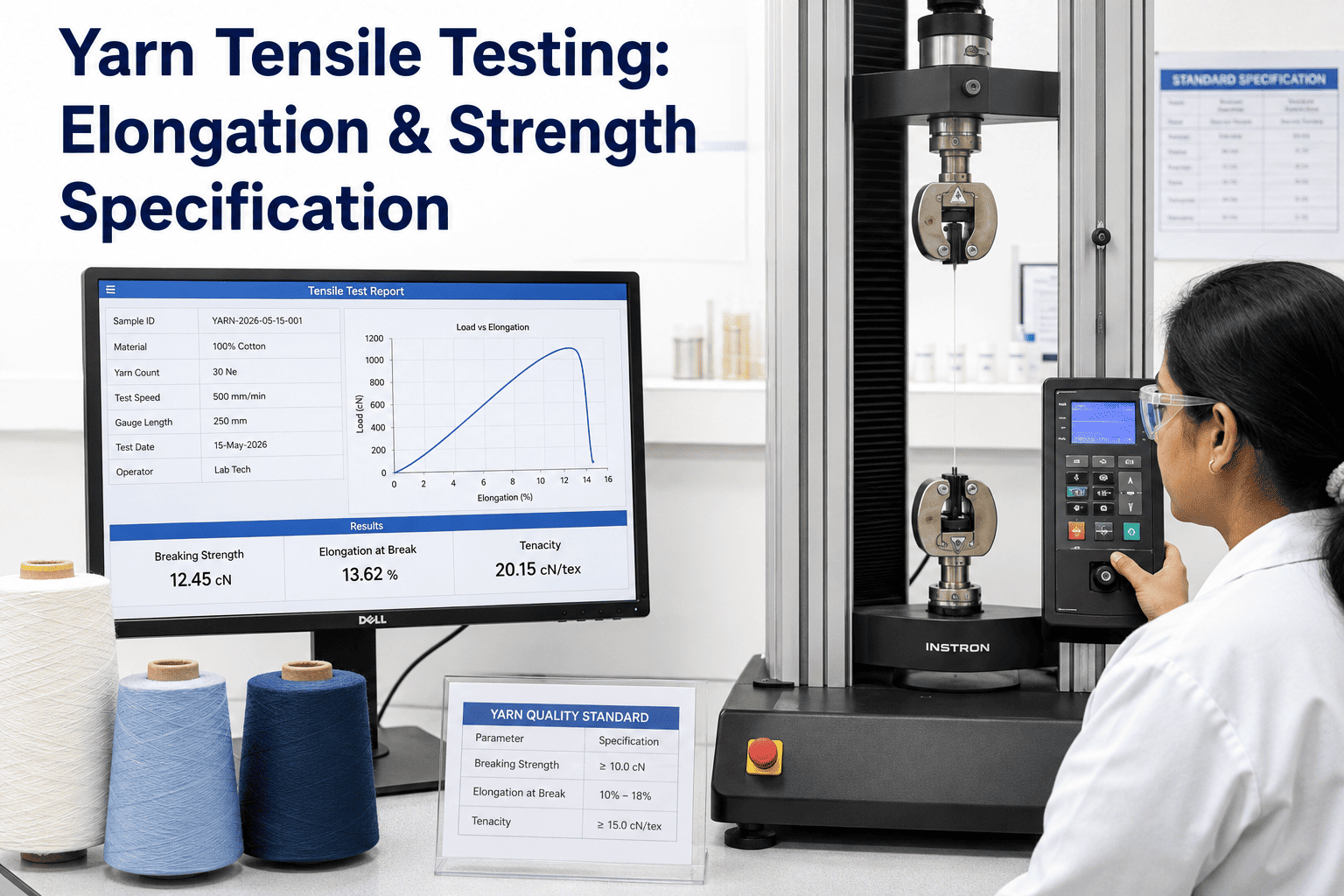
Two spinning lots can carry the identical count, the identical nominal strength spec, and the identical supplier certificate — and still behave completely differently on a high-speed loom. The difference rarely shows up in the average; it shows up

Read More
Three systems typically govern a modern textile mill's digital operations, and each one was designed to answer a different question at a different level of detail. ERP answers what to plan and what it costs. MES answers what is actually happening
Read More
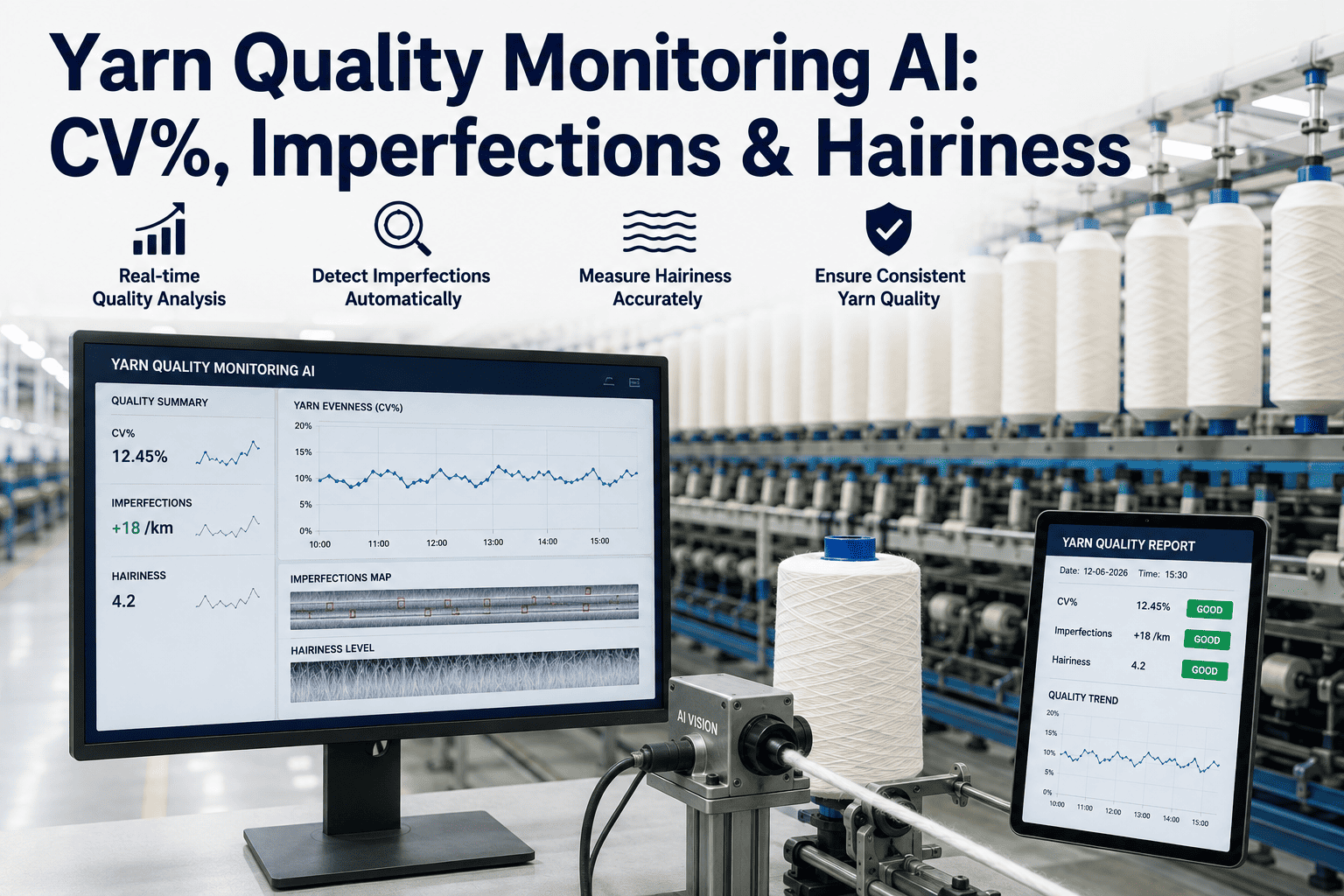
Traditional yarn quality control samples a small fraction of total production, tests it offline in a lab, and reports results long after the yarn in question has already been wound, packed, or in worse cases, already delivered to a customer. By th
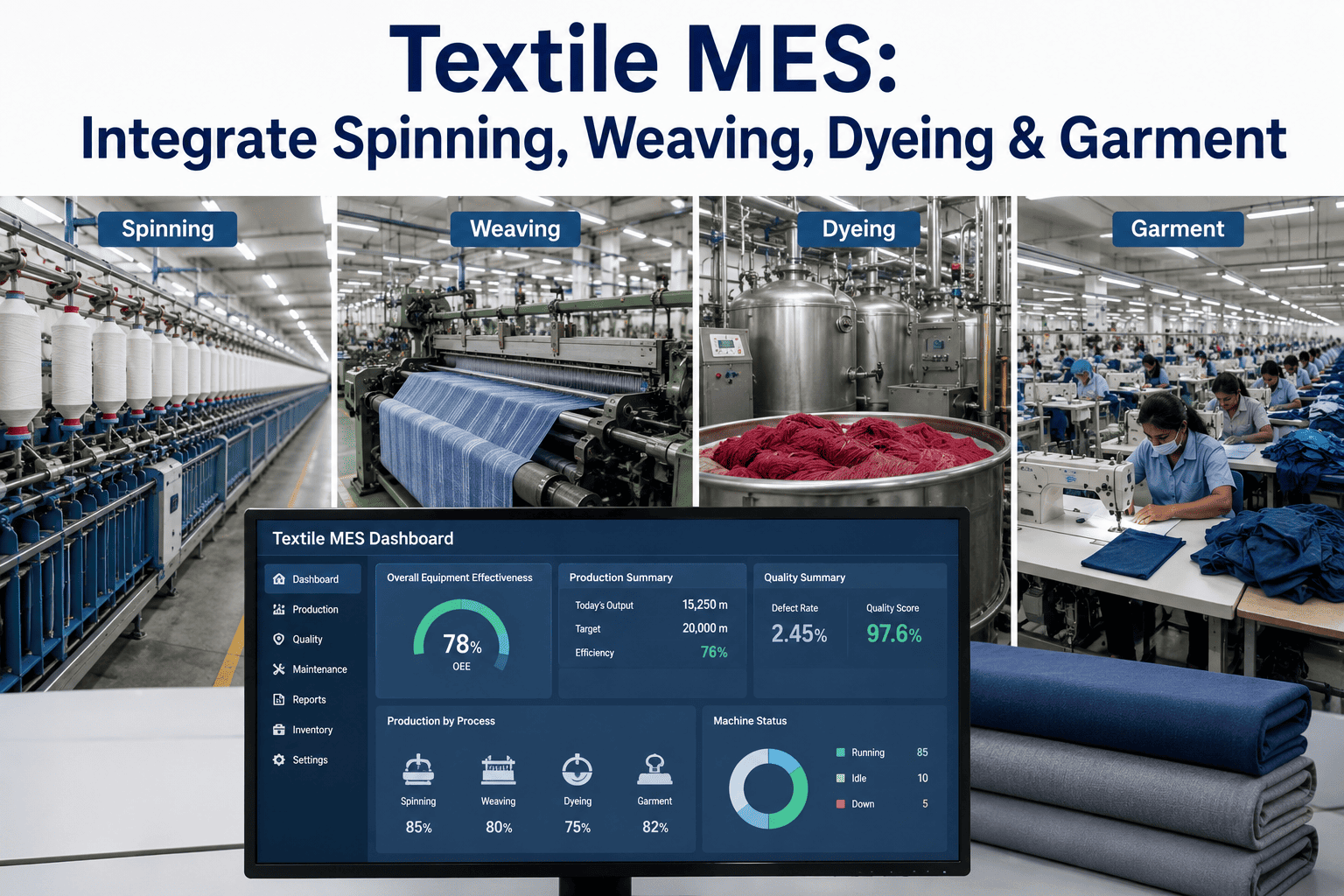
Read More
A cotton lot enters spinning as a single traceable batch. By the time it exits garment finishing, it has passed through four or five separate departments, each running its own paperwork, its own quality checks, and in most mills, its own disconnec

Read More
A weaver selecting which yarn beam to load next rarely has the spinning department's quality report in front of them. They have a beam number, a delivery date, and whatever verbal warning happened to reach the floor if a batch was known to be prob

Read More
Compressed air maintenance in a textile mill isn't a single job — it's a set of recurring tasks across daily, weekly, monthly, and annual intervals, each targeting a different failure mode. A missed daily drain leads to condensate buildup. A slipp

Read More
A wet processing department can easily have well over a hundred distinct chemicals in active use at any given time — dyes, fixing agents, softeners, bleaching compounds, and specialty auxiliaries — and in most mills, the Safety Data Sheet for any
Read More
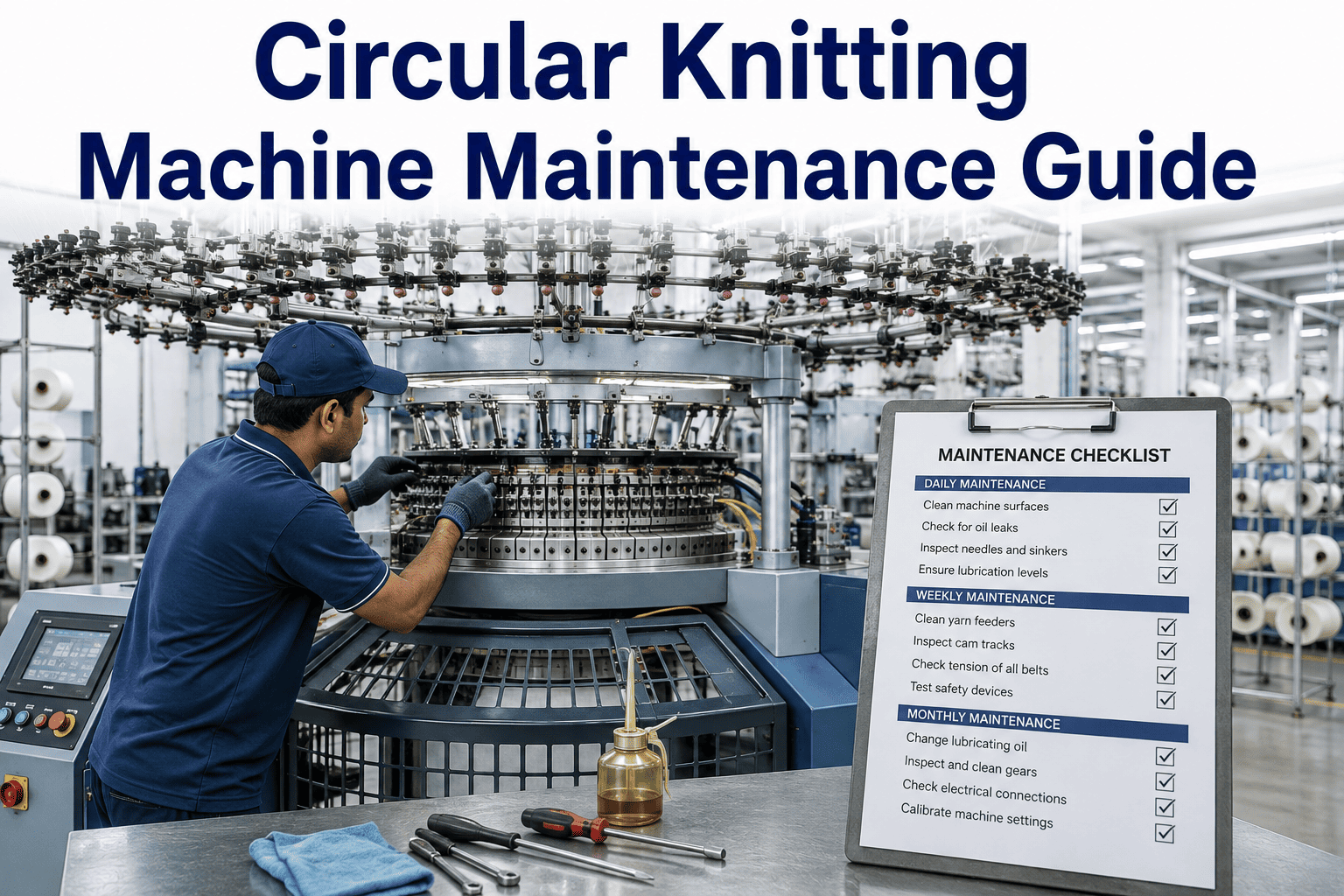
A single broken needle on a high-speed circular knitting machine can turn into a running fabric fault that isn't caught until an entire roll has already been produced, sometimes hours later at the inspection table. Needle, cam, and cylinder wear a
Read More
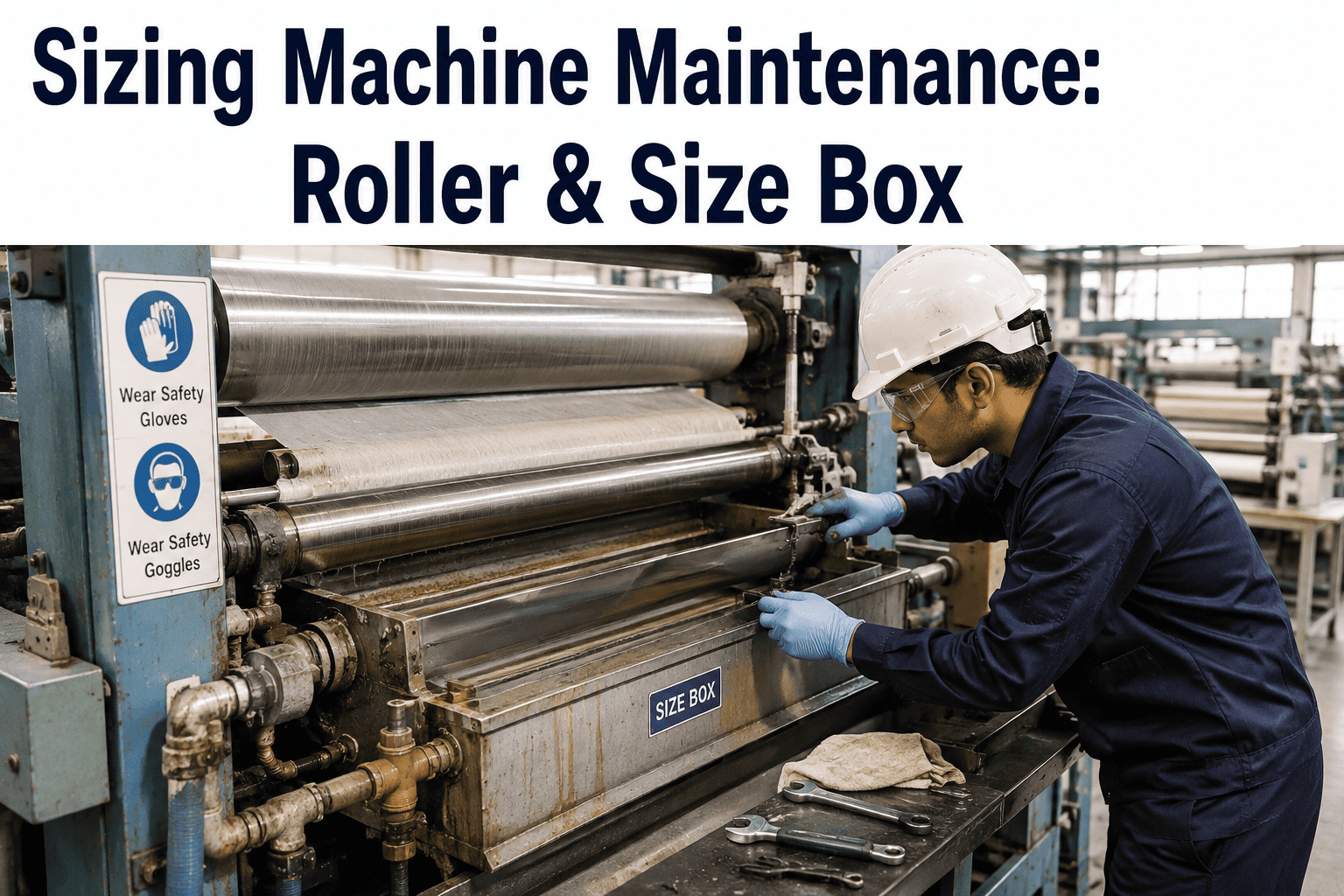
Weak size add-on on a warp beam doesn't announce itself at the sizing machine — it shows up two departments later as excessive warp breakage on the weaving floor, where operators and supervisors usually blame the yarn, the loom setting, or the wea

Read More
Most textile manufacturers still win business the way their fathers did — trade shows, agent networks, and word of mouth from existing buyers. That's not wrong, exactly, but it means a mill's next big customer is currently forming an opinion about
Read More
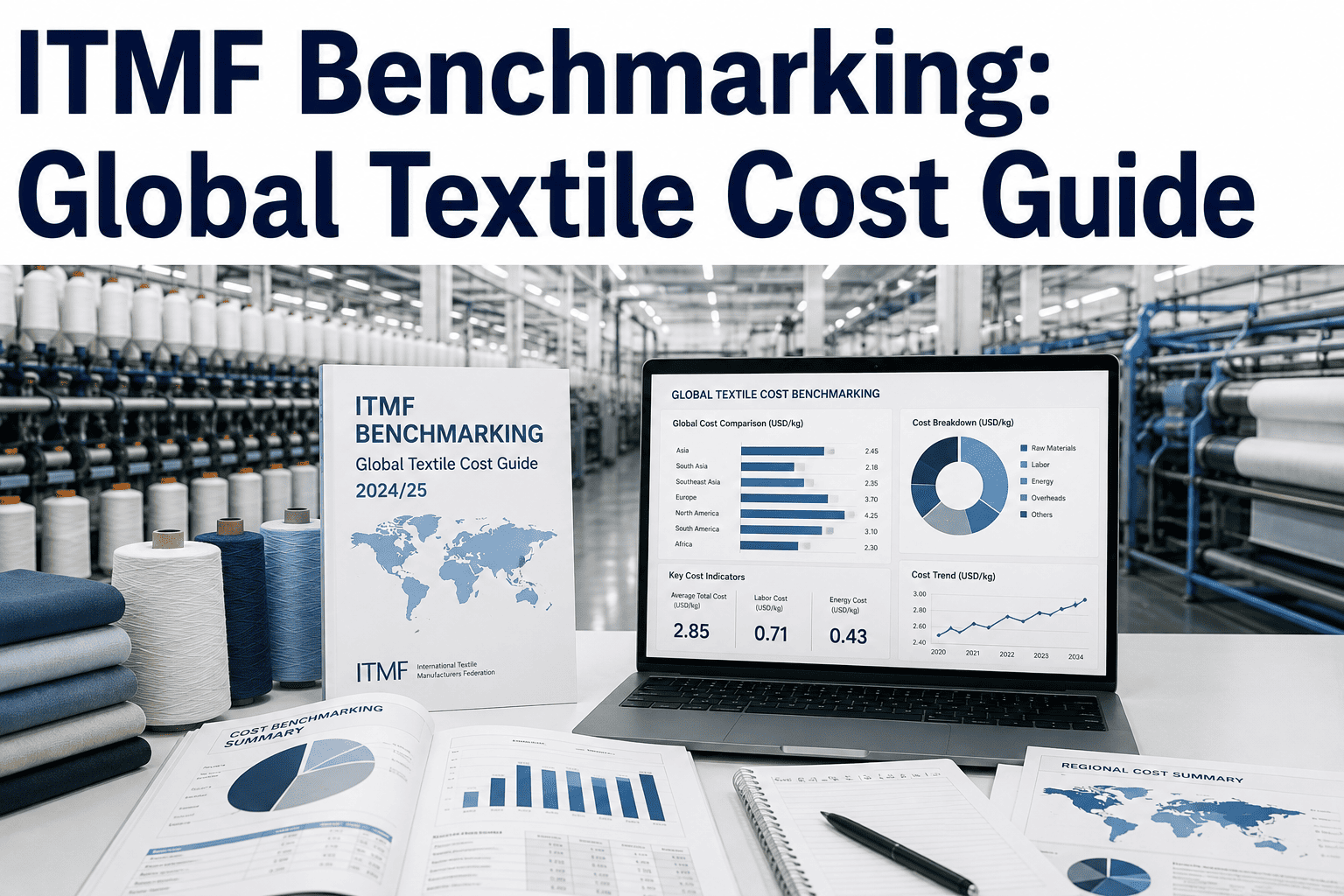
Every textile mill owner has heard some version of the same claim in a trade meeting — "our costs are competitive with Vietnam" or "we're cheaper than Bangladesh on spinning." Most of the time, nobody in the room has actually checked. The ITMF Int

Read More
A single style can pass through six or seven rounds of samples before a buyer signs off — lab dip, strike-off, fit sample, salesman sample, pre-production sample — and at most mills, nobody is actually tracking what each round costs or how many da

Read More
A weaving shed runs on a contradiction most facility managers never fully resolve: the fabric needs high humidity to keep yarn from breaking, and the room needs aggressive air extraction to keep cotton fly and lint from accumulating into a fire ha

Read More
Most mills that get burned by a quality escape didn't fail because they lacked testing equipment entirely, they failed because their lab was built the way most labs get built, one machine purchased at a time whenever a specific customer complaint

Read More
A children's pajama top and an adult cotton shirt can be cut from fabric that looks and feels identical off the same roll, yet one of them is legally required to self-extinguish against an open flame and the other is not. That difference is not a

Read More
A fabric spec sheet that lists "50,000 rubs" without saying which test produced that number is not a durability claim — it is an unanswered question. Martindale, Wyzenbeek, and Taber measure abrasion resistance using entirely different motions, di
Read More
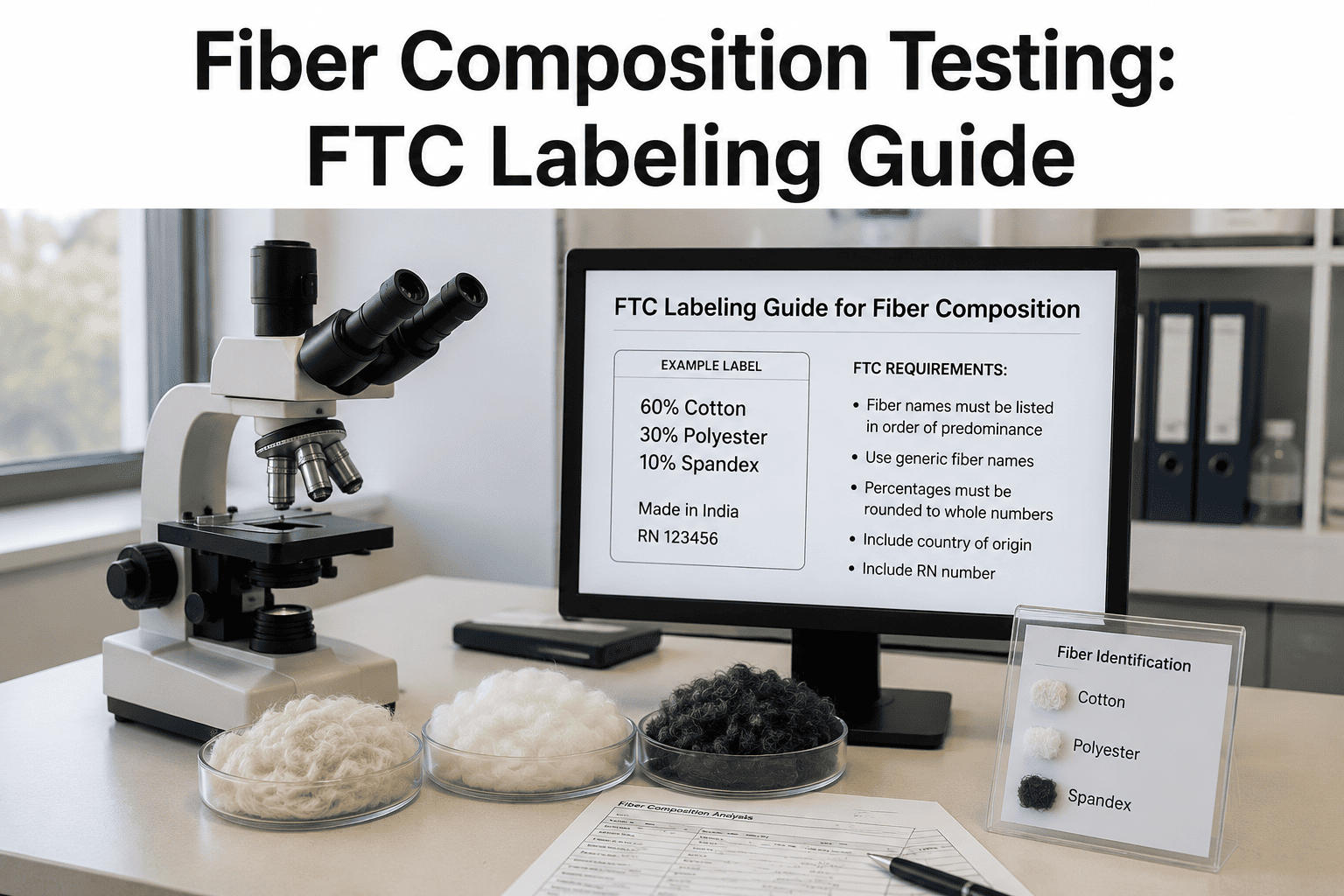
A fiber content label is not a description — it is a legal claim. Under the Textile Fiber Products Identification Act, every generic fiber name and every percentage printed on a garment tag is an assertion the FTC can test against, and a mismatch

Read More
A geotextile roll destined for a highway subgrade project and a filtration fabric destined for a hospital ventilator cartridge can come off looms sitting twenty feet apart in the same weaving shed, yet the tolerance for failure on each is almost n
Read More
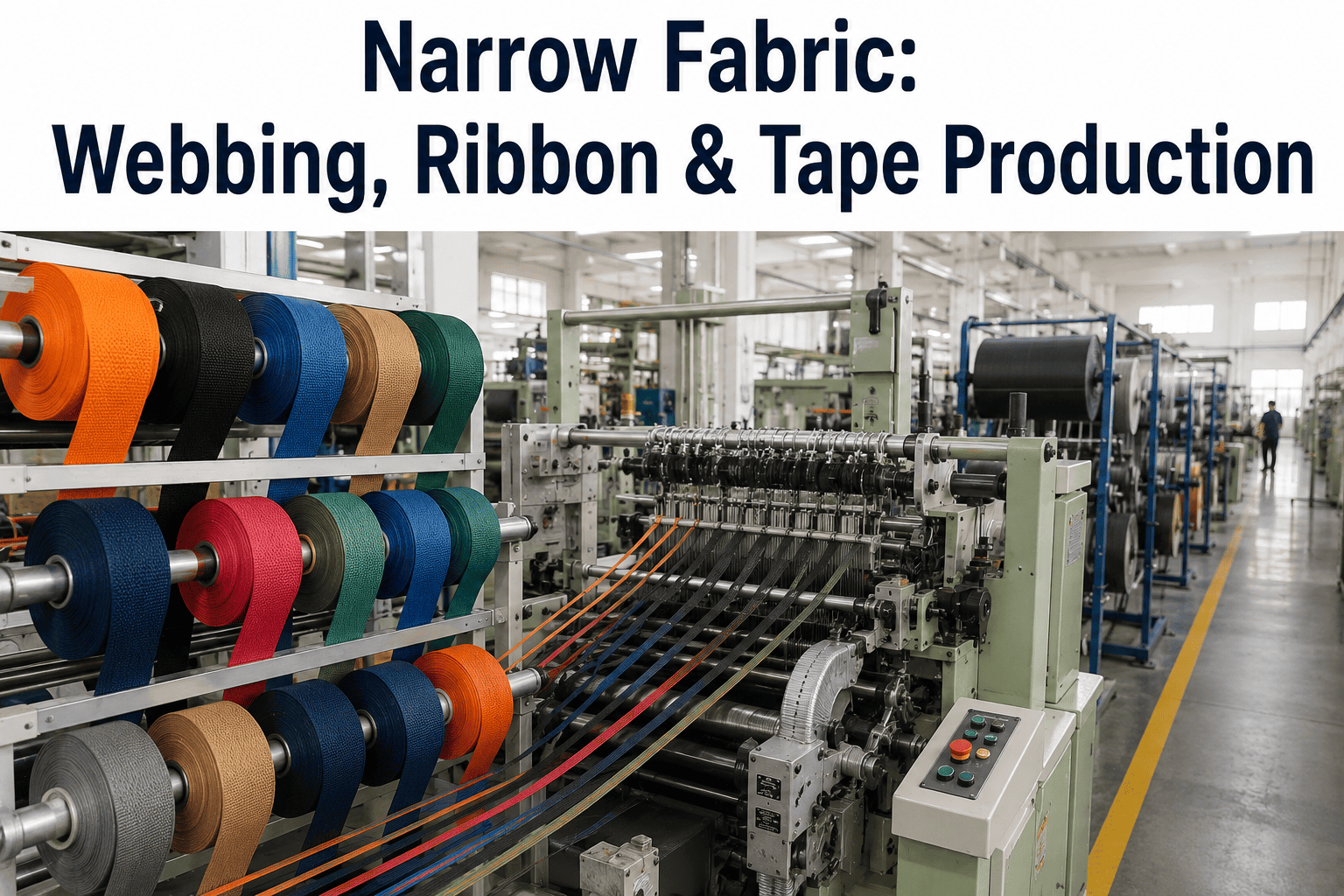
Narrow fabric weaving is one of textile manufacturing's most precision-dependent processes, producing the webbing, ribbon, elastic tape, and woven labels that quietly hold together everything from seatbelts and backpacks to garment waistbands and

Read More
A 60-inch wide fabric roll running 100 linear yards contains roughly 667 square yards of woven material, and under the American 4-Point System that roll fails first-quality acceptance the moment its cumulative penalty score crosses 40 points per h

Read More
A garment that fits perfectly on the sales floor and comes back two sizes smaller after the first wash is not a defect anyone can see on the cutting table — it shows up weeks later as a return rate spike, a chargeback, or a retailer refusing the n
Read More
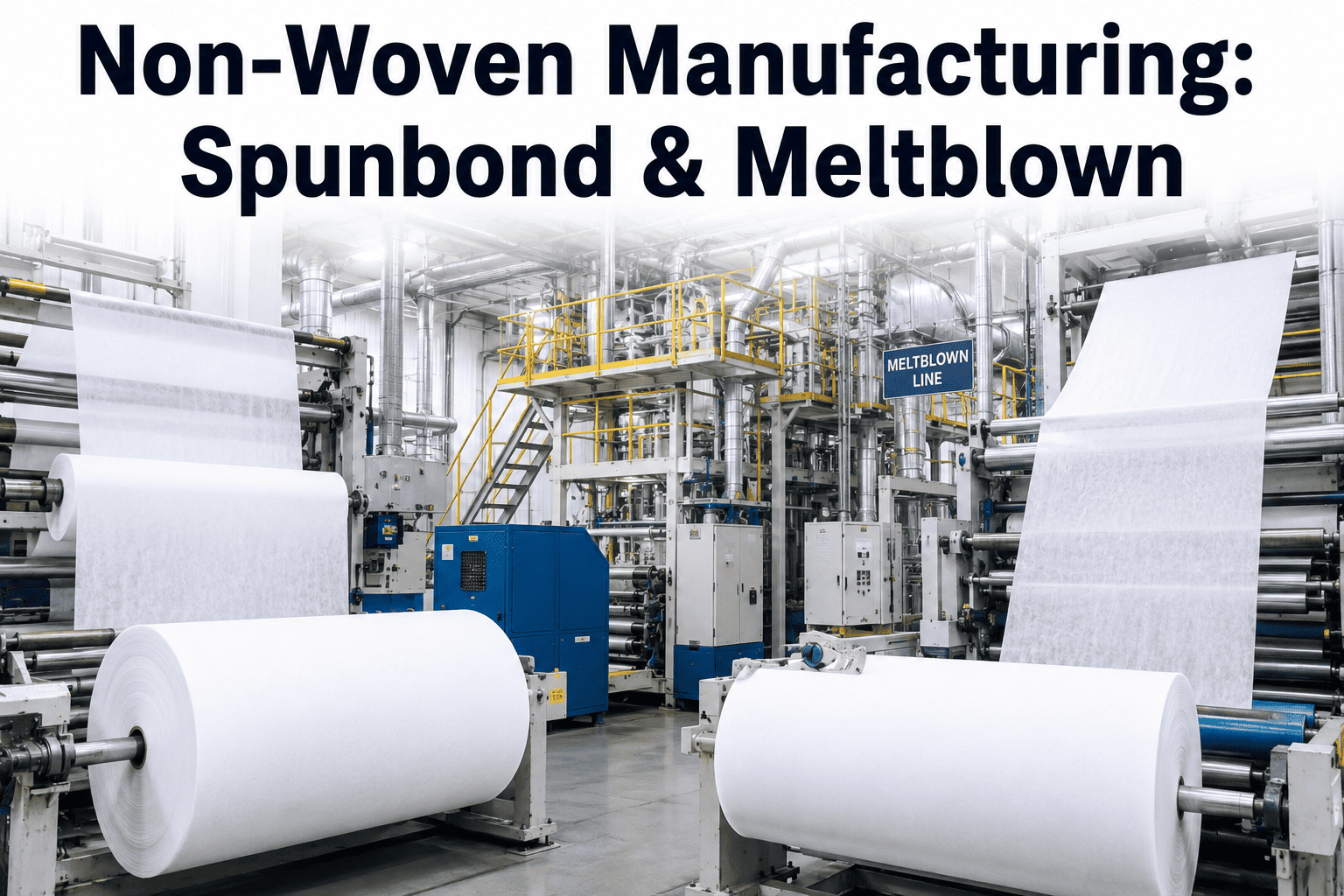
Spunbond gives a nonwoven fabric its strength, meltblown gives it filtration, and neither technology alone produces a fabric that does both well. That's exactly why the majority of medical and hygiene nonwovens in production today are actually c
Read More
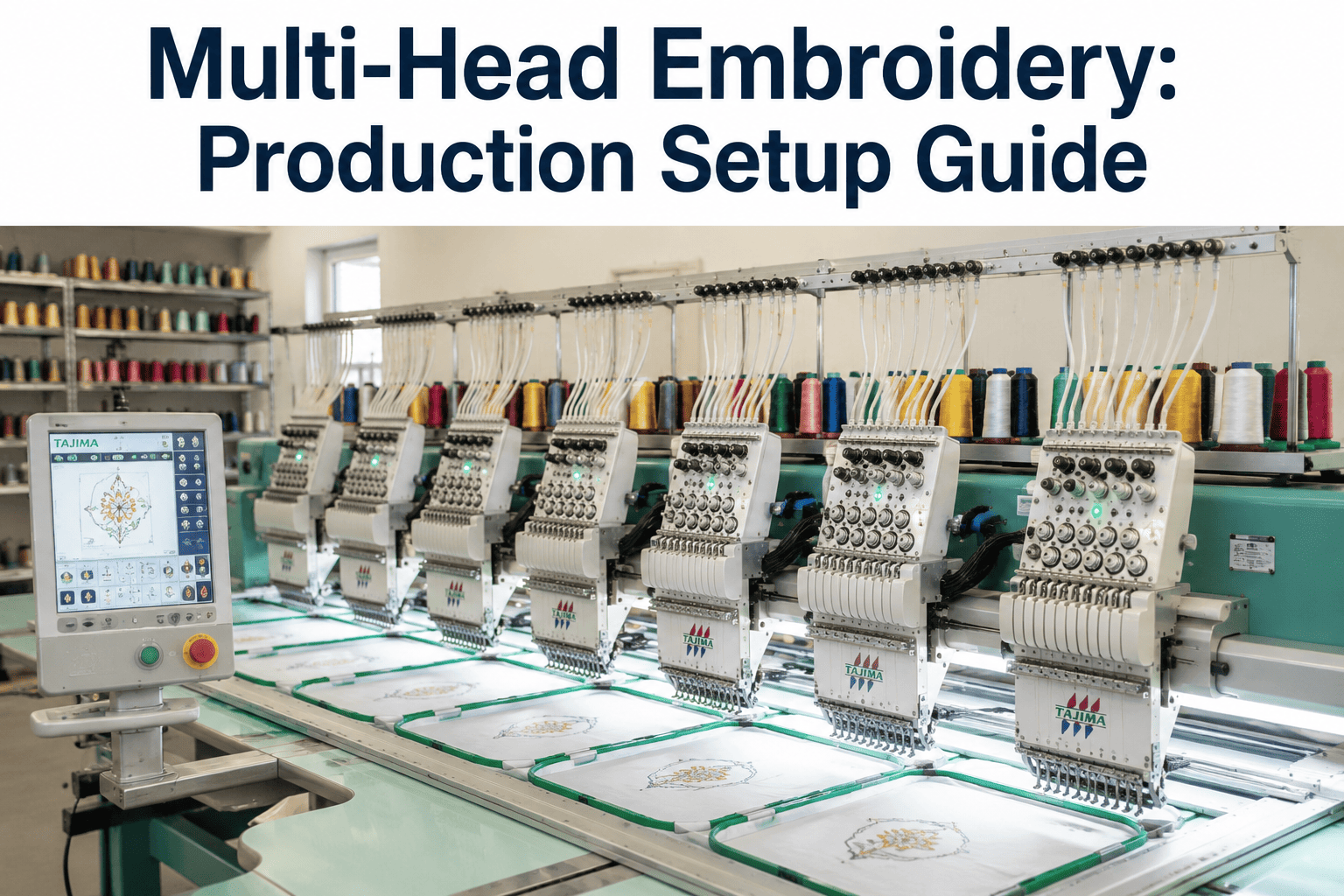
A single head sitting idle for a thread break used to mean the whole multi-head machine stopped with it, costing far more production time than the actual thread change. Modern networked multi-head embroidery systems changed that math, letting in
Read More
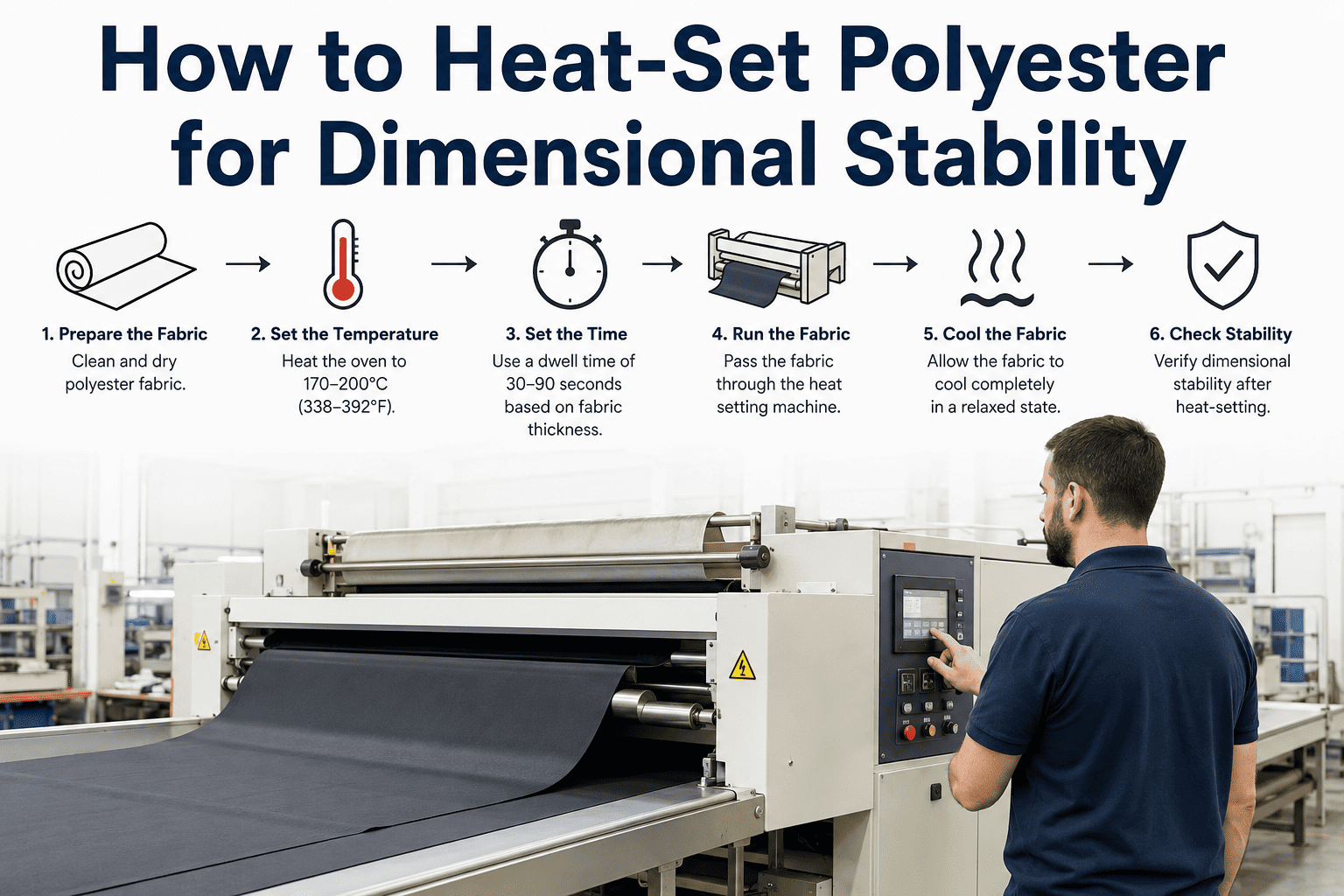
Polyester holds a crease because of what happens to its polymer chains above a specific temperature threshold, not because of anything applied to the surface of the fibre. Heat setting works by relaxing those chains into a new configuration and
Read More
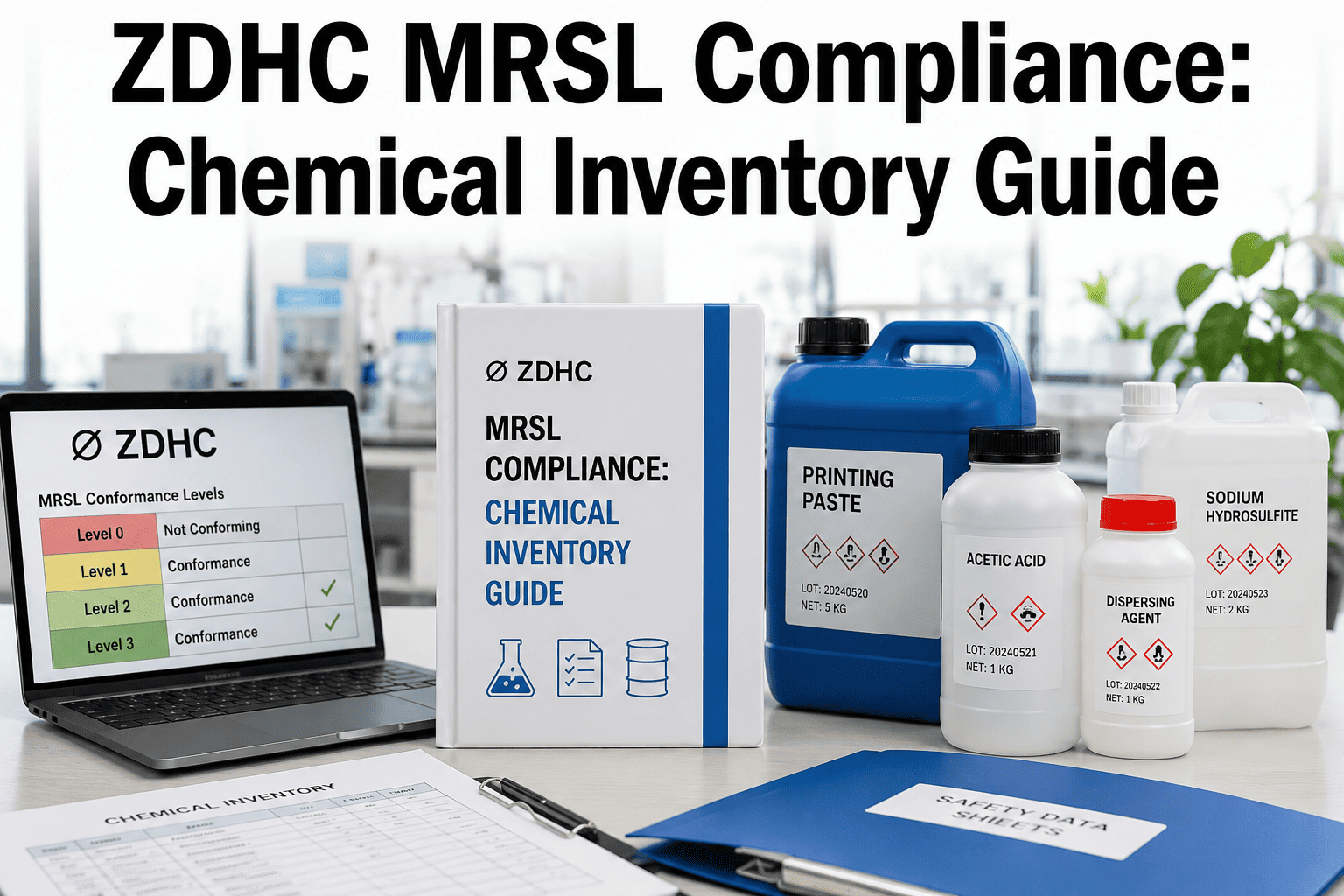
A mill can hold every certificate in the file cabinet and still fail a buyer's chemical audit, because ZDHC MRSL conformance is tracked at the level of individual chemical formulations, not the facility as a whole. One uncertified drum of finish

Read More
Replacing caustic soda scouring or harsh chemical desizing with an enzyme process sounds like a simple swap, until the batch comes out under-processed because the bath ran two degrees outside the enzyme's active range. Enzymes are proteins, and
Read More
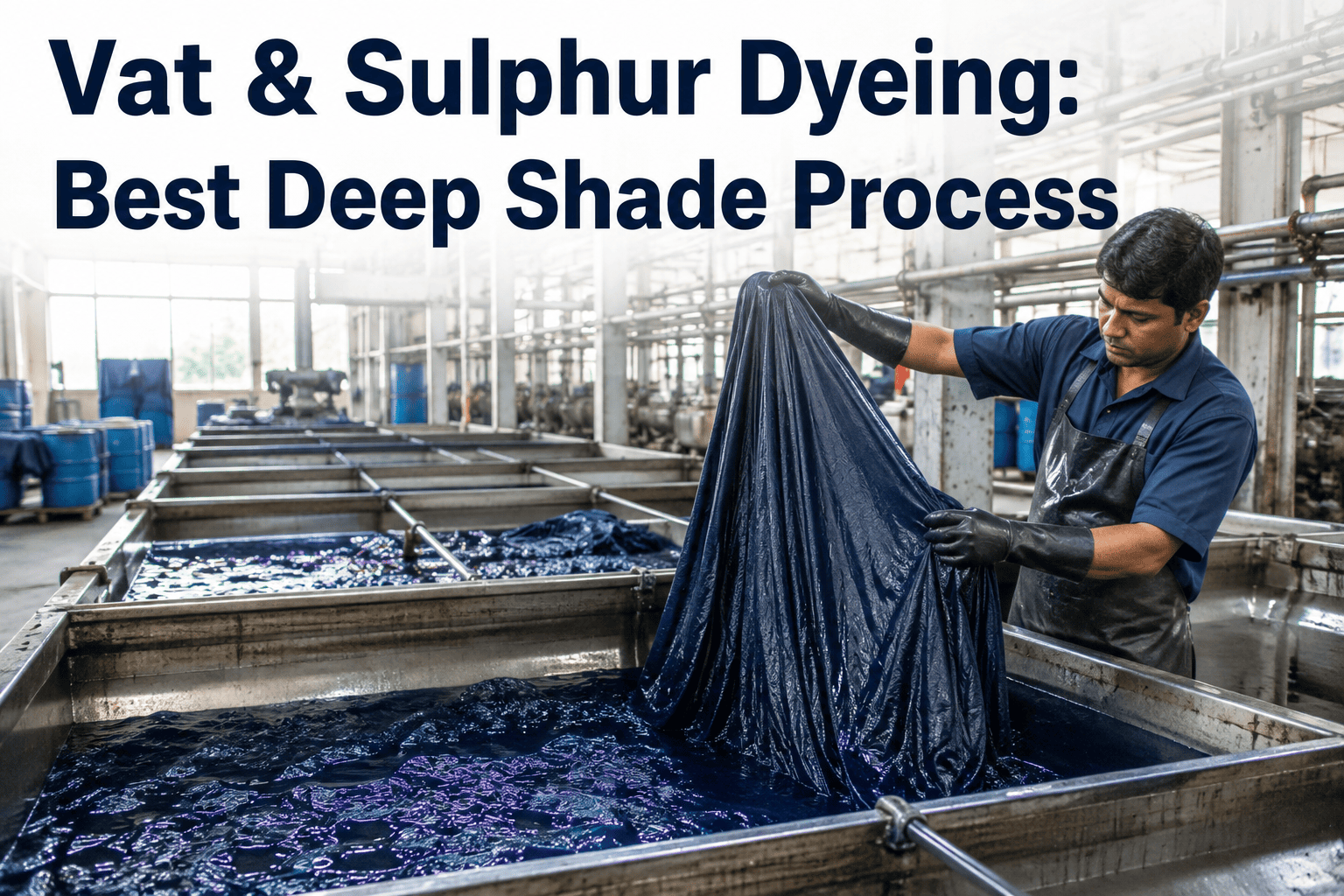
Denim looks green the moment it leaves an indigo dye box, and that colour shift is not a defect, it is the entire chemistry of vat dyeing playing out in real time. Reduction potential, bath temperature, and air exposure all have to line up withi

Read More
A textile mill can run a flawless dye range and still fail a pollution board inspection, because the discharge water tells a different story than the fabric does. Reactive dyes pass through cellulosic fibre largely unfixed, sizing chemicals wash

Read More
Nothing exposes a poorly maintained warping machine faster than the loom that has to run against it — uneven tension across a warp beam doesn't just create a cosmetic streak, it produces broken ends, stop-motion trips, and fabric that gets pulled
Read More
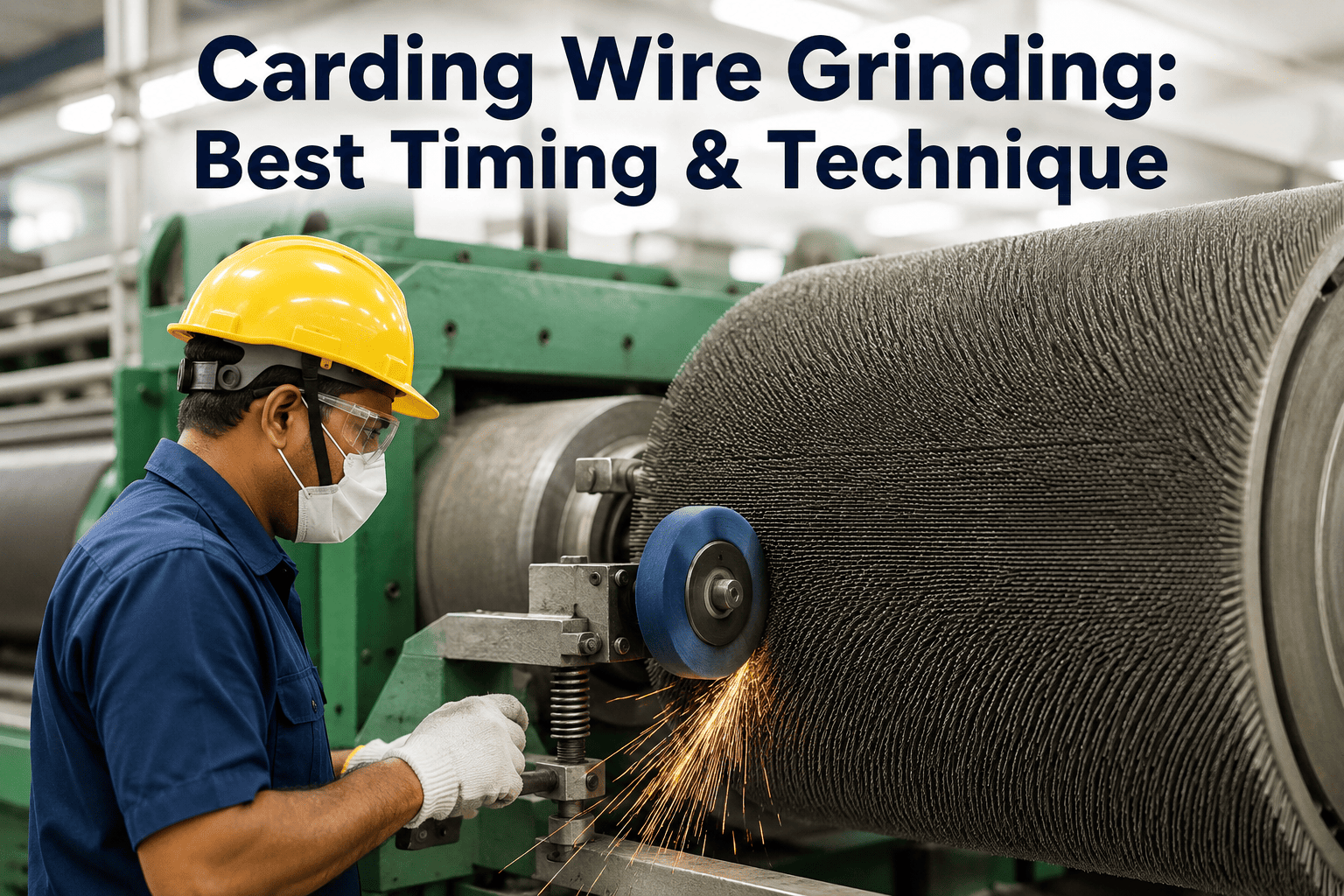
Carding wire doesn't fail all at once — it dulls gradually, a fraction of a degree of point angle at a time, and by the time a mill notices the neps count creeping up in downstream yarn testing, the wire has usually been past its optimal grinding

Read More
A boiler technician once described the moment scale buildup finally shows up on the fuel bill: efficiency has usually been sliding for months before anyone notices, because a boiler running at 85% efficiency instead of 92% doesn't trip an alarm —

Read More
An effluent treatment plant doesn't announce its failures politely — it either quietly under-treats discharge for weeks before a compliance inspection catches it, or it fails loudly enough to shut down the dyeing floor because there's nowhere left

Read More
A textile mill can be profitable on paper and still run out of cash — it happens more often than owners like to admit, and it almost always traces back to the same three culprits: raw material sitting in the warehouse longer than planned, finished

Read More
A merchandiser confirms a delivery date with a buyer before checking whether the mill's looms are actually free that week — it's a small miscommunication that happens constantly, and it's the reason so many textile mills carry an OTIF (on-time-in-
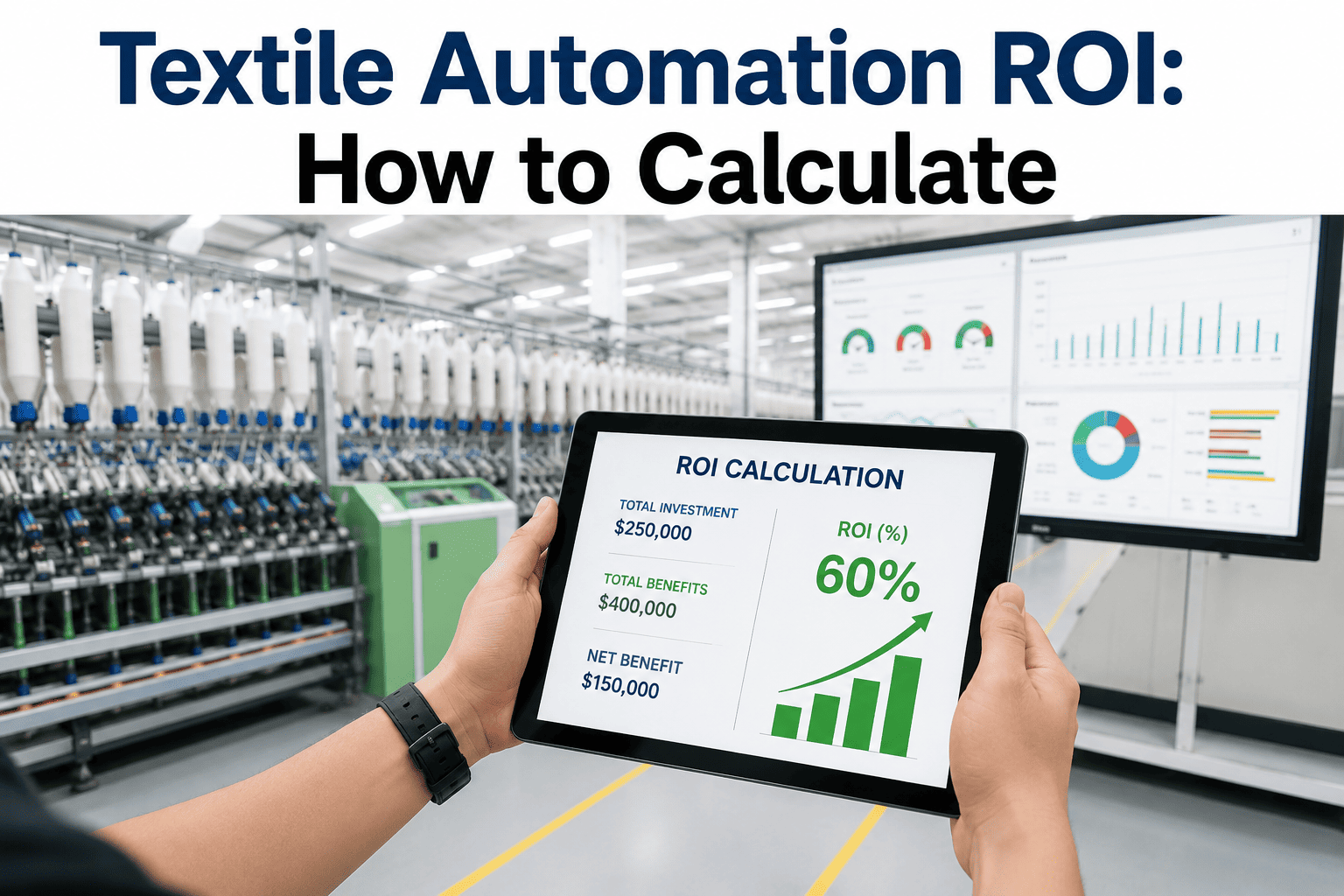
Read More
A plant manager in Coimbatore once told us his automation proposal got rejected three times before anyone realized the finance team and the production team were calculating ROI on completely different assumptions. Production counted machine-hour s

Read More
A buyer places an order on Monday expecting delivery in three weeks, and by the time the fabric actually reaches the cutting table, twelve of those days are already gone to nothing but waiting — waiting for dye lot approval, waiting for a machine

Read More
A shipment can pass every internal quality check on the production floor and still get rejected at final inspection, because a buyer's AQL audit doesn't ask whether the factory believes the goods are good — it asks whether a statistically drawn

Read More
The same pair of raw denim jeans can leave a wash floor looking crisp and dark, worn and faded, or aggressively distressed depending entirely on which wash technique it passes through — and buyers now specify these looks with the same precision th
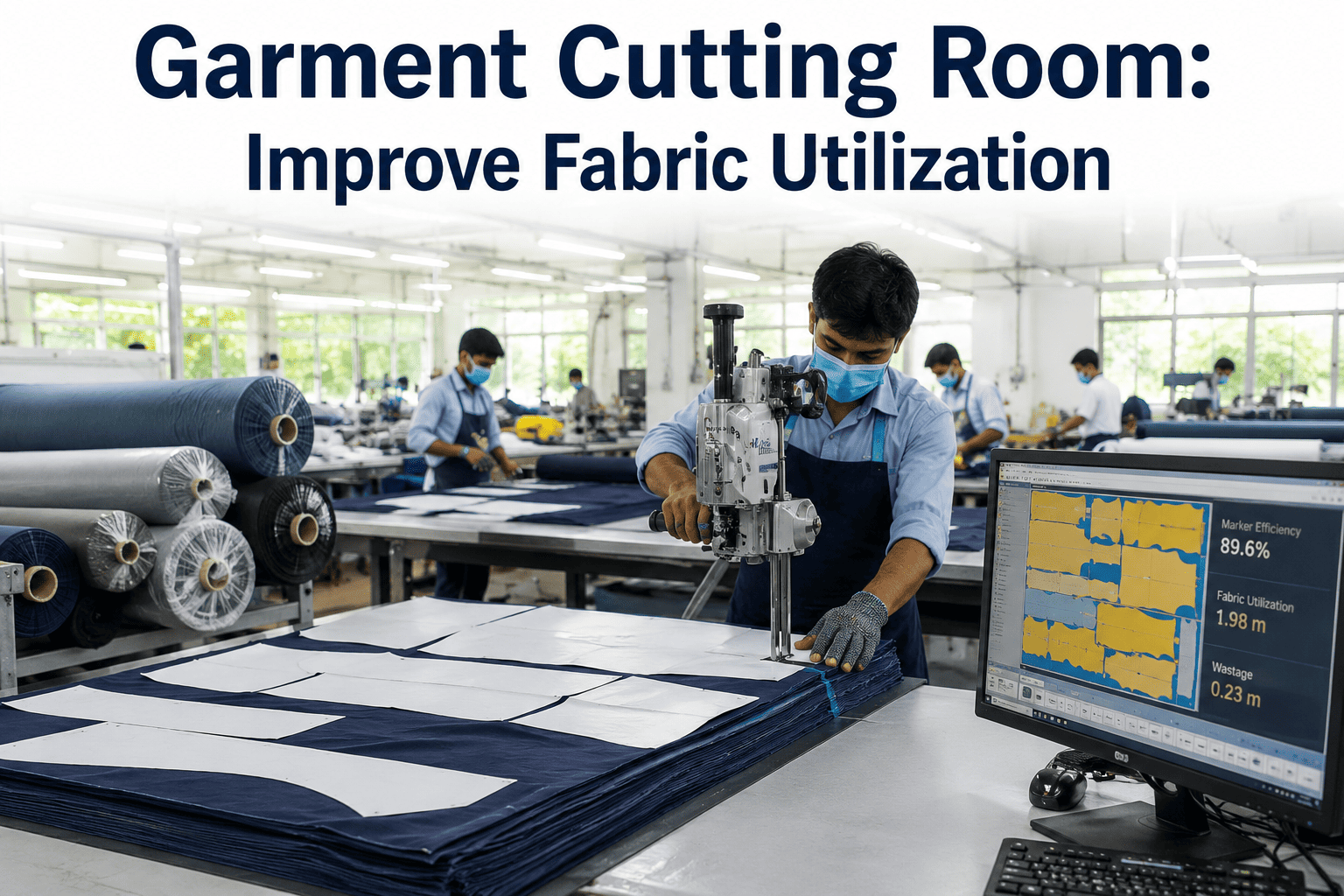
Read More
Fabric is usually the single largest cost line in garment manufacturing, which means the cutting room is where a fraction of a percent of wasted utilization turns into a real, recurring number on the profit and loss statement every single week. A

Read More
Every garment on a rack is really a record of which sewing machines touched it, since the seam type stitched into a hem, side seam, or waistband directly determines how that garment stretches, holds up in wash, and looks from the outside. Choosing

Read More
A single kilogram of dyed fabric can consume anywhere from 50 to well over 150 liters of water once dyeing, washing, and rinsing are all counted, and in water-stressed regions that number has become the single biggest regulatory and reputational r
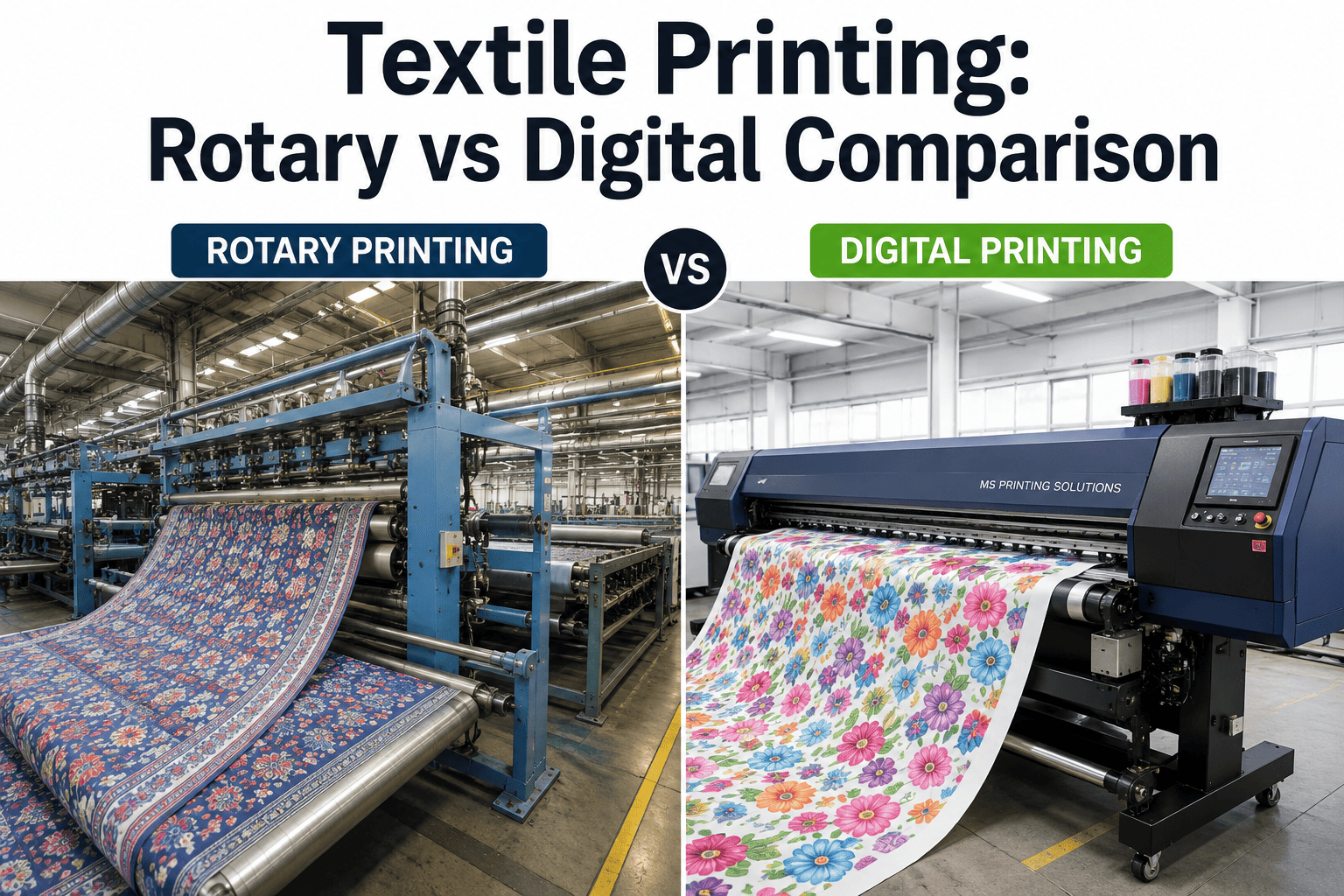
Read More
Choosing a printing technology for a fabric order is really a question about order size in disguise — a print run of 50,000 meters and a print run of 500 meters have almost nothing in common economically, even if the design and fabric are identica

Read More
Cotton fabric arrives at pretreatment full of impurities that fabric was never designed to keep — sizing starch applied before weaving to protect the warp, natural waxes and pectins from the cotton fiber itself, and residual husk fragments that su

Read More
A dyed fabric batch can look perfectly matched under the fluorescent lights of a production floor and fail outright under the daylight bulb in a buyer's approval room — this is metamerism, and it is one of the most common reasons a shade that pass
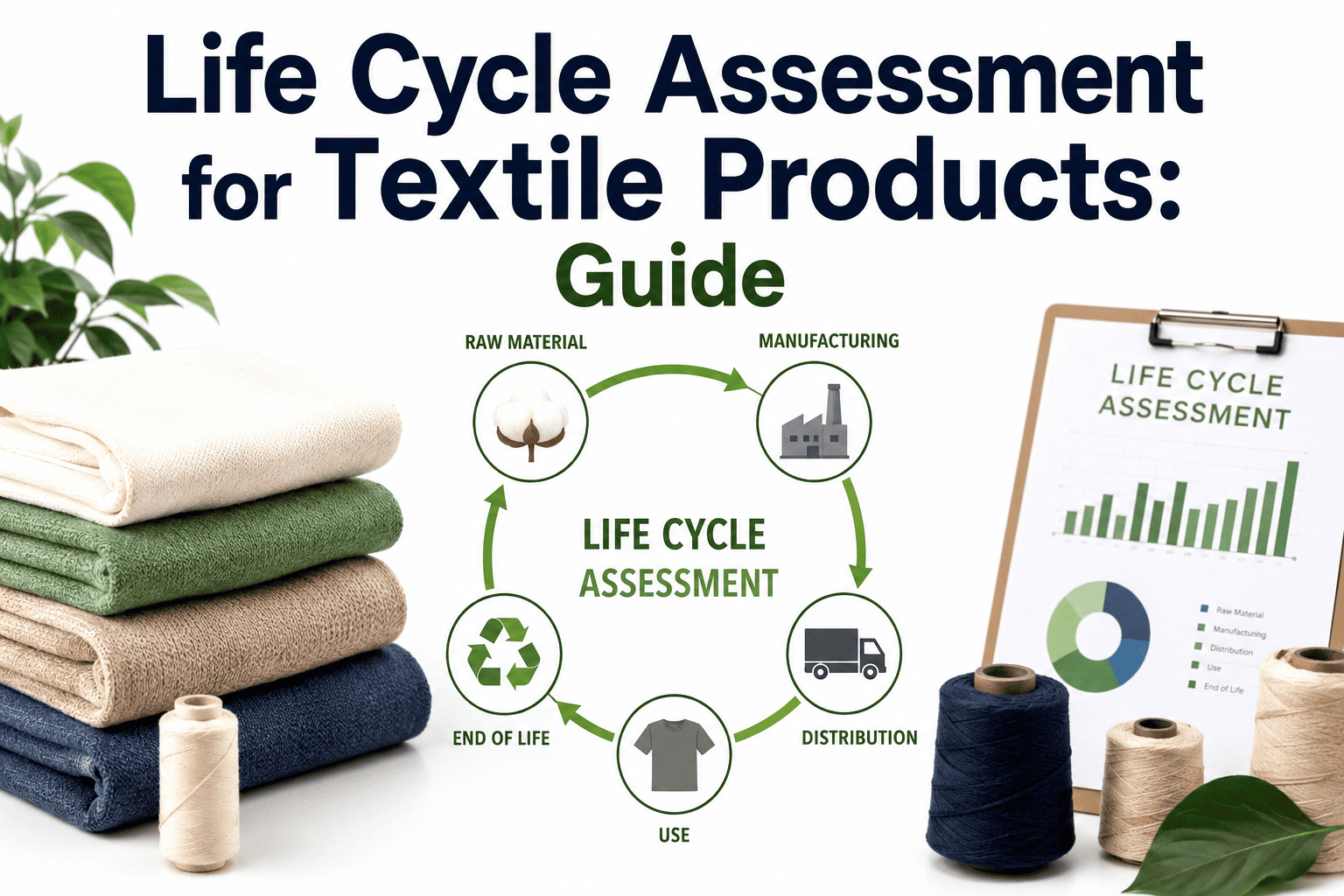
Read More
Life Cycle Assessment is the only methodology that quantifies a textile product's environmental impact from raw fiber extraction through consumer use to end-of-life disposal in a single, standardized framework. ISO 14040 and ISO 14044 define the
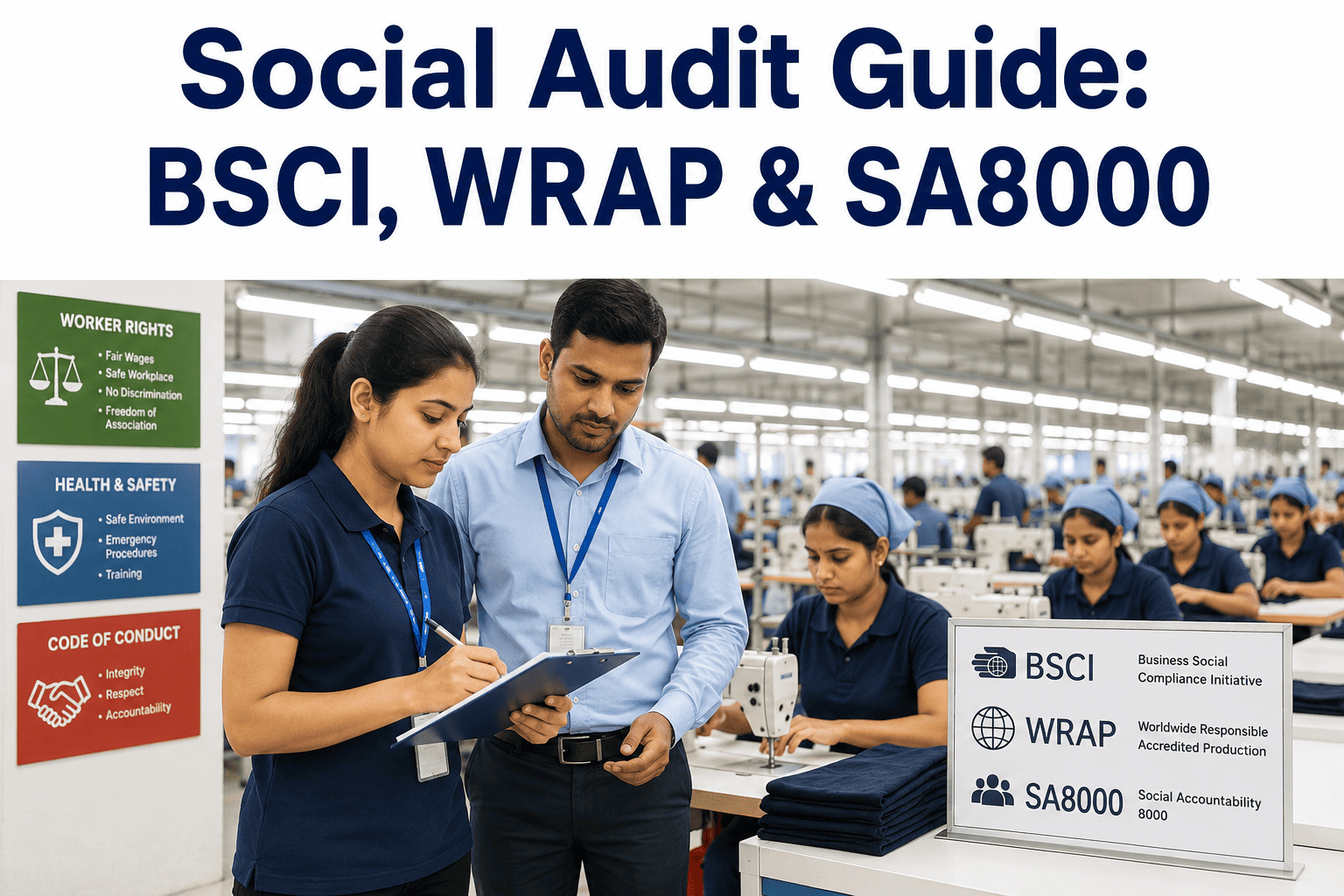
Read More
A failed social compliance audit does not just cost a corrective action plan, it can freeze purchase orders from a buyer that requires BSCI, WRAP, SA8000, or SEDEX certification as a condition of doing business at all. Textile mills are audited mo

Read More
Process cooling rarely gets the maintenance attention it deserves until it fails, and when a chiller or cooling tower system degrades in a textile plant, the consequences ripple into dyeing consistency, printing quality, and equipment protection a
Read More
Most textile mills do not have a maintenance problem so much as a maintenance culture problem. Machines get fixed after they break, operators are told to run the equipment and leave the fixing to maintenance, and the same spindle or loom fails for
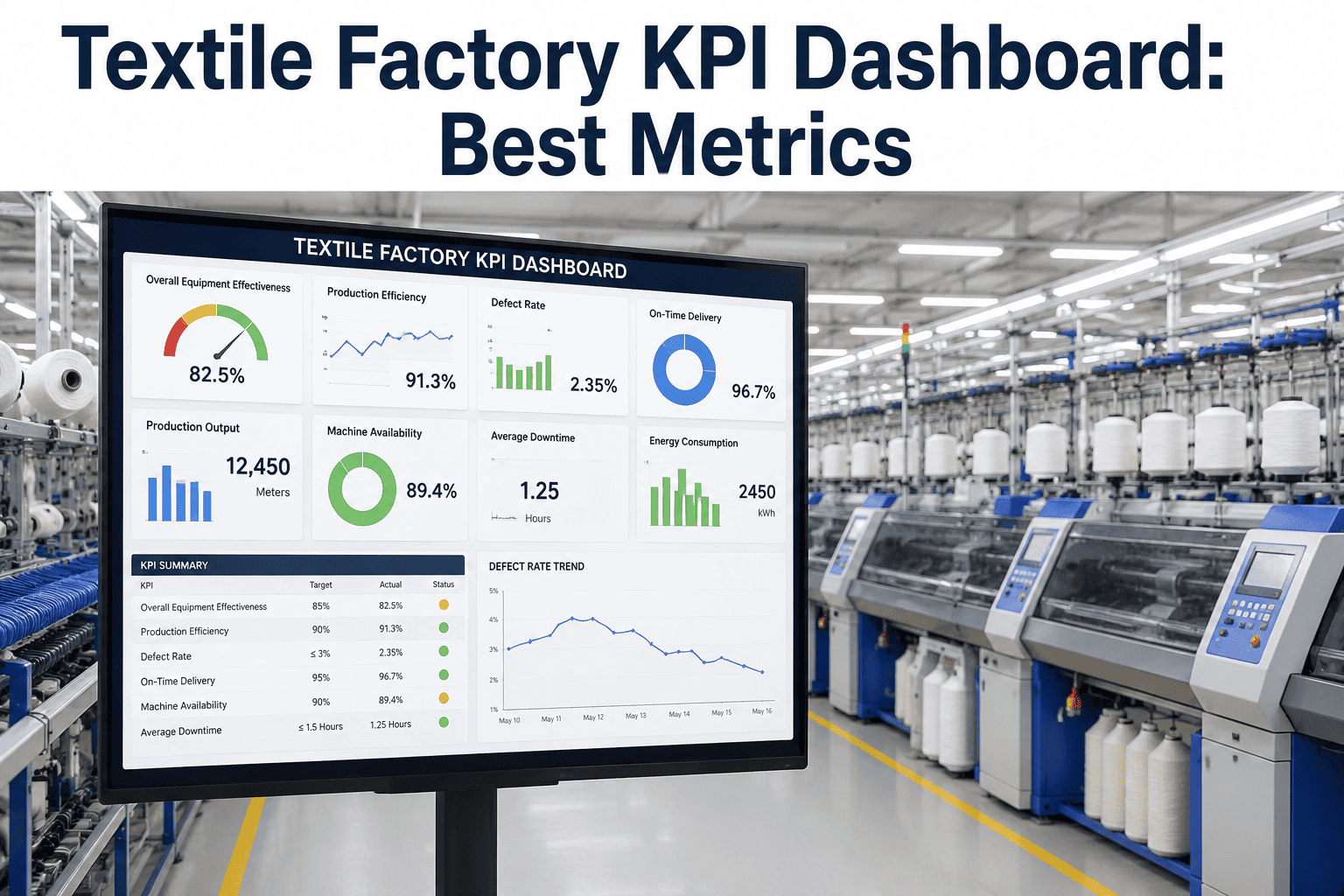
Read More
Most textile mills still run their weekly management review off a spreadsheet that someone pieced together the night before from three different machine logs, a quality inspector's notebook, and a guess about yesterday's downtime. By the time the

Read More
Textile printing quality lives or dies on precision most people never think about — a squeegee blade holding consistent pressure across its full width, a print screen free of dried ink buildup in its mesh, a printhead firing droplets exactly where

Read More
A textile manufacturer shipping the same cotton knit shirt to three different markets in 2026 faces three radically different landed costs — and the difference is entirely determined by whether the shipment qualifies under a Free Trade Agreement
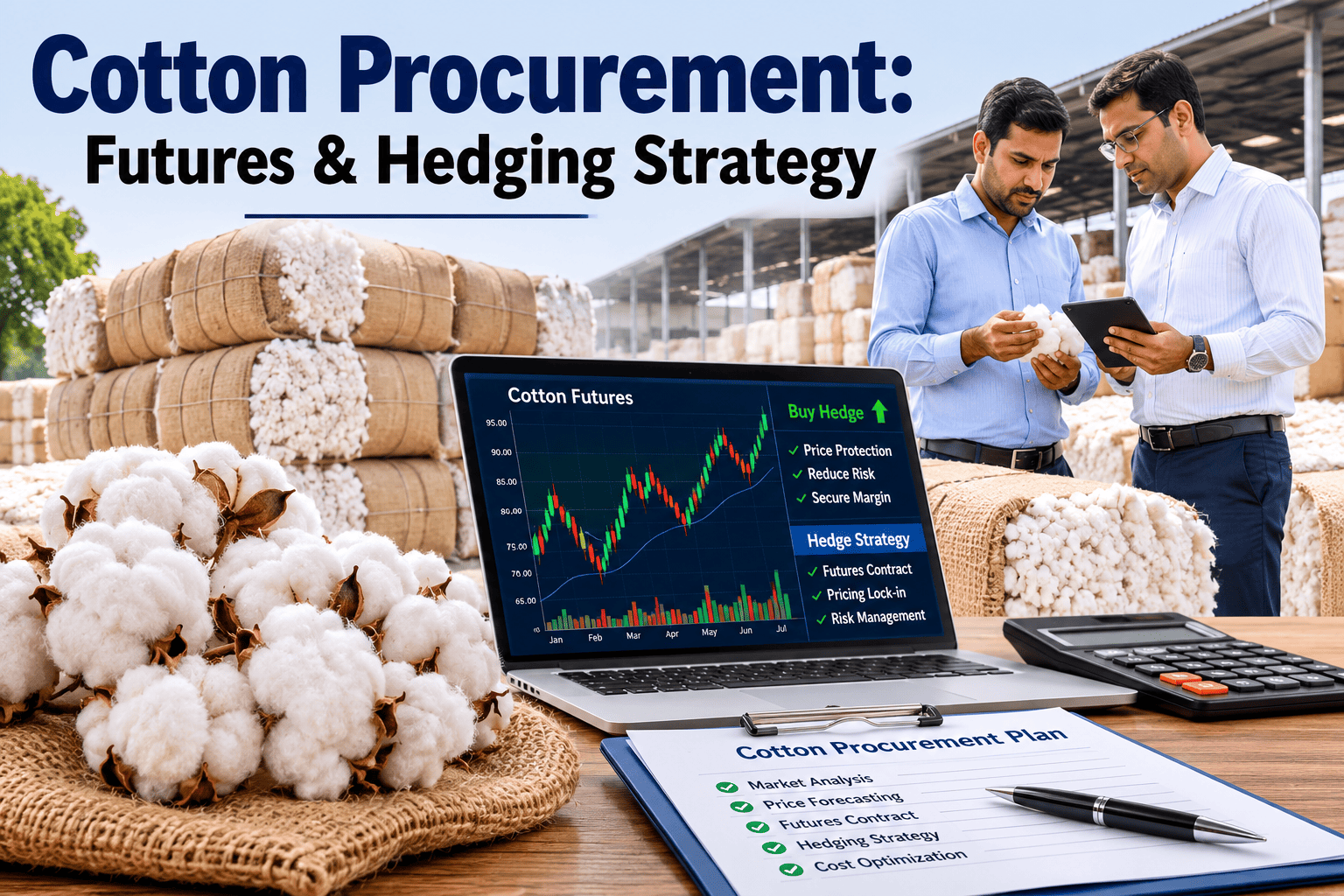
Read More
Cotton is one of the few raw materials a textile buyer purchases where the price on the day of the purchase order rarely resembles the price the mill actually pays once fiber arrives, spins, and gets invoiced months later. Between planting decisio

Read More
A stenter frame holds fabric at precise width while heat sets the finish, and every part of that job depends on three mechanical systems working in exact coordination — the chain that carries the fabric, the clips or pins that grip its edge, and t
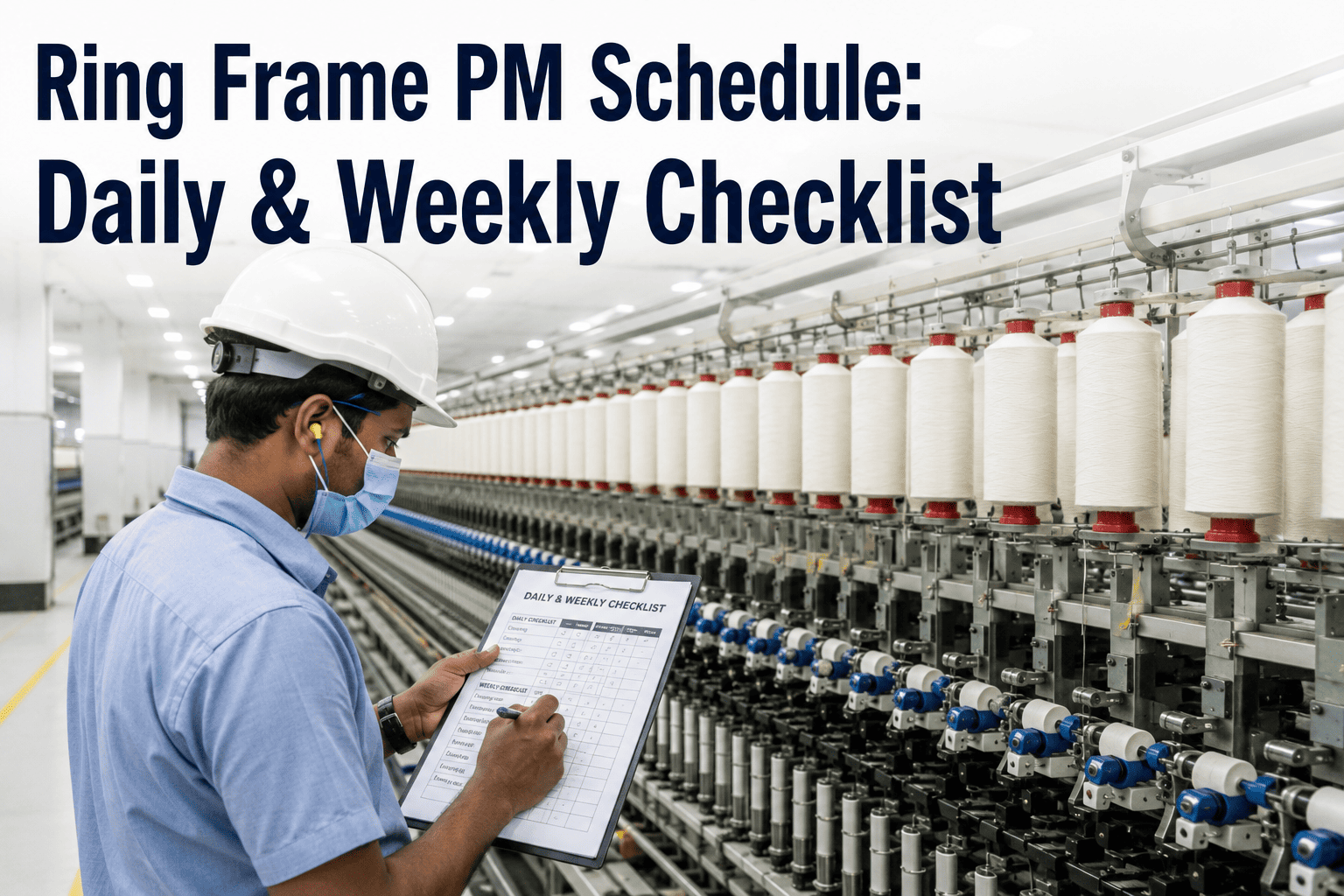
Read More
If your team is replacing the same spindle bearing on the same ring frame every three weeks, the problem was never the bearing — it was a maintenance schedule that never got structured. A ring spinning frame carries thousands of spindles, each nee

Read More
A jet dyeing machine running at 130°C and several bar of internal pressure doesn't give much warning before a worn pump seal or a fouled heat exchanger turns into a ruined batch — and by the time uneven shading shows up on the fabric, the liquor c

Read More
Running a rapier and an air-jet loom on the same PM checklist is one of the fastest ways to under-maintain one machine while over-servicing the other, because the two weft insertion systems fail in genuinely different ways and at different rates.
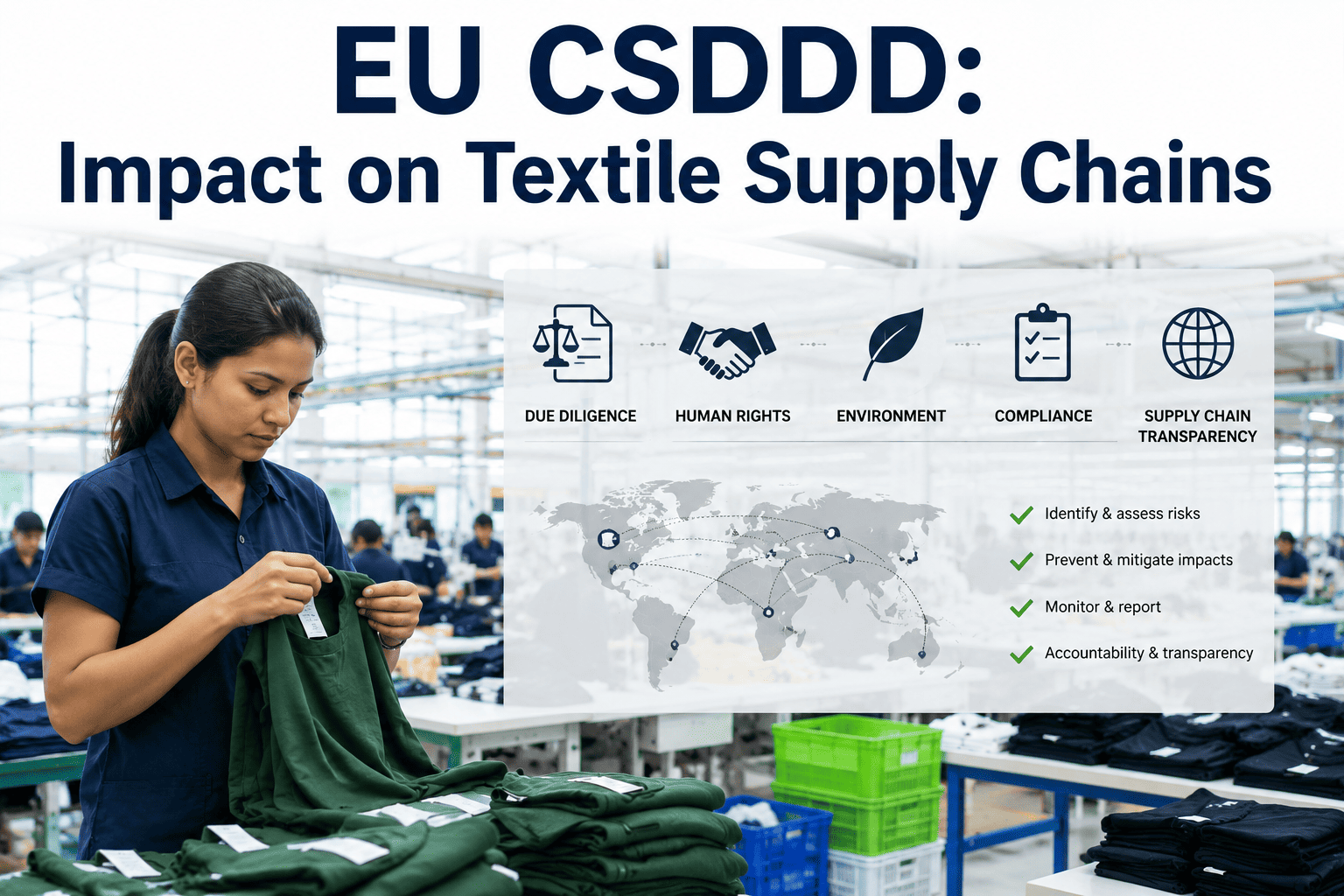
Read More
Most textile manufacturers reading about the EU's Corporate Sustainability Due Diligence Directive assume it doesn't apply to them because they're not a European company — and then discover their largest EU buyer is already pushing due diligence c

Read More
A Higg FEM score that looks strong on paper can still fall apart the moment a verifier walks the floor, because self-assessment scores and verified scores are two different numbers, and buyers increasingly only trust the second one. FEM measures e

Read More
A single failed chemical test can pull a shipment off a retailer's floor after the fabric is already cut, dyed, and packed — which is why buyers increasingly refuse to place orders without proof of Oeko-Tex certification attached to the purchase o

Read More
A fabric mill can honestly say its yarn contains recycled fiber and still have no legal right to put a recycled claim on a hangtag — the gap between "contains recycled material" and "GRS certified" is exactly where most brand audits catch supplier
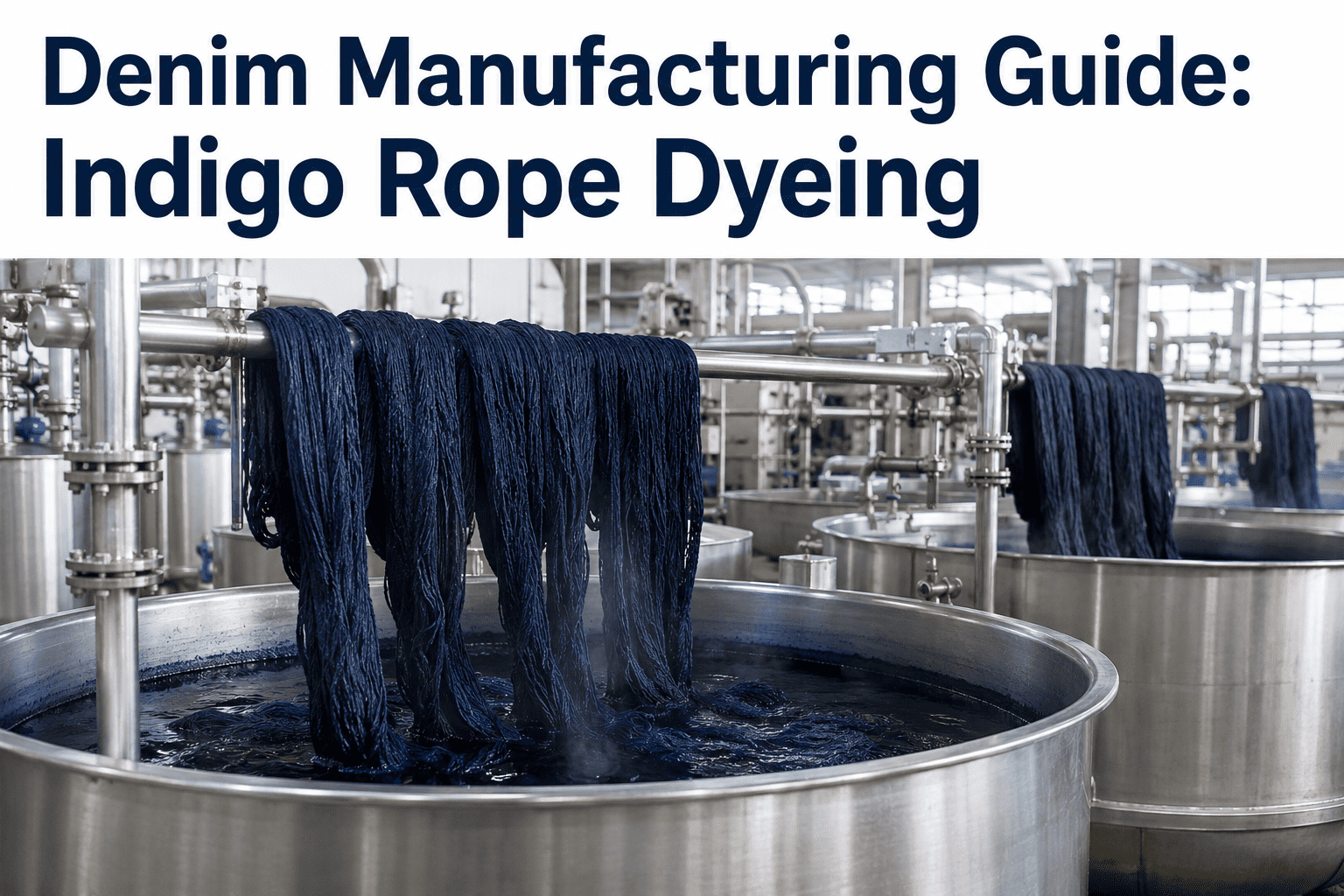
Read More
Denim looks simple from the outside — blue fabric, diagonal twill, a fading pattern everyone recognizes — but the process behind it is one of the more technically demanding sequences in textile manufacturing. Indigo dyeing chemistry alone involves
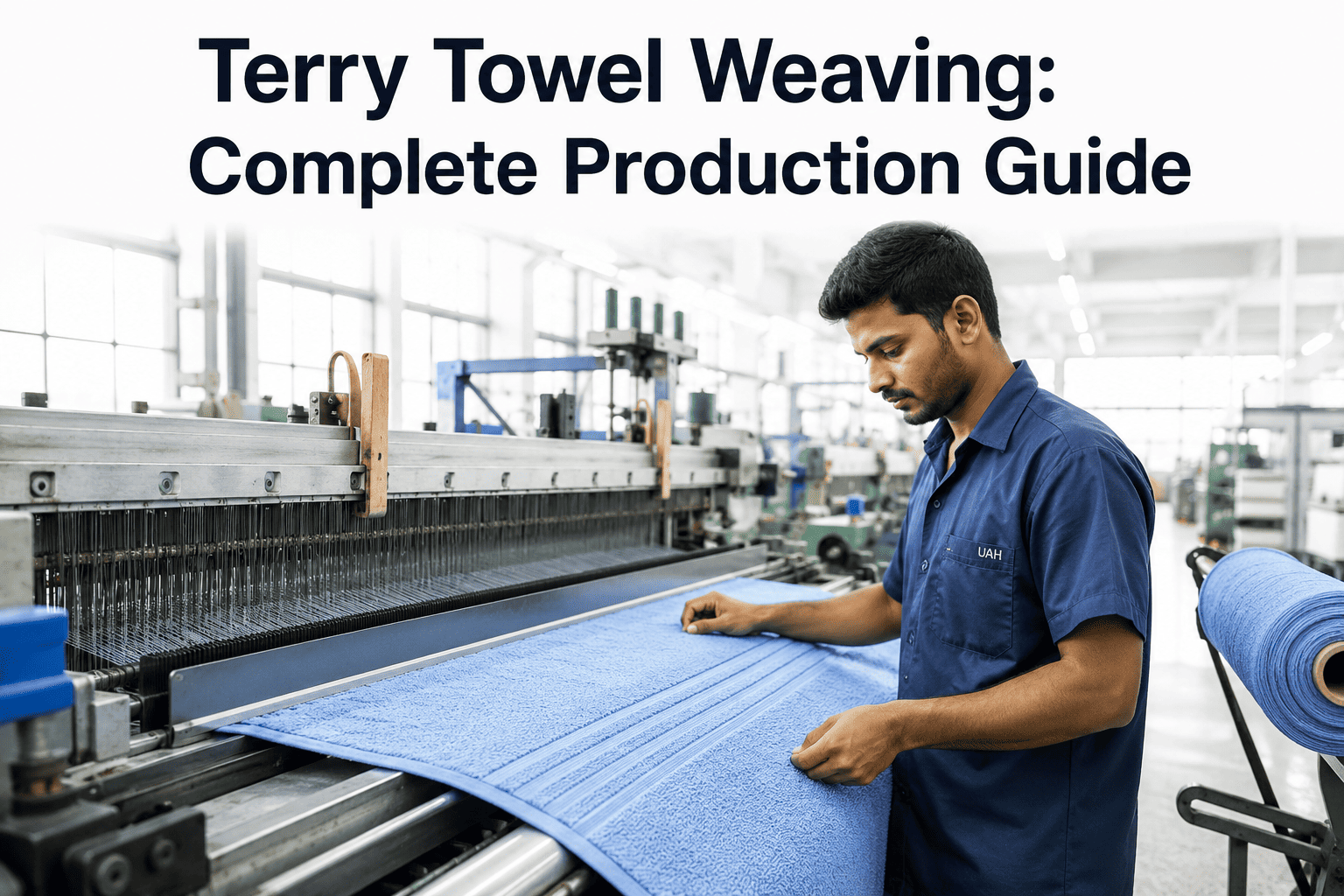
Read More
Terry towel weaving looks like a simple fabric until the pile loops on a batch come back uneven, and a mill realizes that loop formation is one of the more mechanically demanding processes in all of weaving — it requires three separate warp beams

Read More
A weaving mill can own the best loom on the market and still bleed money on end breakage if the sizing recipe underneath the warp yarn is wrong for that yarn type — sizing is the unglamorous chemistry step that determines whether a warp survives t

Read More
Reed and heald selection is the kind of decision that looks purely mechanical until it starts showing up as reed marks running the length of every roll a mill weaves — at which point it becomes clear that these two components are not generic hardw

Read More
A fabric specification sheet that lists only GSM and leaves out ends per inch and picks per inch is an incomplete spec — two fabrics can share the same GSM and behave completely differently in a garment because their EPI, PPI, and yarn count combi

Read More
Every woven fabric on earth is built from one of three foundational interlacement patterns, and recognizing which one is underneath a fabric — before checking the label — tells a buyer or designer almost everything about how that fabric will drape

Read More
Choosing between a rapier loom and an air-jet loom is a ten-to-fifteen-year capital decision, not a spec-sheet checkbox — the wrong pick locks a mill into the wrong yarn range, the wrong fabric width, or an energy bill that erodes margin on every

Read More
The difference between a dobby loom and a jacquard loom looks like a technical footnote until a mill has already committed capital to the wrong one — then it becomes the reason a design team keeps saying "we can't weave that here." A dobby loom li
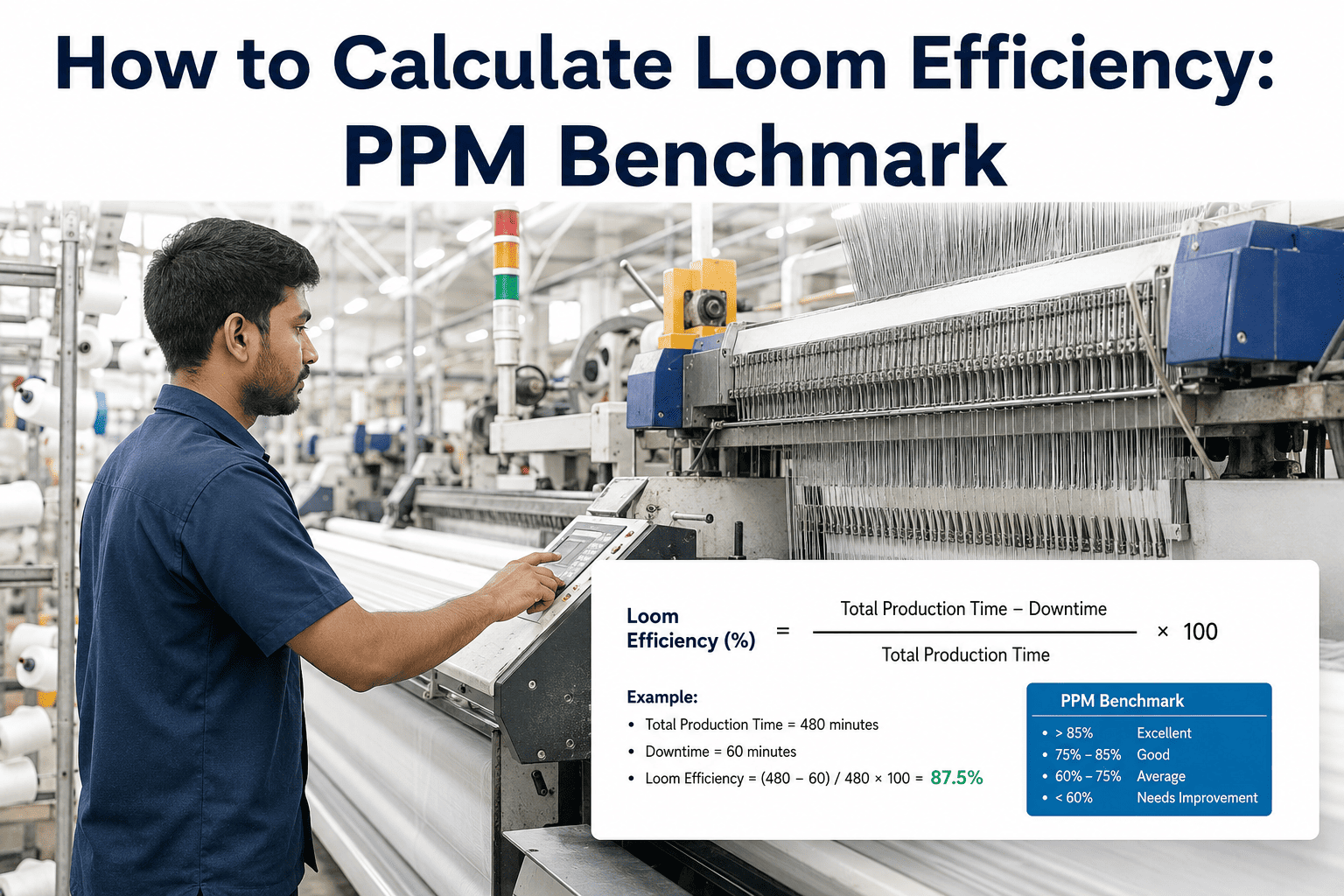
Read More
Ask a weaving shed manager what their loom efficiency is and most will give a number confidently — usually somewhere between 80% and 92% — but ask how that number was calculated and the confidence often drops fast. Efficiency gets calculated diffe
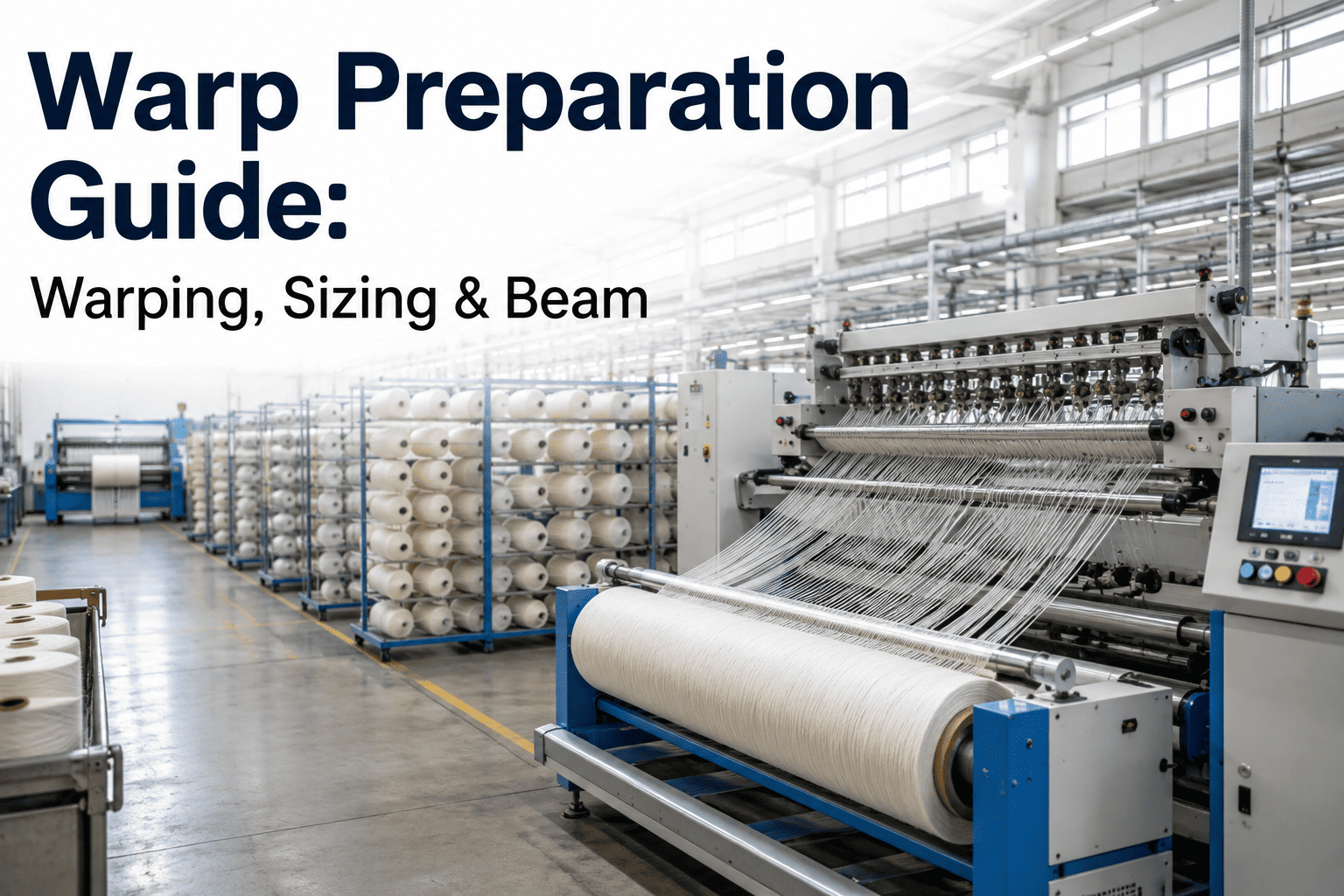
Read More
Warp stops are consistently the single largest cause of lost loom efficiency on most weaving floors, and the frustrating part is that the loom is rarely where the actual problem started. A weak or unevenly sized warp yarn breaks at the loom becaus
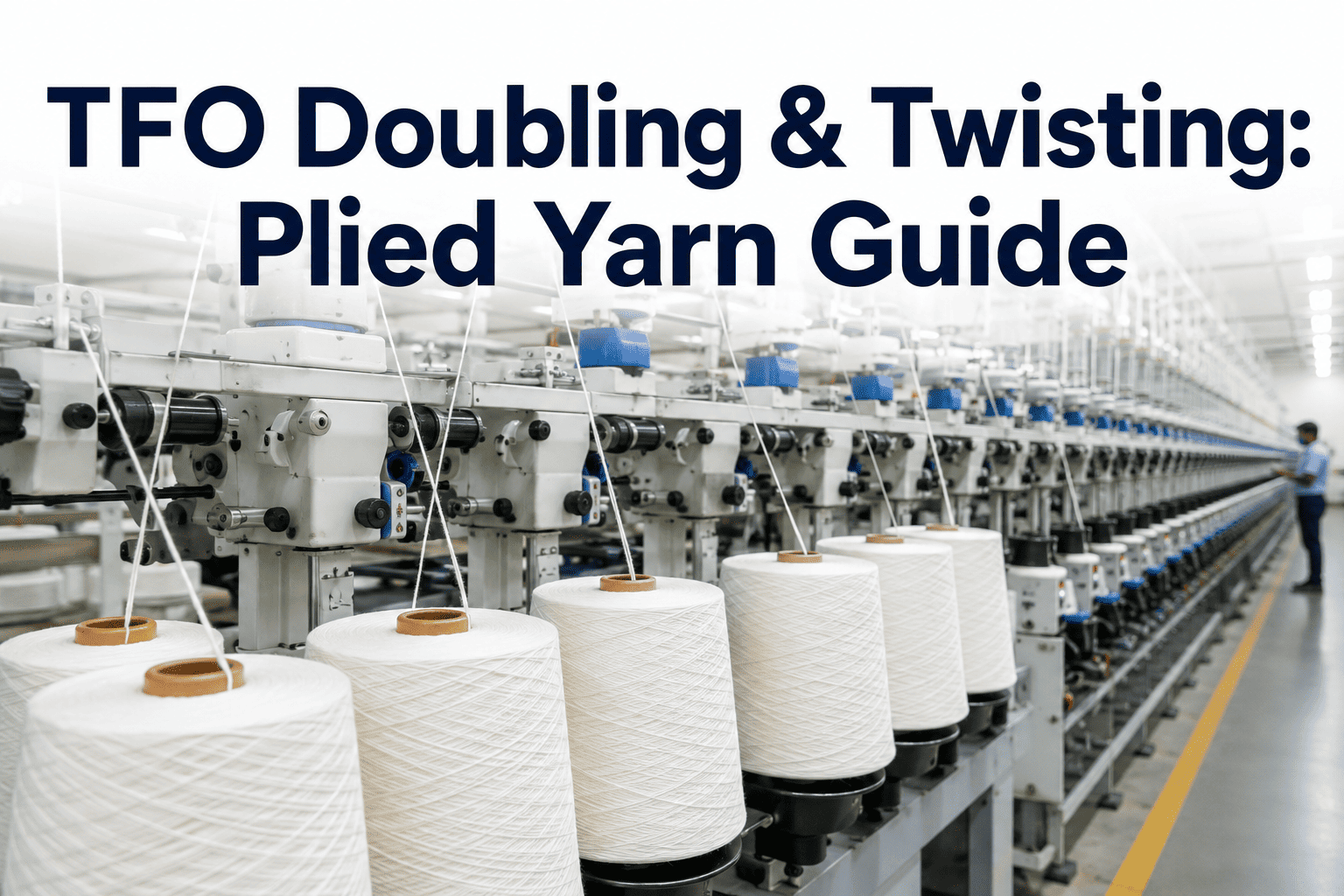
Read More
Plied yarn production looks straightforward on paper — take two single ends, twist them together, wind the result — but the gap between a plied yarn that performs beautifully in weaving or knitting and one that causes constant snarling and uneven

Read More
A spinning mill's layout is a decision that gets made once, usually under construction deadline pressure, and then lived with for the next twenty or thirty years regardless of how production volumes, count mixes, or automation levels change over t
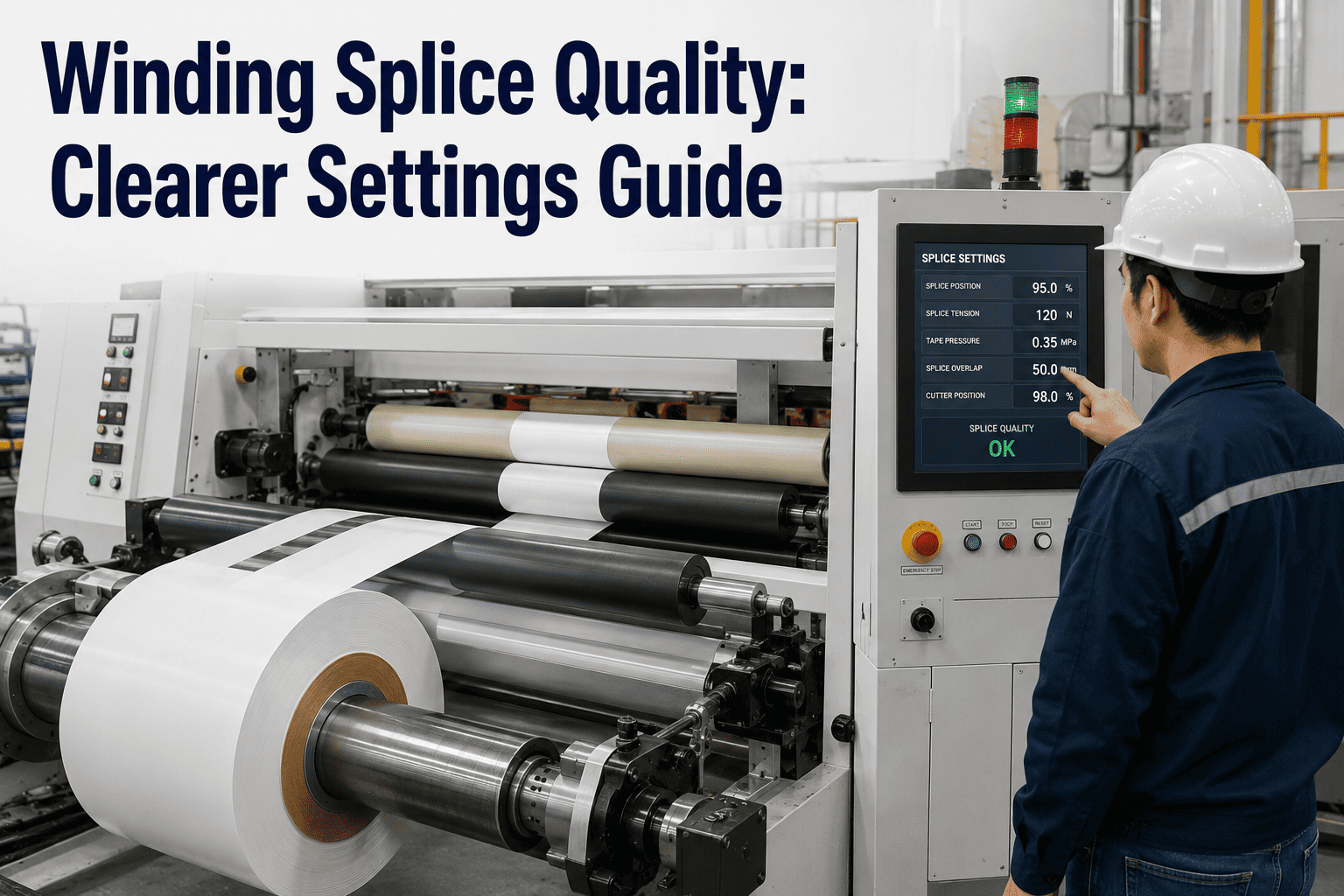
Read More
A weak splice doesn't announce itself at the winding machine — it announces itself at the weaving loom or the knitting machine, three processes and several days later, as a yarn break the operator has to trace all the way back. By then the root ca
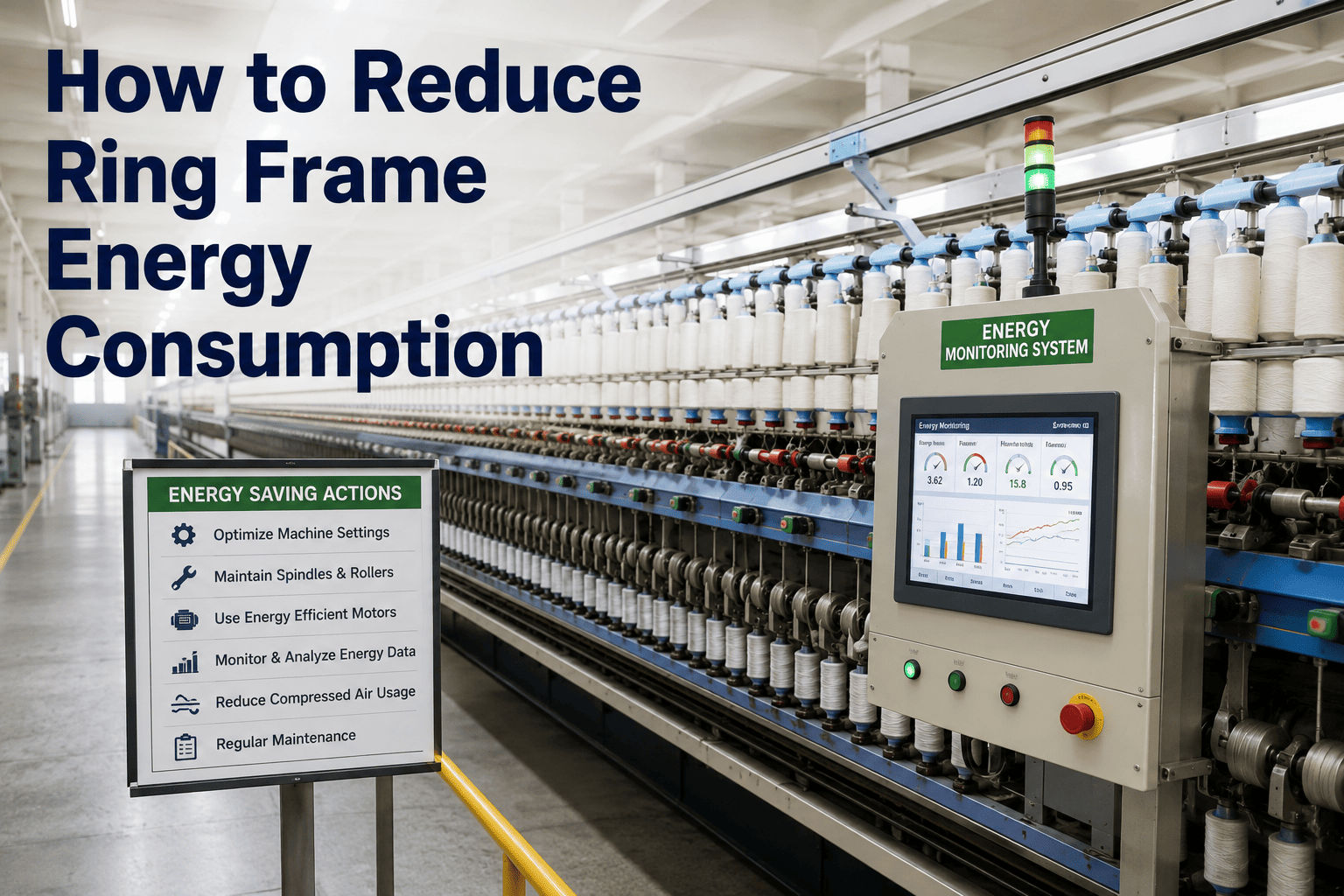
Read More
Ring frames are the single largest electricity consumer on most spinning mill floors, often accounting for close to half of total connected load, which means even a small percentage improvement in ring frame energy efficiency moves the mill's powe
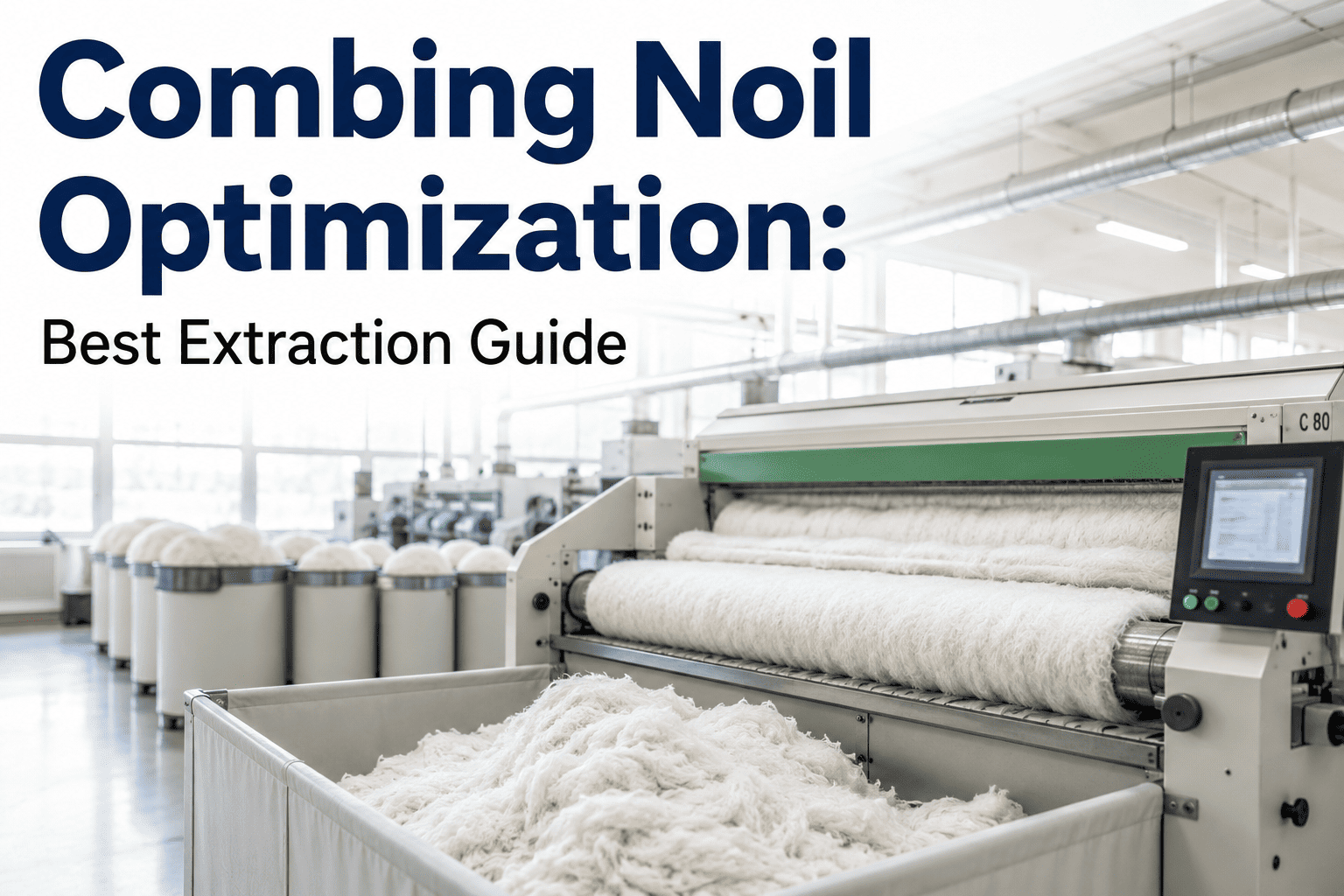
Read More
Every combing shed runs on a trade-off that rarely gets discussed out loud: push the noil percentage up and yarn quality climbs, but so does raw material cost, because every extra percent of noil is fiber leaving the mill as waste rather than yarn

Read More
A draw frame's auto-leveller is supposed to be invisible — quietly correcting sliver weight variation before it ever reaches the ring frame. When it's set correctly, nobody thinks about it. When it's set even slightly wrong, the entire downstream
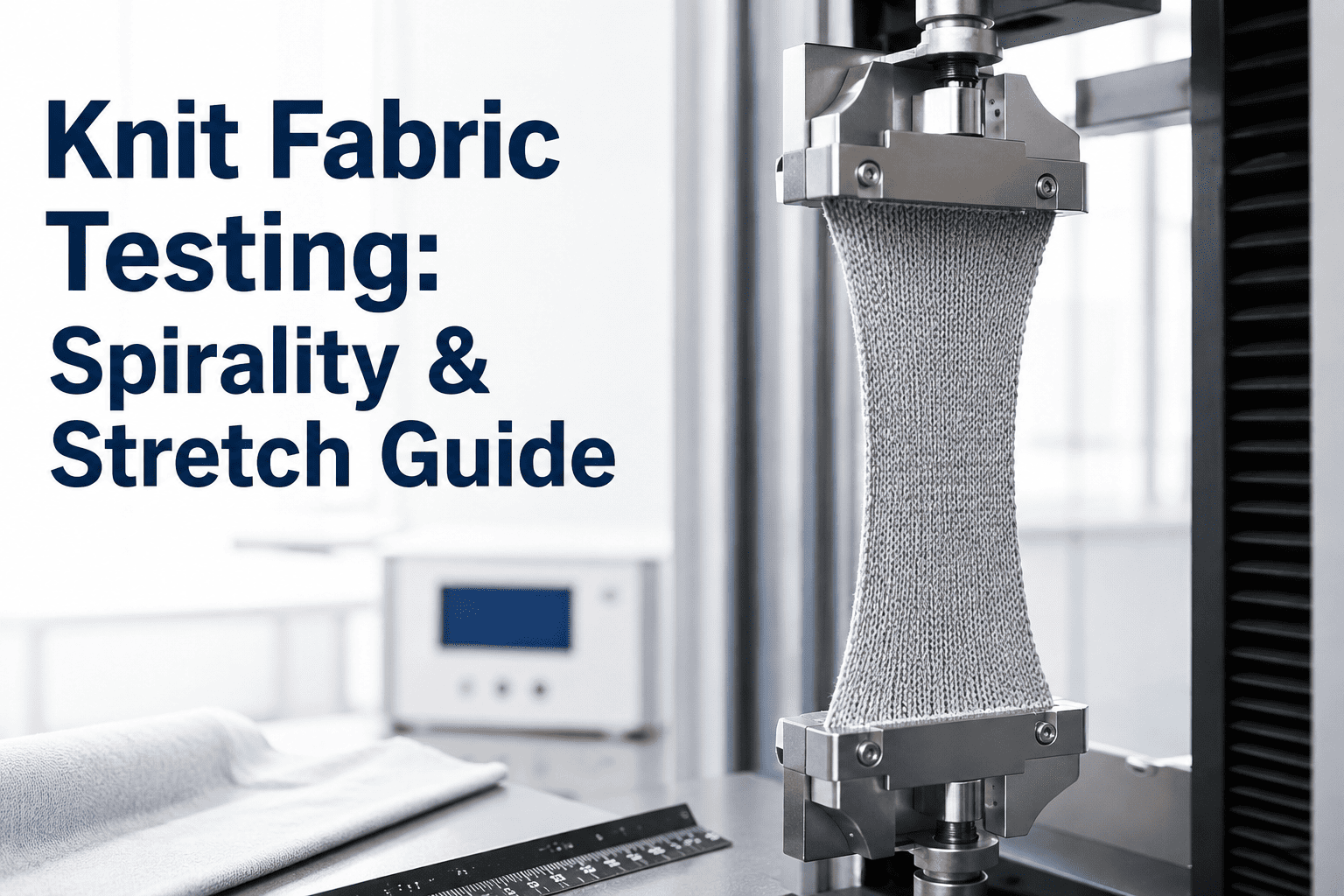
Read More
Knit fabrics fail in ways that woven fabrics never will — because knit construction is a network of interlocked loops rather than a grid of crossing threads, and every loop carries residual stress that can rotate, curl, or grow the moment the fabr

Read More
A brand manager exporting into France gets an invoice from Refashion, the country's textile eco-organization, and the fee is lower on some styles than others despite similar retail pricing. The difference is eco-modulation — recycled content, recy
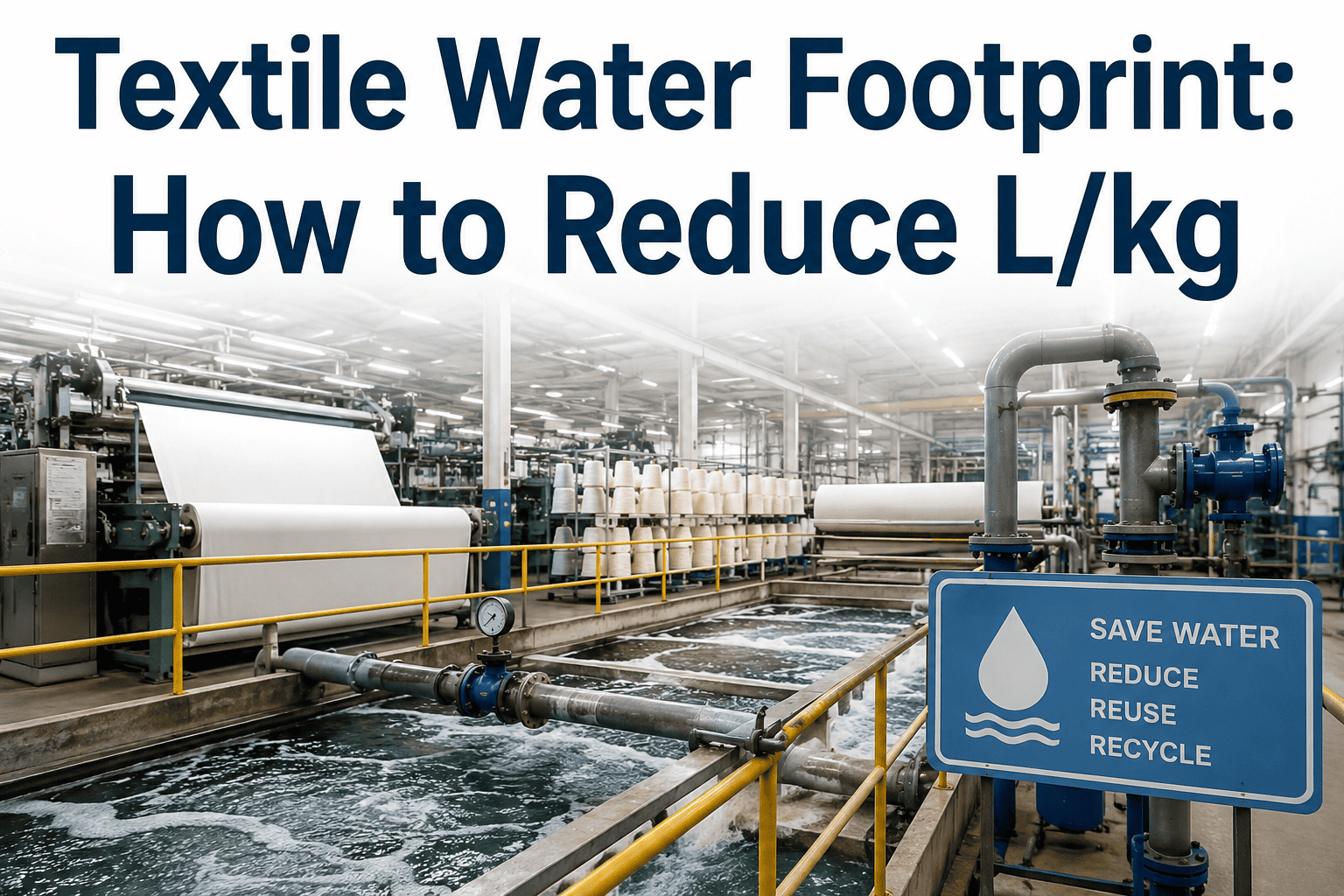
Read More
A dyehouse manager reviewing the monthly utility bill notices water consumption climbing again, and nobody on the floor can say exactly which stage is driving it — scouring, dyeing, or the rinse cycles after. The dye machines are running the recip

Read More
A compliance manager at a garment exporter selling into three EU retail chains gets a note from her biggest account: start preparing fibre composition, country-of-manufacture, and certification data at the product level, because a Digital Product

Read More
A sustainability manager at a mid-size apparel exporter gets a buyer questionnaire asking for the carbon footprint of a single denim jacket style, broken down by scope. The brand has an ESG report with a company-wide number, but nothing at the gar

Read More
A test report is only as credible as the laboratory system behind it, and buyers have stopped taking that credibility on faith. Large enterprise brands with strict compliance programs now routinely require test reports from ISO 17025 accredited la
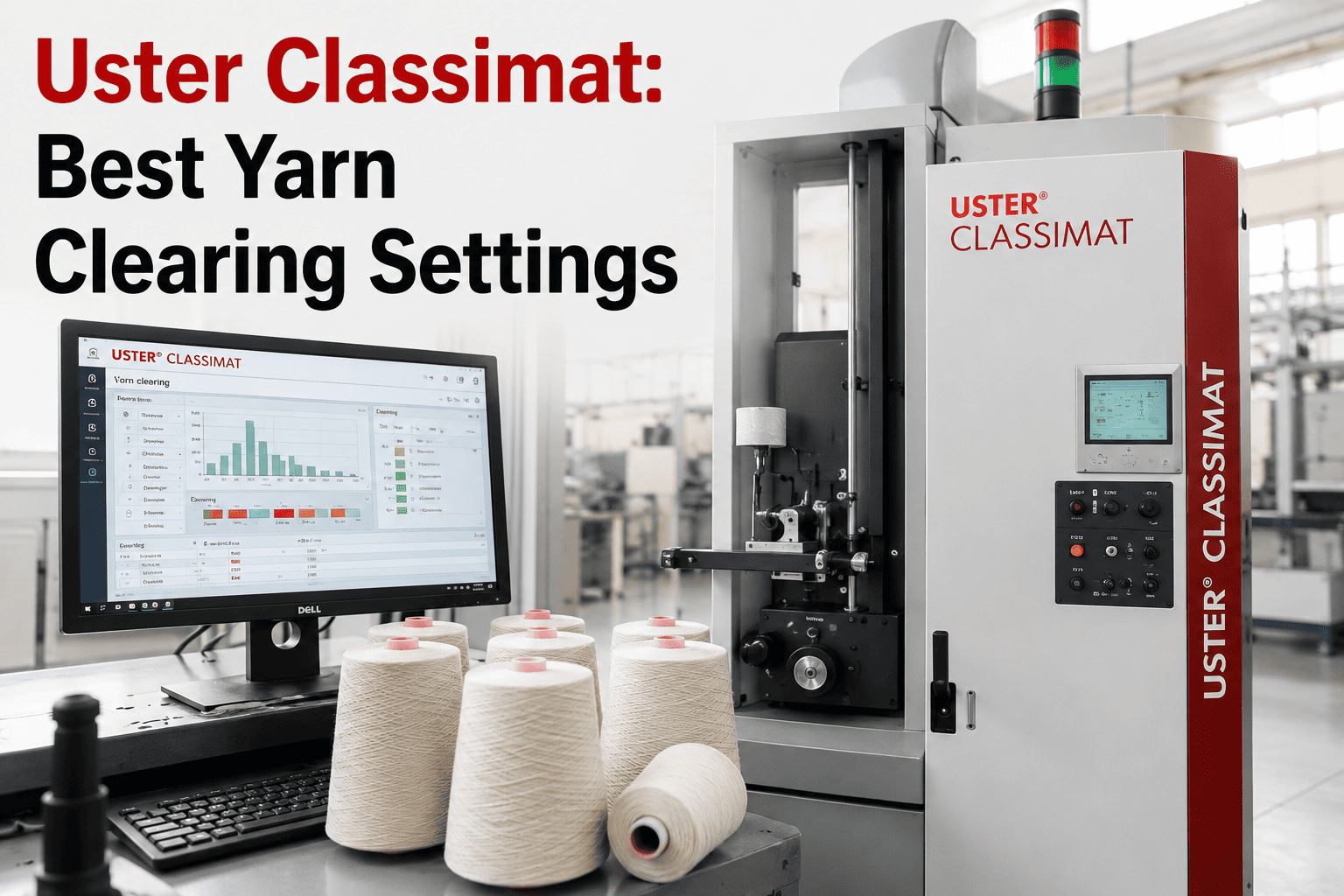
Read More
A winding room supervisor at a ring-spinning mill pulls last night's clearer report and finds the same story again — efficiency down two points on three machines, and nobody can say whether it is the clearing curve, the raw cotton lot, or a drafti

Read More
A technical fabric supplier ships a batch of "waterproof" jacket shell to a buyer, and it comes back rejected — not because the fabric leaked under rain, but because it failed a hydrostatic head test the buyer's spec required and the mill never ra
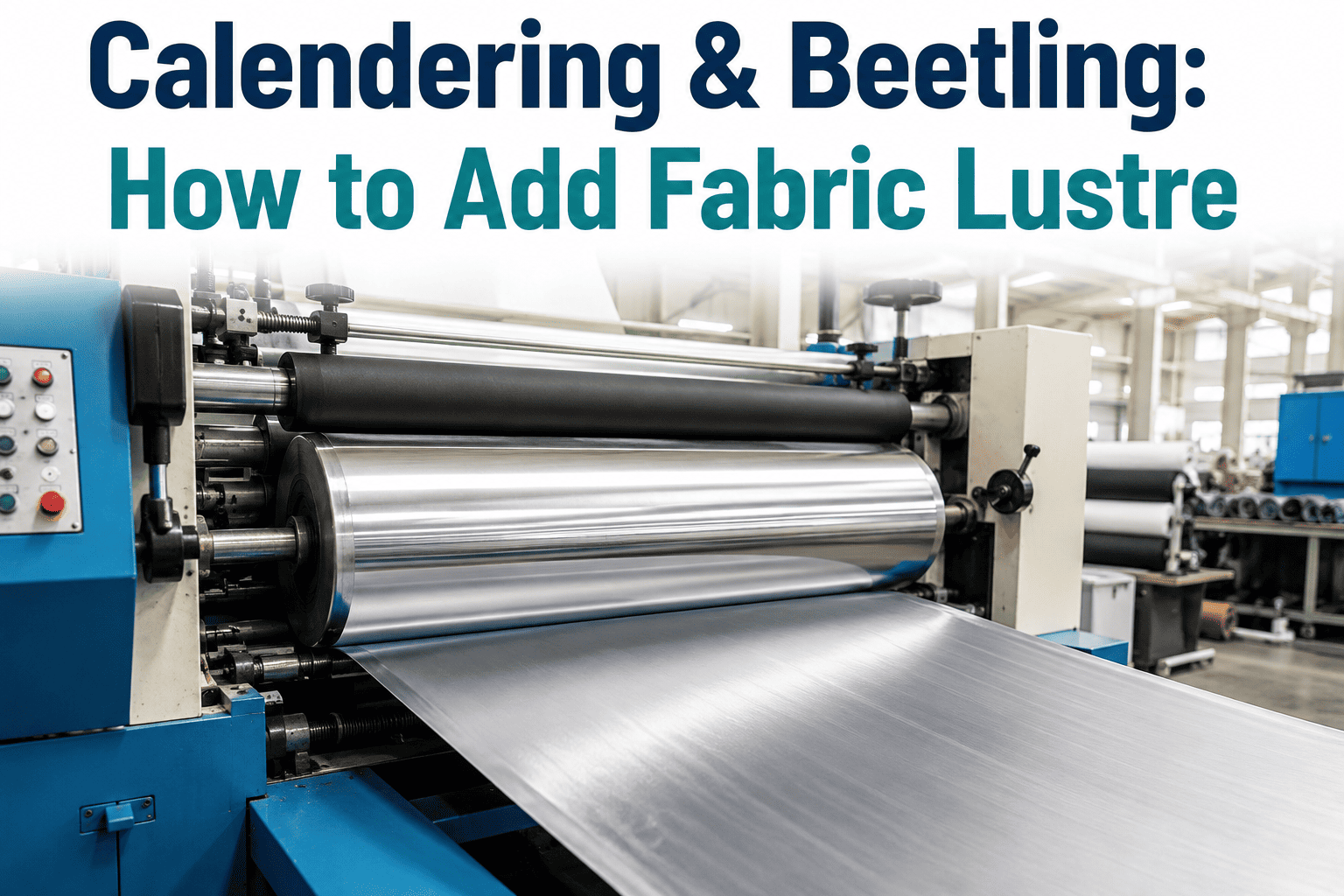
Read More
Lustre is not a property woven into a fabric — it is engineered onto its surface through mechanical force, heat, and in the case of beetling, rhythmic percussion that has been used on Irish linen for centuries. Calendering and beetling are the two
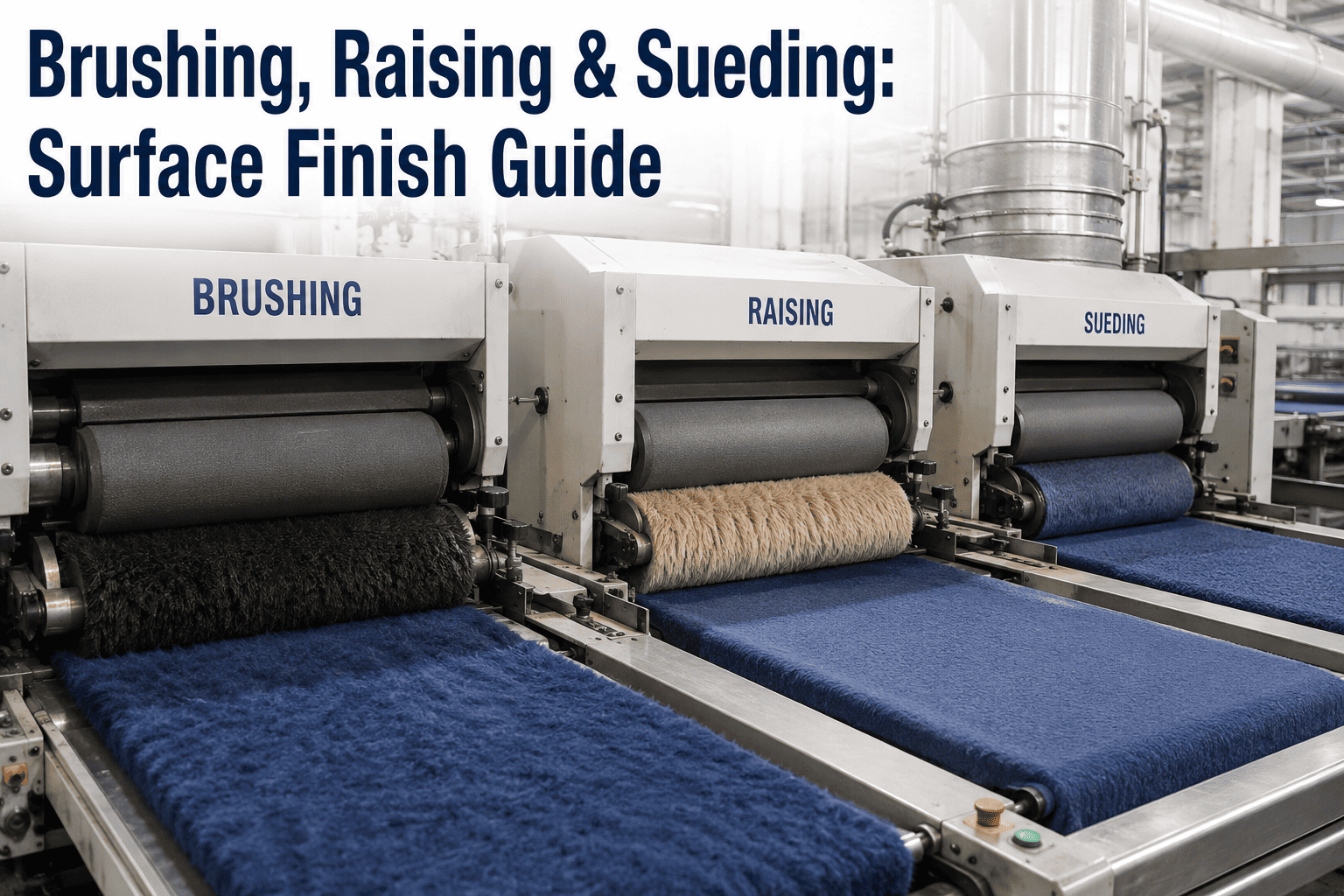
Read More
A cloth dresser running 10 passes per meter instead of the calculated 8 will finish a batch of flannel that looks identical to the naked eye — until the dye house calls about diagonal banding that only shows up under finished lighting. Brushing, r

Read More
A pair of jeans that shrinks two sizes after the first wash is not a fabric defect in the traditional sense — it is a sanforizing process that never fully removed the latent shrinkage built into the fabric during weaving and finishing. Compressive
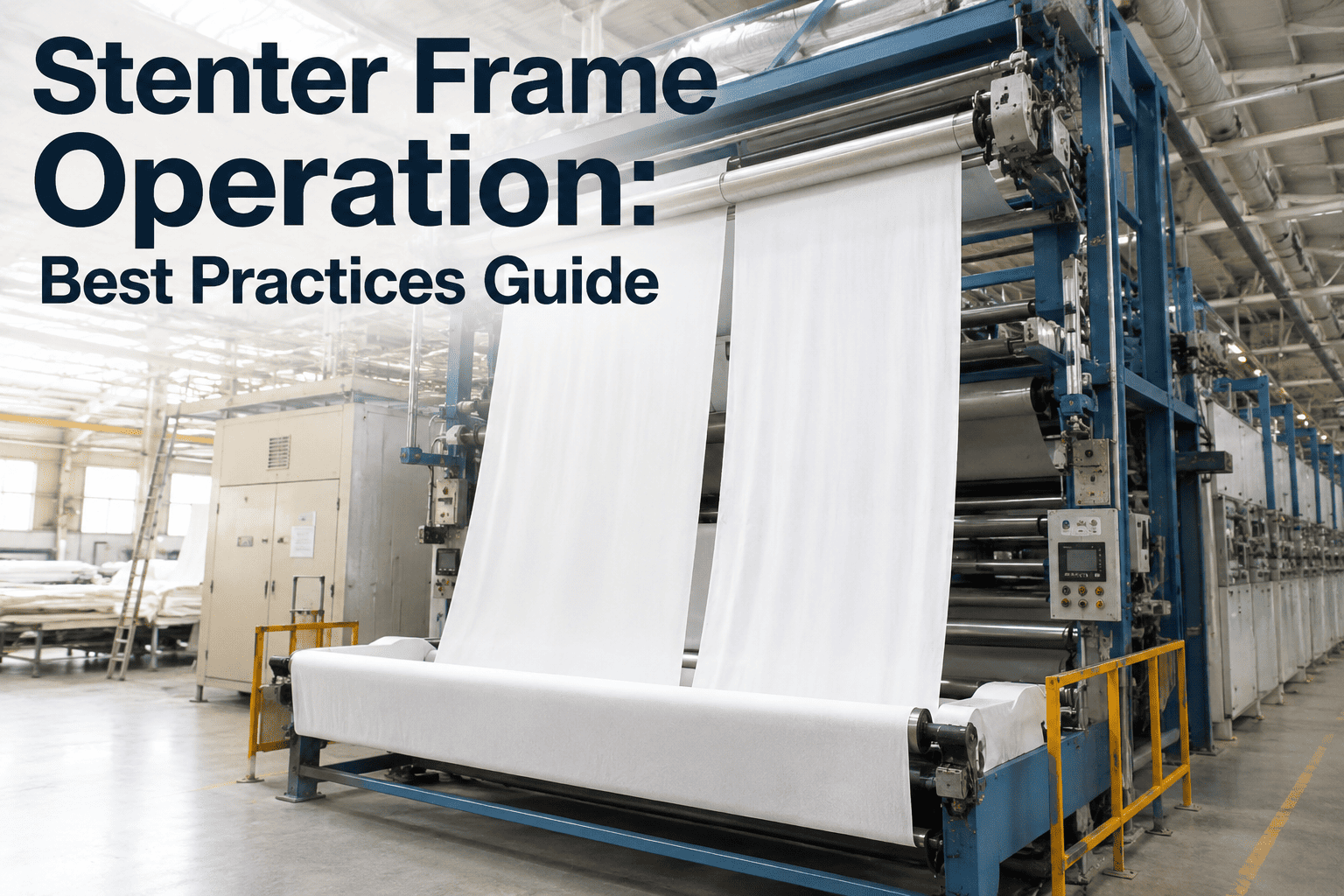
Read More
Stenter frames sit at the center of nearly every fabric finishing line, yet they remain one of the most under-monitored machines on the production floor. A one-degree drift in zone temperature or a half-millimeter shift in pin spacing can quietly

Read More
A healthcare curtain or a pair of running socks claiming antimicrobial protection means very little without a specific test standard behind that claim, because "antimicrobial" describes an outcome, not a single chemistry or a single guaranteed lev

Read More
A furnishing fabric that meets flame retardant requirements in one market can fail the equivalent test in another entirely, because NFPA 701 and BS 5852 evaluate fire behavior through different ignition sources, exposure durations, and pass criter

Read More
A conventional dyeing bath for one kilogram of polyester fabric can consume well over one hundred liters of water, most of which is discharged as effluent carrying dye, salt, and processing chemicals that require treatment before release. Supercri
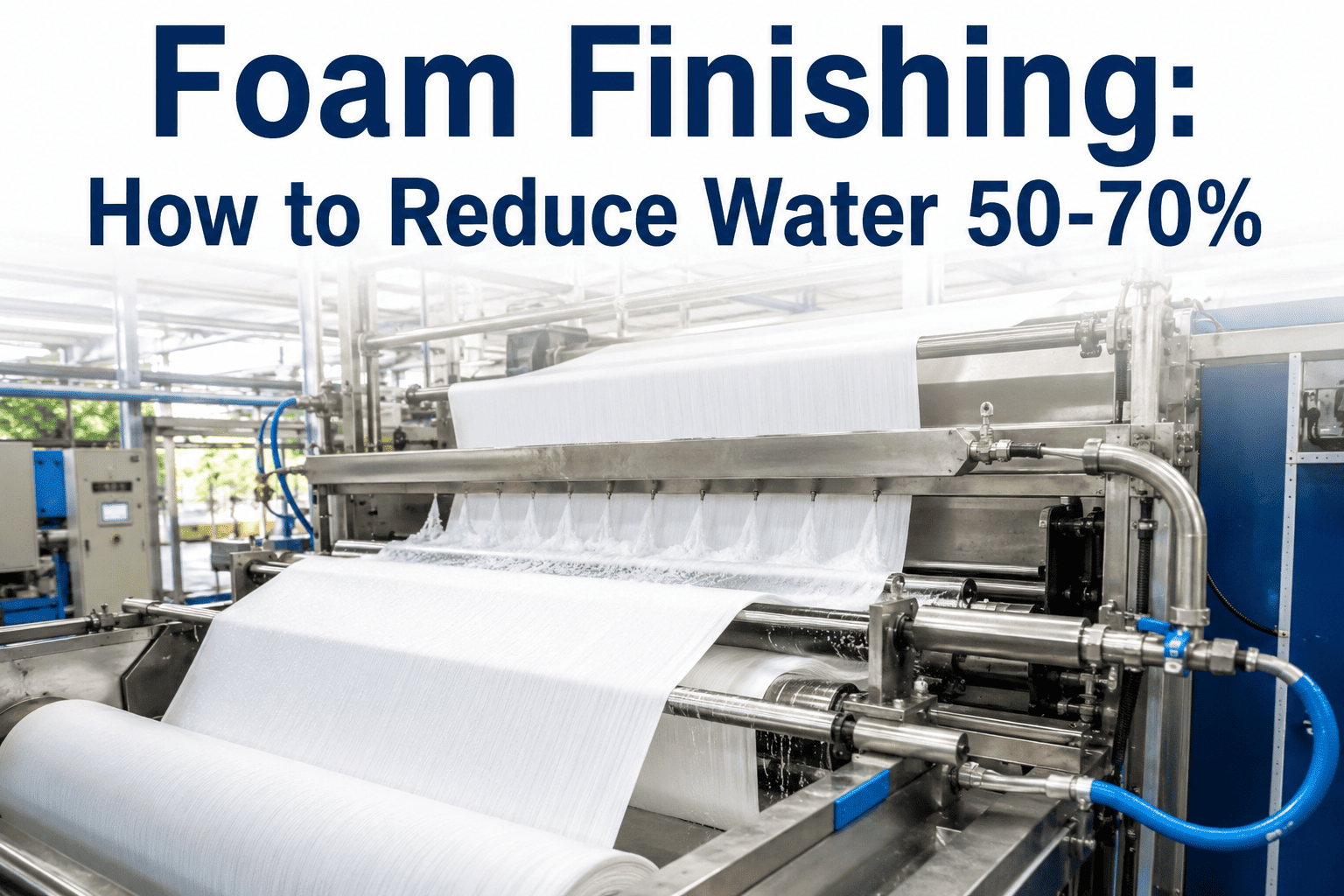
Read More
Conventional pad application saturates fabric with far more finishing liquor than the fabric actually needs to hold the target chemical add-on, and the excess simply gets driven off in the dryer at real energy cost. Foam finishing replaces that li
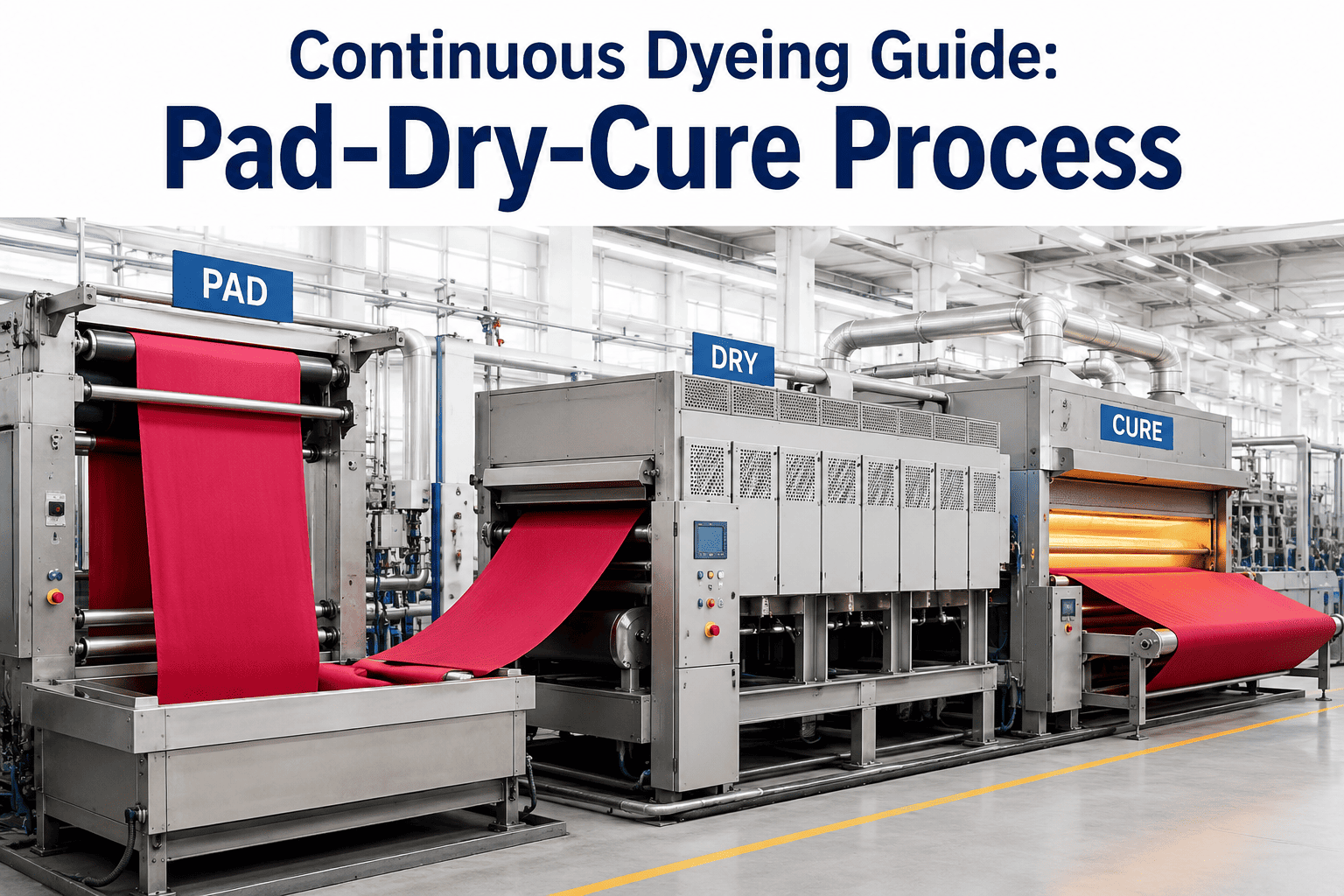
Read More
A continuous dye range can push 8,000 to 15,000 meters of fabric through padding, drying, and curing in a single hour, which means a single miscalibrated mangle roller or a five-degree stenter temperature drift does not spoil one batch, it spoils
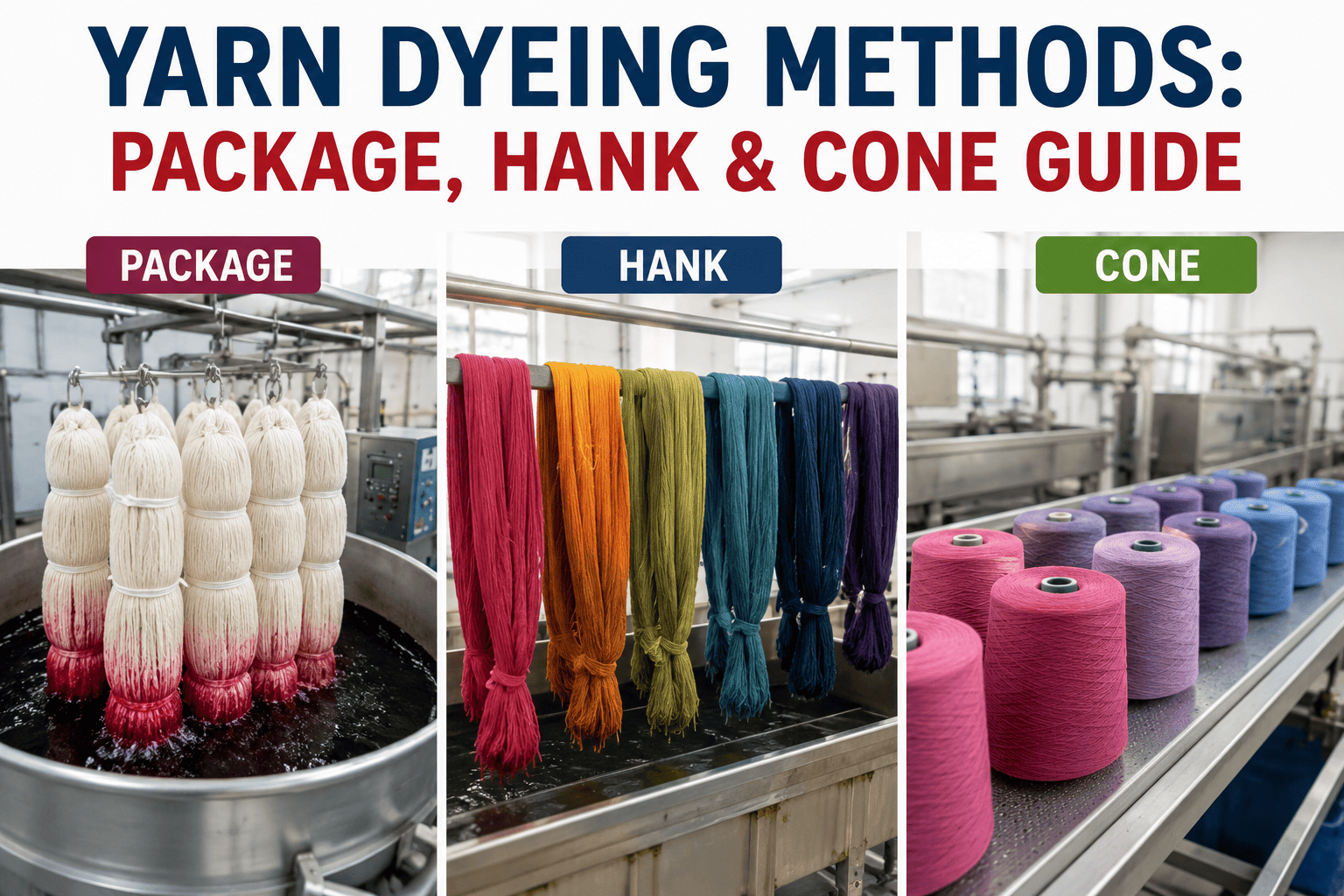
Read More
Yarn dyed before weaving or knitting behaves nothing like yarn dyed in fabric form, because the dye must penetrate through a densely wound package, hank, or cone rather than a flat, open surface, and any inconsistency in liquor flow through that w

Read More
A single reactive dyeing batch that misses shade by even 2-3% on the grey scale forces a full re-dye, burning 40,000 to 80,000 liters of water, 6-10 hours of machine time, and thousands of dollars in dye and chemical cost on a single lot. Most tex

Read More
Polyester will not accept reactive or acid dyes because its fiber structure is too tightly packed and hydrophobic for large dye molecules to penetrate at normal temperatures. Disperse dyeing solves this by forcing dye into the fiber at 130C under
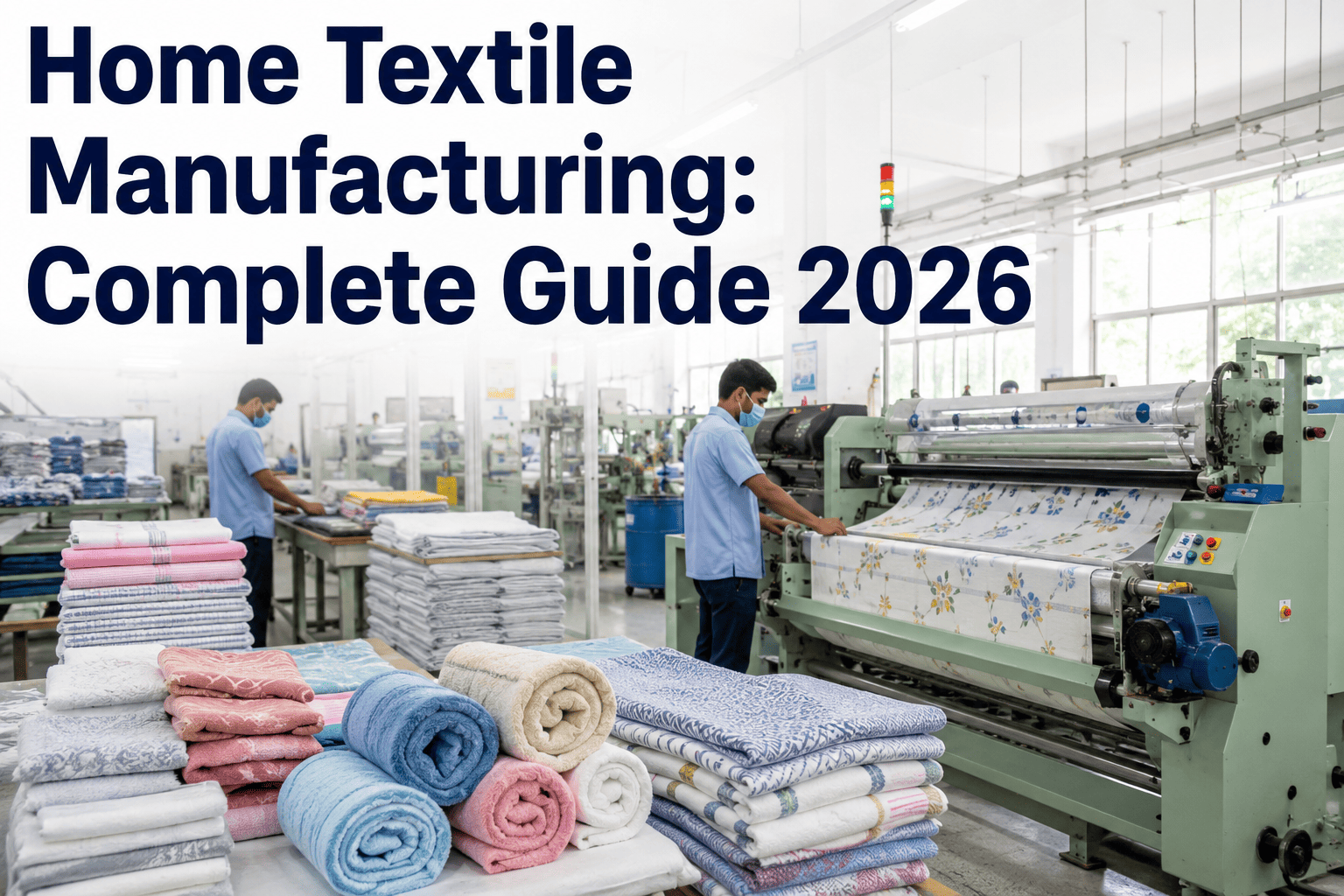
Read More
Home textile manufacturing covers three product families that share weaving and finishing infrastructure but demand entirely different construction, weight, and durability specifications: bedsheets that need soft handle and high wash-fastness, uph

Read More
A weaving shed with 200 looms and no structured spare parts strategy is one failed heald frame away from an unplanned stop that can idle a machine for 6-24 hours waiting on a part that should have been sitting on a shelf. Spare parts inventory mis
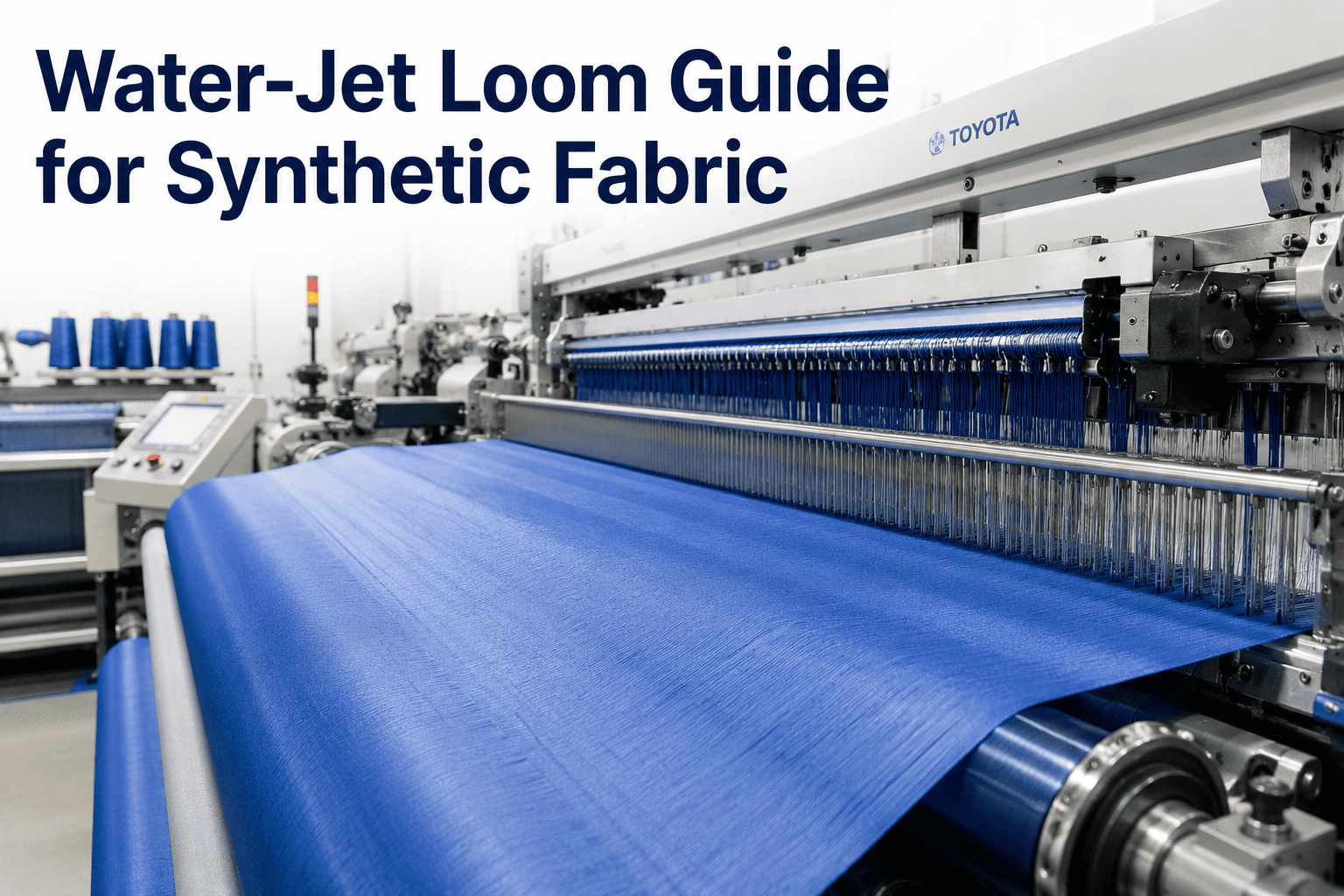
Read More
A plant manager at a tier-2 automotive supplier started every Monday pulling defect data from three systems, cross-referencing SPC charts from the previous Friday, and emailing a quality summary already outdated before it arrived. Fourteen thousan
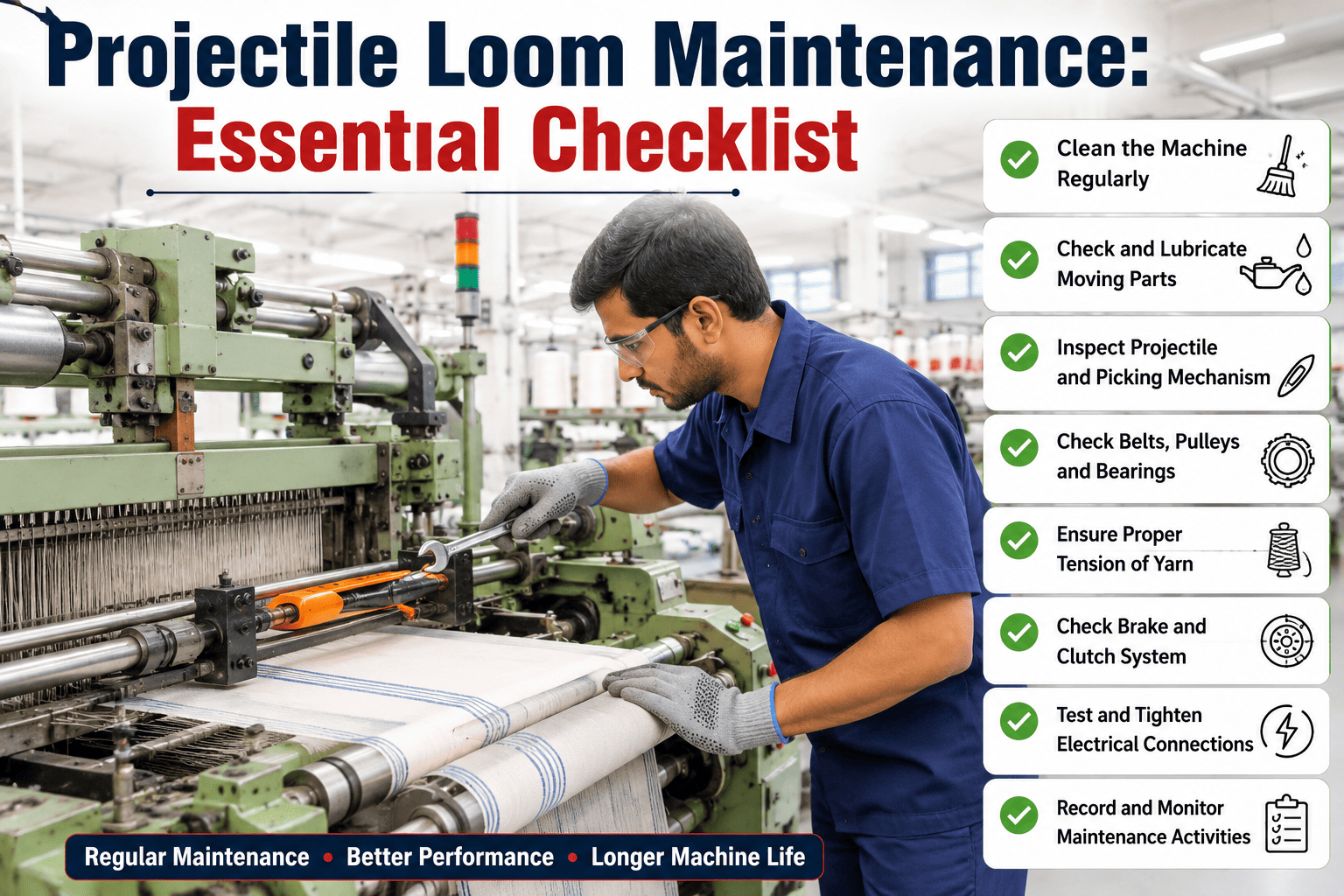
Read More
Statistical process control works exactly as Shewhart designed it in 1924 — until a modern production line hands it two hundred correlated parameters, a tool-wear curve, and a quality director who needs a root-cause suggestion inside thirty second
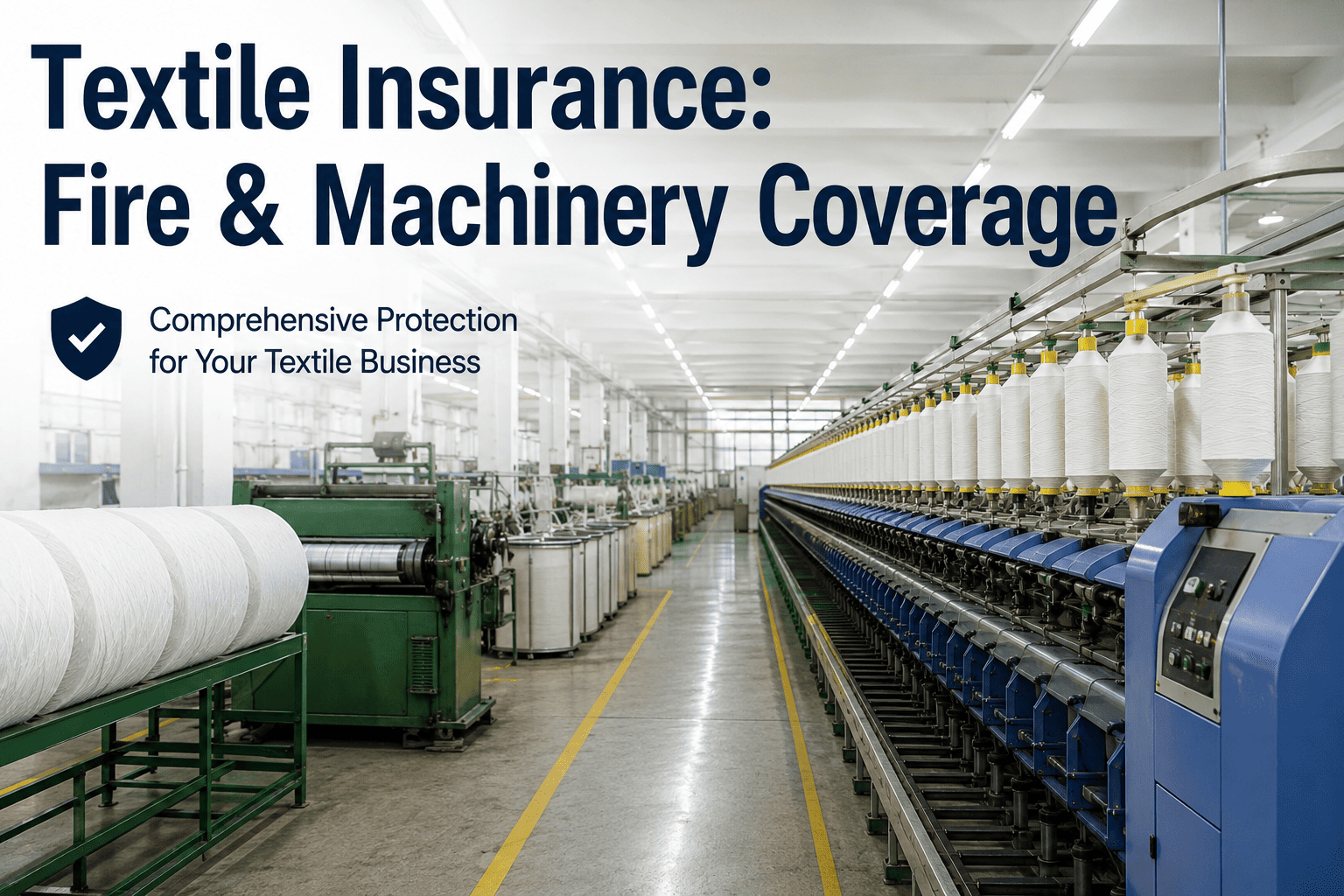
Read More
A textile mill carries risk that most insurance policies were not written with in mind, dense fiber storage that fuels fire spread, high-value spinning and dyeing machinery that fails expensively, and production lines so interconnected that one de

Read More
Walk through any textile mill and you will find waste hiding in plain sight, yarn cones stacked three deep waiting for the next process, an operator walking twenty extra steps every cycle, fabric reworked twice because a defect was caught too late

Read More
Ask five textile production managers what it actually costs to make one kilogram of yarn, and it is common to get five different answers, each one leaving out a different piece of overhead. Getting cost per unit right is not an accounting exercise
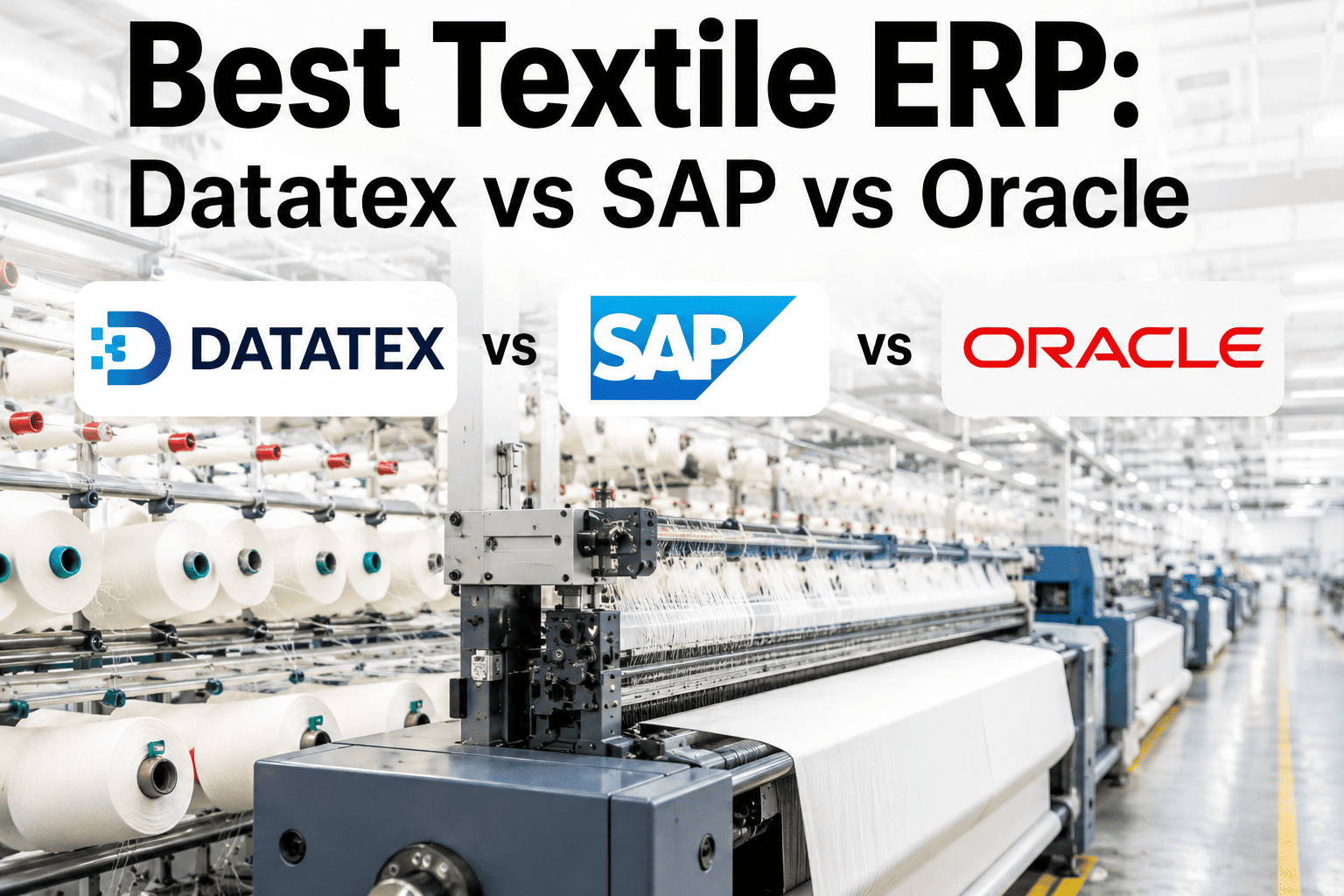
Read More
A generic ERP system can track purchase orders and invoices just fine, but it usually falls apart the moment it needs to handle count-based yarn conversion, loom-wise efficiency, or shade-wise dye lot tracking. Textile manufacturing has cost struc

Read More
Textile mills carry a fire risk that few other industries share at the same scale, cotton lint, synthetic fibers, dyeing chemicals, and continuously running machinery all sitting under one roof. A fire pump that fails to start, a sprinkler head cl

Read More
Most textile mills still run maintenance on a calendar, replacing bearings, belts, and oil at fixed intervals whether the equipment needs it or not. Condition-based maintenance flips that logic, watching the actual health of a machine and acting o

Read More
Every textile mill loses production time to shutdown maintenance once a year — the only question is whether that time is spent on planned, prioritized work or on chaotic firefighting once the machines stop. A well-planned annual shutdown compresse

Read More
A ring frame motor that sounds slightly different than it did last month is not something most operators would notice, but a vibration sensor catches it instantly, weeks before the bearing actually fails. Textile mills run hundreds of fans, motors
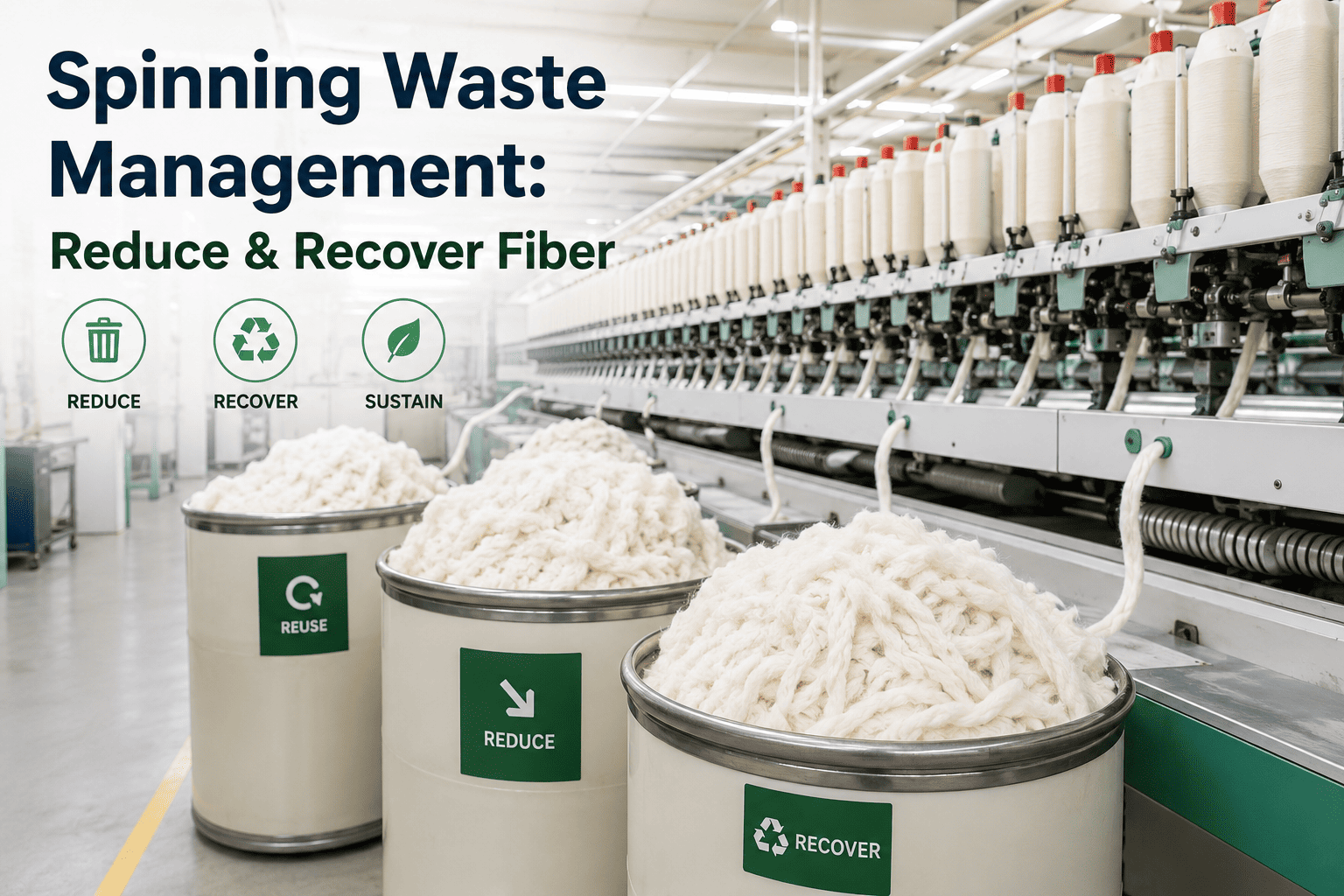
Read More
Every kilogram of fiber that leaves a spinning mill as waste instead of yarn was already paid for at full raw material price, which makes waste percentage one of the few metrics that translates directly into a rupee figure on the cost sheet with
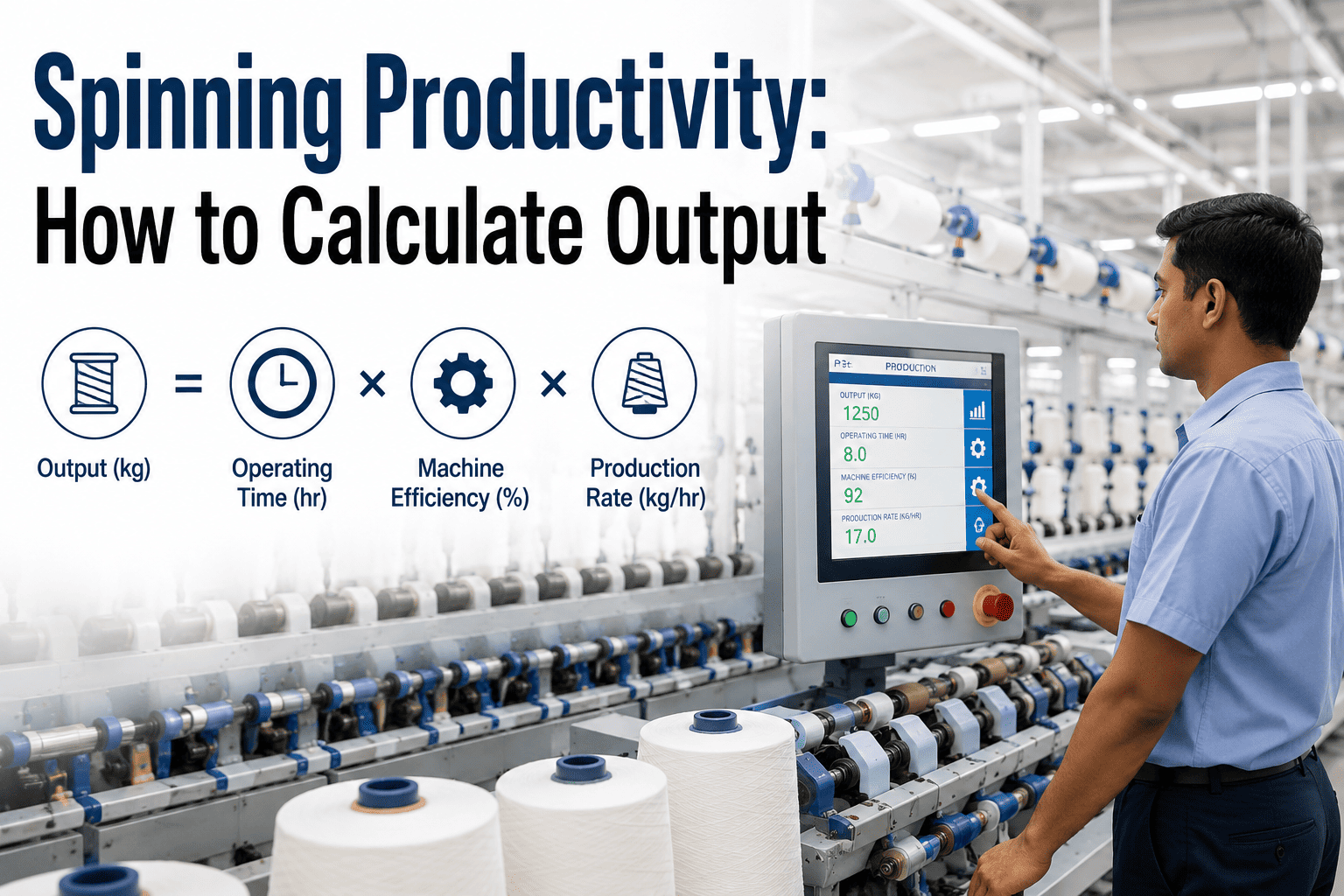
Read More
Ask five production managers how their spinning department performed last shift and most will answer in tons produced — a number that says almost nothing on its own, since a ton of 10s count and a ton of 60s count represent wildly different amou
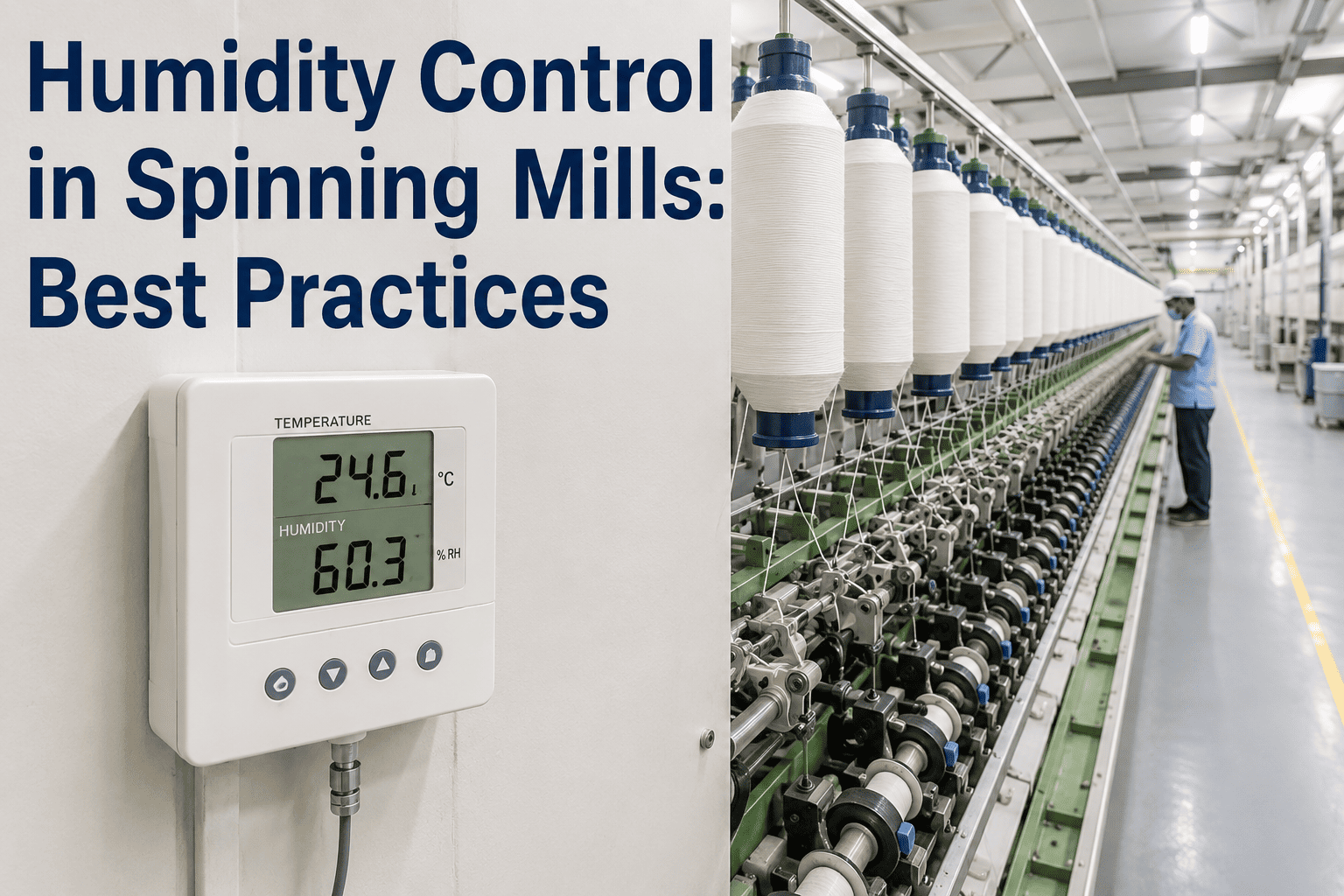
Read More
Static electricity does not appear on any maintenance checklist, yet it is one of the most common reasons a spinning department that ran fine all winter suddenly starts fighting itself the moment the dry season arrives. Relative humidity outside
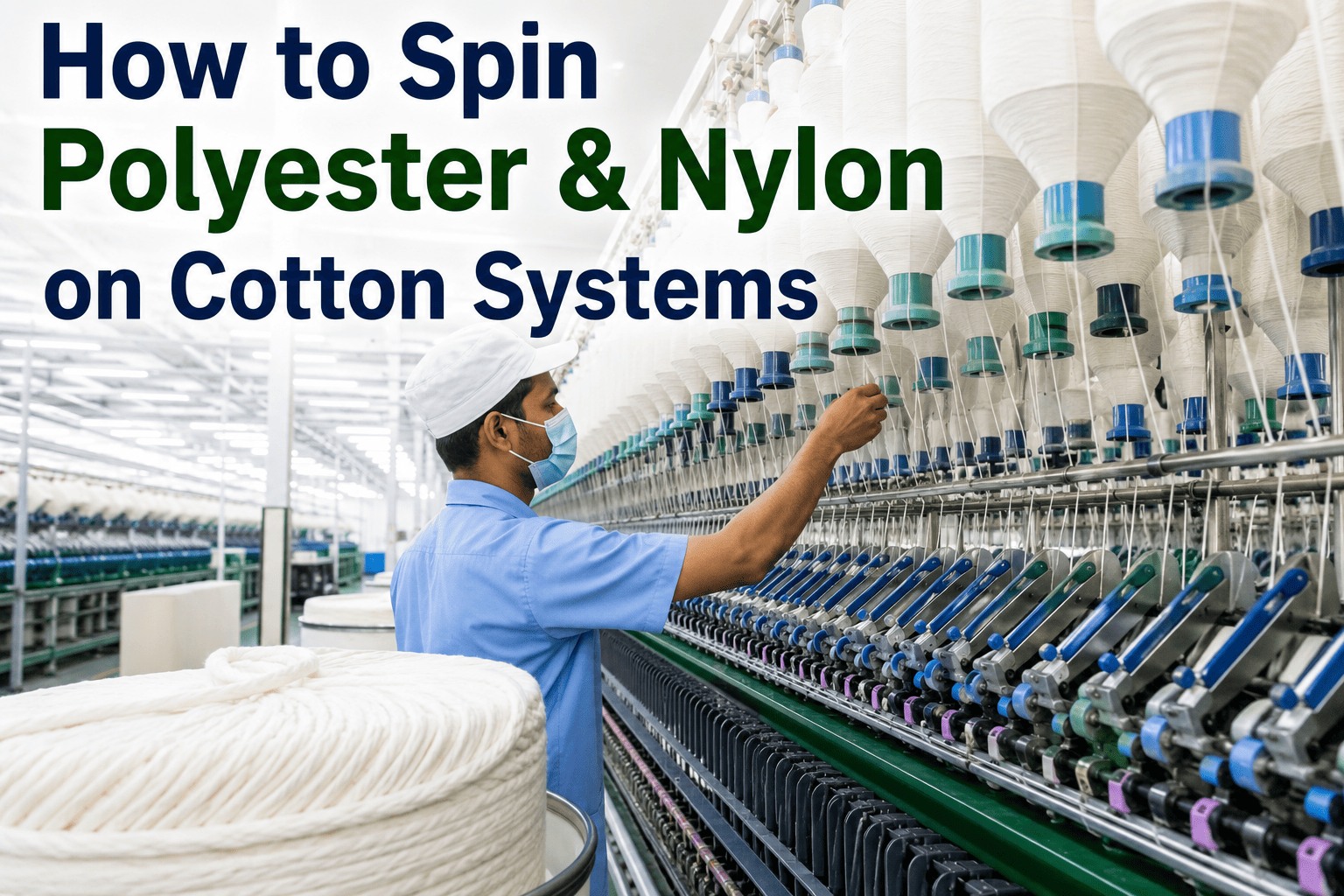
Read More
Running polyester through a spinning line built and tuned for cotton is a bit like driving a car designed for gravel roads on ice — the machine still moves, but every setting that worked perfectly on the original material now works against the n
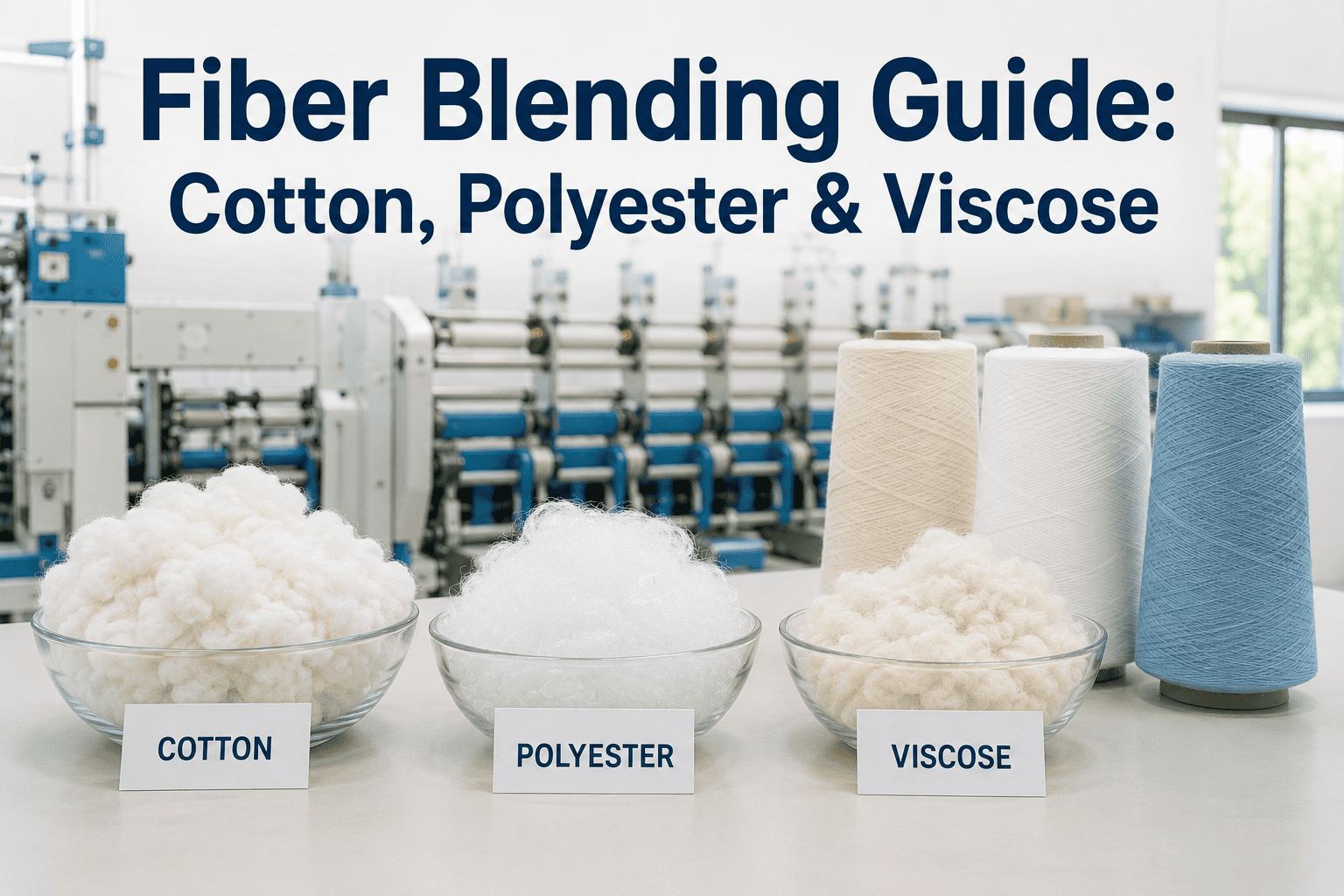
Read More
The difference between a 65/35 and a 60/40 polyester-cotton blend sounds like a rounding error until it shows up on the invoice and in the customer complaint file at the same time. Blend ratio is one of the few spinning decisions that simultaneo

Read More
A traveller costs less than a cup of coffee and runs for weeks before it needs replacing, which is exactly why it gets so little attention relative to the damage the wrong one causes. Mismatch the traveller profile, weight, or material to the co
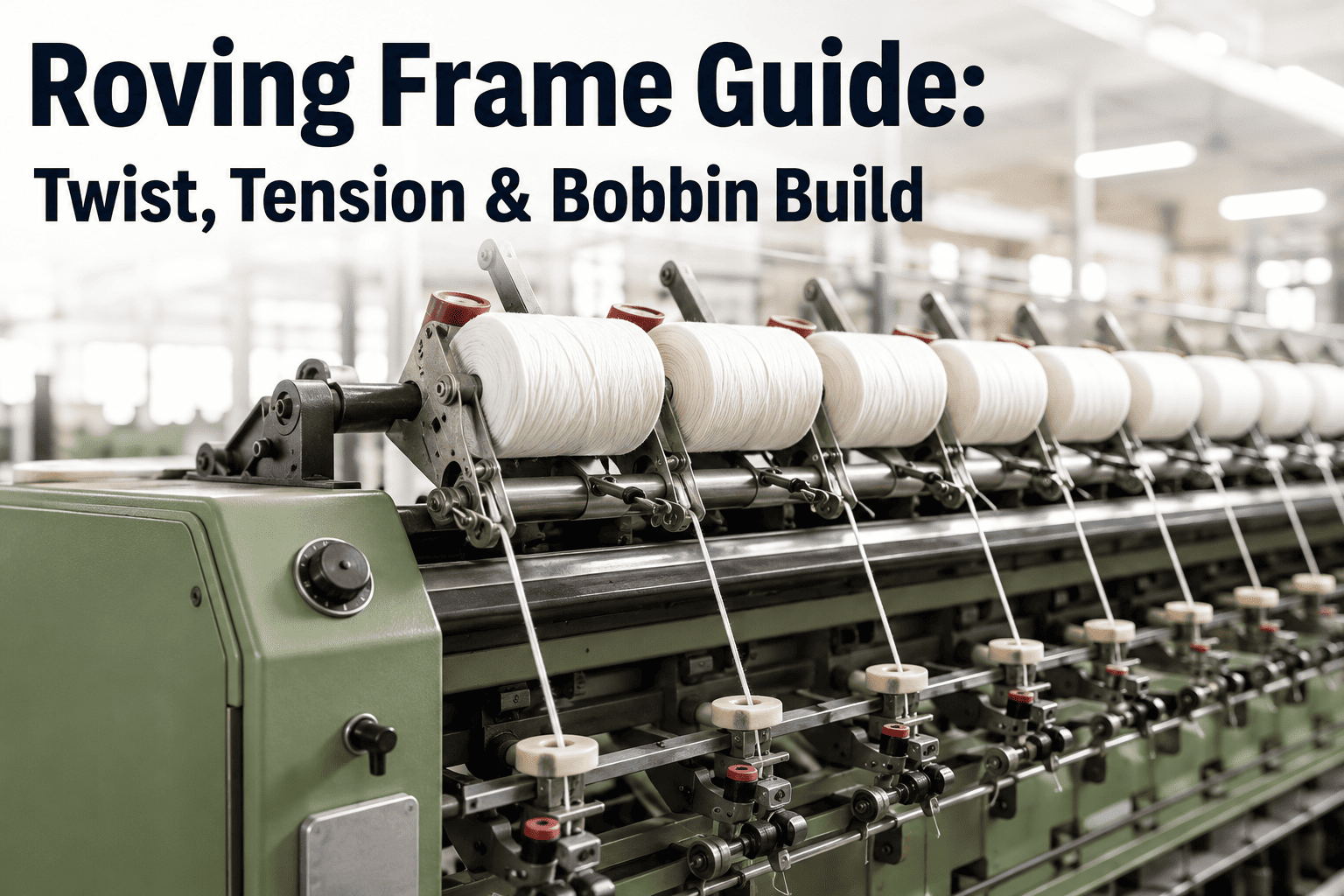
Read More
A roving frame that drifts even slightly out of calibration does not announce itself. The bobbin still builds, the flyer still turns, and the shift log still shows normal output — right up until the ring frame downstream starts throwing end brea
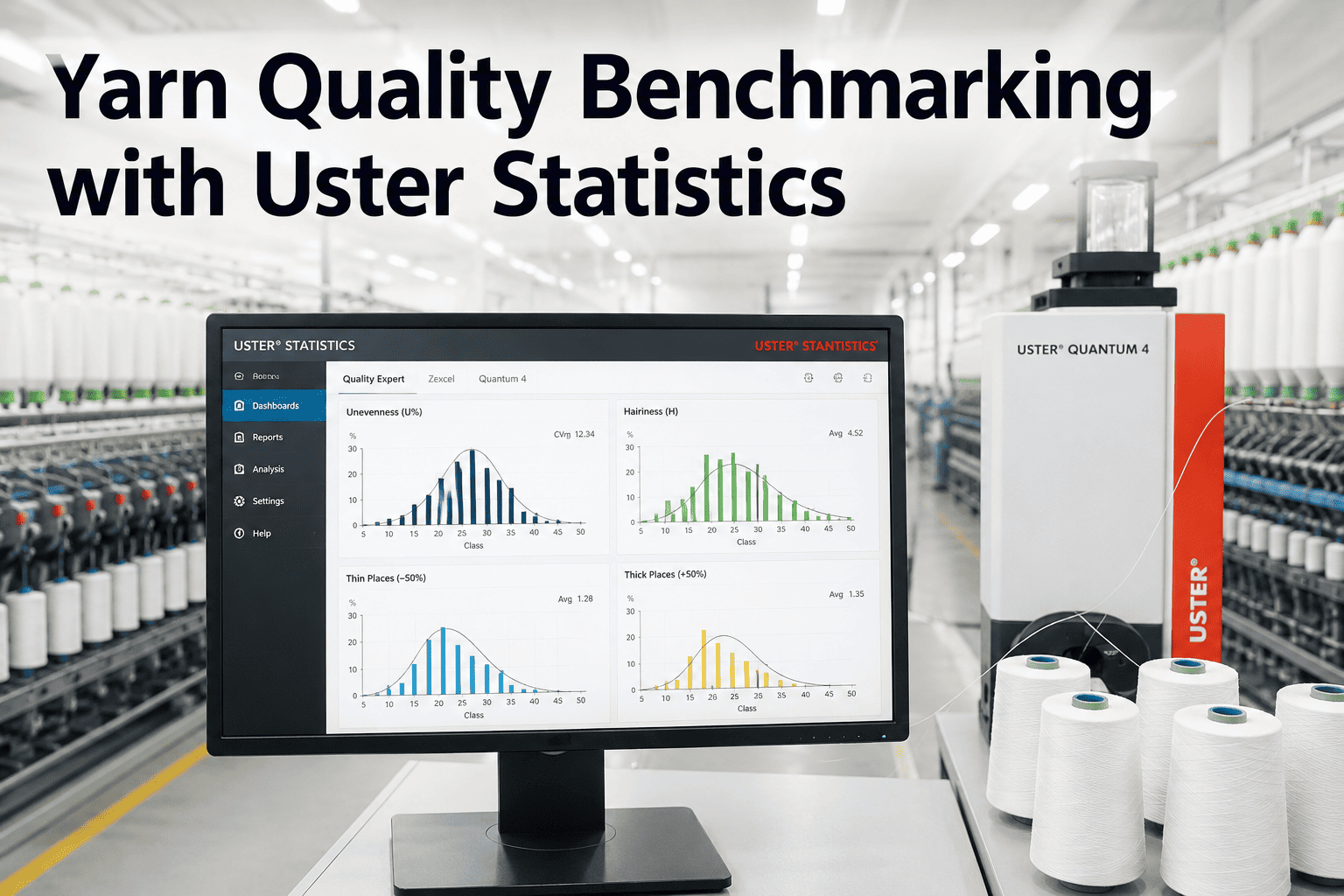
Read More
A yarn quality report full of numbers is not the same thing as a yarn quality report full of answers. A CVm% of 14.2 means nothing on its own — it only becomes useful the moment it is placed against the Uster Statistics percentile curve for that
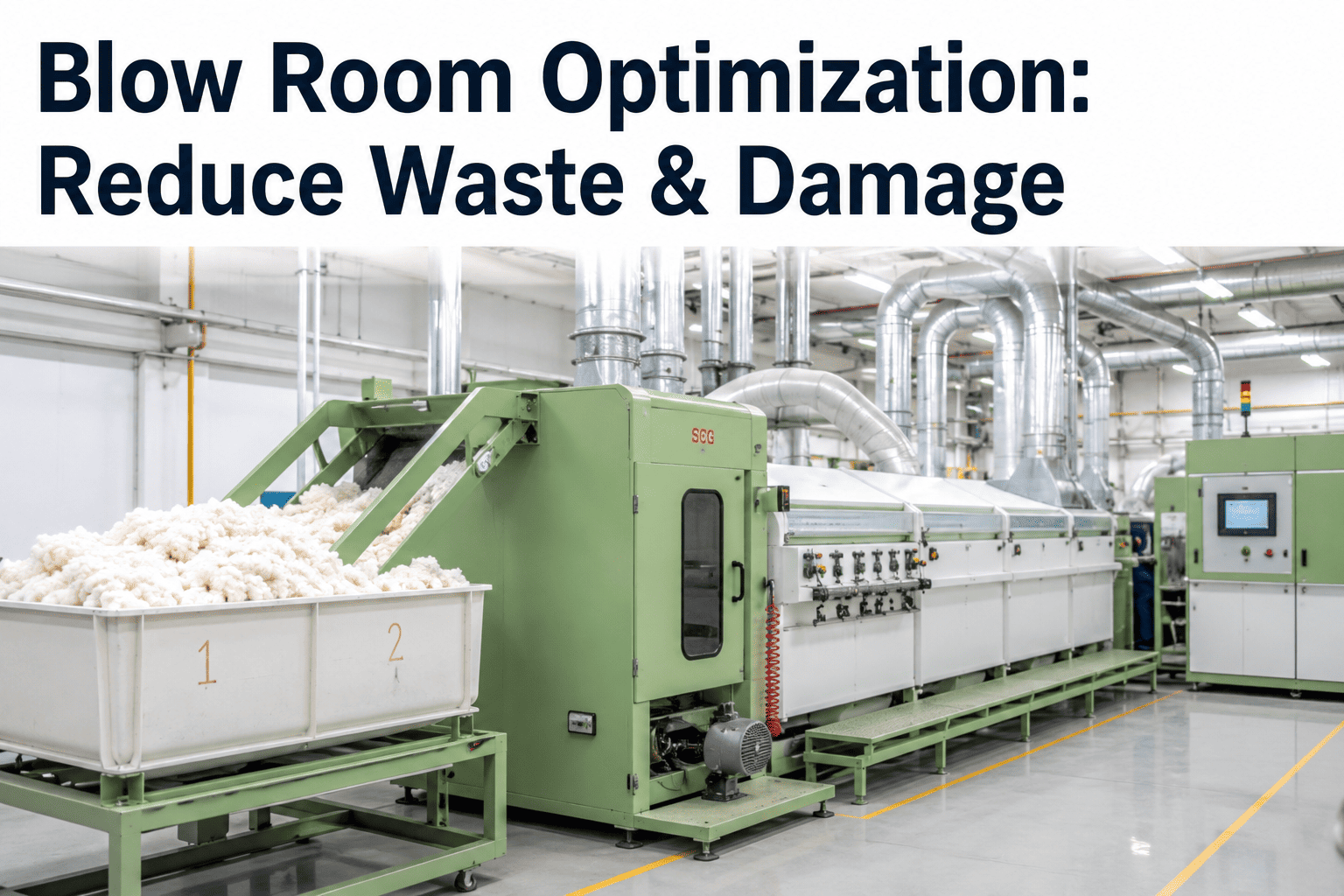
Read More
A blow room line set up years ago for a different fibre mix keeps running today exactly as it was commissioned, because nobody revisits beating point intensity or opening roller speed once the line is installed and producing acceptable-looking lap
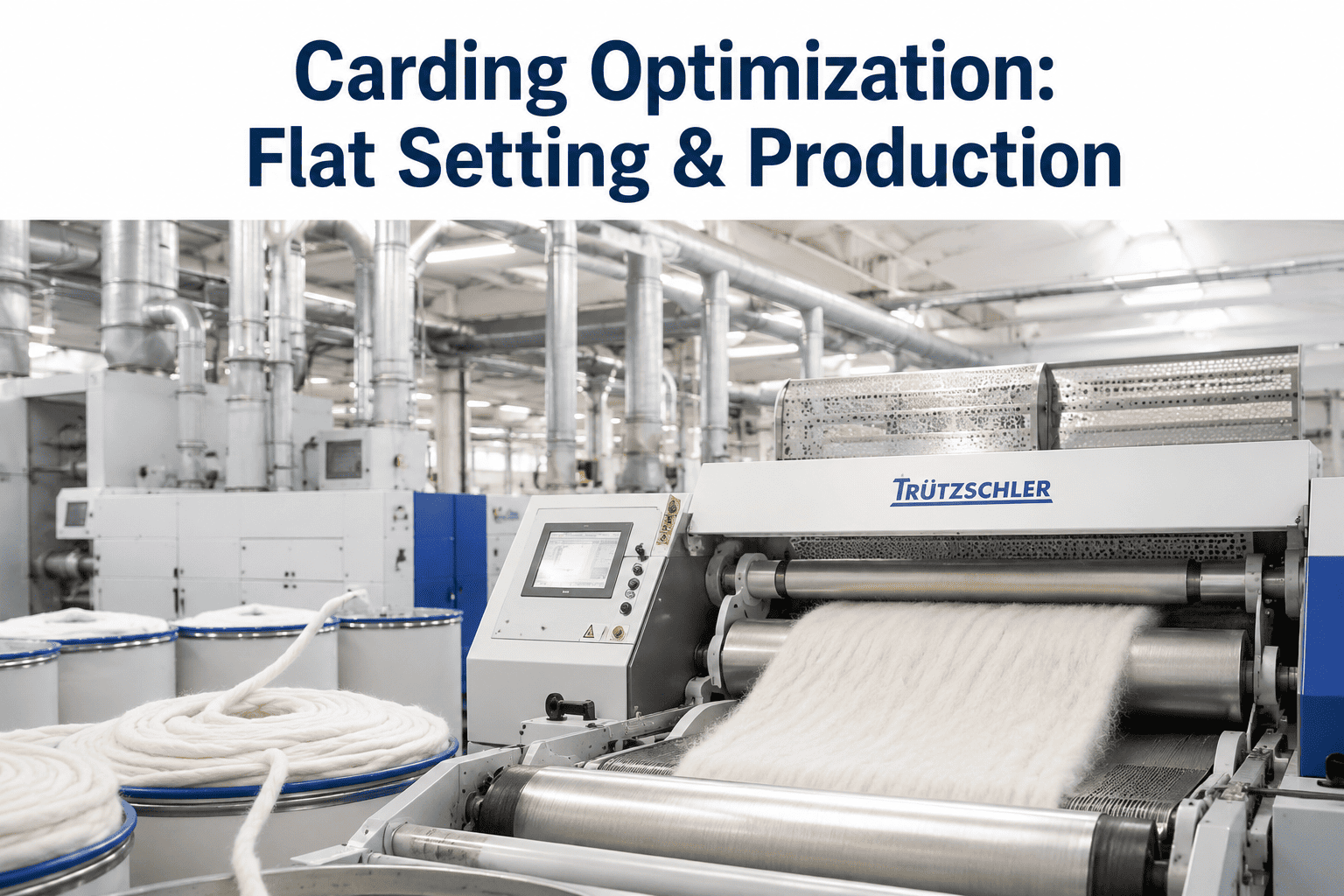
Read More
A carding machine running above its rated production speed looks like a productivity win on the shift report, but every increase in throughput past the card's actual capacity for that fibre trades directly against nep removal, fibre individualizat

Read More
Compact spinning was adopted across premium yarn production for one reason — eliminating the spinning triangle that conventional ring spinning cannot avoid — but the three main compaction technologies achieve that elimination differently enough th
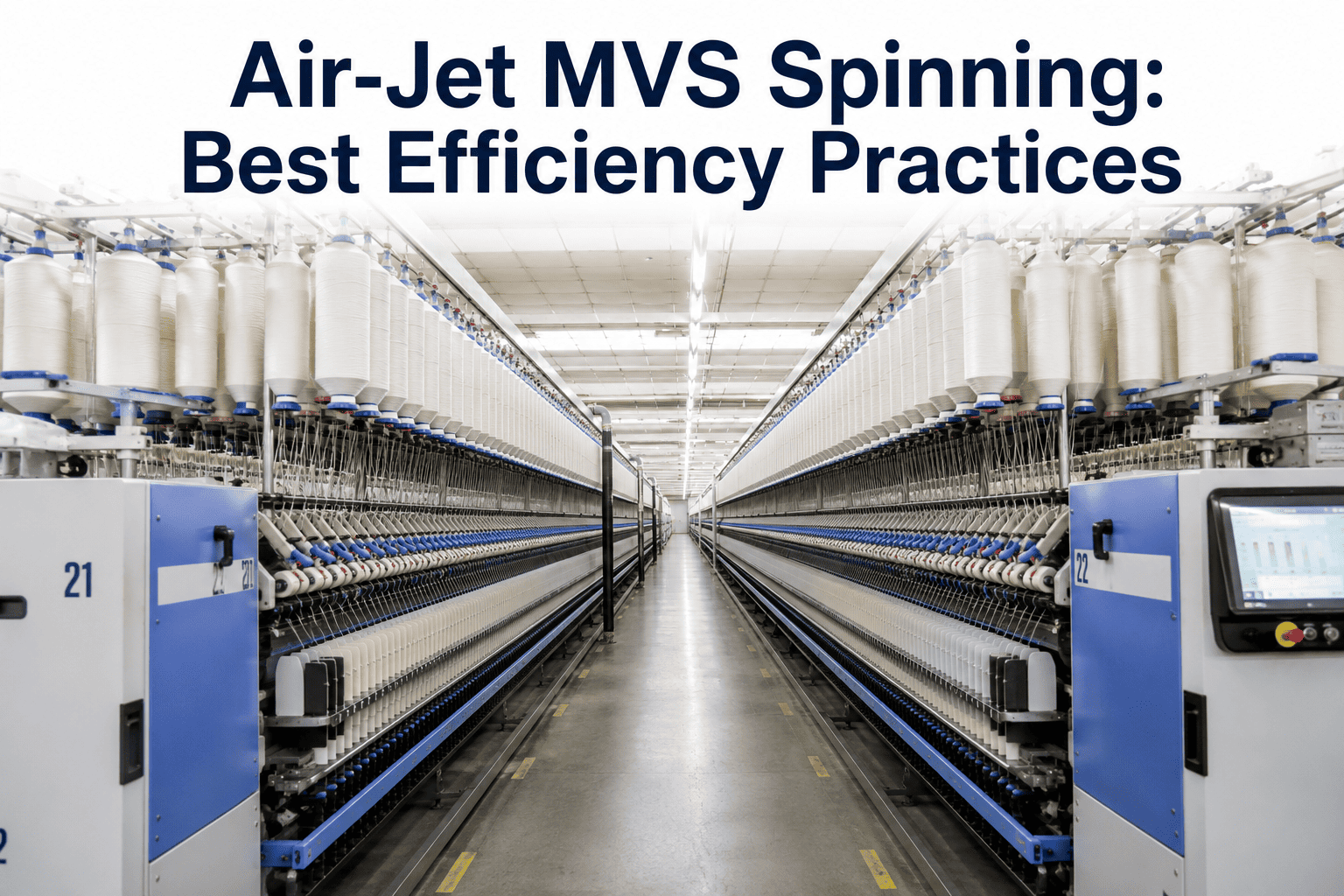
Read More
Murata Vortex air-jet spinning runs faster than almost any other yarn formation process in the industry, but that speed advantage evaporates quickly when nozzle pressure, splice quality, or wrapper fiber formation drift out of tolerance without an
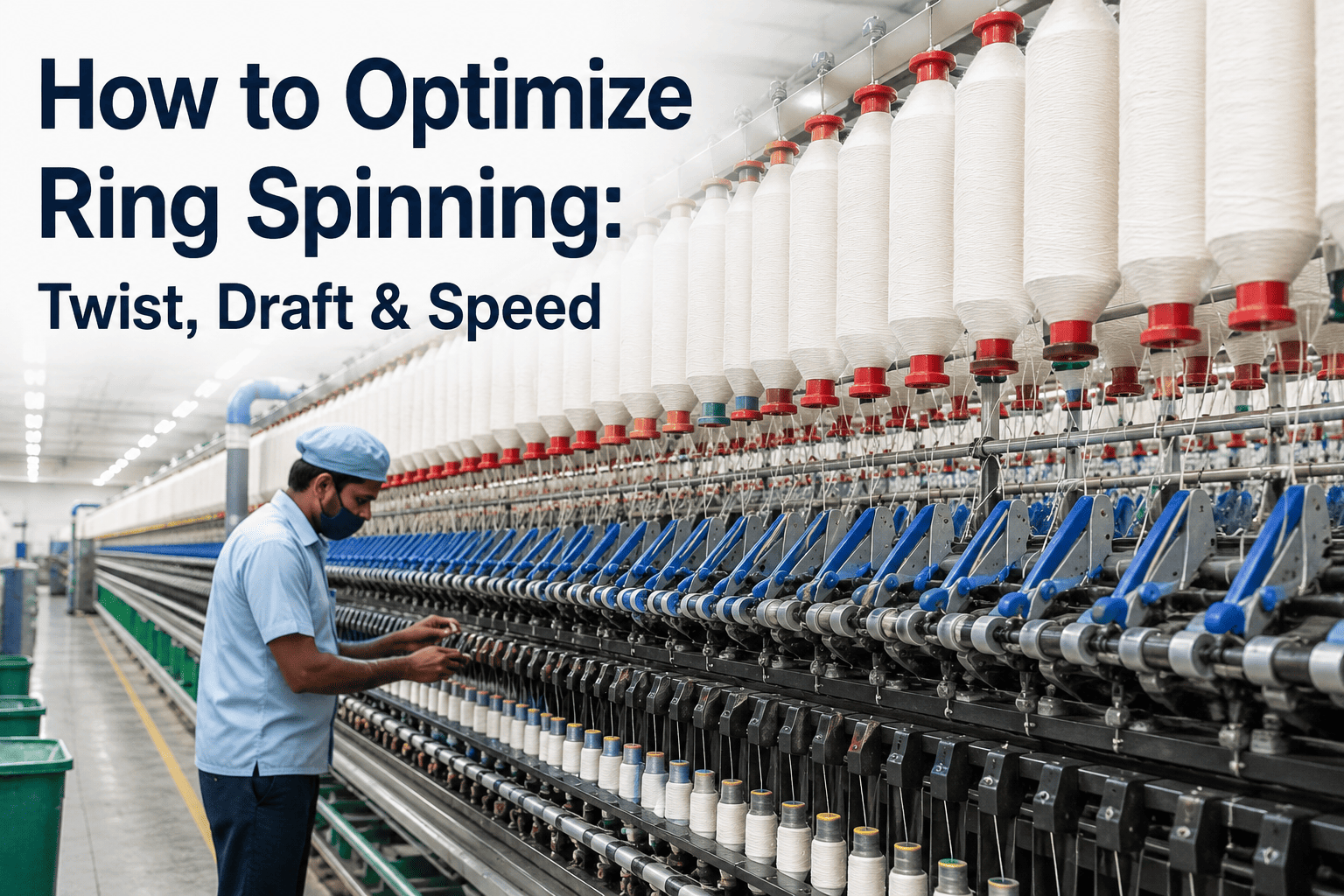
Read More
Ring spinning still produces more of the world's yarn than any other spinning system, yet most mills leave measurable quality and output on the table because twist multiplier, draft zone settings, and spindle speed were tuned once and never revisi
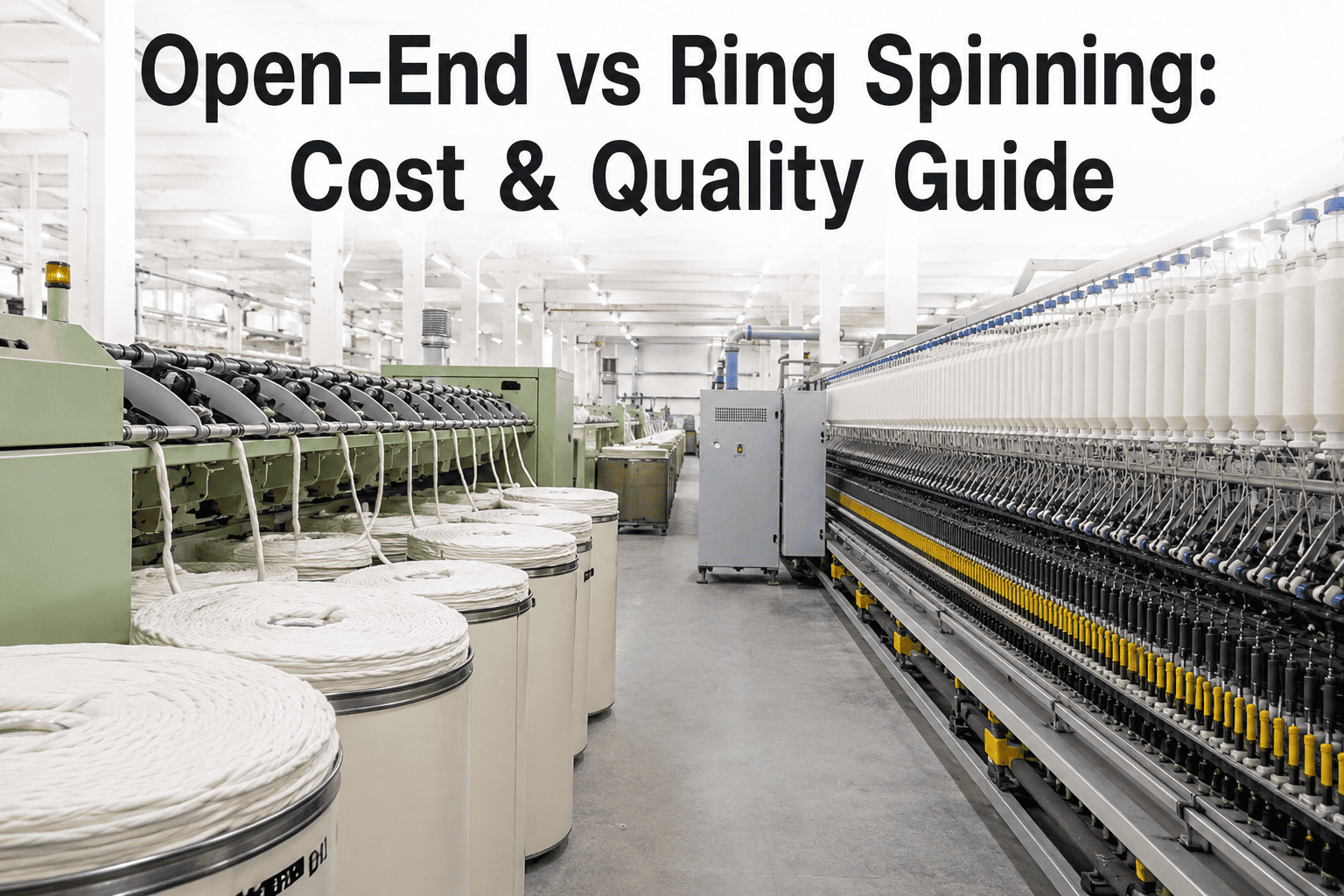
Read More
Choosing between open-end rotor spinning and ring spinning is one of the most consequential capital decisions a spinning mill makes, because the two systems produce structurally different yarn at different cost points for different markets. Rotor

Read More
Fabric strength failures rarely show up on the cutting table — they show up months later as a seam blowout on a customer's first wear, a torn pocket during shipping, or a burst mattress ticking under normal pressure, at which point the cost is no

Read More
Pilling — the small fuzzy balls of tangled fiber that form on a garment's surface after repeated wear and washing — is one of the few quality defects a customer discovers weeks or months after purchase, well past the return window, which makes it

Read More
Textile mills and apparel brands lose an estimated 8-12% of shipped orders to quality disputes rooted in one root cause: testing against the wrong standard, or testing correctly but interpreting results inconsistently across labs. A single fabric

Read More
A garment can pass every mechanical strength test a buyer requires and still be rejected on a single failing colorfastness result, because color bleeding onto adjacent white fabric during a customer's first wash is the single most visible quality

Read More
Singeing looks like a simple step compared with dyeing or finishing, but getting it wrong quietly undermines everything that happens afterward. Run the gas flame too cool or too fast, and protruding fibers survive to cause pilling and a dull, hair
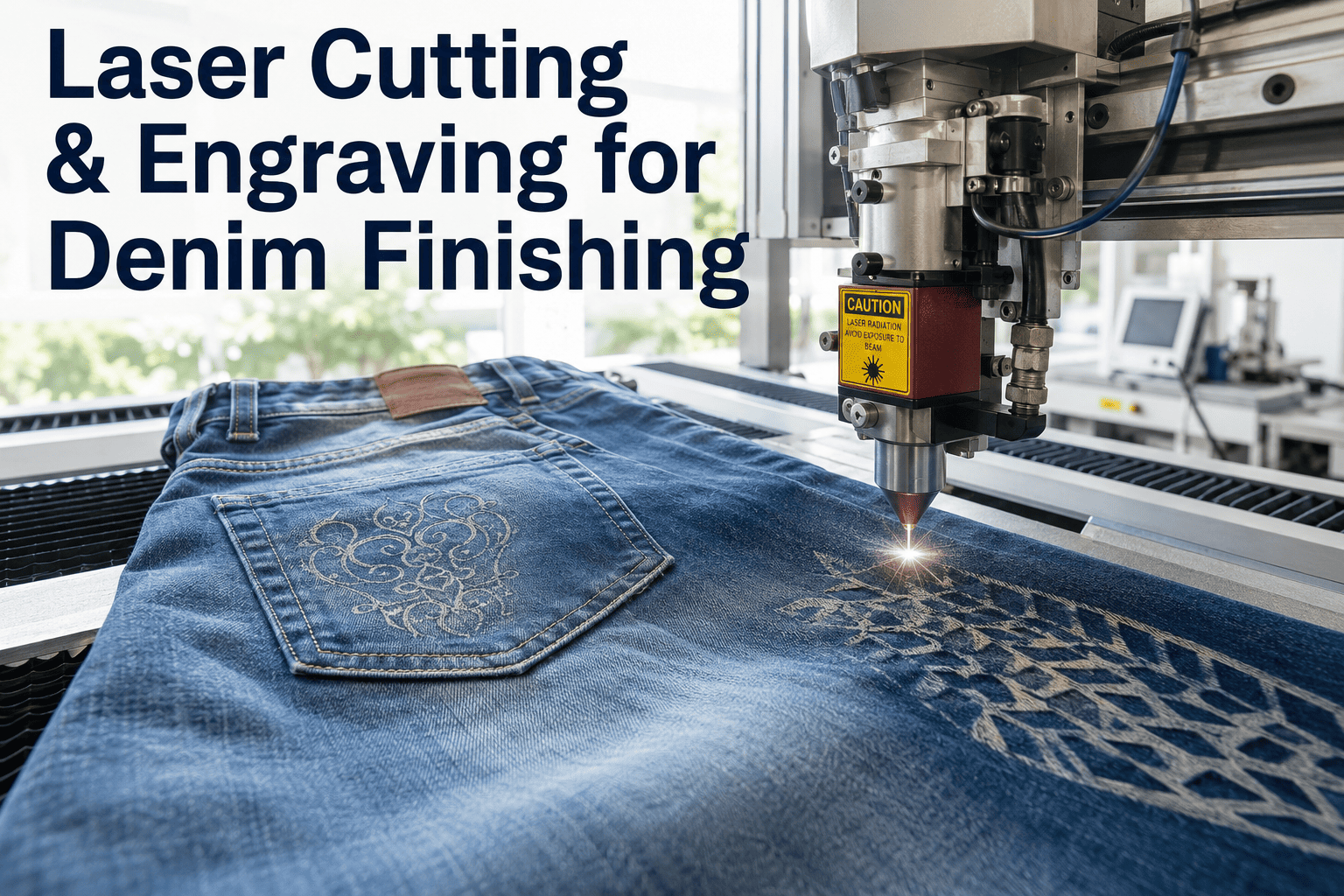
Read More
Denim finishing used to mean sandblasting booths full of silica dust, enzyme wash tanks that never produced quite the same fade twice, and a manual whisker pattern that depended entirely on which operator was on shift that day. Laser fading and en

Read More
A waterproof jacket that leaks at the seams or a tent fabric that traps condensation instead of breathing usually isn't a design failure, it's a coating weight or lamination bond that drifted somewhere on the line and nobody caught it before the r

Read More
A customer claim on a fabric roll rarely arrives with a clean explanation attached — it shows up as a complaint about shade variation, strength failure or a dimensional defect, and it's on the quality team to trace that symptom back through inspec

Read More
Walk into most textile mills and you'll find a mix of machinery spanning two or three decades — modern electronic looms sitting next to ring frames with relay-based controls that predate any concept of a network port. That equipment still spins ya
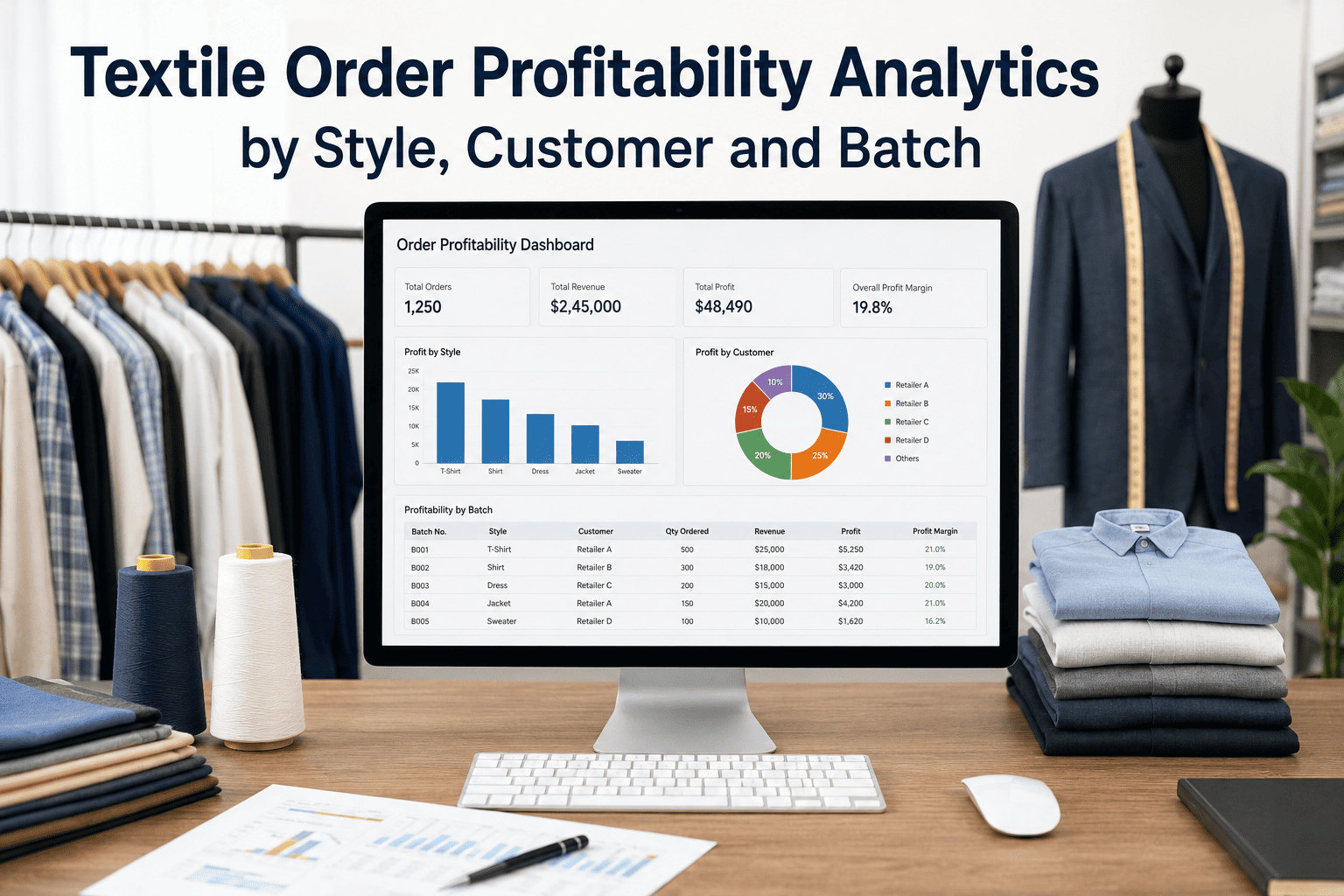
Read More
Ask a mill's finance team which customer order was actually profitable last quarter and most can only answer at the plant level — total revenue against total cost, with no way to see that one customer's orders consistently run high rework while an
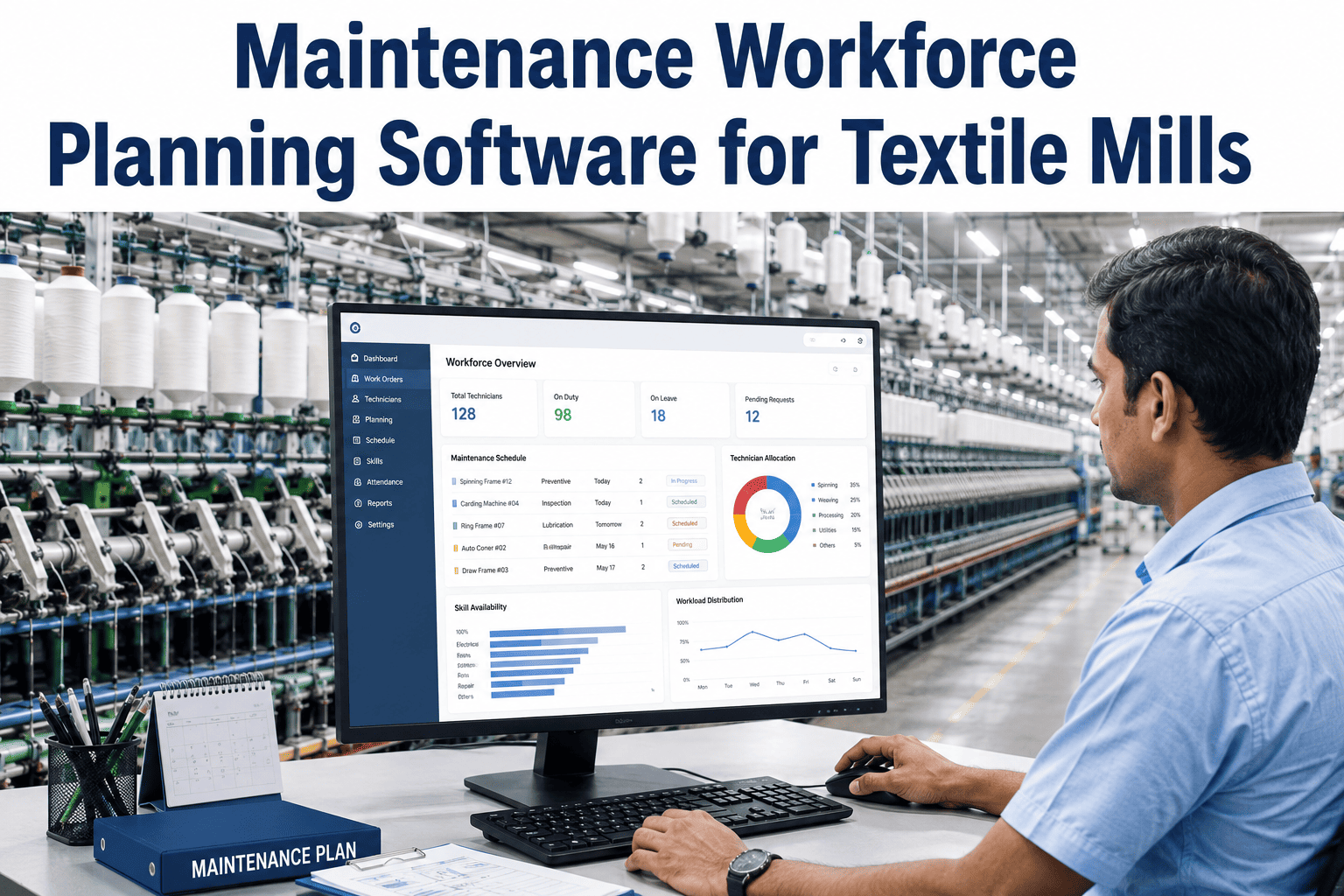
Read More
Ask any maintenance manager in a textile mill how they decide who fixes what on a given shift, and the honest answer is usually a whiteboard, a WhatsApp group and whichever technician happens to be free when the phone rings. That works until it do
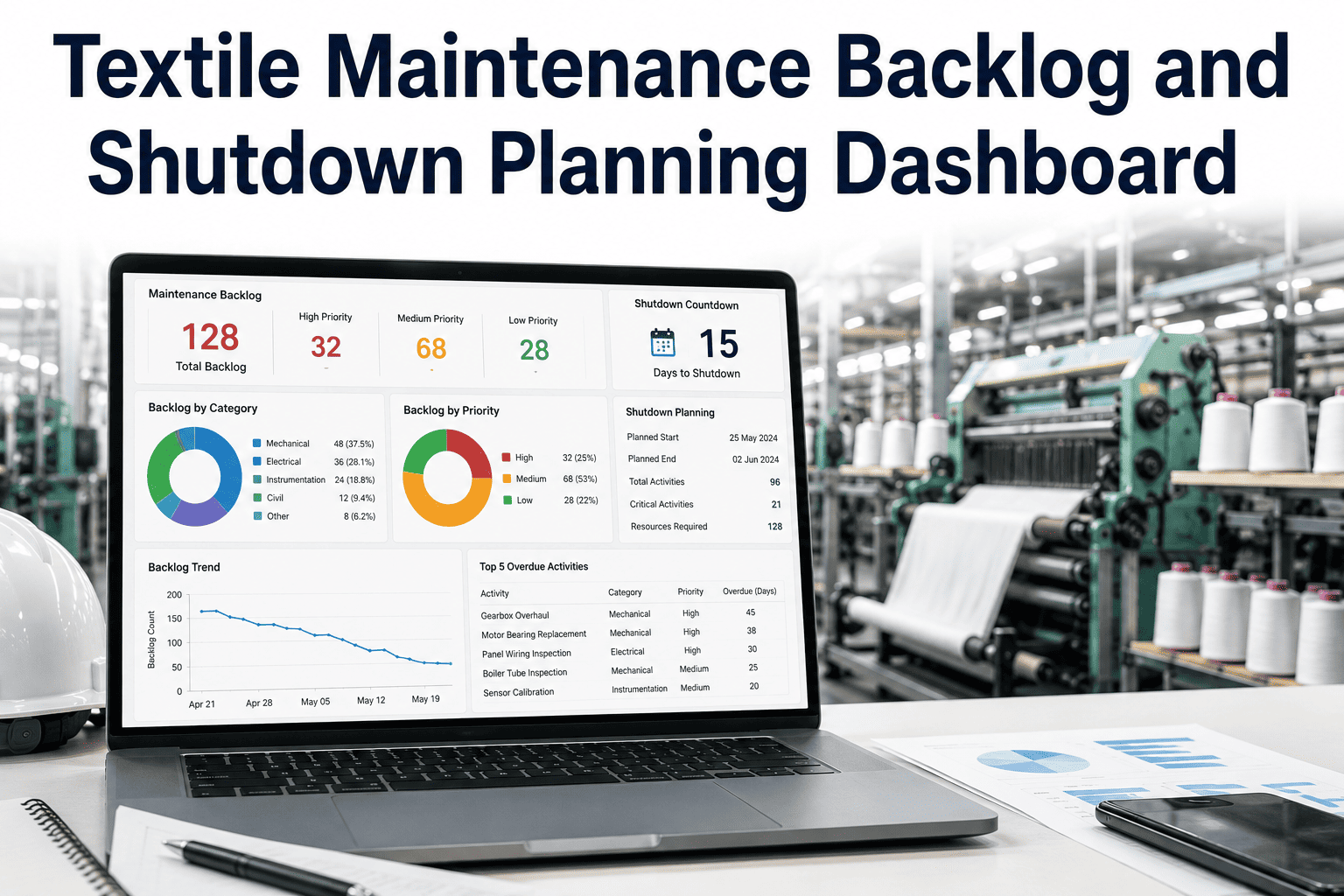
Read More
Every textile mill carries a maintenance backlog — the growing list of preventive tasks, minor repairs and equipment upgrades that never quite make it to the top of the priority list because production can't afford to stop. Left unmanaged, that ba
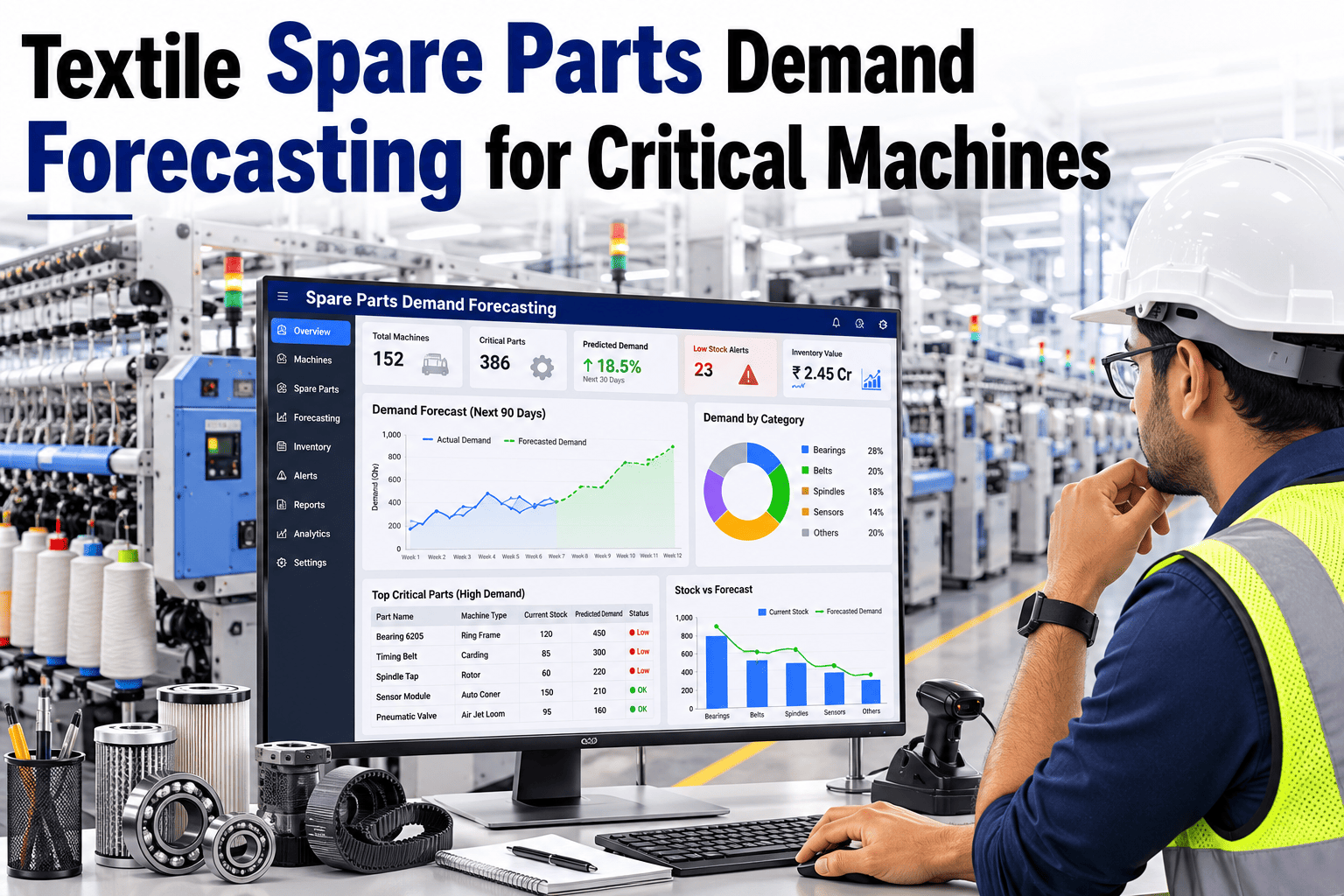
Read More
A ring frame that goes down for a missing traveller or a loom stopped for want of a heald frame does not just lose that machine's output — it cascades into missed delivery dates, idle operators and overtime that eats the margin on the whole order.
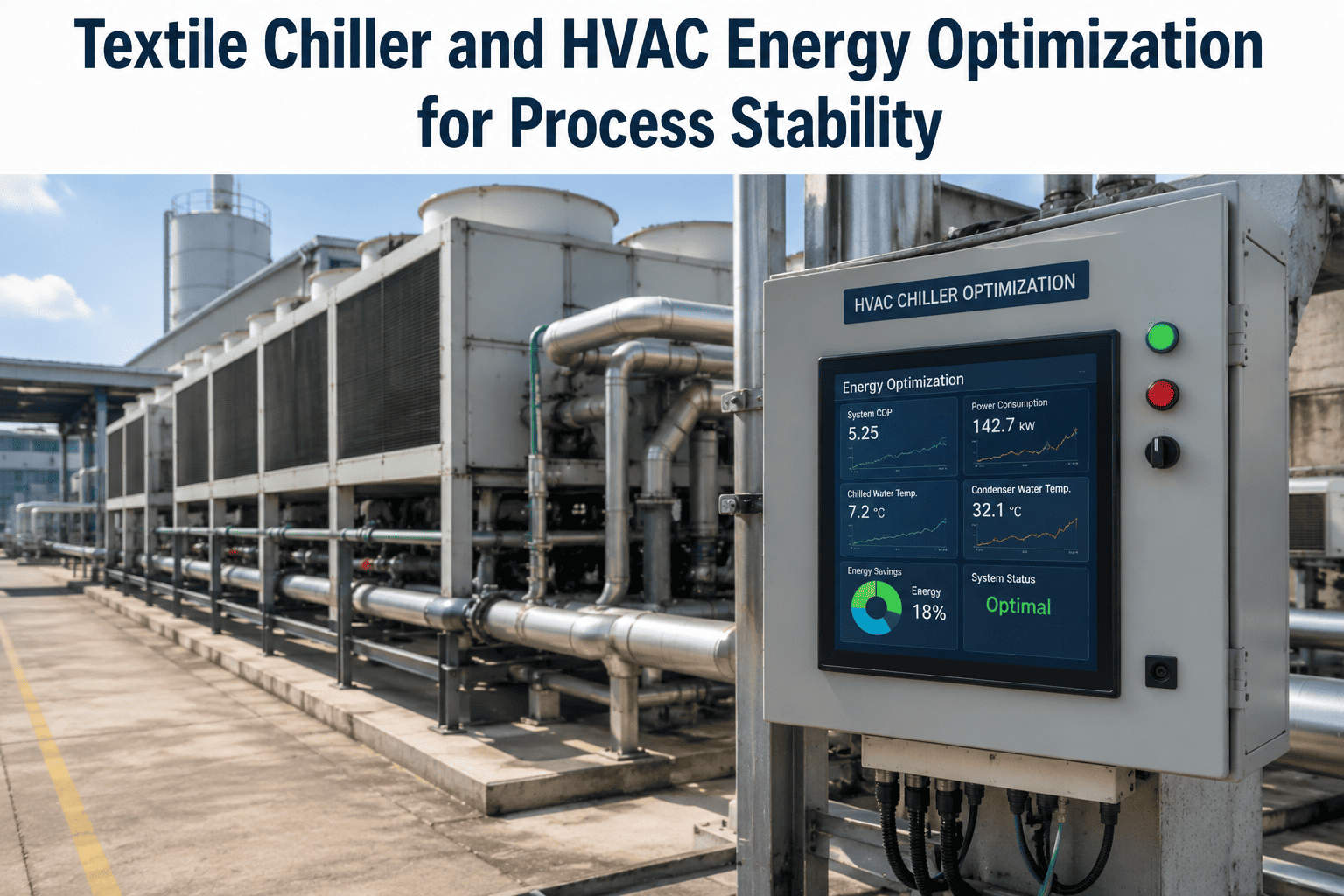
Read More
A ring-frame spinning hall that drifts even two degrees above its set humidity band starts throwing yarn breaks within the hour, and a dye house chiller that trips during a batch can turn an entire lot into seconds-quality fabric. Textile manufact
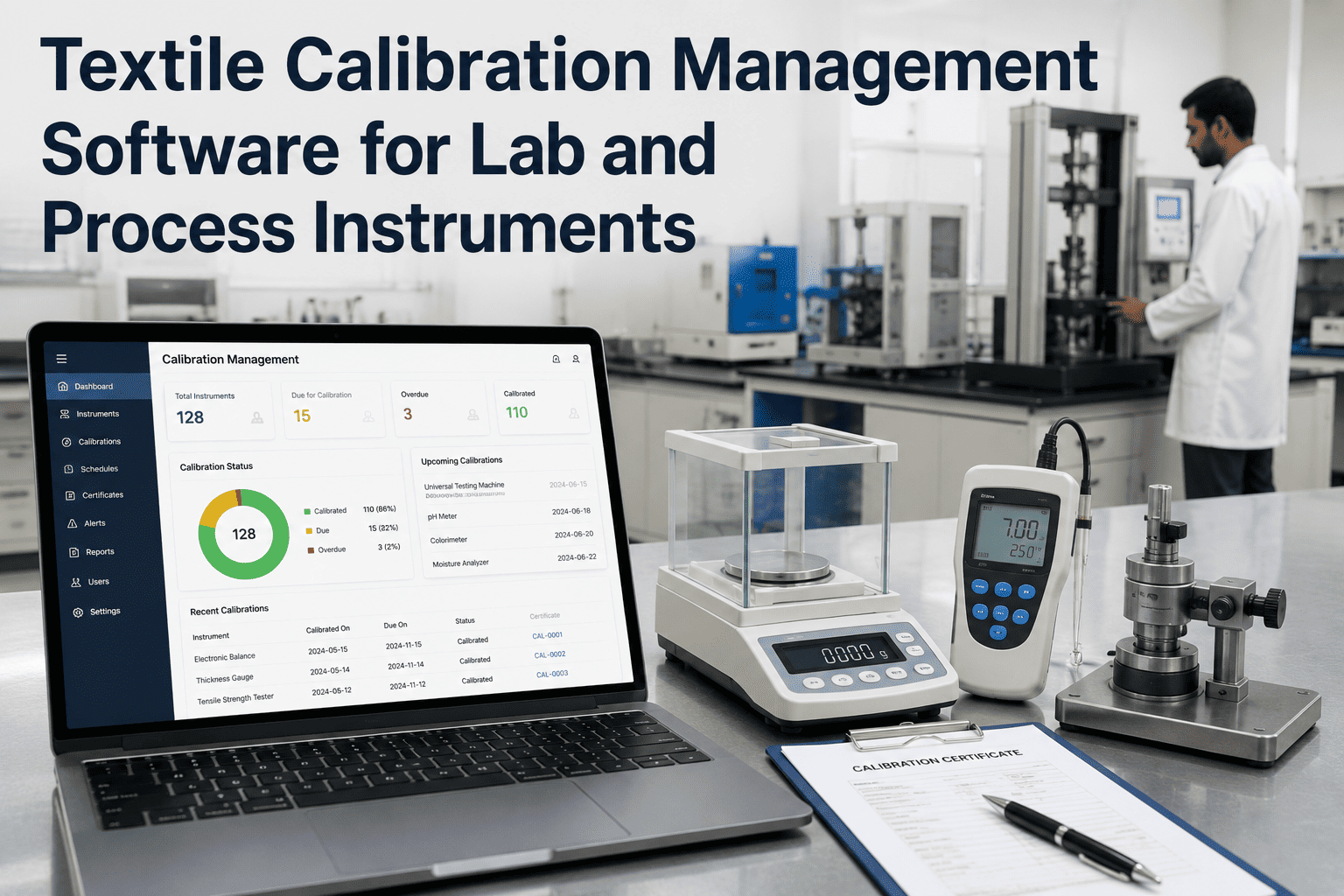
Read More
An auditor picks up a spectrophotometer in the lab and asks for its last calibration certificate, and the answer comes back after twenty minutes of searching through a binder that was last updated by someone who left the company eight months ago.
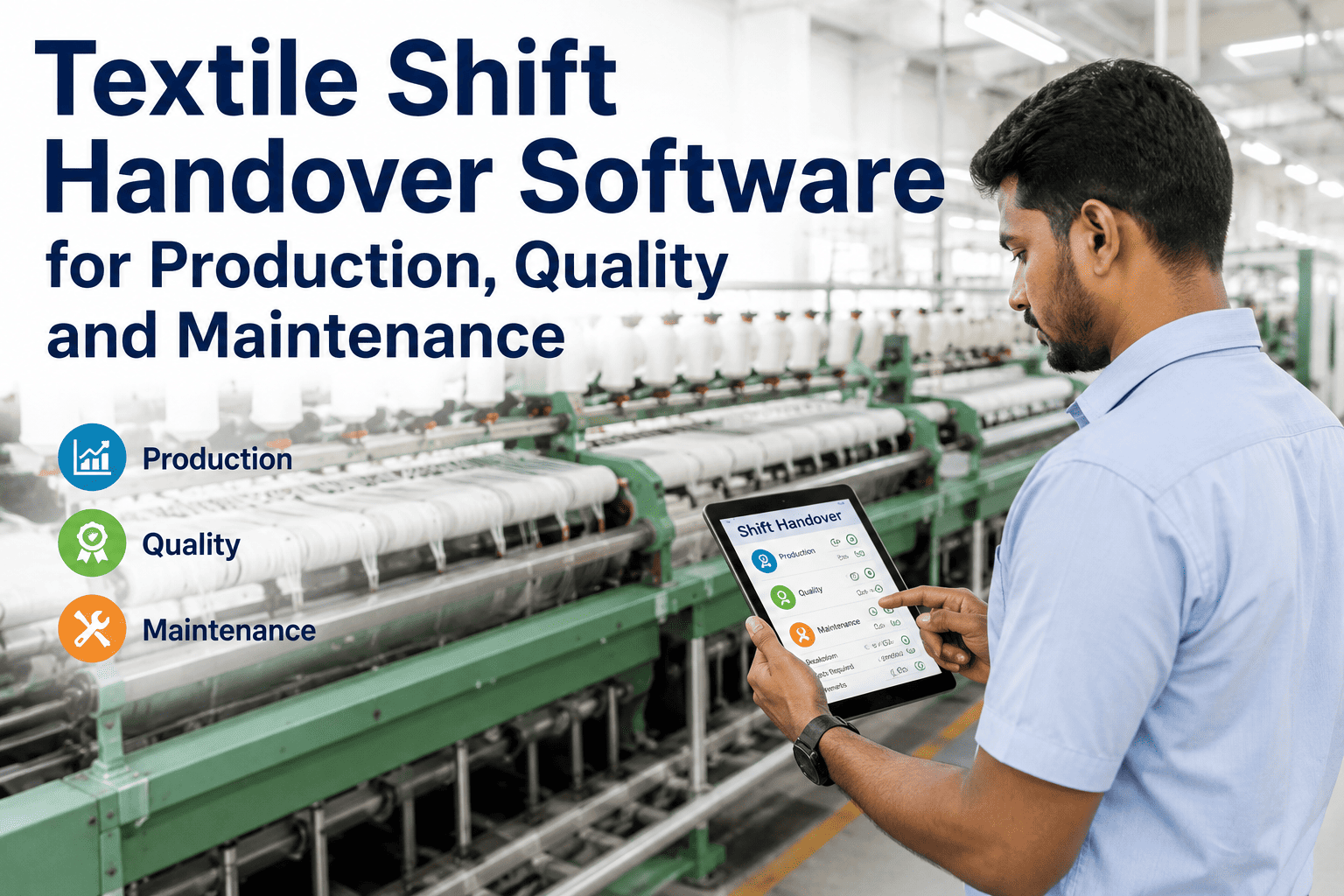
Read More
The night shift supervisor scribbles four lines on a handover sheet before clocking out: one machine running slow, a quality hold on a dye lot, a maintenance ticket half-finished, and a note about low yarn stock that never quite gets read by the m
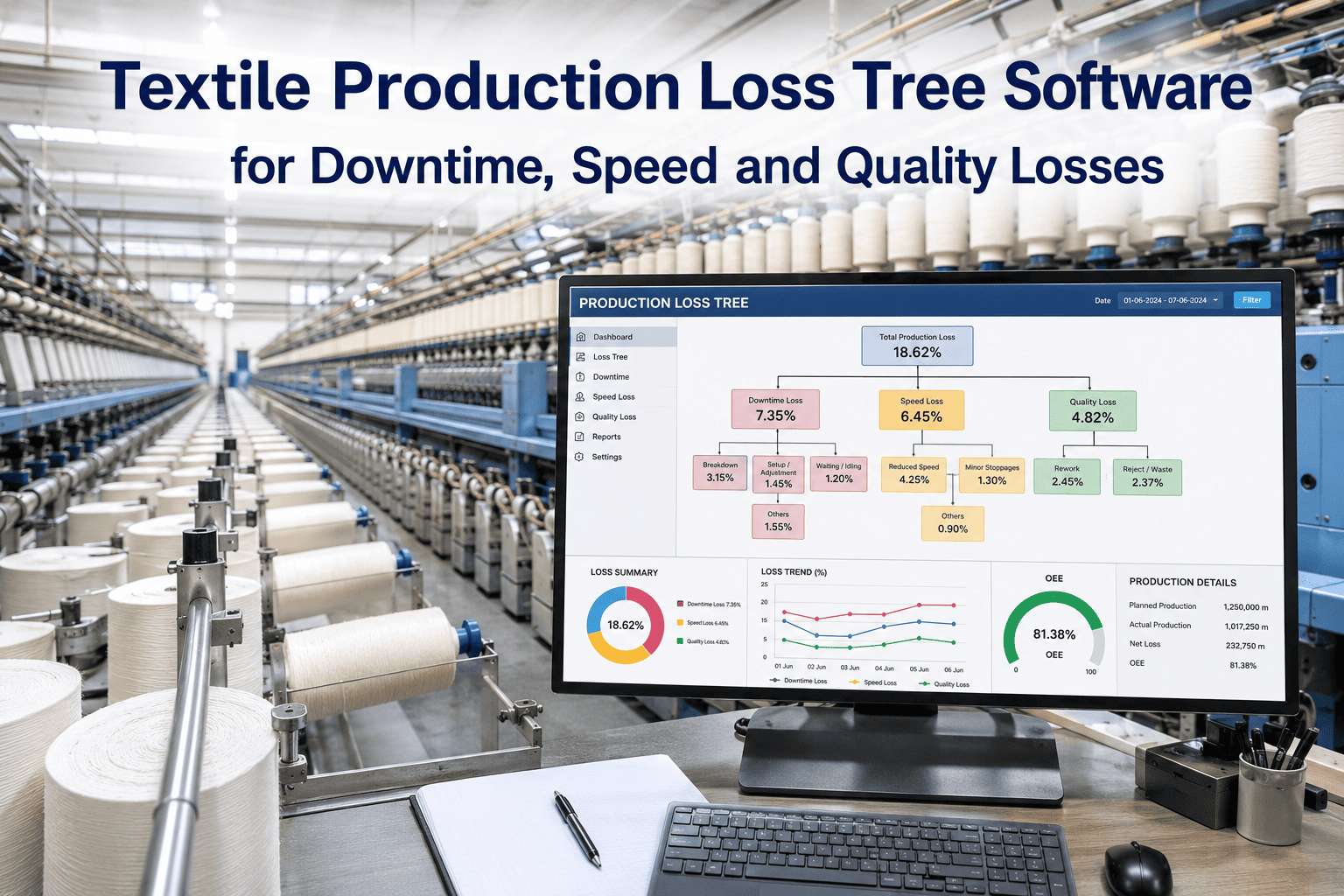
Read More
Ask a plant manager why OEE sits at 68% and you will usually get one answer: "downtime." Ask which downtime, on which machine, during which shift, and how much of the remaining loss is actually speed loss or quality loss instead, and the answer ge
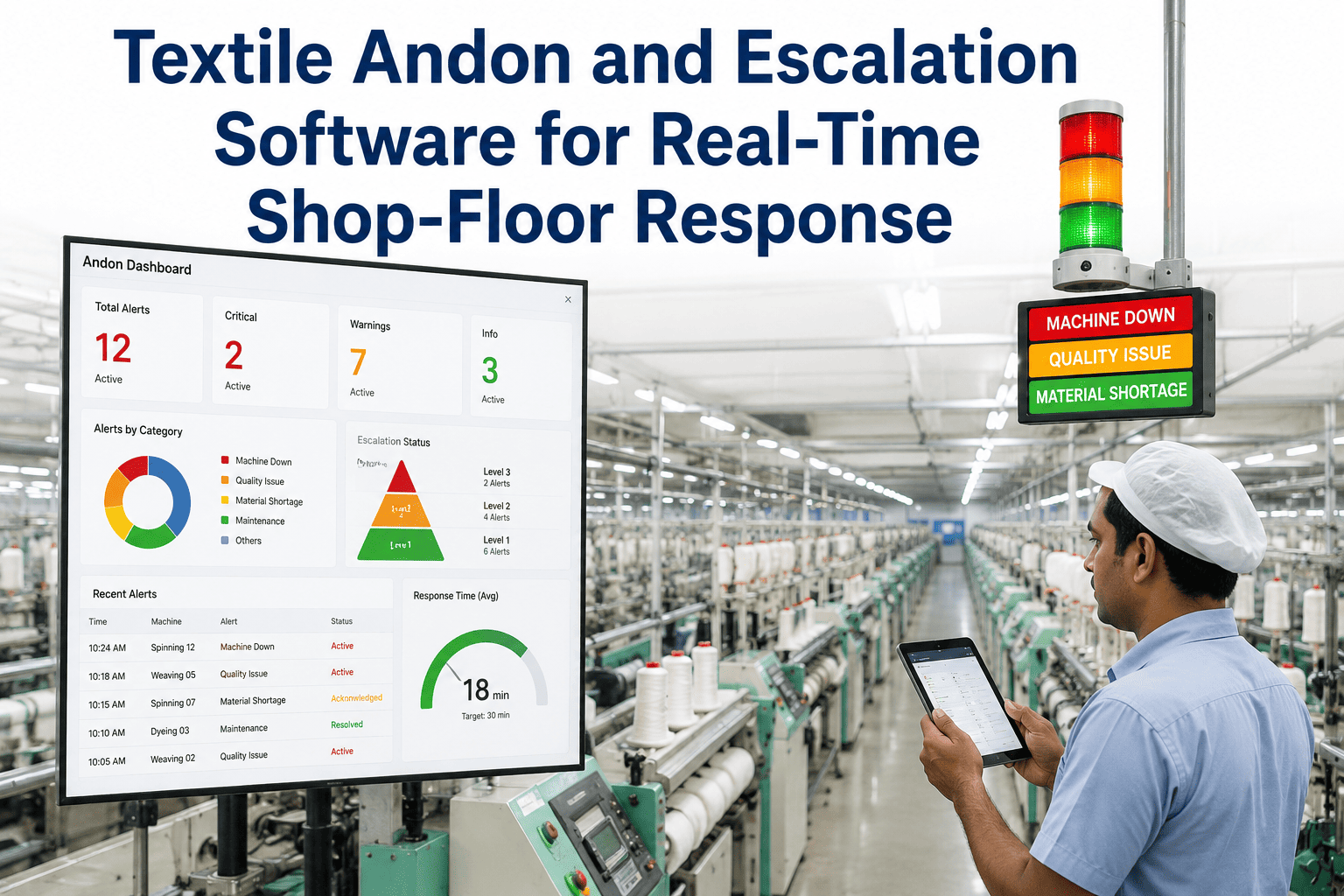
Read More
A loom stops mid-shift and the operator waves down a passing supervisor, who radios maintenance, who is already handling a call two buildings away. Fifteen minutes pass before anyone with the right skill actually looks at the machine, and by then

Read More
A dye lot fails shade approval, the batch gets traced back to a chemical supplier, and the quality manager pulls up a spreadsheet last updated two months ago to decide whether this is a pattern or a one-off. That spreadsheet cannot answer the ques
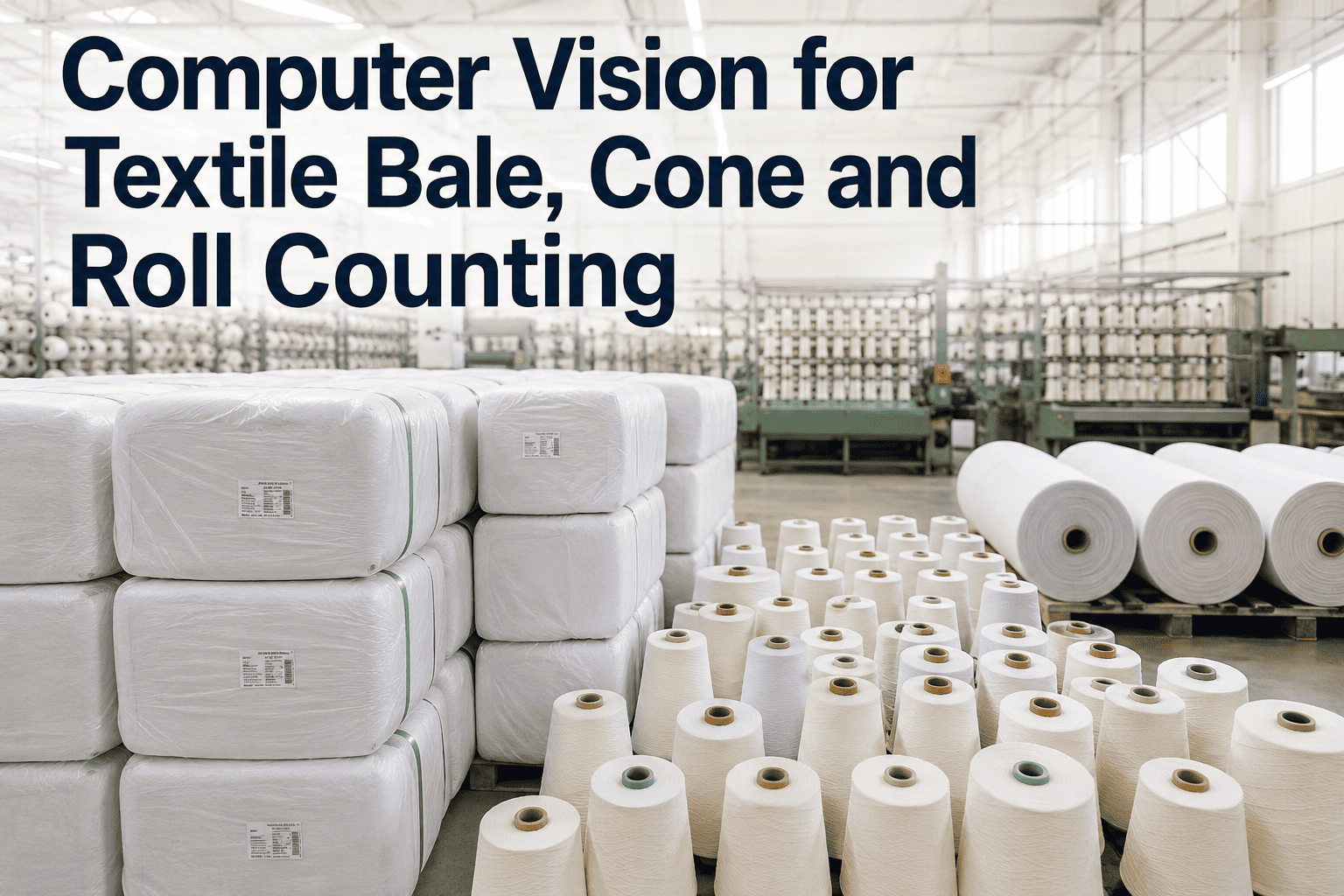
Read More
Every warehouse supervisor in a textile mill knows the Friday ritual: someone walks the yard with a clipboard, counts bale stacks by eye, loses count past forty, starts over, and writes down a number that is close enough. Cone racks in the spinnin
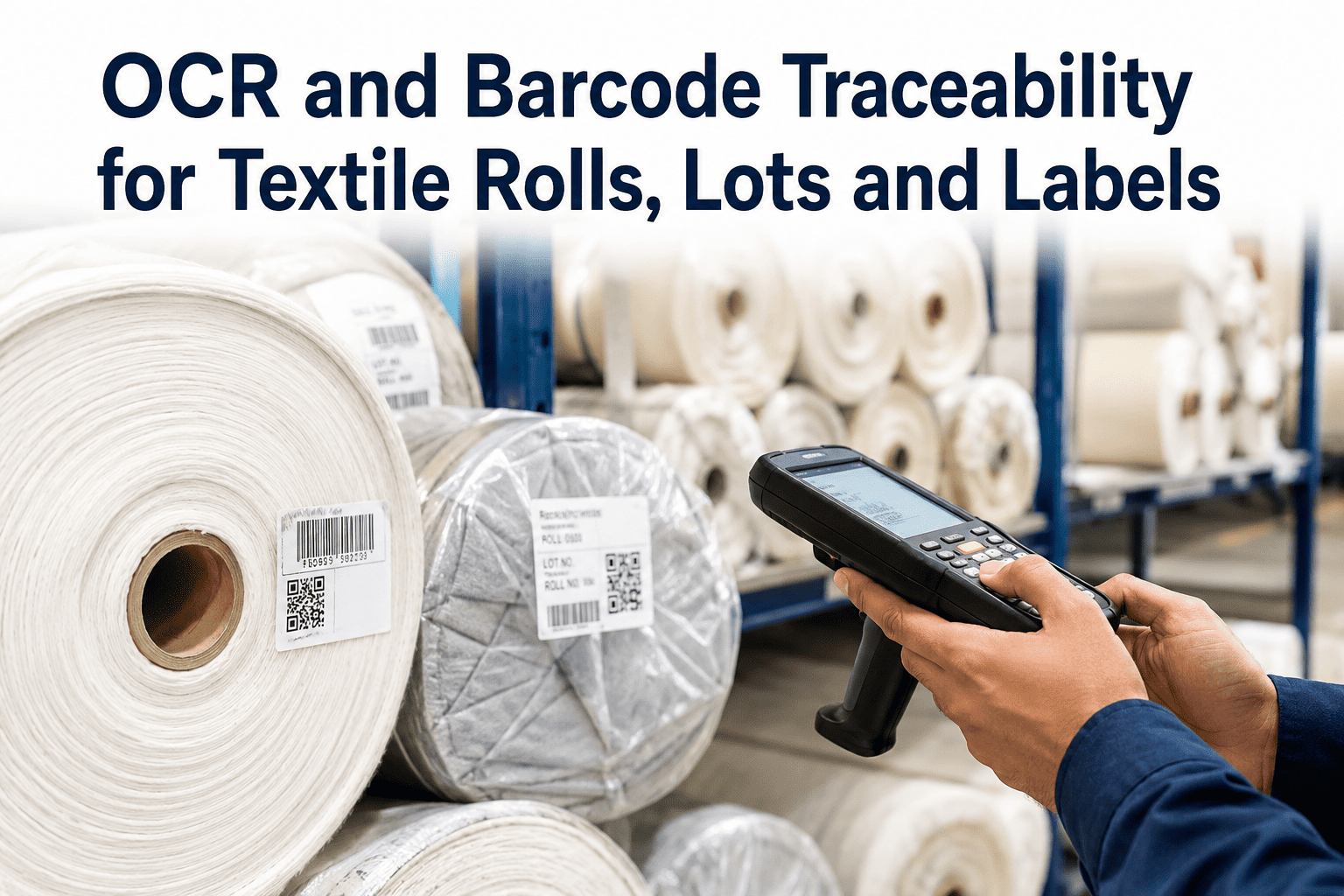
Read More
A customer complaint comes in about a dye lot mismatch on a fabric shipment, and the traceability chain that is supposed to answer "which machine, which lot, which shift" turns out to be a stack of handwritten roll tags and a spreadsheet that some

Read More
In the highly competitive textile manufacturing landscape, energy costs—particularly those associated with boiler operations—represent one of the largest controllable expenditures. Steam is the lifeblood of textile processing, powering everything
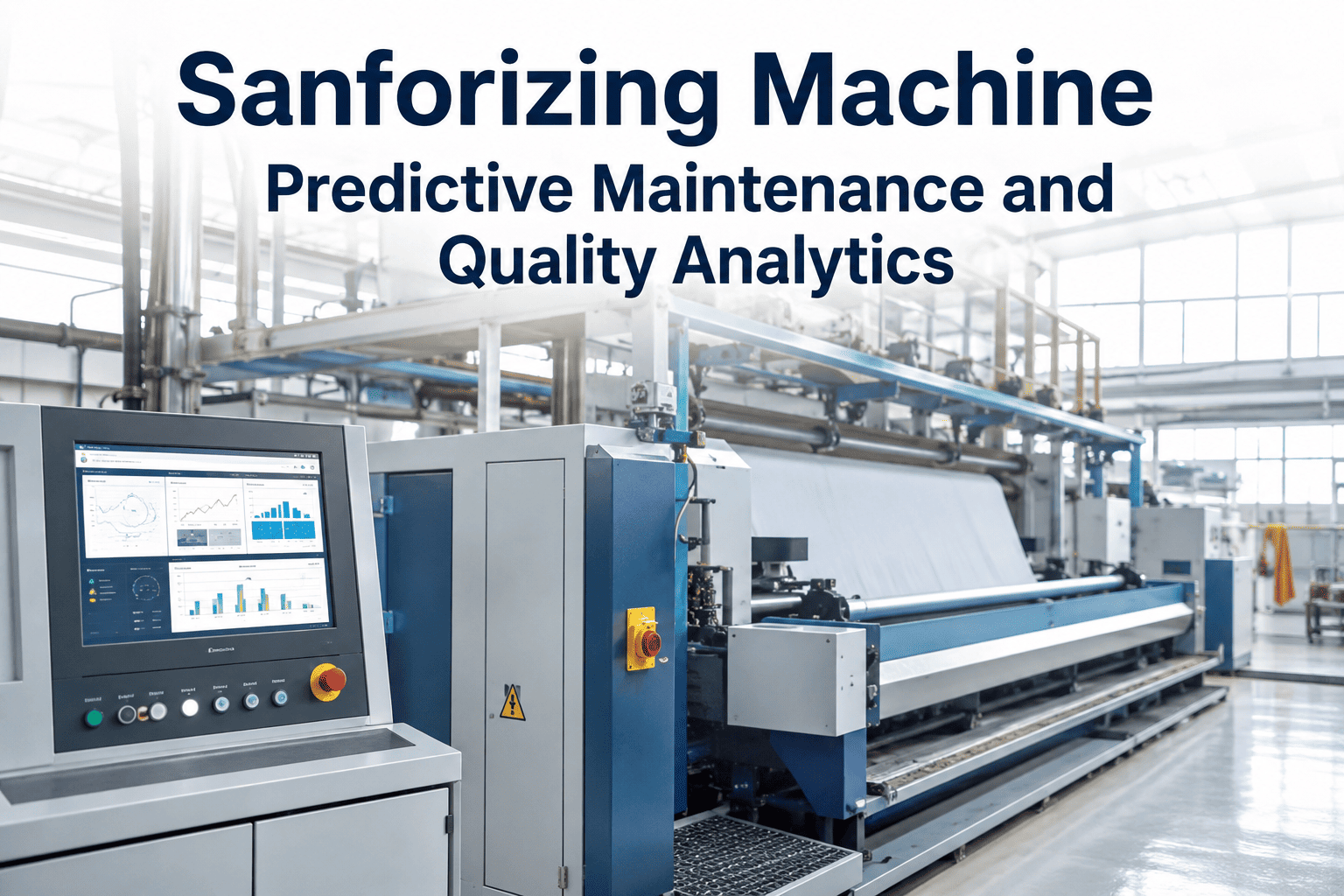
Read More
Sanforizing remains the most critical finishing operation for ensuring dimensional stability in woven and knitted fabrics. Yet many textile mills still rely on reactive maintenance strategies that lead to unplanned downtime, variable shrinkage rat

Read More
In textile manufacturing, compressed air is a critical yet often overlooked utility that drives pneumatic controls, spinning machines, weaving looms, and auxiliary equipment across the mill floor. However, up to 30% of generated compressed air is

Read More
In the high-stakes world of textile finishing, the compactor stands as the final gatekeeper of fabric quality. A deviation of just a few millimeters in width or a fractional percentage point in shrinkage can transform a premium export-grade fabric
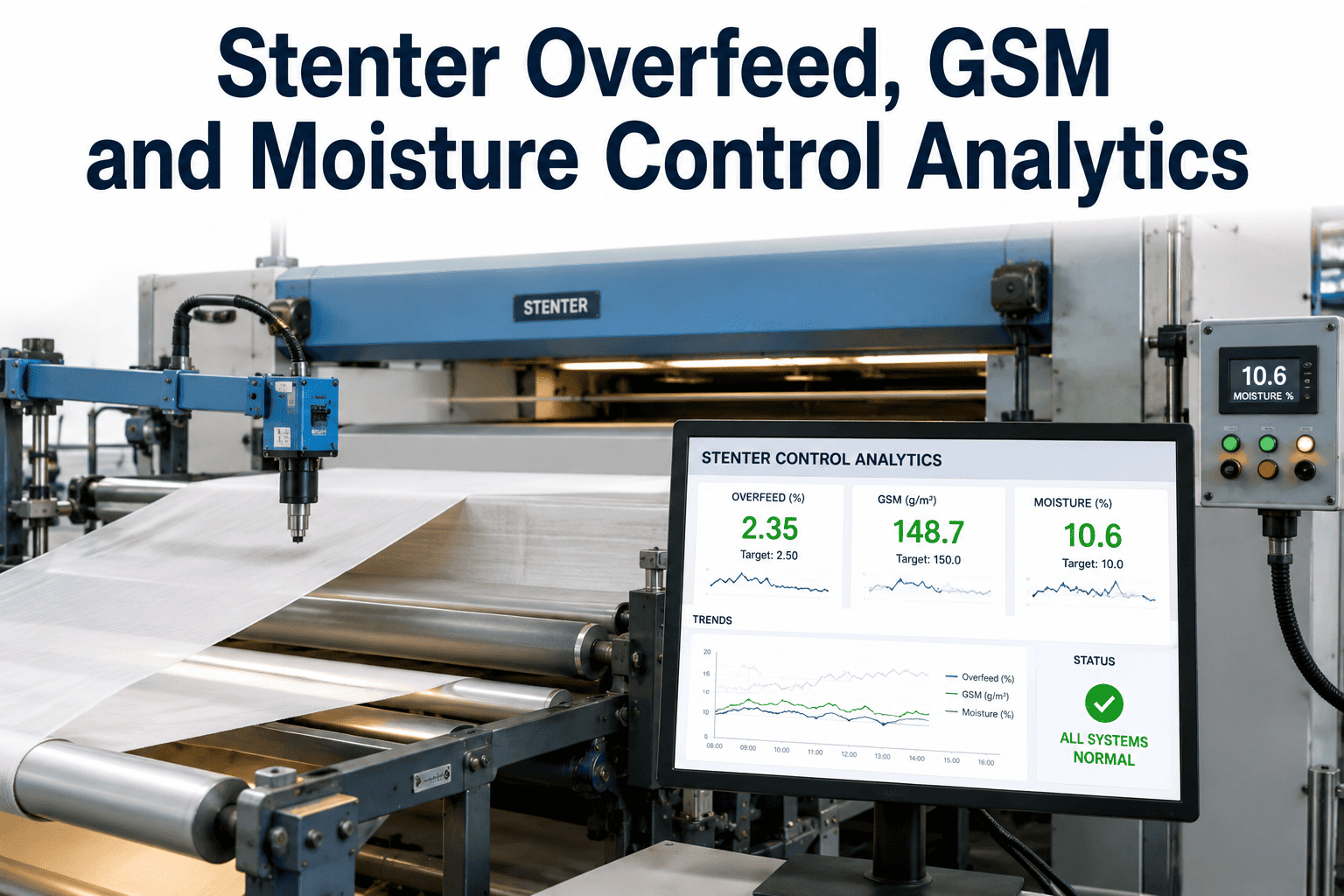
Read More
In textile finishing, the stenter is the final checkpoint where fabric quality is locked in. Overfeed percentage, chamber temperature, fabric speed, width retention, GSM uniformity, and residual moisture must be precisely orchestrated. Even a 1% d

Read More
In the textile industry, wastewater management has evolved from a regulatory afterthought into a strategic imperative. For dye houses and finishing mills, the ability to attribute effluent load—including chemical oxygen demand (COD), biochemical o
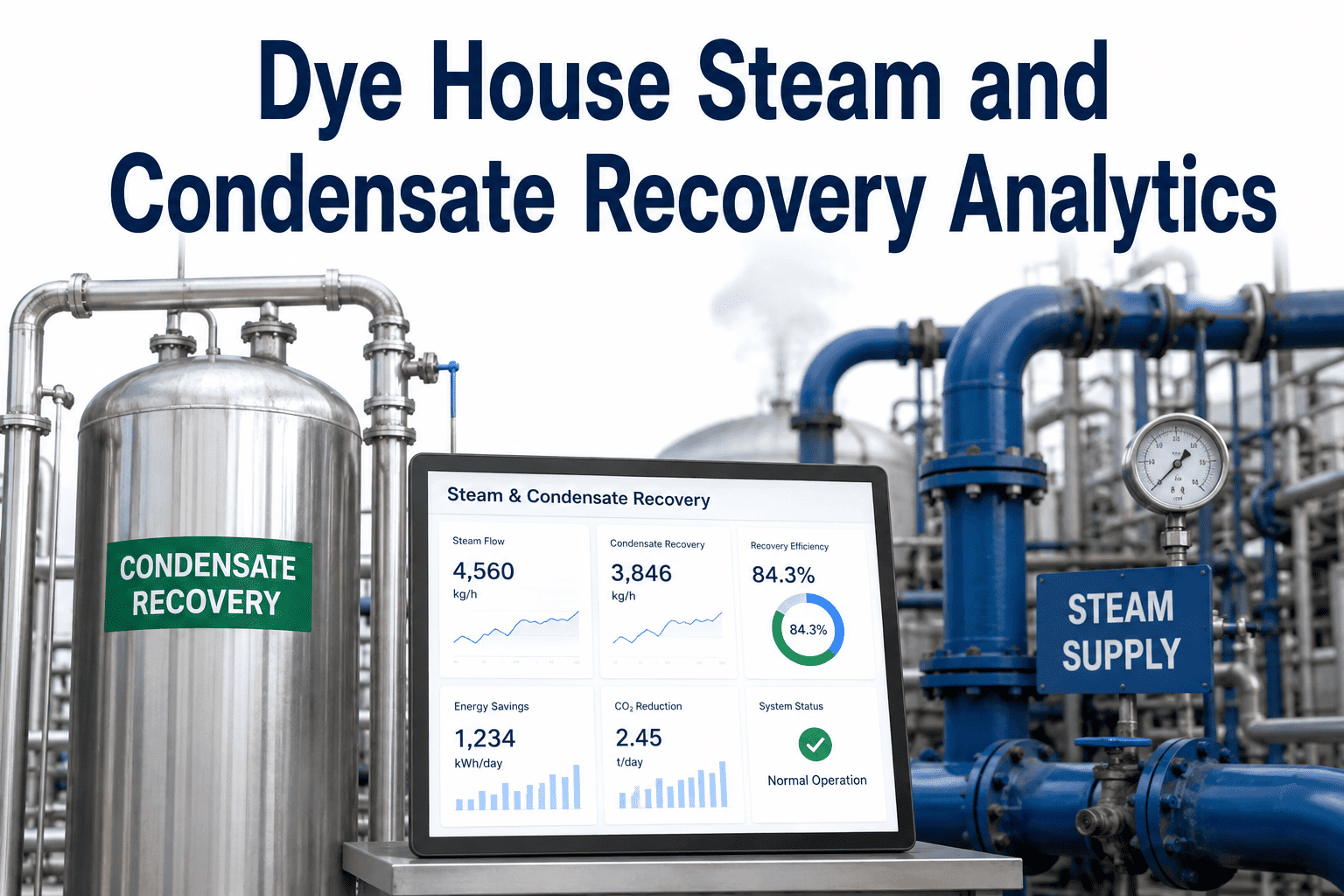
Read More
In the high-stakes environment of textile dyeing, steam is the lifeblood of production—yet it remains one of the most elusive and costly utilities to manage. Dye houses often operate with steam systems that leak, return insufficient condensate, an

Read More
Reactive dyeing remains the dominant coloration method for cellulosic fibers, yet it is also the most chemically intensive process in the textile supply chain. Salt and alkali dosing, while fundamental to dye fixation, often operates on outdated r
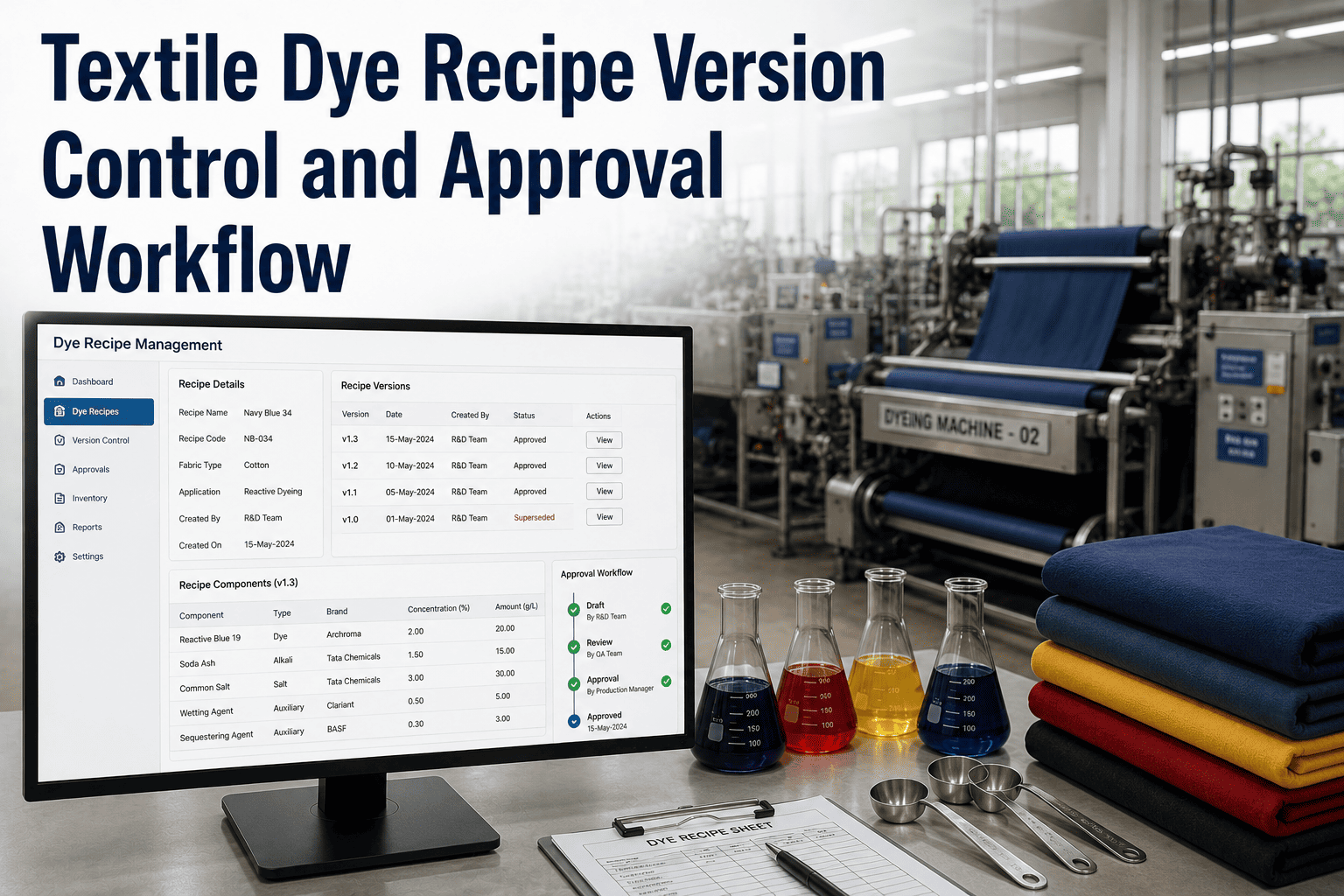
Read More
In the high-stakes world of textile manufacturing, a single deviation in dye recipe formulation can cascade into catastrophic batch failures, costly reworks, and irreparable brand reputation damage. Modern dye houses operate under immense pressure
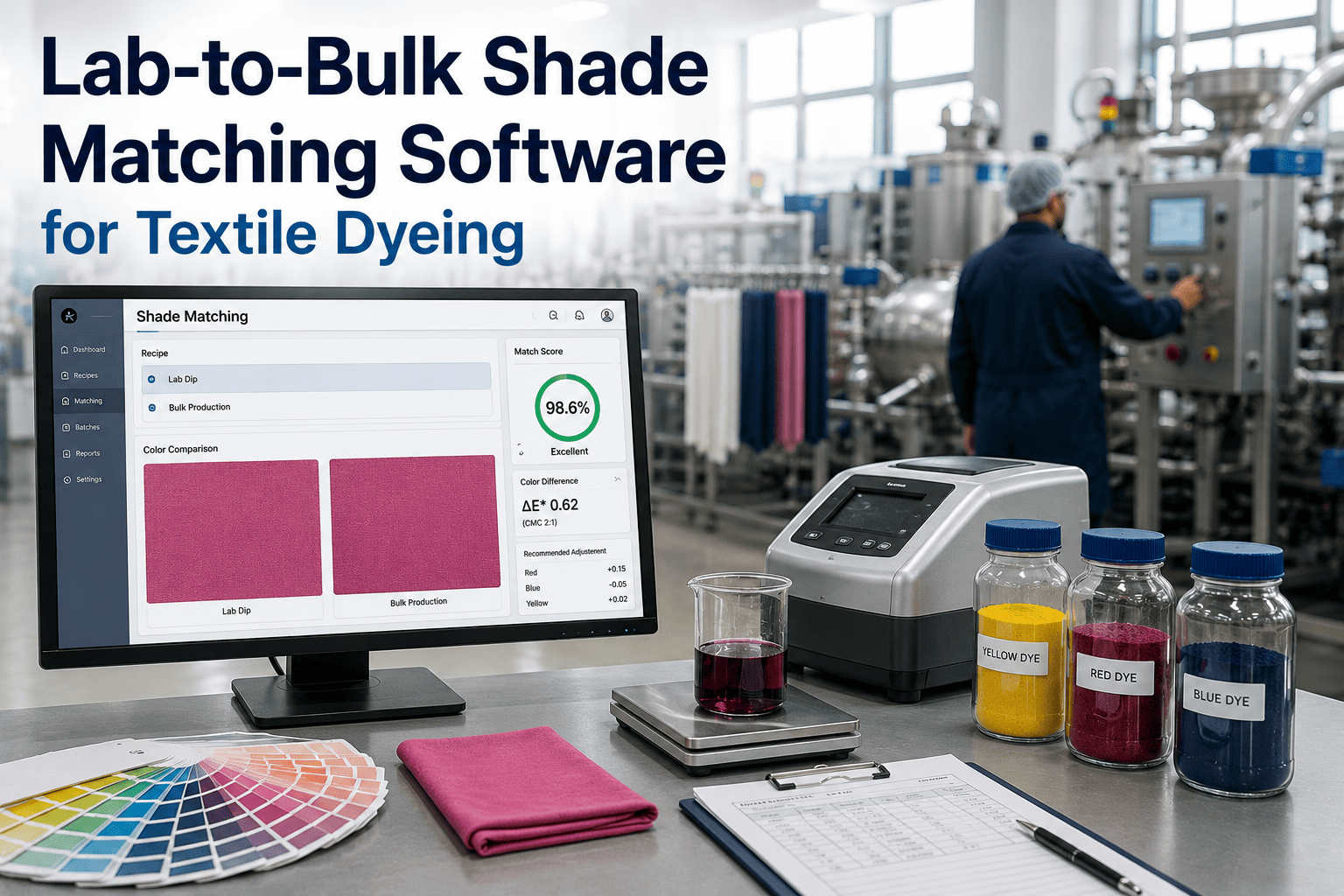
Read More
In the high-stakes world of textile manufacturing, color consistency across production runs is not merely a quality metric—it is the bedrock of brand reputation and operational profitability. The transition from laboratory-scale dyeing to bulk pro
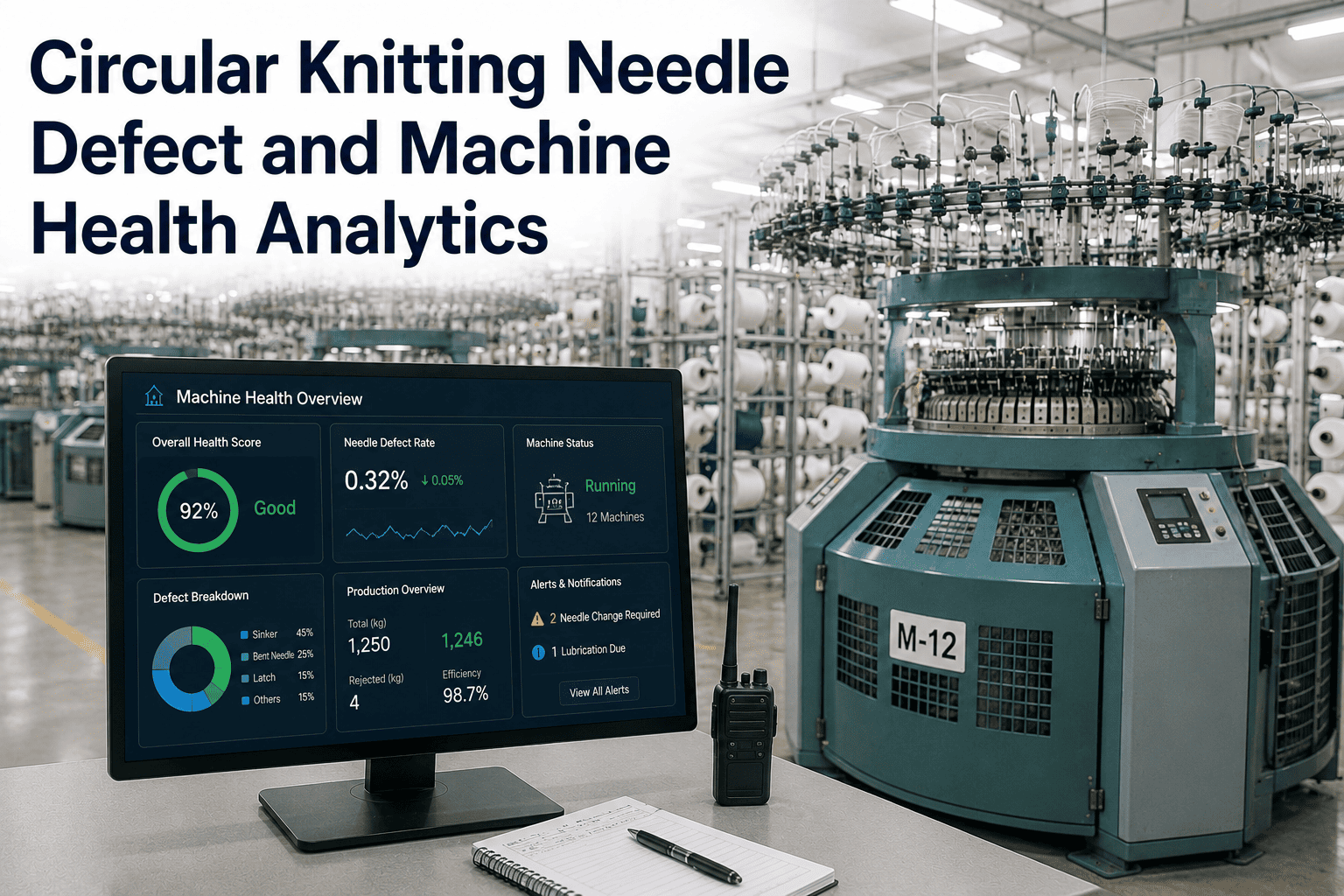
Read More
Circular knitting operations form the backbone of modern textile manufacturing, yet they remain plagued by needle defects, yarn breaks, feeder faults, and vibration anomalies that cascade into costly fabric quality issues. Traditional reactive mai
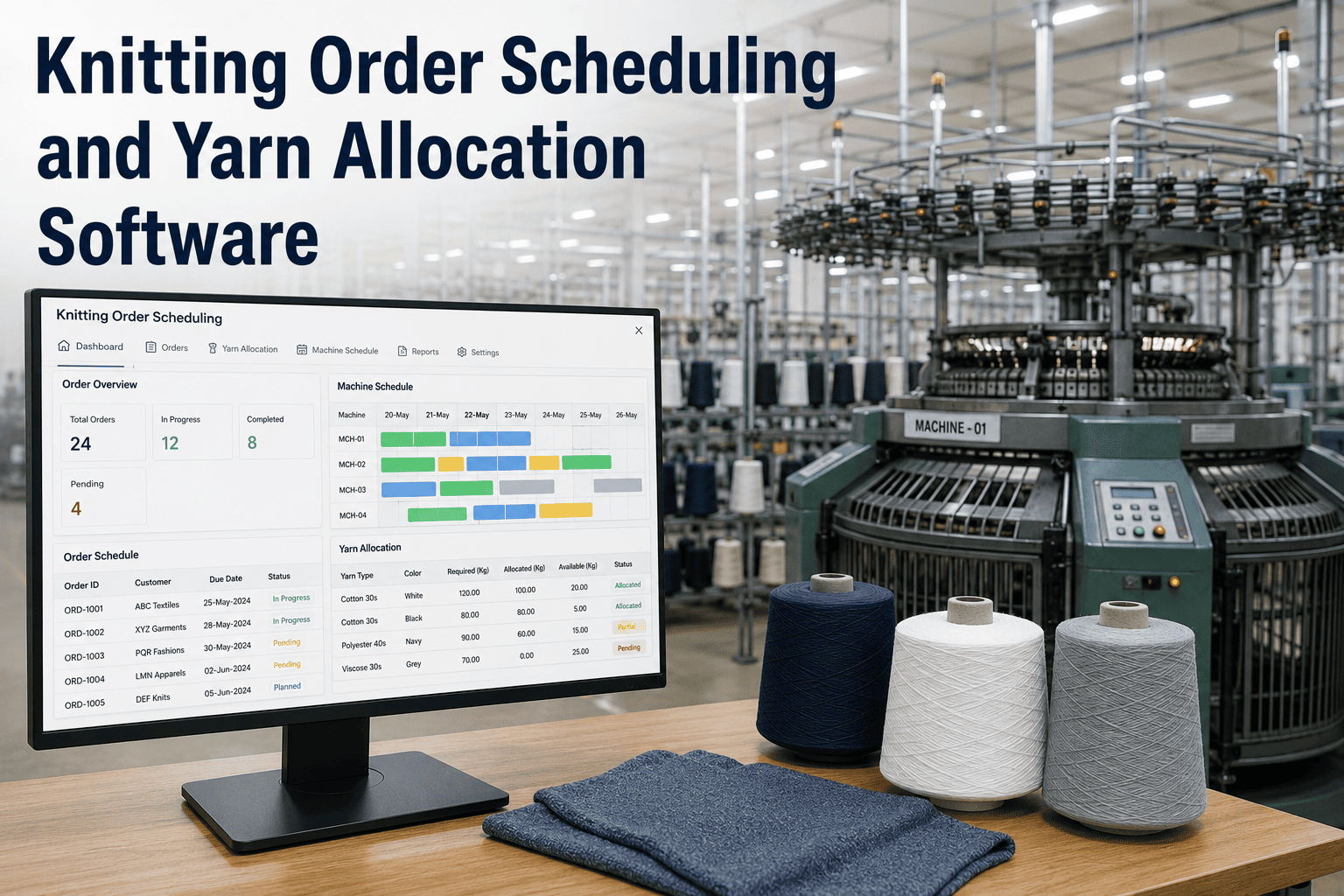
Read More
In circular knitting operations, the complexity of scheduling orders across dozens of machines—each with unique gauge, diameter, and yarn requirements—can overwhelm even seasoned planners. Traditional spreadsheets or ERP modules fail to account fo
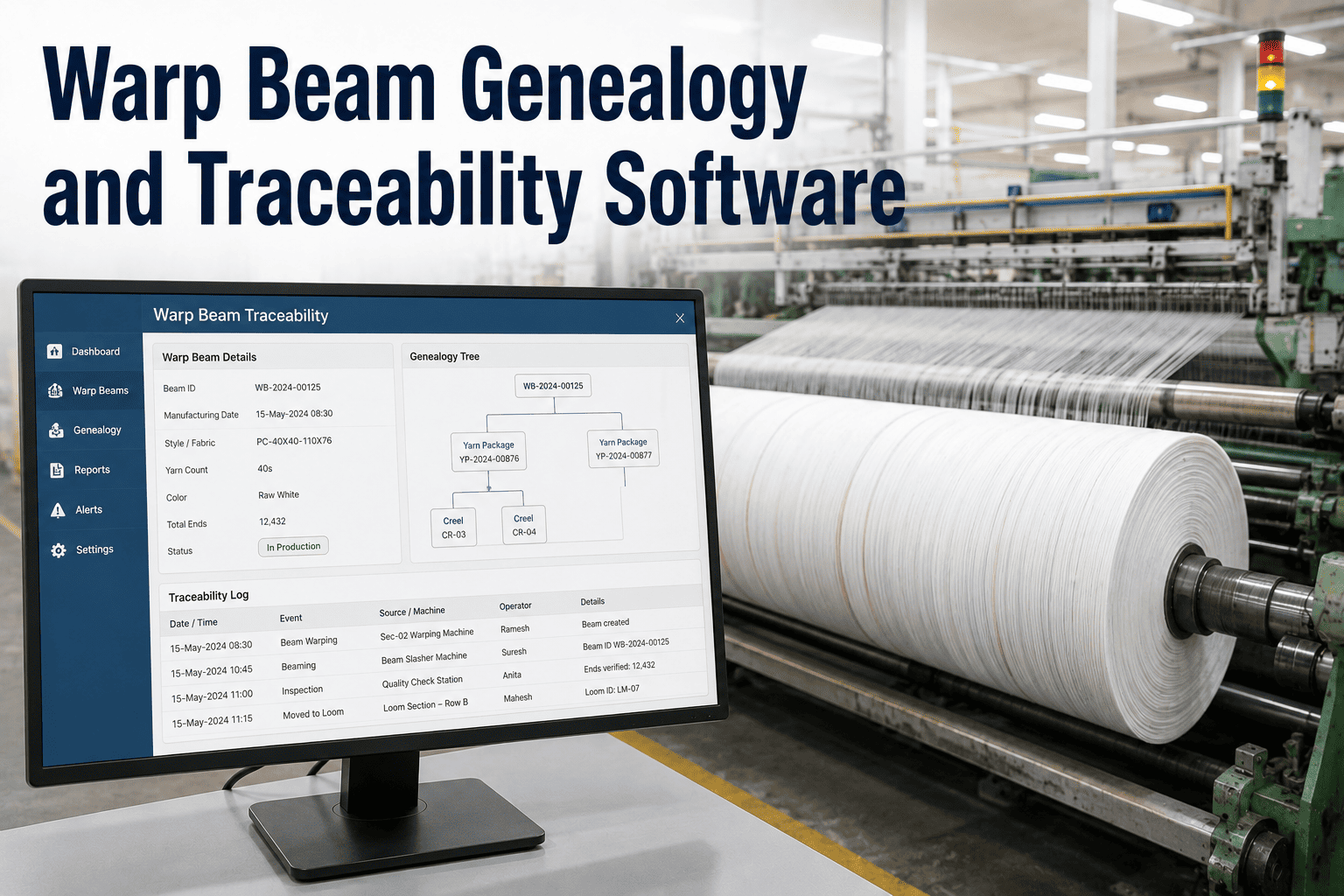
Read More
In the high-stakes environment of modern textile manufacturing, the ability to trace every warp beam from its constituent yarn lots through warping, sizing, weaving, and final fabric inspection is no longer a luxury—it is a competitive necessity.
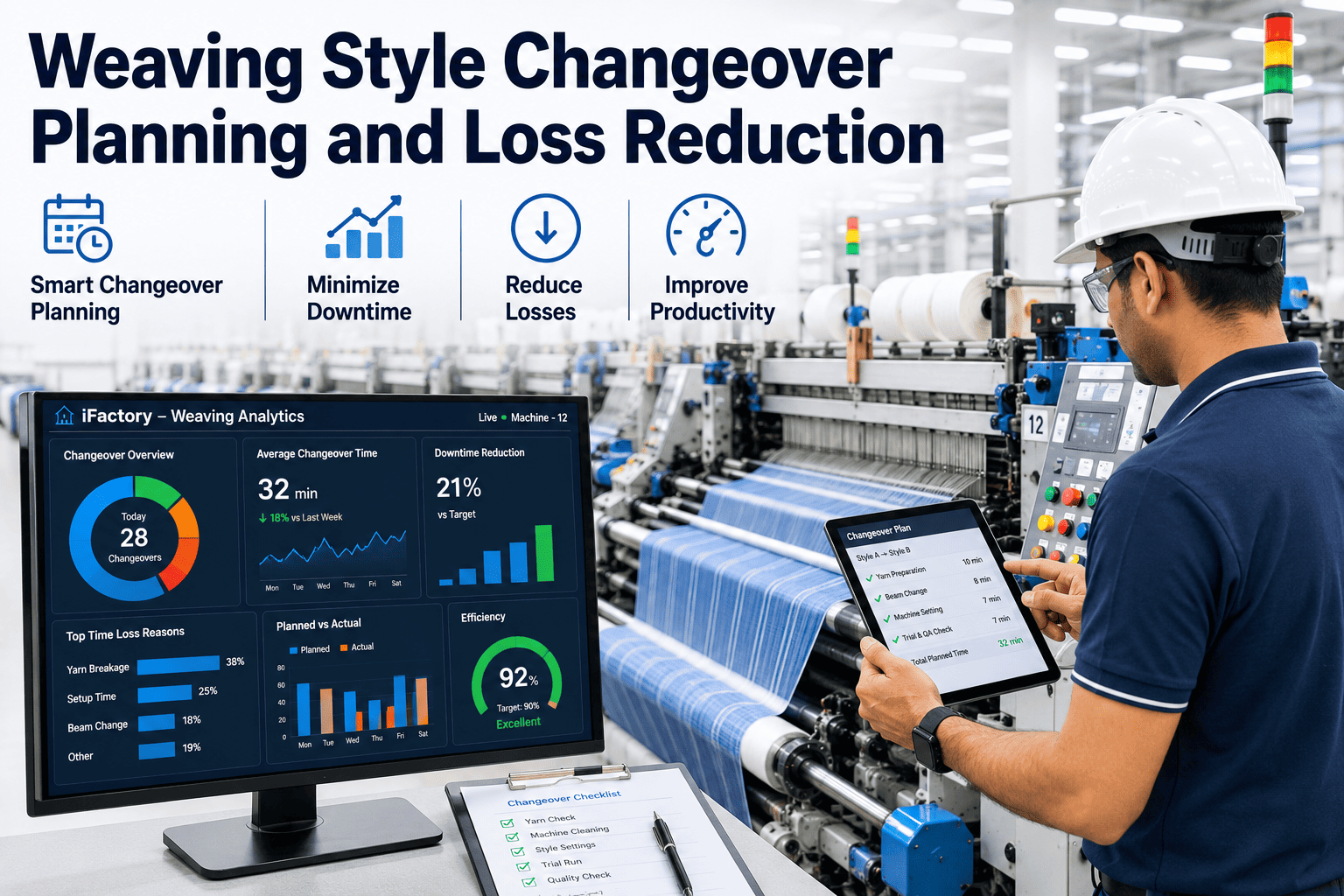
Read More
In modern textile manufacturing, weaving style changeovers represent a critical intersection of operational agility and productivity loss. Each transition—whether for a new article, beam, or style—demands meticulous planning to minimize downtime,

Read More
In modern air-jet weaving, compressed air often accounts for 30% to 40% of total energy expenditure, making it the single largest utility cost in the weaving shed. Despite this, most mills still rely on manual spot checks or aggregated monthly bil
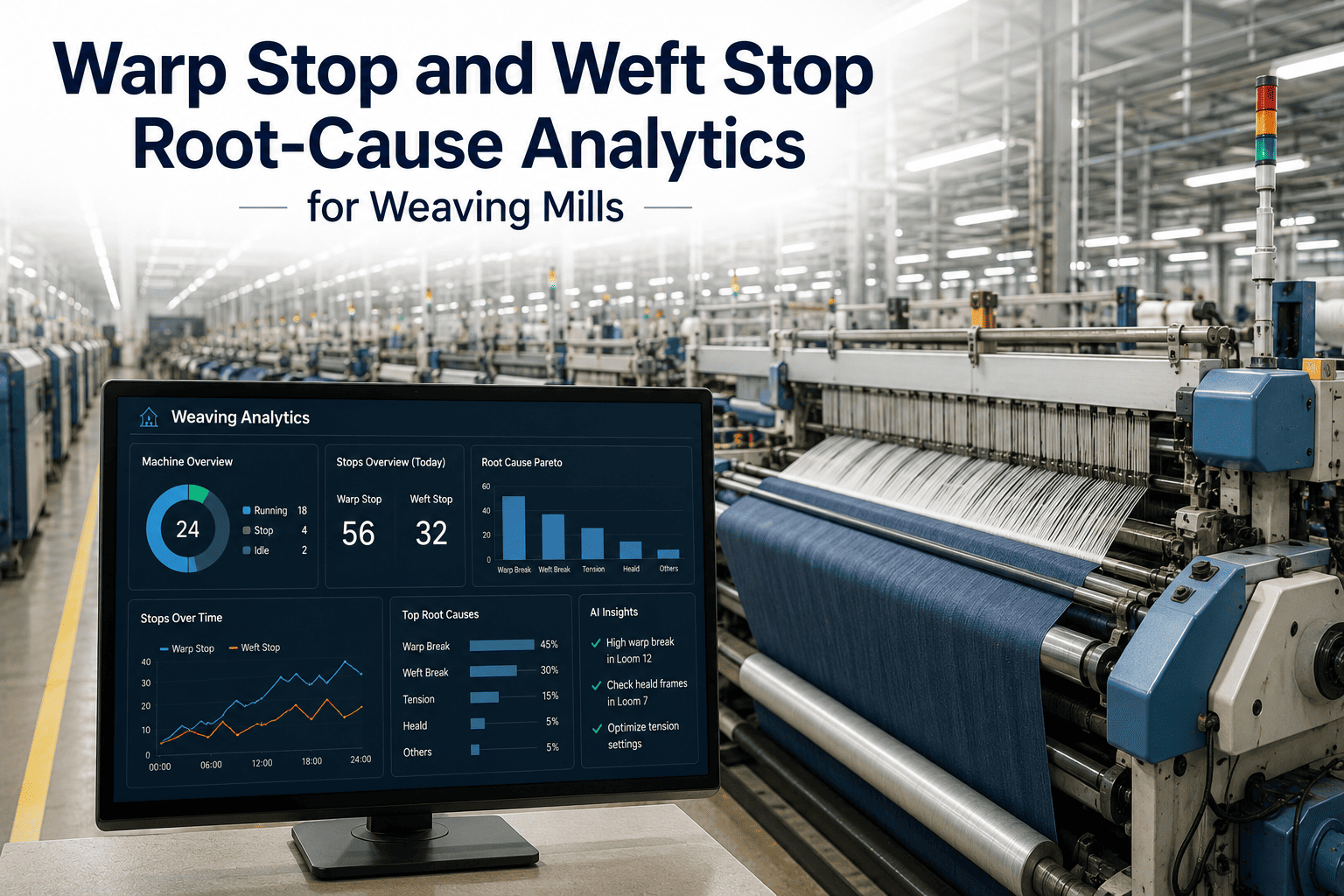
Read More
In modern weaving mills, unplanned warp and weft stops remain the single largest contributor to productivity loss and fabric quality degradation. Each stop—whether caused by a yarn defect, tension fluctuation, mechanical misalignment, or operator
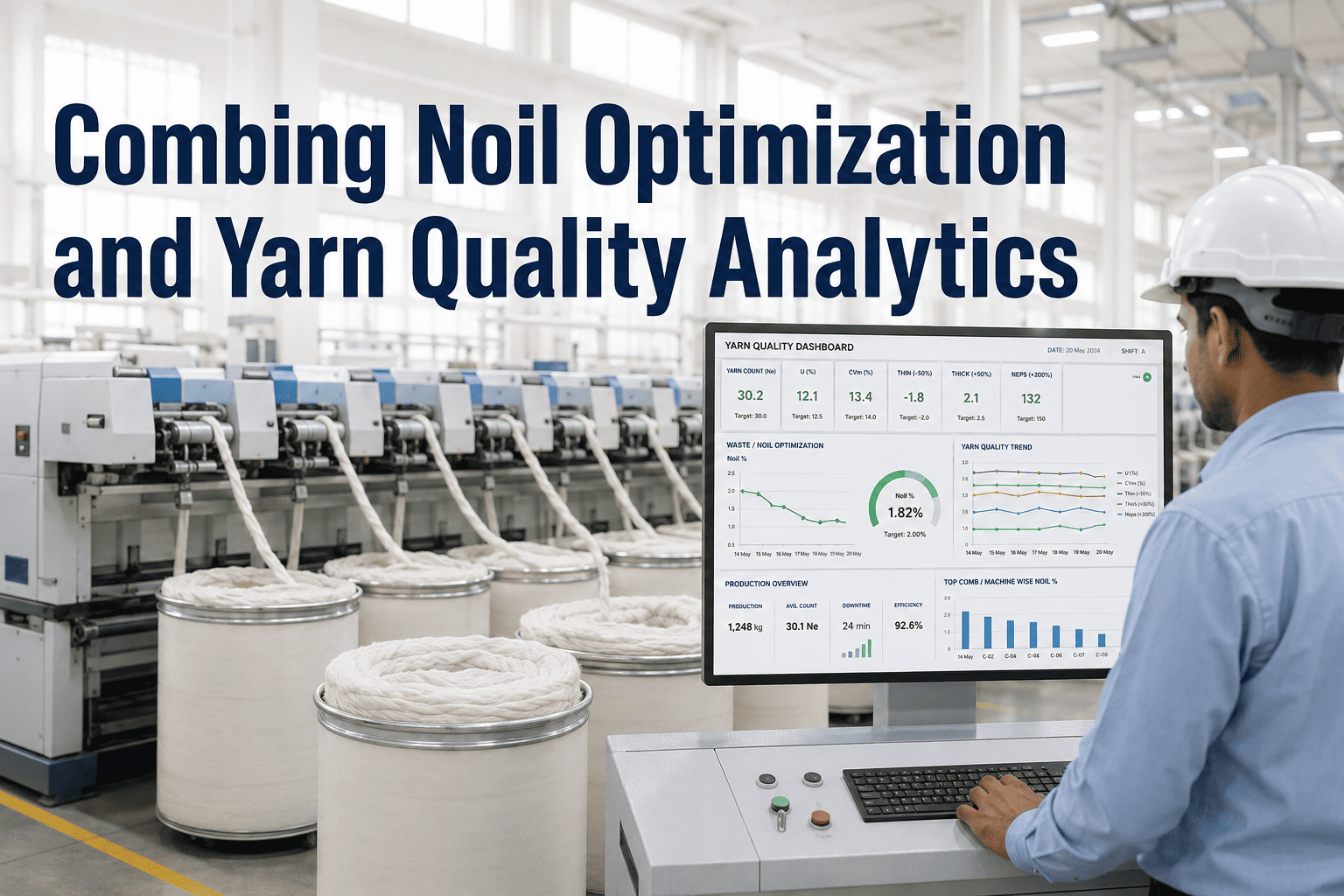
Read More
Every percentage point of noil removed at the comber is fiber that never becomes yarn, which makes noil percentage feel like a pure cost to minimize, right up until quality drops because too little noil means short fiber and neps stayed in the sli
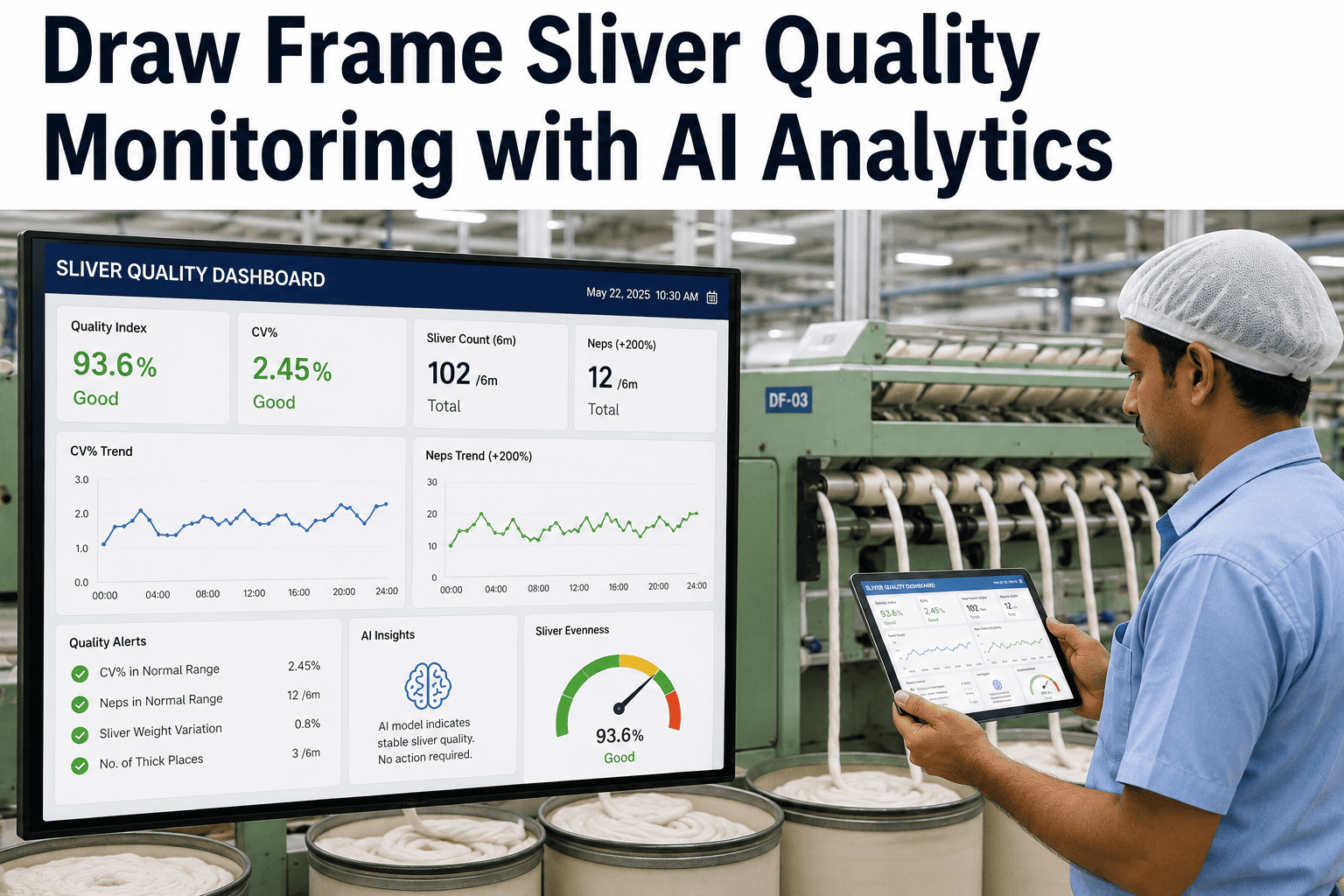
Read More
The draw frame is where a mill either corrects the unevenness carried forward from carding or quietly passes it downstream to become a yarn quality problem several stages later. Autolevellers exist specifically to catch and correct that unevenness
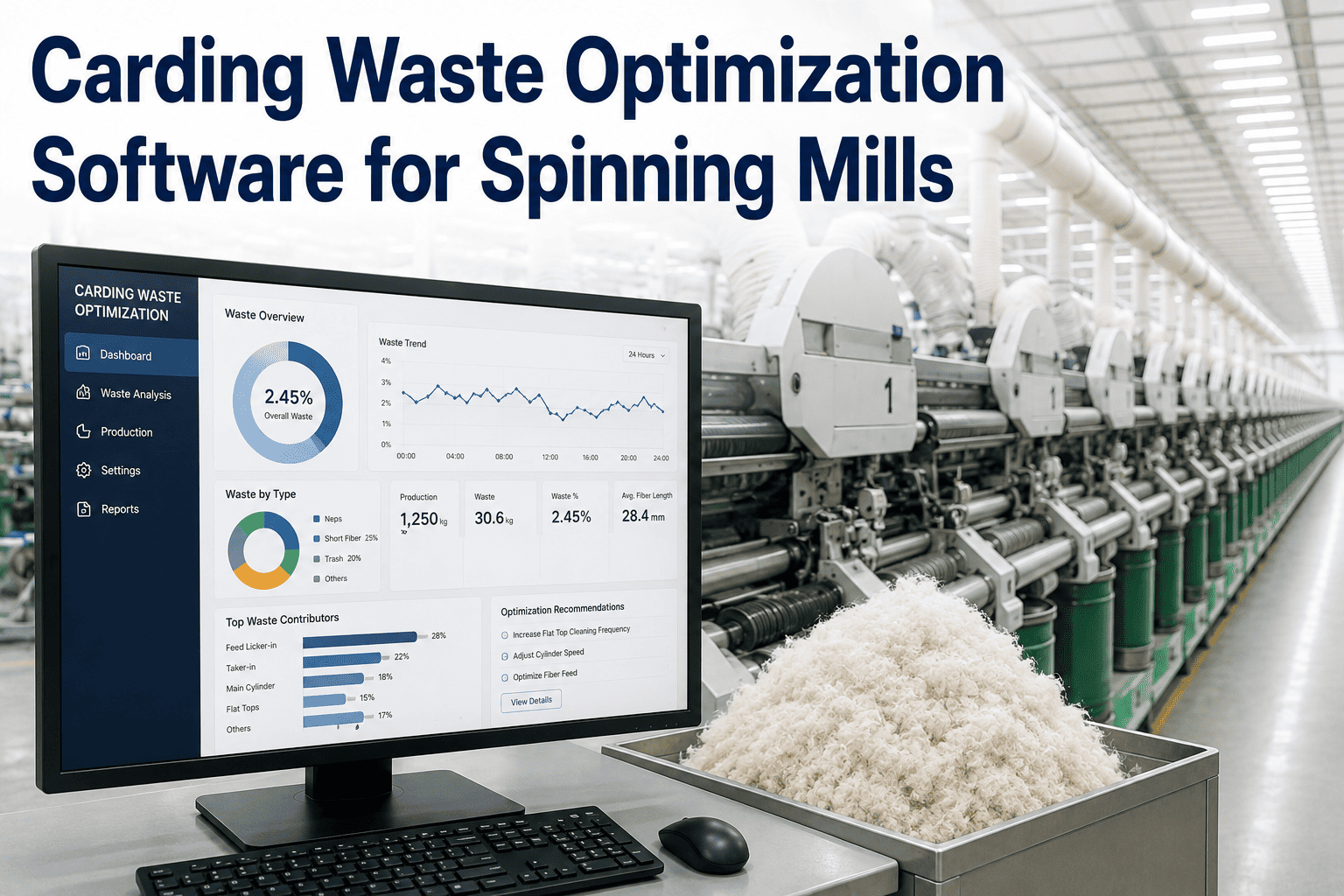
Read More
Cutting carding waste sounds like a straightforward cost win until the sliver quality drops and downstream breaks start rising, at which point the mill has traded one cost for another that's often worse. Waste settings on a carding machine exist i
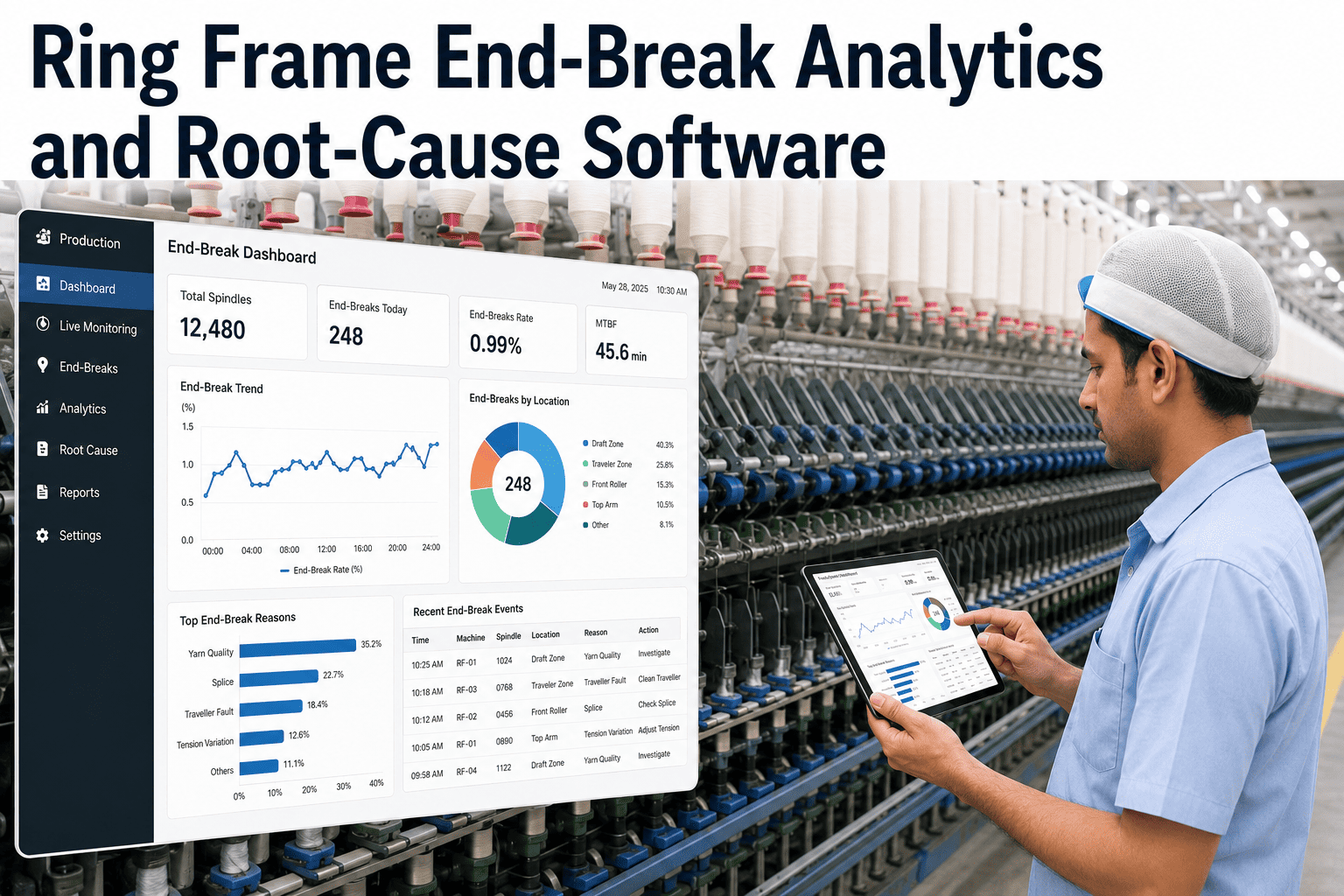
Read More
Every end break on a ring frame stops production at that spindle until an operator notices and re-pieces it, and on a frame running thousands of spindles, a break rate that looks small in a shift summary can represent a meaningful share of lost sp
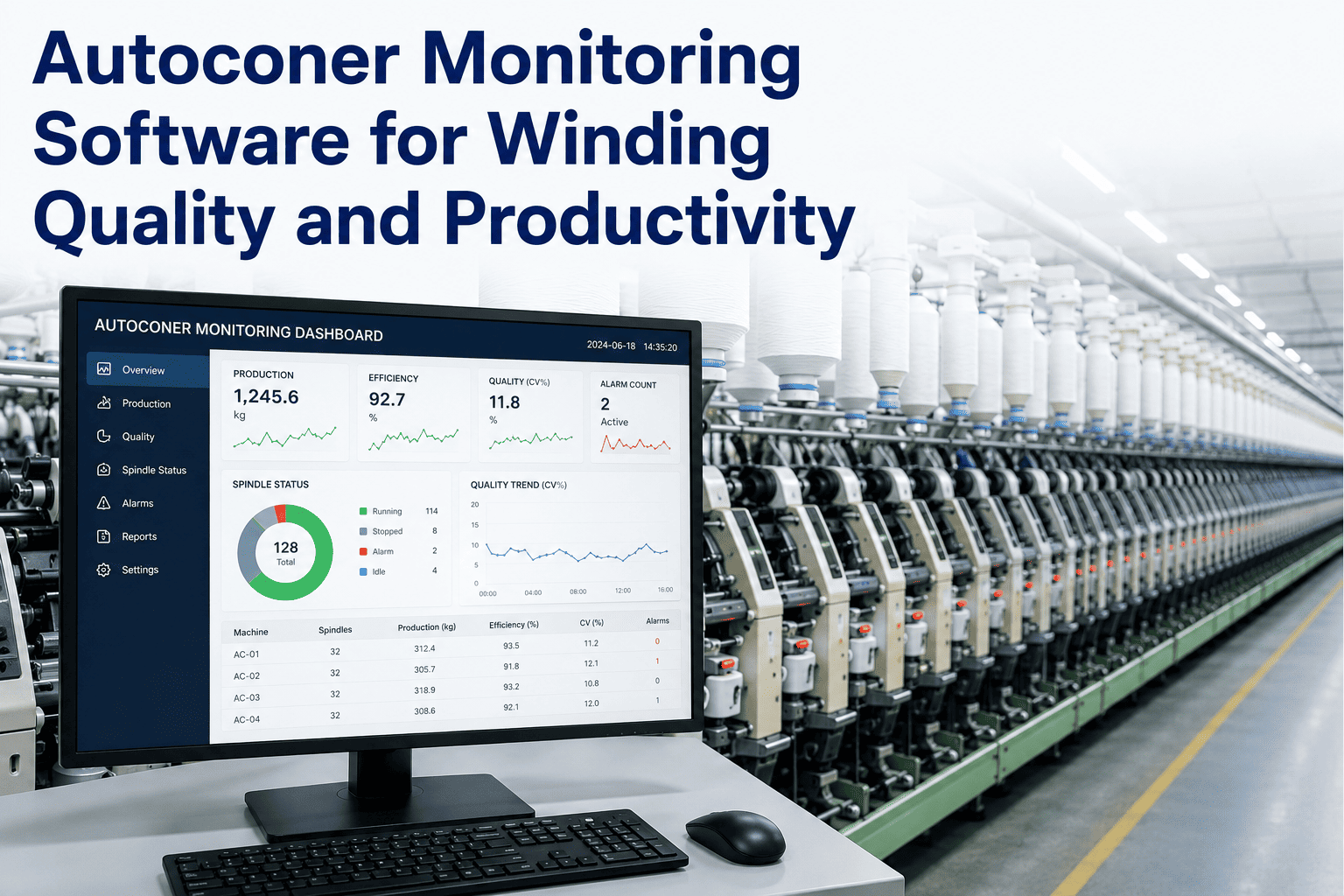
Read More
An autoconer running below its rated efficiency rarely announces itself with an alarm, it just quietly produces less than it should while every metric that would explain why, winding speed, clearer cut rate, splice quality, and drum condition, sit

Read More
Buying an AI fabric inspection system usually starts with a vendor demo that looks impressive under ideal lighting on a defect-free sample, which tells you almost nothing about how the system performs on your actual fabric at your actual line spee
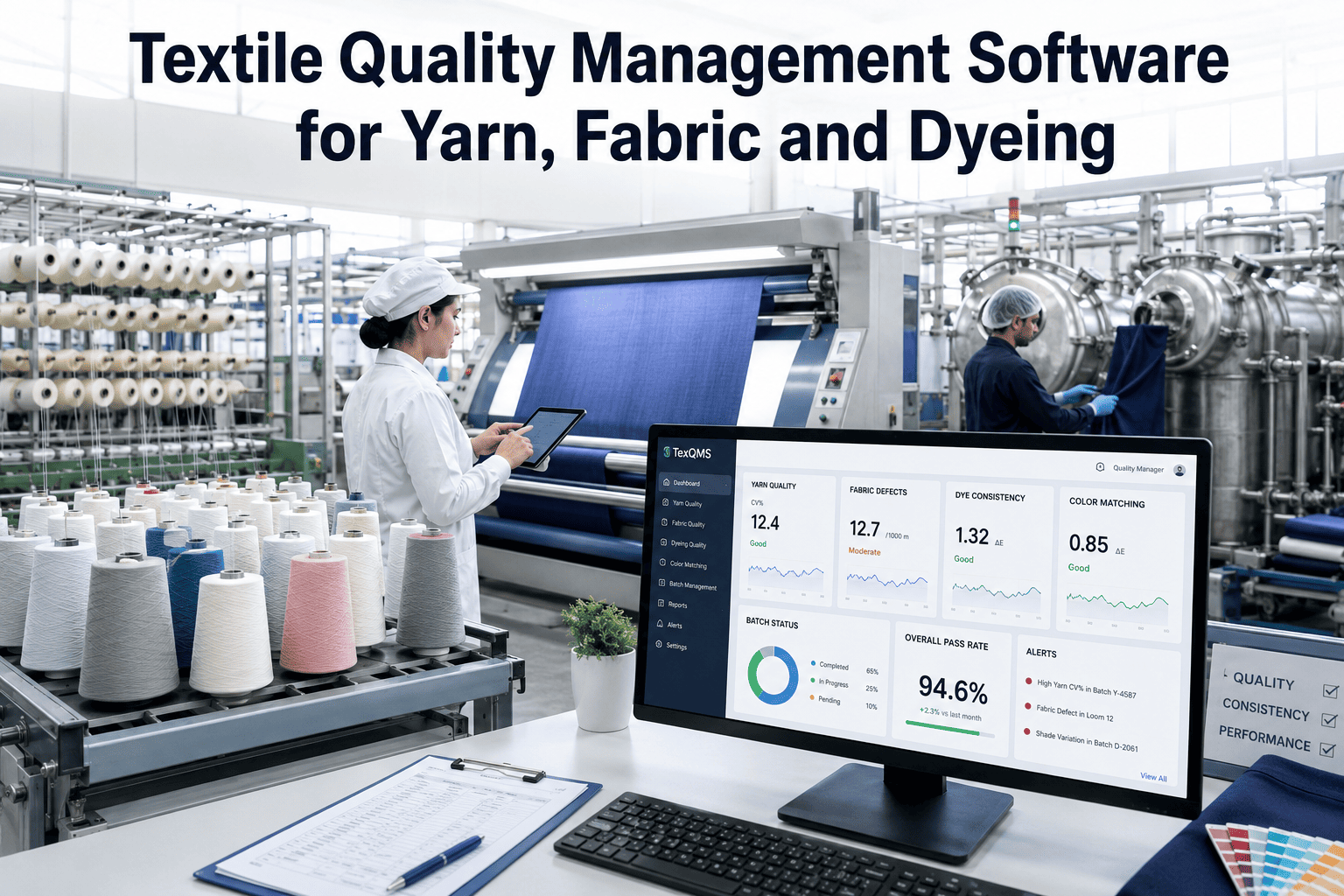
Read More
Quality data in most textile operations lives in at least four different places: inspection sheets at the loom, lab test results in a separate spreadsheet, dyeing lot records in a third system, and supplier certificates in email threads nobody can
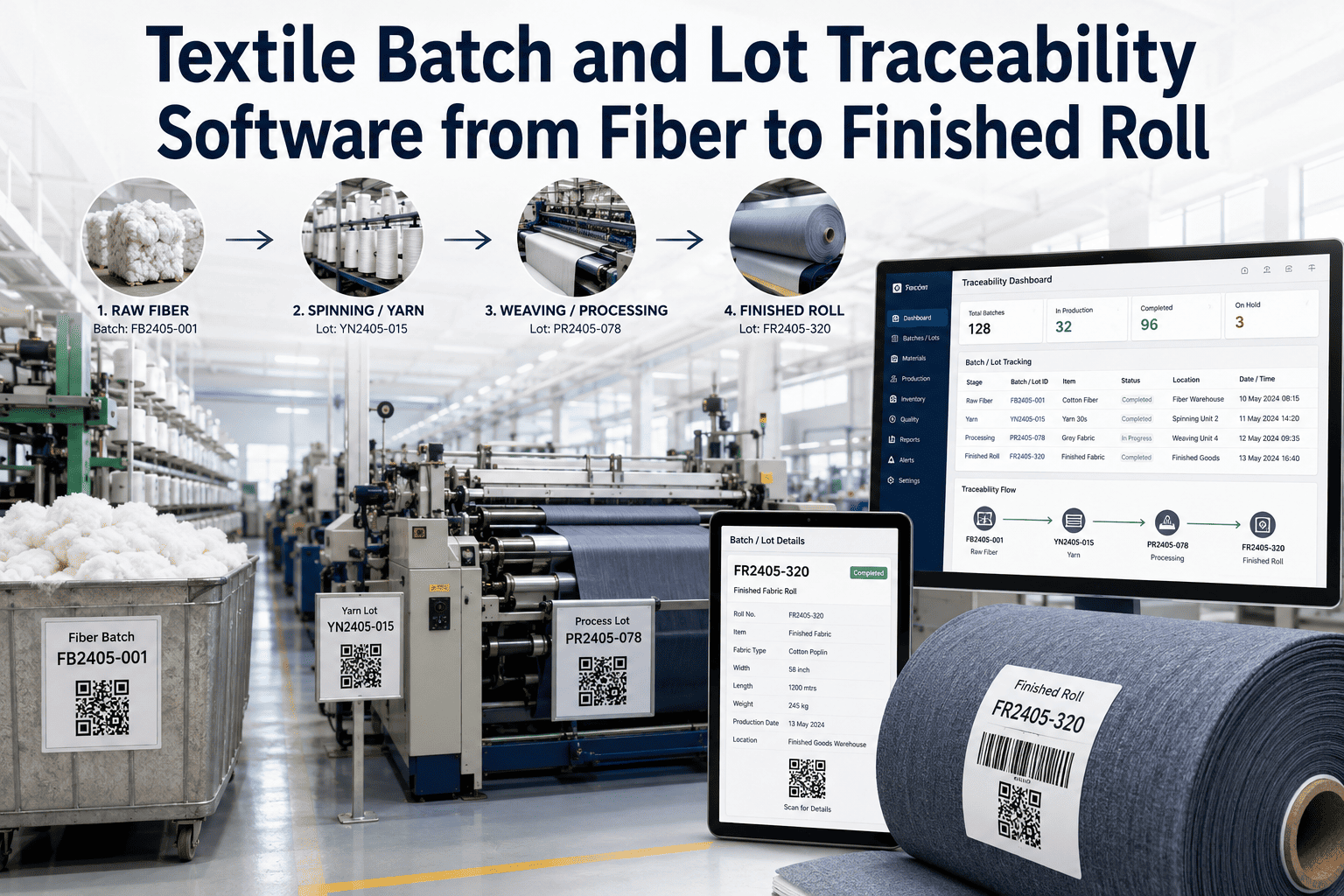
Read More
In the complex, multi-stage world of textile manufacturing, the ability to trace every single component from raw fiber to the finished roll is no longer a competitive advantage—it is an absolute operational necessity. Textile batch and lot traceab

Read More
In the highly competitive textile manufacturing landscape, multi-stage mills face a complex orchestration challenge: synchronizing spinning, weaving, knitting, dyeing, and finishing processes under tight delivery deadlines. Traditional spreadsheet

Read More
In high-volume discrete and process manufacturing environments, repeat defects represent a systemic drain on profitability, operational efficiency, and brand reputation. Traditional quality management approaches, reliant on manual inspection, stat

Read More
In the hyper-competitive textile manufacturing landscape, every percentage point of machine efficiency directly impacts profitability, order fulfillment, and operational agility. Traditional manual data collection methods—clipboards, stopwatches,

Read More
In the textile industry, production data is as valuable as the fabric itself. Mill managers and CTOs are increasingly demanding on-premise textile manufacturing software to ensure complete control over sensitive production metrics, quality data, a

Read More
The global textile manufacturing industry is undergoing a profound digital transformation, driven by the need for operational excellence, real-time visibility, and predictive intelligence. As a plant manager, selecting the right software platform
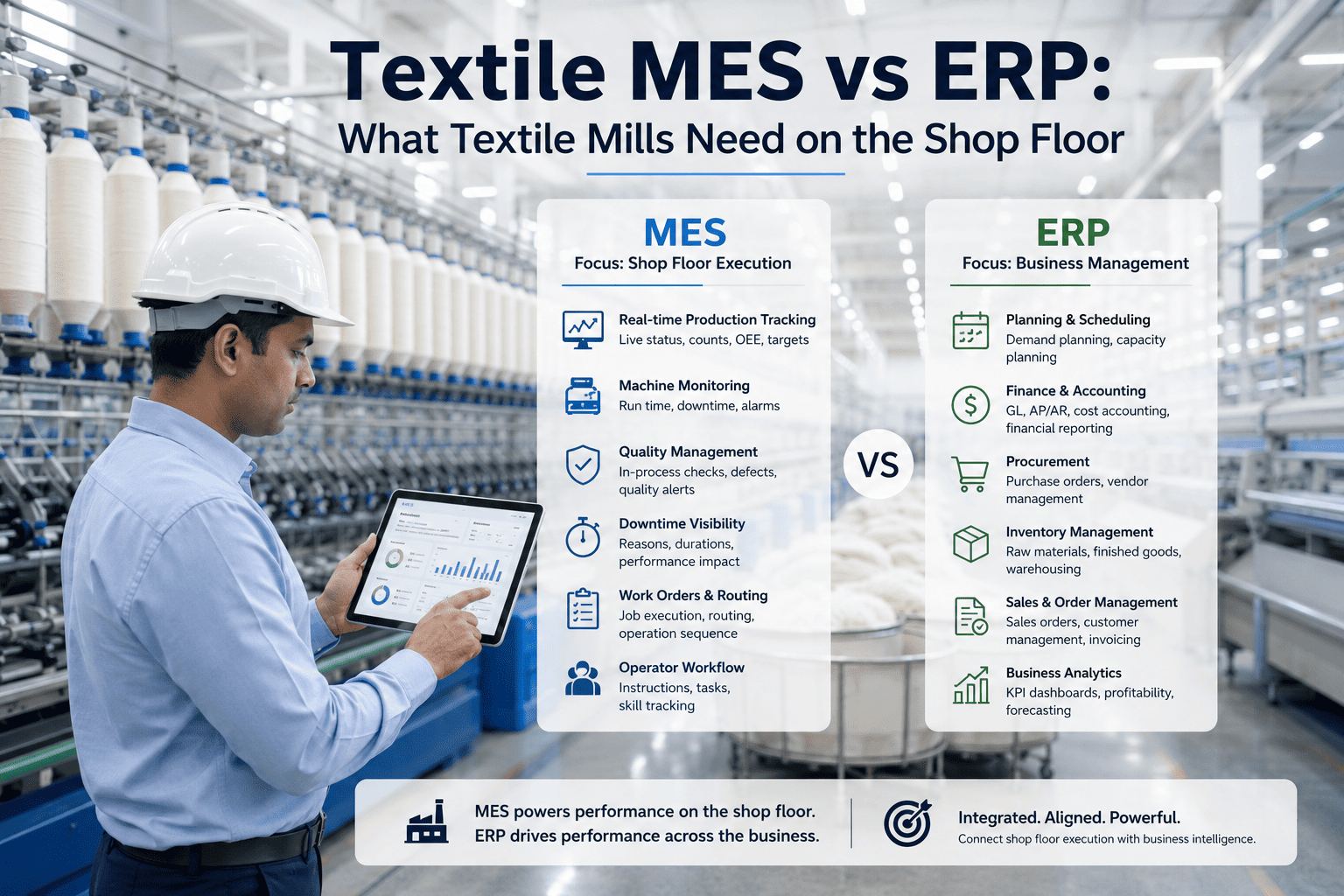
Read More
Selecting the right textile manufacturing software is a critical decision that directly impacts operational efficiency, product quality, and long-term competitiveness. For plant managers and CTOs navigating Industry 4.0, the challenge lies not jus

Read More
The textile manufacturing industry is undergoing a profound digital transformation, driven by the need for real-time visibility, operational efficiency, and stringent quality control across complex supply chains. A robust Manufacturing Execution S
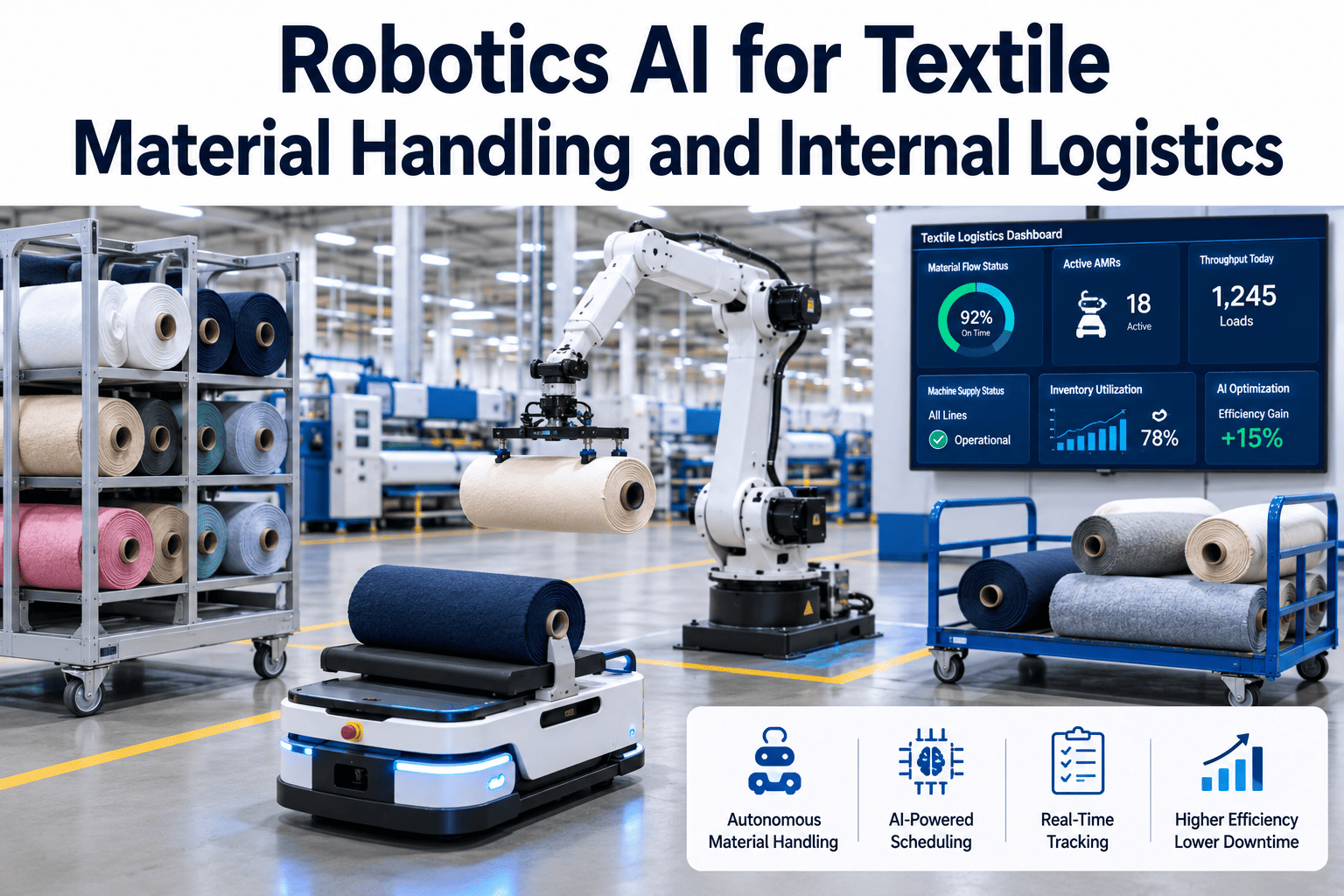
Read More
The textile industry is undergoing a profound transformation as manufacturers seek to streamline internal logistics and material handling processes. Traditional manual methods for moving fabric rolls, yarn bales, and finished goods are being repla

Read More
Compressed air systems are the backbone of textile manufacturing, powering pneumatic looms, spinning frames, and material handling equipment. In a typical textile mill, compressors account for up to 30% of total energy consumption, yet they are of

Read More
The textile manufacturing industry is undergoing a massive transformation as global demand for faster production, higher quality, and sustainable practices continues to rise. Traditional factories often struggle with fragmented data, unplanned dow
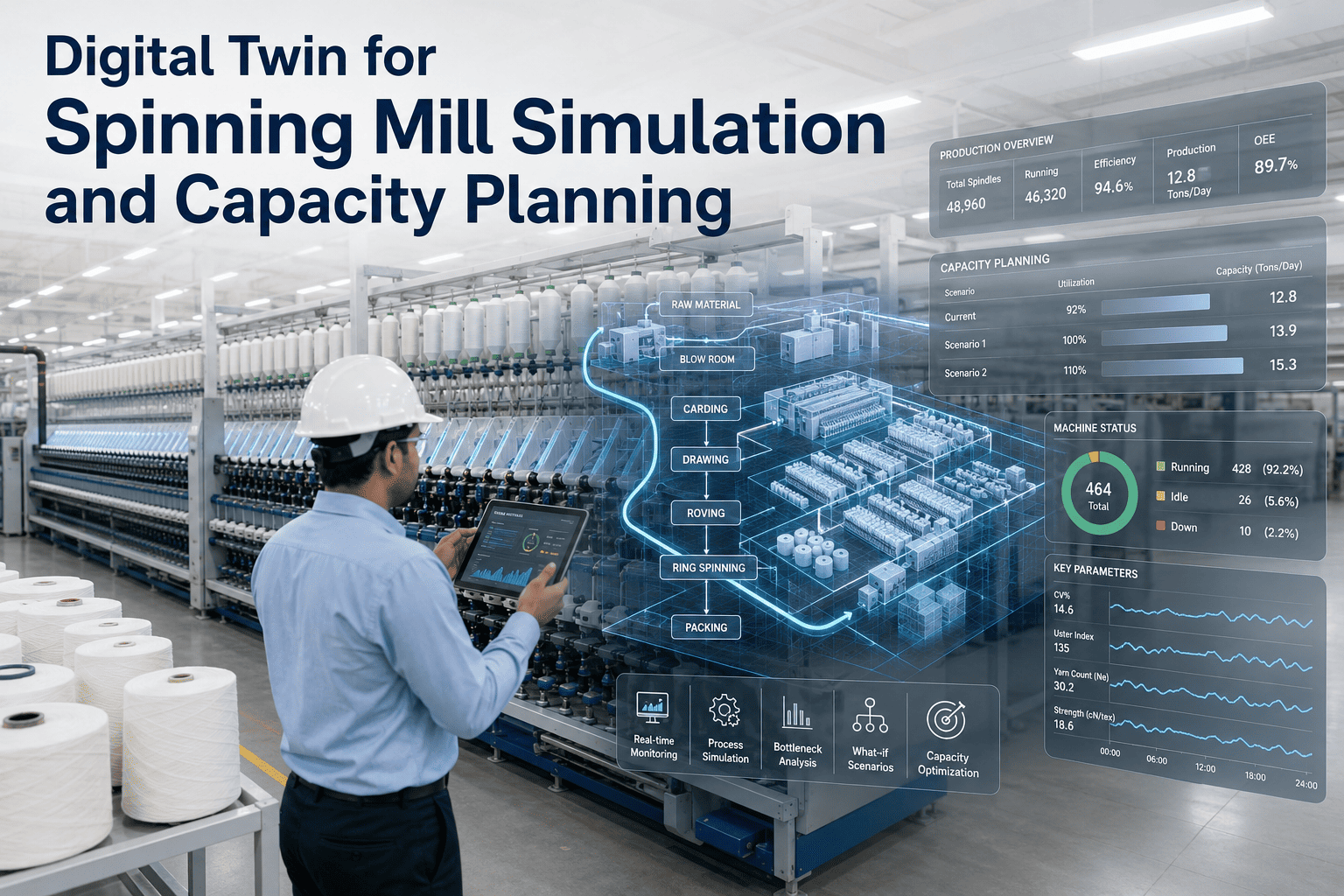
Read More
Spinning mills face constant pressure to maximize production efficiency while managing complex machinery, raw material variability, and fluctuating order demands. Traditional capacity planning methods often fall short, relying on static spreadshee
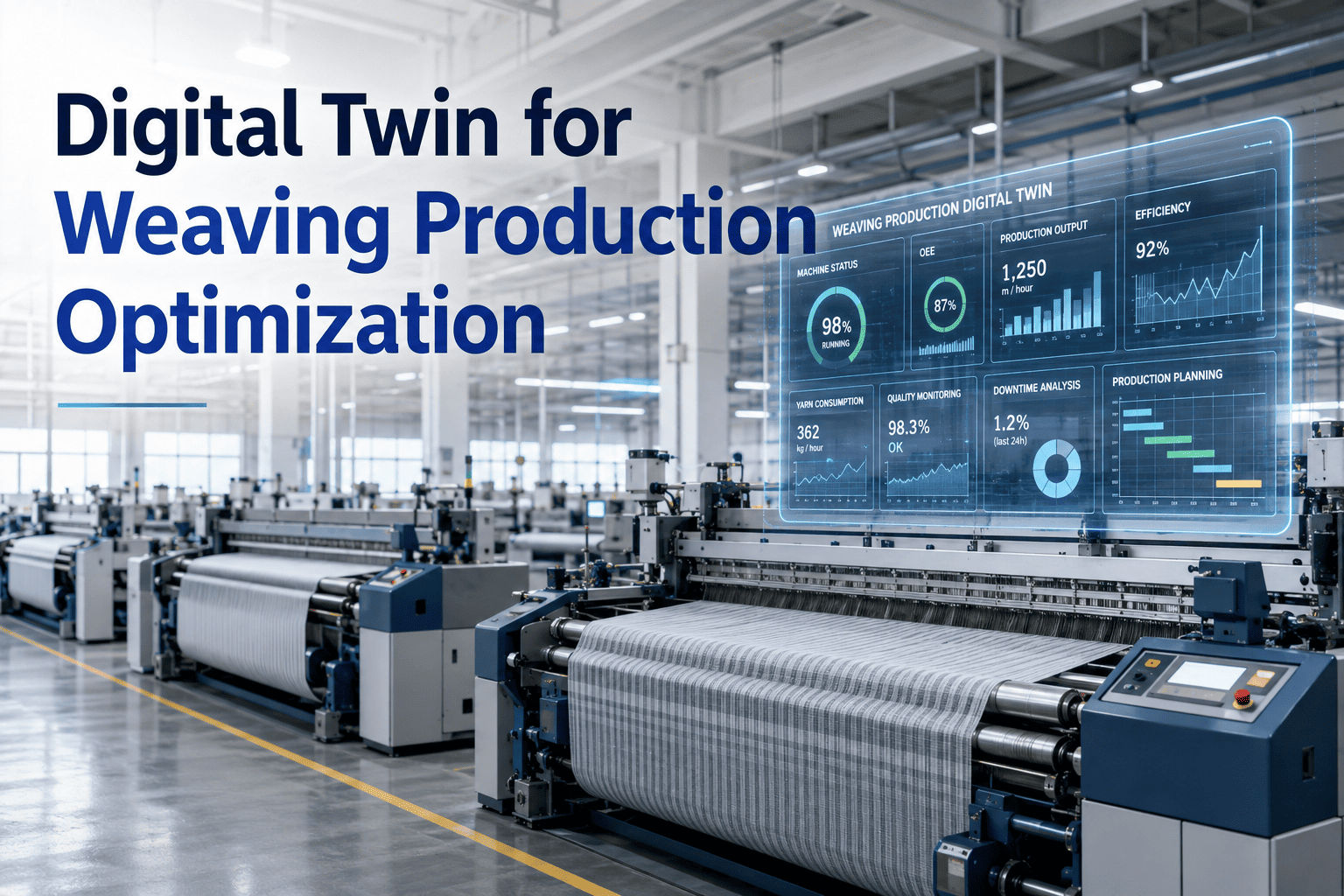
Read More
In the fiercely competitive textile industry, weaving mills face relentless pressure to maximize output while minimizing costs and delays. Traditional production planning relies on static spreadsheets and historical averages, often failing to capt
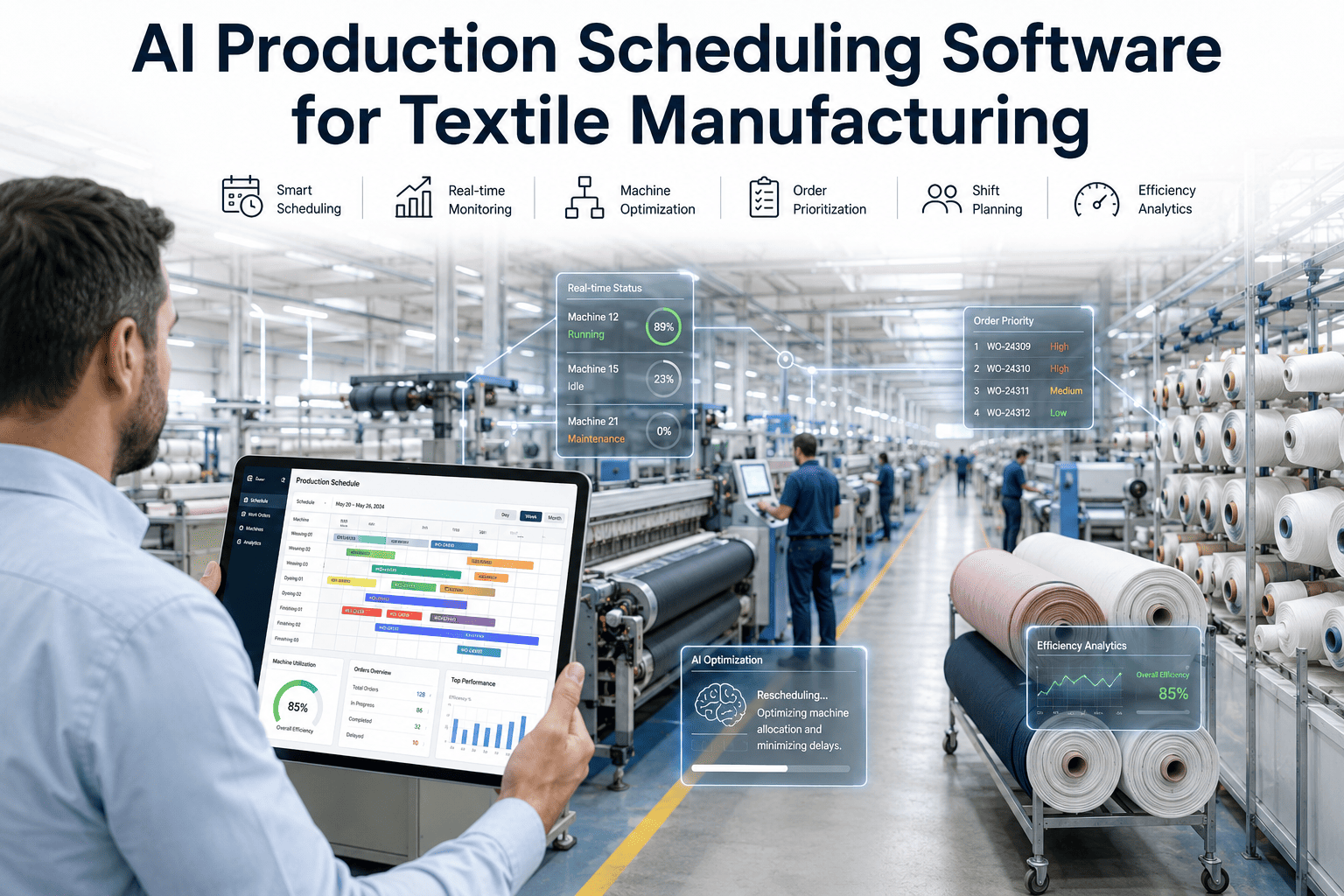
Read More
In the highly competitive textile manufacturing landscape, the ability to efficiently schedule production across spinning, weaving, dyeing, and finishing processes is a decisive factor for profitability and customer satisfaction. Traditional sched
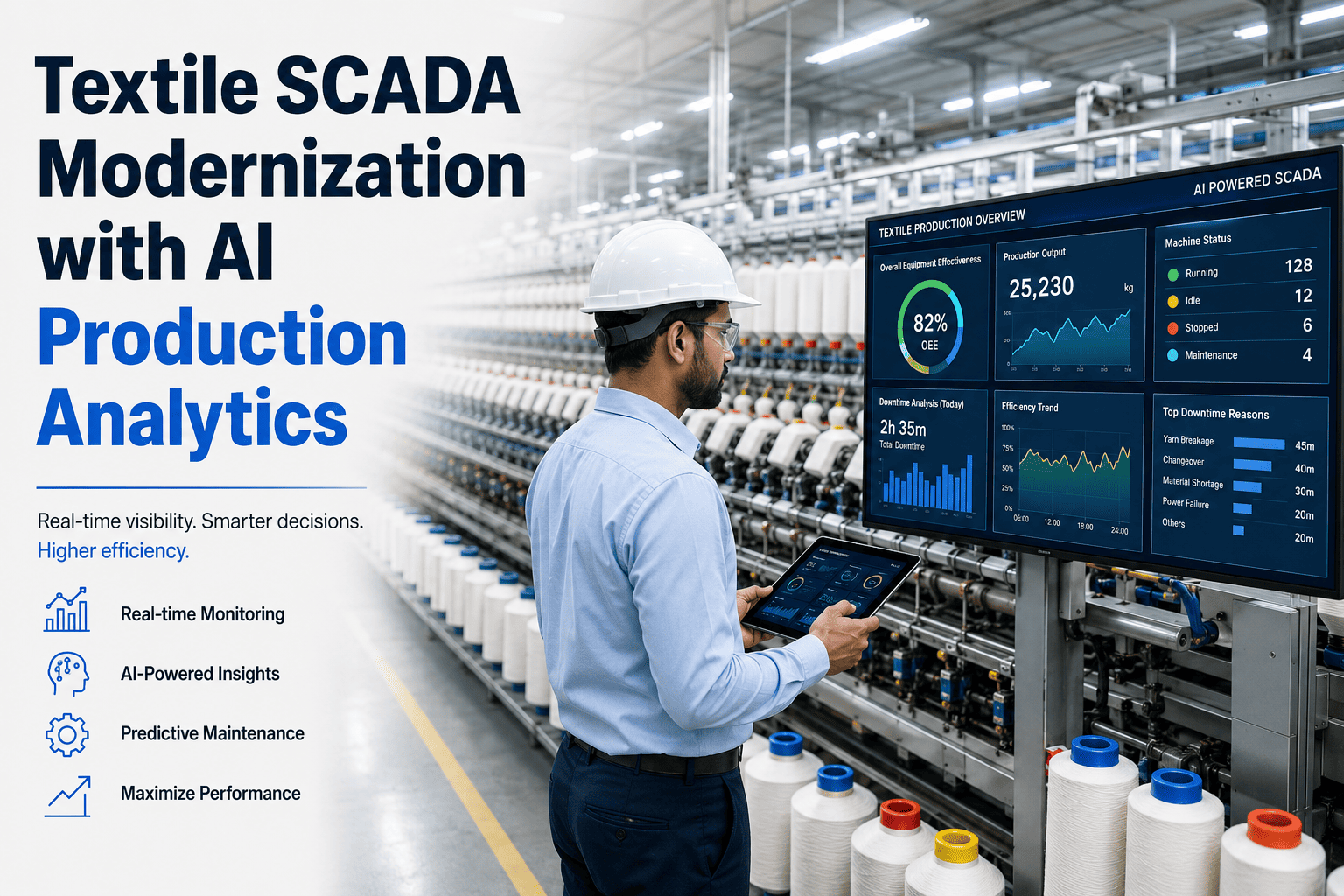
Read More
The global textile industry is undergoing a rapid digital transformation, yet many plants still rely on legacy SCADA systems that generate massive volumes of raw data without delivering actionable insights. These outdated platforms often struggle

Read More
Most food manufacturing plants think of themselves as further along in digital maturity than a structured assessment actually shows, mainly because a handful of dashboards and one automated line create the impression of a modern operation while mo

Read More
In the fast-paced world of textile manufacturing, every second of machine downtime or speed variation directly impacts profitability and delivery commitments. Traditional approaches rely on manual data logging or isolated sensor readouts, which of
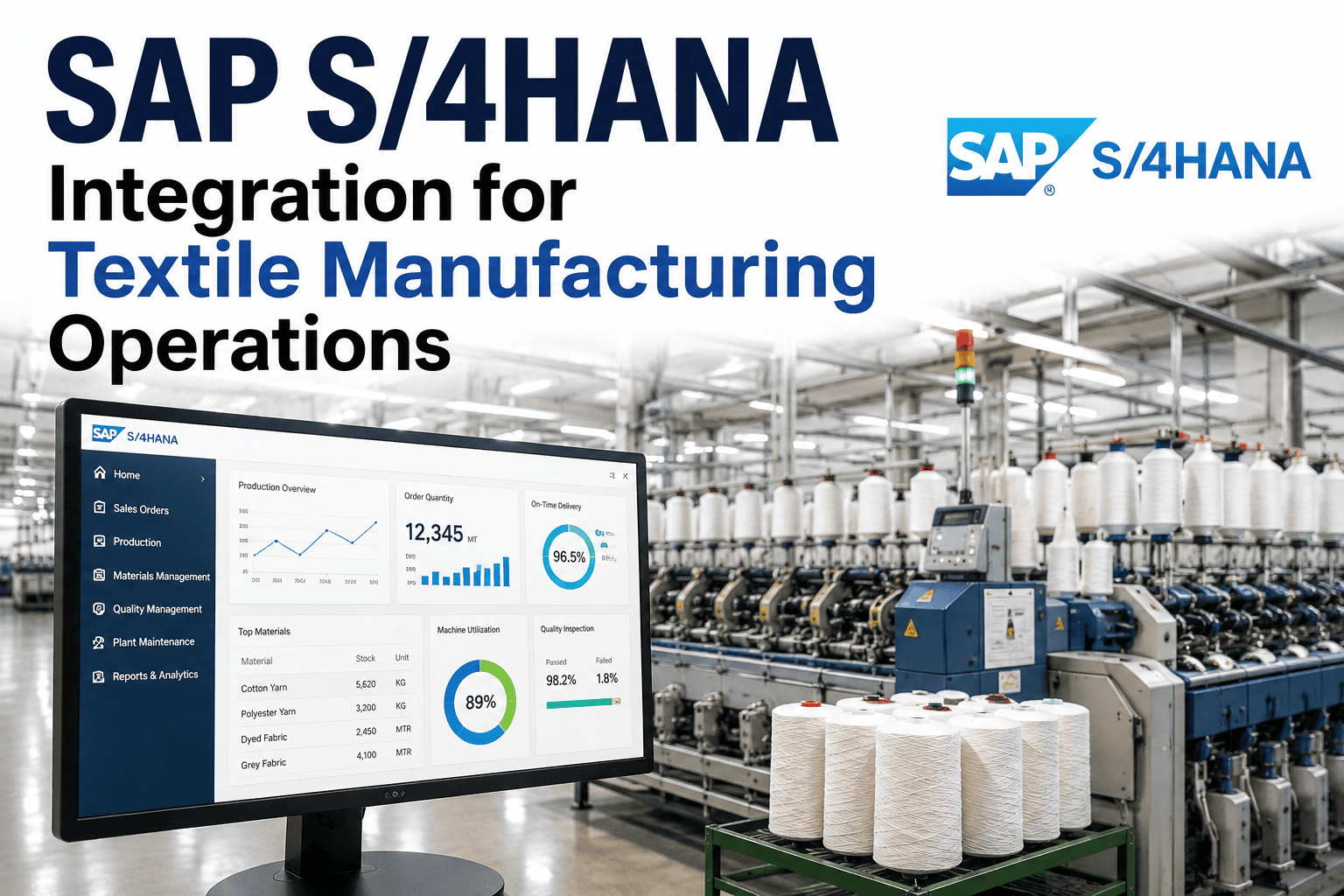
Read More
Textile manufacturing operations generate massive volumes of data across spinning, weaving, dyeing, and finishing processes. However, this data often remains siloed within individual machines, quality control systems, and maintenance logs, prevent

Read More
The global textile industry faces unprecedented pressure to demonstrate environmental stewardship, social responsibility, and transparent governance. With supply chains spanning multiple continents and thousands of suppliers, manually tracking ESG
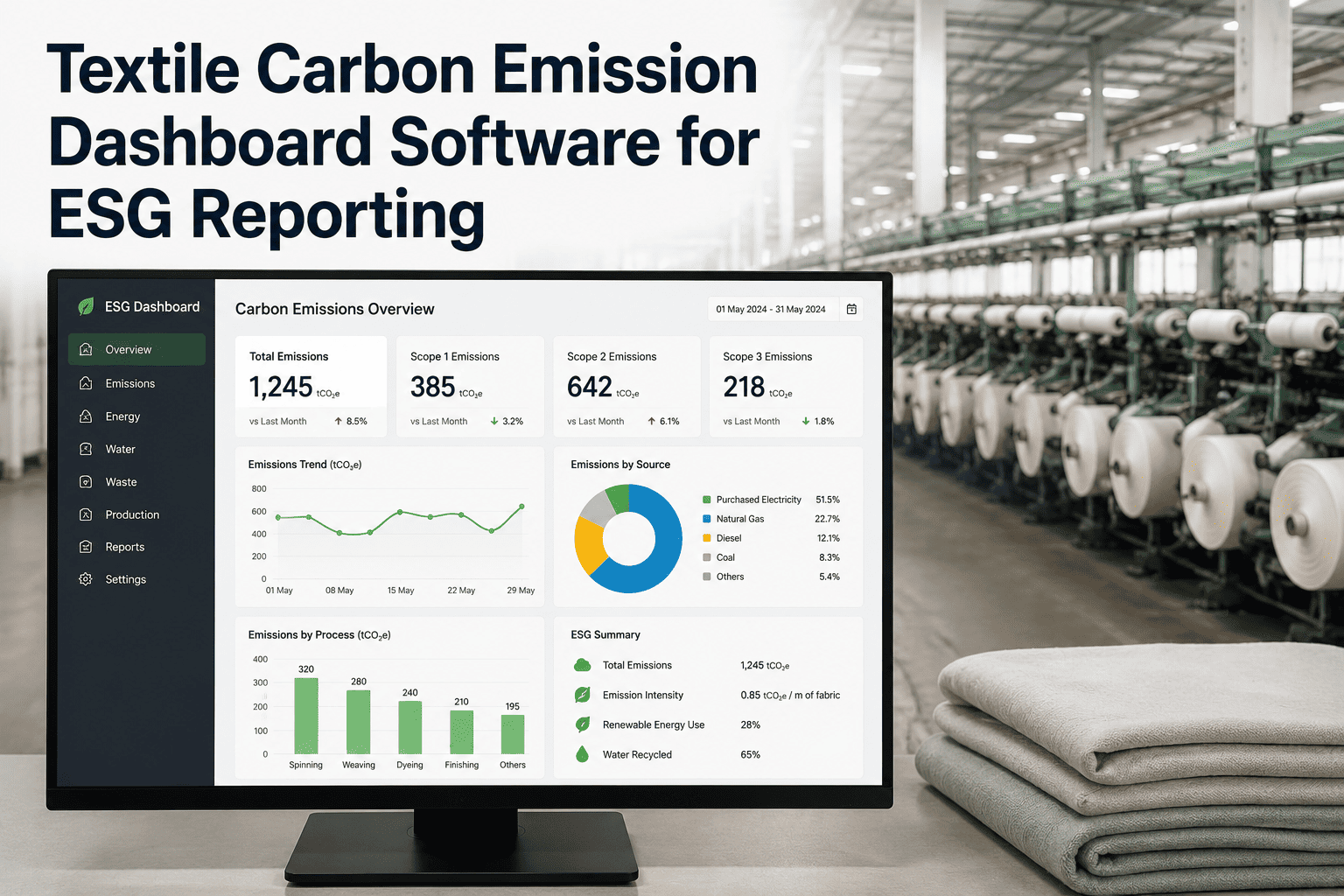
Read More
The textile industry is one of the most resource-intensive sectors globally, accounting for nearly 10% of annual carbon emissions. As regulatory bodies tighten environmental standards and consumers demand transparency, textile manufacturers face m
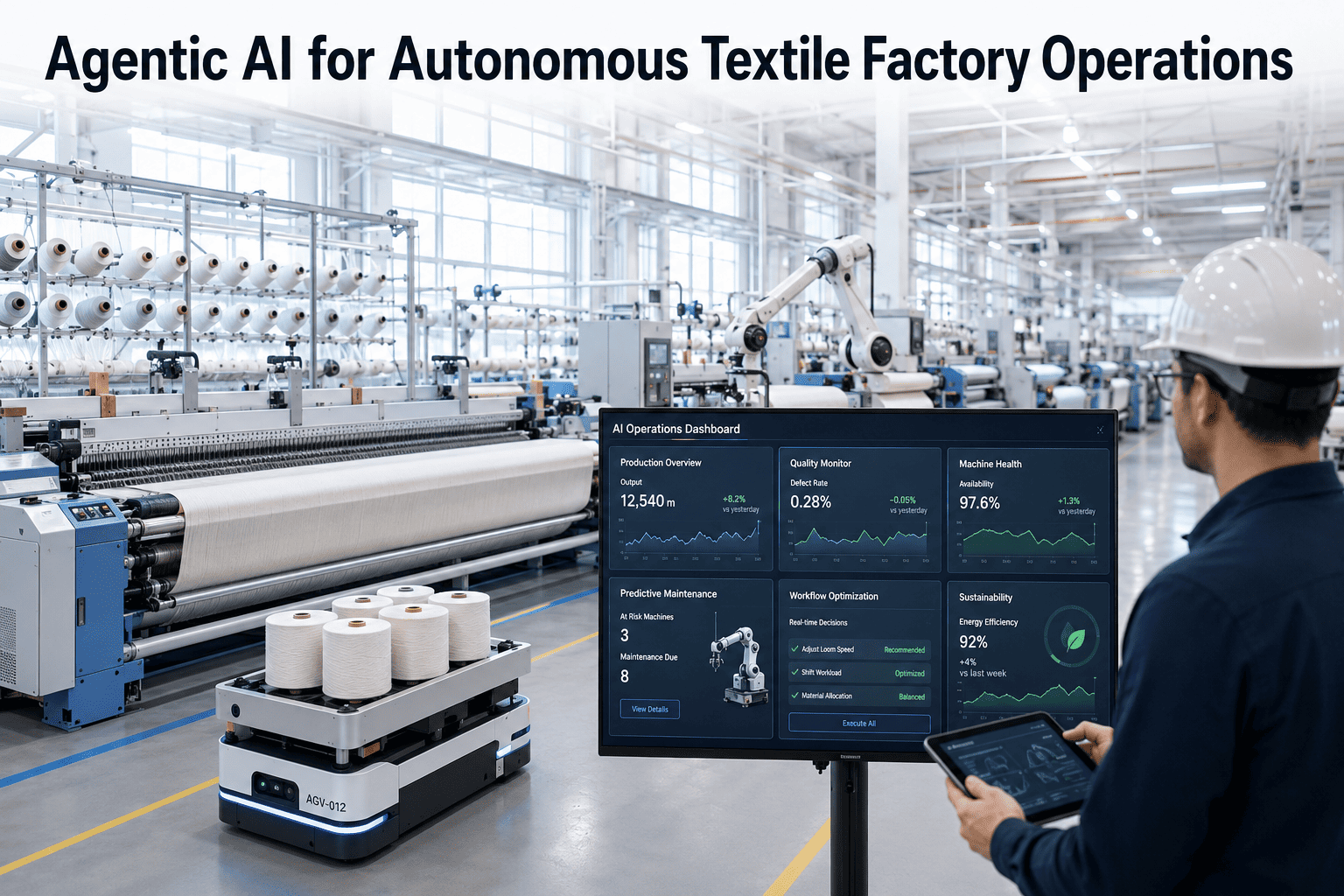
Read More
"Agentic AI" gets used loosely enough in manufacturing circles that it's worth being precise about what it actually means for a textile factory: not a chatbot that answers questions, but a system that can monitor a condition, decide what to do abo
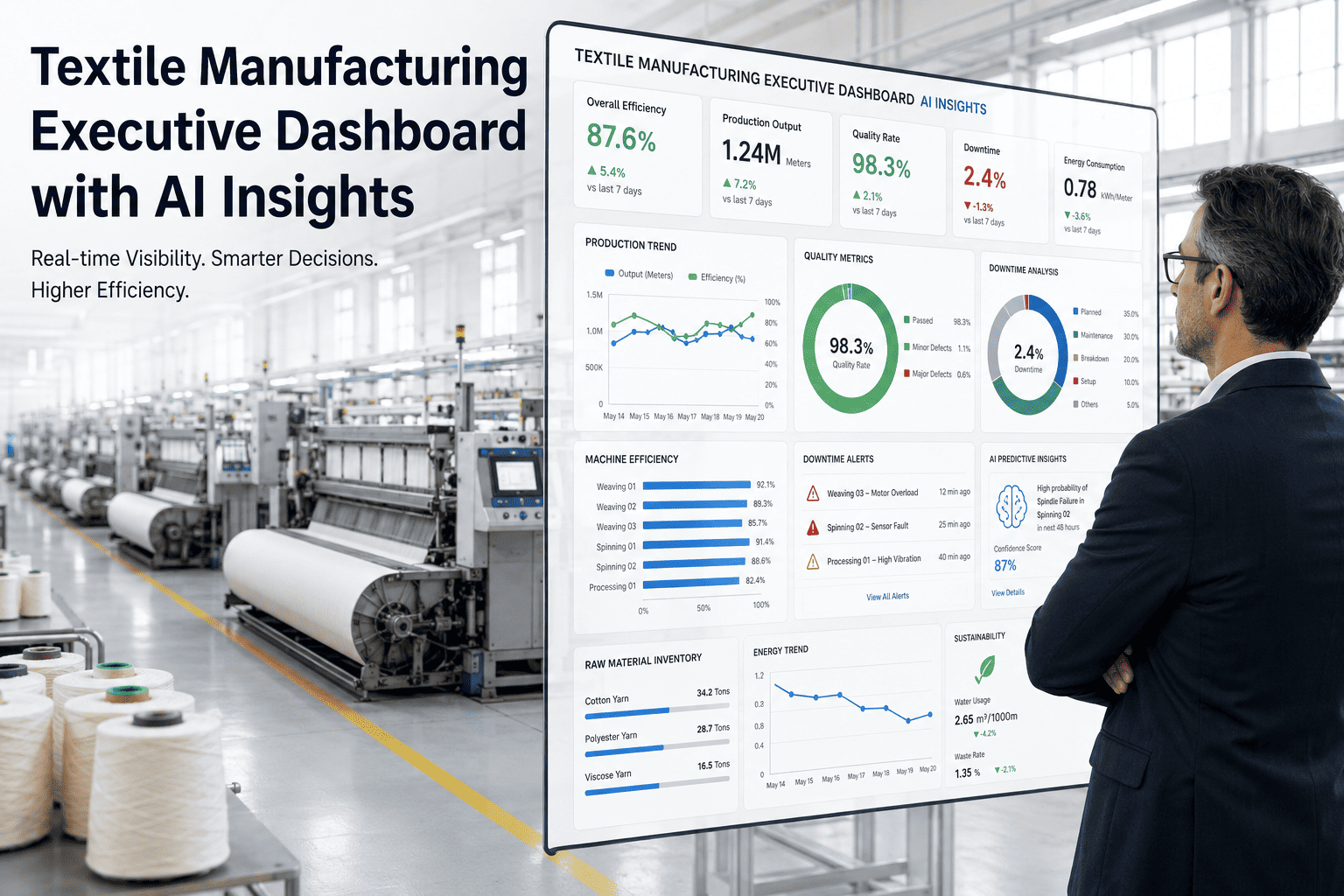
Read More
Most textile executives still start their week with seven different reports from seven different systems, none of which were built to talk to each other, and by the time they're compiled the numbers are already a few days stale. Meanwhile 89% of m
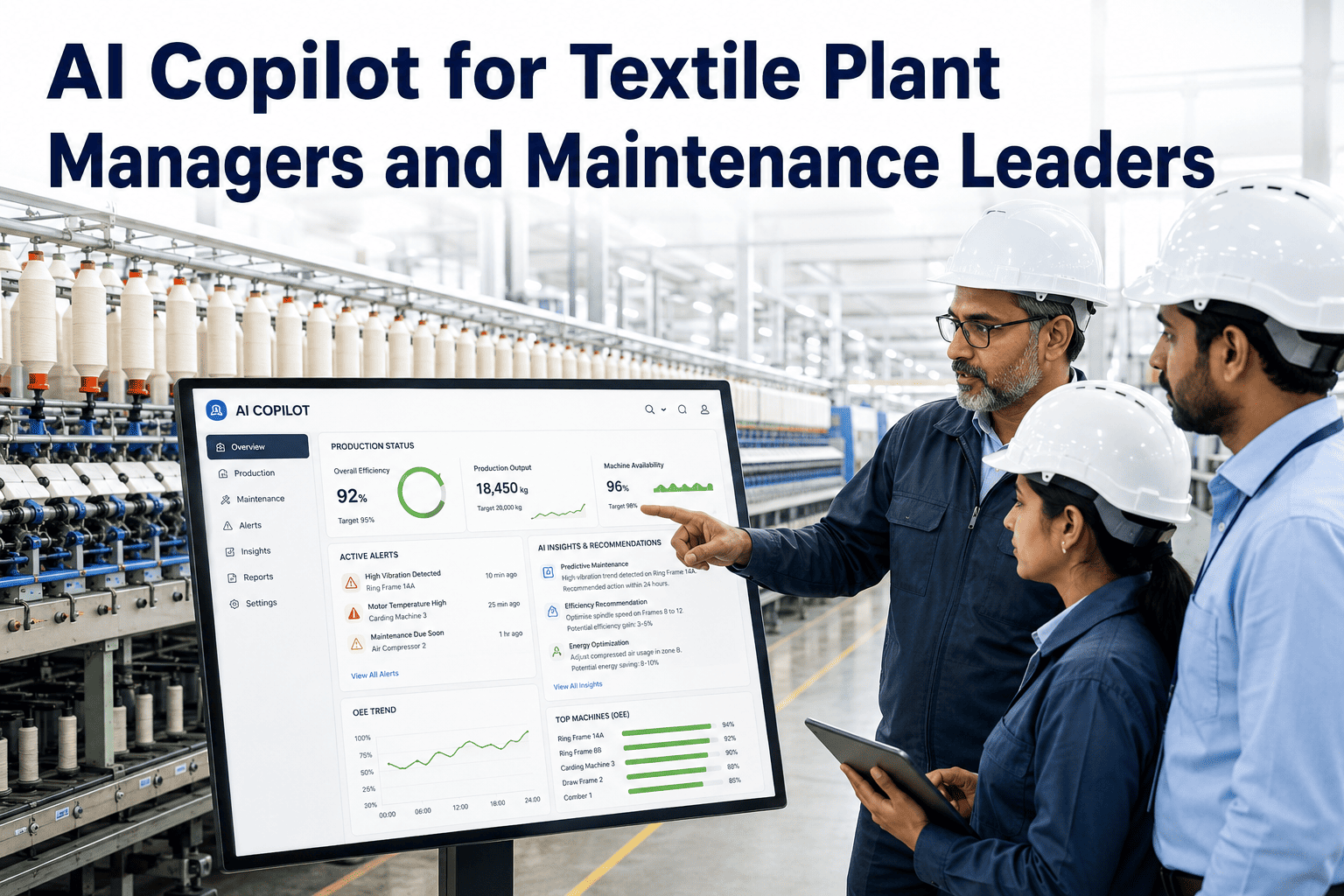
Read More
A plant manager's morning usually starts with the same ritual: pulling up three or four systems, cross-referencing last night's downtime log against the production schedule, and trying to figure out which of a dozen open issues actually deserves a
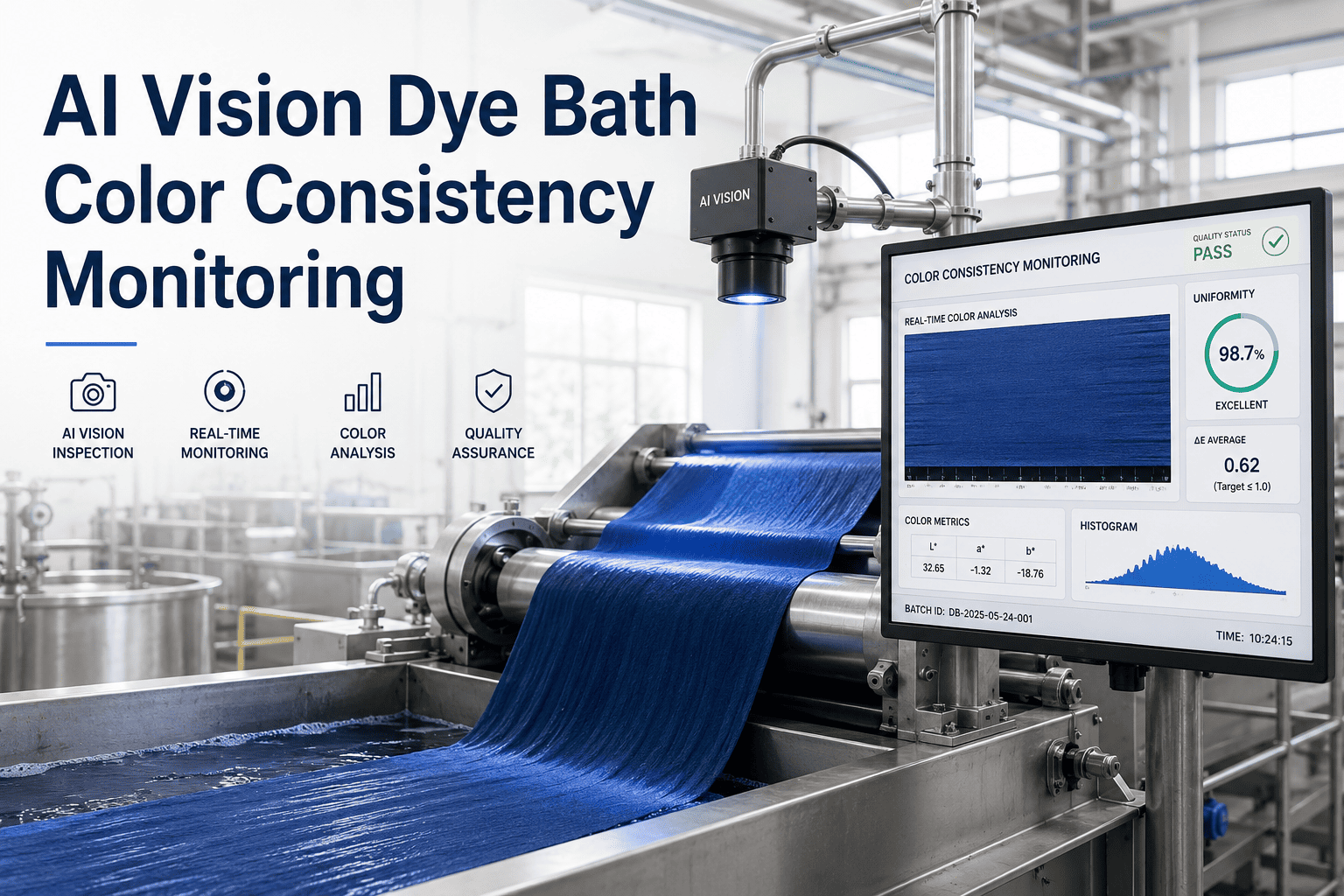
Read More
A single shade-mismatched dye lot can cost more than the fabric itself once you count the redye, the missed delivery window, and the customer who now double-checks every future shipment. Dye houses that still rely on visual assessment under incons

Read More
Ask five plant managers in the same textile group what their OEE is and you'll often get five different definitions of downtime, five different shift-change conventions, and five numbers that can't actually be compared. That's the real problem mul
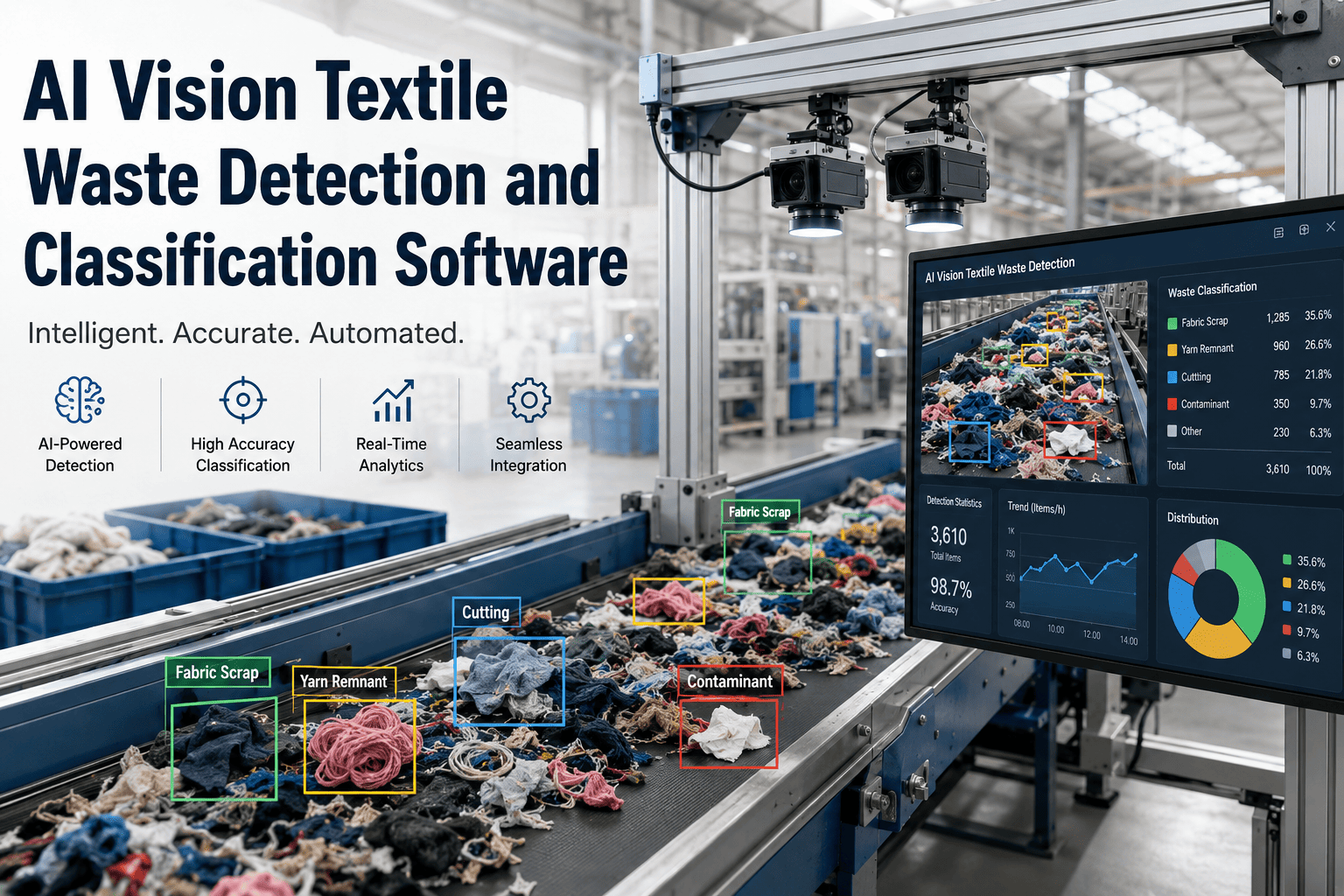
Read More
In the textile industry, waste is often invisible until it accumulates into a costly problem. Fabric scraps, offcuts, and defective rolls are generated at every stage, from cutting to finishing, yet most mills lack real-time visibility into what i
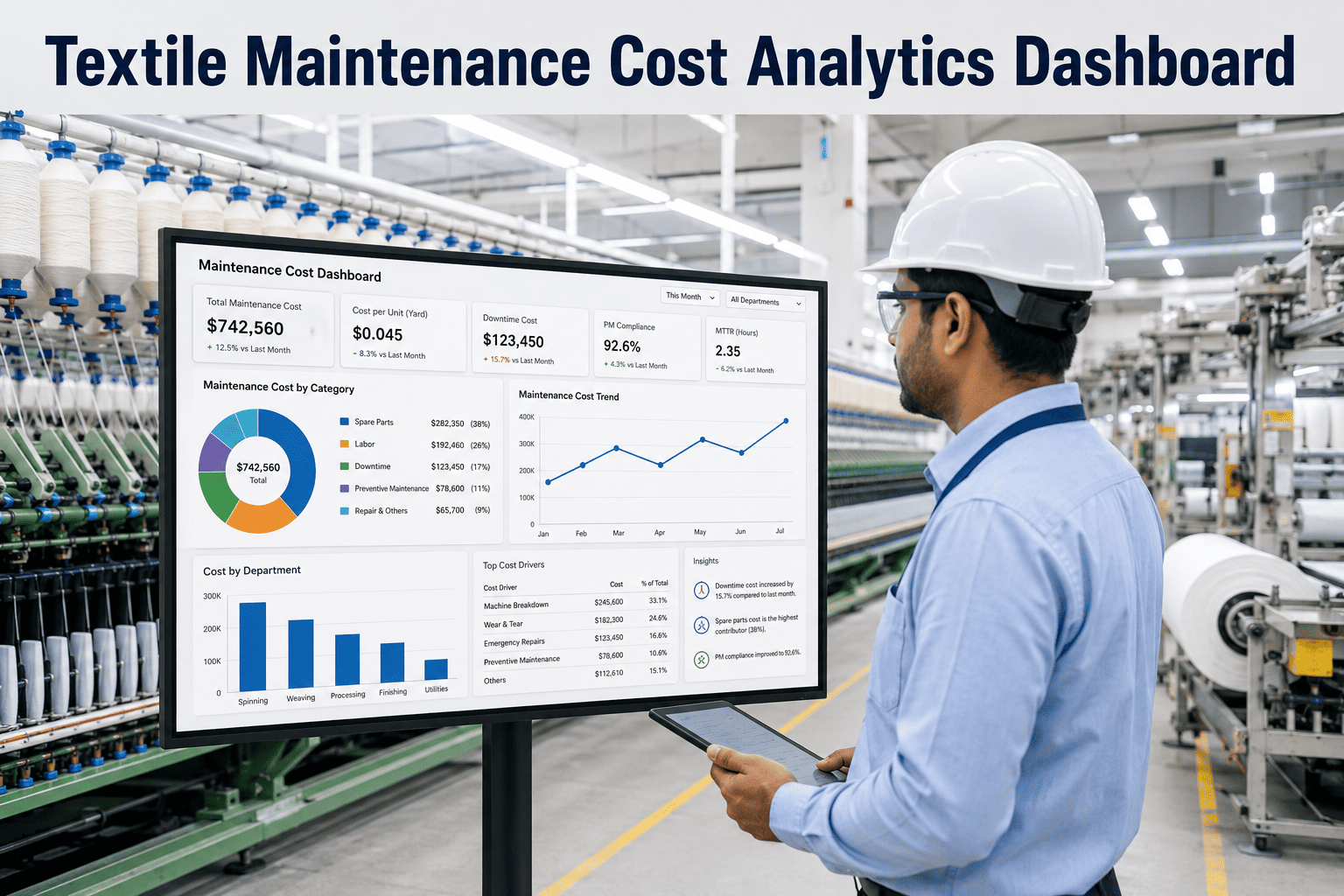
Read More
Most textile mills know their total maintenance spend down to the last invoice, because finance closes the books every month whether or not anyone understands what drove the number. What far fewer mills know is which asset, which failure mode, or
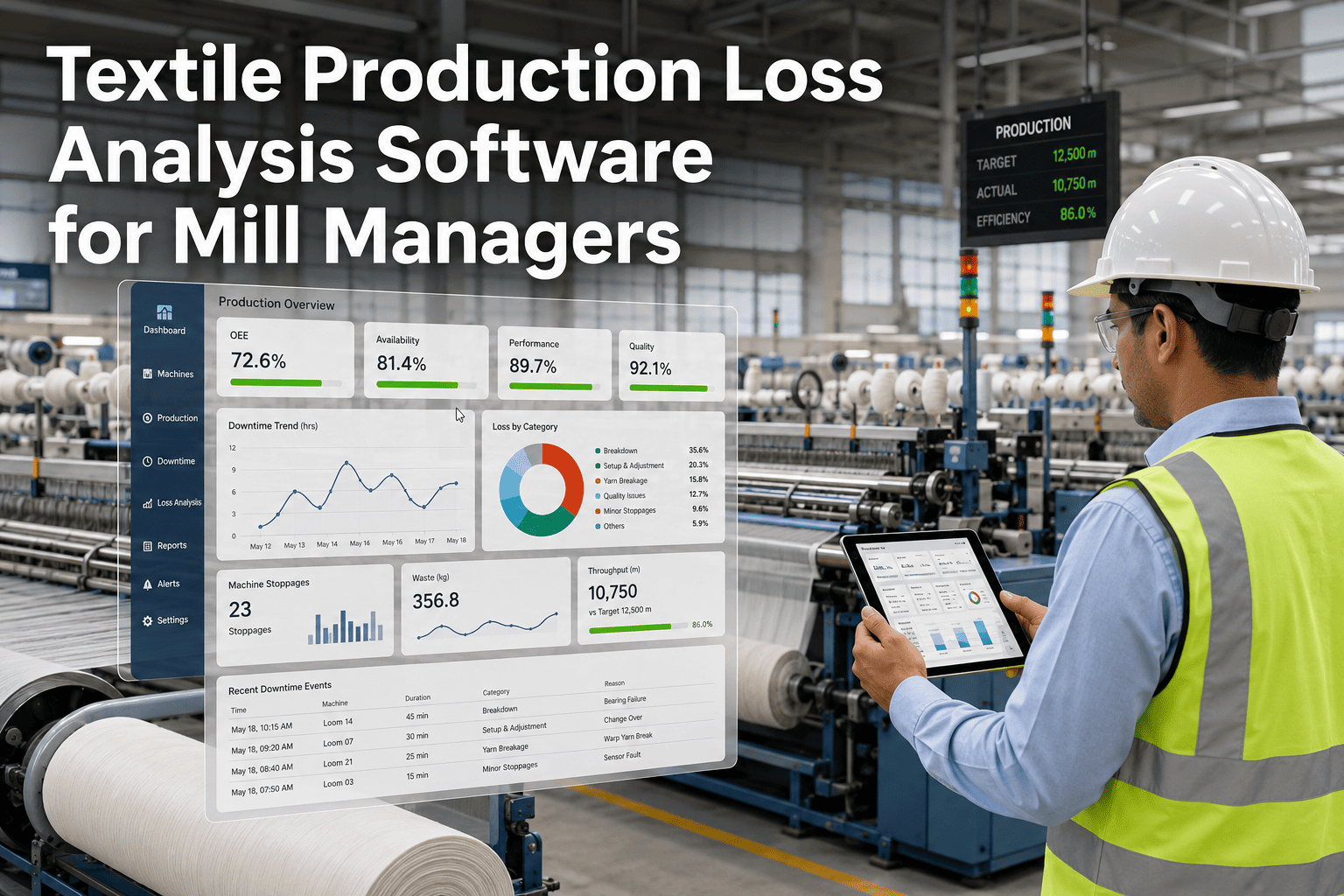
Read More
A mill running at 82 percent efficiency looks fine on a summary report, but that single number hides a specific chain of losses: some picks lost to downtime, some to running slower than rated speed, some to quality rejects, and some to the changeo
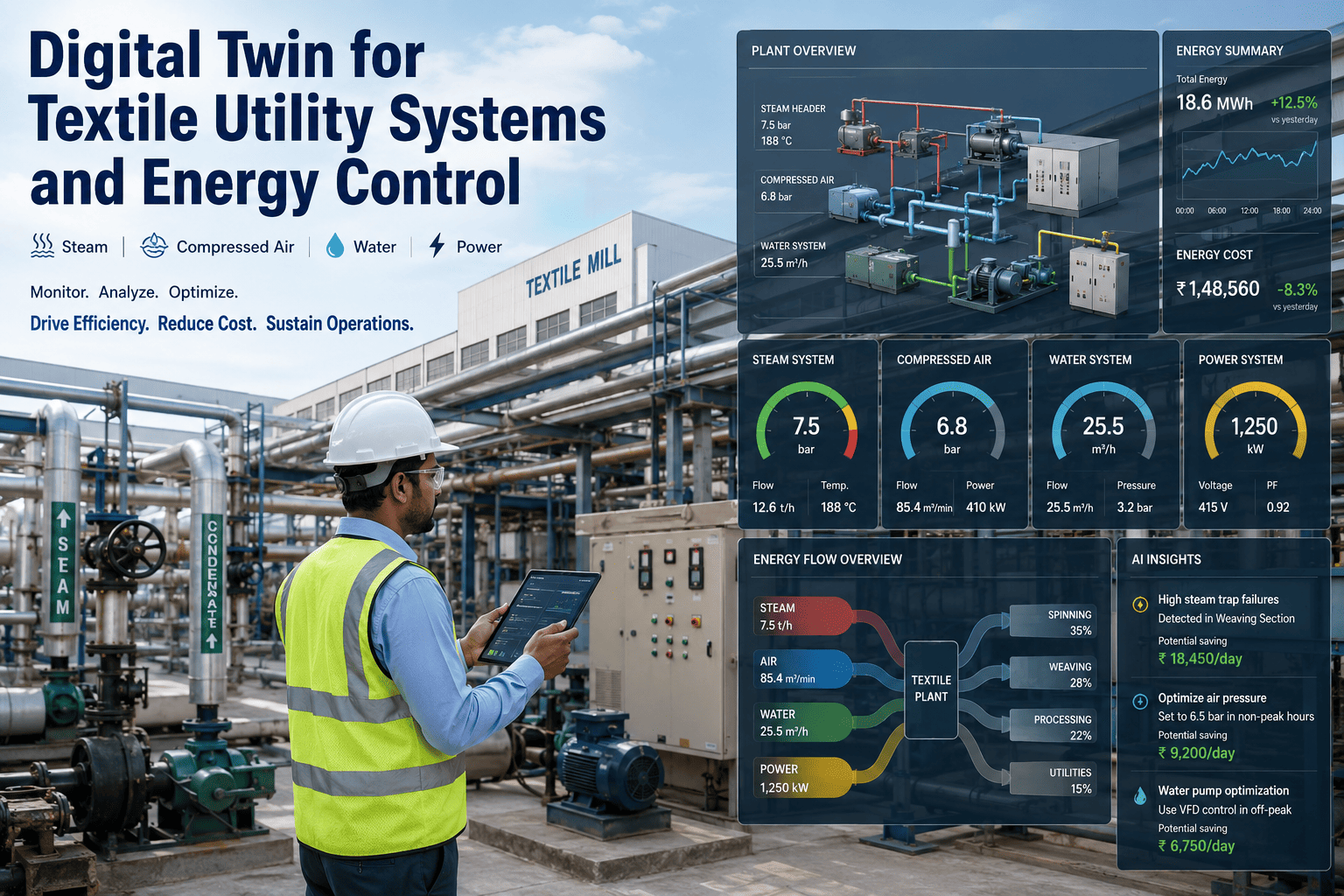
Read More
Steam, compressed air, chilled water, and electrical load in a textile mill are rarely managed as one connected system, even though a boiler running harder to cover a steam leak, a compressor over-pressurizing to compensate for a distribution loss

Read More
Air-jet looms are the single largest consumer of compressed air on most weaving floors, pulling a majority of the shed's total air demand through picks that fire thousands of times a minute across every running machine. Because that demand is so c
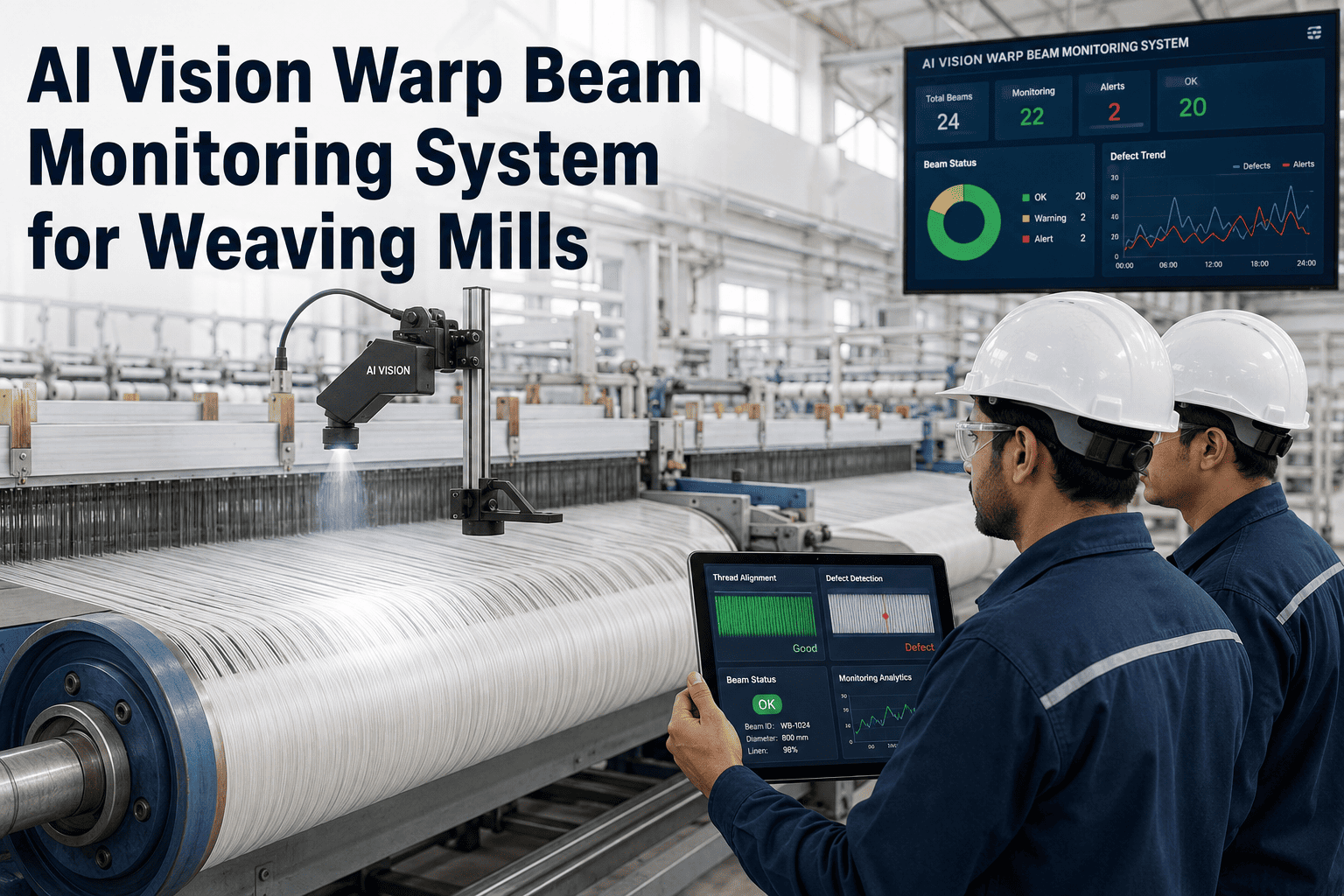
Read More
A warp beam carries thousands of individually tensioned yarn ends toward the heald frames, and a single misaligned or under-tensioned end can trigger a break that stops the loom, damages the fell of the cloth, and hands the weaver a repair job mea
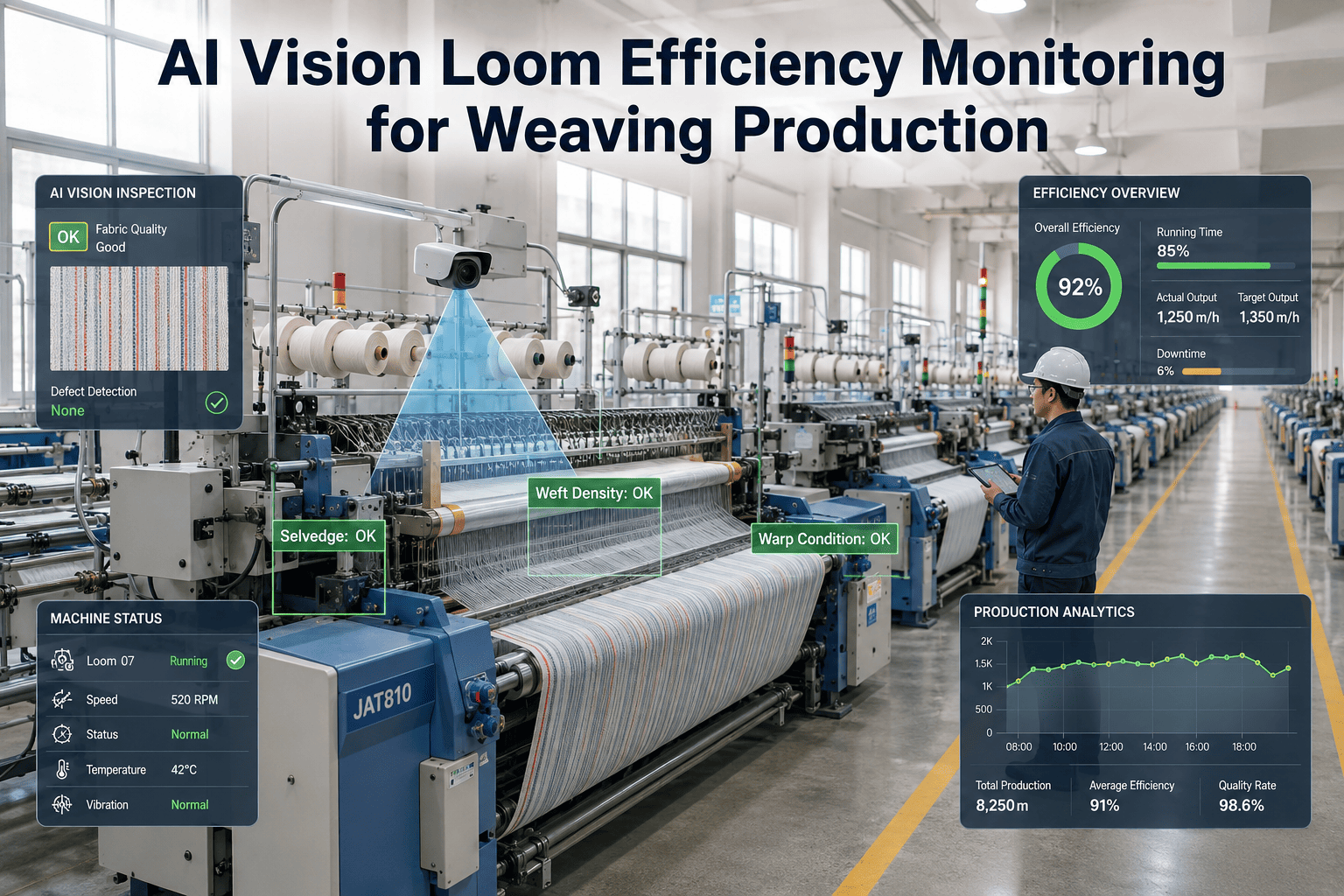
Read More
Ask a plant manager what their loom efficiency was last week and most can quote a number from the end-of-shift report. Ask them why efficiency dropped on Tuesday afternoon and the answer usually turns into a guess involving a yarn batch, an absent

Read More
Ask a maintenance manager at most textile plants to pull up the complete service history, spare parts status, and inspection record for a single boiler, compressor, or chiller, and the answer usually lives across a paper logbook, a spreadsheet som

Read More
Spare parts inventory at most textile plants exists in a permanent, uncomfortable balance between two costly mistakes — carrying too much slow-moving stock that ties up working capital and clutters the storeroom, or carrying too little of a critic

Read More
Boiler fuel is one of the largest line items on a textile plant's utility bill, and a boiler running just a few percentage points below its design efficiency can quietly cost a plant hundreds of thousands of dollars a year in wasted fuel without e

Read More
A chiller failure in the middle of a summer production run does not just cost the price of the repair — it can force an entire dye house or air-conditioned spinning hall to slow down or stop, since process cooling and comfort cooling both depend o

Read More
Compressed air is often called the most expensive utility in a textile plant because so little of the energy spent generating it ever reaches useful work — air jet looms, pneumatic actuators, and cleaning guns consume only a fraction of what the c
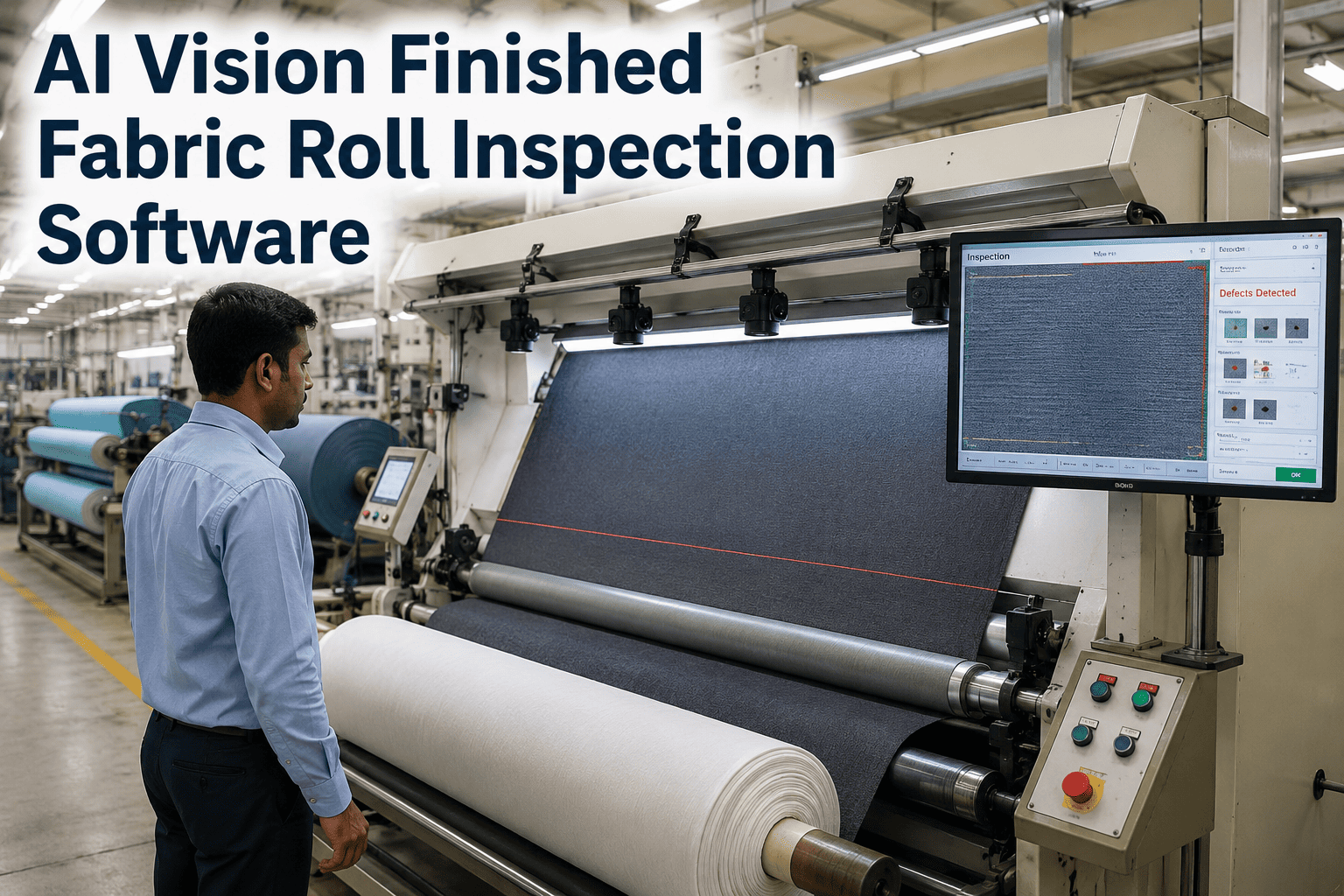
Read More
Finished fabric rolls leaving the inspection frame carry the final verdict on weeks of spinning, weaving or knitting, dyeing, and finishing work, yet most mills still rely on two or three human checkers standing under a four point inspection lamp

Read More
Steam is the single largest utility cost in most textile wet processing plants, and it is also the utility that leaks, wastes, and misallocates the most without anyone noticing until the fuel bill arrives at month end. A failed steam trap can sile
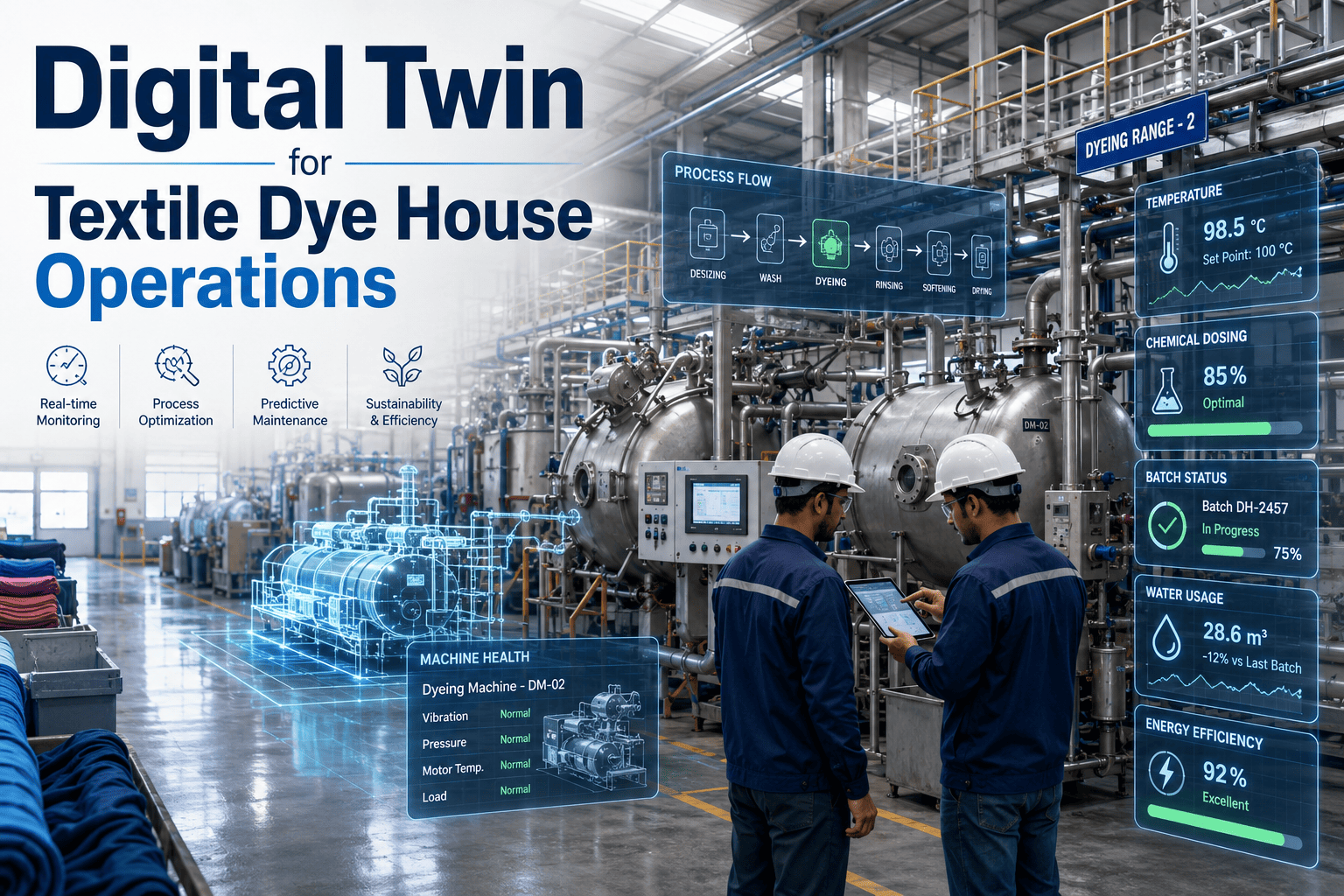
Read More
A dye house manager planning next week's production schedule is essentially guessing — guessing how much steam a heavy shade batch will consume, guessing whether adding two more dark shade lots will push the boiler past capacity, and guessing whet
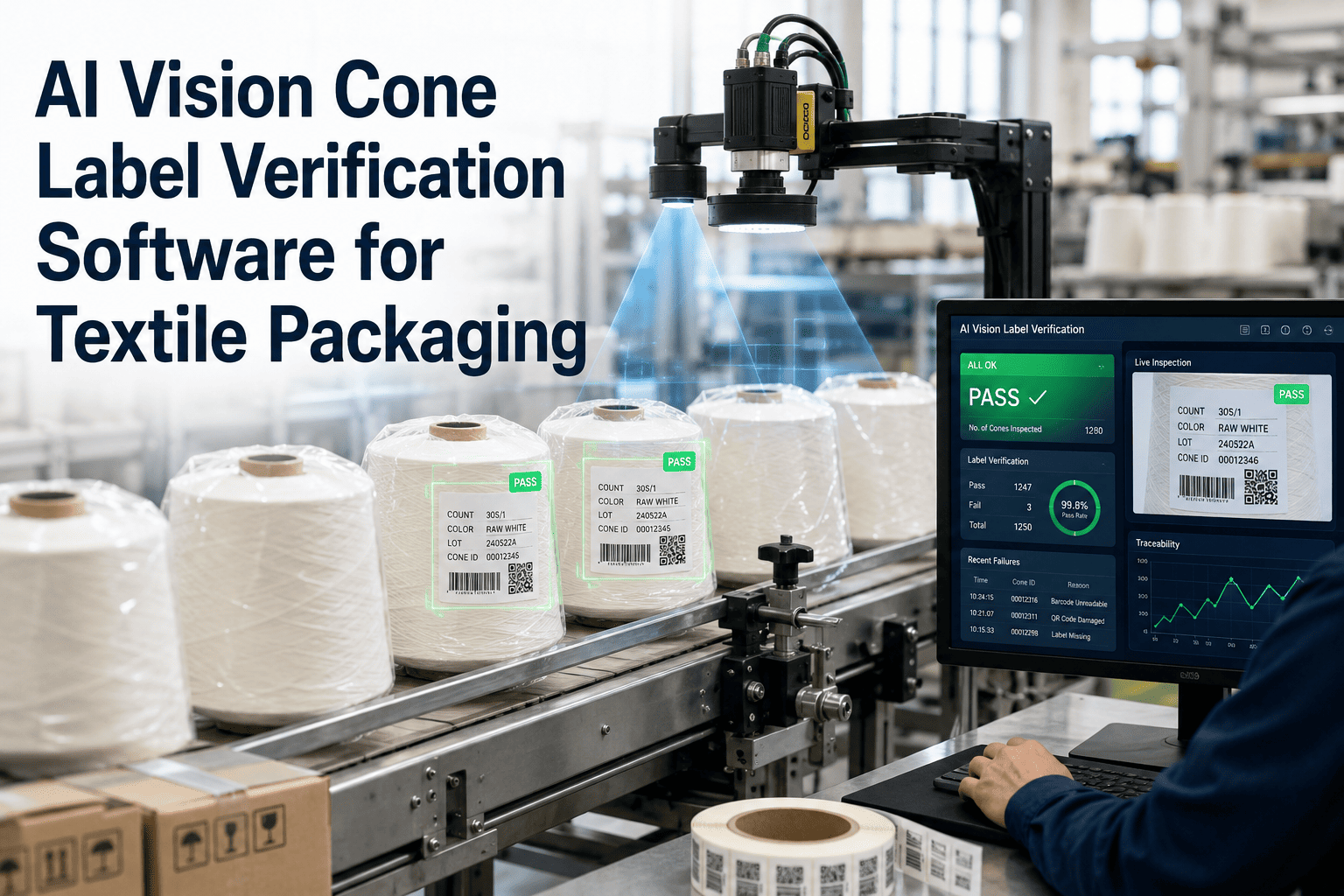
Read More
A wrong label on a yarn cone doesn't announce itself until a customer receives the wrong count, the wrong lot, or a barcode that won't scan at their receiving dock, and by then it's a shipment dispute rather than a quick catch on the floor. Manual
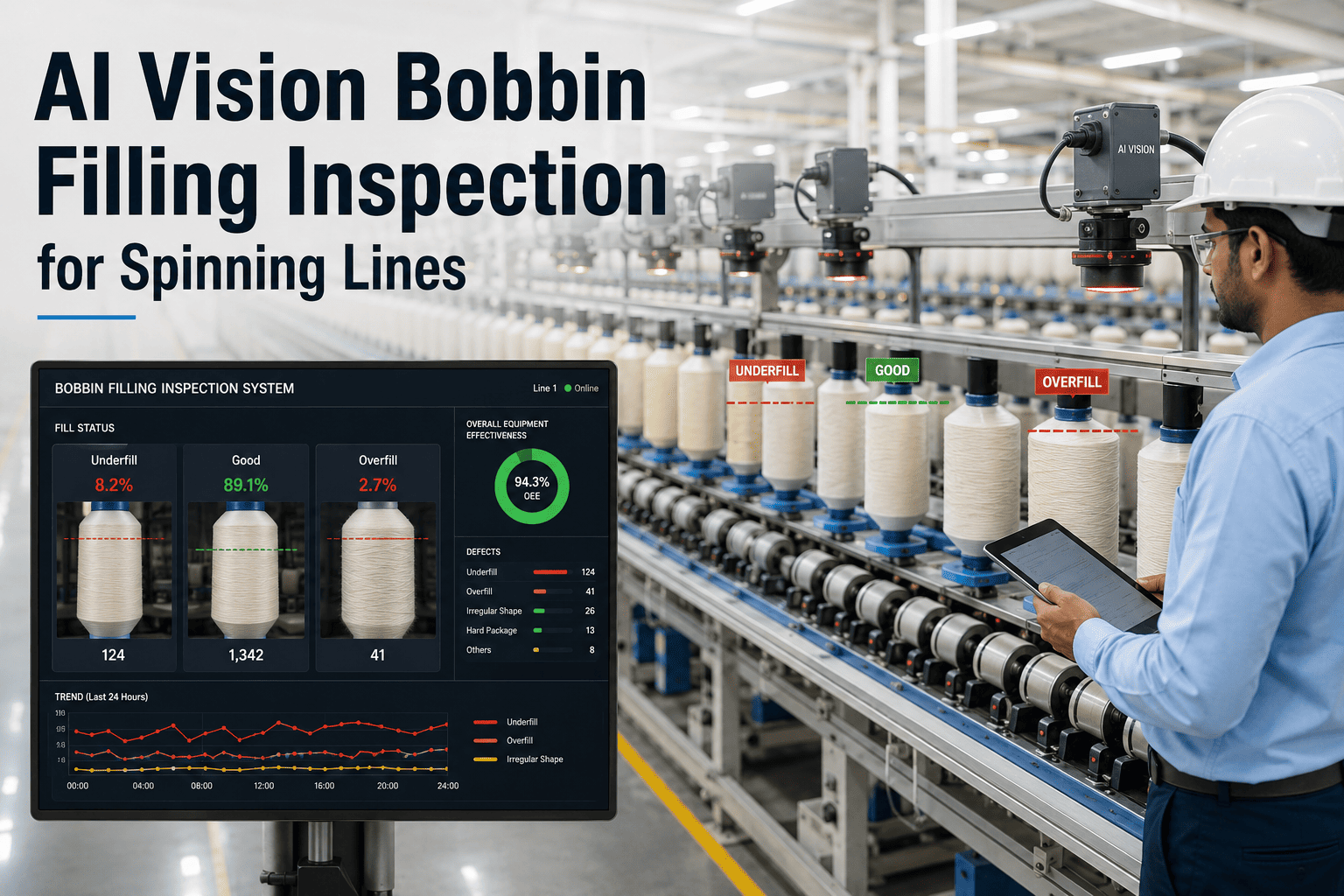
Read More
Bobbin filling quality directly determines downstream winding efficiency, yarn transfer reliability, and the consistency of package weight and density that dye house and weaving operations depend on. Uneven winding, underfill, overfill, and surfac
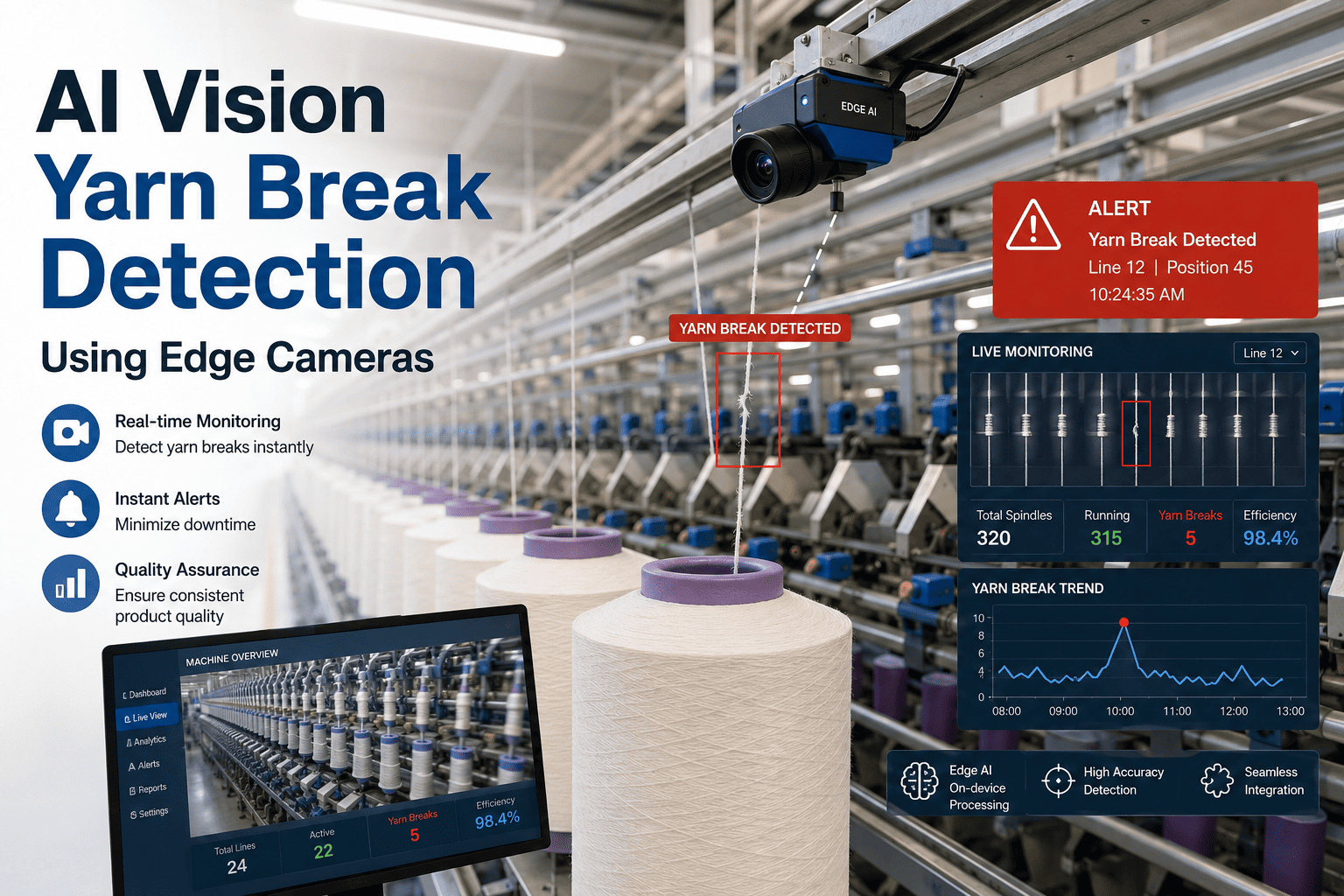
Read More
Yarn break detection in spinning and weaving has traditionally relied on manual observation and mechanical tension sensors that react only after damage is done. At production speeds of thousands of meters per minute, even seconds of undetected yar
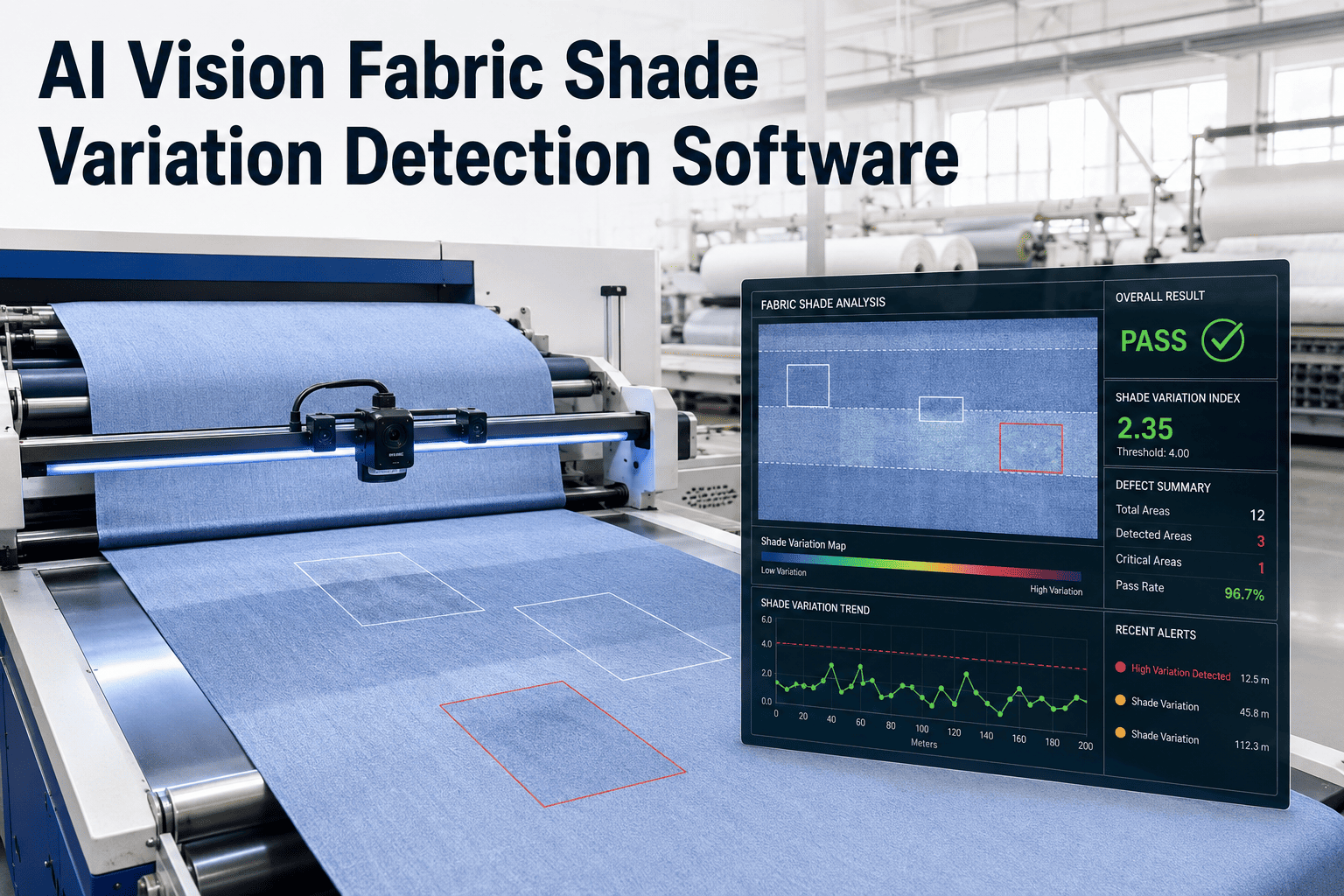
Read More
Fabric shade variation is one of the most expensive and reputationally damaging quality failures in textile manufacturing, costing the global industry billions annually in rejected rolls, customer claims, and re-dyeing costs. Traditional shade ins
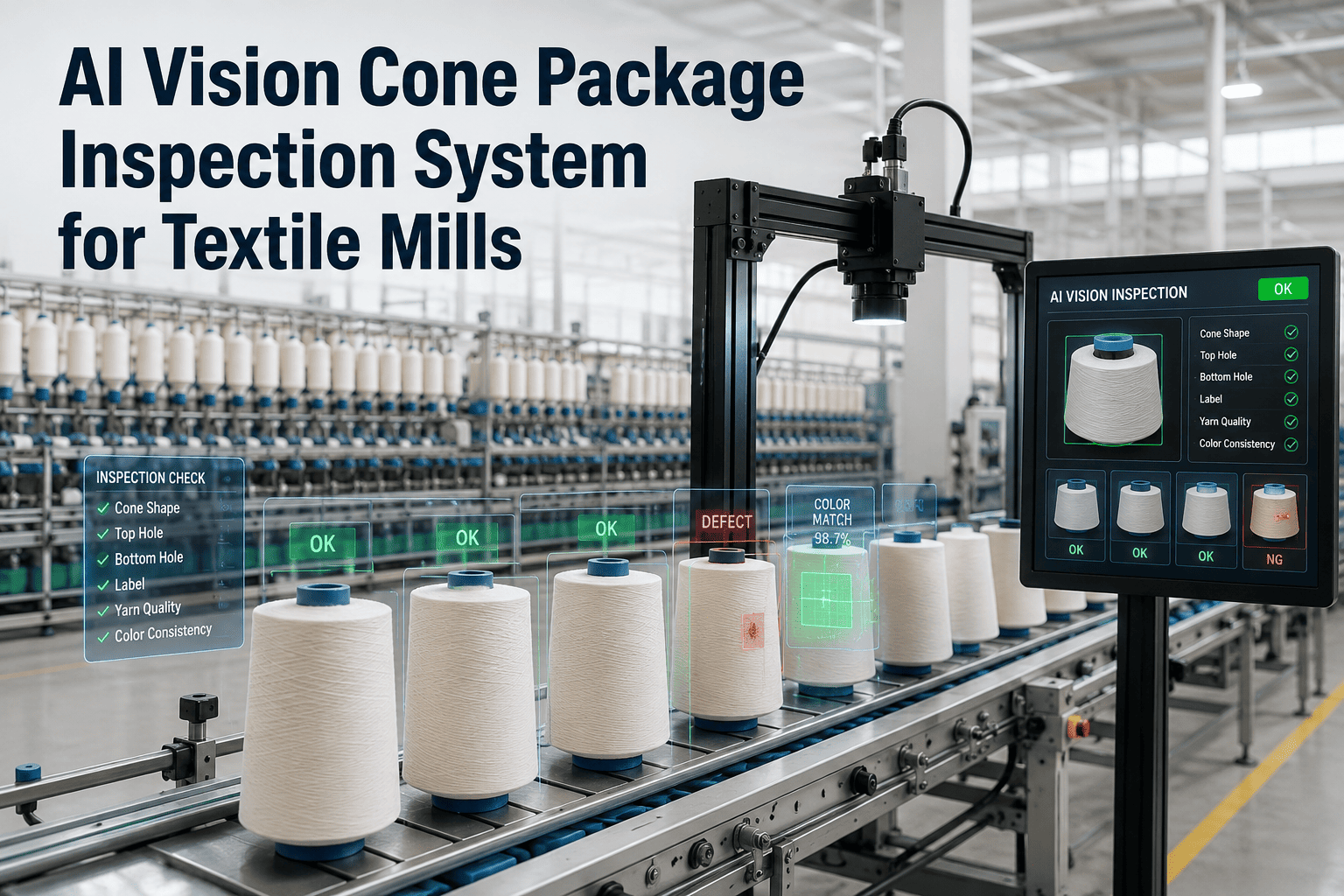
Read More
A cone that leaves the mill with a winding defect, a missing label, or contamination doesn't usually get caught until it reaches the customer, and by then the cost is a return, a complaint, or a damaged account relationship rather than a quick fix
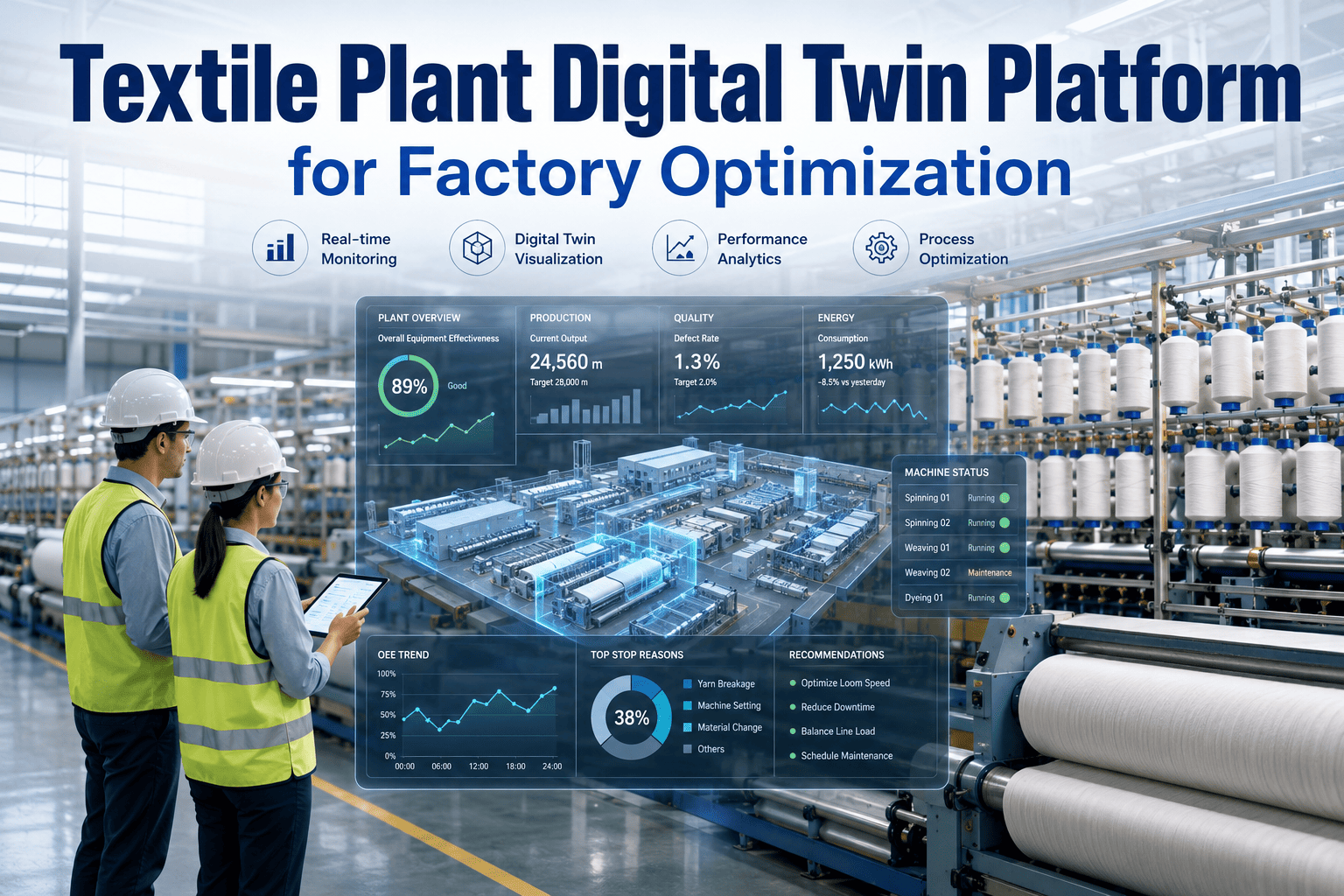
Read More
Every capacity decision in a textile mill, whether it's adding a shift, rerouting material flow, or squeezing more output from an existing line, is usually tested for the first time on the actual production floor, where mistakes cost real output a
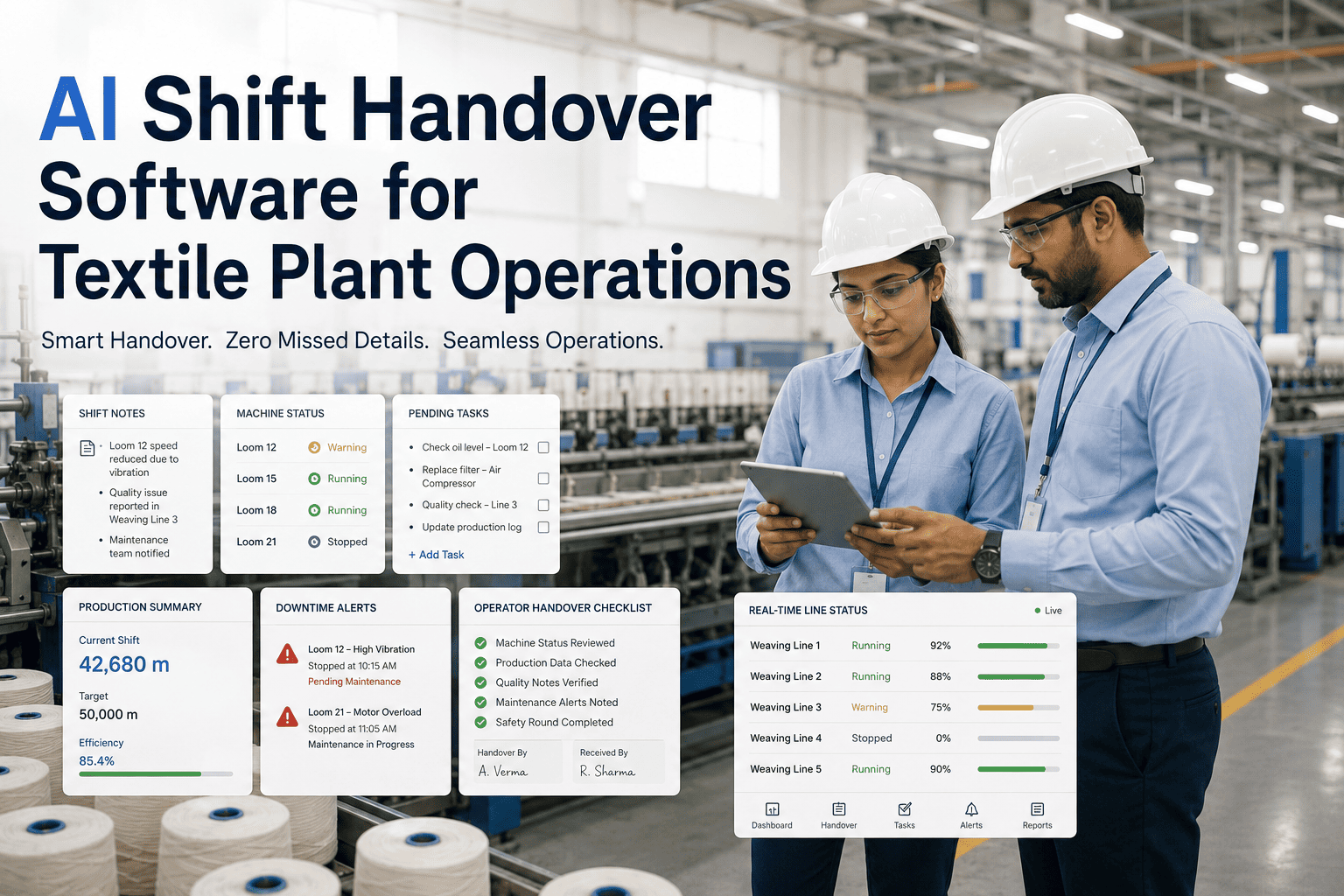
Read More
The ten minutes between one shift leaving and the next one starting decide how the next eight hours go, and in most textile mills those ten minutes still happen through a handwritten logbook or a rushed verbal handoff at the machine. Whatever the
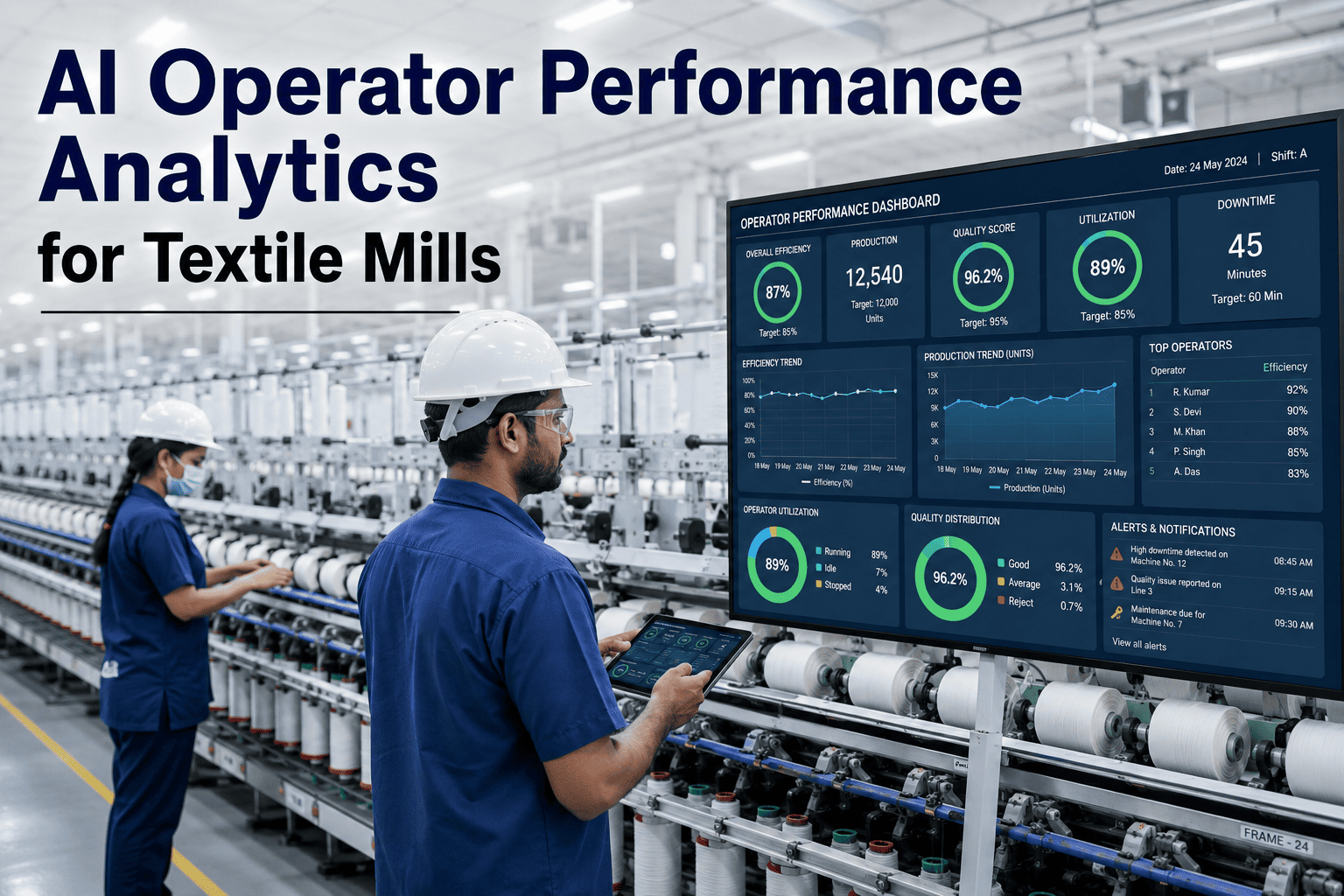
Read More
Most textile mills can tell you their machine efficiency down to the decimal, but ask which operator consistently hits SOP timing on doffing and most plants go quiet. Operator performance has stayed the one variable mills track on paper logs while
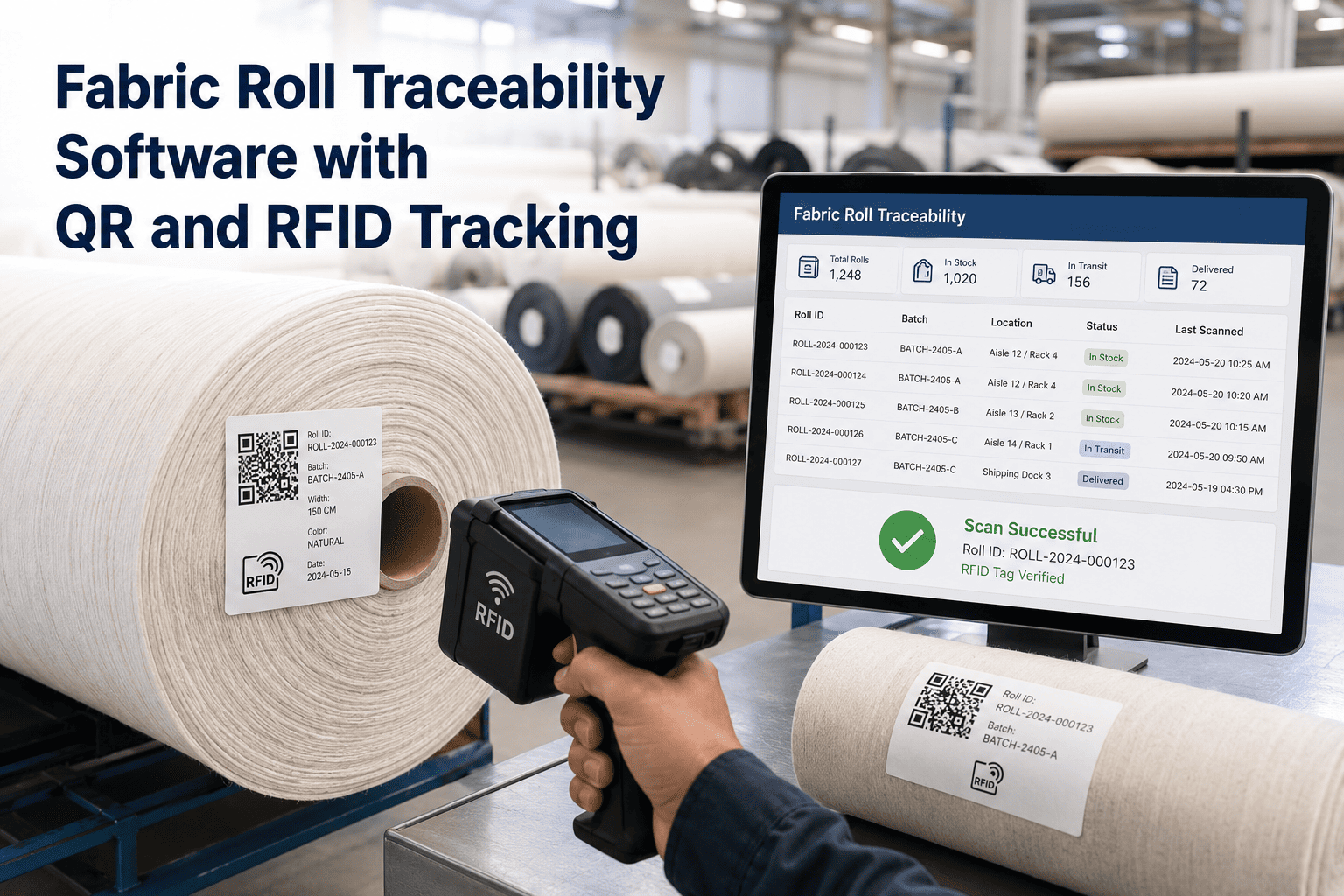
Read More
A buyer calls asking for full documentation on a rejected shipment, machine records, dye lot parameters, inspection sign-offs, dispatch details, all of it, and the answer determines whether that relationship survives the conversation. Fabric roll
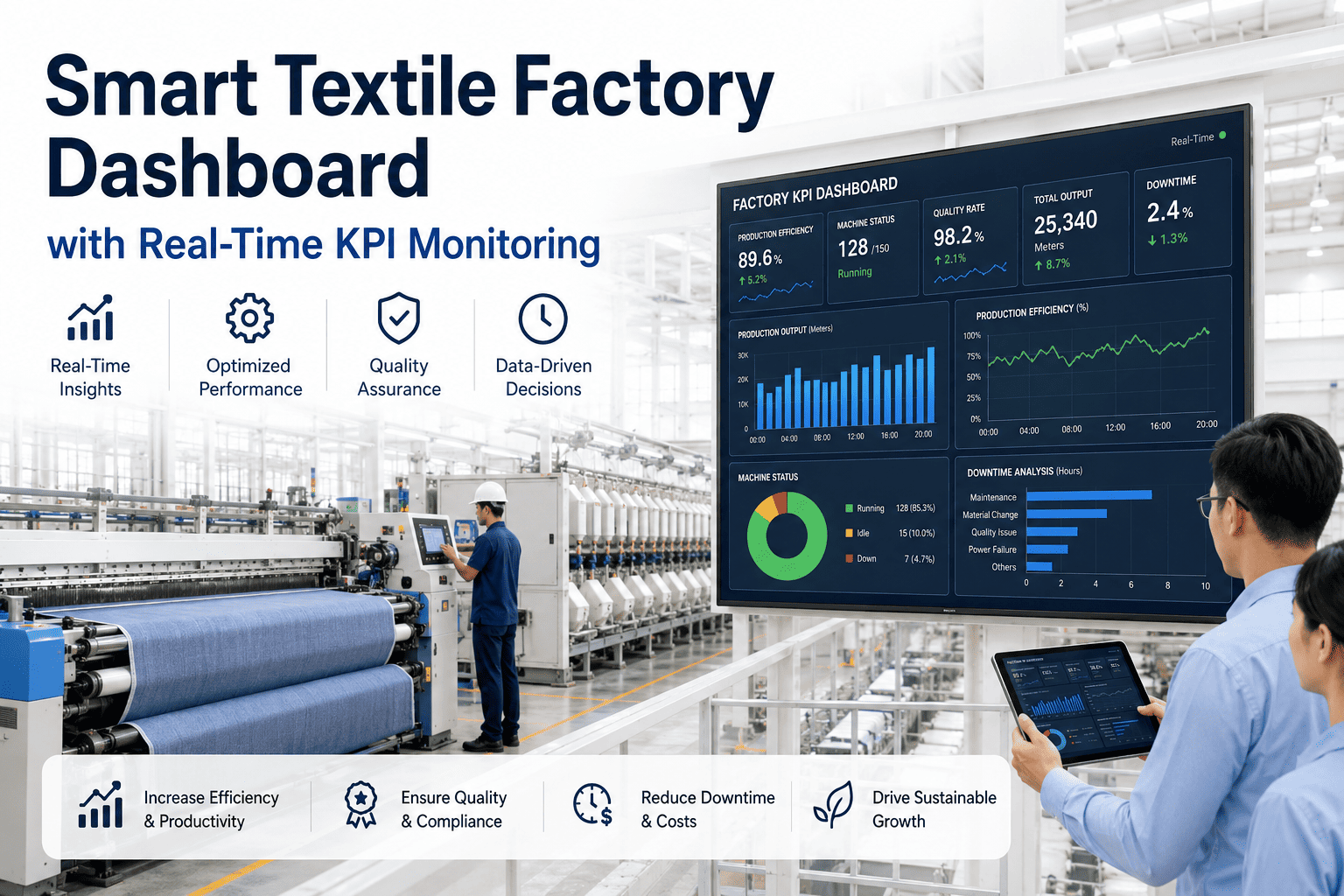
Read More
Ask ten mill managers how their plant performed last week and you will likely get ten different numbers pulled from ten different sources. A smart textile factory dashboard fixes that by pulling OEE, downtime, output, quality, energy, and maintena
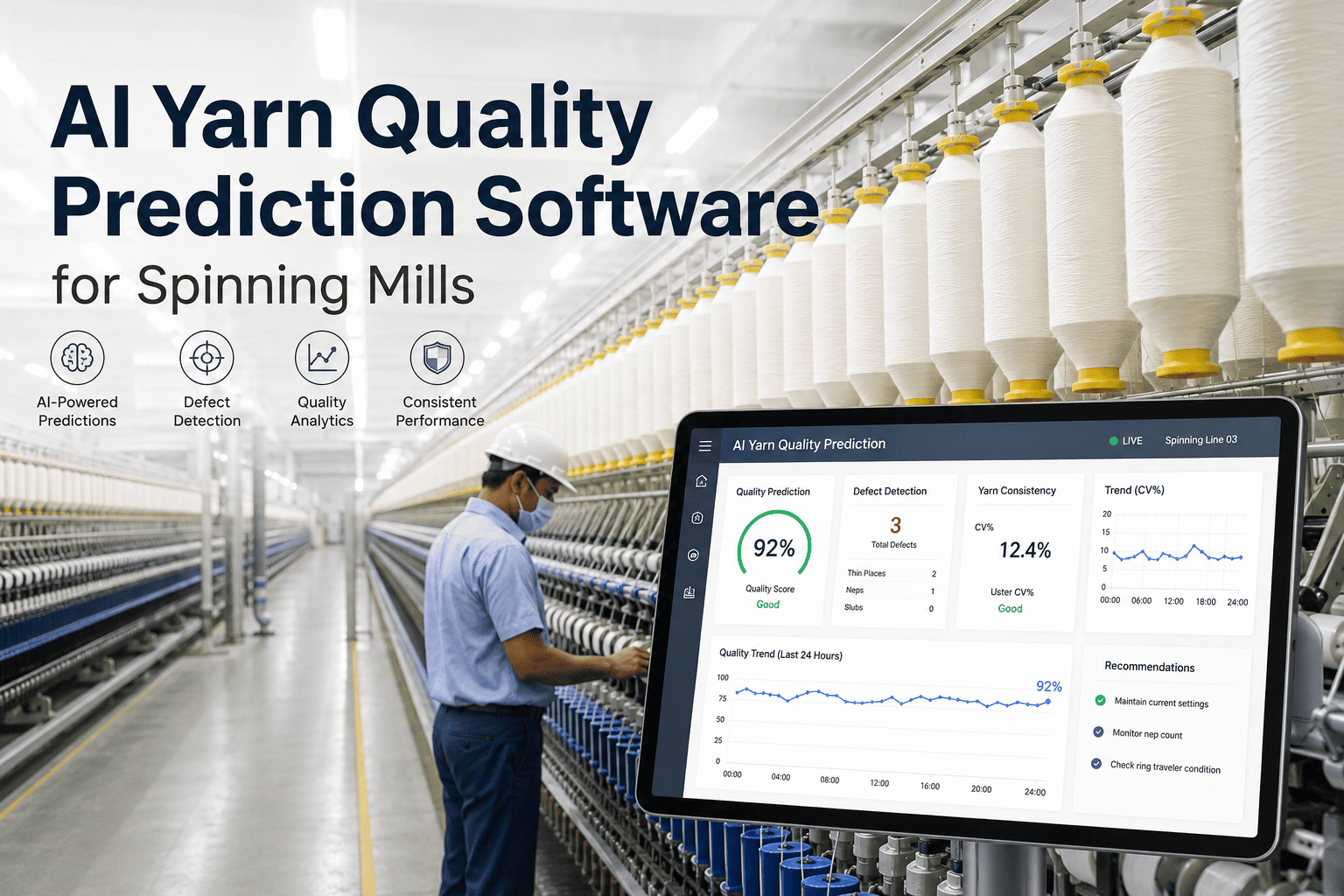
Read More
By the time a spinning mill's quality lab flags a bad yarn batch, the machine has often already run for hours producing more of it. That gap between when a problem starts and when it gets caught is where most avoidable waste in spinning actually h
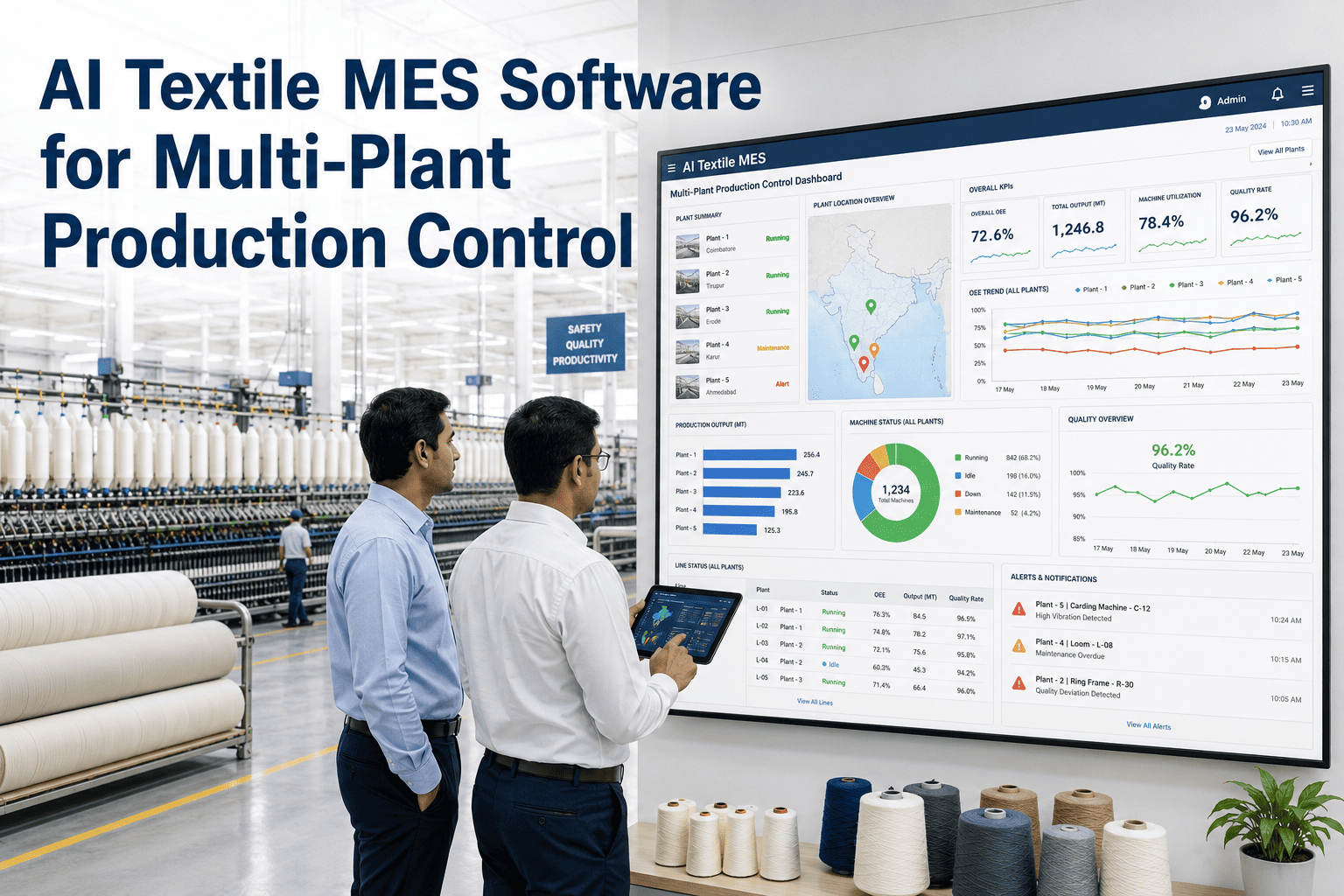
Read More
Running one textile plant on spreadsheets and WhatsApp updates is hard enough. Running three or five plants that way is close to impossible, yet that is exactly how most multi-site textile groups still operate in 2026. Every mill reports numbers a
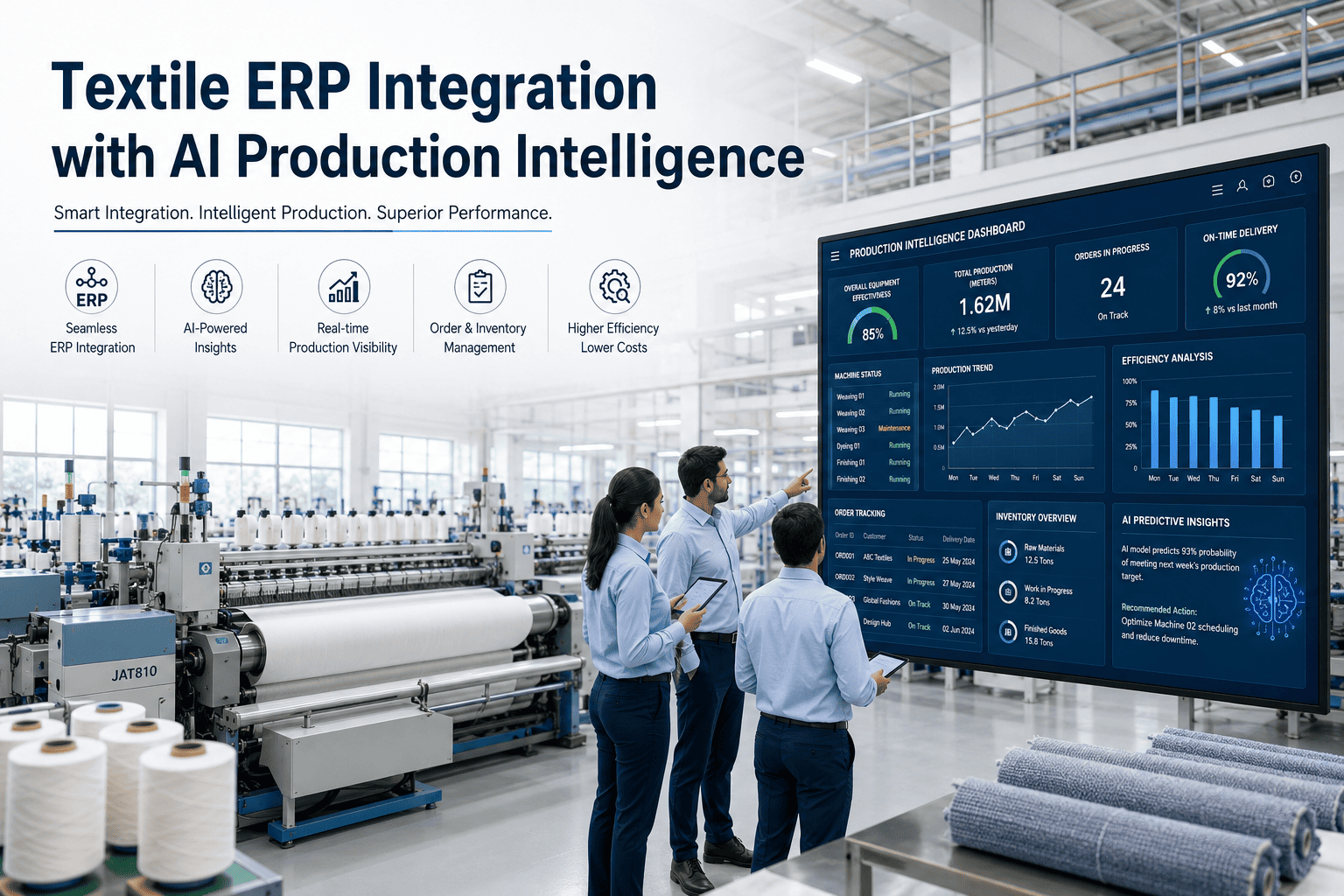
Read More
Your ERP knows what was ordered. Your shop floor knows what is actually happening. In most textile plants, those two systems barely talk to each other, so planners end up manually keying yesterday's output into the ERP every morning while today's
Read More
Textile manufacturing is approaching a decade of transformation more profound than any since the Industrial Revolution, with seven converging megatrends — artificial intelligence, circular economy, nearshoring, on-demand microfactories, bio-based
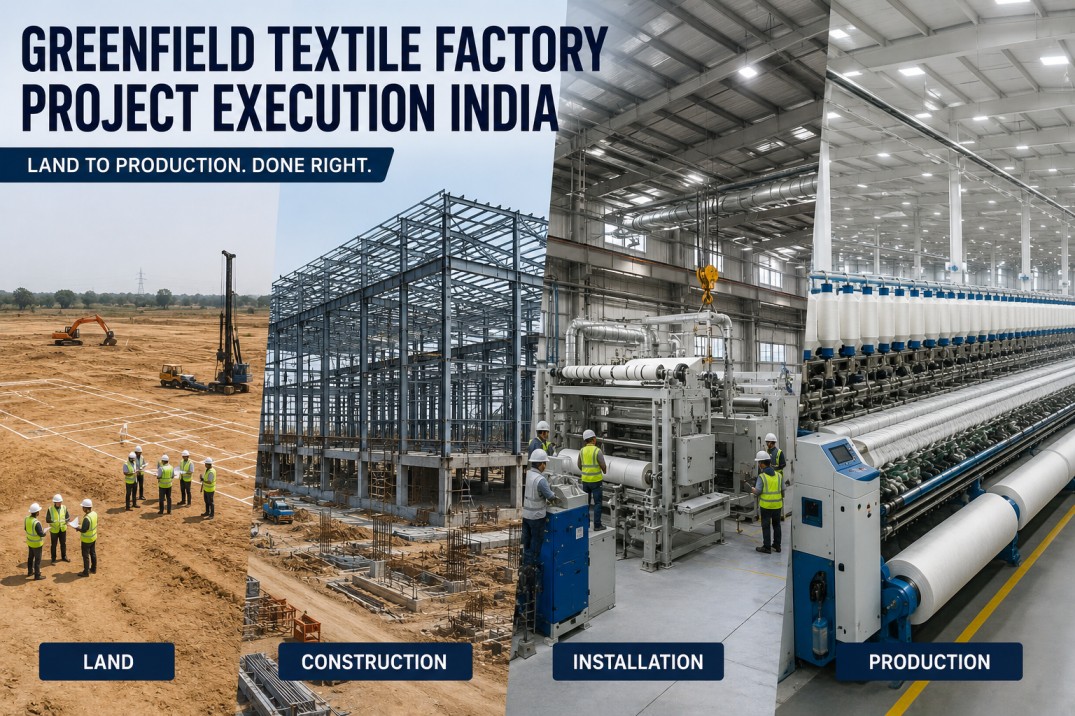
Read More
Building a textile factory from empty land to commercial production is one of the most complex capital projects in manufacturing, requiring coordinated execution across civil engineering, utility infrastructure, machinery procurement, installation
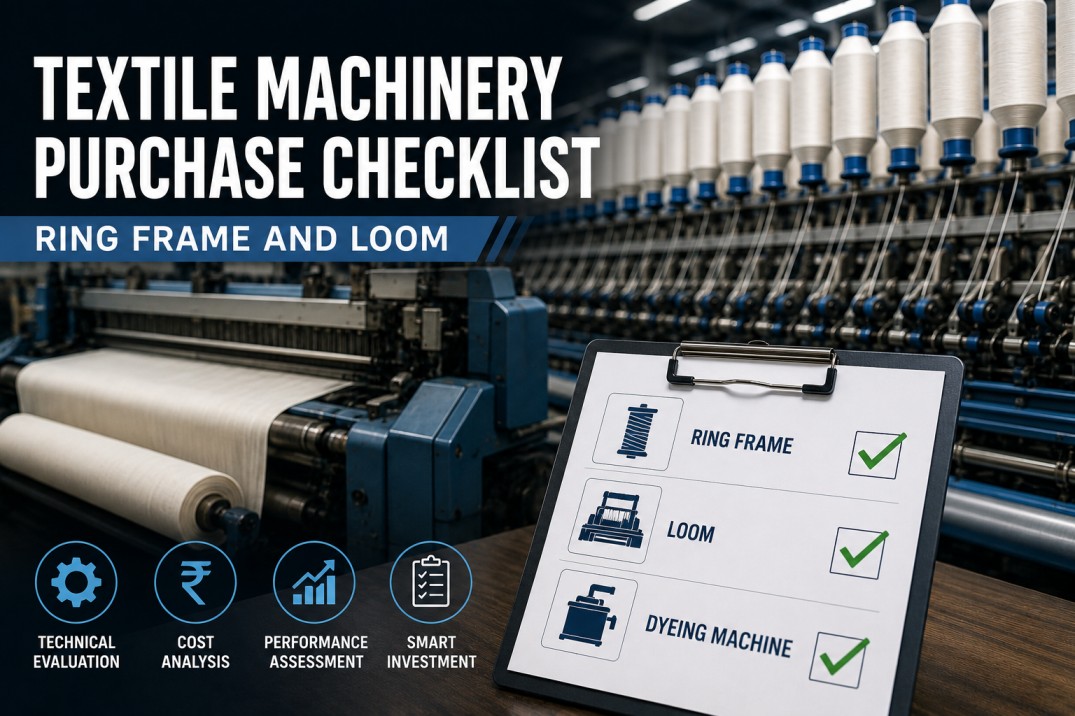
Read More
A ring frame, loom, or dyeing machine is a multi-crore investment that commits a textile mill to a production technology, operating cost structure, and product capability for 10–15 years. The difference between a well-evaluated purchase and one dr
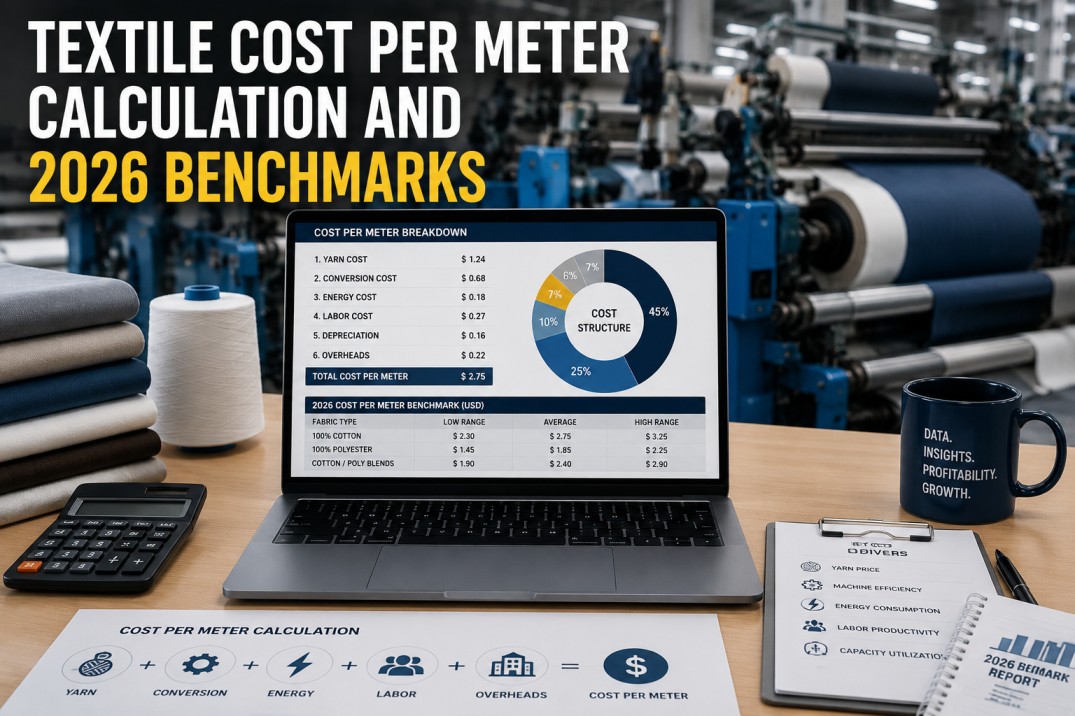
Read More
Understanding true cost per meter is the single most important financial lever for textile manufacturers, yet most mills calculate cost using rough averages that mask significant variances across fabric types, production runs, and efficiency level
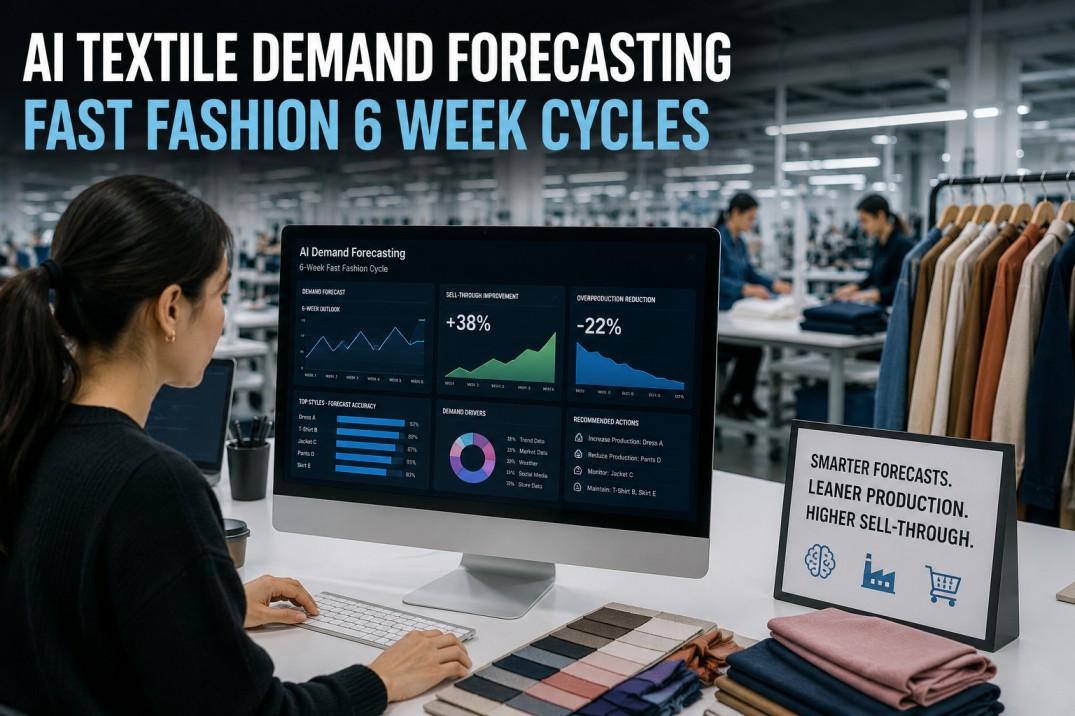
Read More
Fast fashion's 6-week design-to-shelf cycle has made demand forecasting the single highest-impact lever for textile manufacturers and apparel brands, with overproduction wasting an estimated 28% of all fashion production and markdowns consuming 30
Read More
Global textile supply chains are restructuring faster than at any point since the 1990s shift to Asia. Brand buyers now demand multi-country sourcing portfolios, regulatory mandates require supply chain transparency, and geopolitical disruptions k
Read More
United States textile and apparel manufacturing is experiencing a modest but meaningful resurgence driven by a convergence of policy incentives, trade rule changes, and technology advancements that are gradually shifting the cost and risk calculus
Read More
The European Union's Ecodesign for Sustainable Products Regulation, adopted in March 2025, introduces the most comprehensive environmental compliance framework ever applied to textile and apparel products sold in the EU market, with direct implica
Read More
China remains the dominant force in global textile manufacturing and apparel production, controlling approximately 32 percent of worldwide textile exports with total shipments exceeding $238 billion in 2025 — more than the next four largest export
Read More
Vietnam's textile and apparel industry exported $44 billion in 2025, making it the world's third-largest exporter after China and Bangladesh, with foreign direct investment in textile manufacturing reaching a record $2.8 billion as global brands a
Read More
Bangladesh's ready-made garment industry ships $47 billion annually — 84% of the country's total exports — making it the world's second-largest apparel exporter after China. The sector employs 4.5 million workers across 4,500 factories, with woven
Read More
India's textile and apparel industry generates $165 billion in annual value, employs 45 million workers directly, and exports $35 billion in products across cotton, man-made fiber, and technical textile segments. Three clusters anchor this ecosyst
Read More
Zero incidents is not a slogan — it is a measurable target that the best-performing textile mills achieve through systematic safety culture development rather than compliance-driven enforcement. The difference between mills with incident rates of
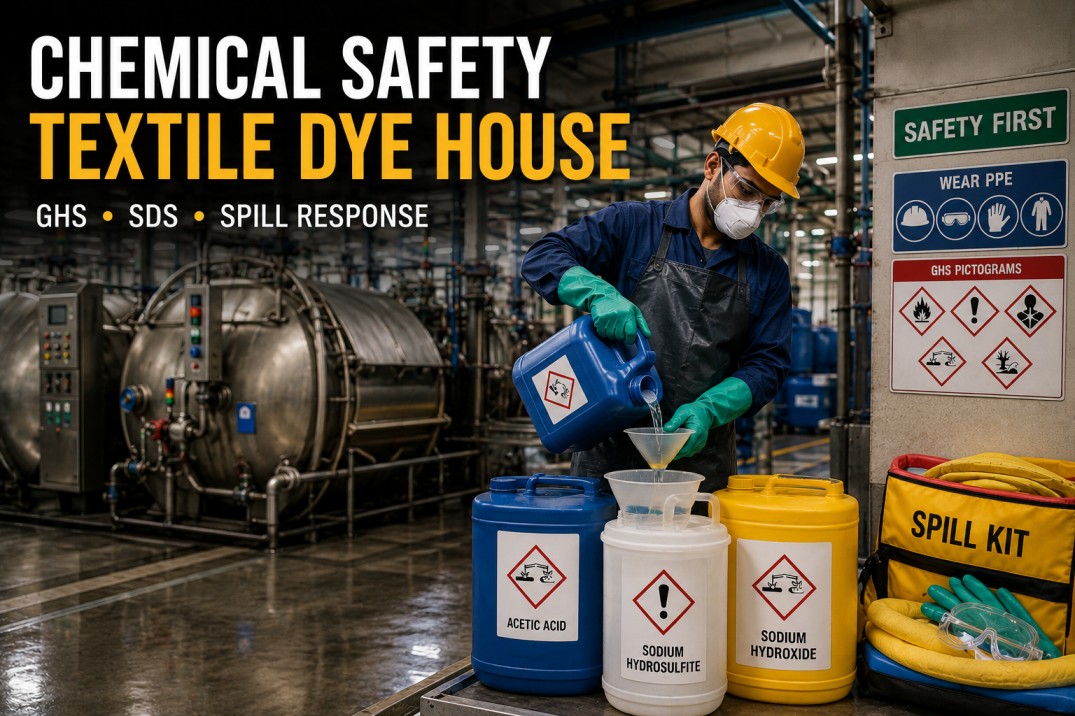
Read More
A typical textile dyehouse stores and uses between 200 and 500 distinct chemical products on any given day — dyestuffs, auxiliaries, finishing agents, acids, alkalis, oxidizing and reducing agents, surfactants, and solvents — many of which carry G
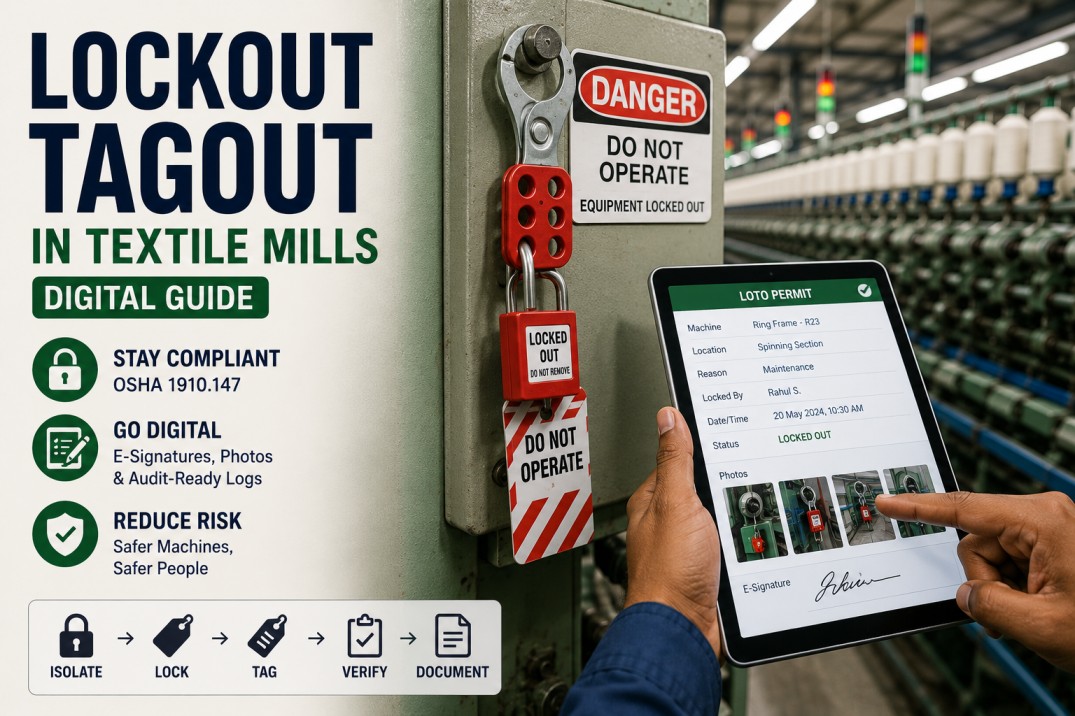
Read More
Lockout tagout (LOTO) violations remain the most frequently cited OSHA standard in textile manufacturing, with over 4,200 citations issued annually across US textile mills and an average penalty of $15,623 per serious violation as of 2025. The pro
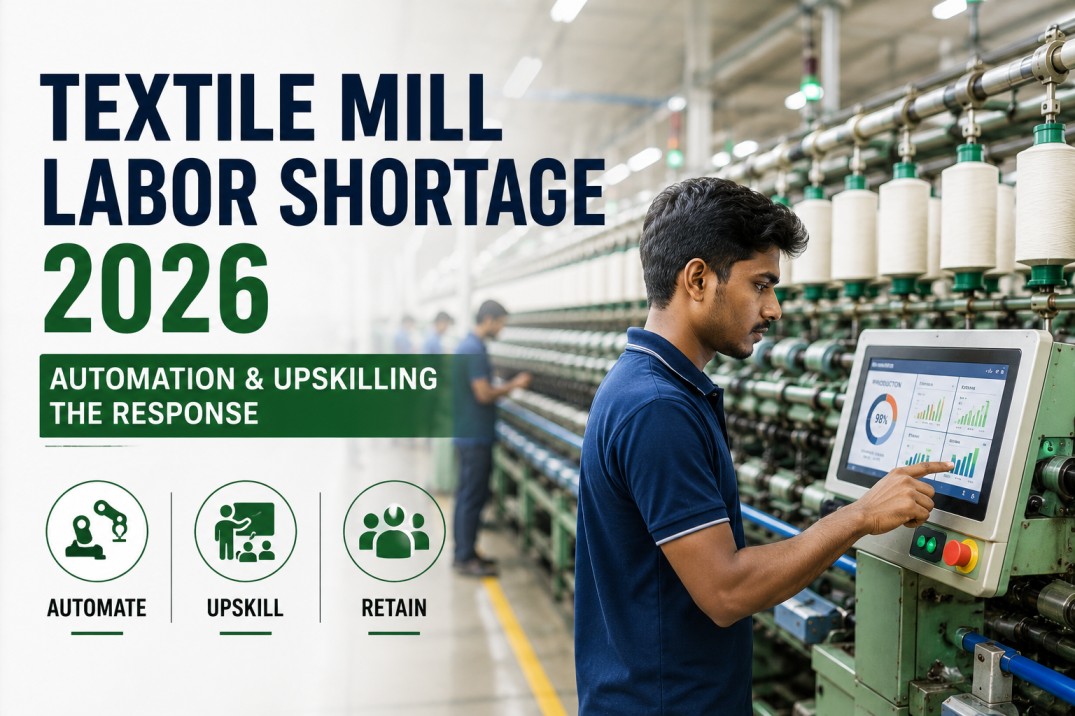
Read More
The global textile industry is approaching a workforce inflection point that threatens production continuity across every major manufacturing region. India's textile sector, employing 45 million people directly, faces 18–22% annual operator attrit
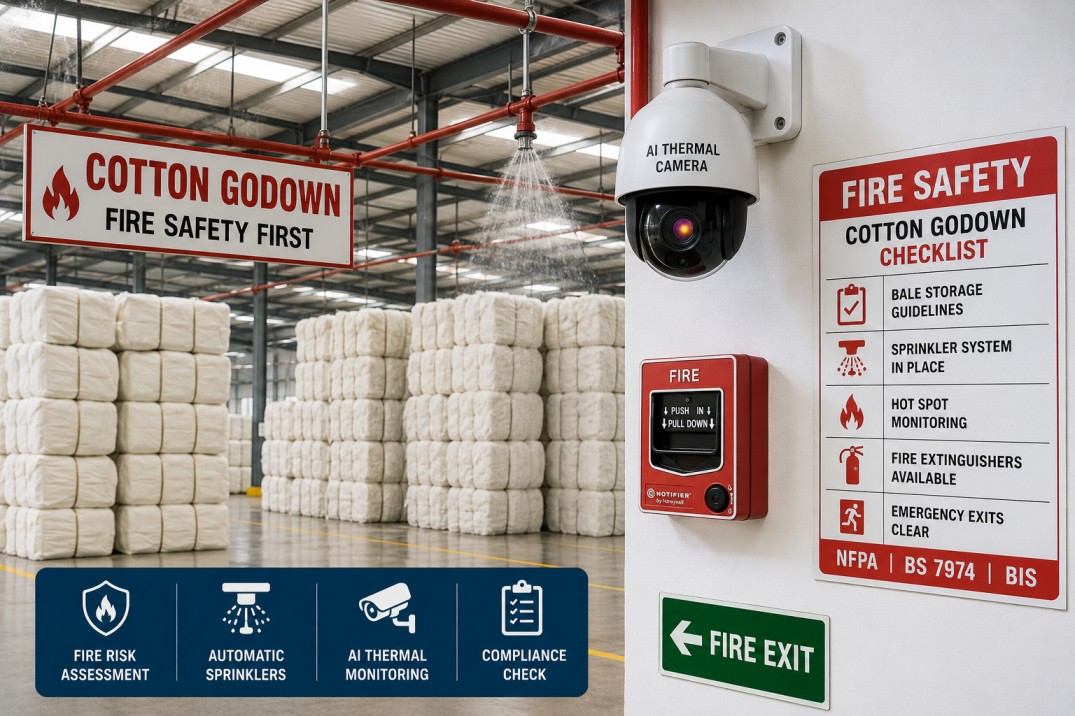
Read More
Cotton godowns present one of the highest fire risks in any textile operation. Raw cotton bales stored at 10–14% moisture can self-heat through microbial activity and reach ignition temperature without an external ignition source. A single spark f
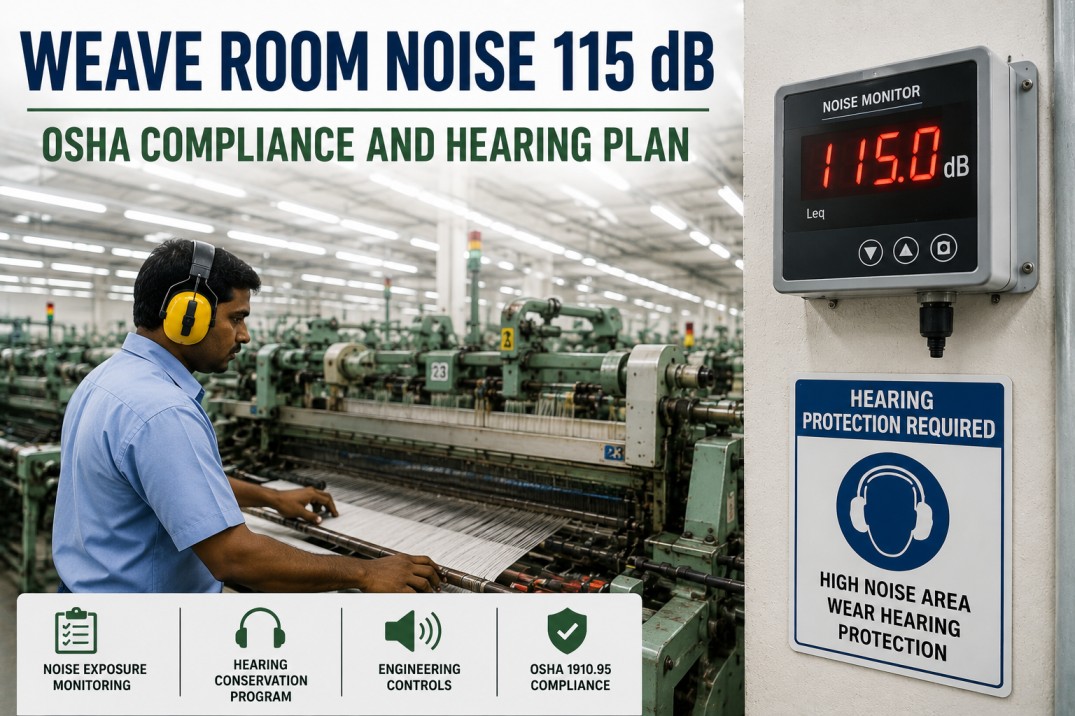
Read More
Modern weave rooms produce noise levels between 105 and 118 dB — well above the OSHA 1910.95 permissible exposure limit of 90 dB for an 8-hour time-weighted average and far exceeding the 85 dB action level that triggers mandatory hearing conservat
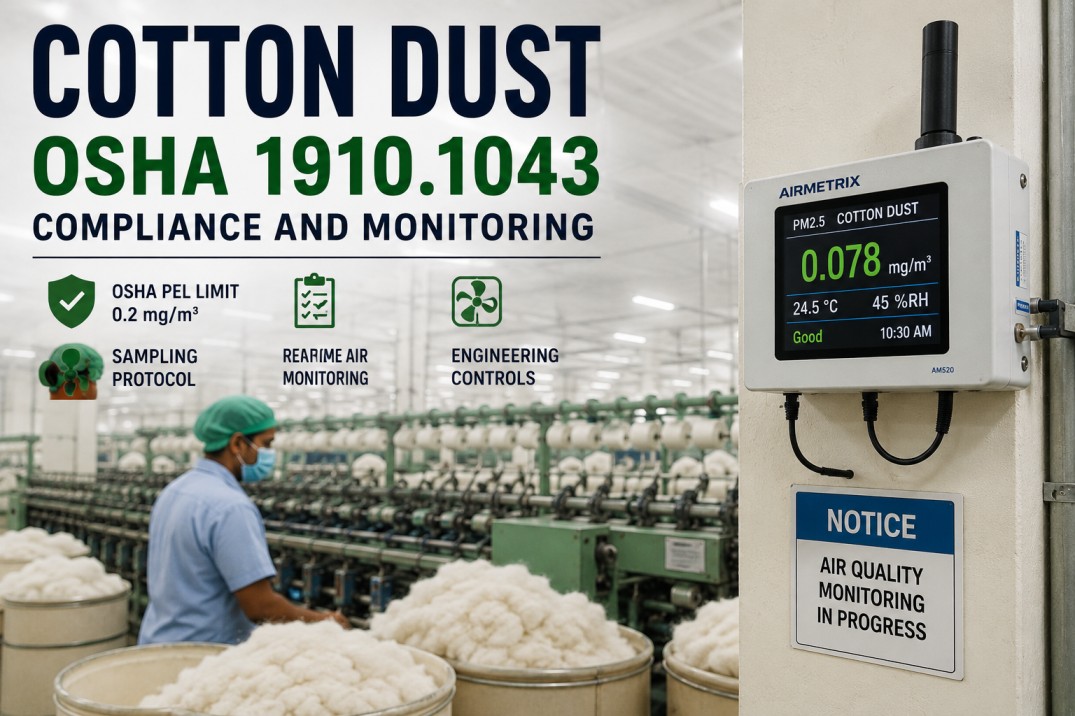
Read More
OSHA 1910.1043 establishes a permissible exposure limit for cotton dust of 0.2 mg per cubic meter of air in yarn manufacturing areas, with lower limits of 0.5 mg for weaving and 0.75 mg for waste processing operations. Non-compliance carries fines
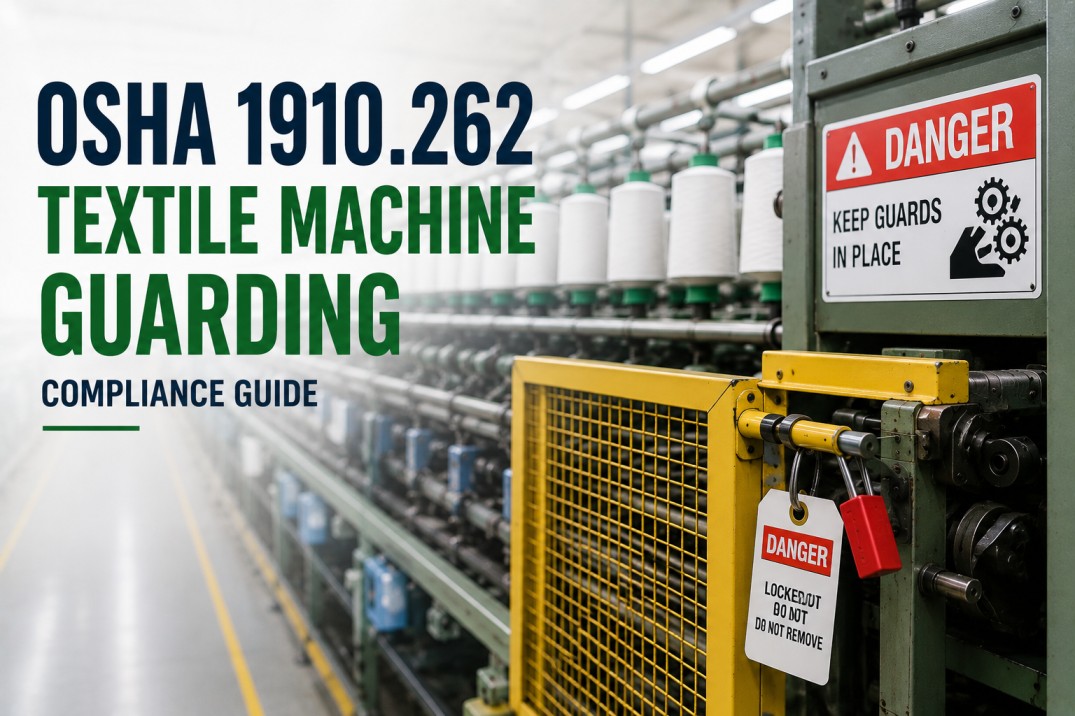
Read More
OSHA 1910.262 is the specific standard that governs machine guarding and worker safety in textile mills. It covers shuttle guards on looms, nip point protection on rollers and calendars, belt and pulley guarding, J-box and opening security on card
Read More
Voice AI is bringing natural language to the textile shop floor. Operators ask questions in plain English or Hindi and get instant answers about production status, machine health, quality metrics, and inventory levels — no screens, no menus, no tr
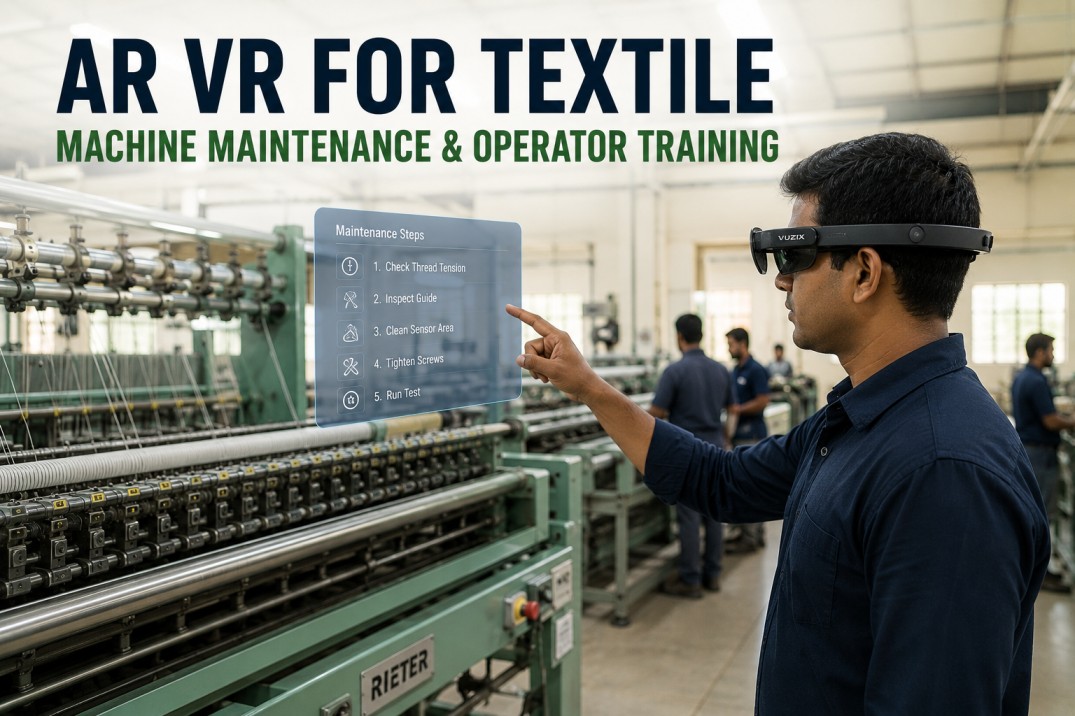
Read More
AR and VR are transforming textile machine maintenance training. Microsoft HoloLens 2 overlays step-by-step repair instructions directly onto looms, spindles, and dyeing machinery. Vuzix smart glasses connect textile fixers with remote experts for
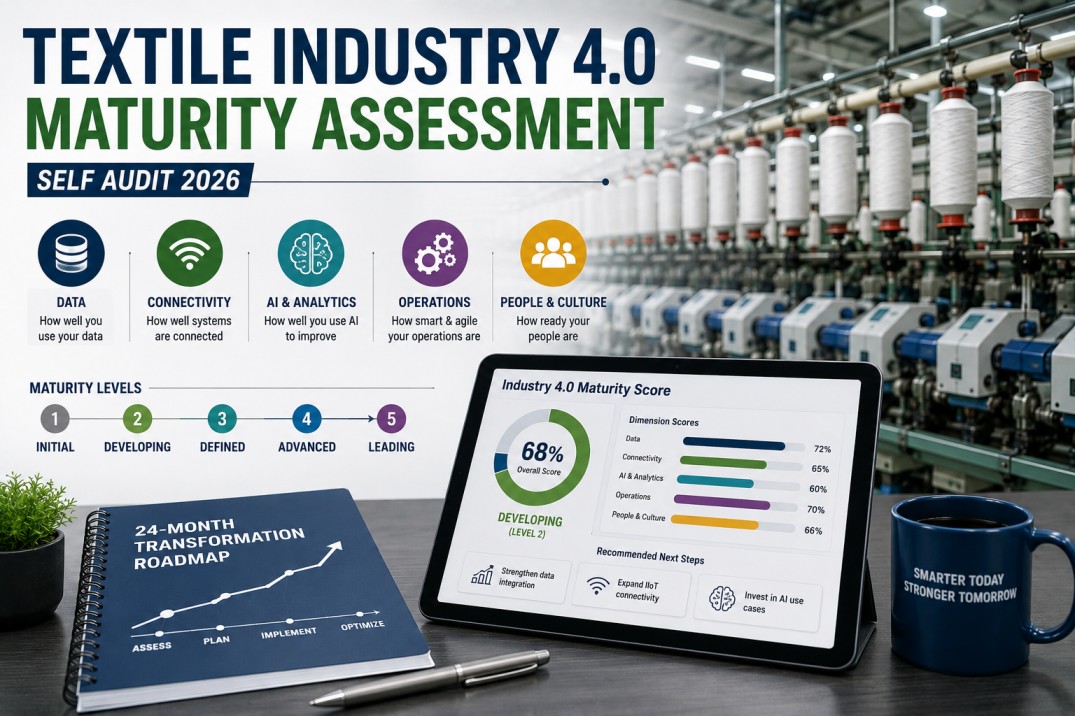
Read More
Industry 4.0 transformation in textile manufacturing is not a binary state — mills are not simply Industry 4.0 or not Industry 4.0. Every textile facility exists somewhere on a maturity continuum that spans four dimensions: data infrastructure, co
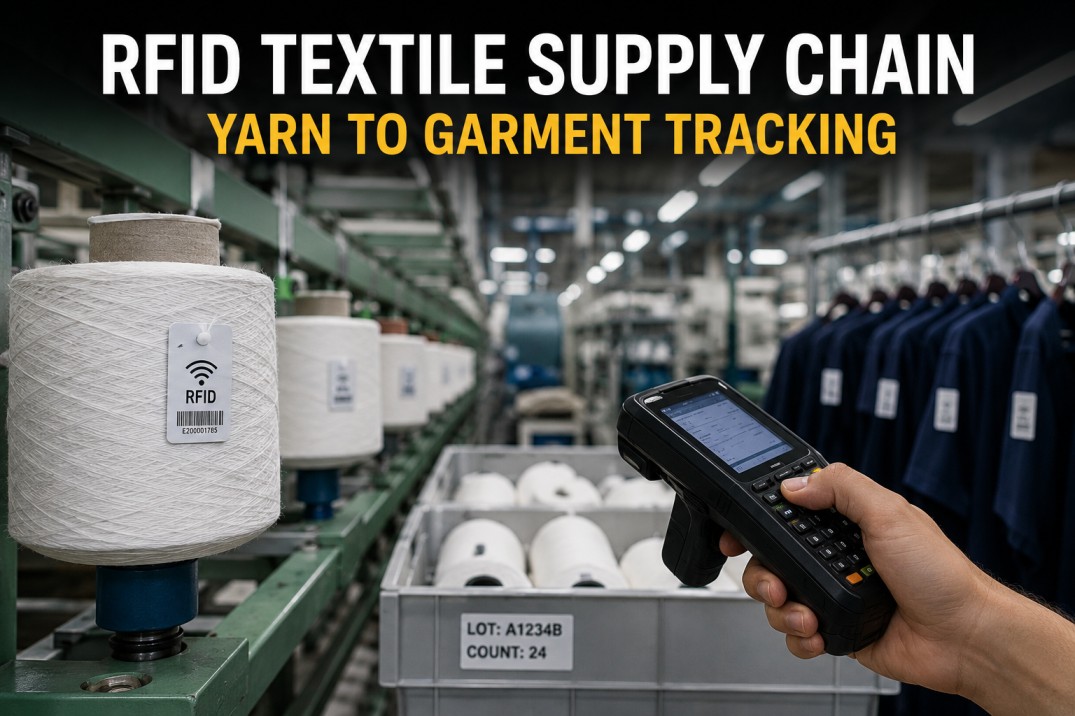
Read More
Radio frequency identification has evolved from a warehouse automation tool into a complete supply chain visibility platform that gives textile and apparel businesses item-level tracking precision across every stage of production — from raw yarn b
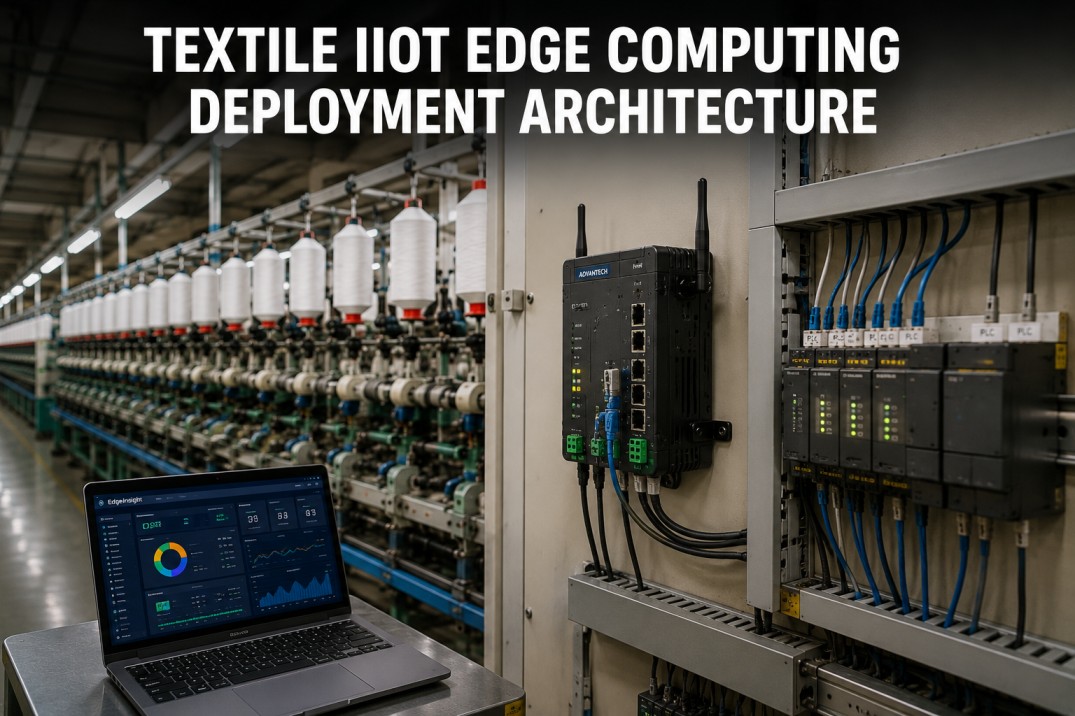
Read More
Textile mills generate more data than any other discrete manufacturing industry per square meter of factory floor — every spinning frame produces spindle speed, bobbin tension, temperature, and vibration data at 100-millisecond intervals across hu
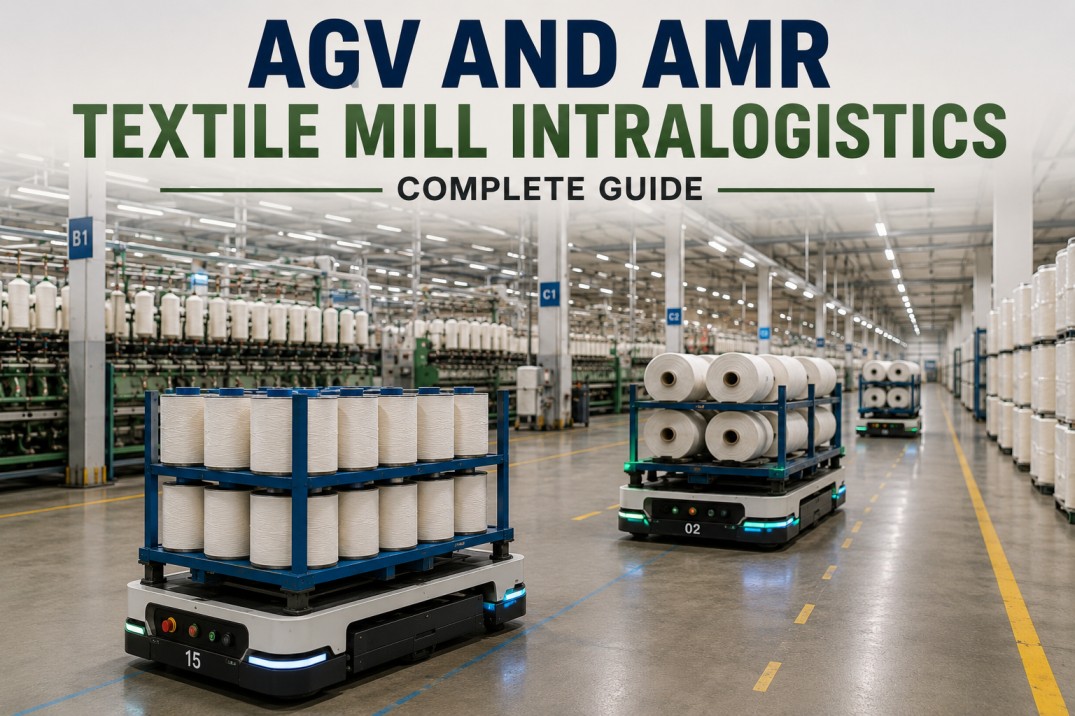
Read More
Intralogistics — the internal movement of materials between production stages — consumes 20 to 35 percent of total labor hours in a typical textile mill and represents one of the highest-ROI automation opportunities available today. Every kilogram
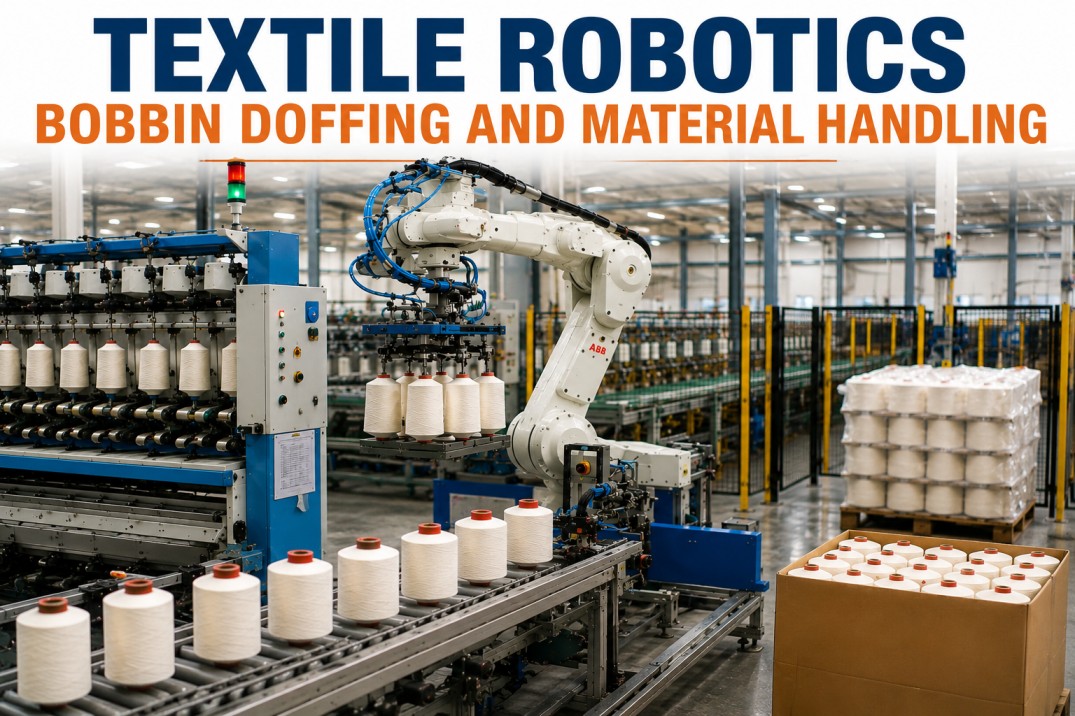
Read More
Textile mills have historically relied on manual labor for repetitive material handling tasks that consume 30–40 percent of direct labor hours in a typical spinning mill — doffing full bobbins from ring spinning frames, transporting cone packages
Read More
A digital twin is a living, physics-accurate digital representation of your textile mill that mirrors real production conditions in real time. Unlike a static 3D model, a properly built digital twin ingests live machine data, production events, en
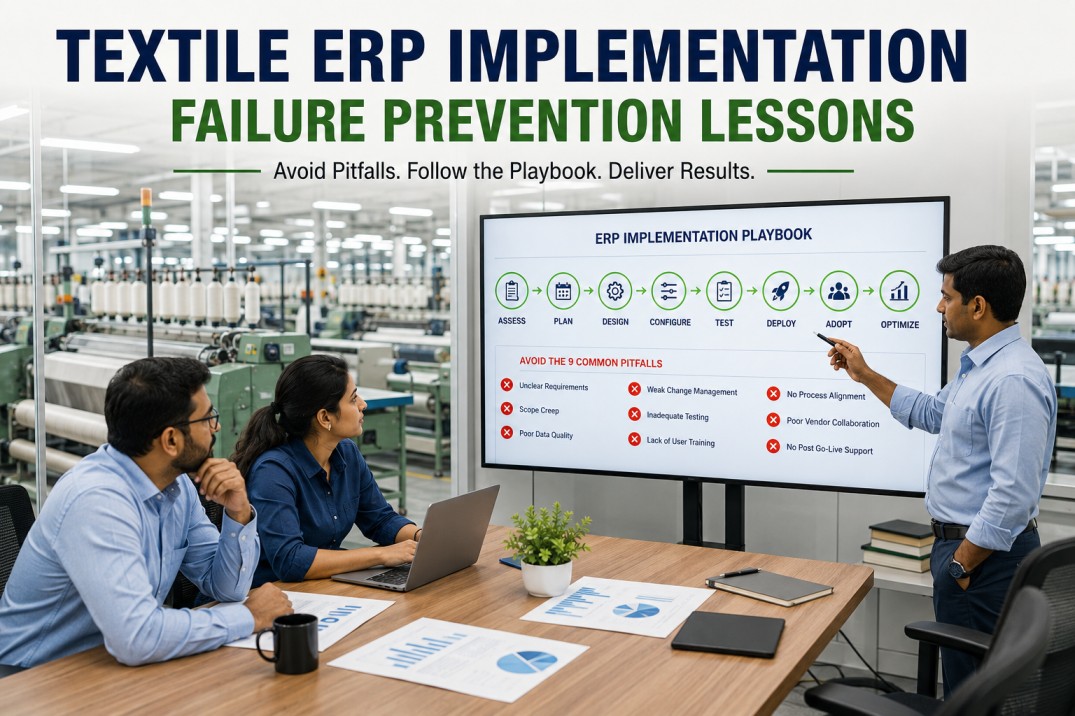
Read More
Industry surveys consistently report that 70 percent of textile ERP implementations miss their original budget, timeline, or scope — and a significant fraction are abandoned entirely after millions spent and years of effort. The failure rate is no

Read More
Textile mills evaluating manufacturing software platforms face a fundamental architectural decision that affects everything from upfront investment and monthly operating costs to data security posture, system latency, and long-term scalability: cl
Read More
Picanol LoomGate and BMSvision are the two dominant platforms for weaving mill monitoring worldwide, yet most mills using them still export data to spreadsheets for reporting because neither system natively connects to MES, CMMS, or ERP platforms

Read More
Most spinning mills running mixed-vendor machine parks operate three or more vendor-specific monitoring systems simultaneously. Rieter Spidernet monitors ring spinning frames, draw frames, and combers with spindle-level granularity — tracking spin
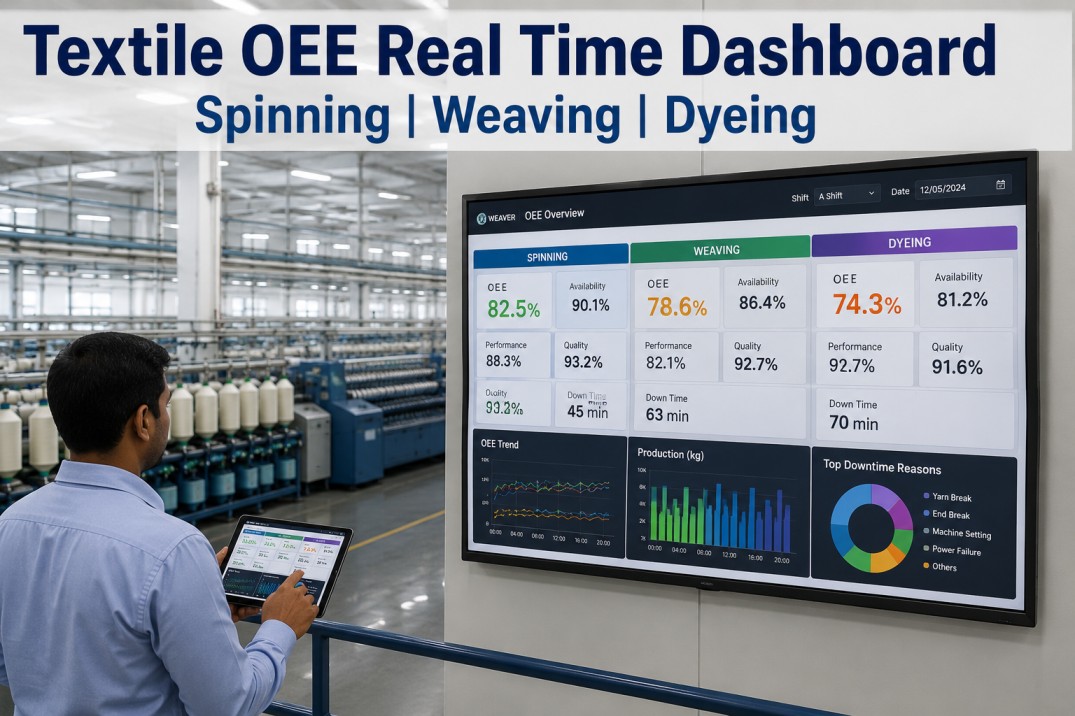
Read More
Overall Equipment Effectiveness has long been the standard metric for textile manufacturing productivity, but until recently most mills calculated OEE manually from shift-end paper reports that arrived 12 to 48 hours after production happened. A s
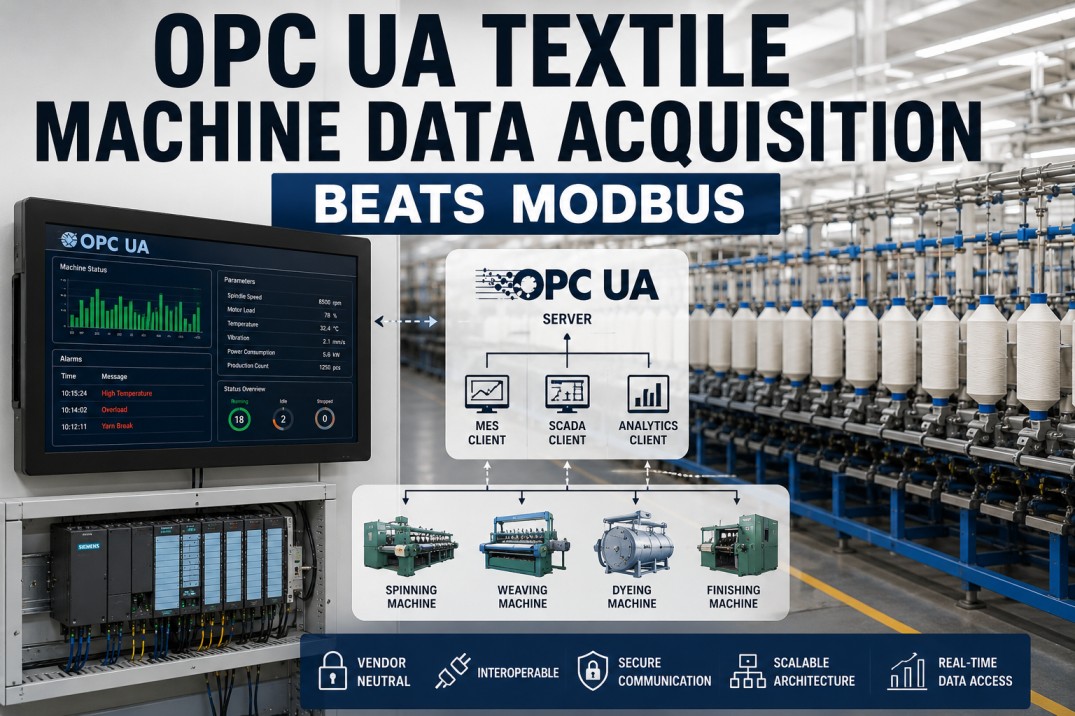
Read More
3OPC Unified Architecture has become the de facto standard for textile machine data acquisition, displacing legacy protocols like Modbus, Profibus, and proprietary vendor interfaces across new machine installations and retrofit projects alike. Unl

Read More
Programmable Logic Controllers are the backbone of textile mill automation, controlling everything from opening and carding machines through spinning frames, weaving looms, dyeing vats, and finishing ranges. A typical mid-size textile mill operate
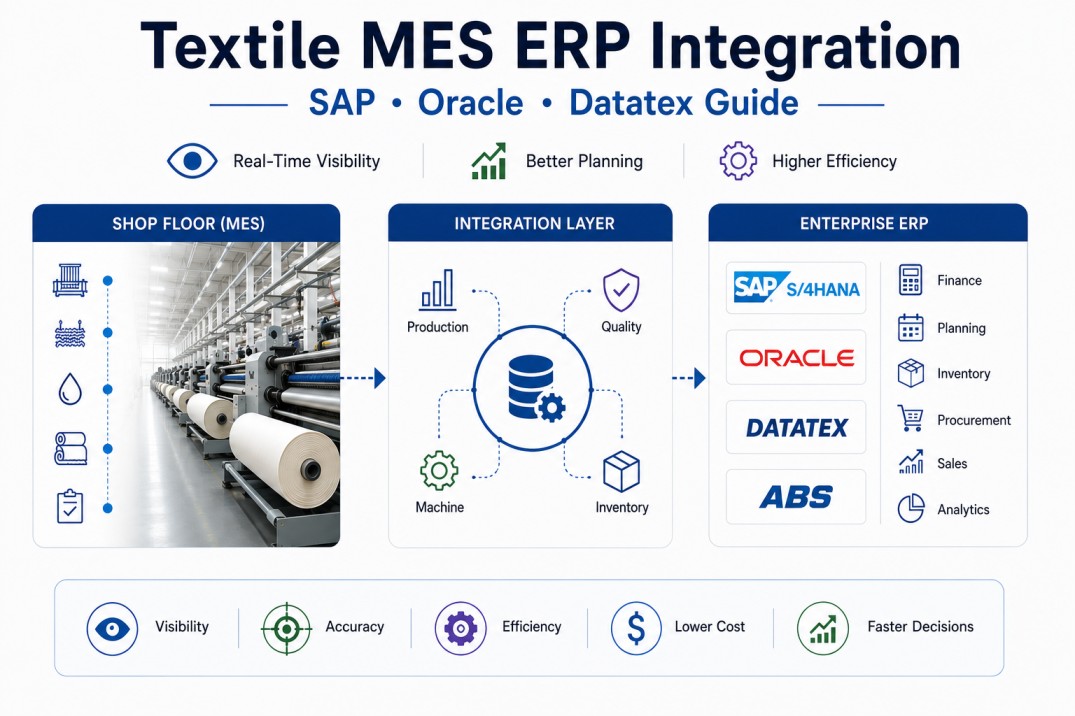
Read More
The integration between Manufacturing Execution Systems (MES) and Enterprise Resource Planning (ERP) platforms is the foundational layer of digital textile manufacturing, enabling real-time visibility from shop floor production events to financial

Read More
Generative artificial intelligence has introduced a paradigm shift in textile design, compressing the concept-to-sample cycle from weeks to days and enabling design exploration at a scale impossible with traditional CAD tools. Fashion brands and t
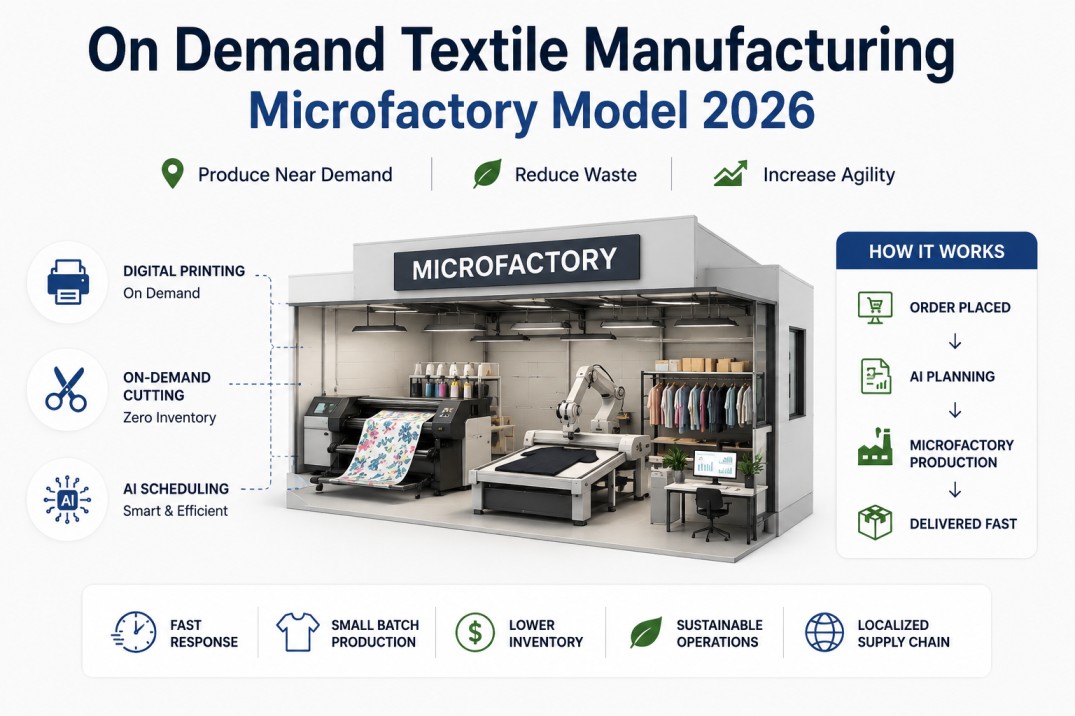
Read More
The microfactory model represents a fundamental rethinking of textile manufacturing scale and location. Instead of a single large facility producing millions of units for global distribution, a microfactory is a compact production unit — typically

Read More
Three-dimensional whole-garment knitting — also known as seamless or knit-to-shape technology — produces a complete garment directly on a flat knitting machine with no cutting, no sewing, and virtually no fabric waste. Unlike conventional cut-and-

Read More
Organic cotton accounts for approximately 1 to 2 percent of global cotton production, yet labels claiming organic content appear on an estimated 5 to 8 percent of cotton-containing garments sold at retail — a gap that represents roughly 200,000 to
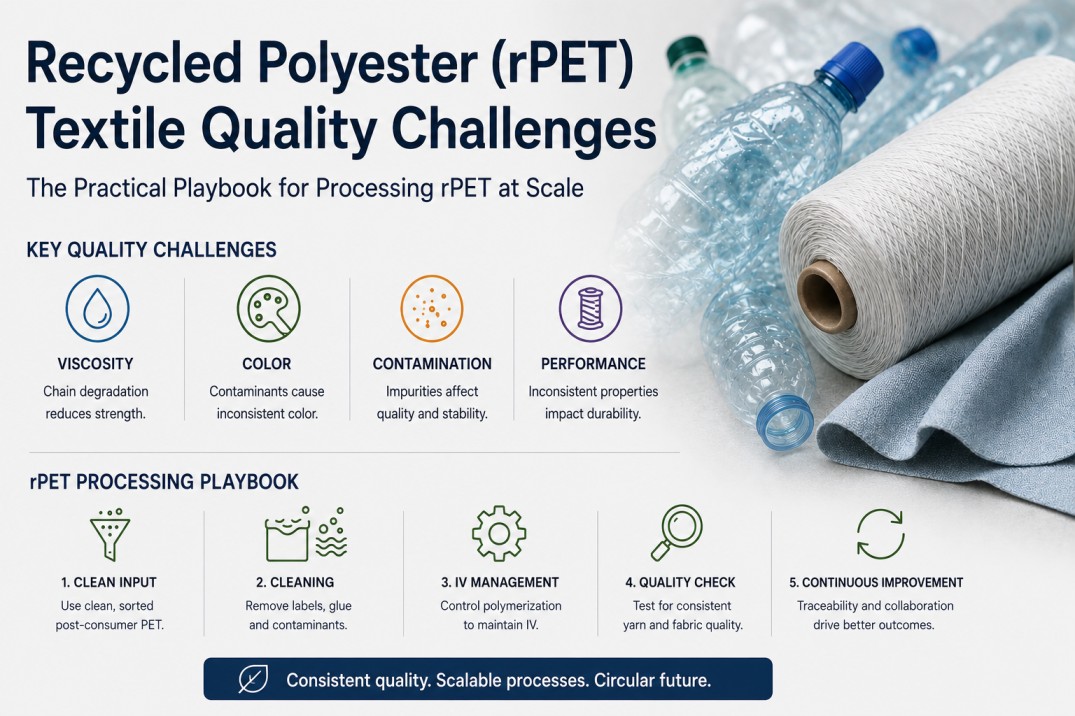
Read More
The global textile industry consumed approximately 70 million metric tons of polyester in 2025, with recycled polyester (rPET) accounting for roughly 15 to 18 percent of total fiber production. Major apparel brands including Nike, Adidas, H&M,

Read More
Bioengineered fibers represent the most significant shift in textile raw materials since the development of synthetic polymers in the mid-20th century. Instead of extracting or growing fibers from animals or plants, these materials are cultivated

Read More
Nanotechnology is transforming textile finishing by engineering particle behavior at the molecular scale — adding properties that conventional chemical finishes cannot achieve. Nano coatings impart antimicrobial activity, UV protection, hydrophobi

Read More
Smart textiles — fabrics that sense, react, and communicate — represent the convergence of textile manufacturing with electronics, materials science, and data processing. The global smart textiles market is projected to reach $9 to $12 billion by
Read More
The European Union's Packaging and Packaging Waste Regulation (PPWR) and expanding Extended Producer Responsibility (EPR) frameworks across Europe and Asia are fundamentally reshaping the textile waste landscape. By 2028, EU member states must ach

Read More
Textile certifications are baseline procurement requirements for virtually every brand and retailer in 2026. A mill's certification portfolio directly determines which brands it can supply, at what volume, and at what margin. Four certifications d

Read More
The Higg Index is the de facto standard for textile sustainability assessment, accepted by over 200 brands and retailers globally. A mill's Higg FEM (Facility Environmental Module) score and FSLM (Facility Social and Labor Module) score directly i

Read More
Environmental, Social, and Governance reporting is no longer a differentiator for textile mills — it is a procurement requirement that determines whether a mill appears on approved supplier lists at all. Every major apparel brand now requires veri

Read More
Carbon measurement in textile mills has shifted from voluntary reporting to a commercial requirement in the last 24 months. Buyers including H&M, Inditex, Nike, and PVH now mandate scope 1 and scope 2 emissions data at the mill level as a cond

Read More
Textile mills consume power 24 hours a day, 330 to 360 days a year, making them ideal candidates for solar generation — but only if the system is sized and structured correctly. A 1 MW rooftop installation on a spinning mill operating three shifts

Read More
Relative humidity is the most influential environmental variable in a textile mill that no one can see. At 55 percent RH, cotton fibers carry optimal moisture for drafting and twisting — yarn breaks stay low, fly generation is minimal, and static

Read More
Steam is the circulatory system of a textile mill. Wet processing — desizing, scouring, bleaching, dyeing, finishing — consumes 60 to 70 percent of a mill's total thermal energy, and the boiler house is the single largest utility cost center on th

Read More
Compressed air is the most expensive utility in a textile mill, consuming 10 to 30 percent of total electrical load depending on the mix of air-jet looms, ring spinning traveler systems, and pneumatic controls. The U.S. Department of Energy estima

Read More
Energy constitutes between 8 and 25 percent of total production cost in a textile mill, depending on the product mix and regional utility rates. Spinning alone consumes roughly 34 percent of a mill's total energy, weaving another 23 percent, and w

Read More
The global denim industry produces over 6 billion garments annually, and every pair of jeans has traditionally consumed 70 liters of water, 1 kilowatt-hour of energy, and 150 grams of chemicals during its finishing process. With regulatory pressur
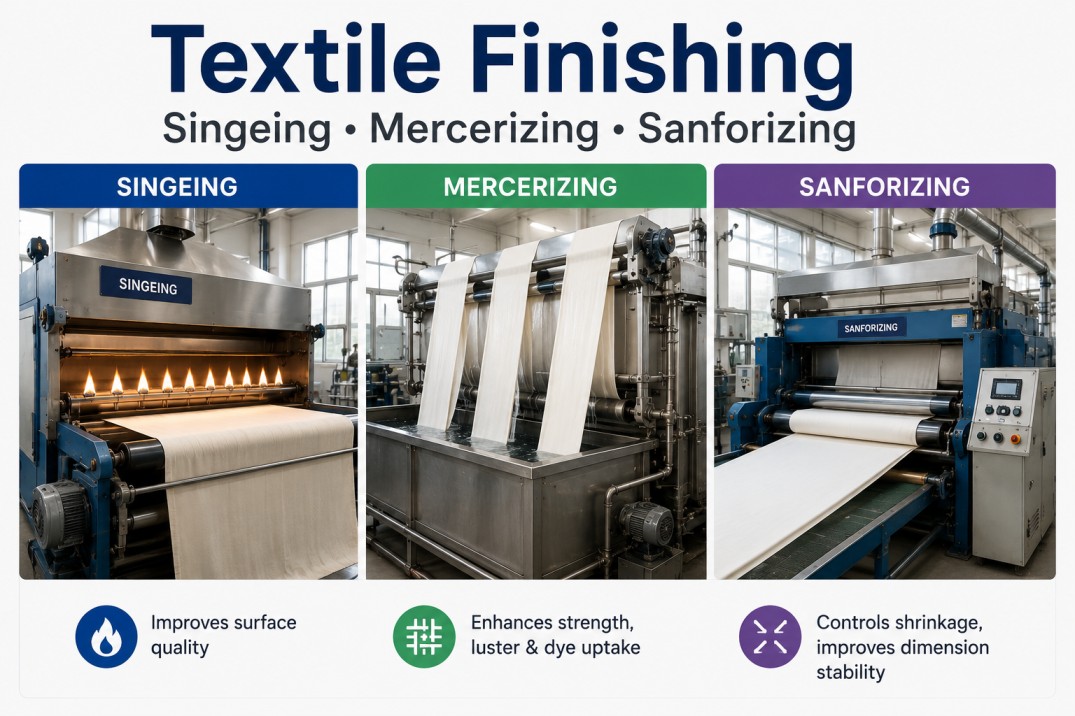
Read More
Textile finishing operations determine the final quality, appearance, and performance of every fabric that leaves a mill. Singeing removes protruding fibers for a clean surface, mercerizing increases dye uptake and luster, and sanforizing controls
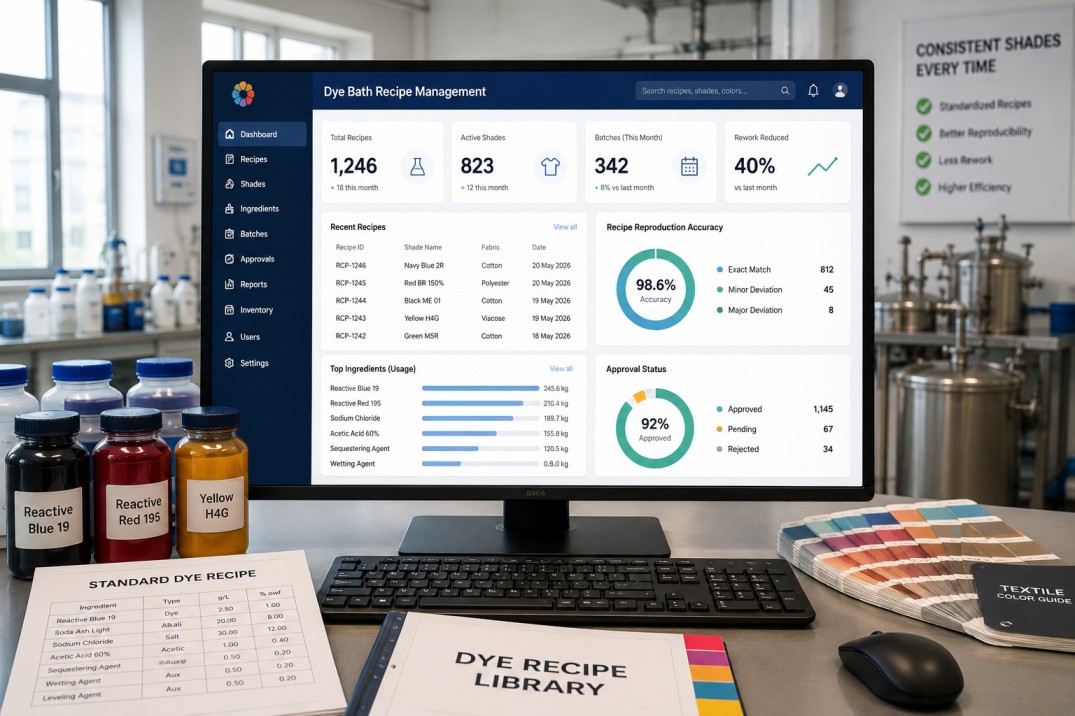
Read More
Every dye house has experienced the same costly cycle: a shade that matched perfectly in the lab fails at production scale, the production batch requires shading additions that consume machine time and chemicals, and the corrected recipe is stored

Read More
Zero Liquid Discharge is no longer a forward-looking choice for Indian textile mills — it is a regulatory mandate enforced by State Pollution Control Boards across every major textile cluster. Tirupur, Erode, Panipat, Bhilwara, and Tarapur have al
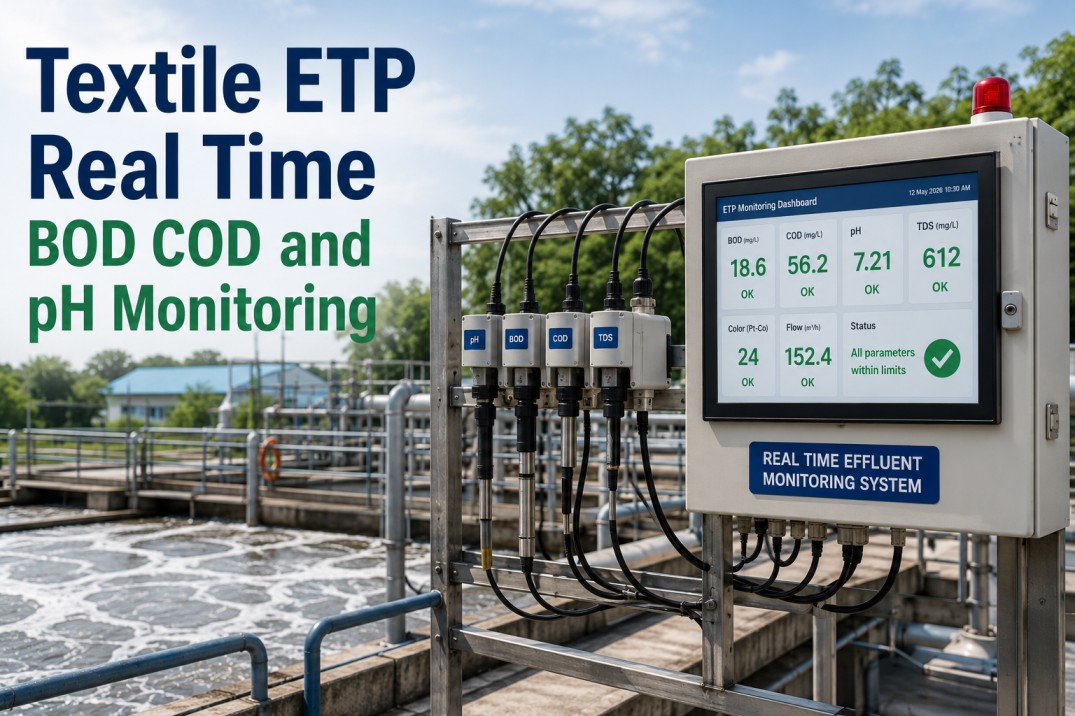
Read More
Textile effluent treatment plants process wastewater volumes ranging from 500 to 5,000 cubic meters per day, carrying variable loads of BOD, COD, pH, color, and TDS that shift with every production batch. A reactive approach — sampling once per sh

Read More
ZDHC MRSL compliance is no longer a competitive differentiator for textile dye houses. It is a contractual requirement. Every major brand group including Inditex, H&M, Nike, Adidas, and BESTSELLER now mandates that wet processing facilities ma
Read More
ZDHC MRSL compliance is no longer a competitive differentiator for textile dye houses. It is a contractual requirement. Every major brand group including Inditex, H&M, Nike, Adidas, and BESTSELLER now mandates that wet processing facilities ma
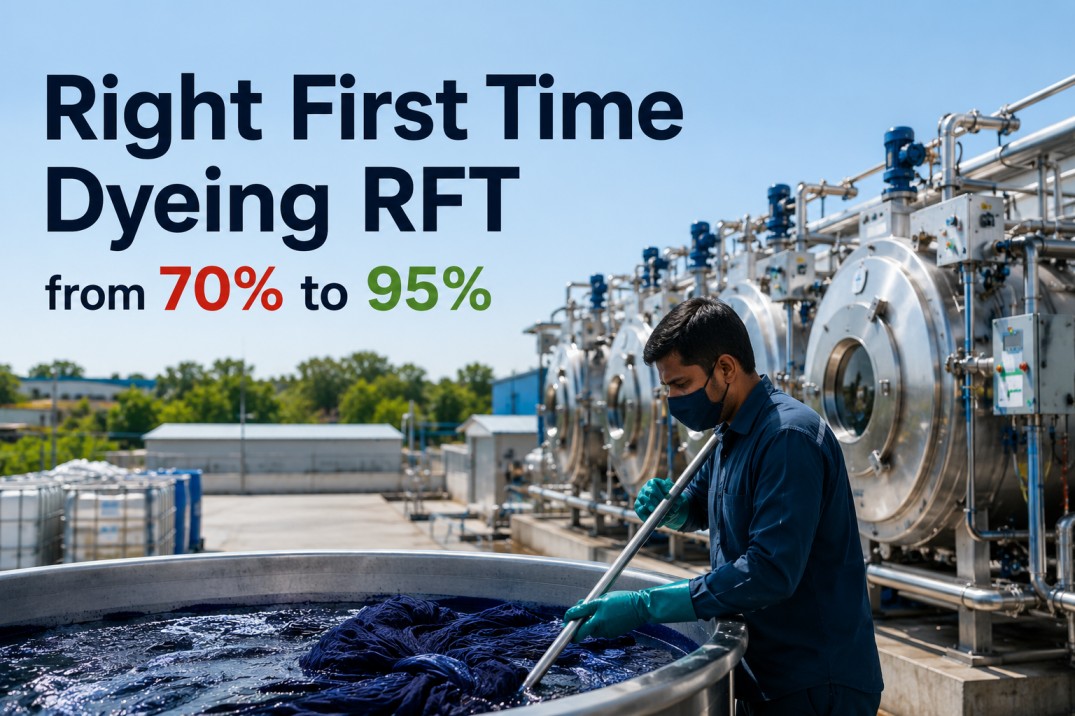
Read More
Every percentage point of right-first-time dyeing improvement directly reduces water, chemical, energy, and labor costs in your dye house. Moving from 70% to 95% RFT cuts total production costs by 44%, eliminates rework loops that consume 30% of m
.jpg)
Read More
The choice between digital inkjet and rotary screen printing has never been more consequential for textile manufacturers. In 2026, digital textile printing has reached production speeds of 75 meters per minute on single-pass machines, while rotary
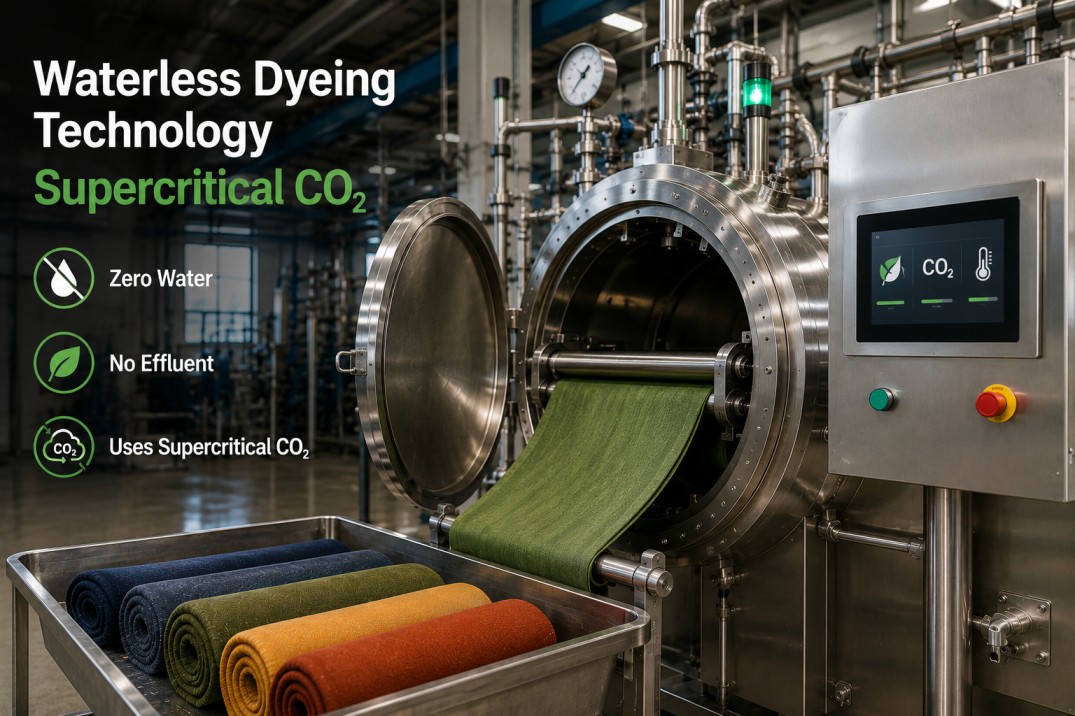
Read More
Textile dyeing consumes 100 to 150 liters of fresh water per kilogram of fabric — five trillion liters annually globally — and discharges an estimated 20 percent of the world's industrial wastewater. Supercritical carbon dioxide dyeing eliminates
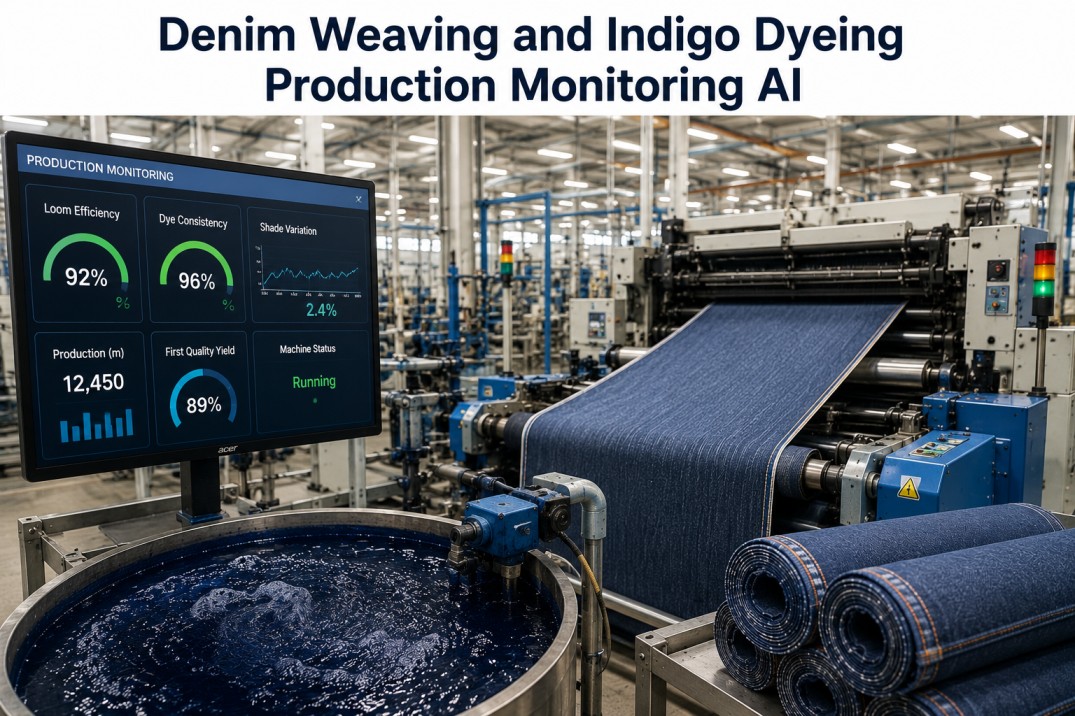
Read More
In denim manufacturing, a shade drift that goes undetected for thirty minutes does not correct itself — it propagates across thousands of meters of warp sheet, and by the time it surfaces at final inspection, the fabric has lost 45 to 65 percent o
.jpg)
Read More
Global technical textiles consumption exceeds 40 million tons annually, with narrow fabrics — seat belt webbing, cargo restraint straps, medical tapes, and industrial belting — representing a $16 billion segment growing at 5.8 percent per year. Ja

Read More
A 24-machine tricot facility running a mix of high-speed tricot and raschel warp knitting machines typically operates at 68 to 76 percent OEE — losing 24 to 32 percent of theoretical output to speed reductions, yarn breakage stoppages, guide-bar-r
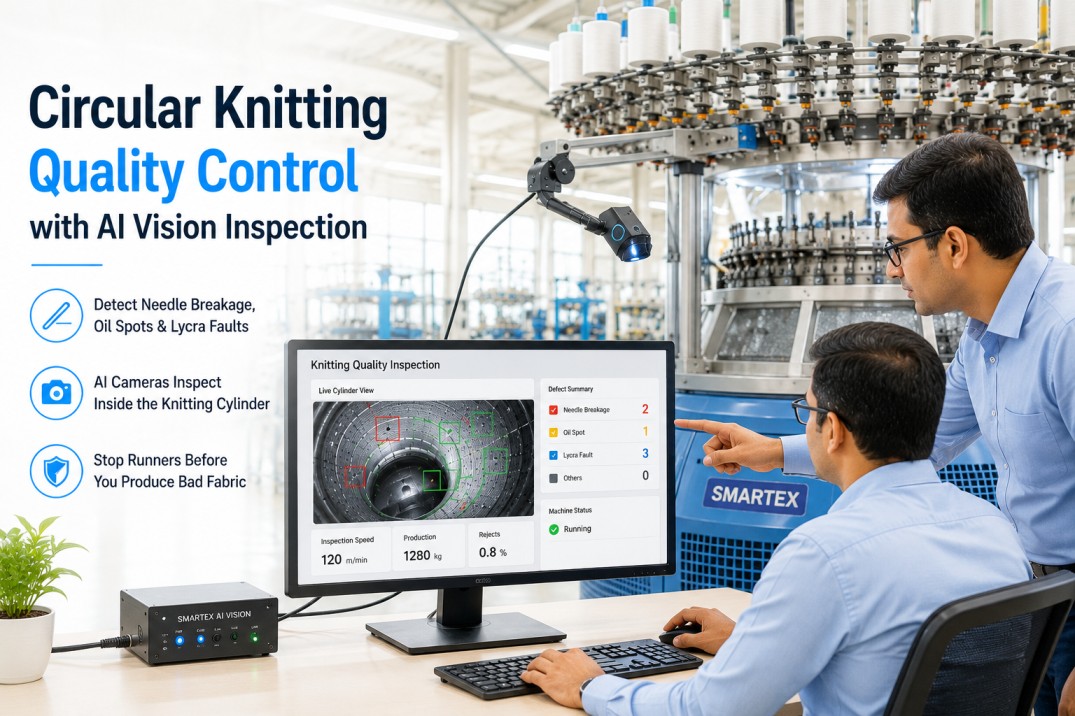
Read More
Up to 15 percent of all circular-knit fabric is downgraded or scrapped because defects are discovered too late. Needle breaks, oil spots, and lycra faults originate inside the cylinder — invisible to operators until meters of defective fabric have

Read More
The average loom fixer carries 22 years of unwritten knowledge — and 53 percent of America's textile technicians are over 45. When a master fixer retires, their expertise in diagnosing shed timing faults, adjusting let-off tension by sound, and sp
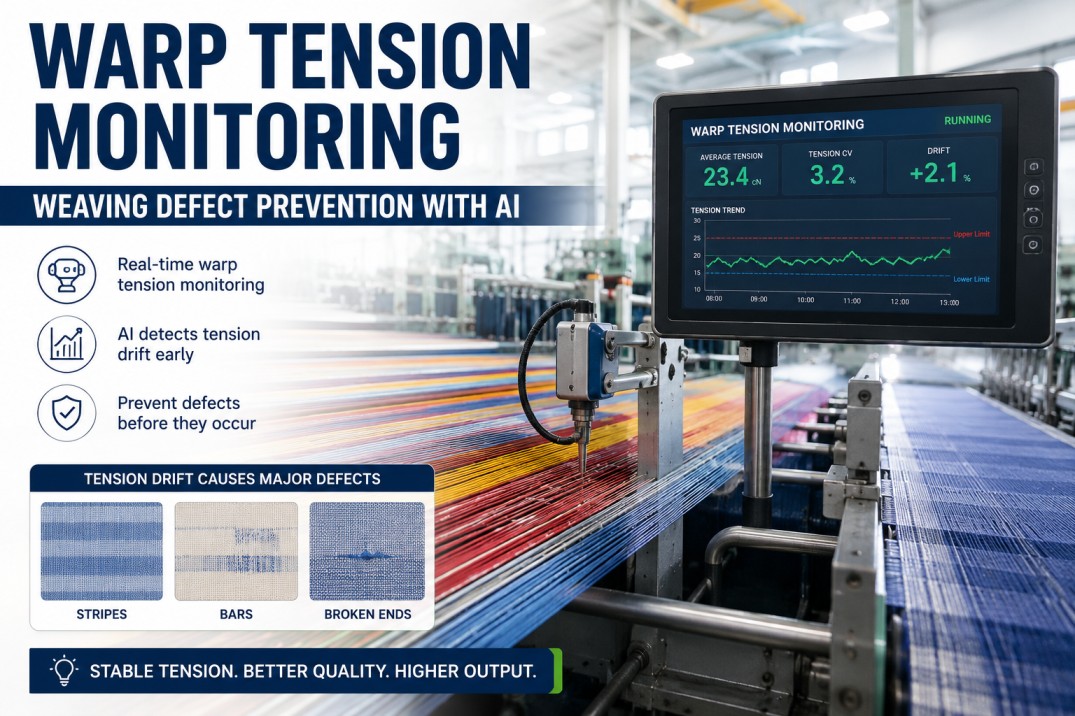
Read More
Warp tension drift is responsible for 38 percent of all major weave defects — yet most mills still rely on operator intuition to catch it. By the time a stop mark, reediness, or broken end appears on the fabric, the tension deviation has already b

Read More
Choosing between air-jet, rapier, and projectile looms is not a speed decision — it is a fabric-portfolio decision. Air-jet looms hit 800–1,200 rpm on plain cotton sheeting but demand uniform yarn quality and consume 30–40% more energy per meter t
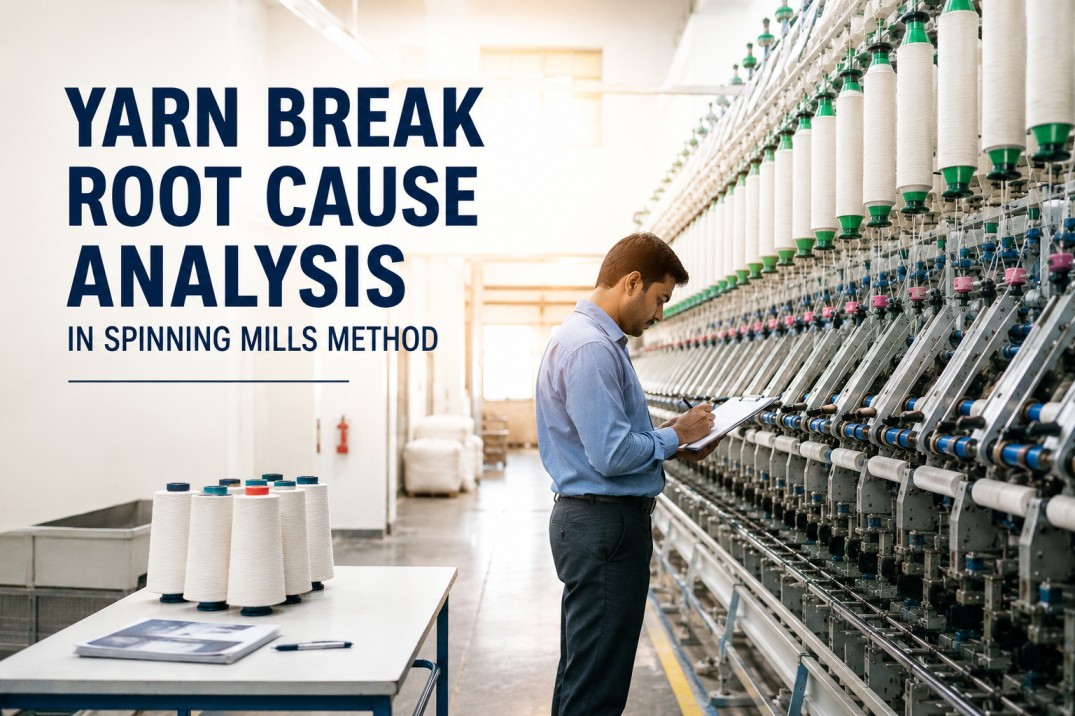
Read More
Every yarn break on a ring frame is a data point pointing to a root cause. The problem is not the break itself — it is the industry habit of treating each break as an isolated event rather than a systemic signal. A single end break costs 3 to 8 mi

Read More
Every 7 to 14 days, a ring traveller completes the equivalent of 12,000 miles of frictional contact on the ring flange at speeds exceeding 40 m/s. When it fails — and it will — that single worn traveller triggers an end break that costs 3 to 8 min

Read More
Blow room and carding together determine more than 70% of the nep removal and cleaning efficiency in a cotton spinning line — yet most U.S. mills optimize these two sections independently rather than as an integrated process. Cylinder speed, flat

Read More
Sliver uniformity at the draw frame delivery determines more than 60% of yarn evenness variability in ring spinning — and autoleveller optimization is the primary tool U.S. mills have to control it. Without systematic monitoring of autoleveller re

Read More
Compact spinning technology has become the definitive quality standard for U.S. ring-spun yarn production, delivering 30-50% less yarn hairiness and 10-15% higher tenacity compared to conventional ring spinning. But those quality gains depend enti
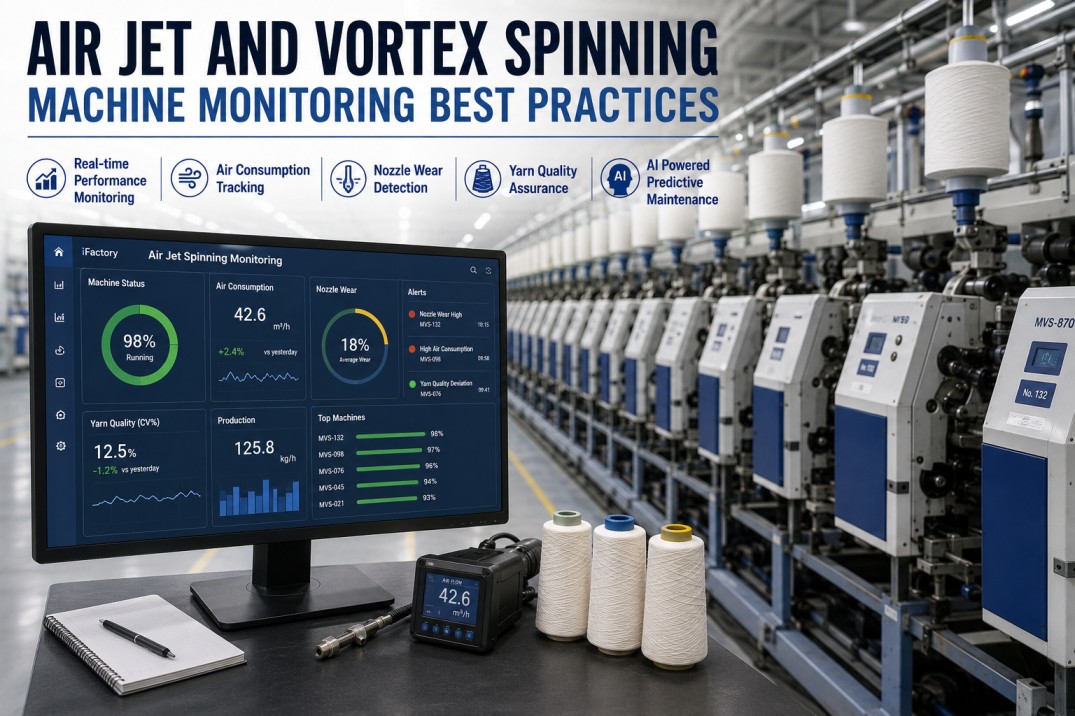
Read More
By 2026, air-jet and vortex spinning machines will account for over 30% of global staple yarn production, driven by delivery speeds exceeding 550 m/min and the elimination of roving and winding stages. But with that productivity comes complexity.

Read More
An open-end rotor spinning machine operating Ne 10 to Ne 36 carded cotton at 60,000 to 120,000 rpm depends on three high-wear components: the rotor, the combing roller, and the navel. Each has a defined service life measured in operating hours, an

Read More
A ring spinning frame with 1,200 spindles running Ne 30 combed cotton at 18,000 rpm generates measurable vibration signatures from every spindle. When a spindle bearing begins to degrade, its vibration profile shifts — amplitude changes, frequency

Read More
Uster Classimat has been the global benchmark for yarn defect classification since 1968, categorizing faults across 23 standard classes based on cross-sectional area and length. The limitation has always been the same: the data lands in a lab repo

Read More
Non-destructive testing for textiles has expanded beyond fabric quality inspection to predictive maintenance of critical production machinery. Stenter frames, the most expensive and energy-intensive machines in textile finishing, account for 30 to

Read More
Garment defects cost apparel manufacturers 3 to 5 percent of revenue in returns, chargebacks, and rework. Industry studies show that 60 to 70 percent of garment defects originate at the sewing stage, making stitch and seam inspection the single hi

Read More
Textile printing plants average 2 to 10 percent seconds across production runs, with machine stops alone accounting for up to 40 percent of all print defects. In rotary screen printing, the three leading causes of seconds are misfits between color

Read More
Fabric inspection is the first line of defense against production quality failures in textile and apparel manufacturing. Industry data shows that 60 to 70 percent of garment defects originate from fabric problems, making incoming roll inspection t
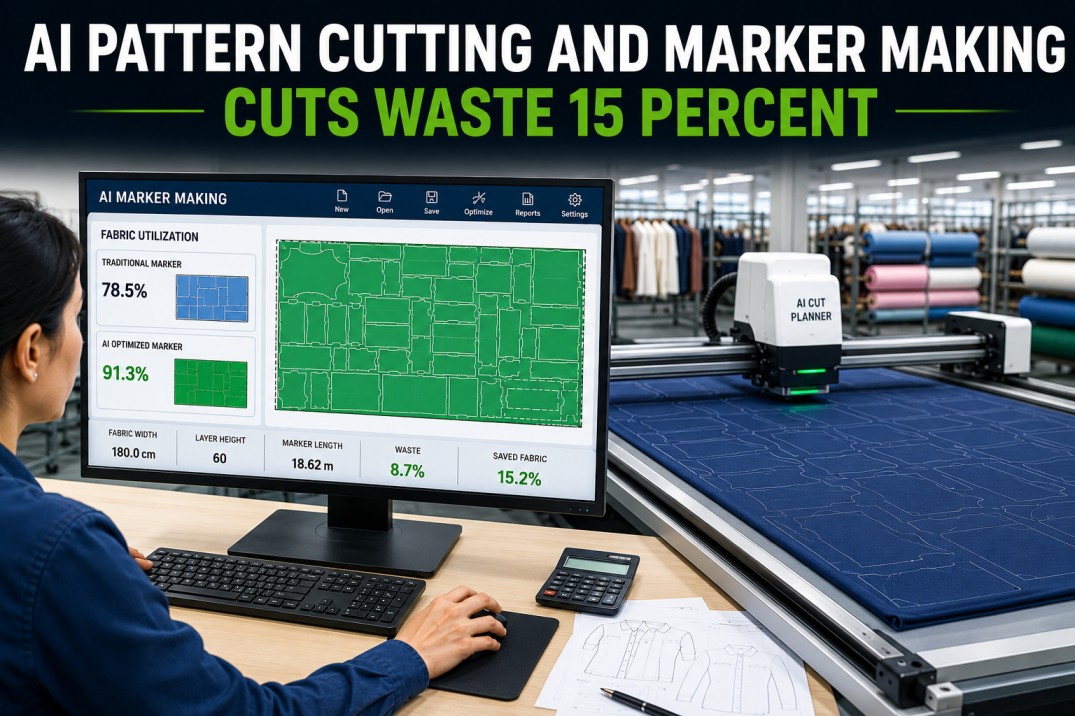
Read More
Fabric is the single largest cost in garment manufacturing, representing 60 to 70 percent of total production cost. Industry data across Bangladesh, Vietnam, China, and Turkey confirms that 15 to 20 percent of every fabric roll purchased is discar

Read More
Yarn evenness is the single most important predictor of fabric quality and weaving efficiency, yet most spinning mills still measure it with lab-based Uster testers that sample less than 0.01 percent of total production. A ring spinning frame prod
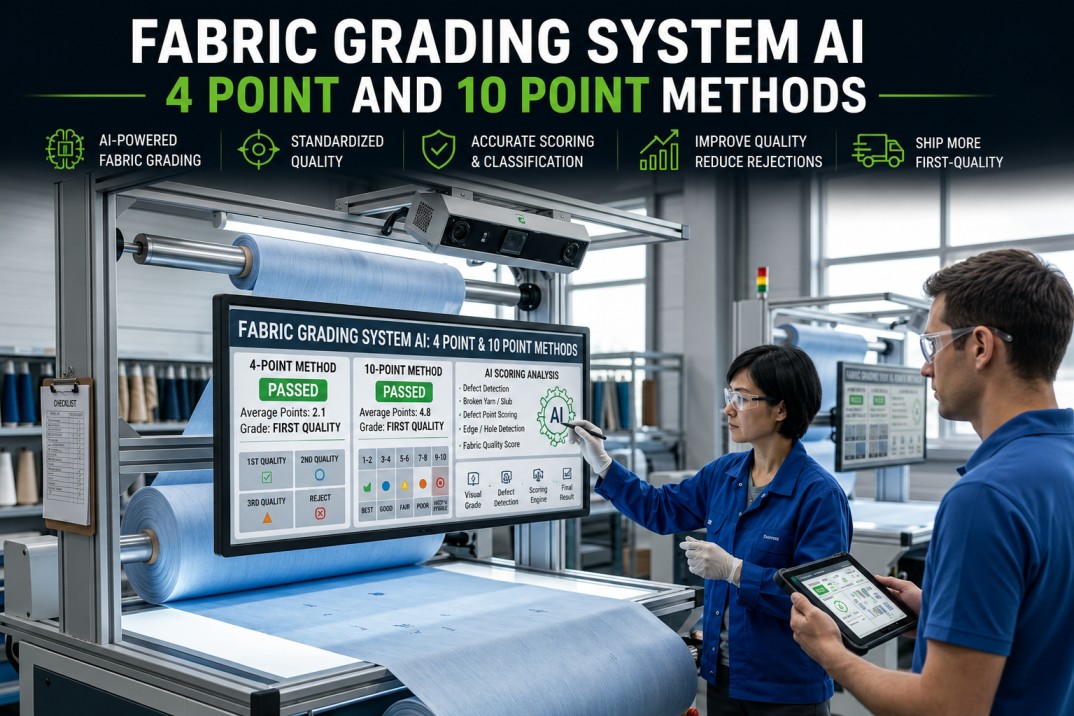
Read More
Every fabric inspection ends with the same question: is this roll first quality or second quality? The answer depends on which grading system the buyer uses and how consistently the inspector applies the point rules. Textile mills shipping fabric
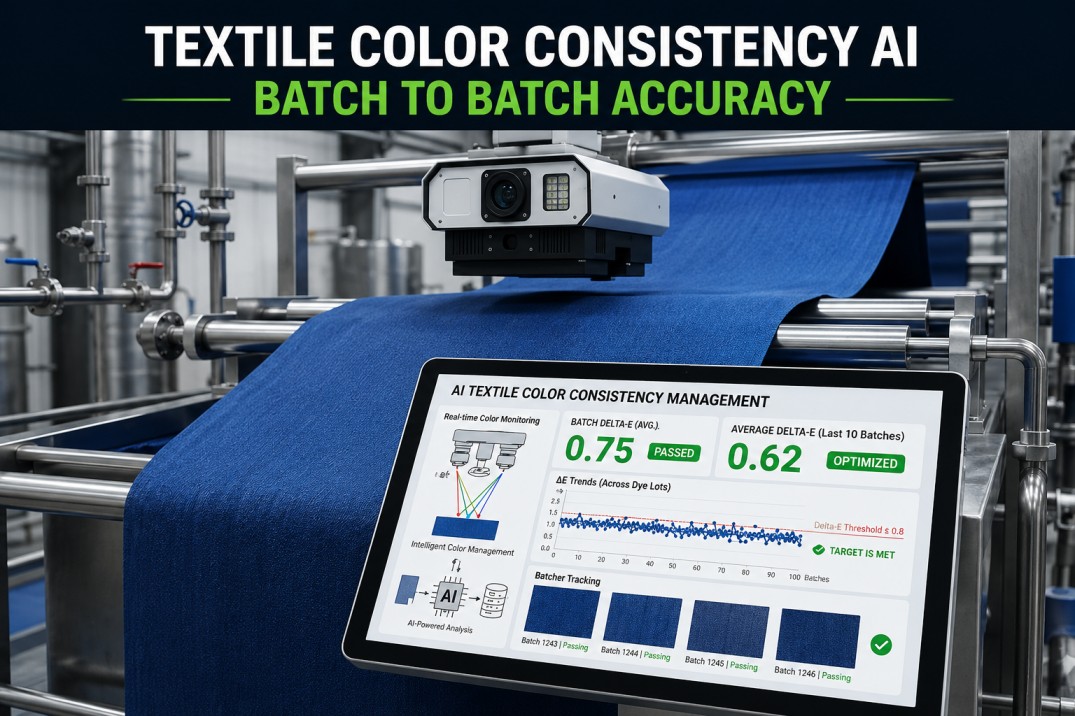
Read More
Every textile dyeing mill faces the same quality problem: the color that comes out of the dyeing machine does not match the color that was approved on the lab dip. Shade variation between batches, within batches, and across shifts generates re-dye
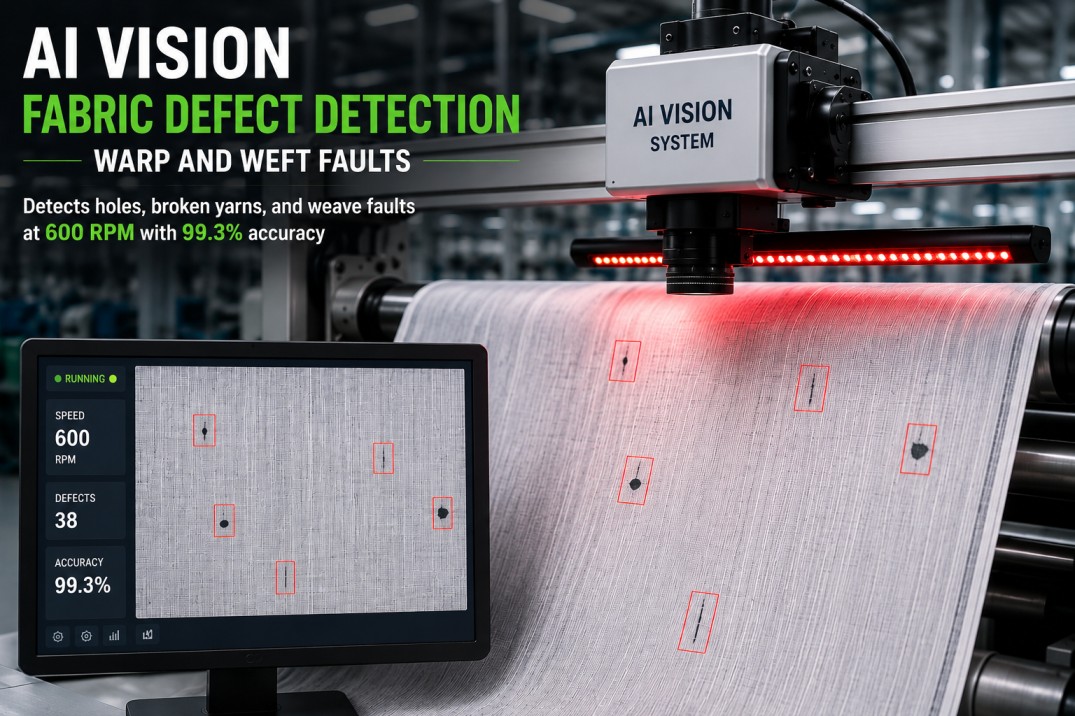
Read More
Fabric inspection in textile mills still relies on human inspectors standing at inspection frames, staring at fabric moving at 40 to 60 yards per minute, catching defects with their eyes. The human eye fatigues within 20 minutes of continuous insp
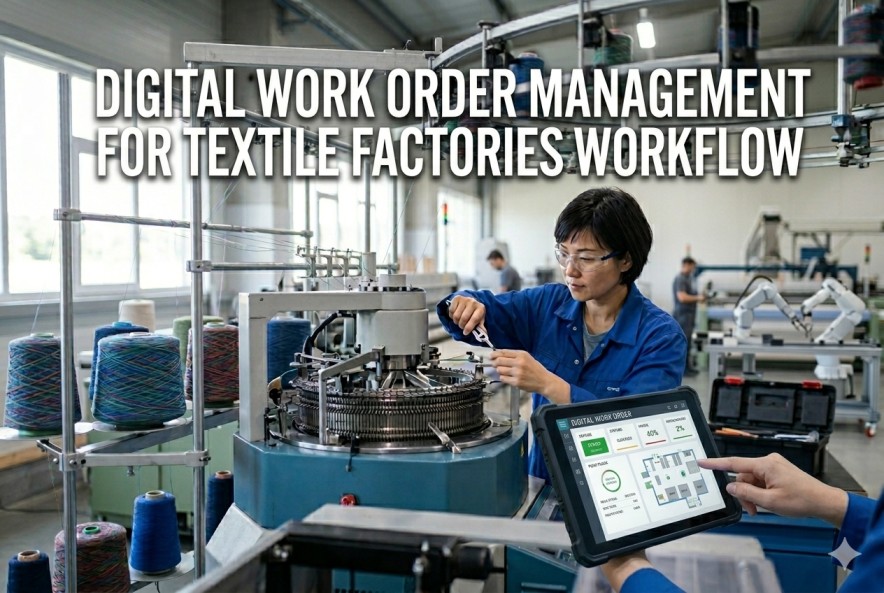
Read More
Paper job cards still manage maintenance work in most textile mills today. A fixer detects a machine stop, walks to the supervisor office, describes the problem verbally, the supervisor writes a job card by hand, and the card sits on a desk until

Read More
Textile mills collect maintenance data on every machine stop, every repair action, every PM task completed. Yet most mills cannot answer the three questions that determine whether their maintenance organization is improving or degrading: What is o

Read More
Managing a weaving shed with 200 or more looms is fundamentally different from running a 40-loom plant. At 40 looms the maintenance supervisor can walk the floor in 15 minutes, know every machine’s personality, and assign fixers based on intuition

Read More
Textile mills carry between 8,000 and 15,000 distinct spare parts across their inventory, from high-value spindles and gearboxes to low-cost travellers, needles, and lubricants. Industry data shows that 30 to 40 percent of this inventory never tur

Read More
A stenter frame sits at the end of the textile finishing line as the final quality gate before fabric is inspected and shipped. Every degree of temperature deviation across the heating chambers, every millimeter of chain rail misalignment, every w

Read More
Dyeing machine maintenance determines batch-to-batch consistency more than any other variable in textile wet processing. A jet dyeing machine with a fouled heat exchanger drifts 2 to 4 degrees Celsius from set point over a five-batch cycle, shifti

Read More
Knitting machines operate at speeds that demand precise maintenance intervals. A circular knitting machine running 30 to 35 revolutions per minute produces over 50,000 stitches per second across 100-plus feeds, each stitch depending on flawless ne

Read More
A weaving loom that stops unexpectedly costs between 800 and 1,400 dollars per hour in lost production depending on fabric width, weave complexity, and machine speed. For a mill running 60 air-jet looms at 850 picks per minute, every unplanned sto

Read More
Most spinning mills operate their preventive maintenance programs on institutional memory rather than structured schedules. The carding set gets checked when the operator remembers. The ring frame oil levels get verified when the maintenance super

Read More
Every textile mill operates on a single economic truth: the value a loom, ring frame, or finishing line produces over its lifetime must exceed its total cost of ownership. Yet most mills cannot answer three basic questions about their equipment ba

Read More
If you manage maintenance in a textile mill, you have likely encountered the terms CMMS (Computerized Maintenance Management System) and EAM (Enterprise Asset Management) used interchangeably — and you have probably been confused

Read More
Textile mills operate in one of the most maintenance-intensive environments in manufacturing. High-humidity conditions accelerate bearing failure, lint accumulation creates fire hazards in every motor enclosure, and continuous 24/

Read More
Textile manufacturing is no longer just about looms and labor — it is about data, sensors, and intelligent systems making decisions in real time. Factories that have connected AI and IoT across their production floor are reportin
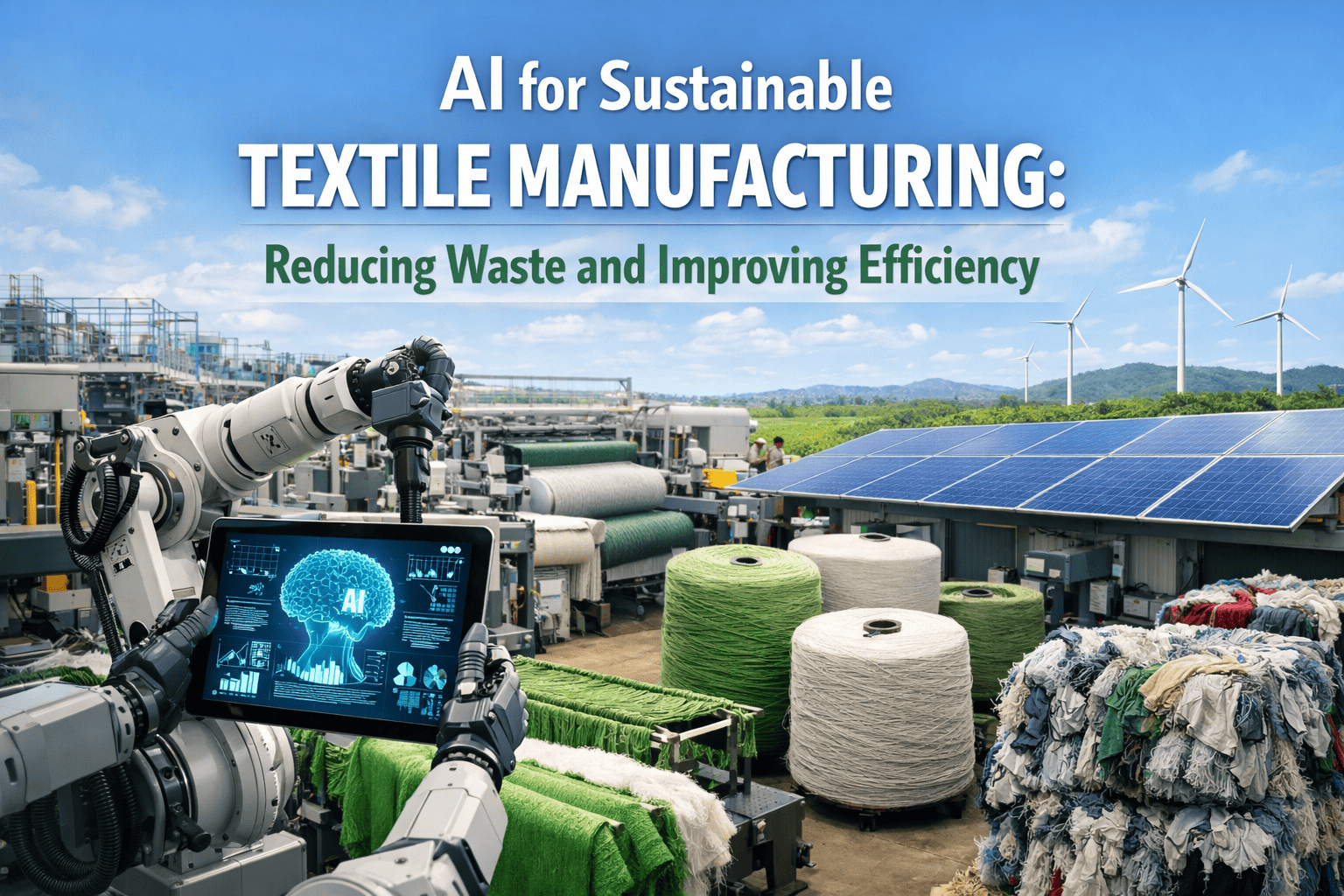
Read More
The textile industry is one of the world's most resource-intensive sectors — responsible for roughly 10% of global carbon emissions, 20% of industrial wastewater discharge, and 92 million tons of solid waste every year. Pressure f
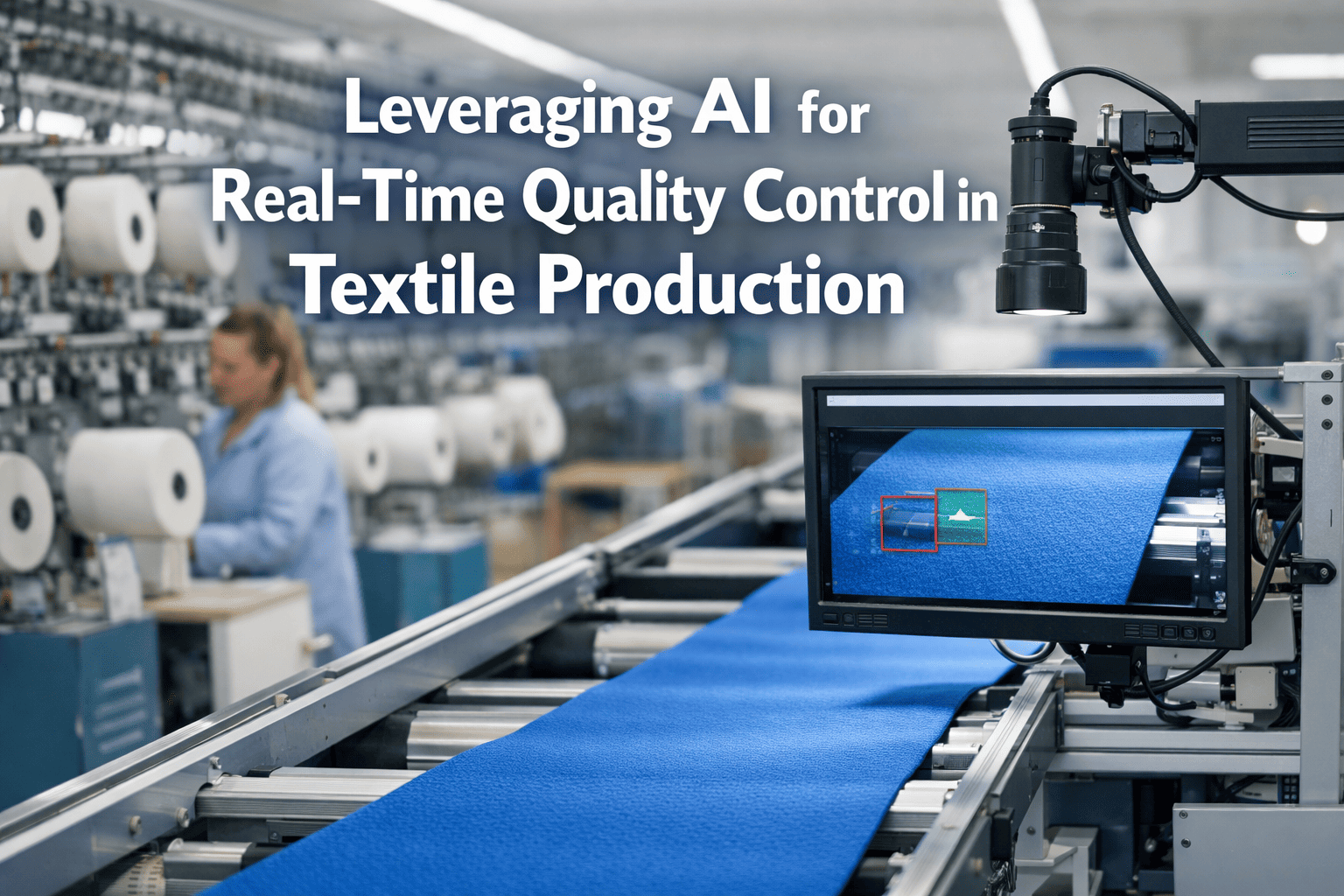
Read More
The textile industry loses an estimated 5–10% of annual revenue to defects that pass undetected through manual inspection. Traditional quality control — dependent on tired eyes, inconsistent lighting, and end-of-
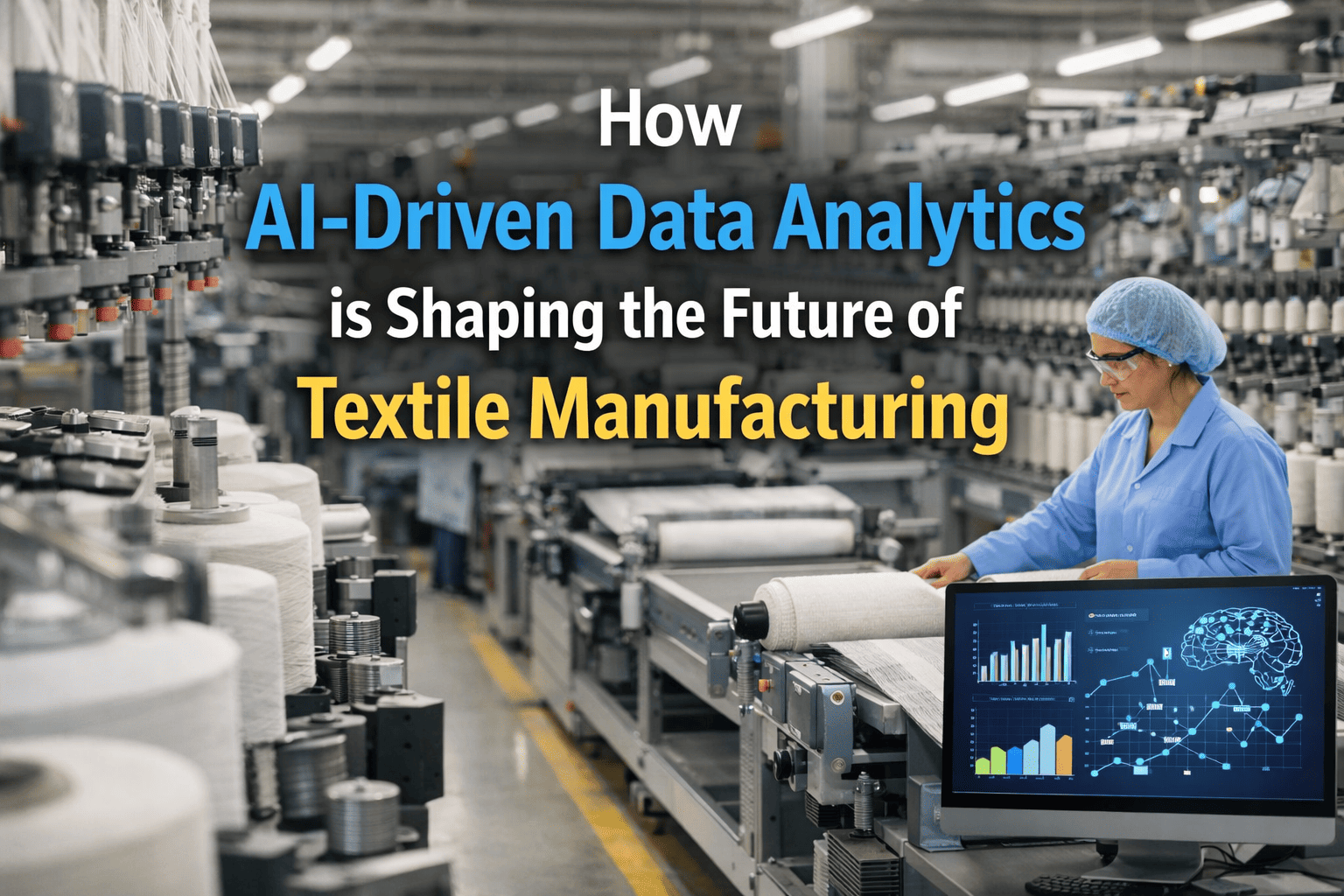
Read More
Textile manufacturing has always been a data-rich industry — every loom cycle, every dye batch, every shipment generates information. The problem is that most of it disappears into spreadsheets, paper logs, and disconnected syste
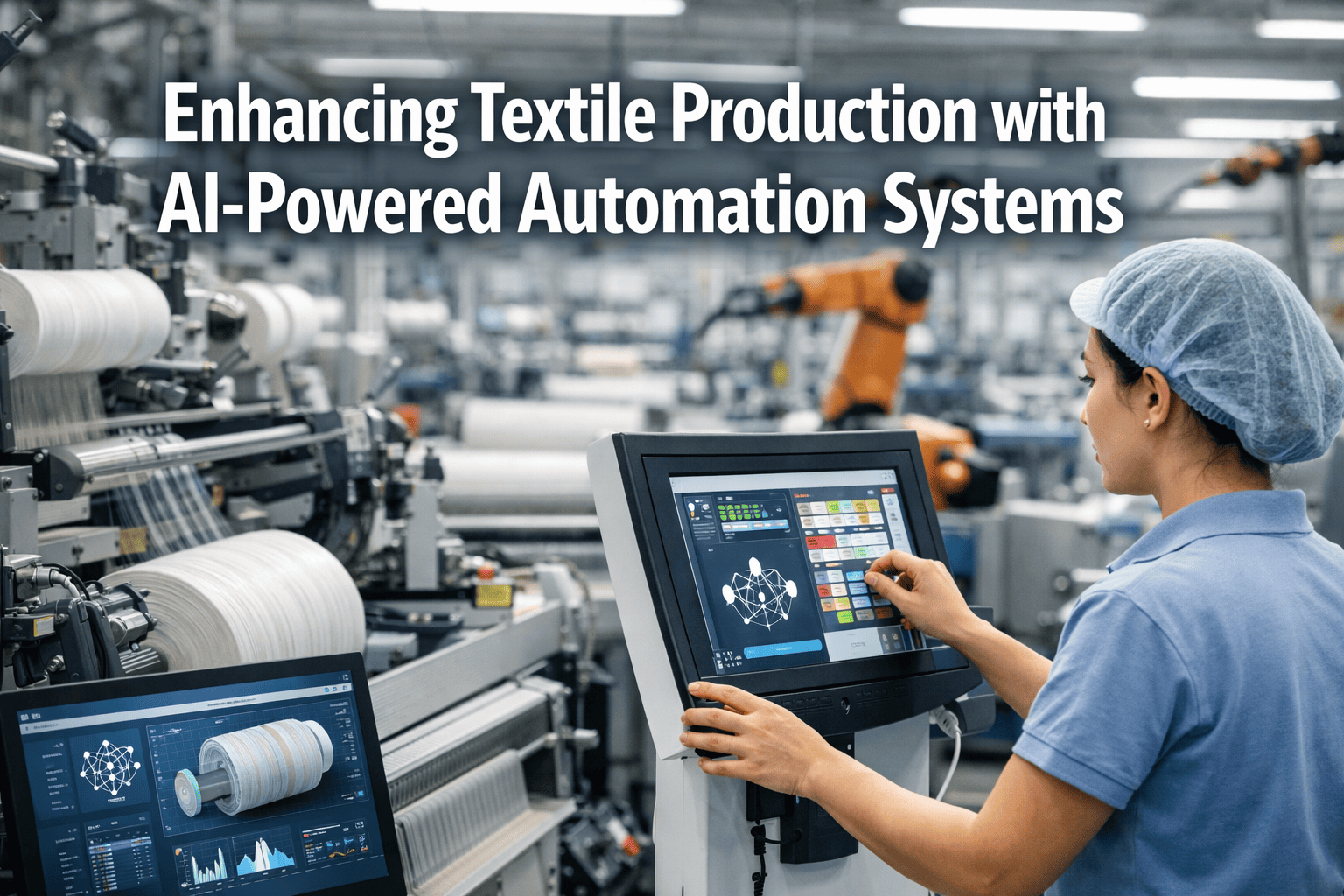
Read More
Textile manufacturing has historically been one of the most labor-intensive industries in the world — relying on thousands of workers to perform repetitive, physically demanding tasks at every stage of production. That labor model is undergoing a

Read More
Textile manufacturers have always operated with incomplete information about the future. How much of a given fabric will actually sell this season? Which colors and constructions will resonate with buyers three months from now? When will demand sp

Read More
The traditional textile manufacturing journey — from a designer's concept to finished fabric on the production floor — has always been slow, costly, and riddled with inefficiencies that compound at every stage. Weeks spent on pattern iteration. Mo
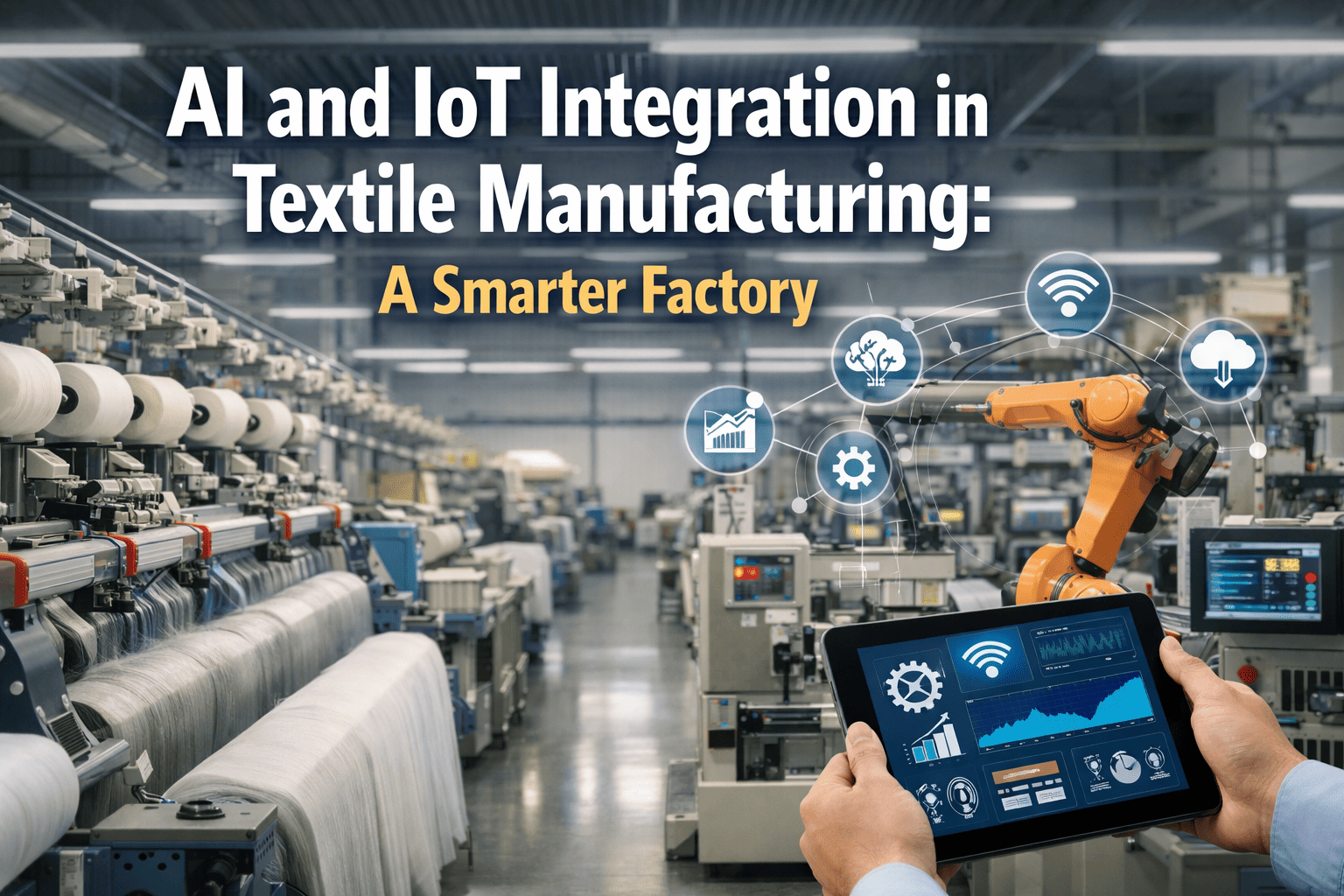
Read More
Textile factories today are filled with machines generating data every second — vibration readings from spinning frames, thermal outputs from dyeing units, tension values from looms — yet most of that data disappears into thin air. No one reads it

Read More
The textile industry generates 92 million tonnes of waste every year — and over 80% of discarded garments are burned or buried rather than recycled. The root causes are structural: overproduction, inefficient dyeing, and manufacturing processes th
Read More
Textile manufacturers have long accepted defects as an unavoidable cost of production. The old playbook — hire more inspectors, run end-of-line checks, write off bad batches — is quietly becoming obsolete. AI-powered real-time quality control is r
Read More
The textile industry has always run on decisions — which materials to stock, when to schedule maintenance, how much to produce. But for most manufacturers, those decisions have been driven by gut instinct, outdated spreadsheets, and reactive firef

Read More
The textile industry is entering its most disruptive decade in over a century. The global AI in textile market — valued at $2.64 billion in 2024 — is on track to reach $43.77 billion by 2034, growing at a 32.42% CAGR. That is not i

Read More
In 2019, a textile mill in Tirupur was running 480 looms across three shifts with 340 workers manually handling material transport, quality checks, and machine changeovers. By 2024, a comparable mill in the same region operates 520

Read More
At a spinning mill in Rajasthan, a ring frame bearing showed the first signs of wear on day 3. By day 19, the motor seized — halting output for 31 hours, triggering ₹4.2 lakh in emergency repairs, and delaying two export orders. The fault signatur

Read More
A mid-size textile mill in Gujarat lost 11 production shifts in a single quarter — not because of machine failure, but because their scheduling team couldn't respond fast enough when three looms went down simultaneously. Order back

Read More
The textile industry is undergoing its most significant transformation in a century — and it is not being driven by a new fiber or a new machine. It is being driven by data. Across spinning floors, weaving halls, and dyeing facilit

Read More
Most textile facilities are producing thousands of data points every hour — from spindle vibration and motor temperature to loom tension and pump pressure. Yet the majority of mills make maintenance decisions based on fixed schedul

Read More
A ring spinning machine at a mid-size textile mill ran with a developing bearing fault for 22 days before it seized — halting three connected looms, triggering $38,000 in emergency repairs, and losing 4,100 meters of production. Th

Read More
In most textile factories, maintenance is something that happens to machines after they break. A proactive maintenance culture flips that entirely — it is a shared mindset acro

Read More
Ten years ago, a loom had no voice. When it was about to fail, it gave no warning — just a stoppage, a maintenance crew scrambling, and an unplanned production loss. IoT has ch
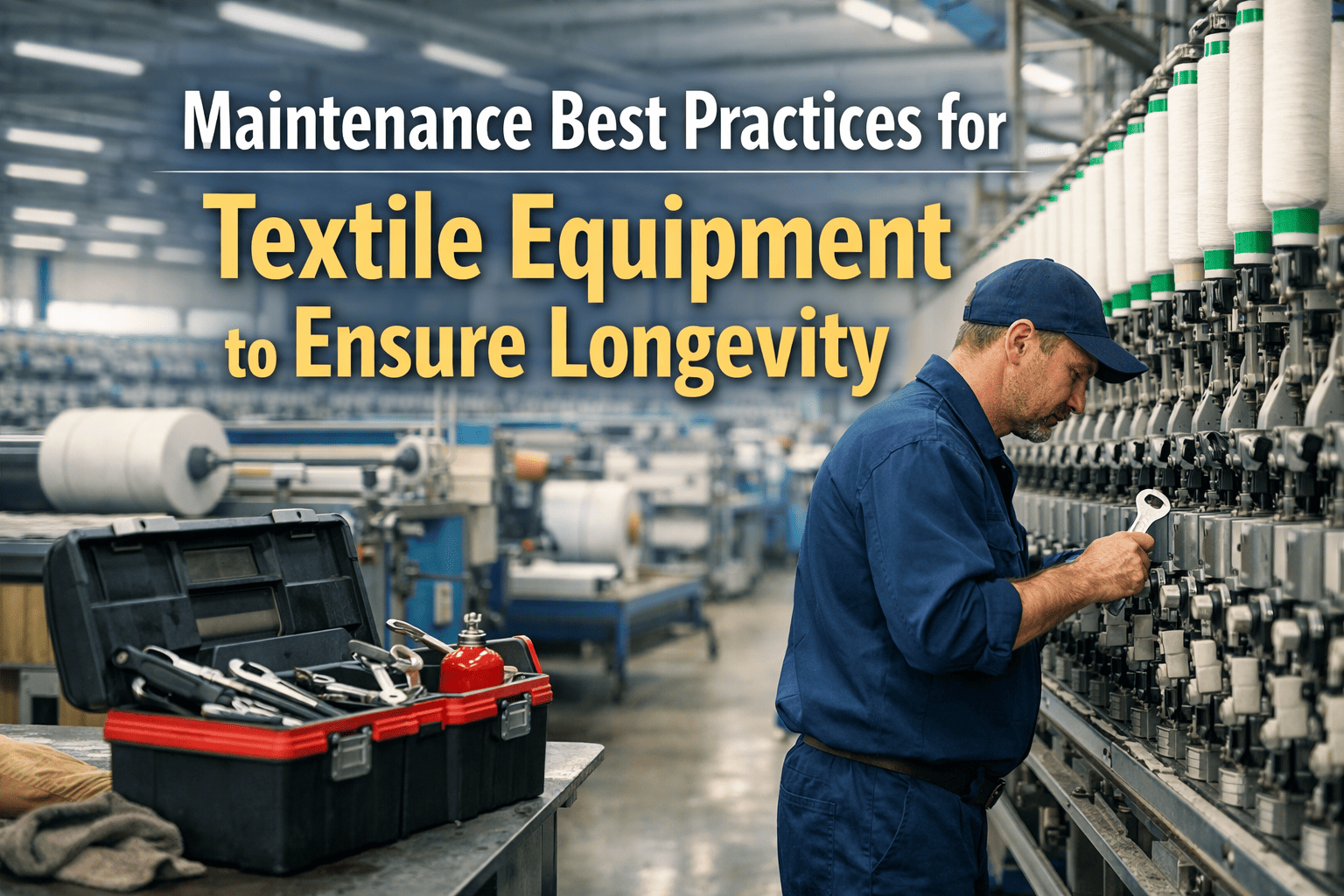
Read More
Textile machinery is a long-term capital investment — and how well it is maintained determines whether that investment delivers value for 8 years or 20. Poorly maintained machi

Read More
The textile factories winning on efficiency today are not the ones with the newest machines — they are the ones that have built a digital layer on top of their existing equipme

Read More
Textile factories run on machines — and machines break. But the difference between a factory that loses hundreds of thousands to unplanned stoppages every year and one that kee

Read More
Every hour a loom sits idle, a dyeing tank overheats, or a spinning frame jams without warning, a textile factory is losing money it can never recover. Unplanned downtime in tex
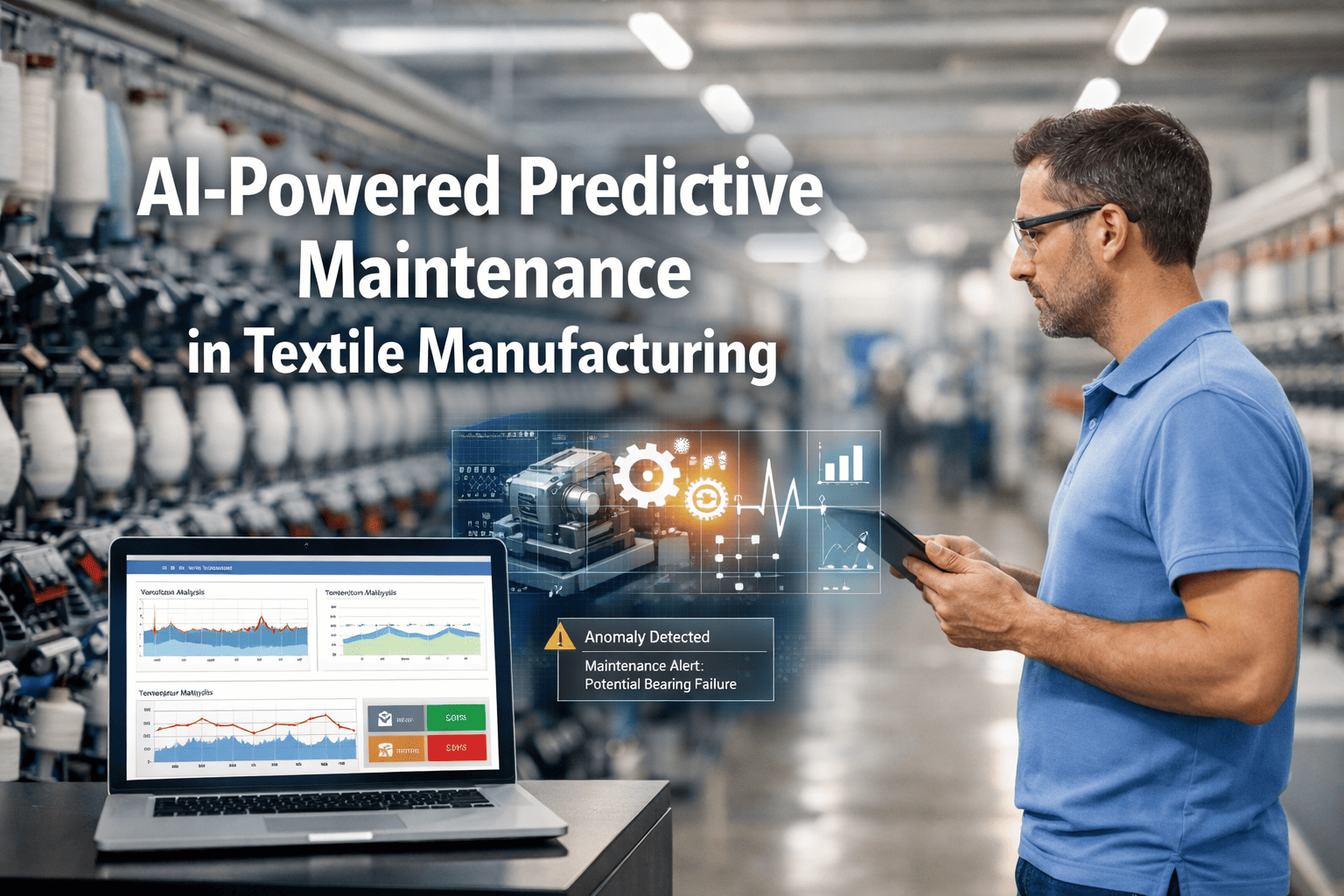
Read More
Every loom breakdown, every spindle failure, every unexpected motor burnout — none of these happen without warning. The signals are always there: a shift in vibration frequency, a temperature spike, a current anomaly. The problem i
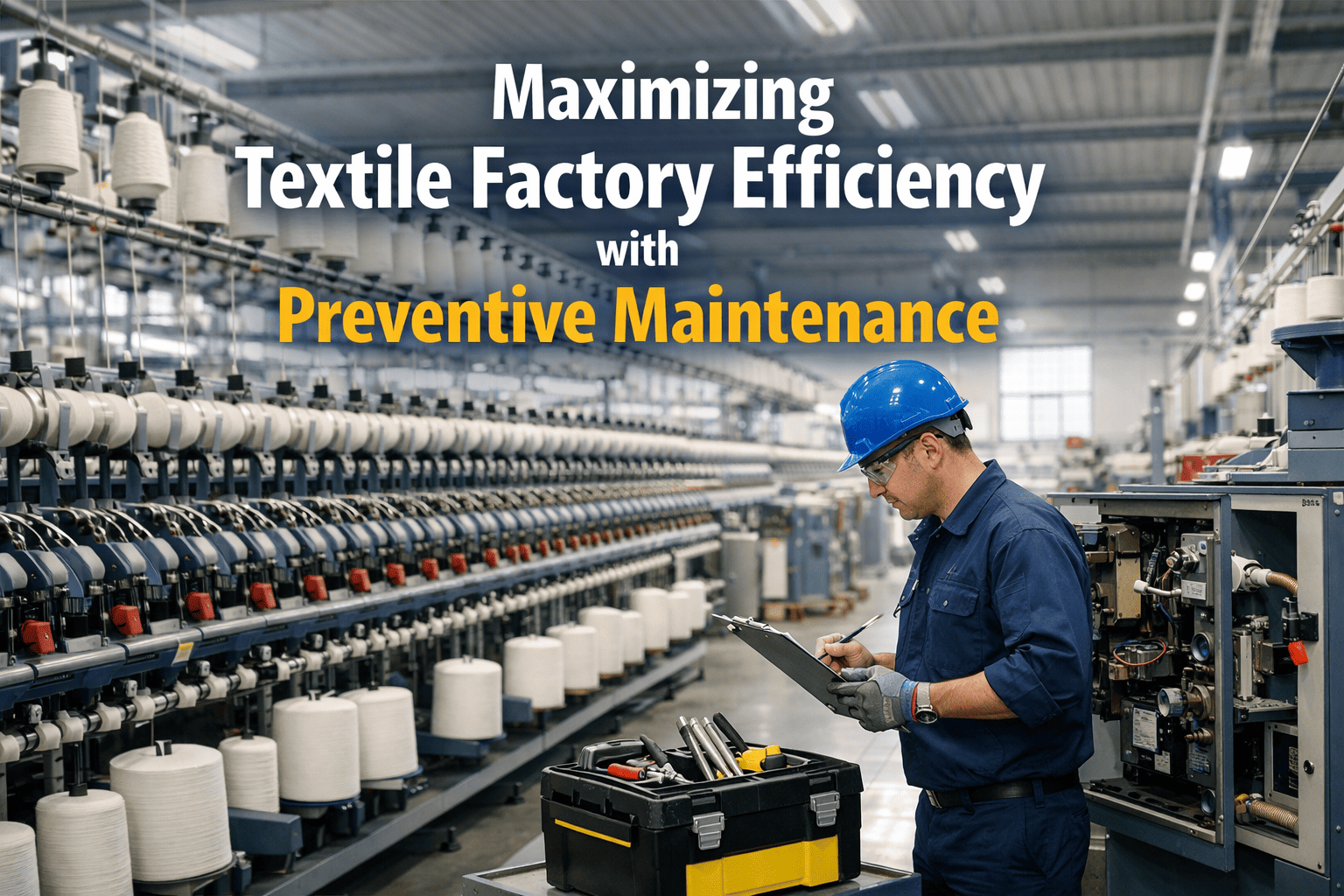
Read More
Textile machines don't just break — they signal. A subtle vibration here, a slight temperature spike there, a gradual dip in output. Preventive maintenance is the discipline of listening to those signals before they become stoppag

Read More
A garment lands on a shelf in Berlin. The label says "100% organic cotton, ethically sourced." But how does the brand — or the buyer — actually know that? Today, most of them don't. Blockchain technology is changing that by creati

Read More
Every hour a loom stops unexpectedly, a textile mill loses an average of $40,000. Multiply that across shift changes, peak season orders, and aging machinery — and unplanned downtime becomes the silent profit-kill
Read More
Every hour a loom stops unexpectedly, a textile mill loses an average of $40,000. Multiply that across shift changes, peak season orders, and aging machinery — and unplanned downtime becomes the silent profit-kill
Read More
The fashion industry produces 92 million tonnes of textile waste every year. A rubbish truck worth of clothes lands in a landfill every single second. Circular fashion is the industry's answer to that crisis — and it is reshaping
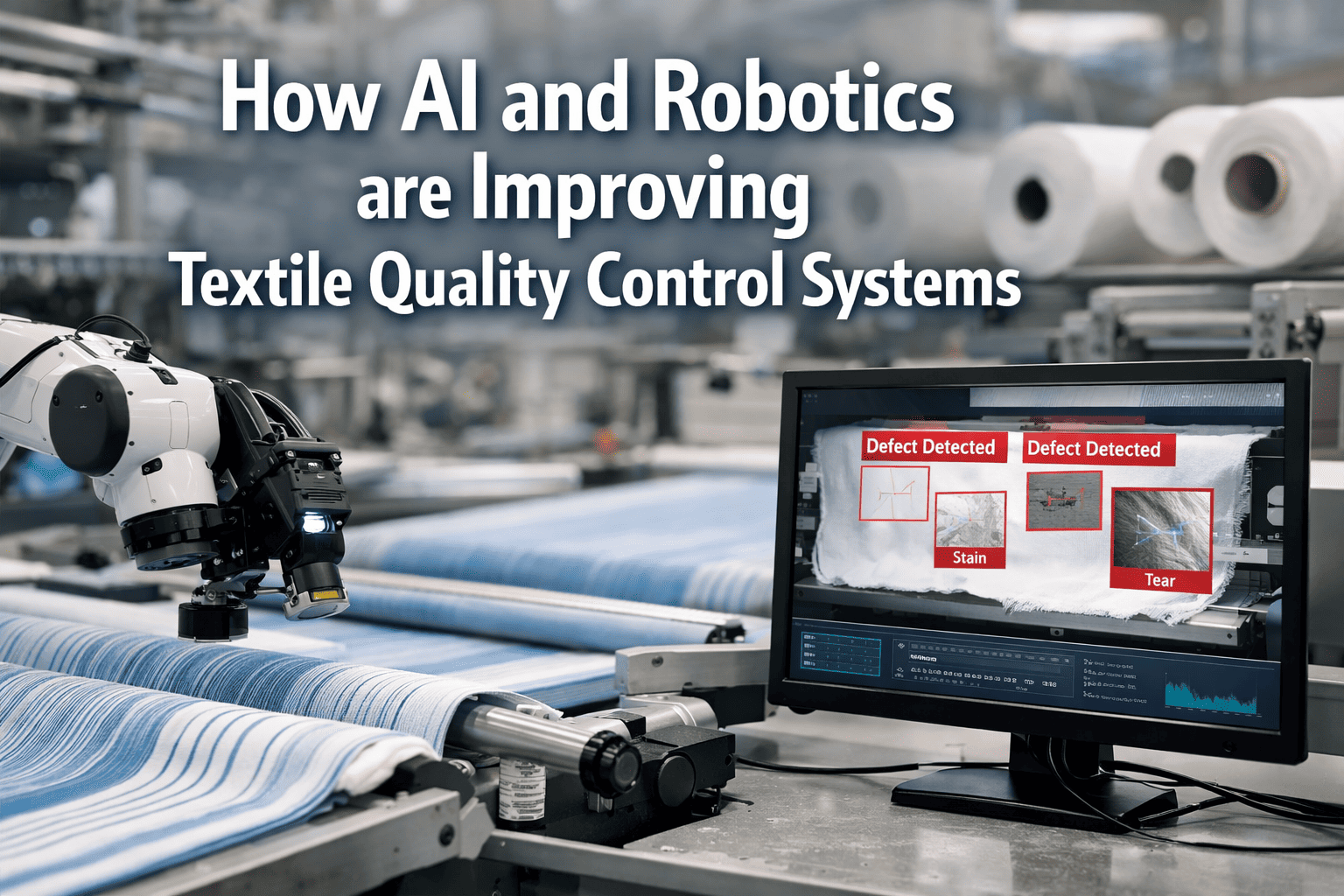
Read More
Every metre of fabric that leaves your factory carries your brand's reputation. Yet in most textile mills, quality control still depends on tired human eyes, manual checklists, and inspections that happen too late — after defects

Read More
Dyeing is the most chemically intensive step in textile manufacturing. A single kilogram of dyed fabric can consume up to 150 litres of water, dozens of chemical auxiliaries, and significant thermal energy — leaving behind e
Read More
Textile manufacturers who rely on last season's sales data and gut instinct to plan production are leaving significant money on the table — and creating unnecessary risk across their supply chain. When demand signals shift faster

Read More
Textile manufacturing has always been data-rich but insight-poor. Machines generate signals, operators make decisions, and production events happen across dozens of departments every hour — yet most factories still rely on spread

Read More
Clothing has always been functional. But for the first time in human history, it is becoming intelligent. Smart textiles — fabrics woven with sensors, conductive fibres, and responsive coatings — are transforming garments from pa

Read More
For over a century, textile manufacturing relied on human hands for nearly every stage of production — from feeding yarn into looms to folding finished garments. That era is ending. Industrial robotics has entered the textile fac

Read More
Textile manufacturing is one of the most resource-intensive industries on earth — consuming 93 billion cubic metres of water annually, releasing 1.2 billion tonnes of CO₂, and generating waste at every stage of the production cha
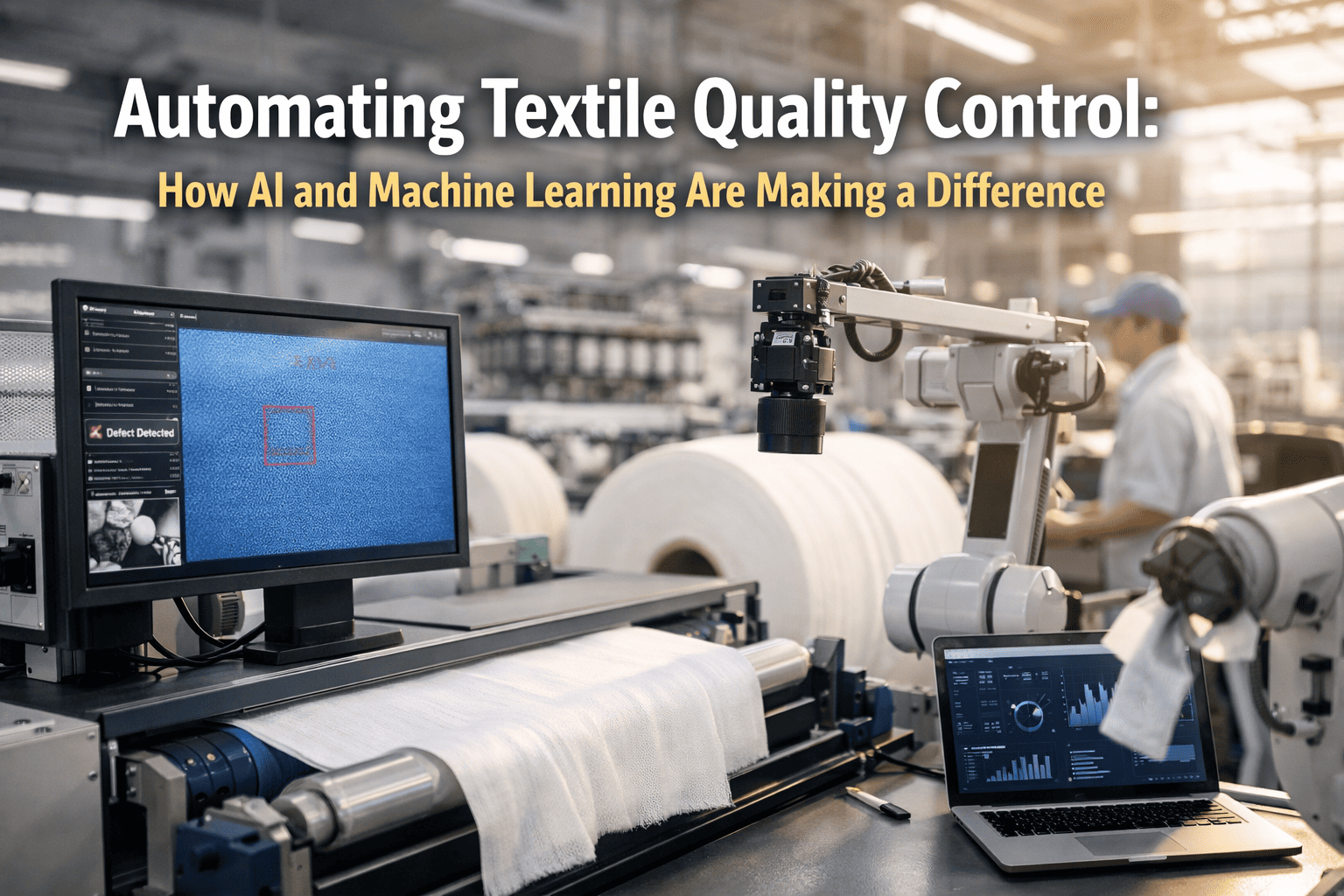
Read More
Manual quality inspection in textile manufacturing has always been a numbers game — and the numbers have never been good. Human inspectors miss an estimated 25 to 35 percent of surface defects on fabric, and by the time a fault i

Read More
The textile industry generates over 92 million tonnes of waste every year — and most of it is preventable. From excess fabric cut-offs to rejected dye lots and energy-intensive rework cycles, waste in textile manufacturing is not

Read More
Every metre of fabric carries a story — the cotton field it came from, the mill that spun it, the dyehouse that processed it, the hands that stitched it. For decades, that story was invisible, locked inside paper records, verbal
Read More
The textile industry is in the middle of its most significant shift in a century — and this time, the disruption is not coming from a new fibre or a cheaper labour market. It is coming from data. Factories that once ran entirely

Read More
Smart cities are not built from concrete and steel alone — they are woven from intelligent materials, energy-aware supply chains, and manufacturing ecosystems that respond to the world around them in real time. Textile factories a

Read More
Textile manufacturers have always played a guessing game with demand — ordering too much yarn, weaving too many meters, or scrambling when a trend spikes overnight. Today, that guessing game is over. Artificial intelligence and m

Read More
Sustainability is no longer a trend — it is the single most powerful force reshaping textile manufacturing worldwide. From the fibers spun on your machines to the chemicals used in your dyehouse, every process is under scrutiny.
Read More
Every metre of fabric that leaves your factory carries a hidden story — of machines, operators, temperatures, dye lots, and decisions made across dozens of shifts. For decades, that story was either incomplete or buried in paper
Read More
The textile industry is in the middle of its most profound transformation in over a century. Factory floors that once ran entirely on paper logs, manual counting, and tribal knowledge are being rewired with sensors, cloud platfor

Read More
The textile industry is undergoing a fundamental transformation — and artificial intelligence is at the center of it. From raw material sourcing to last-mile delivery, AI is reshaping how textile manufacturers plan, produce, an
Read More
Textile manufacturing generates over 92 million tonnes of waste every year — much of it preventable. The root cause isn't poor craftsmanship; it's imprecise planning. AI is changing that calculus entirely, enabling mills and gar
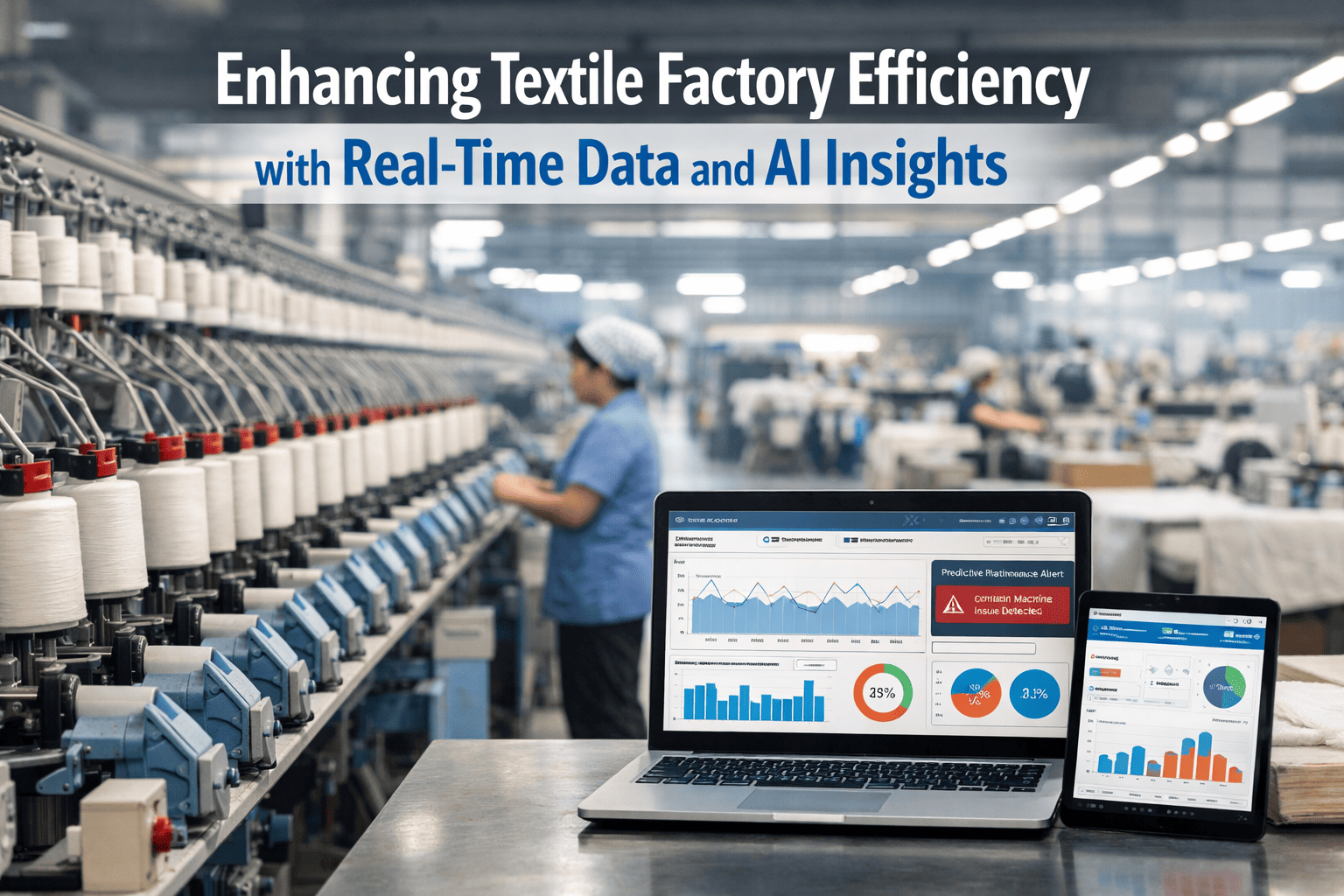
Read More
Every minute your textile factory runs without real-time data, you're making decisions in the dark — reacting to yesterday's problems instead of preventing tomorrow's. AI-powered real-time insights are flipping this equation for m

Read More
Global textile competition has never been more intense. China controls 32% of all textile exports. Bangladesh, Vietnam, and India are scaling automation at record speed. And buyers are giving preferred status only to factories t
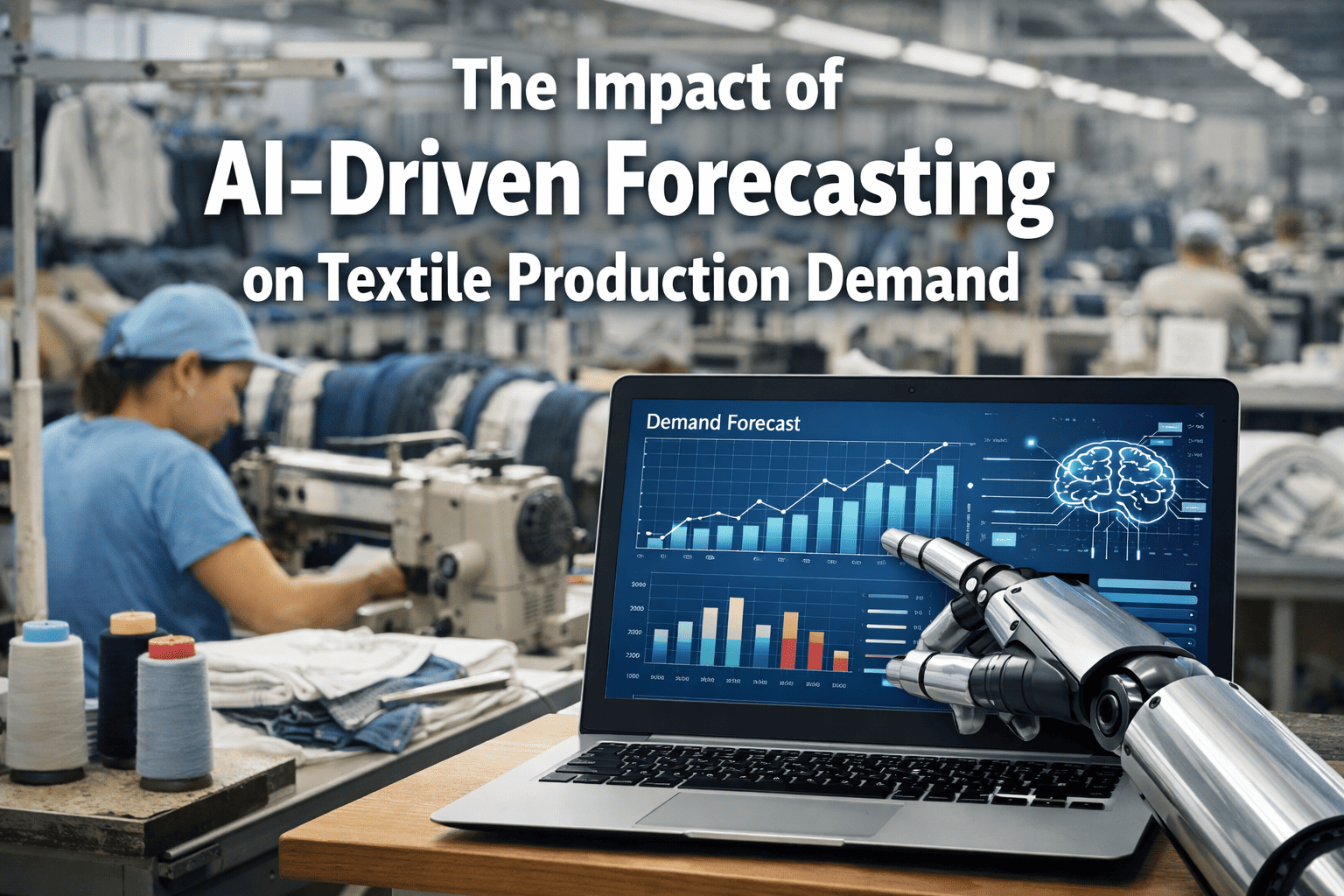
Read More
Textile manufacturers have always relied on gut instinct and historical spreadsheets to plan production. But in a world where fashion cycles shrink every season, buyer preferences shift overnight, and raw material costs fluctuat
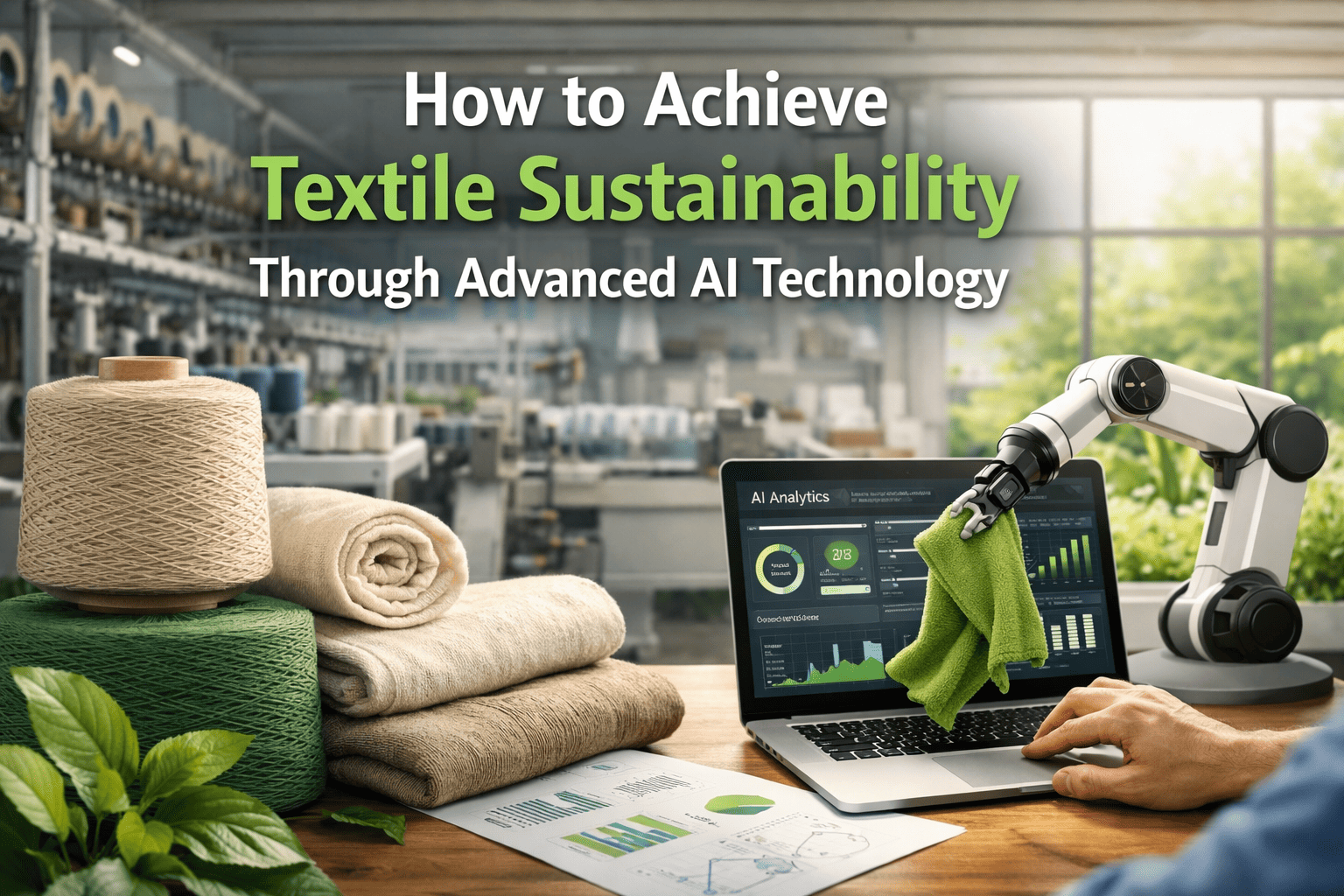
Read More
The global textile industry consumes 93 billion cubic metres of water every year, contributes 10% of global carbon emissions, and generates 92 million tonnes of solid waste annually. These numbers are no longer acceptable to
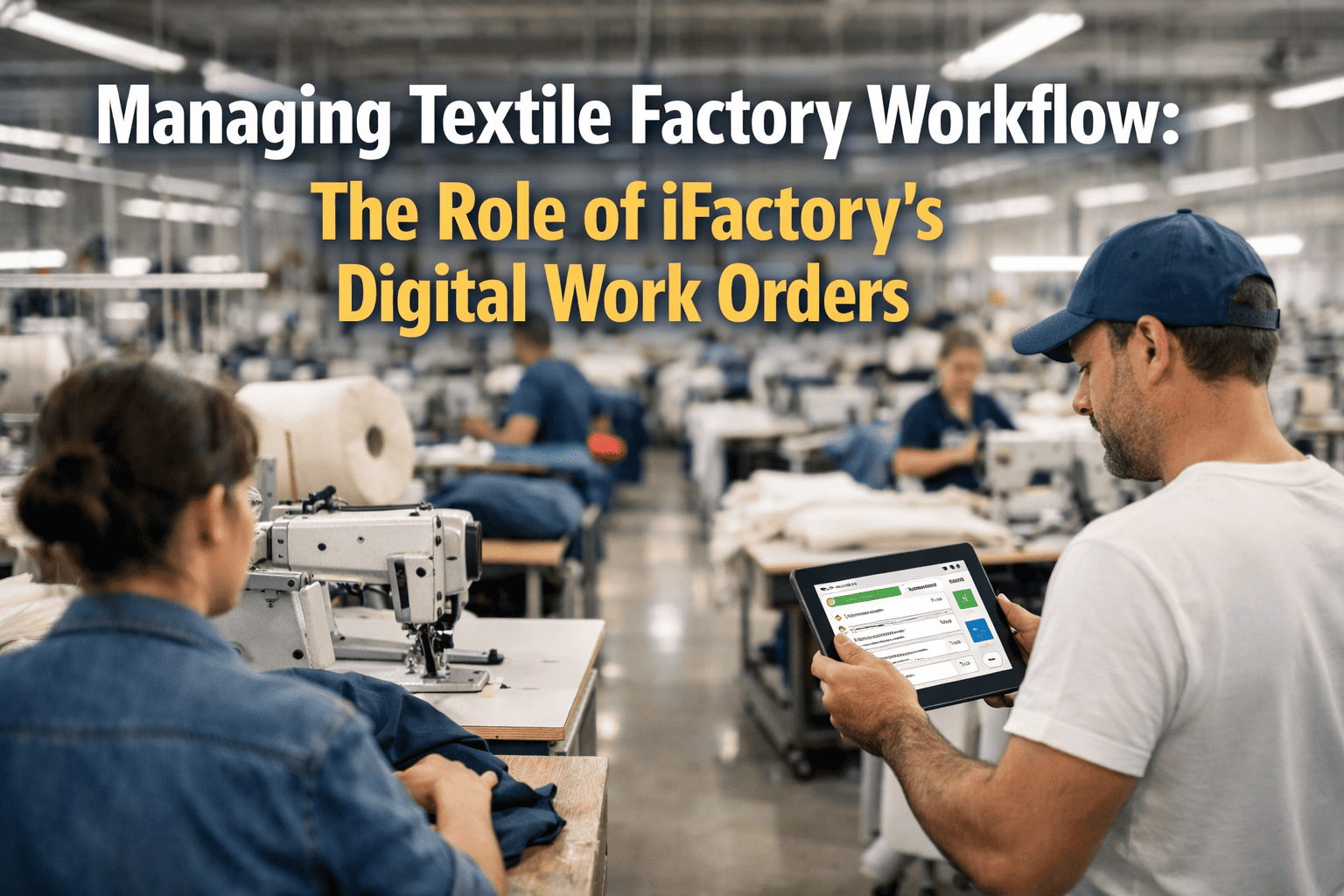
Read More
Every textile factory manager has lived through the chaos of a misplaced job card, a task assigned to the wrong operator, or a production order that slipped through the cracks between departments. In a mill running hundreds of ma
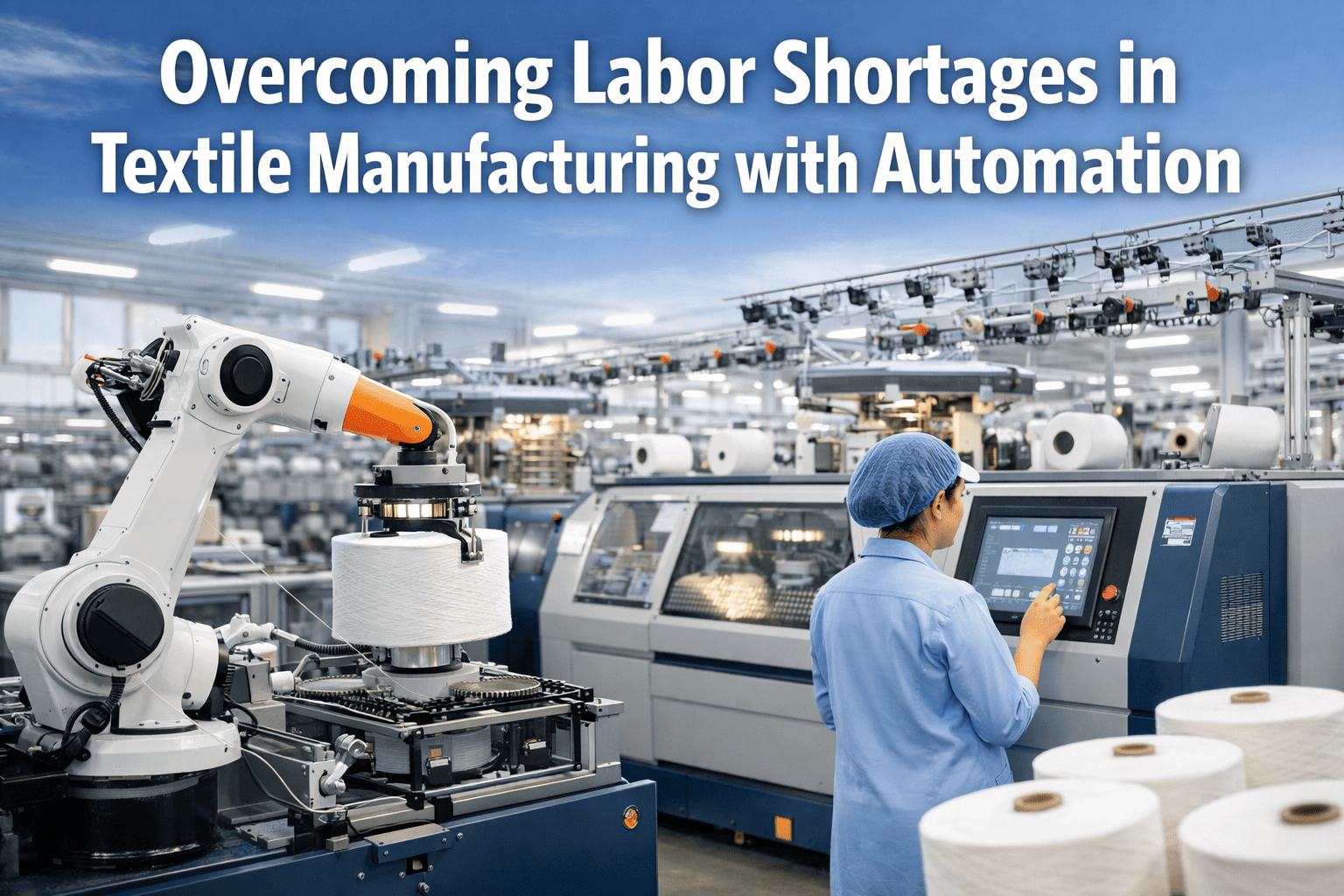
Read More
The textile industry is facing a crisis that no hiring drive can fix: millions of skilled workers are retiring, recruitment pipelines are drying up, and production targets keep rising.
Read More
Textile manufacturing is entering a new era—one where gut decisions and paper-based tracking are being replaced by real-time intelligence. AI-powered Manufacturing Execution Systems (MES) are giving mills, spinning units, and g

Read More
Every textile factory manager knows the sinking feeling: a critical machine stops unexpectedly, production grinds to a halt, and costs start piling up. In 2026, this doesn't have to be your reality. Predictive maintenance p

Read More
The textile industry is undergoing a digital revolution. AI and IoT technologies are transforming traditional mills into smart factorieswhere spinning machines predict their own maintenance needs, weaving looms automatically
Total Posts:
Proven Results
Textile Mill ROI & Business Impact
Textile facilities using iFactory see measurable improvements within 90 days. Real data from spinning mills, weaving plants, and integrated textile complexes worldwide.
45%
Less Downtime
AI catches spindle & loom failures early
30%
Cost Reduction
Fewer emergencies, optimized parts
100%
OSHA Compliant
Zero citations, audit-ready always
1-2
Weeks to Deploy
Pre-built textile templates
"iFactory's AI detected a critical bearing degradation on Ring Frame #12 three days before failure — that single save prevented 72 hours of spinning downtime worth $180K. Our yarn break rate dropped 28% in the first quarter. First-year ROI exceeded 650%."
VP
Vikram Patel
VP Operations, Integrated Textile Mills"OSHA compliance was a nightmare with 200+ looms across three weave rooms. iFactory's digital LOTO and cotton dust tracking turned 3 weeks of audit prep into 2 days. Zero citations for the first time in our history."
SC
Sarah Chen
Safety Director, Pacific Weaving Corp"We deployed iFactory across spinning, weaving, dyeing, and finishing in just 12 days. Water consumption tracking alone identified 22% waste in our dyeing department. Maintenance costs dropped 31% in Q1. The multi-language support was key."
RA
Roberto Alvarez
Plant Manager, Global Textiles Group
FAQ
Textile Manufacturing CMMS — Common Questions
A CMMS for textile manufacturing is specialized software that manages maintenance operations for textile-specific equipment like ring spinning frames, air-jet and rapier looms, circular knitting machines, jet dyeing systems, stenter frames, and finishing lines. It automates work orders, preventive maintenance scheduling, spare parts inventory, OSHA 1910.262 compliance tracking, and integrates with SCADA/PLC systems for predictive maintenance. iFactory is purpose-built for the unique demands of textile production environments.
Unplanned downtime at a textile mill can cost between $5,000 to $50,000+ per hour depending on the production area affected. Weaving department outages are particularly expensive because a single loom bank failure disrupts the entire downstream finishing schedule. Spinning mills can lose up to 15% of productive capacity to unplanned stoppages, with mean time to repair increasing due to the global shortage of skilled textile machine fixers and mechanics.
Yes, iFactory integrates with all major SCADA and PLC platforms used in textile mills including Siemens S7, Allen-Bradley ControlLogix, ABB Ability, Honeywell Experion, and Yokogawa CENTUM. Real-time sensor data from spindle vibration, loom tension, dyeing bath temperature, stenter frame settings, and finishing line speeds feed directly into iFactory's AI predictive maintenance engine for continuous condition monitoring.
Textile mills under NAICS codes 313 and 314 face specific OSHA requirements including 1910.262 (Textiles), covering shuttle guards, loom fixer protection, nip point guarding, and J-box safety. iFactory provides pre-built compliance templates covering LOTO procedures (1910.147), cotton dust monitoring (1910.1043), noise exposure tracking (1910.95), machine guarding, chemical hazard communication, and PPE management. Every record is timestamped, e-signed, and immutable — retrievable in seconds during inspections.
iFactory monitors all critical textile equipment: blow rooms (openers, cleaners), carding machines, draw frames, combers, roving frames, ring spinning frames (spindles, drafting, travellers), open-end spinning (rotors, combing rollers), air-jet and rapier looms (reed, heddles, rapier bands), circular and warp knitting machines (needles, sinkers, guide bars), warping and sizing machines, jet and beam dyeing systems, stenter frames, calenders, sanforizing machines, printing lines, and all auxiliary equipment including boilers, compressors, HVAC, and effluent treatment plants.
iFactory deploys in 1-2 weeks with pre-built textile industry templates for spinning, weaving, knitting, dyeing, and finishing departments. Unlike legacy CMMS systems that take 6-12 months, iFactory's guided implementation includes asset onboarding, SCADA/PLC integration, work order configuration, compliance template setup, and team training — with 90-day hands-on support included. Department-by-department activation ensures zero disruption to active production.
Yes. The textile industry consumes approximately 93 billion cubic meters of water annually and accounts for about 20% of global industrial wastewater. iFactory tracks water consumption per kg of fabric, chemical usage in dyeing and finishing, energy consumption per meter, and carbon emissions. The platform generates ESG-ready sustainability reports and supports compliance with ZDHC MRSL, OEKO-TEX, and emerging EU textile sustainability regulations. It also optimizes maintenance schedules to reduce energy waste from poorly maintained equipment.
Textile mill floors present unique challenges — high levels of fiber dust, lint accumulation, noise levels exceeding 115 dB in weaving rooms, chemical exposure in dyeing areas, and high humidity. iFactory is designed for this: 100% offline capability on rugged tablets and mobile devices, automatic data sync when connectivity is restored, zero data loss guarantee, and interfaces designed for gloved operation in wet processing areas. The platform works on any device — iOS, Android, Windows — with no dependency on continuous network connectivity.
Start Your Transformation
Ready to Eliminate Textile Mill Downtime?
Join textile manufacturers worldwide that have transformed operations with iFactory. Get a free mill assessment and see exactly how much you can save — from spinning floor to finished fabric.