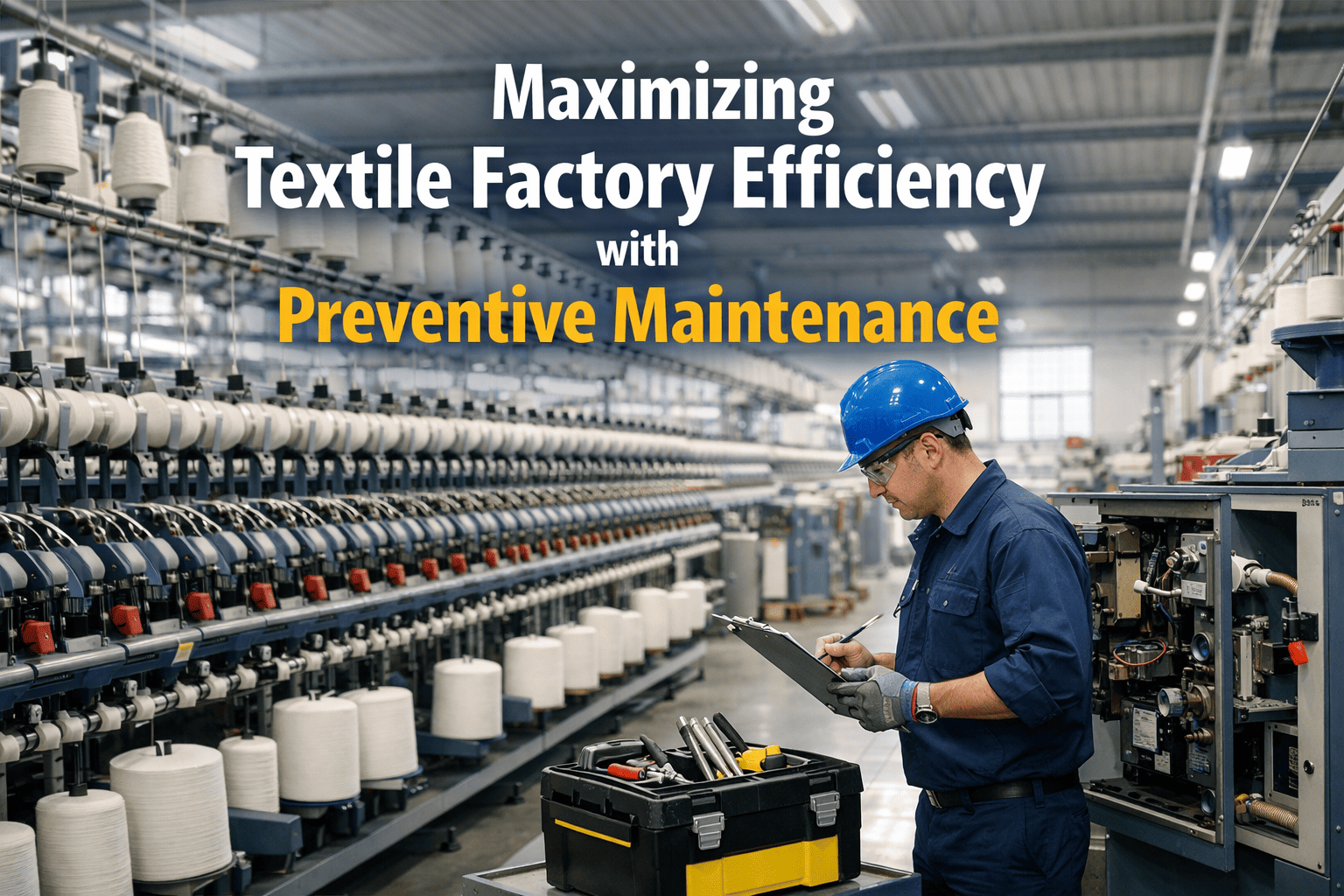
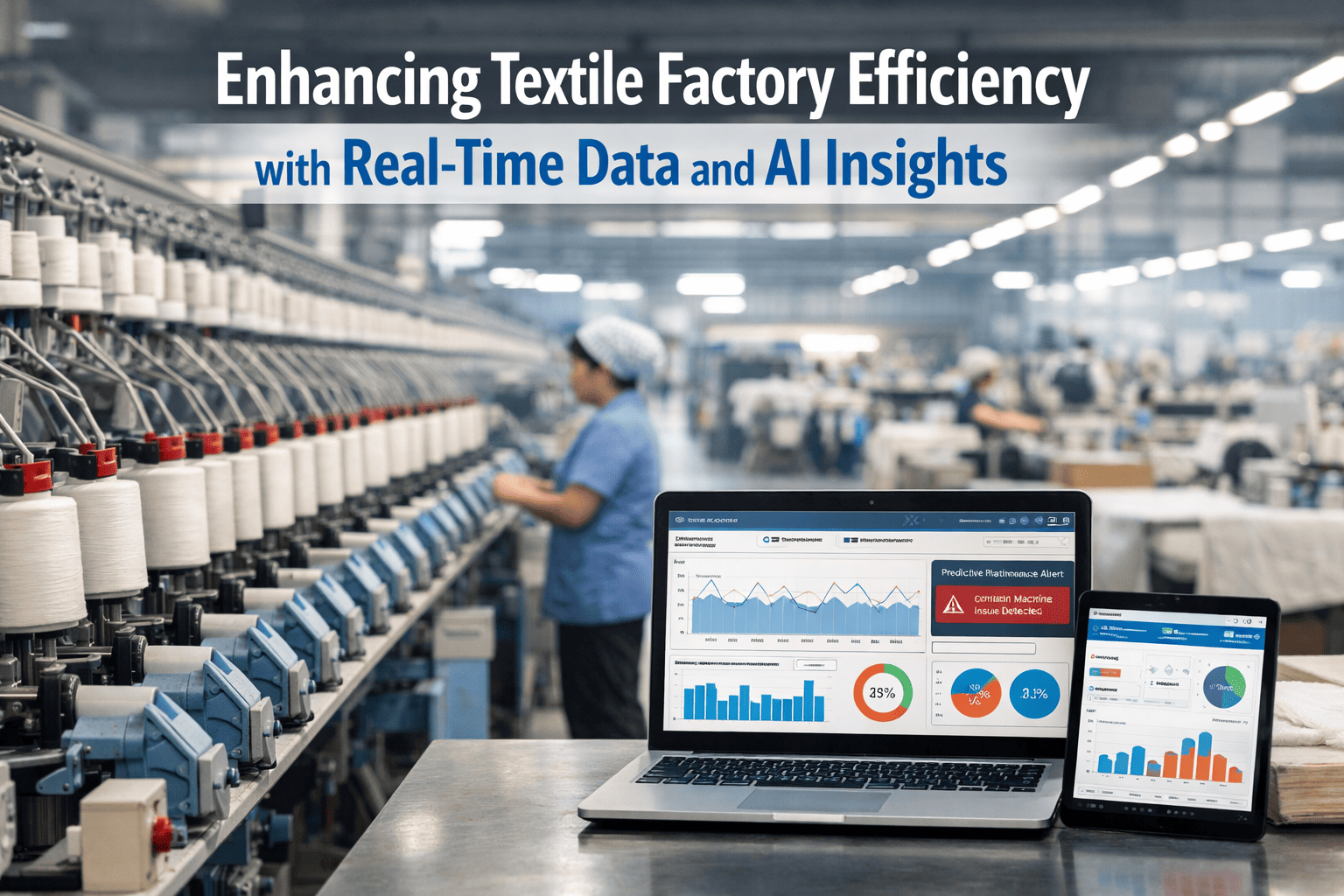
Every hour a loom stops unexpectedly, a textile mill loses an average of $40,000. Multiply that across shift changes, peak season orders, and aging machinery — and unplanned downtime becomes the silent profit-killer that no spreadsheet fully captures. Predictive maintenance is how modern textile factories stop reacting and start predicting. Book a free demo to see how iFactory brings predictive intelligence to your production floor.
Stop Fixing Machines.
Start Predicting Failures.
Textile factories that adopt predictive maintenance reduce machine downtime by up to 50% — and cut maintenance costs by 25%. The question isn't whether to adopt it. It's how fast.
The Problem Most Textile Factories Ignore
Most mills still run on a reactive maintenance model — fix it when it breaks. That approach worked when machines were simpler and margins were wider. Neither is true anymore.
Reactive vs Predictive: What's Actually Different
The shift from reactive to predictive maintenance is not just a technology upgrade — it's a complete change in how your factory treats machine health as a real-time business asset.
- Machine breaks → production stops → emergency repair
- Spare parts ordered in crisis — often delayed
- Delivery deadlines missed, buyers escalate
- Repair cost 3–5x higher than planned maintenance
- Root cause often unknown — failure repeats
- Sensors detect early warning signals before failure
- Maintenance scheduled during planned downtime windows
- Spare parts ordered in advance — zero emergency delay
- Production targets protected, orders delivered on time
- Data reveals root causes — patterns eliminated
How Predictive Maintenance Works in a Textile Factory
Predictive maintenance in textiles is a layered system. Each layer feeds the next — from raw sensor data to actionable maintenance alerts that reach the right person at the right time.
IoT Sensor Data Collection
Vibration, temperature, speed, and current sensors attached to looms, spindles, motors, and conveyors stream real-time health data from every machine on the floor.
AI Pattern Analysis
Machine learning models analyze historical failure patterns and live sensor readings together — identifying anomalies that indicate an impending breakdown, sometimes days in advance.
Actionable Maintenance Alerts
Supervisors and maintenance teams receive targeted alerts ranked by urgency — telling them exactly which machine, which component, and what action to take before failure occurs.
Scheduled Repair & Documentation
Maintenance is executed during planned windows. Every action, part used, and outcome is logged — building the machine health history that makes future predictions even more accurate.
The Machines That Break Most — and What It Costs
Not all textile equipment fails equally. Understanding which machines drive the most downtime risk is the first step to targeting your predictive maintenance investment.
Rapier & Airjet Looms
Weft insertion mechanisms and rapier heads wear rapidly under continuous operation. Vibration monitoring catches early bearing failure before weave quality degrades.
Ring & Open-End Spindles
Spindle bearing wear causes yarn breakage spikes and quality defects long before complete failure. Temperature and vibration thresholds flag early degradation.
Dyeing & Finishing Lines
Pump failures and heat exchanger fouling disrupt chemical dosing and temperature control. Pressure and flow sensors detect drift before batch quality is compromised.
Knitting Machines
Needle and sinker wear increases defect rates and reduces machine speed gradually. Current monitoring on drive motors catches overload conditions early.
The Market Has Already Decided
Predictive maintenance is no longer a premium option — it is rapidly becoming the operating baseline for any textile factory that competes on efficiency and reliability.
See how iFactory brings machine health visibility to your production floor
Real-time production tracking, machine-level performance data, and quality checkpoints — built for textile mills that can't afford surprise breakdowns.
5 Signs Your Factory Needs Predictive Maintenance Now
You don't need a consultant to know if you're losing to reactive maintenance. These are the signals that mills already in trouble are seeing every week.
Machines fail during peak season orders
Equipment that ran fine for months breaks down exactly when order pressure is highest — because stress accumulates undetected until it reaches a critical threshold.
Quality defects appear before you find the machine fault
Yarn breakage rates, weave irregularities, or dye inconsistencies are the first symptom — but the root cause is a machine slowly degrading. Detecting the machine anomaly earlier prevents the defect entirely.
Your maintenance spend is unpredictable
Emergency repairs, overnight courier parts, and extended overtime inflate maintenance cost in spikes rather than a steady budget line — making planning impossible.
You rely on operator memory for machine history
When an experienced technician leaves, institutional knowledge of which machine "sounds funny" goes with them. Without documented machine health data, you're blind the moment that person walks out.
Buyers are asking for OEE and uptime data
Overall Equipment Effectiveness is becoming a buyer qualification metric. If you can't report it, you can't prove production reliability — and sourcing teams will find someone who can.
What iFactory Does for Your Machine Performance
iFactory's production management platform gives textile manufacturers the operational data layer that makes predictive maintenance actionable — without a lengthy enterprise rollout.
Real-Time Machine Output Tracking
Monitor production output per machine per shift — instantly spotting when a machine falls below its expected efficiency, which is often the first signal of a developing fault.
Maintenance Log & History Per Machine
Every repair, part replacement, and operator note is logged against the specific machine — building the maintenance history that makes failure prediction possible and audits simple.
In-Process Quality Gates
Inline quality checkpoints tied to specific machines flag when defect rates are rising — connecting quality deterioration directly to machine performance data in the same record.
Shift-Wise Performance Reports
Automated reports show OEE, output-vs-target, and downtime duration per shift — giving production managers the data to schedule maintenance proactively and report to buyers confidently.
The growing automation of industrial assets, along with the need to prevent disruption of production cycles, is the primary force driving predictive maintenance adoption across global manufacturing.
Frequently Asked Questions
The most common questions textile manufacturers ask when exploring predictive maintenance — answered plainly for the production floor.
Your Next Machine Failure
Is Already Happening Slowly.
iFactory gives textile manufacturers the production visibility, machine-level data, and maintenance history to catch it before it stops your line — deployed in under 4 weeks.