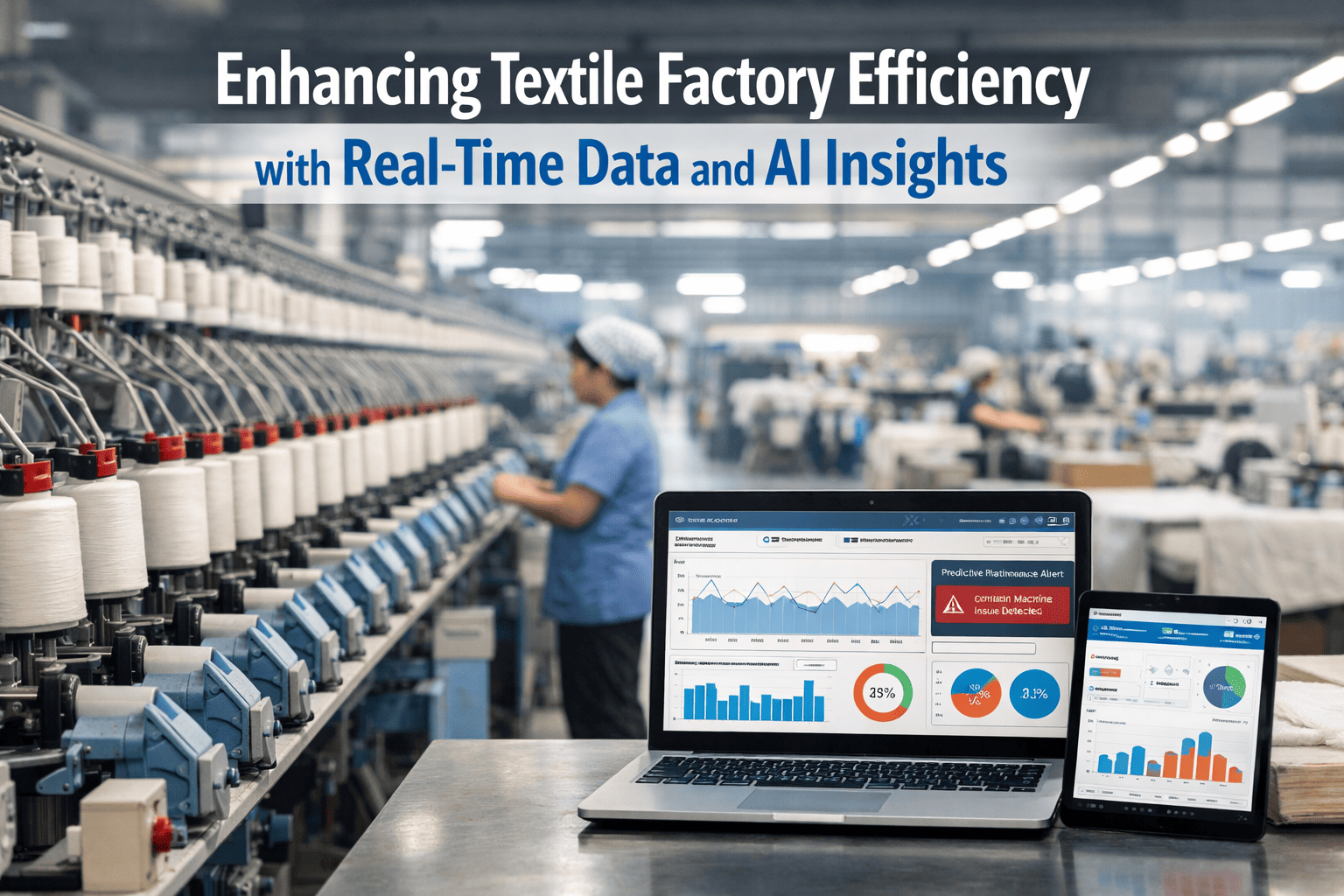
Every minute your textile factory runs without real-time data, you're making decisions in the dark — reacting to yesterday's problems instead of preventing tomorrow's. AI-powered real-time insights are flipping this equation for manufacturers across India and beyond, cutting production delays by up to 35% and reducing machine downtime to near zero. Book a free demo with iFactory and see how live data transforms your factory floor into a self-optimizing operation.
Your Factory Floor Is Talking.
Are You Listening?
Real-time data and AI insights turn every machine, shift, and order into a live signal — so you can act before problems cost you.
The Real Cost of Running Blind
Most textile factories still rely on end-of-shift reports, manual machine logs, and supervisor gut-feel. By the time a problem surfaces in a report, it has already cost you hours of production. Here's what operating without real-time visibility actually costs.
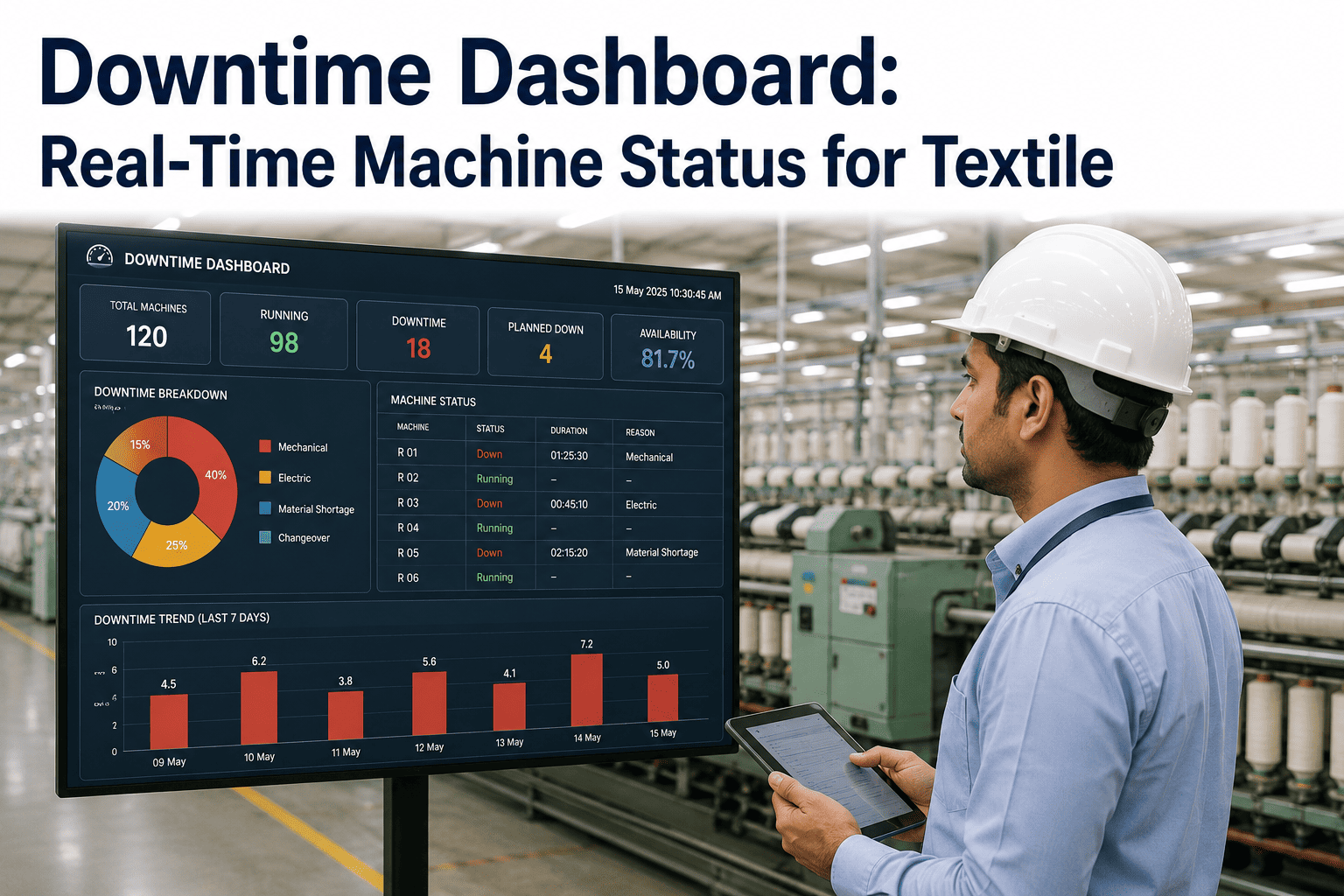
Hidden Machine Downtime
A loom running 8% below optimal speed for 6 hours loses more output than a 30-minute breakdown. Without sensors, no one sees it.
Defects Caught Too Late
When quality checks happen only at end-of-roll, defective fabric is already woven — re-processing adds cost and time the buyer won't absorb.
Delayed Production Reports
Manual shift-end reporting means decisions are made 8–24 hours late. Bottlenecks compound into missed delivery dates and buyer penalties.
Energy Waste Nobody Tracks
Machines running idle, air conditioning overcooling empty sections, compressors working overtime — all invisible without energy monitoring sensors.
How Real-Time Data Flows Through Your Factory
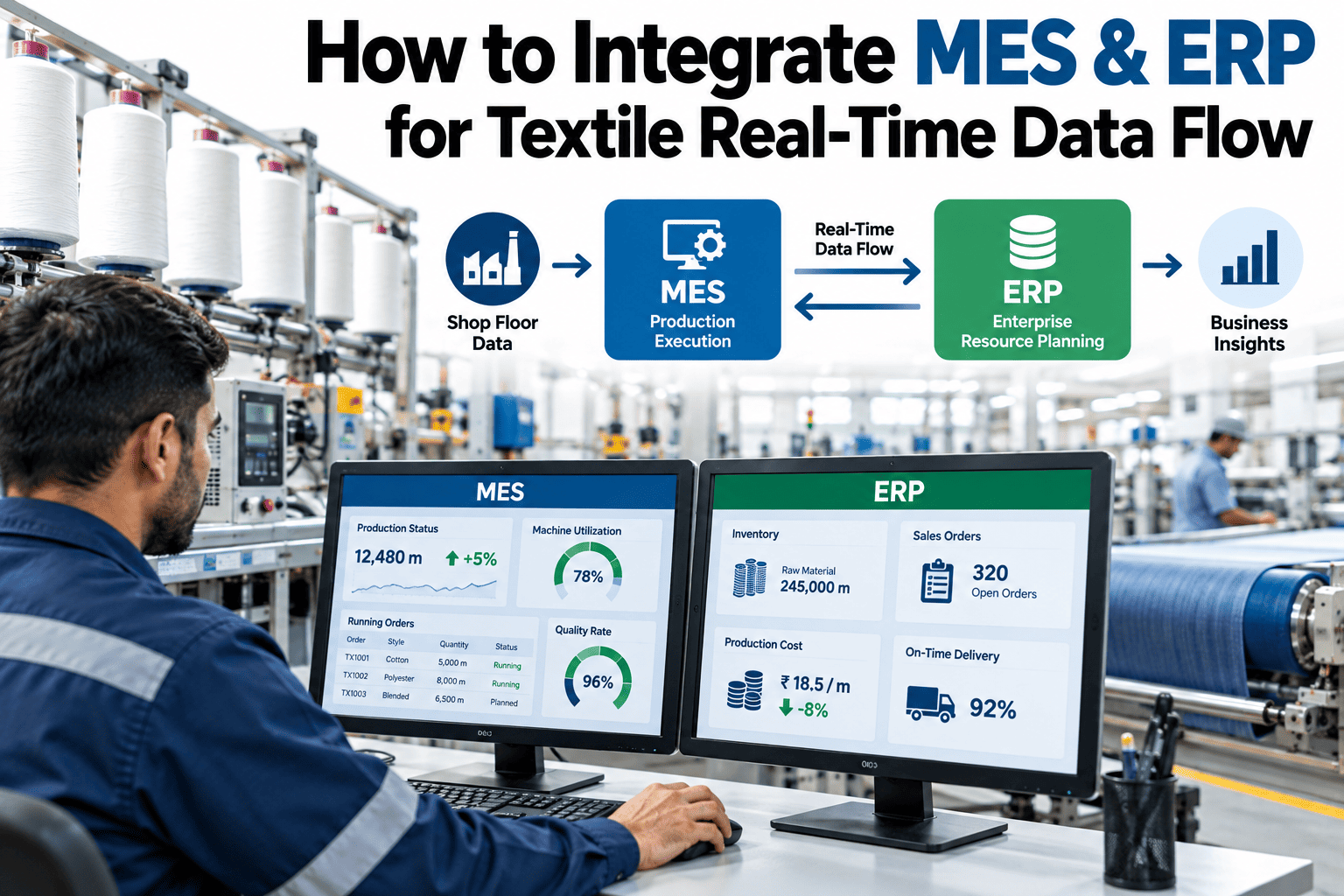
iFactory connects every point on your factory floor into a single live intelligence layer — from raw material intake to finished fabric dispatch. Here's the data journey that makes smarter decisions possible.
Sensor Collection
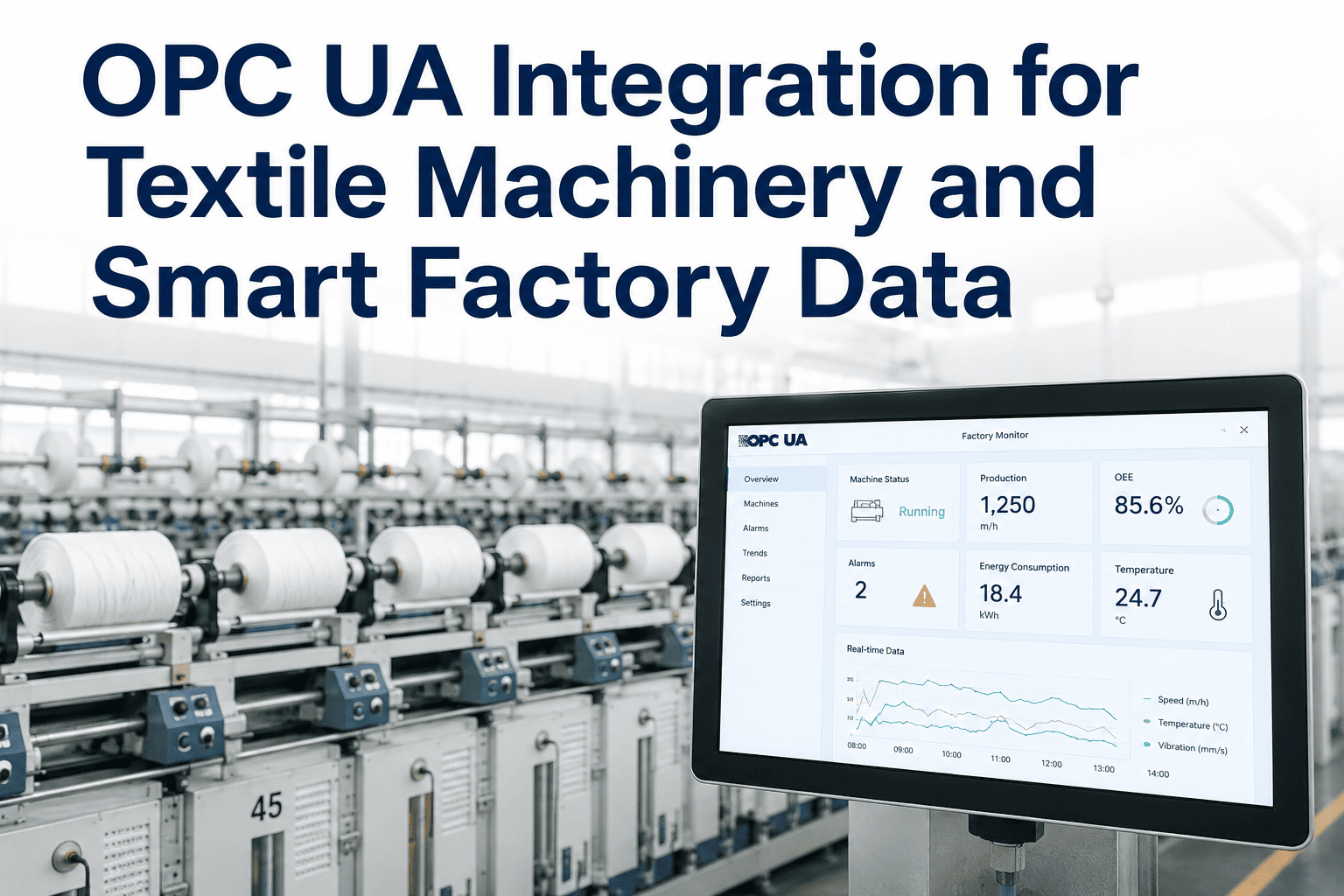
IoT sensors on looms, spinning frames, dyeing units, and finishing lines capture RPM, temperature, tension, and vibration every few seconds.
Live Data Processing
iFactory's AI engine ingests the raw data stream, normalizes it against baseline parameters, and detects anomalies in real time — before operators notice.
AI Insight Generation
The AI model correlates current signals with historical patterns to generate plain-language alerts, maintenance predictions, and efficiency recommendations.
Action on the Floor
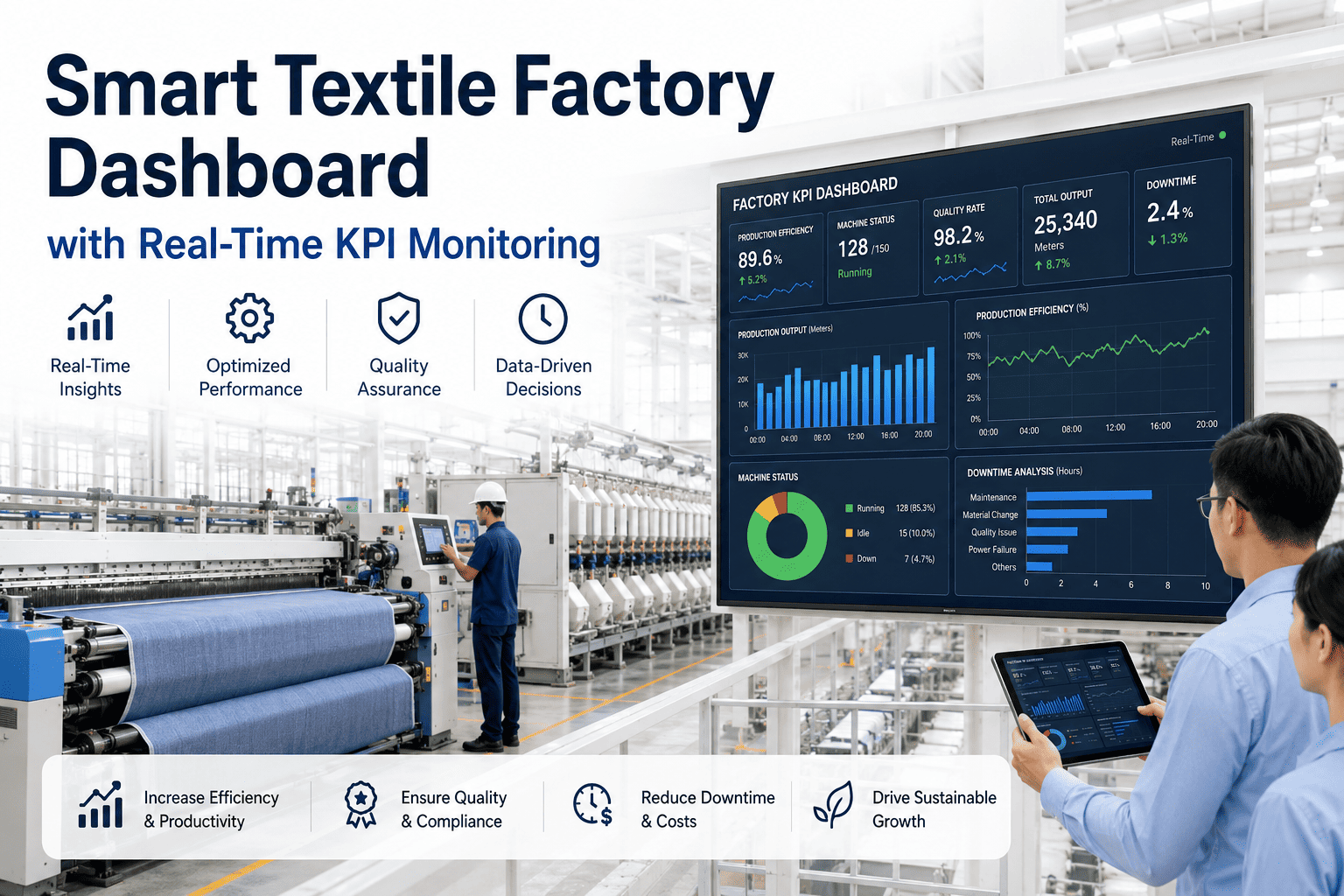
Supervisors receive mobile alerts, planners see updated dashboards, and maintenance teams get work orders — all within minutes of the data event.
Curious how this looks in your factory? Book a 30-minute live session — we'll map the data flow against your specific machines and processes.
Before AI vs. After AI: The Real Difference
Numbers tell the story better than words. Here's what textile factories consistently see when they move from manual monitoring to AI-powered real-time intelligence.
5 Ways AI Insights Are Reshaping Textile Operations
Real-time data isn't just about monitoring — it's the foundation for AI to generate insights that actively improve how your factory runs, shift by shift.
Predictive Maintenance
AI monitors vibration, heat, and speed patterns on every machine. When a loom starts trending outside normal parameters, the system flags it 48–72 hours before failure — so maintenance happens on your schedule, not the machine's.
Live Quality Control
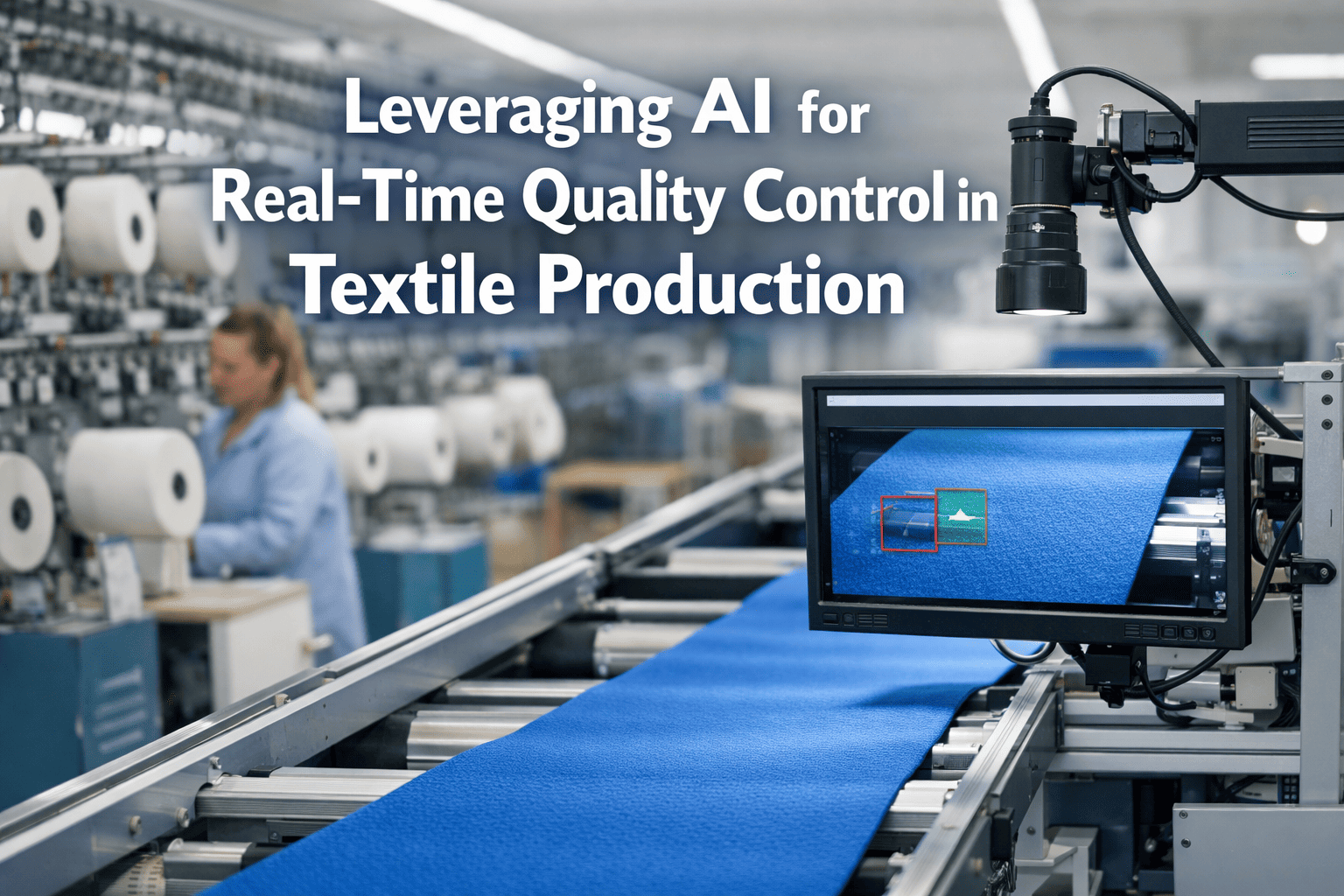
Camera-based AI systems scan fabric for defects as it comes off the loom — weave irregularities, color deviations, and broken yarns are caught in real time, not after the roll is complete.
Dynamic Production Scheduling
When a machine goes down or an order changes, iFactory's AI re-sequences the entire production plan in minutes — reallocating jobs to available machines and updating delivery timelines automatically.
Energy Consumption Intelligence
AI tracks power draw by machine and shift, identifies energy-hungry outliers, and recommends operational adjustments — turning energy data into a tool for cost reduction, not just reporting.
Workforce Performance Analytics
Per-operator and per-workstation output data gives supervisors objective visibility into productivity — enabling fair performance conversations, targeted training, and smarter shift planning.
The Industry Is Already Moving — Fast
Real-time AI adoption in textile manufacturing is not a future trend. It is happening now, and factories that delay are falling behind buyers' new supplier expectations.
of tier-1 textile exporters have deployed AI-powered monitoring tools as of early 2026, up from 41% just two years ago
global AI in manufacturing market size in 2025, growing at 35.3% CAGR — the fastest-growing technology investment in the sector
of manufacturers globally will use AI tools for real-time scheduling and resource management by end of 2026, per IDC Manufacturing FutureScape
typical payback period for factories that implement AI-driven real-time monitoring, with annual savings ranging from ₹40–120 lakhs depending on scale
The competitive advantage in textile manufacturing has shifted from machine count to data intelligence. Factories with live visibility make better decisions faster — and buyers are increasingly choosing suppliers who can prove operational reliability with data, not just promises.
— Textile Supply Chain Intelligence Report, February 2026iFactory's Real-Time Intelligence: Built for Textile, Not Adapted from It
Generic manufacturing platforms don't understand the difference between warp tension on a sulzer loom and colour consistency in a jigger dyeing machine. iFactory does — because it was built from the ground up for textile production.
Pre-configured for spinning, weaving, knitting, and dyeing — no months of calibration for generic factory templates.
No cryptic error codes. Alerts read like "Loom #3 warp tension rising — check beam and let-off motor within 2 hours."
Live production data syncs directly with SAP, Oracle, Tally, or your existing order management software — no manual bridging.
Factory managers get full visibility from any device — shift summaries, machine status, and alerts reach them wherever they are on the floor or off-site.
The AI learns from your factory's specific patterns over time — each production cycle makes its predictions sharper and its alerts more precise.
From sensor installation to live dashboard — iFactory's onboarding is structured to get you operational within 10–14 days, not months.
See iFactory Live on Your Data
In 30 minutes, our team will show you exactly what real-time AI insights look like for a factory running your machinery, shift patterns, and product types.
Frequently Asked Questions
Stop Managing Yesterday's Problems.
iFactory gives your textile operation live intelligence — so every machine, shift, and order is always visible, always optimised.