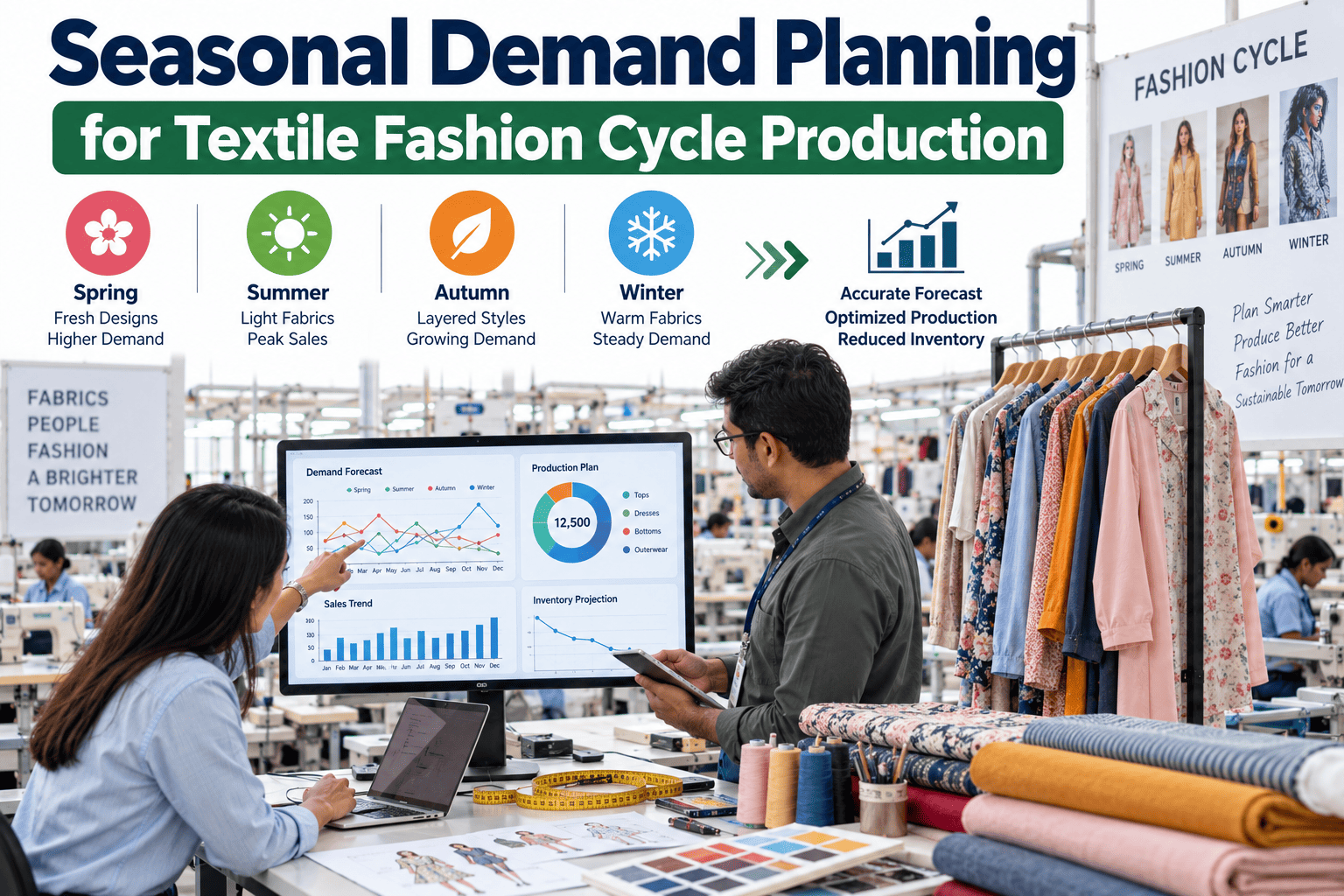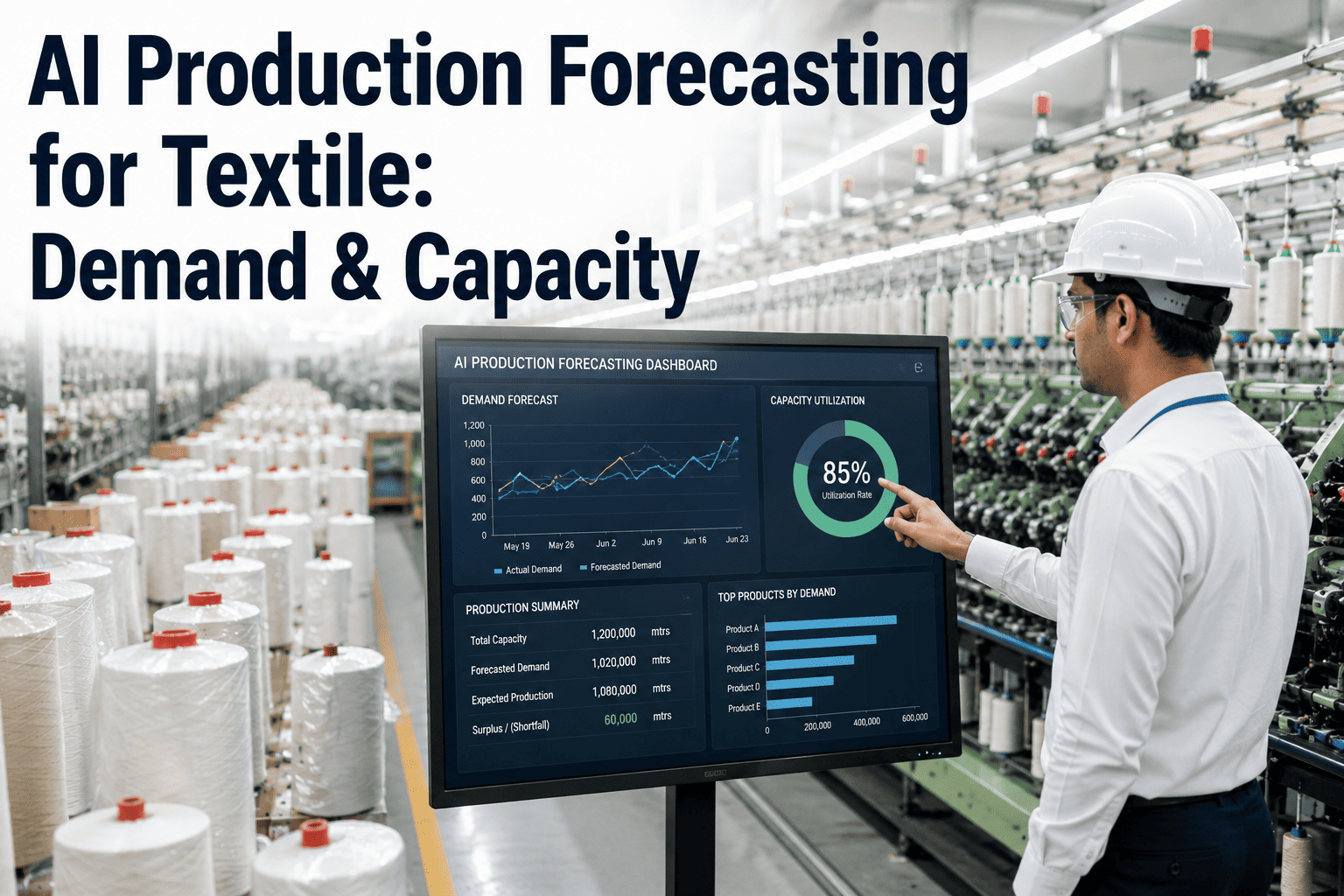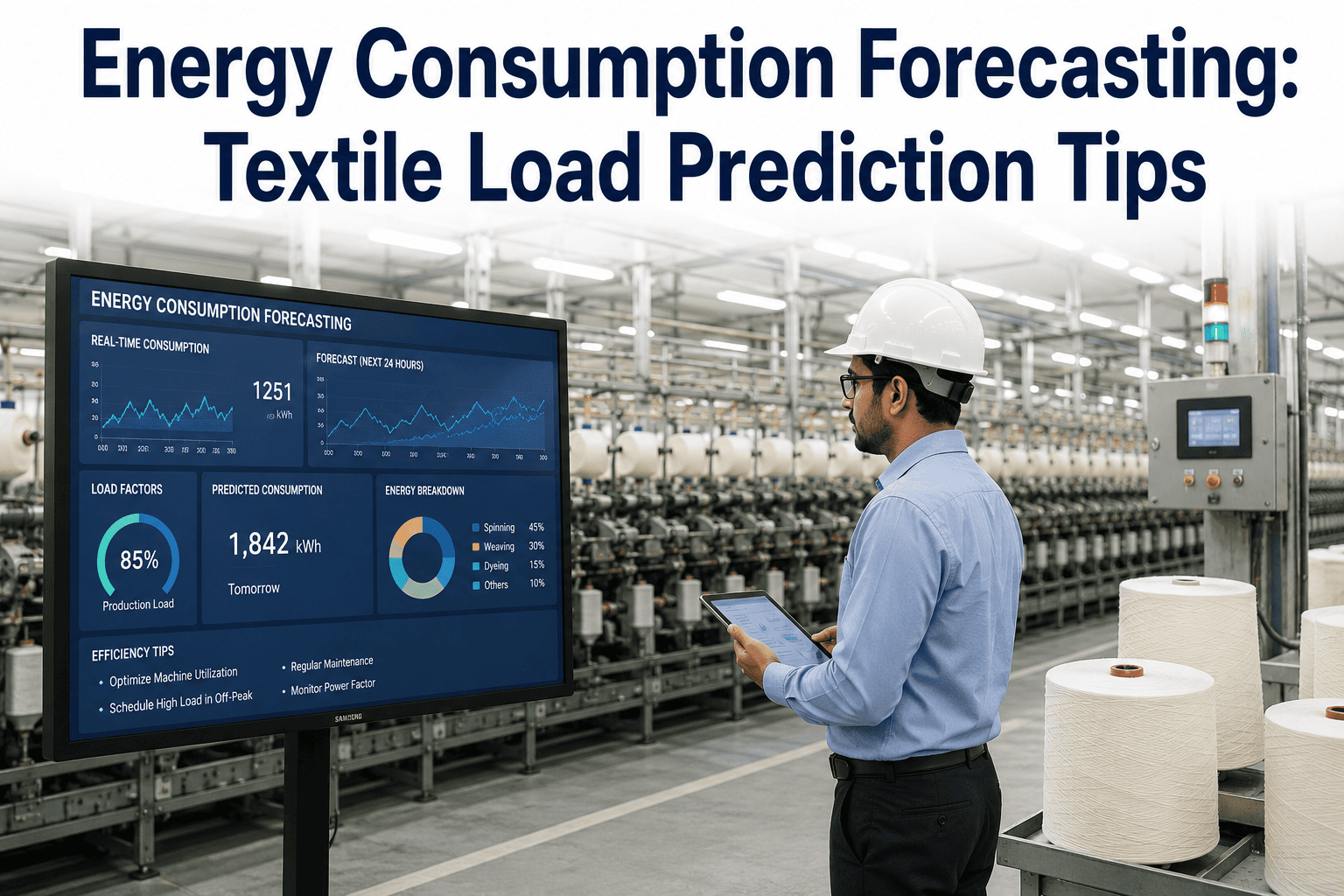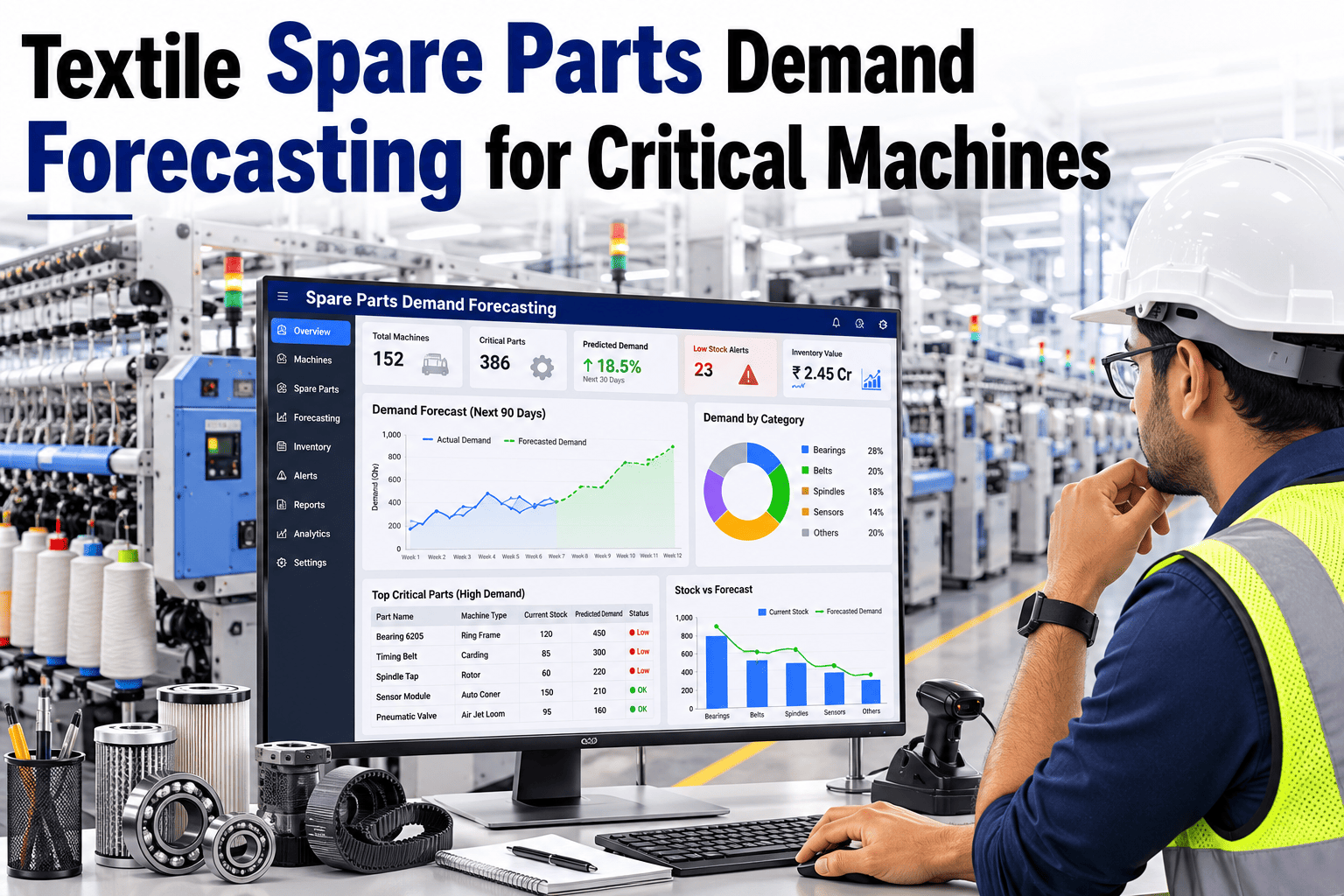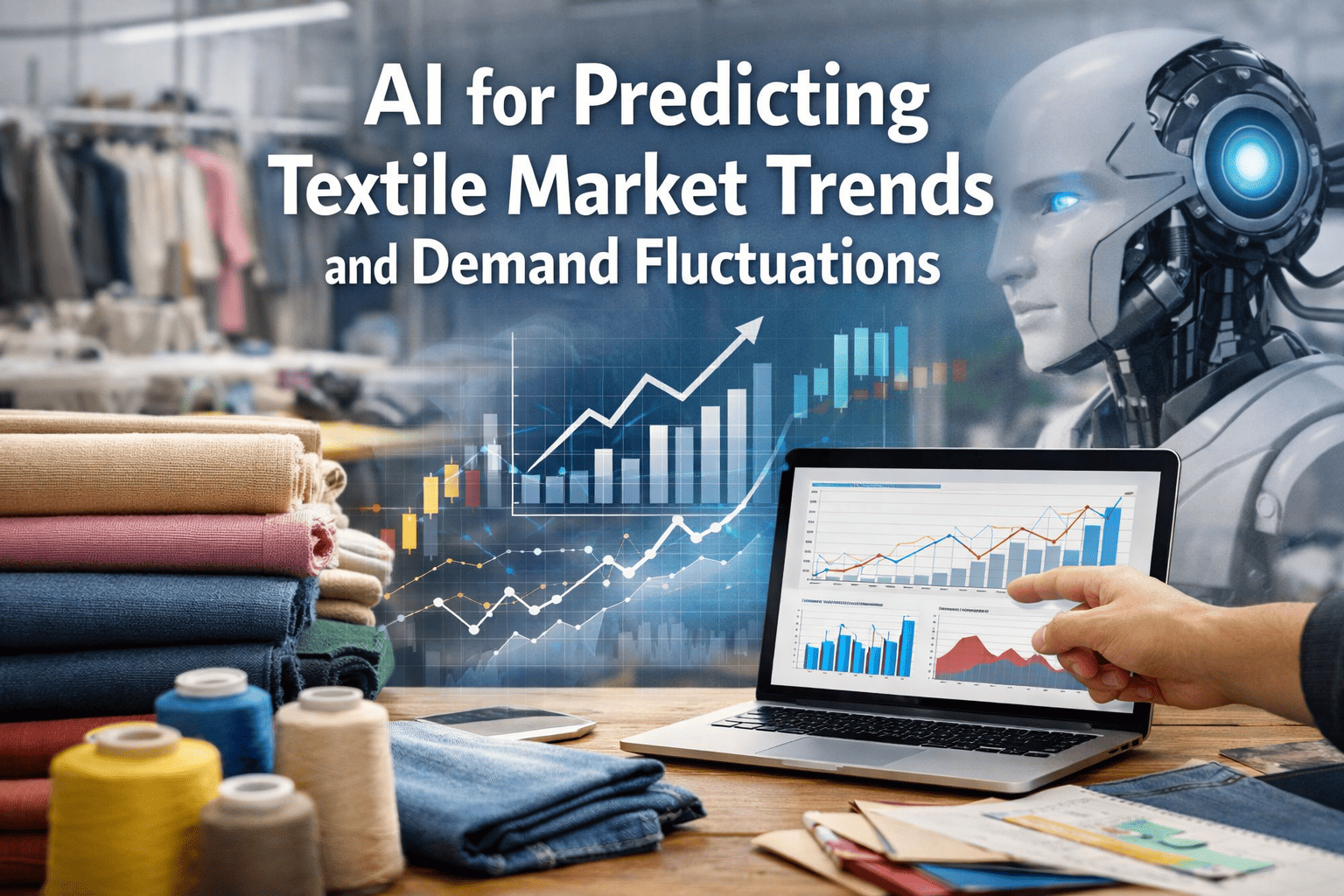
Textile manufacturers have always operated with incomplete information about the future. How much of a given fabric will actually sell this season? Which colors and constructions will resonate with buyers three months from now? When will demand spike — and when will it collapse? Traditional forecasting answered these questions with spreadsheets, gut instinct, and last season's numbers. The result was a predictable cycle: overproduction followed by markdowns, or underproduction followed by missed orders. AI demand forecasting is breaking that cycle by drawing on data sources that traditional methods can't access — social media signals, real-time search trends, e-commerce behavior, weather patterns, and global supply signals — and turning them into predictions with 85–95% accuracy.
The Textile Industry's Forecasting Problem Has a Data Solution
70% of textile trends peak within 3 months. Traditional forecasting captures only 40–50% of emerging market signals. AI changes both those numbers — giving manufacturers the lead time and precision they need to produce what the market actually wants.
Book a DemoWhy Traditional Forecasting Keeps Getting It Wrong
The fundamental problem with conventional textile demand forecasting is not the people doing it — it is the data they have access to. Historical sales data, seasonal calendars, and trade fair reports capture what already happened, not what is about to happen. In a market where 70% of trends peak within three months and consumer preferences shift with viral social media moments, backward-looking methods produce forecasts that are structurally too slow.
The Data Sources AI Reads That Traditional Forecasting Misses
AI demand forecasting doesn't replace historical data — it adds a much wider set of real-time signals that human analysts cannot process at scale. The result is a forecasting model that sees the market as it is now, not as it was six months ago.
The Cost of Getting Demand Wrong — and What AI Changes
Demand forecasting errors compound across the entire production chain. Every unit overproduced ties up capital in inventory, occupies warehouse space, and ultimately results in markdowns that erode margin. Every unit underproduced means missed orders, emergency procurement at premium cost, and expedited production that disrupts the entire schedule. AI doesn't eliminate uncertainty — but it narrows the error range dramatically, and that narrowing has direct financial consequences.
How AI Demand Forecasting Works in Practice
The technical process behind AI textile demand forecasting involves four interconnected capabilities that work simultaneously — not as separate steps, but as a continuous analytical loop that improves with every data cycle. For manufacturers who want to understand how this maps to their existing planning infrastructure, our support team can walk through the integration requirements for your specific operation.
Forecast Accuracy: Traditional vs. AI — Side by Side
The performance gap between AI-driven and traditional forecasting is significant across every measurable dimension. This comparison reflects real documented outcomes from manufacturers and fashion brands that have made the transition.
| Metric | Traditional Forecasting | AI-Driven Forecasting | Difference |
|---|---|---|---|
| Trend detection accuracy | ~60% accuracy | 85–95% accuracy | +25–35 percentage points |
| Signal sources analyzed | 3–5 manual sources | Hundreds of live sources | 20–50x more data inputs |
| Forecast lag | 6–12 months | Days to weeks | Up to 95% faster response |
| Inventory holding costs | Baseline | 30% lower | –30% from baseline |
| Sell-through rate | ~60% industry average | Up to 85% (Zara benchmark) | +25 percentage points |
| Stockout frequency | High — reactive reordering | 60% fewer stockouts | –60% reduction |
| Markdown rate | Industry avg. 30–44% | Significantly reduced | Direct margin recovery |
| Schedule adaptability | Monthly static plans | Live dynamic adjustment | Continuous vs. periodic |
The Market Behind the Urgency
Investment in AI forecasting tools is accelerating globally because the financial penalties of poor demand prediction have become impossible to ignore at scale. The market trajectory confirms that manufacturers treating forecasting as a manual process are falling behind a rapidly rising adoption curve.
What Manufacturers Ask Before Adopting AI Forecasting
Stop Building Production Plans on Last Season's Guesses
iFactory integrates AI demand forecasting and production analytics into a single platform — giving textile manufacturers real-time market signal visibility, dynamic scheduling, and inventory optimization that replaces reactive planning with predictive precision. Deployed in 7–14 days.
Book a Demo