The textile industry is one of the world's most resource-intensive sectors — responsible for roughly 10% of global carbon emissions, 20% of industrial wastewater discharge, and 92 million tons of solid waste every year. Pressure from global brands, sustainability regulators, and ESG-focused investors is accelerating the need for documented, measurable efficiency improvements at the factory level. Artificial intelligence has emerged as the most effective tool textile manufacturers have for closing this gap — reducing material waste, cutting water and energy consumption, and generating the supply chain traceability documentation that modern sustainability standards demand. This guide breaks down how AI is delivering real outcomes in textile manufacturing today and how iFactory's platform brings that intelligence to your production floor. For a sustainability gap assessment specific to your facility, talk to our support team.
AI · Sustainability · Textile Manufacturing
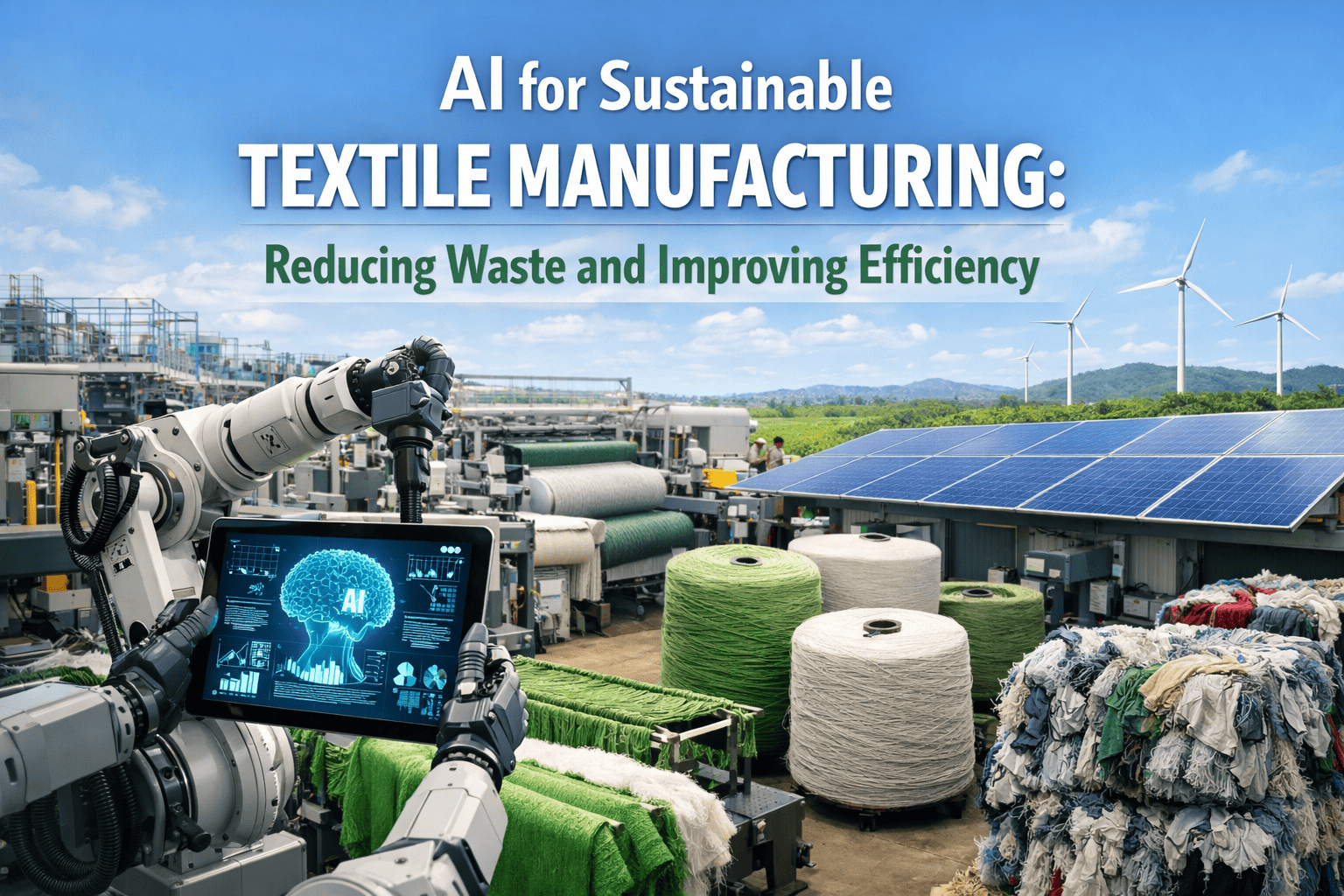
AI for Sustainable Textile Manufacturing: Reducing Waste and Improving Efficiency
From intelligent defect detection to AI dye optimization and demand forecasting, smart factories are proving that sustainability and operational efficiency are the same goal — digital intelligence is the fastest path to achieving both simultaneously.
Book a Demo
92M
Tons of textile waste generated globally every year
10%
Of global carbon emissions from the textile and apparel sector
35%
Material waste reduction achievable with AI cutting optimization
25%
Energy cost savings from AI-driven process optimization
The Sustainability Gap
Three Core Challenges Driving Textile Manufacturing's Environmental and Cost Crisis
15–20%
Raw Material Wasted in Production
Defective fabric, inefficient cutting layouts, and overproduction waste 15–20% of all raw materials before a single finished product ships — direct cost destruction and environmental damage occurring every production cycle in plants operating without AI oversight.
200L
Water Per Kilogram of Fabric
Dyeing and finishing processes consume up to 200 liters of water per kilogram of textile. Fixed dye recipes designed for worst-case conditions routinely over-consume by 30–40% — water that chemical treatment facilities must process and that local watersheds absorb at industrial scale.
3rd
Most Energy-Intensive Industry
Textiles rank among the top three most energy-intensive manufacturing sectors globally — with spinning, weaving, dyeing, and finishing equipment consuming power around the clock on parameters calibrated for peak load, not optimized for real operating conditions.
AI Applications
6 AI Applications Delivering Proven Sustainability Results in Textile Manufacturing
Quality Control
AI-Powered Defect Detection
Computer vision inspects fabric at full production speed, identifying holes, weave errors, stains, and color deviations with 92–96% accuracy — compared to 70–75% with manual inspection. Earlier detection means less material processed past the point of defect, reducing downstream waste across every production run.
↑ 92–96% detection accuracy
Resource Use
Intelligent Dye Optimization
AI models analyze fiber composition, target color, ambient temperature, and bath chemistry in real time — generating precise dye recipes that reduce chemical consumption by 20–30% and cut water usage in rinsing cycles by up to 35% compared to static baseline recipes used in conventional dyehouses.
↓ 35% water usage reduction
Demand Planning
AI Demand Forecasting
Overproduction is the textile industry's single largest source of waste. AI forecasting models integrate order patterns, retail signals, and seasonality to reduce production overruns by 20–30% — cutting unsold inventory, the energy consumed to produce it, and the logistics cost to ultimately dispose of it.
↓ 25% overproduction reduction
Energy
Energy Load Optimization
Machine learning continuously adjusts spinning RPM, dyeing temperatures, and drying cycle timing across production equipment — reducing total energy consumption by 15–25% without compromising output quality. In 24-hour facilities, even a 15% reduction compounds into significant annual utility and carbon savings.
↓ 15–25% energy savings
Maintenance
Predictive Maintenance
Sensor-driven AI models predict equipment failure 24–72 hours in advance, enabling scheduled maintenance rather than emergency shutdowns. Reducing unplanned downtime by 30–40% also prevents the material waste spikes — off-spec fabric, dye bath restarts, wasted yarn — that accompany every unplanned production halt.
↓ 35% unplanned downtime
Traceability
Supply Chain Transparency
AI-powered traceability platforms log material origin, certifications, processing steps, and chain of custody from raw fiber to finished goods — satisfying ESG reporting requirements from major retail brands, institutional investors, and sustainability regulators across the EU, US, and Asia-Pacific regions.
↑ 100% chain of custody
Measurable Impact
What AI Sustainability Intelligence Delivers Across Textile Operations
35%
Less Fabric Waste
From AI-guided cutting layout optimization and real-time defect detection at full production speed
40%
Chemical Waste Reduction
AI dye formulation eliminates the systematic over-dosing endemic to fixed-parameter dyeing systems
28%
Lower Carbon Footprint
Energy optimization across spinning, weaving, and finishing operations compounds at scale across facilities
50%
Faster ESG Reporting
Digital traceability generates audit-ready documentation automatically as a byproduct of daily operations
How It Works
The AI Sustainability Loop: From Factory Floor Data to Measurable Outcomes
01
Sensor Data Collection
Machines, looms, dye vessels, and conveyors stream real-time operational data into the AI platform continuously, creating the raw material for optimization decisions
02
Pattern Detection
AI identifies waste-generating patterns, defect correlations, and energy inefficiencies that are invisible to manual monitoring at any production volume or speed
03
Parameter Optimization
Dye recipes, cutting layouts, machine speeds, and energy loads are adjusted in real time to minimize resource consumption while maintaining output quality targets
04
Traceability Logging
Every decision and outcome is recorded automatically, generating the ESG and sustainability documentation trail that customers, certifiers, and regulators require
05
Continuous Improvement
Models improve with every production cycle, compounding sustainability and efficiency gains across every facility in your manufacturing network over time
iFactory Brings AI Sustainability Intelligence to Your Textile Production Floor
From defect detection and dye optimization to dispatch traceability and ESG reporting — iFactory captures the operational data that makes your sustainability targets measurable, documentable, and defensible at audit.
Book a Demo
Before vs. After
Textile Manufacturing — Without AI vs. With iFactory AI Intelligence
Without AI
Manual inspection misses 25–30% of fabric defects downstream
Fixed dye recipes over-consume water by 30–40% per production batch
Demand guesswork results in 20%+ overproduction every season
Energy waste goes undetected outside quarterly manual meter readings
Equipment fails without warning — costly, wasteful production halts
ESG and sustainability reporting takes weeks of manual data compilation
With iFactory AI
92–96% defect detection accuracy at full production speed
AI dye optimization cuts water consumption by up to 35% per batch
Demand forecasting reduces overproduction by 20–30% per season
Real-time energy load optimization saves 15–25% in annual energy costs
Predictive alerts prevent 35% of unplanned production shutdowns
Sustainability audit trail auto-generated from daily operations data
Frequently Asked Questions
AI and Sustainable Textile Manufacturing — What Operations Leaders Ask First
How quickly can a textile factory see measurable sustainability results after implementing AI?
Most textile manufacturers see measurable results within the first 60–90 days of AI deployment. Defect detection accuracy improvements are visible within the first production week. Energy consumption reductions typically register within the first monthly utility cycle. Water usage reductions in dyeing operations emerge within 4–6 weeks as AI models accumulate sufficient batch data to refine dye recipes. Full compounding benefits — demand forecasting accuracy, predictive maintenance patterns, and complete ESG documentation coverage — typically mature between 3 and 6 months after go-live. iFactory's platform is designed to deliver early visible wins alongside longer-term compounding value, so operations leaders can demonstrate ROI to stakeholders before a full quarter has passed.
Does AI for textile sustainability require replacing existing machinery and infrastructure?
No. The most effective AI sustainability platforms for textile manufacturing are designed to layer over existing machinery and production systems — not replace them. Sensor retrofits for older spinning and weaving equipment are typically low-cost and non-disruptive to install. AI defect detection cameras integrate with existing conveyor systems. Dye optimization models connect to existing batch management inputs. The iFactory platform operates as a data and intelligence layer above your current production environment — meaning you can achieve 20–35% efficiency improvements without a capital equipment replacement cycle. Factories with modern ERP or MES systems benefit from faster integration, but legacy environments are fully supported through iFactory's onboarding process.
How does AI help textile manufacturers meet ESG reporting requirements from retail brand customers?
Major retail brands — including those operating under EU sustainability disclosure frameworks, US SEC climate risk rules, and voluntary standards like GRS and GOTS — now require their manufacturing partners to provide documented, verifiable sustainability data at the facility and batch level. AI platforms like iFactory generate this documentation automatically from daily production operations: material origin and chain of custody records, water and chemical consumption per batch, energy consumption per production run, and defect and waste metrics per SKU. This means ESG audit responses that previously required weeks of manual data assembly can be produced in under an hour — directly from the iFactory operations dashboard. Factories that cannot produce this documentation on demand are increasingly being deprioritized by global brand procurement teams.
What is the difference between AI defect detection and traditional automated quality inspection systems?
Traditional automated inspection systems use fixed threshold parameters — flagging defects only when they exceed a pre-set deviation from a static baseline. These systems miss subtle defects, generate high false-positive rates, and require manual recalibration for every new fabric type or color. AI defect detection uses computer vision models trained on thousands of defect examples — continuously improving with every production run, adapting automatically to new materials, and detecting pattern-based defects that fixed-threshold systems cannot see. The practical result is a jump from 70–75% detection accuracy with traditional systems to 92–96% with AI computer vision — directly reducing the defective material that passes downstream, gets cut, and ultimately becomes waste that cannot be recovered.
Can AI sustainability tools work for small and mid-size textile factories, not just large enterprises?
Yes — and small and mid-size textile manufacturers often see faster relative ROI than large enterprises, because they have fewer legacy systems to integrate and the efficiency gains represent a larger percentage of their total operational cost base. iFactory's platform is built for multi-size deployment: from single-facility operations running 50–100 looms to multi-site networks across different regions. The 14-day go-live timeline and cloud-based mobile-first architecture specifically avoid the IT infrastructure requirements that previously made AI adoption prohibitive for smaller manufacturers. The sustainability documentation benefits — ESG reports, chain of custody records, batch-level resource consumption data — are equally valuable regardless of factory scale, particularly as brand customer requirements for supplier sustainability disclosure expand beyond tier-one suppliers to the broader supply chain.
Sustainability in Textile Manufacturing Is Not an Initiative. It Is an Operational Outcome.
The factories achieving the most credible and measurable sustainability results are not running separate environmental programs — they are extracting more intelligence from the production data they already generate every day. iFactory's AI platform makes that intelligence operational across defect detection, resource optimization, demand planning, and full supply chain traceability. Book a demo to see iFactory running in a live textile manufacturing environment.
Book a Demo