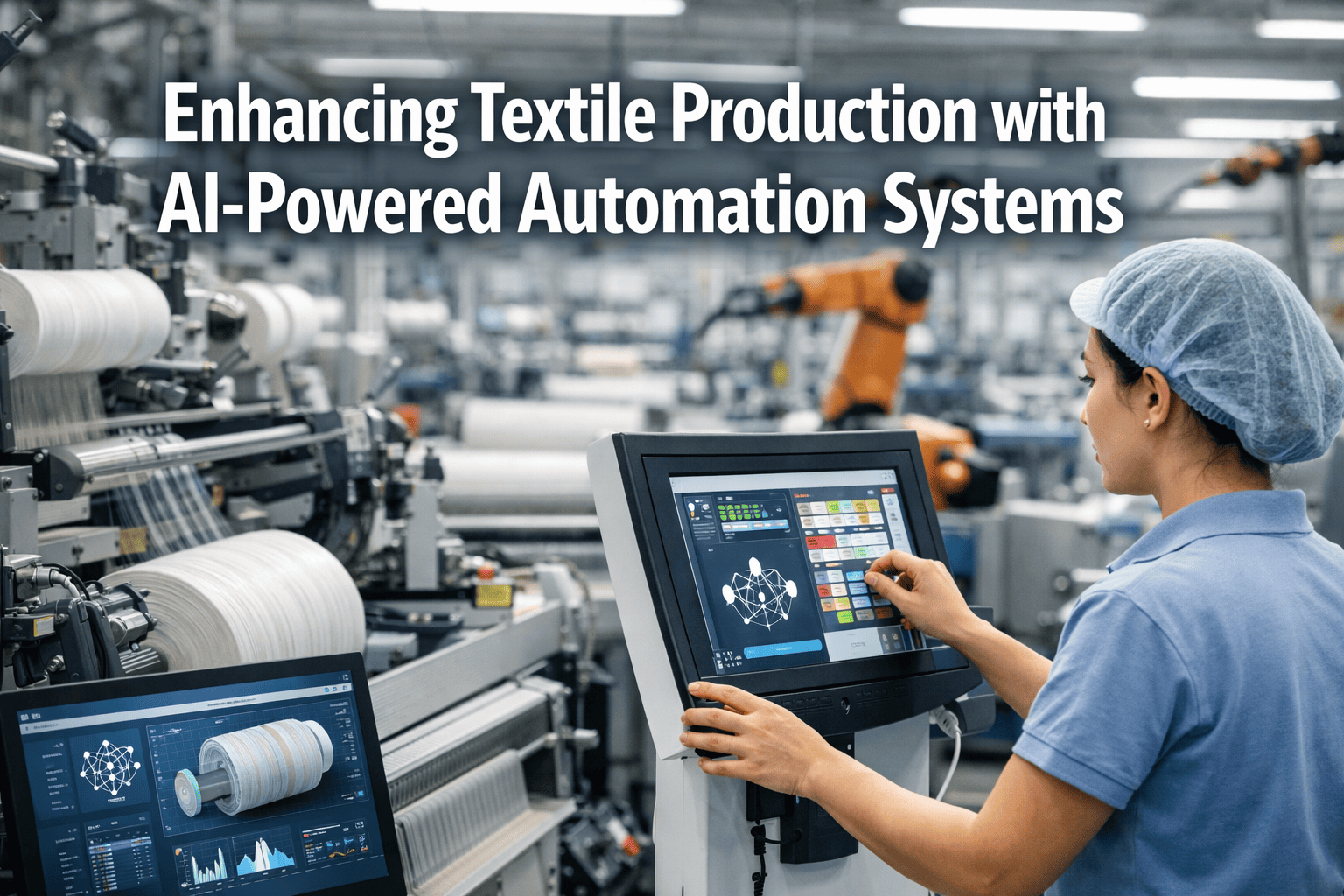
Enhancing Textile Production with AI-Powered Automation Systems

By Johnson on March 12, 2026

ai-powered-automation-systems-textile-production

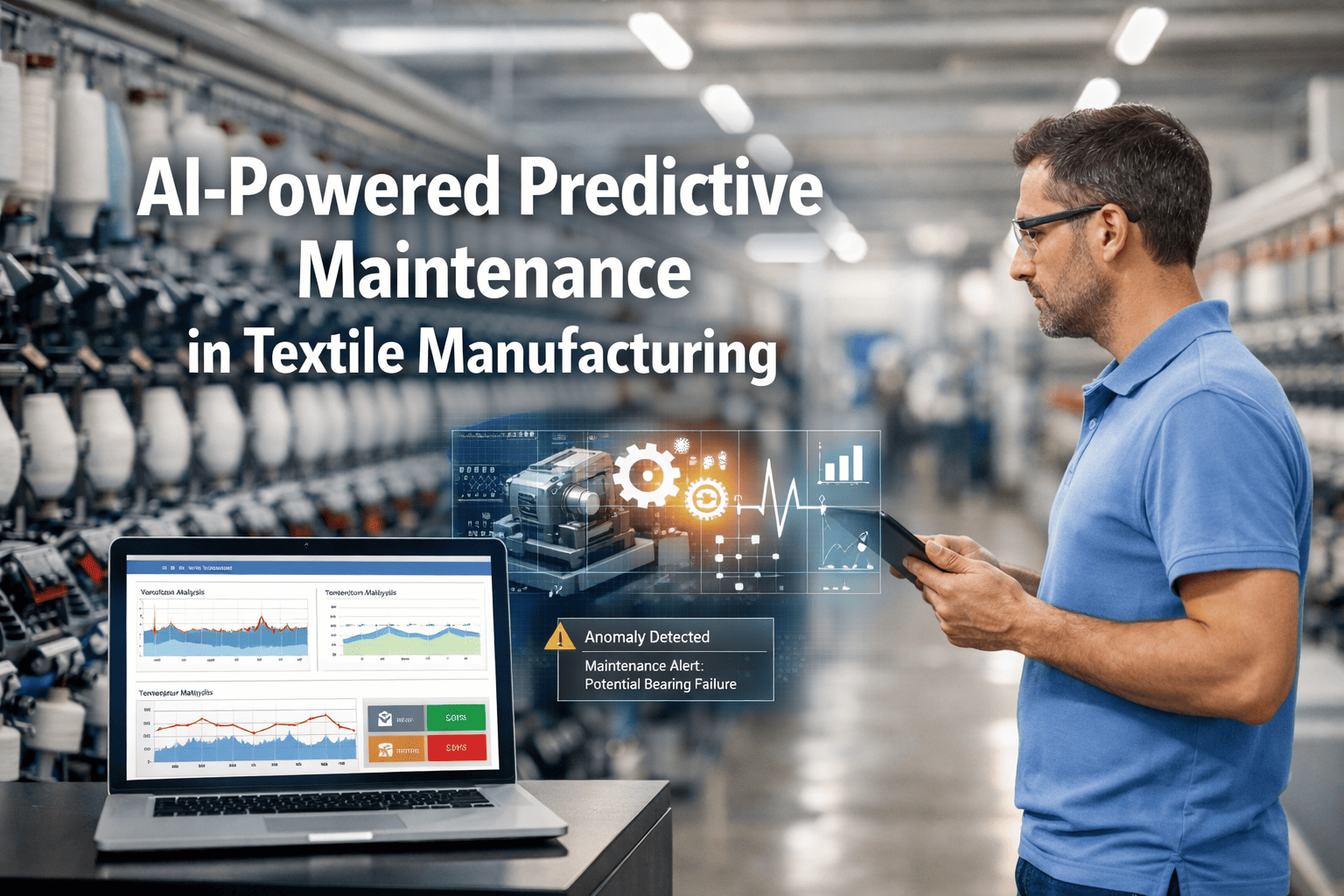
Textile manufacturing has historically been one of the most labor-intensive industries in the world — relying on thousands of workers to perform repetitive, physically demanding tasks at every stage of production. That labor model is undergoing a fundamental transformation. AI-powered automation systems are now capable of handling tasks that once required constant human oversight: monitoring yarn tension on spinning frames, detecting fabric defects at microscopic scale, adjusting dyeing parameters in real time, and managing material flow across the production floor. The result is not just reduced labor dependency — it is a production environment that is faster, more consistent, and more profitable than any human-managed system can achieve at scale.

AI in Manufacturing  ·  Textile Production Automation

AI-Powered Automation Is Redefining What a Textile Factory Can Do

From spinning to finishing — AI automation systems are eliminating bottlenecks, cutting costs, and raising output quality across every stage of textile production. Manufacturers deploying them now are setting efficiency benchmarks that manual operations cannot match.

Book a Demo
15–20%
Production cost reduction with AI automation
25%
Boost in operational efficiency after deployment
39%
Projected textile profit margin increase by 2035 from AI
90%+
Defect rate reduction in AI-automated quality systems

The Automation Maturity Scale: Where Is Your Facility Today?

AI-powered automation does not arrive in a single step. Most textile facilities move through distinct maturity levels, each delivering measurable gains before advancing to the next. Understanding where you are on this scale is the starting point for planning where AI automation can deliver the fastest return.


Level 1
Manual Operations
Fully human-operated — inspection, maintenance, scheduling, and process control all handled manually. High labor cost, high error rate, low scalability.
Most facilities today

Level 2
Sensor Monitoring
IoT sensors collect machine data — vibration, temperature, tension. Data is logged but human operators still make all decisions based on reports.
Entry point: 7–14 day deployment

Level 3
AI-Assisted Decisions
ML models analyze sensor streams and generate real-time recommendations — predictive maintenance alerts, quality flags, process adjustments. Humans act on AI guidance.
Where ROI accelerates

Level 4
Automated Execution
AI not only detects anomalies but acts — adjusting dyeing parameters, scheduling maintenance windows, rerouting production flow. Operator oversight remains for exceptions.
High-performing facilities

Level 5
Autonomous Smart Factory
Full AI orchestration across design, planning, production, and logistics. Self-optimizing systems that improve continuously without manual reconfiguration. Adidas Speedfactory-class operation.
Industry frontier

AI Automation Across Every Production Zone

AI-powered automation doesn't target a single stage of textile production — it systematically transforms each zone from blow room to finishing, compounding efficiency gains across the entire workflow.

Spinning & Yarn Preparation
60% fewer yarn grading errors

AI-based control panels manage all production parameters from blow room through carding, drawing, combing, speed frames, and ring spinning — requiring minimal human participation. AI monitors yarn tension, spindle vibration, and thread breakage frequency in real time, adjusting machine speed and settings automatically. Analytics Steps research documents a 60% reduction in yarn grading mistakes through AI implementation, producing more consistent fiber quality across every batch.

60%Fewer grading errors
Real-timeTension & speed control
AutomatedBobbin loading & creeling
Weaving & Knitting
92% fault classification accuracy

AI-assisted looms analyze sensor data — machine vibrations, weft insertion speed, thread tension — to optimize weaving parameters dynamically. Weft break detection systems monitor yarn break frequency patterns in real time, identifying approaching mechanical failures hours before stoppage. Published research documents 92% accuracy in ML classification of knitting machine stop types from IoT sensor data. Automated cutting systems use AI algorithms to align patterns precisely, reducing fabric offcuts by up to 15%.

92%Fault classification accuracy
15%Less offcut waste
LiveParameter optimization
Dyeing & Wet Processing
Up to 50% energy savings

Dyeing is textile manufacturing's largest energy consumer and the source of 20% of global industrial water pollution. AI automation in this zone dynamically adjusts dye bath temperature, pH levels, chemical concentration, and wash cycle duration — based on fabric type, batch size, and target color — without manual intervention. The result is up to 50% energy savings in wet processing, 20–30% water reduction per batch, and color consistency that eliminates costly re-dyeing runs.

50%Energy savings potential
30%Water reduction per batch
ZeroManual parameter adjustment
Quality Inspection
99% defect detection accuracy

AI computer vision systems mounted inline scan every meter of fabric at full production speed — detecting weave gaps, color deviations, surface contamination, pilling, and fiber faults at up to 99% accuracy, compared to 60–70% for manual inspection. Technical textile manufacturers using AI quality automation have documented defect rate reductions of over 90%. Every defect is flagged with its precise location, type, and severity — building a quality data record that automatically feeds back into process improvements for subsequent runs. If you want to understand how AI quality automation integrates with your specific line configurations, our support team can detail the exact hardware and software requirements.

99%Detection accuracy
90%+Defect rate reduction
InlineAt full production speed
Cutting & Finishing
Up to 46% waste reduction

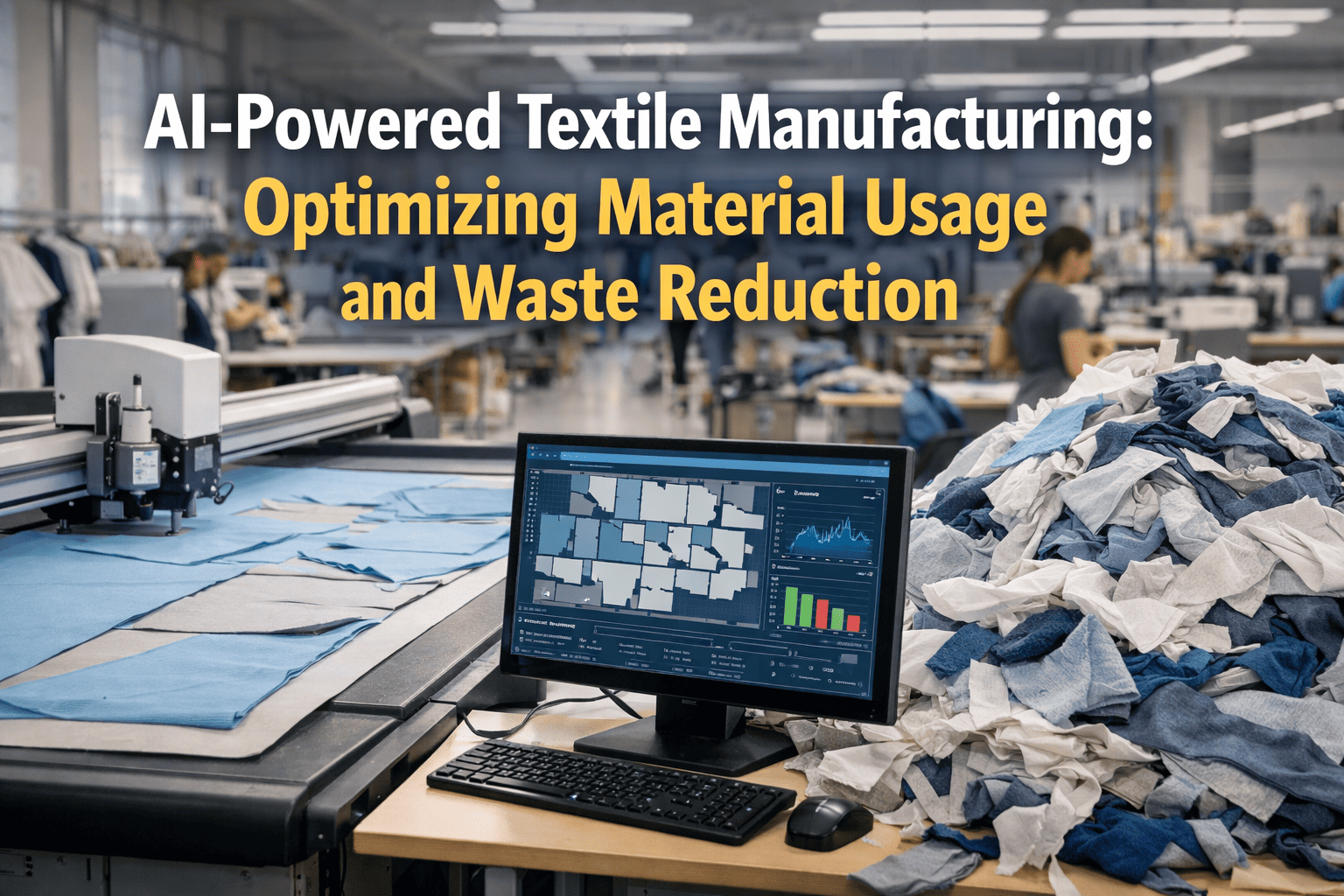
AI-driven adaptive pattern systems dynamically adjust cutting layouts across different fabric widths, sizes, and style variants without manual redesign — a process that previously required weeks of effort and generated significant offcut waste. Research by Ultralytics documents up to 46% fabric waste reduction using AI-driven adaptive pattern technology. Automated cutting machines use pattern recognition to align cuts with maximum material efficiency, reducing both waste and per-unit cost simultaneously.

46%Fabric waste reduction
InstantPattern rescaling
LowerPer-unit material cost

The Business Case: What AI Automation Changes on the P&L

AI automation doesn't just improve operational metrics — it creates measurable financial outcomes that compound across every production cycle. These are the direct profit and loss impacts manufacturers are recording after deployment.

Cost Lines That Fall
↓ 15–20%
Total Production Cost
AI automation reduces per-unit production cost across labor, energy, materials, and rework
↓ 40–50%
Unplanned Downtime Cost
Predictive maintenance converts emergency repair costs to scheduled maintenance at 3–5x lower rates
↓ 30%
Inventory Holding Costs
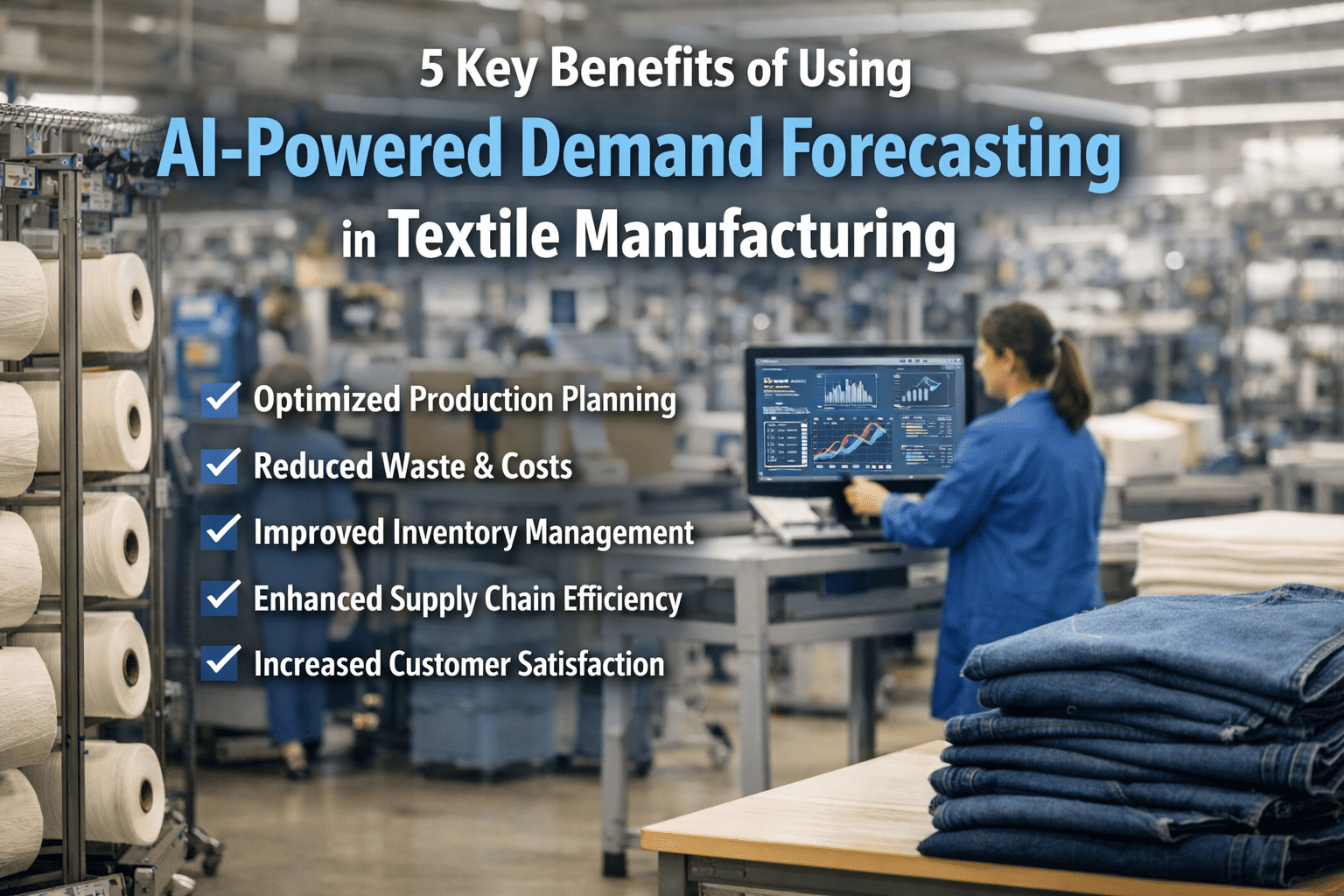
AI demand forecasting aligns production volumes to actual market demand, eliminating excess stock
↓ 46%
Fabric Waste Per Run
AI adaptive cutting and pattern optimization reduce material offcuts across every production batch
Revenue Lines That Rise
↑ 25%
Operational Efficiency
Faster cycle times, fewer stoppages, and automated decision-making increase throughput without adding headcount
↑ 39%
Profit Margin (2035 Projection)
AI is projected to increase textile sector profit margins by 39% by 2035, compounding across all efficiency gains
↑ 40%
Sell-Through Rate
AI demand forecasting improves sell-through by producing what the market wants at the volume it needs
↑ 30%
Faster Time to Market
AI-enabled prototyping and automated scheduling compress product development cycles by up to 30%

AI Automation vs. Traditional Manufacturing: A Direct Comparison

The performance differential between AI-automated and traditional textile production is measurable across every operational dimension. This comparison reflects documented outcomes from manufacturers and industry research.

Production Area Traditional Manufacturing AI-Powered Automation Verified Outcome
Yarn & Fiber Grading Manual visual grading · high error rate AI sensor-driven grading · consistent accuracy 60% fewer grading errors
Machine Maintenance Reactive — repair after failure · emergency cost Predictive — 24–72 hr advance alerts 40–50% downtime reduction
Quality Inspection Manual visual · 60–70% accuracy · end-of-run Computer vision · 99% accuracy · inline 90%+ defect rate reduction
Dyeing Process Control Fixed manual parameters · variable output Dynamic AI adjustment per batch 50% energy savings · 30% less water
Fabric Cutting Fixed layouts · high offcut volume AI-optimized adaptive nesting Up to 46% waste reduction
Production Scheduling Monthly static plans · manual updates Live AI-driven dynamic scheduling 30% faster time to market
Overall Production Cost Baseline — high labor and rework cost AI-optimized across all cost centers 15–20% total cost reduction

Market Scale Confirms This Is Now Mainstream, Not Experimental

The global investment levels in AI-powered textile automation confirm that this is no longer an early-adopter technology — it is becoming the operational standard that manufacturing competitors are already being measured against.

$2.64B
AI in textile market — 2024
32.42% CAGR

$43.77B
Projected market — 2034
16.6x growth in 10 years

$664M
Automation in textile market growth 2025–2029
3.2% CAGR

22%
Of textile jobs automated by AI by 2025
Fastest in routine task categories
Global Brands Already Deploying AI Automation at Scale
Adidas
AI-powered robots in Speedfactory for high-speed precision manufacturing
Levi Strauss
AI laser finishing — reducing water and chemical use in denim production
H&M
Predictive analytics and AI inventory management across global supply chain
Nike
AI-driven demand forecasting and inventory correction after markdown crisis

Common Questions on AI Automation Deployment

How disruptive is the installation process for AI automation systems?
Minimal. IoT sensors and AI analytics platforms are retrofitted to existing machinery without requiring production line shutdowns. Sensors are physically mounted on spinning frames, looms, dyeing units, and cutting machines using industrial-grade fittings that don't require machine disassembly. Most facilities complete sensor installation and platform activation within 7–14 days while running normal production. The AI model begins with pre-trained baselines that calibrate to your specific machines over the first 4–8 weeks.
Do we need to replace existing machines to benefit from AI automation?
No. AI automation adds intelligence to the machines you already have — it doesn't require them to be replaced. Vibration sensors, thermal monitors, power meters, and vision cameras are retrofitted onto existing spinning frames, looms, dyeing machines, and finishing equipment. The AI layer processes the data these sensors generate, turning your existing capital investment into a connected, intelligent production system.
Which automation area delivers ROI fastest for a typical textile facility?
Predictive maintenance typically delivers the fastest measurable ROI for facilities experiencing regular unplanned downtime — converting emergency repair costs (which run 3–5x higher than planned maintenance) into scheduled interventions. AI quality inspection delivers rapid payback for facilities with high defect rates or significant batch write-off costs. For facilities with inventory imbalance issues, demand forecasting automation produces measurable improvement within the first production cycle. iFactory's modular deployment allows you to start with the highest-impact area and expand from there.
How does AI automation affect the existing workforce?
AI automation shifts — not eliminates — workforce roles. Routine manual inspection, reactive maintenance calls, and manual data entry are the tasks most directly automated. In their place, facilities gain demand for new roles: AI system monitors, data analysts, and maintenance engineers who work with predictive alerts rather than responding to failures. Most manufacturers implementing AI automation report that workforce redeployment to higher-value activities is more common than outright displacement, particularly in mid-sized operations where the same team can manage a larger, AI-assisted production floor.
Is AI automation viable for small and medium-sized textile manufacturers?
Yes. The economics of cloud-based AI analytics have changed substantially — per-facility pricing models no longer require the large upfront capital investments that previously limited AI adoption to major manufacturers. iFactory's platform is specifically designed to scale from a single production line upward. For smaller operations, the proportional impact of AI automation is often higher than for large facilities, because a single avoided machine failure or a defect-free run has an outsized effect on a smaller P&L.
iFactory · AI-Powered Textile Manufacturing Platform

Every Day Without AI Automation Is a Competitive Cost You're Paying

iFactory connects AI-powered automation to your existing textile machinery — delivering predictive maintenance, real-time quality control, process optimization, and production visibility from a single platform. Deployed in 7–14 days. No new machinery required. No production disruption.

Book a Demo
Share This Story, Choose Your Platform!