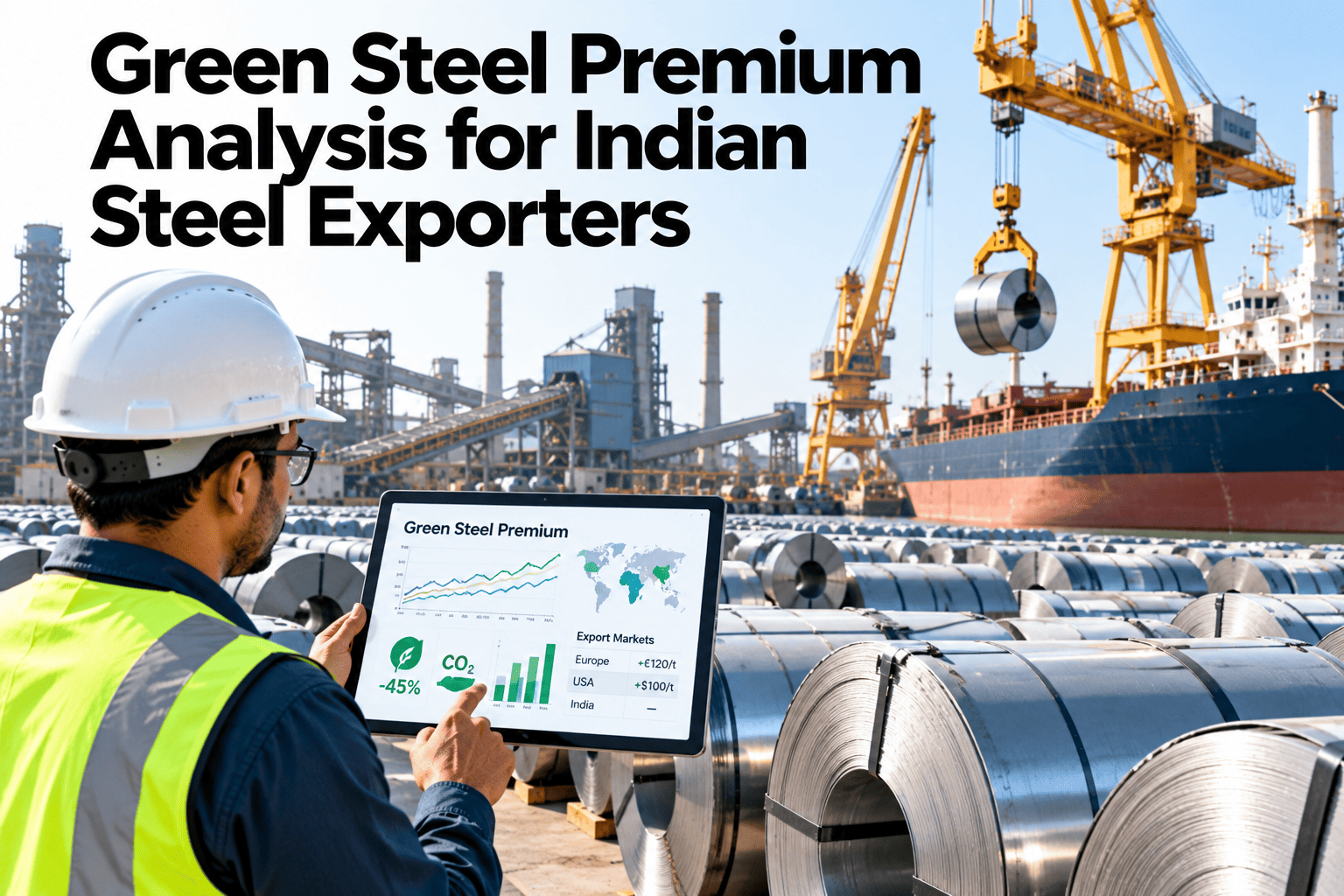
European buyers are paying more attention to the carbon footprint of the steel they buy, and some are willing to pay more for lower-emission products. For Indian exporters, a premium is not automatic. It depends on measured and verified emission i
AI-Powered
Built for Steel
On-Premise
The Complete AI Platform for Steel Plants
From blast furnace optimization to slab defect detection — iFactory brings AI vision, autonomous robotics, yield optimization, energy intelligence, and on-premise data sovereignty to every stage of steel production. One platform. Zero blind spots.
50% Less Downtime
3-5% Yield Gain
20% Energy Saved
98% Defect Catch

One Platform, Every Capability
9 AI-Powered Modules, One Steel Platform
iFactory is a unified AI operations platform purpose-built for steel manufacturing — connecting furnace optimization, vision quality, robotics, and production intelligence into one seamless system across your entire operation.
Furnace AI Optimization
BF charge optimization, EAF power profiles, BOF blow end prediction
AI Vision & Defect Detection
Slab defects, PPE compliance, slag detection, safety zones
Autonomous Robotics
Quadruped robots for cast house, coke oven & confined space patrol
Predictive Maintenance
72+ hr failure prediction for mills, casters, cranes & motors
Yield Optimization
Reduce scrap, optimize casting, hit composition targets first-time
Energy & Green Steel
kWh/ton tracking, CO₂ per heat, ESG reporting, cycle optimization
On-Premise Servers
NVIDIA-powered edge AI, 100% data sovereignty, zero cloud dependency
MES & Production
Real-time OEE, heat tracking, quality gates & production scheduling
Furnace AI Optimization
AI That Optimizes Your Furnace Better Than Manual Control
Your blast furnace, EAF, or BOF is the heartbeat of steel production — and the largest cost center. iFactory's AI monitors 2,000+ parameters per second and continuously optimizes operations to cut coke rate, reduce electrode consumption, predict blow end points, and maintain thermal stability.
BF Charge Optimization
Coke rate down 3-5%
EAF Power Profile AI
Electrode consumption -8%
BOF Blow End Prediction
Carbon & temp hit first-time
Hot Metal Si Prediction
30-60 min ahead forecasting
$15K/day saved
3-5% coke reduction
Book a Demo

AI Vision & Quality
AI Eyes on Every Slab, Every Safety Zone
Deploy AI-powered cameras across your entire steel operation — from continuous caster exit to coil inspection line. iFactory Vision catches surface defects at line speed with 98%+ accuracy, monitors PPE compliance near molten metal, detects slag carryover during tapping, and enforces safety zones — all in under 50ms.
Slab Defect Detection
Cracks, inclusions, scale, scratches
PPE Compliance
Heat suits, face shields, glasses
Slag Detection
Ladle tapping & tundish monitoring
Safety Zone Enforcement
Molten metal exclusion zones
98.2% accuracy
<50ms detection
Book a Demo

Autonomous Robotics
Robots That Patrol Where Humans Risk Their Lives
Steel plants have the most lethal inspection zones in manufacturing — blast furnace cast houses at 1,500°C, coke oven batteries with CO and H₂S, confined spaces inside BOF vessels. iFactory deploys autonomous quadruped robots that navigate these zones 24/7, collecting thermal imaging, gas readings, vibration data, and visual inspections without any human exposure.
Thermal Patrol
Refractory hot spots, runner leaks
Gas Detection
CO, H₂S, SO₂, combustibles
Cast House Navigation
LiDAR SLAM in extreme heat
Auto Work Orders
Finding → CMMS → crew assigned
85% safer operations
70% less manual patrol
Book a Demo

Predictive Maintenance
Predict Failures 72+ Hours Before the Line Stops
One unplanned breakdown cascades through your entire steel line — furnace stops, metal solidifies, casters freeze, and the repair bill hits $500K+ per hour. iFactory's ML models learn your equipment's unique failure signatures and detect anomalies invisible to operators — automatically creating work orders with the right parts, procedures, and crew.
Vibration Analytics
Mill drives, motors, gearboxes
Thermal Monitoring
Refractory, bearings, transformers
Remaining Useful Life
RUL scoring per component
Auto Work Orders
Parts, SOP, crew — auto-assigned
50% less downtime
$3.2M/yr saved
Book a Demo

Yield Optimization
Every Percent of Yield = Millions in Revenue
A 1% yield improvement in a mid-size steel mill is worth $2-4 million annually. iFactory's Yield AI attacks scrap from every angle — optimizing casting parameters to prevent breakouts, predicting optimal slab dimensions to minimize trim losses, hitting alloy composition targets first-time through secondary metallurgy optimization, and reducing off-spec downgrades.
Casting Optimization
Breakout prediction, mold control
Slab Sizing AI
Minimize trim & cobble losses
Composition AI
Hit alloy targets first-time
Grade Optimization
Reduce prime-to-secondary downgrades
3-5% yield gain
$2-8M/year value
Book a Demo

Energy & Green Steel
Steel Makes 7-9% of Global CO₂ — AI Changes That
Steel production is one of the most energy-intensive processes on Earth. iFactory tracks kWh per ton in real-time across EAFs, reheat furnaces, rolling mills, and auxiliary systems. AI optimizes furnace power profiles, electrode consumption, and reheating schedules — cutting energy waste by 15-20% while providing automated ESG reporting.
kWh/Ton Tracking
Per-furnace energy metering
Carbon per Heat
tCO₂/ton real-time tracking
Furnace Cycle AI
Optimize tap-to-tap time
ESG Reports
Investor & regulator ready
15-20% energy saved
ESG-ready reporting
Book a Demo

On-Premise & Data Sovereignty
Your Alloy Recipes & Process Data Never Leave Your Plant
Steel companies handle proprietary alloy compositions, customer specifications, and process recipes worth billions. iFactory deploys on NVIDIA-powered edge servers inside your facility — all AI inference, vision processing, and furnace optimization run locally with sub-10ms latency and zero cloud dependency.
100% Data Sovereignty
Zero data leaves your network
NVIDIA GPU Servers
DGX, HGX, EGX supported
Sub-10ms Inference
Real-time AI at line speed
Works Without Internet
100% offline capable
Zero cloud dependency
GDPR / local law ready
Book a Demo

Production & Operations
Complete Operational Visibility — From Melt Shop to Dispatch
MES, OEE tracking, digital shift handovers, inspections, asset management, and safety compliance — all integrated with your SCADA, PLC, and ERP systems.
Real-Time OEE
Track Availability × Performance × Quality across furnaces, casters, and mills. Automated Pareto identifies your top losses. Benchmark across shifts and lines.
- Auto SCADA data capture
- Downtime Pareto analysis
- Shift & line benchmarking
Digital Shift Logbooks
Steel plants run 24/7 with rotating crews. AI-generated shift summaries ensure incoming teams know what happened, what's pending, and what needs immediate attention.
- AI-generated handover reports
- Mandatory digital sign-off
- Photo & video evidence
Safety & OSHA Compliance
Digital LOTO, confined space permits, crane inspections, PSM docs — all with e-signatures and immutable audit trails. Pull any record in 30 seconds when OSHA walks in.
- LOTO, confined space, PSM
- NAICS 3311-3312 templates
- 30-second audit retrieval
Work & Inspection Mgmt
Digital work orders from phone or tablet. AI-generated inspection checklists for furnaces, cranes, and mills. Smart crew assignment, parts linking, and real-time tracking.
- Mobile-first work orders
- AI inspection checklists
- 94.7% PM compliance
Asset Lifecycle
Track 2,800+ steel plant assets from install to retire. AI health scores, full repair history, total cost of ownership, depreciation tracking, and replacement planning.
- AI health scoring
- Full repair history
- TCO optimization
Smart Spare Parts
No more emergency orders at 3-7x markup. AI predicts what parts you'll need based on equipment health, auto-sets reorder points, and links every part to its asset.
- AI-driven reorder points
- QR/barcode scanning
- Asset-part linking
Equipment Coverage
From Raw Material to Finished Coil — All on One Platform
AI monitoring, vision inspection, robotic patrol, and predictive maintenance for every piece of critical steel equipment.
Blast Furnaces
AI charge optimization, refractory, cooling staves, robot thermal patrol
EAF / BOF
Power profile AI, electrode optimization, blow end prediction, slag vision
Continuous Casters
Breakout prediction, mold oscillator, vision defect detection
Hot & Cold Rolling Mills
Drive vibration, gearbox health, strip quality AI, energy optimization
Overhead Cranes
Ladle, charging & coil cranes — load vision, motor PdM
Coke Ovens
Battery temp, robot gas patrol, pushing machine health
Conveyors & Motors
Belt alignment vision, motor vibration, energy monitoring
Reheat Furnaces
Slab tracking, zone temp optimization, energy per ton AI
Integrations
Plugs Into Everything Already in Your Mill
No rip-and-replace. iFactory layers on top of your existing Level 1/2 automation, SCADA, and ERP.
Siemens S7
OPC-UA
OPC-UA
Allen-Bradley
EtherNet/IP
EtherNet/IP
ABB Ability
Modbus/TCP
Modbus/TCP
SAP / Oracle
REST API
REST API
NVIDIA GPU
DCGM
DCGM
ROS 2 Robots
DDS
DDS
Latest Posts
Read More
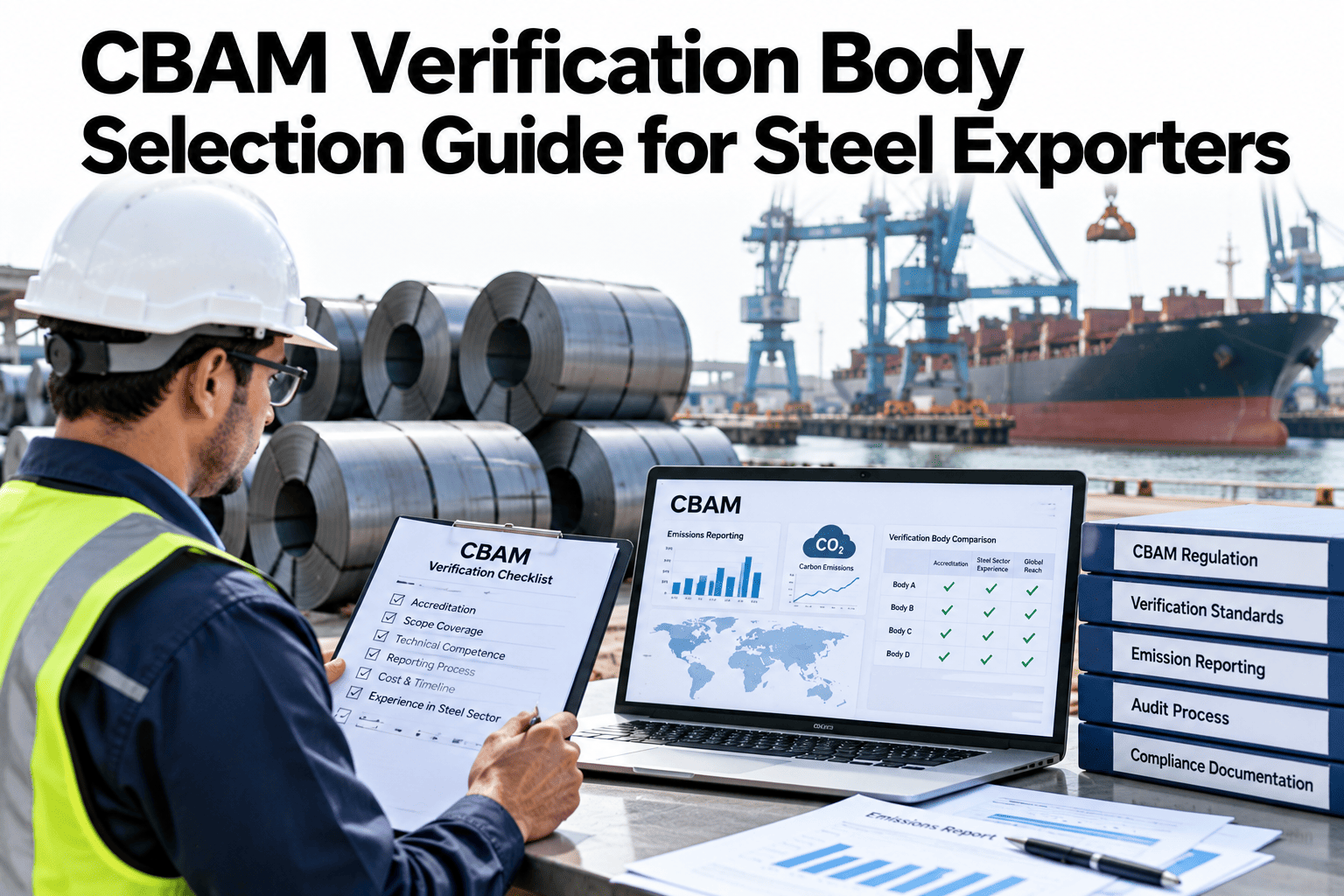
Under CBAM, emissions figures built from actual plant data must be checked by an accredited verifier before they can be used in place of default values. Choosing the wrong verifier can cost time, money and credibility, because a verifier who lacks
Read More
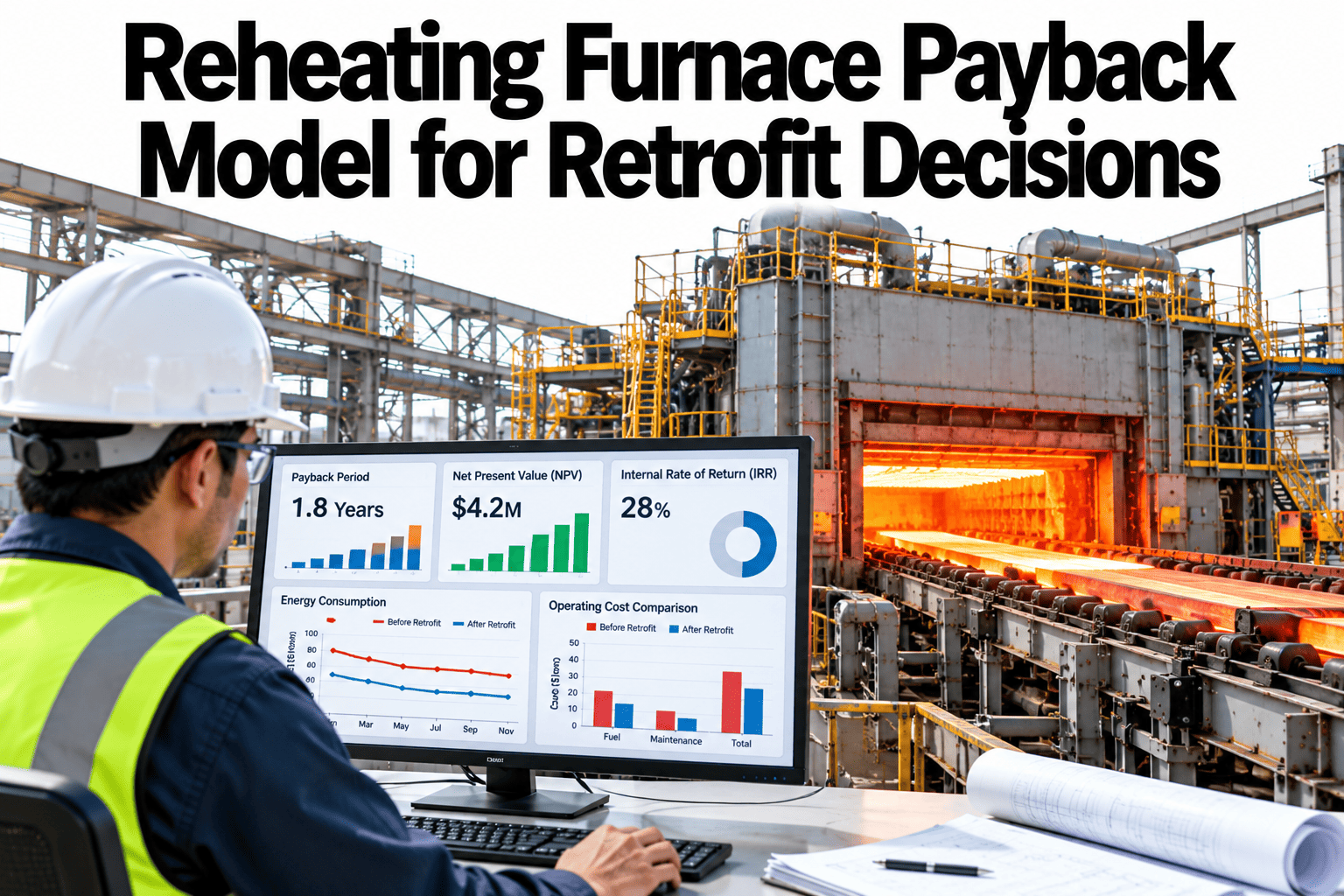
A reheating furnace retrofit can mean new burners, better insulation or a control upgrade, and each option competes for the same capital budget. A payback model puts them on equal terms by comparing investment, annual savings and the risks that co
Read More
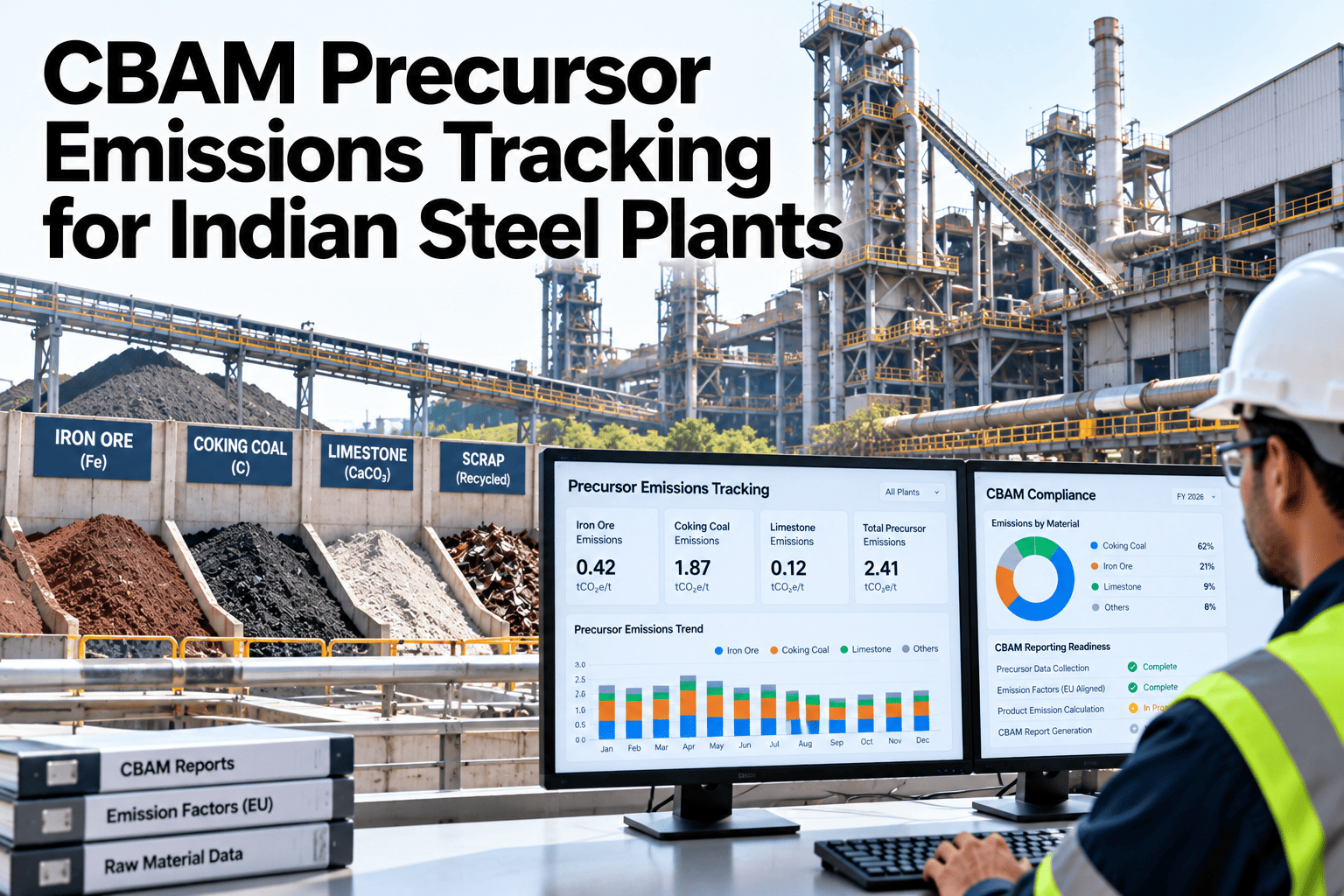
The EU carbon border mechanism, known as CBAM, counts the emissions embedded in imported steel, and that includes emissions from the materials and intermediate products used to make it. For Indian steel plants, this means tracing carbon through si
Read More
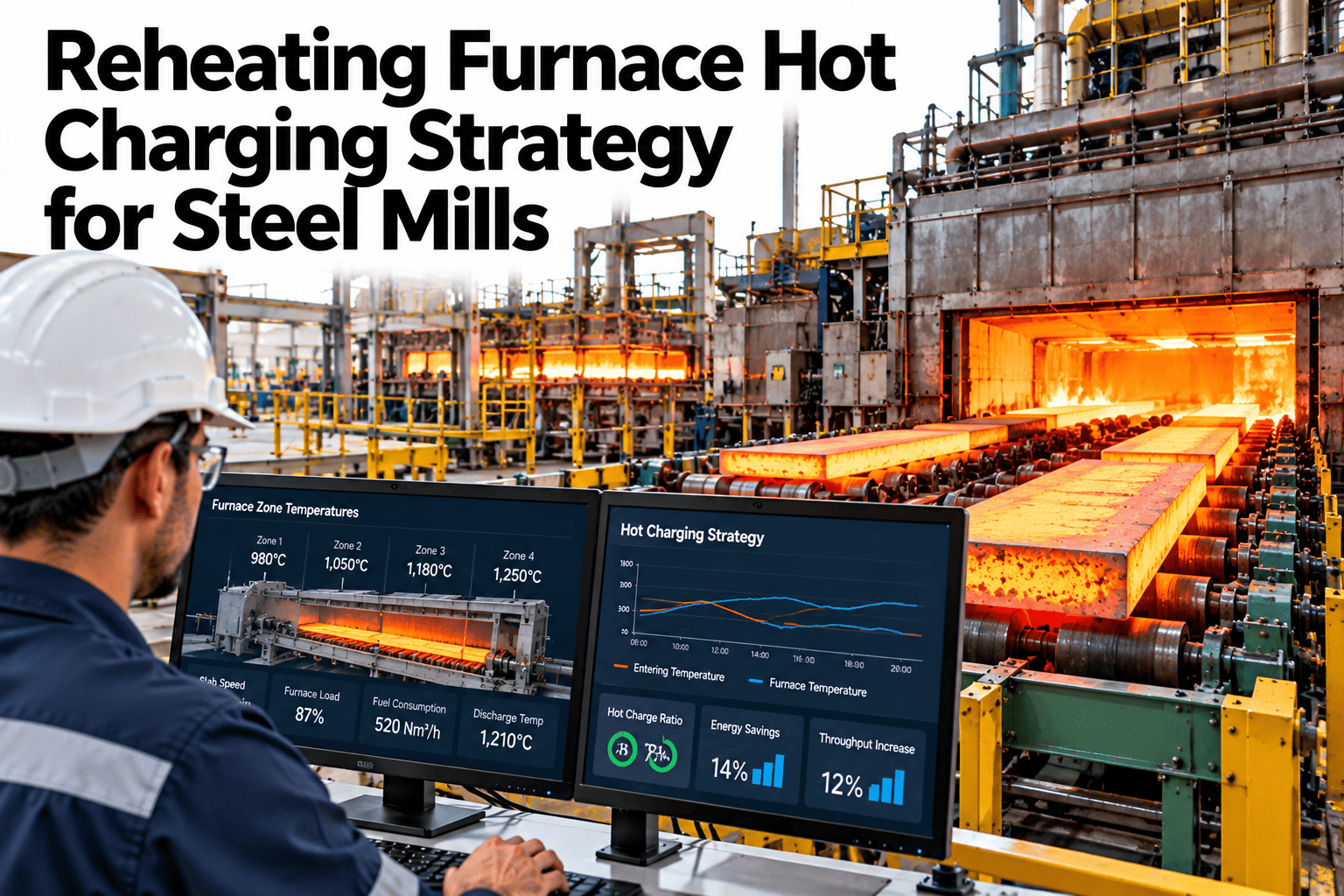
Slabs leave the caster at around 1,200 to 1,250 degrees Celsius, yet in many mills they cool in a yard and are then reheated from cold. Hot charging puts those slabs into the reheating furnace while they still hold much of their heat, which cuts h
Read More
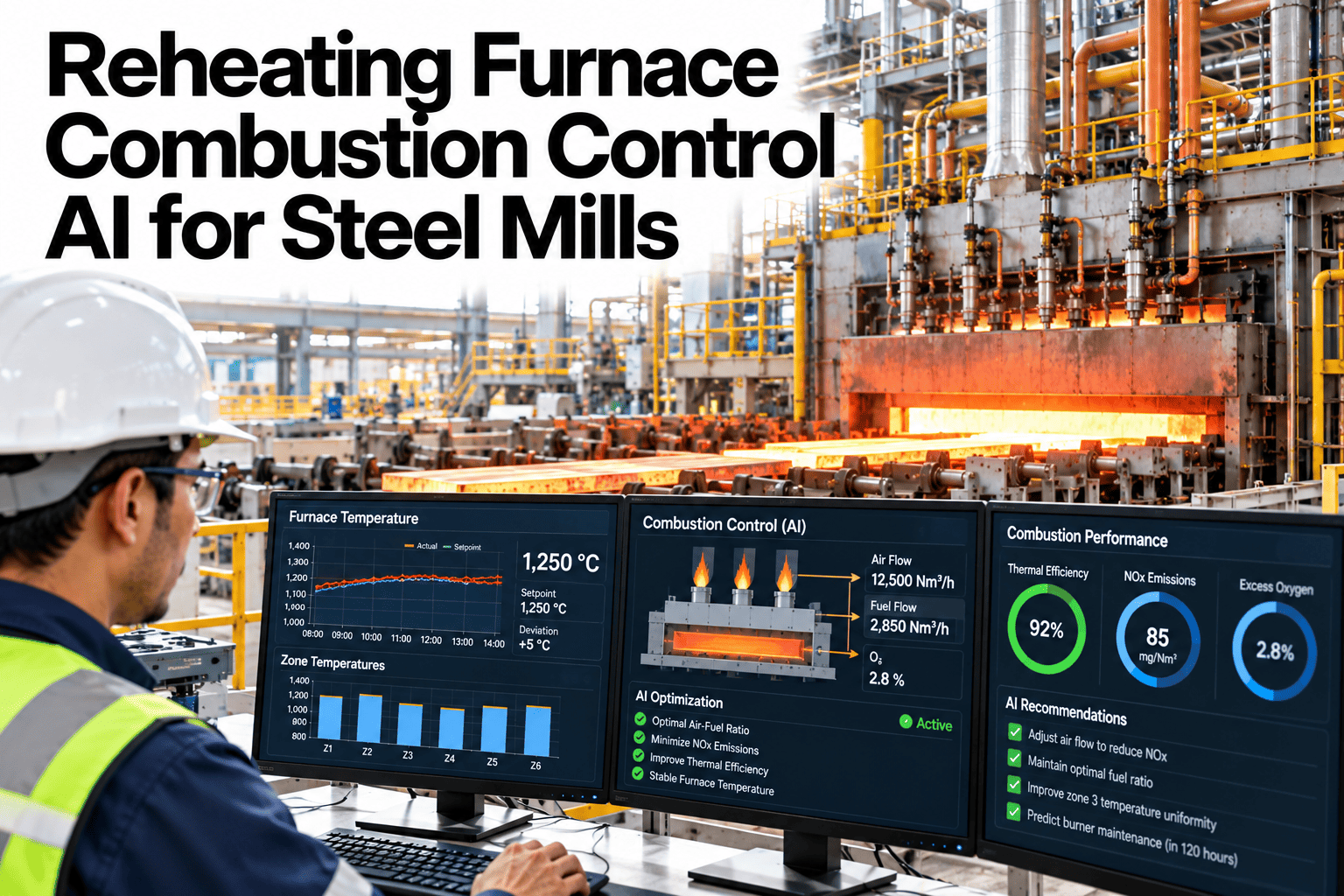
Most reheating furnaces already have zone temperature control, yet they still burn more fuel than they need when loads change, slabs wait or burners drift out of balance. Combustion control AI adds a smarter layer on top of the existing system, tr
Read More
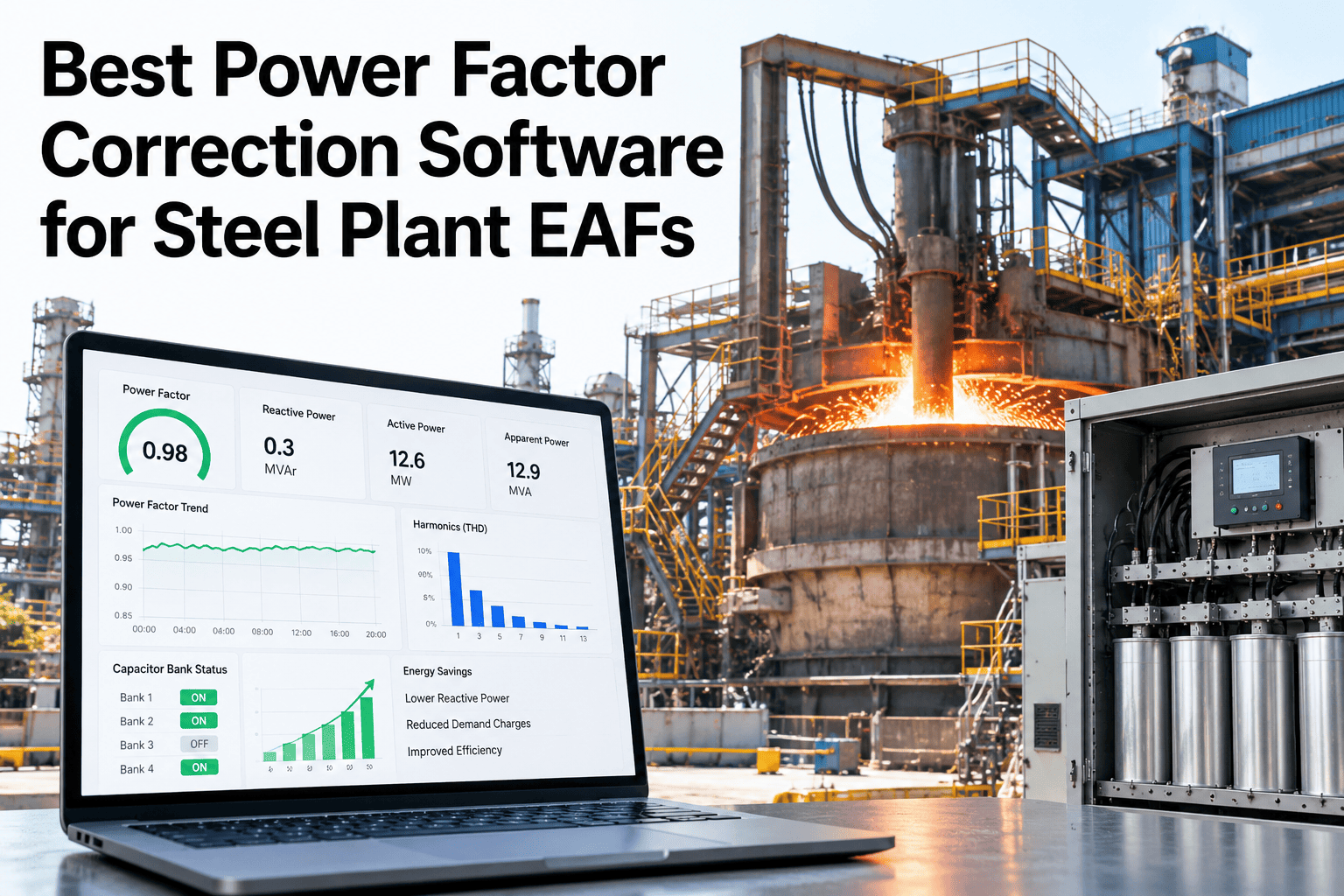
An arc furnace is a hard load for the grid to live with. Its reactive power swings as the arc stabilises and breaks, which drags power factor down, brings utility penalties and can disturb neighbouring customers with flicker. Compensation equipmen
Read More
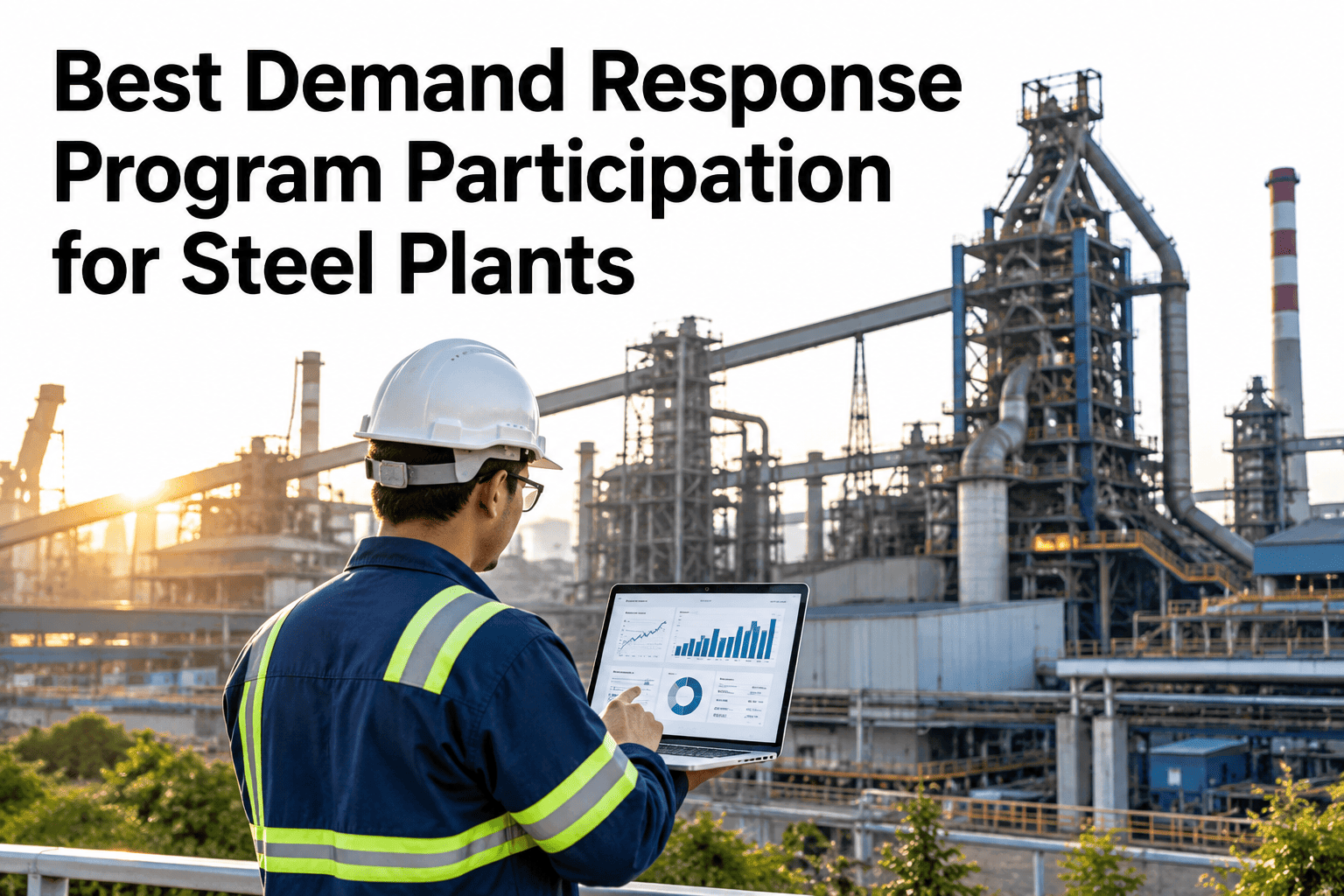
A demand response call can arrive with little warning, and a steel plant has to decide in minutes whether it can help. Say yes to the wrong event and a heat is damaged, say no to everything and the revenue goes to someone else. Participation works
Read More
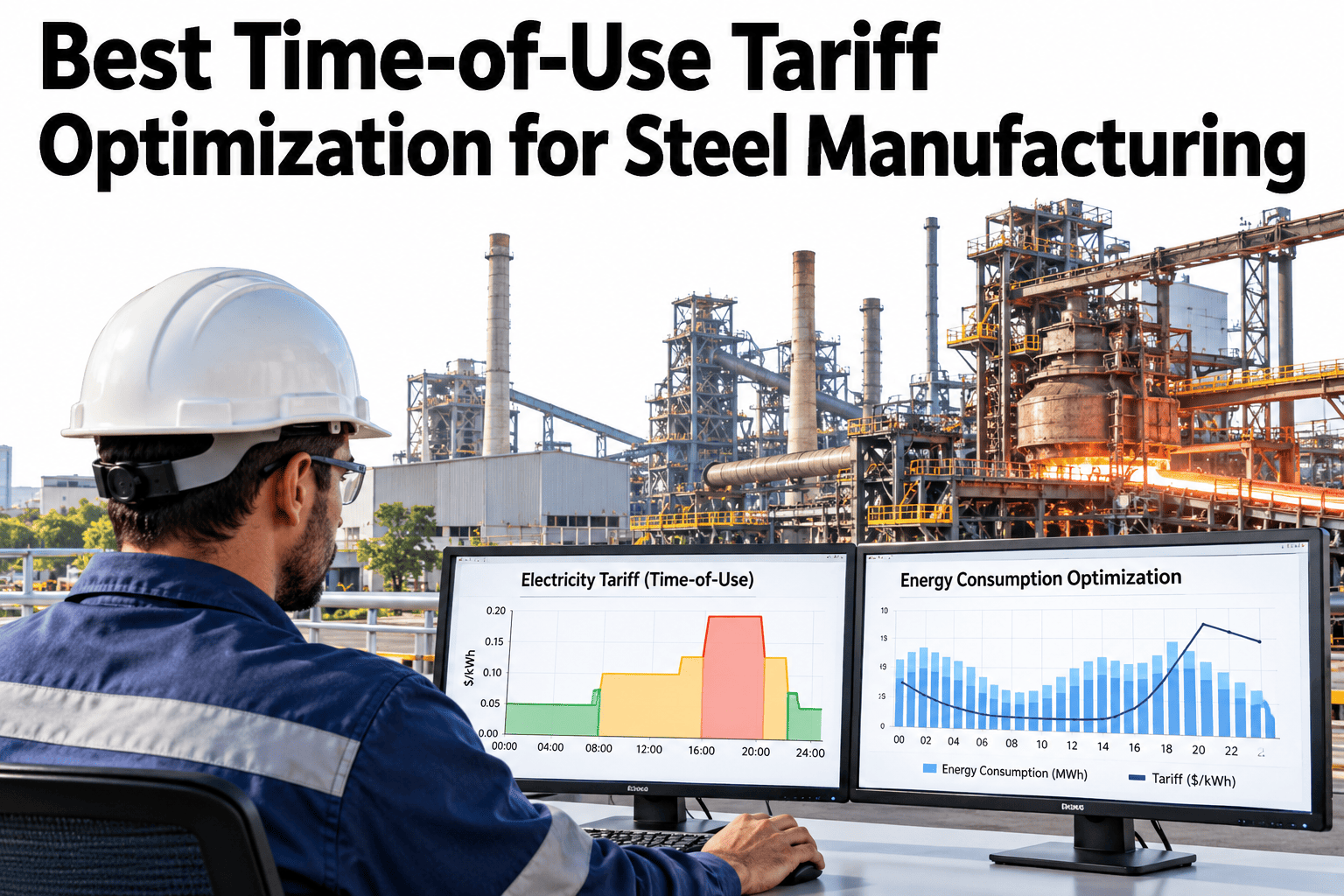
Electricity does not cost the same at every hour, and a steel plant that ignores the clock pays for it. Time-of-use tariffs set higher rates in peak periods and lower rates off-peak, so the same melt can cost noticeably more or less depending on w
Read More
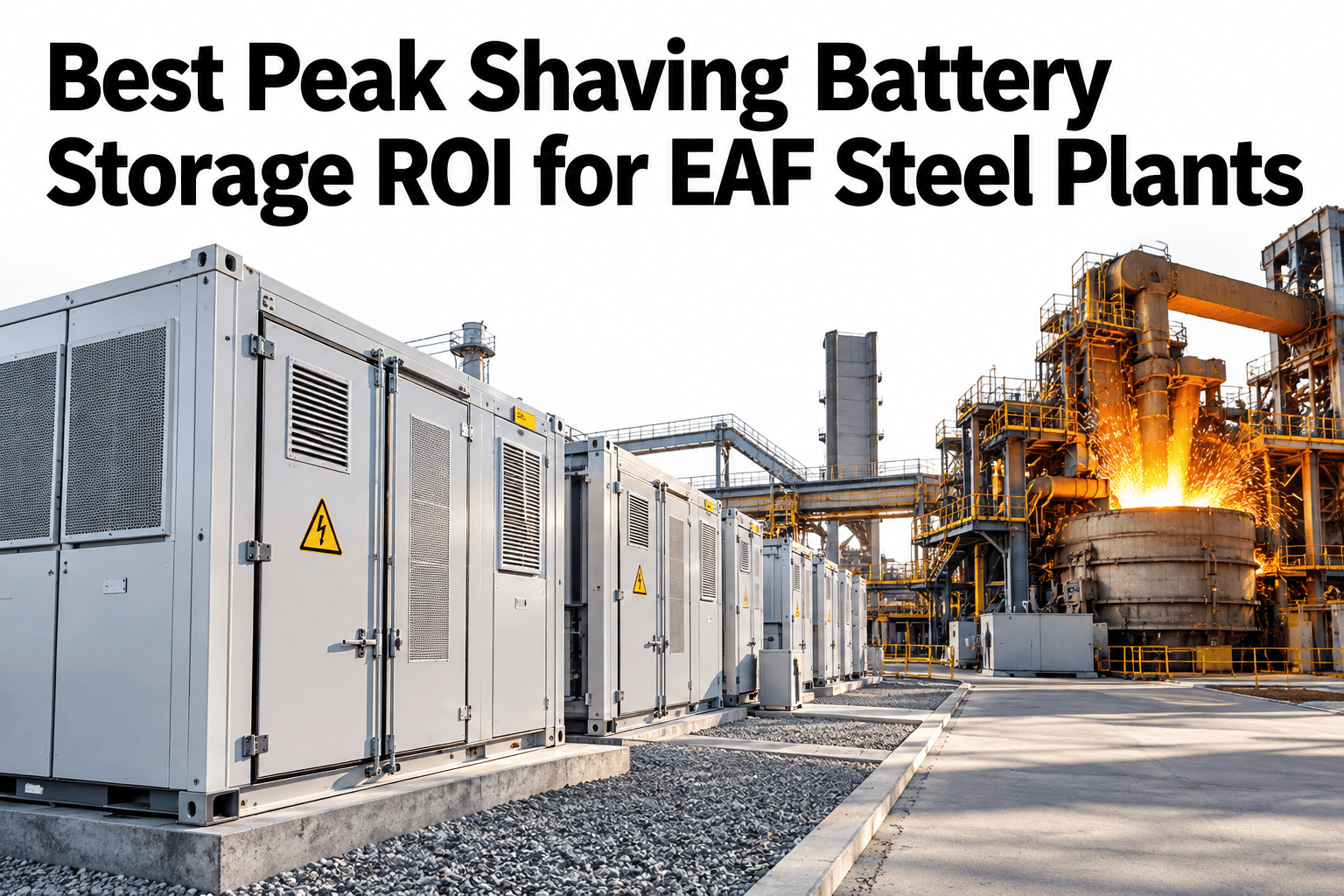
Batteries can shave an EAF peak, but only when they are sized to the real shape of the load. An arc furnace spikes for minutes, not hours, and that short duration is exactly where storage can be a good fit. Get the sizing wrong and the battery eit
Read More
Indian steel plants have an unusual asset, which is the ability to move electricity use in time. Melt shops, rolling mills and auxiliary systems can often shift or trim load for a few hours, and a growing set of tariffs and programs now pays or re
Read More
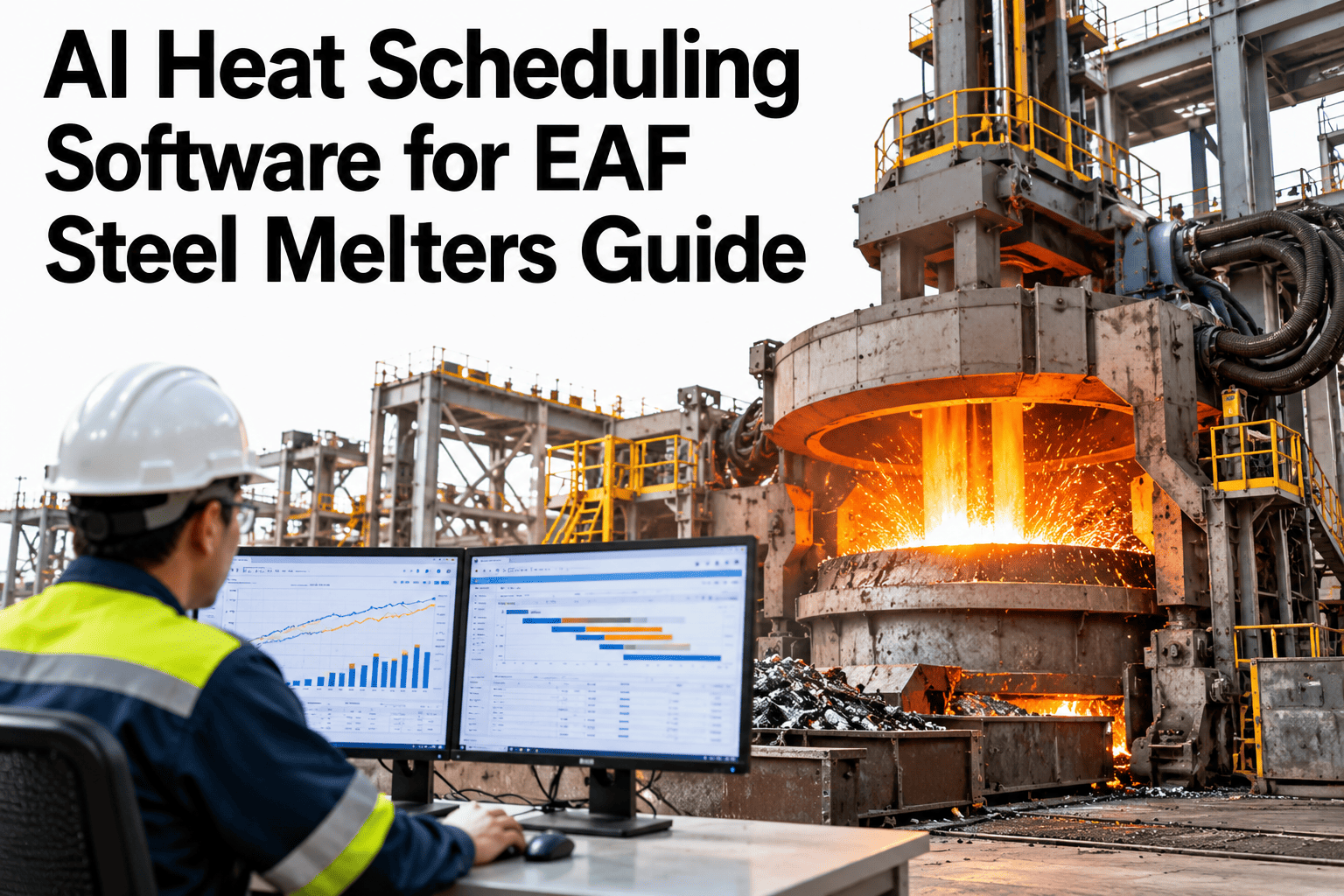
A heat schedule in an EAF melt shop is a puzzle with many pieces. Furnace slots, ladle availability, the ladle furnace, the caster sequence, scrap readiness and maintenance windows all have to line up, and the plan changes whenever one of them sli
Read More
For an electric arc furnace, the most expensive minutes of the month are often a handful of short peaks. Utilities usually set the demand charge from the highest average load recorded in a single interval, so one badly timed melt can raise the bil
Read More
Scope 1 sounds like the simplest of the three emission scopes since it only covers what happens inside the plant's own boundary, yet integrated steel plants routinely undercount it by missing one of three distinct source categories. Process emissi
Read More
A board asking whether the plant's carbon intensity is competitive deserves a comparison against actual industry data, not a vague sense of where the plant probably stands. Carbon intensity in tCO2 per tonne of steel varies enormously by productio
Read More
A GHG inventory that passes an internal review can still fail a regulatory audit, and the gap between the two usually comes down to three design choices made before a single emission factor is applied. Boundary definition decides which facilities,
Read More
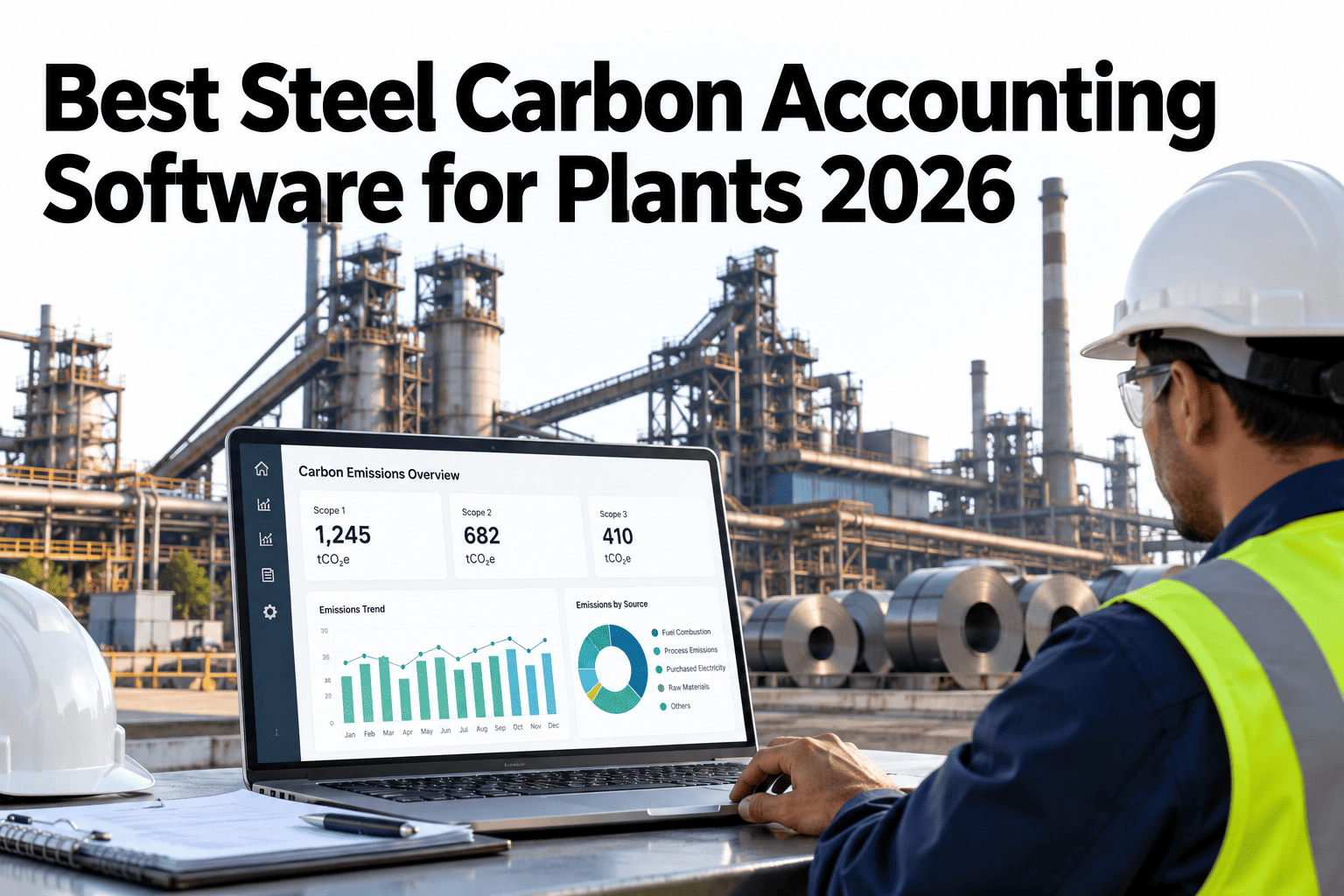
Carbon accounting for a steel plant stopped being a side project the moment CBAM, investor disclosure requests and OEM supply chain questionnaires all started asking for the same numbers in slightly different formats. A spreadsheet that tracks Sco
Read More
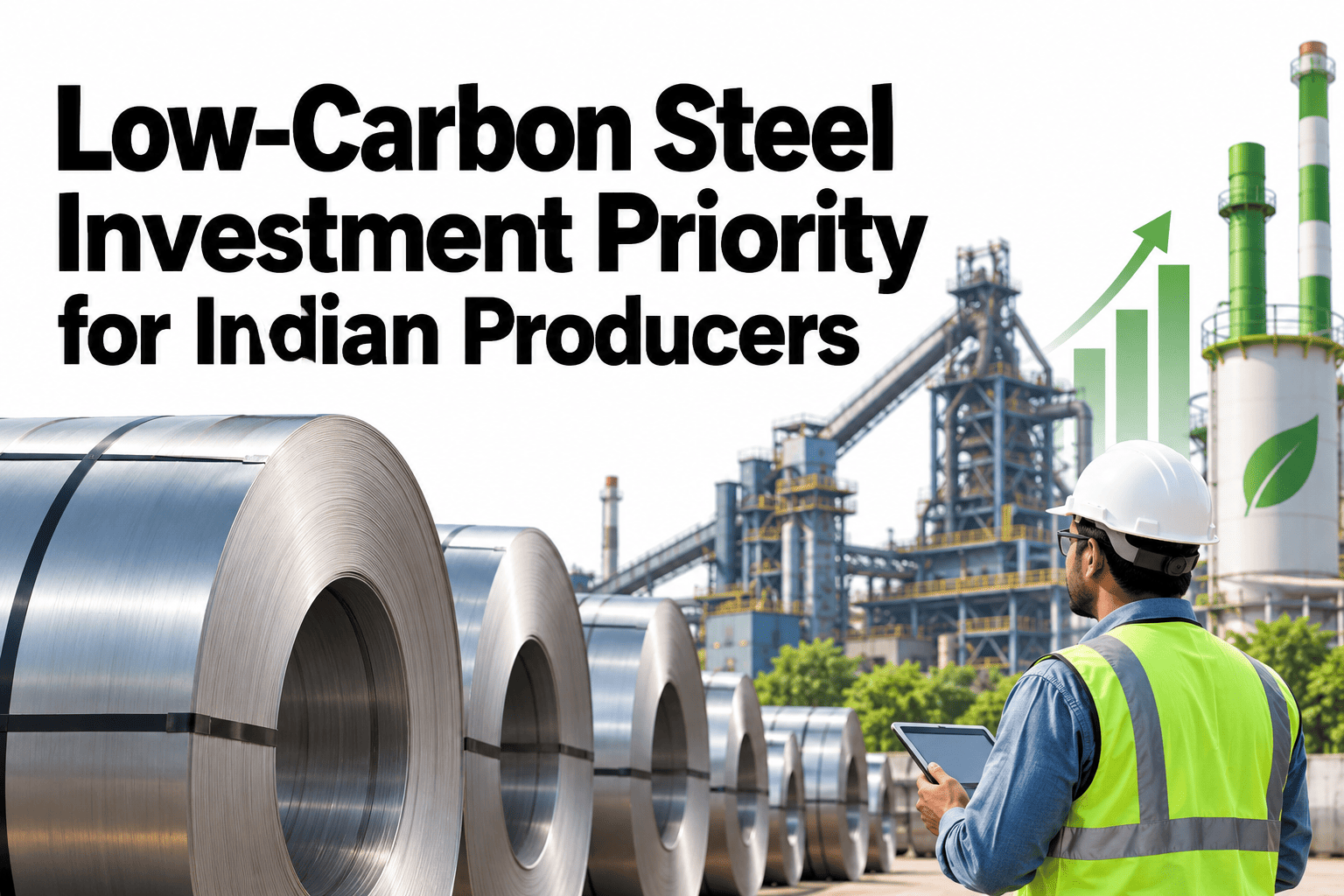
Every Indian steel producer facing CBAM eventually reaches the same question: which low-carbon technology path actually makes sense for this plant, and in what order. Hydrogen DRI, EAF conversion and carbon capture each cut embedded carbon differe
Read More
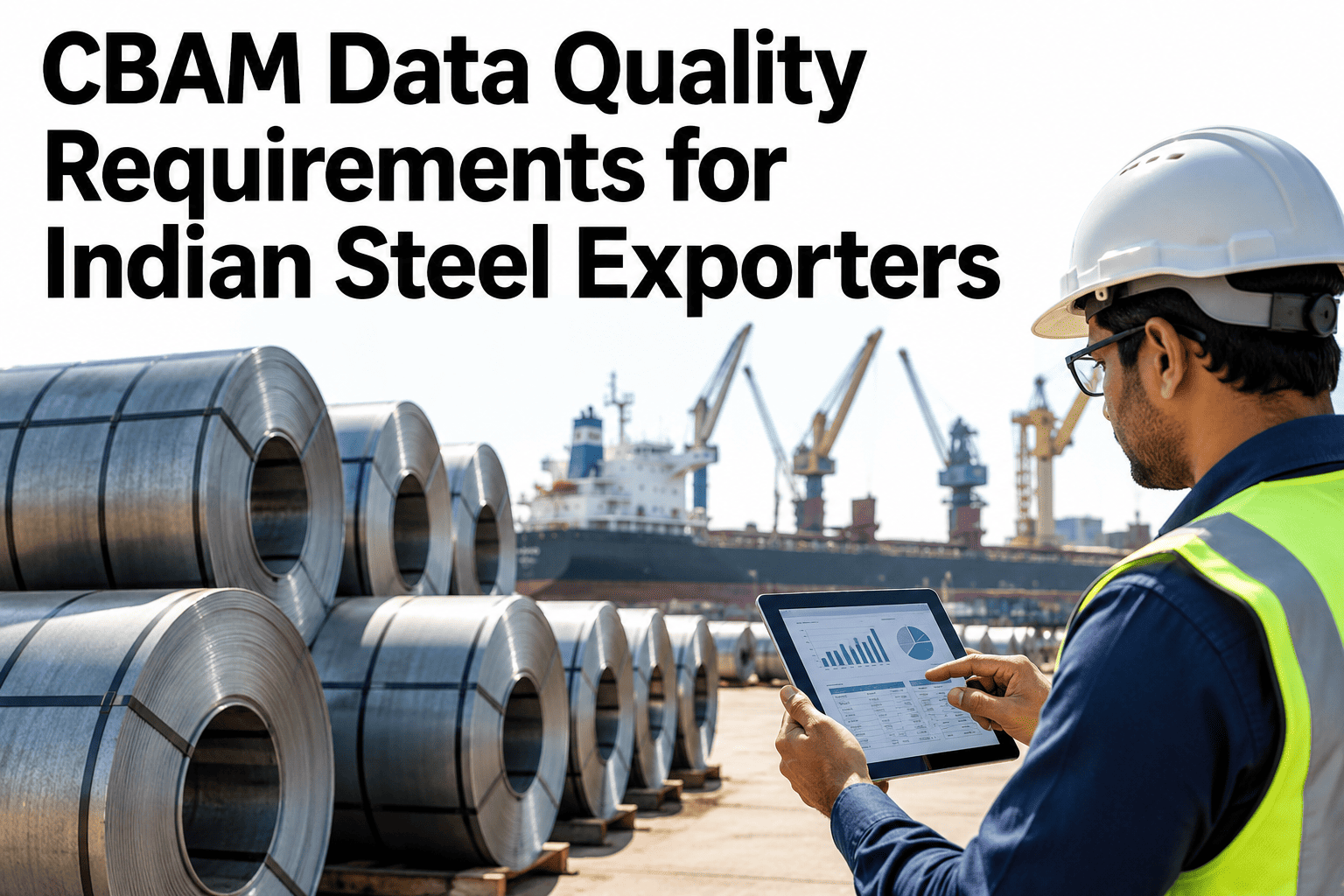
An embedded emissions number only matters if it survives a verifier's questions, and most of the rejected or corrected CBAM declarations from Indian exporters trace back to the same root cause: the underlying data could not be traced back to a spe
Read More
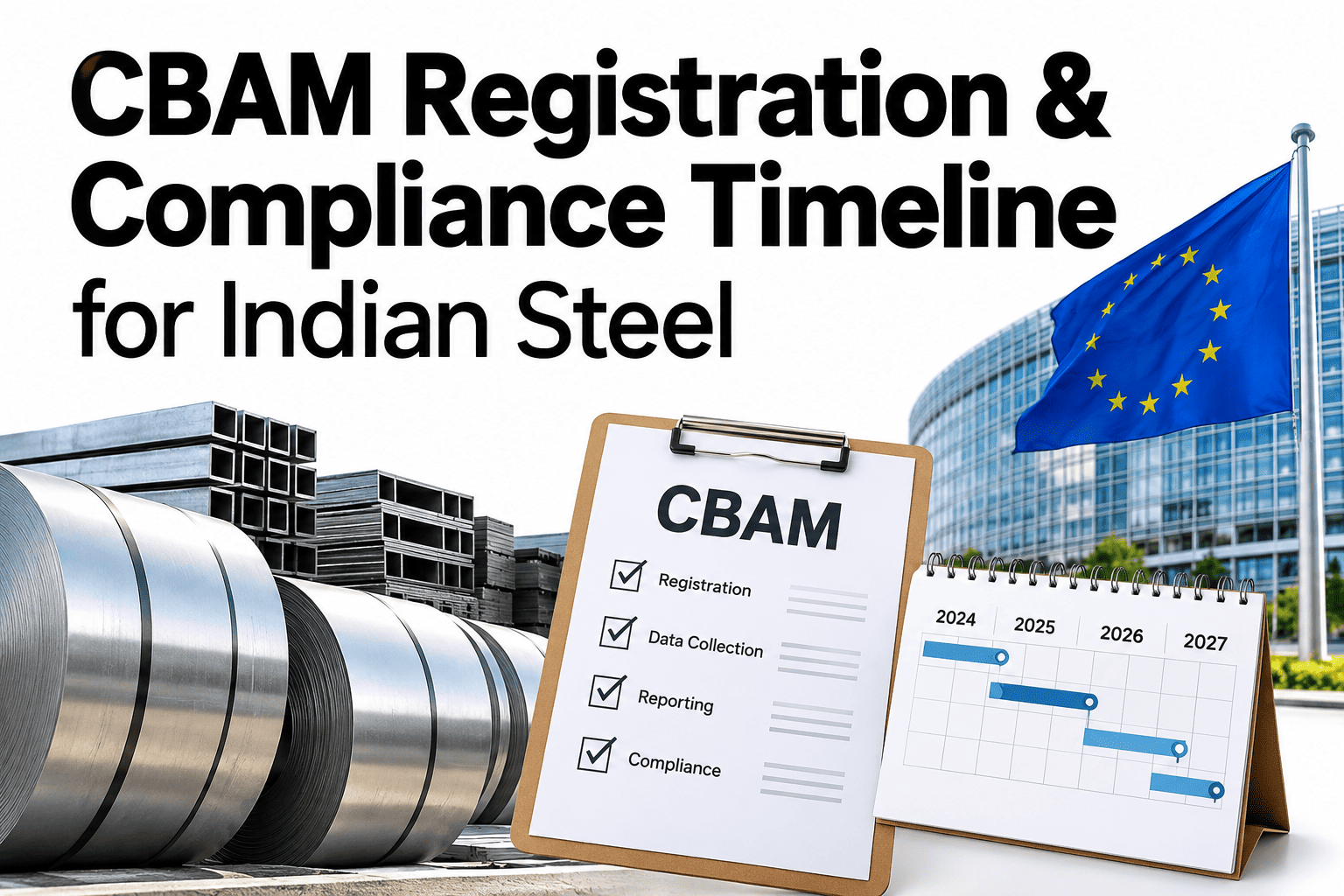
Indian steel exporters who treated CBAM as a reporting exercise during the transitional period are now facing a different set of obligations as the definitive period takes hold. Declarant registration, authorized declarant status, and the verifica
Read More
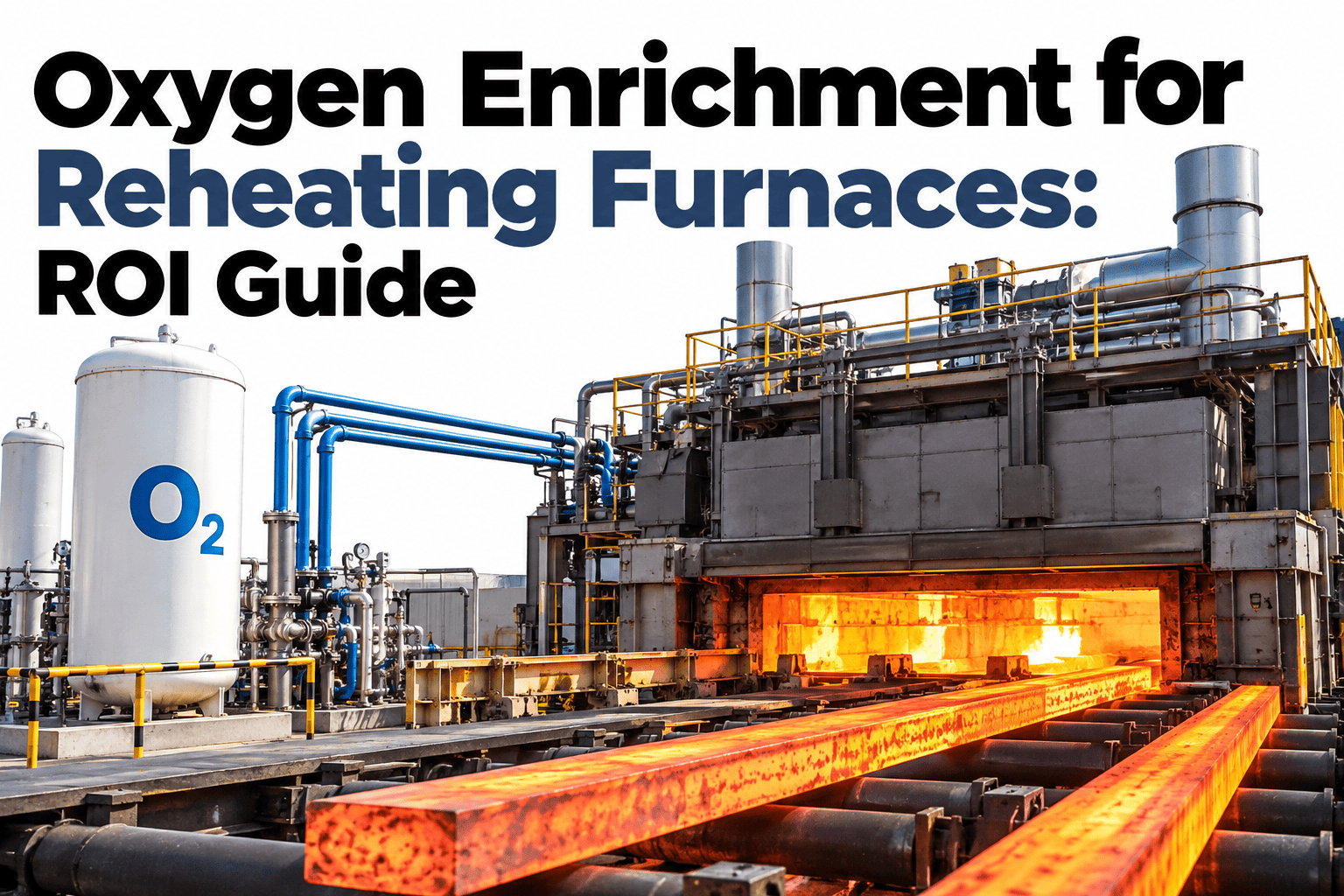
Most of the air that feeds a reheating furnace is nitrogen, which does nothing for combustion but still has to be heated and then thrown away up the stack. Oxygen enrichment swaps part of that nitrogen for oxygen, so the flame runs hotter, the flu
Read More
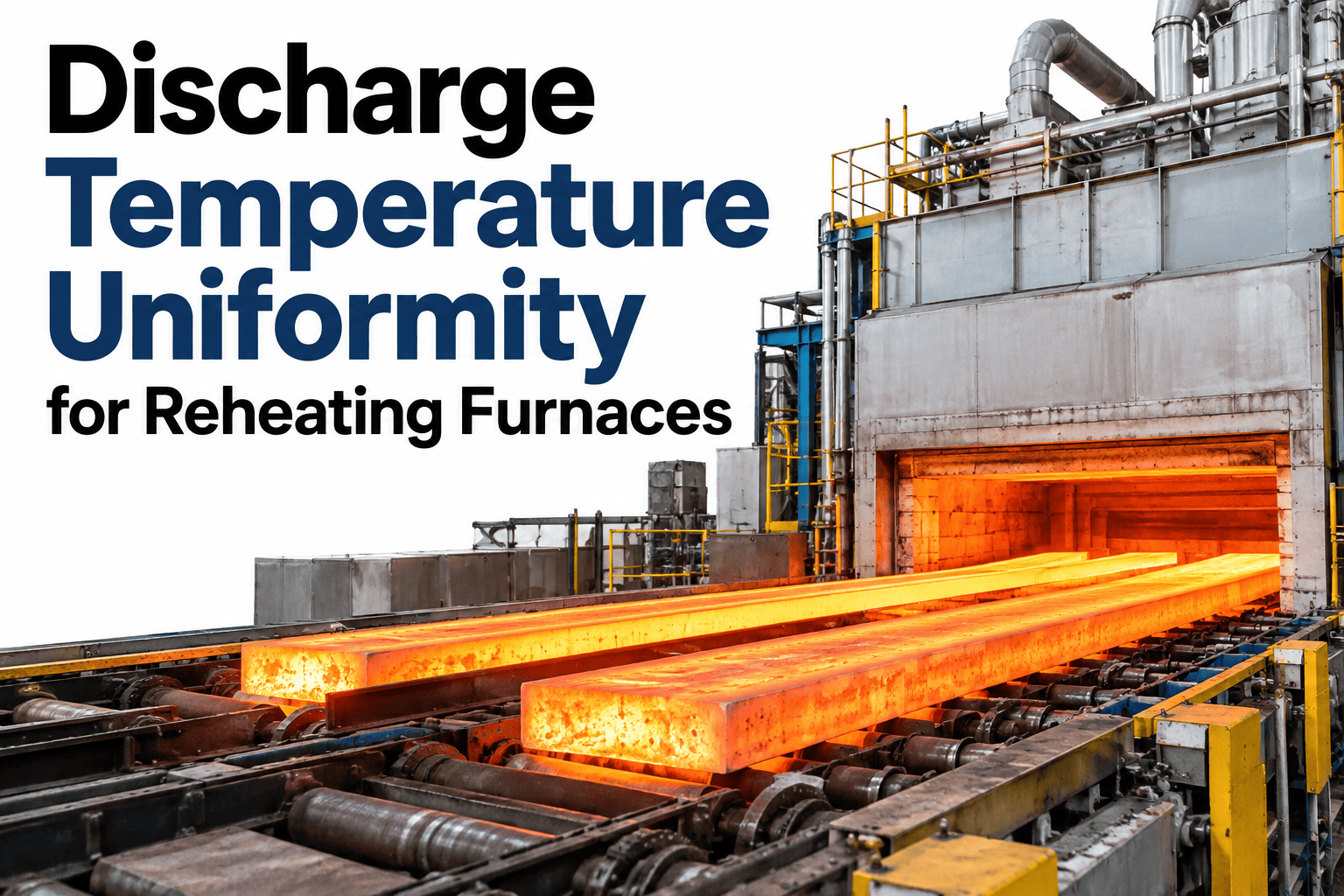
A slab can leave the furnace with the right average temperature and still roll badly. The surface may be hot while the core lags, the tail may be cooler than the head, or the edges may sit below the centre. The mill then sees varying rolling force
Read More
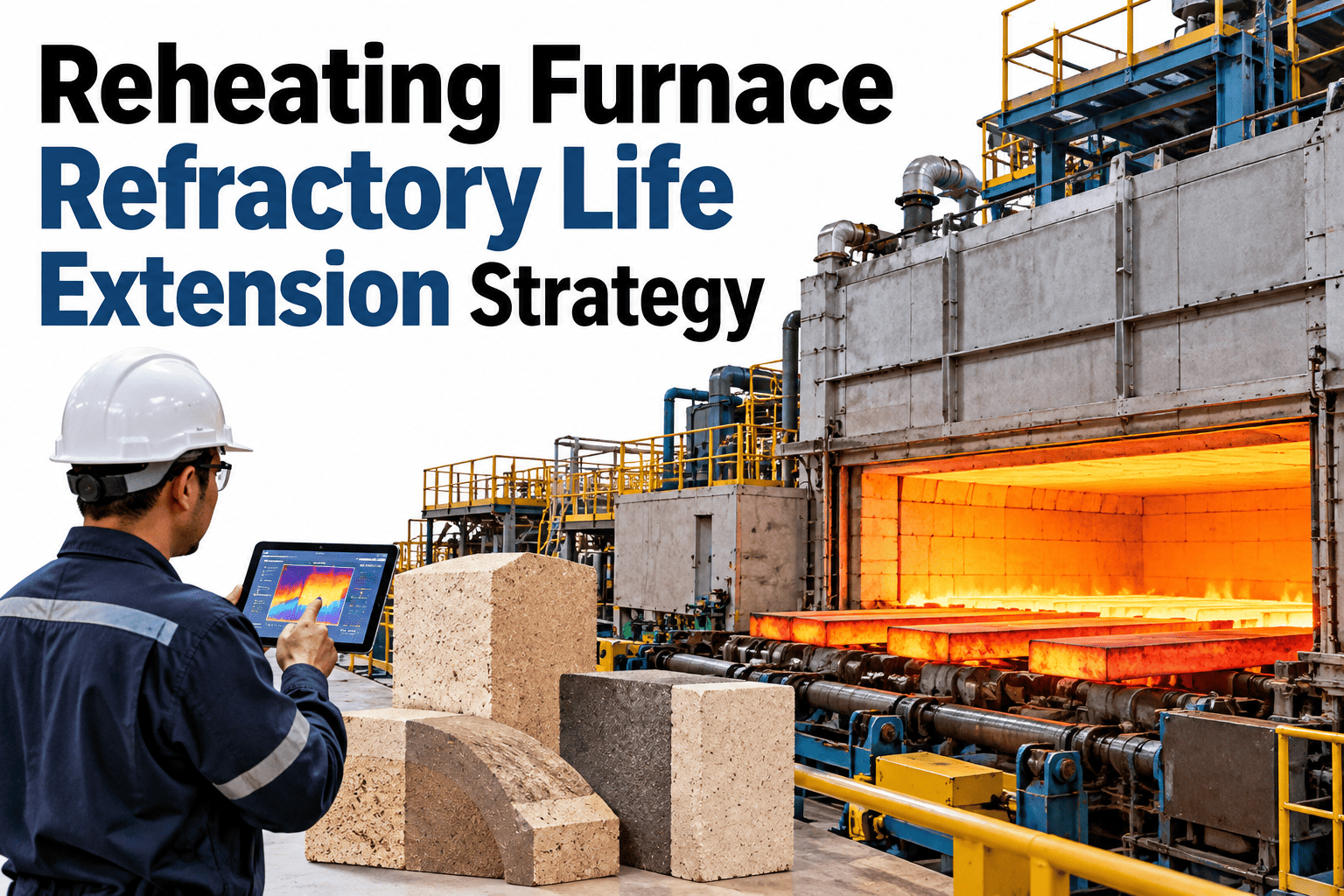
Refractory is the part of a reheating furnace that nobody notices until it fails. A hot spot on the roof, a spalled burner block or a damaged hearth can force a stop long before the planned reline, and every extra year of life defers a large outag

Read More
A reheating furnace sends a large share of its fuel energy straight up the stack as hot flue gas. Combustion air preheating pulls part of that heat back by warming the air before it reaches the burners, so less fuel is needed to hold the same furn
Read More
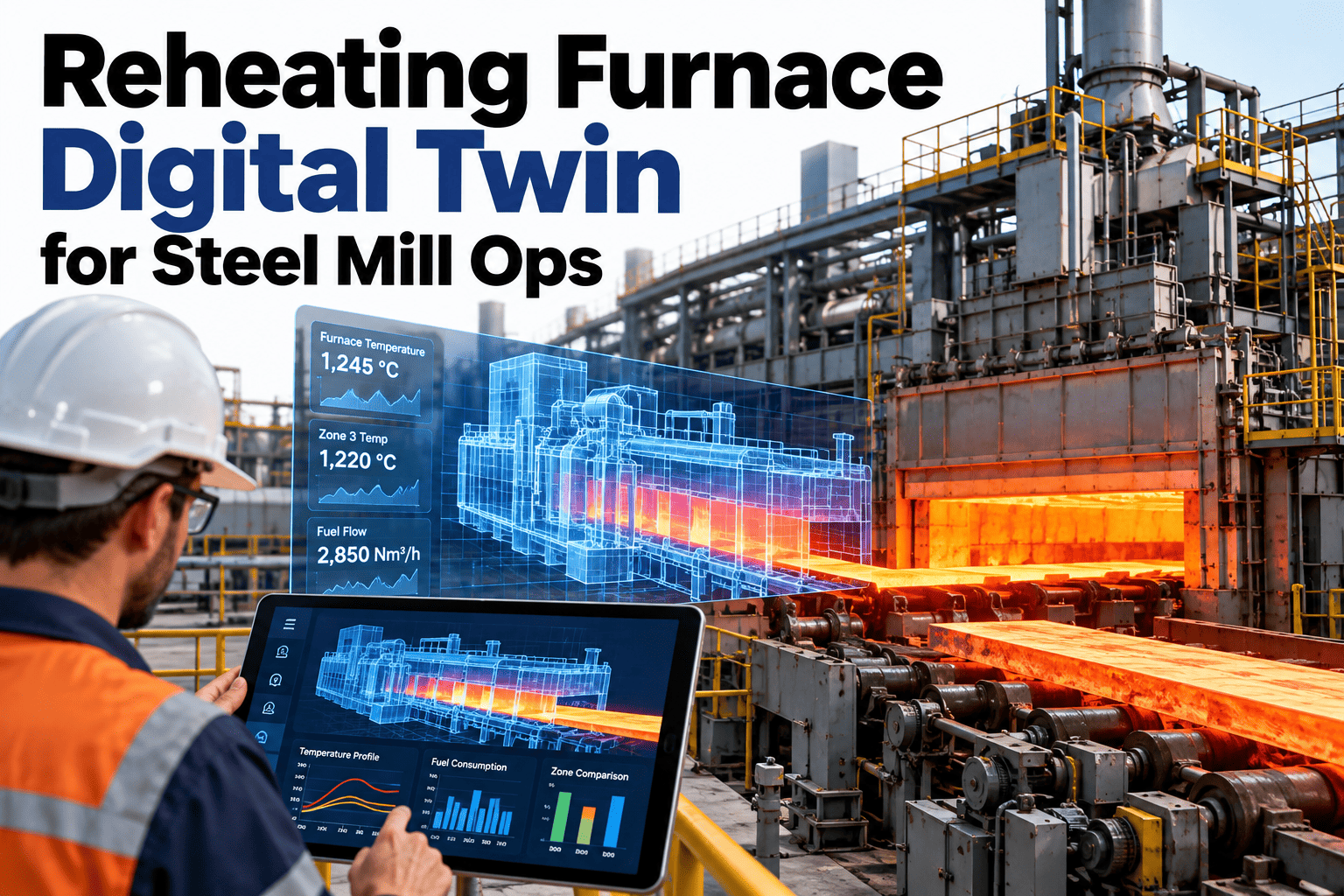
Changing a reheating furnace profile has always been a nervous exercise. Lower a zone temperature to save fuel and you risk cold slab cores. Speed the pusher and you risk uneven heating. Most mills test these ideas on live production and hope. A d
Read More
The most expensive hour in a rolling mill is often the one in which nothing is rolled. Drives stay magnetised, pumps keep circulating, fans keep running and the furnace keeps holding temperature, so the mill draws power while producing no steel. B
Read More
Changing a rolling schedule to save energy is a gamble when the only test bed is the live mill. A speed change can cool the bar below its rolling window, a new campaign order can raise changeover time and a different product mix can push a drive t
Read More
A rolling mill manager is usually handed a kWh per tonne figure and asked why it moved. The honest answer is often that the mill was busier, quieter or running a different mix, and the crew did nothing different. Raw intensity mixes efficiency wit
Read More
Cooling water is the quiet energy user in a rolling mill. Descaling pumps, roll cooling, run-out cooling and tower fans run almost every hour the mill is on, and most of them were sized and set for the hardest product the mill will ever roll. On a
Read More
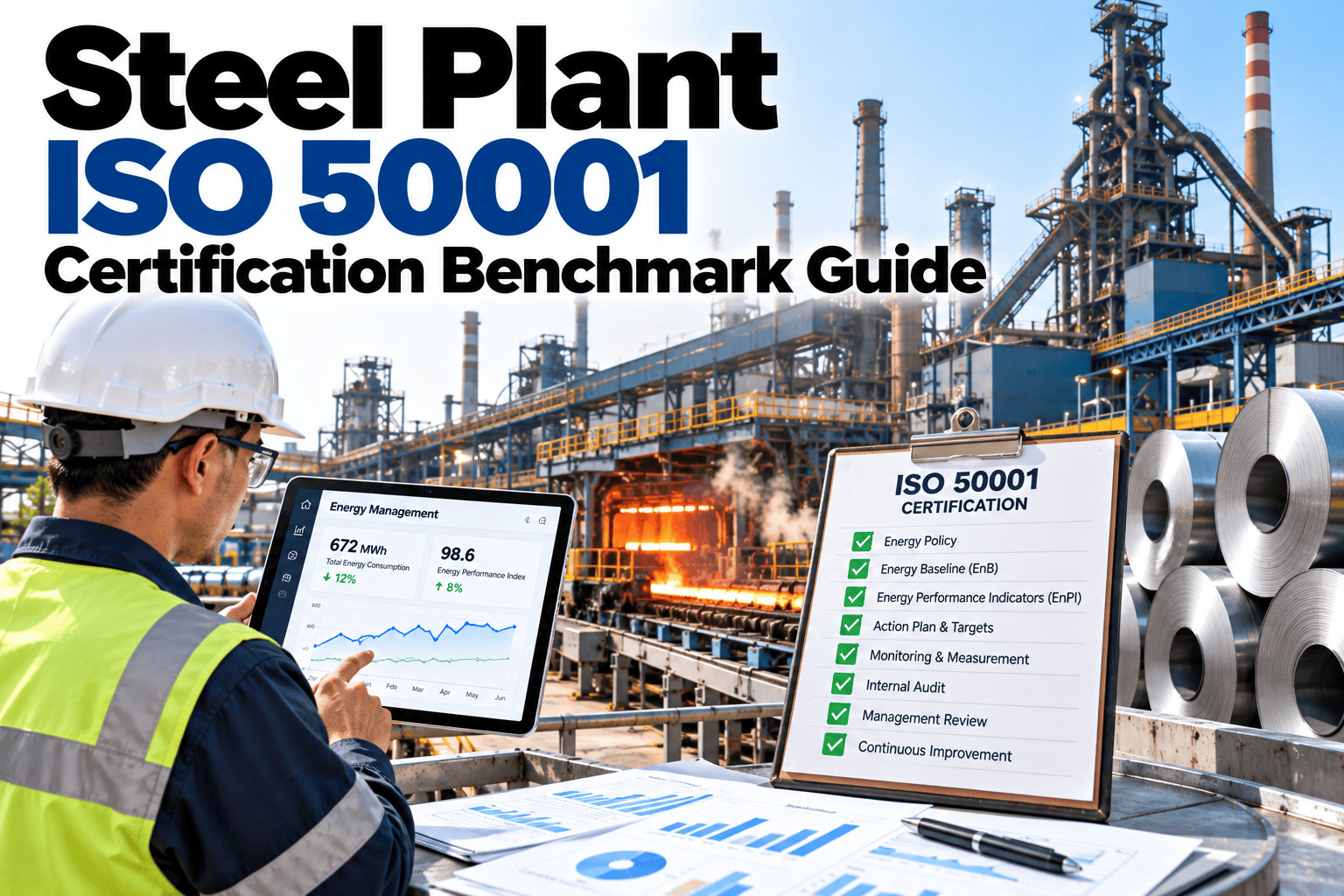
Energy certifications promise recognition, but they ask for very different amounts of work. ISO 50001 certifies a management system, Superior Energy Performance adds verified savings on top of it, and ENERGY STAR scores a plant against its peers.
Read More
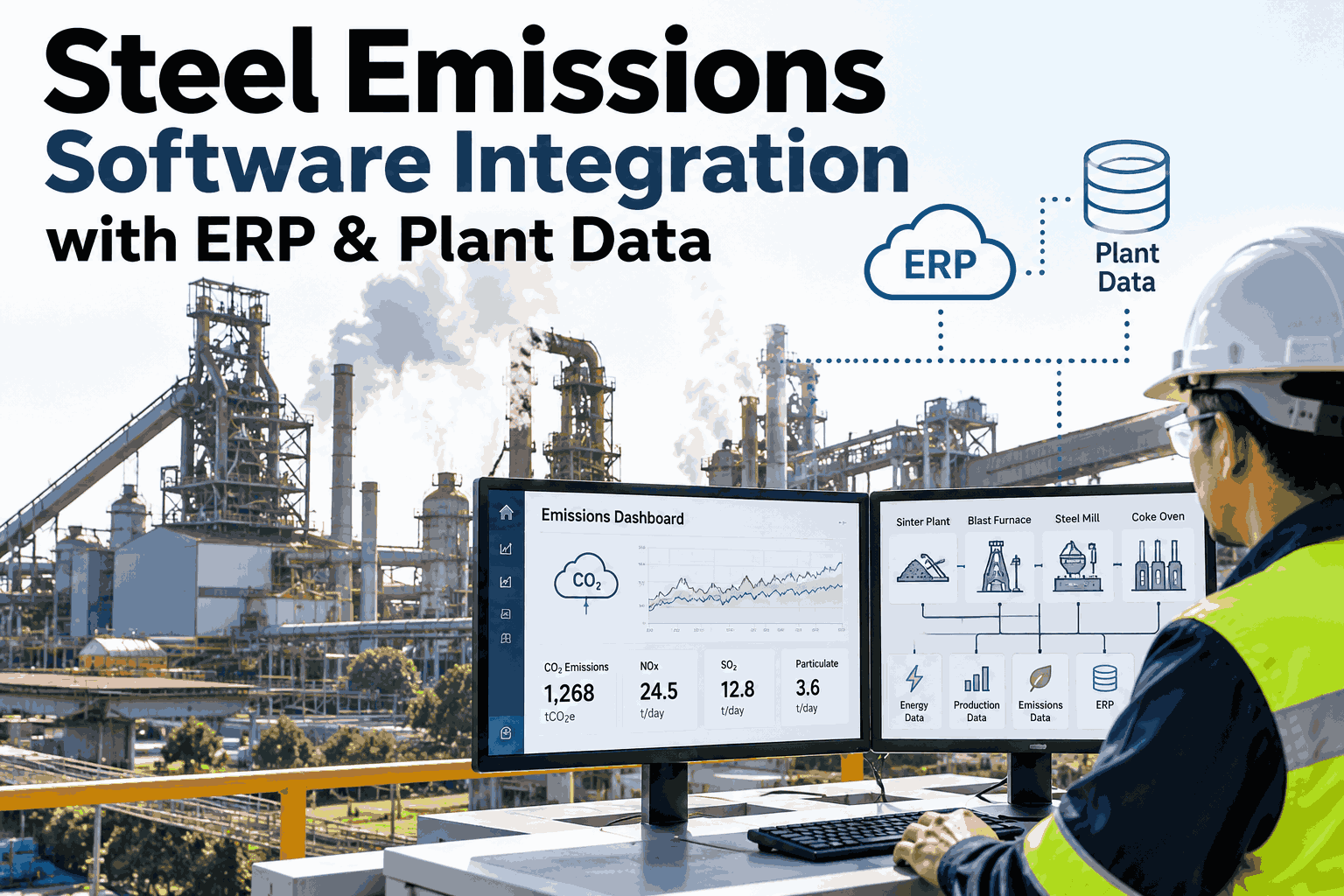
Every emissions figure a steel plant reports comes down to one line of arithmetic: activity data multiplied by an emission factor. The factor is a lookup anyone can maintain. The activity data is the hard part — fuel flows, tonnage, purchased powe

Read More
When a steel company announces a science-based target, it is making a public promise that investors, customers and regulators will test against its own numbers. That is why the decision belongs in the boardroom, and why it cannot be made well with
Read More
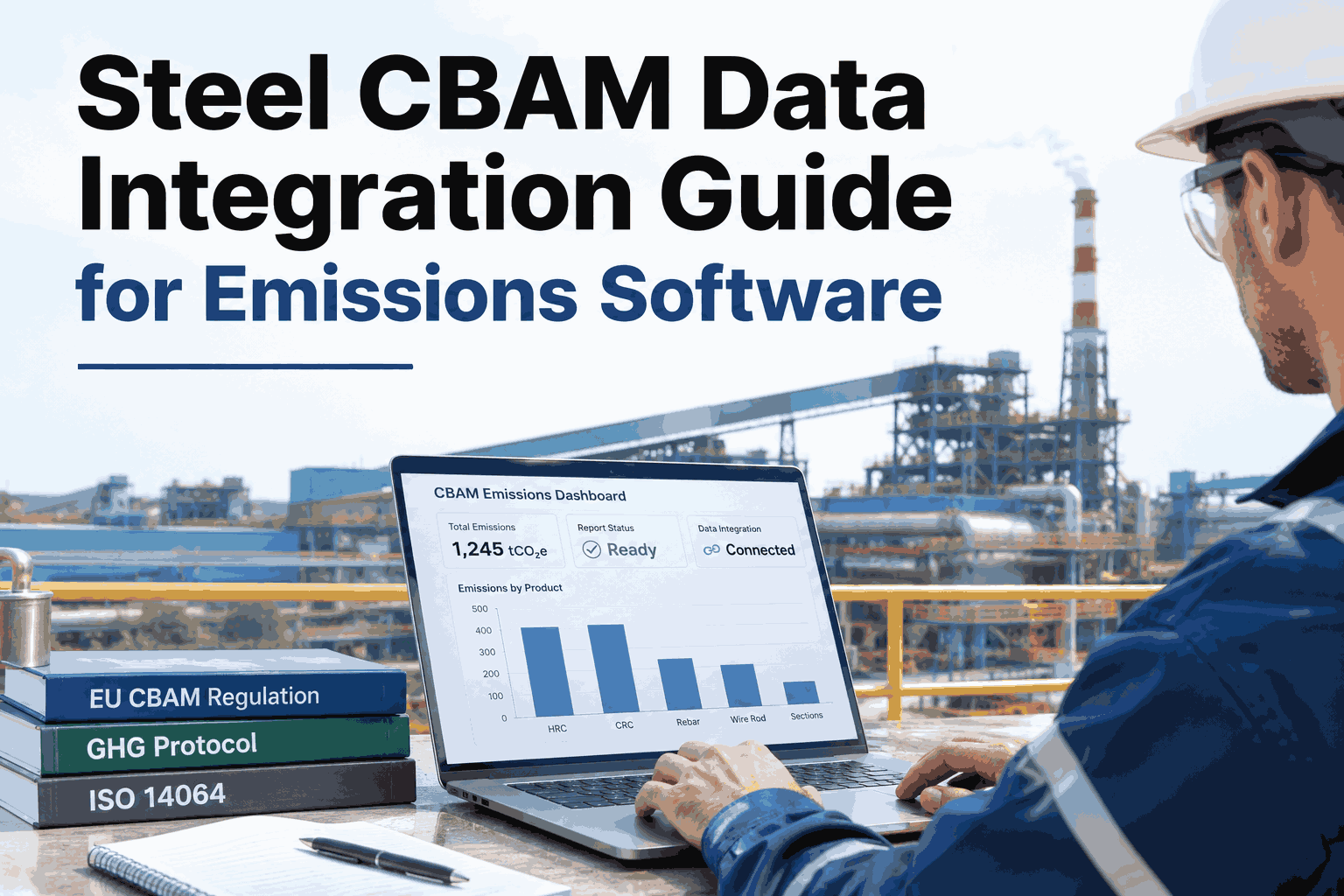
A steel plant already measures its carbon. Fuel burned, power drawn, scrap charged, heats tapped, tonnes shipped — the numbers exist, scattered across the control room, the energy meters, the lab and the finance system. The problem is not that the
Read More
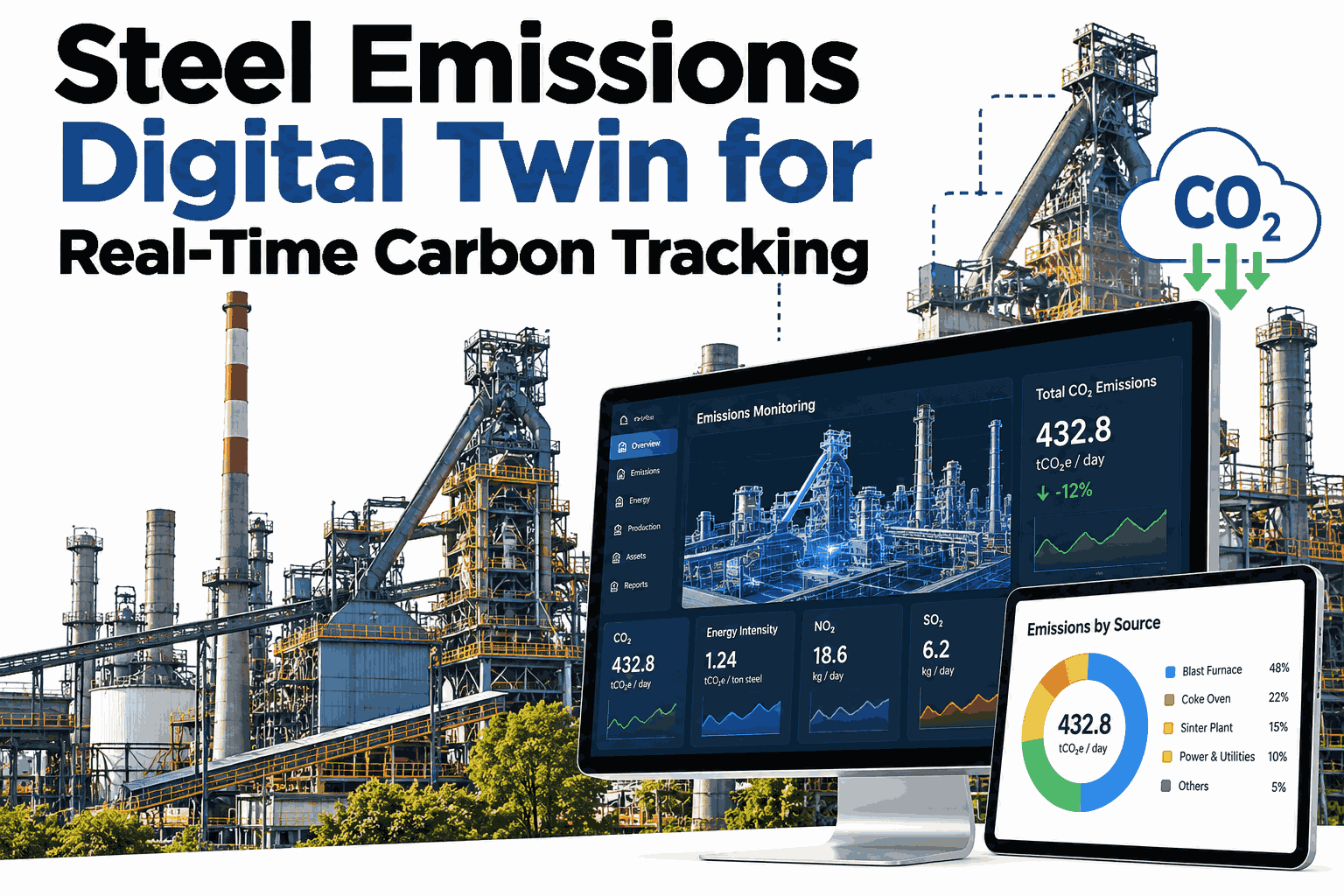
Most steel plants still calculate their carbon footprint the same way they calculate monthly production costs, by exporting numbers at the end of the month and reconciling them by hand. By the time a Scope 1 emissions figure reaches a sustainabili
Read More
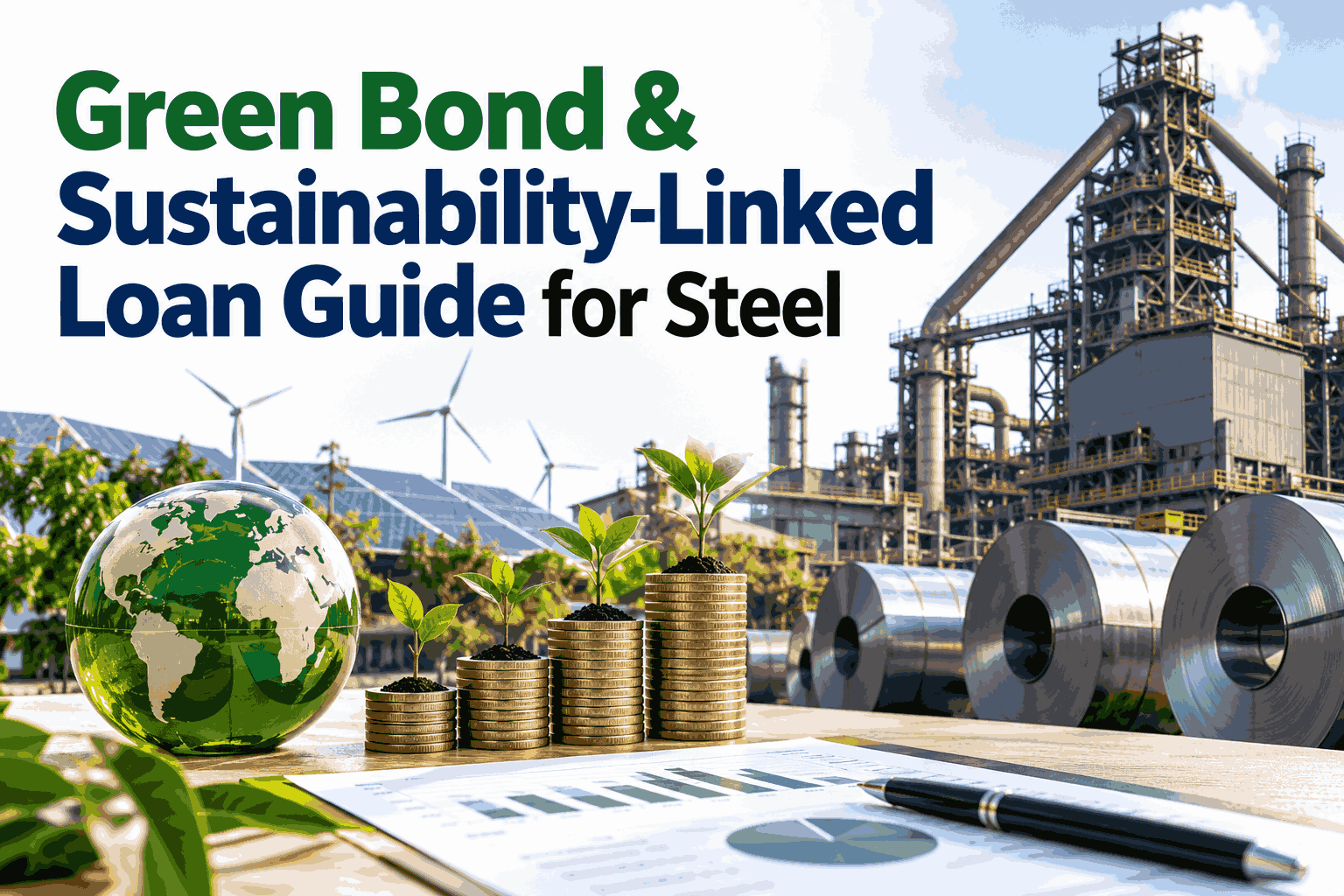
Steel producers raising capital for decarbonization are increasingly choosing between two instruments: green bonds, which tie proceeds to named low-carbon projects, and sustainability-linked loans, which tie the cost of all borrowing to whether th
Read More
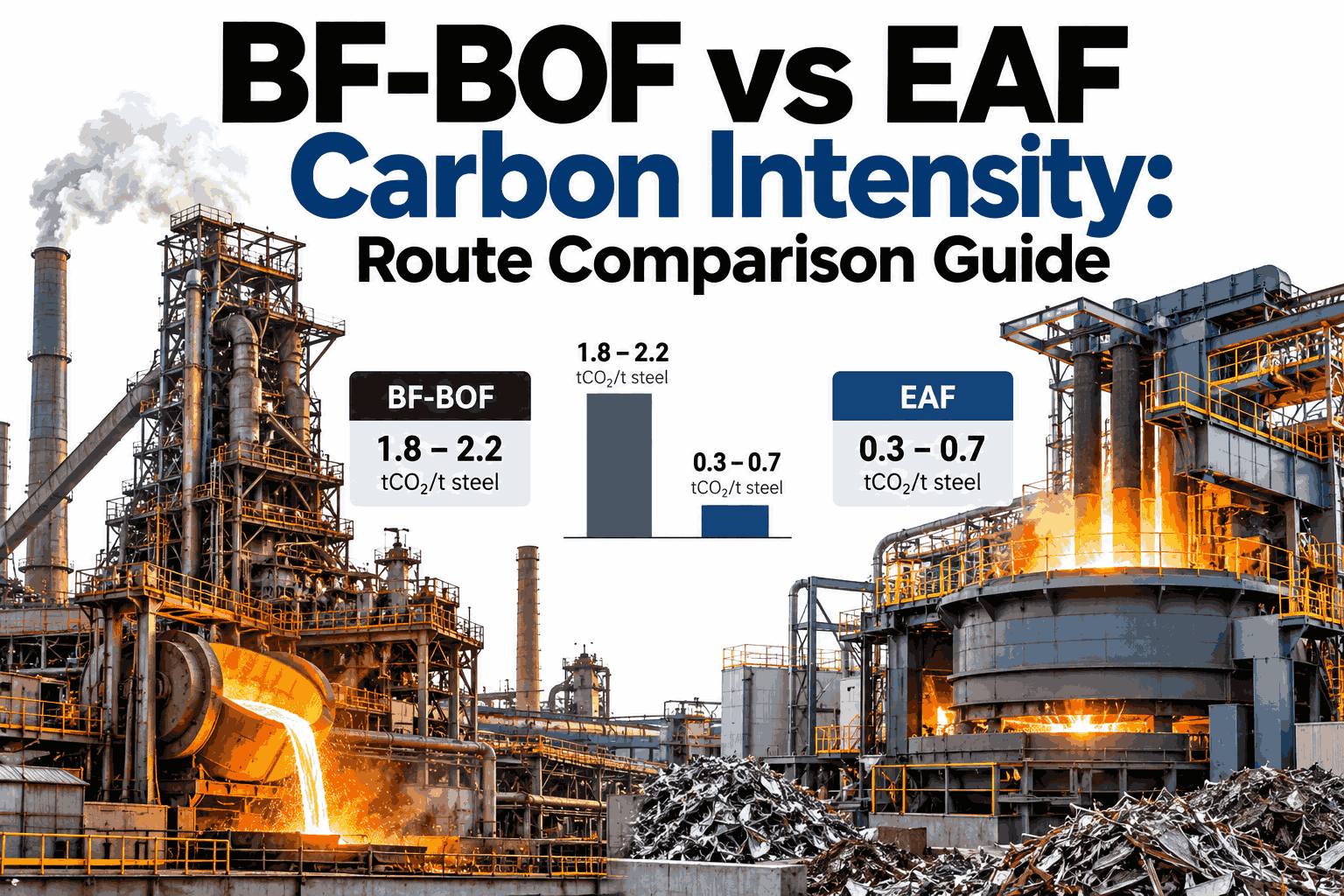
Steel producers choosing between a blast furnace-basic oxygen furnace (BF-BOF) route and an electric arc furnace (EAF) route are increasingly making a carbon decision as much as a cost decision. The two routes differ by multiples in tonnes of CO2
Read More
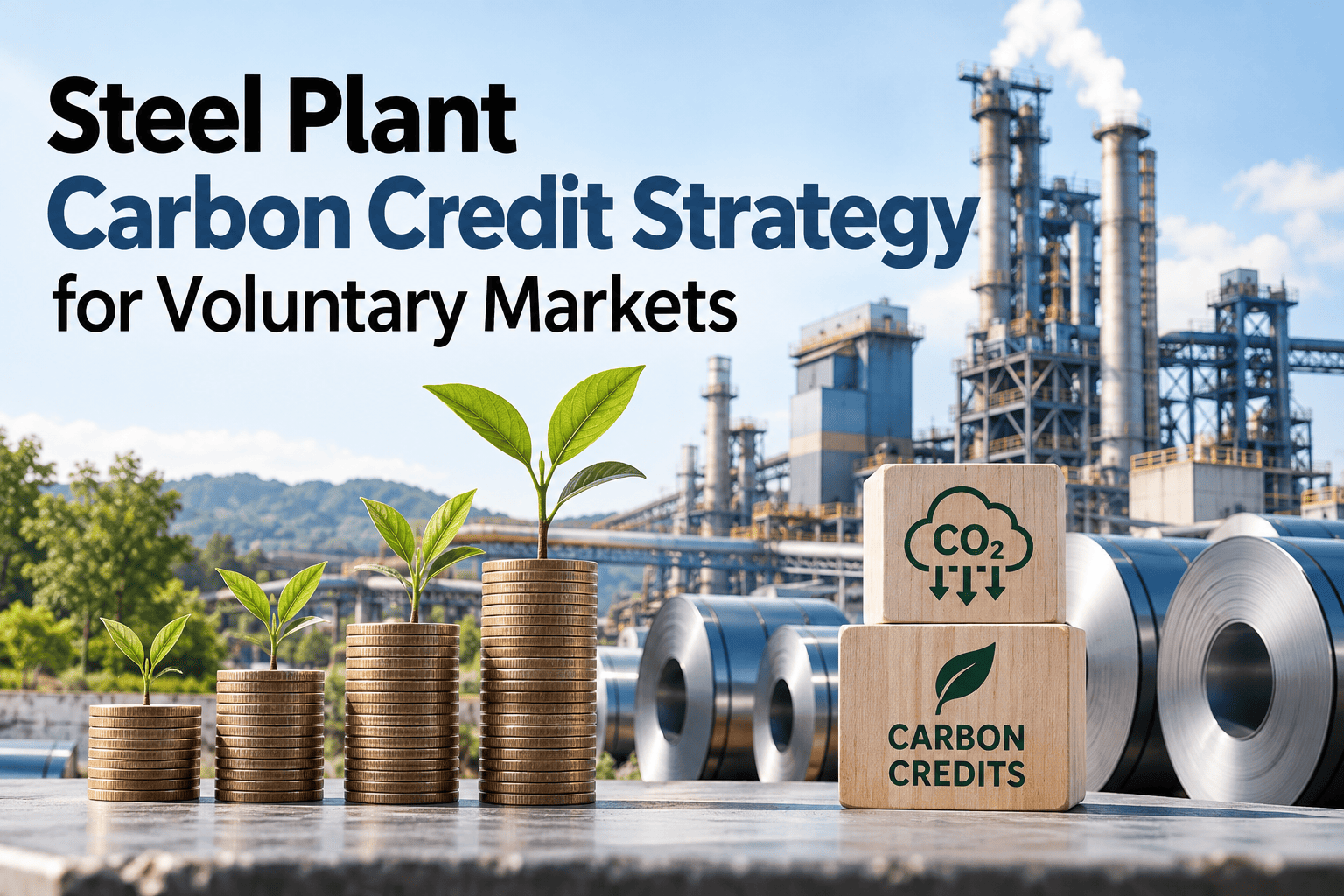
Most steel plants that explore voluntary carbon markets stall at the same point: a list of possible projects and no way to rank them. Waste heat recovery, fuel switching, methane capture and reforestation offsets all look attractive on paper, but
Read More
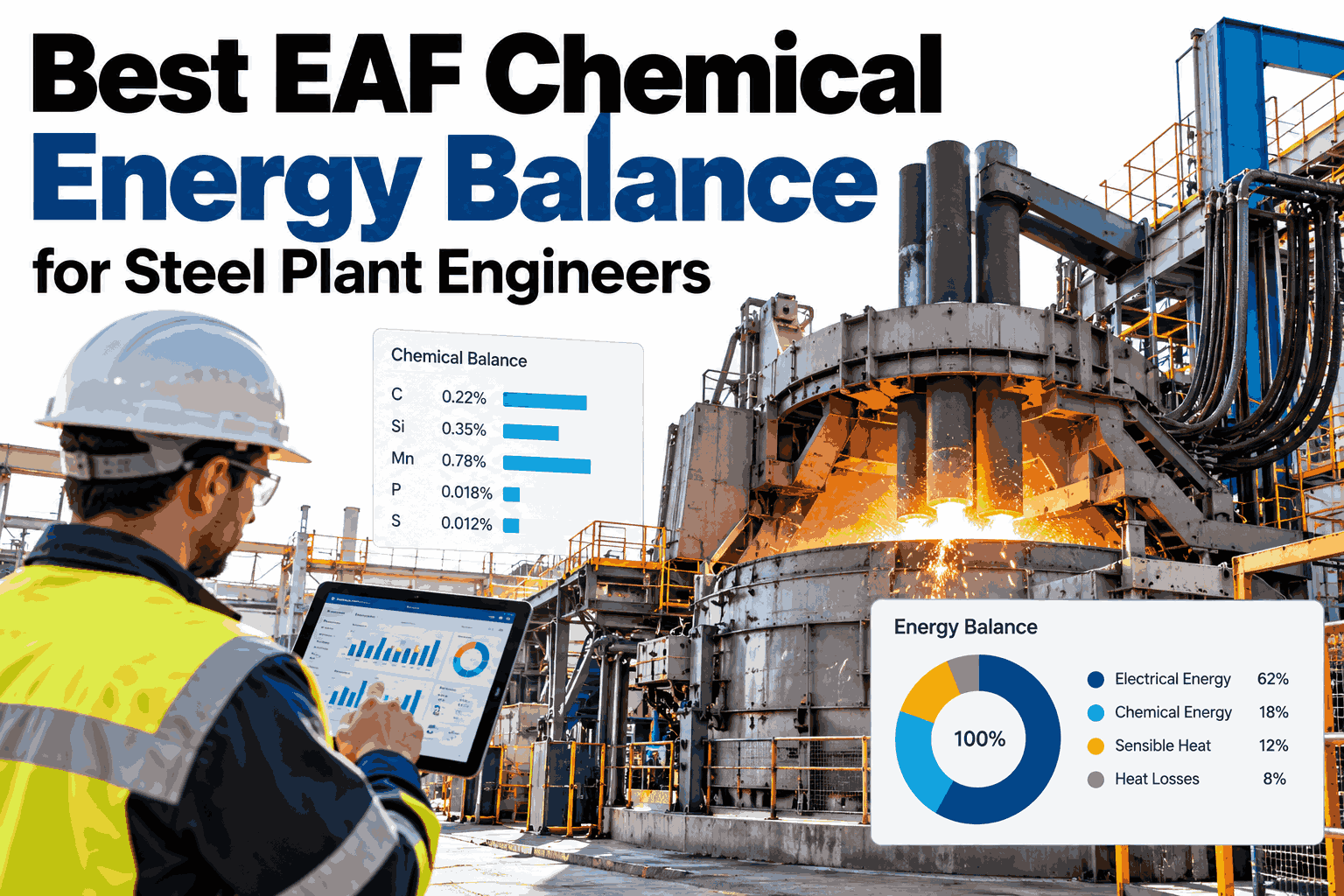
Every heat in an electric arc furnace is paid for twice: once in electricity at the transformer, and once in oxygen, gas and carbon at the injectors. Chemical energy from those sources melts scrap, builds foamy slag and takes load off the arc, but
Read More
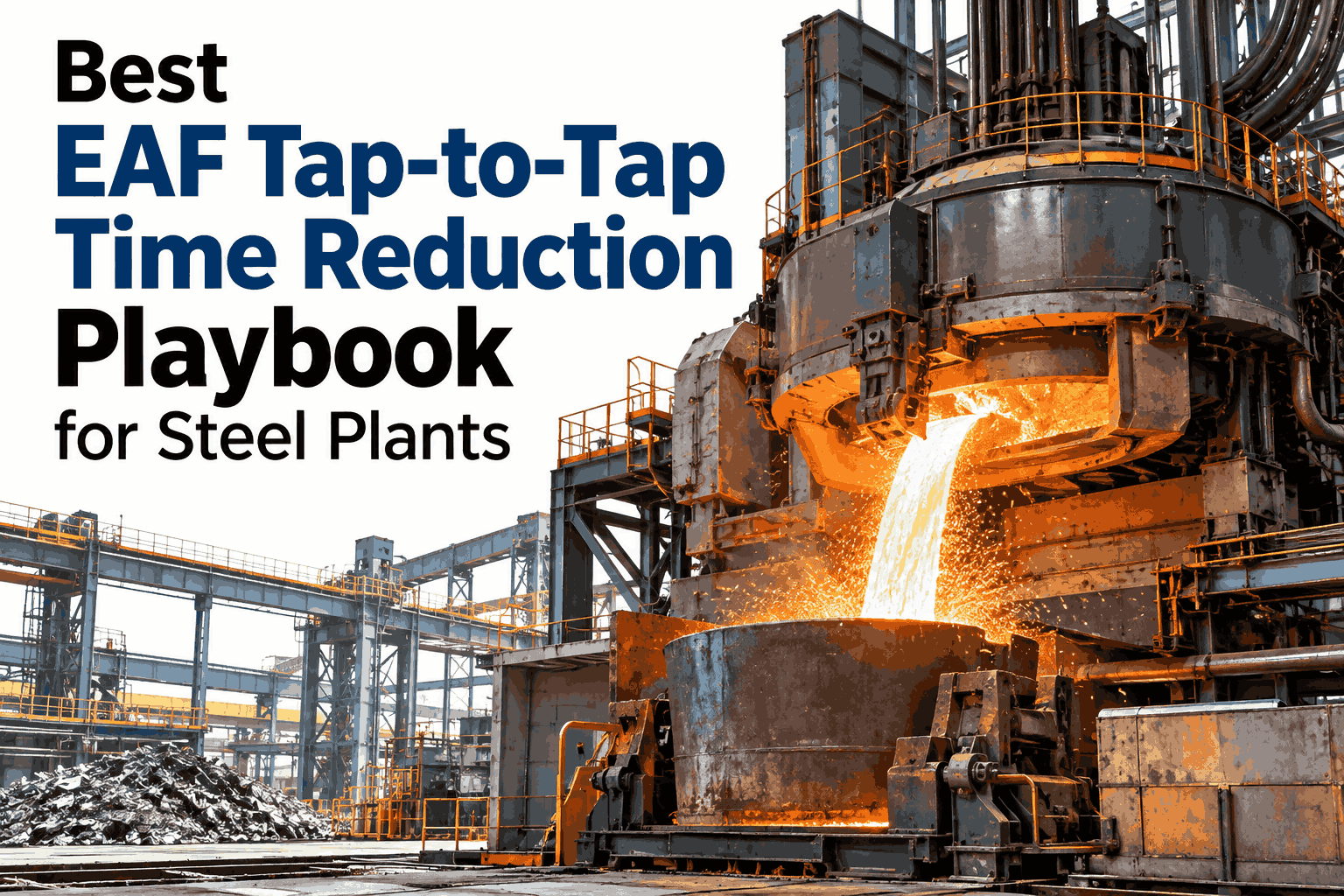
In an electric arc furnace, minutes are the unit of output. Every minute removed from tap-to-tap time is a minute of furnace capacity returned, yet most of the avoidable minutes are not in the melting itself. They sit in charging gaps, waiting for
Read More
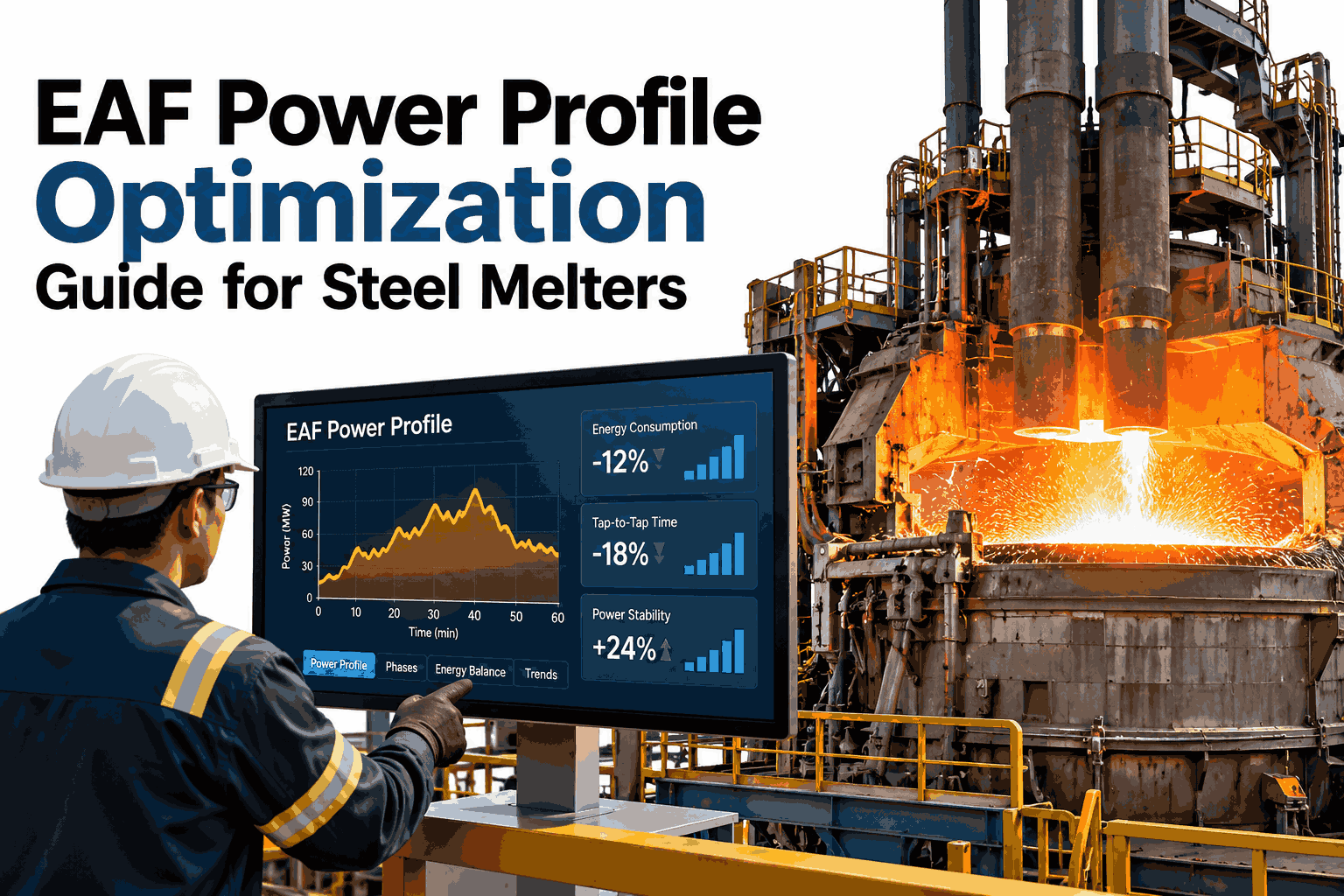
An electric arc furnace does not need the same power for the whole heat, yet many melt shops run one familiar profile on every grade and every scrap mix. Voltage, current and reactance set how the arc delivers energy, and the right setting changes

Read More
Every melter knows the feeling of a charge that looked fine in the yard and behaved badly in the furnace. The bucket was too light and needed an extra charge, the copper crept above the grade limit, or the cheapest scrap on the plan pushed the pow

Read More
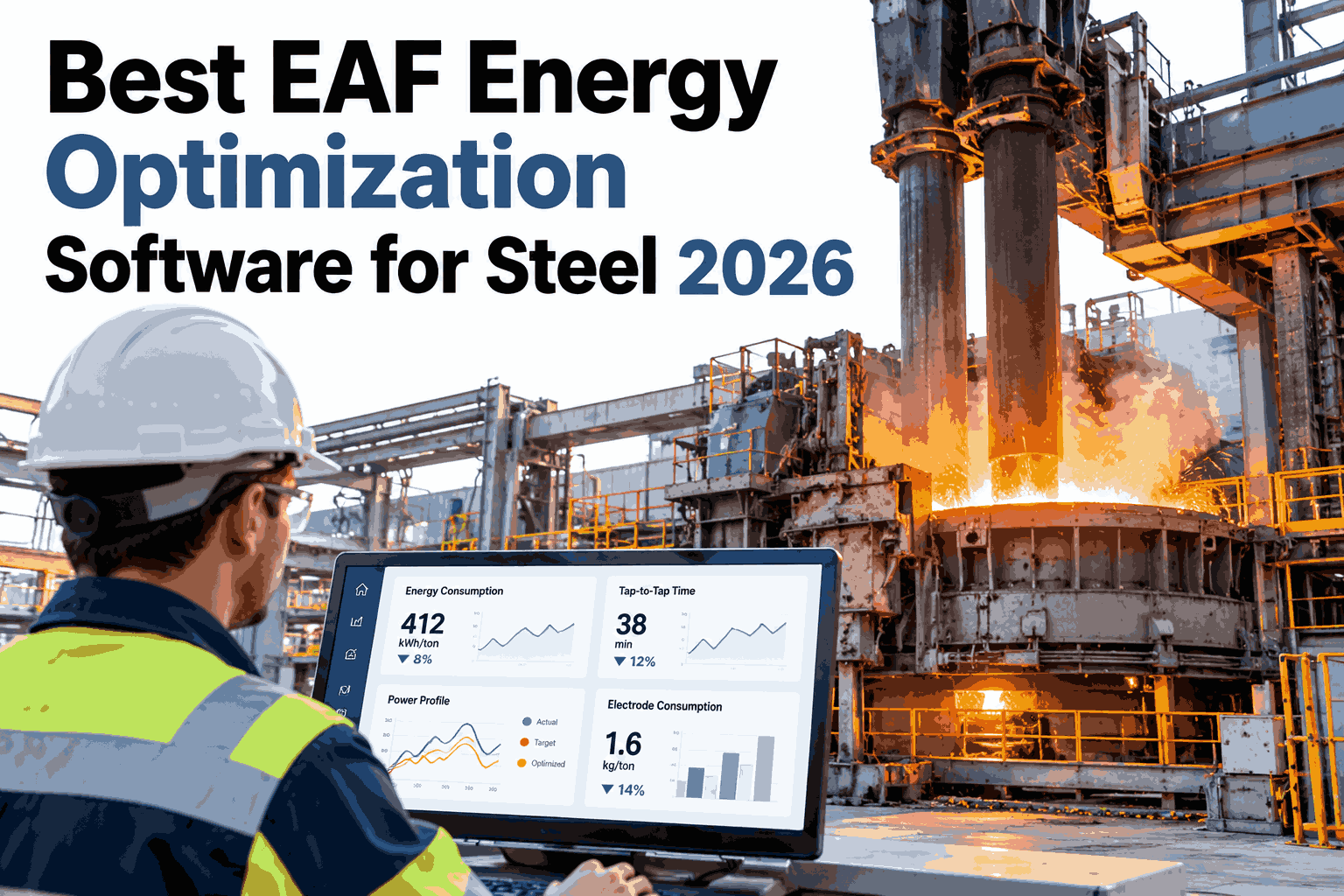
Electrode cost is one of the few steel shop line items that moves every single heat, yet most mills only review it once a month on a cost report that arrives long after the furnace that drove the spike has already tapped a dozen more. A single per
Read More
Electric arc furnace melter operators know that kWh per tonne dictates profitability, yet most shops run a single default power profile through the entire heat instead of adjusting arc voltage and reactance as the scrap melts. Tuning your EAF powe
Read More
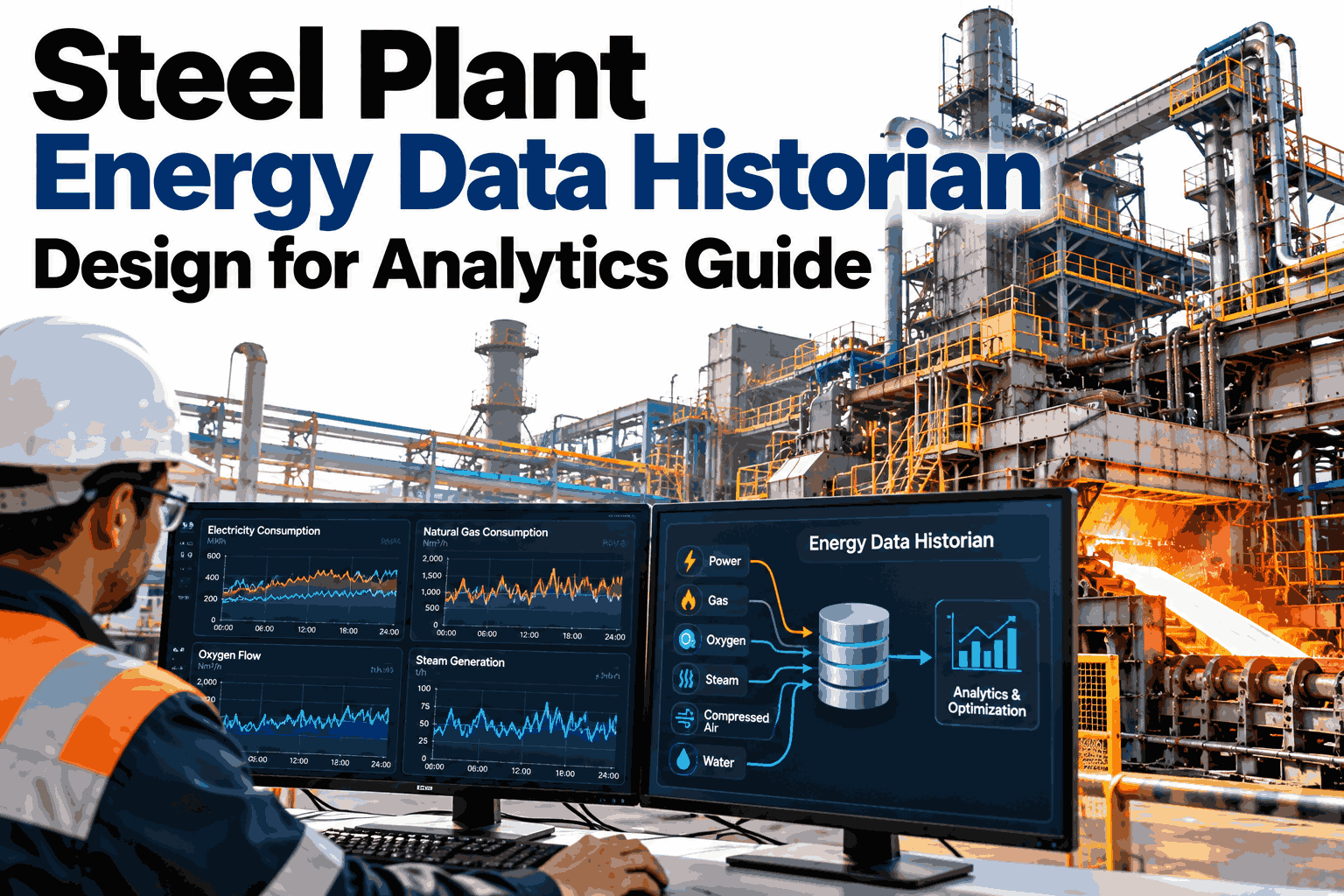
Steel plants generate thousands of energy readings every minute, from EAF transformer load to reheat furnace fuel flow, but most of that data disappears before anyone can use it. A historian built without naming discipline, compression settings, o
Read More
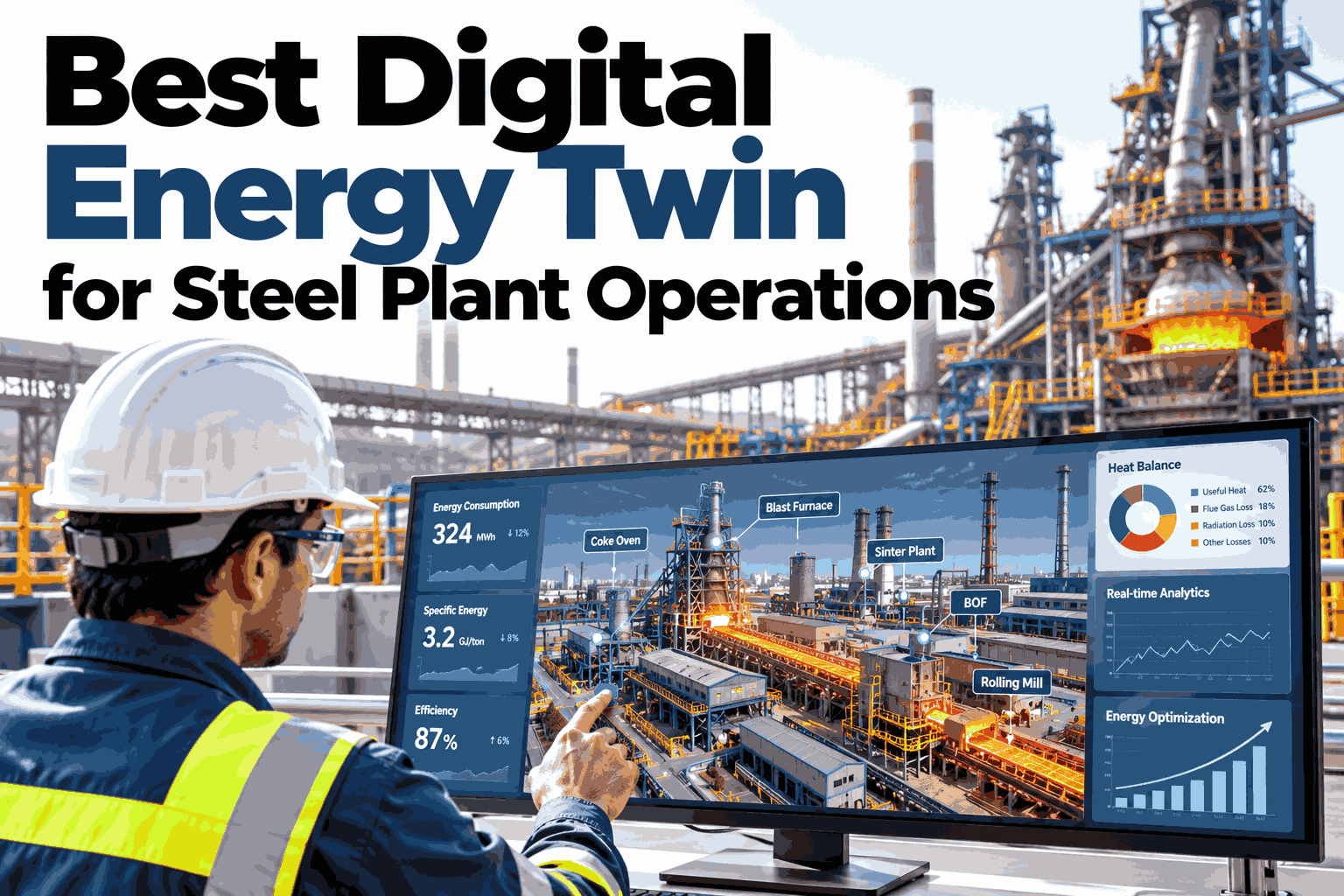
Most energy projects in steel plants are tested on the real furnace, the real mill and the real production schedule, which is the most expensive place to be wrong. A digital energy twin offers another route. It is a model of the plant's energy flo
Read More
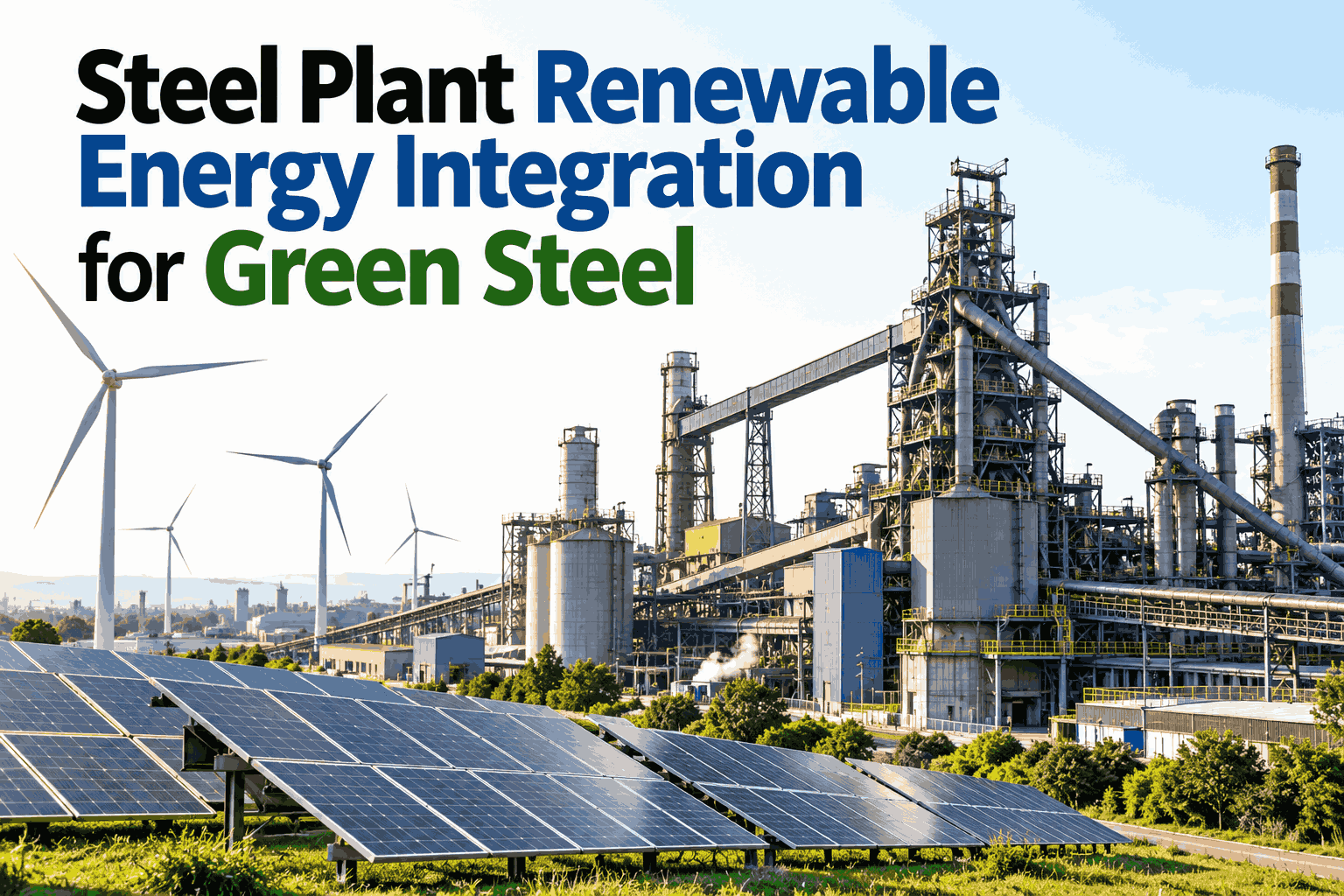
Steel plants run around the clock, while solar and wind do not. That mismatch is the central problem of bringing renewable power into a steel works, and it is why a simple purchase agreement rarely tells the whole story. A credible plan separates
Read More
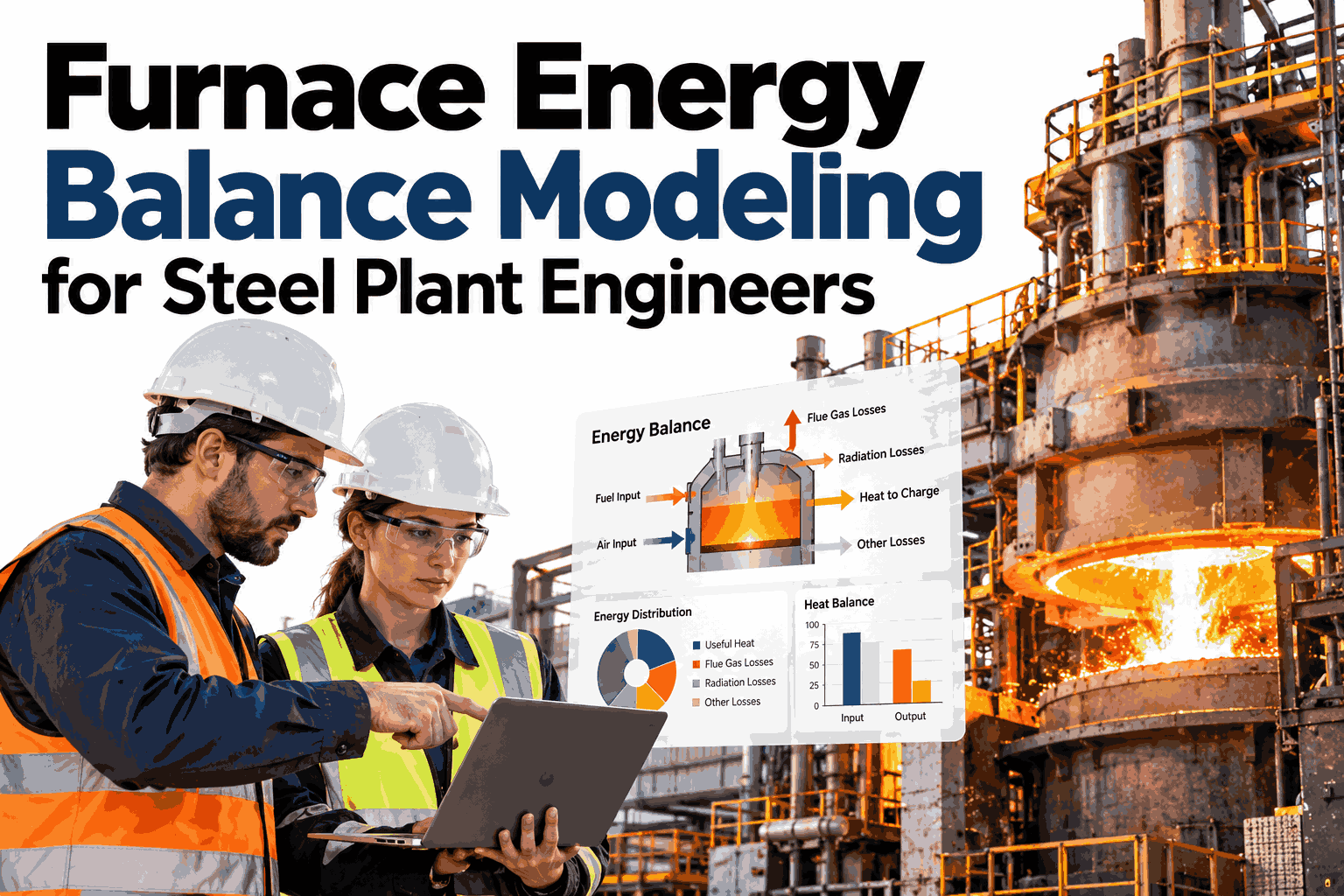
Every furnace obeys the same rule: the heat that goes in must come out somewhere. An energy balance writes that rule down, listing every source of heat and every place it ends up, so the useful share and the lost share become numbers instead of op

Read More
An energy audit for ISO 50001 has two jobs that are easy to confuse. The first is to give an auditor evidence that the plant understands where its energy goes and manages it. The second is to find savings that actually reach the bill. Plants that
Read More
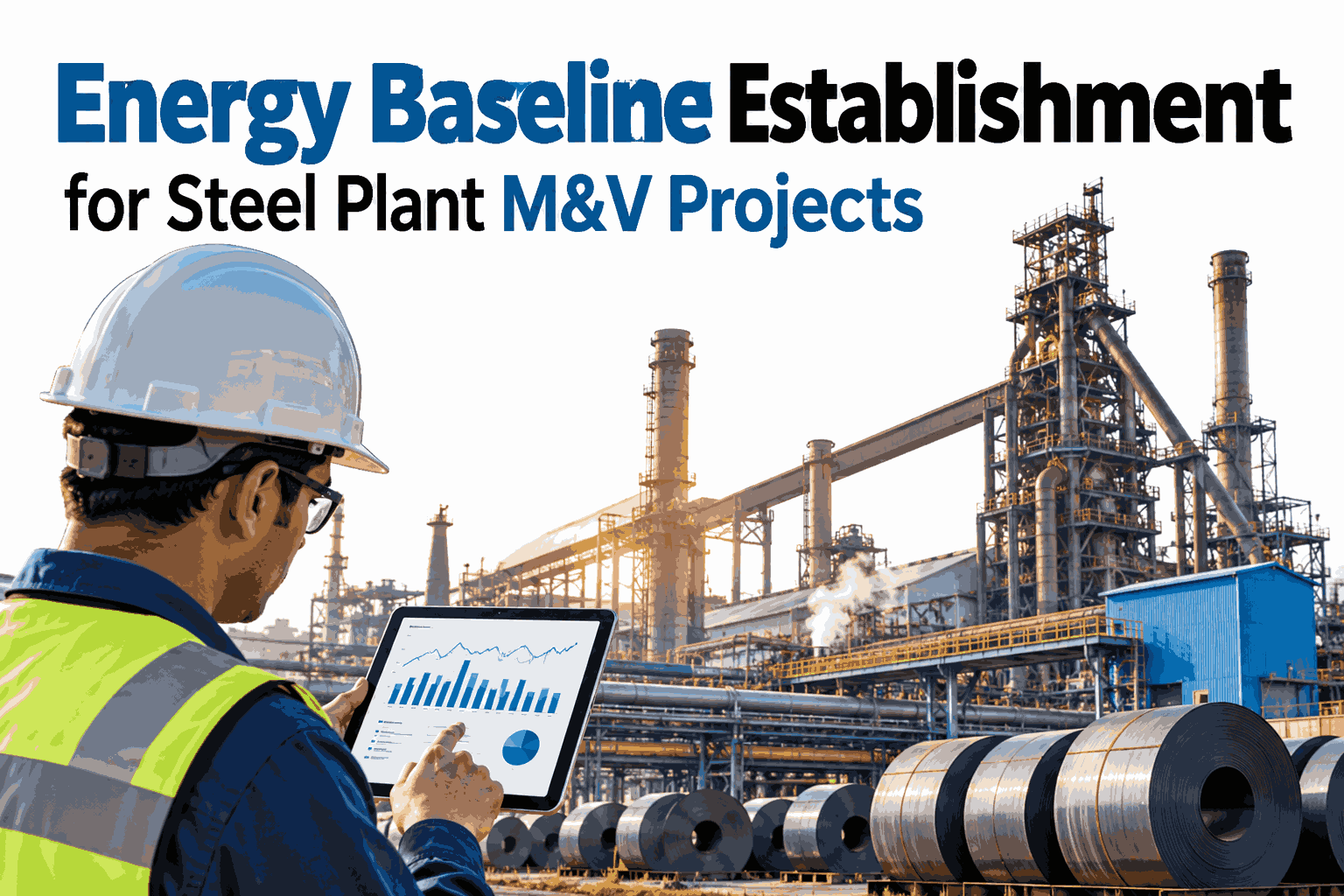
An energy saving that cannot be defended is only a claim. When a steel plant reports that a project cut energy use, finance, auditors and sometimes lenders ask the same thing: compared with what? The answer is the baseline, a model of how much ene
Read More
Electric motors drive fans, pumps, compressors, conveyors and mills across a steel plant, and together they account for a very large share of electricity use. Yet most plants cannot say which motors are oversized, which run lightly loaded for hour
Read More
Most energy losses in a steel plant are not dramatic. A small air leak, a fan that fouls a little more each week or a furnace that idles a few minutes longer between heats will never trip an alarm, yet each one adds to kWh per tonne and GJ per ton
Read More
Compressed air looks free at the point of use, which is why it is wasted so easily. Behind every open valve and worn coupling sits a compressor drawing electricity, and most of that energy leaves the machine as heat before any work is done. In a s
Read More
A steel plant throws away more usable heat than most energy teams can list. Hot flue gas, cooler exhaust, top gas pressure, hot coke and mill cooling water all carry energy that could offset fuel or generate power, but each stream has a different
Read More
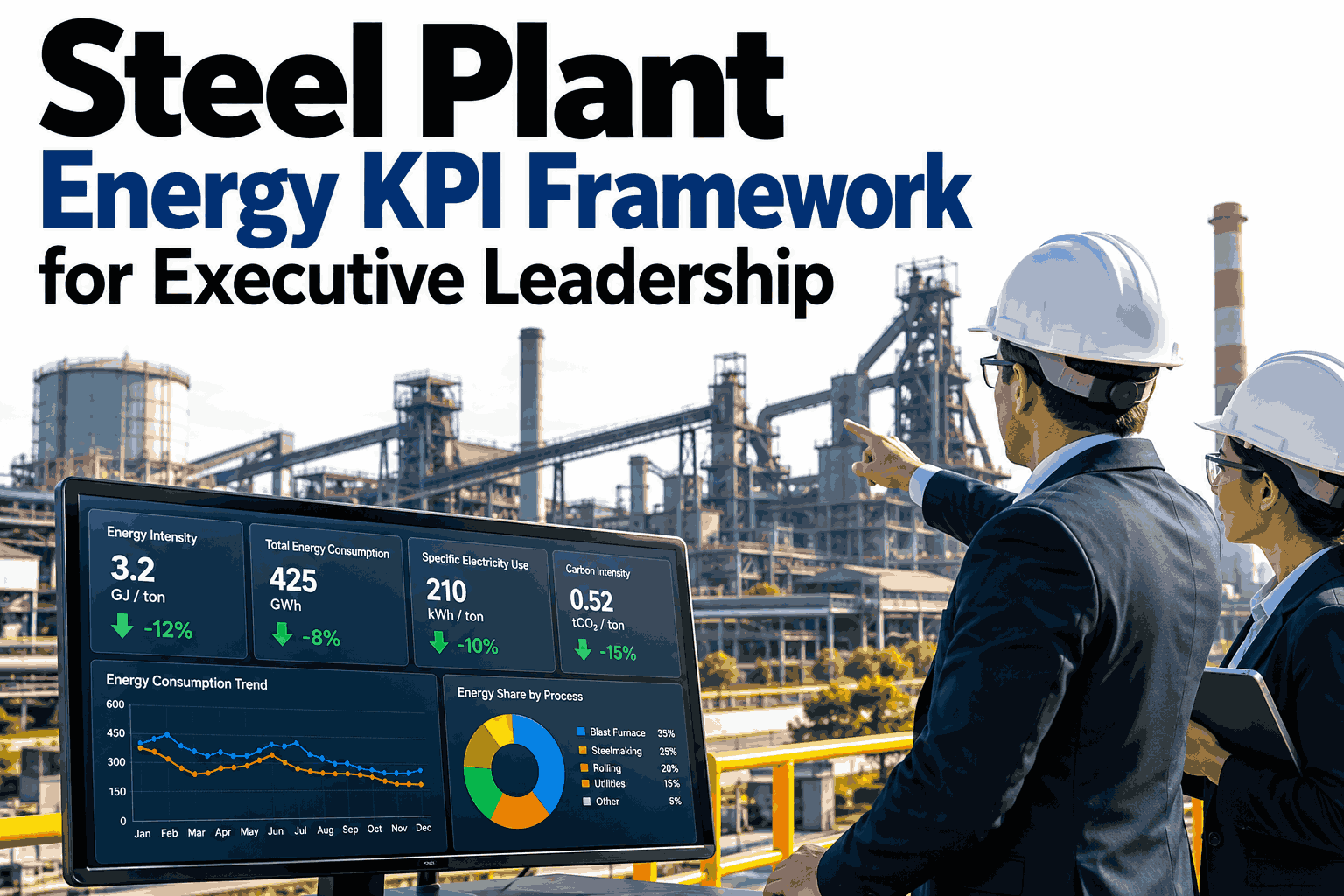
Executives are handed dozens of energy figures and still cannot answer three simple questions: are we using less energy per tonne, is it costing us less, and are our emissions moving the right way? A useful KPI framework answers those in one view,
Read More
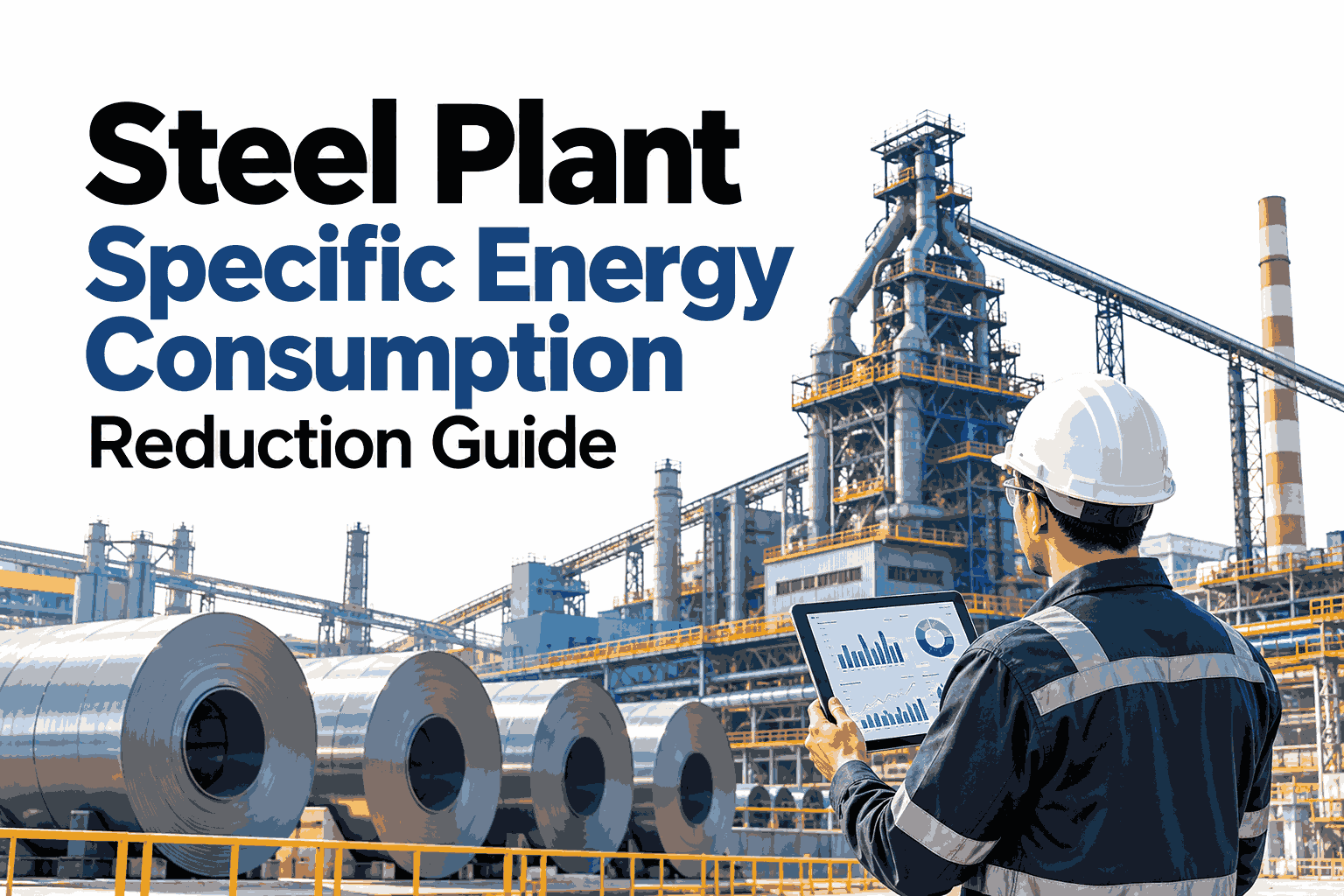
Specific energy consumption, or SEC, is the number that decides how much energy a plant burns to make each tonne of steel. It moves with fuel rates, furnace practice, utilisation, product mix and dozens of smaller habits, so a change in SEC does n
Read More
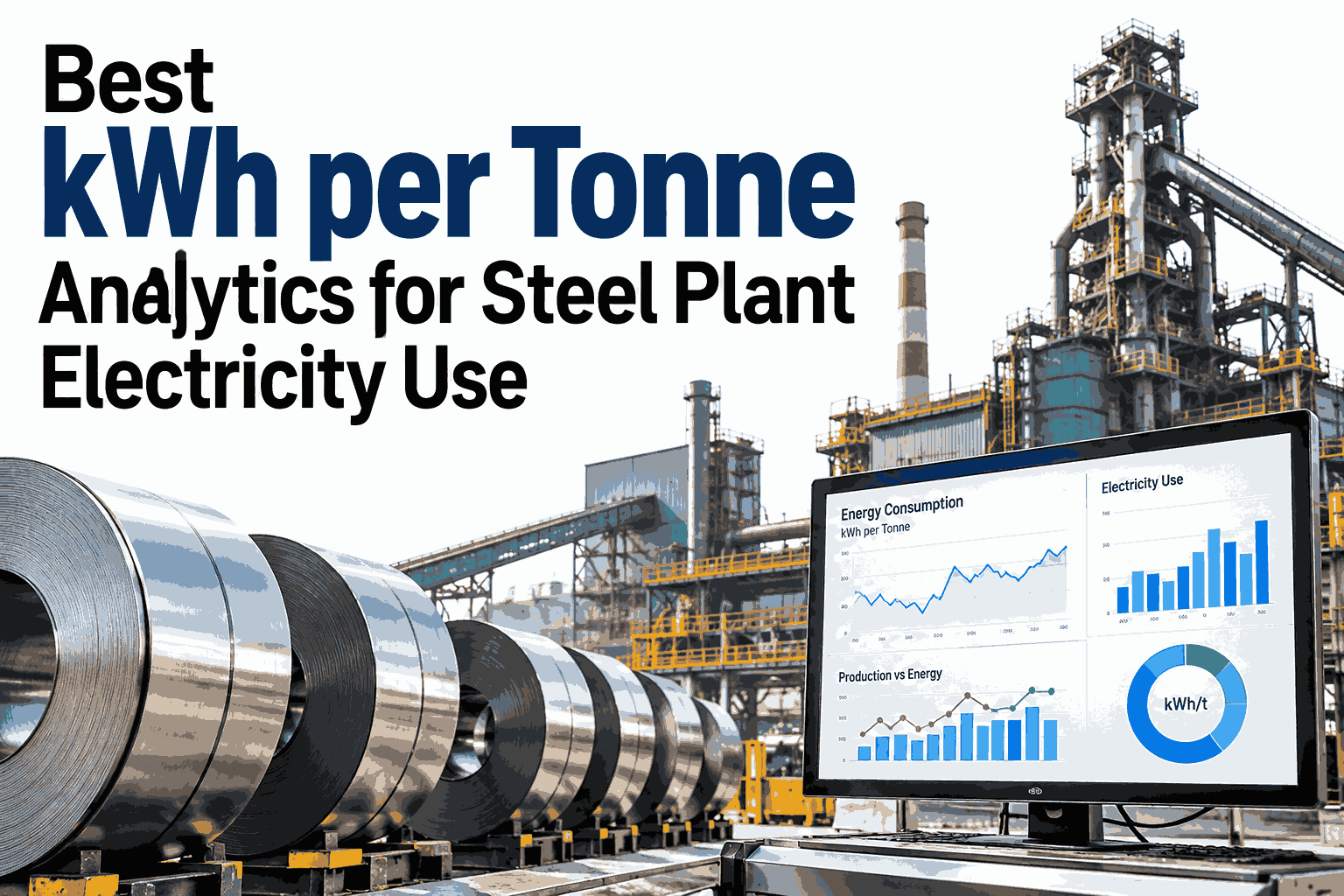
Electricity intensity is the number every steel plant reports and few can explain. A kWh per tonne figure that rises by a few points could mean lower output, an idle furnace, oversized motors or simply a different grade mix, and the plant meter al
Read More
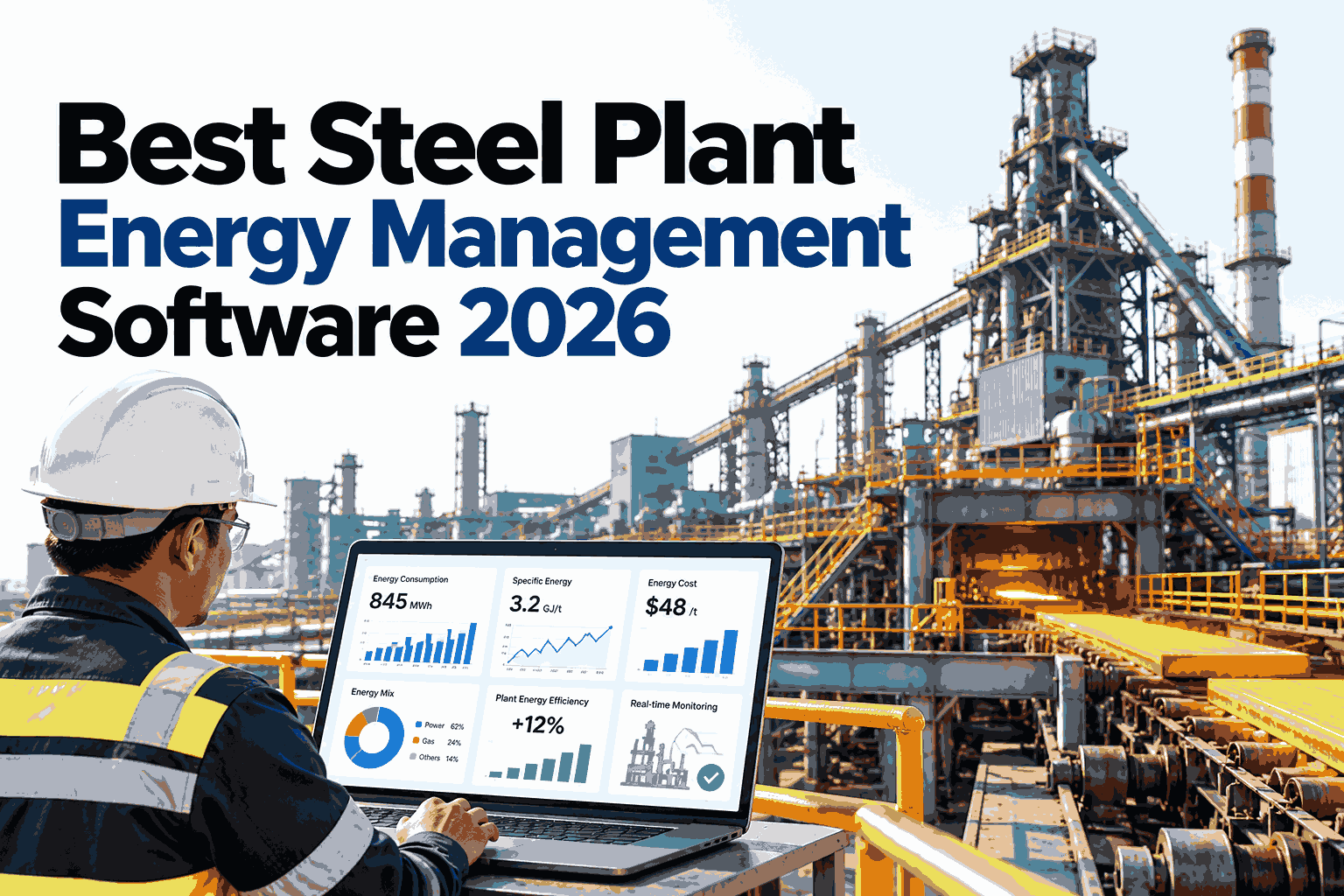
Energy is one of the largest and most controllable lines in steel cost, yet many plants still read it from a monthly utility bill. A bill shows what was paid, not which furnace, mill or shift used it. Good energy management software measures gigaj
Read More
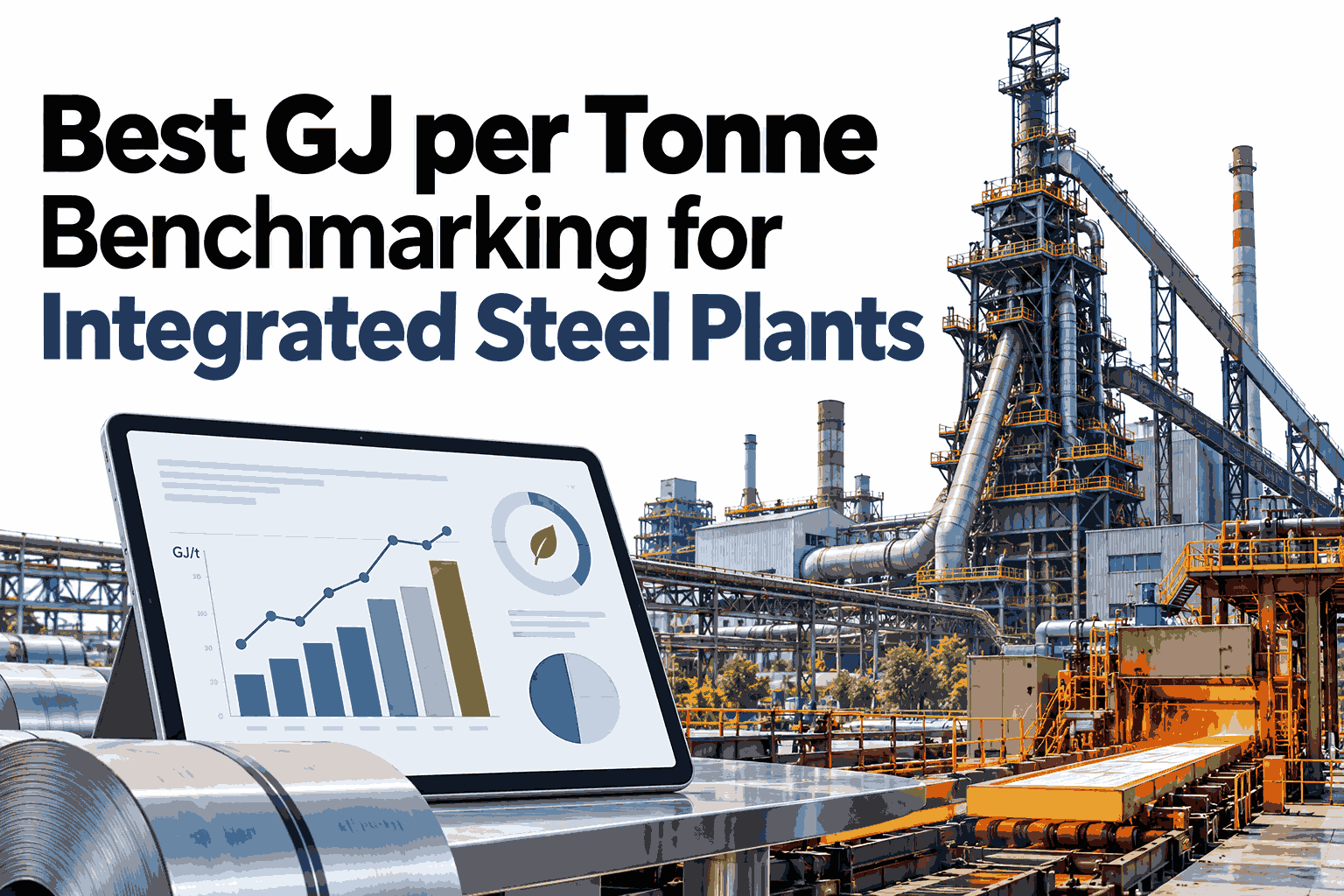
An integrated steel plant burns most of its energy in a handful of process steps, yet it usually reports one number: gigajoules per tonne of crude steel. That figure is useful only when it is measured on a clear boundary and compared with the righ
Read More
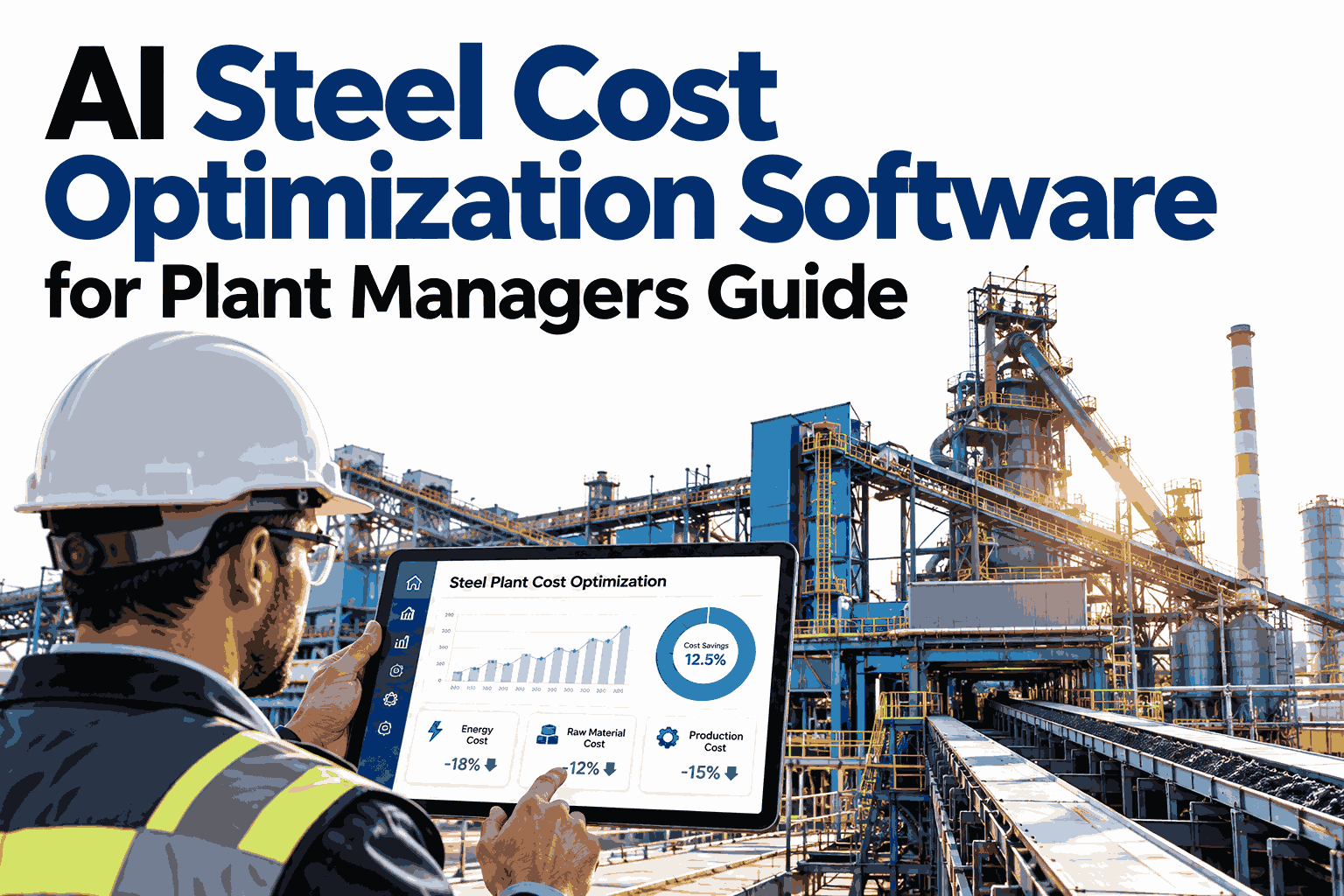
A plant manager does not need another dashboard. The job is to decide, in the first hour of a shift, what to change so cost per tonne moves the right way by the end of it. Reports describe what already happened, while AI cost optimization software
Read More
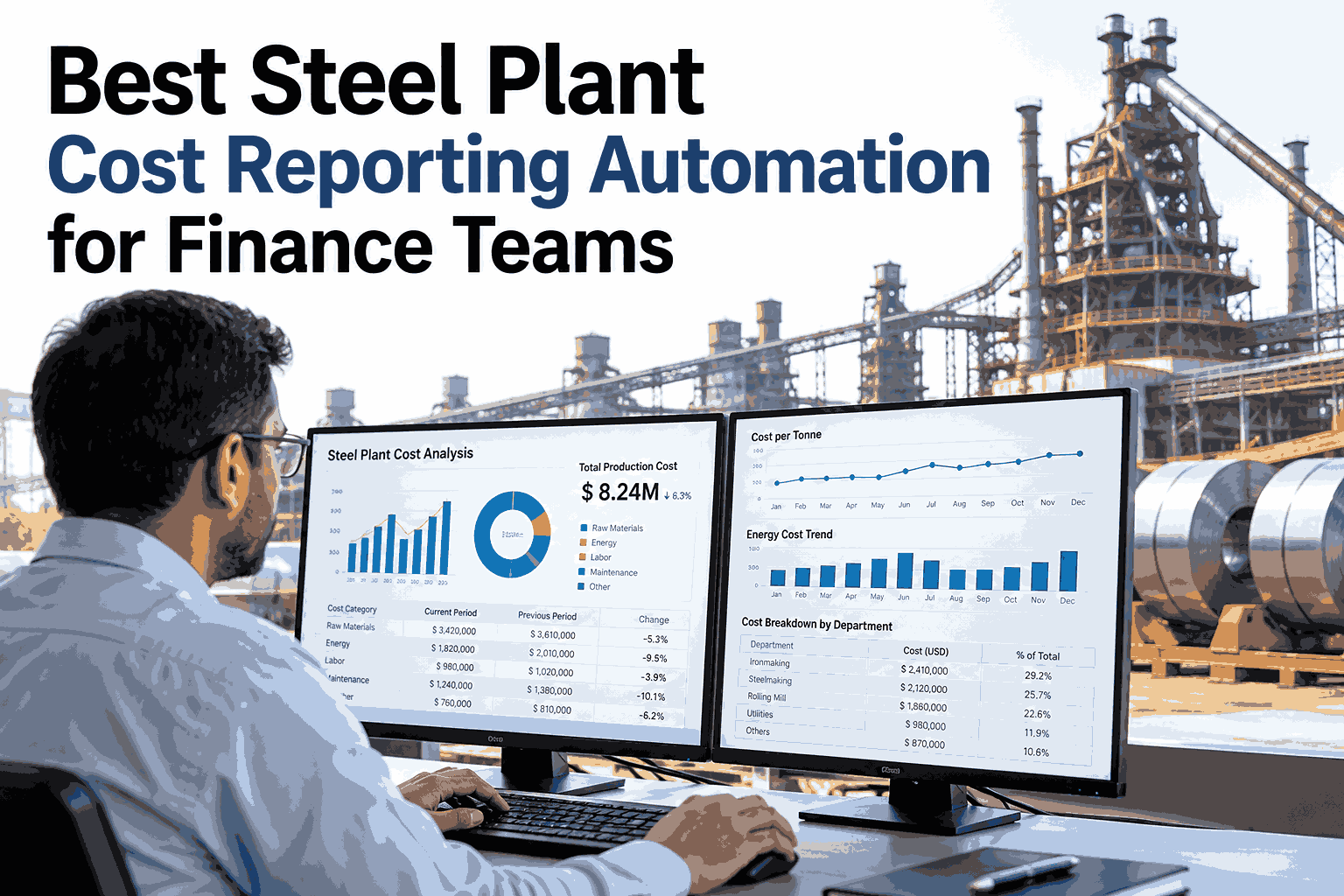
Most finance teams in steel plants spend the first week of every month collecting numbers rather than explaining them. Production tonnes come from one system, stores issues from another and maintenance costs from a third, so the cost report is ass
Read More
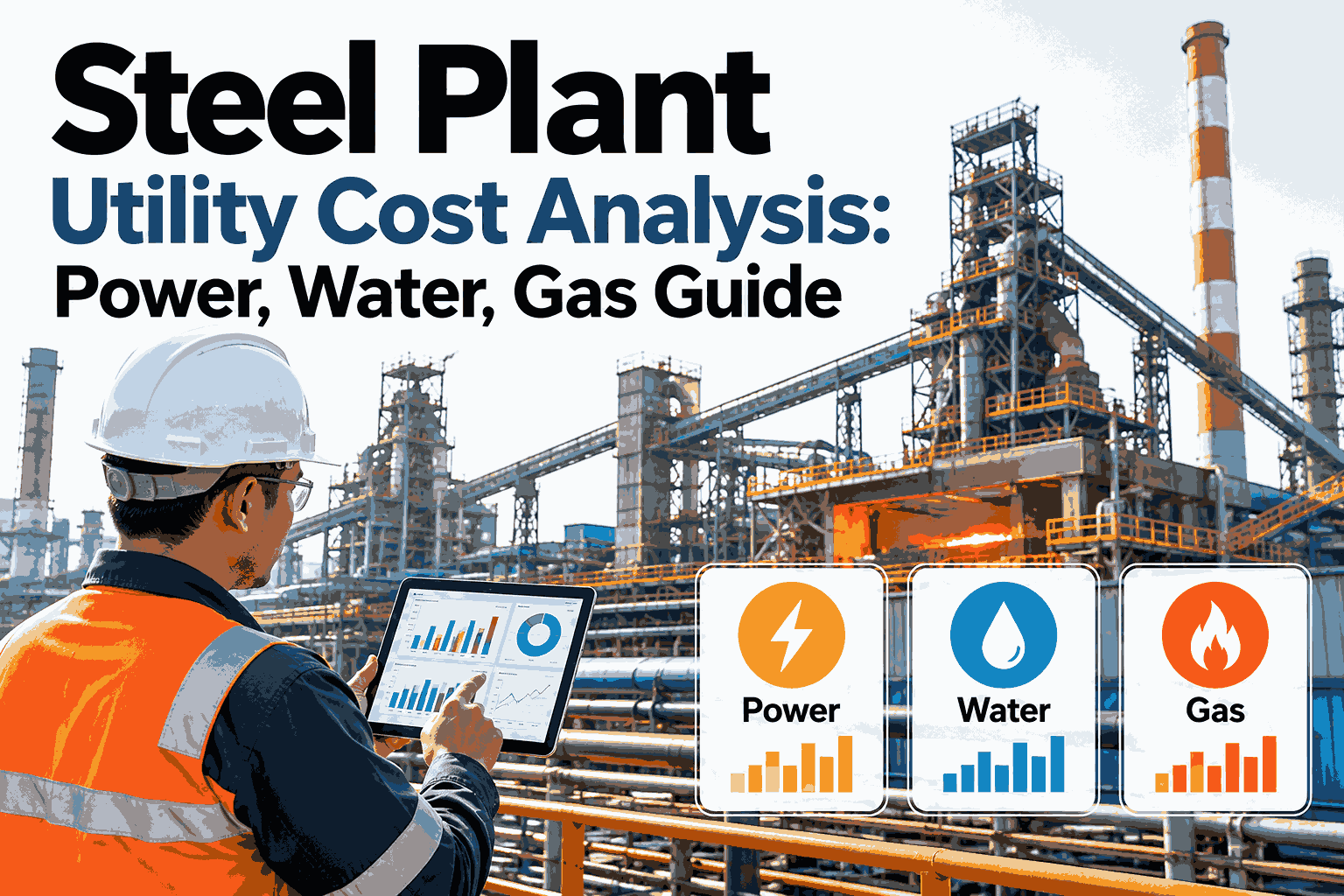
Utilities are the cost line most plants pay without ever really reading. Power, water, industrial gases and compressed air arrive on separate bills, are metered at different points and are rarely tied back to the process step that used them. The r
Read More
Maintenance is one of the few large steel plant costs that owners can shape without changing what they produce. It is also one of the easiest to overspend on, because emergency repairs, oversized spare stocks and badly timed shutdowns all look lik
Read More
Refractory is the one cost line that quietly turns into an outage. A lining that wears faster than planned raises cost per tonne, but the bigger risk is an early reline, a breakout or a stopped caster that nobody scheduled. Blast furnaces, ladles,
Read More
Consumables look small on the cost sheet, yet they are where a steel plant's cost per tonne drifts without anyone noticing. Electrodes, fluxes, lubricants and refractory are issued from stores, used across shifts and booked in bulk, so the link be
Read More
Every tonne of steel a plant ships has already paid for the tonnes that never made it. Scale burns off in the reheat furnace, crop ends are cut and returned as scrap, trimmed edges and cobbles leave the line, and rejected coils are downgraded or r
Read More
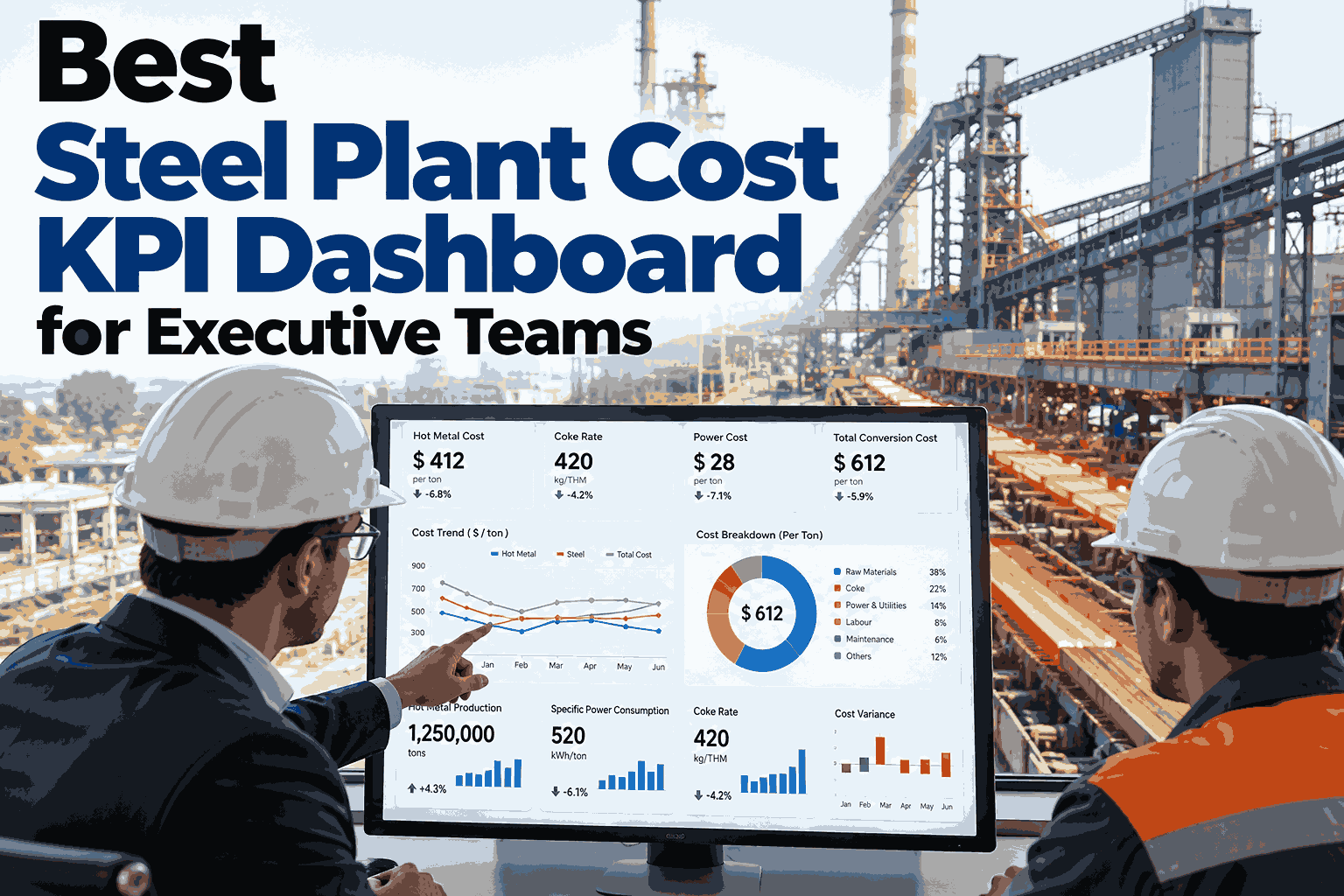
Executive teams do not lack cost data. They lack one trusted number they can read in thirty seconds and act on before the month closes. In most steel plants, cost per tonne arrives as a long pack, assembled by hand, argued over in the meeting and
Read More
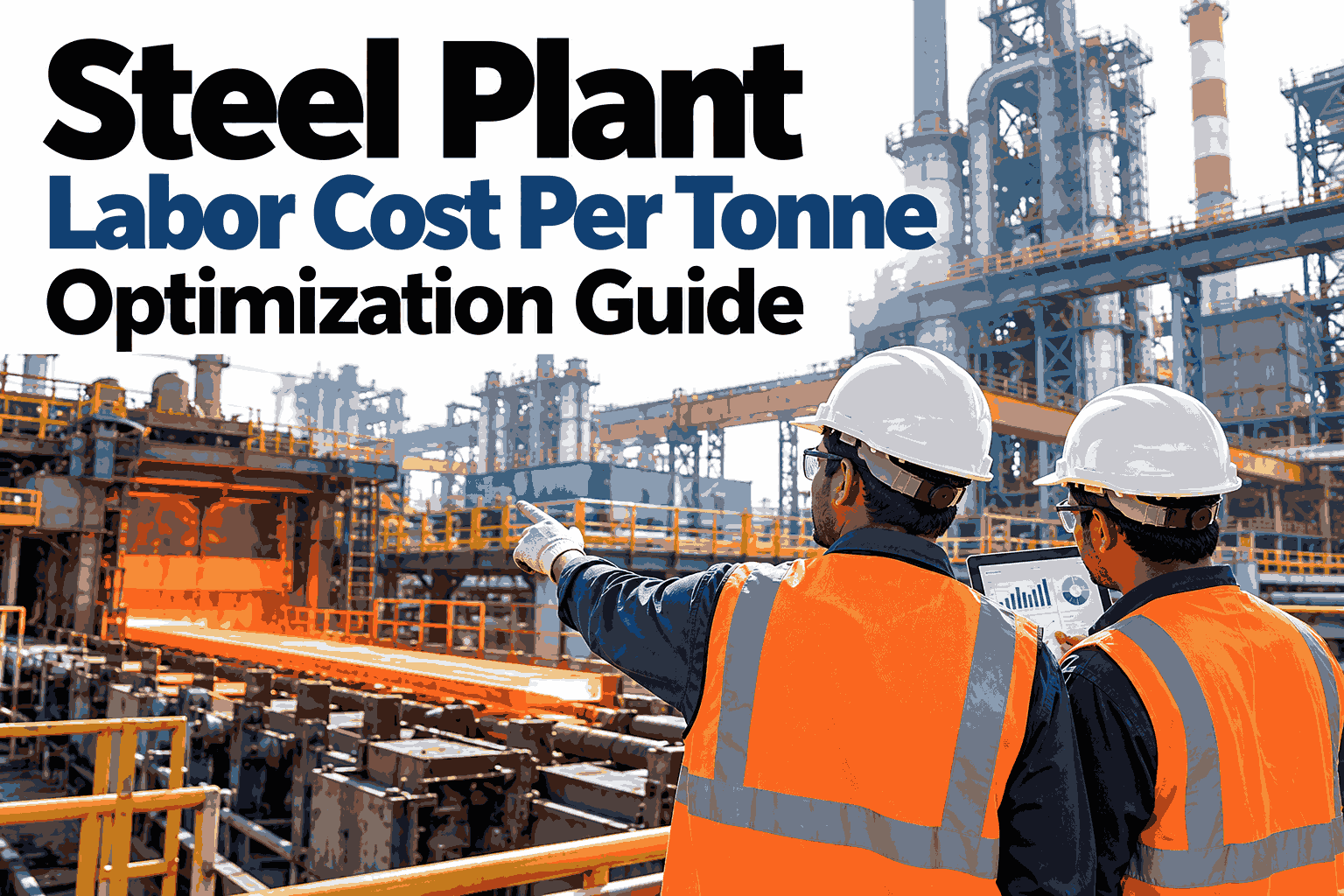
Labor is rarely the biggest line in a steel plant's cost per tonne, but it is one of the hardest to explain. Headcount, overtime, contract hours and shift patterns all sit in different reports, so the number moves and nobody can say whether the pl
Read More
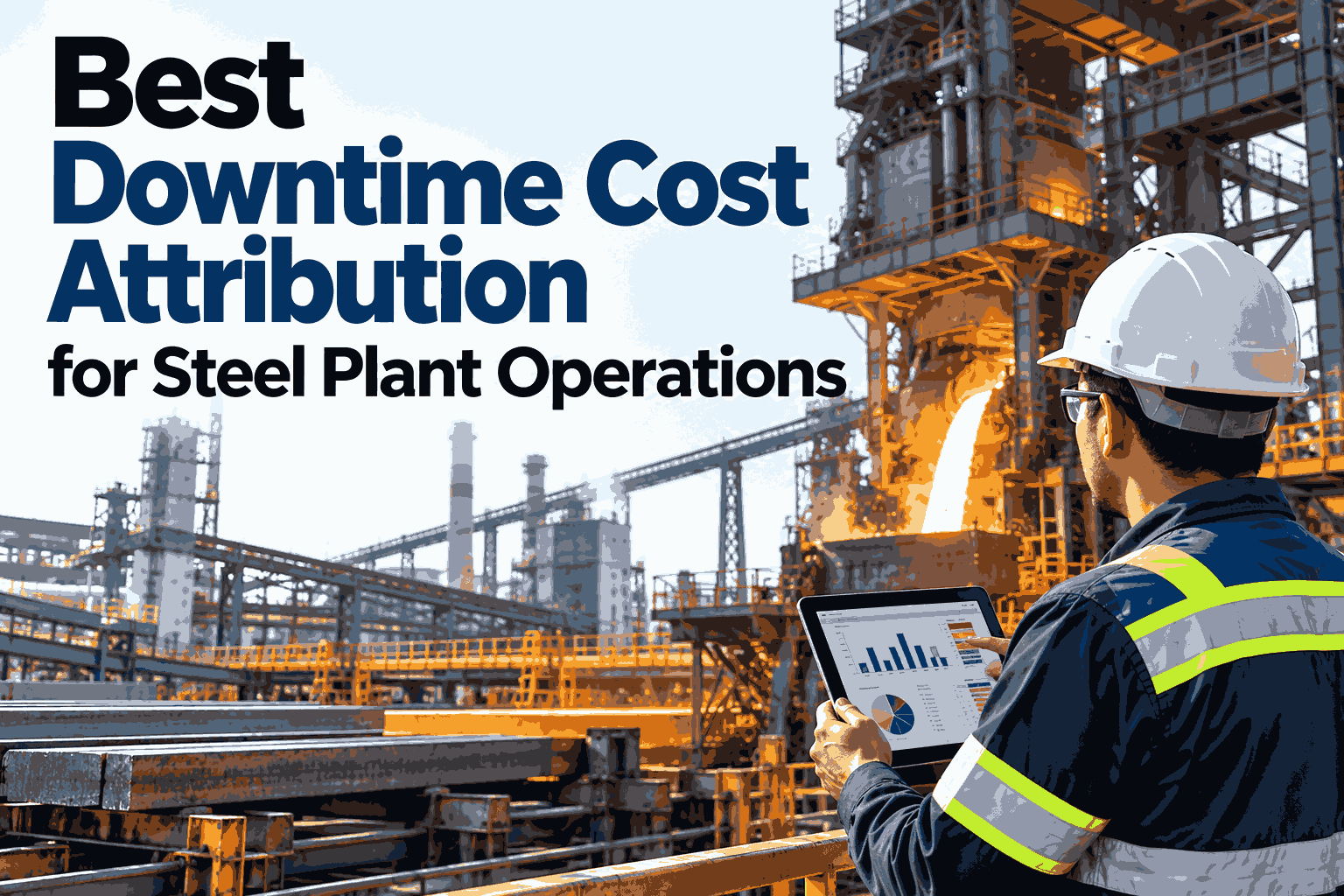
A steel plant can lose hours to stoppages every week and still report them in one line: downtime, so many hours. What that line hides is the money. A stop on one unit starves the next, restarts burn energy and material, and lost tonnes carry lost
Read More
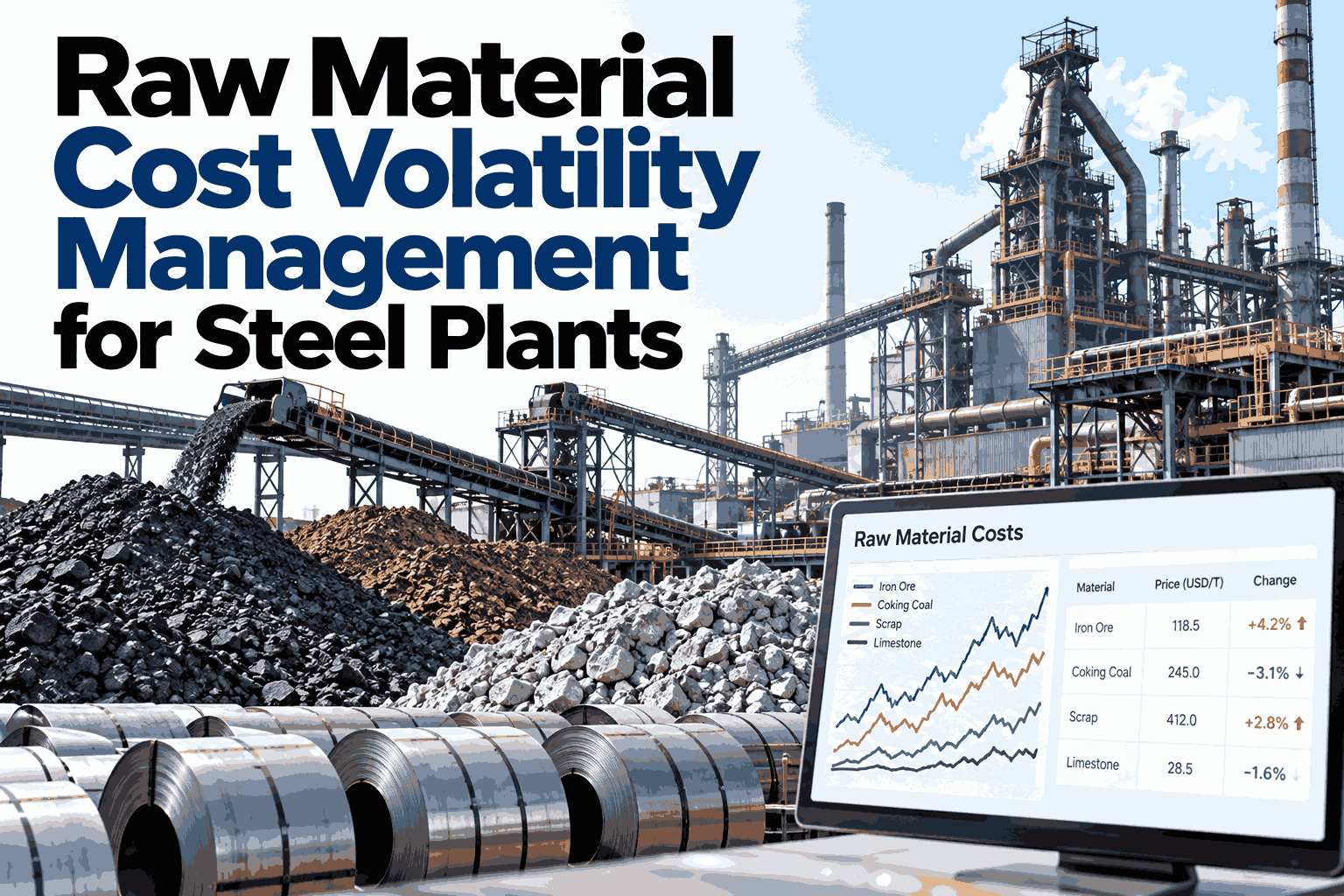
Steel prices and raw material prices rarely move together, and the gap between them is where margin is made or lost. Iron ore, coking coal, scrap and alloys can each swing sharply within a quarter, while selling prices adjust slowly and often afte
Read More
Ask two people in a steel plant which costs are fixed and you will often get two different lists. Labour, maintenance and even some energy sit in a grey zone that changes with how hard the plant runs. That is why cost per tonne swings so much betw
Read More
Every Indian steel producer is asked the same question by its board: how does our cost per tonne compare with the others? The answer is rarely simple. Plants differ in route, captive mines, power sources, product mix and how their accounts are dra
Read More
Every works manager has sat in a review where cost per tonne moved and nobody could say why. The total is easy to read, but the reasons sit across hot metal, refractory, electrodes, alloys and utilities, each owned by a different team and reported
Read More
Hot metal is the single largest cost line in an integrated steel plant, and most of it is decided long before the ladle reaches the converter. Ore quality, coke rate and blast furnace stability set the price of every tonne, yet the three are usual
Read More
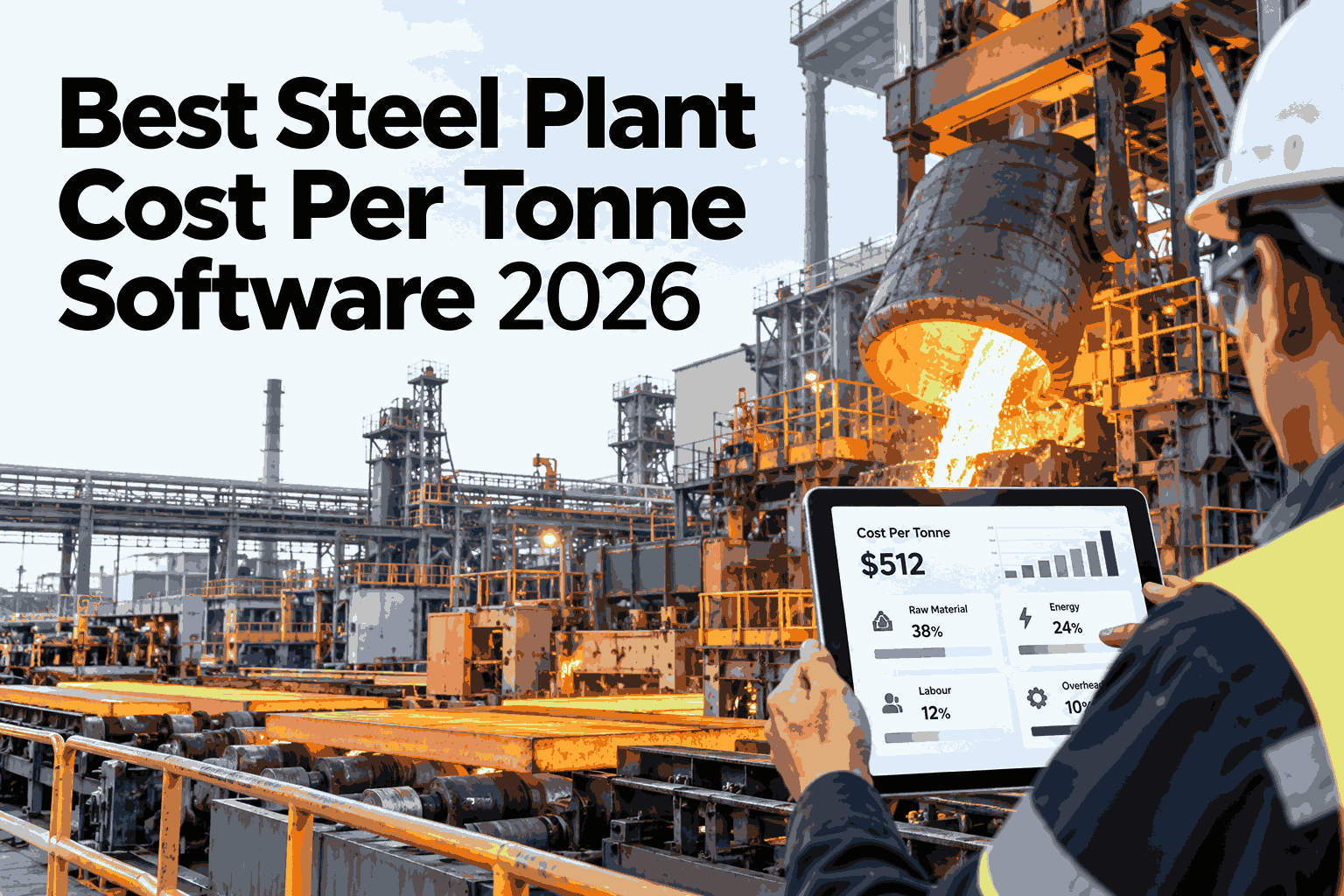
Every steel plant knows its cost per tonne. Very few know why it moved last week. The monthly number arrives after the books close, long after the furnace campaign, the maintenance stop, or the coal blend that caused it has passed. The best cost p
Read More
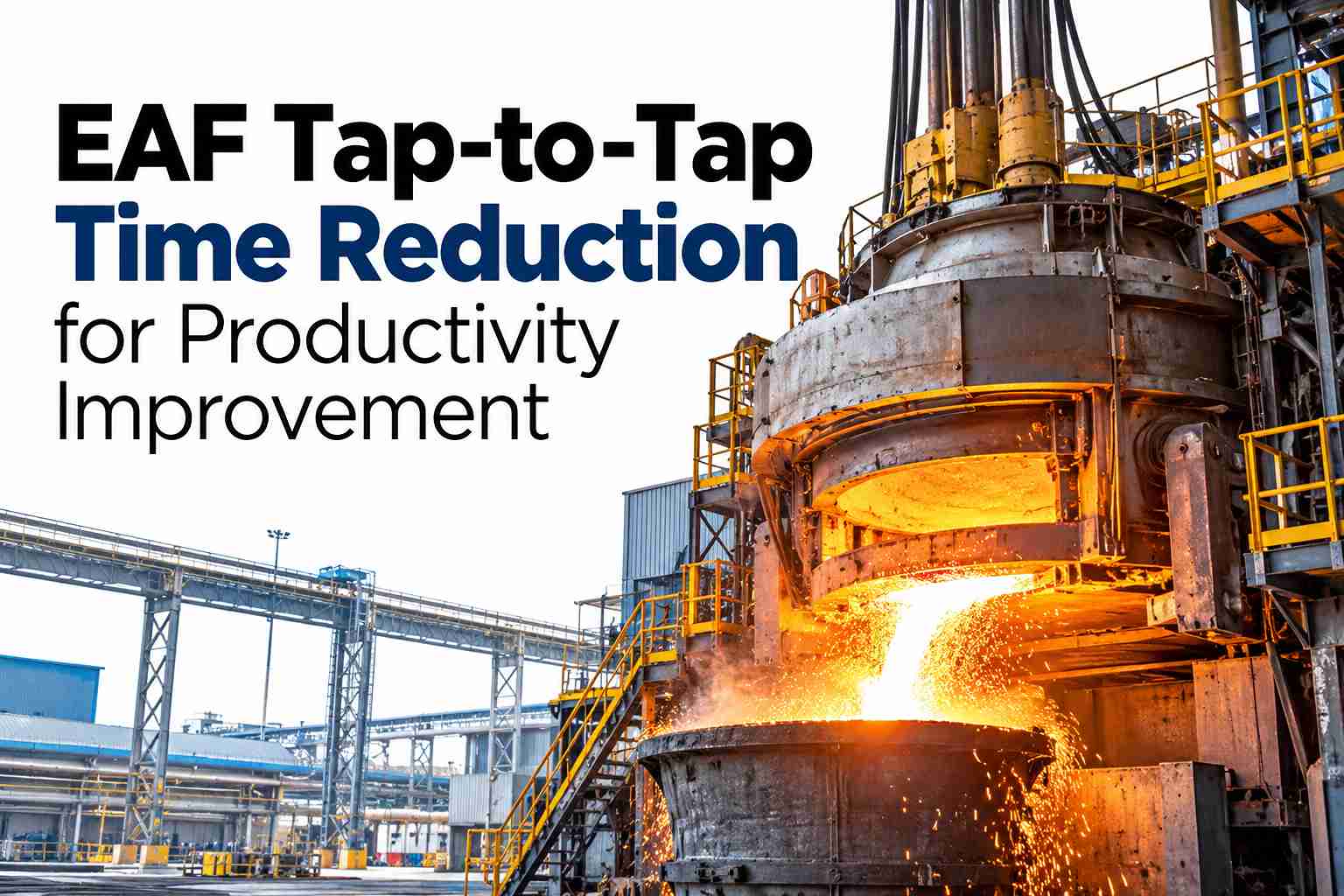
Tap-to-tap time is the single number that determines how many heats an EAF can physically run in a day, and it's made up of several distinct segments, charging, power-on melting, refining, and turnaround, each of which can be optimized somewhat in

Read More
Melting cold scrap from ambient temperature to liquid steel takes a fixed amount of energy no matter how efficient the furnace is, but a meaningful share of that energy requirement disappears the moment the scrap enters the furnace already hot, wh

Read More
An electric arc furnace produces a continuous stream of off-gas that carries direct information about what's happening inside the melt, carbon monoxide, carbon dioxide, and oxygen concentrations shift in real time as the charge melts, oxidizes, an

Read More
A crane's gearbox and drive motor sit inside a housing, running for years without anyone opening them up to look at the gear teeth or bearing surfaces directly, which means the only real signals available are the ones a machine gives off from the
Read More
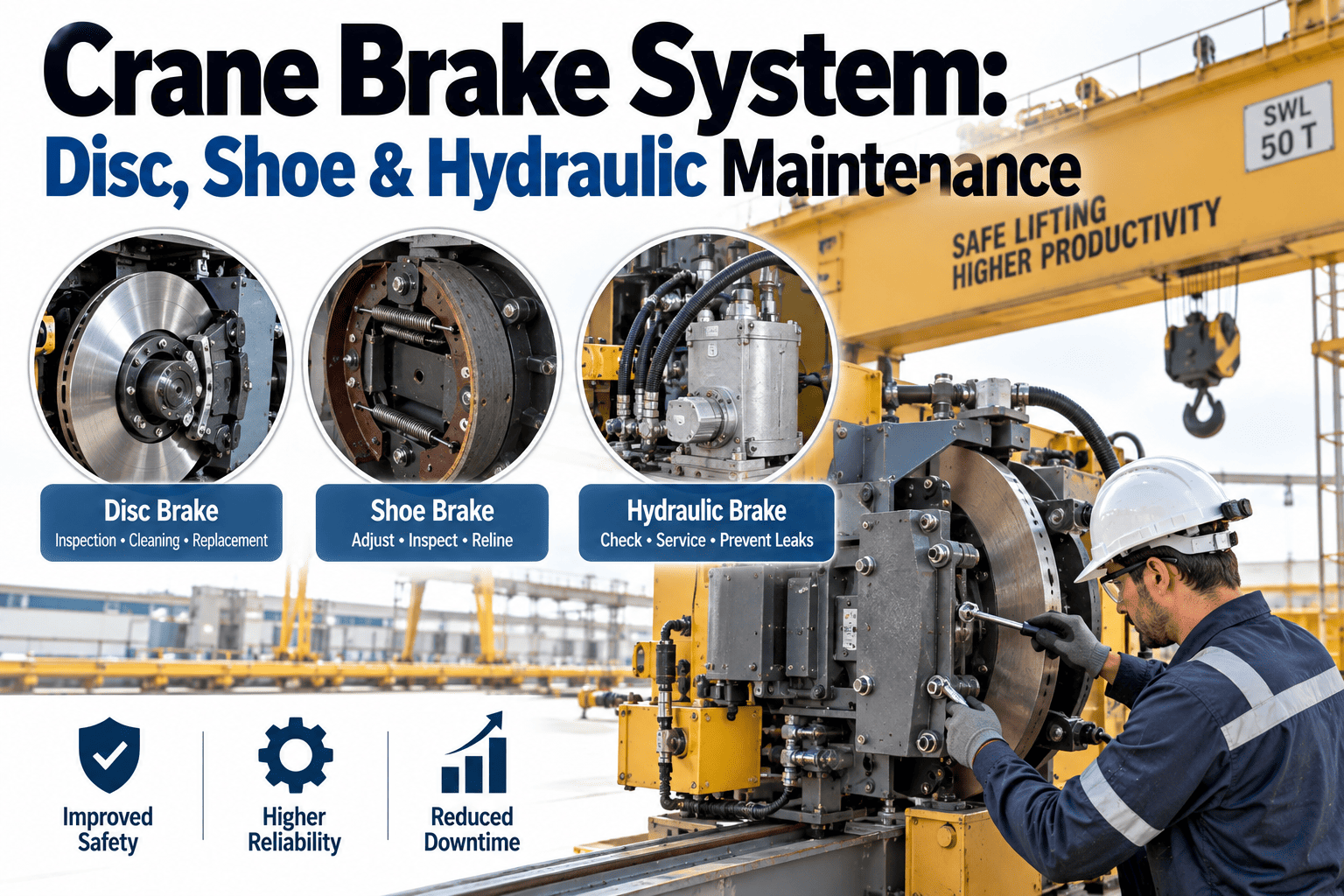
A crane's braking system gets almost no attention until the moment it has to work perfectly, because a brake that's holding a load doesn't announce that it's wearing thin the way a noisy bearing or a leaking seal does. Disc brakes, shoe brakes, an
Read More
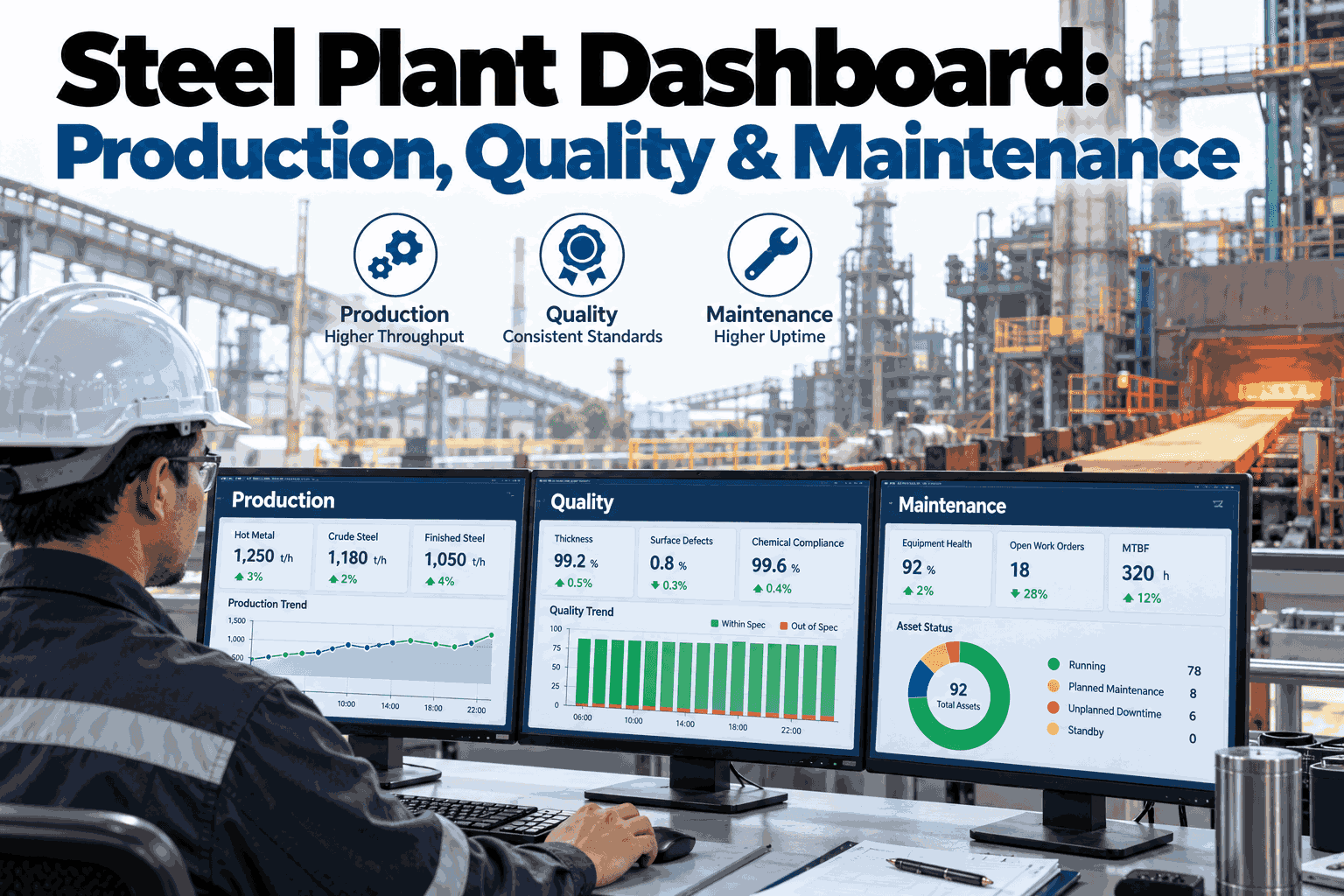
A plant manager walking into a Monday morning review typically pulls from three separate reports — a production summary, a quality report, and a maintenance status update — each compiled by a different team, on a different schedule, often showing

Read More
A maintenance technician closes a work order in the CMMS. Somewhere else, a purchasing clerk manually re-enters the parts consumed on that job into the ERP so inventory reflects reality. Somewhere else again, a production planner checks a separate

Read More
A typical steel plant floor runs automation equipment from half a dozen different vendors accumulated across decades of capital investment, each speaking its own proprietary protocol and exposing data through its own vendor-specific interface. Get

Read More
Maintenance data and production data live in separate systems at most steel plants, tracked by separate teams with separate priorities, and that separation hides some of the most valuable insight a plant could extract from information it is alread

Read More
A steel plant runs on three distinct layers of automation that rarely speak the same language by default: Level 1 controllers driving individual PLCs and drives on the mill floor, Level 2 systems coordinating process control across a production li
Read More
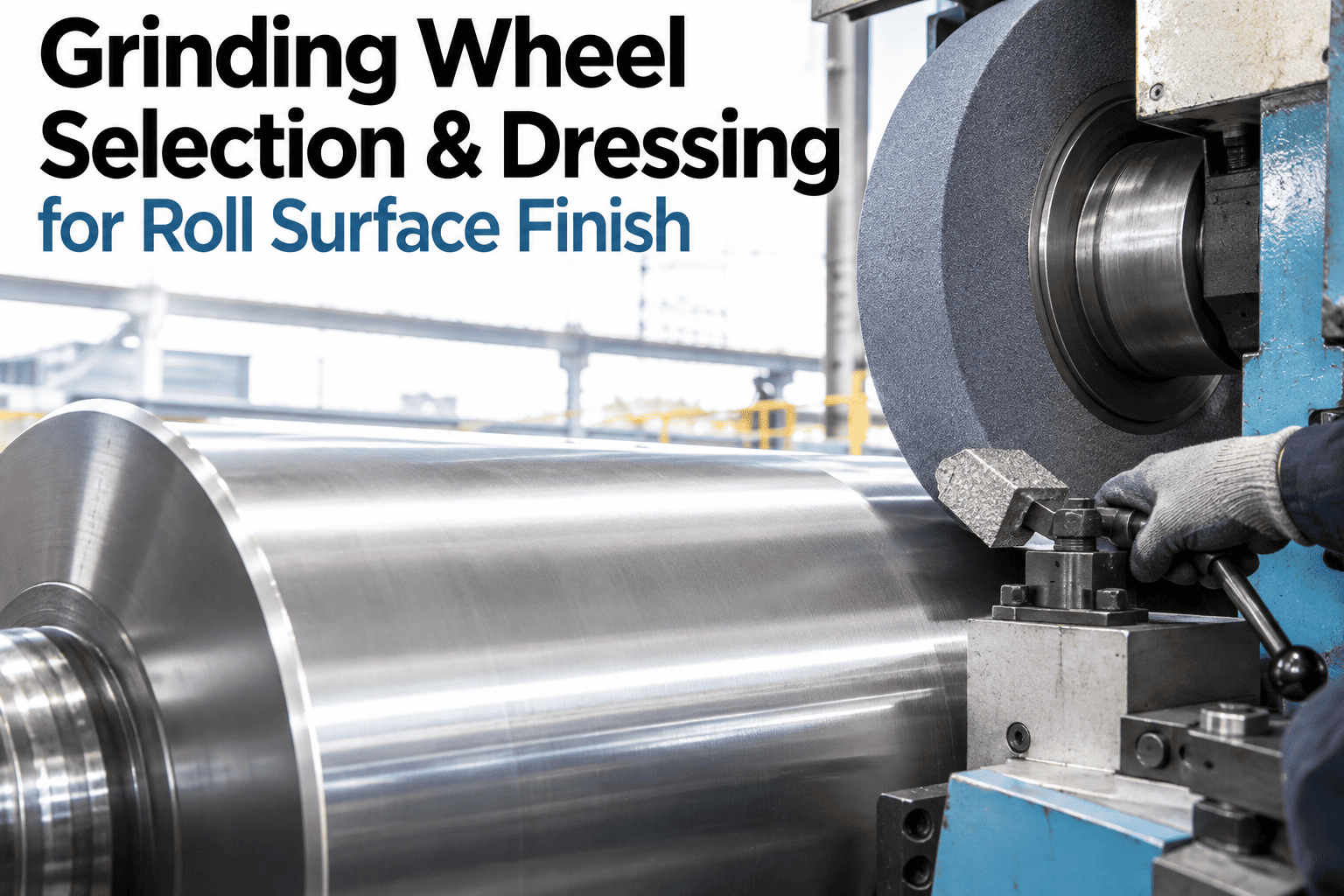
The wheel doing the actual grinding gets far less attention than the machine holding it, but abrasive type, grit size, and bond selection determine the ceiling on achievable surface finish just as much as any CNC parameter setting, and a wheel tha
Read More
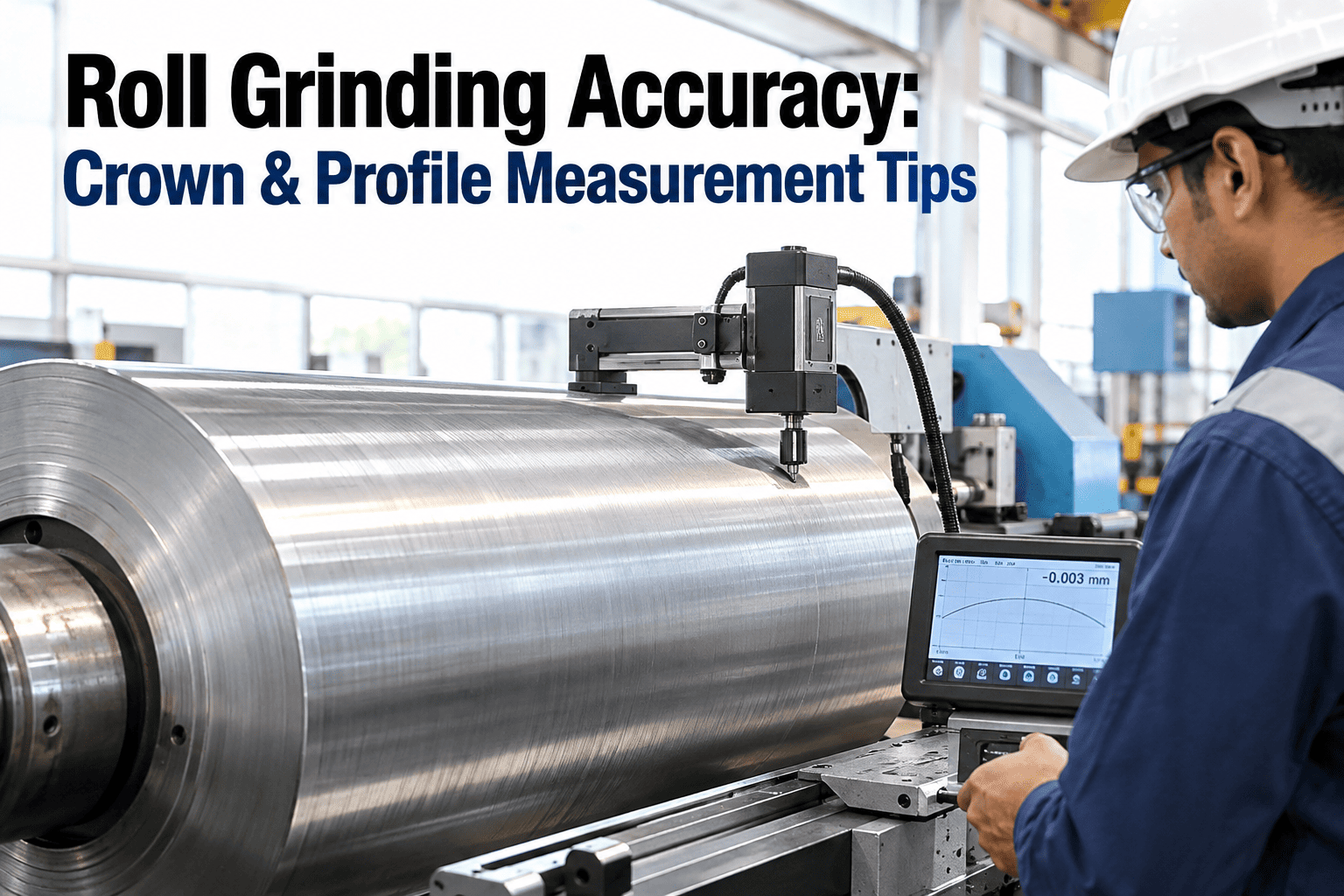
A roll's crown profile is a curve measured in microns across a body that can be several meters long, and the difference between a profile that produces flat, uniform strip and one that produces edge waves or center buckle often comes down to devia
Read More
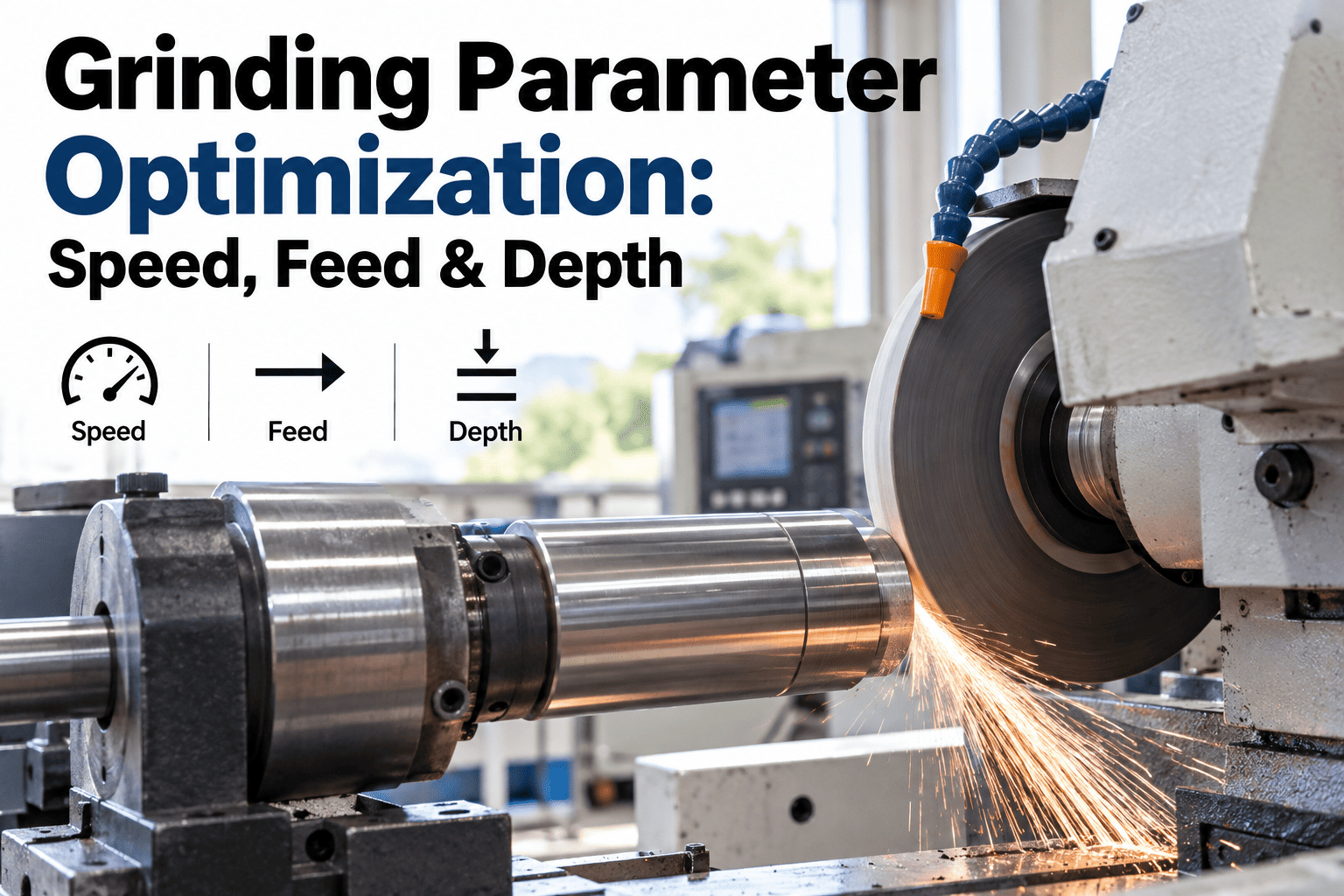
Wheel speed, traverse rate, depth of cut, and coolant flow do not operate independently on a roll grinder — they form a connected system where changing one without adjusting the others predictably degrades either surface finish or dimensional accu
Read More
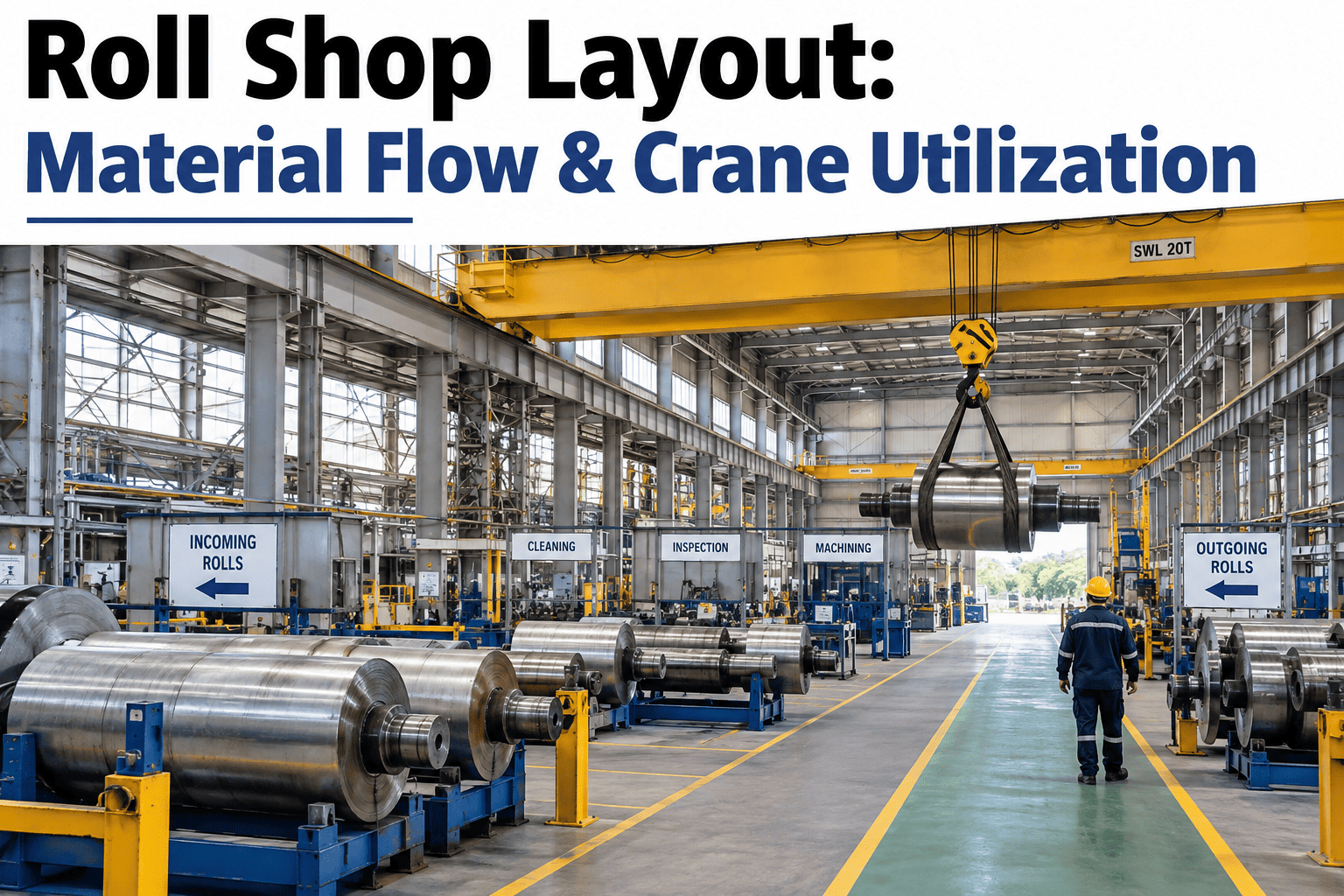
A roll shop's downtime numbers often have less to do with grinding technique than with how far a roll has to travel between the dock, storage, the grinder, and back out to the mill, and a shop that never questioned its original layout is frequentl
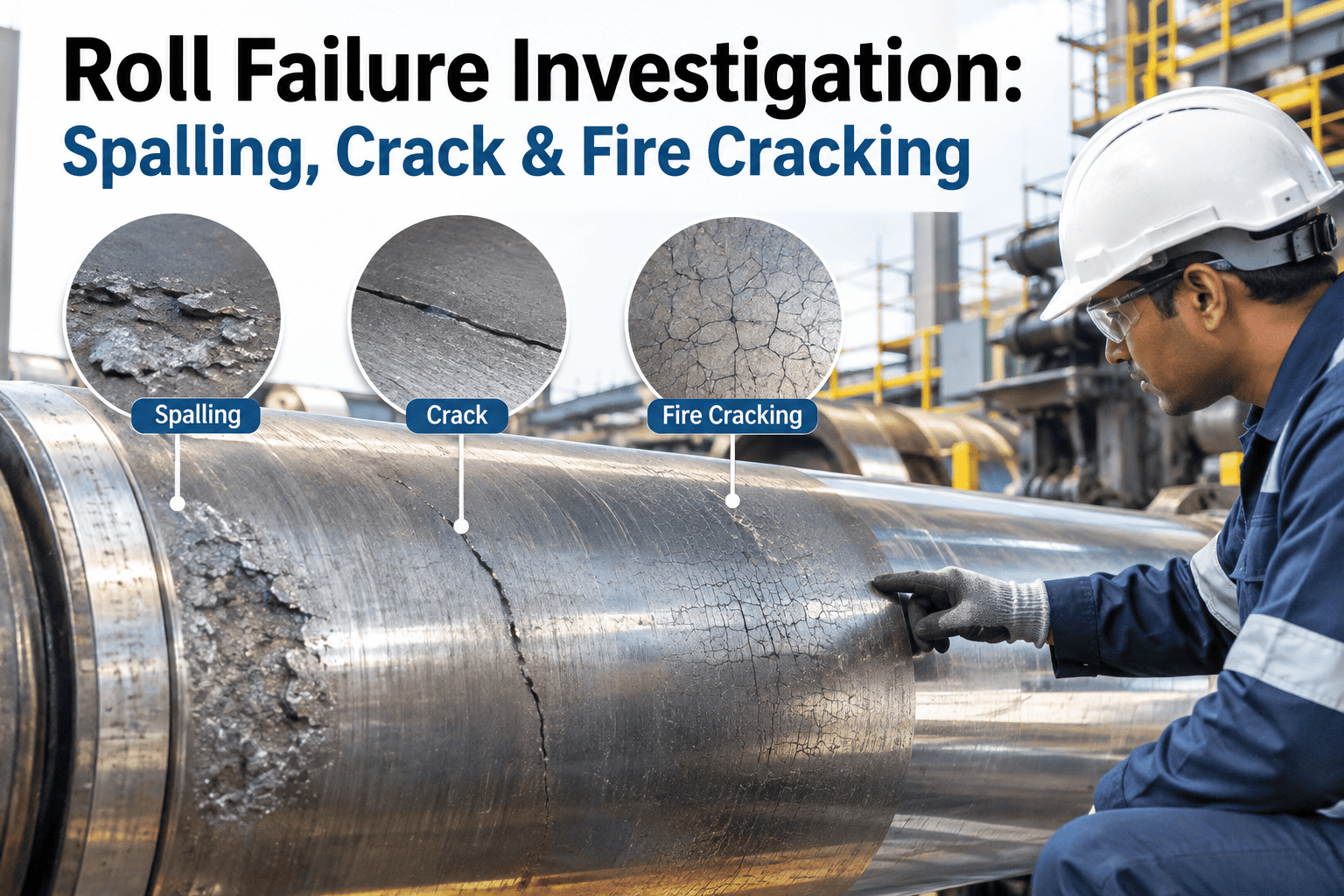
Read More
When a work roll fails in service, the immediate pressure is always to get a replacement roll running and the mill back up, and that urgency is exactly what causes so many roll failure investigations to stop at a surface-level description — spalli
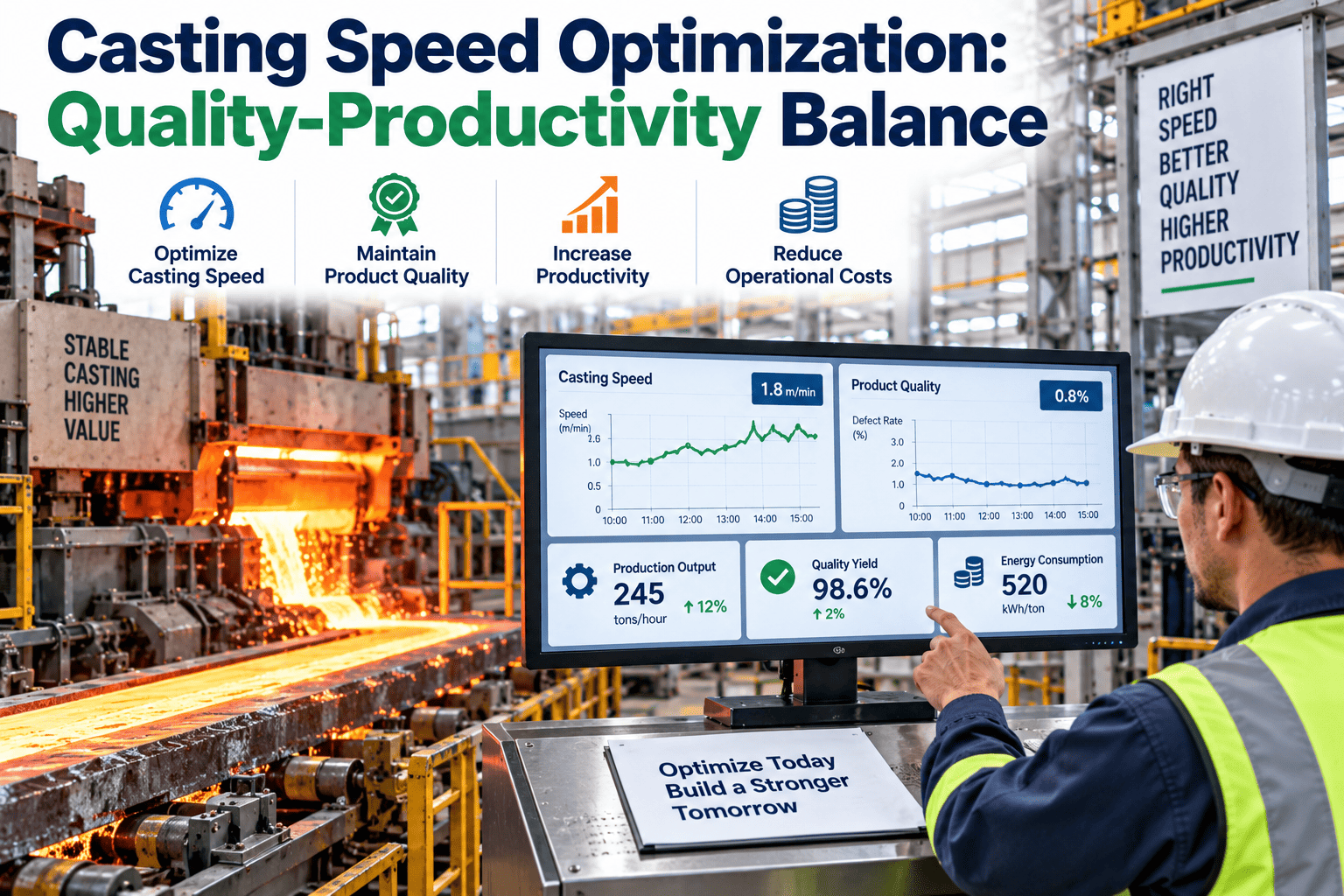
Read More
Ask a caster operator why casting speed is set where it is, and the honest answer is often "that's what it's always run at" rather than a calculation tied to the actual limiting factor for today's grade, width, and mold condition. Casting speed is
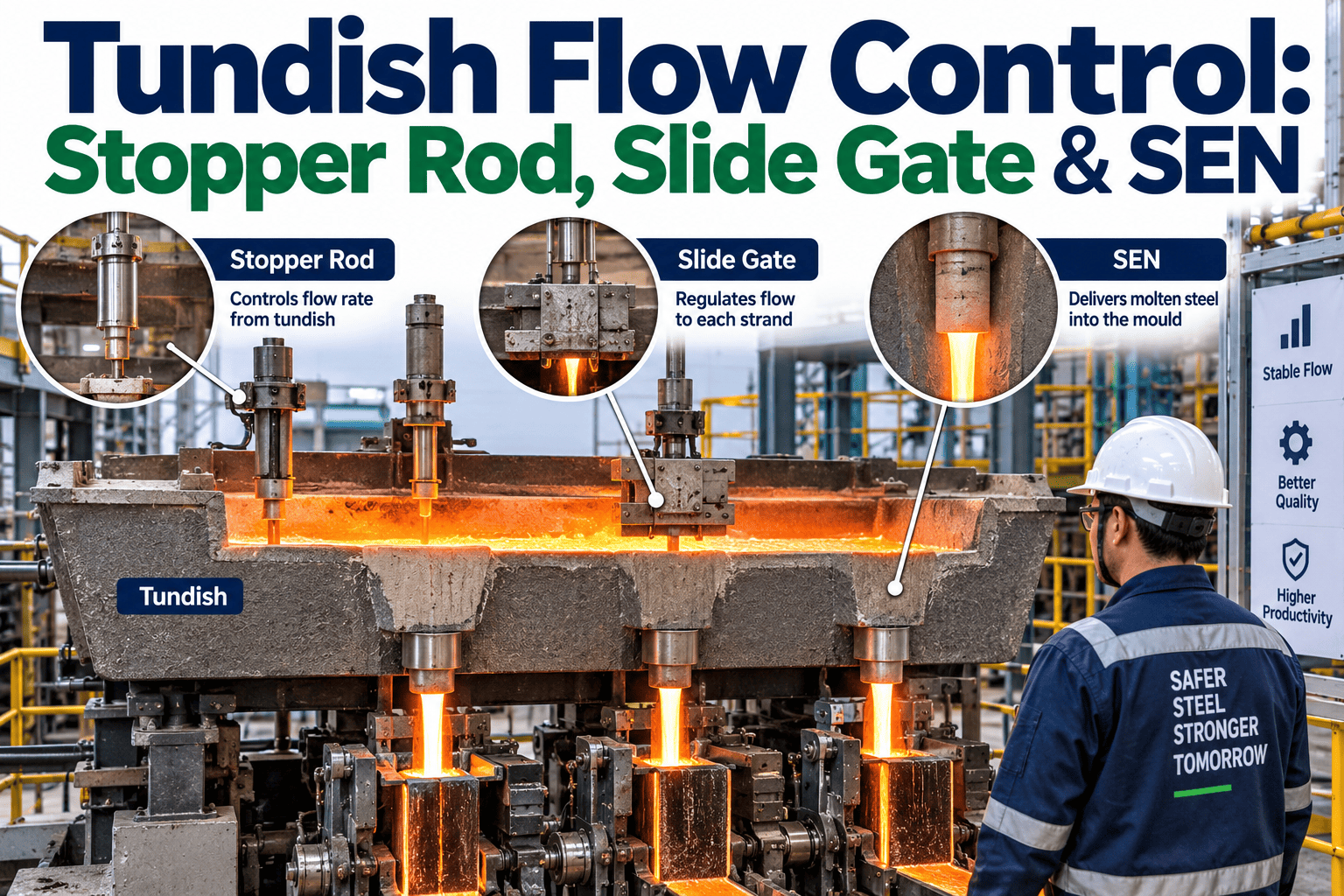
Read More
Every drop of steel that reaches the mold passes through three flow control points on the way — the tundish outlet, the stopper rod or slide gate that regulates it, and the submerged entry nozzle that delivers it into the mold cavity. None of thes
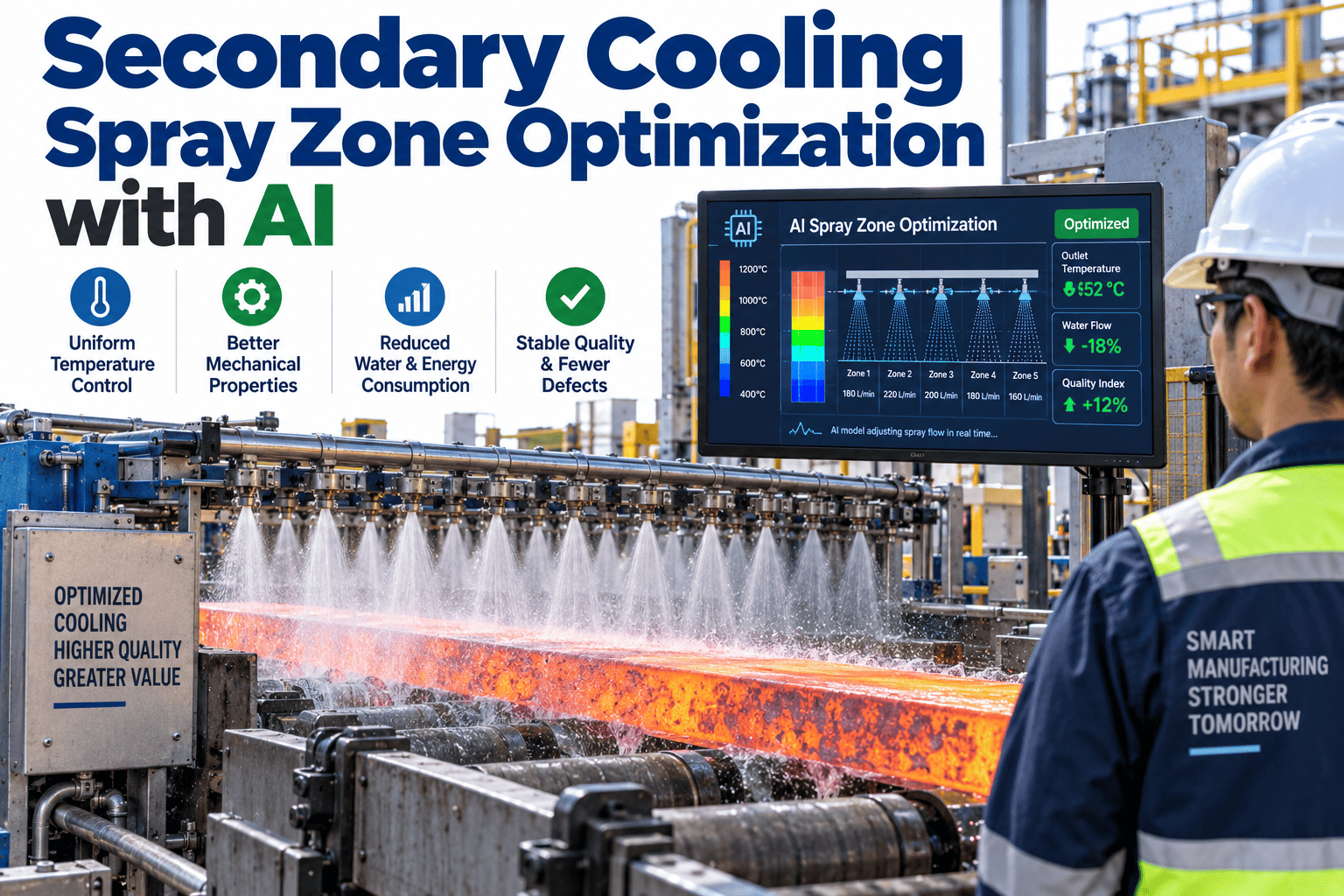
Read More
Secondary cooling removes roughly 80% of the heat from a solidifying strand, yet most casters still set spray water flow using fixed zone-level tables designed once at commissioning and rarely revisited against actual grade mix or casting speed. T

Read More
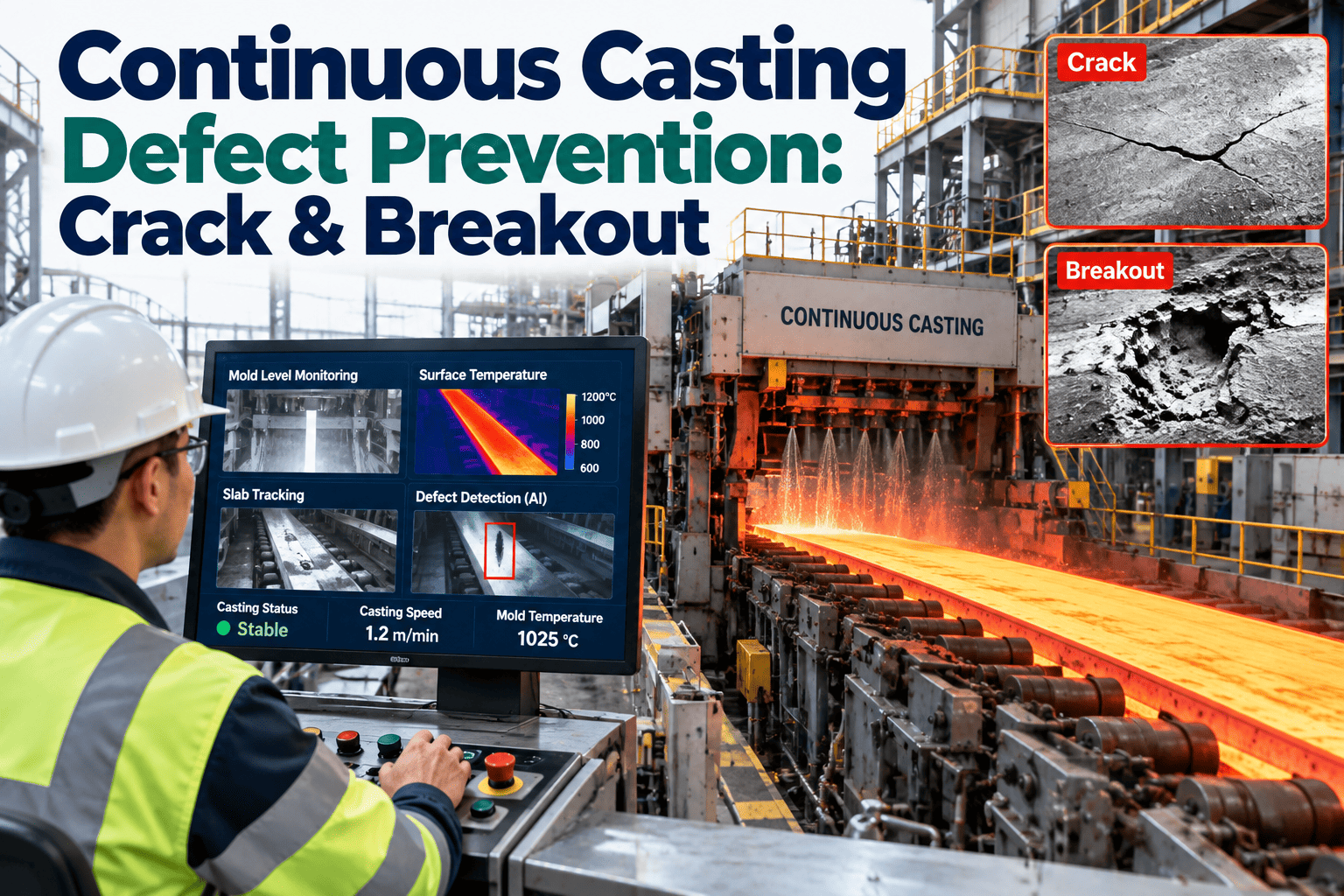
A continuous casting mold is where the entire quality outcome of a cast strand gets decided in the first few seconds of solidification, and three variables working together determine whether that outcome is clean steel or a slab full of subsurface
Read More
Every crack in a continuously cast slab, bloom, or billet traces back to the same physical event: the solidifying shell was thinner, hotter, or under more stress than it could tolerate at that exact point in the mold or cooling zone. Surface crack
Read More
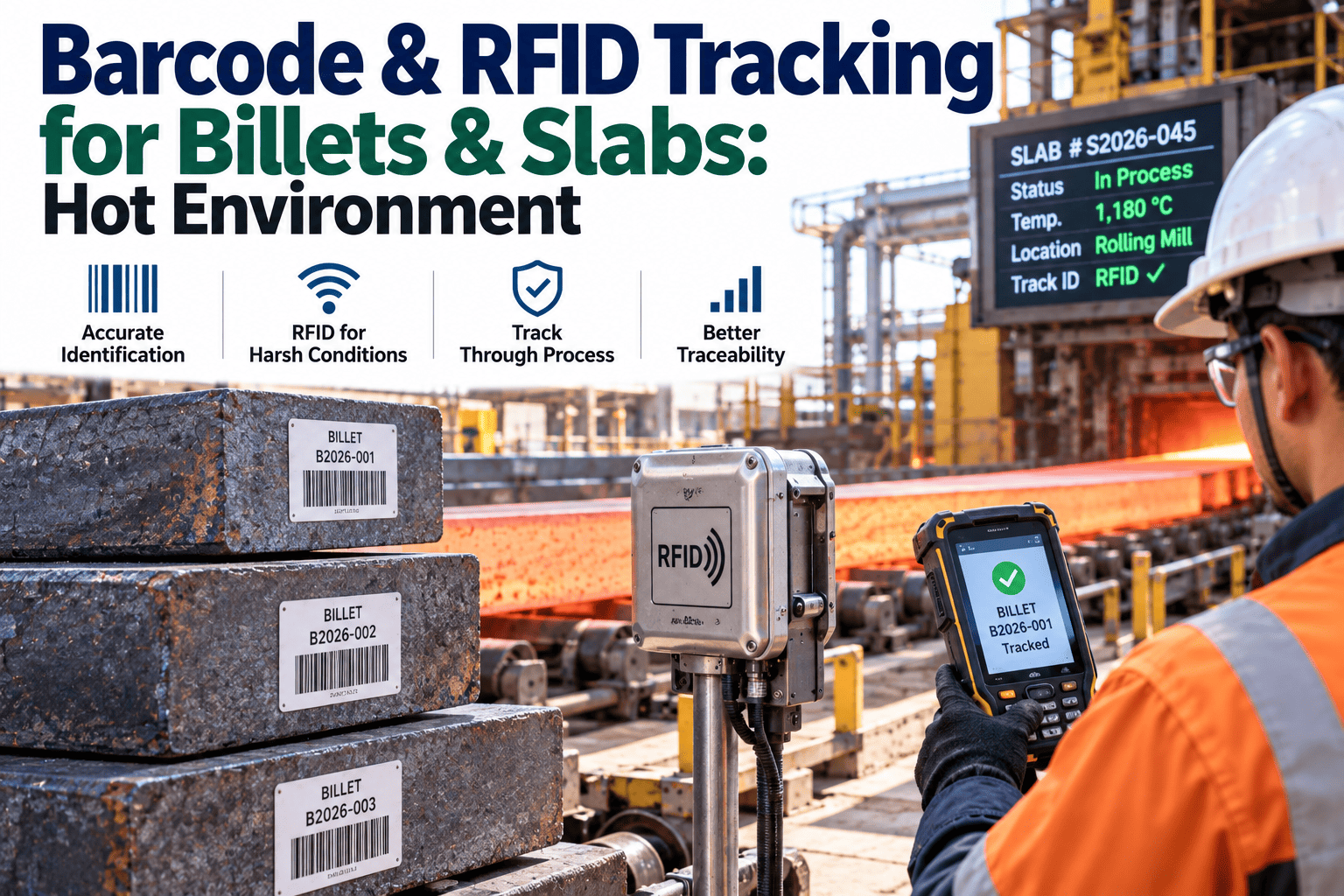
A billet coming off the reheating furnace can carry surface temperatures well past what a standard barcode label or an off-the-shelf RFID tag was ever built to survive, which is exactly why so many hot-product tracking systems fail right at the po

Read More
A mill test certificate pulls together chemical composition, mechanical properties, dimensional data, and heat identity into a single document a customer relies on to verify what they're actually receiving. Assembling that document manually means

Read More
A steel plant's automation hierarchy has a well-defined gap right where it matters most: Level 1 controls the equipment, Level 3 runs the business, and the layer in between — the one that's supposed to connect production data to material flow to q
Read More
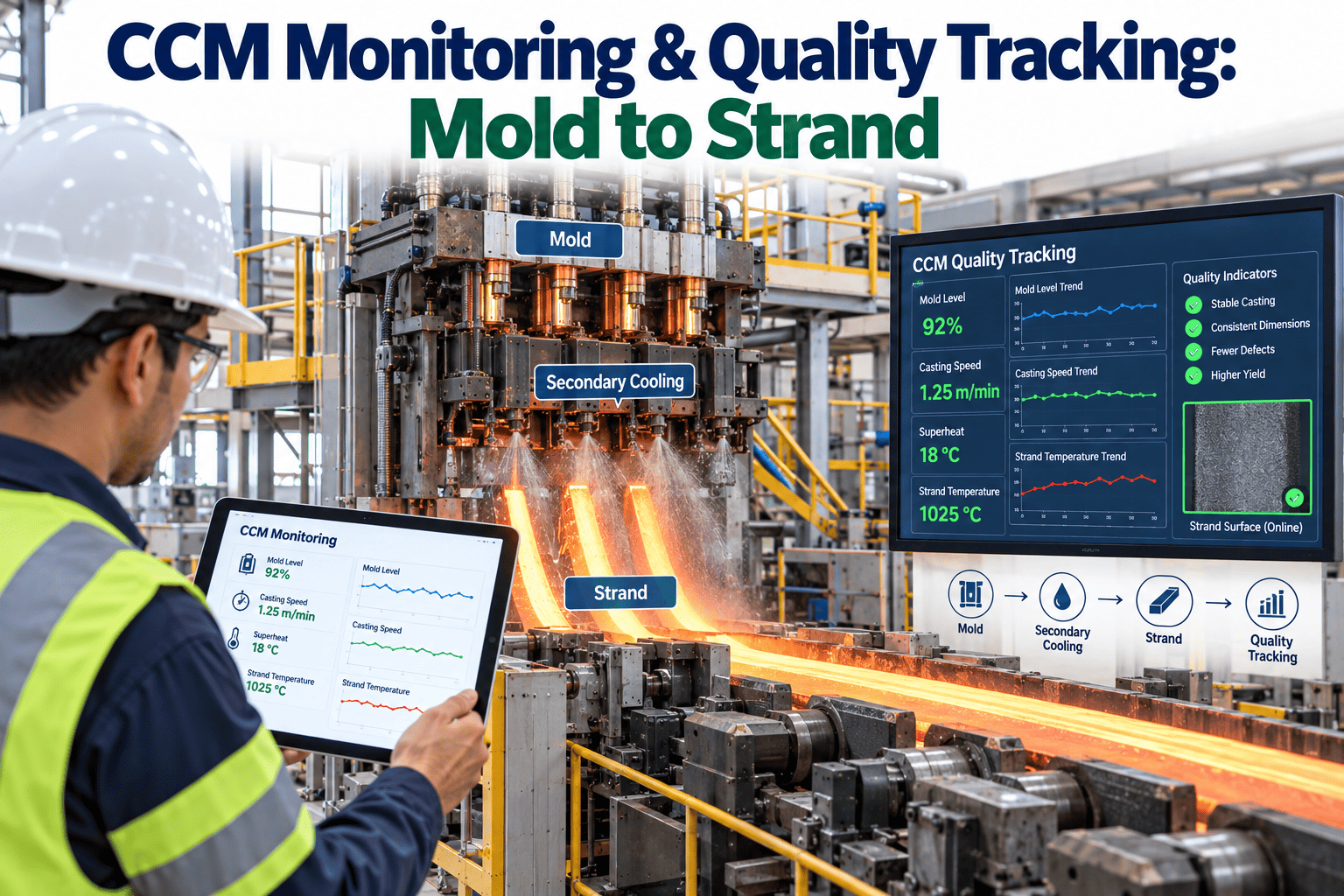
Every casting defect traces back to a moment in the continuous casting machine where a parameter drifted outside its window and nobody caught it in time. Mold level fluctuating by a few millimeters during a grade change, casting speed pushed sligh

Read More
A rebar bundle leaves the rolling mill looking almost identical to every other bundle of the same size sitting on the same rack, which is exactly the problem the moment a customer calls asking which heat their delivery came from. Without a marking

Read More
Chemical composition is the property every other steel property ultimately depends on — carbon content shapes hardenability, alloying elements set corrosion resistance and strength, and trace elements can determine whether a heat passes or fails a

Read More
A steel sample can pass every chemical composition and mechanical property test and still hide a microstructural problem — an unexpected phase, an oversized grain, or an inclusion pattern — that only becomes visible once a polished, etched section
Read More
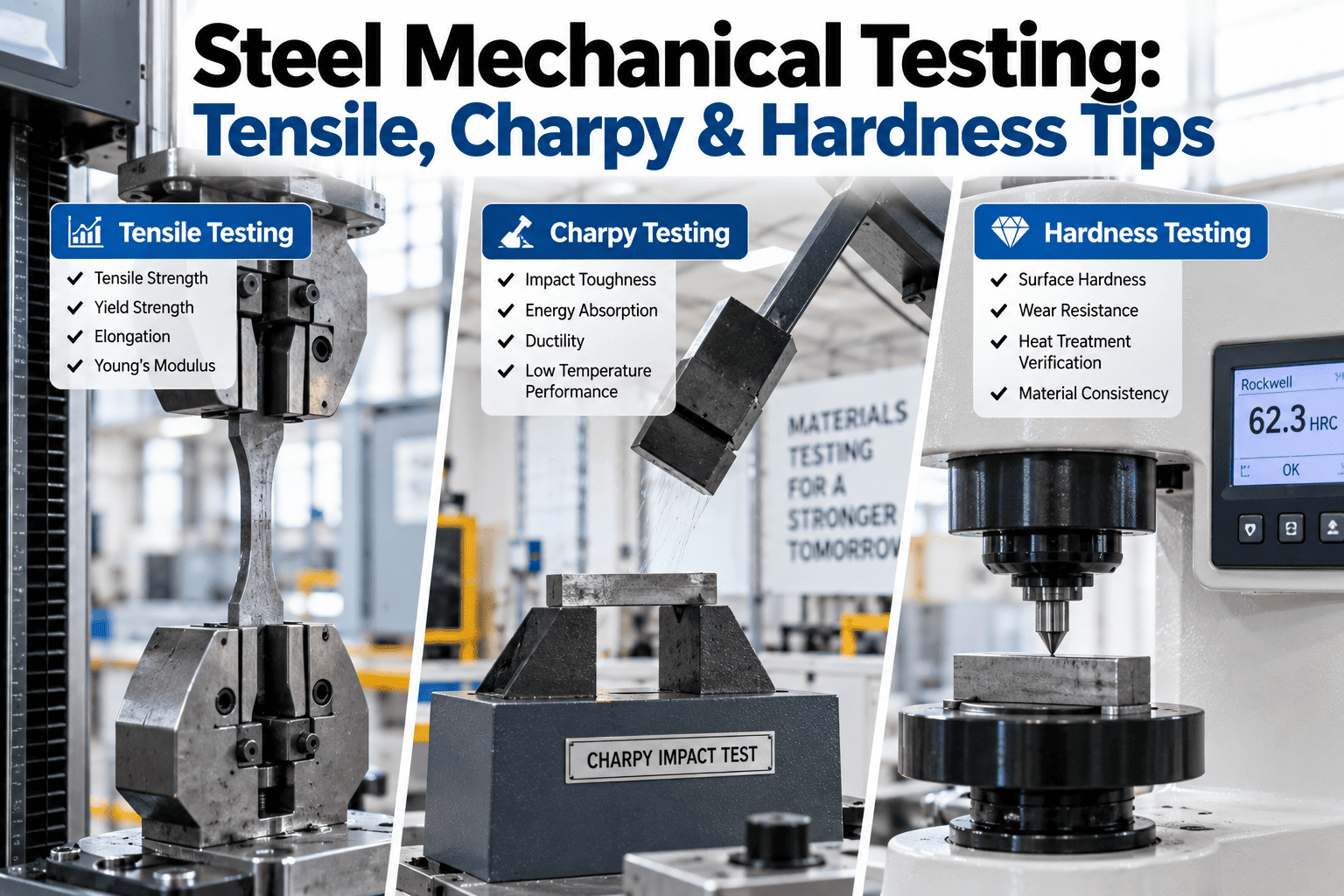
A mechanical test certificate is the document that tells a customer whether the steel they bought will actually behave the way the specification promised once it is welded, formed, or put into service under load, and getting tensile, Charpy impact
Read More
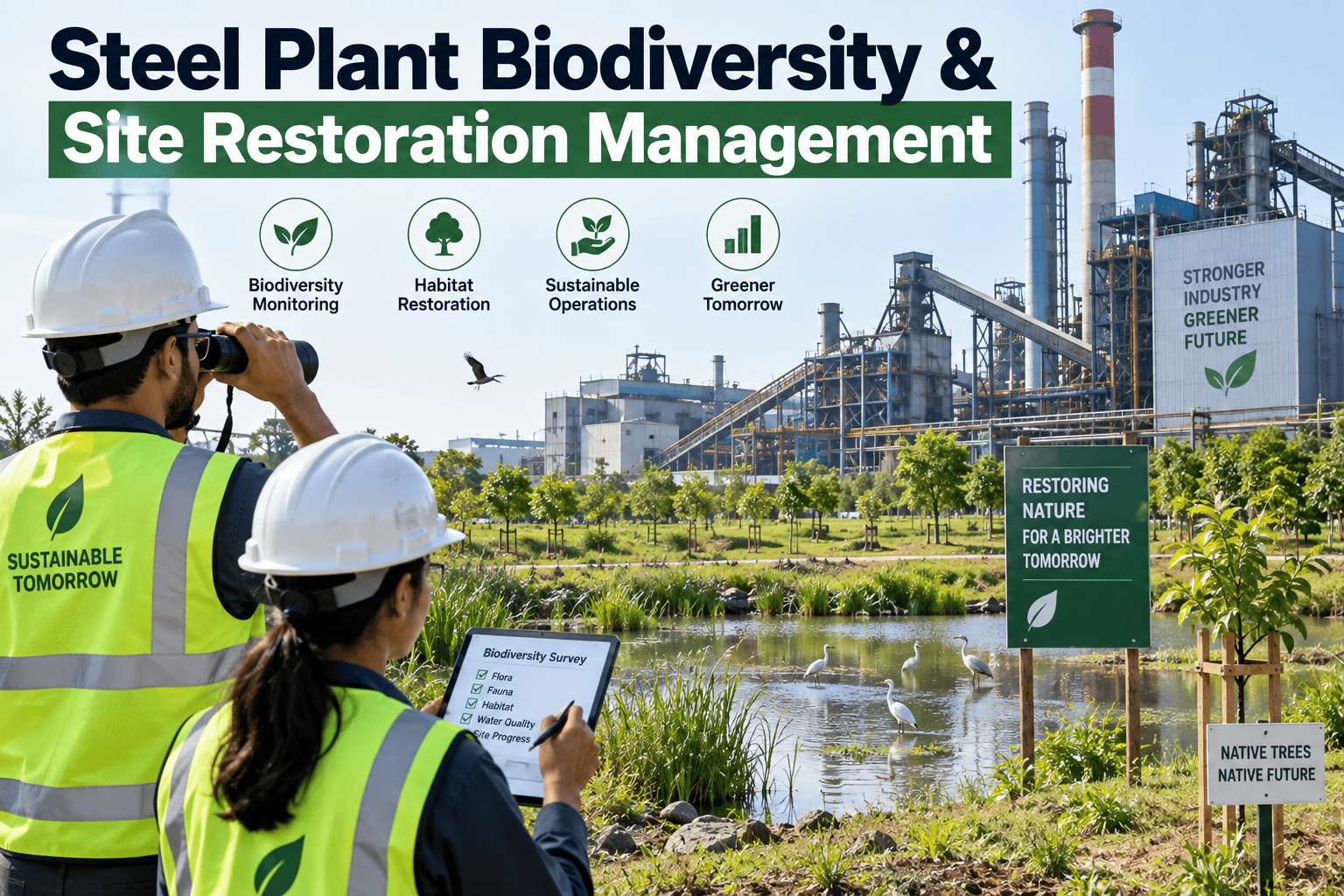
A steel plant's environmental footprint does not end at its emissions stack or effluent pipe — the land itself, the buffer zones, the green belts, and the eventual fate of the site once operations wind down are all part of the same environmental s
Read More
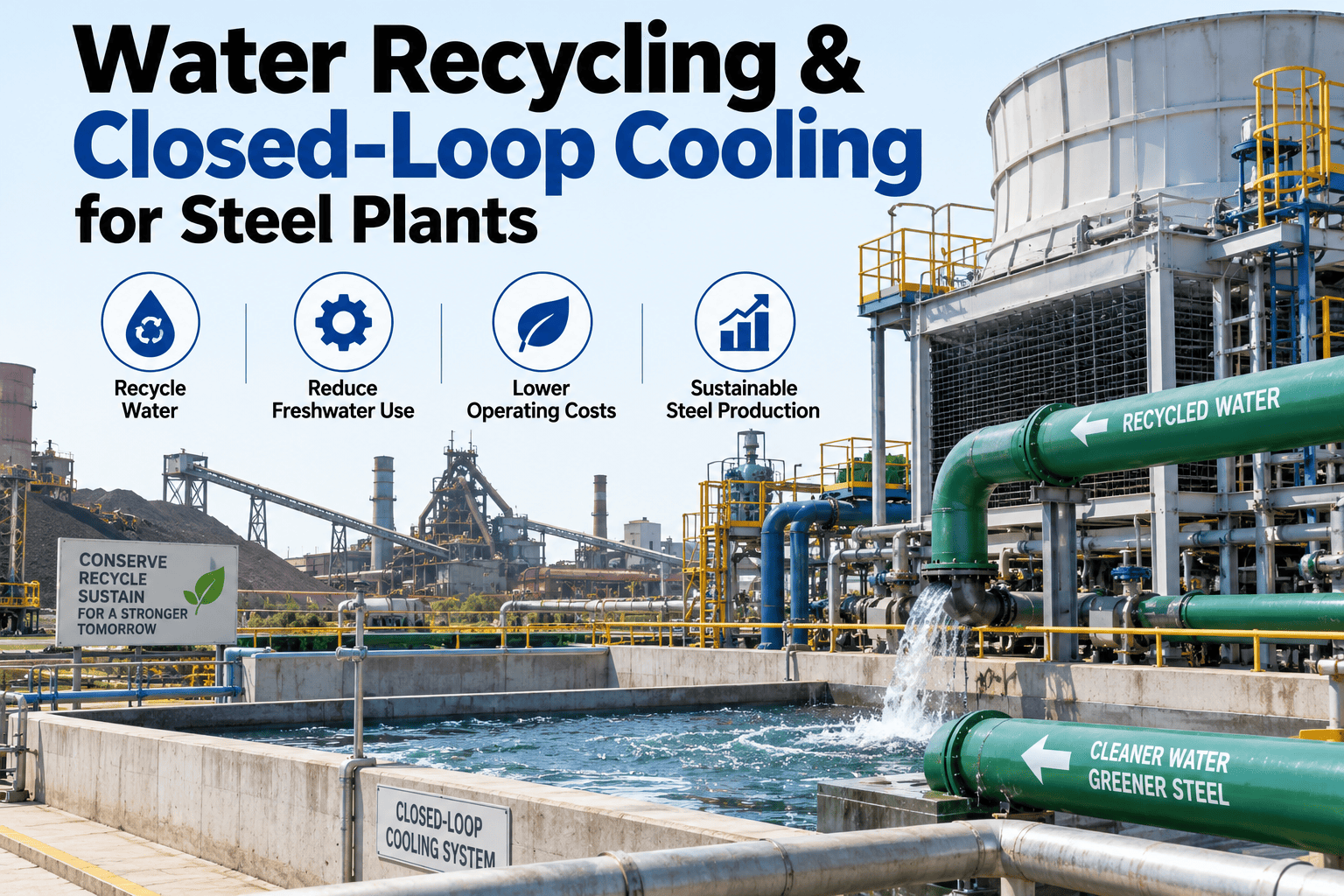
A steel plant's cooling water system can either be a linear drain on a scarce local resource or a closed loop that reuses the same water thousands of times over, and the difference between the two is almost entirely a matter of treatment train des

Read More
A life cycle assessment for a steel product is the exercise of tracing every environmental input and output the product is responsible for, from the ore and scrap that entered the process to what happens once the product is finally retired, and co
Read More
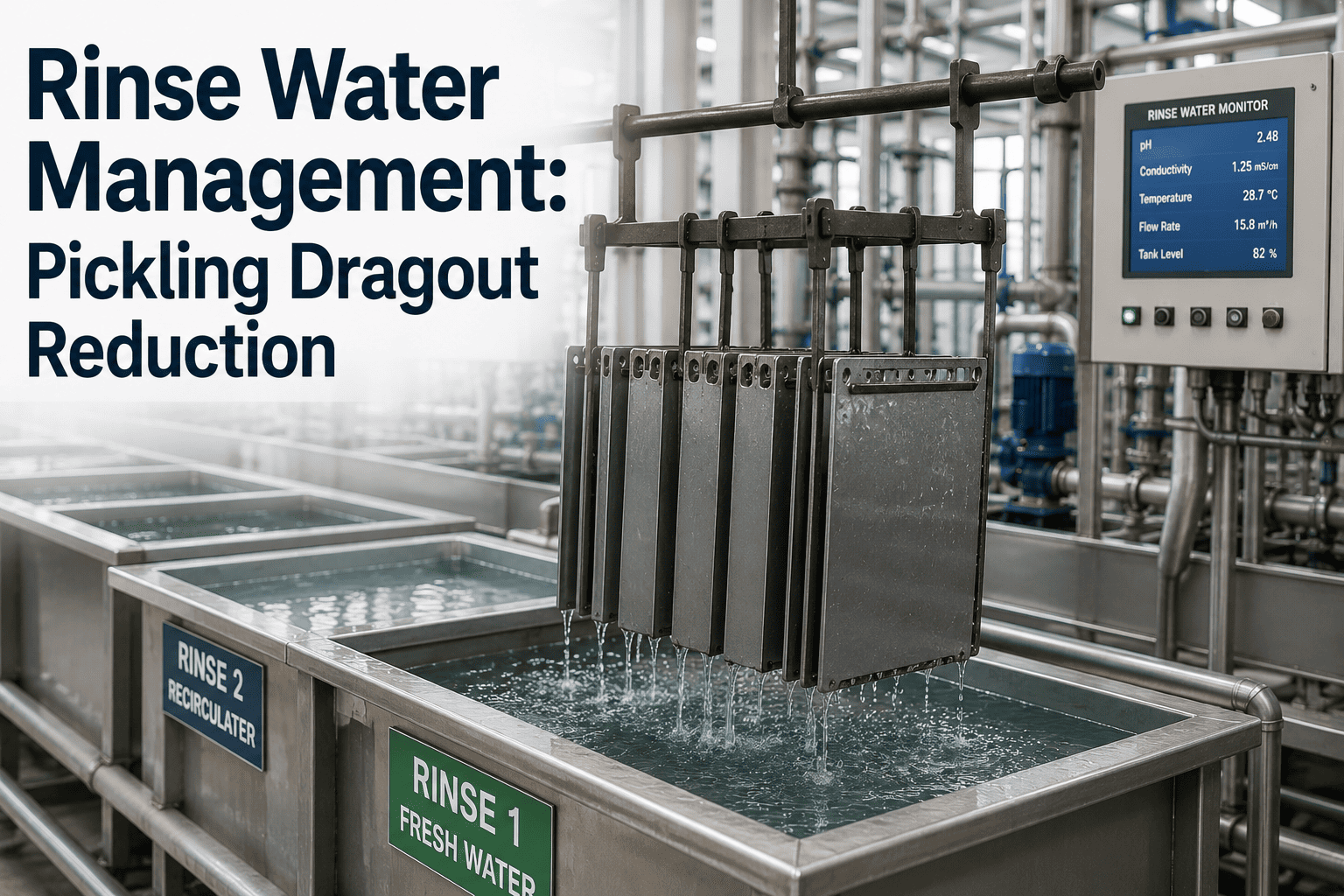
Every meter of strip that leaves a pickling tank carries a thin film of acid with it, and what happens to that film in the rinse stages downstream determines two things at once: whether the strip surface is actually clean before it moves to the ne
Read More
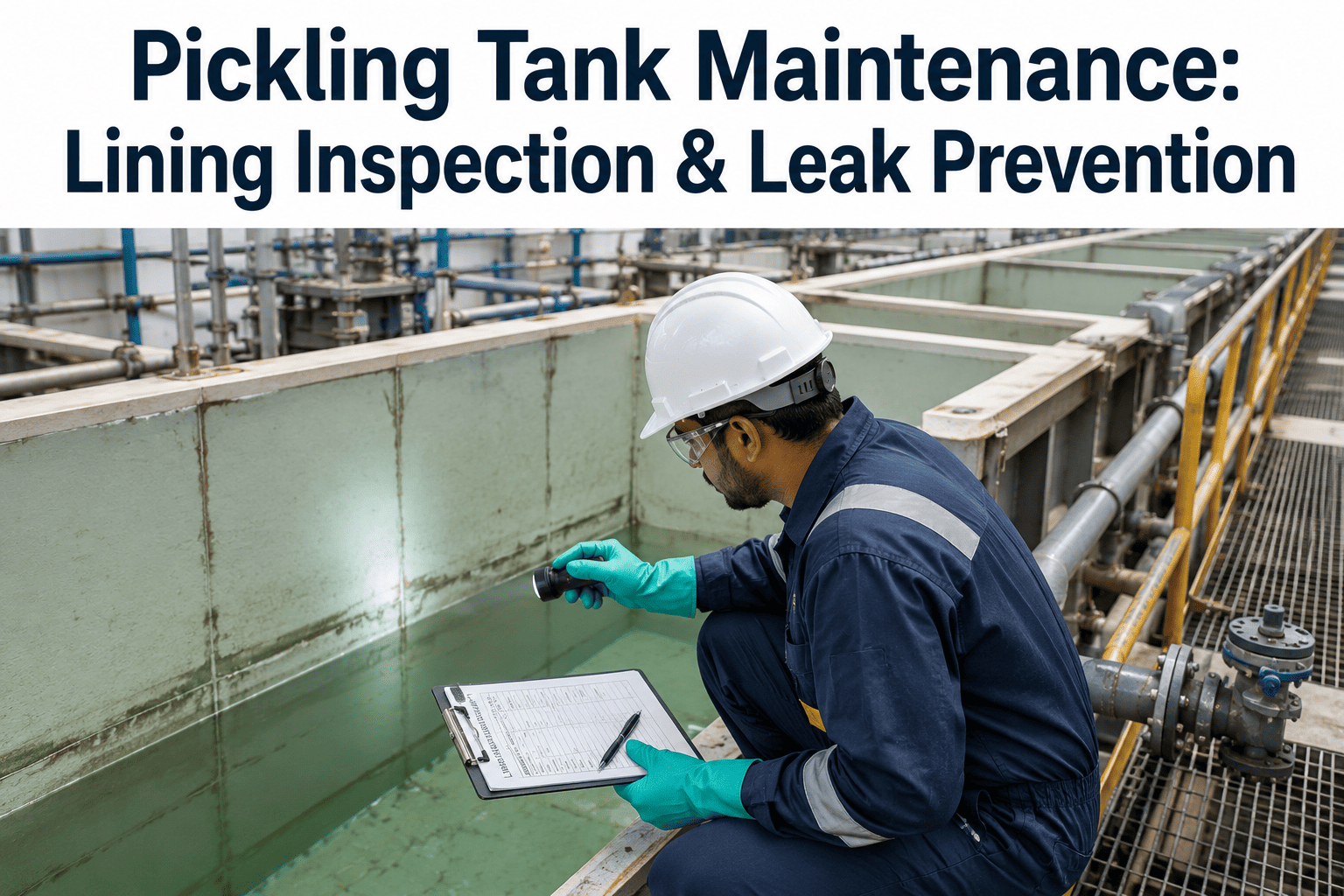
A pickling tank failure is rarely sudden — it is the end point of a lining degradation process that has usually been visible for weeks or months to anyone doing a proper inspection, which is exactly why the plants that never have an acid leak inci
Read More
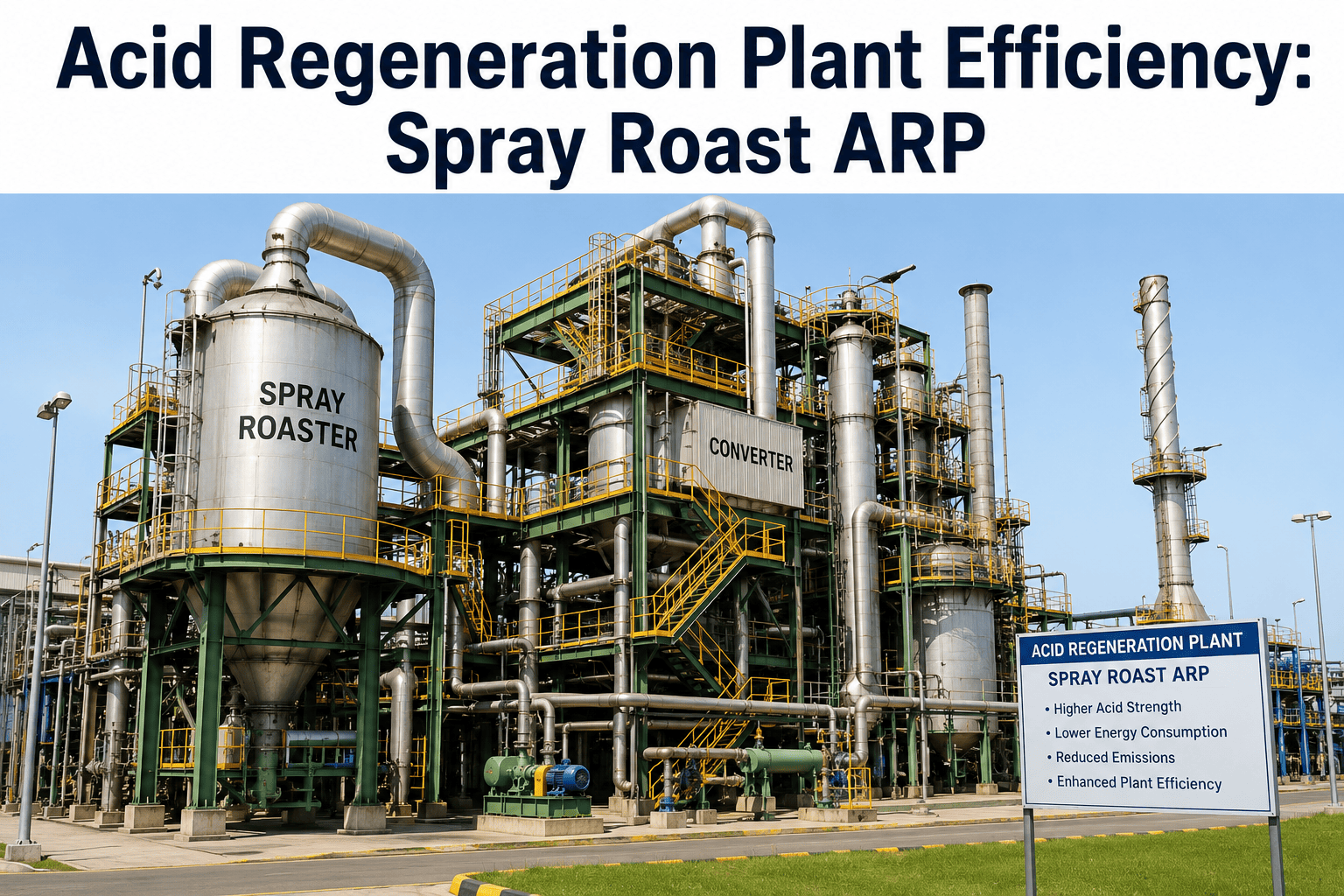
An acid regeneration plant is the piece of equipment that turns pickling from a consumable-heavy process into something close to a closed loop, taking spent hydrochloric acid loaded with dissolved iron and giving back usable acid plus a saleable i
Read More
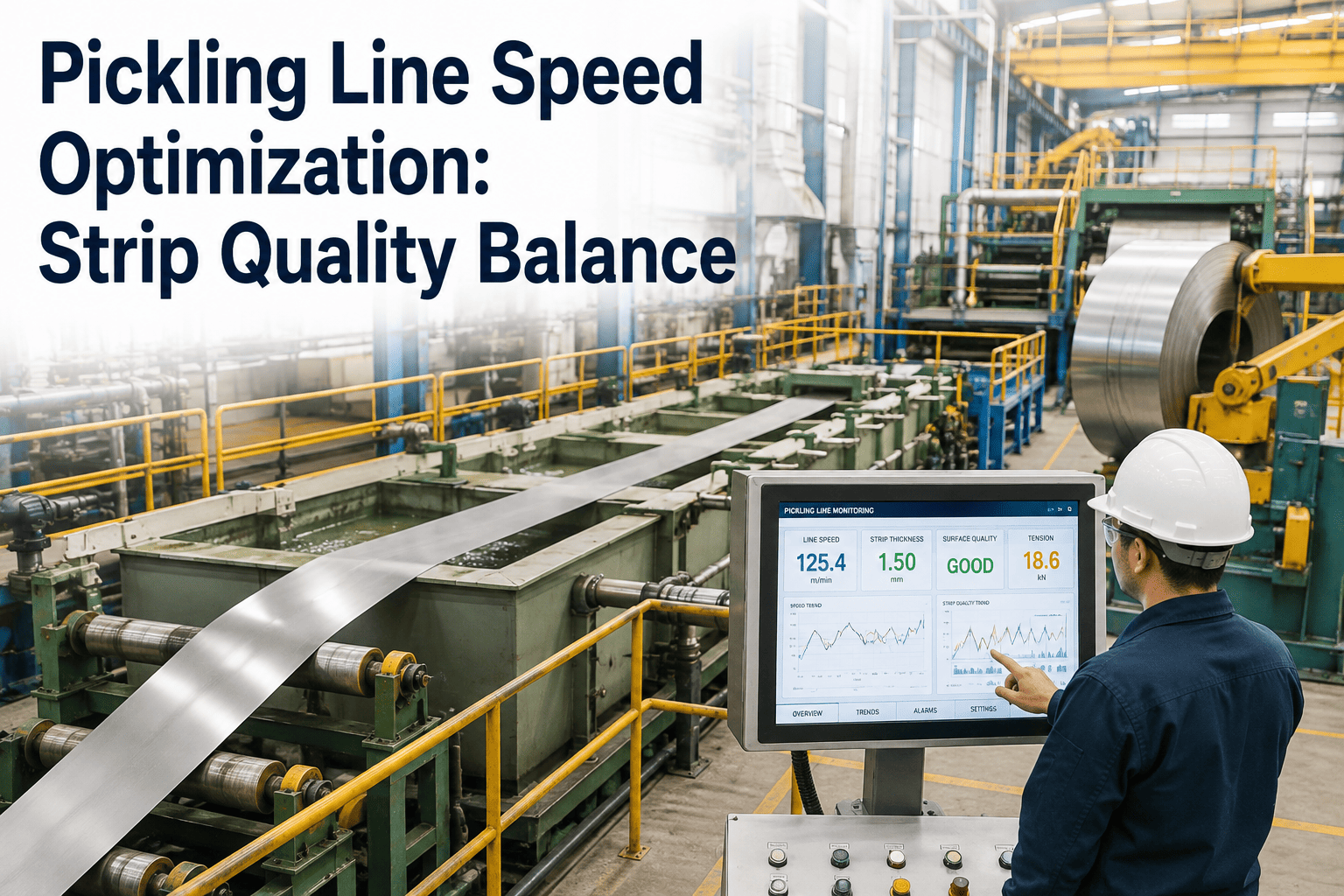
Every pickling line operator eventually faces the same tension: push line speed higher and throughput improves, but push it too far and strip starts coming off the line with residual scale, streaking, or an over-pickled surface that fails downstre
Read More
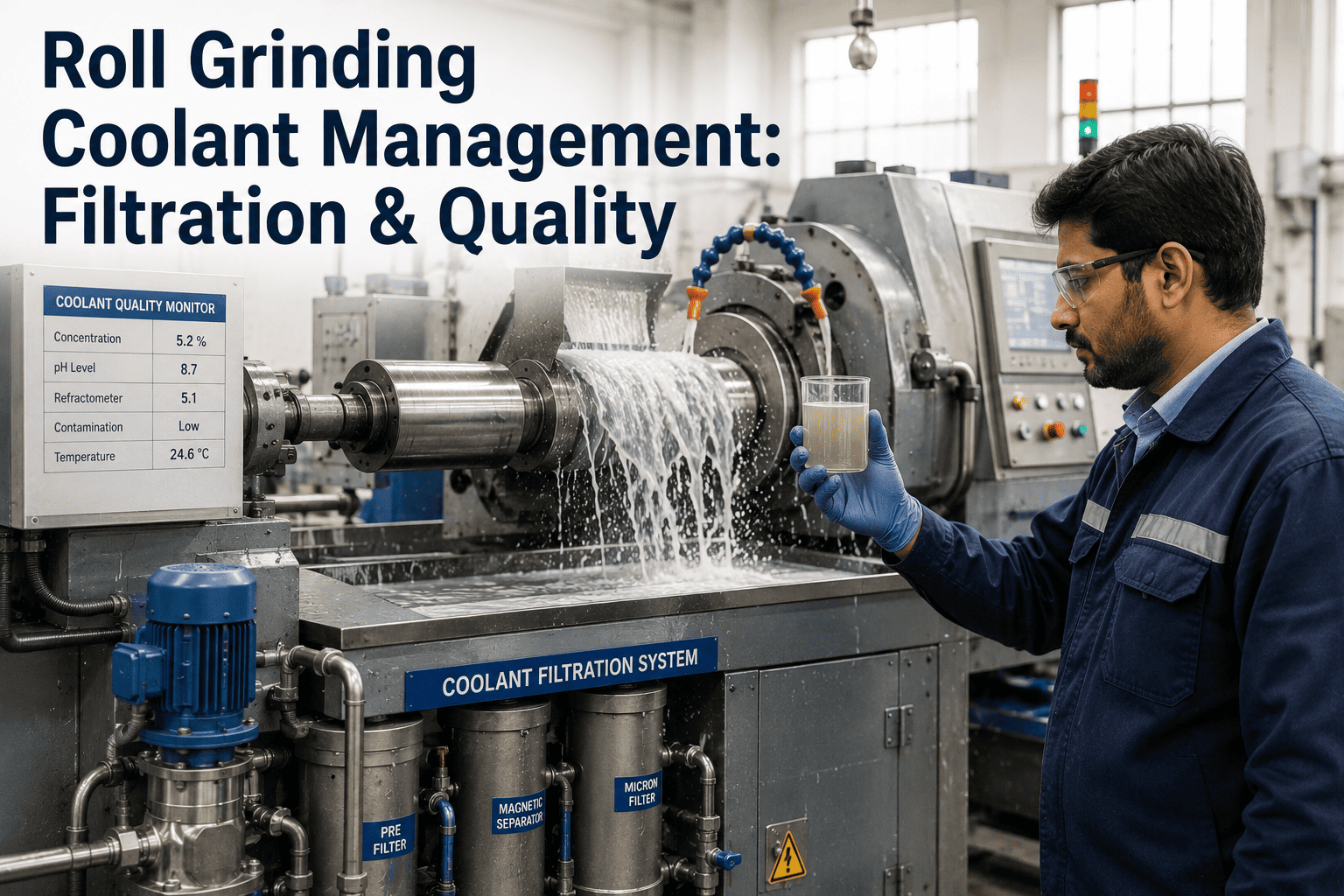
Roll grinding is only as precise as the coolant flowing across the wheel-to-roll interface, and most grinding shops discover this the hard way — through chatter marks, thermal cracking, or a roll that fails surface finish inspection after a full s
Read More
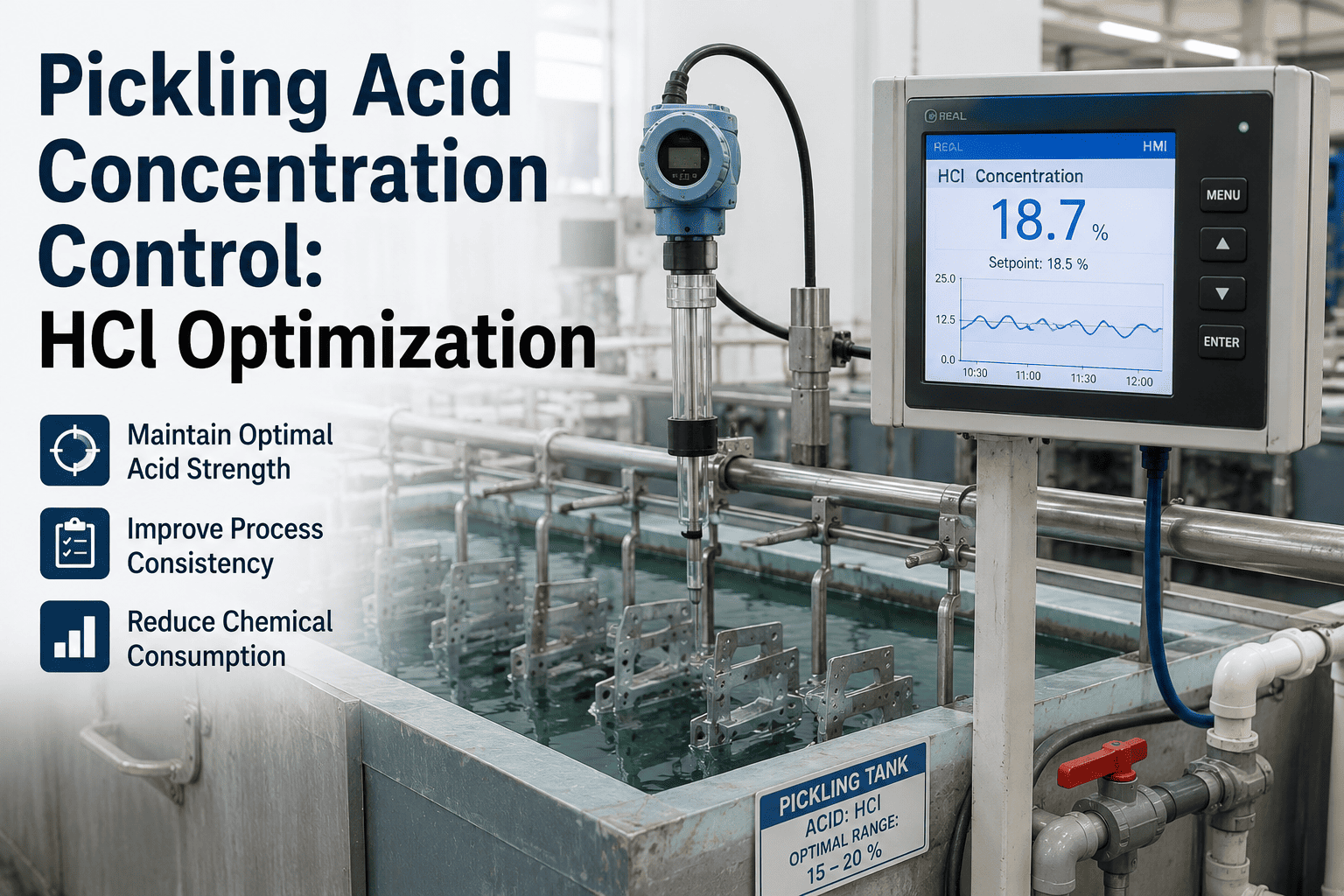
An HCl pickling bath does not fail all at once — it drifts, batch after batch, as fresh acid is consumed and dissolved iron builds up in solution, until a line that was cutting clean scale on Monday starts leaving streaks and under-pickled patches
Read More
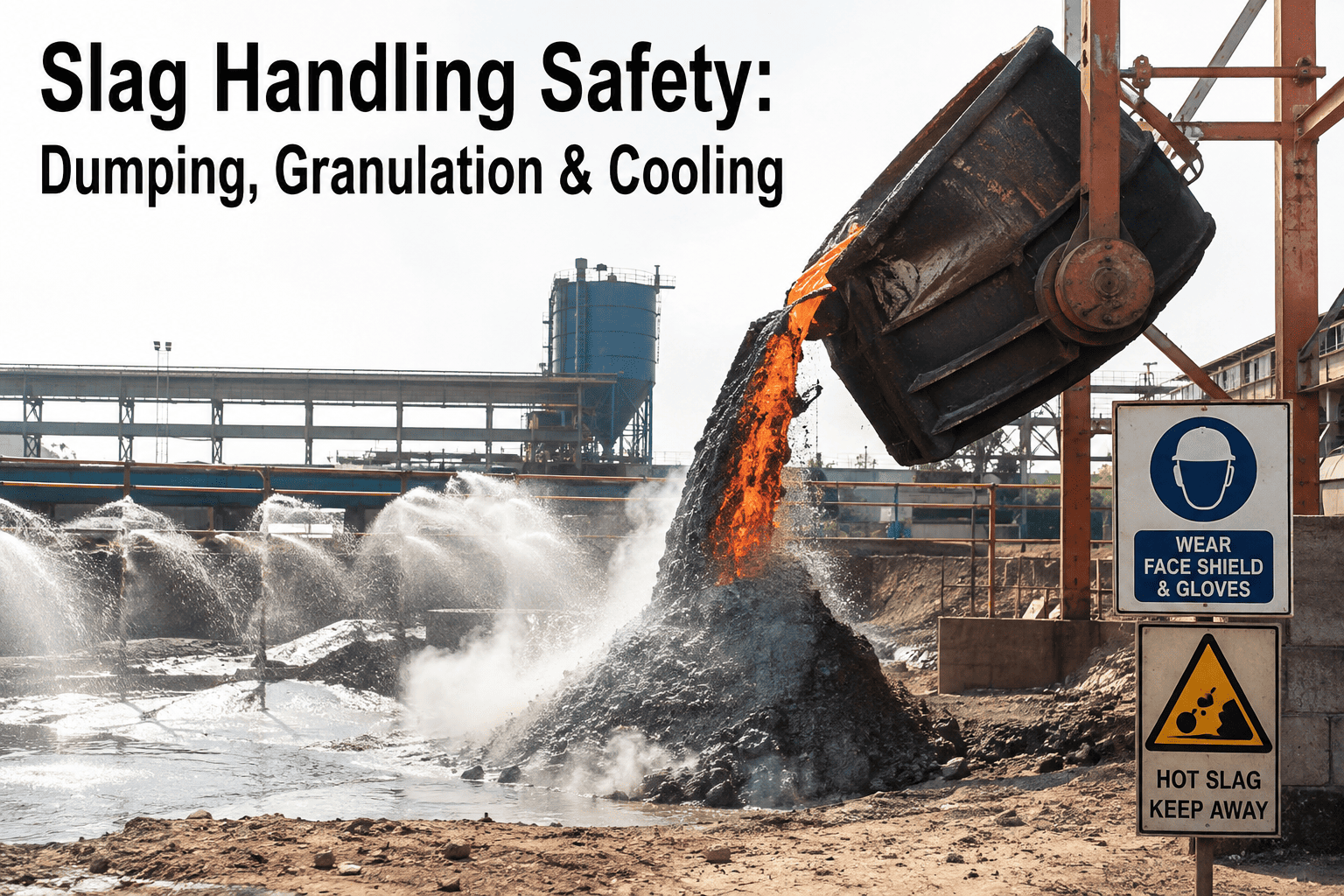
Slag looks like waste, which is exactly why it tends to get less rigorous safety oversight than the molten metal it came from, even though a slag pot mishandled during dumping, an uncontrolled reaction during granulation, or a stockpile that has n
Read More
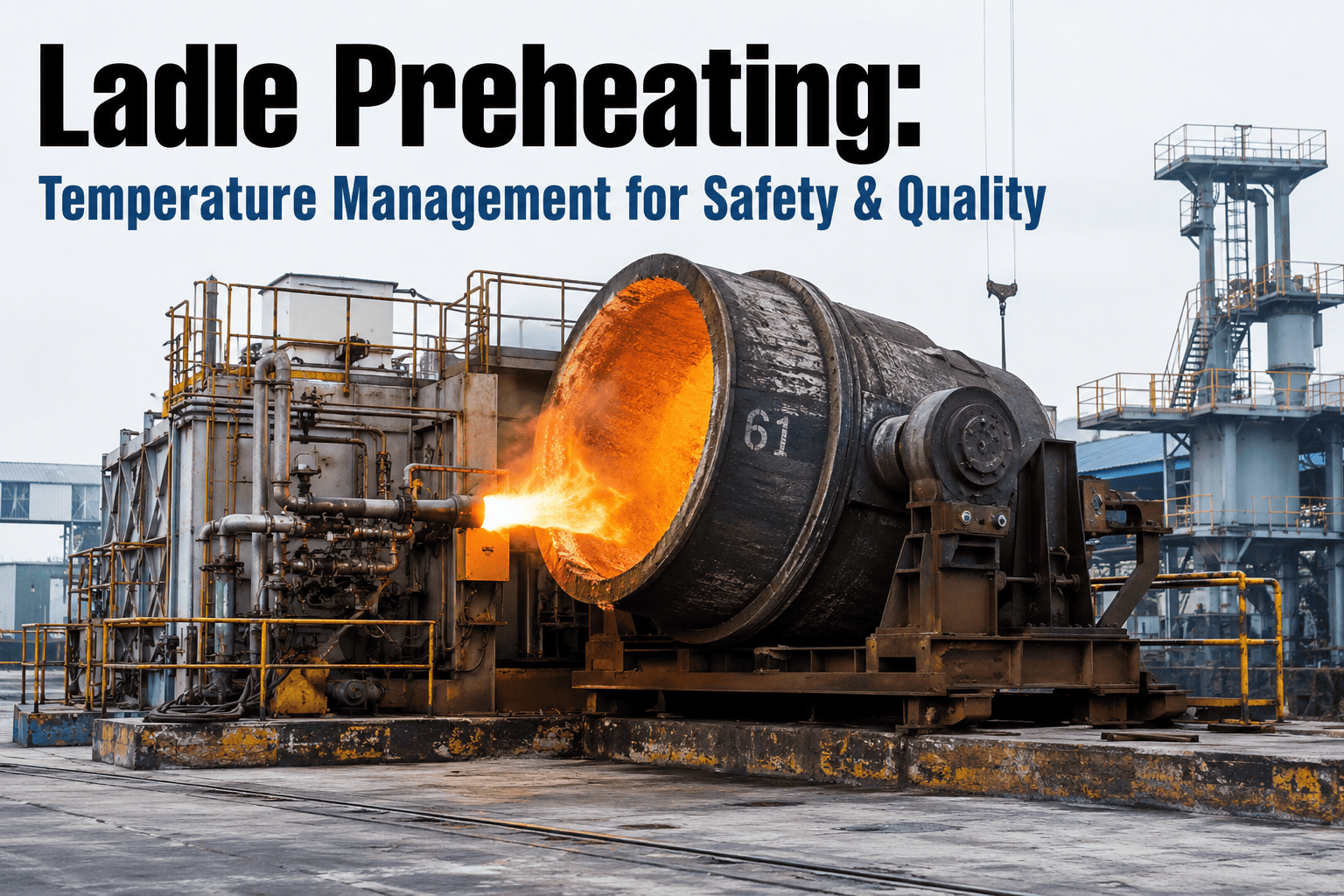
A ladle that goes into service too cold does not just risk a safety event, it also changes the steel it carries, since a lining that has not reached its target temperature pulls heat out of the melt faster than the process was designed to tolerate

Read More
Standard heat-resistant clothing is built to survive radiant heat exposure, and molten metal splash is a completely different hazard that many PPE selection decisions still treat as the same problem. A garment rated well for standing near a furnac
Read More
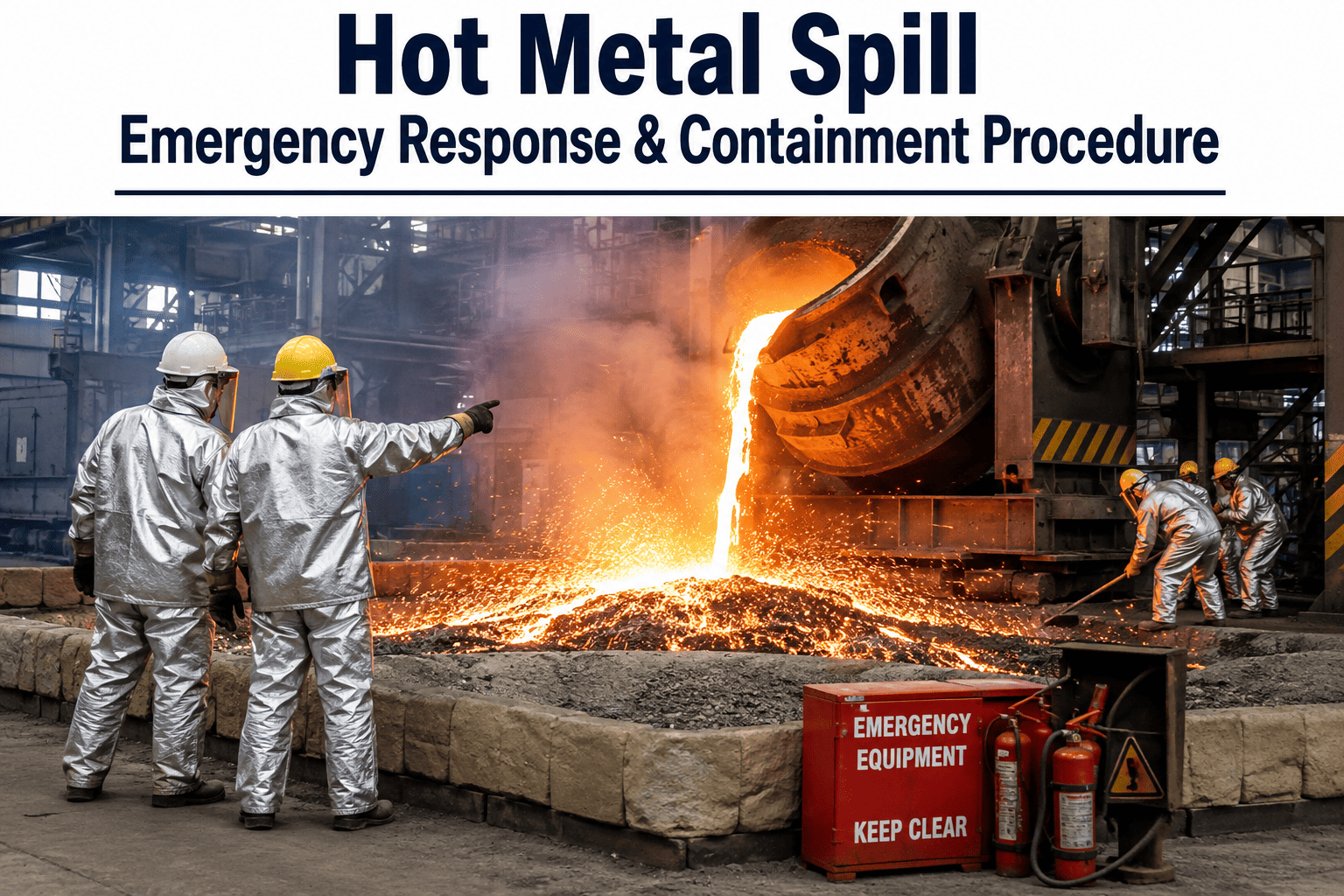
The first ninety seconds after a hot metal spill decide most of what happens next, and yet most emergency response procedures are written and rehearsed as if there is time to think through the situation calmly before acting. A ladle crack, a torpe
Read More
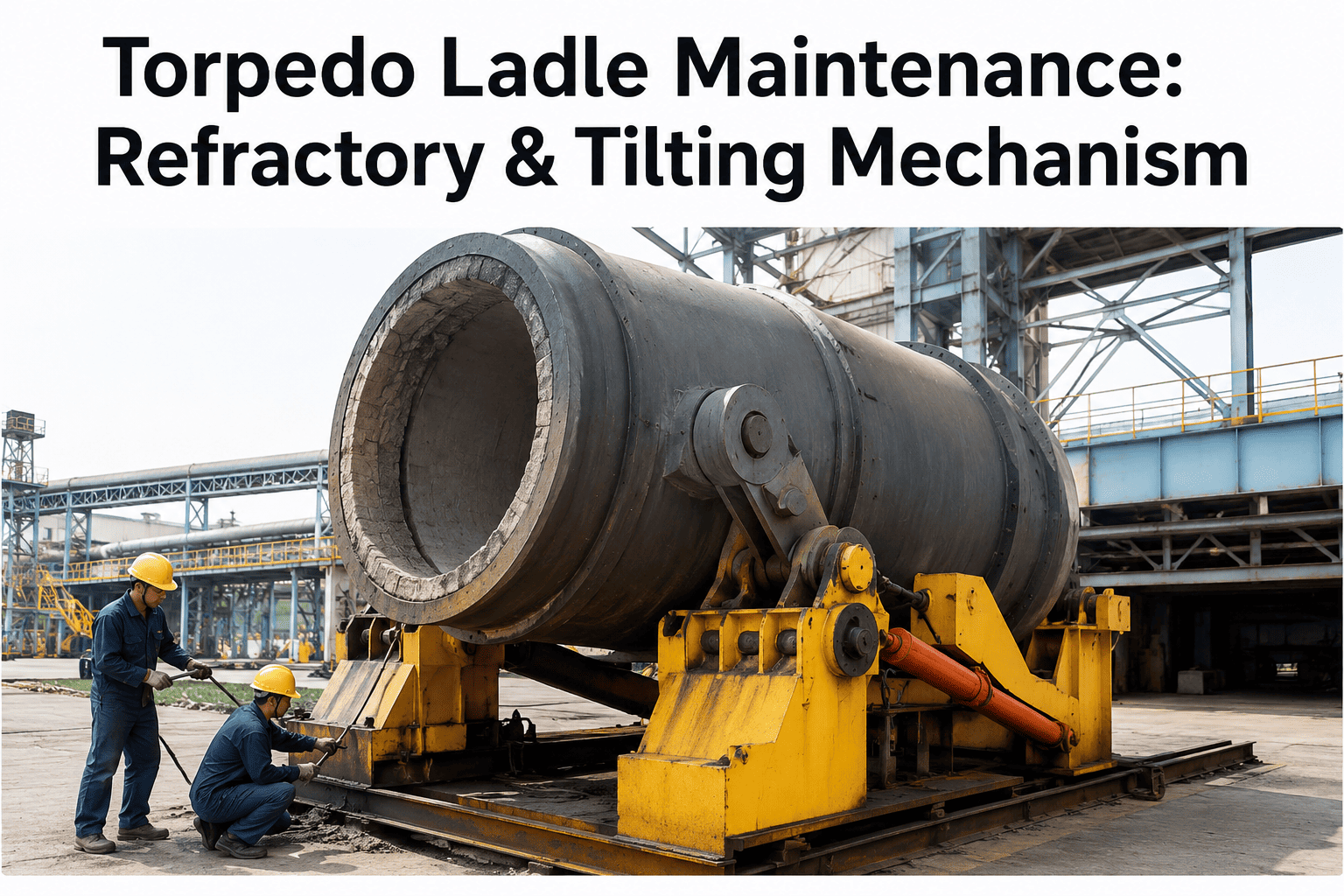
A torpedo ladle car that ruptures its refractory lining mid-transfer, or a tilting mechanism that seizes under a full load of hot metal, does not fail quietly. It fails in front of a crew standing next to several hundred tons of liquid iron, which
Read More
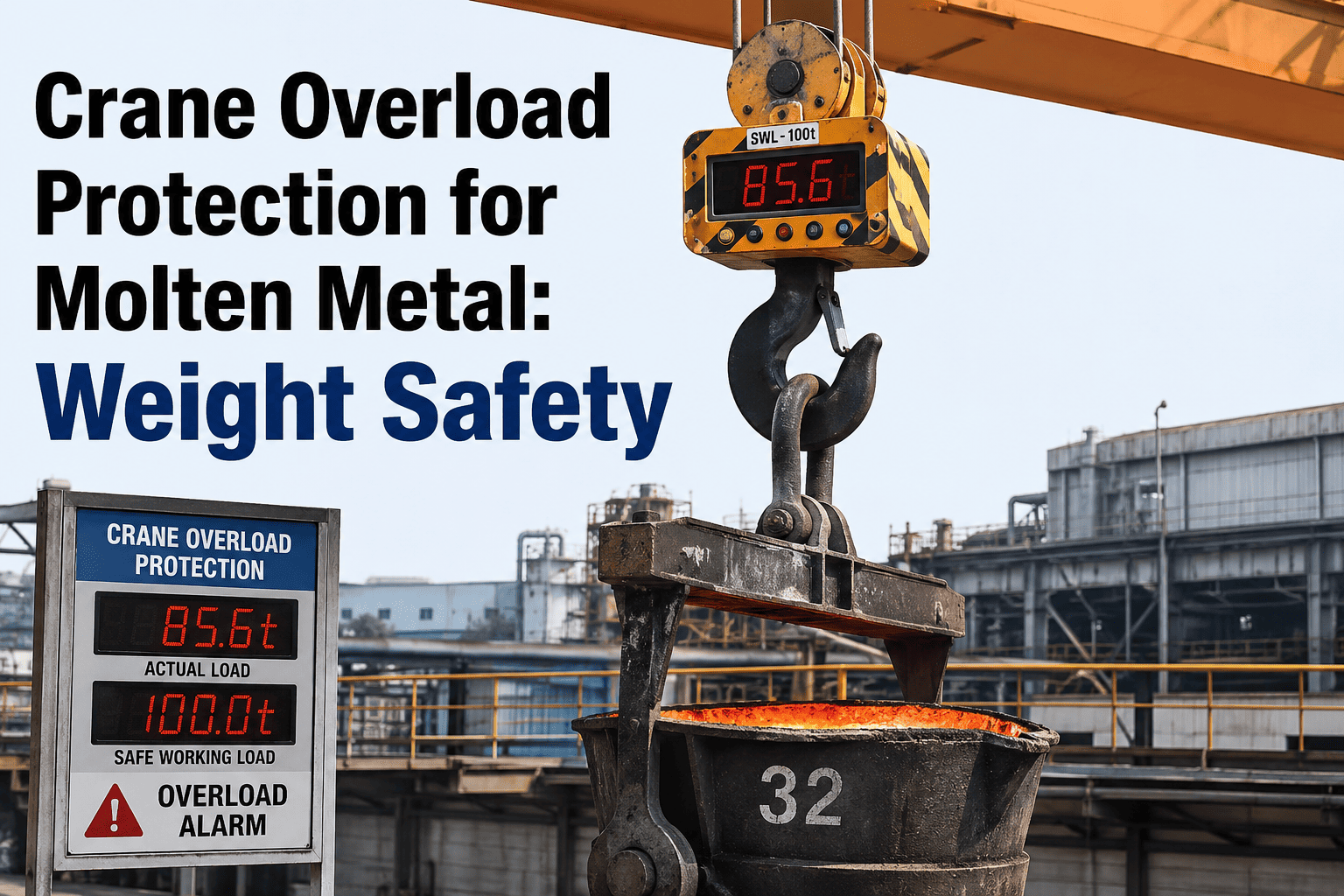
A crane rated to carry a full ladle of molten metal is not dangerous because it might lift too much weight, it is dangerous because the margin between a normal lift and an overload lift is often smaller than operators assume once refractory buildu

Read More
Knowing how thick a refractory lining still is matters more than almost any other single measurement in a steel plant, because it is the number that separates a vessel that is safe to run for another campaign from one that is one heat away from a

Read More
Predicting how long a refractory lining will last has traditionally come down to experience: a senior engineer who has seen enough campaigns to make an educated guess based on heat count and a gut sense of how the current slag chemistry compares t
Read More
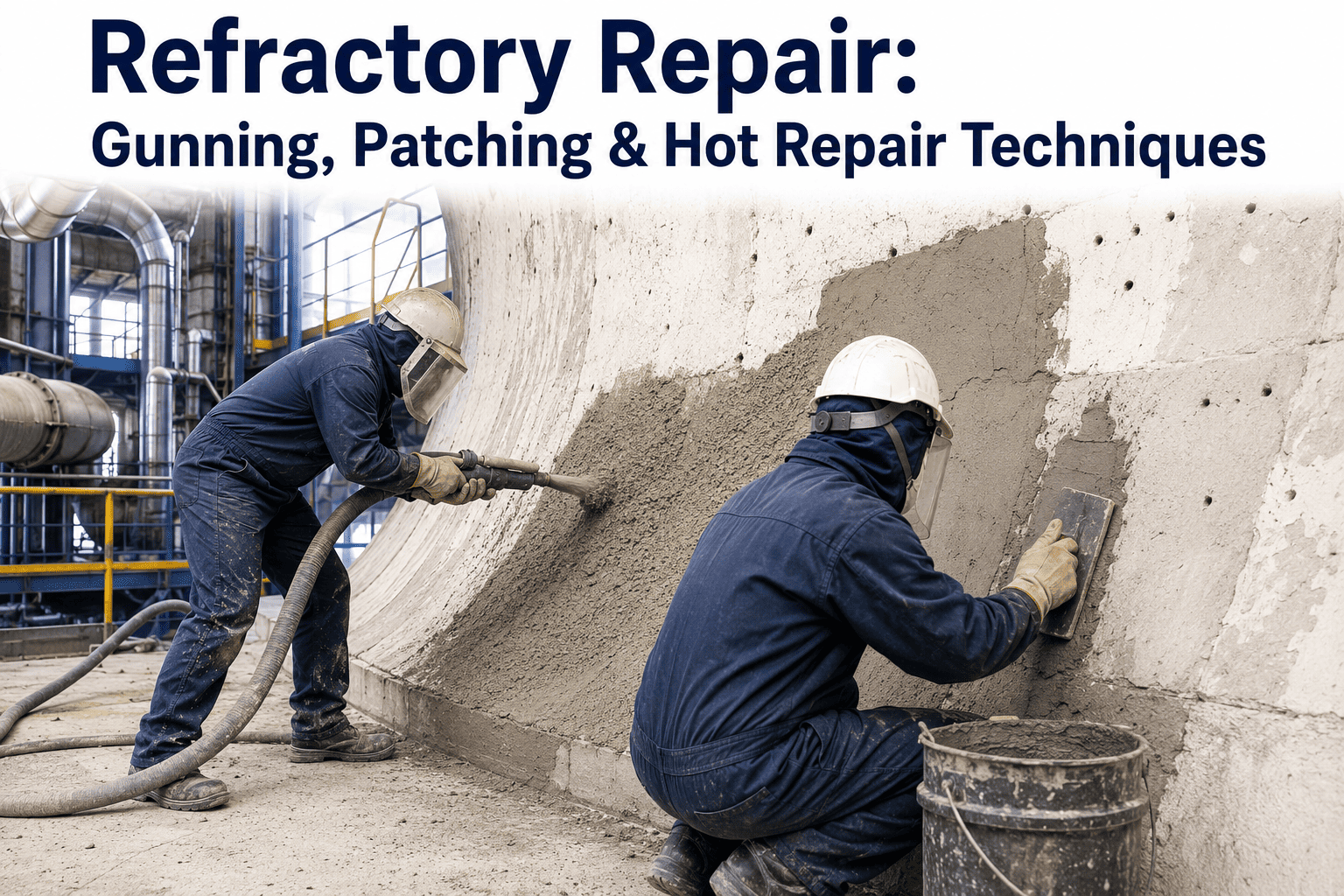
A refractory lining rarely needs full replacement the moment wear shows up in one spot. Most of the time, a well-timed repair, whether that is gunning a worn slag line, patching a localized hot spot, or running a hot repair between heats, buys bac
Read More
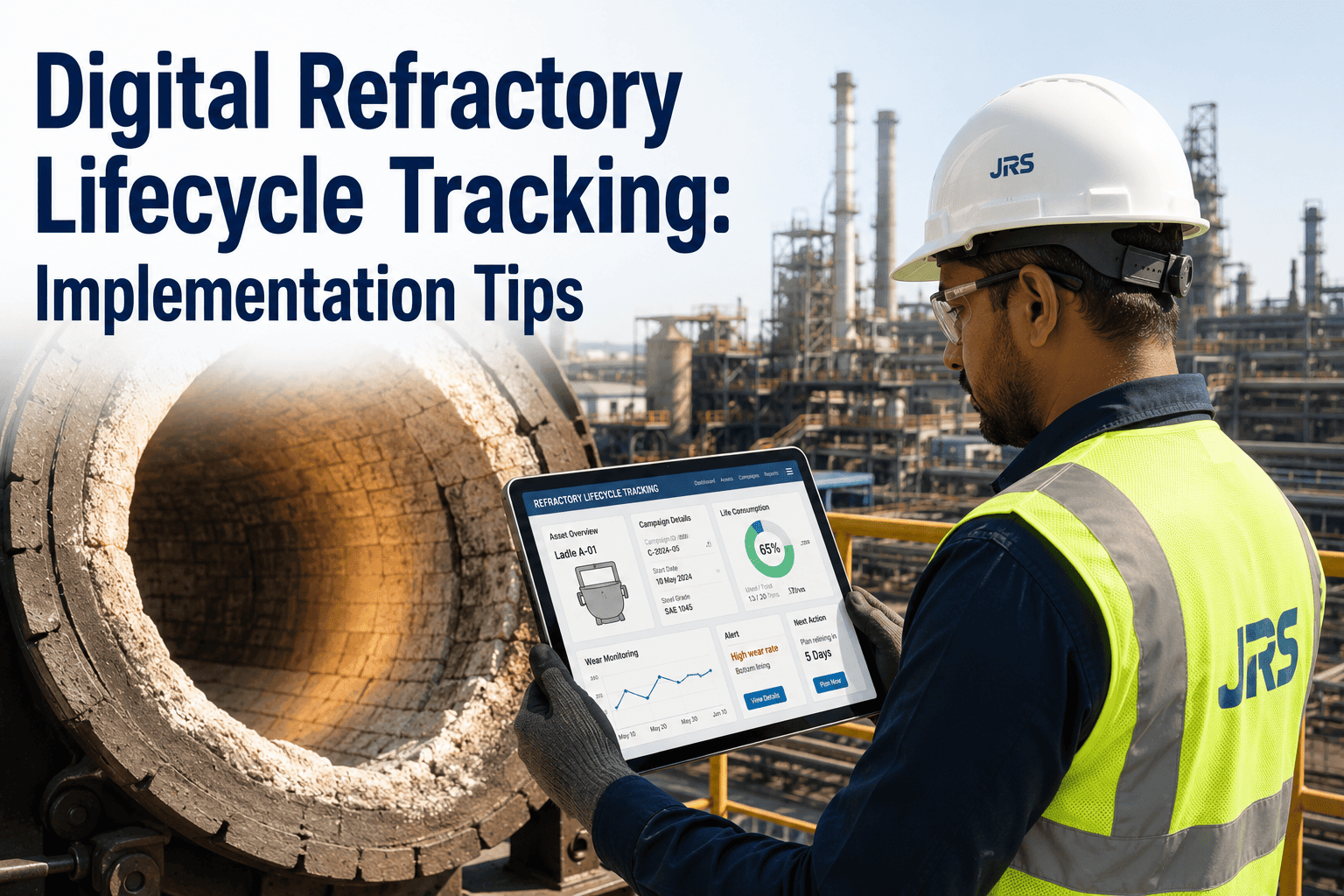
Most refractory lifecycle records still live in a mix of paper logbooks, shift-handover notes, and a spreadsheet someone updates when they remember to. That works fine until the person who remembers the details of a specific vessel's install date,
Read More
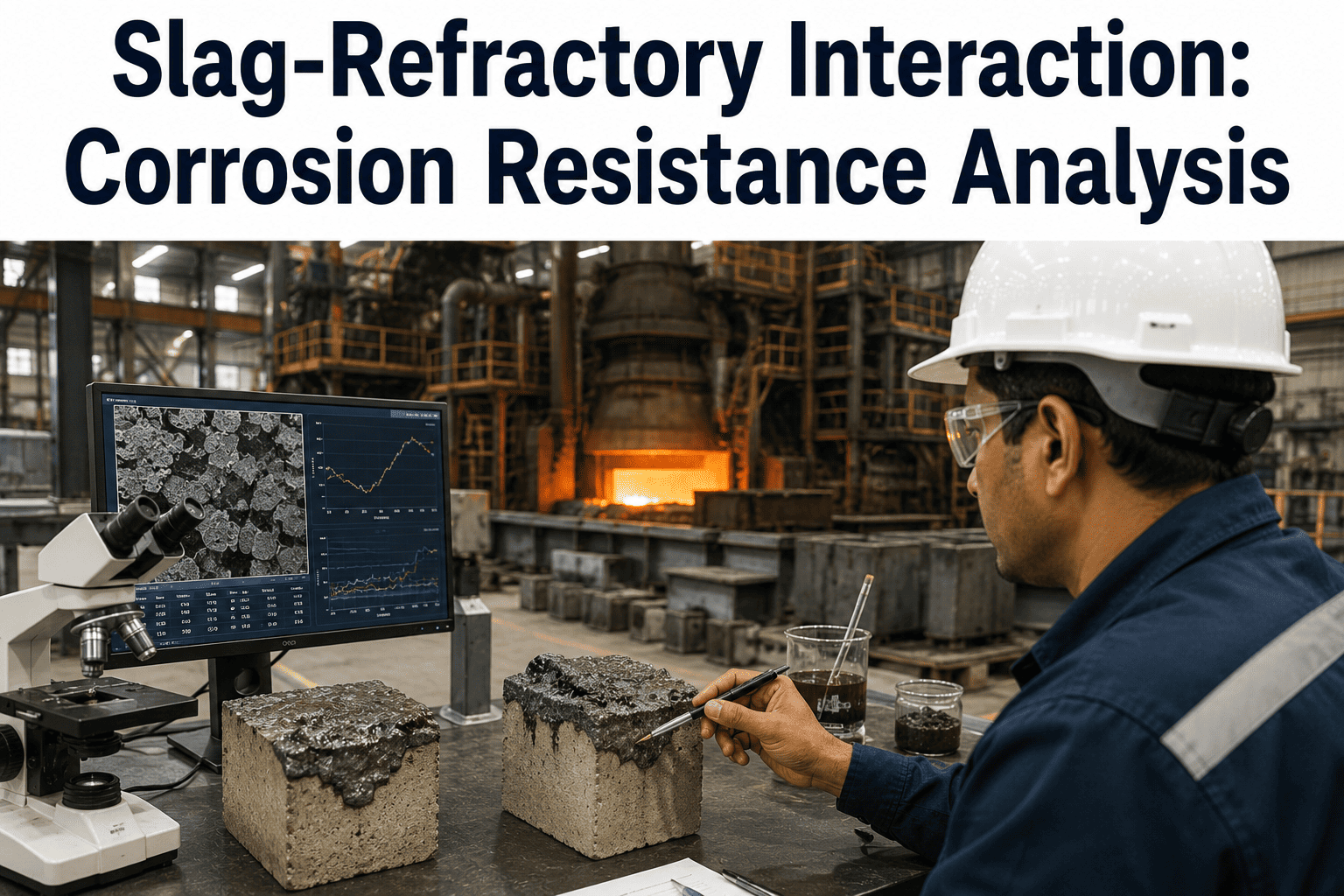
A refractory lining rarely fails the way people picture it. There is no single dramatic event — no crack that appears overnight. What actually happens is slower and far more chemical: molten slag sits against a brick or castable surface for hours
Read More
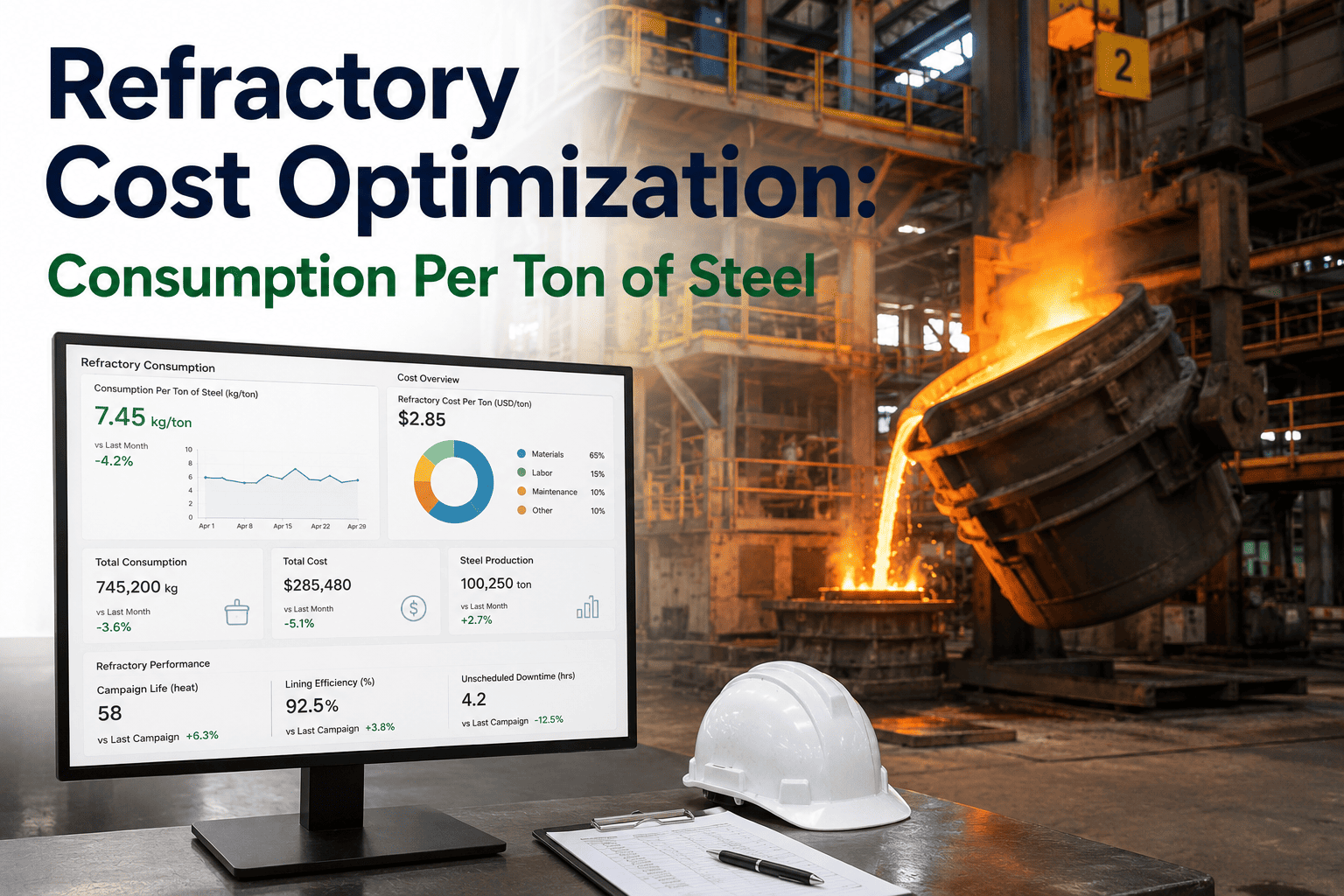
Refractory is one of the largest controllable line items in a steel plant's operating cost, and it is also one of the least tracked with any precision. Most plants know their annual refractory spend down to the rupee, but very few can say with con
Read More
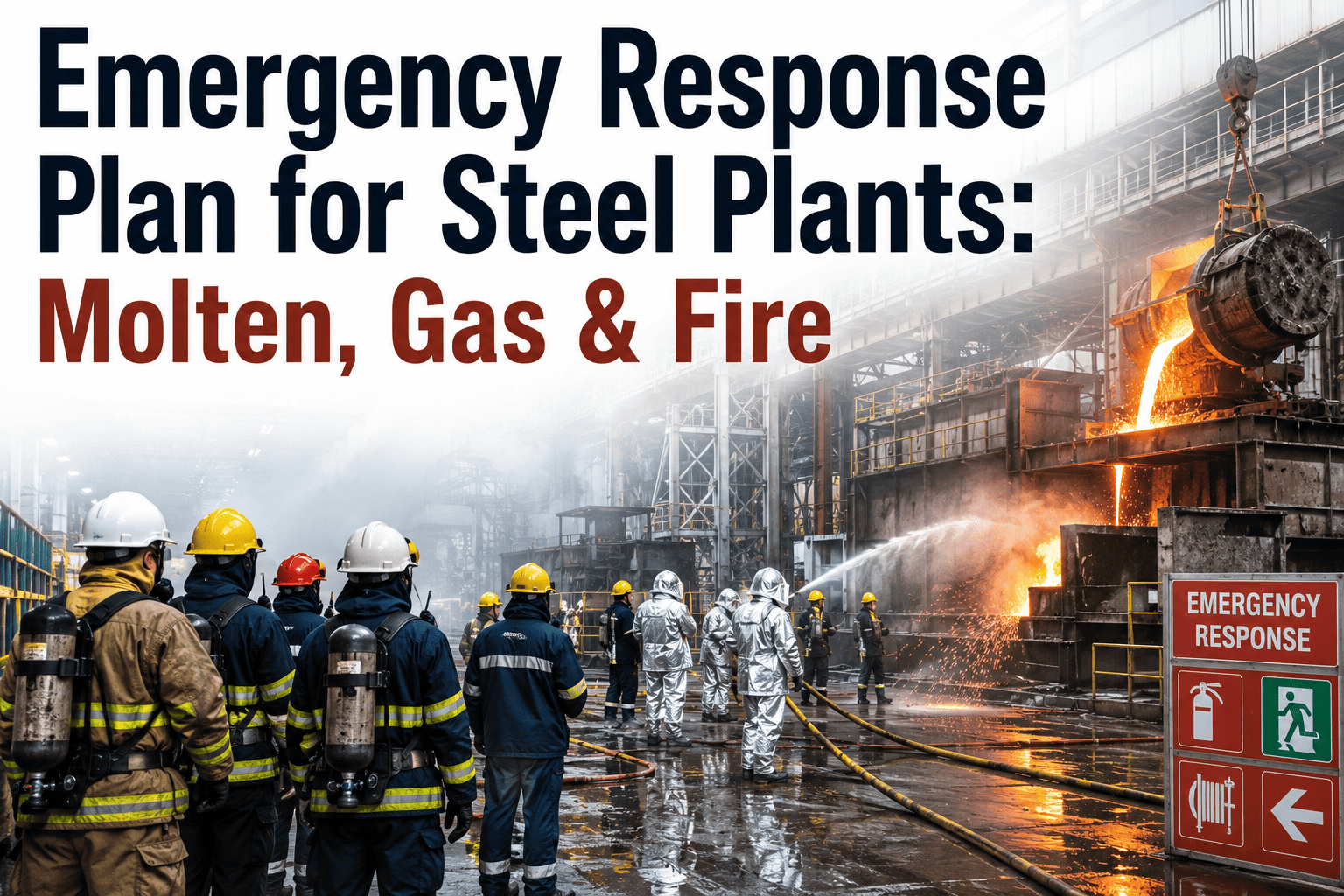
A steel plant does not have one emergency profile, it has four, and each one unfolds on a different timescale with different first actions. A molten metal spill demands an immediate exclusion radius and zero water contact. A gas leak from a BFG or
Read More
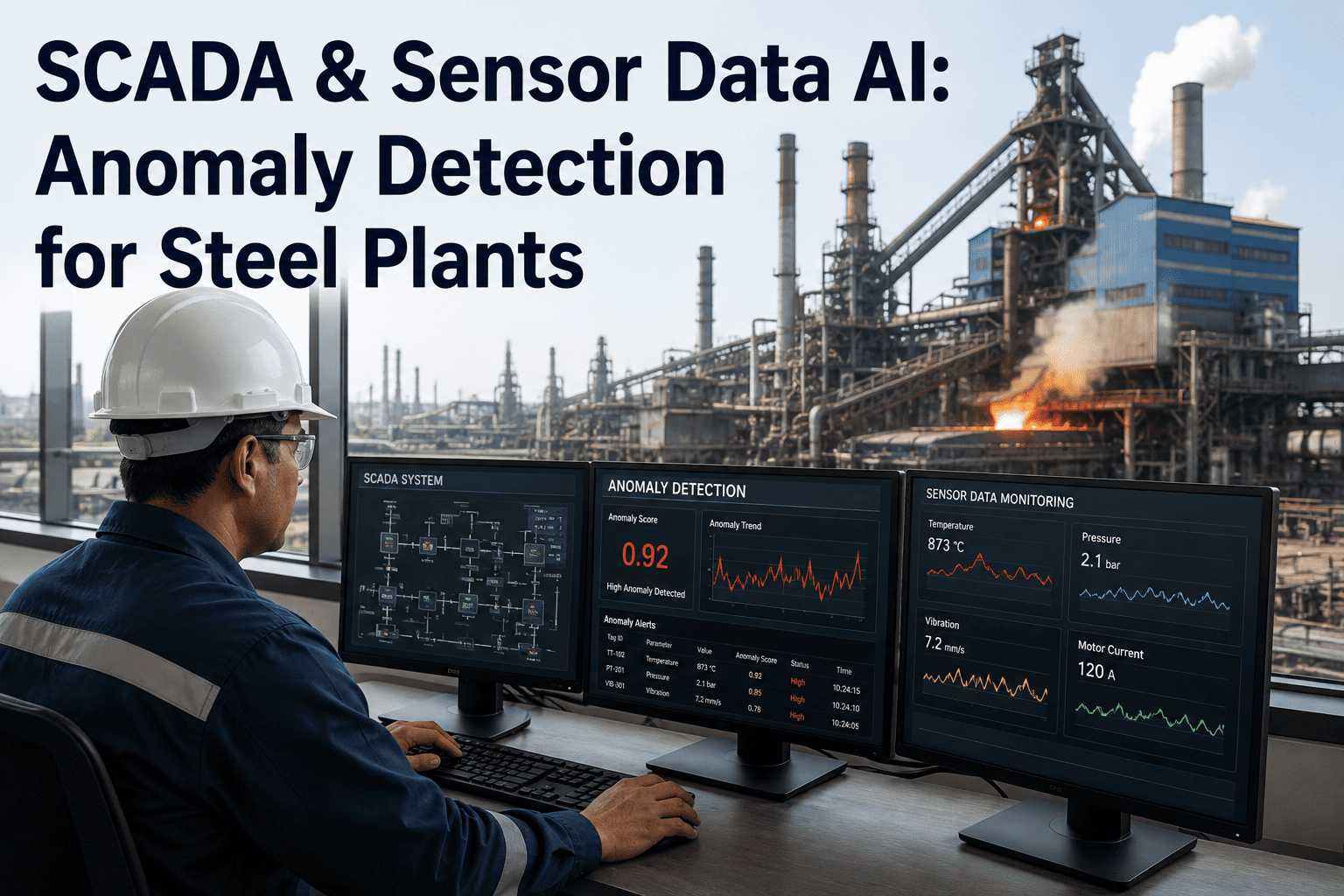
A SCADA system in an integrated steel plant can hold thousands of live tags, and every one of them is watched by the same basic logic: is this single value above or below a fixed threshold. That logic catches the failures that announce themselves
Read More
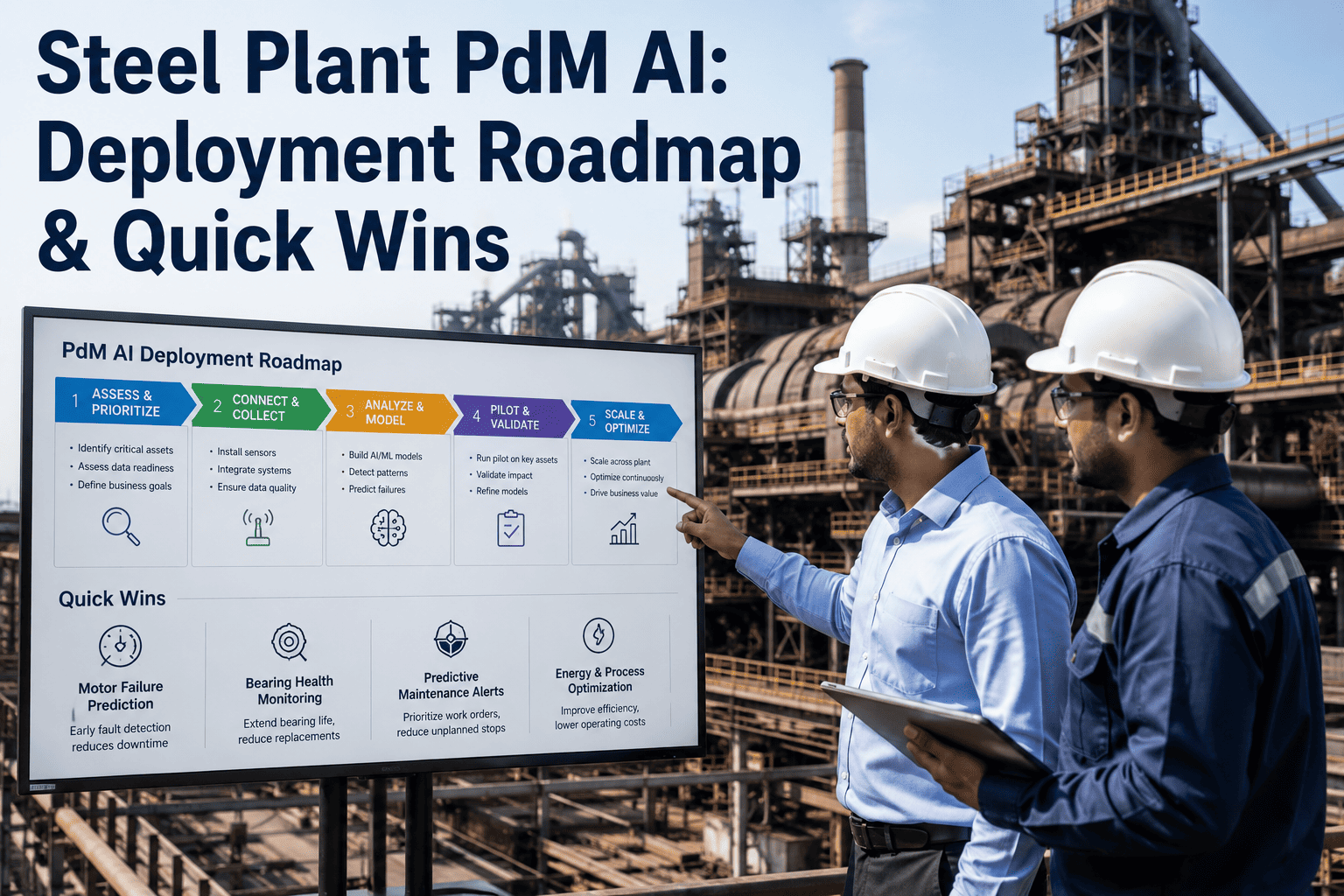
Most steel plants don't fail at predictive maintenance because the technology doesn't work — they fail because they try to deploy prescriptive, multi-sensor AI across the whole plant on day one, before a single vibration baseline has even been val
Read More
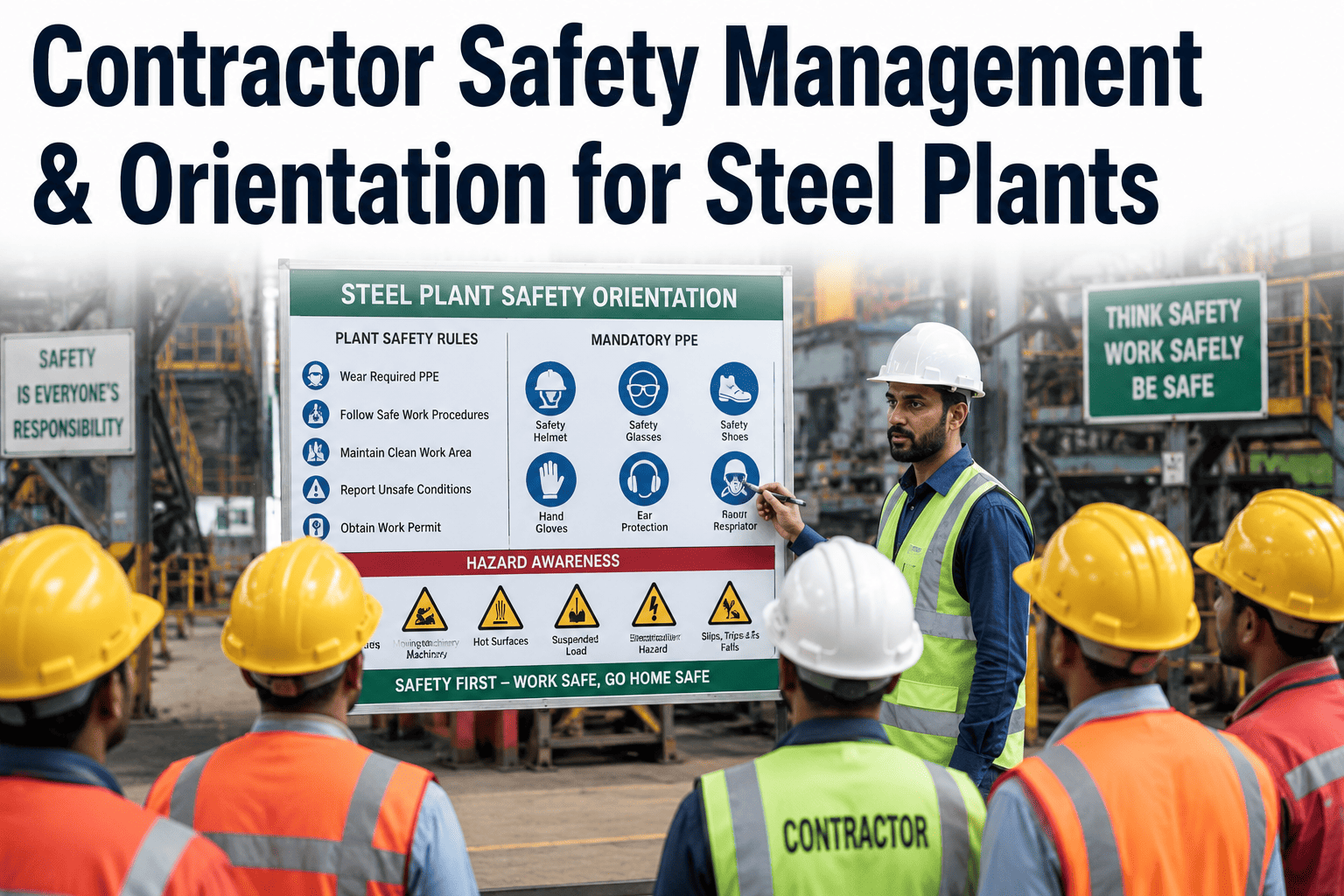
Contractors account for 38% of fatalities in the primary metals sector even though they represent a much smaller share of total site-hours than the direct workforce — and that gap is not a contractor competency problem, it's a management system pr
Read More
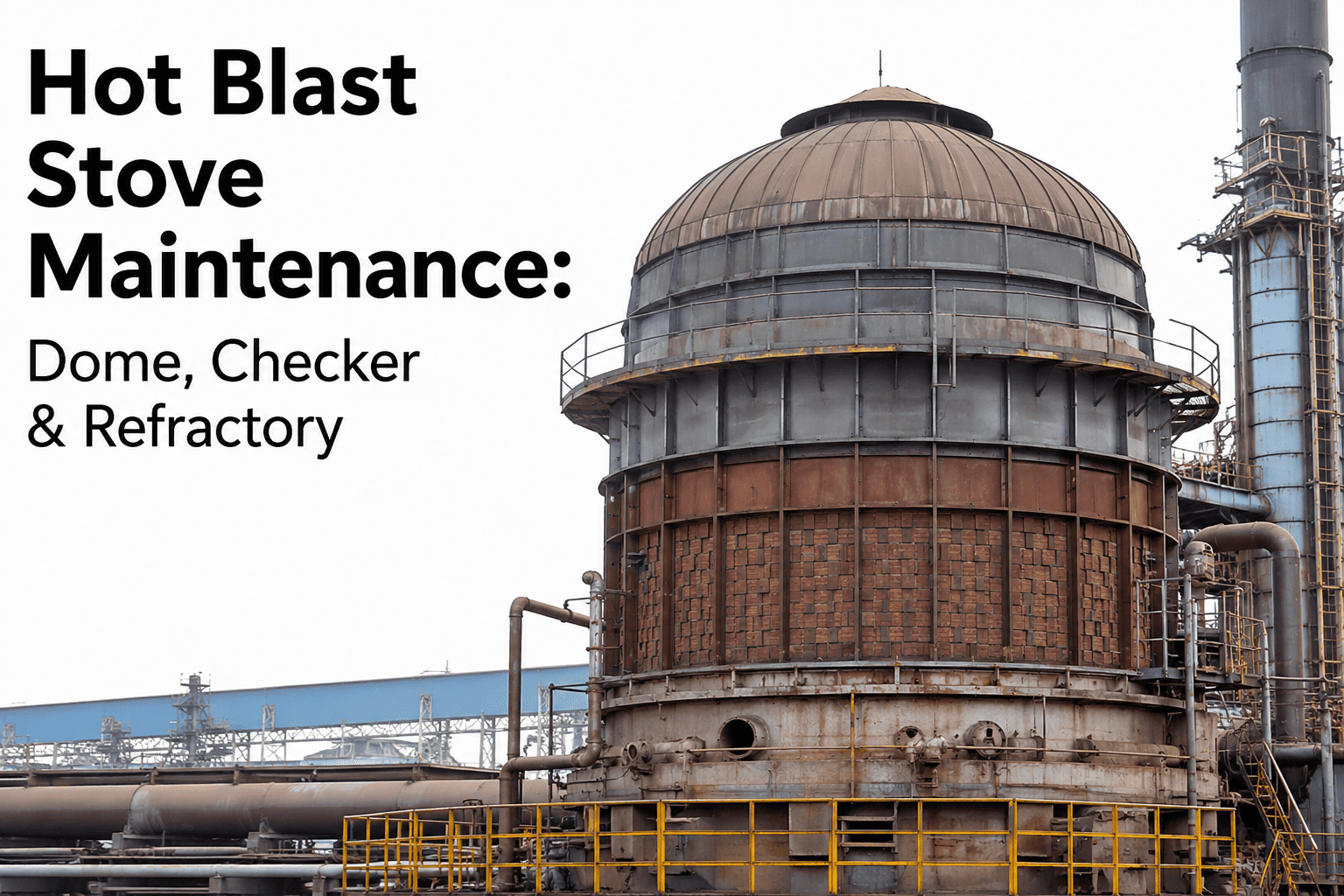
A hot blast stove that loses even fifty degrees of blast temperature forces the blast furnace to burn more coke to hold hot metal chemistry steady, and that fuel penalty compounds across every tap of every day the stove runs below its design capab
Read More
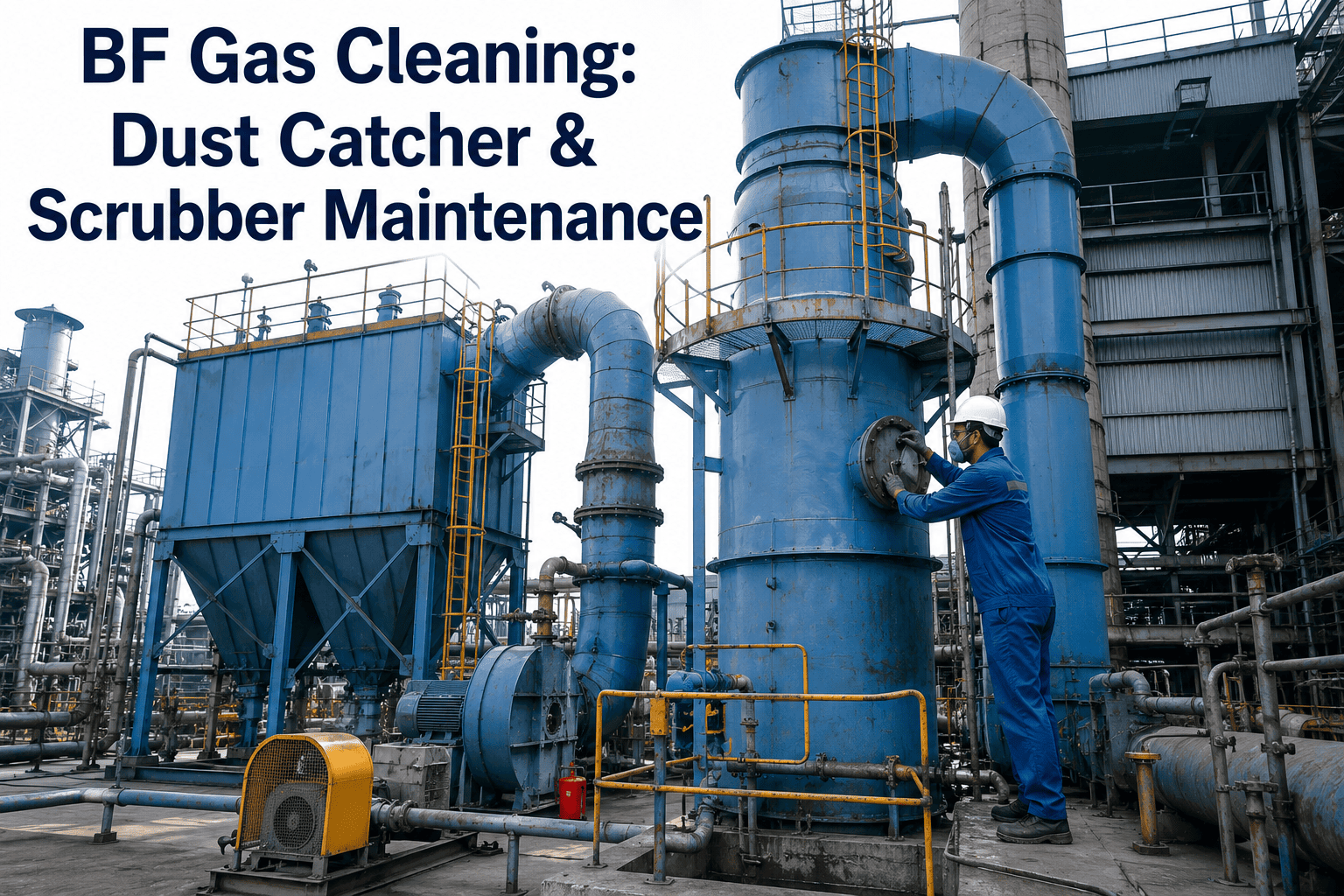
Blast furnace gas leaves the top of the furnace loaded with fine dust, and that gas is far too valuable as a fuel source for the plant's stoves, boilers, and power generation to simply flare or vent, which is exactly why the gas cleaning train exi

Read More
Burden distribution is one of the few blast furnace variables an operator can actively shape on a heat-by-heat basis, and it is also one of the easiest to get subtly wrong without any single alarm ever firing. A worn charging chute armor changes t
Read More
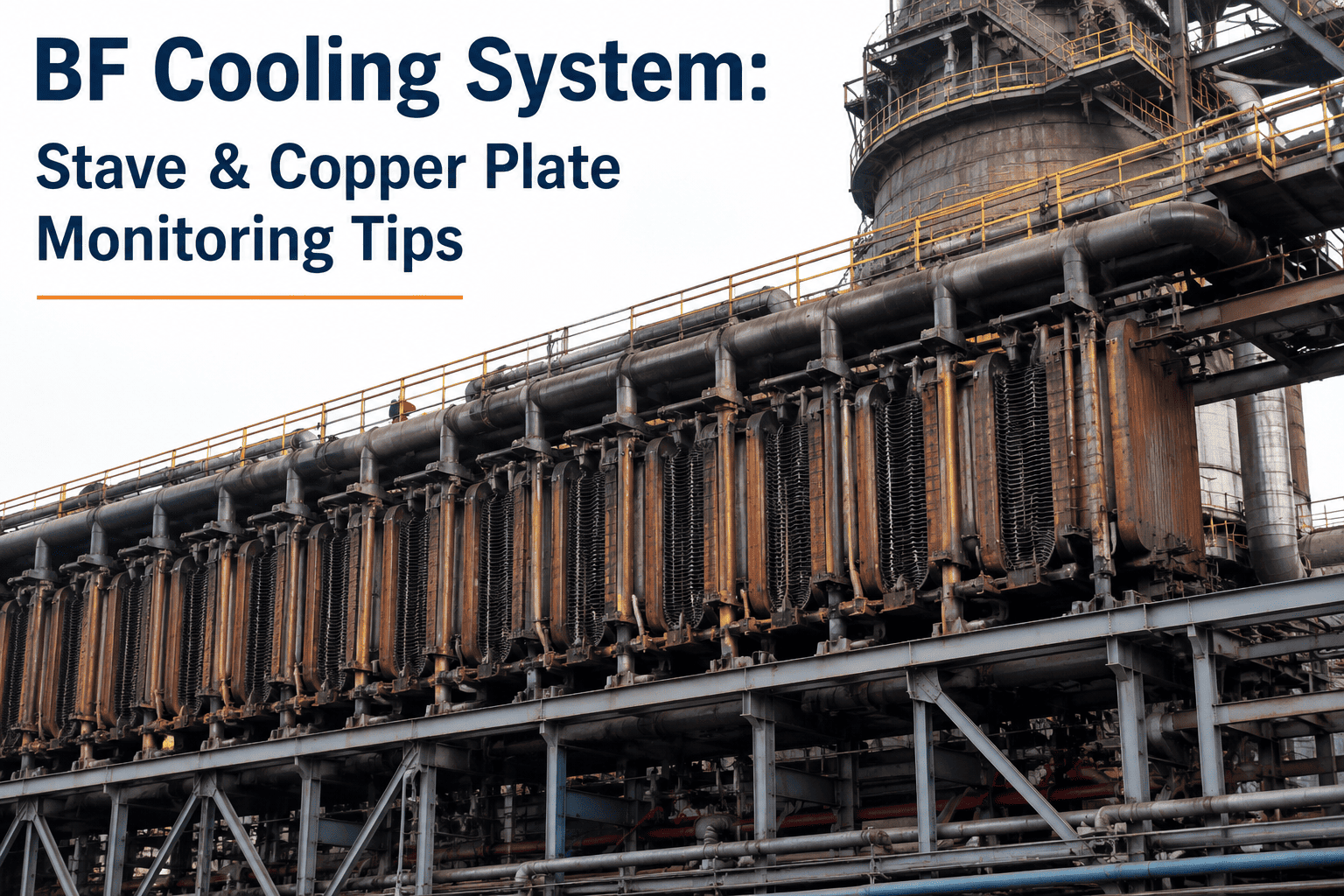
A blast furnace campaign can run for over a decade between major relines, and for almost all of that time, the single biggest threat to reaching the end of that campaign on schedule isn't the burden, the blast, or the coke, it's the cooling system
Read More
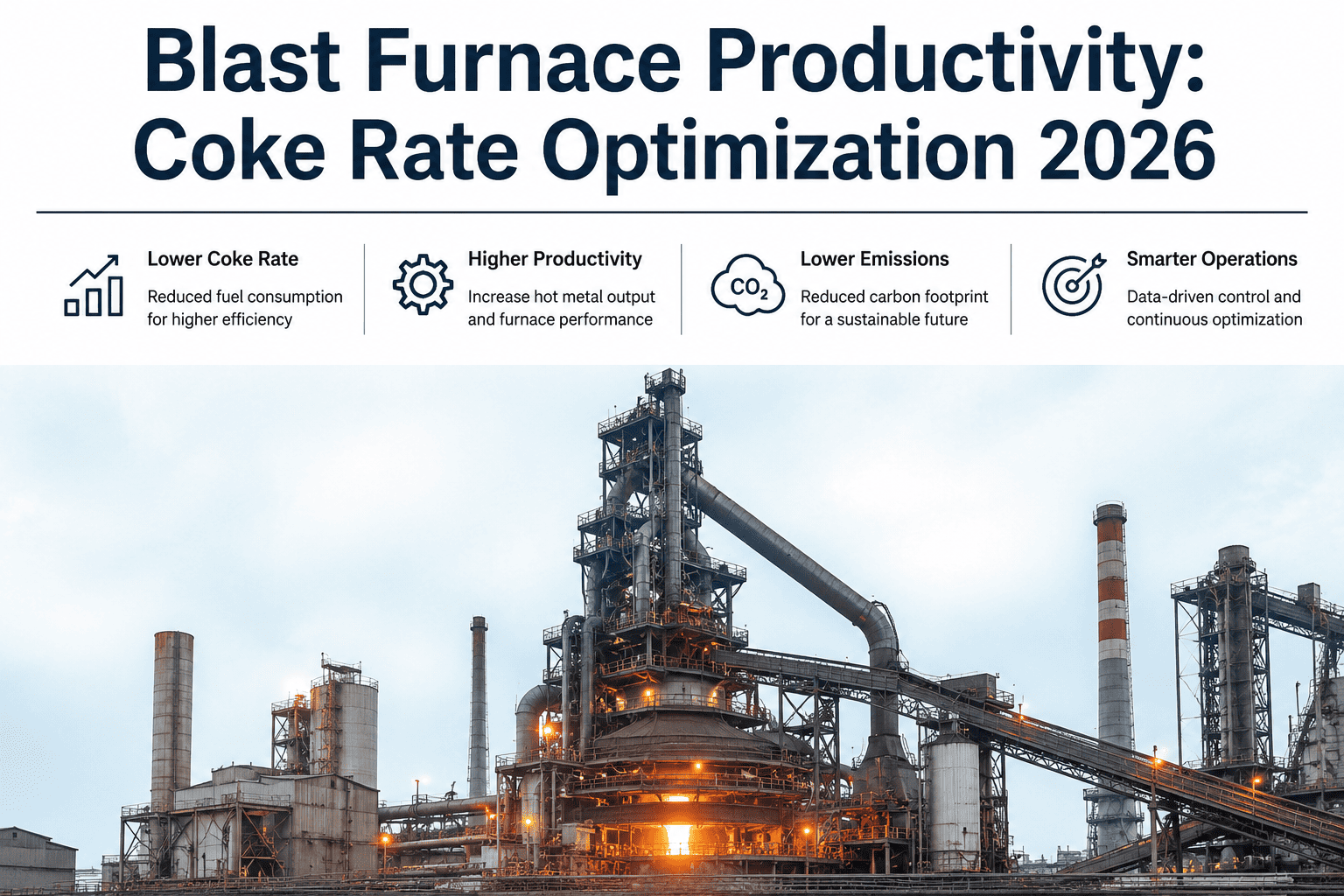
Coke rate has fallen from around 500 kilograms per ton of hot metal in older blast furnace practice down to a range of 286 to 320 kilograms per ton in most modern furnaces today, and pulverized coal injection has done most of that work by taking o
Read More
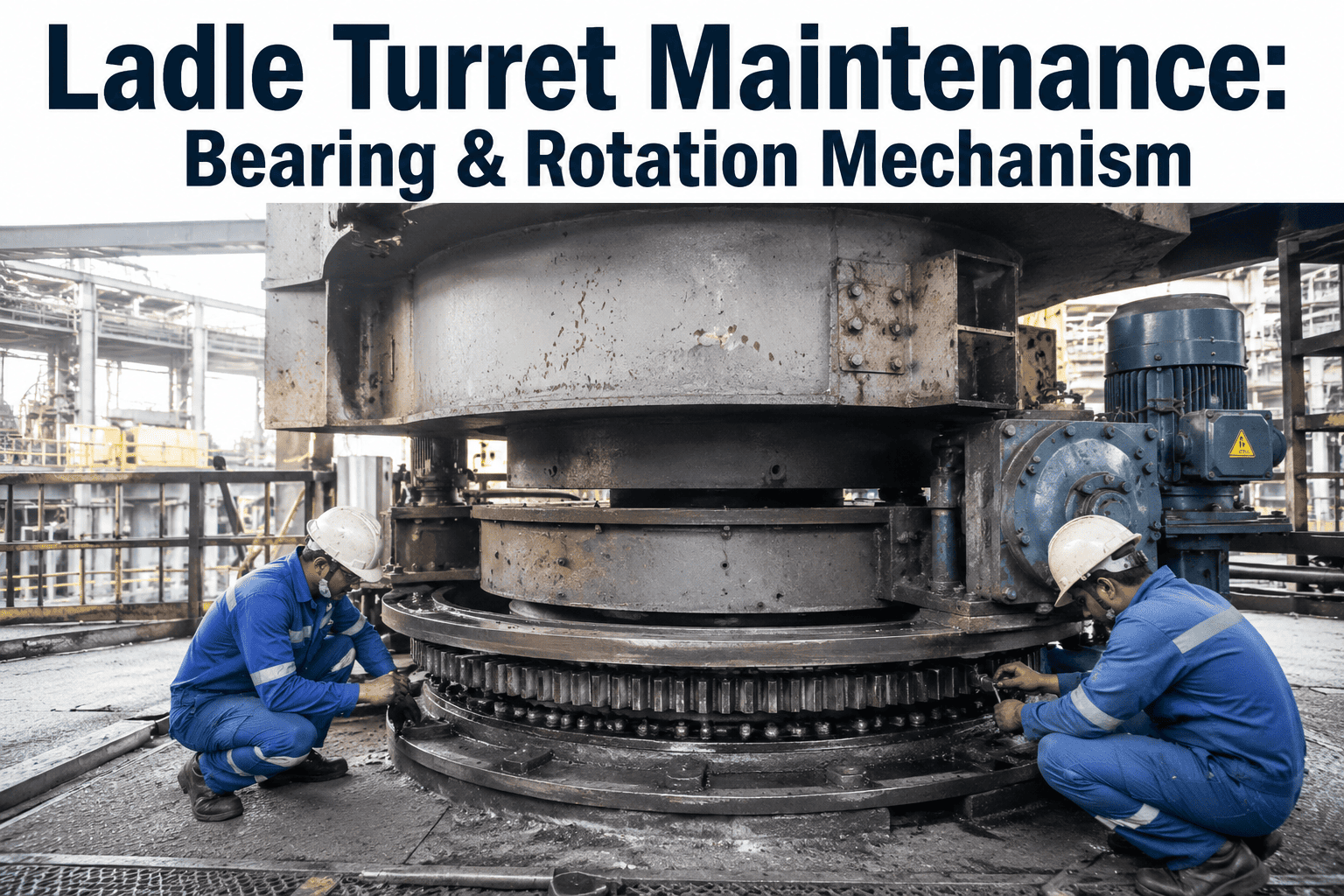
A ladle turret carries the full weight of a filled ladle, sometimes well over a hundred tons, while rotating it into casting position under heat, vibration, and thermal cycling that most other rotating equipment on the shop floor never experiences
Read More
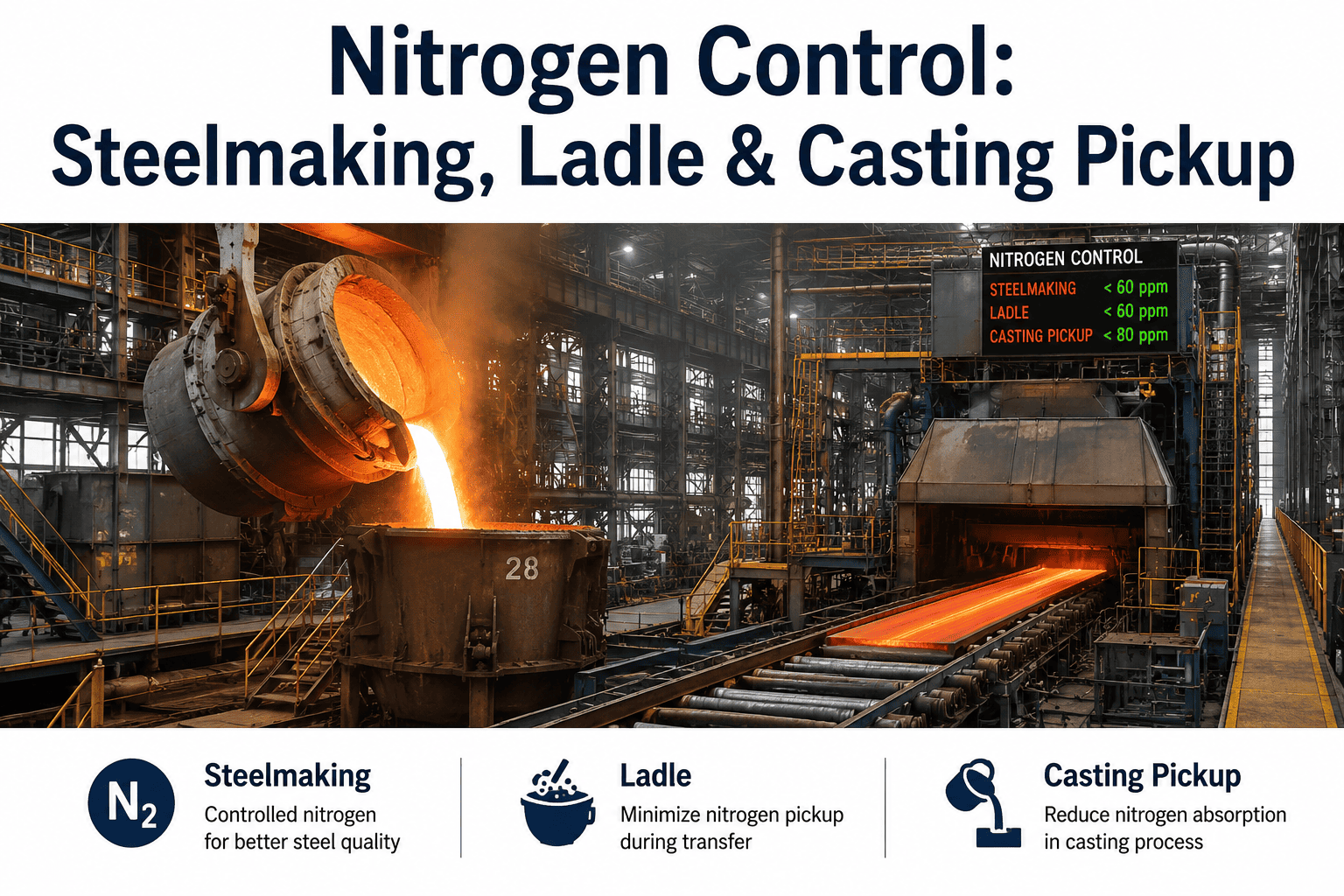
Steel leaves the converter with nitrogen levels as low as 15 parts per million, and by the time it reaches the caster it can carry nearly three times that amount without a single deliberate nitrogen addition ever being made. Every transfer, every

Read More
A ladle furnace that runs 320 kWh per ton on a good week and 420 kWh per ton on a bad one is not being run by two different crews with two different skill levels most of the time — it is being run by the same crew reacting to the same lid seal, th
Read More
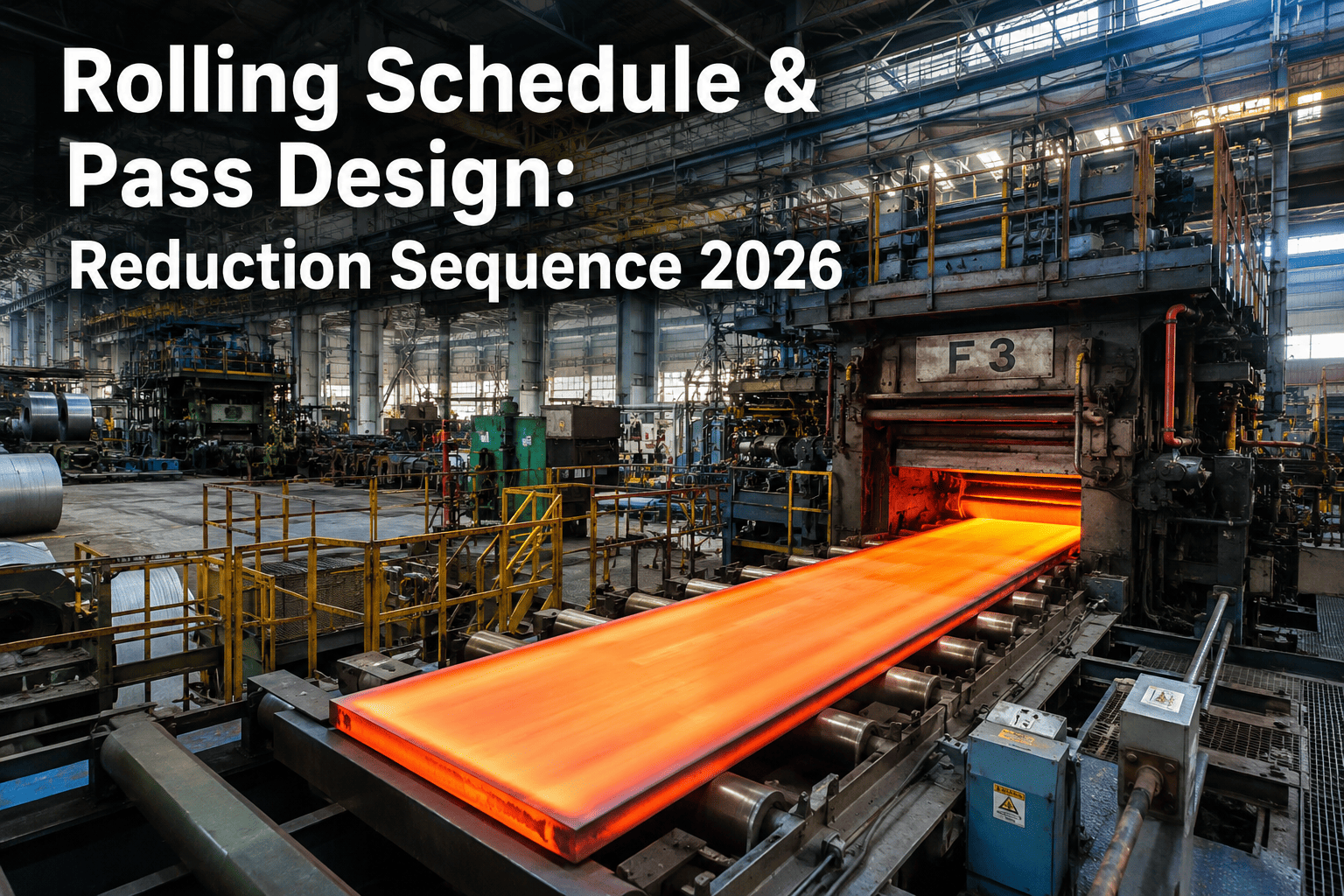
A rolling schedule is really a series of small decisions made once and then repeated thousands of times, how much reduction each pass takes, what temperature the material sits at when it reaches the next stand, how much clearance sits in the roll
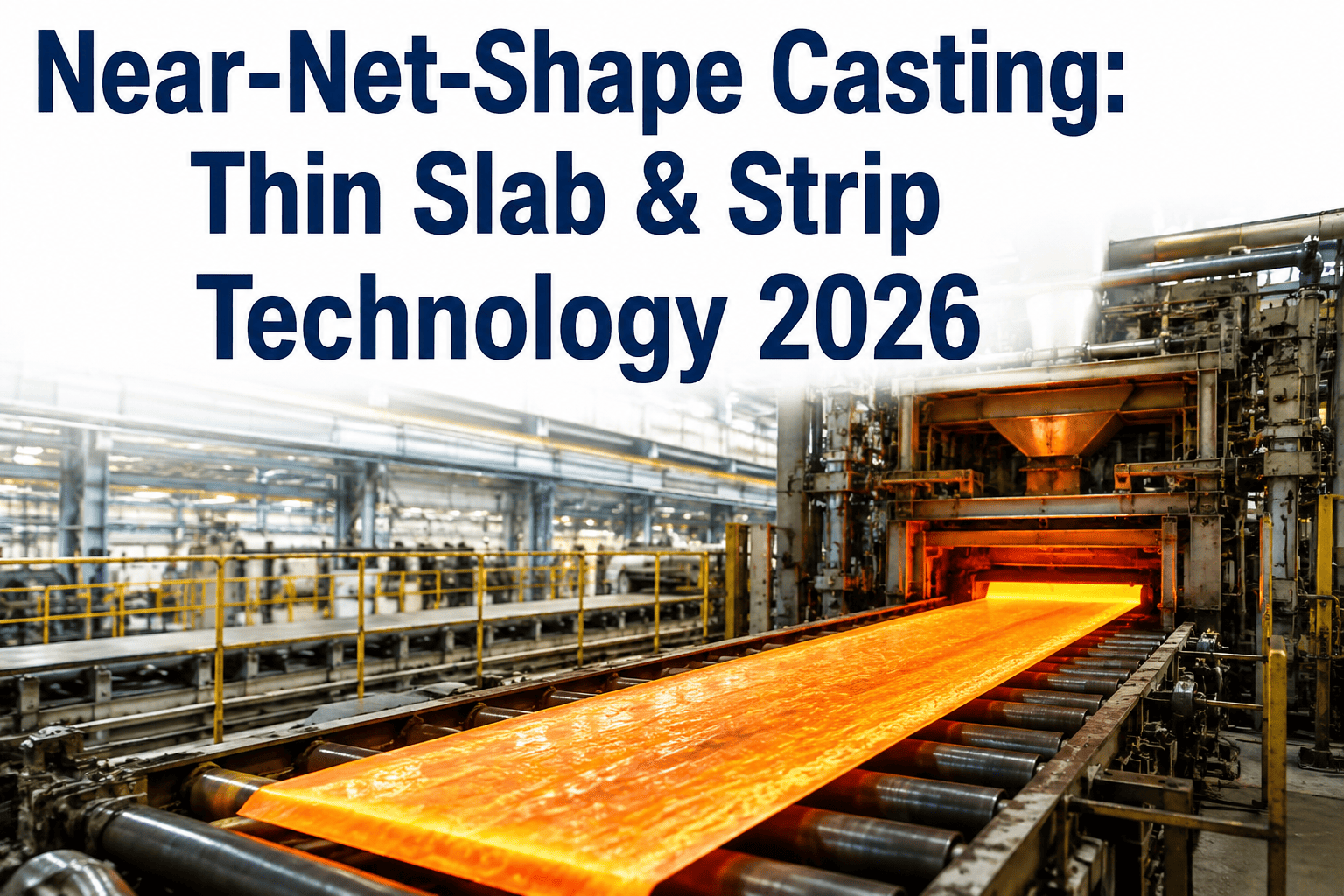
Read More
Every ton of steel that goes through a conventional slab caster and then a full reheat-and-rough-rolling sequence before it ever reaches finishing is carrying an energy cost that near-net-shape casting was invented specifically to remove. The idea
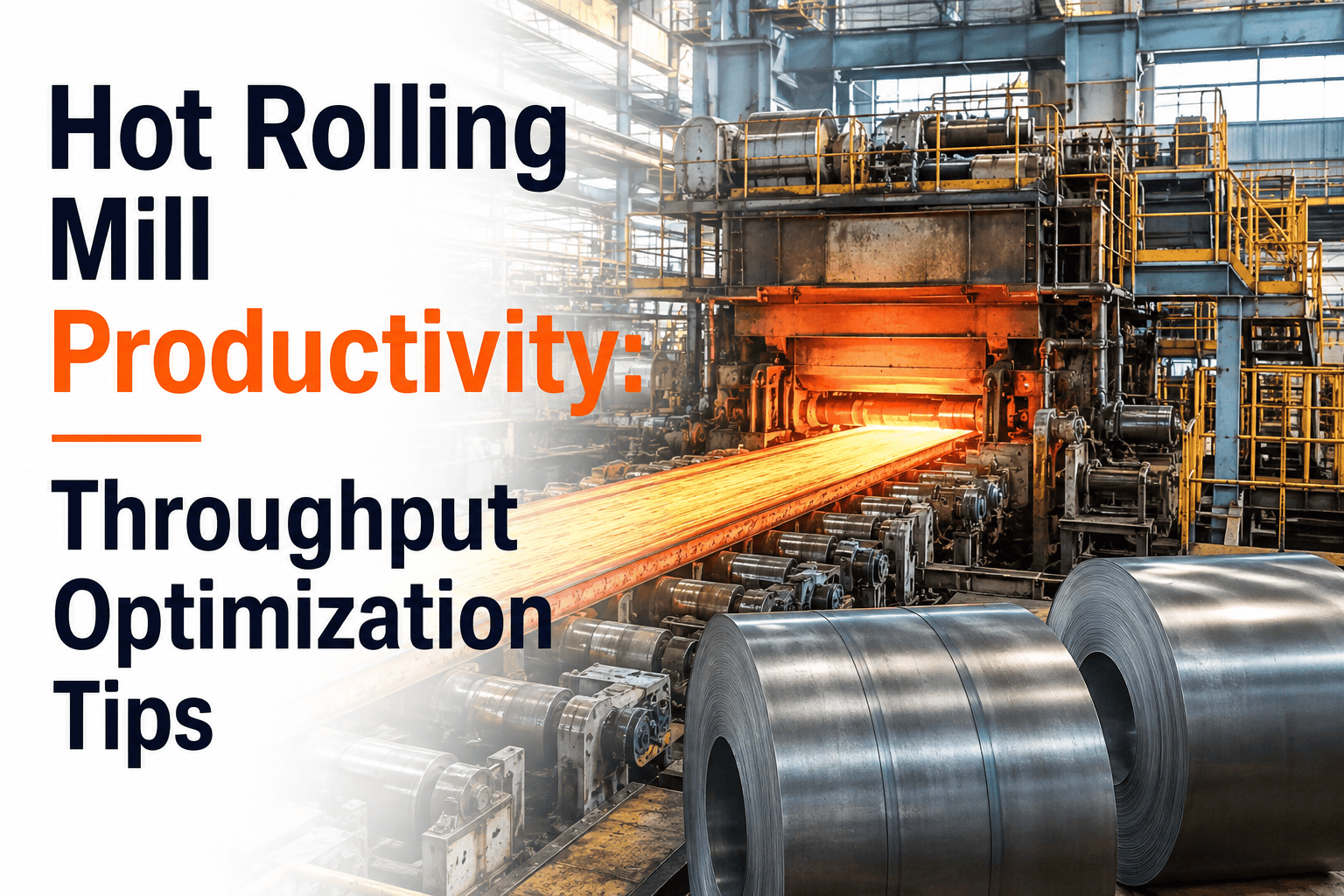
Read More
Ask a rolling mill manager how many tons per hour the mill is capable of and you will get a confident number based on the equipment specification sheet. Ask how many tons per hour it actually produced last month and the number is almost always low
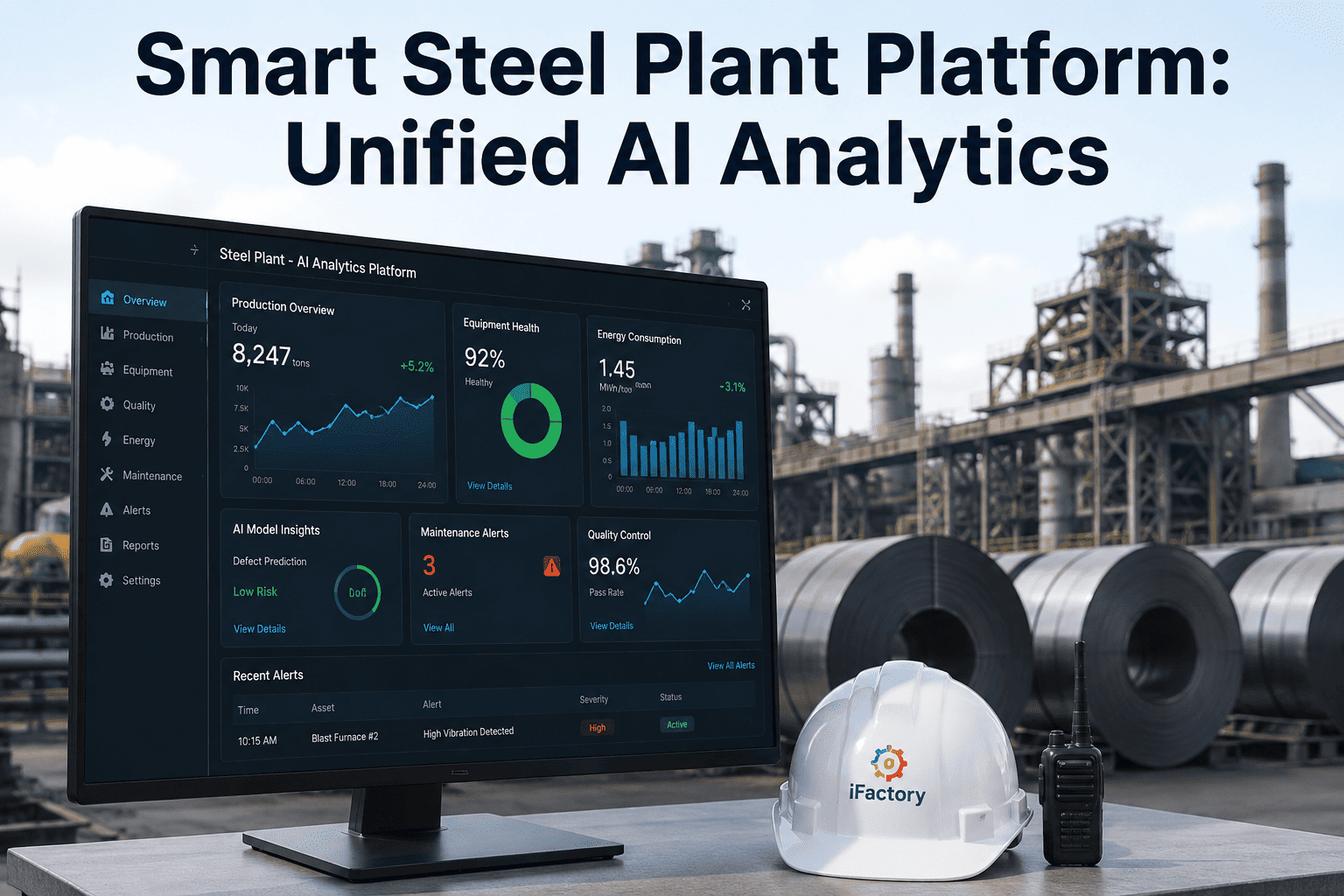
Read More
Ask five people in the same steel plant what the true cause of last week's yield dip was and you will likely get five different answers, one blaming the caster, one blaming raw material quality, one blaming a rolling mill setting, one blaming main
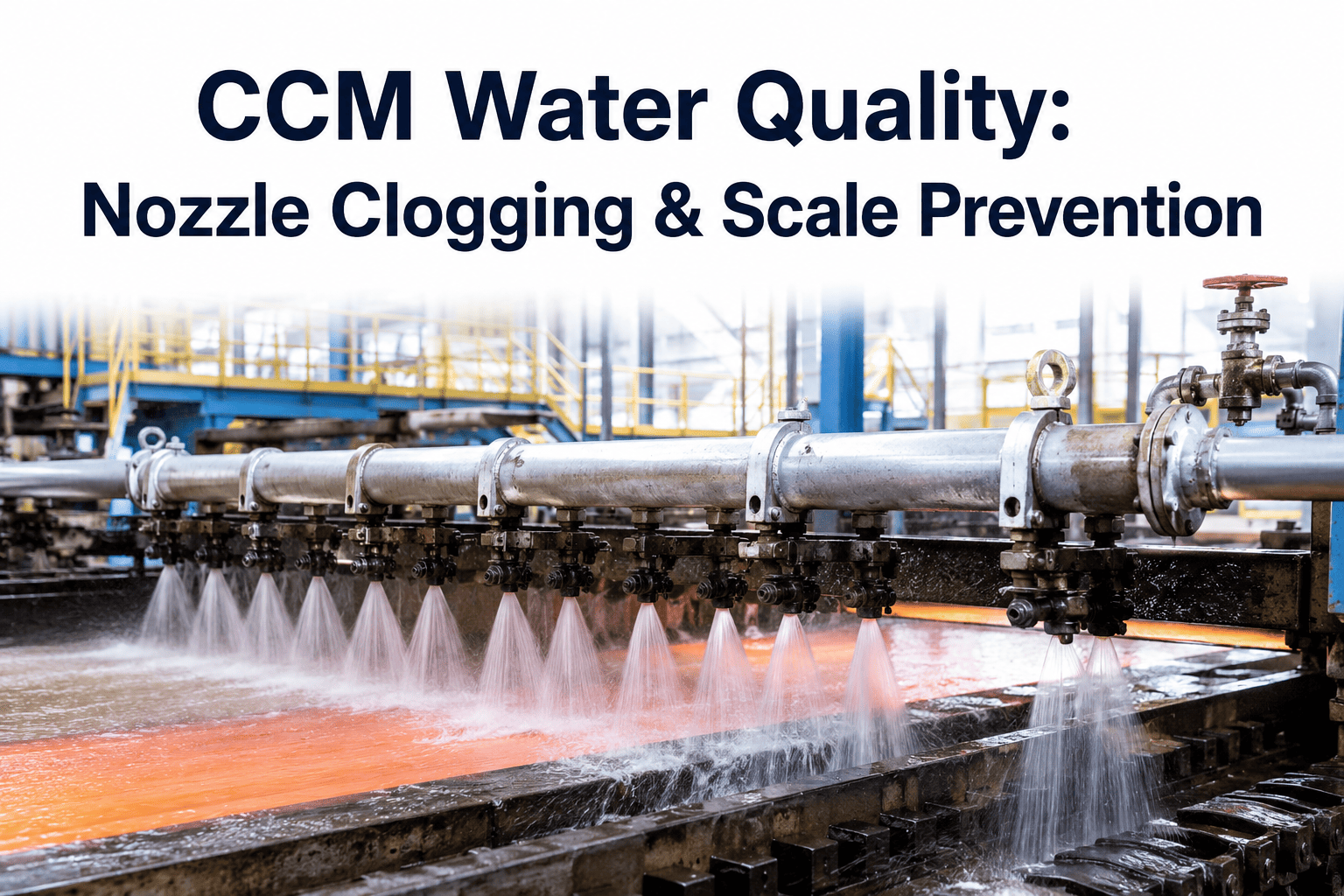
Read More
A continuous caster running smoothly for weeks can suddenly develop an intermittent nozzle clog that no one can trace back to a single cause, and by the time maintenance pulls the spray header apart, the culprit is usually sitting in plain sight,
Read More
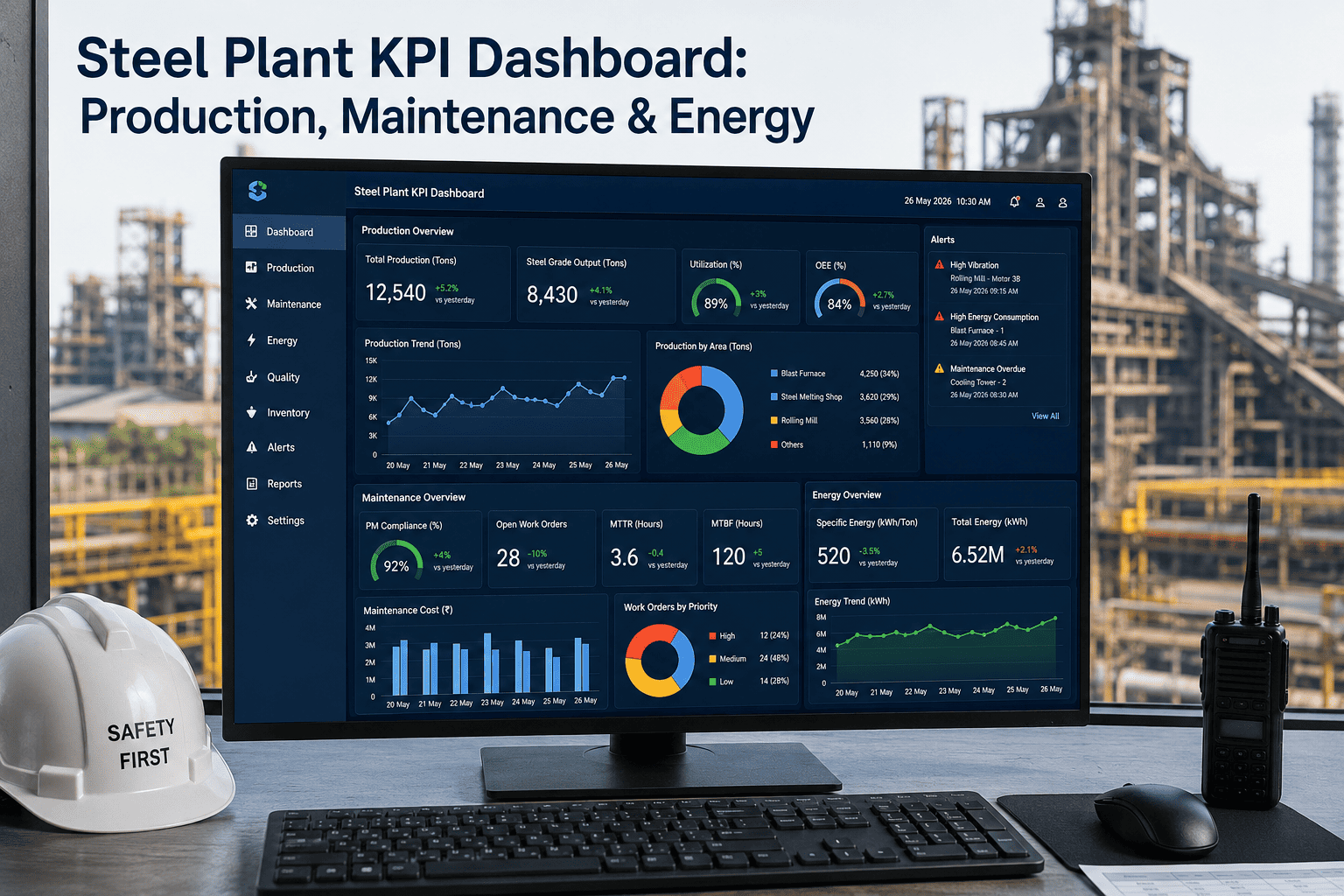
Most steel plants already collect the numbers that matter, production tons, maintenance hours, energy consumed per ton, they just collect them in five different systems that never talk to each other. A shift supervisor pulls one report, the mainte
Read More
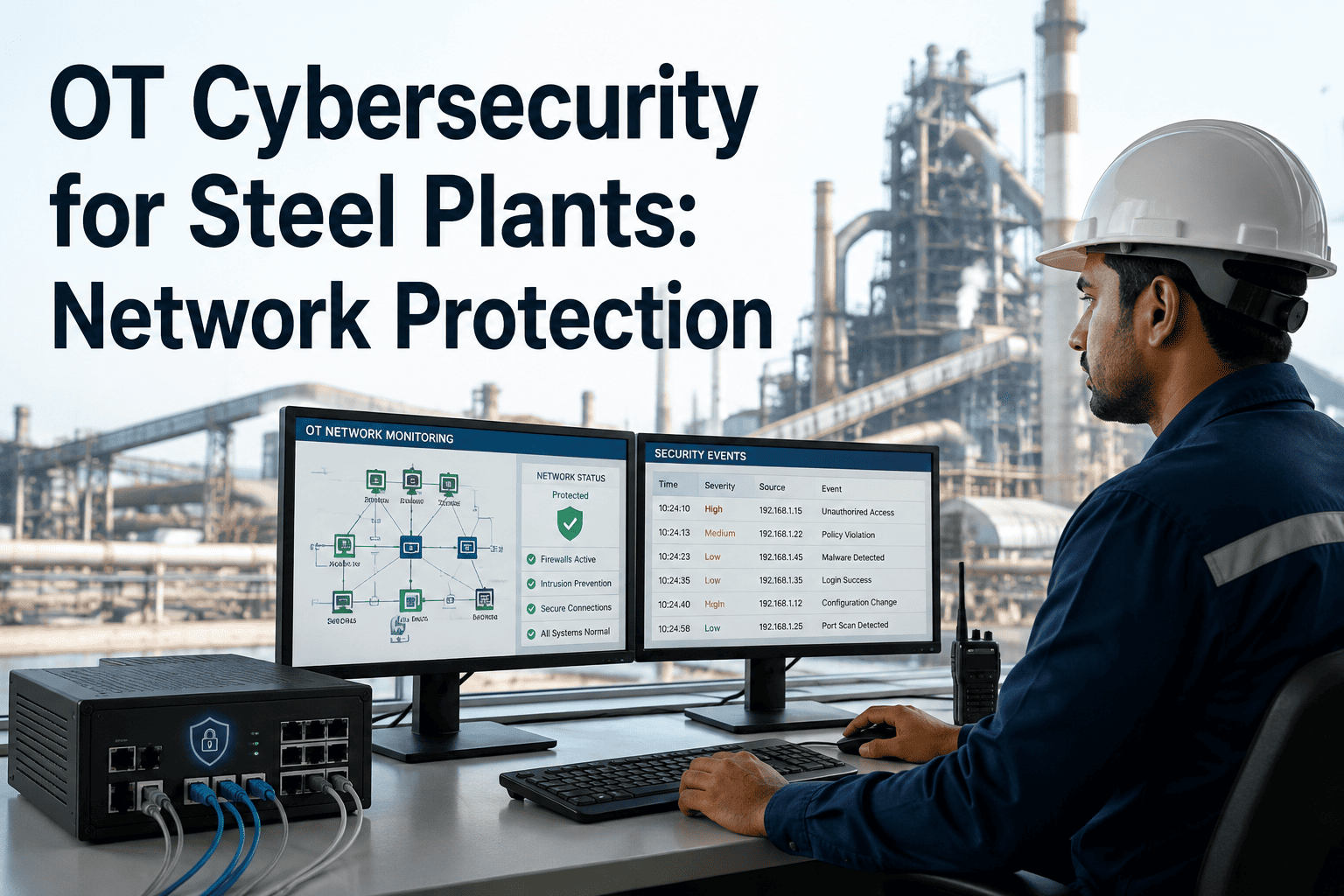
A steel plant's automation network was built for reliability, not for defense, most PLCs, HMIs, and drive controllers on the floor were installed years before anyone budgeted for a cybersecurity plan, and many still communicate over protocols that
Read More
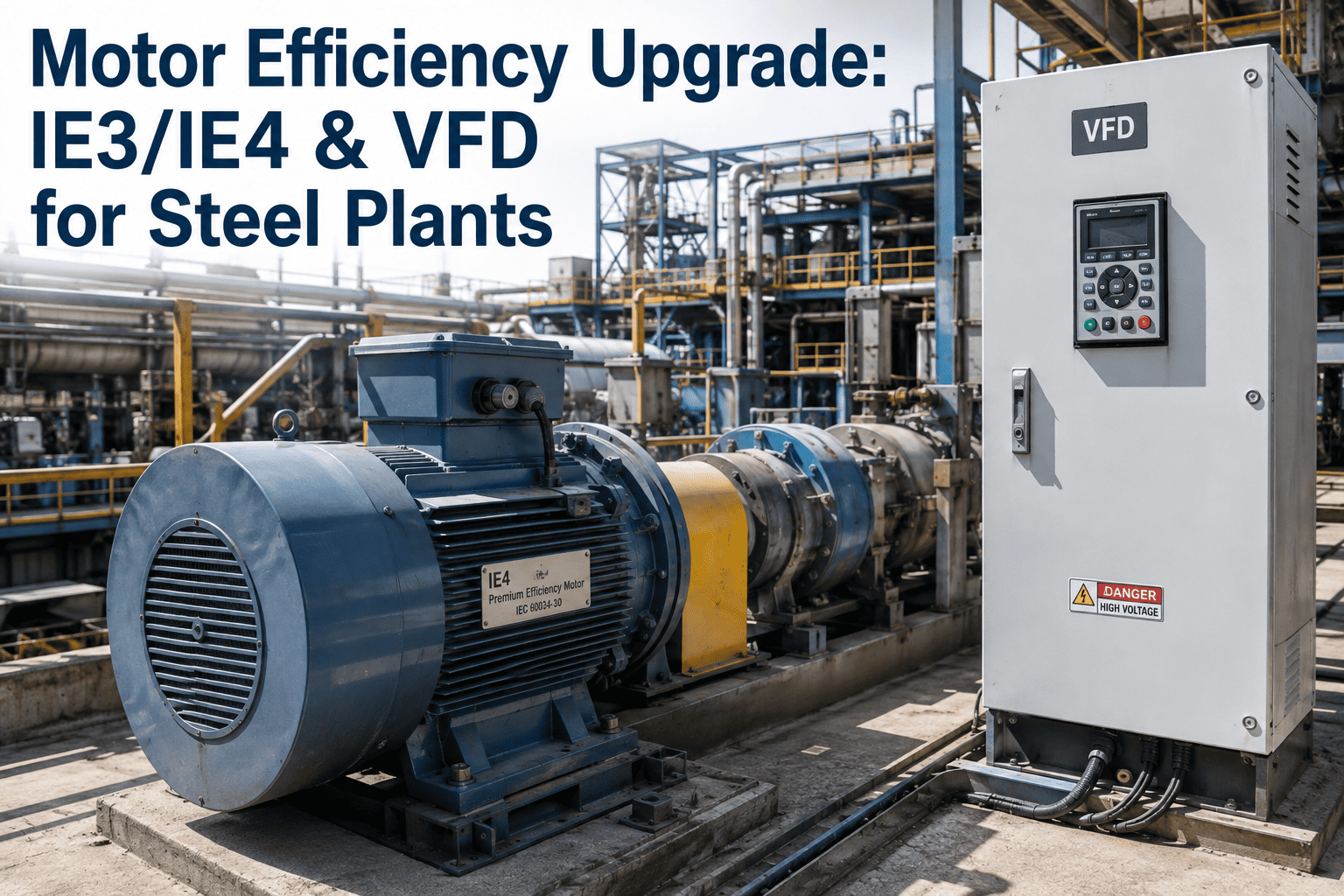
A steel plant runs hundreds of motors across fans, pumps, and compressors, and most of that population was installed years apart, sized by whoever specified the original equipment package rather than by a deliberate efficiency standard. Older moto
Read More
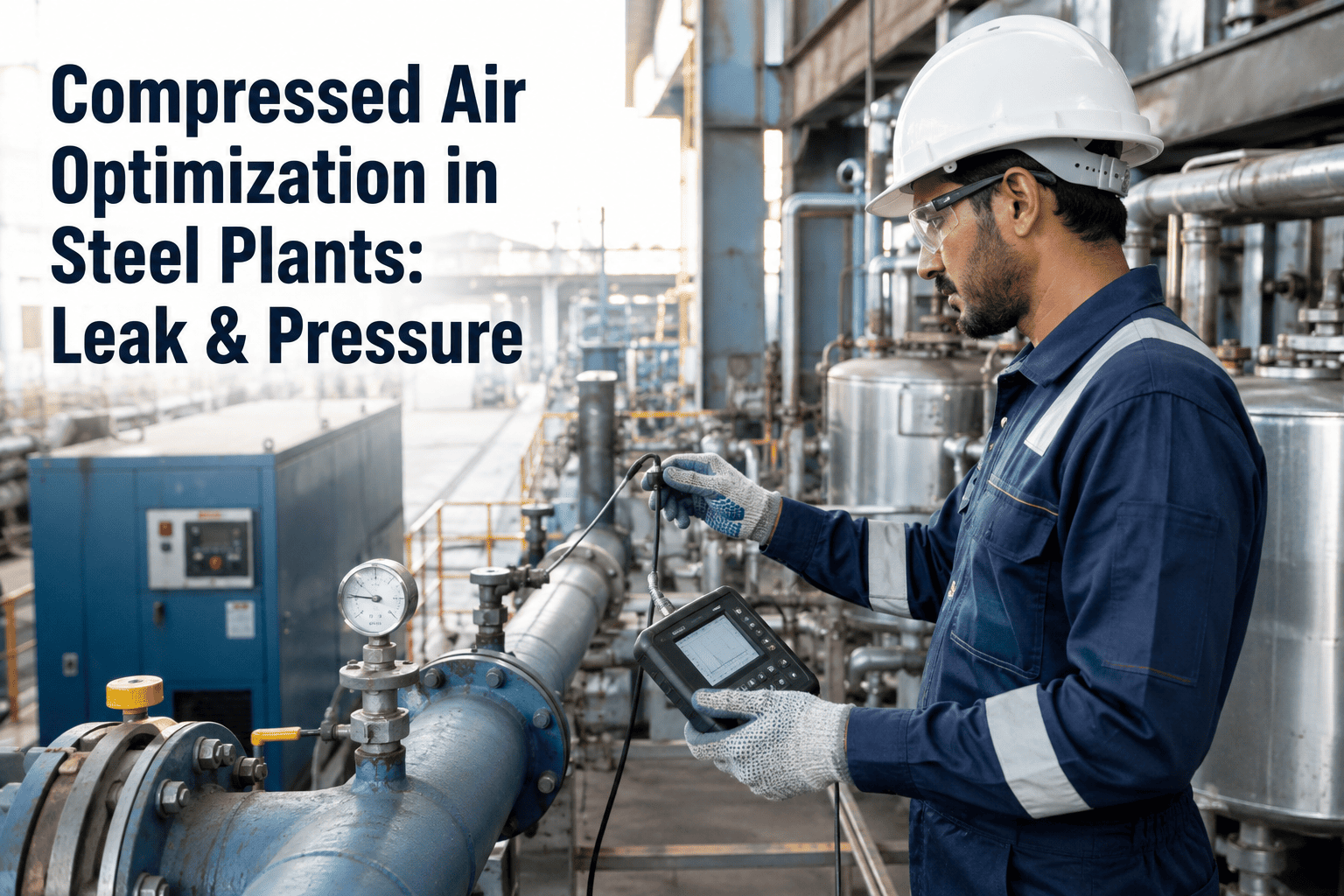
Compressed air is often called the most expensive utility in a plant, and steel operations rarely question that reputation once they actually measure how much of it leaks out through fittings, hoses, and valves that nobody has walked past with a l
Read More
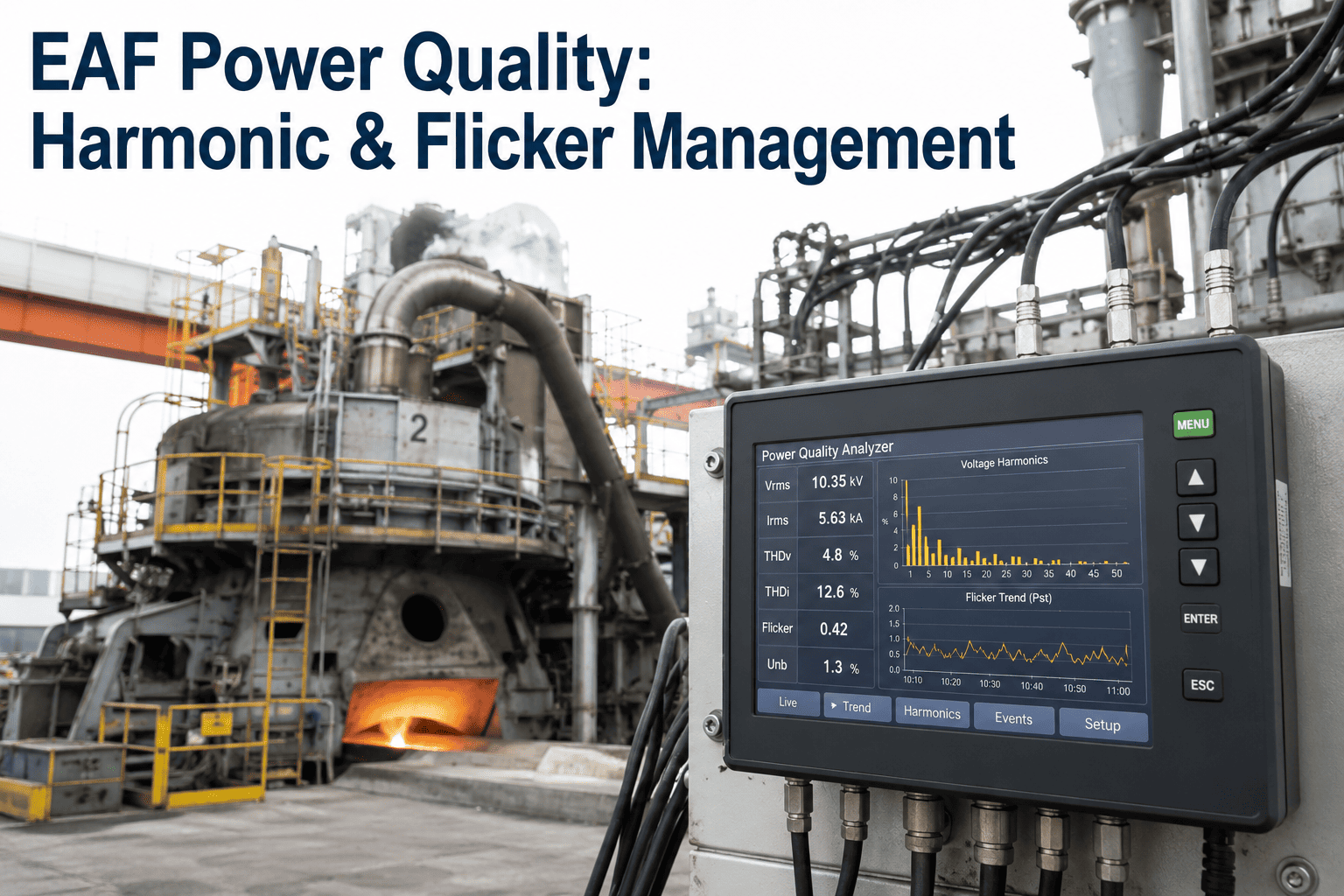
An electric arc furnace draws power in a way almost nothing else on a grid does, striking an unstable arc through scrap that creates rapid, random current swings the moment it starts melting. Left unmanaged, those swings show up on the grid as vol
Read More
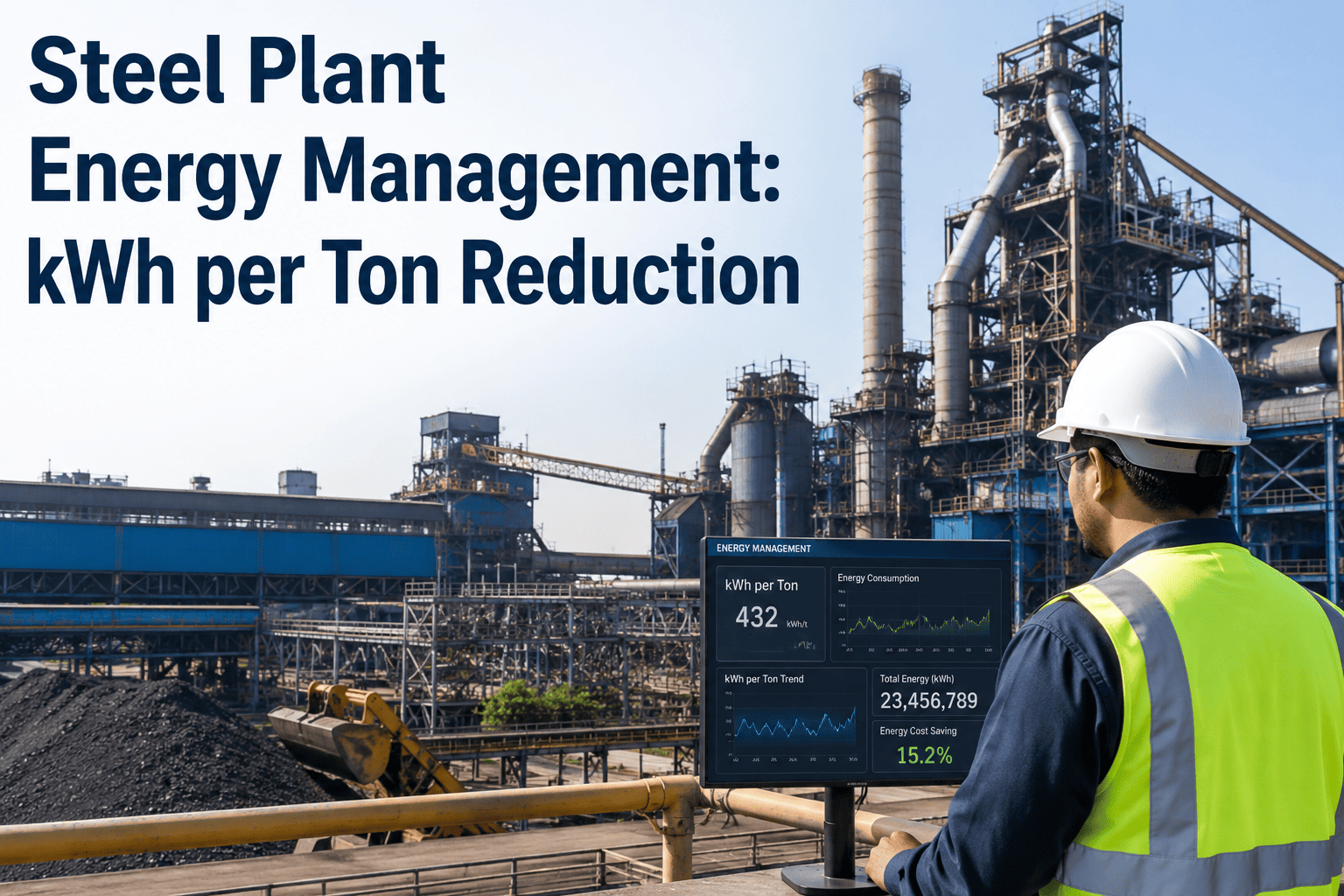
Energy is usually the second largest cost line in a steel plant after raw materials, yet most operations still manage it through a monthly utility bill review rather than tracking consumption per ton at the process level where the actual waste hap
Read More
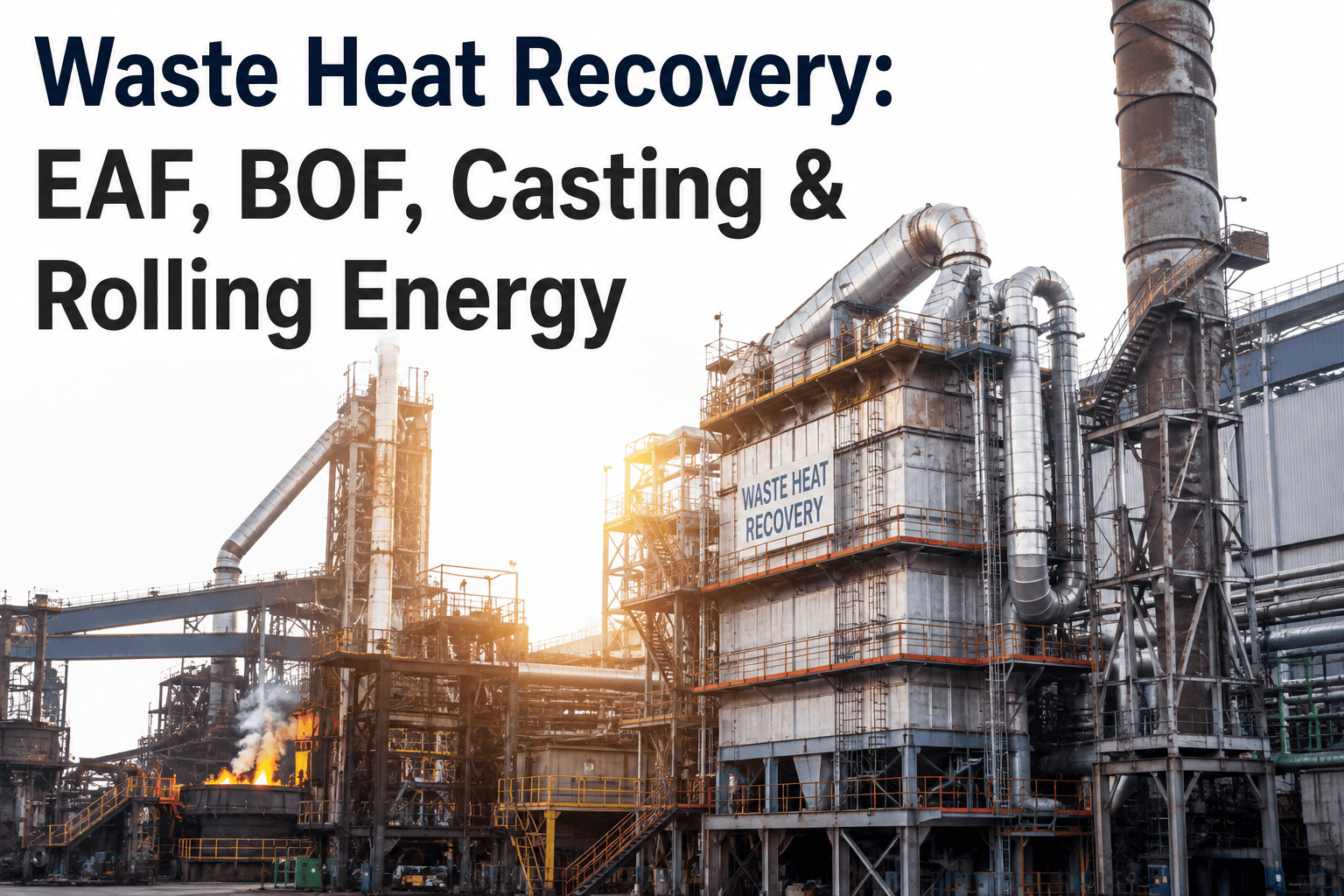
Every ton of steel produced generates far more heat than the final product actually needs, and most of that surplus leaves the plant through an exhaust stack, a cooling water system, or radiant loss from red-hot material sitting in the open air. A
Read More
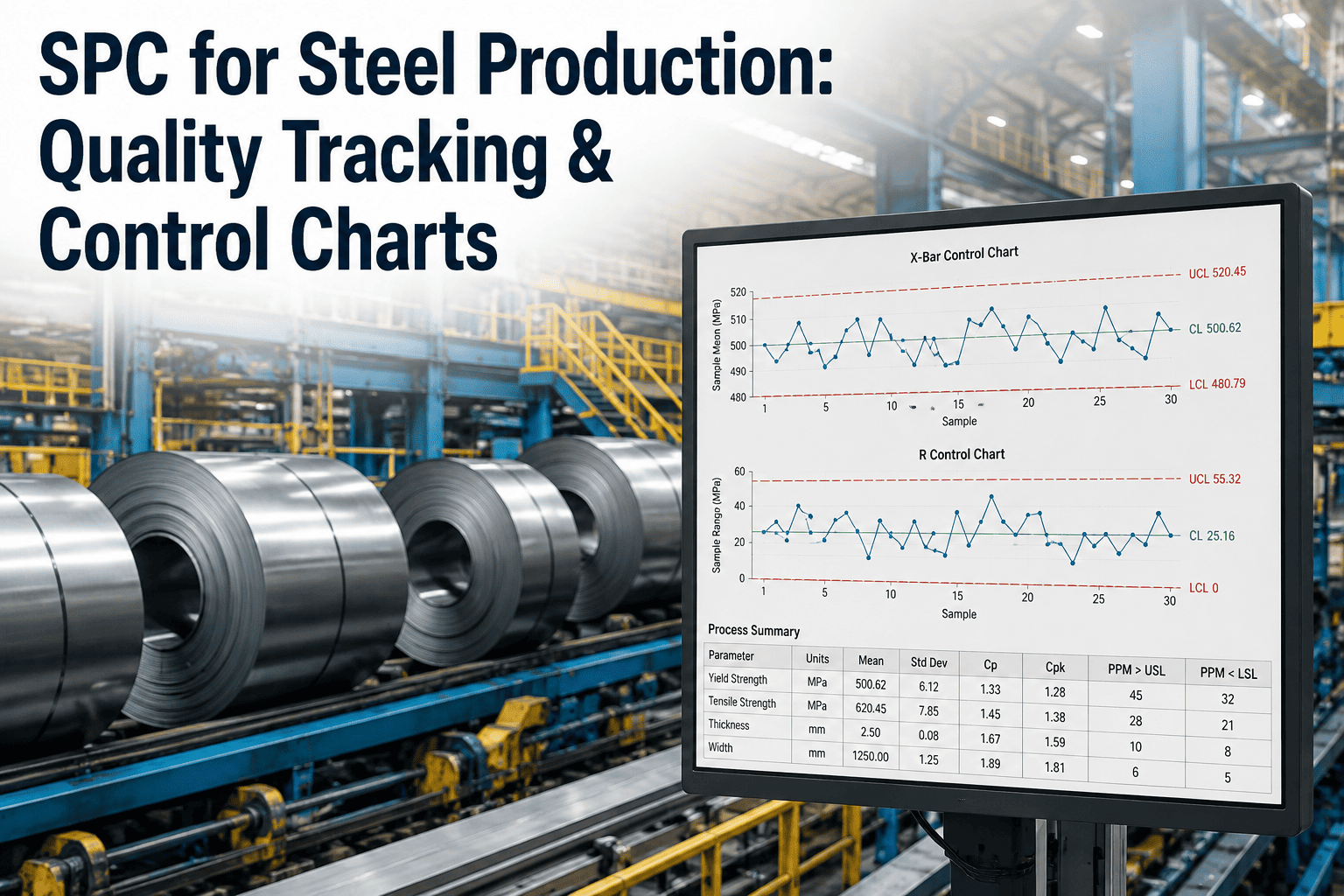
A rolling mill can produce a defective coil for hours before anyone downstream notices the chemistry or dimension has drifted, because most quality checks still happen after the fact, on a sample pulled once a shift and reviewed the next morning.
Read More
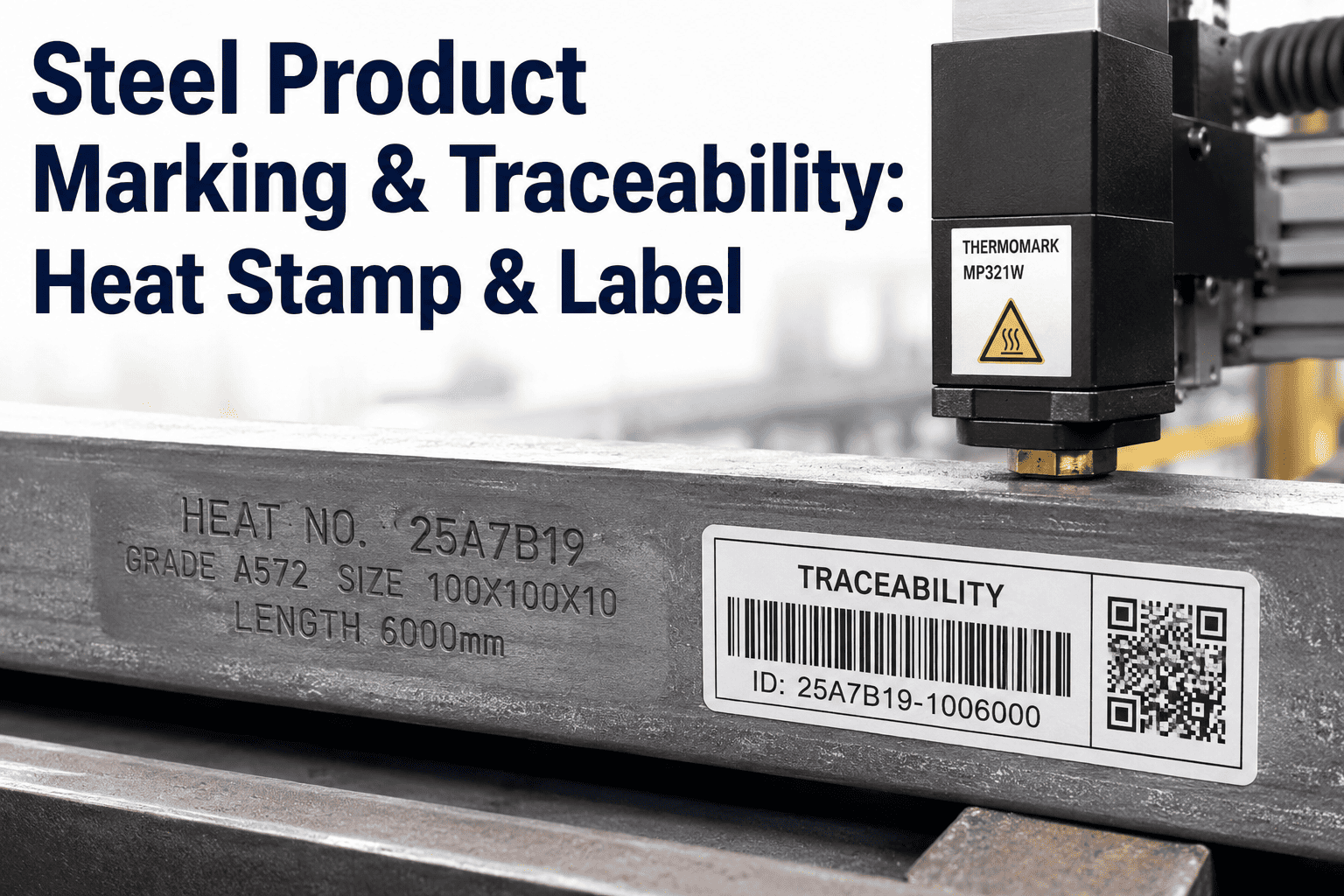
A customer receives a shipment of structural beams and asks for the mill test certificate matching a specific piece, and the answer depends entirely on whether that piece was marked correctly and consistently as it moved from casting through rolli
Read More
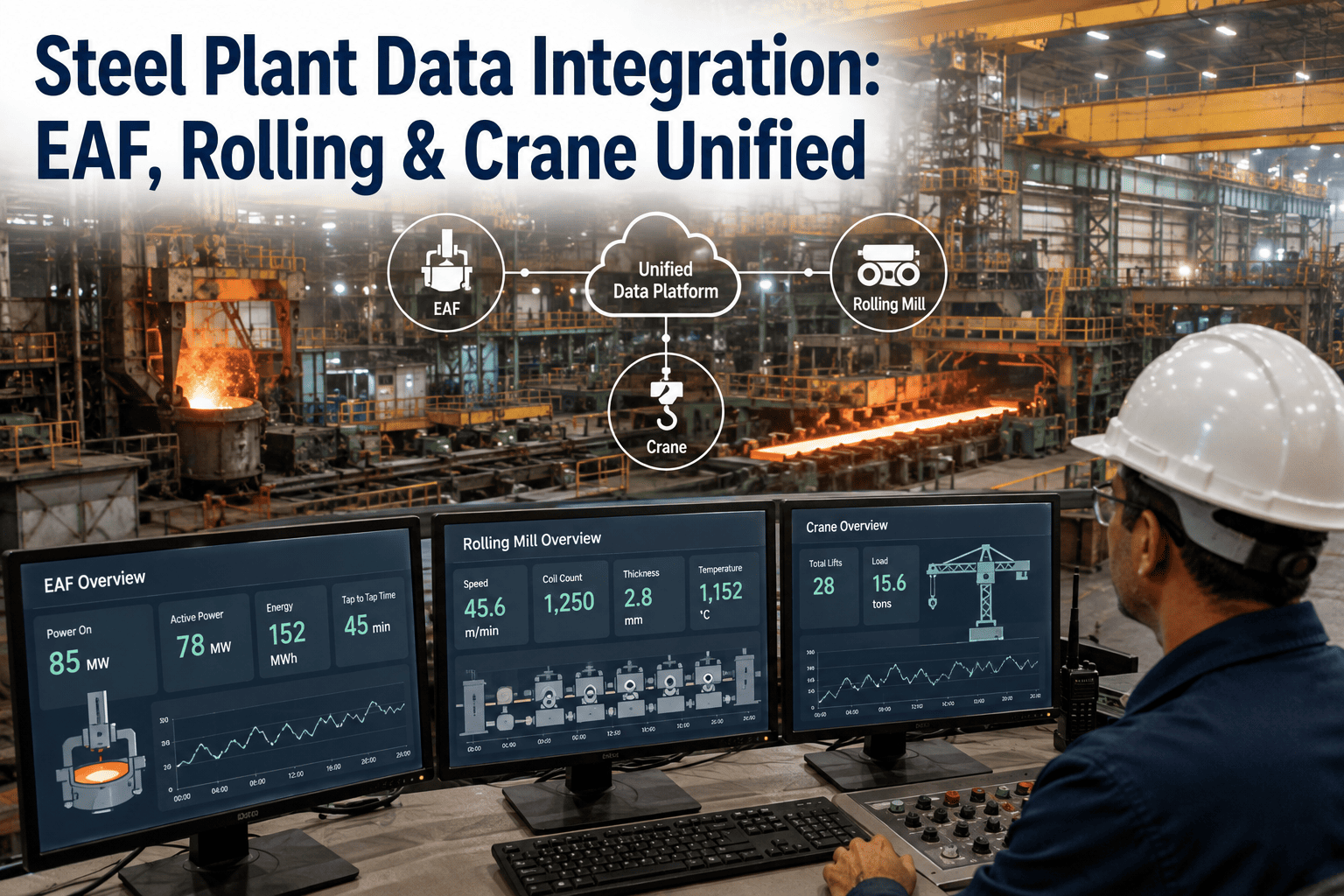
The EAF's Level 2 system knows exactly how much power went into the last heat. The roll shop's spreadsheet knows which work rolls are due for regrinding. The crane's PLC knows its motor hours and load cycles. None of these systems know about each
Read More
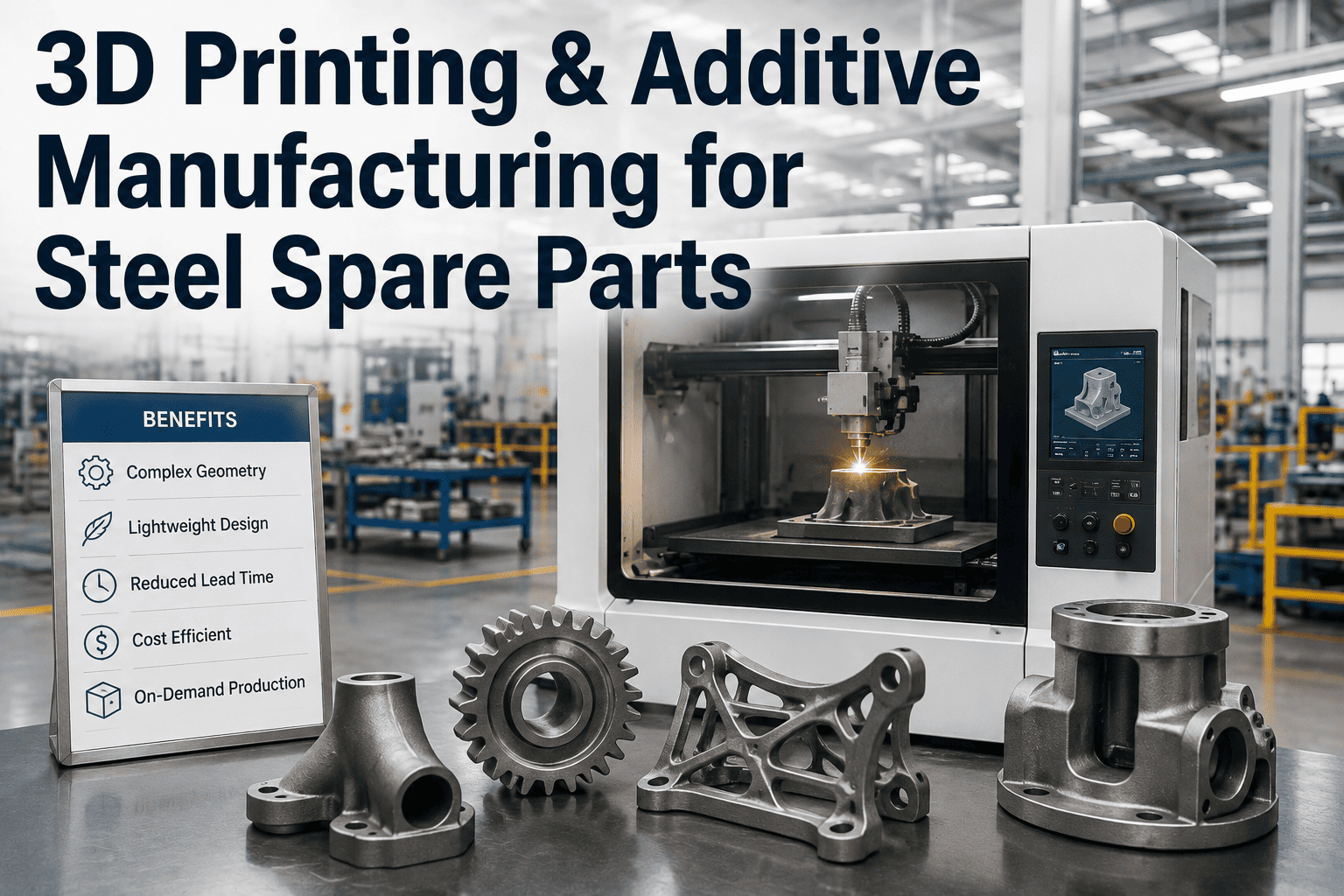
A support block for a steel mill conveyor system doesn't sound like a candidate for advanced manufacturing technology — until the machine that uses it hasn't been produced in fifteen years and the OEM stopped stocking the part a decade ago. A peer
Read More
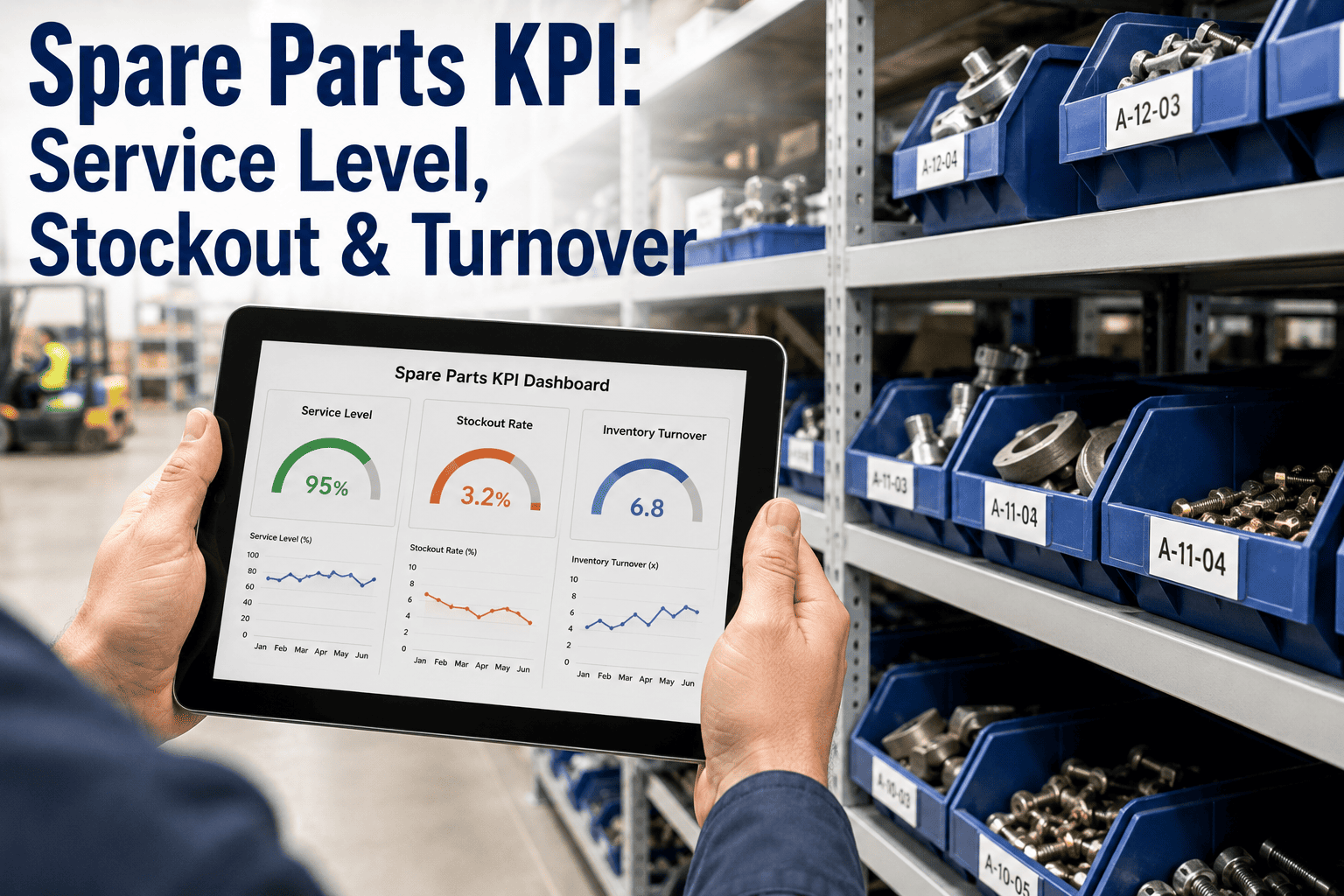
Ask most maintenance teams how their spare parts inventory is performing and the answer tends to be a feeling rather than a number — storeroom feels full, or a critical bearing was out of stock again last month. That feeling is not a metric, and i

Read More
A steel plant can pass every audit, meet every training quota, and still lose a worker to an incident that started with a habit nobody flagged — reaching into a moving line instead of shutting it down first, standing in the line of fire out of rou

Read More
Every maintenance manager eventually stands in front of the same machine for the third time in a year, staring at a repair estimate and asking a question that feels simple but rarely is — fix it again, or finally replace it. The instinct to keep f
Read More
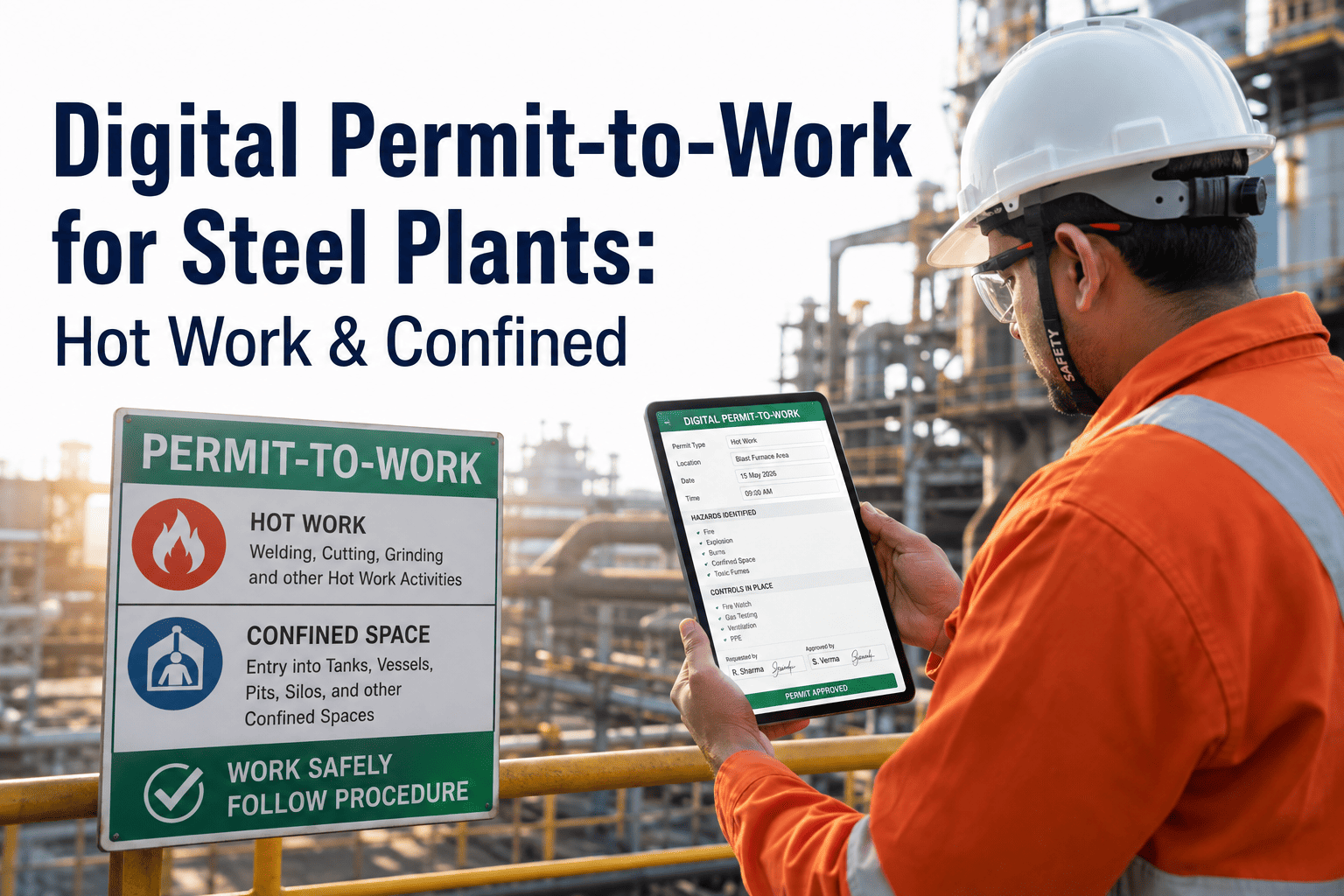
A steel plant issues dozens of work permits before a single shift is halfway through — hot work on a header pipe, confined space entry into a pickling tank, lockout on a rolling mill drive, a fall-protection sign-off on a gantry walkway. Each of t
Read More
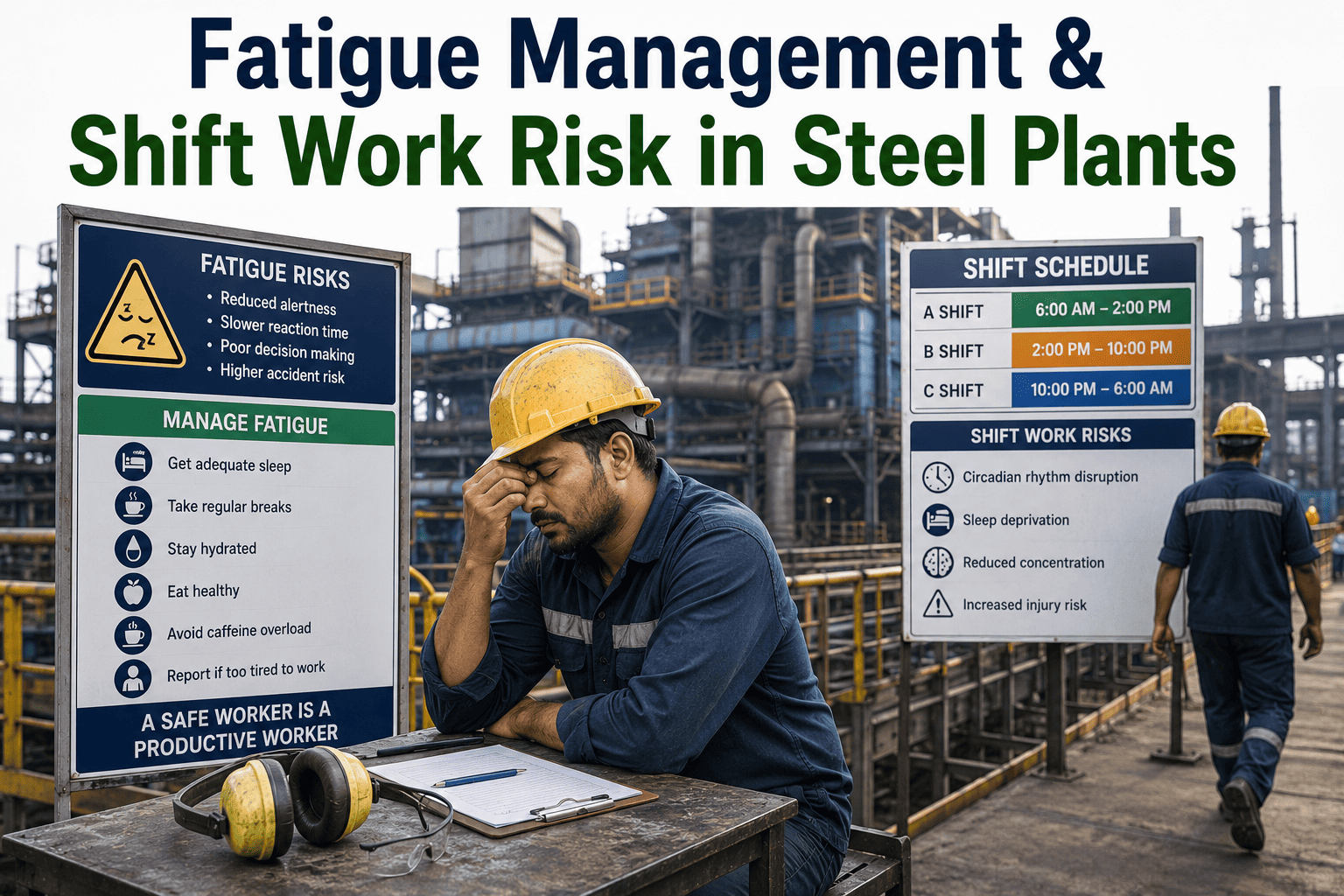
Every steel plant runs shifts because the furnace never stops, and every scheduler eventually has to answer the same uncomfortable question — how much fatigue is the roster quietly building into the crew running the night turn. The answer rarely s
Read More
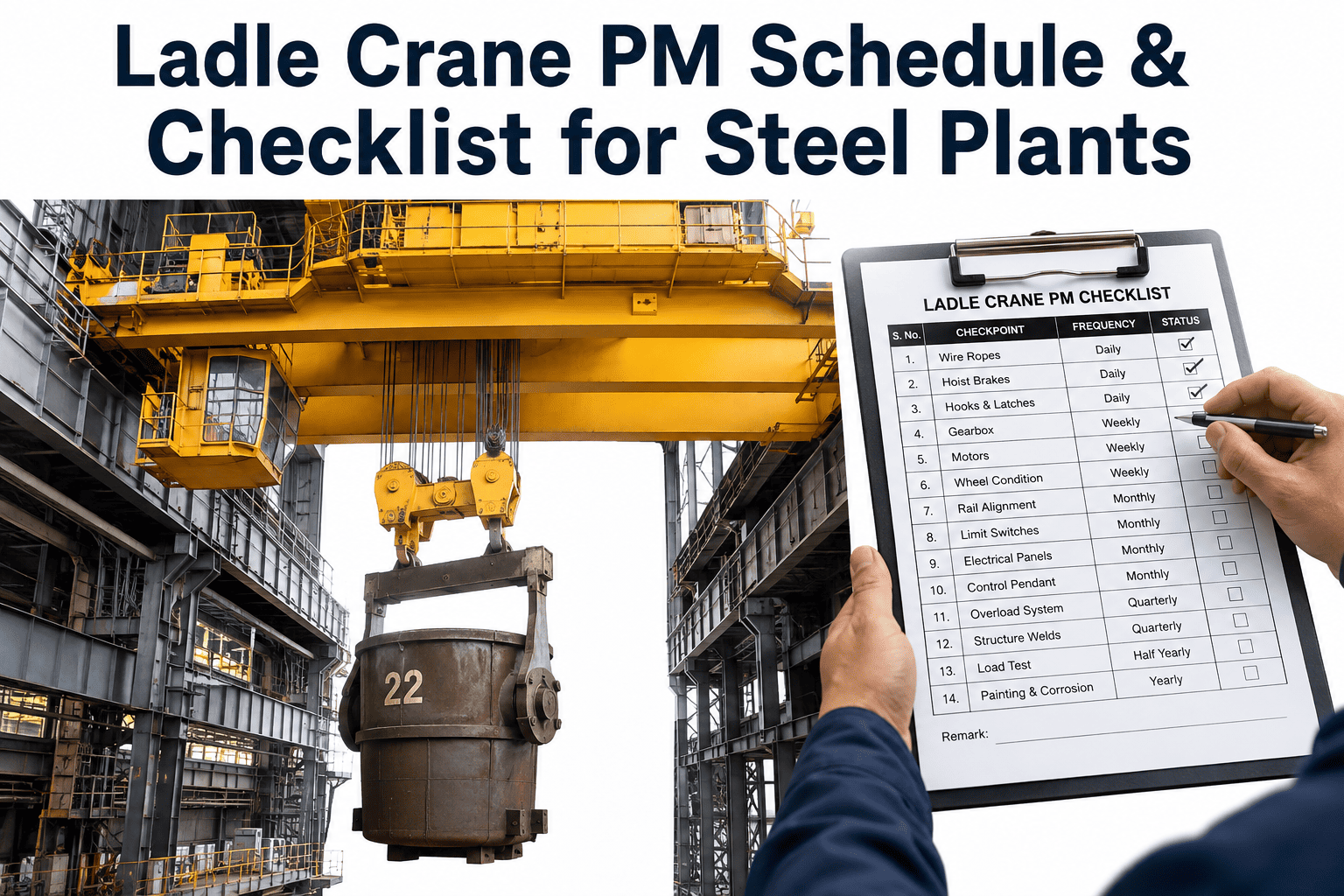
A ladle crane checklist only earns its place on the plant floor if it gets used every single shift, which means it has to be fast to run through, impossible to misread under time pressure, and organized by exactly how often each item actually need
Read More
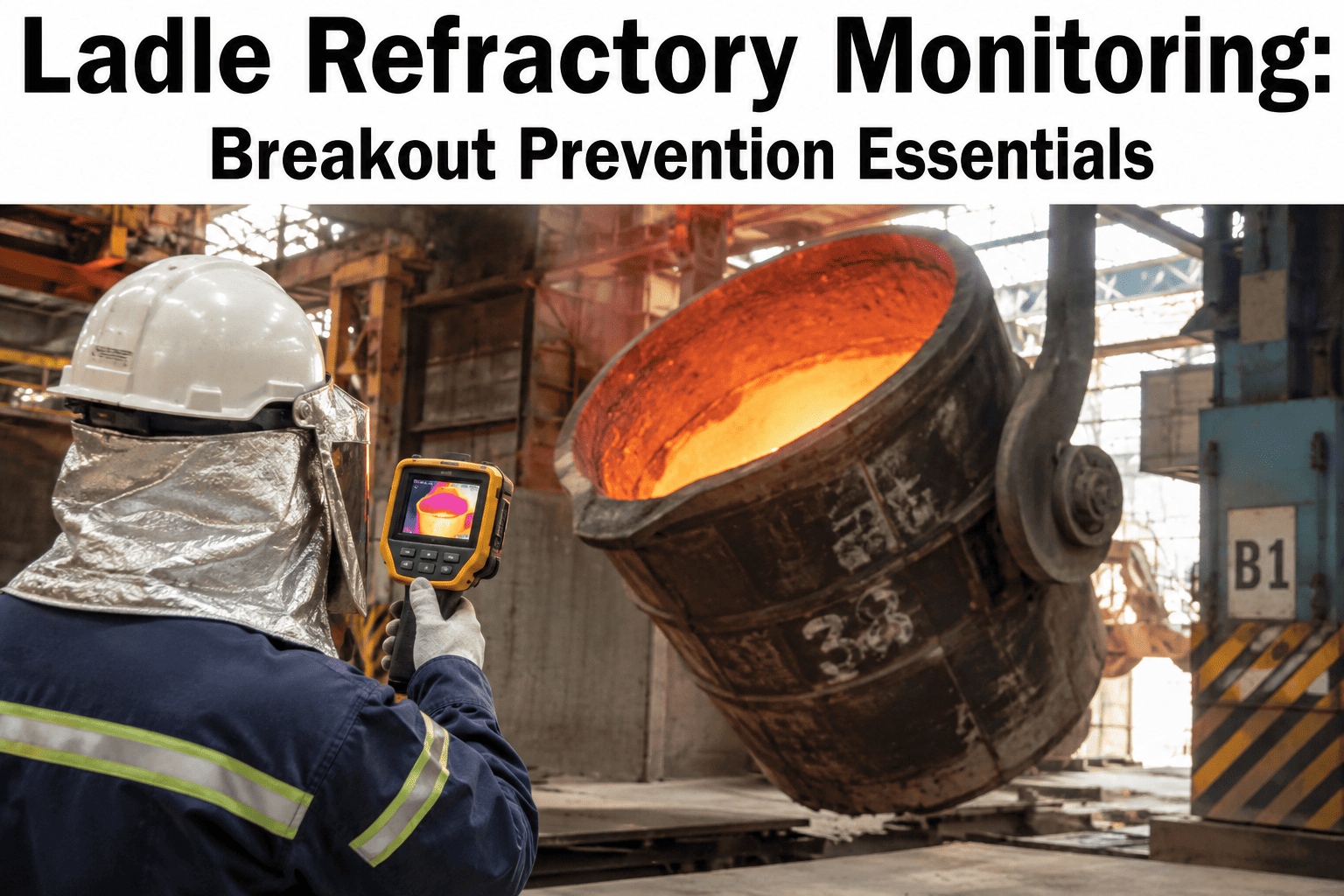
A ladle breakout is the failure every steel plant plans around and hopes never to see, because by the time molten steel finds a gap in worn refractory lining, there is no controlled way to stop it. The lining that holds back over a thousand tons o
Read More
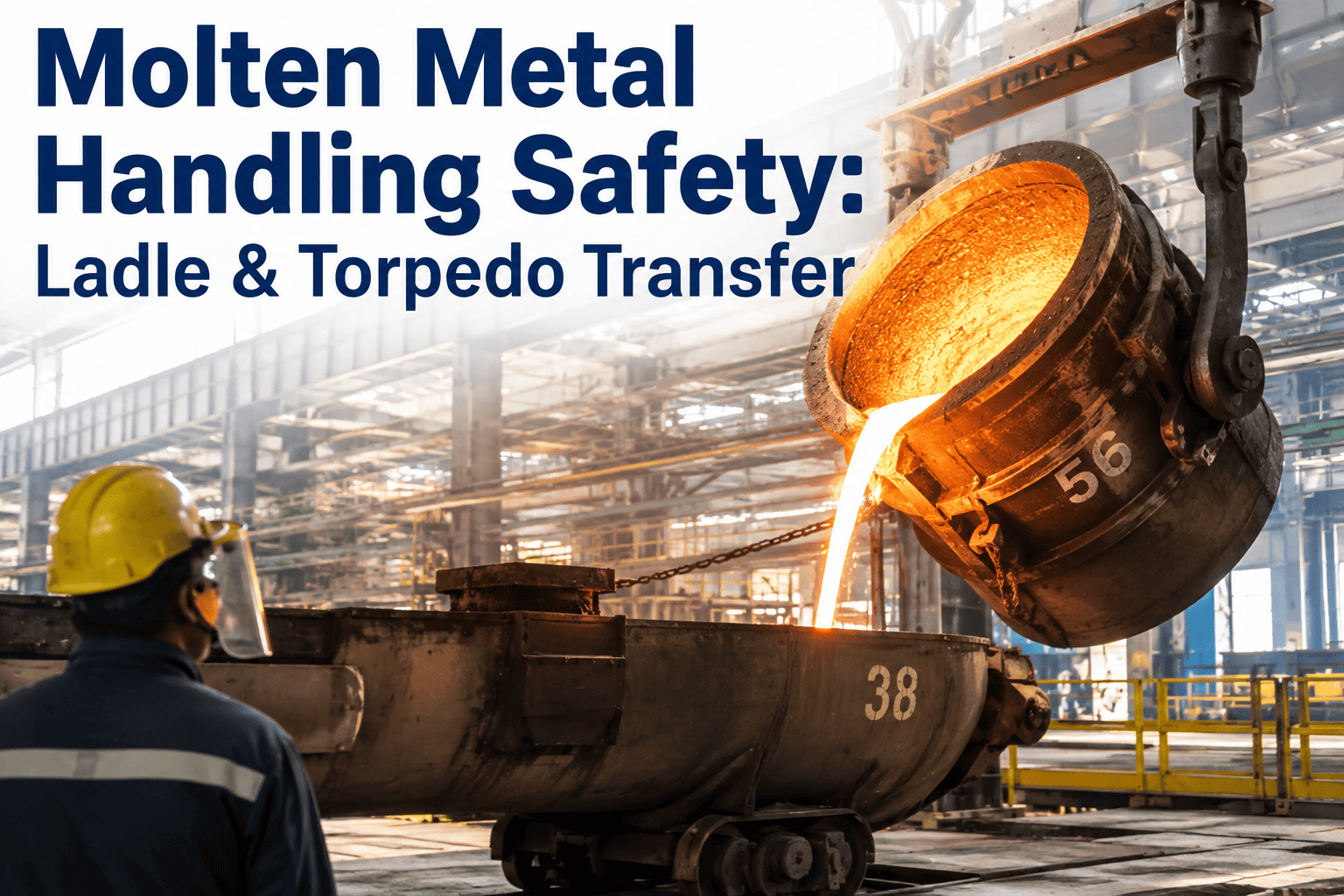
Every ladle and torpedo car transfer in a steel plant carries the same unforgiving math — a small communication gap, an ambiguous exclusion zone boundary, or a rushed transfer procedure can turn routine hot metal movement into the plant's worst da
Read More
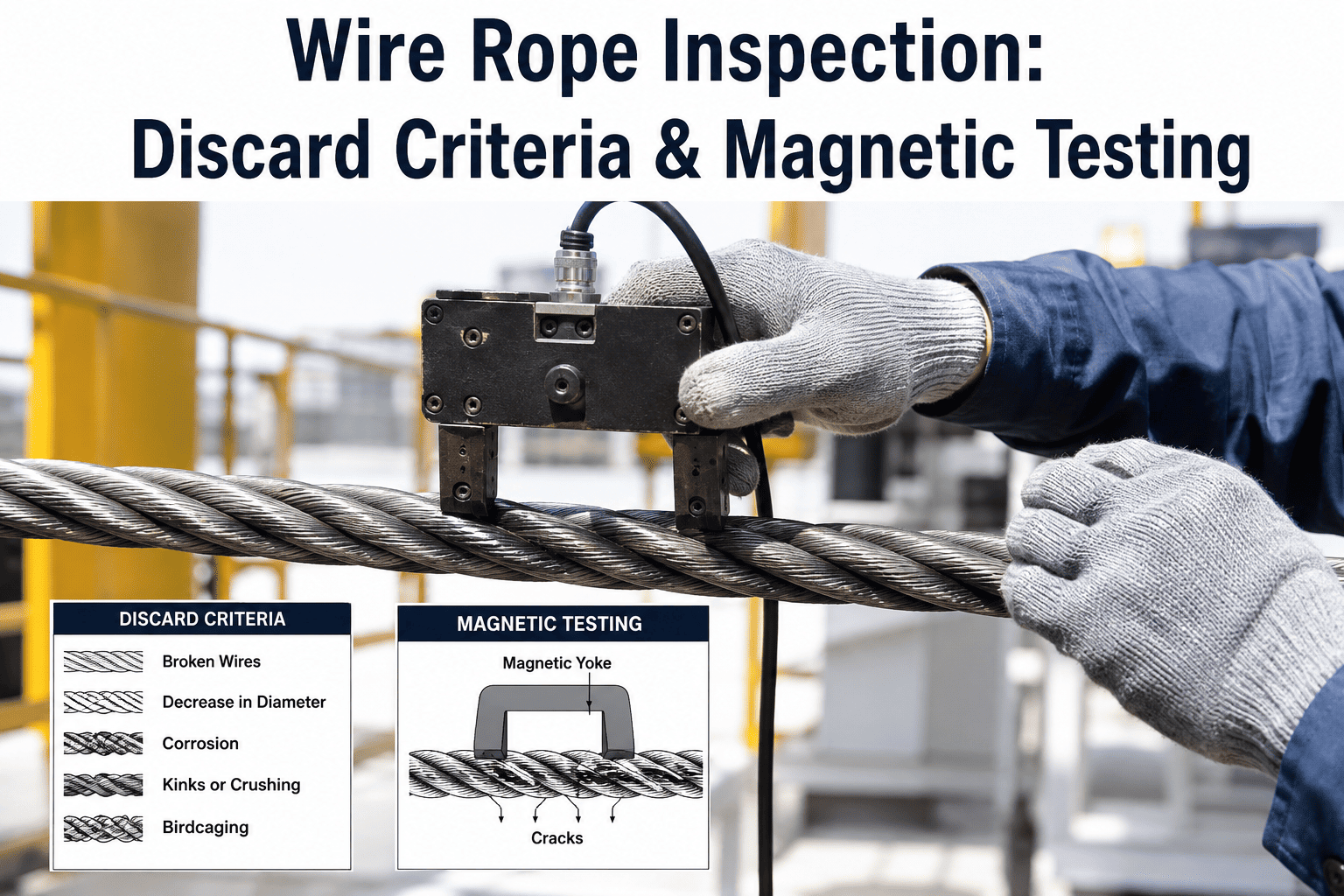
A wire rope on a steel plant crane rarely fails all at once — it fails wire by wire, quietly accumulating internal and external breaks until it crosses a discard threshold that visual inspection alone frequently misses. Standards bodies have publi
Read More
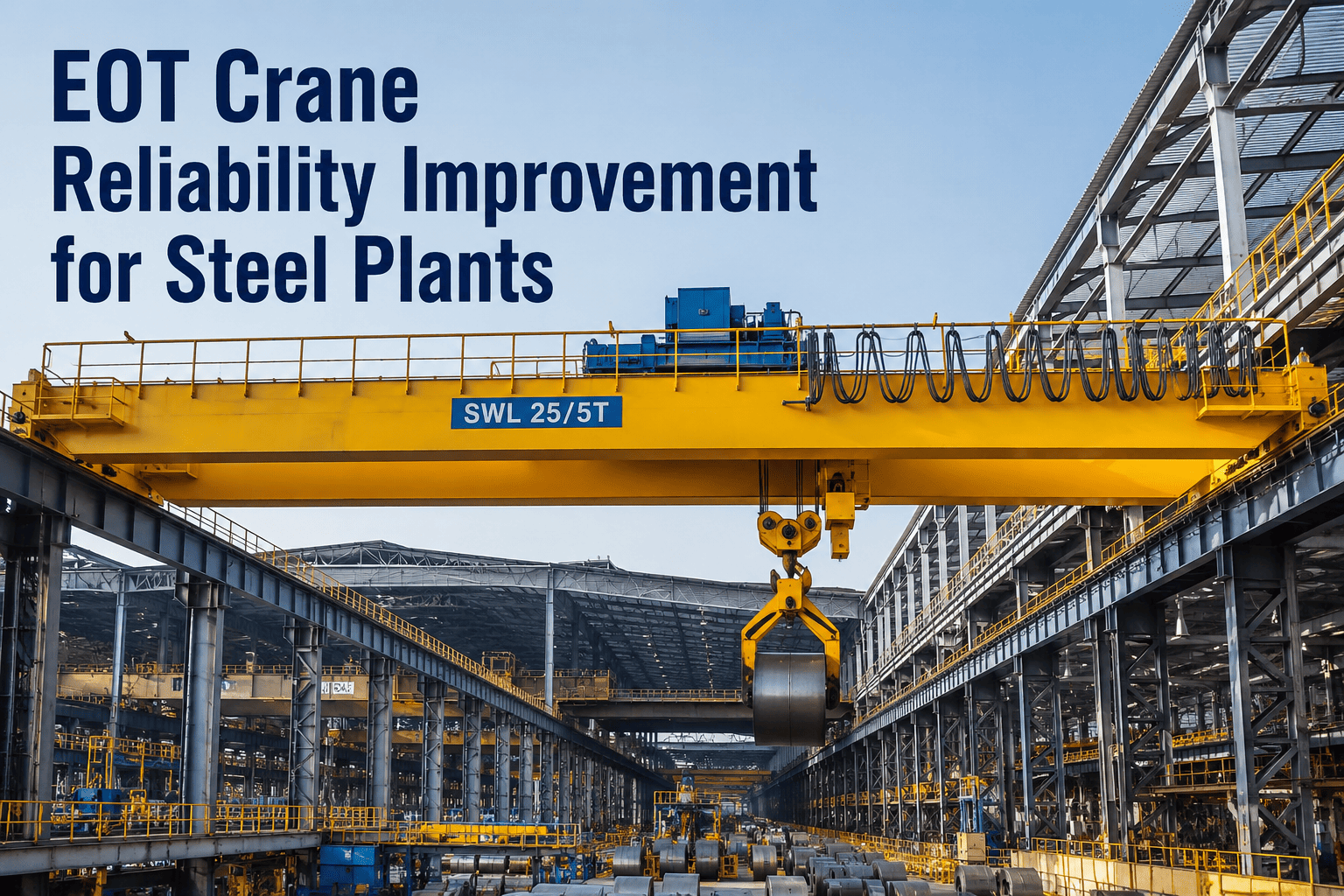
An overhead crane going down in a steel plant is never a small event — it stops ladle movement, stalls charging, and backs up an entire bay because there is rarely a second crane sitting idle to pick up the slack. Most reliability programs treat c

Read More
A work roll leaves the mill floor scarred, chipped, or simply due for a regrind, and from that moment its identity depends on a handwritten tag, a chalk mark, or a supervisor's memory of which stand it came off. Multiply that across a hundred roll

Read More
Every roll sitting idle in a storage rack is capital tied up doing nothing, and every roll a mill runs out of at the wrong moment is a stand changeover delayed while operations scrambles a rush order from a supplier three weeks out. Most steel pro
Read More
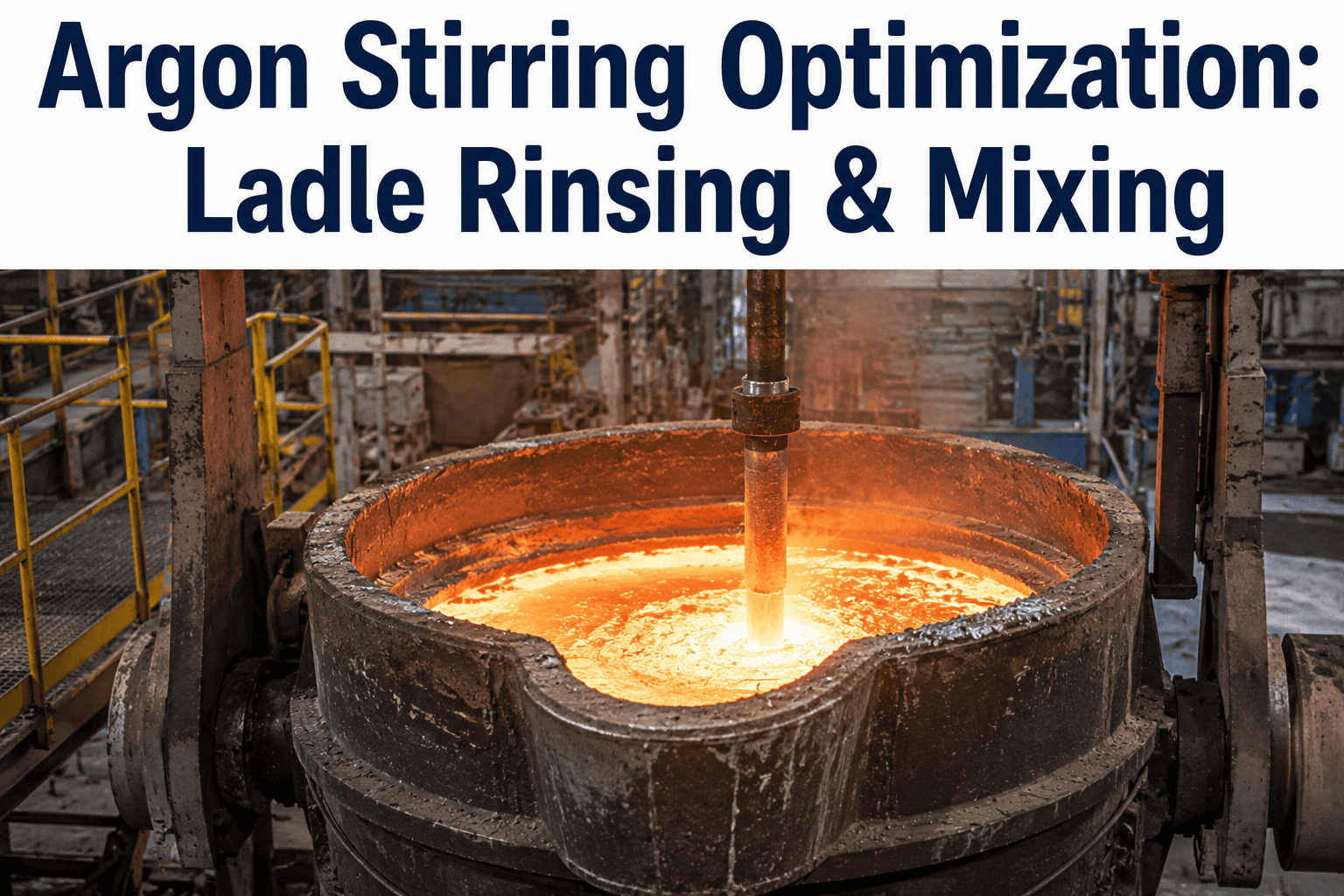
Argon stirring looks like a simple bubble pattern rising through a ladle, but the intensity and stability of that flow determines whether an entire heat reaches homogeneous temperature and chemistry or leaves the ladle with pockets of unmixed stee
Read More
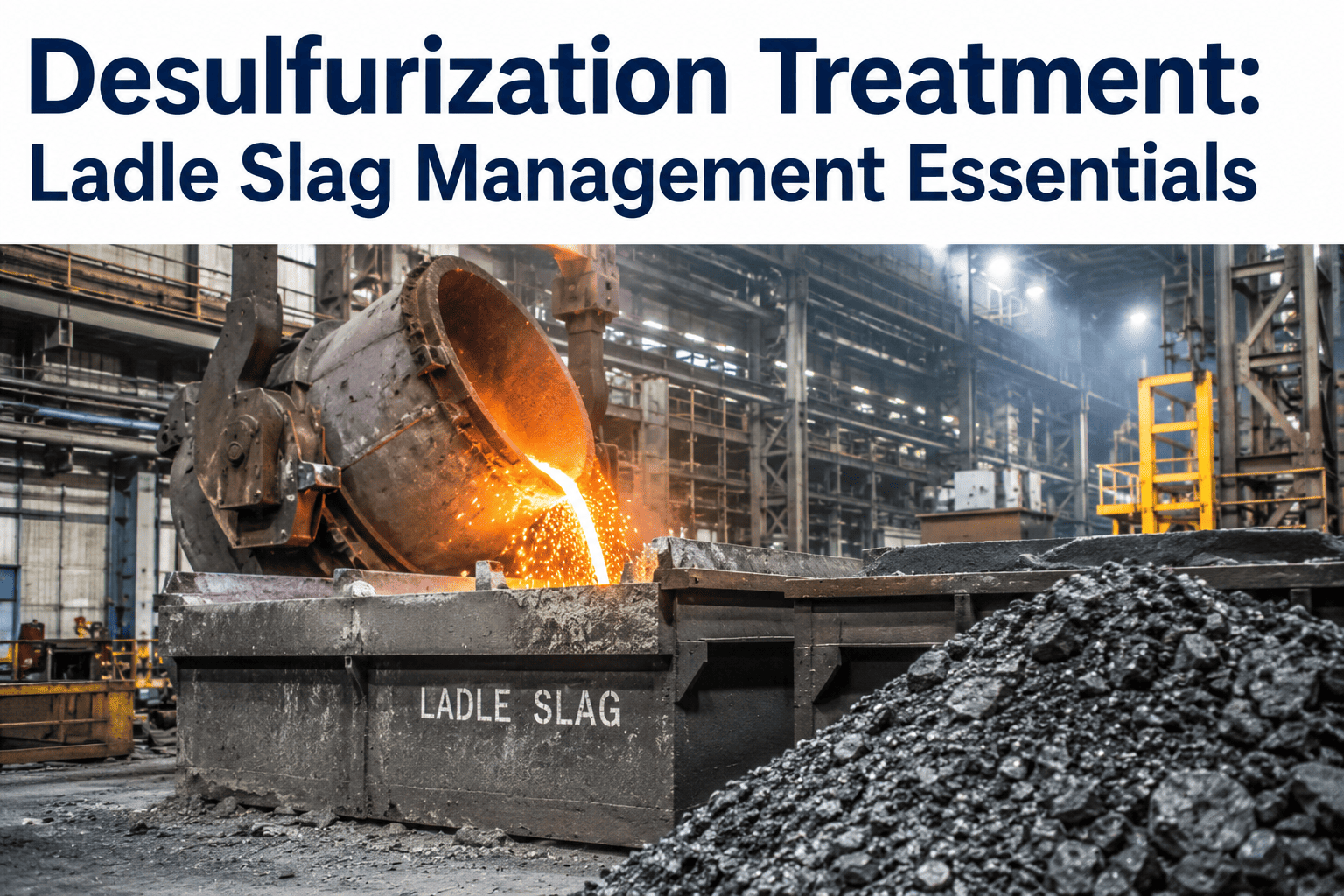
Ultra-low sulfur specifications leave very little margin for a slag chemistry that drifts off target or a deoxidation practice applied inconsistently between heats. Sulfur removal happens almost entirely through the slag-metal interface, which mea
Read More
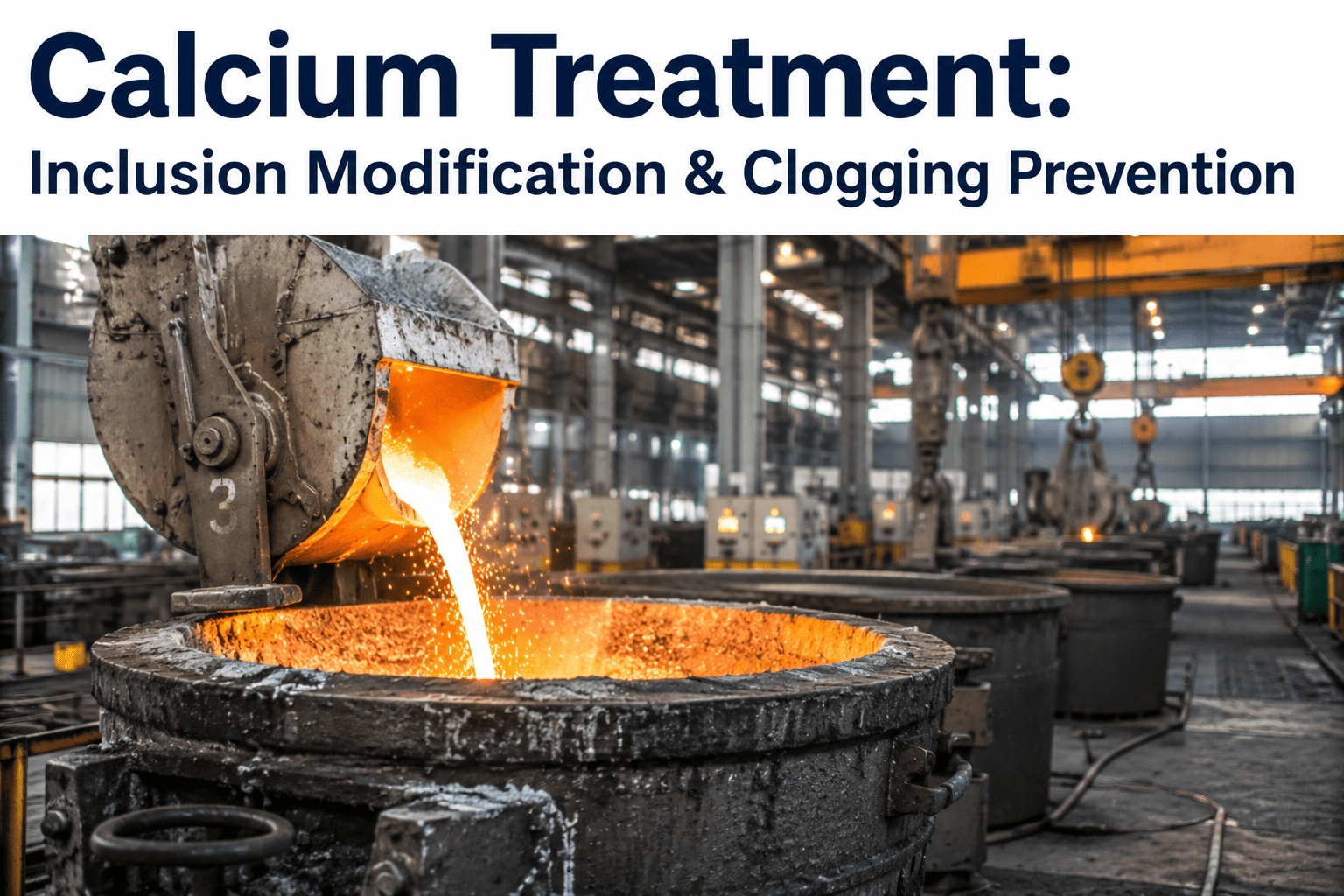
Nothing derails a caster sequence quite like an SEN clogging mid-cast, and more often than not the root cause was set minutes earlier at the calcium treatment station, not at the caster itself. Calcium treatment modifies solid alumina inclusions i
Read More
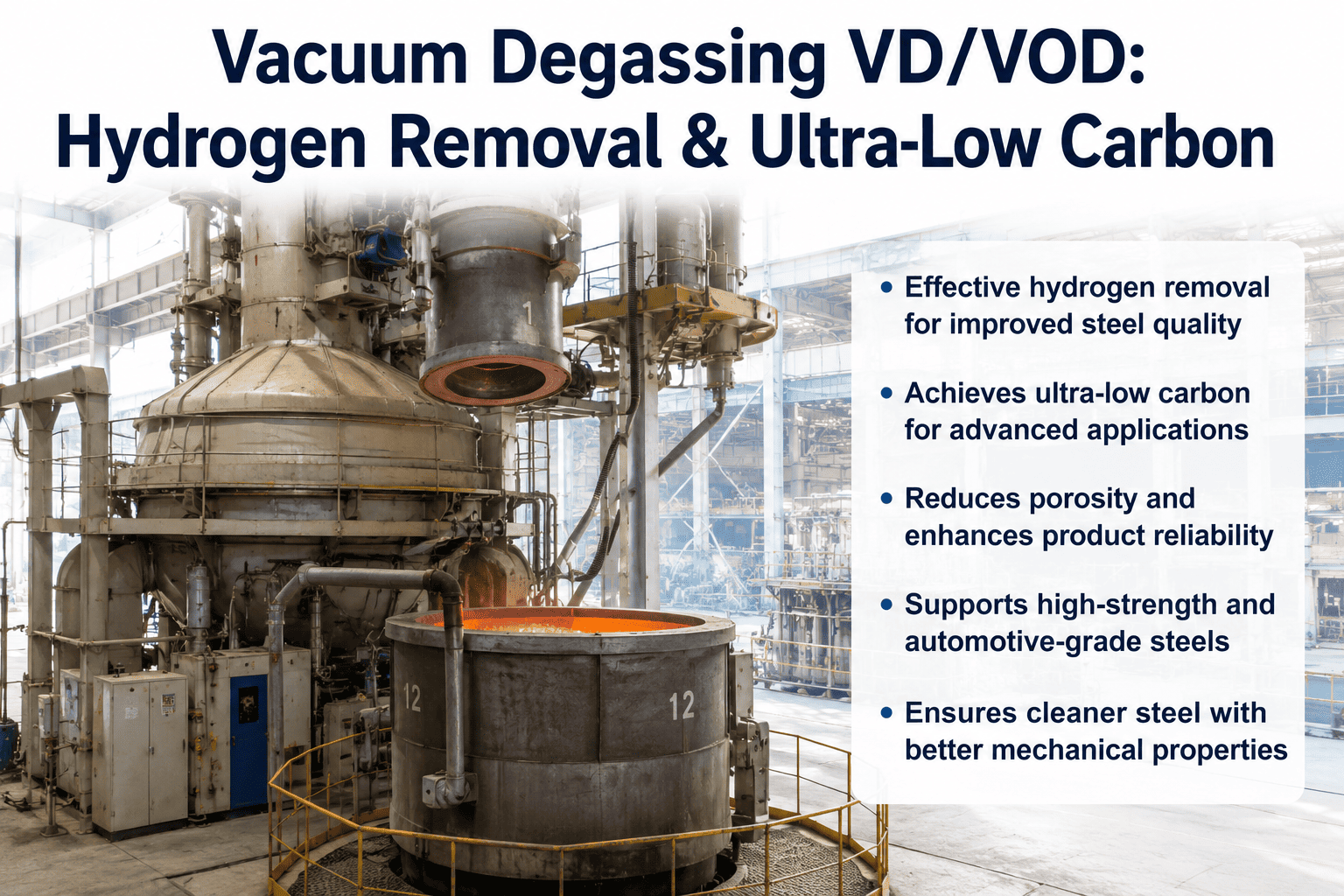
Ultra-low carbon and hydrogen-sensitive steel grades leave almost no room for error at the vacuum degassing station. A vacuum level that does not hold, stirring that falls short of what decarburization actually needs, or a treatment cycle cut a fe
Read More
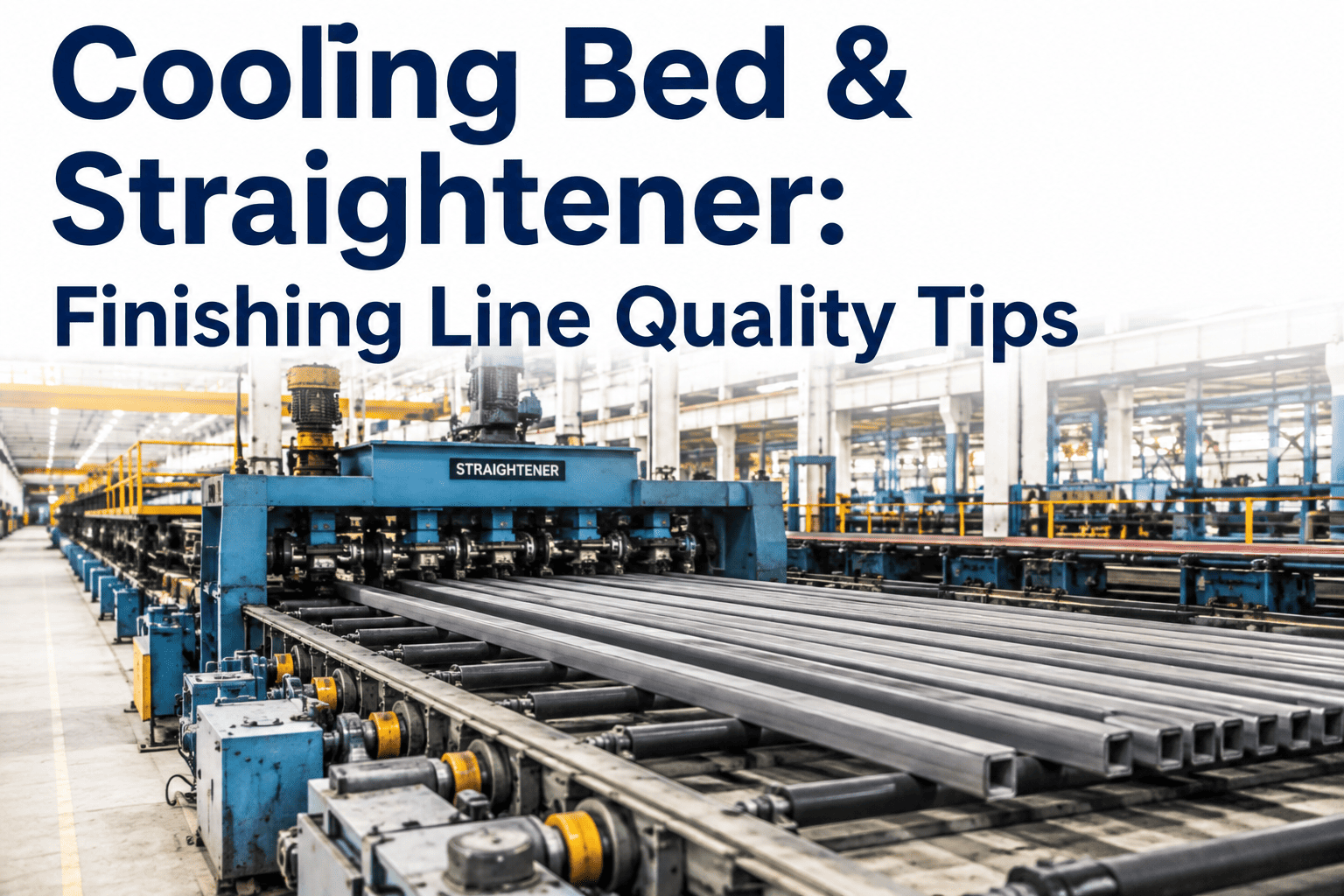
Most rolling mill quality investigations focus on the stands, yet a meaningful share of finished product complaints actually originate downstream, at the cooling bed and straightener. Uneven cooling introduces residual stress that a straightener t
Read More
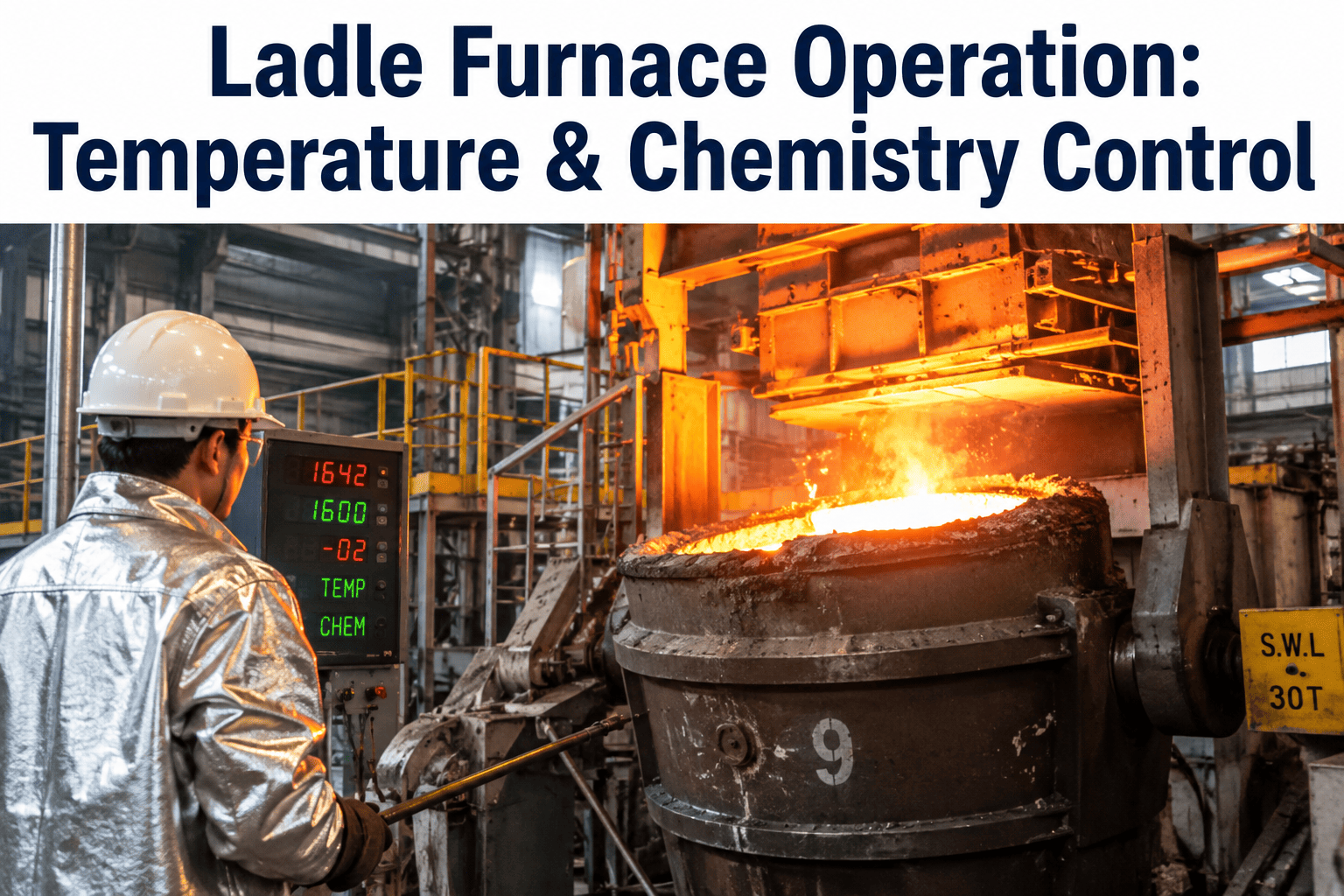
A ladle furnace has one job that sounds simple and rarely is: bring the heat to the exact temperature and chemistry the caster needs, at the exact moment the caster needs it. Arc heating that overshoots wastes electrode and refractory life, stirri
Read More
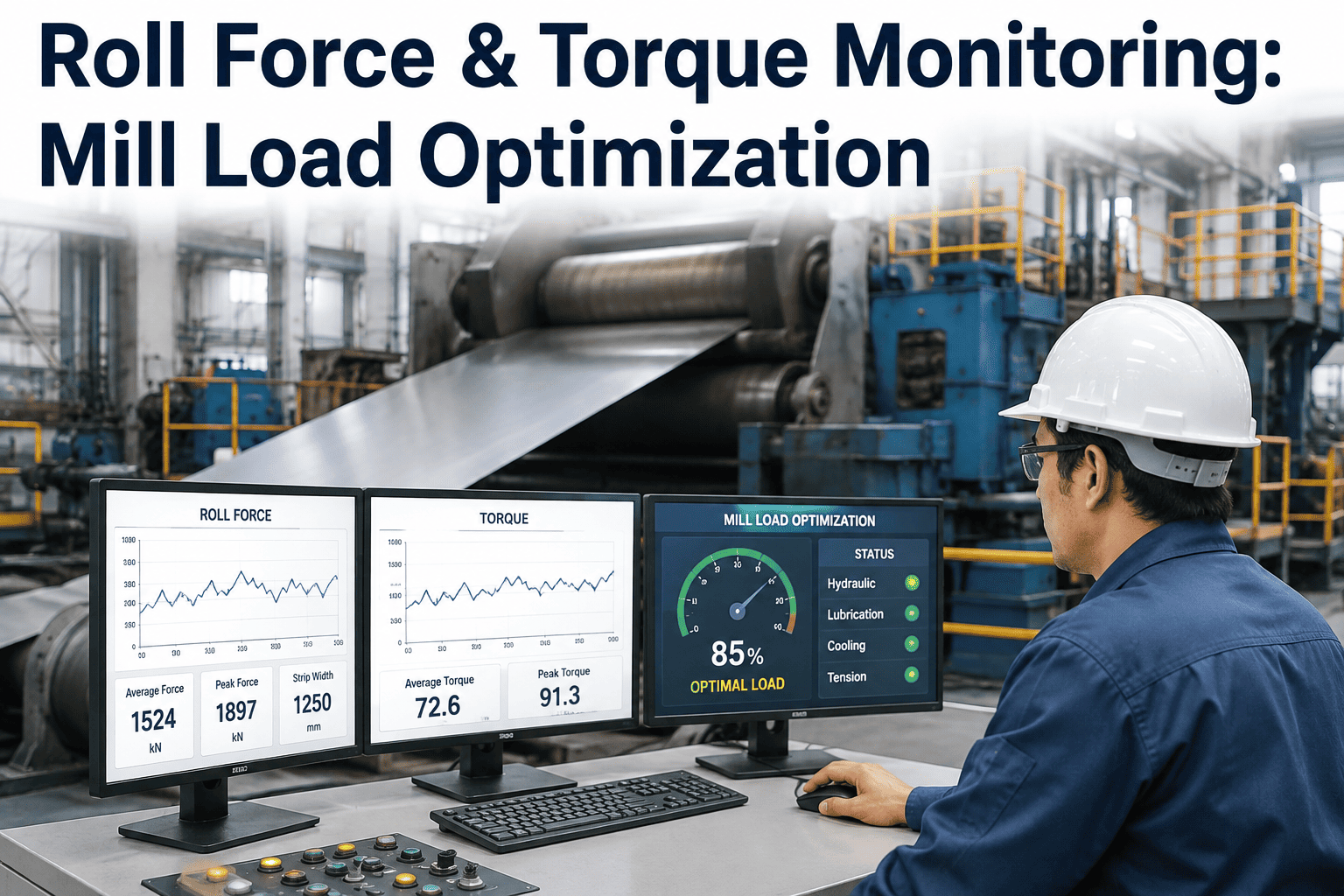
An uneven load split across rolling mill stands quietly erodes product quality long before it trips an overload alarm. One stand absorbing more force than its neighbors wears its rolls faster, drifts gauge tolerance, and pushes its motor closer to
Read More
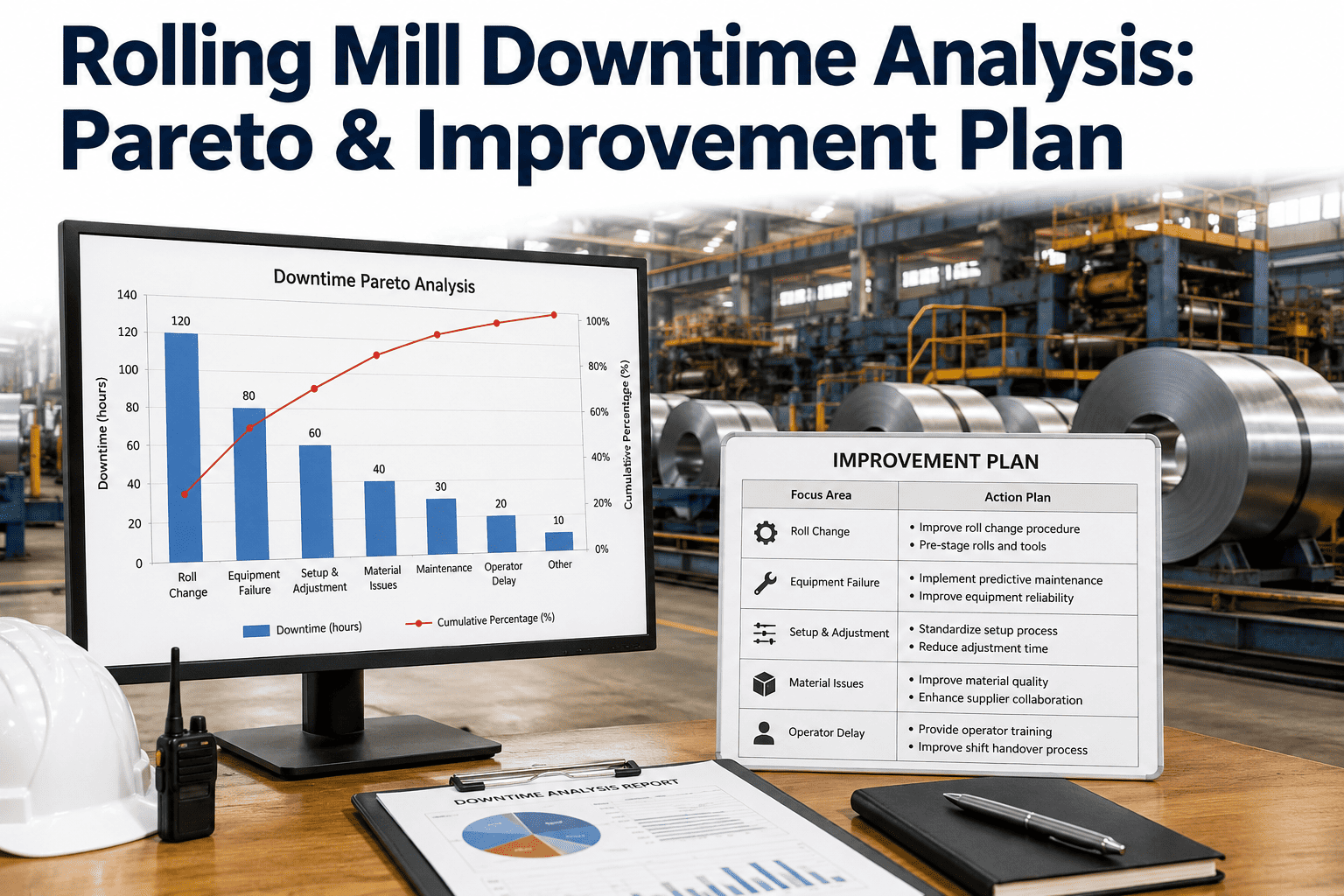
Most rolling mills already track downtime in some form, yet the same causes tend to resurface month after month because the data sits in a shift log instead of a structured improvement process. A Pareto view of downtime causes turns a long list of
Read More
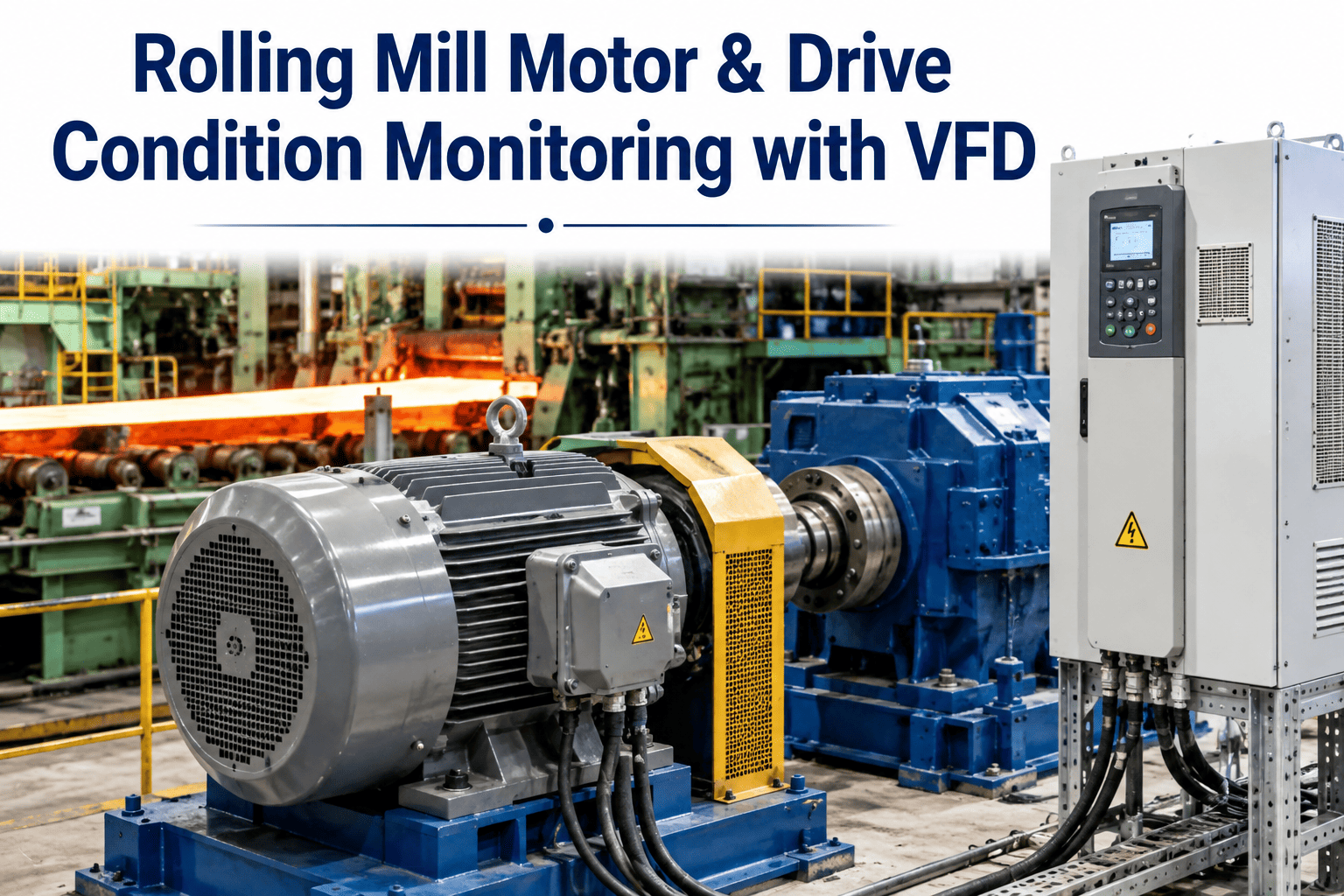
A tripped main motor on a rolling mill does not give much warning. Current spikes, insulation resistance drifts, and drive train vibration build for weeks before a VFD fault finally halts the stand and the entire line behind it. Mills that rely on

Read More
A scale pit mark, a rolled-in scale patch, or a hairline edge crack on a hot strip travels at line speed past a human inspector for only a fraction of a second, which is exactly why so many surface defects still slip through visual checks and turn
Read More
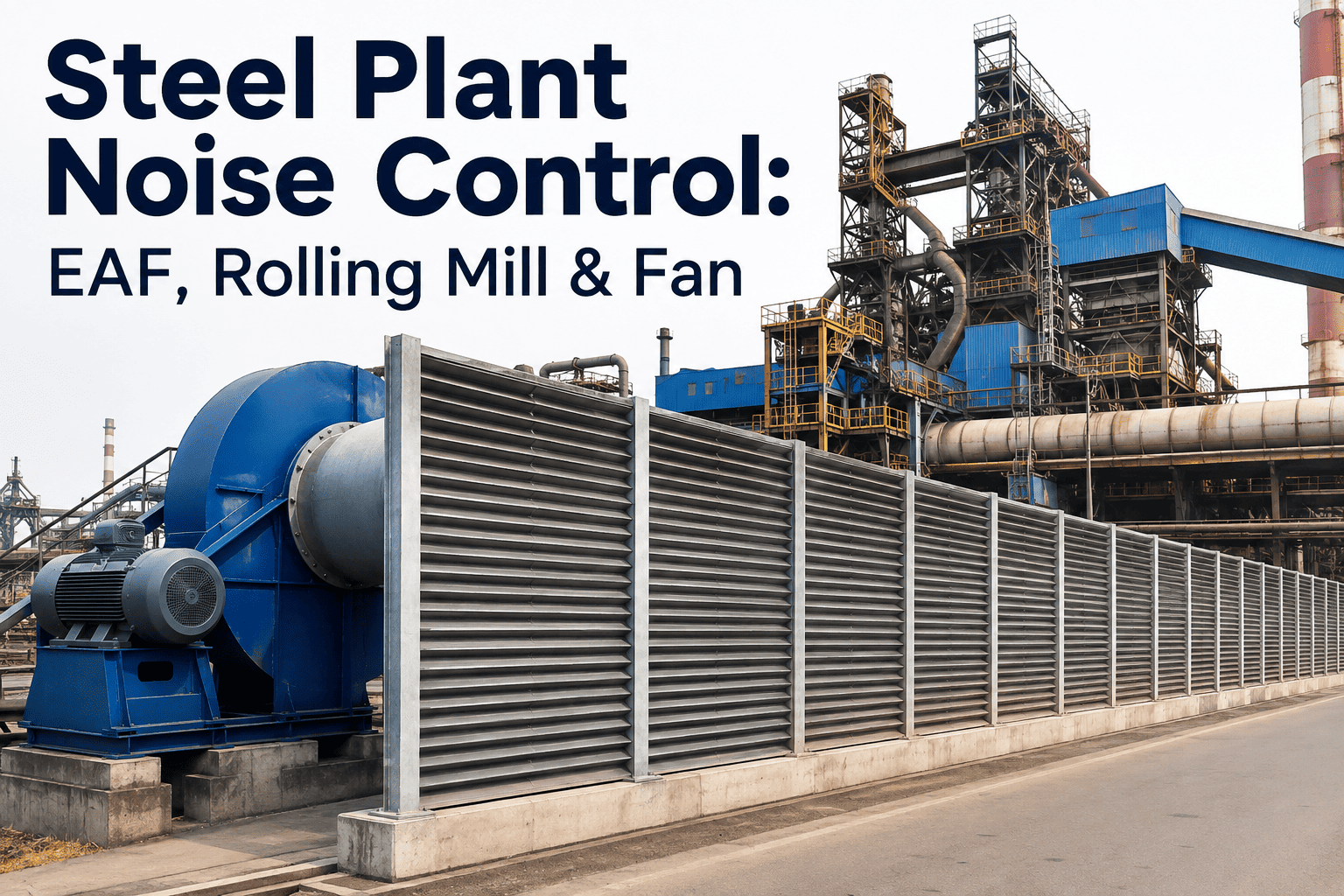
Steel plants generate some of the highest industrial noise levels of any manufacturing environment, with electric arc furnaces producing impulsive sound pressures exceeding 120 decibels during melt-down, rolling mills generating continuous structu
Read More
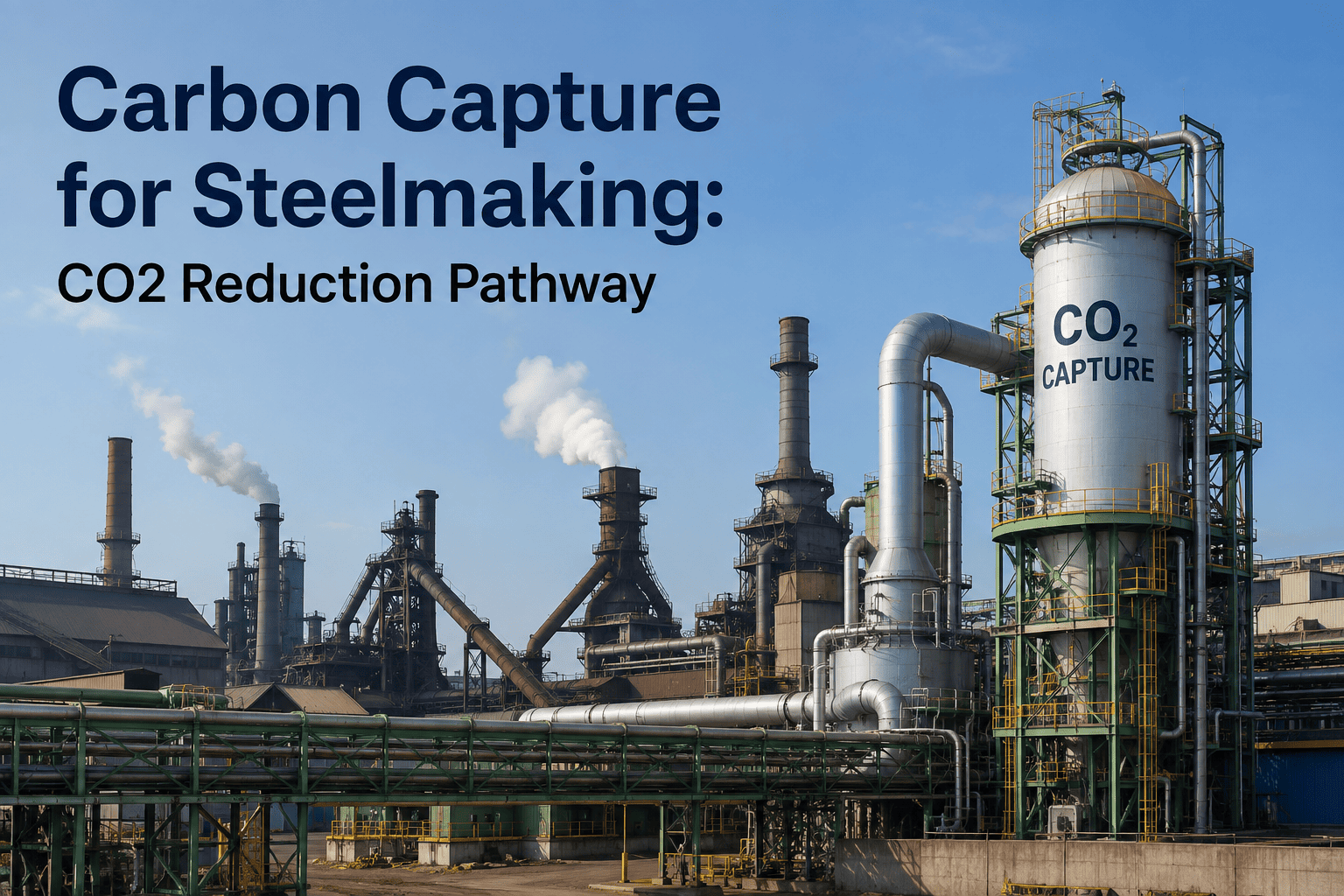
Steelmaking accounts for a meaningful share of global industrial CO2 emissions, and every producer now faces some version of the same question from customers, investors, or regulators — what is the actual pathway to lower-carbon steel, and how fas
Read More
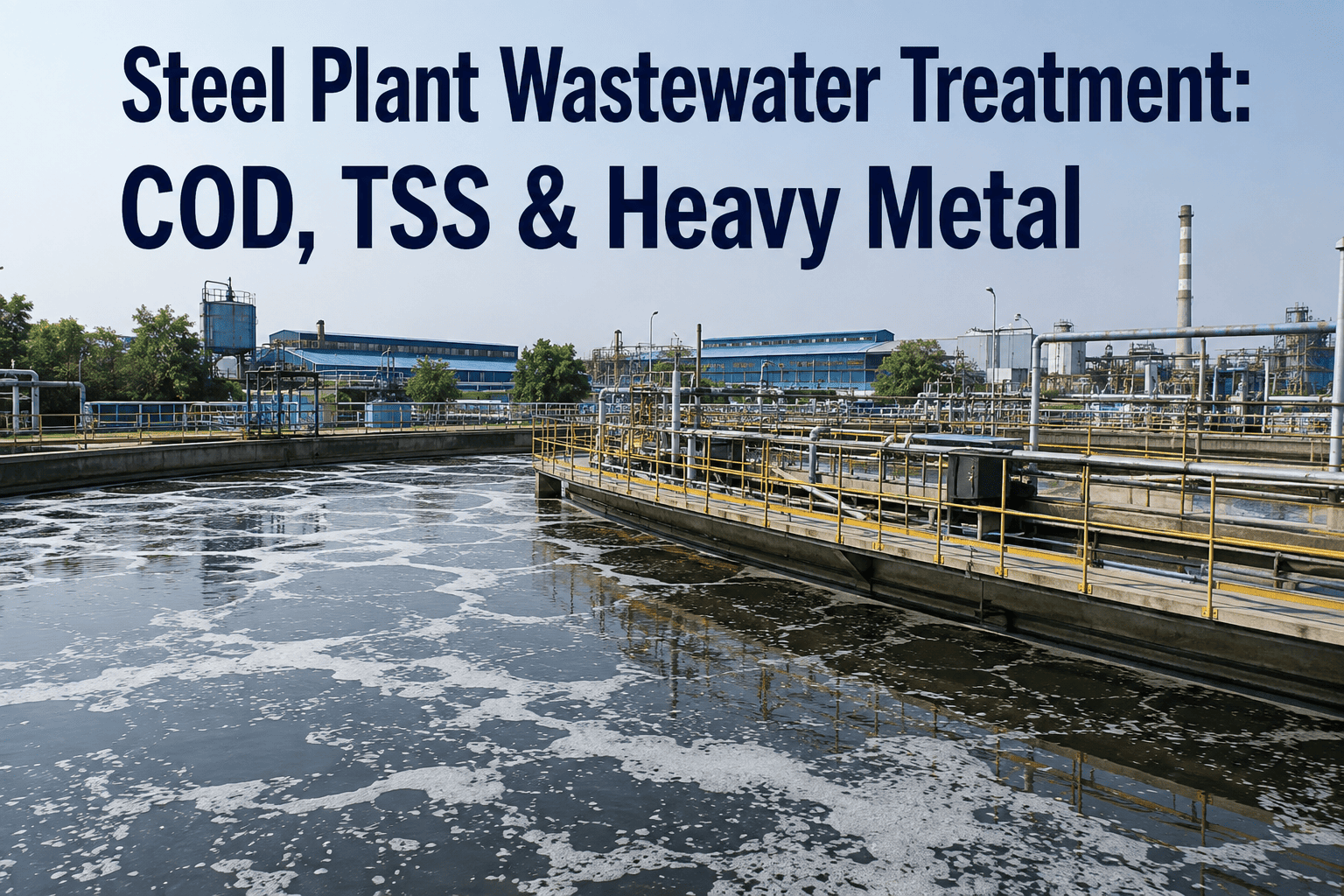
Steel plant wastewater carries a different pollutant profile depending on which process it comes from — cooling and gas cleaning water carries suspended solids and heavy metals, pickling line effluent carries acidity and dissolved metals, and coki
Read More
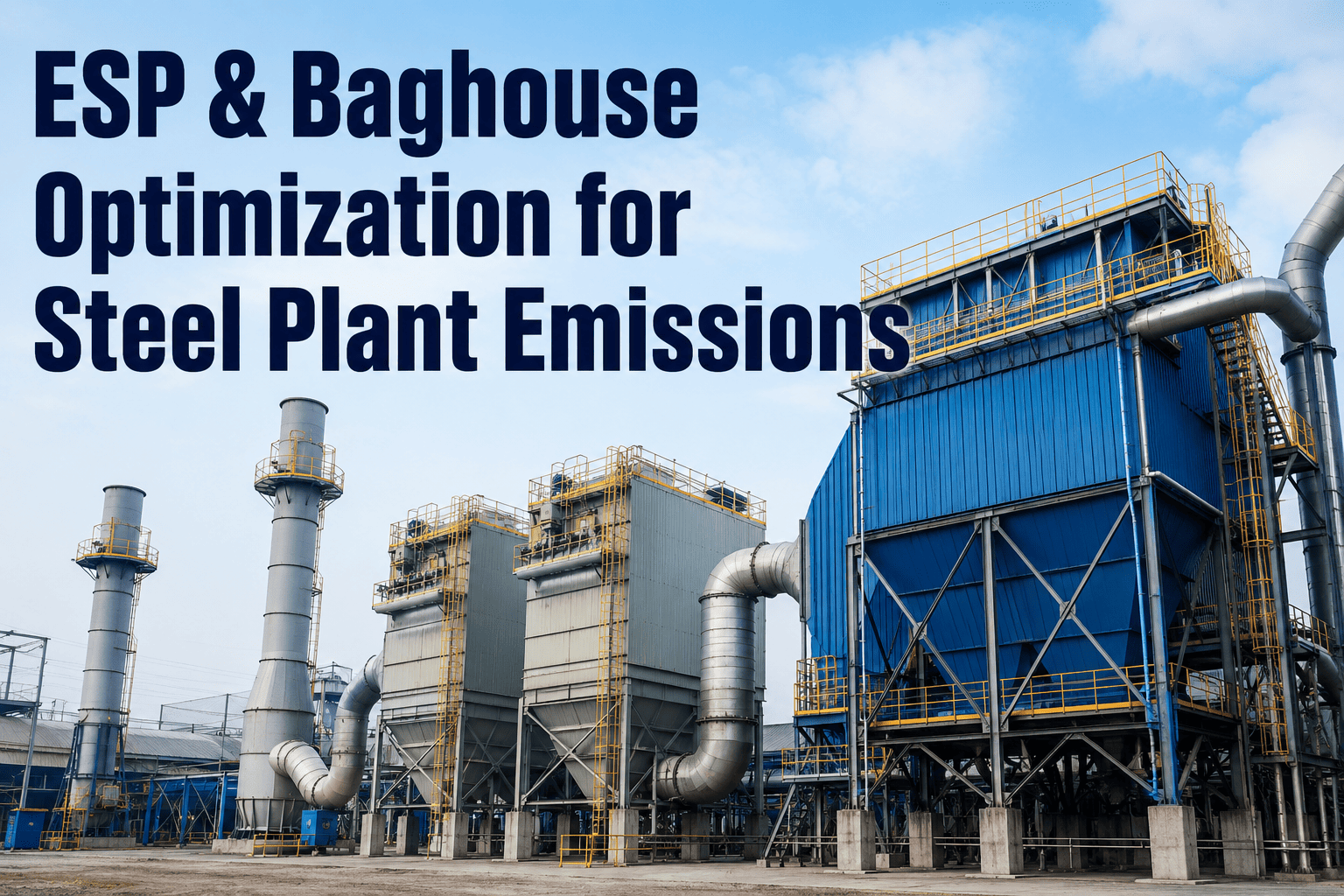
An electrostatic precipitator or baghouse that was collecting at 99.5% efficiency when it was commissioned rarely stays there without active management, and the decline is usually gradual enough that nobody notices until a stack opacity reading or
Read More
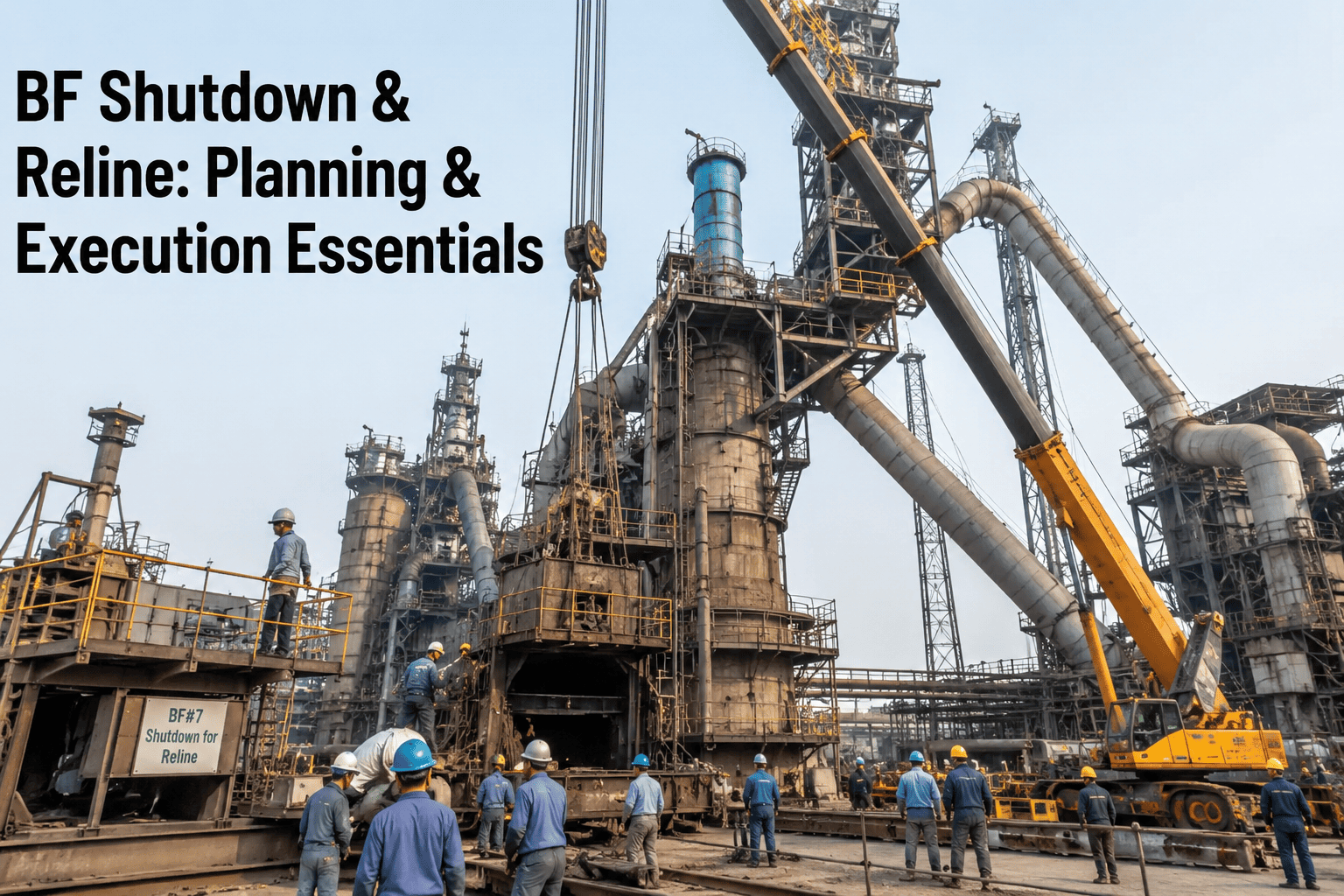
A blast furnace reline is one of the largest single capital projects a steel plant undertakes, and every day the furnace sits down beyond the planned schedule is a day of lost hot metal production that cannot be recovered later. The difference bet
Read More
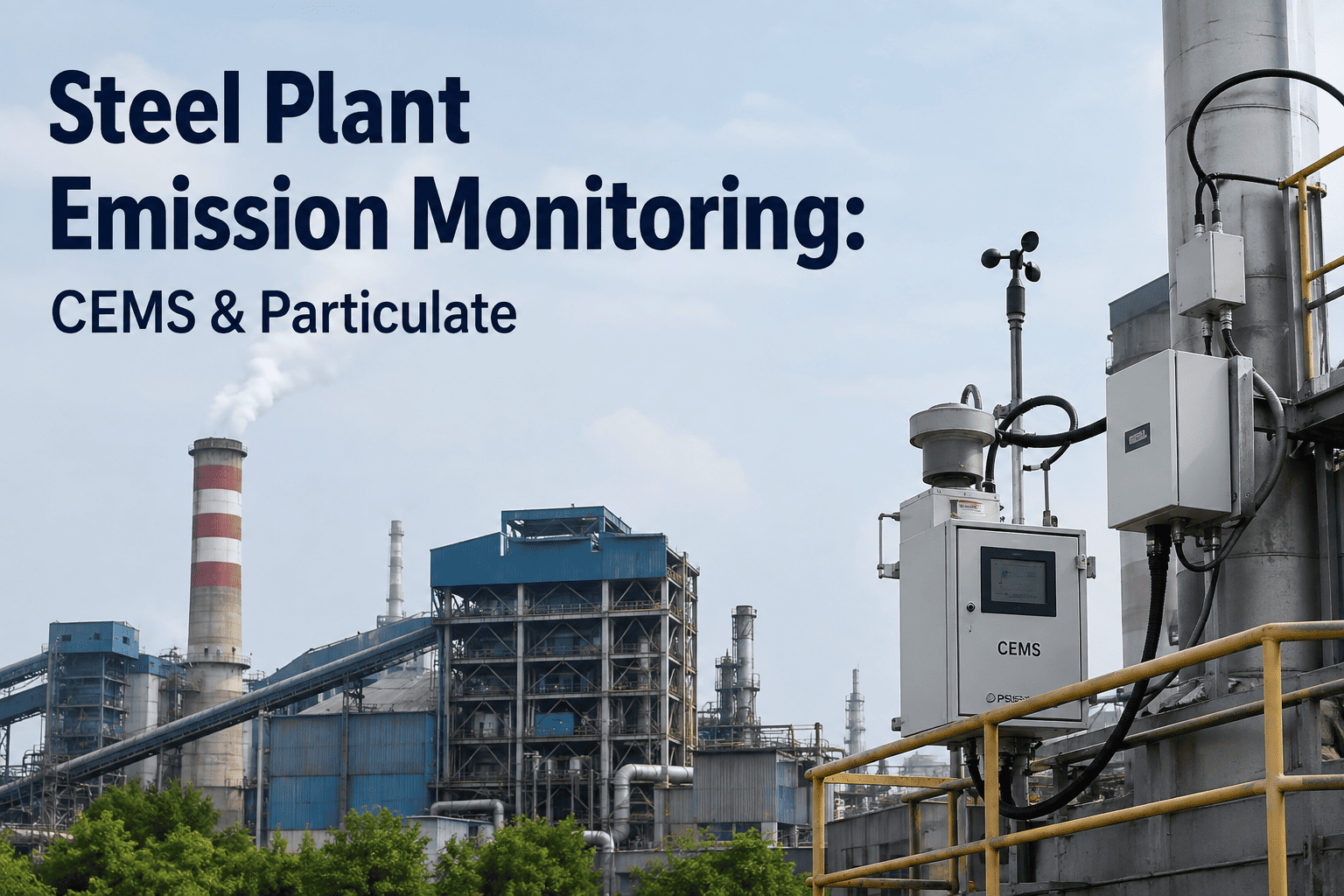
Continuous Emission Monitoring Systems generate a constant stream of data, and most steel plants only look closely at that data twice — right after installation during calibration, and reactively after a regulator flags a problem. In between, mont
Read More
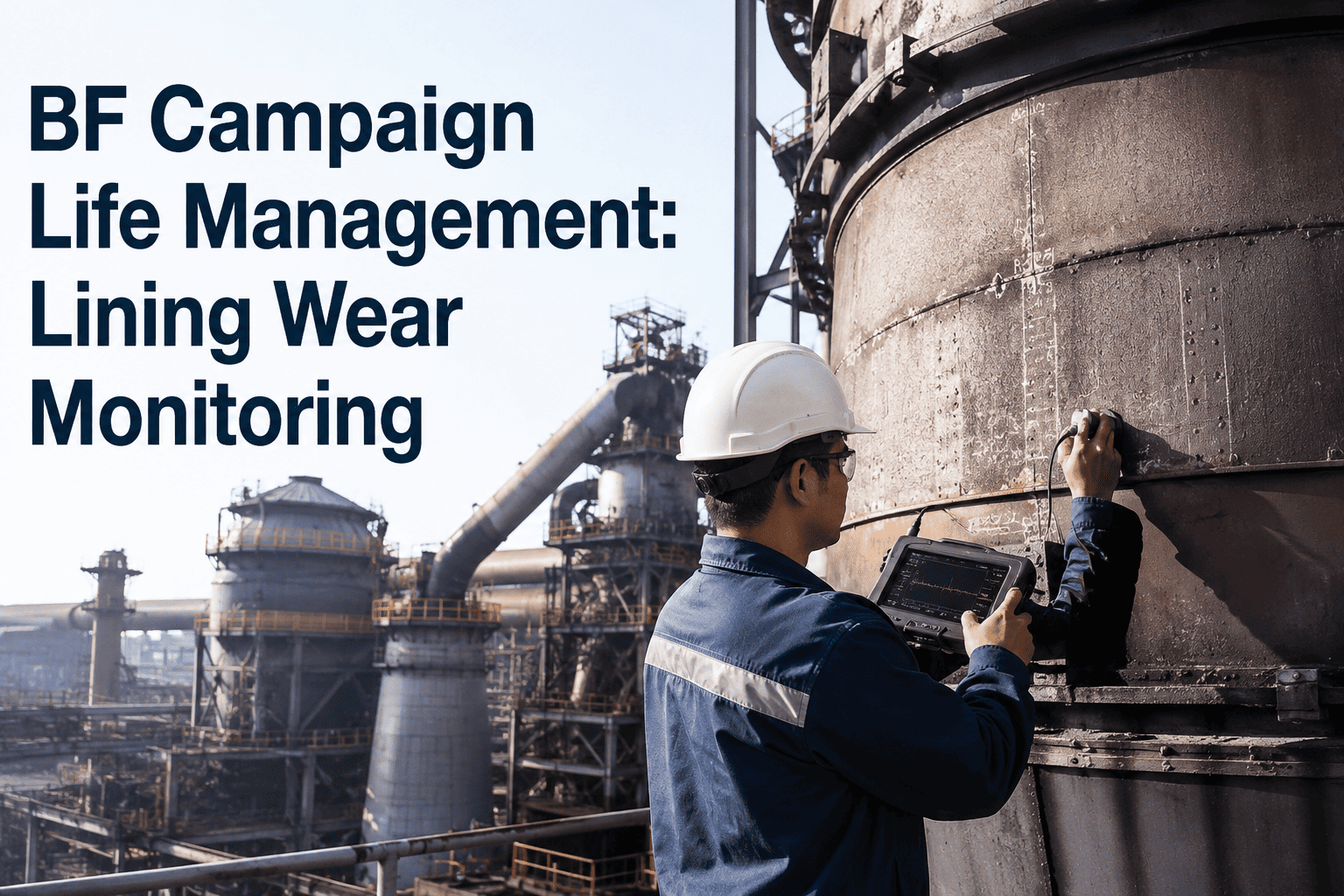
A blast furnace campaign can run fifteen to twenty years between relines, and the single biggest financial decision an ironmaking operation makes is when to schedule that reline before an unplanned lining failure forces an emergency shutdown. Stac
Read More
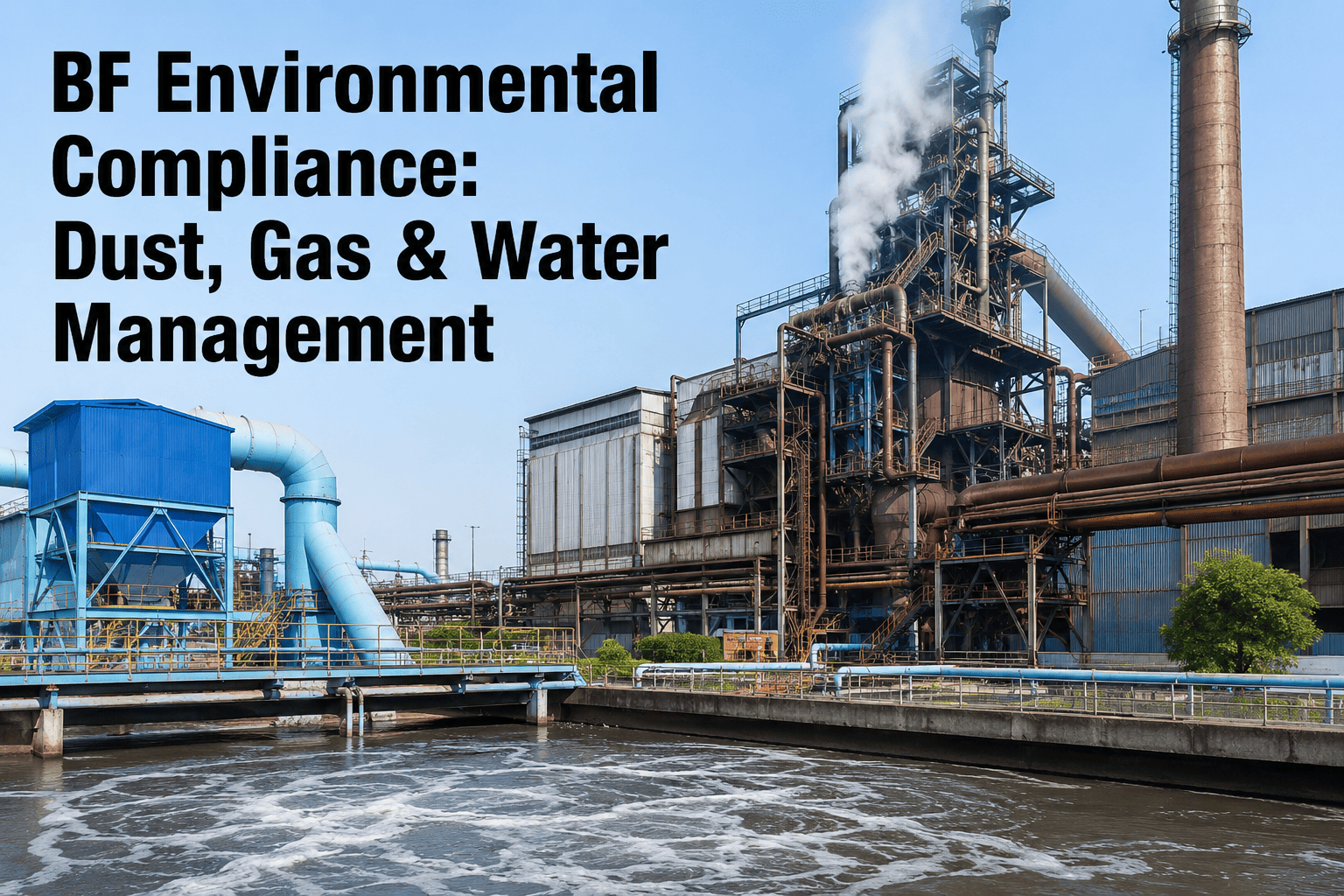
Environmental compliance for a blast furnace is really three separate regulatory conversations happening at once — particulate and dust emissions from casting and stockhouse operations, gas recovery and utilization from the top gas stream, and was
Read More
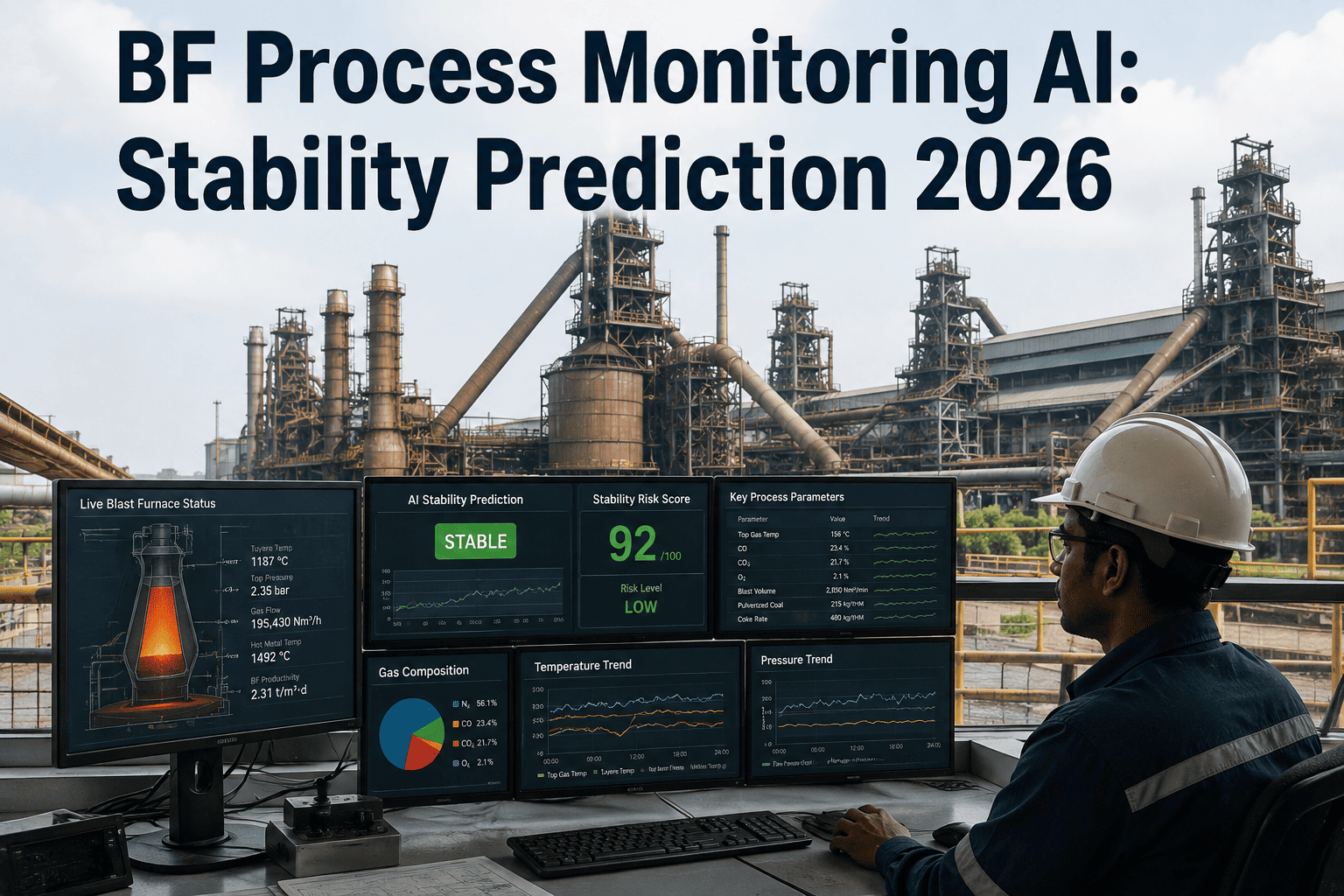
A blast furnace does not fail suddenly — it drifts. Burden distribution shifts a few percentage points, permeability tightens, gas flow starts channeling unevenly, and by the time an operator sees a slip or a hanging on the control room screen, th
Read More
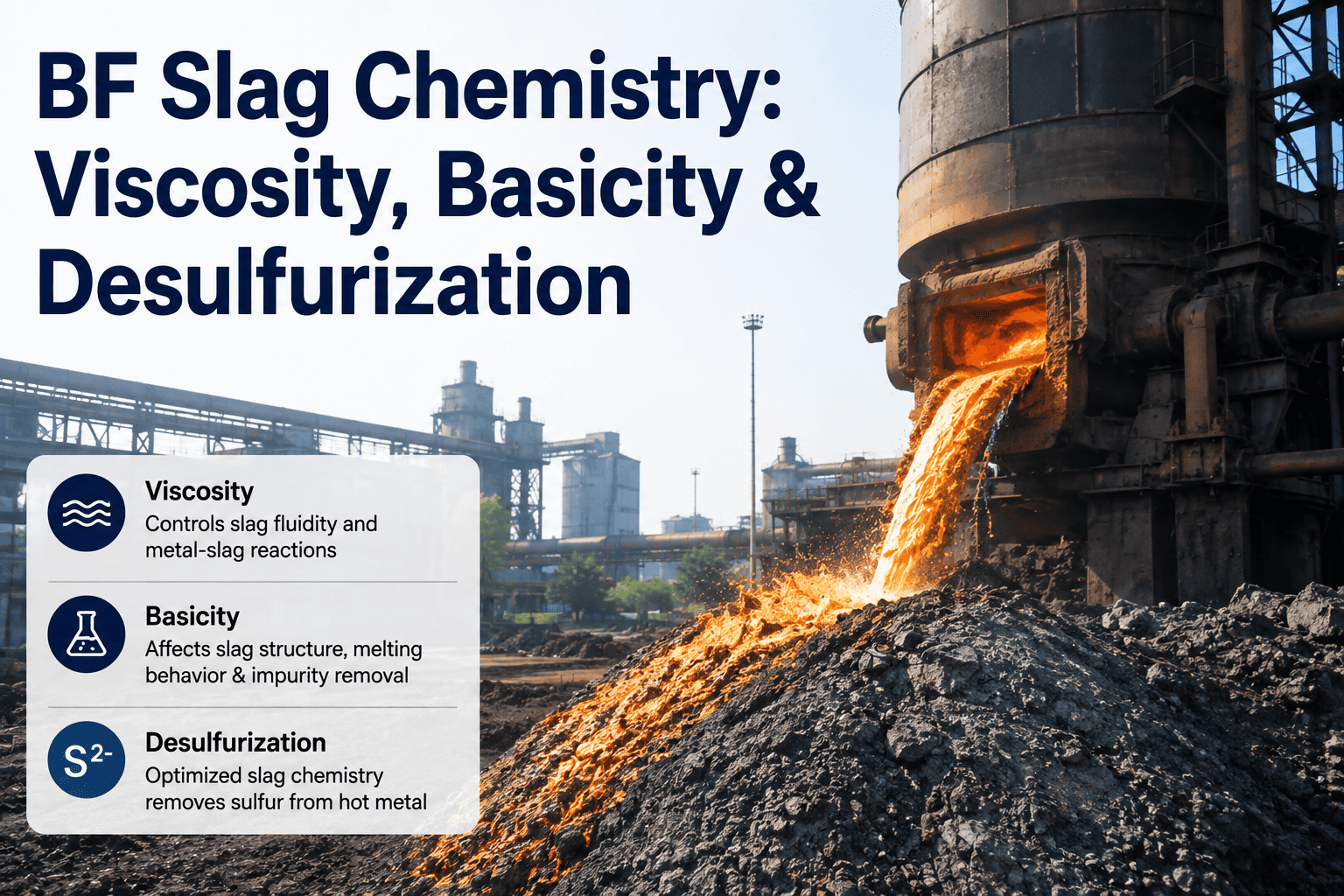
Slag is often treated as the byproduct of ironmaking rather than a controllable process input, but slag chemistry drives hot metal quality, fuel rate, and furnace stability just as directly as burden composition does. Basicity that drifts outside
Read More
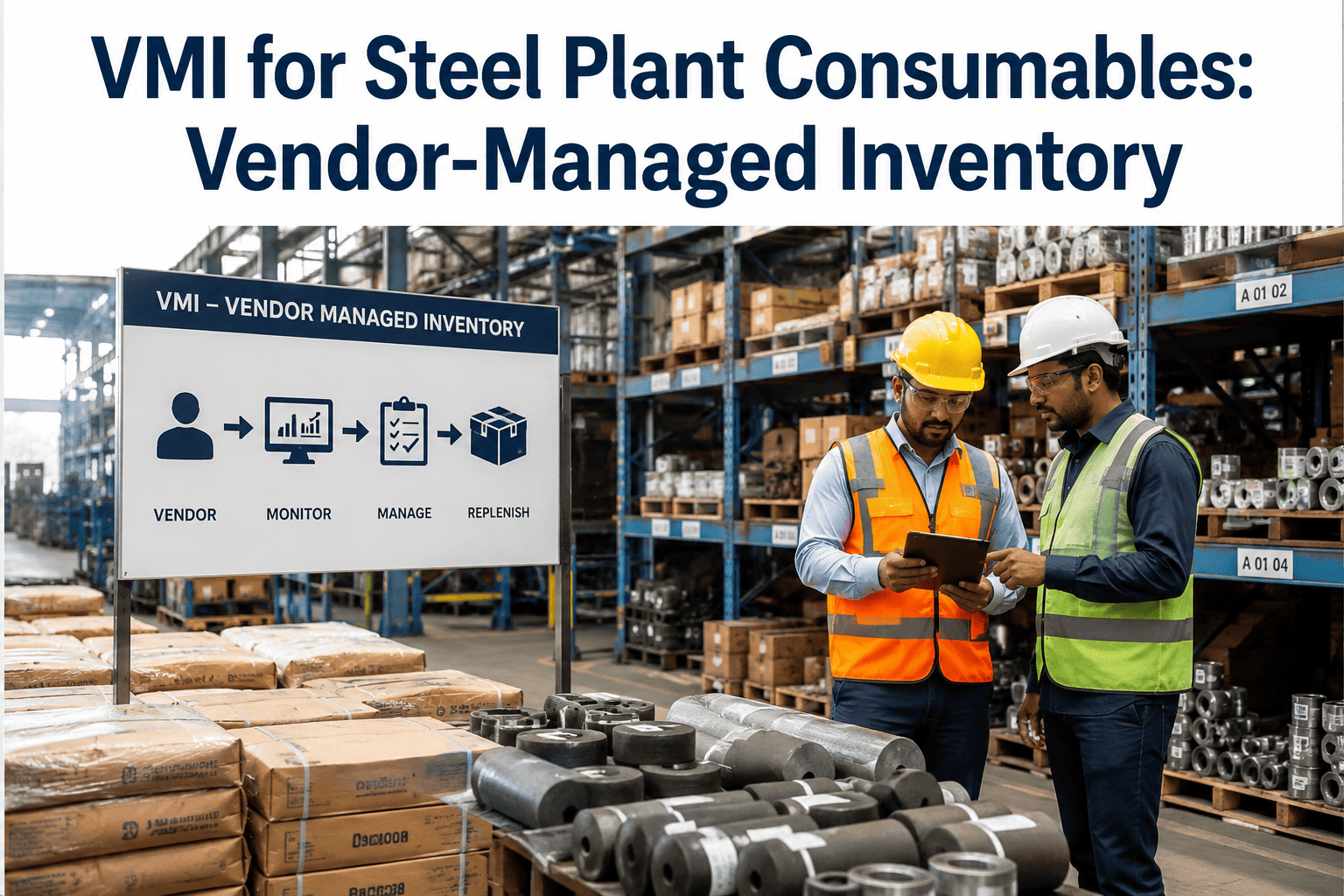
Refractory materials, welding consumables, and lubricants are among the highest-turnover items in a steel plant storeroom, and they are also some of the least suited to being managed with the same manual reorder process applied to a slow-moving cu
Read More
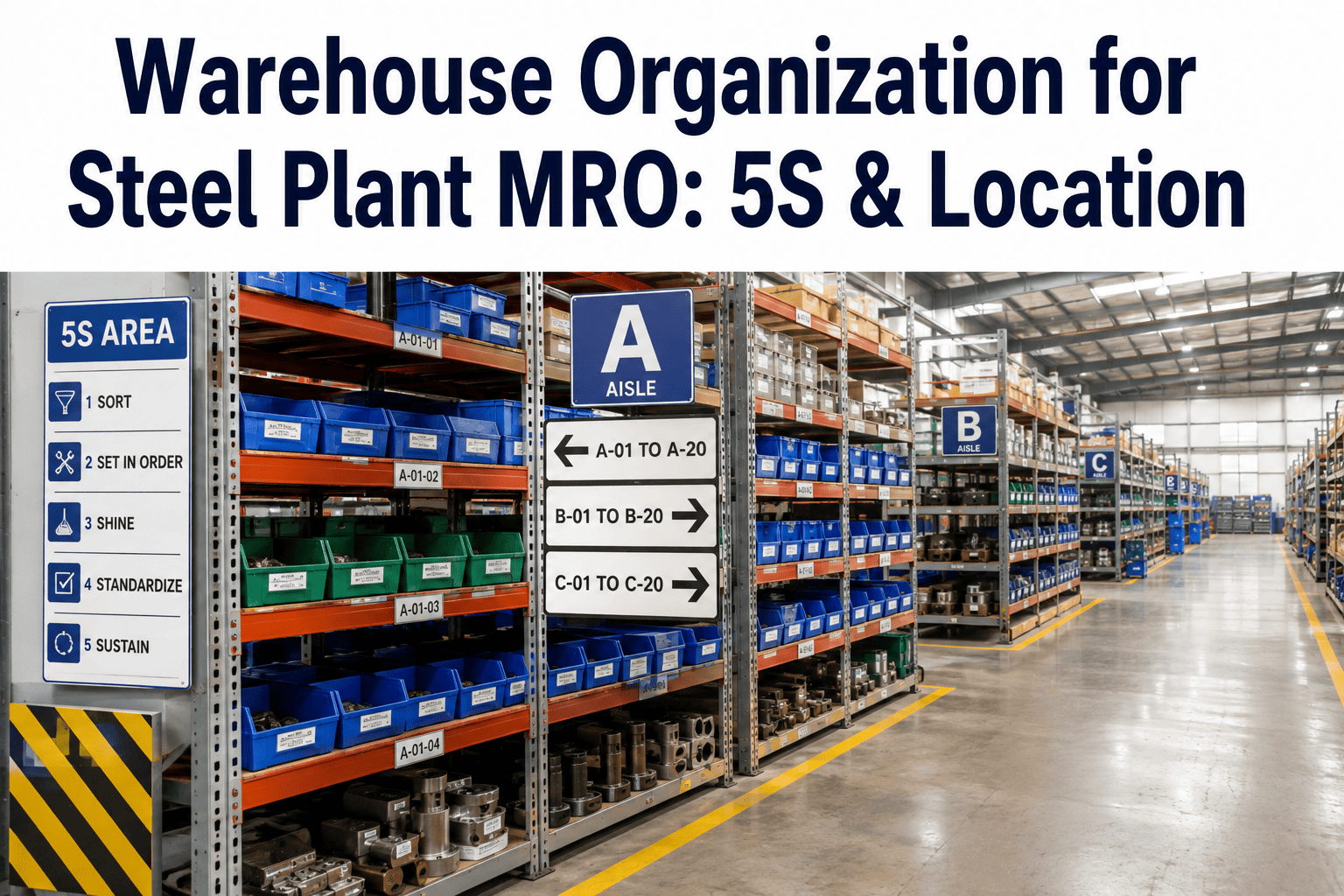
When a bearing fails on a rolling mill drive at two in the morning, the difference between a fifteen-minute repair and a two-hour production loss frequently comes down to whether the maintenance technician can walk directly to the right bin or has
Read More
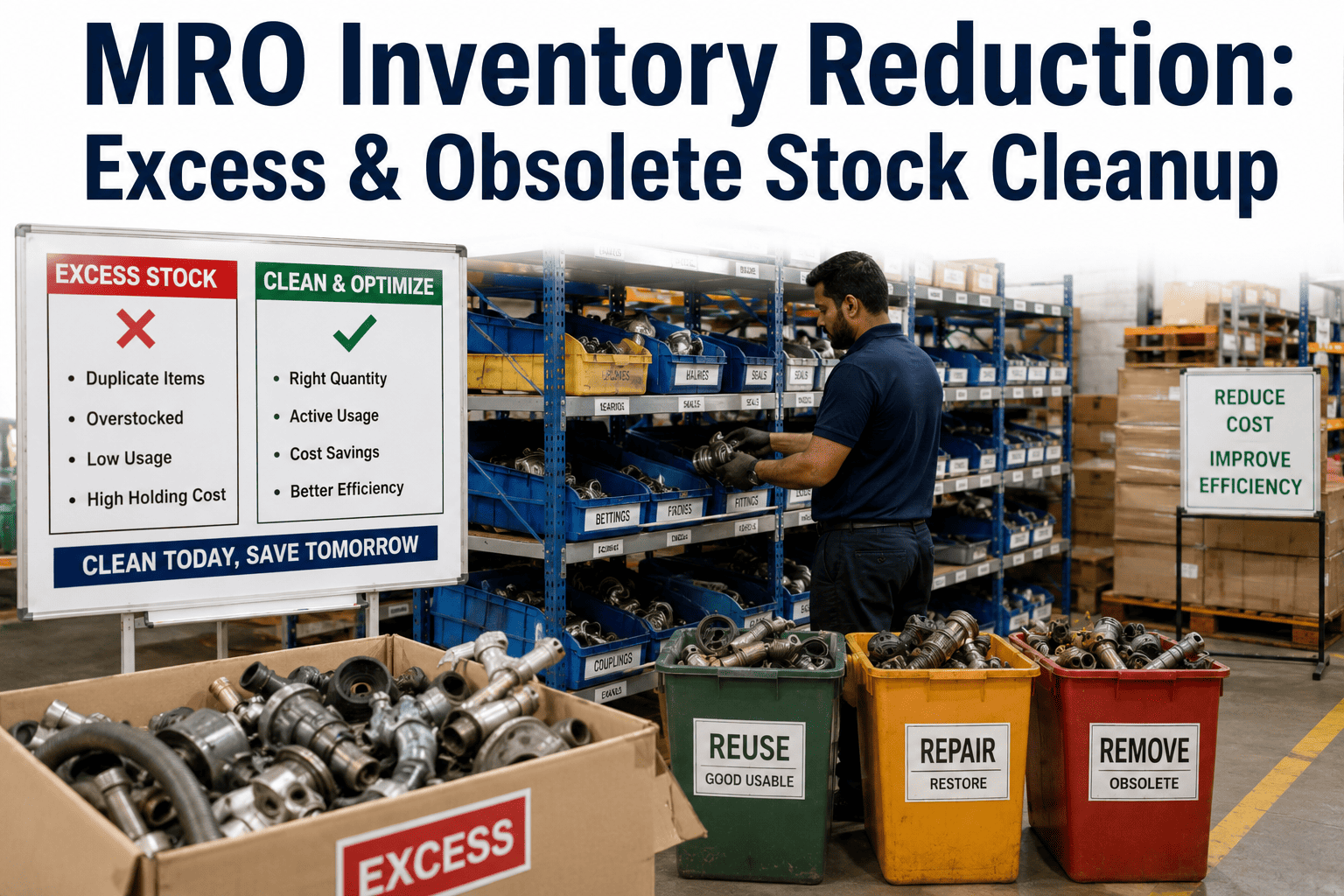
Somewhere in most steel plant storerooms sits a shelf of parts for equipment that was decommissioned three turnarounds ago, next to a bin of components nobody can definitively tie to a working asset anymore, both quietly consuming carrying cost an
Read More
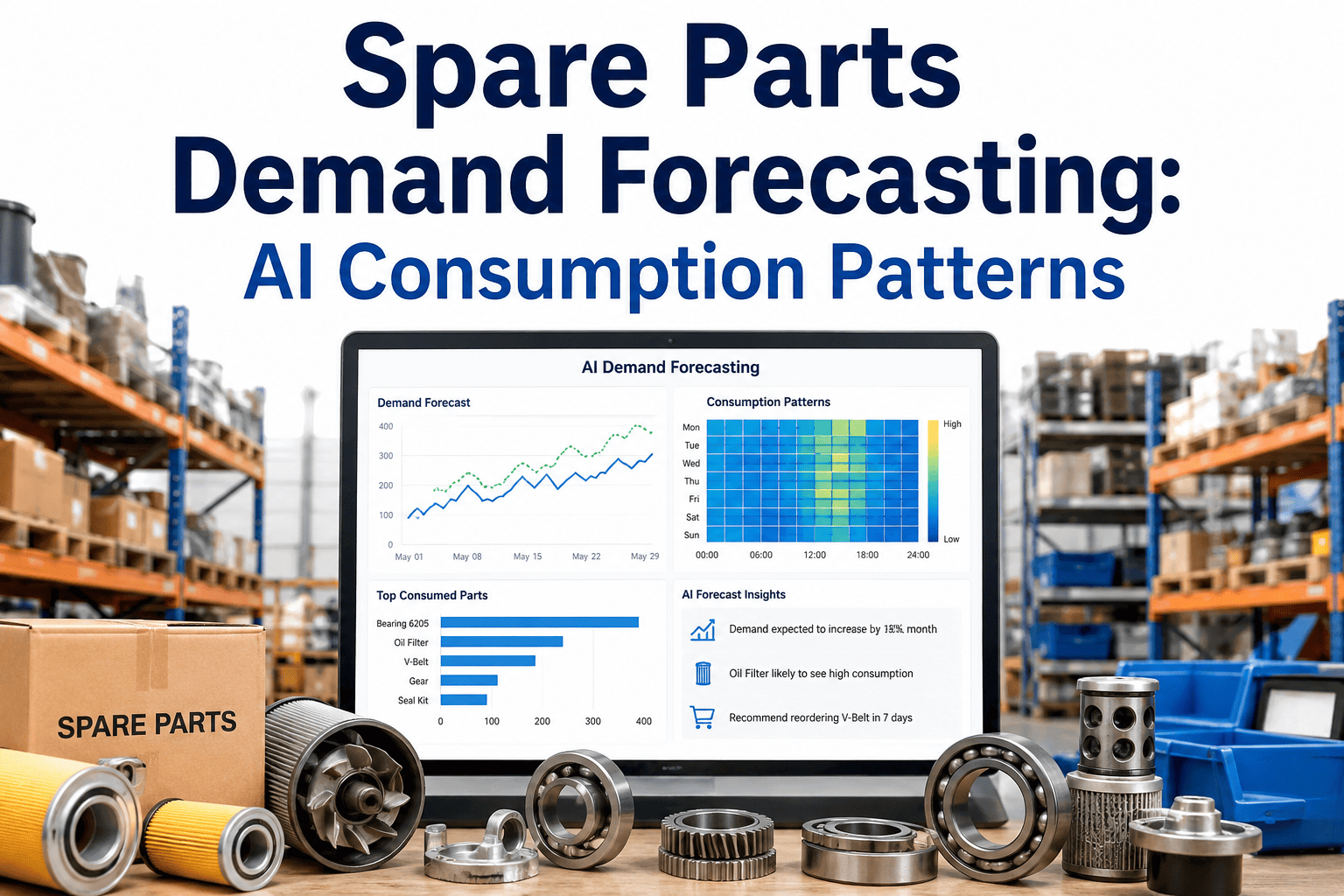
Spare parts demand does not follow the smooth, predictable curve of finished goods sales, it follows the far messier pattern of equipment wear, maintenance schedules, and the occasional unplanned failure, which is exactly why the demand forecastin
Read More
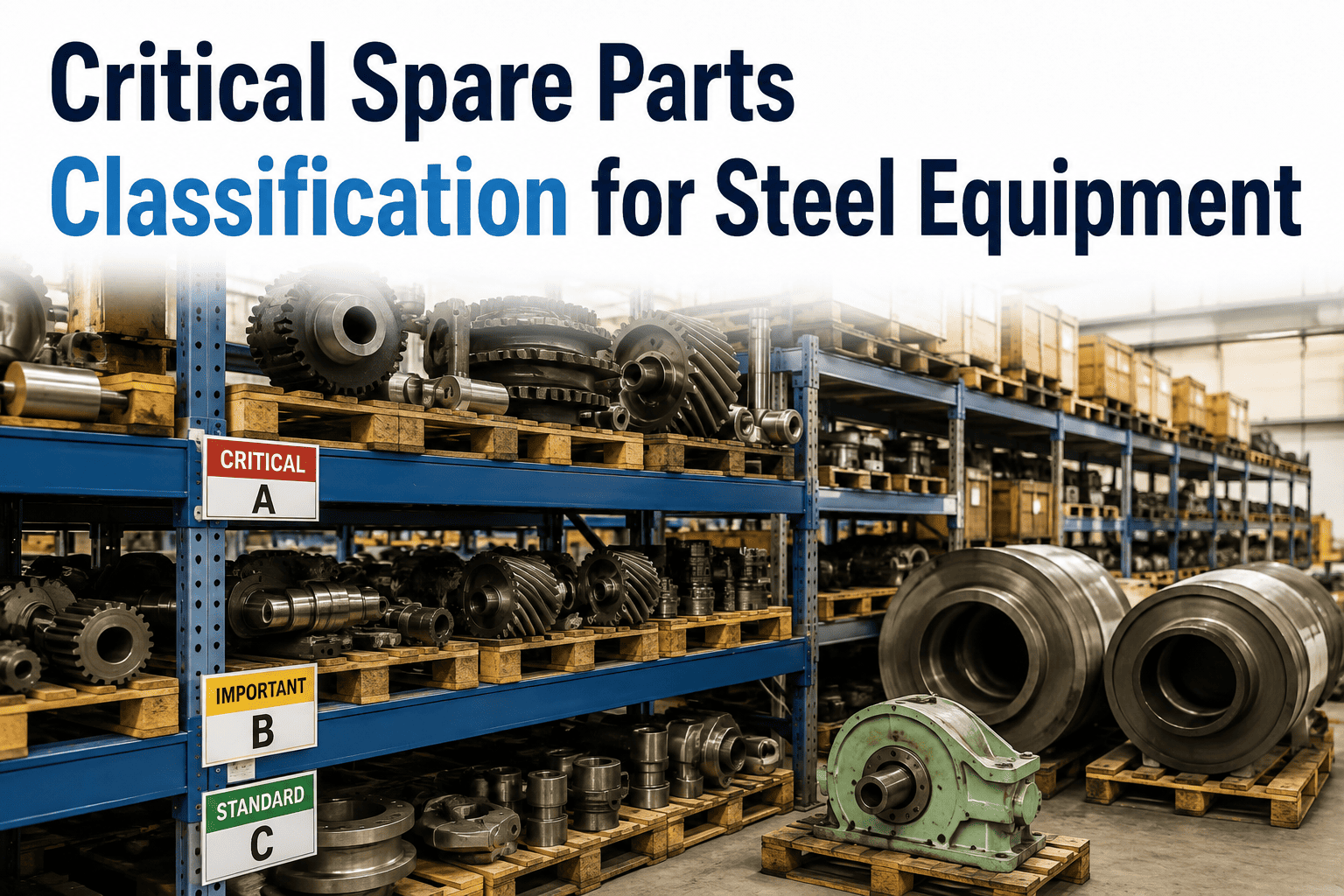
Not every spare part deserves the same shelf space, the same reorder point, or the same urgency when it runs low, yet most steel plant storerooms treat a common bearing and a custom rolling mill gearbox with the exact same inventory policy. That m
Read More
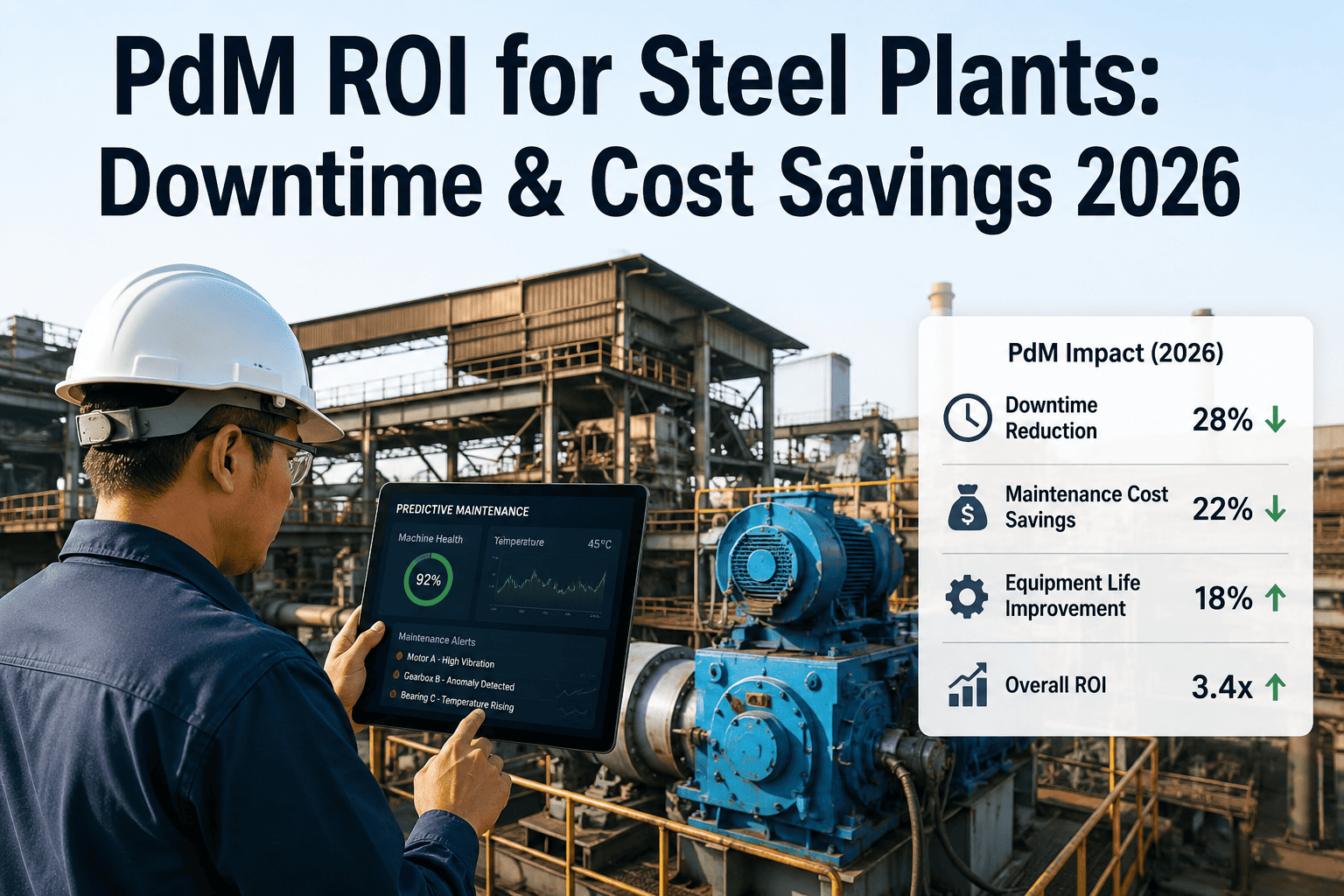
Every steel plant reliability team eventually has to answer the same question from finance: what do we actually get back for the money we spend on predictive maintenance. It is a fair question, and it deserves a better answer than a vague promise
Read More
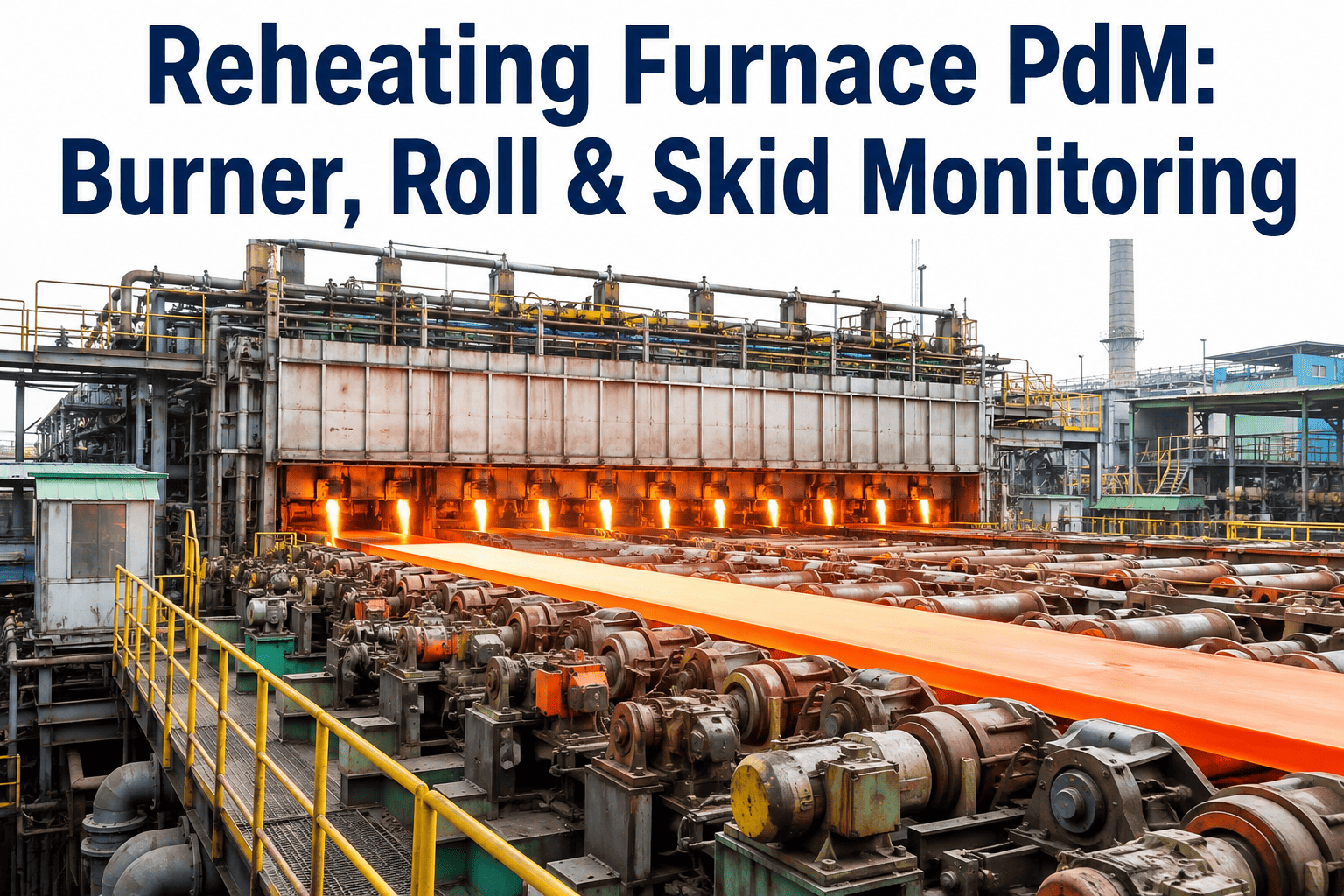
A reheating furnace runs at over 1200 degrees Celsius, moves slabs on water-cooled skid pipes for weeks or months at a stretch without stopping, and burns roughly a third of a rolling mill's entire energy budget, yet most plants still inspect its
Read More
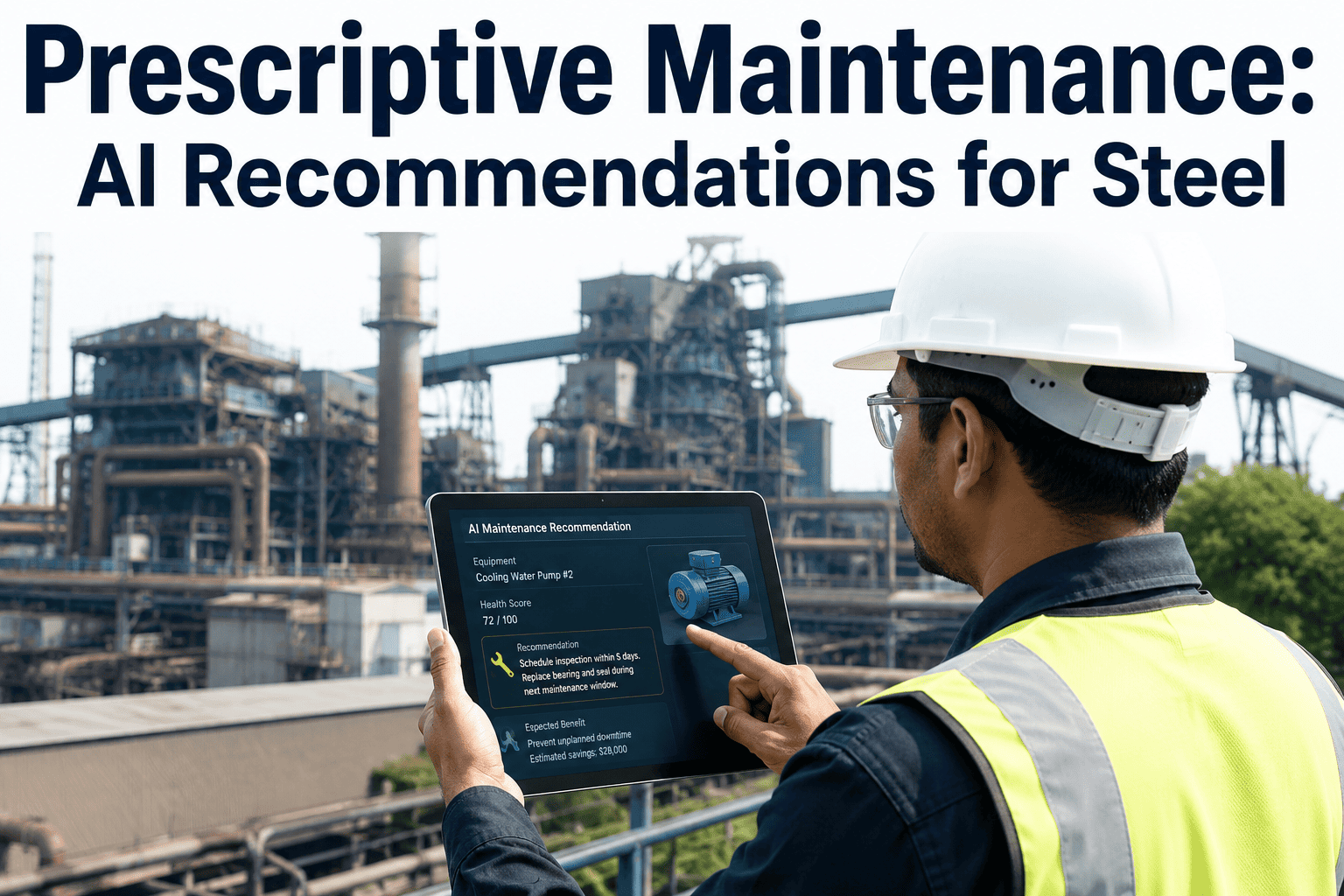
Knowing that a gearbox will fail in three weeks is useful. Knowing that reducing its load by fifteen percent for the next two shifts and rescheduling the replacement for Sunday's planned outage will avoid that failure entirely is what actually cha
Read More
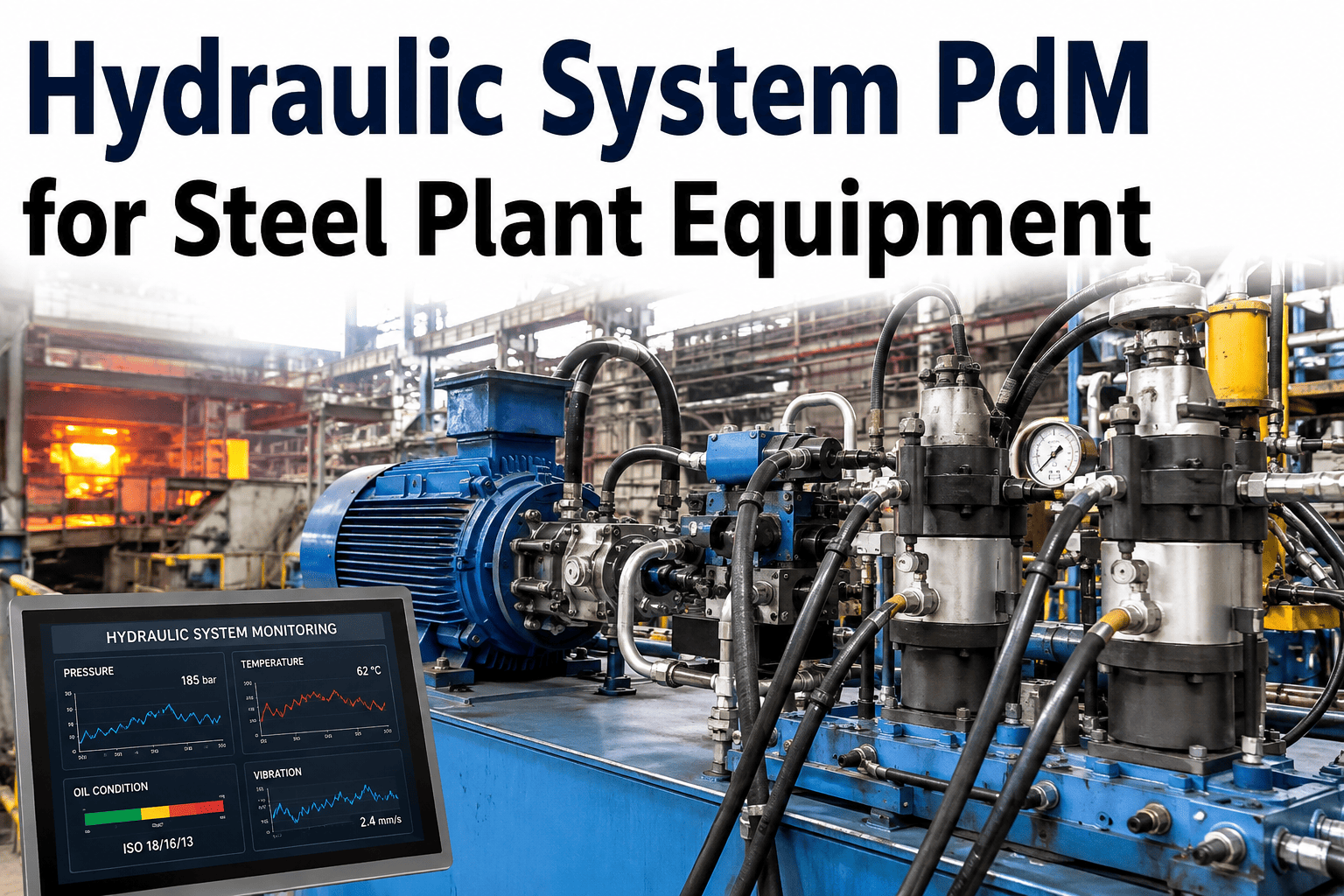
A rolling mill hydraulic system can run for years without a single alarm and still be fourteen days away from a seal failure that nobody saw coming. Pressure gauges only tell you what the system is doing right now, not what it is quietly becoming.
Read More
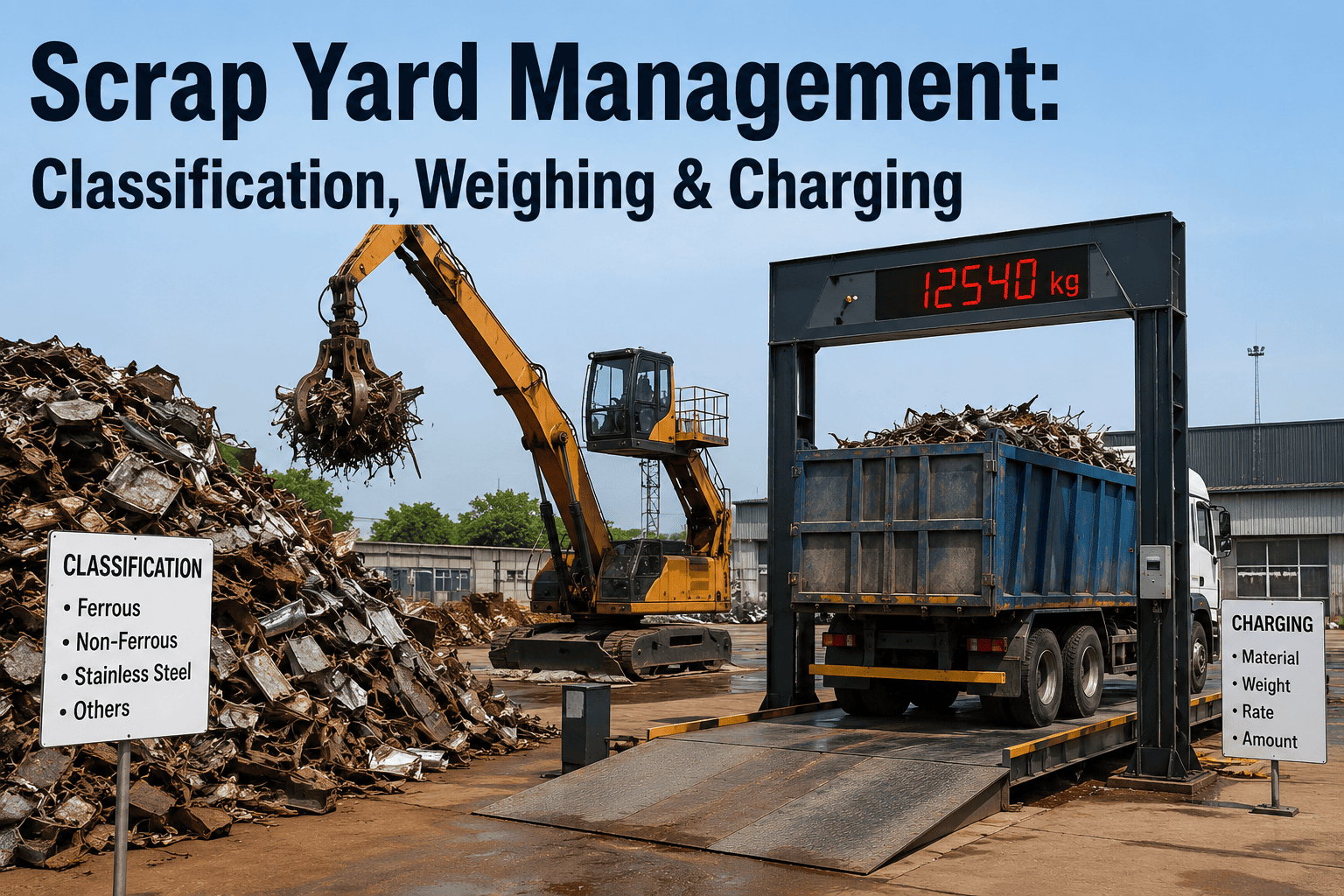
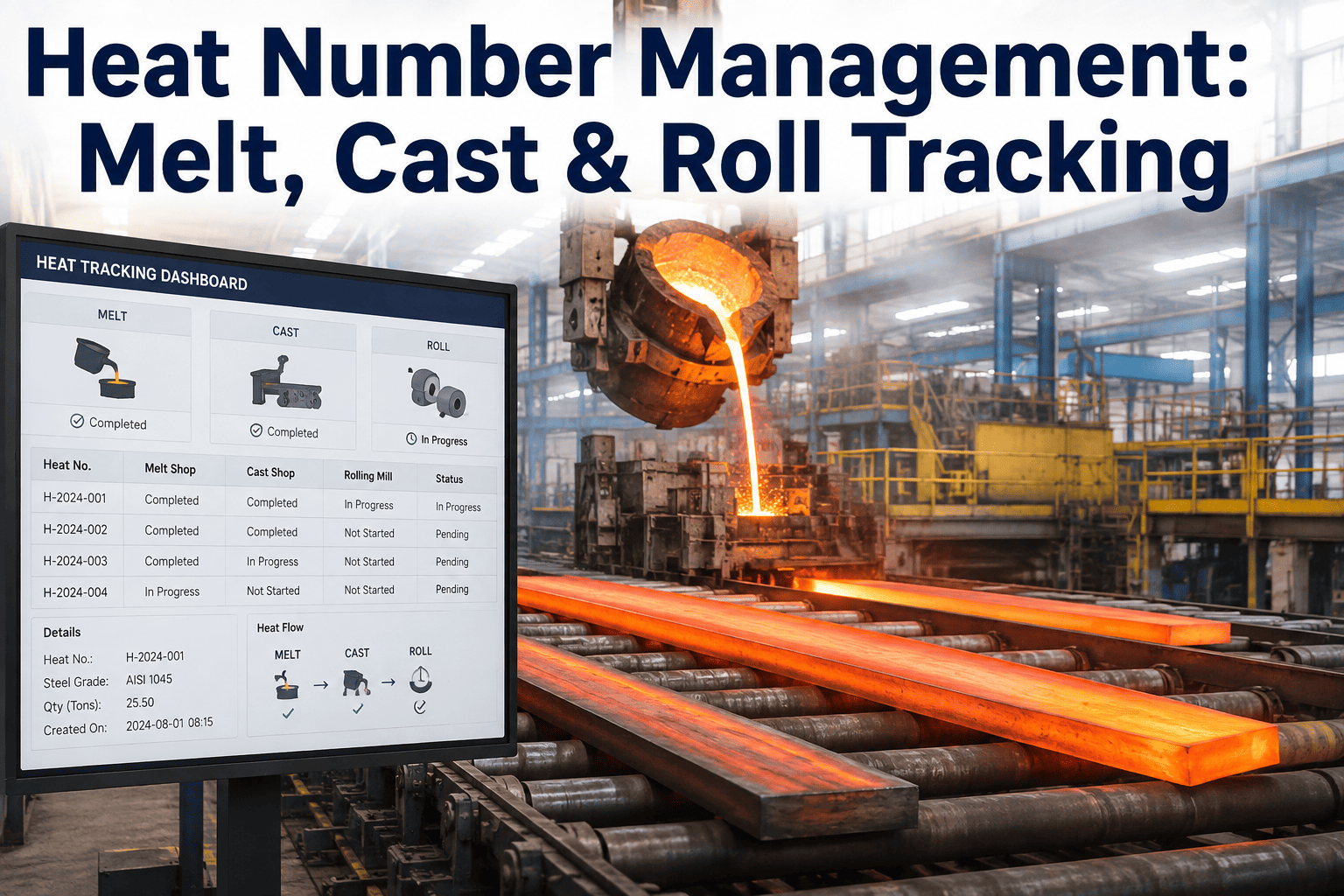
The heat genealogy record that traces a finished coil back to its originating heat is only as trustworthy as the record of what actually went into that heat in the first place — and that record starts not at the furnace, but in the scrap yard, hou
Read More
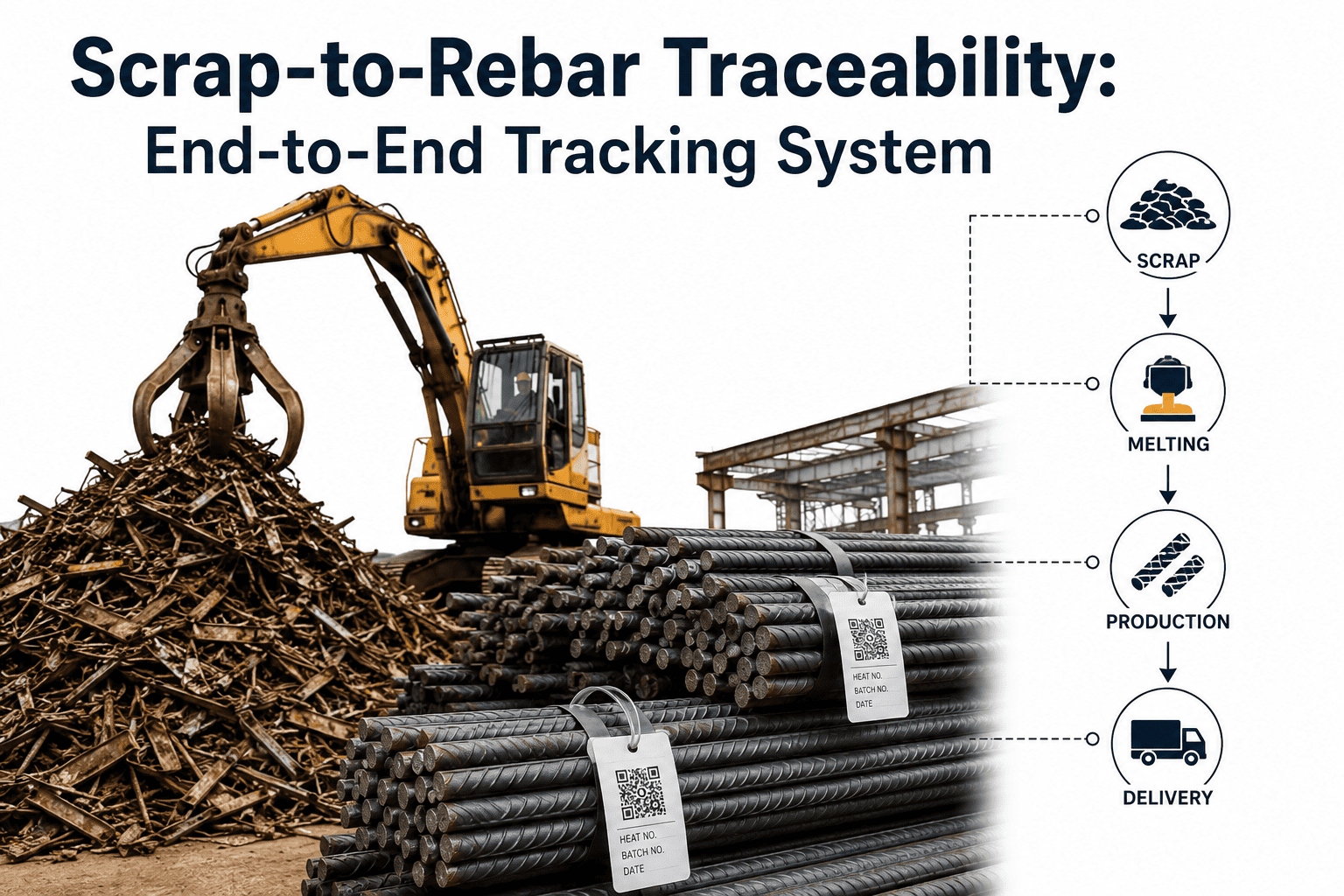
A single heat of steel — perhaps 150 tons produced in one melting cycle — rarely stays a single traceable unit for long. By the time it reaches a customer, that one heat may have split across four continuous casting strands, each strand cut into a
Read More
Every finished rebar bundle carries a genealogy stretching back through seven distinct process stages — scrap charging, EAF melting, ladle refining, continuous casting, reheating, rolling, and final inspection — and a heat number assigned at the p
Read More
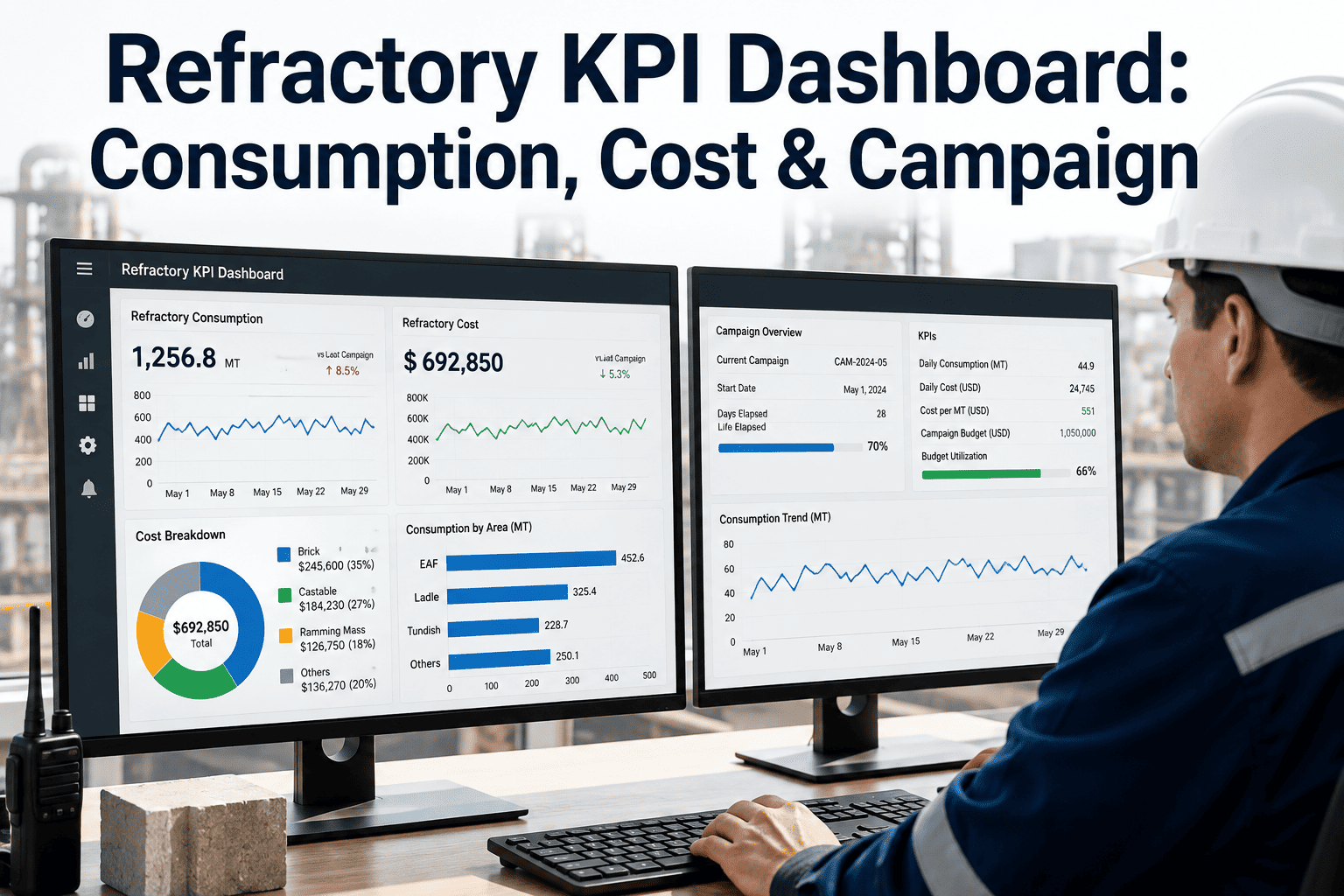
Most refractory performance data lives in a scattered collection of spreadsheets — consumption figures from the warehouse system, cost data from procurement, campaign life records from the operations log, and vendor quality notes from whoever happ
Read More
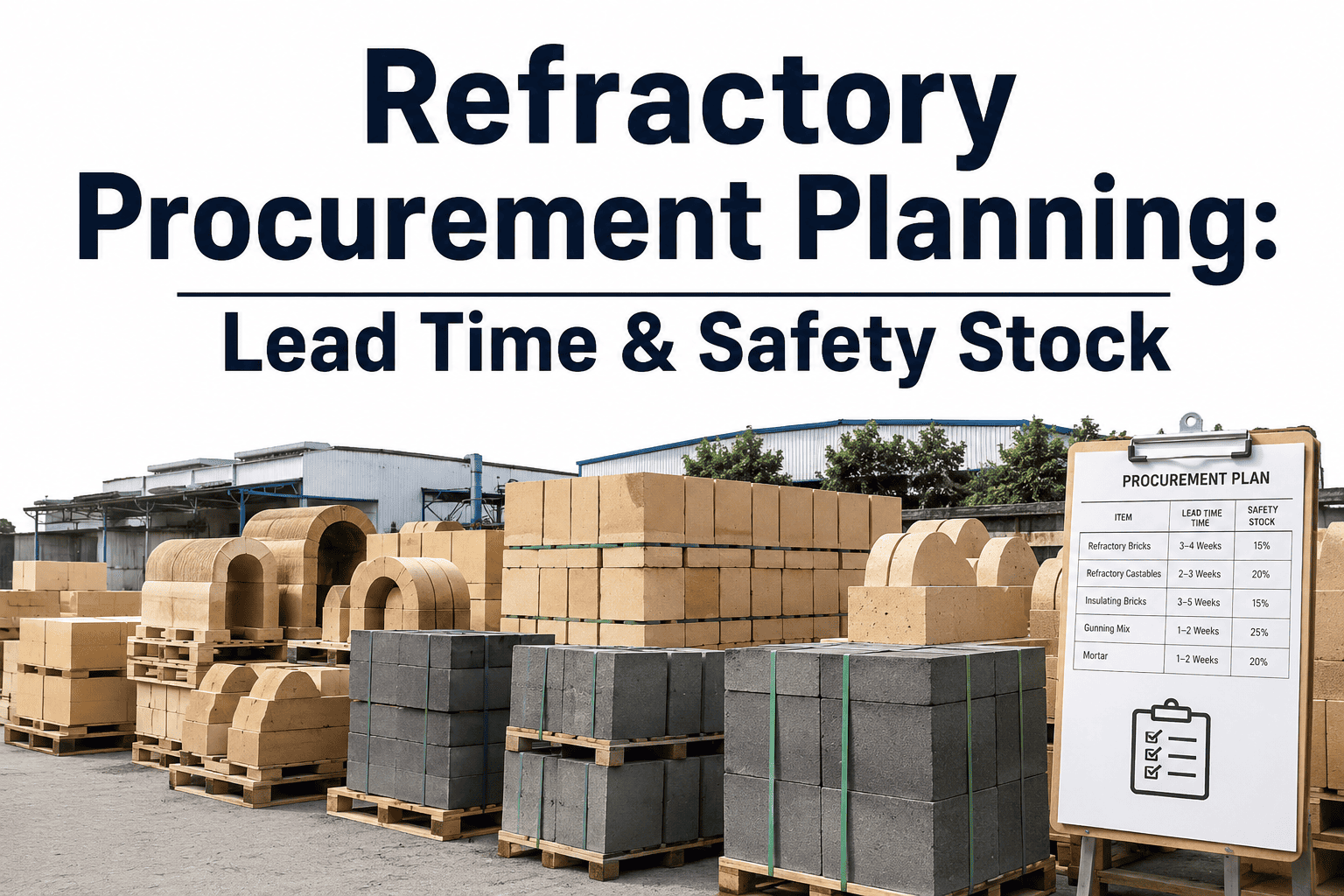
A blast furnace reline scheduled eighteen months out looks like a distant, manageable event right up until the procurement team discovers that the specific refractory brick specification required has a vendor lead time of eleven months, the campai
Read More
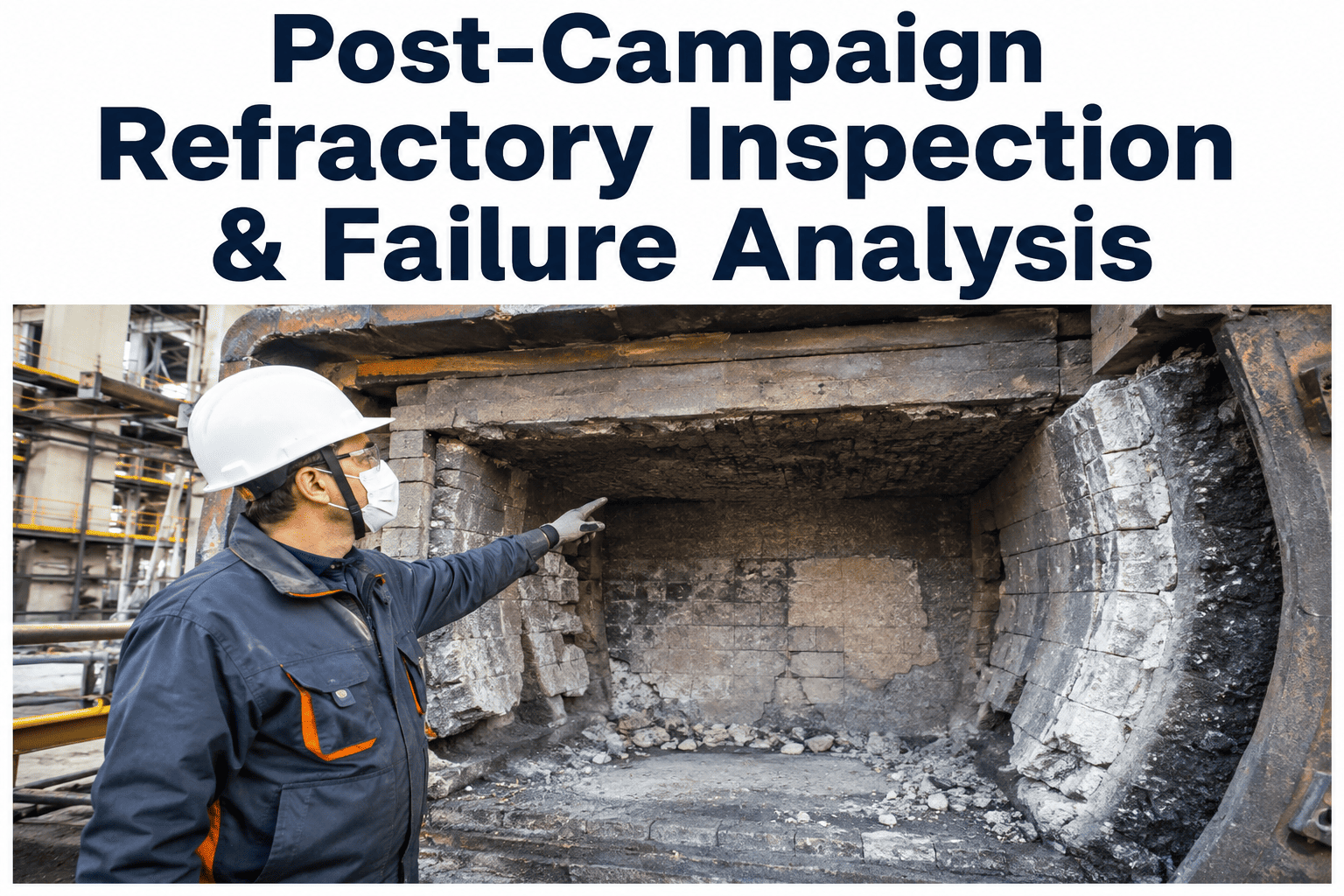
Refractory wear is invisible in real time — a vessel lining that looked fine on last week's visual check can end a campaign with the hot face worn to half its original thickness in one localized zone while the rest of the lining barely moved. A po
Read More
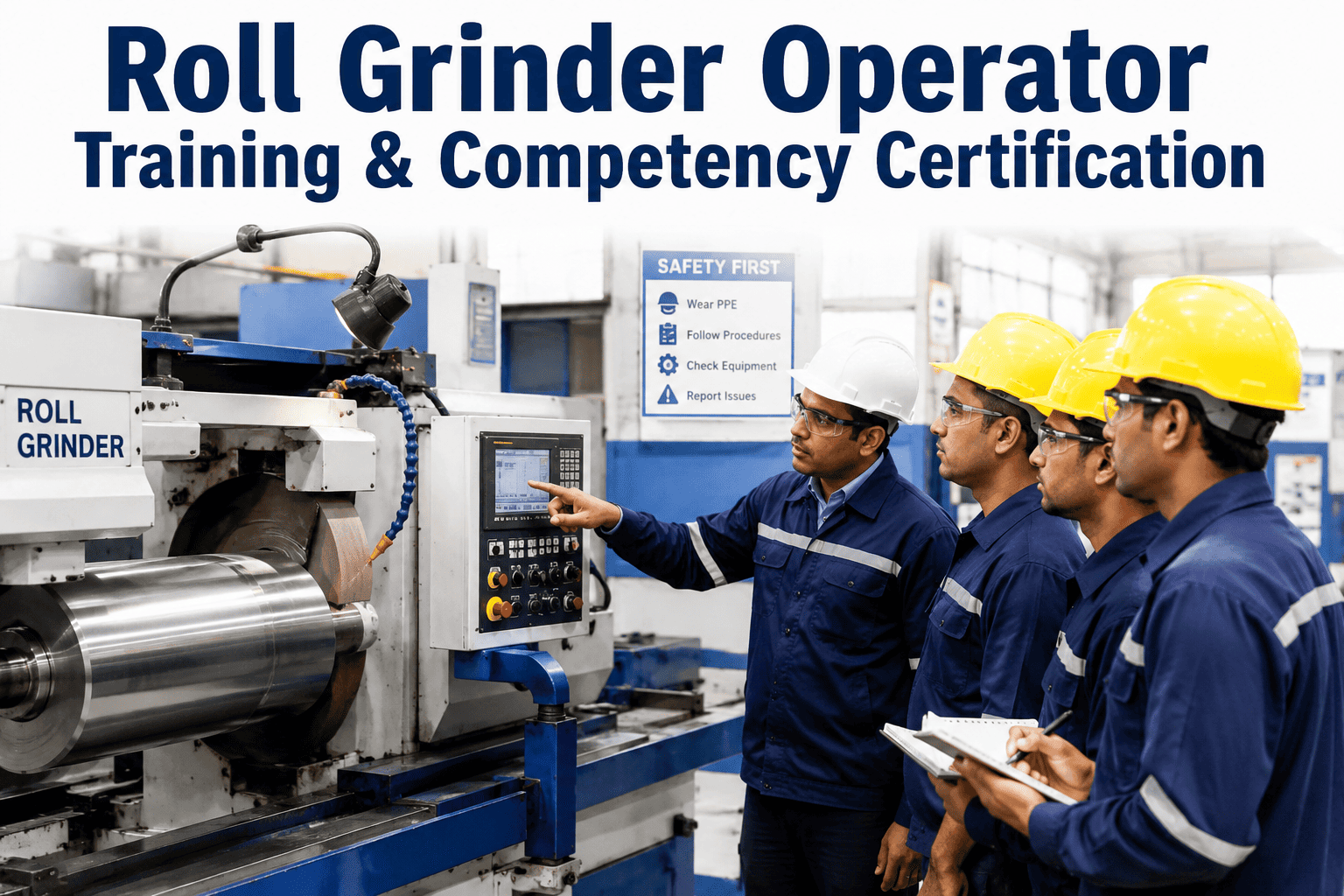
A roll ground half a thousandth out of round, or with a crown profile that drifted from specification by a few microns, will not announce the error on the shop floor — it will announce itself weeks later on a customer's production line as a gauge
Read More
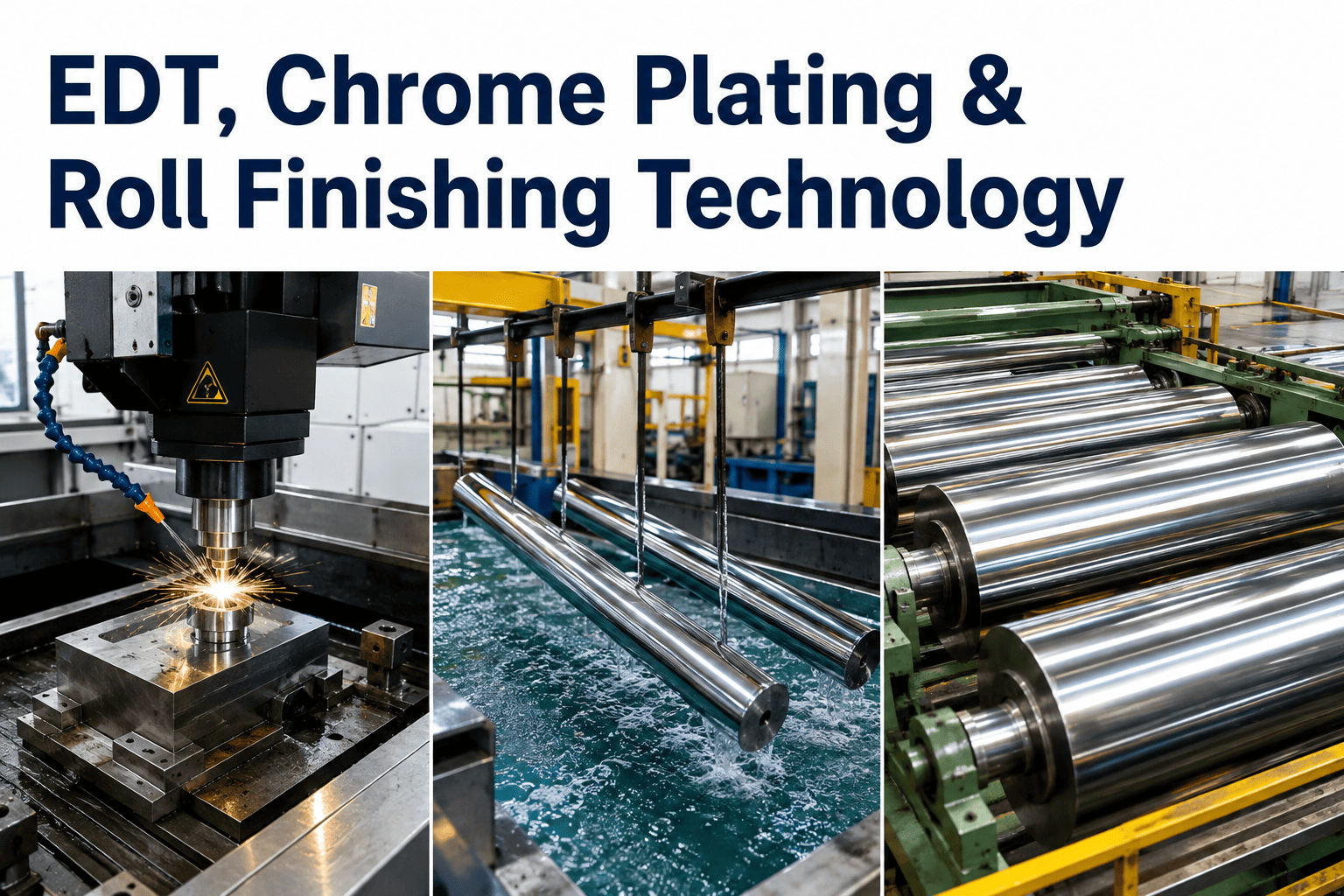
Every work roll surface texture is engineered, not accidental — the microscopic craters, peaks, and valleys transferred from a work roll onto rolled steel or aluminum strip determine paint adhesion, surface reflectivity, and formability in the fin
Read More
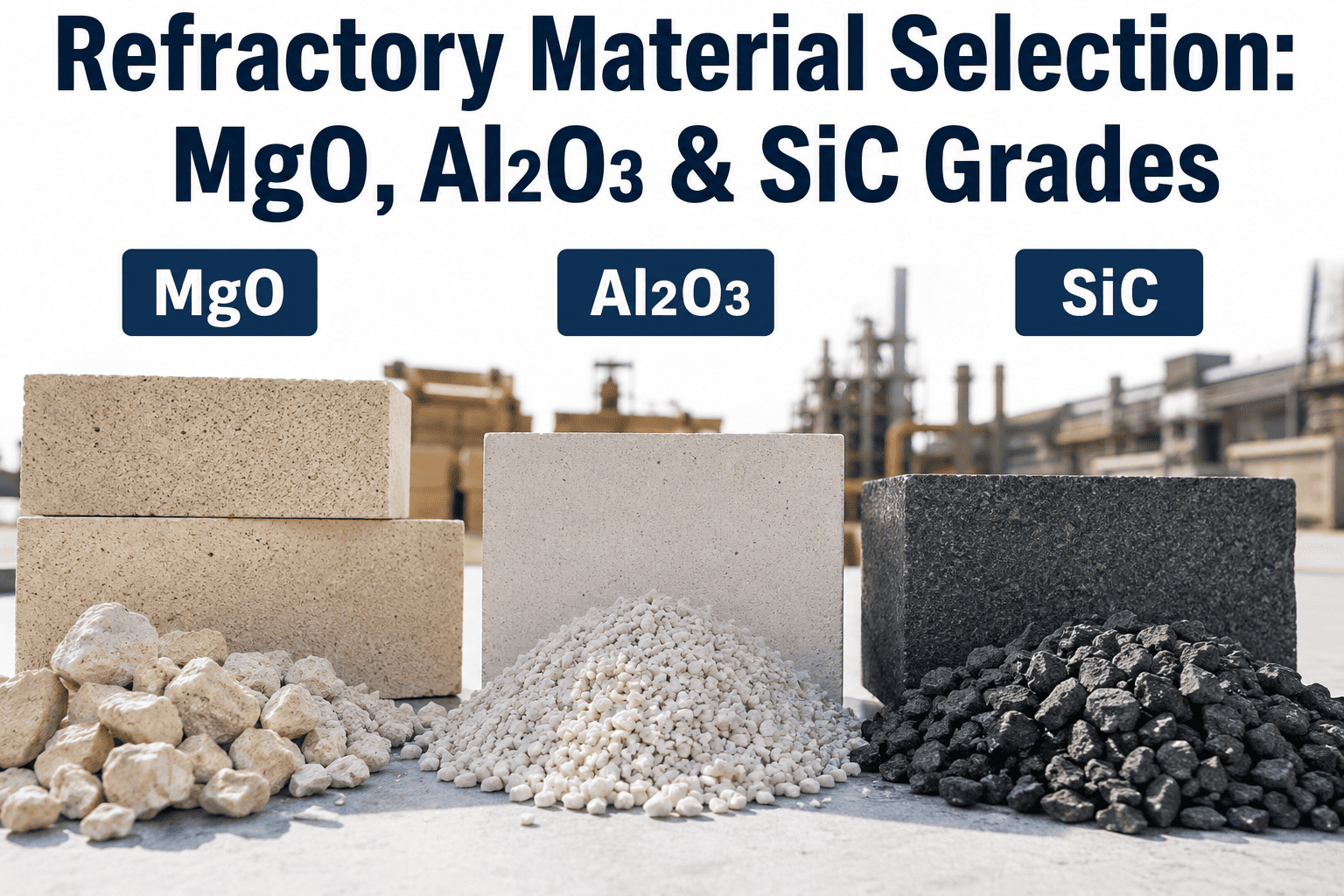
Choosing a refractory grade by copying whatever the last vessel used, or whatever the supplier's sales rep recommended most enthusiastically, is how plants end up paying premium prices for chemical resistance they do not need while under-specifyin
Read More
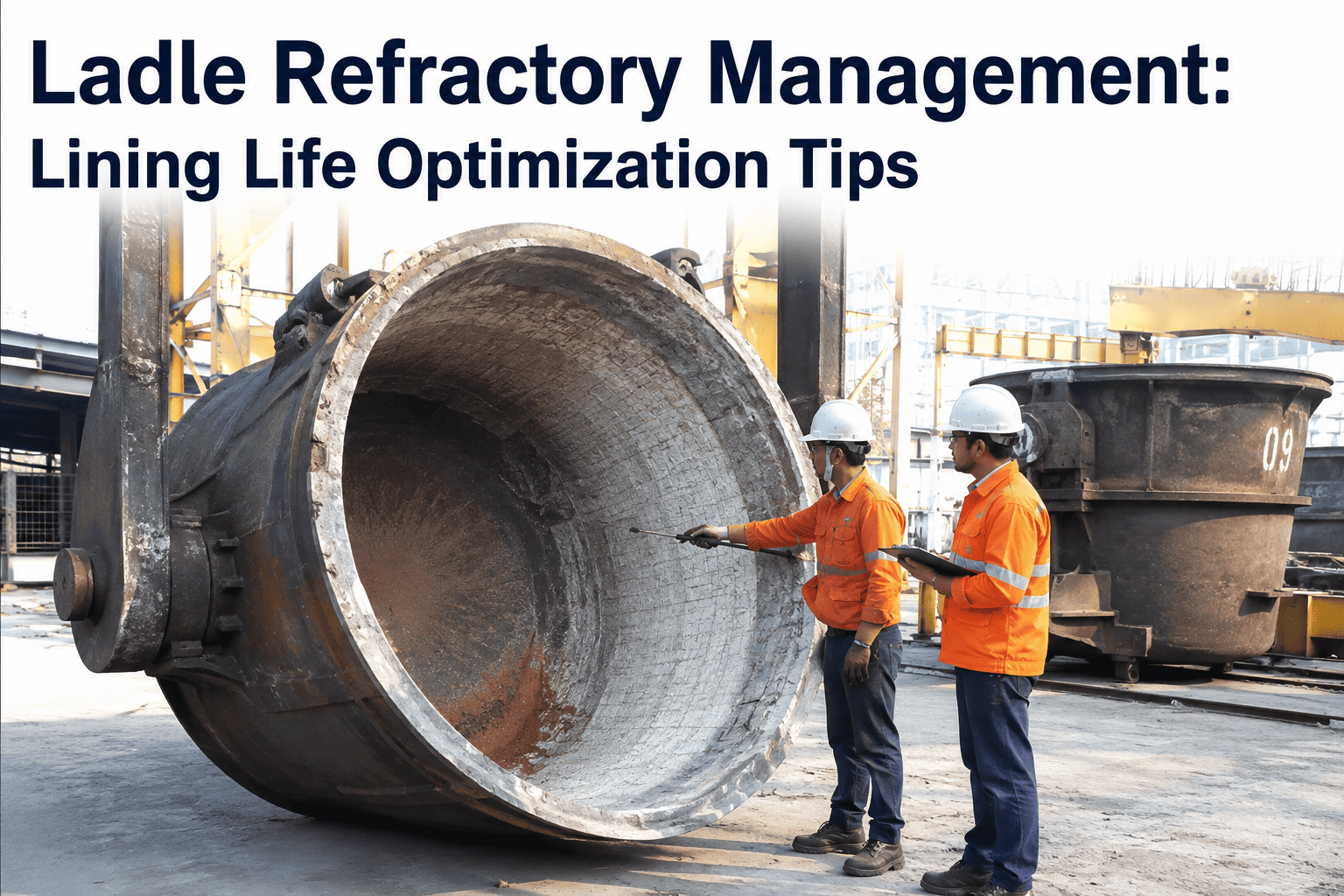
A ladle lining that gets preheated inconsistently, tracked only by tap count instead of actual condition, and relined on a fixed calendar schedule regardless of remaining life is a ladle program leaving campaign life on the table in three differen
Read More
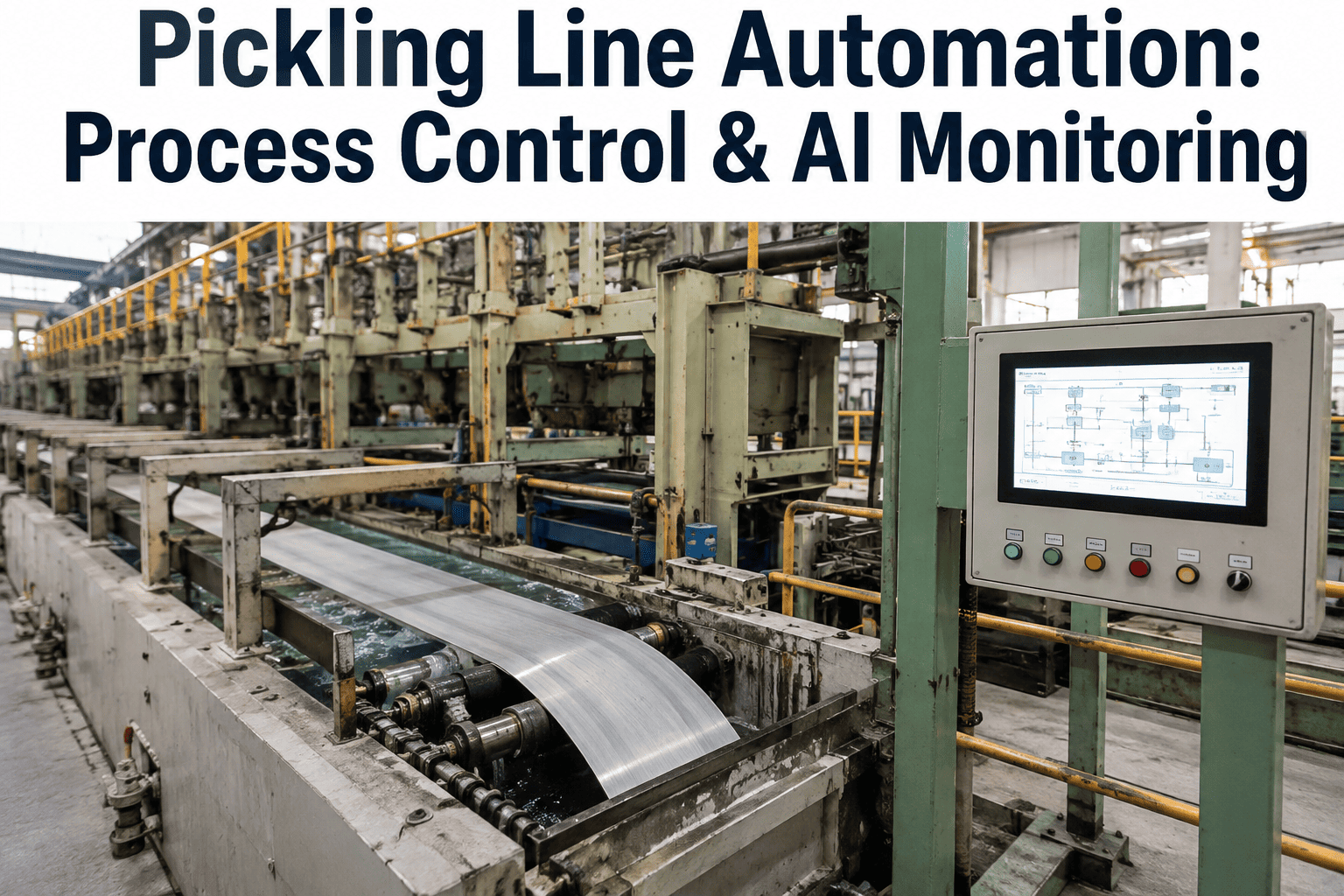
Pickling line operators have run acid concentration checks the same way for decades: pull a sample, titrate it, adjust the dosing pump, and hope the bath stays in range until the next sample. That approach worked when lines ran a narrow product mi
Read More
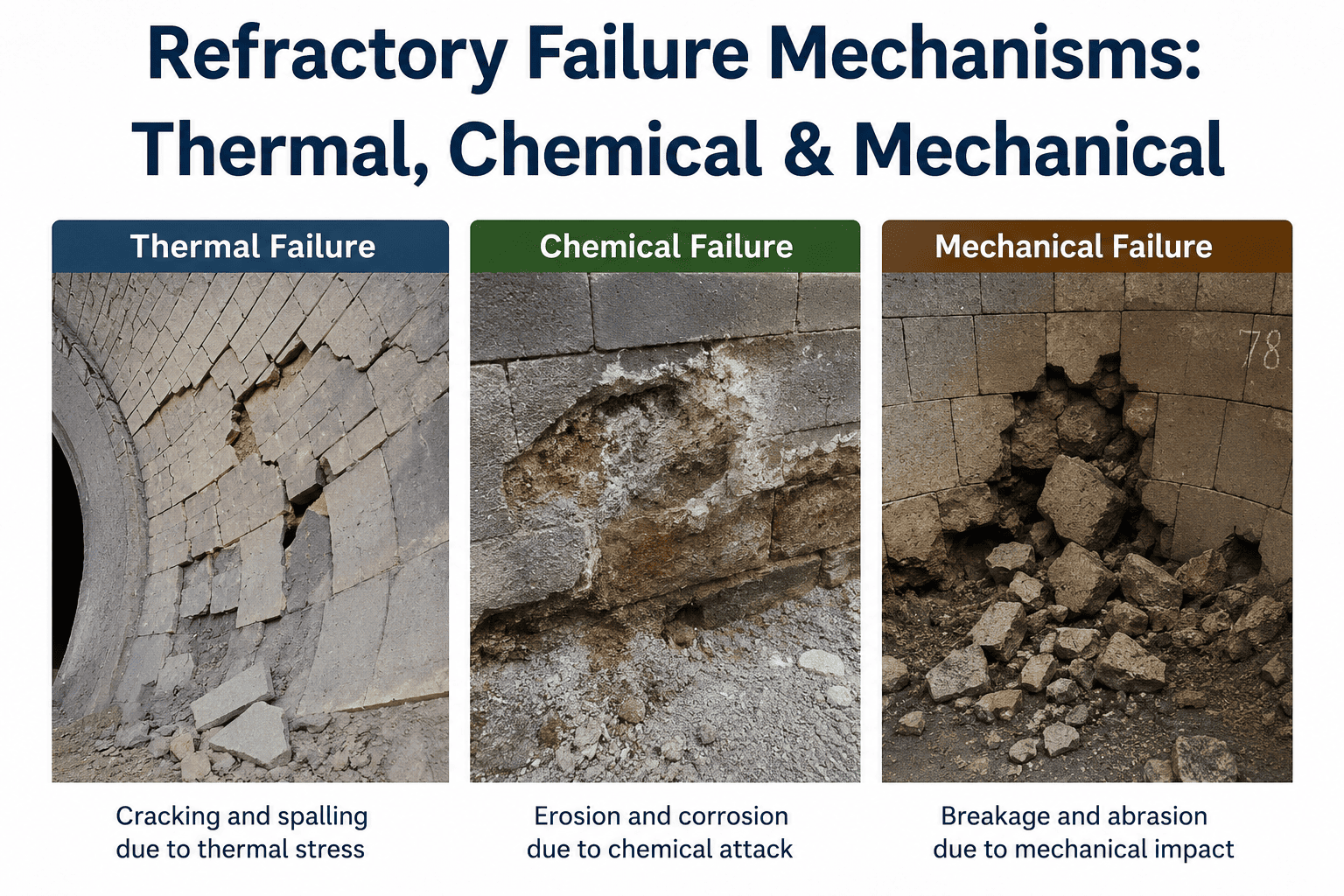
A refractory lining rarely fails from one cause acting alone — it fails from thermal cycling weakening a structure that chemical attack was already thinning, finished off by mechanical impact that a healthy lining would have shrugged off without d

Read More
Single-Minute Exchange of Die, better known as SMED, was developed for stamping presses decades ago, but the core insight translates almost perfectly to roll assembly changeover on a rolling mill: the mill does not care how long the changeover tak

Read More
A coil comes off the pickling line looking clean under the exit inspection light and then shows staining, pitting, or smut three process steps later where a quality hold finally catches it — and by then the defect has already been blamed on anneal
Read More
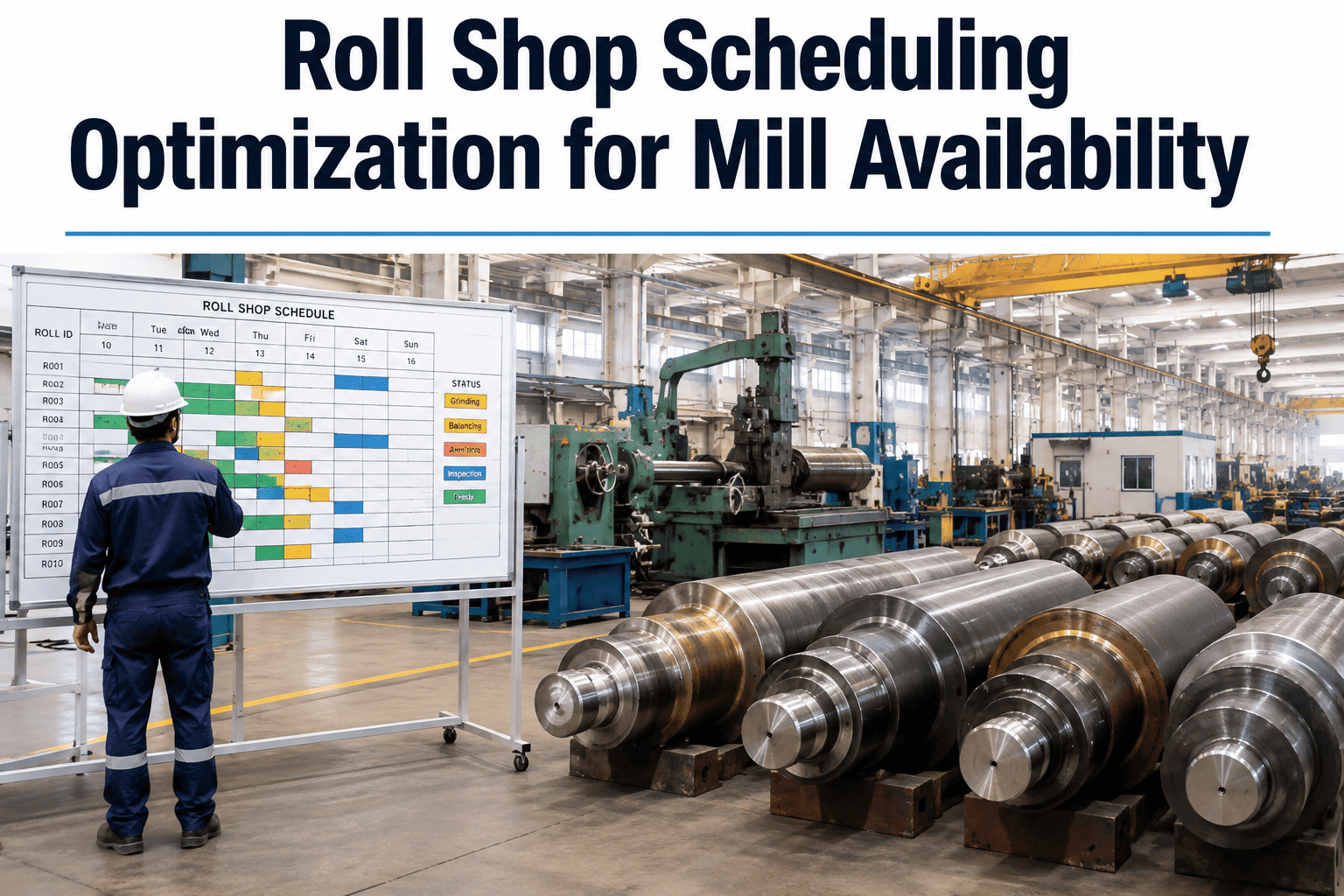
Every rolling mill manager has lived through the same expensive surprise: a work roll starts throwing surface marks mid-campaign, the shift supervisor calls for an emergency swap, and the roll shop has nothing ground and ready because grinding was
Read More
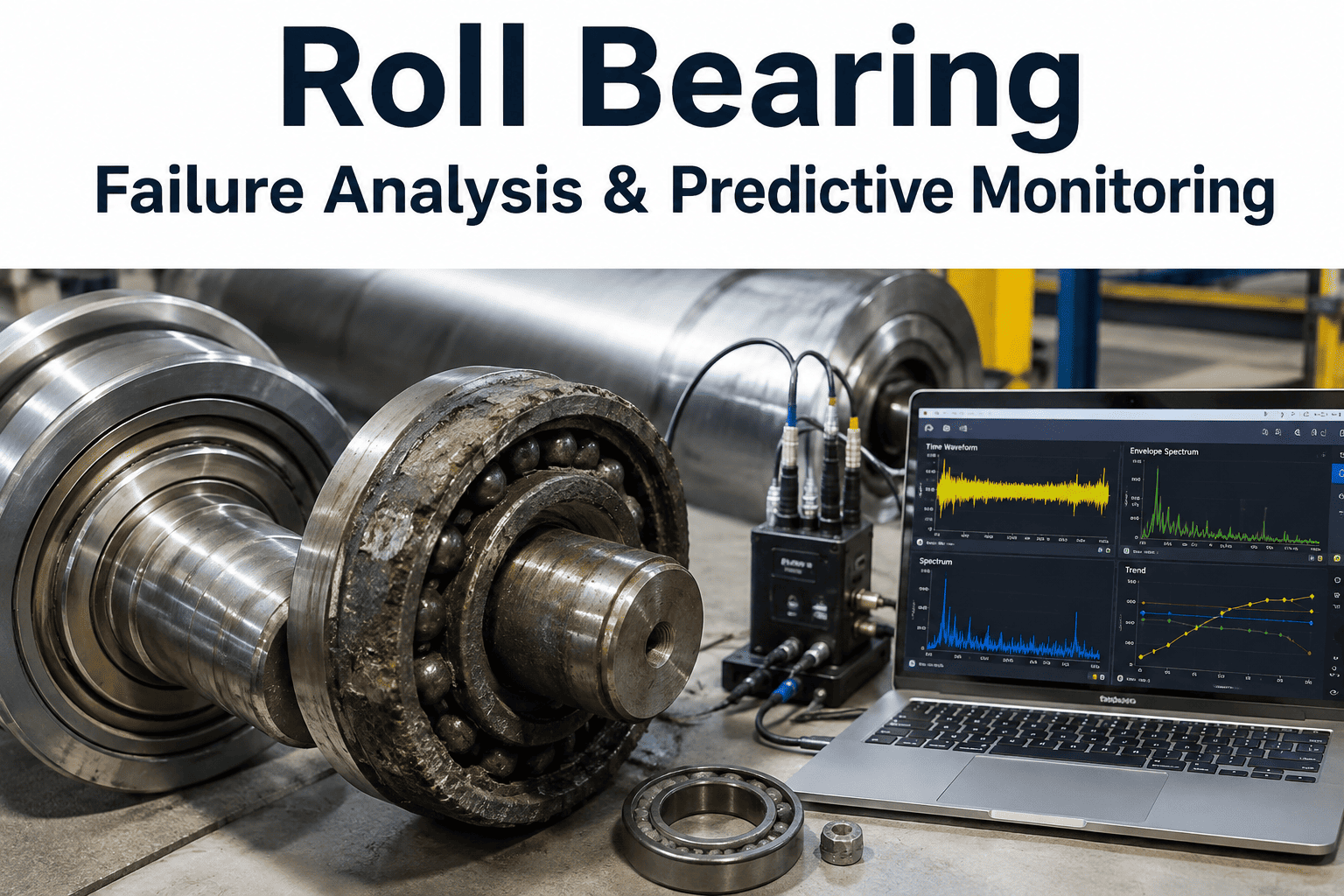
Roll bearings do not fail without warning — they fail without anyone reading the warning. Vibration signatures shift weeks before a bearing seizes, temperature trends climb gradually before they spike, and lubrication quality degrades on a curve t
Read More
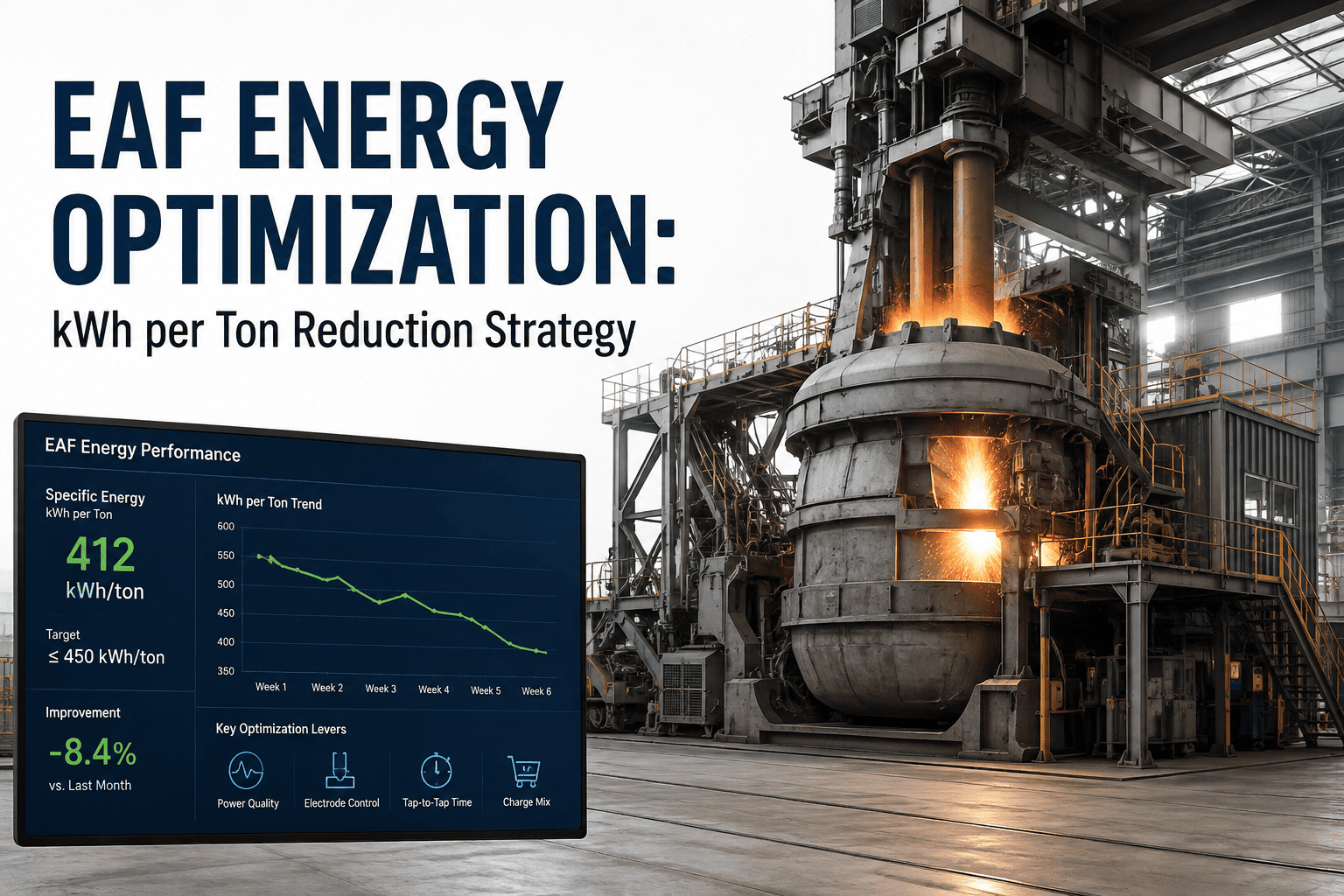
Electric arc furnaces consume between 380 and 550 kilowatt-hours per ton of liquid steel, making the EAF the single largest energy consumer in any mini-mill or EAF-based steelmaking operation. A 10 kWh per ton reduction across a two-million-ton
Read More
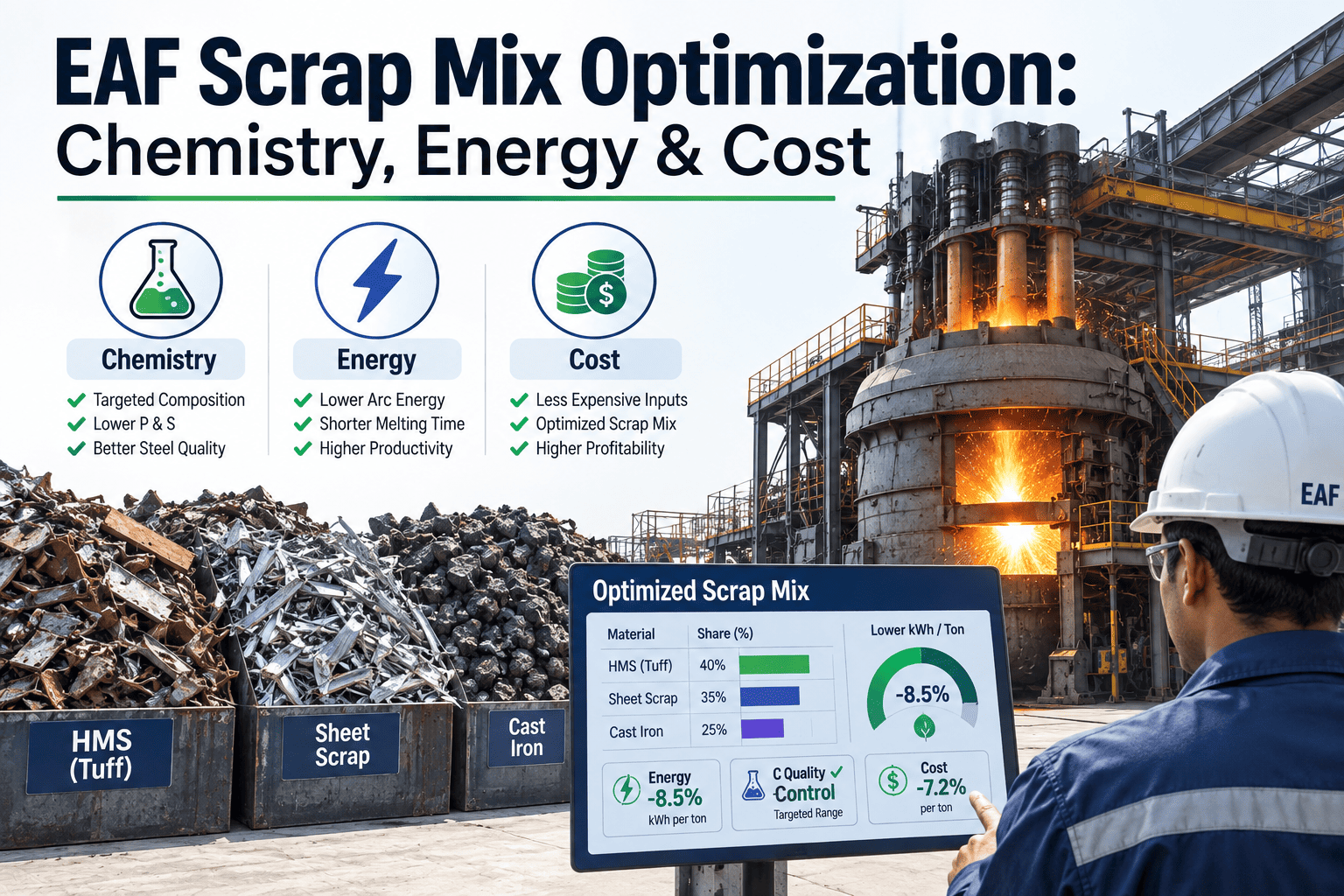
Every EAF heat starts with a scrap charging decision that will define the chemistry of the heat, the energy consumption of the melt, the tap-to-tap time, and the cost of the liquid steel produced — and most melt shops make that decision using a co
Read More
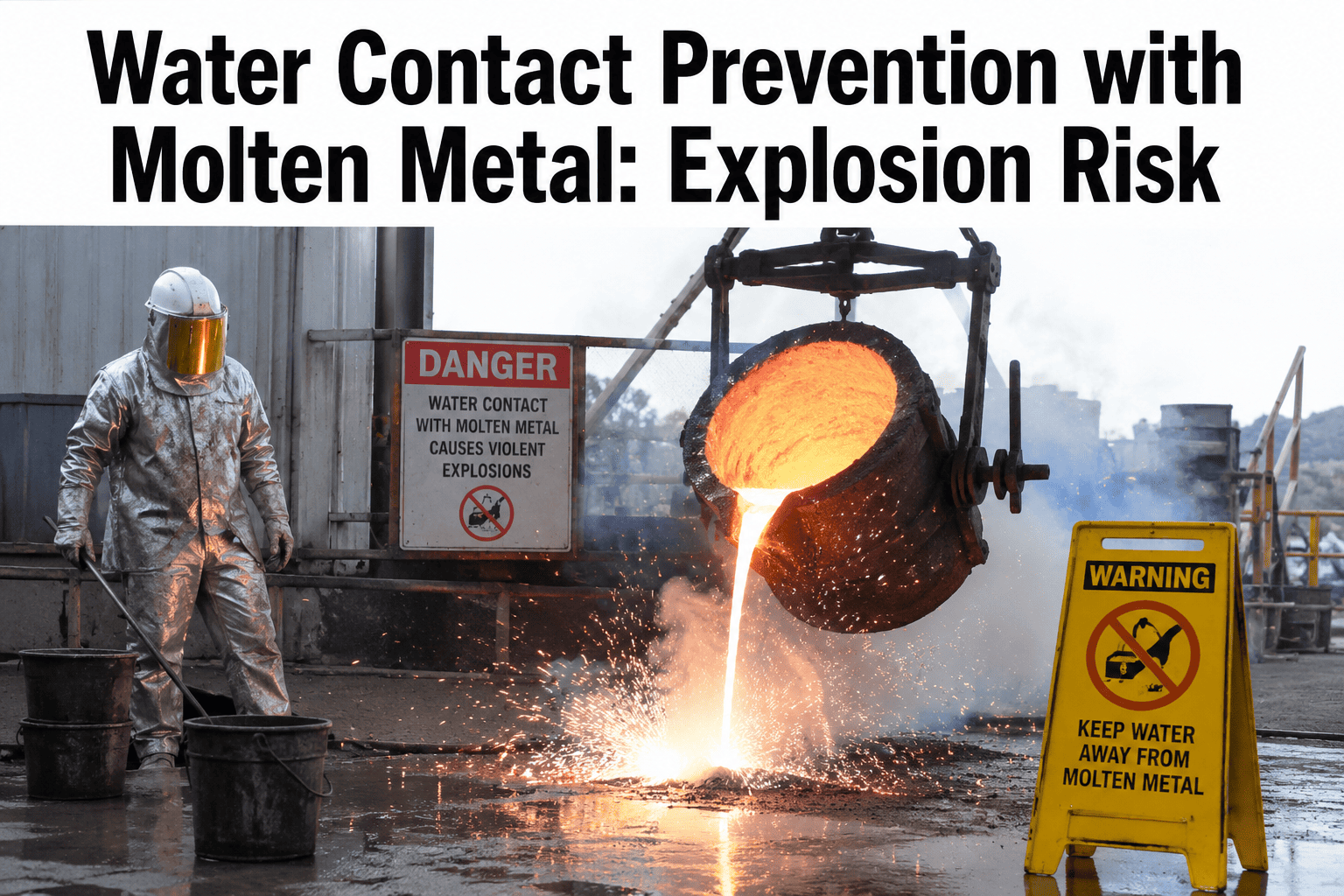
A single liter of water, on contact with molten metal, becomes roughly 1,600 to 1,700 liters of steam essentially instantaneously — a phase-change expansion violent enough to launch molten metal and equipment fragments across an entire work area.
Read More
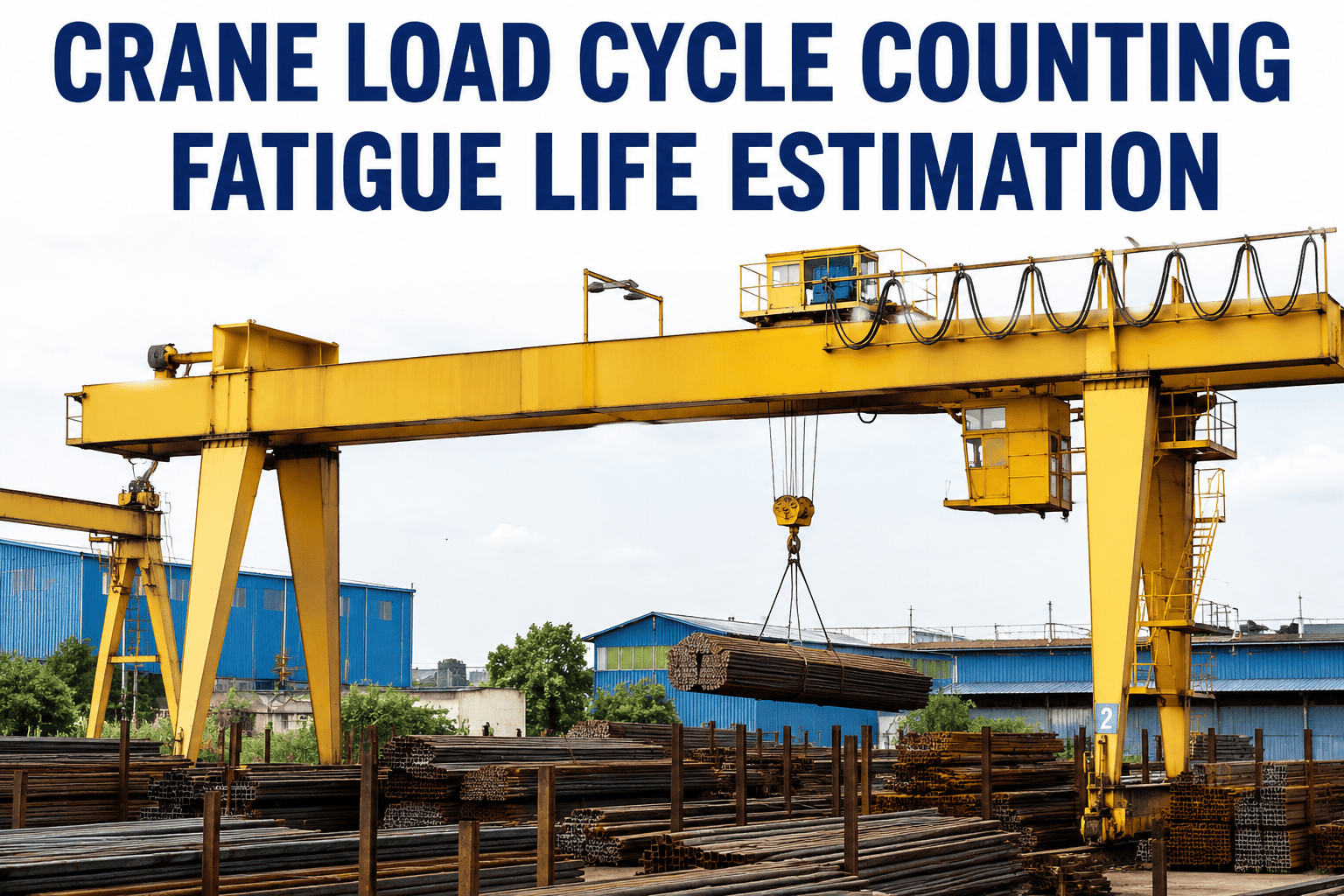
Every crane in your facility is accumulating structural fatigue with every lift, and the vast majority of plants have no mechanism to measure how much fatigue life remains. Duty classification plates attached at commissioning provide a static desi
Read More
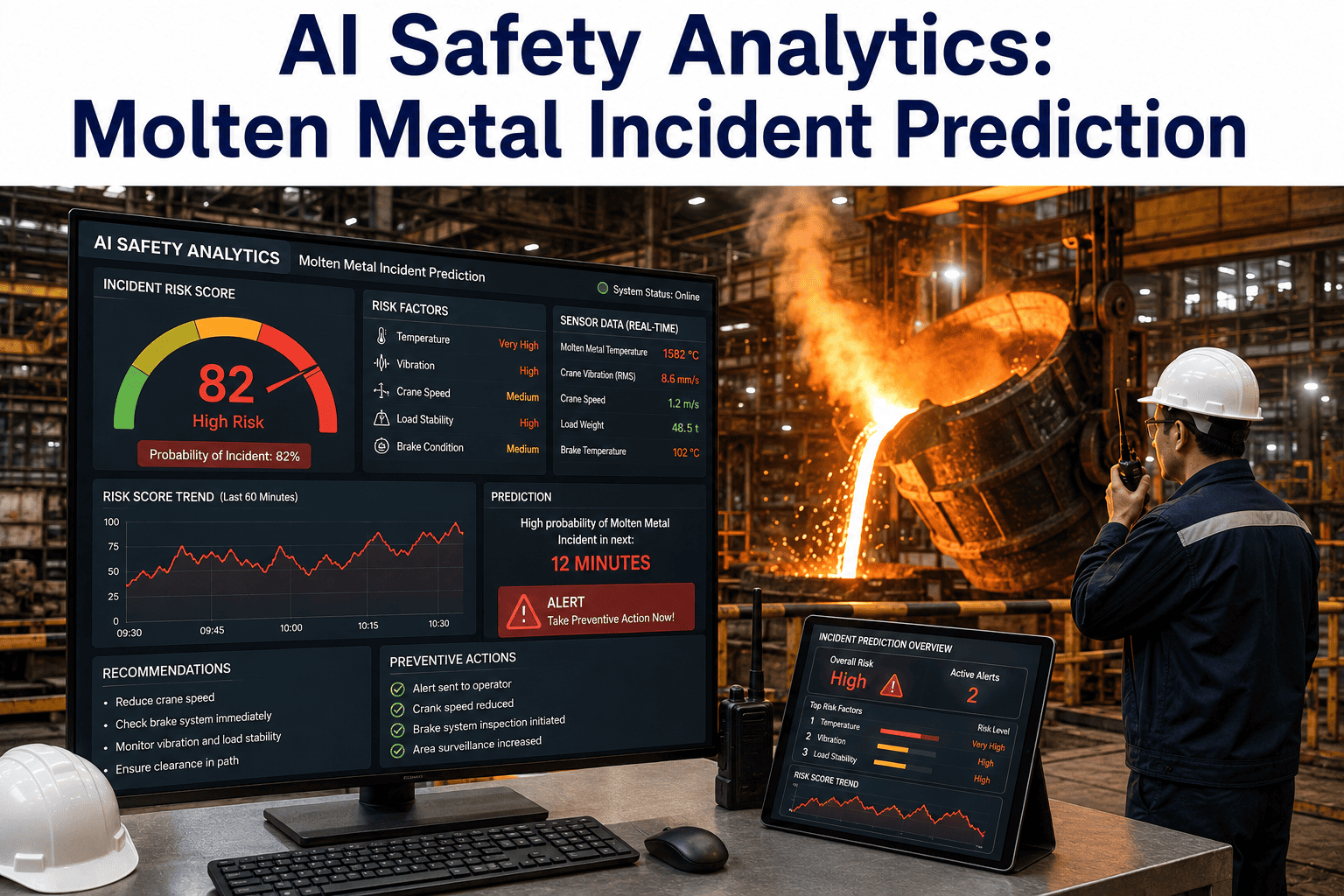
Molten metal operations carry some of the highest injury severity rates in heavy manufacturing — not because incidents are frequent, but because when they occur, the consequences are catastrophic. Traditional safety programs in steel plants and fo
Read More
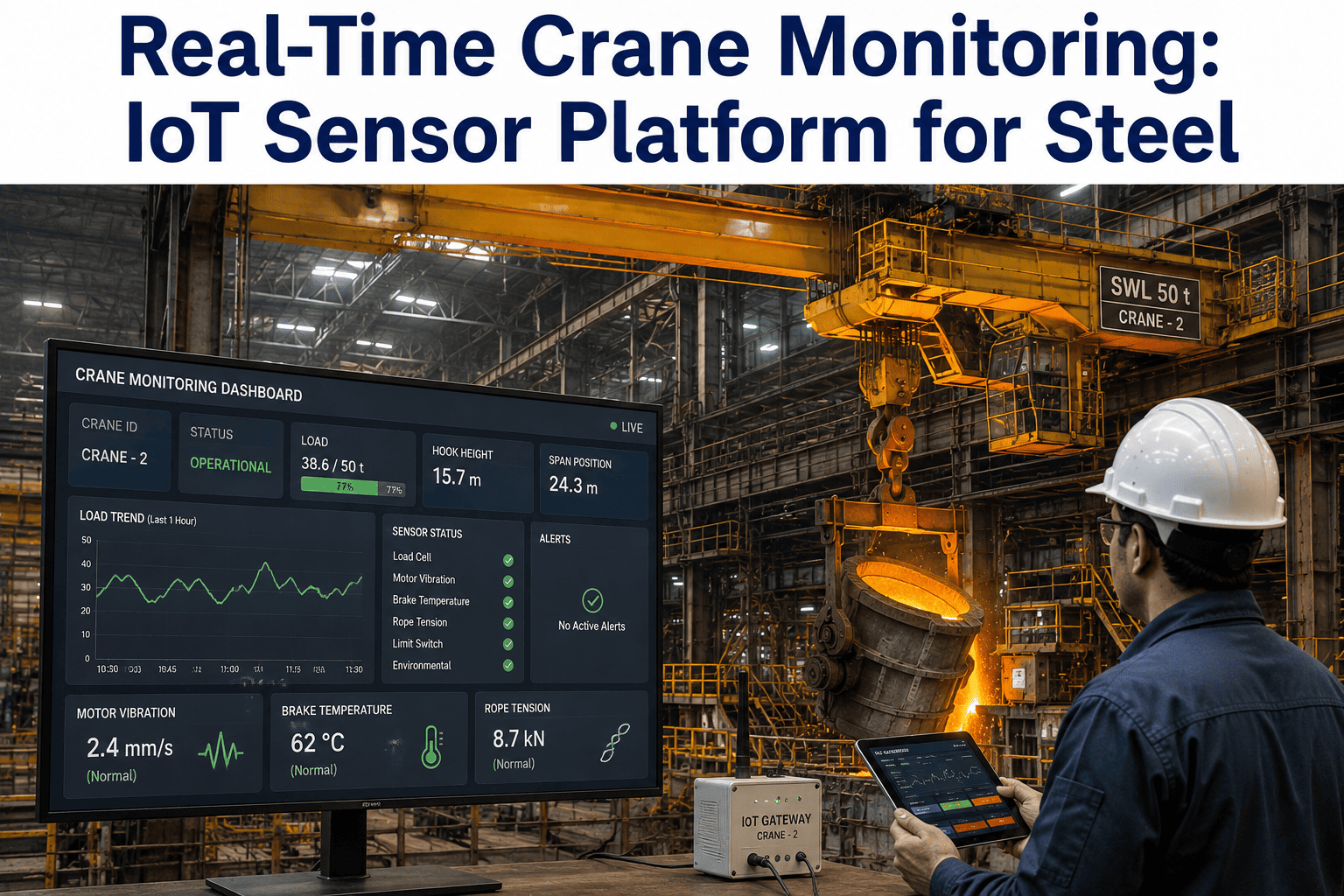
Most overhead cranes in steel plants today are inspected the same way they were thirty years ago — a technician walks the structure on a fixed schedule, listens for unusual sounds, checks a few grease points, and signs off until the next scheduled
Read More
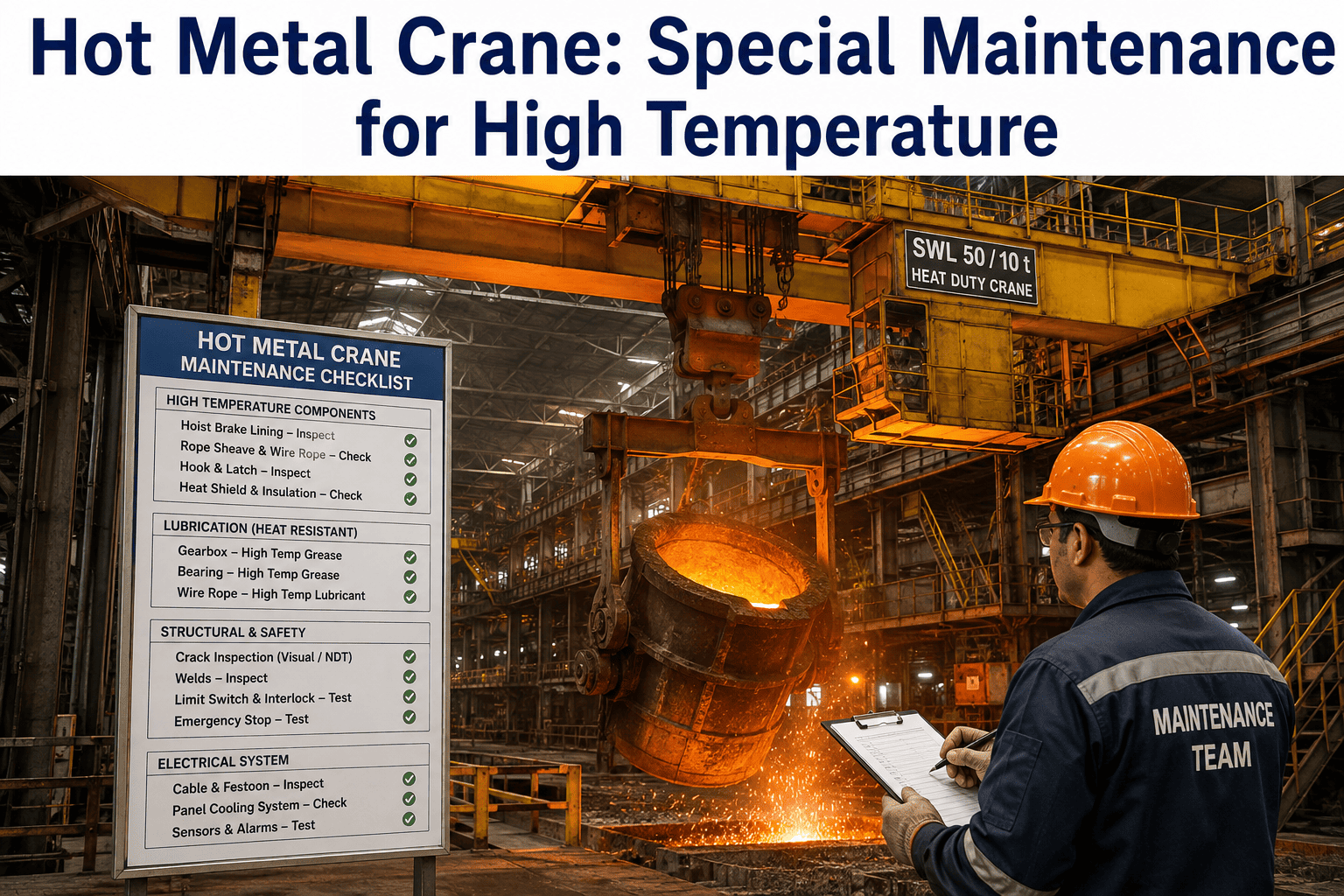
Hot metal cranes — torpedo cars, ladle cranes, and charge cranes moving molten iron and steel at temperatures well above 1,200°C — operate in a thermal environment that turns a standard overhead crane maintenance schedule into dangerous guesswork.
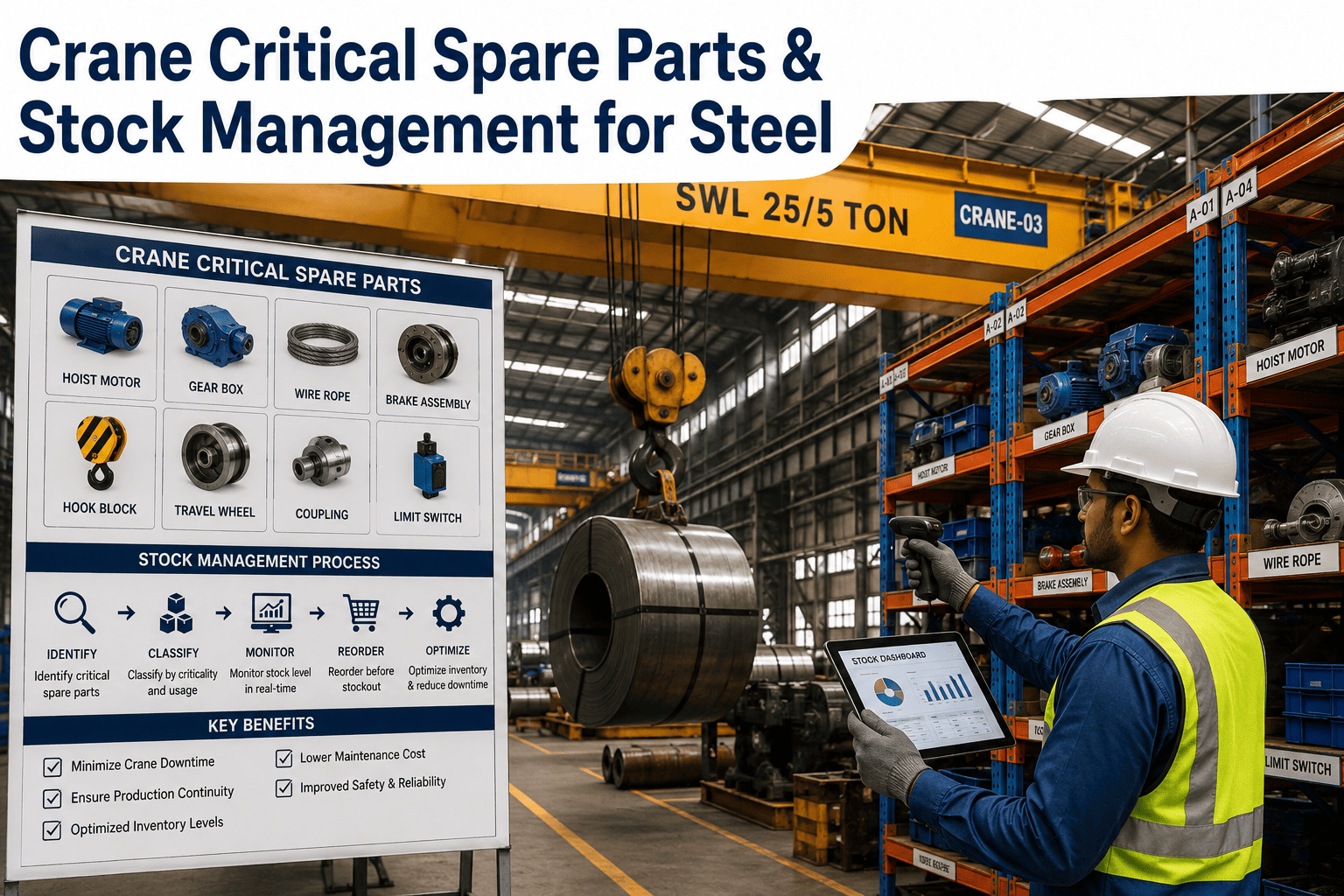
Read More
Hot metal cranes — torpedo cars, ladle cranes, and charge cranes moving molten iron and steel at temperatures well above 1,200°C — operate in a thermal environment that turns a standard overhead crane maintenance schedule into dangerous guesswork.
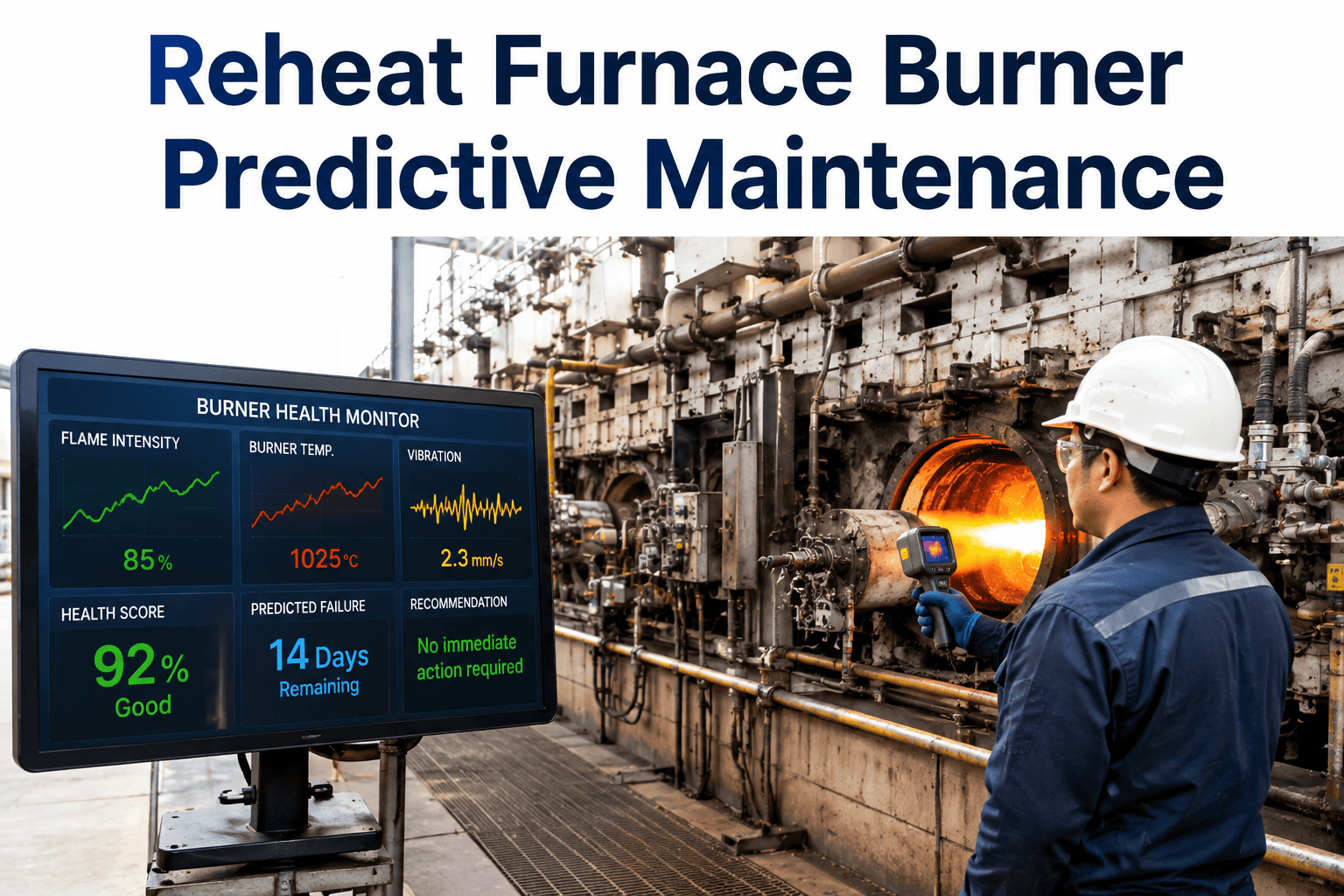
Read More
A reheat furnace with one burner running slightly rich and its neighbor running slightly lean doesn't trip an alarm, it just quietly produces a hot slab next to a cold one, and that unevenness only becomes visible once the rolling mill starts figh
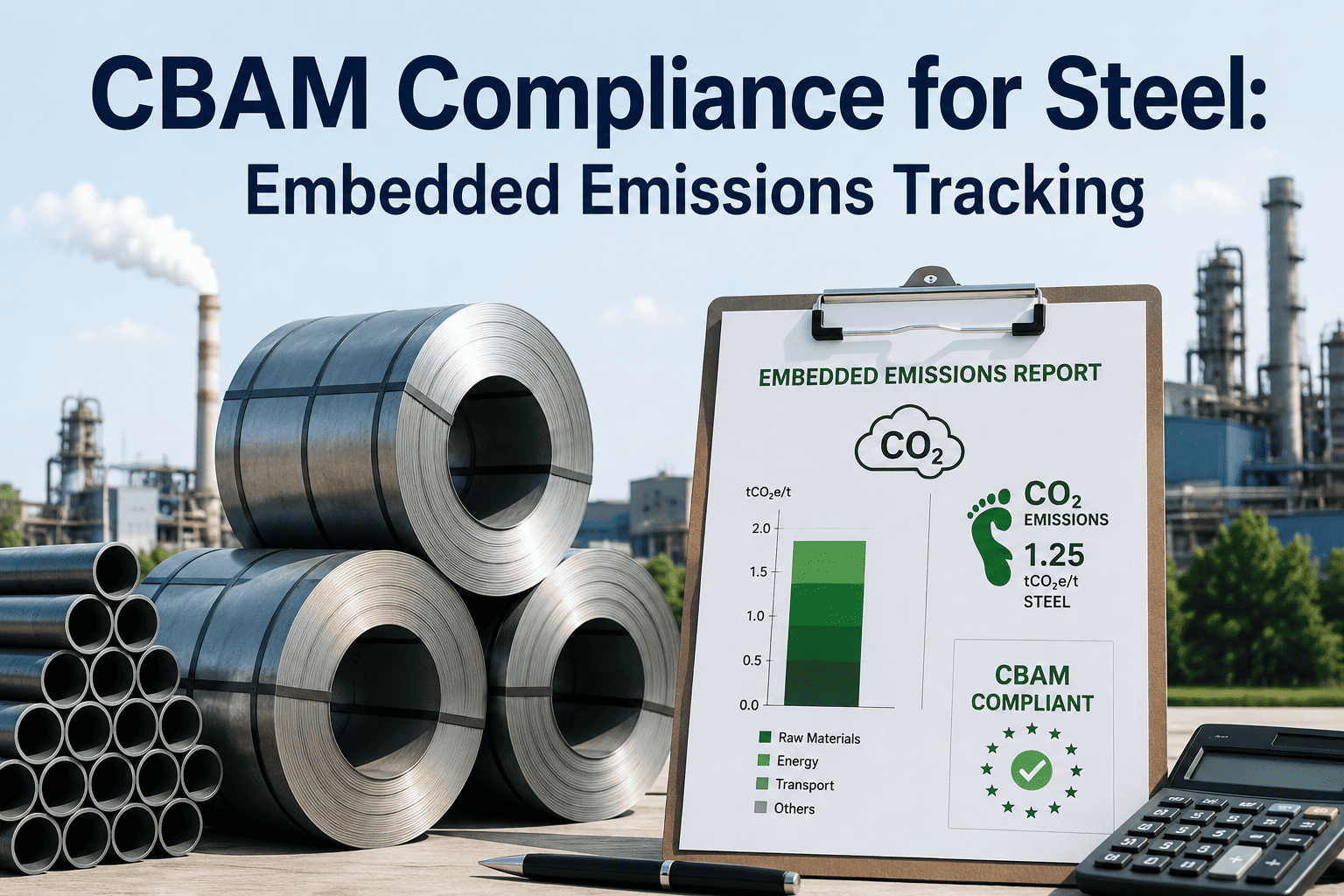
Read More
CBAM stopped being a paperwork exercise in January 2026. Since then, EU importers of steel products have had to purchase CBAM certificates matching the actual embedded emissions of what they bring in, which means the difference between a rough def
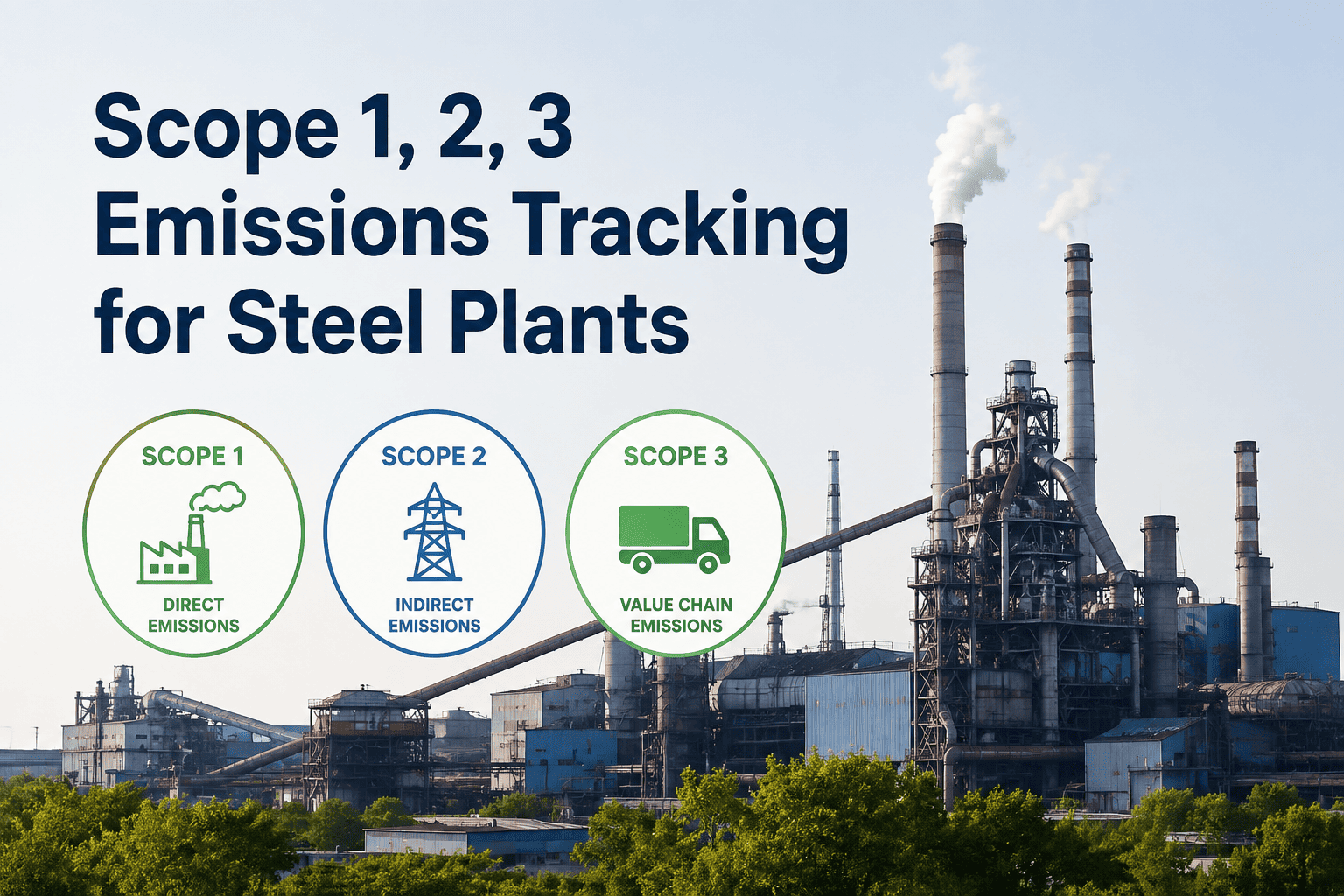
Read More
Scope 1, 2, and 3 disclosure has moved from a voluntary sustainability report exercise to a mandatory requirement across several major markets a steel producer is likely selling into, which means the spreadsheet-based emissions tracking that worke

Read More
Pickling lines run on a tradeoff that most operators know intuitively but rarely have the data to optimize precisely: stronger acid, higher temperature, and slower line speed all strip scale more reliably, but they also burn through hydrochloric a
Read More
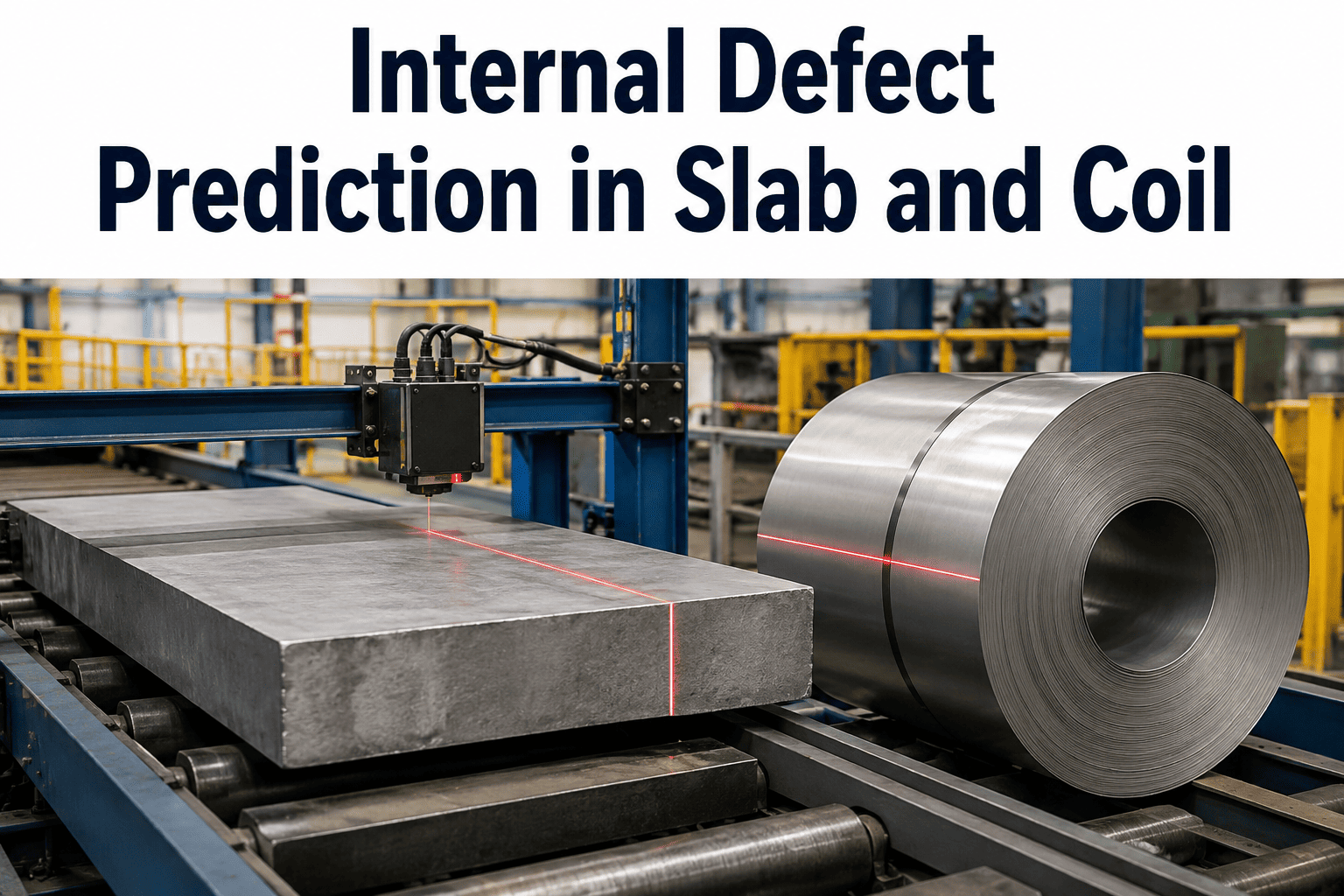
Internal defects like centerline segregation, non-metallic inclusions, and hot tears rarely announce themselves at the caster or hot mill. They pass every surface inspection cleanly and travel downstream to a customer's rolling or forming operatio
Read More
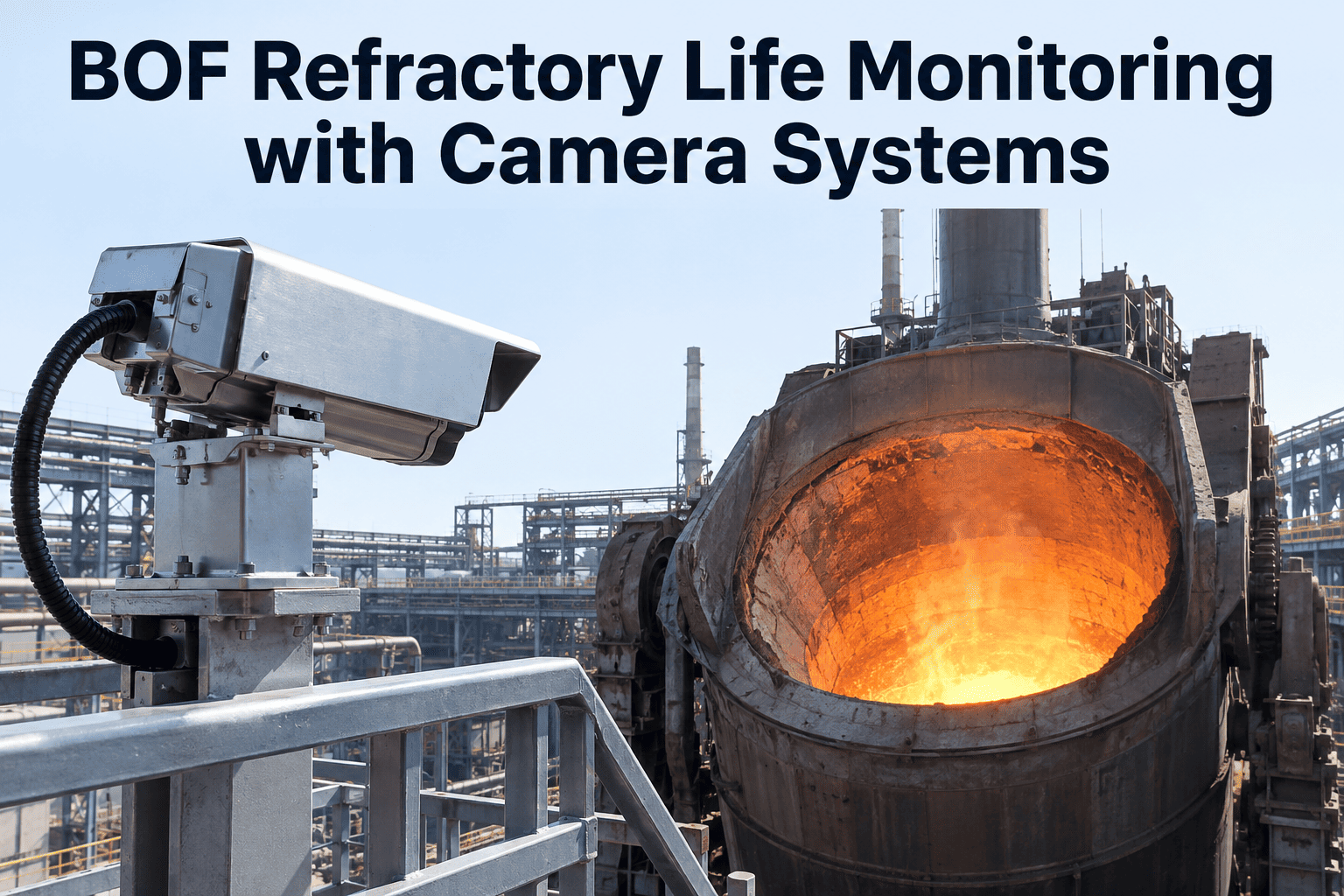
Basic oxygen furnace linings used to be judged mostly by heat count and the occasional visual inspection during a scheduled outage, which meant a shop learned about accelerated wear only after it had already happened. Laser scanning and thermal ca
Read More
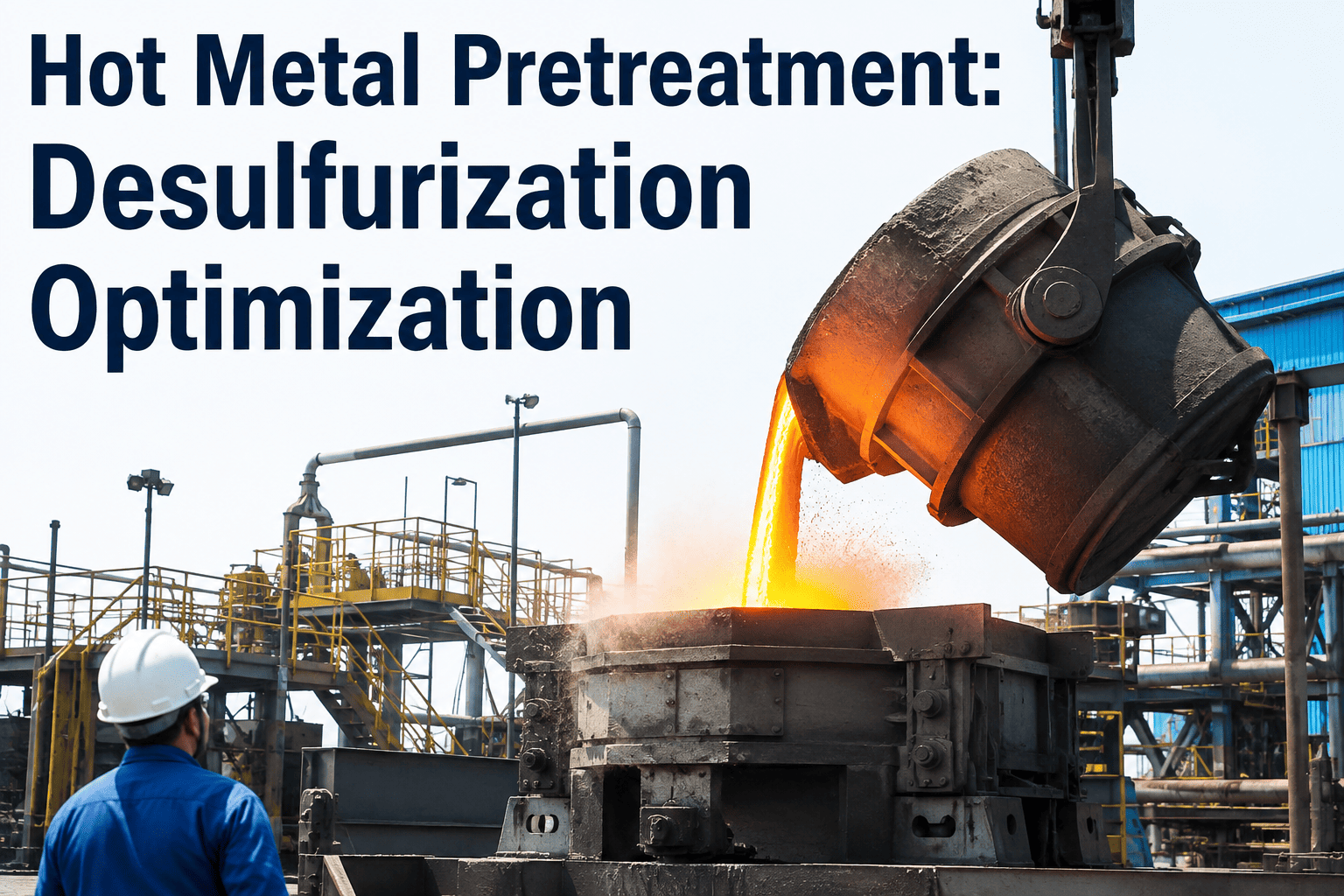
Hot metal desulfurization sets the chemistry table for everything that follows in the BOF, and it's also one of the more expensive reagent-consuming steps in the whole steelmaking chain. Calcium carbide and lime additions are typically dosed again
Read More
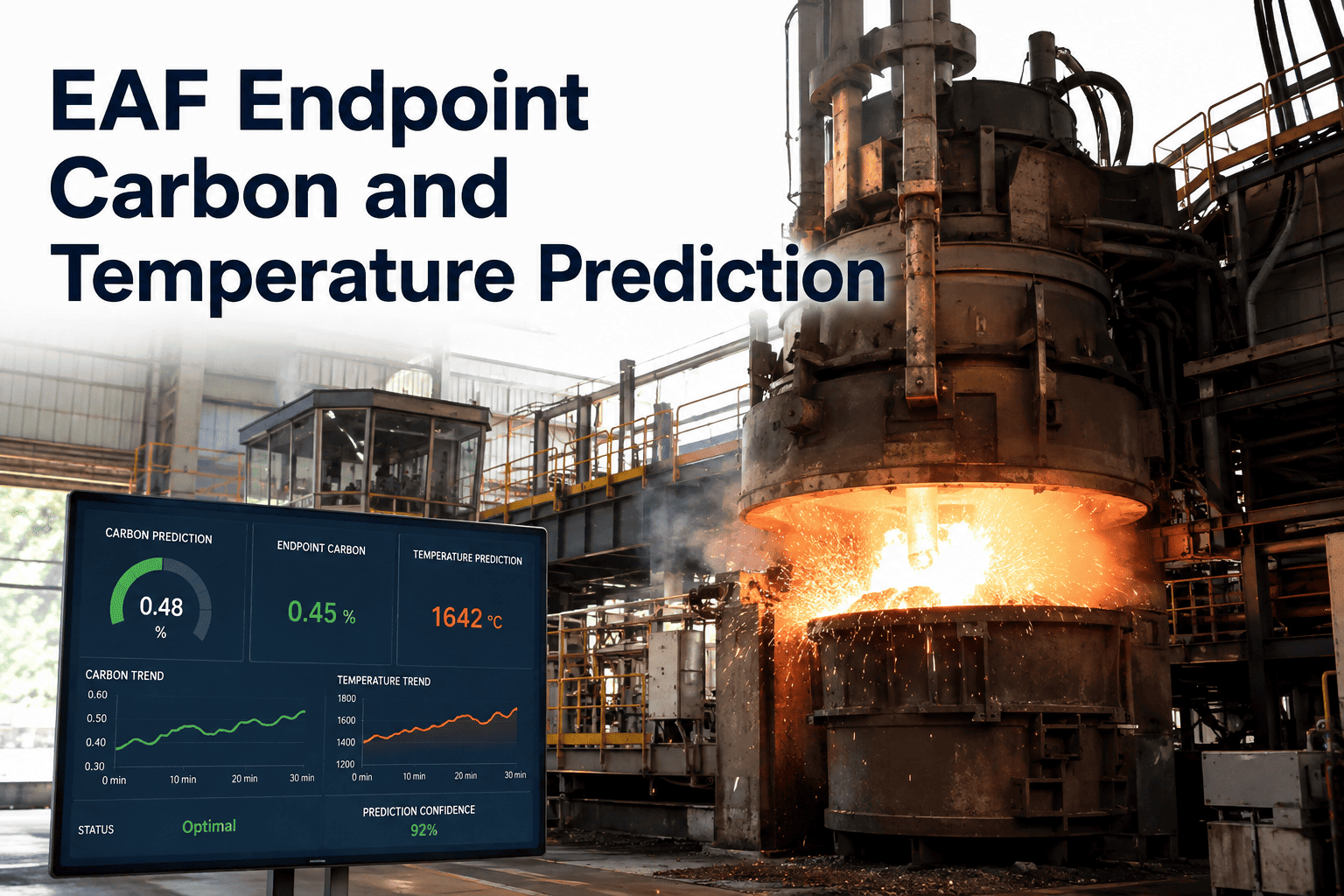
An EAF heat runs its whole cycle toward one moment: the endpoint. The furnace superintendent has to decide, from limited real-time information, whether the bath has hit target carbon and temperature before tap. Guess wrong and the heat either goes
Read More
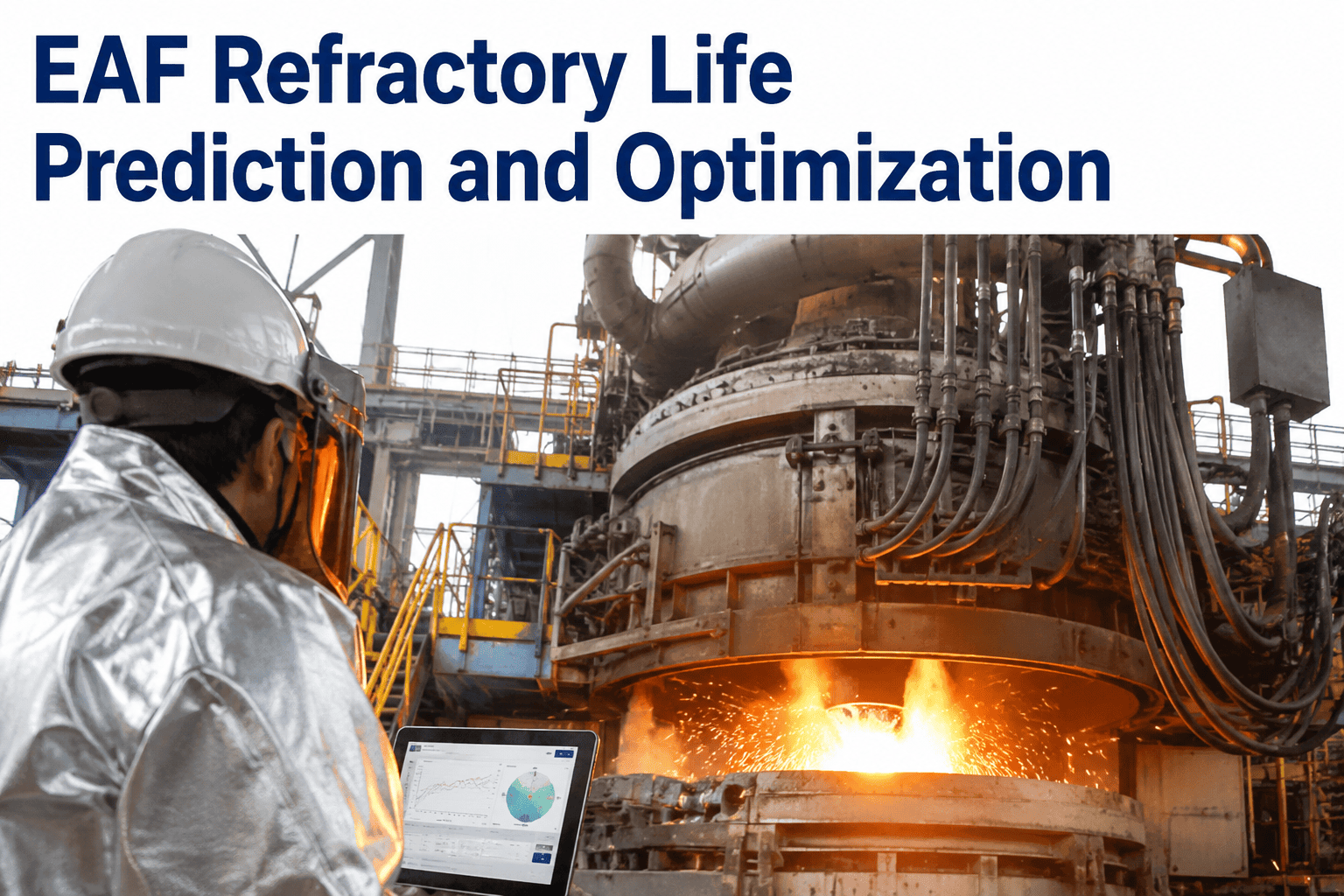
A single EAF refractory campaign runs anywhere from half a million to two million dollars depending on furnace size and lining specification, and the decision to end that campaign early or push it a few heats too far is still made mostly on visual

Read More
Somewhere in every older steel plant there's a Level 1 PLC running a control loop that nobody wants to touch, installed twenty years ago, running firmware the vendor stopped supporting a decade ago, and holding logic that only one retired engineer
Read More
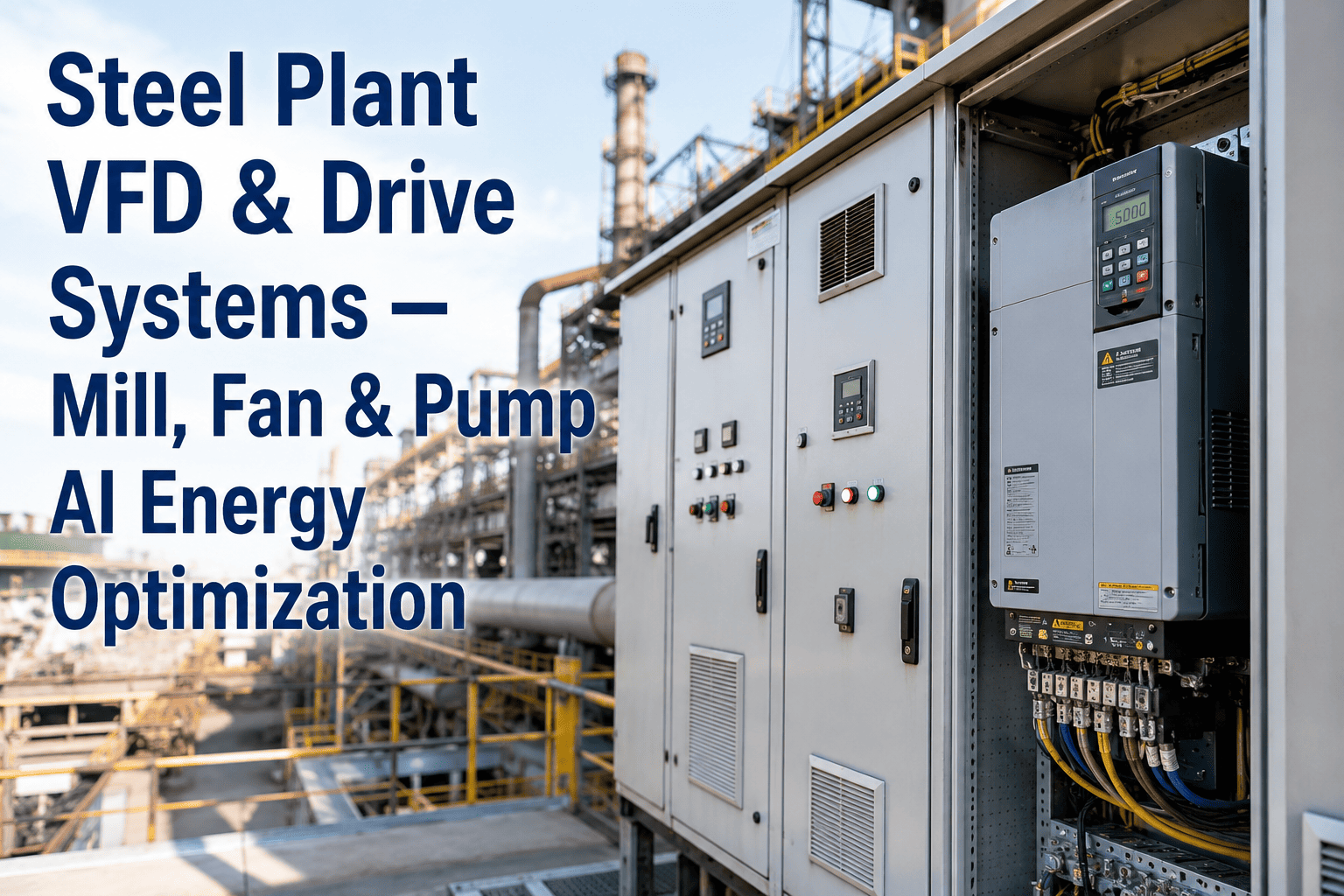
Most steel plants already own the hardware to cut their energy bill on mills, fans, and pumps. Variable frequency drives have been standard equipment on this class of load for years, and yet a large share of them run at fixed setpoints that were t

Read More
Ten days. That's the entire window most plants get for a BOF vessel reline before liquid steel production has to resume, and every one of those days is accounted for before the first brick comes out of the old lining. Demolition has to clear the v
Read More
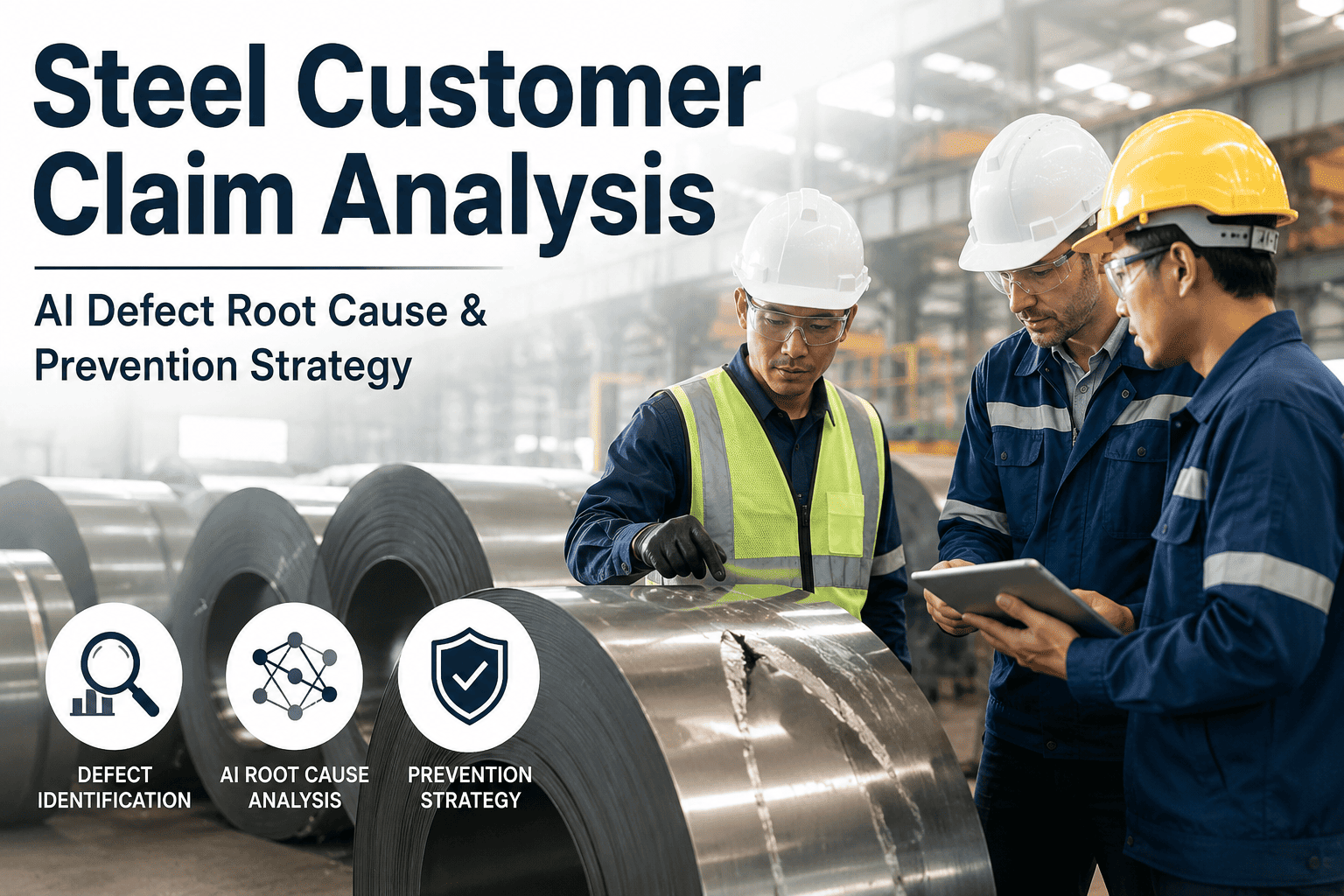
A customer claim lands with a coil ID, a defect photo, and a demand for credit, and the quality team's job is to figure out which of a dozen upstream process steps actually caused it, weeks after the coil left the mill and with production paramete
Read More
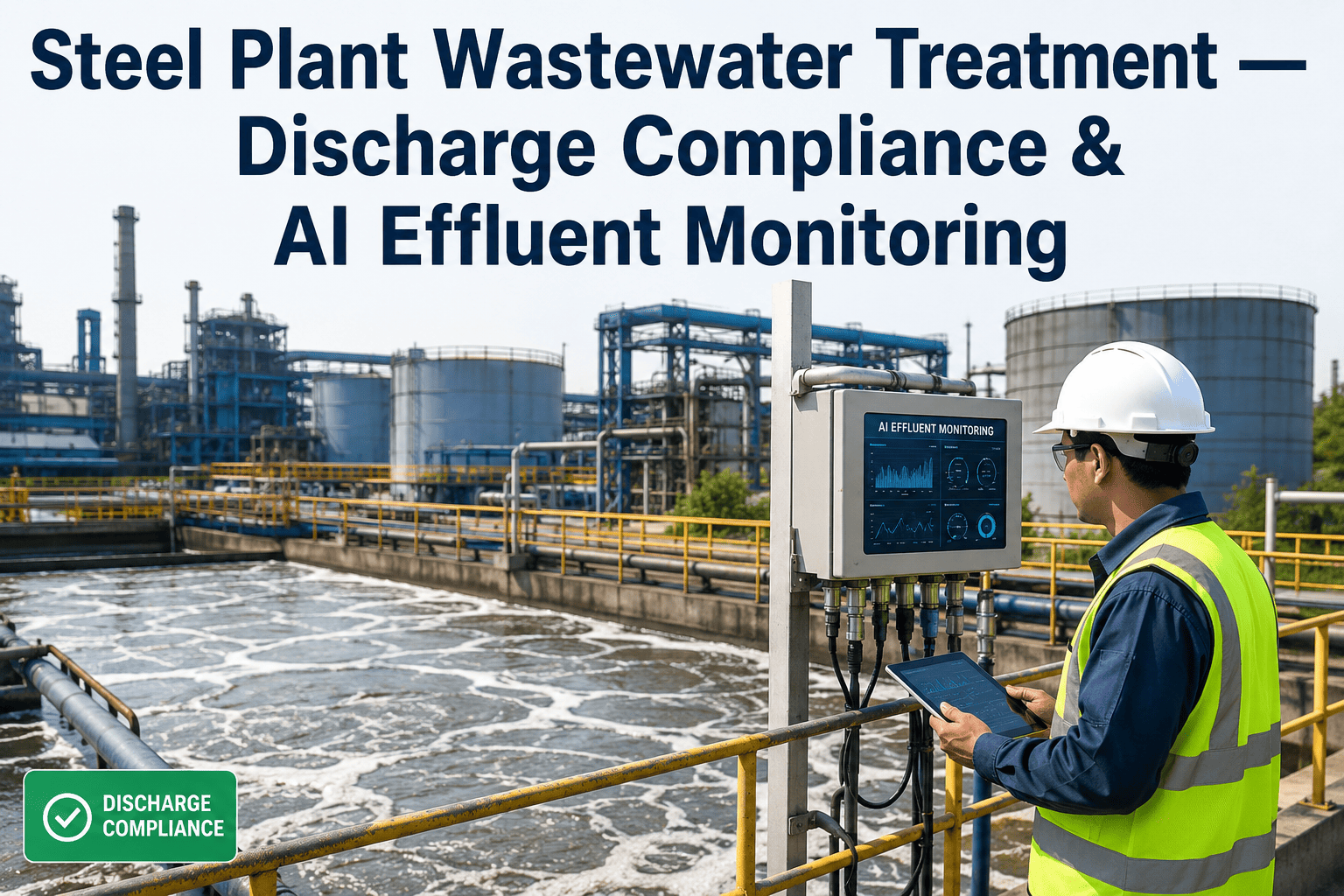
An NPDES exceedance rarely comes from one dramatic spill. It usually comes from three separate streams quietly drifting in the same direction at once, coke plant wastewater running slightly high on ammonia, rolling mill oil separator efficiency di

Read More
Every zone in an integrated steel plant thinks its own shutdown scope is the priority, and every zone is right about its own piece of the puzzle. Ironmaking wants the furnace reline window locked first, steelmaking needs the BOF vessel timeline to

Read More
A furnace stave that fails from under-deposit corrosion rarely gives a warning shot. The cooling water looks clear, the flow meters read normal, and then a hot spot burns through months ahead of schedule because the scale and biofilm building up o

Read More
July hits and suddenly the cooling tower that handled winter production without complaint can't pull enough approach temperature to keep up with hot blast demand. Maintenance teams scramble to figure out whether it's fouled fill, a slipping fan be

Read More
Crown and profile don't announce themselves the way a hard gauge reject does. A strip can pass thickness inspection at the centerline and still carry a crown shape that causes coiling problems, uneven tension across the width, or downstream cold

Read More
Flatness defects rarely have one clean cause, which is exactly why they're so frustrating to chase down on the mill floor. Edge wave, center buckle, and quarter buckle can each result from a different combination of stand bending, roll shifting,
Read More
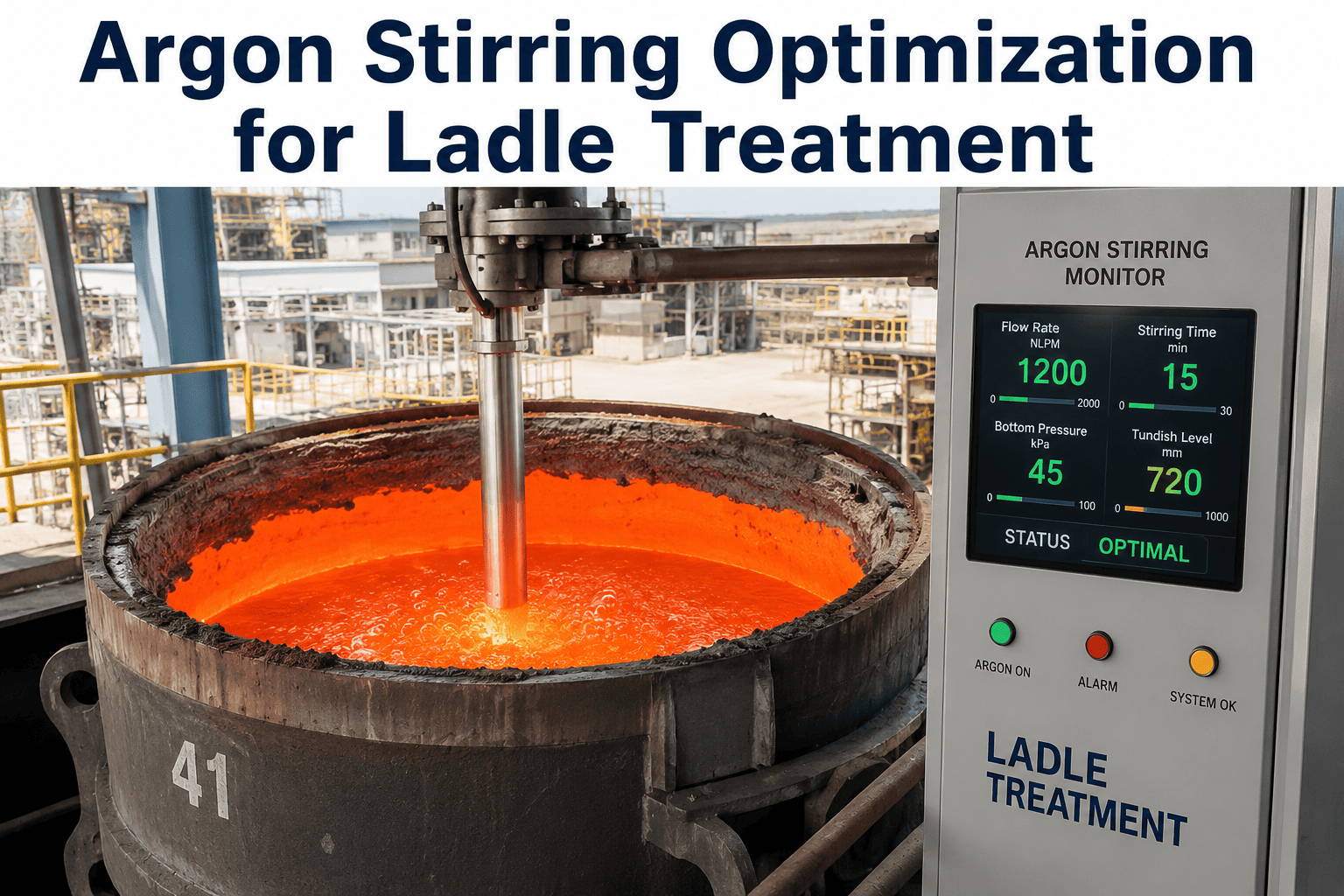
Argon stirring looks simple from the pulpit: open the valve, watch for the bath "eye" to appear at the surface, adjust if it looks too big or too small. In practice, the right stirring intensity depends on bath depth, slag thickness, current tre
Read More
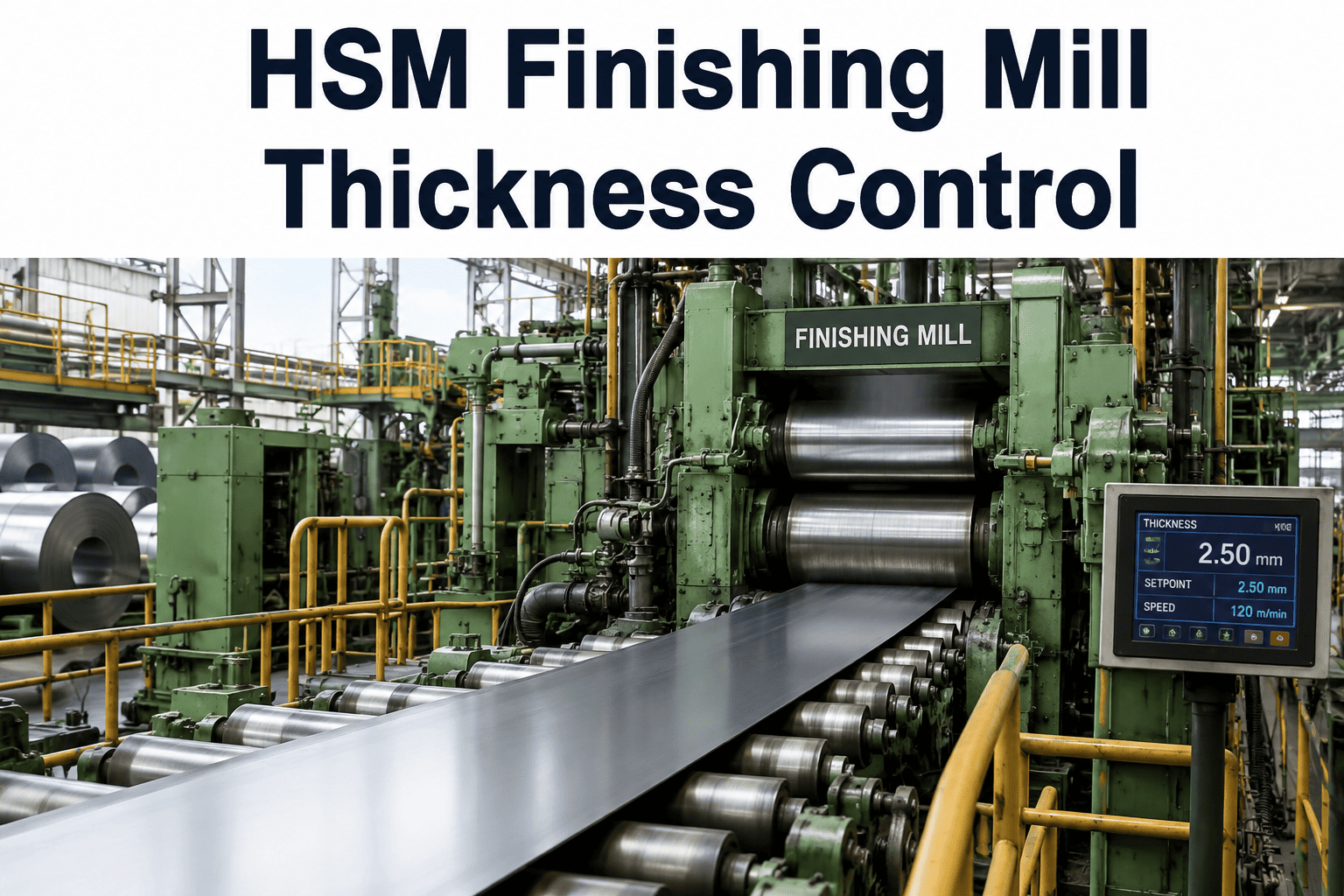
A finishing mill customer spec rarely gives much room to work with, and a strip that drifts even a few microns outside the agreed tolerance band becomes a reject, a downgrade, or a customer claim, none of which are cheap once coil weight and shi
Read More
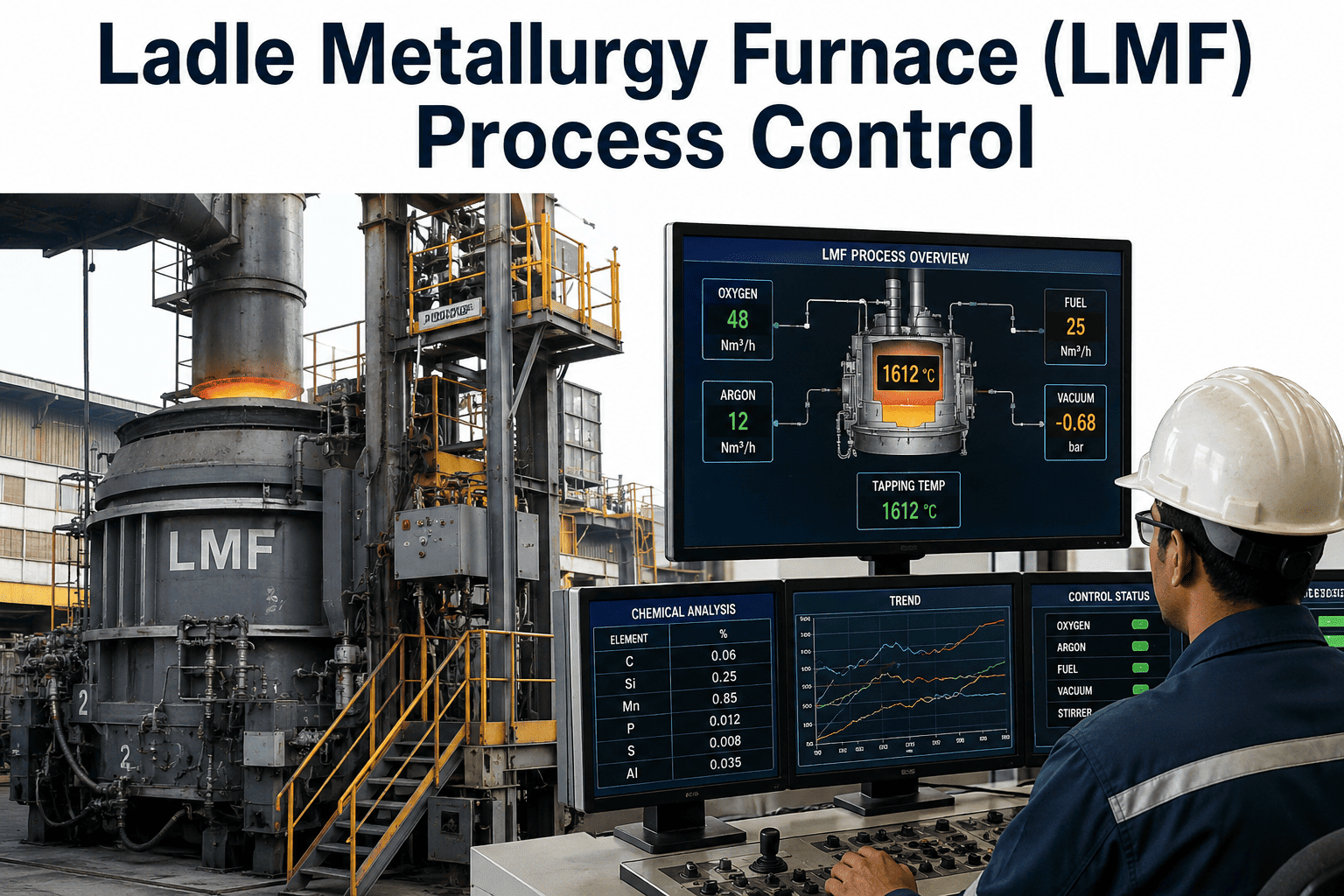
The caster doesn't care how good your tap chemistry looked. It cares whether the ladle arrives inside the temperature and composition window it was designed around, and that window is set at the LMF, not upstream at the furnace. A few degrees to
Read More
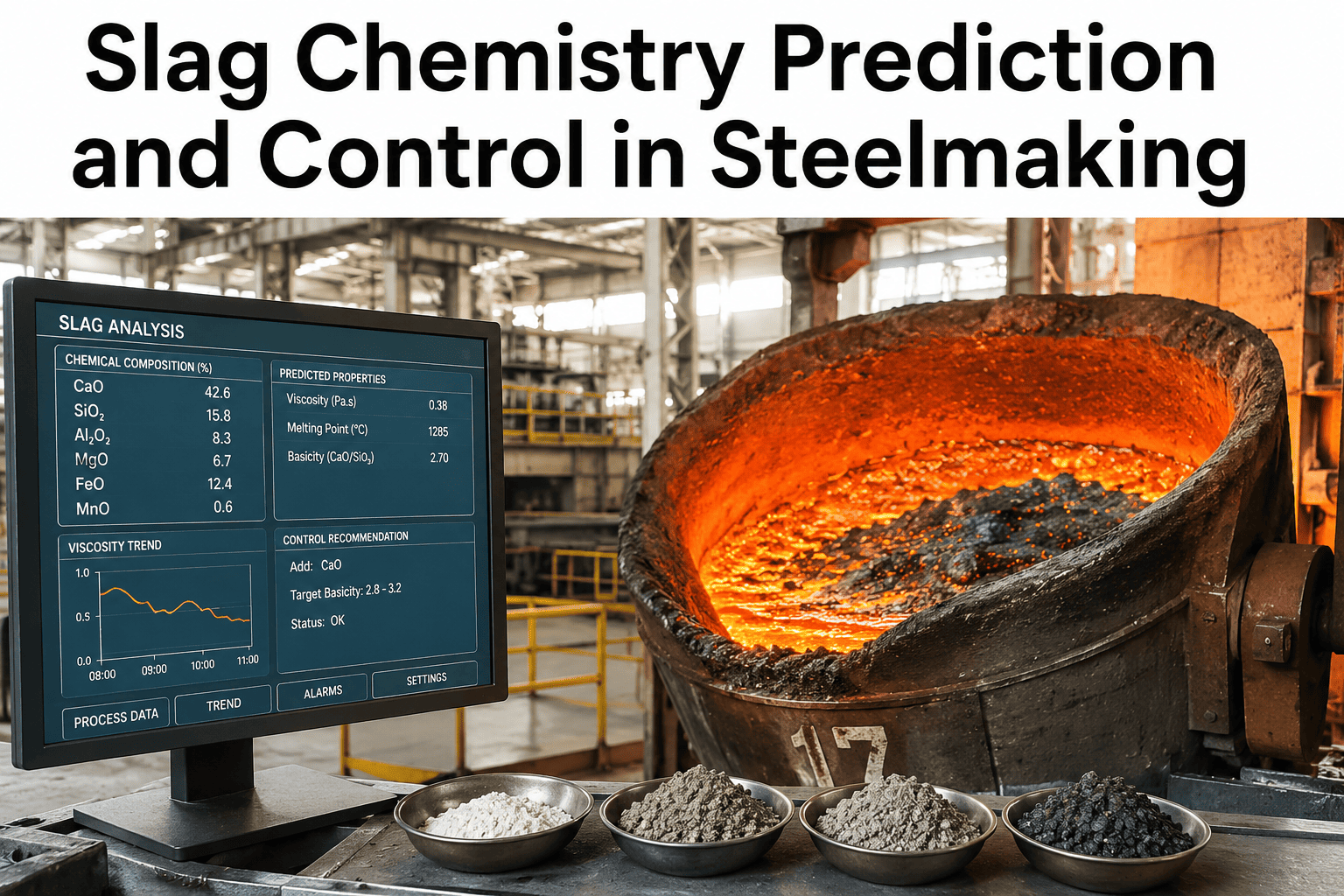
Slag chemistry rarely gets the attention it deserves until something goes wrong with either steel cleanliness or refractory life, and by the time either shows up as a customer complaint or an unplanned relining, the slag that caused it was forme
Read More
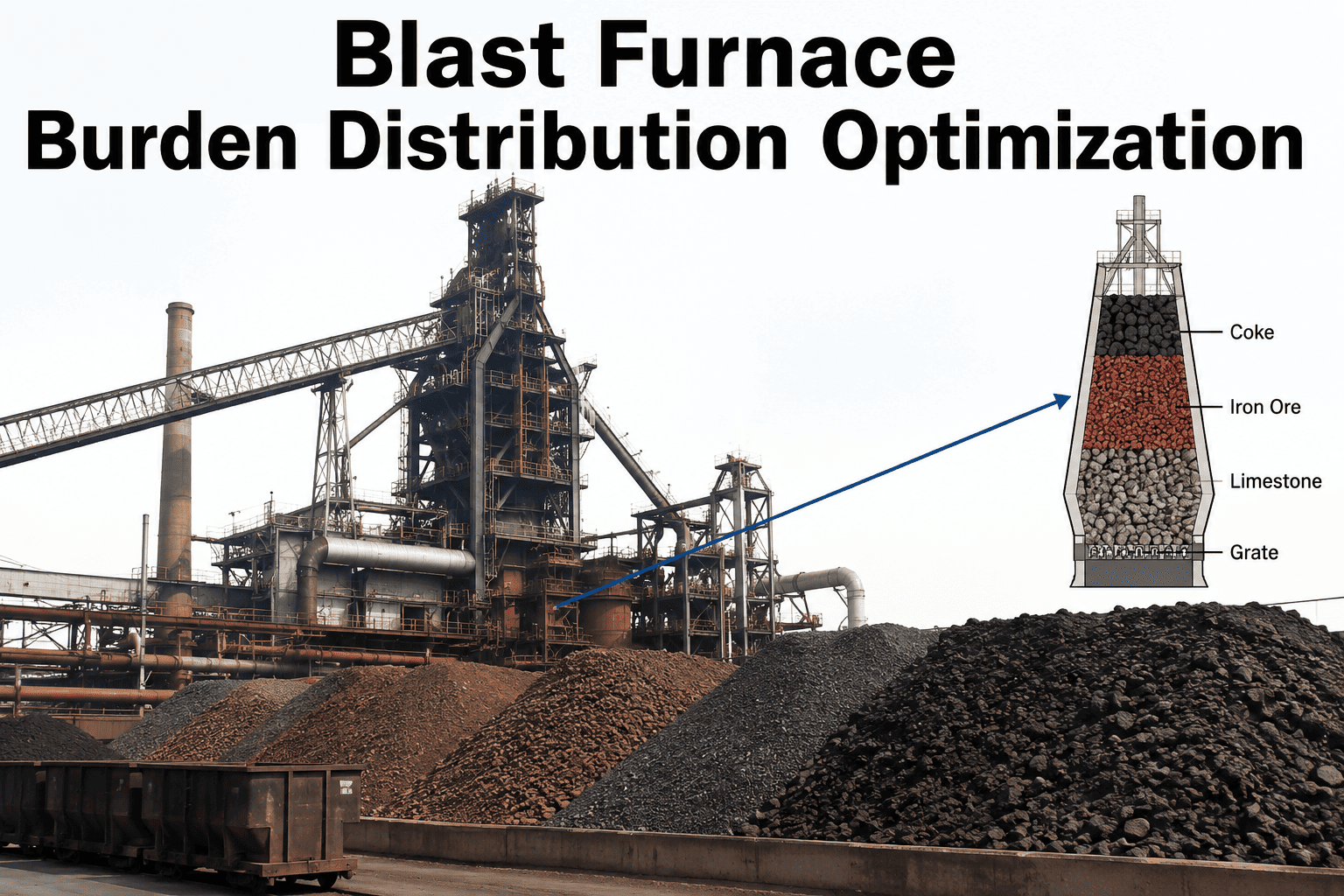
Every blast furnace campaign carries a quiet tension between two teams: the raw materials group that blends ore, sinter, and coke from whatever quality arrives that week, and the furnace operators who have to make that mixture behave predictably

Read More
A single tuyere burning through costs a blast furnace anywhere from four to twenty-four hours of lost production, plus the risk of hot metal or gas escaping into the cooling water circuit if the failure isn't caught in time. Most plants still re
Read More
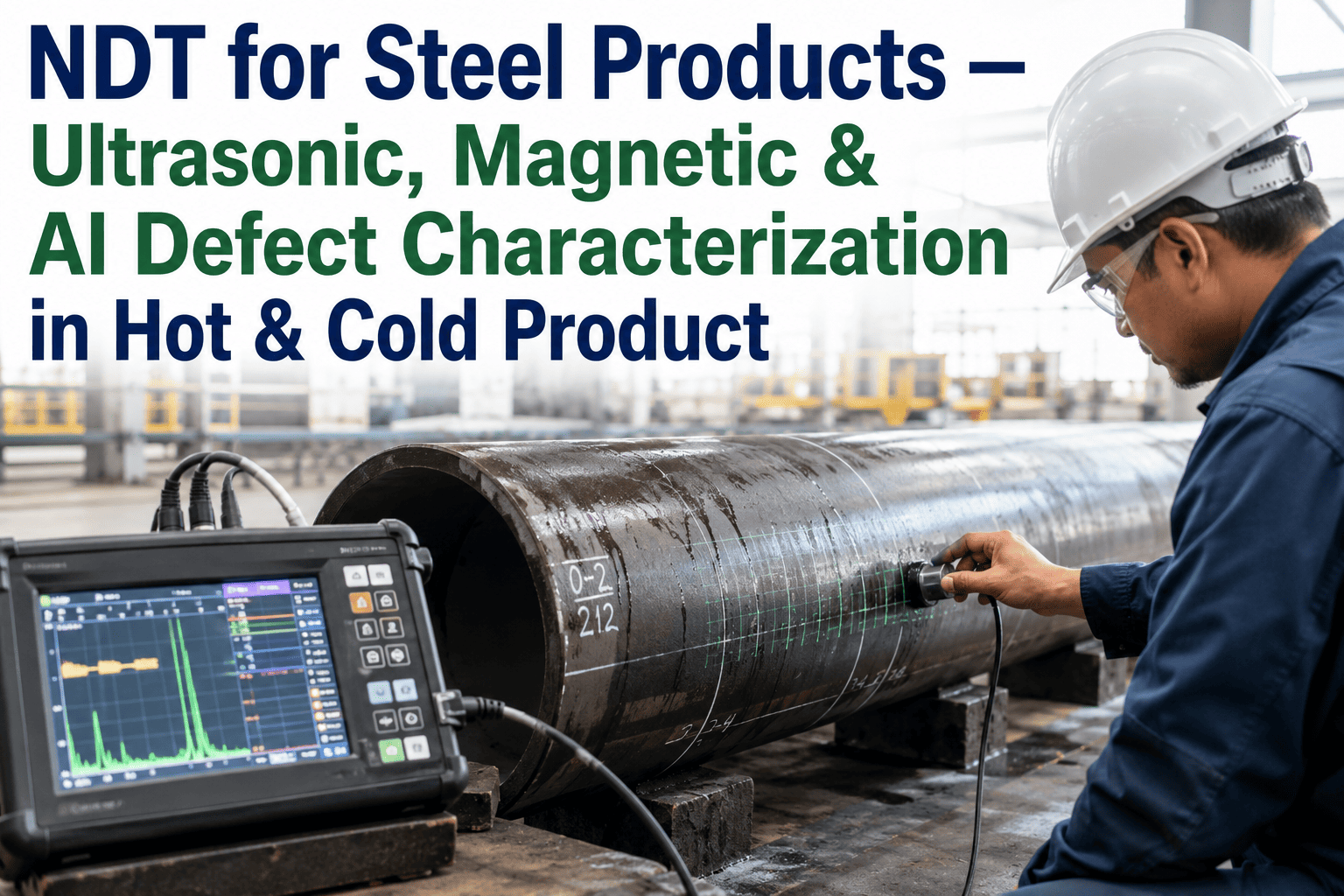
An ultrasonic scan of a slab or plate produces a signal trace that an experienced operator can interpret quickly for an obvious defect, but the harder calls — a borderline indication that might be a small inclusion cluster or might be nothing, a l
Read More
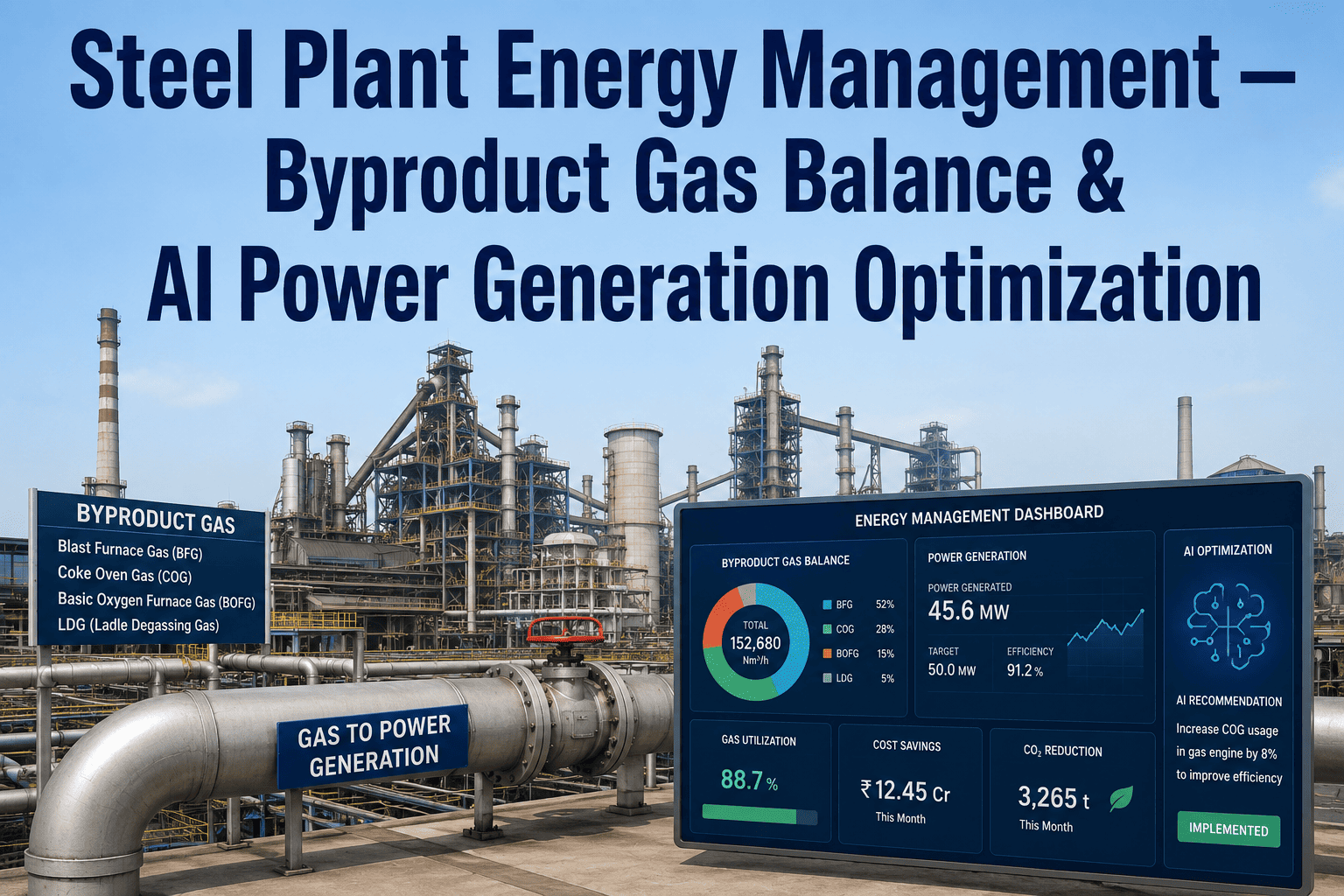
A blast furnace, coke oven battery, and basic oxygen converter don't produce byproduct gas on anyone's convenient schedule — BF gas flows continuously but variably with furnace campaign conditions, coke oven gas follows the coking cycle, and conve

Read More
Most vibration monitoring systems are designed and rated for the environments where they're easiest to sell — clean, temperature-controlled process plants where a sensor's biggest challenge is dust settling on the housing. A steel plant doesn't of
Read More
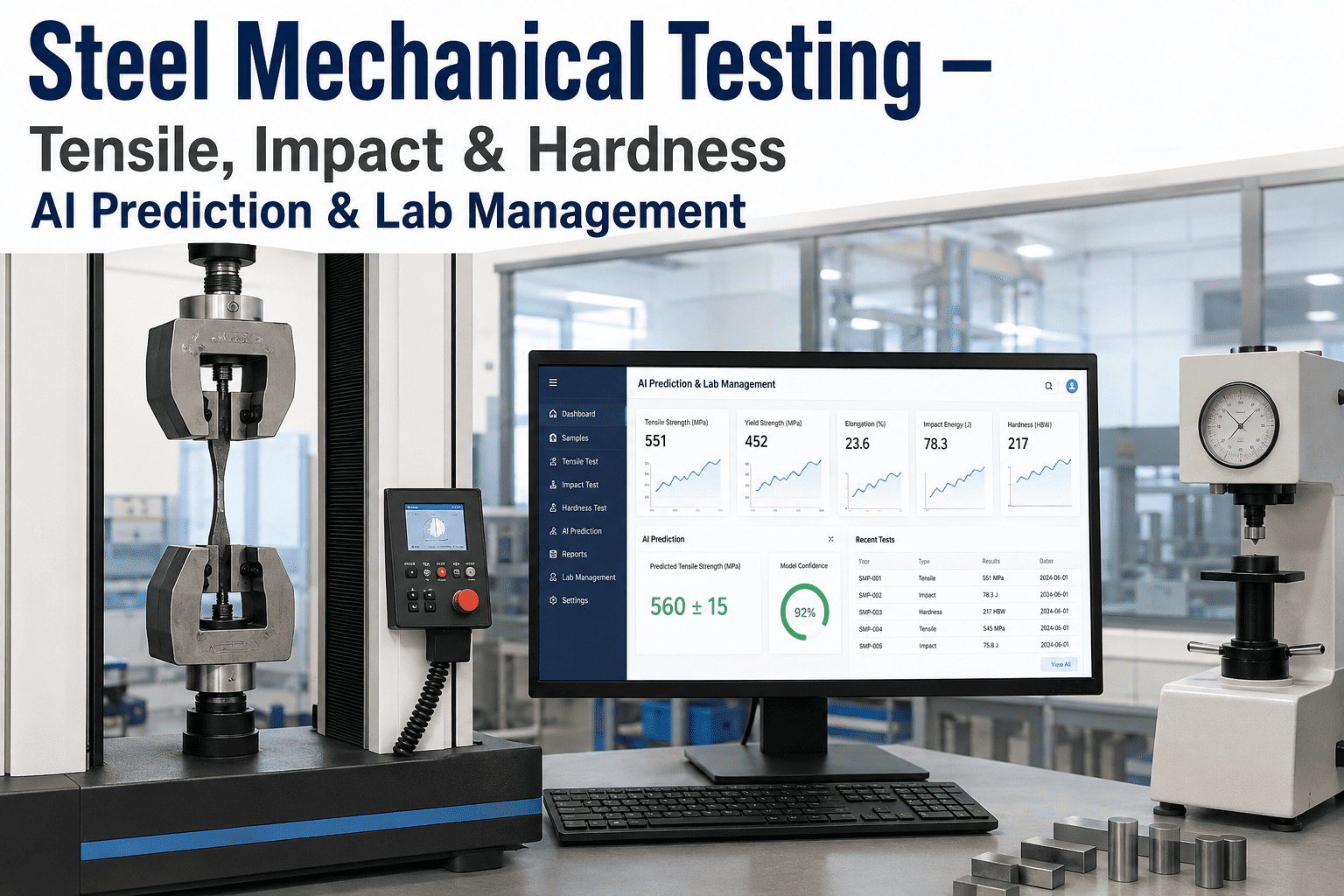
A quality lab running tensile, impact, and hardness tests on every qualifying heat is doing necessary work, but it's also usually running behind — samples queue for hours before a machine is free, results trickle back to production well after the
Read More
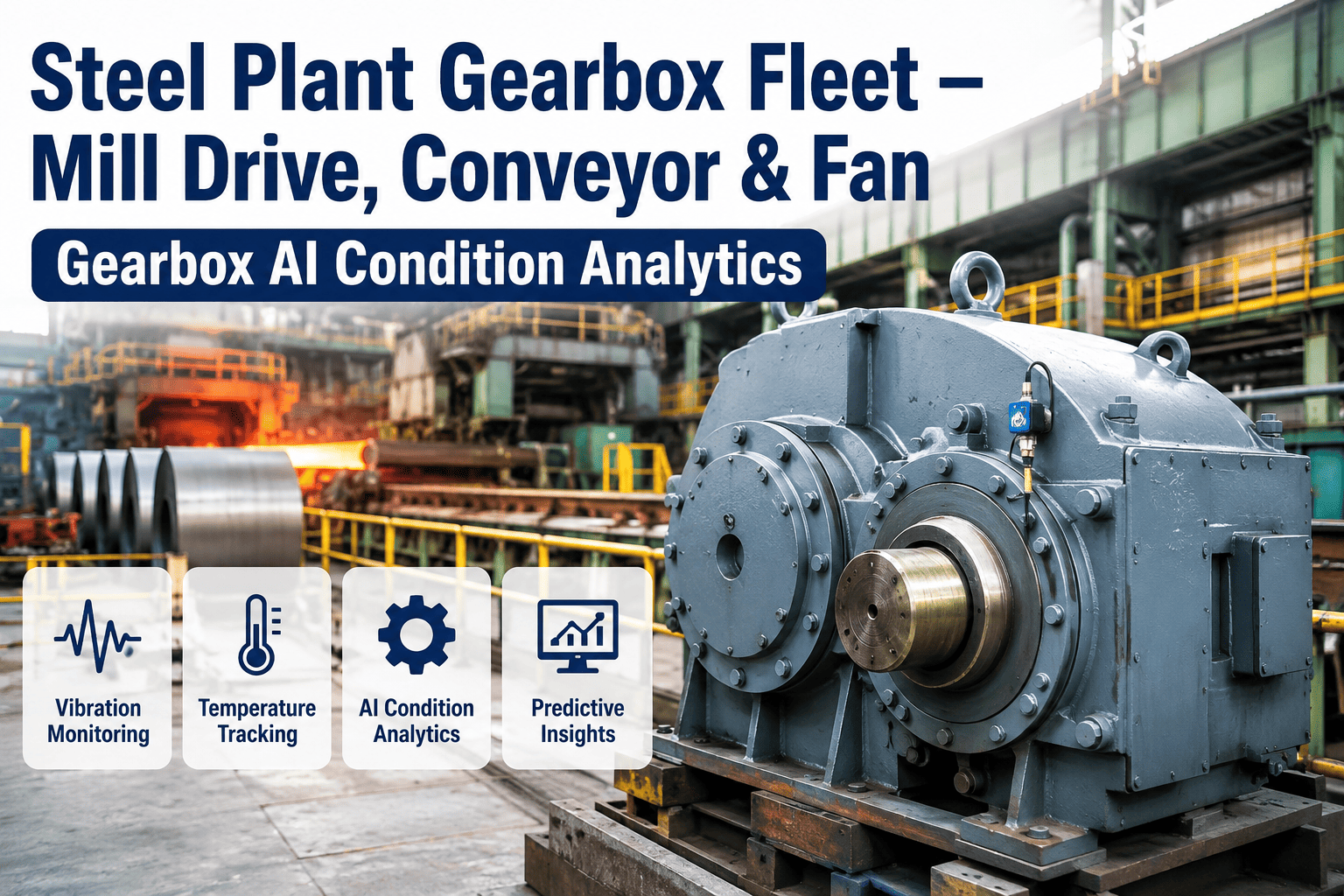
Two hundred gearboxes spread across mill drives, conveyors, and fans sounds like a maintenance database problem, but the harder issue is that those two hundred gearboxes aren't the same two hundred gearboxes — a planetary reducer on a mill drive f
Read More
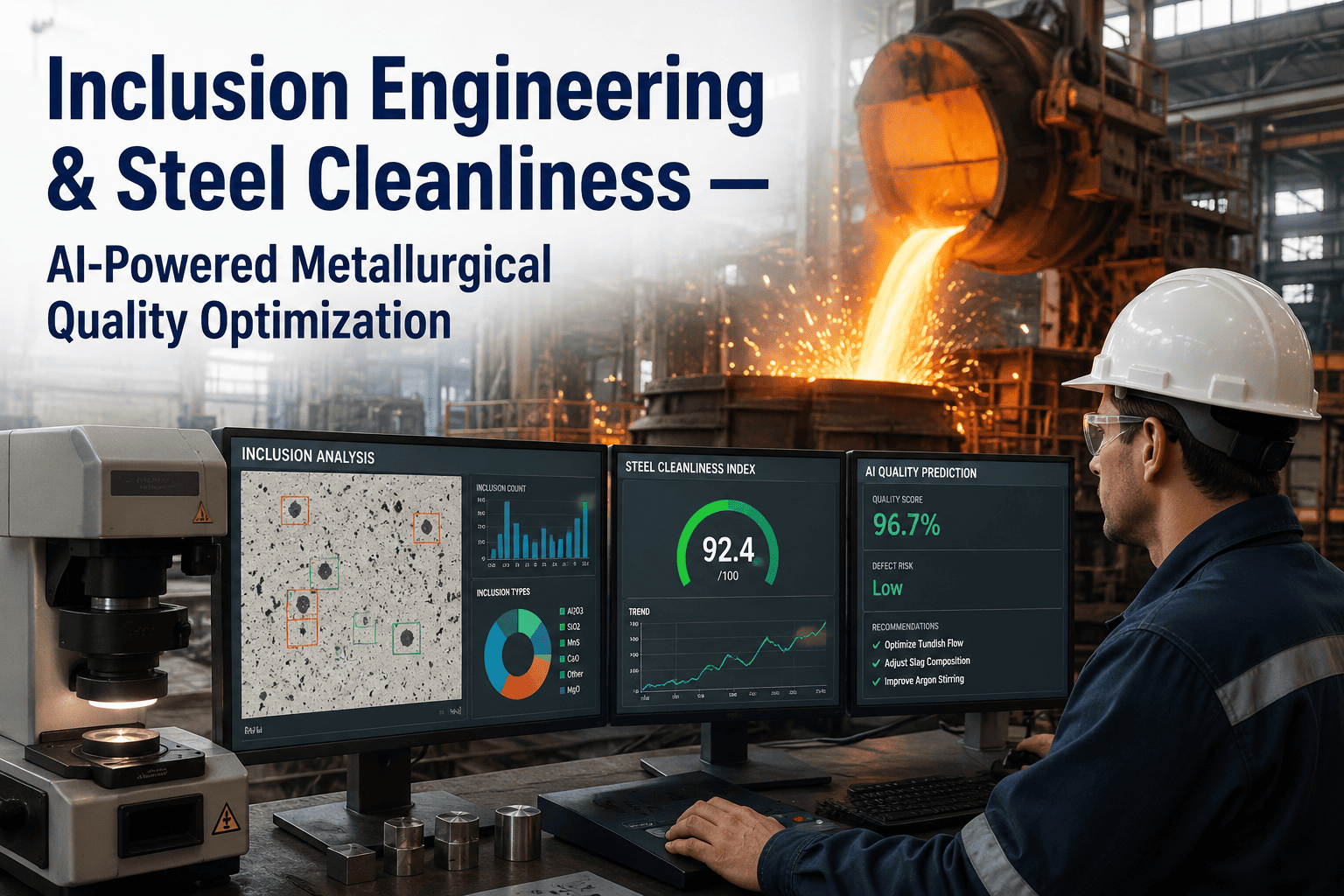
A bearing steel heat can pass every chemistry check on the ladle analysis and still fail a customer's rotary fatigue test months later, because the failure wasn't caused by what element was present but by what shape and size the non-metallic inclu
Read More
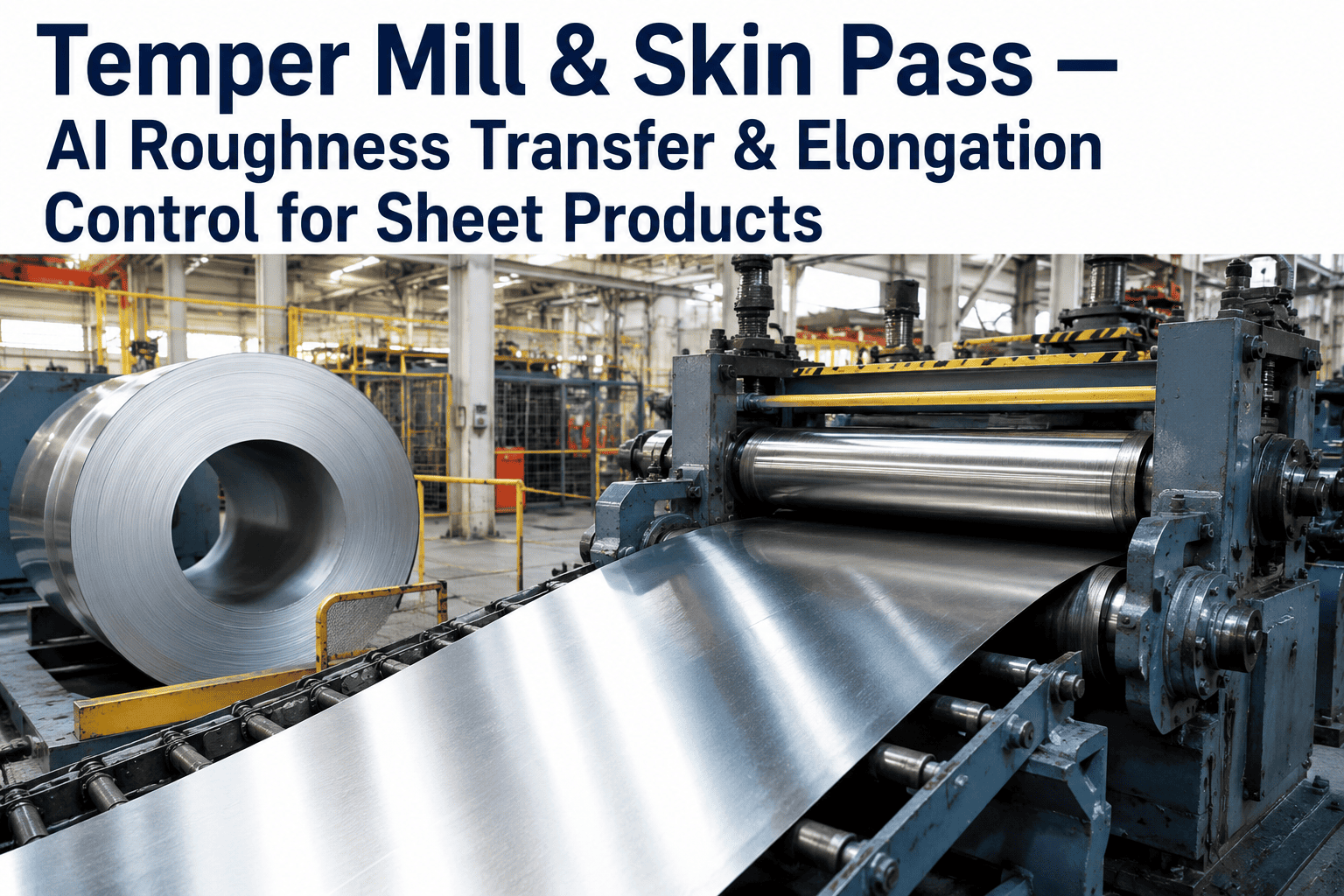
A coil can pass every gauge and flatness check on a temper mill and still come back from a customer's paint line with adhesion complaints, or fail a deep-draw trial because the surface texture that looked fine on a profilometer readout wasn't dist
Read More
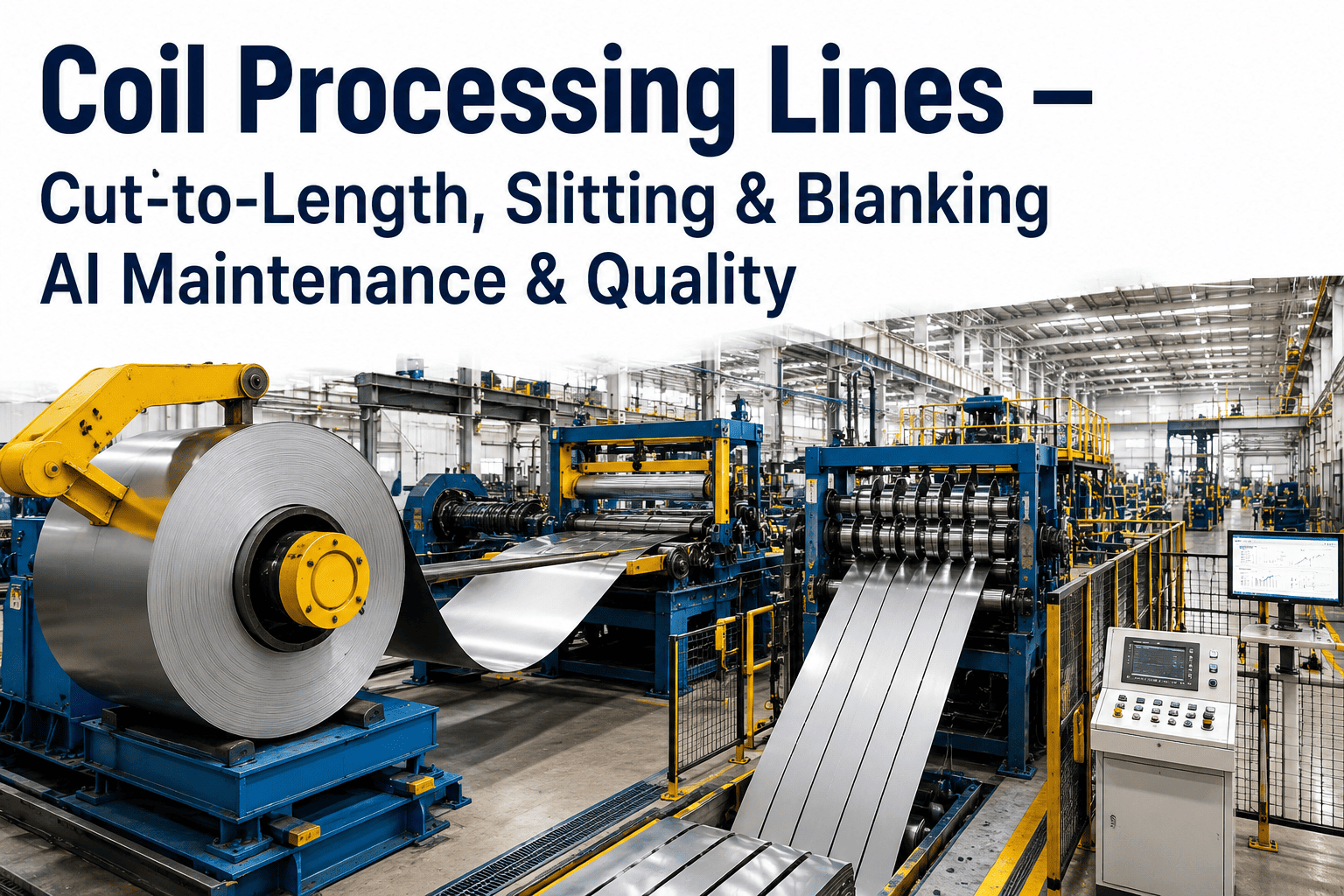
A slitter that's been running the same coil width and gauge for three shifts can develop a burr on one edge that nobody notices until a customer's stamping die starts chipping, because the knife clearance that was perfect at the start of the run h
Read More
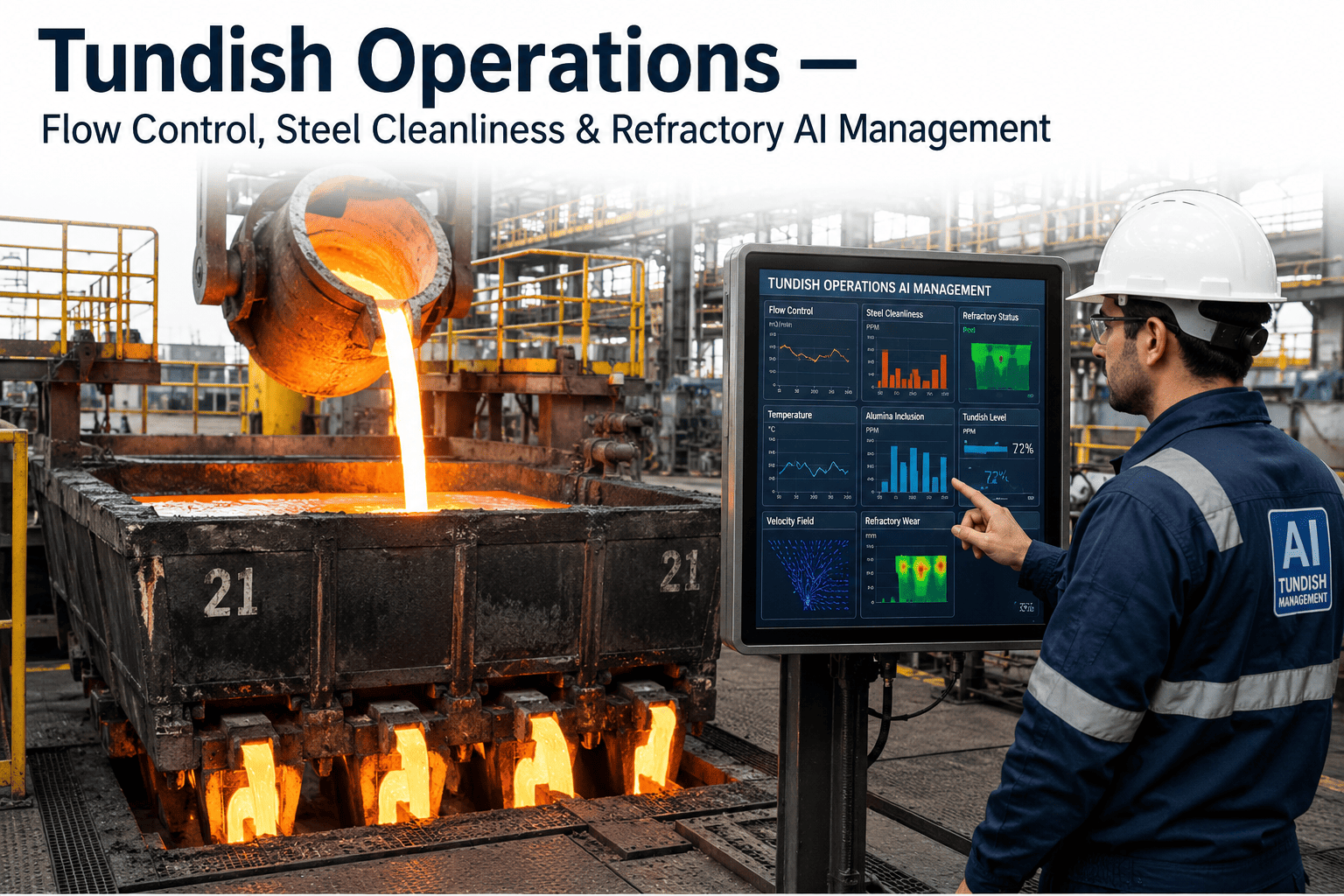
The tundish is often described as the least glamorous vessel in continuous casting, yet the flow pattern, inclusion removal efficiency, and refractory condition inside it directly determine the cleanliness and strand-to-strand consistency of every
Read More
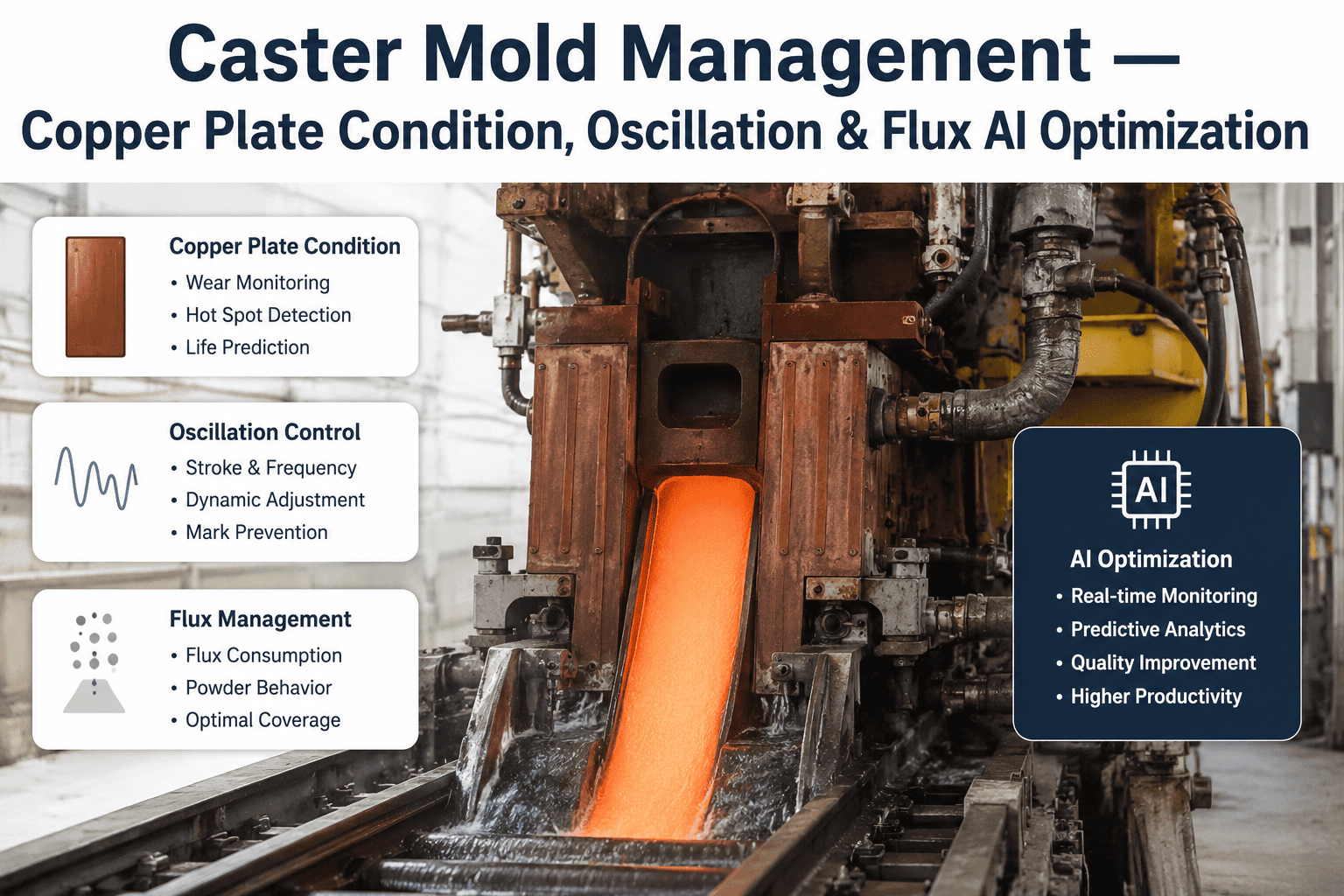
A continuous caster mold is a deceptively small piece of equipment carrying an outsized influence on both surface quality and maintenance cost, since copper plate wear, oscillation parameter drift, and flux performance all interact to determine ho

Read More
Casting quality problems are unusually costly because they are often invisible until the product form reaches a downstream customer or a rolling operation, by which point a surface crack or internal defect can trigger a claim, a downgrade, or a fu
Read More
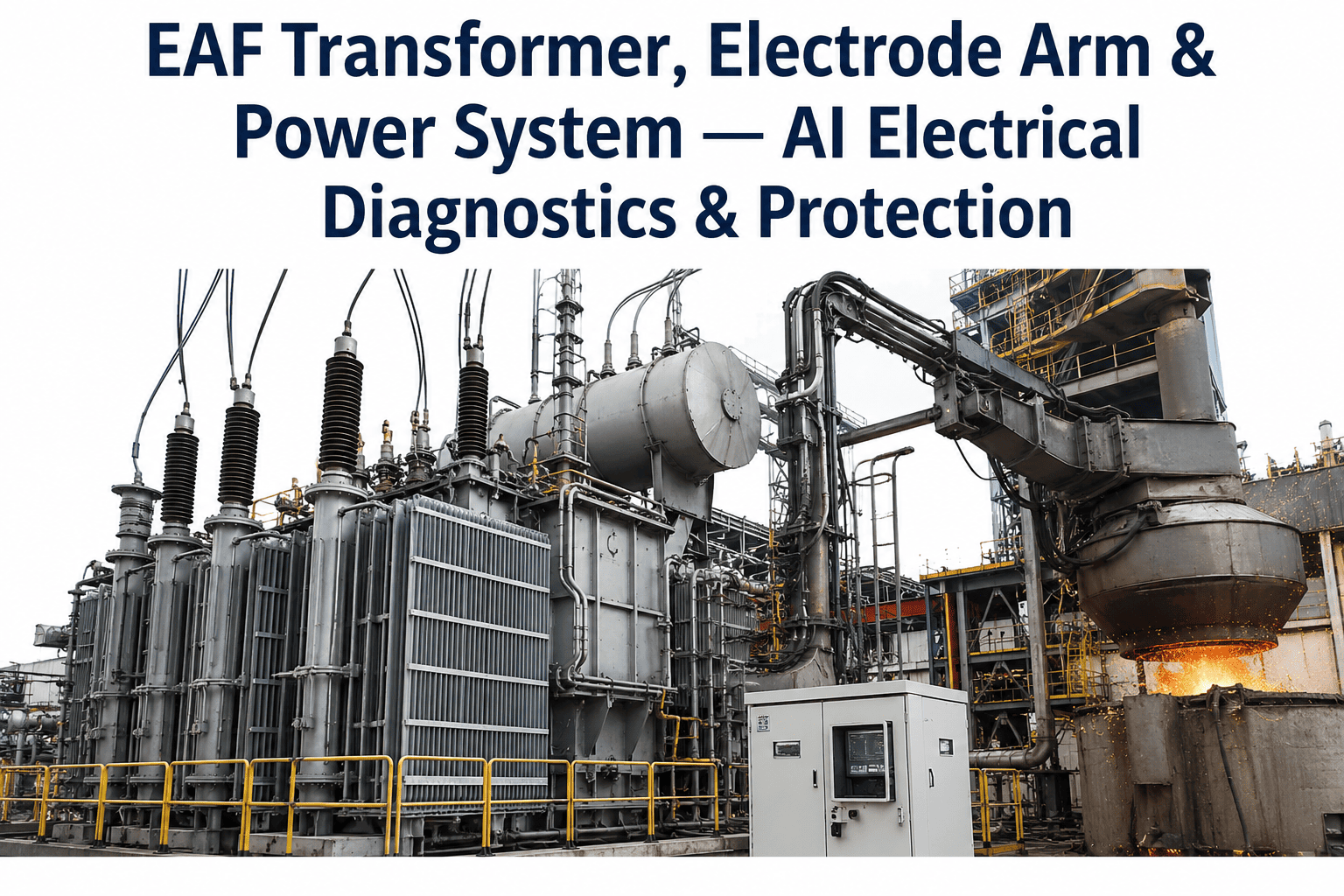
The electrical system feeding an electric arc furnace delivers some of the highest power densities found anywhere in industrial manufacturing, routing tens of megawatts through a transformer, busbar network, and electrode arm assembly that must wi

Read More
Fume and dust control around an electric arc furnace is one of the most consequential responsibilities an EHS manager carries, balancing worker exposure limits, environmental permit compliance, and the substantial energy cost of running primary an

Read More
Torpedo cars and desulfurization stations sit at the center of an operational balancing act that most operations directors know intimately: hot metal has to move from the blast furnace to the BOF fast enough to preserve temperature, treated thorou

Read More
Charge mix decisions on an electric arc furnace happen fast, often within minutes of scrap yard inventory data and current market pricing, yet those decisions determine metallic cost per liquid ton, tap chemistry compliance, and energy consumption
Read More
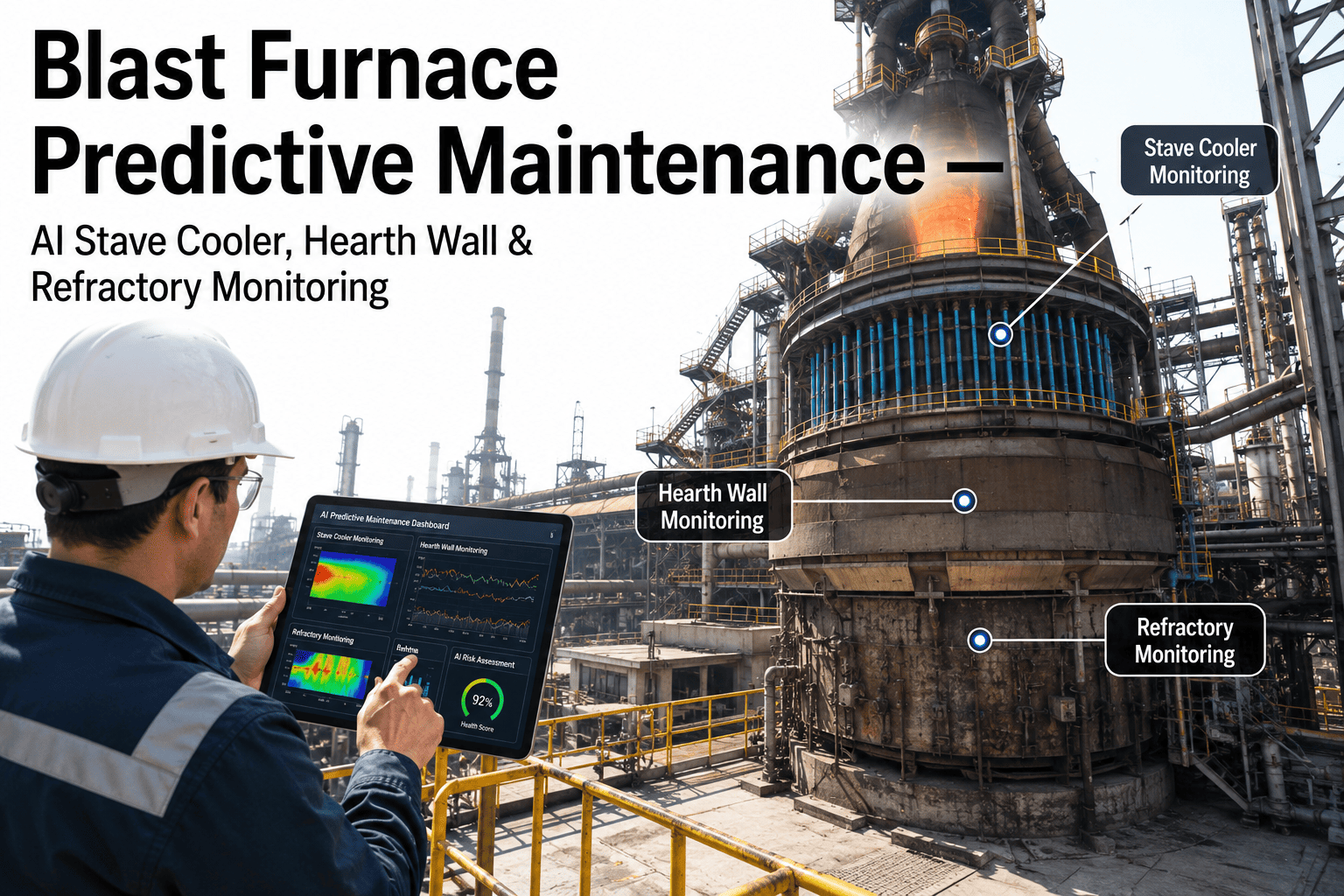
A blast furnace is the single most capital-intensive and least forgiving asset in an integrated steel plant, running continuously for ten to twenty years between reline campaigns while converting iron ore, coke, and limestone into hot metal at tem
Read More
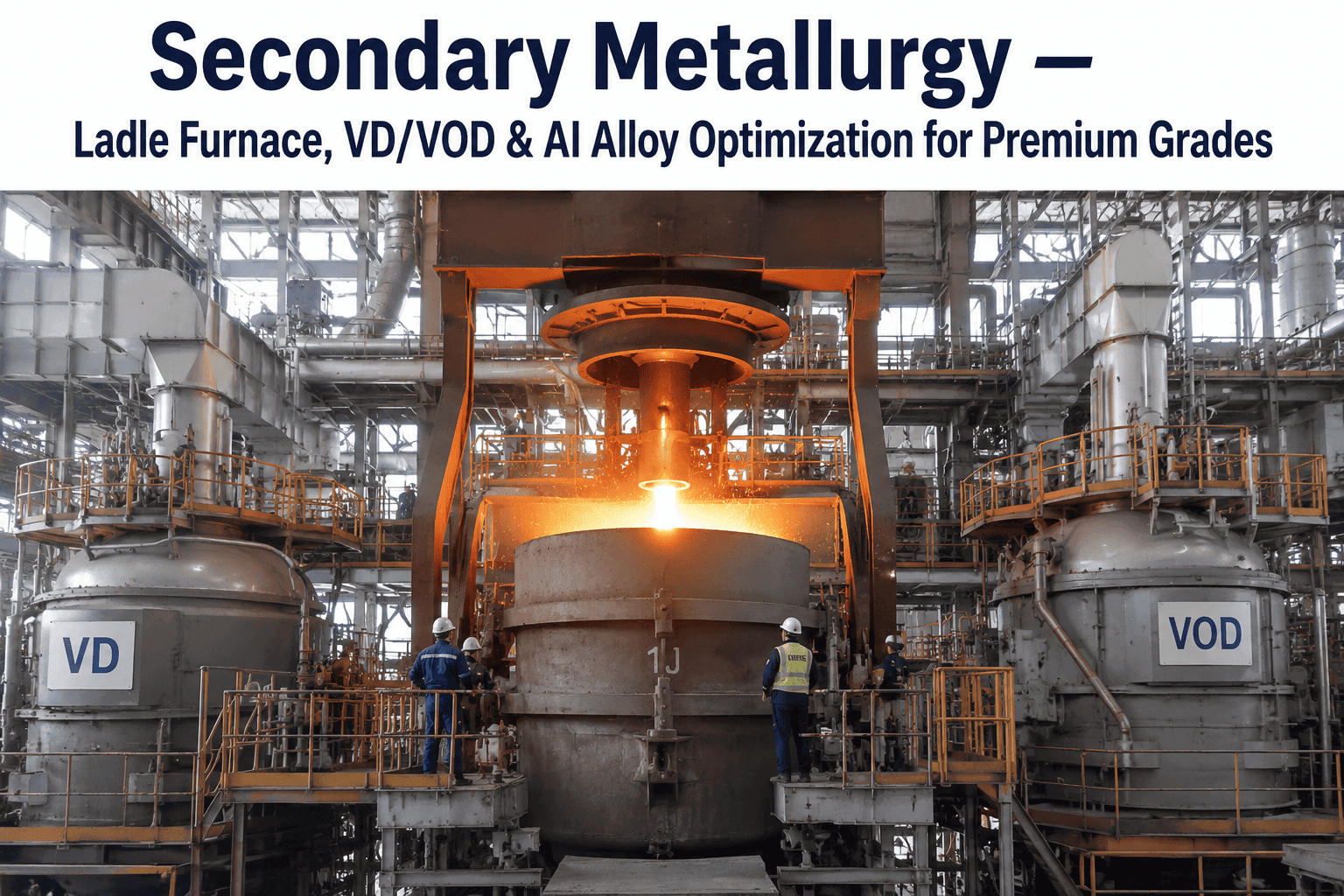
Secondary metallurgy is where a heat of steel stops being a generic melt and becomes a specific grade with guaranteed chemistry, cleanliness, and mechanical properties, and it is also where the tightest customer specifications collide with the nar
Read More
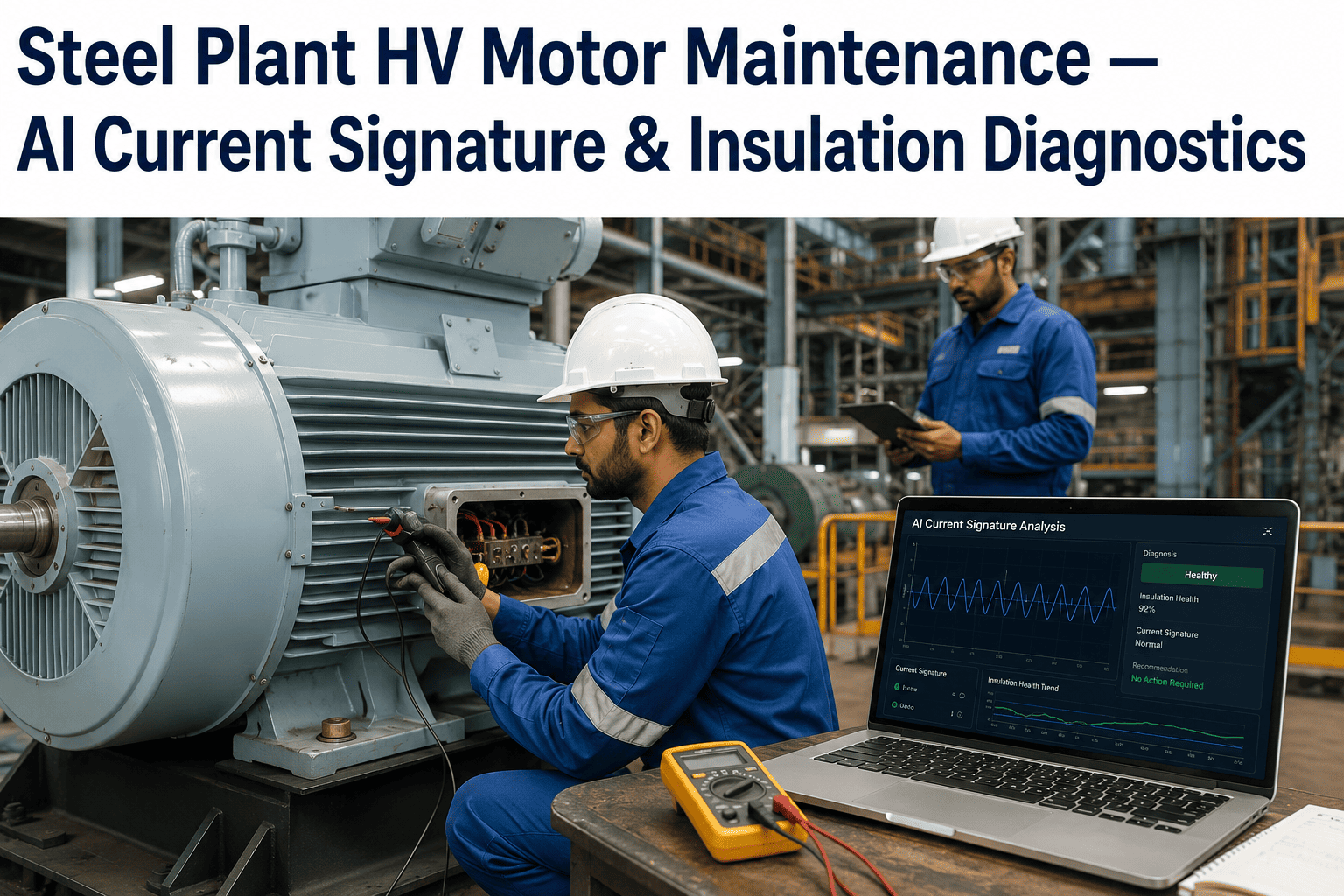
A 500kW mill drive motor and a 15MW blower motor fail for completely different reasons, but they share one thing: by the time a large HV motor trips on protection, the damage that caused the trip has usually been building for weeks. Stator winding
Read More
A steel plant pulling 200+ megawatts through its electrical infrastructure has no tolerance for surprises at the transformer or switchgear level — a single failed power transformer can black out an entire melt shop, and a switchgear contact that h
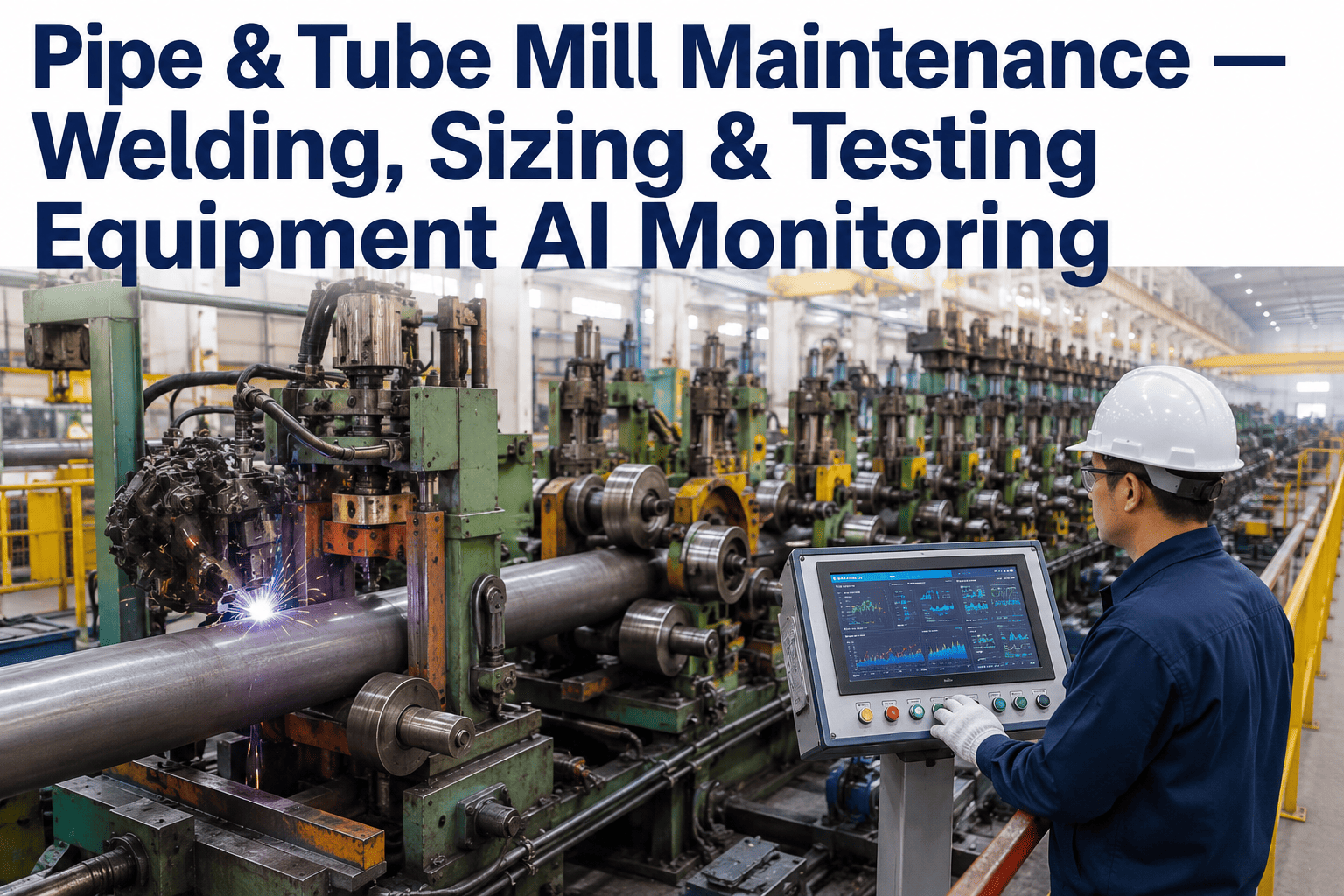
Read More
A pipe mill's reputation is built weld by weld, and it can be undone by one bad one. ERW welding fuses the strip edges together at production speed, and if the current, pressure, or seam alignment drifts even slightly, the weld can look fine on th
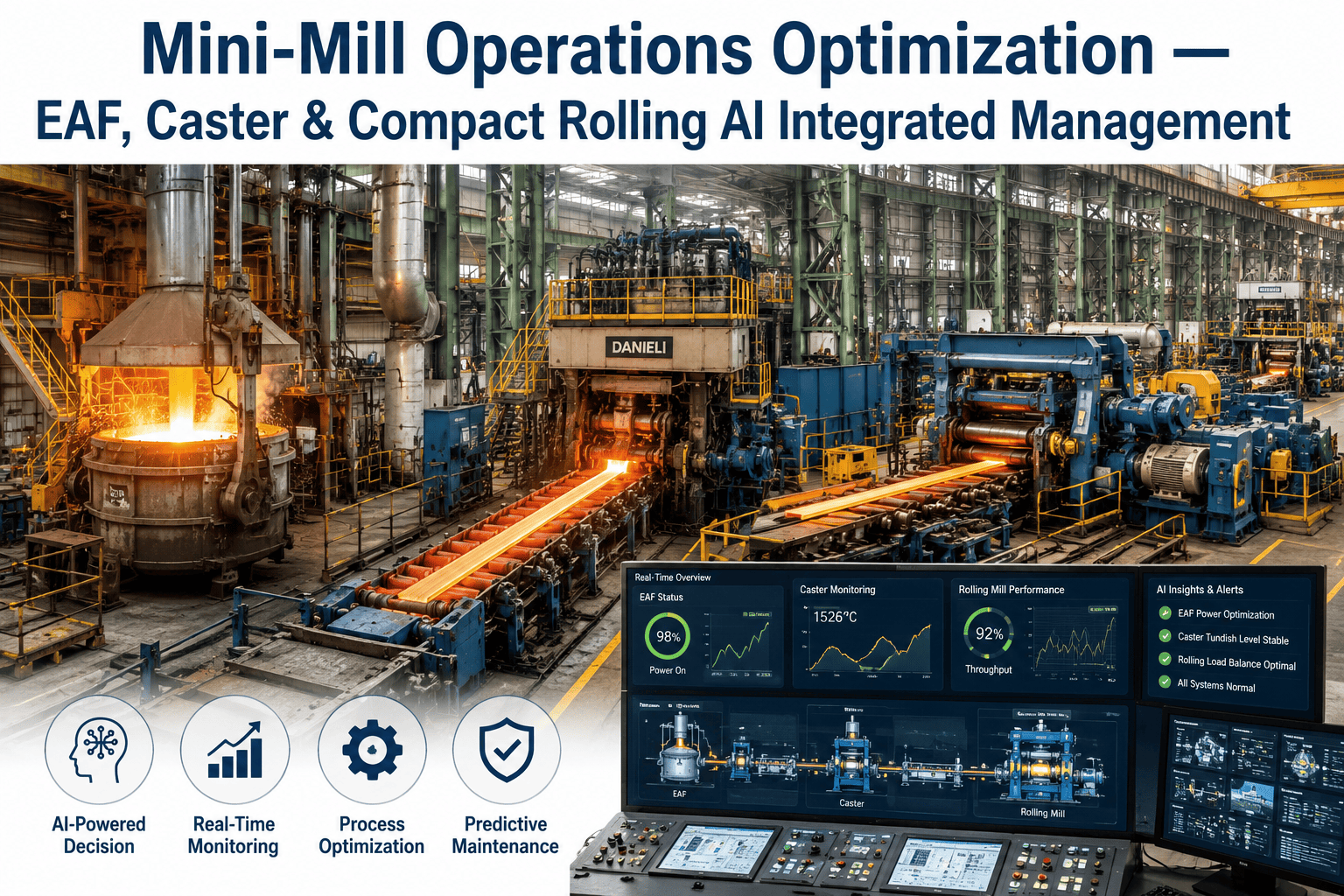
Read More
The entire economic case for a mini-mill rests on speed — scrap goes into the EAF, liquid steel goes straight to a thin slab caster, and the cast strand goes almost directly into a compact rolling mill, often with minimal reheat. That tight coupli
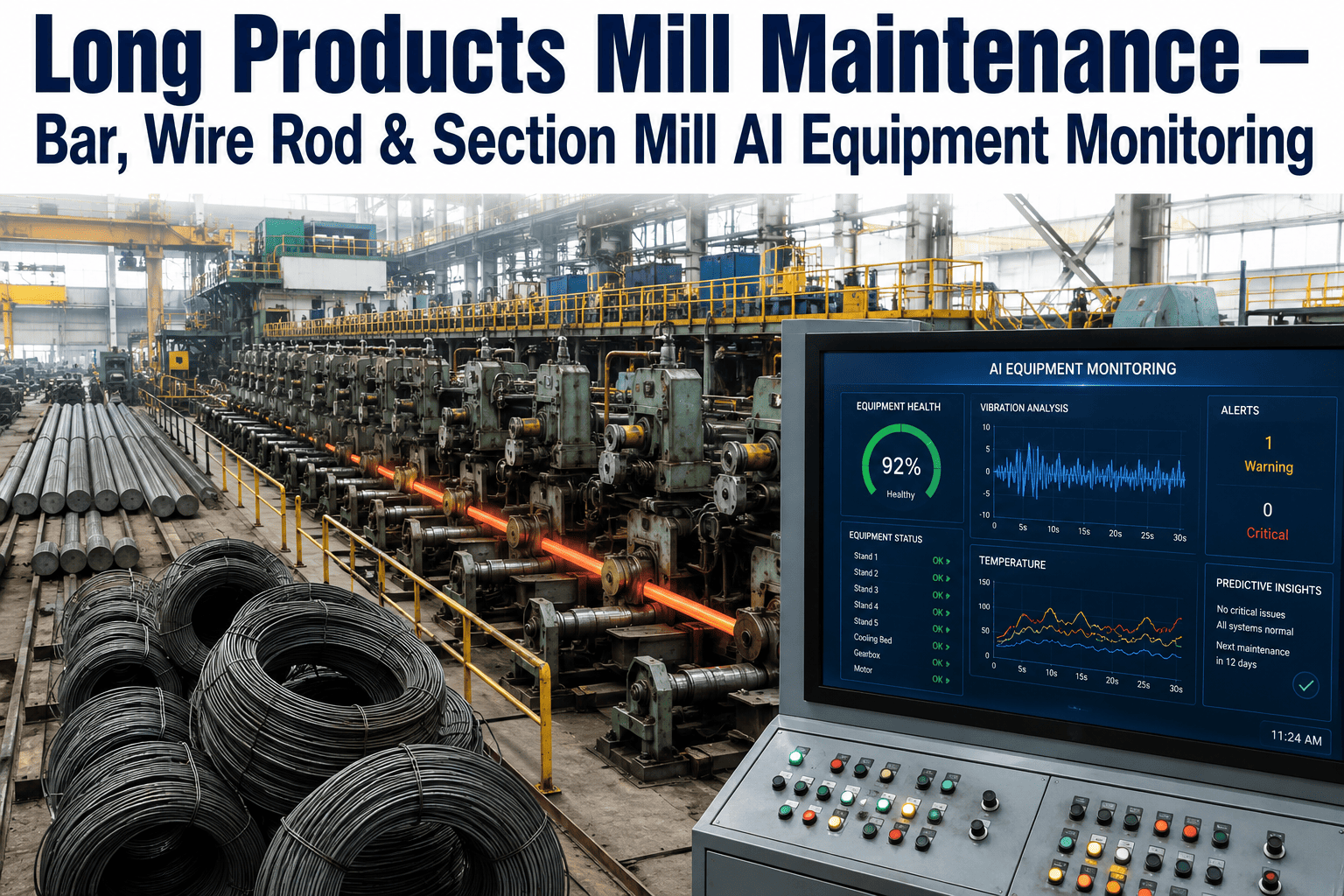
Read More
A long products mill rarely stops because of one big failure — it stops because of dozens of small ones that compound across a stand train running at high speed. A worn guide lets a bar wander half a millimeter off center, that misalignment chews
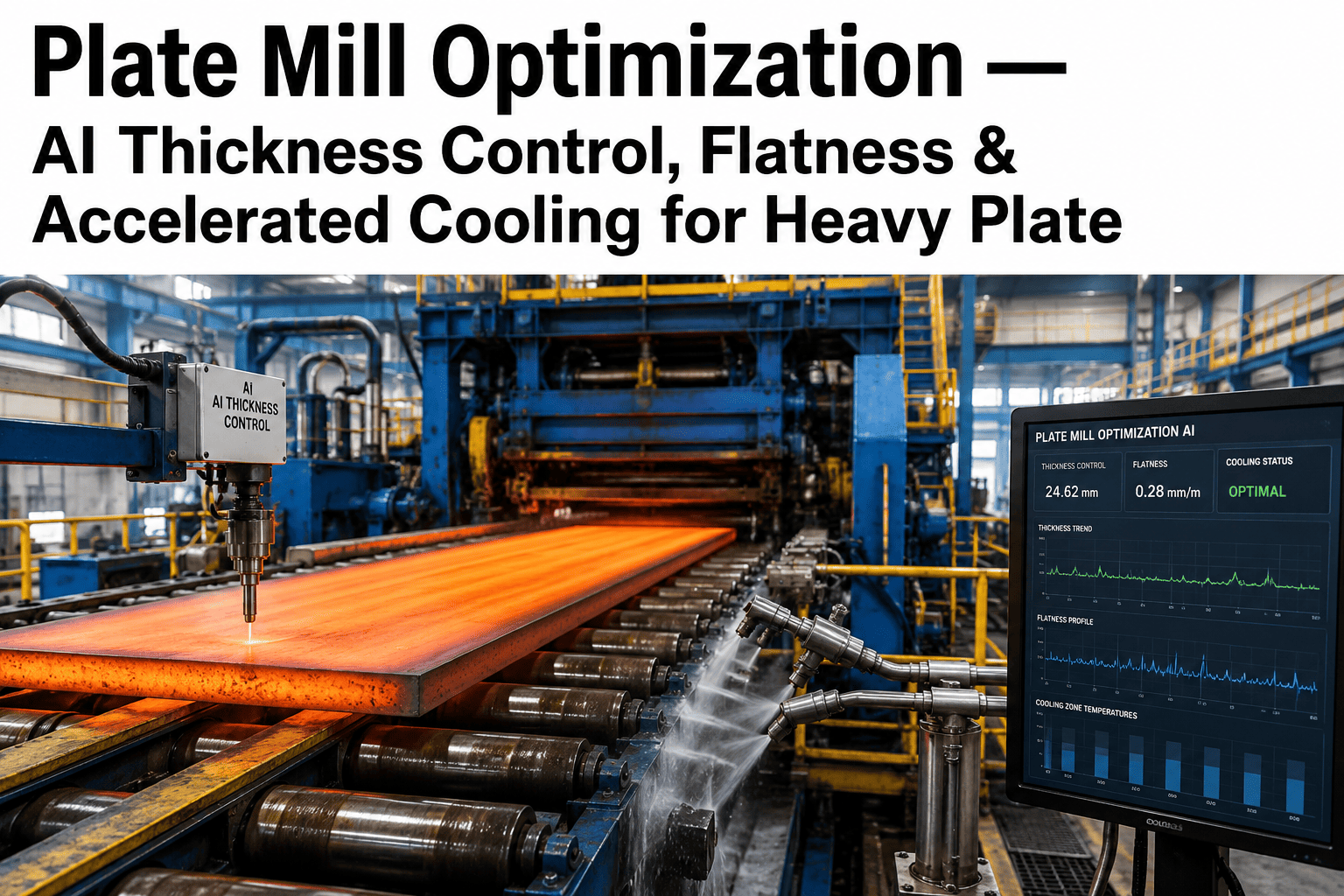
Read More
A heavy plate that is a fraction of a millimeter thin at one edge, or that carries a flatness wave invisible to the eye until it hits the customer's shop floor, can fail an entire order — pipeline plate rejected for wall-thickness tolerance, struc
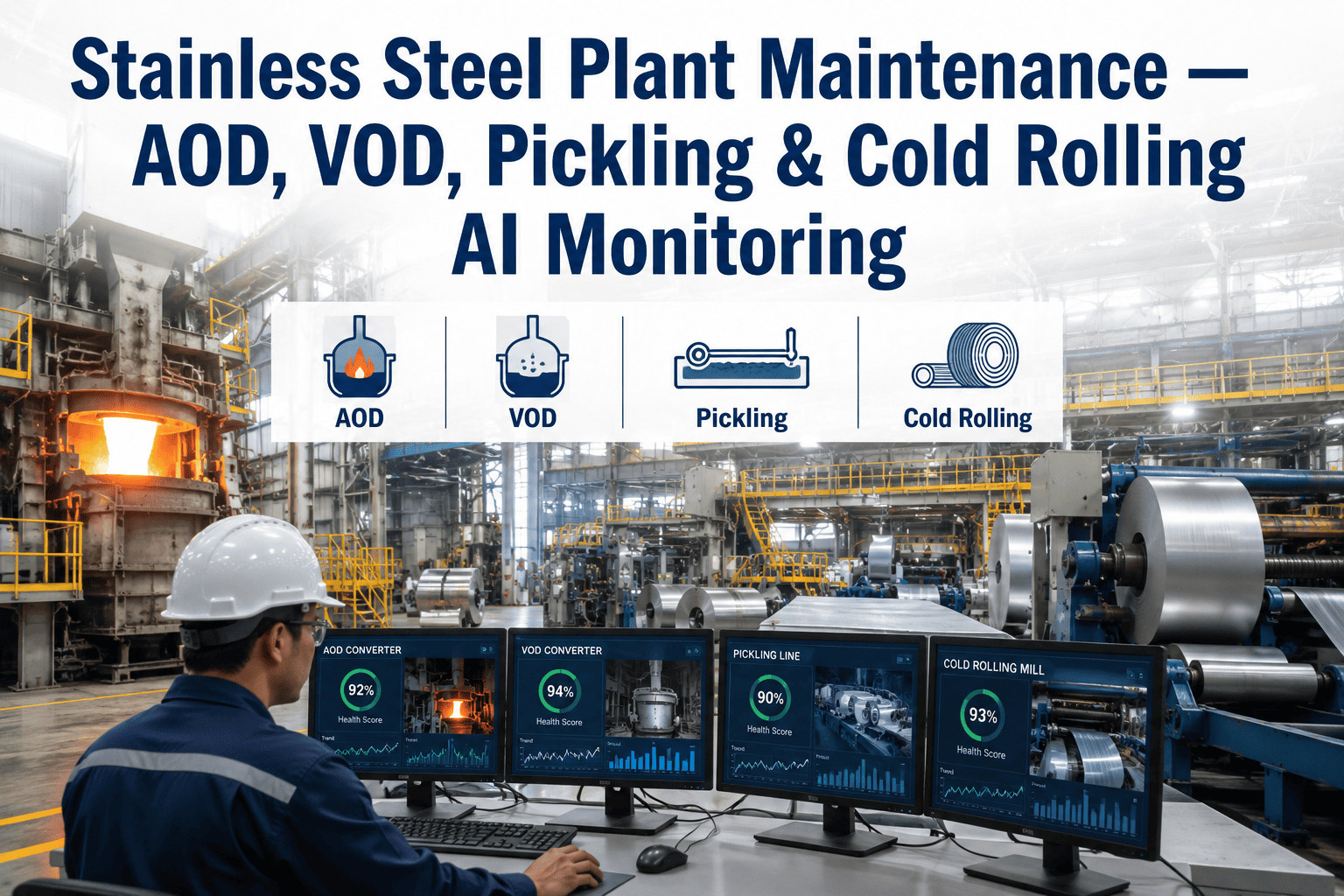
Read More
Stainless steel punishes equipment in ways carbon steel plants never have to think about. Chromium and nickel alloys run hotter and more corrosively through the AOD converter, VOD units hold vacuum seals that carbon steel processes don't need at a
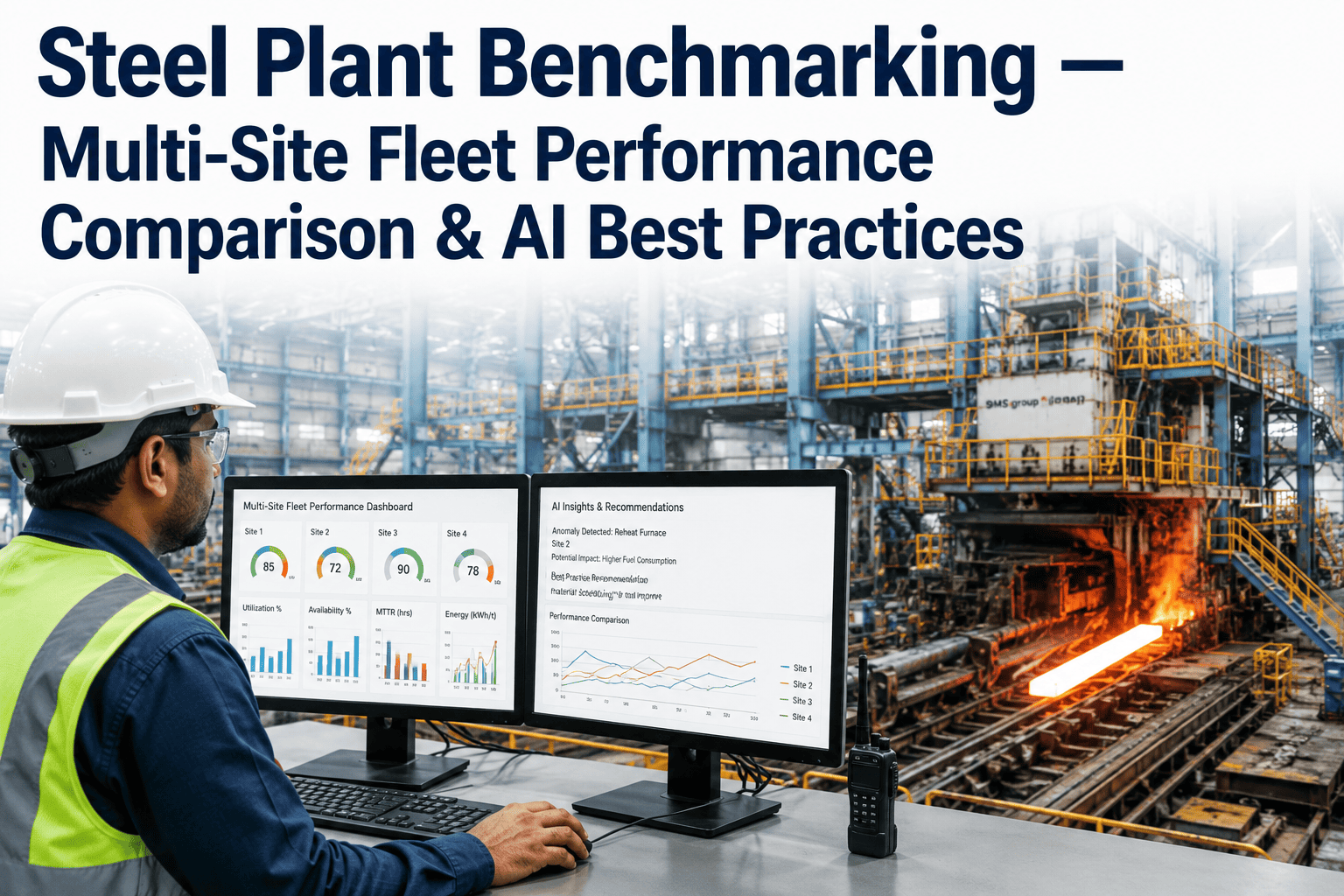
Read More
Two blast furnaces built to the same drawing, running the same grade mix, can post a 12-15% swing in coke rate and campaign productivity within the same group — and for years the gap sits there unexplained because nobody is comparing the two furna
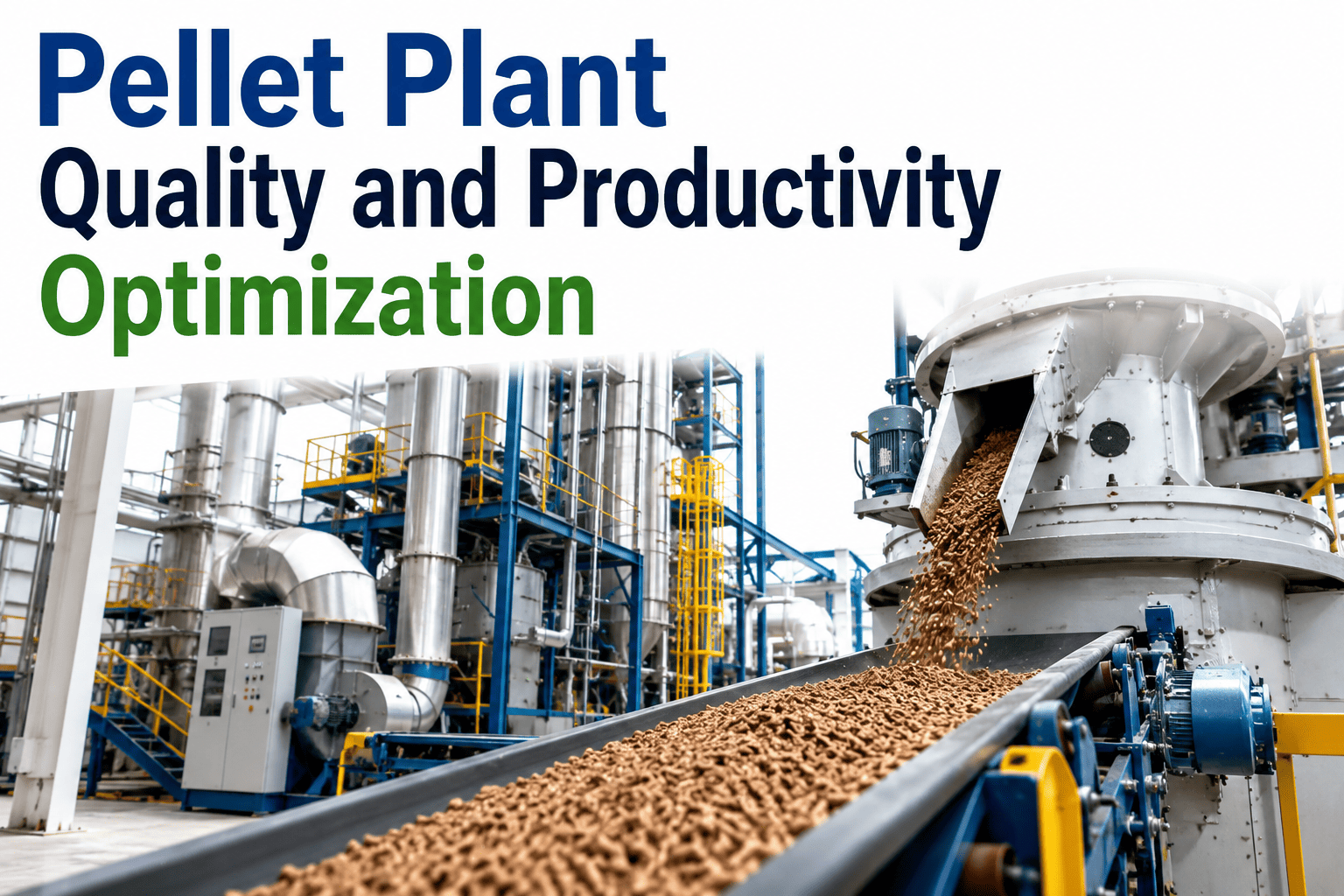
Read More
Pellet quality is decided long before a pellet ever reaches a blast furnace or DRI shaft — it's set in the balling drum, locked in through the indurating furnace's temperature profile, and only revealed downstream when cold crushing strength, tumb
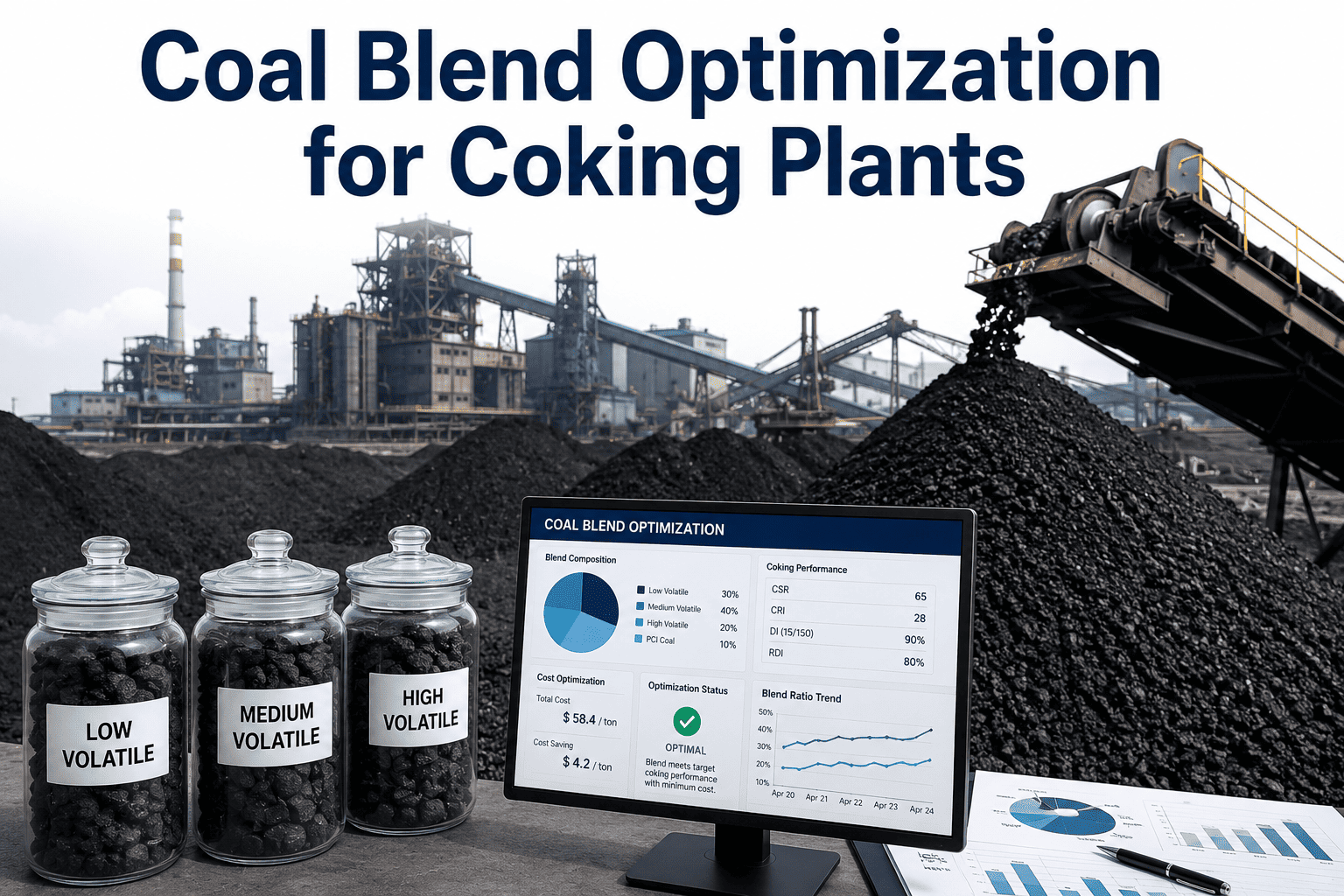
Read More
Coal blend decisions carry more cost impact than almost any other choice a coking plant makes, since coal alone typically accounts for the large majority of total coke production cost. Coal blend engineers are asked to hold CSR and CRI steady whil
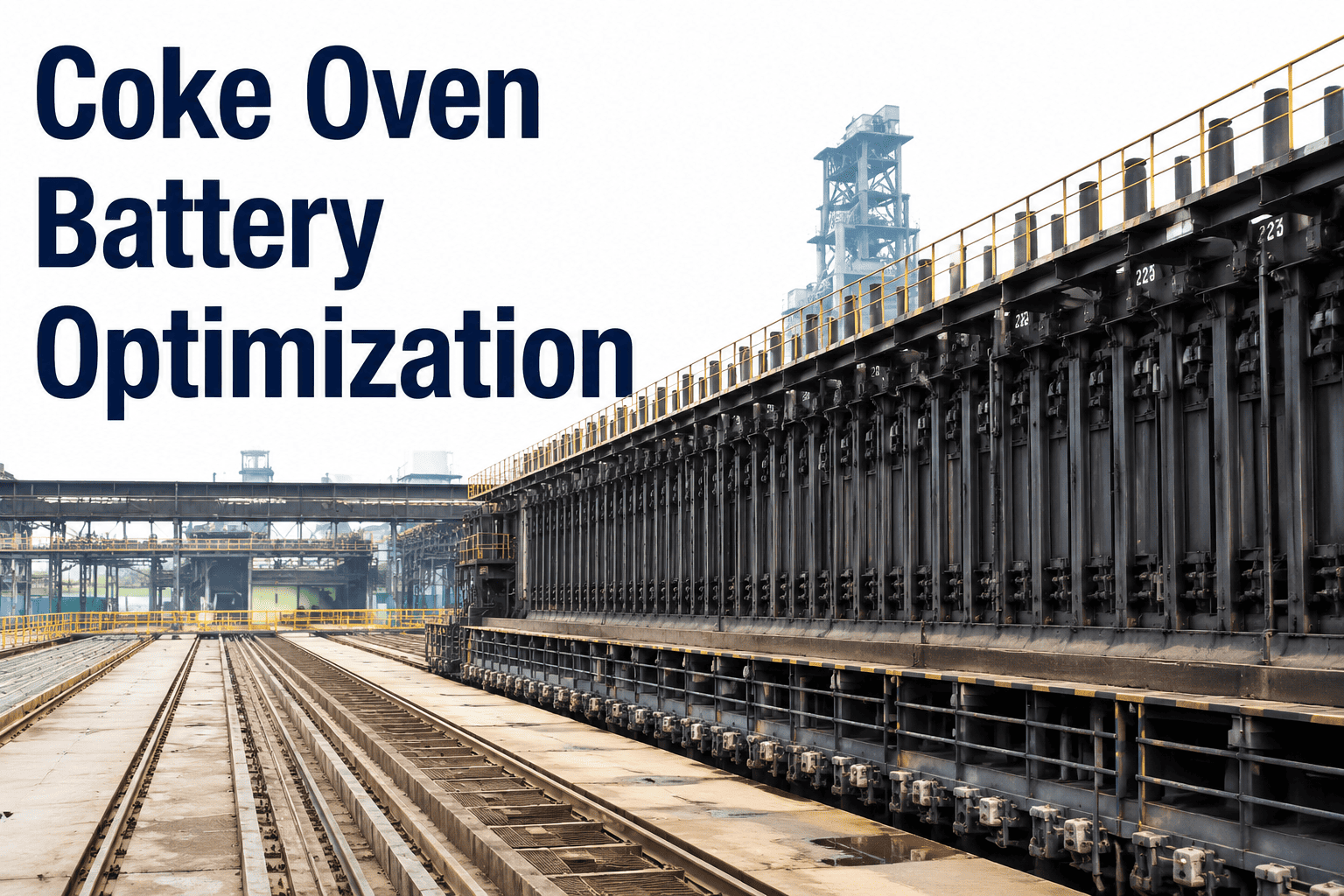
Read More
A coke oven battery has no spare capacity and no forgiveness for drift. Every oven runs on its own heating schedule, every wall shares heat with its neighbors, and a temperature imbalance that starts in one oven quietly spreads to the ones beside
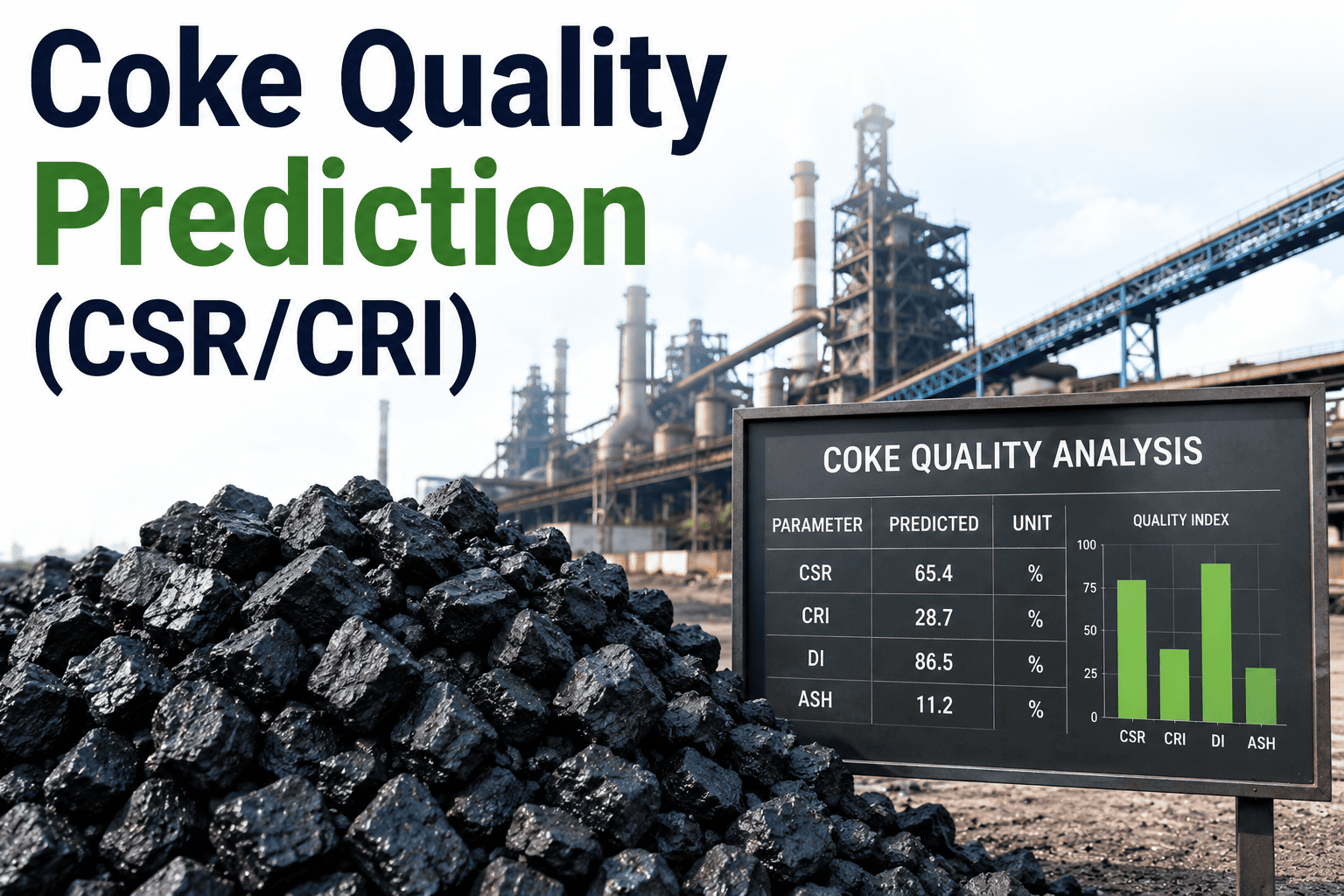
Read More
Coke quality lab results always arrive after the coke that produced them has already gone into the blast furnace. By the time CSR and CRI numbers come back, that batch is deep in the stack, quietly affecting permeability and fuel rate for hours or
Read More
Sinter quality decides how well every downstream tonne of hot metal gets made, yet most sinter plants are still tuned by feel — a little more moisture here, a slightly richer mix there, based on what worked last week. RDI, RI, and basicity all dri
Read More
Return fines are the sinter plant's quietest form of waste — material that already consumed coke breeze, ignition energy, and strand time, only to break apart and get recycled back into the mix instead of shipping as product. A plant running a hig
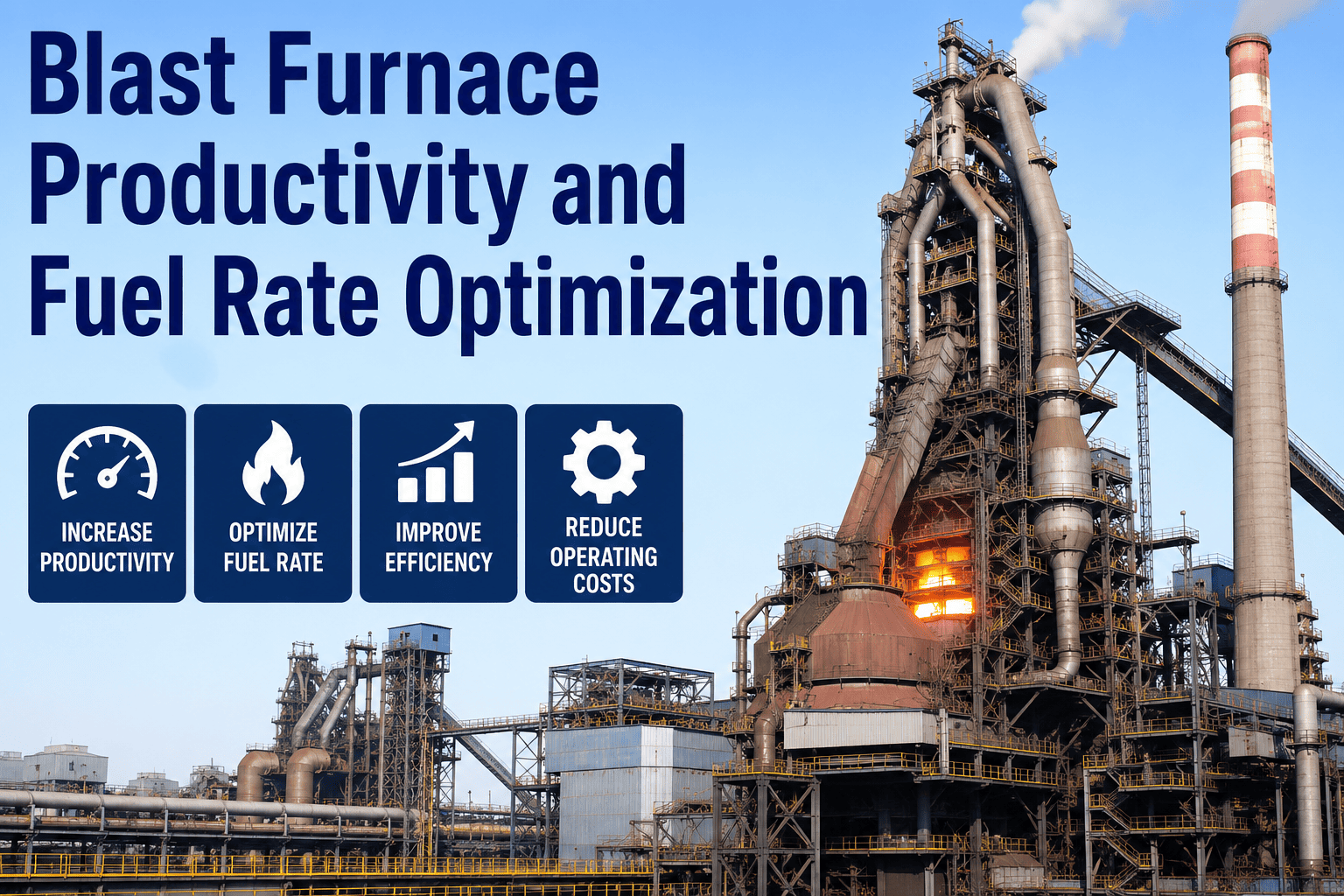
Read More
A blast furnace that runs one kilogram of coke higher than it needs to, per tonne of hot metal, is quietly burning through millions of dollars a year without a single alarm going off. The furnace still makes iron, the tap-to-tap times still look f
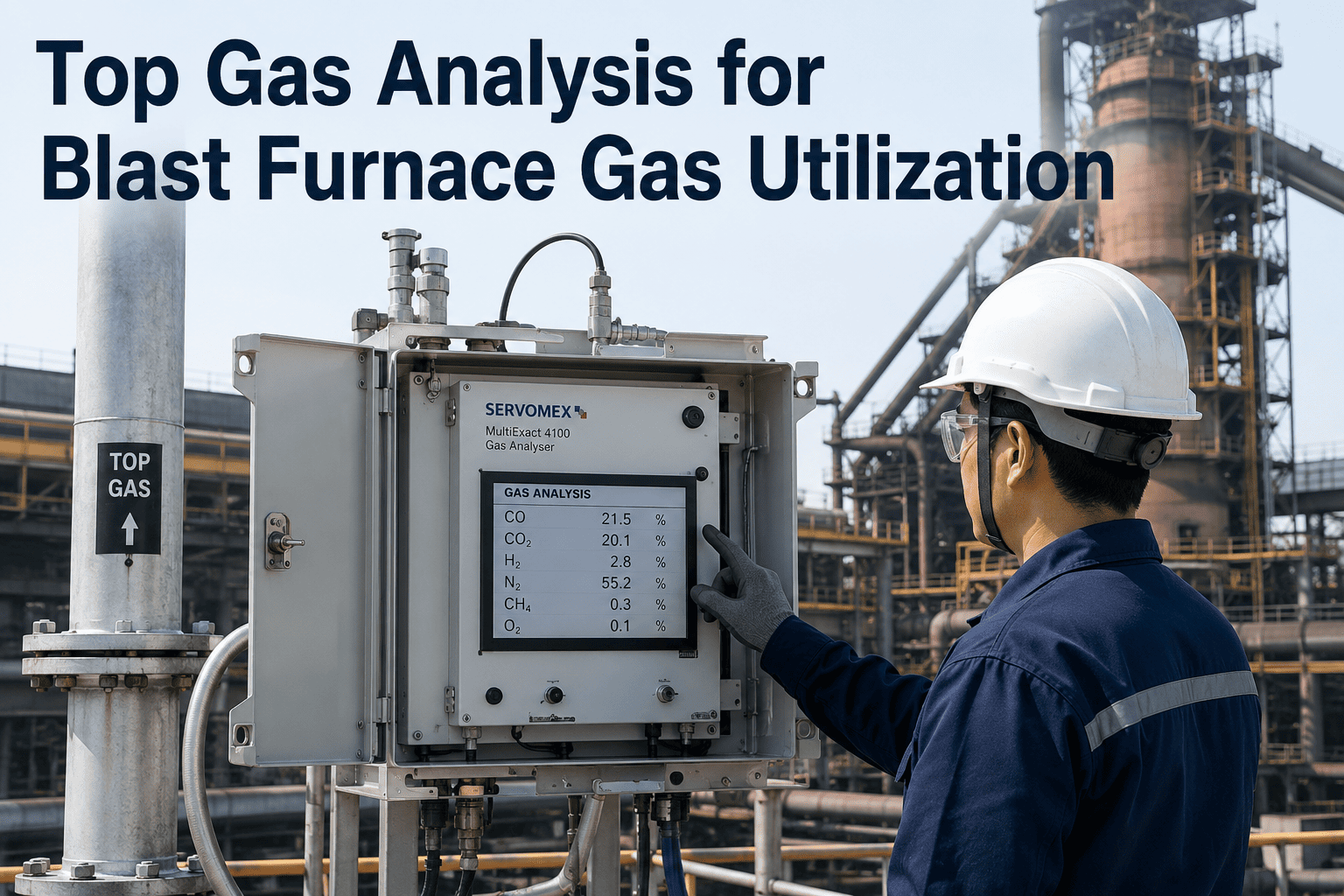
Read More
The top gas leaving a blast furnace is the only real-time report the stack ever files on what happened thirty meters below, where no sensor can physically reach. CO2 ratio, eta-CO, and top pressure are not just emissions numbers — they are a direc
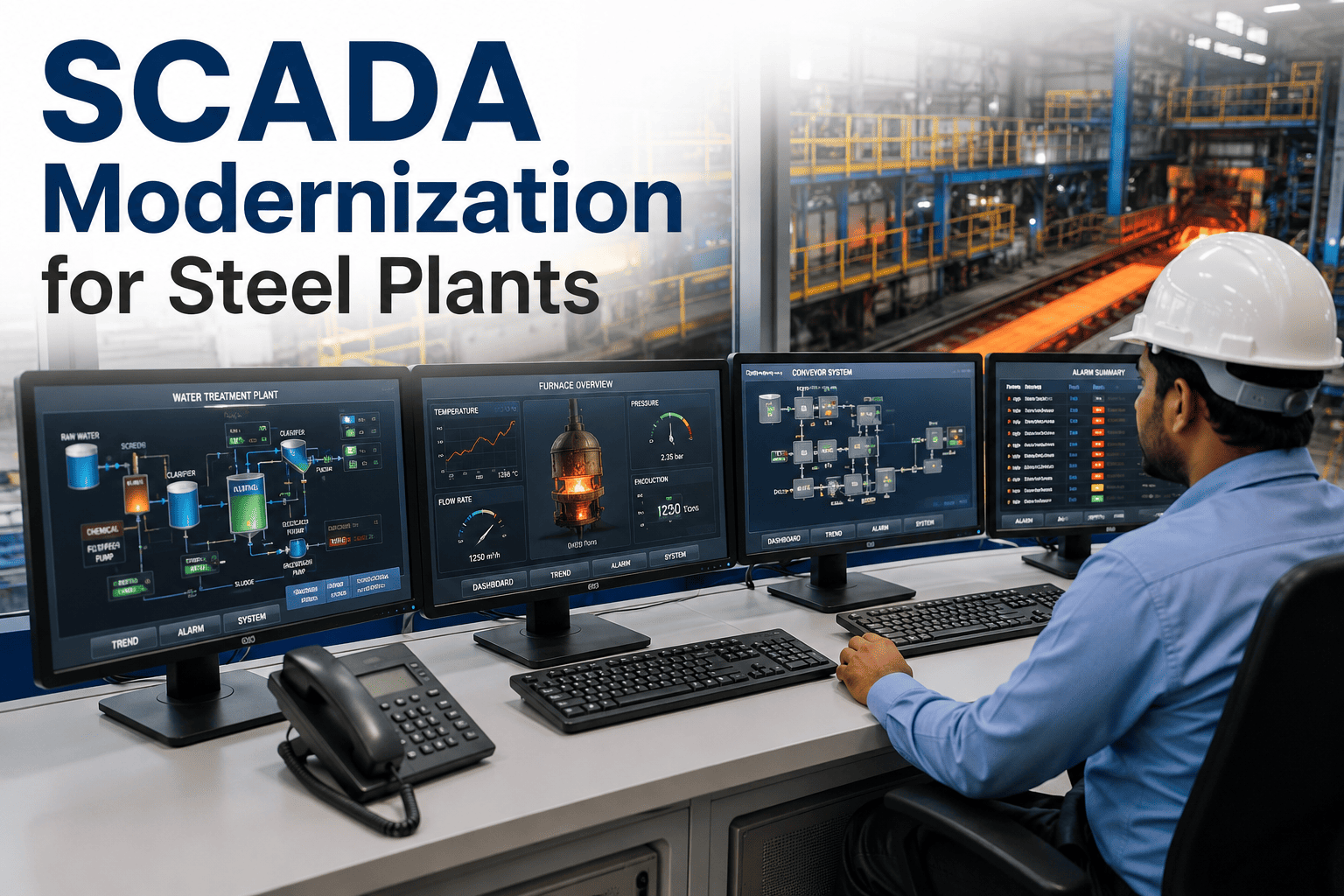
Read More
Most steel plant SCADA systems were designed and installed before anyone in the control room was thinking about AI as a category, and replacing them outright is rarely realistic given the cost, the recertification effort, and the operational risk
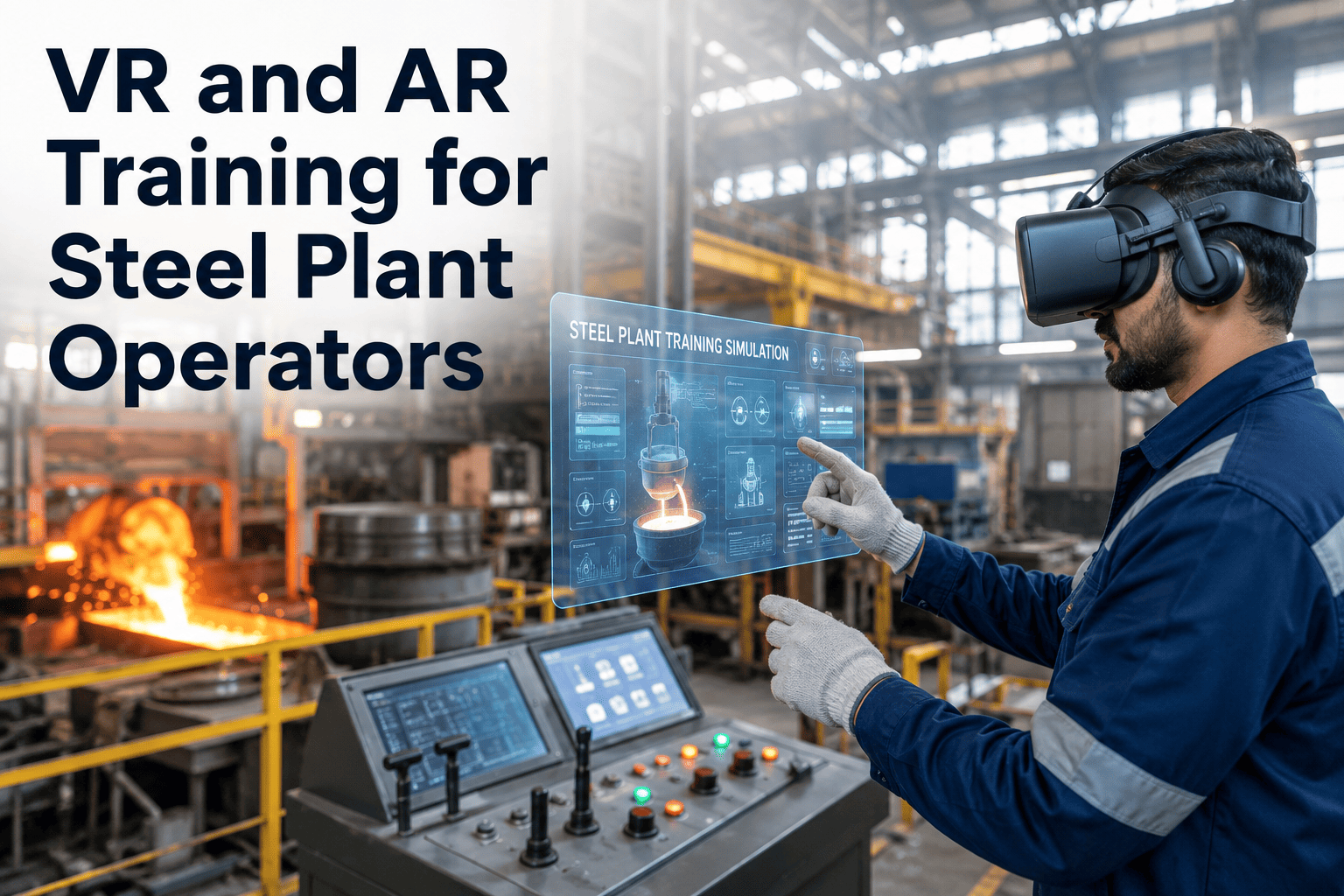
Read More
A new operator learning to run a rolling mill traditionally spends somewhere between six and twelve months shadowing a senior colleague before being trusted alone on the floor, and most of that time is spent waiting for the right scenario to natur
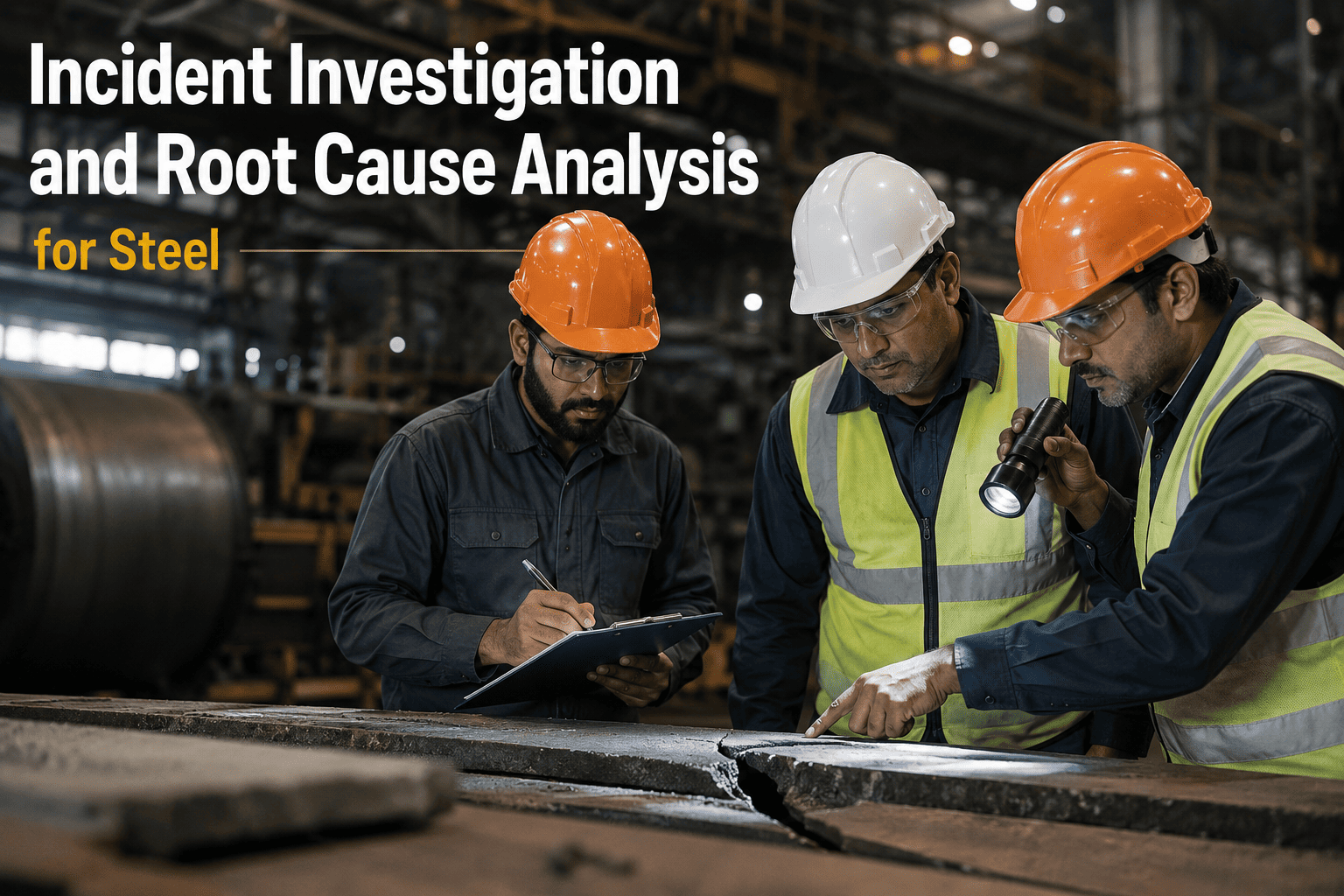
Read More
Every steel plant incident report gets a root cause assigned, a corrective action logged, and a case closed within the required window, yet the same categories of incident keep recurring year after year across different units. That repetition is u
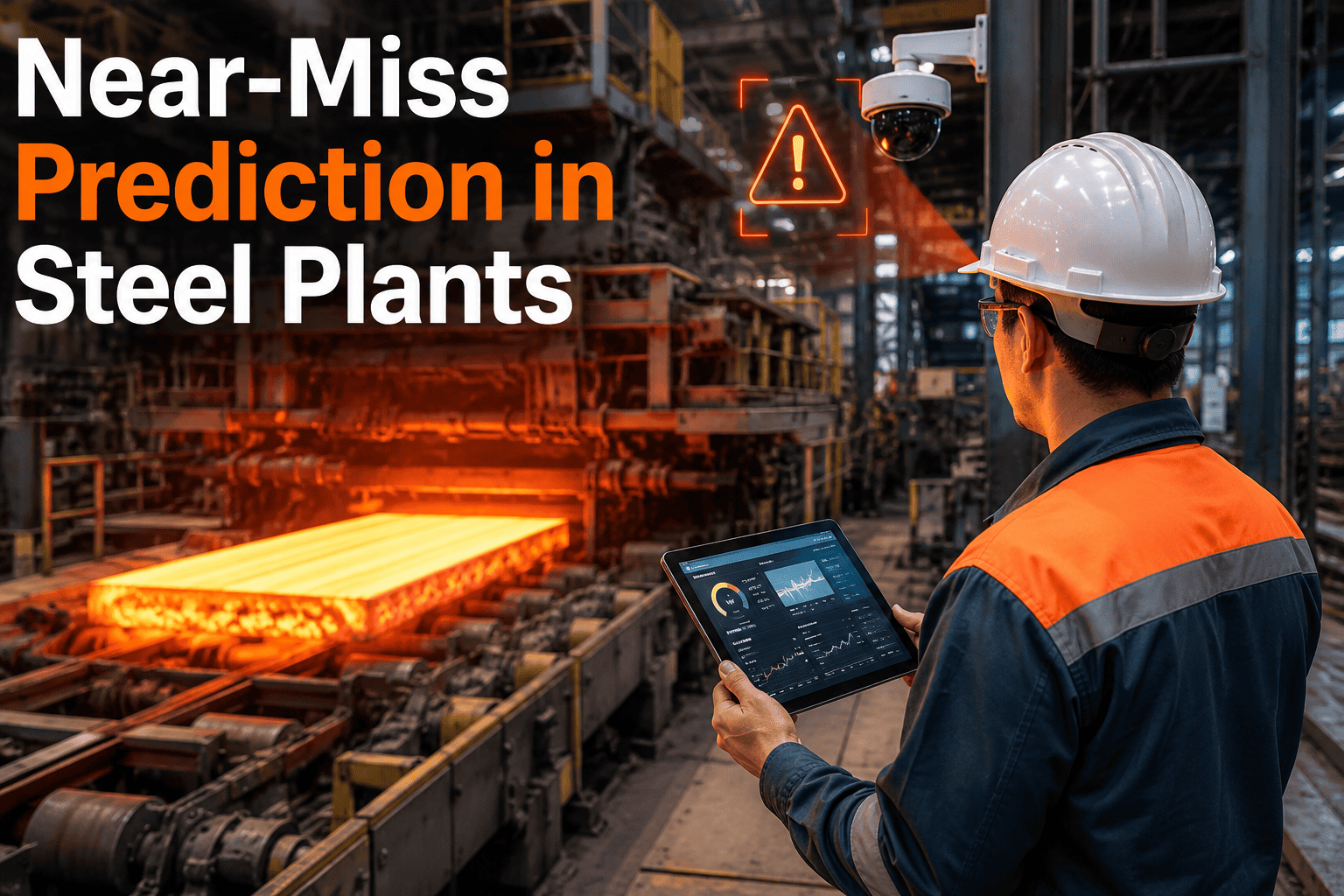
Read More
Most steel plants collect thousands of near-miss reports every year and file almost all of them away without a second look, treating each one as an isolated event rather than a signal. A slag spill that misses a walkway, a crane load that swings w

Read More
The most experienced operator on a rolling mill floor often knows things that never made it into any manual — the exact sound a bearing makes two weeks before it fails, the small adjustment that keeps a strand from tearing during a grade change, t
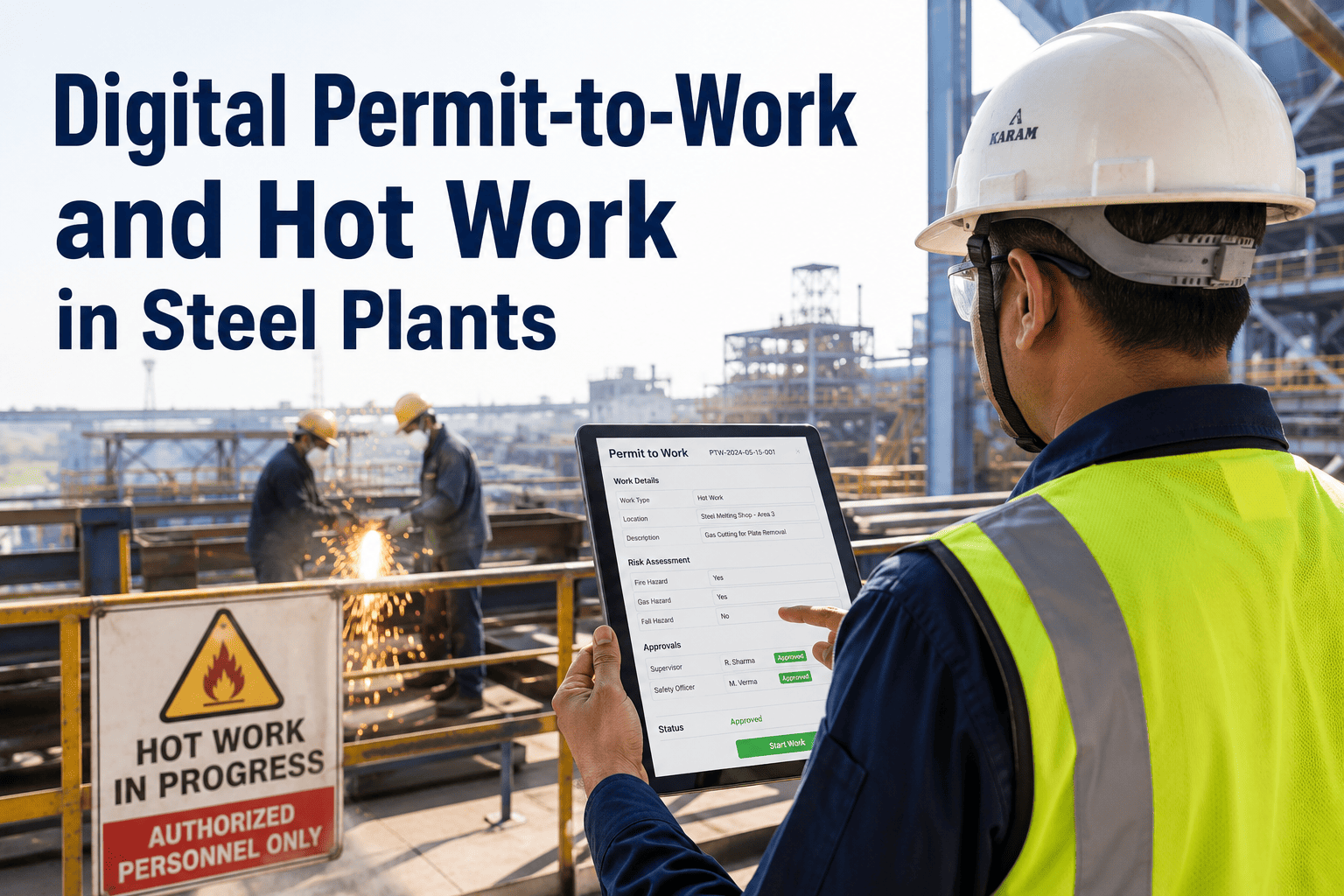
Read More
A steel plant does not stop at the end of a day shift, which means every scheduling decision made in an office eventually has to survive a 2 a.m. reality on the mill floor where reaction time, judgment, and attention have all quietly degraded from

Read More
More steel plant fatalities happen in confined spaces than in any other single hazard category, and the reason is almost never that the space itself is unusual. It is that atmospheric conditions inside a furnace shell, a duct, or a storage tank ca
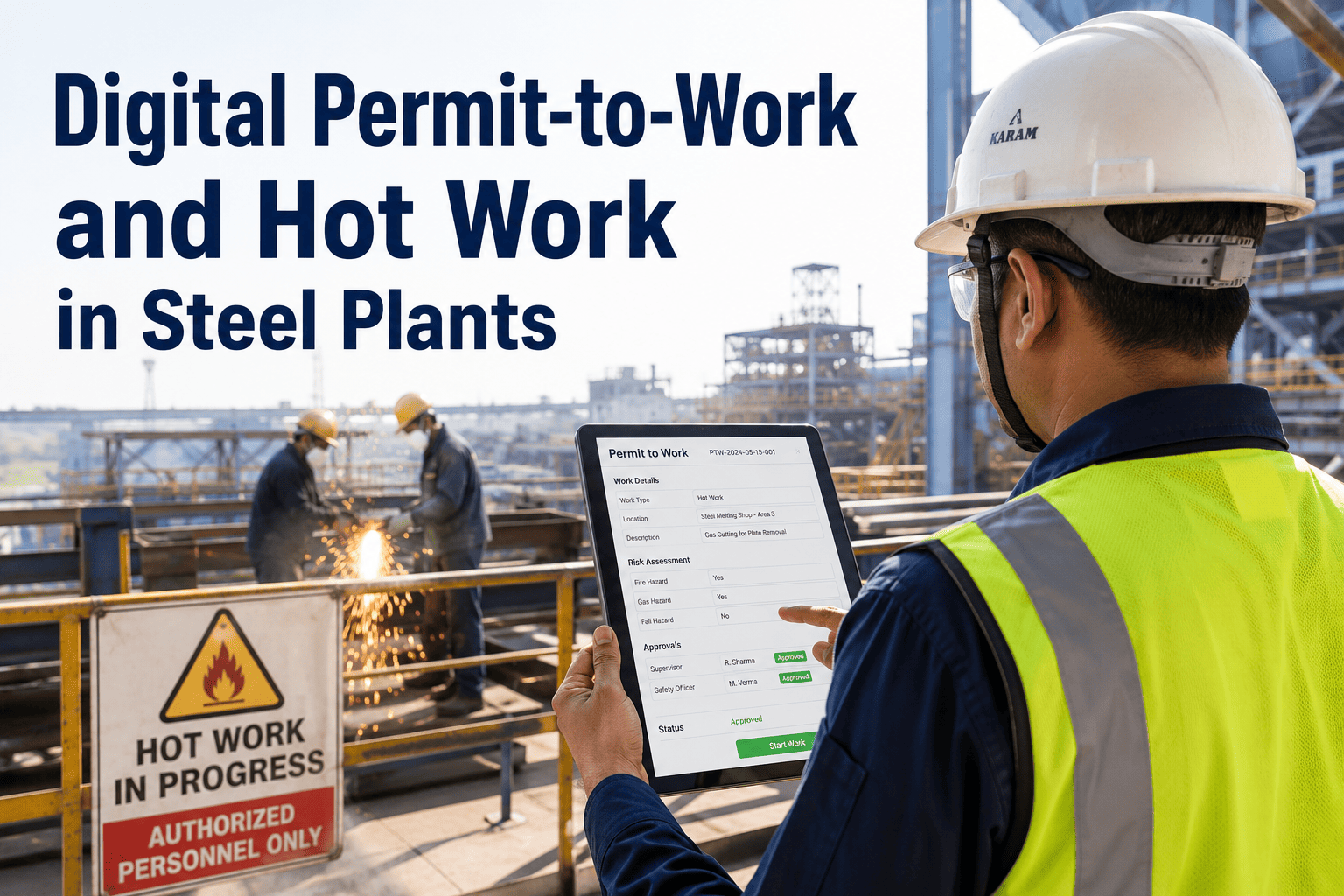
Read More
Every steel plant runs 50 or more hot work, confined space, and lockout tasks in a single day, and every one of those tasks depends on a permit that was supposed to be checked against every other permit open on the floor at the same time. In most
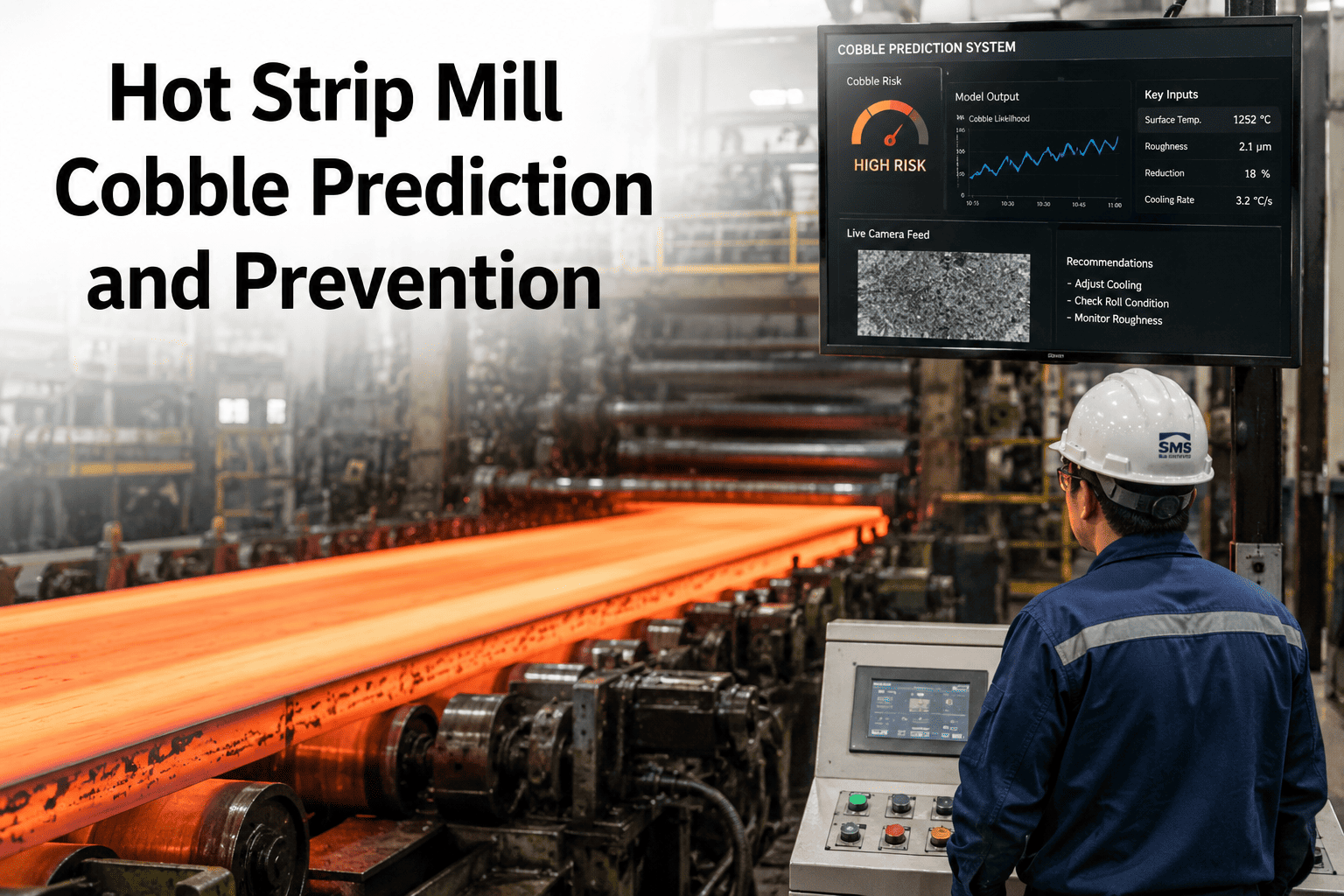
Read More
A cobble on a hot strip mill happens fast — a strip buckles, folds over itself, or snakes off the pass line, and within seconds a coil that was worth tens of thousands of dollars becomes scrap tangled around a mill stand. The direct cost of a sing

Read More
Every grade change on a hot strip mill starts with the same question: how much force will each stand need to hit target gauge on the very first coil, before the mill has any feedback to correct against. Physical models built on established rolling
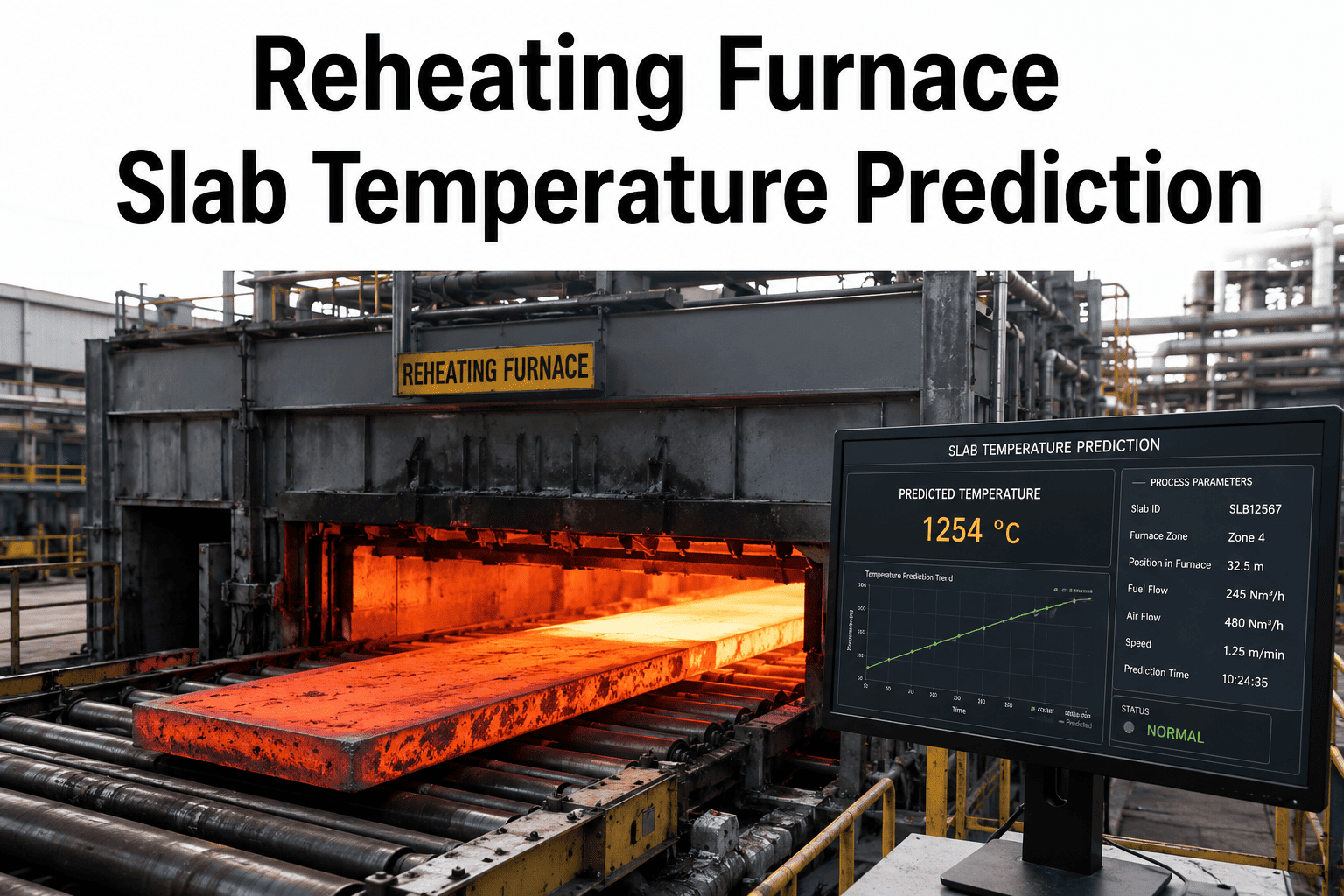
Read More
A reheat furnace can hold a slab at target temperature for hours, yet the number that actually determines whether the first pass on the roughing mill comes in on gauge is one nobody can directly measure — the slab's interior core temperature at th
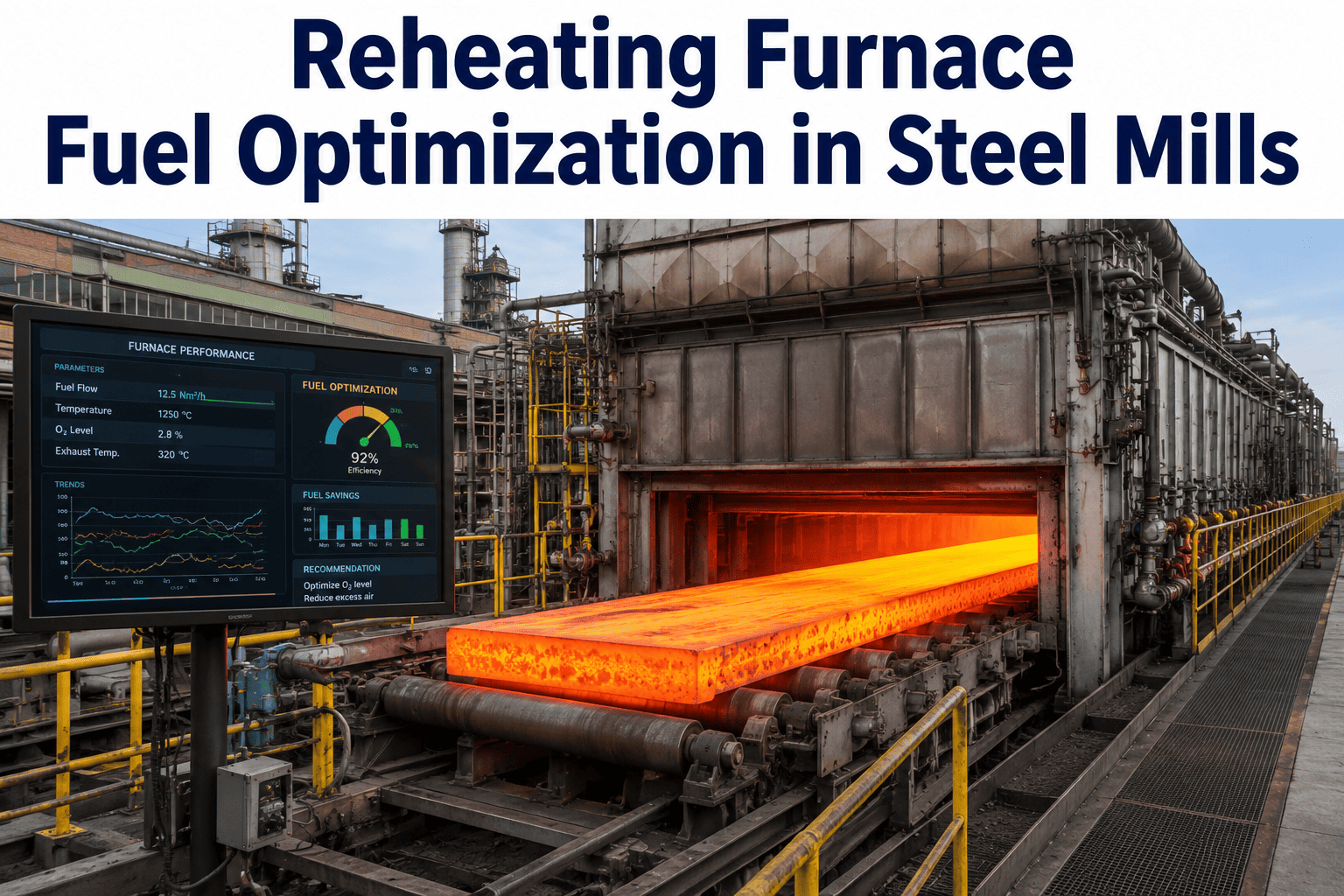
Read More
A reheating furnace in a steel rolling mill burns $8 million to $15 million in natural gas every year, running 8,000-plus hours annually to push 200 to 400 tons of slab per hour through zones that were set once and rarely revisited. The furnace ma
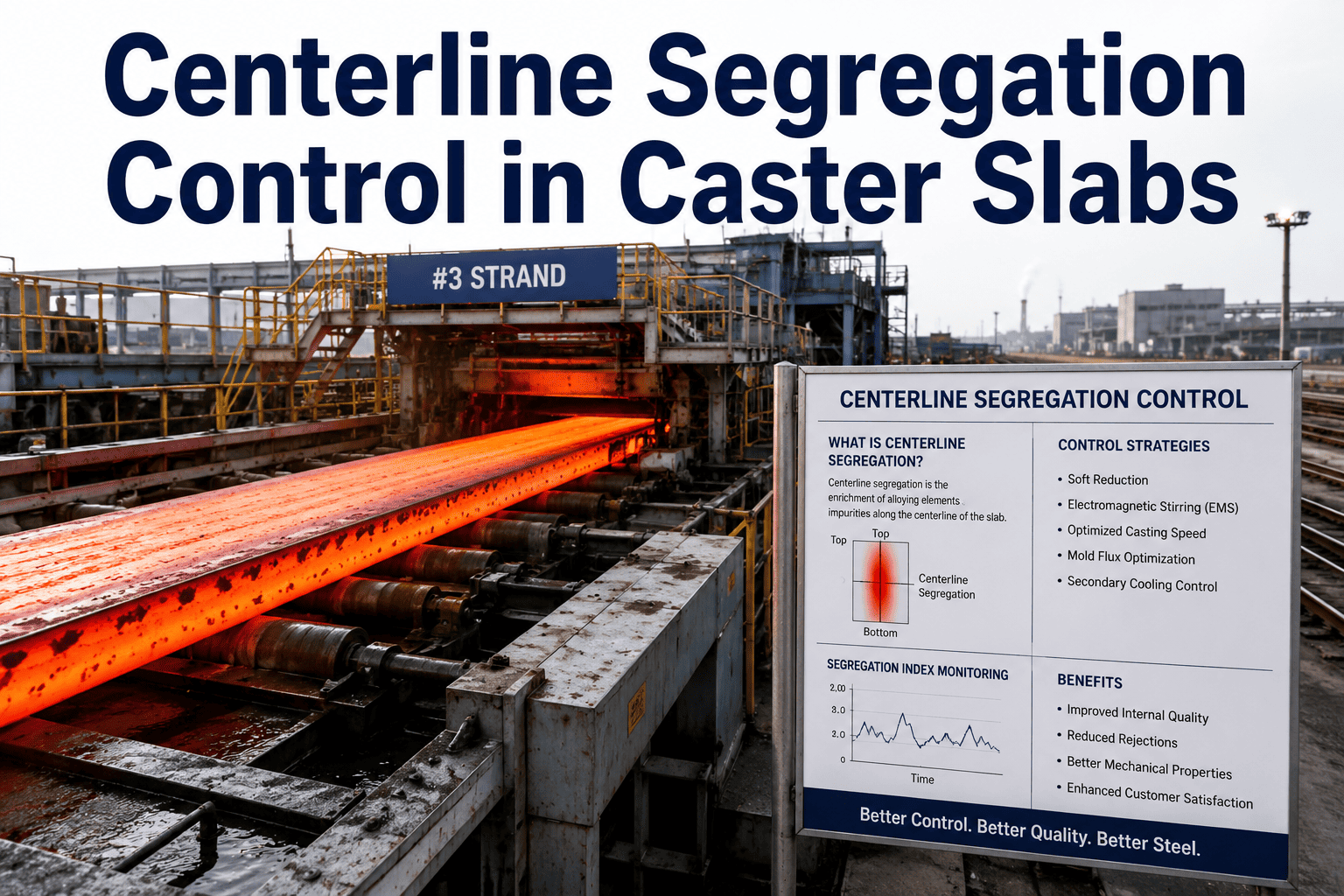
Read More
By the time a breakout alarm actually sounds, the shell has already torn. Every breakout prediction system installed at a modern caster is really racing a clock that started the moment a sticker began forming, somewhere between the meniscus and th

Read More
Yield is the single line item on a caster's report that plant managers watch most closely, because a fraction of a percent moves more profit than almost any other operational metric on the floor. Good tonnage divided by liquid steel tonnage sounds
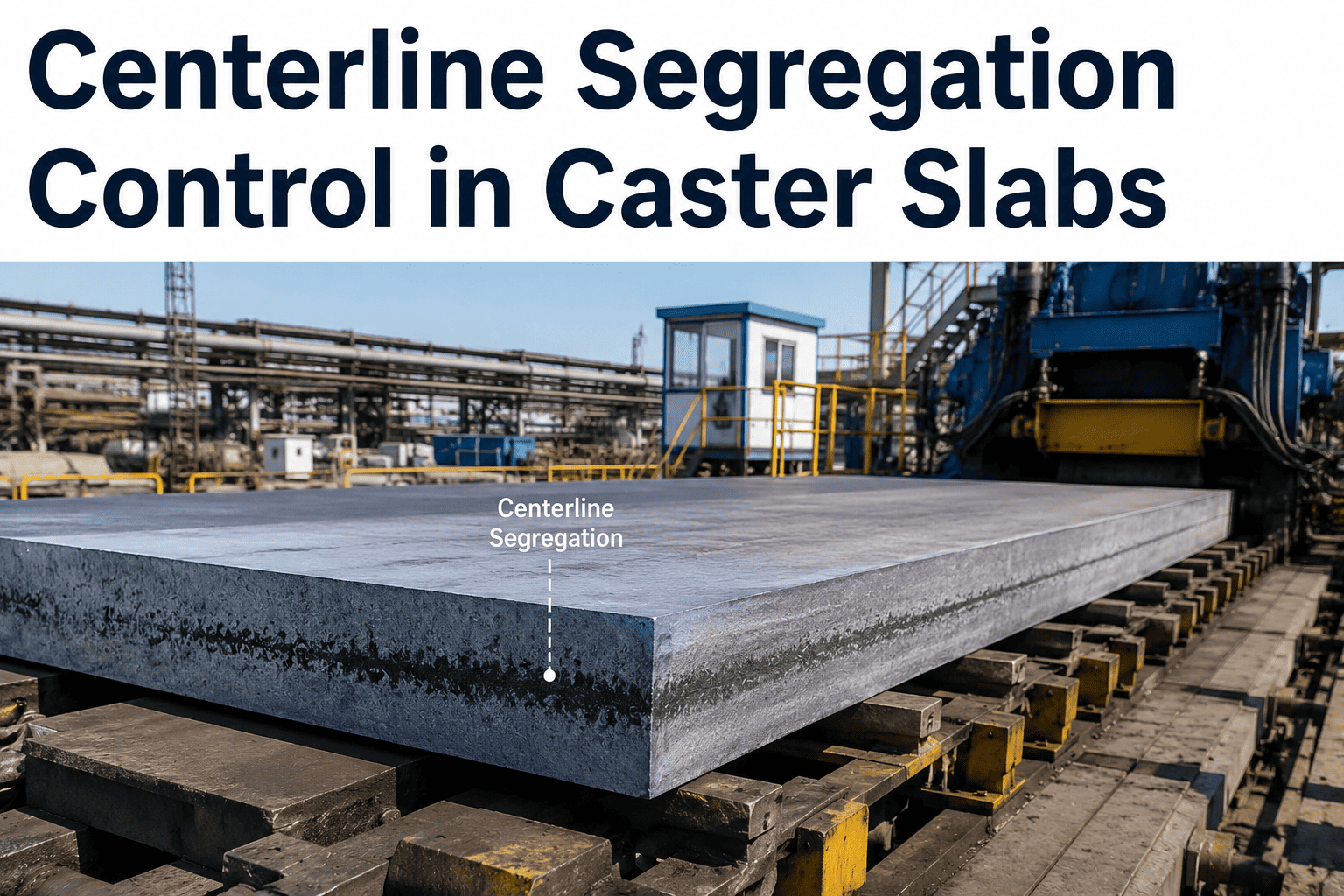
Read More
Centerline segregation isn't caused by one bad decision at the caster, it's the accumulated effect of four or five variables drifting slightly out of alignment at the same time: superheat running a little high, roll gap opening a fraction more tha
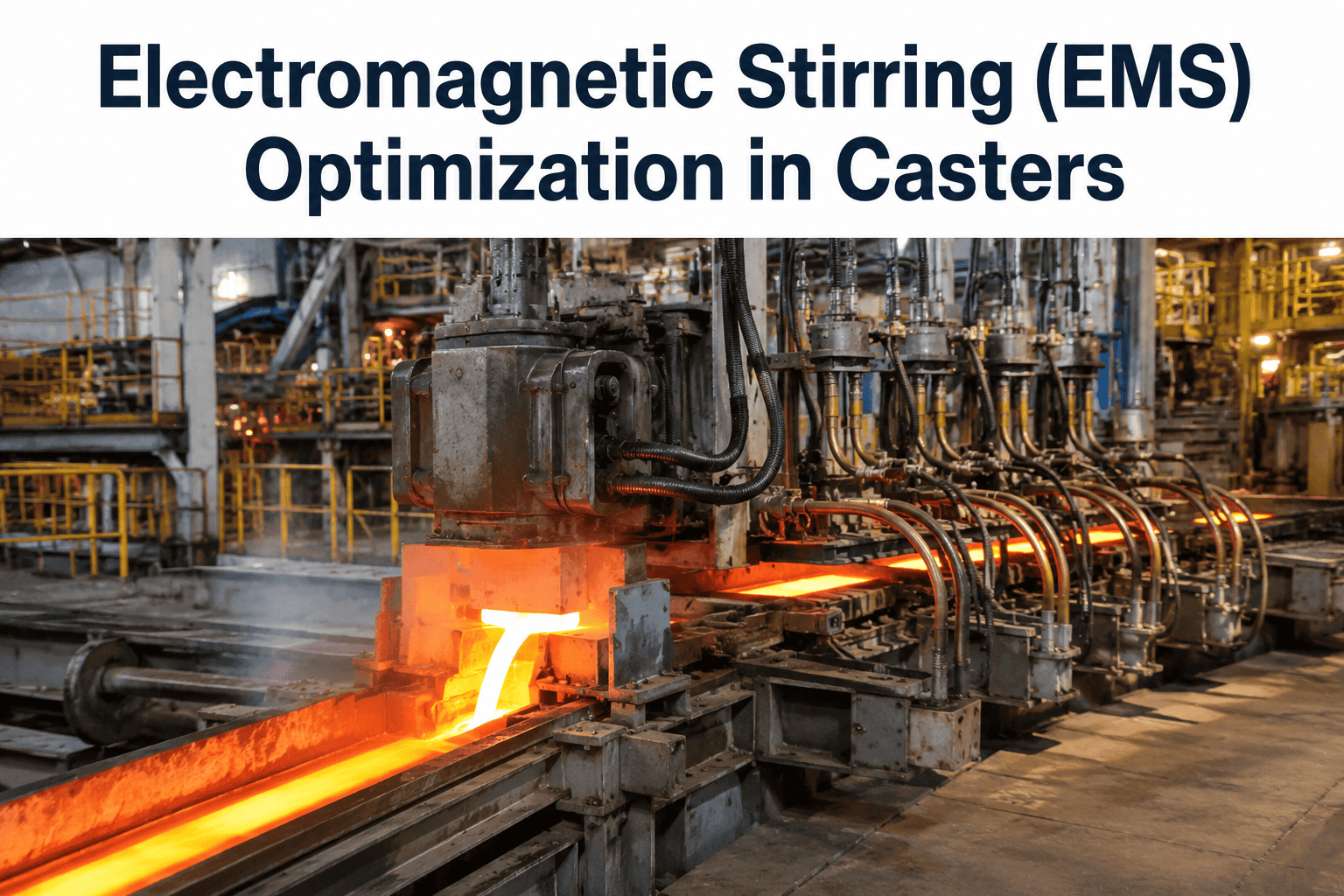
Read More
Centerline segregation is one of those defects that doesn't show up on the caster floor. It shows up months later, in a fatigue crack on a rail, a failed hydrotest on a pipe, or a customer complaint about inconsistent hardness across a coil. By th

Read More
Mold powder rarely gets the attention it deserves given how much it actually controls. It lubricates the strand against the mold wall, absorbs inclusions floating up from the melt, and manages heat transfer at the meniscus, and getting any one of
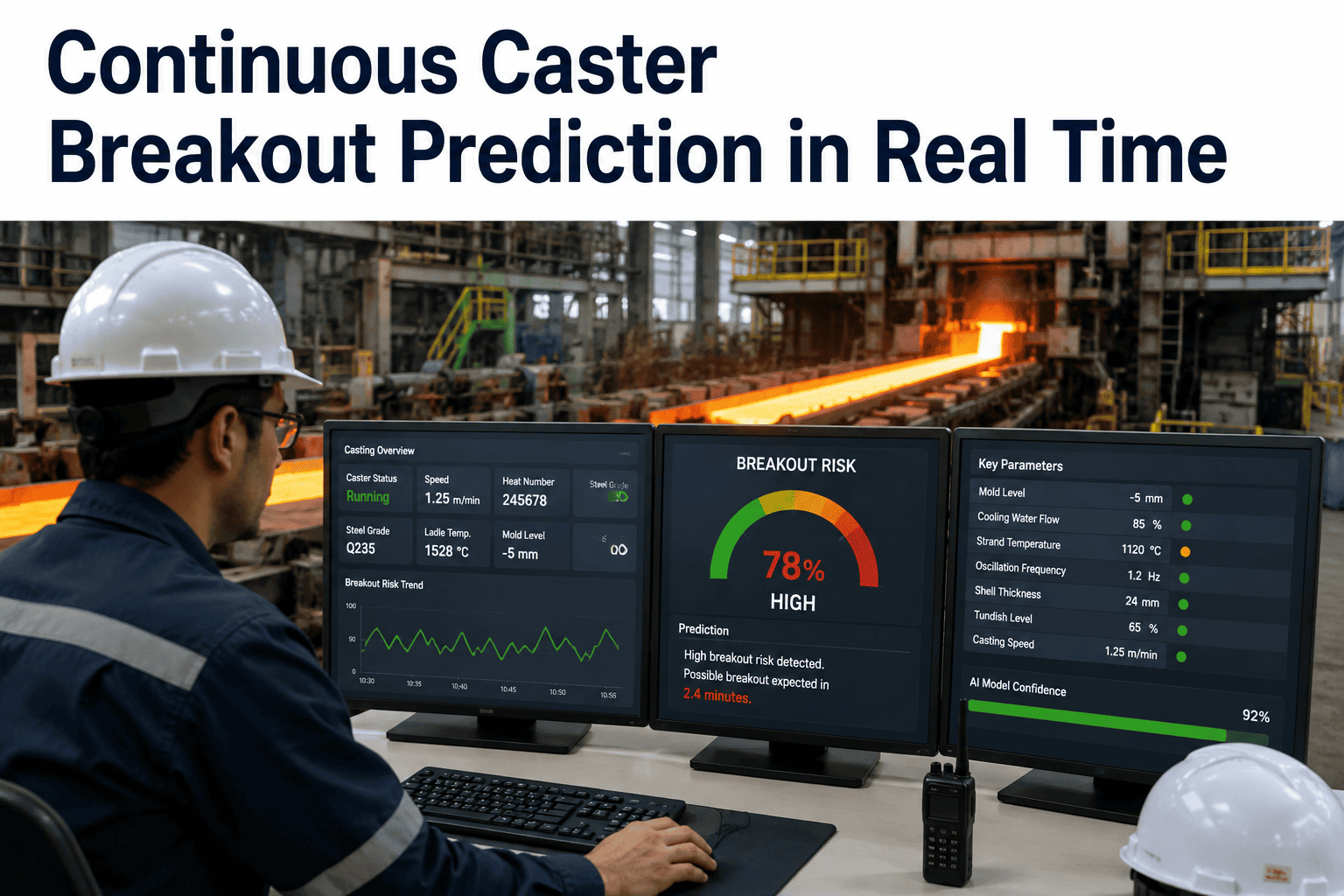
Read More
A breakout at the continuous caster is one of the few events that can shut down an entire line for a full day and put crew safety at risk in the same moment. Molten steel escaping a ruptured shell means an immediate emergency stop, a multi-day rep

Read More
Mold level control looks like a solved problem on paper — a PI or PID loop holding a setpoint against a radiometric or eddy-current sensor — until you look at what actually happens on a real casting floor. Slide gate hunting, slag rim buildup, and
Read More
Two heats of the same grade, made on the same furnace, twelve hours apart, can come out different enough that one passes inspection cleanly and the other gets flagged for rework. Same target chemistry, same nominal process, different outcome — and
Read More
Direct reduced iron is supposed to be the bridge to lower-carbon steelmaking, but running a shaft furnace well is harder than the marketing material suggests. Metallization target, carbon content, and gas reformer efficiency all pull against each
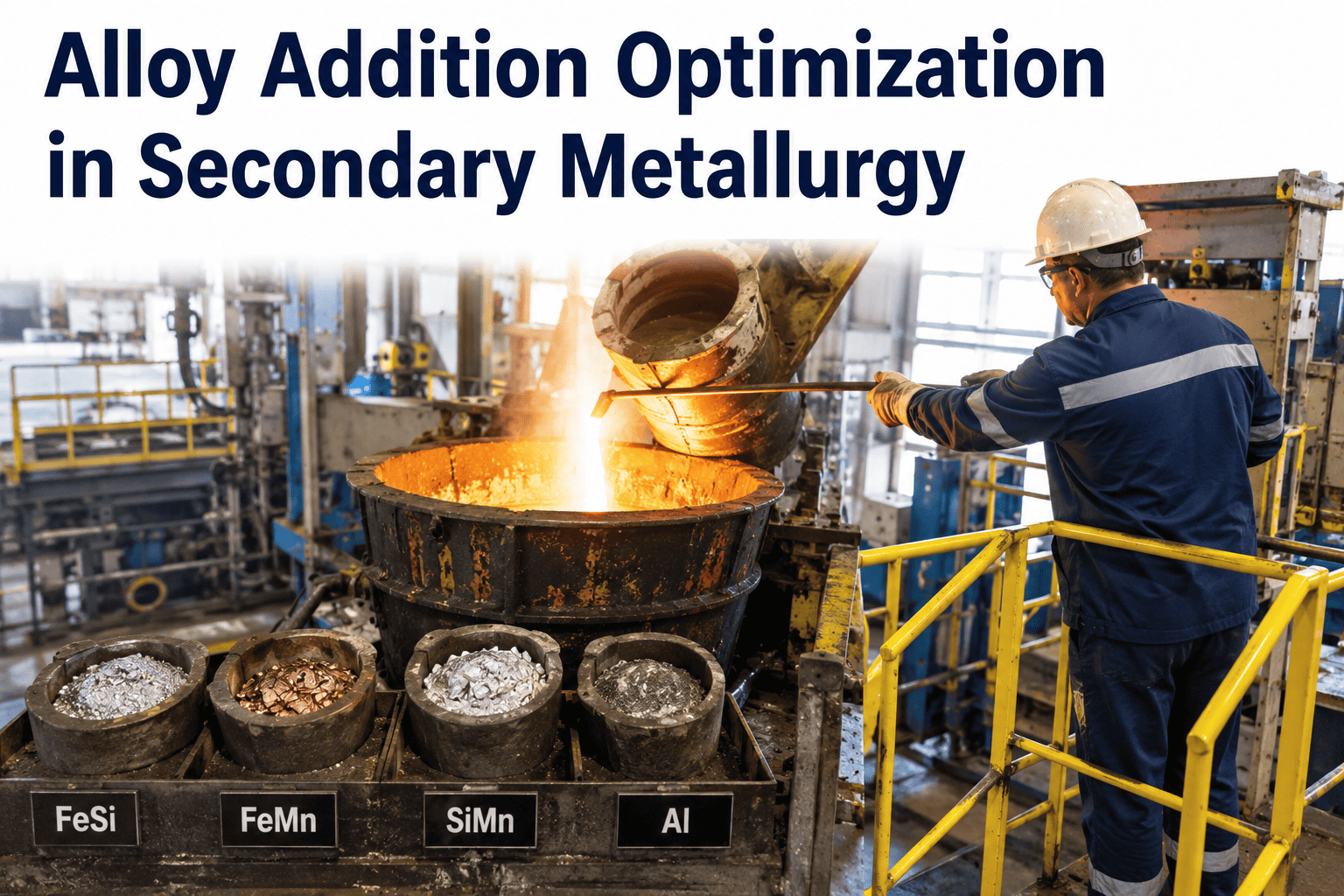
Read More
Ferroalloys are one of the largest line items on a steel shop's cost sheet, often running 5–12% of total production cost, and yet most plants still add them the same way they did twenty years ago: a fixed addition table by grade, adjusted occasion
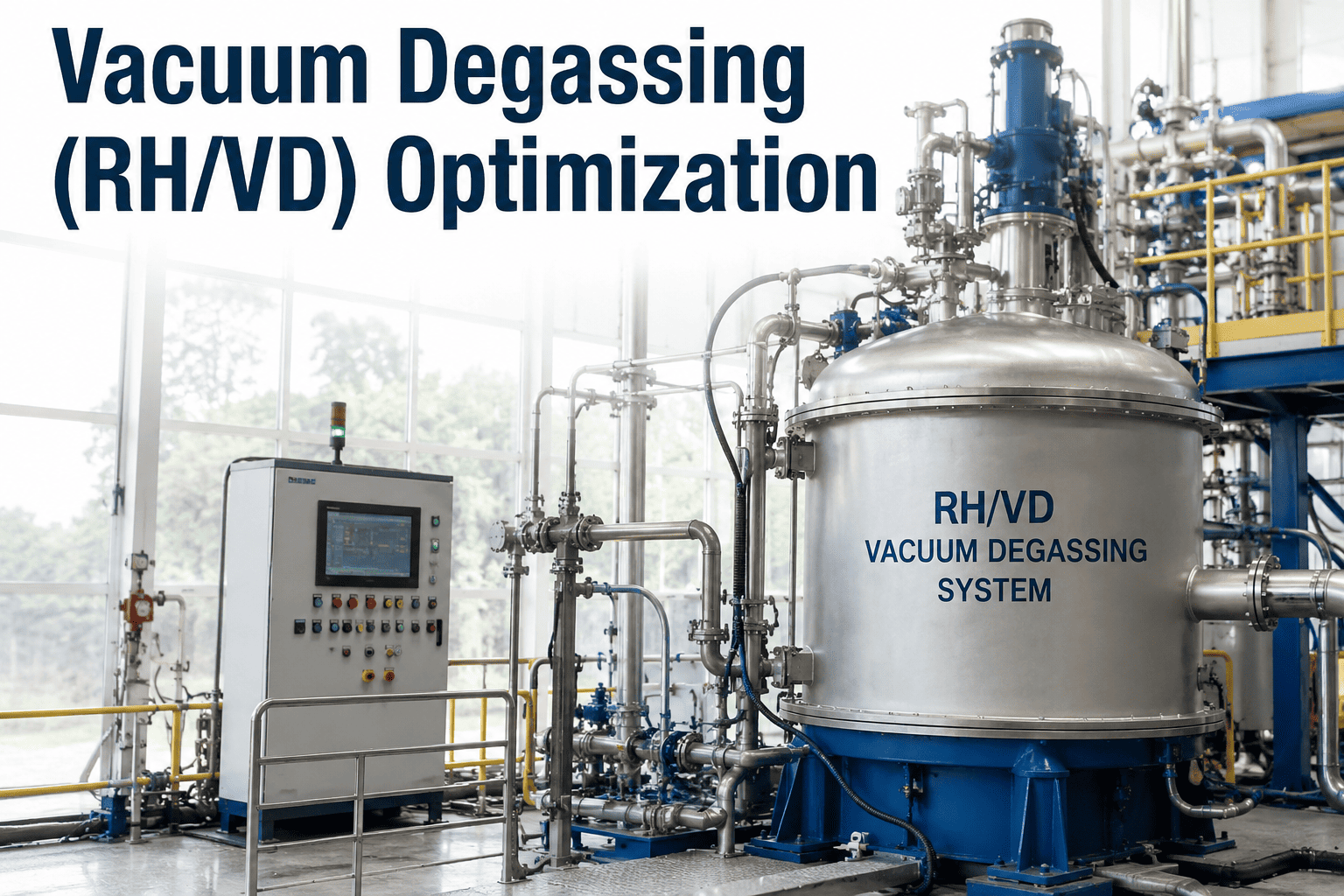
Read More
A heat is sitting in the RH degasser at 1620°C and the melt shop superintendent is watching the hydrogen number refuse to move. Cycle time is already past 22 minutes, the caster is waiting, and the metallurgist knows that pushing the heat out earl

Read More
A human inspector at a hot strip mill exit catches somewhere between 45% and 65% of surface defects at line speed, and the ones missed do not disappear — they ship. A 0.1mm inclusion that causes paint adhesion failure at an automotive plant, a rol
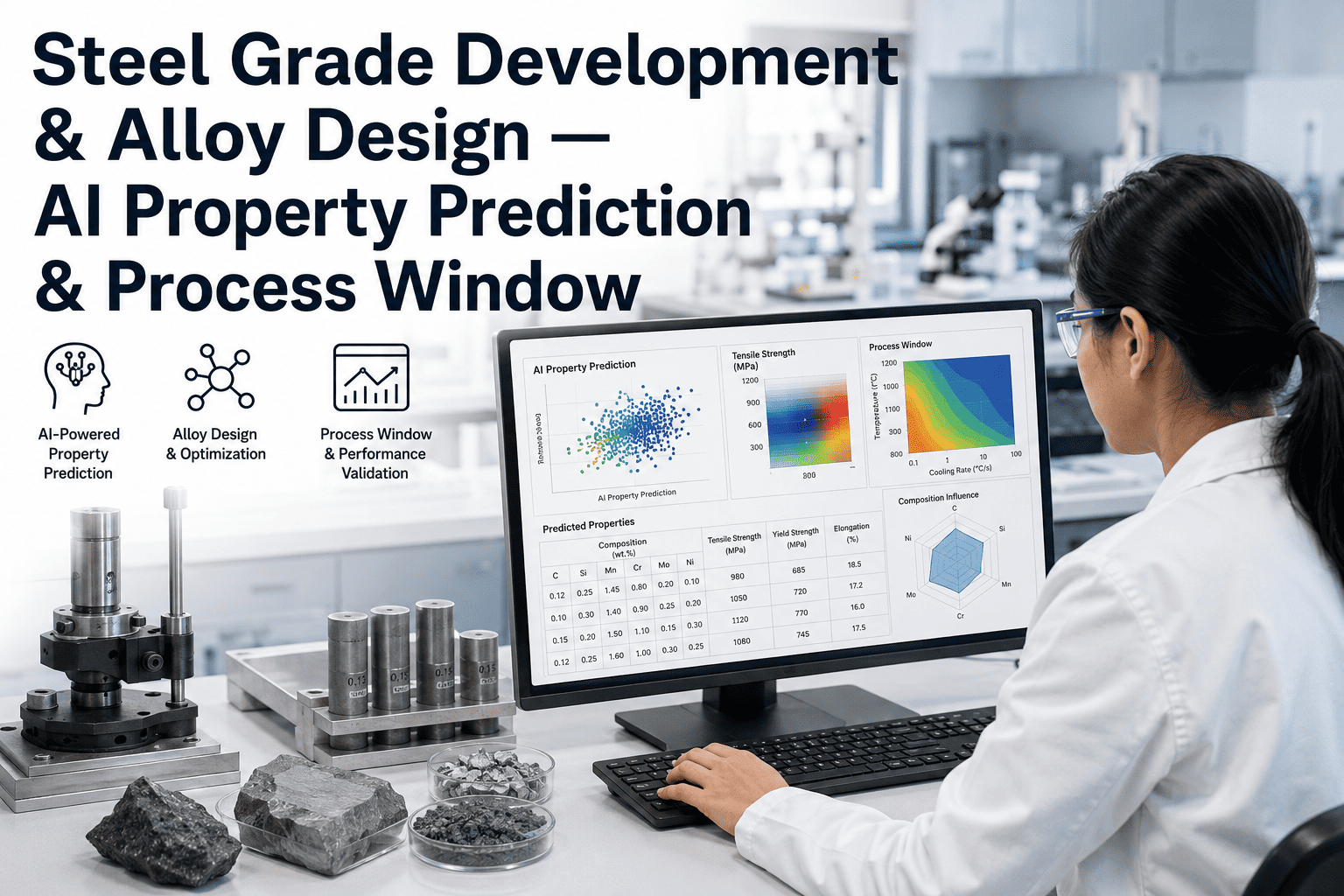
Read More
A metallurgist tasked with developing a new high-strength automotive grade has traditionally faced a brutal calculus — dozens of candidate compositions, each requiring a full melt, cast, roll, and mechanical test cycle to find out whether the yiel
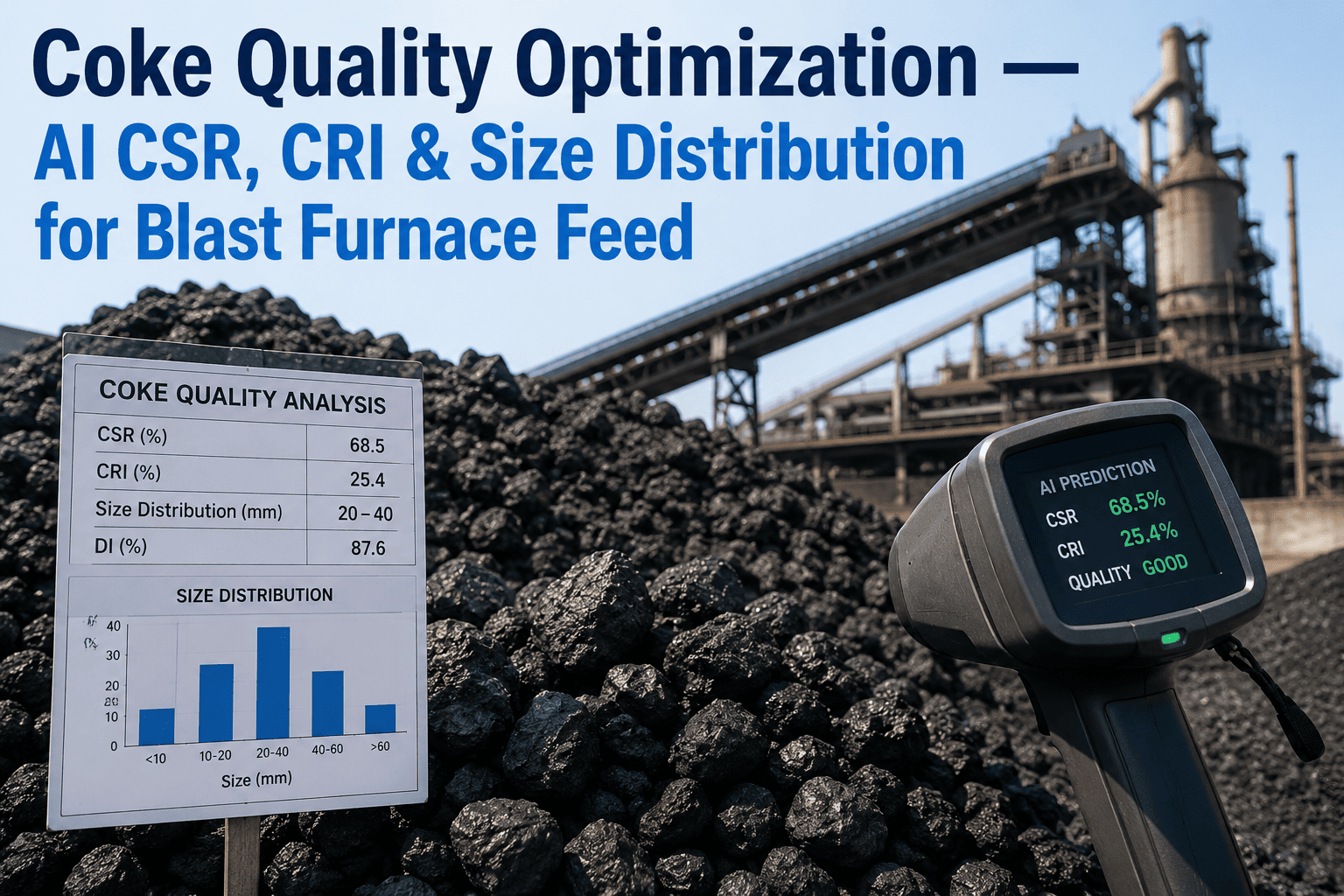
Read More
Coke accounts for roughly 60% of hot metal production cost through the blast furnace route, and its two defining properties — CSR and CRI — vary from laboratory to laboratory even under identical test methodology. A coke that reacts too fast insid
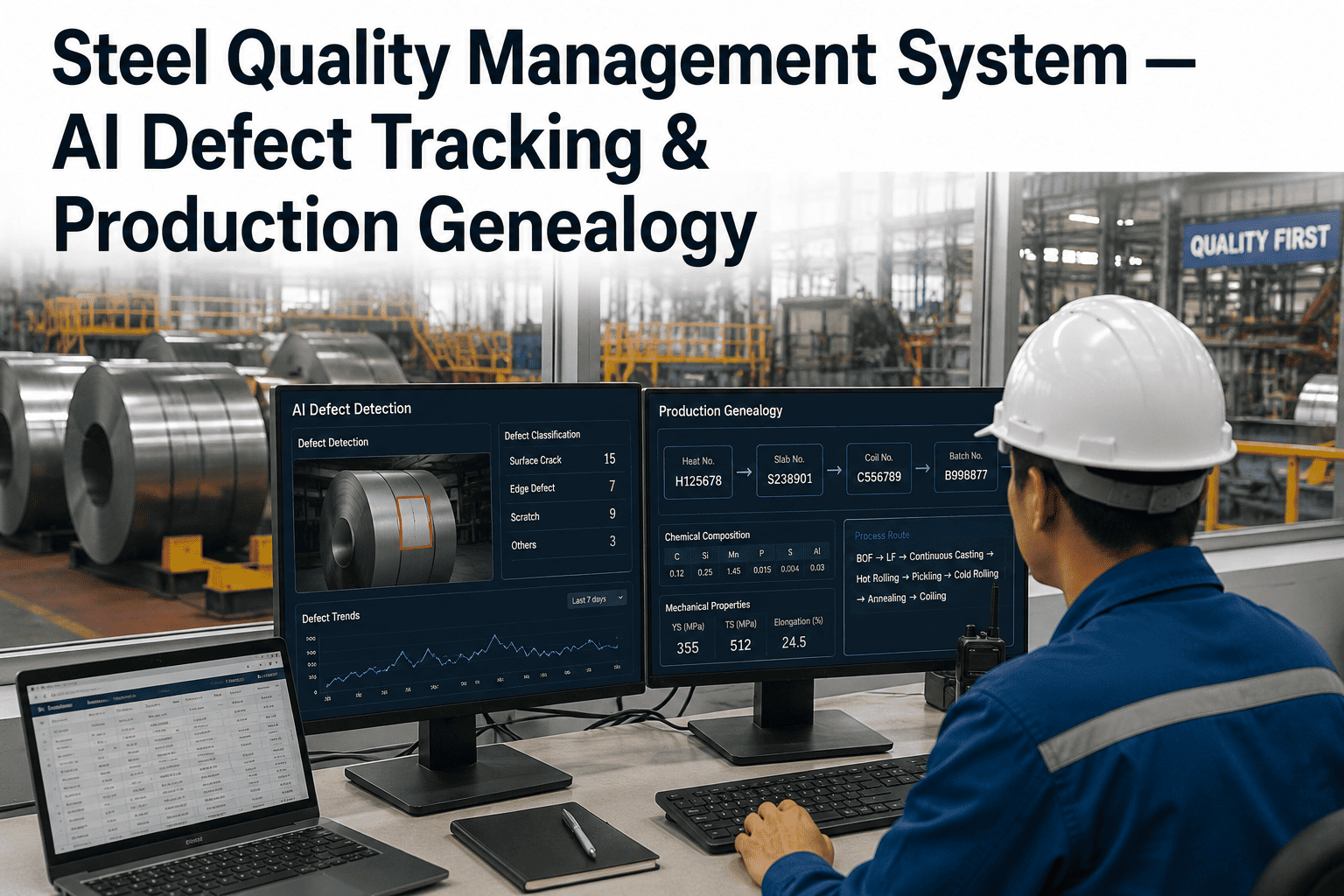
Read More
A quality manager at a flat-rolled mill gets the call every steel producer dreads — a tier-one automotive customer has found a coating defect on a stamped panel, and the claim references a coil number from six weeks ago. Under the old process, ans
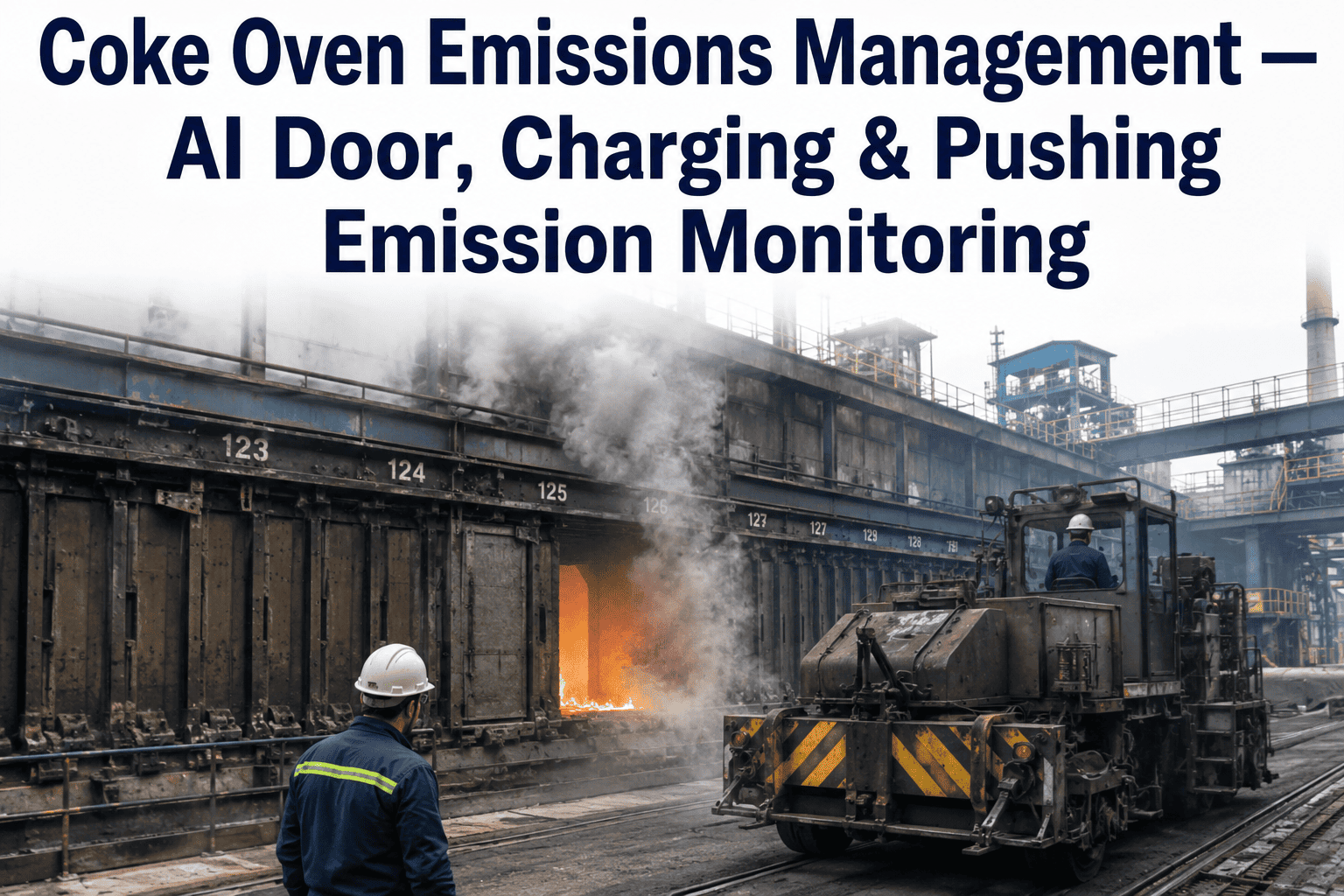
Read More
Coke ovens are one of the most heavily regulated emission sources inside an integrated steel plant, and door leaks, charging emissions, and pushing smoke are the three events regulators and inspectors watch most closely. Each one is a visible, qua
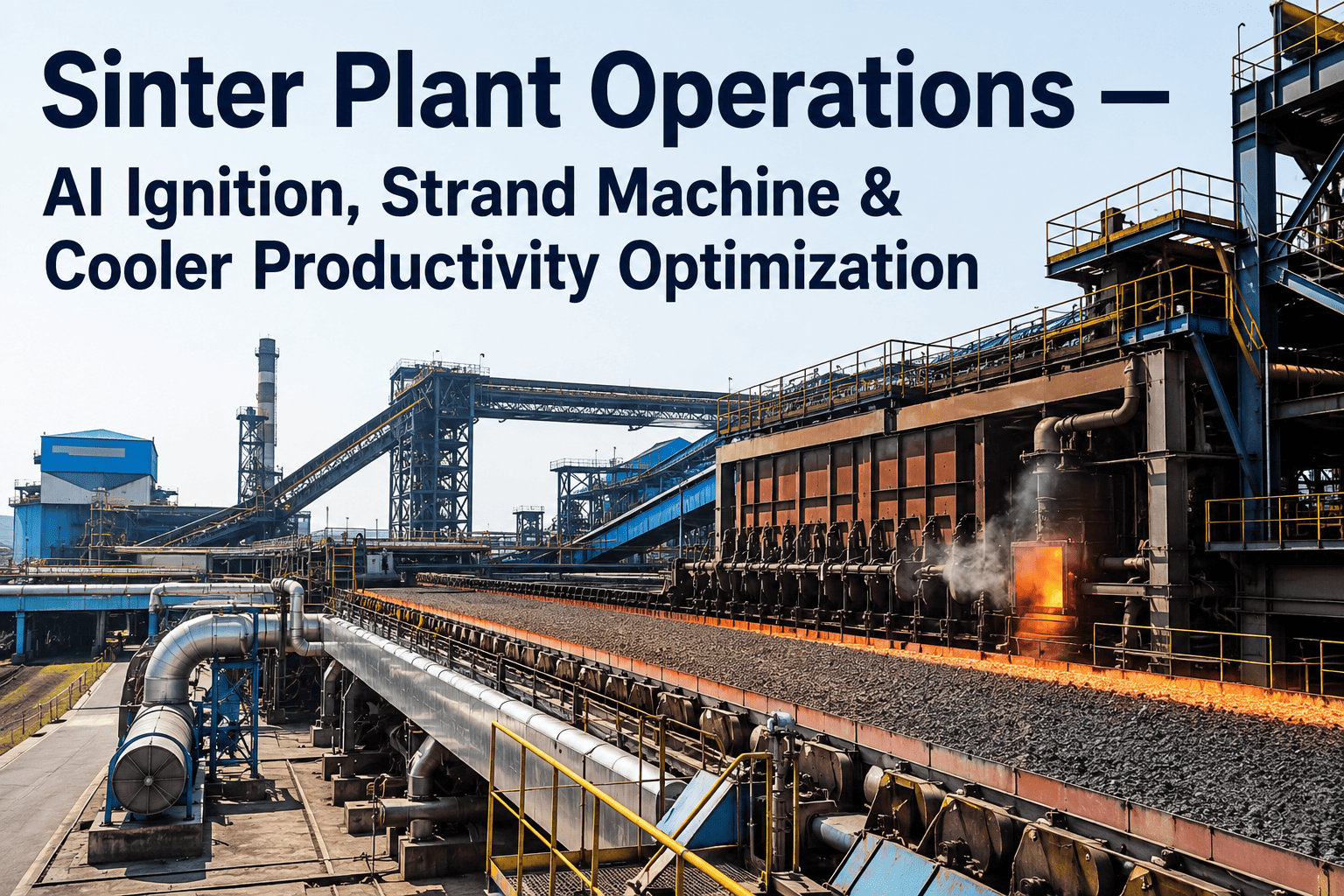
Read More
Sinter quality is decided in about forty minutes — the time it takes raw mix to travel from ignition hood to discharge on the strand. Everything that happens in that window determines whether the plant ships consistent, well-fused sinter with a st
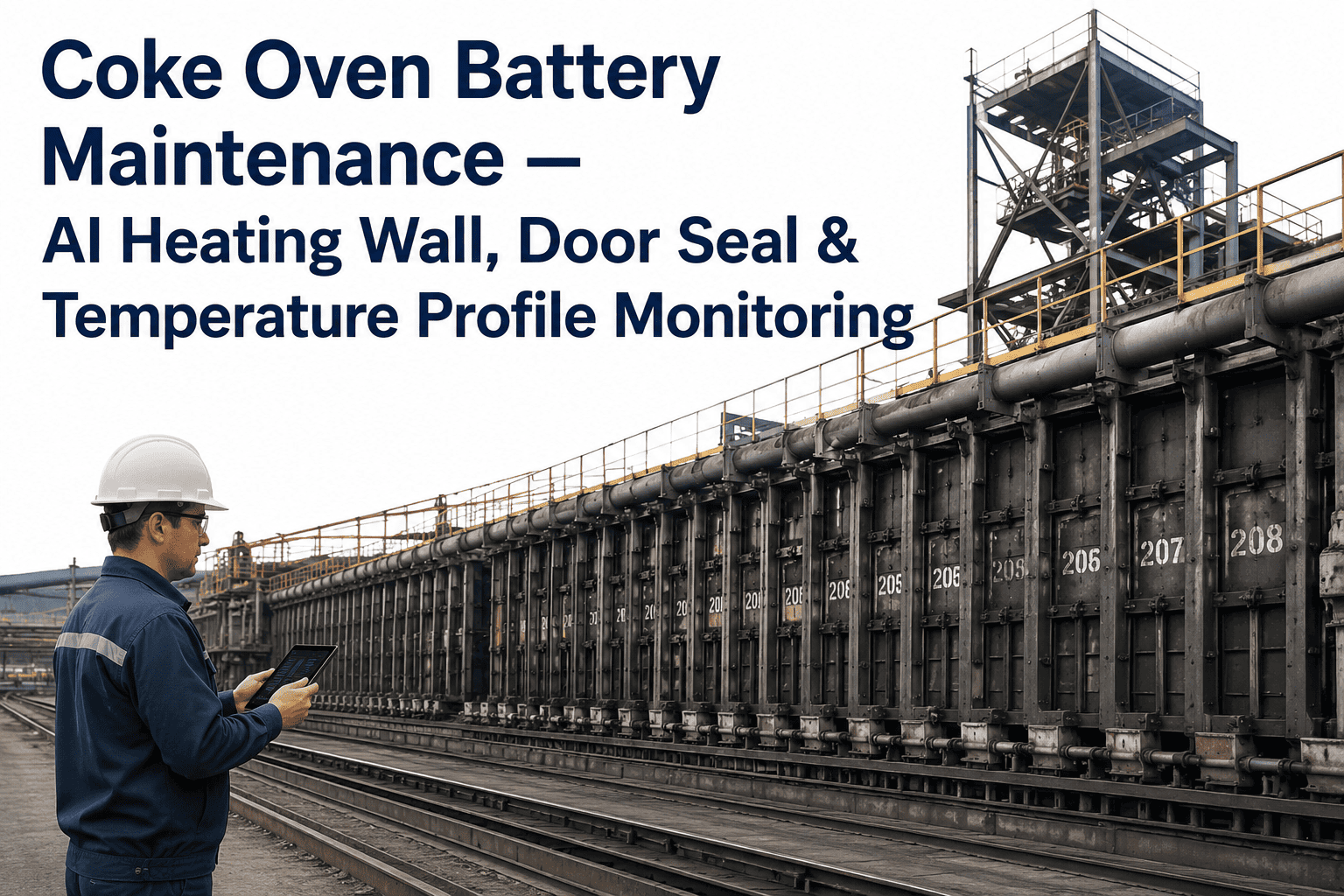
Read More
A coke oven battery runs for twenty to forty years if the refractory holds, and it fails early almost every time the same way: a heating wall cracks quietly for months before anyone notices, a door seal starts leaking days before it's caught on a
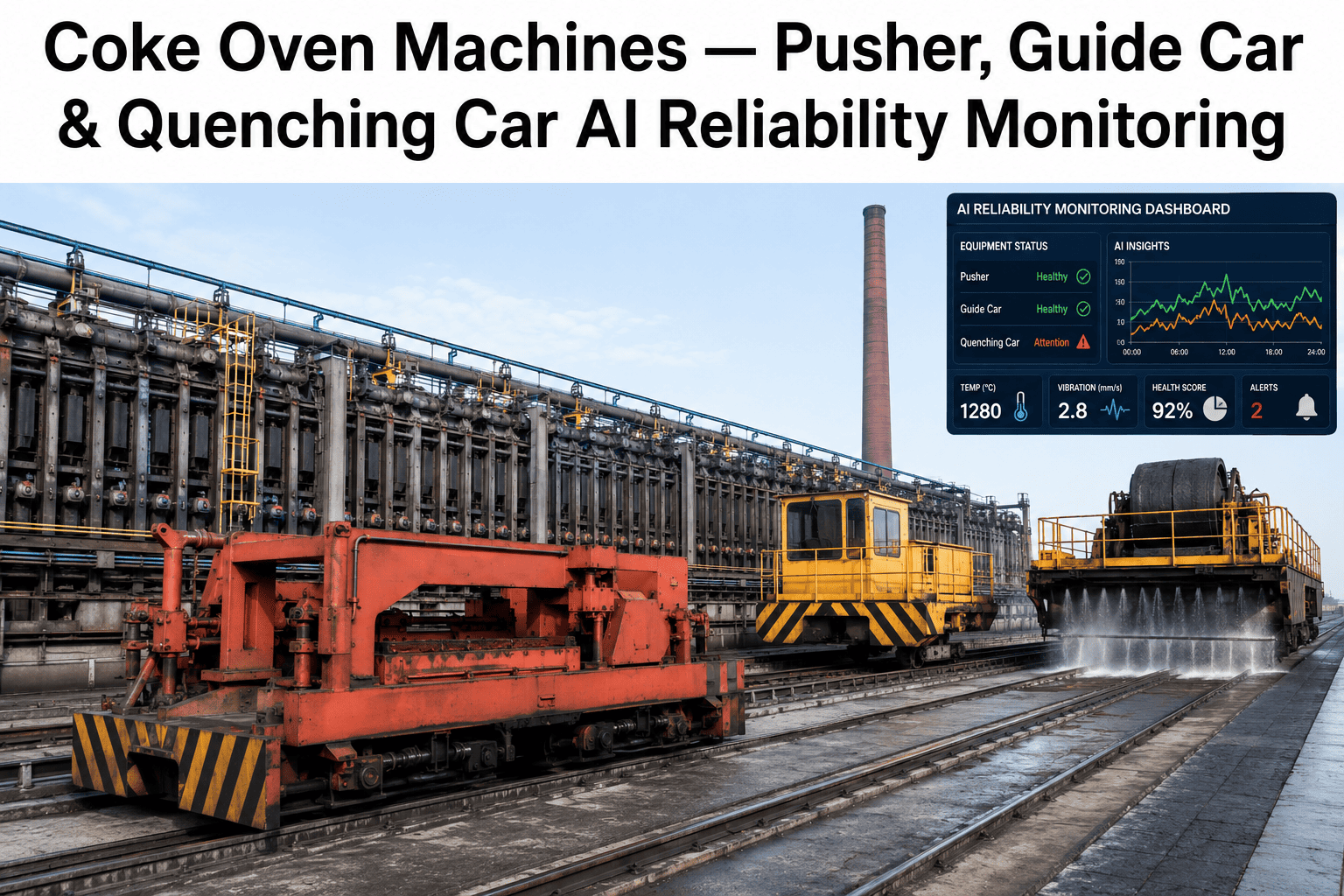
Read More
A pushing cycle that runs late by even ninety seconds ripples through the whole battery schedule, and the machine most likely to cause that delay isn't the oven — it's the pusher car, the guide car, or the quenching car it depends on. These three
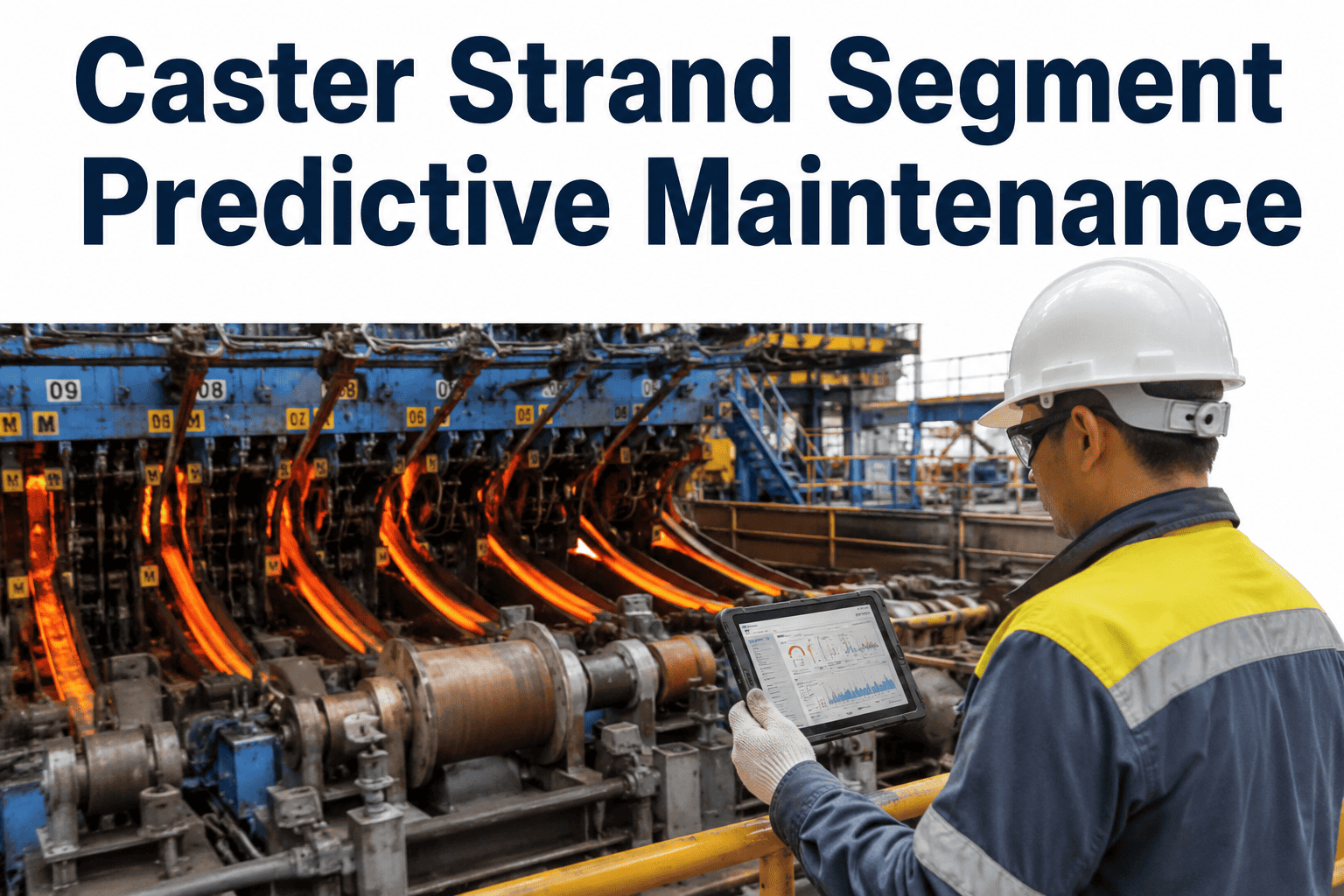
Read More
The blast furnace blower is the one piece of rotating equipment that cannot fail without stopping the furnace — every cubic meter of air reaching the tuyeres passes through it. Running at up to 10,000 RPM under continuous thermal and mechanical st
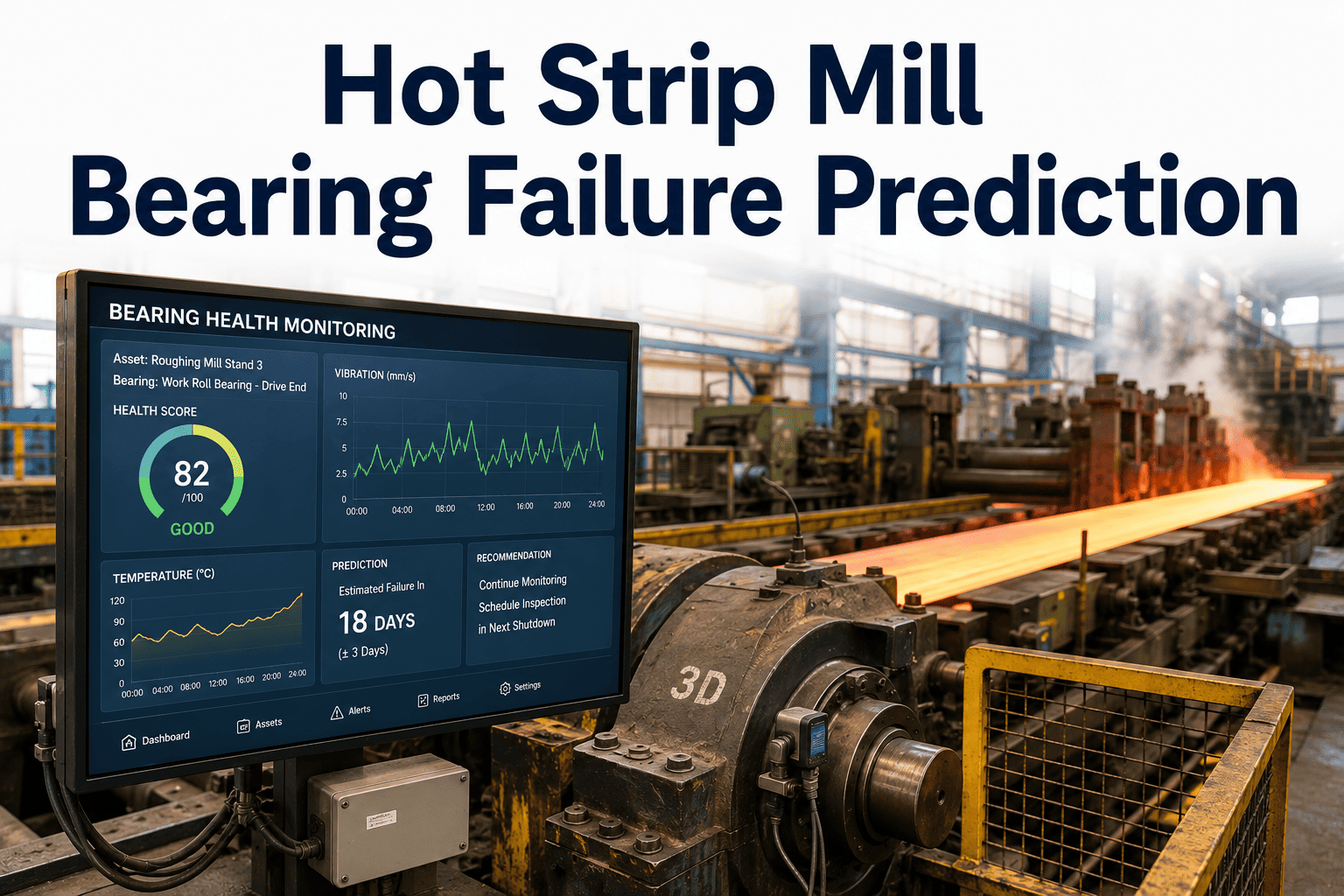
Read More
A hot strip mill runs steel through finishing stands at speeds exceeding 1,000 meters per minute, holding tolerances as tight as ±0.02mm while every bearing absorbs extreme mechanical load and thermal stress. When one of those bearings fails witho
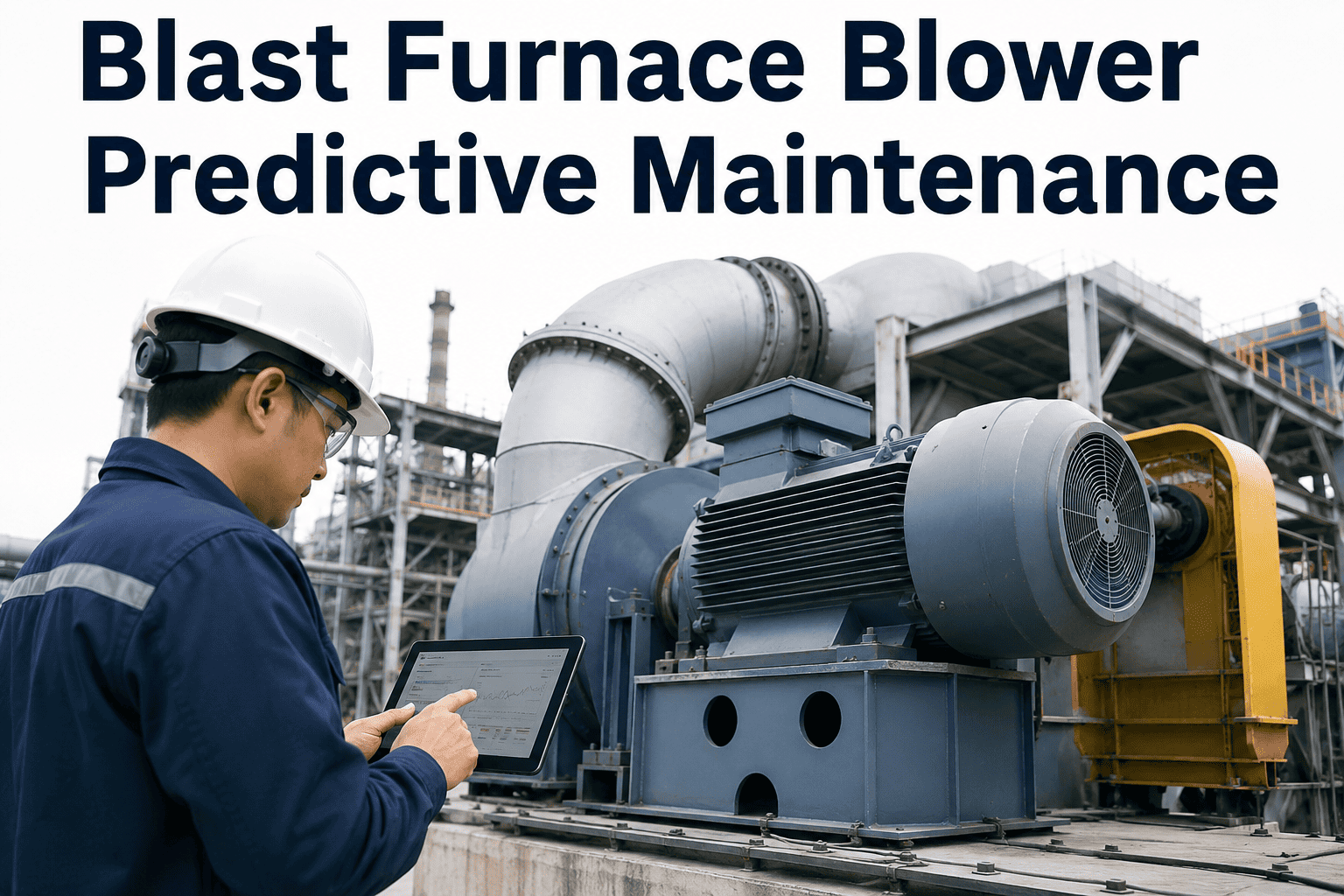
Read More
The blast furnace blower is the one piece of rotating equipment that cannot fail without stopping the furnace — every cubic meter of air reaching the tuyeres passes through it. Running at up to 10,000 RPM under continuous thermal and mechanical st

Read More
An EAF transformer failure doesn't just take out one asset — it shuts down the entire melt shop, because there's no bypass path around the unit feeding your furnace. These transformers run under some of the harshest electrical stress in any indust

Read More
Blast furnace steelmaking releases roughly 1.8 to 2.2 tonnes of CO2 for every tonne of crude steel produced, and that chemistry isn't going away soon — hydrogen-based steel is projected to reach only 3-5% of global capacity by 2035. For the other
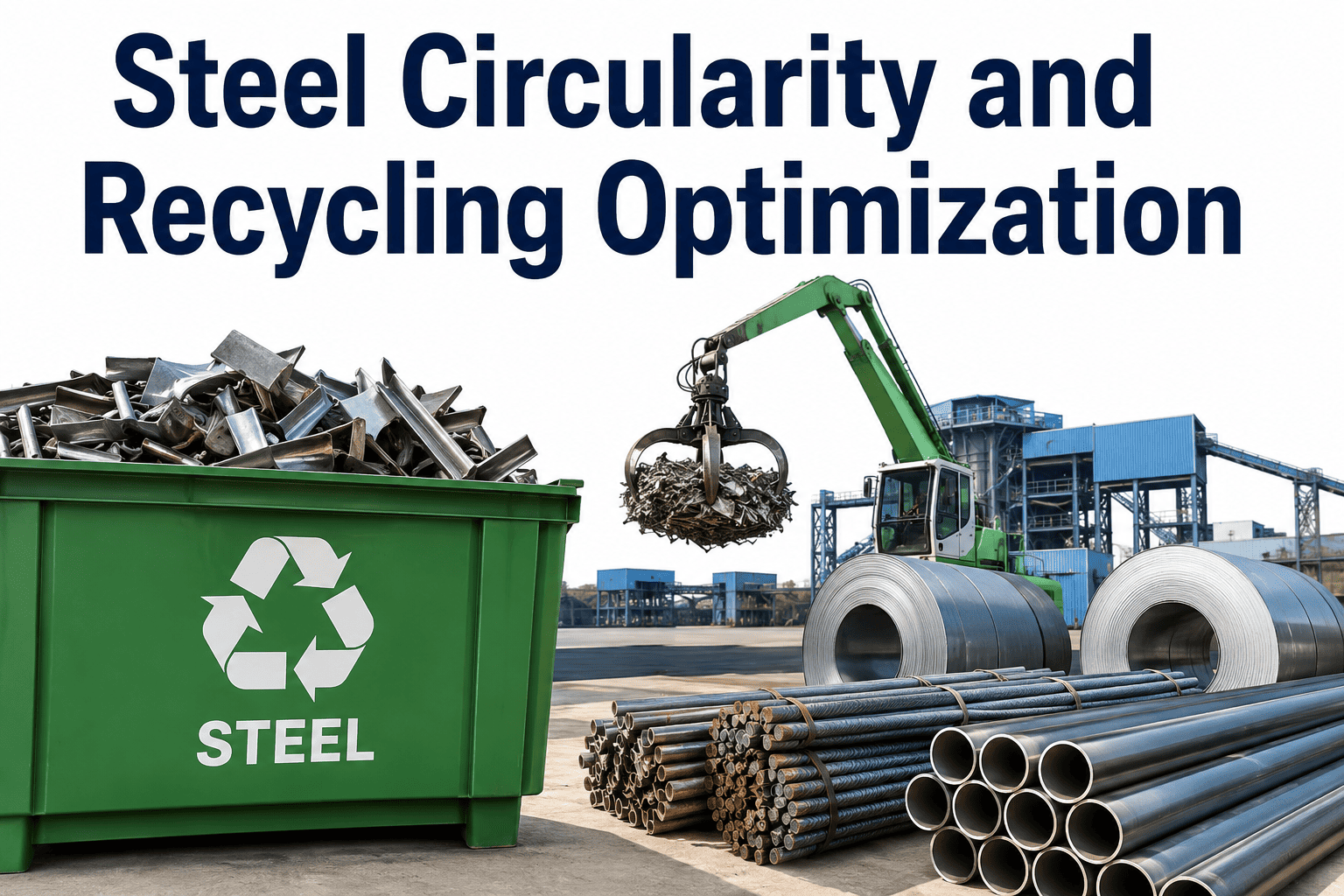
Read More
Scrap steel is the highest-leverage cost variable in any electric arc furnace shop, often accounting for up to 77% of total production cost per heat, yet most melt shops still choose their scrap mix on availability and operator experience rather t
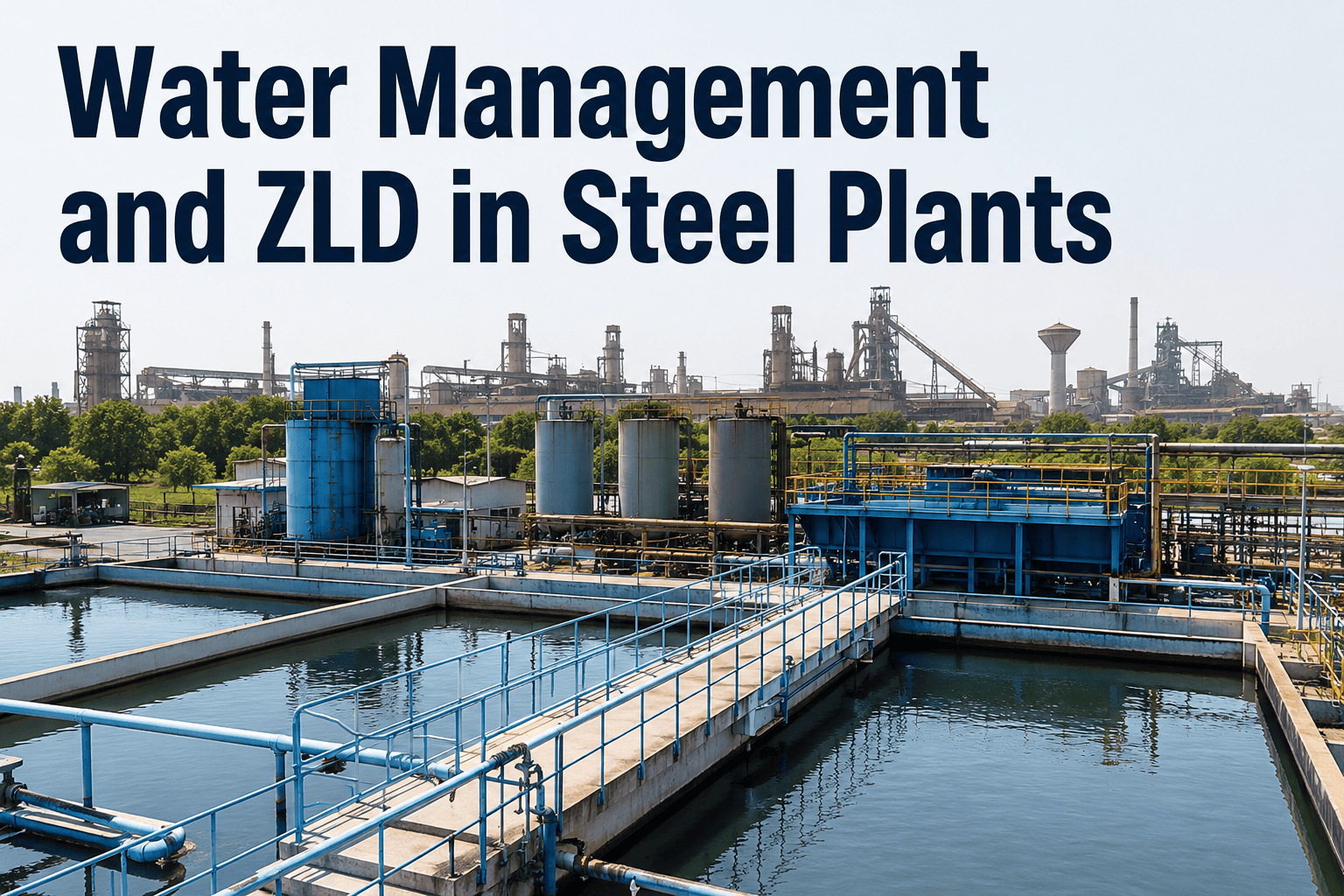
Read More
Integrated steel mills can draw up to 28,000 cubic meters of water an hour, and every liter of it is now under regulatory watch. Water permits are tightening across every major steel-producing region, and a single upset in cooling water chemistry
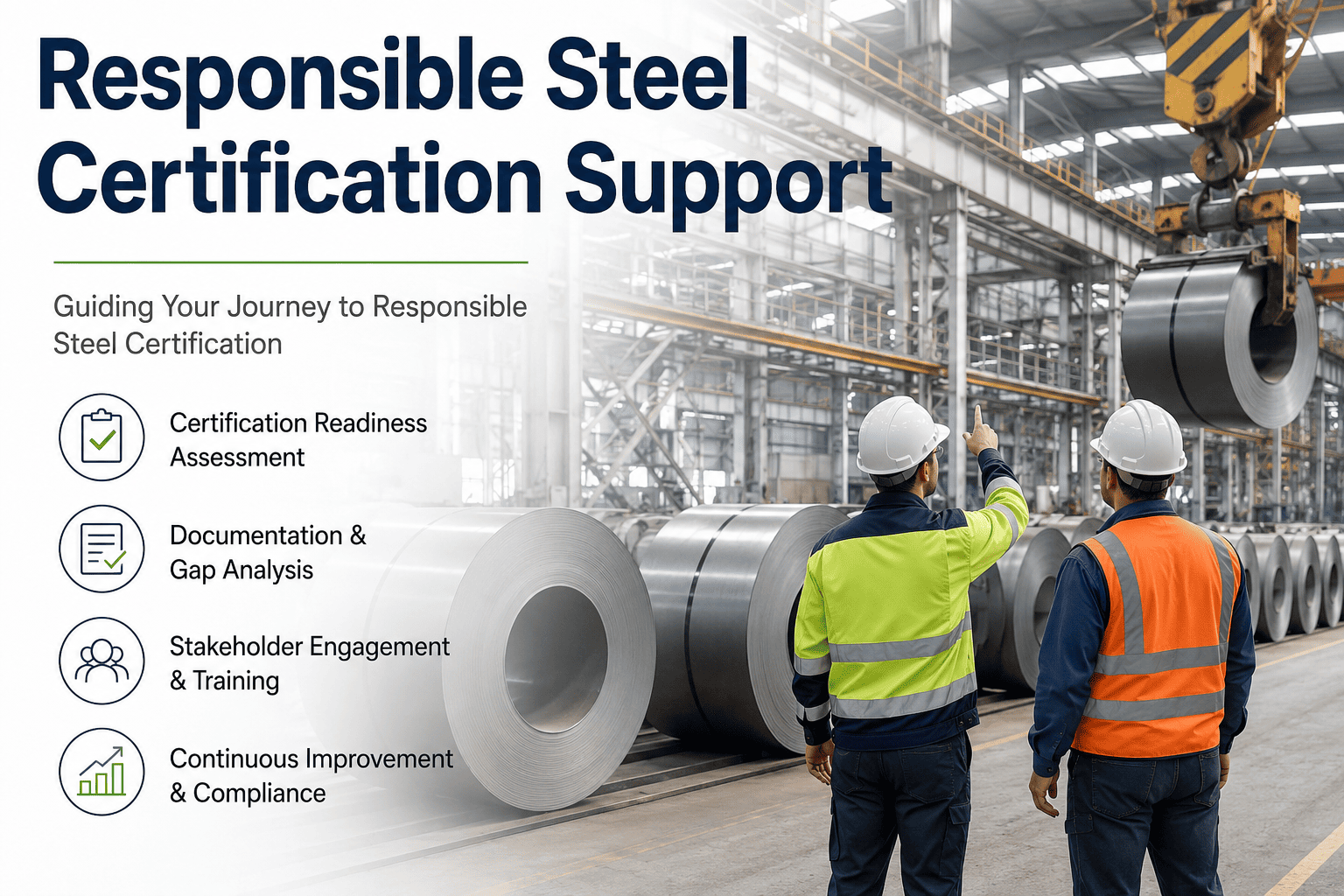
Read More
ResponsibleSteel certification now spans 13 principles and roughly 530 individual requirements, covering everything from blast furnace maintenance logs to community engagement records and greenhouse gas accounting. What used to be a competitive di

Read More
Most steel AI pilots die in the demo zone. The vendor arrives with a polished slide deck, a working demo on a competitor's data, and a promise to "show value in 90 days." Three months in, the plant has a dashboard nobody logs into, a model that fl
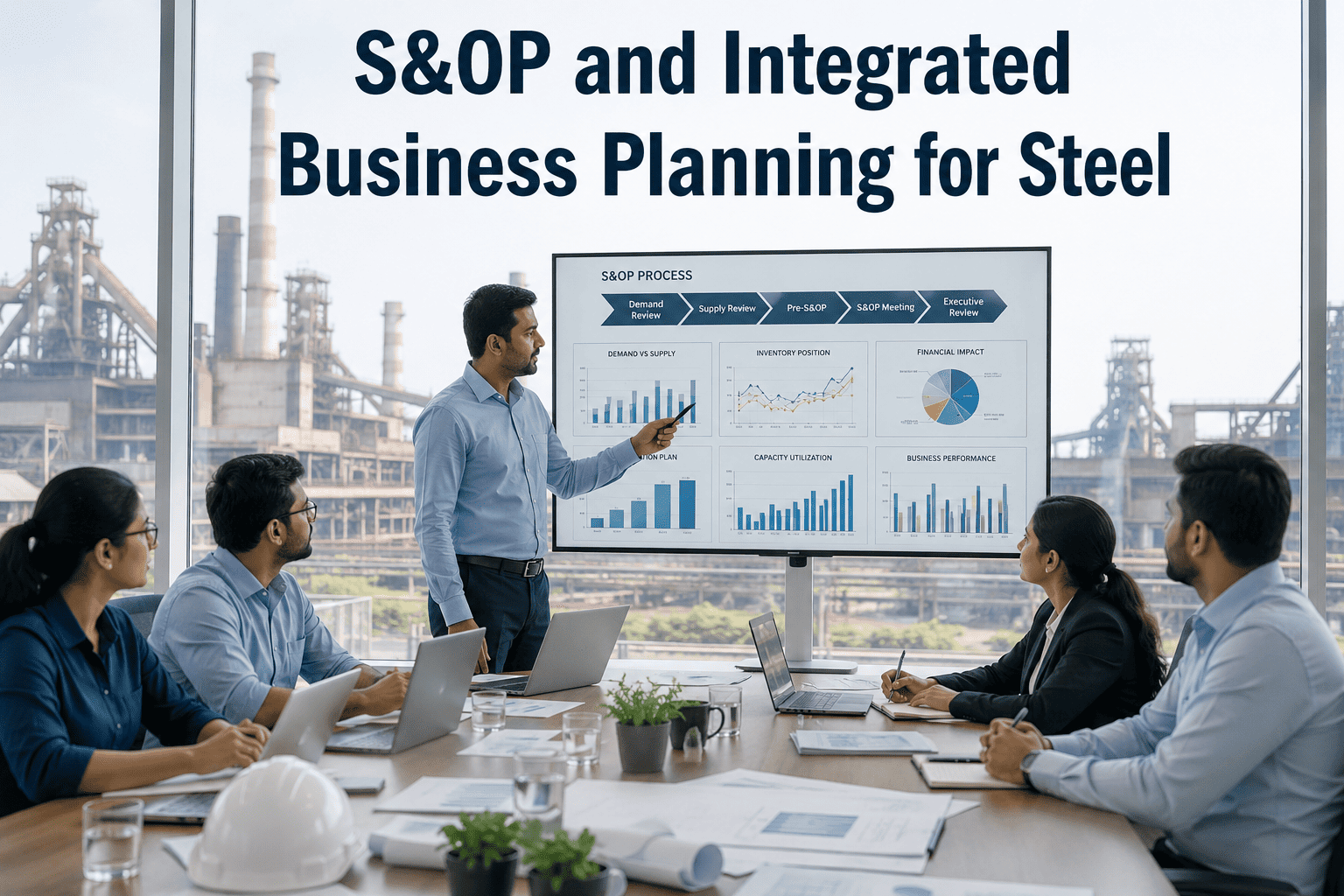
Read More
The S&OP cycle in most integrated steel groups still runs on the rhythm it did fifteen years ago — demand review week one, supply review week two, pre-S&OP week three, executive S&OP week four. By the time the executive plan is signed,

Read More
Walk into any integrated steel plant IT room in 2026 and the wallboard tells the same story — SAP S/4HANA or ECC running the enterprise, SAP PP driving production planning, SAP PM handling maintenance, a Level 3 MES sitting between ERP and the flo

Read More
A modern steel plant control room already runs on AI — mold-level sensors flag caster breakout risk in under 200 ms, BOF models predict end-point carbon within 0.02%, and hot strip vision tags defects at line speed. But the operator at the HMI at
Read More
Every AI model that touches a steel plant's control systems widens the plant's attack surface by definition — it needs a data connection somewhere it didn't have one before. That isn't a reason to avoid AI, but it is a reason cybersecurity leads n
Read More
Digital twin has become one of the most overused terms in steel, and one of the most under-delivered. Plenty of vendors will sell a 3D visualization of a blast furnace and call it a digital twin, but a visualization that doesn't ingest live sensor

Read More
Inside most steel plants today, two teams run the same facility on two different maps. The OT team owns the PLCs, the SCADA screens, and the millisecond-level control loops that keep a caster or a rolling mill from tearing itself apart. The IT tea
Read More
Ask five people at a steel plant to define MES and MOM and you'll often get five different answers — and that confusion is exactly why so many AI integration projects end up bolted onto the wrong layer. MES tracks what happened on the shop floor:

Read More
Steel mill PPE requirements go well beyond a standard hard hat and safety glasses — face shields near hot work, leather aprons around molten metal, and specific heat-resistant footwear all carry their own compliance rules, and each varies by zone.
Read More
Overhead cranes move heavy, often molten or superheated loads across a shared bridge and runway system, frequently within the same bay as one or more other cranes on the same rail. Crane-on-crane collisions and dropped loads sit among the most ser

Read More
Molten metal handling sits at the top of every steel plant's risk register, and for good reason — a breach, a splash event, or a mishandled ladle transfer can escalate faster than any other hazard on the floor. Traditional safety programmes rely o

Read More
Every mill stand, every caster segment, and every coiler in the plant depends on a hydraulic system that most maintenance teams only think about when a pump fails or a cylinder starts leaking. Oil quality is the leading indicator behind nearly eve
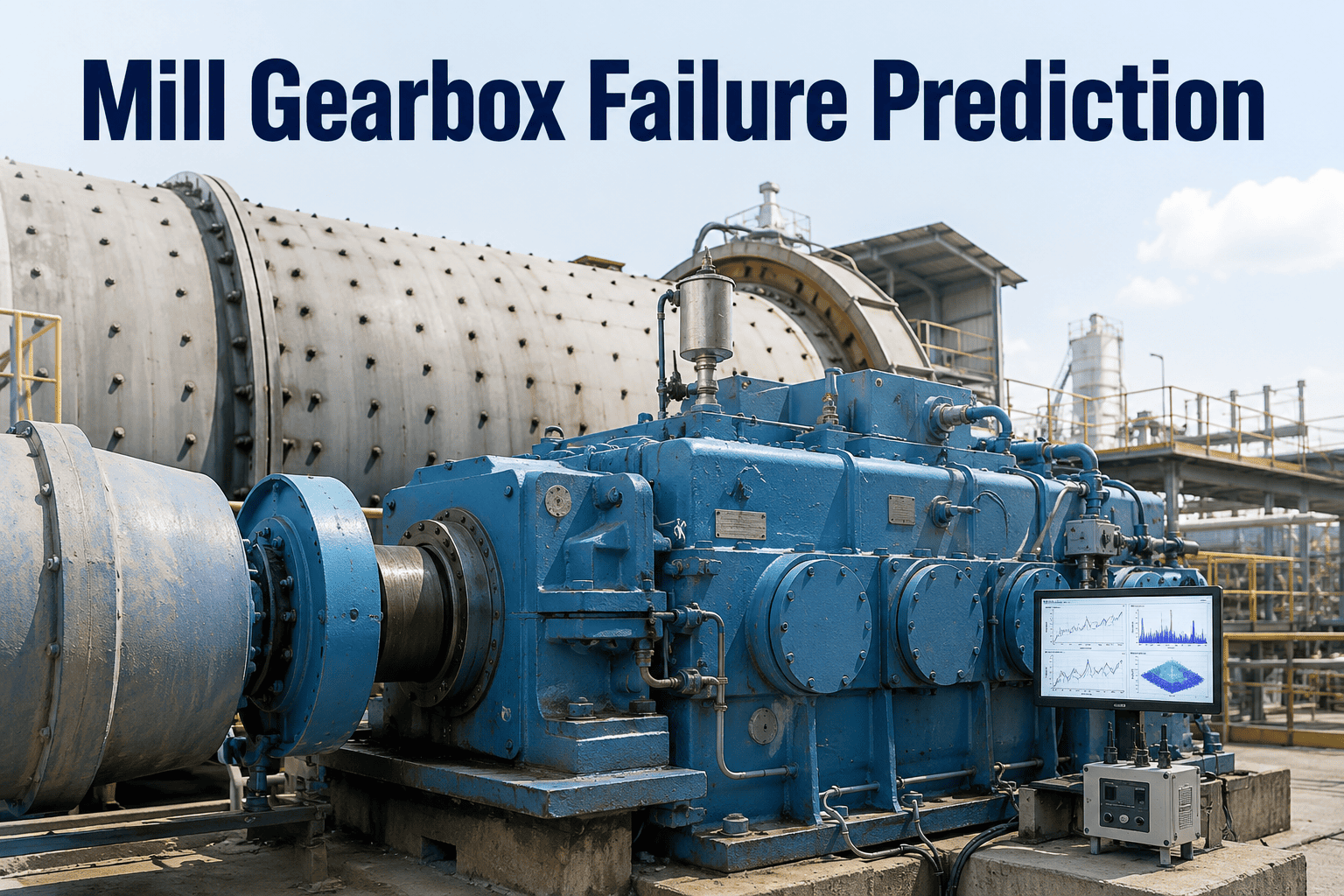
Read More
A single mill stand gearbox can weigh over 40 tonnes and drive thousands of horsepower into a rolling stand around the clock. When one fails without warning, the plant is not looking at a few hours of downtime — it is looking at a crane mobilisati

Read More
Induced draft fans, cooling tower fans, and process blowers rarely get the maintenance attention that mill stands and cranes receive, yet a single failed fan can force a full furnace shutdown just as fast as a major mechanical failure elsewhere in

Read More
Induced draft fans, booster fans, and dedusting fans run continuously in some of the harshest gas streams a rotating asset ever sees — hot, dust-laden, and often corrosive air moving at high velocity around the clock. That combination erodes blade

Read More
A continuous annealing line only gets one pass at every meter of strip. If the heating zone runs a few degrees hot, if the soaking time drifts, or if the protective atmosphere's dew point creeps upward for even ten minutes, the mechanical properti

Read More
A single steel plant can run several hundred pumps at once — cooling water circuits keeping furnaces and casters from overheating, hydraulic pumps driving rolling mill actuation, and process pumps moving descaling and pickling fluids. Reliability

Read More
A cold mill work roll transfers its surface condition directly onto every square foot of strip it touches, and a backup roll bearing that is quietly degrading transfers vibration into that same surface long before anyone hears a bearing whine on t

Read More
Every hot strip mill scheduler carries the same three constraints in their head at once — which grades can safely follow each other without a transition downgrade, how far a width campaign can run before edge quality drifts, and how many more coil

Read More
Automotive-grade cold rolled steel gives a process engineer almost no room to work with — thickness tolerances measured in microns, flatness specs tight enough that a customer's stamping die will reject a coil with visible waviness, and surface ro

Read More
A 15-second gap in descaling coverage on your hot strip mill does not show up on any gauge in the pulpit — it shows up three weeks later as a customer claim for pitted surface on a coated automotive panel, long after the coil has left the plant an

Read More
The last thirty seconds of a hot-rolled coil's life on the mill happen at the coiler, and they are unforgiving — there is no second chance to rewind a coil that has already telescoped or wound loose. The mandrel has to expand at exactly the right
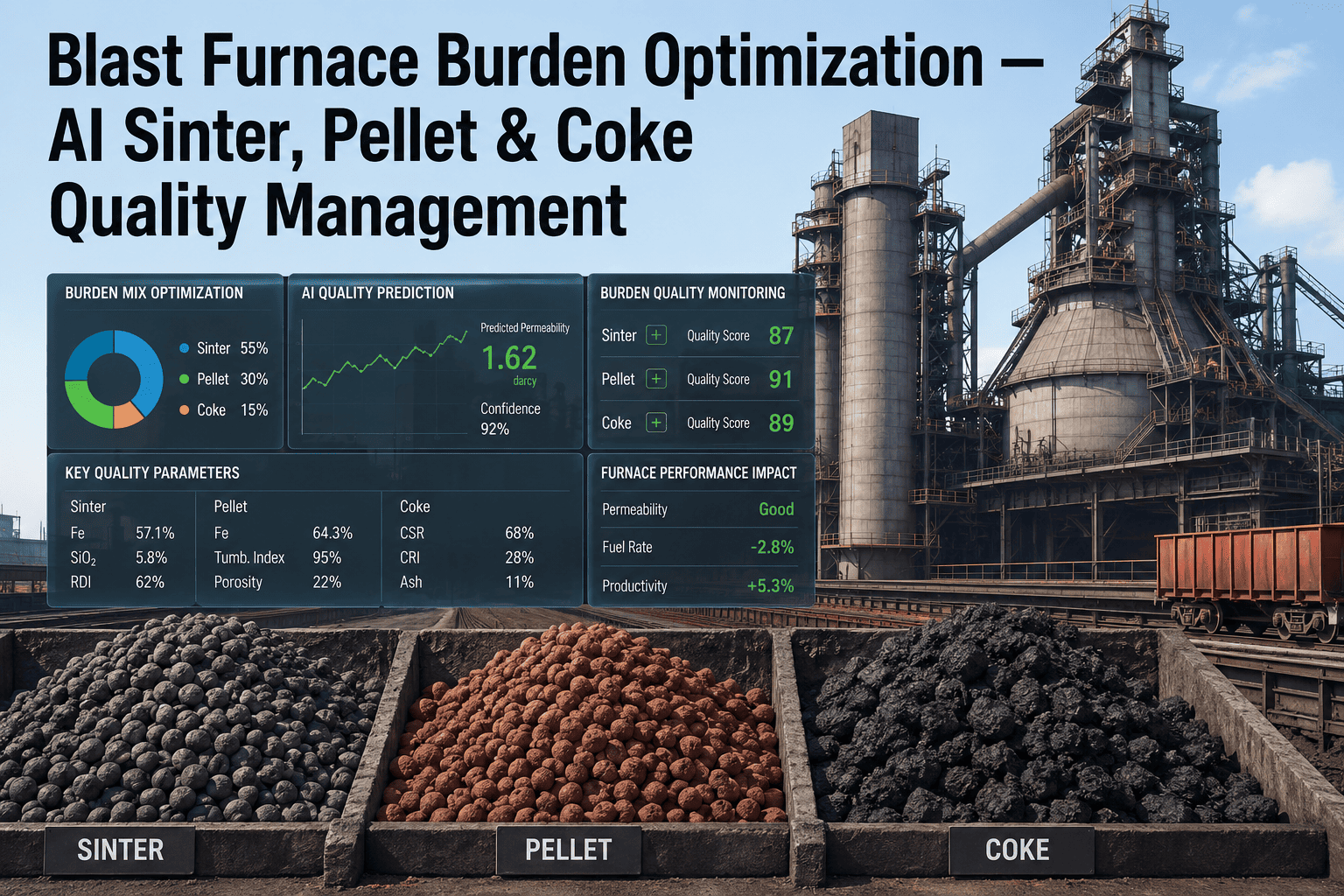
Read More
Coke rate is the single largest controllable cost lever on a blast furnace, and burden quality — sinter reducibility, pellet strength, coke properties, and alkali load — determines how much of that cost is actually within reach on any given day. M
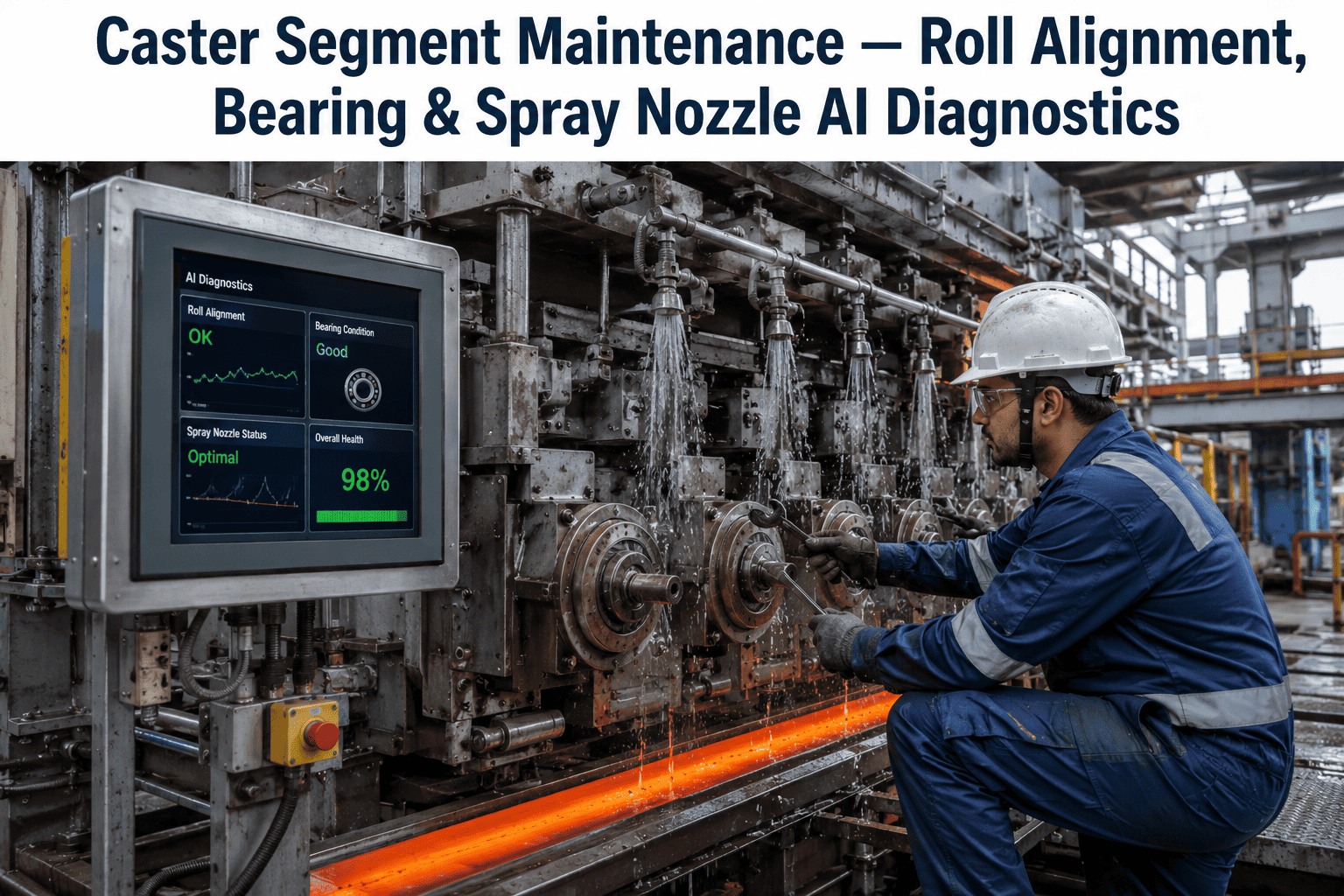
Read More
Continuous caster segments operate under some of the most punishing thermal and mechanical conditions in steelmaking. Each segment houses dozens of rolls, bearings, and spray nozzles that must maintain precise alignment and cooling uniformity to p
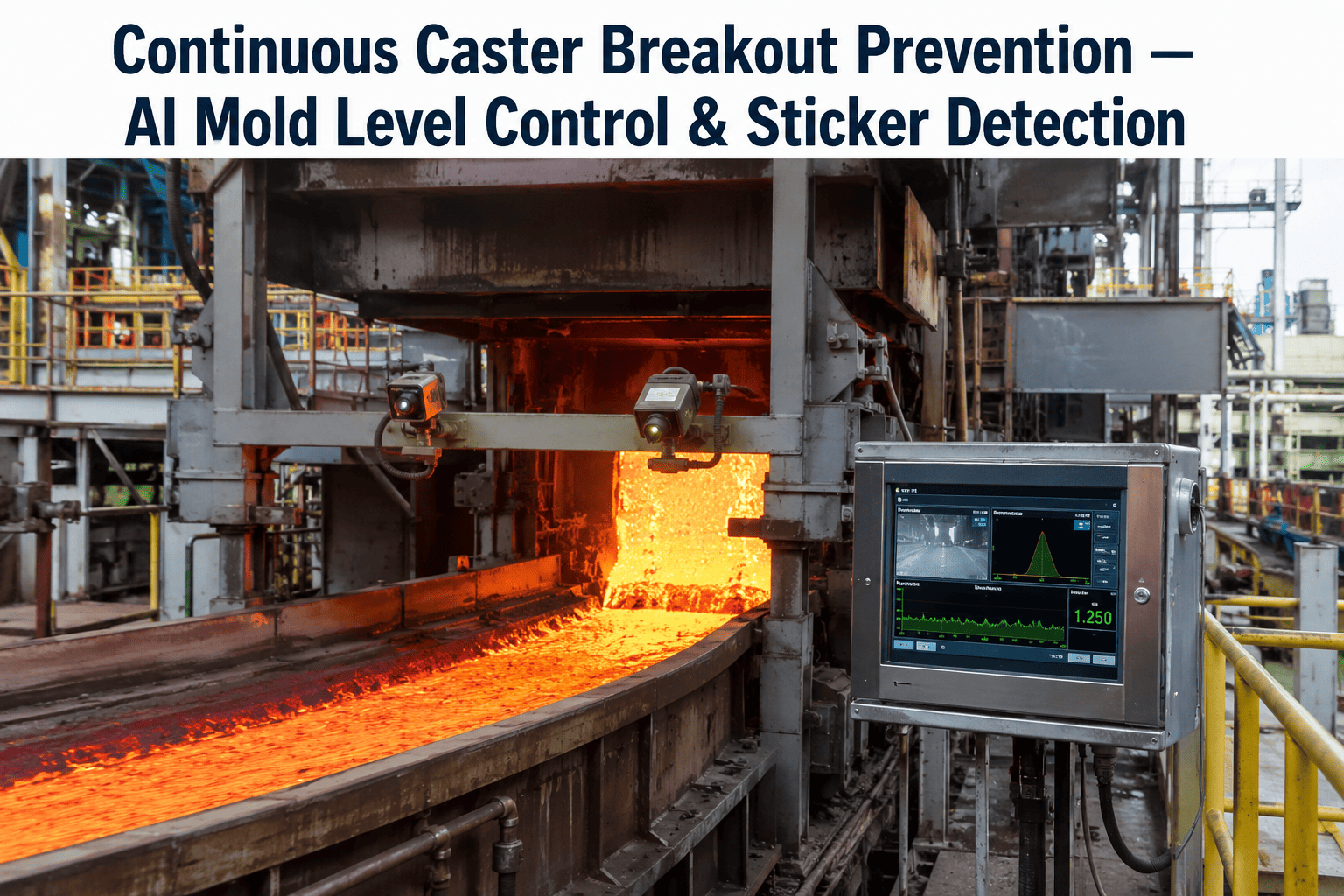
Read More
A breakout at the continuous caster is one of the few events that can halt production, damage capital equipment, and put personnel at risk in the same incident. Most breakouts are preceded by recognizable thermocouple temperature patterns and mold

Read More
A blast furnace cooling system rarely fails all at once. Copper staves and plate coolers degrade gradually through water-side fouling, thermal fatigue cracking, and slow flow reduction — and by the time a leak is confirmed visually or a shell hot
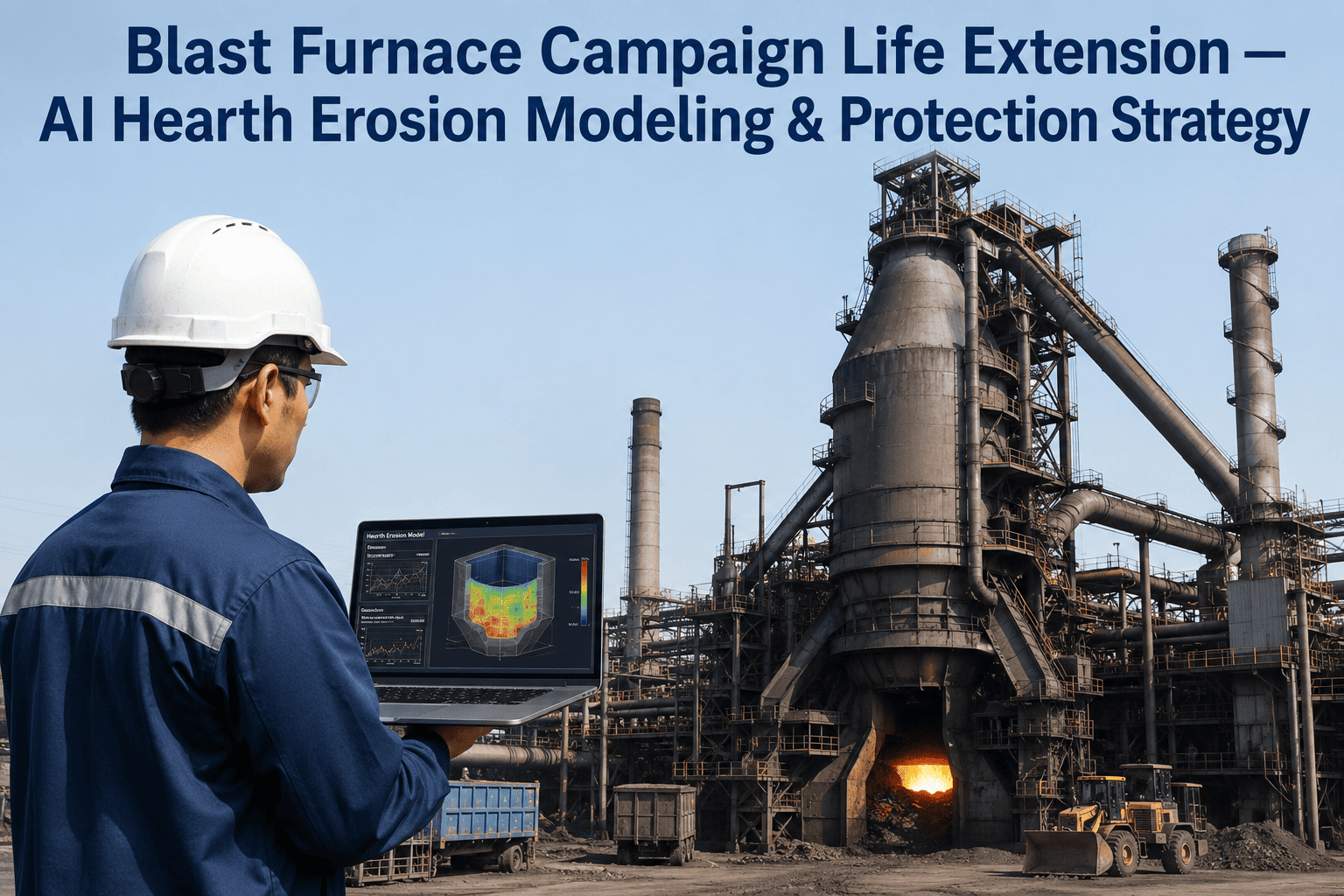
Read More
Hearth erosion is the single variable that ultimately decides when a blast furnace campaign ends, yet most furnaces still plan relining timelines around conservative rule-of-thumb estimates rather than the actual erosion pattern their hearth is fo
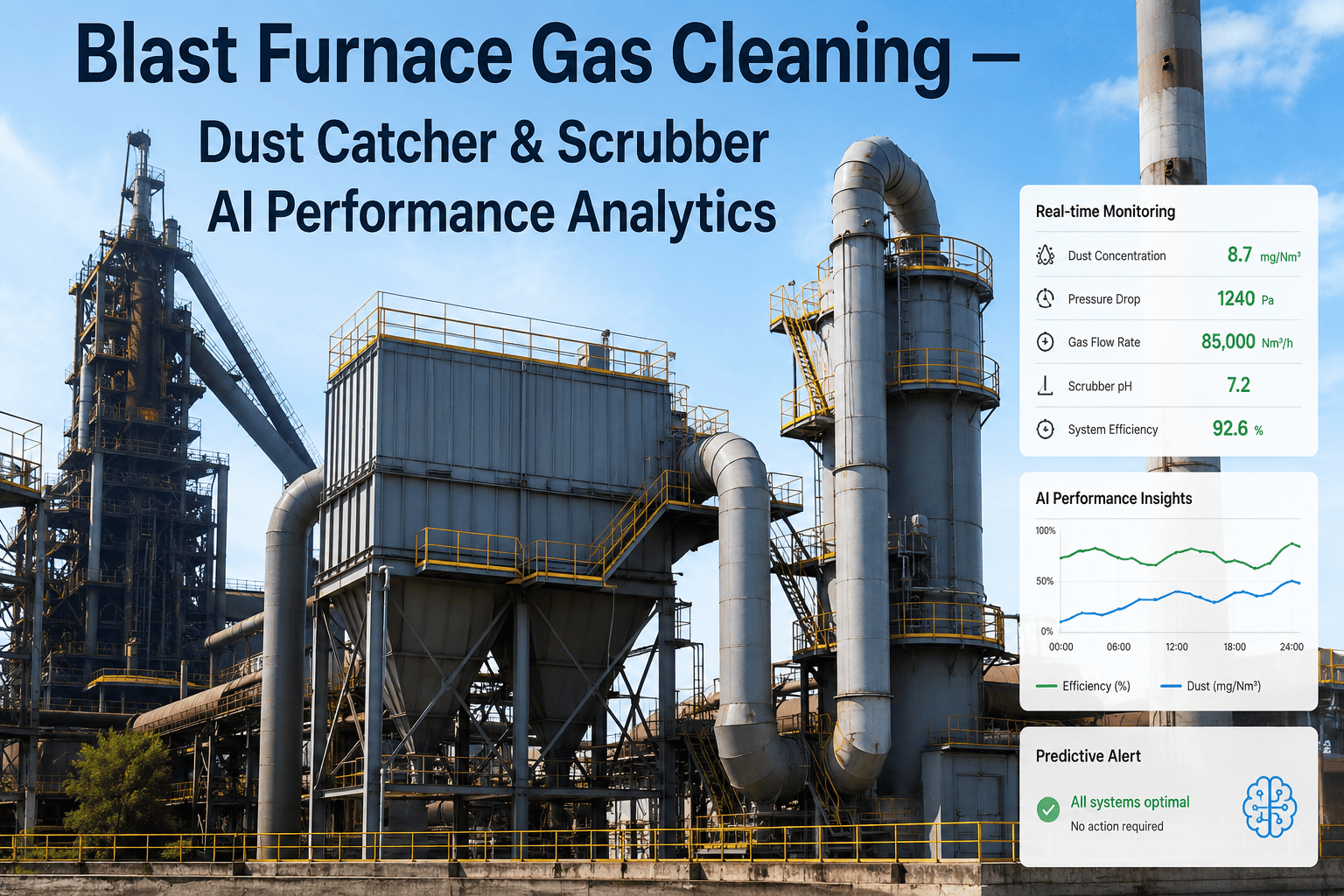
Read More
Blast furnace gas cleaning systems fail quietly. A dust catcher losing capture efficiency, a scrubber pressure drop drifting outside range, or a gas main slowly filling with fines rarely trips an alarm before it becomes a hot stove firing problem
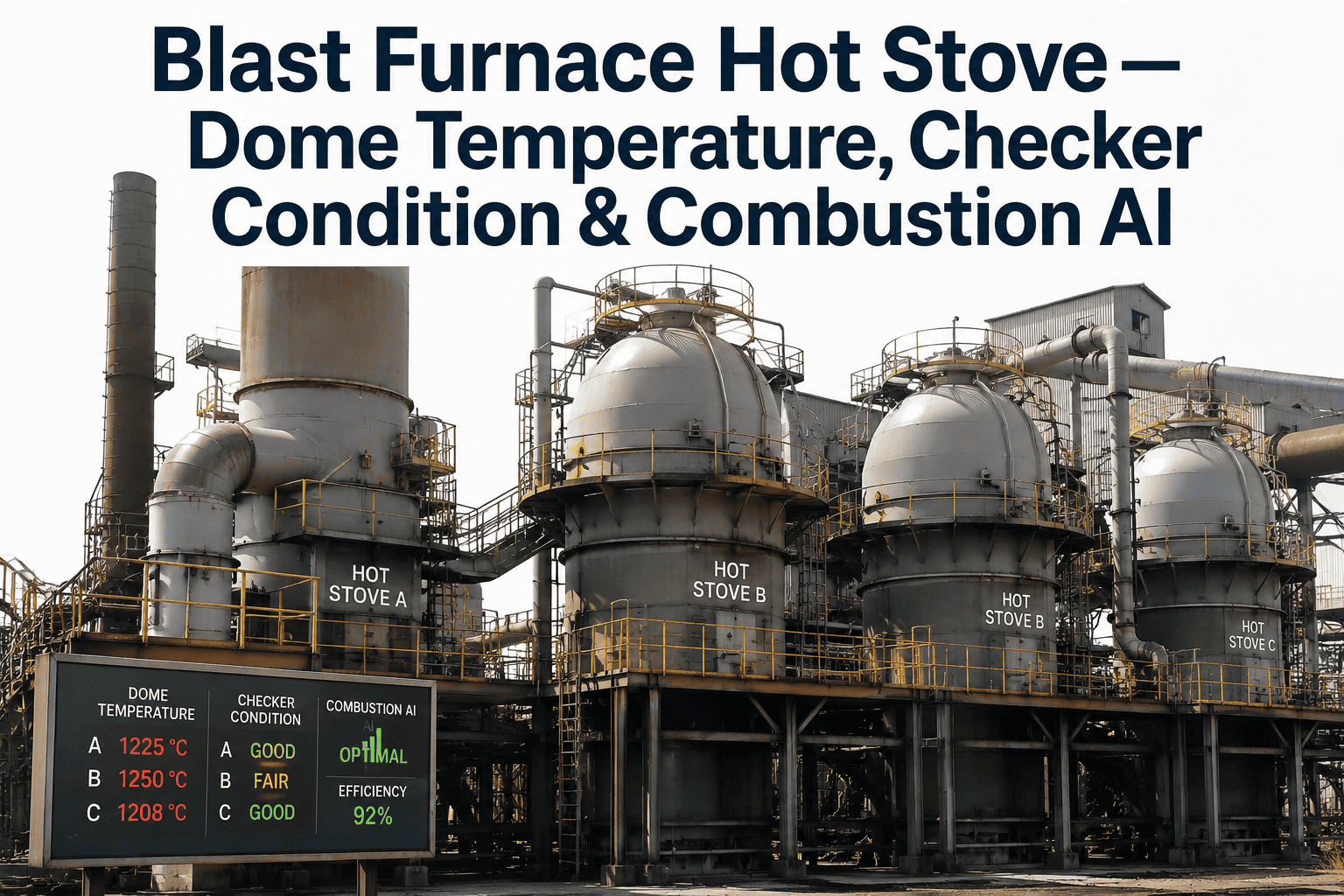
Read More
Hot stove performance sets the ceiling for everything downstream of it — hot blast temperature, coke rate, and ultimately how much hot metal a furnace can produce per day. Yet most stove operations are still run on fixed firing schedules and dome
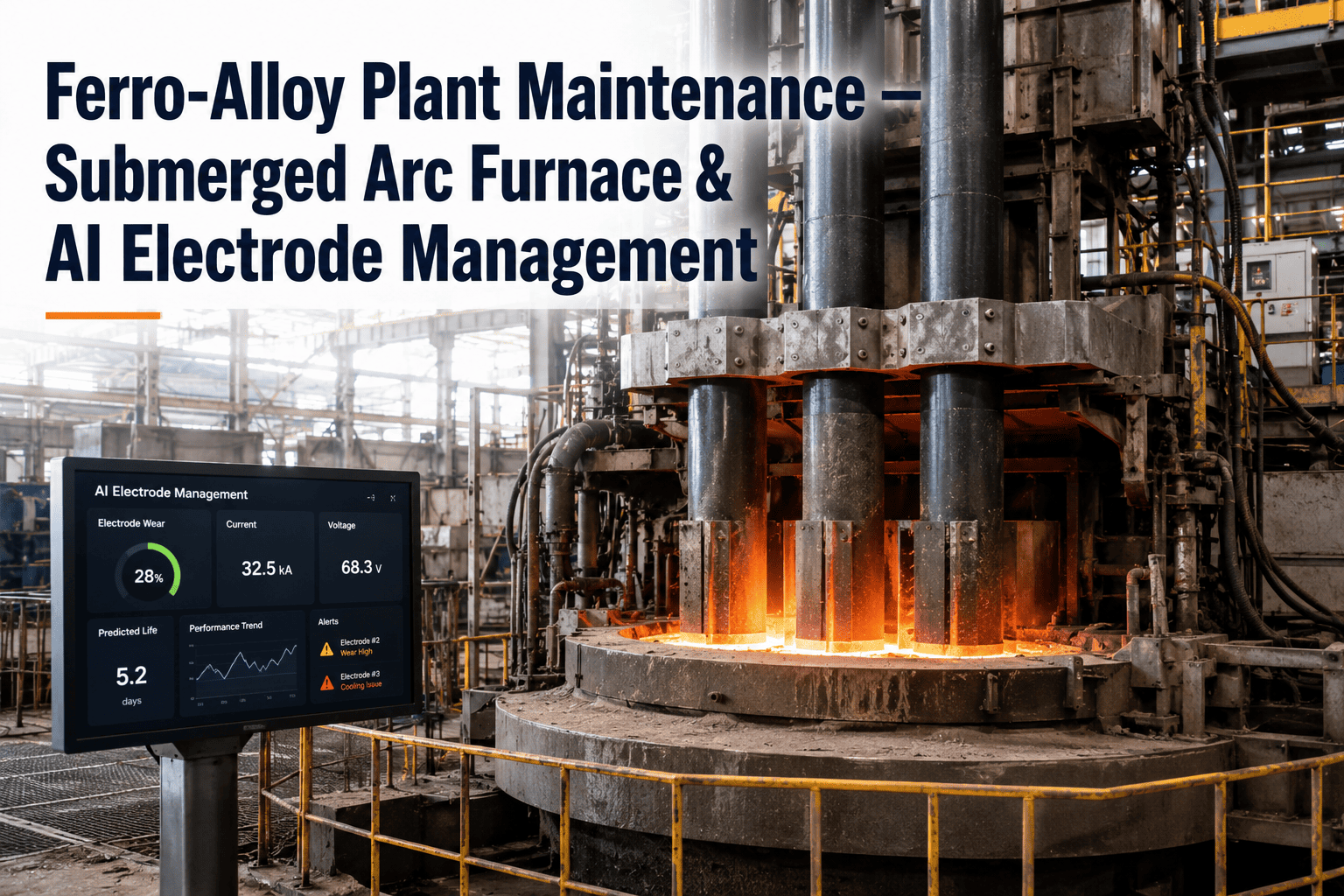
Read More
Ferrochrome, ferromanganese, and ferrosilicon producers all run the same core asset — a submerged arc furnace — but the maintenance pressure it puts on a plant manager is unlike almost anything else in the metals industry. Electrode consumption al
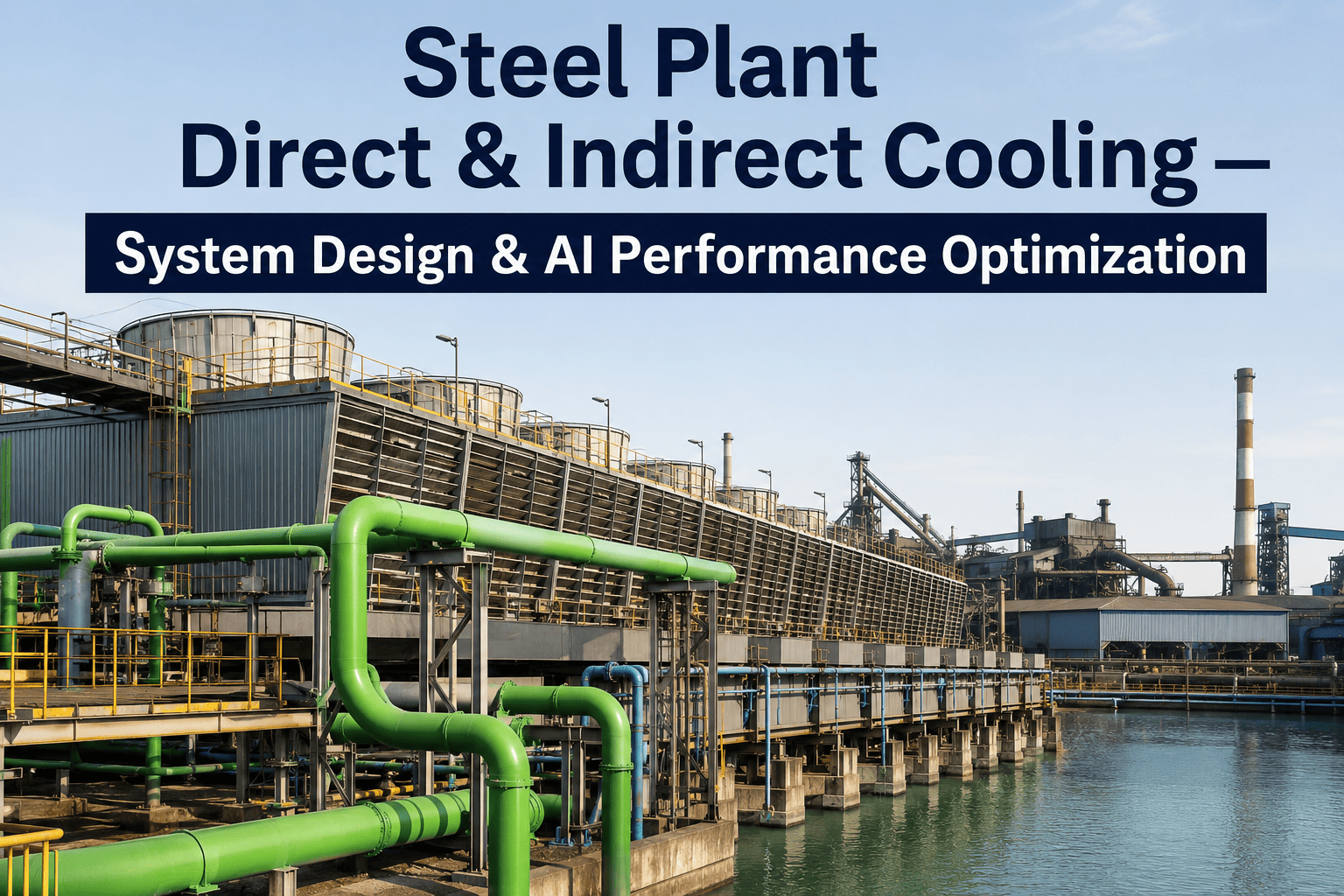
Read More
Every steel plant runs two fundamentally different cooling philosophies at once, often without anyone framing it that way. Blast furnace staves and caster segments depend on direct water contact for aggressive heat removal, while mill roll cooling
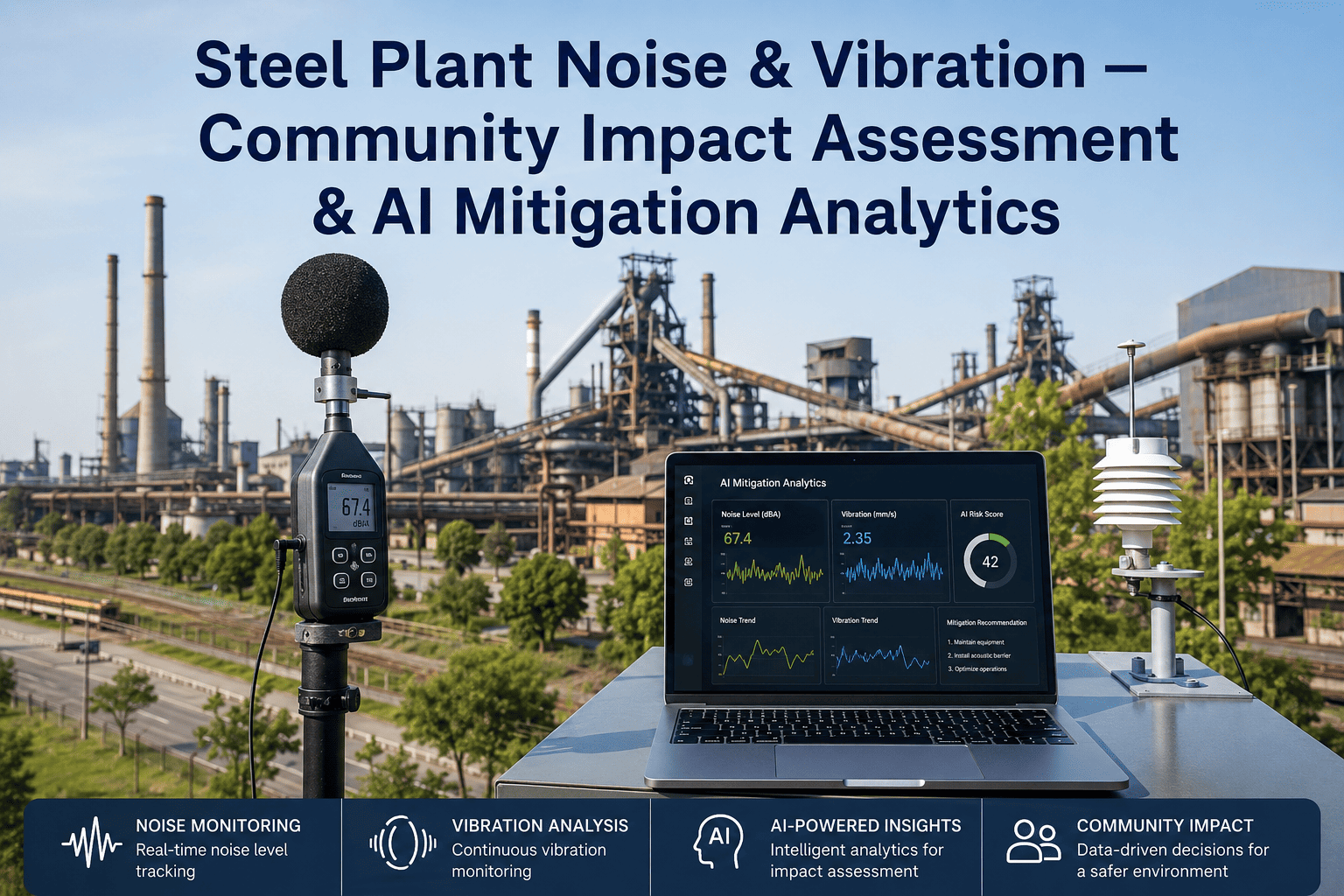
Read More
A steel plant operating well within every internal safety threshold can still generate the noise complaint that ends up on a city council agenda. EAF tapping, rolling mill operation, and material handling each produce distinct acoustic signatures
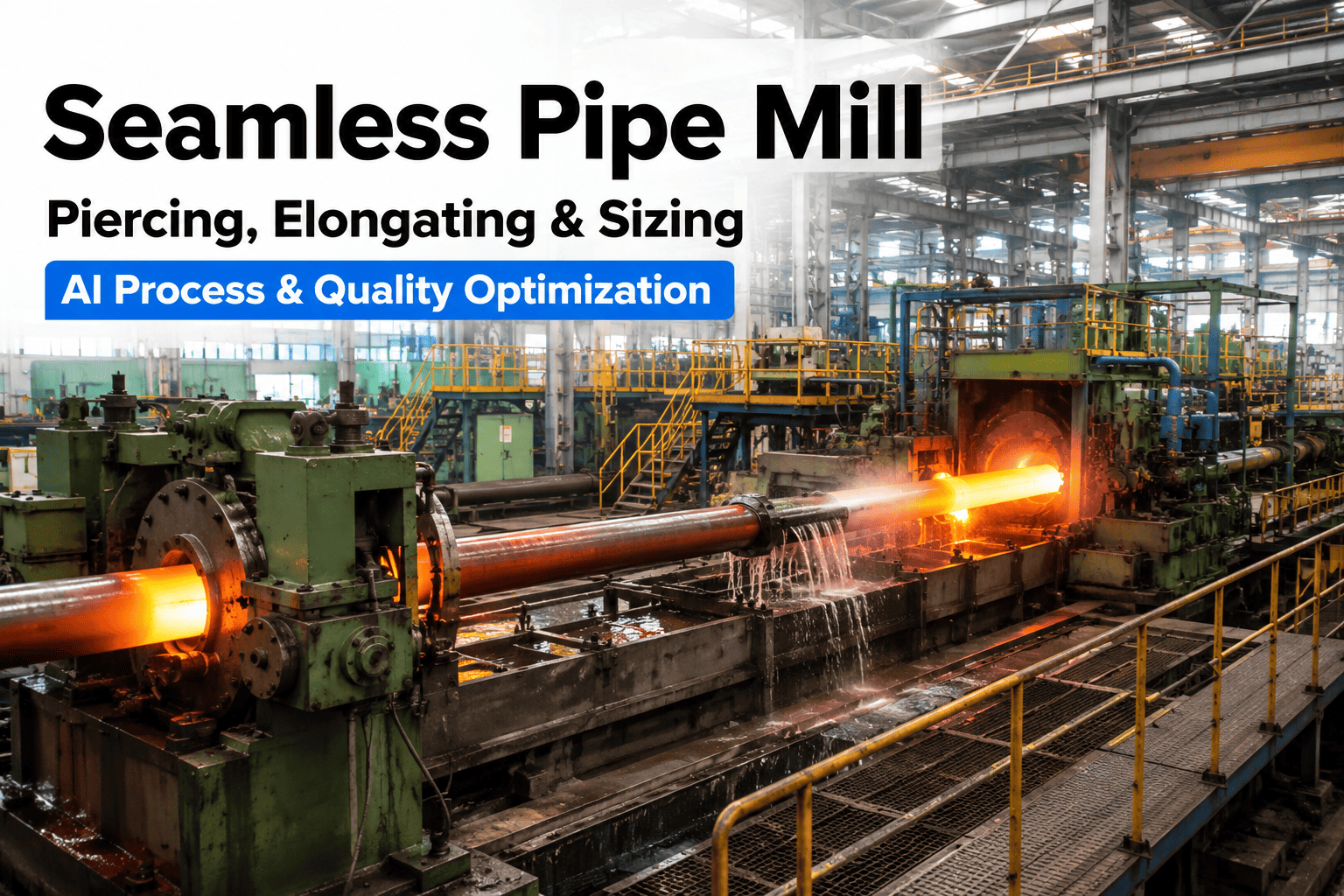
Read More
A seamless pipe mill lives or dies on wall thickness tolerance, and that tolerance is decided in three process steps most plants still control largely by operator experience. Piercing sets the initial hollow, elongating refines wall uniformity, an
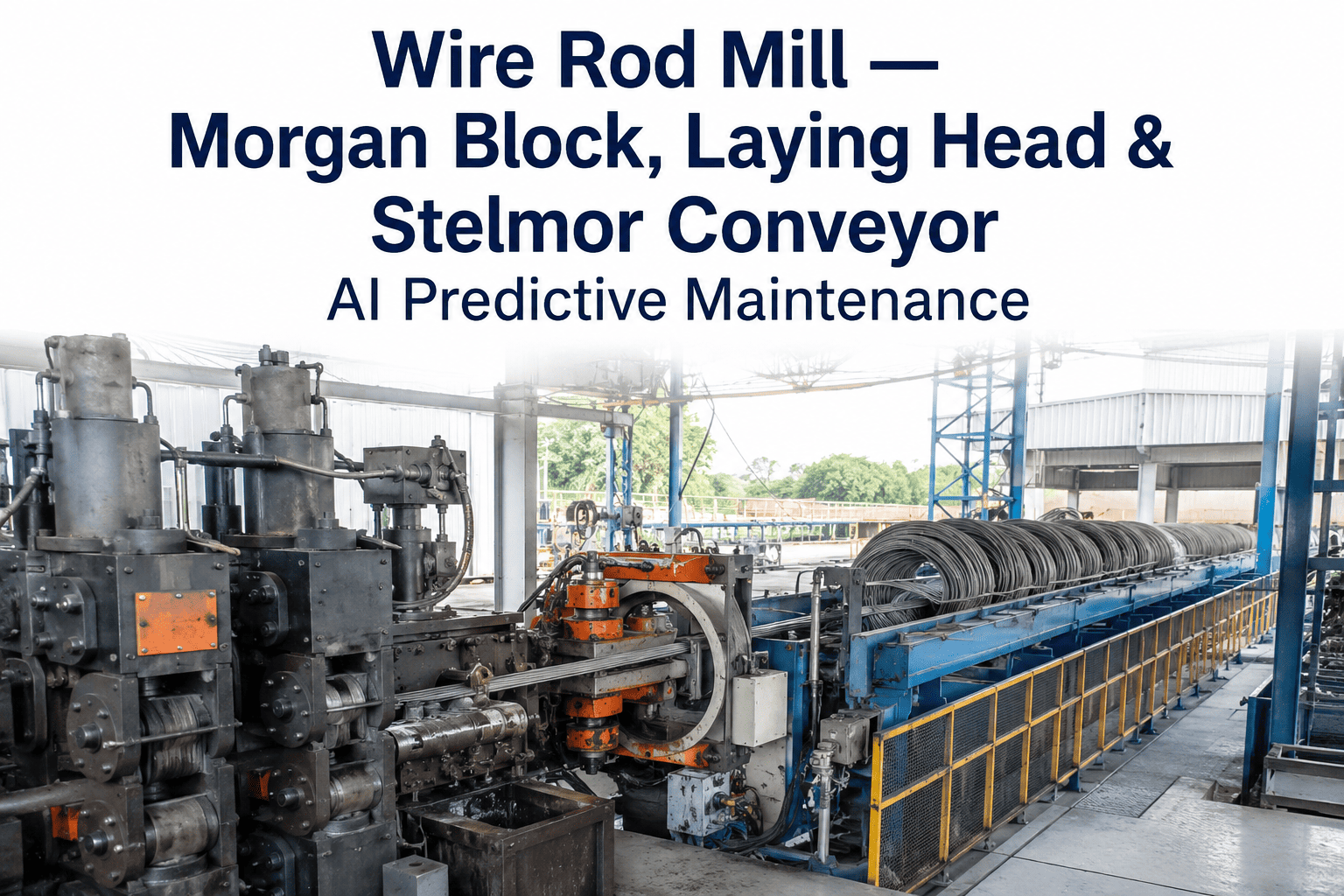
Read More
Wire rod finishing runs faster than almost any other process in a steel plant, with rod exiting the Morgan block at speeds that leave almost no margin for a slow reaction. A bearing starting to fail in a finishing block or a laying head running a

Read More
Most steel plants generate more process data than any team could ever manually review — millions of tags streaming from ironmaking, steelmaking, casting, and rolling every single shift. Yet that data sits locked inside PI historians, Honeywell PHD
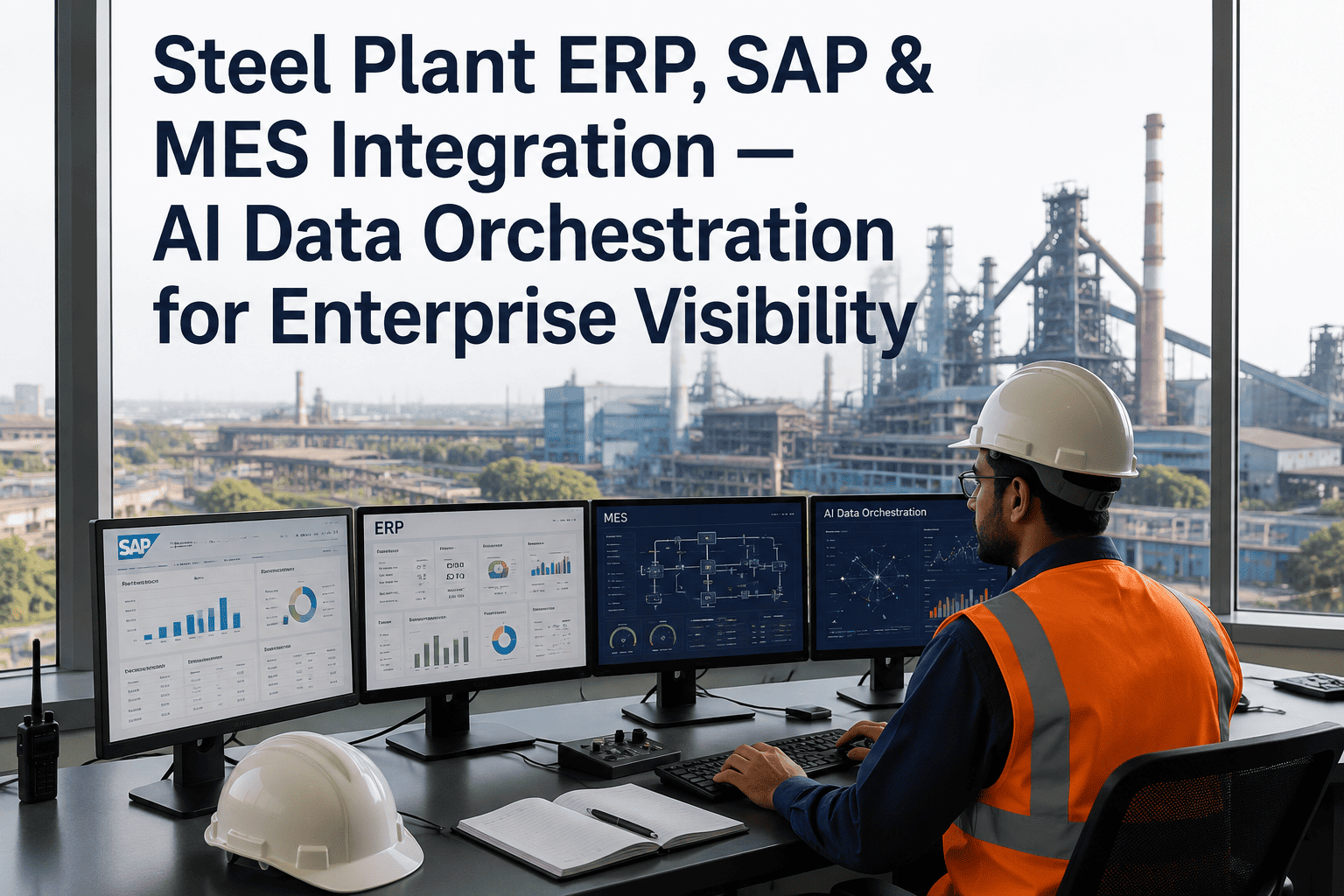
Read More
Ask a steel plant operations director where a single ton of production sits right now — commercially, financially, and physically — and the honest answer usually takes three phone calls and two spreadsheets. SAP knows the order. MES knows the proc

Read More
The electric arc furnace (EAF) off-gas system is a critical yet often overlooked component in steelmaking, tasked with capturing and treating vast volumes of hot, dust-laden gases generated during scrap melting and refining. Canopy hoods, ductwork
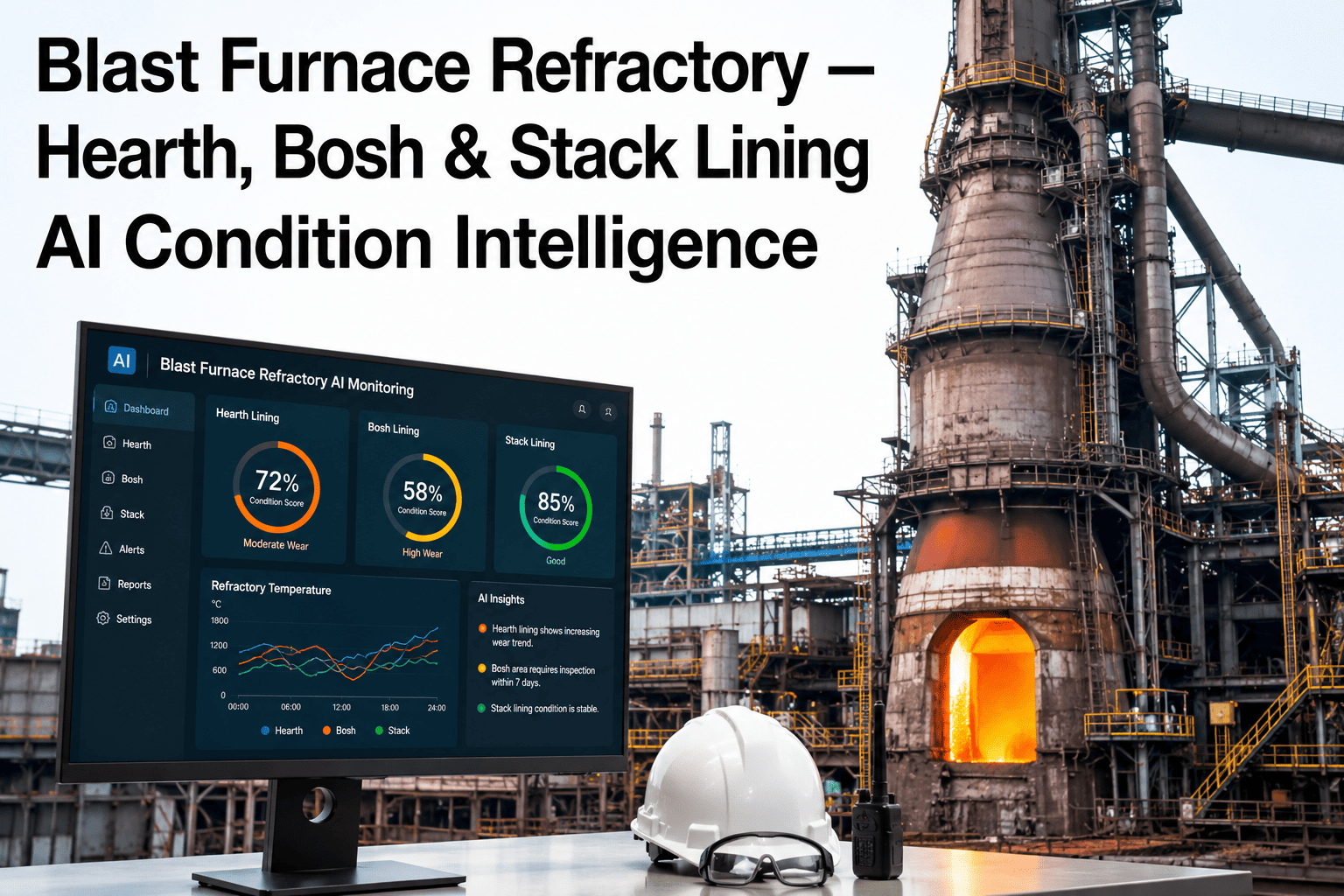
Read More
Blast furnace refractory linings are the single most capital-intensive component of ironmaking operations, with a single campaign often exceeding $50 million in refractory materials and installation costs. The hearth, bosh, and stack zones each fa

Read More
The electric arc furnace remains the cornerstone of modern steelmaking, yet its energy intensity presents both a significant operational cost and a strategic lever for competitive advantage. With energy constituting up to 30% of total production c

Read More
In the high-stakes environment of modern steel manufacturing, refractory materials represent a critical yet often overlooked component of operational expenditure and production reliability. These specialized linings, which protect furnaces, ladles
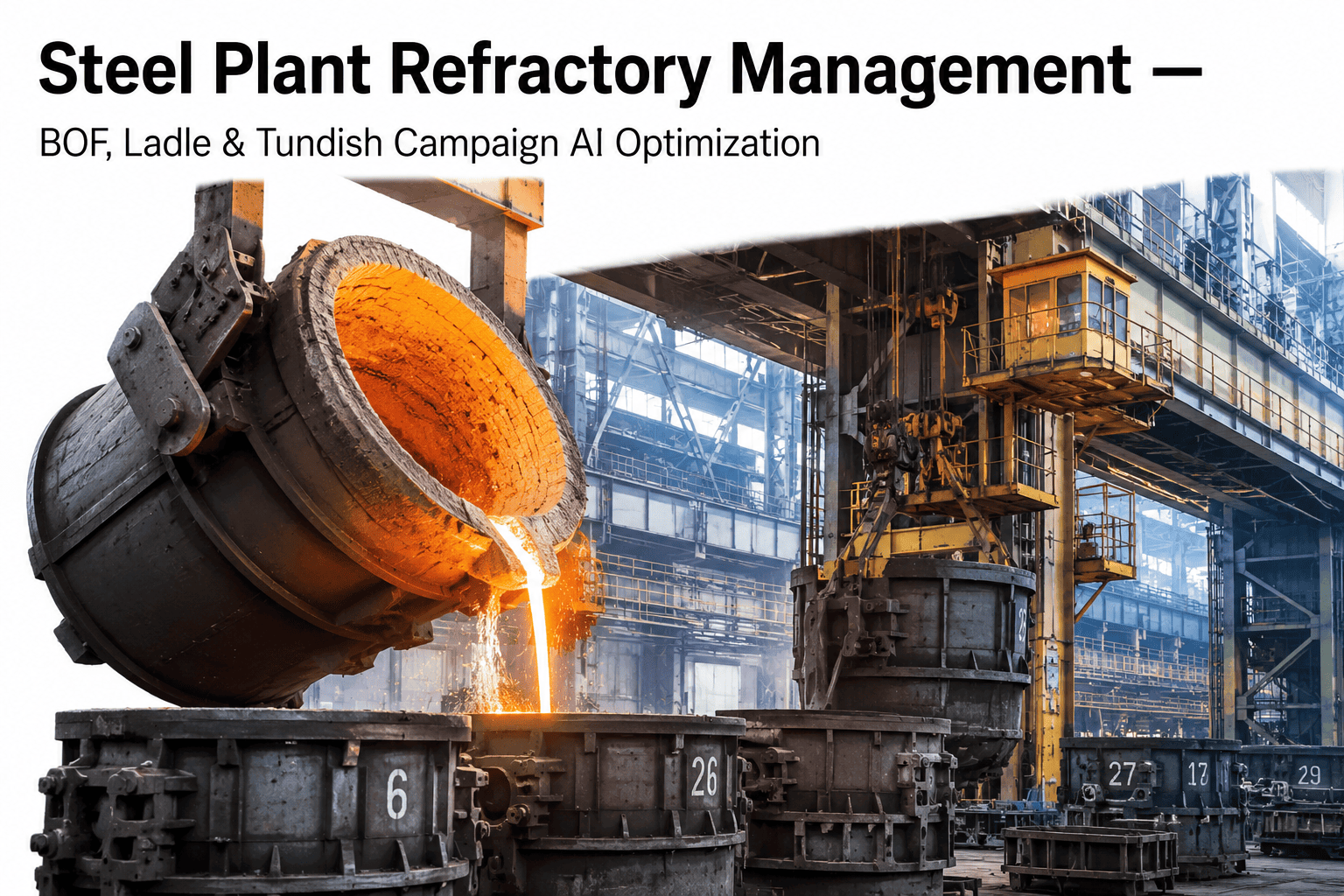
Read More
In the demanding environment of a modern steel plant, the refractory linings of basic oxygen furnaces (BOFs), ladles, and tundishes represent both a critical operational asset and a significant cost center. Traditional refractory management relies

Read More
In the high-stakes environment of a steel plant scrap yard, the efficiency of material handling directly impacts the entire production chain. From receiving scrap metal to preparing and charging EAF and BOF furnaces, every step relies on a fleet o

Read More
In the high-stakes environment of Electric Arc Furnace (EAF) steelmaking, water-cooled panels and roofs are critical yet vulnerable components that operate under extreme thermal and mechanical stress. A single undetected water leak into the furnac

Read More
The global steel industry stands at a critical inflection point, where traditional operations centers, fragmented across ironmaking, steelmaking, casting, and finishing, can no longer meet the demands of modern manufacturing efficiency and profita
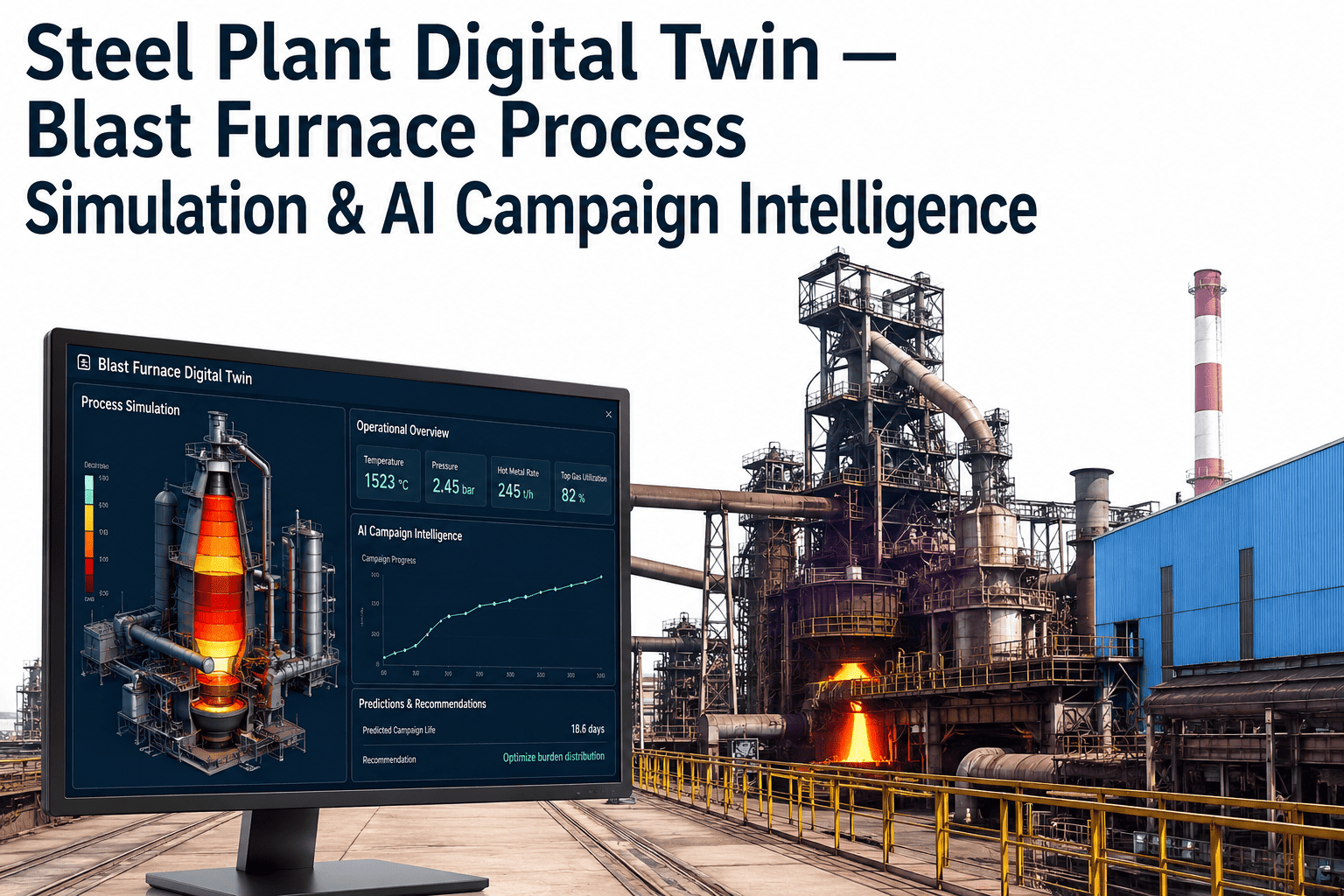
Read More
Blast furnace operations represent the most capital-intensive and thermodynamically complex unit in an integrated steel plant. A single furnace campaign can stretch over 15 to 20 years, with daily throughput exceeding 10,000 tonnes of hot metal. Y
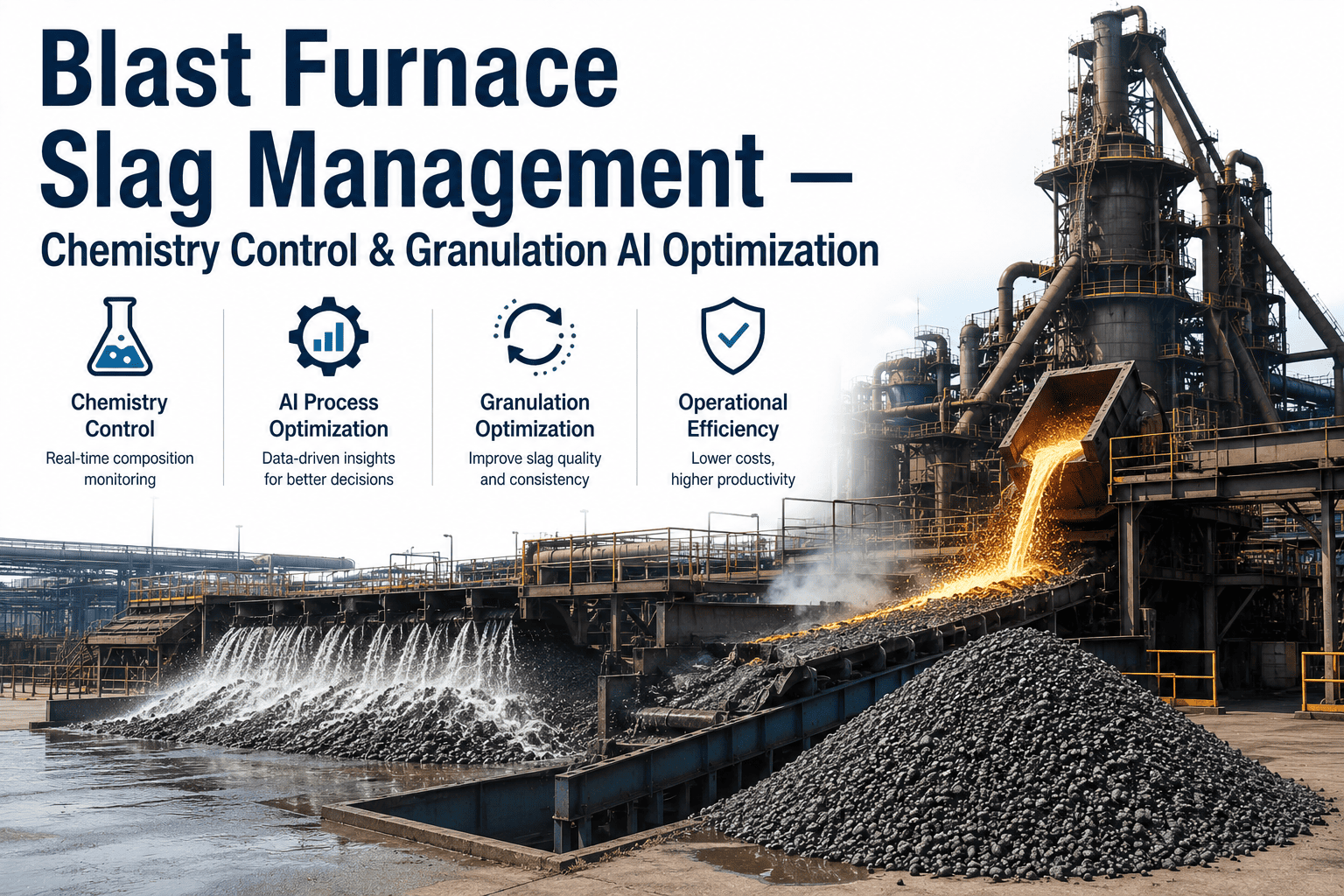
Read More
Blast furnace slag management has evolved from a reactive byproduct handling task to a strategic, data-driven discipline that directly impacts steel quality, furnace longevity, and downstream profitability. In modern integrated steel mills, the ch

Read More
Slag splashing has long been the backbone of BOF refractory maintenance, yet its execution remains surprisingly empirical—operators rely on visual cues and static lance programs that ignore dynamic vessel conditions. This imprecision leads to unev

Read More
In the modern integrated steel plant, the efficient utilization of byproduct gases—blast furnace (BF) gas, coke oven (CO) gas, and basic oxygen furnace (BOF) converter gas—represents a critical nexus between operational cost reduction, environment

Read More
In the production of premium steel grades, the presence of non-metallic inclusions remains a critical determinant of material performance, fatigue life, and final product quality. Traditional manual inclusion rating methods, such as ASTM E45 or IS

Read More
In the high-stakes environment of a hot rolling mill, hydraulic systems are the lifeblood of precision and productivity. The automatic gauge control (AGC) servo valves, looper hydraulics, and coilbox mechanisms operate under extreme pressures and

Read More
In modern blast furnace operations, pulverized coal injection (PCI) stands as a cornerstone technology for reducing metallurgical coke consumption and lowering CO2 emissions. However, achieving an optimal coke replacement ratio—typically between 0

Read More
The evolution of continuous casting technology has reached a pivotal inflection point with the widespread adoption of near-net-shape processes, including thin slab casting, strip casting, and beam blank production. These compact casting routes dra

Read More
In the evolving landscape of electric arc furnace steelmaking, the strategic management of metallic charge materials—particularly direct reduced iron and hot briquetted iron—has emerged as a critical lever for operational excellence. As global ste
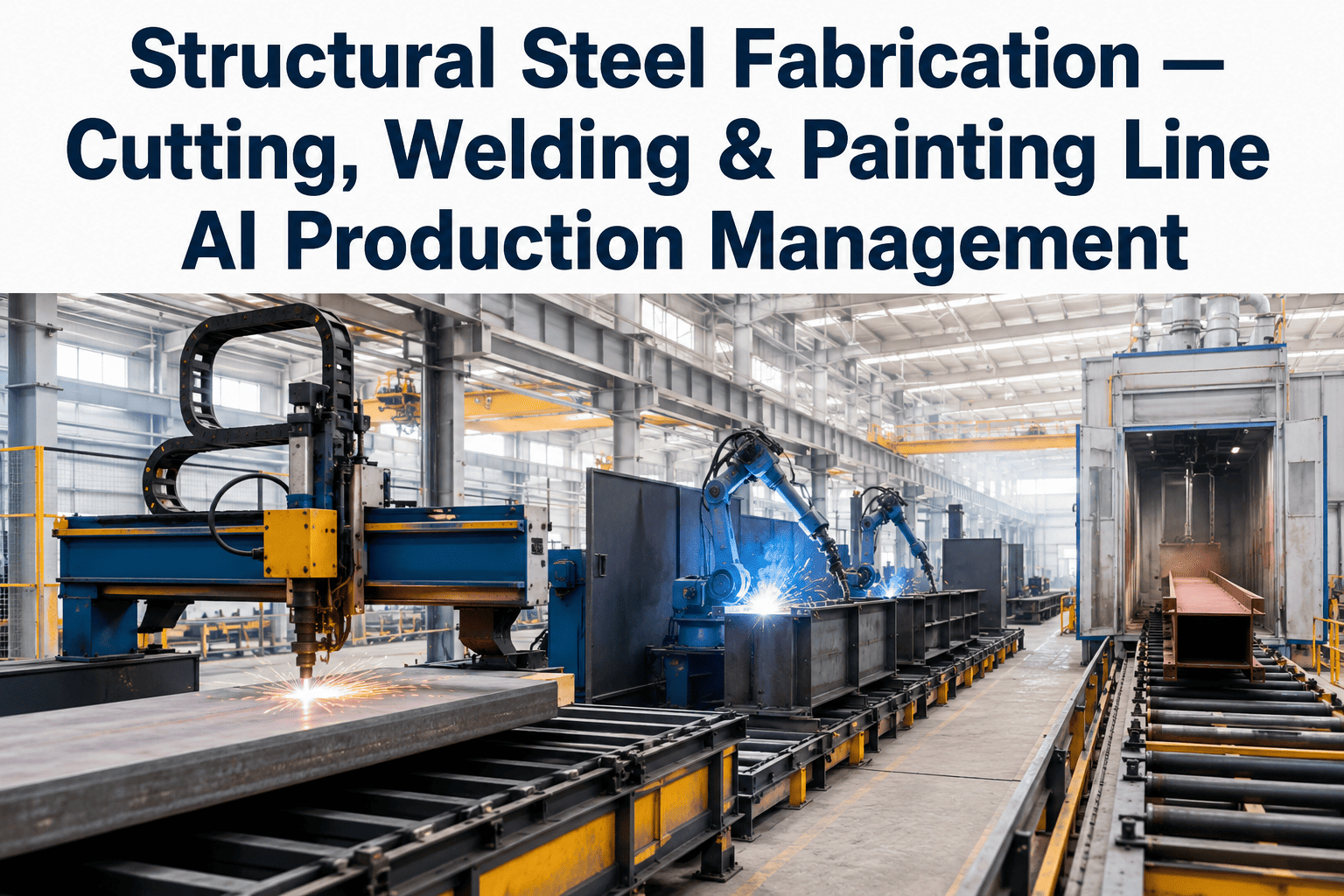
Read More
Structural steel fabrication is the backbone of modern construction, yet it remains fraught with inefficiencies in cutting, welding, and painting operations. Traditional approaches rely on manual oversight, leading to unpredictable downtime, quali
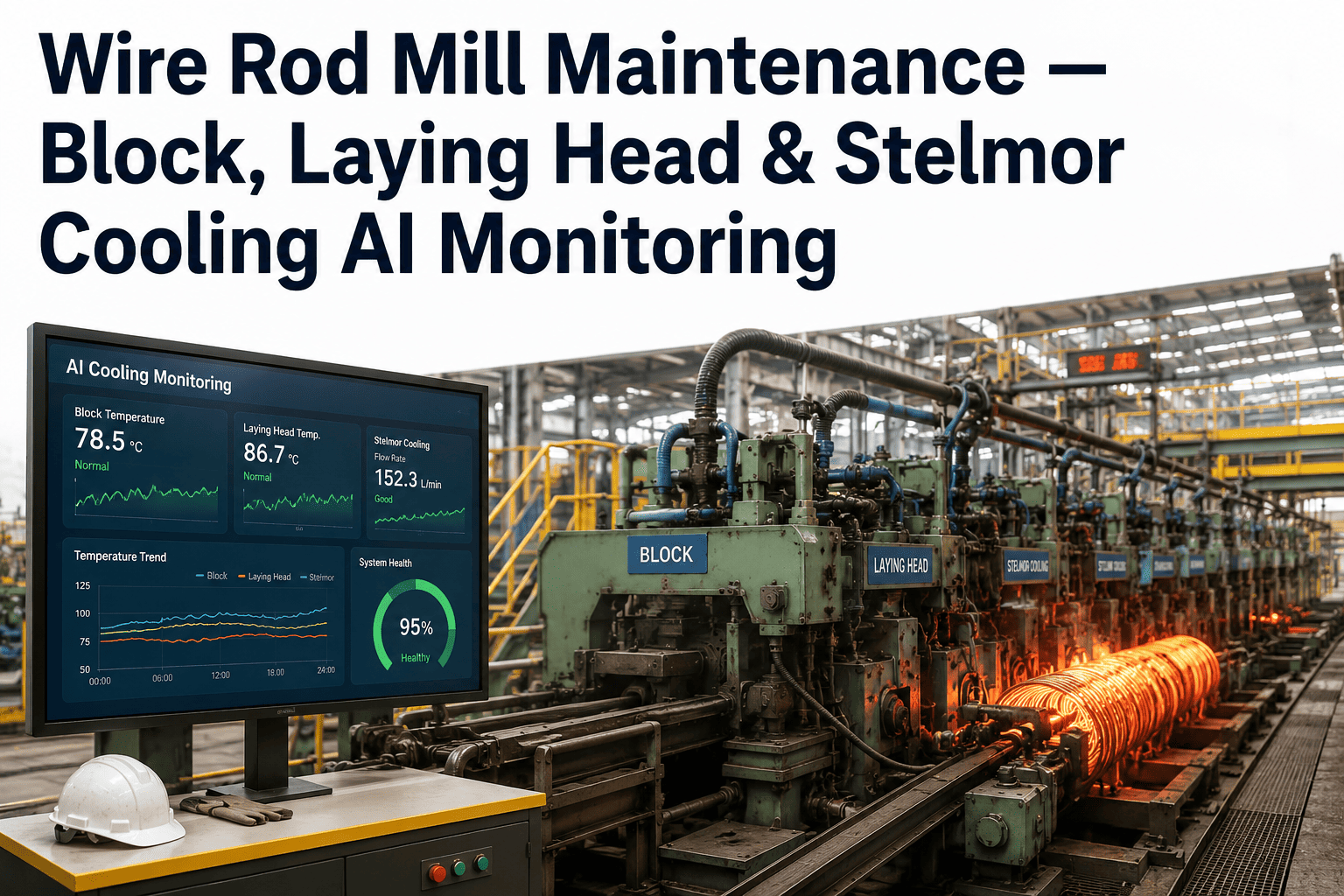
Read More
In the demanding environment of modern wire rod mills, maintaining optimal performance of critical subsystems such as the finishing block, laying head, and Stelmor cooling conveyor is paramount for achieving consistent wire rod properties and supe
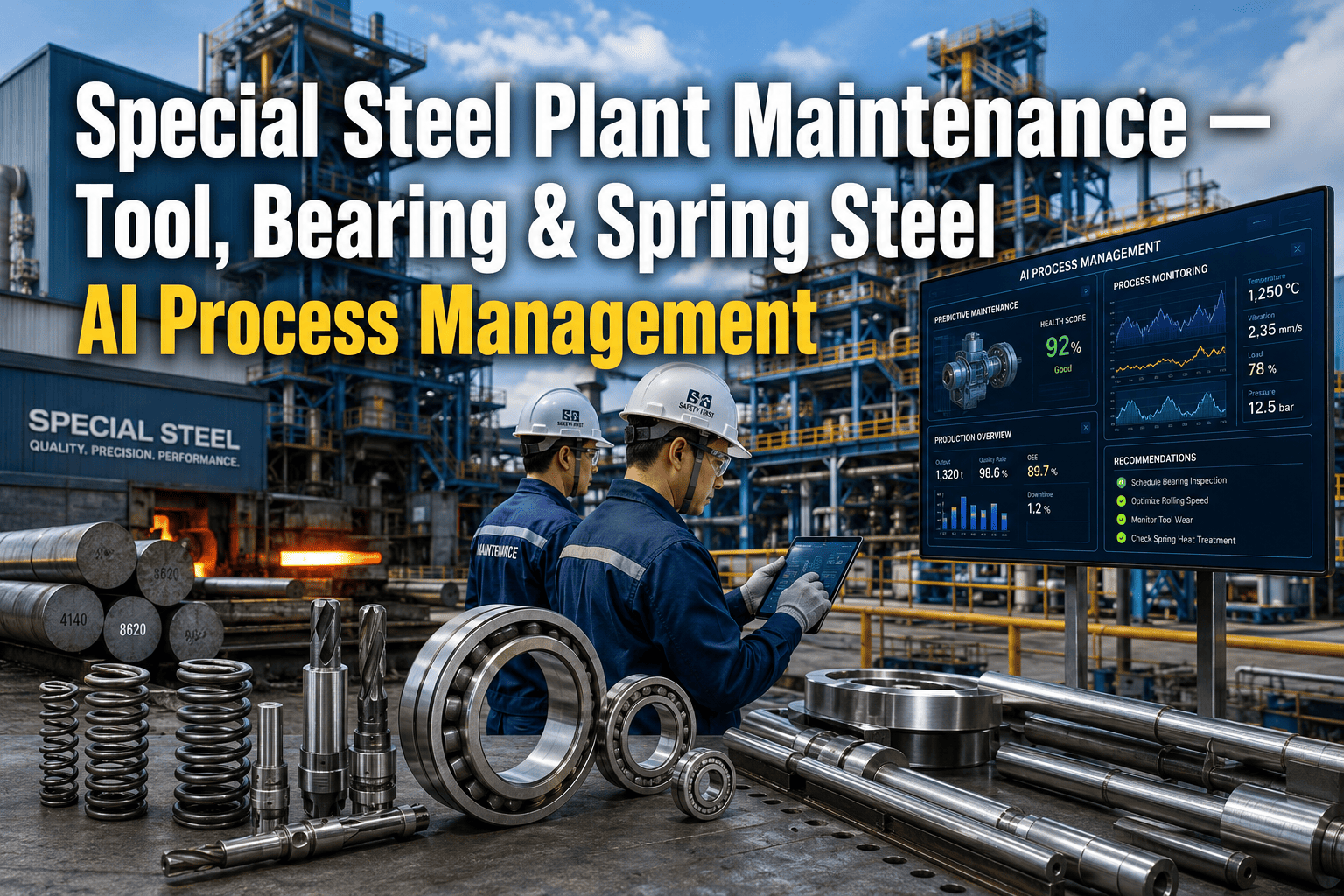
Read More
In the demanding world of special steel production, where tool steel, bearing steel, and spring steel are crafted to exacting tolerances, even minor process deviations can lead to catastrophic quality failures and costly rework. Plant managers and
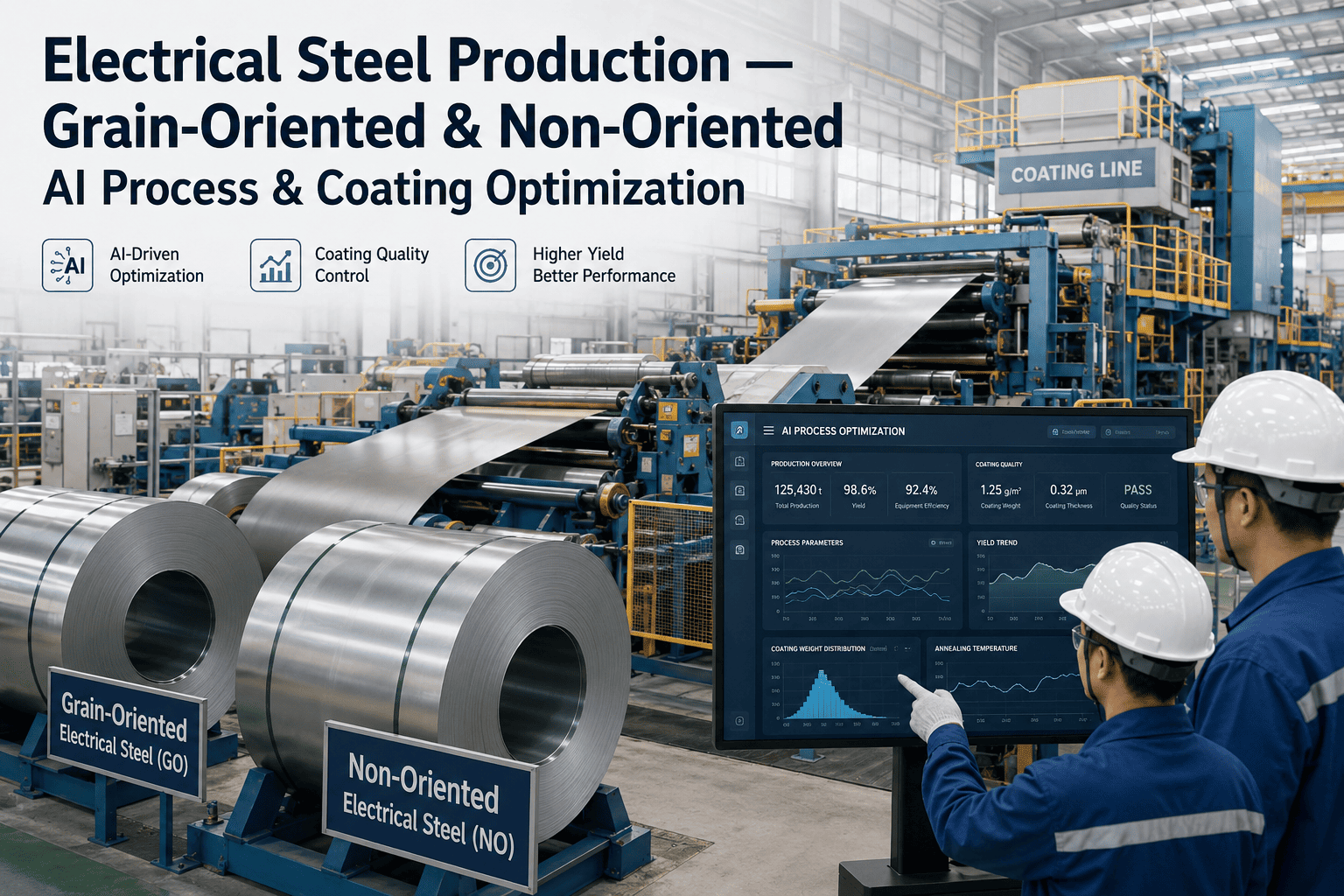
Read More
In the high-stakes arena of electrical steel manufacturing, the precision of process control directly dictates the magnetic performance and energy efficiency of transformers, motors, and generators. Grain-oriented electrical steel (GOES) and non-o
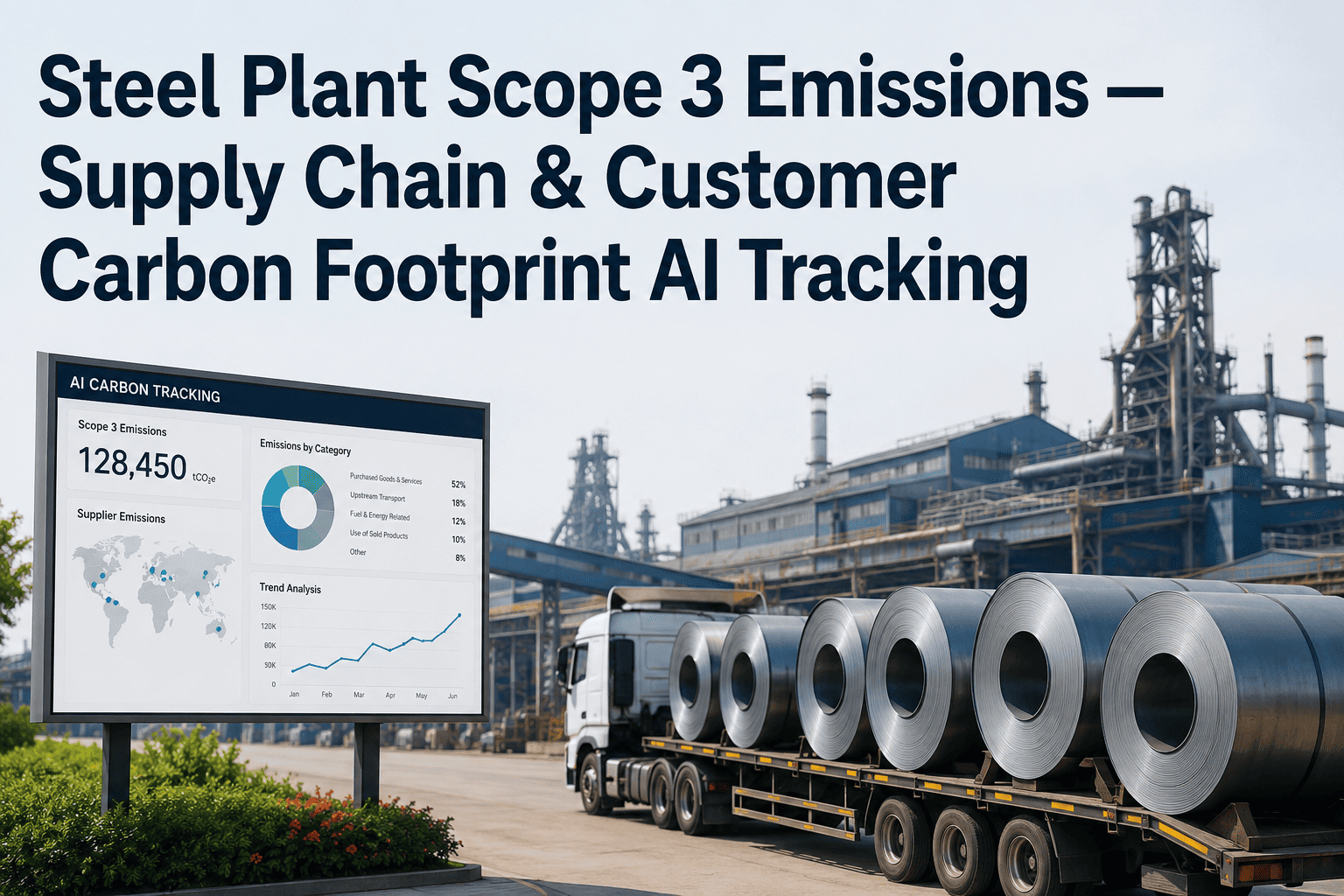
Read More
Steel production is the backbone of modern infrastructure, yet it accounts for approximately 7% of global CO2 emissions. As the world pivots toward decarbonization, steel manufacturers face unprecedented pressure to measure, report, and reduce the
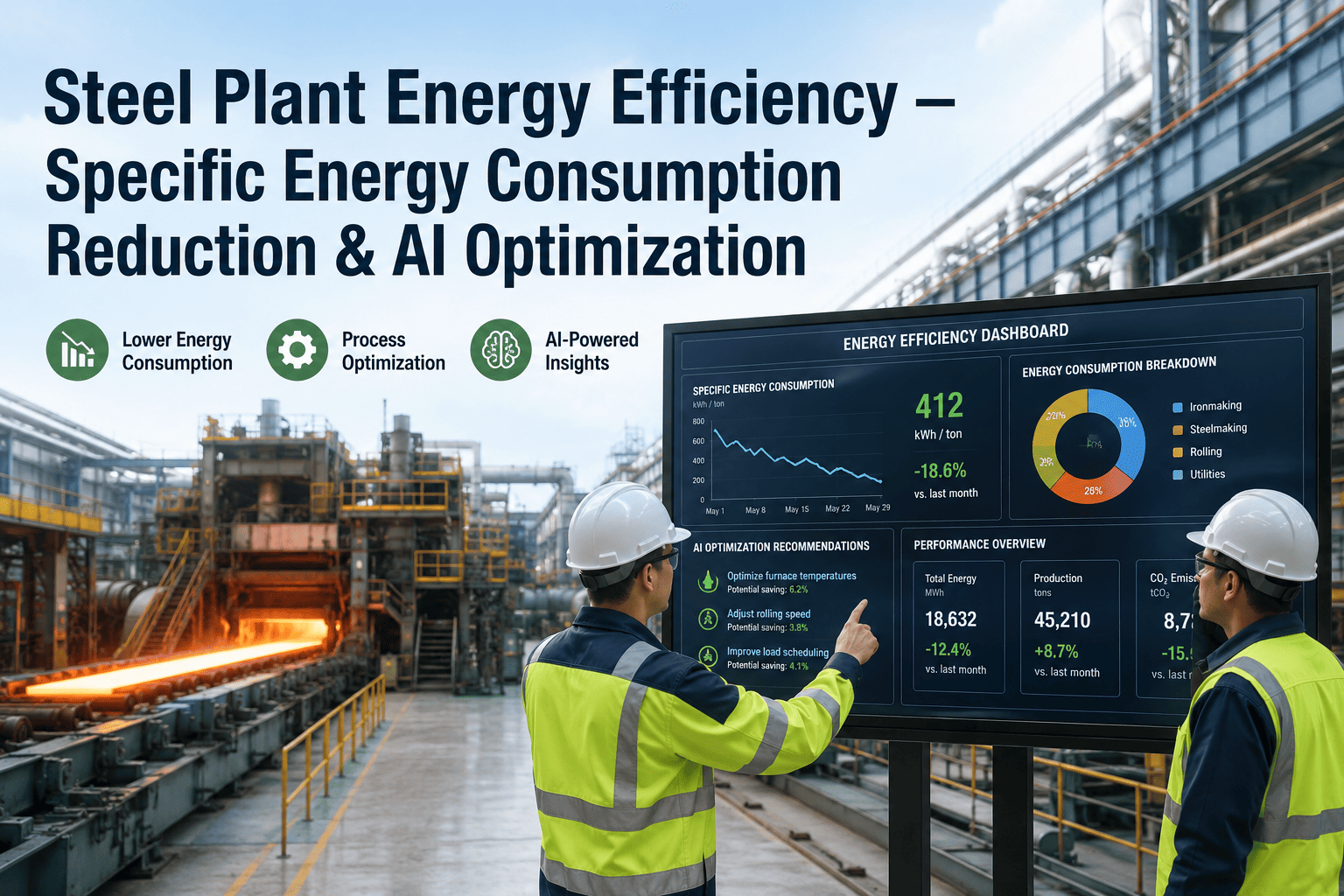
Read More
In the hyper-competitive landscape of modern steel manufacturing, energy costs represent the single largest variable expenditure, often accounting for 25% to 40% of total operational expenses. The specific energy consumption (SEC), measured in gig
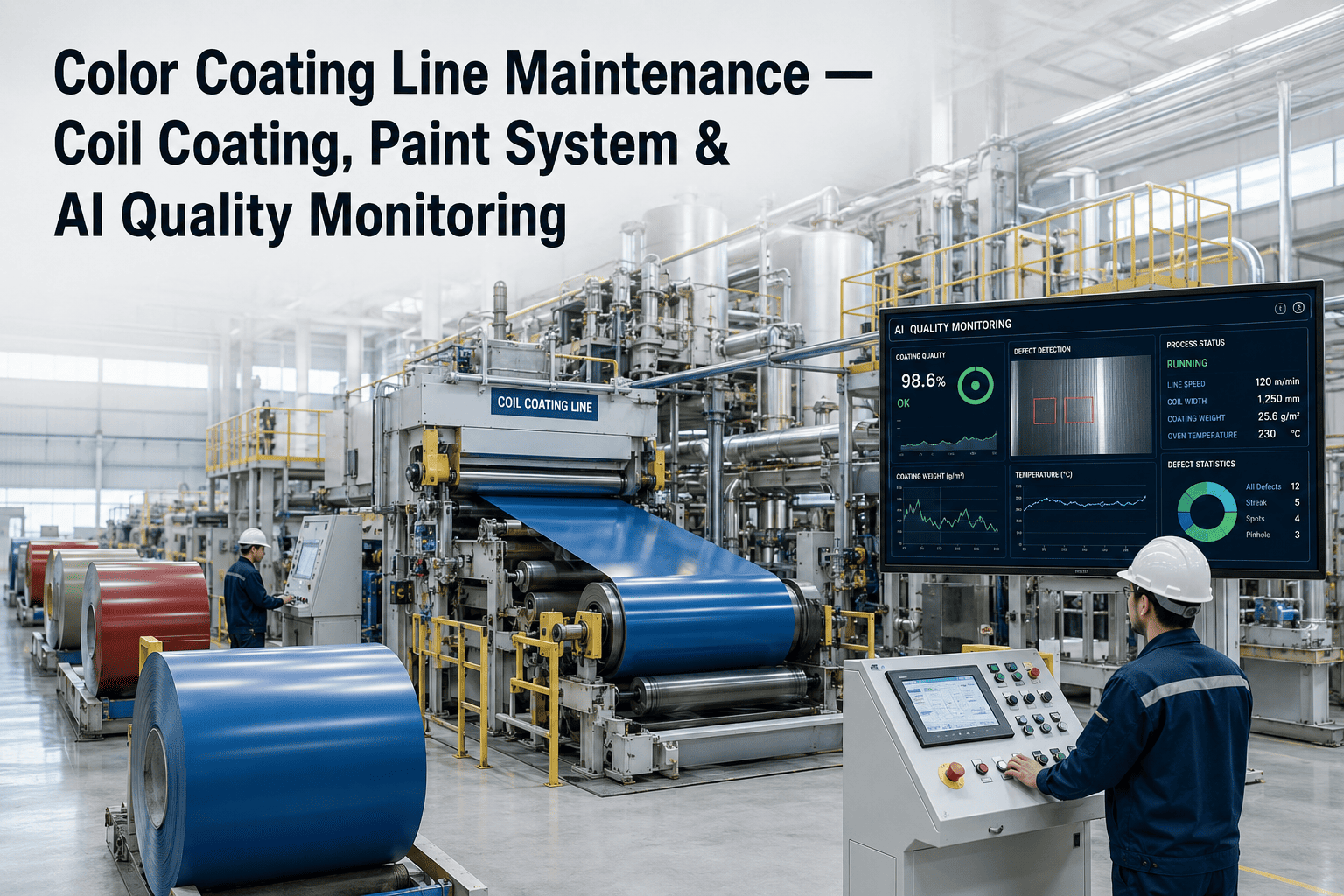
Read More
In the demanding environment of cold rolling and finishing, the color coating line stands as the final, critical frontier where value is added and product differentiation is achieved. For process engineers, maintaining the delicate balance of chem
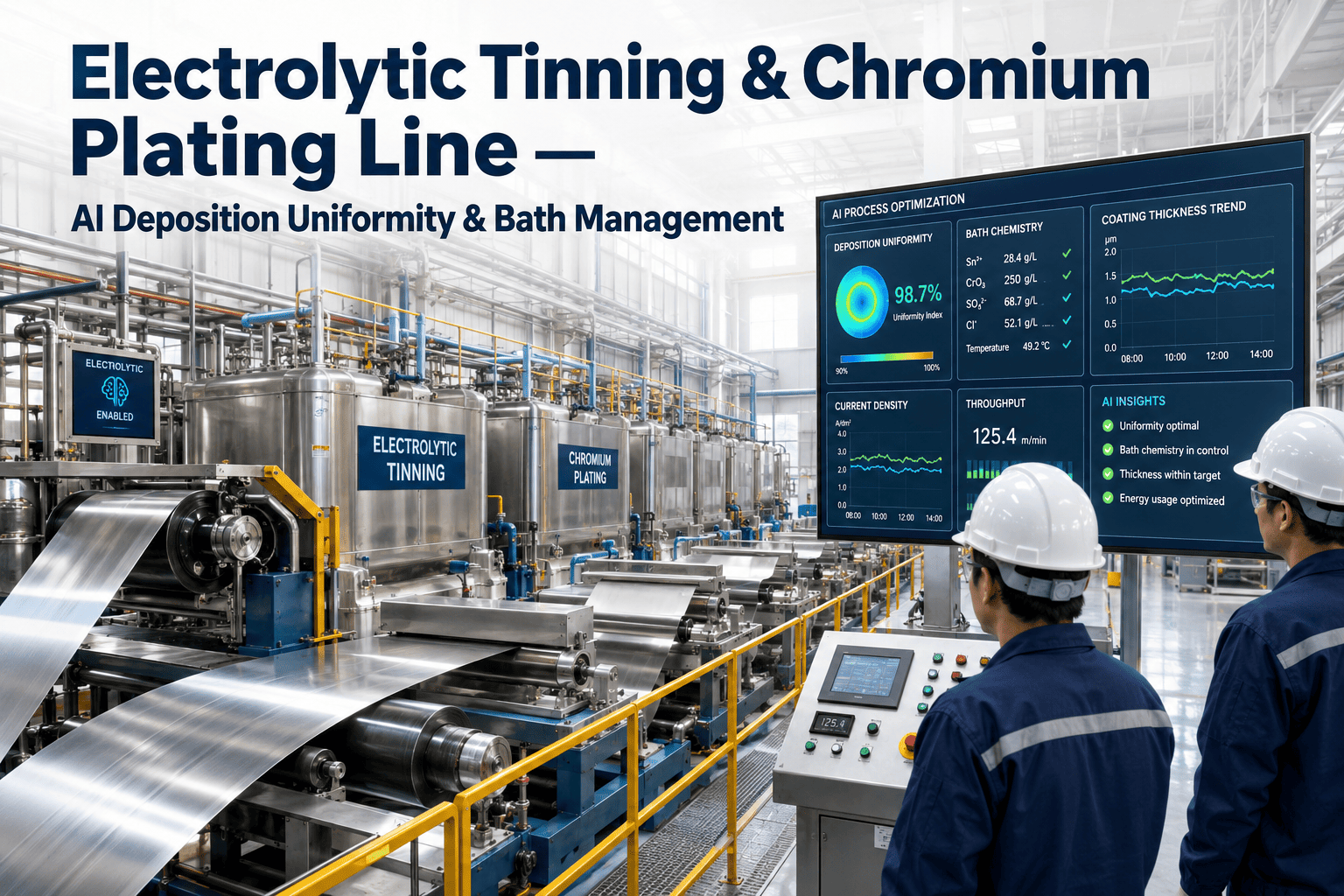
Read More
In the high-stakes environment of cold rolling and finishing, electrolytic tinning and chromium plating lines represent the final frontier of quality assurance for packaging steel and industrial coatings. These processes demand microscopic precisi

Read More
In the fiercely competitive landscape of modern steel manufacturing, unplanned downtime and catastrophic equipment failures represent existential threats to profitability and operational continuity. Traditional manual inspection methods, reliant o

Read More
In the high-stakes environment of steel production, unplanned downtime can cost upwards of $1 million per hour, making predictive maintenance not just a technological upgrade but a financial imperative. Traditional AI deployment in heavy industry
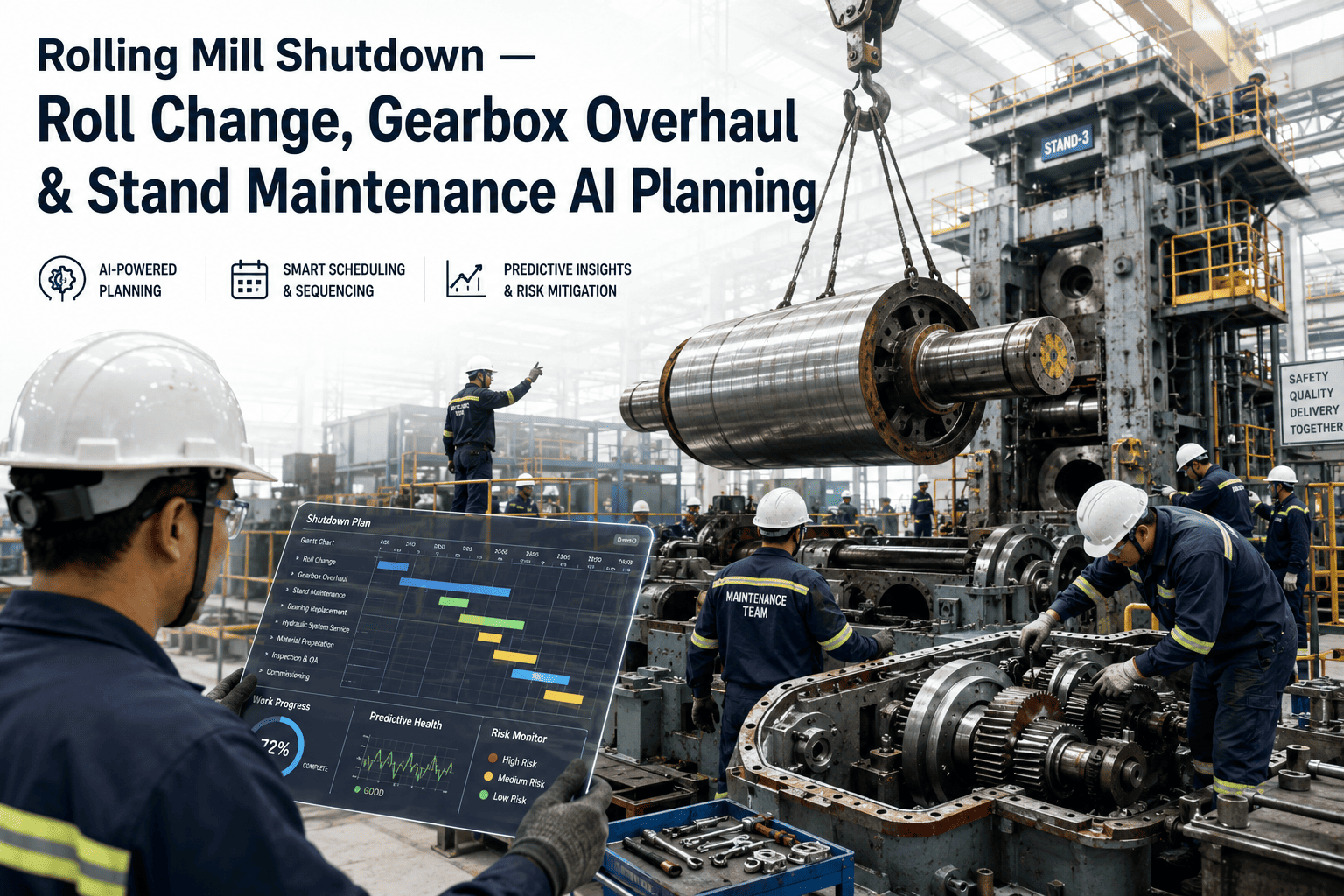
Read More
In the high-stakes environment of a rolling mill, every minute of unplanned downtime translates directly into lost revenue, missed delivery deadlines, and strained customer relationships. Yet, even planned shutdowns for essential tasks like roll c

Read More
The global steel industry stands at a precipice of unprecedented knowledge loss as the most experienced generation of blast furnace keepers, basic oxygen furnace operators, and mill operators approaches retirement. With over 40% of the skilled wor
Read More
In the high-stakes environment of a rolling mill, planned shutdowns are the most critical events for asset integrity and operational continuity. Every minute of downtime directly impacts throughput, revenue, and customer commitments. Traditional s
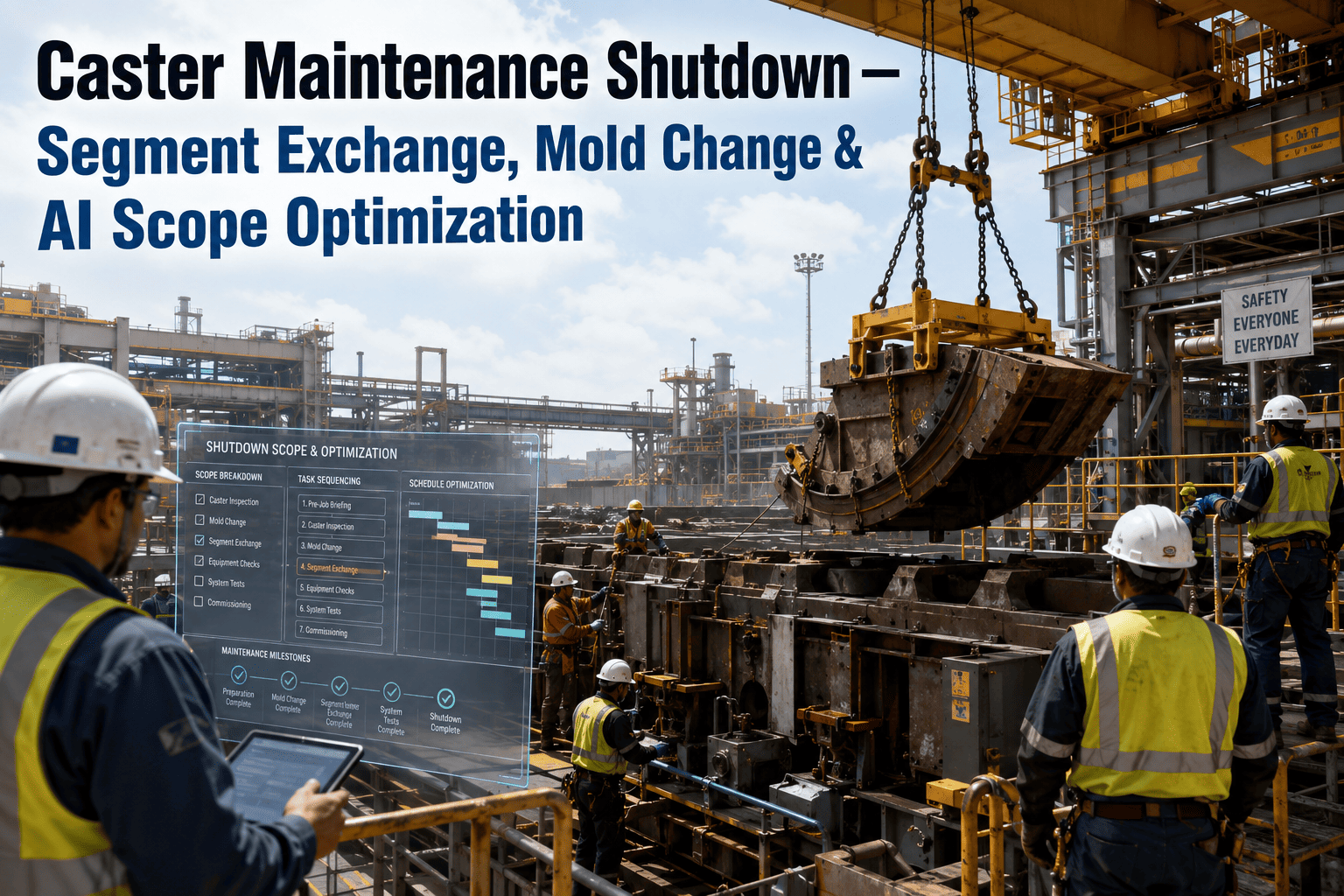
Read More
In the high-stakes environment of continuous casting, every minute of unplanned downtime translates directly into lost tonnage, delayed orders, and eroding margins. Yet, the most complex and capital-intensive maintenance events—the full caster shu
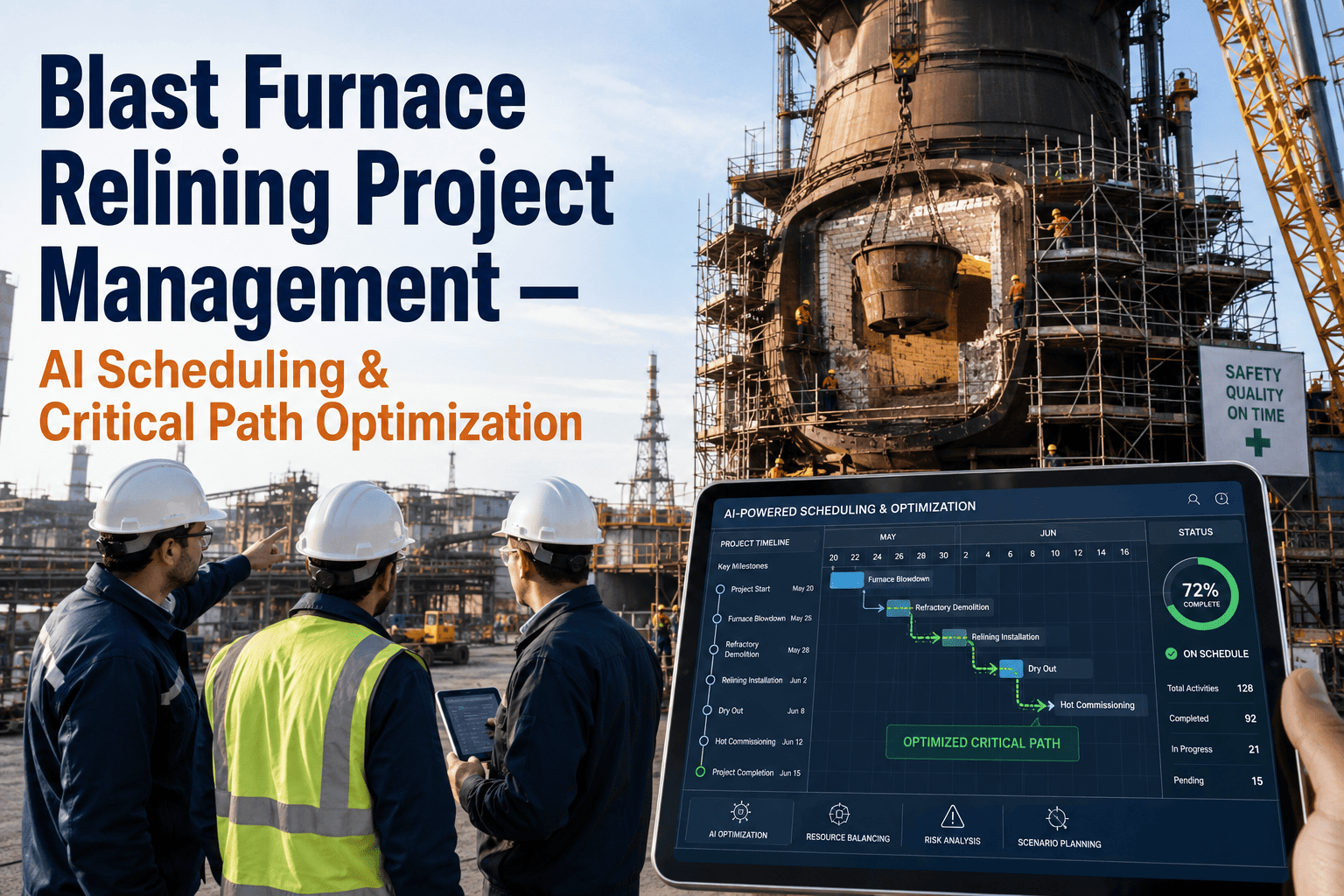
Read More
Blast furnace relining is one of the most capital-intensive and time-sensitive projects in heavy industry. A single relining event can cost upwards of $50 million and require shutting down production for 100 to 120 days, directly impacting revenue

Read More
In the modern steel manufacturing landscape, data is the new iron ore. Yet, most steel plants operate with fragmented automation systems — SCADA for real-time process control, DCS for distributed regulatory control, and MES for production tracking

Read More
Steel plants operate under some of the most extreme conditions in industrial manufacturing. Temperatures in rolling mills and furnace zones can exceed 1500 degrees Celsius, while dust, moisture, and mechanical vibration are constant companions. Fo
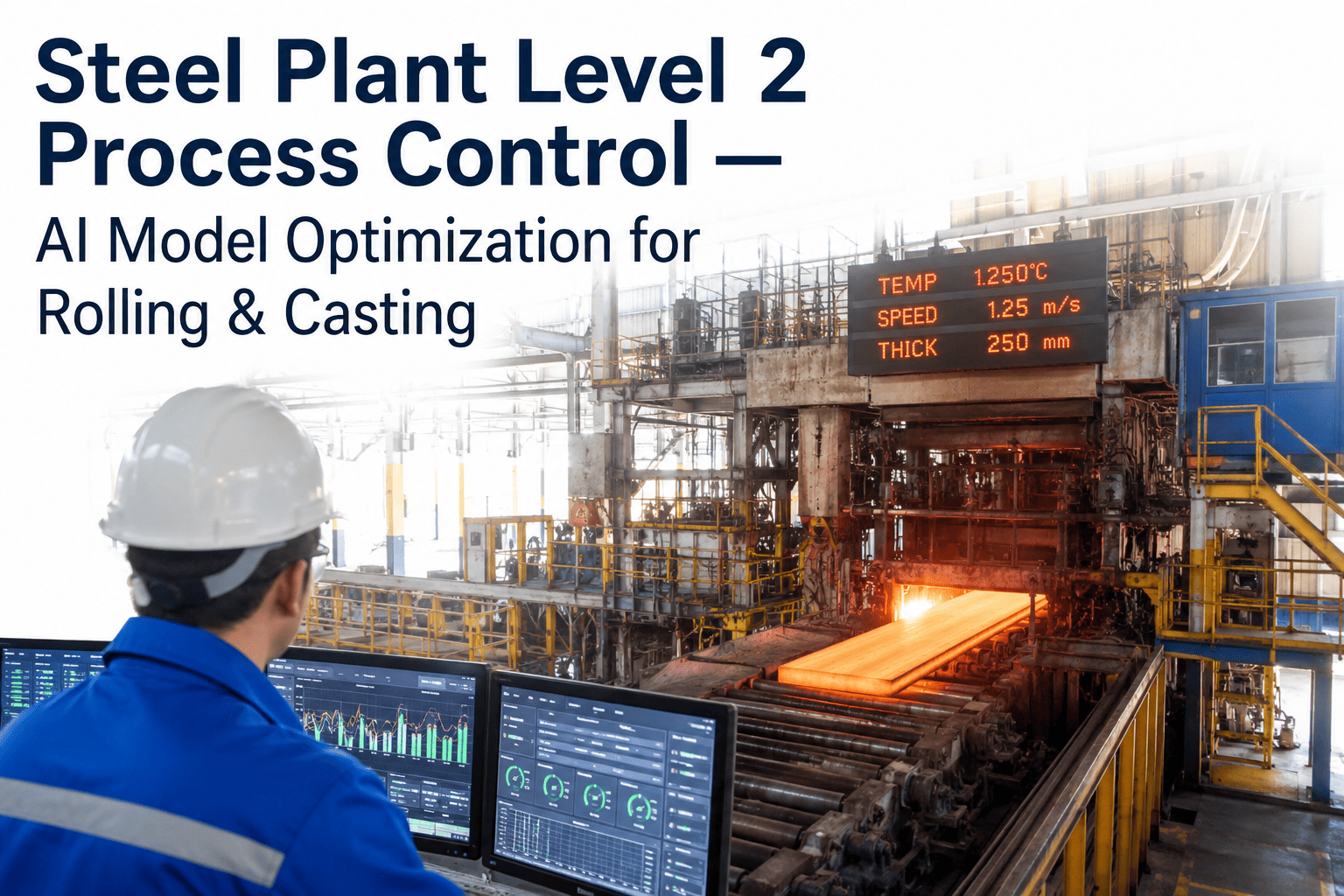
Read More
In the modern steel plant, Level 2 process control systems serve as the computational backbone for rolling mills and continuous casters. These systems host sophisticated mathematical models that predict and regulate key quality attributes such as

Read More
Steel production is one of the most energy-intensive industrial processes, with electricity consumption accounting for a significant portion of operational costs and carbon emissions. As global steelmakers face mounting pressure to decarbonize, in

Read More
Decarbonizing the steel industry is no longer a distant ambition but an immediate operational imperative. As global regulations tighten and stakeholders demand net-zero pathways, carbon capture, utilization, and storage (CCUS) has emerged as the m
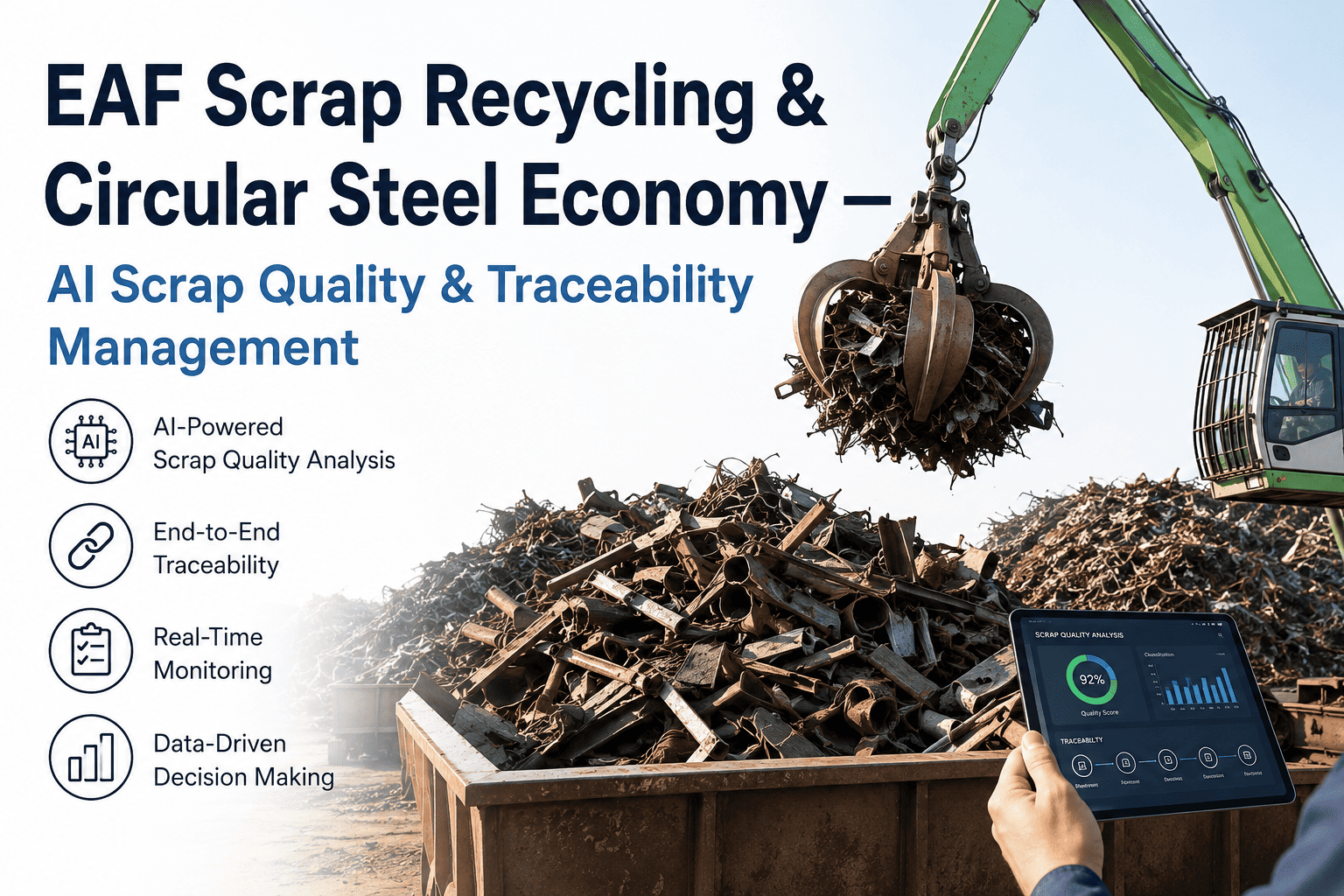
Read More
The global steel industry is undergoing a fundamental transformation, driven by the urgent need to decarbonize and embrace circular economy principles. Electric Arc Furnace (EAF) scrap recycling stands at the core of this shift, offering a pathway
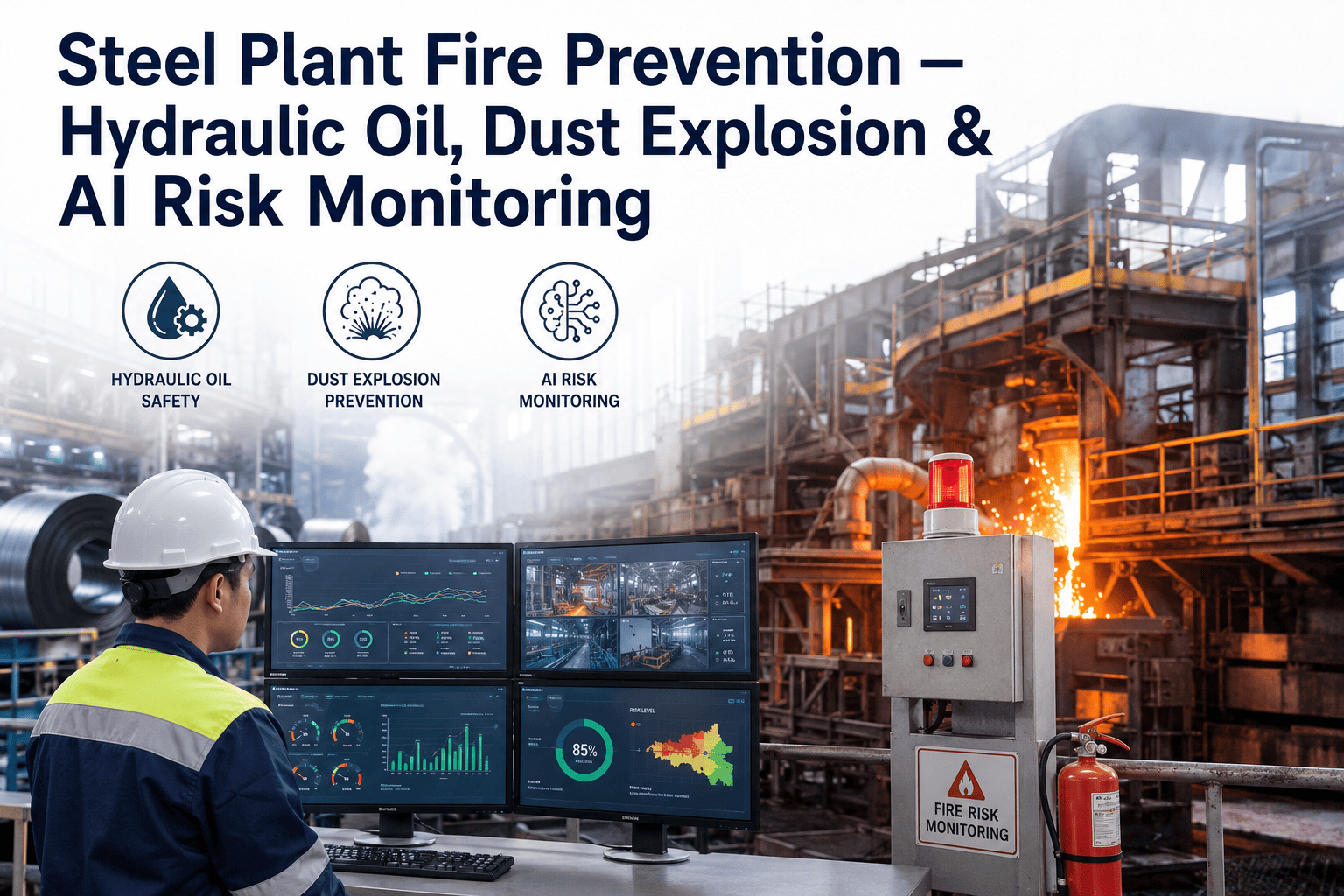
Read More
Steel plants are among the most fire-prone industrial environments due to the convergence of high-temperature processes, pressurized hydraulic oil systems, and combustible dust clouds. A single undetected hydraulic oil leak near a hot rolling mill
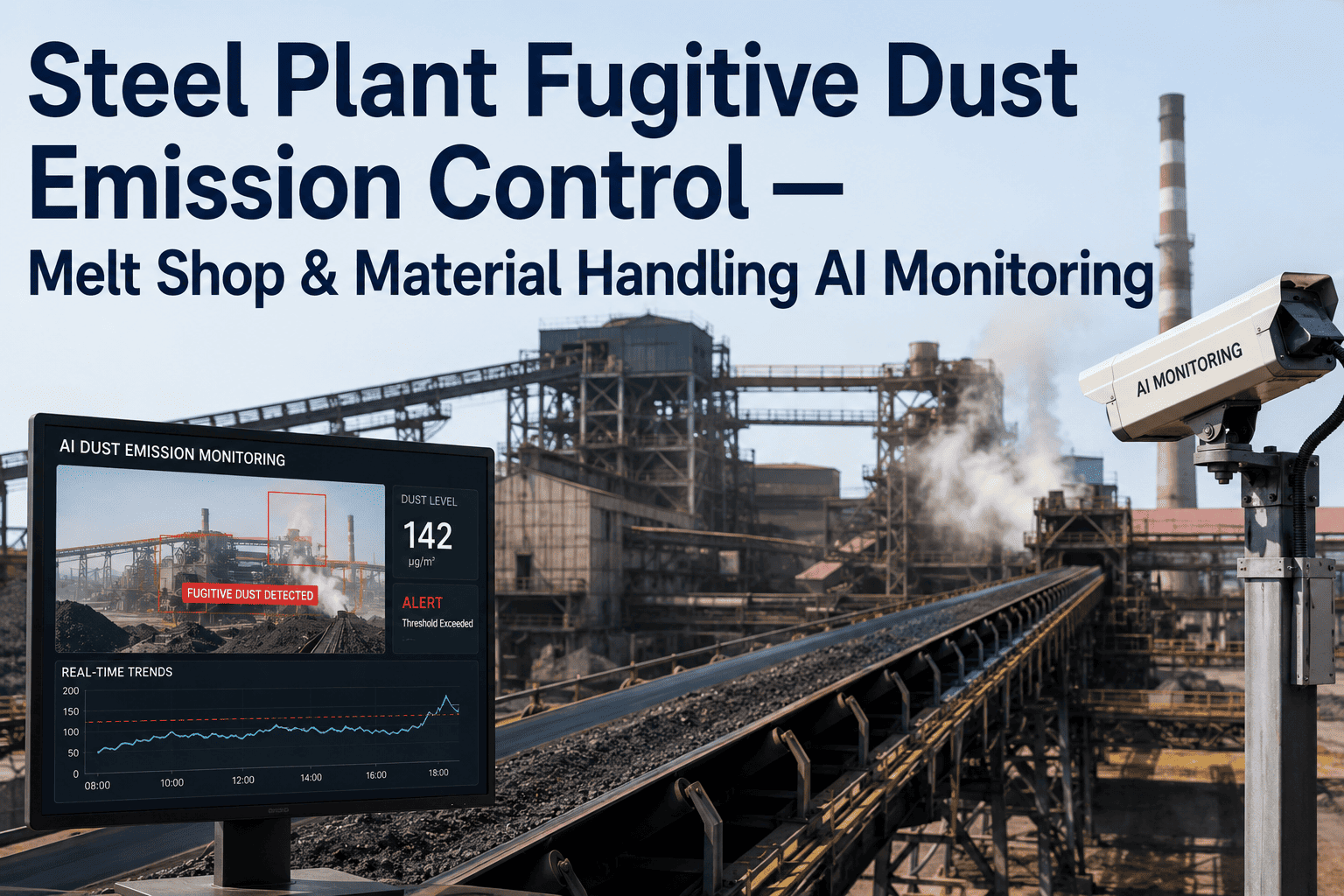
Read More
Fugitive dust never passes through a stack, a chimney, or a vent, which is exactly why it is harder to control than any point-source emission a steel plant manages, and why EHS managers who rely on periodic visual assessment alone are often the la
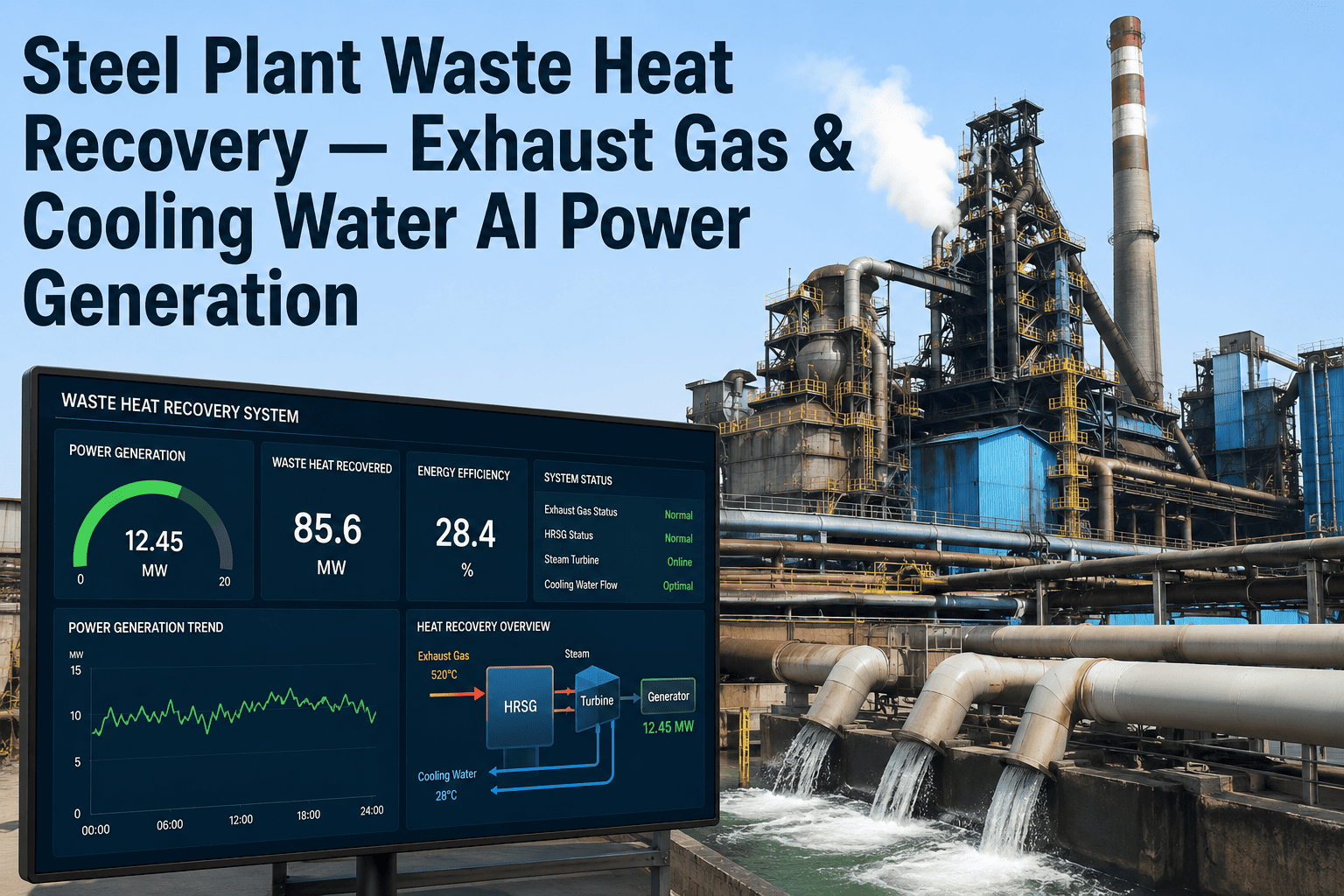
Read More
A steel plant loses more usable energy through exhaust gas, hot product, and cooling water than most facilities ever recover, largely because waste heat recovery equipment quietly degrades through fouling, scale, and vacuum loss long before anyone
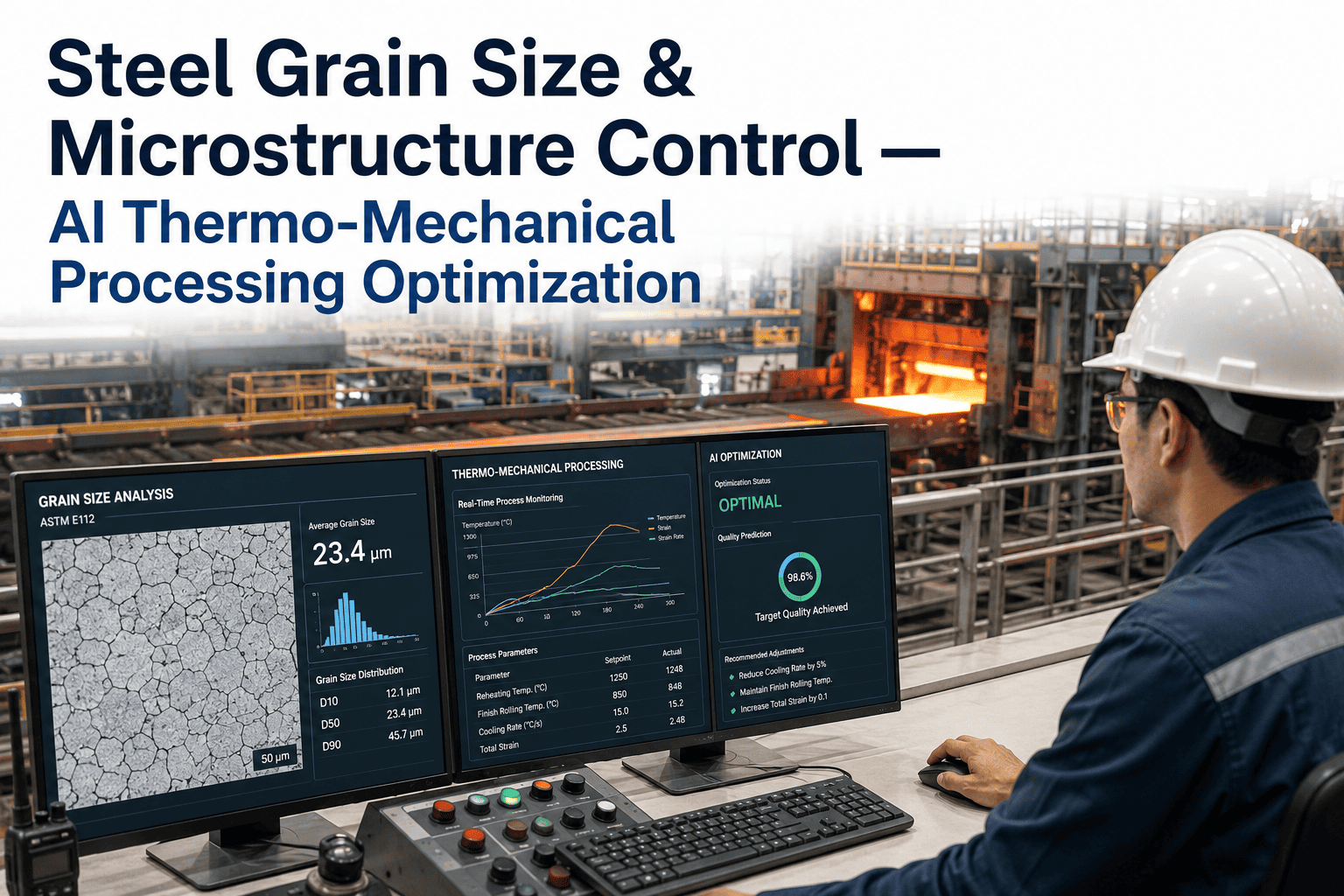
Read More
Grain size and microstructure determine a steel plate's strength and toughness more directly than chemistry alone, which is why thermo-mechanical controlled processing lets mills hit demanding strength targets with leaner alloy content than a conv
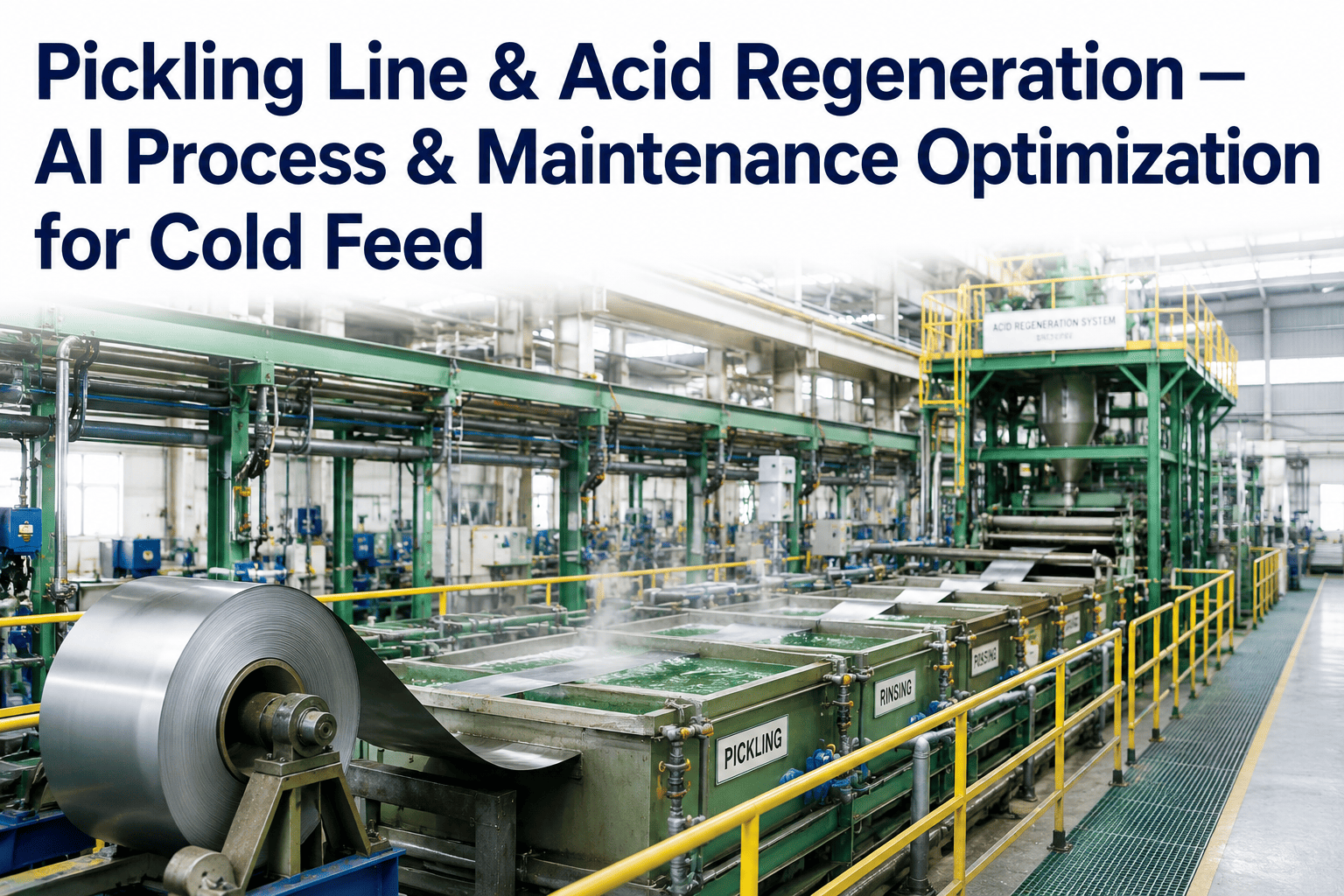
Read More
A pickling line runs on a chemical balance that shifts every hour a strand of coil passes through it, since free acid concentration falls and dissolved iron content rises with every meter of steel that gets descaled, and the spray roaster or fluid
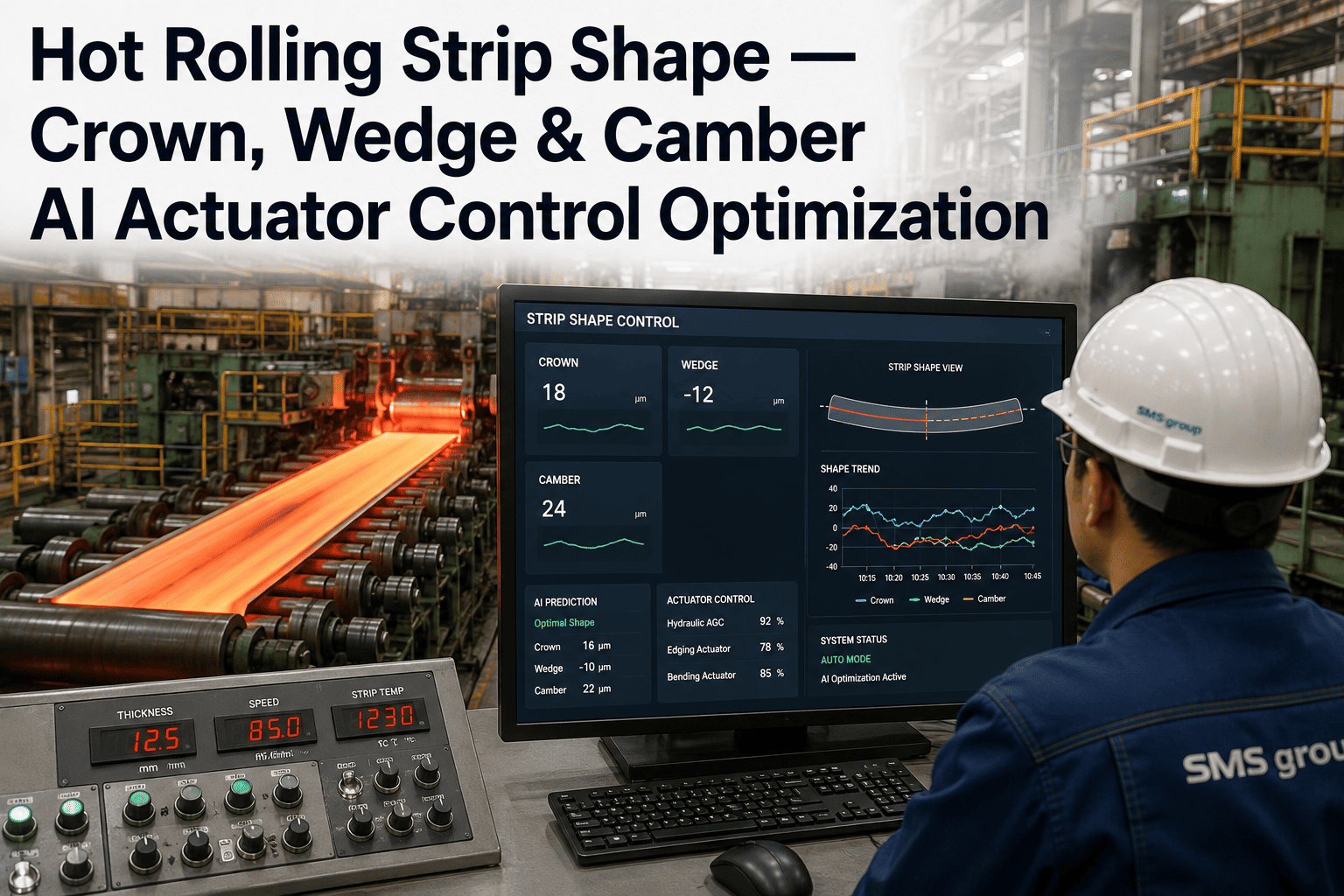
Read More
A hot strip mill can hold rolling force, temperature, and speed exactly on schedule and still ship coil that gets rejected on arrival, because crown, wedge, and camber are governed by a separate set of actuators that most control rooms watch far l
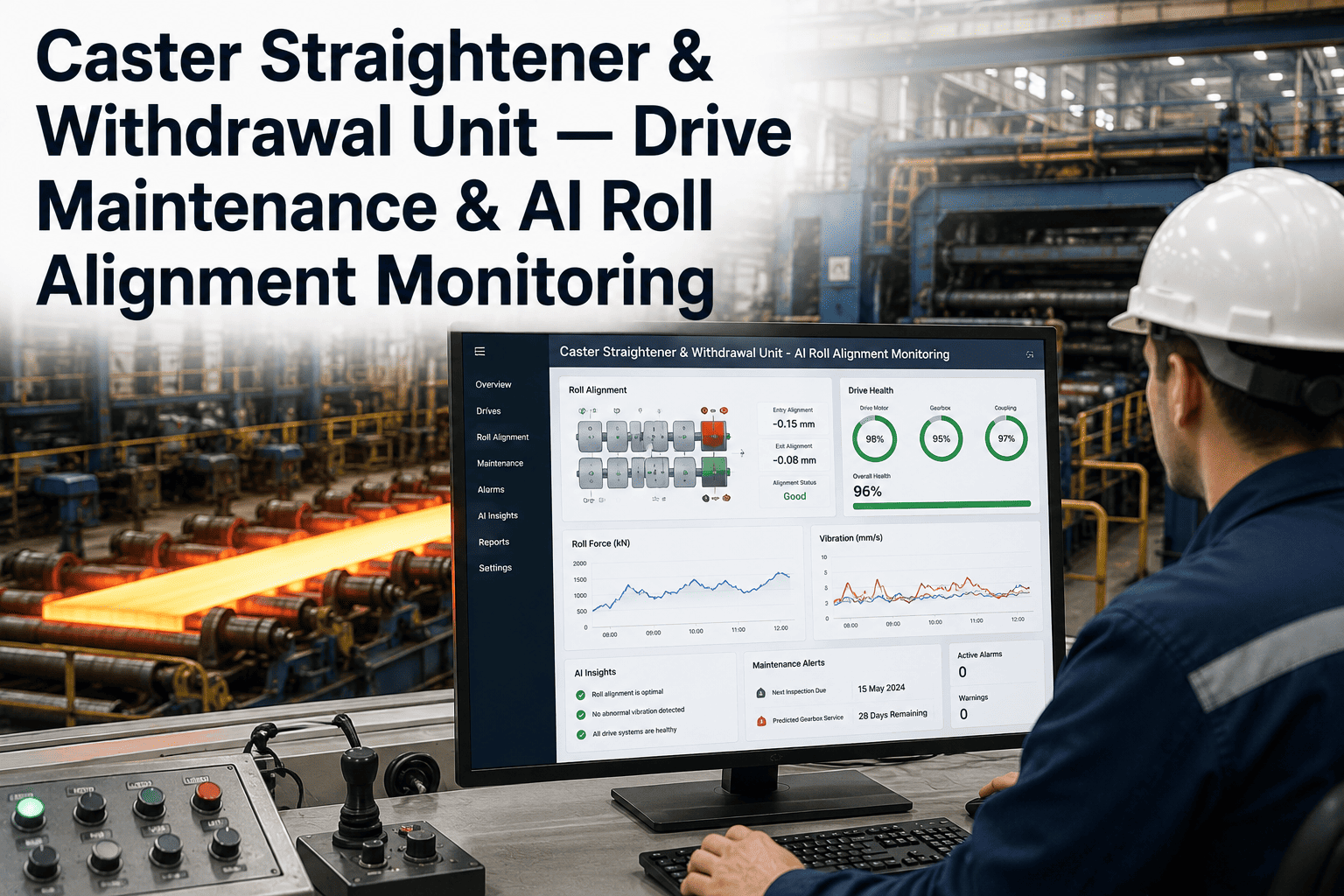
Read More
The withdrawal and straightening unit is the point in continuous casting where a still-molten steel core meets its final geometry, and where a worn pinion gear or a half-degree of roll misalignment can turn a routine sequence into a multi-million-

Read More
A rolling mill decision that depends on a cloud round-trip has already lost the millisecond window it needed to matter, because network latency, however small, is still too slow for a safety interlock or a real-time quality reject decision on a mo
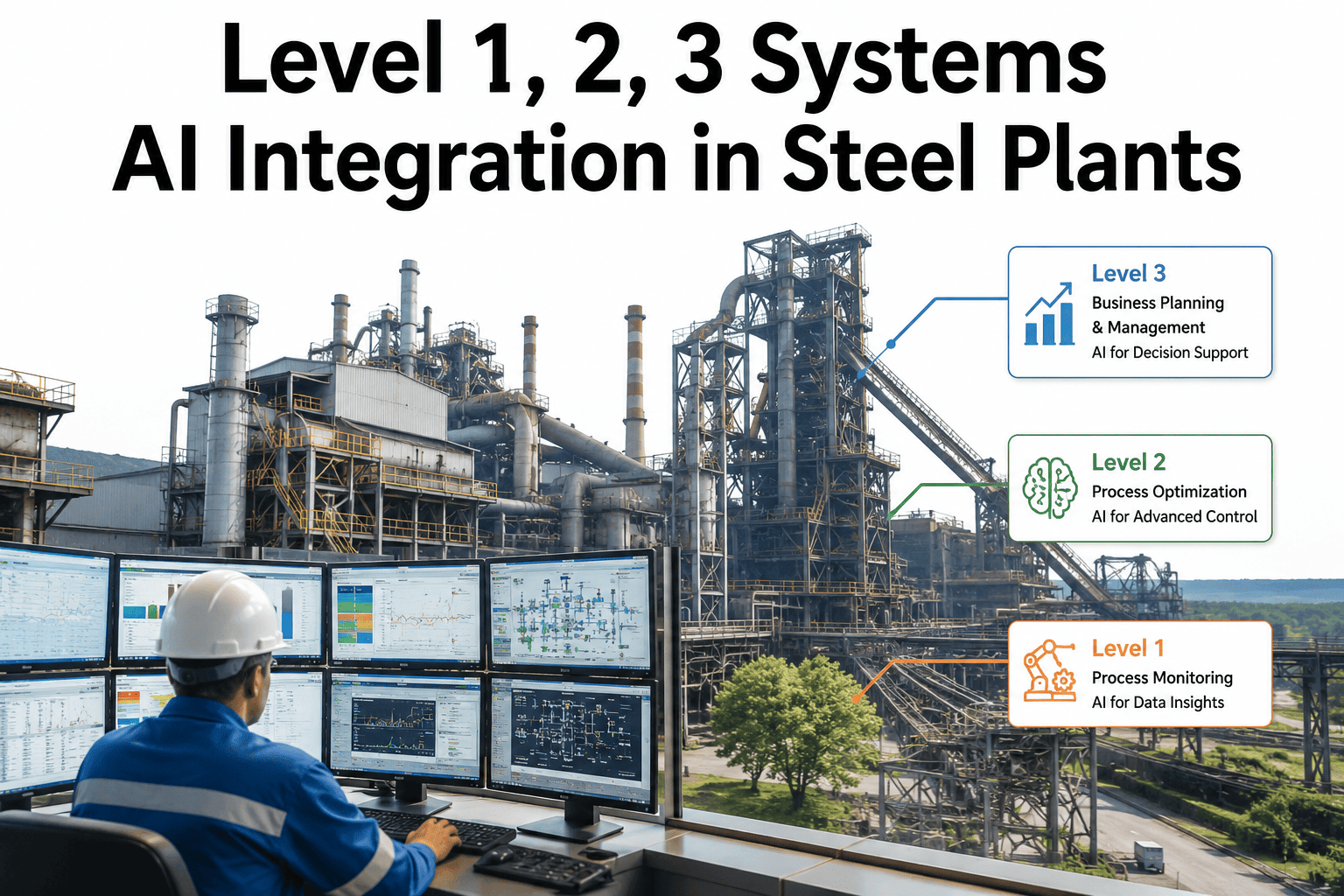
Read More
Every steel plant automation lead inherits the same layered stack, with PLCs and DCS handling real-time control at Level 1, SCADA and process optimization sitting at Level 2, and MES and ERP managing production and business logic at Level 3, and t
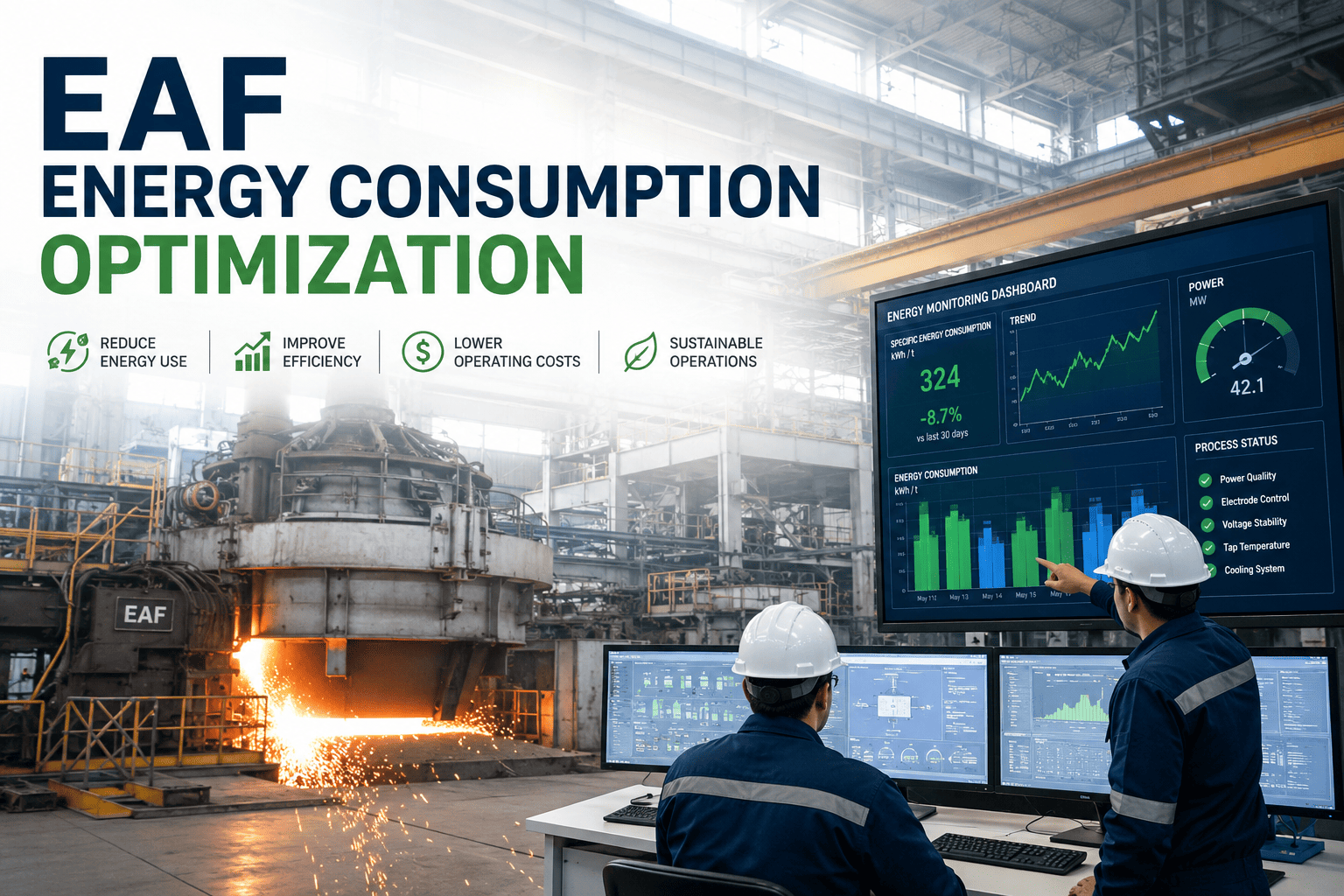
Read More
Electricity is usually the single largest controllable cost line on an EAF operation's P&L, and most mills running 380-450 kWh/ton assume that number is mostly fixed by scrap mix and furnace design. In practice, a meaningful share of that cons
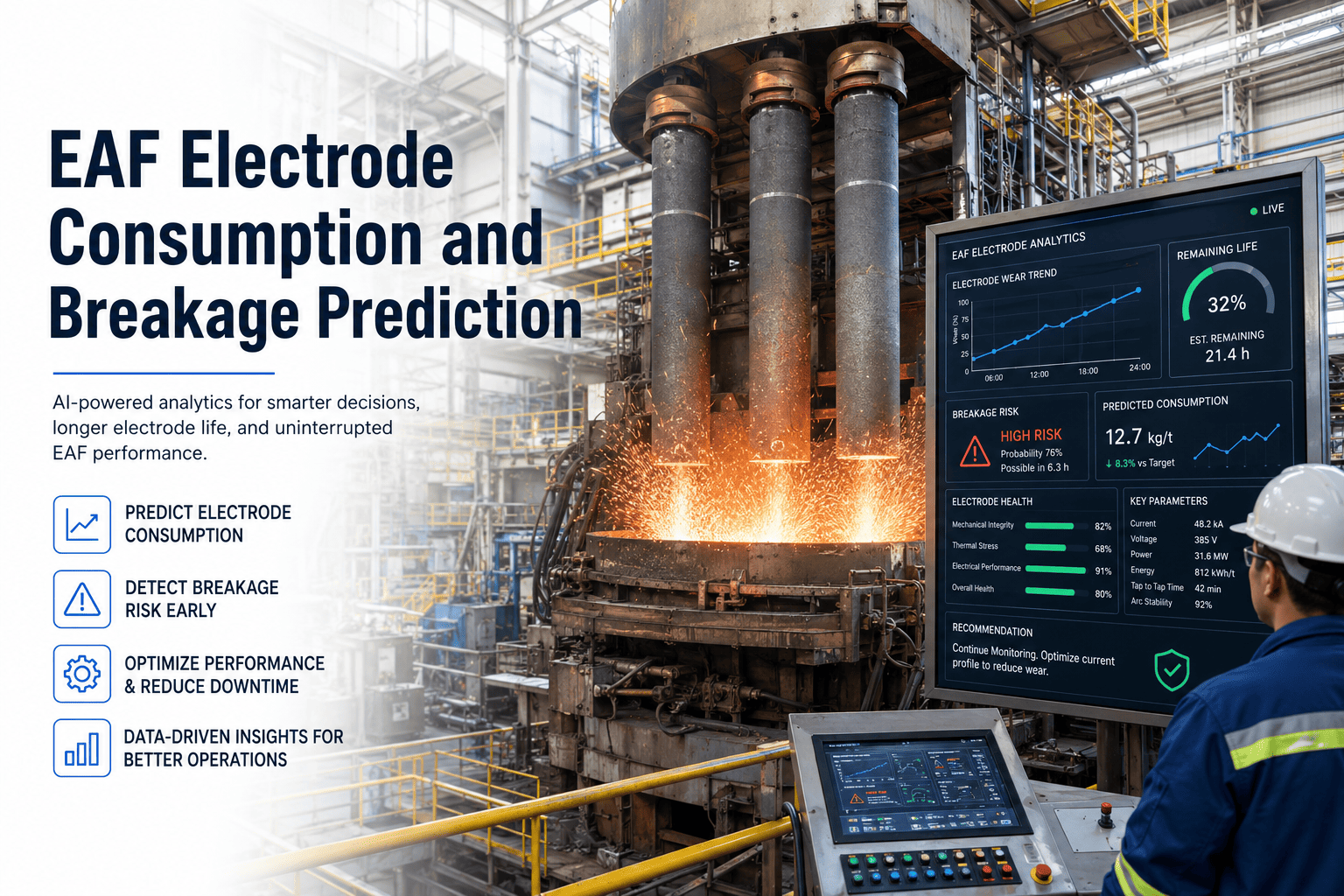
Read More
Graphite electrodes sit right behind scrap as the second largest cost line in most EAF operations, yet electrode consumption is often managed by rule-of-thumb regulation settings rather than anything close to the precision applied to power or chem
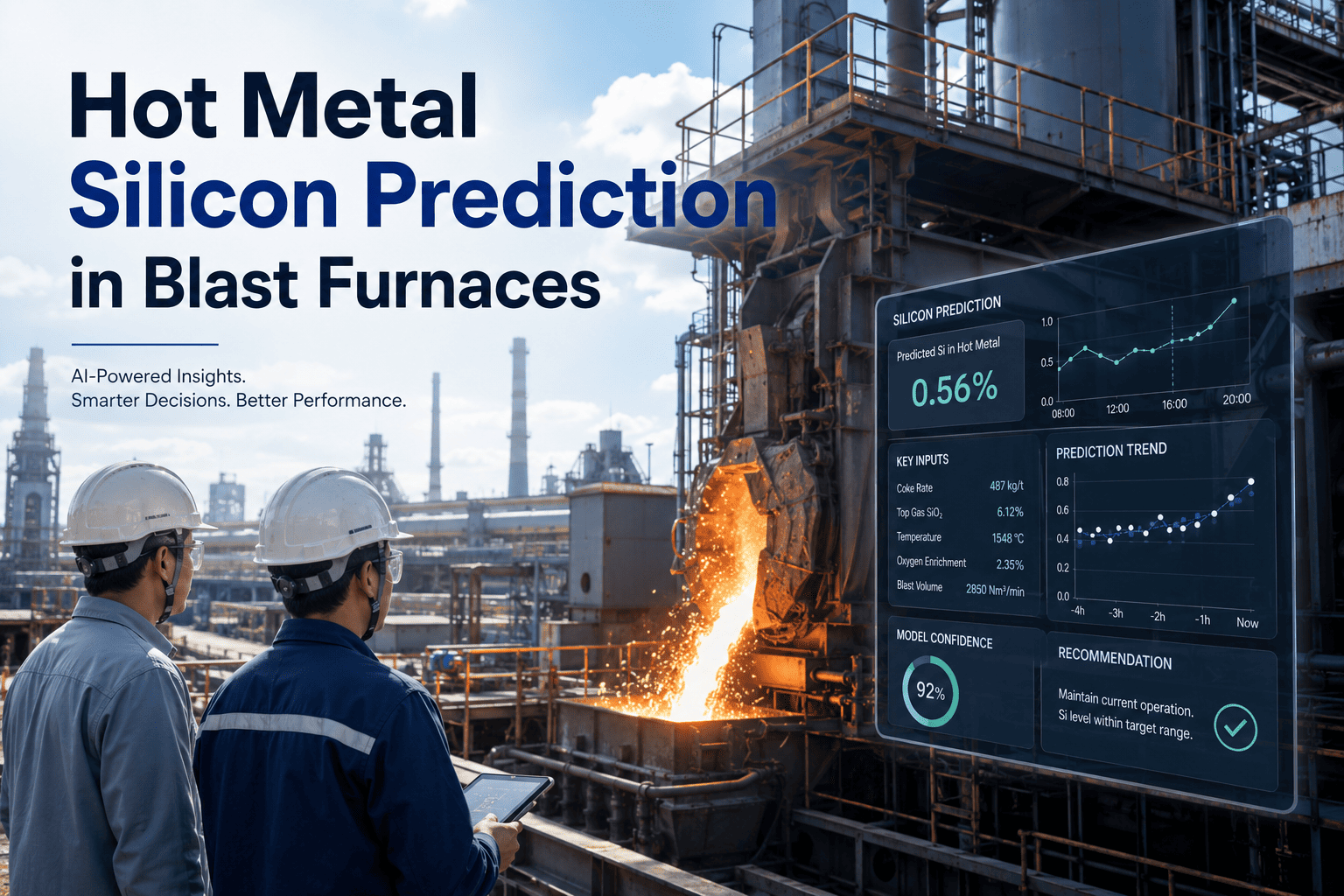
Read More
In blast furnace ironmaking, hot metal silicon content is the single most critical indicator of thermal state and chemistry stability. A 0.1% swing in Si can cascade into BOF rework, desulfurization delays, and yield losses exceeding thousands of
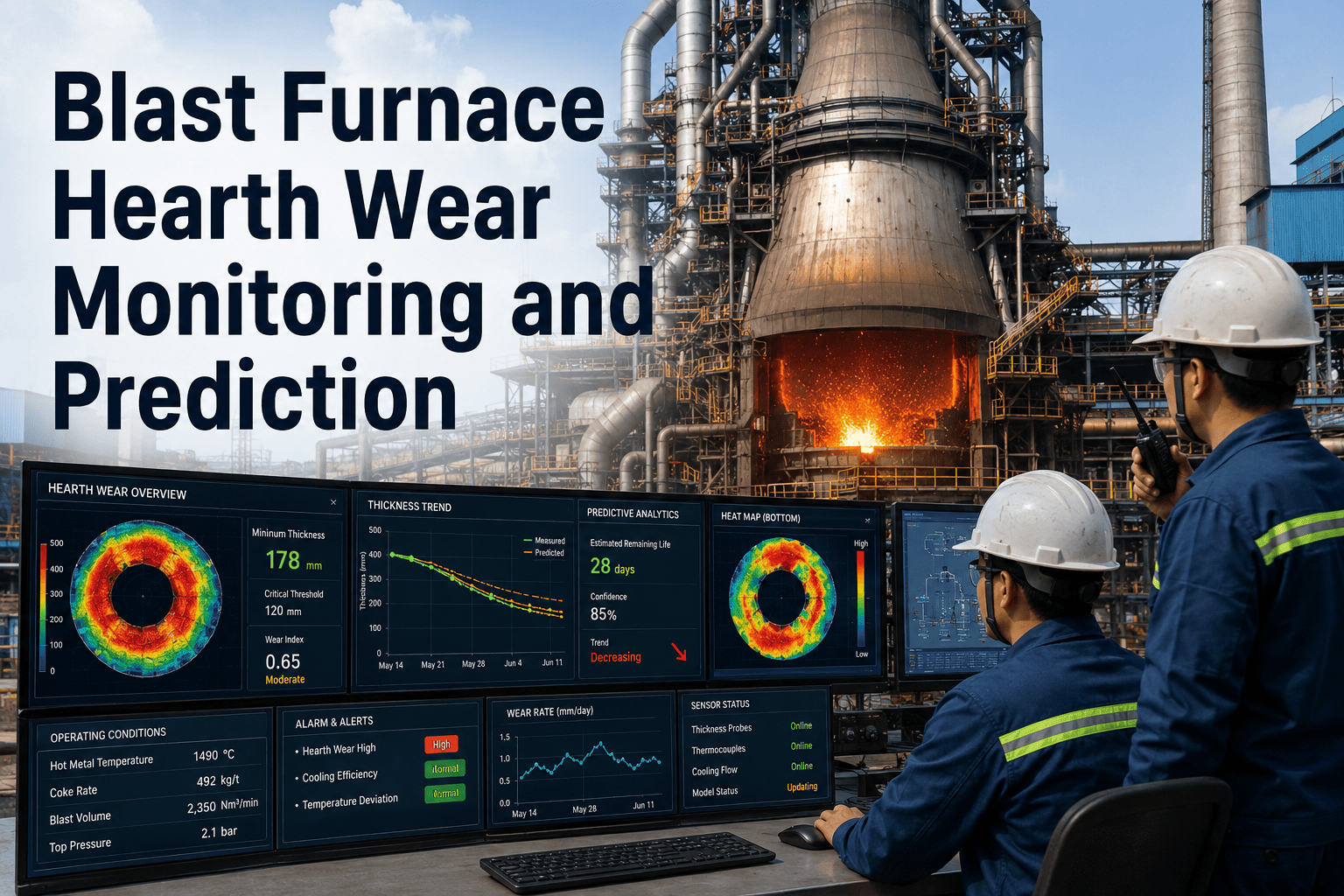
Read More
Blast furnace hearth wear is the single most expensive operational risk in ironmaking. A breach or excessive thinning of the refractory lining can force an unscheduled shutdown, costing between $20 million and $50 million in repairs and lost produ
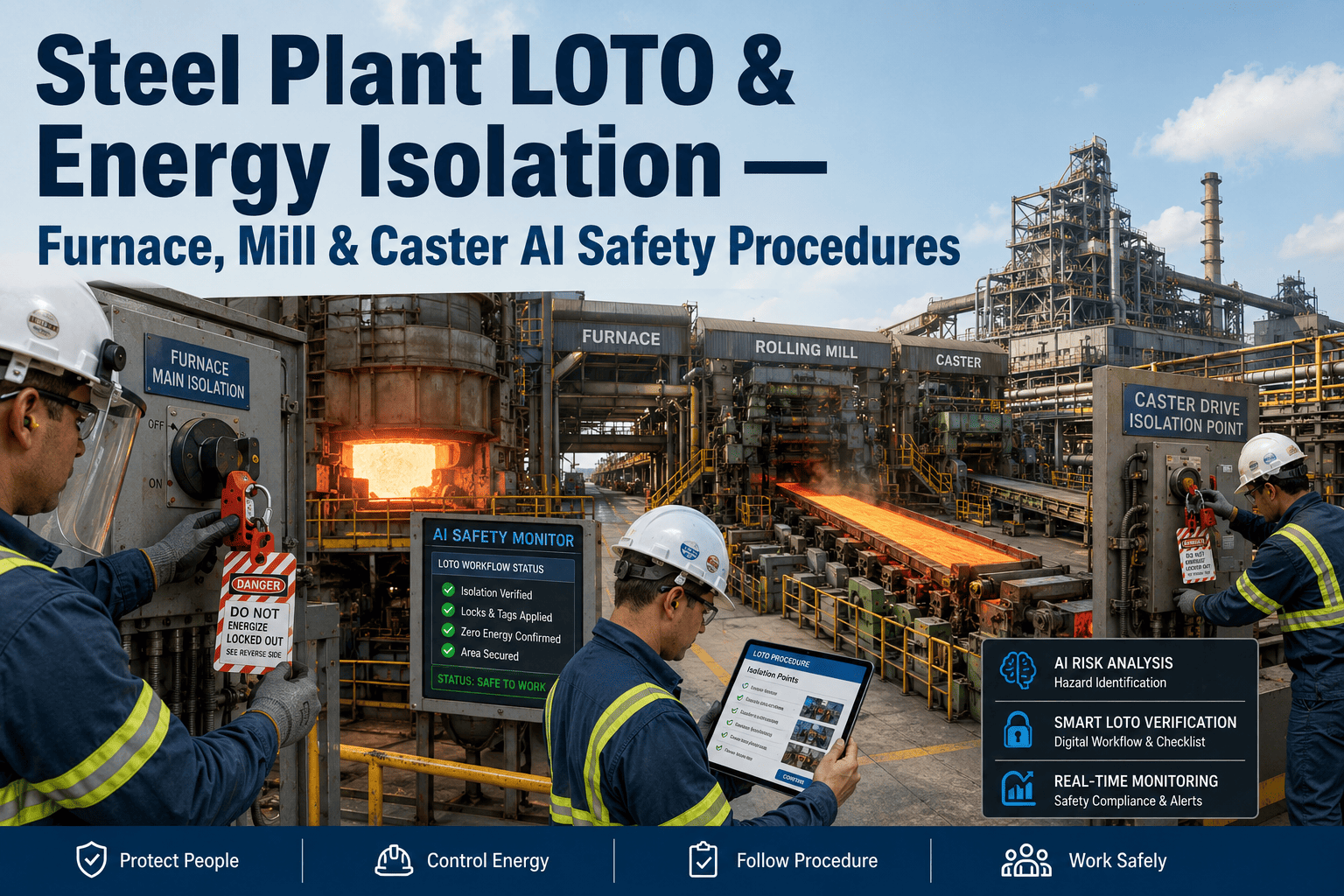
Read More
Steel plants are among the most hazardous industrial environments, where high-energy systems like blast furnaces, basic oxygen furnaces (BOFs), continuous casters, and rolling mills operate at extreme temperatures and pressures. Lockout-tagout (LO
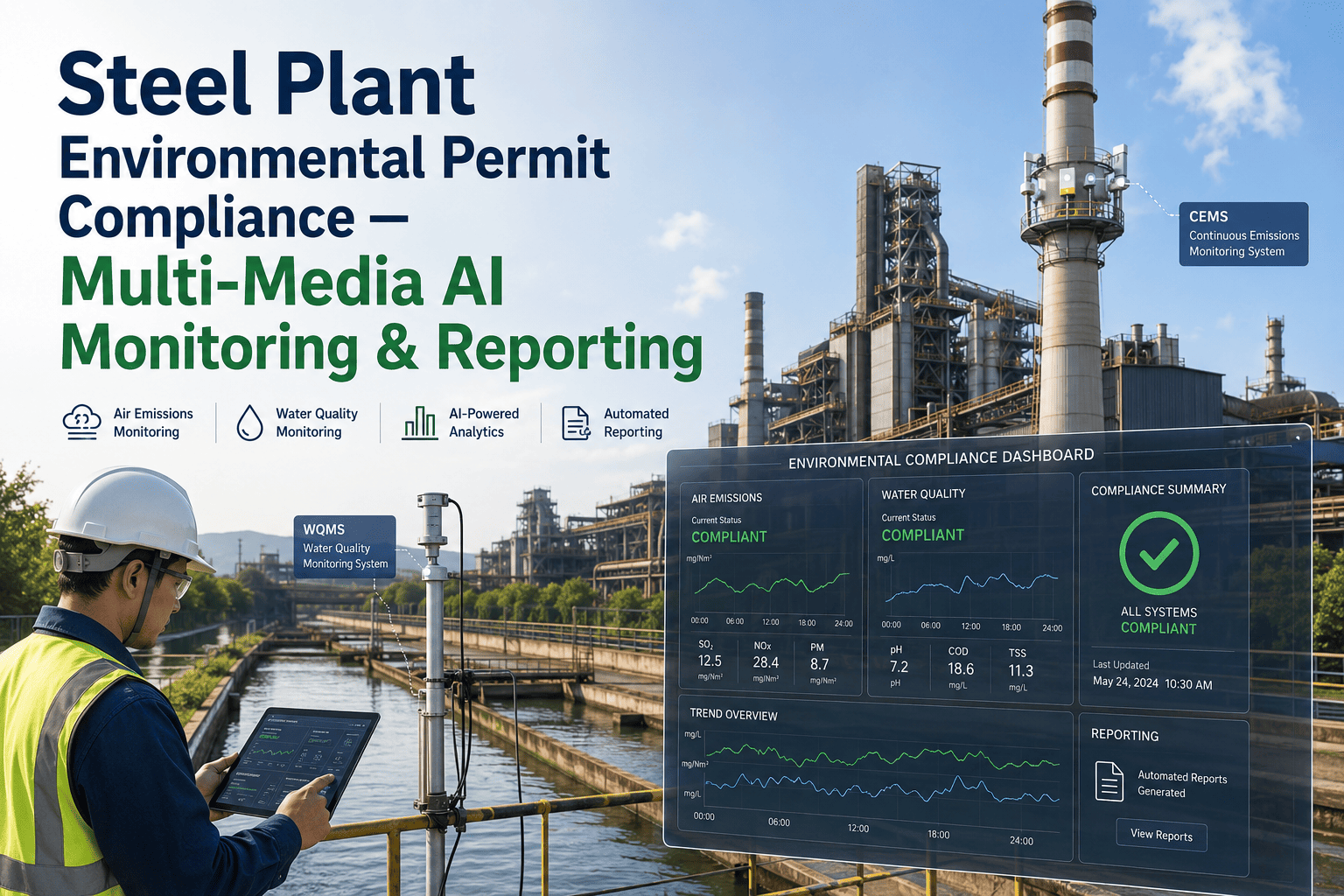
Read More
Steel production remains one of the most environmentally regulated industries in the world. From the moment raw materials enter the facility to the final shipment of finished coils, every process is subject to overlapping federal, state, and local
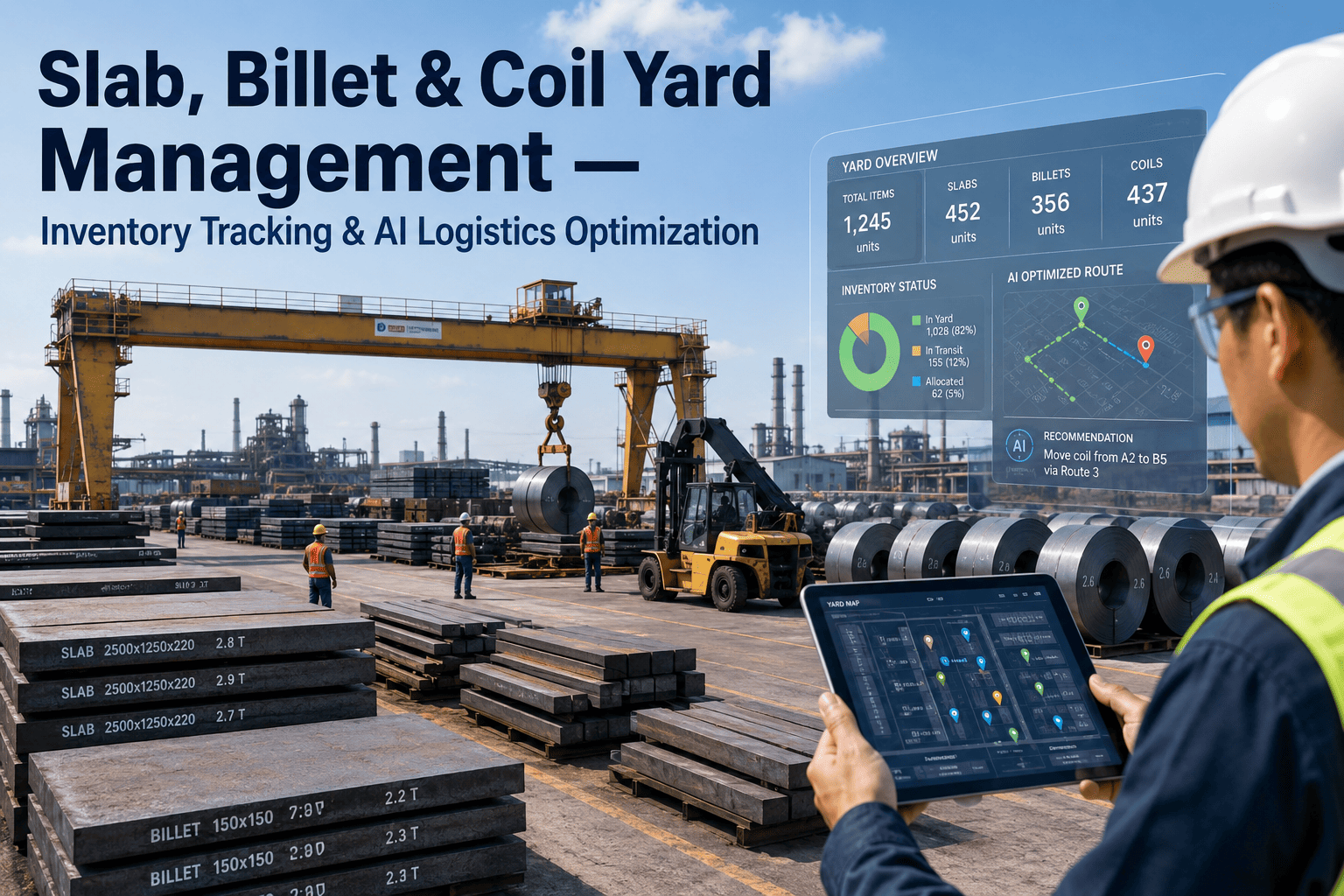
Read More
Managing a steel plant yard is a complex ballet of heavy materials, tight schedules, and constant pressure to reduce costs. Every day, thousands of tons of slabs, billets, and coils move through your yard, each with its own grade, dimension, and c
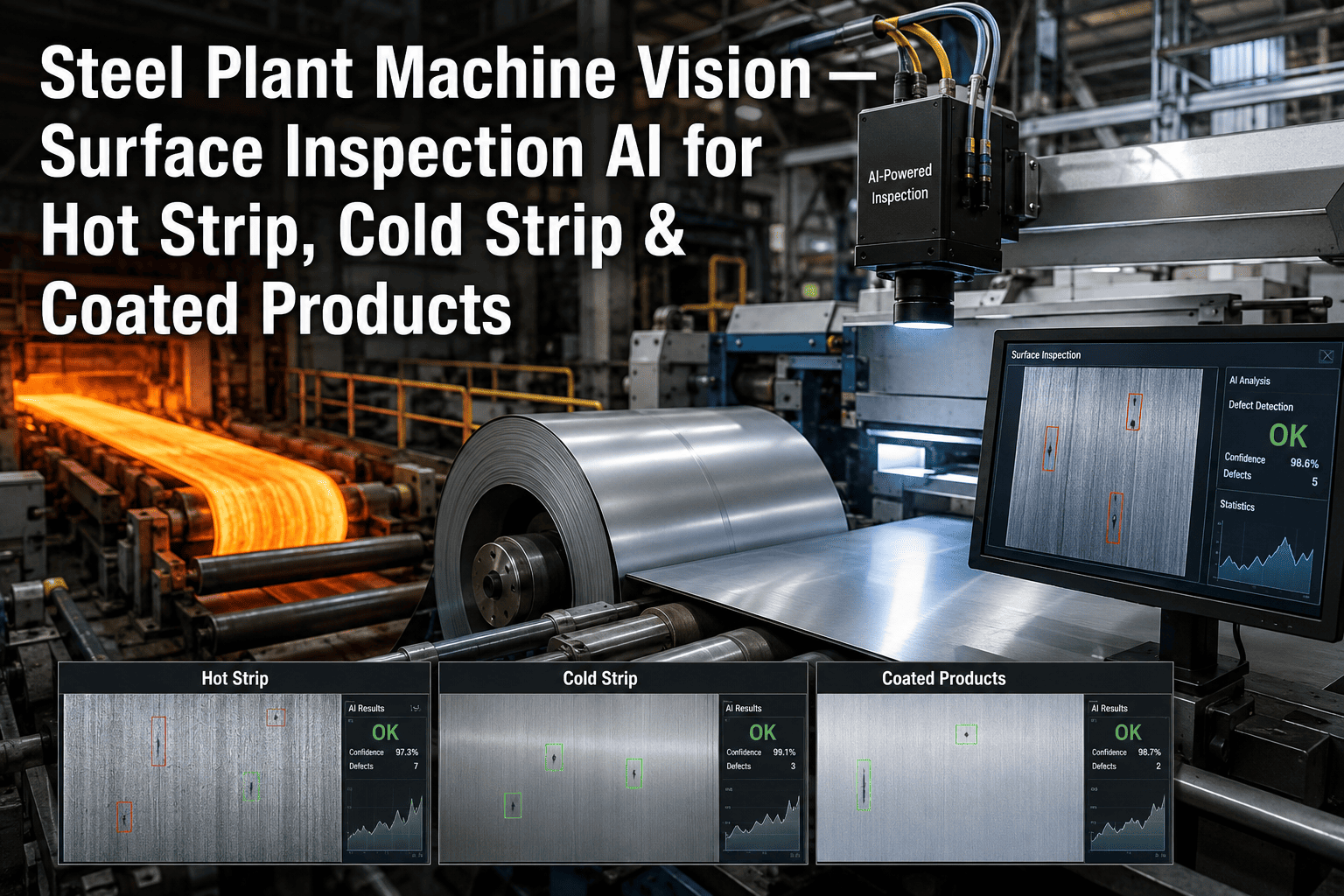
Read More
In the fiercely competitive steel industry, surface quality is the single most critical differentiator between premium and commodity products. Traditional manual inspection methods are no longer viable given modern line speeds exceeding 20 meters
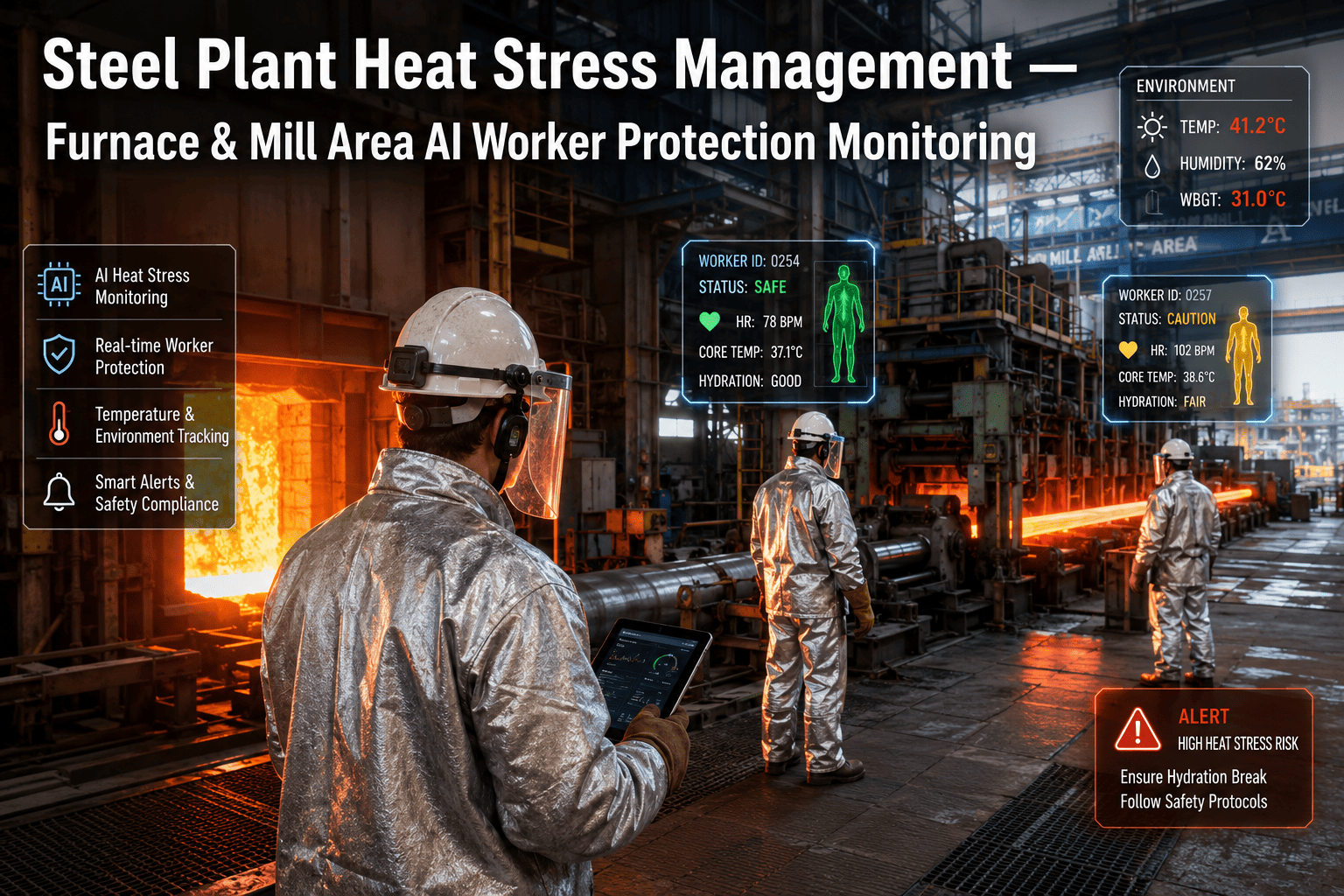
Read More
In steel production environments, furnace and mill areas expose workers to extreme thermal conditions that can lead to heat stress, heat exhaustion, and even fatal heat stroke. Traditional heat management relies on manual monitoring and reactive r
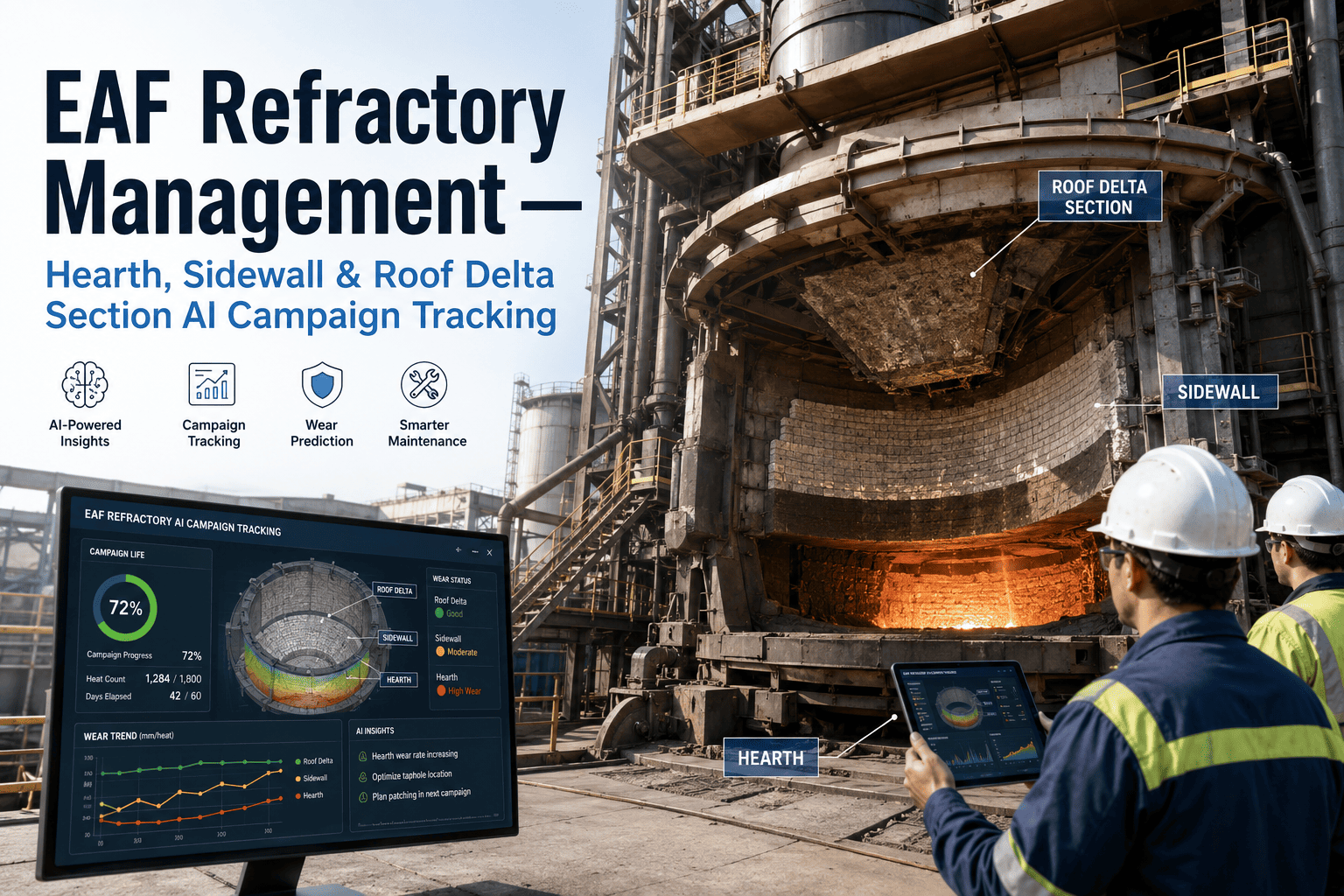
Read More
Electric Arc Furnace refractory management is a critical discipline that directly impacts campaign life, operational costs, and steel quality. In modern steelmaking, the EAF lining comprises three distinct zones: the hearth, the sidewall, and the
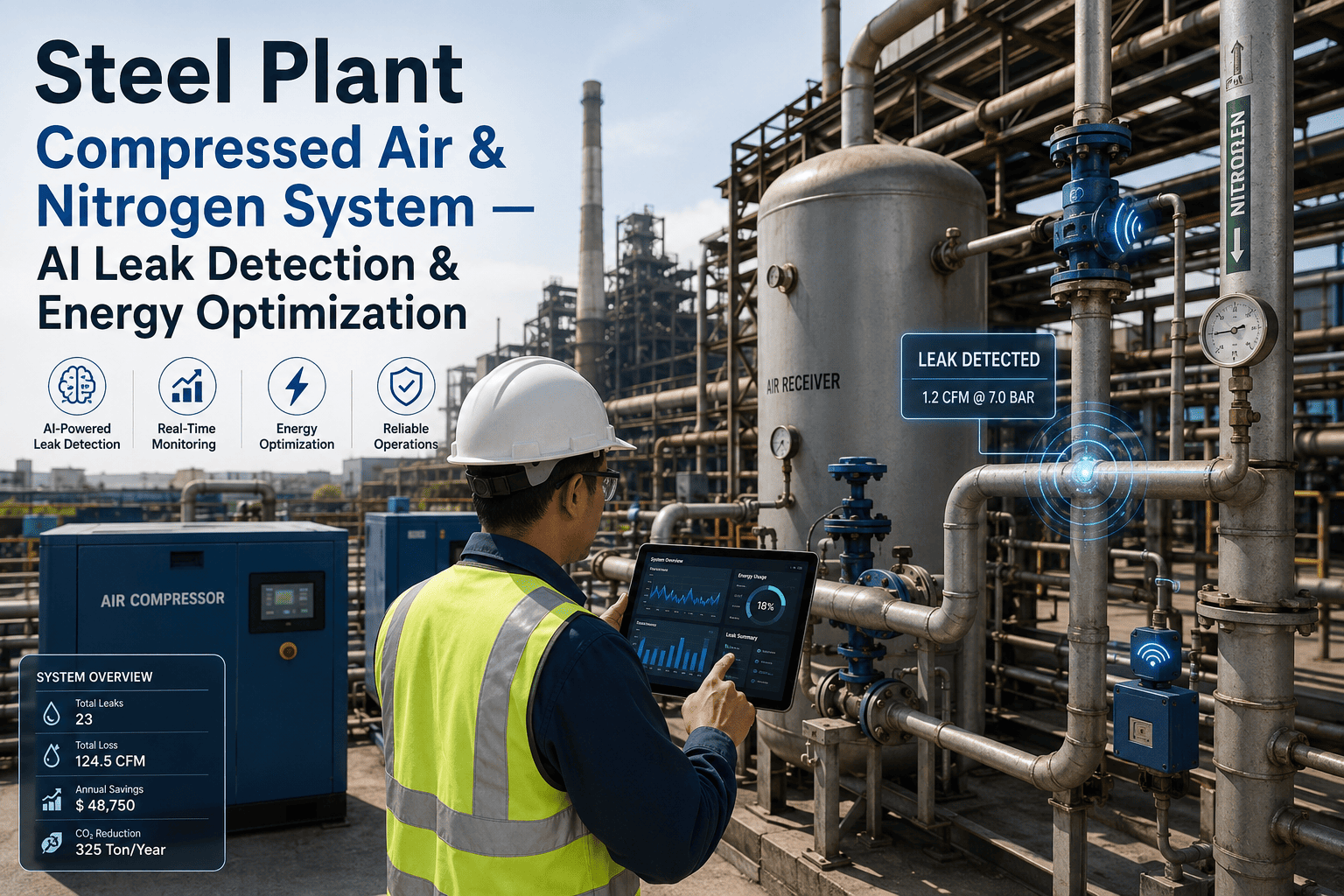
Read More
Compressed air and nitrogen are easy to overlook because nobody sees them the way they see a rolling mill or a furnace, yet these systems typically account for a meaningful share of total electricity use across a steel plant. A single leaking fitt
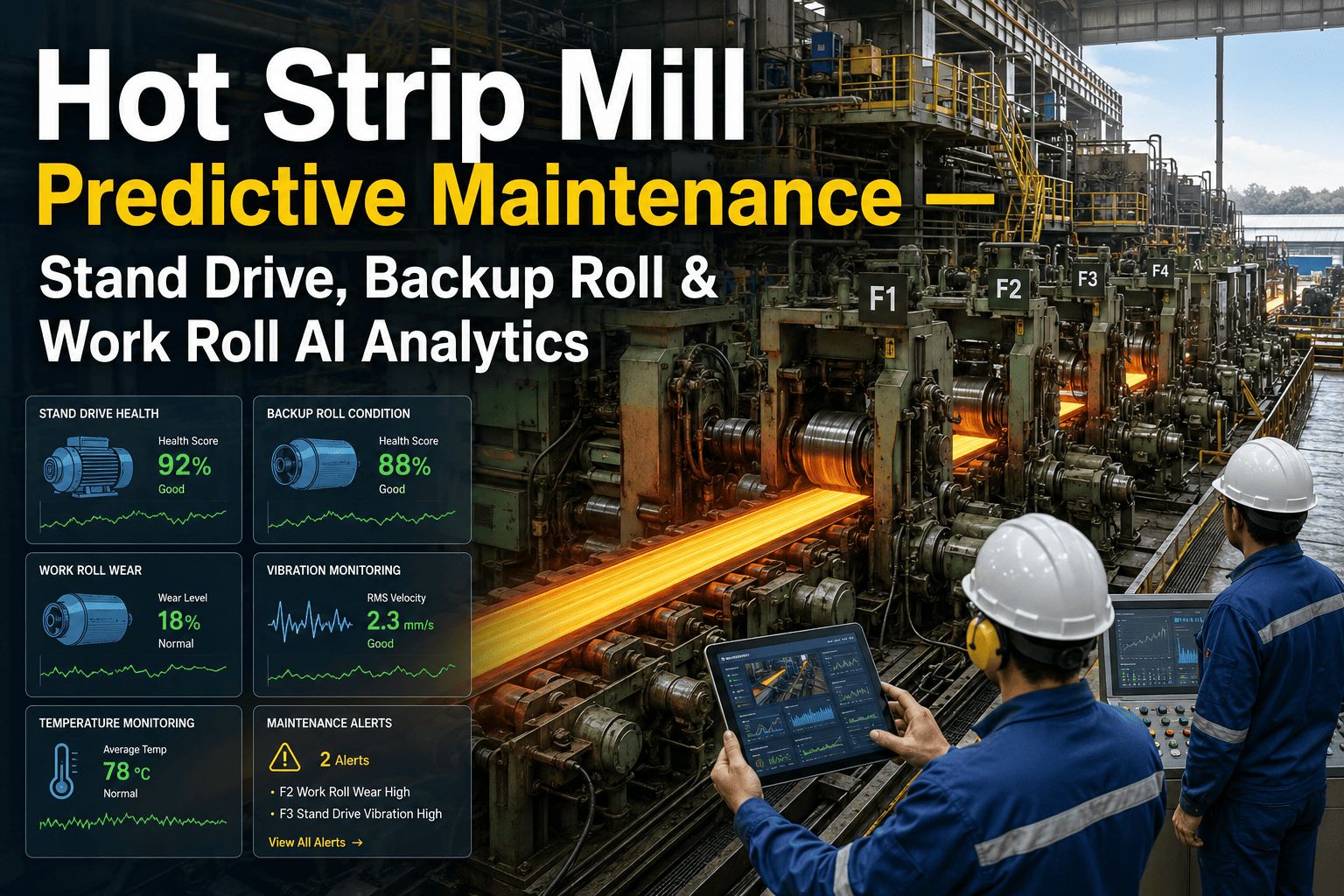
Read More
A mill wreck on a hot strip mill is one of the most expensive single events in a steel plant's calendar — a spindle failure or a work roll surface breakdown mid-pass can take a stand out of service for days and, in the worst cases, damage adjacent
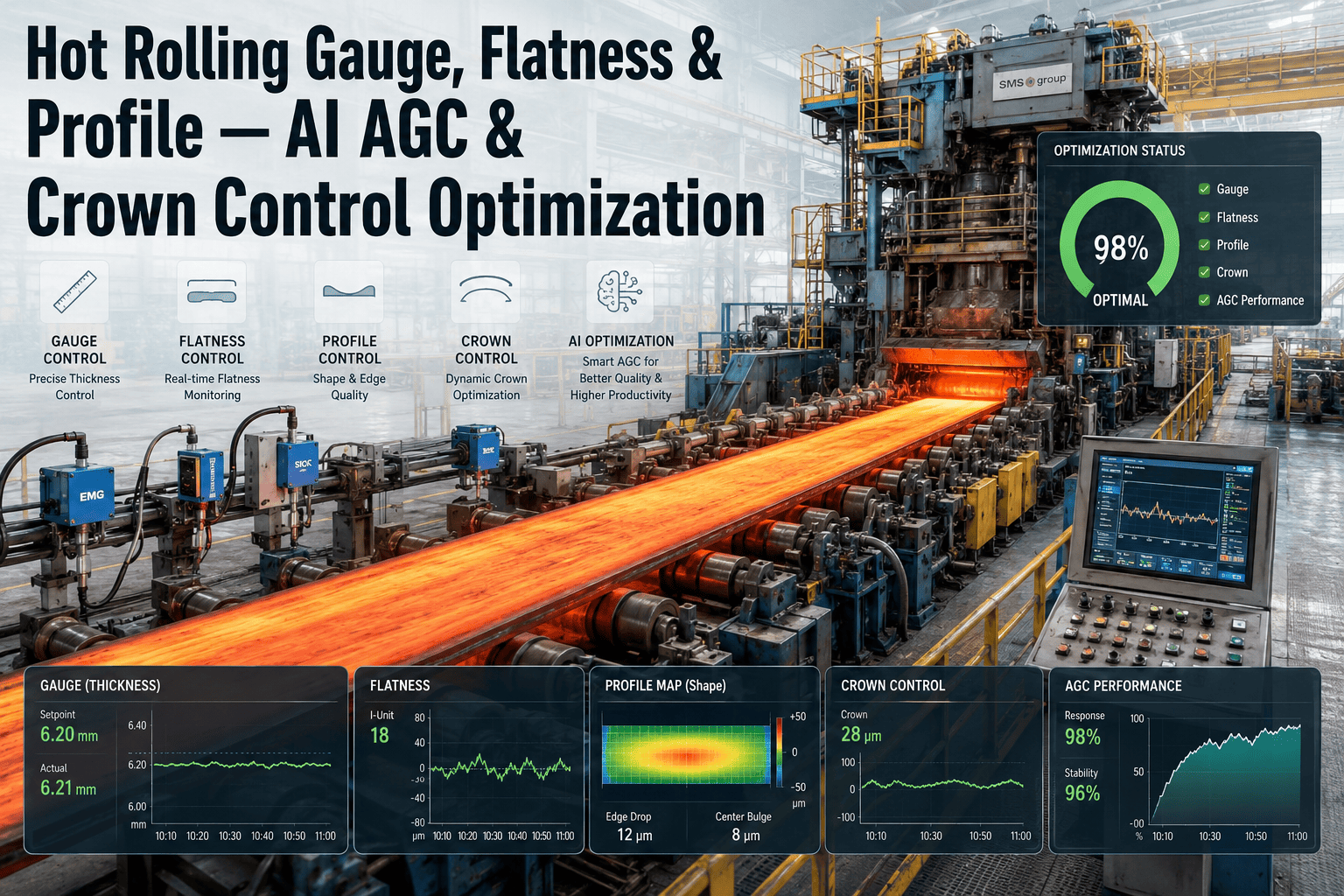
Read More
Meeting automotive and pipe-grade thickness tolerances on a hot strip mill means controlling variation measured in microns across a strip moving at production speed, and the gap between what a standard AGC system can hold and what an AI-enhanced m
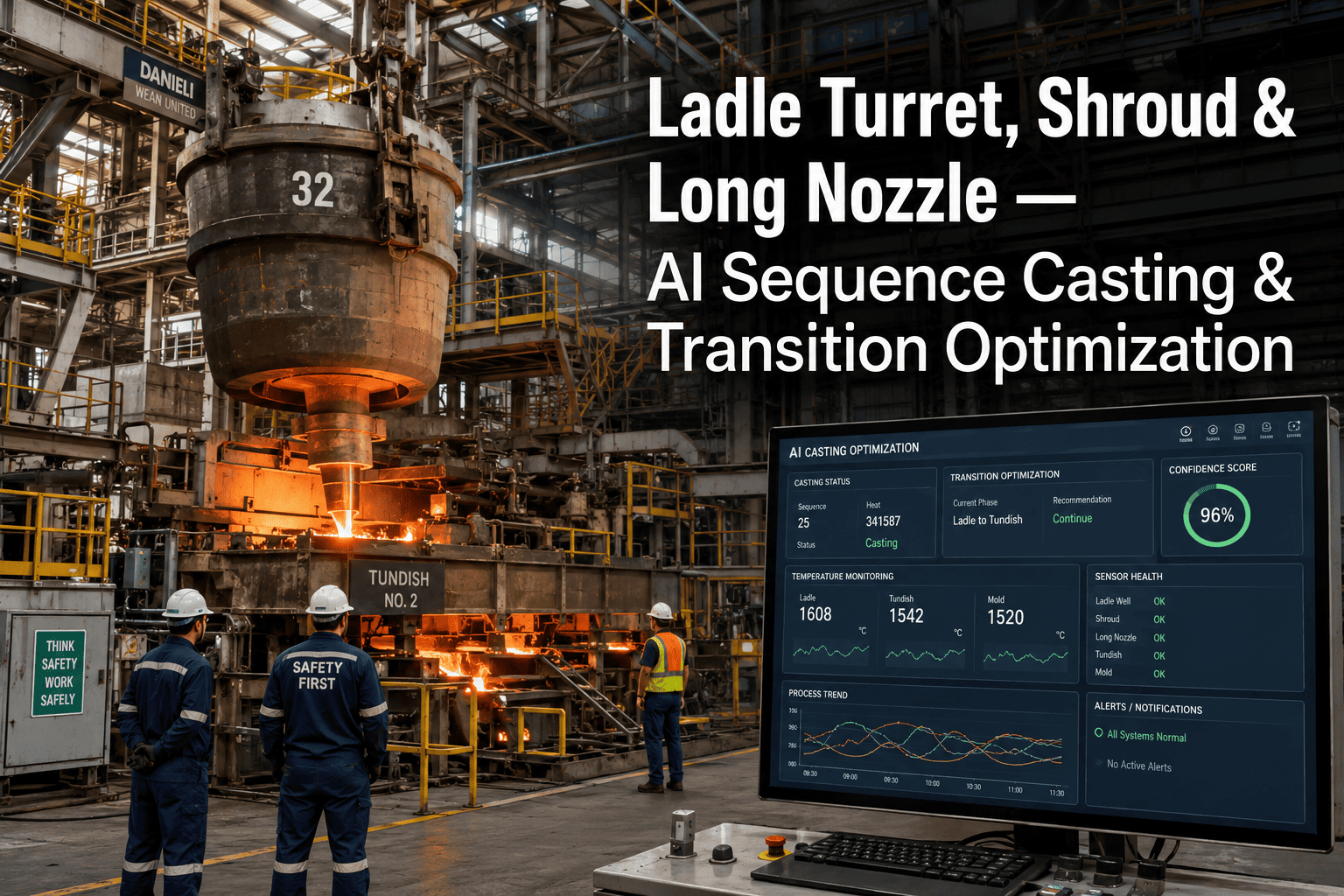
Read More
Sequence casting only works if every ladle change happens clean — a shroud that fails to seal or a turret rotation that lags by even a few seconds exposes molten steel to air, causing reoxidation defects that a reliability engineer will not see un
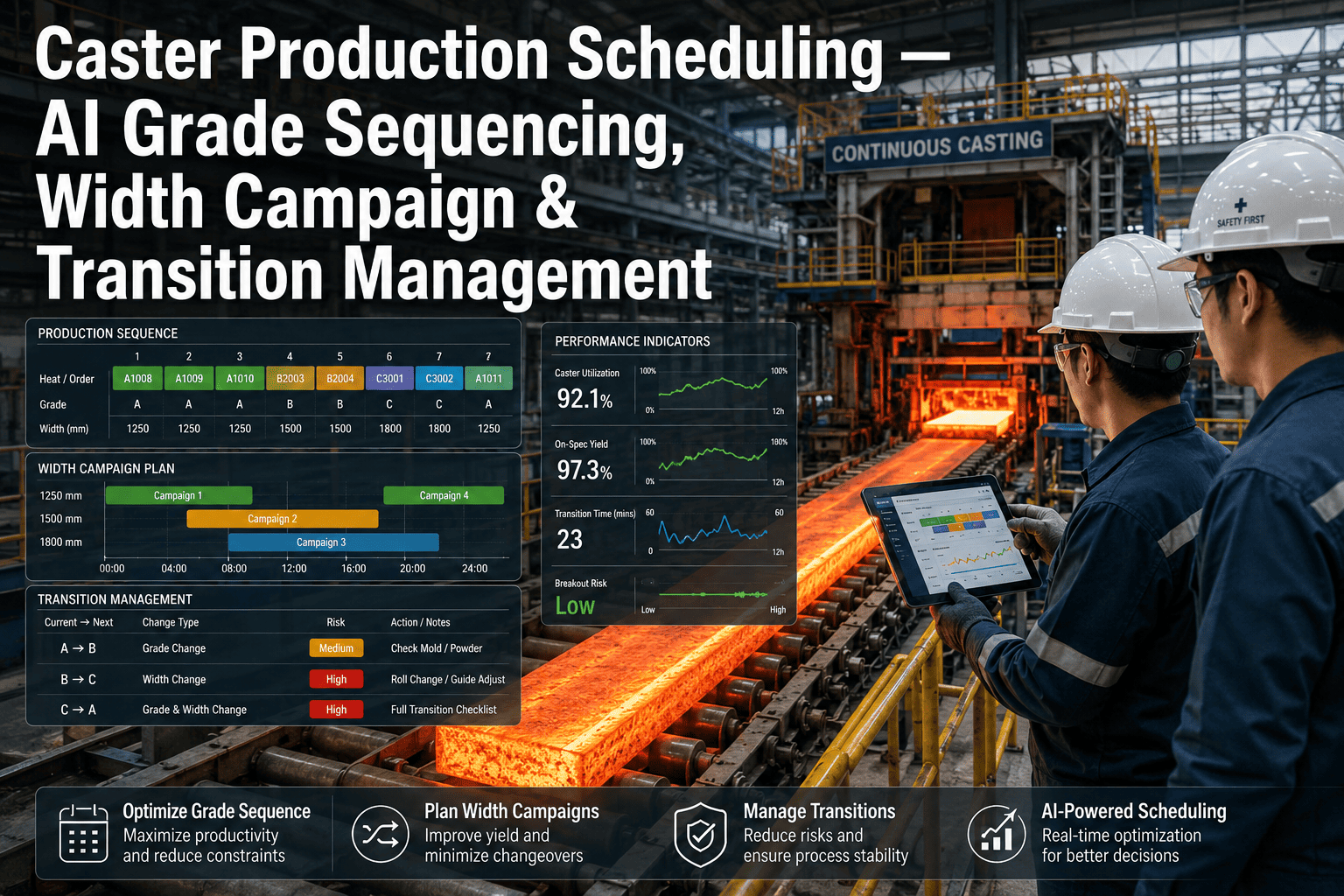
Read More
Every caster schedule is a trade-off between two competing goals — run long, tight sequences of similar grades and widths to maximize throughput, or meet a diverse order book that constantly forces grade transitions and width changes that eat into

Read More
A BOF vessel campaign is a race against refractory wear from the first heat to the last, and every plant manager knows the uncomfortable trade-off: push the lining too far and risk a breakout, relining too early and you sacrifice heats that were s
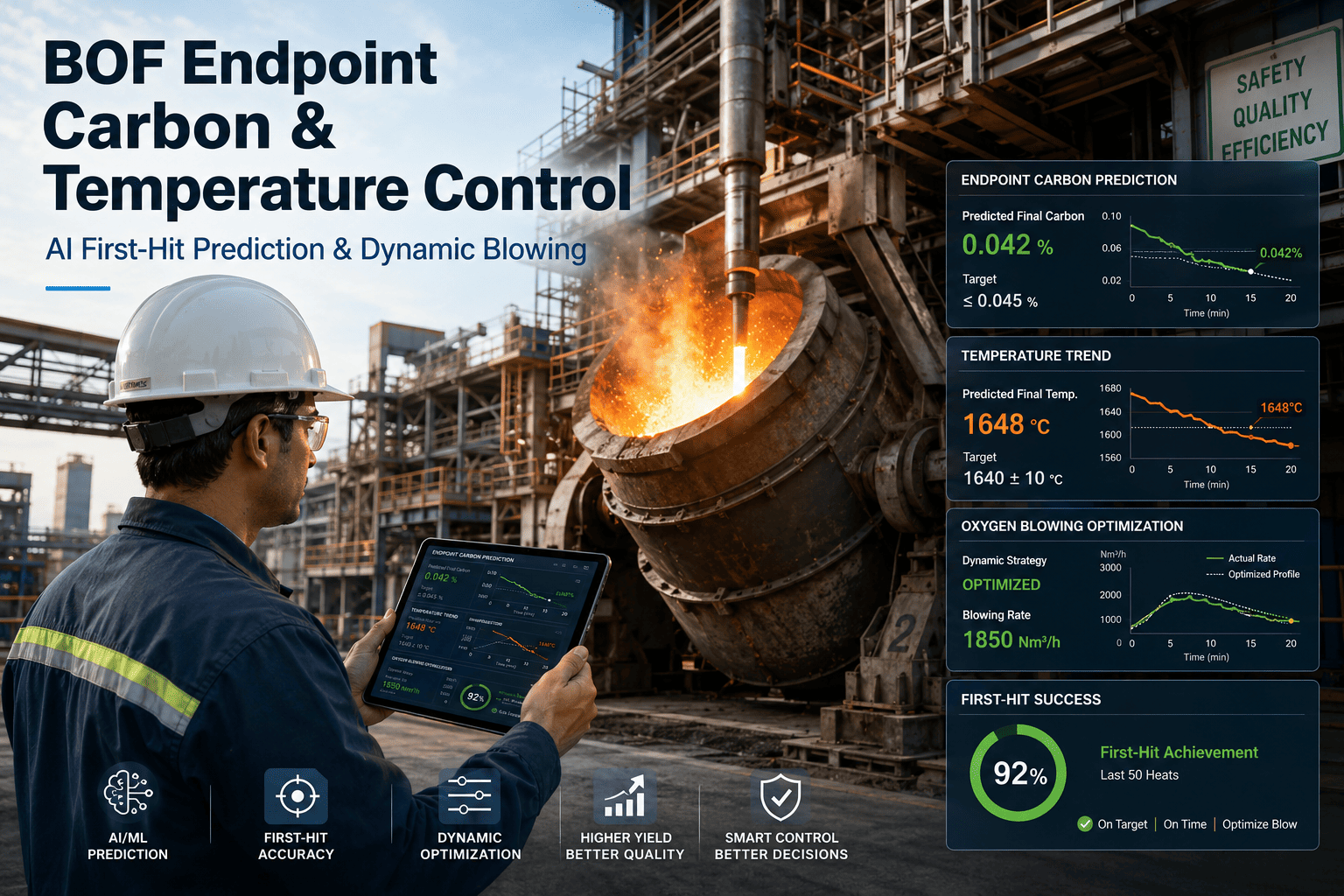
Read More
Hitting carbon and temperature targets on the first try at BOF endpoint is one of the hardest control problems in steelmaking, because the blow reaction is not directly observable until the vessel is turned down and sampled — by which point any co
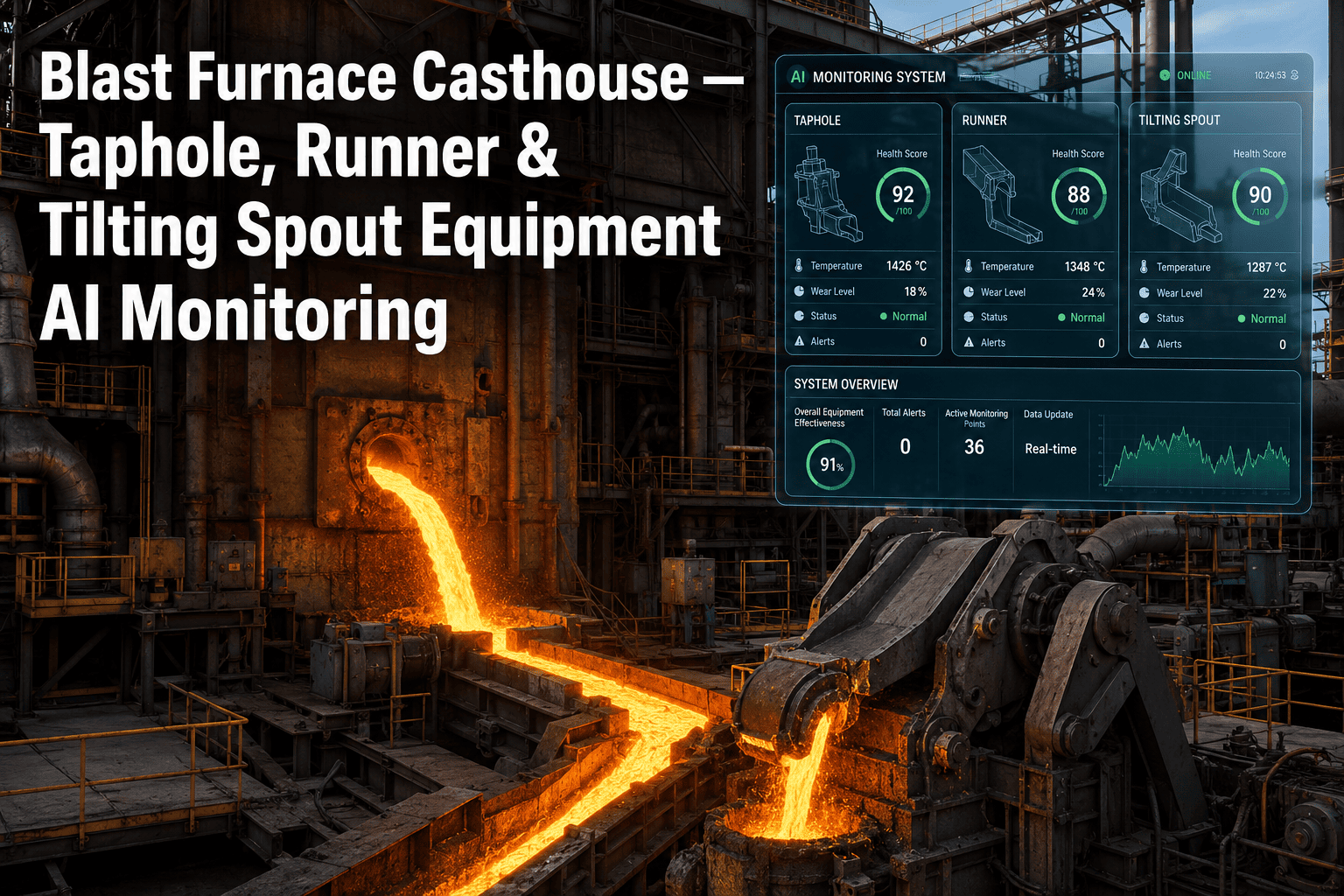
Read More
A single missed taphole opening or a runner refractory failure can idle an entire blast furnace campaign within hours, backing up hot metal and forcing an emergency furnace slowdown that costs six figures per shift. Casthouse equipment — taphole d
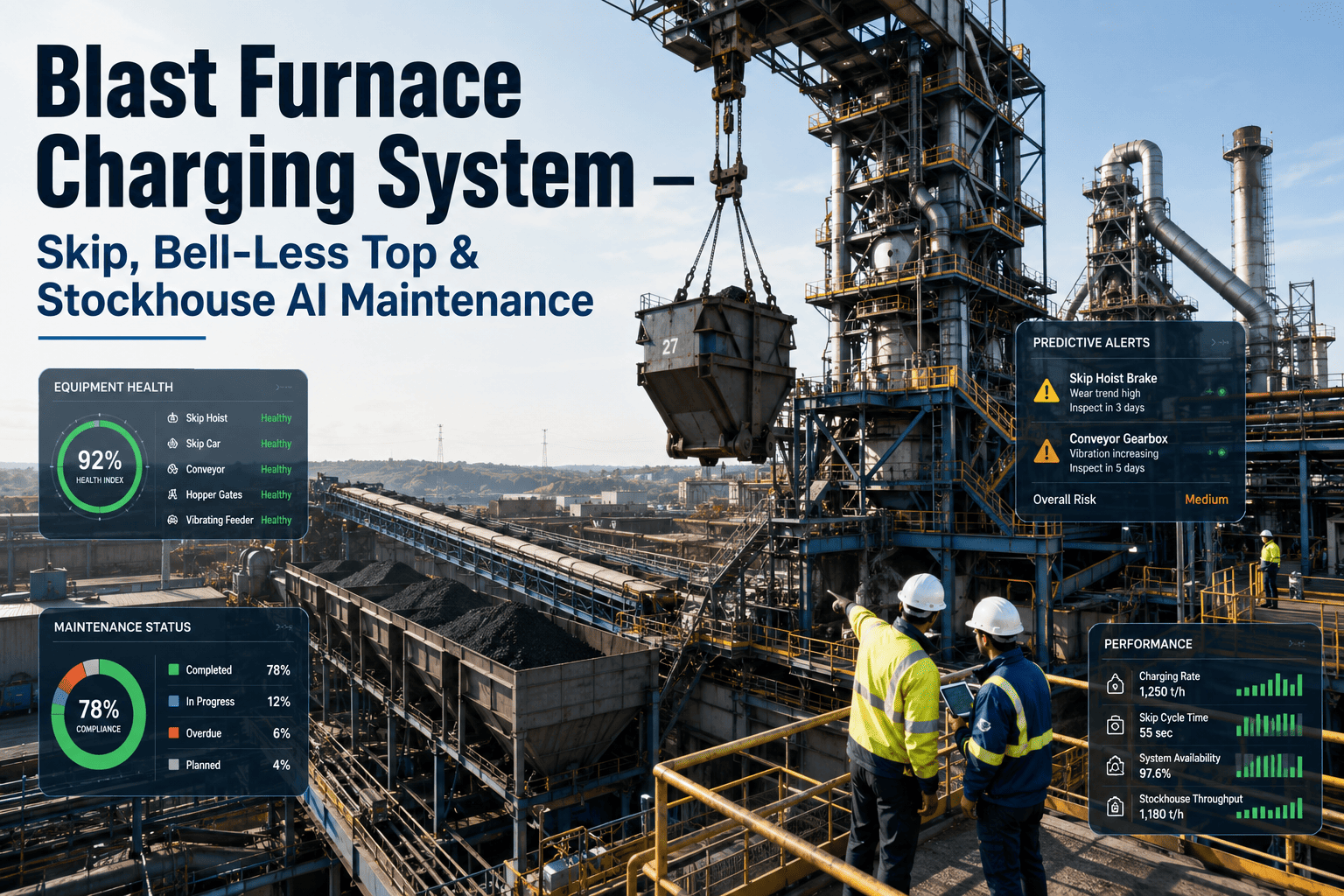
Read More
Burden distribution inside a blast furnace is decided long before the material ever reaches the stockline — it is decided at the skip hoist, the bell-less top chutes, and the stockhouse screens, where even a small drift in charging pattern consist
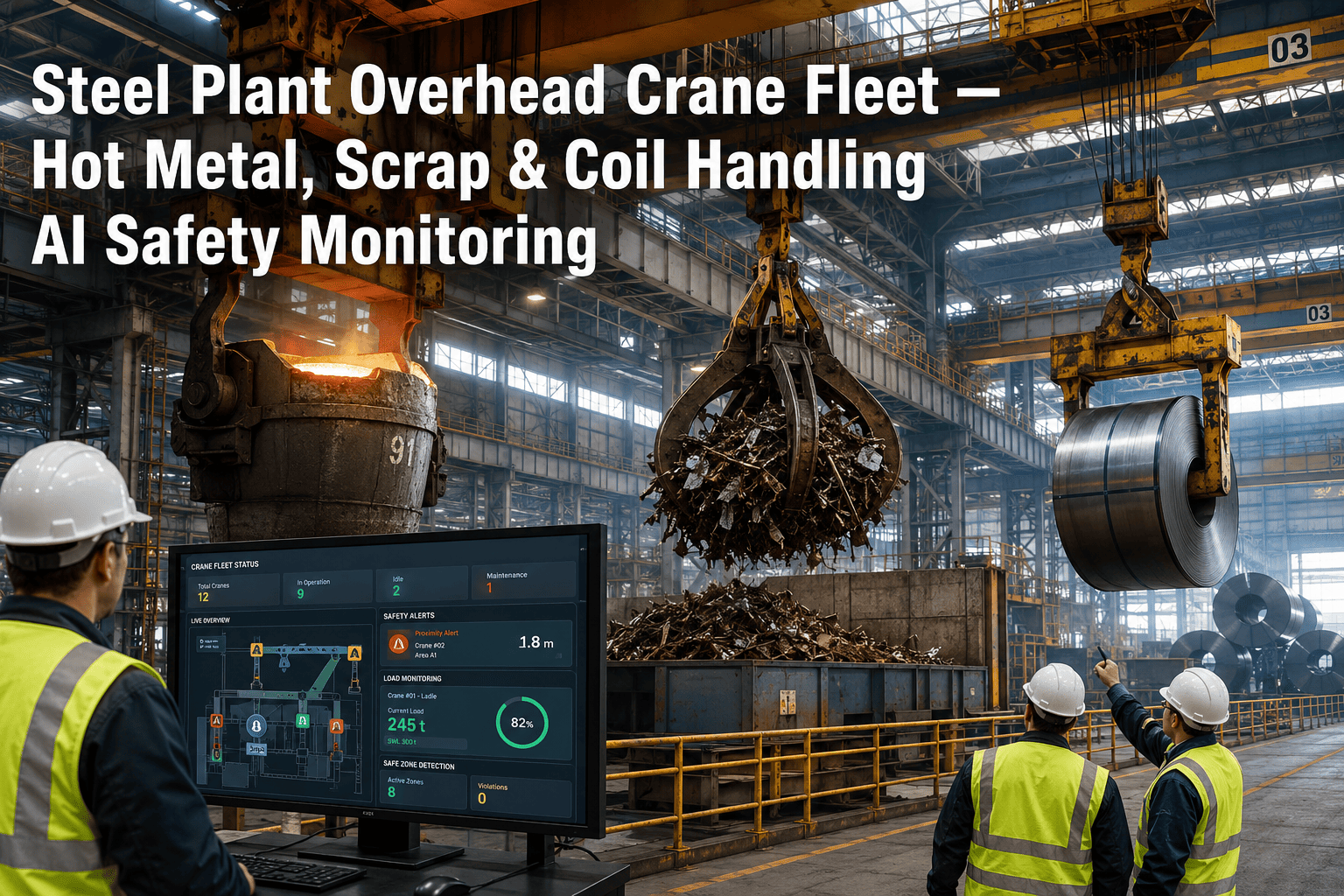
Read More
Steel plant overhead cranes represent the most expensive and technically demanding assets in the maintenance manager's portfolio — a single ladle crane overhaul can cost $2 million and take a crane out of rotation for 8 to 12 weeks during peak pro
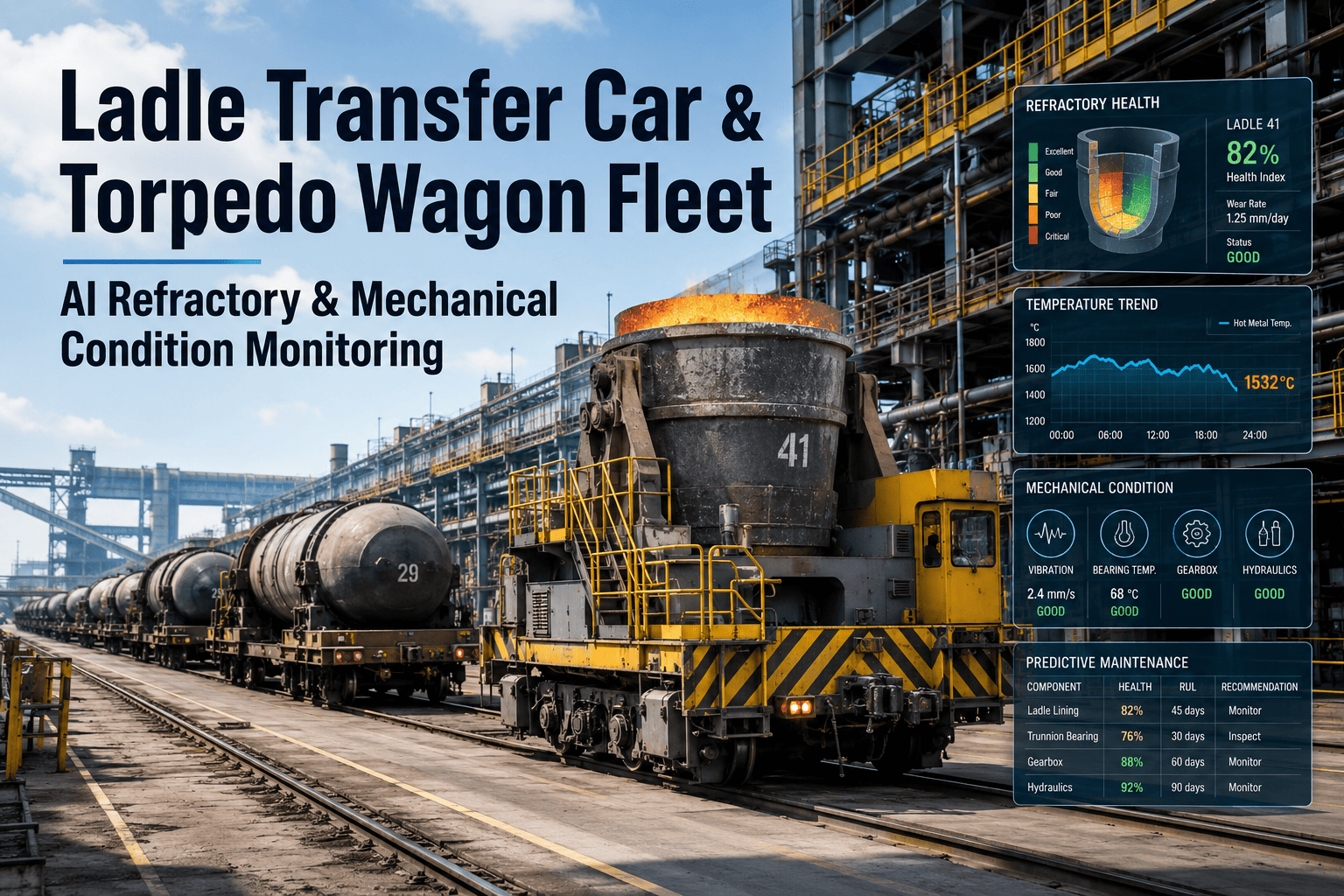
Read More
In an integrated steel plant, a single torpedo wagon carries up to 350 tonnes of liquid iron at temperatures north of 1,400°C between the blast furnace casthouse and the steelmaking shop — three to five times per day, every day, across a refractor
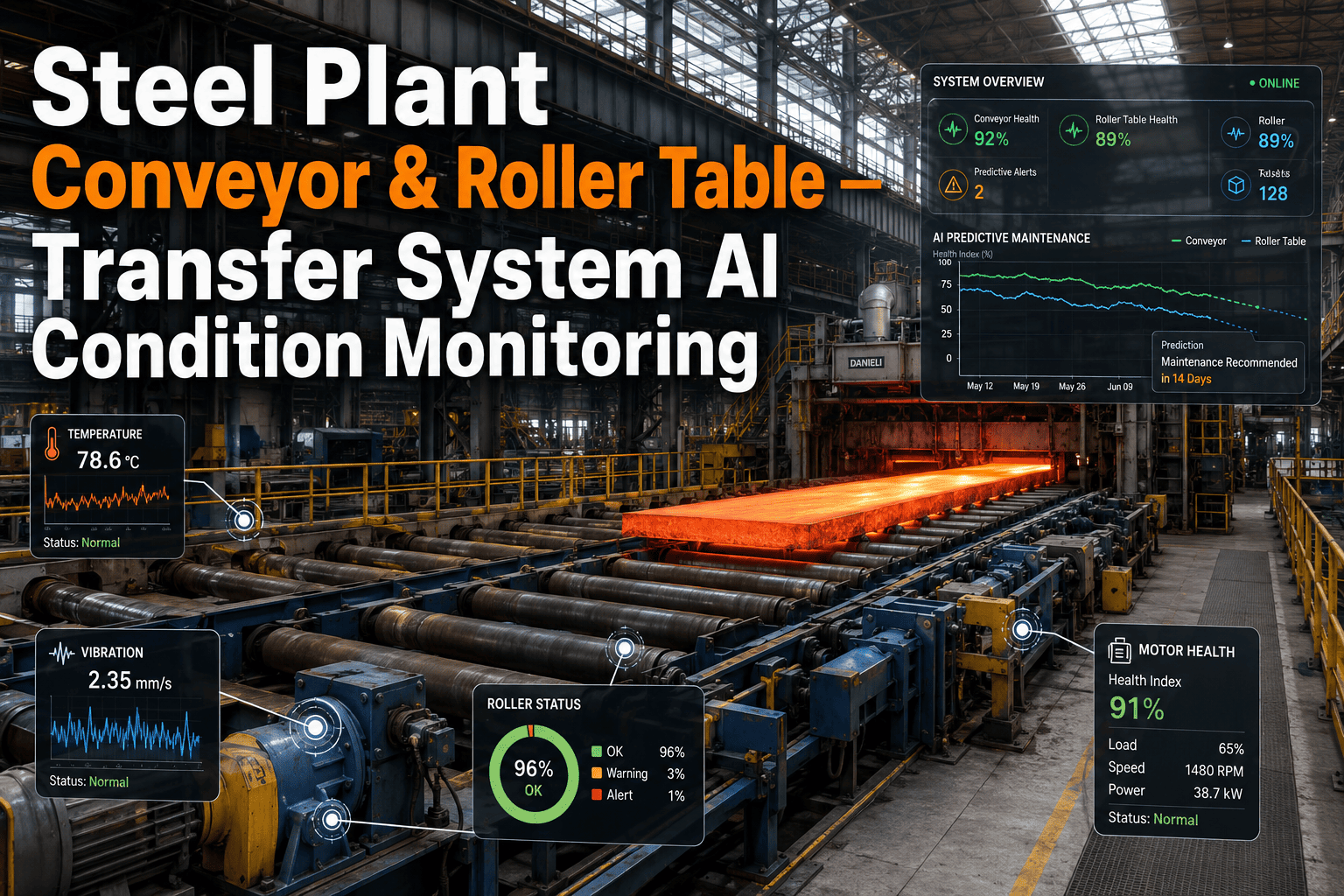
Read More
Roller tables and transfer systems are the connective tissue of any steel plant, moving slabs from the caster to the reheating furnace, transferring bars through the cooling bed, and shuttling coils through the finishing line. For reliability engi
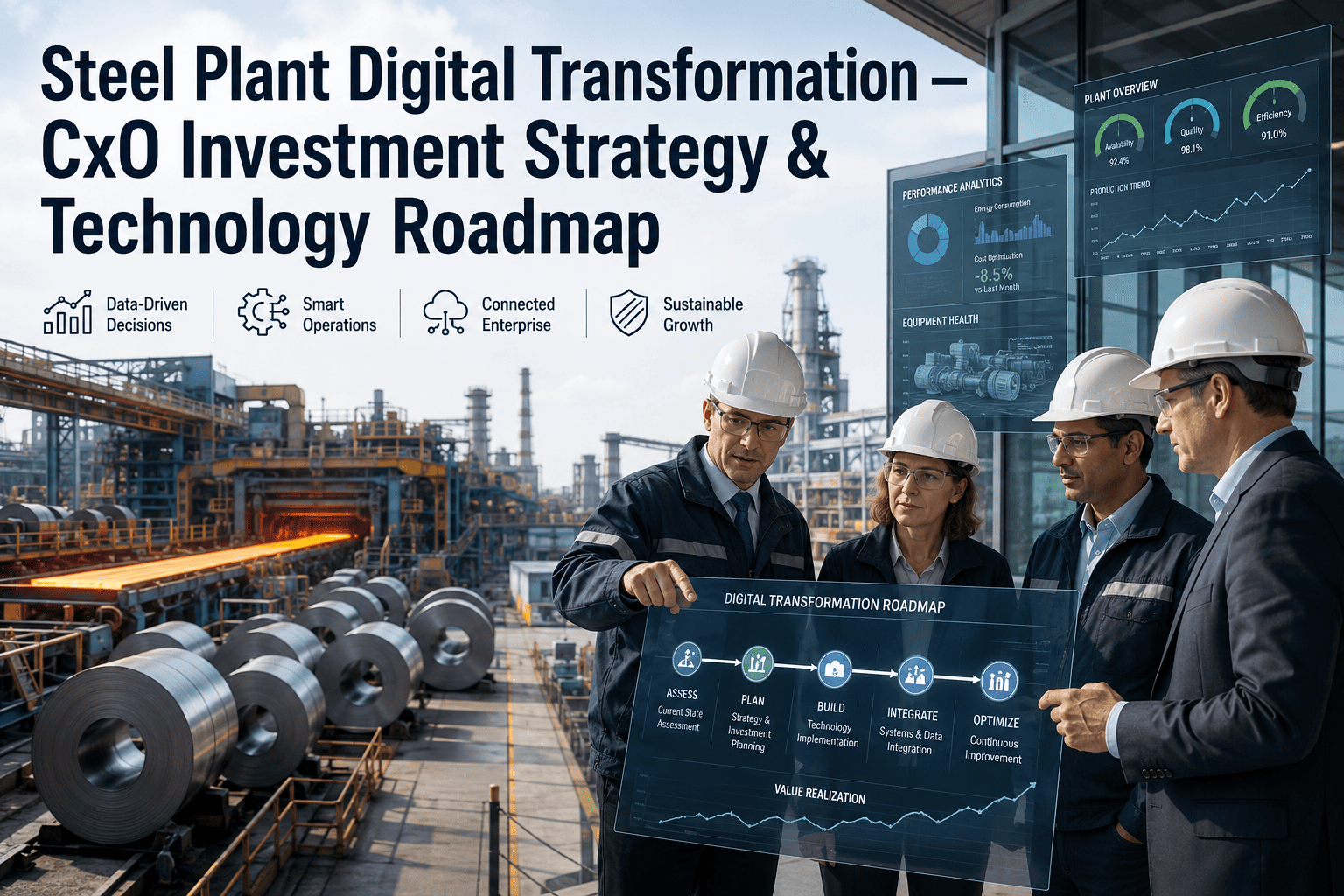
Read More
Steel industry CEOs and COOs are under pressure from shareholders, regulators, and customers to decarbonize operations while simultaneously improving yield, reducing costs, and maintaining capital discipline in a market where overcapacity and vola
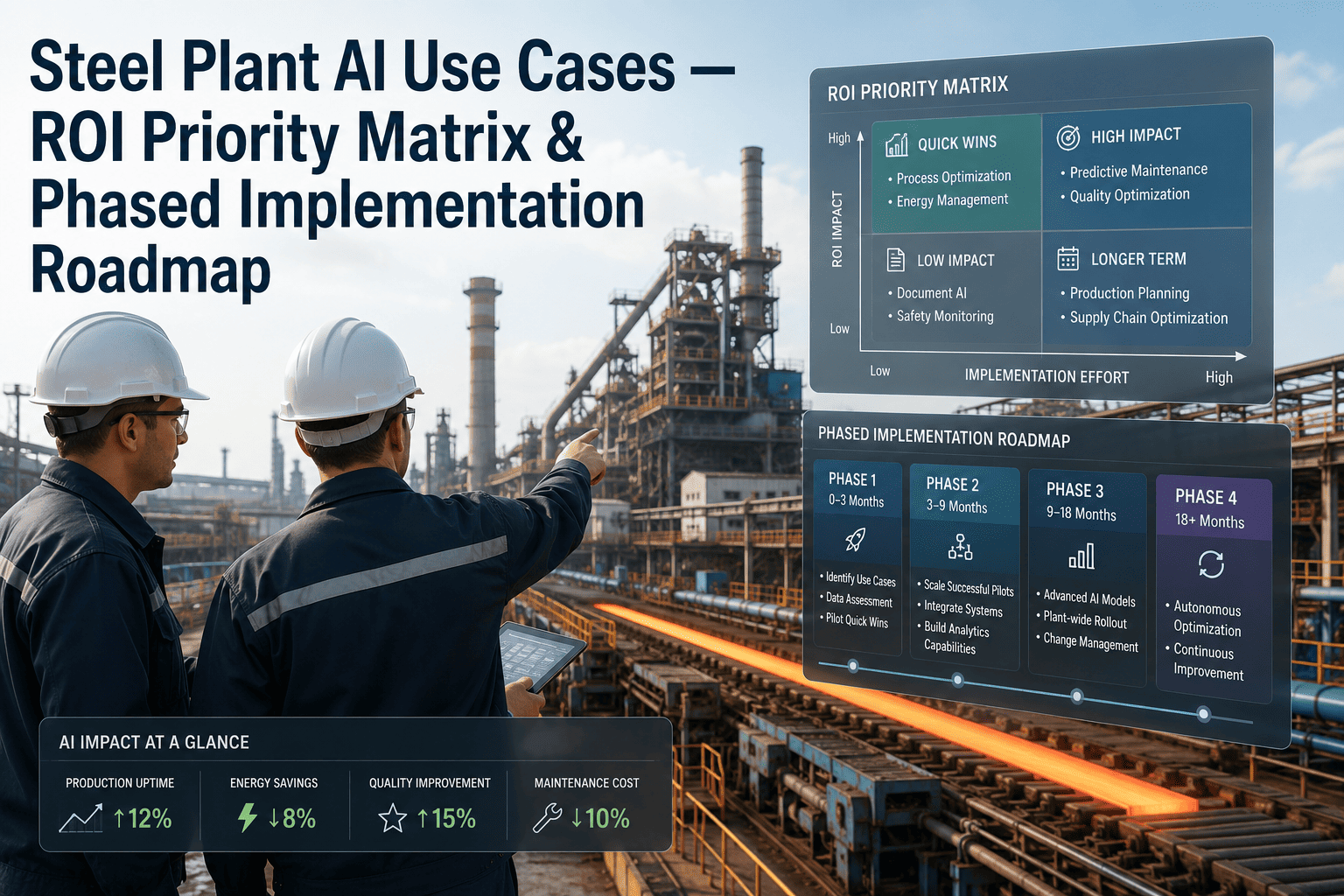
Read More
Steel plant operations directors are under pressure to show tangible returns from AI investments, not just pilot programs that never scale. The challenge is not finding AI use cases in steel manufacturing because there are dozens of viable applica
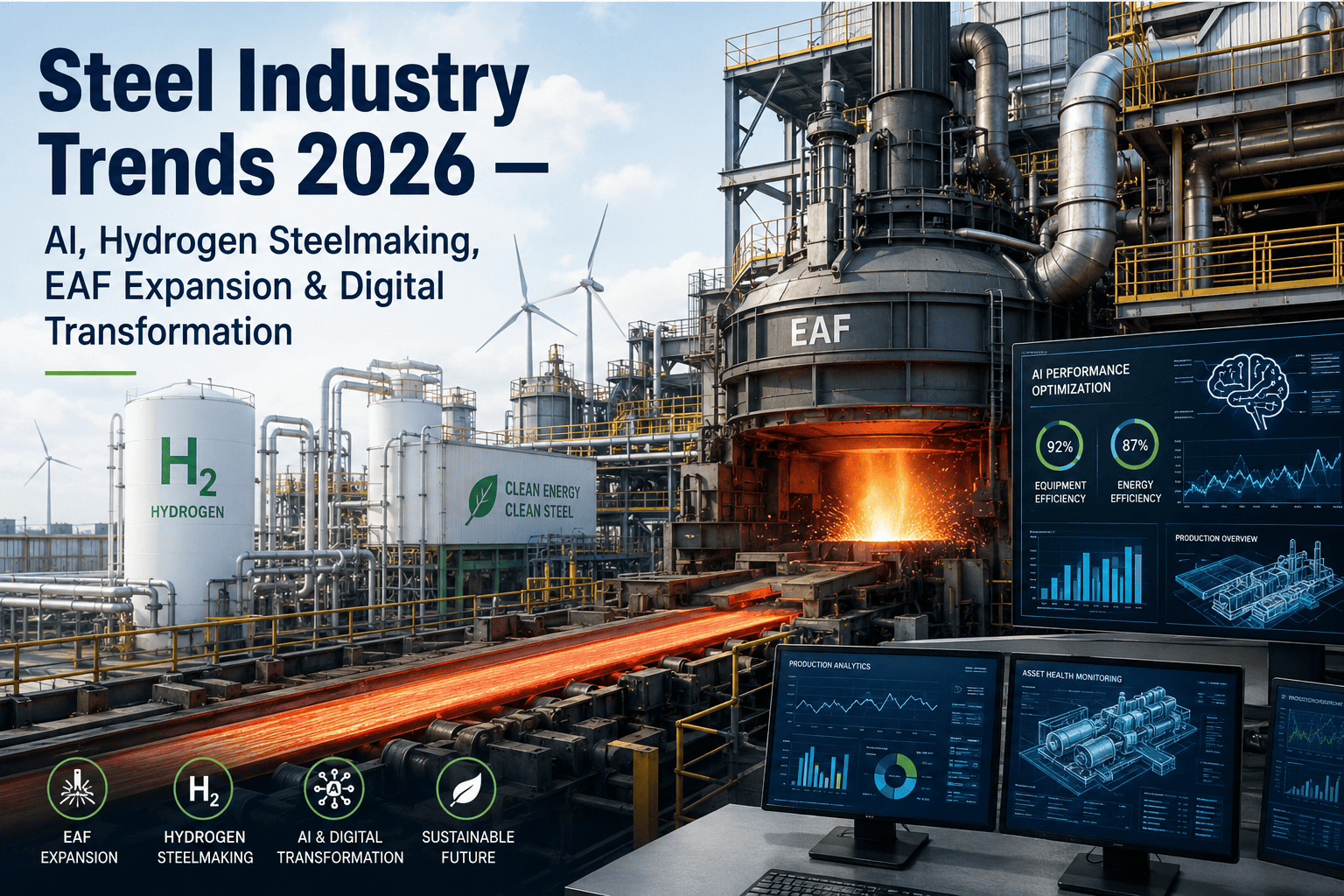
Read More
The steel industry is entering a period of accelerated transformation that will define competitive positioning for the next decade. Between 2024 and 2026, global steelmakers are navigating simultaneous shifts in decarbonization policy, electrifica
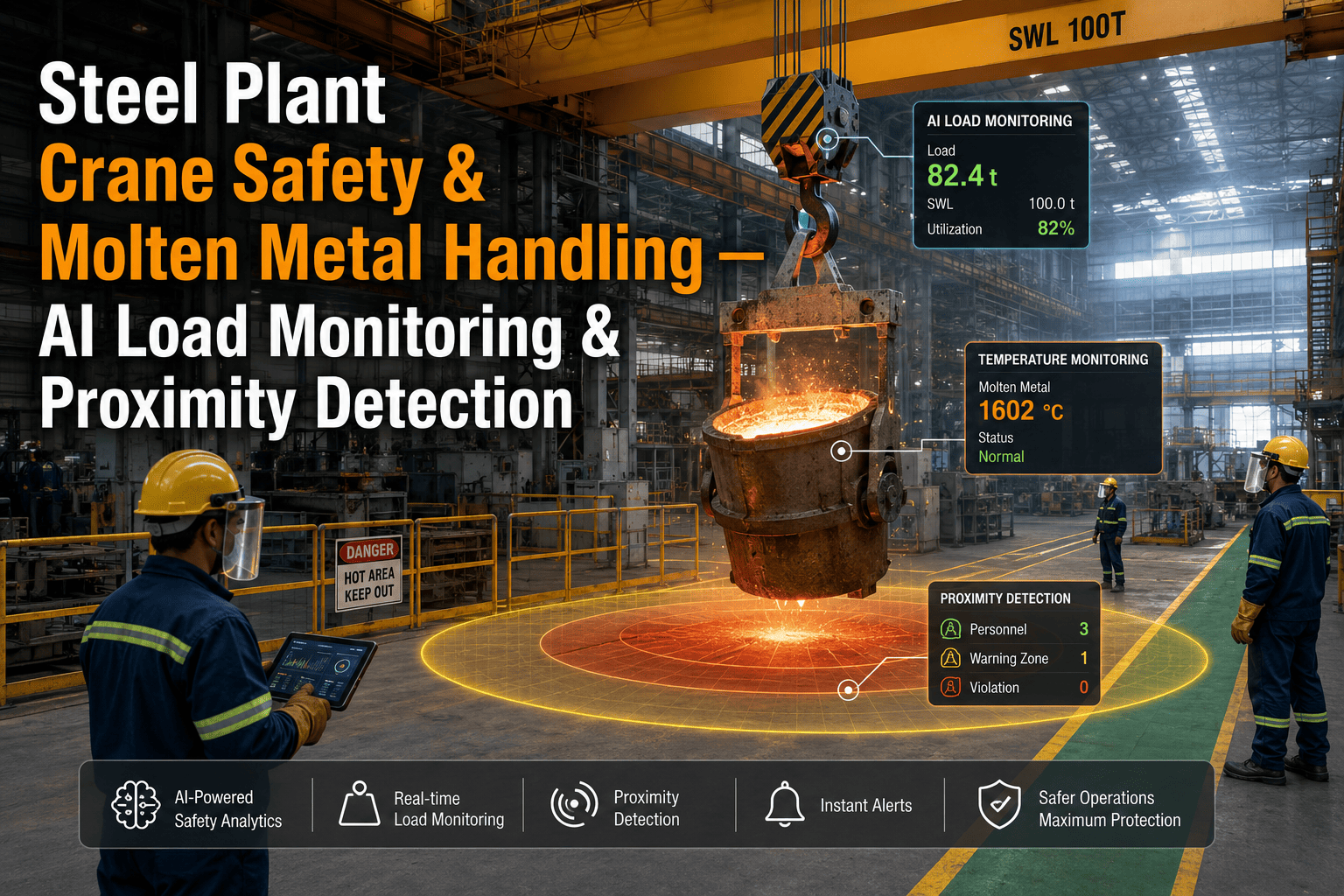
Read More
Overhead cranes carrying 150-ton ladles of molten steel at 1,500 degrees Celsius represent the single highest-risk operation in any steel plant — a load path where a single component failure, operator error, or unauthorized worker intrusion can re
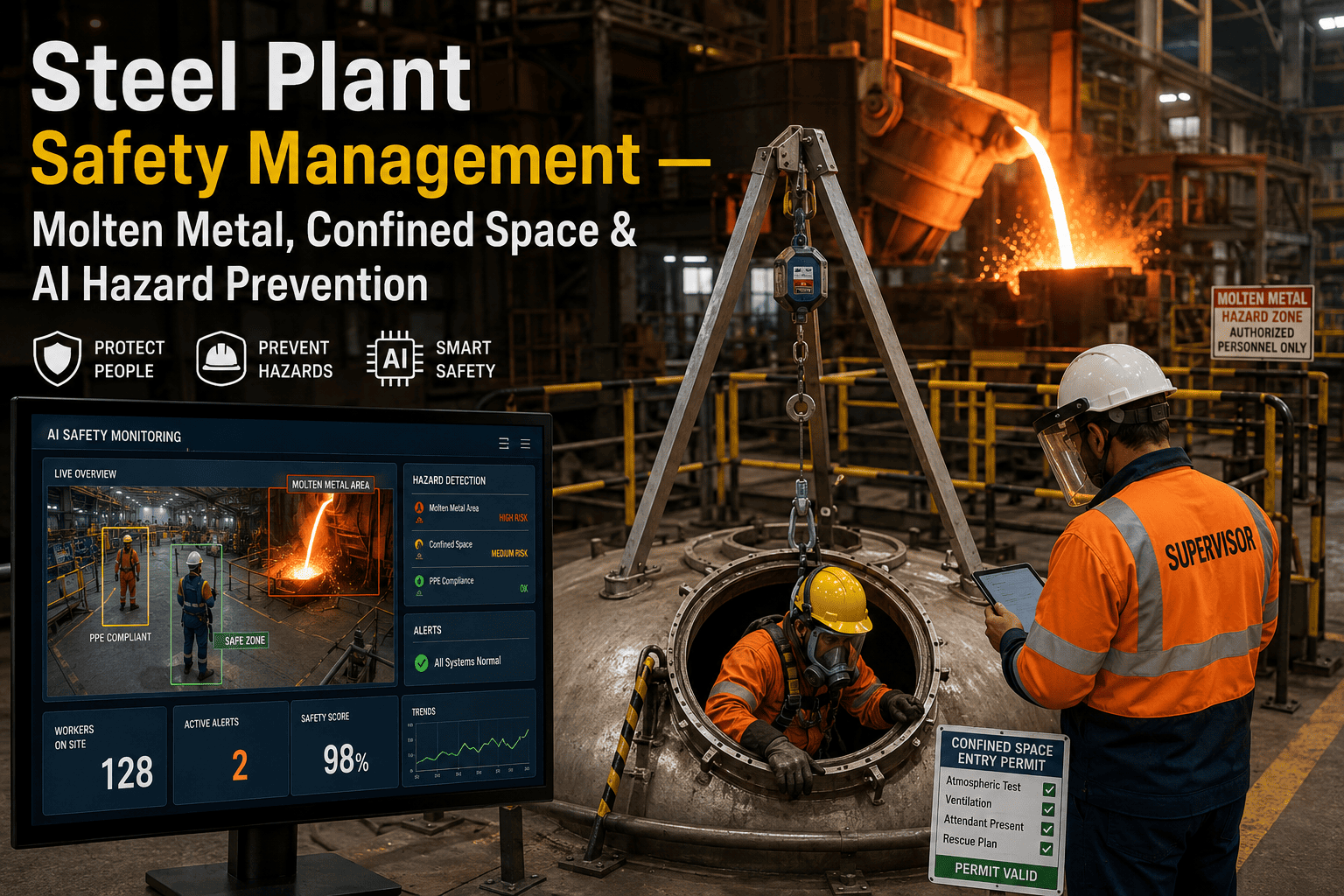
Read More
Steel plants operate in an environment where hazards are not theoretical — they are continuous, invisible, and lethal if the safety management system has any gap in coverage. Molten metal at 1,500 degrees Celsius, confined spaces with residual car
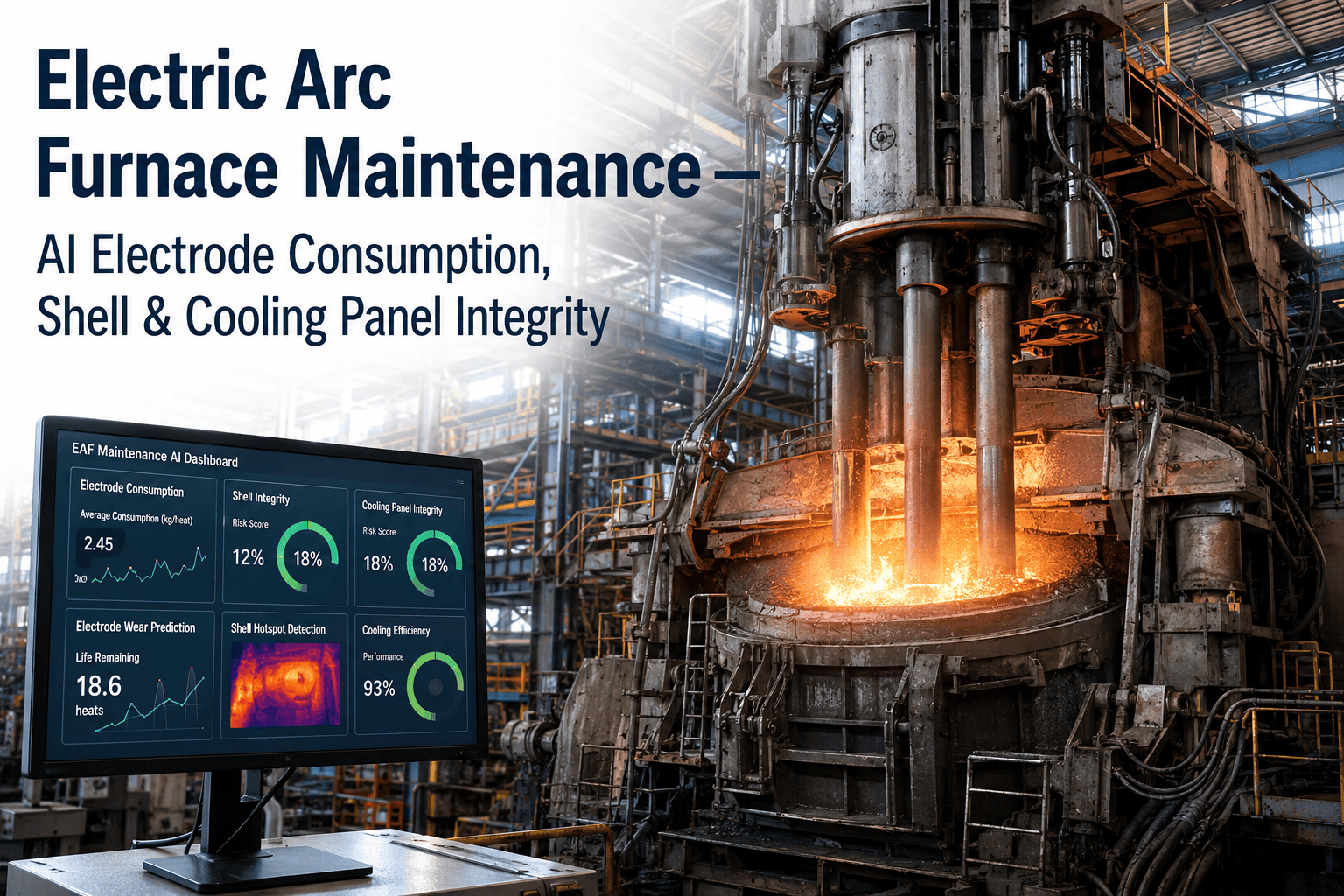
Read More
Plant managers overseeing an electric arc furnace are balancing three high-cost systems at once: graphite electrodes consumed at 1.5 to 2.5 kilograms per tonne of steel, water-cooled shell panels carrying 80 percent of the furnace's thermal load,
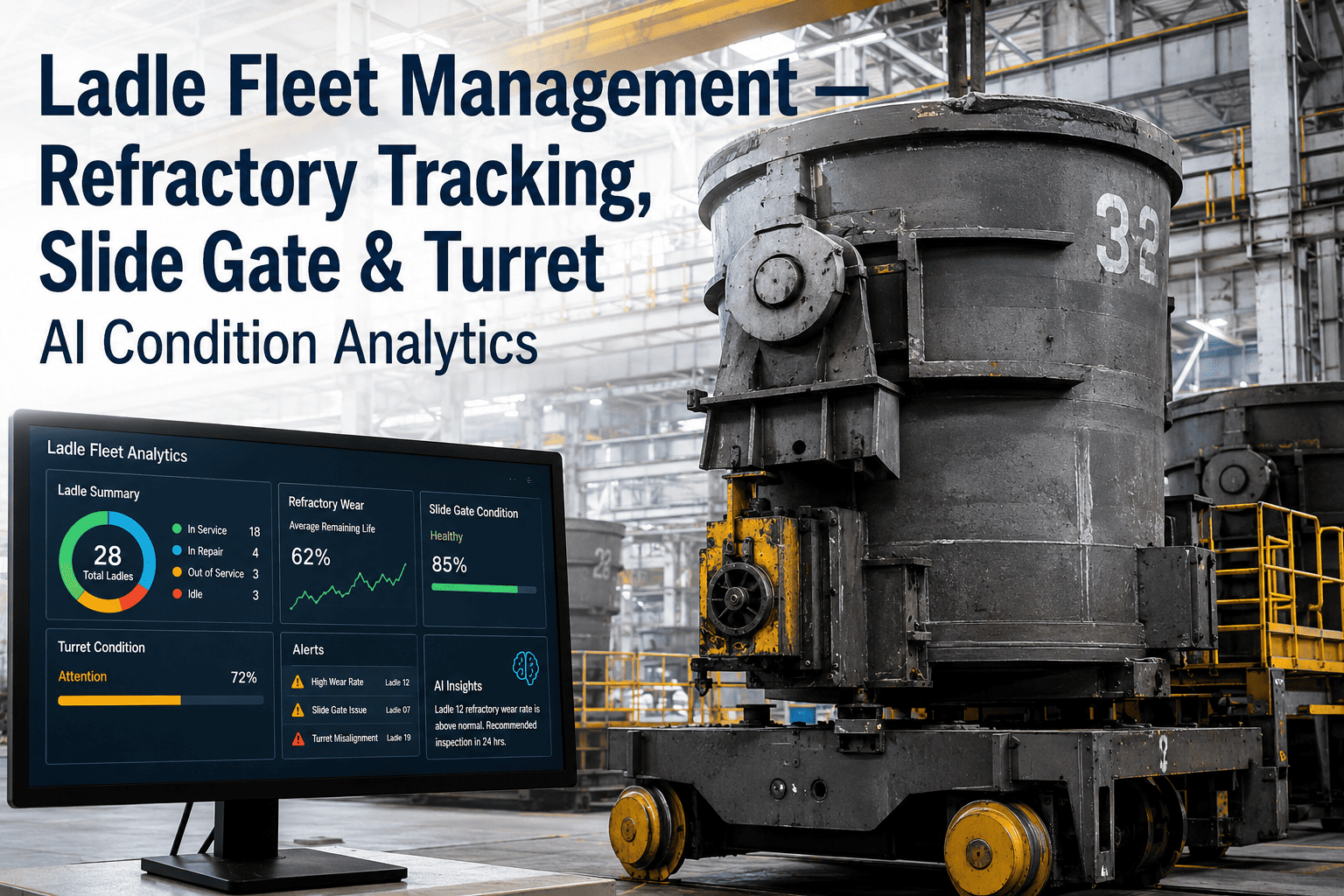
Read More
A 300-tonne steel ladle cycles from ambient temperature to 1,650 degrees and back every four to six hours, and reliability engineers managing a fleet of 12 to 24 of these vessels are essentially running a rolling safety and cost equation with no r
Read More
Maintenance managers running a BOF shop are sitting on top of one of the largest recoverable energy streams in the entire steel plant, yet most facilities still let a meaningful share of that value slip away through underperforming hood integrity,
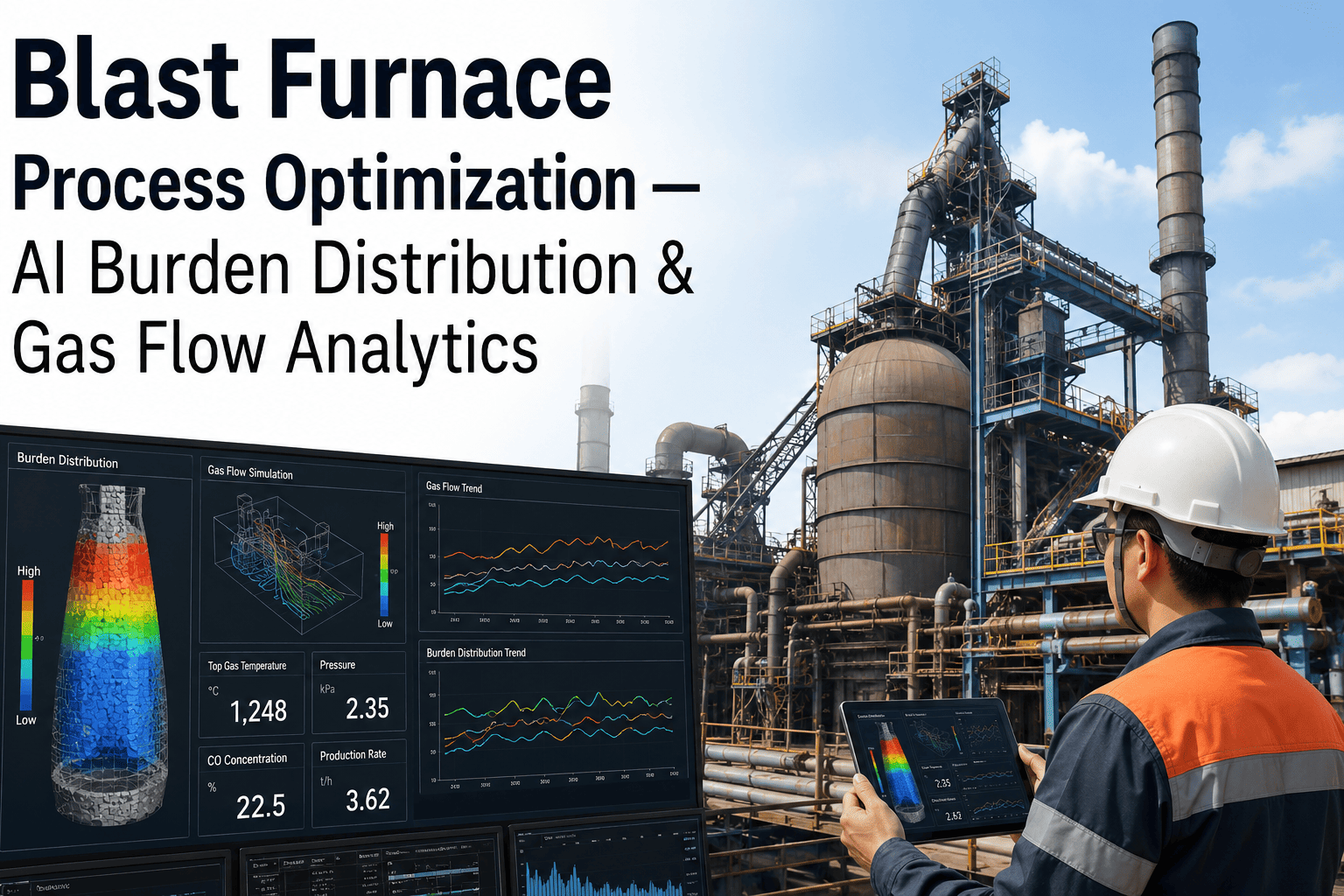
Read More
Every blast furnace process engineer knows the frustration of watching coke rate creep upward while gas utilization refuses to stabilize, even when burden charging looks textbook-correct on paper. The real culprit is usually invisible to manual re
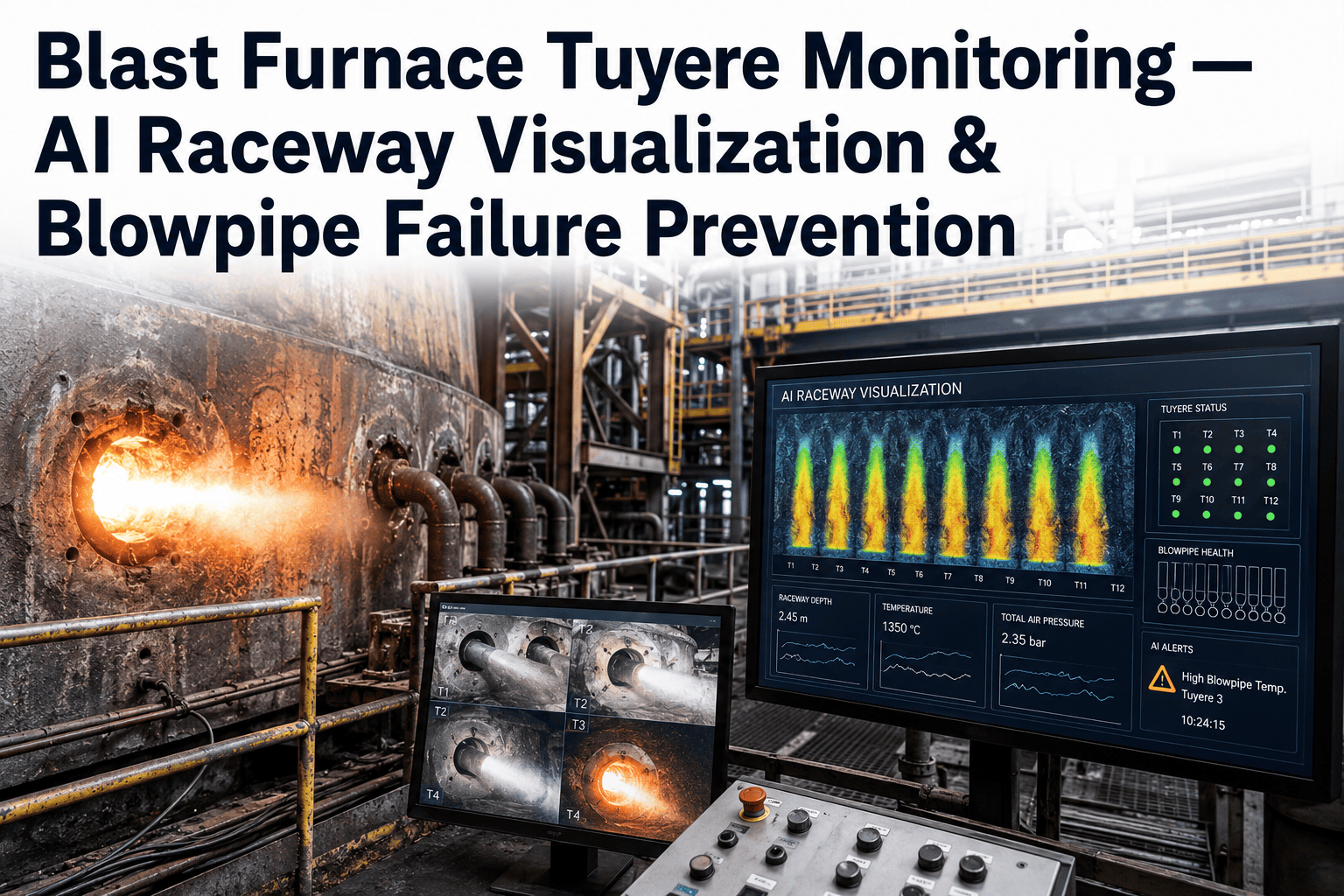
Read More
Reliability engineers running blast furnace campaigns know that tuyere burnout rarely gives more than a few minutes of warning through conventional monitoring, yet the financial and safety stakes of that failure are enormous. Roughly 62 percent of
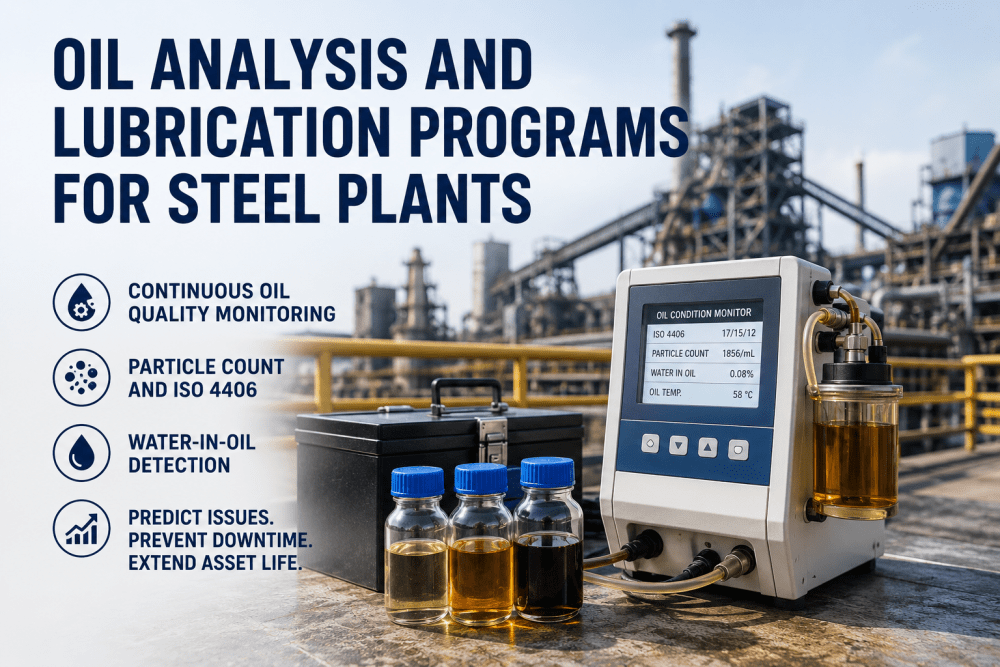
Read More
Lubrication is the most frequently performed maintenance task in any steel mill — and the most inconsistently executed. A single grease gun used on the wrong fitting, a hydraulic oil fill with the incorrect ISO viscosity grade, or
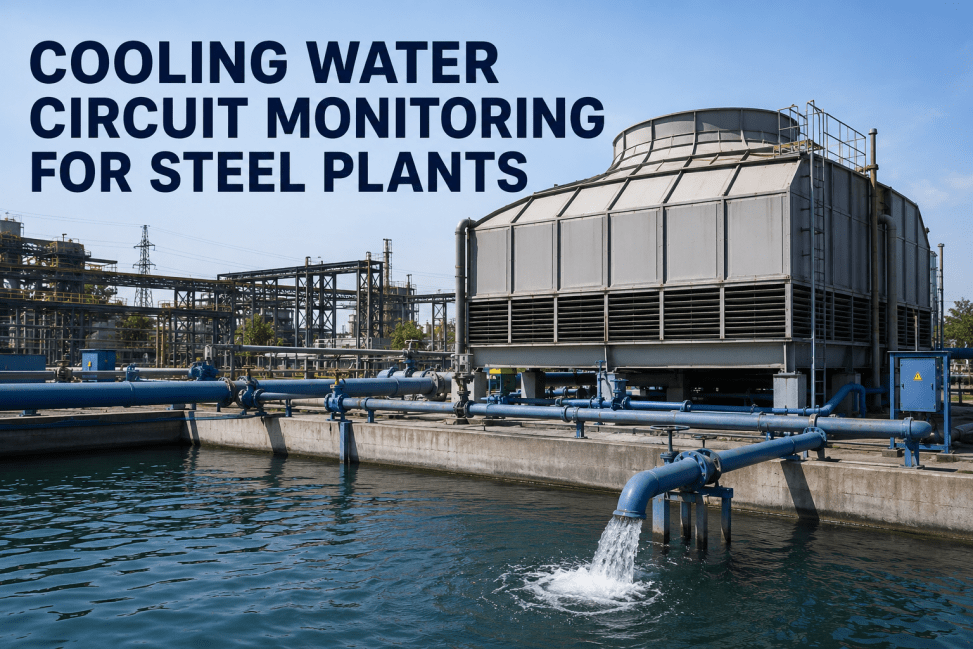
Read More
Cooling water circuits in integrated steel mills represent the most operationally distributed utility system on site — cooling towers, secondary circulation loops, blast furnace stave cooling systems, and process heat exchanger ne
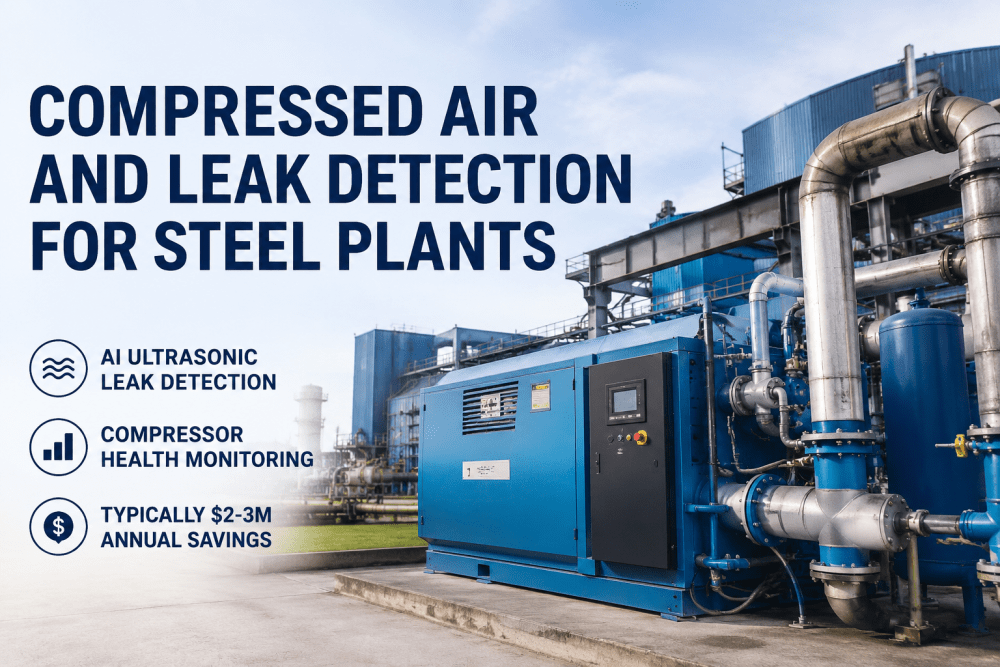
Read More
Compressed air systems in integrated steel mills represent one of the largest single electricity consumption categories — typically 10 to 15 percent of total plant electrical load — yet they receive substantially less analytical
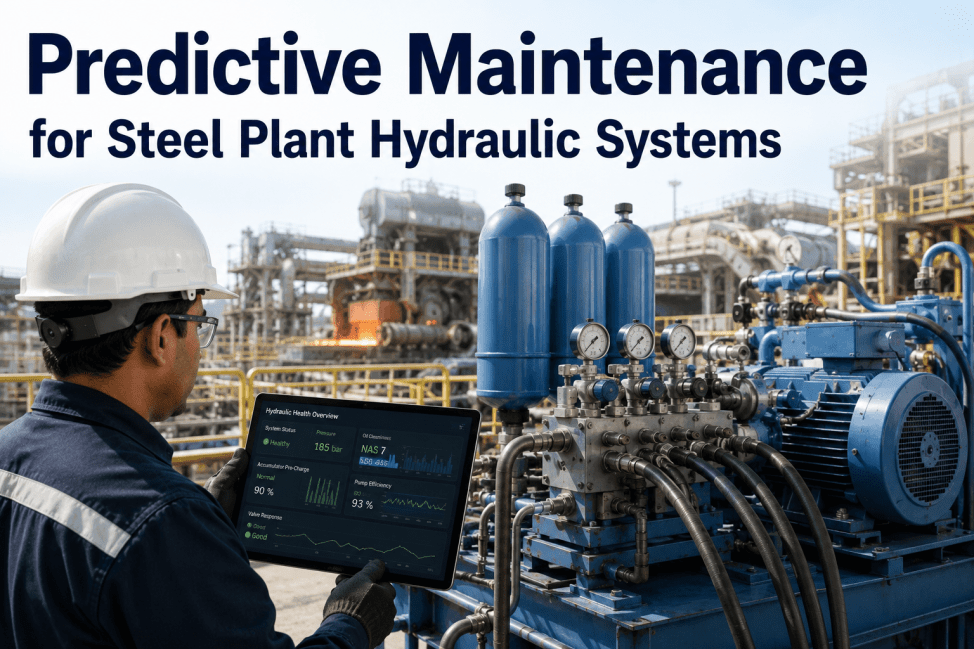
Read More
Steel plant hydraulic systems represent the most maintenance-intensive asset class in any integrated mill — and the most consequential from a production reliability standpoint. A single servo valve failure on an AGC cylinder in a
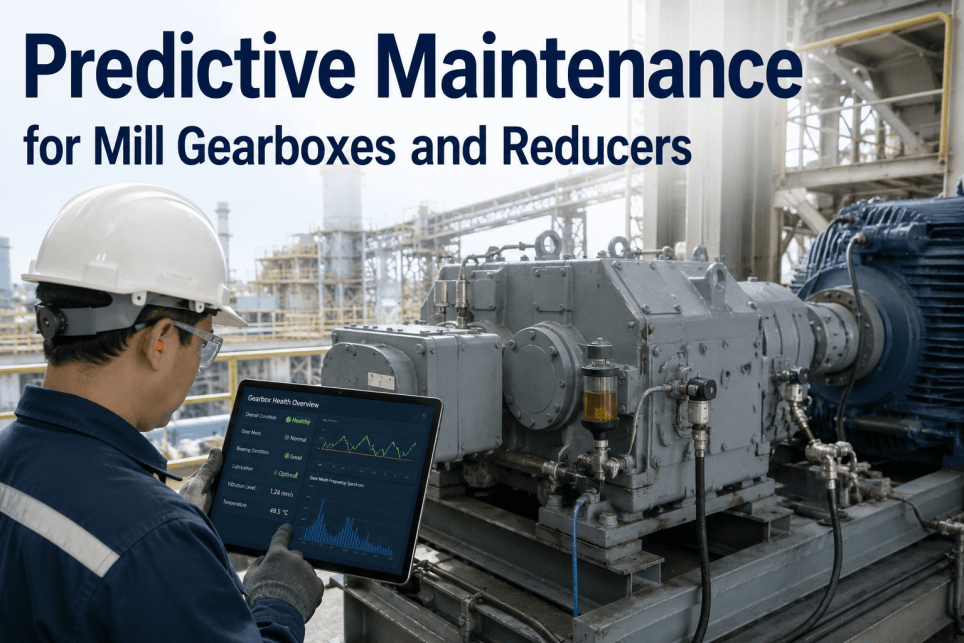
Read More
For mechanical reliability professionals in steel manufacturing, gearbox reliability is the single largest variable separating planned maintenance from forced outages. A single pinion stand gearbox failure on a hot strip mill finishing train can h
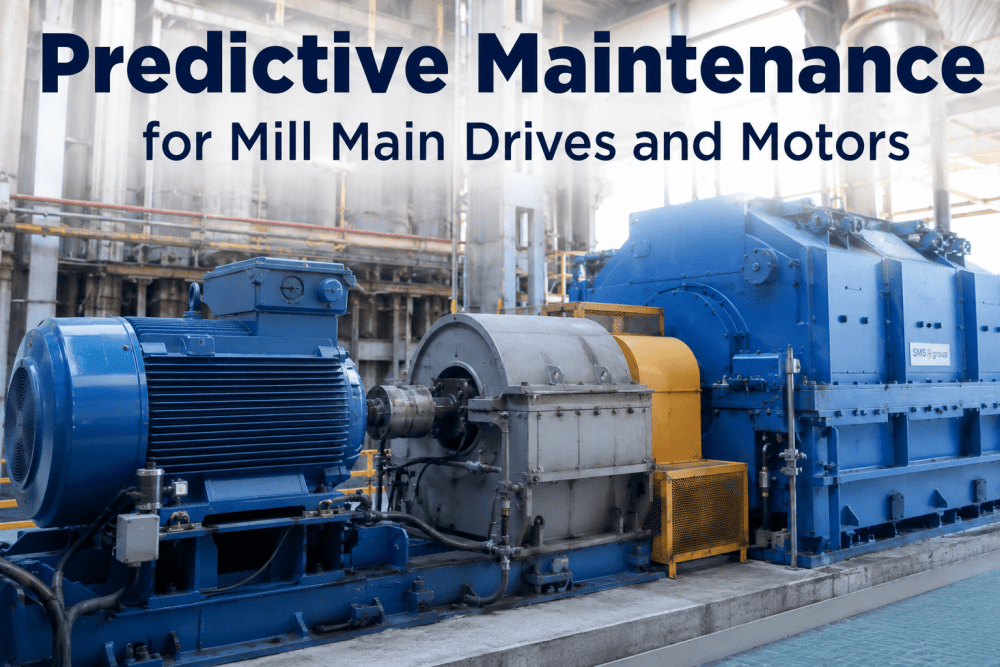
Read More
Every rolling mill, caster, and finishing line in a steel plant depends on medium-voltage main drive motors and their associated drive systems as the primary energy conversion point between electrical power and mechanical work.
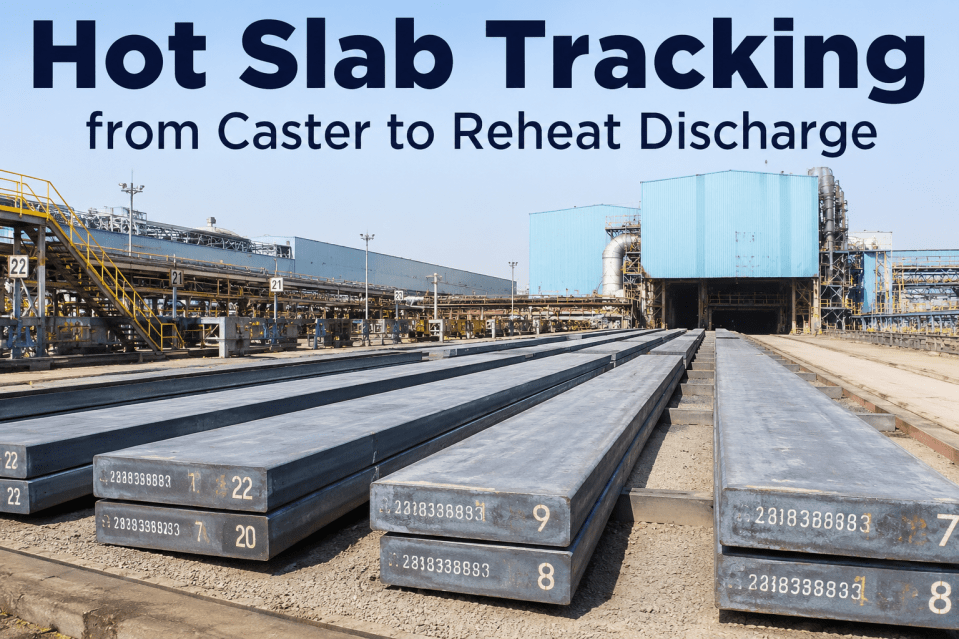
Read More
Every slab that leaves a continuous caster begins a logistics and tracking journey through the slab yard, reheat furnace, and rolling mill that involves multiple handoffs between physical location systems, production control databases, and operato
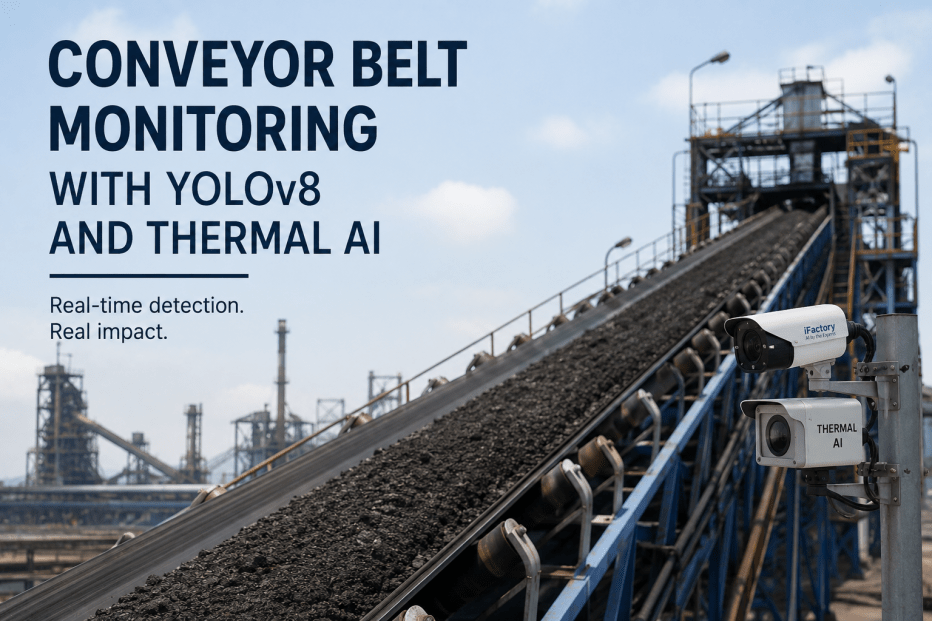
Read More
A single conveyor belt failure in a steel plant — a rip in the iron ore feed belt, a splice failure on the coke breeze conveyor, a hot slab roller table jam — stops production at every downstream process stage within minutes. The c
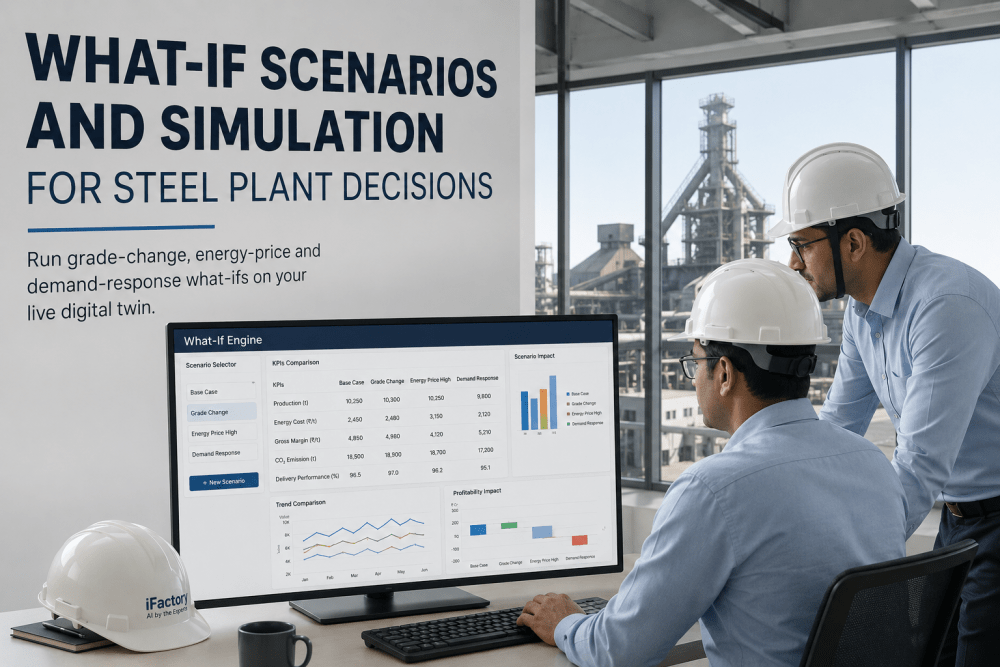
Read More
Every strategic decision in a steel plant — grade change, production schedule adjustment, energy price response, demand response event, capital allocation, or maintenance window selection — carries consequences that propagate thro
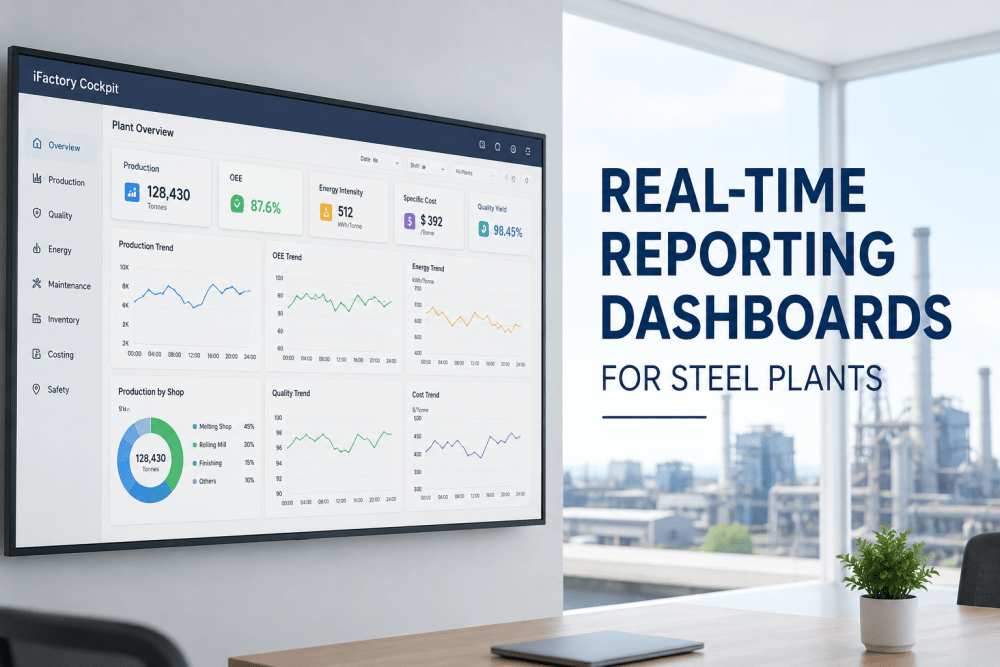
Read More
Every steel plant generates more data per shift than a team of process engineers could meaningfully analyze in a week. Production rates, energy consumption, quality measurements, equipment condition signals, inventory movements,
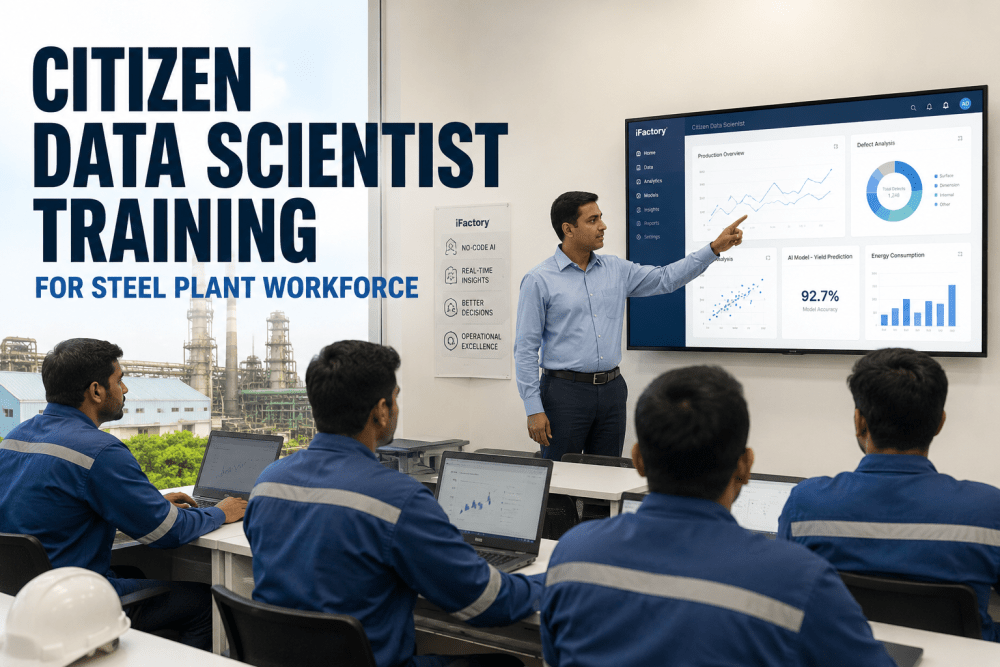
Read More
The most valuable data analytics capability a steel plant can develop is not a centralized data science team — it is the ability of every operator, technician, and process engineer on the mill floor to ask and answer their own questions about pr
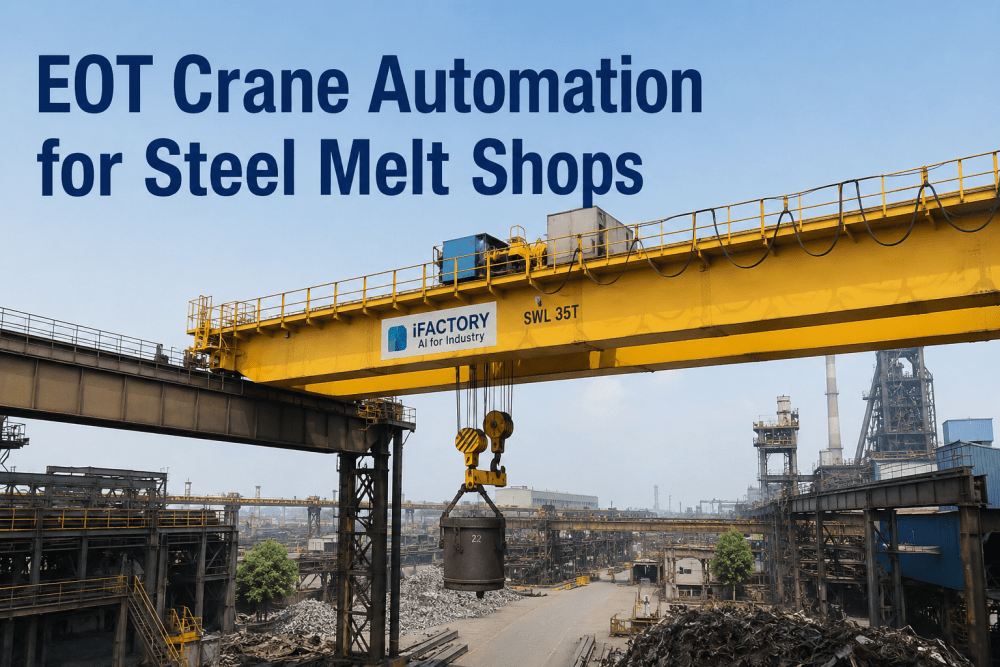
Read More
Every ton of steel produced in a melt shop passes through an EOT crane at least three times — from scrap loading to furnace charging, from furnace tapping to ladle handling, and from caster torch cut to slab yard storage. These crane moves are t
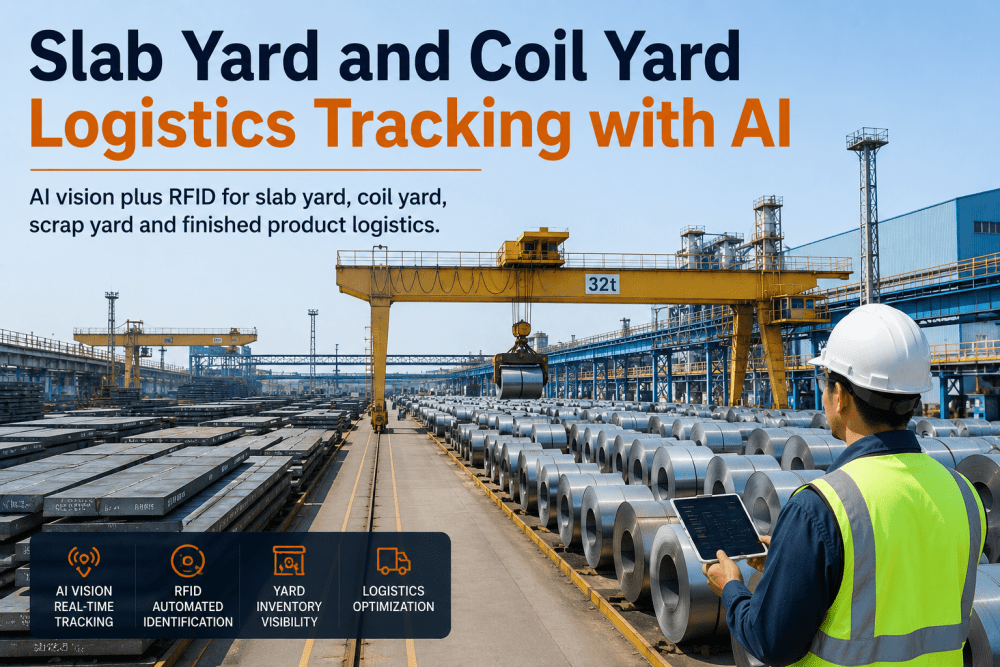
Read More
Every steel mill yard is a physical buffer between production stages — slabs between the caster and the reheat furnace, coils between the hot mill and the finishing lines, scrap between the receiving gate and the melt shop, fini

Read More
Steel plant asset inspection has traditionally required scaffolding, crane-supported baskets, or rope-access teams working at heights exceeding 100 feet — each approach carrying documented safety risks, significant labor costs, and extended prod
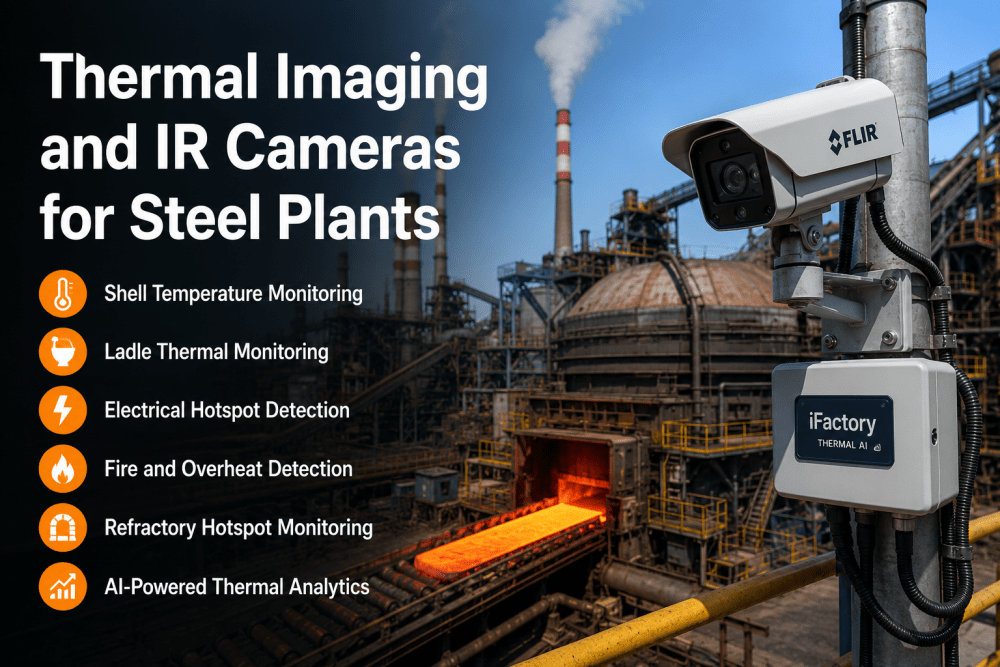
Read More
Steel plant inspection managers across the USA, Canada, UK, and Australia are responsible for maintaining the thermal integrity of some of the most extreme operating environments in heavy industry — blast furnace shells running above 2,000 degre
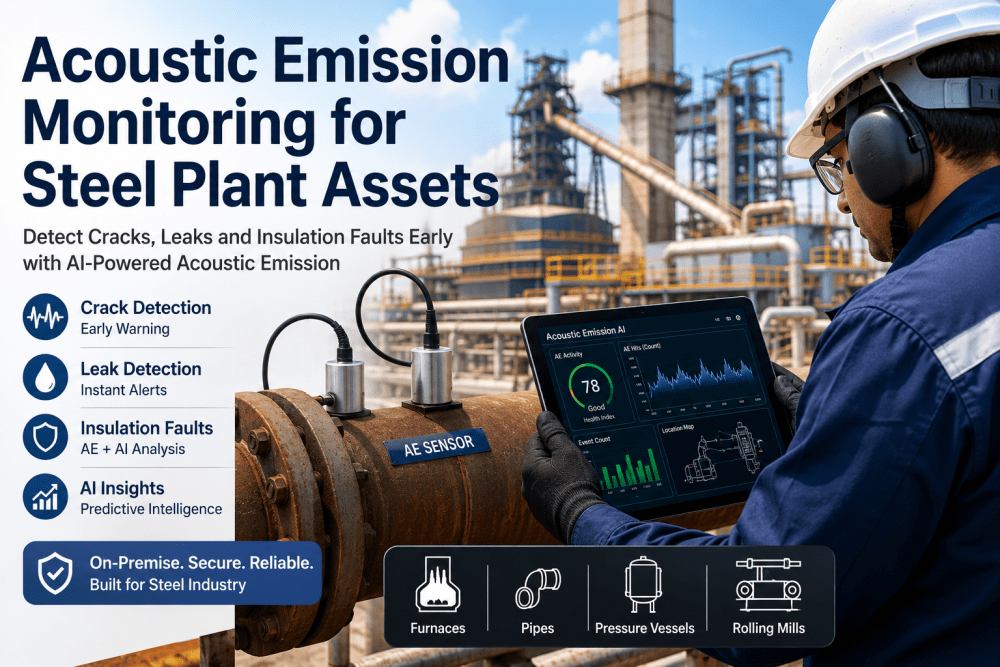
Read More
Steel plants across the USA, Canada, UK, and Australia operate some of the most asset-intensive industrial environments in the world — blast furnaces running above 2,000 degrees Fahrenheit, miles of high-pressure steam and gas piping, massive ro
.png)
Read More
Every steel plant operates hundreds of rotating assets — mill drive motors, gearboxes, cooling tower fans, hydraulic pumps, compressor trains, and ventilation systems — each generating a vibration signature that contains the complete history of
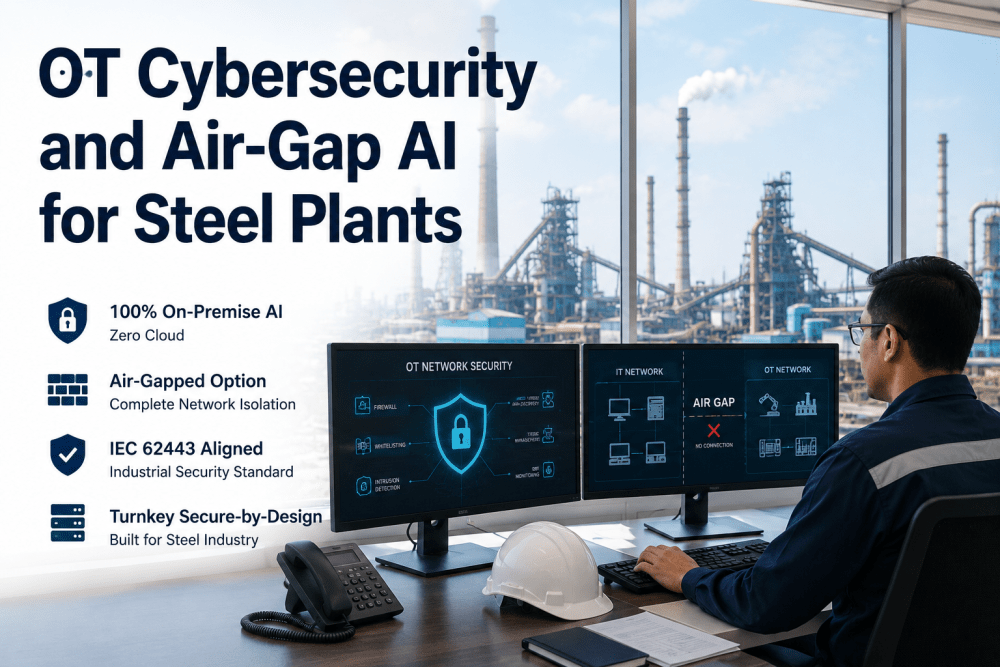
Read More
Every AI-driven analytics platform connected to a steel plant's operational technology network is also a potential entry point for a cyberattack — and for CISOs and plant cybersecurity leaders, that statement defines the fundame
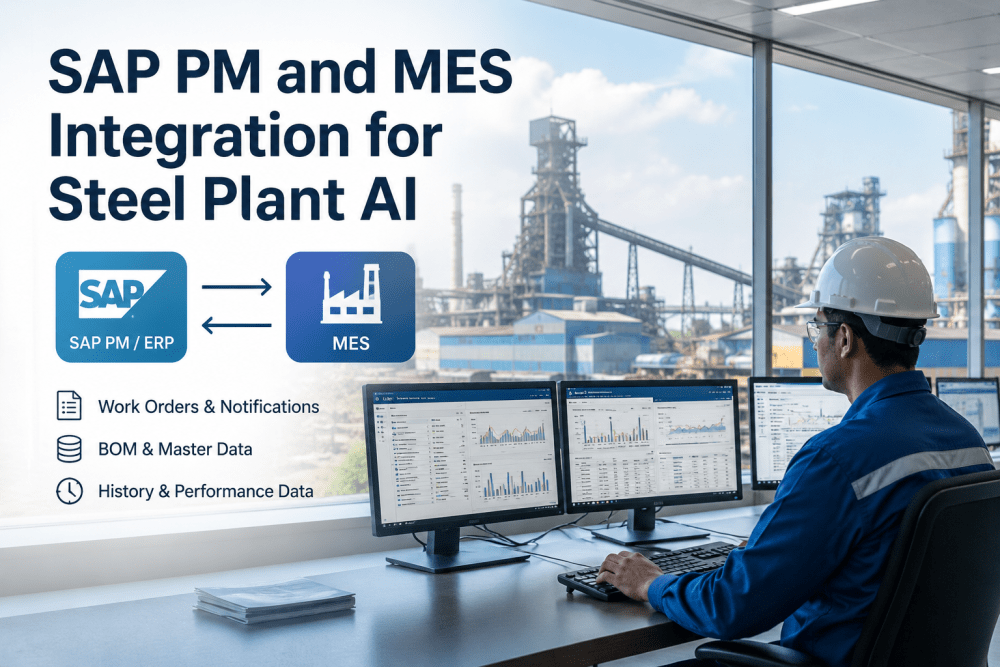
Read More
Every steel plant operates with at least two systems of record that were never designed to share data with each other. SAP PM (Plant Maintenance) manages work orders, equipment master data, spare parts inventory, and maintenance history using tr
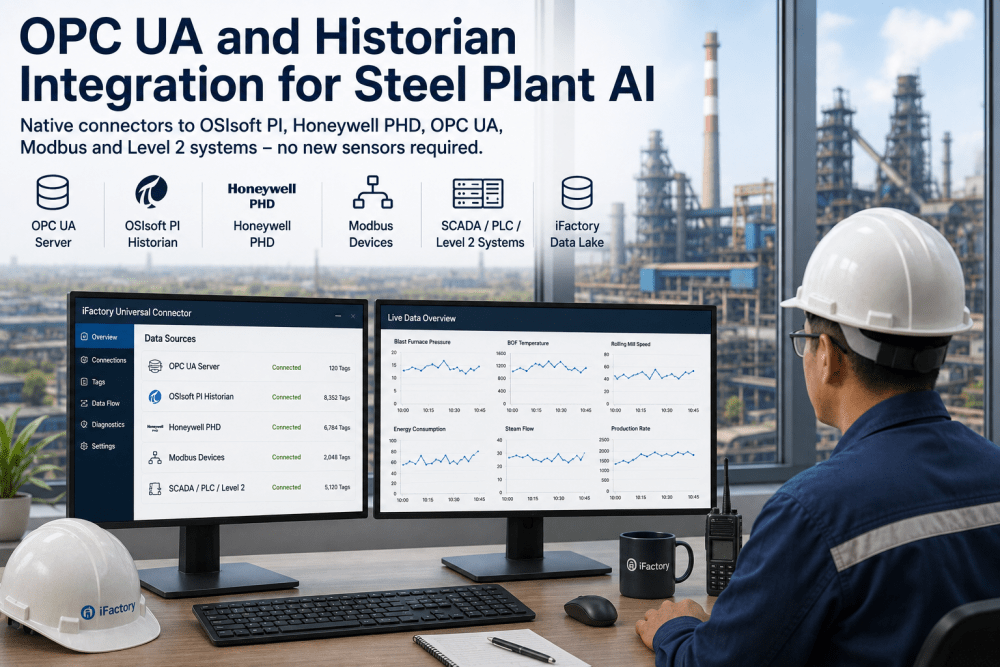
Read More
The single most expensive step in deploying AI at a steel plant is not the model development, the hardware procurement, or the team training — it is the data integration. Every steel plant operates a unique combination of automati

Read More
The latency requirement for closed-loop process control in a steel plant is measured in milliseconds — a rolling mill's automatic gauge control system must adjust roll gap within 5 to 10 milliseconds of a thickness deviation, a
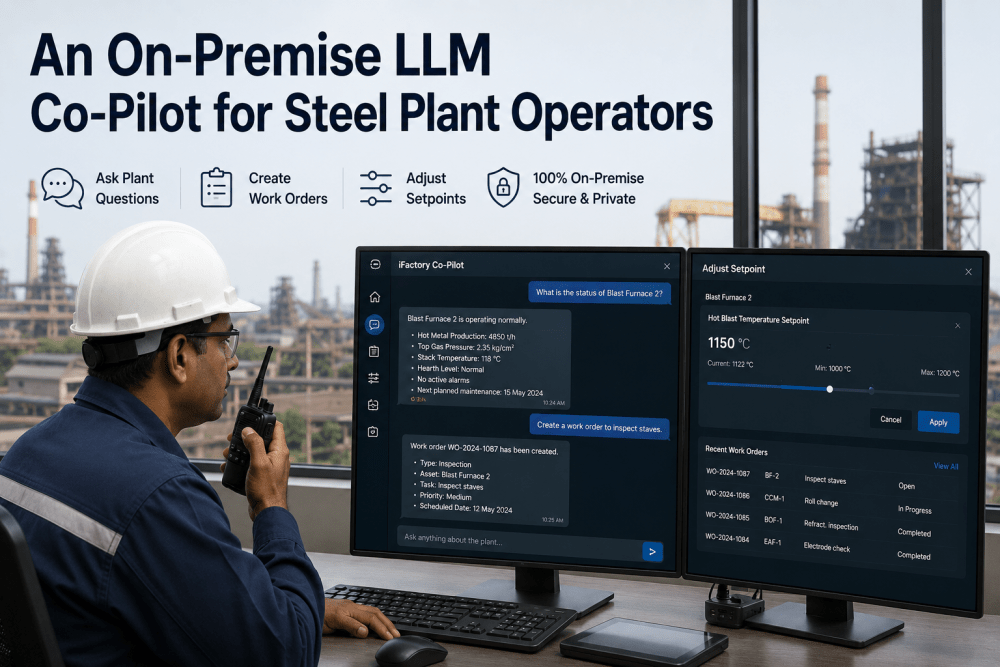
Read More
A steel plant operator manages hundreds of process parameters across multiple control systems during every shift — DCS screens for process control, CMMS for work orders, LIMS for quality results, scheduling boards for production
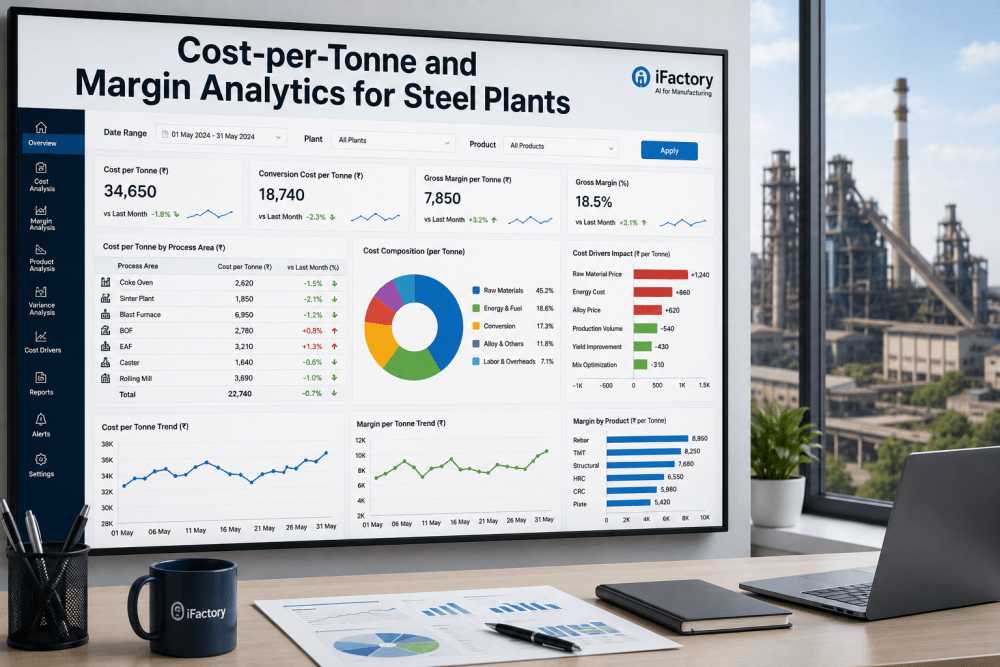
Read More
The cost-per-tonne figure on a steel plant's monthly P&L is the most reviewed and least trusted number in the financial reporting cycle — it tells the CFO what the average cost was across 200,000-plus tons of production but reve
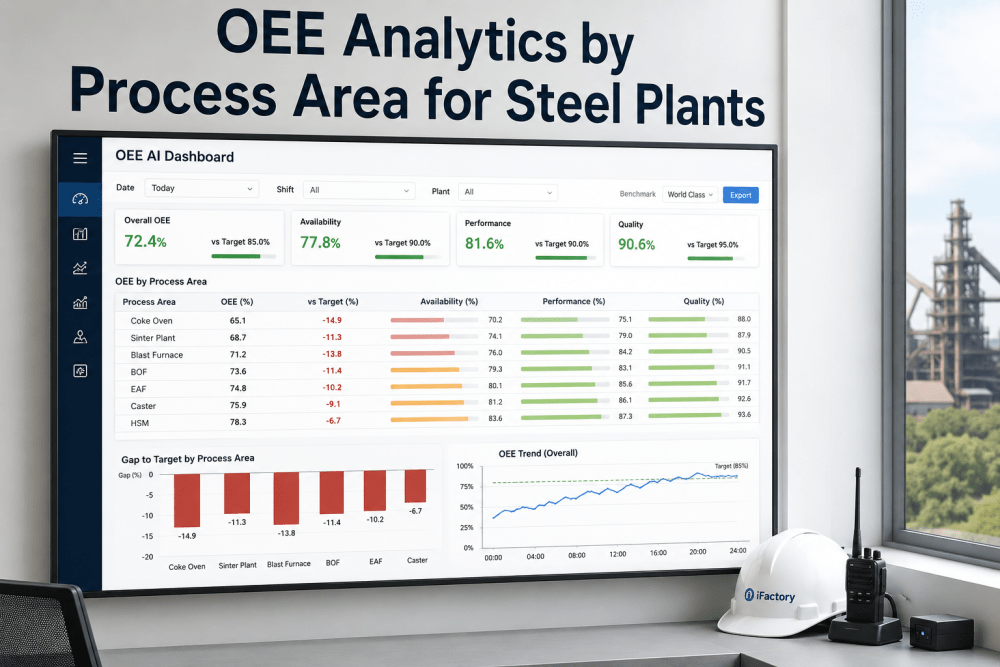
Read More
Overall Equipment Effectiveness has been the standard metric for manufacturing productivity since Nakajima formalized the OEE framework as part of Total Productive Maintenance in the 1980s and the methodology — Availability multip
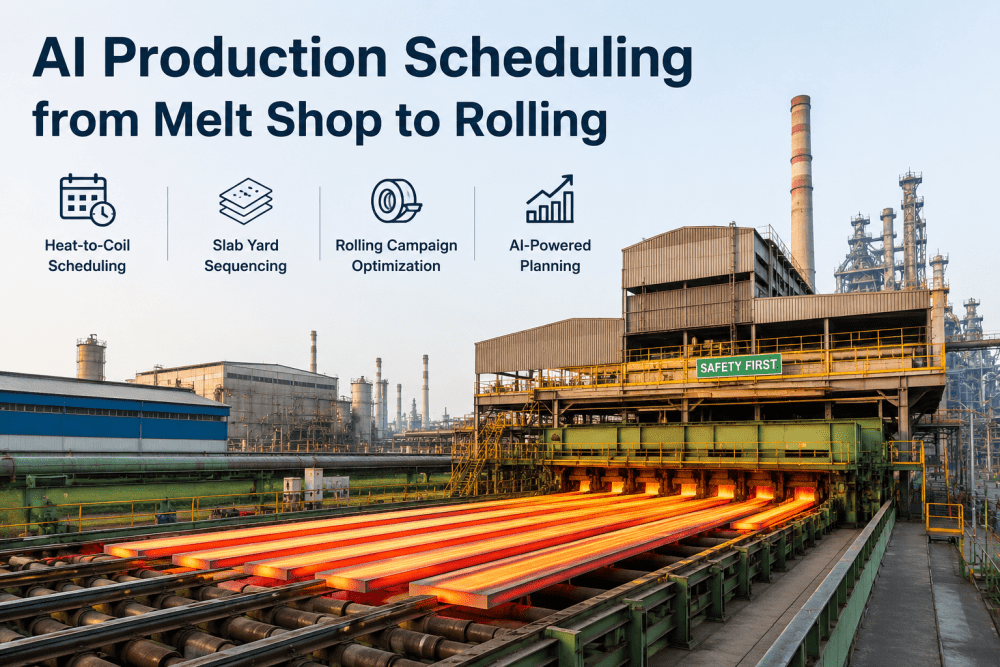
Read More
A steel plant's production schedule is one of the most complex optimization problems in industrial manufacturing. The scheduling team must coordinate melt shop sequencing — deciding which heat goes into which electric arc furnac
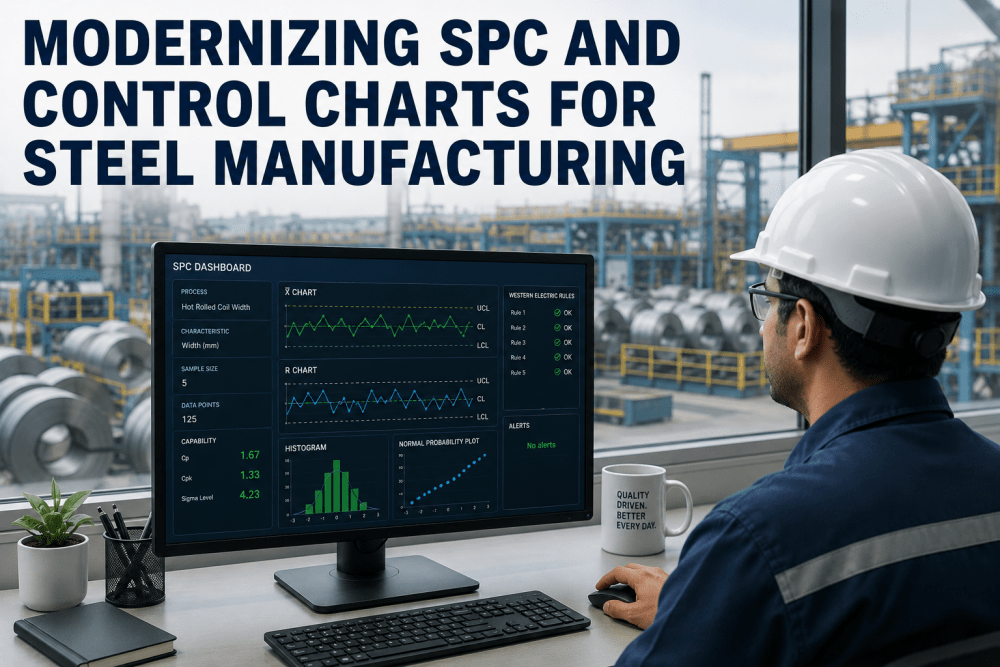
Read More
Statistical process control has been the foundation of quality assurance in steel manufacturing since Shewhart first published his control chart theory in 1931, and the tools have evolved remarkably little in the nine decades si
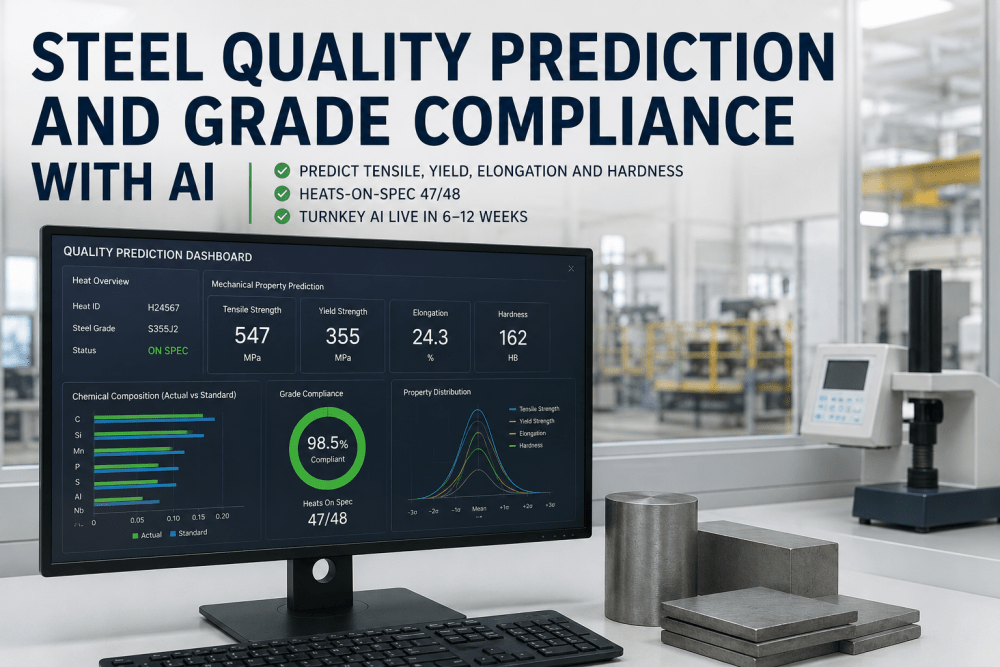
Read More
When a quality director releases a heat from the melt shop to the rolling mill, the mechanical properties of the final product — tensile strength, yield strength, percentage elongation, and hardness — have already been determine
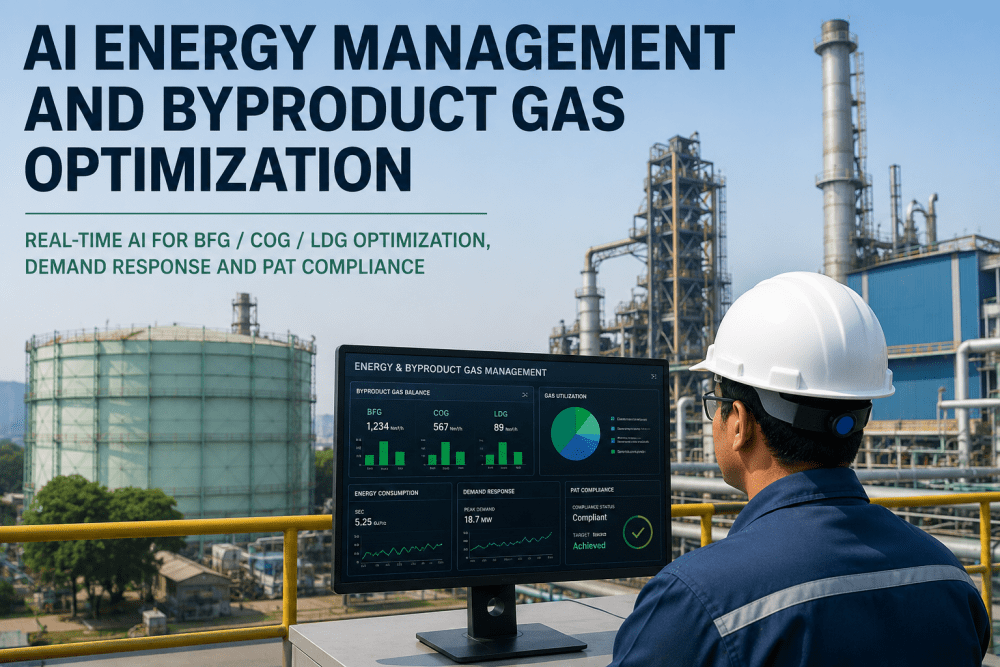
Read More
A typical integrated steel plant generates three distinct byproduct fuel gases — blast furnace gas (BFG) at 700–800 kcal/Nm³, coke oven gas (COG) at 4,000–4,500 kcal/Nm³, and Linz-Donawitz converter gas (LDG) at 1,800–

Read More
A typical integrated steel plant generates between 8,000 and 15,000 process data points per second — temperatures, pressures, flows, speeds, currents, vibrations, and chemical compositions across the melt shop, caster, rolling m
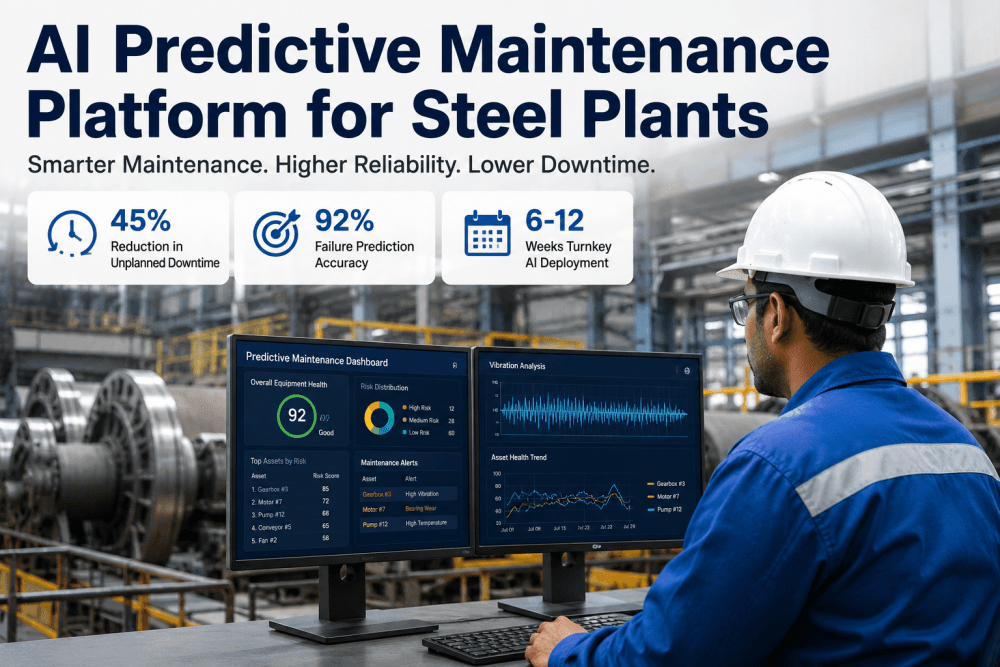
Read More
A steel plant's rotating equipment operates under conditions that few industrial environments can match — ladle cranes handling 300-ton loads above molten metal at 2,400 degrees Fahrenheit, hot rolling mill stands generating 50,
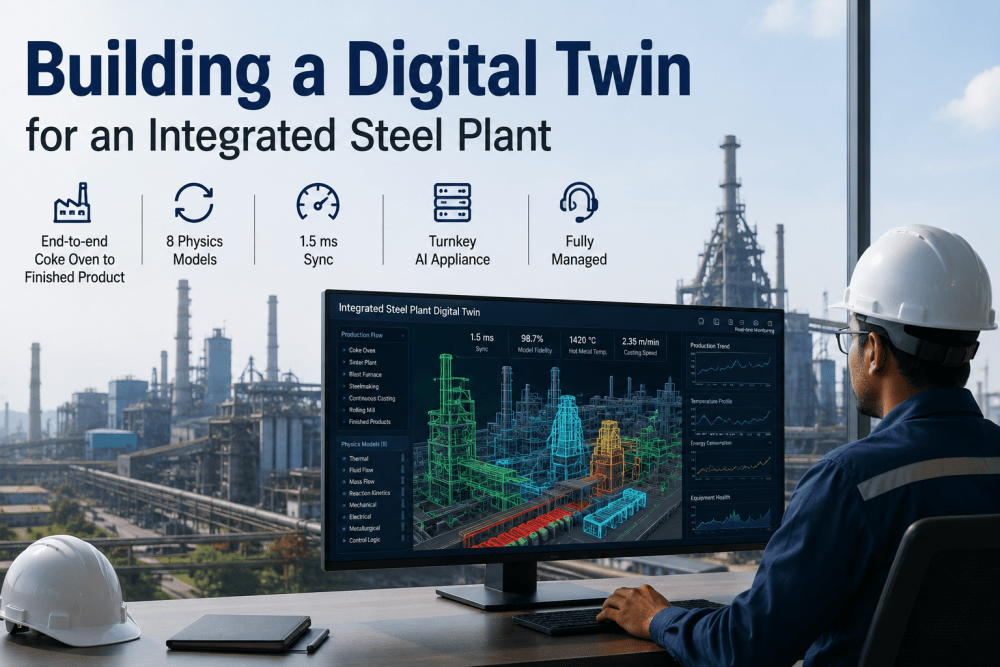
Read More
An integrated steel plant is not a single facility — it is a continuous chain of interdependent processes spanning 2 kilometers from the coke ovens to the finishing line, where the output of every stage becomes the input of the

Read More
Steel plants are among the most hazardous industrial environments in the United States — molten metal at 2,900 degrees Fahrenheit, overhead cranes moving loads of 50 tons or more, elevated platforms above ladle pits, and confine
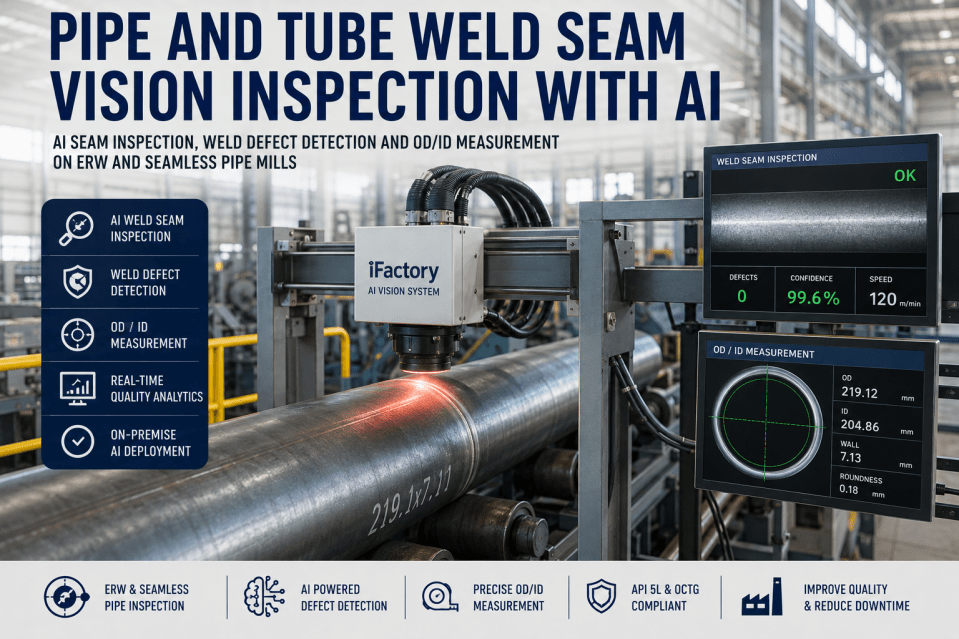
Read More
Every ERW and seamless pipe mill producing OCTG casing, API 5L line pipe, and structural tube faces the same fundamental challenge — weld seam quality directly determines product acceptance, yet traditional inspection methods le
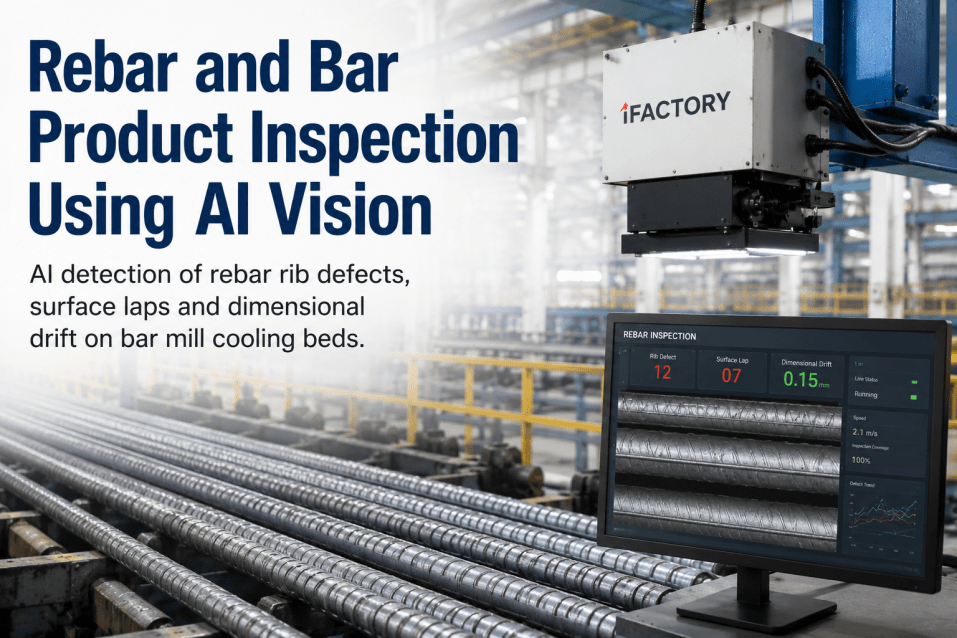
Read More
Bar mill operations producing rebar from 10 mm to 40 mm diameter for construction, infrastructure, and precast concrete applications face a fundamentally different quality control challenge than flat product rolling. Each billet e
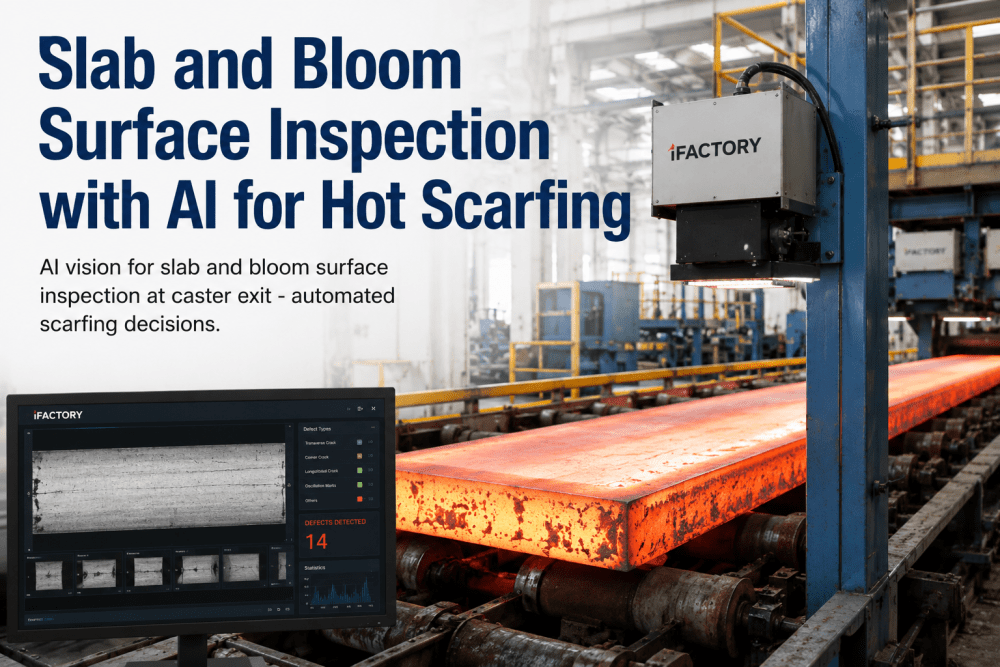
Read More
Continuous casters producing slabs and blooms for downstream hot rolling and forging operations operate at the highest temperatures in the steel production chain — with surface temperatures at the caster exit ranging from 850 degrees C to over 1,0
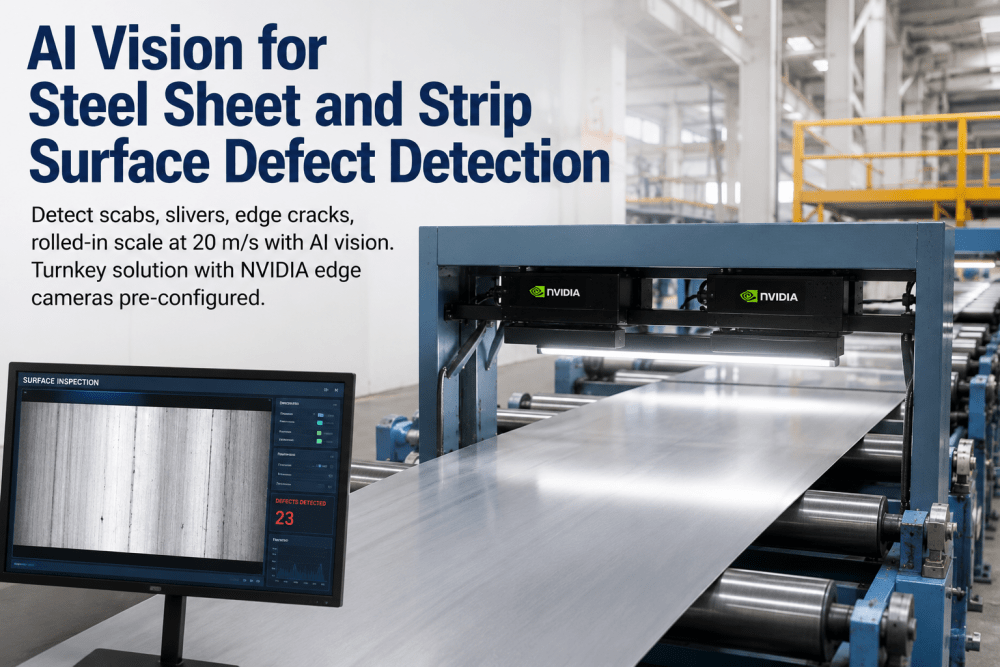
Read More
Hot strip mills and cold strip mills operating at speeds up to 20 meters per second produce surface defects across every square meter of steel that escapes detection — scabs, slivers, edge cracks, rolled-in scale, and indentations that render co
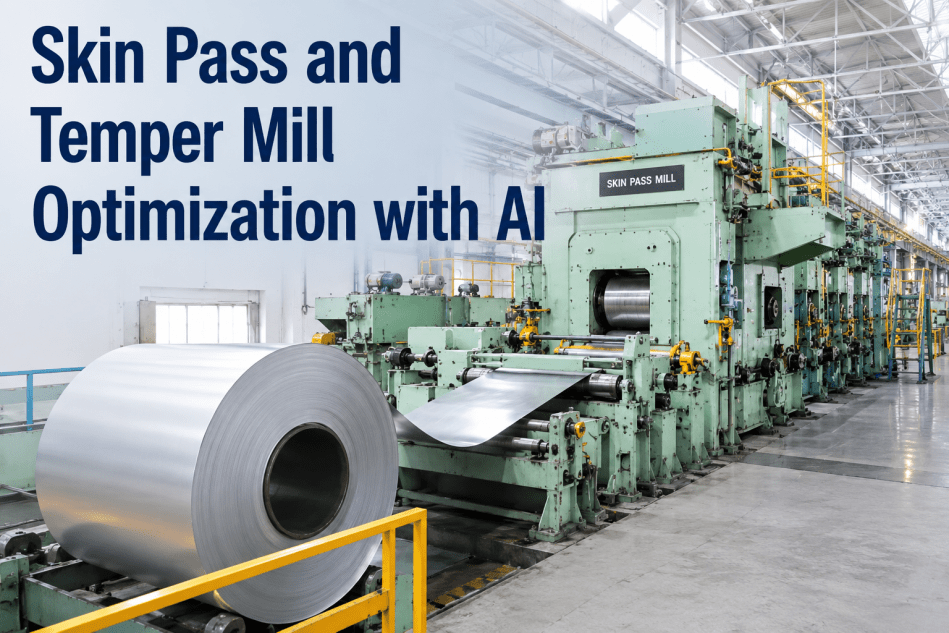
Read More
Skin pass mills and temper mills are the final rolling operation in the cold mill processing chain, where sheet surface roughness, elongation (0.5-3%), and mechanical properties are precisely calibrated to customer specifications. Every coil o
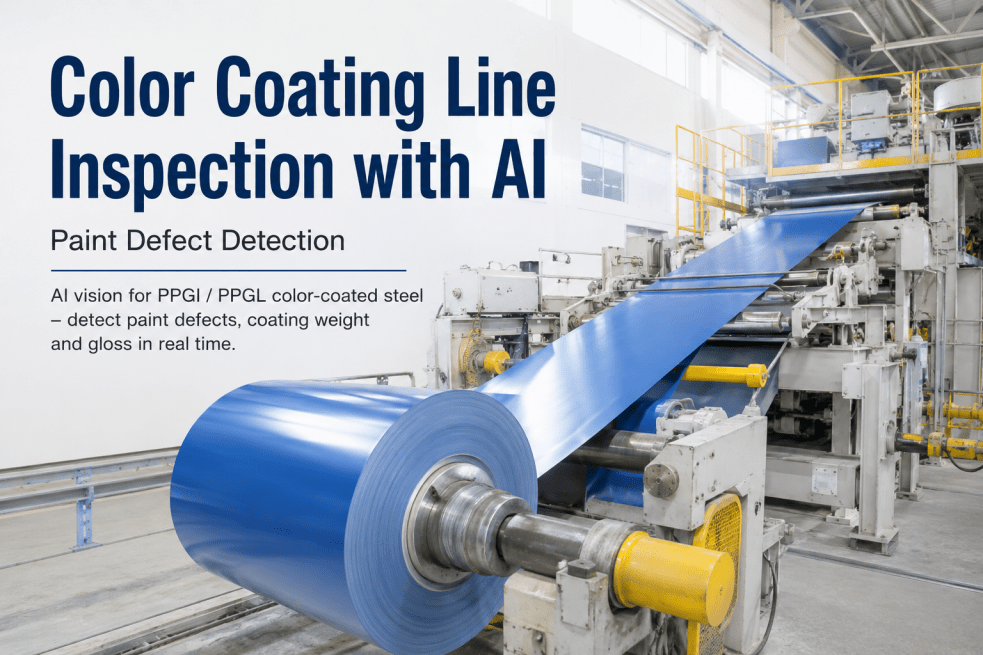
Read More
Color coating line operations — producing PPGI and PPGL coils for architectural panels, appliance enclosures, and automotive components — require simultaneous control of coating weight, paint viscosity, curing temperature, line
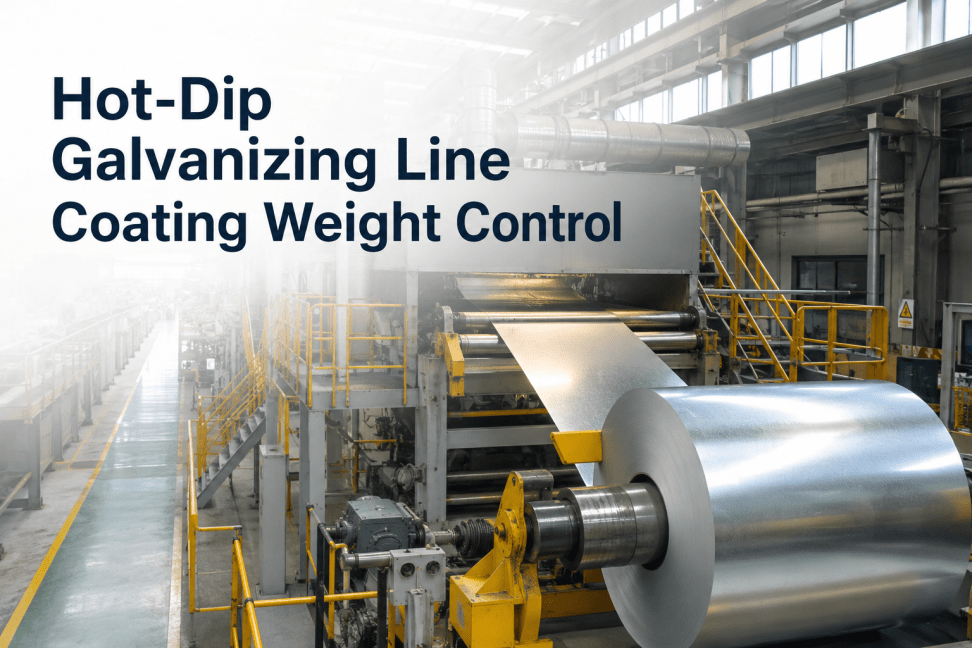
Read More
Hot-dip galvanizing (HDG) lines represent one of the most precisely controlled continuous processes in steel manufacturing, where strip traveling at speeds up to 200 meters per minute passes through a bath of molten zinc at approximately 460°
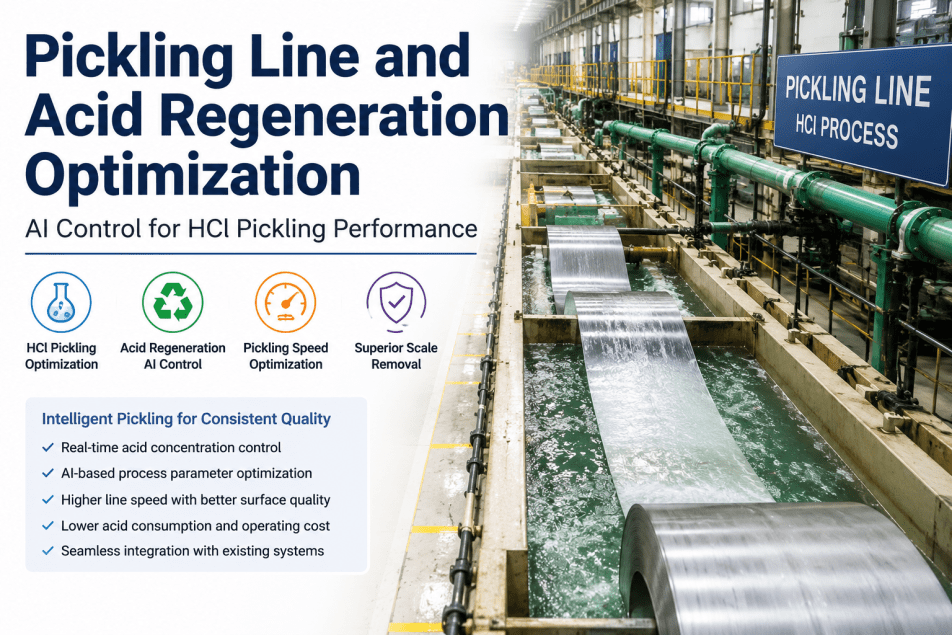
Read More
Pickling line operations — whether continuous or push-pull configuration — are the critical interface between the hot strip mill and the cold rolling mill, where scale removal quality, acid consumption, strip surface condition, an
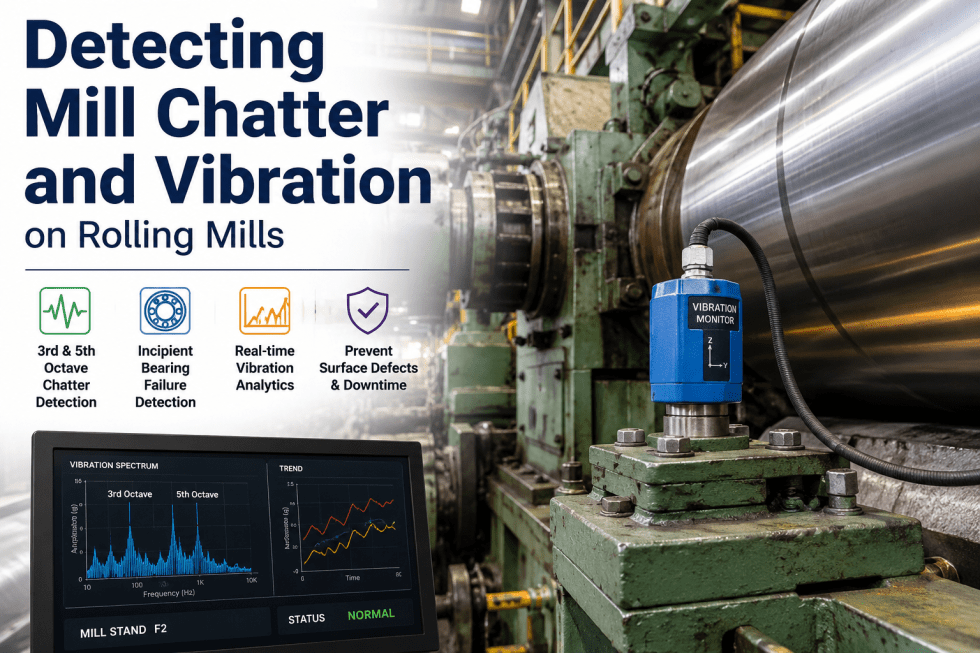
Read More
Mill chatter is the most diagnostically elusive and economically damaging vibration phenomenon in rolling mill operations — not because the vibration is difficult to measure, but because the root cause of a specific chatter signature can origi
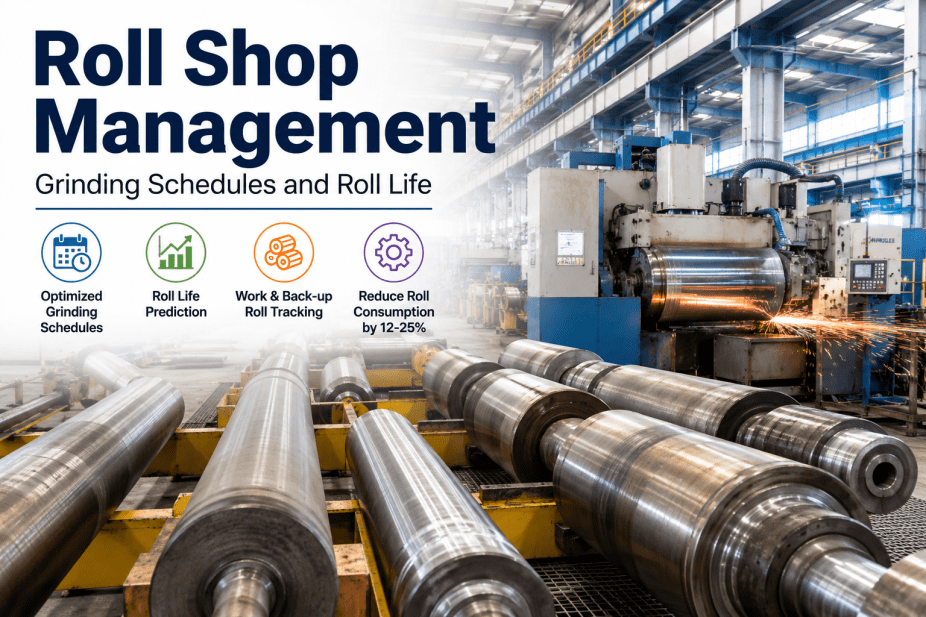
Read More
Roll shop operations are the single highest-impact support function in any rolling mill — and the most frequently managed on intuition rather than data. Work rolls and backup rolls across a hot strip mill, plate mill, or section mill represent a
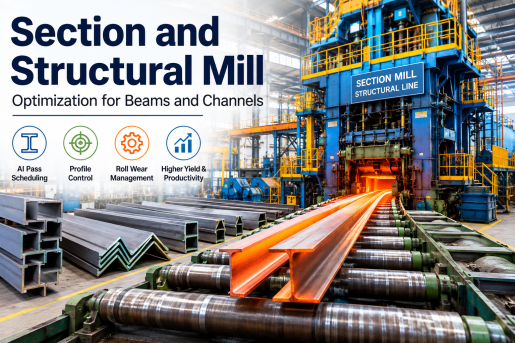
Read More
Section mills producing structural steel profiles — wide-flange beams, H-beams, I-beams, channels, angles and specialty structural shapes — operate under a fundamentally different set of dimensional constraints than flat product or long product
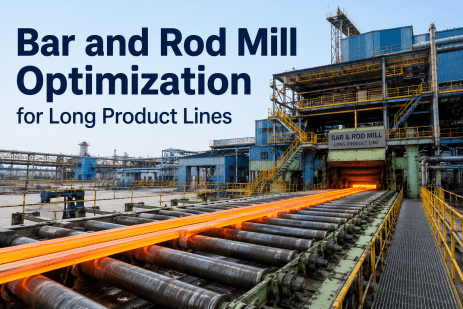
Read More
Every bar and rod mill producing long products — rebar, wire rod, merchant bars, specialty rounds, and engineered shapes — operates under a set of constraints that are fundamentally different from flat product rolling. The workpiece is being s
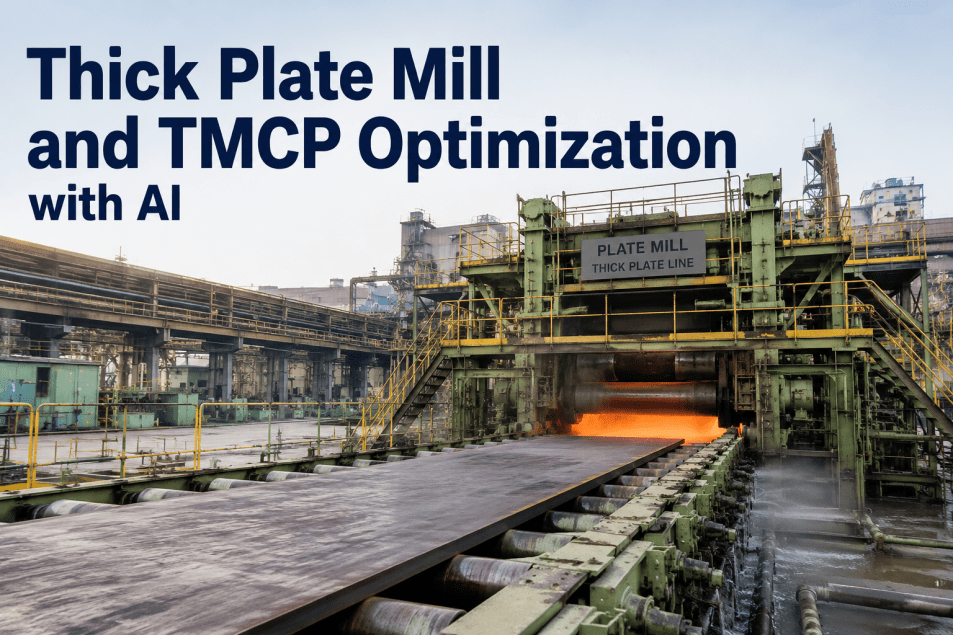
Read More
Thick plate mills producing heavy-gauge steel for shipbuilding, wind energy towers, structural construction, and pressure vessel applications face a fundamentally different optimization challenge than their light-gauge counterparts. Every plat
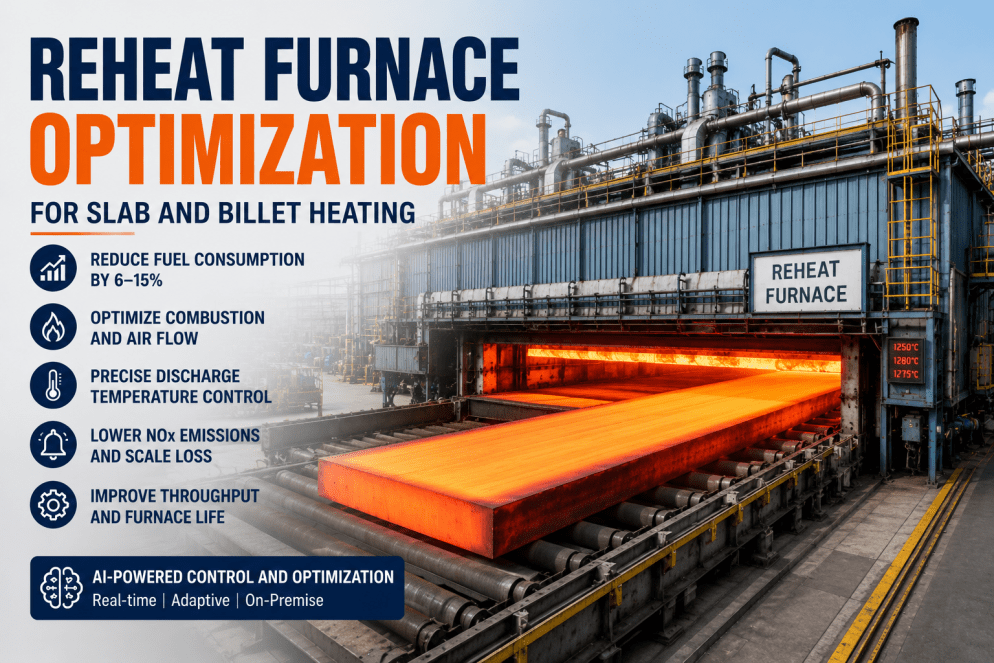
Read More
Reheat furnaces — walking beam, pusher, and rotary hearth types — consume 30–50% of the total energy in a hot rolling mill while directly controlling slab and billet temperature uniformity, scale formation, and discharge tempera
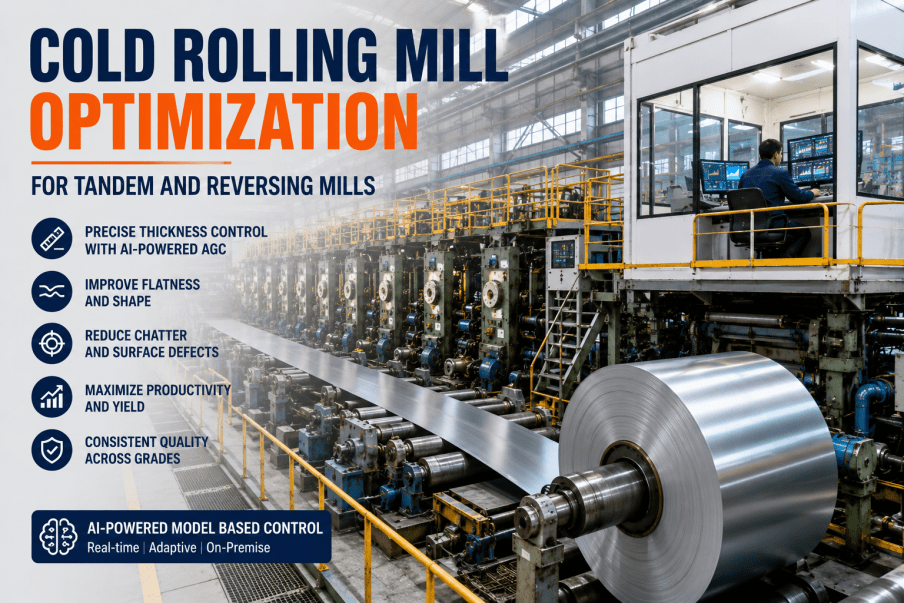
Read More
Cold rolling mills — tandem mills with 4 to 6 stands and reversing mills with 1 to 2 stands — transform hot-rolled pickled coils into precision strip with thickness tolerances of ±5 microns, flatness within 5 I-units, and surfac
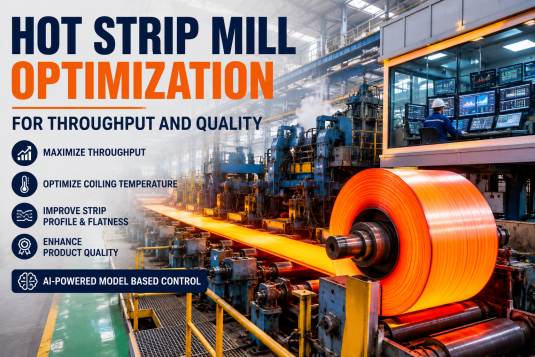
Read More
Hot strip mill operations — from reheat furnace discharge through finishing stands, laminar cooling, and down-coiler — involve dozens of interacting control parameters that determine final strip quality, mill throughput, and ene
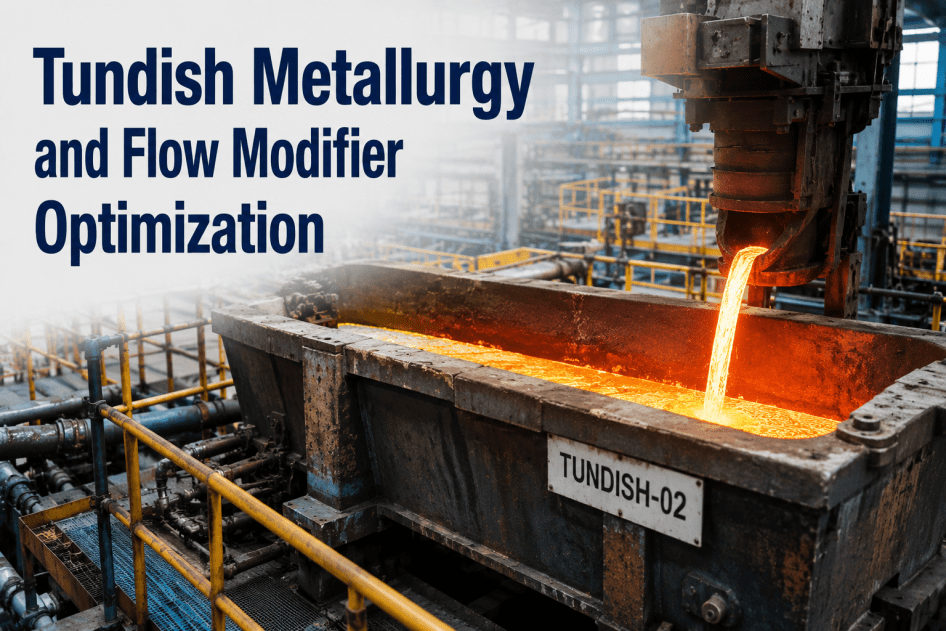
Read More
Every tundish on a continuous caster operates as the final metallurgical vessel between the ladle and the mold — a critical reactor where steel cleanliness, temperature homogeneity, and inclusion flotation are determined before
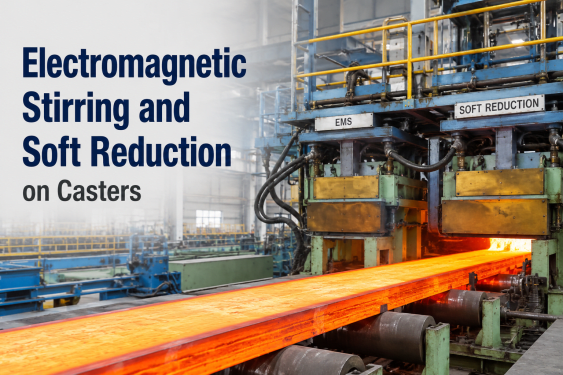
Read More
Centerline segregation, V-segregation, and internal porosity are the most persistent quality defects in continuously cast steel — and electromagnetic stirring (EMS) combined with soft reduction (SR) is the most effective counterm
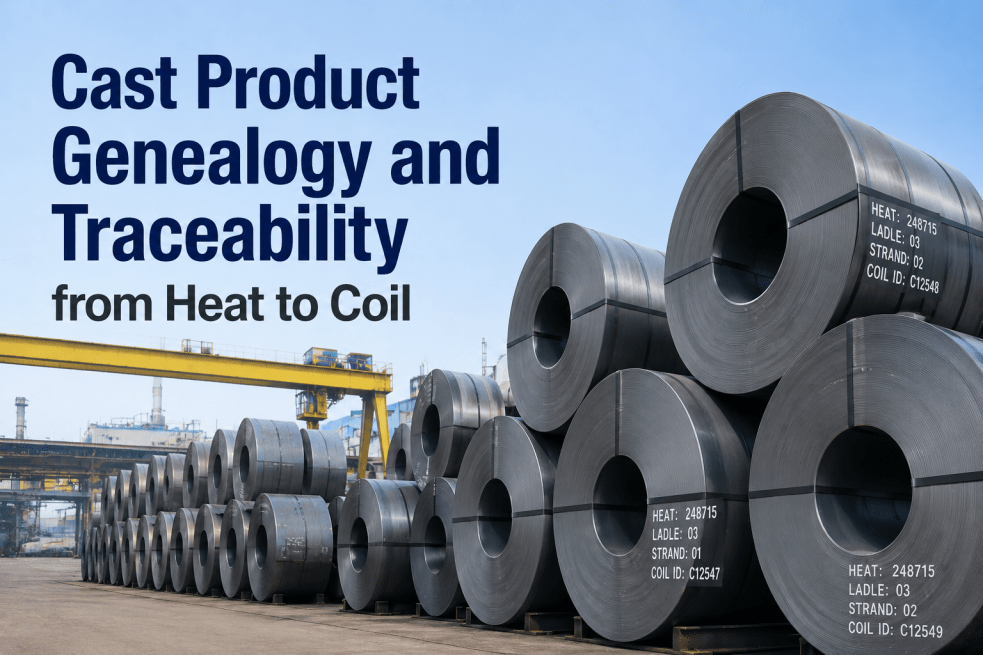
Read More
Steel product traceability — the ability to trace every finished coil, plate, bar, or billet back to the specific heat, ladle, tundish, strand position, and casting condition that produced it — is no longer optional for mills that
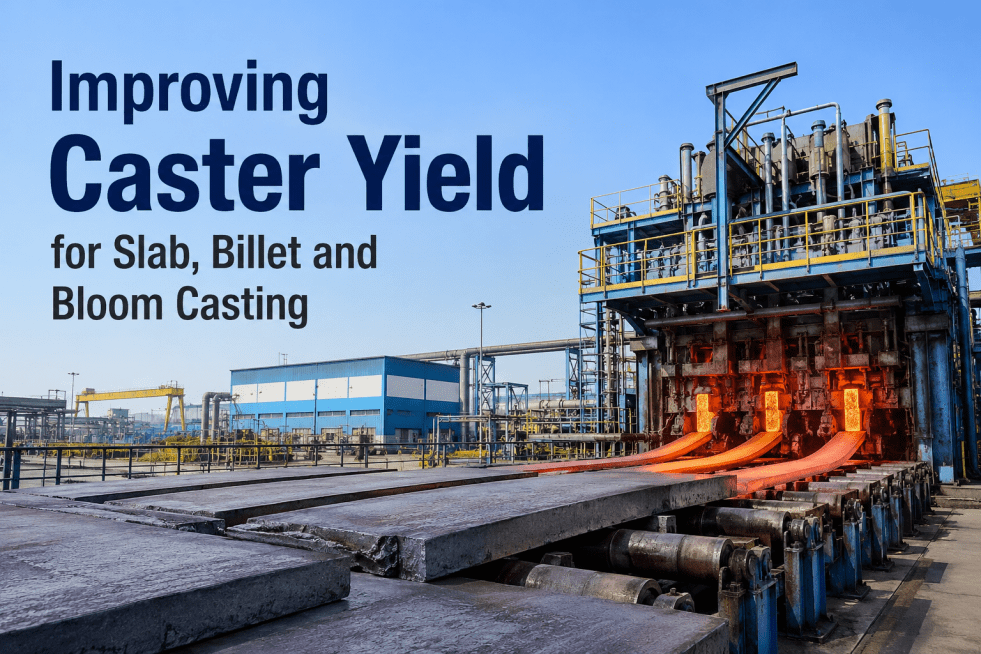
Read More
Caster yield — the ratio of saleable product to liquid steel poured — is the single most direct lever on steelmaking profitability, yet most plants accept yield losses of 3 to 6 percent as an unavoidable cost of the casting proc
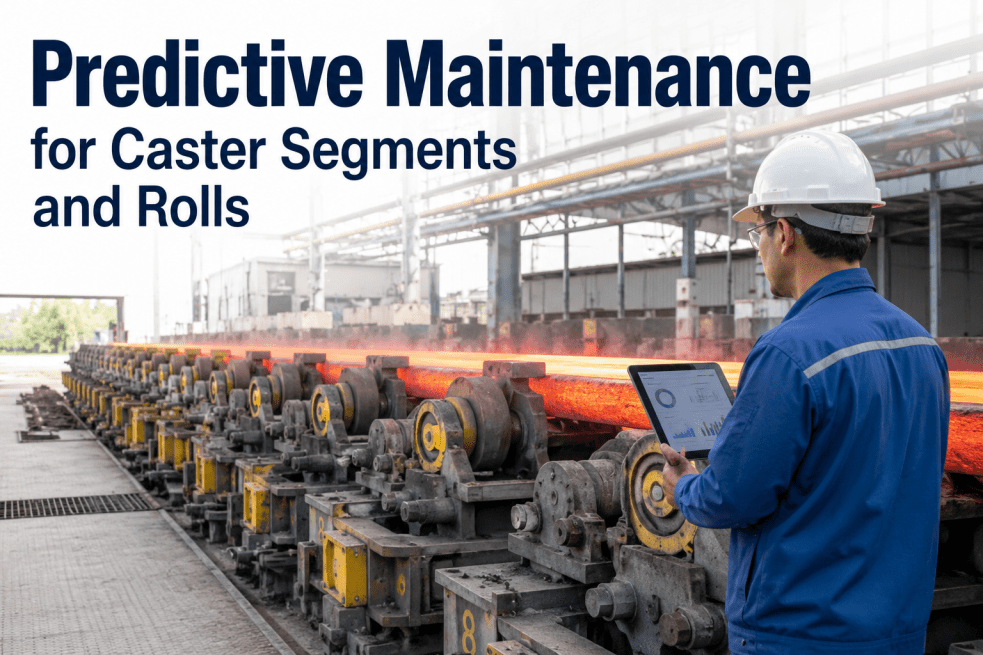
Read More
Every segment on a continuous caster — from the foot rolls through the withdrawal straightener — operates under extreme thermal, mechanical, and hydraulic loads that gradually degrade roller surface condition, bearing clearance,

Read More
Mold powder is the single most influential consumable affecting continuous casting surface quality, yet its selection and application remain largely dependent on empirical trial-and-error methods that have not kept pace with the

Read More
Every breakout event on a continuous caster is preceded by a detectable thermal signature in the mold thermocouple array — a downward-propagating hot spot that signals a sticker forming between the solidifying shell and the copper

Read More
Continuous casting is the productivity bottleneck of every integrated steel mill and mini-mill — a single breakout event stops production for 4-12 hours, destroys caster equipment, and generates tens of thousands of dollars in s

Read More
Steelmaking is the most energy-intensive stage of integrated steel production, accounting for 60-75% of total plant energy consumption across Basic Oxygen Furnace (BOF) Electric Arc Furnace (EAF) Ladle Refining Furnace (LRF), and
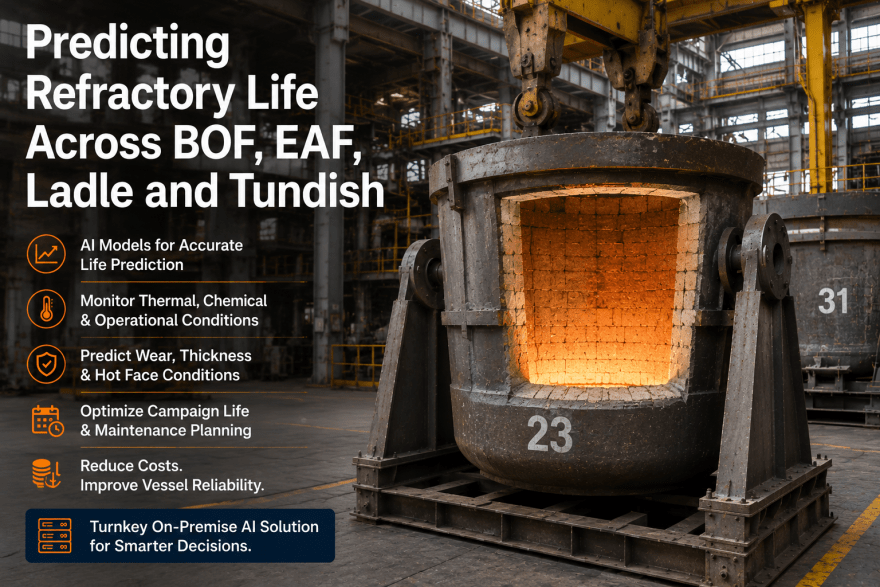
Read More
Refractory wear is the single largest consumable cost in steelmaking vessels, yet most steel plants still schedule lining replacement based on tonnage throughput rather than actual residual lining condition. The difference between
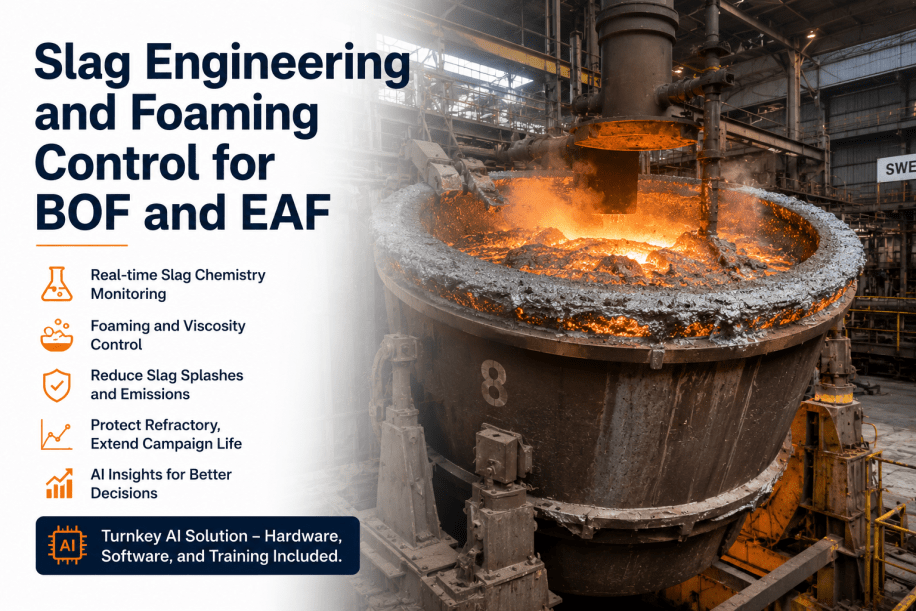
Read More
Slag engineering is the most undervalued lever in steelmaking economics. The slag layer floating on a BOF bath or an EAF molten pool controls every critical process outcome: phosphorus removal efficiency, sulfur partitioning, re
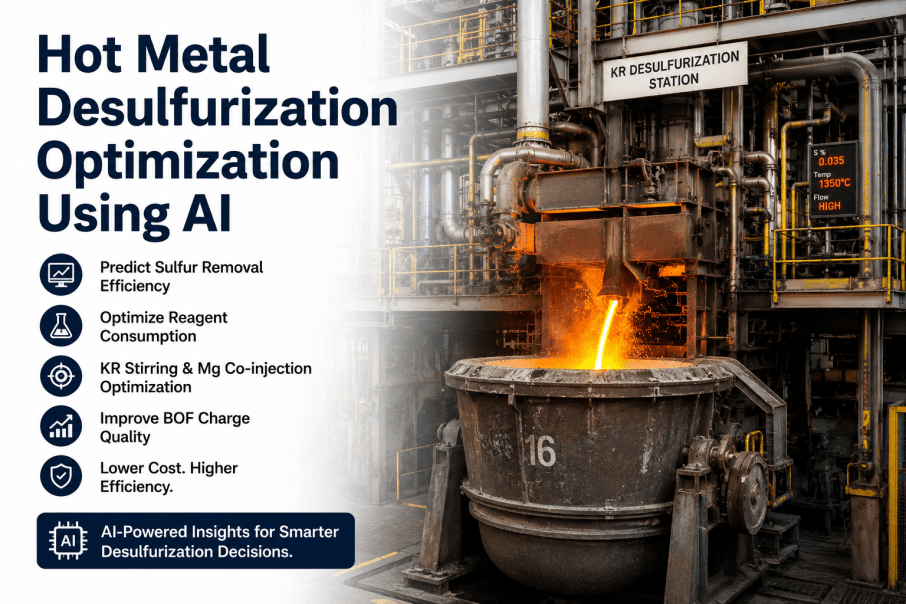
Read More
Hot metal desulfurization is the most cost-effective sulfur control point in steelmaking, yet it remains the least digitized operation in the melt shop. Every blast furnace heat carries 0.030 to 0.080 percent sulfur that must be r
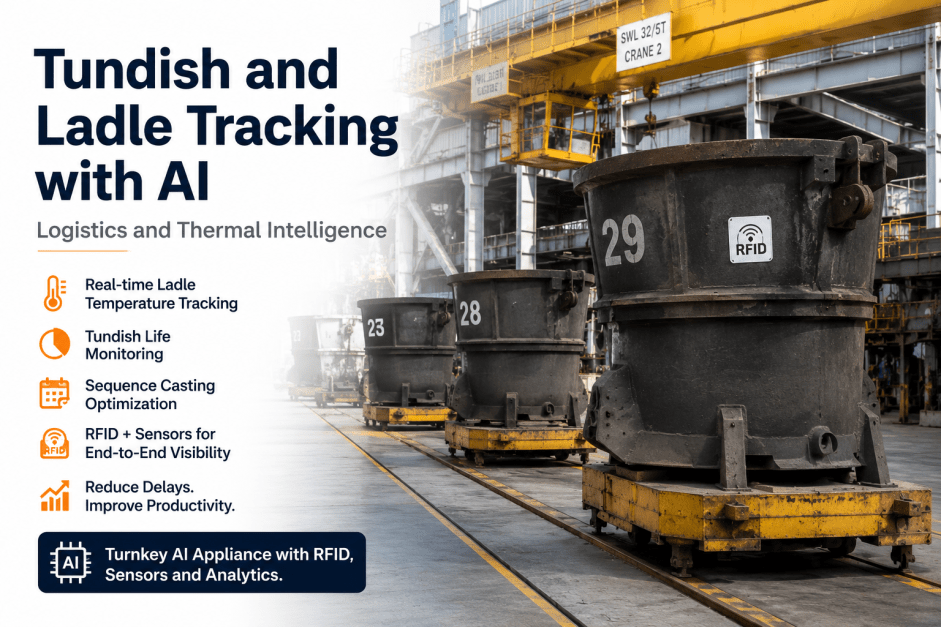
Read More
Every steel melt shop moves ladles through a complex choreography of tap-to-turret logistics where the difference between a successful multi-sequence cast and a costly interruption is measured in degrees of temperature and minu
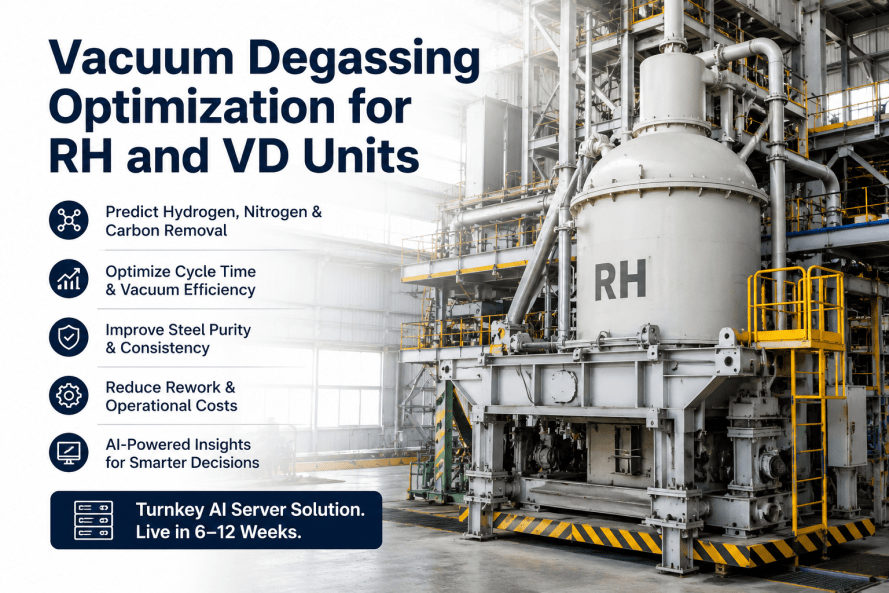
Read More
Vacuum degassing — performed through the Ruhrstahl-Heraeus (RH) process, the tank degassing (VD) process, or the combined RH-OB (oxygen blowing) and RH-KTB (Kawasaki top blowing) variations — is the final quality control gate in secondary steelmak
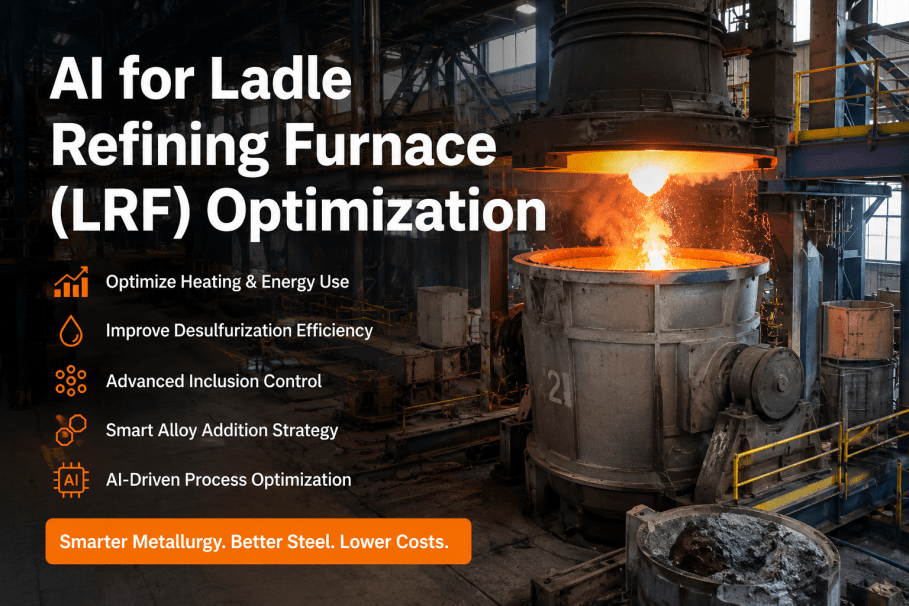
Read More
The ladle refining furnace is the quality gate of secondary steelmaking — the process step where every heat that leaves the BOF or EAF must be adjusted to meet the precise chemistry, temperature and cleanliness specifications of the final product

Read More
Graphite electrodes are the largest consumable cost in electric arc furnace steelmaking after scrap, typically accounting for $3 to $8 per ton of liquid steel depending on electrode diameter, power input profile, scrap quality and shop operating p
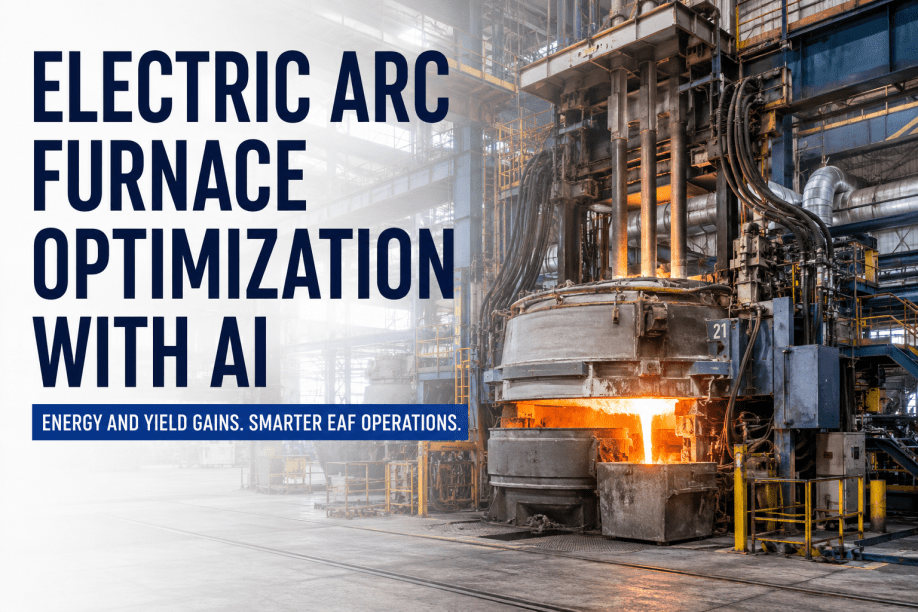
Read More
The electric arc furnace (EAF) transforms scrap steel, direct reduced iron (DRI), and hot briquetted iron (HBI) into liquid steel using electrical energy delivered through graphite electrodes that generate arc temperatures exceeding 3,000°C.

Read More
The basic oxygen furnace (BOF) converts molten iron from the blast furnace into steel by injecting high-purity oxygen through a water-cooled lance into the molten bath. The oxygen oxidizes carbon, silicon, manganese, and phosphorus in a 15-to-25-m
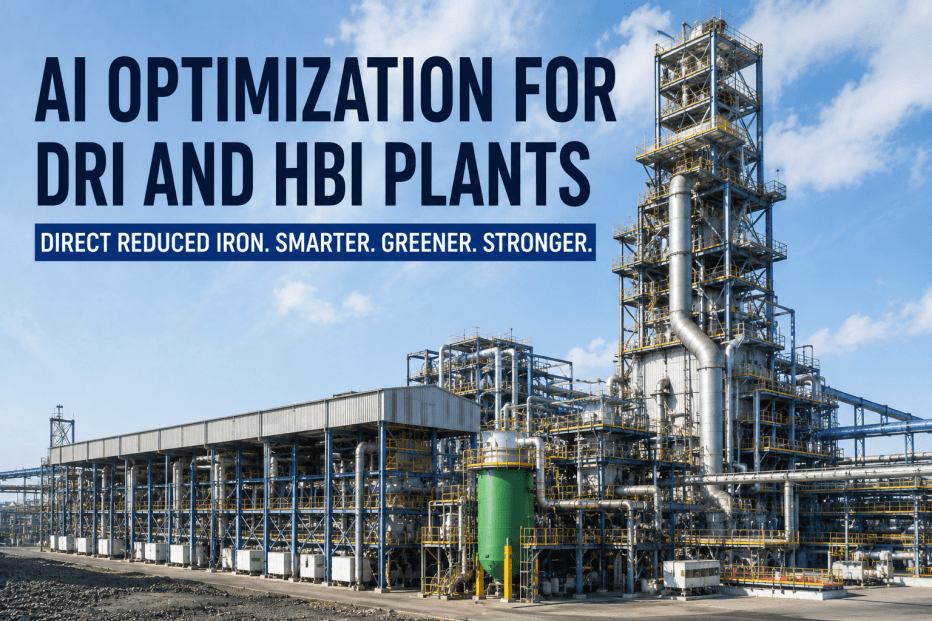
Read More
The direct reduced iron process — whether MIDREX, HYL/Energiron, or hydrogen-based shaft furnace — converts iron ore pellets or lump ore into highly metallized DRI or hot-briquetted iron (HBI) for electric arc furnace steelmaking. Metallization,

Read More
The stockhouse is the gateway to the blast furnace — every ton of iron ore, pellet, sinter, coke, and flux that enters the furnace passes through stockhouse bins and weigh hoppers before being charged into the furnace top. Raw material quality d

Read More
Hot blast stoves are the primary energy consumer in the blast furnace ironmaking process, consuming 25% to 35% of the total fuel energy input to produce the 900°C to 1,250°C blast air that drives the furnace thermal balance, reduction kinetics,

Read More
Coke oven battery performance directly determines blast furnace coke quality, byproduct chemical recovery efficiency, and the environmental compliance profile of the integrated steel mill. A typical U.S. coke battery with 50 to 80 ovens producin

Read More
Sinter plant operations directly determine blast furnace productivity, coke rate, and hot metal quality across integrated steel production. A sinter plant producing 4,000 to 6,000 metric tons of sinter per day for a 10,000-THM blast furnace has
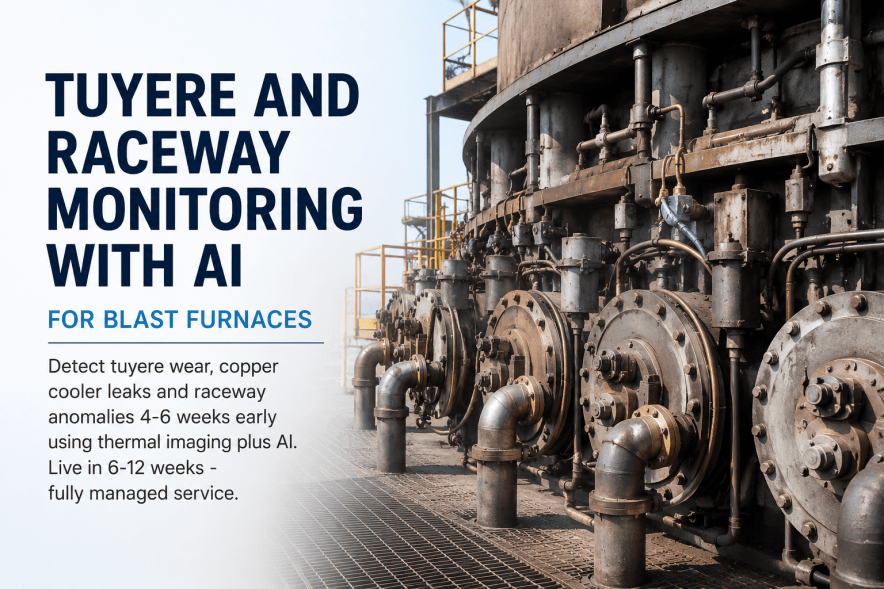
Read More
Blast furnace tuyeres are the most thermally stressed components in the blast furnace ironmaking process — each tuyere operates at the interface between the 1,800°F to 2,100°F hot blast entering the furnace and the 3,200°F to 3,600°F raceway zon
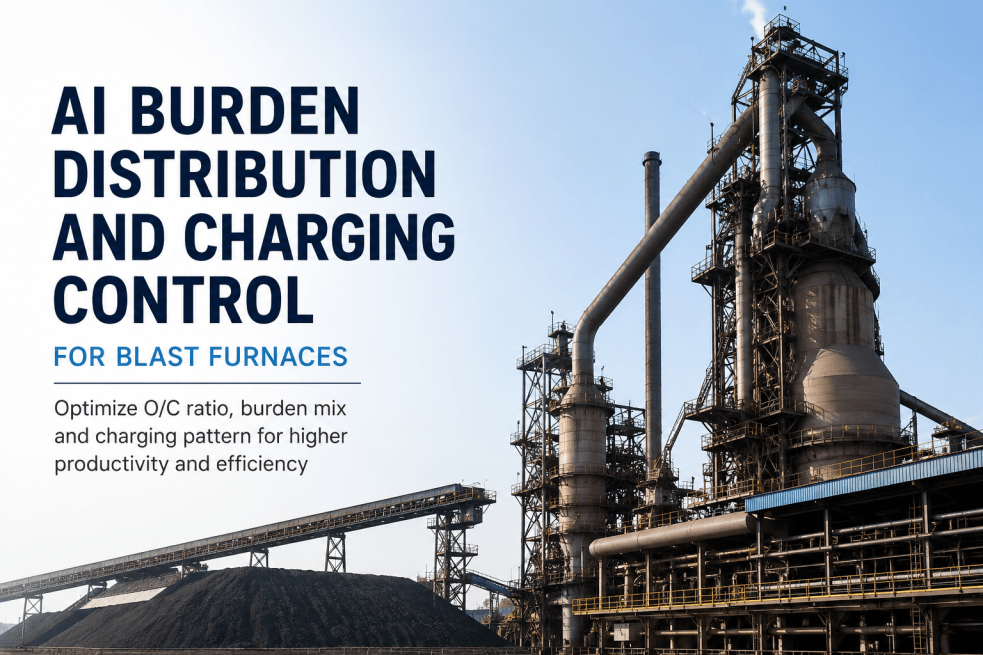
Read More
Burden distribution is the single most influential controllable variable in blast furnace operation — the radial placement of coke and ore layers at the furnace top determines gas flow distribution, thermal profile, reduction efficiency, and per

Read More
Blast furnace hearth erosion is the single highest-consequence degradation mechanism in integrated steelmaking — a localized thinning of the carbon or ceramic refractory lining in the hearth area that, left undetected, can progress to a molten i
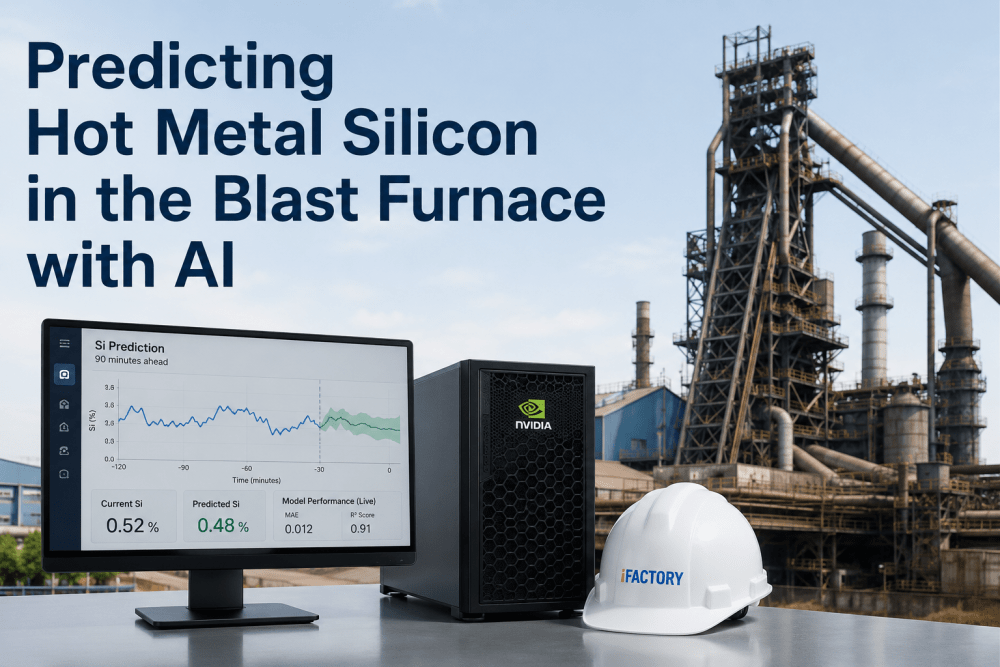
Read More
Hot metal silicon content is the single most informative variable available to a blast furnace process metallurgist for assessing furnace thermal state, slag basicity balance, and the quality of the iron delivered to the BOF or electric arc furn

Read More
Blast furnace ironmaking accounts for approximately 70% of global hot metal production, and in the United States, integrated steel producers operating blast furnaces at facilities like Gary Works, Burns Harbor, Great Lakes, and
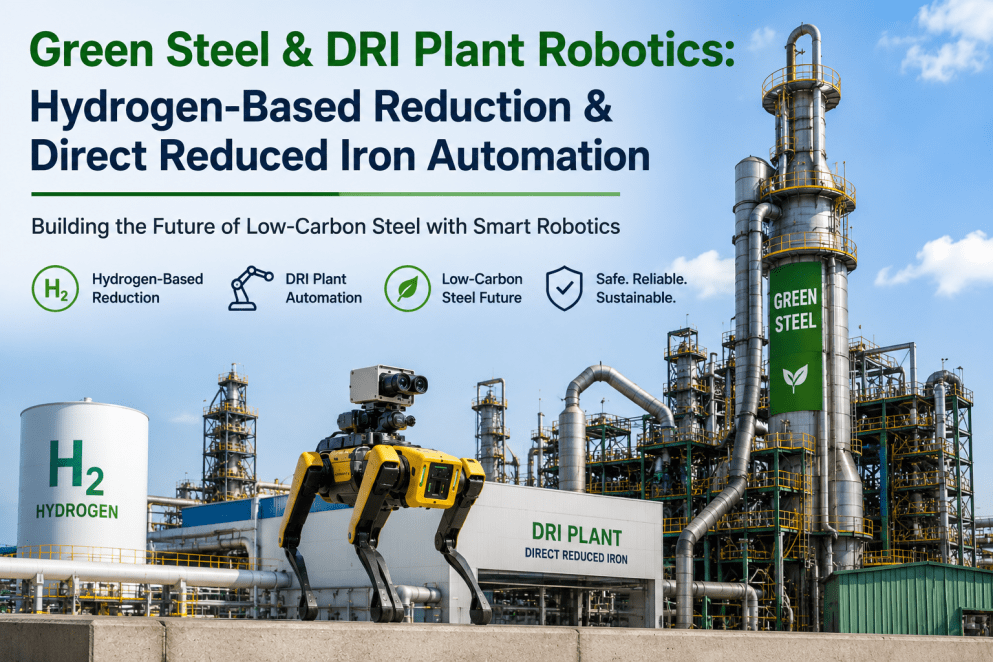
Read More
Hydrogen-based direct reduced iron production represents the most significant technological shift in primary steelmaking since the replacement of open hearth furnaces with basic oxygen converters. DRI plants using hydrogen as the
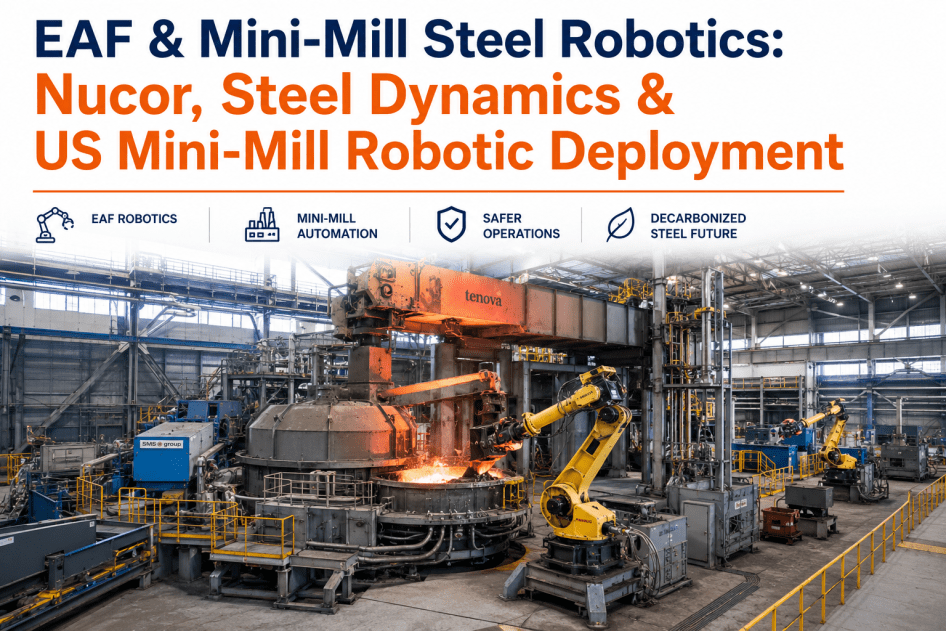
Read More
Electric arc furnace steelmaking in the United States now accounts for over 70% of domestic raw steel production, driven by Nucor, Steel Dynamics, Commercial Metals, and Charter Steel. Mini-mill operators have historically led
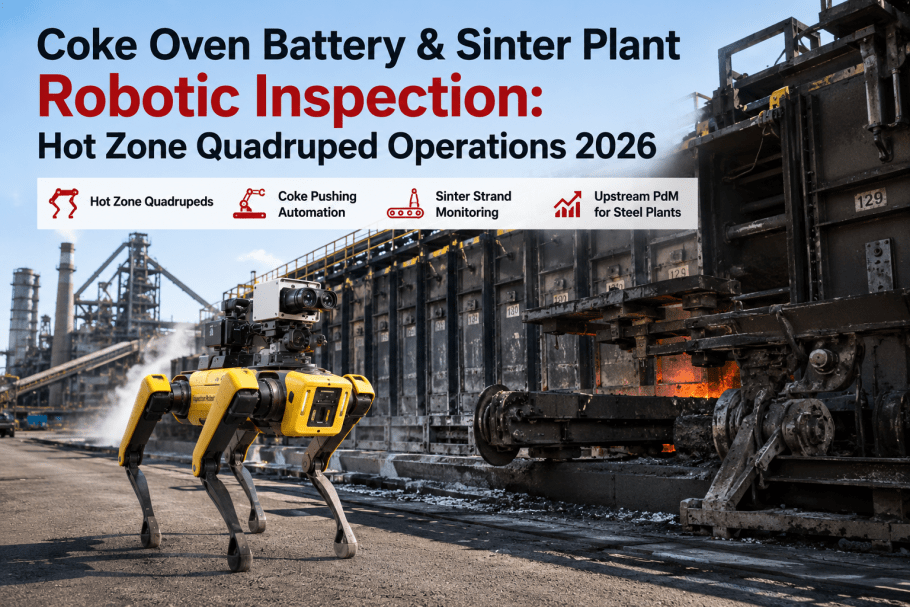
Read More
Coke oven batteries and sinter plants operate at the highest sustained temperatures in the steelmaking upstream chain — coke oven flue temperatures exceeding 2,200°F, pusher side ambient temperatures above 180°F during pushing cycles, sinter str
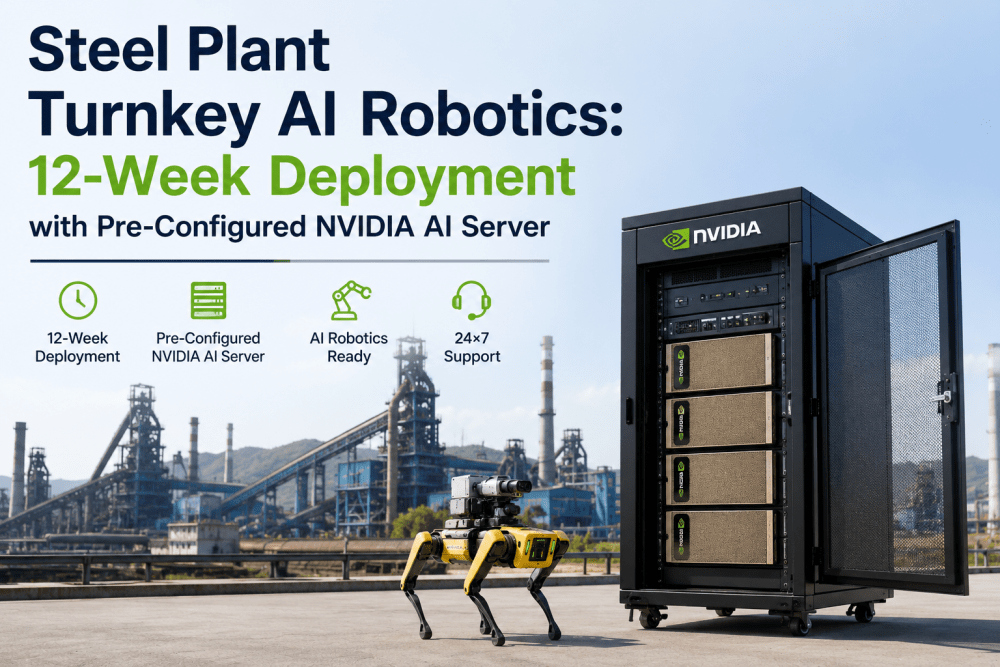
Read More
The gap between knowing that AI-powered robotics can improve steel plant performance and actually having an AI-powered robotic inspection system running on your blast furnace, BOF, caster, or rolling mill is not a technology gap. The technology
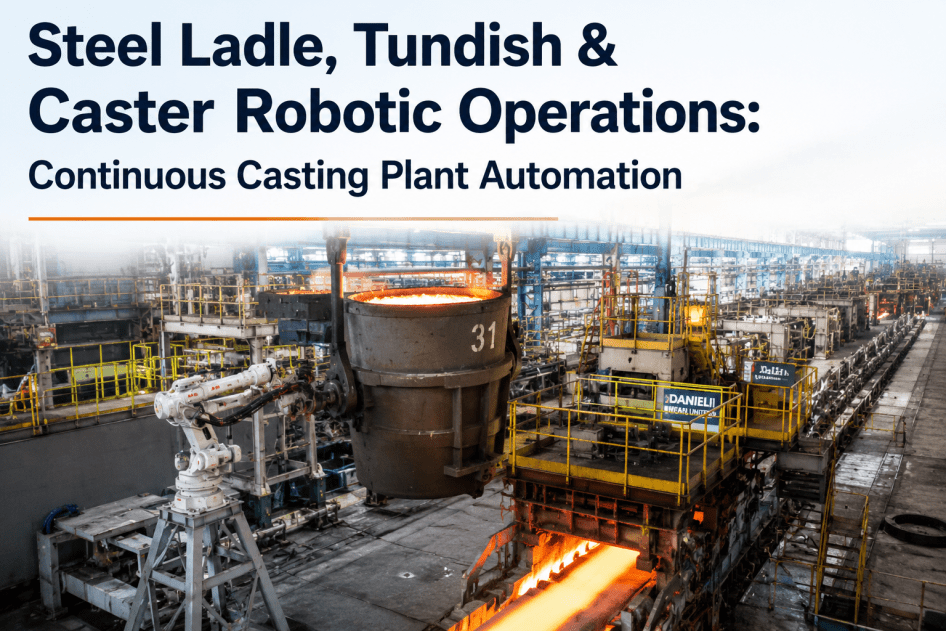
Read More
Continuous casting is the profit center of every steel mill. A single breakout event on a slab caster stops production for 4 to 8 hours, generates $120,000 to $350,000 in direct refractory damage and lost production value, and
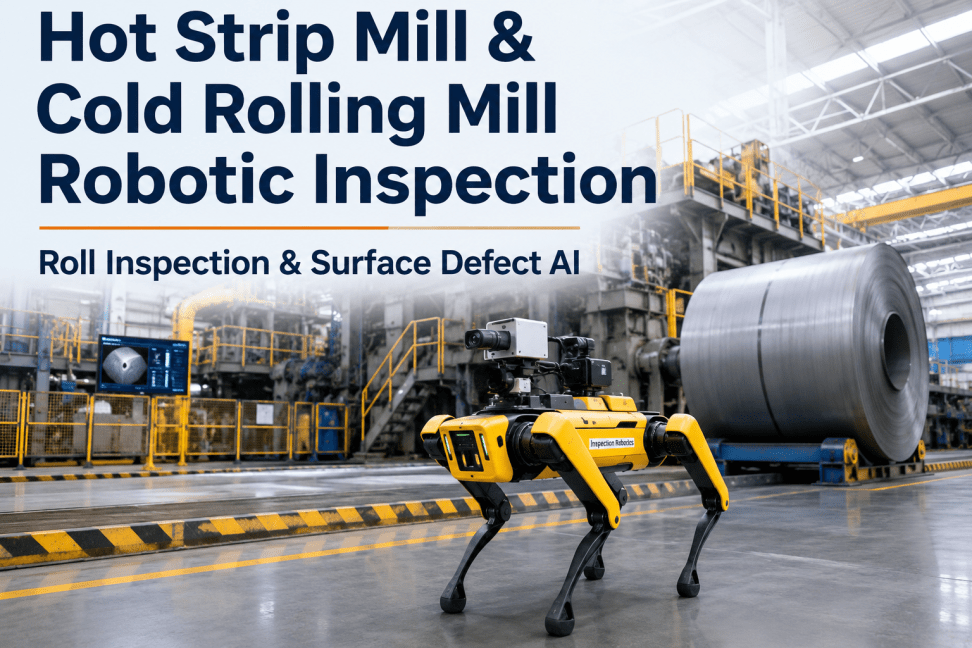
Read More
Hot strip mills and cold rolling mills operate at the physical limits of their mechanical systems every production day. Work roll surfaces degrade across a single campaign. Strip surface defects appear at line speed. Mill stand

Read More
POSCO's deployment of Boston Dynamics Spot quadruped robots at the Pohang and Gwangyang integrated steel works represents the most extensively documented implementation of legged robotics in heavy industrial manufacturing globally. Starting with
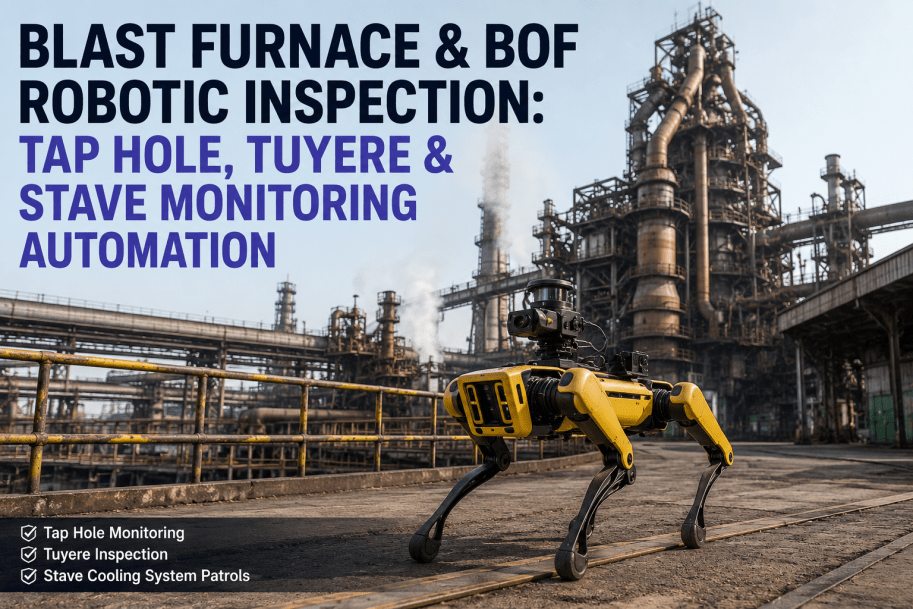
Read More
Blast furnaces and basic oxygen furnaces operate at the extreme edge of industrial thermal tolerance — shell temperatures exceeding 400°F at the tuyere band, tap hole areas hot enough to liquefy steel-grade refractory, BOF vessel interiors above

Read More
The director of digital transformation at a 4.5-million-ton integrated steel mill in the Midwest reviews the monthly operational report from the plant's robotics deployment team and sees a set of numbers that confirm a strategy she has been cham

Read More
EAF-based mini mills operate in a fundamentally different environment than integrated steelmakers — leaner crews, faster heat cycles, tighter capital budgets, and a cost structure where every hour of electric furnace downtime tra

Read More
An integrated steel plant is not a single facility — it is a cascade of interdependent production systems, each with its own asset base, failure modes, process constraints, and performance drivers, all connected by material and en

Read More
The steel industry's relationship with analytics technology shifted permanently in 2024 and 2025 — not because new categories of technology appeared, but because the cost, deployment complexity, and time-to-value curves for AI predictive analytics

Read More
India's steel industry is the second largest in the world by volume — and the competitive pressure that comes with that scale is not abstract. With 140+ million tonnes of annual production capacity a domestic market that swings b

Read More
The question steel plant CFOs and plant managers ask most frequently before committing to an AI-driven platform is not whether the technology works — it is whether the economics are real, whether the savings are attributable, and

Read More
The steel industry's window for deferring digital transformation has closed. AI-driven platforms built specifically for steel plant operations are no longer a competitive advantage reserved for tier-one integrated producers — they are becoming the

Read More
Most steel plant operations teams have a rough sense that their analytics capability could be stronger — but few can articulate exactly where the gaps are, how those gaps translate into cost per tonne, or which improvement initiatives would genera

Read More
Steel plant operations teams evaluating analytics software in 2026 face a choice that looks straightforward on paper but carries significant operational and financial consequences: a purpose-built AI-driven platform like iFactory, or the PM (Plant

Read More
Before iFactory, a melt shop superintendent at a 3-million-ton-per-year minimill spent the first two hours of every shift manually cobbling together production data from four different systems — the EAF control room, the caster PLC, the LMF log, a

Read More
It's 2:47 AM on the #2 EAF melt shop floor. The furnace is hot, the scrap bucket is loaded, and the board operator notices the tap-to-tap time has crept from 47 minutes to 54 over the last four heats. The shift supervisor shrugs — "That's just how

Read More
The caster operator at a 3.5-million-ton flat-rolled mill watches the tundish temperature drift two degrees above spec. By the time the shift supervisor approves a ladle-arc trim, 140 meters of slab have already been downgraded to "off-grade" — wo
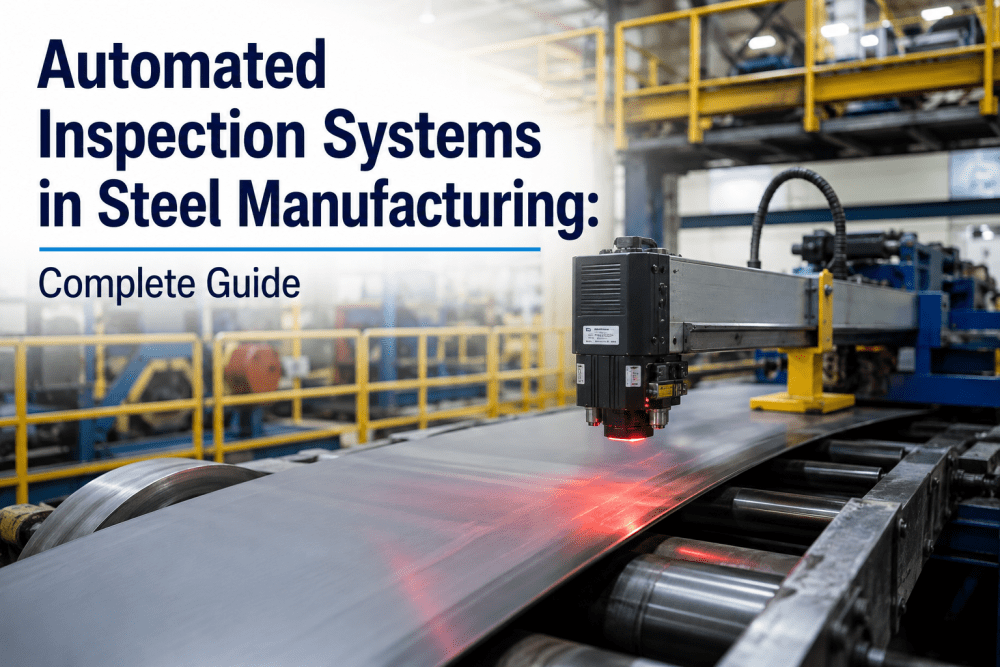
Read More
Surface defects on hot-rolled coil that reach the galvanizing line cost between $180 and $340 per ton in downgrade or rejection depending on product specification — and the majority of those defects were detectable at the hot mil

Read More
At 2:34 AM on a Tuesday, the EAF at a 3-million-tonne integrated mill in Indiana starts drawing 78 MW with a charge of DRI and scrap that was blended 40 minutes late. The ladle furnace is holding a 1,650°C tap, but the argon stir is uneven because

Read More
Steel production cost per tonne is the most closely tracked financial metric in any integrated steel mill or EAF operation — and the one most frequently misunderstood by plant managers who conflate accounting cost with operational cost. The number

Read More
The morning shift supervisor at a 4.5-million-ton integrated steel mill sees the same red flag every Tuesday: the hot strip mill is scheduled to roll 304 stainless, but the melt shop’s latest cast from the LMF is still 20°C above tap tempera

Read More
Six months ago, the scheduling team at a 500-worker automotive parts plant spent every Monday morning manually piecing together a production plan in spreadsheets — cross-referencing machine availability, material stock, and shift calendars by hand

Read More
The night shift supervisor at a 3-million-tonne-per-year integrated steel mill watches the HRSG exit temperature climb past 185°C — 12 degrees above the morning baseline. That's 4.2 MW of recoverable heat bleeding into the atmosphere per hour, rou

Read More
Compressed air and industrial gas systems are the most consistently underestimated energy cost in U.S. steel plant operations — and the most consistently over-tolerated source of waste. A typical integrated steel facility runs 8

Read More
Steel plants are among the most hazardous industrial environments in the United States — with fatality rates that run three to four times the all-industry average and OSHA enforcement actions that cost the sector more than $47 mi

Read More
Steel plants generate more solid waste and by-product material per ton of output than almost any other heavy industry — and the gap between collecting that waste and managing it with operational precision is where environmental l

Read More
Steel plant environmental compliance in 2026 is not the same operational challenge it was five years ago. The EPA's updated NESHAP standards for integrated iron and steel manufacturing, tightening state-level NOx and SO₂ permit li

Read More
Steel mills consume between 25 and 80 cubic meters of water per ton of steel produced depending on plant configuration, and that water moves through cooling towers, descaling systems, continuous caster secondary cooling, gas cleaning circuits, and

Read More
Industrial gas plant analytics in steel operations has evolved from a background utility function into a mission-critical reliability discipline — because the consequences of gas supply failure at a basic oxygen furnace (BOF), electric arc furnace

Read More
The average maintenance technician in a U.S. steel plant is 54 years old. Forty-nine percent of steel plant operations managers report that recruiting qualified analytics and maintenance professionals is their most persistent ope

Read More
Sixty percent of industrial AI implementations fail before they deliver measurable value — not because the technology does not work, but because steel plants attempt to deploy analytics platforms without a methodology built for the operational rea

Read More
Steel plants already have more sensor data than they know what to do with — and that is precisely the problem. The integrated mill that installed a vibration network on critical rotating equipment three years ago is generating 2.

Read More
A steel plant maintenance technician working a 4 AM pre-shift ladle crane inspection cannot afford to fight the tools they are using. They are wearing FR clothing, gloves, and safety glasses. They are working at 35 feet of elevation in an active c

Read More
Inspections are the most labor-intensive and most variability-prone activity in steel plant operations. A typical U.S. integrated mill executes between 1,200 and 3,800 documented inspections every month — equipment condition roun

Read More
Production scheduling in steel manufacturing has moved from a back-office planning function to one of the most consequential operational disciplines on the plant floor — because the gap between a well-scheduled mill and a poorly scheduled one no l
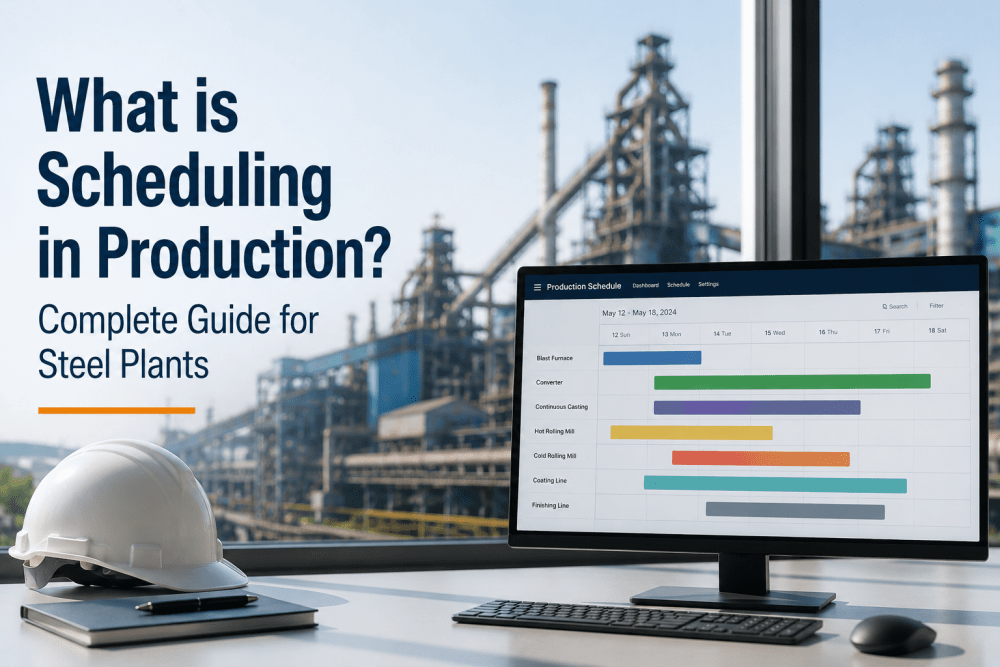
Read More
Walk into any U.S. steel mill at the start of a shift and ask the planner what's running on the caster in four hours, what the rolling sequence looks like, and which orders are at risk — and the quality of the answer tells you everything about the

Read More
When steel margins compress — as they have in each of the last three major price cycles — the capital allocation conversation at every U.S. steel mill eventually arrives at the same question: is this analytics investment worth the spend when every
.png)
Read More
When steel markets tip into overcapacity, every percentage point of margin that the operation earns has to come from somewhere other than price — and the most controllable source of that margin, the one that does not depend on ir
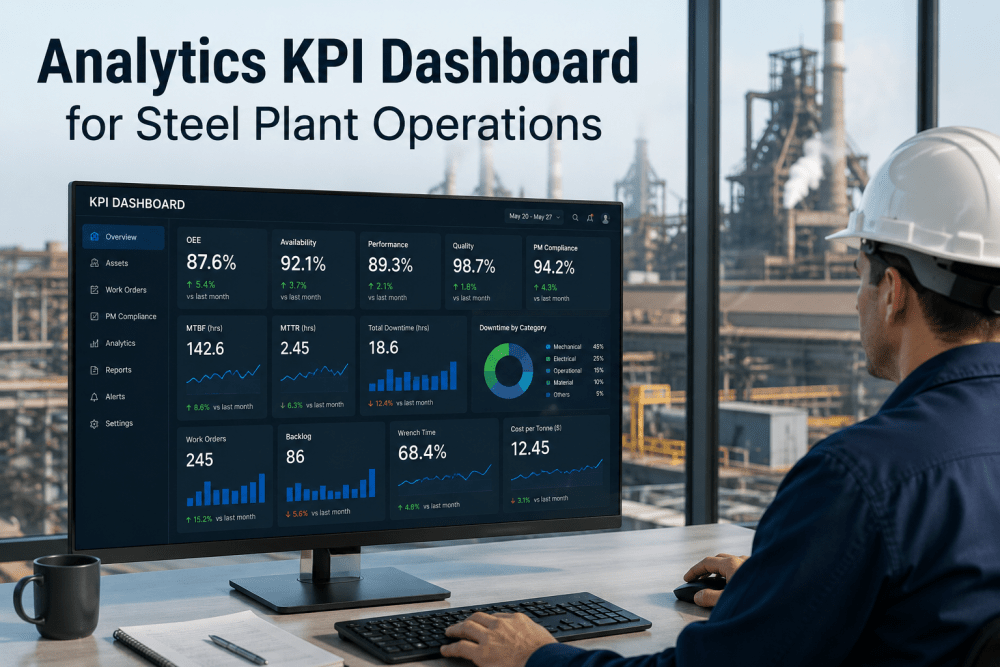
Read More
A steel plant running without a real-time maintenance KPI dashboard is a steel plant making financial decisions from memory. The MTBF number your maintenance manager quoted at the last operations meeting was calculated from a spre
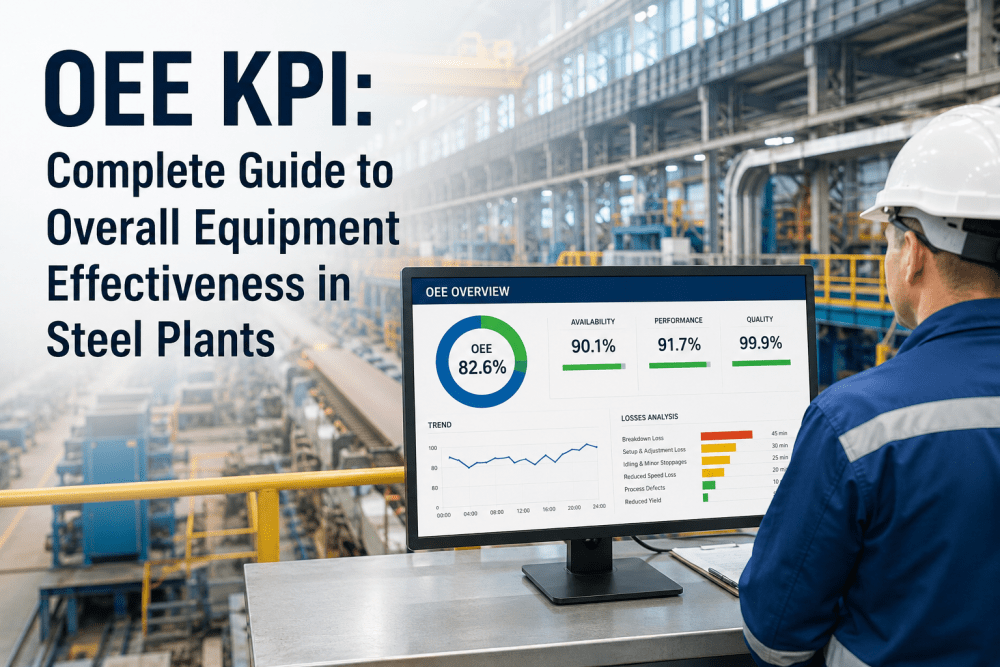
Read More
Overall Equipment Effectiveness is the most comprehensive single metric available to steel plant operations management — and the most consistently misunderstood. Most U.S. steel facilities track OEE in some form, but the majority
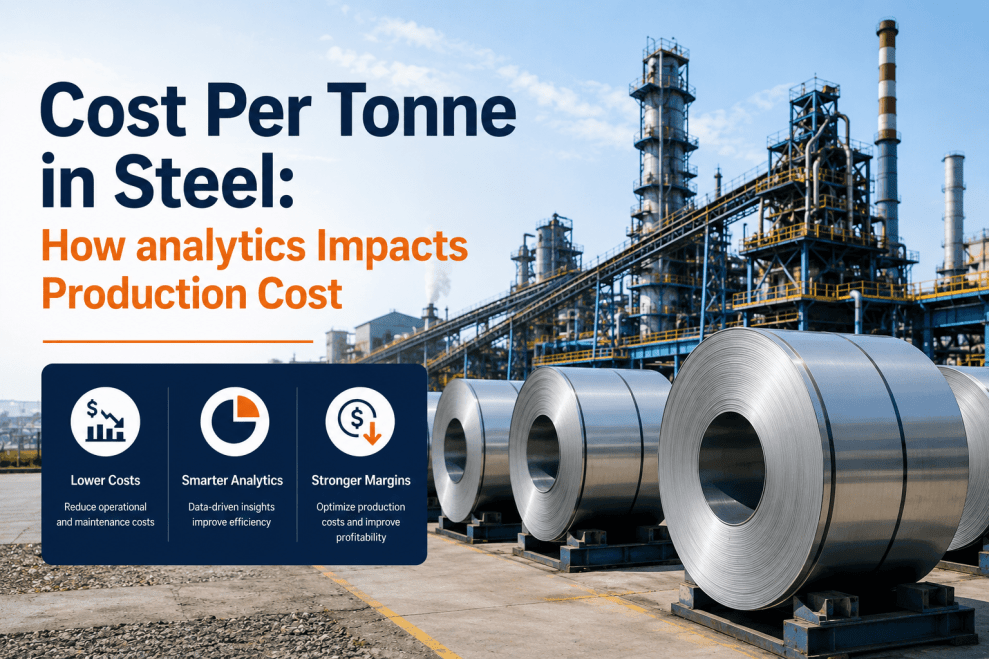
Read More
Steel production cost per tonne is the single most important competitive indicator in the industry — and maintenance is one of its largest controllable components. When hot-rolled coil prices soften and integrated mills face margin compression, th
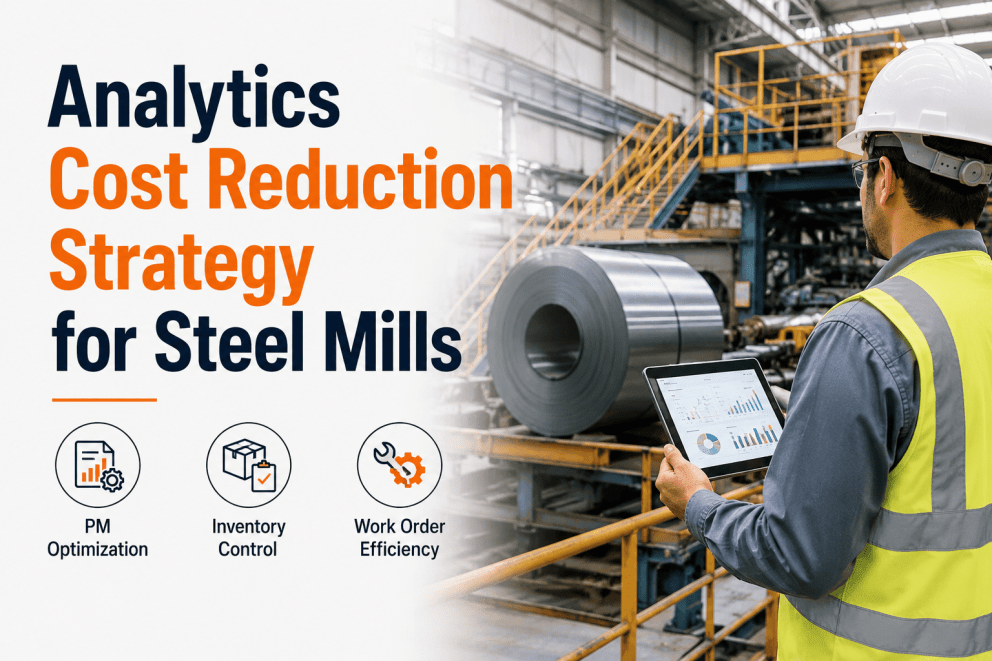
Read More
Steel margins move in cycles that maintenance budgets cannot. When hot-rolled coil spot prices drop 18% over eight months — as they did in 2023 and again in 2025 — the maintenance cost line that represents 12 to 18% of total production cost become
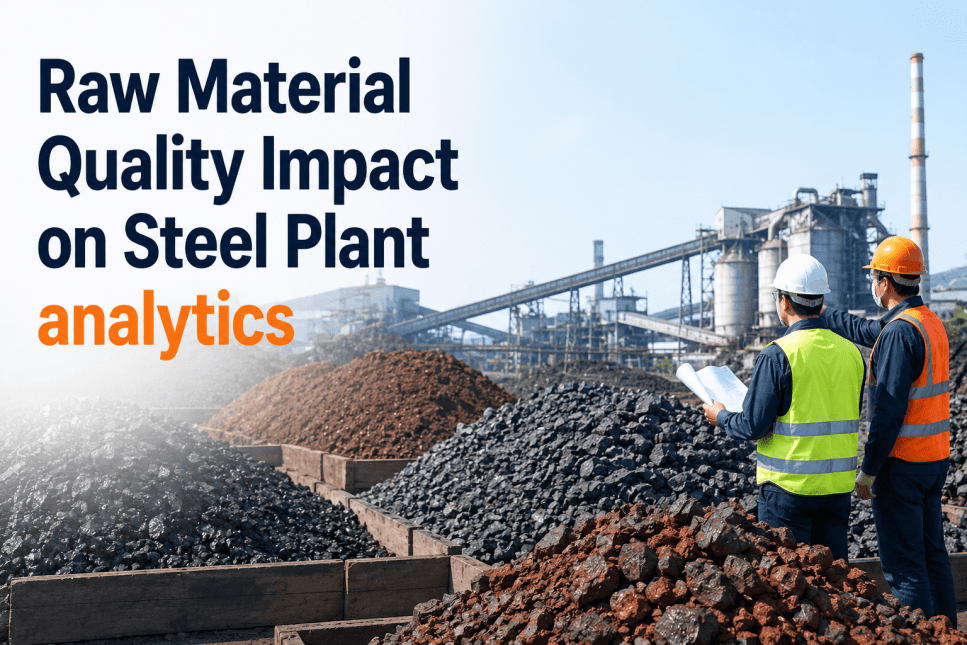
Read More
The relationship between raw material quality and equipment wear in a steel plant is one of the most under-tracked correlations in U.S. steel operations — and one of the most financially consequential. A blast furnace running iron ore with 2% high
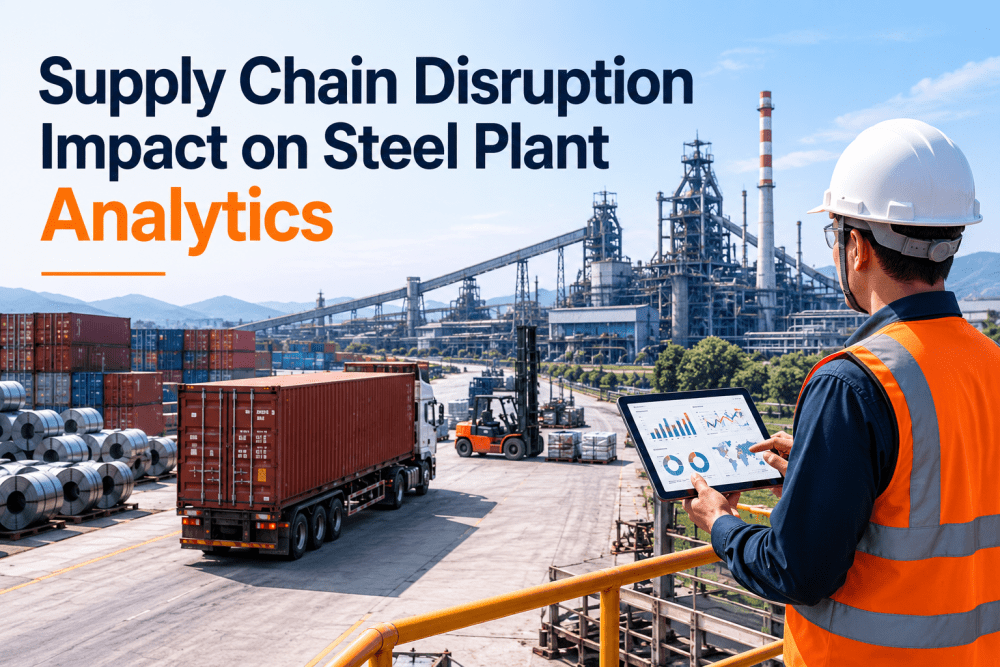
Read More
The steel industry's dependence on global supply chains has never been more visible — or more consequential — than in the period since 2020. Electrode shortages that idled EAF melt shops. Bearing lead times that stretched from 6 weeks to 26 weeks
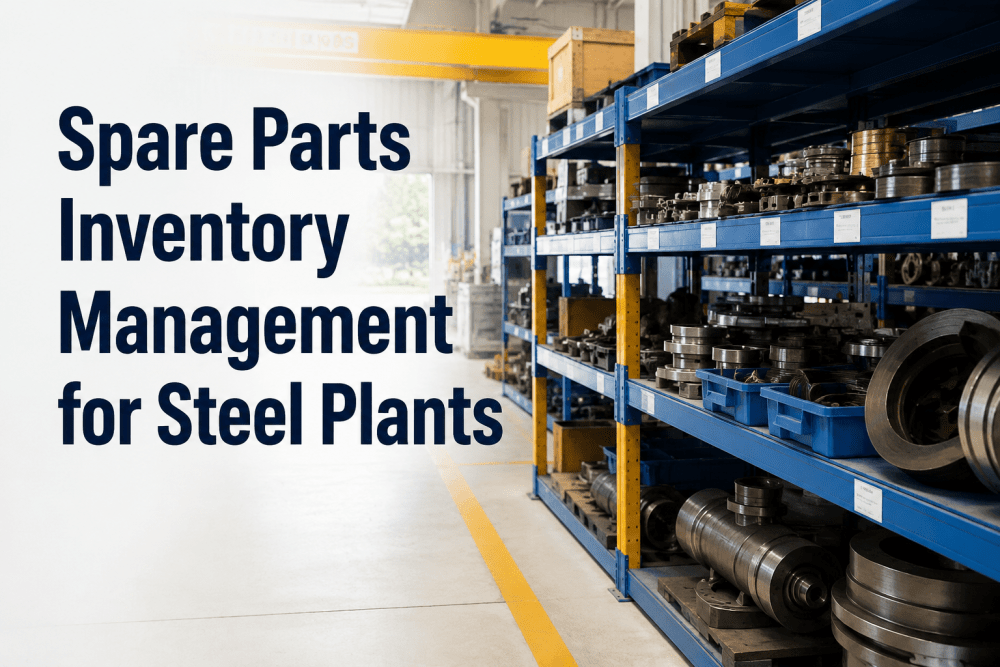
Read More
A production shutdown caused by a missing spare part is one of the most avoidable — and most common — failures in U.S. steel plant operations. The bearing that was not in stock when the cooling water pump failed. The hydraulic seal kit that was or

Read More
The average age of production equipment in U.S. integrated steel plants is 28 years. In mini mill operations, it is 19 years. Both numbers are rising — not because plant managers have chosen to operate aging infrastructure, but be

Read More
A steel plant shutdown is not a pause in operations — it is a production event in its own right, one that determines how much of the plant's annual maintenance value is captured and how quickly full production capacity is restored. The U.S. steel

Read More
Every steel plant in the United States operates one of two maintenance philosophies — and the choice between them determines more about the facility's profitability than most capital investment decisions. Reactive maintenance — r

Read More
Every hour of unplanned downtime in a steel plant traces back to a rotating asset that failed without warning — a motor bearing that overheated while the vibration alarm was set 40% above normal operating levels, a cooling water

Read More
A breakout on a continuous casting machine is the most consequential failure event in a steel melt shop — molten steel at 1,550°C escaping through a thinned or perforated mold shell below the copper plate, flowing into the strand

Read More
Cold rolling mill operations sit at the intersection of extreme precision and high mechanical stress — a combination that generates a specific, high-consequence category of quality and reliability failure that neither standard SCADA alarm systems

Read More
A hot rolling mill is one of the most mechanically demanding production environments in U.S. steel manufacturing — a continuous sequence of roughing stands, finishing stands, hydraulic gap control systems, roller tables, and coiling equipment oper
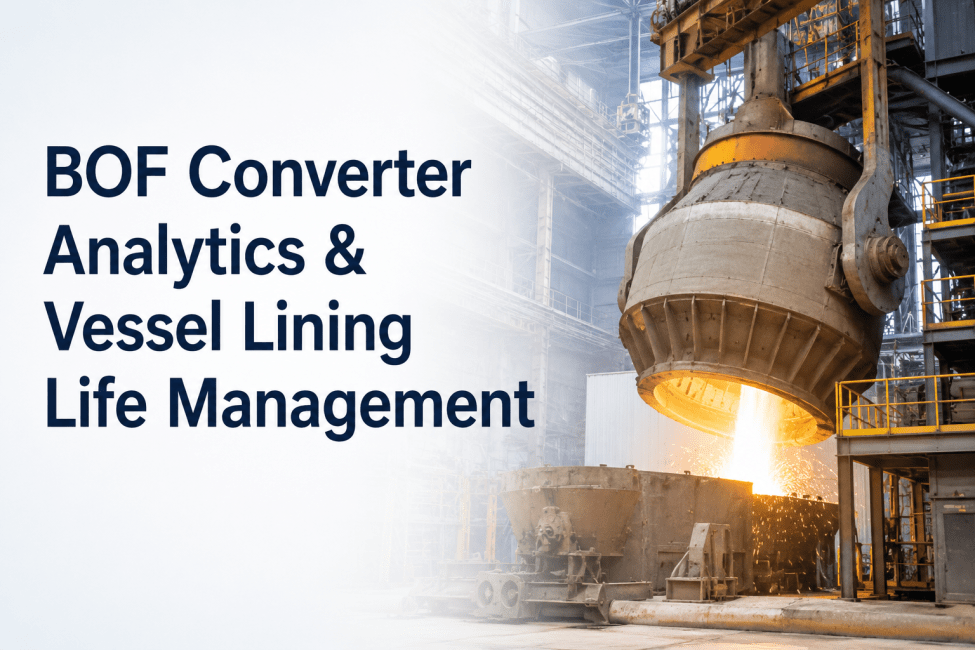
Read More
The Basic Oxygen Furnace converter is the most capital-intensive vessel in an integrated steel plant's liquid steel production chain — and the one where the difference between a well-managed lining campaign and a poorly monitored
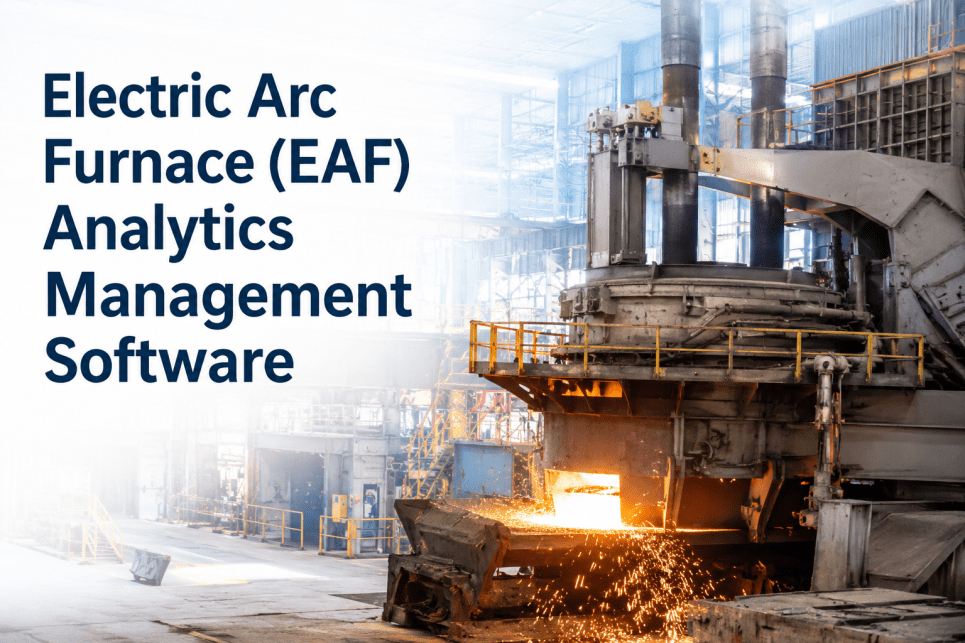
Read More
The Electric Arc Furnace is the most energy-intensive and asset-dense production unit in a mini mill or integrated EAF melt shop — and the one where unplanned downtime carries the highest per-event cost in the entire steelmaking complex. At $12,00

Read More
The blast furnace blower is the single most consequential rotating asset in an integrated steel plant. Without continuous blast air supply at the designed pressure and volume, the blast furnace cannot sustain the raceway combustion that drives hot
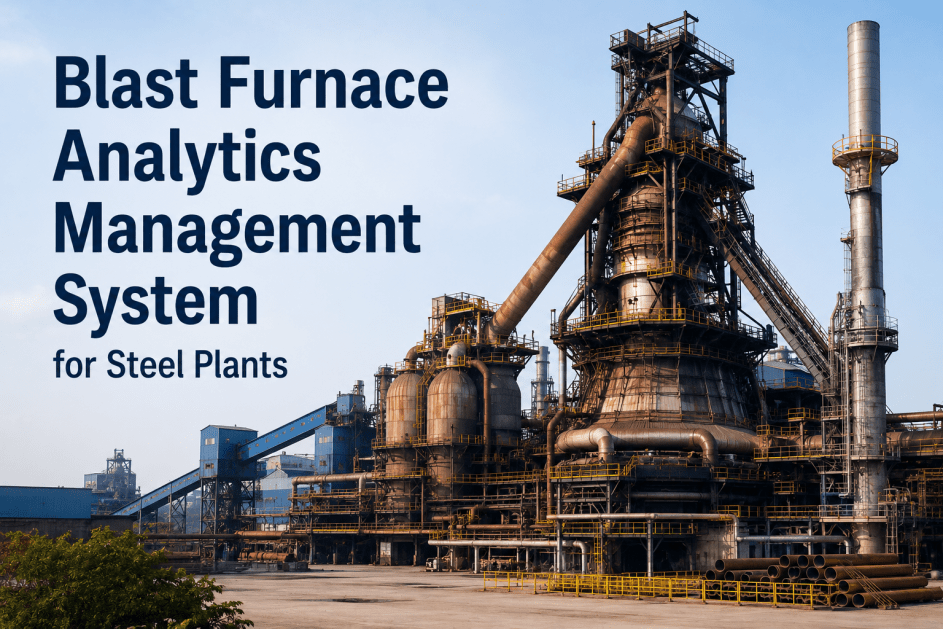
Read More
A blast furnace campaign is one of the largest capital commitments in steelmaking — a $15 to $40 million investment in refractory relining that must return 15 to 20+ years of continuous production before the next shutdown. For U.S
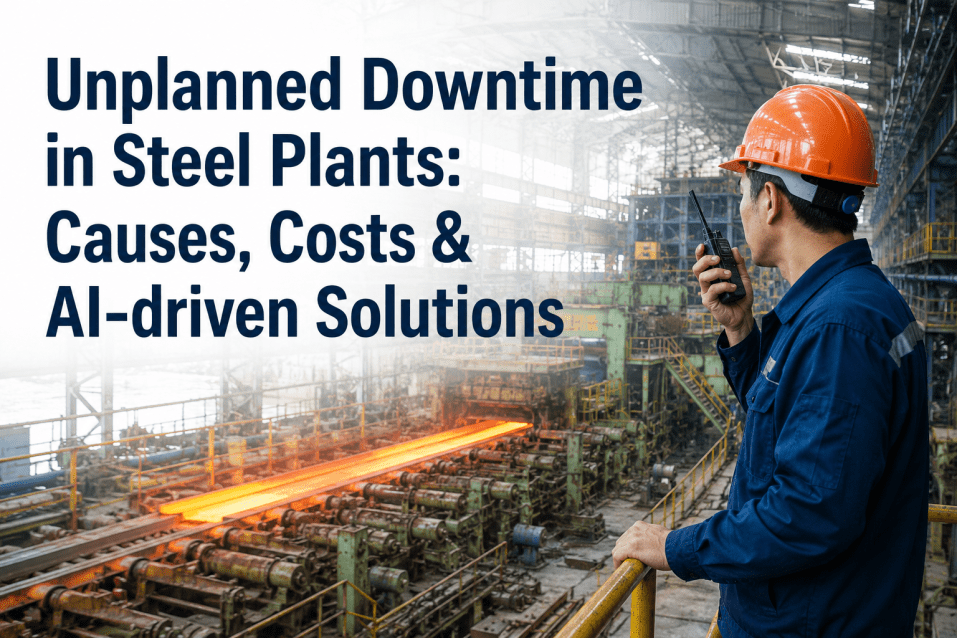
Read More
Unplanned downtime in a steel plant is not a maintenance problem. It is a business problem — one that compounds every minute it continues. At $500,000 or more per hour for an integrated facility running an EAF and continuous caster, a single 8-hou
Read More
Steel plant safety failures do not happen without warning. They happen when the warning is present in the data and no system exists to interpret it, escalate it, and convert it into action before the failure threshold is crossed. The U.S. steel in
Read More
Compressed air is the fourth utility of the steel plant — behind electricity, natural gas, and water — and the most reliably mismanaged one. Unlike the other three, compressed air system failures rarely trigger a single dramatic event; they accumu

Read More
Most steel plant analytics programs are not suffering from a data shortage—they are suffering from a data fragmentation problem. Sensor readings sit in one historian, work orders in a CMMS production logs in a separate MES, and quality records in

Read More
Steel plants allocate between 2% and 5% of total operating costs to analytics and maintenance technology programs—yet fewer than one in three facilities can demonstrate a documented return on that investment within 18 months. The gap between analy

Read More
Lime and flux preparation systems are among the most thermally intensive and mechanically demanding asset groups in an integrated steel plant — and among the most consistently under-monitored. Rotary kilns calcining limestone and dolomite at tempe
Read More
A wire rod mill is among the most speed-intensive and quality-sensitive long product operations in the steel industry — with Morgan finishing blocks rotating at surface speeds above 120 m/s, laying heads depositing rod coils at f

Read More
A rebar production line is one of the most instrumentation-dense long product rolling environments in the steel industry — with TMT quenching boxes operating at millisecond response windows, multi-stand rolling sequences running at surface speeds
Read More
Color coating lines occupy a unique position in the flat-rolled steel value chain — they are simultaneously the highest-value-add operation and the highest-defect-risk operation in the finishing sequence. A coil entering the CCL h
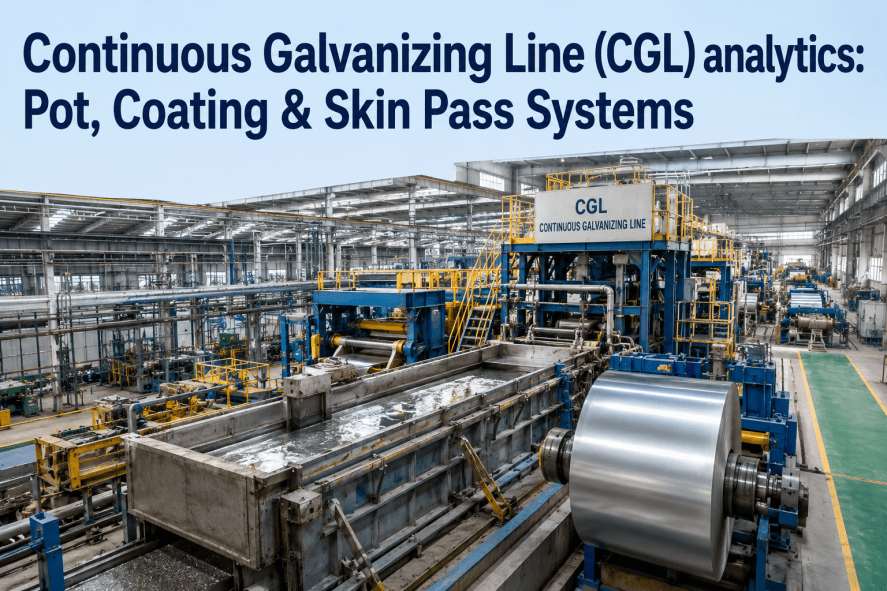
Read More
Continuous Galvanizing Lines (CGLs) sit at the intersection of metallurgy, precision coating, and high-speed strip processing — and they rank among the most maintenance-intensive assets in any flat-rolled steel operation. A zinc p

Read More
Pelletizing plants sit at the intersection of raw material preparation and ironmaking—transforming fine iron ore concentrates into uniform, hardened pellets that feed blast furnaces and direct reduction plants with consistent chemistry and physica
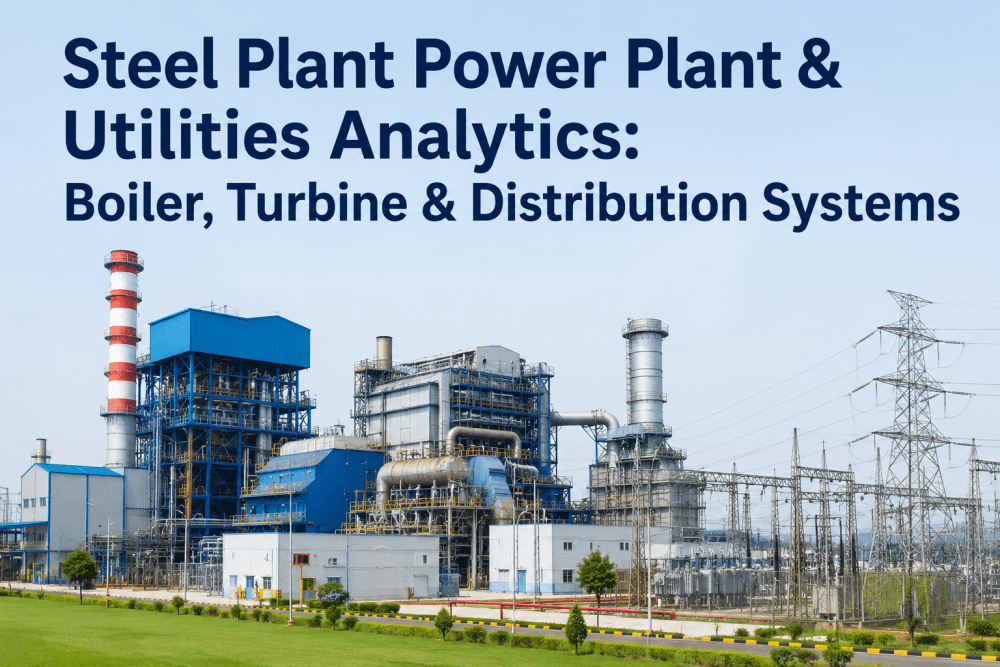
Read More
Steel plants are power-hungry by nature. A mid-size integrated mill running blast furnace, BOF steelmaking, and hot rolling typically consumes 400–600 kWh per metric ton of liquid steel — and the captive power plant or utility complex that supplie

Read More
Sinter plants are the upstream heartbeat of integrated steelmaking — converting iron ore fines, limestone, coke breeze, and return fines into a thermally processed burden material that the blast furnace can efficiently reduce. When the sinter mach
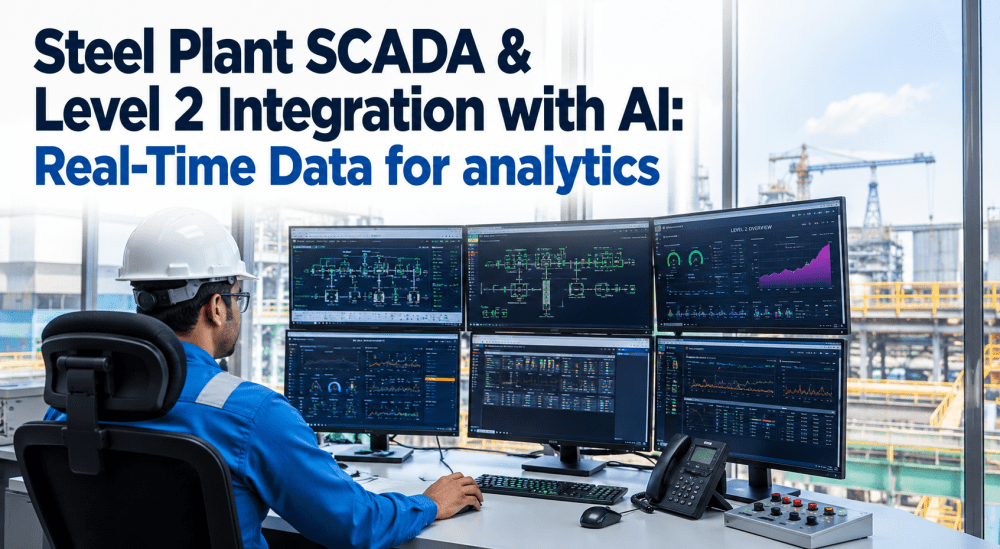
Read More
Connecting SCADA and Level 2 automation systems to an AI-driven analytics platform is the single highest-leverage integration project available to U.S. steel operations today. Every process variable, every alarm, every setpoint deviation that curr
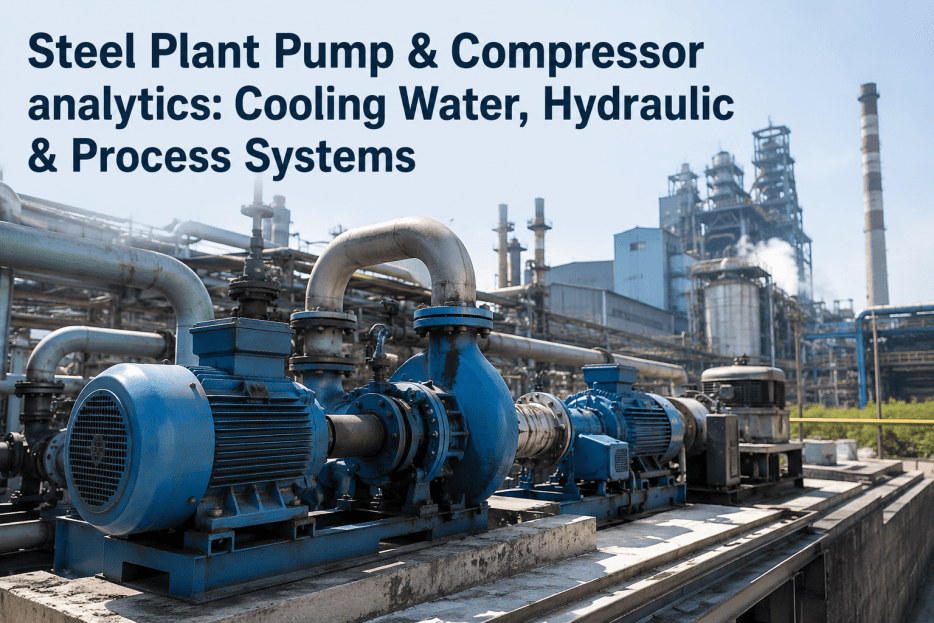
Read More
Pumps and compressors are the circulatory system of a steel plant. Cooling water flows through hundreds of heat exchangers, tuyères, mold cooling circuits, and roller tables. Hydraulic power units drive ladle gates, converter tilts, continuous cas
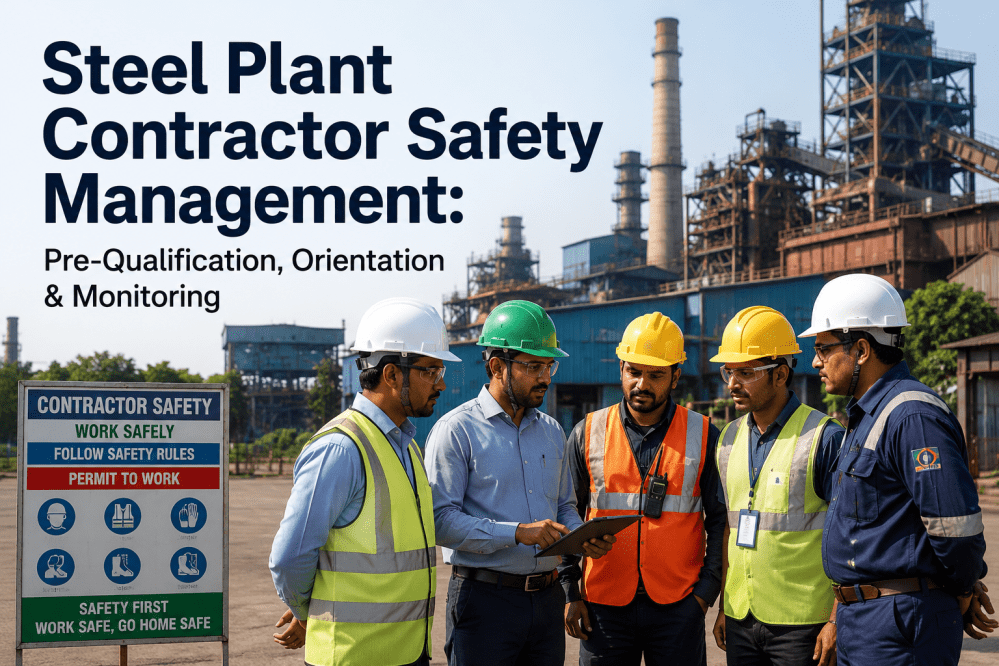
Read More
Steel plant contractor safety management is one of the most consequential — and most inconsistently executed — programs in U.S. heavy industry. Contractors represent a disproportionate share of serious injuries and fatalities on m
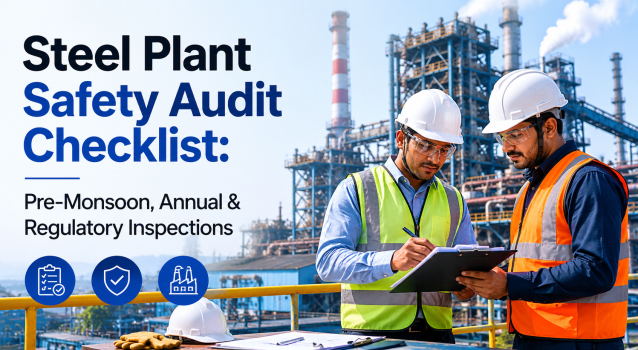
Read More
A steel plant is one of the most complex industrial environments subject to regulatory oversight in the United States — with OSHA PSM requirements, state-level fire marshal inspections, environmental permit audits, and internal safety management s
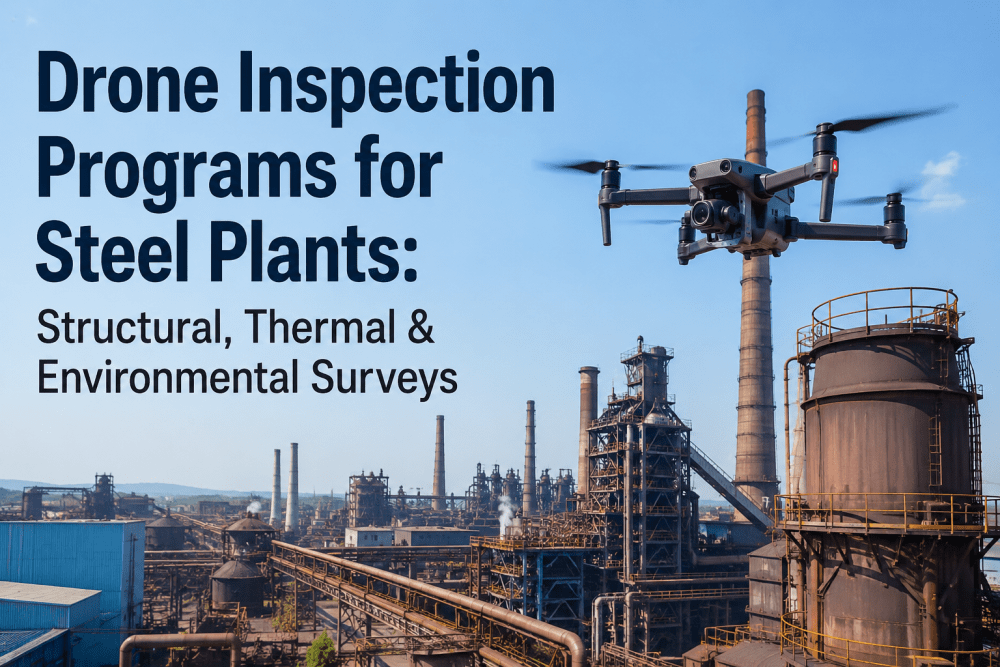
Read More
A steel plant contains thousands of feet of elevated structure that no maintenance team can safely or economically inspect on a traditional scaffold-and-rope schedule. Furnace shells operating at 1,600°F. Crane rails suspended 80 feet above live p
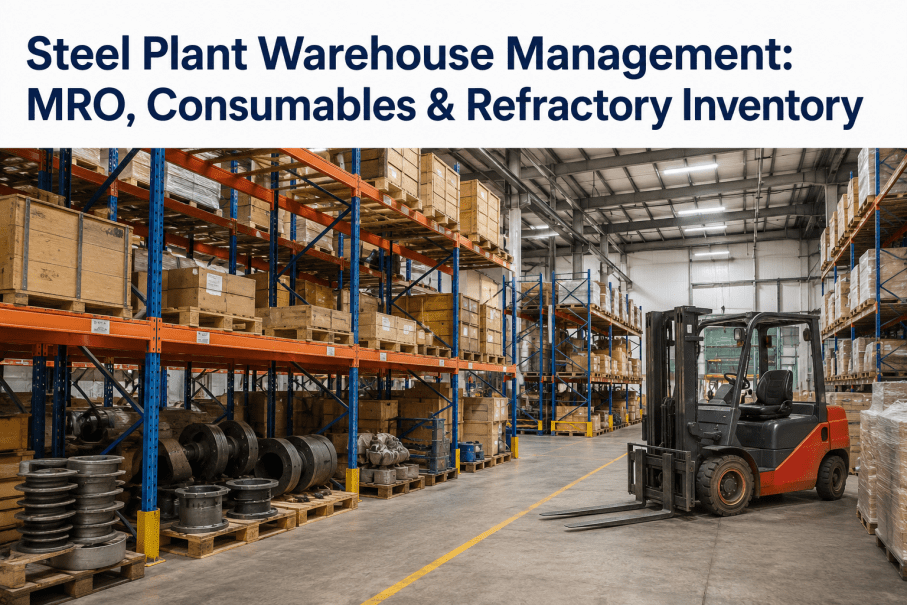
Read More
Steel plants run on materials as much as they run on metal. Every tonne of steel produced depends on a precise choreography of MRO parts, refractory linings, electrodes, fluxes, and consumable supplies moving from warehouse to production floor wit
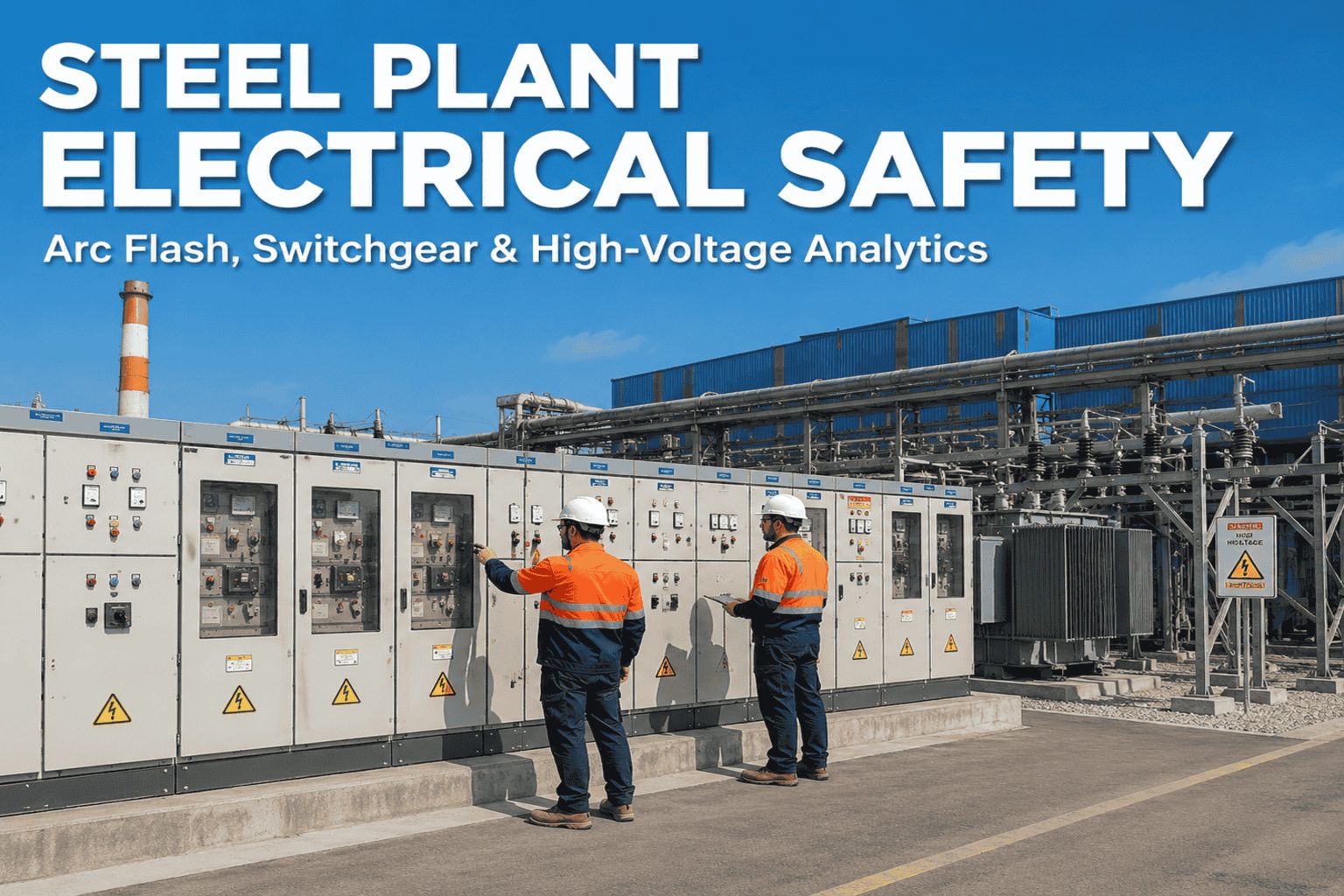
Read More
Steel plants consume more electricity per square foot than almost any other industrial facility on earth—with arc flash incidents alone costing the U.S. manufacturing sector over $2 billion annually in injuries, equipment loss, and downtime. Elect
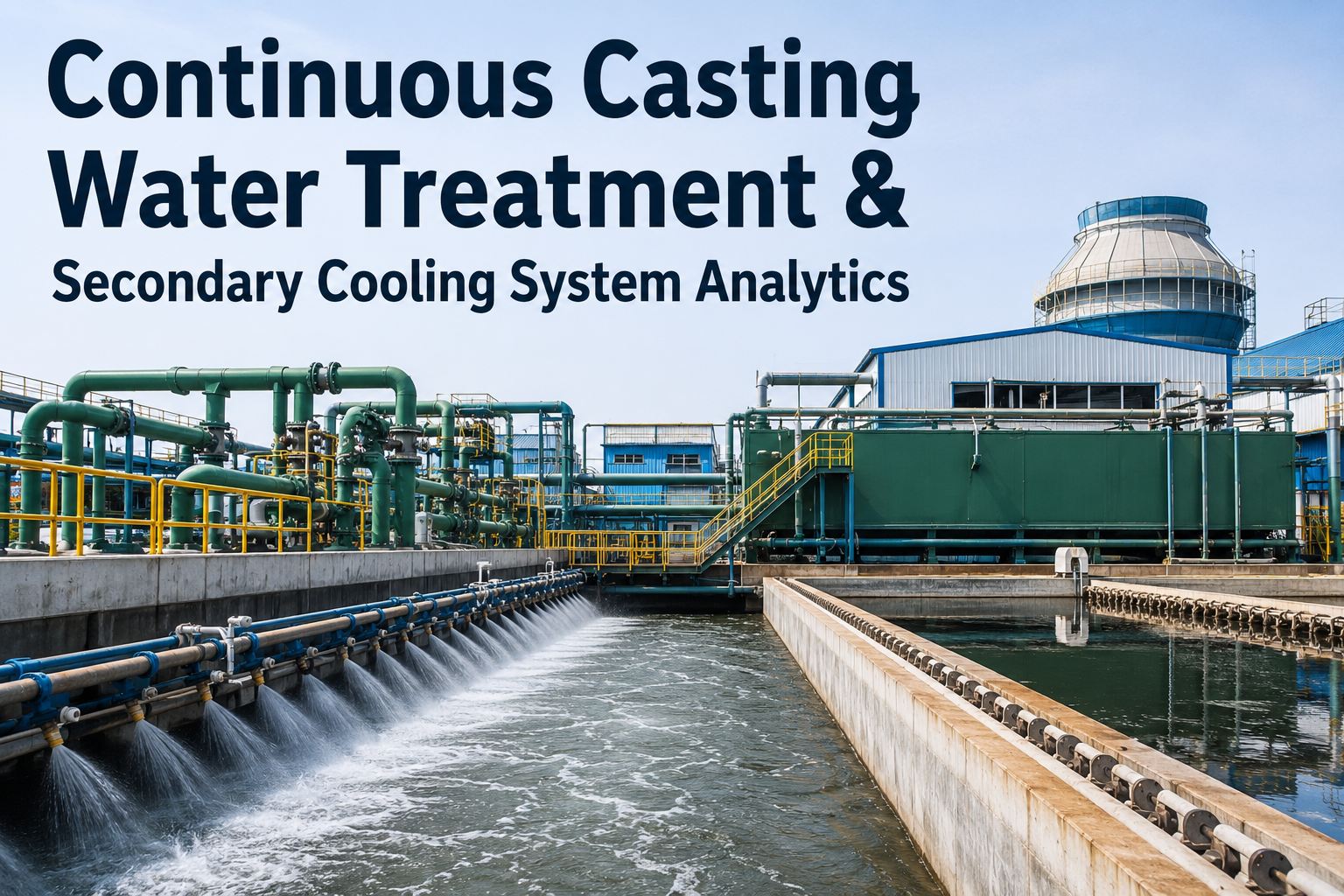
Read More
In continuous casting operations, water is not a utility — it is a process variable. The secondary cooling system controls how fast the solidifying strand loses heat from the mold exit to the torch cutoff, and that cooling rate determines internal
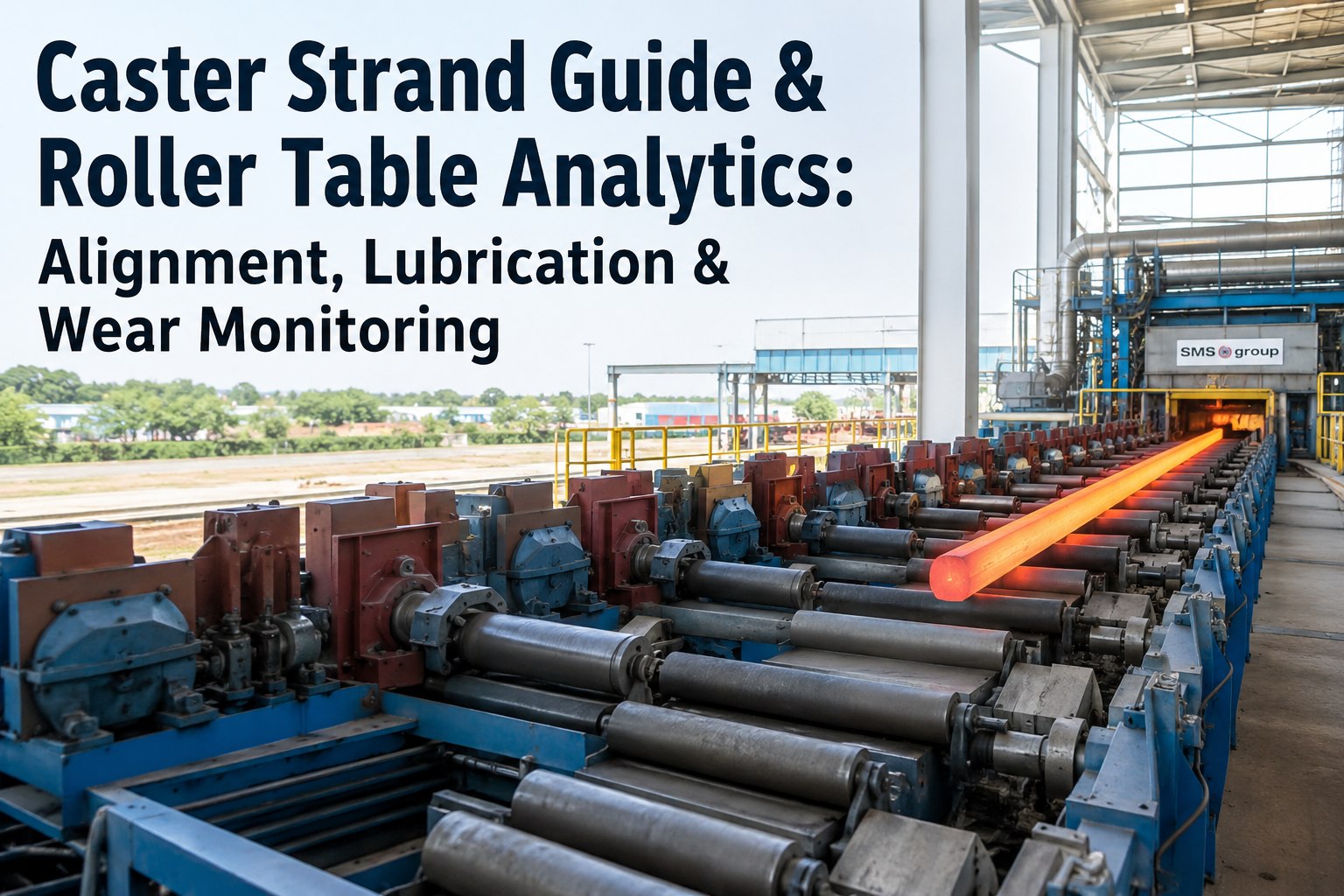
Read More
In continuous casting operations, the strand guide system is the mechanical backbone that determines slab shape, surface quality, and internal soundness from the moment liquid steel leaves the mold to the point of complete solidification. A misali
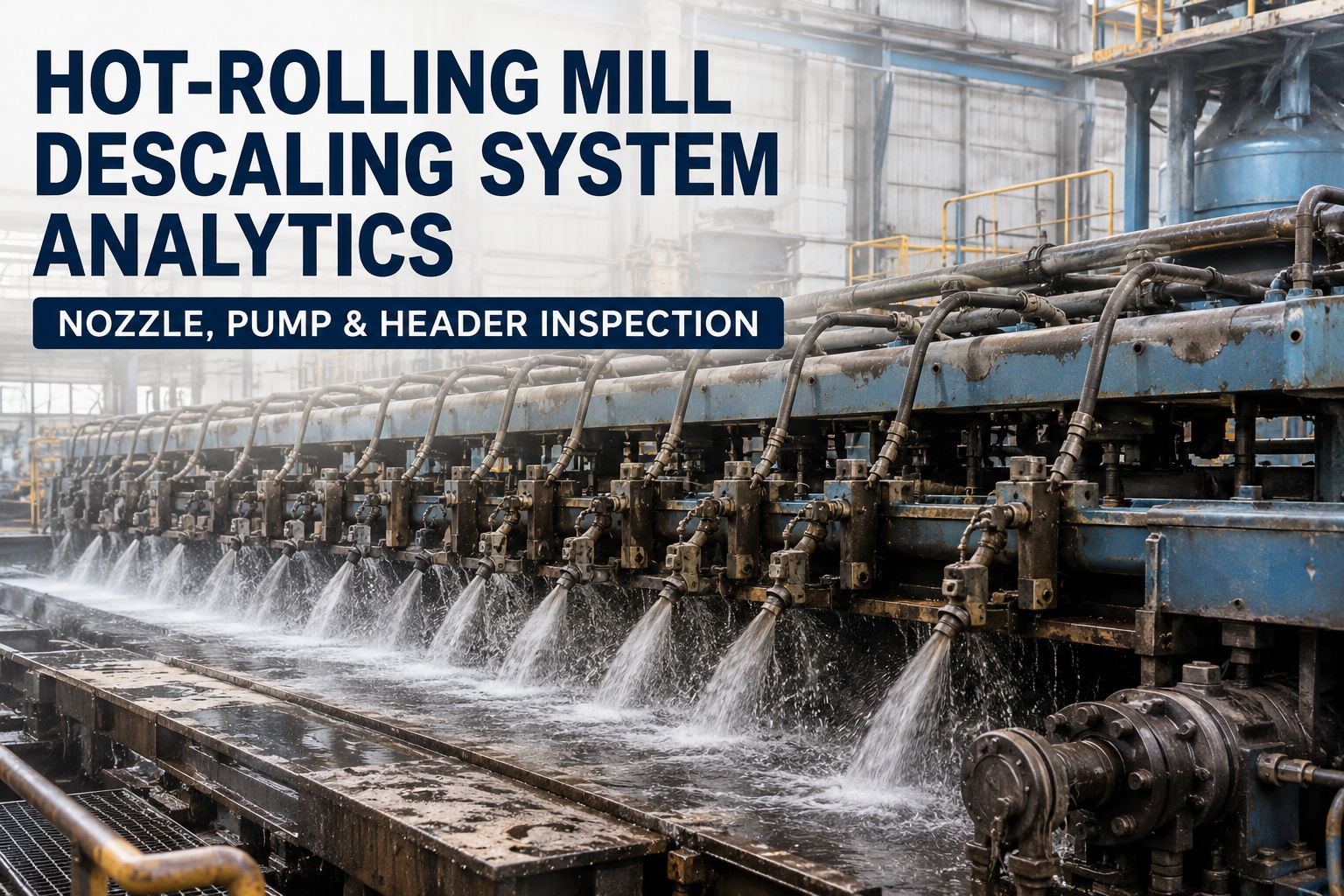
Read More
Hot rolling mills live and die on surface quality. The descaling system — that high-pressure water curtain that blasts mill scale off heated slabs before and between rolling stands — is one of the most mechanically punishing, operationally critica
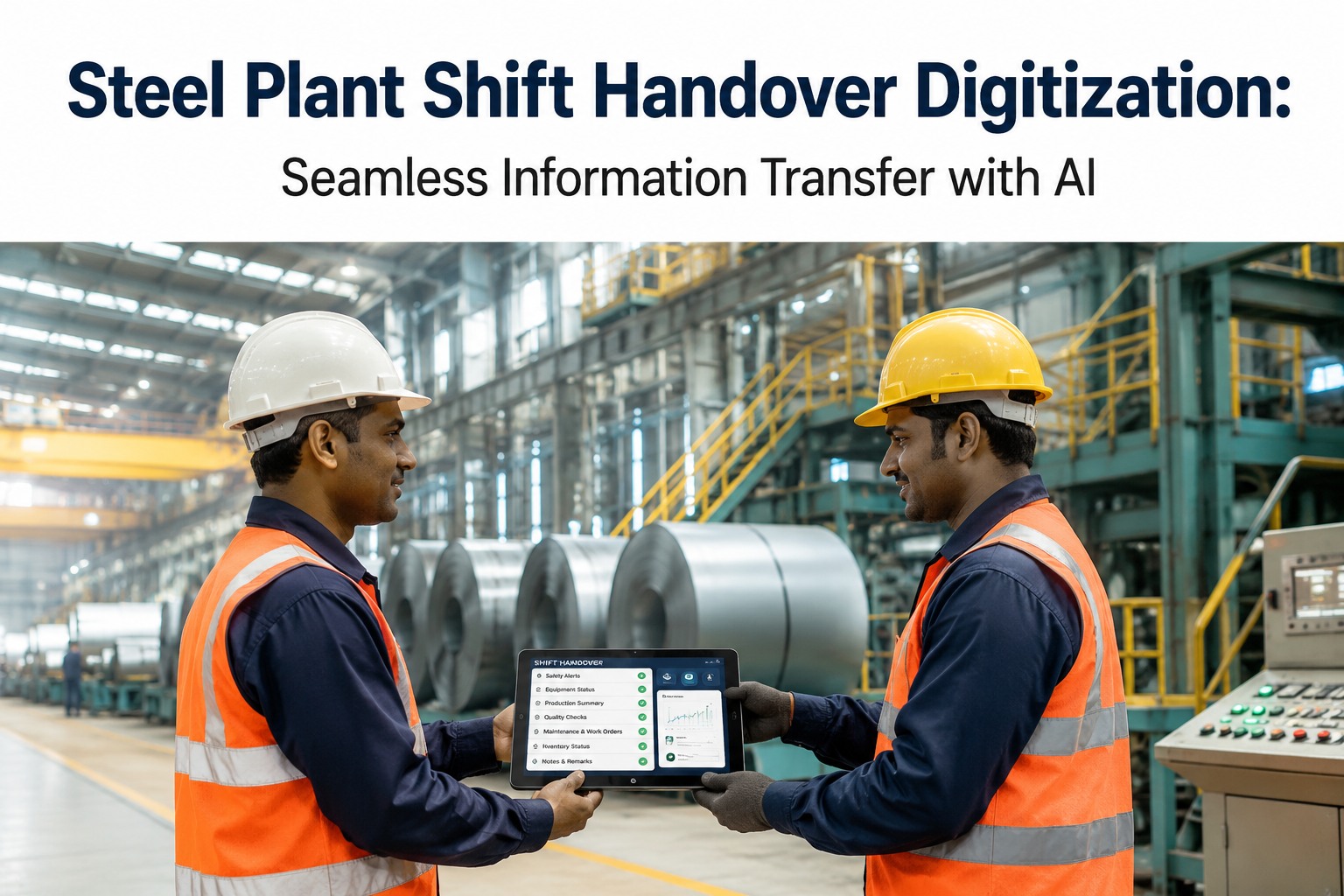
Read More
Steel plant shift handover is one of the most information-dense, highest-stakes transitions in industrial operations — and in most facilities, it still happens the same way it did in 1987. A paper logbook. A verbal briefing in a noisy control room
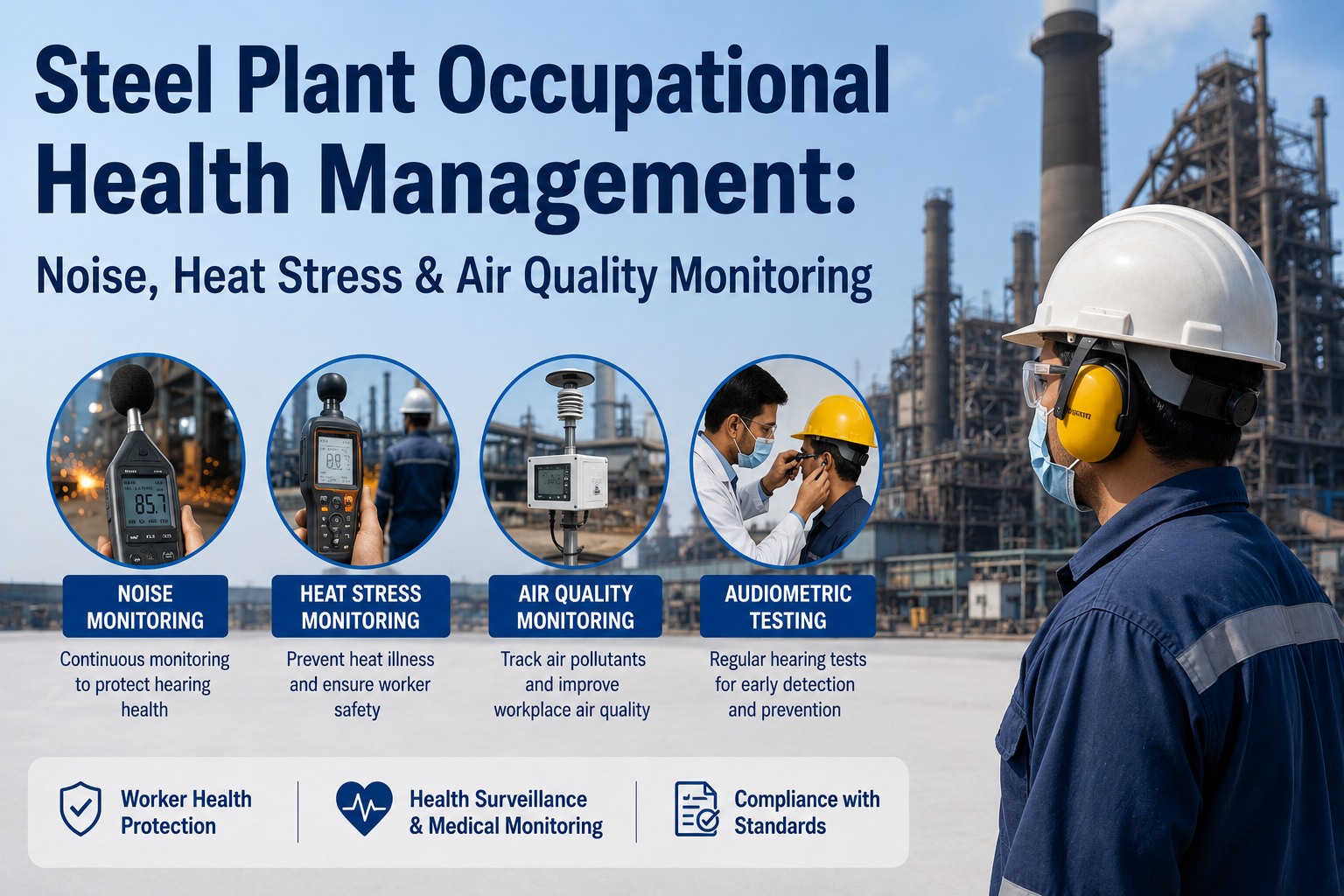
Read More
Steel plants rank among the most hazardous industrial environments in the United States. Workers face simultaneous exposure to noise levels exceeding 110 dB near rolling mills, radiant heat loads that push wet-bulb globe temperatu
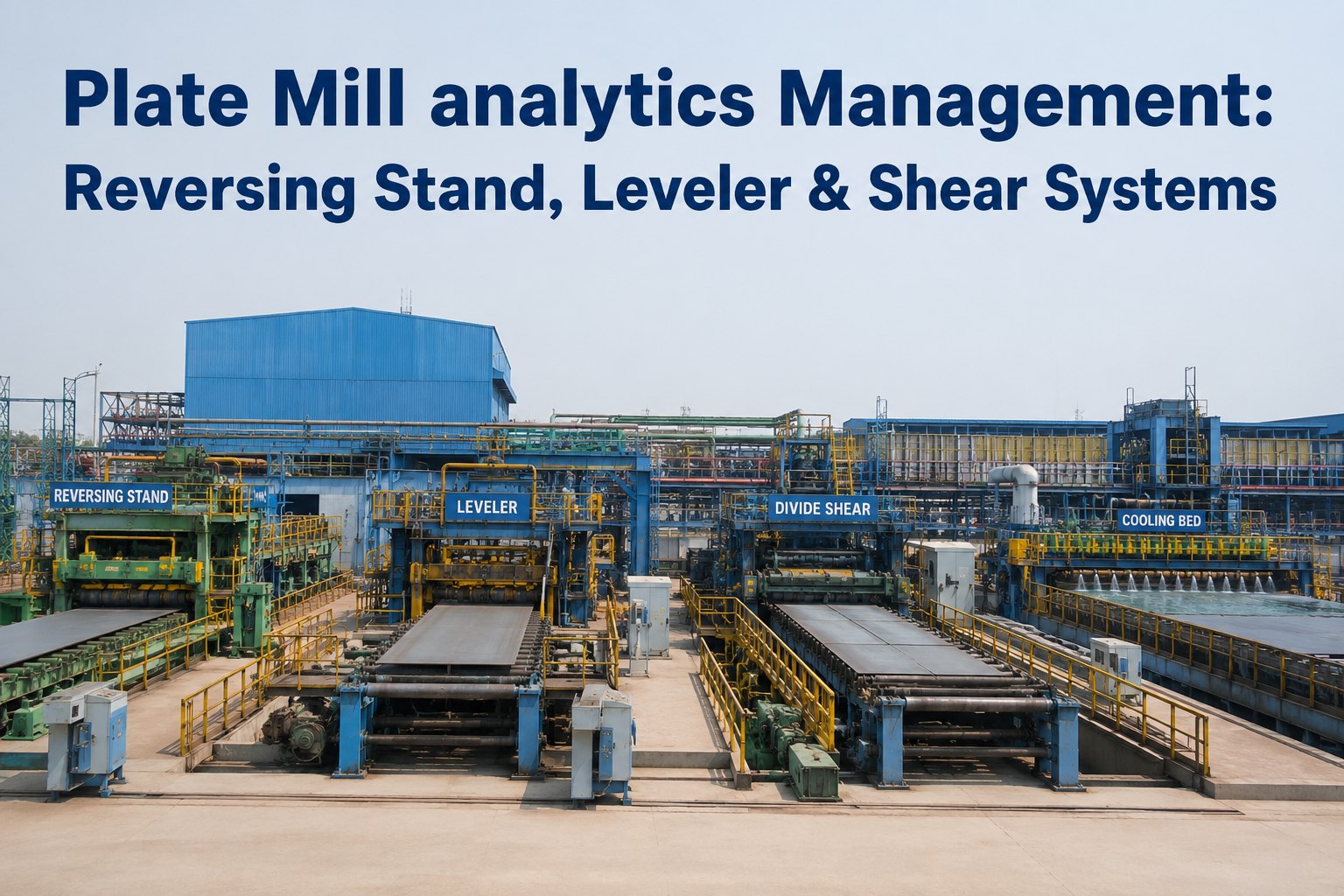
Read More
Every heavy plate mill is a sequence of precision-controlled force events — reversing stand passes, hot leveler corrections, divide shear cuts, cooling bed dwell times — where each stage either adds metallurgical value or introduc
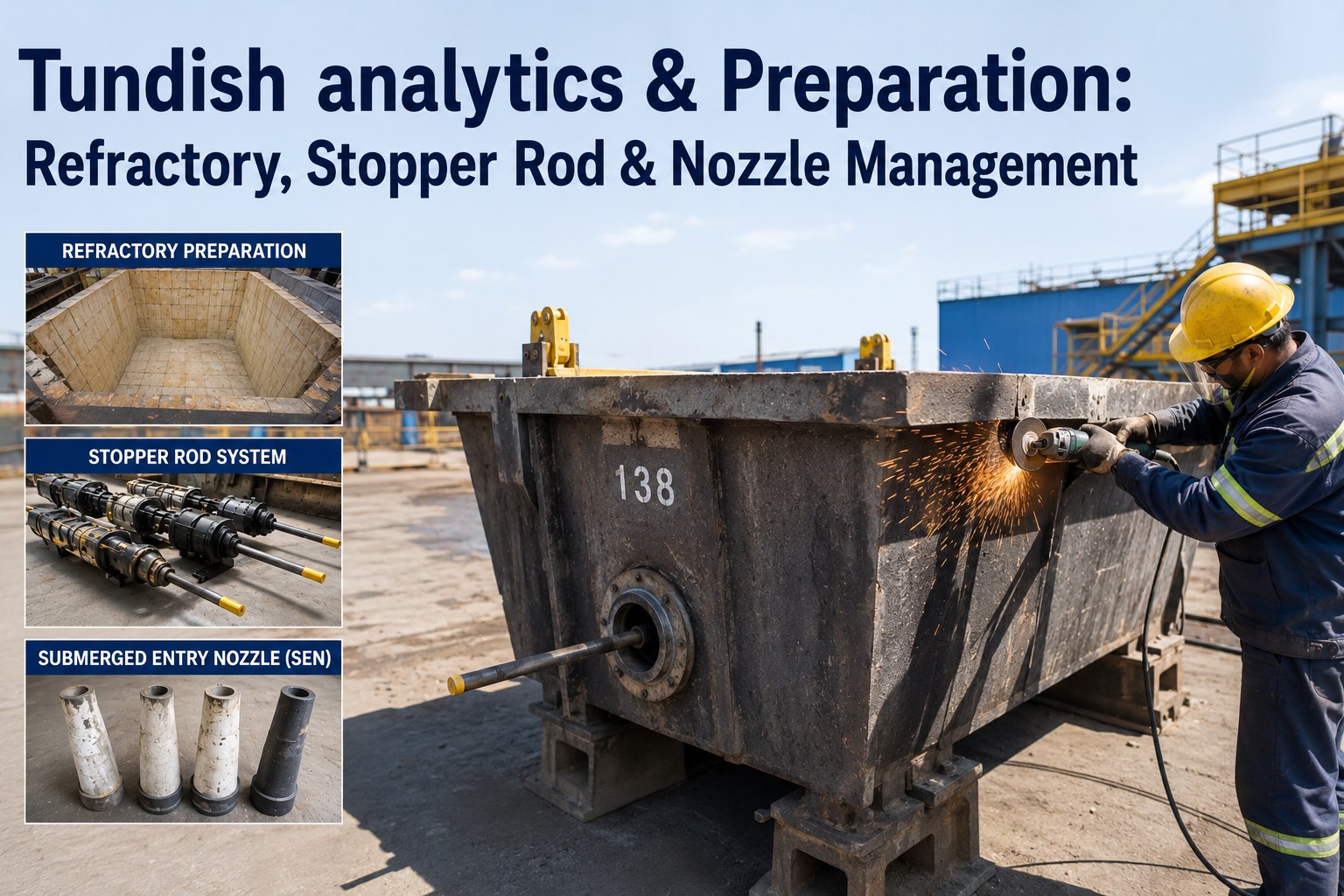
Read More
The tundish is the last line of defense in continuous casting quality control — a critical buffer vessel that governs steel flow, inclusion removal, and thermal stability before steel enters the mould. Yet in many meltshops, tundish preparation
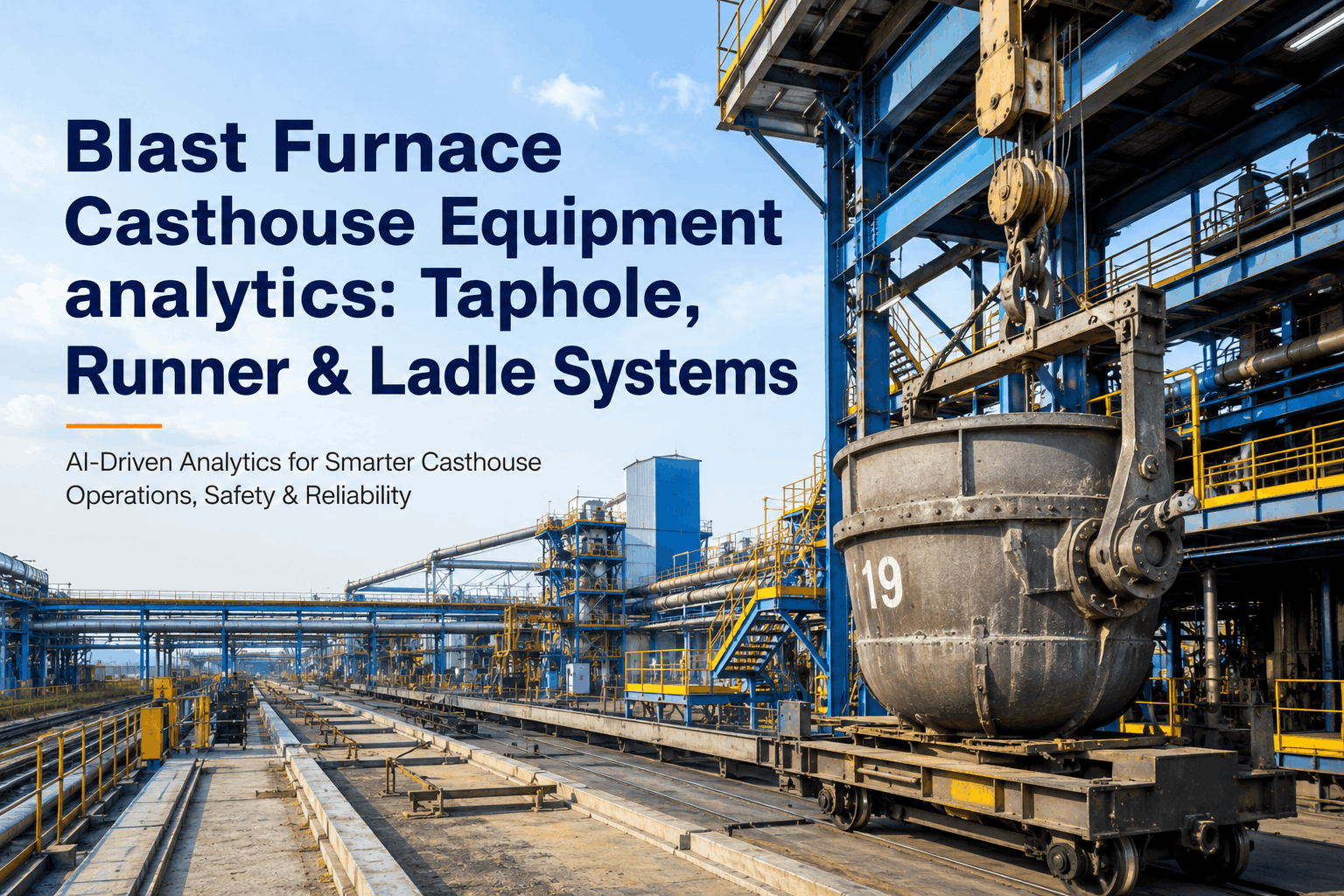
Read More
The casthouse is the operational heart of the blast furnace, where the results of 24 hours of smelting are realized through the tapping of molten iron and slag. In this extreme environment of 1500°C liquid metal and high-pressure hydraulics, th
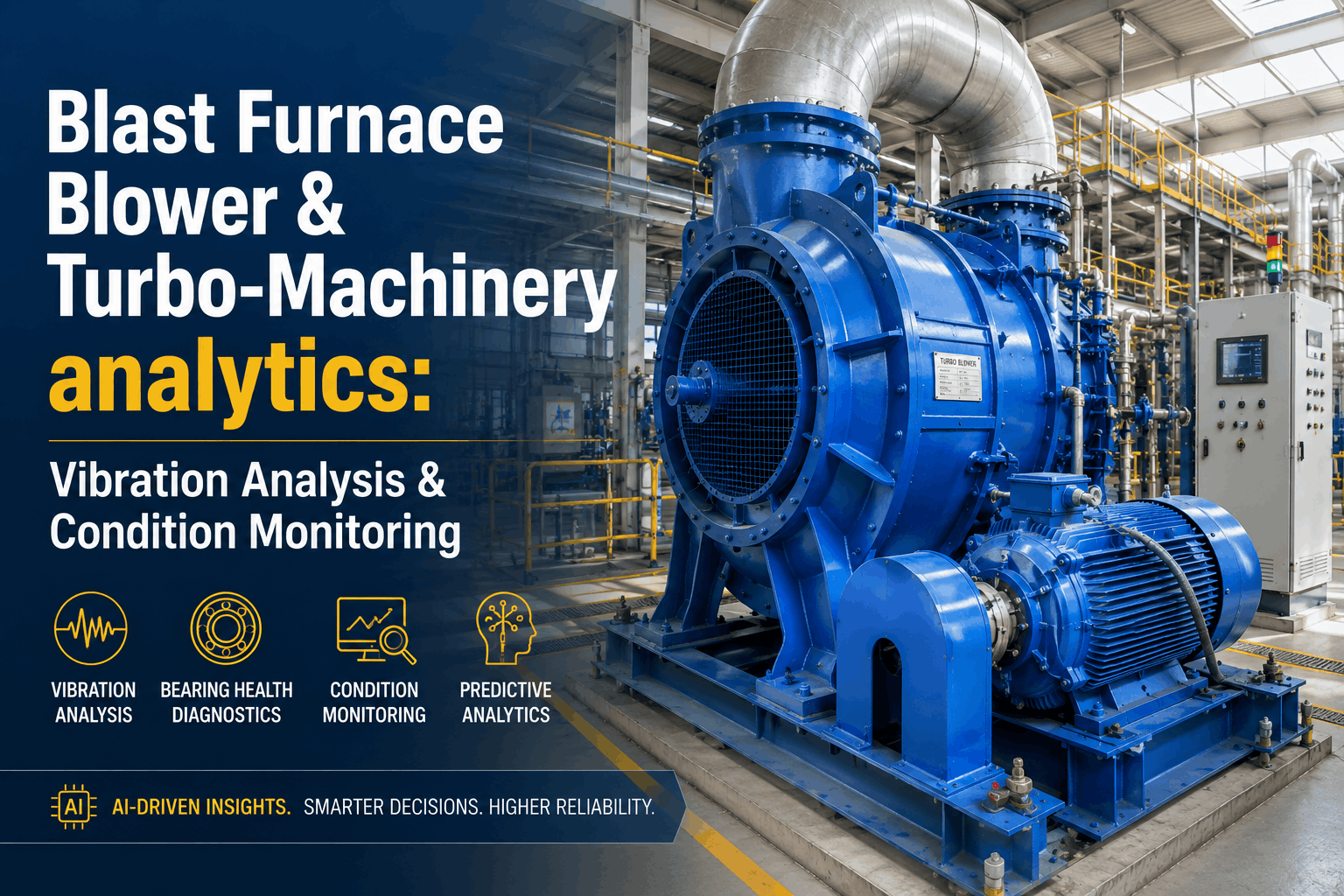
Read More
The blast furnace blower is the "lungs" of the ironmaking process. Operating at extreme rotational speeds—often between 3,000 and 5,000 RPM—these massive turbo-machinery assets must deliver a constant, high-pressure cold blast to the furnace 24/7.
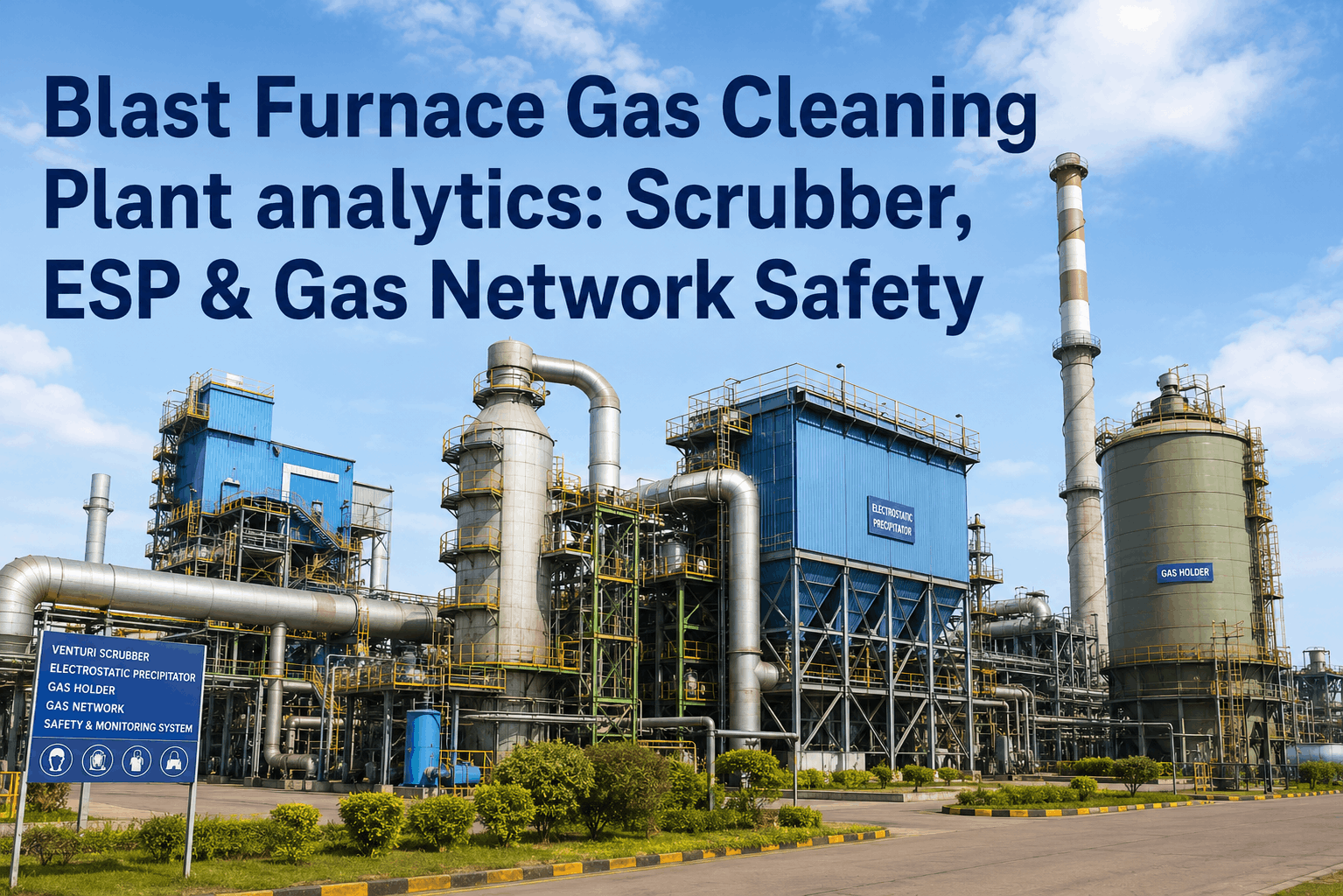
Read More
Blast Furnace Gas (BFG) is a critical energy asset that fuels stoves, boilers, and power plants, but it is also one of the most dangerous substances in a steel mill. The Gas Cleaning Plant (GCP) is the primary barrier between the furnace's volatil
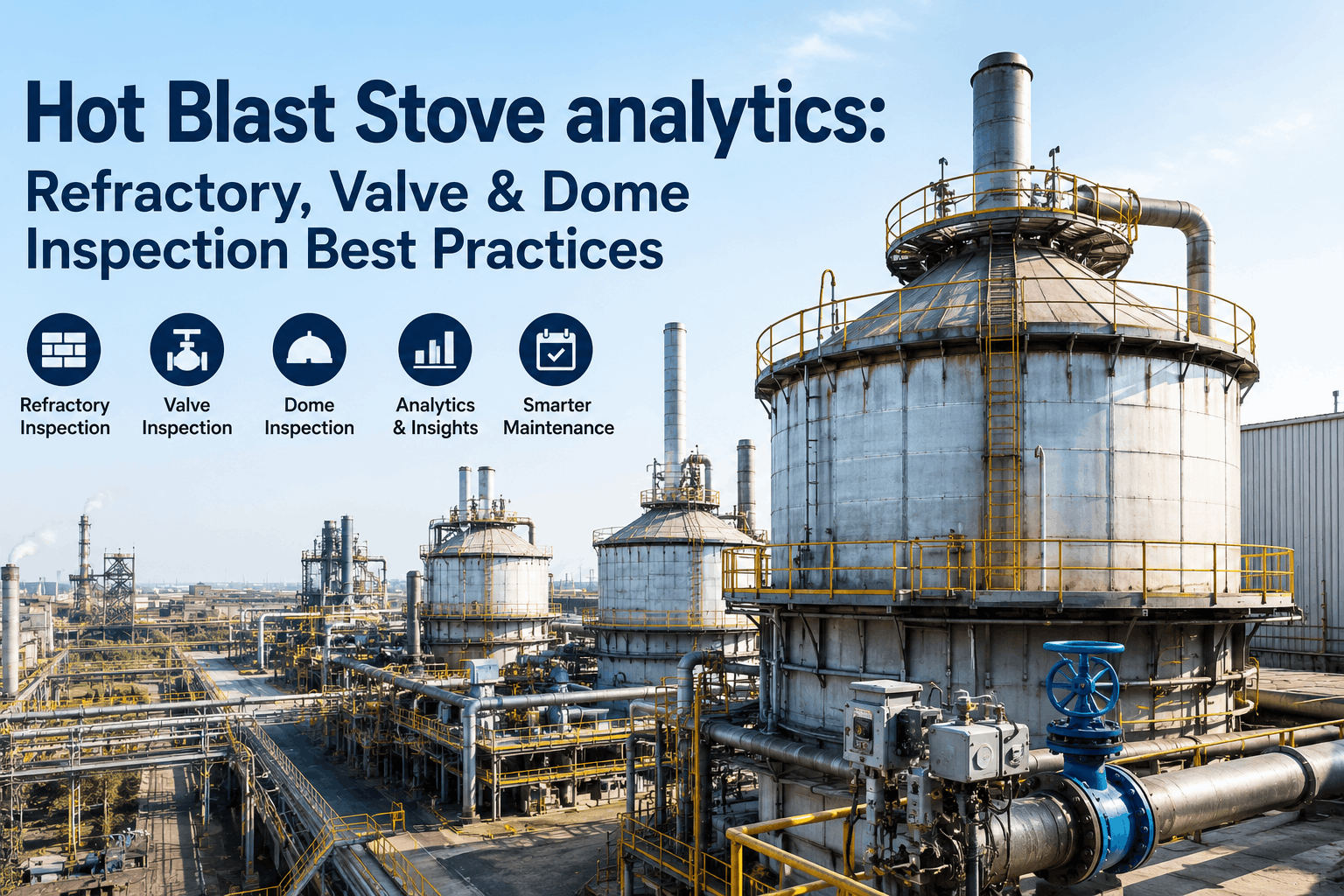
Read More
The hot blast stove (Cowper stove) is the thermal engine of the blast furnace. Operating under extreme cyclical stress—transitioning between high-temperature "on-gas" combustion and high-pressure "on-blast" discharging—the refractory dome, checker

Read More
For a high-volume 5 MTPA integrated steel plant, the transition from paper-based maintenance to a fully autonomous digital ecosystem was once viewed as a multi-year risk. Managing over 150,000 work orders annually
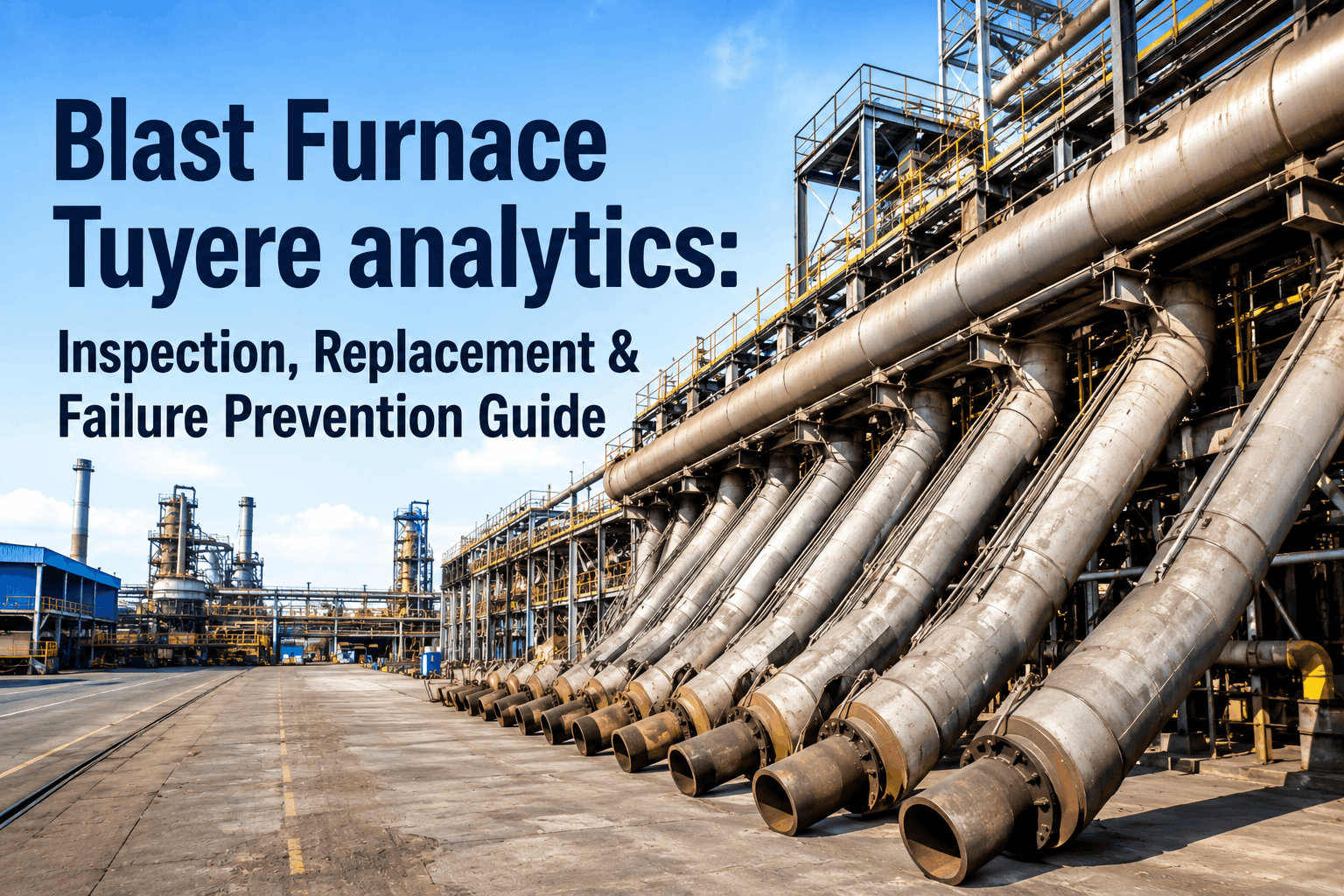
Read More
Blast furnace tuyere failures are one of the most unpredictable and costly causes of unplanned stoppages in integrated steel plants. When a water-cooled copper tuyere burns out or develops a leak, it not only forces an immediate furnace shutdow

Read More
Root Cause Analysis (RCA) for steel plant equipment failures has undergone a fundamental transformation, shifting from a post-mortem "blame game" into a high-velocity reliability strategy that defines integrated mill profitability. In an environ

Read More
Steel plant planned analytics optimization and shutdown duration reduction are the most significant levers for improving annual EBITDA in the modern metals industry. For integrated mills, the cost of a planned outage is not merely the labor an
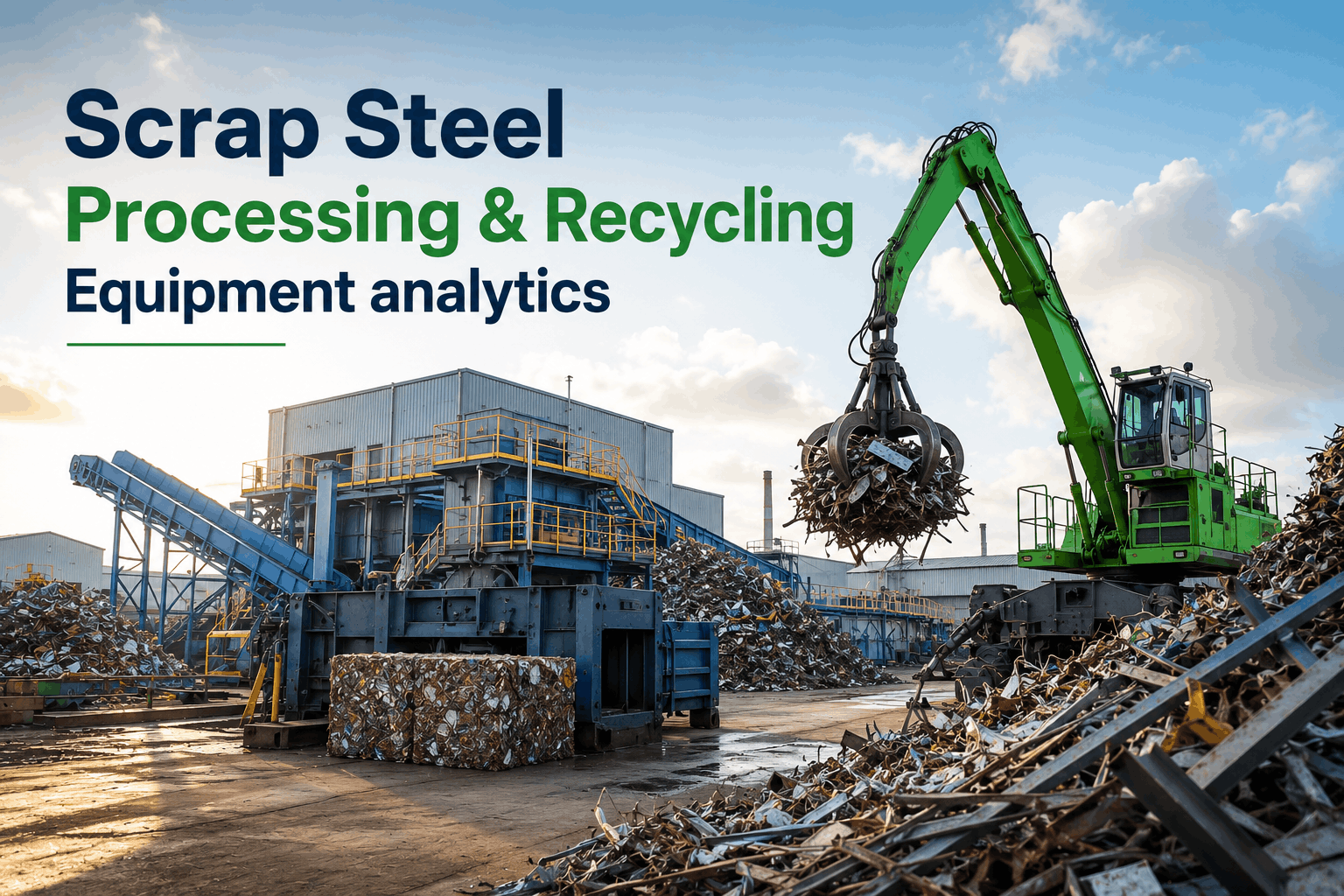
Read More
As the global steel industry pivots toward the "Green Steel" revolution, the efficiency of scrap steel processing and recycling equipment has transitioned from a back-end utility to a front-line strategic asset. Integrated mills and mini-mills

Read More
Steel plant energy management and AI-driven intensity tracking have evolved from internal cost-saving initiatives into the strategic backbone of global competitiveness and "Green Steel" certification. In an industry where a single integrated m

Read More
Steel plant AI process control and autonomous analytics are fundamentally redefining the boundary between human intuition and machine precision in modern metallurgy. For decades, integrated mills have relied on traditional PID loops and the seas

Read More
Augmented Reality (AR) for steel plant analytics and training is fundamentally transforming how heavy industry manages complex maintenance in hazardous environments. From overlaying real-time pressure data on hydraulic rolling mill units to pr
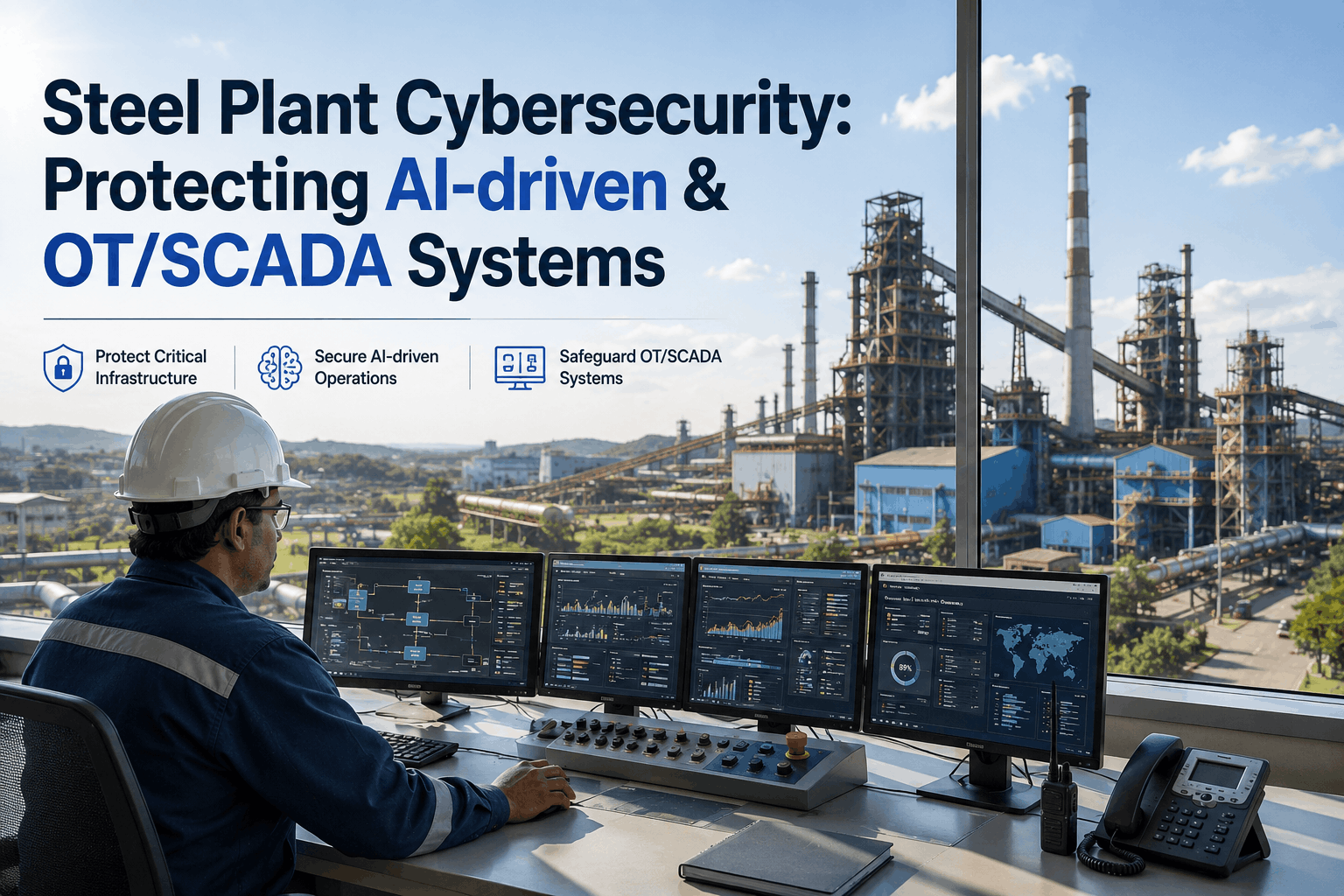
Read More
Steel plant cybersecurity is no longer an IT concern relegated to office networks — it has become the critical shield for AI-driven furnaces, SCADA-controlled rolling mills, and automated Level 2 systems that define modern steel production. As

Read More
Steel plant hydraulic system analytics are redefining the standard of reliability for critical infrastructure across hot rolling mills, continuous casters, and furnace operations. In an industry where milliseconds of valve res

Read More
Steel plant conveyor analytics and material handling health monitoring are revolutionizing how integrated mills manage thousands of meters of critical belt infrastructure in high-abrasion environments. As the industry moves toward autonomous ore

Read More
In a high-output steel plant, industrial gases and compressed air are often the most overlooked cost centers—until a centrifugal compressor surges or a hidden nitrogen leak costs the mill $15,000 in a single weekend. Most steel utility managers re

Read More
Most steel plant utility managers believe they have full control over their cooling water systems—until a furnace wall fails due to undetected scale or a secondary cooling pump cavitates into a catastrophic outage. The reality of "Connected Water
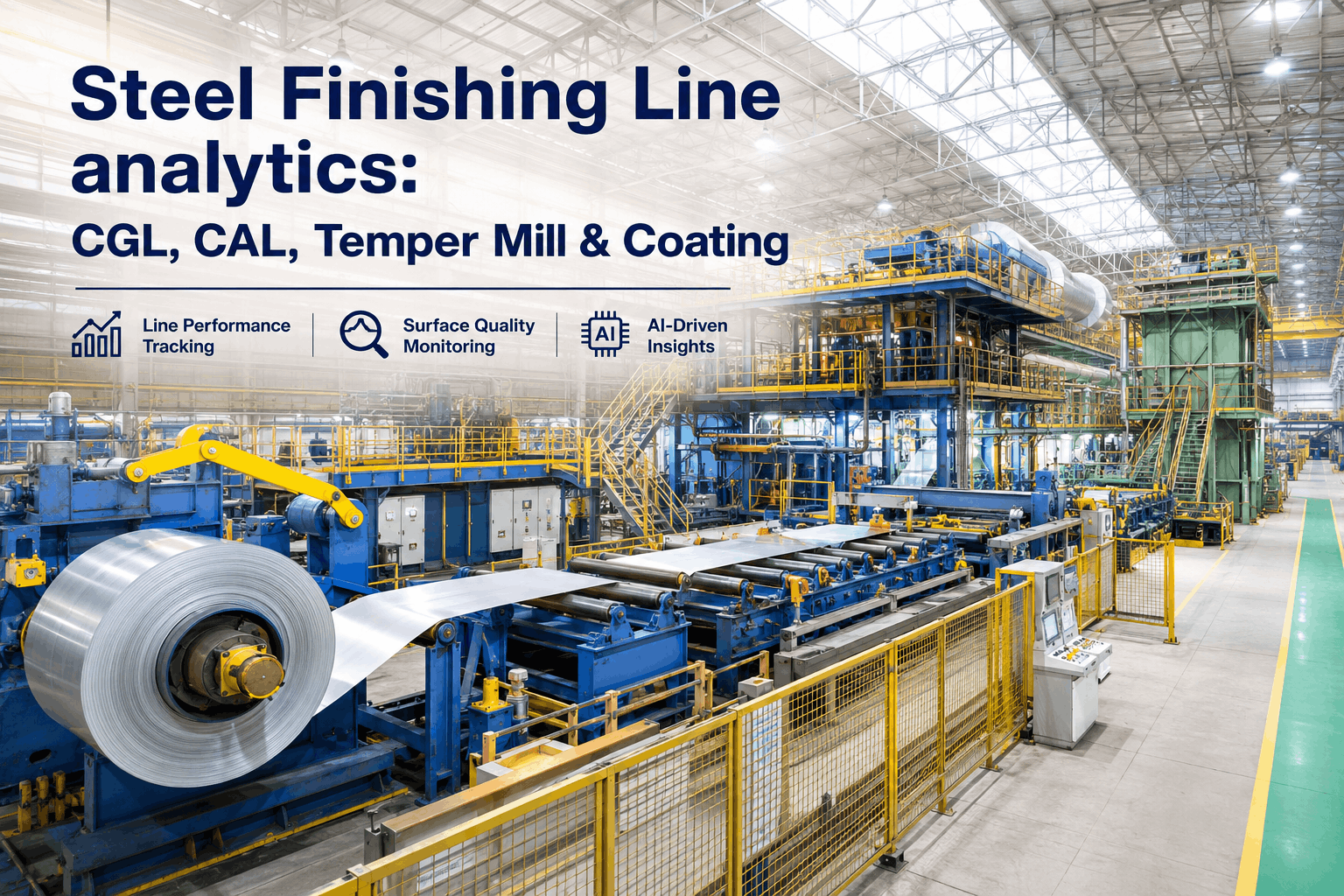
Read More
In the global steel industry, the **Finishing Line** is where the final product value is solidified—or lost. Whether operating a **Continuous Galvanizing Line (CGL)** or a **Continuous Annealing Line (CAL)**, the margin for error is razor-thin. Fl
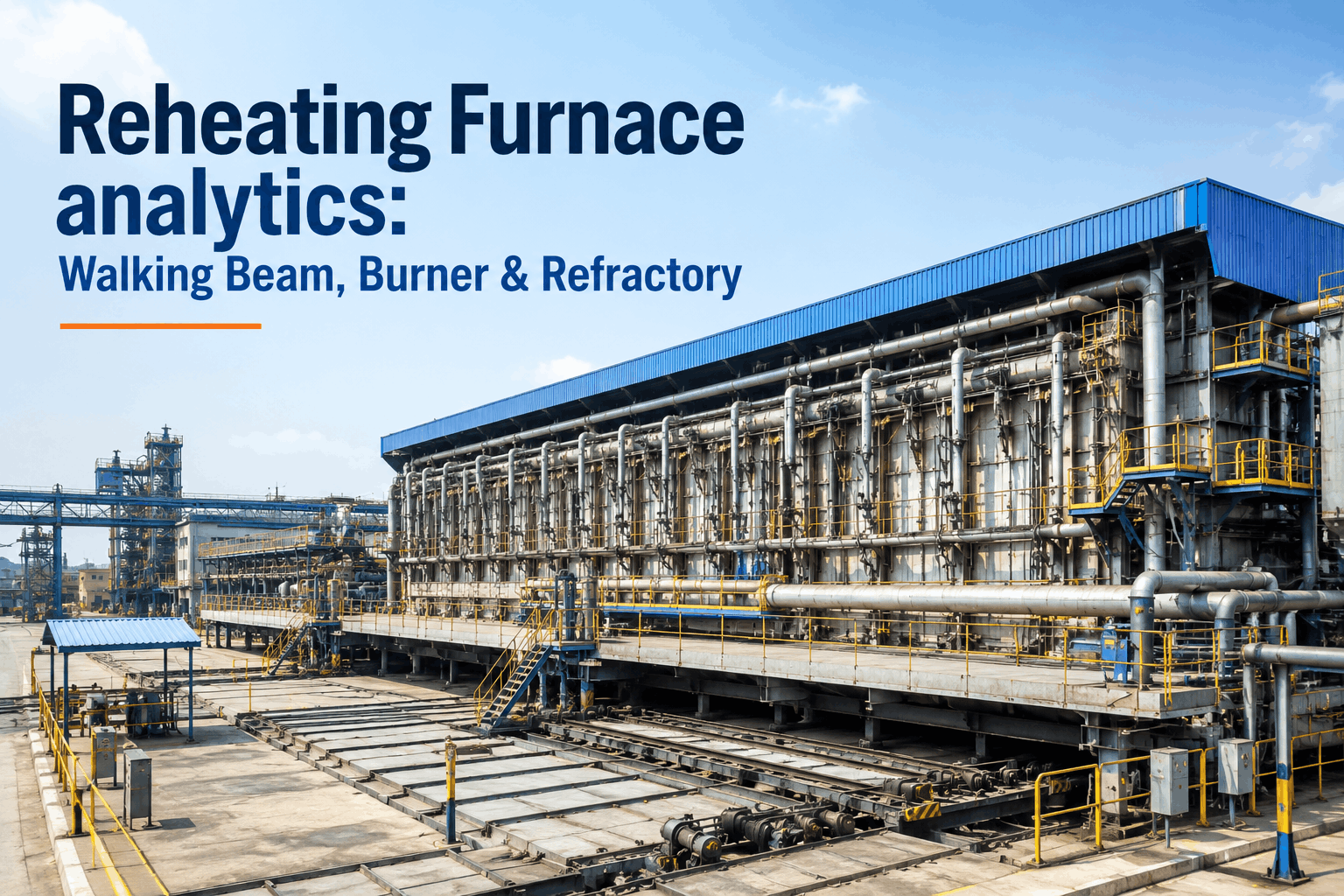
Read More
The **Reheating Furnace** is the critical thermal gateway to the rolling mill, yet it remains one of the most complex assets to manage efficiently. It is typically the single largest consumer of energy in a hot-rolling facility and a primary drive

Read More
In the high-speed arena of finishing mills, **long products mill analytics** for bar, wire rod, and rail rolling lines represents the ultimate challenge in dynamic mechanical stability and dimensional precision. Unlike flat products, long products

Read More
In the downstream segment of a steel plant, **plate mill and heavy section mill analytics** represents the final frontier of metallurgical precision and asset endurance. These mills process massive slabs into high-value structural components, yet
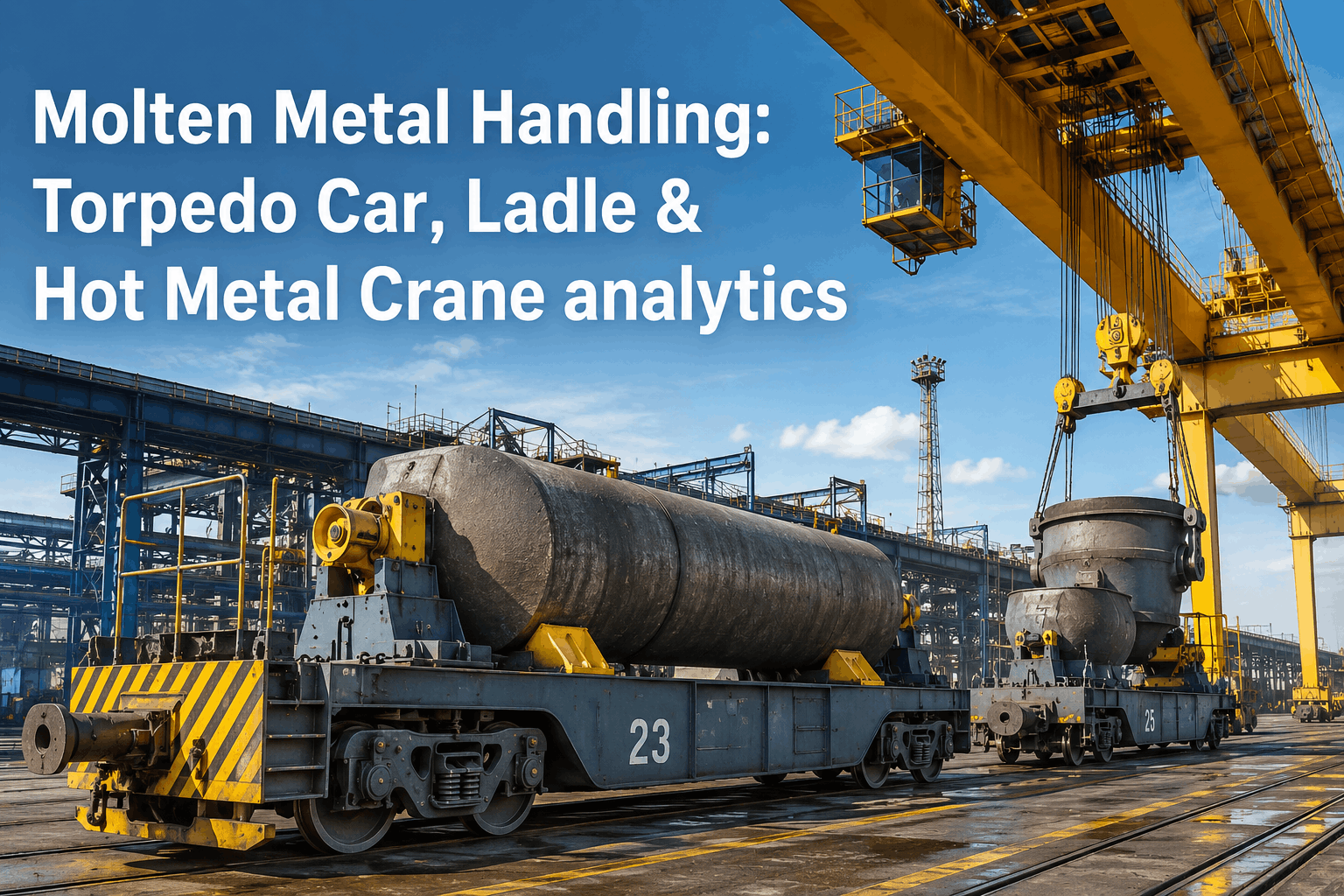
Read More
In the high-stakes environment of an integrated steel mill, the transport of molten iron—often at temperatures exceeding 1,500°C—represents the most significant thermal energy and safety challenge in the production chain. From the blast furnace ru

Read More
In the industrial circular economy of an integrated steel mill, the Blast Furnace Gas (BFG) system represents the single largest opportunity for secondary energy recovery and environmental risk mitigation. The Gas Cleaning Plant (GCP) and the Top

Read More
In the metallurgical heart of an integrated steel mill, the Blast Furnace is the ultimate high-stakes asset. The hearth—where molten iron and slag accumulate at temperatures exceeding 1,500°C—represents the most critical failure point in the entir

Read More
In the harsh, high-heat world of iron ore agglomeration, the stability of your Sinter and Pellet plants dictates the productivity of the entire downstream blast furnace network. These facilities are the "Engine Rooms" of ironmaking, yet they are p

Read More
In the high-pressure ecosystem of an integrated steel mill, a missing $500 bearing is just as catastrophic as a furnace breakout—both can paralyze production for days. Traditional inventory systems are reactive, relying on static "Min/Max" levels

Read More
In the cavernous, steel-reinforced environments of an integrated mill, the biggest barrier to reliability isn't a lack of data—it's a lack of mobility. Traditional analytics platforms fail at the "Last Mile" because they require constant connectiv

Read More
The next five years will witness a more profound transformation in steel manufacturing than the previous fifty combined. As we approach the 2030 horizon, the industry is transitioning from "Digital Transformation" to "Autonomous Intelligence." **T

Read More
Choosing a reliability framework for a modern steel mill is no longer a choice between competing ideologies—it is a choice between operational stagnation and data-driven profitability. In the high-stakes environment of heavy metallurgical producti

Read More
For the global steel industry, the era of stable, low-cost supply chains is over. As geopolitical tensions, Section 232 tariffs, and sudden trade disruptions reshape the industrial landscape, the "Just-in-Time" procurement model for critical spare

Read More
In the world of steel manufacturing, the difference between a high-performing mill and one plagued by chronic downtime is rarely just the equipment—it is the culture. For decades, the industry has operated in a state of "Heroic Firefighting," wher
-for-steel-plant-analytics-hands-free-guided-repairs.png)
Read More
Augmented Reality (AR) for steel plant analytics is transforming the "Friction of Knowledge" on the mill floor. In an environment where every minute of downtime costs thousands of dollars and safety-critical repairs require absolute precision, the
Read More
Steel plant analytics technician training and certification programs are redefining how heavy industry builds workforce competency in an era of AI-driven reliability, real-time energy optimization, and increasingly rigorous safety audits. As the s
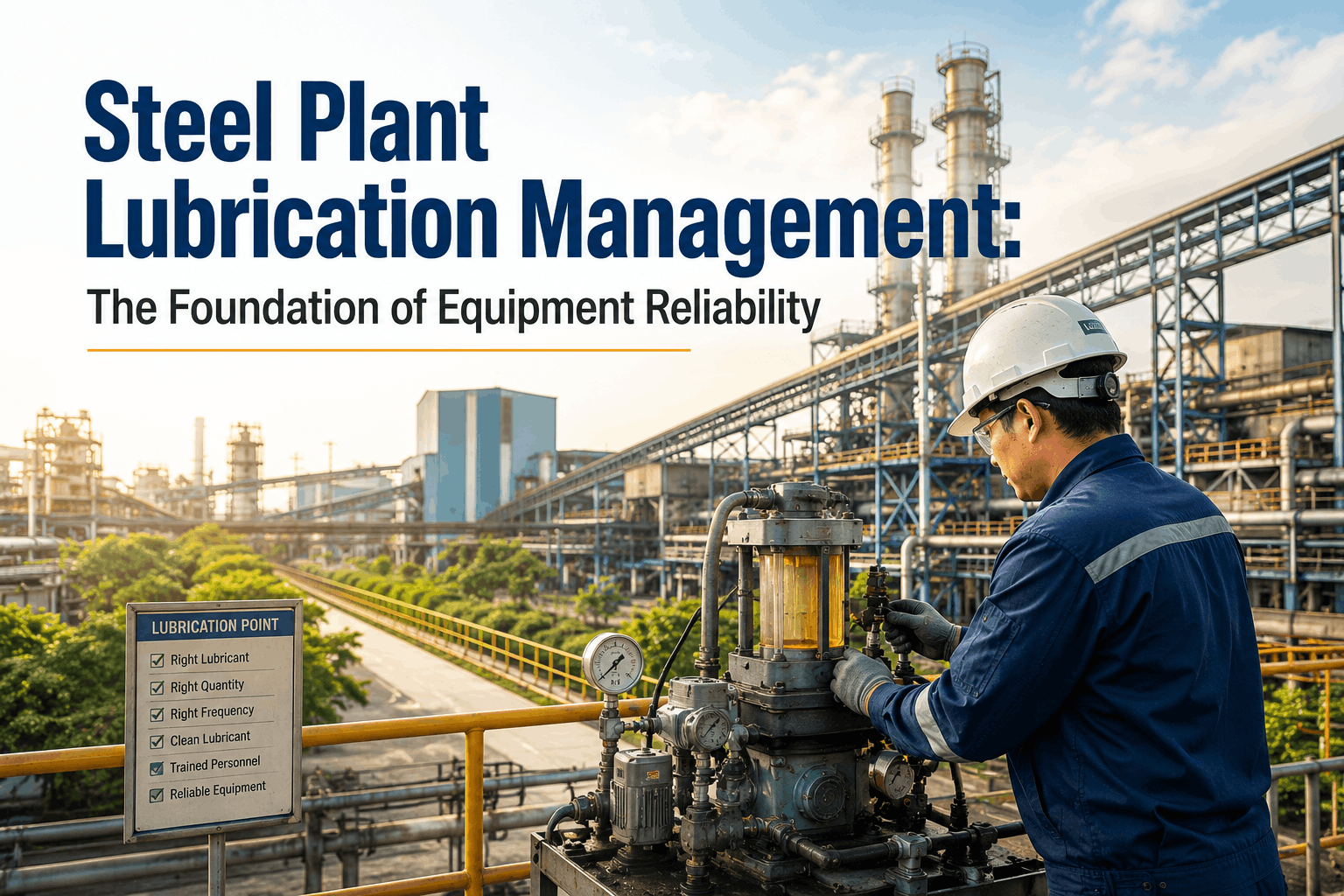
Read More
In the mechanical heart of a steel plant, lubrication is not a maintenance task—it is a survival strategy. Operating under extreme pressures, high temperatures, and constant water/scale ingress, bearings in rolling mills and furnace conveyors face
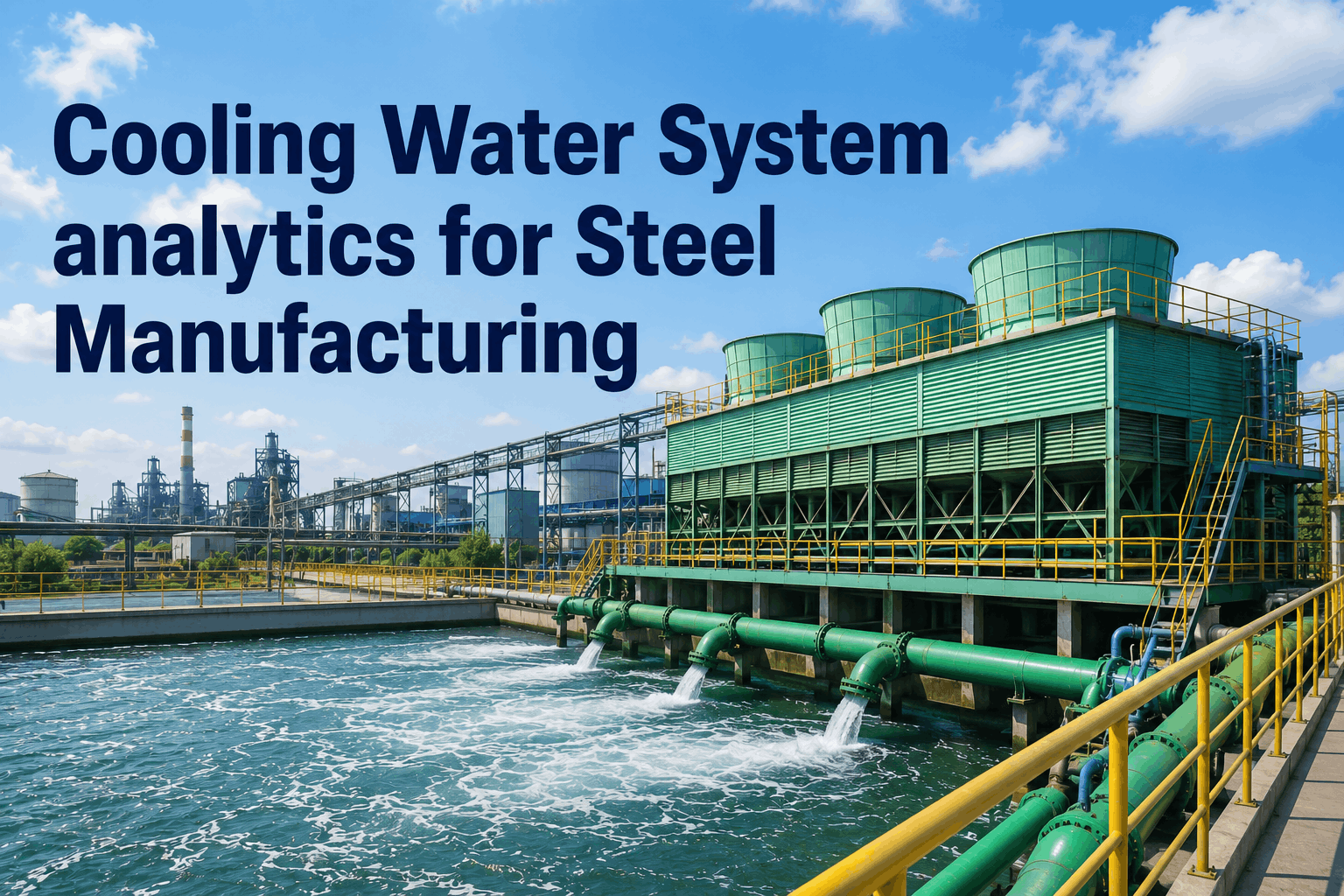
Read More
Cooling water systems are the invisible lifeline of steel manufacturing. From the high-velocity mold cooling in a continuous caster to the massive thermal loads of a blast furnace staves and rolling mill work-rolls, water is the primary vehicle fo

Read More
In the high-stakes environment of a steel plant, the gas distribution network is a sprawling, hazardous web of chemical energy. From the high-calorific Coke Oven Gas (COG) to the toxic, carbon-monoxide-rich Blast Furnace Gas (BFG) and the high-pre

Read More
Steel manufacturing is the most electrically intensive industry on the planet, where Electric Arc Furnaces (EAFs) consume massive megawatt-hours of power in minutes. This energy throughput creates extreme stress on electrical infrastructure, where

Read More
If conveyor belts are the arteries of a steel plant, hydraulic systems are its high-torque muscles. From the sheer force of the rolling mill Automatic Gauge Control (AGC) cylinders to the precise articulation of a continuous casting oscillation me

Read More
In the continuous-flow environment of a steel plant, a single conveyor belt failure is not just a localized maintenance issue—it is a production-halting catastrophe that can cost upwards of $20,000 per hour in lost throughput. From the abrasive ha

Read More
In the ultra-competitive landscape of global steelmaking, energy efficiency is no longer just a sustainability goal—it is a critical determinant of operational survival. Steel plants consume massive quantities of thermal energy, yet up to 50% of t
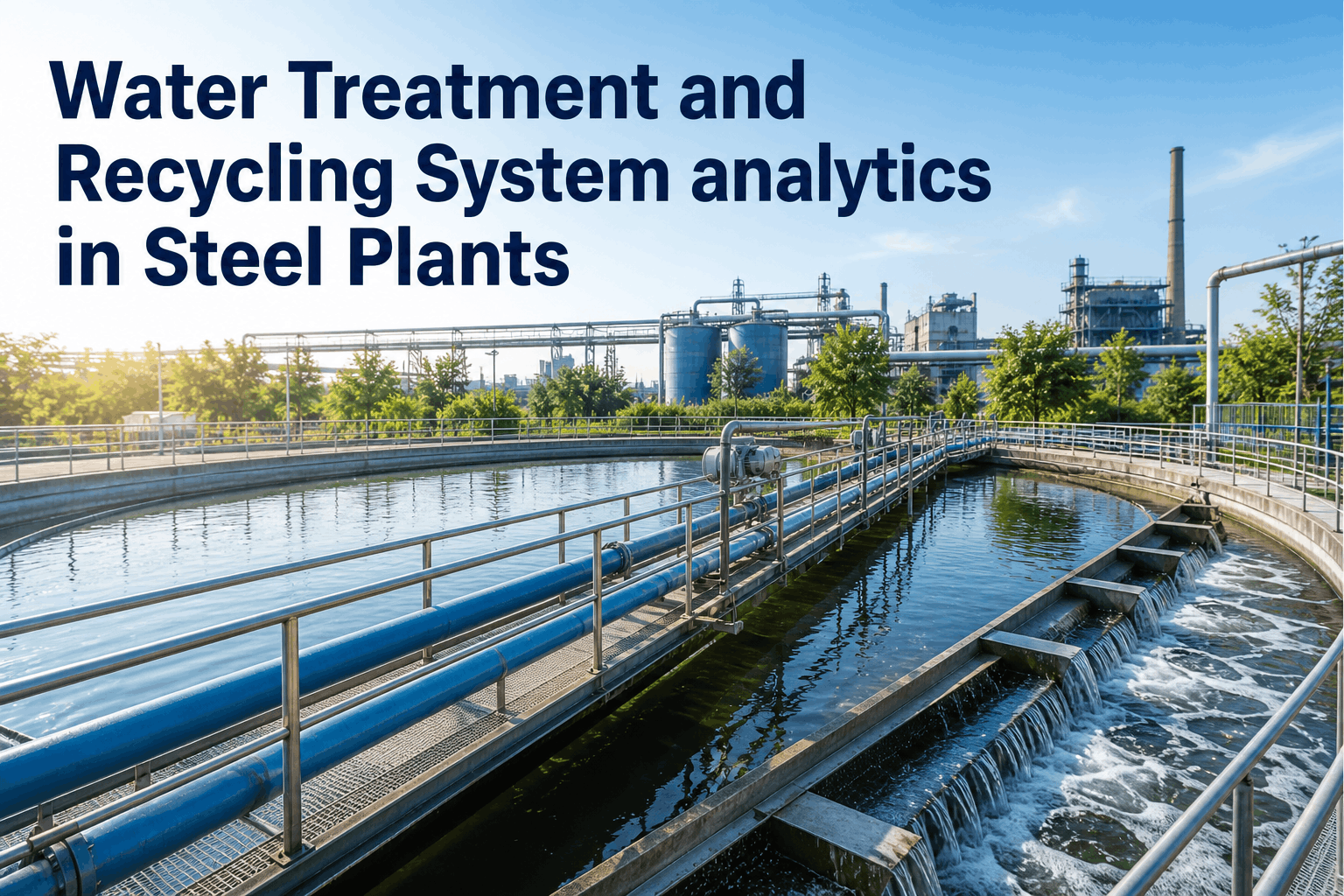
Read More
Steel manufacturing is one of the most water-intensive industrial processes on the planet, typically consuming between 3 to 6 cubic meters of water for every single ton of steel produced. Whether it is cooling the furnace hearth, quenching hot-rol
-vs-blast-furnace-(bof)-analytics-comparison-for-steel-producers.png)
Read More
The global steel industry is currently navigating its most significant technological pivot in a century: the "Great Conversion" from traditional Blast Furnace (BOF) / Basic Oxygen Furnace routes to Electric Arc Furnace (EAF) production. Driven by
Read More
The steel manufacturing environment is defined by its inherent dangers—molten metal handling, extreme thermal loads, heavy overhead crane operations, and exposure to toxic gases. In this high-risk sector, achieving ISO 45001 certification
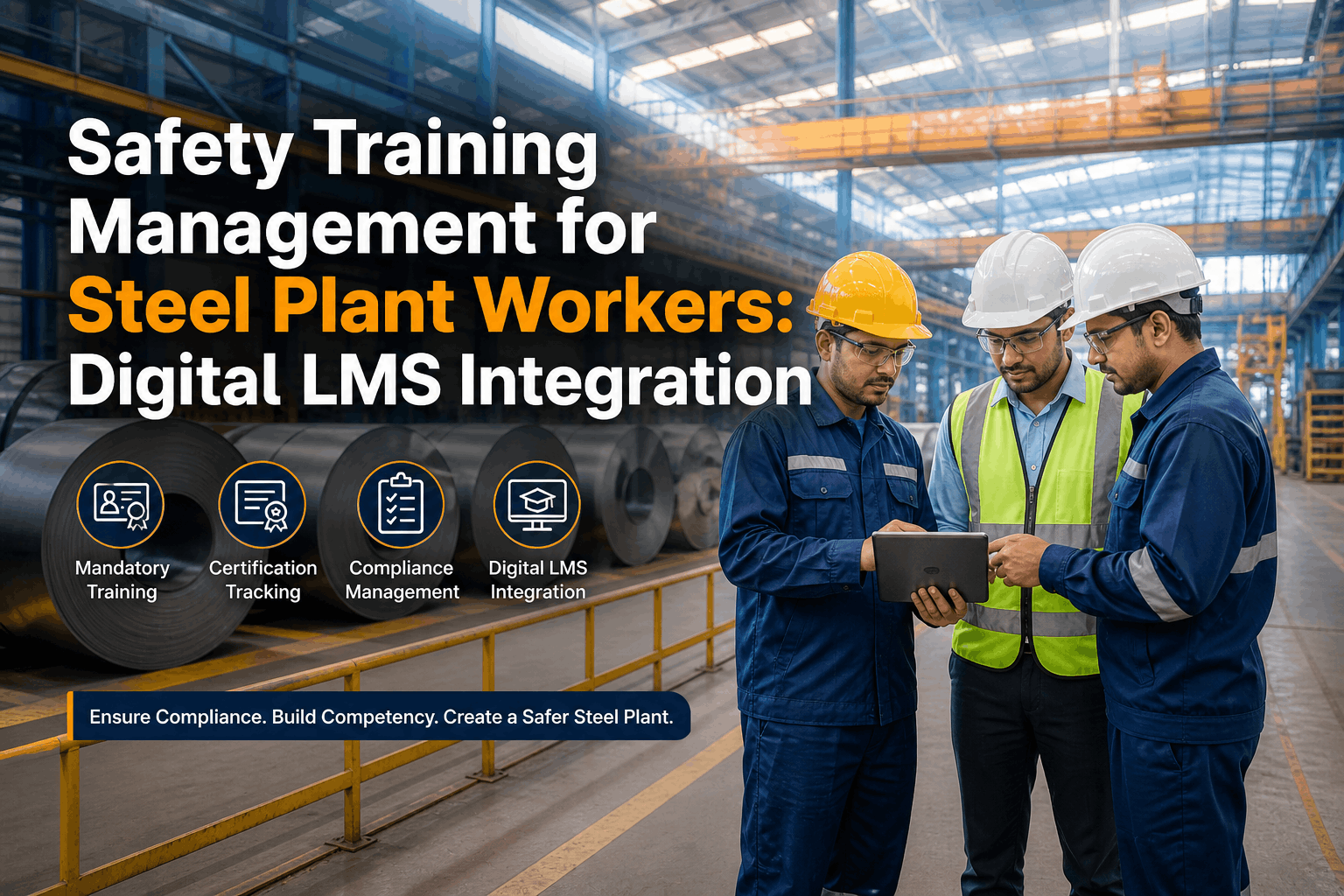
Read More
In a steel plant, an untrained worker is a profound liability. The extreme hazards of industrial metallurgy—ranging from handling 3,000°F molten steel to operating 200-ton overhead ladle cranes—require absolute assurance that every operator is ful
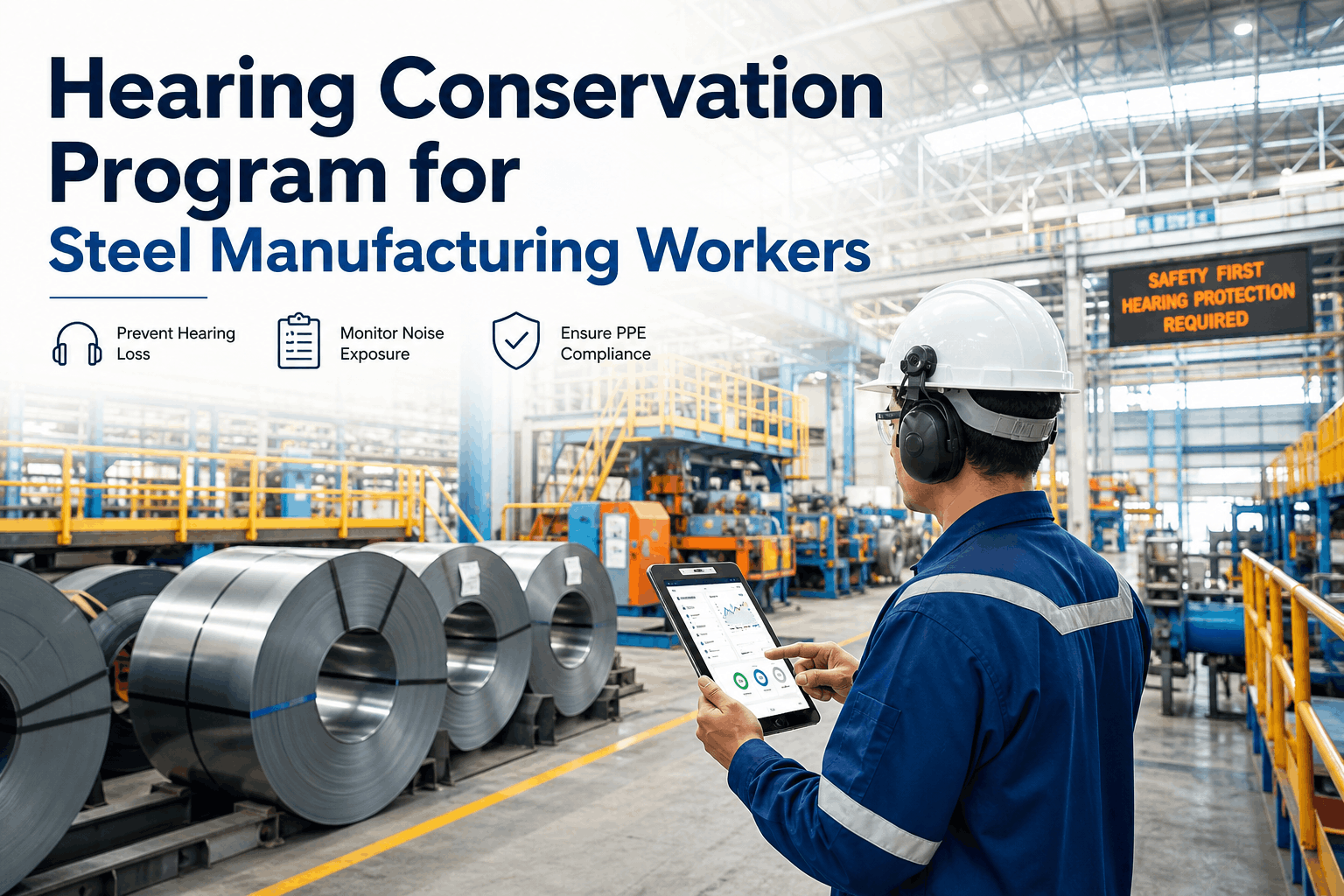
Read More
The acoustic environment of a steel manufacturing plant is among the most aggressive in the industrial world. Between the concussive blasts of Electric Arc Furnaces (EAF), the high-frequency screeching of cold rolling mills, and the constant roar
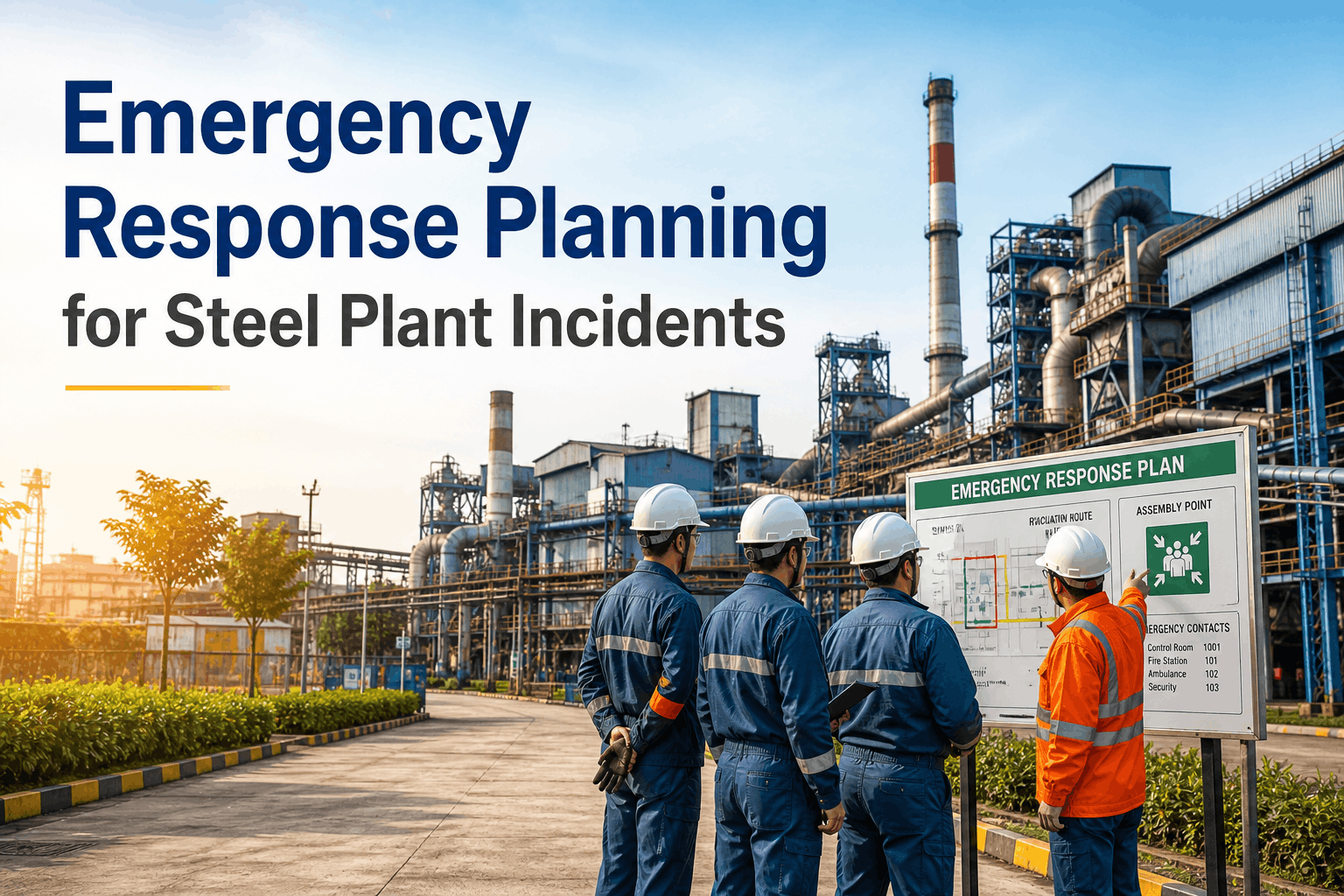
Read More
A steel plant is inherently unforgiving. When thousands of tons of molten metal interact with water, or when a blast furnace experiences a carbon monoxide excursion, the window for effective intervention is measured in seconds, not minutes. Tradit
-for-steel-plants-digital-compliance-framework.png)
Read More
Operating a modern steel plant involves managing immense thermal energy, toxic gases like carbon monoxide and ammonia, and highly reactive chemical processes. Due to these extreme operational hazards, steel manufacturers must strictly adhere to OS
Read More
The modern steel plant does not suffer from a lack of data; it suffers from data fragmentation. Every day, your PLCs, SCADA systems, and maintenance mechanics generate millions of discrete data points. However, when this telemetry is trapped in is
Read More
The digital transformation of steel manufacturing presents a critical paradox: connecting operational technology (OT) to cloud analytics unlocks massive EBITDA gains, but it simultaneously exposes previously air-gapped systems to global cyber thre
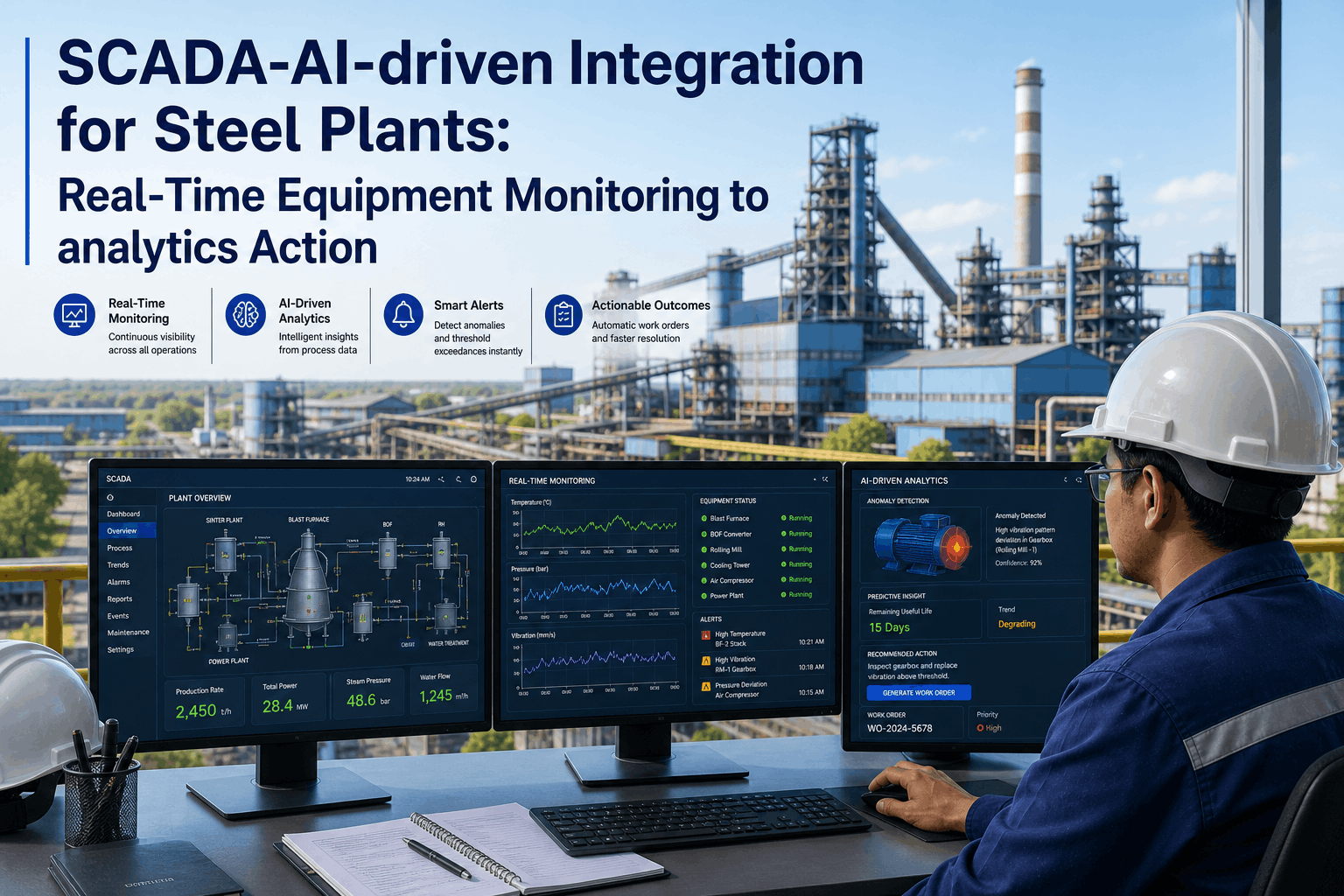
Read More
In modern steelmaking, a massive disconnect exists between the control room and the maintenance floor. Your SCADA (Supervisory Control and Data Acquisition) systems generate millions of data points per second—tracking furnace temperatures, hydraul
Read More
As steel manufacturers finalize their budgets for 2026, the financial landscape of plant operations is shifting dramatically. In a typical Tier-1 mill, the technology and analytics budget can range from $15 to $40 per ton produced. However, indust

Read More
As steel manufacturers finalize their budgets for 2026, the financial landscape of plant operations is shifting dramatically. In a typical Tier-1 mill, the technology and analytics budget can range from $15 to $40 per ton produced. However, indust
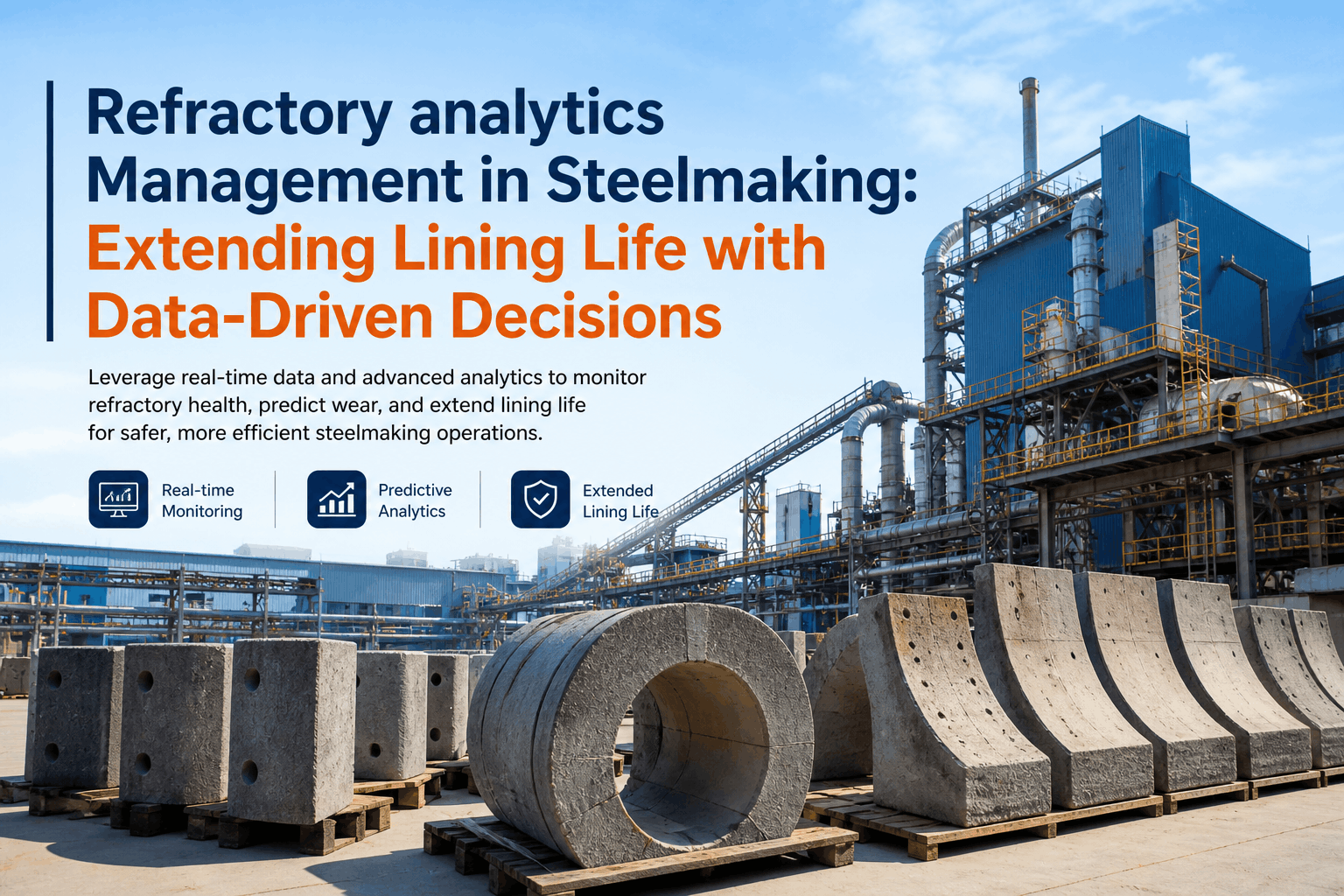
Read More
In the heart of the steel mill, the refractory lining is the only thing standing between 1600°C molten steel and catastrophic structural failure. Representing 3-5% of total production costs, refractory consumption is one of the la

Read More
In the high-stakes environment of a modern steel mill, the overhead crane is not just a tool—it is the lifeblood of production. Handling 300+ ton ladles of molten steel in ambient temperatures exceeding 60°C, these assets are the

Read More
As we approach 2026, the transition from paper-based logs to Digital Analytics Sovereignty is no longer a luxury—it is a requirement for survival in the global metallurgical market. Traditional steel mills depend
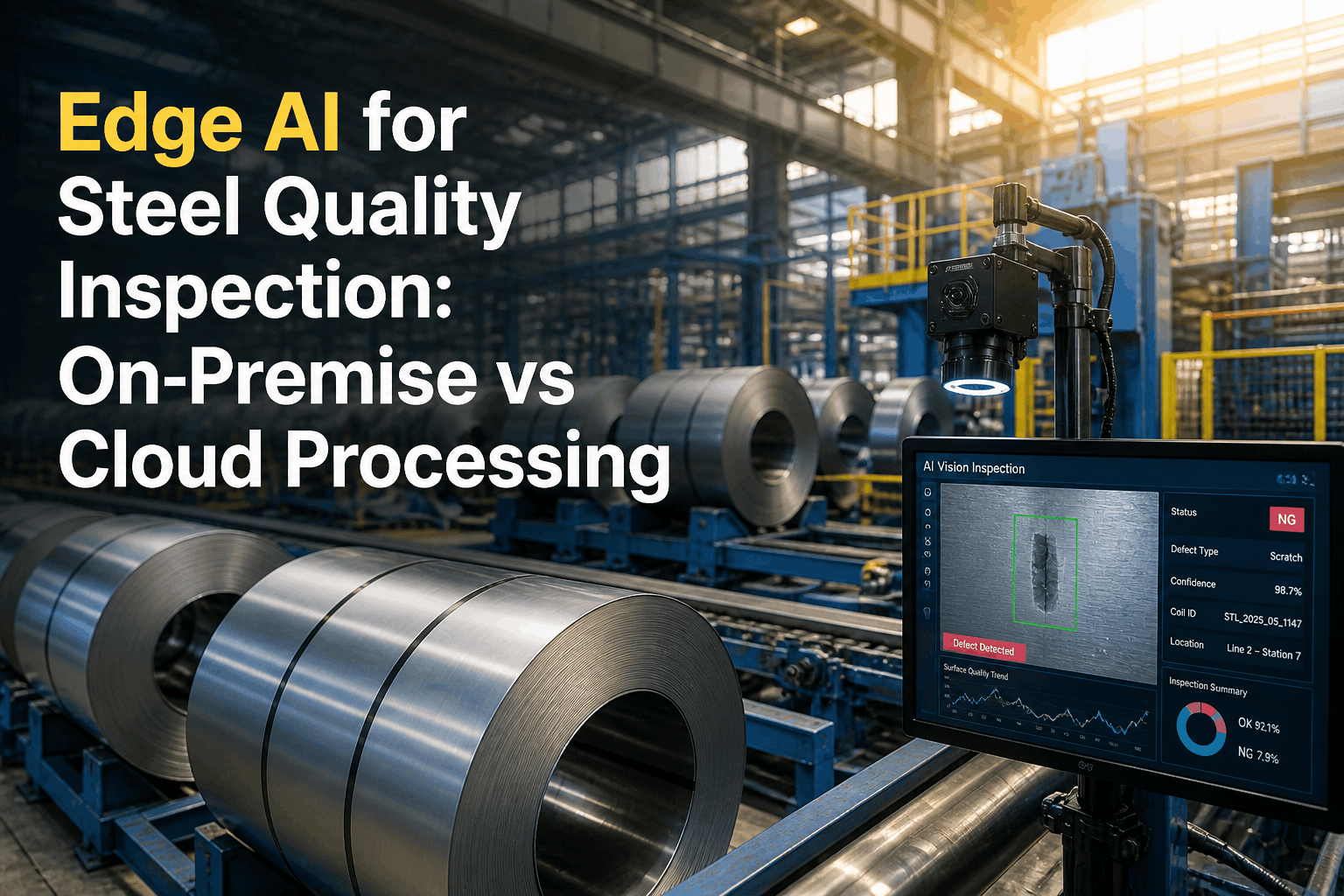
Read More
As we approach 2026, the architecture of industrial intelligence is undergoing a fundamental shift: the "Cloud-First" model is being replaced by Edge-Autonomous Sovereignty. In a modern steel mill where finishing
Read More
As we enter 2026, the global steel industry is re-evaluating the role of quality: it is no longer a "Cost of Doing Business" — it is a Primary Profit Driver. For decades, steel plants accepted a 2-3% scrap rate as
Read More
As we approach 2026, the steel industry is moving beyond basic defect monitoring toward Prescriptive Quality Governance. The integration of AI Vision (the eyes) with Autonomous Workflows
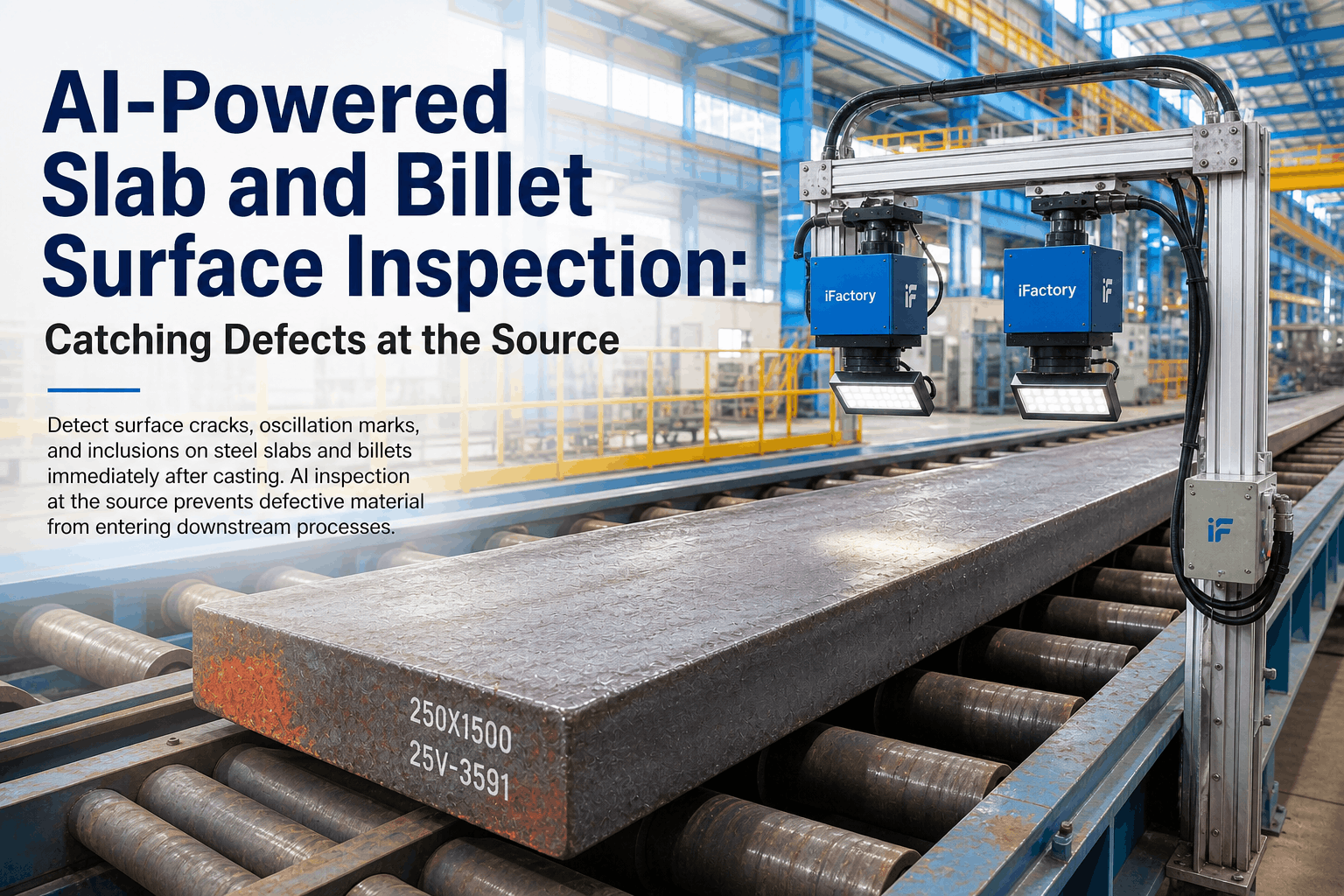
Read More
Steel slabs and billets represent more than semi-finished products — they are the foundational assets that demand rigorous quality stewardship, precision analytics, and a defect elimination strategy built for the modern era. From
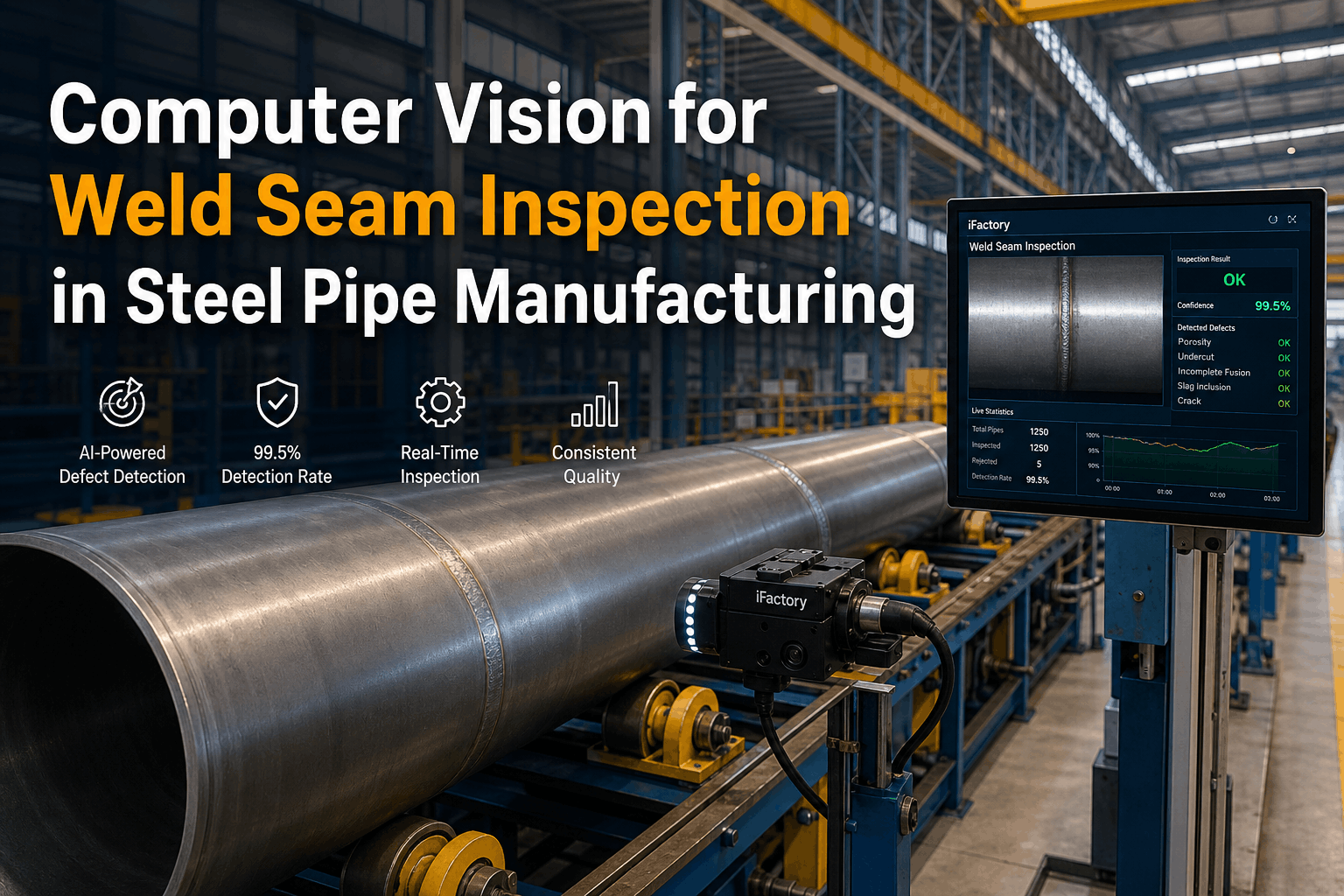
Read More
High-pressure steel pipes represent more than industrial infrastructure — they are critical assets that demand rigorous quality stewardship, precision analytics, and a defect elimination strategy built for the modern era. From Ele
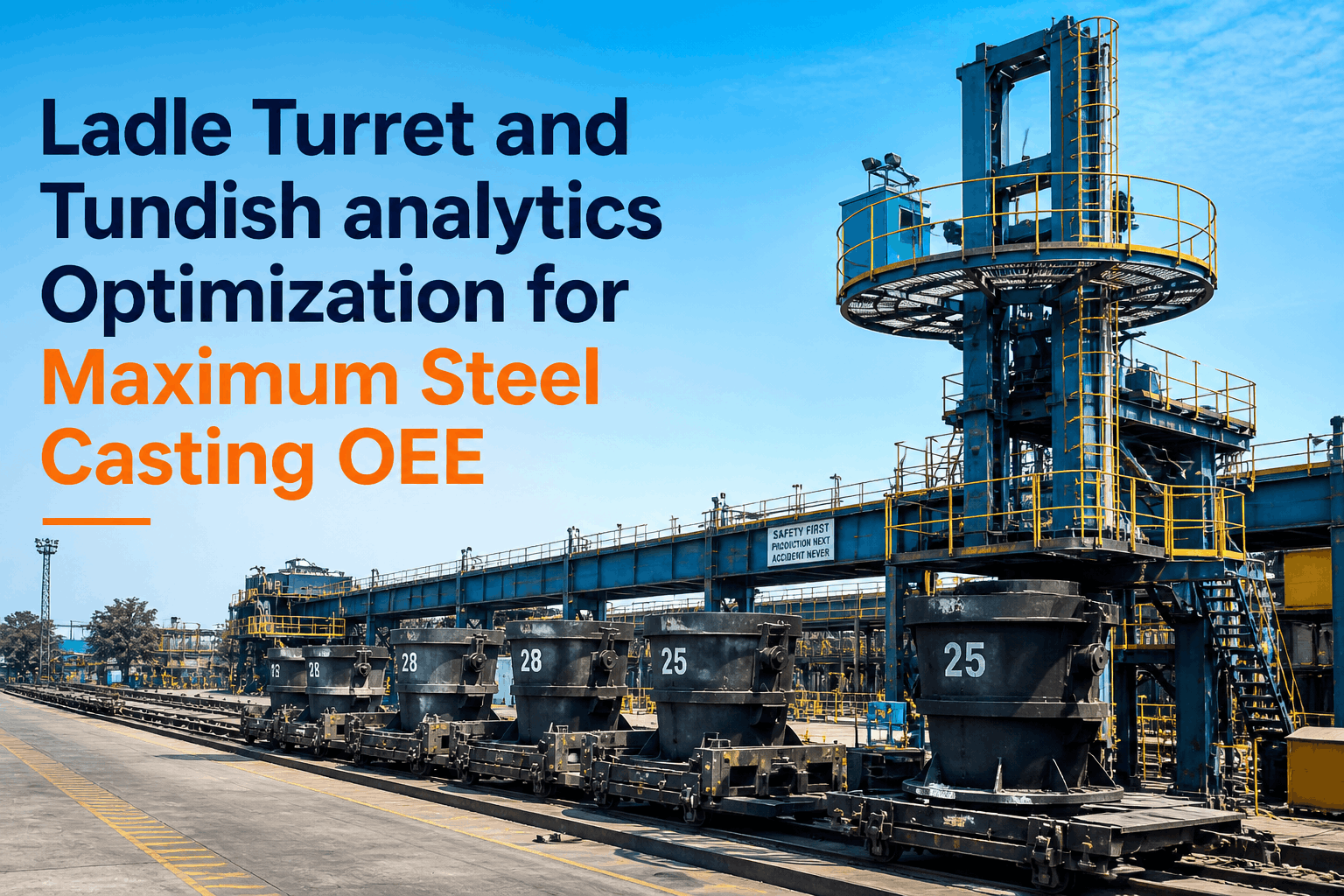
Read More
Steel manufacturing assets represent more than industrial machinery — they are living production engines that demand rigorous stewardship, precision analytics, and a preservation strategy built for the modern era. From high-freque
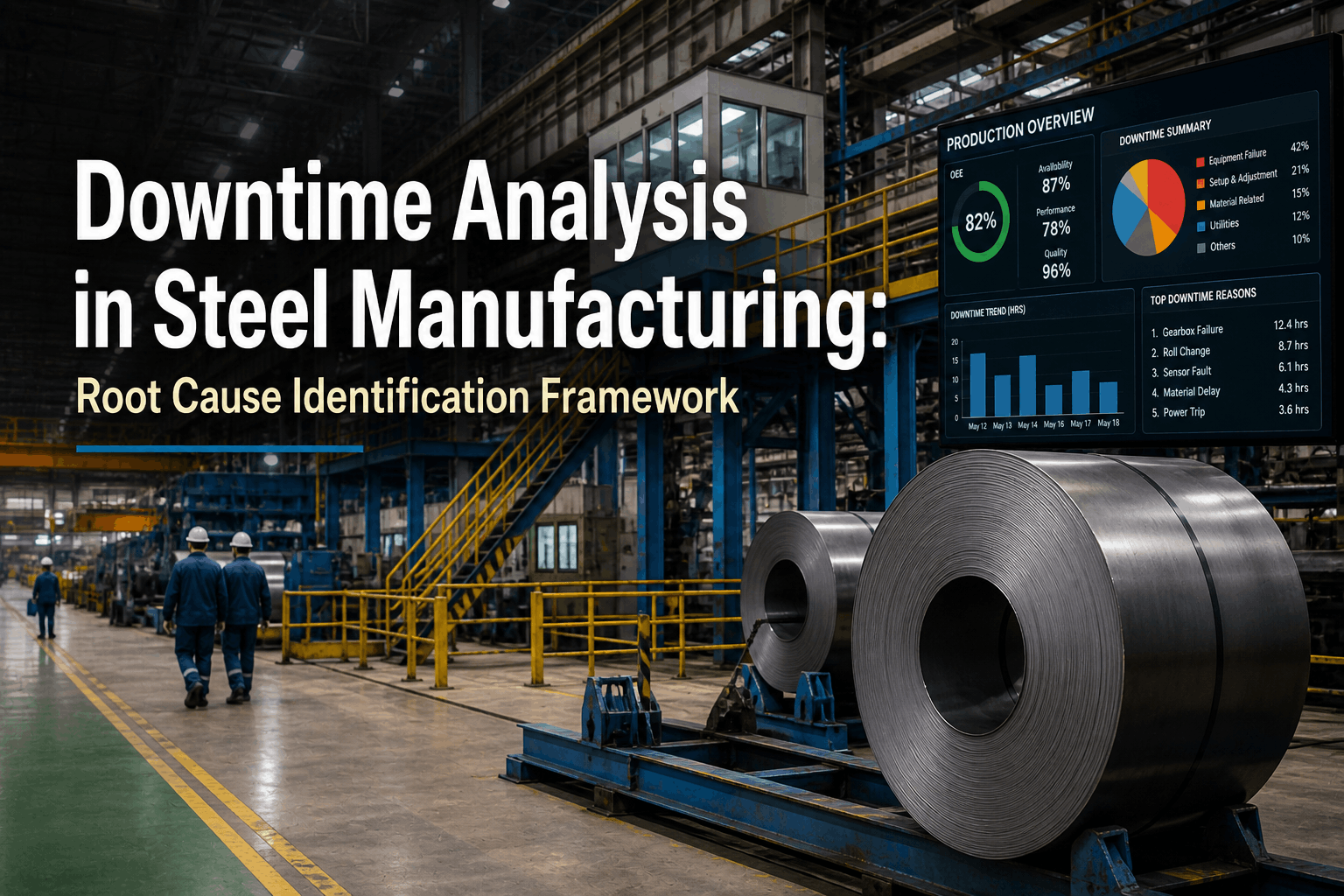
Read More
Steel manufacturing assets represent more than industrial machinery — they are high-capital production engines that demand rigorous reliability engineering, precision root cause analysis, and a downtime elimination strategy built
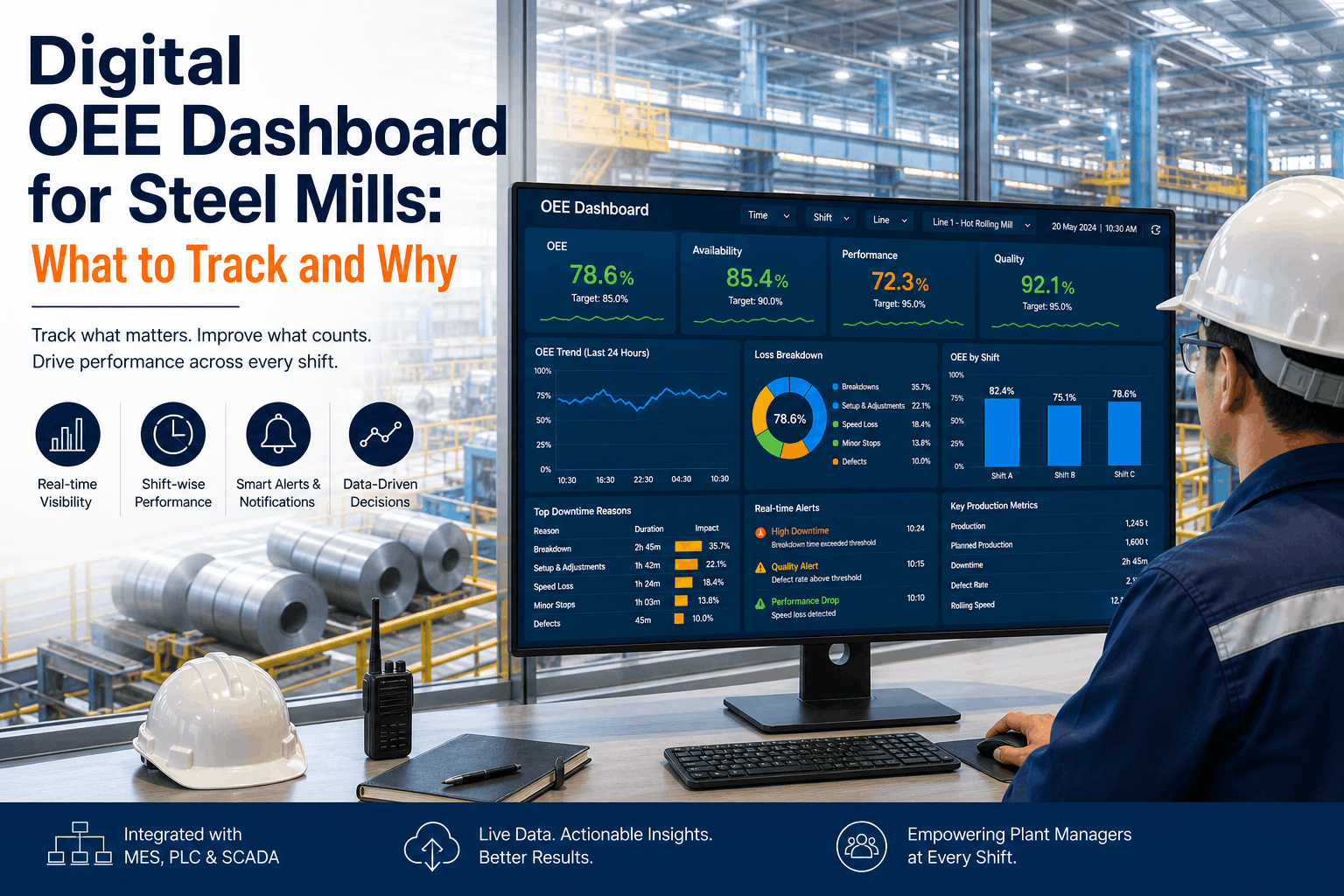
Read More
The transition from manual whiteboards to a real-time Digital OEE Dashboard is the single most impactful move a steel plant can make toward operational maturity. In the high-stakes environment of a modern mini-m
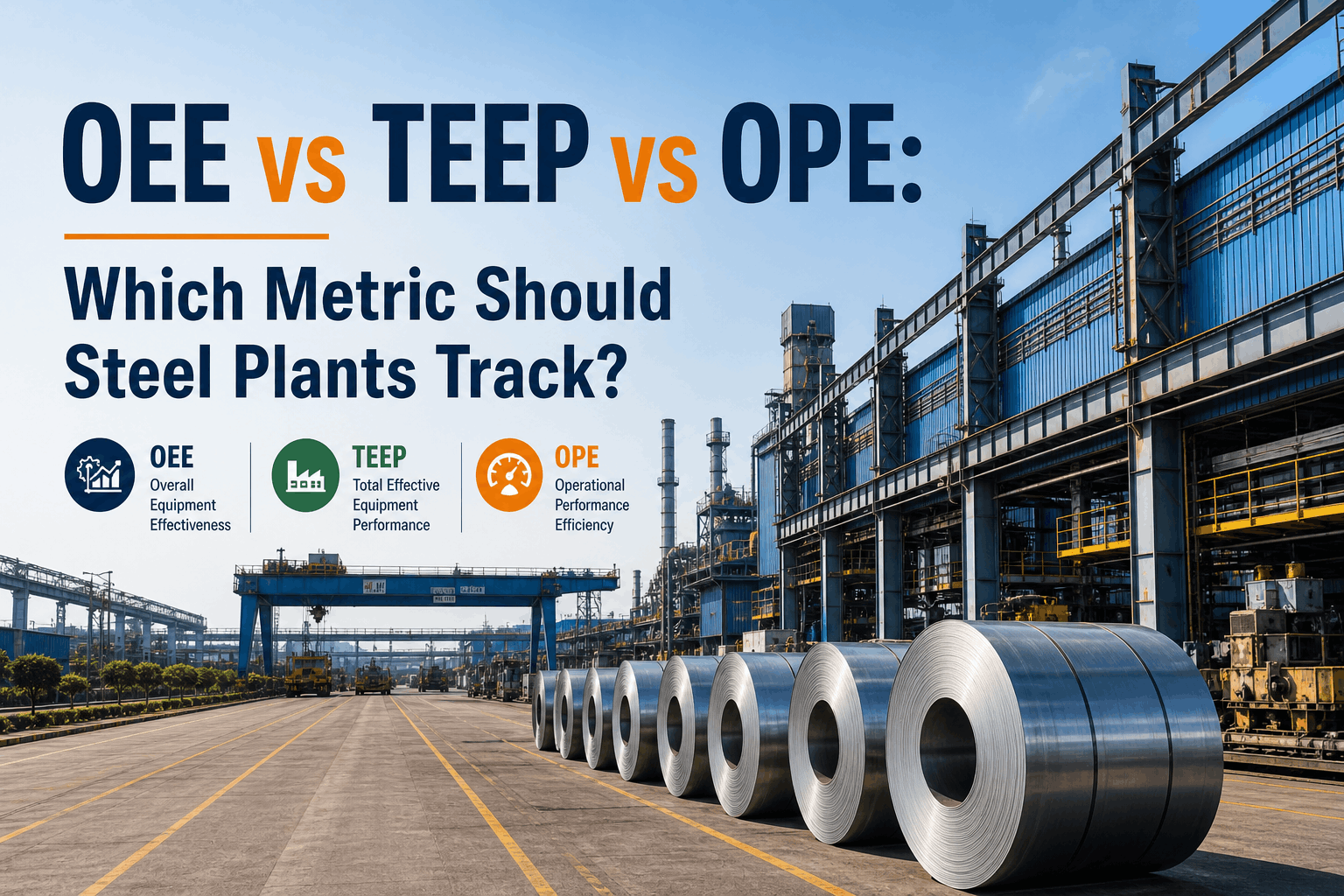
Read More
Choosing the wrong metric for a steel plant doesn't just result in bad data — it leads to multi-million dollar capital misallocations and persistent bottlenecking in the rolling mill. In the 2026 "Smart Mill" landscape, the debate between

Read More
Digital twin technology for Electric Arc Furnaces (EAF) is fundamentally rewriting how mini-mills model, monitor, and optimize the scrap-to-steel transformation. By creating a live virtual replica of the furnace shell, electrode systems, and power

Read More
Digital twin technology for continuous casting machines (CCM) is fundamentally rewriting how steel plants model, monitor, and optimize the liquid-to-solid transformation. By creating a live virtual replica of the mold, strand segments, and cooling
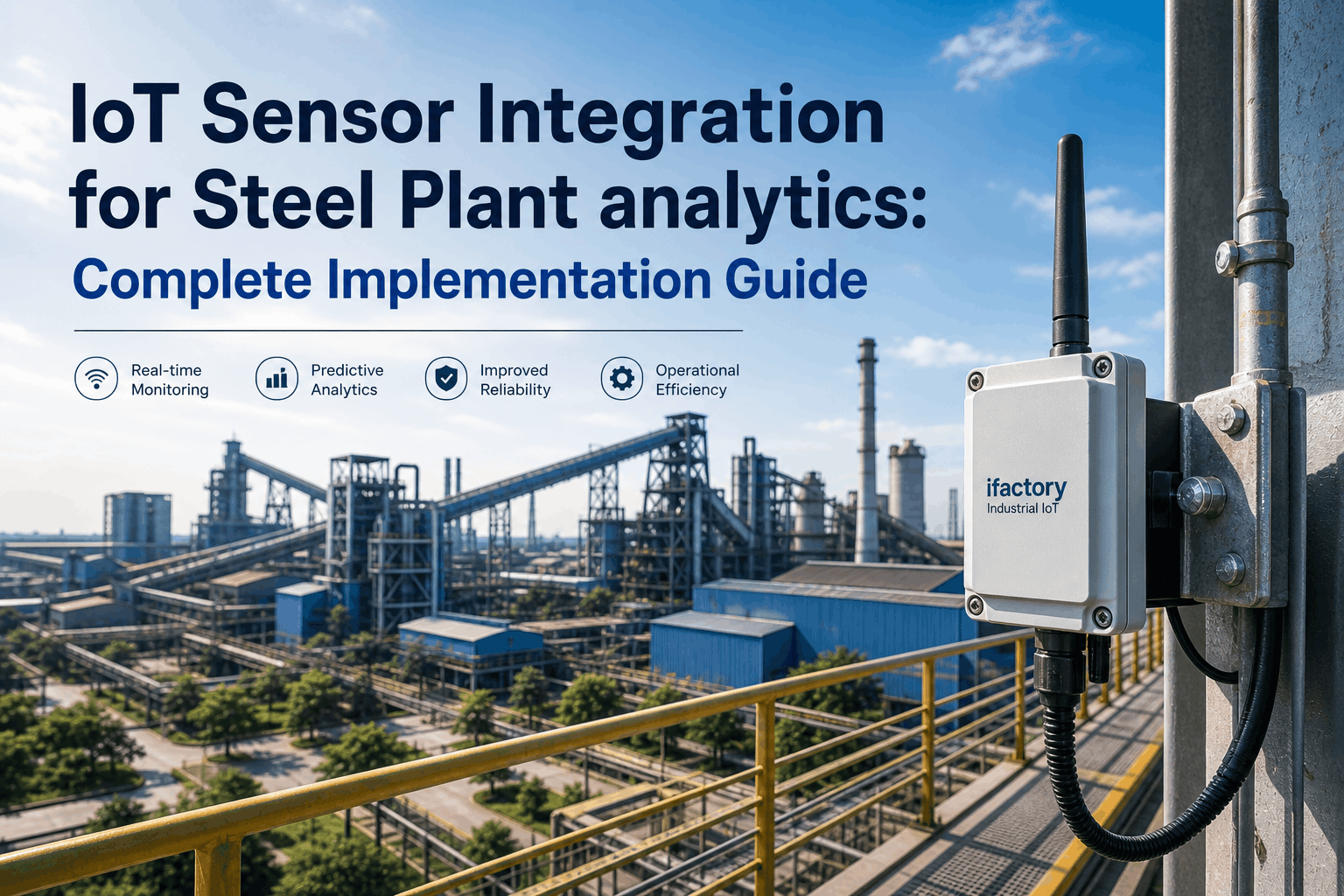
Read More
Industrial IoT (IIoT) sensors are the "Sensory Foundation" of any steel plant analytics strategy, providing the raw, high-frequency data streams that fuel AI-driven predictive models. Effective immediately, the shift from legacy wired instrumentat

Read More
Processing lines — including Slitting, Cut-to-Length (CTL), and Tension Leveling — represent the final "Precision Stage" of steel manufacturing, where dimensional tolerances and edge quality are definitively established. Effective immediately, the
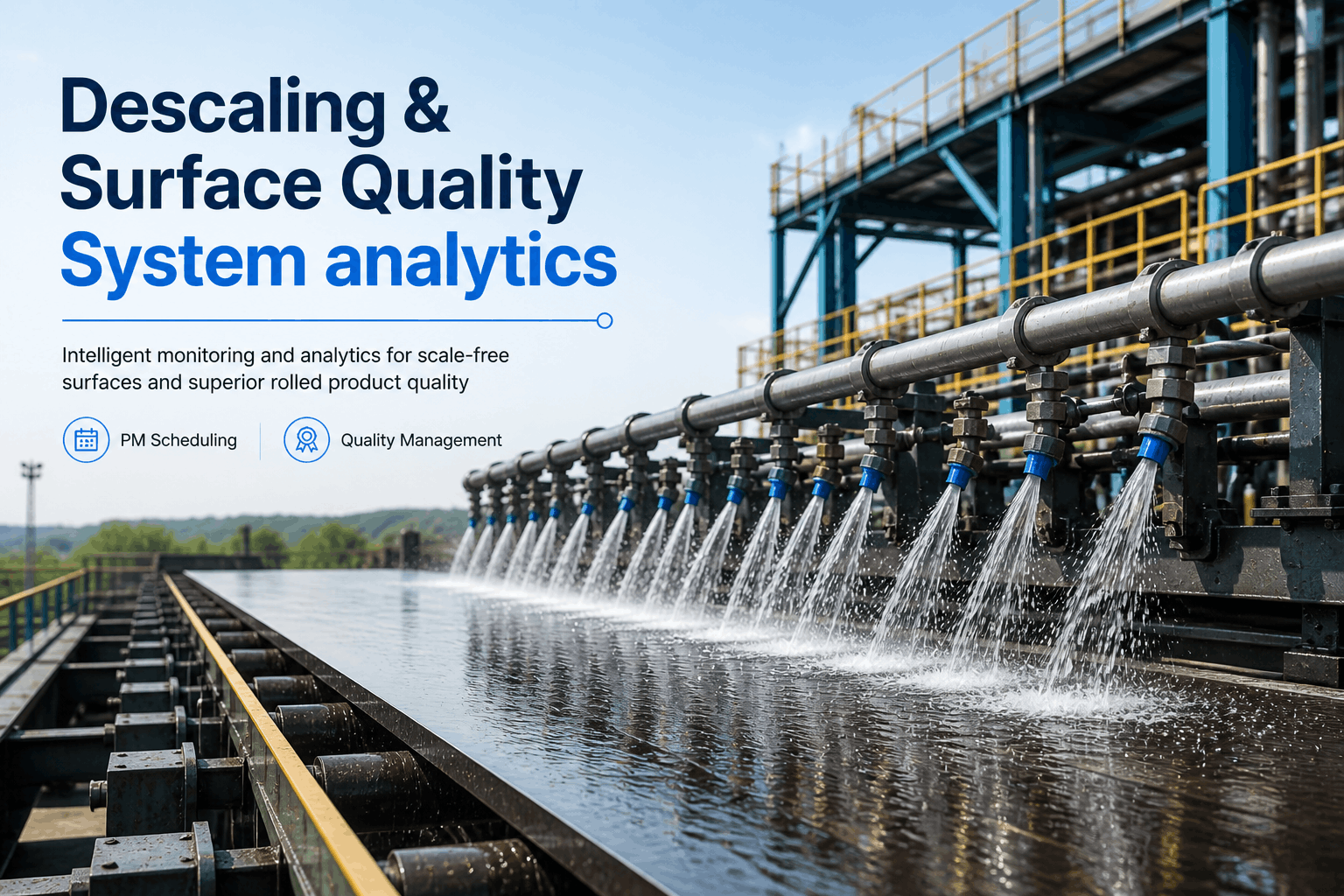
Read More
Descaling is the critical "Quality Gatekeeper" in hot rolling operations, responsible for the absolute removal of secondary scale that otherwise results in permanent surface defects, pitting, and rolled-in scale rejects. Effective immediately, the
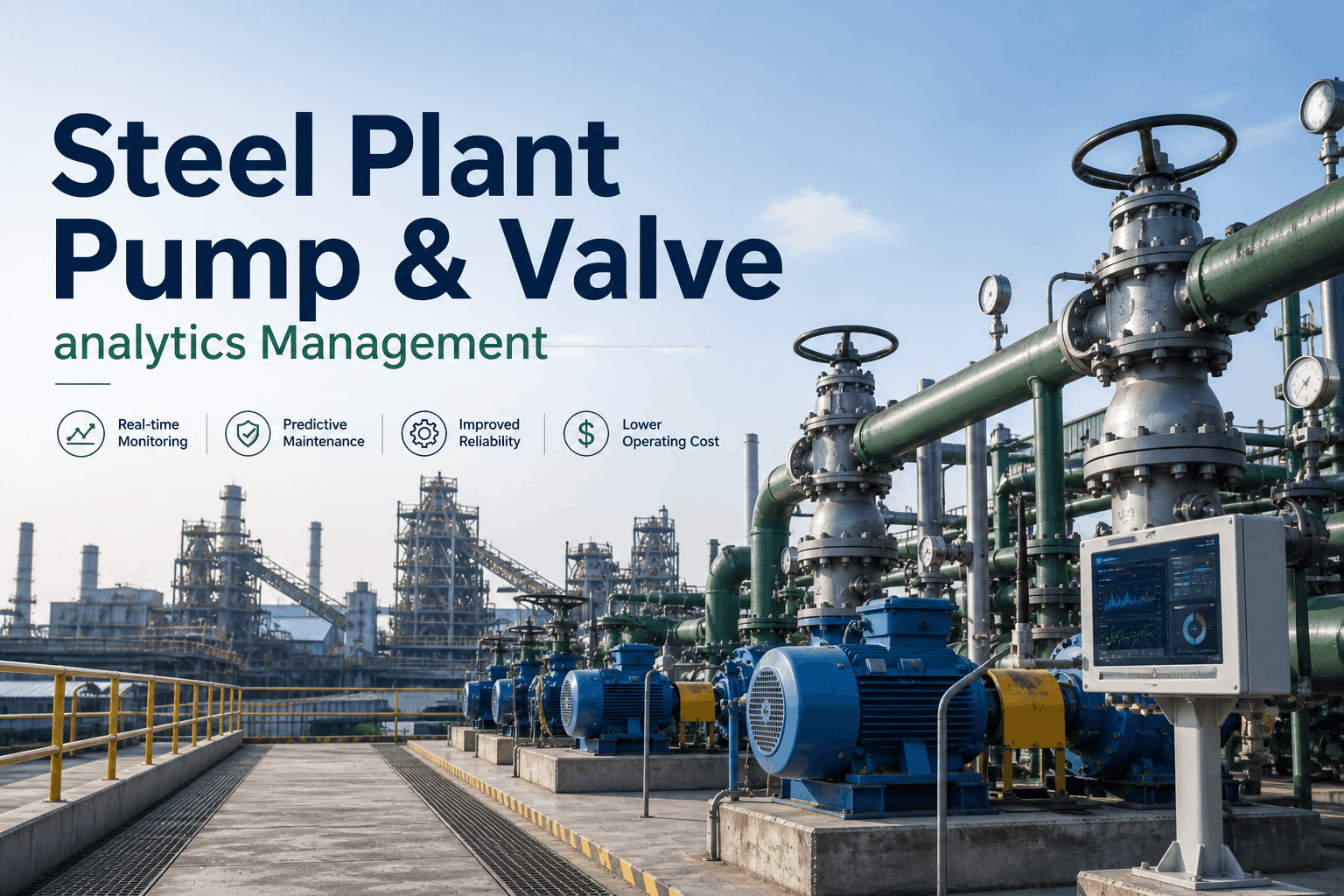
Read More
The reliability of industrial pumps and valves is the most significant operational baseline in modern steel manufacturing, serving as the "circulatory system" for critical cooling, descaling, and hydraulic circuits. Effective immediately, the shif

Read More
Graphite electrodes represent the single highest variable cost in an Electric Arc Furnace (EAF) operation, often accounting for 15-20% of the total melting cost. In an era of global graphite pricing volatility and tightening operational margins,

Read More
Secondary metallurgy is the final frontier of steel quality, where the difference between a high-value automotive grade and a downgraded batch is decided in the vacuum of a degasser or the arc of a ladle furnace. In a high-speed Melt Shop, the c
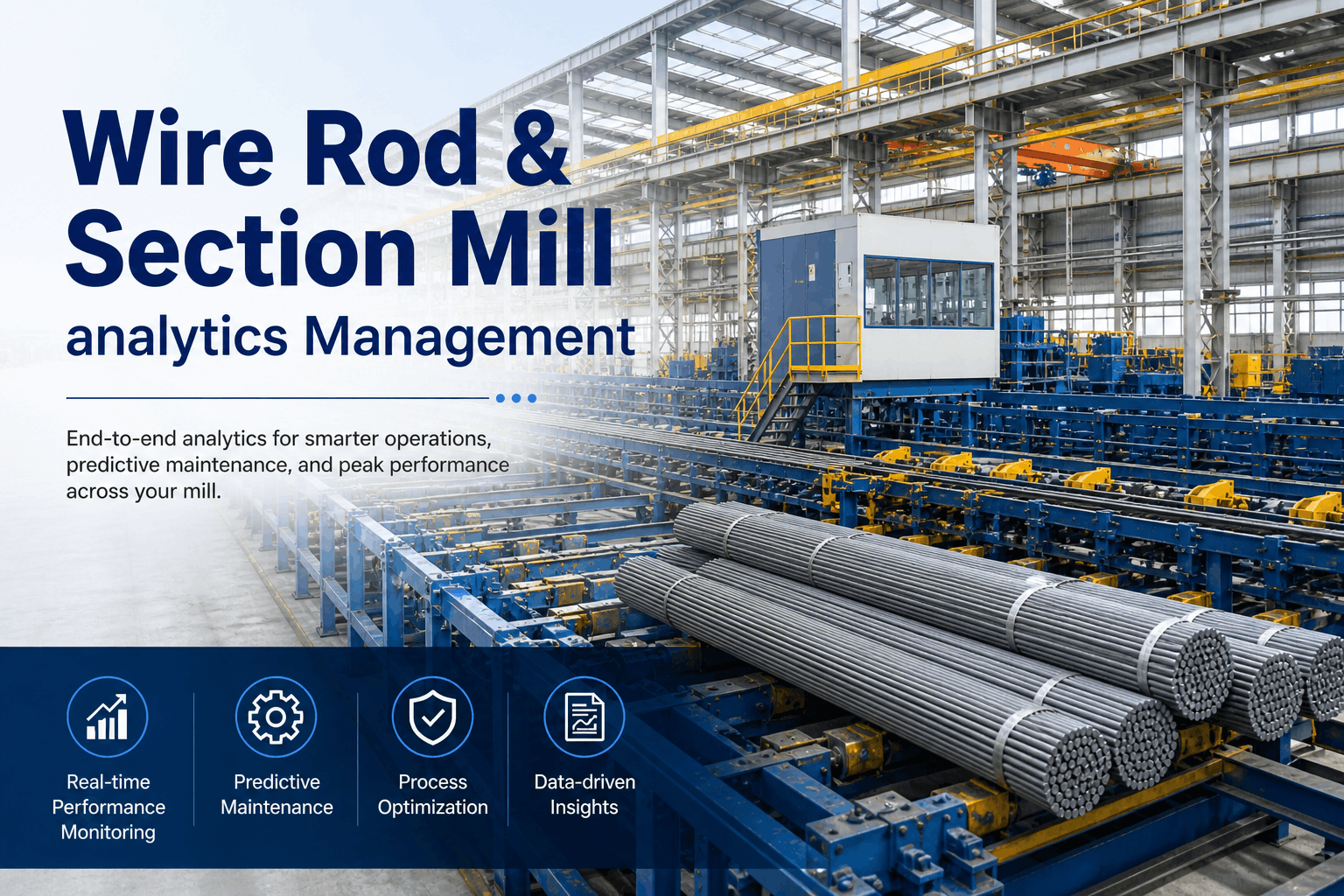
Read More
Wire rod and section mills operate at the absolute frontier of mechanical speed and thermal complexity. In a high-speed finishing block, where the rod travels at over 100 meters per second, a "real-time" dashboard that refreshes every 15 minutes
Read More
Pipe and Tube manufacturing represents one of the most technically demanding sectors of the steel industry, where the margin for error is measured in millimeters and weld integrity is non-negotiable. Whether operating a high-speed ERW mill, a co
Read More
Steel plants operate in an environment of extreme volatility—where fluctuating raw material prices and tight margins make maintenance budget optimization a survival imperative. Traditionally, maintenance costs are viewed as a "black box," where
-&-finishing-line-analytics.png)
Read More
Color Coating and Finishing represent the final, aesthetic signature of a steel mill's production capabilities. Transforming raw galvanized or cold-rolled strip into high-performance architectural panels or food-grade packaging requires the abso

Read More
Hot-Dip Galvanizing (HDG) represents the absolute pinnacle of metallurgical value-addition in the steel industry. Transforming cold-rolled strip into high-performance automotive body panels or corrosion-resistant construction alloys requires the
Read More
Finished goods logistics represent the final, high-stakes link in the steel manufacturing value chain. Transforming a chaotic warehouse into a precision-driven logistics hub requires the absolute synchronization of heavy-duty overhead cranes, au
Read More
Predictive process simulation represents the absolute pinnacle of industrial decision-making precision. Transforming a legacy steel plant into a high-efficiency digital operation requires the ability to test complex changes — production schedule

Read More
The lubrication management protocol for steel plants is the most significant operational and reliability shift in heavy manufacturing in decades. Effective immediately, modern world-class standards mandate that steel plants, rolling mills, and c

Read More
The emergency analytics response protocol for steel plants is the most significant operational and reliability shift in heavy manufacturing in decades. Effective immediately, modern world-class standards mandate that steel plants, rolling mills,

Read More
The industrial oil analysis program for steel plants is the most significant regulatory and reliability shift in heavy manufacturing in decades. Effective immediately, modern world-class standards mandate that steel plants, rolling mills, and ca

Read More
Digital twin technology for steel plant vibration analysis is fundamentally rewriting how plants model, monitor, and optimize rotating equipment performance. By creating a live virtual replica of every motor, fan, and mill stand vibration signat

Read More
Digital twin technology for steel plant workforce development is fundamentally rewriting how plants model, monitor, and optimize technician performance. By creating a live virtual replica of every technician's skill set, competency level, and ma
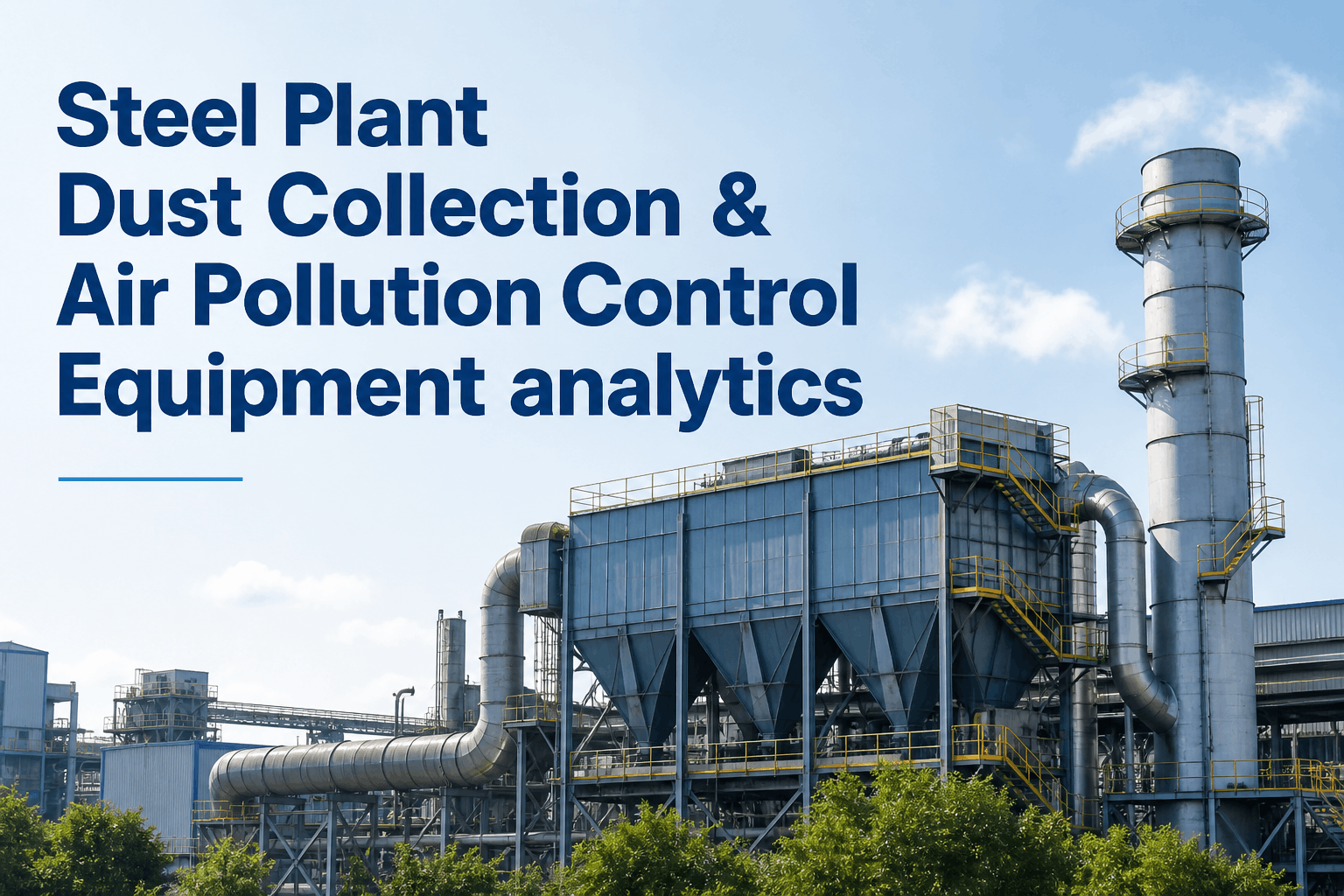
Read More
Digital twin technology for steel plant air pollution control is fundamentally rewriting how plants model, monitor, and optimize emission performance. By creating a live virtual replica of every baghouse, ESP, and fan flow on your plant floor, a
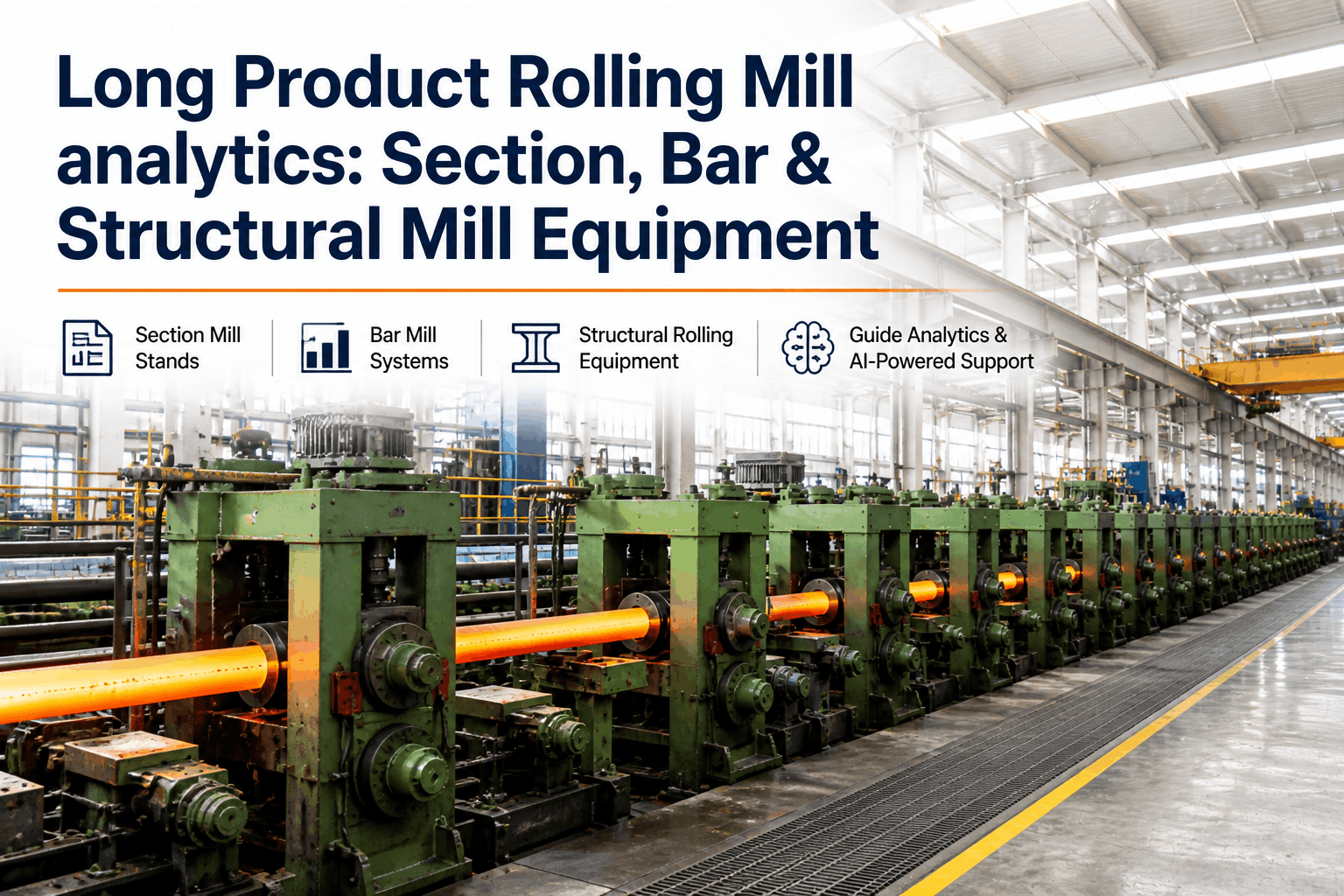
Read More
Long product rolling mill analytics and AI-driven integration is transforming how world-class manufacturers monitor, document, and control section precision across their entire production ecosystem. Traditional rolling strategies for bars, secti

Read More
Steel plant ERP-AI integration is transforming how world-class manufacturers monitor, document, and control production data across their entire manufacturing ecosystem. Traditional ERP systems in the steel industry often depend on manual data en

Read More
Steel plant analytics benchmarking and AI-driven integration is transforming how world-class manufacturers monitor, document, and control performance gaps across their entire production ecosystem. Traditional benchmarking plans in the steel indu
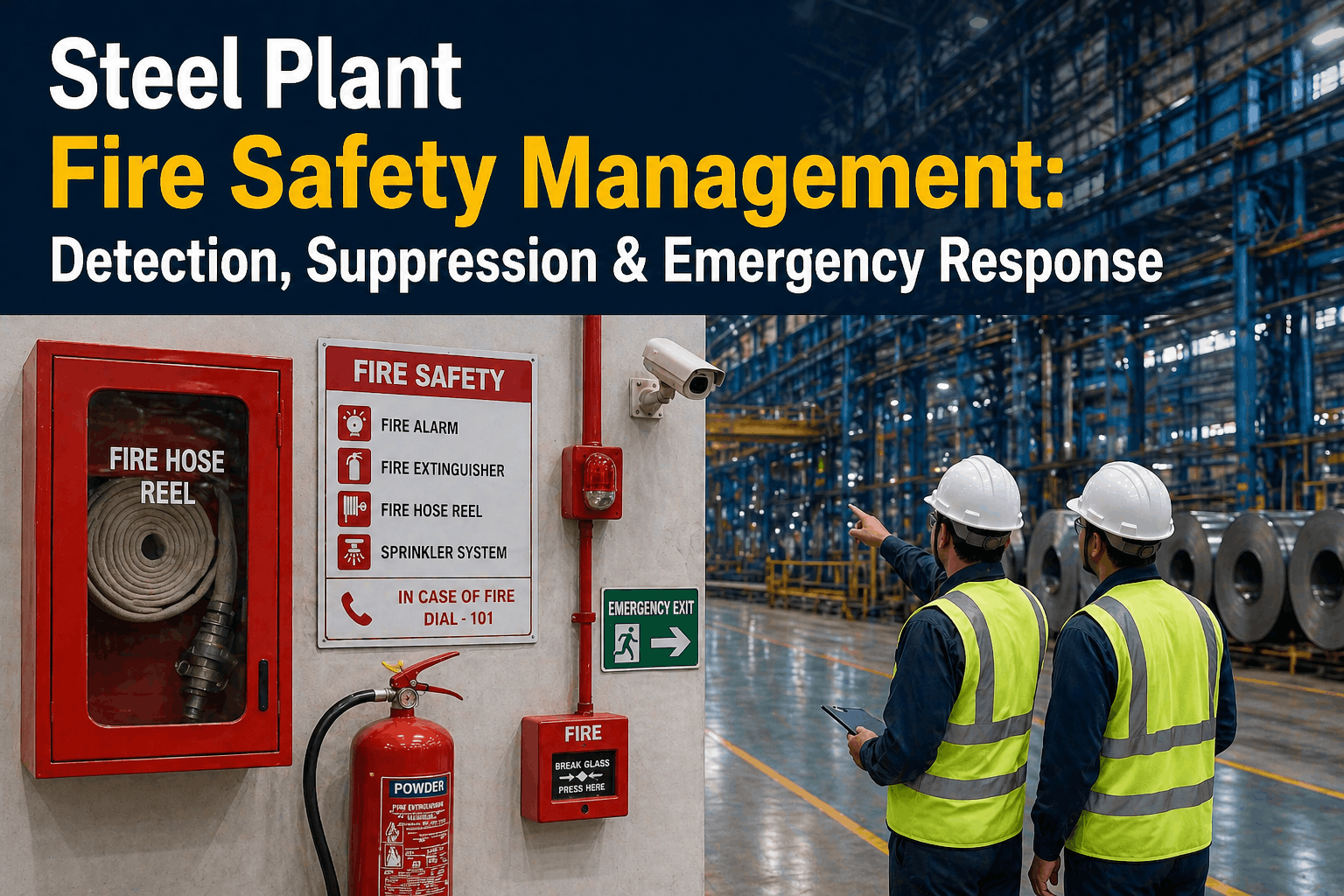
Read More
Steel plant fire safety management operations optimization has evolved from a reactive compliance checklist into a predictive, AI-powered life-safety architecture. In an environment where hydraulic oil pressures exceed 200 bar and furnace temperat
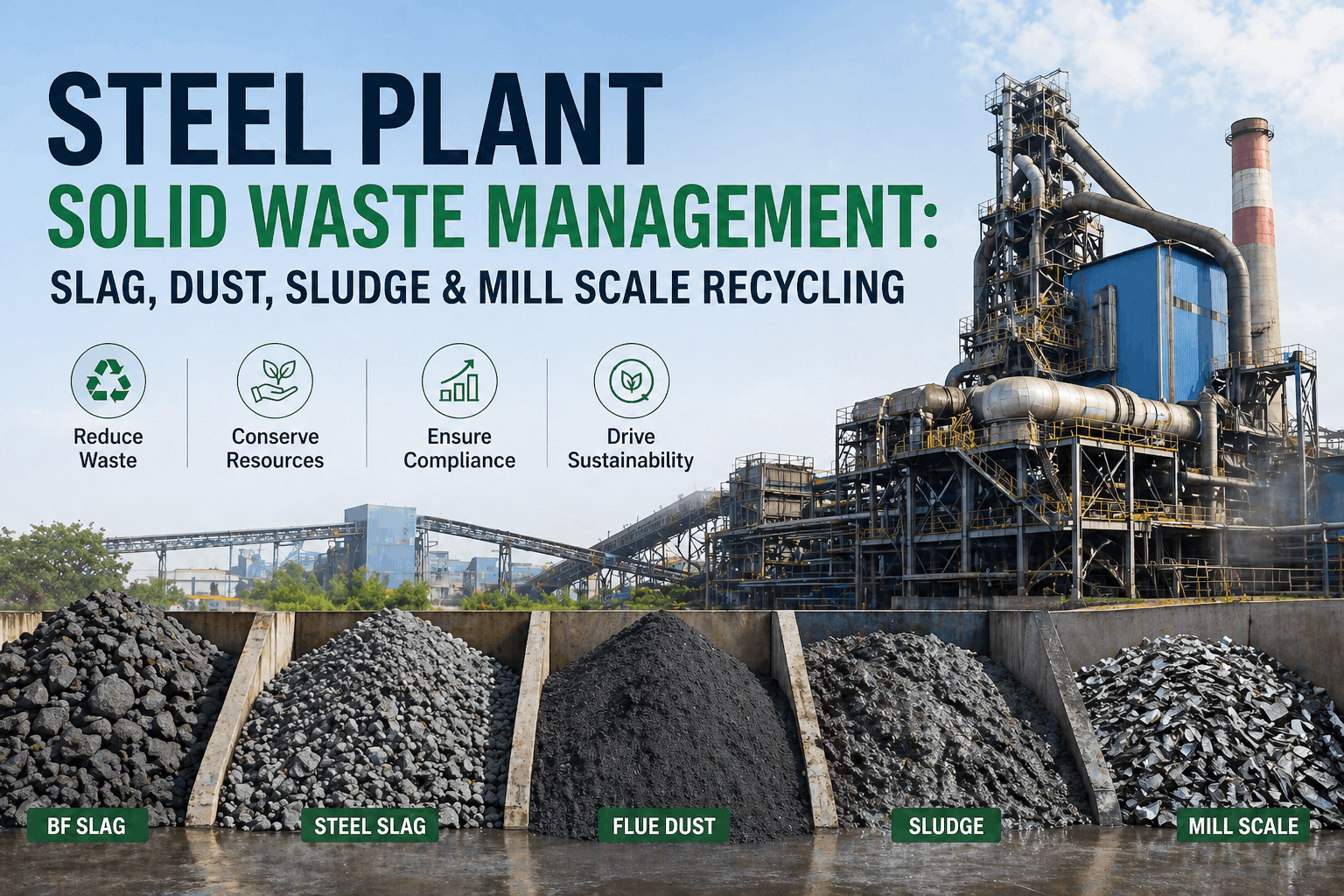
Read More
Steel plant water management operations optimization has become the critical driver for both regulatory survival and operational continuity. With global specific water consumption targets tightening toward **2.0 m³/tcs**, leading steel producers a
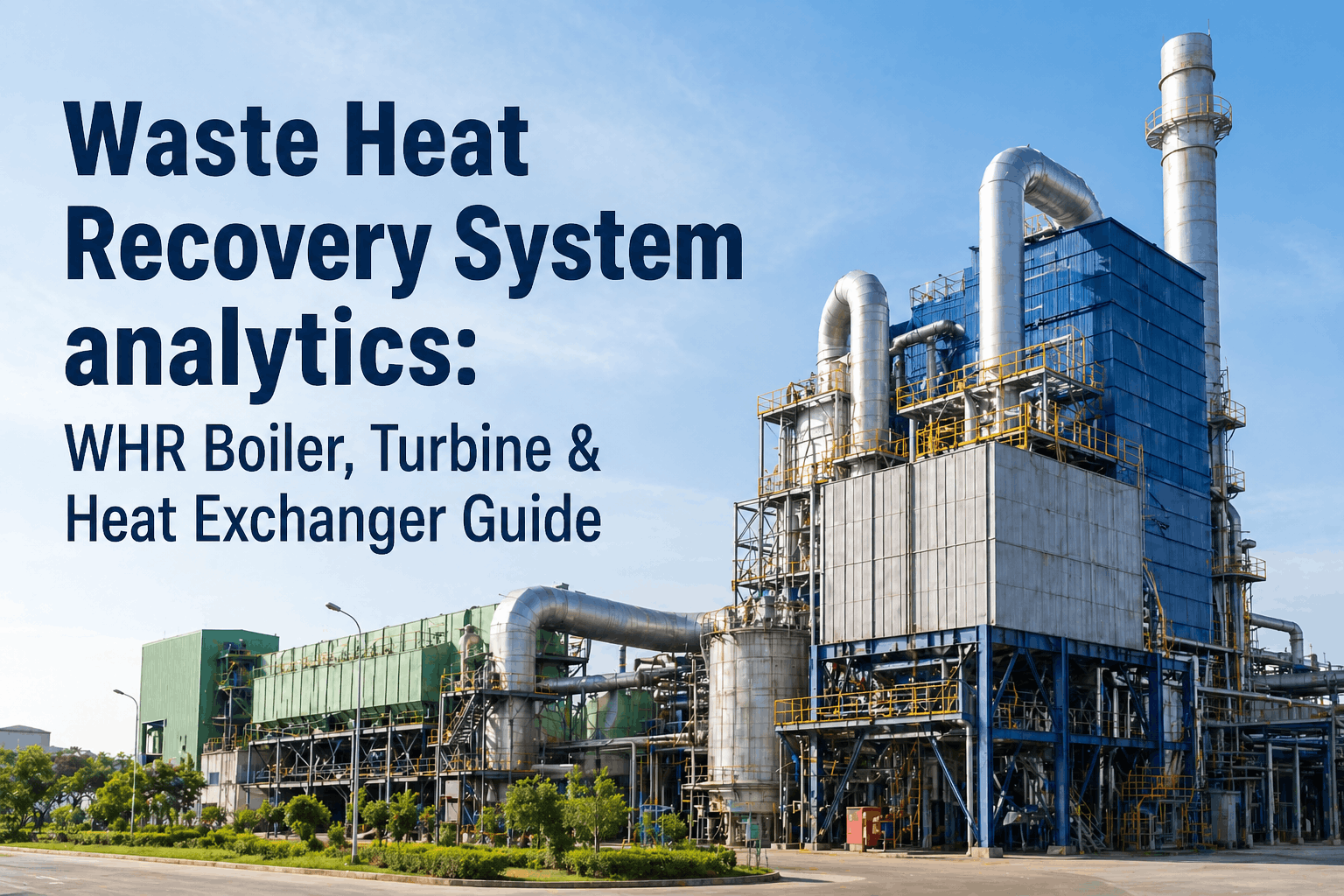
Read More
Waste Heat Recovery (WHR) has transitioned from an optional efficiency gain to a strategic survival requirement for integrated steel plants. In 2026, the ability to convert thermal exhaust from sinter coolers, coke dry quenching (CDQ) units, and b
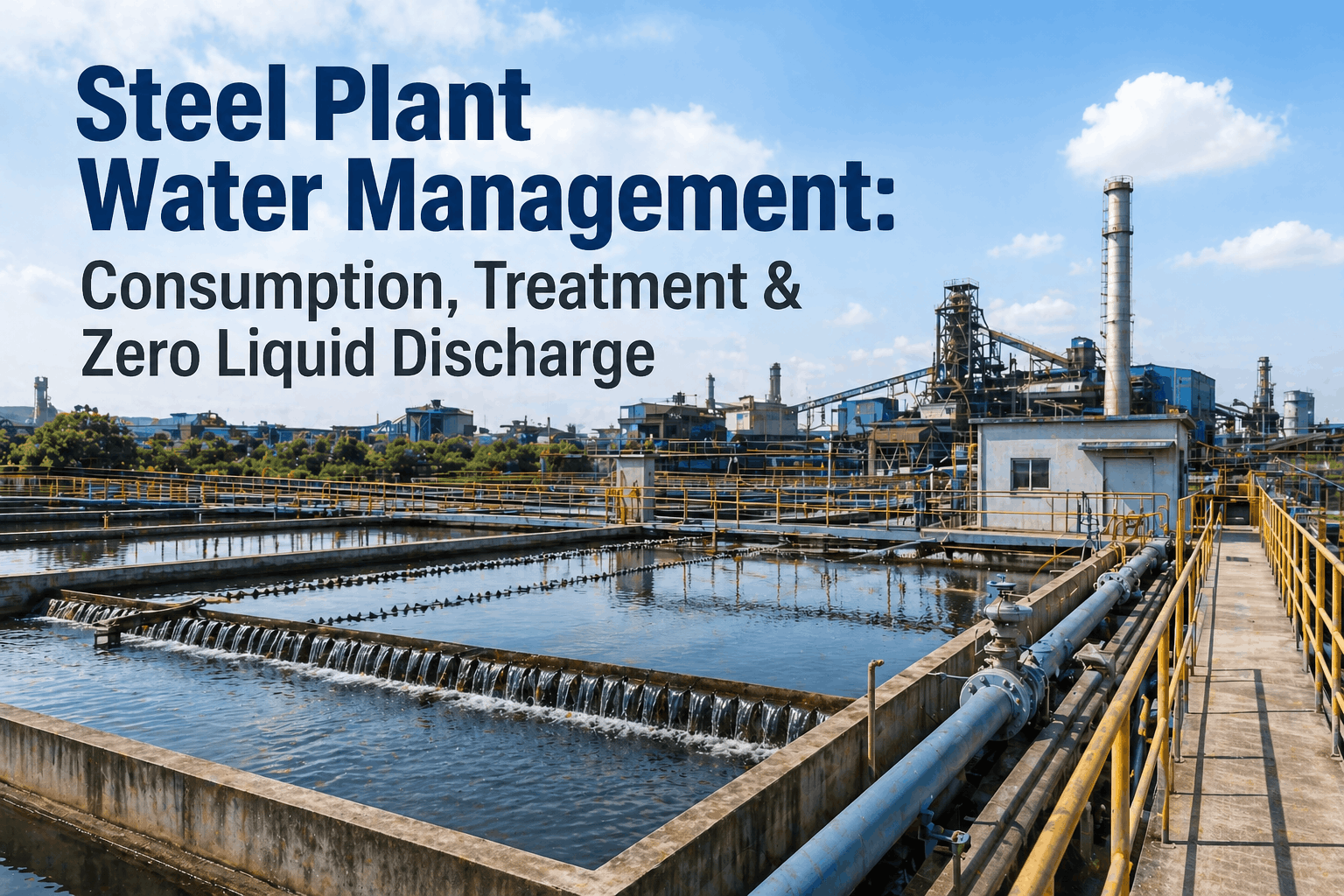
Read More
Sustainable water management in the steel industry has shifted from a utility function to a core environmental mandate. In 2026, the push for Zero Liquid Discharge (ZLD) and the reduction of specific water consumption (m3/tcs) are
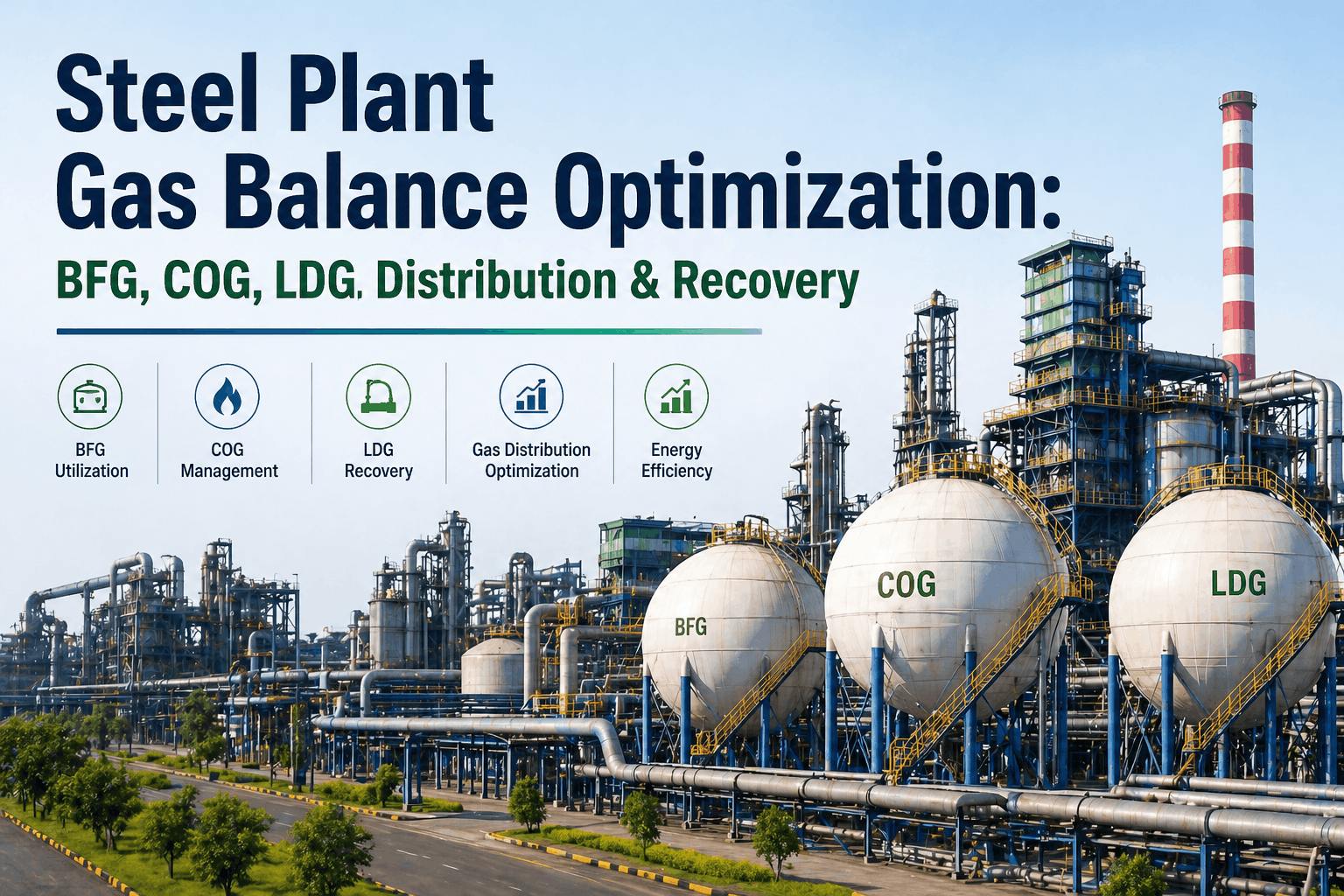
Read More
Steel plant gas balance optimization is the critical discipline of synchronizing the generation and consumption of metallurgical gases—Blast Furnace Gas (BFG), Coke Oven Gas (COG), and LD Converter Gas (LDG)—to achieve zero flaring and maximum ene
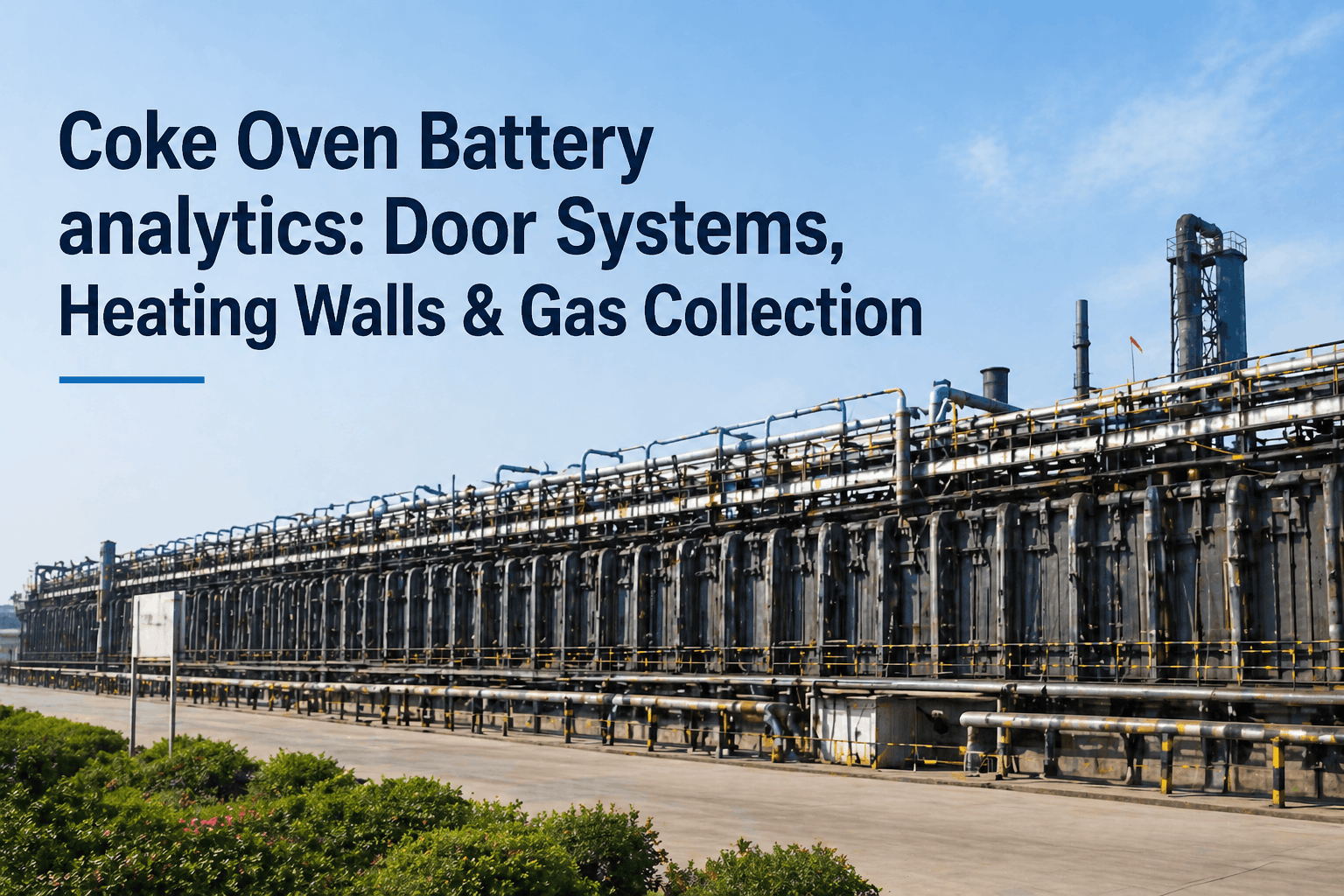
Read More
Coke oven battery management has transitioned from a labor-intensive "observational" craft into a high-precision, data-driven discipline. In 2026, the global push for steel decarbonization and energy efficiency has made Coke Oven Battery A

Read More
Steel manufacturing quality standards have evolved from simple physical measurements to a complex, multi-layered verification ecosystem where metallurgical integrity is proven through data-driven analytics. In today's high-stakes industrial enviro
Read More
In the rigorous world of global steel manufacturing, Steel Grade Library Management is the enabling layer of commercial integrity. The transition from manual, paper-based specification tracking — isolated binders

Read More
In the ultra-competitive landscape of high-grade steel production, Statistical Process Control (SPC) is the thin line between a high-margin automotive coil and a low-value scrap event. From managing the delicate chemistry of a lad

Read More
For a high-volume 5 MTPA Hot Strip Mill, maintaining a theoretical OEE of 90%+ was historically considered an impossibility due to the aggressive nature of hot rolling environments. Chronic bearing seizures in finishing stands, un

Read More
In the massive-scale operation of a hot or cold rolling mill, the Drive System is the primary source of mechanical power and speed synchronization. From the multi-megawatt Main Drive Motors to the high-precision

Read More
In the high-pressure environment of hot and cold rolling, the Hydraulic System serves as the critical nervous system of the mill. Precision rolling is entirely dependent on the millisecond response times of Automatic Gauge

Read More
In the energy-intensive landscape of hot rolling, the Reheat Furnace is the primary driver of both production cost and metallurgical quality. What was once managed as a "black box" of combustion is now being redefined by R

Read More
In the ultra-precision world of steel finishing, Cold Rolling Mill (CRM) Analytics represents the final frontier of quality integrity. Unlike hot rolling, where bulk reduction is the goal, cold rolling demands micron-level

Read More
In high-precision steel manufacturing, Work Roll Management is the technical fulcrum between world-class surface quality and operational catastrophe. As strip speeds in modern Hot Strip Mills (HSM) and Cold Rolling Mills (CRM) exc

Read More
Steel plant analytics has undergone a fundamental transformation. What was once treated as a back-office reporting function — isolated dashboards and periodic Excel exports reviewed days after production runs — is now redefining

Read More
The electrical distribution network of a steel plant is its most critical central nervous system — yet it is often the most under-monitored. With the industrial electrical analytics market projected to reach $384 billion by 20

Read More
Global steel production currently faces a structural utilization gap, with average capacity rates hovering between 74% and 78% — a margin that leaves billions in EBITDA on the table. In a market defined by weak pricin
Read More
For European steel producers, carbon is no longer just an environmental metric—it is a massive financial liability. Under the EU Emissions Trading System (EU ETS) and the upcoming CBAM regulation

Read More
In the high-intensity environment of a 1.2M ton EAF (Electric Arc Furnace) mini-mill, every minute of asset downtime represents a loss of critical melting capacity. For this operator, the primary bottleneck wasn't the machinery i
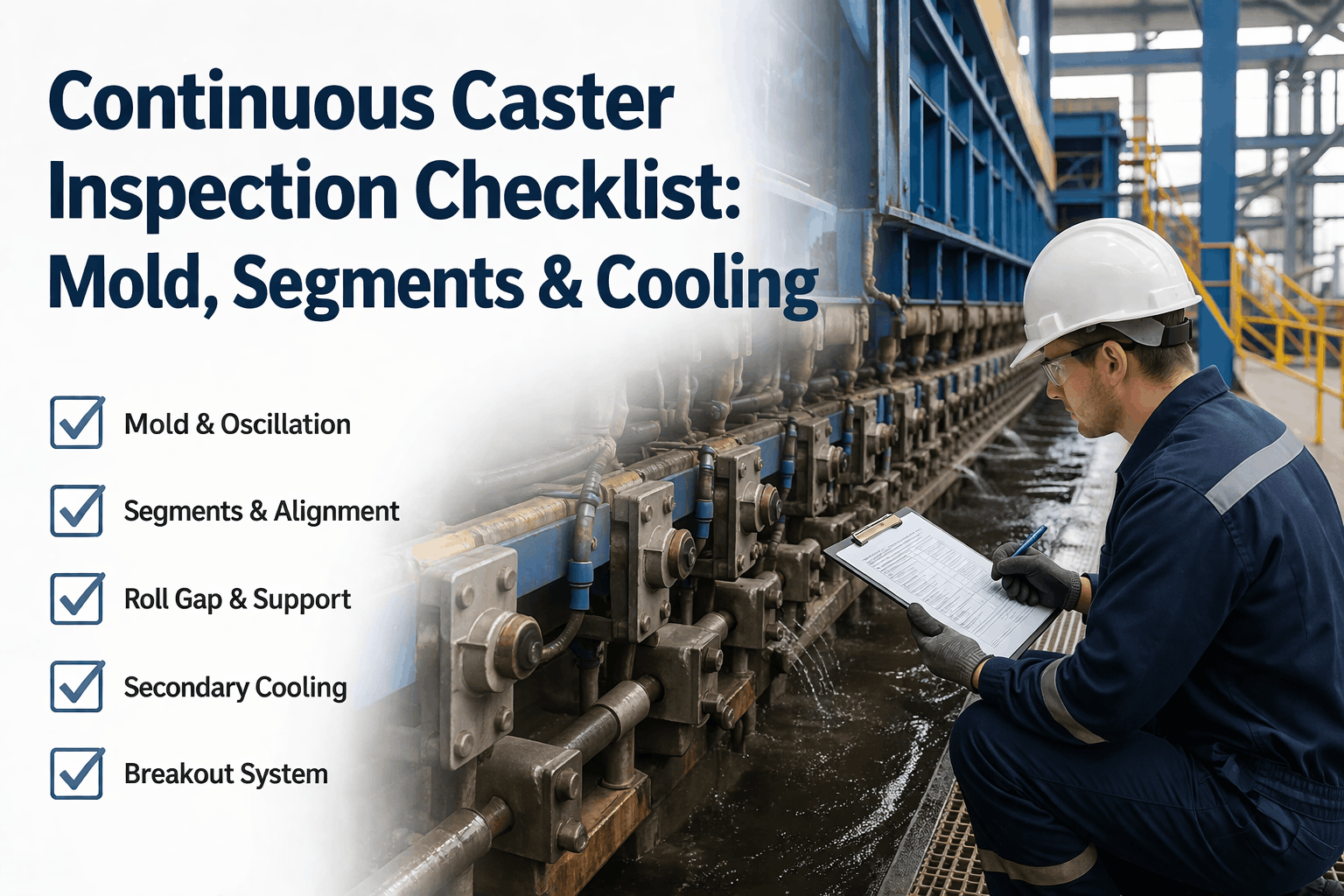
Read More
A continuous caster sticker breakout costs between $500,000 and $3,000,000 in a single event — molten steel penetrating the solidifying strand shell, flooding the caster segments, and requiring a complete strand evacuation, segmen
Read More
For a Tier-1 integrated steel plant operating two blast furnaces and a high-speed hot strip mill, unplanned downtime was costing an estimated $52,000 per hour. Legacy manual inspection protocols were failing to catch subsurface b
Read More
A continuous caster sticker breakout costs between $500,000 and $3,000,000 in a single event — molten steel penetrating the solidifying strand shell, flooding the caster segments, and requiring a complete strand evacuation, segmen

Read More
A rolling mill that starts a shift without a verified hydraulic pressure system, un-inspected work roll surfaces, or unchecked cooling water headers is not a mill that is ready to roll — it is a mill that is ready to fail. The fir
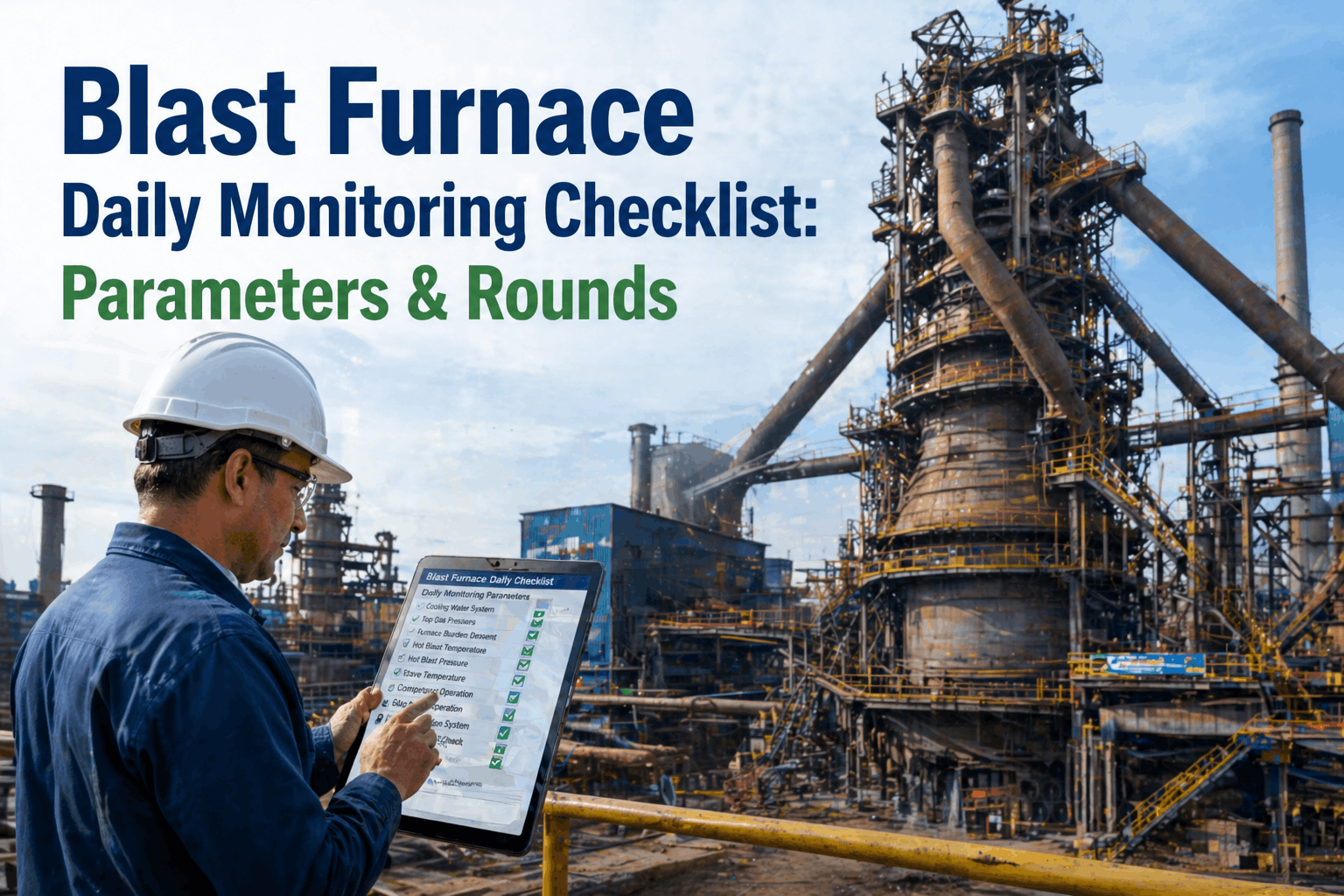
Read More
A blast furnace is the highest-capital, highest-risk, and most thermally demanding unit in any integrated steelmaking operation. A single missed parameter during daily operator rounds — an undetected stave ΔT deviation, a slow tuy
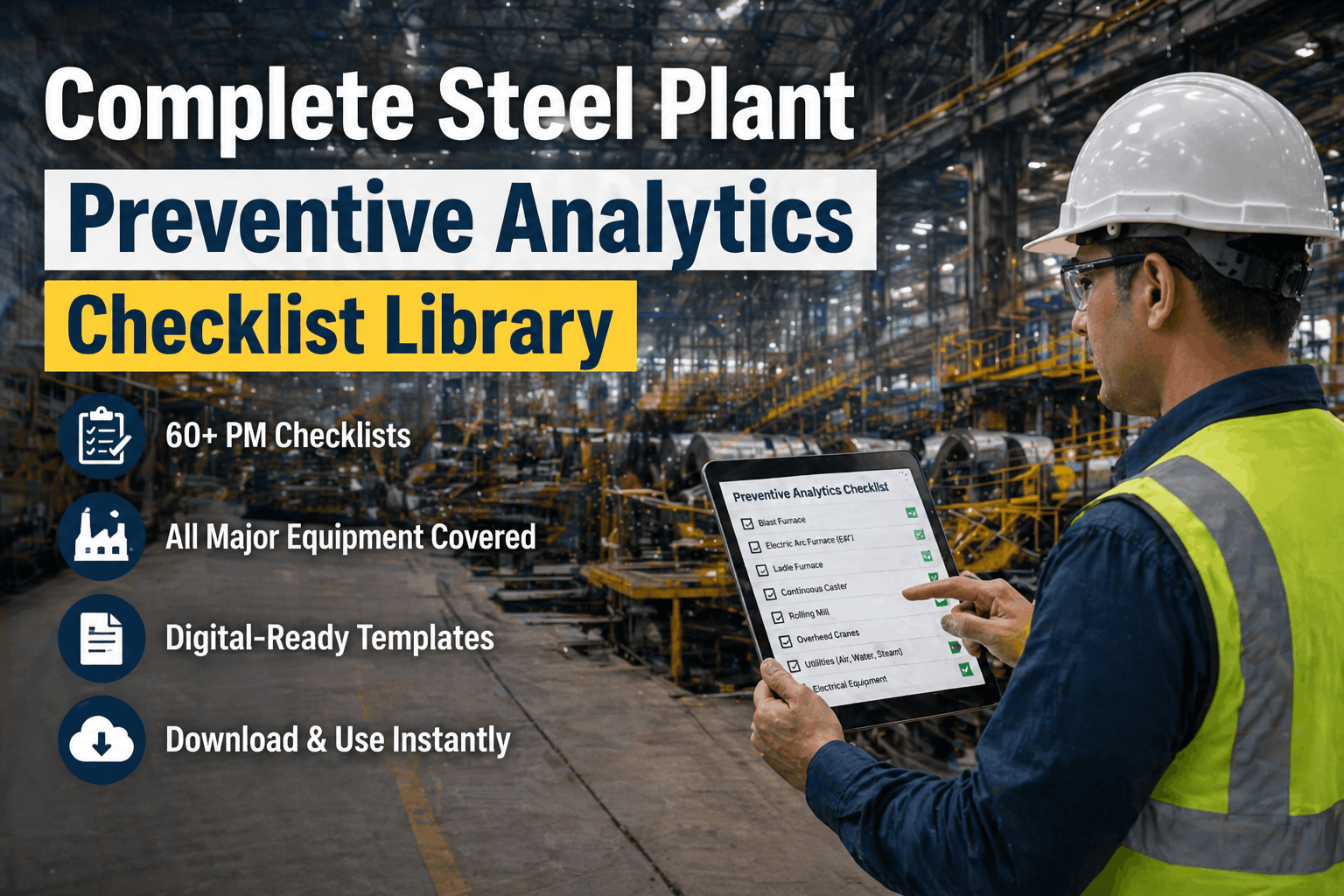
Read More
Unplanned downtime in a steel plant costs between $50,000 and $400,000 per hour depending on the production stage — blast furnace delays cascade into BOF scheduling failures, caster stoppages trigger tundish rejec
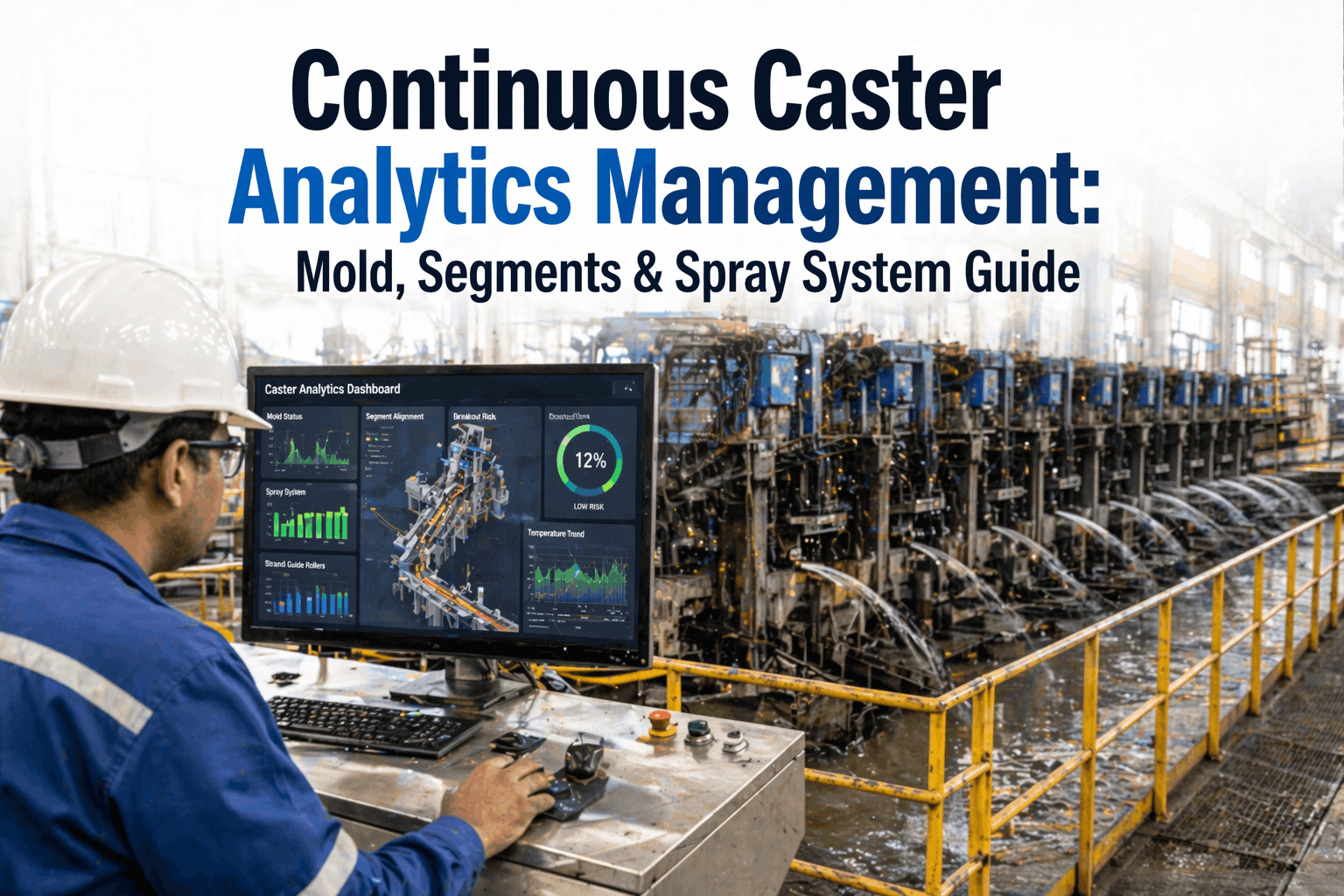
Read More
Continuous casting analytics represent the technical pinnacle of liquid-to-solid steel transition—a high-complexity operational layer where thermodynamic modeling, mechanical alignment, and fluid dynamics converge. From the initia

Read More
Continuous casting mold monitoring represents the most critical safety barrier in modern steel production—a high-stakes operational layer where molten steel temperature, copper plate heat transfer, and mechanical oscillation conve
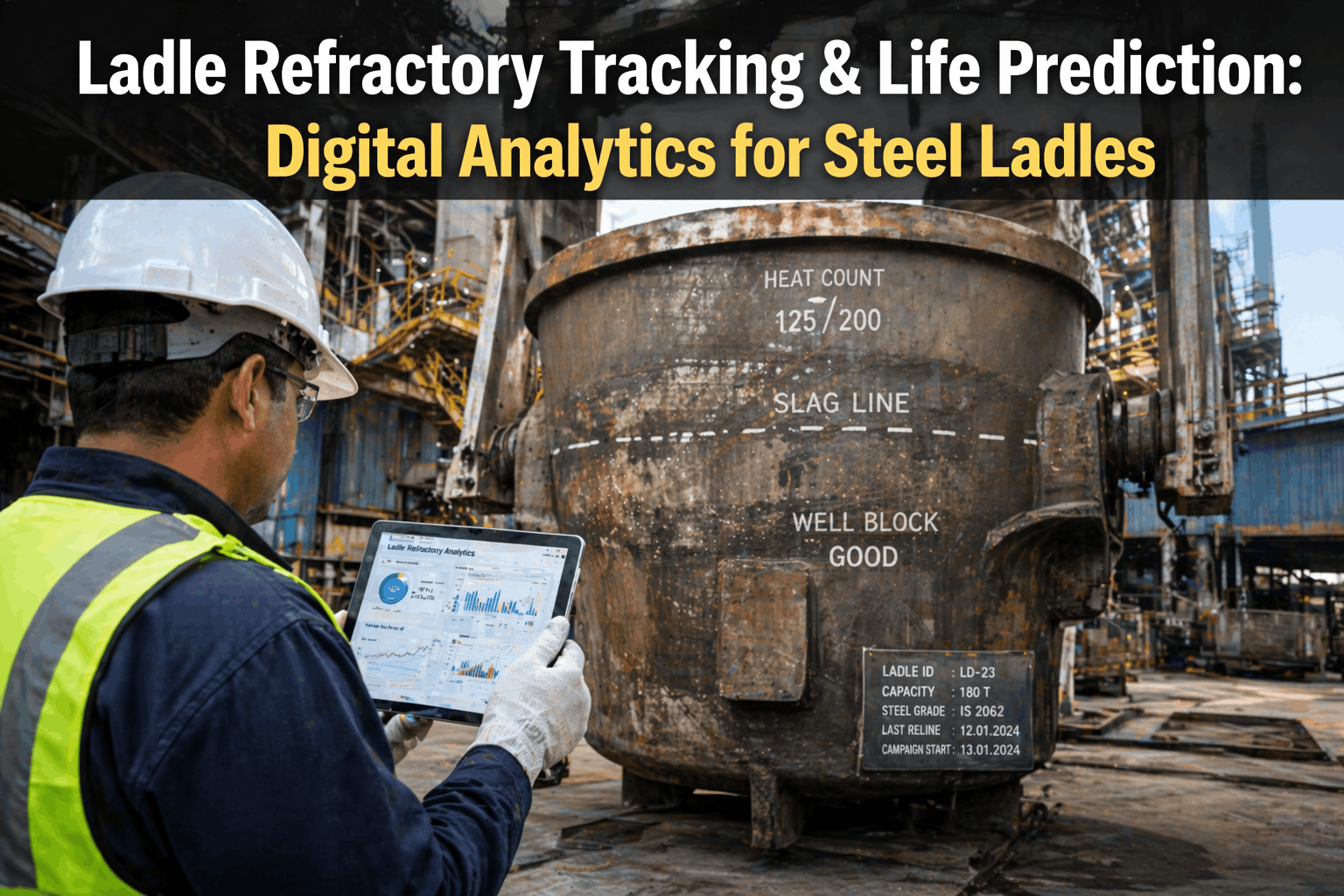
Read More
Steel ladle refractory management represents the most critical safety and cost bottleneck in modern integrated steelmaking—a high-stakes operational layer where chemical slag erosion, thermal shock and mechanical impact converge.
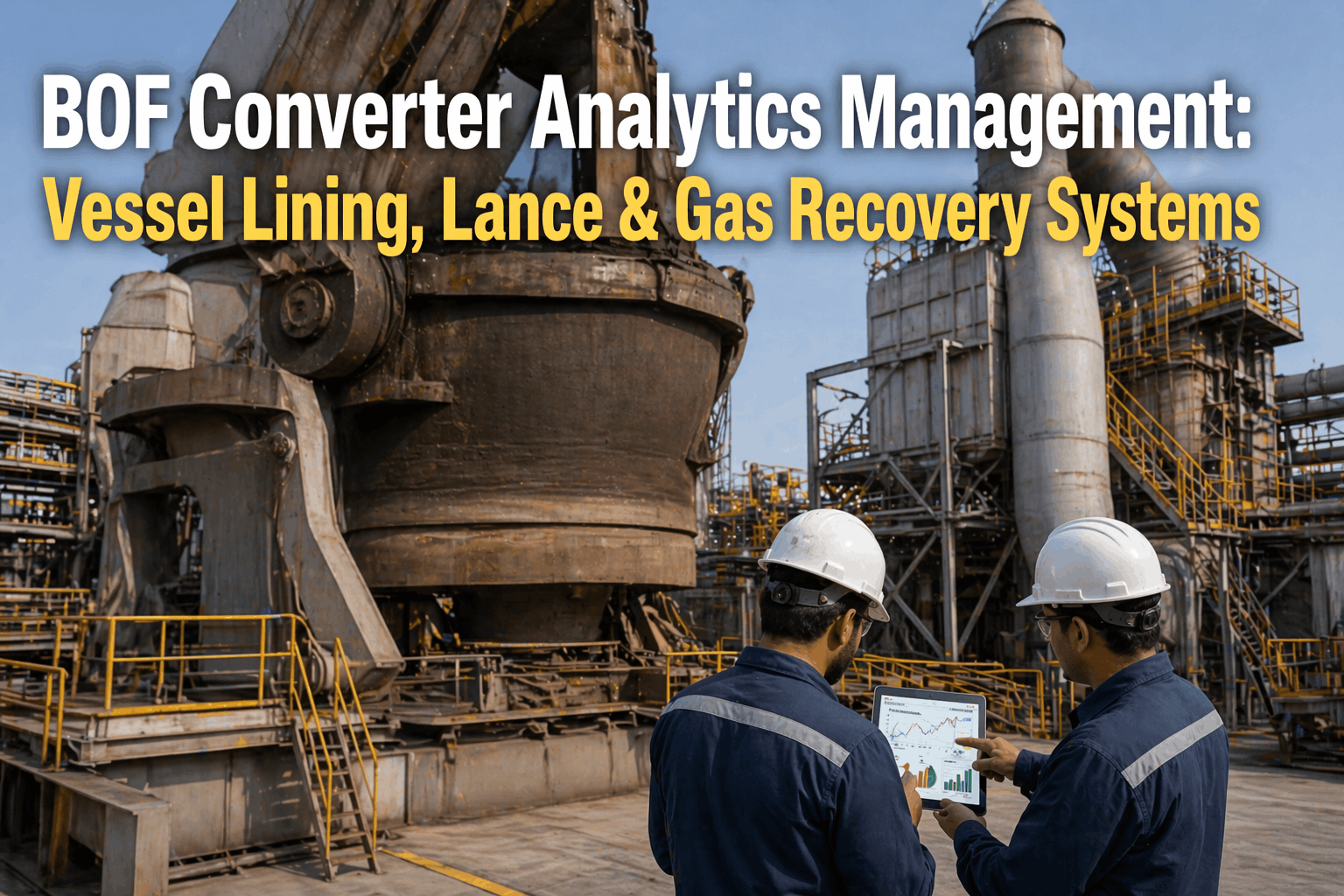
Read More
Basic Oxygen Furnace (BOF) converter management represents the apex of integrated steelmaking asset stewardship—a discipline where architectural lining integrity, oxygen injection precision and gas recovery efficiency converge. Fr
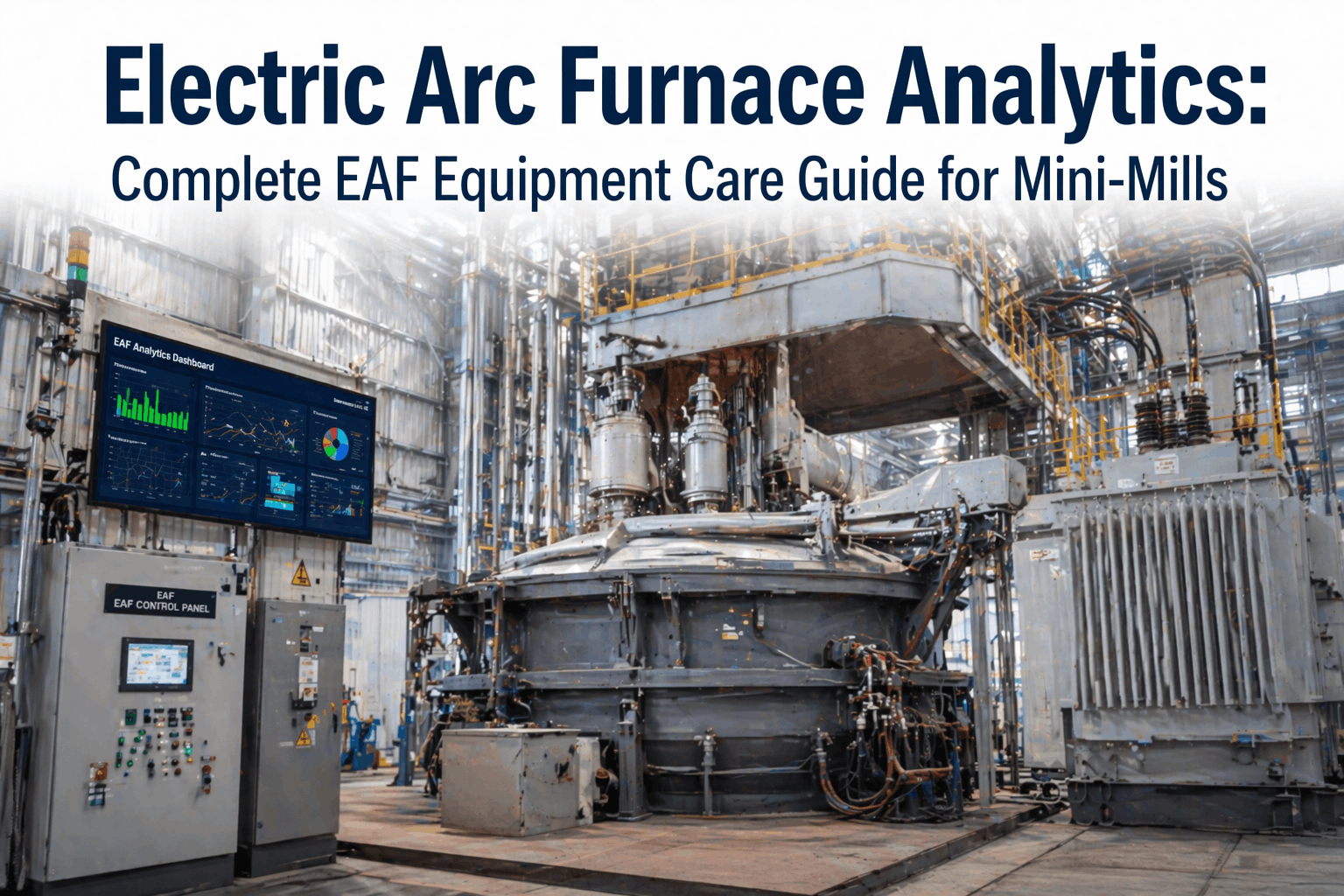
Read More
Electric Arc Furnace (EAF) analytics represent more than melting telemetry — they are mission-critical operational intelligence layers that demand rigorous stewardship, precision data and a maintenance strategy built for the moder
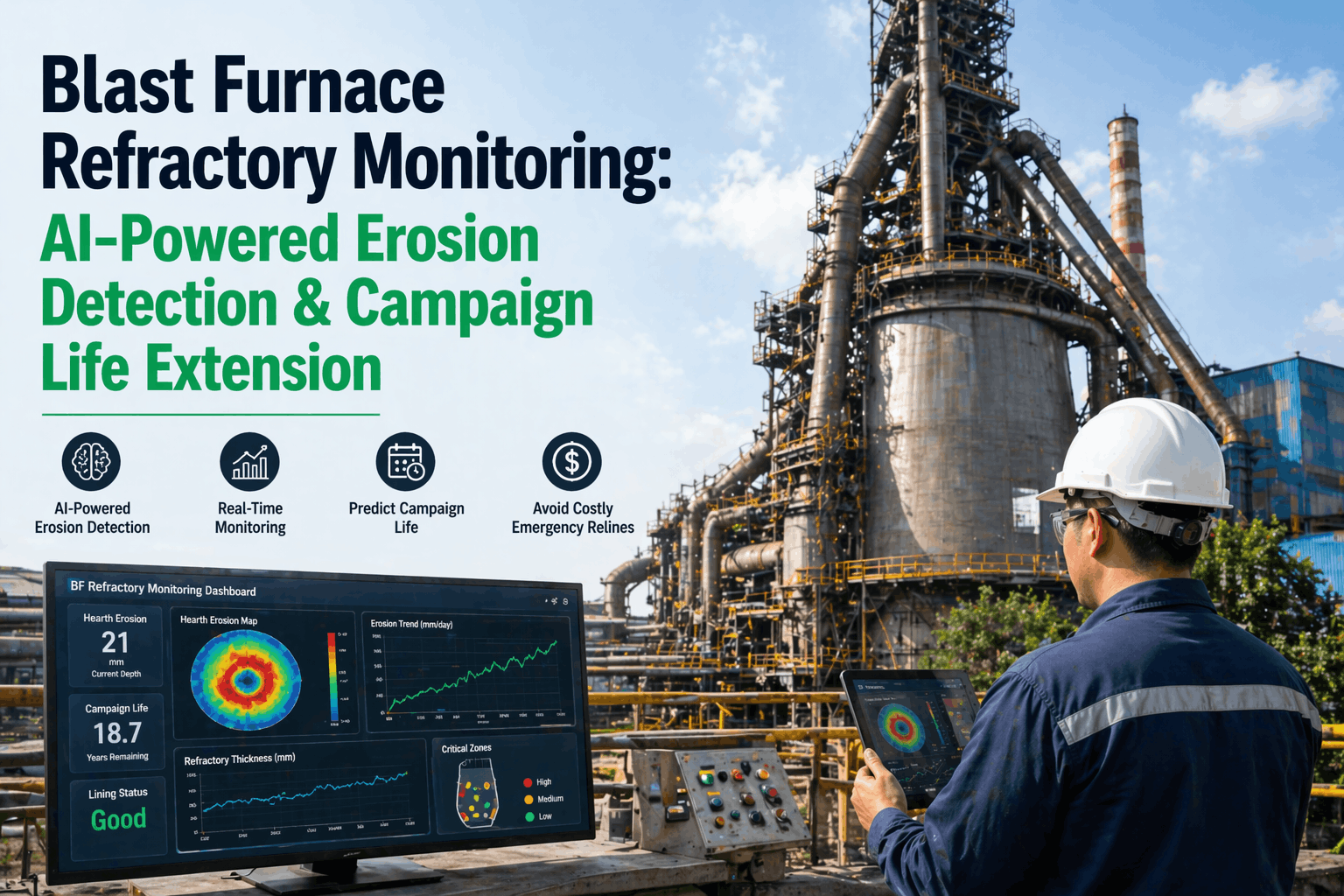
Read More
In the high-stakes environment of integrated ironmaking, the hearth refractory is the single most critical asset—and the most difficult to inspect. Traditionally, a Blast Furnace (BF) campaign lasts 12-15 years before the risk of
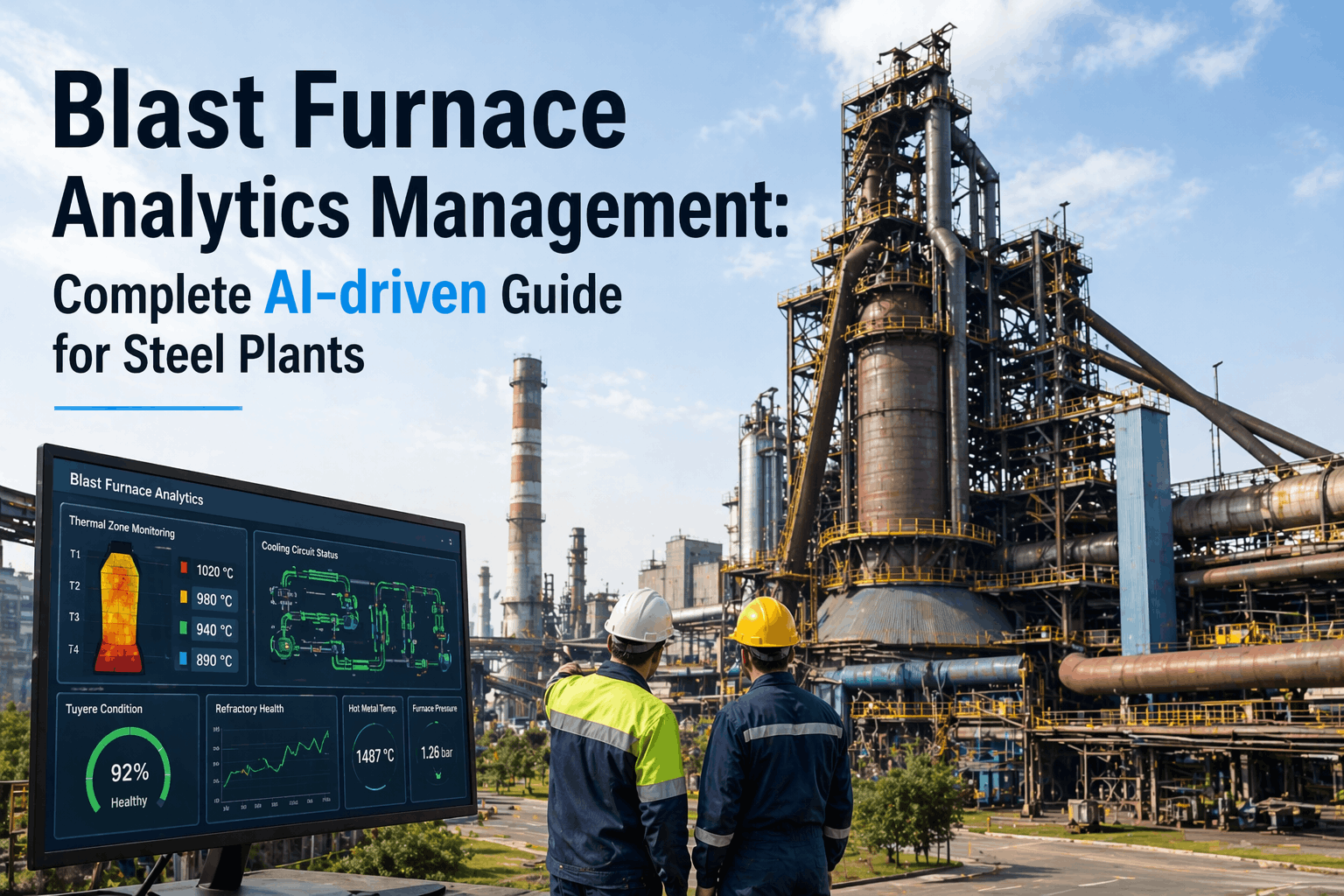
Read More
A **Blast Furnace (BF)** is the chemical and thermal engine of an integrated steel mill—and its most significant operational risk. With unplanned shutdowns costing up to $1.2M per day in lost iron production and
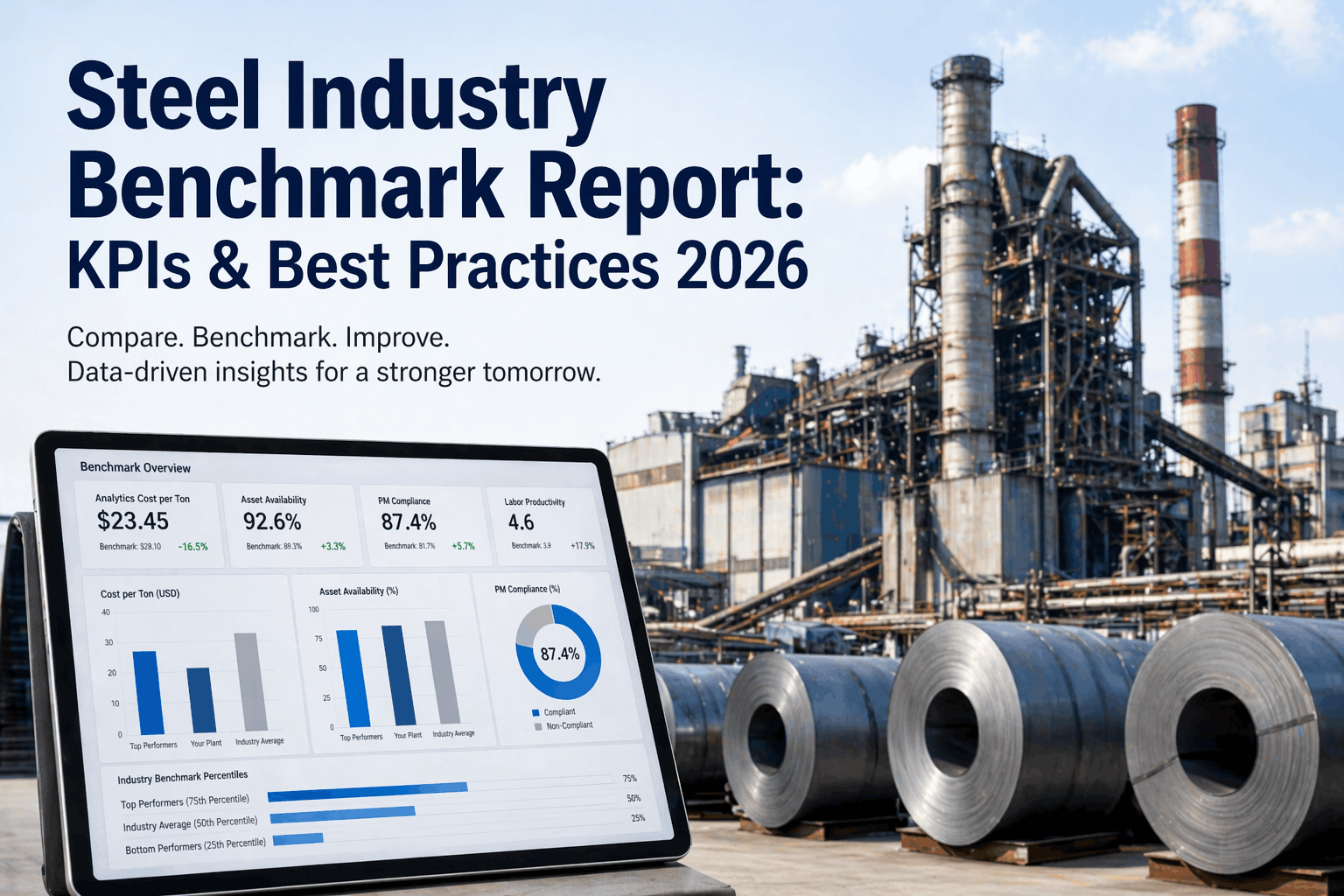
Read More
The 2026 global steel landscape is defined by the "Double Mandate"—achieving rapid decarbonization while maintaining world-class operational availability. To remain competitive in an era of EU CBAM and surplus global capacity, st
Read More
For steel plant operations leads, the choice of an Industrial Analytics platform is no longer just a "software procurement"—it is a decision on how your plant will execute its next 15-year campaign. While IBM Maximo
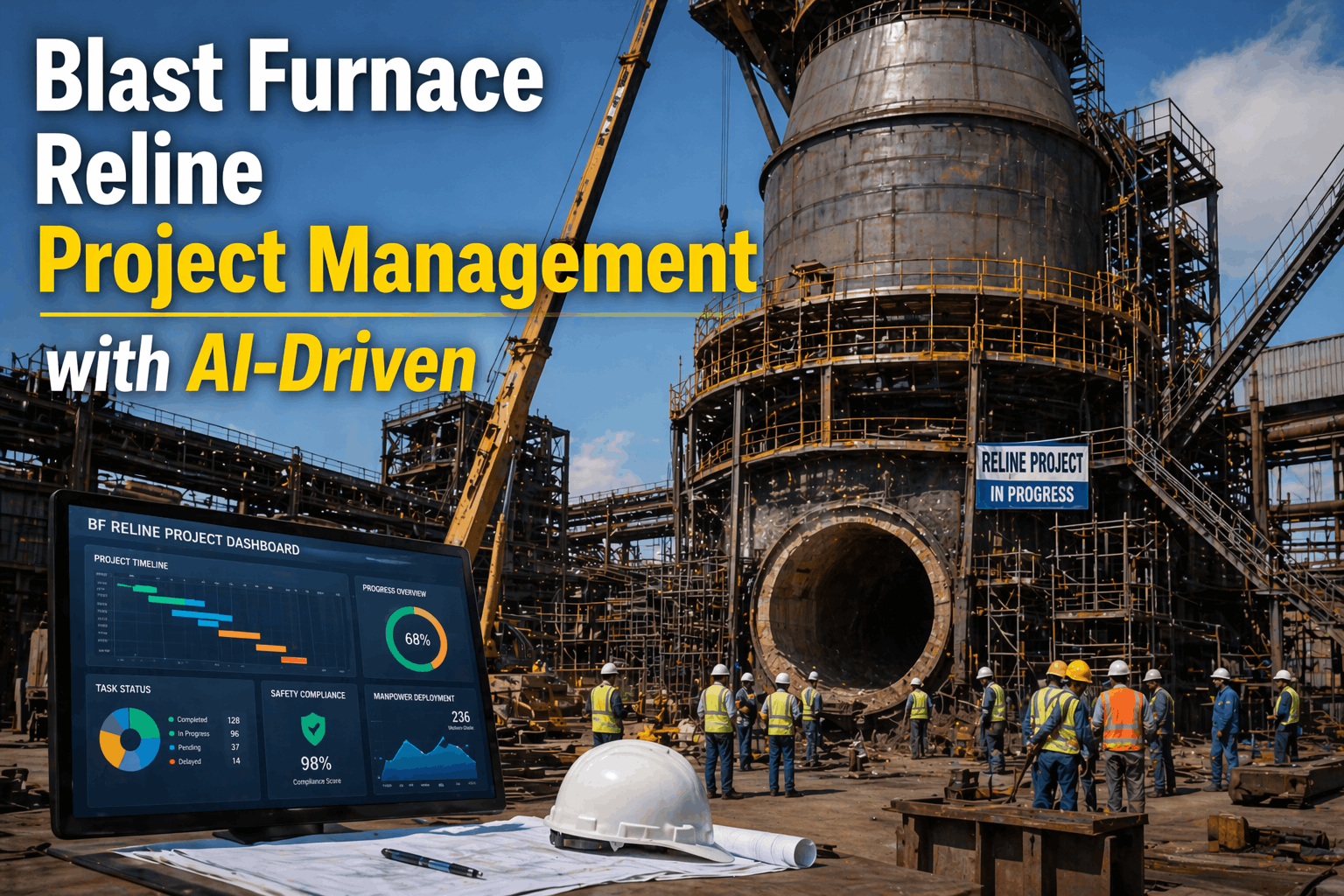
Read More
A Blast Furnace (BF) reline is the most complex engineering challenge in the entire metallurgical sector — a 30-to-60 day high-intensity campaign where every hour of delay costs millions. Effective reline manageme
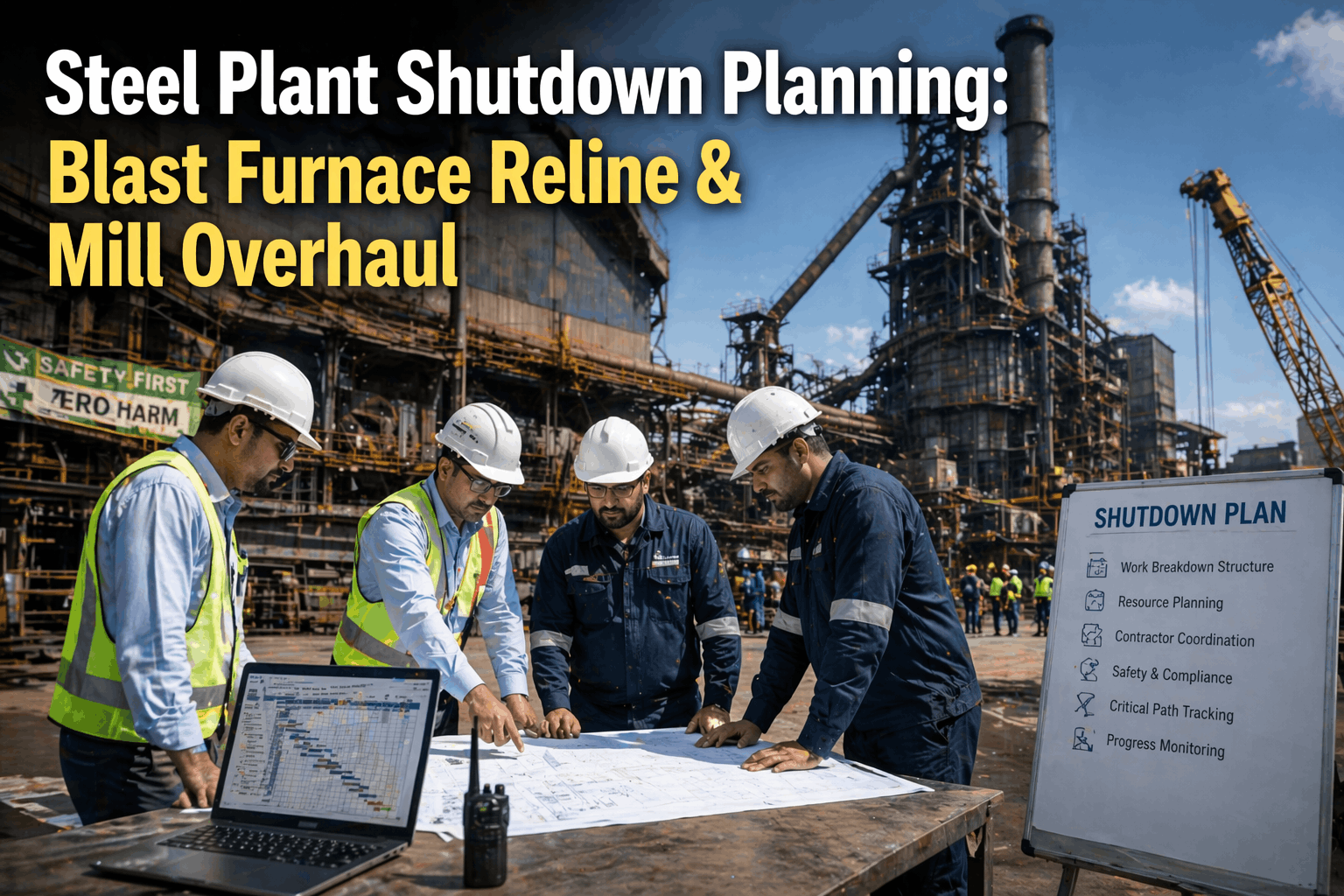
Read More
A Blast Furnace (BF) reline or a major **rolling mill overhaul** is the most precarious and capital-intensive event in a steel plant's lifecycle. With downtime costs often exceeding $1.5M per day, successful turna
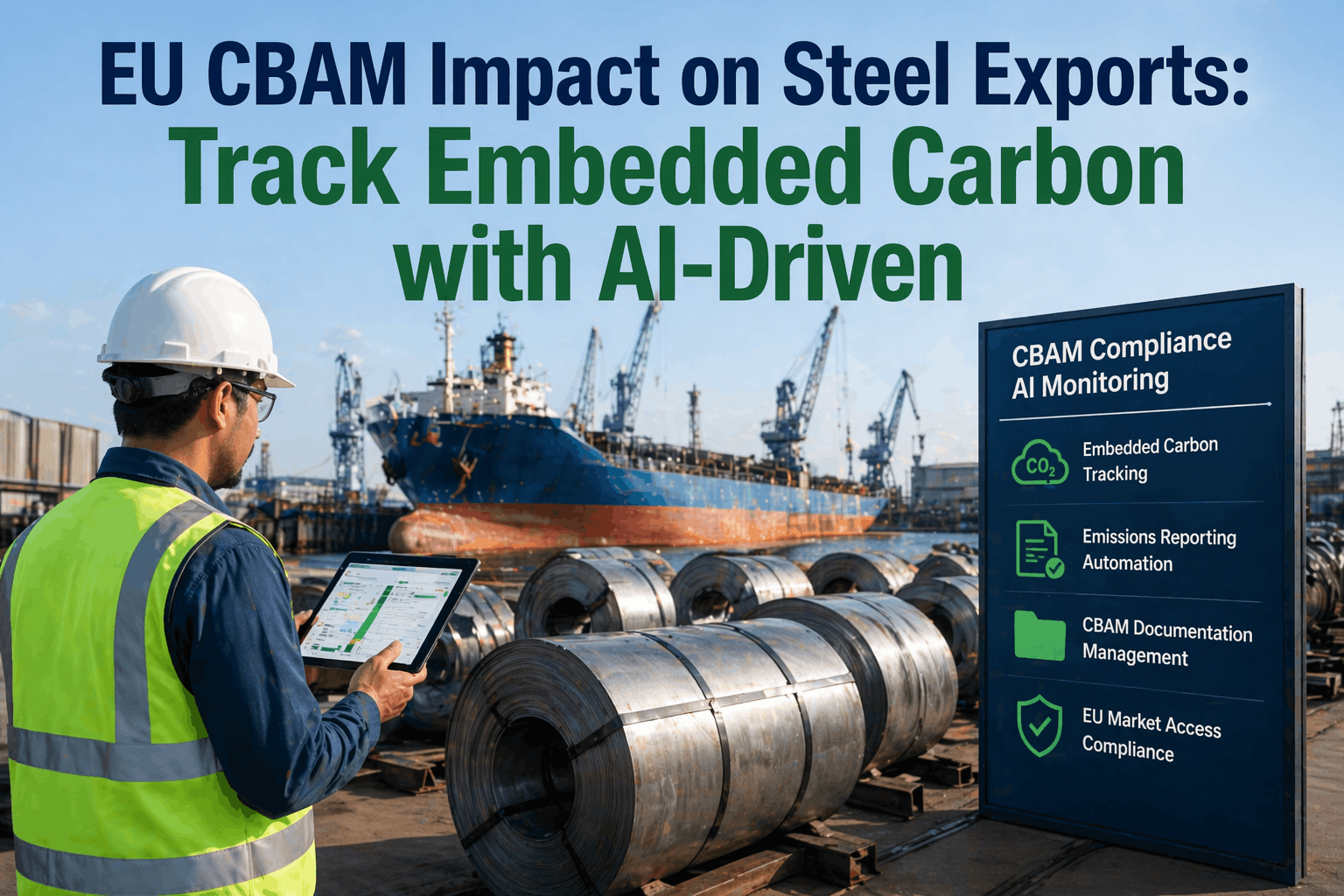
Read More
By 2026, the European Union's Carbon Border Adjustment Mechanism (CBAM) will transition from simple reporting to a definitive financial mandate for global steel exporters. Failure to provide granular, sensor-verif
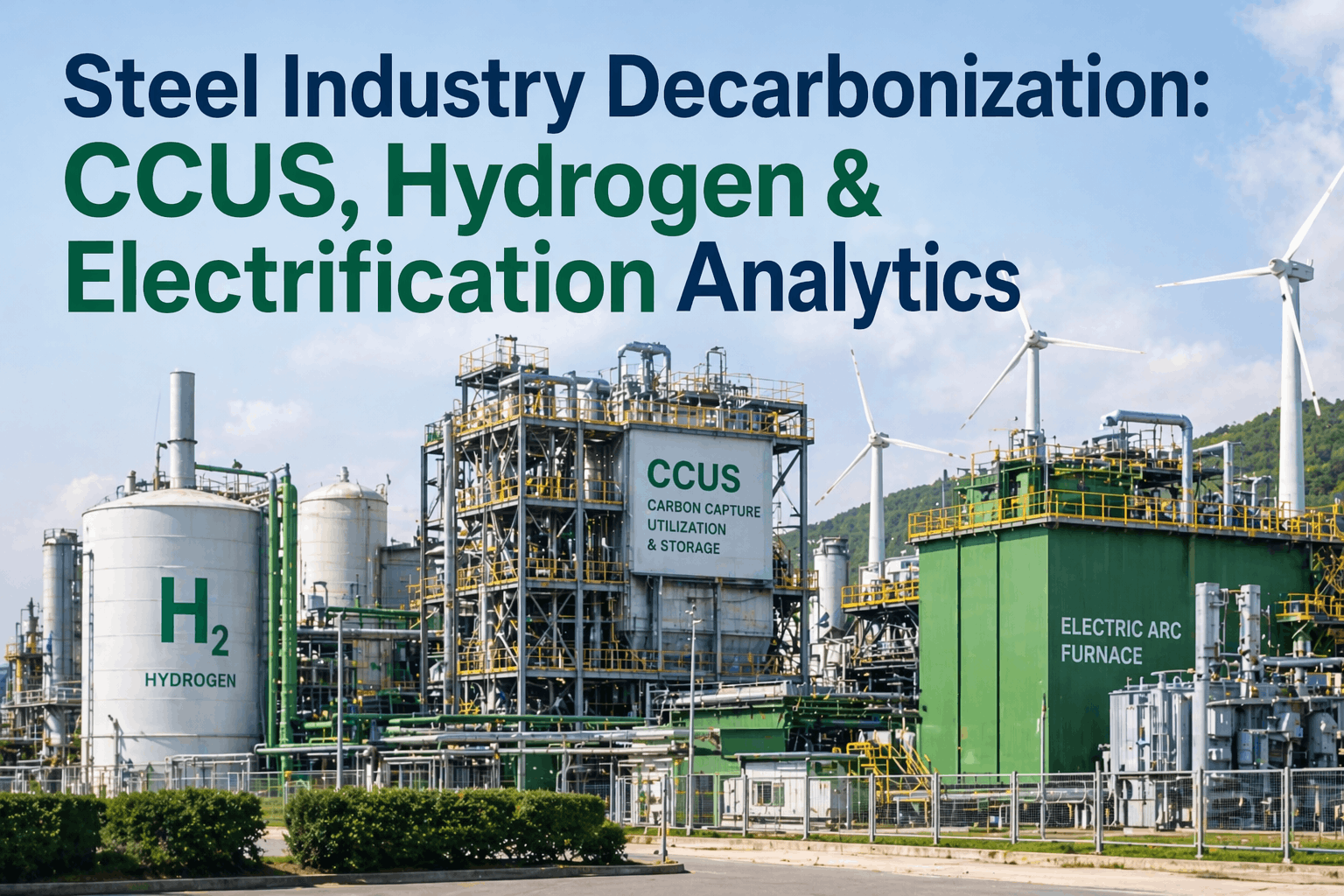
Read More
The global steel industry is at a pivotal crossroads, shifting from coal-heavy blast furnaces to a multi-pillar decarbonization strategy. This transition is anchored by three critical technologies: **Carbon Capture, Utilization, a
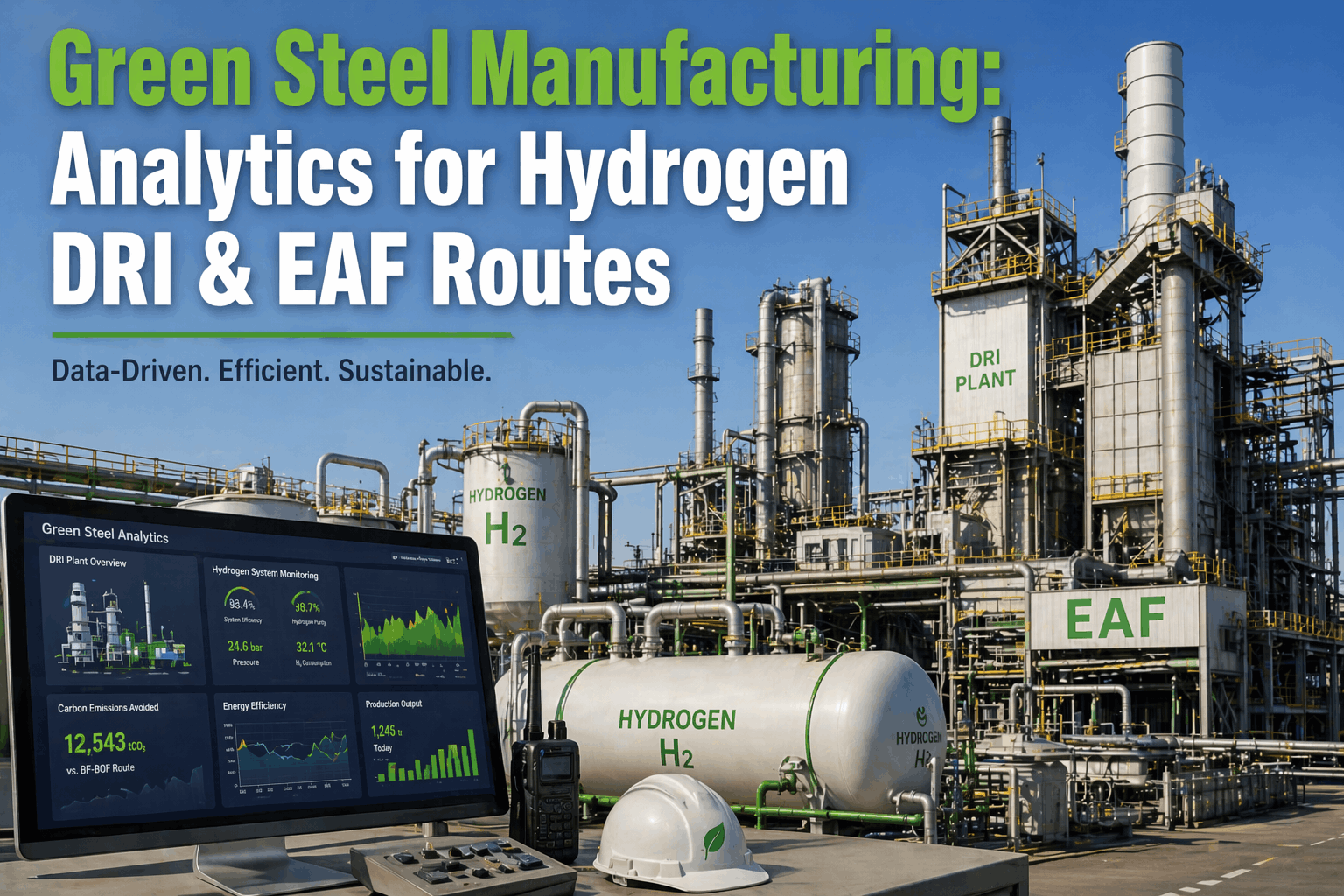
Read More
The transition to Green Steel represents the most significant capital reallocation in the history of the metallurgical industry. As blast furnaces reach their end-of-life, the shift toward Hydrogen-based D
Read More
As we approach 2026, the steel industry is moving beyond basic predictive maintenance toward Prescriptive Autonomous Operations. The integration of Edge AI, multi-sensor fusion, and physics-inform
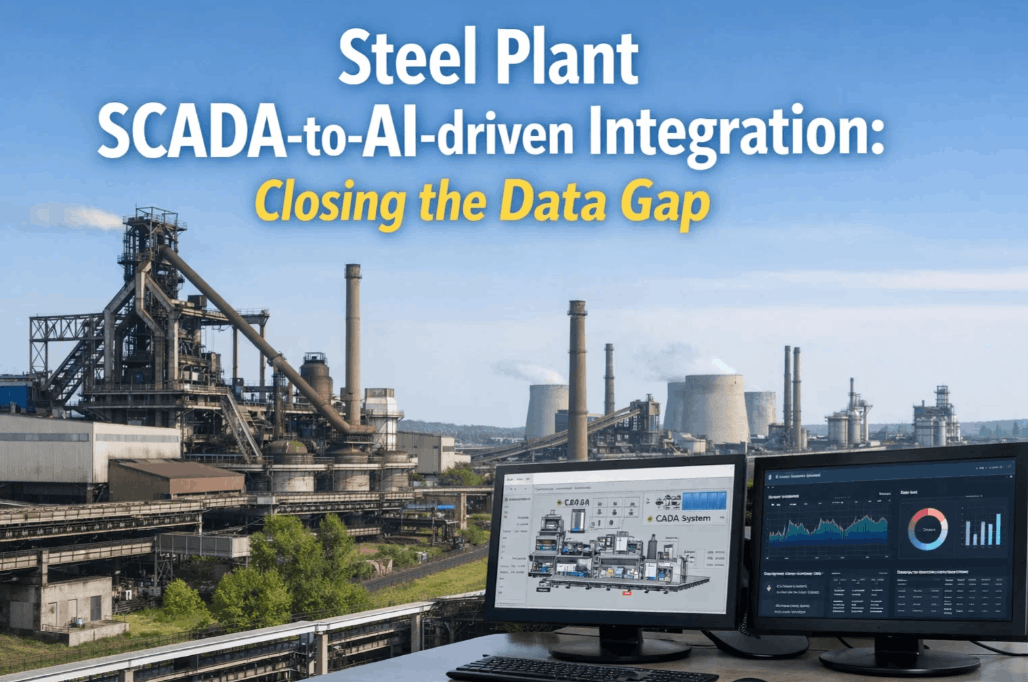
Read More
The gap between Operational Technology (OT) and Information Technology (IT) remains one of the largest hidden costs in modern metallurgy. Steel plants generate massive volumes of critical equipment data across SCADA networks, Dis
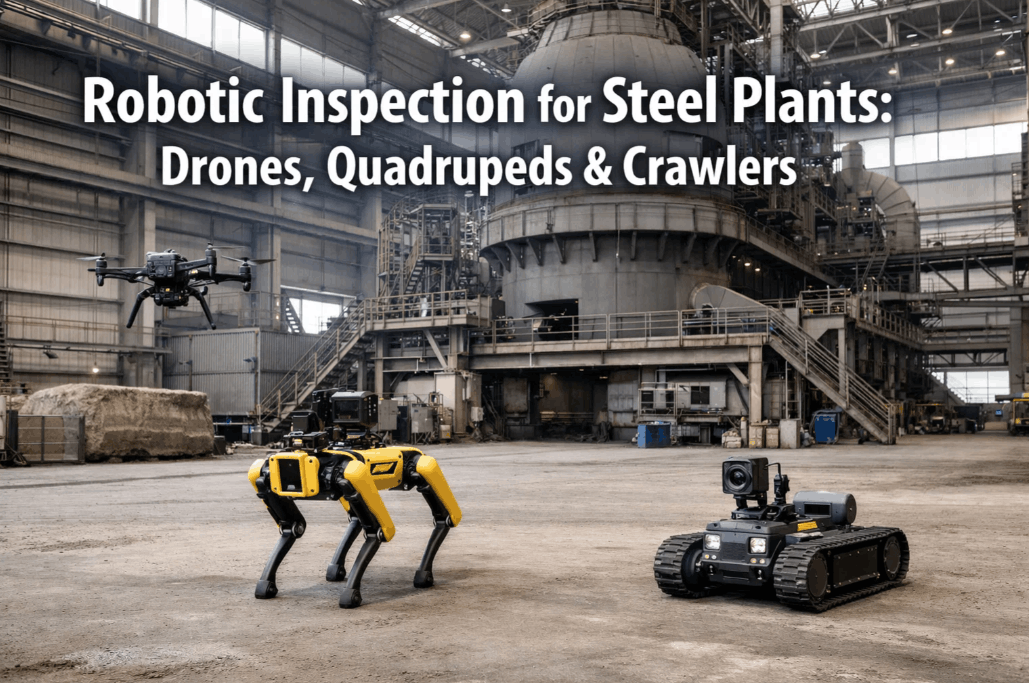
Read More
As the steel industry transitions from manual maintenance cycles to autonomous oversight, robotic inspection for steel plants is becoming the new baseline for operational availability. Traditional inspection routes are no longe
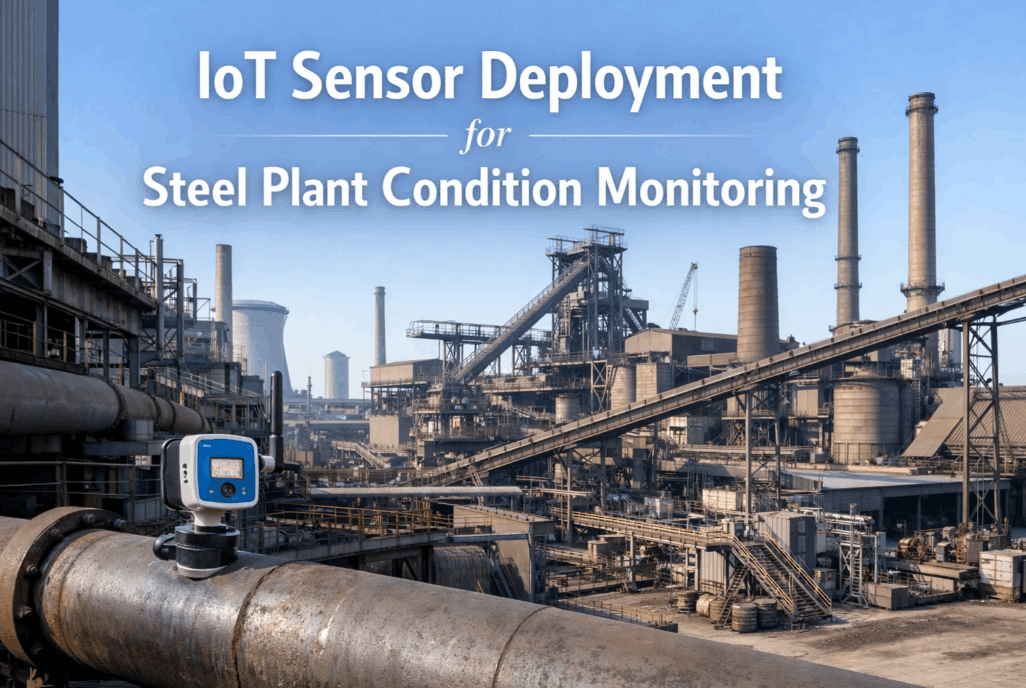
Read More
The modern steel mill is the ultimate crucible for hardware—a landscape of 1500°C temperatures, abrasive dust, and intense electromagnetic interference (EMI) that shreds standard electronics. For decades, this "Sensing Void" has f
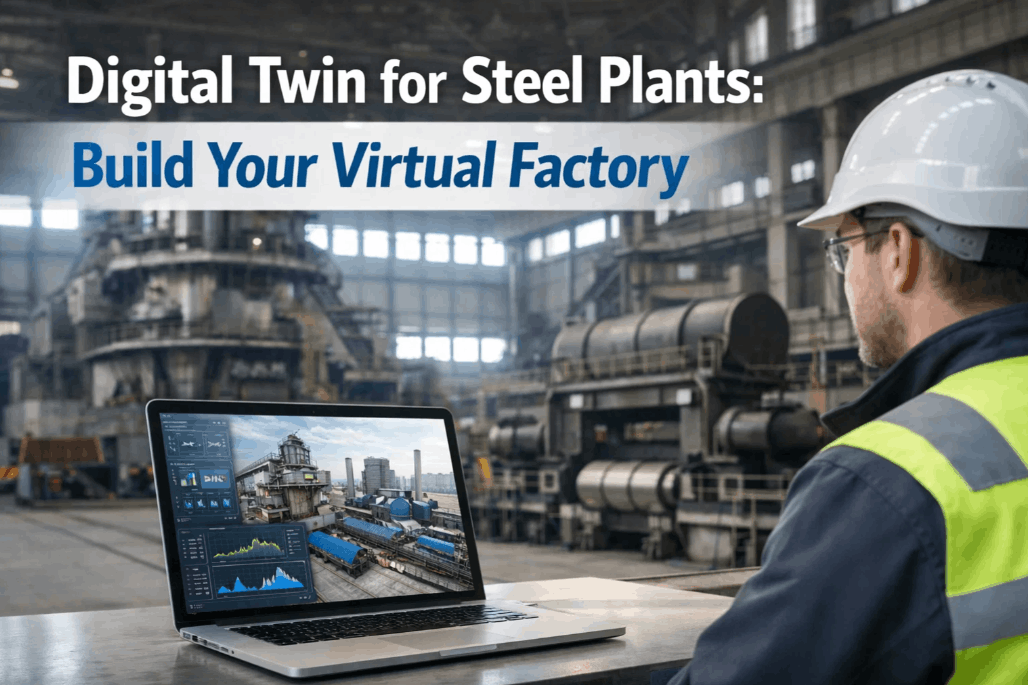
Read More
The modern steel mill is no longer a "Black Box" of unpredictable thermal cycles and mechanical stress. It is a data-driven ecosystem where the physical factory is mirrored by a high-fidelity digital twin steel co

Read More
In the world of high-stakes steelmaking, time is literally measured in millions. A single unplanned mill stoppage or a caster breakout isn't just an operational delay—it is a "Million-Dollar Minute" that threatens total production
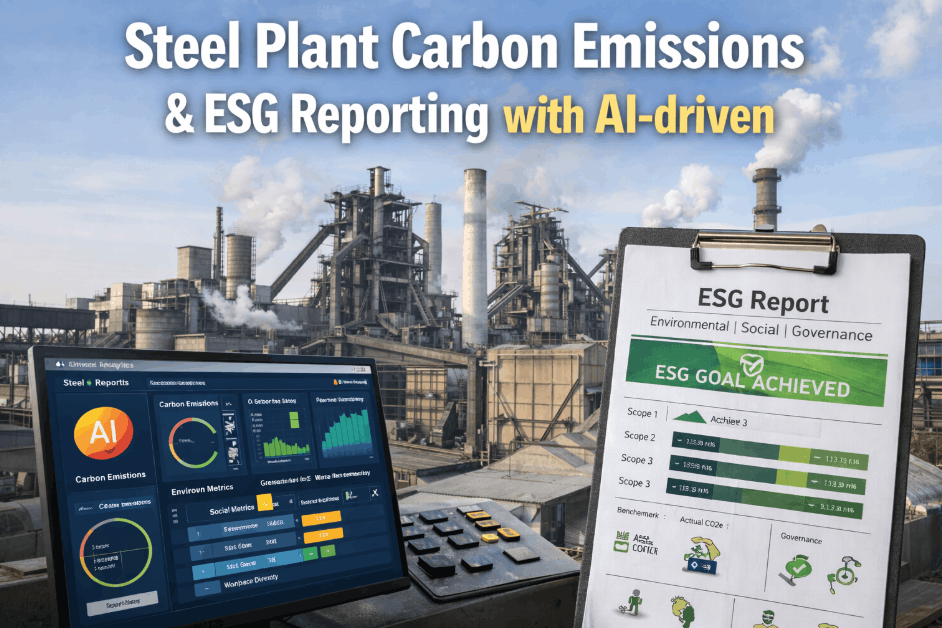
Read More
Steel manufacturing accounts for approximately 7–9% of global CO2 emissions — making it one of the highest-scrutinized sectors in the global decarbonization agenda. In 2026, steel producers face simultaneous pressure from the EU C
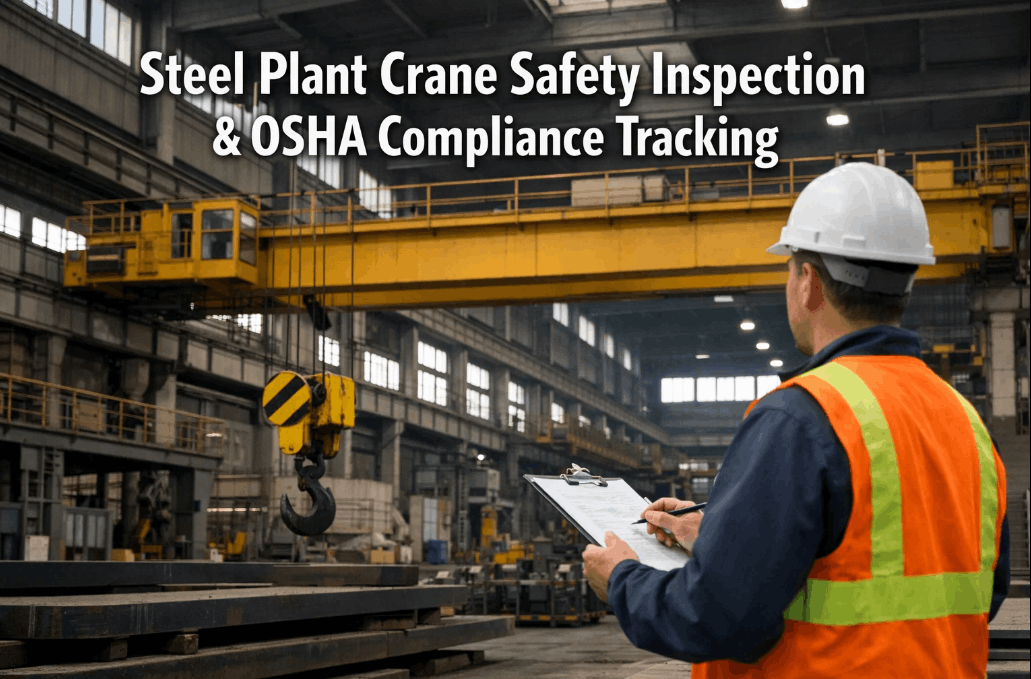
Read More
Overhead crane failures in steel plants are catastrophic events — not near-misses. With bridge cranes lifting 30–300-tonne ladle transfers, scrap baskets, and rolled coils across active production floors, a single structural failu
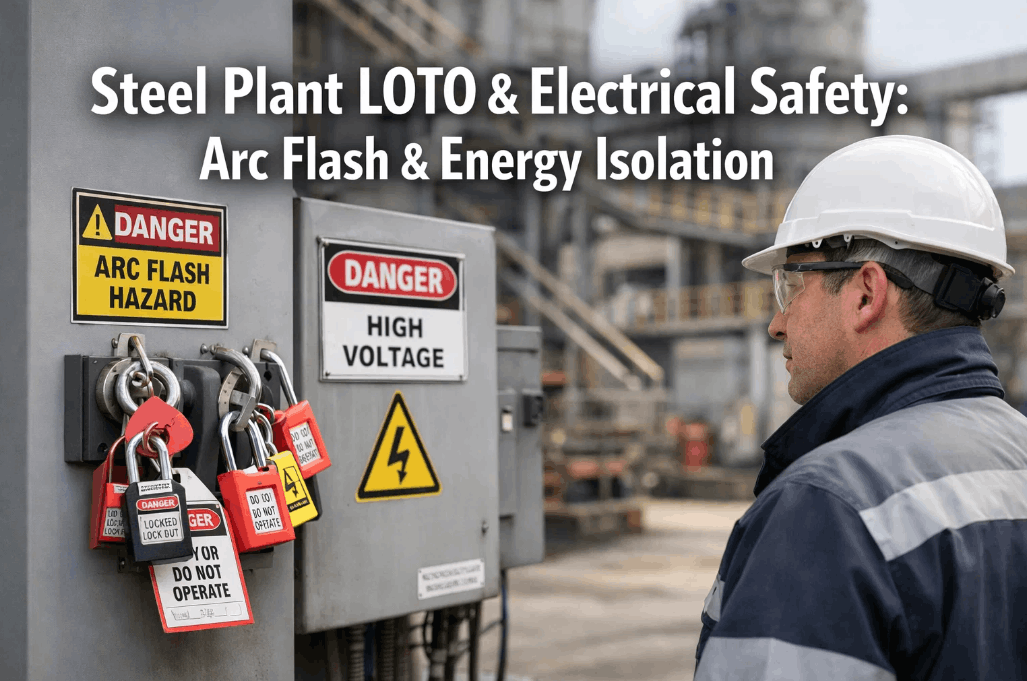
Read More
Lockout/Tagout (LOTO) failures and arc flash incidents remain the leading causes of fatal electrical injuries in integrated steel plants. With equipment operating at 480V to 34.5kV across electric arc furnaces, ladle metallurgy s

Read More
Environmental compliance in the iron and steel industry is undergoing a digital revolution as global regulators — including the **EPA, EU ETS, and CPCB** — transition toward real-time emissions monitoring and verifiable carbon ac
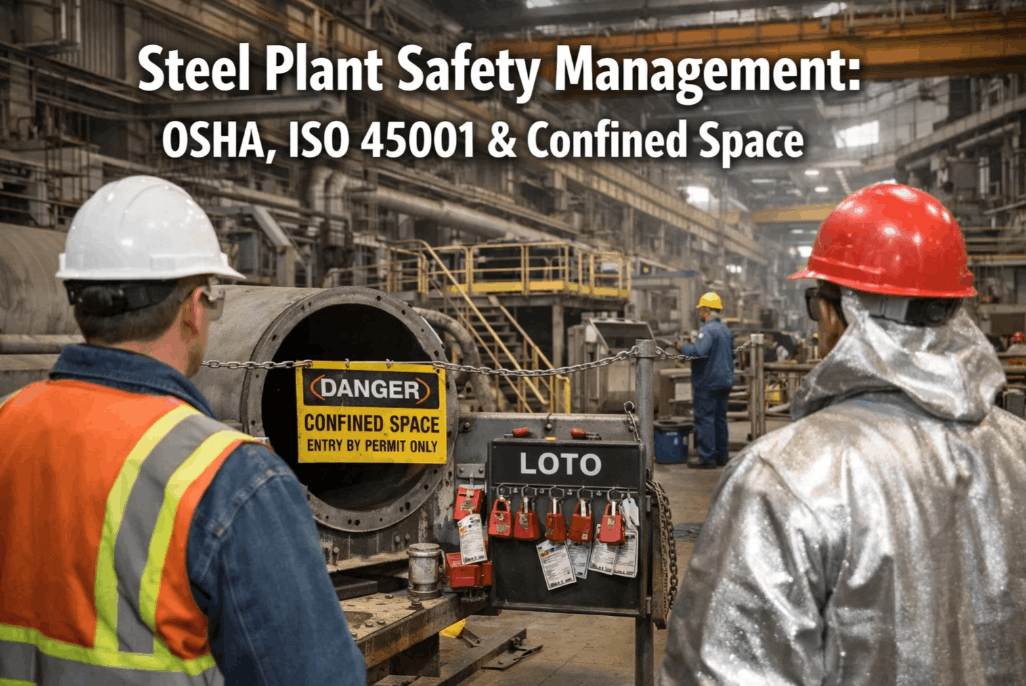
Read More
Steel manufacturing plants operate some of the most hazardous industrial environments on earth — combining extreme heat, molten metal, high-voltage electrical systems, toxic gases, and heavy rotating machinery under one roof. With
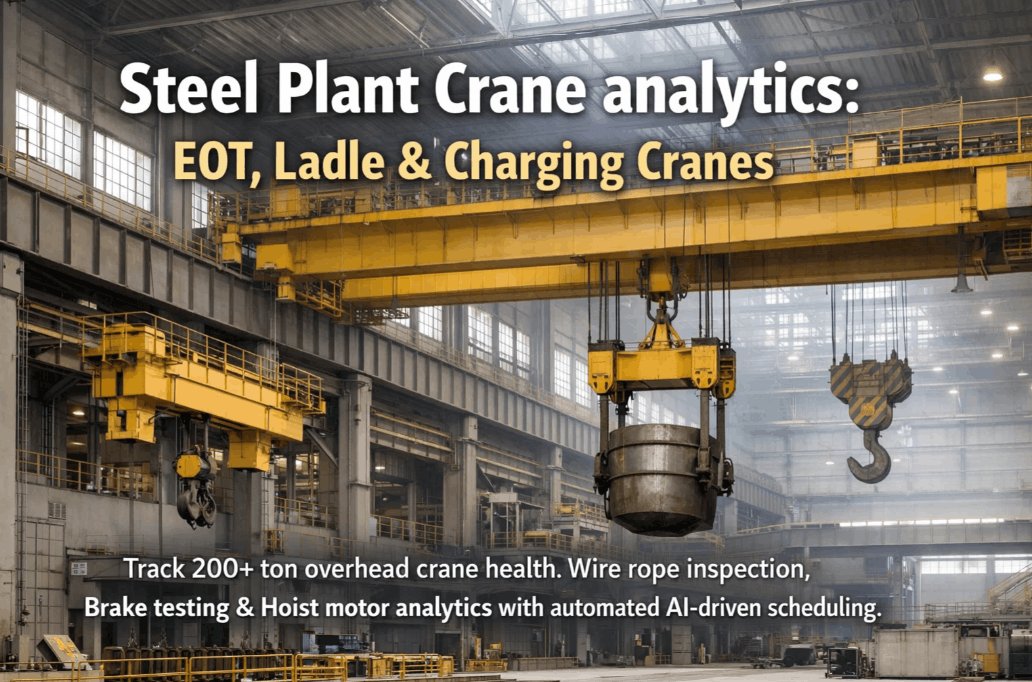
Read More
In a modern steelmaking facility, Electric Overhead Traveling (EOT) cranes are the undisputed critical path. A failure on a 200-ton hot metal ladle crane doesn't just halt the converter—it creates catastrophic, life-threatening sa
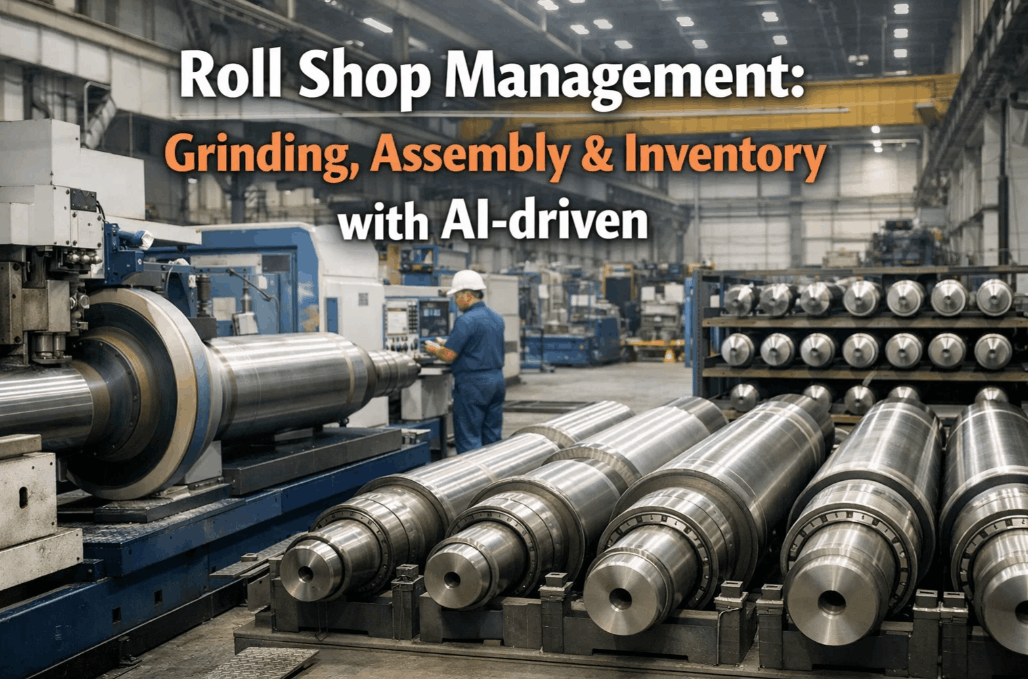
Read More
The roll shop is the unsung execution engine of every high-performance rolling mill. Whether serving a hot strip mill or a sub-millimeter cold rolling facility, the geometric precision, surface roughness, and bearing integrity of
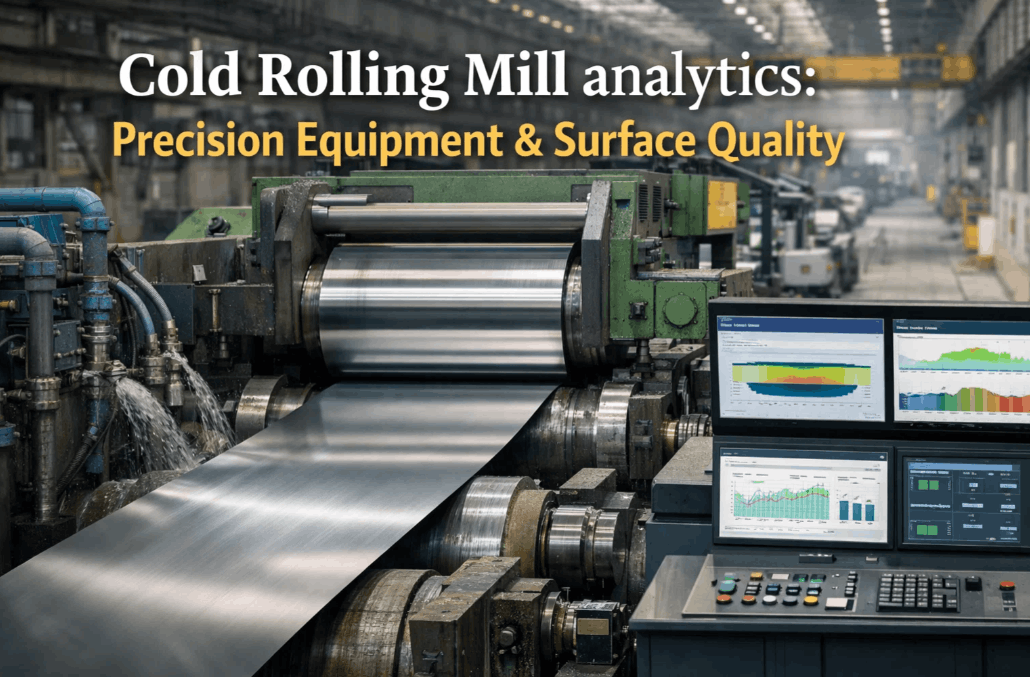
Read More
Cold rolling represents the absolute pinnacle of metallurgical precision. Transforming hot-rolled steel into high-value automotive exposed panels, tinplate, and aerospace alloys requires compressing the strip at room temperature t
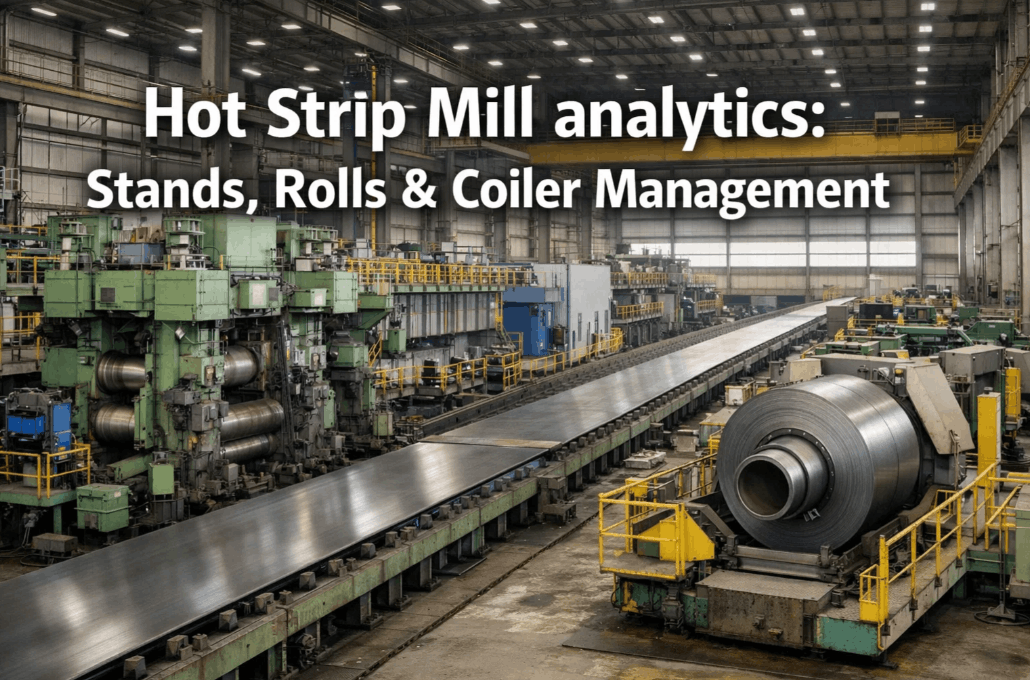
Read More
The hot strip mill is the undisputed heartbeat of downstream steel production. Converting massive 200mm slabs into 1.2mm precision steel coils at speeds exceeding 1,200 meters per minute exposes mechanical assets to extreme torque
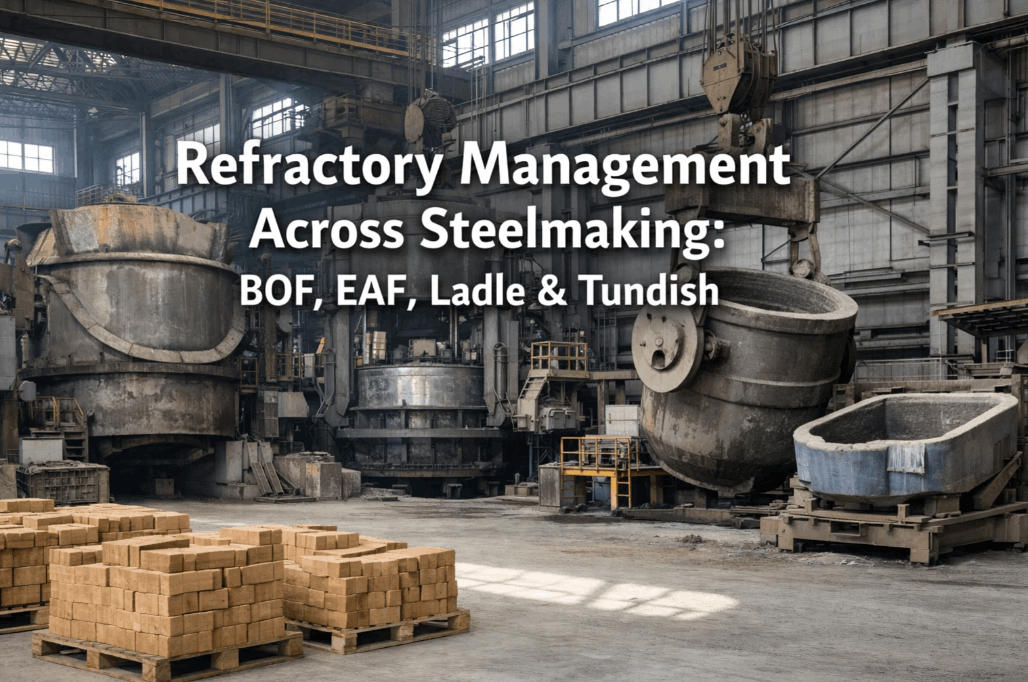
Read More
Refractory bricks represent one of the heaviest recurring operational expenditures in any steel manufacturing facility. Every ton of liquid steel produced steadily degrades the internal silica, magnesia, and alumina linings across
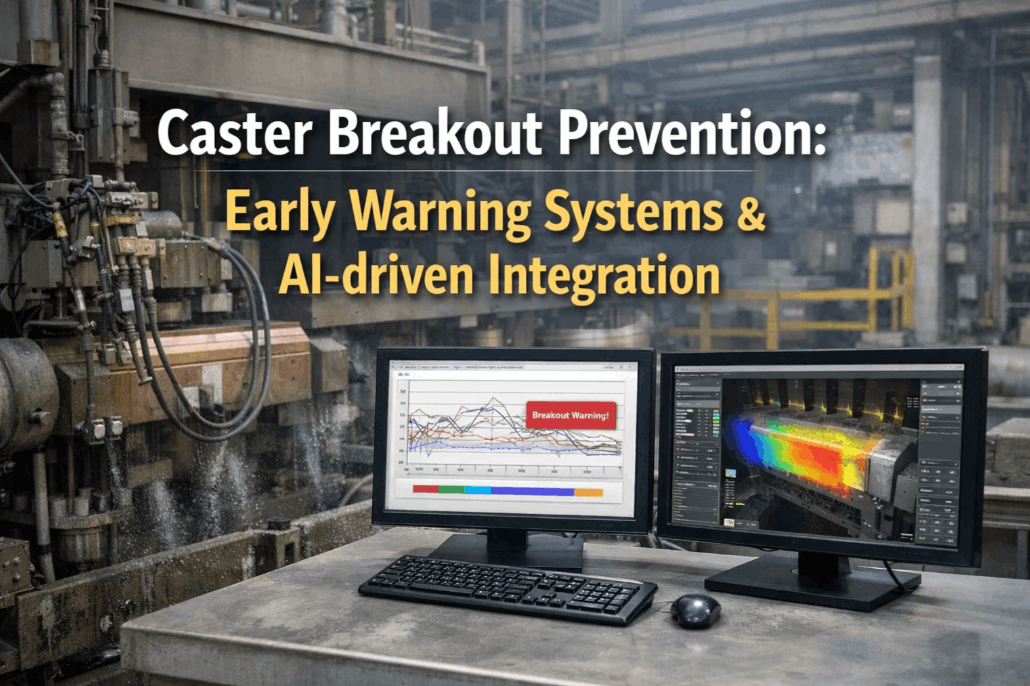
Read More
A liquid steel breakout is the single most terrifying and financially devastating event on the casting floor. When a localized section of the solidifying steel shell sticks to the copper mold plates, the molten core breaches the
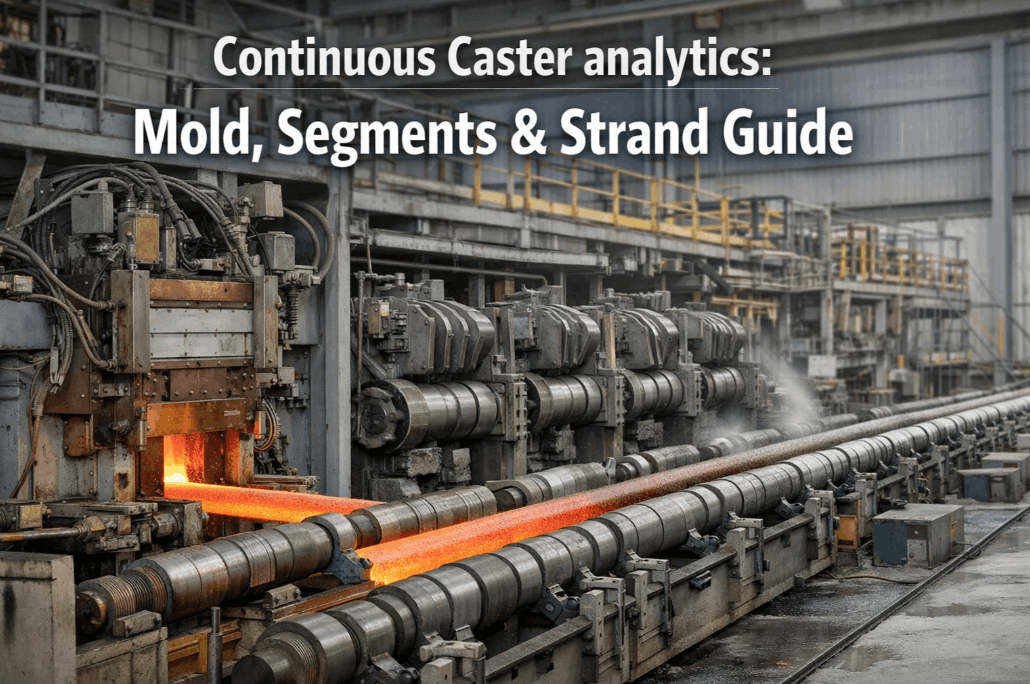
Read More
In any integrated steel plant, the continuous caster is the ultimate bottleneck. Liquid steel enters, and solid slabs, blooms, or billets emerge—but this delicate state-change brings extreme thermo-mechanical volatility. If the f
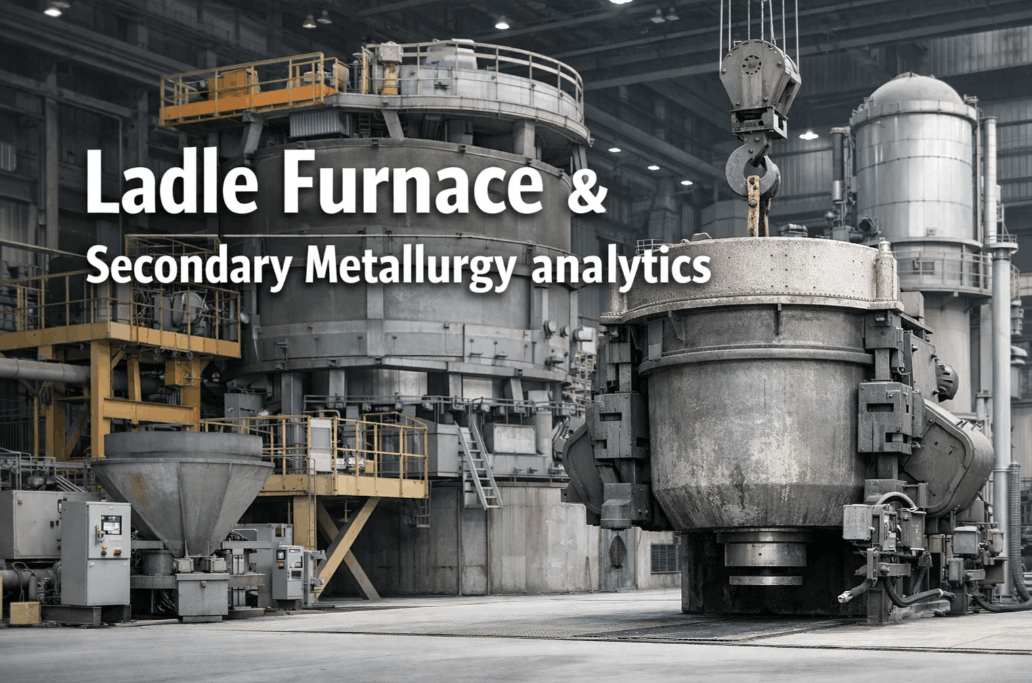
Read More
In primary steelmaking, the converter sets the pace, but the Ladle Furnace (LF) and secondary metallurgy stations determine the final grade and absolute quality of the slab. Managing temperature homogenization, precise chemistry
Read More
The Basic Oxygen Furnace (BOF) or LD converter dictates the operational throughput of an entire integrated steel plant. Converting primary liquid iron into prime steel requires violent oxygen injections, generating extreme exother
-analytics-electrode,-shell,-cooling.png)
Read More
Electric Arc Furnace (EAF) operations dictate the heartbeat of modern mini mills—but aggressive melting profiles create enormous thermal and mechanical stress. The slightest anomalies in electrical energy input, electrode slip, or

Read More
Operating a coke oven battery is a relentless, 24/7 chemical and thermodynamic balancing act. Pushing thousands of tons of high-strength metallurgical coke requires orchestrating massive, precisely timed machinery—charging larry cars,

Read More
A modern blast furnace campaign is the longest continuous heavy industrial process on earth—frequently running 15 to 20 years without a true "off" switch. The singular variable dictating the absolute limit of that campaign is the stru
Read More
The blast furnace (BF) is the undisputed beating heart of an integrated steel mill. When it operates smoothly, downstream continuous casters and hot strip mills shatter production tonnage records. However, a primary failure inside the

Read More
Mastering steel analytics KPIs is the most decisive factor separating highly profitable mills from those constantly bleeding margin due to heavy mechanical crisis. Operational metrics tracking continuous casters, hot strip mills, and
Read More
In the ultra-competitive landscape of modern metallurgy, justifying the capital expenditure for digital transformation requires undeniable financial proof. Fortunately, the math in heavy industry is brutally straightforward: when

Read More
Evaluating AI-driven vs SAP steel mill software is the most consequential digital decision a plant manager will make this decade. While legacy on-premise ERP systems like SAP PM and IBM Maximo manage corporate financial ledgers fl

Read More
The industrial sector is experiencing a monumental shift toward predictive automation, yet the stark reality remains that 60% to 80% of all steel plant AI-driven software implementations fail to reach their projected operational R

Read More
Steel manufacturing is defined by scale and extreme mechanical stress. In a typical integrated mill, over 10,000 distinct components interact daily — from towering blast furnaces and basic oxygen furnaces to high-speed rolling mil

Read More
From the intense heat of the melt shop to the high-velocity pacing of the rolling mills and final shipping lines, steel plant work order management dictates the tempo of operational profitability. Yet, a staggering number of steel

Read More
The landscape of steel plant analytics software in 2026 demands more than just basic dashboards and standalone SCADA screens. For true iron and steel analytics to drive rapid ROI, modern steel analytics systems must offer comprehensive asset manag
Read More
Steel manufacturing in 2026 demands AI-driven platforms that span the entire production chain — from raw material handling at the coke oven and sinter plant, through the blast furnace and basic oxygen furnace, across continuous casting and slab re

Read More
The global steel market has entered a "Digital Arms Race." As raw material volatility and carbon taxes reshape the competitive landscape, industry giants like ArcelorMittal, Tata Steel, and

Read More
While the steel industry is historically driven by the physical cost of iron ore and energy, the digital era has introduced a new, often hidden variable: The Analytics Premium. Recent global benchmarking data rev

Read More
In the high-stakes world of steel manufacturing, the term "unplanned downtime" is often an understatement of a catastrophic financial event. While most maintenance managers track "lost production" as the primary metric, the true

Read More
While the industry is currently saturated with Industry 4.0 "connectivity" solutions, the global steel leaders are already transitioning toward Manufacturing 6.0 — the era of Cognitive Autonomy. In a standard Indu

Read More
The steel industry of 2026 is no longer defined by tonnage alone but by the density of its data streams. As global decarbonization mandates like CBAM reach full implementation and energy volatility becomes a permanent fixture of

Read More
The era of carbon-unrestricted steelmaking is over. With free EU ETS allowances phasing out by 2034 and CBAM implementation accelerating, the path to survival lies in Hydrogen-Based Direct Reduced Iron (H2-DRI) and modified Elect

Read More
Steel manufacturing environments are unforgiving where 60% of critical safety incidents can be traced back to a single missed routine check in high-risk zones like furnace decks or ladle pits. Relying on paper checklists creates

Read More
In the high-intensity environment of a steel mill, "Hot Work"—including welding, torch cutting, and abrasive grinding—is a constant operational necessity. However, these activities are the leading cause of industrial fires, parti

Read More
Steel manufacturing houses some of the most complex and hazardous confined spaces in heavy industry. From blast furnace gas mains and waste-heat recovery ducts to LD Converter vessels and deep oil-storage tanks, these "permit-req
-procedures-for-steel-plant-equipment-digital-management-system.png)
Read More
In steel manufacturing, the hazardous energy density is unlike any other industrial environment. A single Electric Arc Furnace can hold multiple simultaneous energy sources — 33kV electrical supply on the transformer, 3,000 PSI h

Read More
Steel manufacturing is one of OSHA's highest-scrutinized sectors. With molten metal at 1,600°C, multi-ton overhead loads, permit-required confined spaces inside ladles and furnaces, and complex lockout/tagout requirements across
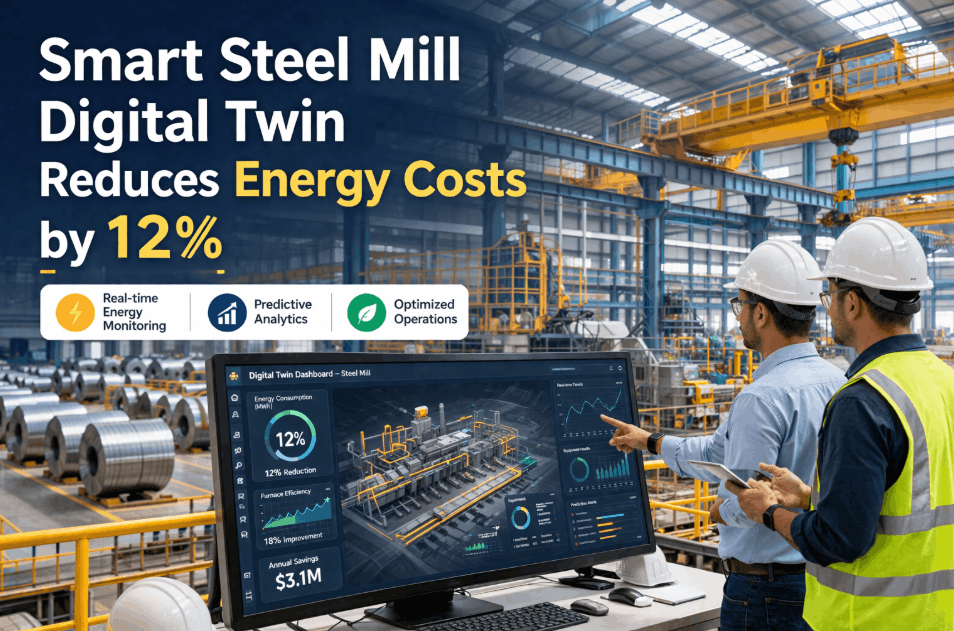
Read More
In a high-capacity steel mill, energy isn't just a utility cost; it is the single largest variable expense, often determining the mill's fundamental competitiveness in a global market. For a Tier-1 integrated mill, "invisible e

Read More
Cloud-based Large Language Models (LLMs) like ChatGPT are powerful, but they represent a massive security risk and operational bottleneck for steel plants. Feeding proprietary metallurgical formulas, real-time SCADA parameters, and internal SAP

Read More
The greatest inefficiency in a modern steel plant is not mechanical — it is the latency and inaccuracy of information moving between the shop floor and the boardroom. When a casting line produces a downgraded billet, operators often record it on p

Read More
Steel plants cannot afford milliseconds of latency — when a continuous caster detects a breakout signature, when a blast furnace tuyere shows thermal anomaly, when a rolling mill encounters gauge deviation, the corrective decision must happen in r

Read More
For independent steel plants, siloed maintenance and analytics software is an inefficiency; for a multi-plant enterprise, it is a multi-million-dollar compounding loss. When a leading industrial steel group acquired its fourth regional flat-produc
Read More
For independent steel plants, siloed maintenance and analytics software is an inefficiency; for a multi-plant enterprise, it is a multi-million-dollar compounding loss. When a leading industrial steel group acquired its fourth regional flat-produc

Read More
Heavy industry is undergoing a structural shift from responsive control to predictive simulation. In a steel plant, testing a new rolling schedule or adjusting blast furnace burden distribution in the physical world carries immense financial risk
Read More
For independent steel plants, siloed maintenance and analytics software is an inefficiency; for a multi-plant enterprise, it is a multi-million-dollar compounding loss. When a leading industrial steel group acquired its fourth regional flat-produc

Read More
In a modern integrated steel plant, the difference between top-quartile profitability and chronic margin erosion often comes down to maintenance effectiveness. Yet, when asked about the true cost of asset reliability, many plant managers still rel

Read More
In the steel industry, a planned blast furnace or rolling mill shutdown costs between $500,000 and $5,000,000 per day in lost production alone, before accounting for parts, contractor labour, and heavy equipment rentals. Yet, many integrated plant
Read More
In a typical 4.2 MTPA steel plant, maintenance technicians spend up to 2.5 hours per shift walking between the blast furnace cast house and the planning office just to collect job cards, look up equipment diagrams, and report completed work. When

Read More
A 4 MTPA integrated steel plant carries between ₹85 crore and ₹220 crore of spare parts inventory in its MRO warehouse at any given time. And yet, on the night a continuous caster segment seal fails at 2 AM, the maintenance supervisor's first call

Read More
Walk into the maintenance control room of a typical 3 MTPA integrated steel plant and you will find the same scene repeated across the industry: a whiteboard covered in handwritten job numbers, a stack of paper work orders with carbon copy duplica

Read More
The steel industry's software purchasing environment has changed dramatically. In 2019, a steel plant's analytics investment typically meant a single-function historian or a standalone OEE dashboard bolted onto an existing SCADA. By 2026, the mark
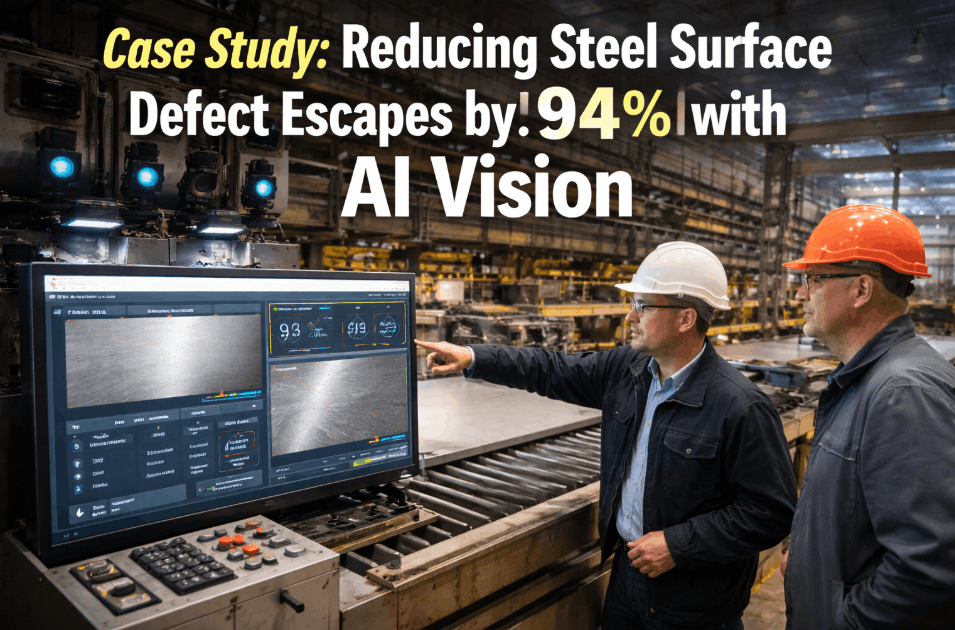
Read More
When Mukand Special Steels' quality director reviewed the 2022 annual customer claim report, the number was impossible to ignore: 47 defect escape incidents, ₹14.8 crore in customer claims, and three automotive OEM customers who had placed the pla

Read More
Cold-rolled and galvanized steel are the highest-value products in a steel plant's portfolio — sold at premiums of $120–280 per tonne above hot-rolled grades because they carry a surface quality guarantee that automotive, appliance, and constructi

Read More
Hot-rolled steel inspection is the most technically demanding application for AI vision systems in metal manufacturing. The environment combines 900–1,100°C strip temperatures radiating intense heat, fine iron oxide scale particles that coat every

Read More
Zero-defect steel manufacturing was once considered an engineering impossibility — a theoretical target useful for motivating teams but never achievable in the physical reality of a hot rolling mill producing at 900 metres per minute. That view ch

Read More
Steel surface quality determines whether a coil ships to automotive, construction, or gets downgraded to scrap — a difference of $80–220 per tonne for every tonne produced. Traditional human visual inspection, even at its best, misses 18–34% of su

Read More
When the maintenance and operations leadership of a 2.2 MTPA integrated flat-steel producer in central India commissioned iFactory's OEE Tracking and Analytics platform in January 2024, their hot strip mill was running at 58% OEE — a figure that p

Read More
The Six Big Losses framework, developed as the foundation of Total Productive Maintenance, remains the most precise diagnostic lens for identifying where steel plants destroy value. In a 2.5 MTPA integrated steel mill, a single percentage point of

Read More
In the ultra-competitive steel industry, the difference between profitability and loss often rests on a few percentage points of operational efficiency. The transition from legacy manual logsheets and end-of-shift reporting to Real-Time OE
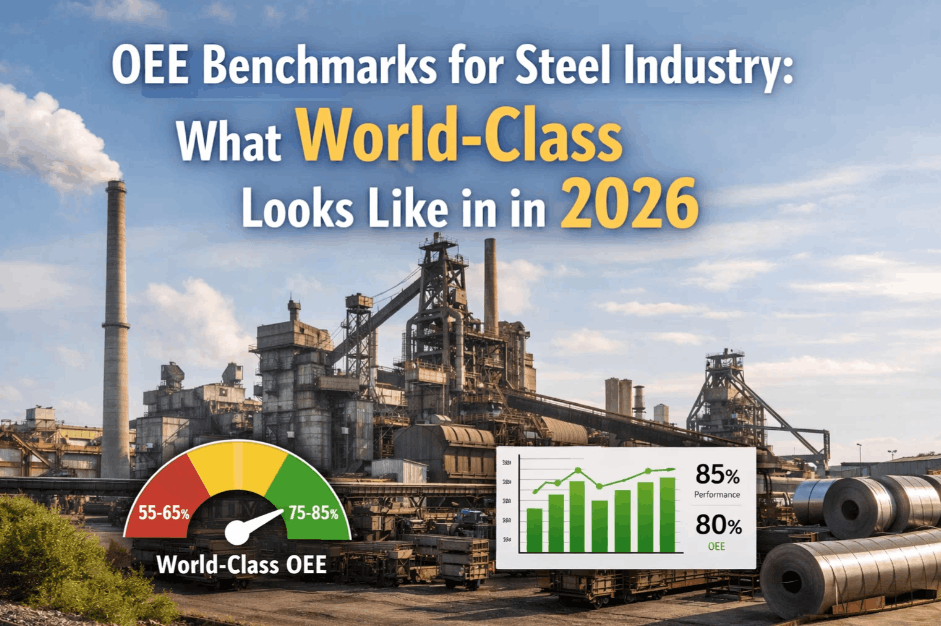
Read More
Steel manufacturing in 2026 is a game of razor-thin margins and extreme operational density, where the difference between a market leader and a struggling mill is measured by Overall Equipment Effectiveness (OEE). While the global steel industry a

Read More
Calculating Overall Equipment Effectiveness (OEE) in a steel rolling mill is the difference between a facility that maximizes its yield and one that bleeds profit through "invisible" performance losses. Most mills treat OEE as a manual reporting e
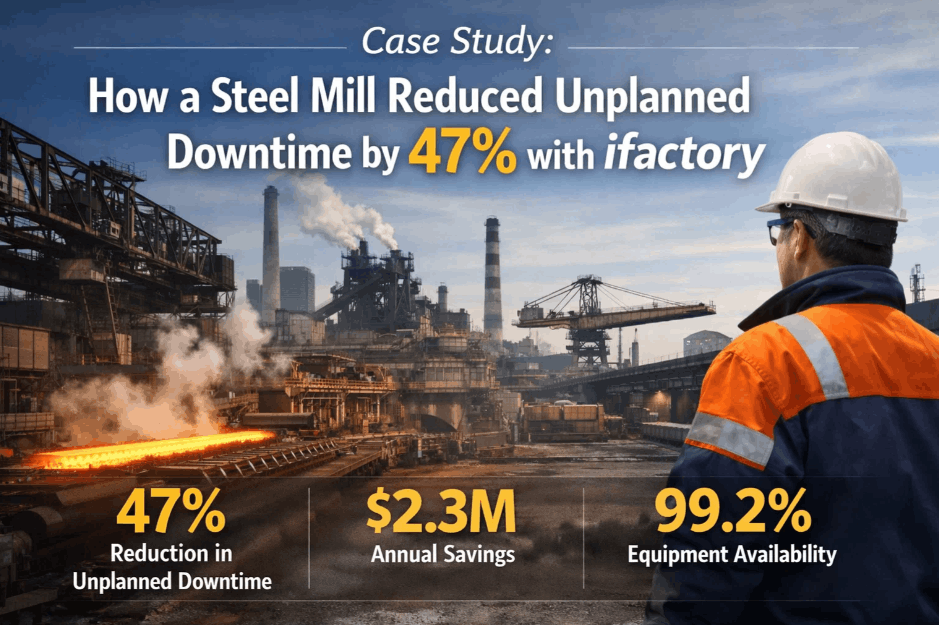
Read More
A mid-sized integrated steel mill struggled with the "data graveyard" paradox — they had over 1,200 sensors across their caster and rolling lines, yet unplanned downtime remained at 14% because sensor data lived in isolated silos. Maintenance team

Read More
Unplanned equipment failure in a steel plant is far more than a maintenance headache — it is a high-stakes operational crisis that directly impacts the bottom line and personnel safety. When a ladle turret jams or a critical BOF blower fails, the

Read More
Unplanned downtime in iron and steel manufacturing is not simply an operational inconvenience — it is a direct financial loss measured in lakhs per hour, with cascading effects that extend far beyond the duration of the stoppage itself. A blast fu

Read More
Rolling mills account for 35% of all unplanned downtime in steel plants, with each hour of mill stoppage costing $80,000 to $150,000 in lost production. Work roll bearing failures, main drive gearbox degradation, roll alignment drift, and hydrauli
Read More
The average steel plant spends 35 to 45% of its maintenance budget on time-based preventive maintenance that replaces components with 30 to 60% useful life remaining, generates labour costs on healthy equipment, and still fails to prevent 40% of u

Read More
A rolling mill bearing that will fail in 22 days produces a vibration signature change so subtle that no human analyst can detect it in a spectrum plot alongside 400 other monitored bearings. A blast furnace cooling stave developing a micro-crack

Read More
OSHA penalties for steel plant violations reached $16,131 per serious citation and $161,323 per willful or repeat violation in 2025, with multi-citation exposure from a single inspection routinely exceeding $500,000. Steel plants face a uniquely c

Read More
The steel industry spent $4.2 billion on unplanned downtime in 2024, with integrated and EAF mills losing $50,000 to $150,000 per hour when critical equipment fails without warning. Traditional time-based preventive maintenance replaces parts with

Read More
A steel corporation operating 4 plants across different geographies typically runs 4 different maintenance approaches, 4 different KPI definitions, 4 different spare parts inventories, and has no way to compare equipment performance or maintenance

Read More
Steel plants across Saudi Arabia, UAE, Qatar, Oman, and Bahrain operate in conditions that no Western-designed maintenance platform was built for: ambient temperatures exceeding 50C, sandstorm-driven abrasion that accelerates equipment degradation

Read More
UpKeep is a mobile-first CMMS built for fast adoption and ease of use across general maintenance teams. It excels at digitising paper-based work orders, enabling technician communication and providing basic asset tracking through an intuitive mobi

Read More
Steel manufacturing operates at 1,500+ degree temperatures, 24/7 continuous production, and asset failure costs exceeding $125,000 per hour of unplanned downtime. Fiix (Rockwell Automation) is a capable cloud-based CMMS built for general manufactu
Read More
Steel mill production scheduling is uniquely complex because heat sequences cannot be interrupted, equipment maintenance windows must be coordinated across interconnected processes, and a single scheduling conflict at the caster can cascade backwa
-for-steel-manufacturing.png)
Read More
Reliability Centered Maintenance is the analytical discipline that stops steel plants from spending equally on every asset and starts spending intelligently — based on how each asset can fail, what the consequence of that failure is, and which mai
Read More
Reliability Centered Maintenance is the analytical discipline that stops steel plants from spending equally on every asset and starts spending intelligently — based on how each asset can fail, what the consequence of that failure is, and which mai
-in-steel-plants.png)
Read More
Steel plants that run at world-class OEE — above 85% — share one discipline: Total Productive Maintenance. TPM is not a software tool or a checklist; it is a plant-wide operating philosophy that places machine ownership in the hands of operators,

Read More
Steel plants operating blast furnaces, electric arc furnaces, and sintering lines release millions of cubic metres of particulate-laden gas every hour. A single baghouse module failure can spike PM2.5 readings past regulatory limits within minutes

Read More
Steel plants across the EU and export-facing mills in the UK, USA, Canada, and Australia now face a cascading carbon compliance challenge: EU Emissions Trading Scheme (EU ETS) carbon costs hit €85–90 per tonne CO₂ in 2023, the Carbon Border Adjust

Read More
The steel industry produces 7-8% of global CO2 emissions — and every major steelmaker has now committed to net-zero targets between 2040 and 2050. The transition from BF-BOF to EAF and hydrogen-based DRI is not just an environmental imperative but

Read More
A Continuous Emissions Monitoring System that fails a calibration drift check does not just create a data gap — it triggers a regulatory notice of violation, potential excess emission fines of $25,000–$100,000 per day, and permit condition breache

Read More
Roll shop management is one of the most underdigitised functions in a rolling mill — yet rolls represent 15–25% of total conversion cost and directly determine product surface quality. Most roll shops still track grinding schedules on whiteboards

Read More
Reheat furnaces consume 60–70% of a rolling mill's total energy and directly determine product quality — yet most plants run them on fixed combustion parameters that were optimised for one set of conditions and never updated. A walking beam furnac
Read More
Steel production consumes approximately 5% of global energy and accounts for 7–8% of worldwide CO2 emissions. For a typical integrated steel plant producing 3–5 MTPA, energy costs represent 25–35% of total operating expenditure — making energy man

Read More
Steel logistics is the final mile of production — and the one where maintenance failures hit revenue directly. Rail cars, torpedo ladles, forklifts, weighbridges, and packaging lines must operate in sequence. When any single link fails, steel sits

Read More
Inside a steel plant, material never stops moving — hot metal flows from blast furnace to BOF via torpedo ladles, liquid steel transfers from converter to caster on ladle cars, slabs move through rolling mills on roller tables, and finished coils

Read More
In fast-growing steel markets, moving product from plant to project site is as critical as producing it. Yet most steel plants invest heavily in production equipment maintenance while treating logistics assets — rail cars, torpedo ladles, forklift
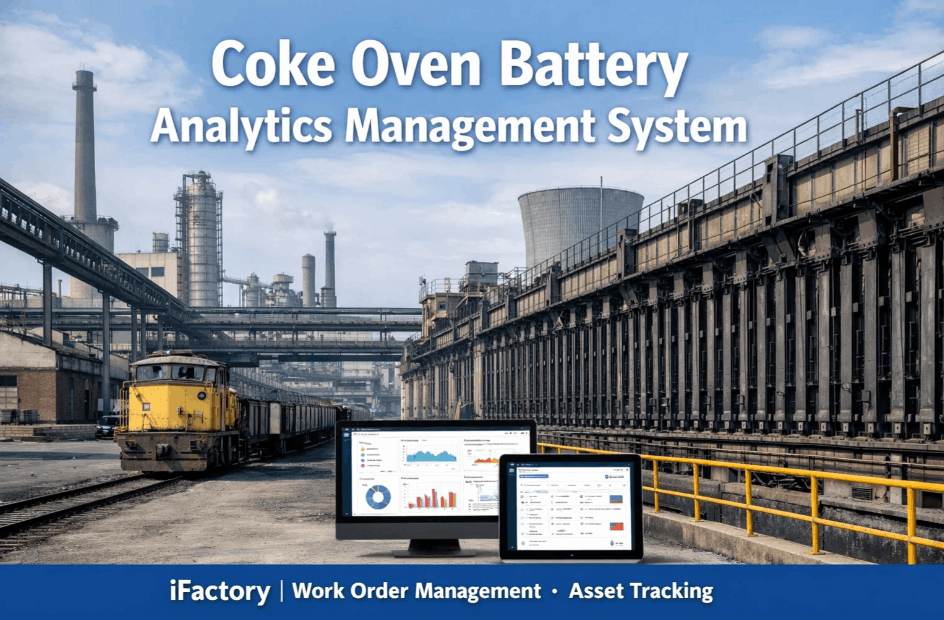
Read More
The coke oven battery is one of the highest-consequence maintenance assets in an integrated steel plant — a structure containing 40–80 individual ovens operating continuously at 1,000–1,350°C, where maintenance is not performed during shutdowns bu
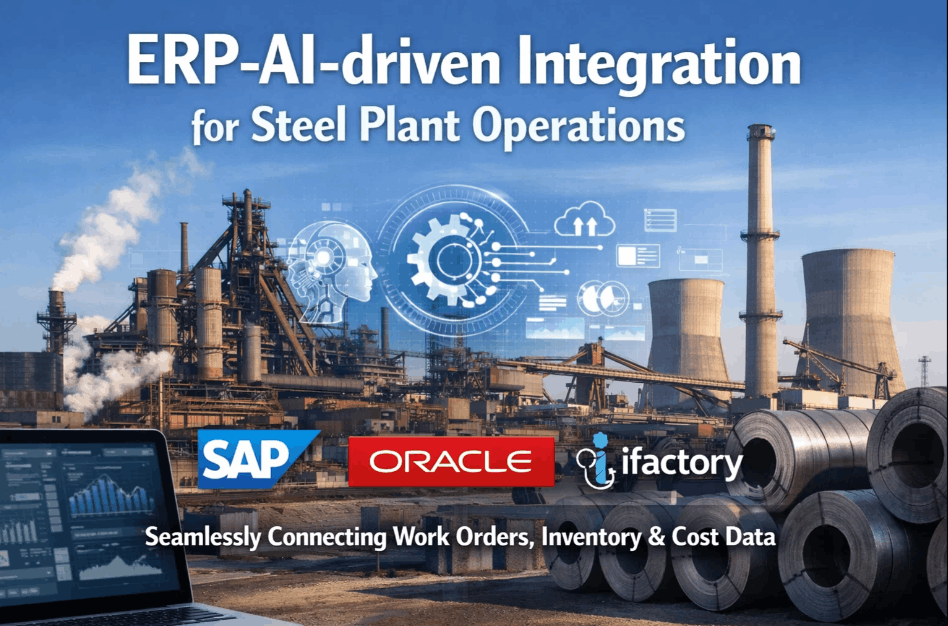
Read More
The maintenance performance gap in most steel plants is not caused by a lack of maintenance effort — it is caused by disconnected data systems that prevent maintenance intelligence from reaching the people who need it. A maintenance planner who mu
Read More
The sinter plant is one of the most maintenance-intensive and operationally critical units in an integrated steel plant — yet it receives far less predictive maintenance attention than the blast furnace it feeds. A sinter plant producing 8,000–14,
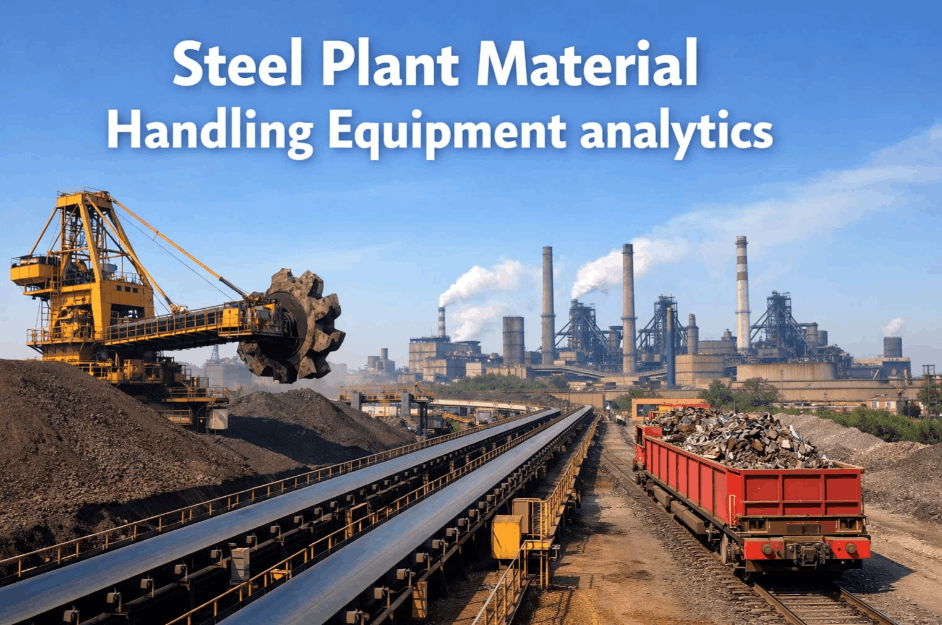
Read More
Material handling equipment is the circulatory system of a steel plant — conveyors, stackers, reclaimers, transfer cars, and screening systems that move raw materials from stockyard to sinter plant, coke ovens, and blast furnace, and move finished
Read More
Third-party contractors and OEM vendors execute a significant portion of maintenance work in every steel plant — from annual statutory inspections and crane certifications to AMC-based servicing of specialized equipment like hydraulic systems, tra
Read More
Every steel plant maintenance team responds to breakdowns — but only the best teams eliminate them. The difference between a plant that has the same failures every year and one that continuously improves its reliability lies in the quality of root
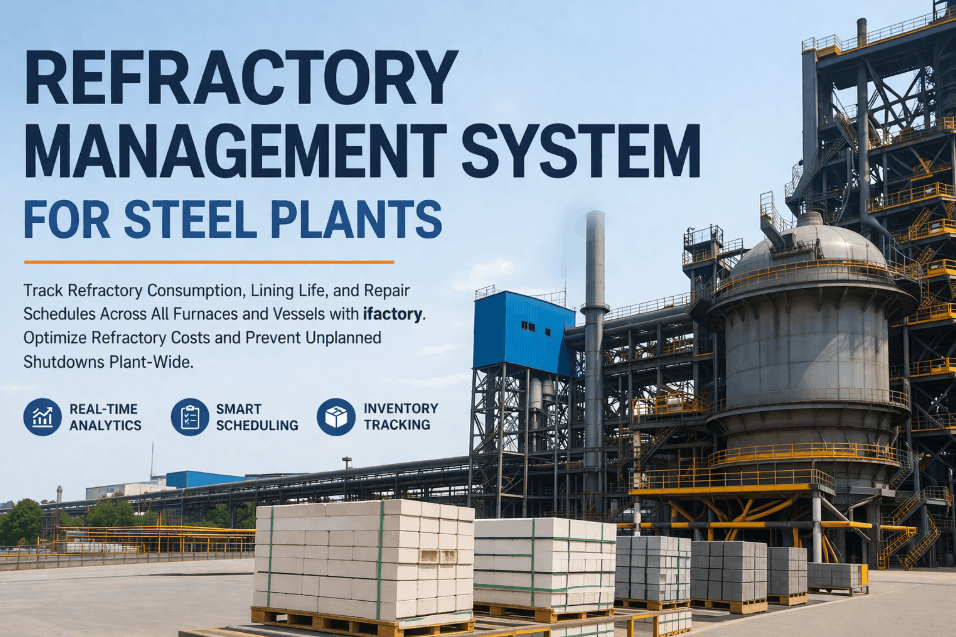
Read More
Refractory materials are the silent protection layer between liquid steel at 1,650°C and the steel shell of every furnace, converter, ladle, and tundish in your plant. When refractory management works well, it is invisible — campaigns run to their
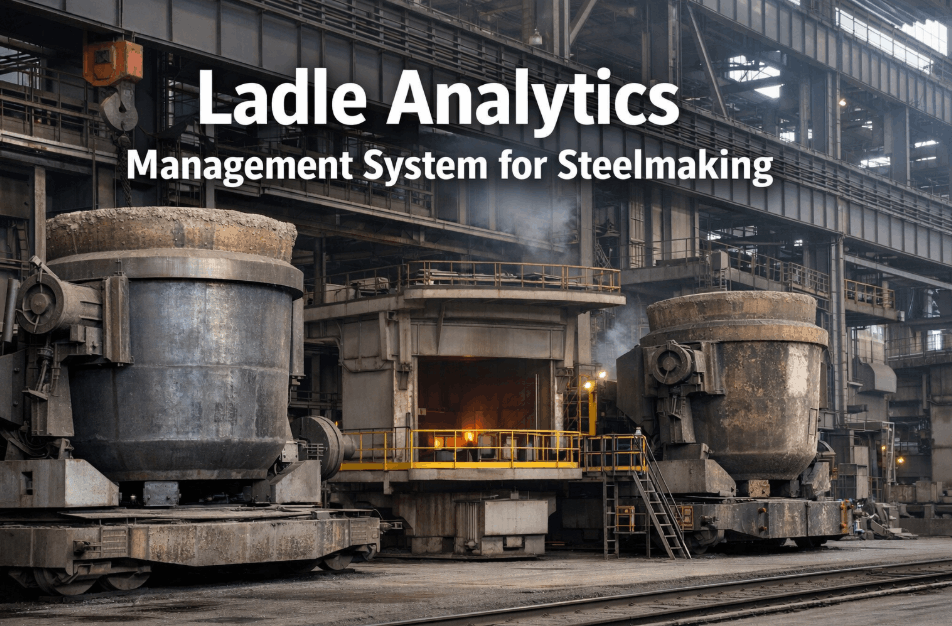
Read More
Steel ladles are among the most intensively used and most safety-critical assets in a steelmaking facility. A 300-tonne steel ladle undergoes thermal cycling from ambient temperature to 1,650°C and back, every 4–6 hours, day after day — carrying l

Read More
Fire protection systems in steel plants must perform perfectly under the worst conditions — in the presence of flammable gases, molten metal splash, electrical faults, and the thermal and chemical environment of active steelmaking. A fire suppress

Read More
Overhead cranes in steel plant operations represent one of the highest-consequence maintenance domains in any industrial facility. A ladle crane carrying 300 tonnes of liquid steel at 1,650°C is not a material handling asset — it is a critical saf

Read More
The phrase "digital transformation" has been applied to so many marginal technology upgrades in manufacturing that it has nearly lost its meaning. True digital transformation in a steel plant is not about installing dashboards or buying software —
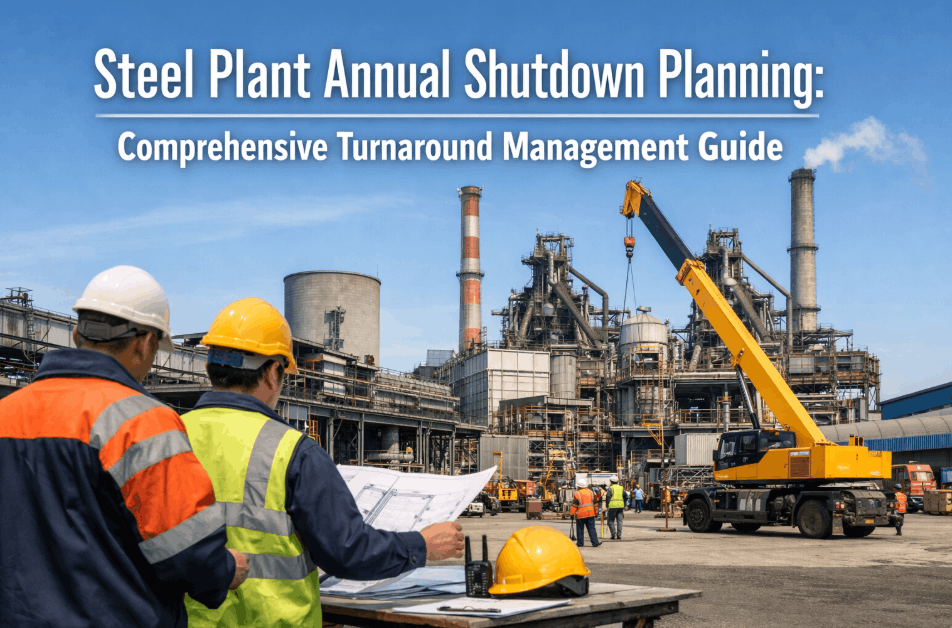
Read More
The annual shutdown is the most consequential maintenance event in a steel plant's calendar — a 5–21 day window where ₹3–12 crore of maintenance work is compressed into the shortest possible elapsed time, with hundreds of contractors on site, simu
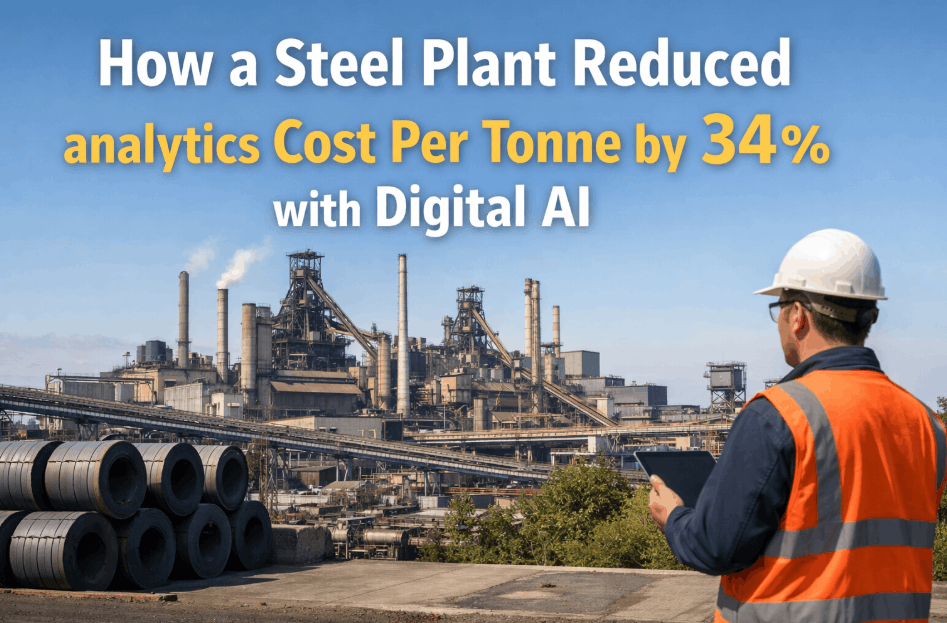
Read More
This case study documents the verified 18-month results of iFactory's full AI implementation at a 3.5 MTPA integrated steel plant in Maharashtra — covering blast furnace, BOF steelmaking, continuous casting, hot strip mill, and associated utilitie

Read More
A preventive maintenance schedule is the most fundamental document in steel plant maintenance management — yet most plants either have no formal PM schedule at all, or have one that was created during plant commissioning and never updated to refle
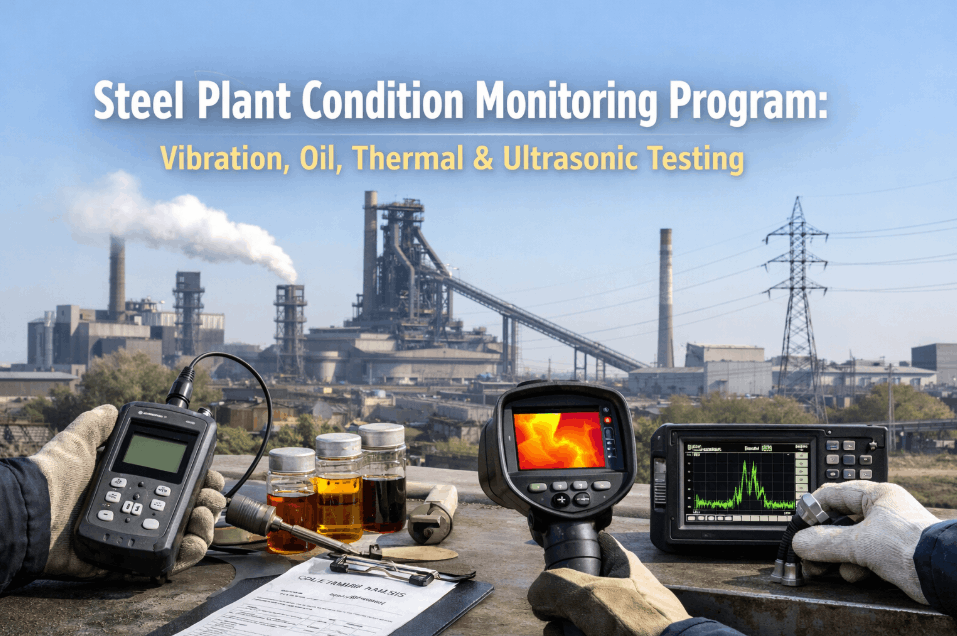
Read More
Condition monitoring is the discipline of measuring physical parameters of operating equipment — vibration, temperature, oil particle count, ultrasonic emission, motor current — to detect deterioration before it becomes failure. In steel plant ope

Read More
Work orders are the fundamental unit of maintenance execution — every planned inspection, corrective repair, predictive alert, and emergency breakdown ultimately becomes a work order that must be created, prioritised, resourced, scheduled, execute

Read More
The steel industry accounts for approximately 7–9% of global CO₂ emissions — making it the largest industrial emitter outside power generation. Conventional blast furnace steelmaking produces 1.8–2.2 tonnes of CO₂ per tonne of steel, and the techn

Read More
Carbon has become a financial variable in steel production — not merely an environmental metric. EU CBAM introduces a direct carbon cost on steel exports to Europe from 2026. Sustainability-linked loans and green bonds now require verified Scope 1
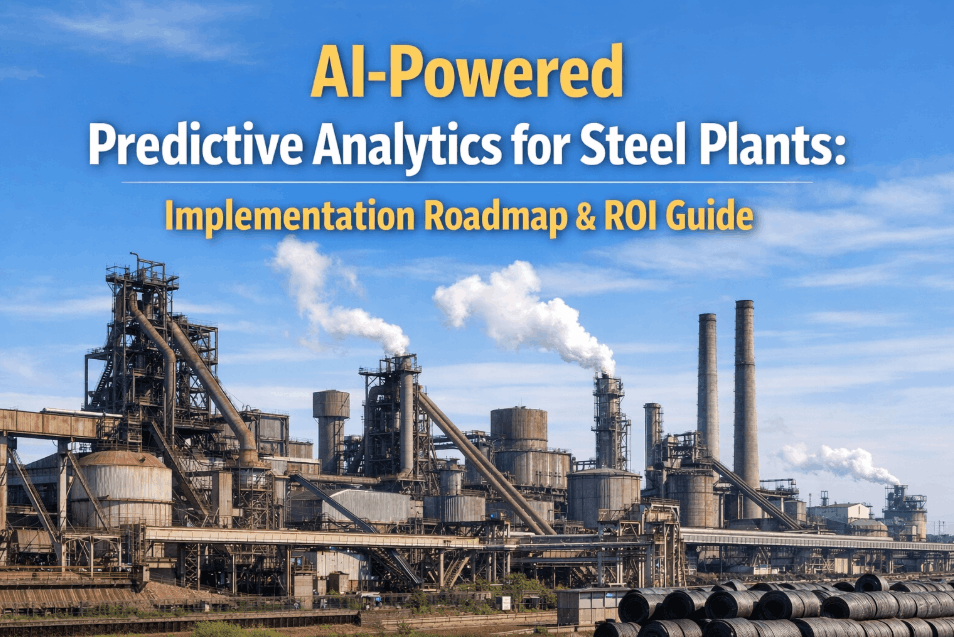
Read More
AI predictive analytics is the single highest-ROI technology investment available to steel plant maintenance leadership today — delivering documented returns of $14–24 million per year in large integrated plants through failure prevention, mainten

Read More
Refractory management is among the most technically demanding and financially consequential disciplines in integrated steel plant operations. A single BOF vessel lining failure during a heat can destroy ₹4–12 crore of equipment and halt steelmakin

Read More
The scrap-to-rebar production route — scrap yard → EAF melting → ladle refining → continuous billet casting → rolling mill → finished rebar — is one of the most complex materials transformation chains in modern manufacturing. Every tonne of rebar

Read More
Steel plant maintenance runs in one of the harshest environments in modern industry — extreme heat, dust, electromagnetic interference, and 24-hour shift operations across sprawling facilities spanning kilometres of plant floor. Yet most steel pla
Read More
Steel plant maintenance runs in one of the harshest environments in modern industry — extreme heat, dust, electromagnetic interference, and 24-hour shift operations across sprawling facilities spanning kilometres of plant floor. Yet most steel pla

Read More
Maintenance planning and scheduling is the discipline that separates world-class steel plant operations from reactive firefighting. A plant that executes 90% planned maintenance and 10% reactive work operates at a fundamentally different cost and
-for-steel-plant-critical-equipment.png)
Read More
Reliability-Centered Maintenance is the most rigorous analytical framework ever applied to industrial equipment management — and the only methodology proven to simultaneously reduce maintenance costs and improve equipment reliability. For a 3–5 MT
-implementation-in-steel-plants-8-pillar-approach.png)
Read More
Total Productive Maintenance is the most comprehensive manufacturing improvement methodology ever applied to heavy industry — and the most frequently attempted without success. Steel plants across India and Southeast Asia have launched TPM program

Read More
A steel plant maintenance department that cannot measure its performance cannot improve it. Yet most plant maintenance teams operate with fragmented reporting — MTBF calculated on some assets, OEE tracked for some lines, maintenance cost reported

Read More
The steel industry faces its most severe skilled labour shortage in a generation. Across India, 43% of integrated steel plant maintenance departments report critical vacancies in instrumentation, PLC programming, and predictive maintenance analyti

Read More
Conveyor belts are the circulatory system of a steel plant — moving iron ore, coal, coke, sinter, pellets, slag, and finished product across distances of 2–15 kilometres through some of the most hostile environments in heavy industry. A single bel
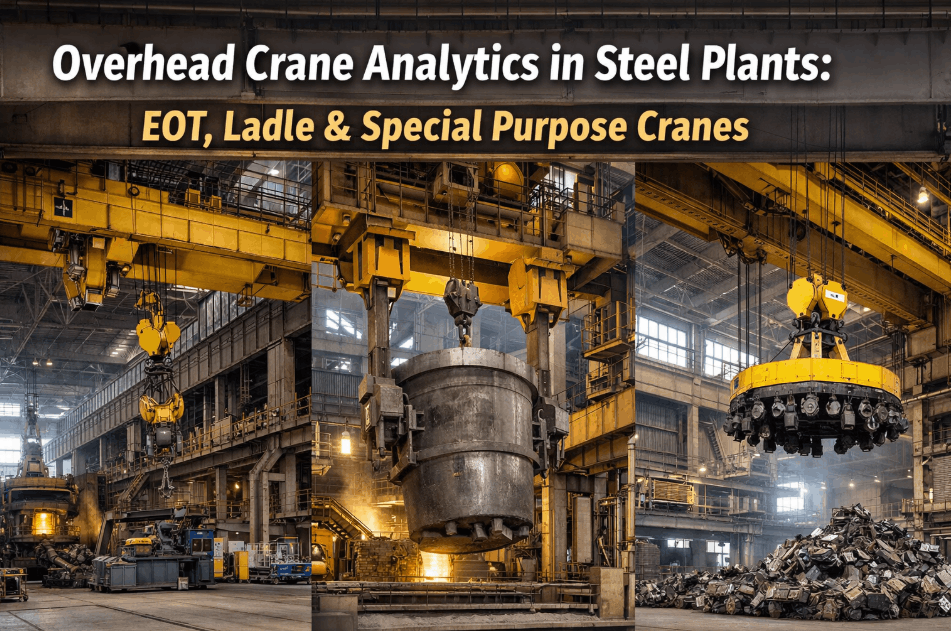
Read More
Overhead cranes are among the most safety-critical and maintenance-intensive assets in a steel plant. A ladle crane failure during a hot metal transfer, an EOT crane brake failure during a coil lift, or a hoist wire rope failure on a charging cran

Read More
Steel plants cannot afford milliseconds of latency — when a continuous caster detects a breakout signature, when a blast furnace tuyere shows thermal anomaly, when a rolling mill encounters gauge deviation, the corrective decision must happen in r
Read More
Conveyor belts are the circulatory system of a steel plant — moving iron ore, coal, coke, sinter, pellets, slag, and finished product across distances of 2–15 kilometres through some of the most hostile environments in heavy industry. A single bel

Read More
The steel industry's transition from periodic human inspection to continuous AI-powered monitoring has been driven by a new generation of smart sensors — devices that don't just measure, but interpret. Blast furnace stockline radar systems track b

Read More
Industrial IoT sensor networks are the nervous system of a modern steel plant — connecting blast furnaces, rolling mills, compressors, pumps, cranes, and electrical systems to a unified data layer that feeds real-time analytics, AI digital twins,
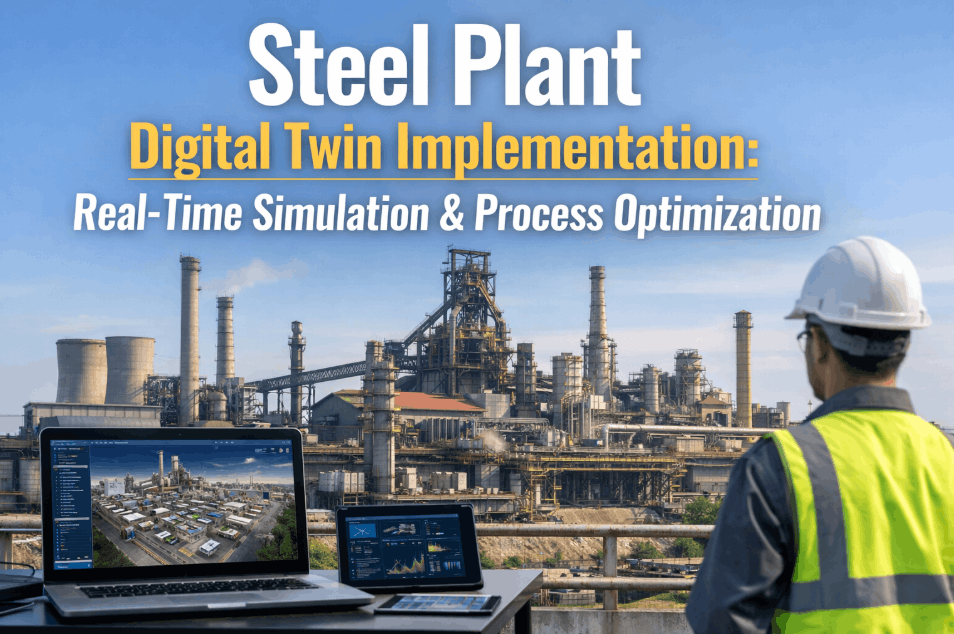
Read More
A digital twin is not a dashboard, a 3D model, or a historical data replay. A genuine steel plant digital twin is a physics-based, real-time simulation of your entire production system — continuously calibrated against live sensor data from PLC, S

Read More
When a 3.8 MTPA integrated steel plant in southeastern India deployed seven quadruped robots from iFactory's Robot Fleet Console in January 2024, the engineering leadership team had a simple objective: inspect the blast furnace cast house, BOF tap

Read More
Robotic inspection is reshaping how steel plants access, monitor, and maintain their most hazardous and hard-to-reach assets. Quadruped robots walk blast furnace cast houses, drone fleets inspect reheating furnace roofs and cooling towers, crawler

Read More
Every hour of unplanned production stoppage in a steel plant costs ₹40–120 lakh in lost output, restart energy, and demurrage — and the most preventable cause of unplanned stoppages is a spare part or raw material that ran out. Steel plant procure

Read More
Spare parts inventory is the silent cost centre in every steel plant maintenance budget — consuming 30–40% of total maintenance spend while simultaneously causing 20–25% of unplanned equipment stoppages when critical spares are not available when

Read More
Achieving zero Lost Time Incidents for 365 consecutive days is not an accident — it is the result of systematic change in how safety is managed, measured, and acted upon every single shift. A 4,200-employee integrated steel plant in western India

Read More
Molten metal incidents are among the most catastrophic events in steel plant operations — a single water-molten metal contact explosion, ladle failure, or torpedo ladle derailment can cause multiple fatalities, destroy infrastructure worth hundred
-procedures-for-steel-plant-equipment-complete-implementation-guide.png)
Read More
Lockout/Tagout failures are the single most cited OSHA standard violation in steel manufacturing — and one of the most fatal. Every year, steel workers are killed or seriously injured by unexpected energization of equipment during maintenance: a r

Read More
Confined space fatalities are among the most preventable deaths in industrial settings — and steel plants are among the highest-risk environments for confined space incidents. Blast furnace interiors, hot metal runners, ladle pits, underground cab

Read More
A 4.5 MTPA integrated steel plant in central India was spending ₹312 crore annually on energy — blast furnace gas, coke oven gas, converter gas, grid electricity, and natural gas — across a production route spanning blast furnaces, BOF steelmaking

Read More
Steel manufacturing is classified as one of the highest-risk industries under OSHA's 29 CFR 1910 General Industry Standards — with specific exposure to molten metal hazards, extreme heat, heavy mobile equipment, toxic atmospheres, high-voltage ele

Read More
The Perform Achieve and Trade (PAT) scheme under India's Energy Conservation Act mandates that every Designated Consumer (DC) in the steel sector — any plant consuming more than 30,000 MTOE of energy annually — must meet prescribed Specific Energy

Read More
Energy is the largest controllable cost in steel production — representing 20–40% of total operating expenses depending on the route and region. For a 3 MTPA integrated plant, even a 1% improvement in specific energy consumption translates to $800
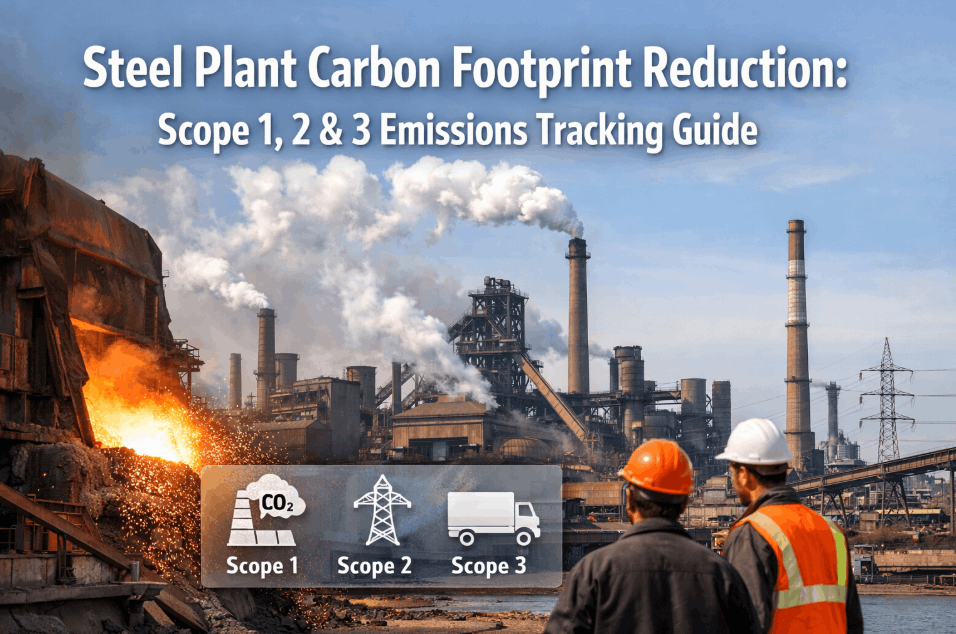
Read More
Carbon has become a financial variable in steel production — not merely an environmental metric. EU CBAM introduces a direct carbon cost on steel exports to Europe from 2026. Sustainability-linked loans and green bonds now require verified Scope 1
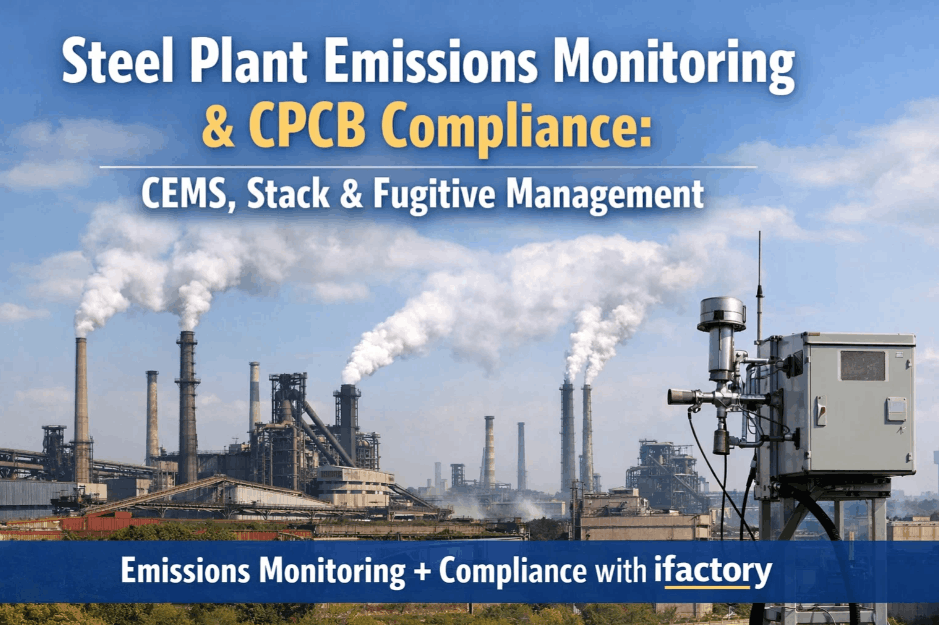
Read More
Steel plants are among the most scrutinised industrial emitters globally — facing real-time CEMS obligations, quarterly CPCB/SPCB reporting, GHG disclosure requirements under national and international frameworks, and increasing customer ESG due d

Read More
An integrated steel plant producing 4.8 MTPA across BOF steelmaking, continuous casting, and hot strip rolling was generating 38–45 off-grade heats per month — each costing an average of $92,000 in rework, downgrade revenue loss, and internal hand

Read More
Surface cracks, internal voids, rolled-in scale, laminations, and mechanical property failures are the most common causes of steel product rejection — and the most expensive. A single coil rejection at a customer's stamping plant costs far more th

Read More
Steel quality failures are expensive in ways that compound — a single off-grade heat can trigger downstream rework, customer returns, and regulatory non-conformance across multiple product batches. Most quality systems in steel plants still depend

Read More
Rolling mill bearings are among the most failure-prone and financially consequential components in any steel plant. A single undetected backup roll bearing failure on a hot strip mill finishing stand can take a mill offline for 12–36 hours, costin

Read More
Hot strip mills are among the most asset-intensive environments in steelmaking — roughing stands, finishing mills, run-out tables, coilers, and AGC systems all operating under extreme thermal and mechanical stress, often 24 hours a day. Without re

Read More
A 3 MTPA integrated steel plant running twin-strand slab casters was losing an average of $180,000 per breakout event — with 2–3 incidents every month. Manual thermocouple checks, paper-based segment logs, and reactive spray calibration meant fail

Read More
Energy is the single largest controllable cost in steel manufacturing — consuming 15–20% of total production cost in the BF-BOF route and up to 20–40% when including all fuel and feedstock. For a 2 MTPA integrated plant, that translates to $80–120

Read More
An integrated steel plant is not just a steelmaking operation — it is a miniature energy economy. Oxygen, nitrogen, argon, steam, compressed air, and three species of byproduct gas (COG, BFG, BOFG) flow continuously between dozens of production un

Read More
An integrated BF-BOF steel plant consumes between 17 and 23 GJ per tonne of crude steel — but that number hides a critical truth. Energy does not flow evenly. Some processes swallow 45% of total plant energy while contributing 12% of value-add. Ot

Read More
A mid-sized integrated steel plant spends $80–$120 million per year on energy — electricity, coke, natural gas, and process gases combined. That is 20–40% of total production cost vanishing into furnaces, motors, and rolling mills with no AI watch
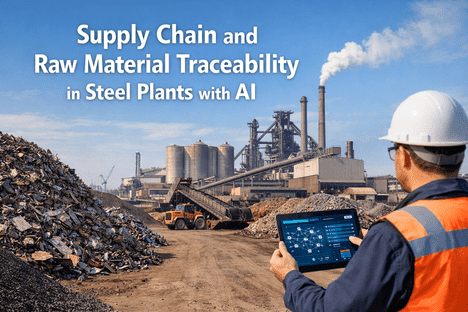
Read More
A steel producer in Europe received a CBAM compliance notice in early 2026. The regulation required them to declare the embedded carbon emissions of every tonne of steel they exported — traceable back to the exact raw materials, production routes,

Read More
A flat-rolled steel producer shipped 14,200 tonnes of coil to an automotive stamping customer over six months before a pattern of press-shop cracking revealed a systematic surface inclusion defect that had been present since the caster. The root c

Read More
Every minute in your EAF cycle is money. A 90-tonne furnace running a 60-minute tap-to-tap cycle produces 24 heats per day. Cut that cycle to 50 minutes, and you're producing 28.8 heats — nearly 5 extra heats daily without adding a single piece of

Read More
The steel industry accounts for 7% of global CO2 emissions and consumes approximately 8% of the world's total delivered energy. A modern BF-BOF integrated mill requires up to 25 GJ per tonne of crude steel. An EAF mini-mill consumes 10 GJ per tonn

Read More
Global steel production reached 1.88 billion tonnes in 2024 — yet the industry loses billions annually to yield inefficiencies that cascade through every production stage. A 1% improvement in metallic yield at a 3-million-tonne steel plant transla

Read More
A conveyor belt in a steel plant doesn't get the attention a furnace or a rolling mill does. Nobody builds dashboards for conveyors. Nobody tracks conveyor KPIs in the morning meeting. And yet, when a single belt tears at 2 AM, the entire upstream

Read More
A steel plant is not one process. It is a chain of interdependent high-temperature, high-speed operations where a failure in any link cascades into every downstream process within minutes. A blast furnace cooling leak forces ironmaking offline. A

Read More
A rolling mill processes steel at 15-20 meters per second. At that speed, a single degree of temperature deviation in the reheat furnace creates dimensional inconsistencies across hundreds of meters of product before anyone notices. A manual opera

Read More
Most steel plants track KPIs. Very few track the right ones, at the right time, in the right way. A plant manager walks into the morning meeting with yesterday's numbers printed on paper. Yield was 94.2%. Energy consumption was 580 kWh per ton. Ta

Read More
Your EAF consumes 380 kWh per tonne. The best-in-class number is 300. That 80 kWh gap multiplied across 500,000 annual tonnes is $2.8 million in wasted electricity alone — before you count the electrode overconsumption, the off-spec heats reproces

Read More
Your rebar starts as a pile of scrap metal. Between that pile and a finished structural bar lie five complex process stages, each capable of silently destroying yield, wasting energy, and producing off-spec product. The global steel rebar market i

Read More
A steel mill tracked every stoppage over 10 minutes for an entire year. Their OEE reports looked reasonable—78% availability, well within industry norms. Then they installed automated monitoring that captured every interruption, including the ones

Read More
Day 0: A 250-tonne ladle crane in a steel melt shop was carrying 180 tonnes of molten steel at 1,600°C. Visual inspection showed nothing wrong. The operator saw nothing unusual. Routine checks passed. But 18 days earlier, an AI anomaly model had f

Read More
An analysis of 10,000 steel coils revealed that manual inspection missed up to 34% of surface defects. At production speeds exceeding 20 meters per second, human inspectors have fractions of a second to evaluate surfaces—and fatigue causes accurac

Read More
Your steel plant generates 2.4 terabytes of sensor data every single day. Temperature readings from blast furnaces, vibration signals from rolling mills, pressure logs from hydraulic systems, chemical composition data from ladle furnaces — all str

Read More
A blast furnace operates at 2,300°C with pressures up to 4 bar, processing thousands of tonnes of raw material daily through a continuous campaign lasting 15-20 years between relines. Inside this towering reactor, you cannot see, touch, or directl

Read More
Steel plants generate over 50,000 data points per minute across furnaces, casters, and rolling mills. Yet most operations still rely on shift-end reports and spreadsheet summaries to make critical decisions. By the time a plant manager sees the nu

Read More
Computer vision is redefining quality control in steel manufacturing. Where human inspectors catch 60–70% of surface defects under ideal conditions, AI-powered vision systems achieve 99.7% detection accuracy — at full line speed, around the clock,

Read More
Robotics is redefining what is possible inside a steel mill — removing workers from blast furnace tapping floors, ladle handling zones, and high-temperature rolling areas while simultaneously lifting productivity by 15–25% through continuous, prec

Read More
Artificial intelligence is fundamentally reshaping steel manufacturing — from blast furnace optimization and predictive quality control to autonomous crane operations and real-time energy dispatch. The global AI in steel market was valued at $1.8

Read More
Steel production is one of the world's most water-intensive industrial processes — a single integrated steel plant can consume between 60 and 280 gallons of water per ton of steel produced, depending on process efficiency and recycling infrastruct

Read More
The EU Carbon Border Adjustment Mechanism is no longer a proposal — it is law. From January 2026, every tonne of steel imported into the European Union must carry a declared carbon footprint, and importers must purchase CBAM certificates matching

Read More
Steel production is directly responsible for approximately 2.6 gigatonnes of CO₂ annually — roughly 7% of global emissions — with an additional 1.0 Gt from the sector's electricity usage. For steel companies navigating EU CBAM (fully operational

Read More
Green steel is no longer a sustainability talking point — it is a market reality with real buyers, real premiums, and real money changing hands. In 2026, automotive OEMs are signing multi-year offtake agreements at $30–80 per tonne premiums for v

Read More
Steel manufacturing accounts for 7% of global energy-related CO₂ emissions — and the only pathway to deep decarbonization runs through renewable energy. The green hydrogen market alone is projected to grow from $12.3 billion in 2025 to $231 billi
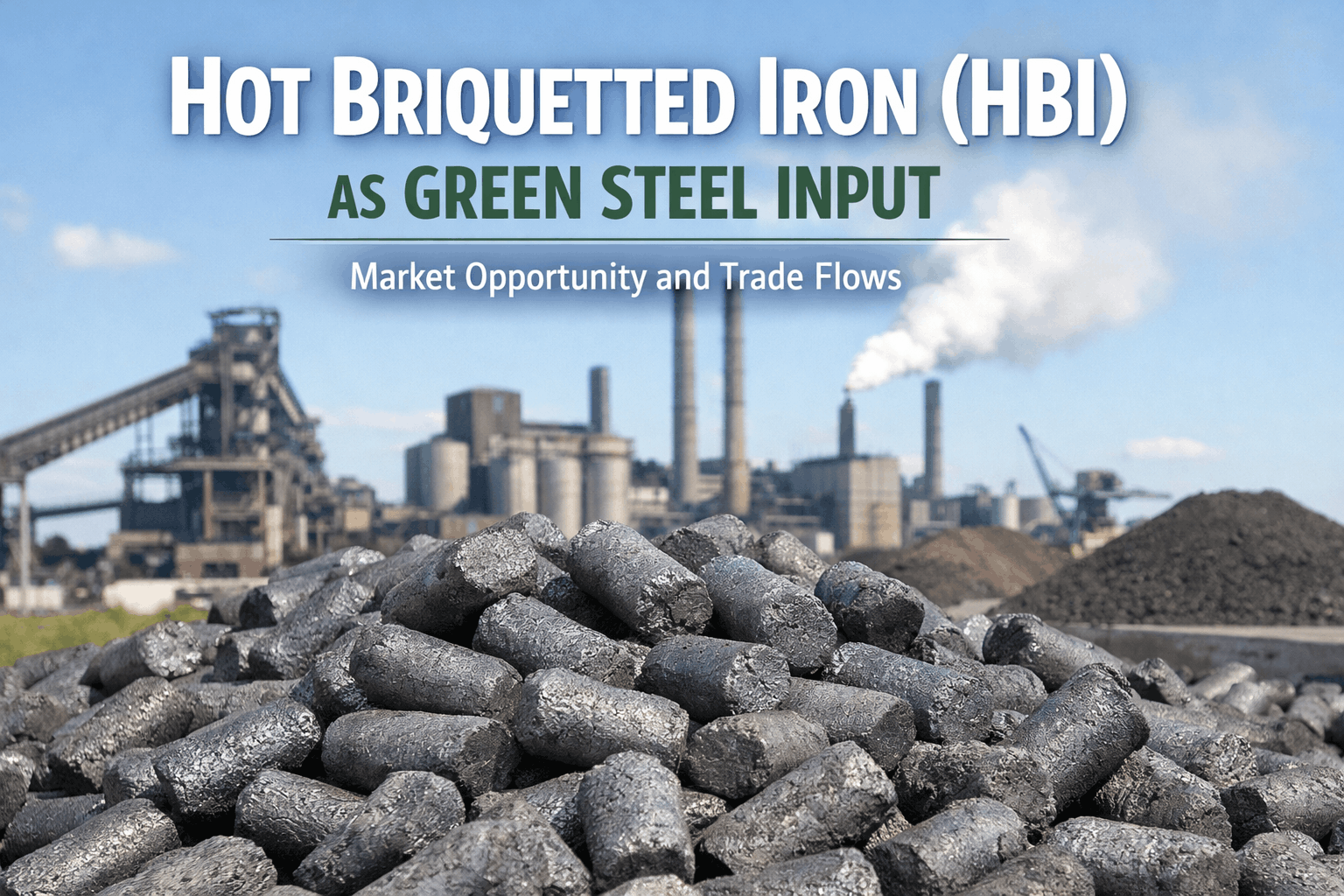
Read More
Hot Briquetted Iron is emerging as the most strategically important metallic feedstock in the global steel decarbonization transition. A compacted form of Direct Reduced Iron with 90–92%+ iron content and minimal impurities, HBI enables electric
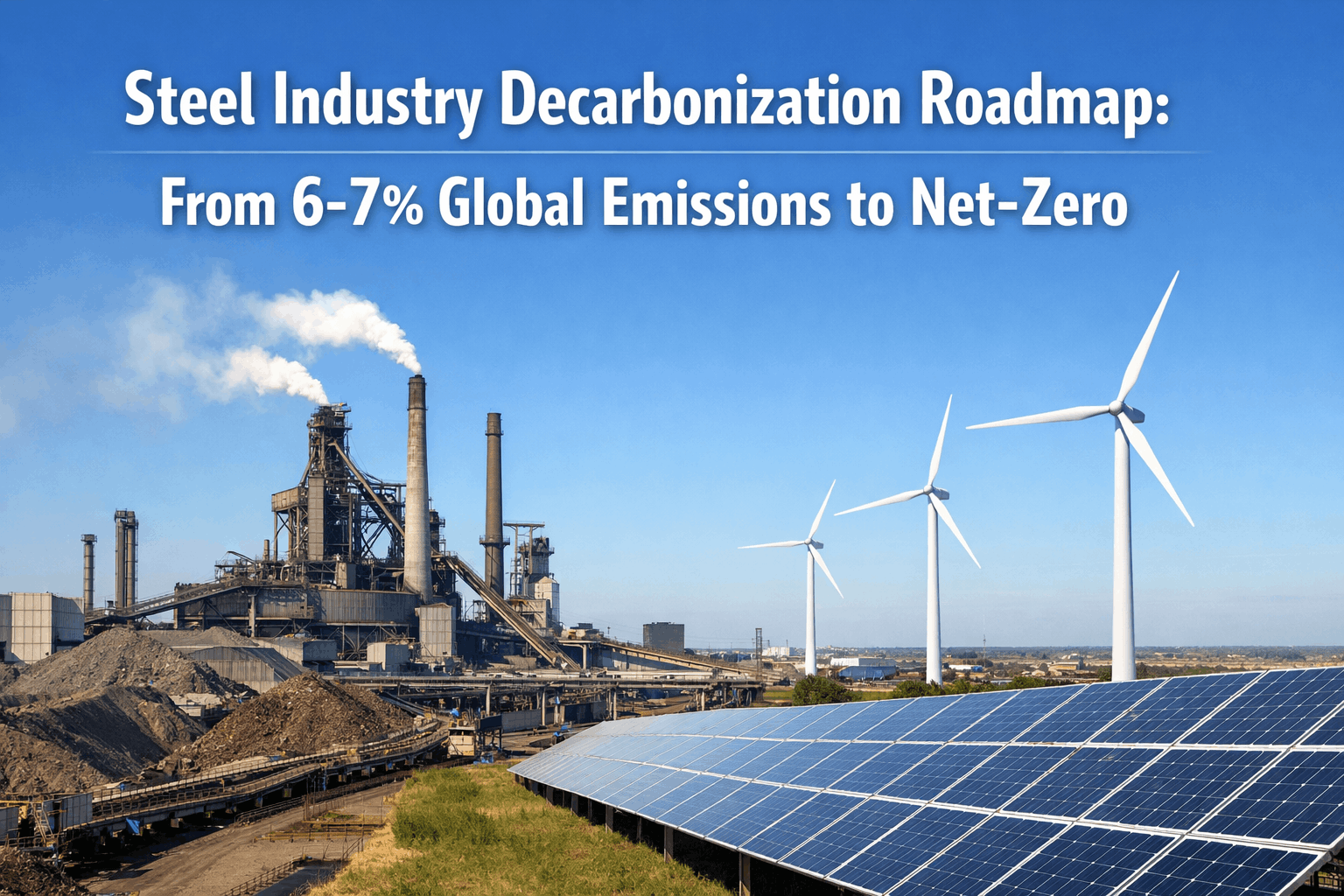
Read More
Steel is the backbone of modern civilization — and also one of its biggest climate problems. Responsible for 6–7% of global CO2 emissions and 11% of global fossil fuel consumption, the steel industry emits more carbon than international aviation
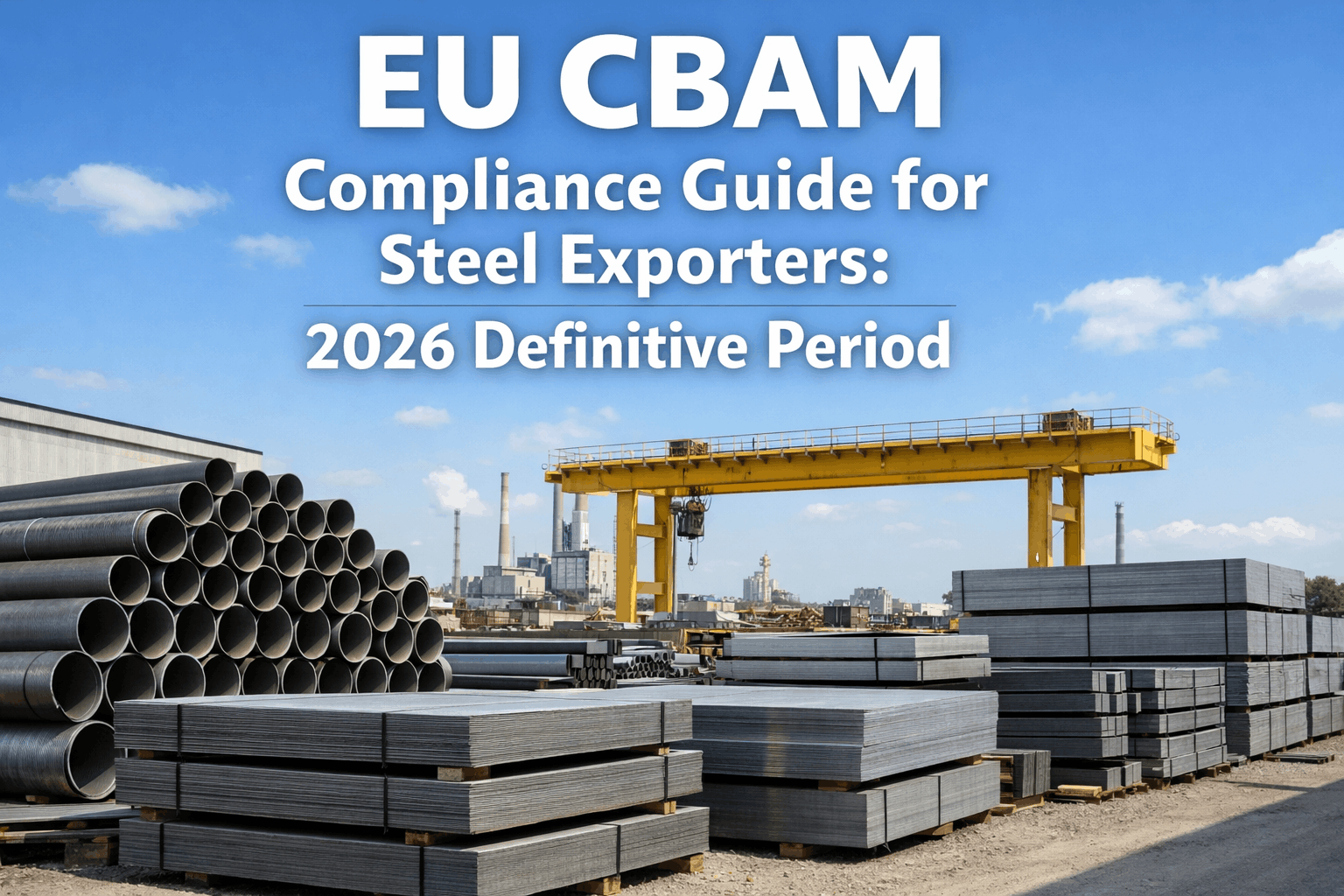
Read More
On January 1, 2026, the EU Carbon Border Adjustment Mechanism entered its definitive phase — transforming what was a reporting-only transitional period into a financially binding compliance regime that will fundamentally reshape global steel trad
Read More
Steel manufacturing environments are unforgiving, where 60% of critical safety incidents can be traced back to a single missed routine check in high-risk zones like furnace decks or ladle pits. Relying on paper checklists creates

Read More
Steel production is responsible for 7–9% of global CO2 emissions — roughly 2.6 billion tonnes annually. As governments enforce carbon pricing, border adjustment mechanisms, and net-zero mandates, the cost of emitting carbon is a direct hit to the
Read More
Iron ore procurement is the single largest cost variable in steel production — with raw materials representing 30–40% of total manufacturing costs and the global iron ore market valued at $279 billion in 2023. Price swings of 167% (2021 post-pand

Read More
Forecasting steel demand has always been part science, part intuition, and mostly guesswork. Traditional models built on historical consumption data and quarterly economic reports consistently miss the demand signals that actually drive steel pur

Read More
The steel supply chain is among the most volatile and complex in global manufacturing — spanning iron ore mines across continents, coking coal logistics, scrap metal markets, energy-intensive production, and just-in-time delivery to automotive, c
Read More
Steel plants contain some of the most hazardous industrial environments imaginable — molten metal at 1,600°C, explosive gas networks carrying carbon monoxide-rich blast furnace gas, confined spaces inside furnace shells, high-voltage electrical s
Read More
Steel mill cranes are among the most safety-critical assets in heavy industry — handling molten metal ladles weighing over 300 tons, moving red-hot slabs through hazardous production zones and operating thousands of cycles per year in extreme hea
Read More
Steel plants operate under the most extreme conditions in heavy industry — blast furnaces at 2,700°F+ for 15–20 year campaigns, BOF converters processing 400-ton heats in 40 minutes, EAFs cycling through 3,000°C arc temperatures every hour, and s
Read More
Molten metal is the most dangerous material in any industrial facility — at temperatures exceeding 1,500°C, a single ladle tipping accident can kill dozens of workers in seconds, a refractory breakout can cause $15,000 per minute in production lo
Read More
Refractory linings are the invisible armor protecting every furnace, ladle, converter, and kiln in heavy industry — withstanding temperatures exceeding 1700°C while containing molten metal, corrosive slag, and extreme thermal cycling. When refrac
Read More
Steel plants are among the most hazardous industrial environments on earth — where workers routinely operate alongside molten metal at 1,600°C, explosive gas atmospheres in coke oven batteries, confined spaces inside blast furnaces and vessels, h
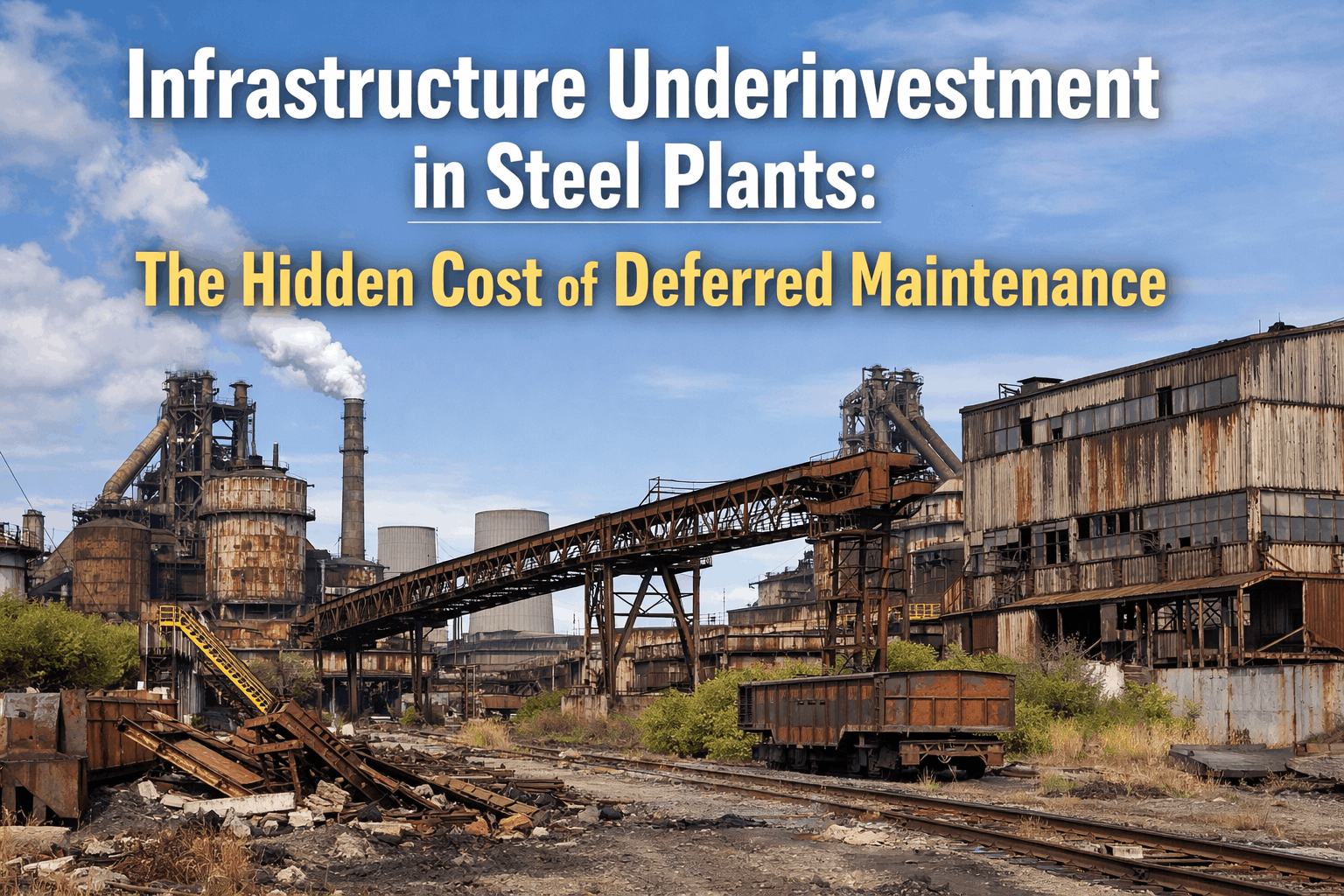
Read More
Steel plants are among the most capital-intensive industrial operations on earth — a single blast furnace represents an investment of $200 million to over $1 billion, and the full facility footprint spans coke ovens, sinter plants, BOF converters
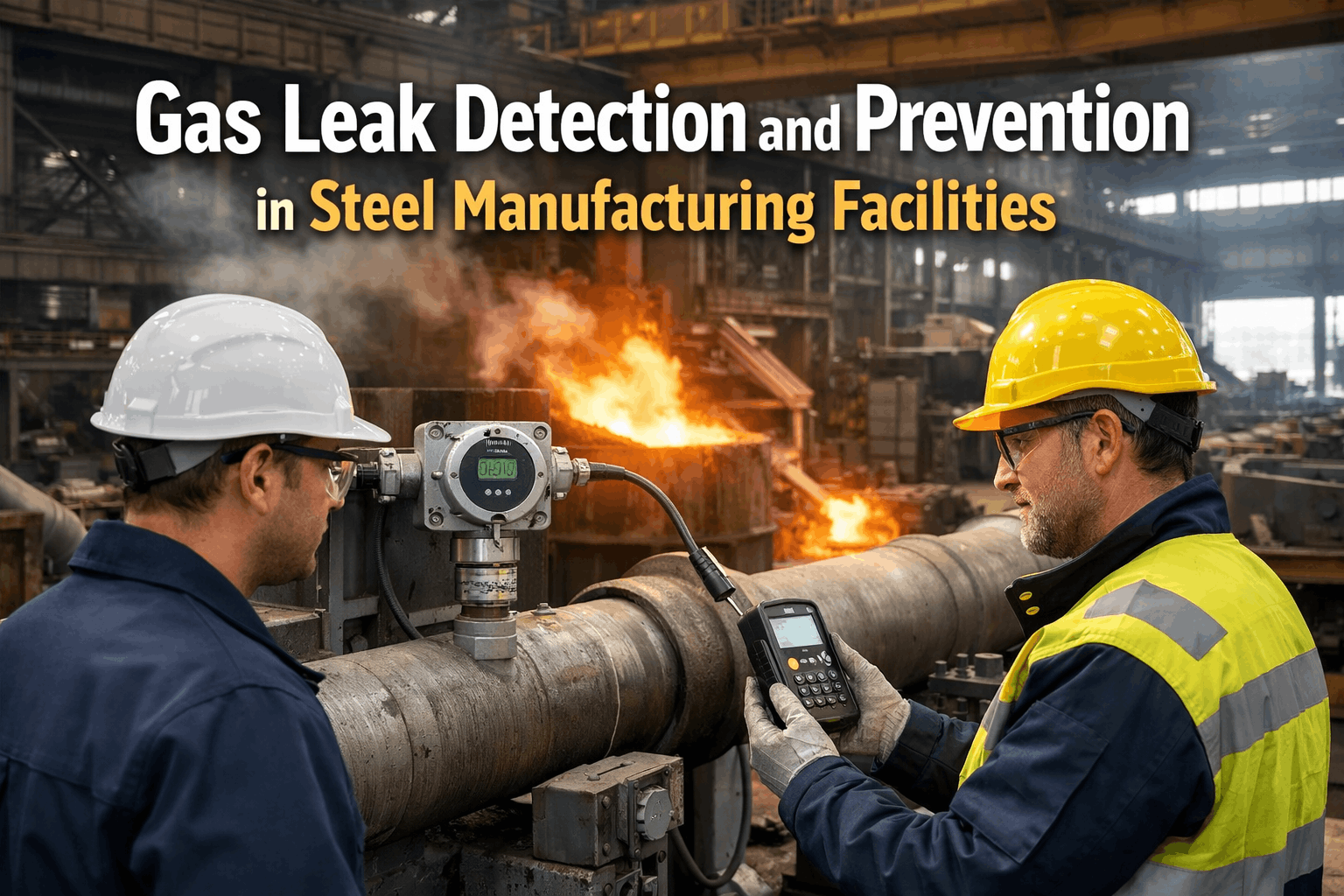
Read More
Steel manufacturing facilities operate with some of the most hazardous gas environments in any industry — blast furnaces generating deadly carbon monoxide, coke ovens releasing volatile organic compounds, and basic oxygen furnaces producing explo
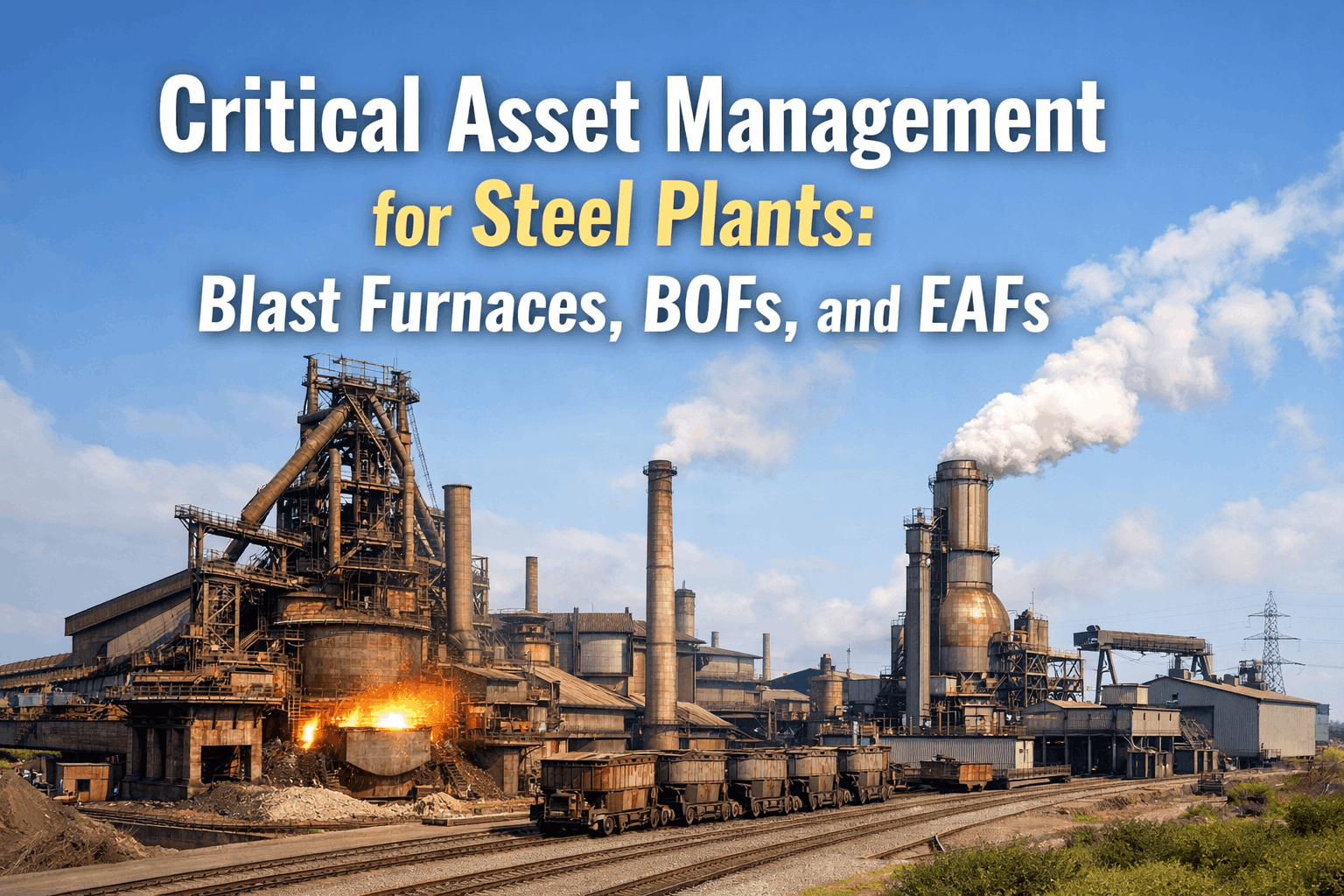
Read More
Steel plants operate three of the most capital-intensive assets in all of heavy industry — blast furnaces representing $100M+ total reline costs, basic oxygen furnaces processing 400-ton heats in under 40 minutes, and electric arc furnaces meltin
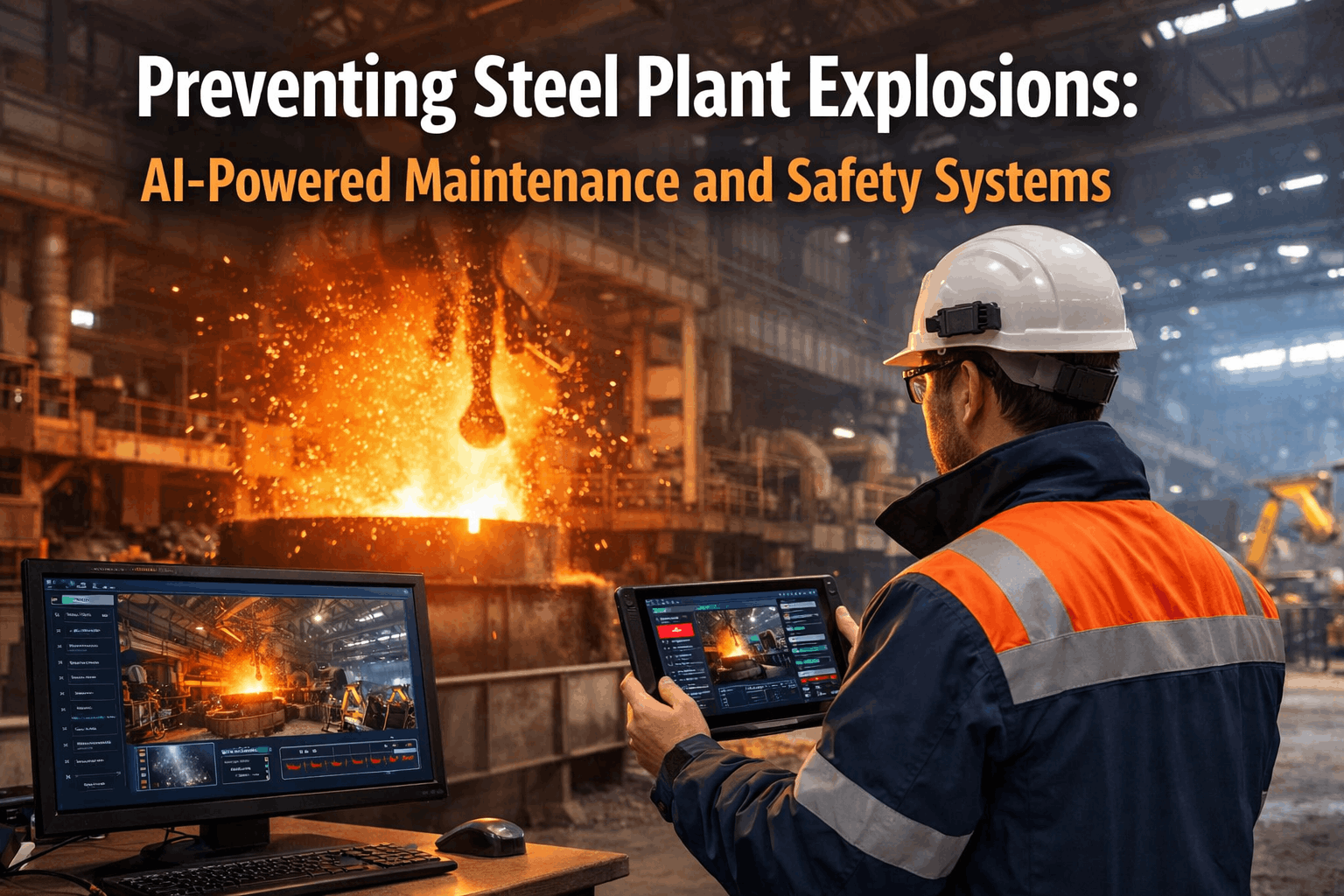
Read More
Steel plants are among the most capital-intensive industrial operations on earth — a single blast furnace represents an investment of $200 million to over $1 billion, and the full facility footprint spans coke ovens, sinter plants, BOF converters
Read More
Unplanned downtime slashes steel mill profitability by up to 20% annually. The average manufacturer loses 800 hours per year to equipment downtime — that's 15 hours every week of idle workers, wasted energy, and lost production. In steel plants, w
Read More
Steel manufacturing is one of the most energy-intensive industries on the planet — consuming 21.27 GJ per tonne of crude steel and contributing 7-9% of global CO₂ emissions. Yet only a fraction of the world's steel plants have embraced the Industr

Read More
Your hot strip mill is running at 64% OEE. Is that competitive — or are you losing millions in hidden capacity? In steel manufacturing, where a single hour of blast furnace downtime can cost $50,000+, the answer depends entirely on which process a
Total Posts:
Real Results
What Steel Plants Actually See After Going Live
These aren't projections — they're real numbers from steel plants running the iFactory AI platform.
50%
Less Downtime
AI + robotics catch failures before they cascade
3-5%
Yield Improvement
AI casting, composition & slab sizing optimization
98%+
Defect Catch Rate
AI vision catches what inspectors miss at line speed
20%
Energy Cost Cut
AI furnace optimization + energy intelligence
FAQ
Frequently Asked Questions About AI for Steel Plants
Answers for steel plant engineers, operations heads, and CXOs evaluating Industry 4.0 solutions.
iFactory's AI monitors 2,000+ parameters per second — hot blast temperature, top gas composition (CO, CO₂, H₂), burden distribution, raceway conditions, and cooling water flow. ML models predict hot metal temperature and silicon content 30-60 minutes ahead, optimize coke rate to reduce fuel costs by 3-5%, predict thermal state to prevent chills and breakouts, and optimize charge distribution for uniform gas flow. For EAFs, the AI optimizes power profiles and electrode positioning to reduce tap-to-tap time and electrode consumption by 8%. For BOFs, it predicts blow end point carbon and temperature, reducing re-blows.
iFactory deploys AI vision across the entire production chain: slab and coil surface defect detection (longitudinal cracks, transverse cracks, inclusions, scale, edge defects, scratches) at 98%+ accuracy and line speed; PPE compliance monitoring for heat-resistant suits, face shields, and safety glasses near molten metal; slag detection during tapping and ladle operations to prevent carryover; crane load monitoring for ladle and charging cranes; safety zone enforcement around molten metal transport paths; conveyor belt condition monitoring; and refractory wear visual inspection. All processing happens on-premise in under 50ms.
Steel plants have some of the most dangerous inspection environments in any industry. iFactory integrates autonomous quadruped robots (Boston Dynamics Spot, Unitree, ANYbotics ANYmal) that patrol: blast furnace cast house floors at 1,500°C scanning taphole runners and iron notch areas; coke oven battery walkways monitoring CO and H₂S levels; BOF vessel exteriors checking refractory condition; and confined spaces inside vessels during shutdowns. Robots collect thermal imaging, vibration readings, gas measurements, and visual data — all findings auto-generate work orders with photos, location, and severity.
Yield optimization is the highest-ROI AI application in steel. iFactory's yield AI: optimizes casting parameters to predict and prevent breakouts (the #1 yield killer in continuous casting); predicts optimal slab dimensions to minimize head/tail trim losses; optimizes secondary metallurgy in ladle furnace and vacuum degasser to hit alloy composition targets first-time (reducing re-treatment); identifies scrap-causing patterns in EAF/BOF charge mix; and reduces prime-to-secondary downgrades through mechanical property prediction. A 1% yield improvement in a mid-size mill is worth $2-4M annually. Plants typically see 3-5% gain.
Yes. iFactory offers full on-premise deployment on NVIDIA-powered edge servers (DGX, HGX, EGX). All AI inference — 32 vision camera streams, furnace optimization, yield models, predictive maintenance — runs locally with sub-10ms latency and zero cloud dependency. This is critical for steel companies handling proprietary alloy compositions, customer specifications, and process recipes that cannot leave the plant network. Compliant with GDPR, India DPDP Act, China PIPL, and other data localization laws. Cloud deployment is also available for multi-plant management.
Steel production accounts for 7-9% of global CO₂ emissions. iFactory tracks energy consumption per ton across EAFs, blast furnaces, rolling mills, and reheat furnaces in real-time. AI optimizes furnace cycles, electrode consumption, and reheating profiles to cut energy waste by 15-20%. Carbon tracking provides tCO₂ per ton and per heat for ESG reporting. The platform also monitors water usage (m³/ton), waste heat recovery efficiency, and supports hydrogen-based steelmaking process tracking. Automated sustainability reports are investor and regulator ready.
Yes. iFactory integrates with all major systems used in steel — Siemens S7, Allen-Bradley ControlLogix, ABB Ability, Honeywell Experion, Yokogawa CENTUM through OPC-UA, MQTT, Modbus, and PROFINET. It connects to Level 2 automation systems for furnace and rolling mill data, ERP (SAP, Oracle) for production planning, quality management systems, and laboratory information systems (LIMS). ONVIF cameras connect to vision AI. ROS 2 robots communicate through DDS. Zero rip-and-replace — iFactory layers on top of existing infrastructure.
Deployment varies by module: Core CMMS with pre-built steel templates — 1-2 weeks. AI vision cameras — operational in 3-5 days. Robot patrol routes — mapped and active in 1-2 weeks. BF/EAF/BOF optimization models — 4-8 weeks of baseline data collection. Yield optimization — 6-8 weeks of historical data training. Full platform deployment is typically 8-10 weeks. Deployment is zone-by-zone with zero disruption to active production. 90-day hands-on implementation support is included.
Transform Your Steel Plant
Ready to Bring AI, Vision, and Robotics to Your Steel Mill?
Join steel plants worldwide running iFactory's complete AI platform. Get a free assessment and see exactly how much downtime, yield loss, and energy cost you can eliminate.
No credit card required
90-day support included
On-premise or cloud