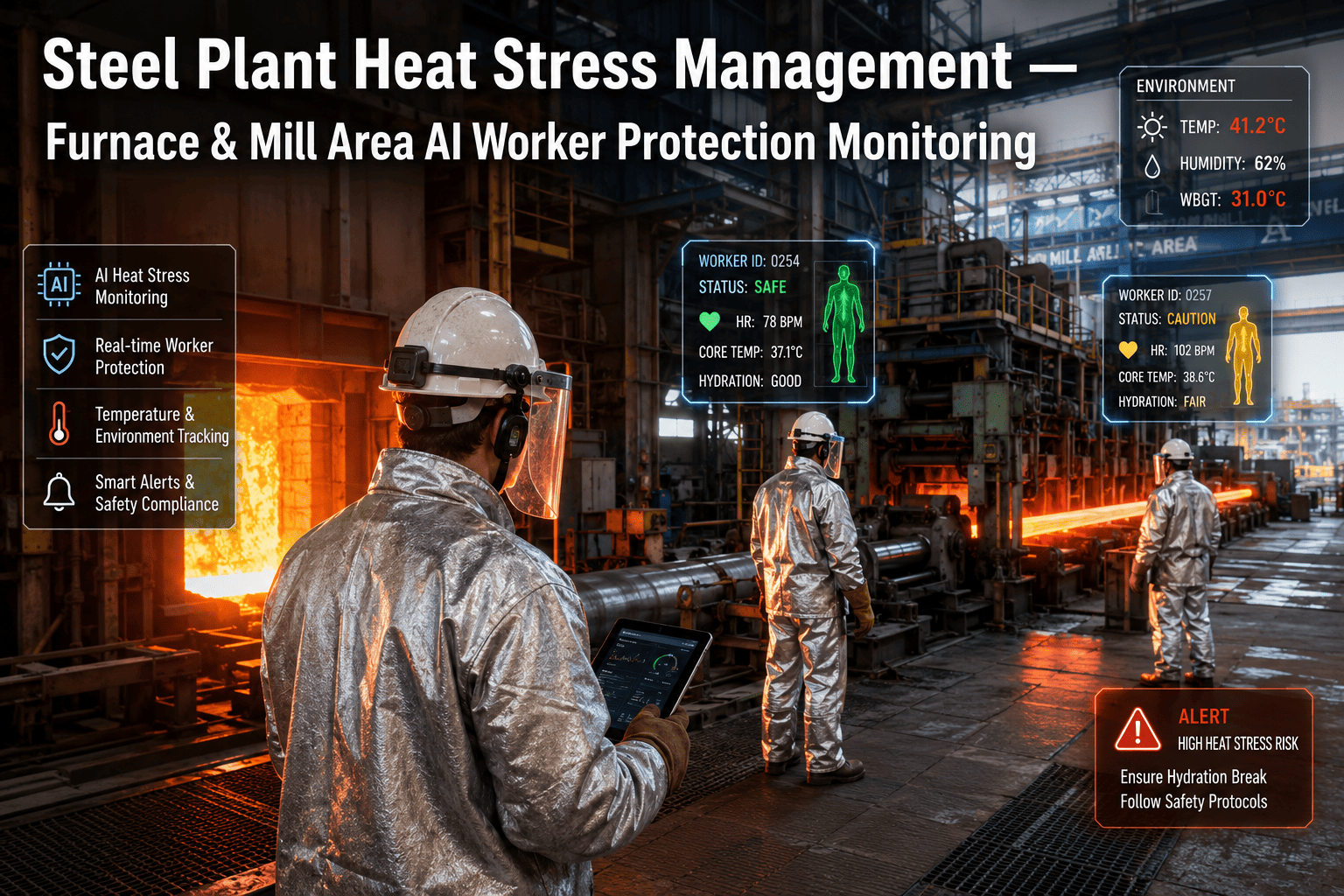
In steel production environments, furnace and mill areas expose workers to extreme thermal conditions that can lead to heat stress, heat exhaustion, and even fatal heat stroke. Traditional heat management relies on manual monitoring and reactive responses, but these methods often fall short in preventing cumulative heat exposure. AI-driven environmental monitoring now enables real-time tracking of temperature, humidity, and radiant heat, allowing for proactive interventions. This article explores how steel plants can implement AI-based heat stress management systems, including work-rest schedules, engineering controls, and PPE programs, to protect workers and enhance productivity. For expert guidance on deploying such systems, visit contact our support team or book a consultation.
Real-Time Heat Stress Monitoring for Steel Workers
Our AI platform continuously tracks environmental conditions in furnace and mill areas, alerting supervisors when thresholds are exceeded. Protect your workforce with data-driven safety protocols.
80%
Reduction in heat-related incidents with AI monitoring
90%
Accuracy in predicting heat stress events
50%
Decrease in unplanned downtime due to heat issues
Understanding Heat Stress in Steel Plants
Heat stress occurs when the body cannot dissipate heat effectively, leading to elevated core temperature. In steel plants, furnace areas can exceed 150 degrees Fahrenheit, while mill areas combine high temperatures with physical exertion. Workers face risks of heat cramps, heat exhaustion, and heat stroke. According to OSHA, thousands of workers suffer heat-related illnesses annually, many in heavy industries like steel. The combination of radiant heat from furnaces, high humidity from cooling processes, and heavy PPE creates a perfect storm for heat stress. Understanding the physiological impact is the first step toward effective management. The body's cooling mechanisms, primarily sweating and increased blood flow to the skin, become overwhelmed in extreme conditions. Prolonged exposure can lead to cognitive impairment, reduced motor skills, and increased accident risk. Steel plant EHS managers must recognize that heat stress is not just a comfort issue but a critical safety hazard that requires systematic control.
The Role of AI in Heat Stress Monitoring
Artificial intelligence transforms heat stress management from reactive to predictive. AI systems integrate data from temperature sensors, humidity monitors, wearable devices, and weather forecasts to create a comprehensive risk profile. Machine learning algorithms analyze historical incident data to identify patterns and predict when conditions become dangerous. For example, an AI model might learn that when ambient temperature exceeds 95 degrees and humidity is above 70% for more than two hours, the risk of heat exhaustion increases by 40%. This allows supervisors to implement work-rest cycles before workers show symptoms. AI also enables personalized monitoring by factoring in individual worker characteristics such as age, BMI, and acclimatization status. Wearable sensors can track heart rate, skin temperature, and sweat rate, feeding data to the AI for real-time alerts. The result is a dynamic, data-driven safety system that adapts to changing conditions and individual needs, far superior to static threshold-based approaches.
Implementing AI Heat Stress Management: A Step-by-Step Timeline
Step 1: Risk Assessment
Conduct a thorough evaluation of all work areas, identifying hotspots, task duration, and worker exposure levels. Use historical incident data to prioritize high-risk zones.
Step 2: Sensor Deployment
Install temperature, humidity, and radiant heat sensors in furnace and mill areas. Deploy wearable devices for workers in high-exposure roles. Ensure sensors are calibrated and networked.
Step 3: AI Model Training
Feed historical data into the AI system to train predictive models. Define thresholds for alerts based on regulatory standards and company policies. Validate model accuracy with pilot testing.
Step 4: Worker Training
Educate workers on heat stress symptoms, the use of wearables, and response protocols. Ensure they understand the AI alerts and how to use rest stations and cooling equipment.
Step 5: Continuous Monitoring
Run the AI system 24/7, with real-time dashboards for supervisors. Review weekly reports to identify trends and adjust work-rest schedules or engineering controls as needed.
Engineering Controls for Furnace & Mill Areas
Local Exhaust Ventilation
Install ventilation systems that capture hot air and fumes at the source, reducing ambient temperature in work zones. High-velocity low-volume systems are effective in furnace areas.
Radiant Heat Shields
Use reflective barriers and insulated panels to block radiant heat from furnaces and molten metal. These shields can reduce heat load by up to 50% in adjacent work areas.
Cooling Stations
Designate air-conditioned rest areas near hot zones. Equip them with cool water, misting fans, and seating. Workers should have easy access every 30 minutes.
Automated Material Handling
Deploy robots or automated guided vehicles to move materials in extreme heat zones, reducing human exposure. This also improves efficiency and consistency.
Work-Rest Schedule Optimization with AI
AI enables dynamic work-rest scheduling based on real-time heat conditions and individual worker data. Instead of fixed schedules, the system adjusts rest periods when heat index rises. For example, if the heat index exceeds 100 degrees, the AI may recommend 15-minute rest breaks every hour, compared to 10 minutes under moderate conditions. The algorithm considers factors like task intensity, worker acclimatization, and cumulative exposure over a shift. Studies show that optimized schedules reduce heat strain by 30% while maintaining productivity. Workers report higher satisfaction and lower fatigue. The AI also tracks recovery time, ensuring workers do not return to hot zones before their core temperature normalizes. This personalized approach prevents both acute and chronic heat stress, leading to fewer incidents and lower healthcare costs.
30%
Reduction in heat strain
25%
Increase in worker satisfaction
PPE Programs for Extreme Heat Environments
Personal protective equipment for heat stress includes cooling vests, water-cooled garments, and reflective clothing. However, PPE is only effective when integrated into a comprehensive program. Workers must be trained on proper use, cleaning, and signs of wear. AI can track PPE usage through wearables and remind workers to don cooling gear before entering hot zones. Additionally, the system can monitor the effectiveness of PPE by comparing body temperature data with ambient conditions. For instance, if a worker's core temperature rises despite wearing a cooling vest, the AI may flag the vest for maintenance or recommend a different model. Regular audits ensure PPE remains in good condition. The program should also include hydration tracking, with AI prompting workers to drink water based on sweat loss estimates. This holistic approach ensures PPE is a reliable last line of defense, not a false sense of security.
Comparison of Heat Stress Control Methods
| Control Method | Effectiveness | Cost | Implementation Time |
|---|---|---|---|
| Local Exhaust Ventilation | High | Medium | 2-4 weeks |
| Radiant Heat Shields | Medium-High | Low-Medium | 1-2 weeks |
| Cooling Stations | High | Low | 1 week |
| AI Work-Rest Scheduling | Very High | High | 4-8 weeks |
| Cooling Vests | Medium | Low | Immediate |
Frequently Asked Questions
What is the most common cause of heat stress in steel plants?
The most common cause is prolonged exposure to high radiant heat from furnaces and molten metal, combined with physical exertion and heavy PPE. Workers in furnace areas often face temperatures exceeding 120 degrees Fahrenheit, while those in mill areas experience high humidity from cooling processes. The body's cooling mechanisms become overwhelmed, leading to heat cramps, exhaustion, or stroke. AI monitoring helps by providing early warnings based on environmental and physiological data, allowing supervisors to enforce rest breaks and hydration. Without such systems, workers may not recognize symptoms until it is too late. Implementing a combination of engineering controls, work-rest schedules, and PPE is essential. For more details, visit contact support.
How does AI improve heat stress management compared to traditional methods?
Traditional methods rely on fixed thresholds and manual observation, which are often reactive and imprecise. AI improves management by integrating real-time data from multiple sensors, predicting heat stress events before they occur, and personalizing recommendations for individual workers. For example, AI can adjust work-rest schedules dynamically based on current conditions and worker biometrics, rather than using a one-size-fits-all approach. This leads to a 30% reduction in heat strain and a 50% decrease in unplanned downtime. AI also provides data-driven insights for continuous improvement, helping EHS managers identify trends and optimize controls. The predictive capability allows for proactive interventions, such as pre-cooling workers before a heat wave. To see AI in action, book a demo at book a demo.
What types of sensors are used in AI heat stress monitoring?
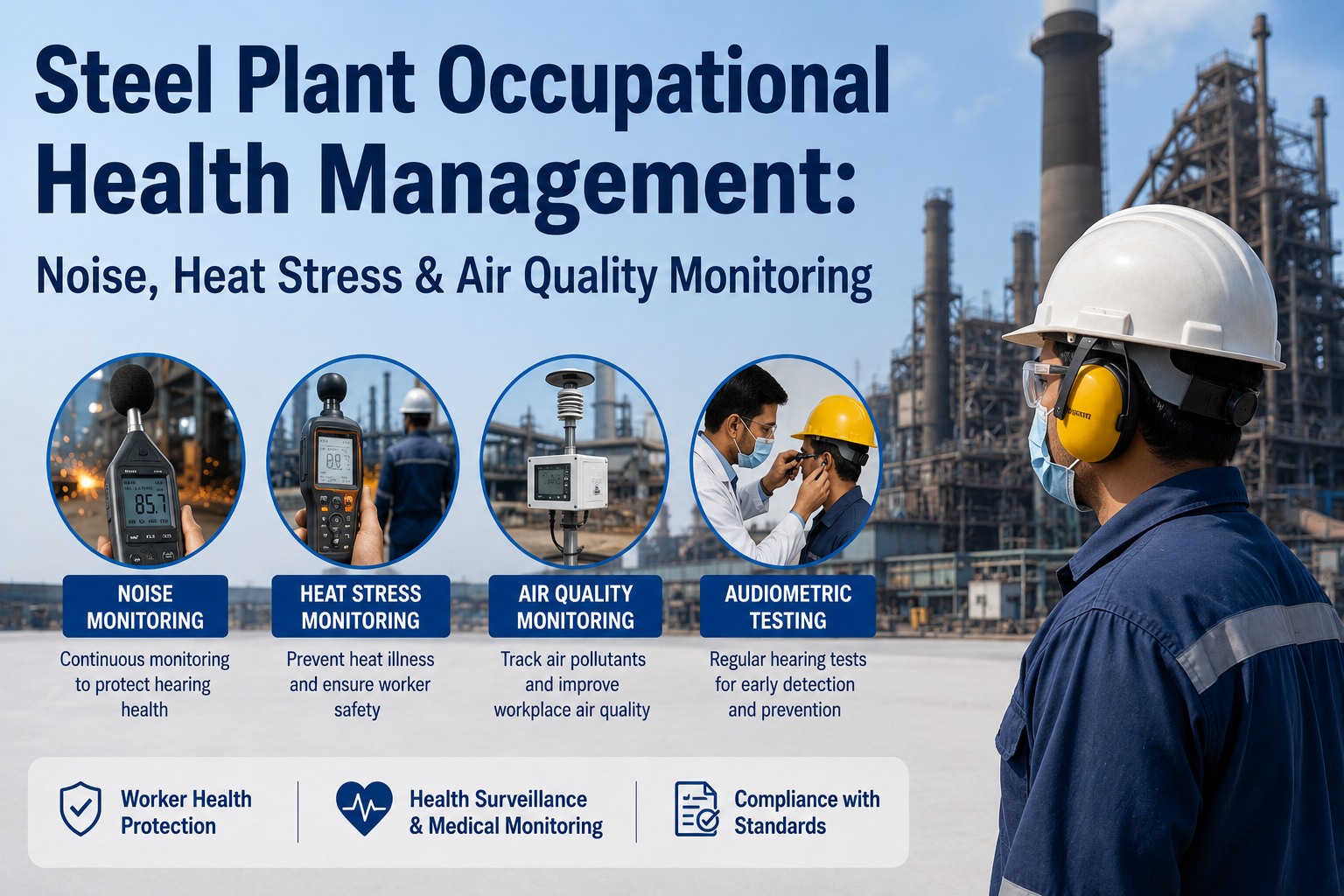
Typical sensors include ambient temperature and humidity sensors, radiant heat flux sensors, and wearable devices that measure heart rate, skin temperature, and sweat rate. These sensors are deployed in furnace and mill areas, as well as on workers in high-exposure roles. Data is transmitted wirelessly to a central AI platform that processes and analyzes it in real time. Some systems also integrate weather station data and forecasts to anticipate heat waves. The choice of sensors depends on the specific work environment and risk profile. For example, radiant heat sensors are critical near furnaces, while humidity sensors are more important in mill areas. Wearables must be rugged and comfortable for long shifts. Proper calibration and maintenance are essential for accurate readings. For guidance on sensor selection, contact support at contact support.
How can workers be trained to use AI heat stress systems?
Training should cover the basics of heat stress physiology, how to interpret AI alerts, and the correct use of wearables and cooling equipment. Workers should understand that AI is a tool to enhance their safety, not a replacement for personal judgment. Hands-on sessions can simulate alerts and responses, such as moving to a cooling station or drinking water. Supervisors need additional training on dashboard interpretation and decision-making. Refresher courses should be conducted quarterly or after any system update. It is also important to address privacy concerns regarding biometric data, ensuring workers know how their data is protected. Engaging workers in the implementation process fosters buy-in and improves compliance. For a comprehensive training program, contact support offers resources and consulting.
What are the regulatory requirements for heat stress in steel plants?
Regulatory requirements vary by country, but most follow guidelines from OSHA, NIOSH, or similar bodies. In the US, OSHA recommends implementing a heat stress management program when temperatures exceed 80 degrees Fahrenheit, with mandatory rest breaks and water access. Some states have specific standards for outdoor and indoor heat exposure. Steel plants must document their heat stress assessments, control measures, and training records. AI systems can help maintain compliance by automatically logging environmental data, worker exposure times, and intervention actions. This documentation is invaluable during inspections. Failure to comply can result in fines, lawsuits, and reputational damage. EHS managers should stay updated on evolving regulations and consider voluntary standards like ISO 45001 for occupational health and safety. For compliance assistance, contact support provides expert advice.
Ready to Protect Your Workers with AI Heat Stress Monitoring?
Implement a proactive heat stress management program today.