Steel plants operate three of the most capital-intensive assets in all of heavy industry — blast furnaces representing $100M+ total reline costs, basic oxygen furnaces processing 400-ton heats in under 40 minutes, and electric arc furnaces melting scrap at temperatures exceeding 3,000°C. With unplanned blast furnace downtime costing $500,000+ per hour and lost hot metal production valued at $1.2–$3.5 million per day, the difference between a 12-year campaign and a 20+ year campaign comes down to one factor: maintenance management excellence. iFactory's AI-powered platform brings predictive intelligence to every critical steelmaking asset. Book a free consultation and discover how AI condition monitoring extends campaign life, prevents catastrophic failures, and protects your most valuable production assets.
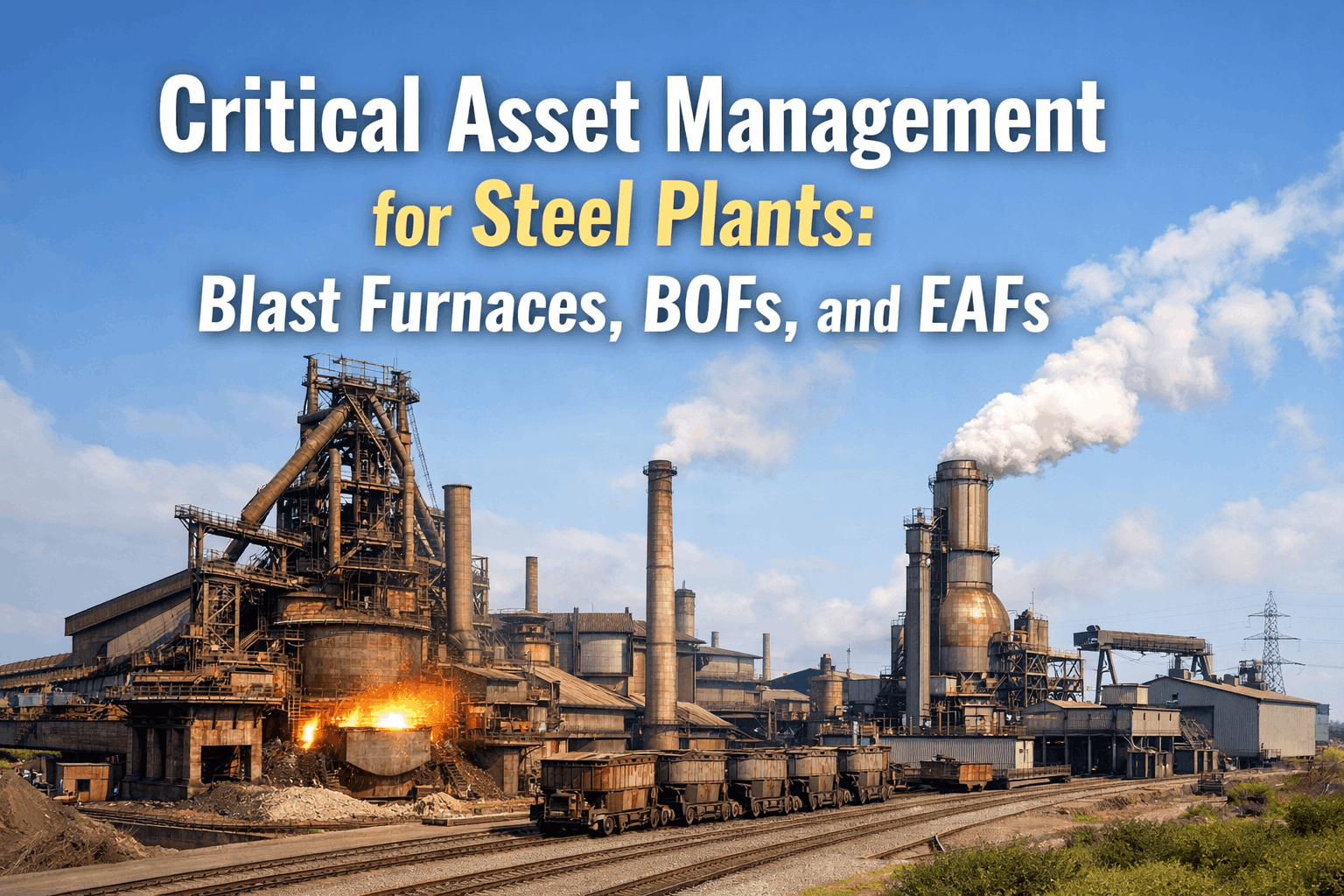
Critical Asset Management for Steel Plants
Blast Furnaces · BOFs · EAFs
Global crude steel production reached 1.8 billion metric tons in 2024 across a $1.6+ trillion industry — yet a single unplanned blast furnace blowdown costs $4–$12 million in direct repairs plus $1.2–$3.5 million per day in lost production. iFactory's AI platform monitors 200+ thermal zones, 30+ cooling circuits, and thousands of refractory measurement points across your BF, BOF, and EAF operations — detecting degradation signatures 2–8 weeks before they become failures.
Produced Globally (2024)
Unplanned BF Downtime
Life With AI Monitoring
What Goes Wrong in Steel Plant Asset Management — And What It Costs
Blast furnaces, BOFs, and EAFs operate under the most extreme conditions in any industrial process. Without AI-powered condition monitoring, degradation goes undetected until catastrophic — and catastrophically expensive — failure occurs.
How AI-Powered Critical Asset Management Works for Steel Plants
iFactory's platform integrates with existing sensor infrastructure across blast furnaces, BOFs, and EAFs — applying inverse heat transfer models, pattern recognition, and predictive analytics to detect degradation signatures weeks before failure.
Blast Furnace · BOF · EAF — Critical Failure Modes & AI Response
Each steelmaking asset presents unique degradation patterns, failure modes, and monitoring challenges. iFactory's AI is purpose-trained on the specific physics of each furnace type. Schedule a demo to see how this works for your plant.
| Critical Asset | Key Failure Modes | AI Monitoring Method | Prediction Window | Cost of Unplanned Failure |
|---|---|---|---|---|
| Blast Furnace — Hearth | Refractory erosion, hot metal penetration, salamander buildup | Inverse heat transfer modeling from 80–200+ thermocouples | 4–12 weeks | Campaign-ending — $100M+ total |
| Blast Furnace — Tuyeres | Burnback, water leaks, nose damage from burden irregularity | Cooling water ΔT analysis, flow rate anomalies | 2–6 weeks | $500K–$2M + off-blast risk |
| Blast Furnace — Cooling System | Stave cracking, copper plate failure, water circuit blockage | Circuit-by-circuit thermal efficiency tracking | 3–8 weeks | $1M–$5M per circuit failure |
| Blast Furnace — Hot Stoves | Checker brick degradation, dome cracking, burner failure | Temperature profile analysis, efficiency trending | 4–12 weeks | Reduced blast temp + safety hazard |
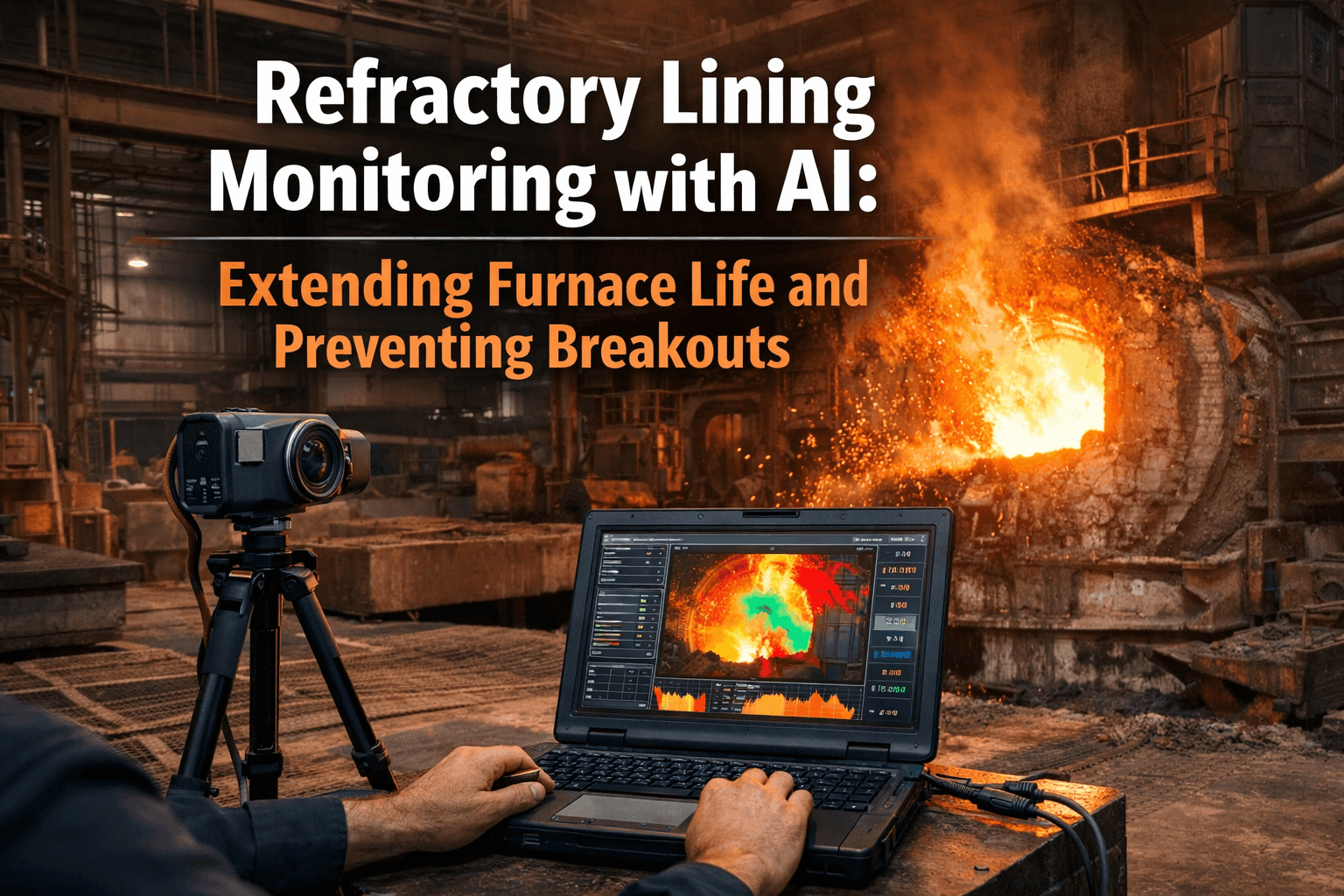
| BOF — Refractory Lining | Slag erosion, thermal shock cracking, hotspot formation | Laser lining thickness measurement + heat cycle tracking | 2–4 weeks | $2M–$8M per unplanned reline |
| BOF — Oxygen Lance | Tip erosion, water jacket failure, lance jamming | Vibration & flow monitoring, tip wear trending | 1–3 weeks | $500K–$1.5M + melt shop shutdown |
| BOF — Taphole | Refractory wear, slag carryover, taphole blockage | Thermal imaging + tapping time analysis | 1–2 weeks | $1M–$3M + quality losses |
| EAF — Graphite Electrodes | Excessive consumption, tip breakage, arc instability | Arc length monitoring, current-voltage optimization | Per-heat tracking | $150K–$500K/month excess consumption |
| EAF — Refractory Lining | Thermal cycling erosion, chemical attack, hotspot zones | Shell temperature arrays + heat count tracking | 2–4 weeks | $1M–$4M per unplanned reline |
| EAF — Roof & Off-Gas System | Water panel leaks, ductwork erosion, baghouse failures | Pressure differential + temperature trending | 2–6 weeks | $500K–$2M + EPA compliance risk |
Your Steel Plant AI Deployment — Phase by Phase
iFactory deploys in Week 1 with digital work orders. Condition monitoring integrates in Month 4. AI predictive models generate failure predictions by Month 7. By Month 12, your entire steelmaking operation runs on documented condition intelligence. Book a free demo to scope your deployment plan.
Critical Asset Audit & Sensor Baseline Assessment
We map every blast furnace, BOF, and EAF asset — documenting existing thermocouple arrays, cooling circuits, refractory age, campaign history, and current monitoring gaps. This establishes the baseline for AI model training and identifies immediate risk areas where degradation may already be advanced.
Sensor Network Connection & Data Pipeline
Connect existing plant instrumentation — thermocouples, flow meters, gas analyzers, shell scanners — into iFactory's unified data platform. Deploy additional IoT sensors where gaps exist. All data streams into a single plant-wide condition monitoring dashboard replacing disconnected SCADA silos.
Furnace-Specific AI Model Training & Calibration
Machine learning models are trained on your plant's specific furnace geometry, refractory materials, cooling configurations, and operational patterns. Inverse heat transfer models calculate refractory remaining thickness from thermocouple data. Anomaly detection algorithms learn normal operating signatures for each cooling circuit and thermal zone.
Failure Prediction & Campaign Life Forecasting
The AI engine begins generating 2–8 week advance failure predictions for tuyere failures, cooling system anomalies, refractory hotspots, and equipment degradation trends. Campaign life forecasts project remaining furnace life based on actual wear rates — enabling optimal reline scheduling and CapEx planning.
Shutdown Planning & Safety Compliance Automation
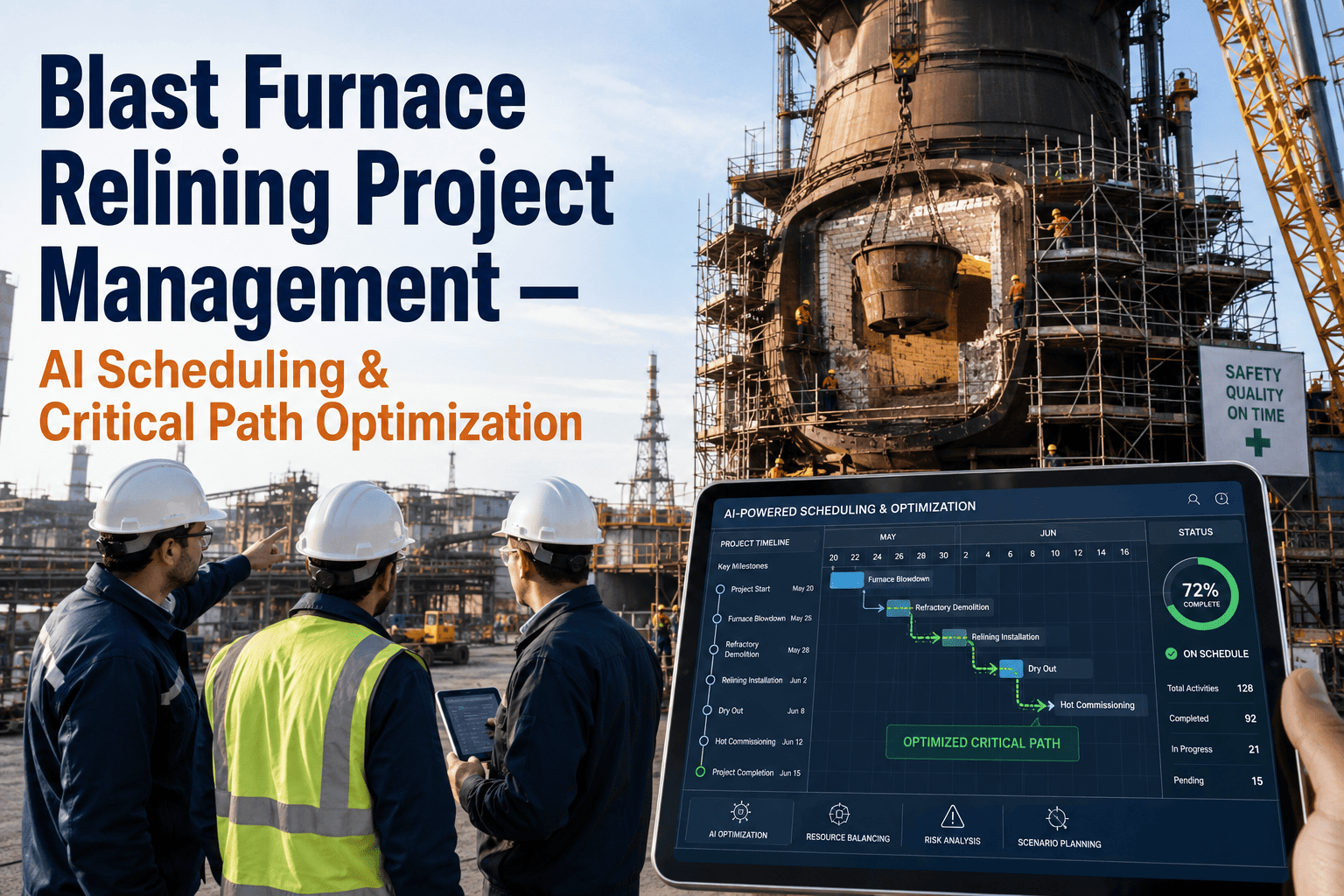
AI-optimized shutdown planning sequences every maintenance task — with mandatory safety permits (confined space, hot work, LOTO, fall protection) embedded at critical holdpoints. Work orders auto-generate with safety requirements that must be completed before tasks proceed. Shutdown duration is minimized through optimized task sequencing.
Plant-Wide Continuous Intelligence & Campaign Extension
The platform runs continuously across all steelmaking assets — learning from every heat, every shutdown, and every repair outcome to improve prediction accuracy. Quarterly reviews with your metallurgical and maintenance teams optimize models and extend campaign life targets toward world-class 20+ year benchmarks.
The Steel Industry's Shift to AI-Powered Asset Management
As global steel production exceeds 1.8 billion tons and the BF-BOF to EAF transition accelerates, predictive asset management is no longer optional — it's the competitive differentiator between world-class and average plant performance.
| Metric | Without AI Monitoring | With iFactory AI | Improvement | Impact Area |
|---|---|---|---|---|
| BF Campaign Life | 12–15 years typical | 20+ years achievable | 5–8 years extended | Defers $100M+ reline cost |
| Unplanned Downtime | Multiple events per year | 70% reduction in failures | 70% fewer incidents | $M saved per avoided event |
| Hotspot Detection | Manual thermal scans | 95% detection accuracy | 95% AI accuracy | Early intervention saves campaigns |
| BF Downtime Reduction | Reactive approach | Systematic planning | 20%+ reduction | Production throughput gains |
| Maintenance Costs | Rising year-on-year | Up to 40% reduction | 40% cost reduction | Direct bottom-line impact |
| Safety Incidents | Paper-based permit tracking | Digital LOTO & permit system | Compliance automated | Worker safety & regulatory |
Talk to our steel plant AI specialists before the next unplanned blowdown costs you millions in lost production and emergency repairs.
Deployment Timeline — From Week 1 to Full AI Intelligence
A typical steel plant deployment achieves digital work orders in Week 1 and full AI prediction capability by Month 7–12. The platform costs less than one hour of unplanned downtime. Get a custom timeline for your plant.
| Phase | Focus Area | Timeline | Key Deliverables | Risk Mitigated |
|---|---|---|---|---|
| 01 Discovery | Asset audit, sensor mapping | Weeks 1–3 | Critical asset registry & gap report | Unknown degradation |
| 02 Integration | SCADA/IoT connectivity | Weeks 4–8 | Unified data pipeline | Data silos & blind spots |
| 03 Digital Twin | AI model training | Months 2–4 | Furnace-specific digital twins | Inaccurate wear estimates |
| 04 Prediction | Failure forecasting activation | Months 4–7 | 2–8 week prediction alerts | Surprise blowdowns |
| 05 Optimization | Shutdown & safety automation | Months 7–10 | AI-optimized shutdown plans | Shutdown overruns |
| 06 Continuous | Campaign extension & learning | Month 10+ | Continuous intelligence platform | Campaign shortfall |
Reactive Steel Plant Maintenance vs. iFactory AI Intelligence
Purpose-Built for Steel Plant Critical Assets
Steelmaking-Native AI Models
Our AI is trained on the specific physics of blast furnaces, BOFs, and EAFs — inverse heat transfer calculations for refractory wear, cooling water anomaly signatures for tuyere prediction, electrode consumption optimization curves, and campaign life extension algorithms. Not generic industrial ML retrofitted for steel.
200+ Zone Thermal Intelligence
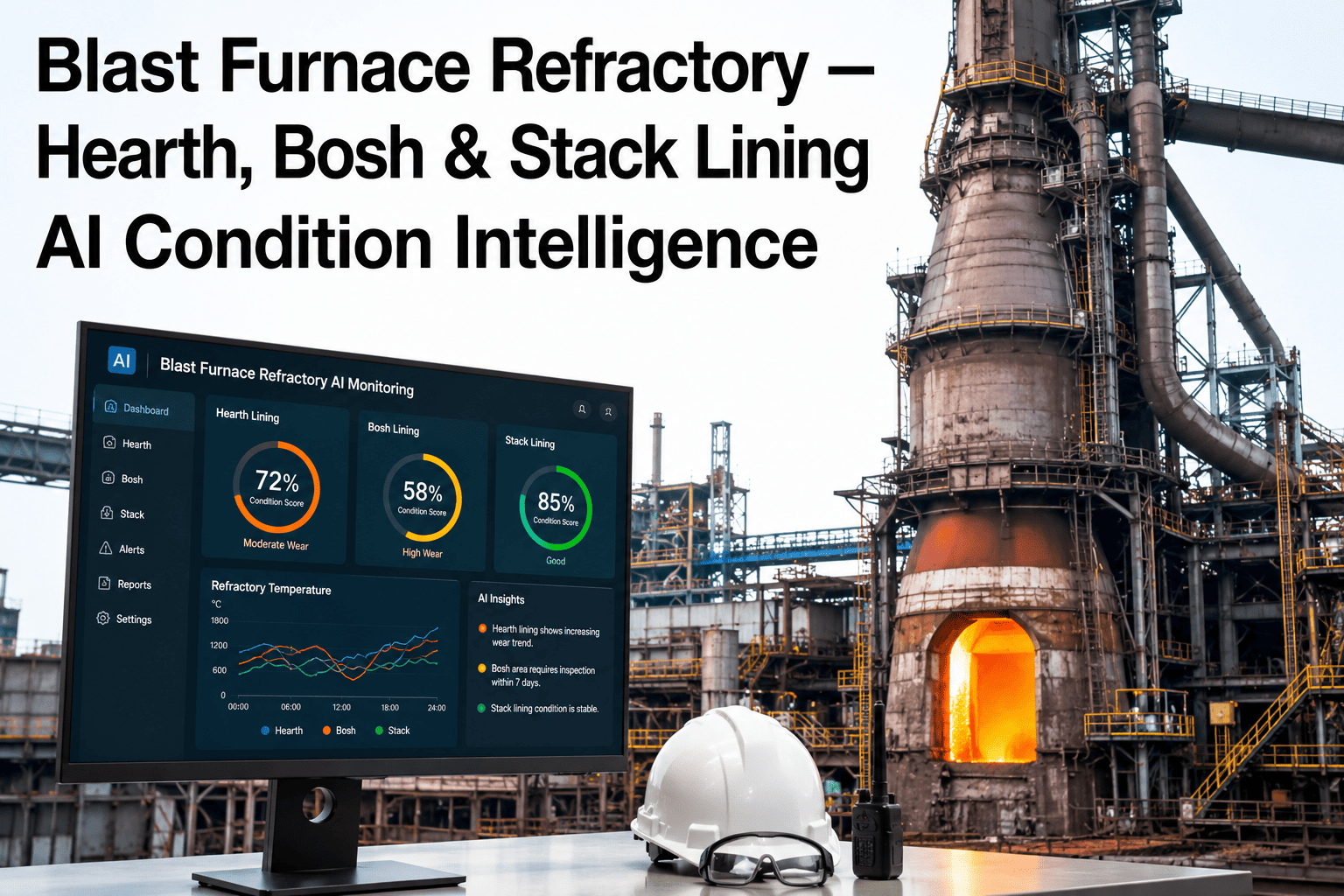
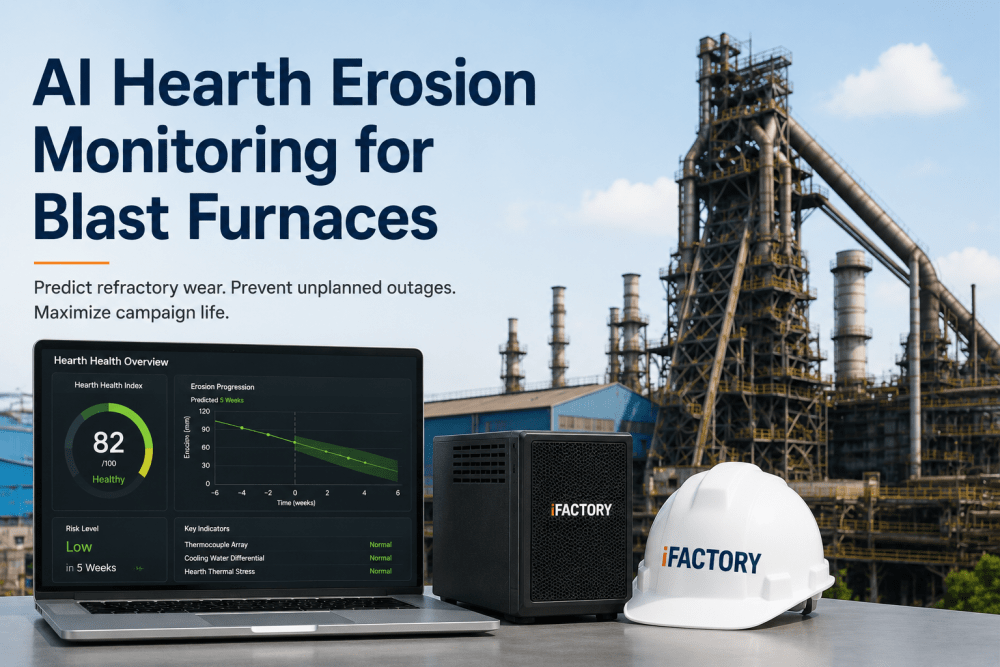
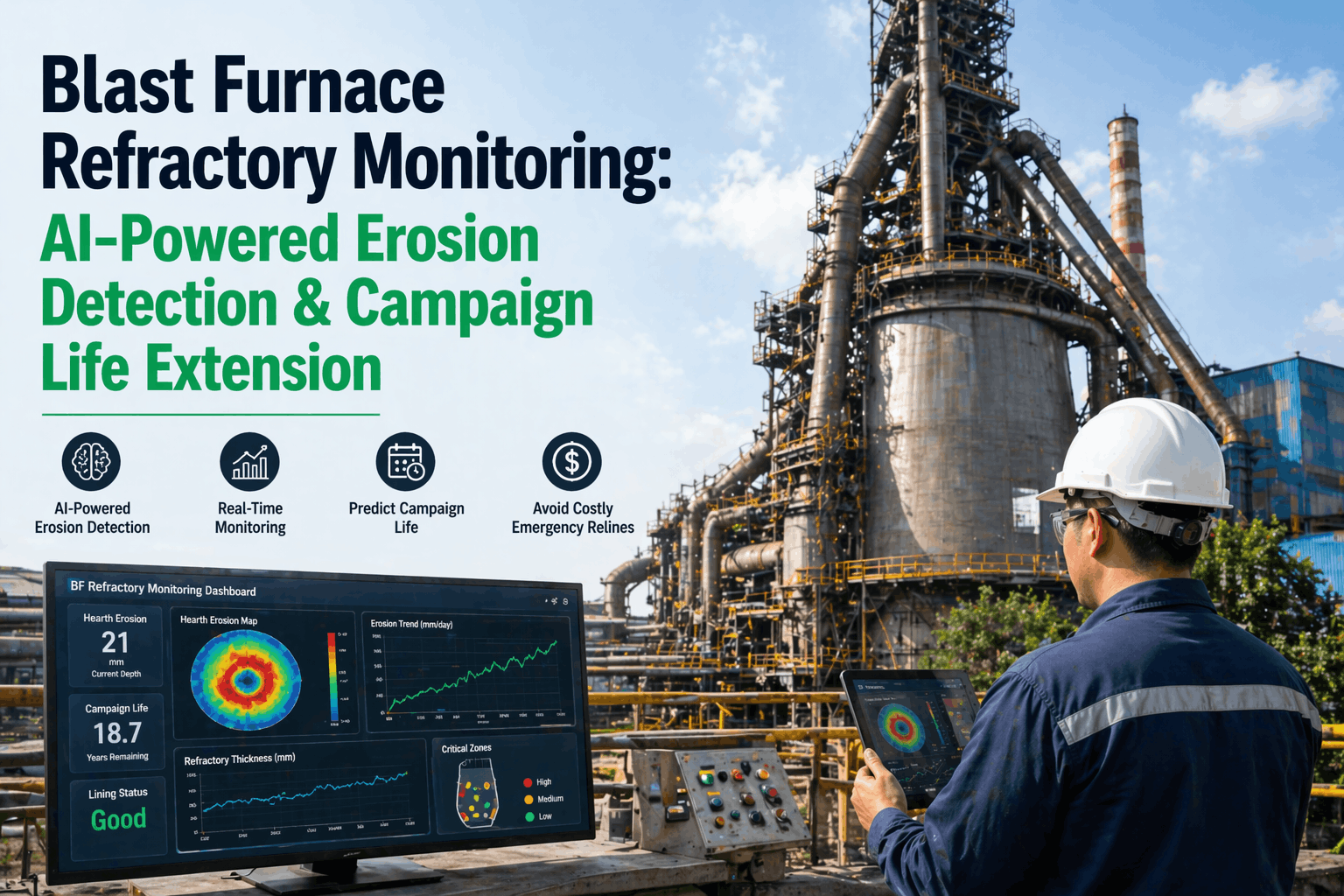
Blast furnaces are equipped with 80–200+ thermocouples embedded at known depths in hearth walls, bottom, bosh, and stack refractory. Our AI applies inverse heat transfer models to every thermocouple reading — calculating remaining refractory thickness in real time across every zone of the furnace.
Integrated BF + BOF + EAF Coverage
A single platform monitors all three steelmaking furnace types plus supporting systems — hot stoves, ladle metallurgy furnaces, continuous casters, gas recovery, and water treatment. Failures in any system propagate across the mill; iFactory's holistic view catches cascade risks that siloed monitoring misses.
Safety-First Shutdown Management
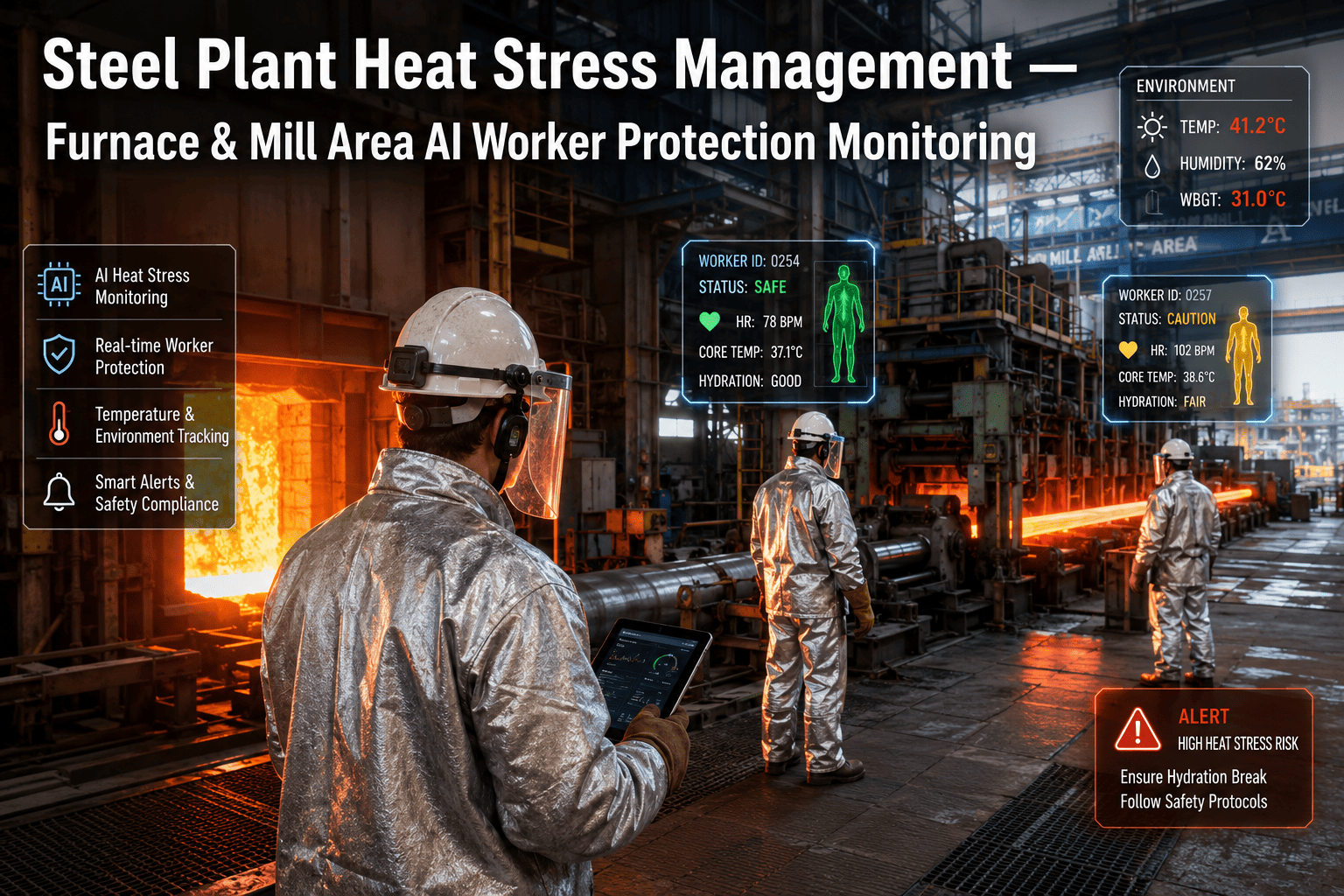
Steel plant shutdowns involve the highest-risk maintenance activities — confined space entry, hot work adjacent to molten metal, working at heights on furnace scaffolding, and LOTO of high-energy systems. Every shutdown work order includes mandatory safety permits with auto-expiration and renewal triggers.
Campaign Life Extension Engine
Top-performing blast furnaces achieve 20+ year campaigns with cumulative production exceeding 60 million tons. Our AI continuously tracks the hearth — the campaign-determining zone that cannot be repaired without a full reline — and recommends protective measures like titaniferous material addition to extend campaign life year by year.
Platform Costs Less Than 1 Hour of Downtime
With unplanned blast furnace downtime exceeding $500,000 per hour and single blowdowns costing $4–$12 million, the iFactory platform pays for itself with one prevented failure. Deployment begins in Week 1 with digital work orders and scales to full AI prediction capability within 7–12 months.
Steel Plant Assets Under AI Condition Intelligence
iFactory monitors every critical asset across the integrated steelmaking chain — from raw material handling through finished product. Book a demo to see which assets deliver the highest ROI for your operation.
Everything You Need to Know About Steel Plant Critical Asset Management
Why are blast furnaces the most maintenance-critical assets in steelmaking?
Blast furnaces operate on campaigns lasting 15–20 years with zero planned shutdowns between major relines. They run continuously at internal temperatures exceeding 2,700°F where direct inspection is physically impossible. A single unplanned blowdown costs $4–$12 million in direct repairs plus $1.2–$3.5 million per day in lost hot metal production. The hearth — the campaign-determining zone — cannot be repaired without a full reline costing $15–$40 million plus $50–$150 million in lost production. This is why continuous AI monitoring is essential. Schedule a demo to see how it works.
How does AI predict blast furnace failures 2–8 weeks in advance?
Blast furnaces are equipped with 80–200+ thermocouples embedded at known depths in the refractory. AI applies inverse heat transfer models to these temperature readings — calculating the distance from the hot face to each thermocouple based on the temperature gradient, thermal conductivity of the refractory, and cooling conditions. By tracking these calculations continuously, the AI detects refractory thinning, skull loss, and cooling system degradation weeks before they reach critical thresholds.
What are the key failure modes for basic oxygen furnaces (BOFs)?
BOF critical failure modes include refractory lining erosion from slag attack and thermal shock, oxygen lance tip erosion and water jacket failures, taphole refractory wear and blockage, and trunnion ring damage from thermal cycling. Because BOFs process 70–80% liquid hot metal at supersonic oxygen velocities, failures can be immediate and catastrophic — shutting down the entire melt shop and disrupting production through continuous casting.
How is EAF maintenance different from blast furnace and BOF maintenance?
EAFs can be powered on and off as needed, making them more maintenance-flexible than continuously-operating blast furnaces. However, EAFs face unique challenges: refractory erosion from extreme thermal cycling (every heat is a thermal shock cycle), graphite electrode consumption as a major recurring cost, water-cooled panel leaks, and off-gas system degradation. iFactory optimizes electrode consumption per heat, predicts refractory wear by heat count, and schedules staged relining to minimize production interruption.
What is blast furnace campaign life and how does AI extend it?
Campaign life is the total operating period between full relines — typically 15–20 years for modern furnaces, with world-class operations achieving 20+ years and cumulative production exceeding 60 million tons. AI extends campaign life by continuously monitoring hearth wall thickness, optimizing operational parameters to reduce wear, recommending protective measures like titaniferous burden additions to form protective skull layers, and precisely timing intermediate repairs during short stoppages to address non-hearth wear areas.
Does this integrate with existing plant SCADA and Level 2 systems?
Yes. iFactory connects directly with existing SCADA systems, process historians (OSIsoft PI, Wonderware), Level 2 automation, and legacy monitoring systems. We don't require replacement of existing infrastructure — we integrate with the sensor network your furnaces already have. Additional IoT sensors are deployed only where specific monitoring gaps are identified during the discovery phase.
How does the platform handle shutdown safety compliance?
Every shutdown work order includes mandatory safety permit requirements — confined space, hot work, LOTO, fall protection — that must be completed before the work order can proceed. Safety permits are tracked with expiration times and automatic renewal triggers. Safety inspection holdpoints are embedded at critical stages: gas testing before confined space entry, atmosphere monitoring during refractory demolition, and scaffolding certification before each work level opens. Book a demo to see the safety workflow.
What ROI can a steel plant expect from AI-powered asset management?
The ROI is measured against a single metric: one prevented unplanned blowdown pays for the platform many times over. Beyond that, plants typically achieve 20%+ reduction in blast furnace downtime, up to 40% reduction in overall maintenance costs, 5–8 years of campaign life extension (deferring $100M+ reline costs), 70% reduction in temperature-related failures, and dramatic improvements in shutdown efficiency through optimized task sequencing. The platform costs less than one hour of unplanned blast furnace downtime. Visit our Support Center for detailed case studies.
Is this relevant for steel plants transitioning from BOF to EAF?
Absolutely. With BOF holding 74.6% of 2024 global output but EAF installations growing at 5.14% CAGR, many integrated mills are adding EAF capacity alongside existing BF-BOF operations. iFactory's platform monitors all three furnace types on a single dashboard — enabling maintenance teams to manage the transition without separate monitoring systems while maximizing the remaining campaign life of existing blast furnaces during the transition period. Book a free consultation to discuss your transition plan.
Your Blast Furnace Generates Data Every Second. Are You Using It?
Every thermocouple reading, every cooling water differential, every gas composition trend contains information about the health of your most valuable production assets. iFactory's AI turns that data into actionable predictions — detecting degradation 2–8 weeks before failure, extending campaign life toward 20+ years, and preventing the $4–$12 million blowdowns that destroy budgets and schedules. See it working in a free, no-obligation 30-minute demo tailored to your plant.