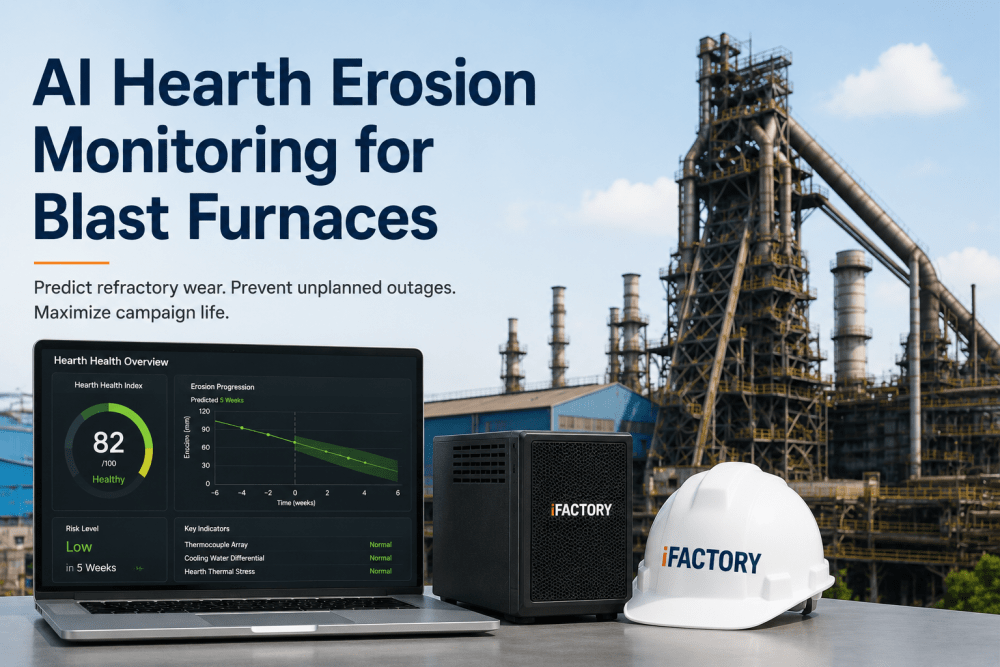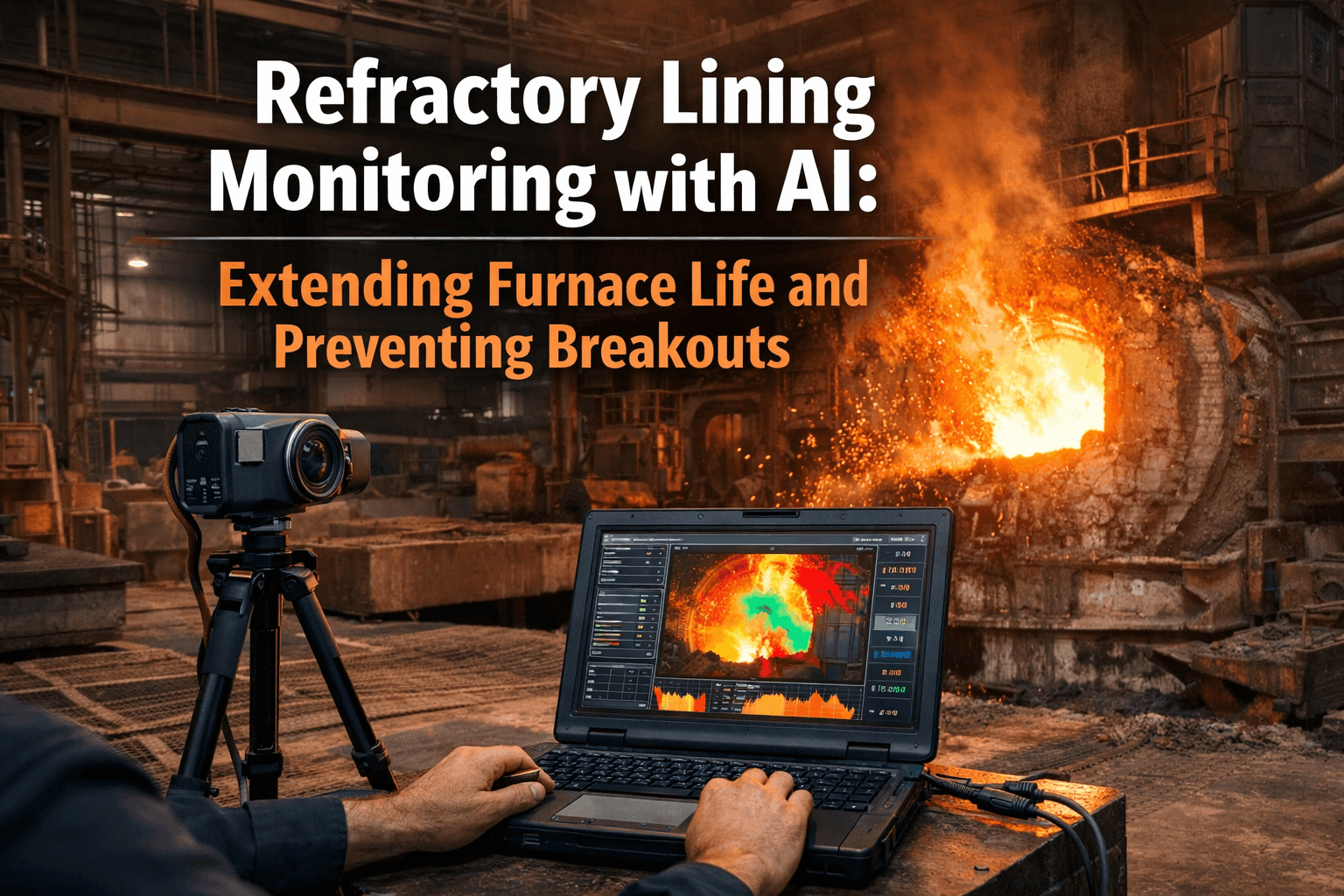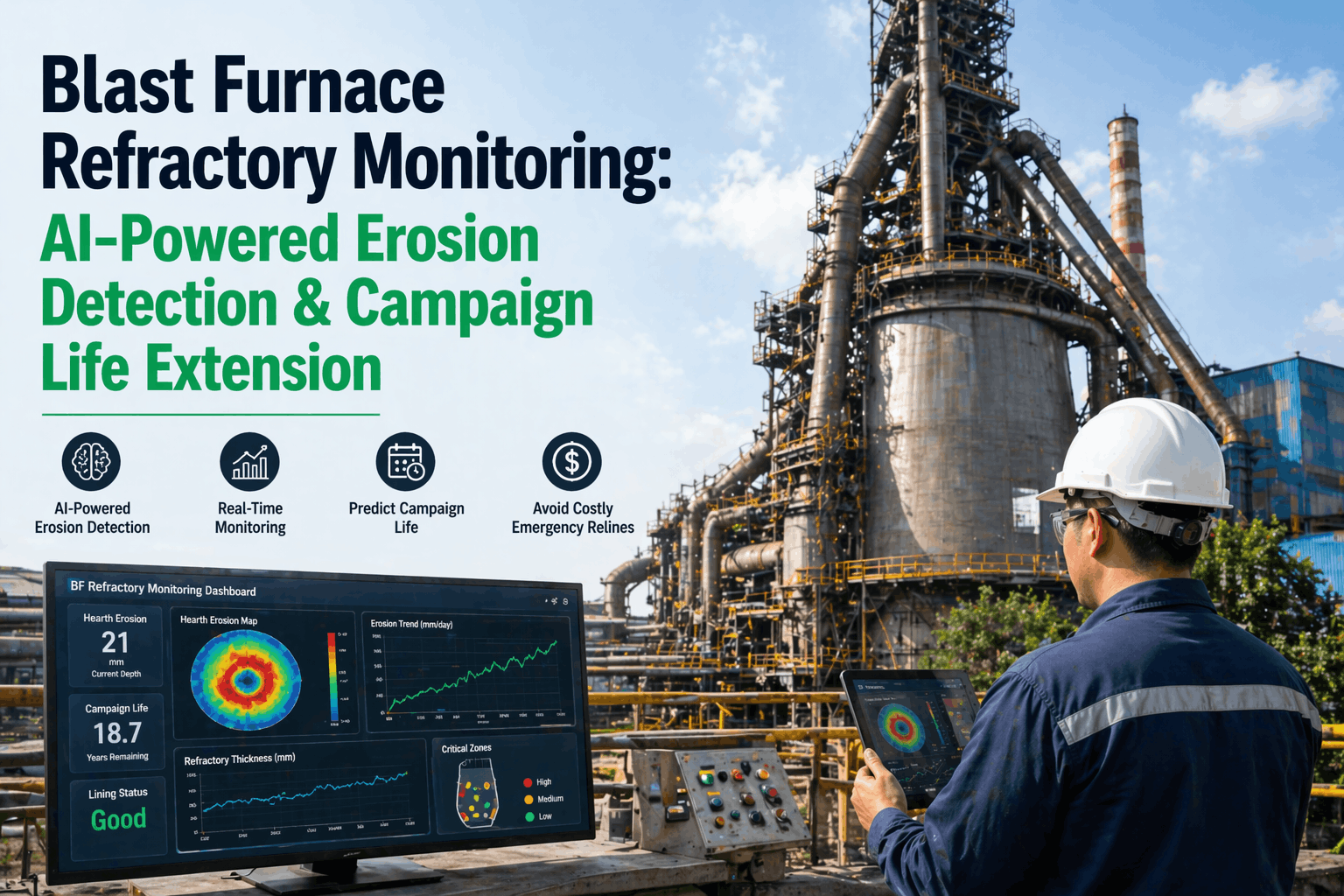
In the high-stakes environment of integrated ironmaking, the hearth refractory is the single most critical asset—and the most difficult to inspect. Traditionally, a Blast Furnace (BF) campaign lasts 12-15 years before the risk of "cup" or "mushroom" erosion triggers a $150M reline. Today, iFactory is redefining the campaign lifecycle by deploying advanced AI-powered refractory monitoring. By unifying data from 200+ thermocouples, ultrasonic thickness sensors, and thermal flux profiles, we enable steel plant leaders to detect erosion patterns in real-time, stabilize hearth thinning, and safely extend furnace campaigns to 20+ years. Book a Demo to see how AI-driven hearth governance can transform your campaign reliability starting in week one.
Extend Blast Furnace Campaign Life by Up to 35%
Discover how iFactory's AI-driven analytics platform transforms hearth monitoring, erosion prediction, and reline planning for modern integrated mills.
What Is AI-Powered Refractory Erosion Monitoring?
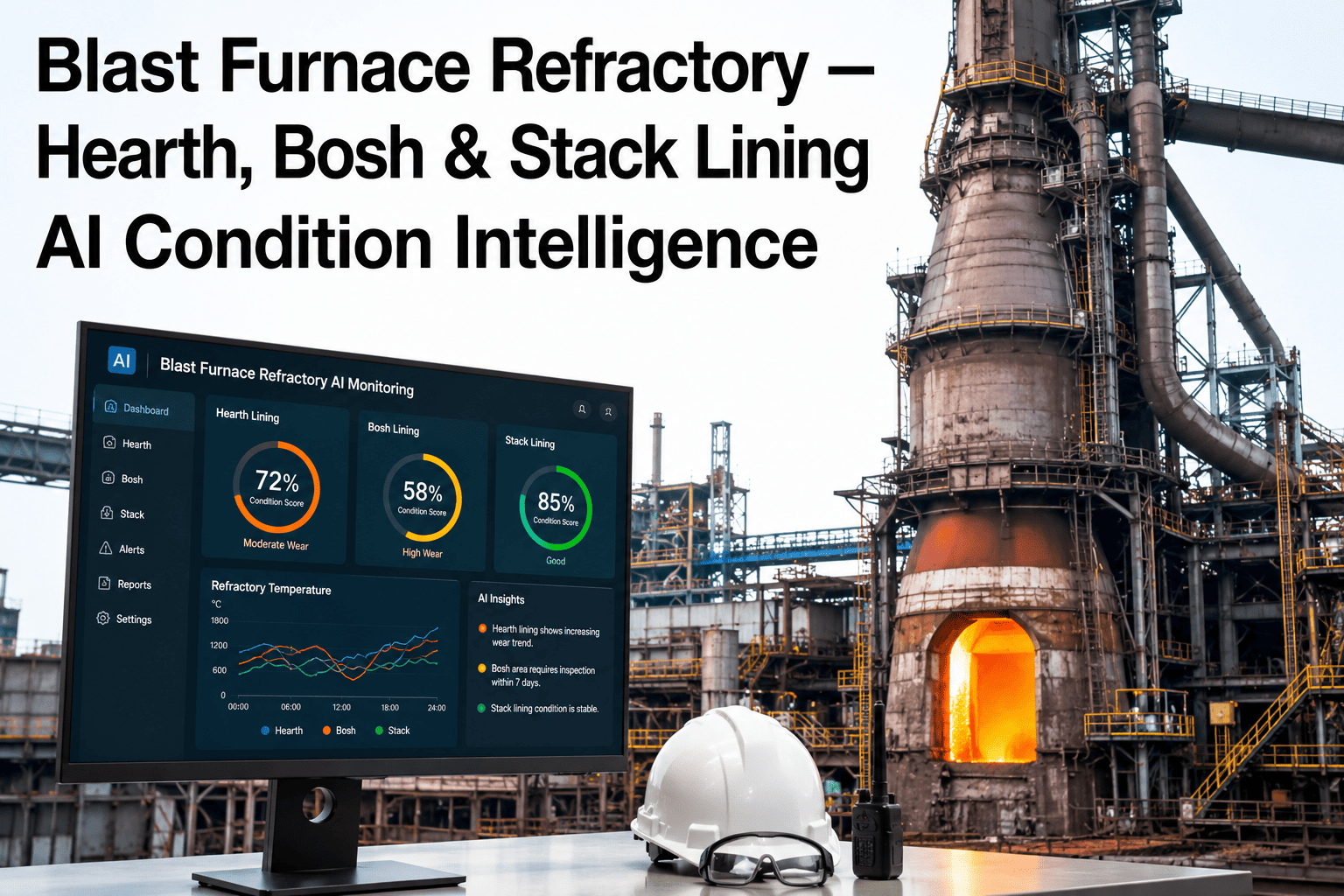
Blast Furnace refractory monitoring is the systematic application of thermal data, ultrasonic sensing, and AI-driven digital twins to track the wear and accretion patterns within the furnace hearth and stack. Unlike legacy periodic inspections, AI-powered monitoring provides a continuous "inside-out" view of carbon block health. This encompasses hearth thermal mapping, cooling stave flux analysis, and predictive erosion modeling — all of which must be tracked to prevent catastrophic shell breakouts. Even a minor localized thinning can trigger an emergency shutdown costing $1.2M per day. iFactory closes this visibility gap by providing real-time erosion contours, predictive reline alerts, and automated cooling set-point optimization — ensuring your furnace heart remains stable for decades.
AI-Powered Hearth Protection: The 6 Pillars of Refractory Excellence
Managing refractory integrity with AI covers six interconnected capability pillars. Each pillar addresses a specific failure point in traditional furnace campaigns, replacing "theoretical" wear models with real-time, sensor-fused intelligence.
3D Hearth Erosion Digital Twin
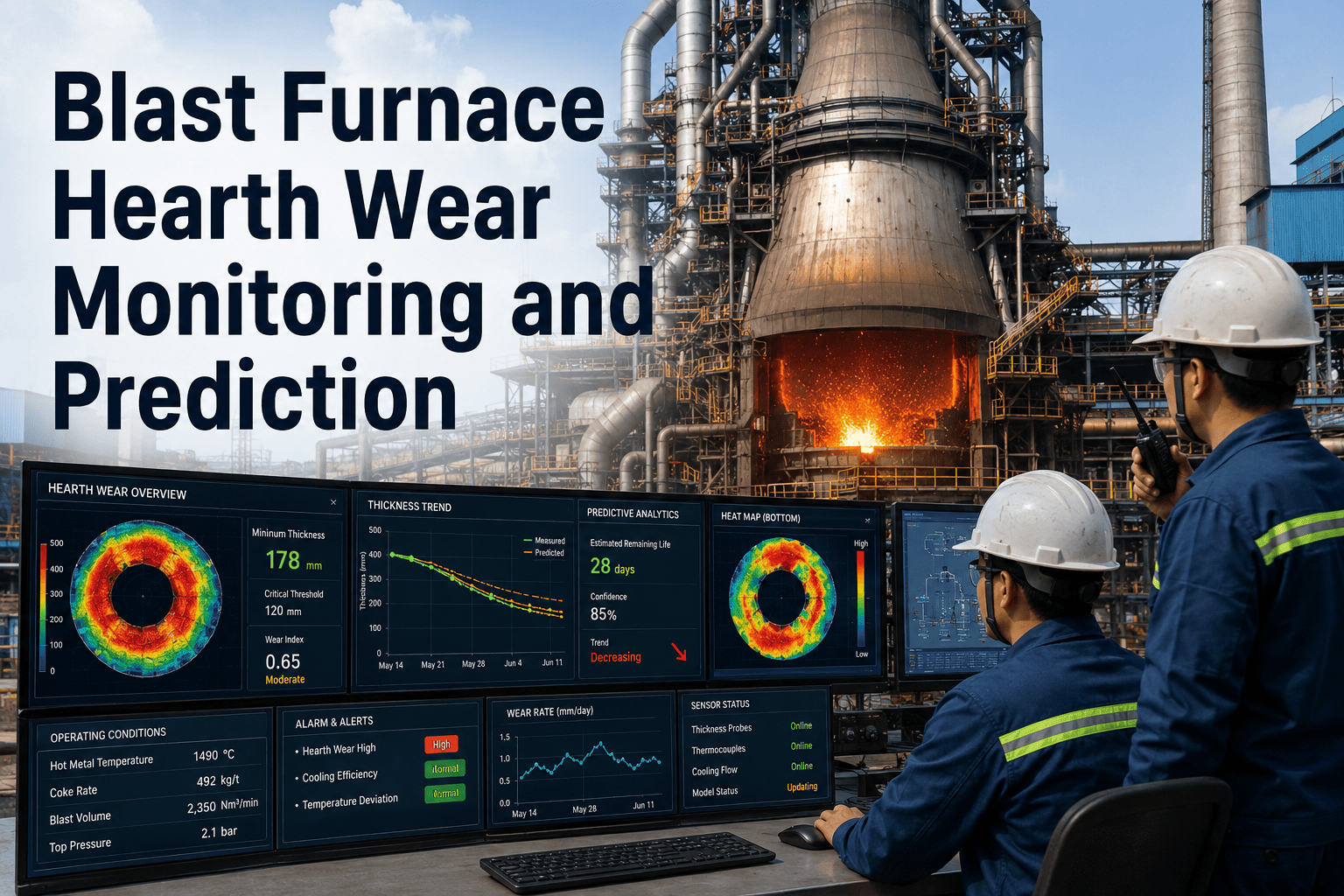
AI models ingest 200+ thermocouple points to auto-generate a 3D digital twin of your hearth refractory. Visualizing "mushroom" wear patterns 45 months before they reach critical thickness limits.
Stave Cooling Flux Analytics
IoT thermal sensors on cooling circuits monitor heat-flux deviations in real-time. Detecting localized "scaffold" drops and shell hot-spots 8-12 days before they impact shell structural integrity.
AI Driven Accretion Control
AI models predict the formation of protective "skulls" or unwanted skull-buildup. Optimizing cooling flows and burden distribution to maintain center-flow and prevent raceway blockage.
Hearth Stability Monitoring
Continuous monitoring of "Deadman" behavior and liquid iron flow. Detecting stagnant zones that accelerate bottom-erosion — alerting casthouse crews in under 3 seconds of stability loss.
Ultrasonic Refractory Verification
Integrated ultrasonic pulse-echo analytics predict remaining thickness within 2-4mm. Benchmarking actual wear against time-based models to extend campaign safety windows by 60 months.
Digital Reline Compliance Logs
Every refractory inspection — core samples, TC calibrations, and cooling circuit checks — is time-stamped and digitally logged in a tamper-proof audit trail for regulatory and insurance authorities.
Hearth Erosion Management: A Step-by-Step AI Workflow
The most measurable win in campaign management comes from synchronizing thermocouple telemetry with predictive erosion simulations.
Inbound Thermal — Month 0
iFactory connects to your furnace historians and PLC layers. We ingest 5+ years of historical thermocouple data to establish your furnace's unique "Thermal Baseline"—essential for accurate future erosion modeling.
AI Erosion Profiling — Month 1
The moment the data syncs, AI generates your current hearth erosion profile. It identifies "cup" patterns and identifies blocks that are experiencing higher-than-average thermal conductivity loss.
Prescriptive Cooling Activation — Real-Time
If the AI detects localized thinning exceeding 5mm in a calendar month, it automatically calculates the "Prescriptive Cooling" set-points required to stabilize the erosion through skull-formation.
Deferred Reline Strategy — Year 15+
As you approach typical reline windows, the AI performs a "Remaining Life Verification" audit. By proving 20% thickness margin still exists across the hearth, the system justifies a 3-5 year reline deferral.
Hearth Monitoring Maturity Journey
Key Technologies Powering AI-Driven Hearth Protection
Hearth Safety and Metallurgical Compliance: The AI Advantage
Blast Furnace safety is the non-negotiable foundation of every campaign. A hearth breakout can destroy the entire furnace facility. Platforms address safety across three dimensions:
Prevention
AI monitoring systems enforce mandatory "Thermal Safeways" between hearth segments. When the AI detects a locally high heat flux on a cooling block, it triggers an early warning to adjust the burden distribution.
Detection
Thinning trends, abnormal thermal conductivity shifts, and stave cooling failures trigger instant casthouse alerts with detection latency under 3 seconds — preventing the delays of traditional "periodic" monitoring.
Documentation
Every refractory health check — Brinell hardness (for stack), TC calibration, and thermal logs — is digitally stored with biometric confirmation, creating a tamper-proof metallurgical compliance record.
Calculating the ROI of Refractory AI
Every month of campaign extension, every prevented breakout, and every audit acceleration produces a trackable dollar value that accumulates daily.
Frequently Asked Questions: Blast Furnace Refractory AI
How does AI integrate with existing SCADA and hearth thermocouples?
The platform connects to your SCADA historian and PLC layers via REST API or OPC-UA. This allows the AI to consume real-time thermal telemetry and propagate updated erosion twins to control room teams within 90 seconds of a thermal shift — without requiring manual data entry.
What refractory types are supported by the erosion models?
The iFactory metallurgical library supports all standard refractory materials: micro-porous carbon blocks, graphite, semi-graphite, ceramic cups (alumina/chrome), and fireclay stack linings. AI models are calibrated to your specific furnace geometry.
How long does deployment take during an active furnace campaign?
A typical integrated furnace with 200-400 TCs is fully instrumented and operationally live with our Digital Twin in 21 days. AI models reach high-confidence predictive accuracy by Day 35.
Can the system handle abnormal hearth hot-spot scenarios?
Hot-spot management is a core priority. When the AI detects a localized thermal spike exceeding safety thresholds, it instantly alerts the Casthouse, calculates the risk of shell breakout, and provides the exact cooling flow adjustments needed to stabilize the zone.
Stop Losing CAPEX to Premature Relines.
Join the world's most stable integrated steel teams to maximize hearth life and stability.