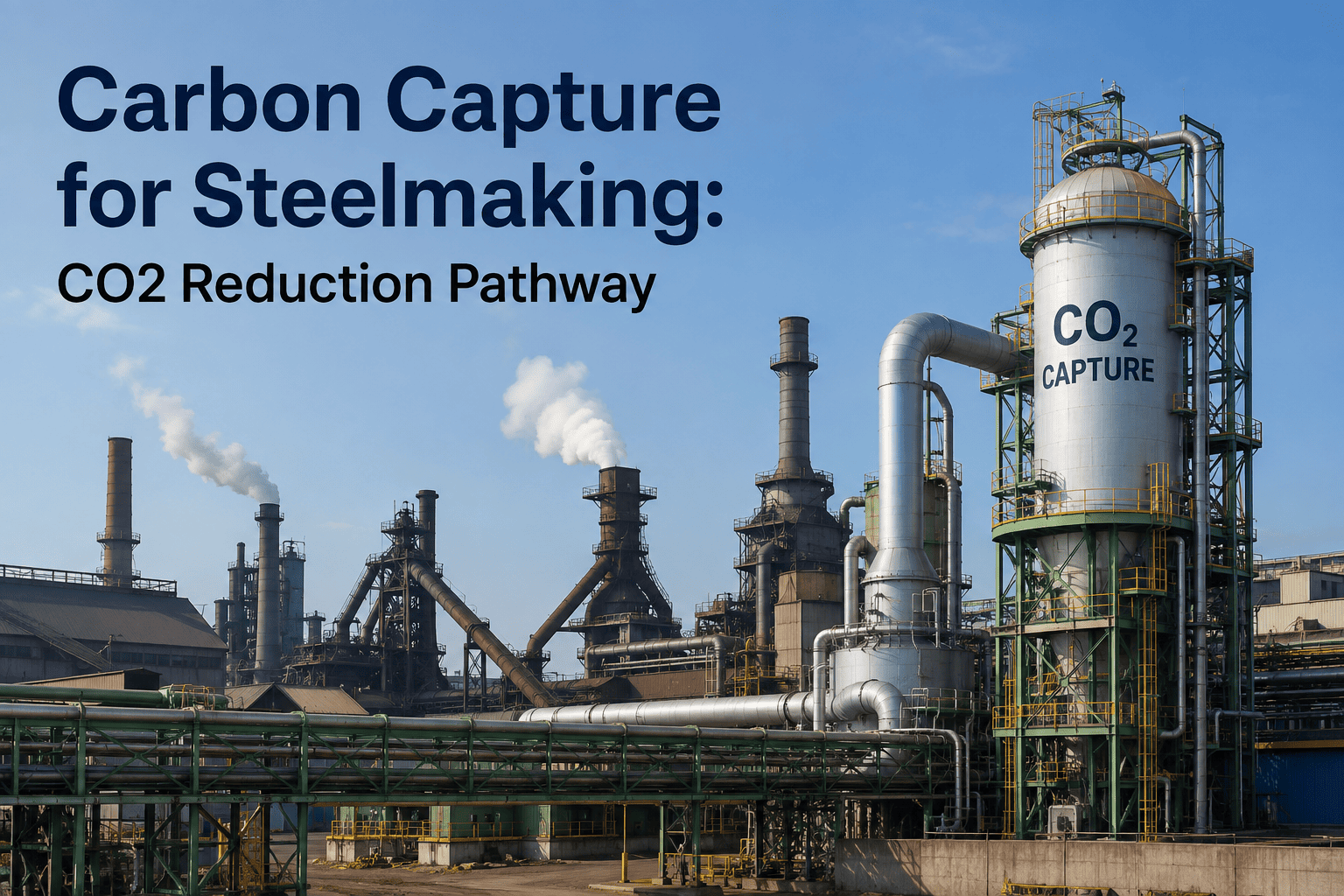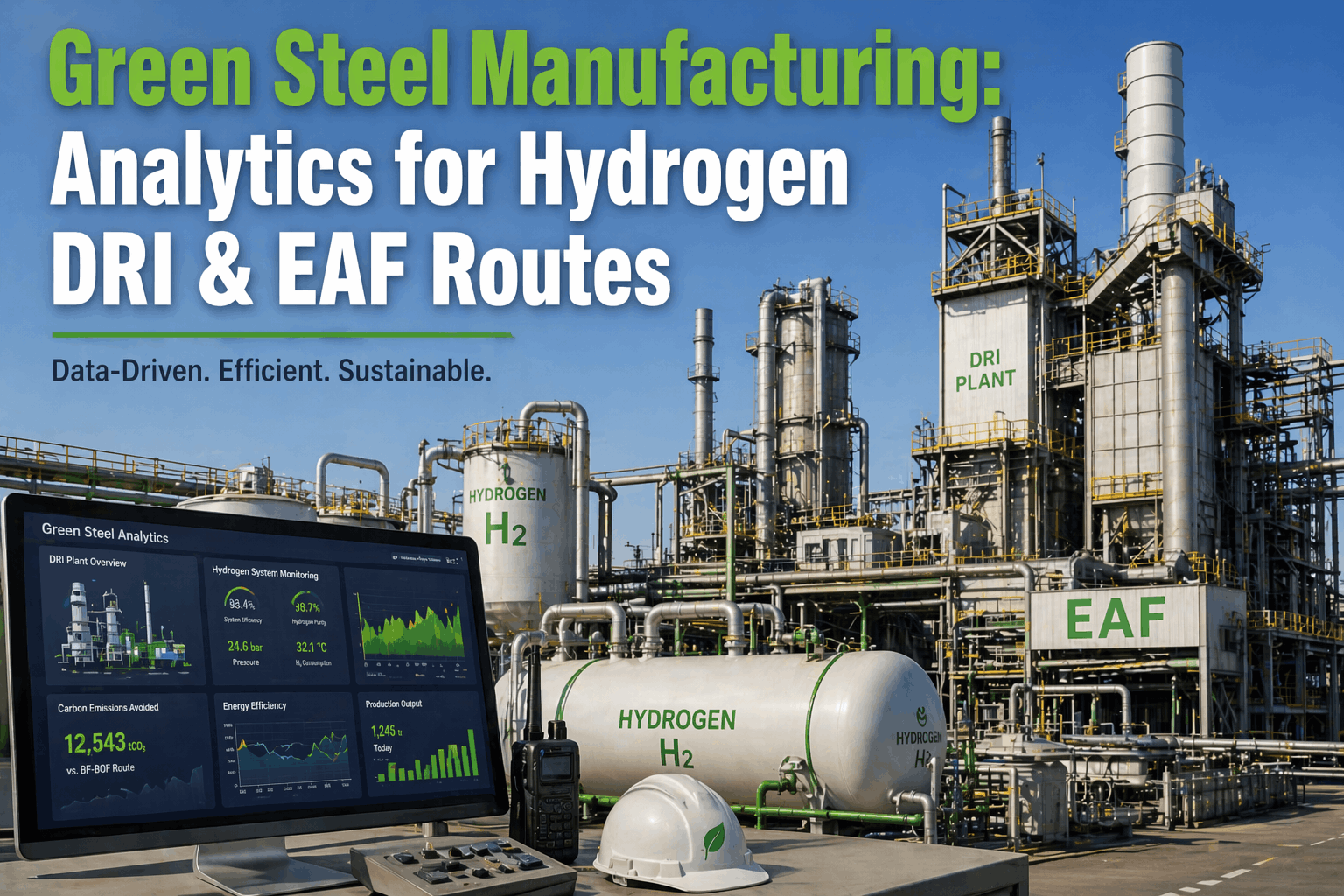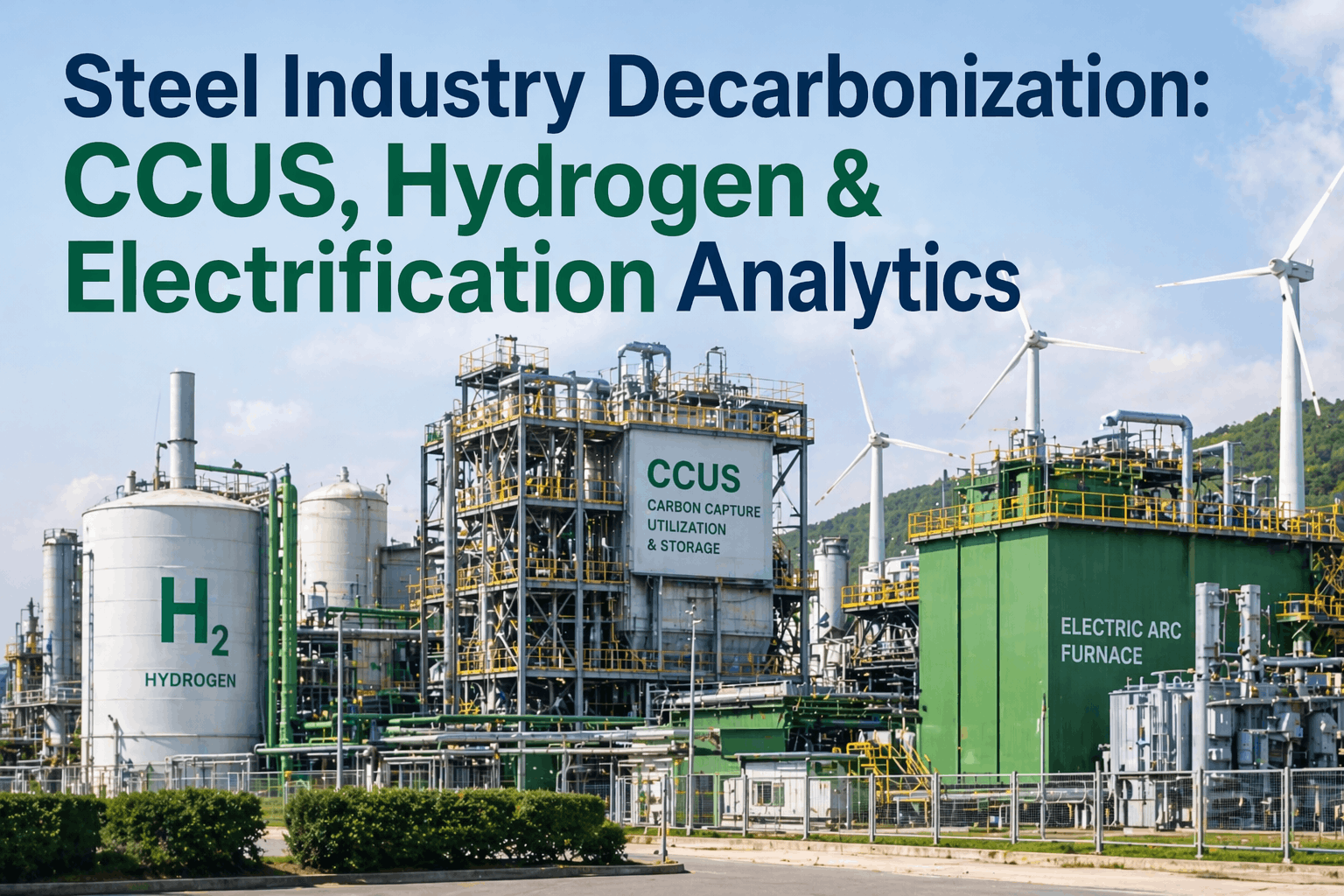
The global steel industry is at a pivotal crossroads, shifting from coal-heavy blast furnaces to a multi-pillar decarbonization strategy. This transition is anchored by three critical technologies: **Carbon Capture, Utilization, and Storage (CCUS)**, **Hydrogen-based reduction**, and **comprehensive Electrification**. iFactory’s 2026 decarbonization analytics suite provides the precision visibility required to maintain capture unit health, optimize electrolyzer stacks, and synchronize electric furnace energy intensity with renewable grid variability. Book a demo to audit your steel plant's net-zero roadmap.
Synchronize Your Steel Decarbonization Assets
iFactory integrates CCUS compressor health, hydrogen purity analytics, and EAF power quality into a single high-density operational governance platform.
Why Analytics is the Critical Path to Steel Decarbonization ROI
Transitioning to green steel is not just a hardware upgrade; it is a fundamental shift in operational logic. CCUS units must balance solvent regeneration energy against capture rates, while hydrogen electrolyzers must respond to localized grid pricing. iFactory serves as the digital intelligence layer that prevents unplanned downtime in capture stacks and optimizes the energy mix of electric arc furnaces (EAF). By 2026, the competitive edge in steel will be held by those who can demonstrate a timestamped, sensor-verified **Carbon Ledger** for every tonne of structural steel produced. Request a technical case study on our CCUS-Hydrogen integration.
4 Analytics Pillars for Sustainable Metallurgical Operations
iFactory provides the high-density visibility required to manage the technical complexity of green steel transition assets.
CCUS & Hydrogen in Practice: Plant Floor Scenarios
Successful decarbonization relies on the ability to synchronize new assets with traditional metallurgical workflows.
Scenario 1: CCUS Compression Balance
When flue gas temperature spiked, AI adjusted the amine solvent flow and compressor speed in real-time. This prevented a solvent carryover event while maintaining 90% capture efficiency.
Scenario 2: H2 Purity Maintenance
The system detected a minor moisture drift in the H2 delivery line. AI auto-triggered a desiccant dryer regeneration cycle before the purity dropped below the threshold required for the DRI plant.
Scenario 3: EAF Renewable Sync
During a period of peak wind production (low grid price), the platform prescribed an increased DRI-to-scrap ratio for the EAF, maximizing green premium batch production while energy was cheapest.
Scenario 4: Scope 3 Value Verification
By providing sensor-verified Scope 3 data for a high-value coil shipment, the mill captured a full Green Premium from a European automotive OEM, bypassing manual audit delays.
The 4-Phase Steel Decarbonization Deployment Path
Transforming an integrated mill requires a phased analytics strategy that scales from pilot units to full-fleet autonomous governance.
Carbon Baseline & Asset Connectivity
Map the decarbonization asset hierarchy (Electrolyzers, EAFs, Capture Units). establish the real-time sensor baseline for existing BF/BOF operations.
Capture & Electrolyzer Stack Intelligence
Enable predictive health models for CCUS compressors and H2 stack cell voltage. Configure gas purity monitoring for the DRI injection line.
Prescriptive EAF & Energy Mix Optimization
Activate EAF arc stability AI and renewable energy synchronization. Enable real-time carbon intensity attribution per heat/batch.
Autonomous Green Premium Ledger Scale-Out
Full integration with supply chain and ERP for Green Premium billing. Autonomous carbon governance spans the full metallurgical portfolio.
Steel Decarbonization & Analytics: Frequently Asked Questions
Stabilize Your Assets. Lead the Green Steel Era.
iFactory's steel decarbonization suite delivers the CCUS health, hydrogen uptime, and EAF power quality needed to succeed in the sustainable era.