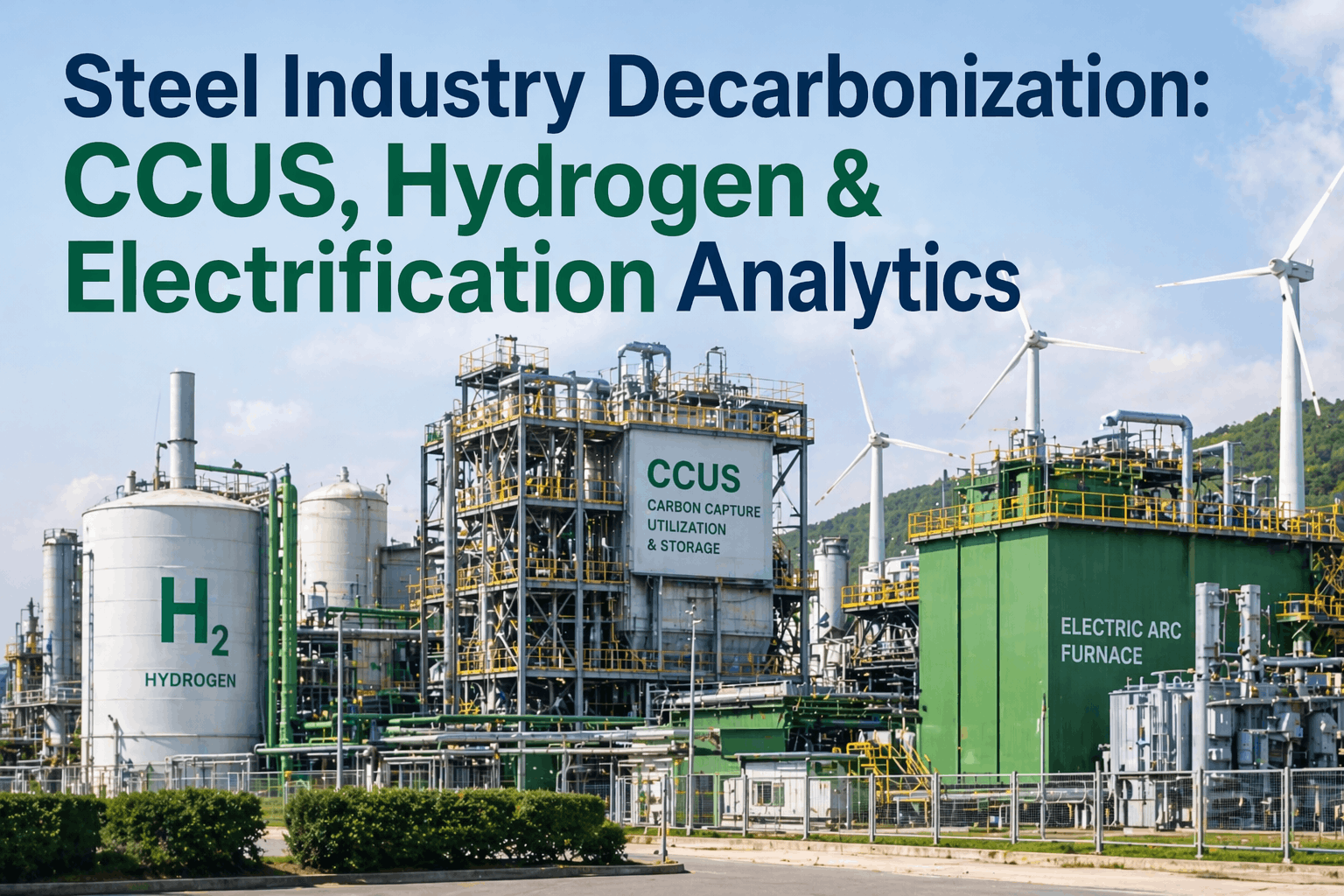
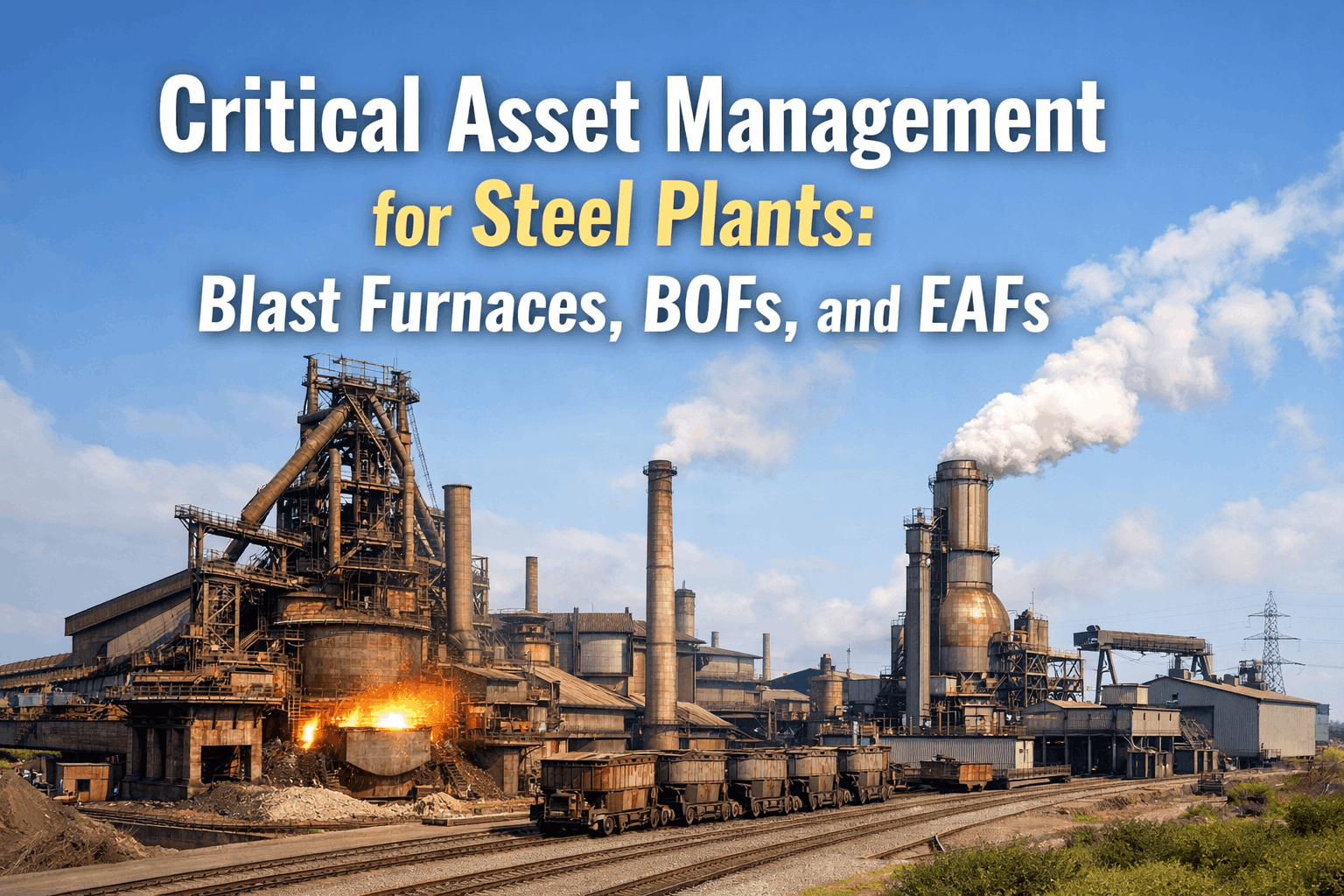
Decarbonizing the steel industry is no longer a distant ambition but an immediate operational imperative. As global regulations tighten and stakeholders demand net-zero pathways, carbon capture, utilization, and storage (CCUS) has emerged as the most scalable solution for existing integrated steel plants. Blast furnace basic oxygen furnace (BF-BOF) routes account for nearly 70% of global steel production, and their process gas streams, particularly blast furnace top gas, contain significant CO2 concentrations that can be captured at high efficiency. However, selecting the right capture technology, whether it is amine-based chemical absorption, calcium looping, or top gas recycling, requires a deep understanding of process integration, energy penalties, and site-specific constraints. This is where AI-powered process integration analysis becomes a game changer, enabling operations directors to simulate, compare, and optimize multiple CCUS configurations before making capital commitments. In this comprehensive guide, we evaluate the leading carbon capture technologies for steel plants, assess their readiness for BF and BOF gas streams, and demonstrate how AI-driven tools can accelerate your CCUS planning. Whether you are exploring retrofit options for an existing blast furnace or designing a greenfield facility with carbon capture readiness, this article provides the technical and economic framework you need. Book a Demo to see how our AI platform can model your plant's unique carbon capture pathway.
AI-Powered Carbon Capture Planning for Steel Plants
Evaluate top gas recycling, amine capture, and calcium looping with process integration AI. Reduce energy penalty by up to 25%.
Top Gas Recycling
Recycle CO2-rich blast furnace top gas back into the furnace after stripping CO2, reducing coke consumption and increasing productivity. AI models predict optimal recycle ratios based on real-time gas composition and furnace conditions.
Amine-Based Capture
Proven chemical absorption using monoethanolamine (MEA) or advanced solvents. AI optimizes solvent regeneration energy, steam consumption, and capture rate for BF and BOF gas streams.
Calcium Looping
High-temperature solid-looping process using CaO sorbent. Suitable for high-CO2 streams with potential for heat integration. AI predicts sorbent deactivation and optimal purge rates.
Step-by-Step CCUS Integration Roadmap
Gas Characterization
Analyze BF and BOF gas composition with AI-driven spectroscopy. Identify CO2 concentration, impurities, and flow variability.
Technology Screening
Use AI to rank amine, calcium looping, and membrane options based on your plant's specific gas profile, energy costs, and capture targets.
Process Integration
Simulate heat and mass integration with existing plant utilities. Optimize steam, cooling water, and power consumption.
Economic & LCA Analysis
Generate CAPEX/OPEX models and lifecycle carbon balance. AI provides confidence intervals and sensitivity analysis.
Ready to Optimize Your Carbon Capture Strategy?
Our AI platform integrates process data, technology performance, and economic models in one dashboard. Make informed decisions faster.
Comparative Analysis of Capture Technologies
| Technology | CO2 Capture Rate | Energy Penalty | Maturity | Best For |
|---|---|---|---|---|
| Amine (MEA) | 90-95% | 2.5-3.5 GJ/tCO2 | Commercial | BF top gas, BOF gas |
| Calcium Looping | 85-92% | 1.8-2.5 GJ/tCO2 | Demonstration | High-CO2 streams |
| Top Gas Recycling | 60-70% (direct) | 0.5-1.0 GJ/tCO2 | Pilot | Integrated BF-BOF |
| Membrane | 70-80% | 1.0-1.5 GJ/tCO2 | Pilot | Post-combustion |
Why Process Integration AI Matters for Your Steel Plant
Reduce Energy Penalty
AI optimizes steam extraction and heat recovery, cutting energy penalty by up to 25% compared to conventional designs.
Accelerate Feasibility Studies
Generate complete techno-economic assessments in days instead of months. AI automates sensitivity analysis for 50+ parameters.
Future-Proof Your Plant
Model carbon capture retrofits alongside future hydrogen injection or DRI transitions. Ensure CCUS readiness for 2030 targets.
Frequently Asked Questions
What is the best carbon capture technology for blast furnace top gas?
Amine-based chemical absorption using advanced solvents like MEA or KS-1 is currently the most commercially mature option for blast furnace top gas, achieving 90-95% CO2 capture rates. However, the optimal technology depends on your specific gas composition, impurity levels (e.g., SOx, NOx, particulates), and available steam quality. Calcium looping offers a lower energy penalty but is at demonstration scale. AI process integration can evaluate all options simultaneously and recommend the best fit. Book a Demo to see a comparative analysis for your plant.
How does AI improve carbon capture planning for steel plants?
AI accelerates CCUS planning by automating the simulation of hundreds of process configurations, including varying solvent types, regeneration temperatures, and heat integration schemes. It identifies optimal operating windows that minimize energy penalty while maximizing capture rate. AI also predicts long-term performance degradation of solvents or sorbents, enabling proactive maintenance scheduling. This reduces the time for feasibility studies from months to weeks and improves accuracy. Contact Support to learn more about our AI models.
What is the typical energy penalty for carbon capture in a steel plant?
Energy penalty varies by technology: amine-based capture requires 2.5-3.5 GJ per tonne of CO2 captured, primarily as low-pressure steam for solvent regeneration. Calcium looping reduces this to 1.8-2.5 GJ/tCO2 due to better heat integration. Top gas recycling has the lowest penalty (0.5-1.0 GJ/tCO2) but lower capture rates. AI-driven process integration can reduce these penalties by 15-25% by optimizing heat exchanger networks and steam extraction points. Book a Demo to get a customized energy penalty estimate.
Can existing blast furnaces be retrofitted with carbon capture?
Yes, existing blast furnaces can be retrofitted with carbon capture, but it requires careful integration with the existing gas cleaning and power generation systems. The main challenges are space constraints for absorber columns, steam availability for solvent regeneration, and managing gas impurities that can degrade solvents. AI process integration can model these retrofits with high fidelity, identifying optimal locations for capture equipment and minimizing production downtime. Contact Support for a retrofit feasibility assessment.
How does top gas recycling differ from post-combustion capture?
Top gas recycling involves removing CO2 from blast furnace top gas and recycling the CO-depleted gas back into the furnace, reducing coke consumption and increasing productivity. Post-combustion capture treats the entire flue gas stream from the power plant or stoves. Top gas recycling is more efficient for BF-BOF plants because it targets a smaller, CO2-rich stream and provides process benefits beyond capture. However, it requires modifications to the furnace operation and gas network. AI can simulate both approaches and compare their overall carbon and cost impacts. Book a Demo to see a side-by-side comparison.
Start Your CCUS Journey Today
Leverage AI-powered process integration to select, design, and optimize carbon capture for your steel plant. Reduce risk and accelerate your decarbonization roadmap.