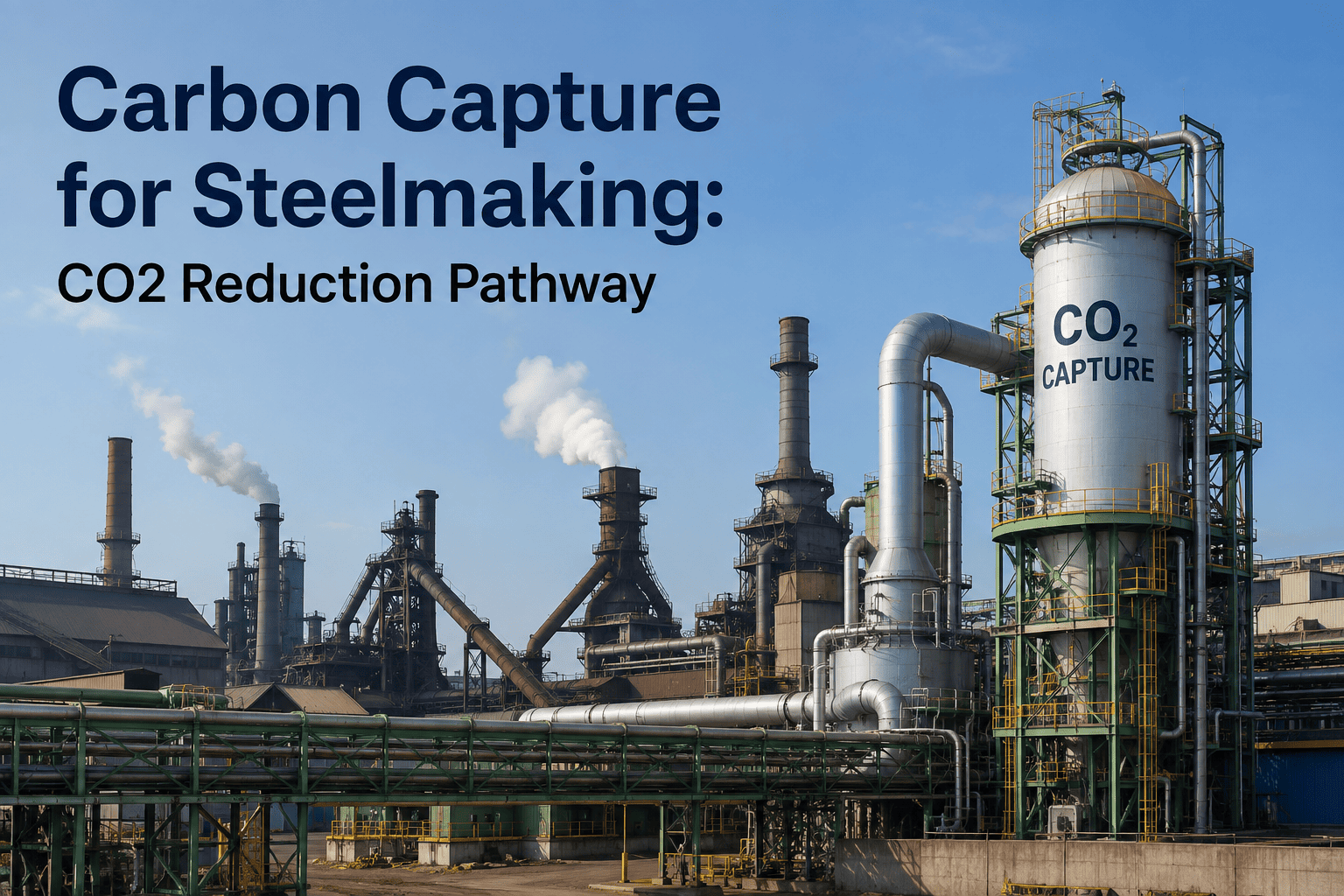
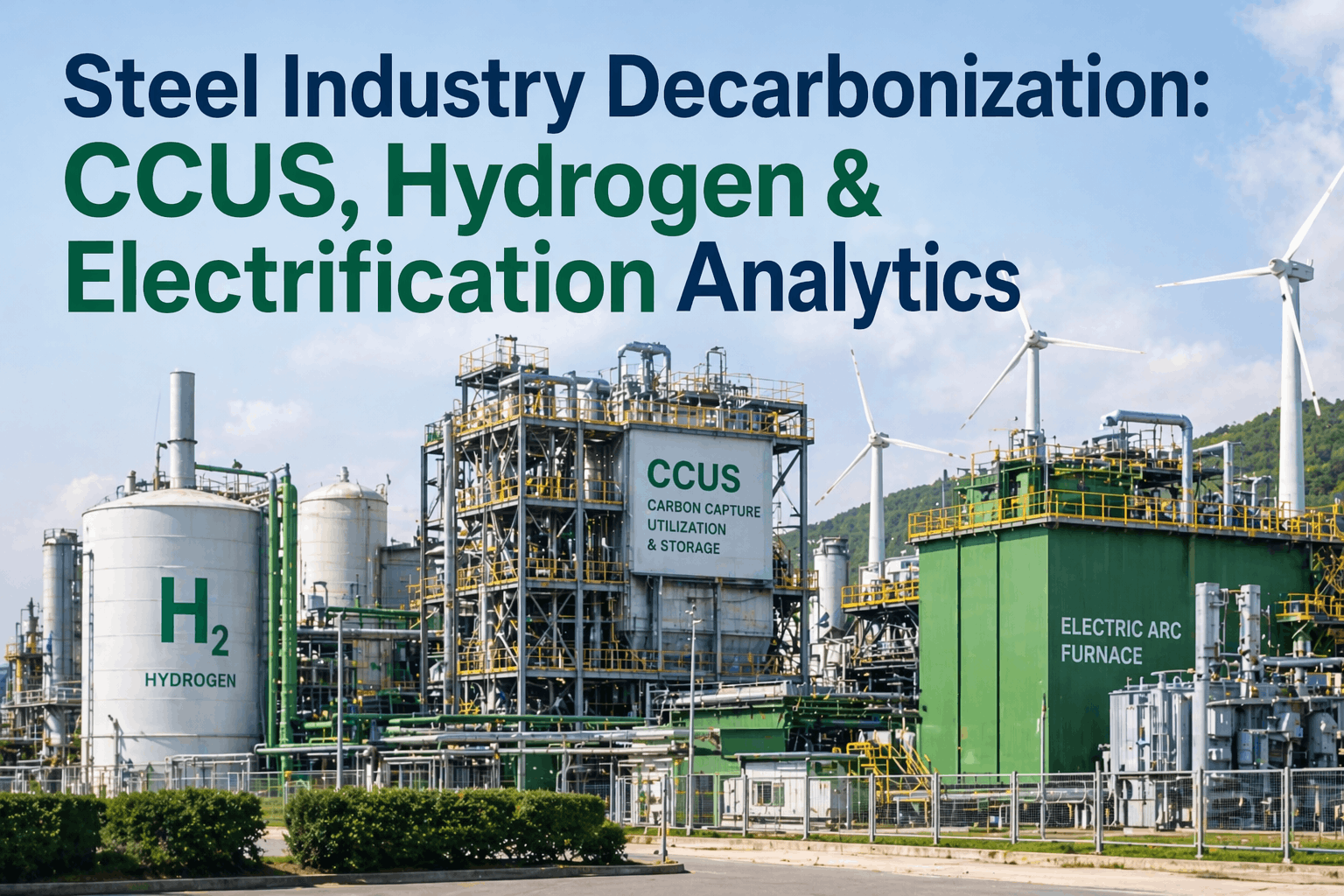
Blast furnace steelmaking releases roughly 1.8 to 2.2 tonnes of CO2 for every tonne of crude steel produced, and that chemistry isn't going away soon — hydrogen-based steel is projected to reach only 3-5% of global capacity by 2035. For the other 95% of the industry running conventional BF-BOF plants today, carbon capture and storage is the bridging technology that has to work now, not in a decade. But CCS carries a real cost of its own: post-combustion capture systems can consume 20-30% of a plant's energy output just to run the capture machinery. Getting that parasitic energy load under control is exactly where AI-driven optimization earns its keep, and you can see how the monitoring approach works before evaluating it against your own emissions profile.
Carbon Capture Intelligence
Carbon Costs Are Rising Faster Than Your Capture Rate
EU ETS prices have climbed past €100/tonne and CBAM now extends that cost to imported steel. AI-optimized CCS keeps capture rates high and parasitic energy low on existing BF-BOF assets — no new plant required.
€150-300M
Annual carbon cost exposure by 2030 without CCS
85-95%
Achievable capture rate on concentrated flue streams
18-30 mo
Typical retrofit timeline for post-combustion capture
Three Capture Pathways, One Optimization Problem
Post-Combustion (Amine)
Installs downstream of existing gas treatment without blast furnace modification. The default retrofit path, but solvent regeneration is energy-intensive and drives most of the parasitic load AI is tasked with reducing.
Oxyfuel Combustion
Burns fuel in near-pure oxygen to produce a concentrated CO2 stream that's cheaper to capture, but requires an air separation unit and tighter process integration to avoid efficiency losses.
Pre-Combustion Capture
Removes carbon before combustion in processes like gasification, offering high capture potential but demanding the most significant process redesign of the three pathways.
The Capture Rate on Paper Is Rarely the Capture Rate in Operation
iFactory continuously monitors solvent condition, flue gas composition, and energy draw across your capture train — closing the gap between theoretical and actual CO2 reduction.
Where AI Reduces the Energy Penalty
Solvent optimization
Continuous monitoring of amine degradation and regeneration temperature reduces the steam load needed to release captured CO2.
Flue gas routing
AI prioritizes capture from the most concentrated streams first — typically blast furnace gas — where capture rates above 90% are realistic.
Predictive maintenance
Compressor and heat exchanger condition is tracked to prevent the unplanned outages that force capture systems offline mid-campaign.
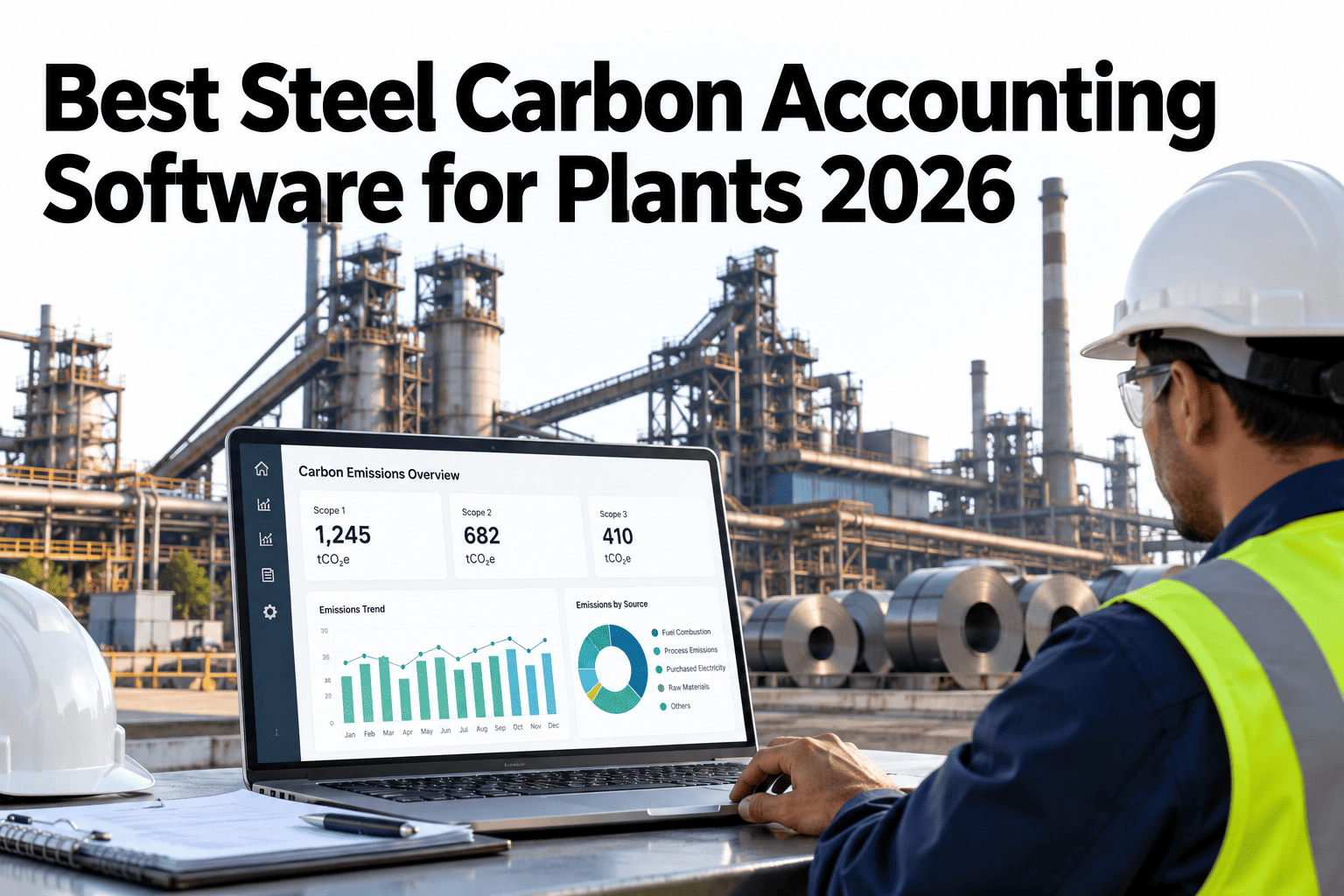
Carbon accounting
Captured, avoided, and residual emissions are logged automatically for EU ETS and CBAM reporting without a manual reconciliation exercise.
A Realistic View of What CCS Can and Can't Do
CCS is not a complete decarbonization solution for blast furnace steelmaking. Integrated plants have multiple emissions sources — the blast furnace, coke ovens, sintering plants, and onsite power — and capturing from lower-concentration streams is significantly harder than capturing from the blast furnace gas itself. A high capture rate on one stream does not equal a proportional cut in total plant emissions, and CCS does nothing to address upstream emissions from raw material extraction. The realistic framing most decarbonization roadmaps use is CCS as a bridge for existing assets over the next decade, paired with green hydrogen DRI for new capacity over the longer term — not a permanent substitute for either.
1B tonnes
Annual CCUS capacity the IEA says is needed by 2030
50M tonnes
Actual global operational capacity as of 2025
20-30%
Energy penalty from unoptimized post-combustion capture
Frequently Asked Questions
Can CCS be retrofitted onto an existing blast furnace without major reconstruction?
Post-combustion amine capture, the most common retrofit path, installs downstream of existing gas treatment systems and generally does not require modifying the blast furnace itself. The main requirements are available land for the capture equipment, a steam source for solvent regeneration, and an established CO2 transport and storage pathway. Typical retrofit timelines run 18 to 30 months from the start of construction, which is considerably faster than building new hydrogen-based production capacity.
How much of a plant's emissions can CCS actually capture?
Capture rates of 85 to 95% are achievable on concentrated flue gas streams like blast furnace gas, but an integrated plant has multiple emissions sources with very different concentrations. Coke ovens, sintering plants, and onsite power generation are all harder and more expensive to capture from than the blast furnace itself. Most realistic deployments take a phased approach, capturing from the highest-concentration streams first and expanding coverage over time — you can review this phased approach through our technical resources.
Why does the energy penalty matter so much for the economics of CCS?
Post-combustion capture can consume 20 to 30% of a plant's energy output just to run the solvent regeneration and compression stages, which directly erodes the economic case for the technology if left unmanaged. AI-driven monitoring of solvent condition, regeneration temperature, and flue gas routing is specifically aimed at closing this gap, since even modest efficiency gains at this scale translate into meaningful reductions in both operating cost and net carbon impact.
Is CCS a substitute for switching to hydrogen-based steelmaking?
No, most industry roadmaps treat the two as complementary rather than competing paths. CCS can be deployed on existing BF-BOF assets within a few years, addressing the roughly 95% of global steel production still running on conventional processes today. Green hydrogen DRI requires new plants and substantial renewable energy infrastructure, making it a realistic option at scale only from the mid-2030s onward for most producers.
How does rising carbon pricing change the calculus here?
EU ETS allowance prices have risen sharply in recent years, and the Carbon Border Adjustment Mechanism extends a comparable cost to steel imported into the EU starting in 2026. Without an active reduction strategy, a typical integrated plant could face well over €100 million a year in carbon costs by the end of the decade. Booking a carbon assessment is the fastest way to see how that exposure applies to your specific production mix.
Every Year Without an Optimized Capture Strategy Compounds the Cost
See how iFactory keeps your carbon capture system running at its highest sustainable capture rate with the lowest possible energy penalty — and turns your emissions data into audit-ready reporting.