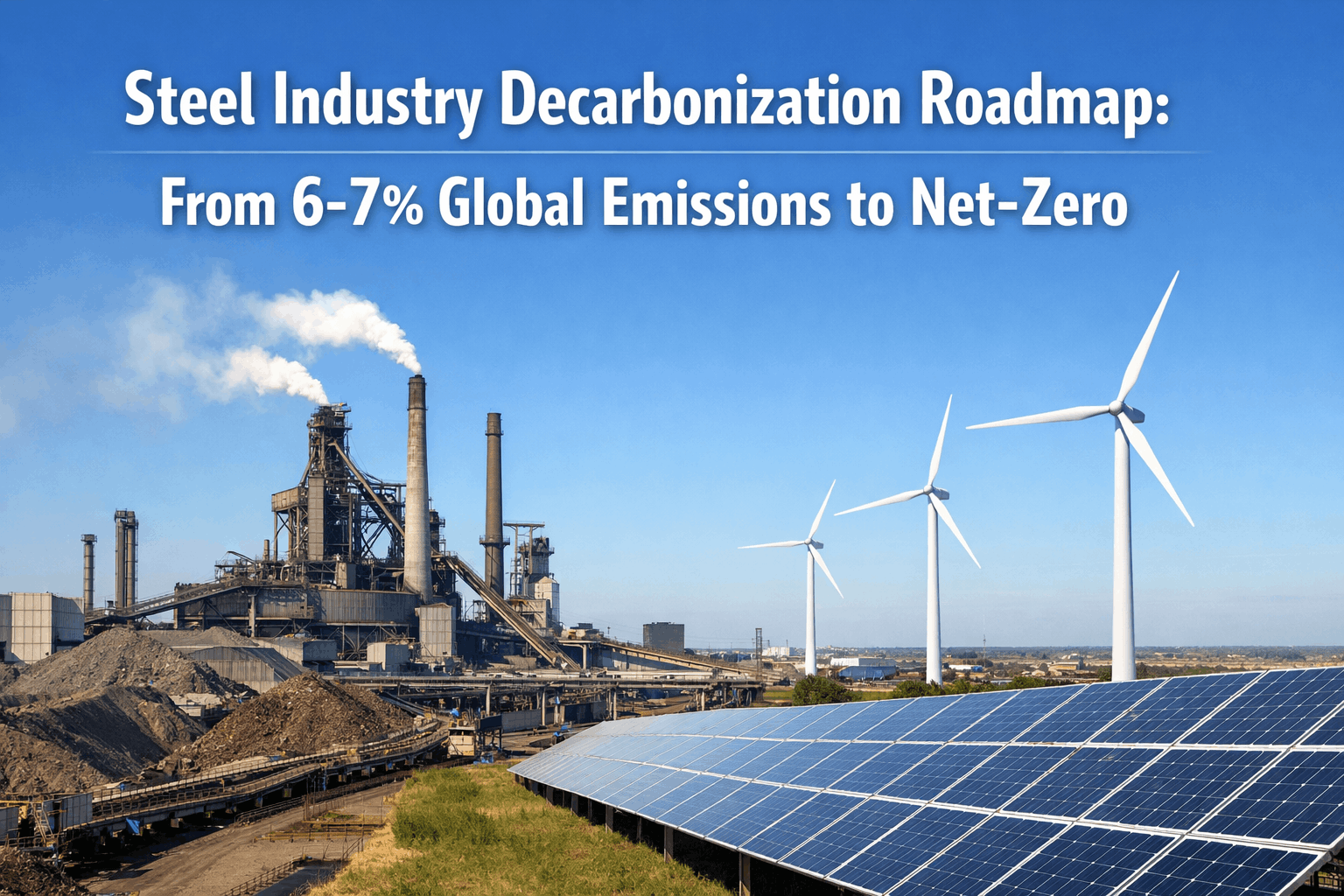
Steel production is responsible for 7–9% of global CO2 emissions — roughly 2.6 billion tonnes annually. As governments enforce carbon pricing, border adjustment mechanisms, and net-zero mandates, the cost of emitting carbon is a direct hit to the bottom line that grows every year. European steel producers already pay €90–100+ per tonne of CO2 under the EU ETS. The US Inflation Reduction Act offers $85/tonne in 45Q tax credits for captured carbon. The economics of CCS for steel plants have shifted from aspirational to essential. iFactory's AI platform helps steel producers monitor, optimize, and verify CCS operations integrated with plantwide maintenance and emissions tracking. Book a free consultation to explore how CCS integration with intelligent CMMS transforms your emissions compliance and cost structure.
Carbon Capture and Storage (CCS) for Steel Plants
Technology and Economics
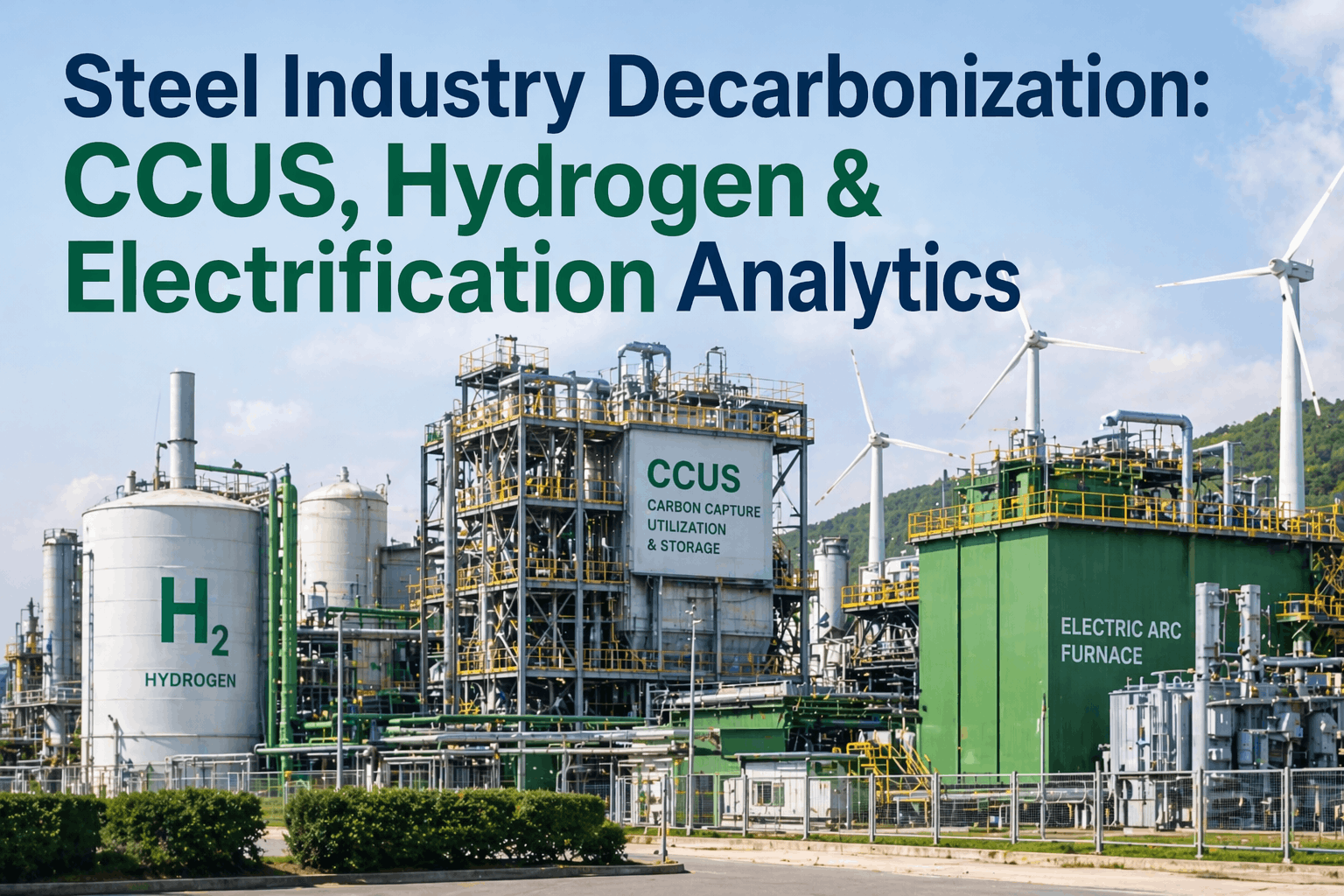
The steel industry faces an existential challenge: decarbonize or face escalating carbon costs that erode competitiveness. CCS is the only proven technology capable of achieving 90%+ CO2 capture from existing blast furnace and DRI operations without requiring a complete process rebuild. This guide breaks down the technology options, real-world economics, integration requirements, and the operational intelligence needed to make CCS work at steel-plant scale.
Why Steel Cannot Decarbonize Without CCS
Unlike power generation, steel production generates process emissions from chemical reactions — not just fuel combustion. This makes CCS uniquely critical for the steel sector.
Process Emissions Are Unavoidable
In blast furnace steelmaking, carbon is the chemical reducing agent. Even with maximum efficiency, BF-BOF production generates 1.8–2.2 tonnes of CO2 per tonne of crude steel from the chemical process itself.
Hydrogen Steel Is Decades Away at Scale
Only 3–5% of global steel will be hydrogen-based by 2035. CCS addresses the other 95% operating today with conventional processes that cannot be replaced overnight.
Carbon Costs Are Escalating Rapidly
EU ETS prices rose from €5/tonne in 2017 to €100+ in 2025. CBAM extends this to imported steel by 2026. Without CCS, a typical integrated plant faces €150–300M annually in carbon costs by 2030.
Customers Demand Green Steel
Automotive OEMs and construction firms are setting Scope 3 targets requiring low-carbon steel. CCS-equipped plants offer verified reduced-carbon steel at premium pricing — capturing the green steel market.
CCS Technology Options for Steel Plants
Three primary capture technologies applicable to steel — each with different maturity, cost, and integration requirements.
Post-Combustion Capture
Amine-based solvent absorptionChemical solvents absorb CO2 from flue gas after combustion. Most mature technology with 30+ years of experience. Retrofits onto existing BF gas treatment without modifying steelmaking.
Pre-Combustion Capture
Syngas shift and CO2 separationBF gas converted to hydrogen-rich syngas via water-gas shift, CO2 separated before combustion. Dual benefit of carbon capture and hydrogen production.
Oxyfuel Combustion
Oxygen-enriched combustion for concentrated CO2Replaces air with pure oxygen, producing nearly pure CO2 flue gas. Suited for sinter plants and lime kilns within integrated steel works.
Our engineers will assess your flue gas composition, site constraints, and economics.
CCS Cost Structure and Financial Viability for Steel
The economics depend on capture cost, transport cost, storage cost, and carbon price/credit value.
| Cost Component | Range (/t CO2) | Key Drivers | Trend |
|---|---|---|---|
| CO2 Capture | $40–80 | Technology, flue gas concentration, energy | Declining 3–5%/yr |
| CO2 Compression | $8–15 | Pipeline pressure, electricity cost | Stable |
| CO2 Transport | $5–20 | Distance, pipeline sharing, terrain | Declining with hubs |
| CO2 Storage | $8–20 | Geology, monitoring, permitting | Stable |
| Total CCS Cost | $60–130 | Site-specific combination | Declining overall |
Full chain: capture + compression + transport + storage
EU ETS (€90–100+) or US 45Q ($85/t geological)
At current carbon prices, CCS is already economically viable for many steel plants — and the gap widens every year as carbon prices rise and capture costs decline.
CCS Operations and CMMS Integration
CCS is a complex chemical process requiring continuous monitoring, predictive maintenance, and regulatory compliance tracking.
Capture Plant Monitoring
IoT sensors track solvent health, absorber/stripper temperatures, CO2 purity, energy per tonne, and corrosion. AI detects solvent degradation before efficiency drops — triggering predictive work orders.
Compressor and Pipeline Integrity
Vibration sensors, pressure monitors, and corrosion probes on high-pressure CO2 compression and transport feed the CMMS with real-time asset health — scheduling maintenance in planned windows.
Storage Site Monitoring
Continuous monitoring of injection pressures, wellhead integrity, reservoir behavior, and surface leakage. CMMS tracks calibration, well inspections, and regulatory deadlines for MRV compliance.
Energy Optimization
AI optimizes solvent flow rates, regeneration temperatures, and lean/rich loading based on real-time flue gas and energy prices — reducing the 15–25% energy penalty by 10–20%.
Carbon Accounting
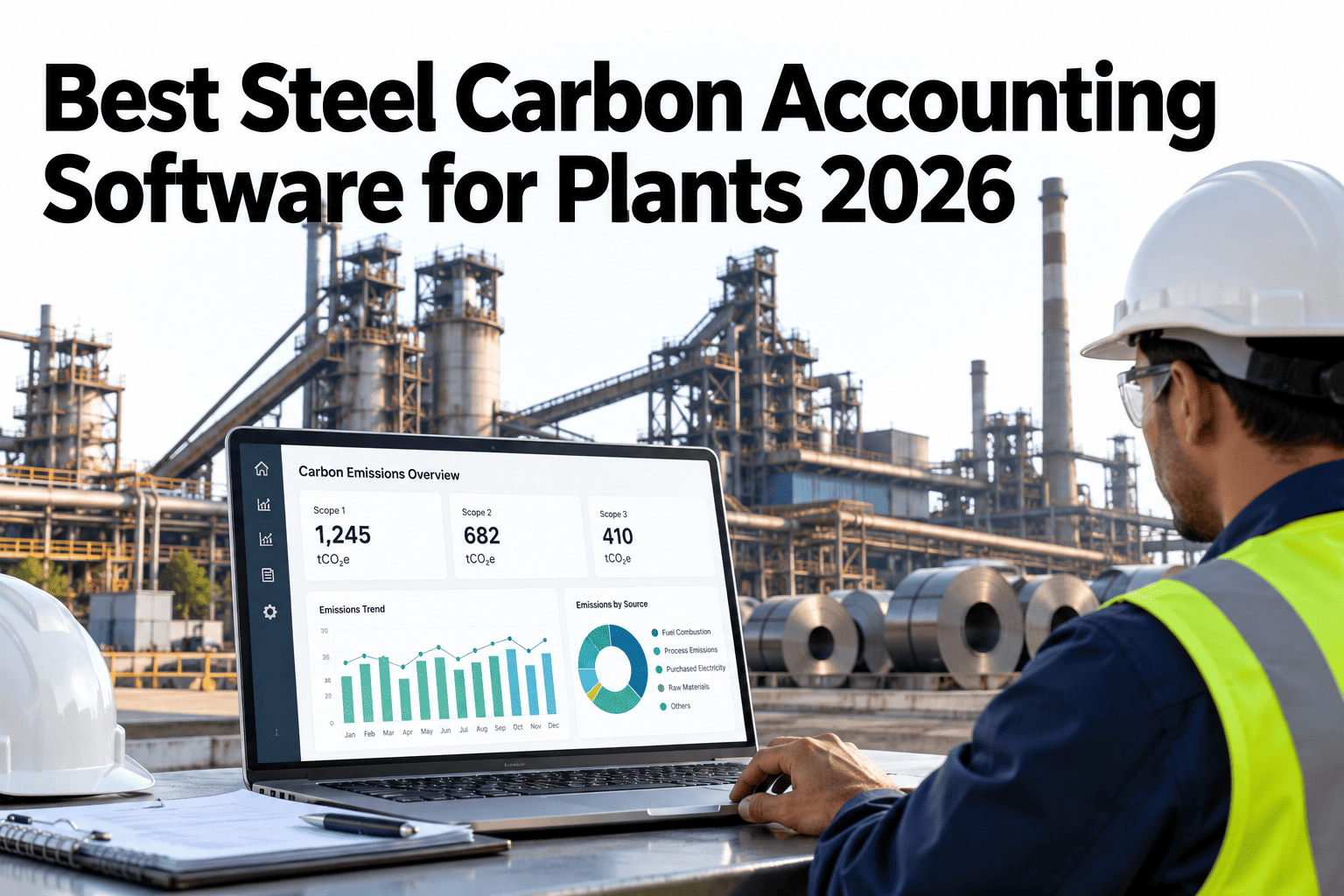
Automated mass balance across the entire chain. Real-time dashboards show tonnes captured, cumulative totals, efficiency, and credit generation for EU ETS, EPA, and voluntary markets.
Compliance Automation
Auto-generates reports for EPA Class VI, EU CCS Directive, and OSPAR. Tracks permit conditions, schedules inspections, and maintains digital audit trails for regulatory submissions.
Steel Plants Without CCS vs. With AI-Integrated CCS
CCS Deployment Timeline for Steel Plants
A typical deployment spans 3–5 years from feasibility to full operation.
| Phase | Focus | Timeline | Deliverables | Investment |
|---|---|---|---|---|
| 01 Feasibility | Flue gas analysis, storage assessment, tech selection | 6–12 months | Feasibility report, CAPEX model | $1–3M |
| 02 FEED | Engineering design, permitting, EPC selection | 12–18 months | Design, permits, contracts | $5–15M |
| 03 Construction | Capture plant, pipeline, well drilling | 18–30 months | Installed CCS infrastructure | $200–600M |
| 04 Commissioning | Start-up, AI calibration, CMMS integration | 3–6 months | Operational CCS + monitoring | $5–10M |
| 05 Operations | Continuous capture, optimization, compliance | Ongoing (25+ yrs) | CO2 stored, credits, green steel | $30–60/t OPEX |
CCS Emission Sources and Monitoring Points
Carbon Capture for Steel — Frequently Asked Questions
Is CCS economically viable for steel plants today?
Yes — for many plants it already is. With EU ETS at €100+/tonne and US 45Q at $85/tonne, the revenue often exceeds the $60–130/tonne total CCS cost. Economics improve yearly as carbon prices rise and capture costs decline. Plants near CO2 pipeline hubs have strongest near-term economics. Get a custom CCS economics model.
Can CCS be retrofitted to existing blast furnaces?
Yes. Post-combustion amine capture installs downstream of existing gas treatment — no BF modification needed. Main requirements: available land, steam for solvent regeneration, and a CO2 transport/storage pathway. Typical retrofit takes 18–30 months from construction start.
What capture rate can steel plants achieve?
85–95% from targeted flue gas streams. Since integrated plants have multiple sources, a phased approach captures from highest-concentration sources first — achieving 50–60% plant-wide reduction initially, scaling to 80–90% as additional sources connect over time.
How does CCS integrate with plant CMMS?
CCS becomes an additional asset group in the CMMS with its own hierarchy, PM schedules, and predictive analytics. IoT sensors on capture equipment, compressors, pipelines, and wellheads feed condition data to the CMMS for work orders and compliance tracking. See CMMS-CCS integration live.
Is CO2 storage safe and permanent?
Geological storage has been proven safe at industrial scale for 25+ years (Sleipner since 1996, Quest since 2015). Multiple trapping mechanisms ensure permanence. Regulatory frameworks mandate monitoring for decades post-injection with continuous verification requirements.
How does CCS compare to hydrogen steelmaking?
Complementary, not competing. CCS deploys on existing BF-BOF plants in 3–5 years. Green hydrogen DRI needs new plants and massive renewable energy — realistic at scale only by 2035–2040. CCS addresses the 95% using conventional processes today. Optimal strategy: CCS now, hydrogen long-term.
Ready to Make Your Steel Plant Carbon-Capture Ready?
Every year without CCS means escalating carbon costs, lost green steel premiums, and growing regulatory risk. Join producers turning decarbonization into competitive advantage. Get the technology, economics, and roadmap for your plant in a free 30-minute assessment.