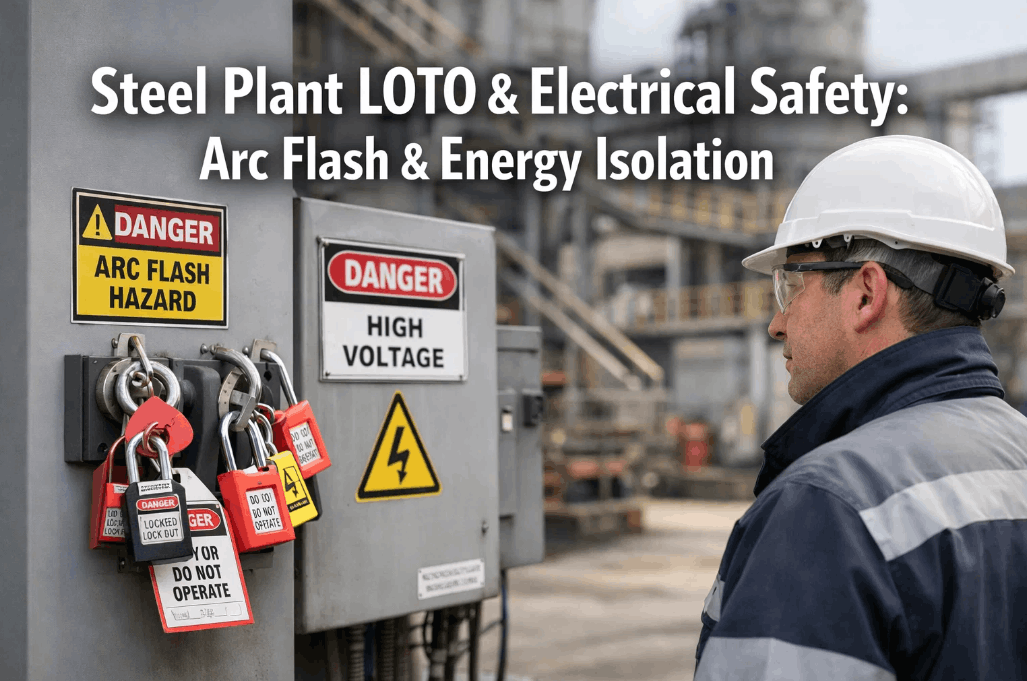
Lockout/Tagout (LOTO) failures and arc flash incidents remain the leading causes of fatal electrical injuries in integrated steel plants. With equipment operating at 480V to 34.5kV across electric arc furnaces, ladle metallurgy stations, rolling mill drives, and substation switchgear, every energy isolation procedure must be digitally verified, documented, and audit-ready. Traditional paper-based LOTO permits and static arc flash labels create dangerous gaps — outdated hazard labels, missed isolation points, and unverified lock removals that OSHA and NFPA 70E audits consistently flag. An AI-driven LOTO and electrical safety platform replaces these failure-prone workflows with digital permit management, real-time energy isolation verification, and dynamic arc flash study tracking tied directly to each asset's current electrical configuration. Book a demo to see how iFactory digitizes LOTO permits and arc flash compliance across your entire steel facility.
Why Steel Plant Electrical Safety Programs Fail Without Digital LOTO
Steel plants concentrate more high-voltage, high-current equipment per square meter than almost any other industrial environment. Electric arc furnaces draw 30,000–80,000 amperes during melt cycles. Rolling mill variable frequency drives operate at 4,160V. Ladle refining stations, continuous casters, and overhead crane systems all require complex multi-point energy isolation before any maintenance activity can begin safely. When LOTO procedures rely on paper permits, physical padlock logs, and verbal confirmation, the probability of missed isolation points, unauthorized lock removal, or incomplete de-energization verification increases with every shift change.
AI-driven digital LOTO platforms eliminate these systemic risks by enforcing procedural compliance at every step — requiring photographic verification of each isolation point, GPS-confirmed lock placement, digital sign-off chains, and automated alerts when permit conditions change or expire. Schedule a consultation to assess your current LOTO program gaps.
Paper-based LOTO permits cannot enforce sequential isolation steps, verify lock placement in real time, or prevent unauthorized removal. OSHA 29 CFR 1910.147 citations consistently target inadequate permit documentation as the root cause of energy isolation failures.
Arc flash hazard labels based on studies conducted 3–5 years ago do not reflect current fault current levels after equipment upgrades, transformer replacements, or switchgear modifications. NFPA 70E Article 130 requires labels to reflect current conditions — static labels cannot.
Steel plant equipment often requires 8–15 isolation points across multiple voltage levels and energy sources (electrical, hydraulic, pneumatic, thermal). Without a digital checklist enforcing sequential verification, missed isolation points create immediate life-safety hazards.
When LOTO permits span shift changes, incoming crews inherit isolation states they did not verify personally. Digital LOTO platforms require re-verification at every shift handover, eliminating the assumption-based safety gaps that cause fatalities.
The 6-Step Digital LOTO & Arc Flash Compliance Framework
iFactory's electrical safety module enforces a structured, audit-ready workflow from permit request through final re-energization. Every step is digitally documented, GPS-verified, and linked to the specific equipment asset record. Book a demo to see this framework in action across your steel plant.
Digital LOTO Permit Request & Approval
Maintenance technicians initiate LOTO permits from a mobile device, selecting the target equipment and associated energy sources. The platform auto-populates the required isolation points, PPE requirements (based on current arc flash study data), and approval chain. Supervisors approve digitally with timestamped sign-off — eliminating paper permit delays and ensuring every permit is logged before work begins.
Sequential Energy Isolation Verification
The platform enforces step-by-step isolation in the correct sequence — electrical disconnects first, then hydraulic, pneumatic, and stored energy sources. Each isolation point requires photographic evidence and GPS confirmation before the technician can proceed to the next step. Skipping or reordering steps is blocked by the system, preventing the most common LOTO procedural failures.
Zero-Energy State Verification
After all isolation points are locked and tagged, the platform requires a documented "Try" verification — confirming that the equipment cannot be energized. Voltage readings, pressure gauge readings, and thermal verification data are captured digitally and attached to the permit record as evidence of confirmed zero-energy state.
Arc Flash PPE Enforcement
The system references the current arc flash study for each equipment asset and displays the required PPE category (CAT 1–4), incident energy level (cal/cm²), and arc flash boundary distance. Technicians must acknowledge PPE requirements before the permit activates — ensuring NFPA 70E Article 130.5 compliance for every task.
Shift Handover & Multi-Crew Management
When LOTO permits extend across shifts, the platform triggers mandatory re-verification for incoming crews. Each new worker must apply their personal lock and digitally sign onto the permit. Group LOTO coordination — common on large EAF reline or rolling mill overhaul projects — is managed through a single digital permit with individual accountability tracking for every participant.
Controlled Re-Energization & Permit Closure
Re-energization follows a controlled sequence — all personnel accounted for, all locks removed (digitally verified), area clearance confirmed, and supervisor authorization obtained. The platform prevents premature re-energization if any lock remains active or any worker has not signed off. The completed permit becomes a permanent audit record linked to the equipment's maintenance history.
Steel Plant Electrical Hazards & LOTO Requirements Table
Every major steel plant process area presents distinct electrical hazards requiring specific LOTO procedures, PPE categories, and isolation point counts. The table below maps these hazards to the digital LOTO controls that iFactory enforces automatically.
| Equipment / Area | Voltage Range | Arc Flash Category | Typical Isolation Points | Key LOTO Risk |
|---|---|---|---|---|
| Electric Arc Furnace (EAF) | 34.5kV / 480V | CAT 4 (40+ cal/cm²) | 12–18 points | Stored energy in capacitor banks |
| Ladle Metallurgy Furnace | 13.8kV / 480V | CAT 3–4 | 8–12 points | Residual thermal and hydraulic energy |
| Rolling Mill Main Drives | 4,160V VFD | CAT 3 | 6–10 points | VFD stored charge, mechanical inertia |
| Continuous Caster | 480V / 4,160V | CAT 2–3 | 10–14 points | Hydraulic accumulators, cooling systems |
| Substation Switchgear | 13.8kV–138kV | CAT 4 (dangerous) | 4–8 points | Backfeed from parallel sources |
| Overhead Crane Systems | 480V / Busbar | CAT 2 | 4–6 points | Gravity-stored energy, busbar contact |
| Fume Extraction / Baghouse | 480V Motor | CAT 1–2 | 3–5 points | Fan inertia, pneumatic dampers |
Arc Flash Study Management: Keeping Labels Current with AI
NFPA 70E requires arc flash hazard labels on every piece of electrical equipment likely to require examination, adjustment, servicing, or maintenance while energized. These labels must reflect the current incident energy level and arc flash boundary — not the values from a study conducted years ago. In steel plants where equipment configurations change frequently due to capacity upgrades, transformer replacements, and switchgear modifications, static arc flash labels become dangerously inaccurate within months of installation.
iFactory maintains a digital registry of every arc flash label in the facility. When equipment modifications change fault current levels, the platform flags affected labels for re-study and re-labeling — ensuring every label reflects current hazard conditions.
Every arc flash study revision is linked to the equipment changes that triggered it. This creates a defensible audit trail proving that label updates follow equipment modifications — the documentation chain OSHA and NFPA investigators examine after an incident.
When a LOTO permit is initiated, the platform automatically references the current arc flash study data and assigns the correct PPE category (CAT 1–4), shock boundary distances, and required protective equipment for the specific task being performed.
The system monitors the age and validity of every arc flash study. When a study approaches its recommended 5-year review cycle, or when equipment changes invalidate current data, automated alerts ensure re-studies are commissioned before compliance gaps develop.
LOTO & Electrical Safety KPIs for Steel Plant Compliance
Measuring LOTO program effectiveness requires more than tracking incident counts. These leading and lagging indicators provide the data safety directors need to prove program maturity to OSHA auditors and executive leadership.
Frequently Asked Questions: Steel Plant LOTO & Arc Flash Safety
Digital LOTO enforces procedural compliance at the system level — requiring sequential isolation verification, photographic evidence, GPS-confirmed lock placement, and digital sign-off chains. Paper permits rely entirely on human discipline to follow the correct sequence. Digital platforms also prevent common failures like unauthorized lock removal, skipped isolation points, and undocumented shift handovers that paper systems cannot detect.
OSHA 29 CFR 1910.147 (The Control of Hazardous Energy) is the primary standard. For steel plants, additional requirements under 29 CFR 1910.269 (Electric Power Generation) and NFPA 70E (Standard for Electrical Safety in the Workplace) apply to high-voltage equipment. OSHA's steel industry-specific standards under 29 CFR 1910 Subpart N also impose requirements for overhead crane LOTO and hot metal handling equipment isolation.
NFPA 70E recommends re-evaluation whenever a major modification occurs that affects available fault current. In practice, most steel plants require updates every 3–5 years due to frequent capacity upgrades. iFactory tracks every equipment modification and automatically flags when changes may invalidate the current arc flash study data — ensuring labels are re-studied before they become non-compliant. Schedule a review of your current arc flash study status.
Yes. The platform links each worker's qualified/unqualified person status (per NFPA 70E definitions) to the LOTO permit system. Workers without current electrical safety training for the voltage class of the equipment being isolated are blocked from participating in the LOTO procedure — preventing the qualification verification gaps that OSHA routinely cites.
The digital system tracks every lock application and removal by individual worker ID. Unauthorized removal attempts trigger immediate alerts to the safety supervisor and the permit holder. The incident is automatically logged as a near-miss event in the safety record — creating the documentation trail that prevents repeat violations and demonstrates management of change to OSHA auditors.




-procedures-for-steel-plant-equipment-digital-management-system.png)
-procedures-for-steel-plant-equipment-complete-implementation-guide.png)