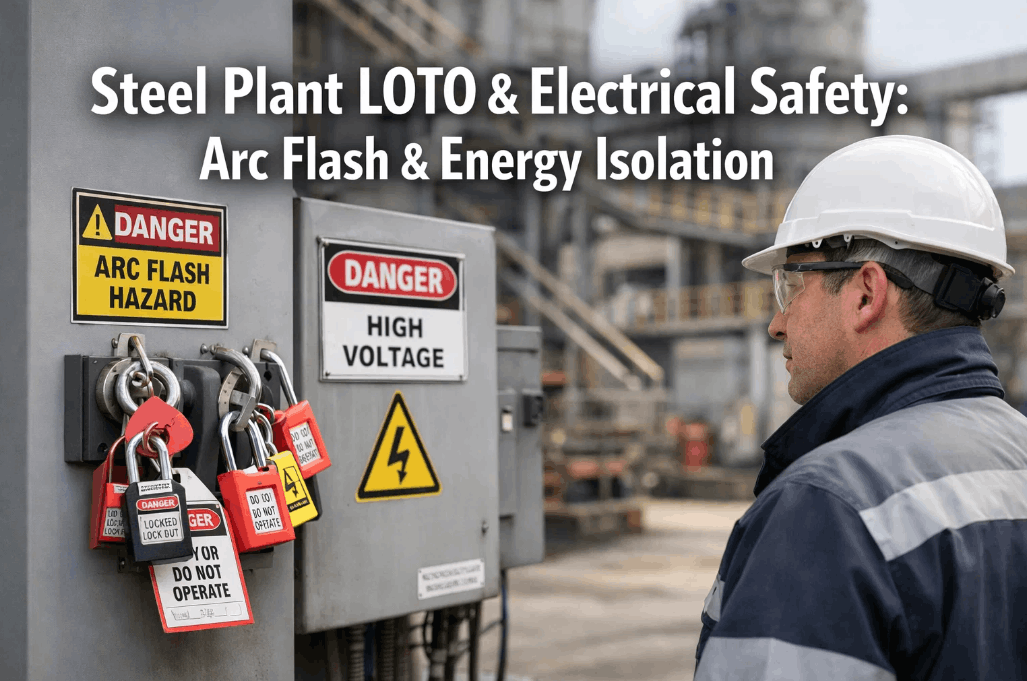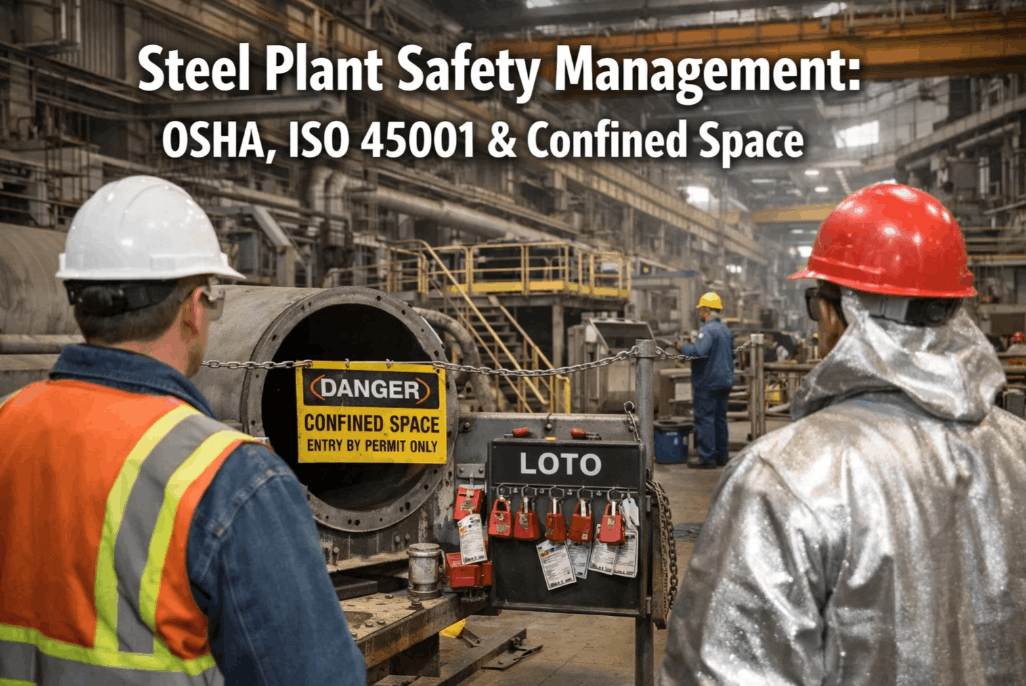
Steel manufacturing plants operate some of the most hazardous industrial environments on earth — combining extreme heat, molten metal, high-voltage electrical systems, toxic gases, and heavy rotating machinery under one roof. With OSHA 29 CFR 1910 general industry standards, ISO 45001:2018 occupational health and safety management requirements, and increasingly aggressive OSHA inspection programs targeting steel mills, plant safety managers face a compliance and operational safety challenge that paper-based permit systems and spreadsheet tracking simply cannot handle in 2025. Digitizing steel plant safety through AI-driven LOTO tracking, automated confined space permit management, hot work authorization workflows, and PPE compliance monitoring is no longer optional — it is the baseline of a defensible safety program. Schedule a Steel Plant Safety Audit to see how iFactory's safety module eliminates permit gaps and OSHA citation risk across blast furnace, EAF, and rolling mill operations.
Digitize LOTO, Confined Space, Hot Work & PPE Compliance Across Your Steel Facility
Replace paper permits and disconnected spreadsheets with AI-driven safety workflows. Reduce OSHA citations, prevent fatalities, and achieve ISO 45001 audit readiness in under 30 days.
Why Steel Plant Safety Management Demands Digital Transformation Now
Steel manufacturing accounts for a fatality rate 4.9× higher than the average US manufacturing industry, according to the Bureau of Labor Statistics. OSHA's National Emphasis Program (NEP) on primary metals now targets integrated steel mills, EAF mini-mills, and hot rolling operations with planned inspection programs — meaning citation risk is not theoretical, it is scheduled. Book a Demo to see how real-time LOTO tracking and digital permit management can eliminate your top-5 OSHA citation categories before the next inspection.
The four most cited OSHA violations in steel plants — energy control (LOTO), confined space entry, fall protection, and respiratory protection — share a common root cause: paper-based permit systems that allow authorization gaps, expired permits, and unverified equipment de-energization to go undetected until an incident occurs. Digital safety management converts these manual checkpoints into automated, auditable, real-time workflows.
Four Safety Risk Categories That Cause Steel Plant Fatalities & OSHA Citations
Understanding where safety systems fail in steel environments is essential for designing effective digital controls. Each of these four failure modes has a documented pattern of fatalities and regulatory penalties in integrated and mini-mill operations.
Lockout/Tagout (LOTO) Failures in High-Energy Steel Equipment
Steel plants operate equipment with multiple, simultaneous energy sources — electrical, hydraulic, pneumatic, thermal, and gravitational — that must all be isolated and verified before any maintenance task. Paper LOTO procedures allow critical steps to be skipped, equipment to be re-energized while workers are still in the danger zone, and group locks to be removed in the wrong order. With blast furnace tap holes, continuous casters, and rolling mill pinch points, a single LOTO failure is invariably fatal. Book a Demo to see digital LOTO verification that prevents unauthorized re-energization in real time.
Confined Space Entry Failures — Ladles, Vessels, and Flues
Blast furnace stoves, torpedo ladles, torpedo car interiors, desulfurization vessels, and gas cleaning flues all qualify as permit-required confined spaces under OSHA 29 CFR 1910.146. Steel-specific hazards include carbon monoxide accumulation, oxygen deficiency, residual molten metal, and nitrogen blanketing. Paper permit systems create authorization gaps between shift changes, allow atmospheric testing records to be falsified, and provide no real-time alert if a confined space occupant loses consciousness or an atmospheric monitor alarm triggers after entry.
Hot Work Authorization Failures — Arc Flash, Fire & Explosion Risk
Welding, cutting, grinding, and brazing in steel plant environments create ignition risks in areas with hydraulic oil accumulations, lubricant reservoirs adjacent to rolling equipment, and residual combustible dust near EAF and sinter plant operations. Hot work permits that are issued without fire watch verification, without gas testing in adjacent areas, or that remain active past their authorized window create fire and explosion risk that paper systems cannot monitor in real time. Digital hot work authorization tracks permit validity by the minute and alerts supervisors when a permit expires mid-task. Schedule a Safety Audit to assess your current hot work authorization gaps.
PPE Compliance Gaps — Heat, Arc Flash & Molten Metal Splash
Steel plant PPE requirements are among the most complex in any industrial environment — varying by zone, task, and energy exposure level. Aluminized approach suits for tapping operations, arc-rated PPE at electrical panels, cut-resistant gloves for sheared material handling, and respiratory protection for coke oven and sinter plant workers all require distinct selection, inspection, and donning verification protocols. Manual spot-checks cannot achieve 100% zone compliance. AI Vision monitoring of PPE compliance status at zone entry points creates the first real-time enforcement mechanism available to steel plant EHS managers.
OSHA & ISO 45001 Compliance Requirements for Steel Safety Systems
Steel plant safety management must satisfy multiple overlapping regulatory frameworks simultaneously. The table below maps the key applicable standards to the digital controls required by each.
| Regulatory Standard | Steel-Specific Requirement | Paper System Gap | Digital Safety Control |
|---|---|---|---|
| OSHA 29 CFR 1910.147 | Energy control procedures, LOTO verification, group lock protocols | No real-time re-energization prevention | Digital LOTO with QR-verified de-energization confirmation |
| OSHA 29 CFR 1910.146 | Permit-required confined space entry, atmospheric monitoring, attendant communication | No shift-change permit continuity tracking | Live confined space permit dashboard with atmospheric alert integration |
| NFPA 51B / OSHA 1910.252 | Hot work permit authorization, fire watch, permit expiration | Expired permits continue undetected mid-shift | Minute-level permit validity tracking with supervisor alert on expiry |
| OSHA 1910 Subpart I | PPE selection by hazard, inspection records, training verification | Spot-check enforcement only; no zone-level monitoring | AI Vision PPE compliance detection at zone entry points |
| ISO 45001:2018 | Risk assessment, corrective action tracking, audit evidence, performance measurement | Manual audit preparation; evidence gaps during certification | Digital safety management with automated ISO 45001 audit trail generation |
How Digital Steel Plant Safety Management Works: Step by Step
Work Order Triggered — Safety Permit Required
A maintenance work order for a confined space entry, hot work task, or energy-isolation job is created in the CMMS. The system automatically identifies required permit types based on equipment classification, task type, and zone designation — no manual permit selection required.
Auto Permit ClassificationDigital Permit Issued — Checklist Verification Required
The permit is issued digitally to the supervisor's mobile device. Every prerequisite — atmospheric testing results, LOTO point verification, fire watch assignment, PPE selection — must be completed and digitally signed before the work authorization activates. No paper form can be bypassed.
Zero-Gap AuthorizationLive Monitoring During Work Execution
The platform monitors permit validity in real time. AI Vision cameras verify PPE compliance at zone entry. Confined space atmospheric monitor data streams to the permit dashboard. If a permit expires, an atmospheric alarm triggers, or a LOTO device is tampered with, supervisors and EHS receive an immediate mobile alert.
Real-Time Safety MonitoringPermit Closure & Immutable Audit Trail
On task completion, the permit is digitally closed with timestamped sign-off from the authorized worker and supervisor. All atmospheric readings, LOTO verification photos, fire watch sign-in/out, and PPE compliance records are permanently linked to the work order — instantly retrievable for OSHA inspections and ISO 45001 audits.
Full Audit-Ready Record12-Month Safety Maturity Transformation in Steel Operations
Steel Plant Safety: The Three Dimensions of a Defensible Program
Prevention
Digital permit workflows enforce every prerequisite before work authorization — blocking confined space entry without gas readings, LOTO tasks without de-energization verification, and hot work without fire watch assignment. Prevention happens at checklist level, not supervisor memory.
Zero Permit Bypass ArchitectureDetection
AI Vision cameras at EAF tap floors, blast furnace cast houses, and rolling mill zones detect missing PPE, unauthorized personnel in restricted areas, and LOTO device removal in real time. Incident detection latency drops from hours to seconds.
<5s PPE Violation AlertDocumentation
Every safety permit, atmospheric test result, LOTO verification photo, and corrective action is immutably recorded with timestamps and digital signatures — producing an audit trail that satisfies OSHA compliance officers and ISO 45001 certification auditors instantly.
<10 Min OSHA Audit ExportThe Business Case for Digital Steel Plant Safety Management
OSHA Citation Avoidance Per Cycle
A single willful OSHA citation in steel averages $156K. A programmatic inspection targeting LOTO, confined space, and arc flash violations at an integrated mill commonly generates $800K–$1.5M in proposed penalties. Digital safety management eliminates the documentation gaps that convert regulatory interest into maximum citations.
Near-Miss and Incident Rate
Steel plants deploying digital permit-to-work and LOTO tracking document 60–70% reductions in near-miss incident frequency within 12 months — directly reducing workers' compensation premiums, incident investigation costs, and production downtime from safety-related shutdowns.
Faster ISO 45001 Audit Preparation
Preparing evidence packages for ISO 45001 surveillance and recertification audits manually takes 3–5 days of EHS staff time per cycle. Digital safety management generates audit-ready documentation in under 30 minutes — with competency records, corrective action closure evidence, and contractor safety records included.
Average Cost of a Steel Fatality
OSHA estimates the total organizational cost of a workplace fatality in heavy industry at $8.7M when all direct costs, legal exposure, regulatory penalties, production loss, and reputational impact are included. Digital safety management represents a fraction of one percent of this avoided cost.
"After our OSHA inspection, we identified that 31% of our LOTO procedures had documentation gaps and 18% of confined space permits had expired atmospheric readings. Deploying digital permit management eliminated both issues inside 60 days — and our next inspection resulted in zero citations."
Steel Plant Safety in 2025: What Every EHS Leader Must Act On
The regulatory, financial, and human cost of inadequate safety management in steel operations has never been higher. Book a Compliance Audit to identify your top citation risk areas and build a digital safety roadmap for your facility.
OSHA's Steel NEP makes planned inspections inevitable: The National Emphasis Program on primary metals means your facility will be inspected — the question is whether OSHA will find gaps in your LOTO documentation, expired confined space permits, or missing arc flash boundary demarcation. Digital safety management ensures these are closed before an inspector arrives.
Paper permits create authorization gaps that AI closes: A paper LOTO card cannot enforce group lock sequencing. A paper confined space permit cannot alert a supervisor when an atmospheric monitor alarms 90 minutes after entry. Digital safety platforms convert these passive documents into active enforcement mechanisms that operate without relying on human memory.
ISO 45001 requires evidence, not intent: Certification auditors require documented evidence of hazard identification, risk assessment records, competency verification, corrective action closure, and performance measurement — all timestamped and linked to specific incidents or activities. Digital safety management generates this evidence continuously, not in a frantic pre-audit sprint.
The ROI is dominated by one avoided event: The business case for digital steel safety does not rest on efficiency gains — it rests on the $8.7M average organizational cost of a single fatality, the $1M+ potential OSHA citation exposure, and the production shutdown that follows any serious incident. A digital safety platform costs less than 1% of these avoided costs annually.
Frequently Asked Questions: Steel Plant Safety Management
What OSHA standards are most frequently cited in steel mills during NEP inspections?
OSHA's primary metals NEP consistently cites four categories: energy control/LOTO (29 CFR 1910.147), permit-required confined spaces (1910.146), walking-working surfaces and fall protection (1910.28/29), and respiratory protection (1910.134). Arc flash hazard energy control and molten metal PPE documentation round out the top citation categories at integrated mills and EAF mini-mills. Digital safety platforms address all five through automated permit workflows and verification checklists.
How does digital LOTO tracking prevent re-energization incidents?
Digital LOTO systems require each energy isolation point to be verified by QR-code scan or NFC tag confirmation before the permit becomes active. Group lock sequencing is enforced — all workers' personal locks must be digitally registered before work begins, and the permit cannot be closed until all worker confirmations are captured. If a hardware interlock is disturbed or an energy source tag is removed out of sequence, supervisors receive an immediate mobile alert — preventing the unauthorized re-energization that causes blast furnace and rolling mill fatalities.
How does the platform handle confined space atmospheric monitoring integration?
The platform integrates with standard portable multi-gas monitors (MSA, Honeywell BW, Industrial Scientific) via Bluetooth or cellular gateway. Atmospheric readings (O₂, CO, H₂S, LEL) are streamed live to the confined space permit dashboard. If any parameter breaches the action level or IDLH threshold during work, the permit dashboard updates in real time and the attendant and supervisor receive immediate mobile alerts — closing the gap between instrument alarm and supervisor awareness that characterizes most confined space fatalities.
Can the platform manage contractor safety as well as direct employees?
Yes. Contractor management is a specific ISO 45001 requirement and a common OSHA citation category in steel plants where maintenance contractors work alongside production employees in hazardous zones. The platform tracks contractor induction completion, competency certifications, and permit authorizations — ensuring no contractor enters a confined space or executes LOTO without the same digital verification required of direct employees. Contractor safety records are maintained separately for client reporting and ISO audit evidence.
How quickly can a steel plant achieve ISO 45001 certification with digital safety management?
Facilities deploying digital safety management typically accelerate their ISO 45001 initial certification timeline by 6–9 months compared to paper-based systems, because the certification body's evidence requirements for hazard identification records, risk assessment documentation, and corrective action closure are generated automatically from the first day of platform use. For facilities already certified under OHSAS 18001 transitioning to ISO 45001, digital platforms resolve the three most common gap areas — performance measurement, operational planning, and documented worker participation evidence — within the first 90 days.
Build a Zero-Gap Steel Plant Safety Program Before Your Next Inspection
Eliminate OSHA citation risk from LOTO, confined space, and hot work permit gaps. Achieve ISO 45001 audit readiness across your blast furnace, EAF, and rolling mill operations in under 30 days.
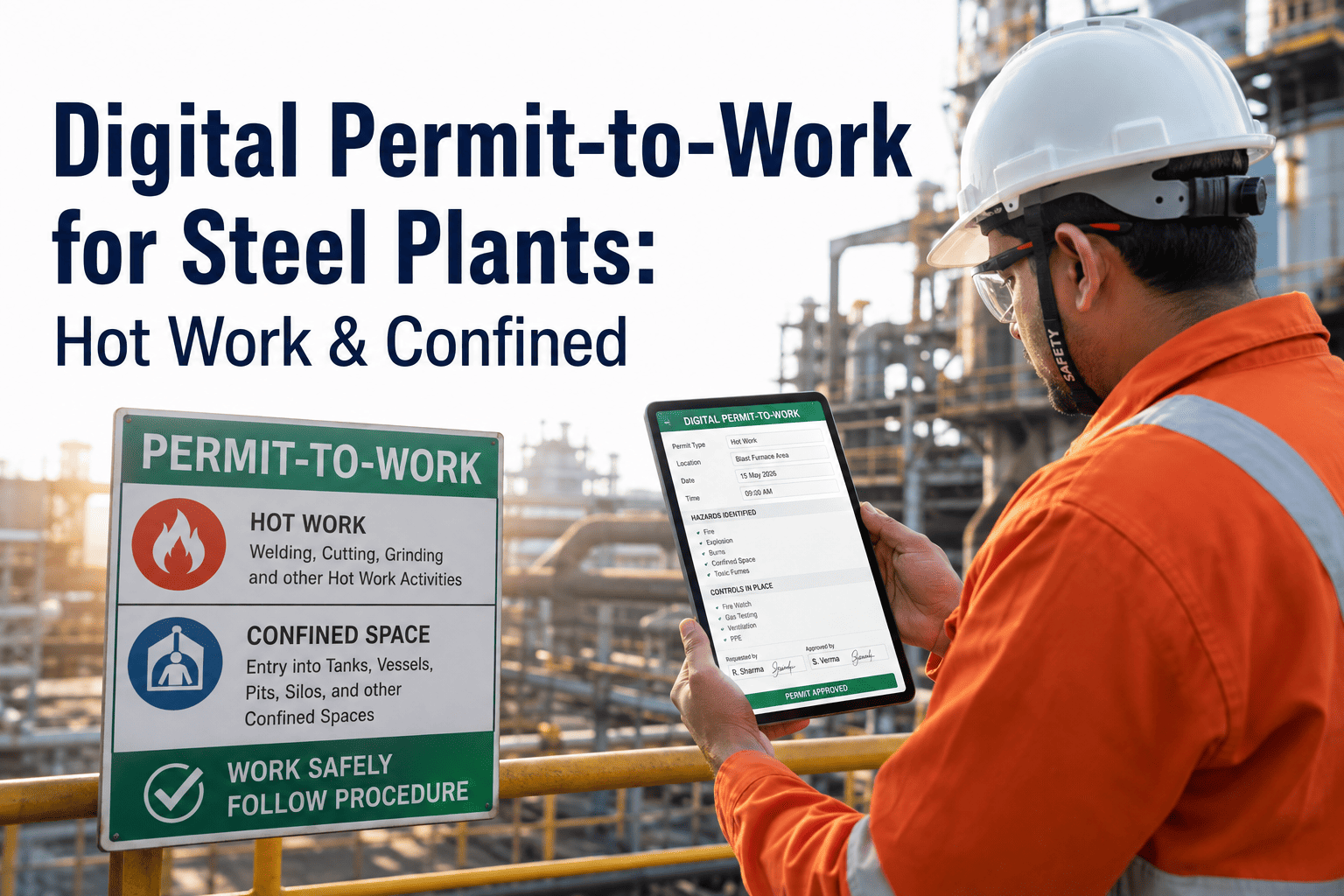
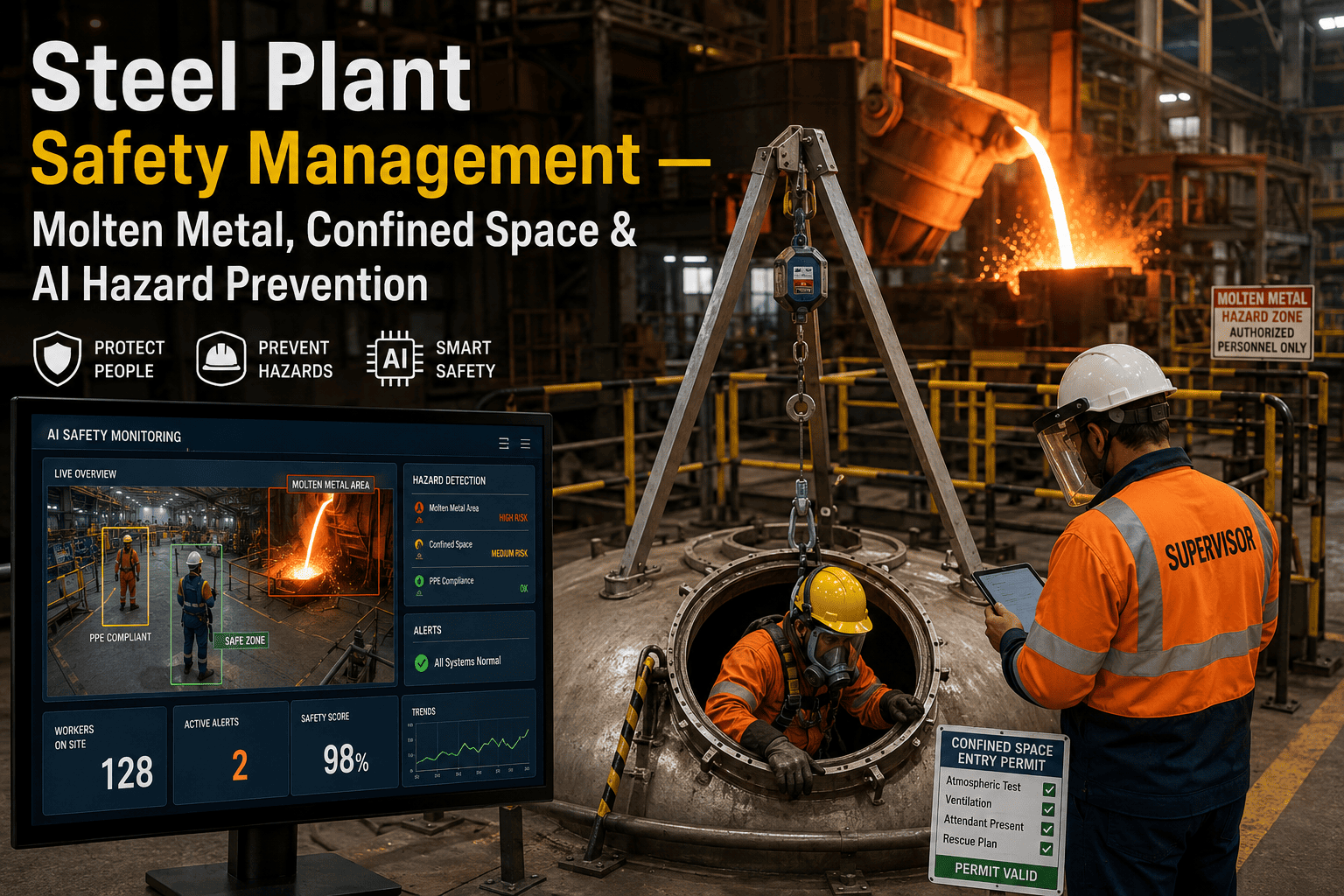

-for-steel-plants-digital-compliance-framework.png)