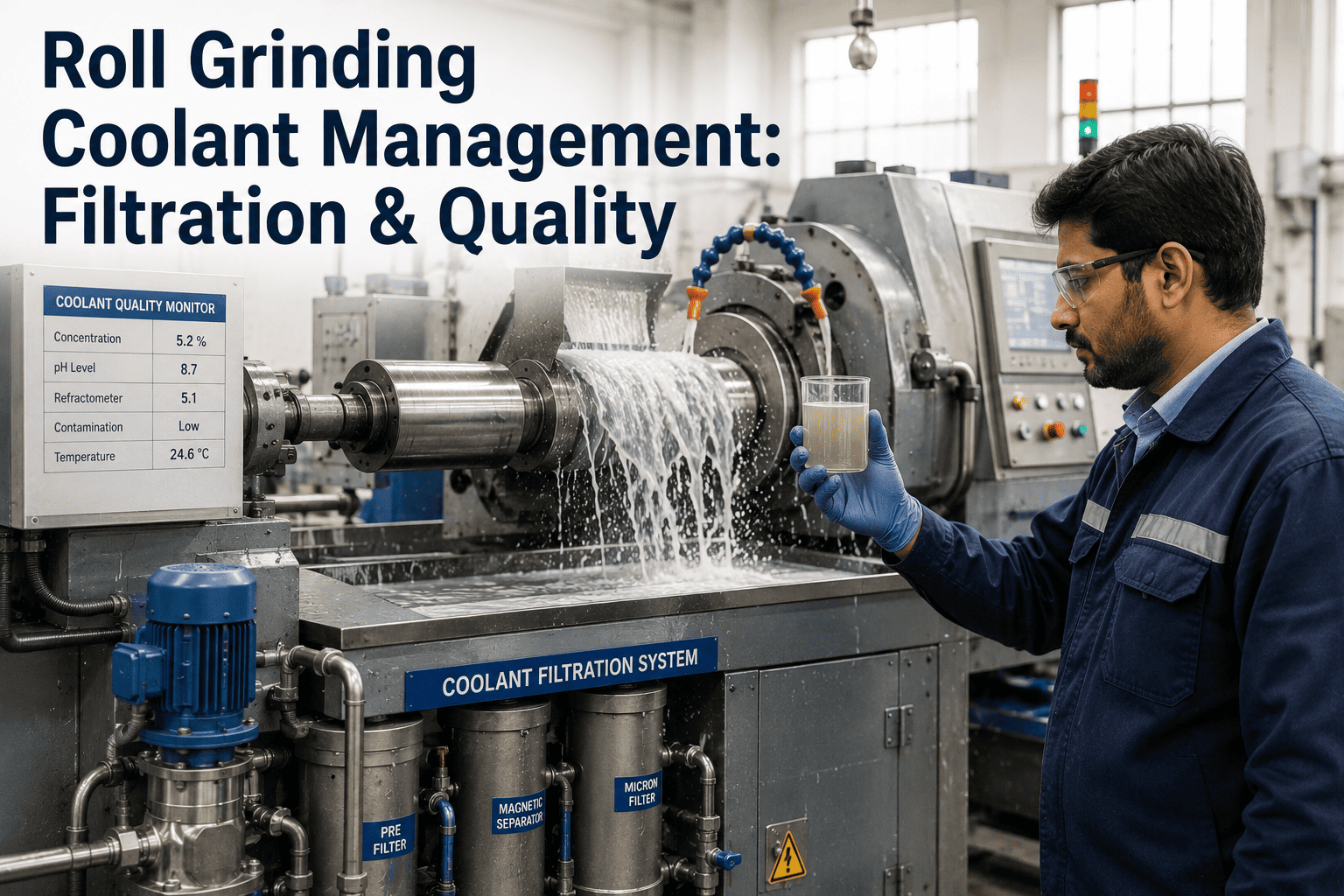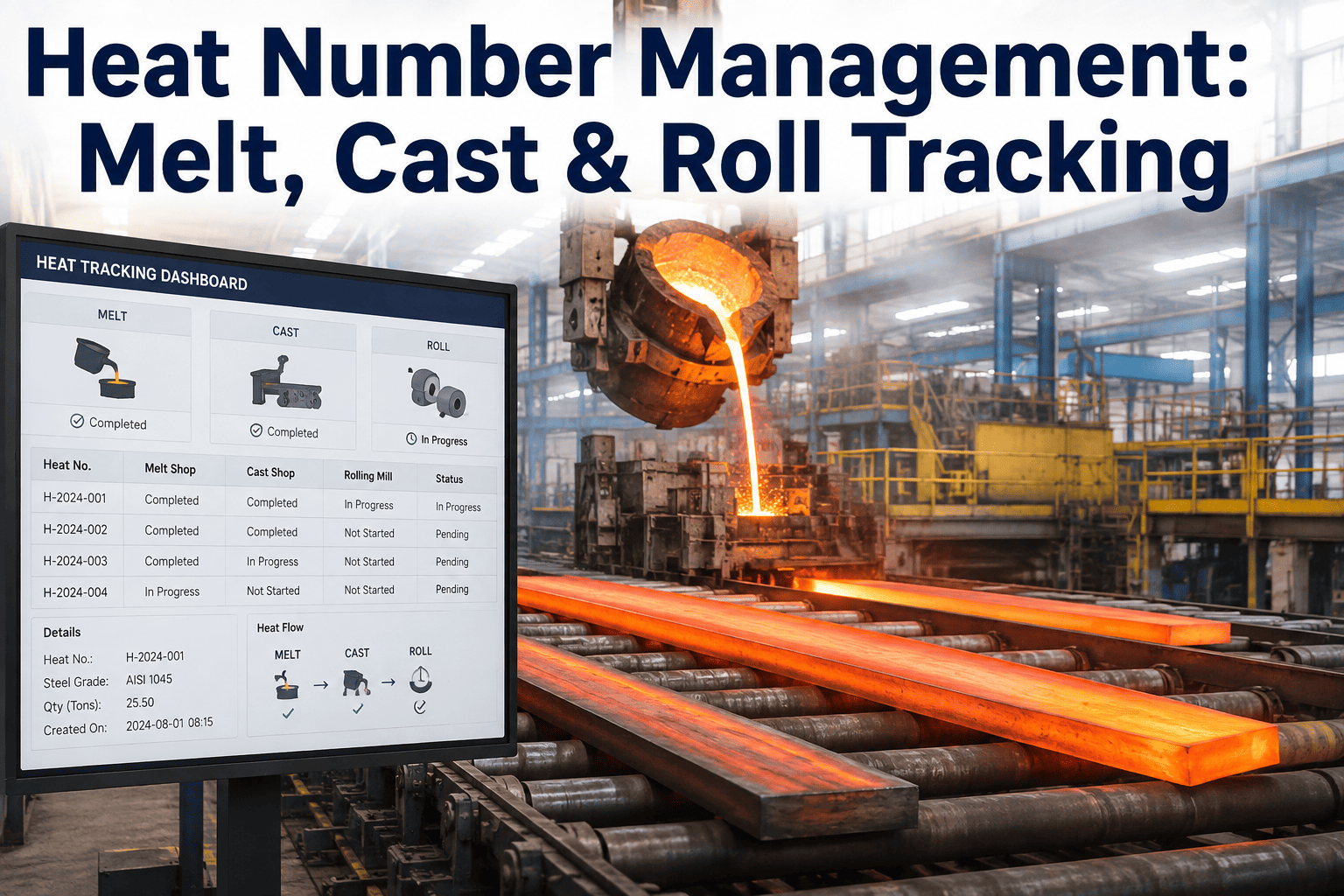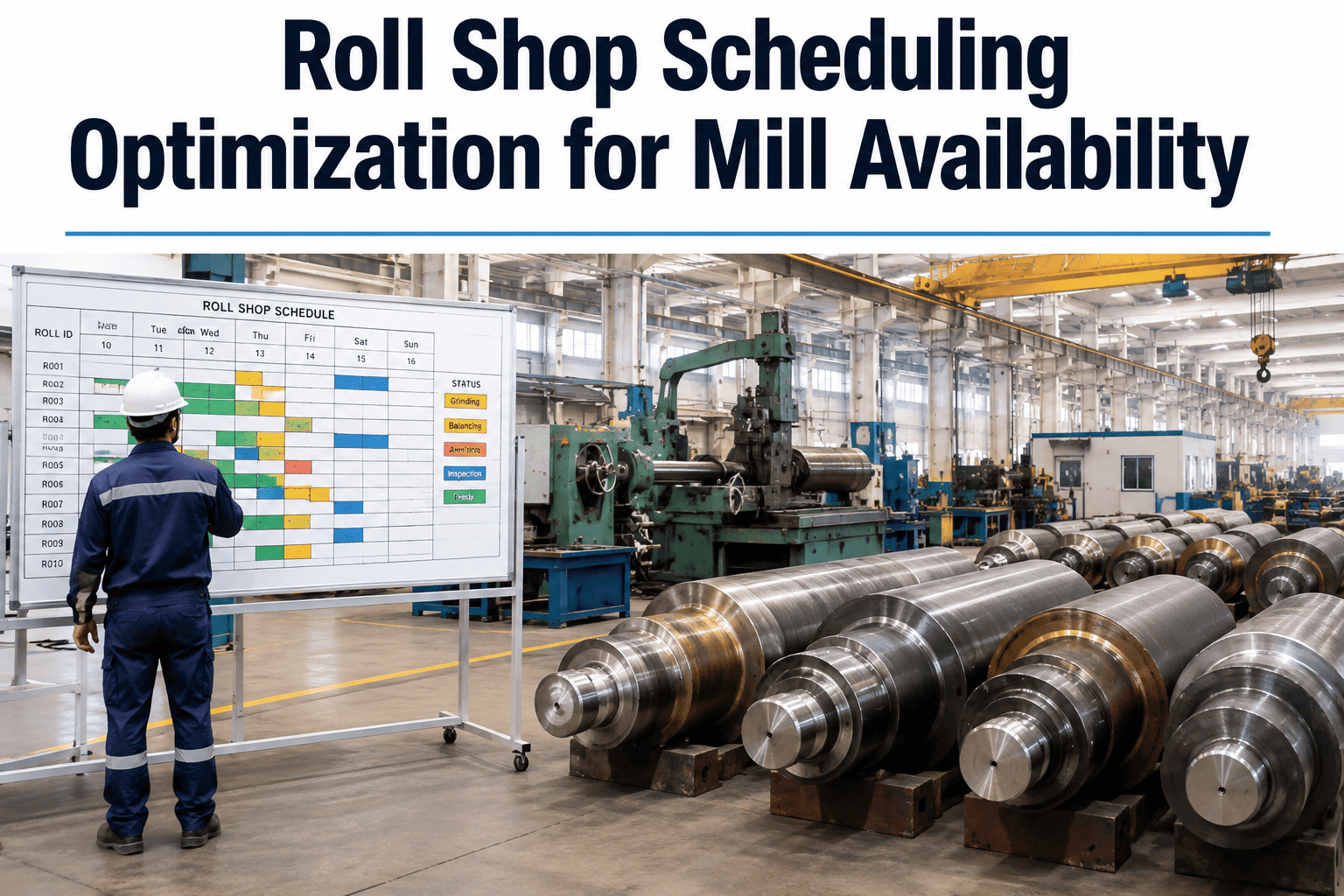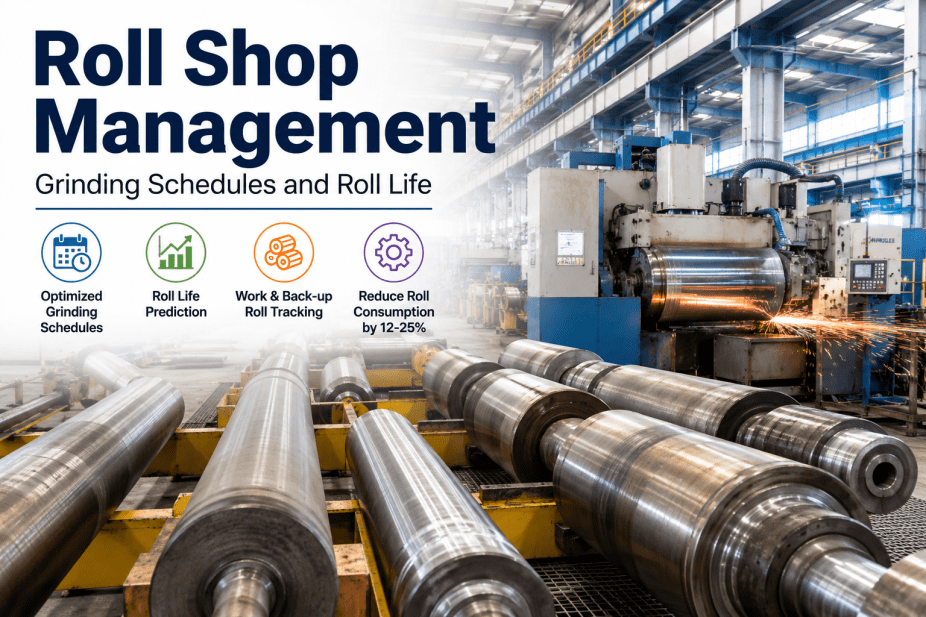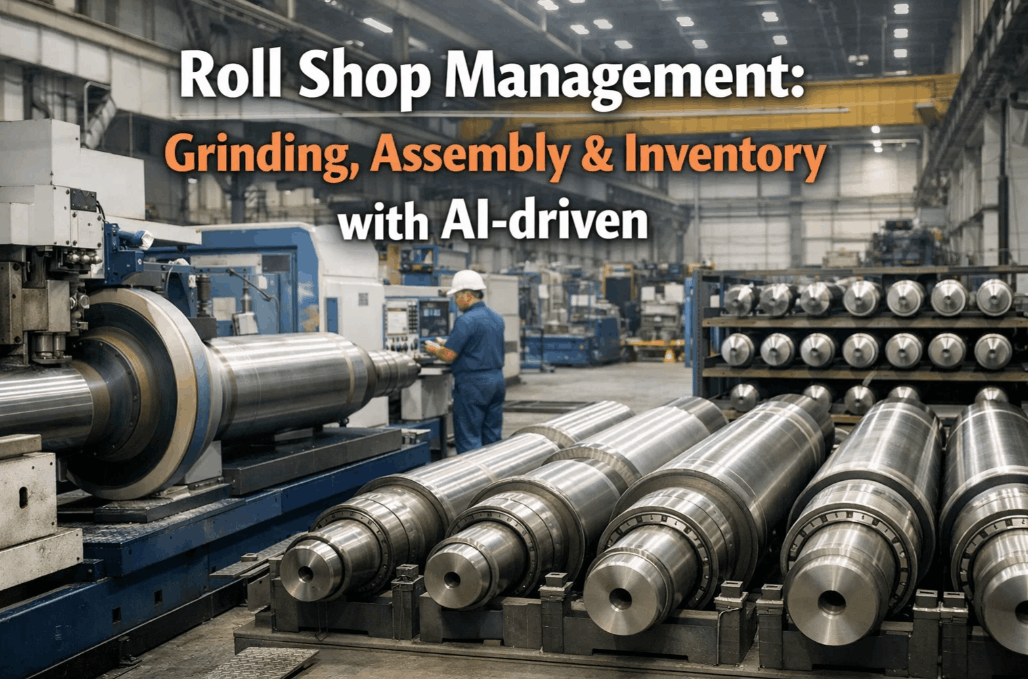
The roll shop is the unsung execution engine of every high-performance rolling mill. Whether serving a hot strip mill or a sub-millimeter cold rolling facility, the geometric precision, surface roughness, and bearing integrity of the work rolls dictate final product yield. Moving from disconnected whiteboards and disparate grinding spreadsheets to an integrated roll shop management system is critical for modern operations. AI-driven roll shop software doesn't just track inventory; it dynamically links CNC roll grinding campaigns, CVC roll tracking, and automated chock assembly directly to the mill's overarching production schedule. Operating without intelligent roll inventory management leads to chaotic roll searches, premature grinding of viable assets, and catastrophic in-mill spalling. Book a workflow review to see how iFactory's roll shop optimization models synchronize mill pulpit demands seamlessly with grinding shop execution.
Automate Grinding Campaigns & Roll Assembly Tracking
Deploy AI-driven roll shop software to seamlessly manage grinding tolerances, automate bearing maintenance, and orchestrate precision roll inventory management across all mill stands.
Why Traditional Roll Shop Management Handicaps the Mill
Modern continuous flat-rolling mills process thousands of tons of steel per shift, pulling dozens of massive work rolls, backup rolls, and edger rolls through aggressive wear cycles. Managing this complexity with legacy tools creates immense blind spots. The primary challenge in roll bearing management and asset tracking is not physical labor—it is data fragmentation. When a damaged roll is extracted from the mill, the grinding operator must manually cross-reference historical metallurgical fatigue, bearing alignment history, and the upcoming product mix to determine the correct grinding schedule and target mechanical crown. Disconnected operations result in excessive stock removal (costing millions in wasted high-chrome steel) or installing incorrectly profiled CVC rolls that immediately fail in-stand shape targets. Book a demo to learn how an AI-integrated roll shop completely eliminates grinding guesswork.
What Comprehensive Roll Shop Software Delivers to the Fleet
iFactory's roll grinding AI-driven suite bridges the critical gap between Level 2 mill automation and roll shop execution. It turns individual roll assets into highly tracked, dynamically adaptable precision instruments.
AI Roll Shop Orchestration: Scenarios in Precision Environments
Deploying specialized roll shop management logic completely eliminates disjointed, paper-based tracking errors. Observe how interconnected execution workflows solve severe bottlenecks during active mill operations.
Scenario 1: Emergency Roll Extraction
A massive hot strip mill cobble necessitates an immediate emergency roll change for stands F3 and F4. The AI instantly scans the live ground inventory, reserves the perfectly paired backup and work rolls matching the current crown requirements, and routes them to the stands autonomously.
Scenario 2: Bearing Assembly Confusion
While preparing a heavy backup roll, the technician scans the NFC tag. The platform rejects the selected bearing block instantly, flagging that it had sustained massive over-torque loads during its previous campaign and mandates an immediate non-destructive NDT inspection before final assembly.
Scenario 3: Over-Grinding Prevention
An operator prepares to run a standard pass removing 0.8mm of stock. The AI overrides the grinding schedule, cross-referencing the roll's recent low-friction campaign data, and dynamically updates the CNC parameters to shave only 0.4mm, recovering immense long-term asset value.
Scenario 4: Roll Defect Root Cause
A localized texture defect prints onto a finished coil. Instead of guessing, the AI correlates the exact standalone roll serial number to the specific grinding cycle and coolant temperature map from the shop 14 hours prior, identifying a degraded grinding wheel dressing tool.
Legacy Shop Trackers vs. AI-Driven Roll Architecture
Modernizing a grinding facility isn't just about replacing whiteboards with digital dashboards. Review the aggressive capability jump between disconnected entry logs and a completely interconnected AI roll intelligence matrix.
| Capability | Manual Logs / Spreadsheets | Static Roll Tracking Software | iFactory Grinding AI Copilot |
|---|---|---|---|
| CNC Machine Integration | Manual profile entry into CNC | One-way profile download | Bidirectional live curve updates & overrides |
| Roll Campaign Management | Tons rolled guessed from shift notes | Basic mileage and heat tracking | Dynamic fatigue mapping vs actual friction data |
| Minimum Stock Removal | Habitual heavy grinding | Relies purely on operator inspection | Algorithmic limit calculation preserving diameter |
| Inventory & Mill Sequencing | Operators call the shop on radios | Separate disjointed inventory screen | 100% synced with live Level 2 grade sequencing |
| Chock & Bearing Memory | Paper tags / visual rust checks | Timestamp of last maintenance | Tracks exact load impacts experienced in-mill |
| Spall & Crack Prevention | Reactive failure response | Logs manual NDT results | Predictive flagging fusing vibration arrays & Eddy Current |
How iFactory Networks the Roll Shop to the Production Line
Creating an air-tight roll loop requires aggregating data from heavily disparate environments: the clean-room grinding machines, the heavy-duty assembly pits, and the chaotic vibrations of the mill floor. Our architecture consumes it all effortlessly.
CNC Equipment Integration Layer
Seamlessly networks with CNC grinding centers via direct proprietary protocols or standard OPC-UA, ingesting massive micrometer-resolution profile arrays, taper logs, and EDT/SBT texturing feedback instantly upon cycle completion.
RFID & NFC Spatial Tracking
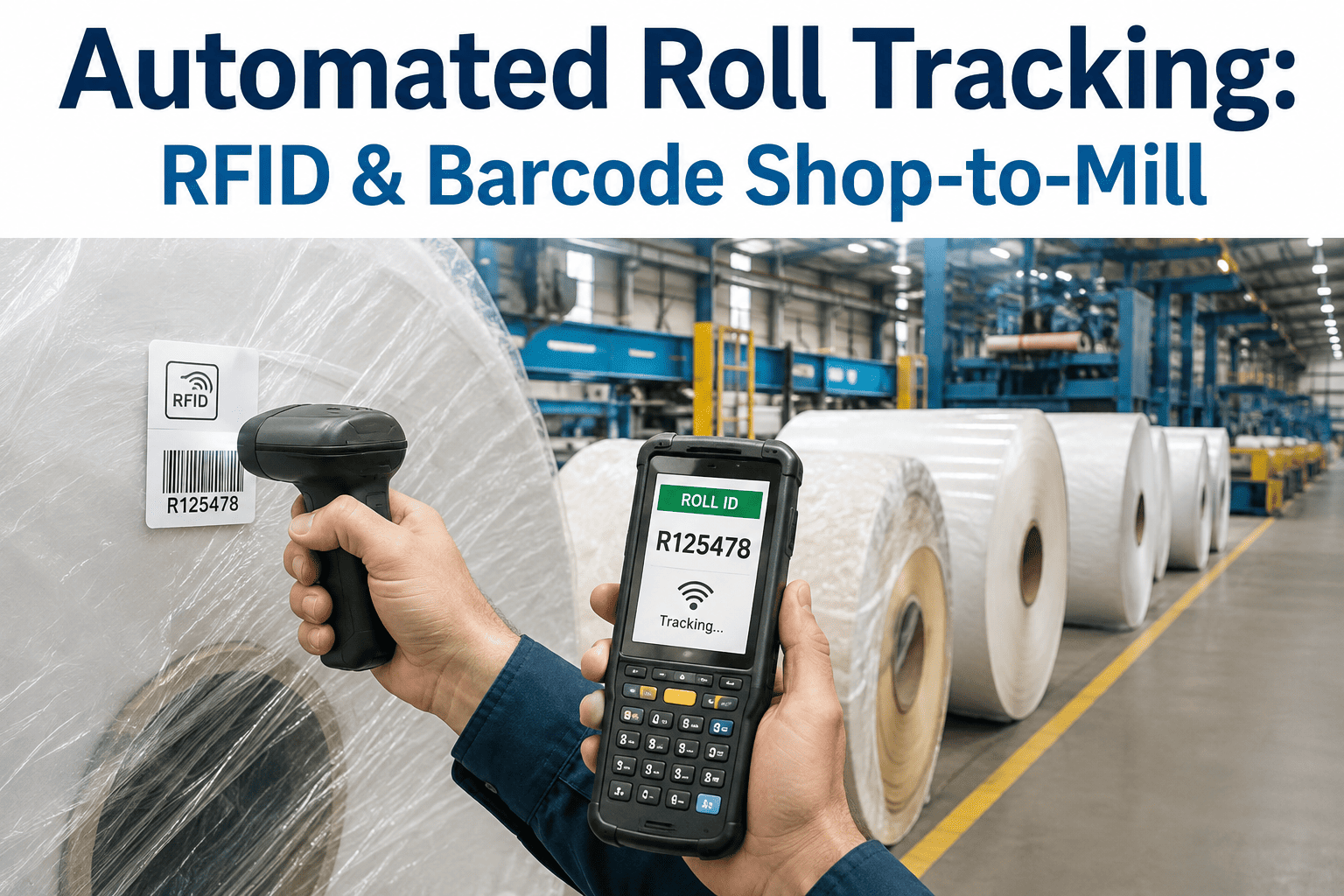
Embeds robust RFID or NFC tagging mechanisms directly into the roll barrels and chock housings. Technicians use mobile scanning tablets to verify sets, preventing any possibility of pairing incorrect diameters before mounting.
Level 2 / Level 3 Mill Interfacing
The roll management backend pipes directly into the primary mill scheduling (MES/CMMS) grid. This ensures the roll shop is never producing profiles blindly, but strictly manufacturing the geometric shapes dictated by tomorrow's product mix.
Metallurgical Data Fusion
Ingests localized roll temperature differentials, mill chatter histories, and automated Eddy Current crawler reports. The AI synthesizes this to generate highly accurate structural safety thresholds, refusing dispatch on compromised assets.
Transforming Roll Grinding Execution: Deployment Logistics
Integrating a centralized roll shop management architecture doesn't disrupt daily grinding quotas. iFactory engineers deploy the overlay securely, harmonizing your CNC machines and inventory logistics in coordinated phases.
RFID Tagging & Baseline Inventory Mapping
Affixing secure industrial scanning tags across all active work rolls, backups, and chock assemblies. Legacy spreadsheet histories are bulk-imported into the newly centralized roll inventory matrix.
CNC Interface & Profile Ingestion
Integrating the AI architecture safely with your primary roll grinding machines. Test curves and automated profile measurements (Ra, diameter, crown) begin streaming bidirectionally between the CNC and the dashboard.
Rolling Mill Level 2 Scheduling Link
The roll shop is digitally tethered to the main mill dispatch platform. Automated queuing algorithms begin dictating the priority grinding schedule dynamically based on the incoming sequence of steel slabs or coils.
Dynamic Fatigue & AI Spall Models Active
Machine learning layers activate, correlating in-mill vibration data to subsurface degradation. AI strictly enforces minimum stock removal targets and mandates deep inspections for stressed hardware.
Frequently Asked Questions: AI-Driven Roll Grinding
Stop Wasting Chrome Steel Through Blind Grinding Cycles.
iFactory's generative AI frameworks deliver impenetrable roll inventory management, perfect CNC campaign tracking, and advanced bearing fatigue mapping to guarantee your mill stands perform flawlessly 24/7.