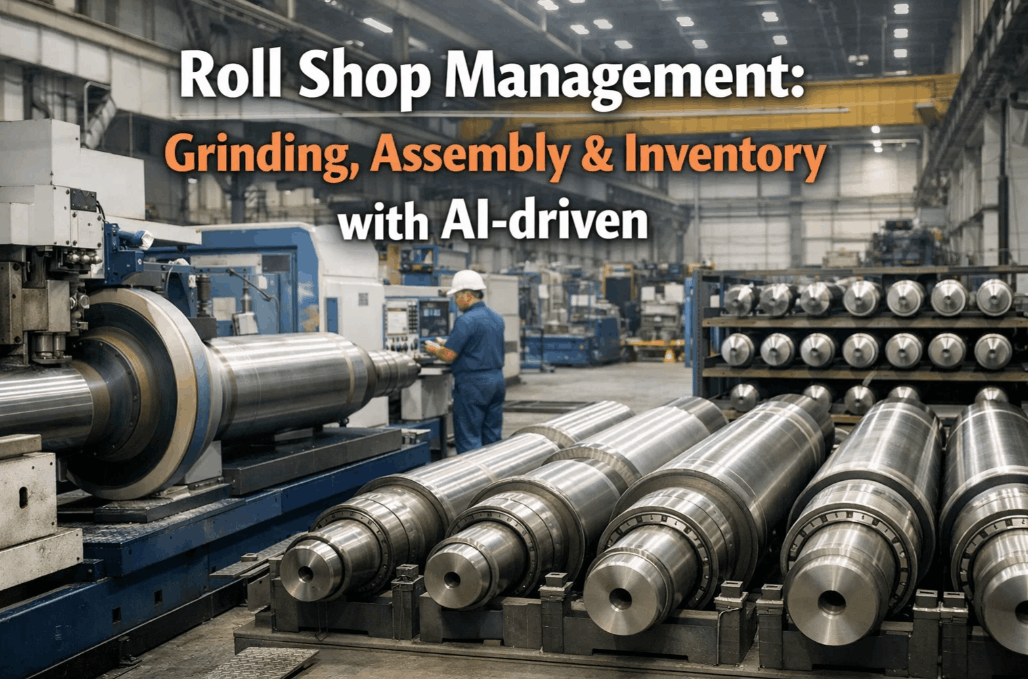
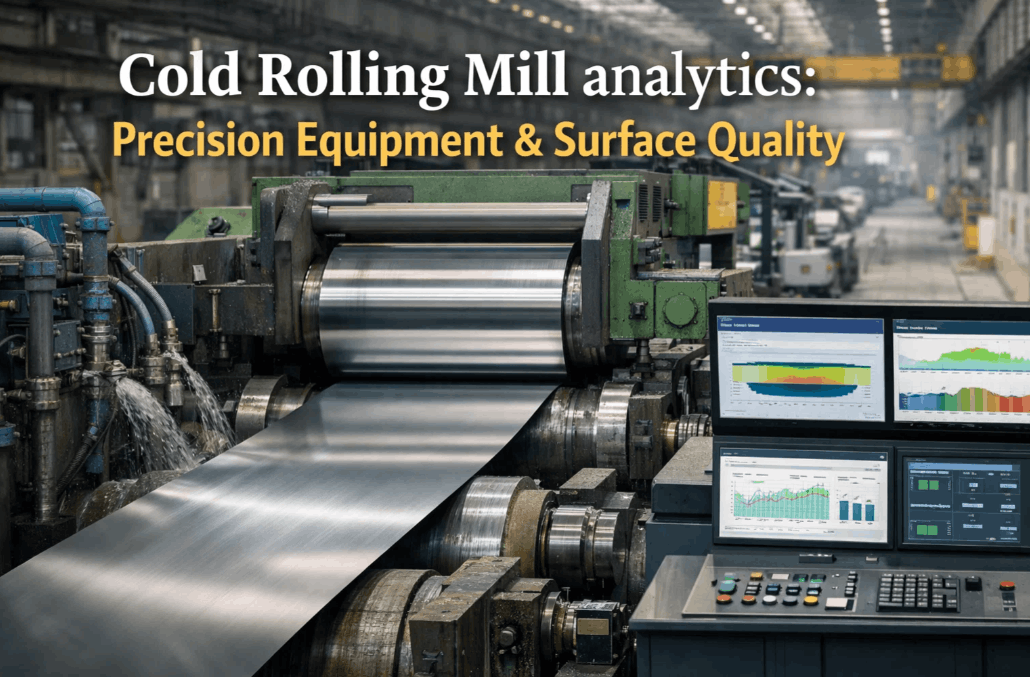
In high-precision steel manufacturing, Work Roll Management is the technical fulcrum between world-class surface quality and operational catastrophe. As strip speeds in modern Hot Strip Mills (HSM) and Cold Rolling Mills (CRM) exceed 1,500 mpm, the mechanical and thermal stresses on roll surfaces reach extreme thresholds. Effective management is no longer just about "keeping rolls sharp"; it requires a comprehensive, data-driven framework encompassing Roll Grinding Precision, automated Campaign Tracking, and real-time surface integrity monitoring. For Mill Managers and Roll Shop Supervisors, optimizing the roll lifecycle is the primary lever for reducing unplanned downtime, preventing catastrophic "cobbles," and ensuring that every ton of steel meets the tightest gauge and surface specifications required by the automotive and appliance sectors.
What Is Work Roll Management (RSMS)?
Work Roll Management, often codified under a Roll Shop Management System (RSMS), is the mandatory operational framework for maintaining the mechanical "interface" of the rolling mill. Unlike traditional maintenance, roll management is a continuous cycle of precision engineering—from the Roll Grinding Machine floor to the active mill stand. It defines the standardized approach to tracking a roll's "Digital Birth Certificate" through its entire service life—from initial receipt or casting through to its final scrap diameter. The system introduces a structured vocabulary of performance metrics built around two foundational concepts: Roll Campaigns and Grinding Accuracy. Every mill operator must understand these constructs in metallurgical, not just mechanical, terms.
The Roll Campaign—the duration a roll remains in the stand—is governed by factors including strip temperature, rolling force, and abrasive wear. If your facility handles high-carbon, stainless, or silicon steels, the roll surface degradation is accelerated, making Predictive Campaign Tracking a non-optional operational baseline. Schedule a strategy audit to see how iFactory optimizes your specific campaign mix.
Understanding Roll CTEs: Critical Tracking Events in the Roll Shop
Critical Tracking Events (CTEs) are the defined moments in the roll lifecycle where technical records must be captured and synchronized. For roll shop supervisors, the most significant CTEs are:
Precision Grinding (Build-up)
The point at which a roll's profile (crown, camber, and texturing) is established. Required data elements include diameter, taper, roundness, surface roughness (Ra), and current metal removal history. AI-optimized grinding ensures the profile perfectly matches the next production campaign.
Stand Assignment & Pairing
The pairing of top and bottom work rolls into a specific stand. Diameter matching is critical; even a 0.5mm mismatch can cause strip steering issues or "hooking." iFactory's AI engine automatically pairs rolls based on diameter and campaign history.
Active Mill Stand Service
The actual rolling phase where tons, force, and temperature are tracked live. This CTE is where the "Thermal Crown" is monitored. iFactory correlates mill vibration signatures (chatter) with roll surface condition to predict the ideal change point.
Roll Change & Inspection
The removal of rolls from the stand. Immediate inspection for marks, bruises, or spalls is mandatory. The data captured here—actual wear vs. predicted wear—feeds the next grinding cycle's optimization loop.
Post-Campaign Analysis
Every campaign must be documented with total tonnage, final diameters, and performance feedback. This data ensures roll inventory is used efficiently and prevents premature scrap. Book a demo to see how automated campaign tracking works.
Key Data Elements (KDEs): What Your Roll Shop Must Capture
Key Data Elements are the specific technical points that must be recorded at each roll CTE. For a world-class roll shop, this includes not just mechanical dimensions, but metallurgical and performance feedback. The practical challenge for most mills is building systems that capture these consistently and use them to adjust the grinding patterns for the next campaign. Book a demo to see how iFactory maps KDE capture to your CNC grinders and Mill MES.
| CTE | Required Technical KDEs | AI Prediction Available? | Impact Area |
|---|---|---|---|
| Grinding | Diameter, Crown Profile, Taper, Ra, Texturing, Microns Removed | Yes — Optimized Pattern | Surface Quality |
| Assignment | Pair ID, Stand #, Stand Position, Diameter Matching Data | Yes — Auto-Pairing | Strip Steering |
| Service | Tons Rolled, Rolling Force, Mill Speed, Vibration (Chatter), Thermal Crown | Yes — Wear Model | Mill Speed |
| Change | Removal Reason, Surface Defects (Marks/Spalls), Final Diameter | Yes — Failure Detection | Downtime |
| Inventory | Current Diameter vs. Scrap Floor, Total Life Tons, Cost per Ton | Yes — Lifecycle Forecast | OpEx Budget |
The Impact of Roll Chatter on Mill Productivity
Roll chatter—a periodic vibration that leaves visible marks on the strip—is the most common cause of "throttled" mill speed. In high-speed rolling, even a minor imbalance in the roll shop can cost a mill $15,000 per hour in lost throughput. A modern roll management system doesn't just record chatter; it correlates it back to specific grinding patterns or roll bearings, identifying the root cause before the next campaign starts.
The 24-hour response window for quality deviations is the gold standard for mill leadership. If a surface defect is identified in the finishing line, the roll shop must be able to produce the full "birth certificate" of the current work rolls within minutes to determine if a change-over is required. Book a demo to see how iFactory's roll shop module structures record retention for instant quality audits.
A single work roll mark (caused by a spall or debris) that goes undetected for a single shift can result in 200+ tons of downgraded material. In the automotive steel sector, this is an unacceptable risk. Your system must be able to: (1) identify the exact roll pair in the stand, (2) retrieve its grinding history, (3) correlate with surface inspection cameras, and (4) suggest an immediate corrective grinding pattern. For facilities running at 100% capacity, manual tracking of these variables is no longer operationally viable.
AI-Driven Grinding Optimization: How Technology Closes the Gap
Manual roll shop management fails modern rolling on three fronts: they cannot predict wear patterns for different steel grades, they cannot reliably match roll pairs at the micron level, and they cannot produce complete campaign histories for instant quality audits. iFactory's AI-driven platform addresses these failure points through automated data capture and intelligent lifecycle tracking.
Automated Grinding Integration
Directly integrated with CNC grinders, AI-driven platforms capture grinding KDEs (diameters, profiles, Ra) automatically — eliminating manual data entry delays and ensuring 100% data integrity for the campaign record.
Intelligent Campaign Wear Models
Intelligent wear engines automatically calculate roll degradation based on specific steel grades and rolling forces — allowing for campaign extensions of up to 25% without risking surface rejects.
Instant Roll Quality Audits
On-demand roll performance reports compile complete campaign histories for any roll — in minutes, not days. This ensures that any strip surface issue can be traced back to a specific roll pair and grinding cycle instantly.
RFID & Inventory Automation
RFID-based tracking allows Shop Supervisors to run mock inventory audits, identifying "hidden" rolls or incorrect rack placements before they cause a mill stoppage. Total inventory visibility reduces spare roll requirements by 15%.
Roll Shop Performance Gaps: Where Mills Are Most at Risk
Based on iFactory's global analysis of rolling mill readiness assessments, the following performance gaps appear most frequently in facilities approaching their digital transformation deadline.
Customer Testimonial: Transforming the Roll Shop
"Before iFactory, our roll shop was a black box. We were changing rolls too late and grinding off too much metal. Now, our roll campaigns are 22% longer and our surface rejects have practically vanished. It's the biggest ROI we've seen in the mill in years."
Building a Roll Shop Digital Roadmap: A Step-by-Step Approach
For Roll Shop Supervisors leading their organization's digitalization, the roadmap has five operational phases. Each phase feeds into the next, creating a structured pathway from current-state manual tracking to autonomous operation.
Inventory Mapping: Standardize Your Roll IDs
Assign a unique, digital ID (RFID or barcode) to every work roll and backup roll in the facility. Map current rack locations and scrap diameter thresholds. Output: a unified roll inventory database.
CNC Grinder Integration
Connect your grinding machines directly to the management platform. Automate the capture of "Before" and "After" diameters and profile scans. Output: real-time grinding KDE logs without manual entry.
Campaign Tracking Automation
Integrate with the Mill MES to track tons rolled and force profiles live. Assign these metrics to the specific roll pair in the stand. Output: automated, real-time campaign tonnage tracking.
AI Wear Model Activation
Deploy predictive models to suggest roll change points and grinding patterns. Transition from "Tons-Based" to "Wear-Based" campaign management. Output: an AI-driven decision-making engine.
Closed-Loop Quality Excellence
Link strip surface quality inspection data directly back to the roll shop. Conduct regular mock traceback exercises to ensure 100% audit readiness. Output: a self-healing quality control loop.
Frequently Asked Questions: Rolling Mill Work Roll Management
What is the primary cause of premature work roll failure?
Premature failure is typically caused by localized thermal stress (spalling) or mechanical overload. AI tracking helps identify the early signatures of thermal overload by correlating coolant flow and strip temperature, allowing for a roll change before a catastrophic spall occurs.
How does iFactory improve roll grinding precision?
By integrating CNC grinder data with mill strip profile results. If the mill detects a crown deviation, the system automatically adjusts the next grinding pattern for those rolls to compensate — achieving micron-level self-healing quality control.
How long does it take to implement a digital roll management system?
Most mid-size mills achieve full shop digitalization in 8–14 weeks, covering CNC integration, RFID deployment, and AI model training. Facilities with existing digital records can compress this timeline to under 6 weeks.
What happens if a mill cannot produce roll campaign records during a quality audit?
Failure to produce campaign records for a defective lot can result in massive claims from automotive customers and the potential loss of certification. iFactory ensures all records are audit-ready in minutes, protecting your market standing.
Does iFactory require new sensors on my grinding machines?
No. We leverage the data already generated by your CNC grinders and Mill MES. Our platform acts as a "Cognitive Layer" that unified these disconnected data points into a single actionable dashboard.
Can AI track roll inventory across multiple mill stands?
Yes. The platform manages the full genealogy of every roll, ensuring that rolls ground for Stand 1 are never mistakenly assigned to Stand 6, where surface finish requirements are fundamentally different.
How does roll management impact mill "Cobble" rates?
Uneven roll wear or poor diameter matching creates steering issues. In a high-speed mill, a 0.5mm mismatch can cause a "hook" or "buckle," leading to a cobble. Automated pairing eliminates this human error entirely.
What is the "Thermal Crown" and how is it managed?
The thermal crown is the expansion of the roll center due to heat. iFactory uses predictive thermal models to suggest the ideal "Cold Crown" during grinding, so that the roll expands into a perfectly flat profile during active rolling.