A cold mill work roll transfers its surface condition directly onto every square foot of strip it touches, and a backup roll bearing that is quietly degrading transfers vibration into that same surface long before anyone hears a bearing whine on the mill floor. Maintenance managers running premium strip programs know the stakes are higher here than almost anywhere else in the plant — a roll defect that would be a minor cosmetic issue on commodity hot band becomes a customer-facing rejection on an automotive exposed panel or an appliance-grade sheet. Vibration routes and periodic roll inspections catch problems eventually, but "eventually" on a cold mill roll often means after several coils have already carried the defect out the door. AI-based monitoring that reads backup roll bearing vibration and work roll surface trends continuously closes that window, and it is worth mapping against your current roll change and bearing replacement history — start with a roll reliability scoping call to see where the gaps actually are.
Four Ways Roll Condition Drives Premium Strip Losses
A periodic vibration route catches a bearing that has already crossed into failure territory. These are the losses that accumulate in the weeks before that point.
Coils With Roll-Transferred Surface Defects
A work roll with early-stage surface pitting or a backup roll bearing beginning to degrade transfers a repeating mark into strip that often is not caught until well into a production run.
Cost per Reactive Bearing Replacement
An unplanned backup roll bearing failure typically means an emergency roll change, secondary damage risk to the roll neck, and a mill-wide stoppage that a scheduled swap would have avoided.
Typical Lead Time Missed on Bearing Degradation
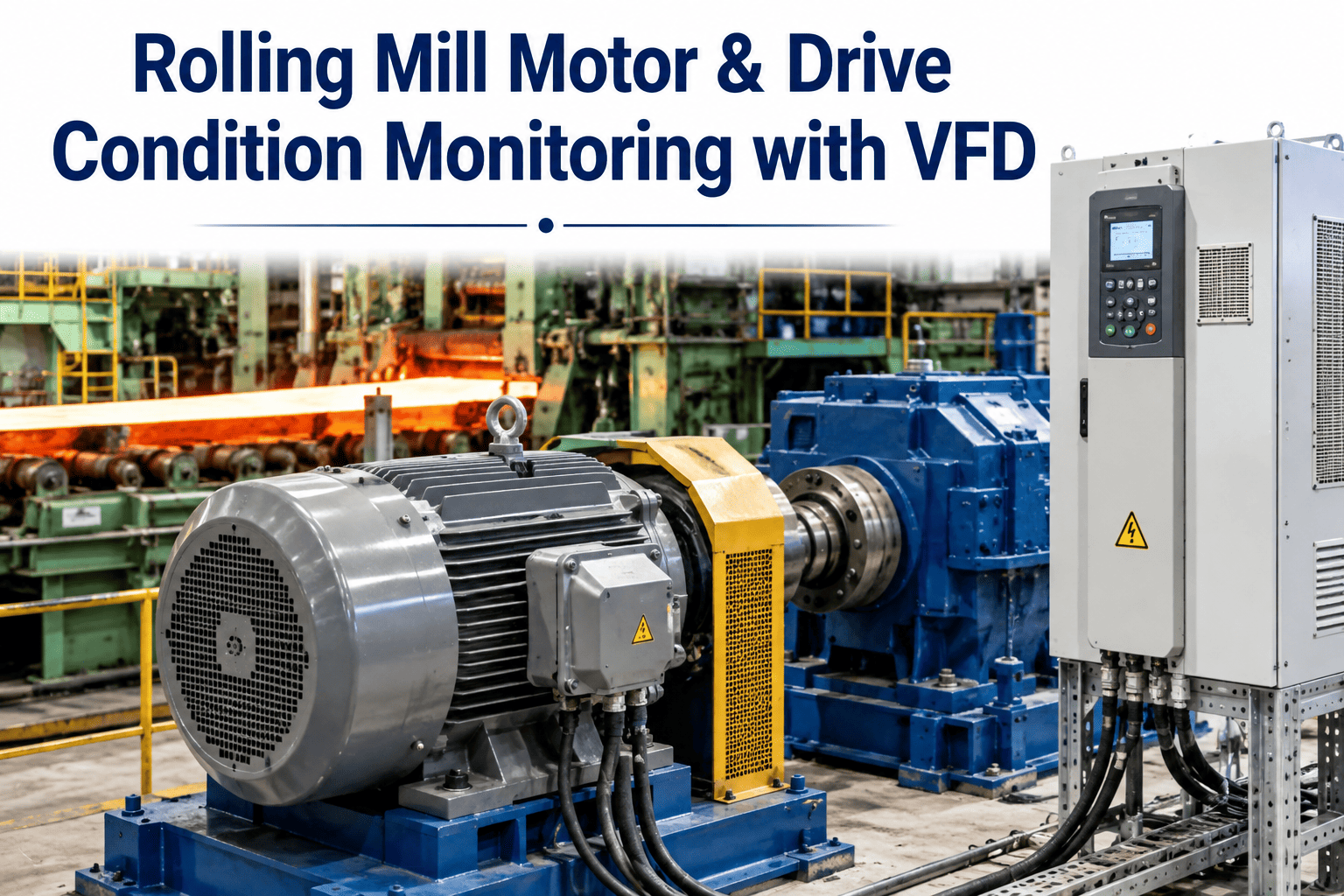
Bearing vibration signatures typically show early degradation weeks before a route-based inspection would catch it, time that is lost when monitoring only happens on a fixed schedule.
Roll Force Variance Tied to Roll Condition
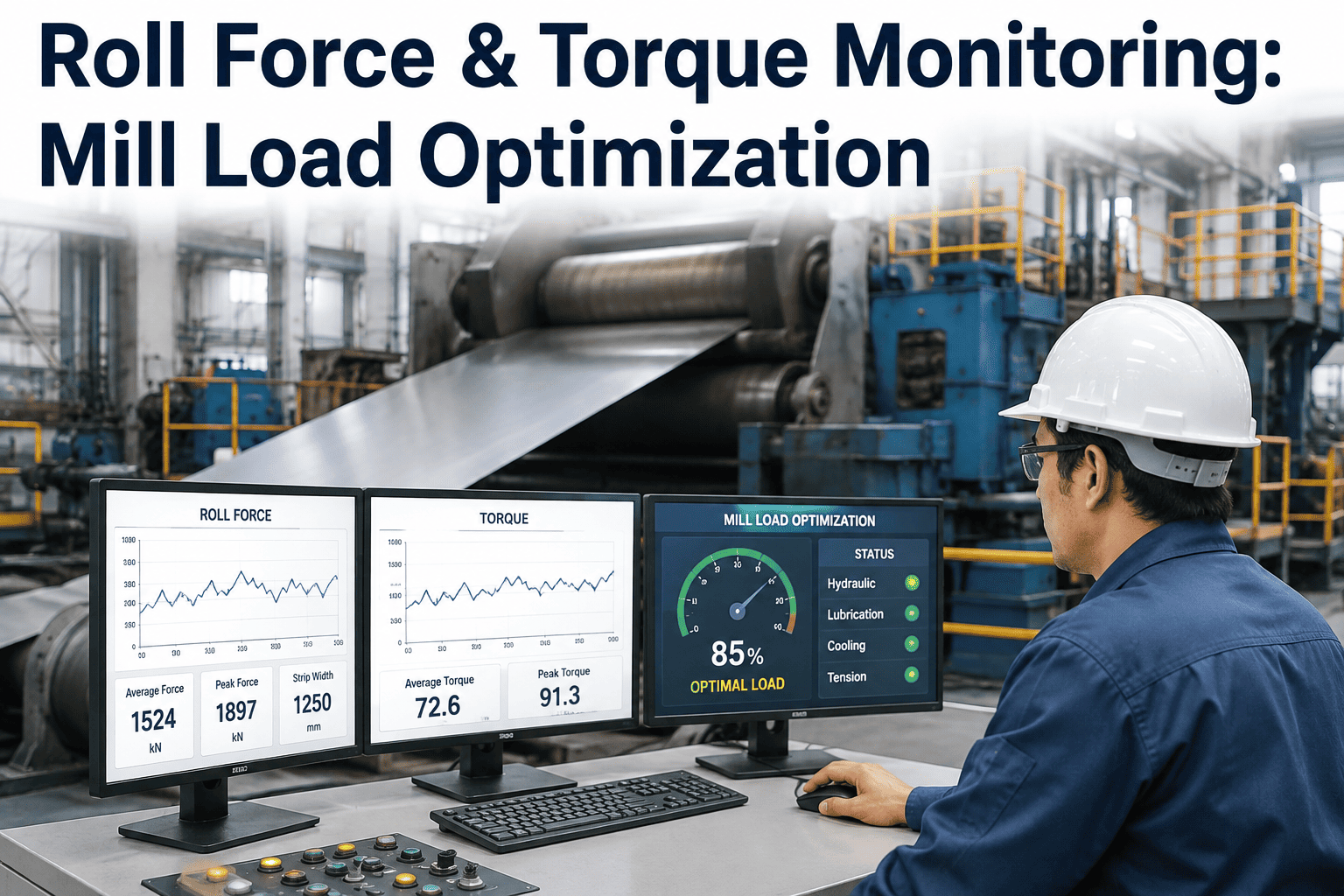
Roll surface roughness and force profile drift together as a roll wears, and that variance shows up as inconsistent gauge and surface quality across a campaign long before a scheduled regrind.
Want to see how your bearing replacement history compares? Talk to an iFactory reliability specialist about a review of your last year of roll change and bearing failure records.
What AI Monitors Across Backup Roll, Work Roll, and Force Profile
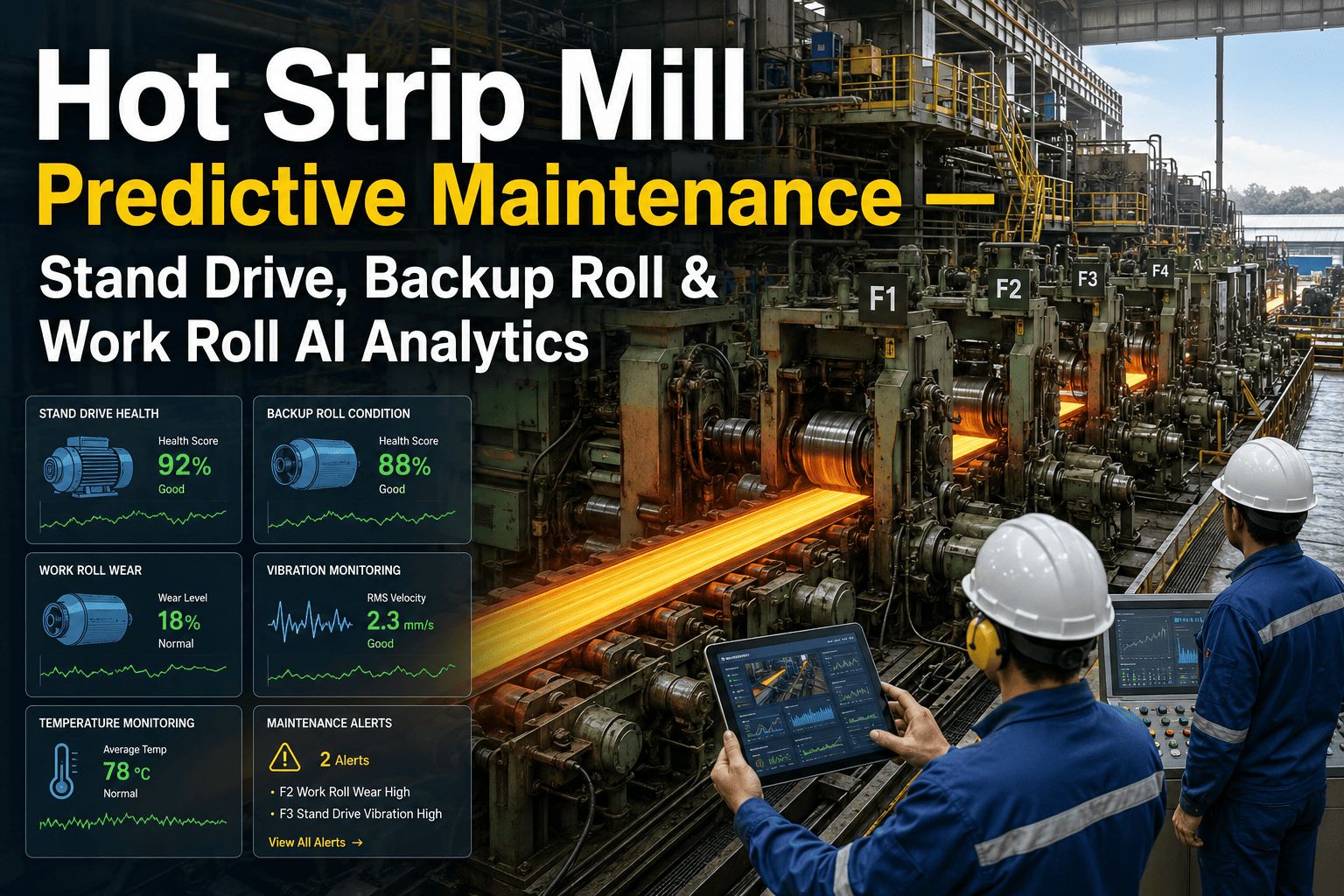
Roll condition on a cold mill is really two coupled problems — the mechanical health of the backup roll bearings that support the stand, and the surface condition of the work rolls that actually touch the strip. iFactory's model reads both continuously and correlates them against roll force profile, so a defect can be traced to its actual mechanical source rather than treated as a generic "roll issue."
Curious which of these signals your current vibration program already captures? Book a roll instrumentation review and iFactory will map it against this model.
Three Roll Condition Scenarios Maintenance Teams Actually See
Because backup roll bearings, work roll surface, and force profile interact, a defect that looks like one thing often traces back to another. These scenarios reflect patterns iFactory's model has learned across deployed cold mill programs.
A Surface Mark That Is Actually a Bearing Problem
A repeating surface mark assumed to be work roll pitting sometimes correlates more strongly with a backup roll bearing vibration signature, meaning the fix is a bearing replacement rather than an unnecessary work roll regrind.
Force Variance That Predicts Roll Change Timing
A gradual widening in cross-width force distribution often precedes a measurable crown loss by one to two weeks, giving the scheduler time to plan the roll change into a natural campaign break instead of an emergency stop.
Intermittent Vibration Tied to Grade Mix
A bearing vibration signature that only appears during harder grade campaigns can be missed by a fixed-interval route scheduled during a softer grade run, a gap continuous monitoring closes by design.
Catch Roll Degradation Before It Reaches the Strip
iFactory monitors backup roll bearings, work roll surface trend, and force profile together, tracing surface defects back to their actual mechanical source and giving your team weeks of lead time instead of a fixed inspection interval.
Before and After: 90 Days of Continuous Roll Monitoring
The comparison below reflects typical outcomes from cold mills running premium strip programs after 90 days of continuous backup roll and work roll monitoring, measured against the prior quarter's fixed-interval inspection baseline.
Scheduled Vibration Routes and Visual Checks
- 9% coils with roll-transferred surface defects
- 2-3 unplanned bearing replacements per quarter
- 1-2 wks average early-warning time before failure
Real-Time Bearing and Surface Trend Tracking
- 2% coils with roll-transferred surface defects
- 0-1 unplanned bearing replacements per quarter
- 3-4 wks average early-warning time before failure
Want an ROI estimate built from your own roll change and bearing failure records? Book a 30-minute scoping call for a fixed-price proposal.
Getting Roll Monitoring Live: A Six-Week Path
Most cold mills already carry the instrumentation needed for this level of monitoring — the work is in connecting it into a single correlated model rather than installing entirely new sensors.
Sensor Audit & Data Tap
iFactory reviews existing vibration sensors on backup roll chocks and connects to force and gauge data through a read-only historian tap.
Baseline Model Training
The model learns healthy bearing and surface signatures for your specific roll set across the grades and campaign lengths you typically run.
Alert Tuning & CMMS Integration
Alert thresholds are tuned with the maintenance team, work-order fields are mapped, and go-live begins with daily review of the first scored alerts.
Expert Perspective
We used to find out a backup roll bearing was failing when it started making noise on the floor, which meant we were already in emergency mode. Now we get a work order two to three weeks ahead, and the same team that used to spend a shift diagnosing a surface defect now gets the likely cause handed to them before the coil even leaves the mill.
— Maintenance Manager, cold rolling and finishing facility (Pennsylvania, 1.1M tons/year)
reduction in unplanned bearing-related stoppages within two quarters of go-live
typical early-warning time on backup roll bearing degradation
Protect Premium Strip Quality at the Source
Every surface defect your customer sees started as a signal your mill already had — it just was not being watched continuously. iFactory turns your existing roll instrumentation into an early-warning system that protects both bearing life and strip surface grade.
Frequently Asked Questions
Do we need new vibration sensors on our backup rolls?
Most cold mill stands already carry vibration sensors on backup roll chocks as part of an existing condition monitoring program, and iFactory connects to this instrumentation through a read-only data tap. New sensors are only recommended when a specific gap exists, such as a stand without chock-level vibration monitoring currently installed, and that addition is scoped narrowly to the specific stand in question.
How does the system tell a bearing problem apart from a work roll surface problem?
The model tracks backup roll bearing vibration and work roll surface roughness as separate signals, each compared against its own healthy baseline, and correlates both with the resulting roll force profile and strip surface outcome. This separation is what allows an alert to name the specific component responsible for a defect rather than grouping every roll-related issue under one generic warning.
Can this reduce unnecessary work roll regrinds?
Yes. Many mills regrind work rolls on a conservative fixed schedule to avoid surface risk, without a reliable way to confirm whether the roll actually needs it yet. Continuous surface trend monitoring lets the model confirm when a roll is still within healthy range, allowing some campaigns to extend safely while flagging others for an earlier regrind when the data supports it.
How does this integrate with our CMMS and roll shop records?
Scored alerts are pushed into your CMMS as work orders with the component, signal trend, and recommended action pre-filled, and roll shop regrind and replacement history can be linked back to monitoring data to build a full lifecycle record for each roll. This gives your team a traceable history of how each specific roll actually performed, not just when it was last serviced.
What does a pilot cost and how is it scoped?
Pilots are typically scoped to one or two cold mill stands and priced as a fixed engagement rather than an open-ended subscription, with most facilities seeing a full baseline-to-alert cycle within six weeks. Book a scoping call to get a fixed-price proposal built around your specific stand count and existing instrumentation.