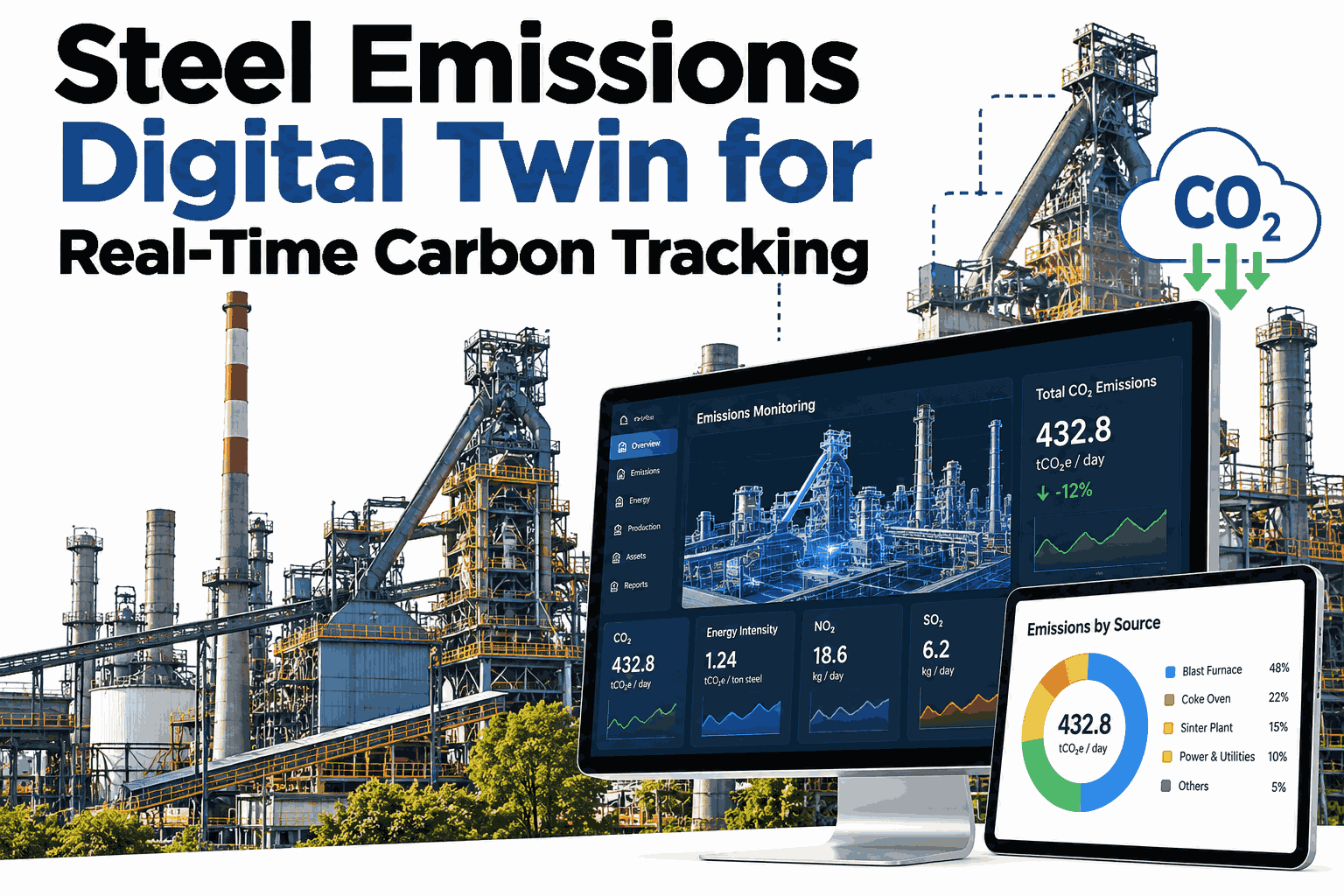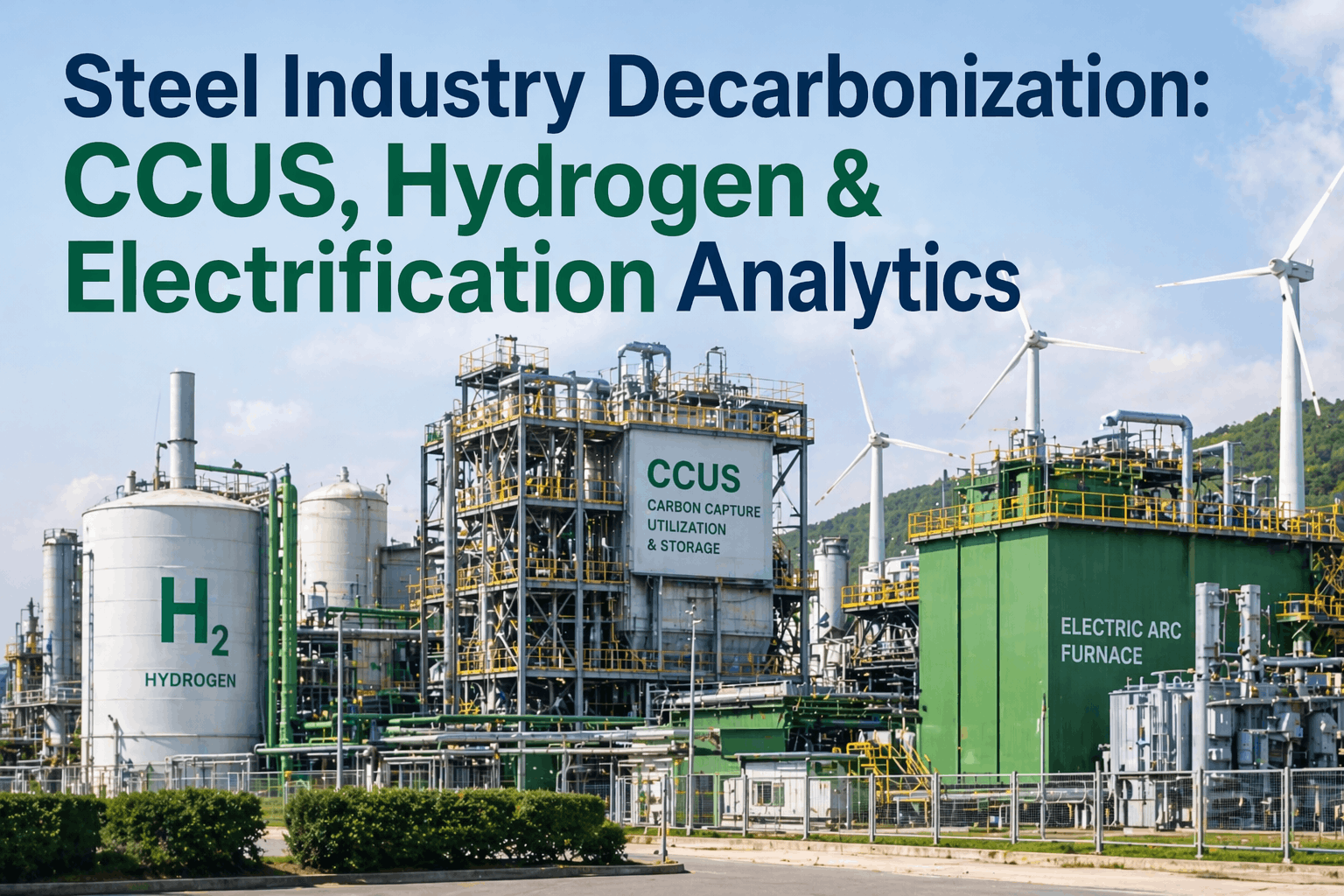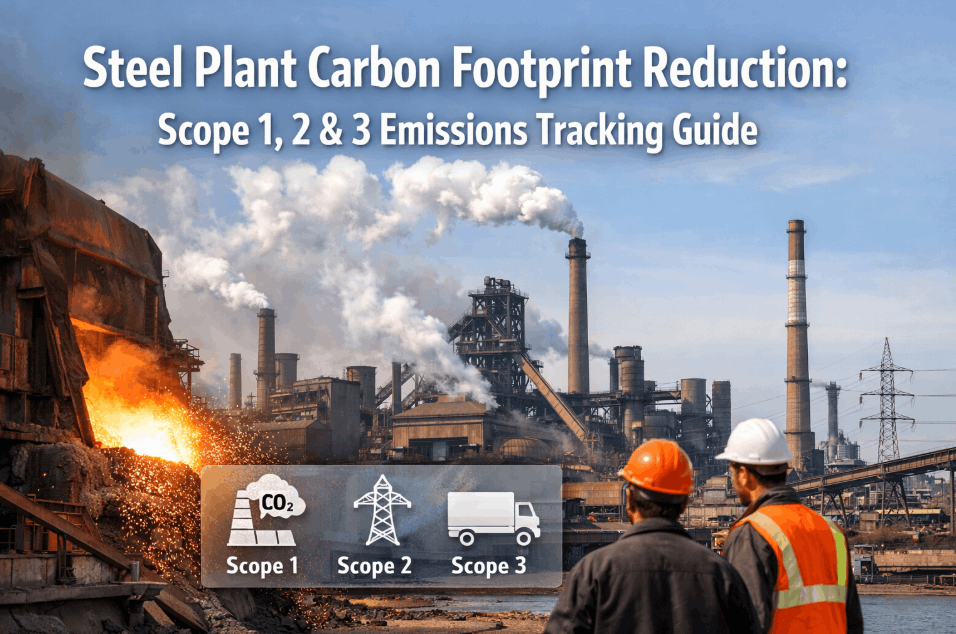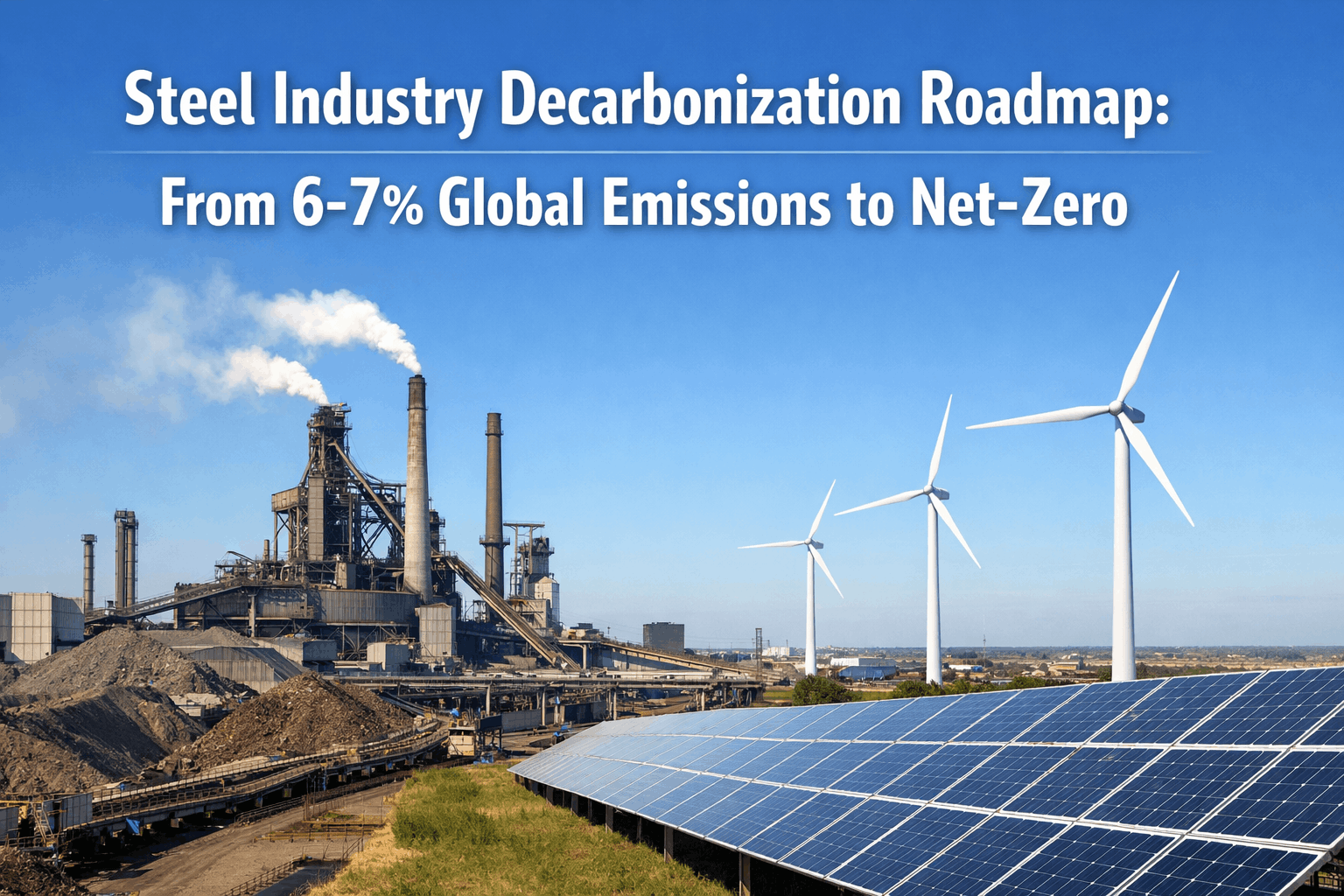
Steel manufacturing accounts for approximately 7–9% of global CO2 emissions — making it one of the highest-scrutinized sectors in the global decarbonization agenda. In 2026, steel producers face simultaneous pressure from the EU Carbon Border Adjustment Mechanism (CBAM), SEC climate disclosure mandates, CSRD reporting under EU law, and investor ESG frameworks including GRI, SASB, and TCFD that demand verifiable, auditable carbon data. The challenge for most integrated steel plants is not commitment to decarbonization — it is the infrastructure to measure, verify, and report it. Scope 1 emissions from blast furnaces and EAFs, Scope 2 from purchased electricity, and Scope 3 from iron ore pellets and scrap supply chains cannot be tracked accurately from energy bills and production logs alone. An AI-driven carbon tracking and ESG reporting platform for steel plants connects directly to furnace sensors, energy meters, and process data streams to deliver the granular, source-attributed emission data that regulators, investors, and customers now require. Book a demo to see how iFactory generates CBAM-compliant carbon reports from your actual steelmaking process data.
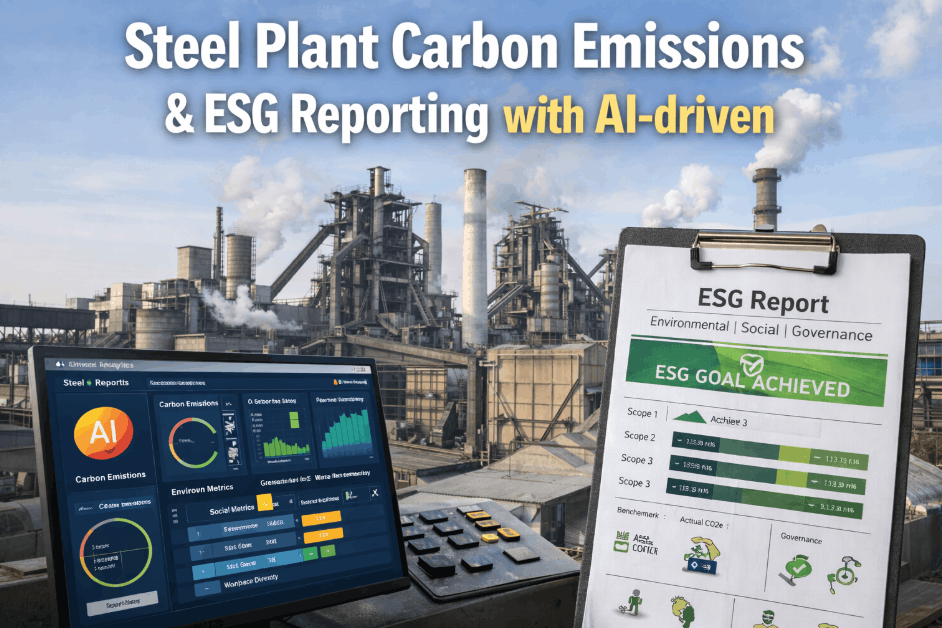
From Furnace Sensor to ESG Board Report — Automated Steel Carbon Tracking Across All Three Scopes
iFactory's carbon tracking and ESG reporting dashboard connects directly to your steelmaking process data to generate Scope 1, 2 & 3 emission reports that satisfy CBAM, CSRD, SEC climate disclosure, and investor ESG frameworks — without consultants or custom development.
Why Steel Plant Carbon Reporting Fails Without AI-Driven Process Integration
Most steel plants attempt to calculate Scope 1 emissions from fuel purchase records and combustion factors — a methodology that satisfies basic regulatory reporting but fails the accuracy threshold that CBAM auditors, SEC climate disclosure requirements, and institutional investors now require. The fundamental problem is that purchase-record based emission calculations treat a blast furnace running at 85% efficiency identically to one running at 98% efficiency — missing the process variability that drives 15–25% swings in actual CO2 output per tonne of liquid steel produced.
AI-driven carbon tracking eliminates this gap by ingesting real-time sensor data from blast furnace tuyeres, EAF electrode consumption monitors, process gas flow meters, and energy sub-meters to calculate emission intensity from actual operating conditions — not theoretical factors applied to fuel bills. Schedule a carbon data assessment to identify the accuracy gaps in your current reporting methodology.
The EU Carbon Border Adjustment Mechanism's full phase-in from 2026 requires steel exporters to submit verified embedded carbon data per tonne of product. Default values — which assume the industry worst-case emission intensity — are being applied to steel producers without verified process-level data, resulting in CBAM costs 40–60% higher than plants with actual emission monitoring receive.
Scope 1, 2 & 3 Emission Sources in Steel Manufacturing
Accurate ESG reporting for a steel plant requires granular attribution of emissions across all three scopes — each with distinct measurement methodologies, data sources, and regulatory significance. iFactory's carbon tracking module is pre-configured for the specific emission source profile of integrated and electric arc furnace steelmaking routes.
Scope 1: Direct Process Emissions
Blast furnace coke combustion, EAF electrode oxidation, natural gas combustion in reheating furnaces, sintering plant emissions, lime kiln CO2, and process gas flaring. The largest and most variable component — tracked at source level, not plant aggregate.
Scope 2: Purchased Energy Emissions
Grid electricity consumed by EAFs, rolling mill drives, compressed air systems, and plant-wide auxiliaries. Location-based and market-based methodologies tracked separately — critical for green steel certification and renewable energy credit accounting.
Scope 3: Value Chain Emissions
Iron ore pellet production, coking coal mining and processing, scrap metal collection and processing, limestone quarrying, and downstream product transport. Increasingly required by CSRD and customer supply chain decarbonization programs.
Carbon Intensity Tracking (tCO₂/tLS)
Real-time carbon intensity per tonne of liquid steel — the primary KPI for steel decarbonization. Tracked by furnace, production route (BF-BOF vs. EAF), shift, and product grade to identify optimization opportunities at production unit level.
CBAM Embedded Carbon Calculation
Calculates embedded carbon per tonne per product category (flat, long, or tubular steel products) using the exact methodology specified in EU CBAM Implementing Regulation 2023/1773 — generating the verified installation-level reports that EU importers submit on your behalf.
Carbon Credit & ETS Account Management
Tracks EU ETS free allocation against verified emissions, forecasts permit purchase requirements, and calculates at-risk carbon cost exposure — giving CFOs and sustainability directors the forward visibility to optimize ETS strategy and purchasing timing.
Steel Carbon Data Sources: From Sensor to Report
The accuracy of an ESG report is determined entirely by the quality of its underlying data. For steel plants, this means connecting carbon calculations to actual process instrumentation — not spreadsheet estimates. The table below maps each major emission source in a steel plant to the sensor data iFactory ingests and the calculation methodology it applies. Book a demo to see how this integration is configured for your specific steelmaking route.
| Emission Source | Data Input to iFactory | Scope | Calculation Method | Regulatory Standard |
|---|---|---|---|---|
| Blast Furnace (BF) | Hot blast flow, coke rate, PCI injection, process gas analysis | Scope 1 | Carbon mass balance (ISO 14064-1) | EU ETS MRV, CBAM Annex III |
| Basic Oxygen Furnace (BOF) | Lance oxygen flow, FeO slag analysis, converter off-gas | Scope 1 | Carbon mass balance | EU ETS MRV, GHG Protocol |
| Electric Arc Furnace (EAF) | Electrode consumption rate, natural gas injection, DRI feed carbon | Scope 1 | Electrode oxidation + mass balance | GHG Protocol Scope 1, CBAM |
| Reheating Furnaces | Natural gas / BFG flow meters, combustion air flow | Scope 1 | Combustion emission factor (IPCC 2019) | EU ETS, EPA 40 CFR Part 98 |
| Sintering Plant | Coke breeze consumption, sinter production output | Scope 1 | Emission factor × activity data | EU ETS MRV, GHG Protocol |
| Purchased Electricity | Energy sub-meter data by process area | Scope 2 | Grid emission factor (location/market-based) | GHG Protocol Scope 2, CSRD |
| Iron Ore & Coking Coal | Supplier EPD data, procurement records | Scope 3 Cat. 1 | Supplier-specific or industry average factors | GHG Protocol Scope 3, CSRD |
iFactory ESG Reporting Dashboard: Measured Results
Steel plants using iFactory's carbon tracking and ESG reporting module report significant improvements in reporting accuracy, regulatory readiness, and carbon management capability. These results reflect integrated steelmaking facilities that have deployed iFactory's process-connected carbon data architecture across all major emission sources. Book a demo to see how these outcomes apply to your production route.
ESG Reporting Frameworks iFactory Supports for Steel
Steel producers in 2026 must satisfy multiple ESG reporting frameworks simultaneously — each with distinct boundary definitions, calculation methodologies, and disclosure requirements. iFactory's carbon module is pre-configured for the frameworks that matter most to steel exporters, publicly listed producers, and supply chain participants.
Regulatory Compliance Frameworks
- EU ETS (MRV): Monitoring, Reporting & Verification under EU Emission Trading System — annual verified emission reports for BF-BOF and EAF routes, linked to permit surrender and free allocation accounting
- CBAM (EU Carbon Border Adjustment): Quarterly embedded carbon data per product type (flat/long/tubular) under Regulation 2023/1773 — required for all steel exported to EU markets from 2026
- CSRD (Corporate Sustainability Reporting Directive): Full Scope 1, 2 & 3 reporting under ESRS E1 Climate Change standard for EU-listed and large private steel producers
- SEC Climate Disclosure Rule: Scope 1 & 2 emission disclosure with Scope 3 for material value chain impacts — for US-listed steel producers and subsidiaries
Voluntary & Investor ESG Frameworks
- GHG Protocol (Corporate Standard): Primary global methodology for Scope 1, 2 & 3 carbon accounting — iFactory calculations align to GHG Protocol methodologies by default
- GRI 305 (Emissions Standard): Disclosure of absolute Scope 1, 2 & 3 emissions, emission intensity, and reduction initiatives for GRI-indexed ESG reports
- SASB Metals & Mining Standard: Sector-specific KPIs including GHG emission intensity per tonne of steel produced and energy mix disclosure
- TCFD / ISSB IFRS S2: Climate-related risk disclosure including physical and transition risk — carbon pricing sensitivity analysis generated from iFactory ETS cost forecasting
- ResponsibleSteel / SteelZero: Green steel procurement verification — iFactory heat-level carbon certificates support ResponsibleSteel certification and SteelZero member supply claims
The Green Steel Data Problem: Why Customers Demand Heat-Level Carbon Certificates
Automotive OEMs, wind turbine manufacturers, and construction companies with net-zero commitments are increasingly requiring heat-level carbon certificates — verified carbon intensity data linked to specific production batches — from their steel suppliers. A plant-level average emission intensity figure satisfies neither Scope 3 reporting requirements nor green procurement specifications that distinguish between EAF-recycled steel at 0.4 tCO₂/t and BF-BOF steel at 2.1 tCO₂/t.
iFactory Heat-Level Carbon Certificate Module
iFactory tracks carbon intensity at heat or cast level — the production batch granularity that customer ESG teams and green steel procurement programs require. For each heat, the platform captures: EAF electricity consumption and carbon factor, electrode and natural gas consumption, DRI or scrap carbon credit, and allocated upstream supply chain emission factors. The result is a verifiable, customer-ready carbon certificate per tonne of finished product that satisfies Scope 3 Category 1 reporting requirements and green steel product specifications. Schedule a green steel data readiness assessment with our team.
Ready to Generate CBAM-Compliant Carbon Reports from Your Actual Process Data?
iFactory's carbon tracking module connects to your steelmaking sensors, energy meters, and process streams — delivering verified Scope 1, 2 & 3 data without manual calculation or consultant dependency.
Steel Carbon Decarbonization KPIs: What iFactory Tracks Automatically
Decarbonization is a production management discipline, not just a reporting exercise. These are the primary carbon and sustainability KPIs that iFactory's ESG dashboard tracks in real time — providing the operational intelligence for plants pursuing Science-Based Targets (SBTi) and net-zero commitments.
Carbon Intensity (tCO₂/tLS)
Tonnes of CO2 per tonne of liquid steel — tracked by furnace, shift, and product grade. The primary decarbonization KPI aligned with worldsteel's CO2 data collection and Science-Based Targets for steel sector. Real-time tracking enables process teams to identify high-intensity heats and adjust operations immediately rather than discovering variance at month-end.
Energy Intensity (GJ/tLS)
Total energy consumption across all processes per tonne of liquid steel. Tracked by energy type (coke, natural gas, electricity) to identify the highest-impact decarbonization levers — typically EAF electricity decarbonization via RECs and BF coke rate reduction through PCI optimization and hydrogen injection trials.
ETS Permit Position
Net position between verified emissions and EU ETS free allocation — updated in real time as production accumulates. Forward-looking permit purchase forecasts allow treasury teams to time EUA purchases at optimal carbon price points rather than purchasing at year-end under compliance pressure.
Scope 3 Category 1 Intensity
Embedded emissions in purchased iron ore, coking coal, scrap, and DRI — tracked per supplier and updated when supplier EPD data changes. Enables procurement decisions that reduce Scope 3 intensity and supports responsible sourcing commitments under CSRD and customer supply chain decarbonization programs.
Frequently Asked Questions: Steel Carbon Emissions & ESG Reporting
Scope 1. Scope 2. Scope 3. CBAM. CSRD. SBTi. All Automated.
Process-connected carbon tracking from furnace sensor to ESG board report — with CBAM compliance and heat-level green steel certificates built in.