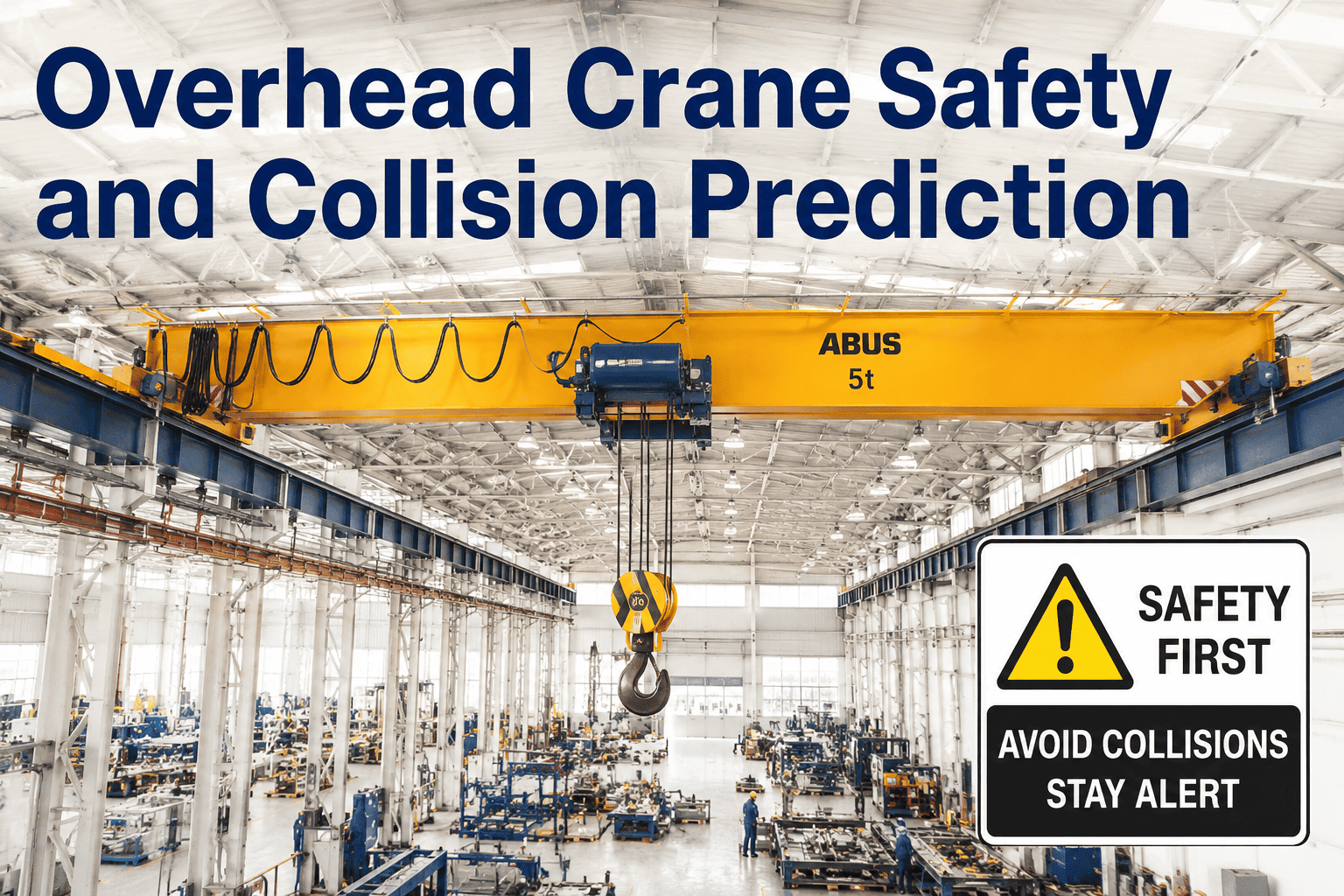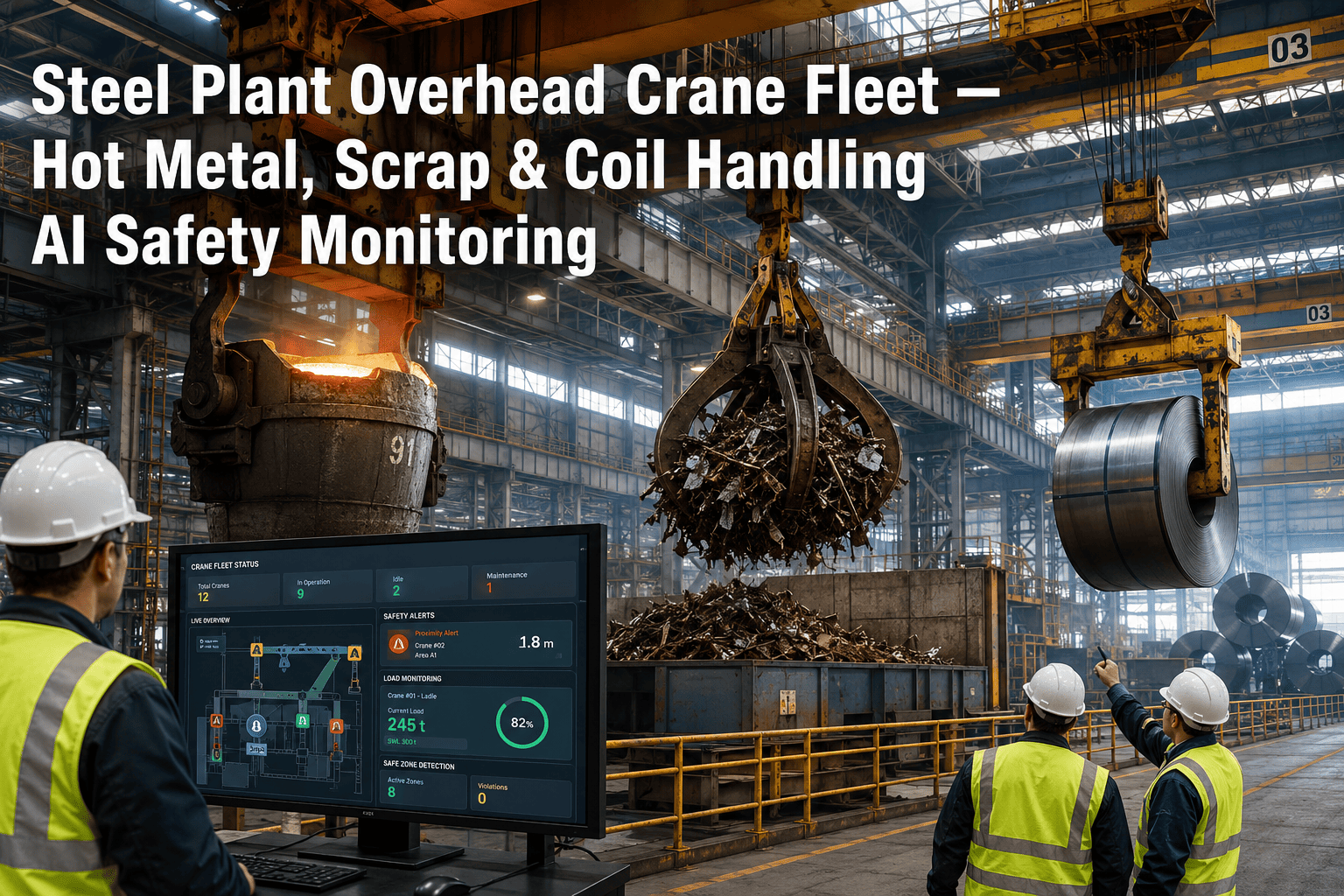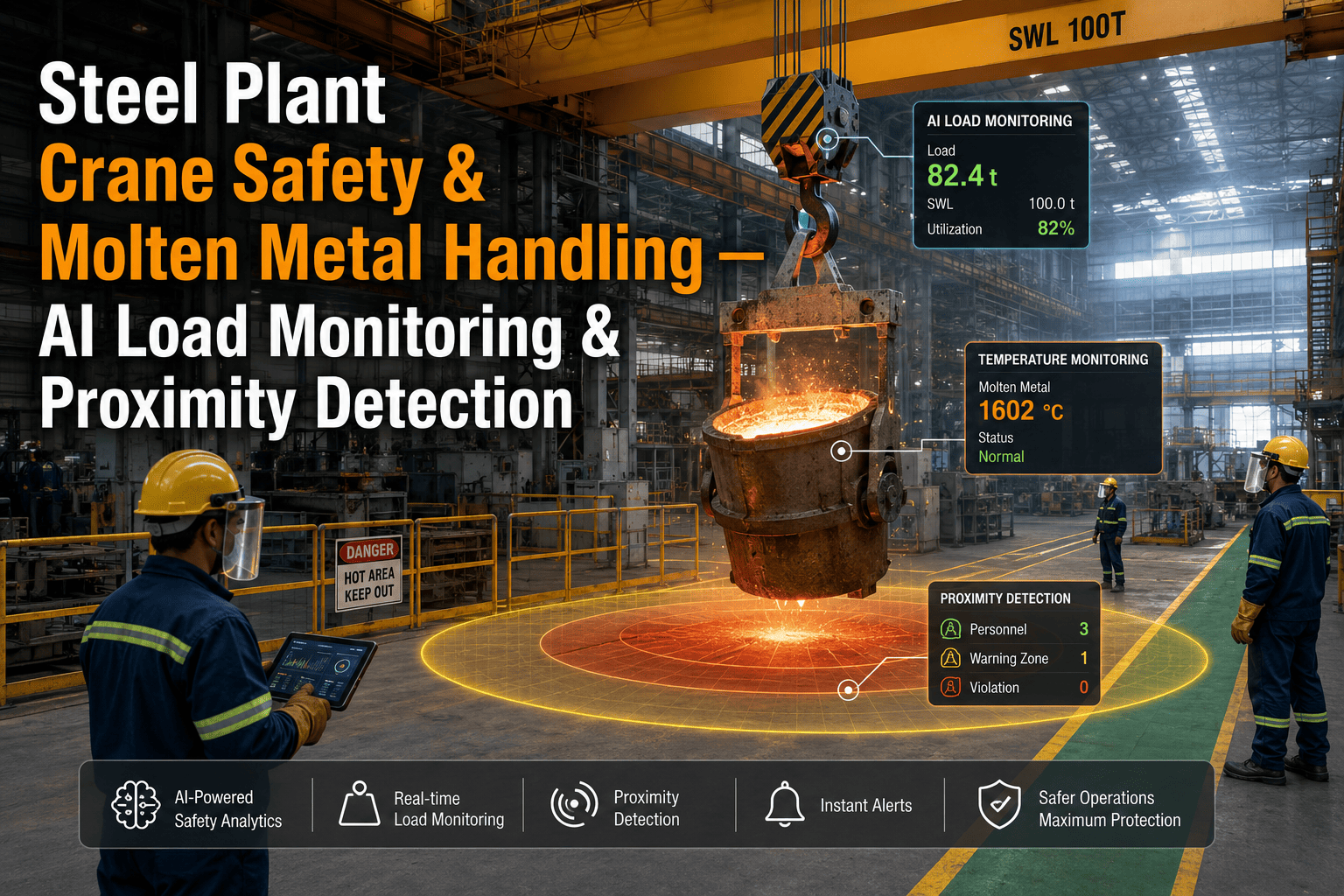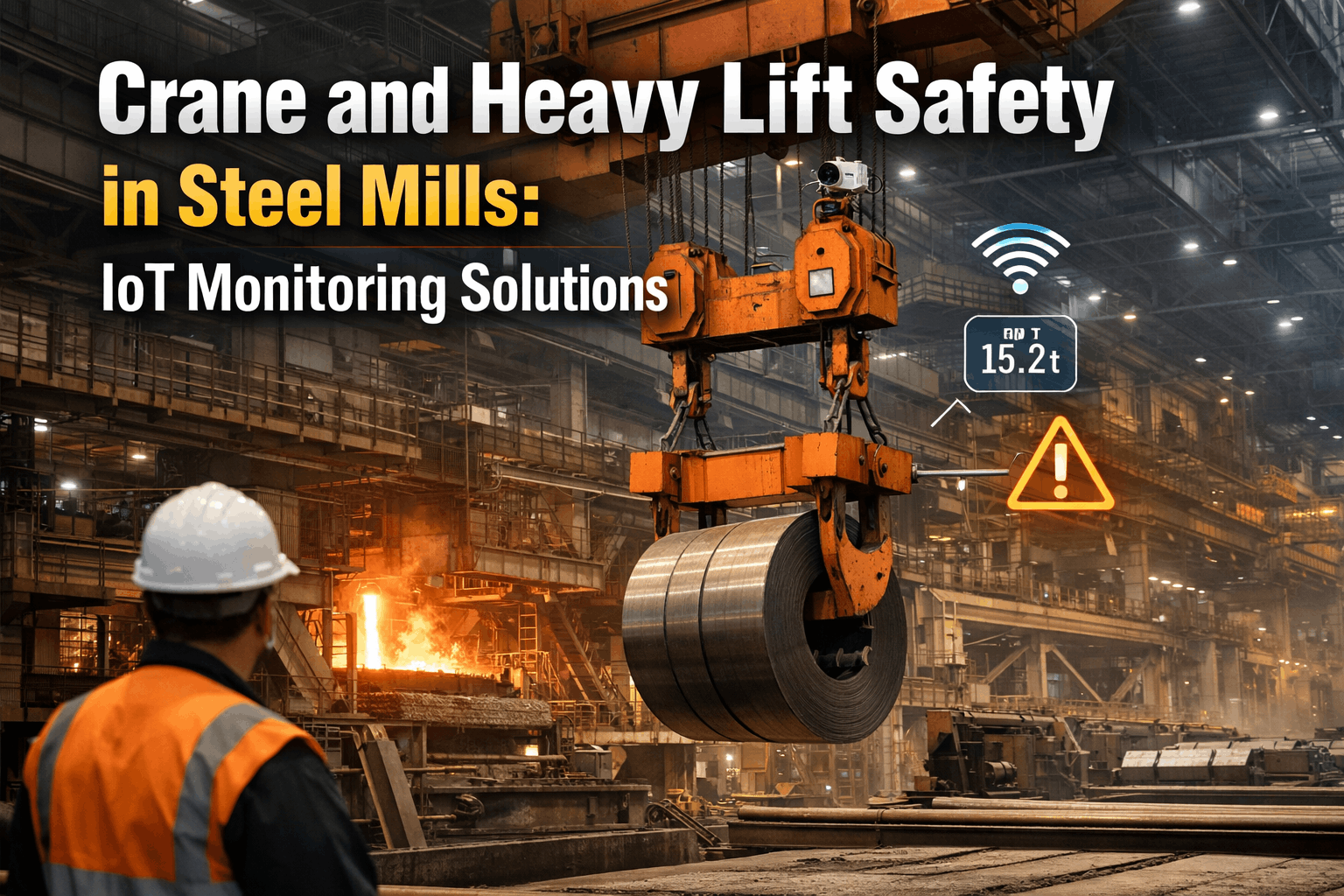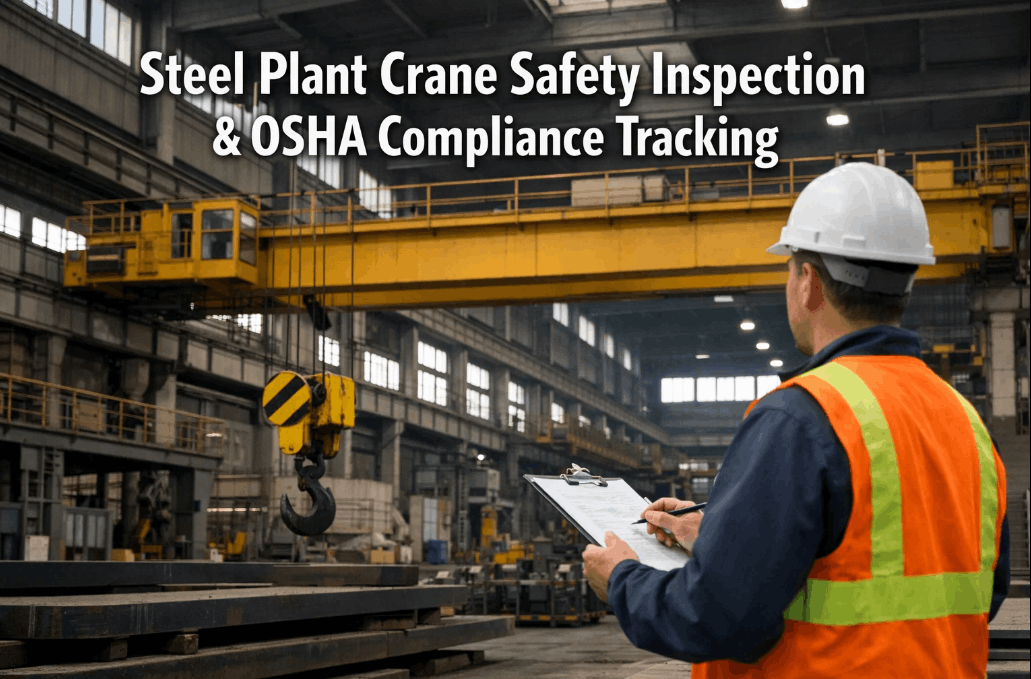
Overhead crane failures in steel plants are catastrophic events — not near-misses. With bridge cranes lifting 30–300-tonne ladle transfers, scrap baskets, and rolled coils across active production floors, a single structural failure, wire rope snap, or operator error can result in fatalities, production hall destruction, and OSHA Stop Work Orders that shut down entire melt shops for weeks. Yet the majority of steel plants still track crane inspections on paper checklists, manage operator certifications in spreadsheets, and schedule load tests reactively rather than proactively. A purpose-built crane safety inspection and OSHA compliance tracking platform for steel plants replaces these fragmented systems with a single, audit-ready digital environment where every inspection, every certification, and every load test history is managed, tracked, and documented automatically. Book a demo to see how iFactory automates crane compliance across your entire steel facility.
Automate Crane Inspections & Certification Tracking — One Platform for Every OSHA and ASME B30 Requirement
iFactory's crane compliance module delivers digital inspection templates, automated load test scheduling, wire rope replacement alerts, and operator certification tracking — purpose-built for the inspection intensity of steel plant crane operations.
Why Steel Plant Crane Programs Fail OSHA Audits
OSHA 29 CFR 1910.179 mandates daily, monthly, periodic, and annual inspections for overhead and gantry cranes — each with specific documentation requirements that paper-based programs routinely fail to satisfy. ASME B30.2 (overhead cranes), B30.11 (monorail hoists), and B30.16 (overhead hoists) add technical inspection criteria for structural members, brakes, hooks, limit switches, and wire rope that require specialist knowledge and documented verification at every inspection interval. Steel plants operating 15–50 cranes across melt shops, casting bays, and rolling mills face an inspection burden that paper checklists and spreadsheet trackers simply cannot manage at the required frequency, consistency, and audit-quality documentation level.
OSHA 1910.179 violations are among the top 10 most-cited standards in steel manufacturing. Inadequate inspection records and lapsed operator certifications account for 68% of all crane-related OSHA citations in the metals industry.
AI-driven crane inspection platforms close this gap by delivering structured digital inspection templates calibrated to OSHA 1910.179 and ASME B30 requirements, automated alerts for due inspections and expiring certifications, and complete audit-ready documentation that satisfies OSHA inspectors without manual record-hunting. Schedule a compliance assessment to identify gaps in your current crane program.
What Makes Crane Compliance "steel-grade" in 2026
Not all crane compliance software handles the specific inspection profile of a steel plant. Steel cranes operate under extreme duty classifications (Class D–F), carry molten metal and caustic loads, and require inspection protocols far beyond what generic CMMS work order systems generate. Here are the six capabilities that define a production-grade steel crane compliance platform.
OSHA 1910.179 Inspection Templates
Pre-built digital checklists covering daily, monthly, and annual inspection frequencies. Every field maps to a specific OSHA 1910.179 paragraph — no interpretation required, no missed items.
Wire Rope Condition Tracking
Log broken wire counts, diameter reduction %, kinks, and corrosion at every inspection. AI flags ropes approaching ASME B30 discard criteria — preventing failures between inspection cycles.
Load Test Scheduling & Records
Automate load test scheduling based on crane age, duty class, and last test date. Capture rated load, test load, and results digitally — generating the permanent records ASME B30.2 requires.
Operator Certification Tracking
Monitor NCCCO, employer qualification, and medical certification expiry dates for every crane operator. Automated 30/60/90-day alerts prevent lapsed certifications from creating OSHA exposure.
Out-of-Service Tagging & LOTO Integration
Digital out-of-service tags prevent defective cranes from returning to service without verified repair sign-off. Integration with LOTO permit system ensures mechanical isolation before maintenance begins.
One-Click OSHA Audit Export
Complete crane inspection histories, load test records, operator qualification logs, and corrective action chains exported on demand. OSHA inspection preparation drops from days to minutes.
OSHA 1910.179 Inspection Frequency Requirements
Steel plant crane programs must satisfy four distinct inspection frequencies under OSHA 1910.179, plus load testing requirements under ASME B30.2. Each frequency has specific components to inspect and documentation to maintain. The table below maps every OSHA-required inspection frequency to the components covered and the documentation your digital crane platform must capture. If your current program has gaps, book a demo to see how iFactory closes them automatically.
| Inspection Type | Frequency | OSHA Reference | Key Components | iFactory Documentation |
|---|---|---|---|---|
| Daily / Pre-Shift | Each shift of use | 1910.179(j)(1) | Hooks, brakes, limit switches, controls, wire rope visual | Digital checklist + timestamp |
| Monthly Inspection | Monthly | 1910.179(j)(2) | All daily items + hook deformation, sheave wear, brake lining | Structured form + photo capture |
| Periodic / Annual | Annually (or as use frequency requires) | 1910.179(j)(3) | Full structural, mechanical, electrical — complete crane inspection | Full report + sign-off chain |
| Wire Rope Inspection | Monthly + before each use (heavy lift) | 1910.179(m) | Broken wires, diameter, kinks, corrosion, end attachments | Wire-by-wire condition log |
| Hook Inspection | Monthly (dimensional) + periodic NDT | 1910.179(j)(2)(i) | Throat opening, twist, cracks, latch function | Dimensional records + NDT log |
| Rated Load Test | Before initial use + after major repair | 1910.179(k) / ASME B30.2 | 125% rated load, full travel, all brakes | Load test report + certifier sign-off |
| Brake Performance Test | Annually + after adjustment | 1910.179(f)(1) | Holding capacity, response time, thermal performance | Quantitative results + trend tracking |
iFactory Crane Compliance Platform: Steel-Specific Results
Steel plants deploying iFactory's crane inspection and certification tracking modules report dramatic reductions in inspection gaps, OSHA citation rates, and audit preparation time. These are measured outcomes from integrated steel facilities — not generic manufacturing benchmarks. Book a demo to see these workflows in a steel plant environment.
Wire Rope Inspection: The Most Critical & Most Neglected Crane Compliance Task
Wire rope failure is the single most catastrophic crane failure mode in steel plants. ASME B30.2 and OSHA 1910.179(m) specify discard criteria based on broken wire counts per rope lay length, diameter reduction exceeding 1/3 of the original diameter, kinking, heat damage, and end attachment deterioration. In steel environments, wire ropes are exposed to radiant heat from EAF operations, acidic fume environments in pickling areas, and extreme mechanical shock loads from scrap drops — accelerating degradation at rates far above the industry averages that standard inspection intervals are based on.
iFactory Wire Rope Tracking Module
iFactory's digital wire rope inspection log captures quantitative condition data at every inspection: broken wire counts by lay location, current rope diameter vs. original, surface condition rating, and estimated remaining safe working life based on observed degradation rate. Trend analytics detect ropes approaching ASME B30 discard criteria before the next scheduled inspection, triggering early replacement recommendations that prevent in-service failures — the type of event that stops a steel plant for days or weeks. Schedule a wire rope compliance review with our team.
Operator Certification Tracking: Preventing the #1 OSHA Citation
OSHA 1910.178 (powered industrial trucks) and the crane operator certification requirements under OSHA 1926.1427 (construction) and 1910.179's employer qualification provisions all require documented evidence that crane operators are qualified for the specific cranes they operate. In steel plants with 40–80 qualified crane operators, managing certification expiry dates, medical fitness records, and equipment-type qualifications across multiple crane categories in a spreadsheet is a compliance program waiting to collapse — typically discovered during an OSHA inspection following an incident.
Certification Records iFactory Tracks Per Operator
- NCCCO written and practical examination certifications (expiry date by crane type)
- Employer qualification documentation linking operator to specific crane IDs they are qualified to operate
- Medical fitness-for-duty records (DOT physical or employer equivalent, typically 2-year renewal)
- Equipment-specific familiarization sign-offs when new cranes are introduced
- Refresher training completion records after any incident or near-miss event
- Overhead vs. mobile crane category qualifications (separate certification tracks)
iFactory Alert Timeline for Expiring Certifications
- 90 days before expiry: First automated alert to safety manager and operator supervisor
- 60 days before expiry: Escalation alert with scheduling recommendation for re-examination
- 30 days before expiry: Final alert with automatic work restriction flag on operator's crane permits
- Day of expiry: Operator automatically blocked from initiating new crane operation permits in the system
Steel Plant Crane Implementation: What to Expect
Deploying a crane compliance platform in a steel plant with 15–50 active cranes requires structured onboarding — crane asset registry creation, inspection template calibration to OSHA 1910.179 and your plant-specific procedures, and operator record import. Here is the realistic implementation timeline for iFactory's crane safety module in a mid-to-large steel facility.
Crane Asset Registry & Inspection Template Configuration
Every crane in the facility is registered as a digital asset — type, duty class, rated capacity, date of manufacture, and location. OSHA 1910.179 inspection templates are activated for each crane category (bridge, monorail, jib). Steel-specific hazard fields (molten metal load, heat exposure zone, proximity to EAF) are configured for each asset.
Operator Records Import & Certification Alert Activation
All operator qualification records, NCCCO certifications, and medical fitness records are imported into the platform. Certification expiry dates are set and the 30/60/90-day alert cascade is activated. The operator-to-crane authorization matrix is configured, preventing unauthorized operation assignments at the permit level.
Load Test & Wire Rope History Migration
Historical load test records and wire rope replacement histories are migrated into the platform for each crane. Wire rope baseline diameter measurements are entered to enable accurate diameter reduction tracking going forward. Load test scheduling is activated based on crane age and last test dates.
Live Operations, Mobile Inspections & Analytics Dashboard
Crane inspectors use mobile devices for digital checklist completion, photo capture, and out-of-service flagging from the crane location. Safety managers get a real-time dashboard showing inspection completion rates, overdue items, expiring certifications, and upcoming load tests across the full crane fleet. OSHA audit packages can be generated on demand at any time.
Ready to Eliminate Crane Compliance Gaps Across Your Steel Plant Fleet?
iFactory's crane safety module activates in under 8 weeks — delivering OSHA-ready inspection templates, automated certification alerts, and load test scheduling from day one.
Crane Safety KPIs for Steel Plant Operations Directors
Proving crane program effectiveness to plant management and OSHA auditors requires measurable, documented KPIs — not just an absence of incidents. These are the leading and lagging indicators that iFactory tracks automatically for steel plant crane fleets.
Inspection Completion Rate
Percentage of required daily, monthly, and annual crane inspections completed on schedule. Target: 100%. Any gap creates OSHA exposure — digital platforms with automated scheduling achieve this versus 70–80% on paper programs.
Operator Certification Currency Rate
Percentage of active crane operators with current certifications for all crane types they operate. This metric must be 100% — any lapsed certification creates a per-operation OSHA violation each time an uncertified operator runs a crane.
Wire Rope Mean Time to Replacement
Average service life of wire ropes before replacement, trending against manufacturer specs and ASME B30 discard criteria. Shorter-than-expected MTTR signals elevated environmental degradation requiring process review or more frequent inspection intervals.
OSHA Citation-Free Rate
Rolling 36-month rate of OSHA 1910.179-related citations. Plants using digital crane inspection platforms report 85–95% reductions in citation rates compared to paper-based programs — the most direct measure of compliance system effectiveness.
Frequently Asked Questions: Steel Plant Crane Safety & OSHA Compliance
OSHA 1910.179. ASME B30. Wire Rope. Certifications. All Automated.
Pre-configured for steel plant crane inspection frequency, load testing complexity, and operator certification requirements. Live in under 8 weeks.