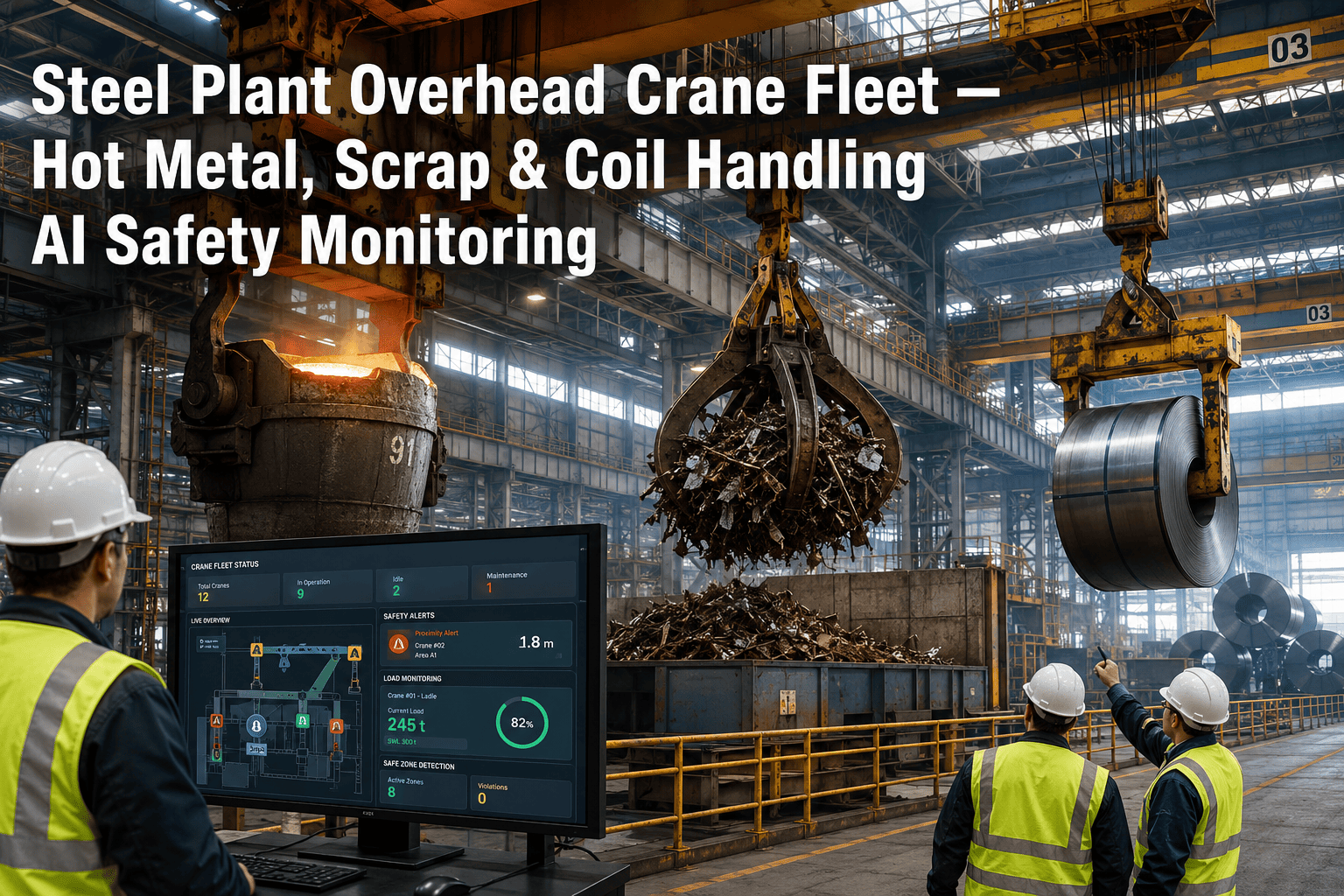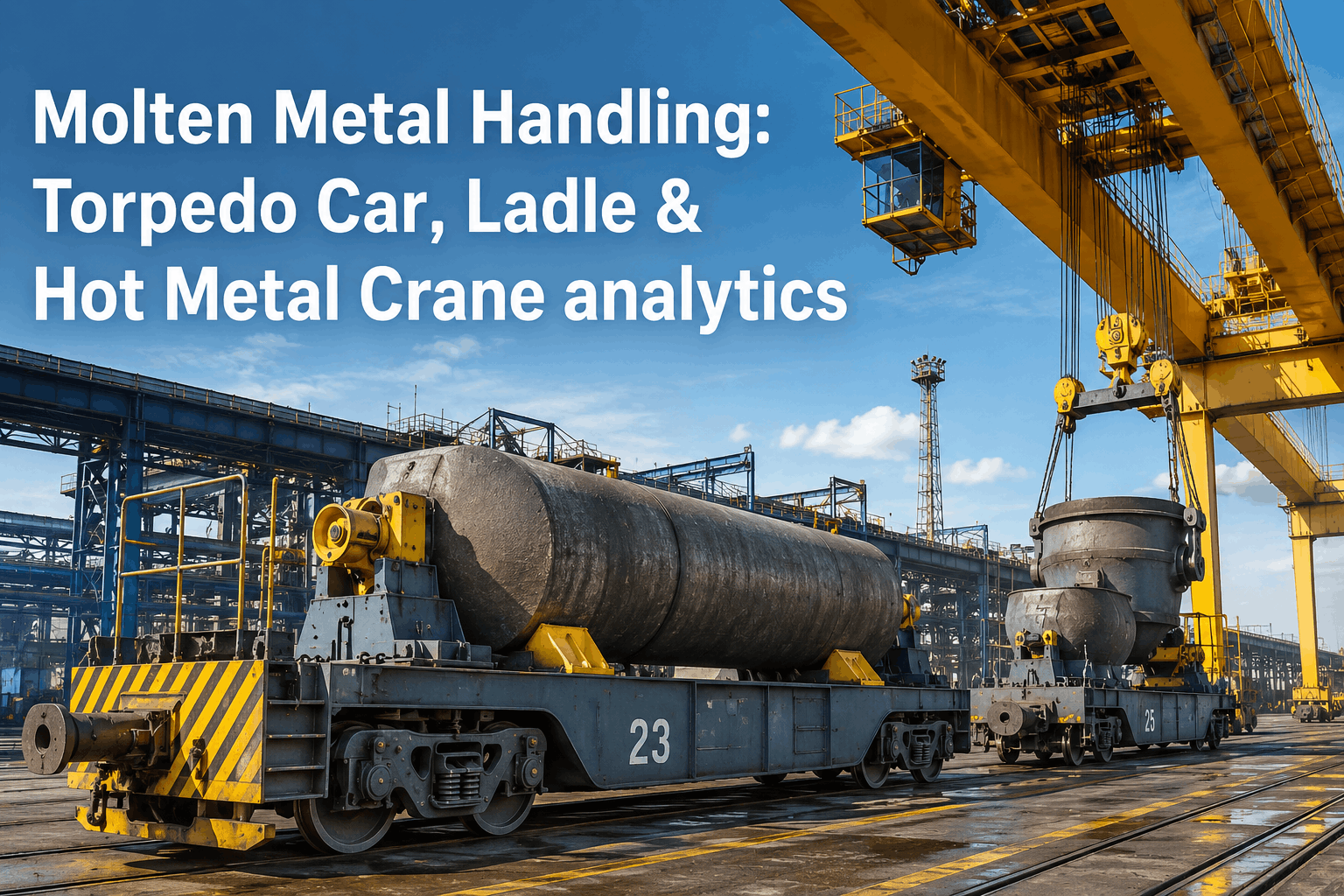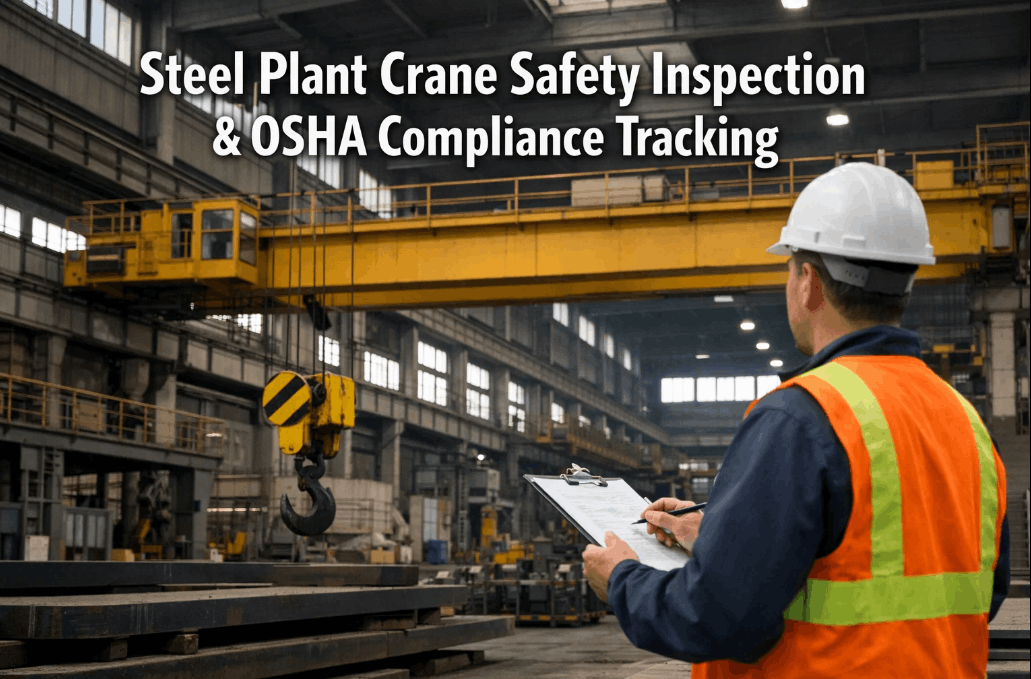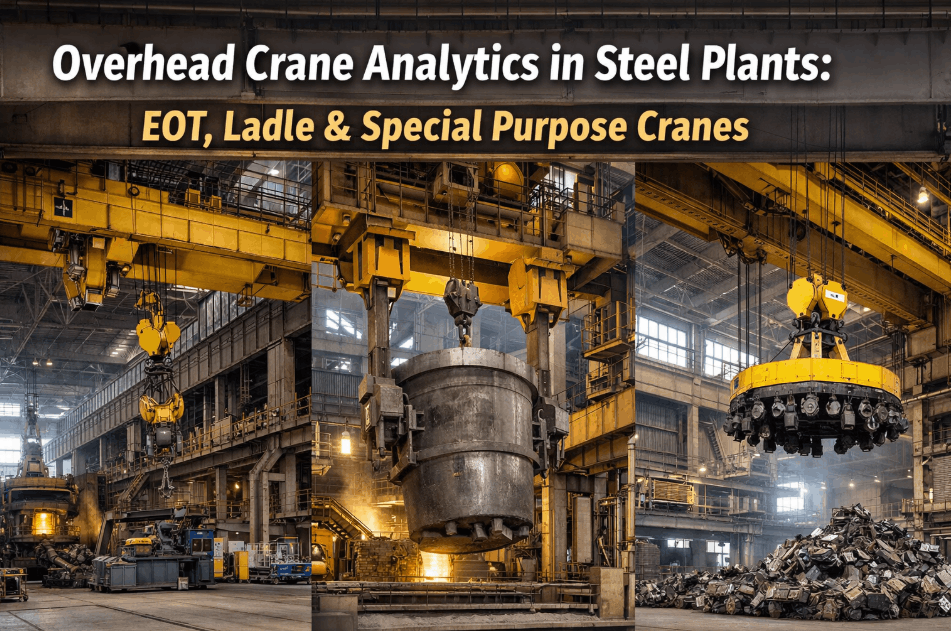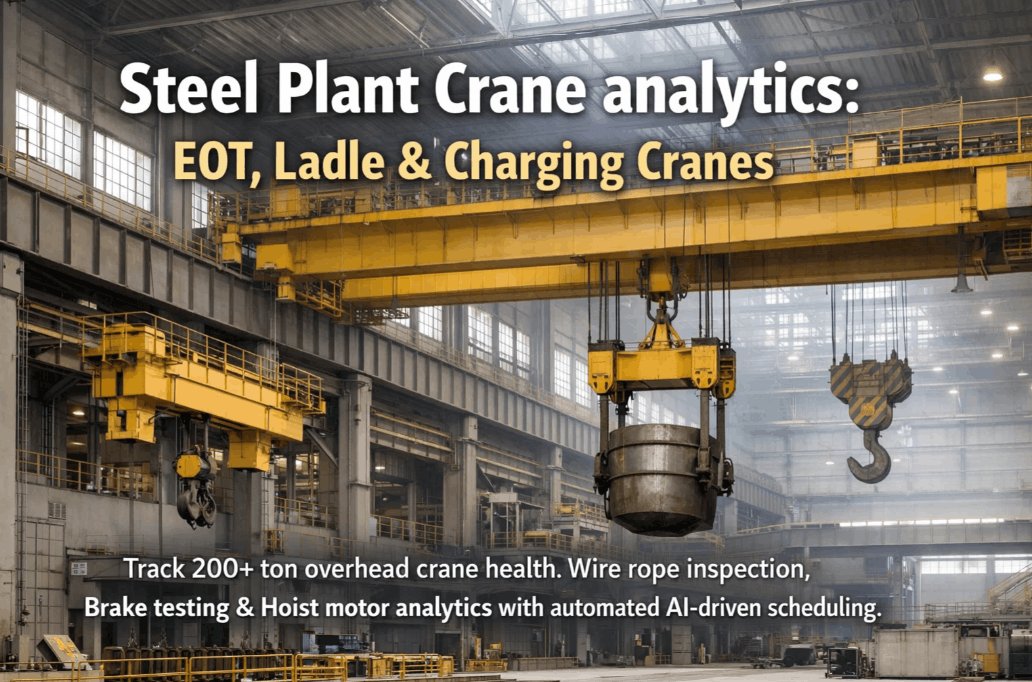
In a modern steelmaking facility, Electric Overhead Traveling (EOT) cranes are the undisputed critical path. A failure on a 200-ton hot metal ladle crane doesn't just halt the converter—it creates catastrophic, life-threatening safety breaches involving molten steel. For decades, overhead crane inspection relied on subjective visual checks, manual brake testing, and arbitrary wire rope replacement schedules. Today, steel plant crane analytics fuses vibration sensors, absolute rotary encoders, and heavy-duty load cells to monitor the metallurgical health and mechanical integrity of the actual traveling hardware in real-time. By transitioning to an EOT crane AI-driven framework, mill managers completely eliminate undetected micro-cracking in gearboxes and guarantee perfectly synchronized hoist motor analytics. Book a Crane Safety Review to see how iFactory converts massive charging cranes and teeming ladles into highly predictable digital assets.
Automate Overhead Crane Inspection & Load Stability
Deploy AI-driven hoist analytics to seamlessly track wire rope degradation, execute continuous brake slip testing, and secure the movement of extreme-tonnage charging ladles.
Why Traditional Crane Analytics Fail Heavy Operations
In standard manufacturing, a crane breakdown causes a localized delay. In steelmaking operations spanning scrap yards, blast furnaces, and continuous casters, a stranded charging crane guarantees immediate temperature loss inside the ladles, triggering massive slab downgrades or forced skulling operations. Legacy SCADA systems only track macro variables: whether a limit switch tripped or a motor overloaded. True hot metal crane safety demands micro-level insights, detecting invisible wire rope fatigue and millisecond mechanical brake slippage occurring 30 meters above the foundry floor. Without interconnected ladle crane analytics, maintenance teams are forced into excessive weekend downtime for subjective manual inspections. Book a platform demo to see how iFactory bridges this gap with uninterrupted wireless telemetry.
Comprehensive Asset Telemetry for EOT and Hot Metal Cranes
iFactory's charging crane analytics suite connects the bridge, trolley, and main hoist mechanisms into a single overarching safety logic. The system identifies deadly asymmetric lifting paths and mechanical decay weeks before physical limit switches trigger.
Steel Crane Safety: Operating at Molten Extremes
Tracking standard warehouse cranes is completely different from governing assets hovering above 1500°C electric arc furnaces. Our deployment architecture is explicitly forged for these catastrophic-risk scenarios.
Scenario 1: Teeming Ladle Lift Intercept
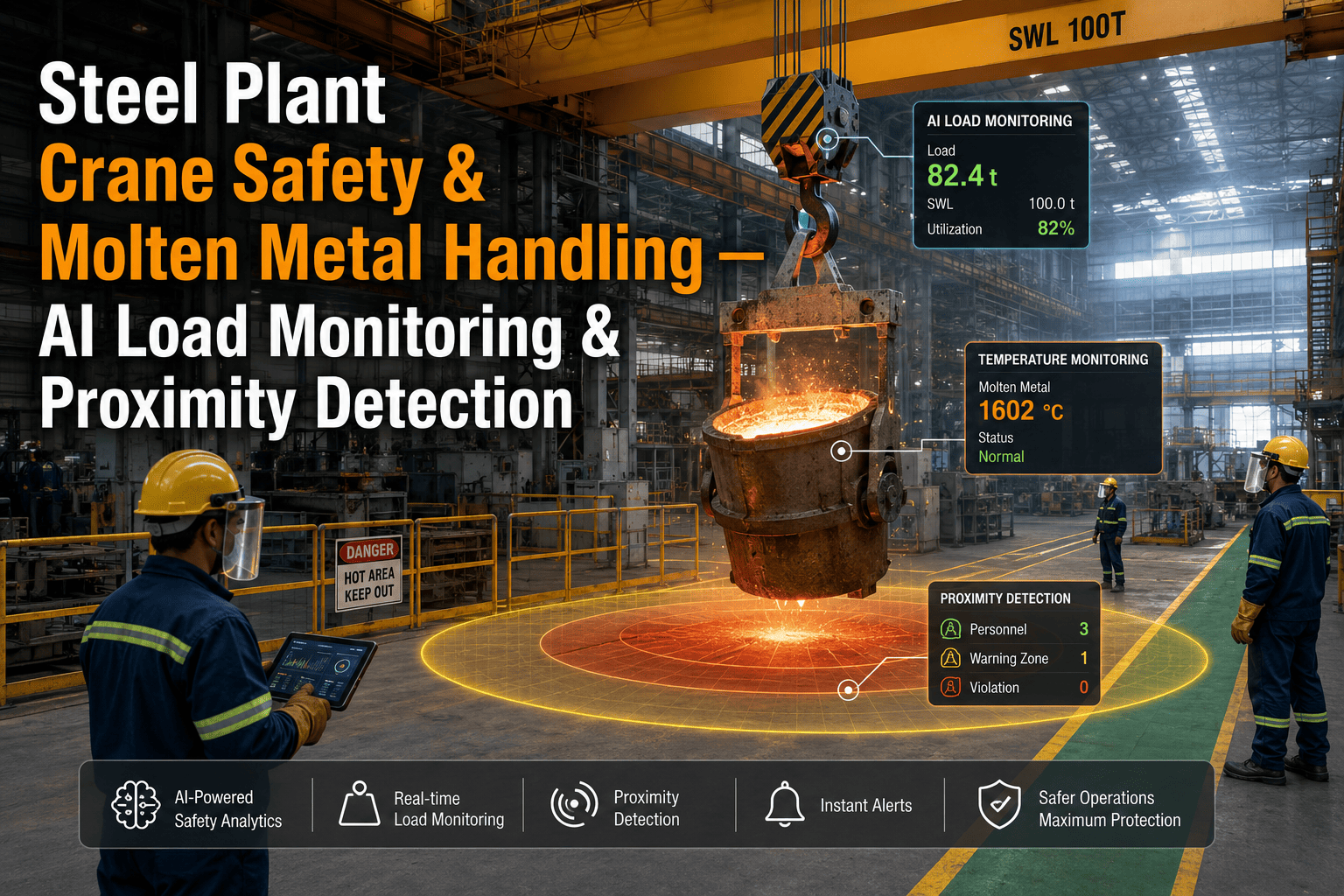
During the teeming process, load cells detect an abrupt 15-ton load shift onto the left crane hook. The AI immediately arrests the hoisting speed, alerting operators to a shifting refractory block inside the ladle, preventing a deadly molten spill onto the caster deck.
Scenario 2: Pre-Emptive Brake Pad Replacement
While moving a 200-ton teeming ladle, the safety systems execute a micro-brake test mid-air. It identifies a 2-millisecond extension in braking response compared to the AI baseline. An automated high-priority work order requires immediate pad replacement during the next 4-hour maintenance window.
Scenario 3: Main Hoist Gearbox Catch
Acoustic sensors on the main auxiliary hoist detect rapid fifth-octave frequency spiking indicating severe cage breakdown in a high-speed pinion bearing. The AI predicts 72 hours until seizure, allowing the team to swap the specific 30kg bearing rather than replacing the entire gearbox after destruction.
Scenario 4: Wire Rope Core Degradation
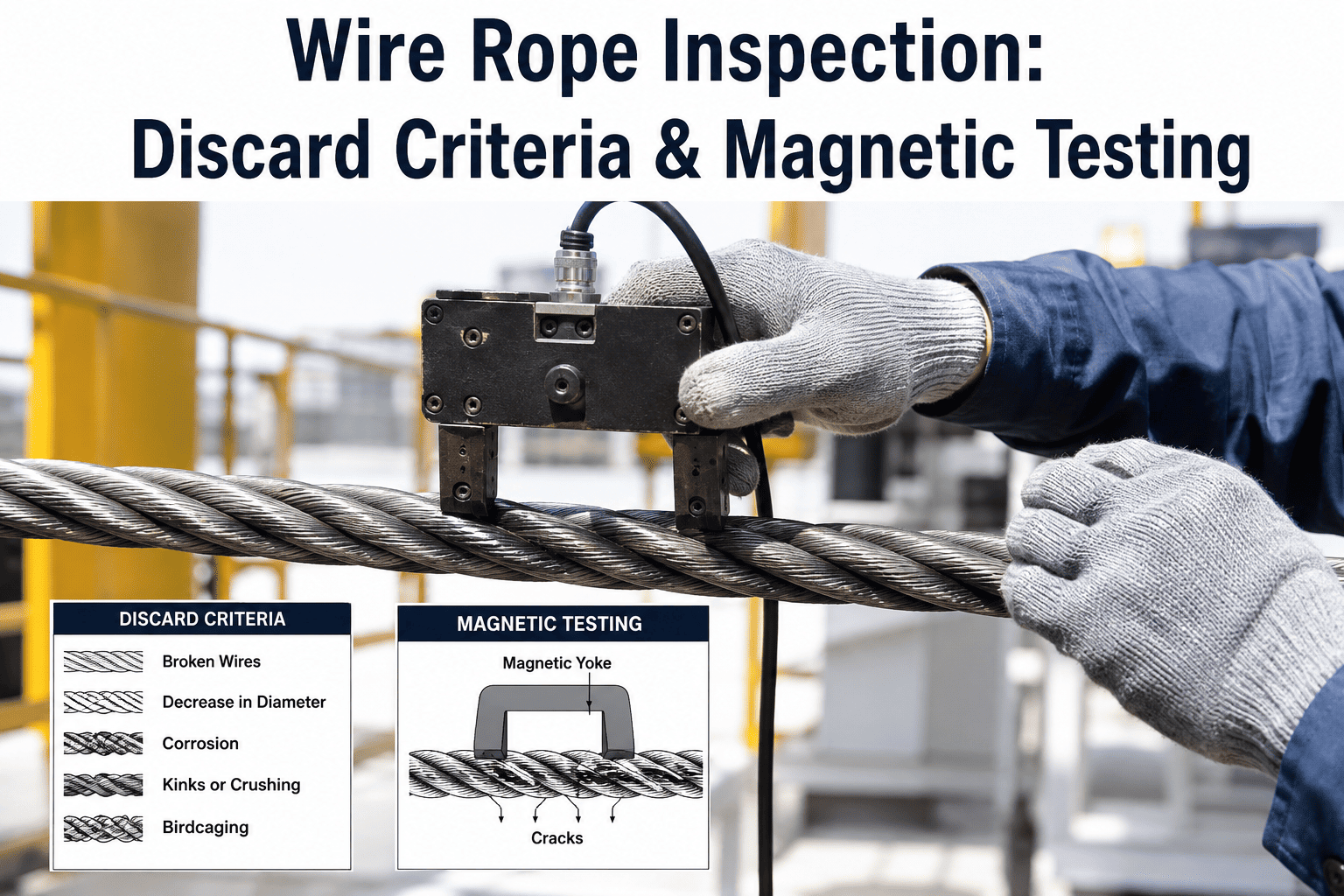
Regulatory audits demand wire rope checks on the scrap yard charging crane. Instead of manual clipping, the auditor reviews continuous AI-driven MRT tracking maps proving zero internal core strand breaks over the last 900 lift cycles, satisfying compliance instantly.
Legacy PM Visuals vs. Advanced Hot Metal Crane Analytics
Maintaining overhead heavy-lift equipment via subjective visual audits and annual NDT testing is a severe liability. Compare the traditional methodology against an integrated continuous intelligence network.
| Capability | Manual Audit Intervals | Baseline Current Monitoring | iFactory Crane AI Copilot |
|---|---|---|---|
| Hoist Braking Tests | Physical drop-test logs monthly | PLC limit switch flags | Continuous micro-slip analysis per lift |
| Wire Rope Integrity | External visual fraying only | Annual manual MRT sweeping | Live inline electromagnetic core scanning |
| Load Symmetrical Balance | Operator visible tilt guessing | Static overload shutoffs | Dynamic hook-to-hook strain gauge parity mapping |
| Track & Structural Crabbing | Reacting to squealing wheels | Periodic manual rail alignment | Autonomous laser and drive-speed discrepancy tracking |
| Gearbox Vibrations | Handheld testers taken weekly | Rigid velocity threshold limits | Load-normalized high-frequency Fast Fourier arrays |
| Drive Panel Thermal Safety | Annual thermography shoots | Inverter cabinet ambient temps | Continuous component-level thermal AI detection |
How iFactory Connects Extremely Hazardous Asset Layers
Deploying sensors onto extreme-heat molten ladle cranes involves navigating high RF interference, abrasive dust, and moving targets spanning 50-meter longitudinal trajectories overhead. Our telemetry architecture thrives here.
Wireless Sub-Controller Mesh
Heavy shielding and proprietary industrial mesh nodes allow our sensors on the shifting trolley to broadcast high-density FFT diagnostics to the main bridge PLC seamlessly without requiring long, vulnerable festoon cable upgrades.
Level 1 Drive API Ingestion
Connecting directly into existing ABB, Siemens, or Yaskawa crane variable frequency drives (VFDs). The AI captures motor current gradients, exact encoder pulse deceleration times, and torque proofs before the brake shoes engage.
Magnetic Rope Tracking Logic
Integrates fixed-mount electromagnetic heads directly onto the drum-feed guide. As the hoist rapidly pays out steel core wire, the analytical grid continuously updates a 3D structural twin showing exactly where hidden internal rust or abrasion is expanding.
CMMS Safety Prioritization
All identified micro-anomalies bypass standard warning systems and fire specialized life-safety work orders directly into SAP PM or Maximo, enforcing that specific ladle cranes must not conduct molten lifts until signed-off.
Commissioning EOT Crane AI: Seamless Fleet Transformation
Equipping an active melt shop fleet requires executing upgrades during standard planned downtimes. Transforming steel plant crane analytics happens predictably over strategic phases.
Drive Integration & Slippage Tracking
The AI connects to the primary VFDs and safety PLC networks via high-speed Modbus or Profinet. Exact dropping deceleration curves are mapped to establish the physical baseline friction of the emergency and service brakes.
Magnetic Rope Test & Component Vibration
Hardened piezometric vibration hardware and inline MRT heads are mounted to the main load paths (gearboxes, drums, wire channels) during a scheduled 8-hour shift. Wireless mesh securely beams the raw analog feed to the edge processors.
Asymmetrical Load / Strain Initialization
Integrating direct data streams from existing weigh-blocks or new smart pins on the trunnion spreader. The system begins building metallurgical load profiles for standard scrap drops vs. delicate hot metal teeming.
Predictive Fleet Operations
The central command center begins receiving highly prioritized failure timelines. Operators have exact foreknowledge allowing them to route specific cranes out of critical paths into repair bays safely without shocking the melt sequence.
Frequently Asked Questions: Hot Metal Crane Telemetry
Eliminate Catastrophic Safety Blind Spots Above Your Operators.
iFactory's overhead crane analytics protect hundreds of millions of dollars in continuous rolling assets and, more importantly, human lives, by delivering impenetrable dynamic brake testing and automated wire rope tracking telemetry.