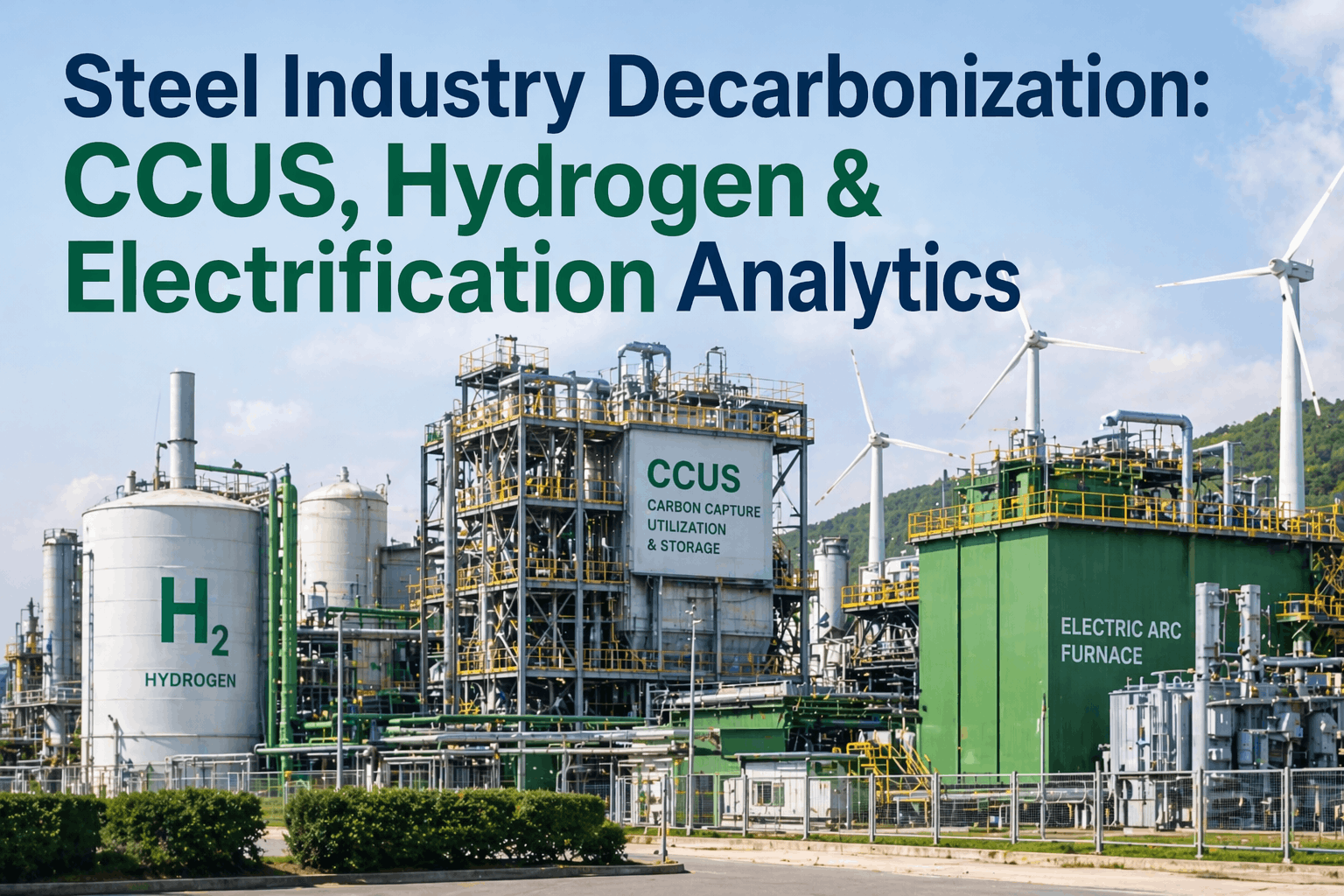
Steelmaking accounts for a meaningful share of global industrial CO2 emissions, and every producer now faces some version of the same question from customers, investors, or regulators — what is the actual pathway to lower-carbon steel, and how fast can it realistically move. The honest answer is that there is no single silver-bullet technology; post-combustion capture, hydrogen-based direct reduction, and carbon utilization pathways each address a different part of the emissions profile, come with different capital intensity, and suit different plant configurations. Evaluating decarbonization seriously means understanding which pathway actually fits your specific process footprint rather than adopting whichever technology is generating the most headlines. iFactory helps steel producers evaluate and track progress against a decarbonization pathway, with detail at iFactory support.
Environmental · Decarbonization
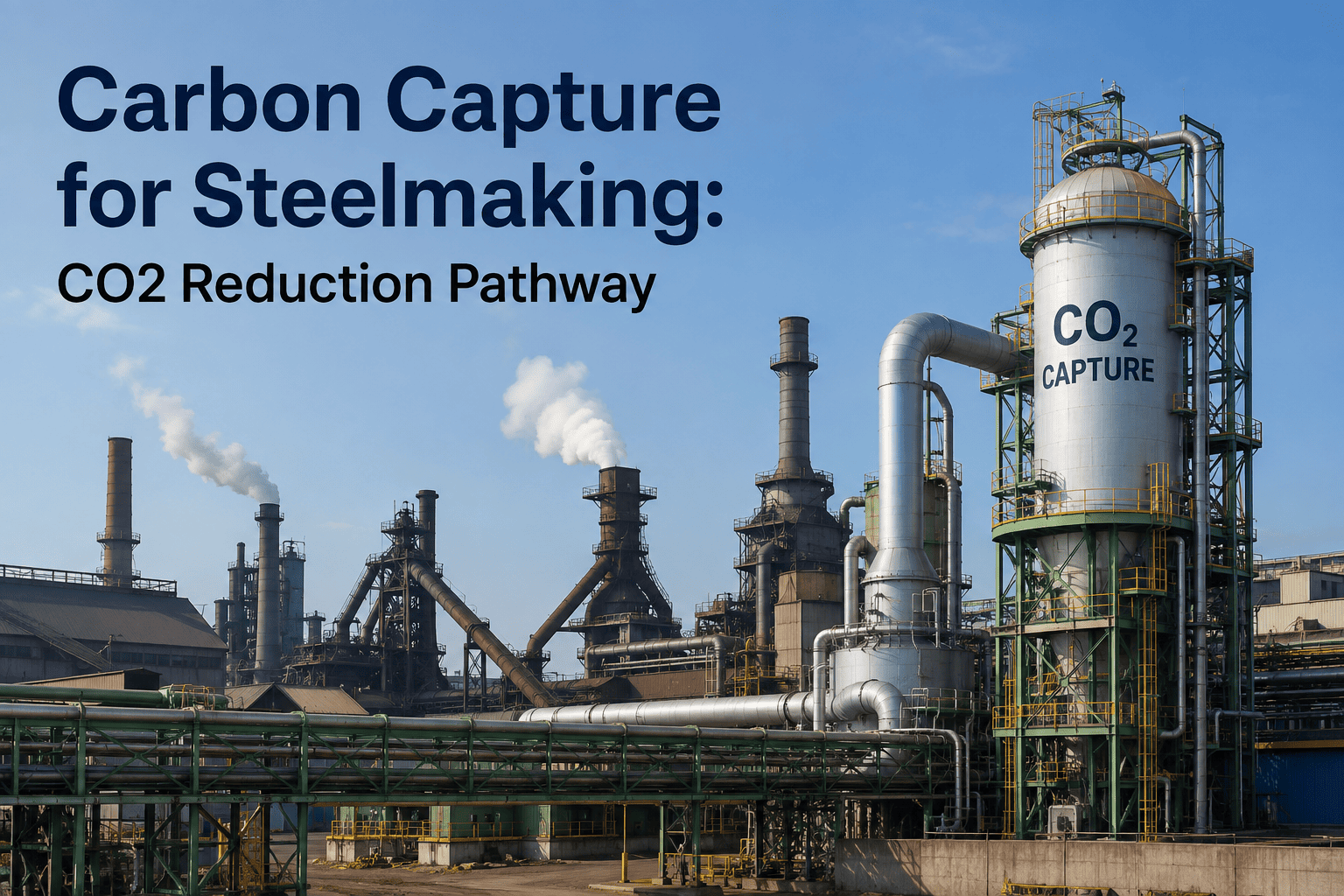
Carbon Capture and Utilization for Steel: Evaluating a Realistic CO2 Reduction Pathway
Post-combustion capture, hydrogen-based ironmaking, and carbon utilization pathways compared against what actually fits your process configuration and timeline.
~7-9%
Approximate share of global CO2 emissions attributed to steelmaking
3 Pathways
Post-combustion capture, hydrogen ironmaking, and carbon utilization
No Single Fix
Most realistic decarbonization plans combine more than one pathway
The Three Core Pathways
What Each Pathway Actually Does — and What It Requires
Pathway 1
Post-Combustion Carbon Capture
Captures CO2 from existing BF-BOF flue gas streams after combustion, allowing retrofit onto current infrastructure without changing the core ironmaking process itself.
Best fit: plants with significant existing BF-BOF capital that isn't near end-of-life
Pathway 2
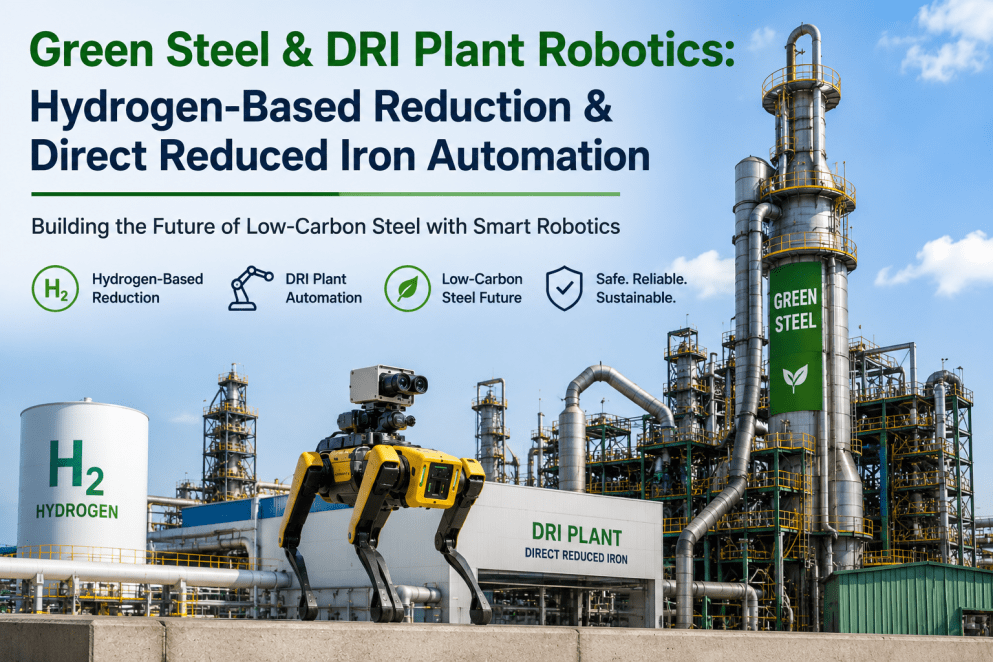
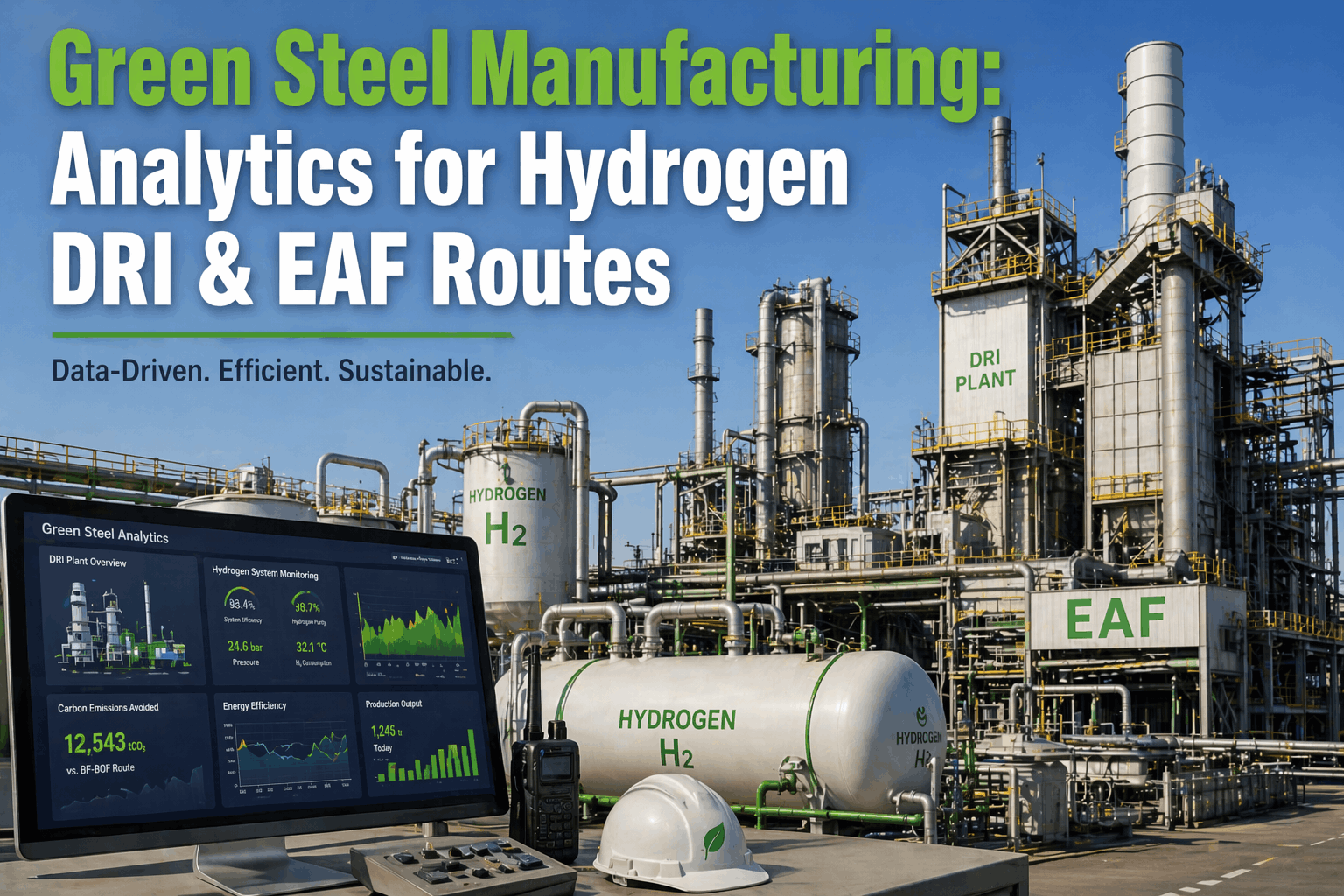
Hydrogen-Based Direct Reduction
Replaces carbon-based reduction of iron ore with hydrogen, fundamentally changing the ironmaking process and eliminating the associated CO2 at the source rather than capturing it afterward.
Best fit: greenfield builds or plants planning a major process transition, contingent on green hydrogen availability
Pathway 3
Carbon Utilization
Converts captured CO2 into usable products such as chemicals, synthetic fuels, or mineralized building materials, turning a captured waste stream into a revenue offset rather than a pure cost.
Best fit: plants near existing capture infrastructure with access to utilization off-take partners
Pathway Comparison
Weighing Capital Intensity Against Emissions Reduction Depth
Pathway
Infrastructure Impact
Emissions Reduction Depth
Key Dependency
Post-Combustion Capture
Retrofit onto existing BF-BOF
Partial, dependent on capture rate achieved
CO2 transport and storage or utilization access
Hydrogen Direct Reduction
New process route, major capital project
Deep, addresses emissions at the source
Green hydrogen cost and supply availability
Carbon Utilization
Add-on to existing capture infrastructure
Depends on capture pathway paired with it
Off-take partner demand and market pricing
The Right Decarbonization Pathway Depends on Your Specific Process Footprint, Not the Latest Headline Technology.
iFactory helps track emissions baselines and pathway progress against realistic milestones tied to your actual plant configuration.
Building an Evaluation Framework
Four Questions to Answer Before Committing to a Pathway
What Is Your Current Emissions Baseline by Source?
A credible pathway decision starts with knowing which process step contributes the largest share of your total emissions, not an assumed industry-average breakdown.
What Is the Remaining Life of Existing Assets?
A BF-BOF route with a decade of remaining campaign life favors capture retrofit; one nearing reline decision opens the door to a bigger process transition.
What Does Your Regional Hydrogen and CO2 Infrastructure Look Like?
Green hydrogen availability and CO2 transport or storage access vary enormously by region and materially change which pathway is actually executable near-term.
What Are Your Customers and Investors Actually Asking For?
Some customer commitments require verified emissions reduction on a specific timeline, which can favor a nearer-term retrofit pathway over a longer-horizon process transition.
Field Example
Choosing a Phased Pathway Instead of a Single Big Bet
An integrated producer facing customer pressure for a near-term emissions reduction commitment had initially been evaluating a full hydrogen-based direct reduction transition, a multi-year capital project with significant dependency on regional green hydrogen supply that was not yet reliably available at scale in their location.
Working through a structured emissions baseline and asset-life evaluation with iFactory, the team identified that a post-combustion capture retrofit on their existing BF-BOF route, still with a decade of remaining campaign life, could deliver a meaningful near-term emissions reduction commitment while hydrogen infrastructure in the region matured, positioning a future transition as a second-phase pathway rather than an immediate all-or-nothing decision.
2 phases
Pathway structured as near-term retrofit plus future transition option
10 yrs
Remaining BF-BOF campaign life that made the retrofit pathway viable
Near-term
Emissions commitment met without waiting on hydrogen infrastructure
Frequently Asked Questions
What Steel Producers Ask About Decarbonization Pathways
Is hydrogen-based direct reduction always the "best" decarbonization pathway?
It offers the deepest emissions reduction since it addresses CO2 at the source rather than capturing it after the fact, but it requires a fundamental process transition, significant new capital, and reliable access to green hydrogen at competitive cost, none of which are universally available yet. For a plant with substantial remaining life in existing BF-BOF assets and no near-term green hydrogen access, a capture-based retrofit pathway is often the more realistic near-term choice, with a hydrogen transition evaluated as a longer-horizon option.
What happens to captured CO2 if there's no local utilization market?
Where a utilization off-take partner isn't available, captured CO2 typically requires transport to a geological storage site, which depends on regional pipeline or transport infrastructure and storage capacity that varies significantly by location. This transport and storage dependency is often the single biggest practical constraint on a post-combustion capture pathway, sometimes more limiting than the capture technology itself.
Can carbon utilization actually generate meaningful revenue, or is it mostly a cost offset?
Revenue potential varies widely by the specific utilization product — mineralized building materials and certain synthetic chemicals have established markets, while some emerging utilization pathways are still developing commercial scale and pricing. In most current deployments, utilization functions primarily as a partial cost offset against capture expenses rather than a standalone profit center, though this is an area evolving quickly as more utilization technologies reach commercial maturity.
How do we build a credible emissions baseline before choosing a pathway?
A credible baseline requires source-level emissions data across each major process step, not just a single plant-wide total, since the pathway decision depends heavily on knowing which specific process contributes the largest share. Plants that only track a facility-wide CO2 total often struggle to evaluate pathway options meaningfully, because the right pathway choice depends on exactly where in the process the emissions are concentrated.
How does iFactory support a decarbonization pathway evaluation?
iFactory helps build a source-level emissions baseline across your process, tracks remaining asset life alongside emissions data to inform pathway timing, and provides ongoing progress tracking against whatever pathway milestones your team commits to, whether that's a retrofit project or a longer-horizon process transition. To walk through a baseline evaluation for your specific plant configuration,
book a demo.
Build a Decarbonization Pathway Around Your Actual Plant, Not a Generic Roadmap.
Source-level emissions baselining and pathway progress tracking built for the capture, hydrogen, and utilization decisions ahead of you.