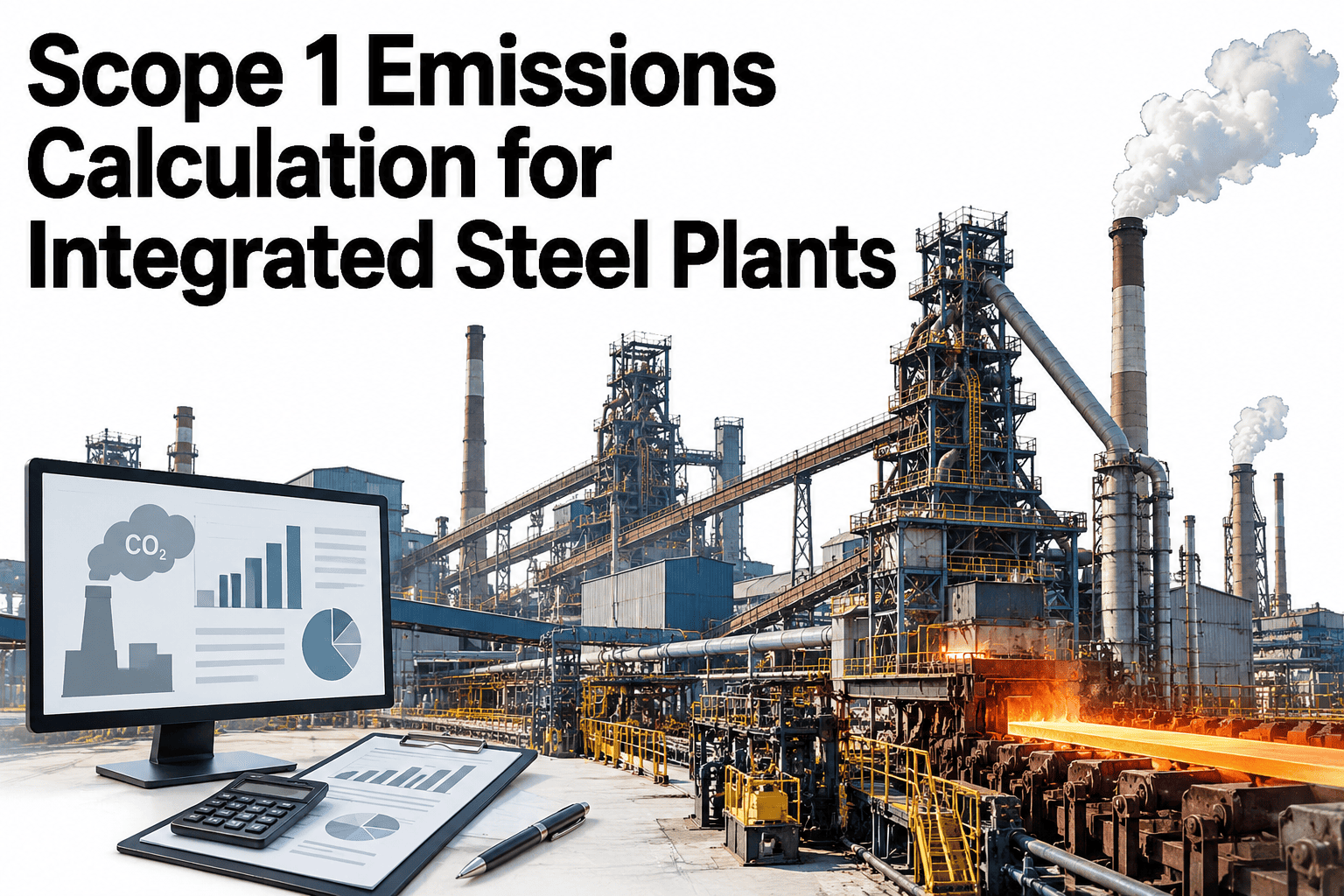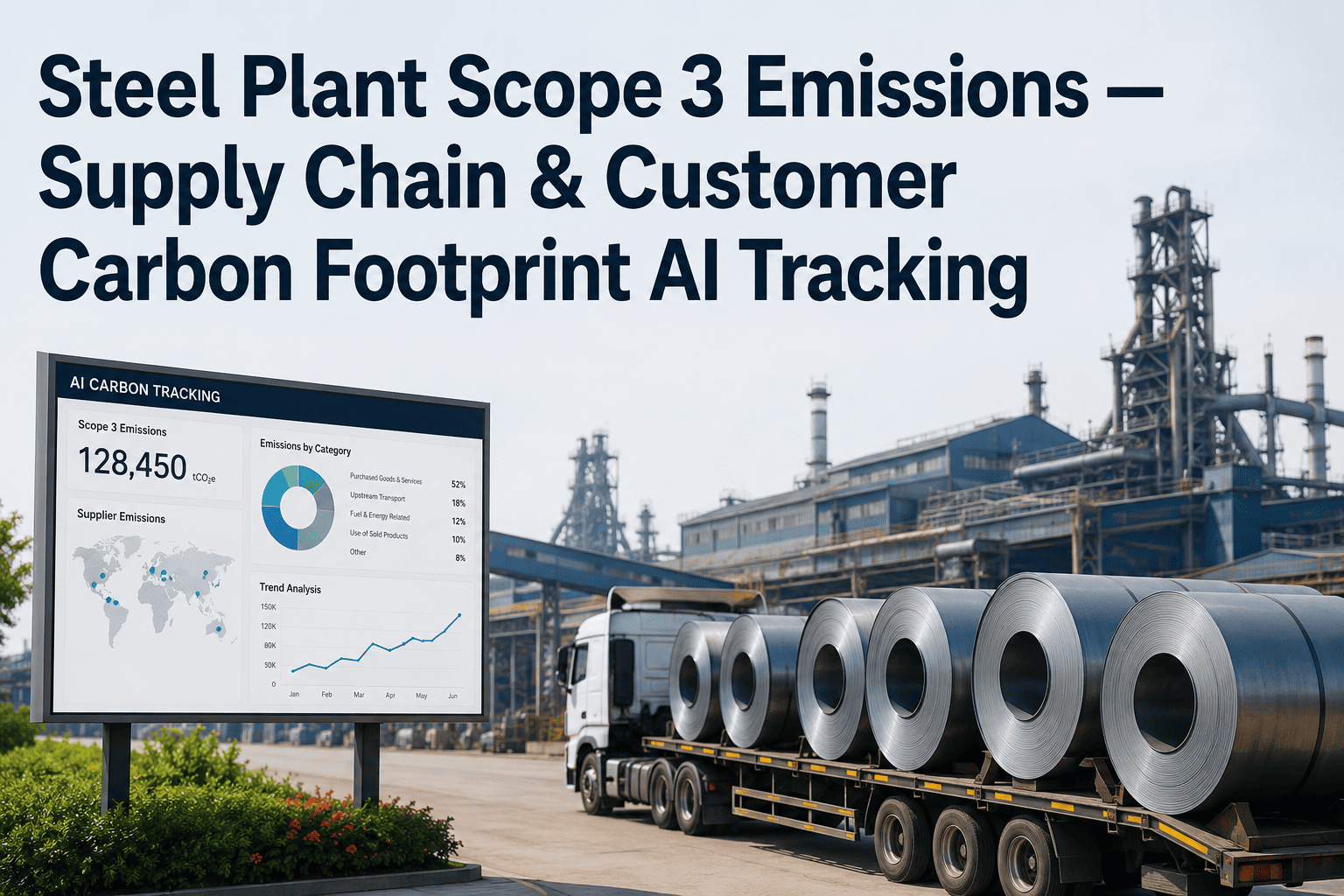
Steel is the backbone of modern civilization — and also one of its biggest climate problems. Responsible for 6–7% of global CO2 emissions and 11% of global fossil fuel consumption, the steel industry emits more carbon than international aviation and shipping combined. With 1.9 billion tonnes produced annually and demand projected to grow 30% by 2050, the sector cannot simply be switched off or easily replaced. Every bridge, building, car, wind turbine and railway depends on steel. The question is not whether steel must decarbonize — it is how, how fast, and at what cost. This roadmap lays out the complete pathway from today's 2.6 billion tonnes of annual CO2 to net-zero steel by 2050 — covering every technology, policy lever, investment requirement, and operational transformation needed to get there. iFactory's AI platform helps steel producers track, optimize, and verify their decarbonization journey through intelligent CMMS, emissions monitoring, and energy management. Book a free consultation to map your plant's decarbonization pathway.
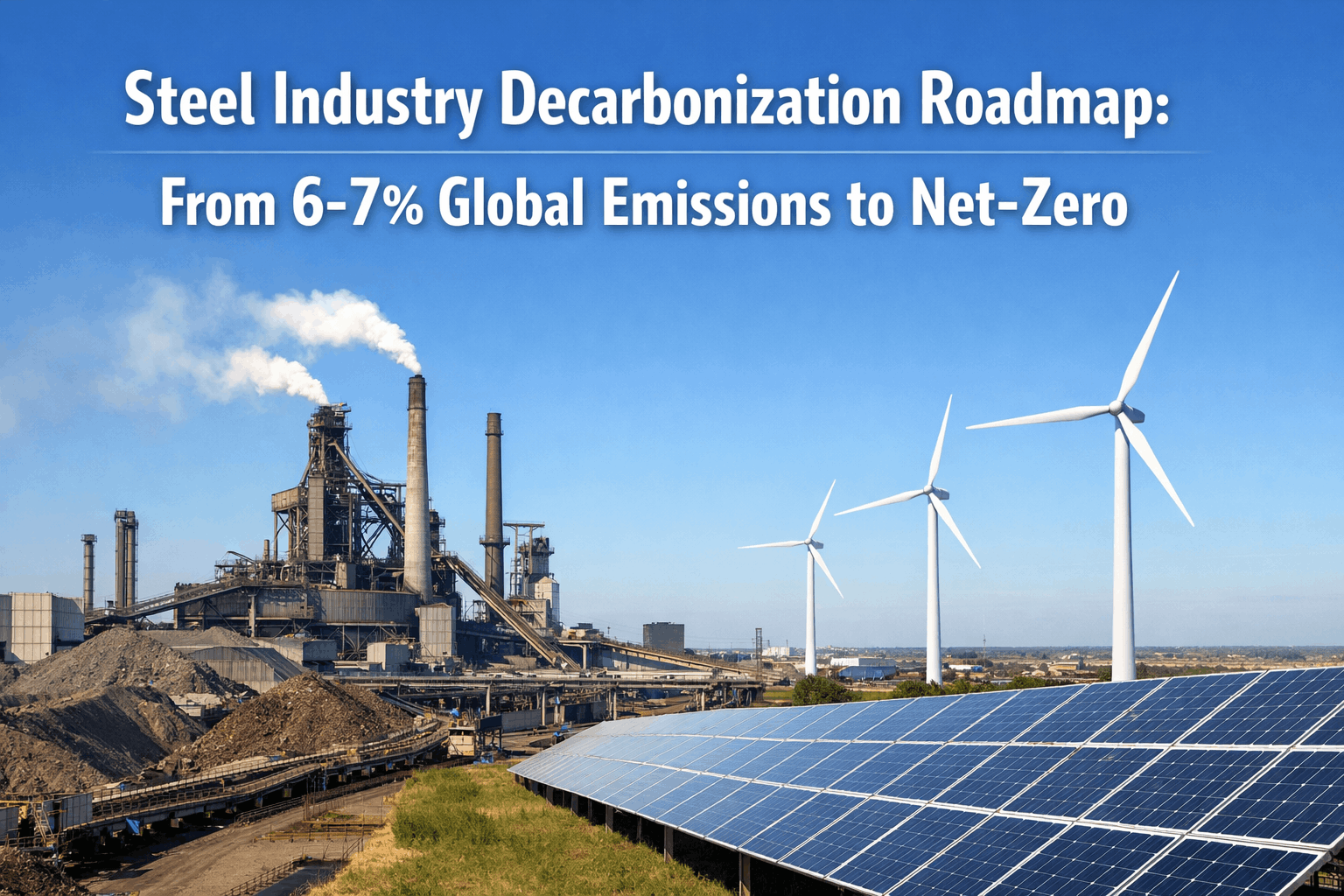
Steel Industry Decarbonization Roadmap
From 6–7% of Global Emissions to Net-Zero
The steel sector must cut 2.6 billion tonnes of annual CO2 emissions to reach net-zero by 2050 — while simultaneously meeting 30% higher demand. No single technology solves this. The pathway requires a coordinated combination of energy efficiency, carbon capture, hydrogen direct reduction, electrification, circular economy strategies, and smart operational intelligence. This guide maps every lever, timeline, and investment required.
Annual CO2 from steel production globally
Of all global greenhouse gas emissions
Steel produced annually — growing 30% by 2050
Target year for net-zero steel industry
Why Steel Is the Hardest Industry to Decarbonize
Unlike electricity generation, steel cannot simply switch to renewables. The challenges are structural, chemical, and economic.
Carbon Is a Chemical Input, Not Just Fuel
In blast furnaces, carbon (coke) is the reducing agent that strips oxygen from iron ore. Even if you electrify every heater and motor, the core chemistry still produces CO2. This process emission accounts for 70% of steel's carbon footprint — it cannot be eliminated by switching energy sources alone.
$1.4 Trillion in Existing Assets
The global steel industry has $1.4 trillion invested in blast furnace infrastructure with 20–40 year lifespans. Most BF-BOF plants were built in the 2000s–2010s, especially in Asia. Early retirement or conversion of these assets requires massive capital that current margins cannot support without policy incentives.
Demand Is Growing, Not Shrinking
Global steel demand will increase 30% by 2050 driven by infrastructure development in Asia, Africa, and Latin America plus the steel-intensive energy transition itself (wind turbines, EV batteries, grid infrastructure). Decarbonization must happen while production scales up.
Green Premium Is Real but Fragile
Low-carbon steel costs 20–40% more to produce. While some automotive and construction buyers will pay green premiums, price-sensitive commodity markets will not. Policy support (carbon pricing, CBAM, subsidies) must bridge the cost gap until scale brings costs down.
The Five Pillars of Steel Decarbonization
No single technology achieves net-zero steel. The pathway requires all five pillars deployed in coordination — each contributing a specific percentage of total emission reductions.
Pillar 1: Energy Efficiency and Operational Excellence
The fastest, cheapest lever available today. AI-powered CMMS and IoT monitoring optimize energy consumption across kilns, furnaces, rolling mills, and auxiliary systems. Waste heat recovery, smart scheduling, predictive maintenance on energy-intensive assets, and process optimization deliver 15–20% emission reductions with payback periods under 2 years — without any process changes.
Pillar 2: Carbon Capture, Utilization, and Storage (CCUS)
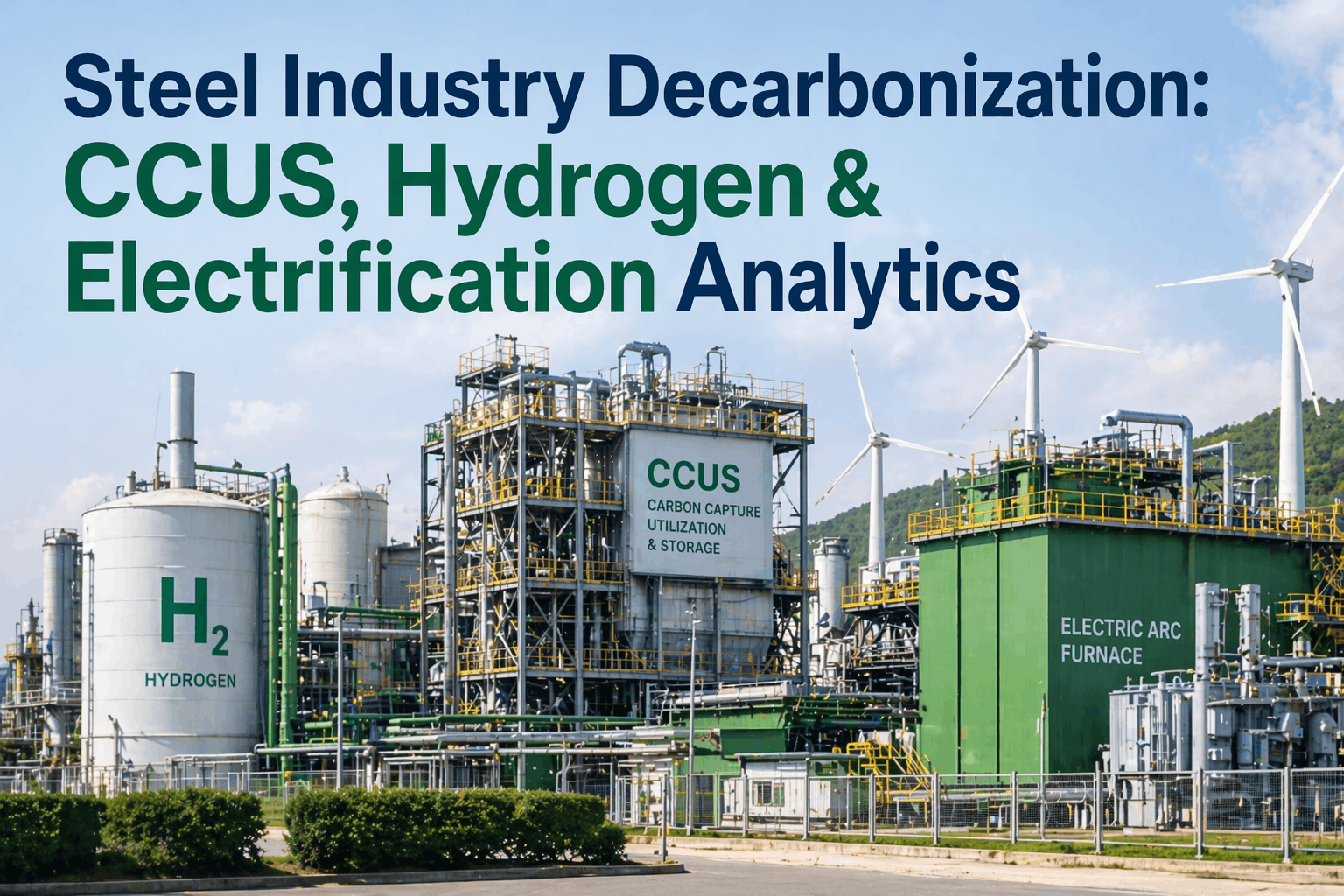
The critical bridge technology for existing BF-BOF plants. Post-combustion, pre-combustion, and oxyfuel capture technologies can remove 85–95% of CO2 from flue gas streams. CCS addresses the 95% of global steel that will still use conventional processes through 2040. Economic viability is here: EU ETS at €100+/t and US 45Q credits at $85/t make CCS cost-competitive today.
Pillar 3: Green Hydrogen Direct Reduction (H2-DRI)
The long-term game-changer. Replacing coal/coke with green hydrogen as the reducing agent eliminates process emissions entirely. DRI-EAF routes using green hydrogen can achieve near-zero steelmaking. HYBRIT (Sweden), H2 Green Steel, and ArcelorMittal Hamburg are pioneering commercial-scale hydrogen steel — but global scale requires 2–3x current global green hydrogen production capacity.
Pillar 4: Circular Economy and Scrap Maximization
Scrap-based EAF steelmaking emits 75% less CO2 than virgin BF-BOF production. Increasing scrap collection rates, improving sorting technology, and expanding EAF capacity shifts the global production mix toward lower-emission secondary steelmaking. By 2050, scrap availability will support 45–50% of global steel production versus 30% today.
Pillar 5: Electrification and Renewable Integration
Electrifying auxiliary processes (heating, rolling, finishing), switching to renewable power for EAF operations, and integrating on-site solar/wind reduces Scope 2 emissions. Electrolytic ironmaking (MOE — Molten Oxide Electrolysis) is an emerging breakthrough that could produce iron directly using electricity — eliminating carbon from the reduction step entirely.
Our engineers will assess your emissions profile, asset base, and economics to build a phased roadmap.
The 2025–2050 Decarbonization Timeline
A phased approach that matches technology readiness with investment cycles and policy milestones.
| Phase | Period | Primary Levers | Emission Reduction | Investment Required |
|---|---|---|---|---|
| 01 Quick Wins | 2025–2028 | Energy efficiency, AI CMMS, waste heat recovery, operational optimization | 15–20% reduction | $5–20M per plant |
| 02 CCS Deployment | 2026–2035 | Post-combustion CCS on BF-BOF plants, CO2 pipeline infrastructure | +25–35% reduction | $200–600M per plant |
| 03 Hydrogen Transition | 2028–2040 | H2-DRI pilot then commercial scale, green hydrogen infrastructure | +30–40% reduction | $500M–2B per new plant |
| 04 Circular Scale-Up | 2025–2050 | Scrap maximization, EAF capacity expansion, design for recyclability | +15–25% reduction | $100–500M per region |
| 05 Net-Zero | 2040–2050 | Residual offsets, electrolytic iron, full renewable integration | Final 5–10% | Variable |
How Intelligent Operations Accelerate Decarbonization
Technology shifts alone are not enough. AI-powered operational intelligence is the multiplier that makes every decarbonization lever work harder, faster, and more cost-effectively.
Real-Time Emissions Monitoring
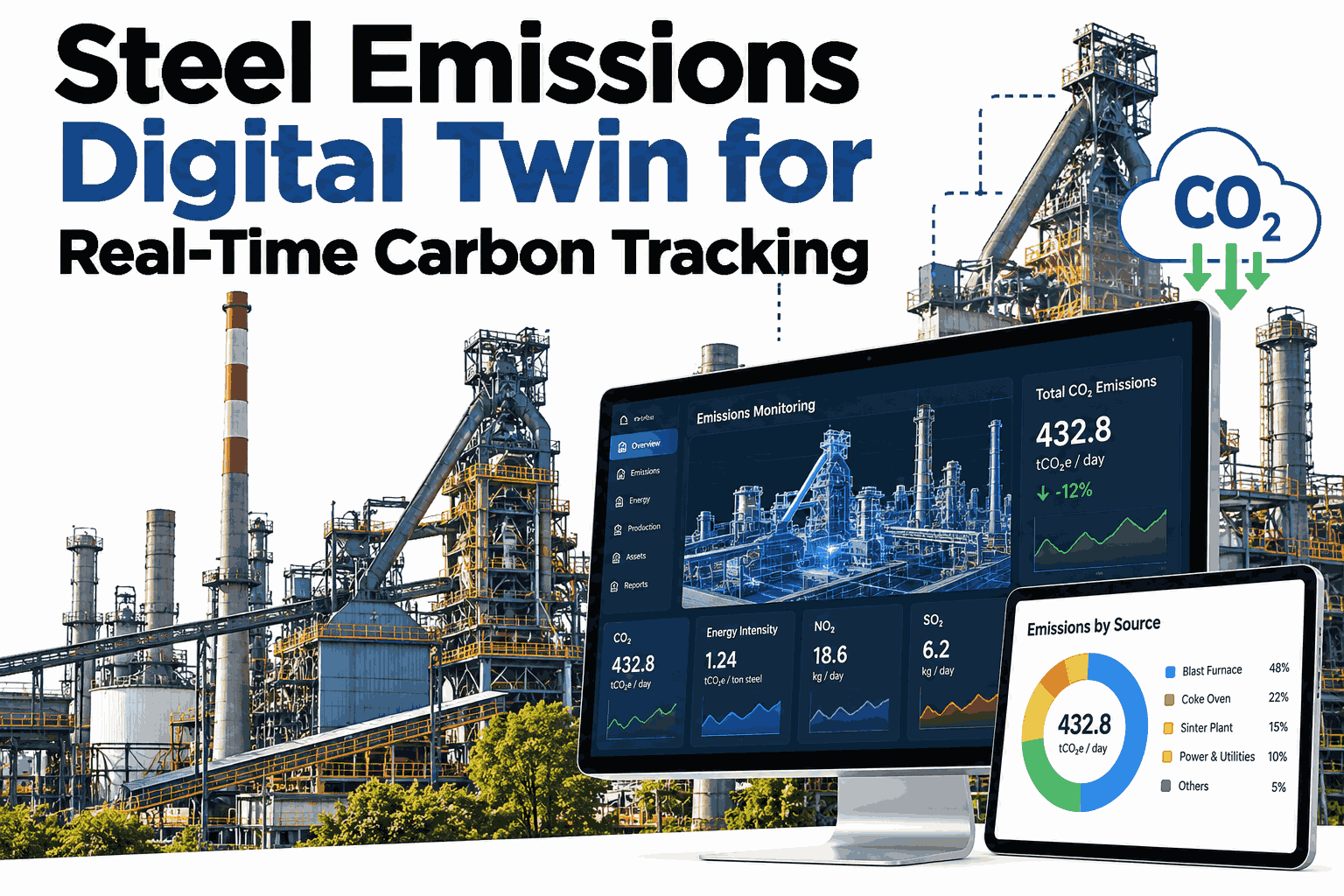
Continuous CO2, NOx, SOx, and particulate monitoring across every emission source. AI calculates plant-wide carbon intensity per tonne of steel in real time — not in quarterly reports. Operators see the emissions impact of every process decision as it happens.
Energy Optimization AI
Machine learning models optimize energy consumption across the entire production chain — from raw material handling through casting and rolling. AI identifies energy waste patterns invisible to manual analysis, reducing consumption by 8–15% with zero capital expenditure.
CCS Performance Optimization
For plants with carbon capture: AI optimizes solvent flow rates, regeneration energy, and capture efficiency in real time based on flue gas composition and energy prices. Reduces the CCS energy penalty by 10–20% versus fixed-parameter operation.
Predictive Maintenance for Green Assets
Hydrogen electrolyzers, DRI shaft furnaces, and EAF systems require different maintenance strategies than conventional BF-BOF. CMMS with AI predictive models calibrated for green steel assets ensures maximum uptime on new technology investments.
Carbon Credit Verification
Automated MRV (Monitoring, Reporting, Verification) for carbon credits, EU ETS compliance, CBAM documentation, and voluntary market certifications. Digital audit trails eliminate the manual reporting burden that costs weeks of engineering time per quarter.
Decarbonization Progress Dashboard
Executive-level dashboards tracking progress against net-zero targets — by plant, by emission source, by technology lever. Shows actual vs planned trajectory, identifies lagging areas, and models the impact of acceleration options.
See how AI accelerates your decarbonization roadmap. Book a free demo.
Key Policies Driving Steel Decarbonization
The world's largest carbon market. Free allowances for steel phasing out by 2034. By 2030, EU steel producers face full carbon cost exposure — making CCS and green steel investments essential for survival.
Carbon Border Adjustment Mechanism extends EU carbon pricing to imported steel. Non-EU producers exporting to Europe will pay the equivalent carbon cost — leveling the playing field and incentivizing global decarbonization.
The Inflation Reduction Act provides $85/tonne tax credits for permanently stored CO2 and $60/tonne for utilization. Combined with state incentives, this makes CCS economically compelling for US steel producers today.
India's Perform, Achieve and Trade scheme sets energy intensity targets for steel plants. Non-compliance requires purchasing energy saving certificates. As India's steel output doubles by 2035, PAT targets will tighten significantly.
Decarbonization Levers and Monitoring Points
Steel Decarbonization — Frequently Asked Questions
Can the steel industry actually reach net-zero by 2050?
Technically yes, but it requires unprecedented coordination of technology deployment, policy support, and investment. The IEA Net Zero Scenario requires 53% of steel production to use near-zero emission technologies by 2050. The technology exists — CCS, hydrogen DRI, renewable-powered EAF, and circular economy — but deployment must accelerate dramatically. Current project pipelines represent less than 10% of what is needed. Assess your plant's net-zero pathway.
What is the most cost-effective first step for decarbonization?
Energy efficiency and operational optimization through AI-powered CMMS. This delivers 15–20% emission reductions with payback periods under 2 years and zero process changes. It also builds the data infrastructure and operational intelligence foundation needed for larger technology transitions (CCS, hydrogen) later. Start here regardless of your long-term technology strategy.
How much investment is required to decarbonize a steel plant?
Total investment depends on the pathway: Energy efficiency ($5–20M per plant, quick ROI). CCS retrofit on existing BF-BOF ($200–600M per plant). New hydrogen DRI-EAF facility ($500M–2B). The total global investment needed is estimated at $1.4 trillion by 2050. Carbon pricing, tax credits, and green steel premiums are closing the economic gap.
Will green steel cost more than conventional steel?
Yes — initially 20–40% more. However, the cost gap is narrowing as carbon prices rise (making conventional steel more expensive) and green technology costs fall. By 2035, green steel is projected to be cost-competitive with conventional steel when full carbon costs are included. Early movers capture green premiums of $30–80/tonne from automotive and construction customers.
What role does scrap steel play in decarbonization?
Critical. Scrap-based EAF production emits 75% less CO2 than virgin BF-BOF. Global scrap availability will grow from 700Mt today to 1.3Bt by 2050 as buildings and vehicles from the 20th century construction boom reach end of life. Maximizing scrap collection, improving sorting technology, and expanding EAF capacity is one of the most impactful and cost-effective decarbonization levers.
How does CMMS/AI help with decarbonization tracking?
AI-powered CMMS provides real-time emissions monitoring, energy optimization, CCS performance tracking, carbon credit verification, and regulatory compliance automation. It transforms decarbonization from a quarterly reporting exercise into a continuous operational discipline — making every process decision carbon-aware. See decarbonization dashboards in a live demo.
Ready to Map Your Steel Plant's Path to Net-Zero?
The steel plants that start their decarbonization journey today will be the ones still operating profitably in 2050. Those that wait will face escalating carbon costs, lost customers, and stranded assets. Let our decarbonization engineers build a phased roadmap for your specific plant — covering quick wins, CCS readiness, hydrogen transition planning, and regulatory compliance — in a free 30-minute assessment.