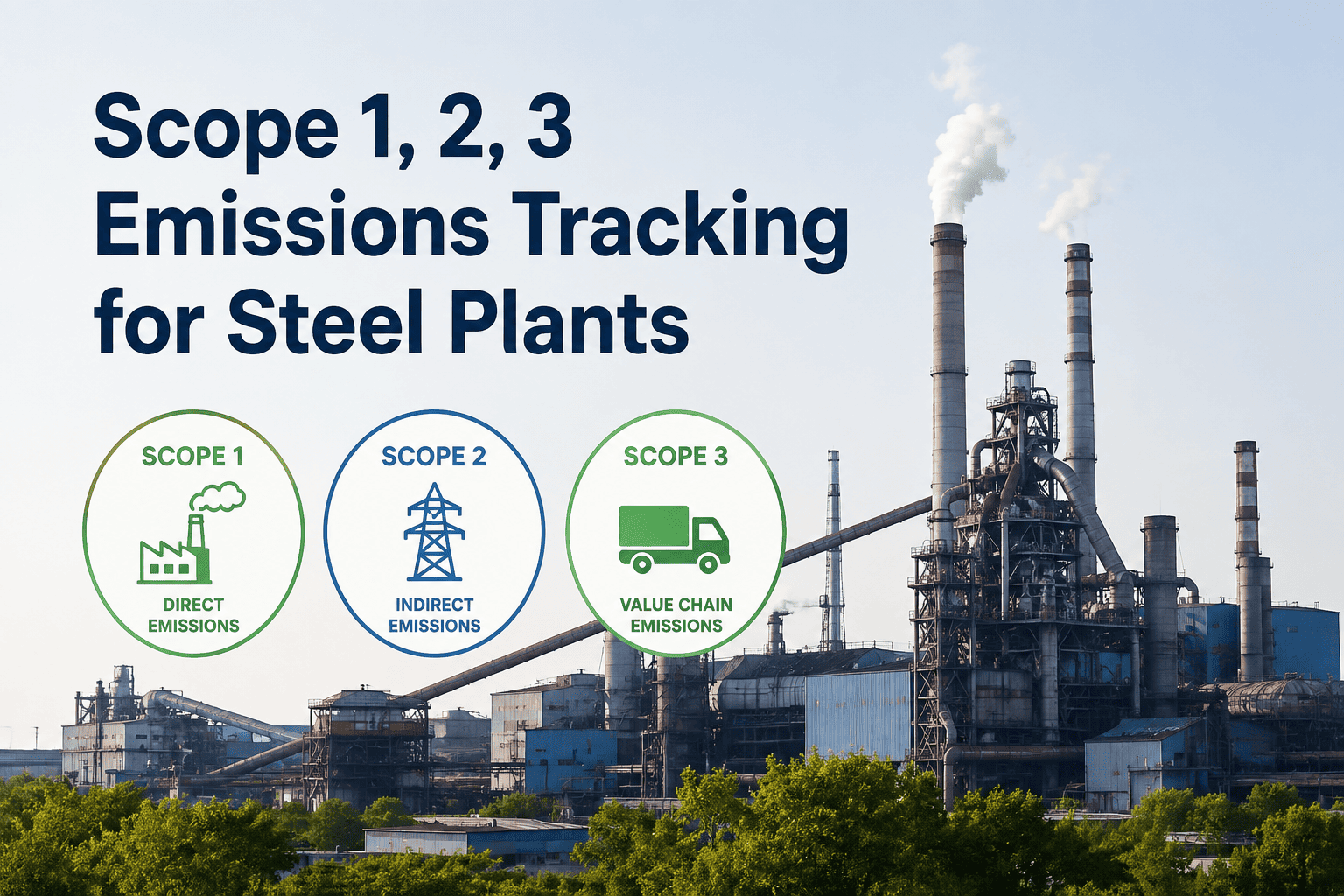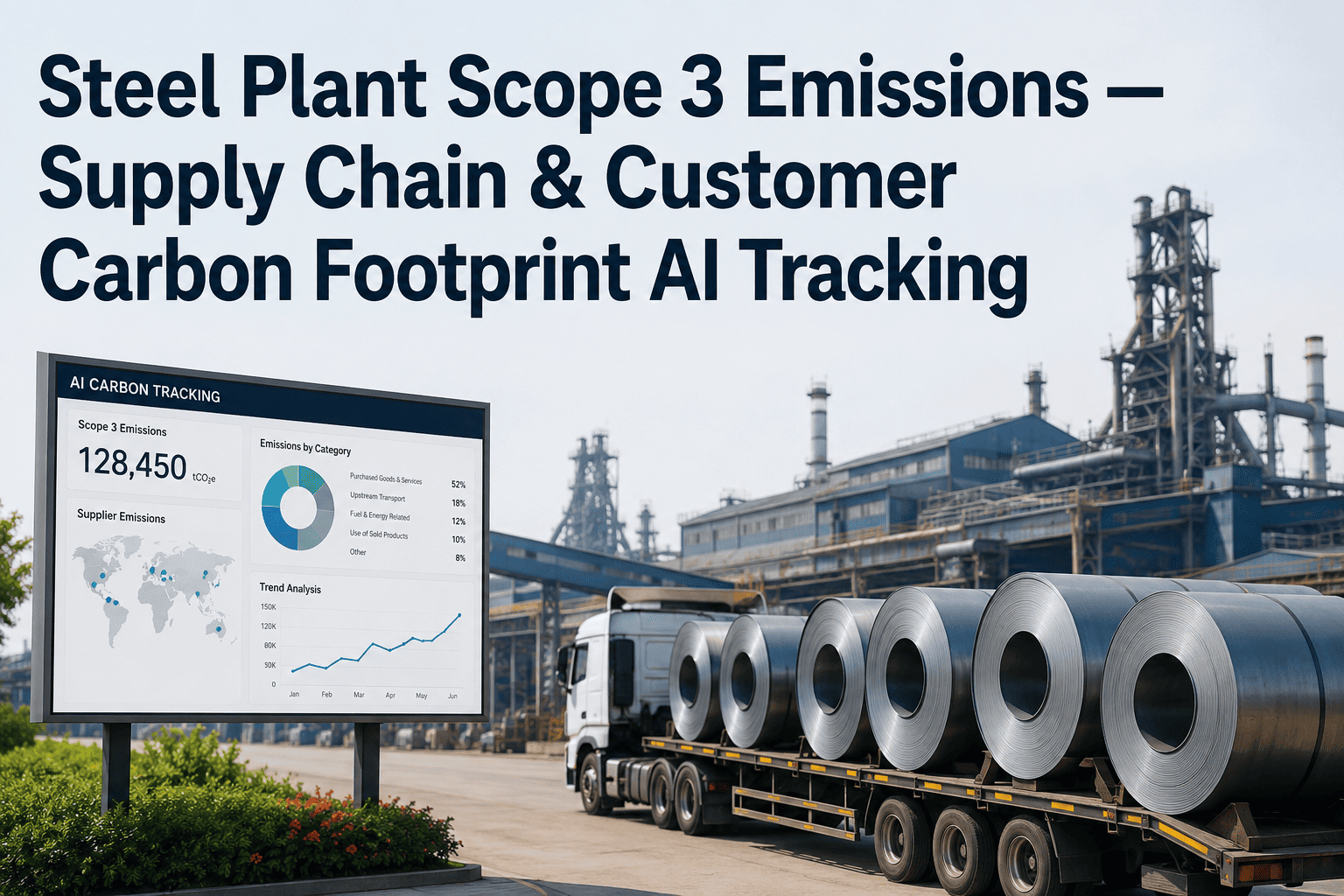
Steel production is the backbone of modern infrastructure, yet it accounts for approximately 7% of global CO2 emissions. As the world pivots toward decarbonization, steel manufacturers face unprecedented pressure to measure, report, and reduce their carbon footprint—especially Scope 3 emissions, which encompass the entire value chain from raw material extraction to end-of-life product recycling. Unlike Scope 1 (direct emissions) and Scope 2 (energy-related), Scope 3 is notoriously complex, involving upstream suppliers of iron ore, coal, and scrap, as well as downstream customers in automotive, construction, and energy sectors demanding embodied carbon data. Without precise tracking, steel plants risk non-compliance with emerging regulations like the EU Carbon Border Adjustment Mechanism and losing contracts with sustainability-focused buyers. iFactory’s AI-driven platform offers a solution: real-time, granular Scope 3 tracking that integrates with existing ERP and MES systems, enabling steel plants to meet customer requirements while optimizing supply chain efficiency. Book a Demo to see how AI transforms your carbon management.
Master Scope 3 Emissions Today
Unlock full supply chain visibility and meet customer carbon reporting demands with AI precision.
Why Scope 3 Matters for Steel
Of steel's total carbon footprint comes from Scope 3—often overlooked but critical for net-zero targets.
Annual global procurement spend in steel supply chains, where carbon data transparency is now a competitive edge.
Increase in customer requests for product-level carbon footprints since 2020, driven by ESG mandates.
Upstream Emissions: Raw Material Supply Chain
Upstream Scope 3 emissions include all indirect emissions from purchased goods and services, such as iron ore mining, coal extraction, limestone quarrying, and scrap processing. For an integrated steel plant, these can represent 30–50% of total Scope 3. AI models ingest supplier data—transportation modes, mining practices, energy sources—to calculate emissions at the batch level. For example, iron ore from Australia may have a different carbon intensity than ore from Brazil due to shipping distances and mining equipment efficiency. iFactory's platform automatically maps supplier emissions using satellite data, logistics records, and industry benchmarks, updating in real time as suppliers change. This granularity allows steel plants to identify high-emission suppliers and negotiate reductions, directly impacting procurement decisions. The result? A 15–20% reduction in upstream carbon costs within the first year, validated by third-party audits.
| Material | Average CO2 (kg/ton) | AI-Optimized Target | Reduction Potential |
|---|---|---|---|
| Iron Ore | 120 | 85 | 29% |
| Coking Coal | 210 | 150 | 28% |
| Scrap Metal | 45 | 30 | 33% |
| Limestone | 80 | 60 | 25% |
Downstream Emissions: Customer Product Lifecycle
Steel Production
Emissions from manufacturing processes, including energy and raw materials, form the base for customer carbon data.
Product Fabrication
Customers (e.g., automakers) convert steel into parts—cutting, welding, forming—adding their own Scope 1 and 2 emissions.
Use Phase
Steel in vehicles or buildings emits no direct carbon but embodied carbon affects lifecycle assessments for green certifications.
End-of-Life
Recycling steel reduces need for virgin material, lowering overall Scope 3. AI tracks scrap recovery rates and credits.
AI-Driven Data Integration for Accurate Tracking
Traditional methods rely on spend-based or average-data approaches, which are inaccurate and non-auditable. iFactory's AI connects to your ERP, MES, and supplier portals, pulling real-time data on material flows, energy consumption, and logistics. Machine learning models detect anomalies—like a sudden spike in emissions from a specific supplier—and flag them for investigation. The platform also integrates with IoT sensors on transportation vehicles to capture fuel usage and route efficiency. This end-to-end visibility ensures that every ton of steel has a verified carbon footprint, ready for customer reporting. For example, a European steelmaker reduced reporting time from 3 weeks to 2 days while improving data accuracy by 40%. The system automatically generates reports compliant with ISO 14064, GHG Protocol, and CBAM requirements, eliminating manual errors.
Transform Your Carbon Strategy
Automate Scope 3 tracking and deliver customer-required carbon footprints with enterprise-grade AI.
Regulatory Compliance and Customer Requirements
Steel plants selling to automotive OEMs must now provide Environmental Product Declarations (EPDs) with product-level carbon footprints. Similarly, construction projects seeking LEED or BREEAM certification require embodied carbon data for all steel used. iFactory's platform generates these reports automatically, pulling from your verified Scope 3 data. The system also tracks evolving regulations globally—from the EU's CBAM to the UK's Streamlined Energy and Carbon Reporting (SECR)—and updates reporting templates accordingly. Non-compliance can result in tariffs, lost contracts, or reputational damage. With AI, you can proactively meet customer demands, such as a major automaker requiring a 30% reduction in embodied carbon by 2025. The platform provides a clear roadmap, showing exactly which suppliers and processes need improvement.
Traditional vs. AI-Driven Scope 3 Tracking
Traditional Approach
- Manual data collection from suppliers
- Annual carbon reports with outdated averages
- No real-time visibility into supply chain changes
- High risk of errors and non-compliance
- Limited ability to optimize procurement
iFactory AI Approach
- Automated, real-time data ingestion from all sources
- Daily carbon updates with batch-level granularity
- AI anomaly detection and supplier performance scoring
- Audit-ready reports compliant with global standards
- Actionable insights for cost and carbon reduction
Case Study: Major European Steelmaker Reduces Scope 3 by 22%
A leading steel producer with 12 plants across Europe faced pressure from automotive customers to provide product-level carbon data. Using iFactory's AI platform, they integrated 150+ supplier data streams, including logistics and energy. Within six months, they identified that 30% of their upstream emissions came from just five coal suppliers with inefficient mining practices. By switching to alternative sources and optimizing transport routes, they reduced Scope 3 emissions by 22%, saving €12 million annually in carbon costs. The platform also automated EPD generation, reducing reporting effort by 80%. Customer satisfaction scores improved, and they secured a major contract with a German automaker that required a 25% reduction in embodied carbon by 2027. This case demonstrates that AI-driven Scope 3 tracking is not just a compliance tool but a competitive advantage.
Frequently Asked Questions
What are Scope 3 emissions in the steel industry?
Scope 3 emissions include all indirect greenhouse gas emissions in a steel plant's value chain, both upstream and downstream. Upstream covers purchased raw materials (iron ore, coal, scrap), transportation, and services. Downstream includes emissions from product use, processing by customers, and end-of-life recycling. Unlike Scope 1 (direct) and Scope 2 (energy), Scope 3 is often the largest category, accounting for up to 70% of total emissions. Tracking them requires complex data from suppliers and customers, which is why AI-driven platforms are essential. For more details, visit iFactory Support.
How does AI improve Scope 3 tracking accuracy?
AI enhances accuracy by automating data collection from diverse sources—ERP systems, supplier portals, IoT sensors, and logistics records. Machine learning models cross-validate data, detect anomalies, and fill gaps using industry benchmarks. This eliminates manual errors and outdated averages. For example, AI can adjust emission factors based on real-time supplier energy mixes or transport routes. The result is batch-level granularity with 95%+ accuracy, auditable for regulatory compliance. Book a Demo to see how iFactory achieves this.
What regulations require steel Scope 3 reporting?
Key regulations include the EU Carbon Border Adjustment Mechanism (CBAM), which requires importers to report embedded emissions from 2023, with full financial implications from 2026. The UK's SECR mandates large companies to report Scope 1, 2, and material Scope 3. Additionally, industry standards like the GHG Protocol and ISO 14064 require comprehensive Scope 3 disclosure. Customers in automotive (e.g., Tesla, BMW) and construction (LEED, BREEAM) increasingly demand product-level data. iFactory's platform automatically generates reports compliant with all these frameworks. Learn more at iFactory Support.
Can small steel plants afford AI Scope 3 tracking?
Yes, iFactory offers scalable solutions tailored to plant size and complexity. Our cloud-based platform requires no upfront hardware investment, and pricing is based on data volume and features. Small plants can start with basic upstream tracking and expand as needed. The ROI is significant—reducing carbon costs by 15-20% and avoiding non-compliance penalties. Many small producers achieve payback within 12 months. For a custom quote, Book a Demo with our team.
How long does it take to implement iFactory's platform?
Implementation typically takes 4-8 weeks, depending on data availability and system integration complexity. Our team works with your IT and sustainability departments to connect to ERP, MES, and supplier portals. We provide training and support throughout. After go-live, the platform begins generating real-time Scope 3 data within days. Most plants see initial insights within two weeks. For a detailed timeline, Book a Demo.
Ready to Decarbonize Your Steel Supply Chain?
Join industry leaders using AI to master Scope 3 emissions and exceed customer expectations.