Steel plants are among the most scrutinised industrial emitters globally — facing real-time CEMS obligations, quarterly CPCB/SPCB reporting, GHG disclosure requirements under national and international frameworks, and increasing customer ESG due diligence. Non-compliance carries significant financial and reputational risk: CPCB closure notices, EU CBAM cost exposure for export-oriented plants, and loss of sustainability-linked financing. Yet most plants still manage emissions data through manual stack readings, disconnected CEMS logs, and spreadsheet-based compliance reports. iFactory's Emissions Monitoring and Compliance module changes this — connecting real-time CEMS data, fugitive emission trackers, and regulatory reporting in one platform, continuously verified and audit-ready.
Steel Plant Emissions Monitoring & CPCB Compliance: CEMS, Stack & Fugitive Management
Achieve 100% emissions compliance with real-time CEMS monitoring, automated CPCB reporting, GHG tracking, and SPCB audit-ready documentation — all in one platform.
What Steel Plants Must Monitor — And Why Manual Systems Fail
A single integrated steel plant typically has 30–80 emission stacks, hundreds of fugitive sources, and multiple CEMS systems reporting to CPCB OCEMS servers. Managing compliance across this complexity manually — with shift-based readings, monthly SPCB reports, and separate GHG inventories — creates gaps that regulators increasingly find and penalise. Schedule a compliance gap assessment with iFactory to identify where your emissions data is at risk before your next audit.
How iFactory Covers the Full Emissions Compliance Stack
iFactory integrates with your existing CEMS hardware and connects to CPCB OCEMS servers — adding AI analysis, exceedance prediction, and automated reporting on top of your existing infrastructure. Talk to our compliance team about how iFactory integrates with your specific CEMS setup.
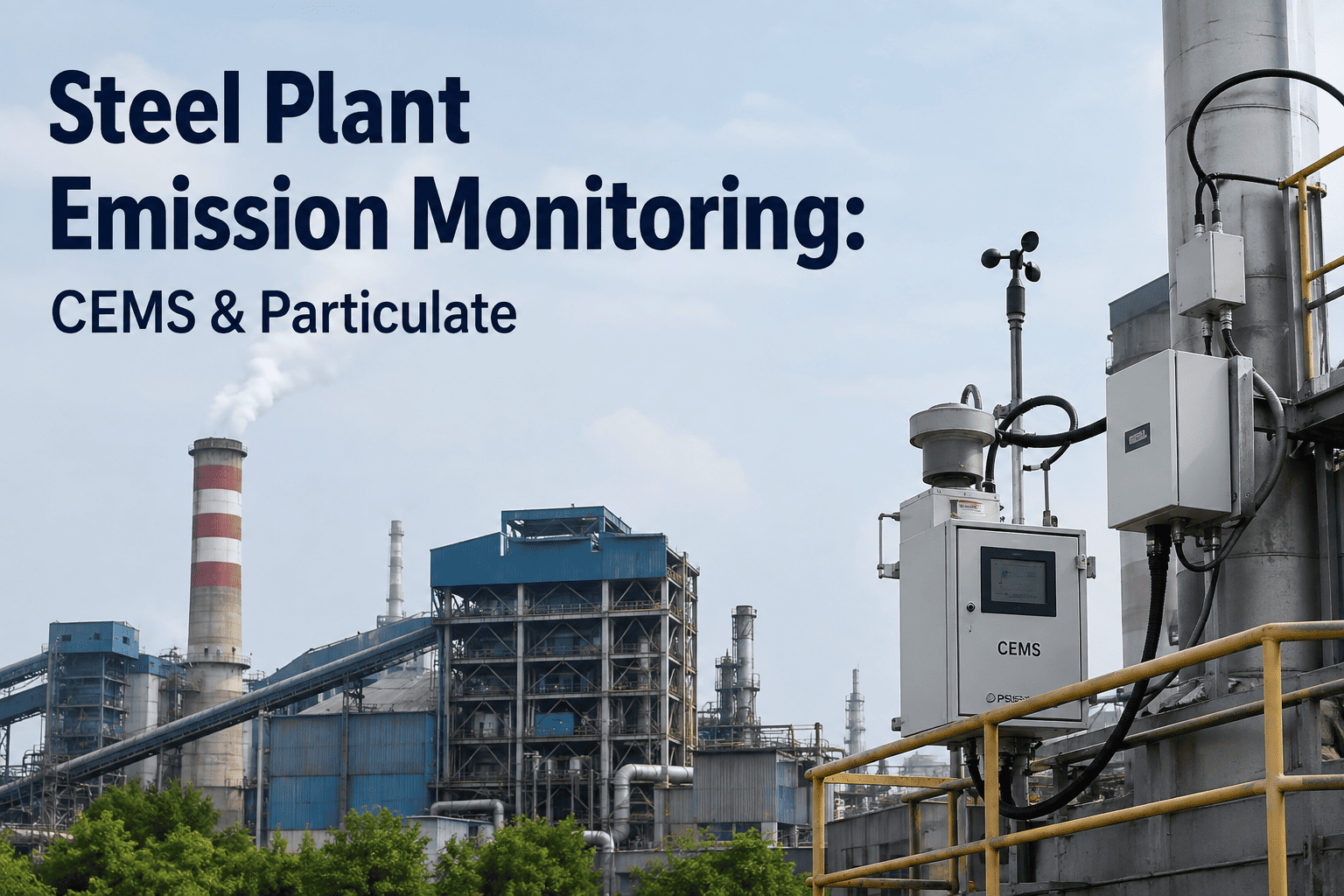
Real-Time CEMS Integration
iFactory connects to CEMS analysers (SO₂, NOₓ, PM, CO, CO₂) via OPC-UA, Modbus, or 4-20mA — with simultaneous transmission to CPCB OCEMS server and internal dashboard. Every reading timestamped and stored for 5+ years.
Exceedance Prediction & Early Warning
AI models analyse process data — sinter blend sulphur, mill throughput, gas flow patterns — to predict emission exceedances 30–90 minutes before they occur. Alerts sent to shift engineers with recommended process adjustments.
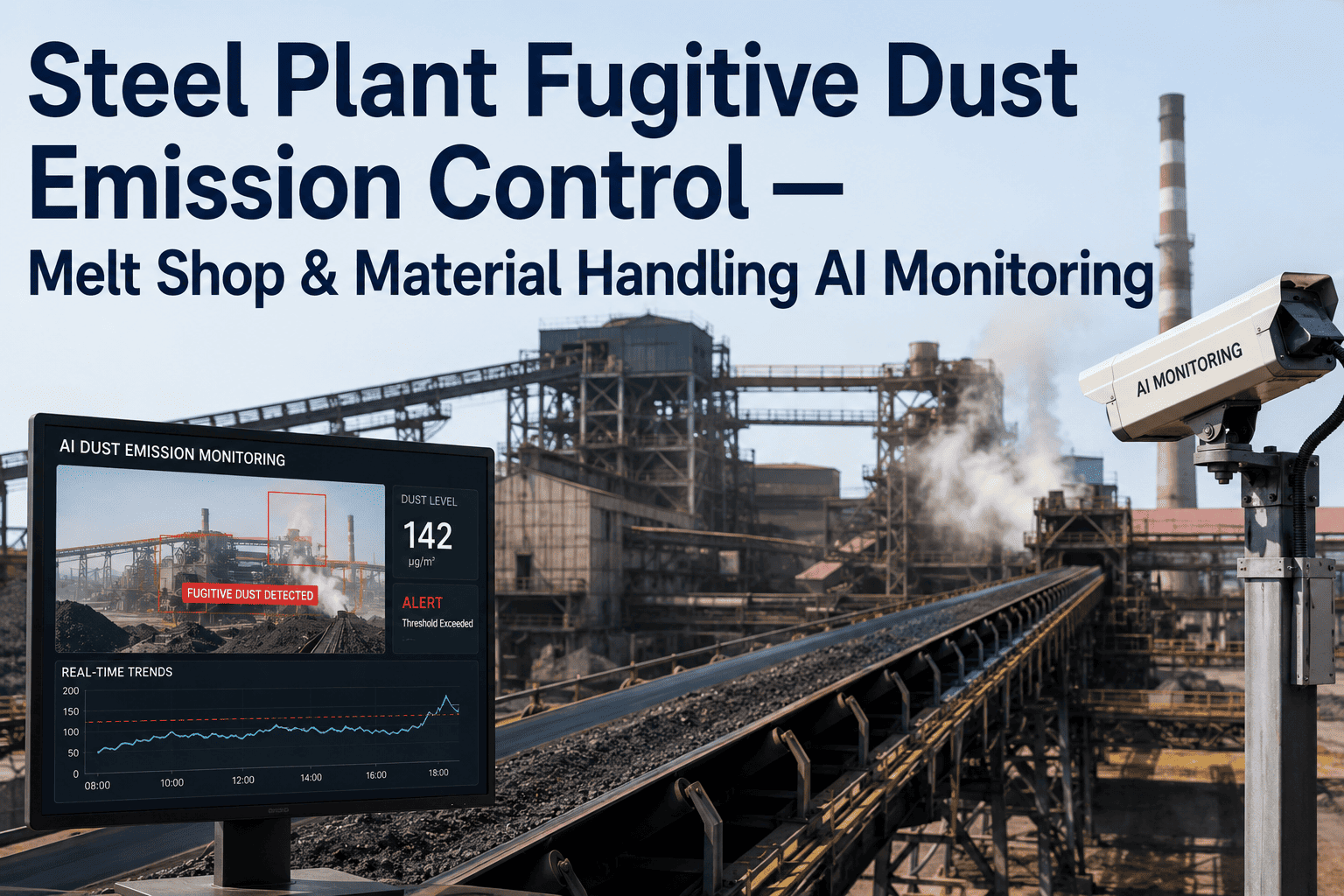
Fugitive Emission AI Camera Monitoring
AI camera systems on raw material yards, transfer points, and road networks detect visible dust generation events — classifying source, intensity, and meteorological conditions. Triggered work orders for water sprinkling, wind barriers, and haul road suppression.
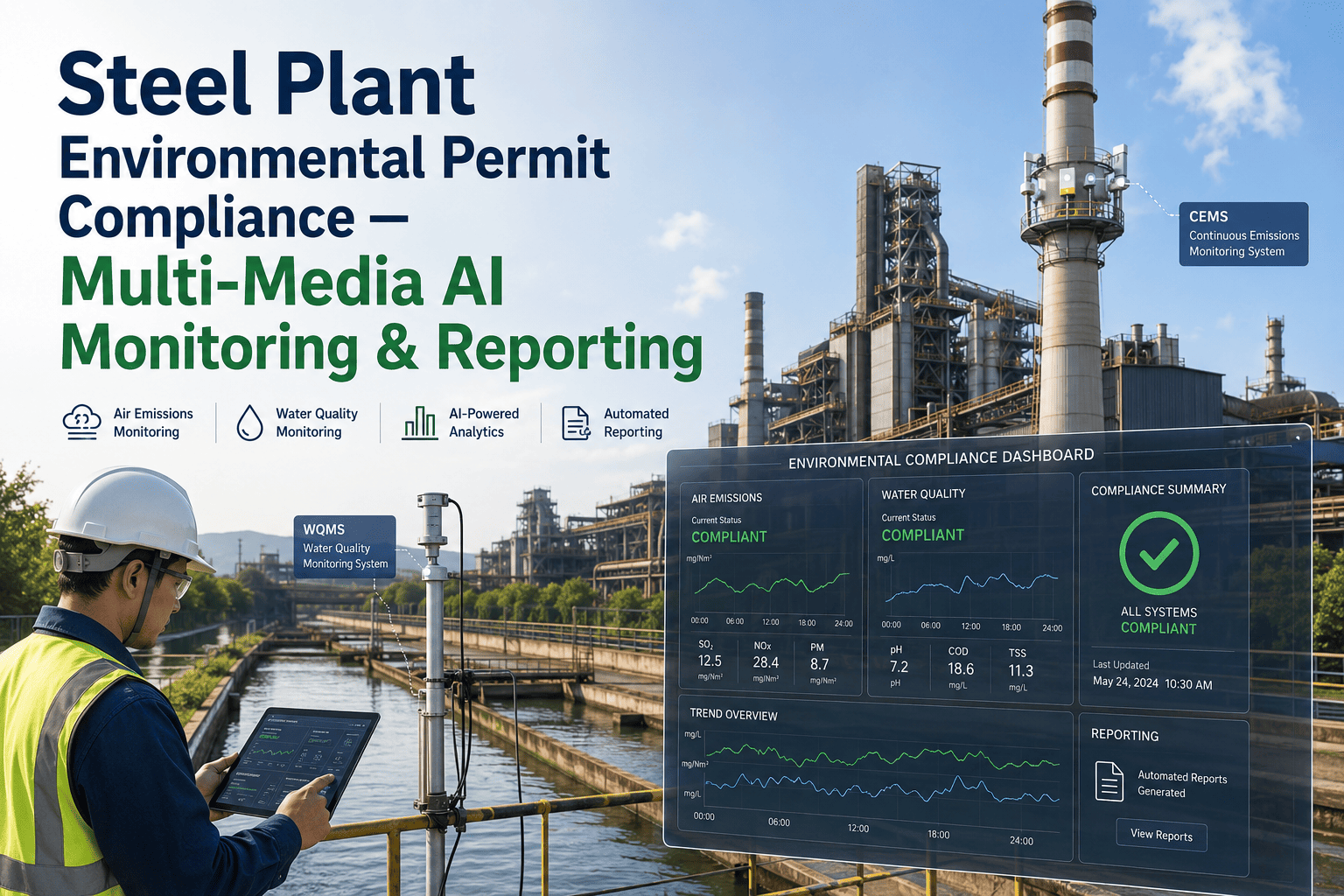
Automated CPCB/SPCB Reporting
Monthly and quarterly compliance reports generated automatically — CPCB Form IV, SPCB self-monitoring formats, and GHG inventory in MOEF-prescribed templates. Zero manual compilation, audit-ready on demand.
CEMS & Emissions Compliance Checklist — Every Item Tracked by iFactory
A complete emissions compliance audit covers stack CEMS, fugitive sources, GHG inventory, and documentation readiness. iFactory automates tracking across all four areas — replacing quarterly manual audits with continuous live compliance scoring.
- CEMS analyser calibration status — daily QA/QC
- PM/SO₂/NOₓ 30-min average vs CPCB limits
- CEMS data availability — target >95% uptime
- OCEMS transmission to CPCB portal — real-time
- Exceedance events log with cause & corrective action
- Raw material yard dust — AI camera coverage
- Haul road suppression frequency — per weather data
- Ambient PM₁₀/PM₂.₅ — perimeter monitoring
- Transfer point enclosure inspection log
- Wind barrier and water sprinkling work orders
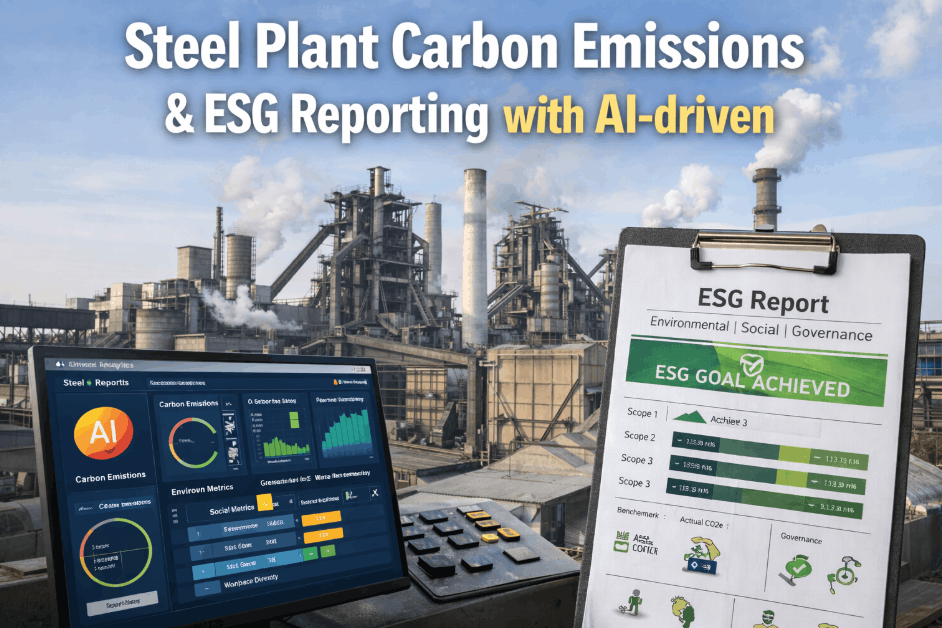
- Scope 1 CO₂ — monthly GHG inventory update
- CPCB Form IV — auto-generated monthly
- SPCB self-monitoring report — quarterly auto-fill
- PAT cycle BEE GHG inventory — annual submission
- Audit trail — 5-year archive with data lineage
Before vs. After — Emissions Compliance at a 3.5 MTPA Steel Plant
Results from a 3.5 MTPA integrated plant after 12 months on iFactory Emissions Monitoring and Compliance. Plant had received 2 CPCB show-cause notices in the 18 months prior to deployment.
What an Environment Head Said
We received a CPCB show-cause notice because our CEMS data showed gaps during a high-emission sinter plant event. iFactory would have flagged the approaching exceedance 45 minutes before it happened. We installed it the following month. In 14 months since, we have not had a single non-compliance event and our monthly reporting went from a 3-day exercise to a 4-hour automated process.
Frequently Asked Questions
Does iFactory connect directly to the CPCB OCEMS portal?
Yes. iFactory transmits CEMS data to the CPCB OCEMS server in real time — while simultaneously archiving all readings locally for audit documentation and trend analysis.
How does iFactory predict emission exceedances before they happen?
AI correlates real-time process data — sinter blend, throughput, gas flows — with historical exceedance patterns to give 30–90 minute early warning, enabling corrective process adjustments before limits are breached.
Can iFactory generate CPCB and SPCB compliance reports automatically?
Yes. Monthly CPCB Form IV, SPCB self-monitoring reports, and GHG inventory are generated automatically in prescribed formats — reducing report preparation from 3 days to 4 hours.
Does iFactory cover fugitive emissions — not just stack CEMS?
Yes. AI cameras on raw material yards, transfer points, and roads detect fugitive dust events in real time — triggering work orders for dust suppression and recording evidence for regulatory audits.
How quickly can the platform go live on an operating plant?
CEMS integration and CPCB OCEMS connection typically completes within 3–4 weeks. Fugitive emission AI camera deployment and automated reporting go live by Week 8–10.
See Emissions Monitoring Live on Your Plant
Demo configured around your stacks, CEMS setup, and CPCB reporting obligations.