Continuous Emission Monitoring Systems generate a constant stream of data, and most steel plants only look closely at that data twice — right after installation during calibration, and reactively after a regulator flags a problem. In between, months of CEMS readings often sit in a historian without anyone actively watching for the slow drift that precedes an actual exceedance, or the fugitive emission source that no fixed stack monitor was ever positioned to catch in the first place. Effective emission monitoring is not about having the instrumentation installed — nearly every plant already does — it is about actively watching trends, catching fugitive sources between the fixed monitoring points, and keeping the regulatory reporting record airtight before an inspector asks for it. iFactory helps environmental teams build that active monitoring discipline, detailed at iFactory support.
Environmental · Emission Monitoring
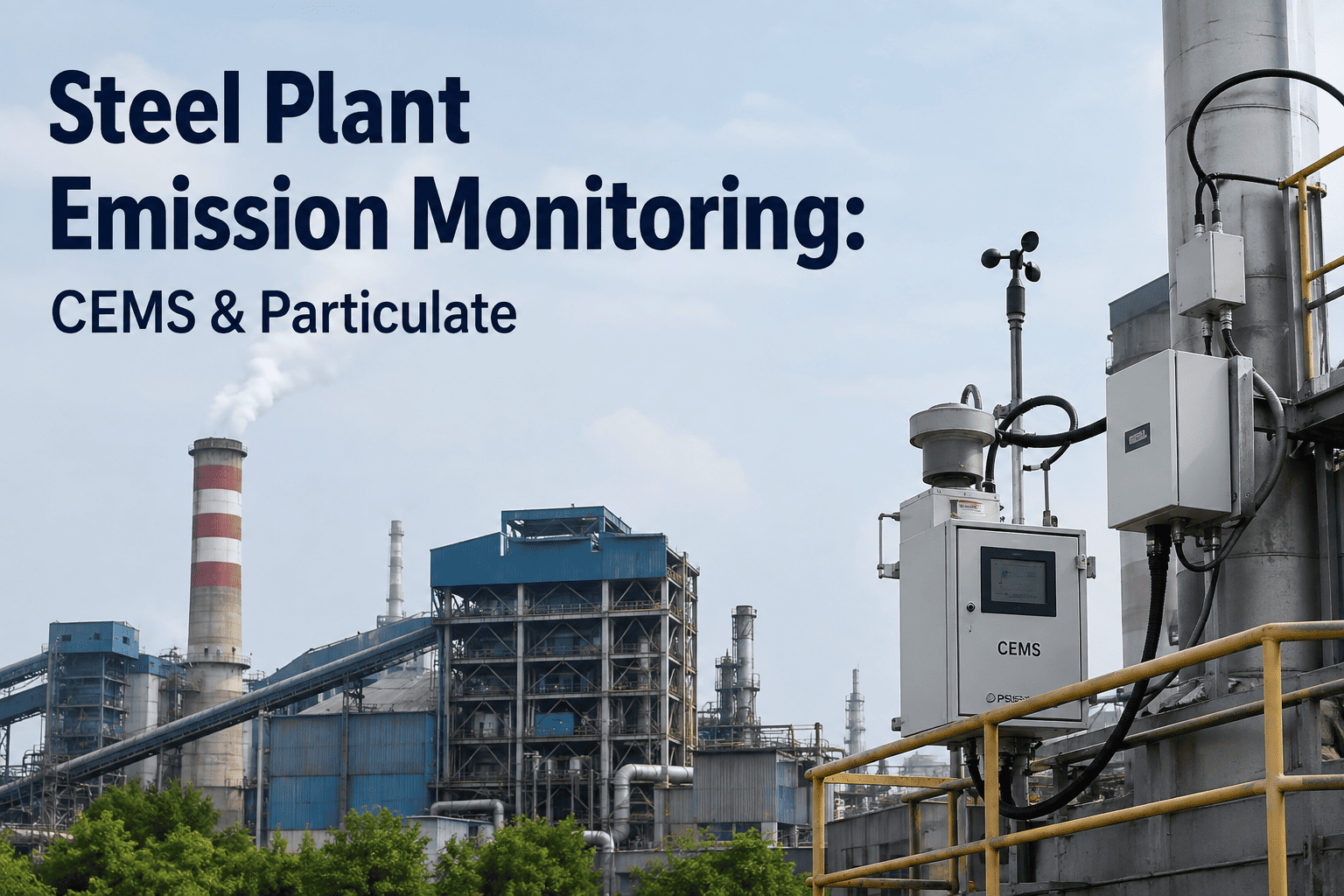
Steel Plant Emission Monitoring: Getting More Out of CEMS and Particulate Data Than a Compliance Checkbox
Stack monitoring, fugitive emission tracking, and regulatory reporting built around active trend review, not a historian nobody checks until an inspection.
Continuous
Data volume most CEMS generate that few teams actively trend-review
Fugitive
Emission category fixed stack monitors are least equipped to catch
Data Gaps
A leading cause of inspection findings, distinct from actual exceedances
Emission Source Categories
Steel Plants Emit From More Points Than the Stack Monitor Covers
Stack Emissions
EAF, BOF, and reheat furnace exhaust routed through fixed CEMS covering particulate, CO, NOx, and SO2 depending on process and permit requirements.
Fugitive Emissions
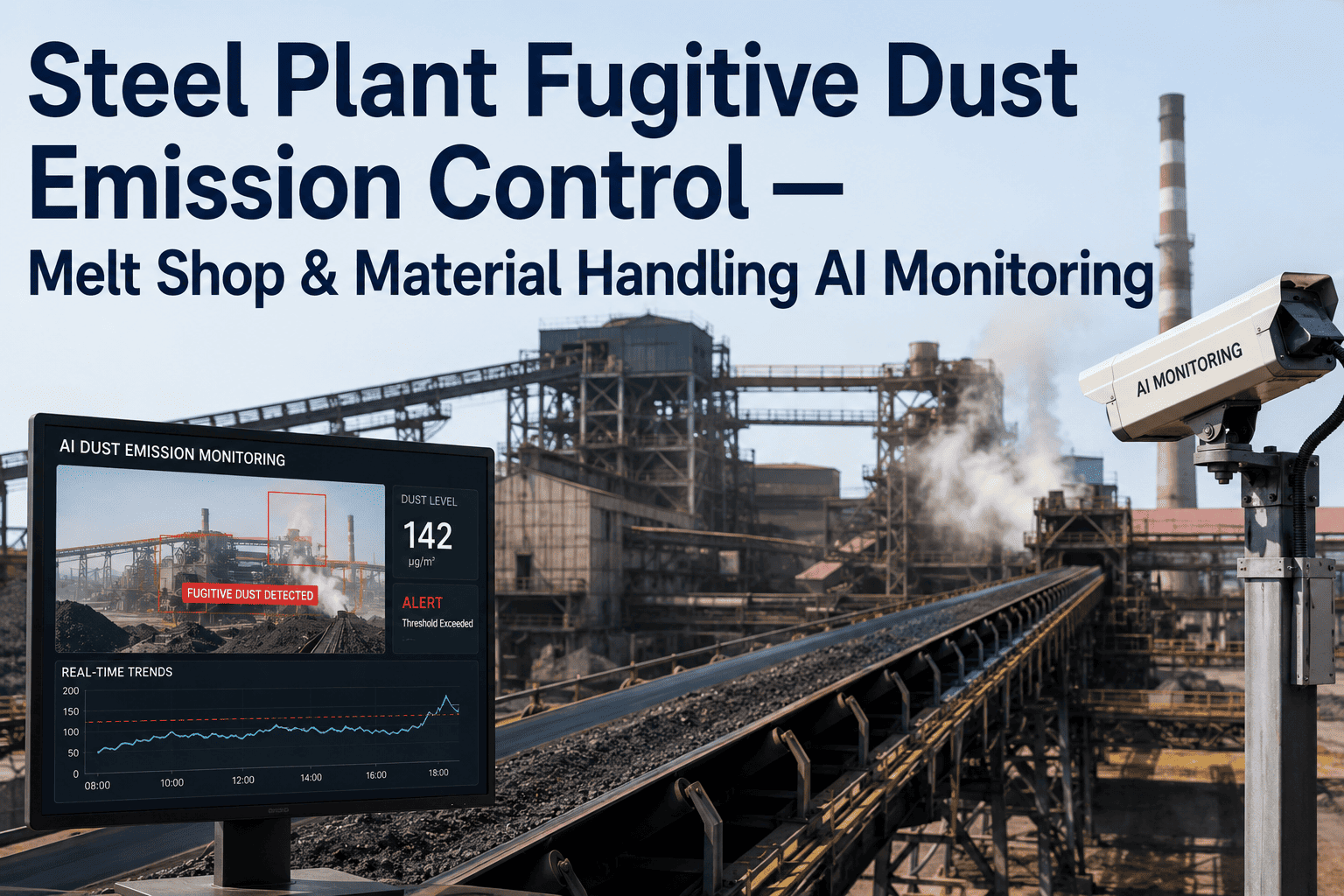
Material handling dust, roof monitor releases, and secondary emissions not captured by primary hoods — frequently the source of community complaints and visible plume issues.
Process Vents
Intermittent releases from specific process steps such as ladle preheating or scrap preheating, often permitted separately from the main stack.
Storage & Handling
Raw material stockpile dust and conveyor transfer point emissions, typically managed through best management practices rather than continuous monitoring.
CEMS Data Quality
Why the Monitoring Gap Is Often a Bigger Risk Than the Exceedance
Data Quality Issue
Common Cause
Regulatory Consequence
Unrecorded Monitor Downtime
Calibration drift, sensor fault, power interruption
Treated as inability to demonstrate compliance for that period
Delayed Calibration Checks
Missed scheduled calibration or drift check window
Data quality flag on affected readings, possible invalidation
Manual Log Transcription Errors
Data pulled from historian to spreadsheet by hand
Reporting inconsistency discovered during audit reconciliation
Missed Excursion Notification
Alert generated but not reviewed within required timeframe
Late reporting violation independent of the exceedance itself
A Missing Hour of CEMS Data Can Draw More Regulatory Scrutiny Than an Actual Exceedance.
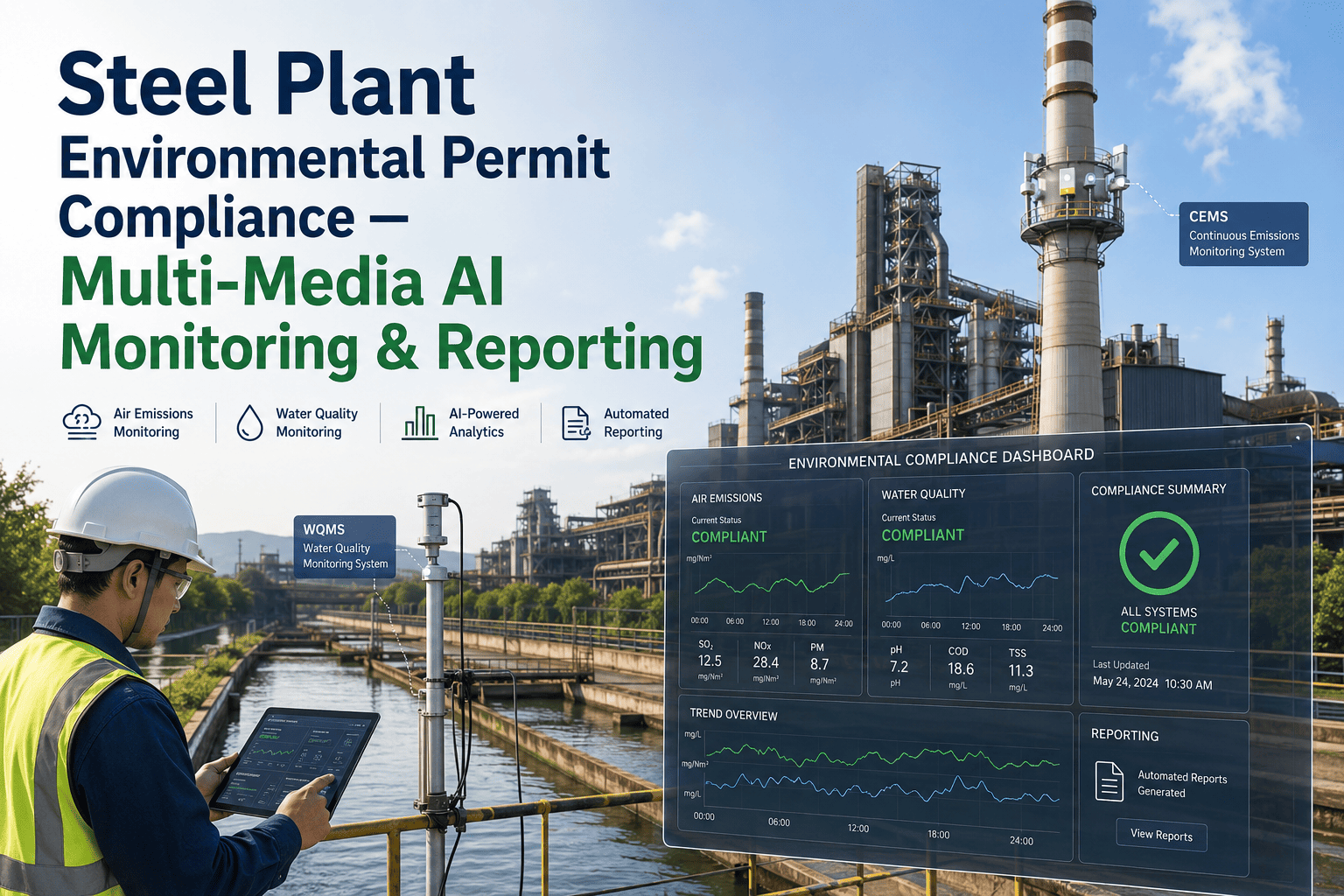
iFactory watches CEMS data completeness and calibration status continuously, flagging gaps and drift before they become inspection findings.
Catching Fugitive Emissions
Between the Fixed Monitors Is Where Most Community Complaints Originate
1
Visible Emission Observation Logs
Routine trained-observer opacity checks at material handling and roof monitor points, catching fugitive releases that stack CEMS never sees.
2
Weather-Correlated Dust Complaint Tracking
Cross-referencing community dust complaints against wind direction and stockpile activity to identify the actual source rather than guessing.
3
Baghouse and Hood Capture Efficiency Review
Declining capture efficiency at a hood or enclosure is often the actual root cause behind a rise in fugitive dust, not a new emission source appearing.
4
Best Management Practice Compliance Checks
Watering schedules, wind screens, and stockpile covering practices verified against permit requirements rather than assumed to be happening.
Field Example
Turning a Recurring Data Gap Finding Into Zero Findings the Following Cycle
A steel plant had received CEMS data completeness findings in two consecutive annual inspections, both traced to brief monitor downtime periods that had not been logged with the required justification and corrective action documentation at the time they occurred. The environmental team had been relying on a monthly manual review of historian data, which meant downtime events were often noticed weeks after they happened, too late to document the root cause with confidence.
After connecting CEMS data feeds to iFactory with automated downtime and calibration flagging, the team began receiving same-day alerts for any monitor gap, allowing root cause documentation to be completed while the event was still fresh. The following inspection cycle closed with zero data completeness findings for the first time in three years.
2 to 0
Consecutive years of data completeness findings, then zero
Same-day
Alert time for monitor downtime, down from weeks
3 years
Since the plant last had a clean data completeness record
Frequently Asked Questions
What Environmental Teams Ask About Emission Monitoring
How is a CEMS data completeness requirement typically calculated?
Most permits require a minimum data availability percentage, often in the range of 90 to 95 percent depending on jurisdiction and pollutant, calculated over a defined averaging period such as a calendar quarter. Falling below the threshold typically requires a formal excess emissions and monitoring system performance report explaining each downtime period, its cause, and the corrective action taken, which is why timely documentation of each gap matters as much as the gap itself.
Why do fugitive emissions cause more community complaints than permitted stack emissions?
Stack emissions are elevated and dispersed by design, while fugitive emissions from material handling and roof monitors are released at or near ground level close to the plant perimeter, making them far more visible and directly noticeable to neighboring communities even when total mass emitted is smaller than the permitted stack sources. This is also why fugitive sources often drive the most reputational and regulatory attention despite representing a smaller share of total permitted emissions.
What causes a CEMS to drift out of calibration between scheduled checks?
Sensor fouling from particulate buildup, sample line moisture intrusion, and normal component aging all contribute to gradual drift between calibration checks, which is why relative accuracy test audits and periodic calibration gas checks exist as verification points between full recertification cycles. A monitoring program that only reviews calibration status at the scheduled check, rather than watching for early drift signals in the readings themselves, tends to catch problems later than one that trends the data continuously.
Do baghouse and ESP performance data need to be tracked alongside CEMS readings?
Yes — a rising particulate trend at the stack CEMS is often a downstream symptom of declining baghouse or ESP collection efficiency rather than a new emission source, so tracking control equipment performance data alongside the stack readings helps identify the actual root cause faster. Plants that only watch the CEMS reading in isolation often spend longer diagnosing an exceedance than plants that correlate it against control equipment condition from the start.
How does iFactory help manage emission monitoring without new field instrumentation?
iFactory connects to existing CEMS, historian, and control equipment performance data to provide continuous trend review, automated downtime and calibration flagging, and consolidated regulatory reporting, without requiring new stack instrumentation in most cases. For fugitive source areas with limited existing monitoring, we can also advise on targeted observation or sensor additions as part of the broader emission monitoring program. To review your current monitoring setup,
book a demo.
Stop Discovering Monitoring Gaps During the Inspection.
Continuous CEMS trend review, fugitive emission tracking, and reporting built to keep your compliance record airtight before anyone asks for it.