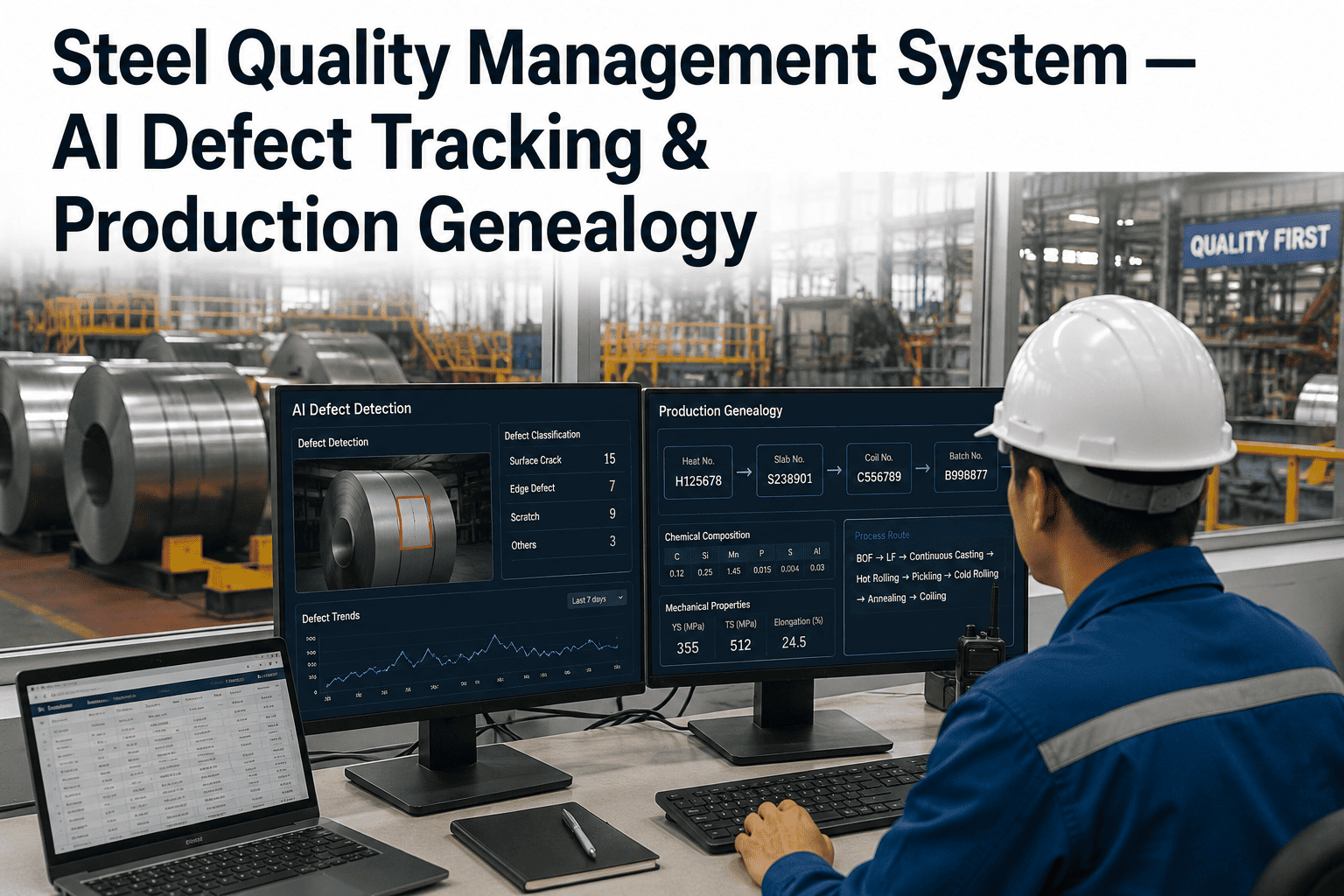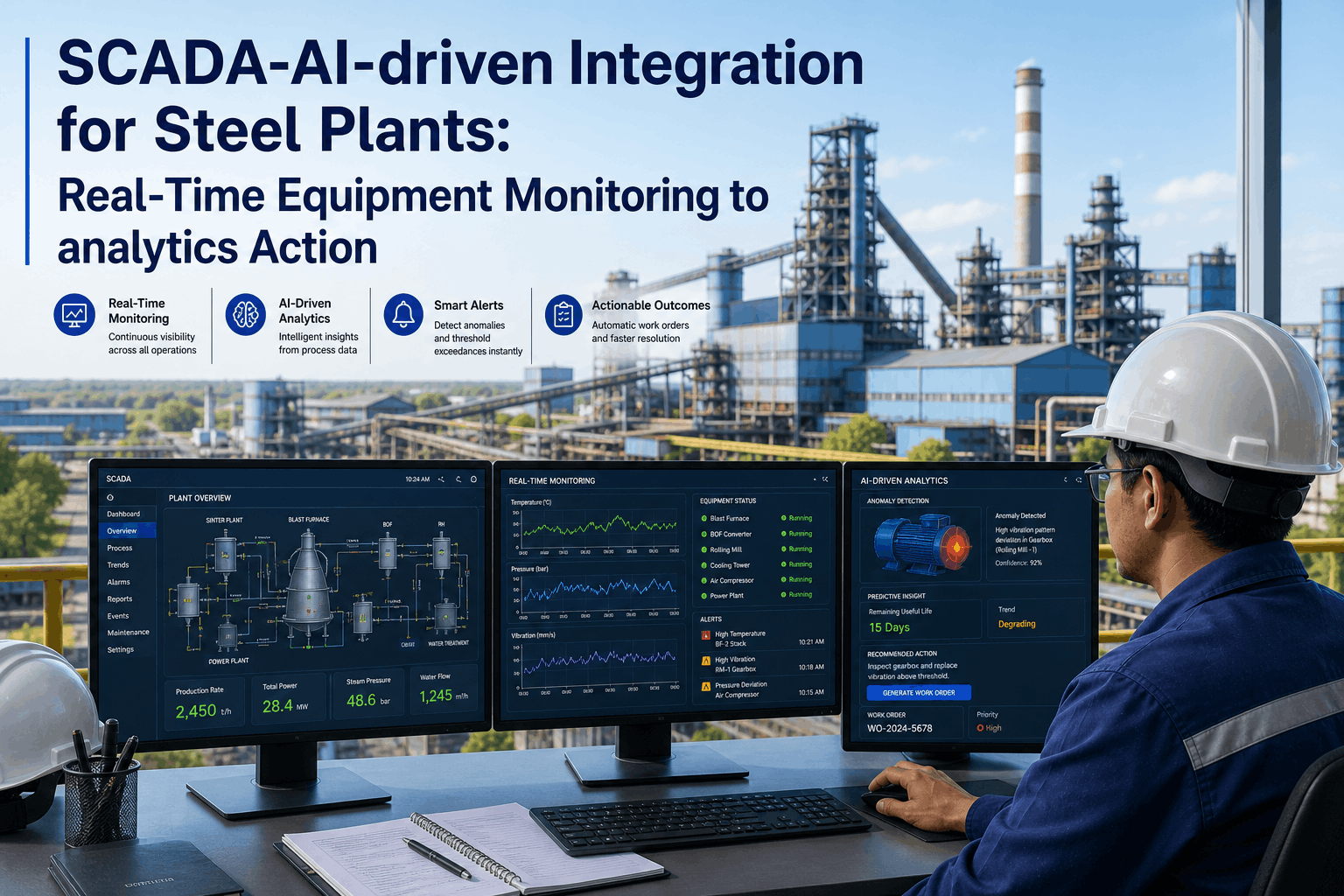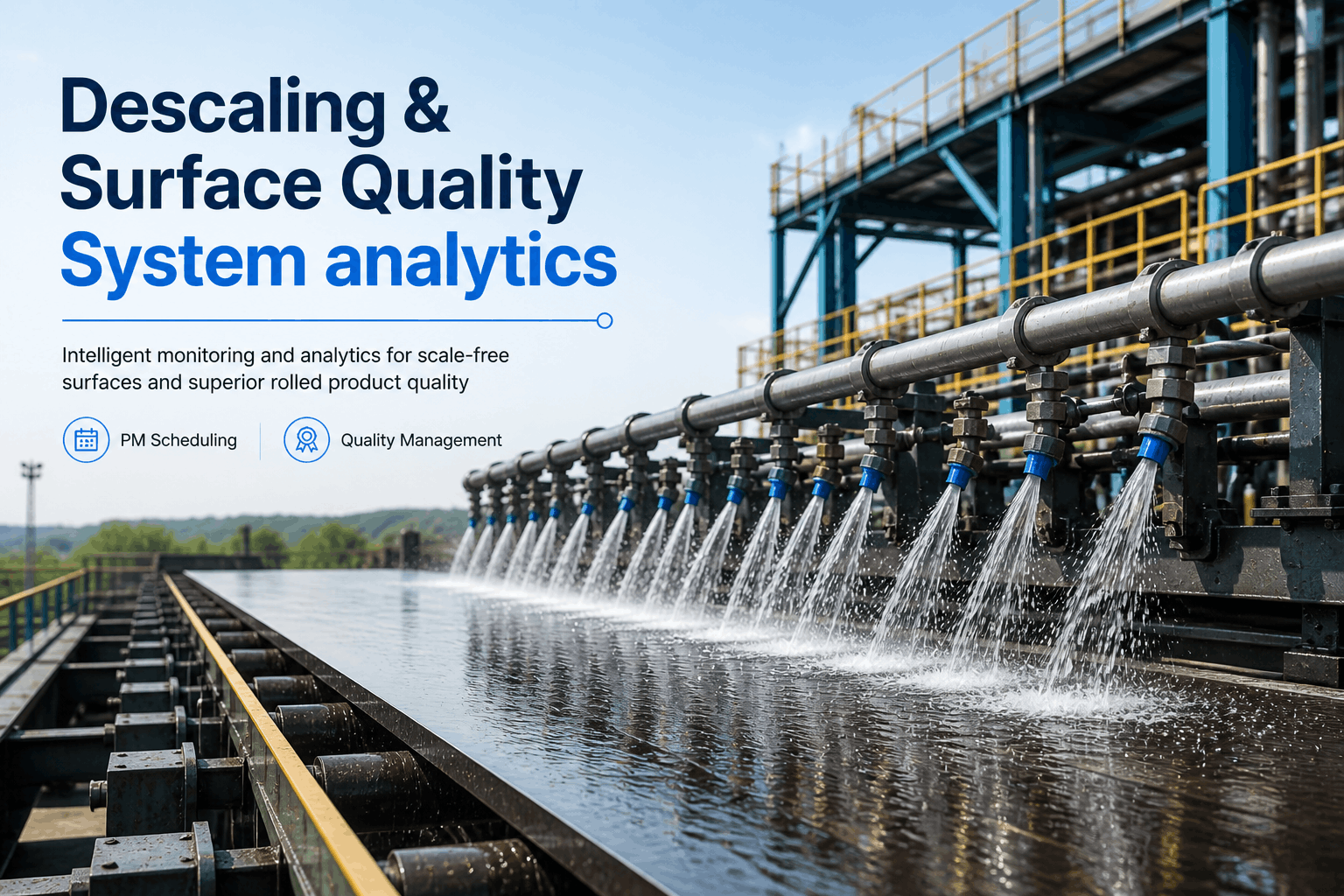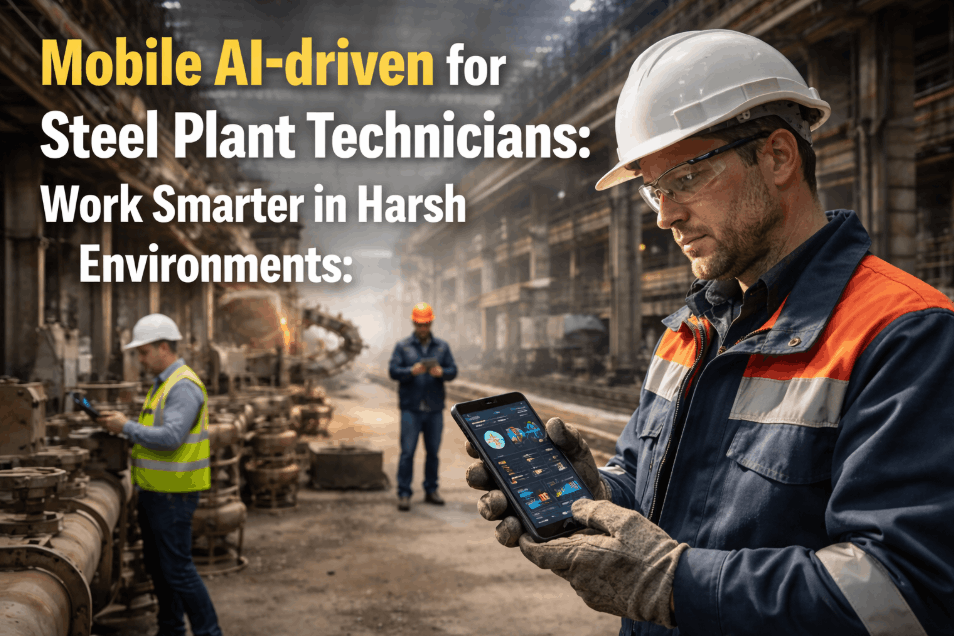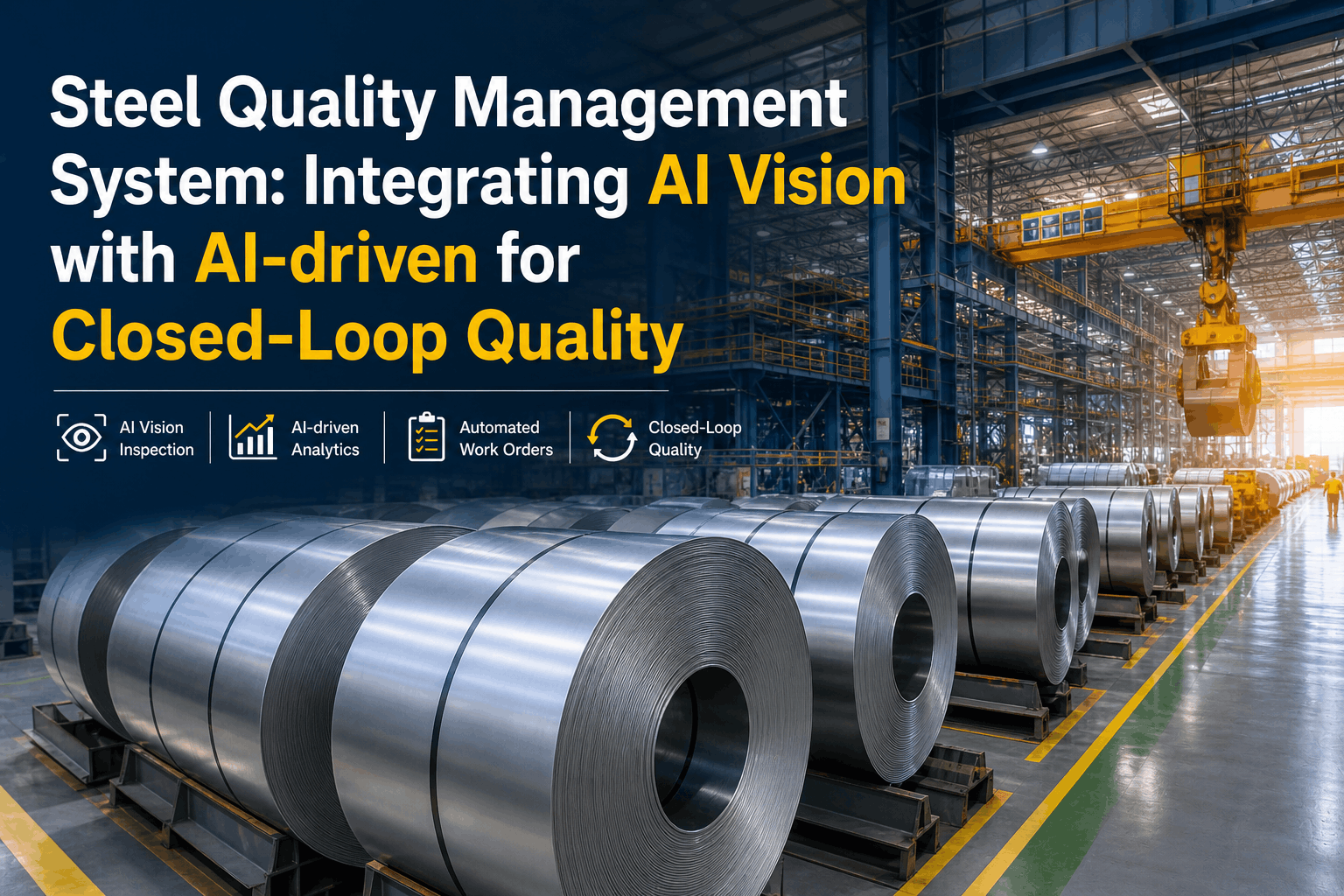
As we approach 2026, the steel industry is moving beyond basic defect monitoring toward Prescriptive Quality Governance. The integration of AI Vision (the eyes) with Autonomous Workflows (the hands) is no longer a pilot project — it is the new baseline for global quality leadership. In a high-stakes market where a 0.5% increase in "First-Pass Yield" can result in $3.5M of annual margin expansion, "Closing the Loop" is the ultimate competitive advantage. This article explores the top technical trends reshaping steel quality analytics, focusing on how iFactory’s 2026 roadmap delivers a measurable shift from "Quality Monitoring" to "Defect Elimination." Book a demo to see these 2026 benchmarks in action.
The "Quality Leakage" in modern steel plants is rarely due to a lack of data — it is due to a lack of Actionable Latency. When a surface defect is detected on a finishing stand, the root cause often lies upstream in the reheat furnace or the continuous caster. Without a closed-loop system that synchronizes vision data with maintenance and process control, that defect repeats for hours, draining EBITDA ton by ton. iFactory eliminates this friction by providing a Unified Quality Ledger that treats every defect as a setpoint trigger, moving your plant from reactive inspection to autonomous metallurgical governance.
Accelerate Your Plant's Shift to Prescriptive Quality Governance
iFactory’s 2026 platform combines high-speed AI vision with automated remediation workflows to eliminate quality leakage and stabilize your metallurgical pulse in real-time.
Why Traditional Quality Management Is Becoming Obsolete in 2026
In the high-speed environment of a modern rolling mill or finishing line, reactive quality logs are a liability. By 2026, the delta between "Detection" (finding a defect) and "Remediation" (fixing the root cause instantly) will be the primary driver of margin expansion. Legacy QMS systems lack the contextual intelligence required to synchronize vision data with maintenance work orders. iFactory’s 2026 engine bridges this gap, providing plant managers with a Closed-Loop Copilot that handles both defect classification and autonomous corrective action. Request a business case to evaluate your shift to Prescriptive Quality.
"iFactory's 2026 platform has transformed our quality department from a 'Checkpoint' into an 'Autonomous Governance Engine.' By closing the loop between our surface vision systems and our mill setpoints, we've reduced internal scrap by 18% and achieved a perfect automotive audit score."
The Top 5 Trends Powering the Next Tier of Steel Quality Analytics
iFactory's 2026 Quality Platform integrates directly with your plant’s OT and ERP layers — turning raw vision into autonomous quality decisions.
Applying 2026 Quality Fusion Across the Steel Value Chain
The true value of Quality Analytics 2026 is in the specific mill moments where autonomous remediation replaces manual quality audits.
Scenario 1: Scale Formation Remediation
Edge AI identified scale-pit patterns on the strip surface. It instantly diagnosed furnace oxygen excess and auto-triggered an atmospheric adjustment in the reheat furnace, preventing 50 tons of scrap.
Scenario 2: Inclusion Gatekeeping (Caster-to-Mill)
AI detected slag entrapment at the caster. It automatically updated the "Slab Digital Twin," flagging it for low-priority orders and preventing the mill from wasting energy on defective material.
Scenario 3: Audit Automation (Automotive)
During an unannounced IATF audit, the **AI Copilot** instantly retrieved all vision, chemistry, and tensile records for a specific automotive coil, proving 100% compliance in seconds.
Scenario 4: Weld-Voltage Prescriptions
By predicting porosity risk from vision-detected arc instability, AI auto-adjusted the weld-voltage hydraulics, maintaining integrity at higher speeds and boosting line throughput.
Evolution of Steel Quality Support: 2024 vs. 2026
For operations leaders, this comparison illustrates the performance gap between conventional "Quality Checkpoints" and the 2026 iFactory Prescriptive engine.
| Capability | Legacy / Manual | Standard 2024 | iFactory 2026 Edge |
|---|---|---|---|
| Decision Latency | Hours (Lab lag) | Minutes (Cloud alert) | Milliseconds (Edge AI) |
| Control Loop | Open-loop (Manual fix) | Feedback (Alarm-driven) | Closed-loop (Autonomous) |
| Audit Basis | Paper log retrieval | Digital report export | GenAI Quality Copilot |
| Business Impact | Cost of claims reduction | 3-4× ROI (Internal scrap) | 10-15× ROI (Yield + Trust) |
| Interoperability | Disconnected silos | CSV/API data sync | Native ERP/CMMS Fusion |
Deploying 2026 Quality Fusion: The 4-Phase Path
Integrating Edge AI and Closed-Loop Quality into a steel plant requires a phased approach that ensures zero production disruption.
Quality Infrastructure Audit & Mapping
Audit of existing vision systems, lab testers, and ERP connectivity. Identification of "Critical Quality Control Points" across the rolling and finishing lines.
Vision-to-Workflow Integration
Installation of high-speed Edge AI cameras. AI starts fusing vision data with CMMS/ERP to build the "Corrective Action Feedback Loop."
Prescriptive Remediation & Copilot Activation
Activation of the **GenAI Quality Copilot** for audit readiness. Prescriptive alerts move from "Alerting" to "Triggering" automated work orders.
Full Scale-Out & Autonomous Governance
Deployment expands across the wider product portfolio. Continuous model improvement drives down RMAs and stabilizes quality OEE at the fleet scale.
Steel Quality Fusion 2026: Frequently Asked Questions
Don't Just Inspect Quality. Govern It.
iFactory's 2026 quality management platform delivers real-time Edge AI vision, automated root cause inference, and closed-loop remediation — purpose-built for high-yield steel manufacturing.