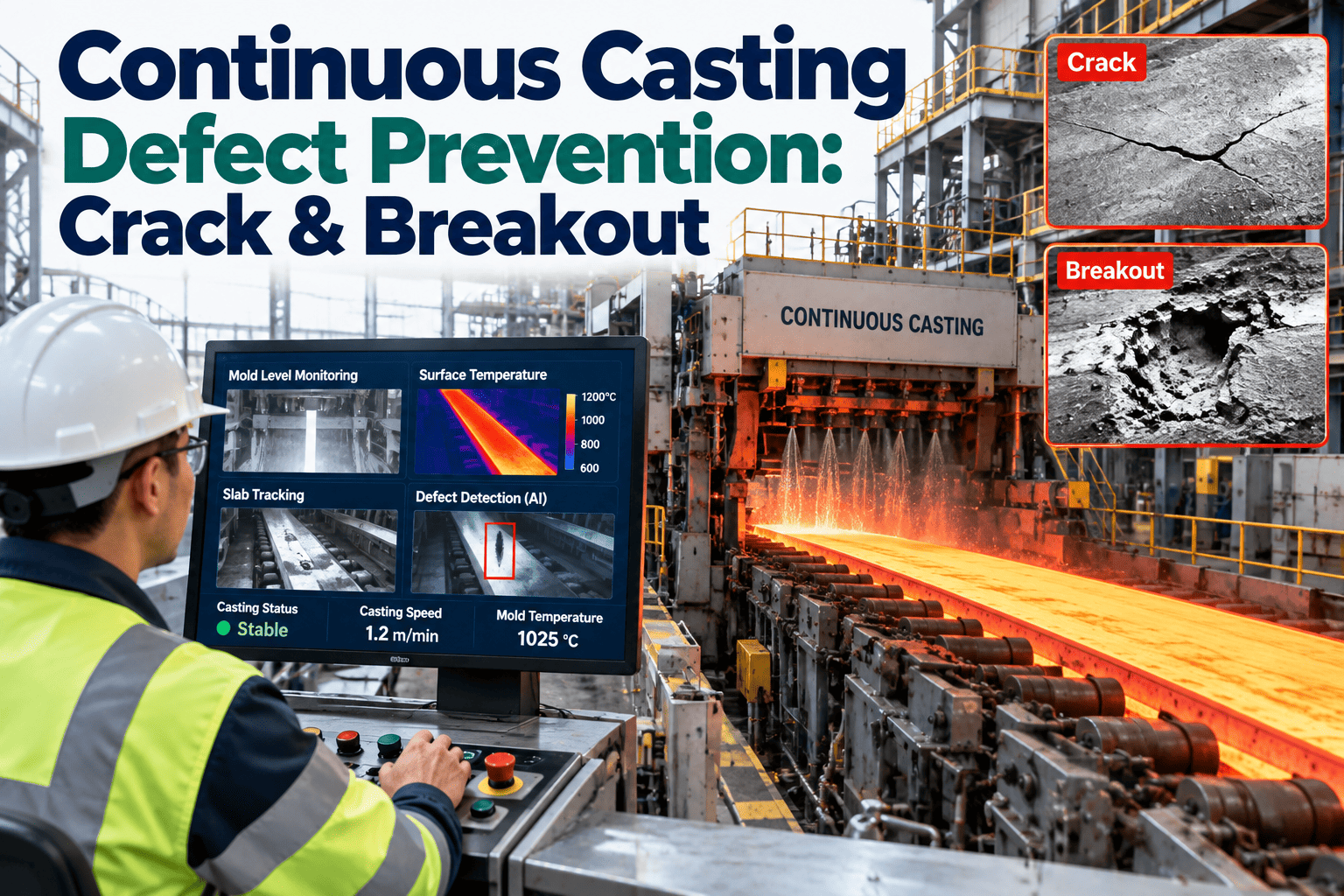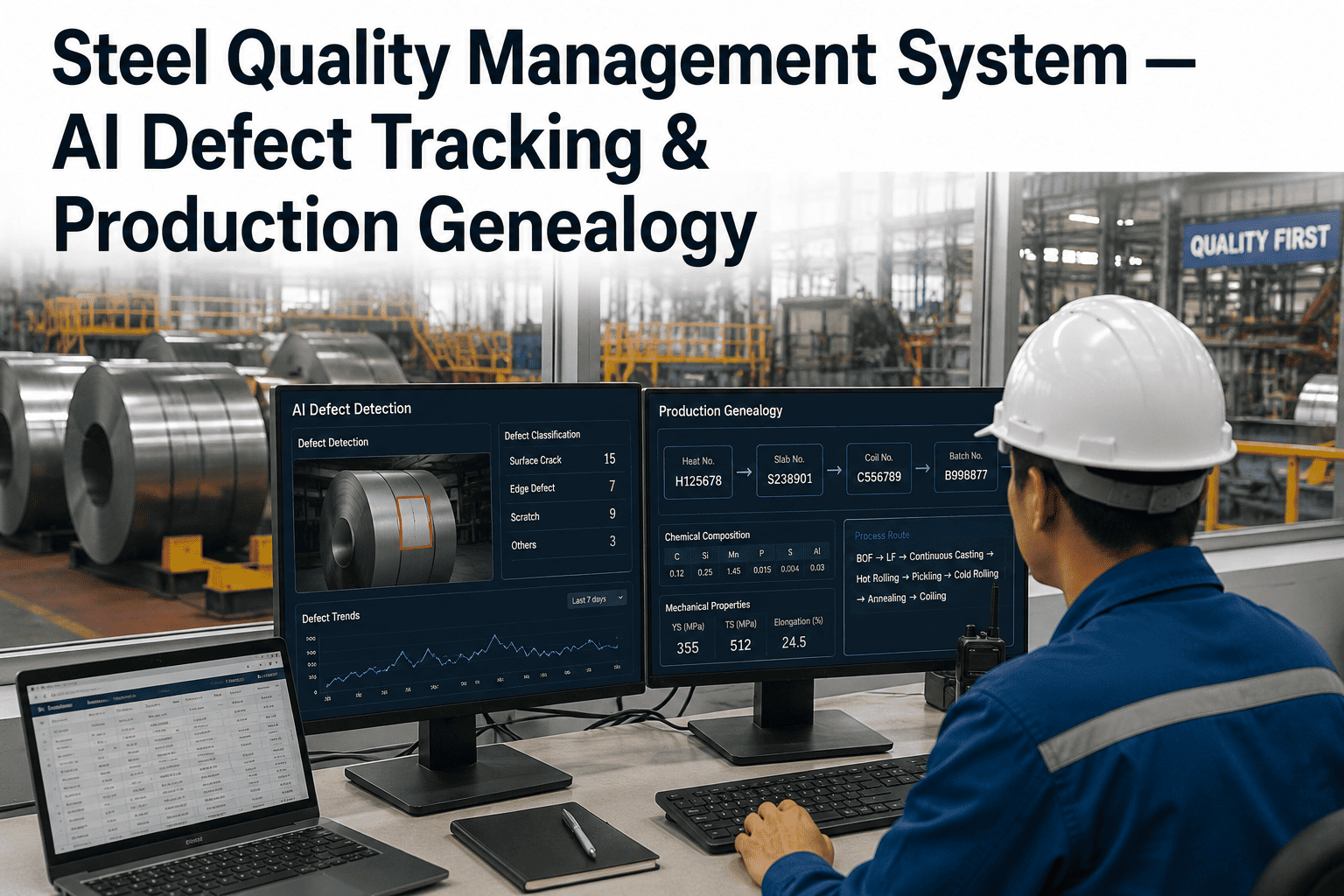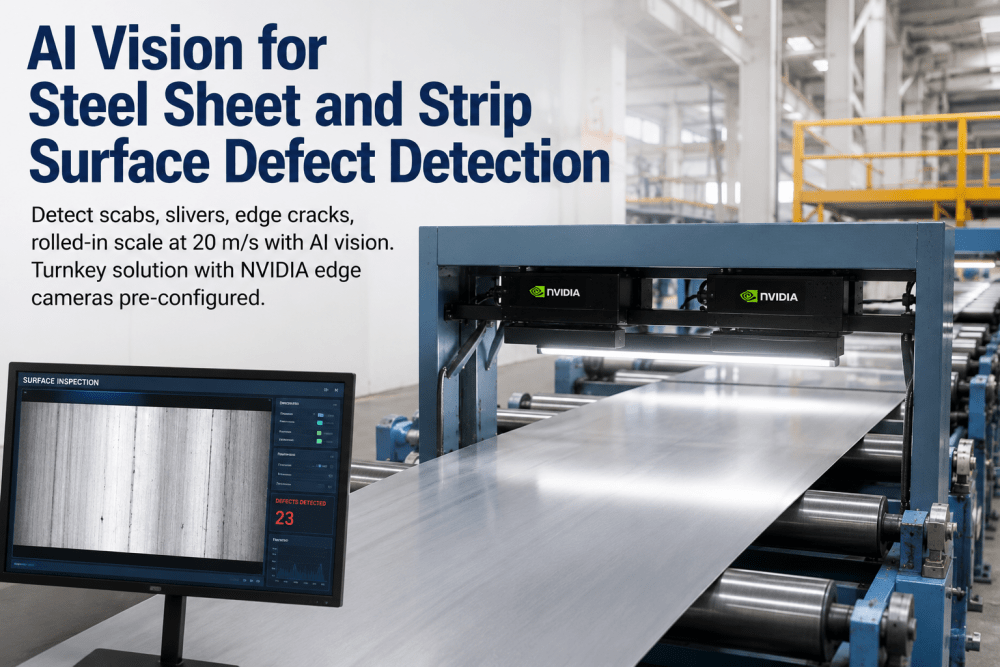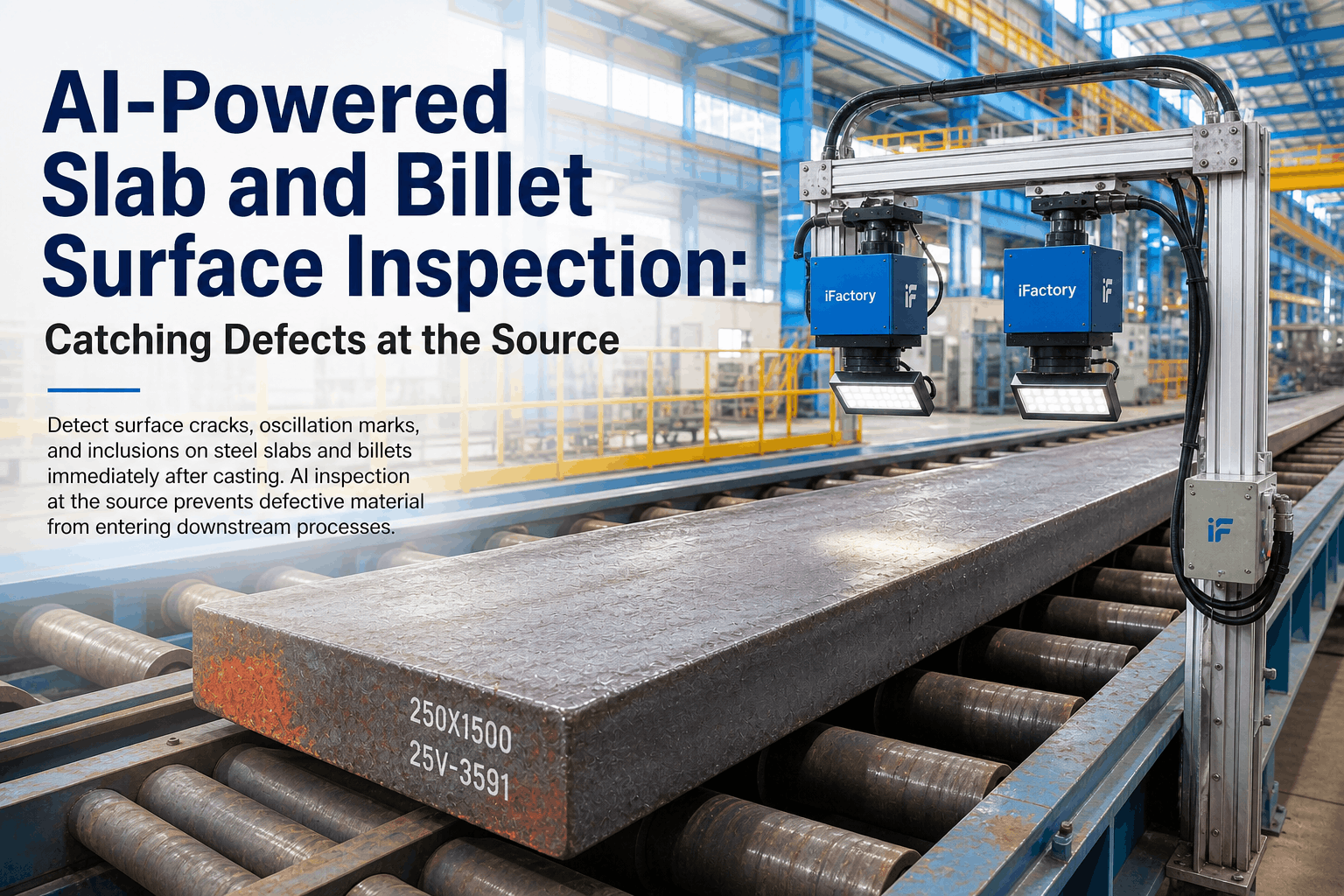
Steel slabs and billets represent more than semi-finished products — they are the foundational assets that demand rigorous quality stewardship, precision analytics, and a defect elimination strategy built for the modern era. From the high-heat environment of the continuous caster to the cooling beds, slab and billet surface inspection is reshaping how steel plants maintain, optimize, and future-proof their most critical production gates. Without a data-driven approach to casting quality, manufacturers face accelerating downstream failures, compliance gaps, and ballooning scrap costs that strain EBITDA for decades. This guide delivers actionable insight into how modern AI-vision platforms are transforming casting quality management from reactive manual inspection into proactive, evidence-based stewardship.
Is Your Casting Quality Data Working for You?
Unify surface defect detection, oscillation mark analysis, and quality traceability workflows into one intelligent platform designed for high-consequence slab and billet casting.
Why AI Surface Inspection Is Redefining Slab and Billet Quality Management
The stewardship of semi-finished steel assets has always been uniquely challenging — but the stakes have never been higher. Extremes in surface temperature, heavy scale formation, and high casting speeds all require specialized quality knowledge combined with real-time monitoring capabilities that traditional facility management approaches simply cannot provide. Modern casting analytics platforms bridge this critical gap by aggregating data from high-resolution thermal cameras, 3D laser profilers, casting activity logs, and quality documentation systems into a single, unified intelligence layer. When melt shop managers book a demo, the most common discovery is that their casting assets are generating enormous volumes of untapped visual data that — once connected — can prevent irreversible quality losses and dramatically reduce downstream grinding and rework expenditures.
The shift from reactive to predictive casting quality management begins with surface visibility. Slabs and billets are acutely sensitive to mould oscillation variations, spray cooling irregularities, and casting powder performance — conditions that AI-vision sensors can monitor continuously and flag before they advance to structural defects like longitudinal cracks or slag inclusions. This data layer transforms a quality manager's ability to intervene early, protect material integrity, and maintain compliance with global standards for high-performance steel products.
Surface Crack Detection
Deploy high-frequency 3D imaging to identify and classify longitudinal, transverse, and corner cracks. Receive early-stage degradation alerts before minor casting process drift becomes catastrophic yield loss.
Oscillation Mark Analytics
Monitor mould oscillation patterns and mark depth in real-time. Protect surface fabric by ensuring that every casting cycle maintains the exact metallurgical profile required for rolling mill success.
Inclusion Lifecycle Intelligence
Identify slag entrapment and chemical inclusions at the source. Centralize defect documentation and quality logs for every active heat across the plant's semi-finished product portfolio.
Quality Traceability Automation
Automatically generate "Digital Quality Twins," slab-specific maintenance logs, and audit-ready records — eliminating manual documentation burdens and reducing downstream claims exposure.
Building a Unified AI-Vision Architecture for Slab and Billet Stewardship
A purpose-built casting quality analytics platform must address four foundational requirements unique to high-consequence steel assets: quality compliance tracking, material-specific defect monitoring, restoration lifecycle management, and long-range capital forecasting aligned with mill investment cycles. Managers that have already booked a demo consistently report that connecting their fragmented inspection records, contractor logs, and AI-vision data into a unified analytics layer is the single most impactful step in their program modernization journey.
| Analytics Module | Primary Function | Casting Application | Quality Benefit | Priority Level |
|---|---|---|---|---|
| Surface Inspection | Crack &inclusion tracking | Hot/Cold Slabs & Billets | Early failure intervention | Critical |
| Geometric Profiling | Dimension & mark control | Slab Edges & Billet Faces | Prevents rolling failure | Critical |
| Compliance Reporting | Regulatory documentation | Quality & Customer Audits | Zero compliance gaps | High |
| Defect Lifecycle | Project & rework tracking | Slab Grinding & Billet Scarfing | On-budget delivery | High |
| Sustainability Performance | Yield & Energy modeling | Waste & Scrap analytics | Predictable CapEx planning | Standard |
How AI-Vision Platforms Support Global Casting Quality Standards Compliance
Compliance with international steel quality standards is a non-negotiable requirement for any top-tier mill. Yet most manufacturers still manage their casting quality through paper-based inspection reports, disconnected spreadsheets, and manual visual audits at the cooling bed. This approach creates dangerous documentation gaps that can jeopardize downstream certifications, endanger customer status, and expose mills to significant liability during audit cycles. Modern steel quality analytics platforms address this directly by digitizing every compliance touchpoint — from initial conditions assessments to post-shipment documentation — into a single, audit-ready system of record. Quality directors who book a demo early in their operational excellence cycle consistently achieve stronger regulatory outcomes and faster customer approvals.
Casting Asset Inventory & Quality Assessment Digitization
Create a comprehensive digital registry of all casting outputs — slab IDs, billet grades, mould profiles, and thermal history — mapped against their current defect ratings and quality priority classifications.
AI-Vision Sensor Deployment for Source Monitoring
Install high-speed cameras and laser profilers at the caster exit. Integrate with existing mill SCADA systems to create a continuous real-time data stream that captures quality trends invisible to manual inspection at high temperatures.
Quality Analytics Platform Activation
Connect all camera streams, caster logs, and compliance filings to the central analytics platform. Configure role-specific dashboards for melt shop managers, quality engineers, and customer support staff.
Predictive Defect Signature Modeling
Enable AI-driven defect forecasts that automatically identify process drift in the mould or spray chamber before it results in a scrap event. Prioritize interventions by defect significance — ensuring that character-defining features receive priority treatment.
Long-Range Quality Capital Planning
Leverage historical defect data to generate 10-, 20-, and 30-year capital investment forecasts. Build defensible budget justifications for caster modernizations, mould replacements, and line upgrades.
"Before deploying iFactory's AI-vision system, we were losing 4% of our billet yield to longitudinal cracks that weren't detected until they reached the rolling mill. By catching these defects at the source, we've achieved an 85% reduction in downstream scrap and a 100% reduction in customer claims for surface quality issues."
Top Operational Gaps in Slab and Billet Quality Management
Most mills pursuing improvements to their **casting asset service** programs encounter a predictable set of operational and documentation challenges. Understanding these gaps before a platform deployment dramatically improves implementation success and helps quality managers allocate finite budgets more strategically across complex **steel casting** portfolios.
Condition assessment reports, caster logs, and customer claims data sit in disconnected systems — making it impossible to track defect trends over time or correlate mould dynamics with quality outcomes.
Visual inspection on cooling beds happens hours after the defect occurred in the mould, introducing a "Quality Lag" that results in significant tons of defective material before the process is corrected.
Most steel plants lack continuous thermal-visual monitoring of the hot slab surface, leaving character-defining fabric vulnerable to undetected spray irregularities and cooling drift.
Without predictive AI, quality interventions are triggered only after visible deterioration — a reactive posture that results in more invasive rework and higher scrap costs.
Long-range traceability plans built on manual documentation consistently fail customer audits, leading to deferred maintenance backlogs and jeopardizing high-value supply contracts.
Integrating modern AI cameras into legacy caster fabric without a unified analytics framework creates undocumented interventions that violate safety standards and void certifications.
Closing these gaps requires more than off-the-shelf defect tracking software — it demands a purpose-built platform designed for the compliance complexity and material sensitivity of steel casting. Quality officers regularly book a demo to benchmark their gaps against a proven industrial analytics architecture.
Integrating AI Computer Vision Into Legacy Caster Infrastructure
One of the most technically demanding aspects of **casting quality restoration** is the responsible integration of modern digital vision systems into protected industrial fabric. Legacy mould oscillating systems, secondary cooling chambers, and run-out tables must all be digitized without disrupting existing production cycles. A robust **casting quality analytics** platform supports this process by maintaining detailed documentation of every system penetration, material alteration, and reversible intervention — creating a complete digital record that satisfies international standards and supports future quality planning.
Key Casting Quality Analytics Capabilities for Modern Steel Plants
Maintain continuous digital condition records for historic slab surfaces, billet edges, and original finishes — with automated degradation alerts linked to thermal-visual data.
Centralize before/during/after photographic documentation, laser profile specifications, and rework rationale for every production run in a customer-ready digital archive.
Track every AI-vision intervention against the industrial fabric baseline — documenting the effectiveness of predictive modeling in preventing high-value scrap events.
Automatically generate performance reports for yield optimization retrofits, demonstrating measurable decarbonization outcomes aligned with global sustainability requirements.
Modernize Your Casting Quality Stewardship Program Today
Deploy a unified analytics platform that integrates high-speed vision, mould synchronization, quality documentation, and compliance reporting — built specifically for slab and billet manufacturing.
Slab and Billet Quality Analytics — Common Questions Answered
How does the platform handle hot slabs (800°C+)?
We utilize specialized water-cooled enclosures and high-dynamic-range (HDR) thermal imaging to capture surface details at extreme temperatures. Our AI models are specifically trained to filter out infrared noise and detect cracks even when the material is still glowing.
Can the system detect cracks through heavy scale?
Yes. By combining 3D laser profiling with high-contrast imaging, the system can distinguish between surface scale (which is loose) and actual structural cracks that penetrate the metallurgical shell. We also integrate with high-pressure descalers to ensure the cleanest possible view.
What is the typical yield improvement for a billet mill?
Most of our clients report a 3-5% increase in total yield by eliminating internal scrap. More importantly, they see a 40% reduction in "Customer-Returned Material" by catching surface defects before the billets are shipped or rolled.
Does the platform support different steel grades (e.g., stainless vs. carbon)?
Absolutely. The AI engine is grade-aware. It automatically adjusts its defect sensitivity and classification thresholds based on the metallurgical properties and typical defect signatures of the specific grade being cast.
How does it handle oscillation marks?
The system tracks mark depth, frequency, and uniformity. Excessive or irregular oscillation marks are often precursors to longitudinal cracks; by flagging these irregularities early, the system allows the mould supervisor to adjust casting speed or powder flow before a failure occurs.
Can we integrate this with our existing MES/ERP?
Yes. iFactory provides standard APIs to push quality data directly into your ERP (e.g., SAP, Oracle) and MES. This ensures that every slab and billet ID in your business system is automatically updated with its digital quality twin.
What happens if a defect is detected?
The system triggers an immediate "Defect Alert" to the pulpit. Depending on your configuration, it can automatically mark the defective area with an industrial spray-paint system or flag the material for "Mandatory Grinding" in the downstream scheduling system.
Is the lighting condition in the caster bay an issue?
Our systems use high-intensity, multi-spectral lighting that overrides ambient factory light. This ensures consistent, high-contrast images regardless of shift time, dust levels, or environmental conditions in the melt shop.