Steel manufacturing assets represent more than industrial machinery — they are high-capital production engines that demand rigorous reliability engineering, precision root cause analysis, and a downtime elimination strategy built for the modern era. From high-frequency Electric Arc Furnaces to continuous cold rolling mills, downtime analysis is reshaping how steel plants maintain, optimize, and future-proof their most critical assets. Without a data-driven approach to downtime reduction, steel manufacturers face accelerating equipment deterioration, compliance failures, and ballooning emergency maintenance costs that strain EBITDA for years. This guide delivers actionable insight into how modern analytics platforms are transforming steel mill downtime management from reactive crisis response into proactive, evidence-based reliability engineering.
Is Your Downtime Data Working for You?
Unify production loss tracking, root cause identification, and maintenance workflows into one intelligent platform designed for high-consequence steel manufacturing assets.
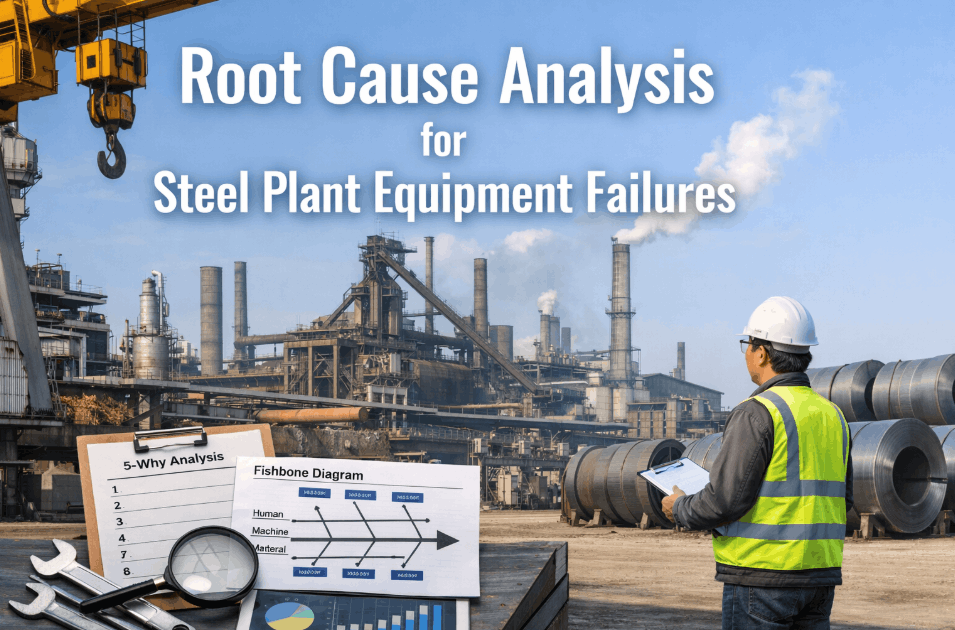
Why Root Cause Analysis Is Redefining Steel Mill Reliability Management
The stewardship of high-capital steel manufacturing assets has always been uniquely challenging — but the stakes have never been higher. High-temperature metallurgical cycles, extreme mechanical loads, and continuous throughput pressures all require specialized reliability knowledge combined with real-time monitoring capabilities that traditional downtime logs simply cannot provide. Modern downtime analytics platforms bridge this critical gap by aggregating data from PLC event streams, vibration sensors, thermal monitors, and maintenance logs into a single, unified intelligence layer. When mill managers book a demo, the most common discovery is that their machines are generating enormous volumes of untapped "Stoppage Data" that — once analyzed — can identify recurring micro-stoppages and prevent catastrophic failures.
The shift from reactive "Downtime Counting" to proactive "Root Cause Elimination" begins with data granularity. A rolling mill "Stop" event is rarely an isolated mechanical fault; it is often the culmination of a causal chain involving upstream tension fluctuations, coolant temperature drift, or metallurgical grade inconsistencies. This data layer transforms a reliability engineer's ability to intervene early, protect asset life, and maintain compliance with IATF 16949 and ISO 9001 quality standards.
Automated Event Capture
Eliminate manual log inaccuracies by ingesting downtime events directly from the PLC. Track millisecond-level stops that are invisible to operators but indicate early-stage component fatigue.
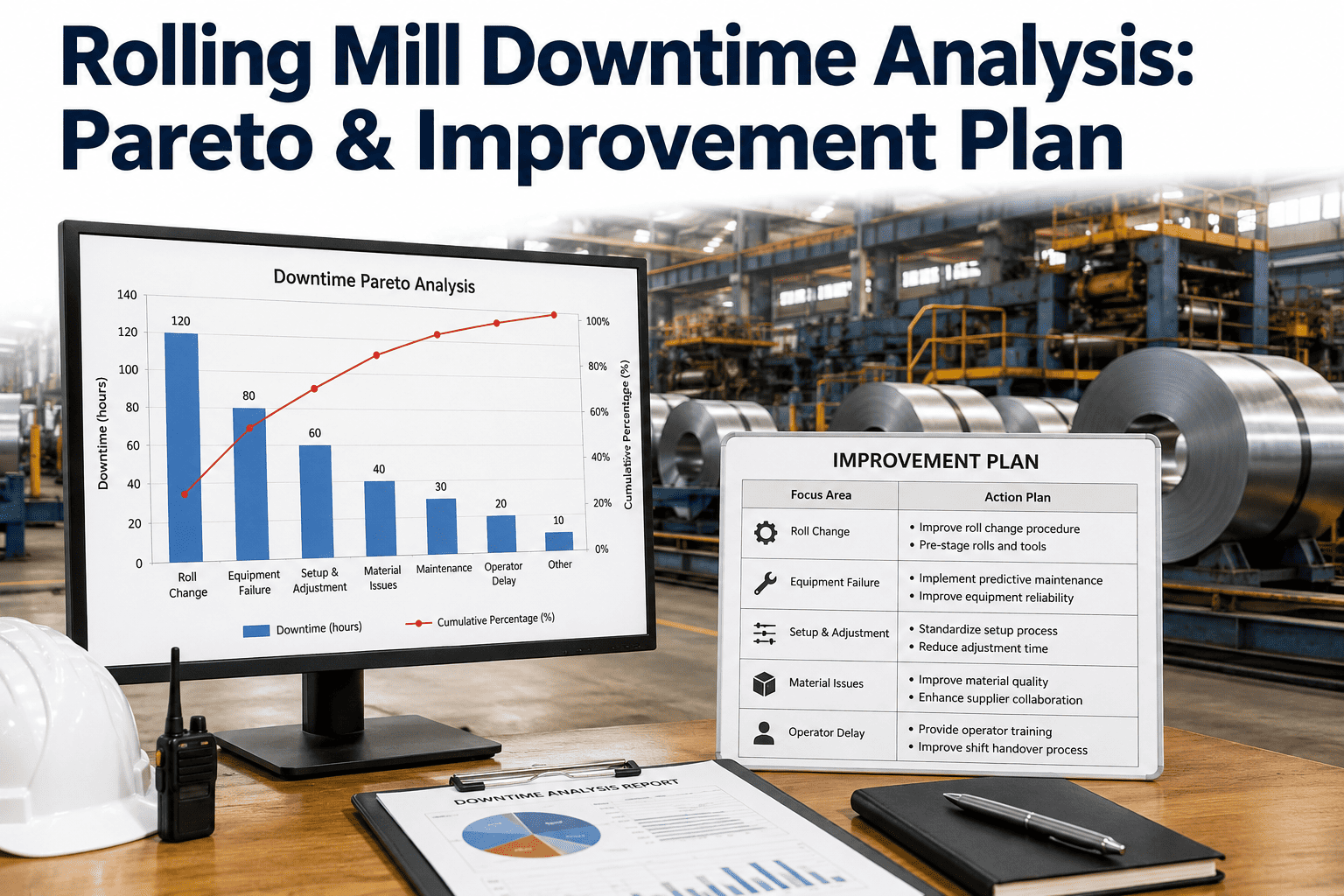
Pareto Loss Categorization
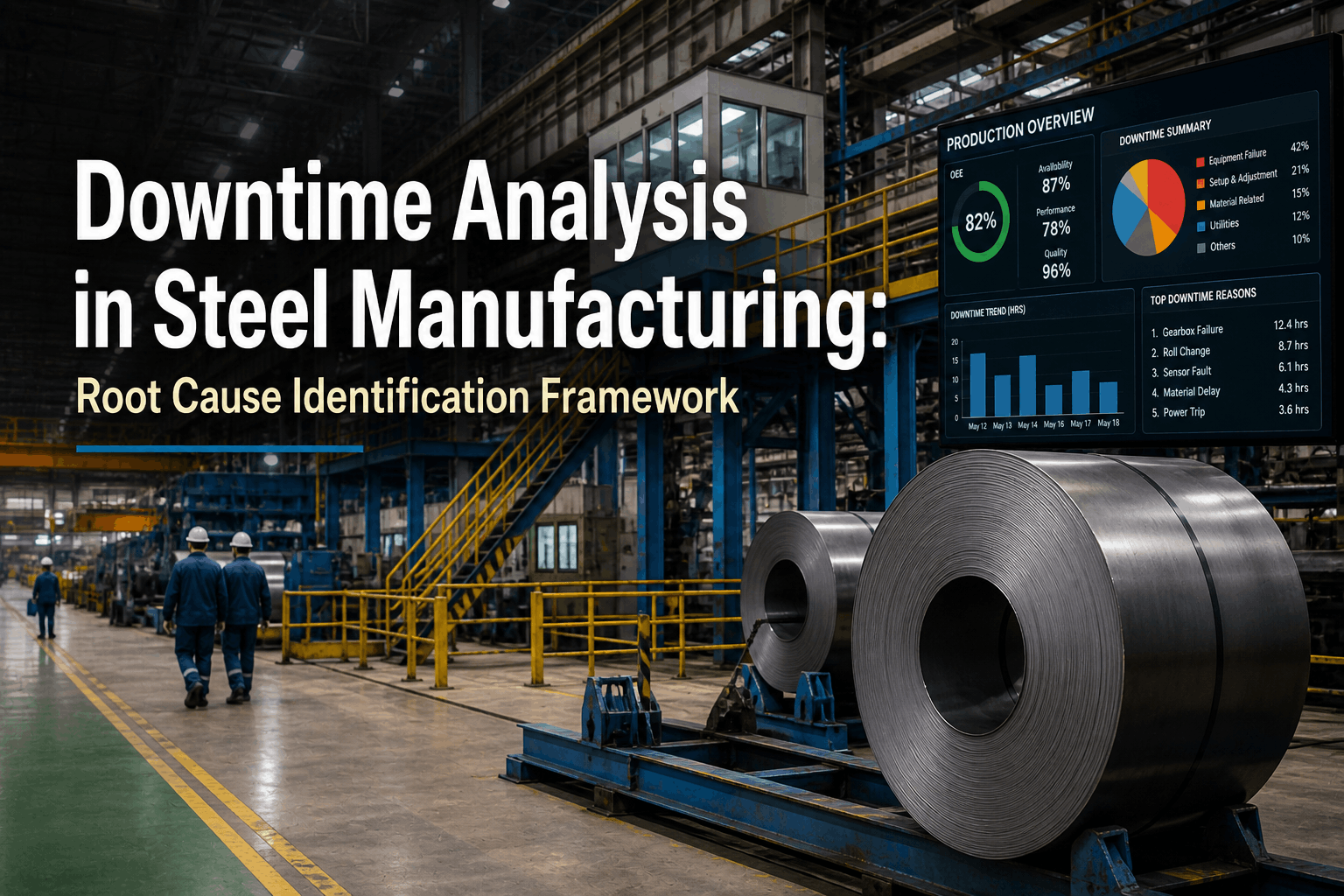
Automatically rank failure modes by their impact on EBITDA. Focus your engineering resources on the "Vital Few" issues that drive 80% of your production losses across the mill.
Causal Inference Modeling
Distinguish between mechanical failures and operational triggers. Identify when an EAF mast jam is actually caused by upstream scrap-mix variations rather than hydraulic degradation.
Predictive Maintenance Sync
Automatically trigger maintenance work orders based on downtime alert severity. Ensure that every unplanned stop contributes to a continuous learning model for future failure prevention.
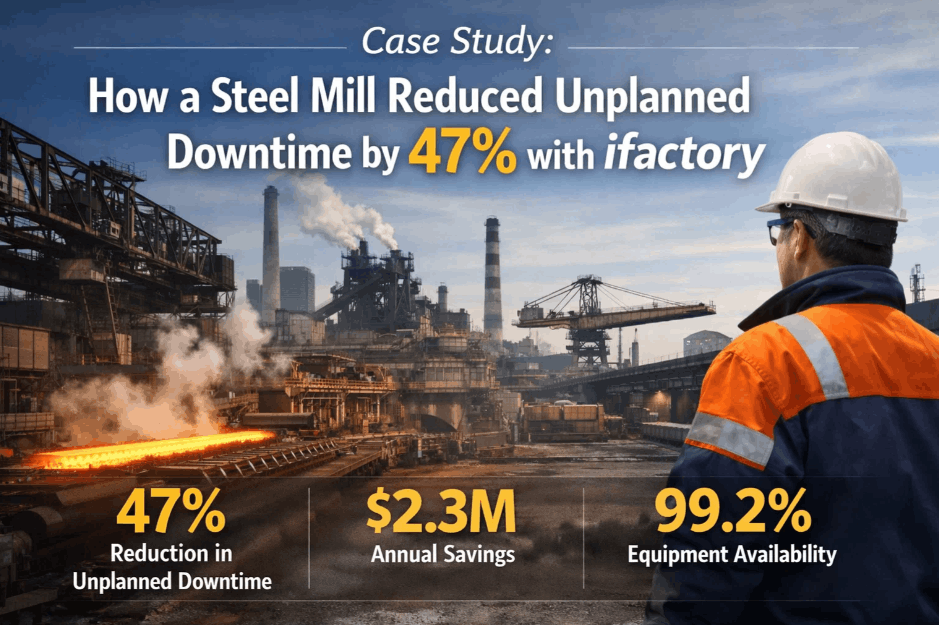
"We were losing nearly 12% of our rolling mill capacity to 'Unexplained Minor Stops' that weren't being captured in our manual logs. By deploying iFactory's automated downtime analysis, we identified a persistent lubrication sync issue that was triggering 40-second stops every hour. Fixing that single root cause recovered $2.1M in annual profit and extended our bearing life by 30%."
Building a Unified Analytics Architecture for Steel Mill Downtime Management
A purpose-built steel manufacturing analytics platform must address four foundational requirements unique to high-consequence industrial facilities: automated event capture, material-specific root cause analysis, maintenance workflow integration, and long-range capital forecasting. Mills that have already booked a demo consistently report that connecting their fragmented PLC data, inspection records, and contractor logs into a unified analytics layer is the single most impactful step in their reliability modernization journey.
| Analytics Module | Primary Function | Steel Plant Application | Reliability Benefit | Priority Level |
|---|---|---|---|---|
| Mechanical Failure Tracking | Hydraulic & Drive diagnostics | EAF Masts & Rolling Mills | Early failure intervention | Critical |
| Process Deviation Analytics | Metallurgical setpoint drift | CCM Secondary Cooling | Prevents quality-led stops | Critical |
| Compliance Reporting | Regulatory documentation | ISO 9001 & IATF 16949 | Zero audit-ready gaps | High |
| Maintenance Workflow | Work order & Parts tracking | Melt Shop & Mill Floor | Optimized repair cycles | High |
| Energy Impact Forecast | Long-range cost modeling | EAF & Ladle Furnaces | Predictable OpEx planning | Standard |
How Analytics Platforms Support Global Steel Quality Compliance
Compliance with ISO 9001 and IATF 16949 (Automotive Steel) is a non-negotiable requirement for any top-tier steel manufacturer. Yet most plants still manage their downtime documentation through disconnected spreadsheets and manual operator notes. This approach creates dangerous documentation gaps that can jeopardize customer certifications, endanger Tier-1 supplier status, and expose mills to significant liability during audit cycles. Modern steel manufacturing analytics platforms address this directly by digitizing every downtime touchpoint into a single, audit-ready system of record. Reliability directors who book a demo early in their operational excellence cycle consistently achieve stronger regulatory outcomes and faster customer approvals.
Downtime Event Digitization & PLC Mapping
Establish high-fidelity data pipes from your mill's PLCs and SCADA. Map machine state tags to specific downtime categories, ensuring that every second of "Non-Productive Time" is captured with 100% accuracy.
AI-Driven Root Cause Calibration
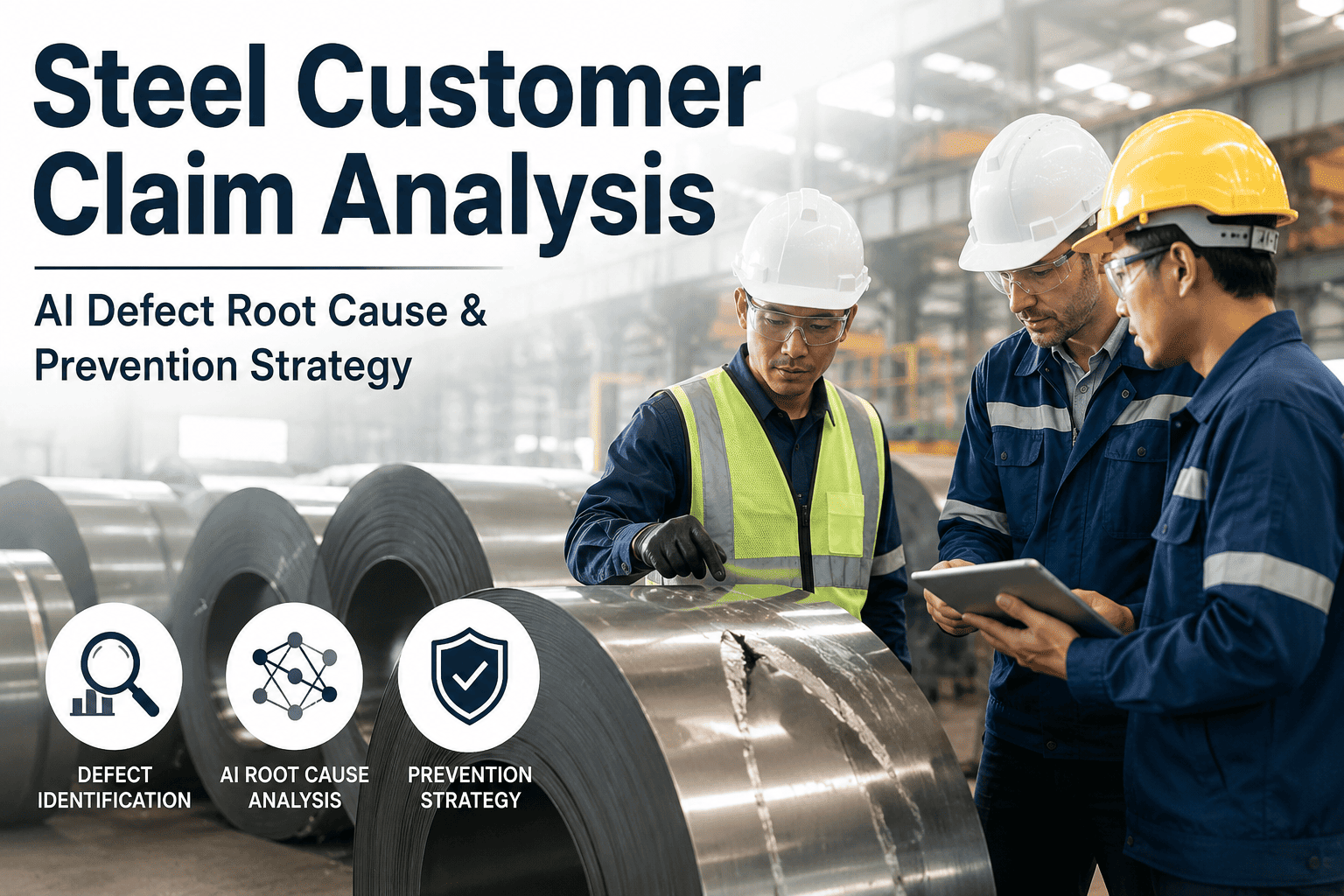
Deploy machine learning models to analyze failure precursors — vibration harmonics, thermal flux, and current draw. Calibrate the "Root Cause Engine" against your mill's specific metallurgical grades and shift patterns.
Reliability Analytics Platform Activation
Connect all sensor streams, inspection records, and maintenance logs to the central dashboard. Configure role-specific views for mill floor supervisors, reliability engineers, and plant directors.
Predictive Deterioration Modeling
Enable AI deterioration forecasts that automatically generate predictive work orders when sensor data indicates early-stage material failure. Prioritize interventions before damage becomes irreversible.
Long-Range Performance Capital Planning
Leverage historical condition data to generate 10-, 20-, and 30-year capital replacement forecasts. Build defensible budget justifications for furnace relining, transformer replacements, and mill stand upgrades.
Top Operational Gaps in Steel Plant Downtime Management
Most mills pursuing operational excellence encounter a predictable set of documentation and reliability gaps. Understanding these challenges before a platform deployment dramatically improves implementation success and helps mill managers allocate finite budgets more strategically across complex **steel plant reliability** programs.
Condition assessments and maintenance logs sit in disconnected systems — making it impossible to track deterioration trends over time or correlate maintenance with outcomes.
ISO/IATF compliance records are managed manually, introducing documentation gaps that create regulatory exposure during customer audits and certification reviews.
Most steel plants lack continuous PLC-to-Dashboard sync, leaving micro-stoppages and short-duration performance losses undetected and unanalyzed.
Without predictive analytics, maintenance is triggered only after visible failure — a reactive posture that results in higher costs and greater loss of production capacity.
Long-range capital plans built on periodic visual inspections consistently underestimate funding requirements, leading to deferred maintenance backlogs.
Without real-time dashboards, supervisors are blind to subtle performance drifts that precede full downtime events, losing the window for mid-shift correction.
Closing these gaps requires more than off-the-shelf CMMS software — it demands a purpose-built platform designed for the complexity of publicly owned steel assets. Reliability officers regularly book a demo to benchmark their gaps against a proven industrial architecture.
Integrating Modern Analytics Into Legacy Steel Mill Infrastructure
One of the most technically demanding aspects of **downtime analysis** is the responsible integration of modern digital sensors into legacy steel mill fabric. EAF masts, older CCM strands, and mechanical mill stands must all be digitized without disrupting existing production cycles. A robust **steel manufacturing analytics** platform supports this by utilizing non-invasive IIoT gateways that capture high-frequency data without requiring PLC reprogramming — creating a complete digital record that satisfies ISO standards and supports future reliability planning.
Key Downtime Analytics Capabilities for Modern Steel Plants
Maintain continuous digital logic for downtime categorization — linking PLC stop codes to metallurgical and mechanical causal chains automatically.
Centralize inspection photographic documentation, material specifications, and treatment rationale for every repair project in an audit-ready archive.
Track every minute of downtime against its actual EBITDA impact — documenting lost tonnage, energy waste, and labor idle-time costs in real time.
Automatically generate IATF 16949 and ISO 9001 downtime reports, demonstrating measurable reliability outcomes aligned with global quality mandates.
Modernize Your Steel Plant Downtime Analysis Program Today
Deploy a unified analytics platform that integrates PLC event capture, root cause identification, and maintenance reporting — built specifically for steel manufacturing.
Steel Plant Downtime Analysis — Common Questions Answered
How does automated downtime analysis differ from manual operator logging?
Manual logging typically captures only 70-80% of actual downtime and is prone to "category drift," where complex issues are logged as generic "Machine Fail." iFactory captures every millisecond stop directly from the PLC, ensuring 100% accuracy and identifying micro-stoppages that operators often ignore.
Can the platform integrate with my existing CMMS or ERP system?
Yes. iFactory uses vendor-neutral API architecture to connect with SAP, Oracle, and other CMMS platforms. When a high-severity downtime event is detected, the platform can automatically trigger a work order in your existing system, ensuring seamless maintenance synchronization.
How does root cause analysis support IATF 16949 compliance for automotive steel?
IATF 16949 requires rigorous documentation of production interruptions and corrective actions. iFactory automates this by creating a digital "Causal Archive" for every major stop, linking the equipment health data, metallurgical state, and maintenance response into an audit-ready compliance report.
What types of "Micro-Stoppages" can the AI identify in a rolling mill?
The AI identifies short-duration stops (10-60 seconds) caused by lubrication lag, sensor misalignment, or momentary tension fluctuations. While these stops are too short for manual logging, they often aggregate into 2-3 hours of lost production weekly and serve as early warnings for major mechanical failure.
Is the platform non-invasive for legacy PLC systems?
Absolutely. We utilize edge gateways that read data from PLC memory registers via standard industrial protocols (OPC-UA, Modbus, etc.) without requiring any changes to your existing control logic or production programming.
What is the typical ROI for a steel mill downtime analytics deployment?
Most mills achieve measurable ROI within 6 months through a 15-25% reduction in unplanned downtime and a significant decrease in emergency parts procurement costs. By year one, the systemic elimination of recurring root causes typically recovers 5-8x the platform cost. **Book a demo** to review our steel-specific ROI calculator.
Can the platform handle downtime analysis for both Melt Shop and Rolling Mill?
Yes. The platform is built with specialized logic for the EAF (Power-On-Time focus), CCM (Casting Pulse focus), and Rolling Mills (Throughput/Yield focus), providing a unified reliability view across the entire plant.
How long does it take to go from "Pilot" to full facility deployment?
A typical pilot on a single critical asset (e.g., a cold mill) takes 4-6 weeks. Once the data accuracy is validated, full facility rollout can be completed in an additional 8-12 weeks, depending on the number of legacy assets being connected.