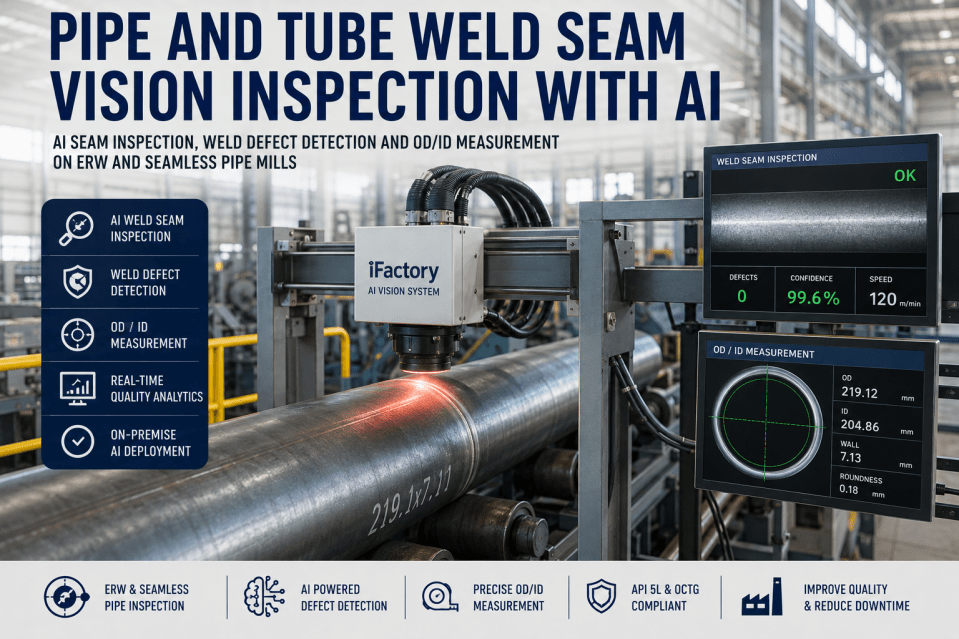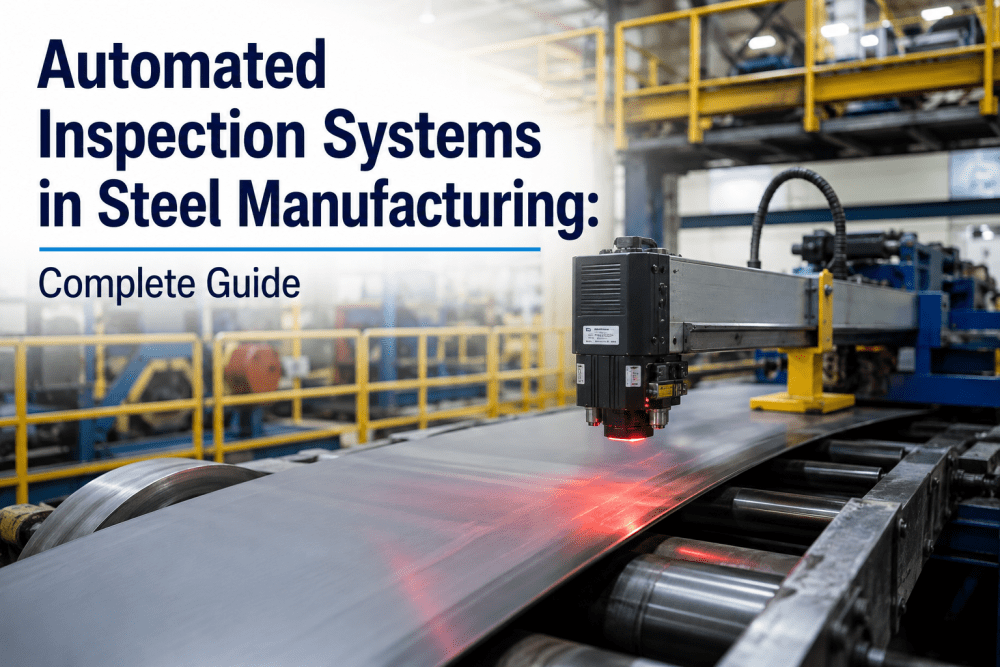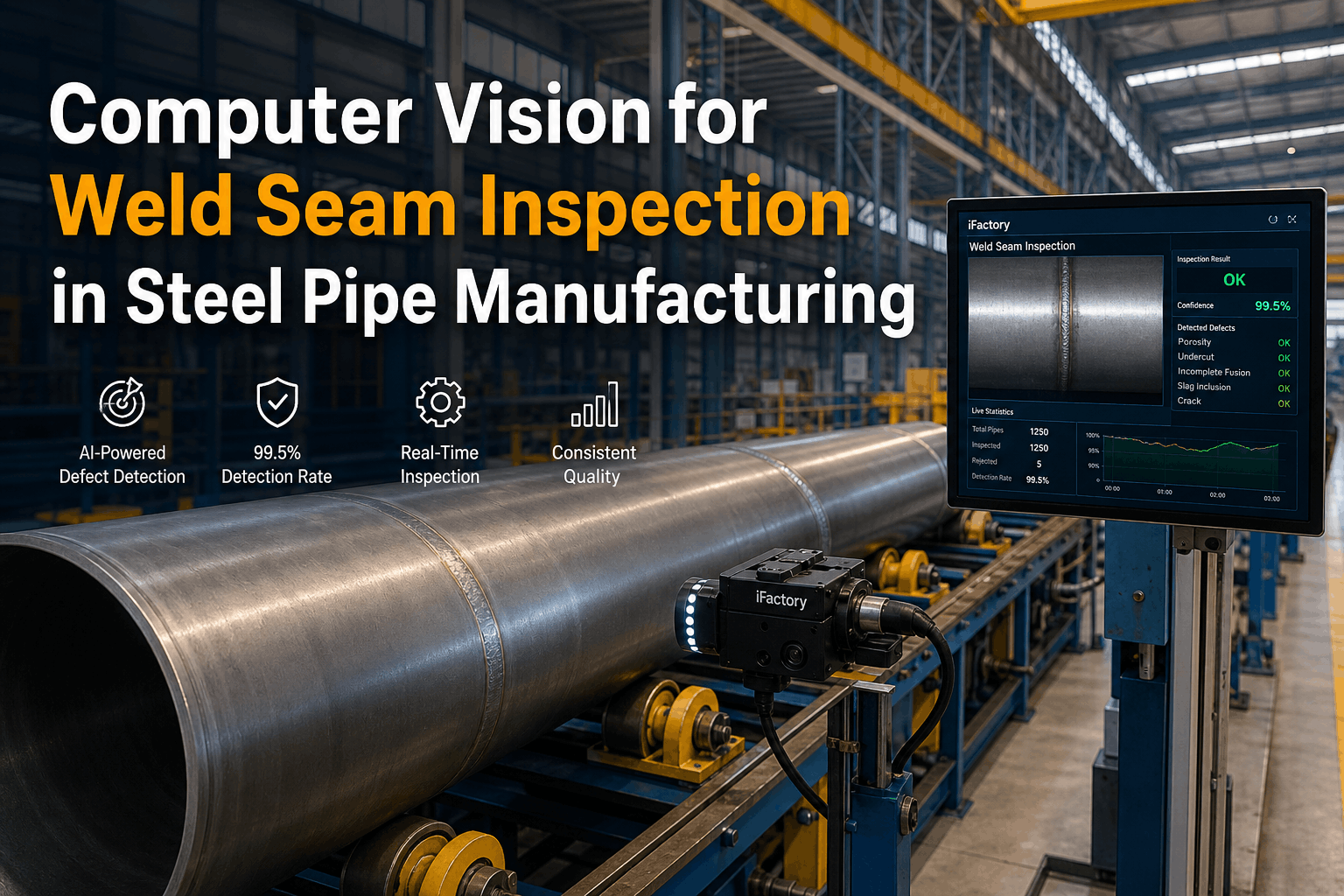
High-pressure steel pipes represent more than industrial infrastructure — they are critical assets that demand rigorous quality stewardship, precision analytics, and a defect elimination strategy built for the modern era. From Electric Resistance Welding (ERW) to Submerged Arc Welding (SAW), computer vision weld seam inspection is reshaping how pipe manufacturers maintain, optimize, and future-proof their most critical production lines. Without a data-driven approach to weld quality, manufacturers face accelerating defect rates, compliance failures, and ballooning liability costs that strain corporate budgets for decades. This guide delivers actionable insight into how modern AI-vision platforms are transforming pipe quality management from reactive manual inspection into proactive, evidence-based stewardship.
Is Your Weld Quality Data Working for You?
Unify surface defect detection, dimensional bead analysis, and quality compliance workflows into one intelligent platform designed for high-consequence steel pipe manufacturing.
Why AI Computer Vision Is Redefining Steel Pipe Weld Quality Management
The stewardship of high-pressure pipe welds has always been uniquely challenging — but the stakes have never been higher. High-speed welding arcs, variable strip chemistry, and legacy mechanical forming systems all require specialized quality knowledge combined with real-time monitoring capabilities that traditional visual inspection simply cannot provide. Modern AI-vision analytics platforms bridge this critical gap by aggregating data from high-speed cameras, laser profilers, NDT sensors, and quality logs into a single, unified intelligence layer. When quality directors book a demo, the most common discovery is that their production lines are generating enormous volumes of untapped visual data that — once connected — can prevent catastrophic weld failures and dramatically reduce internal scrap rates.
The shift from reactive to predictive weld quality management begins with optical visibility. Weld seams are acutely sensitive to mill speed fluctuations, electrode wear, and gas flow consistency — conditions that AI models can monitor continuously and flag before they advance to structural defects like porosity or undercuts. This data layer transforms a mill manager's ability to intervene early, protect original fabric, and maintain compliance with API 5L and other international standards for high-performance piping.
Surface Defect Classification
Deploy deep-learning models to automatically identify and classify porosity, undercuts, cracks, and spatters. Receive millisecond-level alerts before minor process drift becomes a systemic batch failure.
Dimensional Bead Analytics
Track weld height, width, and reinforcement profile in real-time. Protect metallurgical integrity by ensuring every millimeter of the bead meets the exact geometric specifications required for high-pressure service.
NDT Digital Integration
Centralize Ultrasonic (UT) data, Eddy Current logs, and X-Ray results alongside the visual vision stream for a unified quality record across the entire pipe manufacturing lifecycle.
Compliance Traceability Automation
Automatically generate mill test certificates, MTR documentation, and digital quality twins for every pipe — eliminating manual documentation burdens and reducing regulatory exposure.
Building a Unified AI-Vision Architecture for Pipe Quality Management
A purpose-built pipe quality analytics platform must address four foundational requirements unique to high-consequence steel facilities: defect compliance tracking, material-specific deterioration monitoring, quality lifecycle management, and long-range capital forecasting for line upgrades. Mills that have already booked a demo consistently report that connecting their fragmented inspection records, contractor logs, and camera streams into a unified analytics layer is the single most impactful step in their program modernization journey.
| Analytics Module | Primary Function | Pipe Quality Application | Quality Benefit | Priority Level |
|---|---|---|---|---|
| Surface Inspection | Defect & Cracking tracking | ERW & SAW Weld Seams | Early failure intervention | Critical |
| Dimensional Profiling | Bead height & width control | Weld Reinforcement zones | Prevents metallurgical failure | Critical |
| Compliance Reporting | Regulatory documentation | API 5L & ASTM audits | Zero compliance gaps | High |
| NDT Sync Lifecycle | Project & contractor tracking | UT, RT & Eddy Current sync | On-spec delivery | High |
| Capital Forecasting | Long-range cost modeling | Cameras, sensors & line upgrades | Predictable CapEx planning | Standard |
How AI-Vision Platforms Support Global Pipe Quality Standards Compliance
Compliance with API 5L, ASTM, and other international pipe quality standards is a non-negotiable requirement for any top-tier mill. Yet most manufacturers still manage their quality compliance through paper-based inspection reports, disconnected spreadsheets, and manual visual audits. This approach creates dangerous documentation gaps that can jeopardize customer certifications, endanger Tier-1 supplier status, and expose mills to significant liability during audit cycles. Modern steel pipe quality analytics platforms address this directly by digitizing every compliance touchpoint — from initial conditions assessments to post-shipment documentation — into a single, audit-ready system of record. Quality directors who book a demo early in their operational excellence cycle consistently achieve stronger regulatory outcomes and faster customer approvals.
Quality Asset Inventory & Inspection Digitization
Create a comprehensive digital registry of all critical quality zones — weld seams, pipe ends, ID/OD surfaces, and NDT stations — mapped against their current defect ratings and quality priority classifications.
AI-Vision Sensor Deployment for Real-Time Monitoring
Install high-speed cameras, laser profilers, and thermal imagers across high-risk welding zones. Integrate with existing mill SCADA systems to create a continuous real-time data stream that captures quality trends invisible to human eyes.
Quality Analytics Platform Activation
Connect all camera streams, NDT records, and compliance filings to the central analytics platform. Configure role-specific dashboards for quality engineers, mill managers, and customer liaison staff.
Predictive Defect Modeling
Enable AI-driven defect forecasts that automatically identify process drift in the welding arc before it results in a scrap event. Prioritize interventions by defect significance — ensuring that critical pipe grades receive priority treatment.
Long-Range Quality Capital Planning
Leverage historical defect data to generate 10-, 20-, and 30-year capital replacement forecasts for mill equipment. Build defensible budget justifications for welding power source upgrades, forming roll replacements, and line modernizations.
"We were struggling with manual inspection fatigue on our high-speed ERW line, leading to a 3% scrap rate due to missed micro-porosity. Since deploying iFactory's AI-vision system, our detection rate has soared to 99.5%, and our internal scrap costs have plummeted by 40%. We recovered the entire capital investment in less than 7 months."
Top Operational Gaps in Steel Pipe Quality Management
Most mills pursuing improvements to their **pipe quality service** programs encounter a predictable set of operational and documentation challenges. Understanding these gaps before a platform deployment dramatically improves implementation success and helps quality managers allocate finite budgets more strategically across complex **pipe manufacturing structure** portfolios.
Condition assessment reports, manual visual logs, and NDT data sit in disconnected systems — making it impossible to track defect trends over time or correlate process drift with quality outcomes.
Human inspectors operating at high line speeds consistently miss low-contrast defects like undercuts or pinhole porosity, introducing significant quality risk and liability exposure for high-pressure service pipes.
Most pipe mills lack continuous real-time monitoring of the weld bead profile, leaving original fabric vulnerable to undetected tension fluctuations and welding arc instabilities.
Without predictive AI, quality interventions are triggered only after a failure is detected at the end-of-line NDT station — a reactive posture that results in massive scrap tons and higher restoration costs.
Long-range traceability plans built on manual documentation consistently fail customer audits, leading to deferred maintenance backlogs and jeopardizing high-value energy contracts.
Integrating modern AI cameras into legacy mill fabric without a unified analytics framework creates undocumented interventions that violate safety standards and void customer quality certifications.
Closing these gaps requires more than off-the-shelf defect tracking software — it demands a purpose-built platform designed for the compliance complexity and high-speed sensitivity of modern pipe mills. Quality officers regularly book a demo to benchmark their gaps against a proven industrial AI-vision architecture.
Integrating AI Computer Vision Into Legacy Pipe Mill Infrastructure
One of the most technically demanding aspects of **weld seam inspection** is the responsible integration of modern digital vision systems into protected industrial fabric. Legacy forming rolls, high-frequency welding heads, and end-of-line testers must all be digitized without disrupting existing production cycles. A robust **pipe quality analytics** platform supports this process by maintaining detailed documentation of every system penetration, material alteration, and reversible intervention — creating a complete digital record that satisfies API standards and supports future quality planning.
Key AI-Vision Analytics Capabilities for Modern Pipe Mills
Maintain continuous digital condition records for historic weld beads, pipe ID/OD surfaces, and original finishes — with automated degradation alerts linked to high-speed vision data.
Centralize before/during/after photographic documentation, laser profile specifications, and NDT results for every production run in a customer-ready digital archive.
Track every visual defect against the subsequent NDT results — documenting the effectiveness of AI-vision in preventing high-value NDT failures and scrap events.
Automatically generate sustainability reports demonstrating scrap reduction and energy savings achieved through precision AI-vision, aligned with global green manufacturing requirements.
Modernize Your Pipe Quality Stewardship Program Today
Deploy a unified analytics platform that integrates high-speed vision, NDT synchronization, quality documentation, and compliance reporting — built specifically for steel pipe manufacturing.
Pipe Weld Seam AI-Vision — Common Questions Answered
What types of pipe welding processes benefit most from AI-vision?
Any high-consequence process where weld integrity is critical benefits significantly. This includes Electric Resistance Welding (ERW) and Submerged Arc Welding (SAW) for oil and gas pipelines, water infrastructure, and structural tubing. The platform is equally effective for single-line operations and multi-mill portfolio management.
How does AI-vision support API 5L compliance?
The platform digitizes and centralizes all surface inspection records, dimensional audits, and project documentation — creating an immutable, audit-ready record that satisfies API 5L requirements for pipe traceability. Automated reporting tools dramatically reduce the staff hours required to prepare customer quality submissions.
Can the platform integrate with legacy mill SCADA and NDT testers?
Yes. The platform uses vendor-neutral API architecture to connect with existing SCADA, PLC, UT testers, and X-Ray systems — including legacy hardware common in older mills. Integration is designed to be minimally invasive, preserving the original mill fabric while capturing comprehensive quality data.
How does the platform help manage modern camera integration in legacy lines?
Every camera installation, sensor alteration, and material modification is documented in the platform against the existing mill baseline. This creates a complete digital record demonstrating compliance with safety standards, supporting customer reviews, and preserving institutional knowledge across staff transitions.
What is the typical ROI for a pipe mill AI-vision deployment?
Most mills achieve measurable ROI within the first year through significant reductions in internal scrap tons, elimination of manual quality documentation labor, and more efficient allocation of rework resources. By month 12, predictive process modeling prevents major batch failures that would otherwise require costly scrap events.
How does the platform handle sensitive quality documentation and production security?
All quality records, weld profiles, and security-sensitive production data are stored in enterprise-grade cloud environments with AES-256 encryption at rest and in transit. Role-based access controls ensure that sensitive quality drawings and customer documentation are accessible only to authorized personnel.
Can the AI distinguish between surface "noise" and actual weld defects?
Yes. Our deep-learning models are trained on thousands of mill-specific samples to distinguish between harmless surface variations (e.g., oil spots, rust) and critical weld defects like porosity, undercut, or incomplete fusion, reducing "False Reject" rates by up to 80% compared to traditional vision systems.
How does the system handle high line speeds (e.g., 30+ m/min)?
The iFactory platform utilizes high-frequency camera triggers and edge-AI processing to perform full seam analysis at speeds exceeding 60 meters per minute. This ensures that 100% of the weld is inspected without compromising mill productivity or OEE.