Steel production remains one of the most environmentally regulated industries in the world. From the moment raw materials enter the facility to the final shipment of finished coils, every process is subject to overlapping federal, state, and local environmental permit requirements covering air emissions, water discharges, and solid waste management. For compliance officers, the challenge is not merely understanding each permit condition but ensuring that monitoring, recordkeeping, and reporting obligations are met simultaneously across all media. Traditional manual approaches often lead to missed deadlines, incomplete data, and costly violations. This article provides a comprehensive guide to managing multi-media environmental permits for steel plants using AI-driven automation. It covers the core regulatory frameworks under the Clean Air Act, Clean Water Act, and RCRA, details the specific permit types each steel facility must hold, and explains how AI tools can streamline data collection, compliance checks, and report generation. By integrating real-time monitoring with predictive analytics, steel plants can reduce risk, improve operational efficiency, and maintain a strong environmental compliance posture. Explore our support resources to learn more about AI-driven compliance solutions.
Master Multi-Media Environmental Permits for Steel Plants
Automate monitoring and reporting for air, water, and waste permits with AI. Reduce violations, save time, and maintain compliance across all regulatory agencies.
The Regulatory Landscape for Steel Plants
Steel mills must comply with a complex web of environmental statutes that govern every aspect of their operations. The Clean Air Act (CAA) regulates emissions of criteria pollutants like particulate matter, sulfur dioxide, nitrogen oxides, and hazardous air pollutants. The Clean Water Act (CWA) controls process wastewater, cooling water, and stormwater discharges through NPDES permits. The Resource Conservation and Recovery Act (RCRA) manages the generation, storage, treatment, and disposal of hazardous and non-hazardous solid wastes including slags, dusts, and sludges. Additionally, state environmental agencies often impose more stringent requirements. Non-compliance can result in fines, operational shutdowns, and reputational damage. Understanding the specific permit types for each media is the first step toward effective compliance management.
Air Permits: Title V and State Operating Permits
Title V Operating Permits
Major sources of air pollution, including integrated steel mills and electric arc furnaces, must obtain Title V permits. These permits consolidate all applicable CAA requirements into a single document, including emission limits, monitoring protocols, recordkeeping, and reporting obligations. Compliance requires continuous emission monitoring systems (CEMS) for key pollutants, periodic stack testing, and submission of semi-annual monitoring reports. AI can automate the collection of CEMS data, flag exceedances in real time, and generate draft reports for review.
State Operating Permits
Many states operate their own permit programs that may be more stringent than federal standards. For example, Pennsylvania and Ohio have specific requirements for coke oven batteries and sinter plants. State permits often include additional monitoring for fugitive emissions, opacity limits, and work practice standards. AI tools can integrate state-specific rules into compliance dashboards, ensuring that all permit conditions are tracked and met.
PSD and New Source Review
New or modified sources within a steel plant may trigger Prevention of Significant Deterioration (PSD) or Nonattainment New Source Review (NNSR) permitting. These preconstruction permits require extensive air quality modeling, best available control technology (BACT) analysis, and public participation. AI can assist in modeling dispersion scenarios and identifying the most cost-effective control technologies.
Water Permits: NPDES and Stormwater Management
Process Wastewater Discharges
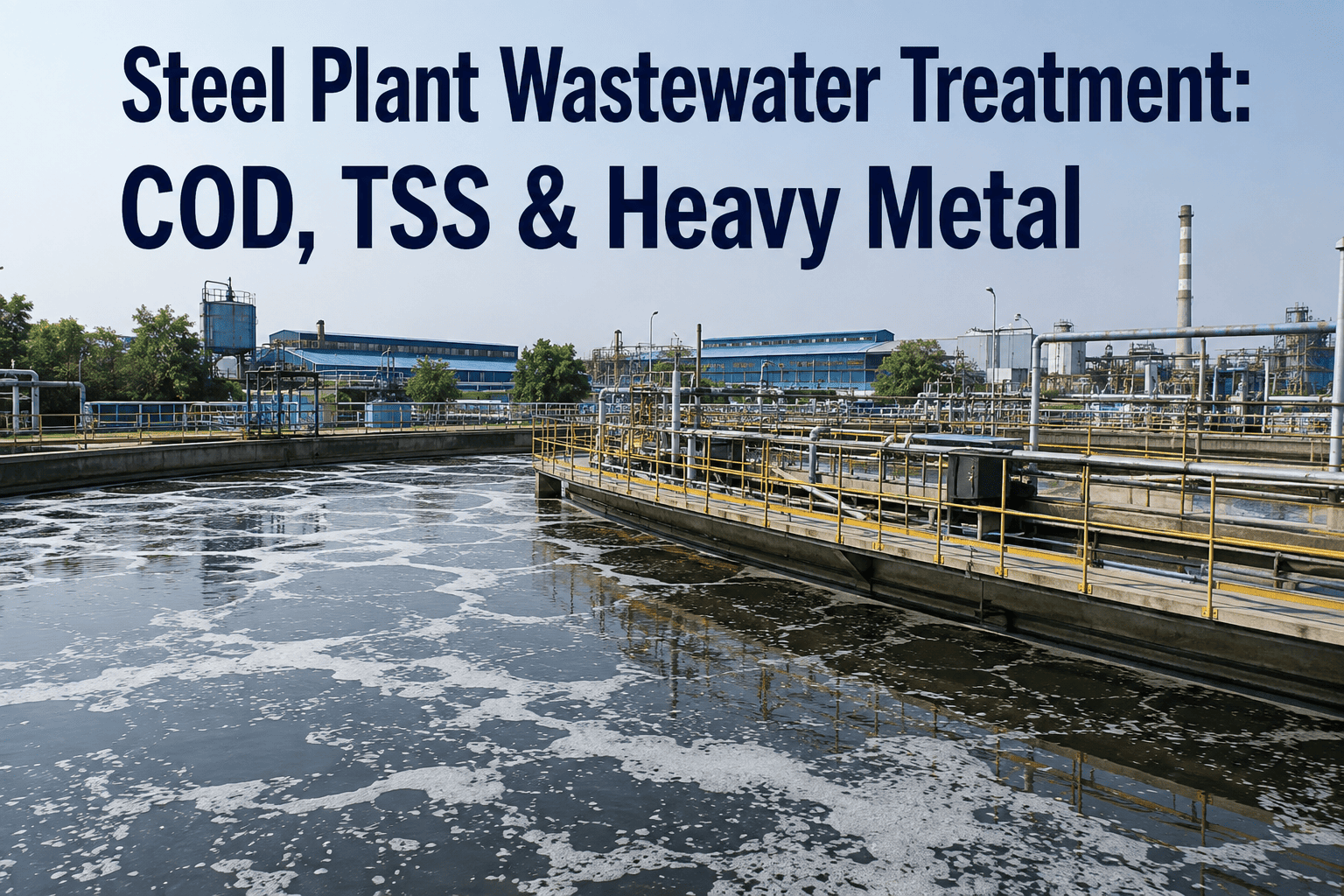
Steel plants generate large volumes of wastewater from cooling, descaling, and pickling operations. These discharges are regulated under individual NPDES permits that set effluent limits for parameters such as pH, total suspended solids, heavy metals (zinc, lead, chromium), and oil and grease. Monitoring frequency ranges from daily to monthly, and facilities must submit discharge monitoring reports (DMRs) each month. AI can automatically pull data from flow meters and analyzers, validate it against permit limits, and populate DMR templates with error checking.
Stormwater Permits
Industrial stormwater discharges from steel plant sites are covered under the Multi-Sector General Permit (MSGP) or individual stormwater permits. These require development of a Stormwater Pollution Prevention Plan (SWPPP), quarterly visual monitoring, and annual comprehensive site inspections. AI can analyze weather data to schedule monitoring events, track corrective actions, and generate annual reports.
Cooling Water Intake Structures
Section 316(b) of the CWA requires that cooling water intake structures minimize impingement and entrainment of aquatic organisms. Steel mills using once-through cooling must demonstrate compliance through biological monitoring and operational controls. AI can model intake flow rates and fish behavior to optimize screen cleaning schedules and reduce impacts.
Waste Permits: RCRA and State Solid Waste Programs
Hazardous Waste Management
Steel plants generate hazardous wastes such as spent pickle liquor, waste oils, and certain dusts from air pollution control equipment. These wastes are subject to RCRA Subtitle C requirements including generator status determination, accumulation time limits, manifesting, and land disposal restrictions. AI can classify waste streams based on analytical data, track accumulation times, and generate manifests automatically. It can also alert compliance staff when a waste is approaching the 90-day storage limit.
Non-Hazardous Solid Waste
Large volumes of non-hazardous wastes like slag, refractory materials, and scrap are regulated under state solid waste programs. Many states require annual reporting of waste generation and disposal methods. AI can integrate weigh scale data and waste shipment records to compile accurate annual reports. It can also identify opportunities for recycling or beneficial reuse, reducing disposal costs.
Used Oil and Universal Waste
Steel plants also manage used oil from hydraulic systems and universal wastes like spent lamps and batteries. These have simplified management standards but still require proper labeling, storage, and recordkeeping. AI can monitor storage areas with sensors to ensure compliance with accumulation time limits and container condition.
AI-Powered Monitoring and Data Integration
Real-Time Data Collection
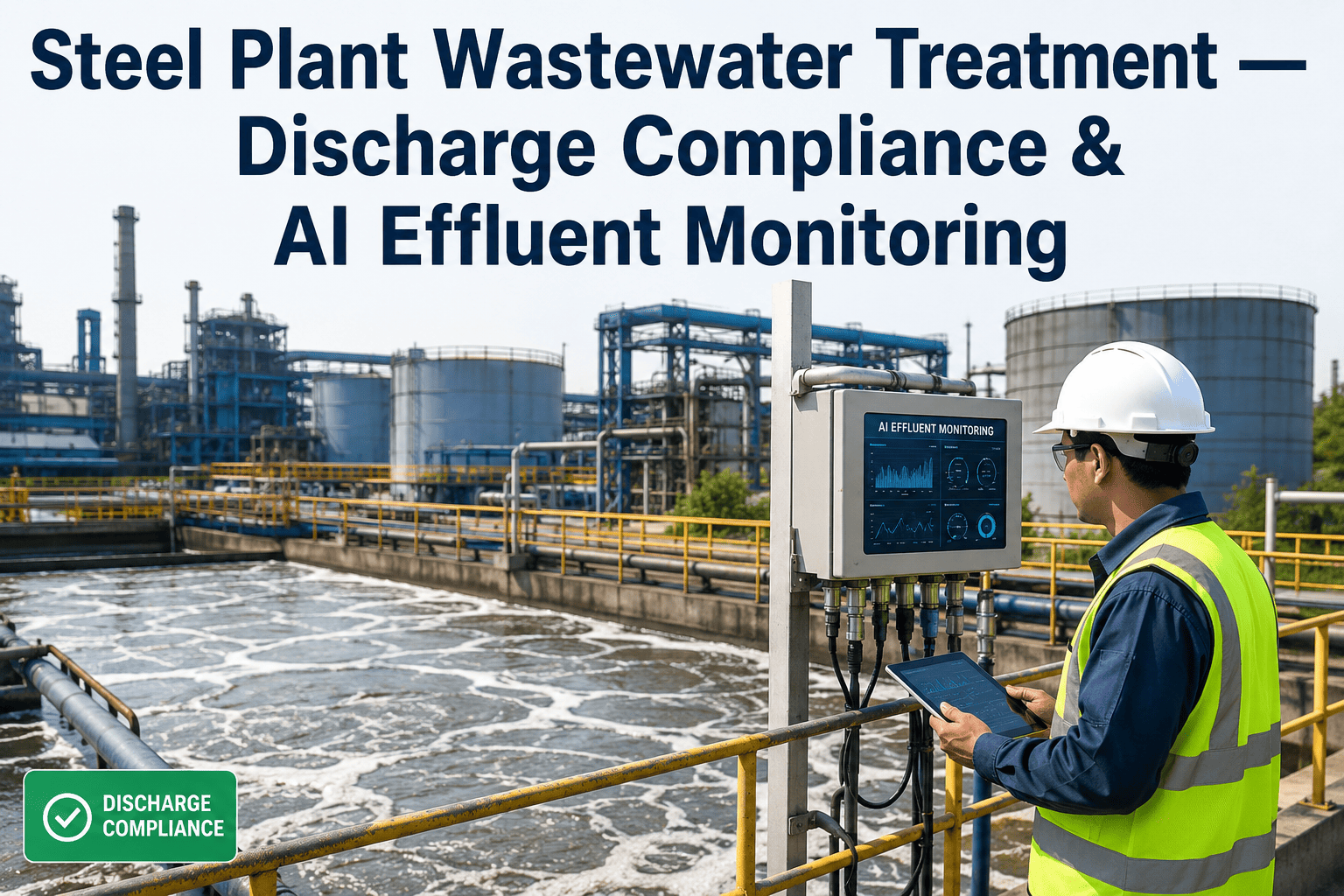
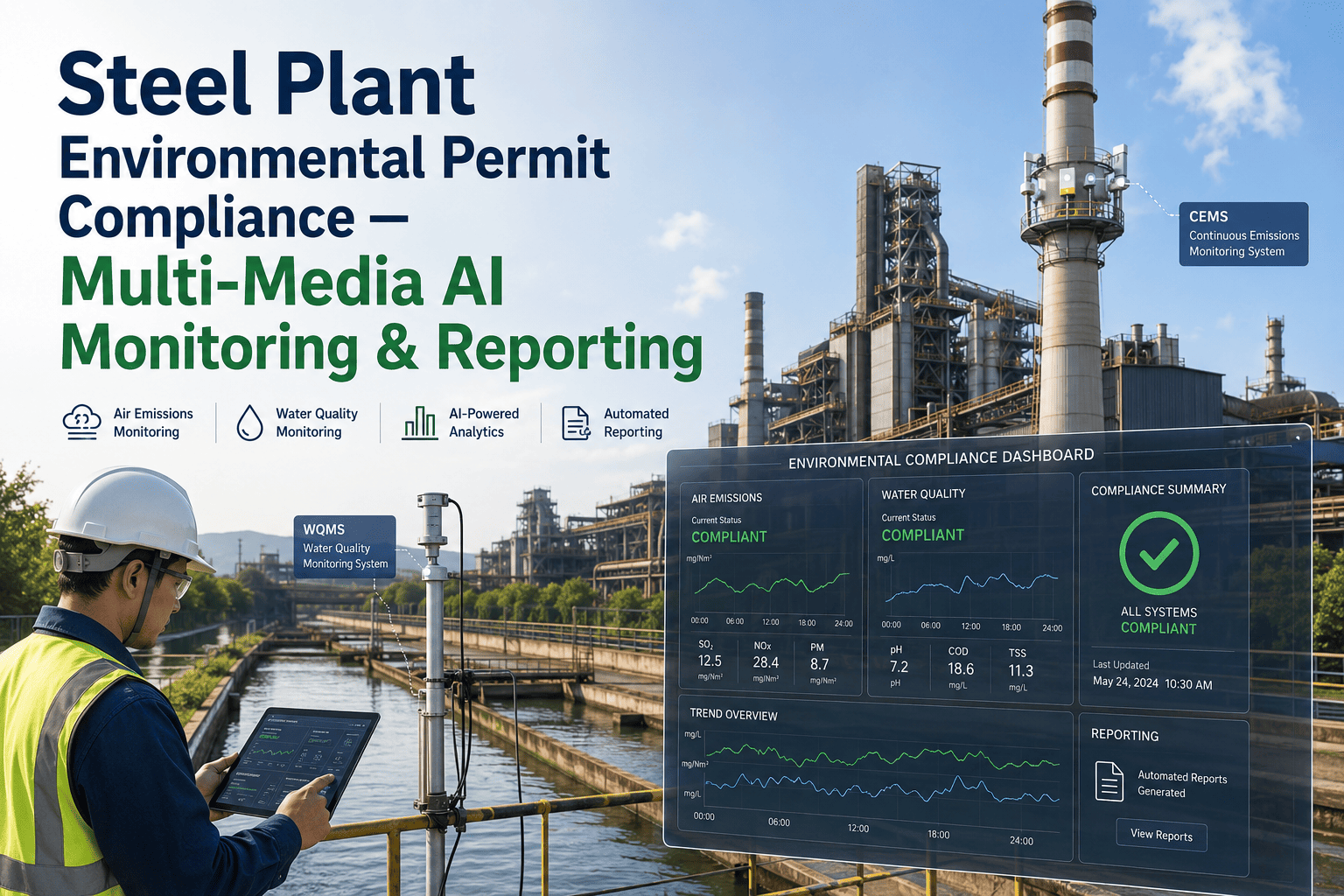
AI systems connect directly to continuous emission monitors, flow meters, pH probes, and other sensors across the plant. Data is ingested in real time, validated against quality criteria, and stored in a centralized database. This eliminates manual data entry errors and ensures that compliance data is always current. For example, if a CEMS reading exceeds an emission limit, the system immediately alerts the compliance team and logs the event for the next report.
Automated Compliance Checks
AI algorithms compare real-time data against permit conditions, flagging any deviations before they become violations. The system can also perform trend analysis to predict potential exceedances based on operational changes. For instance, if production rates increase, the AI can model the expected increase in emissions and recommend adjustments to control equipment.
Integrated Reporting
Instead of manually compiling data from multiple spreadsheets and databases, AI generates permit-required reports with a single click. The system populates the correct format for DMRs, semi-annual monitoring reports, annual waste summaries, and stormwater reports. It also tracks submission deadlines and sends reminders to ensure timely filing. This reduces the administrative burden on compliance staff by up to 70%.
Compliance Calendar and Audit Readiness
Every steel plant must maintain a schedule of compliance activities: monitoring events, equipment inspections, training, and report submissions. An AI-powered compliance calendar integrates all permit deadlines, assigns responsibility, and tracks completion status. During regulatory inspections, the system provides instant access to historical data, previous reports, and corrective action records. This audit-readiness capability reduces the stress of unannounced visits and demonstrates a proactive compliance culture. AI can also simulate audit scenarios to identify gaps in documentation before regulators arrive.
70%
Reduction in Reporting Time
95%
Fewer Compliance Violations
100%
On-Time Permit Submissions
Frequently Asked Questions
How does AI handle different state-level permit requirements for steel plants?
AI compliance platforms like iFactory are designed with a flexible rule engine that can ingest and interpret state-specific regulations. For example, a steel mill in Indiana may have stricter opacity limits for electric arc furnaces than a facility in Alabama. The system allows compliance officers to input state permit conditions directly into the rule base. The AI then applies these rules when monitoring emissions, generating reports, and flagging exceedances. This ensures that the same AI system can manage permits across multiple states without manual reconfiguration. Additionally, the platform can automatically update state rules when regulations change, using natural language processing to parse new regulatory text and update compliance logic accordingly. This adaptability is critical for steel companies operating in multiple jurisdictions, as it centralizes compliance management while respecting local nuances. The result is a single source of truth for all permit conditions, reducing the risk of overlooking a state-specific requirement. Book a demo to see how our platform adapts to your state’s rules.
Can AI integrate with existing monitoring equipment like CEMS and flow meters?
Yes, modern AI compliance platforms are built with open APIs and support standard industrial communication protocols such as Modbus, OPC-UA, and MQTT. This means they can connect directly to continuous emission monitoring systems (CEMS), pH probes, flow meters, and other sensors commonly found in steel plants. The integration process typically involves configuring a data bridge between the sensor network and the AI platform, either on-premises or in the cloud. Once connected, the AI ingests data at intervals as frequent as every second, performs real-time validation, and stores it in a time-series database. The system can also handle data gaps by using interpolation or alerting staff to sensor malfunctions. For older equipment that lacks digital output, the platform supports manual data entry templates that can be imported via CSV or direct input. This flexibility ensures that even plants with legacy monitoring systems can benefit from AI automation without requiring a complete sensor upgrade. The key is that the AI does not replace existing hardware but enhances its value by automating the interpretation and reporting of the data it generates. Contact support for integration guidance.
What happens if the AI detects a permit exceedance in real time?
When the AI detects that a monitored parameter has exceeded a permit limit, it triggers a multi-step response designed to minimize the impact and ensure corrective action is taken promptly. First, the system sends an immediate alert to designated compliance personnel via email, SMS, or in-app notification. The alert includes the specific parameter, the measured value, the permit limit, and the location of the exceedance. Second, the AI automatically logs the event in a compliance incident record, including a timestamp and a snapshot of related data (e.g., production rate, control equipment status). Third, the system suggests potential root causes based on historical patterns and current operational data. For example, if a PM2.5 exceedance is detected, the AI might note that the baghouse pressure drop has increased, indicating a possible filter failure. Fourth, the platform generates a draft corrective action report outlining the steps taken to address the exceedance, which can be finalized by the compliance officer. Finally, the AI tracks the resolution until the parameter returns to compliance, and if the issue persists, it escalates the alert to higher management. This automated workflow reduces response time from hours to minutes, significantly lowering the risk of enforcement actions. See our real-time alert system in action.
How does AI help with stormwater permit compliance under the MSGP?
Stormwater permit compliance under the Multi-Sector General Permit (MSGP) involves several routine and annual tasks that can be effectively automated with AI. The AI platform can integrate with weather forecast APIs to predict rain events and automatically schedule visual monitoring of outfalls within the required 24-hour period. It can also send reminders to staff to collect grab samples if the permit requires analytical testing during storm events. For quarterly visual monitoring, the AI provides a mobile-friendly checklist that guides inspectors through each outfall, recording observations and photos directly into the system. The platform then stores these records in a searchable database for annual report generation. At the end of the year, the AI compiles all monitoring data, inspection reports, and corrective action logs into the required annual report format. It also tracks any changes to the SWPPP and ensures that the plan is updated when modifications occur. Additionally, the AI can analyze trends in stormwater quality data to identify potential problem areas before they become violations. For example, if a particular outfall consistently shows elevated total suspended solids, the system can flag it for further investigation and suggest best management practices. This proactive approach helps steel plants maintain compliance and avoid the costs associated with stormwater violations. Learn more about our stormwater module.
What is the typical implementation timeline for an AI compliance system in a steel plant?
The implementation timeline for an AI-powered compliance platform in a steel plant typically ranges from 8 to 16 weeks, depending on the number of permits, the complexity of existing monitoring infrastructure, and the level of customization required. The process begins with a discovery phase (1-2 weeks) where our team works with your compliance officers to map out all permit conditions, monitoring points, and reporting requirements. Next, we integrate the platform with your existing sensors and data sources (2-4 weeks). This includes configuring data connectors, setting up real-time data streams, and testing data accuracy. The third phase involves configuring the rule engine to match your specific permit limits and reporting formats (2-3 weeks). We then conduct a parallel run (2-4 weeks) where the AI runs alongside your existing manual processes to validate outputs and fine-tune alerts. Finally, we provide training to your staff (1 week) and go live. Throughout the process, our support team is available to address any issues. The key to a smooth implementation is having a dedicated project sponsor on your side who can provide access to permit documents and coordinate with plant operations. The result is a system that not only reduces manual effort but also provides deeper insights into your environmental performance. Book a demo to discuss your timeline.
Ready to Transform Your Steel Plant Compliance?
Automate multi-media permit monitoring and reporting with AI. Reduce violations and free up your team.