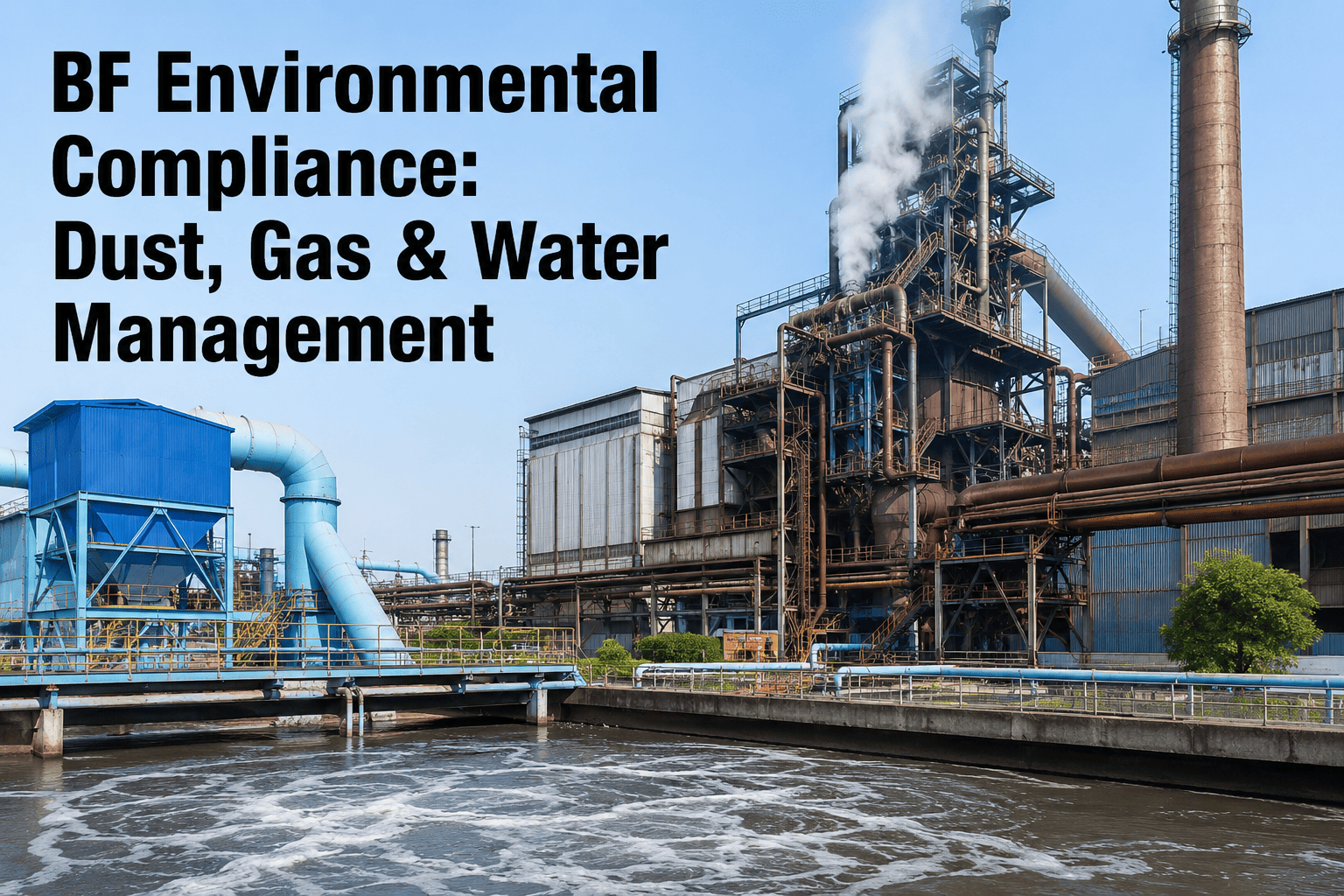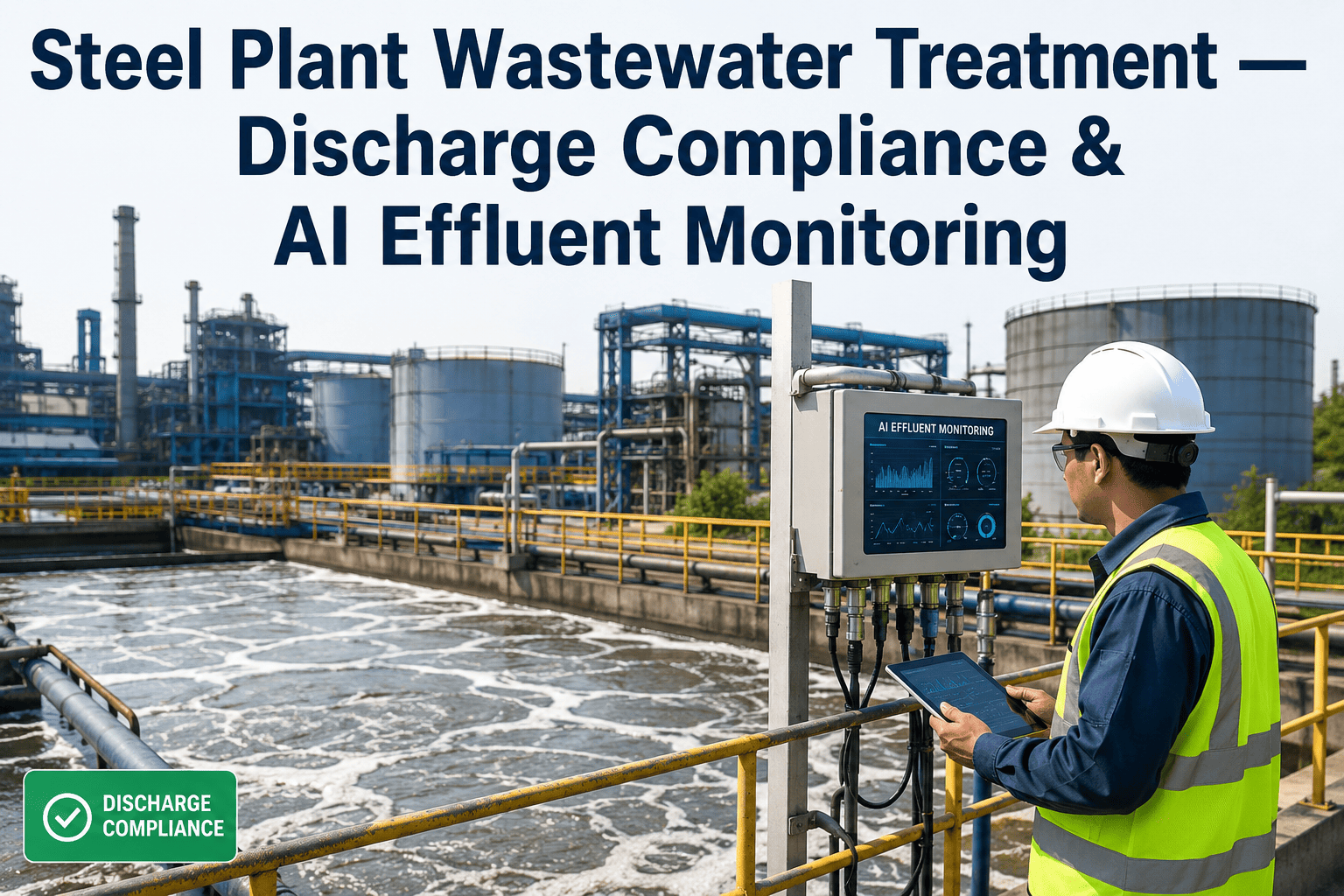
Steel plant water management operations optimization has become the critical driver for both regulatory survival and operational continuity. With global specific water consumption targets tightening toward **2.0 m³/tcs**, leading steel producers are moving beyond simple treatment to AI-powered **Zero Liquid Discharge (ZSD)** orchestration. By deploying real-time water chemistry analytics, predictive membrane fouling models, and autonomous blowdown recovery, plants are slashing raw water costs while ensuring 100% compliance with CPCB and global ESG mandates. Whether you are managing a primary blast furnace circuit or a complex rolling mill ETP, mastering water operations optimization through intelligent automation is no longer optional — it is the baseline for sustainable growth. Book a Demo to see how AI-driven water analytics can transform your environmental performance starting in week one.
Achieve Zero Liquid Discharge & Reduce Raw Water Costs by 35%
Discover how iFactory's AI-driven platform optimizes cooling circuits, RO recovery, and effluent compliance for the world's most sustainable steel plants.
What Is Steel Plant Water Operations Optimization?
Water operations optimization is the systematic application of real-time chemistry sensors, IoT flow tracking, and AI-driven chemical dosing to the entire water lifecycle of a steel plant. This encompasses **Raw Water Treatment**, **Cooling Water Circuits (Direct & Indirect)**, **RO/UF Membrane Management**, and **Effluent Treatment (ETP)**. AI-powered platforms shift the paradigm from "Treat and Discharge" to "Recycle and Recover" by predicting scaling risks before they choke heat exchangers and optimizing blowdown rates to maximize water reuse. This ensuring that every drop of water is accounted for in a closed-loop digital twin.
AI-Powered Water Management: The 6 Pillars of ZLD Steel
Effective water operations optimization with AI covers six interconnected capability pillars. Each pillar addresses a specific failure point in manual water management — from scale-induced downtime to regulatory compliance risks.
Real-Time Chemistry Analytics
AI continuously calculates LSI and RSI indices to predict scaling and corrosion risks. The system automatically adjusts biocide and antiscalant dosing in cooling towers.
<1% Scaling DriftPredictive Membrane Fouling
Machine learning models predict RO/UF membrane fouling 72 hours in advance based on flux and differential pressure — triggering automated CIP (Clean-in-Place) cycles.
+22% Membrane LifeAutonomous Blowdown Recovery
AI optimizes cooling tower blowdown by correlating conductivity with makeup water quality — reducing blowdown volume and maximizing cycle-of-concentration (COC).
8.5 COC TargetETP/STP Process Optimization
AI monitors BOD/COD levels and heavy metal concentrations (Cr, Zn) in effluent streams. Predictive aeration control reduces ETP power consumption by 18%.
18% Power SavingsZLD Evaporator Control
Multi-Effect Evaporator (MEE) and Mechanical Vapor Recompression (MVR) units are optimized for salt recovery and distillate purity — ensuring 100% Zero Liquid Discharge.
99.8% Condensate PurityDigital OCEMS Compliance
Automated data streaming to CPCB/SPCB portals with 99.9% uptime. Predictive alerts trigger if any parameter (pH, TSS, Oil) approaches 80% of the permit limit.
99.9% OCEMS UptimeWater Treatment Transformation: A Step-by-Step AI Workflow
The most measurable win in water management comes from synchronizing treatment with varying production loads. Book a Demo to see this workflow in action.
Intake & Raw Water Analysis — T-30 Minutes
AI analyzes incoming raw water quality (Turbidity, Hardness) and pre-adjusts coagulant dosing 30 minutes before the water enters the clarifier — ensuring stable downstream quality.
30 min Pre-Treatment LeadCircuit Balancing & Reuse — T-0
Real-time balancing of direct and indirect cooling circuits. If a production unit shuts down, AI automatically reroutes cooling water to the ETP for buffer storage — preventing overflow.
-15% Overflow WastePredictive Recovery & Discharge — T+15
The system predicts the recovery efficiency of the RO plant based on current feed chemistry. If fouling is predicted, it auto-switches to a standby membrane bank — ensuring zero downtime.
Zero RO DowntimeCompliance Audit & Reporting — T-5
Five minutes before the 15-minute average report is sent to OCEMS, the AI performs a digital verification. If a drift is detected, it triggers an emergency blowdown stop — preventing a fine.
<1 min Response TimeWater Management Maturity: From Discharge to Circular ZLD
Most steel organizations sit at Stage 1 or Stage 2 — paying for it in high chemical bills and regulatory risks. Book a Demo to benchmark your level.
Manual Monitoring & Discharge
Grab sampling every shift, manual chemical dosing, and "once-through" water usage. High risk of scale and compliance fines.
Digitized Tracking & Partial Recycling
Online sensors for pH and conductivity. Automated dosing based on flow. Basic RO recycling for blowdown.
AI Chemistry & High-Recovery Reuse
AI-driven chemistry control (LSI/RSI). Predictive membrane management. ETP effluent recycled to process water.
Autonomous ZLD & Circular Steelmaking
Zero Liquid Discharge achieved via AI-orchestrated MEE/MVR. 100% water recovery. Zero intake from fresh water sources.
Key Technologies Powering Steel Water Automation in 2026
The water management technology stack has matured toward autonomous ZLD. To understand which layer delivers the fastest ROI for your plant, Book a Demo today.
| Technology Layer | Application in Water Operations | Performance Gain | Deployment Timeline |
|---|---|---|---|
| AI Scale Prediction | Real-time LSI/RSI monitoring in cooling circuits | -90% scale-related downtime | 7-14 days |
| Fouling Prediction | RO/UF membrane flux and pressure analytics | +30% membrane lifespan | 14-21 days |
| Chemical AI | Autonomous biocide and antiscalant dosing | -28% chemical wastage | 21-30 days |
| Evaporator AI | MEE/MVR steam and pressure optimization | 15% energy reduction | 30-45 days |
| ZLD Dashboard | End-to-end ZLD status and water footprint logs | 100% ESG audit accuracy | 7-10 days |
| OCEMS Portal | Real-time CPCB/SPCB data streaming gateway | Zero compliance alerts | 7 days |
Calculating the ROI of Steel Plant Water Automation
Fresh Water Intake Savings
By reducing intake from municipal or river sources by 35%, integrated plants save significantly on raw water tariffs and transport.
Energy Savings in ZLD
AI-driven pressure and steam optimization in MEE/MVR units reduces the thermal energy required for ZLD evaporation by 45%.
Equipment Life Extension
Corrosion-free operations extend the life of heat exchangers, condenser tubes, and piping networks by 3-5 years on average.
Compliance Risk Avoidance
Automated compliance prevents production stoppages and fines associated with illegal discharge or OCEMS downtime.
Frequently Asked Questions: Steel Water AI & ZLD
How does AI prevent RO membrane fouling?
The system monitors "Specific Flux" and differential pressure. By correlating this with feed water chemistry, AI predicts fouling 72 hours in advance and recommends a preventive CIP.
What is the difference between LSI and RSI in steel cooling?
LSI (Langelier Saturation Index) measures the potential to scale, while RSI (Ryznar Stability Index) is better for predicting corrosion. iFactory tracks both to ensure a "balanced" water chemistry.
Can ZLD be achieved without high energy costs?
By using AI to maximize RO recovery to 90%+, the volume of water sent to the energy-intensive MVR/MEE is minimized, slashing overall ZLD energy costs.
How do you handle heavy metals like Chromium in ETP?
AI-driven dosing of reducing agents and coagulants ensures that Chromium-6 is fully converted to Chromium-3 and precipitated out, meeting IS-2490 standards every shift.
What is the benchmark for Specific Water Consumption?
Modern integrated steel plants aim for <2.5 m³/tcs, while ZLD-enabled plants can achieve <1.8 m³/tcs. iFactory provides the real-time tracking to hit these targets.
How does the system handle "Blowdown Recovery"?
Cooling tower blowdown is rich in chemicals. AI routes this through a specialized UF/RO circuit to recover 85% as soft water, which is then reused in the circuit.
Stop Losing Revenue to Inefficient Water Management
Join the world's most sustainable steel producers. We'll show you exactly how many m³ and dollars you are losing to scale, corrosion, and discharge waste.