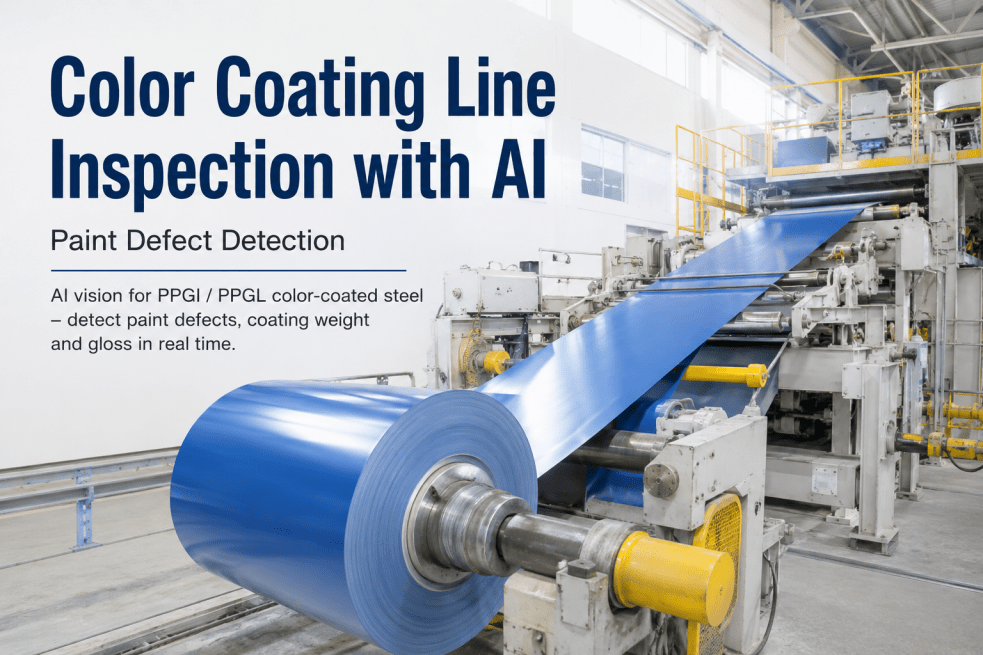
Color coating line operations — producing PPGI and PPGL coils for architectural panels, appliance enclosures, and automotive components — require simultaneous control of coating weight, paint viscosity, curing temperature, line speed, and surface quality across every square foot of strip. The inspection challenge is staggering: a color coating line running at 80–120 m/min produces thousands of square meters of coated surface per hour, making manual visual inspection at the exit end inherently limited. Operators can only sample a fraction of the coated surface, and defects that escape detection result in customer claims, downgraded coils, and expensive rework. Most lines still rely on periodic visual inspection combined with offline lab testing of coating weight and gloss from edge-trim samples taken every 10–20 coils — a sampling rate that covers less than 0.1% of the coated surface area. iFactory's Paint Defect Vision AI platform replaces this reactive approach with continuously learning AI models that detect paint defects, measure coating weight and gloss, and monitor color consistency across 100% of the strip surface in real time — achieving 95% defect detection accuracy, reducing coating material waste by 25–40%, and eliminating paint-related customer claims across the full product mix. Book a Demo to see iFactory's Paint Defect Vision AI configured for your coating line configuration, product grades, and quality targets.
Why AI Paint Defect Detection Delivers the Highest ROI in Color Coating Line Operations
The color coating line is the final surface treatment stage before the coil ships to the customer — and the stage where surface quality defects are most expensive to correct. A coil that exits the coating line with pinholes, orange peel, coating streaks, or color variation that escapes detection will either be downgraded at a revenue loss of $200–$600 per ton or shipped to a customer who will reject it and issue a claim that includes the coil value, freight, and processing downtime at their facility. The sources of paint defects are distributed across the entire coating process: pinholes originate from substrate contamination or inadequate pretreatment; orange peel results from incorrect paint viscosity or improper atomization; coating streaks are caused by applicator roll wear or coating head clearance variation; color variation can arise from temperature gradients in the curing oven or from batch-to-batch paint variability. Each defect type requires a different corrective action, and without real-time detection at the point of occurrence, operators cannot identify the root cause before multiple defective coils accumulate. AI-powered paint defect detection closes this gap by identifying and classifying every defect type at line speed, enabling immediate process correction and eliminating the downstream cost of undetected defects. Book a Demo to model the defect reduction potential for your color coating line product mix and annual tonnage.
Paint Defect Vision AI Core Capabilities
iFactory's Paint Defect Vision AI platform targets the three most impactful inspection domains in the color coating line — surface defect detection, coating weight and gloss measurement, and color consistency monitoring — integrating each into a unified real-time quality control framework that operates at full line speed across every square foot of coated strip.
Color Coating Line Inspection Approaches — Visual Inspection vs Traditional Machine Vision vs AI Real-Time Detection
The table below compares three approaches to color coating line inspection. Traditional visual inspection depends on operator vigilance and sampling frequency. Traditional machine vision systems use rule-based algorithms with fixed thresholds that generate high false positive rates on textured or glossy surfaces. AI real-time detection adapts continuously to product variations, coating types, and surface finishes.
| Inspection Parameter | Manual Visual Inspection | Traditional Machine Vision | iFactory Paint Defect Vision AI |
|---|---|---|---|
| Defect detection method | Operator visual scan at exit end — intermittent sampling | Rule-based pixel thresholding with fixed parameters | Deep learning CNN models trained on defect libraries — adapts to surface texture and coating type |
| Coating weight measurement | Offline lab test from edge-trim samples — 1 per 10–20 coils | Indirect estimation from process parameters | AI regression model predicting coating weight from roll speed, solids, viscosity, and line speed |
| Gloss measurement | Offline glossmeter reading from edge samples | Not typically integrated with inspection | AI prediction from cure temperature, coating formulation, and line speed profile |
| Color measurement | Human visual assessment against standard | Single-point spectrophotometer at edge | Full-width spectrophotometric array with AI drift detection |
| False positive rate | N/A — defects missed, not false alarms | 15–30% on glossy or textured surfaces | <3% false positive rate with continuous model refinement |
| Adaptability to new products | Operator retraining required for new colors or coatings | Manual threshold adjustment for each product | Zero-shot learning on new colors — adapts from existing defect library |
| Coverage | <0.1% of strip surface | Sampled zones — not continuous | 100% of strip surface at full line speed |
Critical Color Coating AI Implementation Pitfalls to Avoid
Color coating line AI vision projects fail or underperform when implementation mistakes create gaps between model predictions and actual surface conditions. These failure patterns are preventable with a structured approach to camera configuration, training data collection, and model validation. Book a Demo to review iFactory's color coating line AI deployment methodology for your line configuration.
Industry Expert Perspective: Why AI Vision Is Reshaping Color Coating Line Quality Control
I managed color coating line operations for 12 years at a producer running three PPGI and PPGL lines serving the architectural, appliance, and automotive industries. Our exit inspection station had two experienced operators visually inspecting each coil on both surfaces — and we still shipped coils with defects that were only discovered at the customer's facility after the panel had been cut, formed, and installed. The inspection challenge is fundamental: the strip is moving at 90 m/min, the coating defects can be smaller than 1 mm in diameter, and the operator's attention cannot be sustained at that detection level for more than a few minutes at a time. We tried traditional machine vision from two different vendors, but the false positive rate on our high-gloss white and silver coatings was over 25% — the operators stopped paying attention to the alerts within two weeks because they were false alarms. iFactory's Paint Defect Vision AI was different because the deep learning models were trained on actual defect images from our line, including the specific gloss levels and coating formulations we run. Within 30 days of go-live, the system was detecting defects that our operators had never been able to see, and the false positive rate was below 3%. The coating material savings alone — from detecting coating weight drift before it produced out-of-spec coils — paid for the system in seven months. And we have not had a single paint defect claim from a customer since deployment.
Three Business Outcomes Delivered by Paint Defect Vision AI Deployment
Beyond defect detection and quality control, Paint Defect Vision AI creates measurable business outcomes across production efficiency, material cost, and customer satisfaction.
Color Coating Line AI Inspection — Frequently Asked Questions
The Decision That Determines Your Color Coating Line Quality Trajectory — Reactive Visual Sampling or 100% AI-Powered Real-Time Detection
The difference between color coating lines that inspect less than 0.1% of their coated surface and lines that inspect every square millimeter compounds with every coil produced. Each coil that exits with an undetected paint defect becomes a customer claim, a downgraded product, or a rework coil — each carrying a cost that far exceeds the per-ton investment in AI-powered inspection. Each coil that carries excess coating weight wastes expensive paint material that directly reduces margin. Each color drift incident that escapes detection until the customer complains erodes the supplier relationship and can result in panel replacement costs that exceed the original coil value tenfold. AI-powered paint defect detection eliminates these risks by inspecting every inch of every coil at full line speed, providing the data foundation for process improvement that reduces defect rates at the source rather than relying on end-of-line sampling to catch escapes.

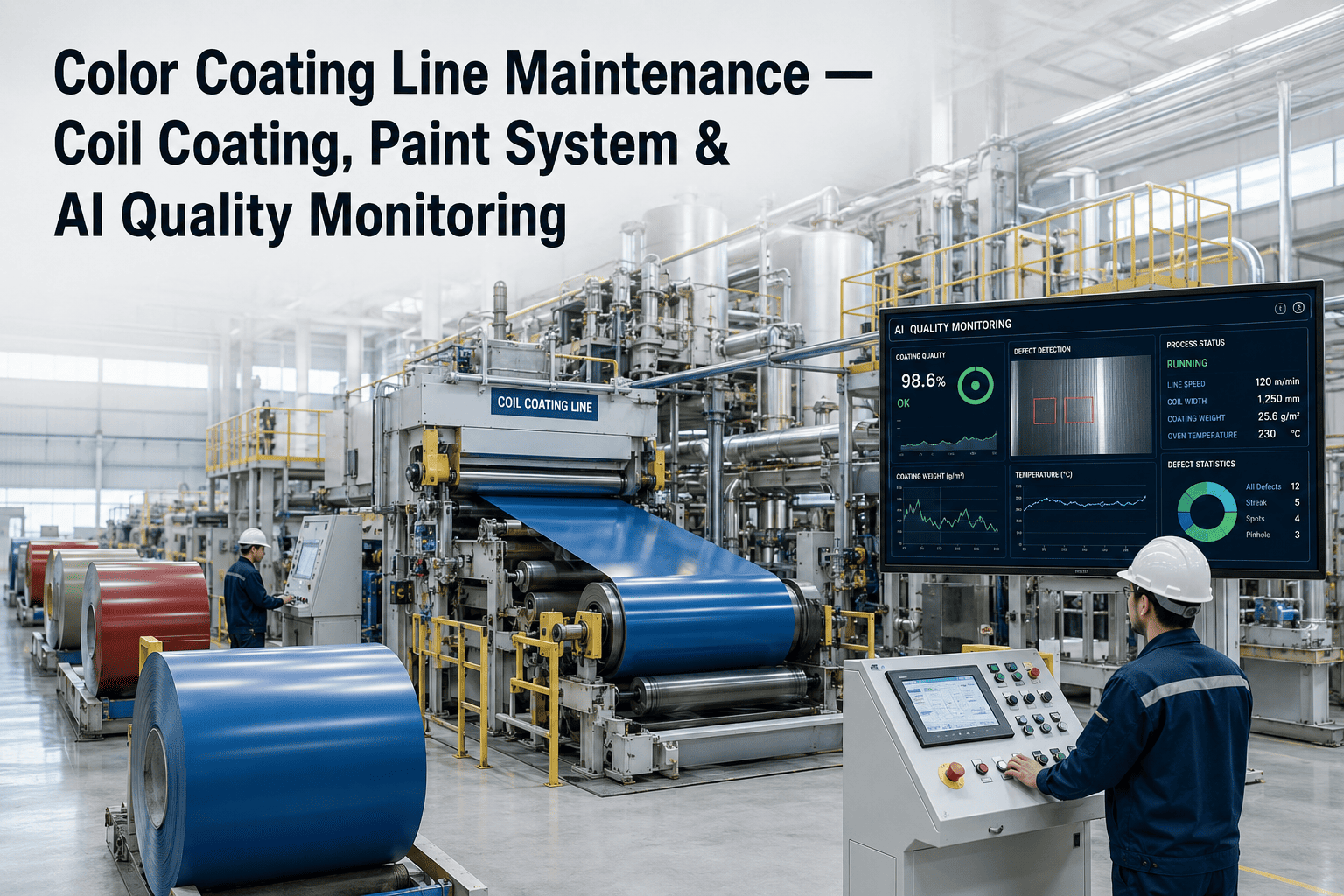
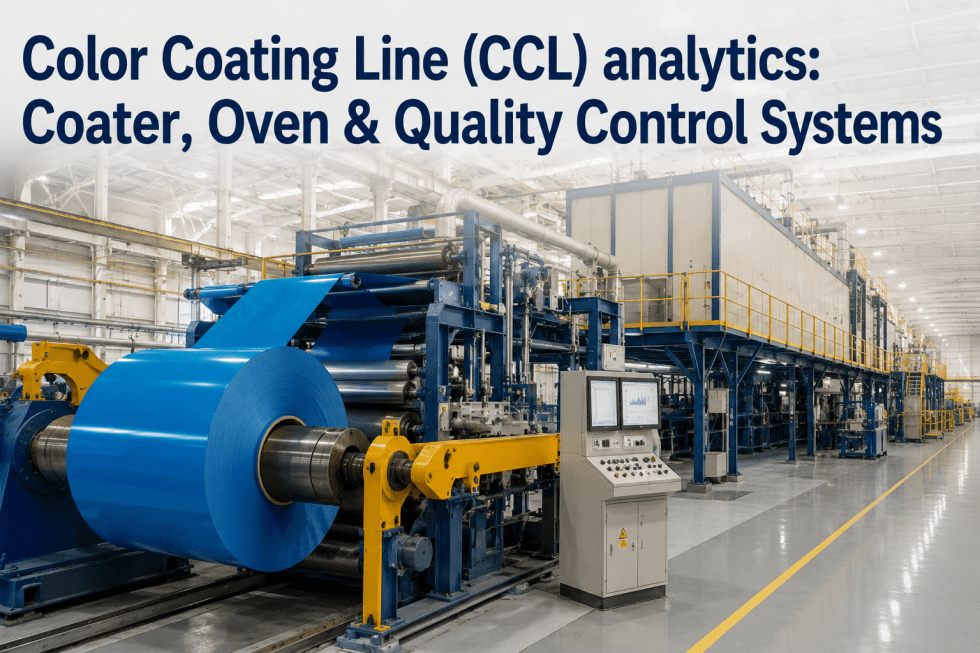
-&-finishing-line-analytics.png)


