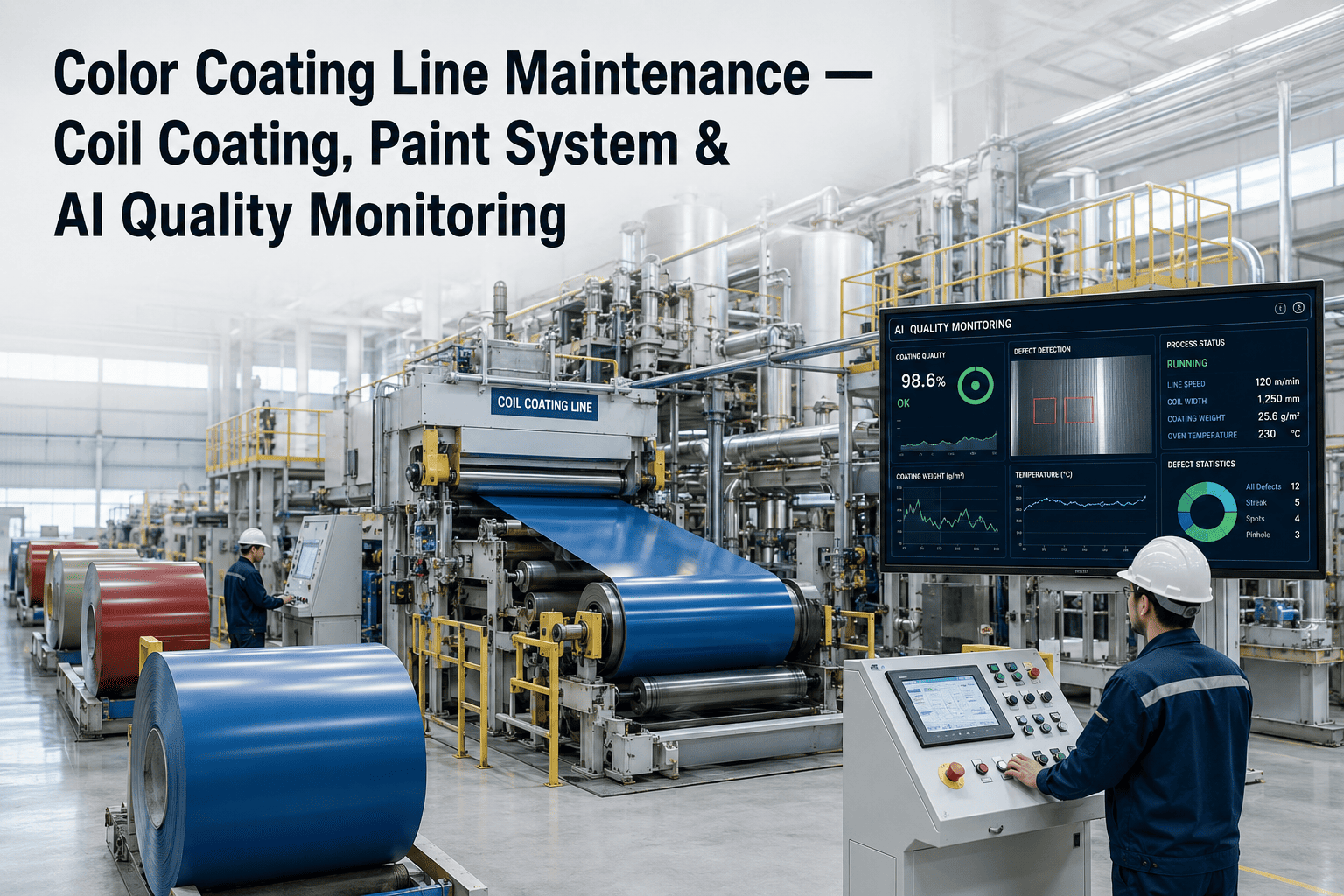
In the demanding environment of cold rolling and finishing, the color coating line stands as the final, critical frontier where value is added and product differentiation is achieved. For process engineers, maintaining the delicate balance of chemical treatment, primer application, topcoat curing, and final inspection is a relentless pursuit of perfection. A single micron of inconsistency in coating thickness, a momentary temperature fluctuation in the curing oven, or a contaminant in the chemical bath can cascade into costly defects—delamination, color mismatch, or premature corrosion. The stakes are high: non-conforming coils can lead to rework, scrap, and strained customer relationships. At iFactory, we have engineered a comprehensive AI-driven predictive maintenance framework that transforms this high-stakes operation into a predictable, optimized, and quality-assured process. Our approach integrates real-time sensor data, machine learning models, and digital twin simulations to monitor every stage of the color coating line—from entry chemical treatment to exit inspection. This guide provides an in-depth, technical exploration of how to maintain your coil coating paint system with AI, ensuring consistent coating adhesion, precise color match, and robust corrosion resistance. Book a Demo to see how our platform can elevate your coating line performance.
Optimize Your Color Coating Line with AI
Achieve zero-defect coating and maximize line efficiency. Our predictive maintenance platform ensures consistent quality and reduces unplanned downtime.
The Complexity of Color Coating
Color coating lines involve a sequence of tightly coupled processes: chemical cleaning, phosphate or chromate conversion coating, primer application, topcoat application, and final curing. Each step must be precisely controlled to achieve the desired film thickness, adhesion, and appearance. Variability in any parameter—bath chemistry, oven temperature, line speed—can lead to defects that are not visible until the coil is unwound at the customer's site, causing costly returns and reputational damage.
AI as a Force Multiplier
Traditional monitoring relies on periodic sampling and offline laboratory analysis, which introduces latency and misses transient events. AI-driven monitoring uses continuous sensor data—from pH meters, viscosity sensors, infrared thermometers, and spectrophotometers—to build a real-time picture of process health. Machine learning models detect subtle correlations and predict deviations before they become defects, enabling proactive adjustments.
Business Impact
Implementing AI monitoring on a color coating line can reduce defect rates by up to 60%, decrease chemical consumption by 15%, and improve overall equipment effectiveness (OEE) by 10-20%. These gains translate directly to lower operating costs, higher throughput, and stronger customer trust.
Chemical Treatment Zone: The Foundation of Adhesion
The chemical treatment zone is where the substrate is cleaned and a conversion coating is applied to promote adhesion and corrosion resistance. Common processes include alkaline cleaning, rinsing, and application of zinc phosphate or chrome-free pretreatments. AI monitoring in this zone focuses on bath concentration, temperature, and dwell time. Sensors measure conductivity, pH, and temperature in real time, feeding data into an AI model that predicts when bath chemistry will drift out of spec. The model recommends adjustments to replenishment rates or warns of impending bath exhaustion. For example, if the conductivity trend indicates a gradual decrease in phosphate concentration, the system can trigger a top-up before the coating weight falls below the minimum requirement. This proactive approach eliminates the need for frequent manual titrations and ensures consistent pretreatment quality across all coils.
Primer Application: Ensuring Uniform Coverage
The primer coat serves as the adhesion bridge between the substrate and the topcoat, and also provides corrosion protection. Typically applied via roll coating, the primer film thickness must be tightly controlled—usually between 5 and 15 microns. AI systems monitor the applicator roll speed, pressure, and viscosity of the primer paint. Using data from laser profilometers and thickness gauges, the AI model detects variations in coating weight across the width of the coil. If a pattern of thinning is detected on one edge, the system can adjust the roll pressure or alignment in real time, or alert the operator to schedule roll maintenance. Additionally, the model correlates primer thickness with downstream curing conditions to predict adhesion strength, preventing delamination issues that might only appear after final coating.
Real-Time Thickness Monitoring
Laser sensors measure coating thickness at multiple points across the coil width, feeding data to the AI every 100 milliseconds.
Predictive Viscosity Control
AI models predict paint viscosity changes based on temperature and solvent evaporation, adjusting the replenishment rate to maintain target viscosity.
Roll Wear Prediction
By analyzing patterns in coating uniformity, the AI can forecast when applicator rolls need replacement, reducing unplanned downtime.
Topcoat Application: Color Match and Gloss Control
The topcoat defines the final appearance—color, gloss, and texture—that meets customer specifications. Achieving a perfect color match across multiple production runs requires meticulous control of pigment dispersion, solvent balance, and application parameters. AI monitoring integrates spectrophotometric data from inline color sensors that measure L*a*b* values at the exit of the coating station. The AI model compares these values against the target color and gloss, and identifies the root cause of any deviation. For instance, if the b* value (yellowness) is drifting, the model might correlate this with a slight increase in oven temperature, suggesting that the curing process is affecting the pigment. The system can then recommend a temperature adjustment or a change in paint formulation. This closed-loop control ensures that every coil meets the strictest color tolerance, even when switching between different product specifications rapidly.
Key Parameters Monitored by AI
| Parameter | Sensor Type | AI Prediction | Impact |
|---|---|---|---|
| Coating Thickness | Laser profilometer | Deviation from target | Adhesion, appearance |
| Paint Viscosity | Inline viscometer | Trend towards out-of-spec | Uniformity, waste |
| Oven Temperature | Infrared thermocouple | Zone imbalance | Cure quality, color |
| Color (L*a*b*) | Spectrophotometer | Delta E drift | Color match |
| Gloss | Glossmeter | Trend deviation | Surface finish |
| Line Speed | Encoder | Optimal speed for quality | Throughput, quality |
Achieve Zero-Defect Coating
Leverage AI to monitor every parameter of your color coating line. Ensure consistent quality, reduce waste, and boost line efficiency.
Curing Oven Performance: The Heat is On
The curing oven is where the paint film undergoes crosslinking to achieve its final mechanical and chemical properties. In a multi-zone oven, temperature profiles must be precisely maintained to ensure complete cure without overbaking, which can cause discoloration or brittleness. AI monitoring uses thermocouples and infrared cameras to create a 3D thermal map of the coil as it passes through the oven. Machine learning models compare the actual temperature profile against the ideal cure curve for the specific paint formulation. If a zone is running cooler than required, the model predicts the impact on degree of cure and suggests an increase in setpoint or a reduction in line speed. Conversely, if a hot spot is detected, the system can alert maintenance to check burner nozzles or insulation. This predictive capability prevents scrap from undercured or overcured coils and extends the life of oven components by avoiding thermal stress.
Real-Time Thermal Profiling
Infrared cameras capture the temperature of the coil surface at multiple points across the width and length, creating a detailed thermal profile every second.
Cure Prediction Model
AI models correlate the thermal profile with paint chemistry to predict the degree of crosslinking, ensuring optimal mechanical properties.
Energy Optimization
By forecasting oven performance, the AI can recommend setpoint adjustments that reduce energy consumption by up to 12% without compromising quality.
Corrosion Resistance Testing: Proactive Validation
Corrosion resistance is a key performance indicator for coated coils, especially those used in construction and automotive applications. Traditional salt spray testing takes days or weeks to yield results, by which time defective coils may have already been shipped. AI monitoring enables predictive corrosion resistance assessment by analyzing process parameters that correlate with long-term performance. The model uses data from chemical treatment, primer thickness, topcoat formulation, and cure profile to generate a corrosion resistance index in real time. If the index falls below a threshold, the coil can be flagged for additional testing or rework before it leaves the plant. This proactive approach drastically reduces the risk of field failures and associated warranty claims.
Digital Twin Integration: Simulating the Line
A digital twin of the color coating line allows process engineers to simulate the impact of parameter changes without disrupting production. The AI model continuously updates the digital twin with real-time sensor data, creating an accurate virtual representation of the line. Engineers can run what-if scenarios—such as changing paint supplier, adjusting oven temperature, or increasing line speed—to predict the effect on coating quality and throughput. This capability accelerates process optimization and reduces the risk of costly trials on the actual line. The digital twin also serves as a training tool for new operators, helping them understand the complex interactions between process variables.
Virtual Commissioning
Test new paint formulations or process changes in the digital twin before implementing them on the physical line, reducing risk and downtime.
Operator Training
Use the digital twin to train operators on optimal settings and troubleshooting procedures in a safe, virtual environment.
Continuous Optimization
The AI continuously refines the digital twin based on real-world data, enabling ongoing improvements in quality and efficiency.
Data Integration and Edge Computing
Implementing AI monitoring on a color coating line requires a robust data infrastructure. Sensors across the line generate terabytes of data per day, which must be processed in real time to enable proactive adjustments. iFactory's edge computing platform processes data locally, reducing latency and bandwidth requirements. The platform integrates with existing PLCs, SCADA systems, and MES to aggregate data from all sources. Machine learning models run on the edge, providing predictions and recommendations within milliseconds. This architecture ensures that the AI can respond to rapid changes in process conditions, such as a sudden temperature spike in the oven or a viscosity drop in the paint, without relying on cloud connectivity.
Sensor Data Acquisition
High-frequency data from sensors is collected and synchronized with production events, such as coil ID and product code.
Edge Processing
Data is processed on edge servers using AI models, generating real-time predictions and alerts without cloud dependency.
Cloud Analytics
Historical data is uploaded to the cloud for model training, trend analysis, and reporting, enabling continuous improvement.
Case Study: AI Implementation at a Major Steel Processor
A leading steel processor in Europe was experiencing a 4% defect rate on their color coating line, primarily due to color mismatch and coating thickness variations. After implementing iFactory's AI monitoring platform, they achieved a 62% reduction in defects within the first three months. The system identified that a worn applicator roll was causing periodic thickness variations, which had previously gone undetected until final inspection. By replacing the roll proactively, the company saved over €500,000 annually in rework and scrap costs. Additionally, the AI model optimized the curing oven temperature profile, reducing energy consumption by 11% while improving coating adhesion. The success of this implementation led to the deployment of the platform across all three of their coating lines.
Frequently Asked Questions
How does AI improve color match consistency across different production runs?
AI improves color match consistency by continuously monitoring spectrophotometric data (L*a*b* values) at the exit of the topcoat application station. The model compares these values against the target color and identifies correlations with process parameters such as paint viscosity, oven temperature, and line speed. When a deviation is detected, the AI recommends adjustments to the paint formulation or process settings to bring the color back to spec. This closed-loop control ensures that every coil meets the required color tolerance, even when switching between different paint formulations or product specifications. Learn more about how our platform can help by visiting our support page.
What sensors are required for AI monitoring of a color coating line?
The specific sensors depend on the processes in the line, but a typical setup includes: pH and conductivity sensors for chemical treatment baths, inline viscometers for paint viscosity, laser profilometers for coating thickness, infrared thermocouples for oven temperature, spectrophotometers for color measurement, and glossmeters for surface finish. All sensors are connected to an edge computing platform that aggregates data and runs AI models in real time. The platform is designed to integrate with existing instrumentation, minimizing the need for additional hardware. For a detailed sensor recommendation tailored to your line, book a demo with our team.
How long does it take to implement AI monitoring on an existing coating line?
Implementation typically takes 4 to 8 weeks, depending on the complexity of the line and the existing sensor infrastructure. The process begins with a site audit to identify data sources and integration points. Then, edge computing hardware is installed, and sensors are calibrated and connected. The AI models are trained using historical data, which usually takes 2 to 3 weeks. After training, the system goes live with a parallel monitoring phase to validate predictions. Full integration with control systems for closed-loop adjustments can be completed within an additional 2 weeks. Our team provides ongoing support to optimize model performance. Contact us via our support page for a detailed timeline.
Can AI monitoring reduce chemical consumption in the pretreatment stage?
Yes, AI monitoring can significantly reduce chemical consumption by optimizing bath replenishment schedules. The model predicts when bath chemistry will drift out of spec based on trends in conductivity, pH, and temperature. By scheduling replenishments only when needed, rather than on a fixed schedule, chemical usage can be reduced by up to 15%. Additionally, the AI can detect contamination events early, preventing the need for a full bath dump. This not only saves chemicals but also reduces wastewater treatment costs. For more information on chemical optimization, book a demo.
How does the system handle rapid product changeovers?
The AI system is designed to handle rapid product changeovers by automatically adjusting its models based on the new product specifications. When a new coil with a different paint formulation or thickness target enters the line, the system retrieves the relevant process parameters from the MES and updates its prediction models accordingly. The digital twin simulates the new product run to identify potential issues before production begins. During the changeover, the AI monitors the transition and provides real-time guidance to operators, ensuring that the line stabilizes quickly and produces quality product from the first meter. This capability minimizes scrap during changeovers and improves overall line flexibility. Learn more about changeover optimization by visiting our support page.
Transform Your Color Coating Line Today
Partner with iFactory to implement AI-driven predictive maintenance and quality monitoring. Achieve zero-defect coating, reduce costs, and enhance customer satisfaction.


-&-finishing-line-analytics.png)