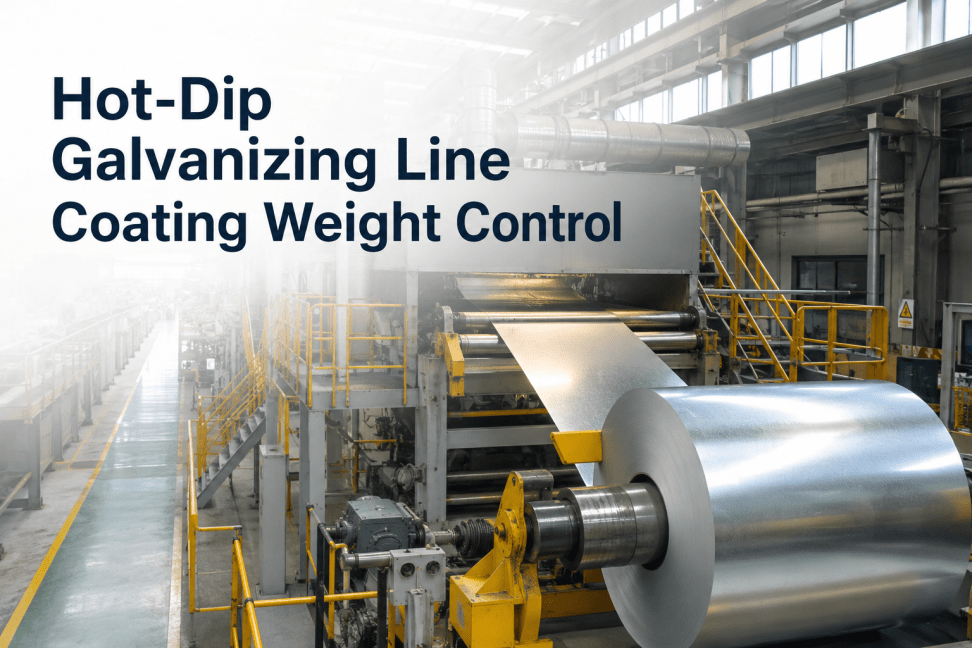
Continuous Galvanizing Lines (CGLs) sit at the intersection of metallurgy, precision coating, and high-speed strip processing — and they rank among the most maintenance-intensive assets in any flat-rolled steel operation. A zinc pot running at 840–860°C accumulates dross at a rate directly tied to bath chemistry control, strip entry temperature, and aluminum content. An air knife system operating at 0.001-inch standoff delivers coating weight tolerances that determine whether a coil meets automotive Grade A specifications or gets downgraded to construction use. When these systems drift — and they do — the cost is measured not just in recoating scrap but in customer chargeback exposure, contractual thickness variance penalties, and unplanned line stoppages that destroy shift throughput targets. Operations that schedule a CGL analytics demo with iFactory are finding that AI-integrated maintenance scheduling closes the gap between bath chemistry deviation and corrective action before coating weight exceedances ever reach the quality hold queue.
Zinc Pot, Air Knife, Skin Pass & Coating Weight — One Unified Analytics Dashboard
iFactory AI connects zinc bath chemistry sensors, air knife pressure data, skin pass mill load cells, and coating weight gauges into a single real-time analytics dashboard — so your process engineers act on data, not shift-end reports.
Zinc Pot Management: Where Coating Quality Begins and Ends
The zinc pot is the thermal and chemical heart of every CGL operation. Bath temperature, aluminum content, iron saturation, and dross formation rates are interdependent variables that drift continuously across a production shift — and each excursion carries a direct cost. At 0.18–0.20% aluminum (for Galvannealed product), a 0.02% bath Al deviation shifts the inhibition layer thickness enough to produce uneven Fe-Zn alloy formation, resulting in powdering failures in downstream press shops. Dross accumulation on sink rolls and stabilizing rolls — bottom dross at 6–7% Al, top dross at 2–3% Al — increases roll marking incidents and surface defect rates on exposed panels.
iFactory's zinc pot analytics module integrates bath temperature thermocouples, online Al analyzers and dross generation prediction models into a single process control dashboard. Rather than waiting for shift-end lab samples to confirm bath drift, process engineers receive alerts when bath Al trends outside the ±0.01% control window — enabling pot additions before the chemistry excursion propagates into a coil quality hold.
| Zinc Bath Parameter | GI Product Target | GA Product Target | Drift Consequence | iFactory Alert Trigger |
|---|---|---|---|---|
| Bath Temperature | 455–460°C | 455–460°C | Dross type shift, viscosity change | ±2°C deviation from setpoint |
| Aluminum Content | 0.18–0.22% | 0.12–0.135% | Inhibition layer failure / powdering | ±0.01% Al trend alert |
| Iron Saturation | <0.03% Fe | <0.03% Fe | Dross generation acceleration | Fe approaching 0.025% threshold |
| Zinc Ingot Addition Rate | Per line speed model | Per line speed model | Bath level deviation, coating weight shift | Addition vs. consumption variance >5% |
| Dross Generation Index | <0.8 kg/coil | <1.1 kg/coil | Roll marking, surface defects | Index exceeding trend baseline by 20% |
Air Knife Systems: The Last Line of Defense on Coating Weight
Air knife performance determines coating weight distribution with more precision than any other CGL variable. Knife pressure, gap setting, knife-to-strip distance, and strip speed interact through a fluid dynamics relationship that is highly nonlinear — a 0.1 bar pressure change at 120 mpm line speed has a fundamentally different coating weight impact than the same change at 180 mpm. Most U.S. CGL operations still rely on operator experience and periodic X-ray fluorescence (XRF) gauge feedback to trim knife settings, creating a correction lag of 15–30 seconds in which off-specification coating weight accumulates across 50–100 meters of strip.
iFactory connects air knife pressure transmitters, gap encoders, XRF coating weight gauges, and line speed signals into a closed-loop analytics model. The platform identifies knife condition degradation — lip wear, lip contamination, asymmetric pressure distribution — before it manifests as coating weight variation on the coil surface. Knife maintenance intervals shift from fixed-calendar scheduling to condition-triggered work orders generated directly from the analytics platform.
Skin Pass Mill and Tension Leveler: Surface Quality and Flatness Control
The skin pass mill (SPM) and tension leveler (TL) downstream of the cooling tower are responsible for two distinct but interdependent strip quality attributes: surface roughness profile and mechanical flatness. The SPM applies 0.3–2.0% elongation to suppress yield point elongation and establish the surface Ra required for paint adhesion — automotive exposed panels typically require 1.0–1.6 µm Ra. The tension leveler addresses residual coil set, edge wave, and center buckle through plastic elongation across a series of intermeshing rolls. Both systems impose mechanical work on a strip that has already been thermally processed through the annealing furnace and chemically treated through the zinc bath — any deviation in their operating parameters compounds the effect of upstream process variation.
iFactory integrates SPM roll force load cells, elongation measurement encoders, and work roll roughness sensors into a continuous process analytics feed. Roll roughness transfer efficiency — the ratio of roll Ra to achieved strip Ra — declines progressively with roll tonnage, and iFactory tracks this degradation curve to predict the exact coil on which Ra will fall below the automotive specification floor before a customer rejection event occurs.
- Roll force and elongation trending against strip width, grade, and thickness
- Ra transfer efficiency model with roll change prediction at ±0.1 µm accuracy
- Yield point elongation suppression verification per coil against heat treatment records
- Automatic work roll change work order generation at model-predicted depletion point
- SPM drive motor current trending for mechanical condition baseline monitoring
The tension leveler applies controlled bending and tension combinations to eliminate shape defects introduced during thermal processing. iFactory monitors TL entry and exit tension, elongation distribution, and flatness meter output continuously — identifying the specific roll cassette or bending roll condition responsible for residual flatness deviations that cannot be resolved through tension adjustment alone.
- Entry/exit tension ratio monitoring with deviation alert at ±2% of setpoint
- Flatness meter integration with zone-level shape defect attribution
- Bending roll wear trending correlated with flatness correction capacity degradation
- Cassette maintenance scheduling based on cumulative tonnage and flatness correction demand
- Shape defect classification — edge wave, center buckle, quarter buckle — with root cause mapping
CGLs contain 40–80 rolls across the pot, furnace, cooling, SPM, and TL sections — each with distinct failure modes, wear rates, and replacement cost profiles. iFactory deploys vibration analysis, bearing temperature trending, and roll-marking defect correlation to prioritize roll inspection and replacement across the entire line, not just the high-visibility skin pass and tension leveler positions.
- Sink roll, stabilizing roll, and pot roll vibration baseline and anomaly detection
- Bearing temperature trending with early warning at 15°C above baseline
- Roll marking defect linkage — surface defect images correlated to specific roll position and condition data
- Furnace roll nodule formation detection from drive torque signature analysis
- Roll inventory integration — replacement scheduling linked to parts availability and planned outage windows
iFactory's AI surface quality engine links online surface inspection system (SIS) defect events — scratches, roll marks, coating voids, dross inclusions — to specific upstream process parameters at the time of occurrence. This closes the loop between quality documentation and engineering root cause analysis, replacing manual defect review sessions with automated causal attribution available within minutes of coil completion.
- SIS defect image integration with process parameter time-stamp alignment
- Automatic attribution of surface defects to zinc bath, air knife, roll condition, or furnace variables
- Top-5 defect source ranking updated monthly for engineering control prioritization
- Customer complaint linkage — field claim data correlated with in-process inspection records
- Defect recurrence prevention — closed-loop engineering action tracking to verified resolution
Galvannealing Furnace Control: Iron Content, Powdering, and Flaking Risk
Galvannealed (GA) product adds a galvannealing furnace between the zinc pot and air knives — a gas-fired induction or radiant tube furnace that drives Fe-Zn alloying to achieve 8–12% Fe content in the coating. This is the tightest process window on the CGL: under-alloyed product (below 8% Fe) retains a free zinc surface that flakes in press stamping; over-alloyed product (above 12% Fe) develops a brittle Gamma phase at the steel-coating interface that powders under forming strain. Both failure modes result in exposed panel customer chargebacks — typically $4,000–$18,000 per coil incident in automotive supply chain contracts.
iFactory's galvannealing analytics module tracks GA furnace temperature profiles, strip speed-to-furnace power ratios, and online Fe content estimation models — integrating with induction furnace power controllers and strip thermography systems to maintain alloying uniformity across width and length. Book a GA furnace analytics assessment to see how iFactory reduces powdering and flaking risk in your automotive CGL.
Under-Alloying Risk
Free zinc retained at coating surface. Results in flaking during stamping operations. Requires GA furnace temperature increase or line speed reduction to increase dwell time and Fe diffusion rate.
Target Alloy Window
Delta phase dominant coating with controlled Gamma phase at interface. Optimal weldability, paint adhesion, and forming performance. Maintained through closed-loop furnace power and speed management.
Over-Alloying Risk
Brittle Gamma phase dominates at steel-coating interface. Powdering under forming strain. Requires bath Al adjustment and furnace temperature reduction. Most common GA quality failure mode in high-speed operations.
Predictive Alloying Control
iFactory's AI model predicts Fe content 15 seconds ahead of the quality hold point using furnace temperature profiles, bath Al history, and strip thermography — enabling preemptive speed adjustments before alloying falls outside specification.
Unified vs. Fragmented: The True Cost of Disconnected CGL Systems
Most CGL operations run process data in functional silos: furnace parameters in the Level 2 automation system, coating weight records in quality management software, roll maintenance history in CMMS, and zinc bath chemistry in a laboratory LIMS. These systems do not talk to each other — and the gaps between them are where coating quality failures, zinc losses, and unplanned stoppages originate. A dross generation spike driven by strip entry temperature deviation is invisible to the maintenance team scheduling their next sink roll change. iFactory closes these gaps by aggregating every CGL data stream into a single analytics layer that surfaces cross-system causal relationships in real time.
Replace Five Disconnected CGL Systems with One Audit-Ready Analytics Platform
iFactory connects zinc pot chemistry, air knife control, skin pass mill condition, galvannealing furnace, and surface quality inspection into a single real-time CGL dashboard — process-ready, quality-ready, and inspector-ready on demand.
CGL Analytics Is Not a Technology Problem — It Is a Data Integration Decision
Continuous Galvanizing Lines generate more process data per hour than any other flat-rolled finishing asset — zinc bath chemistry, air knife pressures, coating weight profiles, furnace temperature curves, roll force signals, surface inspection images. The data exists. The quality failures that erode automotive customer relationships and inflate zinc consumption costs exist because that data lives in disconnected systems that cannot surface cross-process causal relationships at the speed production decisions require. The answer is not more sensors. It is a unified analytics architecture that connects the data streams already running in every modern CGL.
iFactory's CGL analytics platform delivers exactly that: a single operational view across zinc pot, air knife, galvannealing furnace, skin pass mill, tension leveler, and surface quality inspection — with AI-driven maintenance scheduling, condition-based roll change optimization, and per-coil quality traceability that supports automotive customer documentation requirements from PPAP to field claim investigation.
Continuous Galvanizing Line Analytics — Frequently Asked Questions
Build a Unified, Analytics-Ready CGL Operation with iFactory AI
iFactory connects every CGL data stream — zinc bath chemistry, air knife control, skin pass mill condition, GA furnace alloying, and surface quality inspection — into a single real-time analytics dashboard that delivers per-coil quality traceability and condition-based maintenance scheduling.